Read and listen to immigration coverage from KQED’s reporters.
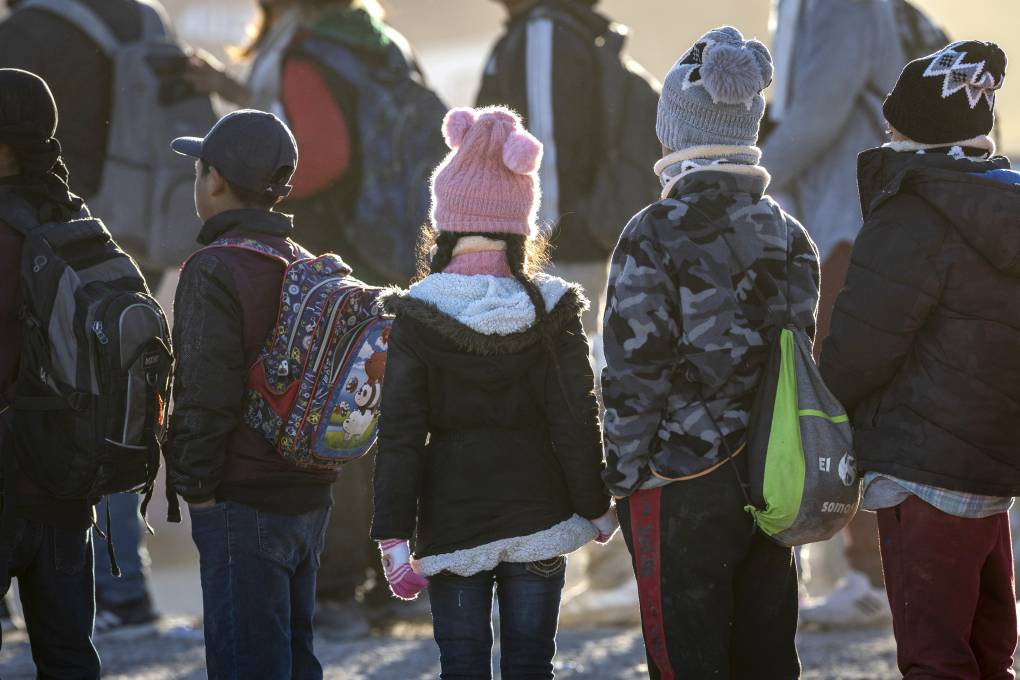
Who Represents Unaccompanied Migrant Kids in Immigration Court
Unaccompanied Migrant Kids May Face Legal Gaps as Bay Area Groups Lose Federal Funding
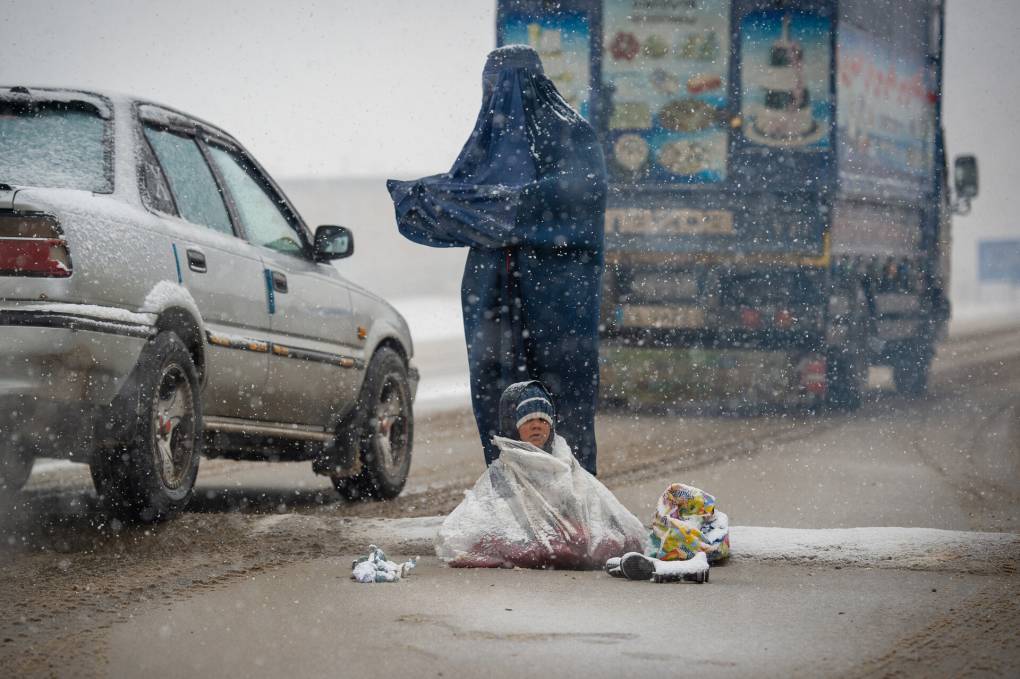
2 Afghan Girls Graduated High School Together. Now, 1 Studies in the Bay Area, the Other Indoors
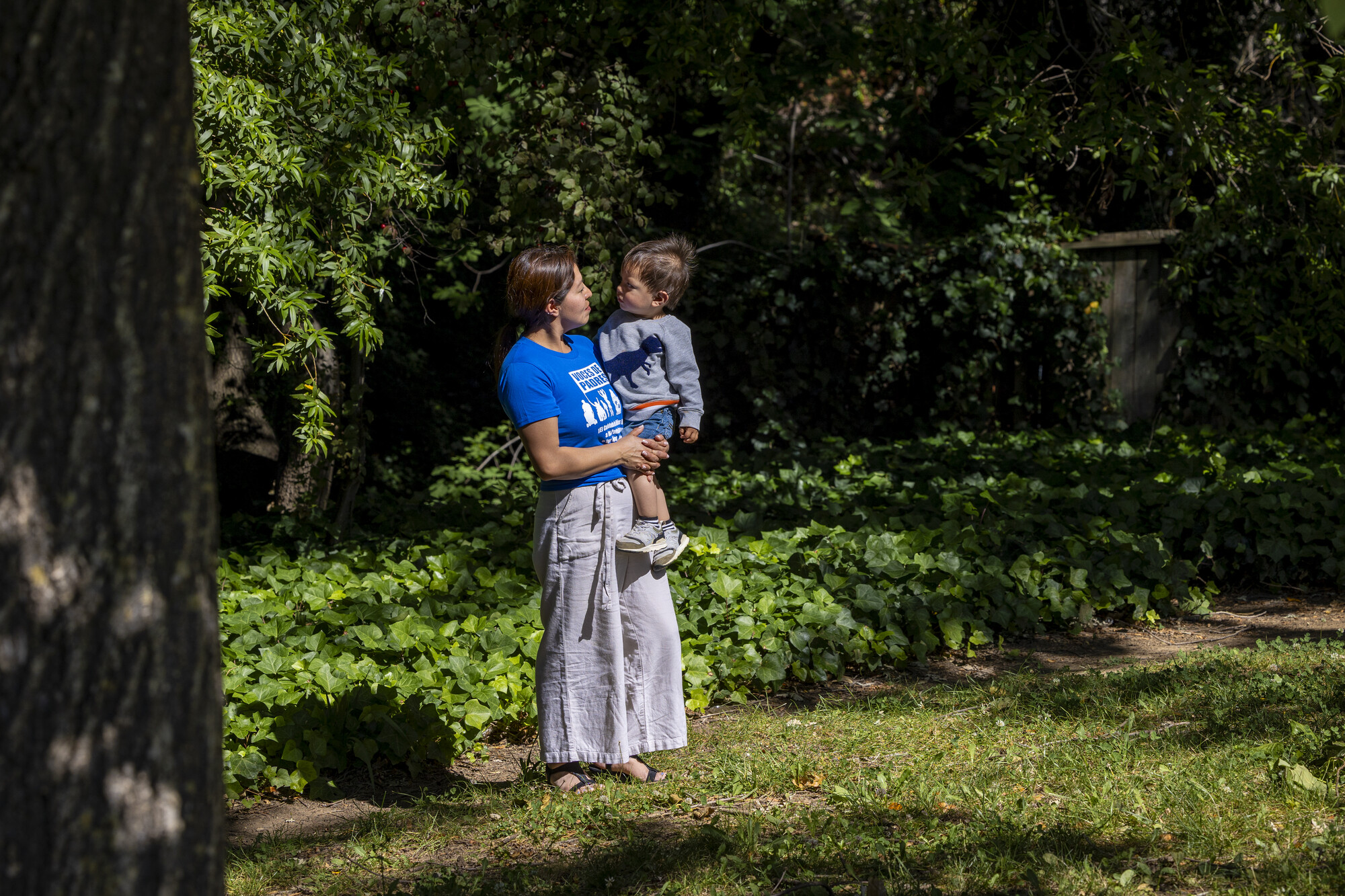
Trump Immigration Policy May Have ‘Chilling Effect’ on Latino Birth Rates
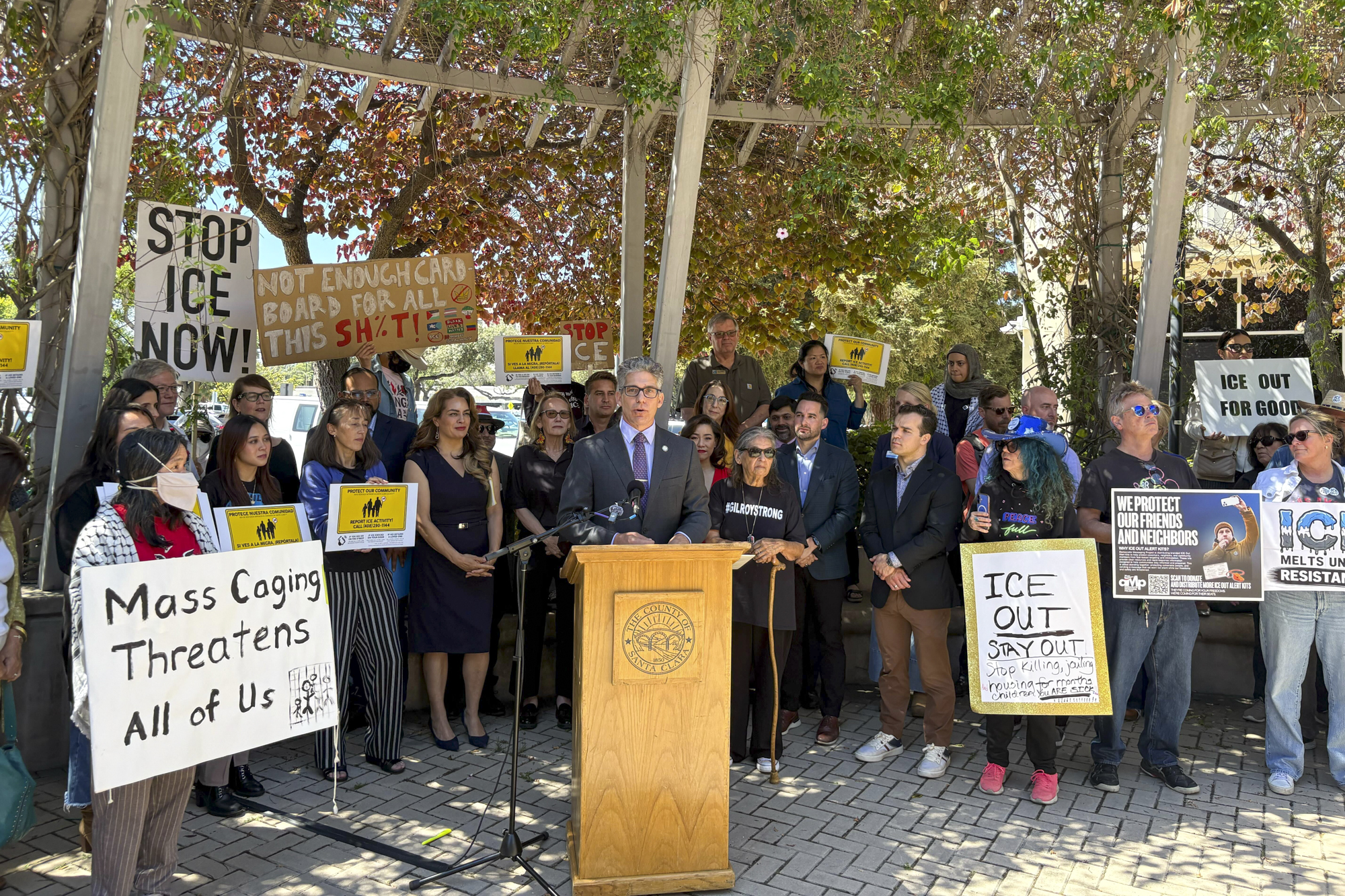
‘We’re Not Fighting This Alone’: Gilroy and Beyond Pushes Back Against Planned ICE Facility
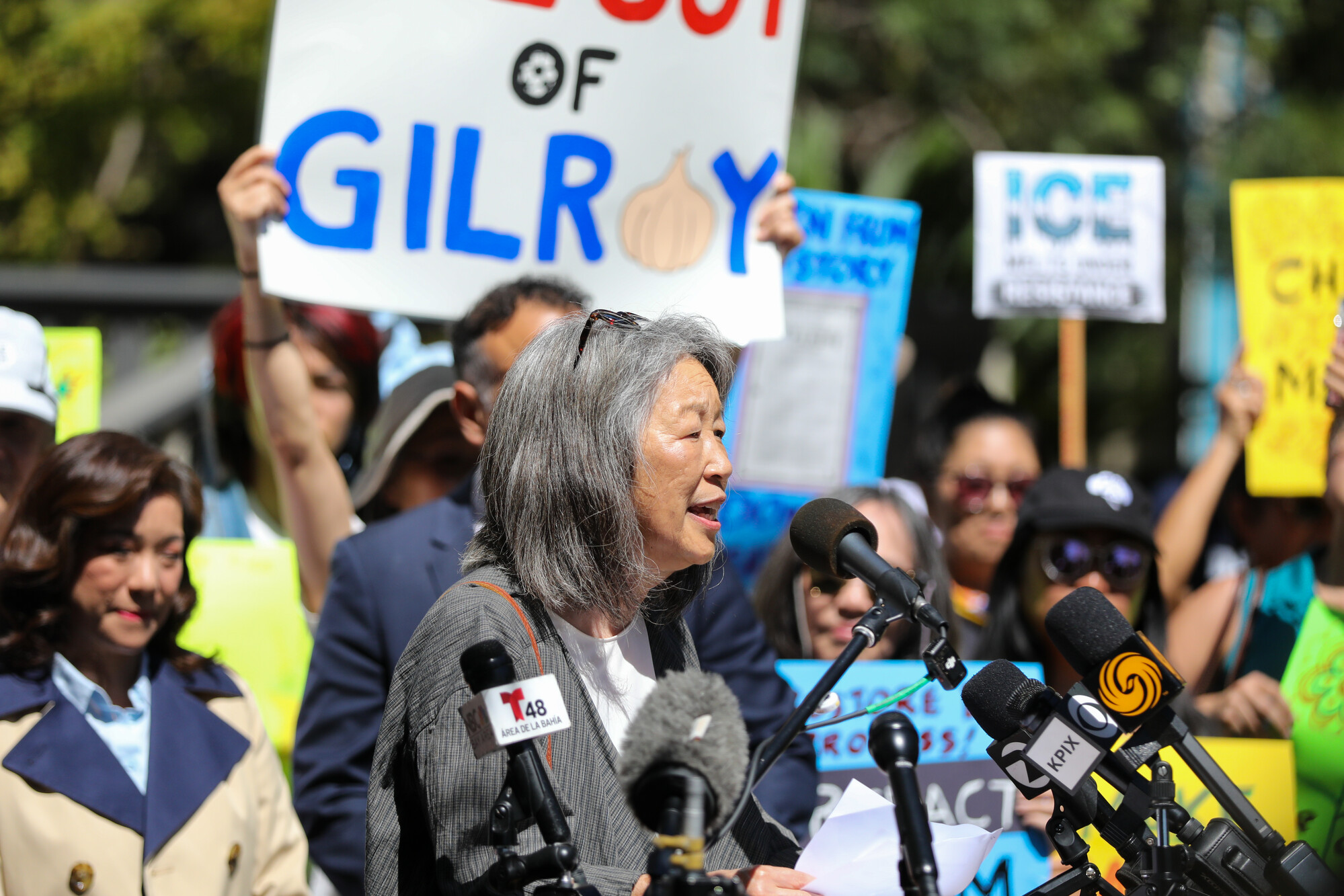
San José Japantown Coalition Rallies Against ICE Facility in Gilroy
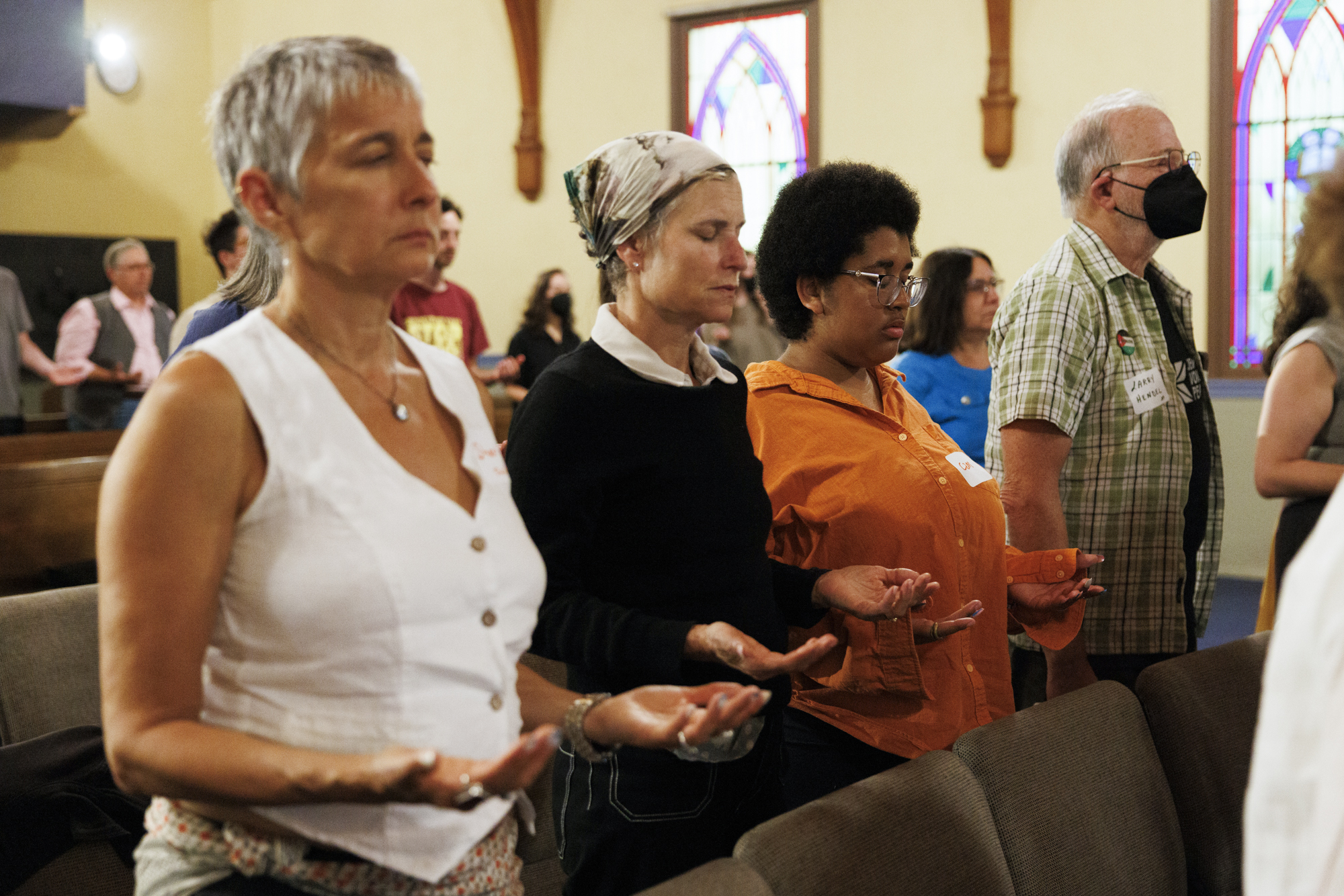
Bay Area Allies Remember Palestinian Activist, 1 Year After His Death
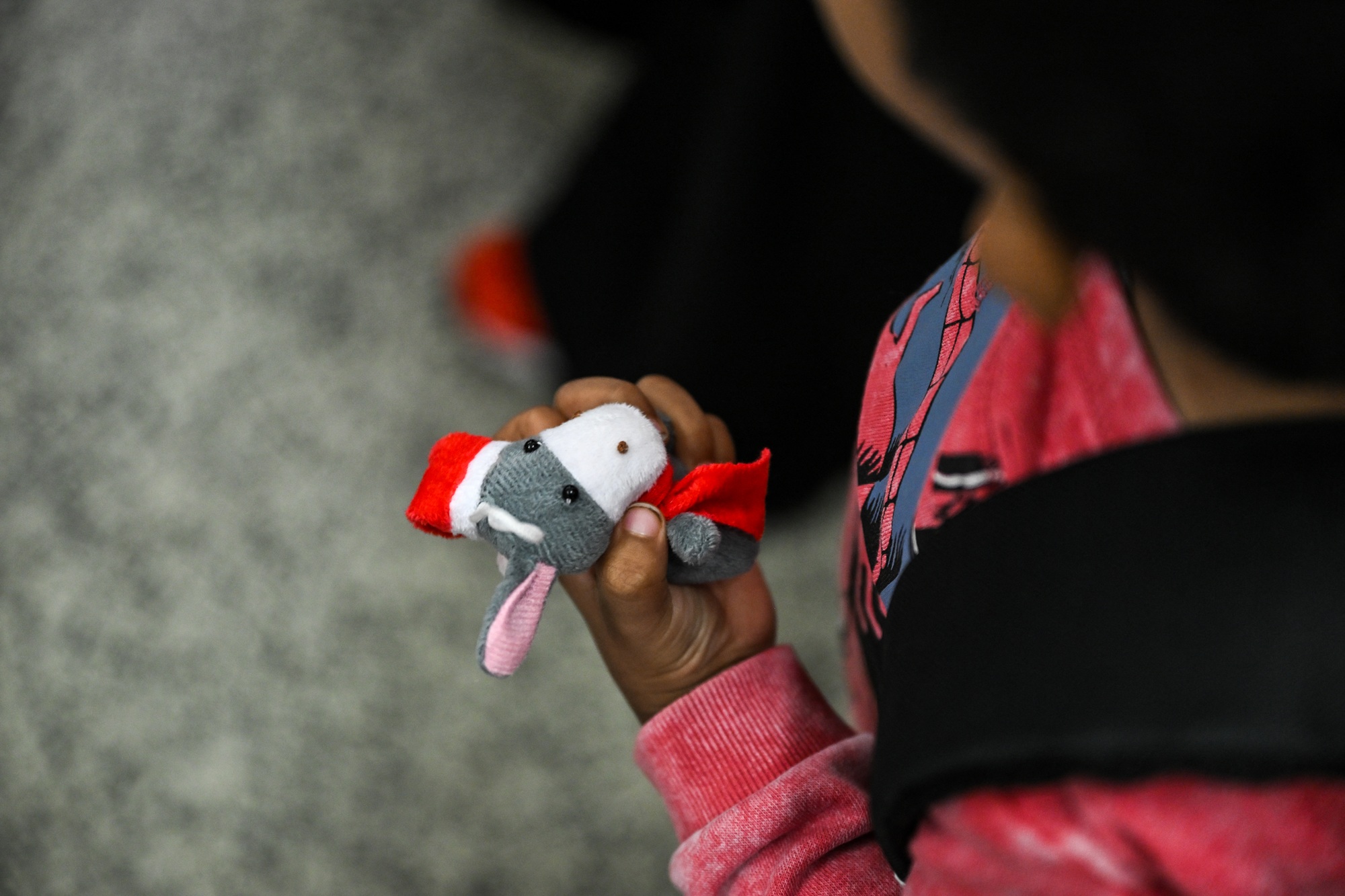
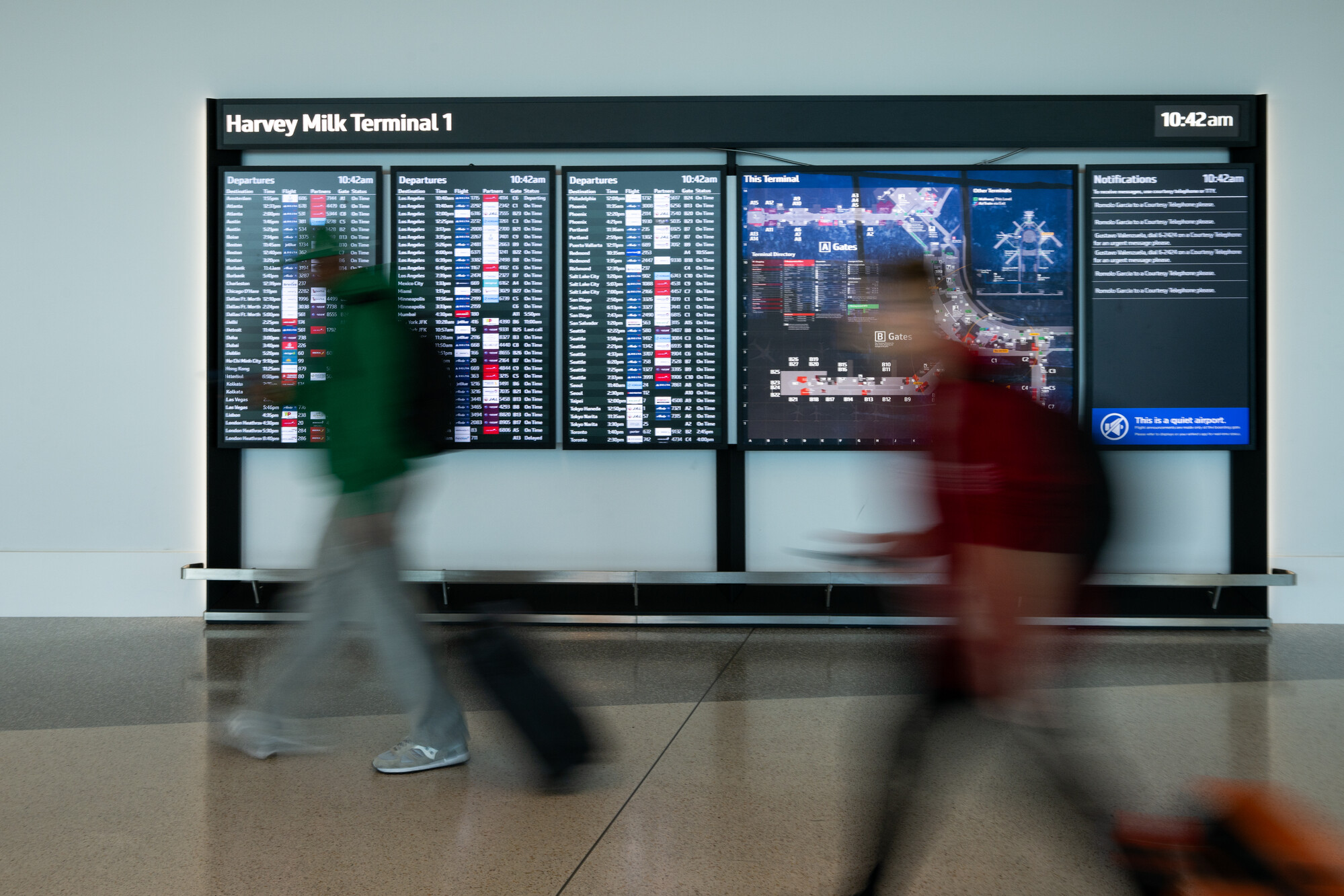
Bay Area Immigrant Advocates Warn Noncitizens to Avoid Air Travel After ICE Arrests
San Francisco Judge to Weigh the Fate of Trial in ICE Officer Assault Case
‘It Wasn’t Right’: Woman Arrested by ICE at SFO Is a San Francisco Photographer, Barista
Funding for KQED immigration coverage is provided by The California Endowment.
Player sponsored by
window.__IS_SSR__=true
window.__INITIAL_STATE__={
"attachmentsReducer": {
"audio_0": {
"type": "attachments",
"id": "audio_0",
"imgSizes": {
"kqedFullSize": {
"file": "https://ww2.kqed.org/news/wp-content/themes/KQED-unified/img/audio_bgs/background0.jpg"
}
}
},
"audio_1": {
"type": "attachments",
"id": "audio_1",
"imgSizes": {
"kqedFullSize": {
"file": "https://ww2.kqed.org/news/wp-content/themes/KQED-unified/img/audio_bgs/background1.jpg"
}
}
},
"audio_2": {
"type": "attachments",
"id": "audio_2",
"imgSizes": {
"kqedFullSize": {
"file": "https://ww2.kqed.org/news/wp-content/themes/KQED-unified/img/audio_bgs/background2.jpg"
}
}
},
"audio_3": {
"type": "attachments",
"id": "audio_3",
"imgSizes": {
"kqedFullSize": {
"file": "https://ww2.kqed.org/news/wp-content/themes/KQED-unified/img/audio_bgs/background3.jpg"
}
}
},
"audio_4": {
"type": "attachments",
"id": "audio_4",
"imgSizes": {
"kqedFullSize": {
"file": "https://ww2.kqed.org/news/wp-content/themes/KQED-unified/img/audio_bgs/background4.jpg"
}
}
},
"placeholder": {
"type": "attachments",
"id": "placeholder",
"imgSizes": {
"thumbnail": {
"file": "https://cdn.kqed.org/wp-content/uploads/2024/12/KQED-Default-Image-816638274-2000x1333-1-160x107.jpg",
"width": 160,
"height": 107,
"mimeType": "image/jpeg"
},
"medium": {
"file": "https://cdn.kqed.org/wp-content/uploads/2024/12/KQED-Default-Image-816638274-2000x1333-1-800x533.jpg",
"width": 800,
"height": 533,
"mimeType": "image/jpeg"
},
"medium_large": {
"file": "https://cdn.kqed.org/wp-content/uploads/2024/12/KQED-Default-Image-816638274-2000x1333-1-768x512.jpg",
"width": 768,
"height": 512,
"mimeType": "image/jpeg"
},
"large": {
"file": "https://cdn.kqed.org/wp-content/uploads/2024/12/KQED-Default-Image-816638274-2000x1333-1-1020x680.jpg",
"width": 1020,
"height": 680,
"mimeType": "image/jpeg"
},
"1536x1536": {
"file": "https://cdn.kqed.org/wp-content/uploads/2024/12/KQED-Default-Image-816638274-2000x1333-1-1536x1024.jpg",
"width": 1536,
"height": 1024,
"mimeType": "image/jpeg"
},
"fd-lrg": {
"file": "https://cdn.kqed.org/wp-content/uploads/2024/12/KQED-Default-Image-816638274-2000x1333-1-1536x1024.jpg",
"width": 1536,
"height": 1024,
"mimeType": "image/jpeg"
},
"fd-med": {
"file": "https://cdn.kqed.org/wp-content/uploads/2024/12/KQED-Default-Image-816638274-2000x1333-1-1020x680.jpg",
"width": 1020,
"height": 680,
"mimeType": "image/jpeg"
},
"fd-sm": {
"file": "https://cdn.kqed.org/wp-content/uploads/2024/12/KQED-Default-Image-816638274-2000x1333-1-800x533.jpg",
"width": 800,
"height": 533,
"mimeType": "image/jpeg"
},
"post-thumbnail": {
"file": "https://cdn.kqed.org/wp-content/uploads/2024/12/KQED-Default-Image-816638274-2000x1333-1-672x372.jpg",
"width": 672,
"height": 372,
"mimeType": "image/jpeg"
},
"twentyfourteen-full-width": {
"file": "https://cdn.kqed.org/wp-content/uploads/2024/12/KQED-Default-Image-816638274-2000x1333-1-1038x576.jpg",
"width": 1038,
"height": 576,
"mimeType": "image/jpeg"
},
"xxsmall": {
"file": "https://cdn.kqed.org/wp-content/uploads/2024/12/KQED-Default-Image-816638274-2000x1333-1-160x107.jpg",
"width": 160,
"height": 107,
"mimeType": "image/jpeg"
},
"xsmall": {
"file": "https://cdn.kqed.org/wp-content/uploads/2024/12/KQED-Default-Image-816638274-2000x1333-1-672x372.jpg",
"width": 672,
"height": 372,
"mimeType": "image/jpeg"
},
"small": {
"file": "https://cdn.kqed.org/wp-content/uploads/2024/12/KQED-Default-Image-816638274-2000x1333-1-672x372.jpg",
"width": 672,
"height": 372,
"mimeType": "image/jpeg"
},
"xlarge": {
"file": "https://cdn.kqed.org/wp-content/uploads/2024/12/KQED-Default-Image-816638274-2000x1333-1-1020x680.jpg",
"width": 1020,
"height": 680,
"mimeType": "image/jpeg"
},
"full-width": {
"file": "https://cdn.kqed.org/wp-content/uploads/2024/12/KQED-Default-Image-816638274-2000x1333-1-1920x1280.jpg",
"width": 1920,
"height": 1280,
"mimeType": "image/jpeg"
},
"guest-author-32": {
"file": "https://cdn.kqed.org/wp-content/uploads/2025/01/KQED-Default-Image-816638274-1333x1333-1-160x160.jpg",
"width": 32,
"height": 32,
"mimeType": "image/jpeg"
},
"guest-author-50": {
"file": "https://cdn.kqed.org/wp-content/uploads/2025/01/KQED-Default-Image-816638274-1333x1333-1-160x160.jpg",
"width": 50,
"height": 50,
"mimeType": "image/jpeg"
},
"guest-author-64": {
"file": "https://cdn.kqed.org/wp-content/uploads/2025/01/KQED-Default-Image-816638274-1333x1333-1-160x160.jpg",
"width": 64,
"height": 64,
"mimeType": "image/jpeg"
},
"guest-author-96": {
"file": "https://cdn.kqed.org/wp-content/uploads/2025/01/KQED-Default-Image-816638274-1333x1333-1-160x160.jpg",
"width": 96,
"height": 96,
"mimeType": "image/jpeg"
},
"guest-author-128": {
"file": "https://cdn.kqed.org/wp-content/uploads/2025/01/KQED-Default-Image-816638274-1333x1333-1-160x160.jpg",
"width": 128,
"height": 128,
"mimeType": "image/jpeg"
},
"detail": {
"file": "https://cdn.kqed.org/wp-content/uploads/2025/01/KQED-Default-Image-816638274-1333x1333-1-160x160.jpg",
"width": 160,
"height": 160,
"mimeType": "image/jpeg"
},
"kqedFullSize": {
"file": "https://cdn.kqed.org/wp-content/uploads/2024/12/KQED-Default-Image-816638274-2000x1333-1.jpg",
"width": 2000,
"height": 1333
}
}
},
"news_11986452": {
"type": "attachments",
"id": "news_11986452",
"meta": {
"index": "attachments_1716263798",
"site": "news",
"id": "11986452",
"found": true
},
"title": "Flood Of Migrants Overwhelms Arizona Border Crossings",
"publishDate": 1715815385,
"status": "inherit",
"parent": 11986437,
"modified": 1715815449,
"caption": "Immigrant children await transport from the U.S.-Mexico border in December 2023. ",
"credit": "John Moore/Getty Images",
"altTag": "a line of kids outside in the desert",
"description": null,
"imgSizes": {
"medium": {
"file": "https://cdn.kqed.org/wp-content/uploads/sites/10/2024/05/GettyImages-1838184632-800x533.jpg",
"width": 800,
"height": 533,
"mimeType": "image/jpeg"
},
"large": {
"file": "https://cdn.kqed.org/wp-content/uploads/sites/10/2024/05/GettyImages-1838184632-1020x680.jpg",
"width": 1020,
"height": 680,
"mimeType": "image/jpeg"
},
"thumbnail": {
"file": "https://cdn.kqed.org/wp-content/uploads/sites/10/2024/05/GettyImages-1838184632-160x107.jpg",
"width": 160,
"height": 107,
"mimeType": "image/jpeg"
},
"1536x1536": {
"file": "https://cdn.kqed.org/wp-content/uploads/sites/10/2024/05/GettyImages-1838184632-1536x1024.jpg",
"width": 1536,
"height": 1024,
"mimeType": "image/jpeg"
},
"2048x2048": {
"file": "https://cdn.kqed.org/wp-content/uploads/sites/10/2024/05/GettyImages-1838184632-2048x1365.jpg",
"width": 2048,
"height": 1365,
"mimeType": "image/jpeg"
},
"post-thumbnail": {
"file": "https://cdn.kqed.org/wp-content/uploads/sites/10/2024/05/GettyImages-1838184632-672x372.jpg",
"width": 672,
"height": 372,
"mimeType": "image/jpeg"
},
"twentyfourteen-full-width": {
"file": "https://cdn.kqed.org/wp-content/uploads/sites/10/2024/05/GettyImages-1838184632-1038x576.jpg",
"width": 1038,
"height": 576,
"mimeType": "image/jpeg"
},
"full-width": {
"file": "https://cdn.kqed.org/wp-content/uploads/sites/10/2024/05/GettyImages-1838184632-1920x1280.jpg",
"width": 1920,
"height": 1280,
"mimeType": "image/jpeg"
},
"kqedFullSize": {
"file": "https://cdn.kqed.org/wp-content/uploads/sites/10/2024/05/GettyImages-1838184632-scaled-e1786995916941.jpg",
"width": 2000,
"height": 1334
}
},
"isLoading": false,
"fetchFailed": false
},
"news_12095286": {
"type": "attachments",
"id": "news_12095286",
"meta": {
"index": "attachments_1716263798",
"site": "news",
"id": "12095286",
"found": true
},
"title": "US-IMMIGRATION-POLITICS",
"publishDate": 1786666028,
"status": "inherit",
"parent": 12095281,
"modified": 1786666145,
"caption": "Three-year-old U.S. citizen, Franklin, holds his stuffed animal as he waits inside Miami International Airport, along with six other children, to leave the United States and reunite with their recently deported parents in Guatemala, in Miami, Florida, on Dec. 4, 2025. ",
"credit": "Chandan Khanna/AFP via Getty Images",
"altTag": null,
"description": null,
"imgSizes": {
"thumbnail": {
"file": "https://cdn.kqed.org/wp-content/uploads/sites/10/2026/08/UnaccompaniedMinorsGetty-160x107.jpg",
"width": 160,
"height": 107,
"mimeType": "image/jpeg"
},
"1536x1536": {
"file": "https://cdn.kqed.org/wp-content/uploads/sites/10/2026/08/UnaccompaniedMinorsGetty-1536x1024.jpg",
"width": 1536,
"height": 1024,
"mimeType": "image/jpeg"
},
"post-thumbnail": {
"file": "https://cdn.kqed.org/wp-content/uploads/sites/10/2026/08/UnaccompaniedMinorsGetty-672x372.jpg",
"width": 672,
"height": 372,
"mimeType": "image/jpeg"
},
"twentyfourteen-full-width": {
"file": "https://cdn.kqed.org/wp-content/uploads/sites/10/2026/08/UnaccompaniedMinorsGetty-1038x576.jpg",
"width": 1038,
"height": 576,
"mimeType": "image/jpeg"
},
"npr-cds-wide": {
"file": "https://cdn.kqed.org/wp-content/uploads/sites/10/2026/08/UnaccompaniedMinorsGetty-1200x675.jpg",
"width": 1200,
"height": 675,
"mimeType": "image/jpeg"
},
"npr-cds-square": {
"file": "https://cdn.kqed.org/wp-content/uploads/sites/10/2026/08/UnaccompaniedMinorsGetty-600x600.jpg",
"width": 600,
"height": 600,
"mimeType": "image/jpeg"
},
"kqedFullSize": {
"file": "https://cdn.kqed.org/wp-content/uploads/sites/10/2026/08/UnaccompaniedMinorsGetty.jpg",
"width": 2000,
"height": 1333
}
},
"isLoading": false,
"fetchFailed": false
},
"news_11905961": {
"type": "attachments",
"id": "news_11905961",
"meta": {
"index": "attachments_1716263798",
"site": "news",
"id": "11905961",
"found": true
},
"parent": 11905959,
"imgSizes": {
"twentyfourteen-full-width": {
"file": "https://ww2.kqed.org/app/uploads/sites/10/2022/02/RS53816_GettyImages-1366036344-qut-1038x576.jpg",
"width": 1038,
"mimeType": "image/jpeg",
"height": 576
},
"thumbnail": {
"file": "https://ww2.kqed.org/app/uploads/sites/10/2022/02/RS53816_GettyImages-1366036344-qut-160x107.jpg",
"width": 160,
"mimeType": "image/jpeg",
"height": 107
},
"post-thumbnail": {
"file": "https://ww2.kqed.org/app/uploads/sites/10/2022/02/RS53816_GettyImages-1366036344-qut-672x372.jpg",
"width": 672,
"mimeType": "image/jpeg",
"height": 372
},
"kqedFullSize": {
"file": "https://ww2.kqed.org/app/uploads/sites/10/2022/02/RS53816_GettyImages-1366036344-qut.jpg",
"width": 1920,
"height": 1278
},
"large": {
"file": "https://ww2.kqed.org/app/uploads/sites/10/2022/02/RS53816_GettyImages-1366036344-qut-1020x679.jpg",
"width": 1020,
"mimeType": "image/jpeg",
"height": 679
},
"1536x1536": {
"file": "https://ww2.kqed.org/app/uploads/sites/10/2022/02/RS53816_GettyImages-1366036344-qut-1536x1022.jpg",
"width": 1536,
"mimeType": "image/jpeg",
"height": 1022
},
"medium": {
"file": "https://ww2.kqed.org/app/uploads/sites/10/2022/02/RS53816_GettyImages-1366036344-qut-800x533.jpg",
"width": 800,
"mimeType": "image/jpeg",
"height": 533
}
},
"publishDate": 1645396337,
"modified": 1645559777,
"caption": "An Afghan woman begs for money from passing cars in the snow, with her child at her feet, on the Kabul road south to Pul-e Alam, Afghanistan, on Jan. 17, 2022. The UN World Food Programme warns that 98% of Afghans are not getting enough to eat, due to a severe drought, the onset of winter, the collapse of the economy and the freezing of Afghan and donor funds after the Taliban takeover of the country in August 2021. The UN has made an emergency appeal for $5 billion to feed the hungry and forestall further economic collapse.",
"description": null,
"title": "Afghans Face Looming Humanitarian Disaster",
"credit": "Scott Peterson/Getty Images",
"status": "inherit",
"altTag": "A woman begs for money from passing cars as a child sits beside her in the snow.",
"isLoading": false,
"fetchFailed": false
},
"news_12094634": {
"type": "attachments",
"id": "news_12094634",
"meta": {
"index": "attachments_1716263798",
"site": "news",
"id": "12094634",
"found": true
},
"title": "260531-californiabudgetchildcare00082_TV_qed",
"publishDate": 1786393916,
"status": "inherit",
"parent": 0,
"modified": 1786394346,
"caption": "Carmen Perez, a mother of four who lives in Marin County, poses for a portrait with her son at Pioneer Park in Novato on May 31, 2026. Perez has struggled to afford child care so she can work. Access to affordable child care is one of the main reasons experts say fertility levels are declining in the United States, especially among Latina women.",
"credit": "Tâm Vũ/KQED",
"altTag": null,
"description": null,
"imgSizes": {
"thumbnail": {
"file": "https://cdn.kqed.org/wp-content/uploads/sites/10/2026/08/260531-californiabudgetchildcare00082_TV_qed-160x107.jpg",
"width": 160,
"height": 107,
"mimeType": "image/jpeg"
},
"1536x1536": {
"file": "https://cdn.kqed.org/wp-content/uploads/sites/10/2026/08/260531-californiabudgetchildcare00082_TV_qed-1536x1024.jpg",
"width": 1536,
"height": 1024,
"mimeType": "image/jpeg"
},
"post-thumbnail": {
"file": "https://cdn.kqed.org/wp-content/uploads/sites/10/2026/08/260531-californiabudgetchildcare00082_TV_qed-672x372.jpg",
"width": 672,
"height": 372,
"mimeType": "image/jpeg"
},
"twentyfourteen-full-width": {
"file": "https://cdn.kqed.org/wp-content/uploads/sites/10/2026/08/260531-californiabudgetchildcare00082_TV_qed-1038x576.jpg",
"width": 1038,
"height": 576,
"mimeType": "image/jpeg"
},
"npr-cds-wide": {
"file": "https://cdn.kqed.org/wp-content/uploads/sites/10/2026/08/260531-californiabudgetchildcare00082_TV_qed-1200x675.jpg",
"width": 1200,
"height": 675,
"mimeType": "image/jpeg"
},
"npr-cds-square": {
"file": "https://cdn.kqed.org/wp-content/uploads/sites/10/2026/08/260531-californiabudgetchildcare00082_TV_qed-600x600.jpg",
"width": 600,
"height": 600,
"mimeType": "image/jpeg"
},
"kqedFullSize": {
"file": "https://cdn.kqed.org/wp-content/uploads/sites/10/2026/08/260531-californiabudgetchildcare00082_TV_qed.jpg",
"width": 2000,
"height": 1333
}
},
"isLoading": false,
"fetchFailed": false
},
"news_12083771": {
"type": "attachments",
"id": "news_12083771",
"meta": {
"index": "attachments_1716263798",
"site": "news",
"id": "12083771",
"found": true
},
"title": "260514-GILROY ICE-ADE-03-KQED",
"publishDate": 1778798137,
"status": "inherit",
"parent": 12083600,
"modified": 1785368962,
"caption": "Santa Clara County Counsel Tony LoPresti addresses a crowd at the Santa Clara County Government Center in San José on May 14, 2026.",
"credit": "Azul Dahlstrom-Eckman/KQED",
"altTag": null,
"description": null,
"imgSizes": {
"thumbnail": {
"file": "https://cdn.kqed.org/wp-content/uploads/sites/10/2026/05/260514-GILROY-ICE-ADE-03-KQED-160x107.jpg",
"width": 160,
"height": 107,
"mimeType": "image/jpeg"
},
"1536x1536": {
"file": "https://cdn.kqed.org/wp-content/uploads/sites/10/2026/05/260514-GILROY-ICE-ADE-03-KQED-1536x1024.jpg",
"width": 1536,
"height": 1024,
"mimeType": "image/jpeg"
},
"post-thumbnail": {
"file": "https://cdn.kqed.org/wp-content/uploads/sites/10/2026/05/260514-GILROY-ICE-ADE-03-KQED-672x372.jpg",
"width": 672,
"height": 372,
"mimeType": "image/jpeg"
},
"twentyfourteen-full-width": {
"file": "https://cdn.kqed.org/wp-content/uploads/sites/10/2026/05/260514-GILROY-ICE-ADE-03-KQED-1038x576.jpg",
"width": 1038,
"height": 576,
"mimeType": "image/jpeg"
},
"npr-cds-wide": {
"file": "https://cdn.kqed.org/wp-content/uploads/sites/10/2026/05/260514-GILROY-ICE-ADE-03-KQED-1200x675.jpg",
"width": 1200,
"height": 675,
"mimeType": "image/jpeg"
},
"npr-cds-square": {
"file": "https://cdn.kqed.org/wp-content/uploads/sites/10/2026/05/260514-GILROY-ICE-ADE-03-KQED-600x600.jpg",
"width": 600,
"height": 600,
"mimeType": "image/jpeg"
},
"kqedFullSize": {
"file": "https://cdn.kqed.org/wp-content/uploads/sites/10/2026/05/260514-GILROY-ICE-ADE-03-KQED.jpg",
"width": 2000,
"height": 1333
}
},
"isLoading": false,
"fetchFailed": false
},
"news_12093197": {
"type": "attachments",
"id": "news_12093197",
"meta": {
"index": "attachments_1716263798",
"site": "news",
"id": "12093197",
"found": true
},
"title": "260729-SJICERALLY-JG-7_qed",
"publishDate": 1785370058,
"status": "inherit",
"parent": 0,
"modified": 1785425835,
"caption": "Susan Hayase, the co-founder of San José Nikkei Resisters, speaks during a rally held in San José’s Japantown opposing a planned ICE facility in Santa Clara County on July 29, 2026.",
"credit": "Joseph Geha/KQED",
"altTag": null,
"description": null,
"imgSizes": {
"thumbnail": {
"file": "https://cdn.kqed.org/wp-content/uploads/sites/10/2026/07/260729-SJICERALLY-JG-7_qed-160x107.jpg",
"width": 160,
"height": 107,
"mimeType": "image/jpeg"
},
"1536x1536": {
"file": "https://cdn.kqed.org/wp-content/uploads/sites/10/2026/07/260729-SJICERALLY-JG-7_qed-1536x1024.jpg",
"width": 1536,
"height": 1024,
"mimeType": "image/jpeg"
},
"post-thumbnail": {
"file": "https://cdn.kqed.org/wp-content/uploads/sites/10/2026/07/260729-SJICERALLY-JG-7_qed-672x372.jpg",
"width": 672,
"height": 372,
"mimeType": "image/jpeg"
},
"twentyfourteen-full-width": {
"file": "https://cdn.kqed.org/wp-content/uploads/sites/10/2026/07/260729-SJICERALLY-JG-7_qed-1038x576.jpg",
"width": 1038,
"height": 576,
"mimeType": "image/jpeg"
},
"npr-cds-wide": {
"file": "https://cdn.kqed.org/wp-content/uploads/sites/10/2026/07/260729-SJICERALLY-JG-7_qed-1200x675.jpg",
"width": 1200,
"height": 675,
"mimeType": "image/jpeg"
},
"npr-cds-square": {
"file": "https://cdn.kqed.org/wp-content/uploads/sites/10/2026/07/260729-SJICERALLY-JG-7_qed-600x600.jpg",
"width": 600,
"height": 600,
"mimeType": "image/jpeg"
},
"kqedFullSize": {
"file": "https://cdn.kqed.org/wp-content/uploads/sites/10/2026/07/260729-SJICERALLY-JG-7_qed.jpg",
"width": 1999,
"height": 1333
}
},
"isLoading": false,
"fetchFailed": false
},
"news_12093064": {
"type": "attachments",
"id": "news_12093064",
"meta": {
"index": "attachments_1716263798",
"site": "news",
"id": "12093064",
"found": true
},
"title": "072826-PALESTINEACTIVISTMEMORIAL-15-MC-KQED_1",
"publishDate": 1785350010,
"status": "inherit",
"parent": 0,
"modified": 1785350250,
"caption": "Mourners are guided in prayer during a memorial for Palestinian activist, Awdah Hathaleen, at Kehilla Community Synagogue on July 28, 2026, in Piedmont.",
"credit": "Miles Cull/KQED",
"altTag": null,
"description": null,
"imgSizes": {
"thumbnail": {
"file": "https://cdn.kqed.org/wp-content/uploads/sites/10/2026/07/072826-PALESTINEACTIVISTMEMORIAL-15-MC-KQED_1-160x107.jpg",
"width": 160,
"height": 107,
"mimeType": "image/jpeg"
},
"1536x1536": {
"file": "https://cdn.kqed.org/wp-content/uploads/sites/10/2026/07/072826-PALESTINEACTIVISTMEMORIAL-15-MC-KQED_1-1536x1025.jpg",
"width": 1536,
"height": 1025,
"mimeType": "image/jpeg"
},
"post-thumbnail": {
"file": "https://cdn.kqed.org/wp-content/uploads/sites/10/2026/07/072826-PALESTINEACTIVISTMEMORIAL-15-MC-KQED_1-672x372.jpg",
"width": 672,
"height": 372,
"mimeType": "image/jpeg"
},
"twentyfourteen-full-width": {
"file": "https://cdn.kqed.org/wp-content/uploads/sites/10/2026/07/072826-PALESTINEACTIVISTMEMORIAL-15-MC-KQED_1-1038x576.jpg",
"width": 1038,
"height": 576,
"mimeType": "image/jpeg"
},
"npr-cds-wide": {
"file": "https://cdn.kqed.org/wp-content/uploads/sites/10/2026/07/072826-PALESTINEACTIVISTMEMORIAL-15-MC-KQED_1-1200x675.jpg",
"width": 1200,
"height": 675,
"mimeType": "image/jpeg"
},
"npr-cds-square": {
"file": "https://cdn.kqed.org/wp-content/uploads/sites/10/2026/07/072826-PALESTINEACTIVISTMEMORIAL-15-MC-KQED_1-600x600.jpg",
"width": 600,
"height": 600,
"mimeType": "image/jpeg"
},
"kqedFullSize": {
"file": "https://cdn.kqed.org/wp-content/uploads/sites/10/2026/07/072826-PALESTINEACTIVISTMEMORIAL-15-MC-KQED_1.jpg",
"width": 2000,
"height": 1334
}
},
"isLoading": false,
"fetchFailed": false
},
"news_12067757": {
"type": "attachments",
"id": "news_12067757",
"meta": {
"index": "attachments_1716263798",
"site": "news",
"id": "12067757",
"found": true
},
"title": "251210-SFOEating-24-BL_qed",
"publishDate": 1766083502,
"status": "inherit",
"parent": 12065518,
"modified": 1766083510,
"caption": "Passengers walk past a flight board in Harvey Milk Terminal 1 at San Francisco International Airport on Dec. 10, 2025.",
"credit": "Beth LaBerge/KQED",
"altTag": null,
"description": null,
"imgSizes": {
"thumbnail": {
"file": "https://cdn.kqed.org/wp-content/uploads/sites/10/2025/11/251210-SFOEating-24-BL_qed-160x107.jpg",
"width": 160,
"height": 107,
"mimeType": "image/jpeg"
},
"1536x1536": {
"file": "https://cdn.kqed.org/wp-content/uploads/sites/10/2025/11/251210-SFOEating-24-BL_qed-1536x1024.jpg",
"width": 1536,
"height": 1024,
"mimeType": "image/jpeg"
},
"post-thumbnail": {
"file": "https://cdn.kqed.org/wp-content/uploads/sites/10/2025/11/251210-SFOEating-24-BL_qed-672x372.jpg",
"width": 672,
"height": 372,
"mimeType": "image/jpeg"
},
"twentyfourteen-full-width": {
"file": "https://cdn.kqed.org/wp-content/uploads/sites/10/2025/11/251210-SFOEating-24-BL_qed-1038x576.jpg",
"width": 1038,
"height": 576,
"mimeType": "image/jpeg"
},
"npr-cds-wide": {
"file": "https://cdn.kqed.org/wp-content/uploads/sites/10/2025/11/251210-SFOEating-24-BL_qed-1200x675.jpg",
"width": 1200,
"height": 675,
"mimeType": "image/jpeg"
},
"kqedFullSize": {
"file": "https://cdn.kqed.org/wp-content/uploads/sites/10/2025/11/251210-SFOEating-24-BL_qed.jpg",
"width": 1999,
"height": 1333
}
},
"isLoading": false,
"fetchFailed": false
},
"news_12042200": {
"type": "attachments",
"id": "news_12042200",
"meta": {
"index": "attachments_1716263798",
"site": "news",
"id": "12042200",
"found": true
},
"title": "008_KQED_630Sansome_02052020_1470_qed",
"publishDate": 1748630169,
"status": "inherit",
"parent": 12042197,
"modified": 1784932362,
"caption": "The U.S. Immigration & Customs Enforcement building at 630 Sansome St., in San Francisco, California, on Feb. 5, 2020.",
"credit": "Beth LaBerge/KQED",
"altTag": null,
"description": null,
"imgSizes": {
"medium": {
"file": "https://cdn.kqed.org/wp-content/uploads/sites/10/2025/05/008_KQED_630Sansome_02052020_1470_qed-800x533.jpg",
"width": 800,
"height": 533,
"mimeType": "image/jpeg"
},
"large": {
"file": "https://cdn.kqed.org/wp-content/uploads/sites/10/2025/05/008_KQED_630Sansome_02052020_1470_qed-1020x680.jpg",
"width": 1020,
"height": 680,
"mimeType": "image/jpeg"
},
"thumbnail": {
"file": "https://cdn.kqed.org/wp-content/uploads/sites/10/2025/05/008_KQED_630Sansome_02052020_1470_qed-160x107.jpg",
"width": 160,
"height": 107,
"mimeType": "image/jpeg"
},
"1536x1536": {
"file": "https://cdn.kqed.org/wp-content/uploads/sites/10/2025/05/008_KQED_630Sansome_02052020_1470_qed-1536x1024.jpg",
"width": 1536,
"height": 1024,
"mimeType": "image/jpeg"
},
"post-thumbnail": {
"file": "https://cdn.kqed.org/wp-content/uploads/sites/10/2025/05/008_KQED_630Sansome_02052020_1470_qed-672x372.jpg",
"width": 672,
"height": 372,
"mimeType": "image/jpeg"
},
"twentyfourteen-full-width": {
"file": "https://cdn.kqed.org/wp-content/uploads/sites/10/2025/05/008_KQED_630Sansome_02052020_1470_qed-1038x576.jpg",
"width": 1038,
"height": 576,
"mimeType": "image/jpeg"
},
"full-width": {
"file": "https://cdn.kqed.org/wp-content/uploads/sites/10/2025/05/008_KQED_630Sansome_02052020_1470_qed-1920x1280.jpg",
"width": 1920,
"height": 1280,
"mimeType": "image/jpeg"
},
"kqedFullSize": {
"file": "https://cdn.kqed.org/wp-content/uploads/sites/10/2025/05/008_KQED_630Sansome_02052020_1470_qed.jpg",
"width": 1999,
"height": 1333
}
},
"isLoading": false,
"fetchFailed": false
},
"news_12092618": {
"type": "attachments",
"id": "news_12092618",
"meta": {
"index": "attachments_1716263798",
"site": "news",
"id": "12092618",
"found": true
},
"title": "260724-SFO ICE-01-KQED",
"publishDate": 1784930874,
"status": "inherit",
"parent": 0,
"modified": 1784933063,
"caption": "Iryna Gorb, 38, lived in the United States for 16 years before she was detained by immigration officials at SFO this week. ",
"credit": "Courtesy of Andy Eblin",
"altTag": null,
"description": null,
"imgSizes": {
"thumbnail": {
"file": "https://cdn.kqed.org/wp-content/uploads/sites/10/2026/07/260724-SFO-ICE-01-KQED-160x107.jpeg",
"width": 160,
"height": 107,
"mimeType": "image/jpeg"
},
"1536x1536": {
"file": "https://cdn.kqed.org/wp-content/uploads/sites/10/2026/07/260724-SFO-ICE-01-KQED-1536x1025.jpeg",
"width": 1536,
"height": 1025,
"mimeType": "image/jpeg"
},
"post-thumbnail": {
"file": "https://cdn.kqed.org/wp-content/uploads/sites/10/2026/07/260724-SFO-ICE-01-KQED-672x372.jpeg",
"width": 672,
"height": 372,
"mimeType": "image/jpeg"
},
"twentyfourteen-full-width": {
"file": "https://cdn.kqed.org/wp-content/uploads/sites/10/2026/07/260724-SFO-ICE-01-KQED-1038x576.jpeg",
"width": 1038,
"height": 576,
"mimeType": "image/jpeg"
},
"npr-cds-wide": {
"file": "https://cdn.kqed.org/wp-content/uploads/sites/10/2026/07/260724-SFO-ICE-01-KQED-1200x675.jpeg",
"width": 1200,
"height": 675,
"mimeType": "image/jpeg"
},
"npr-cds-square": {
"file": "https://cdn.kqed.org/wp-content/uploads/sites/10/2026/07/260724-SFO-ICE-01-KQED-600x600.jpeg",
"width": 600,
"height": 600,
"mimeType": "image/jpeg"
},
"kqedFullSize": {
"file": "https://cdn.kqed.org/wp-content/uploads/sites/10/2026/07/260724-SFO-ICE-01-KQED.jpeg",
"width": 2000,
"height": 1334
}
},
"isLoading": false,
"fetchFailed": false
}
},
"audioPlayerReducer": {
"postId": "stream_live",
"isPaused": true,
"isPlaying": false,
"pfsActive": false,
"pledgeModalIsOpen": true,
"playerDrawerIsOpen": false,
"liveAudioPlayStartedAt": 0,
"liveAudioPlayContext": ""
},
"authorsReducer": {
"byline_news_12095108": {
"type": "authors",
"id": "byline_news_12095108",
"meta": {
"override": true
},
"slug": "byline_news_12095108",
"name": "Amina Wase",
"isLoading": false
},
"tychehendricks": {
"type": "authors",
"id": "259",
"meta": {
"index": "authors_1716337520",
"id": "259",
"found": true
},
"name": "Tyche Hendricks",
"firstName": "Tyche",
"lastName": "Hendricks",
"slug": "tychehendricks",
"email": "thendricks@kqed.org",
"display_author_email": true,
"staff_mastheads": [
"news"
],
"title": "KQED Senior Editor, Immigration",
"bio": "\u003cspan style=\"font-weight: 400;\">Tyche Hendricks is KQED’s senior editor for immigration, leading coverage of the policy and politics that affect California’s immigrant communities. Her work for KQED’s radio and online audiences is also carried on NPR and other national outlets. She has been recognized with awards from the Radio and Television News Directors Association, the Society for Professional Journalists; the Education Writers Association; the Best of the West and the National Federation of Community Broadcasters. Before joining KQED in 2010, Tyche spent more than a dozen years as a newspaper reporter, notably at the \u003c/span>\u003ci>\u003cspan style=\"font-weight: 400;\">San Francisco Chronicle\u003c/span>\u003c/i>\u003cspan style=\"font-weight: 400;\">. At different times she has covered criminal justice, government and politics and urban planning. Tyche has taught in the MFA Creative Writing program at the University of San Francisco and at UC Berkeley’s Graduate School of Journalism, where she was co-director of a national immigration symposium for professional journalists. She is the author of \u003c/span>\u003ci>\u003cspan style=\"font-weight: 400;\">The Wind Doesn't Need a Passport: Stories from the U.S.-Mexico Borderlands\u003c/span>\u003c/i>\u003cspan style=\"font-weight: 400;\"> (University of California Press). \u003c/span>",
"avatar": "https://secure.gravatar.com/avatar/b8ee458e2731c2d43df86882ce17267e?s=600&d=blank&r=g",
"twitter": "tychehendricks",
"facebook": null,
"instagram": null,
"linkedin": null,
"sites": [
{
"site": "news",
"roles": [
"editor"
]
},
{
"site": "stateofhealth",
"roles": [
"editor"
]
}
],
"headData": {
"title": "Tyche Hendricks | KQED",
"description": "KQED Senior Editor, Immigration",
"ogImgSrc": "https://secure.gravatar.com/avatar/b8ee458e2731c2d43df86882ce17267e?s=600&d=blank&r=g",
"twImgSrc": "https://secure.gravatar.com/avatar/b8ee458e2731c2d43df86882ce17267e?s=600&d=blank&r=g"
},
"isLoading": false,
"link": "/author/tychehendricks"
},
"ecruzguevarra": {
"type": "authors",
"id": "8654",
"meta": {
"index": "authors_1716337520",
"id": "8654",
"found": true
},
"name": "Ericka Cruz Guevarra",
"firstName": "Ericka",
"lastName": "Cruz Guevarra",
"slug": "ecruzguevarra",
"email": "ecruzguevarra@kqed.org",
"display_author_email": true,
"staff_mastheads": [
"news"
],
"title": "Producer, The Bay Podcast",
"bio": "Ericka Cruz Guevarra is host of \u003ca href=\"https://www.kqed.org/podcasts/thebay\">\u003cem>The Bay\u003c/em>\u003c/a> podcast at KQED. Before host, she was the show’s producer. Her work in that capacity includes a three-part reported series on policing in Vallejo, which won a 2020 excellence in journalism award from the Society of Professional Journalists. Ericka has worked as a breaking news reporter at Oregon Public Broadcasting, helped produce the Code Switch podcast, and was KQED’s inaugural Raul Ramirez Diversity Fund intern. She’s also an alumna of NPR’s Next Generation Radio program. Send her an email if you have strong feelings about whether Fairfield and Suisun City are the Bay. Ericka is represented by SAG-AFTRA.",
"avatar": "https://secure.gravatar.com/avatar/accefc1de4bafc7e234b69bcb9b6f6536c130fd84709bc3069ef11a78787e1bb?s=600&d=blank&r=g",
"twitter": "NotoriousECG",
"bluesky": null,
"facebook": null,
"instagram": null,
"linkedin": null,
"sites": [
{
"site": "arts",
"roles": [
"subscriber"
]
},
{
"site": "news",
"roles": [
"editor",
"manage_categories"
]
},
{
"site": "futureofyou",
"roles": [
"subscriber"
]
},
{
"site": "stateofhealth",
"roles": [
"subscriber"
]
},
{
"site": "science",
"roles": [
"editor"
]
},
{
"site": "forum",
"roles": [
"subscriber"
]
}
],
"headData": {
"title": "Ericka Cruz Guevarra | KQED",
"description": "Producer, The Bay Podcast",
"ogImgSrc": "https://secure.gravatar.com/avatar/accefc1de4bafc7e234b69bcb9b6f6536c130fd84709bc3069ef11a78787e1bb?s=600&d=blank&r=g",
"twImgSrc": "https://secure.gravatar.com/avatar/accefc1de4bafc7e234b69bcb9b6f6536c130fd84709bc3069ef11a78787e1bb?s=600&d=blank&r=g"
},
"isLoading": false,
"link": "/author/ecruzguevarra"
},
"kmoghadam": {
"type": "authors",
"id": "11637",
"meta": {
"index": "authors_1716337520",
"id": "11637",
"found": true
},
"name": "Kyana Moghadam",
"firstName": "Kyana",
"lastName": "Moghadam",
"slug": "kmoghadam",
"email": "kmoghadam@kqed.org",
"display_author_email": false,
"staff_mastheads": [
"news"
],
"title": "Senior Producer ",
"bio": "Kyana Moghadam is a senior producer at KQED. Prior to joining KQED, she was an audio producer and editor with Al Jazeera, Jetty Studios, VOX Media, Democracy Now!, and Global Press.",
"avatar": "https://secure.gravatar.com/avatar/cdbd6cb0b9e99deaa9eb618abdba56f265d374a2c614710aebeb4e58decbc5f0?s=600&d=blank&r=g",
"twitter": null,
"bluesky": null,
"facebook": null,
"instagram": null,
"linkedin": "https://www.linkedin.com/in/kyanamoghadam/",
"sites": [
{
"site": "",
"roles": [
"editor"
]
},
{
"site": "arts",
"roles": [
"editor"
]
},
{
"site": "news",
"roles": [
"administrator"
]
},
{
"site": "pop",
"roles": [
"editor"
]
},
{
"site": "about",
"roles": [
"editor"
]
},
{
"site": "forum",
"roles": [
"editor"
]
},
{
"site": "perspectives",
"roles": [
"editor"
]
},
{
"site": "podcasts",
"roles": [
"administrator"
]
}
],
"headData": {
"title": "Kyana Moghadam | KQED",
"description": "Senior Producer ",
"ogImgSrc": "https://secure.gravatar.com/avatar/cdbd6cb0b9e99deaa9eb618abdba56f265d374a2c614710aebeb4e58decbc5f0?s=600&d=blank&r=g",
"twImgSrc": "https://secure.gravatar.com/avatar/cdbd6cb0b9e99deaa9eb618abdba56f265d374a2c614710aebeb4e58decbc5f0?s=600&d=blank&r=g"
},
"isLoading": false,
"link": "/author/kmoghadam"
},
"amontecillo": {
"type": "authors",
"id": "11649",
"meta": {
"index": "authors_1716337520",
"id": "11649",
"found": true
},
"name": "Alan Montecillo",
"firstName": "Alan",
"lastName": "Montecillo",
"slug": "amontecillo",
"email": "amontecillo@kqed.org",
"display_author_email": false,
"staff_mastheads": [
"news"
],
"title": "KQED Contributor",
"bio": "Alan Montecillo is the senior editor of \u003cem>\u003ca href=\"http://kqed.org/thebay\">The Bay\u003c/a>, \u003c/em> KQED's local news podcast. Before moving to the Bay Area, he worked as a senior talk show producer for WILL in Champaign-Urbana, Illinois and at Oregon Public Broadcasting in Portland, Oregon. He has won journalism awards from the Society of Professional Journalists Northern California, the Public Media Journalists Association, The Signal Awards, and has also received a regional Edward R. Murrow award. Alan is a Filipino American from Hong Kong and a graduate of Reed College.",
"avatar": "https://secure.gravatar.com/avatar/268f53a2066899ea9efdd8a5900218b17c822d9862cbc9326cccec53ef41d349?s=600&d=blank&r=g",
"twitter": "alanmontecillo",
"bluesky": null,
"facebook": null,
"instagram": null,
"linkedin": null,
"sites": [
{
"site": "",
"roles": [
"editor"
]
},
{
"site": "news",
"roles": [
"editor",
"manage_categories"
]
}
],
"headData": {
"title": "Alan Montecillo | KQED",
"description": "KQED Contributor",
"ogImgSrc": "https://secure.gravatar.com/avatar/268f53a2066899ea9efdd8a5900218b17c822d9862cbc9326cccec53ef41d349?s=600&d=blank&r=g",
"twImgSrc": "https://secure.gravatar.com/avatar/268f53a2066899ea9efdd8a5900218b17c822d9862cbc9326cccec53ef41d349?s=600&d=blank&r=g"
},
"isLoading": false,
"link": "/author/amontecillo"
},
"btorres": {
"type": "authors",
"id": "11666",
"meta": {
"index": "authors_1716337520",
"id": "11666",
"found": true
},
"name": "Blanca Torres",
"firstName": "Blanca",
"lastName": "Torres",
"slug": "btorres",
"email": "btorres@kqed.org",
"display_author_email": true,
"staff_mastheads": [
"news"
],
"title": "Producer, Forum",
"bio": "Blanca Torres brings sharp news judgement and keen sense of lively conversation to her work as producer for Forum. She loves producing shows that leave listeners feeling like they heard distinctive voices, learned something new and gained a fresh perspective.\r\n\r\nShe joined KQED in January of 2020 after 16 years of working as a newspaper reporter most recently at the \u003cem>San Francisco Business Times,\u003c/em> where she wrote about real estate and economic development. Before that, she covered a variety of beats including crime, education, retail, workplace, the economy, consumer issues, and small business for the \u003cem>Contra Costa Times, Baltimore Sun\u003c/em> and\u003cem> The Seattle Times\u003c/em>. In addition to reporting, she worked as an editorial writer and columnist for the \u003cem>Seattle Times\u003c/em>. From 2017 to 2020, Blanca won a total of ten awards from the National Association of Real Estate Editors and won first place for land use reporting from the California News Publishers Association two years in a row. She is also a member and former board member for the National Association of Hispanic Journalists.\r\n\r\nA native of the Pacific Northwest, Blanca earned her bachelor's degree from Vanderbilt University in Nashville and a master's in fine arts in creative writing at Mills College. She lives in the East Bay with her family.",
"avatar": "https://secure.gravatar.com/avatar/f2322ff46076d337f7ba731ee6068cb1?s=600&d=blank&r=g",
"twitter": "@blancawrites",
"facebook": null,
"instagram": null,
"linkedin": null,
"sites": [
{
"site": "arts",
"roles": [
"editor"
]
},
{
"site": "news",
"roles": [
"editor"
]
},
{
"site": "forum",
"roles": [
"editor"
]
}
],
"headData": {
"title": "Blanca Torres | KQED",
"description": "Producer, Forum",
"ogImgSrc": "https://secure.gravatar.com/avatar/f2322ff46076d337f7ba731ee6068cb1?s=600&d=blank&r=g",
"twImgSrc": "https://secure.gravatar.com/avatar/f2322ff46076d337f7ba731ee6068cb1?s=600&d=blank&r=g"
},
"isLoading": false,
"link": "/author/btorres"
},
"nkhan": {
"type": "authors",
"id": "11867",
"meta": {
"index": "authors_1716337520",
"id": "11867",
"found": true
},
"name": "Nisa Khan",
"firstName": "Nisa",
"lastName": "Khan",
"slug": "nkhan",
"email": "nkhan@kqed.org",
"display_author_email": false,
"staff_mastheads": [],
"title": "KQED Contributor",
"bio": "Nisa Khan is a reporter for KQED's Audience News Desk. She was formerly a data reporter at Michigan Radio. She earned a Bachelor of Science in Information from the University of Michigan and a Master of Arts in Communication from Stanford University.",
"avatar": "https://secure.gravatar.com/avatar/8720459eef081ff64582b3506b124d58523e80e120704a0cbd9892533c914991?s=600&d=blank&r=g",
"twitter": "mnisakhan",
"bluesky": null,
"facebook": null,
"instagram": null,
"linkedin": null,
"sites": [
{
"site": "arts",
"roles": [
"editor"
]
},
{
"site": "news",
"roles": [
"editor"
]
},
{
"site": "science",
"roles": [
"editor",
"author"
]
},
{
"site": "forum",
"roles": [
"editor"
]
},
{
"site": "liveblog",
"roles": [
"contributor"
]
}
],
"headData": {
"title": "Nisa Khan | KQED",
"description": "KQED Contributor",
"ogImgSrc": "https://secure.gravatar.com/avatar/8720459eef081ff64582b3506b124d58523e80e120704a0cbd9892533c914991?s=600&d=blank&r=g",
"twImgSrc": "https://secure.gravatar.com/avatar/8720459eef081ff64582b3506b124d58523e80e120704a0cbd9892533c914991?s=600&d=blank&r=g"
},
"isLoading": false,
"link": "/author/nkhan"
},
"wcruz": {
"type": "authors",
"id": "11877",
"meta": {
"index": "authors_1716337520",
"id": "11877",
"found": true
},
"name": "Billy Cruz",
"firstName": "Billy",
"lastName": "Cruz",
"slug": "wcruz",
"email": "wcruz@KQED.org",
"display_author_email": false,
"staff_mastheads": [
"news"
],
"title": null,
"bio": null,
"avatar": "https://secure.gravatar.com/avatar/f19b14c4121ba9ba1e03e99eec83488517a34ef9e0f144abe8f5212c35f37684?s=600&d=blank&r=g",
"twitter": null,
"bluesky": null,
"facebook": null,
"instagram": null,
"linkedin": null,
"sites": [
{
"site": "news",
"roles": [
"editor"
]
}
],
"headData": {
"title": "Billy Cruz | KQED",
"description": null,
"ogImgSrc": "https://secure.gravatar.com/avatar/f19b14c4121ba9ba1e03e99eec83488517a34ef9e0f144abe8f5212c35f37684?s=600&d=blank&r=g",
"twImgSrc": "https://secure.gravatar.com/avatar/f19b14c4121ba9ba1e03e99eec83488517a34ef9e0f144abe8f5212c35f37684?s=600&d=blank&r=g"
},
"isLoading": false,
"link": "/author/wcruz"
},
"jgeha": {
"type": "authors",
"id": "11906",
"meta": {
"index": "authors_1716337520",
"id": "11906",
"found": true
},
"name": "Joseph Geha",
"firstName": "Joseph",
"lastName": "Geha",
"slug": "jgeha",
"email": "jgeha@kqed.org",
"display_author_email": false,
"staff_mastheads": [
"news",
"science"
],
"title": "KQED Contributor",
"bio": null,
"avatar": "https://secure.gravatar.com/avatar/ea84d2b6dd93d6369d453edf19dd583f117cd1759d2d9c9c92f9de77017354fe?s=600&d=blank&r=g",
"twitter": null,
"bluesky": null,
"facebook": null,
"instagram": null,
"linkedin": null,
"sites": [
{
"site": "news",
"roles": [
"editor"
]
},
{
"site": "liveblog",
"roles": [
"author"
]
}
],
"headData": {
"title": "Joseph Geha | KQED",
"description": "KQED Contributor",
"ogImgSrc": "https://secure.gravatar.com/avatar/ea84d2b6dd93d6369d453edf19dd583f117cd1759d2d9c9c92f9de77017354fe?s=600&d=blank&r=g",
"twImgSrc": "https://secure.gravatar.com/avatar/ea84d2b6dd93d6369d453edf19dd583f117cd1759d2d9c9c92f9de77017354fe?s=600&d=blank&r=g"
},
"isLoading": false,
"link": "/author/jgeha"
},
"kdebenedetti": {
"type": "authors",
"id": "11913",
"meta": {
"index": "authors_1716337520",
"id": "11913",
"found": true
},
"name": "Katie DeBenedetti",
"firstName": "Katie",
"lastName": "DeBenedetti",
"slug": "kdebenedetti",
"email": "kdebenedetti@kqed.org",
"display_author_email": false,
"staff_mastheads": [
"news",
"science"
],
"title": "KQED Contributor",
"bio": "Katie DeBenedetti is a digital reporter covering daily news for the Express Desk. Prior to joining KQED as a culture reporting intern in January 2024, she covered education and city government for the Napa Valley Register.",
"avatar": "https://secure.gravatar.com/avatar/6e31073cb8f7e4214ab03f42771d0f45?s=600&d=blank&r=g",
"twitter": null,
"facebook": null,
"instagram": null,
"linkedin": null,
"sites": [
{
"site": "news",
"roles": [
"author"
]
},
{
"site": "science",
"roles": [
"author"
]
},
{
"site": "liveblog",
"roles": [
"author"
]
}
],
"headData": {
"title": "Katie DeBenedetti | KQED",
"description": "KQED Contributor",
"ogImgSrc": "https://secure.gravatar.com/avatar/6e31073cb8f7e4214ab03f42771d0f45?s=600&d=blank&r=g",
"twImgSrc": "https://secure.gravatar.com/avatar/6e31073cb8f7e4214ab03f42771d0f45?s=600&d=blank&r=g"
},
"isLoading": false,
"link": "/author/kdebenedetti"
},
"gglueck": {
"type": "authors",
"id": "11946",
"meta": {
"index": "authors_1716337520",
"id": "11946",
"found": true
},
"name": "Gabriela Glueck",
"firstName": "Gabriela",
"lastName": "Glueck",
"slug": "gglueck",
"email": "gglueck@kqed.org",
"display_author_email": false,
"staff_mastheads": [
"news"
],
"title": "KQED Contributor",
"bio": null,
"avatar": "https://secure.gravatar.com/avatar/ec62b7e3f7727ce1070cc7046dde80271d1e63cf2178d6194f68bb8d1440f841?s=600&d=blank&r=g",
"twitter": null,
"bluesky": null,
"facebook": null,
"instagram": null,
"linkedin": null,
"sites": [
{
"site": "news",
"roles": [
"editor"
]
}
],
"headData": {
"title": "Gabriela Glueck | KQED",
"description": "KQED Contributor",
"ogImgSrc": "https://secure.gravatar.com/avatar/ec62b7e3f7727ce1070cc7046dde80271d1e63cf2178d6194f68bb8d1440f841?s=600&d=blank&r=g",
"twImgSrc": "https://secure.gravatar.com/avatar/ec62b7e3f7727ce1070cc7046dde80271d1e63cf2178d6194f68bb8d1440f841?s=600&d=blank&r=g"
},
"isLoading": false,
"link": "/author/gglueck"
},
"aaliahmad": {
"type": "authors",
"id": "11986",
"meta": {
"index": "authors_1716337520",
"id": "11986",
"found": true
},
"name": "Ayah Ali-Ahmad",
"firstName": "Ayah",
"lastName": "Ali-Ahmad",
"slug": "aaliahmad",
"email": "aaliahmad@KQED.org",
"display_author_email": false,
"staff_mastheads": [],
"title": "KQED Contributor",
"bio": null,
"avatar": "https://secure.gravatar.com/avatar/7f340465c69a2c816f6c07000137a3ee?s=600&d=blank&r=g",
"twitter": "ayahaliahmad",
"bluesky": null,
"facebook": null,
"instagram": null,
"linkedin": null,
"sites": [
{
"site": "news",
"roles": [
"author"
]
}
],
"headData": {
"title": "Ayah Ali-Ahmad | KQED",
"description": "KQED Contributor",
"ogImgSrc": "https://secure.gravatar.com/avatar/7f340465c69a2c816f6c07000137a3ee?s=600&d=blank&r=g",
"twImgSrc": "https://secure.gravatar.com/avatar/7f340465c69a2c816f6c07000137a3ee?s=600&d=blank&r=g"
},
"isLoading": false,
"link": "/author/aaliahmad"
}
},
"pagesReducer": {
"root-site_immigration": {
"type": "pages",
"id": "root-site_15617",
"meta": {
"index": "pages_1716337520",
"site": "root-site",
"id": "15617",
"score": 0
},
"slug": "immigration",
"title": "Immigration",
"headTitle": "Immigration | KQED",
"pagePath": "immigration",
"pageMeta": {
"sticky": false,
"WpPageTemplate": "page-topic-editorial",
"adSlotOverride": "300x250_news",
"excludeFromSiteSearch": "Include"
},
"headData": {
"title": "Immigration Coverage | KQED",
"description": "Explore the human stories behind immigration, and find a variety of resources to help you navigate our complex immigration system.",
"ogTitle": "",
"ogDescription": "",
"ogImgId": "",
"twTitle": "",
"twDescription": "",
"twImgId": "",
"socialTitle": "Immigration Coverage | KQED",
"socialDescription": "Explore the human stories behind immigration, and find a variety of resources to help you navigate our complex immigration system."
},
"labelTerm": {
"site": ""
},
"publishDate": 1581369093,
"content": "\u003cp>Read and listen to immigration coverage from KQED’s reporters.\u003c/p>\n\n\n\n\n\n\u003cdiv class=\"wp-block-kqed-blocksetter\">\n\u003cdiv class=\"wp-block-columns bgBlue is-layout-flex wp-container-core-columns-is-layout-2 wp-block-columns-is-layout-flex\">\n\u003cdiv class=\"wp-block-column is-layout-flow wp-block-column-is-layout-flow\">\n\u003cp class=\"has-text-align-center\">\u003cstrong>Funding for KQED immigration coverage is provided by The California Endowment.\u003c/strong>\u003c/p>\n\u003c/div>\n\u003c/div>\n\u003c/div>\n\n\n\u003cdiv class=\"wp-block-image\">\n\u003cfigure class=\"aligncenter size-full is-resized\">\u003ca href=\"https://www.calendow.org\">\u003cimg loading=\"lazy\" decoding=\"async\" width=\"1020\" height=\"320\" src=\"https://cdn.kqed.org/wp-content/uploads/2026/05/the-california-endowment@2x.png\" alt=\"\" class=\"wp-image-28189\" style=\"width:250px\" srcset=\"https://cdn.kqed.org/wp-content/uploads/2026/05/the-california-endowment@2x.png 1020w, https://cdn.kqed.org/wp-content/uploads/2026/05/the-california-endowment@2x-160x50.png 160w, https://cdn.kqed.org/wp-content/uploads/2026/05/the-california-endowment@2x-768x241.png 768w\" sizes=\"auto, (max-width: 1020px) 100vw, 1020px\">\u003c/a>\u003c/figure>\u003c/div>\n\n\n\u003cp>\u003c/p>\n\u003cp>[ad fullwidth]\u003c/p>\u003cp>\u003c/p>\n",
"blocks": [
{
"blockName": "core/paragraph",
"attrs": [],
"innerHTML": "\n\u003cp>Read and listen to immigration coverage from KQED’s reporters.\u003c/p>\n",
"innerContent": [
"\n\u003cp>Read and listen to immigration coverage from KQED’s reporters.\u003c/p>\n"
],
"innerBlocks": []
},
{
"blockName": "kqed/post-list",
"attrs": {
"query": "posts/news,science,arts?tag=immigration&queryId=18c8384f9d8",
"useSSR": true,
"seeMore": true
},
"innerHTML": "",
"innerContent": [],
"innerBlocks": []
},
{
"blockName": "kqed/blocksetter",
"attrs": {
"blockName": "kqed/community-report"
},
"innerHTML": "\n\u003cdiv class=\"wp-block-kqed-blocksetter\">\u003c/div>\n",
"innerContent": [
"\n\u003cdiv class=\"wp-block-kqed-blocksetter\">",
null,
"\u003c/div>\n"
],
"innerBlocks": [
{
"blockName": "core/columns",
"attrs": {
"className": "bgBlue"
},
"innerBlocks": [
{
"blockName": "core/column",
"attrs": [],
"innerBlocks": [
{
"blockName": "core/paragraph",
"attrs": {
"align": "center"
},
"innerBlocks": [],
"innerHTML": "\n\u003cp class=\"has-text-align-center\">\u003cstrong>Funding for KQED immigration coverage is provided by The California Endowment.\u003c/strong>\u003c/p>\n",
"innerContent": [
"\n\u003cp class=\"has-text-align-center\">\u003cstrong>Funding for KQED immigration coverage is provided by The California Endowment.\u003c/strong>\u003c/p>\n"
]
}
],
"innerHTML": "\n\u003cdiv class=\"wp-block-column\">\u003c/div>\n",
"innerContent": [
"\n\u003cdiv class=\"wp-block-column\">",
null,
"\u003c/div>\n"
]
}
],
"innerHTML": "\n\u003cdiv class=\"wp-block-columns bgBlue\">\u003c/div>\n",
"innerContent": [
"\n\u003cdiv class=\"wp-block-columns bgBlue\">",
null,
"\u003c/div>\n"
]
}
]
},
{
"blockName": "core/image",
"attrs": {
"lightbox": {
"enabled": false
},
"id": 28189,
"width": "250px",
"sizeSlug": "full",
"linkDestination": "custom",
"align": "center"
},
"innerHTML": "\n\u003cfigure class=\"wp-block-image aligncenter size-full is-resized\">\u003ca href=\"https://www.calendow.org\">\u003cimg src=\"https://cdn.kqed.org/wp-content/uploads/2026/05/the-california-endowment@2x.png\" alt=\"\" class=\"wp-image-28189\" style=\"width:250px\"/>\u003c/a>\u003c/figure>\n",
"innerContent": [
"\n\u003cfigure class=\"wp-block-image aligncenter size-full is-resized\">\u003ca href=\"https://www.calendow.org\">\u003cimg src=\"https://cdn.kqed.org/wp-content/uploads/2026/05/the-california-endowment@2x.png\" alt=\"\" class=\"wp-image-28189\" style=\"width:250px\"/>\u003c/a>\u003c/figure>\n"
],
"innerBlocks": []
},
{
"blockName": "core/paragraph",
"attrs": [],
"innerHTML": "\n\u003cp>\u003c/p>\n",
"innerContent": [
"\n\u003cp>\u003c/p>\n"
],
"innerBlocks": []
}
],
"status": "publish",
"parent": 0,
"modified": 1778022888,
"format": "standard",
"path": "/root-site/15617/immigration",
"audioTrackLength": null,
"parsedContent": [
{
"type": "contentString",
"content": "\u003cdiv class=\"post-body\">\u003cp>\u003cp>Read and listen to immigration coverage from KQED’s reporters.\u003c/p>\n\n\n\n\n\n\u003cdiv class=\"wp-block-kqed-blocksetter\">\n\u003cdiv class=\"wp-block-columns bgBlue is-layout-flex wp-container-core-columns-is-layout-2 wp-block-columns-is-layout-flex\">\n\u003cdiv class=\"wp-block-column is-layout-flow wp-block-column-is-layout-flow\">\n\u003cp class=\"has-text-align-center\">\u003cstrong>Funding for KQED immigration coverage is provided by The California Endowment.\u003c/strong>\u003c/p>\n\u003c/div>\n\u003c/div>\n\u003c/div>\n\n\n\u003cdiv class=\"wp-block-image\">\n\u003cfigure class=\"aligncenter size-full is-resized\">\u003ca href=\"https://www.calendow.org\">\u003cimg loading=\"lazy\" decoding=\"async\" width=\"1020\" height=\"320\" src=\"https://cdn.kqed.org/wp-content/uploads/2026/05/the-california-endowment@2x.png\" alt=\"\" class=\"wp-image-28189\" style=\"width:250px\" srcset=\"https://cdn.kqed.org/wp-content/uploads/2026/05/the-california-endowment@2x.png 1020w, https://cdn.kqed.org/wp-content/uploads/2026/05/the-california-endowment@2x-160x50.png 160w, https://cdn.kqed.org/wp-content/uploads/2026/05/the-california-endowment@2x-768x241.png 768w\" sizes=\"auto, (max-width: 1020px) 100vw, 1020px\">\u003c/a>\u003c/figure>\u003c/div>\n\n\n\u003cp>\u003c/p>\n\u003cp>\u003c/p>\u003c/div>",
"attributes": {
"named": {},
"numeric": []
}
},
{
"type": "component",
"content": "",
"name": "ad",
"attributes": {
"named": {
"label": "fullwidth"
},
"numeric": [
"fullwidth"
]
}
},
{
"type": "contentString",
"content": "\u003cdiv class=\"post-body\">\u003cp>\u003c/p>\u003cp>\u003c/p>\n\u003c/div>\u003c/p>",
"attributes": {
"named": {},
"numeric": []
}
}
],
"label": "root-site",
"isLoading": false
}
},
"pfsSessionReducer": {},
"postsReducer": {
"stream_live": {
"type": "live",
"id": "stream_live",
"audioUrl": "https://streams.kqed.org/kqedradio",
"title": "Live Stream",
"excerpt": "Live Stream information currently unavailable.",
"link": "/radio",
"featImg": "",
"label": {
"name": "KQED Live",
"link": "/"
}
},
"stream_kqedNewscast": {
"type": "posts",
"id": "stream_kqedNewscast",
"audioUrl": "https://www.kqed.org/.stream/anon/radio/RDnews/newscast.mp3?_=1",
"title": "KQED Newscast",
"featImg": "",
"label": {
"name": "88.5 FM",
"link": "/"
}
},
"news_12095691": {
"type": "posts",
"id": "news_12095691",
"meta": {
"index": "posts_1716263798",
"site": "news",
"id": "12095691",
"score": null,
"sort": [
1787067224000
]
},
"guestAuthors": [],
"slug": "who-represents-unaccompanied-migrant-kids-in-immigration-court",
"title": "Who Represents Unaccompanied Migrant Kids in Immigration Court",
"publishDate": 1787067224,
"format": "standard",
"headTitle": "Who Represents Unaccompanied Migrant Kids in Immigration Court | KQED",
"labelTerm": {},
"content": "\u003ch3 class=\"wp-block-heading has-text-align-left\">Here are the morning’s top stories on Tuesday, August 18, 2026\u003c/h3>\n\n\n\n\u003cul class=\"wp-block-list\">\n\u003cli>A California lifeguard and the boy he rescued off the coast of Santa Cruz last month were reunited at the White House yesterday, as the president honored both as heroes.\u003c/li>\n\n\n\n\u003cli>Governor Gavin Newsom has set a goal to add 2.5 million new units to California’s housing stock by 2030.\u003c/li>\n\n\n\n\u003cli>A state bill heading for a final vote as early as this week would permanently extend a fund to help oil industry workers affected by California’s transition away from fossil fuels.\u003c/li>\n\n\n\n\u003cli>A federal judge in Oakland is weighing whether a Trump administration plan to replace a network of seasoned legal aid organizations with new groups is an adequate way to represent unaccompanied children in immigration court.\u003c/li>\n\u003c/ul>\n\n\n\n\u003ch2 class=\"wp-block-heading\">\u003ca href=\"https://calmatters.org/housing/2026/08/california-rhna-housing-affordable-progress/\">State Housing Goals Are Not Being Met\u003c/a>\u003c/h2>\n\n\n\n\u003cp>Every eight years, state housing regulators give cities and counties across California an especially dreaded homework assignment: Make a plan for a bunch of new homes.\u003c/p>\n\n\n\n\u003cp>Gov. Gavin Newsom’s administration assigns localities goals to hit at four different affordability levels. Collectively, the numbers represent the housing department’s best estimate of the number of new homes needed to match any expected population growth and to chip away at the state’s \u003ca href=\"https://calmatters.org/housing/2025/09/california-housing-shortage/\">decades-in-the-making shortage\u003c/a> of affordable places to live.\u003c/p>\n\n\n\n\u003cp>But, less than a third of cities and counties are on track to permit enough “above moderate” units, the category that typically refers to market-rate housing, according to data submitted by locals to the state housing department. \u003c/p>\n\n\n\n\u003cp>Only five jurisdictions in the entire state are permitting at a pace to hit all four income targets. Four are the lightly populated unincorporated bits of small, mostly rural counties: Plumas, Napa, Yolo and Mono. The fifth is Placerville, a town of roughly 11,000 people in the Sierra foothills east of Sacramento.\u003c/p>\n\n\n\n\u003ch2 class=\"wp-block-heading\">Oil Workers Await Final Vote on Funding Bill\u003c/h2>\n\n\n\n\u003cp>A fund to help oil industry workers affected by California’s transition away from fossil fuels could be permanently extended as early as this week, if AB 2157 passes.\u003c/p>\n\n\n\n\u003cp>[ad fullwidth]\u003c/p>\n\u003cp>‘The Displaced Oil and Gas Worker Fund pays up to $15,000 dollars for education, or on the job training to transition to other industries. The program is currently set to end July 1st, 2027.\u003c/p>\n\n\n\n\u003cp>The fund aims to help the state’s oil workers, who have reeled from refinery closures in the state. From 2020 to 2021, two refinery closures led to more than 600 full time workers losing employment. In April of this year, 282 Valero employees lost their jobs when the oil giant closed its Benicia refinery.\u003c/p>\n\n\n\n\u003cp>Advocates for oil and gas workers are urging lawmakers to make the fund –which sunsets next year–permanent. The legislature has until the end of the month to decide.\u003c/p>\n\n\n\n\u003ch2 class=\"wp-block-heading\">Unaccompanied Migrant Kids May Soon Face Legal Gap\u003c/h2>\n\n\n\n\u003cp>Legal aid groups said they will continue to represent \u003ca href=\"https://www.kqed.org/immigration\">unaccompanied immigrant children\u003c/a> in the Bay Area even after the Trump administration shifted federal funding away from seasoned service providers to a controversial anti-trafficking group.\u003c/p>\n\n\n\n\u003cp>Earlier this month, the U.S. Department of Health and Human Services awarded a \u003ca href=\"https://www.npr.org/2026/08/12/nx-s1-5929456/migrant-children-our-rescue\" target=\"_blank\" rel=\"noreferrer noopener\">$158 million contract —\u003c/a> which could grow to $244 million — to Our Rescue, a Utah-based anti-human-trafficking group whose founder was accused of sexual exploitation and whose current director led Homeland Security Investigations, a branch of U.S. Immigration and Customs Enforcement, during the first Trump administration. The group touts its expertise assisting law enforcement with sting operations, but advocates say it lacks experience representing children in immigration court.\u003c/p>\n\n\n\n\u003cp>Katrina Logan, executive director of \u003ca href=\"https://clsepa.org/\" target=\"_blank\" rel=\"noreferrer noopener\">Community Legal Services in East Palo Alto,\u003c/a> said her team of lawyers and social workers is not walking away from the 33 children they represent, even though their contract funded by the U.S. Department of Health and Human Services expired July 31.\u003c/p>\n\n\n\n\u003cp>“Our attorneys have been doing this type of law for many years. They’ve developed the expertise,” Logan said. “They understand how to support clients. So it’s definitely tough to be losing this funding.”\u003c/p>\n\n\n\n\u003cp>In a declaration last week, the government said it was looking for additional contractors to provide legal representation for kids and trying to work out a transitional contract with the \u003ca href=\"https://acaciajustice.org/\" target=\"_blank\" rel=\"noreferrer noopener\">Acacia Center for Justice\u003c/a> (which holds the master contract on behalf of Community Legal Services ) to “support an orderly transition of cases to new legal service providers, including \u003ca href=\"https://ourrescue.org/\" target=\"_blank\" rel=\"noreferrer noopener\">Our Rescue\u003c/a>.”\u003c/p>\n\n\n\n\u003cp>\u003c/p>\n\u003cp>\u003c/p>\n\n",
"blocks": [
{
"blockName": "core/heading",
"attrs": {
"textAlign": "left",
"level": 3,
"text": "Here are the morning’s top stories on Tuesday, August 18, 2026"
},
"innerHTML": "\n\u003ch3 class=\"wp-block-heading has-text-align-left\">Here are the morning’s top stories on Tuesday, August 18, 2026\u003c/h3>\n",
"innerContent": [
"\n\u003ch3 class=\"wp-block-heading has-text-align-left\">Here are the morning’s top stories on Tuesday, August 18, 2026\u003c/h3>\n"
],
"innerBlocks": []
},
{
"blockName": "core/list",
"attrs": {
"items": [
"A California lifeguard and the boy he rescued off the coast of Santa Cruz last month were reunited at the White House yesterday, as the president honored both as heroes.",
"Governor Gavin Newsom has set a goal to add 2.5 million new units to California’s housing stock by 2030.",
"A state bill heading for a final vote as early as this week would permanently extend a fund to help oil industry workers affected by California’s transition away from fossil fuels.",
"A federal judge in Oakland is weighing whether a Trump administration plan to replace a network of seasoned legal aid organizations with new groups is an adequate way to represent unaccompanied children in immigration court."
],
"ordered": false,
"values": ""
},
"innerHTML": "\n\u003cul class=\"wp-block-list\">\n\n\n\n\n\n\u003c/ul>\n",
"innerContent": [
"\n\u003cul class=\"wp-block-list\">",
null,
"\n\n",
null,
"\n\n",
null,
"\n\n",
null,
"\u003c/ul>\n"
],
"innerBlocks": [
{
"blockName": "core/list-item",
"attrs": [],
"innerBlocks": [],
"innerHTML": "\n\u003cli>A California lifeguard and the boy he rescued off the coast of Santa Cruz last month were reunited at the White House yesterday, as the president honored both as heroes.\u003c/li>\n",
"innerContent": [
"\n\u003cli>A California lifeguard and the boy he rescued off the coast of Santa Cruz last month were reunited at the White House yesterday, as the president honored both as heroes.\u003c/li>\n"
]
},
{
"blockName": "core/list-item",
"attrs": [],
"innerBlocks": [],
"innerHTML": "\n\u003cli>Governor Gavin Newsom has set a goal to add 2.5 million new units to California’s housing stock by 2030.\u003c/li>\n",
"innerContent": [
"\n\u003cli>Governor Gavin Newsom has set a goal to add 2.5 million new units to California’s housing stock by 2030.\u003c/li>\n"
]
},
{
"blockName": "core/list-item",
"attrs": [],
"innerBlocks": [],
"innerHTML": "\n\u003cli>A state bill heading for a final vote as early as this week would permanently extend a fund to help oil industry workers affected by California’s transition away from fossil fuels.\u003c/li>\n",
"innerContent": [
"\n\u003cli>A state bill heading for a final vote as early as this week would permanently extend a fund to help oil industry workers affected by California’s transition away from fossil fuels.\u003c/li>\n"
]
},
{
"blockName": "core/list-item",
"attrs": [],
"innerBlocks": [],
"innerHTML": "\n\u003cli>A federal judge in Oakland is weighing whether a Trump administration plan to replace a network of seasoned legal aid organizations with new groups is an adequate way to represent unaccompanied children in immigration court.\u003c/li>\n",
"innerContent": [
"\n\u003cli>A federal judge in Oakland is weighing whether a Trump administration plan to replace a network of seasoned legal aid organizations with new groups is an adequate way to represent unaccompanied children in immigration court.\u003c/li>\n"
]
}
]
},
{
"blockName": "core/heading",
"attrs": {
"text": "State Housing Goals Are Not Being Met",
"level": 2
},
"innerHTML": "\n\u003ch2 class=\"wp-block-heading\">\u003ca href=\"https://calmatters.org/housing/2026/08/california-rhna-housing-affordable-progress/\">State Housing Goals Are Not Being Met\u003c/a>\u003c/h2>\n",
"innerContent": [
"\n\u003ch2 class=\"wp-block-heading\">\u003ca href=\"https://calmatters.org/housing/2026/08/california-rhna-housing-affordable-progress/\">State Housing Goals Are Not Being Met\u003c/a>\u003c/h2>\n"
],
"innerBlocks": []
},
{
"blockName": "core/paragraph",
"attrs": {
"dropCap": false
},
"innerHTML": "\n\u003cp>Every eight years, state housing regulators give cities and counties across California an especially dreaded homework assignment: Make a plan for a bunch of new homes.\u003c/p>\n",
"innerContent": [
"\n\u003cp>Every eight years, state housing regulators give cities and counties across California an especially dreaded homework assignment: Make a plan for a bunch of new homes.\u003c/p>\n"
],
"innerBlocks": []
},
{
"blockName": "core/paragraph",
"attrs": {
"dropCap": false
},
"innerHTML": "\n\u003cp>Gov. Gavin Newsom’s administration assigns localities goals to hit at four different affordability levels. Collectively, the numbers represent the housing department’s best estimate of the number of new homes needed to match any expected population growth and to chip away at the state’s \u003ca href=\"https://calmatters.org/housing/2025/09/california-housing-shortage/\">decades-in-the-making shortage\u003c/a> of affordable places to live.\u003c/p>\n",
"innerContent": [
"\n\u003cp>Gov. Gavin Newsom’s administration assigns localities goals to hit at four different affordability levels. Collectively, the numbers represent the housing department’s best estimate of the number of new homes needed to match any expected population growth and to chip away at the state’s \u003ca href=\"https://calmatters.org/housing/2025/09/california-housing-shortage/\">decades-in-the-making shortage\u003c/a> of affordable places to live.\u003c/p>\n"
],
"innerBlocks": []
},
{
"blockName": "core/paragraph",
"attrs": {
"dropCap": false
},
"innerHTML": "\n\u003cp>But, less than a third of cities and counties are on track to permit enough “above moderate” units, the category that typically refers to market-rate housing, according to data submitted by locals to the state housing department. \u003c/p>\n",
"innerContent": [
"\n\u003cp>But, less than a third of cities and counties are on track to permit enough “above moderate” units, the category that typically refers to market-rate housing, according to data submitted by locals to the state housing department. \u003c/p>\n"
],
"innerBlocks": []
},
{
"blockName": "core/paragraph",
"attrs": {
"dropCap": false
},
"innerHTML": "\n\u003cp>Only five jurisdictions in the entire state are permitting at a pace to hit all four income targets. Four are the lightly populated unincorporated bits of small, mostly rural counties: Plumas, Napa, Yolo and Mono. The fifth is Placerville, a town of roughly 11,000 people in the Sierra foothills east of Sacramento.\u003c/p>\n",
"innerContent": [
"\n\u003cp>Only five jurisdictions in the entire state are permitting at a pace to hit all four income targets. Four are the lightly populated unincorporated bits of small, mostly rural counties: Plumas, Napa, Yolo and Mono. The fifth is Placerville, a town of roughly 11,000 people in the Sierra foothills east of Sacramento.\u003c/p>\n"
],
"innerBlocks": []
},
{
"blockName": "core/heading",
"attrs": {
"text": "Oil Workers Await Final Vote on Funding Bill",
"level": 2
},
"innerHTML": "\n\u003ch2 class=\"wp-block-heading\">Oil Workers Await Final Vote on Funding Bill\u003c/h2>\n",
"innerContent": [
"\n\u003ch2 class=\"wp-block-heading\">Oil Workers Await Final Vote on Funding Bill\u003c/h2>\n"
],
"innerBlocks": []
},
{
"blockName": "core/paragraph",
"attrs": {
"dropCap": false
},
"innerHTML": "\n\u003cp>A fund to help oil industry workers affected by California’s transition away from fossil fuels could be permanently extended as early as this week, if AB 2157 passes.\u003c/p>\n",
"innerContent": [
"\n\u003cp>A fund to help oil industry workers affected by California’s transition away from fossil fuels could be permanently extended as early as this week, if AB 2157 passes.\u003c/p>\n"
],
"innerBlocks": []
},
{
"blockName": "kqed/ad",
"attrs": {
"format": "fullwidth"
},
"innerBlocks": [],
"innerHTML": "",
"innerContent": []
},
{
"blockName": "core/paragraph",
"attrs": {
"dropCap": false
},
"innerHTML": "\n\u003cp>‘The Displaced Oil and Gas Worker Fund pays up to $15,000 dollars for education, or on the job training to transition to other industries. The program is currently set to end July 1st, 2027.\u003c/p>\n",
"innerContent": [
"\n\u003cp>‘The Displaced Oil and Gas Worker Fund pays up to $15,000 dollars for education, or on the job training to transition to other industries. The program is currently set to end July 1st, 2027.\u003c/p>\n"
],
"innerBlocks": []
},
{
"blockName": "core/paragraph",
"attrs": {
"dropCap": false
},
"innerHTML": "\n\u003cp>The fund aims to help the state’s oil workers, who have reeled from refinery closures in the state. From 2020 to 2021, two refinery closures led to more than 600 full time workers losing employment. In April of this year, 282 Valero employees lost their jobs when the oil giant closed its Benicia refinery.\u003c/p>\n",
"innerContent": [
"\n\u003cp>The fund aims to help the state’s oil workers, who have reeled from refinery closures in the state. From 2020 to 2021, two refinery closures led to more than 600 full time workers losing employment. In April of this year, 282 Valero employees lost their jobs when the oil giant closed its Benicia refinery.\u003c/p>\n"
],
"innerBlocks": []
},
{
"blockName": "core/paragraph",
"attrs": {
"dropCap": false
},
"innerHTML": "\n\u003cp>Advocates for oil and gas workers are urging lawmakers to make the fund –which sunsets next year–permanent. The legislature has until the end of the month to decide.\u003c/p>\n",
"innerContent": [
"\n\u003cp>Advocates for oil and gas workers are urging lawmakers to make the fund –which sunsets next year–permanent. The legislature has until the end of the month to decide.\u003c/p>\n"
],
"innerBlocks": []
},
{
"blockName": "core/heading",
"attrs": {
"text": "Unaccompanied Migrant Kids May Soon Face Legal Gap",
"level": 2
},
"innerHTML": "\n\u003ch2 class=\"wp-block-heading\">Unaccompanied Migrant Kids May Soon Face Legal Gap\u003c/h2>\n",
"innerContent": [
"\n\u003ch2 class=\"wp-block-heading\">Unaccompanied Migrant Kids May Soon Face Legal Gap\u003c/h2>\n"
],
"innerBlocks": []
},
{
"blockName": "core/paragraph",
"attrs": {
"dropCap": false
},
"innerHTML": "\n\u003cp>Legal aid groups said they will continue to represent \u003ca href=\"https://www.kqed.org/immigration\">unaccompanied immigrant children\u003c/a> in the Bay Area even after the Trump administration shifted federal funding away from seasoned service providers to a controversial anti-trafficking group.\u003c/p>\n",
"innerContent": [
"\n\u003cp>Legal aid groups said they will continue to represent \u003ca href=\"https://www.kqed.org/immigration\">unaccompanied immigrant children\u003c/a> in the Bay Area even after the Trump administration shifted federal funding away from seasoned service providers to a controversial anti-trafficking group.\u003c/p>\n"
],
"innerBlocks": []
},
{
"blockName": "core/paragraph",
"attrs": {
"dropCap": false
},
"innerHTML": "\n\u003cp>Earlier this month, the U.S. Department of Health and Human Services awarded a \u003ca href=\"https://www.npr.org/2026/08/12/nx-s1-5929456/migrant-children-our-rescue\" target=\"_blank\" rel=\"noreferrer noopener\">$158 million contract —\u003c/a> which could grow to $244 million — to Our Rescue, a Utah-based anti-human-trafficking group whose founder was accused of sexual exploitation and whose current director led Homeland Security Investigations, a branch of U.S. Immigration and Customs Enforcement, during the first Trump administration. The group touts its expertise assisting law enforcement with sting operations, but advocates say it lacks experience representing children in immigration court.\u003c/p>\n",
"innerContent": [
"\n\u003cp>Earlier this month, the U.S. Department of Health and Human Services awarded a \u003ca href=\"https://www.npr.org/2026/08/12/nx-s1-5929456/migrant-children-our-rescue\" target=\"_blank\" rel=\"noreferrer noopener\">$158 million contract —\u003c/a> which could grow to $244 million — to Our Rescue, a Utah-based anti-human-trafficking group whose founder was accused of sexual exploitation and whose current director led Homeland Security Investigations, a branch of U.S. Immigration and Customs Enforcement, during the first Trump administration. The group touts its expertise assisting law enforcement with sting operations, but advocates say it lacks experience representing children in immigration court.\u003c/p>\n"
],
"innerBlocks": []
},
{
"blockName": "core/paragraph",
"attrs": {
"dropCap": false
},
"innerHTML": "\n\u003cp>Katrina Logan, executive director of \u003ca href=\"https://clsepa.org/\" target=\"_blank\" rel=\"noreferrer noopener\">Community Legal Services in East Palo Alto,\u003c/a> said her team of lawyers and social workers is not walking away from the 33 children they represent, even though their contract funded by the U.S. Department of Health and Human Services expired July 31.\u003c/p>\n",
"innerContent": [
"\n\u003cp>Katrina Logan, executive director of \u003ca href=\"https://clsepa.org/\" target=\"_blank\" rel=\"noreferrer noopener\">Community Legal Services in East Palo Alto,\u003c/a> said her team of lawyers and social workers is not walking away from the 33 children they represent, even though their contract funded by the U.S. Department of Health and Human Services expired July 31.\u003c/p>\n"
],
"innerBlocks": []
},
{
"blockName": "core/paragraph",
"attrs": {
"dropCap": false
},
"innerHTML": "\n\u003cp>“Our attorneys have been doing this type of law for many years. They’ve developed the expertise,” Logan said. “They understand how to support clients. So it’s definitely tough to be losing this funding.”\u003c/p>\n",
"innerContent": [
"\n\u003cp>“Our attorneys have been doing this type of law for many years. They’ve developed the expertise,” Logan said. “They understand how to support clients. So it’s definitely tough to be losing this funding.”\u003c/p>\n"
],
"innerBlocks": []
},
{
"blockName": "core/paragraph",
"attrs": {
"dropCap": false
},
"innerHTML": "\n\u003cp>In a declaration last week, the government said it was looking for additional contractors to provide legal representation for kids and trying to work out a transitional contract with the \u003ca href=\"https://acaciajustice.org/\" target=\"_blank\" rel=\"noreferrer noopener\">Acacia Center for Justice\u003c/a> (which holds the master contract on behalf of Community Legal Services ) to “support an orderly transition of cases to new legal service providers, including \u003ca href=\"https://ourrescue.org/\" target=\"_blank\" rel=\"noreferrer noopener\">Our Rescue\u003c/a>.”\u003c/p>\n",
"innerContent": [
"\n\u003cp>In a declaration last week, the government said it was looking for additional contractors to provide legal representation for kids and trying to work out a transitional contract with the \u003ca href=\"https://acaciajustice.org/\" target=\"_blank\" rel=\"noreferrer noopener\">Acacia Center for Justice\u003c/a> (which holds the master contract on behalf of Community Legal Services ) to “support an orderly transition of cases to new legal service providers, including \u003ca href=\"https://ourrescue.org/\" target=\"_blank\" rel=\"noreferrer noopener\">Our Rescue\u003c/a>.”\u003c/p>\n"
],
"innerBlocks": []
},
{
"blockName": "kqed/ad",
"attrs": {
"format": "floatright"
},
"innerBlocks": [],
"innerHTML": "",
"innerContent": []
},
{
"blockName": "core/paragraph",
"attrs": {
"dropCap": false
},
"innerHTML": "\n\u003cp>\u003c/p>\n",
"innerContent": [
"\n\u003cp>\u003c/p>\n"
],
"innerBlocks": []
}
],
"excerpt": "Legal aid organizations that represent unaccompanied children in immigration court may soon be replaced.",
"status": "publish",
"parent": 0,
"modified": 1787067231,
"stats": {
"hasAudio": false,
"hasVideo": false,
"hasChartOrMap": false,
"iframeSrcs": [],
"hasGoogleForm": false,
"hasGallery": false,
"hasHearkenModule": false,
"hasPolis": false,
"paragraphCount": 16,
"wordCount": 773
},
"headData": {
"title": "Who Represents Unaccompanied Migrant Kids in Immigration Court | KQED",
"description": "Legal aid organizations that represent unaccompanied children in immigration court may soon be replaced.",
"ogTitle": "",
"ogDescription": "",
"ogImgId": "",
"twTitle": "",
"twDescription": "",
"twImgId": "",
"schema": {
"@context": "https://schema.org",
"@type": "NewsArticle",
"headline": "Who Represents Unaccompanied Migrant Kids in Immigration Court",
"datePublished": "2026-08-18T08:33:44-07:00",
"dateModified": "2026-08-18T08:33:51-07:00",
"image": "https://cdn.kqed.org/wp-content/uploads/2020/02/KQED-OG-Image@1x.png",
"isAccessibleForFree": "True",
"publisher": {
"@type": "NewsMediaOrganization",
"@id": "https://www.kqed.org/#organization",
"name": "KQED",
"logo": "https://cdn.kqed.org/wp-content/uploads/2020/02/KQED-OG-Image@1x.png",
"url": "https://www.kqed.org",
"sameAs": [
"https://www.facebook.com/KQED",
"https://twitter.com/KQED",
"https://www.instagram.com/kqed/",
"https://www.tiktok.com/@kqedofficial",
"https://www.linkedin.com/company/kqed",
"https://www.youtube.com/channel/UCeC0IOo7i1P_61zVUWbJ4nw"
]
}
}
},
"primaryCategory": {
"termId": 33520,
"slug": "podcast",
"name": "Podcast"
},
"source": "The California Report",
"sourceUrl": "https://www.kqed.org/news/tag/tcrarchive/",
"audioUrl": "https://www.podtrac.com/pts/redirect.mp3/traffic.megaphone.fm/KQINC1343750438.mp3",
"sticky": false,
"nprStoryId": "kqed-12095691",
"templateType": "standard",
"featuredImageType": "standard",
"excludeFromSiteSearch": "Include",
"articleAge": "0",
"path": "/news/12095691/who-represents-unaccompanied-migrant-kids-in-immigration-court",
"audioTrackLength": null,
"parsedContent": [
{
"type": "contentString",
"content": "\u003cdiv class=\"post-body\">\u003cp>\u003ch3 class=\"wp-block-heading has-text-align-left\">Here are the morning’s top stories on Tuesday, August 18, 2026\u003c/h3>\n\n\n\n\u003cul class=\"wp-block-list\">\n\u003cli>A California lifeguard and the boy he rescued off the coast of Santa Cruz last month were reunited at the White House yesterday, as the president honored both as heroes.\u003c/li>\n\n\n\n\u003cli>Governor Gavin Newsom has set a goal to add 2.5 million new units to California’s housing stock by 2030.\u003c/li>\n\n\n\n\u003cli>A state bill heading for a final vote as early as this week would permanently extend a fund to help oil industry workers affected by California’s transition away from fossil fuels.\u003c/li>\n\n\n\n\u003cli>A federal judge in Oakland is weighing whether a Trump administration plan to replace a network of seasoned legal aid organizations with new groups is an adequate way to represent unaccompanied children in immigration court.\u003c/li>\n\u003c/ul>\n\n\n\n\u003ch2 class=\"wp-block-heading\">\u003ca href=\"https://calmatters.org/housing/2026/08/california-rhna-housing-affordable-progress/\">State Housing Goals Are Not Being Met\u003c/a>\u003c/h2>\n\n\n\n\u003cp>Every eight years, state housing regulators give cities and counties across California an especially dreaded homework assignment: Make a plan for a bunch of new homes.\u003c/p>\n\n\n\n\u003cp>Gov. Gavin Newsom’s administration assigns localities goals to hit at four different affordability levels. Collectively, the numbers represent the housing department’s best estimate of the number of new homes needed to match any expected population growth and to chip away at the state’s \u003ca href=\"https://calmatters.org/housing/2025/09/california-housing-shortage/\">decades-in-the-making shortage\u003c/a> of affordable places to live.\u003c/p>\n\n\n\n\u003cp>But, less than a third of cities and counties are on track to permit enough “above moderate” units, the category that typically refers to market-rate housing, according to data submitted by locals to the state housing department. \u003c/p>\n\n\n\n\u003cp>Only five jurisdictions in the entire state are permitting at a pace to hit all four income targets. Four are the lightly populated unincorporated bits of small, mostly rural counties: Plumas, Napa, Yolo and Mono. The fifth is Placerville, a town of roughly 11,000 people in the Sierra foothills east of Sacramento.\u003c/p>\n\n\n\n\u003ch2 class=\"wp-block-heading\">Oil Workers Await Final Vote on Funding Bill\u003c/h2>\n\n\n\n\u003cp>A fund to help oil industry workers affected by California’s transition away from fossil fuels could be permanently extended as early as this week, if AB 2157 passes.\u003c/p>\n\n\n\n\u003cp>\u003c/p>\u003c/div>",
"attributes": {
"named": {},
"numeric": []
}
},
{
"type": "component",
"content": "",
"name": "ad",
"attributes": {
"named": {
"label": "fullwidth"
},
"numeric": [
"fullwidth"
]
}
},
{
"type": "contentString",
"content": "\u003cdiv class=\"post-body\">\u003cp>\u003c/p>\n\u003cp>‘The Displaced Oil and Gas Worker Fund pays up to $15,000 dollars for education, or on the job training to transition to other industries. The program is currently set to end July 1st, 2027.\u003c/p>\n\n\n\n\u003cp>The fund aims to help the state’s oil workers, who have reeled from refinery closures in the state. From 2020 to 2021, two refinery closures led to more than 600 full time workers losing employment. In April of this year, 282 Valero employees lost their jobs when the oil giant closed its Benicia refinery.\u003c/p>\n\n\n\n\u003cp>Advocates for oil and gas workers are urging lawmakers to make the fund –which sunsets next year–permanent. The legislature has until the end of the month to decide.\u003c/p>\n\n\n\n\u003ch2 class=\"wp-block-heading\">Unaccompanied Migrant Kids May Soon Face Legal Gap\u003c/h2>\n\n\n\n\u003cp>Legal aid groups said they will continue to represent \u003ca href=\"https://www.kqed.org/immigration\">unaccompanied immigrant children\u003c/a> in the Bay Area even after the Trump administration shifted federal funding away from seasoned service providers to a controversial anti-trafficking group.\u003c/p>\n\n\n\n\u003cp>Earlier this month, the U.S. Department of Health and Human Services awarded a \u003ca href=\"https://www.npr.org/2026/08/12/nx-s1-5929456/migrant-children-our-rescue\" target=\"_blank\" rel=\"noreferrer noopener\">$158 million contract —\u003c/a> which could grow to $244 million — to Our Rescue, a Utah-based anti-human-trafficking group whose founder was accused of sexual exploitation and whose current director led Homeland Security Investigations, a branch of U.S. Immigration and Customs Enforcement, during the first Trump administration. The group touts its expertise assisting law enforcement with sting operations, but advocates say it lacks experience representing children in immigration court.\u003c/p>\n\n\n\n\u003cp>Katrina Logan, executive director of \u003ca href=\"https://clsepa.org/\" target=\"_blank\" rel=\"noreferrer noopener\">Community Legal Services in East Palo Alto,\u003c/a> said her team of lawyers and social workers is not walking away from the 33 children they represent, even though their contract funded by the U.S. Department of Health and Human Services expired July 31.\u003c/p>\n\n\n\n\u003cp>“Our attorneys have been doing this type of law for many years. They’ve developed the expertise,” Logan said. “They understand how to support clients. So it’s definitely tough to be losing this funding.”\u003c/p>\n\n\n\n\u003cp>In a declaration last week, the government said it was looking for additional contractors to provide legal representation for kids and trying to work out a transitional contract with the \u003ca href=\"https://acaciajustice.org/\" target=\"_blank\" rel=\"noreferrer noopener\">Acacia Center for Justice\u003c/a> (which holds the master contract on behalf of Community Legal Services ) to “support an orderly transition of cases to new legal service providers, including \u003ca href=\"https://ourrescue.org/\" target=\"_blank\" rel=\"noreferrer noopener\">Our Rescue\u003c/a>.”\u003c/p>\n\n\n\n\u003cp>\u003c/p>\n\u003cp>\u003c/p>\n\n\u003c/div>\u003c/p>",
"attributes": {
"named": {},
"numeric": []
}
}
],
"link": "/news/12095691/who-represents-unaccompanied-migrant-kids-in-immigration-court",
"authors": [
"11877"
],
"programs": [
"news_72"
],
"categories": [
"news_33520"
],
"tags": [
"news_18538",
"news_152",
"news_1775",
"news_20202",
"news_34564",
"news_3111",
"news_37350",
"news_17286",
"news_21998",
"news_21268",
"news_35698"
],
"featImg": "news_11986452",
"label": "source_news_12095691"
},
"news_12095281": {
"type": "posts",
"id": "news_12095281",
"meta": {
"index": "posts_1716263798",
"site": "news",
"id": "12095281",
"score": null,
"sort": [
1786996704000
]
},
"guestAuthors": [],
"slug": "unaccompanied-migrant-kids-may-face-legal-gaps-as-bay-area-groups-lose-federal-funding",
"title": "Unaccompanied Migrant Kids May Face Legal Gaps as Bay Area Groups Lose Federal Funding",
"publishDate": 1786996704,
"format": "standard",
"headTitle": "Unaccompanied Migrant Kids May Face Legal Gaps as Bay Area Groups Lose Federal Funding | KQED",
"labelTerm": {
"site": "news"
},
"content": "\u003cp>Legal aid groups said they will continue to represent \u003ca href=\"https://www.kqed.org/immigration\">unaccompanied immigrant children\u003c/a> in the Bay Area even after the Trump administration shifted federal funding away from seasoned service providers to a controversial anti-trafficking group.\u003c/p>\n\n\n\n\u003cp>Earlier this month, the U.S. Department of Health and Human Services awarded a \u003ca href=\"https://www.npr.org/2026/08/12/nx-s1-5929456/migrant-children-our-rescue\">$158 million contract —\u003c/a> which could grow to $244 million — to Our Rescue, a Utah-based anti-human-trafficking group whose founder was accused of sexual exploitation and whose current director led Homeland Security Investigations, a branch of U.S. Immigration and Customs Enforcement, during the first Trump administration. The group touts its expertise assisting law enforcement with sting operations, but advocates say it lacks experience representing children in immigration court.\u003c/p>\n\n\n\n\u003cp>Katrina Logan, executive director of \u003ca href=\"https://clsepa.org\">Community Legal Services in East Palo Alto,\u003c/a> said her team of lawyers and social workers is not walking away from the 33 children they represent, even though their contract funded by the U.S. Department of Health and Human Services expired July 31. \u003c/p>\n\n\n\n\u003cp>Immigration cases can go on for years and can involve complex forms of humanitarian relief, especially for children, she said.\u003c/p>\n\n\n\n\u003cfigure class=\"wp-block-image size-full\">\u003cimg loading=\"lazy\" decoding=\"async\" width=\"2000\" height=\"1334\" src=\"https://cdn.kqed.org/wp-content/uploads/sites/10/2024/05/GettyImages-1838184632-scaled-e1786995916941.jpg\" alt=\"a line of kids outside in the desert\" class=\"wp-image-11986452\">\u003cfigcaption class=\"wp-element-caption\">Immigrant children await transport from the U.S.-Mexico border in December 2023. (John Moore/Getty Images)\u003c/figcaption>\u003c/figure>\n\n\n\n\u003cp>“Our attorneys have been doing this type of law for many years. They’ve developed the expertise,” Logan said. “They understand how to support clients. So it’s definitely tough to be losing this funding.”\u003c/p>\n\n\n\n\u003cp>[ad fullwidth]\u003c/p>\n\u003cp>Logan’s organization is the lead plaintiff in a federal lawsuit that blocked HHS last year when it tried to terminate funding for lawyers to represent more than 20,000 children — including more than 4,000 in California. \u003c/p>\n\n\n\n\u003cp>On Aug. 6, an Oakland federal judge ordered HHS to release $65 million in back-due payments to the network of legal service providers, including Logan’s group and several others in California. The agency had stopped cutting checks in December, after the groups refused to comply with a new requirement to turn over information about the children and their cases. \u003c/p>\n\n\n\n\u003cp>U.S. District Judge Araceli Martínez-Olguín rejected the information-sharing requirement — which was not part of the original contract — and said the government was violating her 2025 order to pay for legal services, as Congress intended.\u003c/p>\n\n\n\n\n\n\u003cp>A 2008 law, the Trafficking Victims Protection Reauthorization Act, requires the government to ensure that unaccompanied migrant children “have counsel to represent them in legal proceedings or matters and protect them from mistreatment, exploitation, and trafficking,” Martínez-Olguín wrote. She noted that Congress has funded those services through 2027.\u003c/p>\n\n\n\n\u003cp>The $65 million — with interest — has now been paid, said Bilal Askaryar, spokesperson for the \u003ca href=\"https://acaciajustice.org\">Acacia Center for Justice\u003c/a>, which holds the master contract on behalf of Community Legal Services in East Palo Alto and roughly 100 other nonprofits. \u003c/p>\n\n\n\n\u003cp>With the contract now expired, he said, HHS’s \u003ca href=\"https://acf.gov/orr\">Office of Refugee Resettlement\u003c/a>, which is tasked with the welfare of unaccompanied migrant children, made the sharing of what he called confidential information — including the children’s alien numbers and their lawyers’ plans for arguing their cases — a requirement to renew.\u003c/p>\n\n\n\n\u003cp>“We told ORR that we would be happy to continue providing these services because we are the network with the trauma-informed lawyers who know how to work with children,” Askaryar said. “And we would not hand over our clients’ sensitive, confidential, privileged data in exchange for considering that work. ORR made that a requirement, and that was a red line that we would not cross.”\u003c/p>\n\n\n\n\u003cp>Acacia did not apply to renew the contract under those terms, and, with the expiration of the old contract, Martínez-Olguín said the government seemed to be scrambling to meet its legal obligation to ensure kids have lawyers. \u003c/p>\n\n\n\n\u003cp>“It appears to the Court that no mechanism presently exists by which Defendants are complying with the preliminary injunction,” she wrote in her Aug. 6 ruling, and ordered the government to explain how it would comply with the law.\u003c/p>\n\n\n\n\u003cfigure class=\"wp-block-image size-full\">\u003cimg loading=\"lazy\" decoding=\"async\" width=\"1920\" height=\"1280\" src=\"https://cdn.kqed.org/wp-content/uploads/sites/10/2019/01/gettyimages-91547950_slide-4d6100270cc91128d1beb27eca778a6dcd952acd-e1548610211215.jpg\" alt=\"\" class=\"wp-image-11721432\">\u003cfigcaption class=\"wp-element-caption\">Children of Mexican immigrants wait to receive a free health checkup inside a mobile clinic at the Mexican Consulate in Denver, Colorado, in 2009. (John Moore/Getty Images)\u003c/figcaption>\u003c/figure>\n\n\n\n\u003cp>In a declaration last week, the government said it was looking for additional contractors to provide legal representation for kids and trying to work out a transitional contract with Acacia to “support an orderly transition of cases to new legal service providers, including \u003ca href=\"https://ourrescue.org\">Our Rescue\u003c/a>.”\u003cbr>\u003cbr>It also said it had engaged the U.S. Committee for Refugees and Immigrants on a short-term $20 million contract to provide legal services for the 1,800 children who are in ORR shelters. The Virginia-based nonprofit has performed immigration legal services for Afghan arrivals and \u003ca href=\"https://www.npr.org/2025/05/12/g-s1-65984/south-african-afrikaner-refugee-us\">helped settle\u003c/a> white South Africans granted refugee status in an expedited process last year. \u003c/p>\n\n\n\n\u003cp>“These interim measures are intended to ensure that eligible children appearing without counsel have immediate access to representation while successor contracts are being negotiated,” attorneys for the government wrote. \u003c/p>\n\n\n\n\n\n\u003cp>But lawyers representing Community Legal Services in East Palo Alto and the other legal aid groups in the suit say they anticipate gaps — that could have big consequences for unaccompanied children, who are navigating an often-bewildering legal system without a parent for guidance.\u003c/p>\n\n\n\n\u003cp>“It really does unfortunately mean that a lot of children may have court next week and may not have an attorney by their side,” said Álvaro Huerta, with Los Angeles-based \u003ca href=\"https://www.immdef.org\">Immigrant Defenders Law Center\u003c/a>, which represents children in immigration court and is also fighting the lawsuit. \u003c/p>\n\n\n\n\u003cp>As the advocates wait for Martínez-Olguín’s next move in the case, leaders like Logan, at Community Legal Services in East Palo Alto, say they’ll keep forging ahead, in spite of uncertainty. \u003c/p>\n\n\n\n\u003cp>“We’re just in that mode of being ready for whatever is going to come and hopefully having the capacity to continue to do the important work that we’ve been doing,” she said.\u003c/p>\n\n\n\n\u003cp>Askaryar said the stakes of the work are greater than a contract or a federal program.\u003c/p>\n\n\n\n\u003cp>[ad floatright]\u003c/p>\n\u003cp>“This is about what kind of country the United States of America wants to be … when a child stumbles onto our doorstep asking for help,” he said. “Do we offer them a lawyer that knows how to work with kids in a child-friendly way to help them rebuild their life, or do we offer them someone who is just going to rubber stamp their deportation?”\u003c/p>\n\n",
"blocks": [
{
"blockName": "core/paragraph",
"attrs": {
"dropCap": false
},
"innerHTML": "\n\u003cp>Legal aid groups said they will continue to represent \u003ca href=\"https://www.kqed.org/immigration\">unaccompanied immigrant children\u003c/a> in the Bay Area even after the Trump administration shifted federal funding away from seasoned service providers to a controversial anti-trafficking group.\u003c/p>\n",
"innerContent": [
"\n\u003cp>Legal aid groups said they will continue to represent \u003ca href=\"https://www.kqed.org/immigration\">unaccompanied immigrant children\u003c/a> in the Bay Area even after the Trump administration shifted federal funding away from seasoned service providers to a controversial anti-trafficking group.\u003c/p>\n"
],
"innerBlocks": []
},
{
"blockName": "core/paragraph",
"attrs": {
"dropCap": false
},
"innerHTML": "\n\u003cp>Earlier this month, the U.S. Department of Health and Human Services awarded a \u003ca href=\"https://www.npr.org/2026/08/12/nx-s1-5929456/migrant-children-our-rescue\">$158 million contract —\u003c/a> which could grow to $244 million — to Our Rescue, a Utah-based anti-human-trafficking group whose founder was accused of sexual exploitation and whose current director led Homeland Security Investigations, a branch of U.S. Immigration and Customs Enforcement, during the first Trump administration. The group touts its expertise assisting law enforcement with sting operations, but advocates say it lacks experience representing children in immigration court.\u003c/p>\n",
"innerContent": [
"\n\u003cp>Earlier this month, the U.S. Department of Health and Human Services awarded a \u003ca href=\"https://www.npr.org/2026/08/12/nx-s1-5929456/migrant-children-our-rescue\">$158 million contract —\u003c/a> which could grow to $244 million — to Our Rescue, a Utah-based anti-human-trafficking group whose founder was accused of sexual exploitation and whose current director led Homeland Security Investigations, a branch of U.S. Immigration and Customs Enforcement, during the first Trump administration. The group touts its expertise assisting law enforcement with sting operations, but advocates say it lacks experience representing children in immigration court.\u003c/p>\n"
],
"innerBlocks": []
},
{
"blockName": "core/paragraph",
"attrs": {
"dropCap": false
},
"innerHTML": "\n\u003cp>Katrina Logan, executive director of \u003ca href=\"https://clsepa.org\">Community Legal Services in East Palo Alto,\u003c/a> said her team of lawyers and social workers is not walking away from the 33 children they represent, even though their contract funded by the U.S. Department of Health and Human Services expired July 31. \u003c/p>\n",
"innerContent": [
"\n\u003cp>Katrina Logan, executive director of \u003ca href=\"https://clsepa.org\">Community Legal Services in East Palo Alto,\u003c/a> said her team of lawyers and social workers is not walking away from the 33 children they represent, even though their contract funded by the U.S. Department of Health and Human Services expired July 31. \u003c/p>\n"
],
"innerBlocks": []
},
{
"blockName": "core/paragraph",
"attrs": {
"dropCap": false
},
"innerHTML": "\n\u003cp>Immigration cases can go on for years and can involve complex forms of humanitarian relief, especially for children, she said.\u003c/p>\n",
"innerContent": [
"\n\u003cp>Immigration cases can go on for years and can involve complex forms of humanitarian relief, especially for children, she said.\u003c/p>\n"
],
"innerBlocks": []
},
{
"blockName": "core/image",
"attrs": {
"id": 11986452,
"sizeSlug": "full",
"linkDestination": "none",
"imageCredit": "John Moore/Getty Images",
"alt": ""
},
"innerHTML": "\n\u003cfigure class=\"wp-block-image size-full\">\u003cimg src=\"https://cdn.kqed.org/wp-content/uploads/sites/10/2024/05/GettyImages-1838184632-scaled-e1786995916941.jpg\" alt=\"a line of kids outside in the desert\" class=\"wp-image-11986452\" />\u003cfigcaption class=\"wp-element-caption\">Immigrant children await transport from the U.S.-Mexico border in December 2023. \u003c/figcaption>\u003c/figure>\n",
"innerContent": [
"\n\u003cfigure class=\"wp-block-image size-full\">\u003cimg src=\"https://cdn.kqed.org/wp-content/uploads/sites/10/2024/05/GettyImages-1838184632-scaled-e1786995916941.jpg\" alt=\"a line of kids outside in the desert\" class=\"wp-image-11986452\" />\u003cfigcaption class=\"wp-element-caption\">Immigrant children await transport from the U.S.-Mexico border in December 2023. \u003c/figcaption>\u003c/figure>\n"
],
"innerBlocks": []
},
{
"blockName": "core/paragraph",
"attrs": {
"dropCap": false
},
"innerHTML": "\n\u003cp>“Our attorneys have been doing this type of law for many years. They’ve developed the expertise,” Logan said. “They understand how to support clients. So it’s definitely tough to be losing this funding.”\u003c/p>\n",
"innerContent": [
"\n\u003cp>“Our attorneys have been doing this type of law for many years. They’ve developed the expertise,” Logan said. “They understand how to support clients. So it’s definitely tough to be losing this funding.”\u003c/p>\n"
],
"innerBlocks": []
},
{
"blockName": "kqed/ad",
"attrs": {
"format": "fullwidth"
},
"innerBlocks": [],
"innerHTML": "",
"innerContent": []
},
{
"blockName": "core/paragraph",
"attrs": {
"dropCap": false
},
"innerHTML": "\n\u003cp>Logan’s organization is the lead plaintiff in a federal lawsuit that blocked HHS last year when it tried to terminate funding for lawyers to represent more than 20,000 children — including more than 4,000 in California. \u003c/p>\n",
"innerContent": [
"\n\u003cp>Logan’s organization is the lead plaintiff in a federal lawsuit that blocked HHS last year when it tried to terminate funding for lawyers to represent more than 20,000 children — including more than 4,000 in California. \u003c/p>\n"
],
"innerBlocks": []
},
{
"blockName": "core/paragraph",
"attrs": {
"dropCap": false
},
"innerHTML": "\n\u003cp>On Aug. 6, an Oakland federal judge ordered HHS to release $65 million in back-due payments to the network of legal service providers, including Logan’s group and several others in California. The agency had stopped cutting checks in December, after the groups refused to comply with a new requirement to turn over information about the children and their cases. \u003c/p>\n",
"innerContent": [
"\n\u003cp>On Aug. 6, an Oakland federal judge ordered HHS to release $65 million in back-due payments to the network of legal service providers, including Logan’s group and several others in California. The agency had stopped cutting checks in December, after the groups refused to comply with a new requirement to turn over information about the children and their cases. \u003c/p>\n"
],
"innerBlocks": []
},
{
"blockName": "core/paragraph",
"attrs": {
"dropCap": false
},
"innerHTML": "\n\u003cp>U.S. District Judge Araceli Martínez-Olguín rejected the information-sharing requirement — which was not part of the original contract — and said the government was violating her 2025 order to pay for legal services, as Congress intended.\u003c/p>\n",
"innerContent": [
"\n\u003cp>U.S. District Judge Araceli Martínez-Olguín rejected the information-sharing requirement — which was not part of the original contract — and said the government was violating her 2025 order to pay for legal services, as Congress intended.\u003c/p>\n"
],
"innerBlocks": []
},
{
"blockName": "kqed-v2/related-articles",
"attrs": {
"postIds": [
"news_12089505"
],
"label": "Related Articles",
"maxPosts": 1,
"showImages": false,
"heroImage": "https://cdn.kqed.org/wp-content/uploads/sites/10/2026/07/GettyImages-2269380398.jpg",
"query": "",
"labelWasCleared": false,
"heroImageAlt": "",
"heroImageLink": "",
"labelLink": "",
"alignment": "right",
"target": "_self",
"manualLinks": [],
"posts": []
},
"innerHTML": "",
"innerContent": [],
"innerBlocks": []
},
{
"blockName": "core/paragraph",
"attrs": {
"dropCap": false
},
"innerHTML": "\n\u003cp>A 2008 law, the Trafficking Victims Protection Reauthorization Act, requires the government to ensure that unaccompanied migrant children “have counsel to represent them in legal proceedings or matters and protect them from mistreatment, exploitation, and trafficking,” Martínez-Olguín wrote. She noted that Congress has funded those services through 2027.\u003c/p>\n",
"innerContent": [
"\n\u003cp>A 2008 law, the Trafficking Victims Protection Reauthorization Act, requires the government to ensure that unaccompanied migrant children “have counsel to represent them in legal proceedings or matters and protect them from mistreatment, exploitation, and trafficking,” Martínez-Olguín wrote. She noted that Congress has funded those services through 2027.\u003c/p>\n"
],
"innerBlocks": []
},
{
"blockName": "core/paragraph",
"attrs": {
"dropCap": false
},
"innerHTML": "\n\u003cp>The $65 million — with interest — has now been paid, said Bilal Askaryar, spokesperson for the \u003ca href=\"https://acaciajustice.org\">Acacia Center for Justice\u003c/a>, which holds the master contract on behalf of Community Legal Services in East Palo Alto and roughly 100 other nonprofits. \u003c/p>\n",
"innerContent": [
"\n\u003cp>The $65 million — with interest — has now been paid, said Bilal Askaryar, spokesperson for the \u003ca href=\"https://acaciajustice.org\">Acacia Center for Justice\u003c/a>, which holds the master contract on behalf of Community Legal Services in East Palo Alto and roughly 100 other nonprofits. \u003c/p>\n"
],
"innerBlocks": []
},
{
"blockName": "core/paragraph",
"attrs": {
"dropCap": false
},
"innerHTML": "\n\u003cp>With the contract now expired, he said, HHS’s \u003ca href=\"https://acf.gov/orr\">Office of Refugee Resettlement\u003c/a>, which is tasked with the welfare of unaccompanied migrant children, made the sharing of what he called confidential information — including the children’s alien numbers and their lawyers’ plans for arguing their cases — a requirement to renew.\u003c/p>\n",
"innerContent": [
"\n\u003cp>With the contract now expired, he said, HHS’s \u003ca href=\"https://acf.gov/orr\">Office of Refugee Resettlement\u003c/a>, which is tasked with the welfare of unaccompanied migrant children, made the sharing of what he called confidential information — including the children’s alien numbers and their lawyers’ plans for arguing their cases — a requirement to renew.\u003c/p>\n"
],
"innerBlocks": []
},
{
"blockName": "core/paragraph",
"attrs": {
"dropCap": false
},
"innerHTML": "\n\u003cp>“We told ORR that we would be happy to continue providing these services because we are the network with the trauma-informed lawyers who know how to work with children,” Askaryar said. “And we would not hand over our clients’ sensitive, confidential, privileged data in exchange for considering that work. ORR made that a requirement, and that was a red line that we would not cross.”\u003c/p>\n",
"innerContent": [
"\n\u003cp>“We told ORR that we would be happy to continue providing these services because we are the network with the trauma-informed lawyers who know how to work with children,” Askaryar said. “And we would not hand over our clients’ sensitive, confidential, privileged data in exchange for considering that work. ORR made that a requirement, and that was a red line that we would not cross.”\u003c/p>\n"
],
"innerBlocks": []
},
{
"blockName": "core/paragraph",
"attrs": {
"dropCap": false
},
"innerHTML": "\n\u003cp>Acacia did not apply to renew the contract under those terms, and, with the expiration of the old contract, Martínez-Olguín said the government seemed to be scrambling to meet its legal obligation to ensure kids have lawyers. \u003c/p>\n",
"innerContent": [
"\n\u003cp>Acacia did not apply to renew the contract under those terms, and, with the expiration of the old contract, Martínez-Olguín said the government seemed to be scrambling to meet its legal obligation to ensure kids have lawyers. \u003c/p>\n"
],
"innerBlocks": []
},
{
"blockName": "core/paragraph",
"attrs": {
"dropCap": false
},
"innerHTML": "\n\u003cp>“It appears to the Court that no mechanism presently exists by which Defendants are complying with the preliminary injunction,” she wrote in her Aug. 6 ruling, and ordered the government to explain how it would comply with the law.\u003c/p>\n",
"innerContent": [
"\n\u003cp>“It appears to the Court that no mechanism presently exists by which Defendants are complying with the preliminary injunction,” she wrote in her Aug. 6 ruling, and ordered the government to explain how it would comply with the law.\u003c/p>\n"
],
"innerBlocks": []
},
{
"blockName": "core/image",
"attrs": {
"id": 11721432,
"sizeSlug": "full",
"linkDestination": "none",
"imageCredit": "John Moore/Getty Images",
"alt": ""
},
"innerHTML": "\n\u003cfigure class=\"wp-block-image size-full\">\u003cimg src=\"https://cdn.kqed.org/wp-content/uploads/sites/10/2019/01/gettyimages-91547950_slide-4d6100270cc91128d1beb27eca778a6dcd952acd-e1548610211215.jpg\" alt=\"\" class=\"wp-image-11721432\" />\u003cfigcaption class=\"wp-element-caption\">Children of Mexican immigrants wait to receive a free health checkup inside a mobile clinic at the Mexican Consulate in Denver, Colorado, in 2009. \u003c/figcaption>\u003c/figure>\n",
"innerContent": [
"\n\u003cfigure class=\"wp-block-image size-full\">\u003cimg src=\"https://cdn.kqed.org/wp-content/uploads/sites/10/2019/01/gettyimages-91547950_slide-4d6100270cc91128d1beb27eca778a6dcd952acd-e1548610211215.jpg\" alt=\"\" class=\"wp-image-11721432\" />\u003cfigcaption class=\"wp-element-caption\">Children of Mexican immigrants wait to receive a free health checkup inside a mobile clinic at the Mexican Consulate in Denver, Colorado, in 2009. \u003c/figcaption>\u003c/figure>\n"
],
"innerBlocks": []
},
{
"blockName": "core/paragraph",
"attrs": {
"dropCap": false
},
"innerHTML": "\n\u003cp>In a declaration last week, the government said it was looking for additional contractors to provide legal representation for kids and trying to work out a transitional contract with Acacia to “support an orderly transition of cases to new legal service providers, including \u003ca href=\"https://ourrescue.org\">Our Rescue\u003c/a>.”\u003cbr>\u003cbr>It also said it had engaged the U.S. Committee for Refugees and Immigrants on a short-term $20 million contract to provide legal services for the 1,800 children who are in ORR shelters. The Virginia-based nonprofit has performed immigration legal services for Afghan arrivals and \u003ca href=\"https://www.npr.org/2025/05/12/g-s1-65984/south-african-afrikaner-refugee-us\">helped settle\u003c/a> white South Africans granted refugee status in an expedited process last year. \u003c/p>\n",
"innerContent": [
"\n\u003cp>In a declaration last week, the government said it was looking for additional contractors to provide legal representation for kids and trying to work out a transitional contract with Acacia to “support an orderly transition of cases to new legal service providers, including \u003ca href=\"https://ourrescue.org\">Our Rescue\u003c/a>.”\u003cbr>\u003cbr>It also said it had engaged the U.S. Committee for Refugees and Immigrants on a short-term $20 million contract to provide legal services for the 1,800 children who are in ORR shelters. The Virginia-based nonprofit has performed immigration legal services for Afghan arrivals and \u003ca href=\"https://www.npr.org/2025/05/12/g-s1-65984/south-african-afrikaner-refugee-us\">helped settle\u003c/a> white South Africans granted refugee status in an expedited process last year. \u003c/p>\n"
],
"innerBlocks": []
},
{
"blockName": "core/paragraph",
"attrs": {
"dropCap": false
},
"innerHTML": "\n\u003cp>“These interim measures are intended to ensure that eligible children appearing without counsel have immediate access to representation while successor contracts are being negotiated,” attorneys for the government wrote. \u003c/p>\n",
"innerContent": [
"\n\u003cp>“These interim measures are intended to ensure that eligible children appearing without counsel have immediate access to representation while successor contracts are being negotiated,” attorneys for the government wrote. \u003c/p>\n"
],
"innerBlocks": []
},
{
"blockName": "kqed-v2/related-articles",
"attrs": {
"postIds": [
"news_12094315"
],
"label": "Related Articles",
"maxPosts": 1,
"showImages": false,
"heroImage": "https://cdn.kqed.org/wp-content/uploads/sites/10/2026/08/260531-californiabudgetchildcare00082_TV_qed.jpg",
"query": "",
"labelWasCleared": false,
"heroImageAlt": "",
"heroImageLink": "",
"labelLink": "",
"alignment": "right",
"target": "_self",
"manualLinks": [],
"posts": []
},
"innerHTML": "",
"innerContent": [],
"innerBlocks": []
},
{
"blockName": "core/paragraph",
"attrs": {
"dropCap": false
},
"innerHTML": "\n\u003cp>But lawyers representing Community Legal Services in East Palo Alto and the other legal aid groups in the suit say they anticipate gaps — that could have big consequences for unaccompanied children, who are navigating an often-bewildering legal system without a parent for guidance.\u003c/p>\n",
"innerContent": [
"\n\u003cp>But lawyers representing Community Legal Services in East Palo Alto and the other legal aid groups in the suit say they anticipate gaps — that could have big consequences for unaccompanied children, who are navigating an often-bewildering legal system without a parent for guidance.\u003c/p>\n"
],
"innerBlocks": []
},
{
"blockName": "core/paragraph",
"attrs": {
"dropCap": false
},
"innerHTML": "\n\u003cp>“It really does unfortunately mean that a lot of children may have court next week and may not have an attorney by their side,” said Álvaro Huerta, with Los Angeles-based \u003ca href=\"https://www.immdef.org\">Immigrant Defenders Law Center\u003c/a>, which represents children in immigration court and is also fighting the lawsuit. \u003c/p>\n",
"innerContent": [
"\n\u003cp>“It really does unfortunately mean that a lot of children may have court next week and may not have an attorney by their side,” said Álvaro Huerta, with Los Angeles-based \u003ca href=\"https://www.immdef.org\">Immigrant Defenders Law Center\u003c/a>, which represents children in immigration court and is also fighting the lawsuit. \u003c/p>\n"
],
"innerBlocks": []
},
{
"blockName": "core/paragraph",
"attrs": {
"dropCap": false
},
"innerHTML": "\n\u003cp>As the advocates wait for Martínez-Olguín’s next move in the case, leaders like Logan, at Community Legal Services in East Palo Alto, say they’ll keep forging ahead, in spite of uncertainty. \u003c/p>\n",
"innerContent": [
"\n\u003cp>As the advocates wait for Martínez-Olguín’s next move in the case, leaders like Logan, at Community Legal Services in East Palo Alto, say they’ll keep forging ahead, in spite of uncertainty. \u003c/p>\n"
],
"innerBlocks": []
},
{
"blockName": "core/paragraph",
"attrs": {
"dropCap": false
},
"innerHTML": "\n\u003cp>“We’re just in that mode of being ready for whatever is going to come and hopefully having the capacity to continue to do the important work that we’ve been doing,” she said.\u003c/p>\n",
"innerContent": [
"\n\u003cp>“We’re just in that mode of being ready for whatever is going to come and hopefully having the capacity to continue to do the important work that we’ve been doing,” she said.\u003c/p>\n"
],
"innerBlocks": []
},
{
"blockName": "core/paragraph",
"attrs": {
"dropCap": false
},
"innerHTML": "\n\u003cp>Askaryar said the stakes of the work are greater than a contract or a federal program.\u003c/p>\n",
"innerContent": [
"\n\u003cp>Askaryar said the stakes of the work are greater than a contract or a federal program.\u003c/p>\n"
],
"innerBlocks": []
},
{
"blockName": "kqed/ad",
"attrs": {
"format": "floatright"
},
"innerBlocks": [],
"innerHTML": "",
"innerContent": []
},
{
"blockName": "core/paragraph",
"attrs": {
"dropCap": false
},
"innerHTML": "\n\u003cp>“This is about what kind of country the United States of America wants to be … when a child stumbles onto our doorstep asking for help,” he said. “Do we offer them a lawyer that knows how to work with kids in a child-friendly way to help them rebuild their life, or do we offer them someone who is just going to rubber stamp their deportation?”\u003c/p>\n",
"innerContent": [
"\n\u003cp>“This is about what kind of country the United States of America wants to be … when a child stumbles onto our doorstep asking for help,” he said. “Do we offer them a lawyer that knows how to work with kids in a child-friendly way to help them rebuild their life, or do we offer them someone who is just going to rubber stamp their deportation?”\u003c/p>\n"
],
"innerBlocks": []
}
],
"excerpt": "An Oakland judge is weighing whether a new Trump administration plan ensures that children are represented in immigration court as federal law requires. ",
"status": "publish",
"parent": 0,
"modified": 1787074188,
"stats": {
"hasAudio": false,
"hasVideo": false,
"hasChartOrMap": false,
"iframeSrcs": [],
"hasGoogleForm": false,
"hasGallery": false,
"hasHearkenModule": false,
"hasPolis": false,
"paragraphCount": 24,
"wordCount": 1136
},
"headData": {
"title": "Unaccompanied Migrant Kids May Face Legal Gaps as Bay Area Groups Lose Federal Funding | KQED",
"description": "An Oakland judge is weighing whether a new Trump administration plan ensures that children are represented in immigration court as federal law requires. ",
"ogTitle": "",
"ogDescription": "",
"ogImgId": "",
"twTitle": "",
"twDescription": "",
"twImgId": "",
"schema": {
"@context": "https://schema.org",
"@type": "NewsArticle",
"headline": "Unaccompanied Migrant Kids May Face Legal Gaps as Bay Area Groups Lose Federal Funding",
"datePublished": "2026-08-17T12:58:24-07:00",
"dateModified": "2026-08-18T10:29:48-07:00",
"image": "https://cdn.kqed.org/wp-content/uploads/2020/02/KQED-OG-Image@1x.png",
"isAccessibleForFree": "True",
"publisher": {
"@type": "NewsMediaOrganization",
"@id": "https://www.kqed.org/#organization",
"name": "KQED",
"logo": "https://cdn.kqed.org/wp-content/uploads/2020/02/KQED-OG-Image@1x.png",
"url": "https://www.kqed.org",
"sameAs": [
"https://www.facebook.com/KQED",
"https://twitter.com/KQED",
"https://www.instagram.com/kqed/",
"https://www.tiktok.com/@kqedofficial",
"https://www.linkedin.com/company/kqed",
"https://www.youtube.com/channel/UCeC0IOo7i1P_61zVUWbJ4nw"
]
}
}
},
"primaryCategory": {
"termId": 1169,
"slug": "immigration",
"name": "Immigration"
},
"audioUrl": "https://traffic.omny.fm/d/clips/0af137ef-751e-4b19-a055-aaef00d2d578/ffca7e9f-6831-41c5-bcaf-aaef00f5a073/9385f7d2-190e-4793-b47e-b4aa011a9bd1/audio.mp3",
"sticky": false,
"nprStoryId": "kqed-12095281",
"templateType": "standard",
"featuredImageType": "standard",
"excludeFromSiteSearch": "Include",
"articleAge": "0",
"path": "/news/12095281/unaccompanied-migrant-kids-may-face-legal-gaps-as-bay-area-groups-lose-federal-funding",
"audioTrackLength": null,
"parsedContent": [
{
"type": "contentString",
"content": "\u003cdiv class=\"post-body\">\u003cp>\u003cp>Legal aid groups said they will continue to represent \u003ca href=\"https://www.kqed.org/immigration\">unaccompanied immigrant children\u003c/a> in the Bay Area even after the Trump administration shifted federal funding away from seasoned service providers to a controversial anti-trafficking group.\u003c/p>\n\n\n\n\u003cp>Earlier this month, the U.S. Department of Health and Human Services awarded a \u003ca href=\"https://www.npr.org/2026/08/12/nx-s1-5929456/migrant-children-our-rescue\">$158 million contract —\u003c/a> which could grow to $244 million — to Our Rescue, a Utah-based anti-human-trafficking group whose founder was accused of sexual exploitation and whose current director led Homeland Security Investigations, a branch of U.S. Immigration and Customs Enforcement, during the first Trump administration. The group touts its expertise assisting law enforcement with sting operations, but advocates say it lacks experience representing children in immigration court.\u003c/p>\n\n\n\n\u003cp>Katrina Logan, executive director of \u003ca href=\"https://clsepa.org\">Community Legal Services in East Palo Alto,\u003c/a> said her team of lawyers and social workers is not walking away from the 33 children they represent, even though their contract funded by the U.S. Department of Health and Human Services expired July 31. \u003c/p>\n\n\n\n\u003cp>Immigration cases can go on for years and can involve complex forms of humanitarian relief, especially for children, she said.\u003c/p>\n\n\n\n\u003cfigure class=\"wp-block-image size-full\">\u003cimg loading=\"lazy\" decoding=\"async\" width=\"2000\" height=\"1334\" src=\"https://cdn.kqed.org/wp-content/uploads/sites/10/2024/05/GettyImages-1838184632-scaled-e1786995916941.jpg\" alt=\"a line of kids outside in the desert\" class=\"wp-image-11986452\">\u003cfigcaption class=\"wp-element-caption\">Immigrant children await transport from the U.S.-Mexico border in December 2023. (John Moore/Getty Images)\u003c/figcaption>\u003c/figure>\n\n\n\n\u003cp>“Our attorneys have been doing this type of law for many years. They’ve developed the expertise,” Logan said. “They understand how to support clients. So it’s definitely tough to be losing this funding.”\u003c/p>\n\n\n\n\u003cp>\u003c/p>\u003c/div>",
"attributes": {
"named": {},
"numeric": []
}
},
{
"type": "component",
"content": "",
"name": "ad",
"attributes": {
"named": {
"label": "fullwidth"
},
"numeric": [
"fullwidth"
]
}
},
{
"type": "contentString",
"content": "\u003cdiv class=\"post-body\">\u003cp>\u003c/p>\n\u003cp>Logan’s organization is the lead plaintiff in a federal lawsuit that blocked HHS last year when it tried to terminate funding for lawyers to represent more than 20,000 children — including more than 4,000 in California. \u003c/p>\n\n\n\n\u003cp>On Aug. 6, an Oakland federal judge ordered HHS to release $65 million in back-due payments to the network of legal service providers, including Logan’s group and several others in California. The agency had stopped cutting checks in December, after the groups refused to comply with a new requirement to turn over information about the children and their cases. \u003c/p>\n\n\n\n\u003cp>U.S. District Judge Araceli Martínez-Olguín rejected the information-sharing requirement — which was not part of the original contract — and said the government was violating her 2025 order to pay for legal services, as Congress intended.\u003c/p>\n\n\n\n\n\n\u003cp>A 2008 law, the Trafficking Victims Protection Reauthorization Act, requires the government to ensure that unaccompanied migrant children “have counsel to represent them in legal proceedings or matters and protect them from mistreatment, exploitation, and trafficking,” Martínez-Olguín wrote. She noted that Congress has funded those services through 2027.\u003c/p>\n\n\n\n\u003cp>The $65 million — with interest — has now been paid, said Bilal Askaryar, spokesperson for the \u003ca href=\"https://acaciajustice.org\">Acacia Center for Justice\u003c/a>, which holds the master contract on behalf of Community Legal Services in East Palo Alto and roughly 100 other nonprofits. \u003c/p>\n\n\n\n\u003cp>With the contract now expired, he said, HHS’s \u003ca href=\"https://acf.gov/orr\">Office of Refugee Resettlement\u003c/a>, which is tasked with the welfare of unaccompanied migrant children, made the sharing of what he called confidential information — including the children’s alien numbers and their lawyers’ plans for arguing their cases — a requirement to renew.\u003c/p>\n\n\n\n\u003cp>“We told ORR that we would be happy to continue providing these services because we are the network with the trauma-informed lawyers who know how to work with children,” Askaryar said. “And we would not hand over our clients’ sensitive, confidential, privileged data in exchange for considering that work. ORR made that a requirement, and that was a red line that we would not cross.”\u003c/p>\n\n\n\n\u003cp>Acacia did not apply to renew the contract under those terms, and, with the expiration of the old contract, Martínez-Olguín said the government seemed to be scrambling to meet its legal obligation to ensure kids have lawyers. \u003c/p>\n\n\n\n\u003cp>“It appears to the Court that no mechanism presently exists by which Defendants are complying with the preliminary injunction,” she wrote in her Aug. 6 ruling, and ordered the government to explain how it would comply with the law.\u003c/p>\n\n\n\n\u003cfigure class=\"wp-block-image size-full\">\u003cimg loading=\"lazy\" decoding=\"async\" width=\"1920\" height=\"1280\" src=\"https://cdn.kqed.org/wp-content/uploads/sites/10/2019/01/gettyimages-91547950_slide-4d6100270cc91128d1beb27eca778a6dcd952acd-e1548610211215.jpg\" alt=\"\" class=\"wp-image-11721432\">\u003cfigcaption class=\"wp-element-caption\">Children of Mexican immigrants wait to receive a free health checkup inside a mobile clinic at the Mexican Consulate in Denver, Colorado, in 2009. (John Moore/Getty Images)\u003c/figcaption>\u003c/figure>\n\n\n\n\u003cp>In a declaration last week, the government said it was looking for additional contractors to provide legal representation for kids and trying to work out a transitional contract with Acacia to “support an orderly transition of cases to new legal service providers, including \u003ca href=\"https://ourrescue.org\">Our Rescue\u003c/a>.”\u003cbr>\u003cbr>It also said it had engaged the U.S. Committee for Refugees and Immigrants on a short-term $20 million contract to provide legal services for the 1,800 children who are in ORR shelters. The Virginia-based nonprofit has performed immigration legal services for Afghan arrivals and \u003ca href=\"https://www.npr.org/2025/05/12/g-s1-65984/south-african-afrikaner-refugee-us\">helped settle\u003c/a> white South Africans granted refugee status in an expedited process last year. \u003c/p>\n\n\n\n\u003cp>“These interim measures are intended to ensure that eligible children appearing without counsel have immediate access to representation while successor contracts are being negotiated,” attorneys for the government wrote. \u003c/p>\n\n\n\n\n\n\u003cp>But lawyers representing Community Legal Services in East Palo Alto and the other legal aid groups in the suit say they anticipate gaps — that could have big consequences for unaccompanied children, who are navigating an often-bewildering legal system without a parent for guidance.\u003c/p>\n\n\n\n\u003cp>“It really does unfortunately mean that a lot of children may have court next week and may not have an attorney by their side,” said Álvaro Huerta, with Los Angeles-based \u003ca href=\"https://www.immdef.org\">Immigrant Defenders Law Center\u003c/a>, which represents children in immigration court and is also fighting the lawsuit. \u003c/p>\n\n\n\n\u003cp>As the advocates wait for Martínez-Olguín’s next move in the case, leaders like Logan, at Community Legal Services in East Palo Alto, say they’ll keep forging ahead, in spite of uncertainty. \u003c/p>\n\n\n\n\u003cp>“We’re just in that mode of being ready for whatever is going to come and hopefully having the capacity to continue to do the important work that we’ve been doing,” she said.\u003c/p>\n\n\n\n\u003cp>Askaryar said the stakes of the work are greater than a contract or a federal program.\u003c/p>\n\n\n\n\u003cp>\u003c/p>\u003c/div>",
"attributes": {
"named": {},
"numeric": []
}
},
{
"type": "component",
"content": "",
"name": "ad",
"attributes": {
"named": {
"label": "floatright"
},
"numeric": [
"floatright"
]
}
},
{
"type": "contentString",
"content": "\u003cdiv class=\"post-body\">\u003cp>\u003c/p>\n\u003cp>“This is about what kind of country the United States of America wants to be … when a child stumbles onto our doorstep asking for help,” he said. “Do we offer them a lawyer that knows how to work with kids in a child-friendly way to help them rebuild their life, or do we offer them someone who is just going to rubber stamp their deportation?”\u003c/p>\n\n\u003c/div>\u003c/p>",
"attributes": {
"named": {},
"numeric": []
}
}
],
"link": "/news/12095281/unaccompanied-migrant-kids-may-face-legal-gaps-as-bay-area-groups-lose-federal-funding",
"authors": [
"259"
],
"categories": [
"news_31795",
"news_1169",
"news_8",
"news_13"
],
"tags": [
"news_18538",
"news_2043",
"news_27626",
"news_6904",
"news_20202",
"news_6883",
"news_17968",
"news_6886"
],
"featImg": "news_12095286",
"label": "news"
},
"news_12095108": {
"type": "posts",
"id": "news_12095108",
"meta": {
"index": "posts_1716263798",
"site": "news",
"id": "12095108",
"score": null,
"sort": [
1786802400000
]
},
"guestAuthors": [],
"slug": "2-afghan-girls-graduated-high-school-together-now-1-studies-in-the-bay-area-the-other-indoors",
"title": "2 Afghan Girls Graduated High School Together. Now, 1 Studies in the Bay Area, the Other Indoors",
"publishDate": 1786802400,
"format": "standard",
"headTitle": "2 Afghan Girls Graduated High School Together. Now, 1 Studies in the Bay Area, the Other Indoors | KQED",
"labelTerm": {
"site": "news"
},
"content": "\u003cp>Saturday, Aug. 15, marks five years since the Taliban retook control of Kabul and returned to power in \u003ca href=\"https://www.kqed.org/news/tag/afghanistan\">Afghanistan\u003c/a>. For Mursal, 24, that meant her college studies needed to be moved online and most of her life, amid the repressive regime’s rules restricting women in public spaces, moved indoors. But even more heartbreaking was not getting to say goodbye to her closest friends and family who managed to flee.\u003c/p>\n\n\n\n\u003cp>One of those friends was Husna.\u003c/p>\n\n\n\n\u003cp>On Aug. 24, 2021, U.S. government officials called Husna’s father, who worked with the U.S. embassy, with a plan to evacuate them if they drove to a designated meet-up spot in two hours.\u003c/p>\n\n\n\n\u003cfigure class=\"wp-block-image size-full\">\u003cimg loading=\"lazy\" decoding=\"async\" width=\"1920\" height=\"1079\" src=\"https://cdn.kqed.org/wp-content/uploads/sites/10/2021/09/ap21235373894167-edit_custom-e2cdf587be4a6ade2cb01de06f4a7d35c7b7f202-scaled-e1630530046511.jpg\" alt=\"line of evacuees at night wait to board a plane, backlight by far off light\" class=\"wp-image-11887274\">\u003cfigcaption class=\"wp-element-caption\">A U.S. Air Force air crew prepares to load evacuees aboard a C-17 aircraft at Hamid Karzai International Airport in Kabul, Afghanistan, on Aug. 31. Several public school students from Sacramento remain in Afghanistan since the U.S. evacuation ended. (Senior Airman Taylor Crul/U.S. Air Force via AP)\u003c/figcaption>\u003c/figure>\n\n\n\n\u003cp>Husna’s father and mother, who witnessed the Taliban’s first time in power 20 years earlier, knew what the fundamentalist group’s takeover meant for the education of their children. They recognized this was their chance to leave and still give their children opportunities. \u003c/p>\n\n\n\n\u003cp>“It was a time when we didn’t know what to expect. No clue how long it would take, no clue if this would be the last goodbye,” Husna said in an in-person interview on Stanford University’s campus.\u003c/p>\n\n\n\n\u003cp>[ad fullwidth]\u003c/p>\n\u003cp>KQED is omitting both Mursal’s and Husna’s surnames because the women fear that speaking publicly could have dangerous repercussions for them and their family members in Afghanistan.\u003c/p>\n\n\n\n\n\n\u003cp>Husna flew out of Hamid Karzai International Airport just one day before a devastating terror attack \u003ca href=\"https://www.washingtonpost.com/national-security/kabul-suicide-bombing-service-members/2021/08/26/8bfe63ac-069e-11ec-ba15-9c4f59a60478_story.html\">killed\u003c/a> 13 U.S. Marines and 169 Afghans, and seven days before the last U.S. evacuation from Afghanistan. Husna and her immediate family members were some of the 124,000 people the U.S. \u003ca href=\"https://www.af.mil/News/Article-Display/Article/3144426/one-year-later-historic-afghan-airlift-inspires-pride-and-reflection-across-the/\">airlifted\u003c/a> out of Afghanistan.\u003c/p>\n\n\n\n\u003cp>Husna traveled from Kabul to Qatar to Frankfurt to Washington, D.C. \u003c/p>\n\n\n\n\u003cp>Then, she spent 44 days in a Texas refugee camp where her family underwent medical checkups and arrival interviews. Finally, they resettled in San Diego in October.\u003c/p>\n\n\n\n\u003cp>Meanwhile, Mursal was spending her days mostly sequestered in her family’s home as the daily realities of the Taliban’s takeover set in. \u003c/p>\n\n\n\n\u003cp>The ramifications of that day five years ago set the girls on two distinct paths. As Mursal enters her senior year at the American University of Afghanistan online, Husna is a pre-med student at Stanford entering her final year of undergraduate studies.\u003c/p>\n\n\n\n\u003cp>Nearly five years after the Taliban takeover, Mursal’s life has fundamentally transformed, just as it did for the 25 million women across Afghanistan.\u003c/p>\n\n\n\n\u003cfigure class=\"wp-block-image size-full\">\u003cimg loading=\"lazy\" decoding=\"async\" width=\"2560\" height=\"1707\" src=\"https://cdn.kqed.org/wp-content/uploads/sites/10/2021/12/GettyImages-1234913233-scaled.jpg\" alt=\"\" class=\"wp-image-11900417\" srcset=\"https://cdn.kqed.org/wp-content/uploads/sites/10/2021/12/GettyImages-1234913233-scaled.jpg 2560w, https://cdn.kqed.org/wp-content/uploads/sites/10/2021/12/GettyImages-1234913233-800x533.jpg 800w, https://cdn.kqed.org/wp-content/uploads/sites/10/2021/12/GettyImages-1234913233-1020x680.jpg 1020w, https://cdn.kqed.org/wp-content/uploads/sites/10/2021/12/GettyImages-1234913233-160x107.jpg 160w, https://cdn.kqed.org/wp-content/uploads/sites/10/2021/12/GettyImages-1234913233-1536x1024.jpg 1536w, https://cdn.kqed.org/wp-content/uploads/sites/10/2021/12/GettyImages-1234913233-2048x1365.jpg 2048w, https://cdn.kqed.org/wp-content/uploads/sites/10/2021/12/GettyImages-1234913233-1920x1280.jpg 1920w\" sizes=\"auto, (max-width: 2560px) 100vw, 2560px\">\u003cfigcaption class=\"wp-element-caption\">Afghans, hoping to leave Afghanistan, queue at the main entrance gate of Kabul airport in Kabul on Aug. 28, 2021, following the Taliban’s stunning military takeover of Afghanistan. (Wakil Kohsar/AFP via Getty Images)\u003c/figcaption>\u003c/figure>\n\n\n\n\u003cp>In August 2024, the Taliban \u003ca href=\"https://www.theguardian.com/global-development/article/2024/aug/26/taliban-bar-on-afghan-women-speaking-in-public-un-afghanistan\">issued\u003c/a> the Law on the Promotion of Virtue and the Prevention of Vice, all-encompassing legislation codifying Afghan life, including criminalizing women’s voices in public and \u003ca href=\"https://giwps.georgetown.edu/wp-content/uploads/2022/08/Mahram-Womens-Mobility-in-Islam.pdf\">implementing\u003c/a> a stricter \u003cem>mahram\u003c/em> requirement that women be accompanied by either their spouse or a male relative outside their homes. These terms are \u003ca href=\"https://www.uscirf.gov/sites/default/files/2025-08/2025%20Issue%20Update%20Afghanistan%20Morality%20Law_0.pdf\">enforced\u003c/a> by “vice and virtue authorities.” \u003c/p>\n\n\n\n\u003cp>These laws now shape Mursal’s daily life. Her family doesn’t permit her to leave the house alone due to concerns about her safety. And while life in Kabul was always full of risk, with an ongoing battle for control between the U.S. and the Taliban, Mursal’s enthusiasm for life was still noticeably higher before the Taliban took over.\u003c/p>\n\n\n\n\u003cp>“Even before this government in Afghanistan, there were a lot of explosions. Your life would be dangerous. Whenever we would go out, we were prepared to face death every day,” Mursal said in an interview from Kabul via Zoom. “Everyone was so happy, [because] despite everything, we wanted to live good lives.”\u003c/p>\n\n\n\n\u003cp>The prospect of an unrestricted good life, however, declined for women after the Taliban takeover, which banned girls from attending school past sixth grade. Mursal takes an active risk by enrolling in university, but said that the Taliban does not monitor Internet usage, which allows her and other women to continue their schooling. Instead, the Taliban has \u003ca href=\"https://www.reuters.com/world/asia-pacific/afghanistans-cellphone-internet-services-down-monitoring-shows-2025-09-30/\">resorted\u003c/a> to multiple Internet shutdowns when concerned about morality.\u003c/p>\n\n\n\n\u003cp>In the immediate aftermath of Aug. 15, Mursal was left reeling as acquaintances and freedoms disappeared.\u003c/p>\n\n\n\n\u003cp>“When these people, when they leave you, it leaves a huge mark on you,” she said. “It is hard to let go of everything at once — the future, education, plans, relatives. Everything was gone in the blink of an eye.”\u003c/p>\n\n\n\n\u003cfigure class=\"wp-block-image size-full\">\u003cimg loading=\"lazy\" decoding=\"async\" width=\"1980\" height=\"1320\" src=\"https://cdn.kqed.org/wp-content/uploads/sites/10/2026/08/GettyImages-2228950108.jpg\" alt=\"\" class=\"wp-image-12095391\" srcset=\"https://cdn.kqed.org/wp-content/uploads/sites/10/2026/08/GettyImages-2228950108.jpg 1980w, https://cdn.kqed.org/wp-content/uploads/sites/10/2026/08/GettyImages-2228950108-160x107.jpg 160w, https://cdn.kqed.org/wp-content/uploads/sites/10/2026/08/GettyImages-2228950108-1536x1024.jpg 1536w\" sizes=\"auto, (max-width: 1980px) 100vw, 1980px\">\u003cfigcaption class=\"wp-element-caption\">This photograph, taken on Dec. 8, 2021, shows a general view of the house where the bodies of two Afghan men, late Fida Mohammad Amir and Shafiullah Hotak, landed on the roof after falling from a U.S. Air Force C-17 aircraft during the August 2021 panic-stricken evacuation to flee Taliban-led Afghanistan, in the Khair Khana neighborhood of Kabul. (Wakil Kohsar/AFP via Getty Images)\u003c/figcaption>\u003c/figure>\n\n\n\n\u003cp>The U.S. withdrew its troops from Afghanistan by the end of August 2021. The year following the U.S. withdrawal was dark for Mursal. She consistently monitored new, more draconian Taliban rulings on the news, all while being unable to leave her home. She took a yearlong leave of absence from school, adjusting to her new, mostly indoor life.\u003c/p>\n\n\n\n\u003cp>She didn’t allow herself to remain depressed for long, though. \u003c/p>\n\n\n\n\u003cp>“After that, I said, this is life. I need to continue,” she said.\u003c/p>\n\n\n\n\u003cp>Each morning, she wakes and prays the post-dawn Islamic \u003cem>Fajr \u003c/em>prayer. Since women are banned from gyms now, Mursal works out using Internet videos. Next, she has breakfast with her family, and then moves on to language study. Since 2021, Mursal has become fluent in Arabic and is now learning Chinese. \u003c/p>\n\n\n\n\n\n\u003cp>In the afternoons, Mursal reads, has lunch and attends required classes online. Next, she completes her homework assignments, and later chats with her family over chai and snacks. Then, she returns to studying and reading books. \u003c/p>\n\n\n\n\u003cp>Mursal ends the night with a family dinner where they share stories of their days. That is where Mursal hears most about the outside world. At times, Mursal finds the transition from her previous life tough to endure.\u003c/p>\n\n\n\n\u003cp>“At one point, I thought I could not continue because it is online and you can’t leave your room. It becomes unbearable,” she said. “I spend the entire day trapped in four walls, doing assignments and everything. So it was hard. You have to build this resilience.”\u003c/p>\n\n\n\n\u003cp>For Husna, integrating into the U.S. put a heavy burden on her as the English-speaker of her family. \u003c/p>\n\n\n\n\u003cp>“I was basically the spokesperson, translator and interpreter of my family,” Husna, who learned English in high school, said.\u003c/p>\n\n\n\n\u003cp>While settling her family in San Diego, Husna became a star student at her community college. Winning a prestigious scholarship to transfer, Husna entered Stanford’s class of 2027 with the hopes of becoming a doctor, and eventually returning to Afghanistan and opening a clinic to train doctors and provide medical services for women. \u003c/p>\n\n\n\n\u003cp>Over time, Husna has lost touch with Mursal and many loved ones in Afghanistan — both she and others got busier, and their lack of reliable Internet, as well as the day-to-night time difference, made communication more difficult. Some of Husna’s last sources of information from the ground in Afghanistan were diminished.\u003c/p>\n\n\n\n\u003cfigure class=\"wp-block-image size-full\">\u003cimg loading=\"lazy\" decoding=\"async\" width=\"2000\" height=\"1333\" src=\"https://cdn.kqed.org/wp-content/uploads/sites/10/2025/12/AfghanRefugeeGetty.jpg\" alt=\"\" class=\"wp-image-12065612\" srcset=\"https://cdn.kqed.org/wp-content/uploads/sites/10/2025/12/AfghanRefugeeGetty.jpg 2000w, https://cdn.kqed.org/wp-content/uploads/sites/10/2025/12/AfghanRefugeeGetty-160x107.jpg 160w, https://cdn.kqed.org/wp-content/uploads/sites/10/2025/12/AfghanRefugeeGetty-1536x1024.jpg 1536w\" sizes=\"auto, (max-width: 2000px) 100vw, 2000px\">\u003cfigcaption class=\"wp-element-caption\">In this photograph taken on Sept. 2, 2025, an Afghan refugee is pictured during an interview with AFP at her residence in Islamabad. Before their scheduled February flight, President Donald Trump indefinitely suspended refugee admissions, stranding around 15,000 Afghans already prepared to fly out from Islamabad. (Farooq Naeem/AFP via Getty Images)\u003c/figcaption>\u003c/figure>\n\n\n\n\u003cp>Still, Husna feels connected. \u003c/p>\n\n\n\n\u003cp>“Over time, we also realized, you don’t have to be in touch every single day to love someone,” Husna said.\u003c/p>\n\n\n\n\u003cp>While Husna will attend her graduation ceremony next year with her friends and family, Mursal will attend hers online and indoors, with a small family celebration to follow.\u003c/p>\n\n\n\n\u003cp>After graduating with a bachelor’s degree in business administration in June, Mursal’s job prospects are likely to be slim. Still, she plans to start and run a business, entrusting her father to be its face on the streets of Kabul, while she remains the organizer behind the scenes. She is now sorting out the type of business to operate.\u003c/p>\n\n\n\n\u003cp>“Despite the difficult situation, there are ways to live a good life — despite being a woman, an Afghan woman.”\u003c/p>\n\n\n\n\u003cp>[ad floatright]\u003c/p>\n\u003cp>\u003cem>Amina Wase is a master’s candidate in the graduate journalism program at Stanford University.\u003c/em>\u003c/p>\n\n",
"blocks": [
{
"blockName": "core/paragraph",
"attrs": {
"dropCap": false
},
"innerHTML": "\n\u003cp>Saturday, Aug. 15, marks five years since the Taliban retook control of Kabul and returned to power in \u003ca href=\"https://www.kqed.org/news/tag/afghanistan\">Afghanistan\u003c/a>. For Mursal, 24, that meant her college studies needed to be moved online and most of her life, amid the repressive regime’s rules restricting women in public spaces, moved indoors. But even more heartbreaking was not getting to say goodbye to her closest friends and family who managed to flee.\u003c/p>\n",
"innerContent": [
"\n\u003cp>Saturday, Aug. 15, marks five years since the Taliban retook control of Kabul and returned to power in \u003ca href=\"https://www.kqed.org/news/tag/afghanistan\">Afghanistan\u003c/a>. For Mursal, 24, that meant her college studies needed to be moved online and most of her life, amid the repressive regime’s rules restricting women in public spaces, moved indoors. But even more heartbreaking was not getting to say goodbye to her closest friends and family who managed to flee.\u003c/p>\n"
],
"innerBlocks": []
},
{
"blockName": "core/paragraph",
"attrs": {
"dropCap": false
},
"innerHTML": "\n\u003cp>One of those friends was Husna.\u003c/p>\n",
"innerContent": [
"\n\u003cp>One of those friends was Husna.\u003c/p>\n"
],
"innerBlocks": []
},
{
"blockName": "core/paragraph",
"attrs": {
"dropCap": false
},
"innerHTML": "\n\u003cp>On Aug. 24, 2021, U.S. government officials called Husna’s father, who worked with the U.S. embassy, with a plan to evacuate them if they drove to a designated meet-up spot in two hours.\u003c/p>\n",
"innerContent": [
"\n\u003cp>On Aug. 24, 2021, U.S. government officials called Husna’s father, who worked with the U.S. embassy, with a plan to evacuate them if they drove to a designated meet-up spot in two hours.\u003c/p>\n"
],
"innerBlocks": []
},
{
"blockName": "core/image",
"attrs": {
"id": 11887274,
"sizeSlug": "full",
"linkDestination": "none",
"imageCredit": "Senior Airman Taylor Crul/U.S. Air Force via AP",
"alt": ""
},
"innerHTML": "\n\u003cfigure class=\"wp-block-image size-full\">\u003cimg src=\"https://cdn.kqed.org/wp-content/uploads/sites/10/2021/09/ap21235373894167-edit_custom-e2cdf587be4a6ade2cb01de06f4a7d35c7b7f202-scaled-e1630530046511.jpg\" alt=\"line of evacuees at night wait to board a plane, backlight by far off light\" class=\"wp-image-11887274\" />\u003cfigcaption class=\"wp-element-caption\">A U.S. Air Force air crew prepares to load evacuees aboard a C-17 aircraft at Hamid Karzai International Airport in Kabul, Afghanistan, on Aug. 31. Several public school students from Sacramento remain in Afghanistan since the U.S. evacuation ended.\u003c/figcaption>\u003c/figure>\n",
"innerContent": [
"\n\u003cfigure class=\"wp-block-image size-full\">\u003cimg src=\"https://cdn.kqed.org/wp-content/uploads/sites/10/2021/09/ap21235373894167-edit_custom-e2cdf587be4a6ade2cb01de06f4a7d35c7b7f202-scaled-e1630530046511.jpg\" alt=\"line of evacuees at night wait to board a plane, backlight by far off light\" class=\"wp-image-11887274\" />\u003cfigcaption class=\"wp-element-caption\">A U.S. Air Force air crew prepares to load evacuees aboard a C-17 aircraft at Hamid Karzai International Airport in Kabul, Afghanistan, on Aug. 31. Several public school students from Sacramento remain in Afghanistan since the U.S. evacuation ended.\u003c/figcaption>\u003c/figure>\n"
],
"innerBlocks": []
},
{
"blockName": "core/paragraph",
"attrs": {
"dropCap": false
},
"innerHTML": "\n\u003cp>Husna’s father and mother, who witnessed the Taliban’s first time in power 20 years earlier, knew what the fundamentalist group’s takeover meant for the education of their children. They recognized this was their chance to leave and still give their children opportunities. \u003c/p>\n",
"innerContent": [
"\n\u003cp>Husna’s father and mother, who witnessed the Taliban’s first time in power 20 years earlier, knew what the fundamentalist group’s takeover meant for the education of their children. They recognized this was their chance to leave and still give their children opportunities. \u003c/p>\n"
],
"innerBlocks": []
},
{
"blockName": "core/paragraph",
"attrs": {
"dropCap": false
},
"innerHTML": "\n\u003cp>“It was a time when we didn’t know what to expect. No clue how long it would take, no clue if this would be the last goodbye,” Husna said in an in-person interview on Stanford University’s campus.\u003c/p>\n",
"innerContent": [
"\n\u003cp>“It was a time when we didn’t know what to expect. No clue how long it would take, no clue if this would be the last goodbye,” Husna said in an in-person interview on Stanford University’s campus.\u003c/p>\n"
],
"innerBlocks": []
},
{
"blockName": "kqed/ad",
"attrs": {
"format": "fullwidth"
},
"innerBlocks": [],
"innerHTML": "",
"innerContent": []
},
{
"blockName": "core/paragraph",
"attrs": {
"dropCap": false
},
"innerHTML": "\n\u003cp>KQED is omitting both Mursal’s and Husna’s surnames because the women fear that speaking publicly could have dangerous repercussions for them and their family members in Afghanistan.\u003c/p>\n",
"innerContent": [
"\n\u003cp>KQED is omitting both Mursal’s and Husna’s surnames because the women fear that speaking publicly could have dangerous repercussions for them and their family members in Afghanistan.\u003c/p>\n"
],
"innerBlocks": []
},
{
"blockName": "kqed-v2/related-articles",
"attrs": {
"postIds": [
"news_12094315"
],
"label": "Related Articles",
"maxPosts": 1,
"showImages": false,
"heroImage": "https://cdn.kqed.org/wp-content/uploads/sites/10/2026/08/260531-californiabudgetchildcare00082_TV_qed.jpg",
"query": "",
"labelWasCleared": false,
"heroImageAlt": "",
"heroImageLink": "",
"labelLink": "",
"alignment": "right",
"target": "_self",
"manualLinks": [],
"posts": []
},
"innerHTML": "",
"innerContent": [],
"innerBlocks": []
},
{
"blockName": "core/paragraph",
"attrs": {
"dropCap": false
},
"innerHTML": "\n\u003cp>Husna flew out of Hamid Karzai International Airport just one day before a devastating terror attack \u003ca href=\"https://www.washingtonpost.com/national-security/kabul-suicide-bombing-service-members/2021/08/26/8bfe63ac-069e-11ec-ba15-9c4f59a60478_story.html\">killed\u003c/a> 13 U.S. Marines and 169 Afghans, and seven days before the last U.S. evacuation from Afghanistan. Husna and her immediate family members were some of the 124,000 people the U.S. \u003ca href=\"https://www.af.mil/News/Article-Display/Article/3144426/one-year-later-historic-afghan-airlift-inspires-pride-and-reflection-across-the/\">airlifted\u003c/a> out of Afghanistan.\u003c/p>\n",
"innerContent": [
"\n\u003cp>Husna flew out of Hamid Karzai International Airport just one day before a devastating terror attack \u003ca href=\"https://www.washingtonpost.com/national-security/kabul-suicide-bombing-service-members/2021/08/26/8bfe63ac-069e-11ec-ba15-9c4f59a60478_story.html\">killed\u003c/a> 13 U.S. Marines and 169 Afghans, and seven days before the last U.S. evacuation from Afghanistan. Husna and her immediate family members were some of the 124,000 people the U.S. \u003ca href=\"https://www.af.mil/News/Article-Display/Article/3144426/one-year-later-historic-afghan-airlift-inspires-pride-and-reflection-across-the/\">airlifted\u003c/a> out of Afghanistan.\u003c/p>\n"
],
"innerBlocks": []
},
{
"blockName": "core/paragraph",
"attrs": {
"dropCap": false
},
"innerHTML": "\n\u003cp>Husna traveled from Kabul to Qatar to Frankfurt to Washington, D.C. \u003c/p>\n",
"innerContent": [
"\n\u003cp>Husna traveled from Kabul to Qatar to Frankfurt to Washington, D.C. \u003c/p>\n"
],
"innerBlocks": []
},
{
"blockName": "core/paragraph",
"attrs": {
"dropCap": false
},
"innerHTML": "\n\u003cp>Then, she spent 44 days in a Texas refugee camp where her family underwent medical checkups and arrival interviews. Finally, they resettled in San Diego in October.\u003c/p>\n",
"innerContent": [
"\n\u003cp>Then, she spent 44 days in a Texas refugee camp where her family underwent medical checkups and arrival interviews. Finally, they resettled in San Diego in October.\u003c/p>\n"
],
"innerBlocks": []
},
{
"blockName": "core/paragraph",
"attrs": {
"dropCap": false
},
"innerHTML": "\n\u003cp>Meanwhile, Mursal was spending her days mostly sequestered in her family’s home as the daily realities of the Taliban’s takeover set in. \u003c/p>\n",
"innerContent": [
"\n\u003cp>Meanwhile, Mursal was spending her days mostly sequestered in her family’s home as the daily realities of the Taliban’s takeover set in. \u003c/p>\n"
],
"innerBlocks": []
},
{
"blockName": "core/paragraph",
"attrs": {
"dropCap": false
},
"innerHTML": "\n\u003cp>The ramifications of that day five years ago set the girls on two distinct paths. As Mursal enters her senior year at the American University of Afghanistan online, Husna is a pre-med student at Stanford entering her final year of undergraduate studies.\u003c/p>\n",
"innerContent": [
"\n\u003cp>The ramifications of that day five years ago set the girls on two distinct paths. As Mursal enters her senior year at the American University of Afghanistan online, Husna is a pre-med student at Stanford entering her final year of undergraduate studies.\u003c/p>\n"
],
"innerBlocks": []
},
{
"blockName": "core/paragraph",
"attrs": {
"dropCap": false
},
"innerHTML": "\n\u003cp>Nearly five years after the Taliban takeover, Mursal’s life has fundamentally transformed, just as it did for the 25 million women across Afghanistan.\u003c/p>\n",
"innerContent": [
"\n\u003cp>Nearly five years after the Taliban takeover, Mursal’s life has fundamentally transformed, just as it did for the 25 million women across Afghanistan.\u003c/p>\n"
],
"innerBlocks": []
},
{
"blockName": "core/image",
"attrs": {
"id": 11900417,
"sizeSlug": "full",
"linkDestination": "none",
"imageCredit": "Wakil Kohsar/AFP via Getty Images",
"srcset": "https://cdn.kqed.org/wp-content/uploads/sites/10/2021/12/GettyImages-1234913233-scaled.jpg 2560w, https://cdn.kqed.org/wp-content/uploads/sites/10/2021/12/GettyImages-1234913233-800x533.jpg 800w, https://cdn.kqed.org/wp-content/uploads/sites/10/2021/12/GettyImages-1234913233-1020x680.jpg 1020w, https://cdn.kqed.org/wp-content/uploads/sites/10/2021/12/GettyImages-1234913233-160x107.jpg 160w, https://cdn.kqed.org/wp-content/uploads/sites/10/2021/12/GettyImages-1234913233-1536x1024.jpg 1536w, https://cdn.kqed.org/wp-content/uploads/sites/10/2021/12/GettyImages-1234913233-2048x1365.jpg 2048w, https://cdn.kqed.org/wp-content/uploads/sites/10/2021/12/GettyImages-1234913233-1920x1280.jpg 1920w",
"sizes": "(min-width: 992px) min(100vw, 1536px), (min-width: 768px) min(100vw, 1280px), min(100vw, 1020px)",
"alt": ""
},
"innerHTML": "\n\u003cfigure class=\"wp-block-image size-full\">\u003cimg src=\"https://cdn.kqed.org/wp-content/uploads/sites/10/2021/12/GettyImages-1234913233-scaled.jpg\" alt=\"\" class=\"wp-image-11900417\" srcset=\"https://cdn.kqed.org/wp-content/uploads/sites/10/2021/12/GettyImages-1234913233-scaled.jpg 2560w, https://cdn.kqed.org/wp-content/uploads/sites/10/2021/12/GettyImages-1234913233-800x533.jpg 800w, https://cdn.kqed.org/wp-content/uploads/sites/10/2021/12/GettyImages-1234913233-1020x680.jpg 1020w, https://cdn.kqed.org/wp-content/uploads/sites/10/2021/12/GettyImages-1234913233-160x107.jpg 160w, https://cdn.kqed.org/wp-content/uploads/sites/10/2021/12/GettyImages-1234913233-1536x1024.jpg 1536w, https://cdn.kqed.org/wp-content/uploads/sites/10/2021/12/GettyImages-1234913233-2048x1365.jpg 2048w, https://cdn.kqed.org/wp-content/uploads/sites/10/2021/12/GettyImages-1234913233-1920x1280.jpg 1920w\" sizes=\"(min-width: 992px) min(100vw, 1536px), (min-width: 768px) min(100vw, 1280px), min(100vw, 1020px)\" />\u003cfigcaption class=\"wp-element-caption\">Afghans, hoping to leave Afghanistan, queue at the main entrance gate of Kabul airport in Kabul on Aug. 28, 2021, following the Taliban’s stunning military takeover of Afghanistan.\u003c/figcaption>\u003c/figure>\n",
"innerContent": [
"\n\u003cfigure class=\"wp-block-image size-full\">\u003cimg src=\"https://cdn.kqed.org/wp-content/uploads/sites/10/2021/12/GettyImages-1234913233-scaled.jpg\" alt=\"\" class=\"wp-image-11900417\" />\u003cfigcaption class=\"wp-element-caption\">Afghans, hoping to leave Afghanistan, queue at the main entrance gate of Kabul airport in Kabul on Aug. 28, 2021, following the Taliban’s stunning military takeover of Afghanistan.\u003c/figcaption>\u003c/figure>\n"
],
"innerBlocks": []
},
{
"blockName": "core/paragraph",
"attrs": {
"dropCap": false
},
"innerHTML": "\n\u003cp>In August 2024, the Taliban \u003ca href=\"https://www.theguardian.com/global-development/article/2024/aug/26/taliban-bar-on-afghan-women-speaking-in-public-un-afghanistan\">issued\u003c/a> the Law on the Promotion of Virtue and the Prevention of Vice, all-encompassing legislation codifying Afghan life, including criminalizing women’s voices in public and \u003ca href=\"https://giwps.georgetown.edu/wp-content/uploads/2022/08/Mahram-Womens-Mobility-in-Islam.pdf\">implementing\u003c/a> a stricter \u003cem>mahram\u003c/em> requirement that women be accompanied by either their spouse or a male relative outside their homes. These terms are \u003ca href=\"https://www.uscirf.gov/sites/default/files/2025-08/2025%20Issue%20Update%20Afghanistan%20Morality%20Law_0.pdf\">enforced\u003c/a> by “vice and virtue authorities.” \u003c/p>\n",
"innerContent": [
"\n\u003cp>In August 2024, the Taliban \u003ca href=\"https://www.theguardian.com/global-development/article/2024/aug/26/taliban-bar-on-afghan-women-speaking-in-public-un-afghanistan\">issued\u003c/a> the Law on the Promotion of Virtue and the Prevention of Vice, all-encompassing legislation codifying Afghan life, including criminalizing women’s voices in public and \u003ca href=\"https://giwps.georgetown.edu/wp-content/uploads/2022/08/Mahram-Womens-Mobility-in-Islam.pdf\">implementing\u003c/a> a stricter \u003cem>mahram\u003c/em> requirement that women be accompanied by either their spouse or a male relative outside their homes. These terms are \u003ca href=\"https://www.uscirf.gov/sites/default/files/2025-08/2025%20Issue%20Update%20Afghanistan%20Morality%20Law_0.pdf\">enforced\u003c/a> by “vice and virtue authorities.” \u003c/p>\n"
],
"innerBlocks": []
},
{
"blockName": "core/paragraph",
"attrs": {
"dropCap": false
},
"innerHTML": "\n\u003cp>These laws now shape Mursal’s daily life. Her family doesn’t permit her to leave the house alone due to concerns about her safety. And while life in Kabul was always full of risk, with an ongoing battle for control between the U.S. and the Taliban, Mursal’s enthusiasm for life was still noticeably higher before the Taliban took over.\u003c/p>\n",
"innerContent": [
"\n\u003cp>These laws now shape Mursal’s daily life. Her family doesn’t permit her to leave the house alone due to concerns about her safety. And while life in Kabul was always full of risk, with an ongoing battle for control between the U.S. and the Taliban, Mursal’s enthusiasm for life was still noticeably higher before the Taliban took over.\u003c/p>\n"
],
"innerBlocks": []
},
{
"blockName": "core/paragraph",
"attrs": {
"dropCap": false
},
"innerHTML": "\n\u003cp>“Even before this government in Afghanistan, there were a lot of explosions. Your life would be dangerous. Whenever we would go out, we were prepared to face death every day,” Mursal said in an interview from Kabul via Zoom. “Everyone was so happy, [because] despite everything, we wanted to live good lives.”\u003c/p>\n",
"innerContent": [
"\n\u003cp>“Even before this government in Afghanistan, there were a lot of explosions. Your life would be dangerous. Whenever we would go out, we were prepared to face death every day,” Mursal said in an interview from Kabul via Zoom. “Everyone was so happy, [because] despite everything, we wanted to live good lives.”\u003c/p>\n"
],
"innerBlocks": []
},
{
"blockName": "core/paragraph",
"attrs": {
"dropCap": false
},
"innerHTML": "\n\u003cp>The prospect of an unrestricted good life, however, declined for women after the Taliban takeover, which banned girls from attending school past sixth grade. Mursal takes an active risk by enrolling in university, but said that the Taliban does not monitor Internet usage, which allows her and other women to continue their schooling. Instead, the Taliban has \u003ca href=\"https://www.reuters.com/world/asia-pacific/afghanistans-cellphone-internet-services-down-monitoring-shows-2025-09-30/\">resorted\u003c/a> to multiple Internet shutdowns when concerned about morality.\u003c/p>\n",
"innerContent": [
"\n\u003cp>The prospect of an unrestricted good life, however, declined for women after the Taliban takeover, which banned girls from attending school past sixth grade. Mursal takes an active risk by enrolling in university, but said that the Taliban does not monitor Internet usage, which allows her and other women to continue their schooling. Instead, the Taliban has \u003ca href=\"https://www.reuters.com/world/asia-pacific/afghanistans-cellphone-internet-services-down-monitoring-shows-2025-09-30/\">resorted\u003c/a> to multiple Internet shutdowns when concerned about morality.\u003c/p>\n"
],
"innerBlocks": []
},
{
"blockName": "core/paragraph",
"attrs": {
"dropCap": false
},
"innerHTML": "\n\u003cp>In the immediate aftermath of Aug. 15, Mursal was left reeling as acquaintances and freedoms disappeared.\u003c/p>\n",
"innerContent": [
"\n\u003cp>In the immediate aftermath of Aug. 15, Mursal was left reeling as acquaintances and freedoms disappeared.\u003c/p>\n"
],
"innerBlocks": []
},
{
"blockName": "core/paragraph",
"attrs": {
"dropCap": false
},
"innerHTML": "\n\u003cp>“When these people, when they leave you, it leaves a huge mark on you,” she said. “It is hard to let go of everything at once — the future, education, plans, relatives. Everything was gone in the blink of an eye.”\u003c/p>\n",
"innerContent": [
"\n\u003cp>“When these people, when they leave you, it leaves a huge mark on you,” she said. “It is hard to let go of everything at once — the future, education, plans, relatives. Everything was gone in the blink of an eye.”\u003c/p>\n"
],
"innerBlocks": []
},
{
"blockName": "core/image",
"attrs": {
"id": 12095391,
"sizeSlug": "full",
"linkDestination": "none",
"imageCredit": "Wakil Kohsar/AFP via Getty Images",
"srcset": "https://cdn.kqed.org/wp-content/uploads/sites/10/2026/08/GettyImages-2228950108.jpg 1980w, https://cdn.kqed.org/wp-content/uploads/sites/10/2026/08/GettyImages-2228950108-160x107.jpg 160w, https://cdn.kqed.org/wp-content/uploads/sites/10/2026/08/GettyImages-2228950108-1536x1024.jpg 1536w",
"sizes": "(min-width: 992px) min(100vw, 1536px), (min-width: 768px) min(100vw, 1280px), min(100vw, 1020px)",
"alt": ""
},
"innerHTML": "\n\u003cfigure class=\"wp-block-image size-full\">\u003cimg src=\"https://cdn.kqed.org/wp-content/uploads/sites/10/2026/08/GettyImages-2228950108.jpg\" alt=\"\" class=\"wp-image-12095391\" srcset=\"https://cdn.kqed.org/wp-content/uploads/sites/10/2026/08/GettyImages-2228950108.jpg 1980w, https://cdn.kqed.org/wp-content/uploads/sites/10/2026/08/GettyImages-2228950108-160x107.jpg 160w, https://cdn.kqed.org/wp-content/uploads/sites/10/2026/08/GettyImages-2228950108-1536x1024.jpg 1536w\" sizes=\"(min-width: 992px) min(100vw, 1536px), (min-width: 768px) min(100vw, 1280px), min(100vw, 1020px)\" />\u003cfigcaption class=\"wp-element-caption\">This photograph, taken on Dec. 8, 2021, shows a general view of the house where the bodies of two Afghan men, late Fida Mohammad Amir and Shafiullah Hotak, landed on the roof after falling from a U.S. Air Force C-17 aircraft during the August 2021 panic-stricken evacuation to flee Taliban-led Afghanistan, in the Khair Khana neighborhood of Kabul.\u003c/figcaption>\u003c/figure>\n",
"innerContent": [
"\n\u003cfigure class=\"wp-block-image size-full\">\u003cimg src=\"https://cdn.kqed.org/wp-content/uploads/sites/10/2026/08/GettyImages-2228950108.jpg\" alt=\"\" class=\"wp-image-12095391\" />\u003cfigcaption class=\"wp-element-caption\">This photograph, taken on Dec. 8, 2021, shows a general view of the house where the bodies of two Afghan men, late Fida Mohammad Amir and Shafiullah Hotak, landed on the roof after falling from a U.S. Air Force C-17 aircraft during the August 2021 panic-stricken evacuation to flee Taliban-led Afghanistan, in the Khair Khana neighborhood of Kabul.\u003c/figcaption>\u003c/figure>\n"
],
"innerBlocks": []
},
{
"blockName": "core/paragraph",
"attrs": {
"dropCap": false
},
"innerHTML": "\n\u003cp>The U.S. withdrew its troops from Afghanistan by the end of August 2021. The year following the U.S. withdrawal was dark for Mursal. She consistently monitored new, more draconian Taliban rulings on the news, all while being unable to leave her home. She took a yearlong leave of absence from school, adjusting to her new, mostly indoor life.\u003c/p>\n",
"innerContent": [
"\n\u003cp>The U.S. withdrew its troops from Afghanistan by the end of August 2021. The year following the U.S. withdrawal was dark for Mursal. She consistently monitored new, more draconian Taliban rulings on the news, all while being unable to leave her home. She took a yearlong leave of absence from school, adjusting to her new, mostly indoor life.\u003c/p>\n"
],
"innerBlocks": []
},
{
"blockName": "core/paragraph",
"attrs": {
"dropCap": false
},
"innerHTML": "\n\u003cp>She didn’t allow herself to remain depressed for long, though. \u003c/p>\n",
"innerContent": [
"\n\u003cp>She didn’t allow herself to remain depressed for long, though. \u003c/p>\n"
],
"innerBlocks": []
},
{
"blockName": "core/paragraph",
"attrs": {
"dropCap": false
},
"innerHTML": "\n\u003cp>“After that, I said, this is life. I need to continue,” she said.\u003c/p>\n",
"innerContent": [
"\n\u003cp>“After that, I said, this is life. I need to continue,” she said.\u003c/p>\n"
],
"innerBlocks": []
},
{
"blockName": "core/paragraph",
"attrs": {
"dropCap": false
},
"innerHTML": "\n\u003cp>Each morning, she wakes and prays the post-dawn Islamic \u003cem>Fajr \u003c/em>prayer. Since women are banned from gyms now, Mursal works out using Internet videos. Next, she has breakfast with her family, and then moves on to language study. Since 2021, Mursal has become fluent in Arabic and is now learning Chinese. \u003c/p>\n",
"innerContent": [
"\n\u003cp>Each morning, she wakes and prays the post-dawn Islamic \u003cem>Fajr \u003c/em>prayer. Since women are banned from gyms now, Mursal works out using Internet videos. Next, she has breakfast with her family, and then moves on to language study. Since 2021, Mursal has become fluent in Arabic and is now learning Chinese. \u003c/p>\n"
],
"innerBlocks": []
},
{
"blockName": "kqed-v2/related-articles",
"attrs": {
"postIds": [
"news_12089920"
],
"label": "Related Articles",
"maxPosts": 1,
"showImages": false,
"heroImage": "https://cdn.kqed.org/wp-content/uploads/sites/10/2026/07/260717-RUSSIANJOURNALISTSEXILE-05-BL-KQED.jpg",
"query": "",
"labelWasCleared": false,
"heroImageAlt": "",
"heroImageLink": "",
"labelLink": "",
"alignment": "right",
"target": "_self",
"manualLinks": [],
"posts": []
},
"innerHTML": "",
"innerContent": [],
"innerBlocks": []
},
{
"blockName": "core/paragraph",
"attrs": {
"dropCap": false
},
"innerHTML": "\n\u003cp>In the afternoons, Mursal reads, has lunch and attends required classes online. Next, she completes her homework assignments, and later chats with her family over chai and snacks. Then, she returns to studying and reading books. \u003c/p>\n",
"innerContent": [
"\n\u003cp>In the afternoons, Mursal reads, has lunch and attends required classes online. Next, she completes her homework assignments, and later chats with her family over chai and snacks. Then, she returns to studying and reading books. \u003c/p>\n"
],
"innerBlocks": []
},
{
"blockName": "core/paragraph",
"attrs": {
"dropCap": false
},
"innerHTML": "\n\u003cp>Mursal ends the night with a family dinner where they share stories of their days. That is where Mursal hears most about the outside world. At times, Mursal finds the transition from her previous life tough to endure.\u003c/p>\n",
"innerContent": [
"\n\u003cp>Mursal ends the night with a family dinner where they share stories of their days. That is where Mursal hears most about the outside world. At times, Mursal finds the transition from her previous life tough to endure.\u003c/p>\n"
],
"innerBlocks": []
},
{
"blockName": "core/paragraph",
"attrs": {
"dropCap": false
},
"innerHTML": "\n\u003cp>“At one point, I thought I could not continue because it is online and you can’t leave your room. It becomes unbearable,” she said. “I spend the entire day trapped in four walls, doing assignments and everything. So it was hard. You have to build this resilience.”\u003c/p>\n",
"innerContent": [
"\n\u003cp>“At one point, I thought I could not continue because it is online and you can’t leave your room. It becomes unbearable,” she said. “I spend the entire day trapped in four walls, doing assignments and everything. So it was hard. You have to build this resilience.”\u003c/p>\n"
],
"innerBlocks": []
},
{
"blockName": "core/paragraph",
"attrs": {
"dropCap": false
},
"innerHTML": "\n\u003cp>For Husna, integrating into the U.S. put a heavy burden on her as the English-speaker of her family. \u003c/p>\n",
"innerContent": [
"\n\u003cp>For Husna, integrating into the U.S. put a heavy burden on her as the English-speaker of her family. \u003c/p>\n"
],
"innerBlocks": []
},
{
"blockName": "core/paragraph",
"attrs": {
"dropCap": false
},
"innerHTML": "\n\u003cp>“I was basically the spokesperson, translator and interpreter of my family,” Husna, who learned English in high school, said.\u003c/p>\n",
"innerContent": [
"\n\u003cp>“I was basically the spokesperson, translator and interpreter of my family,” Husna, who learned English in high school, said.\u003c/p>\n"
],
"innerBlocks": []
},
{
"blockName": "core/paragraph",
"attrs": {
"dropCap": false
},
"innerHTML": "\n\u003cp>While settling her family in San Diego, Husna became a star student at her community college. Winning a prestigious scholarship to transfer, Husna entered Stanford’s class of 2027 with the hopes of becoming a doctor, and eventually returning to Afghanistan and opening a clinic to train doctors and provide medical services for women. \u003c/p>\n",
"innerContent": [
"\n\u003cp>While settling her family in San Diego, Husna became a star student at her community college. Winning a prestigious scholarship to transfer, Husna entered Stanford’s class of 2027 with the hopes of becoming a doctor, and eventually returning to Afghanistan and opening a clinic to train doctors and provide medical services for women. \u003c/p>\n"
],
"innerBlocks": []
},
{
"blockName": "core/paragraph",
"attrs": {
"dropCap": false
},
"innerHTML": "\n\u003cp>Over time, Husna has lost touch with Mursal and many loved ones in Afghanistan — both she and others got busier, and their lack of reliable Internet, as well as the day-to-night time difference, made communication more difficult. Some of Husna’s last sources of information from the ground in Afghanistan were diminished.\u003c/p>\n",
"innerContent": [
"\n\u003cp>Over time, Husna has lost touch with Mursal and many loved ones in Afghanistan — both she and others got busier, and their lack of reliable Internet, as well as the day-to-night time difference, made communication more difficult. Some of Husna’s last sources of information from the ground in Afghanistan were diminished.\u003c/p>\n"
],
"innerBlocks": []
},
{
"blockName": "core/image",
"attrs": {
"id": 12065612,
"sizeSlug": "full",
"linkDestination": "none",
"imageCredit": "Farooq Naeem/AFP via Getty Images",
"srcset": "https://cdn.kqed.org/wp-content/uploads/sites/10/2025/12/AfghanRefugeeGetty.jpg 2000w, https://cdn.kqed.org/wp-content/uploads/sites/10/2025/12/AfghanRefugeeGetty-160x107.jpg 160w, https://cdn.kqed.org/wp-content/uploads/sites/10/2025/12/AfghanRefugeeGetty-1536x1024.jpg 1536w",
"sizes": "(min-width: 992px) min(100vw, 1536px), (min-width: 768px) min(100vw, 1280px), min(100vw, 1020px)",
"alt": ""
},
"innerHTML": "\n\u003cfigure class=\"wp-block-image size-full\">\u003cimg src=\"https://cdn.kqed.org/wp-content/uploads/sites/10/2025/12/AfghanRefugeeGetty.jpg\" alt=\"\" class=\"wp-image-12065612\" srcset=\"https://cdn.kqed.org/wp-content/uploads/sites/10/2025/12/AfghanRefugeeGetty.jpg 2000w, https://cdn.kqed.org/wp-content/uploads/sites/10/2025/12/AfghanRefugeeGetty-160x107.jpg 160w, https://cdn.kqed.org/wp-content/uploads/sites/10/2025/12/AfghanRefugeeGetty-1536x1024.jpg 1536w\" sizes=\"(min-width: 992px) min(100vw, 1536px), (min-width: 768px) min(100vw, 1280px), min(100vw, 1020px)\" />\u003cfigcaption class=\"wp-element-caption\">In this photograph taken on Sept. 2, 2025, an Afghan refugee is pictured during an interview with AFP at her residence in Islamabad. Before their scheduled February flight, President Donald Trump indefinitely suspended refugee admissions, stranding around 15,000 Afghans already prepared to fly out from Islamabad. \u003c/figcaption>\u003c/figure>\n",
"innerContent": [
"\n\u003cfigure class=\"wp-block-image size-full\">\u003cimg src=\"https://cdn.kqed.org/wp-content/uploads/sites/10/2025/12/AfghanRefugeeGetty.jpg\" alt=\"\" class=\"wp-image-12065612\" />\u003cfigcaption class=\"wp-element-caption\">In this photograph taken on Sept. 2, 2025, an Afghan refugee is pictured during an interview with AFP at her residence in Islamabad. Before their scheduled February flight, President Donald Trump indefinitely suspended refugee admissions, stranding around 15,000 Afghans already prepared to fly out from Islamabad. \u003c/figcaption>\u003c/figure>\n"
],
"innerBlocks": []
},
{
"blockName": "core/paragraph",
"attrs": {
"dropCap": false
},
"innerHTML": "\n\u003cp>Still, Husna feels connected. \u003c/p>\n",
"innerContent": [
"\n\u003cp>Still, Husna feels connected. \u003c/p>\n"
],
"innerBlocks": []
},
{
"blockName": "core/paragraph",
"attrs": {
"dropCap": false
},
"innerHTML": "\n\u003cp>“Over time, we also realized, you don’t have to be in touch every single day to love someone,” Husna said.\u003c/p>\n",
"innerContent": [
"\n\u003cp>“Over time, we also realized, you don’t have to be in touch every single day to love someone,” Husna said.\u003c/p>\n"
],
"innerBlocks": []
},
{
"blockName": "core/paragraph",
"attrs": {
"dropCap": false
},
"innerHTML": "\n\u003cp>While Husna will attend her graduation ceremony next year with her friends and family, Mursal will attend hers online and indoors, with a small family celebration to follow.\u003c/p>\n",
"innerContent": [
"\n\u003cp>While Husna will attend her graduation ceremony next year with her friends and family, Mursal will attend hers online and indoors, with a small family celebration to follow.\u003c/p>\n"
],
"innerBlocks": []
},
{
"blockName": "core/paragraph",
"attrs": {
"dropCap": false
},
"innerHTML": "\n\u003cp>After graduating with a bachelor’s degree in business administration in June, Mursal’s job prospects are likely to be slim. Still, she plans to start and run a business, entrusting her father to be its face on the streets of Kabul, while she remains the organizer behind the scenes. She is now sorting out the type of business to operate.\u003c/p>\n",
"innerContent": [
"\n\u003cp>After graduating with a bachelor’s degree in business administration in June, Mursal’s job prospects are likely to be slim. Still, she plans to start and run a business, entrusting her father to be its face on the streets of Kabul, while she remains the organizer behind the scenes. She is now sorting out the type of business to operate.\u003c/p>\n"
],
"innerBlocks": []
},
{
"blockName": "core/paragraph",
"attrs": {
"dropCap": false
},
"innerHTML": "\n\u003cp>“Despite the difficult situation, there are ways to live a good life — despite being a woman, an Afghan woman.”\u003c/p>\n",
"innerContent": [
"\n\u003cp>“Despite the difficult situation, there are ways to live a good life — despite being a woman, an Afghan woman.”\u003c/p>\n"
],
"innerBlocks": []
},
{
"blockName": "kqed/ad",
"attrs": {
"format": "floatright"
},
"innerBlocks": [],
"innerHTML": "",
"innerContent": []
},
{
"blockName": "core/paragraph",
"attrs": {
"dropCap": false
},
"innerHTML": "\n\u003cp>\u003cem>Amina Wase is a master’s candidate in the graduate journalism program at Stanford University.\u003c/em>\u003c/p>\n",
"innerContent": [
"\n\u003cp>\u003cem>Amina Wase is a master’s candidate in the graduate journalism program at Stanford University.\u003c/em>\u003c/p>\n"
],
"innerBlocks": []
}
],
"excerpt": "Saturday, Aug. 15, marks five years since the Taliban took control of Kabul and returned to power, limiting freedoms for women.",
"status": "publish",
"parent": 0,
"modified": 1786739596,
"stats": {
"hasAudio": false,
"hasVideo": false,
"hasChartOrMap": false,
"iframeSrcs": [],
"hasGoogleForm": false,
"hasGallery": false,
"hasHearkenModule": false,
"hasPolis": false,
"paragraphCount": 37,
"wordCount": 1536
},
"headData": {
"title": "2 Afghan Girls Graduated High School Together. Now, 1 Studies in the Bay Area, the Other Indoors | KQED",
"description": "Saturday, Aug. 15, marks five years since the Taliban took control of Kabul and returned to power, limiting freedoms for women.",
"ogTitle": "",
"ogDescription": "",
"ogImgId": "",
"twTitle": "",
"twDescription": "",
"twImgId": "",
"schema": {
"@context": "https://schema.org",
"@type": "NewsArticle",
"headline": "2 Afghan Girls Graduated High School Together. Now, 1 Studies in the Bay Area, the Other Indoors",
"datePublished": "2026-08-15T07:00:00-07:00",
"dateModified": "2026-08-14T13:33:16-07:00",
"image": "https://cdn.kqed.org/wp-content/uploads/2020/02/KQED-OG-Image@1x.png",
"isAccessibleForFree": "True",
"publisher": {
"@type": "NewsMediaOrganization",
"@id": "https://www.kqed.org/#organization",
"name": "KQED",
"logo": "https://cdn.kqed.org/wp-content/uploads/2020/02/KQED-OG-Image@1x.png",
"url": "https://www.kqed.org",
"sameAs": [
"https://www.facebook.com/KQED",
"https://twitter.com/KQED",
"https://www.instagram.com/kqed/",
"https://www.tiktok.com/@kqedofficial",
"https://www.linkedin.com/company/kqed",
"https://www.youtube.com/channel/UCeC0IOo7i1P_61zVUWbJ4nw"
]
}
}
},
"primaryCategory": {
"termId": 18540,
"slug": "education",
"name": "Education"
},
"sticky": false,
"nprByline": "Amina Wase",
"templateType": "standard",
"featuredImageType": "standard",
"excludeFromSiteSearch": "Include",
"showOnAuthorArchivePages": "No",
"articleAge": "0",
"path": "/news/12095108/2-afghan-girls-graduated-high-school-together-now-1-studies-in-the-bay-area-the-other-indoors",
"audioTrackLength": null,
"parsedContent": [
{
"type": "contentString",
"content": "\u003cdiv class=\"post-body\">\u003cp>\u003cp>Saturday, Aug. 15, marks five years since the Taliban retook control of Kabul and returned to power in \u003ca href=\"https://www.kqed.org/news/tag/afghanistan\">Afghanistan\u003c/a>. For Mursal, 24, that meant her college studies needed to be moved online and most of her life, amid the repressive regime’s rules restricting women in public spaces, moved indoors. But even more heartbreaking was not getting to say goodbye to her closest friends and family who managed to flee.\u003c/p>\n\n\n\n\u003cp>One of those friends was Husna.\u003c/p>\n\n\n\n\u003cp>On Aug. 24, 2021, U.S. government officials called Husna’s father, who worked with the U.S. embassy, with a plan to evacuate them if they drove to a designated meet-up spot in two hours.\u003c/p>\n\n\n\n\u003cfigure class=\"wp-block-image size-full\">\u003cimg loading=\"lazy\" decoding=\"async\" width=\"1920\" height=\"1079\" src=\"https://cdn.kqed.org/wp-content/uploads/sites/10/2021/09/ap21235373894167-edit_custom-e2cdf587be4a6ade2cb01de06f4a7d35c7b7f202-scaled-e1630530046511.jpg\" alt=\"line of evacuees at night wait to board a plane, backlight by far off light\" class=\"wp-image-11887274\">\u003cfigcaption class=\"wp-element-caption\">A U.S. Air Force air crew prepares to load evacuees aboard a C-17 aircraft at Hamid Karzai International Airport in Kabul, Afghanistan, on Aug. 31. Several public school students from Sacramento remain in Afghanistan since the U.S. evacuation ended. (Senior Airman Taylor Crul/U.S. Air Force via AP)\u003c/figcaption>\u003c/figure>\n\n\n\n\u003cp>Husna’s father and mother, who witnessed the Taliban’s first time in power 20 years earlier, knew what the fundamentalist group’s takeover meant for the education of their children. They recognized this was their chance to leave and still give their children opportunities. \u003c/p>\n\n\n\n\u003cp>“It was a time when we didn’t know what to expect. No clue how long it would take, no clue if this would be the last goodbye,” Husna said in an in-person interview on Stanford University’s campus.\u003c/p>\n\n\n\n\u003cp>\u003c/p>\u003c/div>",
"attributes": {
"named": {},
"numeric": []
}
},
{
"type": "component",
"content": "",
"name": "ad",
"attributes": {
"named": {
"label": "fullwidth"
},
"numeric": [
"fullwidth"
]
}
},
{
"type": "contentString",
"content": "\u003cdiv class=\"post-body\">\u003cp>\u003c/p>\n\u003cp>KQED is omitting both Mursal’s and Husna’s surnames because the women fear that speaking publicly could have dangerous repercussions for them and their family members in Afghanistan.\u003c/p>\n\n\n\n\n\n\u003cp>Husna flew out of Hamid Karzai International Airport just one day before a devastating terror attack \u003ca href=\"https://www.washingtonpost.com/national-security/kabul-suicide-bombing-service-members/2021/08/26/8bfe63ac-069e-11ec-ba15-9c4f59a60478_story.html\">killed\u003c/a> 13 U.S. Marines and 169 Afghans, and seven days before the last U.S. evacuation from Afghanistan. Husna and her immediate family members were some of the 124,000 people the U.S. \u003ca href=\"https://www.af.mil/News/Article-Display/Article/3144426/one-year-later-historic-afghan-airlift-inspires-pride-and-reflection-across-the/\">airlifted\u003c/a> out of Afghanistan.\u003c/p>\n\n\n\n\u003cp>Husna traveled from Kabul to Qatar to Frankfurt to Washington, D.C. \u003c/p>\n\n\n\n\u003cp>Then, she spent 44 days in a Texas refugee camp where her family underwent medical checkups and arrival interviews. Finally, they resettled in San Diego in October.\u003c/p>\n\n\n\n\u003cp>Meanwhile, Mursal was spending her days mostly sequestered in her family’s home as the daily realities of the Taliban’s takeover set in. \u003c/p>\n\n\n\n\u003cp>The ramifications of that day five years ago set the girls on two distinct paths. As Mursal enters her senior year at the American University of Afghanistan online, Husna is a pre-med student at Stanford entering her final year of undergraduate studies.\u003c/p>\n\n\n\n\u003cp>Nearly five years after the Taliban takeover, Mursal’s life has fundamentally transformed, just as it did for the 25 million women across Afghanistan.\u003c/p>\n\n\n\n\u003cfigure class=\"wp-block-image size-full\">\u003cimg loading=\"lazy\" decoding=\"async\" width=\"2560\" height=\"1707\" src=\"https://cdn.kqed.org/wp-content/uploads/sites/10/2021/12/GettyImages-1234913233-scaled.jpg\" alt=\"\" class=\"wp-image-11900417\" srcset=\"https://cdn.kqed.org/wp-content/uploads/sites/10/2021/12/GettyImages-1234913233-scaled.jpg 2560w, https://cdn.kqed.org/wp-content/uploads/sites/10/2021/12/GettyImages-1234913233-800x533.jpg 800w, https://cdn.kqed.org/wp-content/uploads/sites/10/2021/12/GettyImages-1234913233-1020x680.jpg 1020w, https://cdn.kqed.org/wp-content/uploads/sites/10/2021/12/GettyImages-1234913233-160x107.jpg 160w, https://cdn.kqed.org/wp-content/uploads/sites/10/2021/12/GettyImages-1234913233-1536x1024.jpg 1536w, https://cdn.kqed.org/wp-content/uploads/sites/10/2021/12/GettyImages-1234913233-2048x1365.jpg 2048w, https://cdn.kqed.org/wp-content/uploads/sites/10/2021/12/GettyImages-1234913233-1920x1280.jpg 1920w\" sizes=\"auto, (max-width: 2560px) 100vw, 2560px\">\u003cfigcaption class=\"wp-element-caption\">Afghans, hoping to leave Afghanistan, queue at the main entrance gate of Kabul airport in Kabul on Aug. 28, 2021, following the Taliban’s stunning military takeover of Afghanistan. (Wakil Kohsar/AFP via Getty Images)\u003c/figcaption>\u003c/figure>\n\n\n\n\u003cp>In August 2024, the Taliban \u003ca href=\"https://www.theguardian.com/global-development/article/2024/aug/26/taliban-bar-on-afghan-women-speaking-in-public-un-afghanistan\">issued\u003c/a> the Law on the Promotion of Virtue and the Prevention of Vice, all-encompassing legislation codifying Afghan life, including criminalizing women’s voices in public and \u003ca href=\"https://giwps.georgetown.edu/wp-content/uploads/2022/08/Mahram-Womens-Mobility-in-Islam.pdf\">implementing\u003c/a> a stricter \u003cem>mahram\u003c/em> requirement that women be accompanied by either their spouse or a male relative outside their homes. These terms are \u003ca href=\"https://www.uscirf.gov/sites/default/files/2025-08/2025%20Issue%20Update%20Afghanistan%20Morality%20Law_0.pdf\">enforced\u003c/a> by “vice and virtue authorities.” \u003c/p>\n\n\n\n\u003cp>These laws now shape Mursal’s daily life. Her family doesn’t permit her to leave the house alone due to concerns about her safety. And while life in Kabul was always full of risk, with an ongoing battle for control between the U.S. and the Taliban, Mursal’s enthusiasm for life was still noticeably higher before the Taliban took over.\u003c/p>\n\n\n\n\u003cp>“Even before this government in Afghanistan, there were a lot of explosions. Your life would be dangerous. Whenever we would go out, we were prepared to face death every day,” Mursal said in an interview from Kabul via Zoom. “Everyone was so happy, [because] despite everything, we wanted to live good lives.”\u003c/p>\n\n\n\n\u003cp>The prospect of an unrestricted good life, however, declined for women after the Taliban takeover, which banned girls from attending school past sixth grade. Mursal takes an active risk by enrolling in university, but said that the Taliban does not monitor Internet usage, which allows her and other women to continue their schooling. Instead, the Taliban has \u003ca href=\"https://www.reuters.com/world/asia-pacific/afghanistans-cellphone-internet-services-down-monitoring-shows-2025-09-30/\">resorted\u003c/a> to multiple Internet shutdowns when concerned about morality.\u003c/p>\n\n\n\n\u003cp>In the immediate aftermath of Aug. 15, Mursal was left reeling as acquaintances and freedoms disappeared.\u003c/p>\n\n\n\n\u003cp>“When these people, when they leave you, it leaves a huge mark on you,” she said. “It is hard to let go of everything at once — the future, education, plans, relatives. Everything was gone in the blink of an eye.”\u003c/p>\n\n\n\n\u003cfigure class=\"wp-block-image size-full\">\u003cimg loading=\"lazy\" decoding=\"async\" width=\"1980\" height=\"1320\" src=\"https://cdn.kqed.org/wp-content/uploads/sites/10/2026/08/GettyImages-2228950108.jpg\" alt=\"\" class=\"wp-image-12095391\" srcset=\"https://cdn.kqed.org/wp-content/uploads/sites/10/2026/08/GettyImages-2228950108.jpg 1980w, https://cdn.kqed.org/wp-content/uploads/sites/10/2026/08/GettyImages-2228950108-160x107.jpg 160w, https://cdn.kqed.org/wp-content/uploads/sites/10/2026/08/GettyImages-2228950108-1536x1024.jpg 1536w\" sizes=\"auto, (max-width: 1980px) 100vw, 1980px\">\u003cfigcaption class=\"wp-element-caption\">This photograph, taken on Dec. 8, 2021, shows a general view of the house where the bodies of two Afghan men, late Fida Mohammad Amir and Shafiullah Hotak, landed on the roof after falling from a U.S. Air Force C-17 aircraft during the August 2021 panic-stricken evacuation to flee Taliban-led Afghanistan, in the Khair Khana neighborhood of Kabul. (Wakil Kohsar/AFP via Getty Images)\u003c/figcaption>\u003c/figure>\n\n\n\n\u003cp>The U.S. withdrew its troops from Afghanistan by the end of August 2021. The year following the U.S. withdrawal was dark for Mursal. She consistently monitored new, more draconian Taliban rulings on the news, all while being unable to leave her home. She took a yearlong leave of absence from school, adjusting to her new, mostly indoor life.\u003c/p>\n\n\n\n\u003cp>She didn’t allow herself to remain depressed for long, though. \u003c/p>\n\n\n\n\u003cp>“After that, I said, this is life. I need to continue,” she said.\u003c/p>\n\n\n\n\u003cp>Each morning, she wakes and prays the post-dawn Islamic \u003cem>Fajr \u003c/em>prayer. Since women are banned from gyms now, Mursal works out using Internet videos. Next, she has breakfast with her family, and then moves on to language study. Since 2021, Mursal has become fluent in Arabic and is now learning Chinese. \u003c/p>\n\n\n\n\n\n\u003cp>In the afternoons, Mursal reads, has lunch and attends required classes online. Next, she completes her homework assignments, and later chats with her family over chai and snacks. Then, she returns to studying and reading books. \u003c/p>\n\n\n\n\u003cp>Mursal ends the night with a family dinner where they share stories of their days. That is where Mursal hears most about the outside world. At times, Mursal finds the transition from her previous life tough to endure.\u003c/p>\n\n\n\n\u003cp>“At one point, I thought I could not continue because it is online and you can’t leave your room. It becomes unbearable,” she said. “I spend the entire day trapped in four walls, doing assignments and everything. So it was hard. You have to build this resilience.”\u003c/p>\n\n\n\n\u003cp>For Husna, integrating into the U.S. put a heavy burden on her as the English-speaker of her family. \u003c/p>\n\n\n\n\u003cp>“I was basically the spokesperson, translator and interpreter of my family,” Husna, who learned English in high school, said.\u003c/p>\n\n\n\n\u003cp>While settling her family in San Diego, Husna became a star student at her community college. Winning a prestigious scholarship to transfer, Husna entered Stanford’s class of 2027 with the hopes of becoming a doctor, and eventually returning to Afghanistan and opening a clinic to train doctors and provide medical services for women. \u003c/p>\n\n\n\n\u003cp>Over time, Husna has lost touch with Mursal and many loved ones in Afghanistan — both she and others got busier, and their lack of reliable Internet, as well as the day-to-night time difference, made communication more difficult. Some of Husna’s last sources of information from the ground in Afghanistan were diminished.\u003c/p>\n\n\n\n\u003cfigure class=\"wp-block-image size-full\">\u003cimg loading=\"lazy\" decoding=\"async\" width=\"2000\" height=\"1333\" src=\"https://cdn.kqed.org/wp-content/uploads/sites/10/2025/12/AfghanRefugeeGetty.jpg\" alt=\"\" class=\"wp-image-12065612\" srcset=\"https://cdn.kqed.org/wp-content/uploads/sites/10/2025/12/AfghanRefugeeGetty.jpg 2000w, https://cdn.kqed.org/wp-content/uploads/sites/10/2025/12/AfghanRefugeeGetty-160x107.jpg 160w, https://cdn.kqed.org/wp-content/uploads/sites/10/2025/12/AfghanRefugeeGetty-1536x1024.jpg 1536w\" sizes=\"auto, (max-width: 2000px) 100vw, 2000px\">\u003cfigcaption class=\"wp-element-caption\">In this photograph taken on Sept. 2, 2025, an Afghan refugee is pictured during an interview with AFP at her residence in Islamabad. Before their scheduled February flight, President Donald Trump indefinitely suspended refugee admissions, stranding around 15,000 Afghans already prepared to fly out from Islamabad. (Farooq Naeem/AFP via Getty Images)\u003c/figcaption>\u003c/figure>\n\n\n\n\u003cp>Still, Husna feels connected. \u003c/p>\n\n\n\n\u003cp>“Over time, we also realized, you don’t have to be in touch every single day to love someone,” Husna said.\u003c/p>\n\n\n\n\u003cp>While Husna will attend her graduation ceremony next year with her friends and family, Mursal will attend hers online and indoors, with a small family celebration to follow.\u003c/p>\n\n\n\n\u003cp>After graduating with a bachelor’s degree in business administration in June, Mursal’s job prospects are likely to be slim. Still, she plans to start and run a business, entrusting her father to be its face on the streets of Kabul, while she remains the organizer behind the scenes. She is now sorting out the type of business to operate.\u003c/p>\n\n\n\n\u003cp>“Despite the difficult situation, there are ways to live a good life — despite being a woman, an Afghan woman.”\u003c/p>\n\n\n\n\u003cp>\u003c/p>\u003c/div>",
"attributes": {
"named": {},
"numeric": []
}
},
{
"type": "component",
"content": "",
"name": "ad",
"attributes": {
"named": {
"label": "floatright"
},
"numeric": [
"floatright"
]
}
},
{
"type": "contentString",
"content": "\u003cdiv class=\"post-body\">\u003cp>\u003c/p>\n\u003cp>\u003cem>Amina Wase is a master’s candidate in the graduate journalism program at Stanford University.\u003c/em>\u003c/p>\n\n\u003c/div>\u003c/p>",
"attributes": {
"named": {},
"numeric": []
}
}
],
"link": "/news/12095108/2-afghan-girls-graduated-high-school-together-now-1-studies-in-the-bay-area-the-other-indoors",
"authors": [
"byline_news_12095108"
],
"categories": [
"news_31795",
"news_18540",
"news_8"
],
"tags": [
"news_29803",
"news_19537",
"news_1386",
"news_20013",
"news_27626",
"news_20202",
"news_178",
"news_1917"
],
"featImg": "news_11905961",
"label": "news"
},
"news_12094315": {
"type": "posts",
"id": "news_12094315",
"meta": {
"index": "posts_1716263798",
"site": "news",
"id": "12094315",
"score": null,
"sort": [
1786446000000
]
},
"guestAuthors": [],
"slug": "trump-immigration-policy-may-have-chilling-effect-on-latino-birth-rates",
"title": "Trump Immigration Policy May Have ‘Chilling Effect’ on Latino Birth Rates",
"publishDate": 1786446000,
"format": "standard",
"headTitle": "Trump Immigration Policy May Have ‘Chilling Effect’ on Latino Birth Rates | KQED",
"labelTerm": {},
"content": "\u003cp>\u003cem>This story was reported for K Onda KQED, a monthly newsletter focused on the Bay Area’s Latinx community. \u003c/em>\u003ca href=\"https://www.kqed.org/newsletters/k-onda\">\u003cem>Click here to subscribe.\u003c/em>\u003c/a>\u003c/p>\n\n\n\n\u003cp>On a recent visit to my hometown, a close friend who got married last year came over while one of my tías had also stopped by. \u003c/p>\n\n\n\n\u003cp>As we sat around the kitchen table, my tía turned to my friend and asked, “When are you going to have a baby?” \u003c/p>\n\n\n\n\u003cp>My friend laughed and said, “You sound just like my mom!” \u003c/p>\n\n\n\n\u003cp>The decision to have children is a deeply personal one, and yet, for much of my adult life, I experienced these pushy, intrusive exchanges with my mom, tías and adults older than me, who seemed to think that telling me to have children was their mandate. \u003c/p>\n\n\n\n\u003cfigure class=\"wp-block-image size-full\">\u003cimg loading=\"lazy\" decoding=\"async\" width=\"2000\" height=\"1333\" src=\"https://cdn.kqed.org/wp-content/uploads/sites/10/2026/03/BirthrightCitizenshipGetty1.jpg\" alt=\"\" class=\"wp-image-12078178\" srcset=\"https://cdn.kqed.org/wp-content/uploads/sites/10/2026/03/BirthrightCitizenshipGetty1.jpg 2000w, https://cdn.kqed.org/wp-content/uploads/sites/10/2026/03/BirthrightCitizenshipGetty1-160x107.jpg 160w, https://cdn.kqed.org/wp-content/uploads/sites/10/2026/03/BirthrightCitizenshipGetty1-1536x1024.jpg 1536w\" sizes=\"auto, (max-width: 2000px) 100vw, 2000px\">\u003cfigcaption class=\"wp-element-caption\">A mother looking out the window while holding the baby in her arms. (Rawl Stock/Getty Images)\u003c/figcaption>\u003c/figure>\n\n\n\n\u003cp>While those conversations are cringey, they also align with the family-oriented, pro-baby, if you will, aspects of Latino culture.\u003c/p>\n\n\n\n\u003cp>[ad fullwidth]\u003c/p>\n\u003cp>Data proves that to be the case: Latinas have more children than women from any other demographic group and have been pulling up the U.S. birthrate for decades, according to research organization Child Trends. \u003c/p>\n\n\n\n\u003cp>So, while conservative women such as Erika Kirk tell mostly white young women to have “babies you can’t afford,” I find myself thinking, “Excuse me, \u003ca href=\"https://www.childtrends.org/publications/nearly-half-hispanic-children-families-low-incomes\">Latine\u003c/a> families have been doing that forever! And we don’t get credit for it.” \u003c/p>\n\n\n\n\u003cp>I started thinking about birth rates after learning that the U.S. population is now growing much more slowly. And how the Trump administration’s crackdown on immigration enforcement, which has largely targeted Latinos, and its unsuccessful attempt to strike down birthright citizenship, could worsen the problem. \u003c/p>\n\n\n\n\u003cfigure class=\"wp-block-image size-full\">\u003cimg loading=\"lazy\" decoding=\"async\" width=\"2000\" height=\"1334\" src=\"https://cdn.kqed.org/wp-content/uploads/sites/10/2025/02/GettyImages-2197914000-scaled-e1740613370625.jpg\" alt=\"\" class=\"wp-image-12026832\">\u003cfigcaption class=\"wp-element-caption\">A protester waves the national flags of Mexico during a demonstration for immigrants’ rights outside of Los Angeles City Hall on Feb. 5, 2025. (Qian Weizhong/VCG via Getty Images)\u003c/figcaption>\u003c/figure>\n\n\n\n\u003cp>I’ve been hearing about a Latino boom that would eventually lead to the entire country where white people were no longer the majority. This happened in \u003ca href=\"https://www.pewresearch.org/short-reads/2014/01/24/in-2014-latinos-will-surpass-whites-as-largest-racialethnic-group-in-california/\">California in 2014 when Latinos became the largest demographic group\u003c/a>. \u003c/p>\n\n\n\n\u003cp>“Demographics are destiny,” experts were often quoted as saying. For years, I thought growth would equate to “strength in numbers” for Latinos, allowing us to achieve socioeconomic parity with white people. That hasn’t happened.\u003c/p>\n\n\n\n\u003cp>Pew Research \u003ca href=\"https://www.pewresearch.org/short-reads/2025/10/22/key-facts-about-us-latinos/#latinos-have-played-a-major-role-in-u-s-population-growth\">reported last fall\u003c/a> that Latino immigrants and their children contributed significantly to U.S. population growth and “made up 20% of people in the U.S. in 2024, up from 13% in 2000 and just 5% in 1970.\u003c/p>\n\n\n\n\n\n\u003cp>“The nation’s population grew by 58.7 million people from 2000 to 2024, and Hispanics accounted for 56% of this increase — a greater share than any other racial or ethnic group,” Pew reported.\u003c/p>\n\n\n\n\u003cp>And now, with the Trump administration’s crackdown on all immigration, projections for Latine growth could change. \u003c/p>\n\n\n\n\u003cp>Hispanics were projected to reach 111.2 million or 27.5% of the total U.S. population by 2060, up from 57.4 million or 17.8% in 2016, according to a \u003ca href=\"https://www.census.gov/content/dam/Census/library/publications/2020/demo/p25-1144.pdf\">U.S. Census report from 2020\u003c/a>. \u003c/p>\n\n\n\n\u003cp>Trump’s deportation machine, which has largely targeted Latinos, has already led to up to an \u003ca href=\"https://www.dhs.gov/news/2026/01/20/dhs-sets-stage-another-historic-record-breaking-year-under-president-trump\">estimated 3 million people leaving the country, according to the U.S. Department of Homeland Security.\u003c/a> \u003c/p>\n\n\n\n\u003cp>“It’s too early to tell” how Trump’s immigration enforcement will alter the Latino population, said Lina Guzman, chief strategy officer at Child Trends and director of its Hispanic Institute.\u003c/p>\n\n\n\n\u003cp>“Part of it’s going to depend on who’s getting deported, the volume or number of people that are being deported,” she said, but impacts are already being felt. “Deportation efforts are impacting access to services. For example, access to doctors, including contraceptive services or prenatal care.”\u003c/p>\n\n\n\n\u003cp>In California, Latino babies account for about half of all babies, compared with a quarter of all babies nationwide. \u003c/p>\n\n\n\n\u003cp>More than 90% of Latino children are U.S. citizens, so it’s really future generations that hold the key to population growth, Guzman said. \u003c/p>\n\n\n\u003cdiv class=\"wp-block-image\">\n\u003cfigure class=\"alignleft size-full\">\u003cimg loading=\"lazy\" decoding=\"async\" width=\"1587\" height=\"1588\" src=\"https://cdn.kqed.org/wp-content/uploads/sites/10/2026/08/Lina_Guzman.jpg\" alt=\"\" class=\"wp-image-12094642\" srcset=\"https://cdn.kqed.org/wp-content/uploads/sites/10/2026/08/Lina_Guzman.jpg 1587w, https://cdn.kqed.org/wp-content/uploads/sites/10/2026/08/Lina_Guzman-160x160.jpg 160w, https://cdn.kqed.org/wp-content/uploads/sites/10/2026/08/Lina_Guzman-1536x1536.jpg 1536w, https://cdn.kqed.org/wp-content/uploads/sites/10/2026/08/Lina_Guzman-600x600.jpg 600w\" sizes=\"auto, (max-width: 1587px) 100vw, 1587px\">\u003cfigcaption class=\"wp-element-caption\">Lina Guzman, chief strategy officer at research organization Child Trends and director of its Hispanic Institute, said birth rates are going down for all demographic groups, but the rate has fallen fastest among Latinas. (Courtesy of Child Trends)\u003c/figcaption>\u003c/figure>\n\u003c/div>\n\n\n\u003cp>Trump’s deportation campaign is “also having a general chilling effect on Latino communities overall, including among those that are U.S. born citizens,” she told me. “It very much could impact a desire to have children when that time comes for them to have a child or to have another child.”\u003c/p>\n\n\n\n\u003cp>Overall U.S. birth rates have been in decline for decades, Guzman said, but “what’s been different in particular over more recent years and really since the turn of the century is that the decline in the fertility rates has been the steepest among Latina women,” she said. \u003c/p>\n\n\n\n\u003cp>It turns out that Latines are just as susceptible to the conditions that are making parenthood more out of reach for everyone: the high cost of raising a child, financial uncertainty, lack of access to affordable childcare and lack of paid parental leave.\u003c/p>\n\n\n\n\u003cp>The demographic profile of who gives birth is also changing, Guzman told me. \u003ca href=\"https://www.npr.org/2026/04/09/nx-s1-5777587/teen-birth-rates-hit-another-historical-low-2025-cdc\">Teen pregnancy fell \u003c/a>by about 80% from 1991 to 2025. \u003c/p>\n\n\n\n\u003cp>Women are choosing to have children later in life, but the data shows that earning degrees and working make women less likely to have children.\u003c/p>\n\n\n\n\u003cp>That seems like a contradiction given that for many would-be parents, financial stability is a precursor to having children. \u003c/p>\n\n\n\n\u003cp>Guzman said affordability often hinges on three key expenses: the cost of childcare, housing and healthcare. \u003c/p>\n\n\n\n\u003cp>“These three issues around affordability may be more pronounced among the Latino communities and for Latina women because of where they live, because of the kinds of jobs that they have, the kinds of salaries that they make and the options that they have in their community.” \u003c/p>\n\n\n\n\u003cp>Fertility is a delicate subject that I’ve learned requires care when talking about. It might be commonplace for elders to lecture younger generations on having babies, but those conversations can trigger sadness, shame and despair. \u003c/p>\n\n\n\n\u003cfigure class=\"wp-block-image size-full\">\u003cimg loading=\"lazy\" decoding=\"async\" width=\"2000\" height=\"1333\" src=\"https://cdn.kqed.org/wp-content/uploads/sites/10/2025/01/20250129_UCBerkeleyRally_GC-26.jpg\" alt=\"\" class=\"wp-image-12024749\" srcset=\"https://cdn.kqed.org/wp-content/uploads/sites/10/2025/01/20250129_UCBerkeleyRally_GC-26.jpg 2000w, https://cdn.kqed.org/wp-content/uploads/sites/10/2025/01/20250129_UCBerkeleyRally_GC-26-800x533.jpg 800w, https://cdn.kqed.org/wp-content/uploads/sites/10/2025/01/20250129_UCBerkeleyRally_GC-26-1020x680.jpg 1020w, https://cdn.kqed.org/wp-content/uploads/sites/10/2025/01/20250129_UCBerkeleyRally_GC-26-160x107.jpg 160w, https://cdn.kqed.org/wp-content/uploads/sites/10/2025/01/20250129_UCBerkeleyRally_GC-26-1536x1024.jpg 1536w, https://cdn.kqed.org/wp-content/uploads/sites/10/2025/01/20250129_UCBerkeleyRally_GC-26-1920x1280.jpg 1920w\" sizes=\"auto, (max-width: 2000px) 100vw, 2000px\">\u003cfigcaption class=\"wp-element-caption\">Students and supporters rally in response to the mass deportations ordered by the Trump administration at Sproul Plaza on the University of California, Berkeley campus on Wednesday, Jan. 29, 2025. (Gina Castro/KQED)\u003c/figcaption>\u003c/figure>\n\n\n\n\u003cp>“Motherhood seemed like a normal path to take if I were to ever meet my person, but it also seemed hard, scary, expensive, and consuming,” writes Johanna Ferreira, a Latina journalist, in \u003ca href=\"https://www.popsugar.com/health/latinas-egg-freezing-fertility-access-49453001\">an article about freezing her eggs\u003c/a> at age 39 for PopSugar Juntos. \u003c/p>\n\n\n\n\u003cp>She recalled being told repeatedly that “Latinas are naturally fertile” and just being a Latina meant she’d have no issues conceiving a baby if she ever wanted to. \u003c/p>\n\n\n\n\u003cp>Those myths obscure the reality that Latines experience infertility, and even when people do have children, raising them is increasingly more challenging. \u003c/p>\n\n\n\n\u003cp>As soon as I finished college and started working, I started heeding lots of pressure from elders to get married — advice I mostly brushed off. \u003c/p>\n\n\n\n\u003cp>I was 32 when my husband and I got engaged. The conversations turned into, “Congrats! Now, when are you going to have a baby?” And, of course, the demands only intensify as soon as you have one child. “When is the next one coming?” \u003c/p>\n\n\n\n\u003cp>Now, as a mom of two in my mid-40s, I’m regularly asked about a third one. My response: two is enough.\u003c/p>\n\n\n\n\u003cfigure class=\"wp-block-image size-full\">\u003cimg loading=\"lazy\" decoding=\"async\" width=\"2000\" height=\"1333\" src=\"https://cdn.kqed.org/wp-content/uploads/sites/10/2026/08/KOnda_BlancaTorresyFamilia1.jpg\" alt=\"\" class=\"wp-image-12094633\" srcset=\"https://cdn.kqed.org/wp-content/uploads/sites/10/2026/08/KOnda_BlancaTorresyFamilia1.jpg 2000w, https://cdn.kqed.org/wp-content/uploads/sites/10/2026/08/KOnda_BlancaTorresyFamilia1-160x107.jpg 160w, https://cdn.kqed.org/wp-content/uploads/sites/10/2026/08/KOnda_BlancaTorresyFamilia1-1536x1024.jpg 1536w\" sizes=\"auto, (max-width: 2000px) 100vw, 2000px\">\u003cfigcaption class=\"wp-element-caption\">Blanca Torres flanked by her two children in 2024. (Courtesy of Fabiola Sway)\u003c/figcaption>\u003c/figure>\n\n\n\n\u003cp>These brief questions and answers belie the complexity of all the decisions and feelings that go into becoming a parent. \u003c/p>\n\n\n\n\u003cp>Amid all the challenges of having and raising children, I would hope to see that Latine pro-family cultural norms would strengthen families. \u003c/p>\n\n\n\n\u003cp>I would like to see the conversation move forward; not asking when children are coming, but instead asking, “What can I do to support your decision to have or not have children?” \u003c/p>\n\n\n\n\u003cp>[ad floatright]\u003c/p>\n\u003cp>And, making sure that as a community, we support policies that empower Latines in whatever path they end up on.\u003c/p>\n\n",
"blocks": [
{
"blockName": "core/paragraph",
"attrs": [],
"innerHTML": "\n\u003cp>\u003cem>This story was reported for K Onda KQED, a monthly newsletter focused on the Bay Area’s Latinx community. \u003c/em>\u003ca href=\"https://www.kqed.org/newsletters/k-onda\">\u003cem>Click here to subscribe.\u003c/em>\u003c/a>\u003c/p>\n",
"innerContent": [
"\n\u003cp>\u003cem>This story was reported for K Onda KQED, a monthly newsletter focused on the Bay Area’s Latinx community. \u003c/em>\u003ca href=\"https://www.kqed.org/newsletters/k-onda\">\u003cem>Click here to subscribe.\u003c/em>\u003c/a>\u003c/p>\n"
],
"innerBlocks": []
},
{
"blockName": "core/paragraph",
"attrs": [],
"innerHTML": "\n\u003cp>On a recent visit to my hometown, a close friend who got married last year came over while one of my tías had also stopped by. \u003c/p>\n",
"innerContent": [
"\n\u003cp>On a recent visit to my hometown, a close friend who got married last year came over while one of my tías had also stopped by. \u003c/p>\n"
],
"innerBlocks": []
},
{
"blockName": "core/paragraph",
"attrs": [],
"innerHTML": "\n\u003cp>As we sat around the kitchen table, my tía turned to my friend and asked, “When are you going to have a baby?” \u003c/p>\n",
"innerContent": [
"\n\u003cp>As we sat around the kitchen table, my tía turned to my friend and asked, “When are you going to have a baby?” \u003c/p>\n"
],
"innerBlocks": []
},
{
"blockName": "core/paragraph",
"attrs": [],
"innerHTML": "\n\u003cp>My friend laughed and said, “You sound just like my mom!” \u003c/p>\n",
"innerContent": [
"\n\u003cp>My friend laughed and said, “You sound just like my mom!” \u003c/p>\n"
],
"innerBlocks": []
},
{
"blockName": "core/paragraph",
"attrs": [],
"innerHTML": "\n\u003cp>The decision to have children is a deeply personal one, and yet, for much of my adult life, I experienced these pushy, intrusive exchanges with my mom, tías and adults older than me, who seemed to think that telling me to have children was their mandate. \u003c/p>\n",
"innerContent": [
"\n\u003cp>The decision to have children is a deeply personal one, and yet, for much of my adult life, I experienced these pushy, intrusive exchanges with my mom, tías and adults older than me, who seemed to think that telling me to have children was their mandate. \u003c/p>\n"
],
"innerBlocks": []
},
{
"blockName": "core/image",
"attrs": {
"id": 12078178,
"sizeSlug": "full",
"linkDestination": "none",
"imageCredit": "Rawl Stock/Getty Images",
"srcset": "https://cdn.kqed.org/wp-content/uploads/sites/10/2026/03/BirthrightCitizenshipGetty1.jpg 2000w, https://cdn.kqed.org/wp-content/uploads/sites/10/2026/03/BirthrightCitizenshipGetty1-160x107.jpg 160w, https://cdn.kqed.org/wp-content/uploads/sites/10/2026/03/BirthrightCitizenshipGetty1-1536x1024.jpg 1536w",
"sizes": "(min-width: 992px) min(100vw, 1536px), (min-width: 768px) min(100vw, 1280px), min(100vw, 1020px)"
},
"innerHTML": "\n\u003cfigure class=\"wp-block-image size-full\">\u003cimg src=\"https://cdn.kqed.org/wp-content/uploads/sites/10/2026/03/BirthrightCitizenshipGetty1.jpg\" alt=\"\" class=\"wp-image-12078178\" srcset=\"https://cdn.kqed.org/wp-content/uploads/sites/10/2026/03/BirthrightCitizenshipGetty1.jpg 2000w, https://cdn.kqed.org/wp-content/uploads/sites/10/2026/03/BirthrightCitizenshipGetty1-160x107.jpg 160w, https://cdn.kqed.org/wp-content/uploads/sites/10/2026/03/BirthrightCitizenshipGetty1-1536x1024.jpg 1536w\" sizes=\"(min-width: 992px) min(100vw, 1536px), (min-width: 768px) min(100vw, 1280px), min(100vw, 1020px)\" />\u003cfigcaption class=\"wp-element-caption\">A mother looking out the window while holding the baby in her arms.\u003c/figcaption>\u003c/figure>\n",
"innerContent": [
"\n\u003cfigure class=\"wp-block-image size-full\">\u003cimg src=\"https://cdn.kqed.org/wp-content/uploads/sites/10/2026/03/BirthrightCitizenshipGetty1.jpg\" alt=\"\" class=\"wp-image-12078178\" />\u003cfigcaption class=\"wp-element-caption\">A mother looking out the window while holding the baby in her arms.\u003c/figcaption>\u003c/figure>\n"
],
"innerBlocks": []
},
{
"blockName": "core/paragraph",
"attrs": [],
"innerHTML": "\n\u003cp>While those conversations are cringey, they also align with the family-oriented, pro-baby, if you will, aspects of Latino culture.\u003c/p>\n",
"innerContent": [
"\n\u003cp>While those conversations are cringey, they also align with the family-oriented, pro-baby, if you will, aspects of Latino culture.\u003c/p>\n"
],
"innerBlocks": []
},
{
"blockName": "kqed/ad",
"attrs": {
"format": "fullwidth"
},
"innerBlocks": [],
"innerHTML": "",
"innerContent": []
},
{
"blockName": "core/paragraph",
"attrs": [],
"innerHTML": "\n\u003cp>Data proves that to be the case: Latinas have more children than women from any other demographic group and have been pulling up the U.S. birthrate for decades, according to research organization Child Trends. \u003c/p>\n",
"innerContent": [
"\n\u003cp>Data proves that to be the case: Latinas have more children than women from any other demographic group and have been pulling up the U.S. birthrate for decades, according to research organization Child Trends. \u003c/p>\n"
],
"innerBlocks": []
},
{
"blockName": "core/paragraph",
"attrs": [],
"innerHTML": "\n\u003cp>So, while conservative women such as Erika Kirk tell mostly white young women to have “babies you can’t afford,” I find myself thinking, “Excuse me, \u003ca href=\"https://www.childtrends.org/publications/nearly-half-hispanic-children-families-low-incomes\">Latine\u003c/a> families have been doing that forever! And we don’t get credit for it.” \u003c/p>\n",
"innerContent": [
"\n\u003cp>So, while conservative women such as Erika Kirk tell mostly white young women to have “babies you can’t afford,” I find myself thinking, “Excuse me, \u003ca href=\"https://www.childtrends.org/publications/nearly-half-hispanic-children-families-low-incomes\">Latine\u003c/a> families have been doing that forever! And we don’t get credit for it.” \u003c/p>\n"
],
"innerBlocks": []
},
{
"blockName": "core/paragraph",
"attrs": [],
"innerHTML": "\n\u003cp>I started thinking about birth rates after learning that the U.S. population is now growing much more slowly. And how the Trump administration’s crackdown on immigration enforcement, which has largely targeted Latinos, and its unsuccessful attempt to strike down birthright citizenship, could worsen the problem. \u003c/p>\n",
"innerContent": [
"\n\u003cp>I started thinking about birth rates after learning that the U.S. population is now growing much more slowly. And how the Trump administration’s crackdown on immigration enforcement, which has largely targeted Latinos, and its unsuccessful attempt to strike down birthright citizenship, could worsen the problem. \u003c/p>\n"
],
"innerBlocks": []
},
{
"blockName": "core/image",
"attrs": {
"id": 12026832,
"sizeSlug": "full",
"linkDestination": "none",
"imageCredit": "Qian Weizhong/VCG via Getty Images"
},
"innerHTML": "\n\u003cfigure class=\"wp-block-image size-full\">\u003cimg src=\"https://cdn.kqed.org/wp-content/uploads/sites/10/2025/02/GettyImages-2197914000-scaled-e1740613370625.jpg\" alt=\"\" class=\"wp-image-12026832\" />\u003cfigcaption class=\"wp-element-caption\">A protester waves the national flags of Mexico during a demonstration for immigrants’ rights outside of Los Angeles City Hall on Feb. 5, 2025.\u003c/figcaption>\u003c/figure>\n",
"innerContent": [
"\n\u003cfigure class=\"wp-block-image size-full\">\u003cimg src=\"https://cdn.kqed.org/wp-content/uploads/sites/10/2025/02/GettyImages-2197914000-scaled-e1740613370625.jpg\" alt=\"\" class=\"wp-image-12026832\" />\u003cfigcaption class=\"wp-element-caption\">A protester waves the national flags of Mexico during a demonstration for immigrants’ rights outside of Los Angeles City Hall on Feb. 5, 2025.\u003c/figcaption>\u003c/figure>\n"
],
"innerBlocks": []
},
{
"blockName": "core/paragraph",
"attrs": [],
"innerHTML": "\n\u003cp>I’ve been hearing about a Latino boom that would eventually lead to the entire country where white people were no longer the majority. This happened in \u003ca href=\"https://www.pewresearch.org/short-reads/2014/01/24/in-2014-latinos-will-surpass-whites-as-largest-racialethnic-group-in-california/\">California in 2014 when Latinos became the largest demographic group\u003c/a>. \u003c/p>\n",
"innerContent": [
"\n\u003cp>I’ve been hearing about a Latino boom that would eventually lead to the entire country where white people were no longer the majority. This happened in \u003ca href=\"https://www.pewresearch.org/short-reads/2014/01/24/in-2014-latinos-will-surpass-whites-as-largest-racialethnic-group-in-california/\">California in 2014 when Latinos became the largest demographic group\u003c/a>. \u003c/p>\n"
],
"innerBlocks": []
},
{
"blockName": "core/paragraph",
"attrs": [],
"innerHTML": "\n\u003cp>“Demographics are destiny,” experts were often quoted as saying. For years, I thought growth would equate to “strength in numbers” for Latinos, allowing us to achieve socioeconomic parity with white people. That hasn’t happened.\u003c/p>\n",
"innerContent": [
"\n\u003cp>“Demographics are destiny,” experts were often quoted as saying. For years, I thought growth would equate to “strength in numbers” for Latinos, allowing us to achieve socioeconomic parity with white people. That hasn’t happened.\u003c/p>\n"
],
"innerBlocks": []
},
{
"blockName": "core/paragraph",
"attrs": [],
"innerHTML": "\n\u003cp>Pew Research \u003ca href=\"https://www.pewresearch.org/short-reads/2025/10/22/key-facts-about-us-latinos/#latinos-have-played-a-major-role-in-u-s-population-growth\">reported last fall\u003c/a> that Latino immigrants and their children contributed significantly to U.S. population growth and “made up 20% of people in the U.S. in 2024, up from 13% in 2000 and just 5% in 1970.\u003c/p>\n",
"innerContent": [
"\n\u003cp>Pew Research \u003ca href=\"https://www.pewresearch.org/short-reads/2025/10/22/key-facts-about-us-latinos/#latinos-have-played-a-major-role-in-u-s-population-growth\">reported last fall\u003c/a> that Latino immigrants and their children contributed significantly to U.S. population growth and “made up 20% of people in the U.S. in 2024, up from 13% in 2000 and just 5% in 1970.\u003c/p>\n"
],
"innerBlocks": []
},
{
"blockName": "kqed-v2/related-articles",
"attrs": {
"postIds": [
"news_12093093"
],
"label": "Related Articles",
"maxPosts": 1,
"showImages": false,
"heroImage": "https://cdn.kqed.org/wp-content/uploads/sites/10/2026/07/260729-SJICERALLY-JG-7_qed.jpg"
},
"innerHTML": "",
"innerContent": [],
"innerBlocks": []
},
{
"blockName": "core/paragraph",
"attrs": [],
"innerHTML": "\n\u003cp>“The nation’s population grew by 58.7 million people from 2000 to 2024, and Hispanics accounted for 56% of this increase — a greater share than any other racial or ethnic group,” Pew reported.\u003c/p>\n",
"innerContent": [
"\n\u003cp>“The nation’s population grew by 58.7 million people from 2000 to 2024, and Hispanics accounted for 56% of this increase — a greater share than any other racial or ethnic group,” Pew reported.\u003c/p>\n"
],
"innerBlocks": []
},
{
"blockName": "core/paragraph",
"attrs": [],
"innerHTML": "\n\u003cp>And now, with the Trump administration’s crackdown on all immigration, projections for Latine growth could change. \u003c/p>\n",
"innerContent": [
"\n\u003cp>And now, with the Trump administration’s crackdown on all immigration, projections for Latine growth could change. \u003c/p>\n"
],
"innerBlocks": []
},
{
"blockName": "core/paragraph",
"attrs": [],
"innerHTML": "\n\u003cp>Hispanics were projected to reach 111.2 million or 27.5% of the total U.S. population by 2060, up from 57.4 million or 17.8% in 2016, according to a \u003ca href=\"https://www.census.gov/content/dam/Census/library/publications/2020/demo/p25-1144.pdf\">U.S. Census report from 2020\u003c/a>. \u003c/p>\n",
"innerContent": [
"\n\u003cp>Hispanics were projected to reach 111.2 million or 27.5% of the total U.S. population by 2060, up from 57.4 million or 17.8% in 2016, according to a \u003ca href=\"https://www.census.gov/content/dam/Census/library/publications/2020/demo/p25-1144.pdf\">U.S. Census report from 2020\u003c/a>. \u003c/p>\n"
],
"innerBlocks": []
},
{
"blockName": "core/paragraph",
"attrs": [],
"innerHTML": "\n\u003cp>Trump’s deportation machine, which has largely targeted Latinos, has already led to up to an \u003ca href=\"https://www.dhs.gov/news/2026/01/20/dhs-sets-stage-another-historic-record-breaking-year-under-president-trump\">estimated 3 million people leaving the country, according to the U.S. Department of Homeland Security.\u003c/a> \u003c/p>\n",
"innerContent": [
"\n\u003cp>Trump’s deportation machine, which has largely targeted Latinos, has already led to up to an \u003ca href=\"https://www.dhs.gov/news/2026/01/20/dhs-sets-stage-another-historic-record-breaking-year-under-president-trump\">estimated 3 million people leaving the country, according to the U.S. Department of Homeland Security.\u003c/a> \u003c/p>\n"
],
"innerBlocks": []
},
{
"blockName": "core/paragraph",
"attrs": [],
"innerHTML": "\n\u003cp>“It’s too early to tell” how Trump’s immigration enforcement will alter the Latino population, said Lina Guzman, chief strategy officer at Child Trends and director of its Hispanic Institute.\u003c/p>\n",
"innerContent": [
"\n\u003cp>“It’s too early to tell” how Trump’s immigration enforcement will alter the Latino population, said Lina Guzman, chief strategy officer at Child Trends and director of its Hispanic Institute.\u003c/p>\n"
],
"innerBlocks": []
},
{
"blockName": "core/paragraph",
"attrs": [],
"innerHTML": "\n\u003cp>“Part of it’s going to depend on who’s getting deported, the volume or number of people that are being deported,” she said, but impacts are already being felt. “Deportation efforts are impacting access to services. For example, access to doctors, including contraceptive services or prenatal care.”\u003c/p>\n",
"innerContent": [
"\n\u003cp>“Part of it’s going to depend on who’s getting deported, the volume or number of people that are being deported,” she said, but impacts are already being felt. “Deportation efforts are impacting access to services. For example, access to doctors, including contraceptive services or prenatal care.”\u003c/p>\n"
],
"innerBlocks": []
},
{
"blockName": "core/paragraph",
"attrs": [],
"innerHTML": "\n\u003cp>In California, Latino babies account for about half of all babies, compared with a quarter of all babies nationwide. \u003c/p>\n",
"innerContent": [
"\n\u003cp>In California, Latino babies account for about half of all babies, compared with a quarter of all babies nationwide. \u003c/p>\n"
],
"innerBlocks": []
},
{
"blockName": "core/paragraph",
"attrs": [],
"innerHTML": "\n\u003cp>More than 90% of Latino children are U.S. citizens, so it’s really future generations that hold the key to population growth, Guzman said. \u003c/p>\n",
"innerContent": [
"\n\u003cp>More than 90% of Latino children are U.S. citizens, so it’s really future generations that hold the key to population growth, Guzman said. \u003c/p>\n"
],
"innerBlocks": []
},
{
"blockName": "core/image",
"attrs": {
"id": 12094642,
"sizeSlug": "full",
"linkDestination": "none",
"align": "left",
"imageCredit": "Courtesy of Child Trends",
"srcset": "https://cdn.kqed.org/wp-content/uploads/sites/10/2026/08/Lina_Guzman.jpg 1587w, https://cdn.kqed.org/wp-content/uploads/sites/10/2026/08/Lina_Guzman-160x160.jpg 160w, https://cdn.kqed.org/wp-content/uploads/sites/10/2026/08/Lina_Guzman-1536x1536.jpg 1536w, https://cdn.kqed.org/wp-content/uploads/sites/10/2026/08/Lina_Guzman-600x600.jpg 600w",
"sizes": "(min-width: 992px) min(100vw, 1536px), (min-width: 768px) min(100vw, 1280px), min(100vw, 1020px)"
},
"innerHTML": "\n\u003cfigure class=\"wp-block-image alignleft size-full\">\u003cimg src=\"https://cdn.kqed.org/wp-content/uploads/sites/10/2026/08/Lina_Guzman.jpg\" alt=\"\" class=\"wp-image-12094642\" srcset=\"https://cdn.kqed.org/wp-content/uploads/sites/10/2026/08/Lina_Guzman.jpg 1587w, https://cdn.kqed.org/wp-content/uploads/sites/10/2026/08/Lina_Guzman-160x160.jpg 160w, https://cdn.kqed.org/wp-content/uploads/sites/10/2026/08/Lina_Guzman-1536x1536.jpg 1536w, https://cdn.kqed.org/wp-content/uploads/sites/10/2026/08/Lina_Guzman-600x600.jpg 600w\" sizes=\"(min-width: 992px) min(100vw, 1536px), (min-width: 768px) min(100vw, 1280px), min(100vw, 1020px)\" />\u003cfigcaption class=\"wp-element-caption\">Lina Guzman, chief strategy officer at research organization Child Trends and director of its Hispanic Institute, said birth rates are going down for all demographic groups, but the rate has fallen fastest among Latinas. \u003c/figcaption>\u003c/figure>\n",
"innerContent": [
"\n\u003cfigure class=\"wp-block-image alignleft size-full\">\u003cimg src=\"https://cdn.kqed.org/wp-content/uploads/sites/10/2026/08/Lina_Guzman.jpg\" alt=\"\" class=\"wp-image-12094642\" />\u003cfigcaption class=\"wp-element-caption\">Lina Guzman, chief strategy officer at research organization Child Trends and director of its Hispanic Institute, said birth rates are going down for all demographic groups, but the rate has fallen fastest among Latinas. \u003c/figcaption>\u003c/figure>\n"
],
"innerBlocks": []
},
{
"blockName": "core/paragraph",
"attrs": [],
"innerHTML": "\n\u003cp>Trump’s deportation campaign is “also having a general chilling effect on Latino communities overall, including among those that are U.S. born citizens,” she told me. “It very much could impact a desire to have children when that time comes for them to have a child or to have another child.”\u003c/p>\n",
"innerContent": [
"\n\u003cp>Trump’s deportation campaign is “also having a general chilling effect on Latino communities overall, including among those that are U.S. born citizens,” she told me. “It very much could impact a desire to have children when that time comes for them to have a child or to have another child.”\u003c/p>\n"
],
"innerBlocks": []
},
{
"blockName": "core/paragraph",
"attrs": [],
"innerHTML": "\n\u003cp>Overall U.S. birth rates have been in decline for decades, Guzman said, but “what’s been different in particular over more recent years and really since the turn of the century is that the decline in the fertility rates has been the steepest among Latina women,” she said. \u003c/p>\n",
"innerContent": [
"\n\u003cp>Overall U.S. birth rates have been in decline for decades, Guzman said, but “what’s been different in particular over more recent years and really since the turn of the century is that the decline in the fertility rates has been the steepest among Latina women,” she said. \u003c/p>\n"
],
"innerBlocks": []
},
{
"blockName": "core/paragraph",
"attrs": [],
"innerHTML": "\n\u003cp>It turns out that Latines are just as susceptible to the conditions that are making parenthood more out of reach for everyone: the high cost of raising a child, financial uncertainty, lack of access to affordable childcare and lack of paid parental leave.\u003c/p>\n",
"innerContent": [
"\n\u003cp>It turns out that Latines are just as susceptible to the conditions that are making parenthood more out of reach for everyone: the high cost of raising a child, financial uncertainty, lack of access to affordable childcare and lack of paid parental leave.\u003c/p>\n"
],
"innerBlocks": []
},
{
"blockName": "core/paragraph",
"attrs": [],
"innerHTML": "\n\u003cp>The demographic profile of who gives birth is also changing, Guzman told me. \u003ca href=\"https://www.npr.org/2026/04/09/nx-s1-5777587/teen-birth-rates-hit-another-historical-low-2025-cdc\">Teen pregnancy fell \u003c/a>by about 80% from 1991 to 2025. \u003c/p>\n",
"innerContent": [
"\n\u003cp>The demographic profile of who gives birth is also changing, Guzman told me. \u003ca href=\"https://www.npr.org/2026/04/09/nx-s1-5777587/teen-birth-rates-hit-another-historical-low-2025-cdc\">Teen pregnancy fell \u003c/a>by about 80% from 1991 to 2025. \u003c/p>\n"
],
"innerBlocks": []
},
{
"blockName": "core/paragraph",
"attrs": [],
"innerHTML": "\n\u003cp>Women are choosing to have children later in life, but the data shows that earning degrees and working make women less likely to have children.\u003c/p>\n",
"innerContent": [
"\n\u003cp>Women are choosing to have children later in life, but the data shows that earning degrees and working make women less likely to have children.\u003c/p>\n"
],
"innerBlocks": []
},
{
"blockName": "core/paragraph",
"attrs": [],
"innerHTML": "\n\u003cp>That seems like a contradiction given that for many would-be parents, financial stability is a precursor to having children. \u003c/p>\n",
"innerContent": [
"\n\u003cp>That seems like a contradiction given that for many would-be parents, financial stability is a precursor to having children. \u003c/p>\n"
],
"innerBlocks": []
},
{
"blockName": "core/paragraph",
"attrs": [],
"innerHTML": "\n\u003cp>Guzman said affordability often hinges on three key expenses: the cost of childcare, housing and healthcare. \u003c/p>\n",
"innerContent": [
"\n\u003cp>Guzman said affordability often hinges on three key expenses: the cost of childcare, housing and healthcare. \u003c/p>\n"
],
"innerBlocks": []
},
{
"blockName": "core/paragraph",
"attrs": [],
"innerHTML": "\n\u003cp>“These three issues around affordability may be more pronounced among the Latino communities and for Latina women because of where they live, because of the kinds of jobs that they have, the kinds of salaries that they make and the options that they have in their community.” \u003c/p>\n",
"innerContent": [
"\n\u003cp>“These three issues around affordability may be more pronounced among the Latino communities and for Latina women because of where they live, because of the kinds of jobs that they have, the kinds of salaries that they make and the options that they have in their community.” \u003c/p>\n"
],
"innerBlocks": []
},
{
"blockName": "core/paragraph",
"attrs": [],
"innerHTML": "\n\u003cp>Fertility is a delicate subject that I’ve learned requires care when talking about. It might be commonplace for elders to lecture younger generations on having babies, but those conversations can trigger sadness, shame and despair. \u003c/p>\n",
"innerContent": [
"\n\u003cp>Fertility is a delicate subject that I’ve learned requires care when talking about. It might be commonplace for elders to lecture younger generations on having babies, but those conversations can trigger sadness, shame and despair. \u003c/p>\n"
],
"innerBlocks": []
},
{
"blockName": "core/image",
"attrs": {
"id": 12024749,
"sizeSlug": "full",
"linkDestination": "none",
"imageCredit": "Gina Castro/KQED",
"srcset": "https://cdn.kqed.org/wp-content/uploads/sites/10/2025/01/20250129_UCBerkeleyRally_GC-26.jpg 2000w, https://cdn.kqed.org/wp-content/uploads/sites/10/2025/01/20250129_UCBerkeleyRally_GC-26-800x533.jpg 800w, https://cdn.kqed.org/wp-content/uploads/sites/10/2025/01/20250129_UCBerkeleyRally_GC-26-1020x680.jpg 1020w, https://cdn.kqed.org/wp-content/uploads/sites/10/2025/01/20250129_UCBerkeleyRally_GC-26-160x107.jpg 160w, https://cdn.kqed.org/wp-content/uploads/sites/10/2025/01/20250129_UCBerkeleyRally_GC-26-1536x1024.jpg 1536w, https://cdn.kqed.org/wp-content/uploads/sites/10/2025/01/20250129_UCBerkeleyRally_GC-26-1920x1280.jpg 1920w",
"sizes": "(min-width: 992px) min(100vw, 1536px), (min-width: 768px) min(100vw, 1280px), min(100vw, 1020px)"
},
"innerHTML": "\n\u003cfigure class=\"wp-block-image size-full\">\u003cimg src=\"https://cdn.kqed.org/wp-content/uploads/sites/10/2025/01/20250129_UCBerkeleyRally_GC-26.jpg\" alt=\"\" class=\"wp-image-12024749\" srcset=\"https://cdn.kqed.org/wp-content/uploads/sites/10/2025/01/20250129_UCBerkeleyRally_GC-26.jpg 2000w, https://cdn.kqed.org/wp-content/uploads/sites/10/2025/01/20250129_UCBerkeleyRally_GC-26-800x533.jpg 800w, https://cdn.kqed.org/wp-content/uploads/sites/10/2025/01/20250129_UCBerkeleyRally_GC-26-1020x680.jpg 1020w, https://cdn.kqed.org/wp-content/uploads/sites/10/2025/01/20250129_UCBerkeleyRally_GC-26-160x107.jpg 160w, https://cdn.kqed.org/wp-content/uploads/sites/10/2025/01/20250129_UCBerkeleyRally_GC-26-1536x1024.jpg 1536w, https://cdn.kqed.org/wp-content/uploads/sites/10/2025/01/20250129_UCBerkeleyRally_GC-26-1920x1280.jpg 1920w\" sizes=\"(min-width: 992px) min(100vw, 1536px), (min-width: 768px) min(100vw, 1280px), min(100vw, 1020px)\" />\u003cfigcaption class=\"wp-element-caption\">Students and supporters rally in response to the mass deportations ordered by the Trump administration at Sproul Plaza on the University of California, Berkeley campus on Wednesday, Jan. 29, 2025.\u003c/figcaption>\u003c/figure>\n",
"innerContent": [
"\n\u003cfigure class=\"wp-block-image size-full\">\u003cimg src=\"https://cdn.kqed.org/wp-content/uploads/sites/10/2025/01/20250129_UCBerkeleyRally_GC-26.jpg\" alt=\"\" class=\"wp-image-12024749\" />\u003cfigcaption class=\"wp-element-caption\">Students and supporters rally in response to the mass deportations ordered by the Trump administration at Sproul Plaza on the University of California, Berkeley campus on Wednesday, Jan. 29, 2025.\u003c/figcaption>\u003c/figure>\n"
],
"innerBlocks": []
},
{
"blockName": "core/paragraph",
"attrs": [],
"innerHTML": "\n\u003cp>“Motherhood seemed like a normal path to take if I were to ever meet my person, but it also seemed hard, scary, expensive, and consuming,” writes Johanna Ferreira, a Latina journalist, in \u003ca href=\"https://www.popsugar.com/health/latinas-egg-freezing-fertility-access-49453001\">an article about freezing her eggs\u003c/a> at age 39 for PopSugar Juntos. \u003c/p>\n",
"innerContent": [
"\n\u003cp>“Motherhood seemed like a normal path to take if I were to ever meet my person, but it also seemed hard, scary, expensive, and consuming,” writes Johanna Ferreira, a Latina journalist, in \u003ca href=\"https://www.popsugar.com/health/latinas-egg-freezing-fertility-access-49453001\">an article about freezing her eggs\u003c/a> at age 39 for PopSugar Juntos. \u003c/p>\n"
],
"innerBlocks": []
},
{
"blockName": "core/paragraph",
"attrs": [],
"innerHTML": "\n\u003cp>She recalled being told repeatedly that “Latinas are naturally fertile” and just being a Latina meant she’d have no issues conceiving a baby if she ever wanted to. \u003c/p>\n",
"innerContent": [
"\n\u003cp>She recalled being told repeatedly that “Latinas are naturally fertile” and just being a Latina meant she’d have no issues conceiving a baby if she ever wanted to. \u003c/p>\n"
],
"innerBlocks": []
},
{
"blockName": "core/paragraph",
"attrs": [],
"innerHTML": "\n\u003cp>Those myths obscure the reality that Latines experience infertility, and even when people do have children, raising them is increasingly more challenging. \u003c/p>\n",
"innerContent": [
"\n\u003cp>Those myths obscure the reality that Latines experience infertility, and even when people do have children, raising them is increasingly more challenging. \u003c/p>\n"
],
"innerBlocks": []
},
{
"blockName": "core/paragraph",
"attrs": [],
"innerHTML": "\n\u003cp>As soon as I finished college and started working, I started heeding lots of pressure from elders to get married — advice I mostly brushed off. \u003c/p>\n",
"innerContent": [
"\n\u003cp>As soon as I finished college and started working, I started heeding lots of pressure from elders to get married — advice I mostly brushed off. \u003c/p>\n"
],
"innerBlocks": []
},
{
"blockName": "core/paragraph",
"attrs": [],
"innerHTML": "\n\u003cp>I was 32 when my husband and I got engaged. The conversations turned into, “Congrats! Now, when are you going to have a baby?” And, of course, the demands only intensify as soon as you have one child. “When is the next one coming?” \u003c/p>\n",
"innerContent": [
"\n\u003cp>I was 32 when my husband and I got engaged. The conversations turned into, “Congrats! Now, when are you going to have a baby?” And, of course, the demands only intensify as soon as you have one child. “When is the next one coming?” \u003c/p>\n"
],
"innerBlocks": []
},
{
"blockName": "core/paragraph",
"attrs": [],
"innerHTML": "\n\u003cp>Now, as a mom of two in my mid-40s, I’m regularly asked about a third one. My response: two is enough.\u003c/p>\n",
"innerContent": [
"\n\u003cp>Now, as a mom of two in my mid-40s, I’m regularly asked about a third one. My response: two is enough.\u003c/p>\n"
],
"innerBlocks": []
},
{
"blockName": "core/image",
"attrs": {
"id": 12094633,
"sizeSlug": "full",
"linkDestination": "none",
"imageCredit": "Courtesy of Fabiola Sway",
"srcset": "https://cdn.kqed.org/wp-content/uploads/sites/10/2026/08/KOnda_BlancaTorresyFamilia1.jpg 2000w, https://cdn.kqed.org/wp-content/uploads/sites/10/2026/08/KOnda_BlancaTorresyFamilia1-160x107.jpg 160w, https://cdn.kqed.org/wp-content/uploads/sites/10/2026/08/KOnda_BlancaTorresyFamilia1-1536x1024.jpg 1536w",
"sizes": "(min-width: 992px) min(100vw, 1536px), (min-width: 768px) min(100vw, 1280px), min(100vw, 1020px)"
},
"innerHTML": "\n\u003cfigure class=\"wp-block-image size-full\">\u003cimg src=\"https://cdn.kqed.org/wp-content/uploads/sites/10/2026/08/KOnda_BlancaTorresyFamilia1.jpg\" alt=\"\" class=\"wp-image-12094633\" srcset=\"https://cdn.kqed.org/wp-content/uploads/sites/10/2026/08/KOnda_BlancaTorresyFamilia1.jpg 2000w, https://cdn.kqed.org/wp-content/uploads/sites/10/2026/08/KOnda_BlancaTorresyFamilia1-160x107.jpg 160w, https://cdn.kqed.org/wp-content/uploads/sites/10/2026/08/KOnda_BlancaTorresyFamilia1-1536x1024.jpg 1536w\" sizes=\"(min-width: 992px) min(100vw, 1536px), (min-width: 768px) min(100vw, 1280px), min(100vw, 1020px)\" />\u003cfigcaption class=\"wp-element-caption\">Blanca Torres flanked by her two children in 2024. \u003c/figcaption>\u003c/figure>\n",
"innerContent": [
"\n\u003cfigure class=\"wp-block-image size-full\">\u003cimg src=\"https://cdn.kqed.org/wp-content/uploads/sites/10/2026/08/KOnda_BlancaTorresyFamilia1.jpg\" alt=\"\" class=\"wp-image-12094633\" />\u003cfigcaption class=\"wp-element-caption\">Blanca Torres flanked by her two children in 2024. \u003c/figcaption>\u003c/figure>\n"
],
"innerBlocks": []
},
{
"blockName": "core/paragraph",
"attrs": [],
"innerHTML": "\n\u003cp>These brief questions and answers belie the complexity of all the decisions and feelings that go into becoming a parent. \u003c/p>\n",
"innerContent": [
"\n\u003cp>These brief questions and answers belie the complexity of all the decisions and feelings that go into becoming a parent. \u003c/p>\n"
],
"innerBlocks": []
},
{
"blockName": "core/paragraph",
"attrs": [],
"innerHTML": "\n\u003cp>Amid all the challenges of having and raising children, I would hope to see that Latine pro-family cultural norms would strengthen families. \u003c/p>\n",
"innerContent": [
"\n\u003cp>Amid all the challenges of having and raising children, I would hope to see that Latine pro-family cultural norms would strengthen families. \u003c/p>\n"
],
"innerBlocks": []
},
{
"blockName": "core/paragraph",
"attrs": [],
"innerHTML": "\n\u003cp>I would like to see the conversation move forward; not asking when children are coming, but instead asking, “What can I do to support your decision to have or not have children?” \u003c/p>\n",
"innerContent": [
"\n\u003cp>I would like to see the conversation move forward; not asking when children are coming, but instead asking, “What can I do to support your decision to have or not have children?” \u003c/p>\n"
],
"innerBlocks": []
},
{
"blockName": "kqed/ad",
"attrs": {
"format": "floatright"
},
"innerBlocks": [],
"innerHTML": "",
"innerContent": []
},
{
"blockName": "core/paragraph",
"attrs": [],
"innerHTML": "\n\u003cp>And, making sure that as a community, we support policies that empower Latines in whatever path they end up on.\u003c/p>\n",
"innerContent": [
"\n\u003cp>And, making sure that as a community, we support policies that empower Latines in whatever path they end up on.\u003c/p>\n"
],
"innerBlocks": []
}
],
"excerpt": "Latinos have long pulled up the U.S. birth rate, so why are they seeing the steepest declines in fertility rates?",
"status": "publish",
"parent": 0,
"modified": 1786406632,
"stats": {
"hasAudio": false,
"hasVideo": false,
"hasChartOrMap": false,
"iframeSrcs": [],
"hasGoogleForm": false,
"hasGallery": false,
"hasHearkenModule": false,
"hasPolis": false,
"paragraphCount": 41,
"wordCount": 1451
},
"headData": {
"title": "Trump Immigration Policy May Have ‘Chilling Effect’ on Latino Birth Rates | KQED",
"description": "Latinos have long pulled up the U.S. birth rate, so why are they seeing the steepest declines in fertility rates?",
"ogTitle": "",
"ogDescription": "",
"ogImgId": "",
"twTitle": "",
"twDescription": "",
"twImgId": "",
"schema": {
"@context": "https://schema.org",
"@type": "NewsArticle",
"headline": "Trump Immigration Policy May Have ‘Chilling Effect’ on Latino Birth Rates",
"datePublished": "2026-08-11T04:00:00-07:00",
"dateModified": "2026-08-10T17:03:52-07:00",
"image": "https://cdn.kqed.org/wp-content/uploads/2020/02/KQED-OG-Image@1x.png",
"isAccessibleForFree": "True",
"publisher": {
"@type": "NewsMediaOrganization",
"@id": "https://www.kqed.org/#organization",
"name": "KQED",
"logo": "https://cdn.kqed.org/wp-content/uploads/2020/02/KQED-OG-Image@1x.png",
"url": "https://www.kqed.org",
"sameAs": [
"https://www.facebook.com/KQED",
"https://twitter.com/KQED",
"https://www.instagram.com/kqed/",
"https://www.tiktok.com/@kqedofficial",
"https://www.linkedin.com/company/kqed",
"https://www.youtube.com/channel/UCeC0IOo7i1P_61zVUWbJ4nw"
]
}
}
},
"primaryCategory": {
"termId": 1169,
"slug": "immigration",
"name": "Immigration"
},
"source": "K Onda KQED",
"sourceUrl": "https://www.kqed.org/newsletters/k-onda",
"sticky": false,
"templateType": "standard",
"featuredImageType": "standard",
"excludeFromSiteSearch": "Include",
"articleAge": "0",
"path": "/news/12094315/trump-immigration-policy-may-have-chilling-effect-on-latino-birth-rates",
"audioTrackLength": null,
"parsedContent": [
{
"type": "contentString",
"content": "\u003cdiv class=\"post-body\">\u003cp>\u003cp>\u003cem>This story was reported for K Onda KQED, a monthly newsletter focused on the Bay Area’s Latinx community. \u003c/em>\u003ca href=\"https://www.kqed.org/newsletters/k-onda\">\u003cem>Click here to subscribe.\u003c/em>\u003c/a>\u003c/p>\n\n\n\n\u003cp>On a recent visit to my hometown, a close friend who got married last year came over while one of my tías had also stopped by. \u003c/p>\n\n\n\n\u003cp>As we sat around the kitchen table, my tía turned to my friend and asked, “When are you going to have a baby?” \u003c/p>\n\n\n\n\u003cp>My friend laughed and said, “You sound just like my mom!” \u003c/p>\n\n\n\n\u003cp>The decision to have children is a deeply personal one, and yet, for much of my adult life, I experienced these pushy, intrusive exchanges with my mom, tías and adults older than me, who seemed to think that telling me to have children was their mandate. \u003c/p>\n\n\n\n\u003cfigure class=\"wp-block-image size-full\">\u003cimg loading=\"lazy\" decoding=\"async\" width=\"2000\" height=\"1333\" src=\"https://cdn.kqed.org/wp-content/uploads/sites/10/2026/03/BirthrightCitizenshipGetty1.jpg\" alt=\"\" class=\"wp-image-12078178\" srcset=\"https://cdn.kqed.org/wp-content/uploads/sites/10/2026/03/BirthrightCitizenshipGetty1.jpg 2000w, https://cdn.kqed.org/wp-content/uploads/sites/10/2026/03/BirthrightCitizenshipGetty1-160x107.jpg 160w, https://cdn.kqed.org/wp-content/uploads/sites/10/2026/03/BirthrightCitizenshipGetty1-1536x1024.jpg 1536w\" sizes=\"auto, (max-width: 2000px) 100vw, 2000px\">\u003cfigcaption class=\"wp-element-caption\">A mother looking out the window while holding the baby in her arms. (Rawl Stock/Getty Images)\u003c/figcaption>\u003c/figure>\n\n\n\n\u003cp>While those conversations are cringey, they also align with the family-oriented, pro-baby, if you will, aspects of Latino culture.\u003c/p>\n\n\n\n\u003cp>\u003c/p>\u003c/div>",
"attributes": {
"named": {},
"numeric": []
}
},
{
"type": "component",
"content": "",
"name": "ad",
"attributes": {
"named": {
"label": "fullwidth"
},
"numeric": [
"fullwidth"
]
}
},
{
"type": "contentString",
"content": "\u003cdiv class=\"post-body\">\u003cp>\u003c/p>\n\u003cp>Data proves that to be the case: Latinas have more children than women from any other demographic group and have been pulling up the U.S. birthrate for decades, according to research organization Child Trends. \u003c/p>\n\n\n\n\u003cp>So, while conservative women such as Erika Kirk tell mostly white young women to have “babies you can’t afford,” I find myself thinking, “Excuse me, \u003ca href=\"https://www.childtrends.org/publications/nearly-half-hispanic-children-families-low-incomes\">Latine\u003c/a> families have been doing that forever! And we don’t get credit for it.” \u003c/p>\n\n\n\n\u003cp>I started thinking about birth rates after learning that the U.S. population is now growing much more slowly. And how the Trump administration’s crackdown on immigration enforcement, which has largely targeted Latinos, and its unsuccessful attempt to strike down birthright citizenship, could worsen the problem. \u003c/p>\n\n\n\n\u003cfigure class=\"wp-block-image size-full\">\u003cimg loading=\"lazy\" decoding=\"async\" width=\"2000\" height=\"1334\" src=\"https://cdn.kqed.org/wp-content/uploads/sites/10/2025/02/GettyImages-2197914000-scaled-e1740613370625.jpg\" alt=\"\" class=\"wp-image-12026832\">\u003cfigcaption class=\"wp-element-caption\">A protester waves the national flags of Mexico during a demonstration for immigrants’ rights outside of Los Angeles City Hall on Feb. 5, 2025. (Qian Weizhong/VCG via Getty Images)\u003c/figcaption>\u003c/figure>\n\n\n\n\u003cp>I’ve been hearing about a Latino boom that would eventually lead to the entire country where white people were no longer the majority. This happened in \u003ca href=\"https://www.pewresearch.org/short-reads/2014/01/24/in-2014-latinos-will-surpass-whites-as-largest-racialethnic-group-in-california/\">California in 2014 when Latinos became the largest demographic group\u003c/a>. \u003c/p>\n\n\n\n\u003cp>“Demographics are destiny,” experts were often quoted as saying. For years, I thought growth would equate to “strength in numbers” for Latinos, allowing us to achieve socioeconomic parity with white people. That hasn’t happened.\u003c/p>\n\n\n\n\u003cp>Pew Research \u003ca href=\"https://www.pewresearch.org/short-reads/2025/10/22/key-facts-about-us-latinos/#latinos-have-played-a-major-role-in-u-s-population-growth\">reported last fall\u003c/a> that Latino immigrants and their children contributed significantly to U.S. population growth and “made up 20% of people in the U.S. in 2024, up from 13% in 2000 and just 5% in 1970.\u003c/p>\n\n\n\n\n\n\u003cp>“The nation’s population grew by 58.7 million people from 2000 to 2024, and Hispanics accounted for 56% of this increase — a greater share than any other racial or ethnic group,” Pew reported.\u003c/p>\n\n\n\n\u003cp>And now, with the Trump administration’s crackdown on all immigration, projections for Latine growth could change. \u003c/p>\n\n\n\n\u003cp>Hispanics were projected to reach 111.2 million or 27.5% of the total U.S. population by 2060, up from 57.4 million or 17.8% in 2016, according to a \u003ca href=\"https://www.census.gov/content/dam/Census/library/publications/2020/demo/p25-1144.pdf\">U.S. Census report from 2020\u003c/a>. \u003c/p>\n\n\n\n\u003cp>Trump’s deportation machine, which has largely targeted Latinos, has already led to up to an \u003ca href=\"https://www.dhs.gov/news/2026/01/20/dhs-sets-stage-another-historic-record-breaking-year-under-president-trump\">estimated 3 million people leaving the country, according to the U.S. Department of Homeland Security.\u003c/a> \u003c/p>\n\n\n\n\u003cp>“It’s too early to tell” how Trump’s immigration enforcement will alter the Latino population, said Lina Guzman, chief strategy officer at Child Trends and director of its Hispanic Institute.\u003c/p>\n\n\n\n\u003cp>“Part of it’s going to depend on who’s getting deported, the volume or number of people that are being deported,” she said, but impacts are already being felt. “Deportation efforts are impacting access to services. For example, access to doctors, including contraceptive services or prenatal care.”\u003c/p>\n\n\n\n\u003cp>In California, Latino babies account for about half of all babies, compared with a quarter of all babies nationwide. \u003c/p>\n\n\n\n\u003cp>More than 90% of Latino children are U.S. citizens, so it’s really future generations that hold the key to population growth, Guzman said. \u003c/p>\n\n\n\u003cdiv class=\"wp-block-image\">\n\u003cfigure class=\"alignleft size-full\">\u003cimg loading=\"lazy\" decoding=\"async\" width=\"1587\" height=\"1588\" src=\"https://cdn.kqed.org/wp-content/uploads/sites/10/2026/08/Lina_Guzman.jpg\" alt=\"\" class=\"wp-image-12094642\" srcset=\"https://cdn.kqed.org/wp-content/uploads/sites/10/2026/08/Lina_Guzman.jpg 1587w, https://cdn.kqed.org/wp-content/uploads/sites/10/2026/08/Lina_Guzman-160x160.jpg 160w, https://cdn.kqed.org/wp-content/uploads/sites/10/2026/08/Lina_Guzman-1536x1536.jpg 1536w, https://cdn.kqed.org/wp-content/uploads/sites/10/2026/08/Lina_Guzman-600x600.jpg 600w\" sizes=\"auto, (max-width: 1587px) 100vw, 1587px\">\u003cfigcaption class=\"wp-element-caption\">Lina Guzman, chief strategy officer at research organization Child Trends and director of its Hispanic Institute, said birth rates are going down for all demographic groups, but the rate has fallen fastest among Latinas. (Courtesy of Child Trends)\u003c/figcaption>\u003c/figure>\n\u003c/div>\n\n\n\u003cp>Trump’s deportation campaign is “also having a general chilling effect on Latino communities overall, including among those that are U.S. born citizens,” she told me. “It very much could impact a desire to have children when that time comes for them to have a child or to have another child.”\u003c/p>\n\n\n\n\u003cp>Overall U.S. birth rates have been in decline for decades, Guzman said, but “what’s been different in particular over more recent years and really since the turn of the century is that the decline in the fertility rates has been the steepest among Latina women,” she said. \u003c/p>\n\n\n\n\u003cp>It turns out that Latines are just as susceptible to the conditions that are making parenthood more out of reach for everyone: the high cost of raising a child, financial uncertainty, lack of access to affordable childcare and lack of paid parental leave.\u003c/p>\n\n\n\n\u003cp>The demographic profile of who gives birth is also changing, Guzman told me. \u003ca href=\"https://www.npr.org/2026/04/09/nx-s1-5777587/teen-birth-rates-hit-another-historical-low-2025-cdc\">Teen pregnancy fell \u003c/a>by about 80% from 1991 to 2025. \u003c/p>\n\n\n\n\u003cp>Women are choosing to have children later in life, but the data shows that earning degrees and working make women less likely to have children.\u003c/p>\n\n\n\n\u003cp>That seems like a contradiction given that for many would-be parents, financial stability is a precursor to having children. \u003c/p>\n\n\n\n\u003cp>Guzman said affordability often hinges on three key expenses: the cost of childcare, housing and healthcare. \u003c/p>\n\n\n\n\u003cp>“These three issues around affordability may be more pronounced among the Latino communities and for Latina women because of where they live, because of the kinds of jobs that they have, the kinds of salaries that they make and the options that they have in their community.” \u003c/p>\n\n\n\n\u003cp>Fertility is a delicate subject that I’ve learned requires care when talking about. It might be commonplace for elders to lecture younger generations on having babies, but those conversations can trigger sadness, shame and despair. \u003c/p>\n\n\n\n\u003cfigure class=\"wp-block-image size-full\">\u003cimg loading=\"lazy\" decoding=\"async\" width=\"2000\" height=\"1333\" src=\"https://cdn.kqed.org/wp-content/uploads/sites/10/2025/01/20250129_UCBerkeleyRally_GC-26.jpg\" alt=\"\" class=\"wp-image-12024749\" srcset=\"https://cdn.kqed.org/wp-content/uploads/sites/10/2025/01/20250129_UCBerkeleyRally_GC-26.jpg 2000w, https://cdn.kqed.org/wp-content/uploads/sites/10/2025/01/20250129_UCBerkeleyRally_GC-26-800x533.jpg 800w, https://cdn.kqed.org/wp-content/uploads/sites/10/2025/01/20250129_UCBerkeleyRally_GC-26-1020x680.jpg 1020w, https://cdn.kqed.org/wp-content/uploads/sites/10/2025/01/20250129_UCBerkeleyRally_GC-26-160x107.jpg 160w, https://cdn.kqed.org/wp-content/uploads/sites/10/2025/01/20250129_UCBerkeleyRally_GC-26-1536x1024.jpg 1536w, https://cdn.kqed.org/wp-content/uploads/sites/10/2025/01/20250129_UCBerkeleyRally_GC-26-1920x1280.jpg 1920w\" sizes=\"auto, (max-width: 2000px) 100vw, 2000px\">\u003cfigcaption class=\"wp-element-caption\">Students and supporters rally in response to the mass deportations ordered by the Trump administration at Sproul Plaza on the University of California, Berkeley campus on Wednesday, Jan. 29, 2025. (Gina Castro/KQED)\u003c/figcaption>\u003c/figure>\n\n\n\n\u003cp>“Motherhood seemed like a normal path to take if I were to ever meet my person, but it also seemed hard, scary, expensive, and consuming,” writes Johanna Ferreira, a Latina journalist, in \u003ca href=\"https://www.popsugar.com/health/latinas-egg-freezing-fertility-access-49453001\">an article about freezing her eggs\u003c/a> at age 39 for PopSugar Juntos. \u003c/p>\n\n\n\n\u003cp>She recalled being told repeatedly that “Latinas are naturally fertile” and just being a Latina meant she’d have no issues conceiving a baby if she ever wanted to. \u003c/p>\n\n\n\n\u003cp>Those myths obscure the reality that Latines experience infertility, and even when people do have children, raising them is increasingly more challenging. \u003c/p>\n\n\n\n\u003cp>As soon as I finished college and started working, I started heeding lots of pressure from elders to get married — advice I mostly brushed off. \u003c/p>\n\n\n\n\u003cp>I was 32 when my husband and I got engaged. The conversations turned into, “Congrats! Now, when are you going to have a baby?” And, of course, the demands only intensify as soon as you have one child. “When is the next one coming?” \u003c/p>\n\n\n\n\u003cp>Now, as a mom of two in my mid-40s, I’m regularly asked about a third one. My response: two is enough.\u003c/p>\n\n\n\n\u003cfigure class=\"wp-block-image size-full\">\u003cimg loading=\"lazy\" decoding=\"async\" width=\"2000\" height=\"1333\" src=\"https://cdn.kqed.org/wp-content/uploads/sites/10/2026/08/KOnda_BlancaTorresyFamilia1.jpg\" alt=\"\" class=\"wp-image-12094633\" srcset=\"https://cdn.kqed.org/wp-content/uploads/sites/10/2026/08/KOnda_BlancaTorresyFamilia1.jpg 2000w, https://cdn.kqed.org/wp-content/uploads/sites/10/2026/08/KOnda_BlancaTorresyFamilia1-160x107.jpg 160w, https://cdn.kqed.org/wp-content/uploads/sites/10/2026/08/KOnda_BlancaTorresyFamilia1-1536x1024.jpg 1536w\" sizes=\"auto, (max-width: 2000px) 100vw, 2000px\">\u003cfigcaption class=\"wp-element-caption\">Blanca Torres flanked by her two children in 2024. (Courtesy of Fabiola Sway)\u003c/figcaption>\u003c/figure>\n\n\n\n\u003cp>These brief questions and answers belie the complexity of all the decisions and feelings that go into becoming a parent. \u003c/p>\n\n\n\n\u003cp>Amid all the challenges of having and raising children, I would hope to see that Latine pro-family cultural norms would strengthen families. \u003c/p>\n\n\n\n\u003cp>I would like to see the conversation move forward; not asking when children are coming, but instead asking, “What can I do to support your decision to have or not have children?” \u003c/p>\n\n\n\n\u003cp>\u003c/p>\u003c/div>",
"attributes": {
"named": {},
"numeric": []
}
},
{
"type": "component",
"content": "",
"name": "ad",
"attributes": {
"named": {
"label": "floatright"
},
"numeric": [
"floatright"
]
}
},
{
"type": "contentString",
"content": "\u003cdiv class=\"post-body\">\u003cp>\u003c/p>\n\u003cp>And, making sure that as a community, we support policies that empower Latines in whatever path they end up on.\u003c/p>\n\n\u003c/div>\u003c/p>",
"attributes": {
"named": {},
"numeric": []
}
}
],
"link": "/news/12094315/trump-immigration-policy-may-have-chilling-effect-on-latino-birth-rates",
"authors": [
"11666"
],
"categories": [
"news_31795",
"news_1169",
"news_8"
],
"tags": [
"news_34903",
"news_18123",
"news_27240",
"news_1323",
"news_27626",
"news_20202",
"news_25409",
"news_244"
],
"featImg": "news_12094634",
"label": "source_news_12094315"
},
"news_12094439": {
"type": "posts",
"id": "news_12094439",
"meta": {
"index": "posts_1716263798",
"site": "news",
"id": "12094439",
"score": null,
"sort": [
1786356000000
]
},
"guestAuthors": [],
"slug": "were-not-fighting-this-alone-gilroy-and-beyond-pushes-back-against-planned-ice-facility",
"title": "‘We’re Not Fighting This Alone’: Gilroy and Beyond Pushes Back Against Planned ICE Facility",
"publishDate": 1786356000,
"format": "standard",
"headTitle": "‘We’re Not Fighting This Alone’: Gilroy and Beyond Pushes Back Against Planned ICE Facility | KQED",
"labelTerm": {},
"content": "\u003cp>State and local leaders are suing the federal government after alleging that Immigration and Customs Enforcement quietly broke ground on a proposal to build an ICE facility in Gilroy. Santa Clara County leaders and a number of other Bay Area cities, counties and community groups, have banded together to put a stop to the plan. At a recent press conference, members of San Jose’s Japanese American community also spoke out, drawing parallels to the incarceration of Japanese Americans during World War II.\u003c/p>\n\n\n\n\u003cfigure class=\"wp-block-embed is-type-wp-embed is-provider-megaphone wp-block-embed-megaphone\">\u003cdiv class=\"wp-block-embed__wrapper\">\nhttps://playlist.megaphone.fm?e=KQINC1862873733\n\u003c/div>\u003c/figure>\n\n\n\n\u003cp>\u003cem>Some members of the KQED podcast team are represented by The Screen Actors Guild, American Federation of Television and Radio Artists, San Francisco-Northern California Local.\u003c/em>\u003c/p>\n\n\n\n\u003cp>\u003cstrong>Episode transcript\u003c/strong>\u003c/p>\n\n\n\n\u003cp>\u003cem>This transcript is computer-generated. While our team has reviewed it, there may be errors.\u003c/em>\u003c/p>\n\n\n\n\u003cp>\u003cstrong>Ericka Cruz Guevarra: \u003c/strong>I’m Ericka Cruz Guevarra and welcome to The Bay, local news to keep you rooted. Back in April, Rebeca Armendariz got a message from someone in her community of Gilroy. Rumors were spreading of an immigration and customs enforcement facility coming to the city, where about 60% of the population identify as Hispanic or Latino, many of whom are also immigrants.\u003c/p>\n\n\n\n\u003cp>[ad fullwidth]\u003c/p>\n\u003cp>\u003cstrong>Rebeca Armendariz: \u003c/strong>We have lots of farm workers. We have farm workers that come documented, and we have farm work that migrate from Yuma and Texas and other parts of the Southwest.\u003c/p>\n\n\n\n\u003cp>\u003cstrong>Ericka Cruz Guevarra: \u003c/strong>Now it’s in this community where immigration and customs enforcement plans to build a 4,000 square foot facility that state and county leaders say will be an ICE detention center. And advocates warn that it could be used to hold immigrants not just from Gilroy, but from across the Bay Area.\u003c/p>\n\n\n\n\u003cp>\u003cstrong>Rebeca Armendariz: \u003c/strong>This is an issue that is impacting all of us, and that’s why all of us have to come together and fight against this deportation machine.\u003c/p>\n\n\n\n\u003cp>\u003cstrong>Ericka Cruz Guevarra: \u003c/strong>The state, along with dozens of cities, counties, and multi-ethnic community groups are now fighting to stop the ICE facility from being built. And long-time Gilroy residents like Armendariz say they’re ready for this fight.\u003c/p>\n\n\n\n\u003cp>\u003cstrong>Rebeca Armendariz: \u003c/strong>We’ve been organizing for decades, for generations, in my community, like my parents before me and others before them. I feel like we are in a place that we’re not fighting this alone, where I have, you know, dozens and dozens of other activists and community members who will also put themselves on the line and to fight back with all we have, right, with all we’ve got.\u003c/p>\n\n\n\n\u003cp>\u003cstrong>Ericka Cruz Guevarra: \u003c/strong>Today, the Bay Area’s fight against an ICE facility in Gilroy. So, Joseph, just to start, what do we know so far and at this point about the federal government’s plans for a potential detention center in the city of Gilroy?\u003c/p>\n\n\n\n\u003cp>\u003cstrong>Joseph Geha: \u003c/strong>Most of what we know is from documents that are filed as part of a lawsuit against ICE and against the federal government. That’s been brought by Santa Clara County and the state attorney general’s office.\u003c/p>\n\n\n\n\u003cp>\u003cstrong>Ericka Cruz Guevarra: \u003c/strong>Joseph Geha covers the South Bay for KQED.\u003c/p>\n\n\n\n\u003cp>\u003cstrong>Joseph Geha: \u003c/strong>And basically what the, what the lawsuit shows is that the federal government, ICE essentially wants to redevelop this 25 acre property on Holsclaw road. It’s a essentially a piece of farmland to, you know, make it an office for ICE operations and it would include concrete reinforced holding rooms for detainees. Santa Clara County and the state are basically alleging that this office would hold about 60 employees and possibly up to 150 detainees.\u003c/p>\n\n\n\n\u003cp>\u003cstrong>Ericka Cruz Guevarra: \u003c/strong>That’s interesting. So it sounds like the details that we know so far are not necessarily coming from the federal government or the Trump administration itself, but from this lawsuit from Santa Clara County and the state attorney general, essentially suing ICE and the federal government to try and stop this detention center from being built, right?\u003c/p>\n\n\n\n\u003cp>\u003cstrong>Joseph Geha: \u003c/strong>That’s correct. The county and the state say they had county investigators kind of taking a look at the property and watching it closely. And it was in late April that they started seeing fences go up. There was demolition taking place. So like, they’re very clear in their lawsuit that the government has started to develop this and started to do work on the site and then, you know, done a lease there and everything all in secret. At a high level, Santa Clara County and the state are arguing that, first of all, this property used to be used recently as an agricultural research facility where pesticides were often being tested. So there’s a lot of hazardous materials at the site and they are worried that that also makes it an inappropriate place for this facility. They’re also saying that the government is violating intergovernmental cooperation laws, essentially saying that federal government started developing this in secret and really told the county and the state nothing about this and that goes against laws where they are you know required to solicit the input of the communities that they’re intending to build or develop in and that this site is inappropriate and not allowed essentially to become a non-agricultural use without you know explicit permission from the county.\u003c/p>\n\n\n\n\u003cp>\u003cstrong>Ericka Cruz Guevarra: \u003c/strong>Or not an appropriate place to house more than 100 potential people for long periods of time.\u003c/p>\n\n\n\n\u003cp>\u003cstrong>Joseph Geha: \u003c/strong>That too, yeah. It’s been reported widely in media and other lawsuits that the Trump administration’s facilities for ICE and detention centers and temporary holding centers and offices have all kind of violated rights of people in their own right. That they’re not providing proper, you know, hygiene facilities, water, food, bathrooms, you know, sleeping sites. So that people are actually being held in very subpar, you cruel conditions. I think the concern from the county and the state is that it would indeed kind of bring that cruelty to their backyard.\u003c/p>\n\n\n\n\u003cp>\u003cstrong>Ericka Cruz Guevarra: \u003c/strong>And there’s some precedent for that concern, right? Because we have sort of seen the Trump administration in the last two years really beefing up detention centers across not just California, but the country, right.\u003c/p>\n\n\n\n\u003cp>\u003cstrong>Joseph Geha: \u003c/strong>That’s right. I mean, the government is and has kind of publicized the fact that it is rapidly expanding its deportation program. And as a part of that is purchasing all kinds of facilities. ICE as an agency has kind of touted from the top down that they are getting more funding and that this should not be a surprise that they’re going to continue to push these operations forward.\u003c/p>\n\n\n\n\u003cp>\u003cstrong>Ericka Cruz Guevarra: \u003c/strong>Do we know why they’re looking at building this facility in Gilroy specifically?\u003c/p>\n\n\n\n\u003cp>\u003cstrong>Joseph Geha: \u003c/strong>ICE itself and the federal government have not said very much about this site until recently. They told the Sacramento Bee in late July that this site is not for a detention center. A spokesperson for ICE said the South Bay facility would be for an ICE office that will support local operations and the enforcement of federal immigration laws. So even when they’re offering a statement, ICE has been pretty vague. But, if you listen to the concern from advocates, you know, they are saying that this is essentially a part of the Bay Area. It’s close to the central coast. It’s in South Santa Clara County, Gilroy within the county. These places are heavily immigrant rich communities, and this is something that has really concerned folks up and down the Bay Area here.\u003c/p>\n\n\n\n\u003cp>\u003cstrong>Rebeca Armendariz: \u003c/strong>Our local coalition has pulled together folks from Soledad to Stockton, Morgan Hill to Monterey because we know that if they build this gallery processing center and they open the Dublin Detention Center, they will fill it with our people from the Central Coast to the Bay Area.\u003c/p>\n\n\n\n\u003cp>\u003cstrong>Joseph Geha: \u003c/strong>But one of the most outspoken folks against this facility and a person who has really stood up for social justice issues in the South Bay is Rebeca Armendariz. She’s a former Gilroy council member and she currently is associated with Working Partnerships USA, which is a nonprofit in the south Bay.\u003c/p>\n\n\n\n\u003cp>\u003cstrong>Rebeca Armendariz: \u003c/strong>Leaders from Monterey, Santa Cruz, San Benito, and even Marin County have joined a dozen cities and others to sign on to an amicus brief in support of our lawsuit. They know that ICE will raid workplaces, schools, malls, neighborhoods, hospitals, and even places of worship. We see that our community will suffer together as they always have, but that’s why together we will gather, we will strategize, we’ll organize, and continue to fight together so that we will win back our country.\u003c/p>\n\n\n\n\u003cp>\u003cstrong>Ericka Cruz Guevarra: \u003c/strong>Coming up how the rest of the Bay Area is responding to the ICE facility in Gilroy. By the way, if you appreciate the local deep dives that we bring you here on The Bay, consider becoming a sustaining KQED member. KQED members are the backbone of our journalism here. Join the thousands of people who make it all happen. Just go to donate.kqed.org slash podcasts. We’ll be right back. You have specifically been reporting on the reaction from surrounding communities near and around Gilroy and their response to this potential detention center there. And it seems like the concern has really stretched beyond Gilroy itself.\u003c/p>\n\n\n\n\u003cp>\u003cstrong>Joseph Geha: \u003c/strong>The reaction was very strong. I mean, community members from Gilroy, uh, of course, but as well as San Jose and other Santa Clara County residents were coming together to call attention to this, I think a list of something like 25 or more cities and counties have signed onto this lawsuit to say that they, uh also oppose this and we’re talking about, yes, like the entire, you know, Monterey County board of supervisors, along with like small places like the city of Alameda in the Bay. Agricultural cities like Watsonville, but also Sunnyvale where Google and other major companies are based. Also yes, individually in local communities we’re seeing pockets of resistance. One community in particular that I think has really expressed a deep concern and connection to this issue is the Japanese American community in San Jose. So recently I went to a press conference and a rally in Japantown.\u003c/p>\n\n\n\n\u003cp>\u003cstrong>Press Conference: \u003c/strong>We will never be defeated!\u003c/p>\n\n\n\n\u003cp>\u003cstrong>Ericka Cruz Guevarra: \u003c/strong>What was the idea behind this press conference? Why were folks there to speak out?\u003c/p>\n\n\n\n\u003cp>\u003cstrong>Joseph Geha: \u003c/strong>It was like a whole coalition, like basically several different groups of people, but it was led by local Japanese American groups. One of them is called the San Jose Nikkei Resisters and the Neighbors Not Enemy Coalition of San Jose. And they’re drawing connections from the Japanese American community to the past, to the pretty recent past of, you know, the incarceration of Japanese Americans at concentration camps during World War II.\u003c/p>\n\n\n\n\u003cp>\u003cstrong>Susan Hayase \u003c/strong>You know, when we see people dragged away, we think of our grandparents and we think of our parents. We feel it deeply.\u003c/p>\n\n\n\n\u003cp>\u003cstrong>Joseph Geha: \u003c/strong>One of the main organizers of the San Jose Nikkei Resisters, the co-founder, is this person named Susan Hayase. And Susan is a person who’s been in the fight, I would say, for a long time. Decades ago, she helped participate in the effort to get reparations for Japanese Americans, the Japanese American redress effort, and an apology from the U.S., both in words, but in the form of these reparations for the incarceration of people during World War II.\u003c/p>\n\n\n\n\u003cp>\u003cstrong>Susan Hayase: \u003c/strong>We’ve had to stand up for ourselves and stand together with other communities in struggles for justice and equality. And so facing the demands of today with our neighbors being attacked by ICE, we’re not starting from scratch. We’re doing it again.\u003c/p>\n\n\n\n\u003cp>\u003cstrong>Joseph Geha: \u003c/strong>She told me, you know, this is this is very close to her because we’re talking about not some far away distant past We’re talking, about her parents generation.\u003c/p>\n\n\n\n\u003cp>\u003cstrong>Susan Hayase: \u003c/strong>We hoped that by illuminating our history, we could inspire people to make sure that it never happened again. But today, unfortunately, it’s too late to just say never again. The thing we feared is happening again now. In World War II, there were 75 confinement sites. Today, there are over 200, and there are reports of horrifying subhuman conditions. In World war II, over 125,000 were detained. Today, almost 400,000 have been arrested by ICE. Over 51 have died in ICE custody, and the number of those being shot in the street is growing.\u003c/p>\n\n\n\n\u003cp>\u003cstrong>Joseph Geha: \u003c/strong>It was not just Japanese Americans at this press conference. Certainly that was, I think, the focus of the day. But the point drawn by several speakers there is that this coalition, these various groups of people from around the community, were multiethnic, right? Different generations, different ages, different cultural backgrounds, different religions. And they’re all here to kind of say that this is not the right direction for this community.\u003c/p>\n\n\n\n\u003cp>\u003cstrong>Ericka Cruz Guevarra: \u003c/strong>What is the status of things now?\u003c/p>\n\n\n\n\u003cp>\u003cstrong>Joseph Geha: \u003c/strong>With the lawsuit, things right now are kind of in a holding pattern. So part of the ask of the lawsuit the big driving force of the lawsuits to stop this, right? But in the meantime, the county and the state have also filed a request with the courts for a preliminary injunction. Essentially meaning, can we put a court order to hold on everything until this litigation is done? And as part of kind of like a scheduling compromise with the federal government, they have agreed. To halt all operations there, like construction and demolition, until at least September 9th. And that right around then is going to be a court hearing on this request for preliminary injunction. So we may know more by early September about whether or not a court is going to have a favorable view of the lawsuit brought by Santa Clara County and the state.\u003c/p>\n\n\n\n\u003cp>\u003cstrong>Ericka Cruz Guevarra: \u003c/strong>I mean, one thing I’m thinking about is I feel like we’ve really seen the South Bay, Santa Clara County, really coming out against the Trump administration and ICE since the start of Trump’s second administration. I mean things like bans on masks for ICE in the county, for example. Is it safe to say that this is kind of just like another frontier in the South Bay’s pushback against the trump administration’s policies on immigration?\u003c/p>\n\n\n\n\u003cp>\u003cstrong>Joseph Geha: \u003c/strong>I think you hit the nail on the head. Santa Clara County, cities like San Jose and others here that represent a lot of people have, yes, taken steps to signal where their values are, to say that we’re in new territory here. We haven’t dealt with a federal administration like this that has gone after our people so aggressively and in ways that we believe violate myriad laws. So what we’re going to do is set up as many laws, protections, funding apparatus as possible. Within reason to make sure that our community members know that they are supported locally. That this immigrant rich community, city and county are not alone in this fight.\u003c/p>\n\n\n\n\u003cp>\u003cstrong>Ericka Cruz Guevarra: \u003c/strong>Well Joseph, thank you so much.\u003c/p>\n\n\n\n\u003cp>\u003cstrong>Joseph Geha: \u003c/strong>Thank you, Ericka. It’s always great talking to you.\u003c/p>\n\n\n\n\u003cp>\u003cstrong>Susan Hayase \u003c/strong>I think that sometimes people get used to bad news, you know, they become calloused. But I think in order to make this system work, everybody has to participate. In that same spirit, we can and should protest, object and resist today’s brutal, unlawful ICE, policies. Moi chiro. Let’s do it again.\u003c/p>\n\n\n\n\u003cp>\u003cstrong>Crowd: \u003c/strong>Woo!\u003c/p>\n\n\n\n\u003cp>[ad floatright]\u003c/p>\n\u003cp>\u003cstrong>Ericka Cruz Guevarra: \u003c/strong>That was Joseph Geha who covers the South Bay for KQED. This episode was cut down and edited by Kyana Moghadam and me. Gabriela Glueck is our producer. She scored this episode and added all the tape. She also conducted the interview that you heard with Rebeca Armendariz. Music courtesy of APM and Audio Network. If you ever want to get in touch with us here at the Bay. You could send us an email at thebay.kqed.org. The Bay is a production of listener-supported KQED public media. Support for The Bay is provided in part by the Osher Production Fund. Some members of the KQED podcast team are represented by the Screen Actors Guild, American Federation of Television and Radio Artists, San Francisco, Northern California Local. I’m Ericka Cruz Guevarra. Thank you so much for listening. Talk to you next time.\u003c/p>\n\n",
"blocks": [
{
"blockName": "core/paragraph",
"attrs": [],
"innerHTML": "\n\u003cp>State and local leaders are suing the federal government after alleging that Immigration and Customs Enforcement quietly broke ground on a proposal to build an ICE facility in Gilroy. Santa Clara County leaders and a number of other Bay Area cities, counties and community groups, have banded together to put a stop to the plan. At a recent press conference, members of San Jose’s Japanese American community also spoke out, drawing parallels to the incarceration of Japanese Americans during World War II.\u003c/p>\n",
"innerContent": [
"\n\u003cp>State and local leaders are suing the federal government after alleging that Immigration and Customs Enforcement quietly broke ground on a proposal to build an ICE facility in Gilroy. Santa Clara County leaders and a number of other Bay Area cities, counties and community groups, have banded together to put a stop to the plan. At a recent press conference, members of San Jose’s Japanese American community also spoke out, drawing parallels to the incarceration of Japanese Americans during World War II.\u003c/p>\n"
],
"innerBlocks": []
},
{
"blockName": "core/embed",
"attrs": {
"url": "https://playlist.megaphone.fm?e=KQINC1862873733",
"type": "wp-embed",
"providerNameSlug": "megaphone"
},
"innerHTML": "\n\u003cfigure class=\"wp-block-embed is-type-wp-embed is-provider-megaphone wp-block-embed-megaphone\">\u003cdiv class=\"wp-block-embed__wrapper\">\nhttps://playlist.megaphone.fm?e=KQINC1862873733\n\u003c/div>\u003c/figure>\n",
"innerContent": [
"\n\u003cfigure class=\"wp-block-embed is-type-wp-embed is-provider-megaphone wp-block-embed-megaphone\">\u003cdiv class=\"wp-block-embed__wrapper\">\nhttps://playlist.megaphone.fm?e=KQINC1862873733\n\u003c/div>\u003c/figure>\n"
],
"innerBlocks": []
},
{
"blockName": "core/paragraph",
"attrs": [],
"innerHTML": "\n\u003cp>\u003cem>Some members of the KQED podcast team are represented by The Screen Actors Guild, American Federation of Television and Radio Artists, San Francisco-Northern California Local.\u003c/em>\u003c/p>\n",
"innerContent": [
"\n\u003cp>\u003cem>Some members of the KQED podcast team are represented by The Screen Actors Guild, American Federation of Television and Radio Artists, San Francisco-Northern California Local.\u003c/em>\u003c/p>\n"
],
"innerBlocks": []
},
{
"blockName": "core/paragraph",
"attrs": [],
"innerHTML": "\n\u003cp>\u003cstrong>Episode transcript\u003c/strong>\u003c/p>\n",
"innerContent": [
"\n\u003cp>\u003cstrong>Episode transcript\u003c/strong>\u003c/p>\n"
],
"innerBlocks": []
},
{
"blockName": "core/paragraph",
"attrs": [],
"innerHTML": "\n\u003cp>\u003cem>This transcript is computer-generated. While our team has reviewed it, there may be errors.\u003c/em>\u003c/p>\n",
"innerContent": [
"\n\u003cp>\u003cem>This transcript is computer-generated. While our team has reviewed it, there may be errors.\u003c/em>\u003c/p>\n"
],
"innerBlocks": []
},
{
"blockName": "core/paragraph",
"attrs": [],
"innerHTML": "\n\u003cp>\u003cstrong>Ericka Cruz Guevarra: \u003c/strong>I’m Ericka Cruz Guevarra and welcome to The Bay, local news to keep you rooted. Back in April, Rebeca Armendariz got a message from someone in her community of Gilroy. Rumors were spreading of an immigration and customs enforcement facility coming to the city, where about 60% of the population identify as Hispanic or Latino, many of whom are also immigrants.\u003c/p>\n",
"innerContent": [
"\n\u003cp>\u003cstrong>Ericka Cruz Guevarra: \u003c/strong>I’m Ericka Cruz Guevarra and welcome to The Bay, local news to keep you rooted. Back in April, Rebeca Armendariz got a message from someone in her community of Gilroy. Rumors were spreading of an immigration and customs enforcement facility coming to the city, where about 60% of the population identify as Hispanic or Latino, many of whom are also immigrants.\u003c/p>\n"
],
"innerBlocks": []
},
{
"blockName": "kqed/ad",
"attrs": {
"format": "fullwidth"
},
"innerBlocks": [],
"innerHTML": "",
"innerContent": []
},
{
"blockName": "core/paragraph",
"attrs": [],
"innerHTML": "\n\u003cp>\u003cstrong>Rebeca Armendariz: \u003c/strong>We have lots of farm workers. We have farm workers that come documented, and we have farm work that migrate from Yuma and Texas and other parts of the Southwest.\u003c/p>\n",
"innerContent": [
"\n\u003cp>\u003cstrong>Rebeca Armendariz: \u003c/strong>We have lots of farm workers. We have farm workers that come documented, and we have farm work that migrate from Yuma and Texas and other parts of the Southwest.\u003c/p>\n"
],
"innerBlocks": []
},
{
"blockName": "core/paragraph",
"attrs": [],
"innerHTML": "\n\u003cp>\u003cstrong>Ericka Cruz Guevarra: \u003c/strong>Now it’s in this community where immigration and customs enforcement plans to build a 4,000 square foot facility that state and county leaders say will be an ICE detention center. And advocates warn that it could be used to hold immigrants not just from Gilroy, but from across the Bay Area.\u003c/p>\n",
"innerContent": [
"\n\u003cp>\u003cstrong>Ericka Cruz Guevarra: \u003c/strong>Now it’s in this community where immigration and customs enforcement plans to build a 4,000 square foot facility that state and county leaders say will be an ICE detention center. And advocates warn that it could be used to hold immigrants not just from Gilroy, but from across the Bay Area.\u003c/p>\n"
],
"innerBlocks": []
},
{
"blockName": "core/paragraph",
"attrs": [],
"innerHTML": "\n\u003cp>\u003cstrong>Rebeca Armendariz: \u003c/strong>This is an issue that is impacting all of us, and that’s why all of us have to come together and fight against this deportation machine.\u003c/p>\n",
"innerContent": [
"\n\u003cp>\u003cstrong>Rebeca Armendariz: \u003c/strong>This is an issue that is impacting all of us, and that’s why all of us have to come together and fight against this deportation machine.\u003c/p>\n"
],
"innerBlocks": []
},
{
"blockName": "core/paragraph",
"attrs": [],
"innerHTML": "\n\u003cp>\u003cstrong>Ericka Cruz Guevarra: \u003c/strong>The state, along with dozens of cities, counties, and multi-ethnic community groups are now fighting to stop the ICE facility from being built. And long-time Gilroy residents like Armendariz say they’re ready for this fight.\u003c/p>\n",
"innerContent": [
"\n\u003cp>\u003cstrong>Ericka Cruz Guevarra: \u003c/strong>The state, along with dozens of cities, counties, and multi-ethnic community groups are now fighting to stop the ICE facility from being built. And long-time Gilroy residents like Armendariz say they’re ready for this fight.\u003c/p>\n"
],
"innerBlocks": []
},
{
"blockName": "core/paragraph",
"attrs": [],
"innerHTML": "\n\u003cp>\u003cstrong>Rebeca Armendariz: \u003c/strong>We’ve been organizing for decades, for generations, in my community, like my parents before me and others before them. I feel like we are in a place that we’re not fighting this alone, where I have, you know, dozens and dozens of other activists and community members who will also put themselves on the line and to fight back with all we have, right, with all we’ve got.\u003c/p>\n",
"innerContent": [
"\n\u003cp>\u003cstrong>Rebeca Armendariz: \u003c/strong>We’ve been organizing for decades, for generations, in my community, like my parents before me and others before them. I feel like we are in a place that we’re not fighting this alone, where I have, you know, dozens and dozens of other activists and community members who will also put themselves on the line and to fight back with all we have, right, with all we’ve got.\u003c/p>\n"
],
"innerBlocks": []
},
{
"blockName": "core/paragraph",
"attrs": [],
"innerHTML": "\n\u003cp>\u003cstrong>Ericka Cruz Guevarra: \u003c/strong>Today, the Bay Area’s fight against an ICE facility in Gilroy. So, Joseph, just to start, what do we know so far and at this point about the federal government’s plans for a potential detention center in the city of Gilroy?\u003c/p>\n",
"innerContent": [
"\n\u003cp>\u003cstrong>Ericka Cruz Guevarra: \u003c/strong>Today, the Bay Area’s fight against an ICE facility in Gilroy. So, Joseph, just to start, what do we know so far and at this point about the federal government’s plans for a potential detention center in the city of Gilroy?\u003c/p>\n"
],
"innerBlocks": []
},
{
"blockName": "core/paragraph",
"attrs": [],
"innerHTML": "\n\u003cp>\u003cstrong>Joseph Geha: \u003c/strong>Most of what we know is from documents that are filed as part of a lawsuit against ICE and against the federal government. That’s been brought by Santa Clara County and the state attorney general’s office.\u003c/p>\n",
"innerContent": [
"\n\u003cp>\u003cstrong>Joseph Geha: \u003c/strong>Most of what we know is from documents that are filed as part of a lawsuit against ICE and against the federal government. That’s been brought by Santa Clara County and the state attorney general’s office.\u003c/p>\n"
],
"innerBlocks": []
},
{
"blockName": "core/paragraph",
"attrs": [],
"innerHTML": "\n\u003cp>\u003cstrong>Ericka Cruz Guevarra: \u003c/strong>Joseph Geha covers the South Bay for KQED.\u003c/p>\n",
"innerContent": [
"\n\u003cp>\u003cstrong>Ericka Cruz Guevarra: \u003c/strong>Joseph Geha covers the South Bay for KQED.\u003c/p>\n"
],
"innerBlocks": []
},
{
"blockName": "core/paragraph",
"attrs": [],
"innerHTML": "\n\u003cp>\u003cstrong>Joseph Geha: \u003c/strong>And basically what the, what the lawsuit shows is that the federal government, ICE essentially wants to redevelop this 25 acre property on Holsclaw road. It’s a essentially a piece of farmland to, you know, make it an office for ICE operations and it would include concrete reinforced holding rooms for detainees. Santa Clara County and the state are basically alleging that this office would hold about 60 employees and possibly up to 150 detainees.\u003c/p>\n",
"innerContent": [
"\n\u003cp>\u003cstrong>Joseph Geha: \u003c/strong>And basically what the, what the lawsuit shows is that the federal government, ICE essentially wants to redevelop this 25 acre property on Holsclaw road. It’s a essentially a piece of farmland to, you know, make it an office for ICE operations and it would include concrete reinforced holding rooms for detainees. Santa Clara County and the state are basically alleging that this office would hold about 60 employees and possibly up to 150 detainees.\u003c/p>\n"
],
"innerBlocks": []
},
{
"blockName": "core/paragraph",
"attrs": [],
"innerHTML": "\n\u003cp>\u003cstrong>Ericka Cruz Guevarra: \u003c/strong>That’s interesting. So it sounds like the details that we know so far are not necessarily coming from the federal government or the Trump administration itself, but from this lawsuit from Santa Clara County and the state attorney general, essentially suing ICE and the federal government to try and stop this detention center from being built, right?\u003c/p>\n",
"innerContent": [
"\n\u003cp>\u003cstrong>Ericka Cruz Guevarra: \u003c/strong>That’s interesting. So it sounds like the details that we know so far are not necessarily coming from the federal government or the Trump administration itself, but from this lawsuit from Santa Clara County and the state attorney general, essentially suing ICE and the federal government to try and stop this detention center from being built, right?\u003c/p>\n"
],
"innerBlocks": []
},
{
"blockName": "core/paragraph",
"attrs": [],
"innerHTML": "\n\u003cp>\u003cstrong>Joseph Geha: \u003c/strong>That’s correct. The county and the state say they had county investigators kind of taking a look at the property and watching it closely. And it was in late April that they started seeing fences go up. There was demolition taking place. So like, they’re very clear in their lawsuit that the government has started to develop this and started to do work on the site and then, you know, done a lease there and everything all in secret. At a high level, Santa Clara County and the state are arguing that, first of all, this property used to be used recently as an agricultural research facility where pesticides were often being tested. So there’s a lot of hazardous materials at the site and they are worried that that also makes it an inappropriate place for this facility. They’re also saying that the government is violating intergovernmental cooperation laws, essentially saying that federal government started developing this in secret and really told the county and the state nothing about this and that goes against laws where they are you know required to solicit the input of the communities that they’re intending to build or develop in and that this site is inappropriate and not allowed essentially to become a non-agricultural use without you know explicit permission from the county.\u003c/p>\n",
"innerContent": [
"\n\u003cp>\u003cstrong>Joseph Geha: \u003c/strong>That’s correct. The county and the state say they had county investigators kind of taking a look at the property and watching it closely. And it was in late April that they started seeing fences go up. There was demolition taking place. So like, they’re very clear in their lawsuit that the government has started to develop this and started to do work on the site and then, you know, done a lease there and everything all in secret. At a high level, Santa Clara County and the state are arguing that, first of all, this property used to be used recently as an agricultural research facility where pesticides were often being tested. So there’s a lot of hazardous materials at the site and they are worried that that also makes it an inappropriate place for this facility. They’re also saying that the government is violating intergovernmental cooperation laws, essentially saying that federal government started developing this in secret and really told the county and the state nothing about this and that goes against laws where they are you know required to solicit the input of the communities that they’re intending to build or develop in and that this site is inappropriate and not allowed essentially to become a non-agricultural use without you know explicit permission from the county.\u003c/p>\n"
],
"innerBlocks": []
},
{
"blockName": "core/paragraph",
"attrs": [],
"innerHTML": "\n\u003cp>\u003cstrong>Ericka Cruz Guevarra: \u003c/strong>Or not an appropriate place to house more than 100 potential people for long periods of time.\u003c/p>\n",
"innerContent": [
"\n\u003cp>\u003cstrong>Ericka Cruz Guevarra: \u003c/strong>Or not an appropriate place to house more than 100 potential people for long periods of time.\u003c/p>\n"
],
"innerBlocks": []
},
{
"blockName": "core/paragraph",
"attrs": [],
"innerHTML": "\n\u003cp>\u003cstrong>Joseph Geha: \u003c/strong>That too, yeah. It’s been reported widely in media and other lawsuits that the Trump administration’s facilities for ICE and detention centers and temporary holding centers and offices have all kind of violated rights of people in their own right. That they’re not providing proper, you know, hygiene facilities, water, food, bathrooms, you know, sleeping sites. So that people are actually being held in very subpar, you cruel conditions. I think the concern from the county and the state is that it would indeed kind of bring that cruelty to their backyard.\u003c/p>\n",
"innerContent": [
"\n\u003cp>\u003cstrong>Joseph Geha: \u003c/strong>That too, yeah. It’s been reported widely in media and other lawsuits that the Trump administration’s facilities for ICE and detention centers and temporary holding centers and offices have all kind of violated rights of people in their own right. That they’re not providing proper, you know, hygiene facilities, water, food, bathrooms, you know, sleeping sites. So that people are actually being held in very subpar, you cruel conditions. I think the concern from the county and the state is that it would indeed kind of bring that cruelty to their backyard.\u003c/p>\n"
],
"innerBlocks": []
},
{
"blockName": "core/paragraph",
"attrs": [],
"innerHTML": "\n\u003cp>\u003cstrong>Ericka Cruz Guevarra: \u003c/strong>And there’s some precedent for that concern, right? Because we have sort of seen the Trump administration in the last two years really beefing up detention centers across not just California, but the country, right.\u003c/p>\n",
"innerContent": [
"\n\u003cp>\u003cstrong>Ericka Cruz Guevarra: \u003c/strong>And there’s some precedent for that concern, right? Because we have sort of seen the Trump administration in the last two years really beefing up detention centers across not just California, but the country, right.\u003c/p>\n"
],
"innerBlocks": []
},
{
"blockName": "core/paragraph",
"attrs": [],
"innerHTML": "\n\u003cp>\u003cstrong>Joseph Geha: \u003c/strong>That’s right. I mean, the government is and has kind of publicized the fact that it is rapidly expanding its deportation program. And as a part of that is purchasing all kinds of facilities. ICE as an agency has kind of touted from the top down that they are getting more funding and that this should not be a surprise that they’re going to continue to push these operations forward.\u003c/p>\n",
"innerContent": [
"\n\u003cp>\u003cstrong>Joseph Geha: \u003c/strong>That’s right. I mean, the government is and has kind of publicized the fact that it is rapidly expanding its deportation program. And as a part of that is purchasing all kinds of facilities. ICE as an agency has kind of touted from the top down that they are getting more funding and that this should not be a surprise that they’re going to continue to push these operations forward.\u003c/p>\n"
],
"innerBlocks": []
},
{
"blockName": "core/paragraph",
"attrs": [],
"innerHTML": "\n\u003cp>\u003cstrong>Ericka Cruz Guevarra: \u003c/strong>Do we know why they’re looking at building this facility in Gilroy specifically?\u003c/p>\n",
"innerContent": [
"\n\u003cp>\u003cstrong>Ericka Cruz Guevarra: \u003c/strong>Do we know why they’re looking at building this facility in Gilroy specifically?\u003c/p>\n"
],
"innerBlocks": []
},
{
"blockName": "core/paragraph",
"attrs": [],
"innerHTML": "\n\u003cp>\u003cstrong>Joseph Geha: \u003c/strong>ICE itself and the federal government have not said very much about this site until recently. They told the Sacramento Bee in late July that this site is not for a detention center. A spokesperson for ICE said the South Bay facility would be for an ICE office that will support local operations and the enforcement of federal immigration laws. So even when they’re offering a statement, ICE has been pretty vague. But, if you listen to the concern from advocates, you know, they are saying that this is essentially a part of the Bay Area. It’s close to the central coast. It’s in South Santa Clara County, Gilroy within the county. These places are heavily immigrant rich communities, and this is something that has really concerned folks up and down the Bay Area here.\u003c/p>\n",
"innerContent": [
"\n\u003cp>\u003cstrong>Joseph Geha: \u003c/strong>ICE itself and the federal government have not said very much about this site until recently. They told the Sacramento Bee in late July that this site is not for a detention center. A spokesperson for ICE said the South Bay facility would be for an ICE office that will support local operations and the enforcement of federal immigration laws. So even when they’re offering a statement, ICE has been pretty vague. But, if you listen to the concern from advocates, you know, they are saying that this is essentially a part of the Bay Area. It’s close to the central coast. It’s in South Santa Clara County, Gilroy within the county. These places are heavily immigrant rich communities, and this is something that has really concerned folks up and down the Bay Area here.\u003c/p>\n"
],
"innerBlocks": []
},
{
"blockName": "core/paragraph",
"attrs": [],
"innerHTML": "\n\u003cp>\u003cstrong>Rebeca Armendariz: \u003c/strong>Our local coalition has pulled together folks from Soledad to Stockton, Morgan Hill to Monterey because we know that if they build this gallery processing center and they open the Dublin Detention Center, they will fill it with our people from the Central Coast to the Bay Area.\u003c/p>\n",
"innerContent": [
"\n\u003cp>\u003cstrong>Rebeca Armendariz: \u003c/strong>Our local coalition has pulled together folks from Soledad to Stockton, Morgan Hill to Monterey because we know that if they build this gallery processing center and they open the Dublin Detention Center, they will fill it with our people from the Central Coast to the Bay Area.\u003c/p>\n"
],
"innerBlocks": []
},
{
"blockName": "core/paragraph",
"attrs": [],
"innerHTML": "\n\u003cp>\u003cstrong>Joseph Geha: \u003c/strong>But one of the most outspoken folks against this facility and a person who has really stood up for social justice issues in the South Bay is Rebeca Armendariz. She’s a former Gilroy council member and she currently is associated with Working Partnerships USA, which is a nonprofit in the south Bay.\u003c/p>\n",
"innerContent": [
"\n\u003cp>\u003cstrong>Joseph Geha: \u003c/strong>But one of the most outspoken folks against this facility and a person who has really stood up for social justice issues in the South Bay is Rebeca Armendariz. She’s a former Gilroy council member and she currently is associated with Working Partnerships USA, which is a nonprofit in the south Bay.\u003c/p>\n"
],
"innerBlocks": []
},
{
"blockName": "core/paragraph",
"attrs": [],
"innerHTML": "\n\u003cp>\u003cstrong>Rebeca Armendariz: \u003c/strong>Leaders from Monterey, Santa Cruz, San Benito, and even Marin County have joined a dozen cities and others to sign on to an amicus brief in support of our lawsuit. They know that ICE will raid workplaces, schools, malls, neighborhoods, hospitals, and even places of worship. We see that our community will suffer together as they always have, but that’s why together we will gather, we will strategize, we’ll organize, and continue to fight together so that we will win back our country.\u003c/p>\n",
"innerContent": [
"\n\u003cp>\u003cstrong>Rebeca Armendariz: \u003c/strong>Leaders from Monterey, Santa Cruz, San Benito, and even Marin County have joined a dozen cities and others to sign on to an amicus brief in support of our lawsuit. They know that ICE will raid workplaces, schools, malls, neighborhoods, hospitals, and even places of worship. We see that our community will suffer together as they always have, but that’s why together we will gather, we will strategize, we’ll organize, and continue to fight together so that we will win back our country.\u003c/p>\n"
],
"innerBlocks": []
},
{
"blockName": "core/paragraph",
"attrs": [],
"innerHTML": "\n\u003cp>\u003cstrong>Ericka Cruz Guevarra: \u003c/strong>Coming up how the rest of the Bay Area is responding to the ICE facility in Gilroy. By the way, if you appreciate the local deep dives that we bring you here on The Bay, consider becoming a sustaining KQED member. KQED members are the backbone of our journalism here. Join the thousands of people who make it all happen. Just go to donate.kqed.org slash podcasts. We’ll be right back. You have specifically been reporting on the reaction from surrounding communities near and around Gilroy and their response to this potential detention center there. And it seems like the concern has really stretched beyond Gilroy itself.\u003c/p>\n",
"innerContent": [
"\n\u003cp>\u003cstrong>Ericka Cruz Guevarra: \u003c/strong>Coming up how the rest of the Bay Area is responding to the ICE facility in Gilroy. By the way, if you appreciate the local deep dives that we bring you here on The Bay, consider becoming a sustaining KQED member. KQED members are the backbone of our journalism here. Join the thousands of people who make it all happen. Just go to donate.kqed.org slash podcasts. We’ll be right back. You have specifically been reporting on the reaction from surrounding communities near and around Gilroy and their response to this potential detention center there. And it seems like the concern has really stretched beyond Gilroy itself.\u003c/p>\n"
],
"innerBlocks": []
},
{
"blockName": "core/paragraph",
"attrs": [],
"innerHTML": "\n\u003cp>\u003cstrong>Joseph Geha: \u003c/strong>The reaction was very strong. I mean, community members from Gilroy, uh, of course, but as well as San Jose and other Santa Clara County residents were coming together to call attention to this, I think a list of something like 25 or more cities and counties have signed onto this lawsuit to say that they, uh also oppose this and we’re talking about, yes, like the entire, you know, Monterey County board of supervisors, along with like small places like the city of Alameda in the Bay. Agricultural cities like Watsonville, but also Sunnyvale where Google and other major companies are based. Also yes, individually in local communities we’re seeing pockets of resistance. One community in particular that I think has really expressed a deep concern and connection to this issue is the Japanese American community in San Jose. So recently I went to a press conference and a rally in Japantown.\u003c/p>\n",
"innerContent": [
"\n\u003cp>\u003cstrong>Joseph Geha: \u003c/strong>The reaction was very strong. I mean, community members from Gilroy, uh, of course, but as well as San Jose and other Santa Clara County residents were coming together to call attention to this, I think a list of something like 25 or more cities and counties have signed onto this lawsuit to say that they, uh also oppose this and we’re talking about, yes, like the entire, you know, Monterey County board of supervisors, along with like small places like the city of Alameda in the Bay. Agricultural cities like Watsonville, but also Sunnyvale where Google and other major companies are based. Also yes, individually in local communities we’re seeing pockets of resistance. One community in particular that I think has really expressed a deep concern and connection to this issue is the Japanese American community in San Jose. So recently I went to a press conference and a rally in Japantown.\u003c/p>\n"
],
"innerBlocks": []
},
{
"blockName": "core/paragraph",
"attrs": [],
"innerHTML": "\n\u003cp>\u003cstrong>Press Conference: \u003c/strong>We will never be defeated!\u003c/p>\n",
"innerContent": [
"\n\u003cp>\u003cstrong>Press Conference: \u003c/strong>We will never be defeated!\u003c/p>\n"
],
"innerBlocks": []
},
{
"blockName": "core/paragraph",
"attrs": [],
"innerHTML": "\n\u003cp>\u003cstrong>Ericka Cruz Guevarra: \u003c/strong>What was the idea behind this press conference? Why were folks there to speak out?\u003c/p>\n",
"innerContent": [
"\n\u003cp>\u003cstrong>Ericka Cruz Guevarra: \u003c/strong>What was the idea behind this press conference? Why were folks there to speak out?\u003c/p>\n"
],
"innerBlocks": []
},
{
"blockName": "core/paragraph",
"attrs": [],
"innerHTML": "\n\u003cp>\u003cstrong>Joseph Geha: \u003c/strong>It was like a whole coalition, like basically several different groups of people, but it was led by local Japanese American groups. One of them is called the San Jose Nikkei Resisters and the Neighbors Not Enemy Coalition of San Jose. And they’re drawing connections from the Japanese American community to the past, to the pretty recent past of, you know, the incarceration of Japanese Americans at concentration camps during World War II.\u003c/p>\n",
"innerContent": [
"\n\u003cp>\u003cstrong>Joseph Geha: \u003c/strong>It was like a whole coalition, like basically several different groups of people, but it was led by local Japanese American groups. One of them is called the San Jose Nikkei Resisters and the Neighbors Not Enemy Coalition of San Jose. And they’re drawing connections from the Japanese American community to the past, to the pretty recent past of, you know, the incarceration of Japanese Americans at concentration camps during World War II.\u003c/p>\n"
],
"innerBlocks": []
},
{
"blockName": "core/paragraph",
"attrs": [],
"innerHTML": "\n\u003cp>\u003cstrong>Susan Hayase \u003c/strong>You know, when we see people dragged away, we think of our grandparents and we think of our parents. We feel it deeply.\u003c/p>\n",
"innerContent": [
"\n\u003cp>\u003cstrong>Susan Hayase \u003c/strong>You know, when we see people dragged away, we think of our grandparents and we think of our parents. We feel it deeply.\u003c/p>\n"
],
"innerBlocks": []
},
{
"blockName": "core/paragraph",
"attrs": [],
"innerHTML": "\n\u003cp>\u003cstrong>Joseph Geha: \u003c/strong>One of the main organizers of the San Jose Nikkei Resisters, the co-founder, is this person named Susan Hayase. And Susan is a person who’s been in the fight, I would say, for a long time. Decades ago, she helped participate in the effort to get reparations for Japanese Americans, the Japanese American redress effort, and an apology from the U.S., both in words, but in the form of these reparations for the incarceration of people during World War II.\u003c/p>\n",
"innerContent": [
"\n\u003cp>\u003cstrong>Joseph Geha: \u003c/strong>One of the main organizers of the San Jose Nikkei Resisters, the co-founder, is this person named Susan Hayase. And Susan is a person who’s been in the fight, I would say, for a long time. Decades ago, she helped participate in the effort to get reparations for Japanese Americans, the Japanese American redress effort, and an apology from the U.S., both in words, but in the form of these reparations for the incarceration of people during World War II.\u003c/p>\n"
],
"innerBlocks": []
},
{
"blockName": "core/paragraph",
"attrs": [],
"innerHTML": "\n\u003cp>\u003cstrong>Susan Hayase: \u003c/strong>We’ve had to stand up for ourselves and stand together with other communities in struggles for justice and equality. And so facing the demands of today with our neighbors being attacked by ICE, we’re not starting from scratch. We’re doing it again.\u003c/p>\n",
"innerContent": [
"\n\u003cp>\u003cstrong>Susan Hayase: \u003c/strong>We’ve had to stand up for ourselves and stand together with other communities in struggles for justice and equality. And so facing the demands of today with our neighbors being attacked by ICE, we’re not starting from scratch. We’re doing it again.\u003c/p>\n"
],
"innerBlocks": []
},
{
"blockName": "core/paragraph",
"attrs": [],
"innerHTML": "\n\u003cp>\u003cstrong>Joseph Geha: \u003c/strong>She told me, you know, this is this is very close to her because we’re talking about not some far away distant past We’re talking, about her parents generation.\u003c/p>\n",
"innerContent": [
"\n\u003cp>\u003cstrong>Joseph Geha: \u003c/strong>She told me, you know, this is this is very close to her because we’re talking about not some far away distant past We’re talking, about her parents generation.\u003c/p>\n"
],
"innerBlocks": []
},
{
"blockName": "core/paragraph",
"attrs": [],
"innerHTML": "\n\u003cp>\u003cstrong>Susan Hayase: \u003c/strong>We hoped that by illuminating our history, we could inspire people to make sure that it never happened again. But today, unfortunately, it’s too late to just say never again. The thing we feared is happening again now. In World War II, there were 75 confinement sites. Today, there are over 200, and there are reports of horrifying subhuman conditions. In World war II, over 125,000 were detained. Today, almost 400,000 have been arrested by ICE. Over 51 have died in ICE custody, and the number of those being shot in the street is growing.\u003c/p>\n",
"innerContent": [
"\n\u003cp>\u003cstrong>Susan Hayase: \u003c/strong>We hoped that by illuminating our history, we could inspire people to make sure that it never happened again. But today, unfortunately, it’s too late to just say never again. The thing we feared is happening again now. In World War II, there were 75 confinement sites. Today, there are over 200, and there are reports of horrifying subhuman conditions. In World war II, over 125,000 were detained. Today, almost 400,000 have been arrested by ICE. Over 51 have died in ICE custody, and the number of those being shot in the street is growing.\u003c/p>\n"
],
"innerBlocks": []
},
{
"blockName": "core/paragraph",
"attrs": [],
"innerHTML": "\n\u003cp>\u003cstrong>Joseph Geha: \u003c/strong>It was not just Japanese Americans at this press conference. Certainly that was, I think, the focus of the day. But the point drawn by several speakers there is that this coalition, these various groups of people from around the community, were multiethnic, right? Different generations, different ages, different cultural backgrounds, different religions. And they’re all here to kind of say that this is not the right direction for this community.\u003c/p>\n",
"innerContent": [
"\n\u003cp>\u003cstrong>Joseph Geha: \u003c/strong>It was not just Japanese Americans at this press conference. Certainly that was, I think, the focus of the day. But the point drawn by several speakers there is that this coalition, these various groups of people from around the community, were multiethnic, right? Different generations, different ages, different cultural backgrounds, different religions. And they’re all here to kind of say that this is not the right direction for this community.\u003c/p>\n"
],
"innerBlocks": []
},
{
"blockName": "core/paragraph",
"attrs": [],
"innerHTML": "\n\u003cp>\u003cstrong>Ericka Cruz Guevarra: \u003c/strong>What is the status of things now?\u003c/p>\n",
"innerContent": [
"\n\u003cp>\u003cstrong>Ericka Cruz Guevarra: \u003c/strong>What is the status of things now?\u003c/p>\n"
],
"innerBlocks": []
},
{
"blockName": "core/paragraph",
"attrs": [],
"innerHTML": "\n\u003cp>\u003cstrong>Joseph Geha: \u003c/strong>With the lawsuit, things right now are kind of in a holding pattern. So part of the ask of the lawsuit the big driving force of the lawsuits to stop this, right? But in the meantime, the county and the state have also filed a request with the courts for a preliminary injunction. Essentially meaning, can we put a court order to hold on everything until this litigation is done? And as part of kind of like a scheduling compromise with the federal government, they have agreed. To halt all operations there, like construction and demolition, until at least September 9th. And that right around then is going to be a court hearing on this request for preliminary injunction. So we may know more by early September about whether or not a court is going to have a favorable view of the lawsuit brought by Santa Clara County and the state.\u003c/p>\n",
"innerContent": [
"\n\u003cp>\u003cstrong>Joseph Geha: \u003c/strong>With the lawsuit, things right now are kind of in a holding pattern. So part of the ask of the lawsuit the big driving force of the lawsuits to stop this, right? But in the meantime, the county and the state have also filed a request with the courts for a preliminary injunction. Essentially meaning, can we put a court order to hold on everything until this litigation is done? And as part of kind of like a scheduling compromise with the federal government, they have agreed. To halt all operations there, like construction and demolition, until at least September 9th. And that right around then is going to be a court hearing on this request for preliminary injunction. So we may know more by early September about whether or not a court is going to have a favorable view of the lawsuit brought by Santa Clara County and the state.\u003c/p>\n"
],
"innerBlocks": []
},
{
"blockName": "core/paragraph",
"attrs": [],
"innerHTML": "\n\u003cp>\u003cstrong>Ericka Cruz Guevarra: \u003c/strong>I mean, one thing I’m thinking about is I feel like we’ve really seen the South Bay, Santa Clara County, really coming out against the Trump administration and ICE since the start of Trump’s second administration. I mean things like bans on masks for ICE in the county, for example. Is it safe to say that this is kind of just like another frontier in the South Bay’s pushback against the trump administration’s policies on immigration?\u003c/p>\n",
"innerContent": [
"\n\u003cp>\u003cstrong>Ericka Cruz Guevarra: \u003c/strong>I mean, one thing I’m thinking about is I feel like we’ve really seen the South Bay, Santa Clara County, really coming out against the Trump administration and ICE since the start of Trump’s second administration. I mean things like bans on masks for ICE in the county, for example. Is it safe to say that this is kind of just like another frontier in the South Bay’s pushback against the trump administration’s policies on immigration?\u003c/p>\n"
],
"innerBlocks": []
},
{
"blockName": "core/paragraph",
"attrs": [],
"innerHTML": "\n\u003cp>\u003cstrong>Joseph Geha: \u003c/strong>I think you hit the nail on the head. Santa Clara County, cities like San Jose and others here that represent a lot of people have, yes, taken steps to signal where their values are, to say that we’re in new territory here. We haven’t dealt with a federal administration like this that has gone after our people so aggressively and in ways that we believe violate myriad laws. So what we’re going to do is set up as many laws, protections, funding apparatus as possible. Within reason to make sure that our community members know that they are supported locally. That this immigrant rich community, city and county are not alone in this fight.\u003c/p>\n",
"innerContent": [
"\n\u003cp>\u003cstrong>Joseph Geha: \u003c/strong>I think you hit the nail on the head. Santa Clara County, cities like San Jose and others here that represent a lot of people have, yes, taken steps to signal where their values are, to say that we’re in new territory here. We haven’t dealt with a federal administration like this that has gone after our people so aggressively and in ways that we believe violate myriad laws. So what we’re going to do is set up as many laws, protections, funding apparatus as possible. Within reason to make sure that our community members know that they are supported locally. That this immigrant rich community, city and county are not alone in this fight.\u003c/p>\n"
],
"innerBlocks": []
},
{
"blockName": "core/paragraph",
"attrs": [],
"innerHTML": "\n\u003cp>\u003cstrong>Ericka Cruz Guevarra: \u003c/strong>Well Joseph, thank you so much.\u003c/p>\n",
"innerContent": [
"\n\u003cp>\u003cstrong>Ericka Cruz Guevarra: \u003c/strong>Well Joseph, thank you so much.\u003c/p>\n"
],
"innerBlocks": []
},
{
"blockName": "core/paragraph",
"attrs": [],
"innerHTML": "\n\u003cp>\u003cstrong>Joseph Geha: \u003c/strong>Thank you, Ericka. It’s always great talking to you.\u003c/p>\n",
"innerContent": [
"\n\u003cp>\u003cstrong>Joseph Geha: \u003c/strong>Thank you, Ericka. It’s always great talking to you.\u003c/p>\n"
],
"innerBlocks": []
},
{
"blockName": "core/paragraph",
"attrs": [],
"innerHTML": "\n\u003cp>\u003cstrong>Susan Hayase \u003c/strong>I think that sometimes people get used to bad news, you know, they become calloused. But I think in order to make this system work, everybody has to participate. In that same spirit, we can and should protest, object and resist today’s brutal, unlawful ICE, policies. Moi chiro. Let’s do it again.\u003c/p>\n",
"innerContent": [
"\n\u003cp>\u003cstrong>Susan Hayase \u003c/strong>I think that sometimes people get used to bad news, you know, they become calloused. But I think in order to make this system work, everybody has to participate. In that same spirit, we can and should protest, object and resist today’s brutal, unlawful ICE, policies. Moi chiro. Let’s do it again.\u003c/p>\n"
],
"innerBlocks": []
},
{
"blockName": "core/paragraph",
"attrs": [],
"innerHTML": "\n\u003cp>\u003cstrong>Crowd: \u003c/strong>Woo!\u003c/p>\n",
"innerContent": [
"\n\u003cp>\u003cstrong>Crowd: \u003c/strong>Woo!\u003c/p>\n"
],
"innerBlocks": []
},
{
"blockName": "kqed/ad",
"attrs": {
"format": "floatright"
},
"innerBlocks": [],
"innerHTML": "",
"innerContent": []
},
{
"blockName": "core/paragraph",
"attrs": [],
"innerHTML": "\n\u003cp>\u003cstrong>Ericka Cruz Guevarra: \u003c/strong>That was Joseph Geha who covers the South Bay for KQED. This episode was cut down and edited by Kyana Moghadam and me. Gabriela Glueck is our producer. She scored this episode and added all the tape. She also conducted the interview that you heard with Rebeca Armendariz. Music courtesy of APM and Audio Network. If you ever want to get in touch with us here at the Bay. You could send us an email at thebay.kqed.org. The Bay is a production of listener-supported KQED public media. Support for The Bay is provided in part by the Osher Production Fund. Some members of the KQED podcast team are represented by the Screen Actors Guild, American Federation of Television and Radio Artists, San Francisco, Northern California Local. I’m Ericka Cruz Guevarra. Thank you so much for listening. Talk to you next time.\u003c/p>\n",
"innerContent": [
"\n\u003cp>\u003cstrong>Ericka Cruz Guevarra: \u003c/strong>That was Joseph Geha who covers the South Bay for KQED. This episode was cut down and edited by Kyana Moghadam and me. Gabriela Glueck is our producer. She scored this episode and added all the tape. She also conducted the interview that you heard with Rebeca Armendariz. Music courtesy of APM and Audio Network. If you ever want to get in touch with us here at the Bay. You could send us an email at thebay.kqed.org. The Bay is a production of listener-supported KQED public media. Support for The Bay is provided in part by the Osher Production Fund. Some members of the KQED podcast team are represented by the Screen Actors Guild, American Federation of Television and Radio Artists, San Francisco, Northern California Local. I’m Ericka Cruz Guevarra. Thank you so much for listening. Talk to you next time.\u003c/p>\n"
],
"innerBlocks": []
}
],
"excerpt": "What’s going on with the planned ICE facility in Gilroy? Plus, how communities are fighting back.",
"status": "publish",
"parent": 0,
"modified": 1786552357,
"stats": {
"hasAudio": false,
"hasVideo": false,
"hasChartOrMap": false,
"iframeSrcs": [],
"hasGoogleForm": false,
"hasGallery": false,
"hasHearkenModule": false,
"hasPolis": false,
"paragraphCount": 47,
"wordCount": 2859
},
"headData": {
"title": "‘We’re Not Fighting This Alone’: Gilroy and Beyond Pushes Back Against Planned ICE Facility | KQED",
"description": "What’s going on with the planned ICE facility in Gilroy? Plus, how communities are fighting back.",
"ogTitle": "",
"ogDescription": "",
"ogImgId": "",
"twTitle": "",
"twDescription": "",
"twImgId": "",
"schema": {
"@context": "https://schema.org",
"@type": "NewsArticle",
"headline": "‘We’re Not Fighting This Alone’: Gilroy and Beyond Pushes Back Against Planned ICE Facility",
"datePublished": "2026-08-10T03:00:00-07:00",
"dateModified": "2026-08-12T09:32:37-07:00",
"image": "https://cdn.kqed.org/wp-content/uploads/2020/02/KQED-OG-Image@1x.png",
"isAccessibleForFree": "True",
"publisher": {
"@type": "NewsMediaOrganization",
"@id": "https://www.kqed.org/#organization",
"name": "KQED",
"logo": "https://cdn.kqed.org/wp-content/uploads/2020/02/KQED-OG-Image@1x.png",
"url": "https://www.kqed.org",
"sameAs": [
"https://www.facebook.com/KQED",
"https://twitter.com/KQED",
"https://www.instagram.com/kqed/",
"https://www.tiktok.com/@kqedofficial",
"https://www.linkedin.com/company/kqed",
"https://www.youtube.com/channel/UCeC0IOo7i1P_61zVUWbJ4nw"
]
}
}
},
"primaryCategory": {
"termId": 8,
"slug": "news",
"name": "News"
},
"source": "The Bay",
"sourceUrl": "https://www.kqed.org/podcasts/thebay",
"audioUrl": "https://www.podtrac.com/pts/redirect.mp3/traffic.megaphone.fm/KQINC1862873733.mp3",
"sticky": false,
"nprStoryId": "kqed-12094439",
"templateType": "standard",
"featuredImageType": "standard",
"excludeFromSiteSearch": "Include",
"articleAge": "0",
"path": "/news/12094439/were-not-fighting-this-alone-gilroy-and-beyond-pushes-back-against-planned-ice-facility",
"audioTrackLength": null,
"parsedContent": [
{
"type": "contentString",
"content": "\u003cdiv class=\"post-body\">\u003cp>\u003cp>State and local leaders are suing the federal government after alleging that Immigration and Customs Enforcement quietly broke ground on a proposal to build an ICE facility in Gilroy. Santa Clara County leaders and a number of other Bay Area cities, counties and community groups, have banded together to put a stop to the plan. At a recent press conference, members of San Jose’s Japanese American community also spoke out, drawing parallels to the incarceration of Japanese Americans during World War II.\u003c/p>\n\n\n\n\u003cfigure class=\"wp-block-embed is-type-wp-embed is-provider-megaphone wp-block-embed-megaphone\">\u003cdiv class=\"wp-block-embed__wrapper\">\nhttps://playlist.megaphone.fm?e=KQINC1862873733\n\u003c/div>\u003c/figure>\n\n\n\n\u003cp>\u003cem>Some members of the KQED podcast team are represented by The Screen Actors Guild, American Federation of Television and Radio Artists, San Francisco-Northern California Local.\u003c/em>\u003c/p>\n\n\n\n\u003cp>\u003cstrong>Episode transcript\u003c/strong>\u003c/p>\n\n\n\n\u003cp>\u003cem>This transcript is computer-generated. While our team has reviewed it, there may be errors.\u003c/em>\u003c/p>\n\n\n\n\u003cp>\u003cstrong>Ericka Cruz Guevarra: \u003c/strong>I’m Ericka Cruz Guevarra and welcome to The Bay, local news to keep you rooted. Back in April, Rebeca Armendariz got a message from someone in her community of Gilroy. Rumors were spreading of an immigration and customs enforcement facility coming to the city, where about 60% of the population identify as Hispanic or Latino, many of whom are also immigrants.\u003c/p>\n\n\n\n\u003cp>\u003c/p>\u003c/div>",
"attributes": {
"named": {},
"numeric": []
}
},
{
"type": "component",
"content": "",
"name": "ad",
"attributes": {
"named": {
"label": "fullwidth"
},
"numeric": [
"fullwidth"
]
}
},
{
"type": "contentString",
"content": "\u003cdiv class=\"post-body\">\u003cp>\u003c/p>\n\u003cp>\u003cstrong>Rebeca Armendariz: \u003c/strong>We have lots of farm workers. We have farm workers that come documented, and we have farm work that migrate from Yuma and Texas and other parts of the Southwest.\u003c/p>\n\n\n\n\u003cp>\u003cstrong>Ericka Cruz Guevarra: \u003c/strong>Now it’s in this community where immigration and customs enforcement plans to build a 4,000 square foot facility that state and county leaders say will be an ICE detention center. And advocates warn that it could be used to hold immigrants not just from Gilroy, but from across the Bay Area.\u003c/p>\n\n\n\n\u003cp>\u003cstrong>Rebeca Armendariz: \u003c/strong>This is an issue that is impacting all of us, and that’s why all of us have to come together and fight against this deportation machine.\u003c/p>\n\n\n\n\u003cp>\u003cstrong>Ericka Cruz Guevarra: \u003c/strong>The state, along with dozens of cities, counties, and multi-ethnic community groups are now fighting to stop the ICE facility from being built. And long-time Gilroy residents like Armendariz say they’re ready for this fight.\u003c/p>\n\n\n\n\u003cp>\u003cstrong>Rebeca Armendariz: \u003c/strong>We’ve been organizing for decades, for generations, in my community, like my parents before me and others before them. I feel like we are in a place that we’re not fighting this alone, where I have, you know, dozens and dozens of other activists and community members who will also put themselves on the line and to fight back with all we have, right, with all we’ve got.\u003c/p>\n\n\n\n\u003cp>\u003cstrong>Ericka Cruz Guevarra: \u003c/strong>Today, the Bay Area’s fight against an ICE facility in Gilroy. So, Joseph, just to start, what do we know so far and at this point about the federal government’s plans for a potential detention center in the city of Gilroy?\u003c/p>\n\n\n\n\u003cp>\u003cstrong>Joseph Geha: \u003c/strong>Most of what we know is from documents that are filed as part of a lawsuit against ICE and against the federal government. That’s been brought by Santa Clara County and the state attorney general’s office.\u003c/p>\n\n\n\n\u003cp>\u003cstrong>Ericka Cruz Guevarra: \u003c/strong>Joseph Geha covers the South Bay for KQED.\u003c/p>\n\n\n\n\u003cp>\u003cstrong>Joseph Geha: \u003c/strong>And basically what the, what the lawsuit shows is that the federal government, ICE essentially wants to redevelop this 25 acre property on Holsclaw road. It’s a essentially a piece of farmland to, you know, make it an office for ICE operations and it would include concrete reinforced holding rooms for detainees. Santa Clara County and the state are basically alleging that this office would hold about 60 employees and possibly up to 150 detainees.\u003c/p>\n\n\n\n\u003cp>\u003cstrong>Ericka Cruz Guevarra: \u003c/strong>That’s interesting. So it sounds like the details that we know so far are not necessarily coming from the federal government or the Trump administration itself, but from this lawsuit from Santa Clara County and the state attorney general, essentially suing ICE and the federal government to try and stop this detention center from being built, right?\u003c/p>\n\n\n\n\u003cp>\u003cstrong>Joseph Geha: \u003c/strong>That’s correct. The county and the state say they had county investigators kind of taking a look at the property and watching it closely. And it was in late April that they started seeing fences go up. There was demolition taking place. So like, they’re very clear in their lawsuit that the government has started to develop this and started to do work on the site and then, you know, done a lease there and everything all in secret. At a high level, Santa Clara County and the state are arguing that, first of all, this property used to be used recently as an agricultural research facility where pesticides were often being tested. So there’s a lot of hazardous materials at the site and they are worried that that also makes it an inappropriate place for this facility. They’re also saying that the government is violating intergovernmental cooperation laws, essentially saying that federal government started developing this in secret and really told the county and the state nothing about this and that goes against laws where they are you know required to solicit the input of the communities that they’re intending to build or develop in and that this site is inappropriate and not allowed essentially to become a non-agricultural use without you know explicit permission from the county.\u003c/p>\n\n\n\n\u003cp>\u003cstrong>Ericka Cruz Guevarra: \u003c/strong>Or not an appropriate place to house more than 100 potential people for long periods of time.\u003c/p>\n\n\n\n\u003cp>\u003cstrong>Joseph Geha: \u003c/strong>That too, yeah. It’s been reported widely in media and other lawsuits that the Trump administration’s facilities for ICE and detention centers and temporary holding centers and offices have all kind of violated rights of people in their own right. That they’re not providing proper, you know, hygiene facilities, water, food, bathrooms, you know, sleeping sites. So that people are actually being held in very subpar, you cruel conditions. I think the concern from the county and the state is that it would indeed kind of bring that cruelty to their backyard.\u003c/p>\n\n\n\n\u003cp>\u003cstrong>Ericka Cruz Guevarra: \u003c/strong>And there’s some precedent for that concern, right? Because we have sort of seen the Trump administration in the last two years really beefing up detention centers across not just California, but the country, right.\u003c/p>\n\n\n\n\u003cp>\u003cstrong>Joseph Geha: \u003c/strong>That’s right. I mean, the government is and has kind of publicized the fact that it is rapidly expanding its deportation program. And as a part of that is purchasing all kinds of facilities. ICE as an agency has kind of touted from the top down that they are getting more funding and that this should not be a surprise that they’re going to continue to push these operations forward.\u003c/p>\n\n\n\n\u003cp>\u003cstrong>Ericka Cruz Guevarra: \u003c/strong>Do we know why they’re looking at building this facility in Gilroy specifically?\u003c/p>\n\n\n\n\u003cp>\u003cstrong>Joseph Geha: \u003c/strong>ICE itself and the federal government have not said very much about this site until recently. They told the Sacramento Bee in late July that this site is not for a detention center. A spokesperson for ICE said the South Bay facility would be for an ICE office that will support local operations and the enforcement of federal immigration laws. So even when they’re offering a statement, ICE has been pretty vague. But, if you listen to the concern from advocates, you know, they are saying that this is essentially a part of the Bay Area. It’s close to the central coast. It’s in South Santa Clara County, Gilroy within the county. These places are heavily immigrant rich communities, and this is something that has really concerned folks up and down the Bay Area here.\u003c/p>\n\n\n\n\u003cp>\u003cstrong>Rebeca Armendariz: \u003c/strong>Our local coalition has pulled together folks from Soledad to Stockton, Morgan Hill to Monterey because we know that if they build this gallery processing center and they open the Dublin Detention Center, they will fill it with our people from the Central Coast to the Bay Area.\u003c/p>\n\n\n\n\u003cp>\u003cstrong>Joseph Geha: \u003c/strong>But one of the most outspoken folks against this facility and a person who has really stood up for social justice issues in the South Bay is Rebeca Armendariz. She’s a former Gilroy council member and she currently is associated with Working Partnerships USA, which is a nonprofit in the south Bay.\u003c/p>\n\n\n\n\u003cp>\u003cstrong>Rebeca Armendariz: \u003c/strong>Leaders from Monterey, Santa Cruz, San Benito, and even Marin County have joined a dozen cities and others to sign on to an amicus brief in support of our lawsuit. They know that ICE will raid workplaces, schools, malls, neighborhoods, hospitals, and even places of worship. We see that our community will suffer together as they always have, but that’s why together we will gather, we will strategize, we’ll organize, and continue to fight together so that we will win back our country.\u003c/p>\n\n\n\n\u003cp>\u003cstrong>Ericka Cruz Guevarra: \u003c/strong>Coming up how the rest of the Bay Area is responding to the ICE facility in Gilroy. By the way, if you appreciate the local deep dives that we bring you here on The Bay, consider becoming a sustaining KQED member. KQED members are the backbone of our journalism here. Join the thousands of people who make it all happen. Just go to donate.kqed.org slash podcasts. We’ll be right back. You have specifically been reporting on the reaction from surrounding communities near and around Gilroy and their response to this potential detention center there. And it seems like the concern has really stretched beyond Gilroy itself.\u003c/p>\n\n\n\n\u003cp>\u003cstrong>Joseph Geha: \u003c/strong>The reaction was very strong. I mean, community members from Gilroy, uh, of course, but as well as San Jose and other Santa Clara County residents were coming together to call attention to this, I think a list of something like 25 or more cities and counties have signed onto this lawsuit to say that they, uh also oppose this and we’re talking about, yes, like the entire, you know, Monterey County board of supervisors, along with like small places like the city of Alameda in the Bay. Agricultural cities like Watsonville, but also Sunnyvale where Google and other major companies are based. Also yes, individually in local communities we’re seeing pockets of resistance. One community in particular that I think has really expressed a deep concern and connection to this issue is the Japanese American community in San Jose. So recently I went to a press conference and a rally in Japantown.\u003c/p>\n\n\n\n\u003cp>\u003cstrong>Press Conference: \u003c/strong>We will never be defeated!\u003c/p>\n\n\n\n\u003cp>\u003cstrong>Ericka Cruz Guevarra: \u003c/strong>What was the idea behind this press conference? Why were folks there to speak out?\u003c/p>\n\n\n\n\u003cp>\u003cstrong>Joseph Geha: \u003c/strong>It was like a whole coalition, like basically several different groups of people, but it was led by local Japanese American groups. One of them is called the San Jose Nikkei Resisters and the Neighbors Not Enemy Coalition of San Jose. And they’re drawing connections from the Japanese American community to the past, to the pretty recent past of, you know, the incarceration of Japanese Americans at concentration camps during World War II.\u003c/p>\n\n\n\n\u003cp>\u003cstrong>Susan Hayase \u003c/strong>You know, when we see people dragged away, we think of our grandparents and we think of our parents. We feel it deeply.\u003c/p>\n\n\n\n\u003cp>\u003cstrong>Joseph Geha: \u003c/strong>One of the main organizers of the San Jose Nikkei Resisters, the co-founder, is this person named Susan Hayase. And Susan is a person who’s been in the fight, I would say, for a long time. Decades ago, she helped participate in the effort to get reparations for Japanese Americans, the Japanese American redress effort, and an apology from the U.S., both in words, but in the form of these reparations for the incarceration of people during World War II.\u003c/p>\n\n\n\n\u003cp>\u003cstrong>Susan Hayase: \u003c/strong>We’ve had to stand up for ourselves and stand together with other communities in struggles for justice and equality. And so facing the demands of today with our neighbors being attacked by ICE, we’re not starting from scratch. We’re doing it again.\u003c/p>\n\n\n\n\u003cp>\u003cstrong>Joseph Geha: \u003c/strong>She told me, you know, this is this is very close to her because we’re talking about not some far away distant past We’re talking, about her parents generation.\u003c/p>\n\n\n\n\u003cp>\u003cstrong>Susan Hayase: \u003c/strong>We hoped that by illuminating our history, we could inspire people to make sure that it never happened again. But today, unfortunately, it’s too late to just say never again. The thing we feared is happening again now. In World War II, there were 75 confinement sites. Today, there are over 200, and there are reports of horrifying subhuman conditions. In World war II, over 125,000 were detained. Today, almost 400,000 have been arrested by ICE. Over 51 have died in ICE custody, and the number of those being shot in the street is growing.\u003c/p>\n\n\n\n\u003cp>\u003cstrong>Joseph Geha: \u003c/strong>It was not just Japanese Americans at this press conference. Certainly that was, I think, the focus of the day. But the point drawn by several speakers there is that this coalition, these various groups of people from around the community, were multiethnic, right? Different generations, different ages, different cultural backgrounds, different religions. And they’re all here to kind of say that this is not the right direction for this community.\u003c/p>\n\n\n\n\u003cp>\u003cstrong>Ericka Cruz Guevarra: \u003c/strong>What is the status of things now?\u003c/p>\n\n\n\n\u003cp>\u003cstrong>Joseph Geha: \u003c/strong>With the lawsuit, things right now are kind of in a holding pattern. So part of the ask of the lawsuit the big driving force of the lawsuits to stop this, right? But in the meantime, the county and the state have also filed a request with the courts for a preliminary injunction. Essentially meaning, can we put a court order to hold on everything until this litigation is done? And as part of kind of like a scheduling compromise with the federal government, they have agreed. To halt all operations there, like construction and demolition, until at least September 9th. And that right around then is going to be a court hearing on this request for preliminary injunction. So we may know more by early September about whether or not a court is going to have a favorable view of the lawsuit brought by Santa Clara County and the state.\u003c/p>\n\n\n\n\u003cp>\u003cstrong>Ericka Cruz Guevarra: \u003c/strong>I mean, one thing I’m thinking about is I feel like we’ve really seen the South Bay, Santa Clara County, really coming out against the Trump administration and ICE since the start of Trump’s second administration. I mean things like bans on masks for ICE in the county, for example. Is it safe to say that this is kind of just like another frontier in the South Bay’s pushback against the trump administration’s policies on immigration?\u003c/p>\n\n\n\n\u003cp>\u003cstrong>Joseph Geha: \u003c/strong>I think you hit the nail on the head. Santa Clara County, cities like San Jose and others here that represent a lot of people have, yes, taken steps to signal where their values are, to say that we’re in new territory here. We haven’t dealt with a federal administration like this that has gone after our people so aggressively and in ways that we believe violate myriad laws. So what we’re going to do is set up as many laws, protections, funding apparatus as possible. Within reason to make sure that our community members know that they are supported locally. That this immigrant rich community, city and county are not alone in this fight.\u003c/p>\n\n\n\n\u003cp>\u003cstrong>Ericka Cruz Guevarra: \u003c/strong>Well Joseph, thank you so much.\u003c/p>\n\n\n\n\u003cp>\u003cstrong>Joseph Geha: \u003c/strong>Thank you, Ericka. It’s always great talking to you.\u003c/p>\n\n\n\n\u003cp>\u003cstrong>Susan Hayase \u003c/strong>I think that sometimes people get used to bad news, you know, they become calloused. But I think in order to make this system work, everybody has to participate. In that same spirit, we can and should protest, object and resist today’s brutal, unlawful ICE, policies. Moi chiro. Let’s do it again.\u003c/p>\n\n\n\n\u003cp>\u003cstrong>Crowd: \u003c/strong>Woo!\u003c/p>\n\n\n\n\u003cp>\u003c/p>\u003c/div>",
"attributes": {
"named": {},
"numeric": []
}
},
{
"type": "component",
"content": "",
"name": "ad",
"attributes": {
"named": {
"label": "floatright"
},
"numeric": [
"floatright"
]
}
},
{
"type": "contentString",
"content": "\u003cdiv class=\"post-body\">\u003cp>\u003c/p>\n\u003cp>\u003cstrong>Ericka Cruz Guevarra: \u003c/strong>That was Joseph Geha who covers the South Bay for KQED. This episode was cut down and edited by Kyana Moghadam and me. Gabriela Glueck is our producer. She scored this episode and added all the tape. She also conducted the interview that you heard with Rebeca Armendariz. Music courtesy of APM and Audio Network. If you ever want to get in touch with us here at the Bay. You could send us an email at thebay.kqed.org. The Bay is a production of listener-supported KQED public media. Support for The Bay is provided in part by the Osher Production Fund. Some members of the KQED podcast team are represented by the Screen Actors Guild, American Federation of Television and Radio Artists, San Francisco, Northern California Local. I’m Ericka Cruz Guevarra. Thank you so much for listening. Talk to you next time.\u003c/p>\n\n\u003c/div>\u003c/p>",
"attributes": {
"named": {},
"numeric": []
}
}
],
"link": "/news/12094439/were-not-fighting-this-alone-gilroy-and-beyond-pushes-back-against-planned-ice-facility",
"authors": [
"8654",
"11946",
"11637",
"11649",
"11906"
],
"categories": [
"news_8"
],
"tags": [
"news_1386",
"news_18538",
"news_20202",
"news_33812",
"news_17968",
"news_18541",
"news_22598"
],
"featImg": "news_12083771",
"label": "source_news_12094439"
},
"news_12093093": {
"type": "posts",
"id": "news_12093093",
"meta": {
"index": "posts_1716263798",
"site": "news",
"id": "12093093",
"score": null,
"sort": [
1785367495000
]
},
"guestAuthors": [],
"slug": "san-jose-japantown-coalition-rallies-against-ice-facility-in-gilroy",
"title": "San José Japantown Coalition Rallies Against ICE Facility in Gilroy",
"publishDate": 1785367495,
"format": "standard",
"headTitle": "San José Japantown Coalition Rallies Against ICE Facility in Gilroy | KQED",
"labelTerm": {
"site": "news"
},
"content": "\u003cp>A Japanese American-led coalition of residents, elected officials and faith leaders is speaking out against the Trump administration’s deadly \u003ca href=\"https://www.kqed.org/news/12083908/6-people-have-died-in-california-ice-detention-centers-as-trump-deportations-soared\">immigration enforcement campaign\u003c/a> and opposing a planned Immigration and Customs Enforcement (ICE) \u003ca href=\"https://www.kqed.org/news/12090807/ice-will-pause-construction-on-controversial-south-bay-detention-facility\">detention facility\u003c/a> in Santa Clara County. \u003c/p>\n\n\n\n\u003cp>Members of the group said Wednesday the actions against immigrants and their families playing out in the nation today reflect the racist, white supremacist and unjust policies of the past, including when Japanese Americans were incarcerated based on their race during World War II. \u003c/p>\n\n\n\n\u003cp>“When you see your government begin to sort human beings into categories of who deserves rights and who doesn’t, who gets due process and who doesn’t, you do not stay quiet,” Rev. John Oda of the Wesley United Methodist Church said at a rally in San José’s Japantown.\u003c/p>\n\n\n\n\u003cfigure class=\"wp-block-image size-full\">\u003cimg loading=\"lazy\" decoding=\"async\" width=\"1999\" height=\"1333\" src=\"https://cdn.kqed.org/wp-content/uploads/sites/10/2026/07/260729-SJICERALLY-JG-2_qed.jpg\" alt=\"\" class=\"wp-image-12093195\" srcset=\"https://cdn.kqed.org/wp-content/uploads/sites/10/2026/07/260729-SJICERALLY-JG-2_qed.jpg 1999w, https://cdn.kqed.org/wp-content/uploads/sites/10/2026/07/260729-SJICERALLY-JG-2_qed-160x107.jpg 160w, https://cdn.kqed.org/wp-content/uploads/sites/10/2026/07/260729-SJICERALLY-JG-2_qed-1536x1024.jpg 1536w\" sizes=\"auto, (max-width: 1999px) 100vw, 1999px\">\u003cfigcaption class=\"wp-element-caption\">Advocates hold signs during a rally held in San José’s Japantown opposing a planned ICE facility in Santa Clara County on July 29, 2026. (Joseph Geha/KQED)\u003c/figcaption>\u003c/figure>\n\n\n\n\u003cp>His uncle fought and died for the United States during the war, while his family was locked away at the Heart Mountain American concentration camp in Wyoming, Oda said.\u003c/p>\n\n\n\n\u003cp>“You especially do not stay quiet when you have been taught via painful history exactly where that road leads,” he said. \u003c/p>\n\n\n\n\u003cp>[ad fullwidth]\u003c/p>\n\u003cp>Susan Hayase helped advance the movement for redress and reparations for Japanese Americans in the 1970s and 1980s, and co-founded San José Nikkei Resisters, a social justice organization. \u003c/p>\n\n\n\n\u003cp>“One of the things that former incarcerees like my parents’ generation and older told us is that they wanted to make sure that it would never happen to anybody else. And we took that as kind of a mission statement, kind of a command that was so important to us,” Hayase said in an interview.\u003c/p>\n\n\n\n\n\n\u003cp>That history is a driving force behind the group’s demand to stop the ICE office and detention facility being planned and built in South Santa Clara County, just outside Gilroy city limits. \u003c/p>\n\n\n\n\u003cp>The county and Attorney General Rob Bonta’s office filed a lawsuit against ICE in June aiming to stop the center from advancing, saying it was illegally being developed in secret, skipping over environmental and intergovernmental cooperation laws and regulations.\u003c/p>\n\n\n\n\u003cp>The federal agency has not offered much detail about its facility, saying earlier this year it was planning an office at the location and that it would support its work in the state and country. \u003c/p>\n\n\n\n\u003cp>The lawsuit alleges the facility at 7240 Holsclaw Road is planned to be nearly 19,000 square feet, and capable of holding roughly 150 people. \u003c/p>\n\n\n\n\u003cp>During the rally on Wednesday, Hayase said she feels “righteous anger” at what she views as the cruelty being inflicted at mass scale across the nation. Around 400,000 people have been detained by ICE since President Donald Trump began his second term, with widespread reports of poor conditions in detention facilities, more than 50 in-custody deaths and a growing number of fatal shootings in the street by federal agents, she said. \u003c/p>\n\n\n\n\u003cp>“We hoped that by illuminating our history, we could inspire people to make sure that it never happened again. But today, unfortunately, it’s too late to just say never again. The thing we feared is happening again now,” she said. \u003c/p>\n\n\n\n\u003cfigure class=\"wp-block-image size-full\">\u003cimg loading=\"lazy\" decoding=\"async\" width=\"2000\" height=\"1333\" src=\"https://cdn.kqed.org/wp-content/uploads/sites/10/2025/10/RobBontaAP.jpg\" alt=\"\" class=\"wp-image-12060760\" srcset=\"https://cdn.kqed.org/wp-content/uploads/sites/10/2025/10/RobBontaAP.jpg 2000w, https://cdn.kqed.org/wp-content/uploads/sites/10/2025/10/RobBontaAP-160x107.jpg 160w, https://cdn.kqed.org/wp-content/uploads/sites/10/2025/10/RobBontaAP-1536x1024.jpg 1536w\" sizes=\"auto, (max-width: 2000px) 100vw, 2000px\">\u003cfigcaption class=\"wp-element-caption\">California Attorney General Rob Bonta comments on the Supreme Court’s ruling overturning a federal judge’s limits on “roving patrols,” and enforcement stops by ICE agents in Southern California, during a news conference on Monday, Sept. 8, 2025. (Damian Dovarganes/AP Photo)\u003c/figcaption>\u003c/figure>\n\n\n\n\u003cp>The groups were joined by elected officials from local, county, state and federal offices, including Rep. Zoe Lofgren, State Assembly Speaker Robert Rivas, Assemblymembers Ash Kalra and Patrick Ahrens, Santa Clara County Supervisor Betty Duong and San José City Councilmember Anthony Tordillos. \u003c/p>\n\n\n\n\u003cp>“ICE is out of control. It needs to be rebuilt from top to bottom. We have dangerous, masked, armed men snatching people who’ve lived here for years and disappearing them off the streets,” Lofgren said. \u003c/p>\n\n\n\n\u003cp>“And if that detention center is opened…what it’s going to mean is that those masked, armed, dangerous agents can fan out across Northern California and bring their reign of terror to our communities. We cannot allow that to happen,” she said. \u003c/p>\n\n\n\n\u003cp>In recent court filings, ICE agreed to voluntarily hold off on further construction of the facility as part of a scheduling compromise with attorneys for Santa Clara County and the Attorney General’s office. \u003c/p>\n\n\n\n\u003cp>The county and the state are also asking a judge for a preliminary injunction to halt the project indefinitely while the long-term litigation plays out. \u003c/p>\n\n\n\n\u003cfigure class=\"wp-block-image size-full\">\u003cimg loading=\"lazy\" decoding=\"async\" width=\"1920\" height=\"1308\" src=\"https://cdn.kqed.org/wp-content/uploads/sites/10/2022/02/GettyImages-1330932126-scaled-e1643861298742.jpg\" alt=\"A close shot of Zoe Lofgren, a middle-aged white woman with shoulder-length blond hair and glasses, wearing large earrings and a dark blue blazer, speaks into a microphone in front of an American flag.\" class=\"wp-image-11903832\">\u003cfigcaption class=\"wp-element-caption\">U.S. Rep. Zoe Lofgren, D-San José, questions witnesses during a hearing by the House Select Committee investigating the Jan. 6 attack on the U.S. Capitol on July 27, 2021, at the Cannon House Office Building in Washington, D.C. (Chip Somodevilla/Getty Images)\u003c/figcaption>\u003c/figure>\n\n\n\n\u003cp>The federal court hearing addressing the preliminary injunction is set for Sept. 8. \u003c/p>\n\n\n\n\u003cp>Lofgren expressed hope the lawsuit will prevail, but added that “we need to stand ready to do what else is necessary should those efforts fail.” \u003c/p>\n\n\n\n\u003cp>Hayase said she is very hopeful rallies and community-led actions will make real change, and she hopes others are inspired to take up such work, even if they haven’t been directly affected by the current policies. \u003c/p>\n\n\n\n\u003cp>“Sometimes people get used to bad news. They become calloused. But I think deep down inside, nobody wants violations of human rights to be happening in the United States,” she said. \u003c/p>\n\n\n\n\u003cp>\u003c/p>\n\u003cp>“To make this system work, everybody has to participate,” she said. “You have to stand up for your own rights. But if you see somebody else’s rights being violated, you have to participate. And I think people aren’t used to that, but I think they can get used to it.”\u003c/p>\n\n",
"blocks": [
{
"blockName": "core/paragraph",
"attrs": [],
"innerHTML": "\n\u003cp>A Japanese American-led coalition of residents, elected officials and faith leaders is speaking out against the Trump administration’s deadly \u003ca href=\"https://www.kqed.org/news/12083908/6-people-have-died-in-california-ice-detention-centers-as-trump-deportations-soared\">immigration enforcement campaign\u003c/a> and opposing a planned Immigration and Customs Enforcement (ICE) \u003ca href=\"https://www.kqed.org/news/12090807/ice-will-pause-construction-on-controversial-south-bay-detention-facility\">detention facility\u003c/a> in Santa Clara County. \u003c/p>\n",
"innerContent": [
"\n\u003cp>A Japanese American-led coalition of residents, elected officials and faith leaders is speaking out against the Trump administration’s deadly \u003ca href=\"https://www.kqed.org/news/12083908/6-people-have-died-in-california-ice-detention-centers-as-trump-deportations-soared\">immigration enforcement campaign\u003c/a> and opposing a planned Immigration and Customs Enforcement (ICE) \u003ca href=\"https://www.kqed.org/news/12090807/ice-will-pause-construction-on-controversial-south-bay-detention-facility\">detention facility\u003c/a> in Santa Clara County. \u003c/p>\n"
],
"innerBlocks": []
},
{
"blockName": "core/paragraph",
"attrs": [],
"innerHTML": "\n\u003cp>Members of the group said Wednesday the actions against immigrants and their families playing out in the nation today reflect the racist, white supremacist and unjust policies of the past, including when Japanese Americans were incarcerated based on their race during World War II. \u003c/p>\n",
"innerContent": [
"\n\u003cp>Members of the group said Wednesday the actions against immigrants and their families playing out in the nation today reflect the racist, white supremacist and unjust policies of the past, including when Japanese Americans were incarcerated based on their race during World War II. \u003c/p>\n"
],
"innerBlocks": []
},
{
"blockName": "core/paragraph",
"attrs": [],
"innerHTML": "\n\u003cp>“When you see your government begin to sort human beings into categories of who deserves rights and who doesn’t, who gets due process and who doesn’t, you do not stay quiet,” Rev. John Oda of the Wesley United Methodist Church said at a rally in San José’s Japantown.\u003c/p>\n",
"innerContent": [
"\n\u003cp>“When you see your government begin to sort human beings into categories of who deserves rights and who doesn’t, who gets due process and who doesn’t, you do not stay quiet,” Rev. John Oda of the Wesley United Methodist Church said at a rally in San José’s Japantown.\u003c/p>\n"
],
"innerBlocks": []
},
{
"blockName": "core/image",
"attrs": {
"id": 12093195,
"sizeSlug": "full",
"linkDestination": "none",
"imageCredit": "Joseph Geha/KQED",
"srcset": "https://cdn.kqed.org/wp-content/uploads/sites/10/2026/07/260729-SJICERALLY-JG-2_qed.jpg 1999w, https://cdn.kqed.org/wp-content/uploads/sites/10/2026/07/260729-SJICERALLY-JG-2_qed-160x107.jpg 160w, https://cdn.kqed.org/wp-content/uploads/sites/10/2026/07/260729-SJICERALLY-JG-2_qed-1536x1024.jpg 1536w",
"sizes": "(min-width: 992px) min(100vw, 1536px), (min-width: 768px) min(100vw, 1280px), min(100vw, 1020px)"
},
"innerHTML": "\n\u003cfigure class=\"wp-block-image size-full\">\u003cimg src=\"https://cdn.kqed.org/wp-content/uploads/sites/10/2026/07/260729-SJICERALLY-JG-2_qed.jpg\" alt=\"\" class=\"wp-image-12093195\" srcset=\"https://cdn.kqed.org/wp-content/uploads/sites/10/2026/07/260729-SJICERALLY-JG-2_qed.jpg 1999w, https://cdn.kqed.org/wp-content/uploads/sites/10/2026/07/260729-SJICERALLY-JG-2_qed-160x107.jpg 160w, https://cdn.kqed.org/wp-content/uploads/sites/10/2026/07/260729-SJICERALLY-JG-2_qed-1536x1024.jpg 1536w\" sizes=\"(min-width: 992px) min(100vw, 1536px), (min-width: 768px) min(100vw, 1280px), min(100vw, 1020px)\" />\u003cfigcaption class=\"wp-element-caption\">Advocates hold signs during a rally held in San José’s Japantown opposing a planned ICE facility in Santa Clara County on July 29, 2026.\u003c/figcaption>\u003c/figure>\n",
"innerContent": [
"\n\u003cfigure class=\"wp-block-image size-full\">\u003cimg src=\"https://cdn.kqed.org/wp-content/uploads/sites/10/2026/07/260729-SJICERALLY-JG-2_qed.jpg\" alt=\"\" class=\"wp-image-12093195\" />\u003cfigcaption class=\"wp-element-caption\">Advocates hold signs during a rally held in San José’s Japantown opposing a planned ICE facility in Santa Clara County on July 29, 2026.\u003c/figcaption>\u003c/figure>\n"
],
"innerBlocks": []
},
{
"blockName": "core/paragraph",
"attrs": [],
"innerHTML": "\n\u003cp>His uncle fought and died for the United States during the war, while his family was locked away at the Heart Mountain American concentration camp in Wyoming, Oda said.\u003c/p>\n",
"innerContent": [
"\n\u003cp>His uncle fought and died for the United States during the war, while his family was locked away at the Heart Mountain American concentration camp in Wyoming, Oda said.\u003c/p>\n"
],
"innerBlocks": []
},
{
"blockName": "core/paragraph",
"attrs": [],
"innerHTML": "\n\u003cp>“You especially do not stay quiet when you have been taught via painful history exactly where that road leads,” he said. \u003c/p>\n",
"innerContent": [
"\n\u003cp>“You especially do not stay quiet when you have been taught via painful history exactly where that road leads,” he said. \u003c/p>\n"
],
"innerBlocks": []
},
{
"blockName": "kqed/ad",
"attrs": {
"format": "fullwidth"
},
"innerBlocks": [],
"innerHTML": "",
"innerContent": []
},
{
"blockName": "core/paragraph",
"attrs": [],
"innerHTML": "\n\u003cp>Susan Hayase helped advance the movement for redress and reparations for Japanese Americans in the 1970s and 1980s, and co-founded San José Nikkei Resisters, a social justice organization. \u003c/p>\n",
"innerContent": [
"\n\u003cp>Susan Hayase helped advance the movement for redress and reparations for Japanese Americans in the 1970s and 1980s, and co-founded San José Nikkei Resisters, a social justice organization. \u003c/p>\n"
],
"innerBlocks": []
},
{
"blockName": "core/paragraph",
"attrs": [],
"innerHTML": "\n\u003cp>“One of the things that former incarcerees like my parents’ generation and older told us is that they wanted to make sure that it would never happen to anybody else. And we took that as kind of a mission statement, kind of a command that was so important to us,” Hayase said in an interview.\u003c/p>\n",
"innerContent": [
"\n\u003cp>“One of the things that former incarcerees like my parents’ generation and older told us is that they wanted to make sure that it would never happen to anybody else. And we took that as kind of a mission statement, kind of a command that was so important to us,” Hayase said in an interview.\u003c/p>\n"
],
"innerBlocks": []
},
{
"blockName": "kqed-v2/related-articles",
"attrs": {
"postIds": [
"news_12090807"
],
"label": "Related Articles",
"maxPosts": 1,
"showImages": false,
"heroImage": "https://cdn.kqed.org/wp-content/uploads/sites/10/2026/05/260514-GILROY-ICE-ADE-01-KQED.jpg"
},
"innerHTML": "",
"innerContent": [],
"innerBlocks": []
},
{
"blockName": "core/paragraph",
"attrs": [],
"innerHTML": "\n\u003cp>That history is a driving force behind the group’s demand to stop the ICE office and detention facility being planned and built in South Santa Clara County, just outside Gilroy city limits. \u003c/p>\n",
"innerContent": [
"\n\u003cp>That history is a driving force behind the group’s demand to stop the ICE office and detention facility being planned and built in South Santa Clara County, just outside Gilroy city limits. \u003c/p>\n"
],
"innerBlocks": []
},
{
"blockName": "core/paragraph",
"attrs": [],
"innerHTML": "\n\u003cp>The county and Attorney General Rob Bonta’s office filed a lawsuit against ICE in June aiming to stop the center from advancing, saying it was illegally being developed in secret, skipping over environmental and intergovernmental cooperation laws and regulations.\u003c/p>\n",
"innerContent": [
"\n\u003cp>The county and Attorney General Rob Bonta’s office filed a lawsuit against ICE in June aiming to stop the center from advancing, saying it was illegally being developed in secret, skipping over environmental and intergovernmental cooperation laws and regulations.\u003c/p>\n"
],
"innerBlocks": []
},
{
"blockName": "core/paragraph",
"attrs": [],
"innerHTML": "\n\u003cp>The federal agency has not offered much detail about its facility, saying earlier this year it was planning an office at the location and that it would support its work in the state and country. \u003c/p>\n",
"innerContent": [
"\n\u003cp>The federal agency has not offered much detail about its facility, saying earlier this year it was planning an office at the location and that it would support its work in the state and country. \u003c/p>\n"
],
"innerBlocks": []
},
{
"blockName": "core/paragraph",
"attrs": [],
"innerHTML": "\n\u003cp>The lawsuit alleges the facility at 7240 Holsclaw Road is planned to be nearly 19,000 square feet, and capable of holding roughly 150 people. \u003c/p>\n",
"innerContent": [
"\n\u003cp>The lawsuit alleges the facility at 7240 Holsclaw Road is planned to be nearly 19,000 square feet, and capable of holding roughly 150 people. \u003c/p>\n"
],
"innerBlocks": []
},
{
"blockName": "core/paragraph",
"attrs": [],
"innerHTML": "\n\u003cp>During the rally on Wednesday, Hayase said she feels “righteous anger” at what she views as the cruelty being inflicted at mass scale across the nation. Around 400,000 people have been detained by ICE since President Donald Trump began his second term, with widespread reports of poor conditions in detention facilities, more than 50 in-custody deaths and a growing number of fatal shootings in the street by federal agents, she said. \u003c/p>\n",
"innerContent": [
"\n\u003cp>During the rally on Wednesday, Hayase said she feels “righteous anger” at what she views as the cruelty being inflicted at mass scale across the nation. Around 400,000 people have been detained by ICE since President Donald Trump began his second term, with widespread reports of poor conditions in detention facilities, more than 50 in-custody deaths and a growing number of fatal shootings in the street by federal agents, she said. \u003c/p>\n"
],
"innerBlocks": []
},
{
"blockName": "core/paragraph",
"attrs": [],
"innerHTML": "\n\u003cp>“We hoped that by illuminating our history, we could inspire people to make sure that it never happened again. But today, unfortunately, it’s too late to just say never again. The thing we feared is happening again now,” she said. \u003c/p>\n",
"innerContent": [
"\n\u003cp>“We hoped that by illuminating our history, we could inspire people to make sure that it never happened again. But today, unfortunately, it’s too late to just say never again. The thing we feared is happening again now,” she said. \u003c/p>\n"
],
"innerBlocks": []
},
{
"blockName": "core/image",
"attrs": {
"id": 12060760,
"sizeSlug": "full",
"linkDestination": "none",
"imageCredit": "Damian Dovarganes/AP Photo",
"srcset": "https://cdn.kqed.org/wp-content/uploads/sites/10/2025/10/RobBontaAP.jpg 2000w, https://cdn.kqed.org/wp-content/uploads/sites/10/2025/10/RobBontaAP-160x107.jpg 160w, https://cdn.kqed.org/wp-content/uploads/sites/10/2025/10/RobBontaAP-1536x1024.jpg 1536w",
"sizes": "(min-width: 992px) min(100vw, 1536px), (min-width: 768px) min(100vw, 1280px), min(100vw, 1020px)"
},
"innerHTML": "\n\u003cfigure class=\"wp-block-image size-full\">\u003cimg src=\"https://cdn.kqed.org/wp-content/uploads/sites/10/2025/10/RobBontaAP.jpg\" alt=\"\" class=\"wp-image-12060760\" srcset=\"https://cdn.kqed.org/wp-content/uploads/sites/10/2025/10/RobBontaAP.jpg 2000w, https://cdn.kqed.org/wp-content/uploads/sites/10/2025/10/RobBontaAP-160x107.jpg 160w, https://cdn.kqed.org/wp-content/uploads/sites/10/2025/10/RobBontaAP-1536x1024.jpg 1536w\" sizes=\"(min-width: 992px) min(100vw, 1536px), (min-width: 768px) min(100vw, 1280px), min(100vw, 1020px)\" />\u003cfigcaption class=\"wp-element-caption\">California Attorney General Rob Bonta comments on the Supreme Court’s ruling overturning a federal judge’s limits on “roving patrols,” and enforcement stops by ICE agents in Southern California, during a news conference on Monday, Sept. 8, 2025.\u003c/figcaption>\u003c/figure>\n",
"innerContent": [
"\n\u003cfigure class=\"wp-block-image size-full\">\u003cimg src=\"https://cdn.kqed.org/wp-content/uploads/sites/10/2025/10/RobBontaAP.jpg\" alt=\"\" class=\"wp-image-12060760\" />\u003cfigcaption class=\"wp-element-caption\">California Attorney General Rob Bonta comments on the Supreme Court’s ruling overturning a federal judge’s limits on “roving patrols,” and enforcement stops by ICE agents in Southern California, during a news conference on Monday, Sept. 8, 2025.\u003c/figcaption>\u003c/figure>\n"
],
"innerBlocks": []
},
{
"blockName": "core/paragraph",
"attrs": [],
"innerHTML": "\n\u003cp>The groups were joined by elected officials from local, county, state and federal offices, including Rep. Zoe Lofgren, State Assembly Speaker Robert Rivas, Assemblymembers Ash Kalra and Patrick Ahrens, Santa Clara County Supervisor Betty Duong and San José City Councilmember Anthony Tordillos. \u003c/p>\n",
"innerContent": [
"\n\u003cp>The groups were joined by elected officials from local, county, state and federal offices, including Rep. Zoe Lofgren, State Assembly Speaker Robert Rivas, Assemblymembers Ash Kalra and Patrick Ahrens, Santa Clara County Supervisor Betty Duong and San José City Councilmember Anthony Tordillos. \u003c/p>\n"
],
"innerBlocks": []
},
{
"blockName": "core/paragraph",
"attrs": [],
"innerHTML": "\n\u003cp>“ICE is out of control. It needs to be rebuilt from top to bottom. We have dangerous, masked, armed men snatching people who’ve lived here for years and disappearing them off the streets,” Lofgren said. \u003c/p>\n",
"innerContent": [
"\n\u003cp>“ICE is out of control. It needs to be rebuilt from top to bottom. We have dangerous, masked, armed men snatching people who’ve lived here for years and disappearing them off the streets,” Lofgren said. \u003c/p>\n"
],
"innerBlocks": []
},
{
"blockName": "core/paragraph",
"attrs": [],
"innerHTML": "\n\u003cp>“And if that detention center is opened…what it’s going to mean is that those masked, armed, dangerous agents can fan out across Northern California and bring their reign of terror to our communities. We cannot allow that to happen,” she said. \u003c/p>\n",
"innerContent": [
"\n\u003cp>“And if that detention center is opened…what it’s going to mean is that those masked, armed, dangerous agents can fan out across Northern California and bring their reign of terror to our communities. We cannot allow that to happen,” she said. \u003c/p>\n"
],
"innerBlocks": []
},
{
"blockName": "core/paragraph",
"attrs": [],
"innerHTML": "\n\u003cp>In recent court filings, ICE agreed to voluntarily hold off on further construction of the facility as part of a scheduling compromise with attorneys for Santa Clara County and the Attorney General’s office. \u003c/p>\n",
"innerContent": [
"\n\u003cp>In recent court filings, ICE agreed to voluntarily hold off on further construction of the facility as part of a scheduling compromise with attorneys for Santa Clara County and the Attorney General’s office. \u003c/p>\n"
],
"innerBlocks": []
},
{
"blockName": "core/paragraph",
"attrs": [],
"innerHTML": "\n\u003cp>The county and the state are also asking a judge for a preliminary injunction to halt the project indefinitely while the long-term litigation plays out. \u003c/p>\n",
"innerContent": [
"\n\u003cp>The county and the state are also asking a judge for a preliminary injunction to halt the project indefinitely while the long-term litigation plays out. \u003c/p>\n"
],
"innerBlocks": []
},
{
"blockName": "core/image",
"attrs": {
"id": 11903832,
"sizeSlug": "full",
"linkDestination": "none",
"imageCredit": "Chip Somodevilla/Getty Images"
},
"innerHTML": "\n\u003cfigure class=\"wp-block-image size-full\">\u003cimg src=\"https://cdn.kqed.org/wp-content/uploads/sites/10/2022/02/GettyImages-1330932126-scaled-e1643861298742.jpg\" alt=\"A close shot of Zoe Lofgren, a middle-aged white woman with shoulder-length blond hair and glasses, wearing large earrings and a dark blue blazer, speaks into a microphone in front of an American flag.\" class=\"wp-image-11903832\" />\u003cfigcaption class=\"wp-element-caption\">U.S. Rep. Zoe Lofgren, D-San José, questions witnesses during a hearing by the House Select Committee investigating the Jan. 6 attack on the U.S. Capitol on July 27, 2021, at the Cannon House Office Building in Washington, D.C.\u003c/figcaption>\u003c/figure>\n",
"innerContent": [
"\n\u003cfigure class=\"wp-block-image size-full\">\u003cimg src=\"https://cdn.kqed.org/wp-content/uploads/sites/10/2022/02/GettyImages-1330932126-scaled-e1643861298742.jpg\" alt=\"A close shot of Zoe Lofgren, a middle-aged white woman with shoulder-length blond hair and glasses, wearing large earrings and a dark blue blazer, speaks into a microphone in front of an American flag.\" class=\"wp-image-11903832\" />\u003cfigcaption class=\"wp-element-caption\">U.S. Rep. Zoe Lofgren, D-San José, questions witnesses during a hearing by the House Select Committee investigating the Jan. 6 attack on the U.S. Capitol on July 27, 2021, at the Cannon House Office Building in Washington, D.C.\u003c/figcaption>\u003c/figure>\n"
],
"innerBlocks": []
},
{
"blockName": "core/paragraph",
"attrs": [],
"innerHTML": "\n\u003cp>The federal court hearing addressing the preliminary injunction is set for Sept. 8. \u003c/p>\n",
"innerContent": [
"\n\u003cp>The federal court hearing addressing the preliminary injunction is set for Sept. 8. \u003c/p>\n"
],
"innerBlocks": []
},
{
"blockName": "core/paragraph",
"attrs": [],
"innerHTML": "\n\u003cp>Lofgren expressed hope the lawsuit will prevail, but added that “we need to stand ready to do what else is necessary should those efforts fail.” \u003c/p>\n",
"innerContent": [
"\n\u003cp>Lofgren expressed hope the lawsuit will prevail, but added that “we need to stand ready to do what else is necessary should those efforts fail.” \u003c/p>\n"
],
"innerBlocks": []
},
{
"blockName": "core/paragraph",
"attrs": [],
"innerHTML": "\n\u003cp>Hayase said she is very hopeful rallies and community-led actions will make real change, and she hopes others are inspired to take up such work, even if they haven’t been directly affected by the current policies. \u003c/p>\n",
"innerContent": [
"\n\u003cp>Hayase said she is very hopeful rallies and community-led actions will make real change, and she hopes others are inspired to take up such work, even if they haven’t been directly affected by the current policies. \u003c/p>\n"
],
"innerBlocks": []
},
{
"blockName": "core/paragraph",
"attrs": [],
"innerHTML": "\n\u003cp>“Sometimes people get used to bad news. They become calloused. But I think deep down inside, nobody wants violations of human rights to be happening in the United States,” she said. \u003c/p>\n",
"innerContent": [
"\n\u003cp>“Sometimes people get used to bad news. They become calloused. But I think deep down inside, nobody wants violations of human rights to be happening in the United States,” she said. \u003c/p>\n"
],
"innerBlocks": []
},
{
"blockName": "kqed/ad",
"attrs": {
"format": "floatright"
},
"innerBlocks": [],
"innerHTML": "",
"innerContent": []
},
{
"blockName": "core/paragraph",
"attrs": [],
"innerHTML": "\n\u003cp>“To make this system work, everybody has to participate,” she said. “You have to stand up for your own rights. But if you see somebody else’s rights being violated, you have to participate. And I think people aren’t used to that, but I think they can get used to it.”\u003c/p>\n",
"innerContent": [
"\n\u003cp>“To make this system work, everybody has to participate,” she said. “You have to stand up for your own rights. But if you see somebody else’s rights being violated, you have to participate. And I think people aren’t used to that, but I think they can get used to it.”\u003c/p>\n"
],
"innerBlocks": []
}
],
"excerpt": "Residents, elected officials and faith leaders spoke out against the planned ICE facility in Santa Clara County. ",
"status": "publish",
"parent": 0,
"modified": 1785433545,
"stats": {
"hasAudio": false,
"hasVideo": false,
"hasChartOrMap": false,
"iframeSrcs": [],
"hasGoogleForm": false,
"hasGallery": false,
"hasHearkenModule": false,
"hasPolis": false,
"paragraphCount": 25,
"wordCount": 1039
},
"headData": {
"title": "San José Japantown Coalition Rallies Against ICE Facility in Gilroy | KQED",
"description": "Residents, elected officials and faith leaders spoke out against the planned ICE facility in Santa Clara County. ",
"ogTitle": "",
"ogDescription": "",
"ogImgId": "",
"twTitle": "",
"twDescription": "",
"twImgId": "",
"schema": {
"@context": "https://schema.org",
"@type": "NewsArticle",
"headline": "San José Japantown Coalition Rallies Against ICE Facility in Gilroy",
"datePublished": "2026-07-29T16:24:55-07:00",
"dateModified": "2026-07-30T10:45:45-07:00",
"image": "https://cdn.kqed.org/wp-content/uploads/2020/02/KQED-OG-Image@1x.png",
"isAccessibleForFree": "True",
"publisher": {
"@type": "NewsMediaOrganization",
"@id": "https://www.kqed.org/#organization",
"name": "KQED",
"logo": "https://cdn.kqed.org/wp-content/uploads/2020/02/KQED-OG-Image@1x.png",
"url": "https://www.kqed.org",
"sameAs": [
"https://www.facebook.com/KQED",
"https://twitter.com/KQED",
"https://www.instagram.com/kqed/",
"https://www.tiktok.com/@kqedofficial",
"https://www.linkedin.com/company/kqed",
"https://www.youtube.com/channel/UCeC0IOo7i1P_61zVUWbJ4nw"
]
}
}
},
"primaryCategory": {
"termId": 1169,
"slug": "immigration",
"name": "Immigration"
},
"sticky": false,
"nprStoryId": "kqed-12093093",
"templateType": "standard",
"featuredImageType": "standard",
"excludeFromSiteSearch": "Include",
"articleAge": "0",
"path": "/news/12093093/san-jose-japantown-coalition-rallies-against-ice-facility-in-gilroy",
"audioTrackLength": null,
"parsedContent": [
{
"type": "contentString",
"content": "\u003cdiv class=\"post-body\">\u003cp>\u003cp>A Japanese American-led coalition of residents, elected officials and faith leaders is speaking out against the Trump administration’s deadly \u003ca href=\"https://www.kqed.org/news/12083908/6-people-have-died-in-california-ice-detention-centers-as-trump-deportations-soared\">immigration enforcement campaign\u003c/a> and opposing a planned Immigration and Customs Enforcement (ICE) \u003ca href=\"https://www.kqed.org/news/12090807/ice-will-pause-construction-on-controversial-south-bay-detention-facility\">detention facility\u003c/a> in Santa Clara County. \u003c/p>\n\n\n\n\u003cp>Members of the group said Wednesday the actions against immigrants and their families playing out in the nation today reflect the racist, white supremacist and unjust policies of the past, including when Japanese Americans were incarcerated based on their race during World War II. \u003c/p>\n\n\n\n\u003cp>“When you see your government begin to sort human beings into categories of who deserves rights and who doesn’t, who gets due process and who doesn’t, you do not stay quiet,” Rev. John Oda of the Wesley United Methodist Church said at a rally in San José’s Japantown.\u003c/p>\n\n\n\n\u003cfigure class=\"wp-block-image size-full\">\u003cimg loading=\"lazy\" decoding=\"async\" width=\"1999\" height=\"1333\" src=\"https://cdn.kqed.org/wp-content/uploads/sites/10/2026/07/260729-SJICERALLY-JG-2_qed.jpg\" alt=\"\" class=\"wp-image-12093195\" srcset=\"https://cdn.kqed.org/wp-content/uploads/sites/10/2026/07/260729-SJICERALLY-JG-2_qed.jpg 1999w, https://cdn.kqed.org/wp-content/uploads/sites/10/2026/07/260729-SJICERALLY-JG-2_qed-160x107.jpg 160w, https://cdn.kqed.org/wp-content/uploads/sites/10/2026/07/260729-SJICERALLY-JG-2_qed-1536x1024.jpg 1536w\" sizes=\"auto, (max-width: 1999px) 100vw, 1999px\">\u003cfigcaption class=\"wp-element-caption\">Advocates hold signs during a rally held in San José’s Japantown opposing a planned ICE facility in Santa Clara County on July 29, 2026. (Joseph Geha/KQED)\u003c/figcaption>\u003c/figure>\n\n\n\n\u003cp>His uncle fought and died for the United States during the war, while his family was locked away at the Heart Mountain American concentration camp in Wyoming, Oda said.\u003c/p>\n\n\n\n\u003cp>“You especially do not stay quiet when you have been taught via painful history exactly where that road leads,” he said. \u003c/p>\n\n\n\n\u003cp>\u003c/p>\u003c/div>",
"attributes": {
"named": {},
"numeric": []
}
},
{
"type": "component",
"content": "",
"name": "ad",
"attributes": {
"named": {
"label": "fullwidth"
},
"numeric": [
"fullwidth"
]
}
},
{
"type": "contentString",
"content": "\u003cdiv class=\"post-body\">\u003cp>\u003c/p>\n\u003cp>Susan Hayase helped advance the movement for redress and reparations for Japanese Americans in the 1970s and 1980s, and co-founded San José Nikkei Resisters, a social justice organization. \u003c/p>\n\n\n\n\u003cp>“One of the things that former incarcerees like my parents’ generation and older told us is that they wanted to make sure that it would never happen to anybody else. And we took that as kind of a mission statement, kind of a command that was so important to us,” Hayase said in an interview.\u003c/p>\n\n\n\n\n\n\u003cp>That history is a driving force behind the group’s demand to stop the ICE office and detention facility being planned and built in South Santa Clara County, just outside Gilroy city limits. \u003c/p>\n\n\n\n\u003cp>The county and Attorney General Rob Bonta’s office filed a lawsuit against ICE in June aiming to stop the center from advancing, saying it was illegally being developed in secret, skipping over environmental and intergovernmental cooperation laws and regulations.\u003c/p>\n\n\n\n\u003cp>The federal agency has not offered much detail about its facility, saying earlier this year it was planning an office at the location and that it would support its work in the state and country. \u003c/p>\n\n\n\n\u003cp>The lawsuit alleges the facility at 7240 Holsclaw Road is planned to be nearly 19,000 square feet, and capable of holding roughly 150 people. \u003c/p>\n\n\n\n\u003cp>During the rally on Wednesday, Hayase said she feels “righteous anger” at what she views as the cruelty being inflicted at mass scale across the nation. Around 400,000 people have been detained by ICE since President Donald Trump began his second term, with widespread reports of poor conditions in detention facilities, more than 50 in-custody deaths and a growing number of fatal shootings in the street by federal agents, she said. \u003c/p>\n\n\n\n\u003cp>“We hoped that by illuminating our history, we could inspire people to make sure that it never happened again. But today, unfortunately, it’s too late to just say never again. The thing we feared is happening again now,” she said. \u003c/p>\n\n\n\n\u003cfigure class=\"wp-block-image size-full\">\u003cimg loading=\"lazy\" decoding=\"async\" width=\"2000\" height=\"1333\" src=\"https://cdn.kqed.org/wp-content/uploads/sites/10/2025/10/RobBontaAP.jpg\" alt=\"\" class=\"wp-image-12060760\" srcset=\"https://cdn.kqed.org/wp-content/uploads/sites/10/2025/10/RobBontaAP.jpg 2000w, https://cdn.kqed.org/wp-content/uploads/sites/10/2025/10/RobBontaAP-160x107.jpg 160w, https://cdn.kqed.org/wp-content/uploads/sites/10/2025/10/RobBontaAP-1536x1024.jpg 1536w\" sizes=\"auto, (max-width: 2000px) 100vw, 2000px\">\u003cfigcaption class=\"wp-element-caption\">California Attorney General Rob Bonta comments on the Supreme Court’s ruling overturning a federal judge’s limits on “roving patrols,” and enforcement stops by ICE agents in Southern California, during a news conference on Monday, Sept. 8, 2025. (Damian Dovarganes/AP Photo)\u003c/figcaption>\u003c/figure>\n\n\n\n\u003cp>The groups were joined by elected officials from local, county, state and federal offices, including Rep. Zoe Lofgren, State Assembly Speaker Robert Rivas, Assemblymembers Ash Kalra and Patrick Ahrens, Santa Clara County Supervisor Betty Duong and San José City Councilmember Anthony Tordillos. \u003c/p>\n\n\n\n\u003cp>“ICE is out of control. It needs to be rebuilt from top to bottom. We have dangerous, masked, armed men snatching people who’ve lived here for years and disappearing them off the streets,” Lofgren said. \u003c/p>\n\n\n\n\u003cp>“And if that detention center is opened…what it’s going to mean is that those masked, armed, dangerous agents can fan out across Northern California and bring their reign of terror to our communities. We cannot allow that to happen,” she said. \u003c/p>\n\n\n\n\u003cp>In recent court filings, ICE agreed to voluntarily hold off on further construction of the facility as part of a scheduling compromise with attorneys for Santa Clara County and the Attorney General’s office. \u003c/p>\n\n\n\n\u003cp>The county and the state are also asking a judge for a preliminary injunction to halt the project indefinitely while the long-term litigation plays out. \u003c/p>\n\n\n\n\u003cfigure class=\"wp-block-image size-full\">\u003cimg loading=\"lazy\" decoding=\"async\" width=\"1920\" height=\"1308\" src=\"https://cdn.kqed.org/wp-content/uploads/sites/10/2022/02/GettyImages-1330932126-scaled-e1643861298742.jpg\" alt=\"A close shot of Zoe Lofgren, a middle-aged white woman with shoulder-length blond hair and glasses, wearing large earrings and a dark blue blazer, speaks into a microphone in front of an American flag.\" class=\"wp-image-11903832\">\u003cfigcaption class=\"wp-element-caption\">U.S. Rep. Zoe Lofgren, D-San José, questions witnesses during a hearing by the House Select Committee investigating the Jan. 6 attack on the U.S. Capitol on July 27, 2021, at the Cannon House Office Building in Washington, D.C. (Chip Somodevilla/Getty Images)\u003c/figcaption>\u003c/figure>\n\n\n\n\u003cp>The federal court hearing addressing the preliminary injunction is set for Sept. 8. \u003c/p>\n\n\n\n\u003cp>Lofgren expressed hope the lawsuit will prevail, but added that “we need to stand ready to do what else is necessary should those efforts fail.” \u003c/p>\n\n\n\n\u003cp>Hayase said she is very hopeful rallies and community-led actions will make real change, and she hopes others are inspired to take up such work, even if they haven’t been directly affected by the current policies. \u003c/p>\n\n\n\n\u003cp>“Sometimes people get used to bad news. They become calloused. But I think deep down inside, nobody wants violations of human rights to be happening in the United States,” she said. \u003c/p>\n\n\n\n\u003cp>\u003c/p>\n\u003cp>“To make this system work, everybody has to participate,” she said. “You have to stand up for your own rights. But if you see somebody else’s rights being violated, you have to participate. And I think people aren’t used to that, but I think they can get used to it.”\u003c/p>\n\n\u003c/div>\u003c/p>",
"attributes": {
"named": {},
"numeric": []
}
}
],
"link": "/news/12093093/san-jose-japantown-coalition-rallies-against-ice-facility-in-gilroy",
"authors": [
"11906"
],
"categories": [
"news_31795",
"news_1169",
"news_8",
"news_13"
],
"tags": [
"news_18538",
"news_27240",
"news_35701",
"news_25066",
"news_6884",
"news_34944",
"news_20202",
"news_17968",
"news_20529"
],
"featImg": "news_12093197",
"label": "news"
},
"news_12092703": {
"type": "posts",
"id": "news_12092703",
"meta": {
"index": "posts_1716263798",
"site": "news",
"id": "12092703",
"score": null,
"sort": [
1785352984000
]
},
"guestAuthors": [],
"slug": "bay-area-allies-remember-palestinian-activist-1-year-after-his-death",
"title": "Bay Area Allies Remember Palestinian Activist, 1 Year After His Death",
"publishDate": 1785352984,
"format": "standard",
"headTitle": "Bay Area Allies Remember Palestinian Activist, 1 Year After His Death | KQED",
"labelTerm": {
"site": "news"
},
"content": "\u003cp>Activist Avital Raff stood in front of a crowd of mourners gathered at Kehilla Community Synagogue in the East Bay and described her time in the occupied Palestinian territories, with the family of the late \u003ca href=\"https://www.kqed.org/news/12050131/activists-mourn-palestinian-man-killed-in-west-bank-after-being-denied-entry-at-sfo\">Palestinian activist Awdah Al-Hathaleen\u003c/a>. \u003c/p>\n\n\n\n\u003cp>“Ramadan is normally greeted with excitement for the happiest and holiest time of year, but it was greeted this year with dread and despair,” she said Tuesday. \u003c/p>\n\n\n\n\u003cp>She recalled Al-Hathaleen’s wife, Hanady, telling her that she feared the idea of waking up early for the pre-fast meal alone. \u003c/p>\n\n\n\n\u003cp>“Awdah would normally prepare for Suhoor for her,” Raff said. \u003c/p>\n\n\n\n\u003cp>Raff said she also helped babysit Al-Hathaleen’s three sons. The youngest began to walk in February. \u003c/p>\n\n\n\n\u003cfigure class=\"wp-block-gallery has-nested-images columns-default is-cropped wp-block-gallery-3 is-layout-flex wp-block-gallery-is-layout-flex\">\n\u003cfigure class=\"wp-block-image size-large\">\u003cimg loading=\"lazy\" decoding=\"async\" width=\"2000\" height=\"1334\" data-id=\"12093065\" src=\"https://cdn.kqed.org/wp-content/uploads/sites/10/2026/07/072826-PALESTINEACTIVISTMEMORIAL-17-MC-KQED.jpg\" alt=\"\" class=\"wp-image-12093065\" srcset=\"https://cdn.kqed.org/wp-content/uploads/sites/10/2026/07/072826-PALESTINEACTIVISTMEMORIAL-17-MC-KQED.jpg 2000w, https://cdn.kqed.org/wp-content/uploads/sites/10/2026/07/072826-PALESTINEACTIVISTMEMORIAL-17-MC-KQED-160x107.jpg 160w, https://cdn.kqed.org/wp-content/uploads/sites/10/2026/07/072826-PALESTINEACTIVISTMEMORIAL-17-MC-KQED-1536x1025.jpg 1536w\" sizes=\"auto, (max-width: 2000px) 100vw, 2000px\">\u003cfigcaption class=\"wp-element-caption\">Rev. Michael Yoshii leads mourners in prayer during a memorial for Palestinian activist Awdah Al-Hathaleen at Kehilla Community Synagogue on July 28, 2026, in Piedmont. (Miles Cull/KQED)\u003c/figcaption>\u003c/figure>\n\n\n\n\u003cfigure class=\"wp-block-image size-large\">\u003cimg loading=\"lazy\" decoding=\"async\" width=\"2000\" height=\"1334\" data-id=\"12093062\" src=\"https://cdn.kqed.org/wp-content/uploads/sites/10/2026/07/072826-PALESTINEACTIVISTMEMORIAL-07-MC-KQED.jpg\" alt=\"\" class=\"wp-image-12093062\" srcset=\"https://cdn.kqed.org/wp-content/uploads/sites/10/2026/07/072826-PALESTINEACTIVISTMEMORIAL-07-MC-KQED.jpg 2000w, https://cdn.kqed.org/wp-content/uploads/sites/10/2026/07/072826-PALESTINEACTIVISTMEMORIAL-07-MC-KQED-160x107.jpg 160w, https://cdn.kqed.org/wp-content/uploads/sites/10/2026/07/072826-PALESTINEACTIVISTMEMORIAL-07-MC-KQED-1536x1025.jpg 1536w\" sizes=\"auto, (max-width: 2000px) 100vw, 2000px\">\u003cfigcaption class=\"wp-element-caption\">Community members offer condolences and watch a slideshow of photos under a Muharram mourning tent during a memorial for Palestinian activist Awdah Al-Hathaleen at Kehilla Community Synagogue on July 28, 2026, in Piedmont. (Miles Cull/KQED)\u003c/figcaption>\u003c/figure>\n\u003c/figure>\n\n\n\n\u003cp>“We cheered and clapped for him, but we did so with tears in our eyes, knowing that his father was not here for this milestone,” she said. \u003c/p>\n\n\n\n\u003cp>[ad fullwidth]\u003c/p>\n\u003cp>Raff was one of many who attended and spoke at a Tuesday night memorial in Piedmont, honoring the life of 31-year-old Awdah Al-Hathaleen, who had deep ties to the Bay Area. A year after his killing, attendees shared memories, photos and videos of the teacher and his loved ones, recited \u003ca href=\"https://www.vashtimedia.com/things-that-should-never-be-extinguished/\">a poem by his widow\u003c/a> and emphasized his mission: protecting his village, Umm al-Khair. \u003c/p>\n\n\n\n\u003cp>Another speaker, Shira Wolkenfeld, said she worked with Al-Hathaleen on a project called \u003ca href=\"https://www.instagram.com/humansofmasaferyatta/?hl=en\">Humans of Masafer Yatta \u003c/a>on social media, which documents Israeli demolitions of Palestinian homes. She said they would often talk about how to end a story. \u003c/p>\n\n\n\n\u003cp>“Do you leave people with a piece of hope to hold onto, a call to action, something to keep them going?” she said. “Awdah usually chose to end his stories and his presentations with a simple request to share his story: to tell people what’s happening, to help others understand, not to let this be ignored.” \u003c/p>\n\n\n\n\u003cfigure class=\"wp-block-image size-full\">\u003cimg loading=\"lazy\" decoding=\"async\" width=\"2000\" height=\"1333\" src=\"https://cdn.kqed.org/wp-content/uploads/sites/10/2026/07/072826-PALESTINEACTIVISTMEMORIAL-24-MC-KQED.jpg\" alt=\"\" class=\"wp-image-12093067\" srcset=\"https://cdn.kqed.org/wp-content/uploads/sites/10/2026/07/072826-PALESTINEACTIVISTMEMORIAL-24-MC-KQED.jpg 2000w, https://cdn.kqed.org/wp-content/uploads/sites/10/2026/07/072826-PALESTINEACTIVISTMEMORIAL-24-MC-KQED-160x107.jpg 160w, https://cdn.kqed.org/wp-content/uploads/sites/10/2026/07/072826-PALESTINEACTIVISTMEMORIAL-24-MC-KQED-1536x1024.jpg 1536w\" sizes=\"auto, (max-width: 2000px) 100vw, 2000px\">\u003cfigcaption class=\"wp-element-caption\">Friends of Awdah Al-Hathaleen listen to memories and prayers during his memorial, at Kehilla Community Synagogue on July 28, 2026, in Piedmont. (Miles Cull/KQED)\u003c/figcaption>\u003c/figure>\n\n\n\n\u003cp>During the memorial video, Al-Hathaleen is leaning down, translating a young Palestinian girl’s words into English. \u003c/p>\n\n\n\n\u003cp>“We love our land,” he said. “We will not leave.”\u003c/p>\n\n\n\n\u003cp>Among his activist work, Al-Hathaleen captured footage for the 2025 Oscar-winning documentary \u003ca href=\"https://www.kqed.org/arts/13971802/no-other-land-review-palestinian-israeli-documentary-west-bank\">\u003cem>No Other Land\u003c/em>\u003c/a>, which follows the Israeli government’s bulldozing of a Palestinian community. \u003c/p>\n\n\n\n\u003cp>Last June, Al-Hathaleen was slated to speak at a series of events at synagogues and other places of worship in the Bay Area as part of a humanitarian mission. However, Al-Hathaleen and his cousin, another speaker, were denied \u003ca href=\"https://www.kqed.org/news/12043918/feds-detain-2-palestinian-men-at-sfo-in-us-to-speak-at-interfaith-gathering\">entry at San Francisco International Airport\u003c/a>, detained overnight and then sent back home.\u003c/p>\n\n\n\n\n\n\u003cp>A few weeks later, Al-Hathaleen was \u003ca href=\"https://www.kqed.org/news/12050131/activists-mourn-palestinian-man-killed-in-west-bank-after-being-denied-entry-at-sfo\">shot and killed by an Israeli settler\u003c/a> whom witnesses identified as Yinon Levi, according to Phil Weintraub, an organizer with the Palestinian Solidarity Committee at the Kehilla Community Synagogue in Piedmont, which sponsored Al-Hathaleen’s visit. A memorial video shown during the service said that Al-Hathaleen was filming settlers when he was killed.\u003c/p>\n\n\n\n\u003cp>“When I arrived in Umm al-Khair for the first time this past September, Awdah’s blood still stained the ground of the community center,” said another speaker, Emily Axelrod.\u003c/p>\n\n\n\n\u003cp>Kehilla is the host of the Face-to-Face Jewish-Palestinian Reparations Alliance, an organization created \u003ca href=\"https://kehillasynagogue.org/act/face-to-face-a-jewish-palestinian-reparations-alliance/\">in 2021\u003c/a> that connects allies in the Bay Area with residents of Umm al-Khair. \u003c/p>\n\n\n\n\u003cp>Last October, Face-to-Face advocates sounded the alarm over the future of Umm al-Khair, following \u003ca href=\"https://www.kqed.org/news/12062258/a-village-with-close-ties-to-the-bay-area-facing-demolition-in-the-west-bank\">reports of Israel’s plan\u003c/a> to demolish the village. A recent investigation by \u003ca href=\"https://www.aljazeera.com/features/2026/7/17/they-took-toilet-settlement-squeezed-palestinian-village\">\u003cem>Al Jazeera\u003c/em>\u003c/a> reported several Palestinians’ fears of a new Israeli outpost established nearby that has prevented them from moving and working freely in the area. \u003c/p>\n\n\n\n\u003cp>“I want to stress that this gathering is not just a memorial to Awdah,” Kehilla Rabbi David Cooper said. “It is an active recommitment to Umm al-Khair and to Palestinian freedom.”\u003c/p>\n\n\n\n\u003cfigure class=\"wp-block-image size-full\">\u003cimg loading=\"lazy\" decoding=\"async\" width=\"2000\" height=\"1333\" src=\"https://cdn.kqed.org/wp-content/uploads/sites/10/2026/07/072826-PALESTINEACTIVISTMEMORIAL-22-MC-KQED.jpg\" alt=\"\" class=\"wp-image-12093066\" srcset=\"https://cdn.kqed.org/wp-content/uploads/sites/10/2026/07/072826-PALESTINEACTIVISTMEMORIAL-22-MC-KQED.jpg 2000w, https://cdn.kqed.org/wp-content/uploads/sites/10/2026/07/072826-PALESTINEACTIVISTMEMORIAL-22-MC-KQED-160x107.jpg 160w, https://cdn.kqed.org/wp-content/uploads/sites/10/2026/07/072826-PALESTINEACTIVISTMEMORIAL-22-MC-KQED-1536x1024.jpg 1536w\" sizes=\"auto, (max-width: 2000px) 100vw, 2000px\">\u003cfigcaption class=\"wp-element-caption\">Rabbi David speaks to mourners during a memorial for Palestinian activist Awdah Al-Hathaleen at Kehilla Community Synagogue on July 28, 2026, in Piedmont. (Miles Cull/KQED)\u003c/figcaption>\u003c/figure>\n\n\n\n\u003cp>South Bay Rep. Ro Khanna — who was among \u003ca href=\"https://www.kqed.org/news/12050131/activists-mourn-palestinian-man-killed-in-west-bank-after-being-denied-entry-at-sfo\">several Bay Area elected officials\u003c/a> who condemned Al-Hathaleen’s detention and deportation from SFO last year — recently visited the village during his three-day \u003ca href=\"https://www.kqed.org/news/12090641/bay-area-congressman-says-he-was-detained-by-the-israeli-military-and-settlers-in-the-west-bank\">visit to the West Bank\u003c/a> this summer, according to Israeli American peace activist Ben Linder who accompanied the politician during the trip. Khanna has also recently shared \u003ca href=\"https://www.facebook.com/RoKhannaUSA/videos/umm-al-khair-is-surrounded-on-all-sides-by-settlements-listen-to-them-share-thei/2491224254724033/\">a social media post\u003c/a> featuring residents of the village, writing “Umm al-Khair is surrounded on all sides by settlements.” \u003c/p>\n\n\n\n\u003cp>During the trip, in the town of Khirbet Zanuta, Khanna said settlers and the Israeli military detained him, and he was only able to leave after contacting the American Embassy in Jerusalem.\u003c/p>\n\n\n\n\u003cp>In a statement to \u003ca href=\"https://www.kqed.org/news/12090641/bay-area-congressman-says-he-was-detained-by-the-israeli-military-and-settlers-in-the-west-bank\">the \u003cem>Associated Press\u003c/em>\u003c/a>, the Israeli military said, “IDF troops were dispatched to the scene, quickly dispersed the Israeli civilians, and reopened the blocked road … The IDF soldiers operating in the area did not take part in blocking the road.” \u003c/p>\n\n\n\n\u003cp>Khanna pushed back on the explanation \u003ca href=\"https://www.npr.org/2026/07/14/nx-s1-5893386/rep-ro-khanna-on-being-detained-by-israeli-settlers-in-the-west-bank\">on NPR\u003c/a>, saying that the IDF is “now claiming that they were just waiting for orders from the police, and that’s why they had detained us. But it still does not change the facts that there were illegal settlers that detained us and that the IDF sided with the settlers, as the videotape shows.”\u003c/p>\n\n\n\n\u003cfigure class=\"wp-block-image size-full\">\u003cimg loading=\"lazy\" decoding=\"async\" width=\"2000\" height=\"1334\" src=\"https://cdn.kqed.org/wp-content/uploads/sites/10/2026/07/072826-PALESTINEACTIVISTMEMORIAL-14-MC-KQED.jpg\" alt=\"\" class=\"wp-image-12093063\" srcset=\"https://cdn.kqed.org/wp-content/uploads/sites/10/2026/07/072826-PALESTINEACTIVISTMEMORIAL-14-MC-KQED.jpg 2000w, https://cdn.kqed.org/wp-content/uploads/sites/10/2026/07/072826-PALESTINEACTIVISTMEMORIAL-14-MC-KQED-160x107.jpg 160w, https://cdn.kqed.org/wp-content/uploads/sites/10/2026/07/072826-PALESTINEACTIVISTMEMORIAL-14-MC-KQED-1536x1025.jpg 1536w\" sizes=\"auto, (max-width: 2000px) 100vw, 2000px\">\u003cfigcaption class=\"wp-element-caption\">Mourners gather at a memorial for Palestinian activist Awdah Al-Hathaleen at Kehilla Community Synagogue on July 28, 2026, in Piedmont. (Miles Cull/KQED)\u003c/figcaption>\u003c/figure>\n\n\n\n\u003cp>Al-Hathaleen’s ceremony ended with a Kaddish, a mourner’s prayer, recited by San Francisco Rabbi Faryn Borella.\u003c/p>\n\n\n\n\u003cp>“When we mourn a loved one, we get this opportunity to remember, to praise, to remember to look toward what is beautiful in the world and look through their eyes at what they saw,” she said. \u003c/p>\n\n\n\n\u003cp>Borella asked the crowd what the ways Al-Hathaleen praised the world he lived in “even in the midst of such suffering.”\u003c/p>\n\n\n\n\u003cfigure class=\"wp-block-image size-full\">\u003cimg loading=\"lazy\" decoding=\"async\" width=\"2000\" height=\"1333\" src=\"https://cdn.kqed.org/wp-content/uploads/sites/10/2026/07/072826-PALESTINEACTIVISTMEMORIAL-40-MC-KQED.jpg\" alt=\"\" class=\"wp-image-12093072\" srcset=\"https://cdn.kqed.org/wp-content/uploads/sites/10/2026/07/072826-PALESTINEACTIVISTMEMORIAL-40-MC-KQED.jpg 2000w, https://cdn.kqed.org/wp-content/uploads/sites/10/2026/07/072826-PALESTINEACTIVISTMEMORIAL-40-MC-KQED-160x107.jpg 160w, https://cdn.kqed.org/wp-content/uploads/sites/10/2026/07/072826-PALESTINEACTIVISTMEMORIAL-40-MC-KQED-1536x1024.jpg 1536w\" sizes=\"auto, (max-width: 2000px) 100vw, 2000px\">\u003cfigcaption class=\"wp-element-caption\">Shira Wolkenfeld speaks to mourners during a memorial for Palestinian activist Awdah Al-Hathaleen at Kehilla Community Synagogue on July 28, 2026, in Piedmont. (Miles Cull/KQED)\u003c/figcaption>\u003c/figure>\n\n\n\n\u003cp>People chimed in:\u003c/p>\n\n\n\n\u003cp>“Friendship.”\u003c/p>\n\n\n\n\u003cp>“Soccer.” \u003c/p>\n\n\n\n\u003cp>“Barbecue.”\u003c/p>\n\n\n\n\u003cp>“The children.”\u003c/p>\n\n\n\n\u003cp>Borella asked them to hold these praises during the prayer. \u003c/p>\n\n\n\n\u003cp>“We’re going to see the world through his eyes for a moment,” she said. \u003c/p>\n\n\n\n\u003cp>[ad floatright]\u003c/p>\n\u003cp>“May his memory be for a blessing, may his memory be for revolution … may his memory be for a positive peace, a just peace, a lasting peace, in which all are free.”\u003c/p>\n\n",
"blocks": [
{
"blockName": "core/paragraph",
"attrs": [],
"innerHTML": "\n\u003cp>Activist Avital Raff stood in front of a crowd of mourners gathered at Kehilla Community Synagogue in the East Bay and described her time in the occupied Palestinian territories, with the family of the late \u003ca href=\"https://www.kqed.org/news/12050131/activists-mourn-palestinian-man-killed-in-west-bank-after-being-denied-entry-at-sfo\">Palestinian activist Awdah Al-Hathaleen\u003c/a>. \u003c/p>\n",
"innerContent": [
"\n\u003cp>Activist Avital Raff stood in front of a crowd of mourners gathered at Kehilla Community Synagogue in the East Bay and described her time in the occupied Palestinian territories, with the family of the late \u003ca href=\"https://www.kqed.org/news/12050131/activists-mourn-palestinian-man-killed-in-west-bank-after-being-denied-entry-at-sfo\">Palestinian activist Awdah Al-Hathaleen\u003c/a>. \u003c/p>\n"
],
"innerBlocks": []
},
{
"blockName": "core/paragraph",
"attrs": [],
"innerHTML": "\n\u003cp>“Ramadan is normally greeted with excitement for the happiest and holiest time of year, but it was greeted this year with dread and despair,” she said Tuesday. \u003c/p>\n",
"innerContent": [
"\n\u003cp>“Ramadan is normally greeted with excitement for the happiest and holiest time of year, but it was greeted this year with dread and despair,” she said Tuesday. \u003c/p>\n"
],
"innerBlocks": []
},
{
"blockName": "core/paragraph",
"attrs": [],
"innerHTML": "\n\u003cp>She recalled Al-Hathaleen’s wife, Hanady, telling her that she feared the idea of waking up early for the pre-fast meal alone. \u003c/p>\n",
"innerContent": [
"\n\u003cp>She recalled Al-Hathaleen’s wife, Hanady, telling her that she feared the idea of waking up early for the pre-fast meal alone. \u003c/p>\n"
],
"innerBlocks": []
},
{
"blockName": "core/paragraph",
"attrs": [],
"innerHTML": "\n\u003cp>“Awdah would normally prepare for Suhoor for her,” Raff said. \u003c/p>\n",
"innerContent": [
"\n\u003cp>“Awdah would normally prepare for Suhoor for her,” Raff said. \u003c/p>\n"
],
"innerBlocks": []
},
{
"blockName": "core/paragraph",
"attrs": [],
"innerHTML": "\n\u003cp>Raff said she also helped babysit Al-Hathaleen’s three sons. The youngest began to walk in February. \u003c/p>\n",
"innerContent": [
"\n\u003cp>Raff said she also helped babysit Al-Hathaleen’s three sons. The youngest began to walk in February. \u003c/p>\n"
],
"innerBlocks": []
},
{
"blockName": "core/gallery",
"attrs": {
"linkTo": "none"
},
"innerHTML": "\n\u003cfigure class=\"wp-block-gallery has-nested-images columns-default is-cropped\">\n\n\u003c/figure>\n",
"innerContent": [
"\n\u003cfigure class=\"wp-block-gallery has-nested-images columns-default is-cropped\">",
null,
"\n\n",
null,
"\u003c/figure>\n"
],
"innerBlocks": [
{
"blockName": "core/image",
"attrs": {
"id": 12093065,
"sizeSlug": "large",
"linkDestination": "none"
},
"innerBlocks": [],
"innerHTML": "\n\u003cfigure class=\"wp-block-image size-large\">\u003cimg src=\"https://cdn.kqed.org/wp-content/uploads/sites/10/2026/07/072826-PALESTINEACTIVISTMEMORIAL-17-MC-KQED.jpg\" alt=\"\" class=\"wp-image-12093065\" />\u003cfigcaption class=\"wp-element-caption\">Rev. Michael Yoshii leads mourners in prayer during a memorial for Palestinian activist Awdah Al-Hathaleen at Kehilla Community Synagogue on July 28, 2026, in Piedmont.\u003c/figcaption>\u003c/figure>\n",
"innerContent": [
"\n\u003cfigure class=\"wp-block-image size-large\">\u003cimg src=\"https://cdn.kqed.org/wp-content/uploads/sites/10/2026/07/072826-PALESTINEACTIVISTMEMORIAL-17-MC-KQED.jpg\" alt=\"\" class=\"wp-image-12093065\" />\u003cfigcaption class=\"wp-element-caption\">Rev. Michael Yoshii leads mourners in prayer during a memorial for Palestinian activist Awdah Al-Hathaleen at Kehilla Community Synagogue on July 28, 2026, in Piedmont.\u003c/figcaption>\u003c/figure>\n"
]
},
{
"blockName": "core/image",
"attrs": {
"id": 12093062,
"sizeSlug": "large",
"linkDestination": "none"
},
"innerBlocks": [],
"innerHTML": "\n\u003cfigure class=\"wp-block-image size-large\">\u003cimg src=\"https://cdn.kqed.org/wp-content/uploads/sites/10/2026/07/072826-PALESTINEACTIVISTMEMORIAL-07-MC-KQED.jpg\" alt=\"\" class=\"wp-image-12093062\" />\u003cfigcaption class=\"wp-element-caption\">Community members offer condolences and watch a slideshow of photos under a Muharram mourning tent during a memorial for Palestinian activist Awdah Al-Hathaleen at Kehilla Community Synagogue on July 28, 2026, in Piedmont.\u003c/figcaption>\u003c/figure>\n",
"innerContent": [
"\n\u003cfigure class=\"wp-block-image size-large\">\u003cimg src=\"https://cdn.kqed.org/wp-content/uploads/sites/10/2026/07/072826-PALESTINEACTIVISTMEMORIAL-07-MC-KQED.jpg\" alt=\"\" class=\"wp-image-12093062\" />\u003cfigcaption class=\"wp-element-caption\">Community members offer condolences and watch a slideshow of photos under a Muharram mourning tent during a memorial for Palestinian activist Awdah Al-Hathaleen at Kehilla Community Synagogue on July 28, 2026, in Piedmont.\u003c/figcaption>\u003c/figure>\n"
]
}
]
},
{
"blockName": "core/paragraph",
"attrs": [],
"innerHTML": "\n\u003cp>“We cheered and clapped for him, but we did so with tears in our eyes, knowing that his father was not here for this milestone,” she said. \u003c/p>\n",
"innerContent": [
"\n\u003cp>“We cheered and clapped for him, but we did so with tears in our eyes, knowing that his father was not here for this milestone,” she said. \u003c/p>\n"
],
"innerBlocks": []
},
{
"blockName": "kqed/ad",
"attrs": {
"format": "fullwidth"
},
"innerBlocks": [],
"innerHTML": "",
"innerContent": []
},
{
"blockName": "core/paragraph",
"attrs": [],
"innerHTML": "\n\u003cp>Raff was one of many who attended and spoke at a Tuesday night memorial in Piedmont, honoring the life of 31-year-old Awdah Al-Hathaleen, who had deep ties to the Bay Area. A year after his killing, attendees shared memories, photos and videos of the teacher and his loved ones, recited \u003ca href=\"https://www.vashtimedia.com/things-that-should-never-be-extinguished/\">a poem by his widow\u003c/a> and emphasized his mission: protecting his village, Umm al-Khair. \u003c/p>\n",
"innerContent": [
"\n\u003cp>Raff was one of many who attended and spoke at a Tuesday night memorial in Piedmont, honoring the life of 31-year-old Awdah Al-Hathaleen, who had deep ties to the Bay Area. A year after his killing, attendees shared memories, photos and videos of the teacher and his loved ones, recited \u003ca href=\"https://www.vashtimedia.com/things-that-should-never-be-extinguished/\">a poem by his widow\u003c/a> and emphasized his mission: protecting his village, Umm al-Khair. \u003c/p>\n"
],
"innerBlocks": []
},
{
"blockName": "core/paragraph",
"attrs": [],
"innerHTML": "\n\u003cp>Another speaker, Shira Wolkenfeld, said she worked with Al-Hathaleen on a project called \u003ca href=\"https://www.instagram.com/humansofmasaferyatta/?hl=en\">Humans of Masafer Yatta \u003c/a>on social media, which documents Israeli demolitions of Palestinian homes. She said they would often talk about how to end a story. \u003c/p>\n",
"innerContent": [
"\n\u003cp>Another speaker, Shira Wolkenfeld, said she worked with Al-Hathaleen on a project called \u003ca href=\"https://www.instagram.com/humansofmasaferyatta/?hl=en\">Humans of Masafer Yatta \u003c/a>on social media, which documents Israeli demolitions of Palestinian homes. She said they would often talk about how to end a story. \u003c/p>\n"
],
"innerBlocks": []
},
{
"blockName": "core/paragraph",
"attrs": [],
"innerHTML": "\n\u003cp>“Do you leave people with a piece of hope to hold onto, a call to action, something to keep them going?” she said. “Awdah usually chose to end his stories and his presentations with a simple request to share his story: to tell people what’s happening, to help others understand, not to let this be ignored.” \u003c/p>\n",
"innerContent": [
"\n\u003cp>“Do you leave people with a piece of hope to hold onto, a call to action, something to keep them going?” she said. “Awdah usually chose to end his stories and his presentations with a simple request to share his story: to tell people what’s happening, to help others understand, not to let this be ignored.” \u003c/p>\n"
],
"innerBlocks": []
},
{
"blockName": "core/image",
"attrs": {
"id": 12093067,
"sizeSlug": "full",
"linkDestination": "none",
"imageCredit": "Miles Cull/KQED",
"srcset": "https://cdn.kqed.org/wp-content/uploads/sites/10/2026/07/072826-PALESTINEACTIVISTMEMORIAL-24-MC-KQED.jpg 2000w, https://cdn.kqed.org/wp-content/uploads/sites/10/2026/07/072826-PALESTINEACTIVISTMEMORIAL-24-MC-KQED-160x107.jpg 160w, https://cdn.kqed.org/wp-content/uploads/sites/10/2026/07/072826-PALESTINEACTIVISTMEMORIAL-24-MC-KQED-1536x1024.jpg 1536w",
"sizes": "(min-width: 992px) min(100vw, 1536px), (min-width: 768px) min(100vw, 1280px), min(100vw, 1020px)"
},
"innerHTML": "\n\u003cfigure class=\"wp-block-image size-full\">\u003cimg src=\"https://cdn.kqed.org/wp-content/uploads/sites/10/2026/07/072826-PALESTINEACTIVISTMEMORIAL-24-MC-KQED.jpg\" alt=\"\" class=\"wp-image-12093067\" srcset=\"https://cdn.kqed.org/wp-content/uploads/sites/10/2026/07/072826-PALESTINEACTIVISTMEMORIAL-24-MC-KQED.jpg 2000w, https://cdn.kqed.org/wp-content/uploads/sites/10/2026/07/072826-PALESTINEACTIVISTMEMORIAL-24-MC-KQED-160x107.jpg 160w, https://cdn.kqed.org/wp-content/uploads/sites/10/2026/07/072826-PALESTINEACTIVISTMEMORIAL-24-MC-KQED-1536x1024.jpg 1536w\" sizes=\"(min-width: 992px) min(100vw, 1536px), (min-width: 768px) min(100vw, 1280px), min(100vw, 1020px)\" />\u003cfigcaption class=\"wp-element-caption\">Friends of Awdah Al-Hathaleen listen to memories and prayers during his memorial, at Kehilla Community Synagogue on July 28, 2026, in Piedmont.\u003c/figcaption>\u003c/figure>\n",
"innerContent": [
"\n\u003cfigure class=\"wp-block-image size-full\">\u003cimg src=\"https://cdn.kqed.org/wp-content/uploads/sites/10/2026/07/072826-PALESTINEACTIVISTMEMORIAL-24-MC-KQED.jpg\" alt=\"\" class=\"wp-image-12093067\" />\u003cfigcaption class=\"wp-element-caption\">Friends of Awdah Al-Hathaleen listen to memories and prayers during his memorial, at Kehilla Community Synagogue on July 28, 2026, in Piedmont.\u003c/figcaption>\u003c/figure>\n"
],
"innerBlocks": []
},
{
"blockName": "core/paragraph",
"attrs": [],
"innerHTML": "\n\u003cp>During the memorial video, Al-Hathaleen is leaning down, translating a young Palestinian girl’s words into English. \u003c/p>\n",
"innerContent": [
"\n\u003cp>During the memorial video, Al-Hathaleen is leaning down, translating a young Palestinian girl’s words into English. \u003c/p>\n"
],
"innerBlocks": []
},
{
"blockName": "core/paragraph",
"attrs": [],
"innerHTML": "\n\u003cp>“We love our land,” he said. “We will not leave.”\u003c/p>\n",
"innerContent": [
"\n\u003cp>“We love our land,” he said. “We will not leave.”\u003c/p>\n"
],
"innerBlocks": []
},
{
"blockName": "core/paragraph",
"attrs": [],
"innerHTML": "\n\u003cp>Among his activist work, Al-Hathaleen captured footage for the 2025 Oscar-winning documentary \u003ca href=\"https://www.kqed.org/arts/13971802/no-other-land-review-palestinian-israeli-documentary-west-bank\">\u003cem>No Other Land\u003c/em>\u003c/a>, which follows the Israeli government’s bulldozing of a Palestinian community. \u003c/p>\n",
"innerContent": [
"\n\u003cp>Among his activist work, Al-Hathaleen captured footage for the 2025 Oscar-winning documentary \u003ca href=\"https://www.kqed.org/arts/13971802/no-other-land-review-palestinian-israeli-documentary-west-bank\">\u003cem>No Other Land\u003c/em>\u003c/a>, which follows the Israeli government’s bulldozing of a Palestinian community. \u003c/p>\n"
],
"innerBlocks": []
},
{
"blockName": "core/paragraph",
"attrs": [],
"innerHTML": "\n\u003cp>Last June, Al-Hathaleen was slated to speak at a series of events at synagogues and other places of worship in the Bay Area as part of a humanitarian mission. However, Al-Hathaleen and his cousin, another speaker, were denied \u003ca href=\"https://www.kqed.org/news/12043918/feds-detain-2-palestinian-men-at-sfo-in-us-to-speak-at-interfaith-gathering\">entry at San Francisco International Airport\u003c/a>, detained overnight and then sent back home.\u003c/p>\n",
"innerContent": [
"\n\u003cp>Last June, Al-Hathaleen was slated to speak at a series of events at synagogues and other places of worship in the Bay Area as part of a humanitarian mission. However, Al-Hathaleen and his cousin, another speaker, were denied \u003ca href=\"https://www.kqed.org/news/12043918/feds-detain-2-palestinian-men-at-sfo-in-us-to-speak-at-interfaith-gathering\">entry at San Francisco International Airport\u003c/a>, detained overnight and then sent back home.\u003c/p>\n"
],
"innerBlocks": []
},
{
"blockName": "kqed-v2/related-articles",
"attrs": {
"postIds": [
"news_12092491"
],
"label": "Related Articles",
"maxPosts": 1,
"showImages": false,
"heroImage": "https://cdn.kqed.org/wp-content/uploads/sites/10/2026/07/260724-SFO-ICE-01-KQED.jpeg"
},
"innerHTML": "",
"innerContent": [],
"innerBlocks": []
},
{
"blockName": "core/paragraph",
"attrs": [],
"innerHTML": "\n\u003cp>A few weeks later, Al-Hathaleen was \u003ca href=\"https://www.kqed.org/news/12050131/activists-mourn-palestinian-man-killed-in-west-bank-after-being-denied-entry-at-sfo\">shot and killed by an Israeli settler\u003c/a> whom witnesses identified as Yinon Levi, according to Phil Weintraub, an organizer with the Palestinian Solidarity Committee at the Kehilla Community Synagogue in Piedmont, which sponsored Al-Hathaleen’s visit. A memorial video shown during the service said that Al-Hathaleen was filming settlers when he was killed.\u003c/p>\n",
"innerContent": [
"\n\u003cp>A few weeks later, Al-Hathaleen was \u003ca href=\"https://www.kqed.org/news/12050131/activists-mourn-palestinian-man-killed-in-west-bank-after-being-denied-entry-at-sfo\">shot and killed by an Israeli settler\u003c/a> whom witnesses identified as Yinon Levi, according to Phil Weintraub, an organizer with the Palestinian Solidarity Committee at the Kehilla Community Synagogue in Piedmont, which sponsored Al-Hathaleen’s visit. A memorial video shown during the service said that Al-Hathaleen was filming settlers when he was killed.\u003c/p>\n"
],
"innerBlocks": []
},
{
"blockName": "core/paragraph",
"attrs": [],
"innerHTML": "\n\u003cp>“When I arrived in Umm al-Khair for the first time this past September, Awdah’s blood still stained the ground of the community center,” said another speaker, Emily Axelrod.\u003c/p>\n",
"innerContent": [
"\n\u003cp>“When I arrived in Umm al-Khair for the first time this past September, Awdah’s blood still stained the ground of the community center,” said another speaker, Emily Axelrod.\u003c/p>\n"
],
"innerBlocks": []
},
{
"blockName": "core/paragraph",
"attrs": [],
"innerHTML": "\n\u003cp>Kehilla is the host of the Face-to-Face Jewish-Palestinian Reparations Alliance, an organization created \u003ca href=\"https://kehillasynagogue.org/act/face-to-face-a-jewish-palestinian-reparations-alliance/\">in 2021\u003c/a> that connects allies in the Bay Area with residents of Umm al-Khair. \u003c/p>\n",
"innerContent": [
"\n\u003cp>Kehilla is the host of the Face-to-Face Jewish-Palestinian Reparations Alliance, an organization created \u003ca href=\"https://kehillasynagogue.org/act/face-to-face-a-jewish-palestinian-reparations-alliance/\">in 2021\u003c/a> that connects allies in the Bay Area with residents of Umm al-Khair. \u003c/p>\n"
],
"innerBlocks": []
},
{
"blockName": "core/paragraph",
"attrs": [],
"innerHTML": "\n\u003cp>Last October, Face-to-Face advocates sounded the alarm over the future of Umm al-Khair, following \u003ca href=\"https://www.kqed.org/news/12062258/a-village-with-close-ties-to-the-bay-area-facing-demolition-in-the-west-bank\">reports of Israel’s plan\u003c/a> to demolish the village. A recent investigation by \u003ca href=\"https://www.aljazeera.com/features/2026/7/17/they-took-toilet-settlement-squeezed-palestinian-village\">\u003cem>Al Jazeera\u003c/em>\u003c/a> reported several Palestinians’ fears of a new Israeli outpost established nearby that has prevented them from moving and working freely in the area. \u003c/p>\n",
"innerContent": [
"\n\u003cp>Last October, Face-to-Face advocates sounded the alarm over the future of Umm al-Khair, following \u003ca href=\"https://www.kqed.org/news/12062258/a-village-with-close-ties-to-the-bay-area-facing-demolition-in-the-west-bank\">reports of Israel’s plan\u003c/a> to demolish the village. A recent investigation by \u003ca href=\"https://www.aljazeera.com/features/2026/7/17/they-took-toilet-settlement-squeezed-palestinian-village\">\u003cem>Al Jazeera\u003c/em>\u003c/a> reported several Palestinians’ fears of a new Israeli outpost established nearby that has prevented them from moving and working freely in the area. \u003c/p>\n"
],
"innerBlocks": []
},
{
"blockName": "core/paragraph",
"attrs": [],
"innerHTML": "\n\u003cp>“I want to stress that this gathering is not just a memorial to Awdah,” Kehilla Rabbi David Cooper said. “It is an active recommitment to Umm al-Khair and to Palestinian freedom.”\u003c/p>\n",
"innerContent": [
"\n\u003cp>“I want to stress that this gathering is not just a memorial to Awdah,” Kehilla Rabbi David Cooper said. “It is an active recommitment to Umm al-Khair and to Palestinian freedom.”\u003c/p>\n"
],
"innerBlocks": []
},
{
"blockName": "core/image",
"attrs": {
"id": 12093066,
"sizeSlug": "full",
"linkDestination": "none",
"imageCredit": "Miles Cull/KQED",
"srcset": "https://cdn.kqed.org/wp-content/uploads/sites/10/2026/07/072826-PALESTINEACTIVISTMEMORIAL-22-MC-KQED.jpg 2000w, https://cdn.kqed.org/wp-content/uploads/sites/10/2026/07/072826-PALESTINEACTIVISTMEMORIAL-22-MC-KQED-160x107.jpg 160w, https://cdn.kqed.org/wp-content/uploads/sites/10/2026/07/072826-PALESTINEACTIVISTMEMORIAL-22-MC-KQED-1536x1024.jpg 1536w",
"sizes": "(min-width: 992px) min(100vw, 1536px), (min-width: 768px) min(100vw, 1280px), min(100vw, 1020px)"
},
"innerHTML": "\n\u003cfigure class=\"wp-block-image size-full\">\u003cimg src=\"https://cdn.kqed.org/wp-content/uploads/sites/10/2026/07/072826-PALESTINEACTIVISTMEMORIAL-22-MC-KQED.jpg\" alt=\"\" class=\"wp-image-12093066\" srcset=\"https://cdn.kqed.org/wp-content/uploads/sites/10/2026/07/072826-PALESTINEACTIVISTMEMORIAL-22-MC-KQED.jpg 2000w, https://cdn.kqed.org/wp-content/uploads/sites/10/2026/07/072826-PALESTINEACTIVISTMEMORIAL-22-MC-KQED-160x107.jpg 160w, https://cdn.kqed.org/wp-content/uploads/sites/10/2026/07/072826-PALESTINEACTIVISTMEMORIAL-22-MC-KQED-1536x1024.jpg 1536w\" sizes=\"(min-width: 992px) min(100vw, 1536px), (min-width: 768px) min(100vw, 1280px), min(100vw, 1020px)\" />\u003cfigcaption class=\"wp-element-caption\">Rabbi David speaks to mourners during a memorial for Palestinian activist Awdah Al-Hathaleen at Kehilla Community Synagogue on July 28, 2026, in Piedmont.\u003c/figcaption>\u003c/figure>\n",
"innerContent": [
"\n\u003cfigure class=\"wp-block-image size-full\">\u003cimg src=\"https://cdn.kqed.org/wp-content/uploads/sites/10/2026/07/072826-PALESTINEACTIVISTMEMORIAL-22-MC-KQED.jpg\" alt=\"\" class=\"wp-image-12093066\" />\u003cfigcaption class=\"wp-element-caption\">Rabbi David speaks to mourners during a memorial for Palestinian activist Awdah Al-Hathaleen at Kehilla Community Synagogue on July 28, 2026, in Piedmont.\u003c/figcaption>\u003c/figure>\n"
],
"innerBlocks": []
},
{
"blockName": "core/paragraph",
"attrs": [],
"innerHTML": "\n\u003cp>South Bay Rep. Ro Khanna — who was among \u003ca href=\"https://www.kqed.org/news/12050131/activists-mourn-palestinian-man-killed-in-west-bank-after-being-denied-entry-at-sfo\">several Bay Area elected officials\u003c/a> who condemned Al-Hathaleen’s detention and deportation from SFO last year — recently visited the village during his three-day \u003ca href=\"https://www.kqed.org/news/12090641/bay-area-congressman-says-he-was-detained-by-the-israeli-military-and-settlers-in-the-west-bank\">visit to the West Bank\u003c/a> this summer, according to Israeli American peace activist Ben Linder who accompanied the politician during the trip. Khanna has also recently shared \u003ca href=\"https://www.facebook.com/RoKhannaUSA/videos/umm-al-khair-is-surrounded-on-all-sides-by-settlements-listen-to-them-share-thei/2491224254724033/\">a social media post\u003c/a> featuring residents of the village, writing “Umm al-Khair is surrounded on all sides by settlements.” \u003c/p>\n",
"innerContent": [
"\n\u003cp>South Bay Rep. Ro Khanna — who was among \u003ca href=\"https://www.kqed.org/news/12050131/activists-mourn-palestinian-man-killed-in-west-bank-after-being-denied-entry-at-sfo\">several Bay Area elected officials\u003c/a> who condemned Al-Hathaleen’s detention and deportation from SFO last year — recently visited the village during his three-day \u003ca href=\"https://www.kqed.org/news/12090641/bay-area-congressman-says-he-was-detained-by-the-israeli-military-and-settlers-in-the-west-bank\">visit to the West Bank\u003c/a> this summer, according to Israeli American peace activist Ben Linder who accompanied the politician during the trip. Khanna has also recently shared \u003ca href=\"https://www.facebook.com/RoKhannaUSA/videos/umm-al-khair-is-surrounded-on-all-sides-by-settlements-listen-to-them-share-thei/2491224254724033/\">a social media post\u003c/a> featuring residents of the village, writing “Umm al-Khair is surrounded on all sides by settlements.” \u003c/p>\n"
],
"innerBlocks": []
},
{
"blockName": "core/paragraph",
"attrs": [],
"innerHTML": "\n\u003cp>During the trip, in the town of Khirbet Zanuta, Khanna said settlers and the Israeli military detained him, and he was only able to leave after contacting the American Embassy in Jerusalem.\u003c/p>\n",
"innerContent": [
"\n\u003cp>During the trip, in the town of Khirbet Zanuta, Khanna said settlers and the Israeli military detained him, and he was only able to leave after contacting the American Embassy in Jerusalem.\u003c/p>\n"
],
"innerBlocks": []
},
{
"blockName": "core/paragraph",
"attrs": [],
"innerHTML": "\n\u003cp>In a statement to \u003ca href=\"https://www.kqed.org/news/12090641/bay-area-congressman-says-he-was-detained-by-the-israeli-military-and-settlers-in-the-west-bank\">the \u003cem>Associated Press\u003c/em>\u003c/a>, the Israeli military said, “IDF troops were dispatched to the scene, quickly dispersed the Israeli civilians, and reopened the blocked road … The IDF soldiers operating in the area did not take part in blocking the road.” \u003c/p>\n",
"innerContent": [
"\n\u003cp>In a statement to \u003ca href=\"https://www.kqed.org/news/12090641/bay-area-congressman-says-he-was-detained-by-the-israeli-military-and-settlers-in-the-west-bank\">the \u003cem>Associated Press\u003c/em>\u003c/a>, the Israeli military said, “IDF troops were dispatched to the scene, quickly dispersed the Israeli civilians, and reopened the blocked road … The IDF soldiers operating in the area did not take part in blocking the road.” \u003c/p>\n"
],
"innerBlocks": []
},
{
"blockName": "core/paragraph",
"attrs": [],
"innerHTML": "\n\u003cp>Khanna pushed back on the explanation \u003ca href=\"https://www.npr.org/2026/07/14/nx-s1-5893386/rep-ro-khanna-on-being-detained-by-israeli-settlers-in-the-west-bank\">on NPR\u003c/a>, saying that the IDF is “now claiming that they were just waiting for orders from the police, and that’s why they had detained us. But it still does not change the facts that there were illegal settlers that detained us and that the IDF sided with the settlers, as the videotape shows.”\u003c/p>\n",
"innerContent": [
"\n\u003cp>Khanna pushed back on the explanation \u003ca href=\"https://www.npr.org/2026/07/14/nx-s1-5893386/rep-ro-khanna-on-being-detained-by-israeli-settlers-in-the-west-bank\">on NPR\u003c/a>, saying that the IDF is “now claiming that they were just waiting for orders from the police, and that’s why they had detained us. But it still does not change the facts that there were illegal settlers that detained us and that the IDF sided with the settlers, as the videotape shows.”\u003c/p>\n"
],
"innerBlocks": []
},
{
"blockName": "core/image",
"attrs": {
"id": 12093063,
"sizeSlug": "full",
"linkDestination": "none",
"imageCredit": "Miles Cull/KQED",
"srcset": "https://cdn.kqed.org/wp-content/uploads/sites/10/2026/07/072826-PALESTINEACTIVISTMEMORIAL-14-MC-KQED.jpg 2000w, https://cdn.kqed.org/wp-content/uploads/sites/10/2026/07/072826-PALESTINEACTIVISTMEMORIAL-14-MC-KQED-160x107.jpg 160w, https://cdn.kqed.org/wp-content/uploads/sites/10/2026/07/072826-PALESTINEACTIVISTMEMORIAL-14-MC-KQED-1536x1025.jpg 1536w",
"sizes": "(min-width: 992px) min(100vw, 1536px), (min-width: 768px) min(100vw, 1280px), min(100vw, 1020px)"
},
"innerHTML": "\n\u003cfigure class=\"wp-block-image size-full\">\u003cimg src=\"https://cdn.kqed.org/wp-content/uploads/sites/10/2026/07/072826-PALESTINEACTIVISTMEMORIAL-14-MC-KQED.jpg\" alt=\"\" class=\"wp-image-12093063\" srcset=\"https://cdn.kqed.org/wp-content/uploads/sites/10/2026/07/072826-PALESTINEACTIVISTMEMORIAL-14-MC-KQED.jpg 2000w, https://cdn.kqed.org/wp-content/uploads/sites/10/2026/07/072826-PALESTINEACTIVISTMEMORIAL-14-MC-KQED-160x107.jpg 160w, https://cdn.kqed.org/wp-content/uploads/sites/10/2026/07/072826-PALESTINEACTIVISTMEMORIAL-14-MC-KQED-1536x1025.jpg 1536w\" sizes=\"(min-width: 992px) min(100vw, 1536px), (min-width: 768px) min(100vw, 1280px), min(100vw, 1020px)\" />\u003cfigcaption class=\"wp-element-caption\">Mourners gather at a memorial for Palestinian activist Awdah Al-Hathaleen at Kehilla Community Synagogue on July 28, 2026, in Piedmont.\u003c/figcaption>\u003c/figure>\n",
"innerContent": [
"\n\u003cfigure class=\"wp-block-image size-full\">\u003cimg src=\"https://cdn.kqed.org/wp-content/uploads/sites/10/2026/07/072826-PALESTINEACTIVISTMEMORIAL-14-MC-KQED.jpg\" alt=\"\" class=\"wp-image-12093063\" />\u003cfigcaption class=\"wp-element-caption\">Mourners gather at a memorial for Palestinian activist Awdah Al-Hathaleen at Kehilla Community Synagogue on July 28, 2026, in Piedmont.\u003c/figcaption>\u003c/figure>\n"
],
"innerBlocks": []
},
{
"blockName": "core/paragraph",
"attrs": [],
"innerHTML": "\n\u003cp>Al-Hathaleen’s ceremony ended with a Kaddish, a mourner’s prayer, recited by San Francisco Rabbi Faryn Borella.\u003c/p>\n",
"innerContent": [
"\n\u003cp>Al-Hathaleen’s ceremony ended with a Kaddish, a mourner’s prayer, recited by San Francisco Rabbi Faryn Borella.\u003c/p>\n"
],
"innerBlocks": []
},
{
"blockName": "core/paragraph",
"attrs": [],
"innerHTML": "\n\u003cp>“When we mourn a loved one, we get this opportunity to remember, to praise, to remember to look toward what is beautiful in the world and look through their eyes at what they saw,” she said. \u003c/p>\n",
"innerContent": [
"\n\u003cp>“When we mourn a loved one, we get this opportunity to remember, to praise, to remember to look toward what is beautiful in the world and look through their eyes at what they saw,” she said. \u003c/p>\n"
],
"innerBlocks": []
},
{
"blockName": "core/paragraph",
"attrs": [],
"innerHTML": "\n\u003cp>Borella asked the crowd what the ways Al-Hathaleen praised the world he lived in “even in the midst of such suffering.”\u003c/p>\n",
"innerContent": [
"\n\u003cp>Borella asked the crowd what the ways Al-Hathaleen praised the world he lived in “even in the midst of such suffering.”\u003c/p>\n"
],
"innerBlocks": []
},
{
"blockName": "core/image",
"attrs": {
"id": 12093072,
"sizeSlug": "full",
"linkDestination": "none",
"imageCredit": "Miles Cull/KQED",
"srcset": "https://cdn.kqed.org/wp-content/uploads/sites/10/2026/07/072826-PALESTINEACTIVISTMEMORIAL-40-MC-KQED.jpg 2000w, https://cdn.kqed.org/wp-content/uploads/sites/10/2026/07/072826-PALESTINEACTIVISTMEMORIAL-40-MC-KQED-160x107.jpg 160w, https://cdn.kqed.org/wp-content/uploads/sites/10/2026/07/072826-PALESTINEACTIVISTMEMORIAL-40-MC-KQED-1536x1024.jpg 1536w",
"sizes": "(min-width: 992px) min(100vw, 1536px), (min-width: 768px) min(100vw, 1280px), min(100vw, 1020px)"
},
"innerHTML": "\n\u003cfigure class=\"wp-block-image size-full\">\u003cimg src=\"https://cdn.kqed.org/wp-content/uploads/sites/10/2026/07/072826-PALESTINEACTIVISTMEMORIAL-40-MC-KQED.jpg\" alt=\"\" class=\"wp-image-12093072\" srcset=\"https://cdn.kqed.org/wp-content/uploads/sites/10/2026/07/072826-PALESTINEACTIVISTMEMORIAL-40-MC-KQED.jpg 2000w, https://cdn.kqed.org/wp-content/uploads/sites/10/2026/07/072826-PALESTINEACTIVISTMEMORIAL-40-MC-KQED-160x107.jpg 160w, https://cdn.kqed.org/wp-content/uploads/sites/10/2026/07/072826-PALESTINEACTIVISTMEMORIAL-40-MC-KQED-1536x1024.jpg 1536w\" sizes=\"(min-width: 992px) min(100vw, 1536px), (min-width: 768px) min(100vw, 1280px), min(100vw, 1020px)\" />\u003cfigcaption class=\"wp-element-caption\">Shira Wolkenfeld speaks to mourners during a memorial for Palestinian activist Awdah Al-Hathaleen at Kehilla Community Synagogue on July 28, 2026, in Piedmont.\u003c/figcaption>\u003c/figure>\n",
"innerContent": [
"\n\u003cfigure class=\"wp-block-image size-full\">\u003cimg src=\"https://cdn.kqed.org/wp-content/uploads/sites/10/2026/07/072826-PALESTINEACTIVISTMEMORIAL-40-MC-KQED.jpg\" alt=\"\" class=\"wp-image-12093072\" />\u003cfigcaption class=\"wp-element-caption\">Shira Wolkenfeld speaks to mourners during a memorial for Palestinian activist Awdah Al-Hathaleen at Kehilla Community Synagogue on July 28, 2026, in Piedmont.\u003c/figcaption>\u003c/figure>\n"
],
"innerBlocks": []
},
{
"blockName": "core/paragraph",
"attrs": [],
"innerHTML": "\n\u003cp>People chimed in:\u003c/p>\n",
"innerContent": [
"\n\u003cp>People chimed in:\u003c/p>\n"
],
"innerBlocks": []
},
{
"blockName": "core/paragraph",
"attrs": [],
"innerHTML": "\n\u003cp>“Friendship.”\u003c/p>\n",
"innerContent": [
"\n\u003cp>“Friendship.”\u003c/p>\n"
],
"innerBlocks": []
},
{
"blockName": "core/paragraph",
"attrs": [],
"innerHTML": "\n\u003cp>“Soccer.” \u003c/p>\n",
"innerContent": [
"\n\u003cp>“Soccer.” \u003c/p>\n"
],
"innerBlocks": []
},
{
"blockName": "core/paragraph",
"attrs": [],
"innerHTML": "\n\u003cp>“Barbecue.”\u003c/p>\n",
"innerContent": [
"\n\u003cp>“Barbecue.”\u003c/p>\n"
],
"innerBlocks": []
},
{
"blockName": "core/paragraph",
"attrs": [],
"innerHTML": "\n\u003cp>“The children.”\u003c/p>\n",
"innerContent": [
"\n\u003cp>“The children.”\u003c/p>\n"
],
"innerBlocks": []
},
{
"blockName": "core/paragraph",
"attrs": [],
"innerHTML": "\n\u003cp>Borella asked them to hold these praises during the prayer. \u003c/p>\n",
"innerContent": [
"\n\u003cp>Borella asked them to hold these praises during the prayer. \u003c/p>\n"
],
"innerBlocks": []
},
{
"blockName": "core/paragraph",
"attrs": [],
"innerHTML": "\n\u003cp>“We’re going to see the world through his eyes for a moment,” she said. \u003c/p>\n",
"innerContent": [
"\n\u003cp>“We’re going to see the world through his eyes for a moment,” she said. \u003c/p>\n"
],
"innerBlocks": []
},
{
"blockName": "kqed/ad",
"attrs": {
"format": "floatright"
},
"innerBlocks": [],
"innerHTML": "",
"innerContent": []
},
{
"blockName": "core/paragraph",
"attrs": [],
"innerHTML": "\n\u003cp>“May his memory be for a blessing, may his memory be for revolution … may his memory be for a positive peace, a just peace, a lasting peace, in which all are free.”\u003c/p>\n",
"innerContent": [
"\n\u003cp>“May his memory be for a blessing, may his memory be for revolution … may his memory be for a positive peace, a just peace, a lasting peace, in which all are free.”\u003c/p>\n"
],
"innerBlocks": []
}
],
"excerpt": "Awdah Al-Hathaleen, a 31-year-old teacher with close ties to an East Bay synagogue, made headlines last summer after he was detained and deported from SFO. An Israeli settler killed him, witnesses said, weeks later.",
"status": "publish",
"parent": 0,
"modified": 1785357724,
"stats": {
"hasAudio": false,
"hasVideo": false,
"hasChartOrMap": false,
"iframeSrcs": [],
"hasGoogleForm": false,
"hasGallery": false,
"hasHearkenModule": false,
"hasPolis": false,
"paragraphCount": 35,
"wordCount": 1241
},
"headData": {
"title": "Bay Area Allies Remember Palestinian Activist, 1 Year After His Death | KQED",
"description": "Awdah Al-Hathaleen, a 31-year-old teacher with close ties to an East Bay synagogue, made headlines last summer after he was detained and deported from SFO. An Israeli settler killed him, witnesses said, weeks later.",
"ogTitle": "",
"ogDescription": "",
"ogImgId": "",
"twTitle": "",
"twDescription": "",
"twImgId": "",
"schema": {
"@context": "https://schema.org",
"@type": "NewsArticle",
"headline": "Bay Area Allies Remember Palestinian Activist, 1 Year After His Death",
"datePublished": "2026-07-29T12:23:04-07:00",
"dateModified": "2026-07-29T13:42:04-07:00",
"image": "https://cdn.kqed.org/wp-content/uploads/2020/02/KQED-OG-Image@1x.png",
"isAccessibleForFree": "True",
"publisher": {
"@type": "NewsMediaOrganization",
"@id": "https://www.kqed.org/#organization",
"name": "KQED",
"logo": "https://cdn.kqed.org/wp-content/uploads/2020/02/KQED-OG-Image@1x.png",
"url": "https://www.kqed.org",
"sameAs": [
"https://www.facebook.com/KQED",
"https://twitter.com/KQED",
"https://www.instagram.com/kqed/",
"https://www.tiktok.com/@kqedofficial",
"https://www.linkedin.com/company/kqed",
"https://www.youtube.com/channel/UCeC0IOo7i1P_61zVUWbJ4nw"
]
}
}
},
"primaryCategory": {
"termId": 1169,
"slug": "immigration",
"name": "Immigration"
},
"sticky": false,
"nprStoryId": "kqed-12092703",
"templateType": "standard",
"featuredImageType": "standard",
"excludeFromSiteSearch": "Include",
"articleAge": "0",
"path": "/news/12092703/bay-area-allies-remember-palestinian-activist-1-year-after-his-death",
"audioTrackLength": null,
"parsedContent": [
{
"type": "contentString",
"content": "\u003cdiv class=\"post-body\">\u003cp>\u003cp>Activist Avital Raff stood in front of a crowd of mourners gathered at Kehilla Community Synagogue in the East Bay and described her time in the occupied Palestinian territories, with the family of the late \u003ca href=\"https://www.kqed.org/news/12050131/activists-mourn-palestinian-man-killed-in-west-bank-after-being-denied-entry-at-sfo\">Palestinian activist Awdah Al-Hathaleen\u003c/a>. \u003c/p>\n\n\n\n\u003cp>“Ramadan is normally greeted with excitement for the happiest and holiest time of year, but it was greeted this year with dread and despair,” she said Tuesday. \u003c/p>\n\n\n\n\u003cp>She recalled Al-Hathaleen’s wife, Hanady, telling her that she feared the idea of waking up early for the pre-fast meal alone. \u003c/p>\n\n\n\n\u003cp>“Awdah would normally prepare for Suhoor for her,” Raff said. \u003c/p>\n\n\n\n\u003cp>Raff said she also helped babysit Al-Hathaleen’s three sons. The youngest began to walk in February. \u003c/p>\n\n\n\n\u003cfigure class=\"wp-block-gallery has-nested-images columns-default is-cropped wp-block-gallery-3 is-layout-flex wp-block-gallery-is-layout-flex\">\n\u003cfigure class=\"wp-block-image size-large\">\u003cimg loading=\"lazy\" decoding=\"async\" width=\"2000\" height=\"1334\" data-id=\"12093065\" src=\"https://cdn.kqed.org/wp-content/uploads/sites/10/2026/07/072826-PALESTINEACTIVISTMEMORIAL-17-MC-KQED.jpg\" alt=\"\" class=\"wp-image-12093065\" srcset=\"https://cdn.kqed.org/wp-content/uploads/sites/10/2026/07/072826-PALESTINEACTIVISTMEMORIAL-17-MC-KQED.jpg 2000w, https://cdn.kqed.org/wp-content/uploads/sites/10/2026/07/072826-PALESTINEACTIVISTMEMORIAL-17-MC-KQED-160x107.jpg 160w, https://cdn.kqed.org/wp-content/uploads/sites/10/2026/07/072826-PALESTINEACTIVISTMEMORIAL-17-MC-KQED-1536x1025.jpg 1536w\" sizes=\"auto, (max-width: 2000px) 100vw, 2000px\">\u003cfigcaption class=\"wp-element-caption\">Rev. Michael Yoshii leads mourners in prayer during a memorial for Palestinian activist Awdah Al-Hathaleen at Kehilla Community Synagogue on July 28, 2026, in Piedmont. (Miles Cull/KQED)\u003c/figcaption>\u003c/figure>\n\n\n\n\u003cfigure class=\"wp-block-image size-large\">\u003cimg loading=\"lazy\" decoding=\"async\" width=\"2000\" height=\"1334\" data-id=\"12093062\" src=\"https://cdn.kqed.org/wp-content/uploads/sites/10/2026/07/072826-PALESTINEACTIVISTMEMORIAL-07-MC-KQED.jpg\" alt=\"\" class=\"wp-image-12093062\" srcset=\"https://cdn.kqed.org/wp-content/uploads/sites/10/2026/07/072826-PALESTINEACTIVISTMEMORIAL-07-MC-KQED.jpg 2000w, https://cdn.kqed.org/wp-content/uploads/sites/10/2026/07/072826-PALESTINEACTIVISTMEMORIAL-07-MC-KQED-160x107.jpg 160w, https://cdn.kqed.org/wp-content/uploads/sites/10/2026/07/072826-PALESTINEACTIVISTMEMORIAL-07-MC-KQED-1536x1025.jpg 1536w\" sizes=\"auto, (max-width: 2000px) 100vw, 2000px\">\u003cfigcaption class=\"wp-element-caption\">Community members offer condolences and watch a slideshow of photos under a Muharram mourning tent during a memorial for Palestinian activist Awdah Al-Hathaleen at Kehilla Community Synagogue on July 28, 2026, in Piedmont. (Miles Cull/KQED)\u003c/figcaption>\u003c/figure>\n\u003c/figure>\n\n\n\n\u003cp>“We cheered and clapped for him, but we did so with tears in our eyes, knowing that his father was not here for this milestone,” she said. \u003c/p>\n\n\n\n\u003cp>\u003c/p>\u003c/div>",
"attributes": {
"named": {},
"numeric": []
}
},
{
"type": "component",
"content": "",
"name": "ad",
"attributes": {
"named": {
"label": "fullwidth"
},
"numeric": [
"fullwidth"
]
}
},
{
"type": "contentString",
"content": "\u003cdiv class=\"post-body\">\u003cp>\u003c/p>\n\u003cp>Raff was one of many who attended and spoke at a Tuesday night memorial in Piedmont, honoring the life of 31-year-old Awdah Al-Hathaleen, who had deep ties to the Bay Area. A year after his killing, attendees shared memories, photos and videos of the teacher and his loved ones, recited \u003ca href=\"https://www.vashtimedia.com/things-that-should-never-be-extinguished/\">a poem by his widow\u003c/a> and emphasized his mission: protecting his village, Umm al-Khair. \u003c/p>\n\n\n\n\u003cp>Another speaker, Shira Wolkenfeld, said she worked with Al-Hathaleen on a project called \u003ca href=\"https://www.instagram.com/humansofmasaferyatta/?hl=en\">Humans of Masafer Yatta \u003c/a>on social media, which documents Israeli demolitions of Palestinian homes. She said they would often talk about how to end a story. \u003c/p>\n\n\n\n\u003cp>“Do you leave people with a piece of hope to hold onto, a call to action, something to keep them going?” she said. “Awdah usually chose to end his stories and his presentations with a simple request to share his story: to tell people what’s happening, to help others understand, not to let this be ignored.” \u003c/p>\n\n\n\n\u003cfigure class=\"wp-block-image size-full\">\u003cimg loading=\"lazy\" decoding=\"async\" width=\"2000\" height=\"1333\" src=\"https://cdn.kqed.org/wp-content/uploads/sites/10/2026/07/072826-PALESTINEACTIVISTMEMORIAL-24-MC-KQED.jpg\" alt=\"\" class=\"wp-image-12093067\" srcset=\"https://cdn.kqed.org/wp-content/uploads/sites/10/2026/07/072826-PALESTINEACTIVISTMEMORIAL-24-MC-KQED.jpg 2000w, https://cdn.kqed.org/wp-content/uploads/sites/10/2026/07/072826-PALESTINEACTIVISTMEMORIAL-24-MC-KQED-160x107.jpg 160w, https://cdn.kqed.org/wp-content/uploads/sites/10/2026/07/072826-PALESTINEACTIVISTMEMORIAL-24-MC-KQED-1536x1024.jpg 1536w\" sizes=\"auto, (max-width: 2000px) 100vw, 2000px\">\u003cfigcaption class=\"wp-element-caption\">Friends of Awdah Al-Hathaleen listen to memories and prayers during his memorial, at Kehilla Community Synagogue on July 28, 2026, in Piedmont. (Miles Cull/KQED)\u003c/figcaption>\u003c/figure>\n\n\n\n\u003cp>During the memorial video, Al-Hathaleen is leaning down, translating a young Palestinian girl’s words into English. \u003c/p>\n\n\n\n\u003cp>“We love our land,” he said. “We will not leave.”\u003c/p>\n\n\n\n\u003cp>Among his activist work, Al-Hathaleen captured footage for the 2025 Oscar-winning documentary \u003ca href=\"https://www.kqed.org/arts/13971802/no-other-land-review-palestinian-israeli-documentary-west-bank\">\u003cem>No Other Land\u003c/em>\u003c/a>, which follows the Israeli government’s bulldozing of a Palestinian community. \u003c/p>\n\n\n\n\u003cp>Last June, Al-Hathaleen was slated to speak at a series of events at synagogues and other places of worship in the Bay Area as part of a humanitarian mission. However, Al-Hathaleen and his cousin, another speaker, were denied \u003ca href=\"https://www.kqed.org/news/12043918/feds-detain-2-palestinian-men-at-sfo-in-us-to-speak-at-interfaith-gathering\">entry at San Francisco International Airport\u003c/a>, detained overnight and then sent back home.\u003c/p>\n\n\n\n\n\n\u003cp>A few weeks later, Al-Hathaleen was \u003ca href=\"https://www.kqed.org/news/12050131/activists-mourn-palestinian-man-killed-in-west-bank-after-being-denied-entry-at-sfo\">shot and killed by an Israeli settler\u003c/a> whom witnesses identified as Yinon Levi, according to Phil Weintraub, an organizer with the Palestinian Solidarity Committee at the Kehilla Community Synagogue in Piedmont, which sponsored Al-Hathaleen’s visit. A memorial video shown during the service said that Al-Hathaleen was filming settlers when he was killed.\u003c/p>\n\n\n\n\u003cp>“When I arrived in Umm al-Khair for the first time this past September, Awdah’s blood still stained the ground of the community center,” said another speaker, Emily Axelrod.\u003c/p>\n\n\n\n\u003cp>Kehilla is the host of the Face-to-Face Jewish-Palestinian Reparations Alliance, an organization created \u003ca href=\"https://kehillasynagogue.org/act/face-to-face-a-jewish-palestinian-reparations-alliance/\">in 2021\u003c/a> that connects allies in the Bay Area with residents of Umm al-Khair. \u003c/p>\n\n\n\n\u003cp>Last October, Face-to-Face advocates sounded the alarm over the future of Umm al-Khair, following \u003ca href=\"https://www.kqed.org/news/12062258/a-village-with-close-ties-to-the-bay-area-facing-demolition-in-the-west-bank\">reports of Israel’s plan\u003c/a> to demolish the village. A recent investigation by \u003ca href=\"https://www.aljazeera.com/features/2026/7/17/they-took-toilet-settlement-squeezed-palestinian-village\">\u003cem>Al Jazeera\u003c/em>\u003c/a> reported several Palestinians’ fears of a new Israeli outpost established nearby that has prevented them from moving and working freely in the area. \u003c/p>\n\n\n\n\u003cp>“I want to stress that this gathering is not just a memorial to Awdah,” Kehilla Rabbi David Cooper said. “It is an active recommitment to Umm al-Khair and to Palestinian freedom.”\u003c/p>\n\n\n\n\u003cfigure class=\"wp-block-image size-full\">\u003cimg loading=\"lazy\" decoding=\"async\" width=\"2000\" height=\"1333\" src=\"https://cdn.kqed.org/wp-content/uploads/sites/10/2026/07/072826-PALESTINEACTIVISTMEMORIAL-22-MC-KQED.jpg\" alt=\"\" class=\"wp-image-12093066\" srcset=\"https://cdn.kqed.org/wp-content/uploads/sites/10/2026/07/072826-PALESTINEACTIVISTMEMORIAL-22-MC-KQED.jpg 2000w, https://cdn.kqed.org/wp-content/uploads/sites/10/2026/07/072826-PALESTINEACTIVISTMEMORIAL-22-MC-KQED-160x107.jpg 160w, https://cdn.kqed.org/wp-content/uploads/sites/10/2026/07/072826-PALESTINEACTIVISTMEMORIAL-22-MC-KQED-1536x1024.jpg 1536w\" sizes=\"auto, (max-width: 2000px) 100vw, 2000px\">\u003cfigcaption class=\"wp-element-caption\">Rabbi David speaks to mourners during a memorial for Palestinian activist Awdah Al-Hathaleen at Kehilla Community Synagogue on July 28, 2026, in Piedmont. (Miles Cull/KQED)\u003c/figcaption>\u003c/figure>\n\n\n\n\u003cp>South Bay Rep. Ro Khanna — who was among \u003ca href=\"https://www.kqed.org/news/12050131/activists-mourn-palestinian-man-killed-in-west-bank-after-being-denied-entry-at-sfo\">several Bay Area elected officials\u003c/a> who condemned Al-Hathaleen’s detention and deportation from SFO last year — recently visited the village during his three-day \u003ca href=\"https://www.kqed.org/news/12090641/bay-area-congressman-says-he-was-detained-by-the-israeli-military-and-settlers-in-the-west-bank\">visit to the West Bank\u003c/a> this summer, according to Israeli American peace activist Ben Linder who accompanied the politician during the trip. Khanna has also recently shared \u003ca href=\"https://www.facebook.com/RoKhannaUSA/videos/umm-al-khair-is-surrounded-on-all-sides-by-settlements-listen-to-them-share-thei/2491224254724033/\">a social media post\u003c/a> featuring residents of the village, writing “Umm al-Khair is surrounded on all sides by settlements.” \u003c/p>\n\n\n\n\u003cp>During the trip, in the town of Khirbet Zanuta, Khanna said settlers and the Israeli military detained him, and he was only able to leave after contacting the American Embassy in Jerusalem.\u003c/p>\n\n\n\n\u003cp>In a statement to \u003ca href=\"https://www.kqed.org/news/12090641/bay-area-congressman-says-he-was-detained-by-the-israeli-military-and-settlers-in-the-west-bank\">the \u003cem>Associated Press\u003c/em>\u003c/a>, the Israeli military said, “IDF troops were dispatched to the scene, quickly dispersed the Israeli civilians, and reopened the blocked road … The IDF soldiers operating in the area did not take part in blocking the road.” \u003c/p>\n\n\n\n\u003cp>Khanna pushed back on the explanation \u003ca href=\"https://www.npr.org/2026/07/14/nx-s1-5893386/rep-ro-khanna-on-being-detained-by-israeli-settlers-in-the-west-bank\">on NPR\u003c/a>, saying that the IDF is “now claiming that they were just waiting for orders from the police, and that’s why they had detained us. But it still does not change the facts that there were illegal settlers that detained us and that the IDF sided with the settlers, as the videotape shows.”\u003c/p>\n\n\n\n\u003cfigure class=\"wp-block-image size-full\">\u003cimg loading=\"lazy\" decoding=\"async\" width=\"2000\" height=\"1334\" src=\"https://cdn.kqed.org/wp-content/uploads/sites/10/2026/07/072826-PALESTINEACTIVISTMEMORIAL-14-MC-KQED.jpg\" alt=\"\" class=\"wp-image-12093063\" srcset=\"https://cdn.kqed.org/wp-content/uploads/sites/10/2026/07/072826-PALESTINEACTIVISTMEMORIAL-14-MC-KQED.jpg 2000w, https://cdn.kqed.org/wp-content/uploads/sites/10/2026/07/072826-PALESTINEACTIVISTMEMORIAL-14-MC-KQED-160x107.jpg 160w, https://cdn.kqed.org/wp-content/uploads/sites/10/2026/07/072826-PALESTINEACTIVISTMEMORIAL-14-MC-KQED-1536x1025.jpg 1536w\" sizes=\"auto, (max-width: 2000px) 100vw, 2000px\">\u003cfigcaption class=\"wp-element-caption\">Mourners gather at a memorial for Palestinian activist Awdah Al-Hathaleen at Kehilla Community Synagogue on July 28, 2026, in Piedmont. (Miles Cull/KQED)\u003c/figcaption>\u003c/figure>\n\n\n\n\u003cp>Al-Hathaleen’s ceremony ended with a Kaddish, a mourner’s prayer, recited by San Francisco Rabbi Faryn Borella.\u003c/p>\n\n\n\n\u003cp>“When we mourn a loved one, we get this opportunity to remember, to praise, to remember to look toward what is beautiful in the world and look through their eyes at what they saw,” she said. \u003c/p>\n\n\n\n\u003cp>Borella asked the crowd what the ways Al-Hathaleen praised the world he lived in “even in the midst of such suffering.”\u003c/p>\n\n\n\n\u003cfigure class=\"wp-block-image size-full\">\u003cimg loading=\"lazy\" decoding=\"async\" width=\"2000\" height=\"1333\" src=\"https://cdn.kqed.org/wp-content/uploads/sites/10/2026/07/072826-PALESTINEACTIVISTMEMORIAL-40-MC-KQED.jpg\" alt=\"\" class=\"wp-image-12093072\" srcset=\"https://cdn.kqed.org/wp-content/uploads/sites/10/2026/07/072826-PALESTINEACTIVISTMEMORIAL-40-MC-KQED.jpg 2000w, https://cdn.kqed.org/wp-content/uploads/sites/10/2026/07/072826-PALESTINEACTIVISTMEMORIAL-40-MC-KQED-160x107.jpg 160w, https://cdn.kqed.org/wp-content/uploads/sites/10/2026/07/072826-PALESTINEACTIVISTMEMORIAL-40-MC-KQED-1536x1024.jpg 1536w\" sizes=\"auto, (max-width: 2000px) 100vw, 2000px\">\u003cfigcaption class=\"wp-element-caption\">Shira Wolkenfeld speaks to mourners during a memorial for Palestinian activist Awdah Al-Hathaleen at Kehilla Community Synagogue on July 28, 2026, in Piedmont. (Miles Cull/KQED)\u003c/figcaption>\u003c/figure>\n\n\n\n\u003cp>People chimed in:\u003c/p>\n\n\n\n\u003cp>“Friendship.”\u003c/p>\n\n\n\n\u003cp>“Soccer.” \u003c/p>\n\n\n\n\u003cp>“Barbecue.”\u003c/p>\n\n\n\n\u003cp>“The children.”\u003c/p>\n\n\n\n\u003cp>Borella asked them to hold these praises during the prayer. \u003c/p>\n\n\n\n\u003cp>“We’re going to see the world through his eyes for a moment,” she said. \u003c/p>\n\n\n\n\u003cp>\u003c/p>\u003c/div>",
"attributes": {
"named": {},
"numeric": []
}
},
{
"type": "component",
"content": "",
"name": "ad",
"attributes": {
"named": {
"label": "floatright"
},
"numeric": [
"floatright"
]
}
},
{
"type": "contentString",
"content": "\u003cdiv class=\"post-body\">\u003cp>\u003c/p>\n\u003cp>“May his memory be for a blessing, may his memory be for revolution … may his memory be for a positive peace, a just peace, a lasting peace, in which all are free.”\u003c/p>\n\n\u003c/div>\u003c/p>",
"attributes": {
"named": {},
"numeric": []
}
}
],
"link": "/news/12092703/bay-area-allies-remember-palestinian-activist-1-year-after-his-death",
"authors": [
"11867"
],
"categories": [
"news_1169",
"news_8",
"news_1397"
],
"tags": [
"news_20281",
"news_27626",
"news_6631",
"news_20202",
"news_33333",
"news_33440",
"news_38",
"news_2767",
"news_20517"
],
"featImg": "news_12093064",
"label": "news"
},
"news_12092697": {
"type": "posts",
"id": "news_12092697",
"meta": {
"index": "posts_1716263798",
"site": "news",
"id": "12092697",
"score": null,
"sort": [
1785236400000
]
},
"guestAuthors": [],
"slug": "bay-area-immigrant-advocates-warn-noncitizens-to-avoid-air-travel-after-ice-arrests",
"title": "Bay Area Immigrant Advocates Warn Noncitizens to Avoid Air Travel After ICE Arrests",
"publishDate": 1785236400,
"format": "standard",
"headTitle": "Bay Area Immigrant Advocates Warn Noncitizens to Avoid Air Travel After ICE Arrests | KQED",
"labelTerm": {
"site": "news"
},
"content": "\u003cp>More than a dozen people have been \u003ca href=\"https://www.kqed.org/news/12077353/ice-airports-tsa-trump-deployed-shutdown-sfo-incident-your-rights-what-to-know\">detained at Bay Area airports\u003c/a> since June 27, according to local rapid response networks, which monitor and respond to federal enforcement operations. \u003c/p>\n\n\n\n\u003cp>Following a surge in \u003ca href=\"https://www.nytimes.com/2026/07/01/us/politics/ice-immigrant-arrests-surge.html\">arrests \u003c/a>in recent weeks, immigrants’ rights advocates are urging people without U.S. citizenship to avoid air travel.\u003c/p>\n\n\n\n\u003cp>“We are recommending that during this period of time, during this administration … if you don’t have an urgent matter to travel for, even domestically, that you think about it to determine whether the risks are worth it,” said Jazmin Preciado, an attorney with Centro Legal de la Raza in Oakland.\u003c/p>\n\n\n\n\u003cp>On June 27, a man from Argentina, who entered the United States with his wife on a visa in 2020, was detained at Oakland San Francisco Bay Airport, where he planned to depart for Texas. \u003c/p>\n\n\n\n\u003cp>According to Preciado, the couple had overstayed their visas during the COVID-19 pandemic and remained in the country. But the man and his wife, along with their child, who was born in the U.S., planned to return to Argentina in October, Preciado said. \u003c/p>\n\n\n\n\u003cp>[ad fullwidth]\u003c/p>\n\u003cp>“The individual had taken a domestic flight maybe about three months ago, and it was without incident, so he figured, ‘I can take one more flight right before we take off permanently,’” Preciado said. “And it was different.”\u003c/p>\n\n\n\n\u003cp>She said the man spent multiple days in a detention facility before Alameda County’s Rapid Response Network was able to connect him with legal representation and secure a court order to release him from custody. \u003c/p>\n\n\n\n\u003cfigure class=\"wp-block-image size-full\">\u003cimg loading=\"lazy\" decoding=\"async\" width=\"2000\" height=\"1333\" src=\"https://cdn.kqed.org/wp-content/uploads/sites/10/2025/12/251210-SFOEATING-91-BL-KQED.jpg\" alt=\"\" class=\"wp-image-12067064\" srcset=\"https://cdn.kqed.org/wp-content/uploads/sites/10/2025/12/251210-SFOEATING-91-BL-KQED.jpg 2000w, https://cdn.kqed.org/wp-content/uploads/sites/10/2025/12/251210-SFOEATING-91-BL-KQED-160x107.jpg 160w, https://cdn.kqed.org/wp-content/uploads/sites/10/2025/12/251210-SFOEATING-91-BL-KQED-1536x1024.jpg 1536w\" sizes=\"auto, (max-width: 2000px) 100vw, 2000px\">\u003cfigcaption class=\"wp-element-caption\">The International Terminal at San Francisco International Airport on Dec. 10, 2025. (Beth LaBerge/KQED)\u003c/figcaption>\u003c/figure>\n\n\n\n\u003cp>In the last month, advocates have tracked similar arrests across the Bay Area. On July 22, video footage of San Francisco resident Iryna Gorb \u003ca href=\"https://www.kqed.org/news/12092491/it-wasnt-right-woman-arrested-by-ice-at-sfo-is-a-san-francisco-photographer-barista\">being forcibly detained\u003c/a> at San Francisco International Airport while traveling circulated online, and an Oakland woman was \u003ca href=\"https://oaklandside.org/2026/07/22/ice-oakland-resident-detained-denver-airport-immigration/\">detained\u003c/a> at the Denver International Airport on July 20.\u003c/p>\n\n\n\n\u003cp>According to a spokesperson for the Santa Clara County Rapid Response Network, the county’s coalition has recorded 10 arrests of residents traveling through SFO and San José Mineta International airports since July 1. Six were arrested at SFO, while four were at SJC.\u003c/p>\n\n\n\n\u003cp>San Francisco and Alameda County Rapid Response Networks said they weren’t able to provide a full account of arrests at airports for their counties’ residents, but both said the practice is becoming more regular.\u003c/p>\n\n\n\n\u003cp>“We’ve been seeing an uptick in reports, not just from the Bay Area, but from around the country, of similar arrests,” Preciado said. “It’s definitely been a lot more consistently that we’ve heard of this happening.”\u003c/p>\n\n\n\n\n\n\u003cp>Arrests of domestic travelers have become more common in the last year, as the Trump administration has significantly expanded Immigration and Customs Enforcement operations and budget over the last year and a half. \u003c/p>\n\n\n\n\u003cp>The first known airport arrest of a Santa Clara County resident at the San José Airport was in November, according to the county’s rapid response network spokesperson. Since then, the network has recorded a few arrests each month. In March, a mother and daughter who lived in Contra Costa County were detained at SFO, drawing \u003ca href=\"https://www.kqed.org/news/12082395/san-francisco-condemns-immigration-and-customs-enforcement-actions-at-sfo-airport\">broad condemnation\u003c/a> for the arrests in a sanctuary city.\u003c/p>\n\n\n\n\u003cp>The March detention sparked controversy again after \u003ca href=\"https://www.nytimes.com/2026/03/24/us/tsa-data-ice-deportation-san-francisco-airport.html\">\u003cem>New York Times\u003c/em>\u003c/a> reporting found that the Transportation Security Agency \u003ca href=\"https://www.kqed.org/news/12077581/bay-area-officials-raise-privacy-concerns-after-ice-arrest-at-sfo\">tipped off immigration officials\u003c/a> that the pair would be traveling after their names showed up on a flight’s passenger list. \u003c/p>\n\n\n\n\u003cp>The TSA has said that information sharing is routine and legal because the agency is a part of the Department of Homeland Security. \u003c/p>\n\n\n\n\u003cp>“It is not new policy to share information between the agencies of the Department of Homeland Security,” TSA’s acting director Ha Nguyen McNeill said during a Congressional hearing in January. \u003c/p>\n\n\n\n\u003cp>“We are supporting the mission of our colleagues at the Department of Homeland Security, and that includes enforcement of immigration laws,” she said.\u003c/p>\n\n\n\n\u003cp>Still, Milli Atkinson, director of the Immigrant Legal Defense Program at the San Francisco Bar Association, said the uptick in arrests indicates that TSA may be sharing passenger information more frequently than in the past. \u003c/p>\n\n\n\n\u003cfigure class=\"wp-block-image size-full\">\u003cimg loading=\"lazy\" decoding=\"async\" width=\"2000\" height=\"1333\" src=\"https://cdn.kqed.org/wp-content/uploads/sites/10/2025/12/251210-SFOEATING-87-BL-KQED.jpg\" alt=\"\" class=\"wp-image-12067062\" srcset=\"https://cdn.kqed.org/wp-content/uploads/sites/10/2025/12/251210-SFOEATING-87-BL-KQED.jpg 2000w, https://cdn.kqed.org/wp-content/uploads/sites/10/2025/12/251210-SFOEATING-87-BL-KQED-160x107.jpg 160w, https://cdn.kqed.org/wp-content/uploads/sites/10/2025/12/251210-SFOEATING-87-BL-KQED-1536x1024.jpg 1536w\" sizes=\"auto, (max-width: 2000px) 100vw, 2000px\">\u003cfigcaption class=\"wp-element-caption\">Passengers wait for their flight at San Francisco International Airport on Dec. 10, 2025. (Beth LaBerge/KQED)\u003c/figcaption>\u003c/figure>\n\n\n\n\u003cp>“What we’re seeing now is ICE showing up at airports because they have information about travelers, they have ID information,” she said. “It just appears that TSA is now cooperating with ICE at a level that we haven’t seen before.” \u003c/p>\n\n\n\n\u003cp>A spokesperson for the Santa Clara rapid response network said the coalition has seen airport arrests of people who have overstayed tourist visas, asylum seekers with open cases and permanent residents who may have had prior interaction with law enforcement that might show up on their record. \u003c/p>\n\n\n\n\u003cp>If people without legal status choose to travel, Preciado and other advocates suggest people consult an attorney who can provide a “full understanding of what risks they’re going to be undertaking.”\u003c/p>\n\n\n\n\u003cp>\u003c/p>\n\u003cp>“Now is not a safe time to be traveling through airports unless you’ve spoken to an attorney and you assess what risk there is,” Atkinson told KQED on Friday.\u003c/p>\n\n",
"blocks": [
{
"blockName": "core/paragraph",
"attrs": [],
"innerHTML": "\n\u003cp>More than a dozen people have been \u003ca href=\"https://www.kqed.org/news/12077353/ice-airports-tsa-trump-deployed-shutdown-sfo-incident-your-rights-what-to-know\">detained at Bay Area airports\u003c/a> since June 27, according to local rapid response networks, which monitor and respond to federal enforcement operations. \u003c/p>\n",
"innerContent": [
"\n\u003cp>More than a dozen people have been \u003ca href=\"https://www.kqed.org/news/12077353/ice-airports-tsa-trump-deployed-shutdown-sfo-incident-your-rights-what-to-know\">detained at Bay Area airports\u003c/a> since June 27, according to local rapid response networks, which monitor and respond to federal enforcement operations. \u003c/p>\n"
],
"innerBlocks": []
},
{
"blockName": "core/paragraph",
"attrs": [],
"innerHTML": "\n\u003cp>Following a surge in \u003ca href=\"https://www.nytimes.com/2026/07/01/us/politics/ice-immigrant-arrests-surge.html\">arrests \u003c/a>in recent weeks, immigrants’ rights advocates are urging people without U.S. citizenship to avoid air travel.\u003c/p>\n",
"innerContent": [
"\n\u003cp>Following a surge in \u003ca href=\"https://www.nytimes.com/2026/07/01/us/politics/ice-immigrant-arrests-surge.html\">arrests \u003c/a>in recent weeks, immigrants’ rights advocates are urging people without U.S. citizenship to avoid air travel.\u003c/p>\n"
],
"innerBlocks": []
},
{
"blockName": "core/paragraph",
"attrs": [],
"innerHTML": "\n\u003cp>“We are recommending that during this period of time, during this administration … if you don’t have an urgent matter to travel for, even domestically, that you think about it to determine whether the risks are worth it,” said Jazmin Preciado, an attorney with Centro Legal de la Raza in Oakland.\u003c/p>\n",
"innerContent": [
"\n\u003cp>“We are recommending that during this period of time, during this administration … if you don’t have an urgent matter to travel for, even domestically, that you think about it to determine whether the risks are worth it,” said Jazmin Preciado, an attorney with Centro Legal de la Raza in Oakland.\u003c/p>\n"
],
"innerBlocks": []
},
{
"blockName": "core/paragraph",
"attrs": [],
"innerHTML": "\n\u003cp>On June 27, a man from Argentina, who entered the United States with his wife on a visa in 2020, was detained at Oakland San Francisco Bay Airport, where he planned to depart for Texas. \u003c/p>\n",
"innerContent": [
"\n\u003cp>On June 27, a man from Argentina, who entered the United States with his wife on a visa in 2020, was detained at Oakland San Francisco Bay Airport, where he planned to depart for Texas. \u003c/p>\n"
],
"innerBlocks": []
},
{
"blockName": "core/paragraph",
"attrs": [],
"innerHTML": "\n\u003cp>According to Preciado, the couple had overstayed their visas during the COVID-19 pandemic and remained in the country. But the man and his wife, along with their child, who was born in the U.S., planned to return to Argentina in October, Preciado said. \u003c/p>\n",
"innerContent": [
"\n\u003cp>According to Preciado, the couple had overstayed their visas during the COVID-19 pandemic and remained in the country. But the man and his wife, along with their child, who was born in the U.S., planned to return to Argentina in October, Preciado said. \u003c/p>\n"
],
"innerBlocks": []
},
{
"blockName": "kqed/ad",
"attrs": {
"format": "fullwidth"
},
"innerBlocks": [],
"innerHTML": "",
"innerContent": []
},
{
"blockName": "core/paragraph",
"attrs": [],
"innerHTML": "\n\u003cp>“The individual had taken a domestic flight maybe about three months ago, and it was without incident, so he figured, ‘I can take one more flight right before we take off permanently,’” Preciado said. “And it was different.”\u003c/p>\n",
"innerContent": [
"\n\u003cp>“The individual had taken a domestic flight maybe about three months ago, and it was without incident, so he figured, ‘I can take one more flight right before we take off permanently,’” Preciado said. “And it was different.”\u003c/p>\n"
],
"innerBlocks": []
},
{
"blockName": "core/paragraph",
"attrs": [],
"innerHTML": "\n\u003cp>She said the man spent multiple days in a detention facility before Alameda County’s Rapid Response Network was able to connect him with legal representation and secure a court order to release him from custody. \u003c/p>\n",
"innerContent": [
"\n\u003cp>She said the man spent multiple days in a detention facility before Alameda County’s Rapid Response Network was able to connect him with legal representation and secure a court order to release him from custody. \u003c/p>\n"
],
"innerBlocks": []
},
{
"blockName": "core/image",
"attrs": {
"id": 12067064,
"sizeSlug": "full",
"linkDestination": "none",
"imageCredit": "Beth LaBerge/KQED",
"srcset": "https://cdn.kqed.org/wp-content/uploads/sites/10/2025/12/251210-SFOEATING-91-BL-KQED.jpg 2000w, https://cdn.kqed.org/wp-content/uploads/sites/10/2025/12/251210-SFOEATING-91-BL-KQED-160x107.jpg 160w, https://cdn.kqed.org/wp-content/uploads/sites/10/2025/12/251210-SFOEATING-91-BL-KQED-1536x1024.jpg 1536w",
"sizes": "(min-width: 992px) min(100vw, 1536px), (min-width: 768px) min(100vw, 1280px), min(100vw, 1020px)"
},
"innerHTML": "\n\u003cfigure class=\"wp-block-image size-full\">\u003cimg src=\"https://cdn.kqed.org/wp-content/uploads/sites/10/2025/12/251210-SFOEATING-91-BL-KQED.jpg\" alt=\"\" class=\"wp-image-12067064\" srcset=\"https://cdn.kqed.org/wp-content/uploads/sites/10/2025/12/251210-SFOEATING-91-BL-KQED.jpg 2000w, https://cdn.kqed.org/wp-content/uploads/sites/10/2025/12/251210-SFOEATING-91-BL-KQED-160x107.jpg 160w, https://cdn.kqed.org/wp-content/uploads/sites/10/2025/12/251210-SFOEATING-91-BL-KQED-1536x1024.jpg 1536w\" sizes=\"(min-width: 992px) min(100vw, 1536px), (min-width: 768px) min(100vw, 1280px), min(100vw, 1020px)\" />\u003cfigcaption class=\"wp-element-caption\">The International Terminal at San Francisco International Airport on Dec. 10, 2025.\u003c/figcaption>\u003c/figure>\n",
"innerContent": [
"\n\u003cfigure class=\"wp-block-image size-full\">\u003cimg src=\"https://cdn.kqed.org/wp-content/uploads/sites/10/2025/12/251210-SFOEATING-91-BL-KQED.jpg\" alt=\"\" class=\"wp-image-12067064\" />\u003cfigcaption class=\"wp-element-caption\">The International Terminal at San Francisco International Airport on Dec. 10, 2025.\u003c/figcaption>\u003c/figure>\n"
],
"innerBlocks": []
},
{
"blockName": "core/paragraph",
"attrs": [],
"innerHTML": "\n\u003cp>In the last month, advocates have tracked similar arrests across the Bay Area. On July 22, video footage of San Francisco resident Iryna Gorb \u003ca href=\"https://www.kqed.org/news/12092491/it-wasnt-right-woman-arrested-by-ice-at-sfo-is-a-san-francisco-photographer-barista\">being forcibly detained\u003c/a> at San Francisco International Airport while traveling circulated online, and an Oakland woman was \u003ca href=\"https://oaklandside.org/2026/07/22/ice-oakland-resident-detained-denver-airport-immigration/\">detained\u003c/a> at the Denver International Airport on July 20.\u003c/p>\n",
"innerContent": [
"\n\u003cp>In the last month, advocates have tracked similar arrests across the Bay Area. On July 22, video footage of San Francisco resident Iryna Gorb \u003ca href=\"https://www.kqed.org/news/12092491/it-wasnt-right-woman-arrested-by-ice-at-sfo-is-a-san-francisco-photographer-barista\">being forcibly detained\u003c/a> at San Francisco International Airport while traveling circulated online, and an Oakland woman was \u003ca href=\"https://oaklandside.org/2026/07/22/ice-oakland-resident-detained-denver-airport-immigration/\">detained\u003c/a> at the Denver International Airport on July 20.\u003c/p>\n"
],
"innerBlocks": []
},
{
"blockName": "core/paragraph",
"attrs": [],
"innerHTML": "\n\u003cp>According to a spokesperson for the Santa Clara County Rapid Response Network, the county’s coalition has recorded 10 arrests of residents traveling through SFO and San José Mineta International airports since July 1. Six were arrested at SFO, while four were at SJC.\u003c/p>\n",
"innerContent": [
"\n\u003cp>According to a spokesperson for the Santa Clara County Rapid Response Network, the county’s coalition has recorded 10 arrests of residents traveling through SFO and San José Mineta International airports since July 1. Six were arrested at SFO, while four were at SJC.\u003c/p>\n"
],
"innerBlocks": []
},
{
"blockName": "core/paragraph",
"attrs": [],
"innerHTML": "\n\u003cp>San Francisco and Alameda County Rapid Response Networks said they weren’t able to provide a full account of arrests at airports for their counties’ residents, but both said the practice is becoming more regular.\u003c/p>\n",
"innerContent": [
"\n\u003cp>San Francisco and Alameda County Rapid Response Networks said they weren’t able to provide a full account of arrests at airports for their counties’ residents, but both said the practice is becoming more regular.\u003c/p>\n"
],
"innerBlocks": []
},
{
"blockName": "core/paragraph",
"attrs": [],
"innerHTML": "\n\u003cp>“We’ve been seeing an uptick in reports, not just from the Bay Area, but from around the country, of similar arrests,” Preciado said. “It’s definitely been a lot more consistently that we’ve heard of this happening.”\u003c/p>\n",
"innerContent": [
"\n\u003cp>“We’ve been seeing an uptick in reports, not just from the Bay Area, but from around the country, of similar arrests,” Preciado said. “It’s definitely been a lot more consistently that we’ve heard of this happening.”\u003c/p>\n"
],
"innerBlocks": []
},
{
"blockName": "kqed-v2/related-articles",
"attrs": {
"postIds": [
"news_12092491"
],
"label": "Related Articles",
"maxPosts": 1,
"showImages": false,
"heroImage": "https://cdn.kqed.org/wp-content/uploads/sites/10/2026/07/260724-SFO-ICE-01-KQED.jpeg"
},
"innerHTML": "",
"innerContent": [],
"innerBlocks": []
},
{
"blockName": "core/paragraph",
"attrs": [],
"innerHTML": "\n\u003cp>Arrests of domestic travelers have become more common in the last year, as the Trump administration has significantly expanded Immigration and Customs Enforcement operations and budget over the last year and a half. \u003c/p>\n",
"innerContent": [
"\n\u003cp>Arrests of domestic travelers have become more common in the last year, as the Trump administration has significantly expanded Immigration and Customs Enforcement operations and budget over the last year and a half. \u003c/p>\n"
],
"innerBlocks": []
},
{
"blockName": "core/paragraph",
"attrs": [],
"innerHTML": "\n\u003cp>The first known airport arrest of a Santa Clara County resident at the San José Airport was in November, according to the county’s rapid response network spokesperson. Since then, the network has recorded a few arrests each month. In March, a mother and daughter who lived in Contra Costa County were detained at SFO, drawing \u003ca href=\"https://www.kqed.org/news/12082395/san-francisco-condemns-immigration-and-customs-enforcement-actions-at-sfo-airport\">broad condemnation\u003c/a> for the arrests in a sanctuary city.\u003c/p>\n",
"innerContent": [
"\n\u003cp>The first known airport arrest of a Santa Clara County resident at the San José Airport was in November, according to the county’s rapid response network spokesperson. Since then, the network has recorded a few arrests each month. In March, a mother and daughter who lived in Contra Costa County were detained at SFO, drawing \u003ca href=\"https://www.kqed.org/news/12082395/san-francisco-condemns-immigration-and-customs-enforcement-actions-at-sfo-airport\">broad condemnation\u003c/a> for the arrests in a sanctuary city.\u003c/p>\n"
],
"innerBlocks": []
},
{
"blockName": "core/paragraph",
"attrs": [],
"innerHTML": "\n\u003cp>The March detention sparked controversy again after \u003ca href=\"https://www.nytimes.com/2026/03/24/us/tsa-data-ice-deportation-san-francisco-airport.html\">\u003cem>New York Times\u003c/em>\u003c/a> reporting found that the Transportation Security Agency \u003ca href=\"https://www.kqed.org/news/12077581/bay-area-officials-raise-privacy-concerns-after-ice-arrest-at-sfo\">tipped off immigration officials\u003c/a> that the pair would be traveling after their names showed up on a flight’s passenger list. \u003c/p>\n",
"innerContent": [
"\n\u003cp>The March detention sparked controversy again after \u003ca href=\"https://www.nytimes.com/2026/03/24/us/tsa-data-ice-deportation-san-francisco-airport.html\">\u003cem>New York Times\u003c/em>\u003c/a> reporting found that the Transportation Security Agency \u003ca href=\"https://www.kqed.org/news/12077581/bay-area-officials-raise-privacy-concerns-after-ice-arrest-at-sfo\">tipped off immigration officials\u003c/a> that the pair would be traveling after their names showed up on a flight’s passenger list. \u003c/p>\n"
],
"innerBlocks": []
},
{
"blockName": "core/paragraph",
"attrs": [],
"innerHTML": "\n\u003cp>The TSA has said that information sharing is routine and legal because the agency is a part of the Department of Homeland Security. \u003c/p>\n",
"innerContent": [
"\n\u003cp>The TSA has said that information sharing is routine and legal because the agency is a part of the Department of Homeland Security. \u003c/p>\n"
],
"innerBlocks": []
},
{
"blockName": "core/paragraph",
"attrs": [],
"innerHTML": "\n\u003cp>“It is not new policy to share information between the agencies of the Department of Homeland Security,” TSA’s acting director Ha Nguyen McNeill said during a Congressional hearing in January. \u003c/p>\n",
"innerContent": [
"\n\u003cp>“It is not new policy to share information between the agencies of the Department of Homeland Security,” TSA’s acting director Ha Nguyen McNeill said during a Congressional hearing in January. \u003c/p>\n"
],
"innerBlocks": []
},
{
"blockName": "core/paragraph",
"attrs": [],
"innerHTML": "\n\u003cp>“We are supporting the mission of our colleagues at the Department of Homeland Security, and that includes enforcement of immigration laws,” she said.\u003c/p>\n",
"innerContent": [
"\n\u003cp>“We are supporting the mission of our colleagues at the Department of Homeland Security, and that includes enforcement of immigration laws,” she said.\u003c/p>\n"
],
"innerBlocks": []
},
{
"blockName": "core/paragraph",
"attrs": [],
"innerHTML": "\n\u003cp>Still, Milli Atkinson, director of the Immigrant Legal Defense Program at the San Francisco Bar Association, said the uptick in arrests indicates that TSA may be sharing passenger information more frequently than in the past. \u003c/p>\n",
"innerContent": [
"\n\u003cp>Still, Milli Atkinson, director of the Immigrant Legal Defense Program at the San Francisco Bar Association, said the uptick in arrests indicates that TSA may be sharing passenger information more frequently than in the past. \u003c/p>\n"
],
"innerBlocks": []
},
{
"blockName": "core/image",
"attrs": {
"id": 12067062,
"sizeSlug": "full",
"linkDestination": "none",
"imageCredit": "Beth LaBerge/KQED",
"srcset": "https://cdn.kqed.org/wp-content/uploads/sites/10/2025/12/251210-SFOEATING-87-BL-KQED.jpg 2000w, https://cdn.kqed.org/wp-content/uploads/sites/10/2025/12/251210-SFOEATING-87-BL-KQED-160x107.jpg 160w, https://cdn.kqed.org/wp-content/uploads/sites/10/2025/12/251210-SFOEATING-87-BL-KQED-1536x1024.jpg 1536w",
"sizes": "(min-width: 992px) min(100vw, 1536px), (min-width: 768px) min(100vw, 1280px), min(100vw, 1020px)"
},
"innerHTML": "\n\u003cfigure class=\"wp-block-image size-full\">\u003cimg src=\"https://cdn.kqed.org/wp-content/uploads/sites/10/2025/12/251210-SFOEATING-87-BL-KQED.jpg\" alt=\"\" class=\"wp-image-12067062\" srcset=\"https://cdn.kqed.org/wp-content/uploads/sites/10/2025/12/251210-SFOEATING-87-BL-KQED.jpg 2000w, https://cdn.kqed.org/wp-content/uploads/sites/10/2025/12/251210-SFOEATING-87-BL-KQED-160x107.jpg 160w, https://cdn.kqed.org/wp-content/uploads/sites/10/2025/12/251210-SFOEATING-87-BL-KQED-1536x1024.jpg 1536w\" sizes=\"(min-width: 992px) min(100vw, 1536px), (min-width: 768px) min(100vw, 1280px), min(100vw, 1020px)\" />\u003cfigcaption class=\"wp-element-caption\">Passengers wait for their flight at San Francisco International Airport on Dec. 10, 2025.\u003c/figcaption>\u003c/figure>\n",
"innerContent": [
"\n\u003cfigure class=\"wp-block-image size-full\">\u003cimg src=\"https://cdn.kqed.org/wp-content/uploads/sites/10/2025/12/251210-SFOEATING-87-BL-KQED.jpg\" alt=\"\" class=\"wp-image-12067062\" />\u003cfigcaption class=\"wp-element-caption\">Passengers wait for their flight at San Francisco International Airport on Dec. 10, 2025.\u003c/figcaption>\u003c/figure>\n"
],
"innerBlocks": []
},
{
"blockName": "core/paragraph",
"attrs": [],
"innerHTML": "\n\u003cp>“What we’re seeing now is ICE showing up at airports because they have information about travelers, they have ID information,” she said. “It just appears that TSA is now cooperating with ICE at a level that we haven’t seen before.” \u003c/p>\n",
"innerContent": [
"\n\u003cp>“What we’re seeing now is ICE showing up at airports because they have information about travelers, they have ID information,” she said. “It just appears that TSA is now cooperating with ICE at a level that we haven’t seen before.” \u003c/p>\n"
],
"innerBlocks": []
},
{
"blockName": "core/paragraph",
"attrs": [],
"innerHTML": "\n\u003cp>A spokesperson for the Santa Clara rapid response network said the coalition has seen airport arrests of people who have overstayed tourist visas, asylum seekers with open cases and permanent residents who may have had prior interaction with law enforcement that might show up on their record. \u003c/p>\n",
"innerContent": [
"\n\u003cp>A spokesperson for the Santa Clara rapid response network said the coalition has seen airport arrests of people who have overstayed tourist visas, asylum seekers with open cases and permanent residents who may have had prior interaction with law enforcement that might show up on their record. \u003c/p>\n"
],
"innerBlocks": []
},
{
"blockName": "core/paragraph",
"attrs": [],
"innerHTML": "\n\u003cp>If people without legal status choose to travel, Preciado and other advocates suggest people consult an attorney who can provide a “full understanding of what risks they’re going to be undertaking.”\u003c/p>\n",
"innerContent": [
"\n\u003cp>If people without legal status choose to travel, Preciado and other advocates suggest people consult an attorney who can provide a “full understanding of what risks they’re going to be undertaking.”\u003c/p>\n"
],
"innerBlocks": []
},
{
"blockName": "kqed/ad",
"attrs": {
"format": "floatright"
},
"innerBlocks": [],
"innerHTML": "",
"innerContent": []
},
{
"blockName": "core/paragraph",
"attrs": [],
"innerHTML": "\n\u003cp>“Now is not a safe time to be traveling through airports unless you’ve spoken to an attorney and you assess what risk there is,” Atkinson told KQED on Friday.\u003c/p>\n",
"innerContent": [
"\n\u003cp>“Now is not a safe time to be traveling through airports unless you’ve spoken to an attorney and you assess what risk there is,” Atkinson told KQED on Friday.\u003c/p>\n"
],
"innerBlocks": []
}
],
"excerpt": "More than a dozen travelers have been detained in recent weeks, prompting immigration lawyers to warn visa holders, asylum seekers and other noncitizens about the risks of flying.",
"status": "publish",
"parent": 0,
"modified": 1785265511,
"stats": {
"hasAudio": false,
"hasVideo": false,
"hasChartOrMap": false,
"iframeSrcs": [],
"hasGoogleForm": false,
"hasGallery": false,
"hasHearkenModule": false,
"hasPolis": false,
"paragraphCount": 24,
"wordCount": 911
},
"headData": {
"title": "Bay Area Immigrant Advocates Warn Noncitizens to Avoid Air Travel After ICE Arrests | KQED",
"description": "More than a dozen travelers have been detained in recent weeks, prompting immigration lawyers to warn visa holders, asylum seekers and other noncitizens about the risks of flying.",
"ogTitle": "",
"ogDescription": "",
"ogImgId": "",
"twTitle": "",
"twDescription": "",
"twImgId": "",
"schema": {
"@context": "https://schema.org",
"@type": "NewsArticle",
"headline": "Bay Area Immigrant Advocates Warn Noncitizens to Avoid Air Travel After ICE Arrests",
"datePublished": "2026-07-28T04:00:00-07:00",
"dateModified": "2026-07-28T12:05:11-07:00",
"image": "https://cdn.kqed.org/wp-content/uploads/2020/02/KQED-OG-Image@1x.png",
"isAccessibleForFree": "True",
"publisher": {
"@type": "NewsMediaOrganization",
"@id": "https://www.kqed.org/#organization",
"name": "KQED",
"logo": "https://cdn.kqed.org/wp-content/uploads/2020/02/KQED-OG-Image@1x.png",
"url": "https://www.kqed.org",
"sameAs": [
"https://www.facebook.com/KQED",
"https://twitter.com/KQED",
"https://www.instagram.com/kqed/",
"https://www.tiktok.com/@kqedofficial",
"https://www.linkedin.com/company/kqed",
"https://www.youtube.com/channel/UCeC0IOo7i1P_61zVUWbJ4nw"
]
}
}
},
"primaryCategory": {
"termId": 1169,
"slug": "immigration",
"name": "Immigration"
},
"sticky": false,
"nprStoryId": "kqed-12092697",
"templateType": "standard",
"featuredImageType": "standard",
"excludeFromSiteSearch": "Include",
"articleAge": "0",
"path": "/news/12092697/bay-area-immigrant-advocates-warn-noncitizens-to-avoid-air-travel-after-ice-arrests",
"audioTrackLength": null,
"parsedContent": [
{
"type": "contentString",
"content": "\u003cdiv class=\"post-body\">\u003cp>\u003cp>More than a dozen people have been \u003ca href=\"https://www.kqed.org/news/12077353/ice-airports-tsa-trump-deployed-shutdown-sfo-incident-your-rights-what-to-know\">detained at Bay Area airports\u003c/a> since June 27, according to local rapid response networks, which monitor and respond to federal enforcement operations. \u003c/p>\n\n\n\n\u003cp>Following a surge in \u003ca href=\"https://www.nytimes.com/2026/07/01/us/politics/ice-immigrant-arrests-surge.html\">arrests \u003c/a>in recent weeks, immigrants’ rights advocates are urging people without U.S. citizenship to avoid air travel.\u003c/p>\n\n\n\n\u003cp>“We are recommending that during this period of time, during this administration … if you don’t have an urgent matter to travel for, even domestically, that you think about it to determine whether the risks are worth it,” said Jazmin Preciado, an attorney with Centro Legal de la Raza in Oakland.\u003c/p>\n\n\n\n\u003cp>On June 27, a man from Argentina, who entered the United States with his wife on a visa in 2020, was detained at Oakland San Francisco Bay Airport, where he planned to depart for Texas. \u003c/p>\n\n\n\n\u003cp>According to Preciado, the couple had overstayed their visas during the COVID-19 pandemic and remained in the country. But the man and his wife, along with their child, who was born in the U.S., planned to return to Argentina in October, Preciado said. \u003c/p>\n\n\n\n\u003cp>\u003c/p>\u003c/div>",
"attributes": {
"named": {},
"numeric": []
}
},
{
"type": "component",
"content": "",
"name": "ad",
"attributes": {
"named": {
"label": "fullwidth"
},
"numeric": [
"fullwidth"
]
}
},
{
"type": "contentString",
"content": "\u003cdiv class=\"post-body\">\u003cp>\u003c/p>\n\u003cp>“The individual had taken a domestic flight maybe about three months ago, and it was without incident, so he figured, ‘I can take one more flight right before we take off permanently,’” Preciado said. “And it was different.”\u003c/p>\n\n\n\n\u003cp>She said the man spent multiple days in a detention facility before Alameda County’s Rapid Response Network was able to connect him with legal representation and secure a court order to release him from custody. \u003c/p>\n\n\n\n\u003cfigure class=\"wp-block-image size-full\">\u003cimg loading=\"lazy\" decoding=\"async\" width=\"2000\" height=\"1333\" src=\"https://cdn.kqed.org/wp-content/uploads/sites/10/2025/12/251210-SFOEATING-91-BL-KQED.jpg\" alt=\"\" class=\"wp-image-12067064\" srcset=\"https://cdn.kqed.org/wp-content/uploads/sites/10/2025/12/251210-SFOEATING-91-BL-KQED.jpg 2000w, https://cdn.kqed.org/wp-content/uploads/sites/10/2025/12/251210-SFOEATING-91-BL-KQED-160x107.jpg 160w, https://cdn.kqed.org/wp-content/uploads/sites/10/2025/12/251210-SFOEATING-91-BL-KQED-1536x1024.jpg 1536w\" sizes=\"auto, (max-width: 2000px) 100vw, 2000px\">\u003cfigcaption class=\"wp-element-caption\">The International Terminal at San Francisco International Airport on Dec. 10, 2025. (Beth LaBerge/KQED)\u003c/figcaption>\u003c/figure>\n\n\n\n\u003cp>In the last month, advocates have tracked similar arrests across the Bay Area. On July 22, video footage of San Francisco resident Iryna Gorb \u003ca href=\"https://www.kqed.org/news/12092491/it-wasnt-right-woman-arrested-by-ice-at-sfo-is-a-san-francisco-photographer-barista\">being forcibly detained\u003c/a> at San Francisco International Airport while traveling circulated online, and an Oakland woman was \u003ca href=\"https://oaklandside.org/2026/07/22/ice-oakland-resident-detained-denver-airport-immigration/\">detained\u003c/a> at the Denver International Airport on July 20.\u003c/p>\n\n\n\n\u003cp>According to a spokesperson for the Santa Clara County Rapid Response Network, the county’s coalition has recorded 10 arrests of residents traveling through SFO and San José Mineta International airports since July 1. Six were arrested at SFO, while four were at SJC.\u003c/p>\n\n\n\n\u003cp>San Francisco and Alameda County Rapid Response Networks said they weren’t able to provide a full account of arrests at airports for their counties’ residents, but both said the practice is becoming more regular.\u003c/p>\n\n\n\n\u003cp>“We’ve been seeing an uptick in reports, not just from the Bay Area, but from around the country, of similar arrests,” Preciado said. “It’s definitely been a lot more consistently that we’ve heard of this happening.”\u003c/p>\n\n\n\n\n\n\u003cp>Arrests of domestic travelers have become more common in the last year, as the Trump administration has significantly expanded Immigration and Customs Enforcement operations and budget over the last year and a half. \u003c/p>\n\n\n\n\u003cp>The first known airport arrest of a Santa Clara County resident at the San José Airport was in November, according to the county’s rapid response network spokesperson. Since then, the network has recorded a few arrests each month. In March, a mother and daughter who lived in Contra Costa County were detained at SFO, drawing \u003ca href=\"https://www.kqed.org/news/12082395/san-francisco-condemns-immigration-and-customs-enforcement-actions-at-sfo-airport\">broad condemnation\u003c/a> for the arrests in a sanctuary city.\u003c/p>\n\n\n\n\u003cp>The March detention sparked controversy again after \u003ca href=\"https://www.nytimes.com/2026/03/24/us/tsa-data-ice-deportation-san-francisco-airport.html\">\u003cem>New York Times\u003c/em>\u003c/a> reporting found that the Transportation Security Agency \u003ca href=\"https://www.kqed.org/news/12077581/bay-area-officials-raise-privacy-concerns-after-ice-arrest-at-sfo\">tipped off immigration officials\u003c/a> that the pair would be traveling after their names showed up on a flight’s passenger list. \u003c/p>\n\n\n\n\u003cp>The TSA has said that information sharing is routine and legal because the agency is a part of the Department of Homeland Security. \u003c/p>\n\n\n\n\u003cp>“It is not new policy to share information between the agencies of the Department of Homeland Security,” TSA’s acting director Ha Nguyen McNeill said during a Congressional hearing in January. \u003c/p>\n\n\n\n\u003cp>“We are supporting the mission of our colleagues at the Department of Homeland Security, and that includes enforcement of immigration laws,” she said.\u003c/p>\n\n\n\n\u003cp>Still, Milli Atkinson, director of the Immigrant Legal Defense Program at the San Francisco Bar Association, said the uptick in arrests indicates that TSA may be sharing passenger information more frequently than in the past. \u003c/p>\n\n\n\n\u003cfigure class=\"wp-block-image size-full\">\u003cimg loading=\"lazy\" decoding=\"async\" width=\"2000\" height=\"1333\" src=\"https://cdn.kqed.org/wp-content/uploads/sites/10/2025/12/251210-SFOEATING-87-BL-KQED.jpg\" alt=\"\" class=\"wp-image-12067062\" srcset=\"https://cdn.kqed.org/wp-content/uploads/sites/10/2025/12/251210-SFOEATING-87-BL-KQED.jpg 2000w, https://cdn.kqed.org/wp-content/uploads/sites/10/2025/12/251210-SFOEATING-87-BL-KQED-160x107.jpg 160w, https://cdn.kqed.org/wp-content/uploads/sites/10/2025/12/251210-SFOEATING-87-BL-KQED-1536x1024.jpg 1536w\" sizes=\"auto, (max-width: 2000px) 100vw, 2000px\">\u003cfigcaption class=\"wp-element-caption\">Passengers wait for their flight at San Francisco International Airport on Dec. 10, 2025. (Beth LaBerge/KQED)\u003c/figcaption>\u003c/figure>\n\n\n\n\u003cp>“What we’re seeing now is ICE showing up at airports because they have information about travelers, they have ID information,” she said. “It just appears that TSA is now cooperating with ICE at a level that we haven’t seen before.” \u003c/p>\n\n\n\n\u003cp>A spokesperson for the Santa Clara rapid response network said the coalition has seen airport arrests of people who have overstayed tourist visas, asylum seekers with open cases and permanent residents who may have had prior interaction with law enforcement that might show up on their record. \u003c/p>\n\n\n\n\u003cp>If people without legal status choose to travel, Preciado and other advocates suggest people consult an attorney who can provide a “full understanding of what risks they’re going to be undertaking.”\u003c/p>\n\n\n\n\u003cp>\u003c/p>\n\u003cp>“Now is not a safe time to be traveling through airports unless you’ve spoken to an attorney and you assess what risk there is,” Atkinson told KQED on Friday.\u003c/p>\n\n\u003c/div>\u003c/p>",
"attributes": {
"named": {},
"numeric": []
}
}
],
"link": "/news/12092697/bay-area-immigrant-advocates-warn-noncitizens-to-avoid-air-travel-after-ice-arrests",
"authors": [
"11913"
],
"categories": [
"news_1169",
"news_28250",
"news_8",
"news_1397"
],
"tags": [
"news_20281",
"news_1386",
"news_27626",
"news_21027",
"news_35957",
"news_36298",
"news_20202",
"news_38",
"news_2767",
"news_451",
"news_20517",
"news_20529"
],
"featImg": "news_12067757",
"label": "news"
},
"news_12092384": {
"type": "posts",
"id": "news_12092384",
"meta": {
"index": "posts_1716263798",
"site": "news",
"id": "12092384",
"score": null,
"sort": [
1784977200000
]
},
"guestAuthors": [],
"slug": "san-francisco-judge-to-weigh-the-fate-of-trial-in-ice-officer-assault-case",
"title": "San Francisco Judge to Weigh the Fate of Trial in ICE Officer Assault Case",
"publishDate": 1784977200,
"format": "standard",
"headTitle": "San Francisco Judge to Weigh the Fate of Trial in ICE Officer Assault Case | KQED",
"labelTerm": {
"site": "news"
},
"content": "\u003cp>A San Francisco judge will soon decide whether or not to proceed with the criminal trial of a man charged with assaulting \u003ca href=\"https://www.kqed.org/news/tag/ice\">an Immigration and Customs Enforcement officer.\u003c/a>\u003c/p>\n\n\n\n\u003cp>Caleb Alexander Ranney was arrested on Aug. 8, 2025, at 630 Sansome St., the city’s ICE field office and detention facility, after an hourslong standoff between protesters and ICE agents. \u003c/p>\n\n\n\n\u003cp>Roughly 10 protesters were outside when two vans left the building at 3:18 p.m., escorted by about a dozen uniformed officers who pointed pepper ball rifles and batons at the crowd, according to \u003ca href=\"https://missionlocal.org/2025/08/ice-tackles-detains-protesters/\">\u003cem>Mission Local\u003c/em>\u003c/a>, which obtained a video detailing the incident.\u003c/p>\n\n\n\n\u003cp>The outlet reported that ICE officers tackled and detained two protesters outside the building at around 3:25 p.m.\u003c/p>\n\n\n\n\u003cp>Protesters at the scene later told \u003cem>Mission Local\u003c/em> that approximately three minutes after detaining the protesters, officers fired pepper balls under the garage door.\u003c/p>\n\n\n\n\u003cfigure class=\"wp-block-image size-full\">\u003cimg loading=\"lazy\" decoding=\"async\" width=\"2000\" height=\"1333\" src=\"https://cdn.kqed.org/wp-content/uploads/sites/10/2025/10/251024-ICEPROTEST-09-BL-KQED.jpg\" alt=\"\" class=\"wp-image-12061608\" srcset=\"https://cdn.kqed.org/wp-content/uploads/sites/10/2025/10/251024-ICEPROTEST-09-BL-KQED.jpg 2000w, https://cdn.kqed.org/wp-content/uploads/sites/10/2025/10/251024-ICEPROTEST-09-BL-KQED-160x107.jpg 160w, https://cdn.kqed.org/wp-content/uploads/sites/10/2025/10/251024-ICEPROTEST-09-BL-KQED-1536x1024.jpg 1536w\" sizes=\"auto, (max-width: 2000px) 100vw, 2000px\">\u003cfigcaption class=\"wp-element-caption\">Led by Aztec traditional dancers, demonstrators march around the ICE Field Office on Sansome Street in San Francisco on Oct. 24, 2025, calling for the agency’s removal from the city. (Beth LaBerge/KQED)\u003c/figcaption>\u003c/figure>\n\n\n\n\u003cp>Prosecutors charged Ranney in December with two misdemeanors: assaulting a federal officer and destroying government property. They submitted the charges by information — a document that the U.S. Attorney’s Office files directly, without having to go through a grand jury.\u003c/p>\n\n\n\n\u003cp>[ad fullwidth]\u003c/p>\n\u003cp>The document alleges that Ranney “forcibly assaulted, resisted, opposed, impeded, intimidated, and interfered with” an ICE deportation officer it identifies only as “Victim One,” and that he damaged a secure vehicle entrance on the Jackson Street side of the building.\u003c/p>\n\n\n\n\u003cp>Jury selection is scheduled to begin Monday.\u003c/p>\n\n\n\n\u003cp>Ranney’s defense has asked the U.S. District Judge Thomas S. Hixson, who will preside over the trial, to consider the actions by a different officer at the scene: Federal Protective Service Inspector Stephen Glumaz. The public defenders alleged that Glumaz fired pepper ball rounds into the crowd shortly before the alleged assault. \u003c/p>\n\n\n\n\u003cp>The latest motion from Ranney’s defense marks the third allegation that the government mishandled evidence in the case. Hixson has already ruled that agents unconstitutionally searched Ranney’s backpack, and separately sanctioned the government for losing or destroying items taken from it, though he declined to dismiss the case on those grounds. \u003c/p>\n\n\n\n\u003cfigure class=\"wp-block-image size-full\">\u003cimg loading=\"lazy\" decoding=\"async\" width=\"2000\" height=\"1333\" src=\"https://cdn.kqed.org/wp-content/uploads/sites/10/2025/06/250608-ICE-OUT-OF-THE-BAY-AC-17-KQED.jpg\" alt=\"\" class=\"wp-image-12043374\" srcset=\"https://cdn.kqed.org/wp-content/uploads/sites/10/2025/06/250608-ICE-OUT-OF-THE-BAY-AC-17-KQED.jpg 2000w, https://cdn.kqed.org/wp-content/uploads/sites/10/2025/06/250608-ICE-OUT-OF-THE-BAY-AC-17-KQED-160x107.jpg 160w, https://cdn.kqed.org/wp-content/uploads/sites/10/2025/06/250608-ICE-OUT-OF-THE-BAY-AC-17-KQED-1536x1024.jpg 1536w\" sizes=\"auto, (max-width: 2000px) 100vw, 2000px\">\u003cfigcaption class=\"wp-element-caption\">Anti-ICE protesters chant over SFPD officers during a demonstration outside the ICE offices in San Francisco on June 8, 2025. (Aryk Copley for KQED)\u003c/figcaption>\u003c/figure>\n\n\n\n\u003cp>The defense now argues that those episodes amount to “a pattern of misconduct by government agents with regard to the search in this case, spoliation of evidence, and lying about it.”\u003c/p>\n\n\n\n\u003cp>In June, prosecutors left Glumaz off their witness list, and the defense subpoenaed him on July 9 to testify at trial.\u003c/p>\n\n\n\n\u003cp>According to the motion, Glumaz’s supervisor emailed him on March 25 to inform him that he had been decertified “as a PepperBall and FN303 operator” and could not possess or operate either weapon until further notice. The last line of that email, defense attorneys wrote, said the decertification was “in connection with the use of force incidents” on Aug. 8 and Aug. 20, 2025.\u003c/p>\n\n\n\n\u003cp>The motion said that prosecutors did not turn that email over until the evening of July 22 — nearly four months after it was sent — and five days before trial. \u003c/p>\n\n\n\n\u003cp>Whether Glumaz has since regained his certification is not clear from the filings.\u003c/p>\n\n\n\n\n\n\u003cp>“Not only was this the first time that the defense was made aware that Inspector Glumaz’s decertification from use of the pepper ball gun was caused by his actions on the date of the charged incident,” the motion stated, “this was also the first time the defense was made aware that Inspector Glumaz (or any other involved agent who was part of the same team) was involved in the subsequent protest on August 20, 2025.”\u003c/p>\n\n\n\n\u003cp>In an earlier filing, the defense pointed to surveillance footage, saying that it shows “a federal officer firing multiple pepper balls at unarmed protesters less than a minute before Mr. Ranney allegedly assaulted an ICE officer.” The defense said it may argue that Ranney acted in self-defense.\u003c/p>\n\n\n\n\u003cp>Under the 1963 Supreme Court ruling in \u003cem>Brady v. Maryland\u003c/em>, prosecutors must turn over evidence favorable to the defense regardless of whether or not it is requested.\u003c/p>\n\n\n\n\u003cp>The withheld material supports a claim that officers used excessive force, Assistant Public Defenders Angela Chuang and Samantha Jaffe said, and can help determine whether they were lawfully carrying out their duties when the alleged assault occurred.\u003c/p>\n\n\n\n\u003cp>None of the named officers have responded publicly, and prosecutors have not yet filed their response to the motion. Under the schedule Hixson set for July 30, the government’s response is due by end of day Friday. The judge is scheduled to take up the motion at 9 a.m. Monday — the hour the trial is set to begin.\u003c/p>\n\n\n\n\u003cfigure class=\"wp-block-image size-full\">\u003cimg loading=\"lazy\" decoding=\"async\" width=\"2000\" height=\"1333\" src=\"https://cdn.kqed.org/wp-content/uploads/sites/10/2025/06/250608-ICE-OUT-OF-THE-BAY-AC-11-KQED.jpg\" alt=\"\" class=\"wp-image-12043271\" srcset=\"https://cdn.kqed.org/wp-content/uploads/sites/10/2025/06/250608-ICE-OUT-OF-THE-BAY-AC-11-KQED.jpg 2000w, https://cdn.kqed.org/wp-content/uploads/sites/10/2025/06/250608-ICE-OUT-OF-THE-BAY-AC-11-KQED-160x107.jpg 160w, https://cdn.kqed.org/wp-content/uploads/sites/10/2025/06/250608-ICE-OUT-OF-THE-BAY-AC-11-KQED-1536x1024.jpg 1536w\" sizes=\"auto, (max-width: 2000px) 100vw, 2000px\">\u003cfigcaption class=\"wp-element-caption\">Protesters link arms during an anti-ICE protest on June 8, 2025. (Aryk Copley for KQED)\u003c/figcaption>\u003c/figure>\n\n\n\n\u003cp>Prosecutors objected at Thursday’s hearing to the defense’s follow-up discovery demands — such as personnel files, use-of-force reports, agent text messages, and records from other San Francisco protests involving the same agents. The defense’s motion said prosecutors called their demands overly broad or unworkable.\u003c/p>\n\n\n\n\u003cp>If Hixson does decline to dismiss the case, the defense said, they are asking him to instruct jurors that the government violated its disclosure obligations. That instruction would allow jurors to weigh the violation when they deliberate.\u003c/p>\n\n\n\n\u003cp>Ranney is not in custody and has been under pretrial supervision since December — when his first court appearance took place. According to the motion, Hixson warned prosecutors that failing to meet their disclosure obligations could result in dismissal.\u003c/p>\n\n\n\n\u003cp>\u003c/p>\n\u003cp>The U.S. Attorney’s Office did not immediately respond to a request for comment.\u003c/p>\n\n",
"blocks": [
{
"blockName": "core/paragraph",
"attrs": [],
"innerHTML": "\n\u003cp>A San Francisco judge will soon decide whether or not to proceed with the criminal trial of a man charged with assaulting \u003ca href=\"https://www.kqed.org/news/tag/ice\">an Immigration and Customs Enforcement officer.\u003c/a>\u003c/p>\n",
"innerContent": [
"\n\u003cp>A San Francisco judge will soon decide whether or not to proceed with the criminal trial of a man charged with assaulting \u003ca href=\"https://www.kqed.org/news/tag/ice\">an Immigration and Customs Enforcement officer.\u003c/a>\u003c/p>\n"
],
"innerBlocks": []
},
{
"blockName": "core/paragraph",
"attrs": [],
"innerHTML": "\n\u003cp>Caleb Alexander Ranney was arrested on Aug. 8, 2025, at 630 Sansome St., the city’s ICE field office and detention facility, after an hourslong standoff between protesters and ICE agents. \u003c/p>\n",
"innerContent": [
"\n\u003cp>Caleb Alexander Ranney was arrested on Aug. 8, 2025, at 630 Sansome St., the city’s ICE field office and detention facility, after an hourslong standoff between protesters and ICE agents. \u003c/p>\n"
],
"innerBlocks": []
},
{
"blockName": "core/paragraph",
"attrs": [],
"innerHTML": "\n\u003cp>Roughly 10 protesters were outside when two vans left the building at 3:18 p.m., escorted by about a dozen uniformed officers who pointed pepper ball rifles and batons at the crowd, according to \u003ca href=\"https://missionlocal.org/2025/08/ice-tackles-detains-protesters/\">\u003cem>Mission Local\u003c/em>\u003c/a>, which obtained a video detailing the incident.\u003c/p>\n",
"innerContent": [
"\n\u003cp>Roughly 10 protesters were outside when two vans left the building at 3:18 p.m., escorted by about a dozen uniformed officers who pointed pepper ball rifles and batons at the crowd, according to \u003ca href=\"https://missionlocal.org/2025/08/ice-tackles-detains-protesters/\">\u003cem>Mission Local\u003c/em>\u003c/a>, which obtained a video detailing the incident.\u003c/p>\n"
],
"innerBlocks": []
},
{
"blockName": "core/paragraph",
"attrs": [],
"innerHTML": "\n\u003cp>The outlet reported that ICE officers tackled and detained two protesters outside the building at around 3:25 p.m.\u003c/p>\n",
"innerContent": [
"\n\u003cp>The outlet reported that ICE officers tackled and detained two protesters outside the building at around 3:25 p.m.\u003c/p>\n"
],
"innerBlocks": []
},
{
"blockName": "core/paragraph",
"attrs": [],
"innerHTML": "\n\u003cp>Protesters at the scene later told \u003cem>Mission Local\u003c/em> that approximately three minutes after detaining the protesters, officers fired pepper balls under the garage door.\u003c/p>\n",
"innerContent": [
"\n\u003cp>Protesters at the scene later told \u003cem>Mission Local\u003c/em> that approximately three minutes after detaining the protesters, officers fired pepper balls under the garage door.\u003c/p>\n"
],
"innerBlocks": []
},
{
"blockName": "core/image",
"attrs": {
"id": 12061608,
"sizeSlug": "full",
"linkDestination": "none",
"imageCredit": "Beth LaBerge/KQED",
"srcset": "https://cdn.kqed.org/wp-content/uploads/sites/10/2025/10/251024-ICEPROTEST-09-BL-KQED.jpg 2000w, https://cdn.kqed.org/wp-content/uploads/sites/10/2025/10/251024-ICEPROTEST-09-BL-KQED-160x107.jpg 160w, https://cdn.kqed.org/wp-content/uploads/sites/10/2025/10/251024-ICEPROTEST-09-BL-KQED-1536x1024.jpg 1536w",
"sizes": "(min-width: 992px) min(100vw, 1536px), (min-width: 768px) min(100vw, 1280px), min(100vw, 1020px)"
},
"innerHTML": "\n\u003cfigure class=\"wp-block-image size-full\">\u003cimg src=\"https://cdn.kqed.org/wp-content/uploads/sites/10/2025/10/251024-ICEPROTEST-09-BL-KQED.jpg\" alt=\"\" class=\"wp-image-12061608\" srcset=\"https://cdn.kqed.org/wp-content/uploads/sites/10/2025/10/251024-ICEPROTEST-09-BL-KQED.jpg 2000w, https://cdn.kqed.org/wp-content/uploads/sites/10/2025/10/251024-ICEPROTEST-09-BL-KQED-160x107.jpg 160w, https://cdn.kqed.org/wp-content/uploads/sites/10/2025/10/251024-ICEPROTEST-09-BL-KQED-1536x1024.jpg 1536w\" sizes=\"(min-width: 992px) min(100vw, 1536px), (min-width: 768px) min(100vw, 1280px), min(100vw, 1020px)\" />\u003cfigcaption class=\"wp-element-caption\">Led by Aztec traditional dancers, demonstrators march around the ICE Field Office on Sansome Street in San Francisco on Oct. 24, 2025, calling for the agency’s removal from the city.\u003c/figcaption>\u003c/figure>\n",
"innerContent": [
"\n\u003cfigure class=\"wp-block-image size-full\">\u003cimg src=\"https://cdn.kqed.org/wp-content/uploads/sites/10/2025/10/251024-ICEPROTEST-09-BL-KQED.jpg\" alt=\"\" class=\"wp-image-12061608\" />\u003cfigcaption class=\"wp-element-caption\">Led by Aztec traditional dancers, demonstrators march around the ICE Field Office on Sansome Street in San Francisco on Oct. 24, 2025, calling for the agency’s removal from the city.\u003c/figcaption>\u003c/figure>\n"
],
"innerBlocks": []
},
{
"blockName": "core/paragraph",
"attrs": [],
"innerHTML": "\n\u003cp>Prosecutors charged Ranney in December with two misdemeanors: assaulting a federal officer and destroying government property. They submitted the charges by information — a document that the U.S. Attorney’s Office files directly, without having to go through a grand jury.\u003c/p>\n",
"innerContent": [
"\n\u003cp>Prosecutors charged Ranney in December with two misdemeanors: assaulting a federal officer and destroying government property. They submitted the charges by information — a document that the U.S. Attorney’s Office files directly, without having to go through a grand jury.\u003c/p>\n"
],
"innerBlocks": []
},
{
"blockName": "kqed/ad",
"attrs": {
"format": "fullwidth"
},
"innerBlocks": [],
"innerHTML": "",
"innerContent": []
},
{
"blockName": "core/paragraph",
"attrs": [],
"innerHTML": "\n\u003cp>The document alleges that Ranney “forcibly assaulted, resisted, opposed, impeded, intimidated, and interfered with” an ICE deportation officer it identifies only as “Victim One,” and that he damaged a secure vehicle entrance on the Jackson Street side of the building.\u003c/p>\n",
"innerContent": [
"\n\u003cp>The document alleges that Ranney “forcibly assaulted, resisted, opposed, impeded, intimidated, and interfered with” an ICE deportation officer it identifies only as “Victim One,” and that he damaged a secure vehicle entrance on the Jackson Street side of the building.\u003c/p>\n"
],
"innerBlocks": []
},
{
"blockName": "core/paragraph",
"attrs": [],
"innerHTML": "\n\u003cp>Jury selection is scheduled to begin Monday.\u003c/p>\n",
"innerContent": [
"\n\u003cp>Jury selection is scheduled to begin Monday.\u003c/p>\n"
],
"innerBlocks": []
},
{
"blockName": "core/paragraph",
"attrs": [],
"innerHTML": "\n\u003cp>Ranney’s defense has asked the U.S. District Judge Thomas S. Hixson, who will preside over the trial, to consider the actions by a different officer at the scene: Federal Protective Service Inspector Stephen Glumaz. The public defenders alleged that Glumaz fired pepper ball rounds into the crowd shortly before the alleged assault. \u003c/p>\n",
"innerContent": [
"\n\u003cp>Ranney’s defense has asked the U.S. District Judge Thomas S. Hixson, who will preside over the trial, to consider the actions by a different officer at the scene: Federal Protective Service Inspector Stephen Glumaz. The public defenders alleged that Glumaz fired pepper ball rounds into the crowd shortly before the alleged assault. \u003c/p>\n"
],
"innerBlocks": []
},
{
"blockName": "core/paragraph",
"attrs": [],
"innerHTML": "\n\u003cp>The latest motion from Ranney’s defense marks the third allegation that the government mishandled evidence in the case. Hixson has already ruled that agents unconstitutionally searched Ranney’s backpack, and separately sanctioned the government for losing or destroying items taken from it, though he declined to dismiss the case on those grounds. \u003c/p>\n",
"innerContent": [
"\n\u003cp>The latest motion from Ranney’s defense marks the third allegation that the government mishandled evidence in the case. Hixson has already ruled that agents unconstitutionally searched Ranney’s backpack, and separately sanctioned the government for losing or destroying items taken from it, though he declined to dismiss the case on those grounds. \u003c/p>\n"
],
"innerBlocks": []
},
{
"blockName": "core/image",
"attrs": {
"id": 12043374,
"sizeSlug": "full",
"linkDestination": "none",
"imageCredit": "Aryk Copley for KQED",
"srcset": "https://cdn.kqed.org/wp-content/uploads/sites/10/2025/06/250608-ICE-OUT-OF-THE-BAY-AC-17-KQED.jpg 2000w, https://cdn.kqed.org/wp-content/uploads/sites/10/2025/06/250608-ICE-OUT-OF-THE-BAY-AC-17-KQED-160x107.jpg 160w, https://cdn.kqed.org/wp-content/uploads/sites/10/2025/06/250608-ICE-OUT-OF-THE-BAY-AC-17-KQED-1536x1024.jpg 1536w",
"sizes": "(min-width: 992px) min(100vw, 1536px), (min-width: 768px) min(100vw, 1280px), min(100vw, 1020px)"
},
"innerHTML": "\n\u003cfigure class=\"wp-block-image size-full\">\u003cimg src=\"https://cdn.kqed.org/wp-content/uploads/sites/10/2025/06/250608-ICE-OUT-OF-THE-BAY-AC-17-KQED.jpg\" alt=\"\" class=\"wp-image-12043374\" srcset=\"https://cdn.kqed.org/wp-content/uploads/sites/10/2025/06/250608-ICE-OUT-OF-THE-BAY-AC-17-KQED.jpg 2000w, https://cdn.kqed.org/wp-content/uploads/sites/10/2025/06/250608-ICE-OUT-OF-THE-BAY-AC-17-KQED-160x107.jpg 160w, https://cdn.kqed.org/wp-content/uploads/sites/10/2025/06/250608-ICE-OUT-OF-THE-BAY-AC-17-KQED-1536x1024.jpg 1536w\" sizes=\"(min-width: 992px) min(100vw, 1536px), (min-width: 768px) min(100vw, 1280px), min(100vw, 1020px)\" />\u003cfigcaption class=\"wp-element-caption\">Anti-ICE protesters chant over SFPD officers during a demonstration outside the ICE offices in San Francisco on June 8, 2025.\u003c/figcaption>\u003c/figure>\n",
"innerContent": [
"\n\u003cfigure class=\"wp-block-image size-full\">\u003cimg src=\"https://cdn.kqed.org/wp-content/uploads/sites/10/2025/06/250608-ICE-OUT-OF-THE-BAY-AC-17-KQED.jpg\" alt=\"\" class=\"wp-image-12043374\" />\u003cfigcaption class=\"wp-element-caption\">Anti-ICE protesters chant over SFPD officers during a demonstration outside the ICE offices in San Francisco on June 8, 2025.\u003c/figcaption>\u003c/figure>\n"
],
"innerBlocks": []
},
{
"blockName": "core/paragraph",
"attrs": [],
"innerHTML": "\n\u003cp>The defense now argues that those episodes amount to “a pattern of misconduct by government agents with regard to the search in this case, spoliation of evidence, and lying about it.”\u003c/p>\n",
"innerContent": [
"\n\u003cp>The defense now argues that those episodes amount to “a pattern of misconduct by government agents with regard to the search in this case, spoliation of evidence, and lying about it.”\u003c/p>\n"
],
"innerBlocks": []
},
{
"blockName": "core/paragraph",
"attrs": [],
"innerHTML": "\n\u003cp>In June, prosecutors left Glumaz off their witness list, and the defense subpoenaed him on July 9 to testify at trial.\u003c/p>\n",
"innerContent": [
"\n\u003cp>In June, prosecutors left Glumaz off their witness list, and the defense subpoenaed him on July 9 to testify at trial.\u003c/p>\n"
],
"innerBlocks": []
},
{
"blockName": "core/paragraph",
"attrs": [],
"innerHTML": "\n\u003cp>According to the motion, Glumaz’s supervisor emailed him on March 25 to inform him that he had been decertified “as a PepperBall and FN303 operator” and could not possess or operate either weapon until further notice. The last line of that email, defense attorneys wrote, said the decertification was “in connection with the use of force incidents” on Aug. 8 and Aug. 20, 2025.\u003c/p>\n",
"innerContent": [
"\n\u003cp>According to the motion, Glumaz’s supervisor emailed him on March 25 to inform him that he had been decertified “as a PepperBall and FN303 operator” and could not possess or operate either weapon until further notice. The last line of that email, defense attorneys wrote, said the decertification was “in connection with the use of force incidents” on Aug. 8 and Aug. 20, 2025.\u003c/p>\n"
],
"innerBlocks": []
},
{
"blockName": "core/paragraph",
"attrs": [],
"innerHTML": "\n\u003cp>The motion said that prosecutors did not turn that email over until the evening of July 22 — nearly four months after it was sent — and five days before trial. \u003c/p>\n",
"innerContent": [
"\n\u003cp>The motion said that prosecutors did not turn that email over until the evening of July 22 — nearly four months after it was sent — and five days before trial. \u003c/p>\n"
],
"innerBlocks": []
},
{
"blockName": "core/paragraph",
"attrs": [],
"innerHTML": "\n\u003cp>Whether Glumaz has since regained his certification is not clear from the filings.\u003c/p>\n",
"innerContent": [
"\n\u003cp>Whether Glumaz has since regained his certification is not clear from the filings.\u003c/p>\n"
],
"innerBlocks": []
},
{
"blockName": "kqed-v2/related-articles",
"attrs": {
"postIds": [
"news_12091585"
],
"label": "Related Articles",
"maxPosts": 1,
"showImages": false,
"heroImage": "https://cdn.kqed.org/wp-content/uploads/sites/10/2025/11/GETTYIMAGES-2244764792-KQED.jpg"
},
"innerHTML": "",
"innerContent": [],
"innerBlocks": []
},
{
"blockName": "core/paragraph",
"attrs": [],
"innerHTML": "\n\u003cp>“Not only was this the first time that the defense was made aware that Inspector Glumaz’s decertification from use of the pepper ball gun was caused by his actions on the date of the charged incident,” the motion stated, “this was also the first time the defense was made aware that Inspector Glumaz (or any other involved agent who was part of the same team) was involved in the subsequent protest on August 20, 2025.”\u003c/p>\n",
"innerContent": [
"\n\u003cp>“Not only was this the first time that the defense was made aware that Inspector Glumaz’s decertification from use of the pepper ball gun was caused by his actions on the date of the charged incident,” the motion stated, “this was also the first time the defense was made aware that Inspector Glumaz (or any other involved agent who was part of the same team) was involved in the subsequent protest on August 20, 2025.”\u003c/p>\n"
],
"innerBlocks": []
},
{
"blockName": "core/paragraph",
"attrs": [],
"innerHTML": "\n\u003cp>In an earlier filing, the defense pointed to surveillance footage, saying that it shows “a federal officer firing multiple pepper balls at unarmed protesters less than a minute before Mr. Ranney allegedly assaulted an ICE officer.” The defense said it may argue that Ranney acted in self-defense.\u003c/p>\n",
"innerContent": [
"\n\u003cp>In an earlier filing, the defense pointed to surveillance footage, saying that it shows “a federal officer firing multiple pepper balls at unarmed protesters less than a minute before Mr. Ranney allegedly assaulted an ICE officer.” The defense said it may argue that Ranney acted in self-defense.\u003c/p>\n"
],
"innerBlocks": []
},
{
"blockName": "core/paragraph",
"attrs": [],
"innerHTML": "\n\u003cp>Under the 1963 Supreme Court ruling in \u003cem>Brady v. Maryland\u003c/em>, prosecutors must turn over evidence favorable to the defense regardless of whether or not it is requested.\u003c/p>\n",
"innerContent": [
"\n\u003cp>Under the 1963 Supreme Court ruling in \u003cem>Brady v. Maryland\u003c/em>, prosecutors must turn over evidence favorable to the defense regardless of whether or not it is requested.\u003c/p>\n"
],
"innerBlocks": []
},
{
"blockName": "core/paragraph",
"attrs": [],
"innerHTML": "\n\u003cp>The withheld material supports a claim that officers used excessive force, Assistant Public Defenders Angela Chuang and Samantha Jaffe said, and can help determine whether they were lawfully carrying out their duties when the alleged assault occurred.\u003c/p>\n",
"innerContent": [
"\n\u003cp>The withheld material supports a claim that officers used excessive force, Assistant Public Defenders Angela Chuang and Samantha Jaffe said, and can help determine whether they were lawfully carrying out their duties when the alleged assault occurred.\u003c/p>\n"
],
"innerBlocks": []
},
{
"blockName": "core/paragraph",
"attrs": [],
"innerHTML": "\n\u003cp>None of the named officers have responded publicly, and prosecutors have not yet filed their response to the motion. Under the schedule Hixson set for July 30, the government’s response is due by end of day Friday. The judge is scheduled to take up the motion at 9 a.m. Monday — the hour the trial is set to begin.\u003c/p>\n",
"innerContent": [
"\n\u003cp>None of the named officers have responded publicly, and prosecutors have not yet filed their response to the motion. Under the schedule Hixson set for July 30, the government’s response is due by end of day Friday. The judge is scheduled to take up the motion at 9 a.m. Monday — the hour the trial is set to begin.\u003c/p>\n"
],
"innerBlocks": []
},
{
"blockName": "core/image",
"attrs": {
"id": 12043271,
"sizeSlug": "full",
"linkDestination": "none",
"imageCredit": "Aryk Copley for KQED",
"srcset": "https://cdn.kqed.org/wp-content/uploads/sites/10/2025/06/250608-ICE-OUT-OF-THE-BAY-AC-11-KQED.jpg 2000w, https://cdn.kqed.org/wp-content/uploads/sites/10/2025/06/250608-ICE-OUT-OF-THE-BAY-AC-11-KQED-160x107.jpg 160w, https://cdn.kqed.org/wp-content/uploads/sites/10/2025/06/250608-ICE-OUT-OF-THE-BAY-AC-11-KQED-1536x1024.jpg 1536w",
"sizes": "(min-width: 992px) min(100vw, 1536px), (min-width: 768px) min(100vw, 1280px), min(100vw, 1020px)"
},
"innerHTML": "\n\u003cfigure class=\"wp-block-image size-full\">\u003cimg src=\"https://cdn.kqed.org/wp-content/uploads/sites/10/2025/06/250608-ICE-OUT-OF-THE-BAY-AC-11-KQED.jpg\" alt=\"\" class=\"wp-image-12043271\" srcset=\"https://cdn.kqed.org/wp-content/uploads/sites/10/2025/06/250608-ICE-OUT-OF-THE-BAY-AC-11-KQED.jpg 2000w, https://cdn.kqed.org/wp-content/uploads/sites/10/2025/06/250608-ICE-OUT-OF-THE-BAY-AC-11-KQED-160x107.jpg 160w, https://cdn.kqed.org/wp-content/uploads/sites/10/2025/06/250608-ICE-OUT-OF-THE-BAY-AC-11-KQED-1536x1024.jpg 1536w\" sizes=\"(min-width: 992px) min(100vw, 1536px), (min-width: 768px) min(100vw, 1280px), min(100vw, 1020px)\" />\u003cfigcaption class=\"wp-element-caption\">Protesters link arms during an anti-ICE protest on June 8, 2025.\u003c/figcaption>\u003c/figure>\n",
"innerContent": [
"\n\u003cfigure class=\"wp-block-image size-full\">\u003cimg src=\"https://cdn.kqed.org/wp-content/uploads/sites/10/2025/06/250608-ICE-OUT-OF-THE-BAY-AC-11-KQED.jpg\" alt=\"\" class=\"wp-image-12043271\" />\u003cfigcaption class=\"wp-element-caption\">Protesters link arms during an anti-ICE protest on June 8, 2025.\u003c/figcaption>\u003c/figure>\n"
],
"innerBlocks": []
},
{
"blockName": "core/paragraph",
"attrs": [],
"innerHTML": "\n\u003cp>Prosecutors objected at Thursday’s hearing to the defense’s follow-up discovery demands — such as personnel files, use-of-force reports, agent text messages, and records from other San Francisco protests involving the same agents. The defense’s motion said prosecutors called their demands overly broad or unworkable.\u003c/p>\n",
"innerContent": [
"\n\u003cp>Prosecutors objected at Thursday’s hearing to the defense’s follow-up discovery demands — such as personnel files, use-of-force reports, agent text messages, and records from other San Francisco protests involving the same agents. The defense’s motion said prosecutors called their demands overly broad or unworkable.\u003c/p>\n"
],
"innerBlocks": []
},
{
"blockName": "core/paragraph",
"attrs": [],
"innerHTML": "\n\u003cp>If Hixson does decline to dismiss the case, the defense said, they are asking him to instruct jurors that the government violated its disclosure obligations. That instruction would allow jurors to weigh the violation when they deliberate.\u003c/p>\n",
"innerContent": [
"\n\u003cp>If Hixson does decline to dismiss the case, the defense said, they are asking him to instruct jurors that the government violated its disclosure obligations. That instruction would allow jurors to weigh the violation when they deliberate.\u003c/p>\n"
],
"innerBlocks": []
},
{
"blockName": "core/paragraph",
"attrs": [],
"innerHTML": "\n\u003cp>Ranney is not in custody and has been under pretrial supervision since December — when his first court appearance took place. According to the motion, Hixson warned prosecutors that failing to meet their disclosure obligations could result in dismissal.\u003c/p>\n",
"innerContent": [
"\n\u003cp>Ranney is not in custody and has been under pretrial supervision since December — when his first court appearance took place. According to the motion, Hixson warned prosecutors that failing to meet their disclosure obligations could result in dismissal.\u003c/p>\n"
],
"innerBlocks": []
},
{
"blockName": "kqed/ad",
"attrs": {
"format": "floatright"
},
"innerBlocks": [],
"innerHTML": "",
"innerContent": []
},
{
"blockName": "core/paragraph",
"attrs": [],
"innerHTML": "\n\u003cp>The U.S. Attorney’s Office did not immediately respond to a request for comment.\u003c/p>\n",
"innerContent": [
"\n\u003cp>The U.S. Attorney’s Office did not immediately respond to a request for comment.\u003c/p>\n"
],
"innerBlocks": []
}
],
"excerpt": "Ranney’s lawyers argue that the government withheld critical evidence in his case.",
"status": "publish",
"parent": 0,
"modified": 1784934342,
"stats": {
"hasAudio": false,
"hasVideo": false,
"hasChartOrMap": false,
"iframeSrcs": [],
"hasGoogleForm": false,
"hasGallery": false,
"hasHearkenModule": false,
"hasPolis": false,
"paragraphCount": 26,
"wordCount": 1004
},
"headData": {
"title": "San Francisco Judge to Weigh the Fate of Trial in ICE Officer Assault Case | KQED",
"description": "Ranney’s lawyers argue that the government withheld critical evidence in his case.",
"ogTitle": "",
"ogDescription": "",
"ogImgId": "",
"twTitle": "",
"twDescription": "",
"twImgId": "",
"schema": {
"@context": "https://schema.org",
"@type": "NewsArticle",
"headline": "San Francisco Judge to Weigh the Fate of Trial in ICE Officer Assault Case",
"datePublished": "2026-07-25T04:00:00-07:00",
"dateModified": "2026-07-24T16:05:42-07:00",
"image": "https://cdn.kqed.org/wp-content/uploads/2020/02/KQED-OG-Image@1x.png",
"isAccessibleForFree": "True",
"publisher": {
"@type": "NewsMediaOrganization",
"@id": "https://www.kqed.org/#organization",
"name": "KQED",
"logo": "https://cdn.kqed.org/wp-content/uploads/2020/02/KQED-OG-Image@1x.png",
"url": "https://www.kqed.org",
"sameAs": [
"https://www.facebook.com/KQED",
"https://twitter.com/KQED",
"https://www.instagram.com/kqed/",
"https://www.tiktok.com/@kqedofficial",
"https://www.linkedin.com/company/kqed",
"https://www.youtube.com/channel/UCeC0IOo7i1P_61zVUWbJ4nw"
]
}
}
},
"primaryCategory": {
"termId": 1169,
"slug": "immigration",
"name": "Immigration"
},
"sticky": false,
"templateType": "standard",
"featuredImageType": "standard",
"excludeFromSiteSearch": "Include",
"articleAge": "0",
"path": "/news/12092384/san-francisco-judge-to-weigh-the-fate-of-trial-in-ice-officer-assault-case",
"audioTrackLength": null,
"parsedContent": [
{
"type": "contentString",
"content": "\u003cdiv class=\"post-body\">\u003cp>\u003cp>A San Francisco judge will soon decide whether or not to proceed with the criminal trial of a man charged with assaulting \u003ca href=\"https://www.kqed.org/news/tag/ice\">an Immigration and Customs Enforcement officer.\u003c/a>\u003c/p>\n\n\n\n\u003cp>Caleb Alexander Ranney was arrested on Aug. 8, 2025, at 630 Sansome St., the city’s ICE field office and detention facility, after an hourslong standoff between protesters and ICE agents. \u003c/p>\n\n\n\n\u003cp>Roughly 10 protesters were outside when two vans left the building at 3:18 p.m., escorted by about a dozen uniformed officers who pointed pepper ball rifles and batons at the crowd, according to \u003ca href=\"https://missionlocal.org/2025/08/ice-tackles-detains-protesters/\">\u003cem>Mission Local\u003c/em>\u003c/a>, which obtained a video detailing the incident.\u003c/p>\n\n\n\n\u003cp>The outlet reported that ICE officers tackled and detained two protesters outside the building at around 3:25 p.m.\u003c/p>\n\n\n\n\u003cp>Protesters at the scene later told \u003cem>Mission Local\u003c/em> that approximately three minutes after detaining the protesters, officers fired pepper balls under the garage door.\u003c/p>\n\n\n\n\u003cfigure class=\"wp-block-image size-full\">\u003cimg loading=\"lazy\" decoding=\"async\" width=\"2000\" height=\"1333\" src=\"https://cdn.kqed.org/wp-content/uploads/sites/10/2025/10/251024-ICEPROTEST-09-BL-KQED.jpg\" alt=\"\" class=\"wp-image-12061608\" srcset=\"https://cdn.kqed.org/wp-content/uploads/sites/10/2025/10/251024-ICEPROTEST-09-BL-KQED.jpg 2000w, https://cdn.kqed.org/wp-content/uploads/sites/10/2025/10/251024-ICEPROTEST-09-BL-KQED-160x107.jpg 160w, https://cdn.kqed.org/wp-content/uploads/sites/10/2025/10/251024-ICEPROTEST-09-BL-KQED-1536x1024.jpg 1536w\" sizes=\"auto, (max-width: 2000px) 100vw, 2000px\">\u003cfigcaption class=\"wp-element-caption\">Led by Aztec traditional dancers, demonstrators march around the ICE Field Office on Sansome Street in San Francisco on Oct. 24, 2025, calling for the agency’s removal from the city. (Beth LaBerge/KQED)\u003c/figcaption>\u003c/figure>\n\n\n\n\u003cp>Prosecutors charged Ranney in December with two misdemeanors: assaulting a federal officer and destroying government property. They submitted the charges by information — a document that the U.S. Attorney’s Office files directly, without having to go through a grand jury.\u003c/p>\n\n\n\n\u003cp>\u003c/p>\u003c/div>",
"attributes": {
"named": {},
"numeric": []
}
},
{
"type": "component",
"content": "",
"name": "ad",
"attributes": {
"named": {
"label": "fullwidth"
},
"numeric": [
"fullwidth"
]
}
},
{
"type": "contentString",
"content": "\u003cdiv class=\"post-body\">\u003cp>\u003c/p>\n\u003cp>The document alleges that Ranney “forcibly assaulted, resisted, opposed, impeded, intimidated, and interfered with” an ICE deportation officer it identifies only as “Victim One,” and that he damaged a secure vehicle entrance on the Jackson Street side of the building.\u003c/p>\n\n\n\n\u003cp>Jury selection is scheduled to begin Monday.\u003c/p>\n\n\n\n\u003cp>Ranney’s defense has asked the U.S. District Judge Thomas S. Hixson, who will preside over the trial, to consider the actions by a different officer at the scene: Federal Protective Service Inspector Stephen Glumaz. The public defenders alleged that Glumaz fired pepper ball rounds into the crowd shortly before the alleged assault. \u003c/p>\n\n\n\n\u003cp>The latest motion from Ranney’s defense marks the third allegation that the government mishandled evidence in the case. Hixson has already ruled that agents unconstitutionally searched Ranney’s backpack, and separately sanctioned the government for losing or destroying items taken from it, though he declined to dismiss the case on those grounds. \u003c/p>\n\n\n\n\u003cfigure class=\"wp-block-image size-full\">\u003cimg loading=\"lazy\" decoding=\"async\" width=\"2000\" height=\"1333\" src=\"https://cdn.kqed.org/wp-content/uploads/sites/10/2025/06/250608-ICE-OUT-OF-THE-BAY-AC-17-KQED.jpg\" alt=\"\" class=\"wp-image-12043374\" srcset=\"https://cdn.kqed.org/wp-content/uploads/sites/10/2025/06/250608-ICE-OUT-OF-THE-BAY-AC-17-KQED.jpg 2000w, https://cdn.kqed.org/wp-content/uploads/sites/10/2025/06/250608-ICE-OUT-OF-THE-BAY-AC-17-KQED-160x107.jpg 160w, https://cdn.kqed.org/wp-content/uploads/sites/10/2025/06/250608-ICE-OUT-OF-THE-BAY-AC-17-KQED-1536x1024.jpg 1536w\" sizes=\"auto, (max-width: 2000px) 100vw, 2000px\">\u003cfigcaption class=\"wp-element-caption\">Anti-ICE protesters chant over SFPD officers during a demonstration outside the ICE offices in San Francisco on June 8, 2025. (Aryk Copley for KQED)\u003c/figcaption>\u003c/figure>\n\n\n\n\u003cp>The defense now argues that those episodes amount to “a pattern of misconduct by government agents with regard to the search in this case, spoliation of evidence, and lying about it.”\u003c/p>\n\n\n\n\u003cp>In June, prosecutors left Glumaz off their witness list, and the defense subpoenaed him on July 9 to testify at trial.\u003c/p>\n\n\n\n\u003cp>According to the motion, Glumaz’s supervisor emailed him on March 25 to inform him that he had been decertified “as a PepperBall and FN303 operator” and could not possess or operate either weapon until further notice. The last line of that email, defense attorneys wrote, said the decertification was “in connection with the use of force incidents” on Aug. 8 and Aug. 20, 2025.\u003c/p>\n\n\n\n\u003cp>The motion said that prosecutors did not turn that email over until the evening of July 22 — nearly four months after it was sent — and five days before trial. \u003c/p>\n\n\n\n\u003cp>Whether Glumaz has since regained his certification is not clear from the filings.\u003c/p>\n\n\n\n\n\n\u003cp>“Not only was this the first time that the defense was made aware that Inspector Glumaz’s decertification from use of the pepper ball gun was caused by his actions on the date of the charged incident,” the motion stated, “this was also the first time the defense was made aware that Inspector Glumaz (or any other involved agent who was part of the same team) was involved in the subsequent protest on August 20, 2025.”\u003c/p>\n\n\n\n\u003cp>In an earlier filing, the defense pointed to surveillance footage, saying that it shows “a federal officer firing multiple pepper balls at unarmed protesters less than a minute before Mr. Ranney allegedly assaulted an ICE officer.” The defense said it may argue that Ranney acted in self-defense.\u003c/p>\n\n\n\n\u003cp>Under the 1963 Supreme Court ruling in \u003cem>Brady v. Maryland\u003c/em>, prosecutors must turn over evidence favorable to the defense regardless of whether or not it is requested.\u003c/p>\n\n\n\n\u003cp>The withheld material supports a claim that officers used excessive force, Assistant Public Defenders Angela Chuang and Samantha Jaffe said, and can help determine whether they were lawfully carrying out their duties when the alleged assault occurred.\u003c/p>\n\n\n\n\u003cp>None of the named officers have responded publicly, and prosecutors have not yet filed their response to the motion. Under the schedule Hixson set for July 30, the government’s response is due by end of day Friday. The judge is scheduled to take up the motion at 9 a.m. Monday — the hour the trial is set to begin.\u003c/p>\n\n\n\n\u003cfigure class=\"wp-block-image size-full\">\u003cimg loading=\"lazy\" decoding=\"async\" width=\"2000\" height=\"1333\" src=\"https://cdn.kqed.org/wp-content/uploads/sites/10/2025/06/250608-ICE-OUT-OF-THE-BAY-AC-11-KQED.jpg\" alt=\"\" class=\"wp-image-12043271\" srcset=\"https://cdn.kqed.org/wp-content/uploads/sites/10/2025/06/250608-ICE-OUT-OF-THE-BAY-AC-11-KQED.jpg 2000w, https://cdn.kqed.org/wp-content/uploads/sites/10/2025/06/250608-ICE-OUT-OF-THE-BAY-AC-11-KQED-160x107.jpg 160w, https://cdn.kqed.org/wp-content/uploads/sites/10/2025/06/250608-ICE-OUT-OF-THE-BAY-AC-11-KQED-1536x1024.jpg 1536w\" sizes=\"auto, (max-width: 2000px) 100vw, 2000px\">\u003cfigcaption class=\"wp-element-caption\">Protesters link arms during an anti-ICE protest on June 8, 2025. (Aryk Copley for KQED)\u003c/figcaption>\u003c/figure>\n\n\n\n\u003cp>Prosecutors objected at Thursday’s hearing to the defense’s follow-up discovery demands — such as personnel files, use-of-force reports, agent text messages, and records from other San Francisco protests involving the same agents. The defense’s motion said prosecutors called their demands overly broad or unworkable.\u003c/p>\n\n\n\n\u003cp>If Hixson does decline to dismiss the case, the defense said, they are asking him to instruct jurors that the government violated its disclosure obligations. That instruction would allow jurors to weigh the violation when they deliberate.\u003c/p>\n\n\n\n\u003cp>Ranney is not in custody and has been under pretrial supervision since December — when his first court appearance took place. According to the motion, Hixson warned prosecutors that failing to meet their disclosure obligations could result in dismissal.\u003c/p>\n\n\n\n\u003cp>\u003c/p>\n\u003cp>The U.S. Attorney’s Office did not immediately respond to a request for comment.\u003c/p>\n\n\u003c/div>\u003c/p>",
"attributes": {
"named": {},
"numeric": []
}
}
],
"link": "/news/12092384/san-francisco-judge-to-weigh-the-fate-of-trial-in-ice-officer-assault-case",
"authors": [
"11986"
],
"categories": [
"news_1169",
"news_6188",
"news_28250",
"news_8"
],
"tags": [
"news_1386",
"news_4750",
"news_17725",
"news_27626",
"news_21027",
"news_35957",
"news_36298",
"news_20202",
"news_19954",
"news_20529"
],
"featImg": "news_12042200",
"label": "news"
},
"news_12092491": {
"type": "posts",
"id": "news_12092491",
"meta": {
"index": "posts_1716263798",
"site": "news",
"id": "12092491",
"score": null,
"sort": [
1784926538000
]
},
"guestAuthors": [],
"slug": "it-wasnt-right-woman-arrested-by-ice-at-sfo-is-a-san-francisco-photographer-barista",
"title": "‘It Wasn’t Right’: Woman Arrested by ICE at SFO Is a San Francisco Photographer, Barista",
"publishDate": 1784926538,
"format": "standard",
"headTitle": "‘It Wasn’t Right’: Woman Arrested by ICE at SFO Is a San Francisco Photographer, Barista | KQED",
"labelTerm": {
"site": "news"
},
"content": "\u003cp>A Ukrainian woman who has lived in the U.S. for 16 years was detained by immigration enforcement agents at \u003ca href=\"https://www.kqed.org/news/tag/san-francisco-international-airport\">San Francisco International Airport\u003c/a> on Wednesday after a flight home from Portland. \u003c/p>\n\n\n\n\u003cp>Iryna Gorb, 38, was arrested by plainclothes Immigration and Customs Enforcement agents after landing in San Francisco, where she has lived and worked for more than a decade. \u003c/p>\n\n\n\n\u003cp>She is currently in detention at \u003ca href=\"https://www.kqed.org/news/12073215/judge-orders-ice-to-provide-medical-care-in-largest-immigration-jail-in-california\">California City Detention Facility\u003c/a> in Kern County, according to Andy Eblin, who’s been a friend of Gorb’s for 13 years.\u003c/p>\n\n\n\n\u003cp>Videos of Gorb’s arrest circulated on social media Wednesday evening after Richmond City Councilmember Doria Robinson, who was traveling through the airport at the time, \u003ca href=\"https://www.facebook.com/DoriaforRichmond\">posted\u003c/a> footage of the incident on Facebook. She said two ICE agents approached Gorb in a store in Terminal 3.\u003c/p>\n\n\n\n\u003cfigure class=\"wp-block-image size-full\">\u003cimg loading=\"lazy\" decoding=\"async\" width=\"2000\" height=\"1333\" src=\"https://cdn.kqed.org/wp-content/uploads/sites/10/2025/12/251205-WCCUSDSTRIKERALLY01540_TV-KQED.jpg\" alt=\"\" class=\"wp-image-12066313\" srcset=\"https://cdn.kqed.org/wp-content/uploads/sites/10/2025/12/251205-WCCUSDSTRIKERALLY01540_TV-KQED.jpg 2000w, https://cdn.kqed.org/wp-content/uploads/sites/10/2025/12/251205-WCCUSDSTRIKERALLY01540_TV-KQED-160x107.jpg 160w, https://cdn.kqed.org/wp-content/uploads/sites/10/2025/12/251205-WCCUSDSTRIKERALLY01540_TV-KQED-1536x1024.jpg 1536w\" sizes=\"auto, (max-width: 2000px) 100vw, 2000px\">\u003cfigcaption class=\"wp-element-caption\">Doria Robinson speaks at the West Contra Costa United School District rally at Marina Bay Park in Richmond on Dec. 5, 2025. (Tâm Vũ/KQED)\u003c/figcaption>\u003c/figure>\n\n\n\n\u003cp>“They put hands on her, pulled her down to the ground and we see the agent get on top of her,” Robinson said.\u003c/p>\n\n\n\n\u003cp>[ad fullwidth]\u003c/p>\n\u003cp>In the videos, Gorb can be heard yelling: “They’re f—n ICE, I’m from Ukraine, please, somebody.”\u003c/p>\n\n\n\n\u003cp>She can be seen telling the agents to let her go, and heard saying, “You’re f—ing choking me.”\u003c/p>\n\n\n\n\u003cp>Robinson said the officials did not respond to bystanders who asked them to identify themselves. They handcuffed Gorb to an airport wheelchair and rolled her away, she said. \u003c/p>\n\n\n\n\u003cp>“It wasn’t right,” Robinson said. “It just felt in your heart and your soul that that was not right. That was not the way we should be doing things.”\u003c/p>\n\n\n\n\n\n\u003cp>Eblin said Gorb called him from an ICE field office in Stockton late Wednesday, and told him she had been detained and would be transferred to the California City Detention Facility. She asked him to tell her boss at Better Half Coffee in Nob Hill, where she is a head barista, and a few friends whom she was supposed to cat-sit for this week, that she would not be able to work. Eblin said Gorb also requested that he ask her neighbor to water her plants. \u003c/p>\n\n\n\n\u003cp>“I can’t think of a better explanation of Iryna as a person than those concerns,” Eblin said. “She’s a good person that helped out a lot.”\u003c/p>\n\n\n\n\u003cp>Eblin said she was “not certain exactly” why she was detained, and as far as he knew, she hadn’t received any paperwork regarding her visa status. \u003c/p>\n\n\n\n\u003cp>A Department of Homeland Security spokesperson said Gorb entered the U.S. lawfully in 2010 under a visa that expired in May 2011. \u003c/p>\n\n\n\n\u003cp>“Gorb overstayed her visa and remained in the United States illegally for 15 years in violation of our nation’s laws. She will remain in ICE custody pending removal proceedings,” the spokesperson said in a statement. \u003c/p>\n\n\n\n\u003cp>Eblin said Gorb moved to the U.S. to attend college in Boston before relocating to San Francisco 13 years ago. He said she’s an active part of the city’s coffee and art communities. \u003c/p>\n\n\n\u003cdiv class=\"wp-block-image\">\n\u003cfigure class=\"alignleft size-large\">\u003cimg loading=\"lazy\" decoding=\"async\" width=\"2000\" height=\"2667\" src=\"https://cdn.kqed.org/wp-content/uploads/sites/10/2026/07/260724-SFO-ICE-02-KQED-2000x2667.jpeg\" alt=\"\" class=\"wp-image-12092619\" srcset=\"https://cdn.kqed.org/wp-content/uploads/sites/10/2026/07/260724-SFO-ICE-02-KQED-2000x2667.jpeg 2000w, https://cdn.kqed.org/wp-content/uploads/sites/10/2026/07/260724-SFO-ICE-02-KQED-160x213.jpeg 160w, https://cdn.kqed.org/wp-content/uploads/sites/10/2026/07/260724-SFO-ICE-02-KQED-1152x1536.jpeg 1152w, https://cdn.kqed.org/wp-content/uploads/sites/10/2026/07/260724-SFO-ICE-02-KQED-1536x2048.jpeg 1536w, https://cdn.kqed.org/wp-content/uploads/sites/10/2026/07/260724-SFO-ICE-02-KQED-scaled.jpeg 1920w\" sizes=\"auto, (max-width: 2000px) 100vw, 2000px\">\u003cfigcaption class=\"wp-element-caption\">Iryna Gorb worked as a head barista at Better Half Coffee in Nob Hill and was an active member of San Francisco’s coffee community, according to friends. (Courtesy of Andy Eblin)\u003c/figcaption>\u003c/figure>\n\u003c/div>\n\n\n\u003cp>Gorb is a professional photographer and has run a vintage pop-up over the years, he said. \u003c/p>\n\n\n\n\u003cp>“Her absence leaves a tremendous void in our cafe and in our community,” Better Half, the coffee shop where Gorb works, posted on social media Thursday. “She has been such an important part of this space, and her presence will be deeply missed.”\u003c/p>\n\n\n\n\u003cp>Eblin said that when he was able to connect with Gorb again Thursday evening, she had been transferred to California City and sounded “substantially rattled.”\u003c/p>\n\n\n\n\u003cp>He said she’s expected to meet with an attorney on Friday afternoon. \u003c/p>\n\n\n\n\u003cp>“Our predominant concern at this point is getting her released on bond so she’s able to wait out any proceedings in a safe, dignified place and dignified setting, which California City is absolutely not,” Eblin told KQED.\u003c/p>\n\n\n\n\u003cp>According to Milli Atkinson, director of the Immigrant Legal Defense Program at the San Francisco Bar Association, immigration advocates began seeing ICE detentions at airports outside of Customs and Border Protection last year anecdotally, but in the last month, they have become a “consistent tactic.”\u003c/p>\n\n\n\n\u003cp>“What we’re seeing now is ICE showing up at airports because they have information about travelers, they have ID information,” she said. “The Department of Homeland Security includes TSA, so it just appears that TSA is now cooperating with ICE at a level that we haven’t seen before.”\u003c/p>\n\n\n\n\u003cp>SFO spokesperson Doug Yakel said via email that ICE and DHS operate outside the jurisdiction of U.S. airports, and that SFO is “not involved in any decisions about their operations, nor are we notified when they occur.”\u003c/p>\n\n\n\n\u003cp>Atkinson said for people who are not U.S. citizens, “now is not a safe time to be traveling through airports unless you’ve spoken to an attorney and you assess what risk there is.”\u003c/p>\n\n\n\n\u003cp>\u003c/p>\n\u003cp>\u003cem>KQED’s \u003c/em>\u003ca href=\"https://www.kqed.org/author/jlara\">\u003cem>Juan Carlos Lara\u003c/em>\u003c/a>\u003cem> contributed to this report.\u003c/em>\u003c/p>\n\n",
"blocks": [
{
"blockName": "core/paragraph",
"attrs": [],
"innerHTML": "\n\u003cp>A Ukrainian woman who has lived in the U.S. for 16 years was detained by immigration enforcement agents at \u003ca href=\"https://www.kqed.org/news/tag/san-francisco-international-airport\">San Francisco International Airport\u003c/a> on Wednesday after a flight home from Portland. \u003c/p>\n",
"innerContent": [
"\n\u003cp>A Ukrainian woman who has lived in the U.S. for 16 years was detained by immigration enforcement agents at \u003ca href=\"https://www.kqed.org/news/tag/san-francisco-international-airport\">San Francisco International Airport\u003c/a> on Wednesday after a flight home from Portland. \u003c/p>\n"
],
"innerBlocks": []
},
{
"blockName": "core/paragraph",
"attrs": [],
"innerHTML": "\n\u003cp>Iryna Gorb, 38, was arrested by plainclothes Immigration and Customs Enforcement agents after landing in San Francisco, where she has lived and worked for more than a decade. \u003c/p>\n",
"innerContent": [
"\n\u003cp>Iryna Gorb, 38, was arrested by plainclothes Immigration and Customs Enforcement agents after landing in San Francisco, where she has lived and worked for more than a decade. \u003c/p>\n"
],
"innerBlocks": []
},
{
"blockName": "core/paragraph",
"attrs": [],
"innerHTML": "\n\u003cp>She is currently in detention at \u003ca href=\"https://www.kqed.org/news/12073215/judge-orders-ice-to-provide-medical-care-in-largest-immigration-jail-in-california\">California City Detention Facility\u003c/a> in Kern County, according to Andy Eblin, who’s been a friend of Gorb’s for 13 years.\u003c/p>\n",
"innerContent": [
"\n\u003cp>She is currently in detention at \u003ca href=\"https://www.kqed.org/news/12073215/judge-orders-ice-to-provide-medical-care-in-largest-immigration-jail-in-california\">California City Detention Facility\u003c/a> in Kern County, according to Andy Eblin, who’s been a friend of Gorb’s for 13 years.\u003c/p>\n"
],
"innerBlocks": []
},
{
"blockName": "core/paragraph",
"attrs": [],
"innerHTML": "\n\u003cp>Videos of Gorb’s arrest circulated on social media Wednesday evening after Richmond City Councilmember Doria Robinson, who was traveling through the airport at the time, \u003ca href=\"https://www.facebook.com/DoriaforRichmond\">posted\u003c/a> footage of the incident on Facebook. She said two ICE agents approached Gorb in a store in Terminal 3.\u003c/p>\n",
"innerContent": [
"\n\u003cp>Videos of Gorb’s arrest circulated on social media Wednesday evening after Richmond City Councilmember Doria Robinson, who was traveling through the airport at the time, \u003ca href=\"https://www.facebook.com/DoriaforRichmond\">posted\u003c/a> footage of the incident on Facebook. She said two ICE agents approached Gorb in a store in Terminal 3.\u003c/p>\n"
],
"innerBlocks": []
},
{
"blockName": "core/image",
"attrs": {
"id": 12066313,
"sizeSlug": "full",
"linkDestination": "none",
"imageCredit": "Tâm Vũ/KQED",
"srcset": "https://cdn.kqed.org/wp-content/uploads/sites/10/2025/12/251205-WCCUSDSTRIKERALLY01540_TV-KQED.jpg 2000w, https://cdn.kqed.org/wp-content/uploads/sites/10/2025/12/251205-WCCUSDSTRIKERALLY01540_TV-KQED-160x107.jpg 160w, https://cdn.kqed.org/wp-content/uploads/sites/10/2025/12/251205-WCCUSDSTRIKERALLY01540_TV-KQED-1536x1024.jpg 1536w",
"sizes": "(min-width: 992px) min(100vw, 1536px), (min-width: 768px) min(100vw, 1280px), min(100vw, 1020px)"
},
"innerHTML": "\n\u003cfigure class=\"wp-block-image size-full\">\u003cimg src=\"https://cdn.kqed.org/wp-content/uploads/sites/10/2025/12/251205-WCCUSDSTRIKERALLY01540_TV-KQED.jpg\" alt=\"\" class=\"wp-image-12066313\" srcset=\"https://cdn.kqed.org/wp-content/uploads/sites/10/2025/12/251205-WCCUSDSTRIKERALLY01540_TV-KQED.jpg 2000w, https://cdn.kqed.org/wp-content/uploads/sites/10/2025/12/251205-WCCUSDSTRIKERALLY01540_TV-KQED-160x107.jpg 160w, https://cdn.kqed.org/wp-content/uploads/sites/10/2025/12/251205-WCCUSDSTRIKERALLY01540_TV-KQED-1536x1024.jpg 1536w\" sizes=\"(min-width: 992px) min(100vw, 1536px), (min-width: 768px) min(100vw, 1280px), min(100vw, 1020px)\"/>\u003cfigcaption class=\"wp-element-caption\">Doria Robinson speaks at the West Contra Costa United School District rally at Marina Bay Park in Richmond on Dec. 5, 2025.\u003c/figcaption>\u003c/figure>\n",
"innerContent": [
"\n\u003cfigure class=\"wp-block-image size-full\">\u003cimg src=\"https://cdn.kqed.org/wp-content/uploads/sites/10/2025/12/251205-WCCUSDSTRIKERALLY01540_TV-KQED.jpg\" alt=\"\" class=\"wp-image-12066313\"/>\u003cfigcaption class=\"wp-element-caption\">Doria Robinson speaks at the West Contra Costa United School District rally at Marina Bay Park in Richmond on Dec. 5, 2025.\u003c/figcaption>\u003c/figure>\n"
],
"innerBlocks": []
},
{
"blockName": "core/paragraph",
"attrs": [],
"innerHTML": "\n\u003cp>“They put hands on her, pulled her down to the ground and we see the agent get on top of her,” Robinson said.\u003c/p>\n",
"innerContent": [
"\n\u003cp>“They put hands on her, pulled her down to the ground and we see the agent get on top of her,” Robinson said.\u003c/p>\n"
],
"innerBlocks": []
},
{
"blockName": "kqed/ad",
"attrs": {
"format": "fullwidth"
},
"innerBlocks": [],
"innerHTML": "",
"innerContent": []
},
{
"blockName": "core/paragraph",
"attrs": [],
"innerHTML": "\n\u003cp>In the videos, Gorb can be heard yelling: “They’re f—n ICE, I’m from Ukraine, please, somebody.”\u003c/p>\n",
"innerContent": [
"\n\u003cp>In the videos, Gorb can be heard yelling: “They’re f—n ICE, I’m from Ukraine, please, somebody.”\u003c/p>\n"
],
"innerBlocks": []
},
{
"blockName": "core/paragraph",
"attrs": [],
"innerHTML": "\n\u003cp>She can be seen telling the agents to let her go, and heard saying, “You’re f—ing choking me.”\u003c/p>\n",
"innerContent": [
"\n\u003cp>She can be seen telling the agents to let her go, and heard saying, “You’re f—ing choking me.”\u003c/p>\n"
],
"innerBlocks": []
},
{
"blockName": "core/paragraph",
"attrs": [],
"innerHTML": "\n\u003cp>Robinson said the officials did not respond to bystanders who asked them to identify themselves. They handcuffed Gorb to an airport wheelchair and rolled her away, she said. \u003c/p>\n",
"innerContent": [
"\n\u003cp>Robinson said the officials did not respond to bystanders who asked them to identify themselves. They handcuffed Gorb to an airport wheelchair and rolled her away, she said. \u003c/p>\n"
],
"innerBlocks": []
},
{
"blockName": "core/paragraph",
"attrs": [],
"innerHTML": "\n\u003cp>“It wasn’t right,” Robinson said. “It just felt in your heart and your soul that that was not right. That was not the way we should be doing things.”\u003c/p>\n",
"innerContent": [
"\n\u003cp>“It wasn’t right,” Robinson said. “It just felt in your heart and your soul that that was not right. That was not the way we should be doing things.”\u003c/p>\n"
],
"innerBlocks": []
},
{
"blockName": "kqed-v2/related-articles",
"attrs": {
"postIds": [
"news_12091585"
],
"label": "Related Articles",
"maxPosts": 1,
"showImages": false,
"heroImage": "https://cdn.kqed.org/wp-content/uploads/sites/10/2025/11/GETTYIMAGES-2244764792-KQED.jpg"
},
"innerHTML": "",
"innerContent": [],
"innerBlocks": []
},
{
"blockName": "core/paragraph",
"attrs": [],
"innerHTML": "\n\u003cp>Eblin said Gorb called him from an ICE field office in Stockton late Wednesday, and told him she had been detained and would be transferred to the California City Detention Facility. She asked him to tell her boss at Better Half Coffee in Nob Hill, where she is a head barista, and a few friends whom she was supposed to cat-sit for this week, that she would not be able to work. Eblin said Gorb also requested that he ask her neighbor to water her plants. \u003c/p>\n",
"innerContent": [
"\n\u003cp>Eblin said Gorb called him from an ICE field office in Stockton late Wednesday, and told him she had been detained and would be transferred to the California City Detention Facility. She asked him to tell her boss at Better Half Coffee in Nob Hill, where she is a head barista, and a few friends whom she was supposed to cat-sit for this week, that she would not be able to work. Eblin said Gorb also requested that he ask her neighbor to water her plants. \u003c/p>\n"
],
"innerBlocks": []
},
{
"blockName": "core/paragraph",
"attrs": [],
"innerHTML": "\n\u003cp>“I can’t think of a better explanation of Iryna as a person than those concerns,” Eblin said. “She’s a good person that helped out a lot.”\u003c/p>\n",
"innerContent": [
"\n\u003cp>“I can’t think of a better explanation of Iryna as a person than those concerns,” Eblin said. “She’s a good person that helped out a lot.”\u003c/p>\n"
],
"innerBlocks": []
},
{
"blockName": "core/paragraph",
"attrs": [],
"innerHTML": "\n\u003cp>Eblin said she was “not certain exactly” why she was detained, and as far as he knew, she hadn’t received any paperwork regarding her visa status. \u003c/p>\n",
"innerContent": [
"\n\u003cp>Eblin said she was “not certain exactly” why she was detained, and as far as he knew, she hadn’t received any paperwork regarding her visa status. \u003c/p>\n"
],
"innerBlocks": []
},
{
"blockName": "core/paragraph",
"attrs": [],
"innerHTML": "\n\u003cp>A Department of Homeland Security spokesperson said Gorb entered the U.S. lawfully in 2010 under a visa that expired in May 2011. \u003c/p>\n",
"innerContent": [
"\n\u003cp>A Department of Homeland Security spokesperson said Gorb entered the U.S. lawfully in 2010 under a visa that expired in May 2011. \u003c/p>\n"
],
"innerBlocks": []
},
{
"blockName": "core/paragraph",
"attrs": [],
"innerHTML": "\n\u003cp>“Gorb overstayed her visa and remained in the United States illegally for 15 years in violation of our nation’s laws. She will remain in ICE custody pending removal proceedings,” the spokesperson said in a statement. \u003c/p>\n",
"innerContent": [
"\n\u003cp>“Gorb overstayed her visa and remained in the United States illegally for 15 years in violation of our nation’s laws. She will remain in ICE custody pending removal proceedings,” the spokesperson said in a statement. \u003c/p>\n"
],
"innerBlocks": []
},
{
"blockName": "core/paragraph",
"attrs": [],
"innerHTML": "\n\u003cp>Eblin said Gorb moved to the U.S. to attend college in Boston before relocating to San Francisco 13 years ago. He said she’s an active part of the city’s coffee and art communities. \u003c/p>\n",
"innerContent": [
"\n\u003cp>Eblin said Gorb moved to the U.S. to attend college in Boston before relocating to San Francisco 13 years ago. He said she’s an active part of the city’s coffee and art communities. \u003c/p>\n"
],
"innerBlocks": []
},
{
"blockName": "core/image",
"attrs": {
"id": 12092619,
"sizeSlug": "large",
"linkDestination": "none",
"align": "left",
"imageCredit": "Courtesy of Andy Eblin",
"srcset": "https://cdn.kqed.org/wp-content/uploads/sites/10/2026/07/260724-SFO-ICE-02-KQED-2000x2667.jpeg 2000w, https://cdn.kqed.org/wp-content/uploads/sites/10/2026/07/260724-SFO-ICE-02-KQED-160x213.jpeg 160w, https://cdn.kqed.org/wp-content/uploads/sites/10/2026/07/260724-SFO-ICE-02-KQED-1152x1536.jpeg 1152w, https://cdn.kqed.org/wp-content/uploads/sites/10/2026/07/260724-SFO-ICE-02-KQED-1536x2048.jpeg 1536w, https://cdn.kqed.org/wp-content/uploads/sites/10/2026/07/260724-SFO-ICE-02-KQED-scaled.jpeg 1920w",
"sizes": "(min-width: 992px) min(100vw, 1536px), (min-width: 768px) min(100vw, 1280px), min(100vw, 1020px)"
},
"innerHTML": "\n\u003cfigure class=\"wp-block-image alignleft size-large\">\u003cimg src=\"https://cdn.kqed.org/wp-content/uploads/sites/10/2026/07/260724-SFO-ICE-02-KQED-2000x2667.jpeg\" alt=\"\" class=\"wp-image-12092619\" srcset=\"https://cdn.kqed.org/wp-content/uploads/sites/10/2026/07/260724-SFO-ICE-02-KQED-2000x2667.jpeg 2000w, https://cdn.kqed.org/wp-content/uploads/sites/10/2026/07/260724-SFO-ICE-02-KQED-160x213.jpeg 160w, https://cdn.kqed.org/wp-content/uploads/sites/10/2026/07/260724-SFO-ICE-02-KQED-1152x1536.jpeg 1152w, https://cdn.kqed.org/wp-content/uploads/sites/10/2026/07/260724-SFO-ICE-02-KQED-1536x2048.jpeg 1536w, https://cdn.kqed.org/wp-content/uploads/sites/10/2026/07/260724-SFO-ICE-02-KQED-scaled.jpeg 1920w\" sizes=\"(min-width: 992px) min(100vw, 1536px), (min-width: 768px) min(100vw, 1280px), min(100vw, 1020px)\"/>\u003cfigcaption class=\"wp-element-caption\">Iryna Gorb worked as a head barista at Better Half Coffee in Nob Hill and was an active member of San Francisco’s coffee community, according to friends. \u003c/figcaption>\u003c/figure>\n",
"innerContent": [
"\n\u003cfigure class=\"wp-block-image alignleft size-large\">\u003cimg src=\"https://cdn.kqed.org/wp-content/uploads/sites/10/2026/07/260724-SFO-ICE-02-KQED-2000x2667.jpeg\" alt=\"\" class=\"wp-image-12092619\"/>\u003cfigcaption class=\"wp-element-caption\">Iryna Gorb worked as a head barista at Better Half Coffee in Nob Hill and was an active member of San Francisco’s coffee community, according to friends. \u003c/figcaption>\u003c/figure>\n"
],
"innerBlocks": []
},
{
"blockName": "core/paragraph",
"attrs": [],
"innerHTML": "\n\u003cp>Gorb is a professional photographer and has run a vintage pop-up over the years, he said. \u003c/p>\n",
"innerContent": [
"\n\u003cp>Gorb is a professional photographer and has run a vintage pop-up over the years, he said. \u003c/p>\n"
],
"innerBlocks": []
},
{
"blockName": "core/paragraph",
"attrs": [],
"innerHTML": "\n\u003cp>“Her absence leaves a tremendous void in our cafe and in our community,” Better Half, the coffee shop where Gorb works, posted on social media Thursday. “She has been such an important part of this space, and her presence will be deeply missed.”\u003c/p>\n",
"innerContent": [
"\n\u003cp>“Her absence leaves a tremendous void in our cafe and in our community,” Better Half, the coffee shop where Gorb works, posted on social media Thursday. “She has been such an important part of this space, and her presence will be deeply missed.”\u003c/p>\n"
],
"innerBlocks": []
},
{
"blockName": "core/paragraph",
"attrs": [],
"innerHTML": "\n\u003cp>Eblin said that when he was able to connect with Gorb again Thursday evening, she had been transferred to California City and sounded “substantially rattled.”\u003c/p>\n",
"innerContent": [
"\n\u003cp>Eblin said that when he was able to connect with Gorb again Thursday evening, she had been transferred to California City and sounded “substantially rattled.”\u003c/p>\n"
],
"innerBlocks": []
},
{
"blockName": "core/paragraph",
"attrs": [],
"innerHTML": "\n\u003cp>He said she’s expected to meet with an attorney on Friday afternoon. \u003c/p>\n",
"innerContent": [
"\n\u003cp>He said she’s expected to meet with an attorney on Friday afternoon. \u003c/p>\n"
],
"innerBlocks": []
},
{
"blockName": "core/paragraph",
"attrs": [],
"innerHTML": "\n\u003cp>“Our predominant concern at this point is getting her released on bond so she’s able to wait out any proceedings in a safe, dignified place and dignified setting, which California City is absolutely not,” Eblin told KQED.\u003c/p>\n",
"innerContent": [
"\n\u003cp>“Our predominant concern at this point is getting her released on bond so she’s able to wait out any proceedings in a safe, dignified place and dignified setting, which California City is absolutely not,” Eblin told KQED.\u003c/p>\n"
],
"innerBlocks": []
},
{
"blockName": "core/paragraph",
"attrs": [],
"innerHTML": "\n\u003cp>According to Milli Atkinson, director of the Immigrant Legal Defense Program at the San Francisco Bar Association, immigration advocates began seeing ICE detentions at airports outside of Customs and Border Protection last year anecdotally, but in the last month, they have become a “consistent tactic.”\u003c/p>\n",
"innerContent": [
"\n\u003cp>According to Milli Atkinson, director of the Immigrant Legal Defense Program at the San Francisco Bar Association, immigration advocates began seeing ICE detentions at airports outside of Customs and Border Protection last year anecdotally, but in the last month, they have become a “consistent tactic.”\u003c/p>\n"
],
"innerBlocks": []
},
{
"blockName": "core/paragraph",
"attrs": [],
"innerHTML": "\n\u003cp>“What we’re seeing now is ICE showing up at airports because they have information about travelers, they have ID information,” she said. “The Department of Homeland Security includes TSA, so it just appears that TSA is now cooperating with ICE at a level that we haven’t seen before.”\u003c/p>\n",
"innerContent": [
"\n\u003cp>“What we’re seeing now is ICE showing up at airports because they have information about travelers, they have ID information,” she said. “The Department of Homeland Security includes TSA, so it just appears that TSA is now cooperating with ICE at a level that we haven’t seen before.”\u003c/p>\n"
],
"innerBlocks": []
},
{
"blockName": "core/paragraph",
"attrs": [],
"innerHTML": "\n\u003cp>SFO spokesperson Doug Yakel said via email that ICE and DHS operate outside the jurisdiction of U.S. airports, and that SFO is “not involved in any decisions about their operations, nor are we notified when they occur.”\u003c/p>\n",
"innerContent": [
"\n\u003cp>SFO spokesperson Doug Yakel said via email that ICE and DHS operate outside the jurisdiction of U.S. airports, and that SFO is “not involved in any decisions about their operations, nor are we notified when they occur.”\u003c/p>\n"
],
"innerBlocks": []
},
{
"blockName": "core/paragraph",
"attrs": [],
"innerHTML": "\n\u003cp>Atkinson said for people who are not U.S. citizens, “now is not a safe time to be traveling through airports unless you’ve spoken to an attorney and you assess what risk there is.”\u003c/p>\n",
"innerContent": [
"\n\u003cp>Atkinson said for people who are not U.S. citizens, “now is not a safe time to be traveling through airports unless you’ve spoken to an attorney and you assess what risk there is.”\u003c/p>\n"
],
"innerBlocks": []
},
{
"blockName": "kqed/ad",
"attrs": {
"format": "floatright"
},
"innerBlocks": [],
"innerHTML": "",
"innerContent": []
},
{
"blockName": "core/paragraph",
"attrs": [],
"innerHTML": "\n\u003cp>\u003cem>KQED’s \u003c/em>\u003ca href=\"https://www.kqed.org/author/jlara\">\u003cem>Juan Carlos Lara\u003c/em>\u003c/a>\u003cem> contributed to this report.\u003c/em>\u003c/p>\n",
"innerContent": [
"\n\u003cp>\u003cem>KQED’s \u003c/em>\u003ca href=\"https://www.kqed.org/author/jlara\">\u003cem>Juan Carlos Lara\u003c/em>\u003c/a>\u003cem> contributed to this report.\u003c/em>\u003c/p>\n"
],
"innerBlocks": []
}
],
"excerpt": "A friend coordinating her legal aid said the 38-year-old Ukrainian immigrant is in a federal immigration detention facility in California City. ",
"status": "publish",
"parent": 0,
"modified": 1784933291,
"stats": {
"hasAudio": false,
"hasVideo": false,
"hasChartOrMap": false,
"iframeSrcs": [],
"hasGoogleForm": false,
"hasGallery": false,
"hasHearkenModule": false,
"hasPolis": false,
"paragraphCount": 27,
"wordCount": 934
},
"headData": {
"title": "‘It Wasn’t Right’: Woman Arrested by ICE at SFO Is a San Francisco Photographer, Barista | KQED",
"description": "A friend coordinating her legal aid said the 38-year-old Ukrainian immigrant is in a federal immigration detention facility in California City. ",
"ogTitle": "",
"ogDescription": "",
"ogImgId": "",
"twTitle": "",
"twDescription": "",
"twImgId": "",
"schema": {
"@context": "https://schema.org",
"@type": "NewsArticle",
"headline": "‘It Wasn’t Right’: Woman Arrested by ICE at SFO Is a San Francisco Photographer, Barista",
"datePublished": "2026-07-24T13:55:38-07:00",
"dateModified": "2026-07-24T15:48:11-07:00",
"image": "https://cdn.kqed.org/wp-content/uploads/2020/02/KQED-OG-Image@1x.png",
"isAccessibleForFree": "True",
"publisher": {
"@type": "NewsMediaOrganization",
"@id": "https://www.kqed.org/#organization",
"name": "KQED",
"logo": "https://cdn.kqed.org/wp-content/uploads/2020/02/KQED-OG-Image@1x.png",
"url": "https://www.kqed.org",
"sameAs": [
"https://www.facebook.com/KQED",
"https://twitter.com/KQED",
"https://www.instagram.com/kqed/",
"https://www.tiktok.com/@kqedofficial",
"https://www.linkedin.com/company/kqed",
"https://www.youtube.com/channel/UCeC0IOo7i1P_61zVUWbJ4nw"
]
}
}
},
"primaryCategory": {
"termId": 1169,
"slug": "immigration",
"name": "Immigration"
},
"sticky": false,
"nprStoryId": "kqed-12092491",
"templateType": "standard",
"featuredImageType": "standard",
"excludeFromSiteSearch": "Include",
"articleAge": "0",
"path": "/news/12092491/it-wasnt-right-woman-arrested-by-ice-at-sfo-is-a-san-francisco-photographer-barista",
"audioTrackLength": null,
"parsedContent": [
{
"type": "contentString",
"content": "\u003cdiv class=\"post-body\">\u003cp>\u003cp>A Ukrainian woman who has lived in the U.S. for 16 years was detained by immigration enforcement agents at \u003ca href=\"https://www.kqed.org/news/tag/san-francisco-international-airport\">San Francisco International Airport\u003c/a> on Wednesday after a flight home from Portland. \u003c/p>\n\n\n\n\u003cp>Iryna Gorb, 38, was arrested by plainclothes Immigration and Customs Enforcement agents after landing in San Francisco, where she has lived and worked for more than a decade. \u003c/p>\n\n\n\n\u003cp>She is currently in detention at \u003ca href=\"https://www.kqed.org/news/12073215/judge-orders-ice-to-provide-medical-care-in-largest-immigration-jail-in-california\">California City Detention Facility\u003c/a> in Kern County, according to Andy Eblin, who’s been a friend of Gorb’s for 13 years.\u003c/p>\n\n\n\n\u003cp>Videos of Gorb’s arrest circulated on social media Wednesday evening after Richmond City Councilmember Doria Robinson, who was traveling through the airport at the time, \u003ca href=\"https://www.facebook.com/DoriaforRichmond\">posted\u003c/a> footage of the incident on Facebook. She said two ICE agents approached Gorb in a store in Terminal 3.\u003c/p>\n\n\n\n\u003cfigure class=\"wp-block-image size-full\">\u003cimg loading=\"lazy\" decoding=\"async\" width=\"2000\" height=\"1333\" src=\"https://cdn.kqed.org/wp-content/uploads/sites/10/2025/12/251205-WCCUSDSTRIKERALLY01540_TV-KQED.jpg\" alt=\"\" class=\"wp-image-12066313\" srcset=\"https://cdn.kqed.org/wp-content/uploads/sites/10/2025/12/251205-WCCUSDSTRIKERALLY01540_TV-KQED.jpg 2000w, https://cdn.kqed.org/wp-content/uploads/sites/10/2025/12/251205-WCCUSDSTRIKERALLY01540_TV-KQED-160x107.jpg 160w, https://cdn.kqed.org/wp-content/uploads/sites/10/2025/12/251205-WCCUSDSTRIKERALLY01540_TV-KQED-1536x1024.jpg 1536w\" sizes=\"auto, (max-width: 2000px) 100vw, 2000px\">\u003cfigcaption class=\"wp-element-caption\">Doria Robinson speaks at the West Contra Costa United School District rally at Marina Bay Park in Richmond on Dec. 5, 2025. (Tâm Vũ/KQED)\u003c/figcaption>\u003c/figure>\n\n\n\n\u003cp>“They put hands on her, pulled her down to the ground and we see the agent get on top of her,” Robinson said.\u003c/p>\n\n\n\n\u003cp>\u003c/p>\u003c/div>",
"attributes": {
"named": {},
"numeric": []
}
},
{
"type": "component",
"content": "",
"name": "ad",
"attributes": {
"named": {
"label": "fullwidth"
},
"numeric": [
"fullwidth"
]
}
},
{
"type": "contentString",
"content": "\u003cdiv class=\"post-body\">\u003cp>\u003c/p>\n\u003cp>In the videos, Gorb can be heard yelling: “They’re f—n ICE, I’m from Ukraine, please, somebody.”\u003c/p>\n\n\n\n\u003cp>She can be seen telling the agents to let her go, and heard saying, “You’re f—ing choking me.”\u003c/p>\n\n\n\n\u003cp>Robinson said the officials did not respond to bystanders who asked them to identify themselves. They handcuffed Gorb to an airport wheelchair and rolled her away, she said. \u003c/p>\n\n\n\n\u003cp>“It wasn’t right,” Robinson said. “It just felt in your heart and your soul that that was not right. That was not the way we should be doing things.”\u003c/p>\n\n\n\n\n\n\u003cp>Eblin said Gorb called him from an ICE field office in Stockton late Wednesday, and told him she had been detained and would be transferred to the California City Detention Facility. She asked him to tell her boss at Better Half Coffee in Nob Hill, where she is a head barista, and a few friends whom she was supposed to cat-sit for this week, that she would not be able to work. Eblin said Gorb also requested that he ask her neighbor to water her plants. \u003c/p>\n\n\n\n\u003cp>“I can’t think of a better explanation of Iryna as a person than those concerns,” Eblin said. “She’s a good person that helped out a lot.”\u003c/p>\n\n\n\n\u003cp>Eblin said she was “not certain exactly” why she was detained, and as far as he knew, she hadn’t received any paperwork regarding her visa status. \u003c/p>\n\n\n\n\u003cp>A Department of Homeland Security spokesperson said Gorb entered the U.S. lawfully in 2010 under a visa that expired in May 2011. \u003c/p>\n\n\n\n\u003cp>“Gorb overstayed her visa and remained in the United States illegally for 15 years in violation of our nation’s laws. She will remain in ICE custody pending removal proceedings,” the spokesperson said in a statement. \u003c/p>\n\n\n\n\u003cp>Eblin said Gorb moved to the U.S. to attend college in Boston before relocating to San Francisco 13 years ago. He said she’s an active part of the city’s coffee and art communities. \u003c/p>\n\n\n\u003cdiv class=\"wp-block-image\">\n\u003cfigure class=\"alignleft size-large\">\u003cimg loading=\"lazy\" decoding=\"async\" width=\"2000\" height=\"2667\" src=\"https://cdn.kqed.org/wp-content/uploads/sites/10/2026/07/260724-SFO-ICE-02-KQED-2000x2667.jpeg\" alt=\"\" class=\"wp-image-12092619\" srcset=\"https://cdn.kqed.org/wp-content/uploads/sites/10/2026/07/260724-SFO-ICE-02-KQED-2000x2667.jpeg 2000w, https://cdn.kqed.org/wp-content/uploads/sites/10/2026/07/260724-SFO-ICE-02-KQED-160x213.jpeg 160w, https://cdn.kqed.org/wp-content/uploads/sites/10/2026/07/260724-SFO-ICE-02-KQED-1152x1536.jpeg 1152w, https://cdn.kqed.org/wp-content/uploads/sites/10/2026/07/260724-SFO-ICE-02-KQED-1536x2048.jpeg 1536w, https://cdn.kqed.org/wp-content/uploads/sites/10/2026/07/260724-SFO-ICE-02-KQED-scaled.jpeg 1920w\" sizes=\"auto, (max-width: 2000px) 100vw, 2000px\">\u003cfigcaption class=\"wp-element-caption\">Iryna Gorb worked as a head barista at Better Half Coffee in Nob Hill and was an active member of San Francisco’s coffee community, according to friends. (Courtesy of Andy Eblin)\u003c/figcaption>\u003c/figure>\n\u003c/div>\n\n\n\u003cp>Gorb is a professional photographer and has run a vintage pop-up over the years, he said. \u003c/p>\n\n\n\n\u003cp>“Her absence leaves a tremendous void in our cafe and in our community,” Better Half, the coffee shop where Gorb works, posted on social media Thursday. “She has been such an important part of this space, and her presence will be deeply missed.”\u003c/p>\n\n\n\n\u003cp>Eblin said that when he was able to connect with Gorb again Thursday evening, she had been transferred to California City and sounded “substantially rattled.”\u003c/p>\n\n\n\n\u003cp>He said she’s expected to meet with an attorney on Friday afternoon. \u003c/p>\n\n\n\n\u003cp>“Our predominant concern at this point is getting her released on bond so she’s able to wait out any proceedings in a safe, dignified place and dignified setting, which California City is absolutely not,” Eblin told KQED.\u003c/p>\n\n\n\n\u003cp>According to Milli Atkinson, director of the Immigrant Legal Defense Program at the San Francisco Bar Association, immigration advocates began seeing ICE detentions at airports outside of Customs and Border Protection last year anecdotally, but in the last month, they have become a “consistent tactic.”\u003c/p>\n\n\n\n\u003cp>“What we’re seeing now is ICE showing up at airports because they have information about travelers, they have ID information,” she said. “The Department of Homeland Security includes TSA, so it just appears that TSA is now cooperating with ICE at a level that we haven’t seen before.”\u003c/p>\n\n\n\n\u003cp>SFO spokesperson Doug Yakel said via email that ICE and DHS operate outside the jurisdiction of U.S. airports, and that SFO is “not involved in any decisions about their operations, nor are we notified when they occur.”\u003c/p>\n\n\n\n\u003cp>Atkinson said for people who are not U.S. citizens, “now is not a safe time to be traveling through airports unless you’ve spoken to an attorney and you assess what risk there is.”\u003c/p>\n\n\n\n\u003cp>\u003c/p>\n\u003cp>\u003cem>KQED’s \u003c/em>\u003ca href=\"https://www.kqed.org/author/jlara\">\u003cem>Juan Carlos Lara\u003c/em>\u003c/a>\u003cem> contributed to this report.\u003c/em>\u003c/p>\n\n\u003c/div>\u003c/p>",
"attributes": {
"named": {},
"numeric": []
}
}
],
"link": "/news/12092491/it-wasnt-right-woman-arrested-by-ice-at-sfo-is-a-san-francisco-photographer-barista",
"authors": [
"11913"
],
"categories": [
"news_1169",
"news_28250",
"news_8"
],
"tags": [
"news_20281",
"news_1386",
"news_4750",
"news_27626",
"news_21027",
"news_36298",
"news_20579",
"news_20202",
"news_579",
"news_38",
"news_2767",
"news_451",
"news_20517",
"news_20529"
],
"featImg": "news_12092618",
"label": "news"
}
},
"podcastsReducer": {
"isFetching": false,
"fetchFailed": false,
"hasFetched": false,
"podcasts": {}
},
"radioProgramsReducer": {
"isFetching": false,
"fetchFailed": false,
"hasFetched": false,
"radioPrograms": {}
},
"radioSearchSegmentsReducer": {},
"programsReducer": {
"all-things-considered": {
"id": "all-things-considered",
"title": "All Things Considered",
"info": "Every weekday, \u003cem>All Things Considered\u003c/em> hosts Robert Siegel, Audie Cornish, Ari Shapiro, and Kelly McEvers present the program's trademark mix of news, interviews, commentaries, reviews, and offbeat features. Michel Martin hosts on the weekends.",
"airtime": "MON-FRI 1pm-2pm, 4:30pm-6:30pm\u003cbr />SAT-SUN 5pm-6pm",
"imageSrc": "https://cdn.kqed.org/wp-content/uploads/2024/04/All-Things-Considered-Podcast-Tile-360x360-1.jpg",
"officialWebsiteLink": "https://www.npr.org/programs/all-things-considered/",
"meta": {
"site": "news",
"source": "npr"
},
"link": "/radio/program/all-things-considered"
},
"american-suburb-podcast": {
"id": "american-suburb-podcast",
"title": "American Suburb: The Podcast",
"tagline": "The flip side of gentrification, told through one town",
"info": "Gentrification is changing cities across America, forcing people from neighborhoods they have long called home. Call them the displaced. Now those priced out of the Bay Area are looking for a better life in an unlikely place. American Suburb follows this migration to one California town along the Delta, 45 miles from San Francisco. But is this once sleepy suburb ready for them?",
"imageSrc": "https://cdn.kqed.org/wp-content/uploads/2024/04/American-Suburb-Podcast-Tile-703x703-1.jpg",
"officialWebsiteLink": "/news/series/american-suburb-podcast",
"meta": {
"site": "news",
"source": "kqed",
"order": 19
},
"link": "/news/series/american-suburb-podcast/",
"subscribe": {
"npr": "https://rpb3r.app.goo.gl/RBrW",
"apple": "https://itunes.apple.com/WebObjects/MZStore.woa/wa/viewPodcast?mt=2&id=1287748328",
"tuneIn": "https://tunein.com/radio/American-Suburb-p1086805/",
"rss": "https://ww2.kqed.org/news/series/american-suburb-podcast/feed/podcast",
"google": "https://podcasts.google.com/feed/aHR0cHM6Ly9mZWVkcy5tZWdhcGhvbmUuZm0vS1FJTkMzMDExODgxNjA5"
}
},
"baycurious": {
"id": "baycurious",
"title": "Bay Curious",
"tagline": "Exploring the Bay Area, one question at a time",
"info": "KQED’s new podcast, Bay Curious, gets to the bottom of the mysteries — both profound and peculiar — that give the Bay Area its unique identity. And we’ll do it with your help! You ask the questions. You decide what Bay Curious investigates. And you join us on the journey to find the answers.",
"imageSrc": "https://cdn.kqed.org/wp-content/uploads/2024/04/Bay-Curious-Podcast-Tile-703x703-1.jpg",
"imageAlt": "KQED Bay Curious",
"officialWebsiteLink": "/news/series/baycurious",
"meta": {
"site": "news",
"source": "kqed",
"order": 3
},
"link": "/podcasts/baycurious",
"subscribe": {
"apple": "https://podcasts.apple.com/us/podcast/bay-curious/id1172473406",
"npr": "https://www.npr.org/podcasts/500557090/bay-curious",
"rss": "https://ww2.kqed.org/news/category/bay-curious-podcast/feed/podcast",
"amazon": "https://music.amazon.com/podcasts/9a90d476-aa04-455d-9a4c-0871ed6216d4/bay-curious",
"stitcher": "https://www.stitcher.com/podcast/kqed/bay-curious",
"spotify": "https://open.spotify.com/show/6O76IdmhixfijmhTZLIJ8k"
}
},
"bbc-world-service": {
"id": "bbc-world-service",
"title": "BBC World Service",
"info": "The day's top stories from BBC News compiled twice daily in the week, once at weekends.",
"airtime": "MON-FRI 9pm-10pm, TUE-FRI 1am-2am",
"imageSrc": "https://cdn.kqed.org/wp-content/uploads/2024/04/BBC-World-Service-Podcast-Tile-360x360-1.jpg",
"officialWebsiteLink": "https://www.bbc.co.uk/sounds/play/live:bbc_world_service",
"meta": {
"site": "news",
"source": "BBC World Service"
},
"link": "/radio/program/bbc-world-service",
"subscribe": {
"apple": "https://itunes.apple.com/us/podcast/global-news-podcast/id135067274?mt=2",
"tuneIn": "https://tunein.com/radio/BBC-World-Service-p455581/",
"rss": "https://podcasts.files.bbci.co.uk/p02nq0gn.rss"
}
},
"californiareport": {
"id": "californiareport",
"title": "The California Report",
"tagline": "California, day by day",
"info": "KQED’s statewide radio news program providing daily coverage of issues, trends and public policy decisions.",
"imageSrc": "https://cdn.kqed.org/wp-content/uploads/2024/04/The-California-Report-Podcast-Tile-703x703-1.jpg",
"imageAlt": "KQED The California Report",
"officialWebsiteLink": "/californiareport",
"meta": {
"site": "news",
"source": "kqed",
"order": 8
},
"link": "/californiareport",
"subscribe": {
"apple": "https://podcasts.apple.com/us/podcast/kqeds-the-california-report/id79681292",
"amazon": "https://music.amazon.com/podcasts/26099305-72af-4542-9dde-ac1807fe36d5/kqed-s-the-california-report",
"npr": "https://www.npr.org/podcasts/432285393/the-california-report",
"stitcher": "https://www.stitcher.com/podcast/kqedfm-kqeds-the-california-report-podcast-8838",
"rss": "https://ww2.kqed.org/news/tag/tcram/feed/podcast"
}
},
"californiareportmagazine": {
"id": "californiareportmagazine",
"title": "The California Report Magazine",
"tagline": "Your state, your stories",
"info": "Every week, The California Report Magazine takes you on a road trip for the ears: to visit the places and meet the people who make California unique. The in-depth storytelling podcast from the California Report.",
"airtime": "FRI 4:30pm-5pm, 6:30pm-7pm, 11pm-11:30pm",
"imageSrc": "https://cdn.kqed.org/wp-content/uploads/2024/04/The-California-Report-Magazine-Podcast-Tile-703x703-1.jpg",
"imageAlt": "KQED The California Report Magazine",
"officialWebsiteLink": "/californiareportmagazine",
"meta": {
"site": "news",
"source": "kqed",
"order": 10
},
"link": "/californiareportmagazine",
"subscribe": {
"apple": "https://podcasts.apple.com/us/podcast/the-california-report-magazine/id1314750545",
"google": "https://podcasts.google.com/feed/aHR0cHM6Ly9mZWVkcy5tZWdhcGhvbmUuZm0vS1FJTkM3NjkwNjk1OTAz",
"npr": "https://www.npr.org/podcasts/564733126/the-california-report-magazine",
"stitcher": "https://www.stitcher.com/podcast/kqed/the-california-report-magazine",
"rss": "https://ww2.kqed.org/news/tag/tcrmag/feed/podcast"
}
},
"city-arts": {
"id": "city-arts",
"title": "City Arts & Lectures",
"info": "A one-hour radio program to hear celebrated writers, artists and thinkers address contemporary ideas and values, often discussing the creative process. Please note: tapes or transcripts are not available",
"imageSrc": "https://ww2.kqed.org/radio/wp-content/uploads/sites/50/2018/05/cityartsandlecture-300x300.jpg",
"officialWebsiteLink": "https://www.cityarts.net/",
"airtime": "SUN 1pm-2pm, TUE 10pm, WED 1am",
"meta": {
"site": "news",
"source": "City Arts & Lectures"
},
"link": "https://www.cityarts.net",
"subscribe": {
"tuneIn": "https://tunein.com/radio/City-Arts-and-Lectures-p692/",
"rss": "https://www.cityarts.net/feed/"
}
},
"closealltabs": {
"id": "closealltabs",
"title": "Close All Tabs",
"tagline": "Your irreverent guide to the trends redefining our world",
"info": "Close All Tabs breaks down how digital culture shapes our world through thoughtful insights and irreverent humor.",
"imageSrc": "https://cdn.kqed.org/wp-content/uploads/2025/02/CAT_2_Tile-scaled.jpg",
"imageAlt": "KQED Close All Tabs",
"officialWebsiteLink": "/podcasts/closealltabs",
"meta": {
"site": "news",
"source": "kqed",
"order": 1
},
"link": "/podcasts/closealltabs",
"subscribe": {
"apple": "https://podcasts.apple.com/us/podcast/close-all-tabs/id214663465",
"rss": "https://feeds.megaphone.fm/KQINC6993880386",
"amazon": "https://music.amazon.com/podcasts/92d9d4ac-67a3-4eed-b10a-fb45d45b1ef2/close-all-tabs",
"spotify": "https://open.spotify.com/show/6LAJFHnGK1pYXYzv6SIol6?si=deb0cae19813417c"
}
},
"code-switch-life-kit": {
"id": "code-switch-life-kit",
"title": "Code Switch / Life Kit",
"info": "\u003cem>Code Switch\u003c/em>, which listeners will hear in the first part of the hour, has fearless and much-needed conversations about race. Hosted by journalists of color, the show tackles the subject of race head-on, exploring how it impacts every part of society — from politics and pop culture to history, sports and more.\u003cbr />\u003cbr />\u003cem>Life Kit\u003c/em>, which will be in the second part of the hour, guides you through spaces and feelings no one prepares you for — from finances to mental health, from workplace microaggressions to imposter syndrome, from relationships to parenting. The show features experts with real world experience and shares their knowledge. Because everyone needs a little help being human.\u003cbr />\u003cbr />\u003ca href=\"https://www.npr.org/podcasts/510312/codeswitch\">\u003cem>Code Switch\u003c/em> offical site and podcast\u003c/a>\u003cbr />\u003ca href=\"https://www.npr.org/lifekit\">\u003cem>Life Kit\u003c/em> offical site and podcast\u003c/a>\u003cbr />",
"airtime": "SUN 9pm-10pm",
"imageSrc": "https://cdn.kqed.org/wp-content/uploads/2024/04/Code-Switch-Life-Kit-Podcast-Tile-360x360-1.jpg",
"meta": {
"site": "radio",
"source": "npr"
},
"link": "/radio/program/code-switch-life-kit",
"subscribe": {
"apple": "https://podcasts.apple.com/podcast/1112190608?mt=2&at=11l79Y&ct=nprdirectory",
"google": "https://podcasts.google.com/feed/aHR0cHM6Ly93d3cubnByLm9yZy9yc3MvcG9kY2FzdC5waHA_aWQ9NTEwMzEy",
"spotify": "https://open.spotify.com/show/3bExJ9JQpkwNhoHvaIIuyV",
"rss": "https://feeds.npr.org/510312/podcast.xml"
}
},
"commonwealth-club": {
"id": "commonwealth-club",
"title": "Commonwealth Club of California Podcast",
"info": "The Commonwealth Club of California is the nation's oldest and largest public affairs forum. As a non-partisan forum, The Club brings to the public airwaves diverse viewpoints on important topics. The Club's weekly radio broadcast - the oldest in the U.S., dating back to 1924 - is carried across the nation on public radio stations and is now podcasting. Our website archive features audio of our recent programs, as well as selected speeches from our long and distinguished history. This podcast feed is usually updated twice a week and is always un-edited.",
"airtime": "THU 10pm, FRI 1am",
"imageSrc": "https://cdn.kqed.org/wp-content/uploads/2024/04/Commonwealth-Club-Podcast-Tile-360x360-1.jpg",
"officialWebsiteLink": "https://www.commonwealthclub.org/podcasts",
"meta": {
"site": "news",
"source": "Commonwealth Club of California"
},
"link": "/radio/program/commonwealth-club",
"subscribe": {
"apple": "https://itunes.apple.com/us/podcast/commonwealth-club-of-california-podcast/id976334034?mt=2",
"google": "https://podcasts.google.com/feed/aHR0cDovL3d3dy5jb21tb253ZWFsdGhjbHViLm9yZy9hdWRpby9wb2RjYXN0L3dlZWtseS54bWw",
"tuneIn": "https://tunein.com/radio/Commonwealth-Club-of-California-p1060/"
}
},
"forum": {
"id": "forum",
"title": "Forum",
"tagline": "The conversation starts here",
"info": "KQED’s live call-in program discussing local, state, national and international issues, as well as in-depth interviews.",
"airtime": "MON-FRI 9am-11am, 10pm-11pm",
"imageSrc": "https://cdn.kqed.org/wp-content/uploads/2024/04/Forum-Podcast-Tile-703x703-1.jpg",
"imageAlt": "KQED Forum with Mina Kim and Alexis Madrigal",
"officialWebsiteLink": "/forum",
"meta": {
"site": "news",
"source": "kqed",
"order": 9
},
"link": "/forum",
"subscribe": {
"apple": "https://podcasts.apple.com/us/podcast/kqeds-forum/id73329719",
"google": "https://podcasts.google.com/feed/aHR0cHM6Ly9mZWVkcy5tZWdhcGhvbmUuZm0vS1FJTkM5NTU3MzgxNjMz",
"npr": "https://www.npr.org/podcasts/432307980/forum",
"stitcher": "https://www.stitcher.com/podcast/kqedfm-kqeds-forum-podcast",
"rss": "https://feeds.megaphone.fm/KQINC9557381633"
}
},
"freakonomics-radio": {
"id": "freakonomics-radio",
"title": "Freakonomics Radio",
"info": "Freakonomics Radio is a one-hour award-winning podcast and public-radio project hosted by Stephen Dubner, with co-author Steve Levitt as a regular guest. It is produced in partnership with WNYC.",
"imageSrc": "https://ww2.kqed.org/news/wp-content/uploads/sites/10/2018/05/freakonomicsRadio.png",
"officialWebsiteLink": "http://freakonomics.com/",
"airtime": "SUN 1am-2am, SAT 3pm-4pm",
"meta": {
"site": "radio",
"source": "WNYC"
},
"link": "/radio/program/freakonomics-radio",
"subscribe": {
"npr": "https://rpb3r.app.goo.gl/4s8b",
"apple": "https://itunes.apple.com/us/podcast/freakonomics-radio/id354668519",
"tuneIn": "https://tunein.com/podcasts/WNYC-Podcasts/Freakonomics-Radio-p272293/",
"rss": "https://feeds.feedburner.com/freakonomicsradio"
}
},
"fresh-air": {
"id": "fresh-air",
"title": "Fresh Air",
"info": "Hosted by Terry Gross, \u003cem>Fresh Air from WHYY\u003c/em> is the Peabody Award-winning weekday magazine of contemporary arts and issues. One of public radio's most popular programs, Fresh Air features intimate conversations with today's biggest luminaries.",
"airtime": "MON-FRI 7pm-8pm",
"imageSrc": "https://cdn.kqed.org/wp-content/uploads/2024/04/Fresh-Air-Podcast-Tile-360x360-1.jpg",
"officialWebsiteLink": "https://www.npr.org/programs/fresh-air/",
"meta": {
"site": "radio",
"source": "npr"
},
"link": "/radio/program/fresh-air",
"subscribe": {
"npr": "https://rpb3r.app.goo.gl/4s8b",
"apple": "https://itunes.apple.com/WebObjects/MZStore.woa/wa/viewPodcast?s=143441&mt=2&id=214089682&at=11l79Y&ct=nprdirectory",
"tuneIn": "https://tunein.com/radio/Fresh-Air-p17/",
"rss": "https://feeds.npr.org/381444908/podcast.xml"
}
},
"here-and-now": {
"id": "here-and-now",
"title": "Here & Now",
"info": "A live production of NPR and WBUR Boston, in collaboration with stations across the country, Here & Now reflects the fluid world of news as it's happening in the middle of the day, with timely, in-depth news, interviews and conversation. Hosted by Robin Young, Jeremy Hobson and Tonya Mosley.",
"airtime": "MON-THU 11am-12pm",
"imageSrc": "https://cdn.kqed.org/wp-content/uploads/2024/04/Here-And-Now-Podcast-Tile-360x360-1.jpg",
"officialWebsiteLink": "http://www.wbur.org/hereandnow",
"meta": {
"site": "news",
"source": "npr"
},
"link": "/radio/program/here-and-now",
"subsdcribe": {
"apple": "https://itunes.apple.com/WebObjects/MZStore.woa/wa/viewPodcast?mt=2&id=426698661",
"tuneIn": "https://tunein.com/radio/Here--Now-p211/",
"rss": "https://feeds.npr.org/510051/podcast.xml"
}
},
"hidden-brain": {
"id": "hidden-brain",
"title": "Hidden Brain",
"info": "Shankar Vedantam uses science and storytelling to reveal the unconscious patterns that drive human behavior, shape our choices and direct our relationships.",
"imageSrc": "https://ww2.kqed.org/radio/wp-content/uploads/sites/50/2018/05/hiddenbrain.jpg",
"officialWebsiteLink": "https://www.npr.org/series/423302056/hidden-brain",
"airtime": "SUN 7pm-8pm",
"meta": {
"site": "news",
"source": "NPR"
},
"link": "/radio/program/hidden-brain",
"subscribe": {
"apple": "https://itunes.apple.com/us/podcast/hidden-brain/id1028908750?mt=2",
"tuneIn": "https://tunein.com/podcasts/Science-Podcasts/Hidden-Brain-p787503/",
"rss": "https://feeds.npr.org/510308/podcast.xml"
}
},
"how-i-built-this": {
"id": "how-i-built-this",
"title": "How I Built This with Guy Raz",
"info": "Guy Raz dives into the stories behind some of the world's best known companies. How I Built This weaves a narrative journey about innovators, entrepreneurs and idealists—and the movements they built.",
"imageSrc": "https://ww2.kqed.org/news/wp-content/uploads/sites/10/2018/05/howIBuiltThis.png",
"officialWebsiteLink": "https://www.npr.org/podcasts/510313/how-i-built-this",
"airtime": "SUN 7:30pm-8pm",
"meta": {
"site": "news",
"source": "npr"
},
"link": "/radio/program/how-i-built-this",
"subscribe": {
"npr": "https://rpb3r.app.goo.gl/3zxy",
"apple": "https://itunes.apple.com/us/podcast/how-i-built-this-with-guy-raz/id1150510297?mt=2",
"tuneIn": "https://tunein.com/podcasts/Arts--Culture-Podcasts/How-I-Built-This-p910896/",
"rss": "https://feeds.npr.org/510313/podcast.xml"
}
},
"hyphenacion": {
"id": "hyphenacion",
"title": "Hyphenación",
"tagline": "Where conversation and cultura meet",
"info": "What kind of no sabo word is Hyphenación? For us, it’s about living within a hyphenation. Like being a third-gen Mexican-American from the Texas border now living that Bay Area Chicano life. Like Xorje! Each week we bring together a couple of hyphenated Latinos to talk all about personal life choices: family, careers, relationships, belonging … everything is on the table. ",
"imageSrc": "https://cdn.kqed.org/wp-content/uploads/2025/03/Hyphenacion_FinalAssets_PodcastTile.png",
"imageAlt": "KQED Hyphenación",
"officialWebsiteLink": "/podcasts/hyphenacion",
"meta": {
"site": "news",
"source": "kqed",
"order": 15
},
"link": "/podcasts/hyphenacion",
"subscribe": {
"apple": "https://podcasts.apple.com/us/podcast/hyphenaci%C3%B3n/id1191591838",
"spotify": "https://open.spotify.com/show/2p3Fifq96nw9BPcmFdIq0o?si=39209f7b25774f38",
"youtube": "https://www.youtube.com/c/kqedarts",
"amazon": "https://music.amazon.com/podcasts/6c3dd23c-93fb-4aab-97ba-1725fa6315f1/hyphenaci%C3%B3n",
"rss": "https://feeds.megaphone.fm/KQINC2275451163"
}
},
"jerrybrown": {
"id": "jerrybrown",
"title": "The Political Mind of Jerry Brown",
"tagline": "Lessons from a lifetime in politics",
"info": "The Political Mind of Jerry Brown brings listeners the wisdom of the former Governor, Mayor, and presidential candidate. Scott Shafer interviewed Brown for more than 40 hours, covering the former governor's life and half-century in the political game – and Brown has some lessons he'd like to share. ",
"imageSrc": "https://cdn.kqed.org/wp-content/uploads/2024/04/The-Political-Mind-of-Jerry-Brown-Podcast-Tile-703x703-1.jpg",
"imageAlt": "KQED The Political Mind of Jerry Brown",
"officialWebsiteLink": "/podcasts/jerrybrown",
"meta": {
"site": "news",
"source": "kqed",
"order": 18
},
"link": "/podcasts/jerrybrown",
"subscribe": {
"npr": "https://www.npr.org/podcasts/790253322/the-political-mind-of-jerry-brown",
"apple": "https://itunes.apple.com/us/podcast/id1492194549",
"rss": "https://ww2.kqed.org/news/series/jerrybrown/feed/podcast/",
"tuneIn": "http://tun.in/pjGcK",
"stitcher": "https://www.stitcher.com/podcast/kqed/the-political-mind-of-jerry-brown",
"spotify": "https://open.spotify.com/show/54C1dmuyFyKMFttY6X2j6r?si=K8SgRCoISNK6ZbjpXrX5-w",
"amazon": "https://music.amazon.com/podcasts/44420f75-3b0e-4301-ab3b-16da6b09e543/the-political-mind-of-jerry-brown"
}
},
"latino-usa": {
"id": "latino-usa",
"title": "Latino USA",
"airtime": "MON 1am-2am, SUN 6pm-7pm",
"info": "Latino USA, the radio journal of news and culture, is the only national, English-language radio program produced from a Latino perspective.",
"imageSrc": "https://ww2.kqed.org/radio/wp-content/uploads/sites/50/2018/04/latinoUsa.jpg",
"officialWebsiteLink": "http://latinousa.org/",
"meta": {
"site": "news",
"source": "npr"
},
"link": "/radio/program/latino-usa",
"subscribe": {
"npr": "https://rpb3r.app.goo.gl/xtTd",
"apple": "https://itunes.apple.com/WebObjects/MZStore.woa/wa/viewPodcast?s=143441&mt=2&id=79681317&at=11l79Y&ct=nprdirectory",
"tuneIn": "https://tunein.com/radio/Latino-USA-p621/",
"rss": "https://feeds.npr.org/510016/podcast.xml"
}
},
"marketplace": {
"id": "marketplace",
"title": "Marketplace",
"info": "Our flagship program, helmed by Kai Ryssdal, examines what the day in money delivered, through stories, conversations, newsworthy numbers and more. Updated Monday through Friday at about 3:30 p.m. PT.",
"airtime": "MON-FRI 4pm-4:30pm, MON-WED 6:30pm-7pm",
"imageSrc": "https://cdn.kqed.org/wp-content/uploads/2024/04/Marketplace-Podcast-Tile-360x360-1.jpg",
"officialWebsiteLink": "https://www.marketplace.org/",
"meta": {
"site": "news",
"source": "American Public Media"
},
"link": "/radio/program/marketplace",
"subscribe": {
"apple": "https://itunes.apple.com/WebObjects/MZStore.woa/wa/viewPodcast?s=143441&mt=2&id=201853034&at=11l79Y&ct=nprdirectory",
"tuneIn": "https://tunein.com/radio/APM-Marketplace-p88/",
"rss": "https://feeds.publicradio.org/public_feeds/marketplace-pm/rss/rss"
}
},
"masters-of-scale": {
"id": "masters-of-scale",
"title": "Masters of Scale",
"info": "Masters of Scale is an original podcast in which LinkedIn co-founder and Greylock Partner Reid Hoffman sets out to describe and prove theories that explain how great entrepreneurs take their companies from zero to a gazillion in ingenious fashion.",
"airtime": "Every other Wednesday June 12 through October 16 at 8pm (repeats Thursdays at 2am)",
"imageSrc": "https://cdn.kqed.org/wp-content/uploads/2024/04/Masters-of-Scale-Podcast-Tile-360x360-1.jpg",
"officialWebsiteLink": "https://mastersofscale.com/",
"meta": {
"site": "radio",
"source": "WaitWhat"
},
"link": "/radio/program/masters-of-scale",
"subscribe": {
"apple": "http://mastersofscale.app.link/",
"rss": "https://rss.art19.com/masters-of-scale"
}
},
"mindshift": {
"id": "mindshift",
"title": "MindShift",
"tagline": "A podcast about the future of learning and how we raise our kids",
"info": "The MindShift podcast explores the innovations in education that are shaping how kids learn. Hosts Ki Sung and Katrina Schwartz introduce listeners to educators, researchers, parents and students who are developing effective ways to improve how kids learn. We cover topics like how fed-up administrators are developing surprising tactics to deal with classroom disruptions; how listening to podcasts are helping kids develop reading skills; the consequences of overparenting; and why interdisciplinary learning can engage students on all ends of the traditional achievement spectrum. This podcast is part of the MindShift education site, a division of KQED News. KQED is an NPR/PBS member station based in San Francisco. You can also visit the MindShift website for episodes and supplemental blog posts or tweet us \u003ca href=\"https://twitter.com/MindShiftKQED\">@MindShiftKQED\u003c/a> or visit us at \u003ca href=\"/mindshift\">MindShift.KQED.org\u003c/a>",
"imageSrc": "https://cdn.kqed.org/wp-content/uploads/2024/04/Mindshift-Podcast-Tile-703x703-1.jpg",
"imageAlt": "KQED MindShift: How We Will Learn",
"officialWebsiteLink": "/mindshift/",
"meta": {
"site": "news",
"source": "kqed",
"order": 12
},
"link": "/podcasts/mindshift",
"subscribe": {
"apple": "https://podcasts.apple.com/us/podcast/mindshift-podcast/id1078765985",
"google": "https://podcasts.google.com/feed/aHR0cHM6Ly9mZWVkcy5tZWdhcGhvbmUuZm0vS1FJTkM1NzY0NjAwNDI5",
"npr": "https://www.npr.org/podcasts/464615685/mind-shift-podcast",
"stitcher": "https://www.stitcher.com/podcast/kqed/stories-teachers-share",
"spotify": "https://open.spotify.com/show/0MxSpNYZKNprFLCl7eEtyx"
}
},
"morning-edition": {
"id": "morning-edition",
"title": "Morning Edition",
"info": "\u003cem>Morning Edition\u003c/em> takes listeners around the country and the world with multi-faceted stories and commentaries every weekday. Hosts Steve Inskeep, David Greene and Rachel Martin bring you the latest breaking news and features to prepare you for the day.",
"airtime": "MON-FRI 3am-9am",
"imageSrc": "https://cdn.kqed.org/wp-content/uploads/2024/04/Morning-Edition-Podcast-Tile-360x360-1.jpg",
"officialWebsiteLink": "https://www.npr.org/programs/morning-edition/",
"meta": {
"site": "news",
"source": "npr"
},
"link": "/radio/program/morning-edition"
},
"onourwatch": {
"id": "onourwatch",
"title": "On Our Watch",
"tagline": "Deeply-reported investigative journalism",
"info": "For decades, the process for how police police themselves has been inconsistent – if not opaque. In some states, like California, these proceedings were completely hidden. After a new police transparency law unsealed scores of internal affairs files, our reporters set out to examine these cases and the shadow world of police discipline. On Our Watch brings listeners into the rooms where officers are questioned and witnesses are interrogated to find out who this system is really protecting. Is it the officers, or the public they've sworn to serve?",
"imageSrc": "https://cdn.kqed.org/wp-content/uploads/2024/04/On-Our-Watch-Podcast-Tile-703x703-1.jpg",
"imageAlt": "On Our Watch from NPR and KQED",
"officialWebsiteLink": "/podcasts/onourwatch",
"meta": {
"site": "news",
"source": "kqed",
"order": 11
},
"link": "/podcasts/onourwatch",
"subscribe": {
"apple": "https://podcasts.apple.com/podcast/id1567098962",
"google": "https://podcasts.google.com/feed/aHR0cHM6Ly9mZWVkcy5ucHIub3JnLzUxMDM2MC9wb2RjYXN0LnhtbD9zYz1nb29nbGVwb2RjYXN0cw",
"npr": "https://rpb3r.app.goo.gl/onourwatch",
"spotify": "https://open.spotify.com/show/0OLWoyizopu6tY1XiuX70x",
"tuneIn": "https://tunein.com/radio/On-Our-Watch-p1436229/",
"stitcher": "https://www.stitcher.com/show/on-our-watch",
"rss": "https://feeds.npr.org/510360/podcast.xml"
}
},
"on-the-media": {
"id": "on-the-media",
"title": "On The Media",
"info": "Our weekly podcast explores how the media 'sausage' is made, casts an incisive eye on fluctuations in the marketplace of ideas, and examines threats to the freedom of information and expression in America and abroad. For one hour a week, the show tries to lift the veil from the process of \"making media,\" especially news media, because it's through that lens that we see the world and the world sees us",
"airtime": "SUN 2pm-3pm, MON 12am-1am",
"imageSrc": "https://ww2.kqed.org/radio/wp-content/uploads/sites/50/2018/04/onTheMedia.png",
"officialWebsiteLink": "https://www.wnycstudios.org/shows/otm",
"meta": {
"site": "news",
"source": "wnyc"
},
"link": "/radio/program/on-the-media",
"subscribe": {
"apple": "https://itunes.apple.com/us/podcast/on-the-media/id73330715?mt=2",
"tuneIn": "https://tunein.com/radio/On-the-Media-p69/",
"rss": "http://feeds.wnyc.org/onthemedia"
}
},
"pbs-newshour": {
"id": "pbs-newshour",
"title": "PBS NewsHour",
"info": "Analysis, background reports and updates from the PBS NewsHour putting today's news in context.",
"airtime": "MON-FRI 3pm-4pm",
"imageSrc": "https://cdn.kqed.org/wp-content/uploads/2024/04/PBS-News-Hour-Podcast-Tile-360x360-1.jpg",
"officialWebsiteLink": "https://www.pbs.org/newshour/",
"meta": {
"site": "news",
"source": "pbs"
},
"link": "/radio/program/pbs-newshour",
"subscribe": {
"apple": "https://itunes.apple.com/us/podcast/pbs-newshour-full-show/id394432287?mt=2",
"tuneIn": "https://tunein.com/radio/PBS-NewsHour---Full-Show-p425698/",
"rss": "https://www.pbs.org/newshour/feeds/rss/podcasts/show"
}
},
"perspectives": {
"id": "perspectives",
"title": "Perspectives",
"tagline": "KQED's series of daily listener commentaries since 1991",
"info": "KQED's series of daily listener commentaries since 1991.",
"imageSrc": "https://cdn.kqed.org/wp-content/uploads/2025/01/Perspectives_Tile_Final.jpg",
"imageAlt": "KQED Perspectives",
"officialWebsiteLink": "/perspectives/",
"meta": {
"site": "radio",
"source": "kqed",
"order": 14
},
"link": "/perspectives",
"subscribe": {
"apple": "https://podcasts.apple.com/us/podcast/id73801135",
"npr": "https://www.npr.org/podcasts/432309616/perspectives",
"rss": "https://ww2.kqed.org/perspectives/category/perspectives/feed/",
"google": "https://podcasts.google.com/feed/aHR0cHM6Ly93dzIua3FlZC5vcmcvcGVyc3BlY3RpdmVzL2NhdGVnb3J5L3BlcnNwZWN0aXZlcy9mZWVkLw"
}
},
"planet-money": {
"id": "planet-money",
"title": "Planet Money",
"info": "The economy explained. Imagine you could call up a friend and say, Meet me at the bar and tell me what's going on with the economy. Now imagine that's actually a fun evening.",
"airtime": "SUN 3pm-4pm",
"imageSrc": "https://ww2.kqed.org/radio/wp-content/uploads/sites/50/2018/04/planetmoney.jpg",
"officialWebsiteLink": "https://www.npr.org/sections/money/",
"meta": {
"site": "news",
"source": "npr"
},
"link": "/radio/program/planet-money",
"subscribe": {
"npr": "https://rpb3r.app.goo.gl/M4f5",
"apple": "https://itunes.apple.com/us/podcast/planet-money/id290783428?mt=2",
"tuneIn": "https://tunein.com/podcasts/Business--Economics-Podcasts/Planet-Money-p164680/",
"rss": "https://feeds.npr.org/510289/podcast.xml"
}
},
"politicalbreakdown": {
"id": "politicalbreakdown",
"title": "Political Breakdown",
"tagline": "Politics from a personal perspective",
"info": "Political Breakdown is a new series that explores the political intersection of California and the nation. Each week hosts Scott Shafer and Marisa Lagos are joined with a new special guest to unpack politics -- with personality — and offer an insider’s glimpse at how politics happens.",
"airtime": "THU 6:30pm-7pm",
"imageSrc": "https://cdn.kqed.org/wp-content/uploads/2024/04/Political-Breakdown-2024-Podcast-Tile-703x703-1.jpg",
"imageAlt": "KQED Political Breakdown",
"officialWebsiteLink": "/podcasts/politicalbreakdown",
"meta": {
"site": "radio",
"source": "kqed",
"order": 5
},
"link": "/podcasts/politicalbreakdown",
"subscribe": {
"apple": "https://podcasts.apple.com/us/podcast/political-breakdown/id1327641087",
"amazon": "https://music.amazon.com/podcasts/e0c2d153-ad36-4c8d-901d-f1da6a724824/political-breakdown",
"npr": "https://www.npr.org/podcasts/572155894/political-breakdown",
"stitcher": "https://www.stitcher.com/podcast/kqed/political-breakdown",
"spotify": "https://open.spotify.com/show/07RVyIjIdk2WDuVehvBMoN",
"rss": "https://ww2.kqed.org/news/tag/political-breakdown/feed/podcast"
}
},
"possible": {
"id": "possible",
"title": "Possible",
"info": "Possible is hosted by entrepreneur Reid Hoffman and writer Aria Finger. Together in Possible, Hoffman and Finger lead enlightening discussions about building a brighter collective future. The show features interviews with visionary guests like Trevor Noah, Sam Altman and Janette Sadik-Khan. Possible paints an optimistic portrait of the world we can create through science, policy, business, art and our shared humanity. It asks: What if everything goes right for once? How can we get there? Each episode also includes a short fiction story generated by advanced AI GPT-4, serving as a thought-provoking springboard to speculate how humanity could leverage technology for good.",
"airtime": "SUN 2pm",
"imageSrc": "https://cdn.kqed.org/wp-content/uploads/2024/04/Possible-Podcast-Tile-360x360-1.jpg",
"officialWebsiteLink": "https://www.possible.fm/",
"meta": {
"site": "news",
"source": "Possible"
},
"link": "/radio/program/possible",
"subscribe": {
"apple": "https://podcasts.apple.com/us/podcast/possible/id1677184070",
"spotify": "https://open.spotify.com/show/730YpdUSNlMyPQwNnyjp4k"
}
},
"pri-the-world": {
"id": "pri-the-world",
"title": "PRI's The World: Latest Edition",
"info": "Each weekday, host Marco Werman and his team of producers bring you the world's most interesting stories in an hour of radio that reminds us just how small our planet really is.",
"airtime": "MON-FRI 2pm-3pm",
"imageSrc": "https://cdn.kqed.org/wp-content/uploads/2024/04/The-World-Podcast-Tile-360x360-1.jpg",
"officialWebsiteLink": "https://www.pri.org/programs/the-world",
"meta": {
"site": "news",
"source": "PRI"
},
"link": "/radio/program/pri-the-world",
"subscribe": {
"apple": "https://itunes.apple.com/us/podcast/pris-the-world-latest-edition/id278196007?mt=2",
"tuneIn": "https://tunein.com/podcasts/News--Politics-Podcasts/PRIs-The-World-p24/",
"rss": "http://feeds.feedburner.com/pri/theworld"
}
},
"radiolab": {
"id": "radiolab",
"title": "Radiolab",
"info": "A two-time Peabody Award-winner, Radiolab is an investigation told through sounds and stories, and centered around one big idea. In the Radiolab world, information sounds like music and science and culture collide. Hosted by Jad Abumrad and Robert Krulwich, the show is designed for listeners who demand skepticism, but appreciate wonder. WNYC Studios is the producer of other leading podcasts including Freakonomics Radio, Death, Sex & Money, On the Media and many more.",
"airtime": "SUN 12am-1am, SAT 2pm-3pm",
"imageSrc": "https://ww2.kqed.org/radio/wp-content/uploads/sites/50/2018/04/radiolab1400.png",
"officialWebsiteLink": "https://www.wnycstudios.org/shows/radiolab/",
"meta": {
"site": "science",
"source": "WNYC"
},
"link": "/radio/program/radiolab",
"subscribe": {
"apple": "https://itunes.apple.com/us/podcast/radiolab/id152249110?mt=2",
"tuneIn": "https://tunein.com/radio/RadioLab-p68032/",
"rss": "https://feeds.wnyc.org/radiolab"
}
},
"reveal": {
"id": "reveal",
"title": "Reveal",
"info": "Created by The Center for Investigative Reporting and PRX, Reveal is public radios first one-hour weekly radio show and podcast dedicated to investigative reporting. Credible, fact based and without a partisan agenda, Reveal combines the power and artistry of driveway moment storytelling with data-rich reporting on critically important issues. The result is stories that inform and inspire, arming our listeners with information to right injustices, hold the powerful accountable and improve lives.Reveal is hosted by Al Letson and showcases the award-winning work of CIR and newsrooms large and small across the nation. In a radio and podcast market crowded with choices, Reveal focuses on important and often surprising stories that illuminate the world for our listeners.",
"airtime": "SAT 4pm-5pm",
"imageSrc": "https://ww2.kqed.org/radio/wp-content/uploads/sites/50/2018/04/reveal300px.png",
"officialWebsiteLink": "https://www.revealnews.org/episodes/",
"meta": {
"site": "news",
"source": "npr"
},
"link": "/radio/program/reveal",
"subscribe": {
"apple": "https://itunes.apple.com/us/podcast/reveal/id886009669",
"tuneIn": "https://tunein.com/radio/Reveal-p679597/",
"rss": "http://feeds.revealradio.org/revealpodcast"
}
},
"rightnowish": {
"id": "rightnowish",
"title": "Rightnowish",
"tagline": "Art is where you find it",
"info": "Rightnowish digs into life in the Bay Area right now… ish. Journalist Pendarvis Harshaw takes us to galleries painted on the sides of liquor stores in West Oakland. We'll dance in warehouses in the Bayview, make smoothies with kids in South Berkeley, and listen to classical music in a 1984 Cutlass Supreme in Richmond. Every week, Pen talks to movers and shakers about how the Bay Area shapes what they create, and how they shape the place we call home.",
"imageSrc": "https://cdn.kqed.org/wp-content/uploads/2024/04/Rightnowish-Podcast-Tile-500x500-1.jpg",
"imageAlt": "KQED Rightnowish with Pendarvis Harshaw",
"officialWebsiteLink": "/podcasts/rightnowish",
"meta": {
"site": "arts",
"source": "kqed",
"order": 16
},
"link": "/podcasts/rightnowish",
"subscribe": {
"npr": "https://www.npr.org/podcasts/721590300/rightnowish",
"rss": "https://ww2.kqed.org/arts/programs/rightnowish/feed/podcast",
"apple": "https://podcasts.apple.com/us/podcast/rightnowish/id1482187648",
"stitcher": "https://www.stitcher.com/podcast/kqed/rightnowish",
"google": "https://podcasts.google.com/feed/aHR0cHM6Ly9mZWVkcy5tZWdhcGhvbmUuZm0vS1FJTkMxMjU5MTY3NDc4",
"spotify": "https://open.spotify.com/show/7kEJuafTzTVan7B78ttz1I"
}
},
"science-friday": {
"id": "science-friday",
"title": "Science Friday",
"info": "Science Friday is a weekly science talk show, broadcast live over public radio stations nationwide. Each week, the show focuses on science topics that are in the news and tries to bring an educated, balanced discussion to bear on the scientific issues at hand. Panels of expert guests join host Ira Flatow, a veteran science journalist, to discuss science and to take questions from listeners during the call-in portion of the program.",
"airtime": "FRI 11am-1pm",
"imageSrc": "https://cdn.kqed.org/wp-content/uploads/2024/04/Science-Friday-Podcast-Tile-360x360-1.jpg",
"officialWebsiteLink": "https://www.wnycstudios.org/shows/science-friday",
"meta": {
"site": "news",
"source": "npr"
},
"link": "/radio/program/science-friday",
"subscribe": {
"apple": "https://itunes.apple.com/WebObjects/MZStore.woa/wa/viewPodcast?s=143441&mt=2&id=73329284&at=11l79Y&ct=nprdirectory",
"tuneIn": "https://tunein.com/radio/Science-Friday-p394/",
"rss": "http://feeds.wnyc.org/science-friday"
}
},
"snap-judgment": {
"id": "snap-judgment",
"title": "Snap Judgment",
"tagline": "Real stories with killer beats",
"info": "The Snap Judgment radio show and podcast mixes real stories with killer beats to produce cinematic, dramatic radio. Snap's musical brand of storytelling dares listeners to see the world through the eyes of another. This is storytelling... with a BEAT!! Snap first aired on public radio stations nationwide in July 2010. Today, Snap Judgment airs on over 450 public radio stations and is brought to the airwaves by KQED & PRX.",
"airtime": "SAT 1pm-2pm, 9pm-10pm",
"imageSrc": "https://cdn.kqed.org/wp-content/uploads/2024/05/Snap-Judgment-Podcast-Tile-703x703-1.jpg",
"imageAlt": "KQED Snap Judgment",
"officialWebsiteLink": "https://snapjudgment.org",
"meta": {
"site": "arts",
"source": "kqed",
"order": 4
},
"link": "https://snapjudgment.org",
"subscribe": {
"apple": "https://podcasts.apple.com/us/podcast/snap-judgment/id283657561",
"npr": "https://www.npr.org/podcasts/449018144/snap-judgment",
"stitcher": "https://www.pandora.com/podcast/snap-judgment/PC:241?source=stitcher-sunset",
"spotify": "https://open.spotify.com/show/3Cct7ZWmxHNAtLgBTqjC5v",
"rss": "https://snap.feed.snapjudgment.org/"
}
},
"soldout": {
"id": "soldout",
"title": "SOLD OUT: Rethinking Housing in America",
"tagline": "A new future for housing",
"info": "Sold Out: Rethinking Housing in America",
"imageSrc": "https://cdn.kqed.org/wp-content/uploads/2024/04/Sold-Out-Podcast-Tile-703x703-1.jpg",
"imageAlt": "KQED Sold Out: Rethinking Housing in America",
"officialWebsiteLink": "/podcasts/soldout",
"meta": {
"site": "news",
"source": "kqed",
"order": 13
},
"link": "/podcasts/soldout",
"subscribe": {
"npr": "https://www.npr.org/podcasts/911586047/s-o-l-d-o-u-t-a-new-future-for-housing",
"apple": "https://podcasts.apple.com/us/podcast/introducing-sold-out-rethinking-housing-in-america/id1531354937",
"rss": "https://feeds.megaphone.fm/soldout",
"spotify": "https://open.spotify.com/show/38dTBSk2ISFoPiyYNoKn1X",
"stitcher": "https://www.stitcher.com/podcast/kqed/sold-out-rethinking-housing-in-america",
"tunein": "https://tunein.com/radio/SOLD-OUT-Rethinking-Housing-in-America-p1365871/"
}
},
"spooked": {
"id": "spooked",
"title": "Spooked",
"tagline": "True-life supernatural stories",
"info": "",
"imageSrc": "https://cdn.kqed.org/wp-content/uploads/2024/10/Spooked-Podcast-Tile-703x703-1.jpg",
"imageAlt": "KQED Spooked",
"officialWebsiteLink": "https://spookedpodcast.org/",
"meta": {
"site": "news",
"source": "kqed",
"order": 7
},
"link": "https://spookedpodcast.org/",
"subscribe": {
"apple": "https://podcasts.apple.com/us/podcast/spooked/id1279361017",
"npr": "https://www.npr.org/podcasts/549547848/snap-judgment-presents-spooked",
"spotify": "https://open.spotify.com/show/76571Rfl3m7PLJQZKQIGCT",
"rss": "https://feeds.simplecast.com/TBotaapn"
}
},
"tech-nation": {
"id": "tech-nation",
"title": "Tech Nation Radio Podcast",
"info": "Tech Nation is a weekly public radio program, hosted by Dr. Moira Gunn. Founded in 1993, it has grown from a simple interview show to a multi-faceted production, featuring conversations with noted technology and science leaders, and a weekly science and technology-related commentary.",
"airtime": "FRI 10pm",
"imageSrc": "https://cdn.kqed.org/wp-content/uploads/2024/04/Tech-Nation-Radio-Podcast-Tile-360x360-1.jpg",
"officialWebsiteLink": "http://technation.podomatic.com/",
"meta": {
"site": "science",
"source": "Tech Nation Media"
},
"link": "/radio/program/tech-nation",
"subscribe": {
"rss": "https://technation.podomatic.com/rss2.xml"
}
},
"ted-radio-hour": {
"id": "ted-radio-hour",
"title": "TED Radio Hour",
"info": "The TED Radio Hour is a journey through fascinating ideas, astonishing inventions, fresh approaches to old problems, and new ways to think and create.",
"airtime": "SUN 3pm-4pm, SAT 10pm-11pm",
"imageSrc": "https://ww2.kqed.org/radio/wp-content/uploads/sites/50/2018/04/tedRadioHour.jpg",
"officialWebsiteLink": "https://www.npr.org/programs/ted-radio-hour/?showDate=2018-06-22",
"meta": {
"site": "news",
"source": "npr"
},
"link": "/radio/program/ted-radio-hour",
"subscribe": {
"npr": "https://rpb3r.app.goo.gl/8vsS",
"apple": "https://itunes.apple.com/WebObjects/MZStore.woa/wa/viewPodcast?s=143441&mt=2&id=523121474&at=11l79Y&ct=nprdirectory",
"tuneIn": "https://tunein.com/radio/TED-Radio-Hour-p418021/",
"rss": "https://feeds.npr.org/510298/podcast.xml"
}
},
"thebay": {
"id": "thebay",
"title": "The Bay",
"tagline": "Local news to keep you rooted",
"info": "Host Devin Katayama walks you through the biggest story of the day with reporters and newsmakers.",
"imageSrc": "https://cdn.kqed.org/wp-content/uploads/2024/04/The-Bay-Podcast-Tile-703x703-1.jpg",
"imageAlt": "KQED The Bay",
"officialWebsiteLink": "/podcasts/thebay",
"meta": {
"site": "radio",
"source": "kqed",
"order": 2
},
"link": "/podcasts/thebay",
"subscribe": {
"apple": "https://podcasts.apple.com/us/podcast/the-bay/id1350043452",
"amazon": "https://music.amazon.com/podcasts/d800ea4c-7a2c-42f2-b861-edaf78a5db0b/the-bay",
"npr": "https://www.npr.org/podcasts/586725995/the-bay",
"stitcher": "https://www.stitcher.com/podcast/kqed/the-bay",
"spotify": "https://open.spotify.com/show/4BIKBKIujizLHlIlBNaAqQ",
"rss": "https://feeds.megaphone.fm/KQINC8259786327"
}
},
"thelatest": {
"id": "thelatest",
"title": "The Latest",
"tagline": "Trusted local news in real time",
"info": "",
"imageSrc": "https://cdn.kqed.org/wp-content/uploads/2025/05/The-Latest-2025-Podcast-Tile-703x703-1.jpg",
"imageAlt": "KQED The Latest",
"officialWebsiteLink": "/thelatest",
"meta": {
"site": "news",
"source": "kqed",
"order": 6
},
"link": "/thelatest",
"subscribe": {
"apple": "https://podcasts.apple.com/us/podcast/the-latest-from-kqed/id1197721799",
"npr": "https://www.npr.org/podcasts/1257949365/the-latest-from-k-q-e-d",
"spotify": "https://open.spotify.com/show/5KIIXMgM9GTi5AepwOYvIZ?si=bd3053fec7244dba",
"rss": "https://feeds.megaphone.fm/KQINC9137121918"
}
},
"theleap": {
"id": "theleap",
"title": "The Leap",
"tagline": "What if you closed your eyes, and jumped?",
"info": "Stories about people making dramatic, risky changes, told by award-winning public radio reporter Judy Campbell.",
"imageSrc": "https://cdn.kqed.org/wp-content/uploads/2024/04/The-Leap-Podcast-Tile-703x703-1.jpg",
"imageAlt": "KQED The Leap",
"officialWebsiteLink": "/podcasts/theleap",
"meta": {
"site": "news",
"source": "kqed",
"order": 17
},
"link": "/podcasts/theleap",
"subscribe": {
"apple": "https://podcasts.apple.com/us/podcast/the-leap/id1046668171",
"npr": "https://www.npr.org/podcasts/447248267/the-leap",
"stitcher": "https://www.stitcher.com/podcast/kqed/the-leap",
"spotify": "https://open.spotify.com/show/3sSlVHHzU0ytLwuGs1SD1U",
"rss": "https://ww2.kqed.org/news/programs/the-leap/feed/podcast"
}
},
"the-moth-radio-hour": {
"id": "the-moth-radio-hour",
"title": "The Moth Radio Hour",
"info": "Since its launch in 1997, The Moth has presented thousands of true stories, told live and without notes, to standing-room-only crowds worldwide. Moth storytellers stand alone, under a spotlight, with only a microphone and a roomful of strangers. The storyteller and the audience embark on a high-wire act of shared experience which is both terrifying and exhilarating. Since 2008, The Moth podcast has featured many of our favorite stories told live on Moth stages around the country. For information on all of our programs and live events, visit themoth.org.",
"airtime": "SAT 8pm-9pm and SUN 11am-12pm",
"imageSrc": "https://ww2.kqed.org/radio/wp-content/uploads/sites/50/2018/04/theMoth.jpg",
"officialWebsiteLink": "https://themoth.org/",
"meta": {
"site": "arts",
"source": "prx"
},
"link": "/radio/program/the-moth-radio-hour",
"subscribe": {
"apple": "https://itunes.apple.com/us/podcast/the-moth-podcast/id275699983?mt=2",
"tuneIn": "https://tunein.com/radio/The-Moth-p273888/",
"rss": "http://feeds.themoth.org/themothpodcast"
}
},
"the-new-yorker-radio-hour": {
"id": "the-new-yorker-radio-hour",
"title": "The New Yorker Radio Hour",
"info": "The New Yorker Radio Hour is a weekly program presented by the magazine's editor, David Remnick, and produced by WNYC Studios and The New Yorker. Each episode features a diverse mix of interviews, profiles, storytelling, and an occasional burst of humor inspired by the magazine, and shaped by its writers, artists, and editors. This isn't a radio version of a magazine, but something all its own, reflecting the rich possibilities of audio storytelling and conversation. Theme music for the show was composed and performed by Merrill Garbus of tUnE-YArDs.",
"airtime": "SAT 10am-11am",
"imageSrc": "https://cdn.kqed.org/wp-content/uploads/2024/04/The-New-Yorker-Podcast-Tile-360x360-1.jpg",
"officialWebsiteLink": "https://www.wnycstudios.org/shows/tnyradiohour",
"meta": {
"site": "arts",
"source": "WNYC"
},
"link": "/radio/program/the-new-yorker-radio-hour",
"subscribe": {
"apple": "https://itunes.apple.com/us/podcast/id1050430296",
"tuneIn": "https://tunein.com/podcasts/WNYC-Podcasts/New-Yorker-Radio-Hour-p803804/",
"rss": "https://feeds.feedburner.com/newyorkerradiohour"
}
},
"the-sam-sanders-show": {
"id": "the-sam-sanders-show",
"title": "The Sam Sanders Show",
"info": "One of public radio's most dynamic voices, Sam Sanders helped launch The NPR Politics Podcast and hosted NPR's hit show It's Been A Minute. Now, the award-winning host returns with something brand new, The Sam Sanders Show. Every week, Sam Sanders and friends dig into the culture that shapes our lives: what's driving the biggest trends, how artists really think, and even the memes you can't stop scrolling past. Sam is beloved for his way of unpacking the world and bringing you up close to fresh currents and engaging conversations. The Sam Sanders Show is smart, funny and always a good time.",
"airtime": "FRI 12-1pm AND SAT 11am-12pm",
"imageSrc": "https://cdn.kqed.org/wp-content/uploads/2025/11/The-Sam-Sanders-Show-Podcast-Tile-400x400-1.jpg",
"officialWebsiteLink": "https://www.kcrw.com/shows/the-sam-sanders-show/latest",
"meta": {
"site": "arts",
"source": "KCRW"
},
"link": "https://www.kcrw.com/shows/the-sam-sanders-show/latest",
"subscribe": {
"rss": "https://feed.cdnstream1.com/zjb/feed/download/ac/28/59/ac28594c-e1d0-4231-8728-61865cdc80e8.xml"
}
},
"the-splendid-table": {
"id": "the-splendid-table",
"title": "The Splendid Table",
"info": "\u003cem>The Splendid Table\u003c/em> hosts our nation's conversations about cooking, sustainability and food culture.",
"imageSrc": "https://cdn.kqed.org/wp-content/uploads/2024/04/The-Splendid-Table-Podcast-Tile-360x360-1.jpg",
"officialWebsiteLink": "https://www.splendidtable.org/",
"airtime": "SUN 10-11 pm",
"meta": {
"site": "radio",
"source": "npr"
},
"link": "/radio/program/the-splendid-table"
},
"this-american-life": {
"id": "this-american-life",
"title": "This American Life",
"info": "This American Life is a weekly public radio show, heard by 2.2 million people on more than 500 stations. Another 2.5 million people download the weekly podcast. It is hosted by Ira Glass, produced in collaboration with Chicago Public Media, delivered to stations by PRX The Public Radio Exchange, and has won all of the major broadcasting awards.",
"airtime": "SAT 12pm-1pm, 7pm-8pm",
"imageSrc": "https://ww2.kqed.org/radio/wp-content/uploads/sites/50/2018/04/thisAmericanLife.png",
"officialWebsiteLink": "https://www.thisamericanlife.org/",
"meta": {
"site": "news",
"source": "wbez"
},
"link": "/radio/program/this-american-life",
"subscribe": {
"apple": "https://itunes.apple.com/WebObjects/MZStore.woa/wa/viewPodcast?s=143441&mt=2&id=201671138&at=11l79Y&ct=nprdirectory",
"rss": "https://www.thisamericanlife.org/podcast/rss.xml"
}
},
"tinydeskradio": {
"id": "tinydeskradio",
"title": "Tiny Desk Radio",
"info": "We're bringing the best of Tiny Desk to the airwaves, only on public radio.",
"airtime": "SUN 8pm and SAT 9pm",
"imageSrc": "https://cdn.kqed.org/wp-content/uploads/2025/04/300x300-For-Member-Station-Logo-Tiny-Desk-Radio-@2x.png",
"officialWebsiteLink": "https://www.npr.org/series/g-s1-52030/tiny-desk-radio",
"meta": {
"site": "news",
"source": "npr"
},
"link": "/radio/program/tinydeskradio",
"subscribe": {
"rss": "https://feeds.npr.org/g-s1-52030/rss.xml"
}
},
"wait-wait-dont-tell-me": {
"id": "wait-wait-dont-tell-me",
"title": "Wait Wait... Don't Tell Me!",
"info": "Peter Sagal and Bill Kurtis host the weekly NPR News quiz show alongside some of the best and brightest news and entertainment personalities.",
"airtime": "SUN 10am-11am, SAT 11am-12pm, SAT 6pm-7pm",
"imageSrc": "https://cdn.kqed.org/wp-content/uploads/2024/04/Wait-Wait-Podcast-Tile-300x300-1.jpg",
"officialWebsiteLink": "https://www.npr.org/programs/wait-wait-dont-tell-me/",
"meta": {
"site": "news",
"source": "npr"
},
"link": "/radio/program/wait-wait-dont-tell-me",
"subscribe": {
"npr": "https://rpb3r.app.goo.gl/Xogv",
"apple": "https://itunes.apple.com/WebObjects/MZStore.woa/wa/viewPodcast?s=143441&mt=2&id=121493804&at=11l79Y&ct=nprdirectory",
"tuneIn": "https://tunein.com/radio/Wait-Wait-Dont-Tell-Me-p46/",
"rss": "https://feeds.npr.org/344098539/podcast.xml"
}
},
"weekend-edition-saturday": {
"id": "weekend-edition-saturday",
"title": "Weekend Edition Saturday",
"info": "Weekend Edition Saturday wraps up the week's news and offers a mix of analysis and features on a wide range of topics, including arts, sports, entertainment, and human interest stories. The two-hour program is hosted by NPR's Peabody Award-winning Scott Simon.",
"airtime": "SAT 5am-10am",
"imageSrc": "https://cdn.kqed.org/wp-content/uploads/2024/04/Weekend-Edition-Podcast-Tile-360x360-1.jpg",
"officialWebsiteLink": "https://www.npr.org/programs/weekend-edition-saturday/",
"meta": {
"site": "news",
"source": "npr"
},
"link": "/radio/program/weekend-edition-saturday"
},
"weekend-edition-sunday": {
"id": "weekend-edition-sunday",
"title": "Weekend Edition Sunday",
"info": "Weekend Edition Sunday features interviews with newsmakers, artists, scientists, politicians, musicians, writers, theologians and historians. The program has covered news events from Nelson Mandela's 1990 release from a South African prison to the capture of Saddam Hussein.",
"airtime": "SUN 5am-10am",
"imageSrc": "https://cdn.kqed.org/wp-content/uploads/2024/04/Weekend-Edition-Podcast-Tile-360x360-1.jpg",
"officialWebsiteLink": "https://www.npr.org/programs/weekend-edition-sunday/",
"meta": {
"site": "news",
"source": "npr"
},
"link": "/radio/program/weekend-edition-sunday"
}
},
"racesReducer": {},
"racesGenElectionReducer": {},
"racesGenElection2026Reducer": {},
"radioSchedulesReducer": {},
"listsReducer": {
"posts/news,science,arts?tag=immigration&queryId=18c8384f9d8": {
"isFetching": false,
"latestQuery": {
"from": 0,
"size": 10
},
"vitalsOnly": false,
"totalRequested": 10,
"isLoading": false,
"isLoadingMore": true,
"total": {
"value": 1195,
"relation": "eq"
},
"items": [
"news_12095691",
"news_12095281",
"news_12095108",
"news_12094315",
"news_12094439",
"news_12093093",
"news_12092703",
"news_12092697",
"news_12092384",
"news_12092491"
],
"complete": true
}
},
"recallGuideReducer": {
"intros": {},
"policy": {},
"candidates": {}
},
"savedArticleReducer": {
"articles": [],
"status": {}
},
"newslettersReducer": {
"isFetching": false,
"fetchFailed": false,
"hasFetched": false,
"newsletters": {},
"isSubscribing": false,
"isUnsubscribing": false,
"subscribedNewsletters": {}
},
"termsReducer": {
"about": {
"name": "About",
"type": "terms",
"id": "about",
"slug": "about",
"link": "/about",
"taxonomy": "site"
},
"arts": {
"name": "Arts & Culture",
"grouping": [
"arts",
"pop",
"trulyca"
],
"description": "KQED Arts provides daily in-depth coverage of the Bay Area's music, art, film, performing arts, literature and arts news, as well as cultural commentary and criticism.",
"type": "terms",
"id": "arts",
"slug": "arts",
"link": "/arts",
"taxonomy": "site"
},
"artschool": {
"name": "Art School",
"parent": "arts",
"type": "terms",
"id": "artschool",
"slug": "artschool",
"link": "/artschool",
"taxonomy": "site"
},
"bayareabites": {
"name": "KQED food",
"grouping": [
"food",
"bayareabites",
"checkplease"
],
"parent": "food",
"type": "terms",
"id": "bayareabites",
"slug": "bayareabites",
"link": "/food",
"taxonomy": "site"
},
"bayareahiphop": {
"name": "Bay Area Hiphop",
"type": "terms",
"id": "bayareahiphop",
"slug": "bayareahiphop",
"link": "/bayareahiphop",
"taxonomy": "site"
},
"campaign21": {
"name": "Campaign 21",
"type": "terms",
"id": "campaign21",
"slug": "campaign21",
"link": "/campaign21",
"taxonomy": "site"
},
"careers": {
"name": "Careers",
"type": "terms",
"id": "careers",
"slug": "careers",
"link": "/careers",
"taxonomy": "site"
},
"checkplease": {
"name": "KQED food",
"grouping": [
"food",
"bayareabites",
"checkplease"
],
"parent": "food",
"type": "terms",
"id": "checkplease",
"slug": "checkplease",
"link": "/food",
"taxonomy": "site"
},
"education": {
"name": "Education",
"grouping": [
"education"
],
"type": "terms",
"id": "education",
"slug": "education",
"link": "/education",
"taxonomy": "site"
},
"elections": {
"name": "Elections",
"type": "terms",
"id": "elections",
"slug": "elections",
"link": "/elections",
"taxonomy": "site"
},
"events": {
"name": "Events",
"type": "terms",
"id": "events",
"slug": "events",
"link": "/events",
"taxonomy": "site"
},
"event": {
"name": "Event",
"alias": "events",
"type": "terms",
"id": "event",
"slug": "event",
"link": "/event",
"taxonomy": "site"
},
"filmschoolshorts": {
"name": "Film School Shorts",
"type": "terms",
"id": "filmschoolshorts",
"slug": "filmschoolshorts",
"link": "/filmschoolshorts",
"taxonomy": "site"
},
"food": {
"name": "KQED food",
"grouping": [
"food",
"bayareabites",
"checkplease"
],
"type": "terms",
"id": "food",
"slug": "food",
"link": "/food",
"taxonomy": "site"
},
"forum": {
"name": "Forum",
"relatedContentQuery": "posts/forum?",
"parent": "news",
"type": "terms",
"id": "forum",
"slug": "forum",
"link": "/forum",
"taxonomy": "site"
},
"futureofyou": {
"name": "Future of You",
"grouping": [
"science",
"futureofyou"
],
"parent": "science",
"type": "terms",
"id": "futureofyou",
"slug": "futureofyou",
"link": "/futureofyou",
"taxonomy": "site"
},
"jpepinheart": {
"name": "KQED food",
"relatedContentQuery": "posts/food,bayareabites,checkplease",
"parent": "food",
"type": "terms",
"id": "jpepinheart",
"slug": "jpepinheart",
"link": "/food",
"taxonomy": "site"
},
"liveblog": {
"name": "Live Blog",
"type": "terms",
"id": "liveblog",
"slug": "liveblog",
"link": "/liveblog",
"taxonomy": "site"
},
"livetv": {
"name": "Live TV",
"parent": "tv",
"type": "terms",
"id": "livetv",
"slug": "livetv",
"link": "/livetv",
"taxonomy": "site"
},
"lowdown": {
"name": "The Lowdown",
"relatedContentQuery": "posts/lowdown?",
"parent": "news",
"type": "terms",
"id": "lowdown",
"slug": "lowdown",
"link": "/lowdown",
"taxonomy": "site"
},
"mindshift": {
"name": "Mindshift",
"parent": "news",
"description": "MindShift explores the future of education by highlighting the innovative – and sometimes counterintuitive – ways educators and parents are helping all children succeed.",
"type": "terms",
"id": "mindshift",
"slug": "mindshift",
"link": "/mindshift",
"taxonomy": "site"
},
"news": {
"name": "News",
"grouping": [
"news",
"forum"
],
"type": "terms",
"id": "news",
"slug": "news",
"link": "/news",
"taxonomy": "site"
},
"newsletters": {
"name": "newsletters",
"type": "terms",
"id": "newsletters",
"slug": "newsletters",
"link": "/newsletters",
"taxonomy": "site"
},
"perspectives": {
"name": "Perspectives",
"parent": "radio",
"type": "terms",
"id": "perspectives",
"slug": "perspectives",
"link": "/perspectives",
"taxonomy": "site"
},
"podcasts": {
"name": "Podcasts",
"type": "terms",
"id": "podcasts",
"slug": "podcasts",
"link": "/podcasts",
"taxonomy": "site"
},
"pop": {
"name": "Pop",
"parent": "arts",
"type": "terms",
"id": "pop",
"slug": "pop",
"link": "/pop",
"taxonomy": "site"
},
"pressroom": {
"name": "Pressroom",
"type": "terms",
"id": "pressroom",
"slug": "pressroom",
"link": "/pressroom",
"taxonomy": "site"
},
"quest": {
"name": "Quest",
"parent": "science",
"type": "terms",
"id": "quest",
"slug": "quest",
"link": "/quest",
"taxonomy": "site"
},
"radio": {
"name": "Radio",
"grouping": [
"forum",
"perspectives"
],
"description": "Listen to KQED Public Radio – home of Forum and The California Report – on 88.5 FM in San Francisco, 89.3 FM in Sacramento, 88.3 FM in Santa Rosa and 88.1 FM in Martinez.",
"type": "terms",
"id": "radio",
"slug": "radio",
"link": "/radio",
"taxonomy": "site"
},
"root": {
"name": "KQED",
"image": "https://ww2.kqed.org/app/uploads/2020/02/KQED-OG-Image@1x.png",
"imageWidth": 1200,
"imageHeight": 630,
"headData": {
"title": "KQED | News, Radio, Podcasts, TV | Public Media for Northern California",
"description": "KQED provides public radio, television, and independent reporting on issues that matter to the Bay Area. We’re the NPR and PBS member station for Northern California."
},
"type": "terms",
"id": "root",
"slug": "root",
"link": "/root",
"taxonomy": "site"
},
"science": {
"name": "Science",
"grouping": [
"science",
"futureofyou"
],
"description": "KQED Science brings you award-winning science and environment coverage from the Bay Area and beyond.",
"type": "terms",
"id": "science",
"slug": "science",
"link": "/science",
"taxonomy": "site"
},
"stateofhealth": {
"name": "State of Health",
"parent": "science",
"type": "terms",
"id": "stateofhealth",
"slug": "stateofhealth",
"link": "/stateofhealth",
"taxonomy": "site"
},
"support": {
"name": "Support",
"type": "terms",
"id": "support",
"slug": "support",
"link": "/support",
"taxonomy": "site"
},
"thedolist": {
"name": "The Do List",
"parent": "arts",
"type": "terms",
"id": "thedolist",
"slug": "thedolist",
"link": "/thedolist",
"taxonomy": "site"
},
"trulyca": {
"name": "Truly CA",
"grouping": [
"arts",
"pop",
"trulyca"
],
"parent": "arts",
"type": "terms",
"id": "trulyca",
"slug": "trulyca",
"link": "/trulyca",
"taxonomy": "site"
},
"tv": {
"name": "TV",
"type": "terms",
"id": "tv",
"slug": "tv",
"link": "/tv",
"taxonomy": "site"
},
"voterguide": {
"name": "Voter Guide",
"parent": "elections",
"alias": "elections",
"type": "terms",
"id": "voterguide",
"slug": "voterguide",
"link": "/voterguide",
"taxonomy": "site"
},
"guiaelectoral": {
"name": "Guia Electoral",
"parent": "elections",
"alias": "elections",
"type": "terms",
"id": "guiaelectoral",
"slug": "guiaelectoral",
"link": "/guiaelectoral",
"taxonomy": "site"
},
"source_news_12095691": {
"type": "terms",
"id": "source_news_12095691",
"meta": {
"override": true
},
"name": "The California Report",
"link": "https://www.kqed.org/news/tag/tcrarchive/",
"isLoading": false
},
"source_news_12094315": {
"type": "terms",
"id": "source_news_12094315",
"meta": {
"override": true
},
"name": "K Onda KQED",
"link": "https://www.kqed.org/newsletters/k-onda",
"isLoading": false
},
"source_news_12094439": {
"type": "terms",
"id": "source_news_12094439",
"meta": {
"override": true
},
"name": "The Bay",
"link": "https://www.kqed.org/podcasts/thebay",
"isLoading": false
},
"news_72": {
"type": "terms",
"id": "news_72",
"meta": {
"index": "terms_1716263798",
"site": "news",
"id": "72",
"found": true
},
"relationships": {},
"featImg": "https://ww2.kqed.org/app/uploads/sites/10/2014/10/TCR-2-Logo-Web-Banners-03.png",
"name": "The California Report",
"description": null,
"taxonomy": "program",
"headData": {
"twImgId": null,
"twTitle": null,
"ogTitle": null,
"ogImgId": null,
"twDescription": null,
"description": null,
"title": "The California Report Archives | KQED News",
"ogDescription": null
},
"ttid": 6969,
"slug": "the-california-report",
"isLoading": false,
"link": "/news/program/the-california-report"
},
"news_33520": {
"type": "terms",
"id": "news_33520",
"meta": {
"index": "terms_1716263798",
"site": "news",
"id": "33520",
"found": true
},
"relationships": {},
"featImg": null,
"name": "Podcast",
"description": null,
"taxonomy": "category",
"headData": {
"twImgId": null,
"twTitle": null,
"ogTitle": null,
"ogImgId": null,
"twDescription": null,
"description": null,
"title": "Podcast Archives | KQED News",
"ogDescription": null
},
"ttid": 33537,
"slug": "podcast",
"isLoading": false,
"link": "/news/category/podcast"
},
"news_18538": {
"type": "terms",
"id": "news_18538",
"meta": {
"index": "terms_1716263798",
"site": "news",
"id": "18538",
"found": true
},
"relationships": {},
"featImg": null,
"name": "California",
"description": null,
"taxonomy": "tag",
"headData": {
"twImgId": null,
"twTitle": null,
"ogTitle": null,
"ogImgId": null,
"twDescription": null,
"description": null,
"title": "California Archives | KQED News",
"ogDescription": null
},
"ttid": 31,
"slug": "california",
"isLoading": false,
"link": "/news/tag/california"
},
"news_152": {
"type": "terms",
"id": "news_152",
"meta": {
"index": "terms_1716263798",
"site": "news",
"id": "152",
"found": true
},
"relationships": {},
"featImg": null,
"name": "Government",
"description": null,
"taxonomy": "tag",
"headData": {
"twImgId": null,
"twTitle": null,
"ogTitle": null,
"ogImgId": null,
"twDescription": null,
"description": null,
"title": "Government Archives | KQED News",
"ogDescription": null
},
"ttid": 159,
"slug": "government",
"isLoading": false,
"link": "/news/tag/government"
},
"news_1775": {
"type": "terms",
"id": "news_1775",
"meta": {
"index": "terms_1716263798",
"site": "news",
"id": "1775",
"found": true
},
"relationships": {},
"featImg": null,
"name": "housing",
"description": null,
"taxonomy": "tag",
"headData": {
"twImgId": null,
"twTitle": null,
"ogTitle": null,
"ogImgId": null,
"twDescription": null,
"description": null,
"title": "housing Archives | KQED News",
"ogDescription": null
},
"ttid": 1790,
"slug": "housing",
"isLoading": false,
"link": "/news/tag/housing"
},
"news_20202": {
"type": "terms",
"id": "news_20202",
"meta": {
"index": "terms_1716263798",
"site": "news",
"id": "20202",
"found": true
},
"relationships": {},
"featImg": null,
"name": "immigration",
"description": null,
"taxonomy": "tag",
"headData": {
"twImgId": null,
"twTitle": null,
"ogTitle": null,
"ogImgId": null,
"twDescription": null,
"description": null,
"title": "immigration Archives | KQED News",
"ogDescription": null
},
"ttid": 20219,
"slug": "immigration",
"isLoading": false,
"link": "/news/tag/immigration"
},
"news_34564": {
"type": "terms",
"id": "news_34564",
"meta": {
"index": "terms_1716263798",
"site": "news",
"id": "34564",
"found": true
},
"relationships": {},
"name": "newsom",
"slug": "newsom",
"taxonomy": "tag",
"description": null,
"featImg": null,
"headData": {
"title": "newsom | KQED News",
"description": null,
"ogTitle": null,
"ogDescription": null,
"ogImgId": null,
"twTitle": null,
"twDescription": null,
"twImgId": null
},
"ttid": 34581,
"isLoading": false,
"link": "/news/tag/newsom"
},
"news_3111": {
"type": "terms",
"id": "news_3111",
"meta": {
"index": "terms_1716263798",
"site": "news",
"id": "3111",
"found": true
},
"relationships": {},
"featImg": null,
"name": "oil",
"description": null,
"taxonomy": "tag",
"headData": {
"twImgId": null,
"twTitle": null,
"ogTitle": null,
"ogImgId": null,
"twDescription": null,
"description": null,
"title": "oil Archives | KQED News",
"ogDescription": null
},
"ttid": 3129,
"slug": "oil",
"isLoading": false,
"link": "/news/tag/oil"
},
"news_37350": {
"type": "terms",
"id": "news_37350",
"meta": {
"index": "terms_1716263798",
"site": "news",
"id": "37350",
"found": true
},
"relationships": {},
"name": "oil workers",
"slug": "oil-workers",
"taxonomy": "tag",
"description": null,
"featImg": null,
"headData": {
"title": "oil workers | KQED News",
"description": null,
"ogTitle": null,
"ogDescription": null,
"ogImgId": null,
"twTitle": null,
"twDescription": null,
"twImgId": null
},
"ttid": 37367,
"isLoading": false,
"link": "/news/tag/oil-workers"
},
"news_17286": {
"type": "terms",
"id": "news_17286",
"meta": {
"index": "terms_1716263798",
"site": "news",
"id": "17286",
"found": true
},
"relationships": {},
"featImg": null,
"name": "tcr",
"description": null,
"taxonomy": "tag",
"headData": {
"twImgId": null,
"twTitle": null,
"ogTitle": null,
"ogImgId": null,
"twDescription": null,
"description": null,
"title": "tcr Archives | KQED News",
"ogDescription": null
},
"ttid": 17318,
"slug": "tcr",
"isLoading": false,
"link": "/news/tag/tcr"
},
"news_21998": {
"type": "terms",
"id": "news_21998",
"meta": {
"index": "terms_1716263798",
"site": "news",
"id": "21998",
"found": true
},
"relationships": {},
"featImg": null,
"name": "TCRAM",
"description": null,
"taxonomy": "tag",
"headData": {
"twImgId": null,
"twTitle": null,
"ogTitle": null,
"ogImgId": null,
"twDescription": null,
"description": null,
"title": "TCRAM Archives | KQED News",
"ogDescription": null
},
"ttid": 22015,
"slug": "tcram",
"isLoading": false,
"link": "/news/tag/tcram"
},
"news_21268": {
"type": "terms",
"id": "news_21268",
"meta": {
"index": "terms_1716263798",
"site": "news",
"id": "21268",
"found": true
},
"relationships": {},
"featImg": null,
"name": "tcrarchive",
"description": null,
"taxonomy": "tag",
"headData": {
"twImgId": null,
"twTitle": null,
"ogTitle": null,
"ogImgId": null,
"twDescription": null,
"description": null,
"title": "tcrarchive Archives | KQED News",
"ogDescription": null
},
"ttid": 21285,
"slug": "tcrarchive",
"isLoading": false,
"link": "/news/tag/tcrarchive"
},
"news_35698": {
"type": "terms",
"id": "news_35698",
"meta": {
"index": "terms_1716263798",
"site": "news",
"id": "35698",
"found": true
},
"relationships": {},
"name": "waves",
"slug": "waves",
"taxonomy": "tag",
"description": null,
"featImg": null,
"headData": {
"title": "waves | KQED News",
"description": null,
"ogTitle": null,
"ogDescription": null,
"ogImgId": null,
"twTitle": null,
"twDescription": null,
"twImgId": null
},
"ttid": 35715,
"isLoading": false,
"link": "/news/tag/waves"
},
"news_31795": {
"type": "terms",
"id": "news_31795",
"meta": {
"index": "terms_1716263798",
"site": "news",
"id": "31795",
"found": true
},
"relationships": {},
"featImg": null,
"name": "California",
"description": null,
"taxonomy": "category",
"headData": {
"twImgId": null,
"twTitle": null,
"ogTitle": null,
"ogImgId": null,
"twDescription": null,
"description": null,
"title": "California Archives | KQED News",
"ogDescription": null
},
"ttid": 31812,
"slug": "california",
"isLoading": false,
"link": "/news/category/california"
},
"news_1169": {
"type": "terms",
"id": "news_1169",
"meta": {
"index": "terms_1716263798",
"site": "news",
"id": "1169",
"found": true
},
"relationships": {},
"featImg": null,
"name": "Immigration",
"description": null,
"taxonomy": "category",
"headData": {
"twImgId": null,
"twTitle": null,
"ogTitle": null,
"ogImgId": null,
"twDescription": null,
"description": null,
"title": "Immigration Archives | KQED News",
"ogDescription": null
},
"ttid": 1180,
"slug": "immigration",
"isLoading": false,
"link": "/news/category/immigration"
},
"news_8": {
"type": "terms",
"id": "news_8",
"meta": {
"index": "terms_1716263798",
"site": "news",
"id": "8",
"found": true
},
"relationships": {},
"featImg": null,
"name": "News",
"description": null,
"taxonomy": "category",
"headData": {
"twImgId": null,
"twTitle": null,
"ogTitle": null,
"ogImgId": null,
"twDescription": null,
"description": null,
"title": "News Archives | KQED News",
"ogDescription": null
},
"ttid": 8,
"slug": "news",
"isLoading": false,
"link": "/news/category/news"
},
"news_13": {
"type": "terms",
"id": "news_13",
"meta": {
"index": "terms_1716263798",
"site": "news",
"id": "13",
"found": true
},
"relationships": {},
"name": "Politics",
"slug": "politics",
"taxonomy": "category",
"description": null,
"featImg": null,
"headData": {
"title": "Politics | KQED News",
"description": null,
"ogTitle": null,
"ogDescription": null,
"ogImgId": null,
"twTitle": null,
"twDescription": null,
"twImgId": null
},
"ttid": 13,
"isLoading": false,
"link": "/news/category/politics"
},
"news_2043": {
"type": "terms",
"id": "news_2043",
"meta": {
"index": "terms_1716263798",
"site": "news",
"id": "2043",
"found": true
},
"relationships": {},
"featImg": null,
"name": "children",
"description": null,
"taxonomy": "tag",
"headData": {
"twImgId": null,
"twTitle": null,
"ogTitle": null,
"ogImgId": null,
"twDescription": null,
"description": null,
"title": "children Archives | KQED News",
"ogDescription": null
},
"ttid": 2058,
"slug": "children",
"isLoading": false,
"link": "/news/tag/children"
},
"news_27626": {
"type": "terms",
"id": "news_27626",
"meta": {
"index": "terms_1716263798",
"site": "news",
"id": "27626",
"found": true
},
"relationships": {},
"featImg": null,
"name": "featured-news",
"description": null,
"taxonomy": "tag",
"headData": {
"twImgId": null,
"twTitle": null,
"ogTitle": null,
"ogImgId": null,
"twDescription": null,
"description": null,
"title": "featured-news Archives | KQED News",
"ogDescription": null
},
"ttid": 27643,
"slug": "featured-news",
"isLoading": false,
"link": "/news/tag/featured-news"
},
"news_6904": {
"type": "terms",
"id": "news_6904",
"meta": {
"index": "terms_1716263798",
"site": "news",
"id": "6904",
"found": true
},
"relationships": {},
"featImg": null,
"name": "immigrant children",
"description": null,
"taxonomy": "tag",
"headData": {
"twImgId": null,
"twTitle": null,
"ogTitle": null,
"ogImgId": null,
"twDescription": null,
"description": null,
"title": "immigrant children Archives | KQED News",
"ogDescription": null
},
"ttid": 6928,
"slug": "immigrant-children",
"isLoading": false,
"link": "/news/tag/immigrant-children"
},
"news_6883": {
"type": "terms",
"id": "news_6883",
"meta": {
"index": "terms_1716263798",
"site": "news",
"id": "6883",
"found": true
},
"relationships": {},
"featImg": null,
"name": "immigration courts",
"description": null,
"taxonomy": "tag",
"headData": {
"twImgId": null,
"twTitle": null,
"ogTitle": null,
"ogImgId": null,
"twDescription": null,
"description": null,
"title": "immigration courts Archives | KQED News",
"ogDescription": null
},
"ttid": 6907,
"slug": "immigration-courts",
"isLoading": false,
"link": "/news/tag/immigration-courts"
},
"news_17968": {
"type": "terms",
"id": "news_17968",
"meta": {
"index": "terms_1716263798",
"site": "news",
"id": "17968",
"found": true
},
"relationships": {},
"name": "Politics",
"slug": "politics",
"taxonomy": "tag",
"description": null,
"featImg": null,
"headData": {
"title": "Politics | KQED News",
"description": null,
"ogTitle": null,
"ogDescription": null,
"ogImgId": null,
"twTitle": null,
"twDescription": null,
"twImgId": null
},
"ttid": 18002,
"isLoading": false,
"link": "/news/tag/politics"
},
"news_6886": {
"type": "terms",
"id": "news_6886",
"meta": {
"index": "terms_1716263798",
"site": "news",
"id": "6886",
"found": true
},
"relationships": {},
"featImg": null,
"name": "unaccompanied minors",
"description": null,
"taxonomy": "tag",
"headData": {
"twImgId": null,
"twTitle": null,
"ogTitle": null,
"ogImgId": null,
"twDescription": null,
"description": null,
"title": "unaccompanied minors Archives | KQED News",
"ogDescription": null
},
"ttid": 6910,
"slug": "unaccompanied-minors",
"isLoading": false,
"link": "/news/tag/unaccompanied-minors"
},
"news_33748": {
"type": "terms",
"id": "news_33748",
"meta": {
"index": "terms_1716263798",
"site": "news",
"id": "33748",
"found": true
},
"relationships": {},
"featImg": null,
"name": "Immigration",
"description": null,
"taxonomy": "interest",
"headData": {
"twImgId": null,
"twTitle": null,
"ogTitle": null,
"ogImgId": null,
"twDescription": null,
"description": null,
"title": "Immigration Archives | KQED News",
"ogDescription": null
},
"ttid": 33765,
"slug": "immigration",
"isLoading": false,
"link": "/news/interest/immigration"
},
"news_33734": {
"type": "terms",
"id": "news_33734",
"meta": {
"index": "terms_1716263798",
"site": "news",
"id": "33734",
"found": true
},
"relationships": {},
"featImg": null,
"name": "Local Politics",
"description": null,
"taxonomy": "interest",
"headData": {
"twImgId": null,
"twTitle": null,
"ogTitle": null,
"ogImgId": null,
"twDescription": null,
"description": null,
"title": "Local Politics Archives | KQED News",
"ogDescription": null
},
"ttid": 33751,
"slug": "local-politics",
"isLoading": false,
"link": "/news/interest/local-politics"
},
"news_33733": {
"type": "terms",
"id": "news_33733",
"meta": {
"index": "terms_1716263798",
"site": "news",
"id": "33733",
"found": true
},
"relationships": {},
"featImg": null,
"name": "News",
"description": null,
"taxonomy": "interest",
"headData": {
"twImgId": null,
"twTitle": null,
"ogTitle": null,
"ogImgId": null,
"twDescription": null,
"description": null,
"title": "News Archives | KQED News",
"ogDescription": null
},
"ttid": 33750,
"slug": "news",
"isLoading": false,
"link": "/news/interest/news"
},
"news_18540": {
"type": "terms",
"id": "news_18540",
"meta": {
"index": "terms_1716263798",
"site": "news",
"id": "18540",
"found": true
},
"relationships": {},
"featImg": null,
"name": "Education",
"description": null,
"taxonomy": "category",
"headData": {
"twImgId": null,
"twTitle": null,
"ogTitle": null,
"ogImgId": null,
"twDescription": null,
"description": null,
"title": "Education Archives | KQED News",
"ogDescription": null
},
"ttid": 2595,
"slug": "education",
"isLoading": false,
"link": "/news/category/education"
},
"news_29803": {
"type": "terms",
"id": "news_29803",
"meta": {
"index": "terms_1716263798",
"site": "news",
"id": "29803",
"found": true
},
"relationships": {},
"featImg": null,
"name": "Afghan refugees",
"description": null,
"taxonomy": "tag",
"headData": {
"twImgId": null,
"twTitle": null,
"ogTitle": null,
"ogImgId": null,
"twDescription": null,
"description": null,
"title": "Afghan refugees Archives | KQED News",
"ogDescription": null
},
"ttid": 29820,
"slug": "afghan-refugees",
"isLoading": false,
"link": "/news/tag/afghan-refugees"
},
"news_19537": {
"type": "terms",
"id": "news_19537",
"meta": {
"index": "terms_1716263798",
"site": "news",
"id": "19537",
"found": true
},
"relationships": {},
"featImg": null,
"name": "Afghanistan",
"description": null,
"taxonomy": "tag",
"headData": {
"twImgId": null,
"twTitle": null,
"ogTitle": null,
"ogImgId": null,
"twDescription": null,
"description": null,
"title": "Afghanistan Archives | KQED News",
"ogDescription": null
},
"ttid": 19554,
"slug": "afghanistan",
"isLoading": false,
"link": "/news/tag/afghanistan"
},
"news_1386": {
"type": "terms",
"id": "news_1386",
"meta": {
"index": "terms_1716263798",
"site": "news",
"id": "1386",
"found": true
},
"relationships": {},
"featImg": null,
"name": "Bay Area",
"description": null,
"taxonomy": "tag",
"headData": {
"twImgId": null,
"twTitle": null,
"ogTitle": null,
"ogImgId": null,
"twDescription": null,
"description": null,
"title": "Bay Area Archives | KQED News",
"ogDescription": null
},
"ttid": 1398,
"slug": "bay-area",
"isLoading": false,
"link": "/news/tag/bay-area"
},
"news_20013": {
"type": "terms",
"id": "news_20013",
"meta": {
"index": "terms_1716263798",
"site": "news",
"id": "20013",
"found": true
},
"relationships": {},
"featImg": null,
"name": "education",
"description": null,
"taxonomy": "tag",
"headData": {
"twImgId": null,
"twTitle": null,
"ogTitle": null,
"ogImgId": null,
"twDescription": null,
"description": null,
"title": "education Archives | KQED News",
"ogDescription": null
},
"ttid": 20030,
"slug": "education",
"isLoading": false,
"link": "/news/tag/education"
},
"news_178": {
"type": "terms",
"id": "news_178",
"meta": {
"index": "terms_1716263798",
"site": "news",
"id": "178",
"found": true
},
"relationships": {},
"featImg": null,
"name": "Stanford",
"description": null,
"taxonomy": "tag",
"headData": {
"twImgId": null,
"twTitle": null,
"ogTitle": null,
"ogImgId": null,
"twDescription": null,
"description": null,
"title": "Stanford Archives | KQED News",
"ogDescription": null
},
"ttid": 185,
"slug": "stanford",
"isLoading": false,
"link": "/news/tag/stanford"
},
"news_1917": {
"type": "terms",
"id": "news_1917",
"meta": {
"index": "terms_1716263798",
"site": "news",
"id": "1917",
"found": true
},
"relationships": {},
"featImg": null,
"name": "women's rights",
"description": null,
"taxonomy": "tag",
"headData": {
"twImgId": null,
"twTitle": null,
"ogTitle": null,
"ogImgId": null,
"twDescription": null,
"description": null,
"title": "women's rights Archives | KQED News",
"ogDescription": null
},
"ttid": 1932,
"slug": "womens-rights",
"isLoading": false,
"link": "/news/tag/womens-rights"
},
"news_33738": {
"type": "terms",
"id": "news_33738",
"meta": {
"index": "terms_1716263798",
"site": "news",
"id": "33738",
"found": true
},
"relationships": {},
"featImg": null,
"name": "California",
"description": null,
"taxonomy": "interest",
"headData": {
"twImgId": null,
"twTitle": null,
"ogTitle": null,
"ogImgId": null,
"twDescription": null,
"description": null,
"title": "California Archives | KQED News",
"ogDescription": null
},
"ttid": 33755,
"slug": "california",
"isLoading": false,
"link": "/news/interest/california"
},
"news_34903": {
"type": "terms",
"id": "news_34903",
"meta": {
"index": "terms_1716263798",
"site": "news",
"id": "34903",
"found": true
},
"relationships": {},
"name": "birthright citizenship",
"slug": "birthright-citizenship",
"taxonomy": "tag",
"description": null,
"featImg": null,
"headData": {
"title": "birthright citizenship | KQED News",
"description": null,
"ogTitle": null,
"ogDescription": null,
"ogImgId": null,
"twTitle": null,
"twDescription": null,
"twImgId": null
},
"ttid": 34920,
"isLoading": false,
"link": "/news/tag/birthright-citizenship"
},
"news_18123": {
"type": "terms",
"id": "news_18123",
"meta": {
"index": "terms_1716263798",
"site": "news",
"id": "18123",
"found": true
},
"relationships": {},
"featImg": null,
"name": "deportation",
"description": null,
"taxonomy": "tag",
"headData": {
"twImgId": null,
"twTitle": null,
"ogTitle": null,
"ogImgId": null,
"twDescription": null,
"description": null,
"title": "deportation Archives | KQED News",
"ogDescription": null
},
"ttid": 18157,
"slug": "deportation",
"isLoading": false,
"link": "/news/tag/deportation"
},
"news_27240": {
"type": "terms",
"id": "news_27240",
"meta": {
"index": "terms_1716263798",
"site": "news",
"id": "27240",
"found": true
},
"relationships": {},
"featImg": null,
"name": "detention centers",
"description": null,
"taxonomy": "tag",
"headData": {
"twImgId": null,
"twTitle": null,
"ogTitle": null,
"ogImgId": null,
"twDescription": null,
"description": null,
"title": "detention centers Archives | KQED News",
"ogDescription": null
},
"ttid": 27257,
"slug": "detention-centers",
"isLoading": false,
"link": "/news/tag/detention-centers"
},
"news_1323": {
"type": "terms",
"id": "news_1323",
"meta": {
"index": "terms_1716263798",
"site": "news",
"id": "1323",
"found": true
},
"relationships": {},
"featImg": null,
"name": "Donald Trump",
"description": null,
"taxonomy": "tag",
"headData": {
"twImgId": null,
"twTitle": null,
"ogTitle": null,
"ogImgId": null,
"twDescription": null,
"description": null,
"title": "Donald Trump Archives | KQED News",
"ogDescription": null
},
"ttid": 1335,
"slug": "donald-trump",
"isLoading": false,
"link": "/news/tag/donald-trump"
},
"news_25409": {
"type": "terms",
"id": "news_25409",
"meta": {
"index": "terms_1716263798",
"site": "news",
"id": "25409",
"found": true
},
"relationships": {},
"featImg": null,
"name": "Latinx",
"description": null,
"taxonomy": "tag",
"headData": {
"twImgId": null,
"twTitle": null,
"ogTitle": null,
"ogImgId": null,
"twDescription": null,
"description": null,
"title": "Latinx Archives | KQED News",
"ogDescription": null
},
"ttid": 25426,
"slug": "latinx",
"isLoading": false,
"link": "/news/tag/latinx"
},
"news_244": {
"type": "terms",
"id": "news_244",
"meta": {
"index": "terms_1716263798",
"site": "news",
"id": "244",
"found": true
},
"relationships": {},
"featImg": null,
"name": "undocumented immigrants",
"description": null,
"taxonomy": "tag",
"headData": {
"twImgId": null,
"twTitle": null,
"ogTitle": null,
"ogImgId": null,
"twDescription": null,
"description": null,
"title": "undocumented immigrants Archives | KQED News",
"ogDescription": null
},
"ttid": 252,
"slug": "undocumented-immigrants",
"isLoading": false,
"link": "/news/tag/undocumented-immigrants"
},
"news_33812": {
"type": "terms",
"id": "news_33812",
"meta": {
"index": "terms_1716263798",
"site": "news",
"id": "33812",
"found": true
},
"relationships": {},
"featImg": null,
"name": "Interests",
"description": null,
"taxonomy": "tag",
"headData": {
"twImgId": null,
"twTitle": null,
"ogTitle": null,
"ogImgId": null,
"twDescription": null,
"description": null,
"title": "Interests Archives | KQED News",
"ogDescription": null
},
"ttid": 33829,
"slug": "interests",
"isLoading": false,
"link": "/news/tag/interests"
},
"news_18541": {
"type": "terms",
"id": "news_18541",
"meta": {
"index": "terms_1716263798",
"site": "news",
"id": "18541",
"found": true
},
"relationships": {},
"featImg": null,
"name": "San Jose",
"description": null,
"taxonomy": "tag",
"headData": {
"twImgId": null,
"twTitle": null,
"ogTitle": null,
"ogImgId": null,
"twDescription": null,
"description": null,
"title": "San Jose Archives | KQED News",
"ogDescription": null
},
"ttid": 91,
"slug": "san-jose",
"isLoading": false,
"link": "/news/tag/san-jose"
},
"news_22598": {
"type": "terms",
"id": "news_22598",
"meta": {
"index": "terms_1716263798",
"site": "news",
"id": "22598",
"found": true
},
"relationships": {},
"featImg": null,
"name": "The Bay",
"description": "\u003cimg class=\"alignnone size-medium wp-image-11638190\" src=\"https://ww2.kqed.org/news/wp-content/uploads/sites/10/2018/02/TheBay_1200x6301.png\" alt=\"\" />\r\n\u003cbr/>\r\n\r\nEvery good story starts local. So that’s where we start. \u003ci>The Bay\u003c/i> is storytelling for daily news. KQED host Devin Katayama talks with reporters to help us make sense of what’s happening in the Bay Area. One story. One conversation. One idea.\r\n\r\n\u003cstrong>Subscribe to The Bay:\u003c/strong>\r\n\r\n\u003ca href=\"https://itunes.apple.com/us/podcast/the-bay/id1350043452?mt=2\">\u003cimg src=\"https://ww2.kqed.org/news/wp-content/uploads/sites/10/2018/01/Listen_on_Apple_Podcasts_sRGB_US-e1515635079510.png\" />\u003c/a>",
"taxonomy": "tag",
"headData": {
"twImgId": null,
"twTitle": null,
"ogTitle": null,
"ogImgId": null,
"twDescription": null,
"description": "Every good story starts local. So that’s where we start. The Bay is storytelling for daily news. KQED host Devin Katayama talks with reporters to help us make sense of what’s happening in the Bay Area. One story. One conversation. One idea. Subscribe to The Bay:",
"title": "The Bay Archives | KQED News",
"ogDescription": null
},
"ttid": 22615,
"slug": "the-bay",
"isLoading": false,
"link": "/news/tag/the-bay"
},
"news_35701": {
"type": "terms",
"id": "news_35701",
"meta": {
"index": "terms_1716263798",
"site": "news",
"id": "35701",
"found": true
},
"relationships": {},
"name": "detention facilities",
"slug": "detention-facilities",
"taxonomy": "tag",
"description": null,
"featImg": null,
"headData": {
"title": "detention facilities | KQED News",
"description": null,
"ogTitle": null,
"ogDescription": null,
"ogImgId": null,
"twTitle": null,
"twDescription": null,
"twImgId": null
},
"ttid": 35718,
"isLoading": false,
"link": "/news/tag/detention-facilities"
},
"news_25066": {
"type": "terms",
"id": "news_25066",
"meta": {
"index": "terms_1716263798",
"site": "news",
"id": "25066",
"found": true
},
"relationships": {},
"featImg": null,
"name": "Gilroy",
"description": null,
"taxonomy": "tag",
"headData": {
"twImgId": null,
"twTitle": null,
"ogTitle": null,
"ogImgId": null,
"twDescription": null,
"description": null,
"title": "Gilroy Archives | KQED News",
"ogDescription": null
},
"ttid": 25083,
"slug": "gilroy",
"isLoading": false,
"link": "/news/tag/gilroy"
},
"news_6884": {
"type": "terms",
"id": "news_6884",
"meta": {
"index": "terms_1716263798",
"site": "news",
"id": "6884",
"found": true
},
"relationships": {},
"featImg": null,
"name": "ICE detention",
"description": null,
"taxonomy": "tag",
"headData": {
"twImgId": null,
"twTitle": null,
"ogTitle": null,
"ogImgId": null,
"twDescription": null,
"description": null,
"title": "ICE detention Archives | KQED News",
"ogDescription": null
},
"ttid": 6908,
"slug": "ice-detention",
"isLoading": false,
"link": "/news/tag/ice-detention"
},
"news_34944": {
"type": "terms",
"id": "news_34944",
"meta": {
"index": "terms_1716263798",
"site": "news",
"id": "34944",
"found": true
},
"relationships": {},
"name": "ICE detention facility",
"slug": "ice-detention-facility",
"taxonomy": "tag",
"description": null,
"featImg": null,
"headData": {
"title": "ICE detention facility | KQED News",
"description": null,
"ogTitle": null,
"ogDescription": null,
"ogImgId": null,
"twTitle": null,
"twDescription": null,
"twImgId": null
},
"ttid": 34961,
"isLoading": false,
"link": "/news/tag/ice-detention-facility"
},
"news_20529": {
"type": "terms",
"id": "news_20529",
"meta": {
"index": "terms_1716263798",
"site": "news",
"id": "20529",
"found": true
},
"relationships": {},
"featImg": null,
"name": "U.S. Immigration and Customs Enforcement",
"description": null,
"taxonomy": "tag",
"headData": {
"twImgId": null,
"twTitle": null,
"ogTitle": null,
"ogImgId": null,
"twDescription": null,
"description": null,
"title": "U.S. Immigration and Customs Enforcement Archives | KQED News",
"ogDescription": null
},
"ttid": 20546,
"slug": "u-s-immigration-and-customs-enforcement",
"isLoading": false,
"link": "/news/tag/u-s-immigration-and-customs-enforcement"
},
"news_1397": {
"type": "terms",
"id": "news_1397",
"meta": {
"index": "terms_1716263798",
"site": "news",
"id": "1397",
"found": true
},
"relationships": {},
"featImg": null,
"name": "Transportation",
"description": null,
"taxonomy": "category",
"headData": {
"twImgId": null,
"twTitle": null,
"ogTitle": null,
"ogImgId": null,
"twDescription": null,
"description": null,
"title": "Transportation Archives | KQED News",
"ogDescription": null
},
"ttid": 1409,
"slug": "transportation",
"isLoading": false,
"link": "/news/category/transportation"
},
"news_20281": {
"type": "terms",
"id": "news_20281",
"meta": {
"index": "terms_1716263798",
"site": "news",
"id": "20281",
"found": true
},
"relationships": {},
"featImg": null,
"name": "air travel",
"description": null,
"taxonomy": "tag",
"headData": {
"twImgId": null,
"twTitle": null,
"ogTitle": null,
"ogImgId": null,
"twDescription": null,
"description": null,
"title": "air travel Archives | KQED News",
"ogDescription": null
},
"ttid": 20298,
"slug": "air-travel",
"isLoading": false,
"link": "/news/tag/air-travel"
},
"news_6631": {
"type": "terms",
"id": "news_6631",
"meta": {
"index": "terms_1716263798",
"site": "news",
"id": "6631",
"found": true
},
"relationships": {},
"featImg": null,
"name": "Gaza",
"description": null,
"taxonomy": "tag",
"headData": {
"twImgId": null,
"twTitle": null,
"ogTitle": null,
"ogImgId": null,
"twDescription": null,
"description": null,
"title": "Gaza Archives | KQED News",
"ogDescription": null
},
"ttid": 6655,
"slug": "gaza",
"isLoading": false,
"link": "/news/tag/gaza"
},
"news_33333": {
"type": "terms",
"id": "news_33333",
"meta": {
"index": "terms_1716263798",
"site": "news",
"id": "33333",
"found": true
},
"relationships": {},
"featImg": null,
"name": "Israel-Hamas War",
"description": null,
"taxonomy": "tag",
"headData": {
"twImgId": null,
"twTitle": null,
"ogTitle": null,
"ogImgId": null,
"twDescription": null,
"description": null,
"title": "Israel-Hamas War Archives | KQED News",
"ogDescription": null
},
"ttid": 33350,
"slug": "israel-hamas-war",
"isLoading": false,
"link": "/news/tag/israel-hamas-war"
},
"news_33440": {
"type": "terms",
"id": "news_33440",
"meta": {
"index": "terms_1716263798",
"site": "news",
"id": "33440",
"found": true
},
"relationships": {},
"featImg": null,
"name": "Palestinians",
"description": null,
"taxonomy": "tag",
"headData": {
"twImgId": null,
"twTitle": null,
"ogTitle": null,
"ogImgId": null,
"twDescription": null,
"description": null,
"title": "Palestinians Archives | KQED News",
"ogDescription": null
},
"ttid": 33457,
"slug": "palestinians",
"isLoading": false,
"link": "/news/tag/palestinians"
},
"news_38": {
"type": "terms",
"id": "news_38",
"meta": {
"index": "terms_1716263798",
"site": "news",
"id": "38",
"found": true
},
"relationships": {},
"featImg": null,
"name": "San Francisco",
"description": null,
"taxonomy": "tag",
"headData": {
"twImgId": null,
"twTitle": null,
"ogTitle": null,
"ogImgId": null,
"twDescription": null,
"description": null,
"title": "San Francisco Archives | KQED News",
"ogDescription": null
},
"ttid": 58,
"slug": "san-francisco",
"isLoading": false,
"link": "/news/tag/san-francisco"
},
"news_2767": {
"type": "terms",
"id": "news_2767",
"meta": {
"index": "terms_1716263798",
"site": "news",
"id": "2767",
"found": true
},
"relationships": {},
"featImg": null,
"name": "San Francisco international Airport",
"description": null,
"taxonomy": "tag",
"headData": {
"twImgId": null,
"twTitle": null,
"ogTitle": null,
"ogImgId": null,
"twDescription": null,
"description": null,
"title": "San Francisco international Airport Archives | KQED News",
"ogDescription": null
},
"ttid": 2785,
"slug": "san-francisco-international-airport",
"isLoading": false,
"link": "/news/tag/san-francisco-international-airport"
},
"news_20517": {
"type": "terms",
"id": "news_20517",
"meta": {
"index": "terms_1716263798",
"site": "news",
"id": "20517",
"found": true
},
"relationships": {},
"featImg": null,
"name": "transportation",
"description": null,
"taxonomy": "tag",
"headData": {
"twImgId": null,
"twTitle": null,
"ogTitle": null,
"ogImgId": null,
"twDescription": null,
"description": null,
"title": "transportation Archives | KQED News",
"ogDescription": null
},
"ttid": 20534,
"slug": "transportation",
"isLoading": false,
"link": "/news/tag/transportation"
},
"news_33729": {
"type": "terms",
"id": "news_33729",
"meta": {
"index": "terms_1716263798",
"site": "news",
"id": "33729",
"found": true
},
"relationships": {},
"featImg": null,
"name": "San Francisco",
"description": null,
"taxonomy": "interest",
"headData": {
"twImgId": null,
"twTitle": null,
"ogTitle": null,
"ogImgId": null,
"twDescription": null,
"description": null,
"title": "San Francisco Archives | KQED News",
"ogDescription": null
},
"ttid": 33746,
"slug": "san-francisco",
"isLoading": false,
"link": "/news/interest/san-francisco"
},
"news_28250": {
"type": "terms",
"id": "news_28250",
"meta": {
"index": "terms_1716263798",
"site": "news",
"id": "28250",
"found": true
},
"relationships": {},
"featImg": null,
"name": "Local",
"description": null,
"taxonomy": "category",
"headData": {
"twImgId": null,
"twTitle": null,
"ogTitle": null,
"ogImgId": null,
"twDescription": null,
"description": null,
"title": "Local Archives | KQED News",
"ogDescription": null
},
"ttid": 28267,
"slug": "local",
"isLoading": false,
"link": "/news/category/local"
},
"news_21027": {
"type": "terms",
"id": "news_21027",
"meta": {
"index": "terms_1716263798",
"site": "news",
"id": "21027",
"found": true
},
"relationships": {},
"featImg": null,
"name": "ICE",
"description": null,
"taxonomy": "tag",
"headData": {
"twImgId": null,
"twTitle": null,
"ogTitle": null,
"ogImgId": null,
"twDescription": null,
"description": null,
"title": "ICE Archives | KQED News",
"ogDescription": null
},
"ttid": 21044,
"slug": "ice",
"isLoading": false,
"link": "/news/tag/ice"
},
"news_35957": {
"type": "terms",
"id": "news_35957",
"meta": {
"index": "terms_1716263798",
"site": "news",
"id": "35957",
"found": true
},
"relationships": {},
"name": "ICE agents",
"slug": "ice-agents",
"taxonomy": "tag",
"description": null,
"featImg": null,
"headData": {
"title": "ICE agents | KQED News",
"description": null,
"ogTitle": null,
"ogDescription": null,
"ogImgId": null,
"twTitle": null,
"twDescription": null,
"twImgId": null
},
"ttid": 35974,
"isLoading": false,
"link": "/news/tag/ice-agents"
},
"news_36298": {
"type": "terms",
"id": "news_36298",
"meta": {
"index": "terms_1716263798",
"site": "news",
"id": "36298",
"found": true
},
"relationships": {},
"name": "ICE arrests",
"slug": "ice-arrests",
"taxonomy": "tag",
"description": null,
"featImg": null,
"headData": {
"title": "ICE arrests | KQED News",
"description": null,
"ogTitle": null,
"ogDescription": null,
"ogImgId": null,
"twTitle": null,
"twDescription": null,
"twImgId": null
},
"ttid": 36315,
"isLoading": false,
"link": "/news/tag/ice-arrests"
},
"news_451": {
"type": "terms",
"id": "news_451",
"meta": {
"index": "terms_1716263798",
"site": "news",
"id": "451",
"found": true
},
"relationships": {},
"featImg": null,
"name": "SFO",
"description": null,
"taxonomy": "tag",
"headData": {
"twImgId": null,
"twTitle": null,
"ogTitle": null,
"ogImgId": null,
"twDescription": null,
"description": null,
"title": "SFO Archives | KQED News",
"ogDescription": null
},
"ttid": 460,
"slug": "sfo",
"isLoading": false,
"link": "/news/tag/sfo"
},
"news_6188": {
"type": "terms",
"id": "news_6188",
"meta": {
"index": "terms_1716263798",
"site": "news",
"id": "6188",
"found": true
},
"relationships": {},
"featImg": null,
"name": "Law and Justice",
"description": null,
"taxonomy": "category",
"headData": {
"twImgId": null,
"twTitle": null,
"ogTitle": null,
"ogImgId": null,
"twDescription": null,
"description": null,
"title": "Law and Justice Archives | KQED News",
"ogDescription": null
},
"ttid": 6212,
"slug": "law-and-justice",
"isLoading": false,
"link": "/news/category/law-and-justice"
},
"news_4750": {
"type": "terms",
"id": "news_4750",
"meta": {
"index": "terms_1716263798",
"site": "news",
"id": "4750",
"found": true
},
"relationships": {},
"featImg": null,
"name": "civil rights",
"description": null,
"taxonomy": "tag",
"headData": {
"twImgId": null,
"twTitle": null,
"ogTitle": null,
"ogImgId": null,
"twDescription": null,
"description": null,
"title": "civil rights Archives | KQED News",
"ogDescription": null
},
"ttid": 4769,
"slug": "civil-rights",
"isLoading": false,
"link": "/news/tag/civil-rights"
},
"news_17725": {
"type": "terms",
"id": "news_17725",
"meta": {
"index": "terms_1716263798",
"site": "news",
"id": "17725",
"found": true
},
"relationships": {},
"featImg": null,
"name": "criminal justice",
"description": null,
"taxonomy": "tag",
"headData": {
"twImgId": null,
"twTitle": null,
"ogTitle": null,
"ogImgId": null,
"twDescription": null,
"description": null,
"title": "criminal justice Archives | KQED News",
"ogDescription": null
},
"ttid": 17759,
"slug": "criminal-justice",
"isLoading": false,
"link": "/news/tag/criminal-justice"
},
"news_19954": {
"type": "terms",
"id": "news_19954",
"meta": {
"index": "terms_1716263798",
"site": "news",
"id": "19954",
"found": true
},
"relationships": {},
"featImg": null,
"name": "Law and Justice",
"description": null,
"taxonomy": "tag",
"headData": {
"twImgId": null,
"twTitle": null,
"ogTitle": null,
"ogImgId": null,
"twDescription": null,
"description": null,
"title": "Law and Justice Archives | KQED News",
"ogDescription": null
},
"ttid": 19971,
"slug": "law-and-justice",
"isLoading": false,
"link": "/news/tag/law-and-justice"
},
"news_20579": {
"type": "terms",
"id": "news_20579",
"meta": {
"index": "terms_1716263798",
"site": "news",
"id": "20579",
"found": true
},
"relationships": {},
"featImg": null,
"name": "immigrant rights",
"description": null,
"taxonomy": "tag",
"headData": {
"twImgId": null,
"twTitle": null,
"ogTitle": null,
"ogImgId": null,
"twDescription": null,
"description": null,
"title": "immigrant rights Archives | KQED News",
"ogDescription": null
},
"ttid": 20596,
"slug": "immigrant-rights",
"isLoading": false,
"link": "/news/tag/immigrant-rights"
},
"news_579": {
"type": "terms",
"id": "news_579",
"meta": {
"index": "terms_1716263798",
"site": "news",
"id": "579",
"found": true
},
"relationships": {},
"featImg": null,
"name": "Richmond",
"description": null,
"taxonomy": "tag",
"headData": {
"twImgId": null,
"twTitle": null,
"ogTitle": null,
"ogImgId": null,
"twDescription": null,
"description": null,
"title": "Richmond Archives | KQED News",
"ogDescription": null
},
"ttid": 2717,
"slug": "richmond",
"isLoading": false,
"link": "/news/tag/richmond"
}
},
"userPermissionsReducer": {
"wpLoggedIn": false
},
"eventsReducer": {},
"fssReducer": {},
"tvDailyScheduleReducer": {},
"tvWeeklyScheduleReducer": {},
"tvPrimetimeScheduleReducer": {},
"tvMonthlyScheduleReducer": {},
"userAccountReducer": {
"user": {
"email": null,
"emailStatus": "EMAIL_UNVALIDATED",
"loggedStatus": "LOGGED_OUT",
"loggingChecked": false,
"articles": [],
"firstName": null,
"lastName": null,
"phoneNumber": null,
"fetchingMembership": false,
"membershipError": false,
"memberships": [
{
"id": null,
"startDate": null,
"firstName": null,
"lastName": null,
"familyNumber": null,
"memberNumber": null,
"memberSince": null,
"expirationDate": null,
"pfsEligible": false,
"isSustaining": false,
"membershipLevel": "Prospect",
"membershipStatus": "Non Member",
"lastGiftDate": null,
"renewalDate": null,
"lastDonationAmount": null
}
]
},
"authModal": {
"isOpen": false,
"view": "LANDING_VIEW"
},
"error": null
},
"youthMediaReducer": {},
"checkPleaseReducer": {
"filterData": {
"region": {
"key": "Restaurant Region",
"filters": [
"Any Region"
]
},
"cuisine": {
"key": "Restaurant Cuisine",
"filters": [
"Any Cuisine"
]
}
},
"restaurantDataById": {},
"restaurantIdsSorted": [],
"error": null
},
"userAgentReducer": {
"userAgent": "Mozilla/4.5 (compatible; HTTrack 3.0x; Windows 98)",
"isBot": true
}
}