window.__IS_SSR__=true
window.__INITIAL_STATE__={
"attachmentsReducer": {
"audio_0": {
"type": "attachments",
"id": "audio_0",
"imgSizes": {
"kqedFullSize": {
"file": "https://ww2.kqed.org/news/wp-content/themes/KQED-unified/img/audio_bgs/background0.jpg"
}
}
},
"audio_1": {
"type": "attachments",
"id": "audio_1",
"imgSizes": {
"kqedFullSize": {
"file": "https://ww2.kqed.org/news/wp-content/themes/KQED-unified/img/audio_bgs/background1.jpg"
}
}
},
"audio_2": {
"type": "attachments",
"id": "audio_2",
"imgSizes": {
"kqedFullSize": {
"file": "https://ww2.kqed.org/news/wp-content/themes/KQED-unified/img/audio_bgs/background2.jpg"
}
}
},
"audio_3": {
"type": "attachments",
"id": "audio_3",
"imgSizes": {
"kqedFullSize": {
"file": "https://ww2.kqed.org/news/wp-content/themes/KQED-unified/img/audio_bgs/background3.jpg"
}
}
},
"audio_4": {
"type": "attachments",
"id": "audio_4",
"imgSizes": {
"kqedFullSize": {
"file": "https://ww2.kqed.org/news/wp-content/themes/KQED-unified/img/audio_bgs/background4.jpg"
}
}
},
"placeholder": {
"type": "attachments",
"id": "placeholder",
"imgSizes": {
"thumbnail": {
"file": "https://cdn.kqed.org/wp-content/uploads/2024/12/KQED-Default-Image-816638274-2000x1333-1-160x107.jpg",
"width": 160,
"height": 107,
"mimeType": "image/jpeg"
},
"medium": {
"file": "https://cdn.kqed.org/wp-content/uploads/2024/12/KQED-Default-Image-816638274-2000x1333-1-800x533.jpg",
"width": 800,
"height": 533,
"mimeType": "image/jpeg"
},
"medium_large": {
"file": "https://cdn.kqed.org/wp-content/uploads/2024/12/KQED-Default-Image-816638274-2000x1333-1-768x512.jpg",
"width": 768,
"height": 512,
"mimeType": "image/jpeg"
},
"large": {
"file": "https://cdn.kqed.org/wp-content/uploads/2024/12/KQED-Default-Image-816638274-2000x1333-1-1020x680.jpg",
"width": 1020,
"height": 680,
"mimeType": "image/jpeg"
},
"1536x1536": {
"file": "https://cdn.kqed.org/wp-content/uploads/2024/12/KQED-Default-Image-816638274-2000x1333-1-1536x1024.jpg",
"width": 1536,
"height": 1024,
"mimeType": "image/jpeg"
},
"fd-lrg": {
"file": "https://cdn.kqed.org/wp-content/uploads/2024/12/KQED-Default-Image-816638274-2000x1333-1-1536x1024.jpg",
"width": 1536,
"height": 1024,
"mimeType": "image/jpeg"
},
"fd-med": {
"file": "https://cdn.kqed.org/wp-content/uploads/2024/12/KQED-Default-Image-816638274-2000x1333-1-1020x680.jpg",
"width": 1020,
"height": 680,
"mimeType": "image/jpeg"
},
"fd-sm": {
"file": "https://cdn.kqed.org/wp-content/uploads/2024/12/KQED-Default-Image-816638274-2000x1333-1-800x533.jpg",
"width": 800,
"height": 533,
"mimeType": "image/jpeg"
},
"post-thumbnail": {
"file": "https://cdn.kqed.org/wp-content/uploads/2024/12/KQED-Default-Image-816638274-2000x1333-1-672x372.jpg",
"width": 672,
"height": 372,
"mimeType": "image/jpeg"
},
"twentyfourteen-full-width": {
"file": "https://cdn.kqed.org/wp-content/uploads/2024/12/KQED-Default-Image-816638274-2000x1333-1-1038x576.jpg",
"width": 1038,
"height": 576,
"mimeType": "image/jpeg"
},
"xxsmall": {
"file": "https://cdn.kqed.org/wp-content/uploads/2024/12/KQED-Default-Image-816638274-2000x1333-1-160x107.jpg",
"width": 160,
"height": 107,
"mimeType": "image/jpeg"
},
"xsmall": {
"file": "https://cdn.kqed.org/wp-content/uploads/2024/12/KQED-Default-Image-816638274-2000x1333-1-672x372.jpg",
"width": 672,
"height": 372,
"mimeType": "image/jpeg"
},
"small": {
"file": "https://cdn.kqed.org/wp-content/uploads/2024/12/KQED-Default-Image-816638274-2000x1333-1-672x372.jpg",
"width": 672,
"height": 372,
"mimeType": "image/jpeg"
},
"xlarge": {
"file": "https://cdn.kqed.org/wp-content/uploads/2024/12/KQED-Default-Image-816638274-2000x1333-1-1020x680.jpg",
"width": 1020,
"height": 680,
"mimeType": "image/jpeg"
},
"full-width": {
"file": "https://cdn.kqed.org/wp-content/uploads/2024/12/KQED-Default-Image-816638274-2000x1333-1-1920x1280.jpg",
"width": 1920,
"height": 1280,
"mimeType": "image/jpeg"
},
"guest-author-32": {
"file": "https://cdn.kqed.org/wp-content/uploads/2025/01/KQED-Default-Image-816638274-1333x1333-1-160x160.jpg",
"width": 32,
"height": 32,
"mimeType": "image/jpeg"
},
"guest-author-50": {
"file": "https://cdn.kqed.org/wp-content/uploads/2025/01/KQED-Default-Image-816638274-1333x1333-1-160x160.jpg",
"width": 50,
"height": 50,
"mimeType": "image/jpeg"
},
"guest-author-64": {
"file": "https://cdn.kqed.org/wp-content/uploads/2025/01/KQED-Default-Image-816638274-1333x1333-1-160x160.jpg",
"width": 64,
"height": 64,
"mimeType": "image/jpeg"
},
"guest-author-96": {
"file": "https://cdn.kqed.org/wp-content/uploads/2025/01/KQED-Default-Image-816638274-1333x1333-1-160x160.jpg",
"width": 96,
"height": 96,
"mimeType": "image/jpeg"
},
"guest-author-128": {
"file": "https://cdn.kqed.org/wp-content/uploads/2025/01/KQED-Default-Image-816638274-1333x1333-1-160x160.jpg",
"width": 128,
"height": 128,
"mimeType": "image/jpeg"
},
"detail": {
"file": "https://cdn.kqed.org/wp-content/uploads/2025/01/KQED-Default-Image-816638274-1333x1333-1-160x160.jpg",
"width": 160,
"height": 160,
"mimeType": "image/jpeg"
},
"kqedFullSize": {
"file": "https://cdn.kqed.org/wp-content/uploads/2024/12/KQED-Default-Image-816638274-2000x1333-1.jpg",
"width": 2000,
"height": 1333
}
}
},
"arts_13992999": {
"type": "attachments",
"id": "arts_13992999",
"meta": {
"index": "attachments_1716263798",
"site": "arts",
"id": "13992999",
"found": true
},
"title": "it ends",
"publishDate": 1787182435,
"status": "inherit",
"parent": 13992998,
"modified": 1787182567,
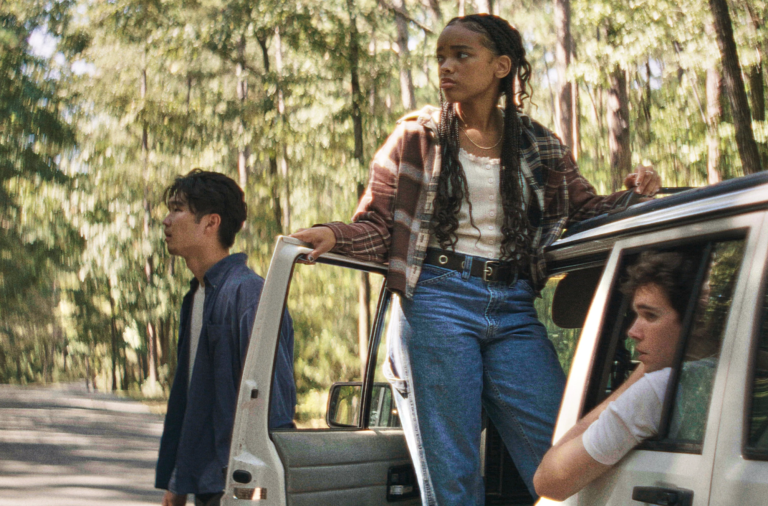
"caption": "Phinehas Yoon, Akira Jackson and Noah Toth in a scene from ‘It Ends.’",
"credit": "Neon via AP",
"altTag": "On a deserted road surrounded by forest, a white SUV is pulled over. A young Asian man stands at its side, a young Black woman stands in its front doorway and a young white man sits in the back with his elbow protruding from the open window. They are all dressed casually.",
"description": null,
"imgSizes": {
"thumbnail": {
"file": "https://cdn.kqed.org/wp-content/uploads/sites/2/2026/08/it-ends-160x106.png",
"width": 160,
"height": 106,
"mimeType": "image/png"
},
"medium_large": {
"file": "https://cdn.kqed.org/wp-content/uploads/sites/2/2026/08/it-ends-768x506.png",
"width": 768,
"height": 506,
"mimeType": "image/png"
},
"1536x1536": {
"file": "https://cdn.kqed.org/wp-content/uploads/sites/2/2026/08/it-ends-1536x1013.png",
"width": 1536,
"height": 1013,
"mimeType": "image/png"
},
"post-thumbnail": {
"file": "https://cdn.kqed.org/wp-content/uploads/sites/2/2026/08/it-ends-672x372.png",
"width": 672,
"height": 372,
"mimeType": "image/png"
},
"twentyfourteen-full-width": {
"file": "https://cdn.kqed.org/wp-content/uploads/sites/2/2026/08/it-ends-1038x576.png",
"width": 1038,
"height": 576,
"mimeType": "image/png"
},
"npr-cds-wide": {
"file": "https://cdn.kqed.org/wp-content/uploads/sites/2/2026/08/it-ends-1200x675.png",
"width": 1200,
"height": 675,
"mimeType": "image/png"
},
"npr-cds-square": {
"file": "https://cdn.kqed.org/wp-content/uploads/sites/2/2026/08/it-ends-600x600.png",
"width": 600,
"height": 600,
"mimeType": "image/png"
},
"kqedFullSize": {
"file": "https://cdn.kqed.org/wp-content/uploads/sites/2/2026/08/it-ends.png",
"width": 2000,
"height": 1319
}
},
"isLoading": false,
"fetchFailed": false
},
"arts_13992779": {
"type": "attachments",
"id": "arts_13992779",
"meta": {
"index": "attachments_1716263798",
"site": "arts",
"id": "13992779",
"found": true
},
"title": "don't say good luck",
"publishDate": 1786660074,
"status": "inherit",
"parent": 13992778,
"modified": 1786660125,
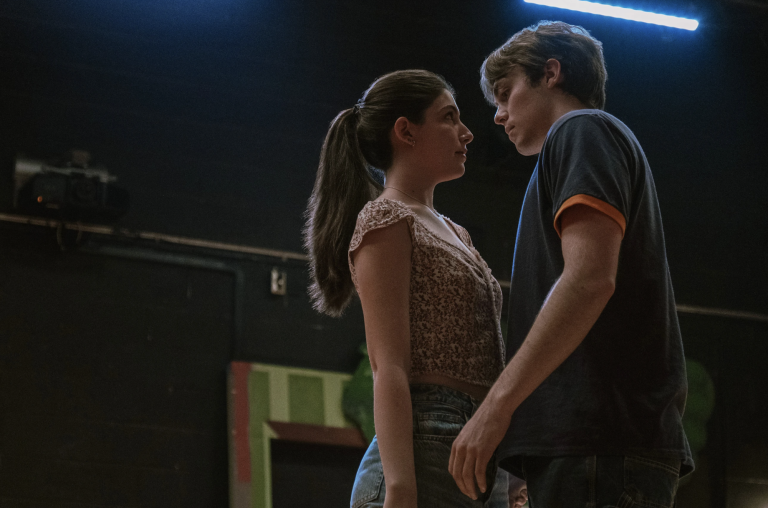
"caption": "Sunny Sandler and Jack Champion star in ‘Don’t Say Good Luck.’ ",
"credit": "Jaclyn Martinez/Netflix via AP",
"altTag": "A teenage girl and boy stand close, face to face, in a dark studio.",
"description": null,
"imgSizes": {
"thumbnail": {
"file": "https://cdn.kqed.org/wp-content/uploads/sites/2/2026/08/dont-say-good-luck-160x106.png",
"width": 160,
"height": 106,
"mimeType": "image/png"
},
"medium_large": {
"file": "https://cdn.kqed.org/wp-content/uploads/sites/2/2026/08/dont-say-good-luck-768x508.png",
"width": 768,
"height": 508,
"mimeType": "image/png"
},
"1536x1536": {
"file": "https://cdn.kqed.org/wp-content/uploads/sites/2/2026/08/dont-say-good-luck-1536x1016.png",
"width": 1536,
"height": 1016,
"mimeType": "image/png"
},
"post-thumbnail": {
"file": "https://cdn.kqed.org/wp-content/uploads/sites/2/2026/08/dont-say-good-luck-672x372.png",
"width": 672,
"height": 372,
"mimeType": "image/png"
},
"twentyfourteen-full-width": {
"file": "https://cdn.kqed.org/wp-content/uploads/sites/2/2026/08/dont-say-good-luck-1038x576.png",
"width": 1038,
"height": 576,
"mimeType": "image/png"
},
"npr-cds-wide": {
"file": "https://cdn.kqed.org/wp-content/uploads/sites/2/2026/08/dont-say-good-luck-1200x675.png",
"width": 1200,
"height": 675,
"mimeType": "image/png"
},
"npr-cds-square": {
"file": "https://cdn.kqed.org/wp-content/uploads/sites/2/2026/08/dont-say-good-luck-600x600.png",
"width": 600,
"height": 600,
"mimeType": "image/png"
},
"kqedFullSize": {
"file": "https://cdn.kqed.org/wp-content/uploads/sites/2/2026/08/dont-say-good-luck.png",
"width": 2000,
"height": 1323
}
},
"isLoading": false,
"fetchFailed": false
},
"arts_13992754": {
"type": "attachments",
"id": "arts_13992754",
"meta": {
"index": "attachments_1716263798",
"site": "arts",
"id": "13992754",
"found": true
},
"title": "camp miasma",
"publishDate": 1786641159,
"status": "inherit",
"parent": 13992753,
"modified": 1786641226,
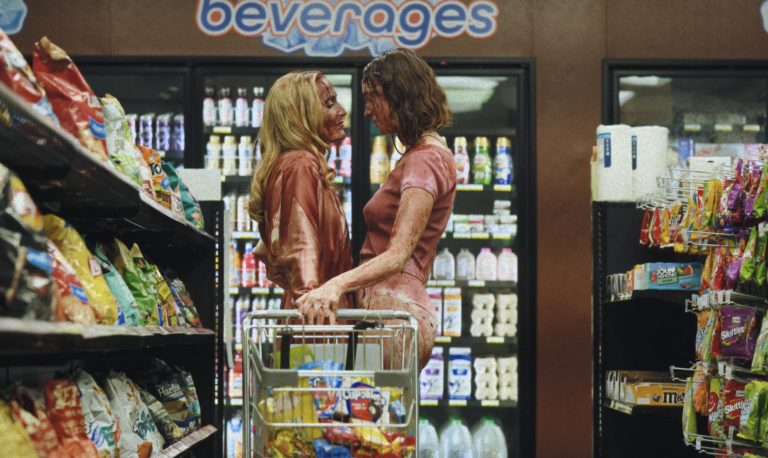
"caption": "Gillian Anderson and Hannah Einbinder star in ‘Teenage Sex and Death at Camp Miasma.’",
"credit": "Ryan Plummer/Mubi via AP",
"altTag": "Two blood-drenched white women stand face to face in the aisle of an 80s-era grocery store.",
"description": null,
"imgSizes": {
"thumbnail": {
"file": "https://cdn.kqed.org/wp-content/uploads/sites/2/2026/08/camp-miasma-160x96.png",
"width": 160,
"height": 96,
"mimeType": "image/png"
},
"medium_large": {
"file": "https://cdn.kqed.org/wp-content/uploads/sites/2/2026/08/camp-miasma-768x458.png",
"width": 768,
"height": 458,
"mimeType": "image/png"
},
"1536x1536": {
"file": "https://cdn.kqed.org/wp-content/uploads/sites/2/2026/08/camp-miasma-1536x917.png",
"width": 1536,
"height": 917,
"mimeType": "image/png"
},
"post-thumbnail": {
"file": "https://cdn.kqed.org/wp-content/uploads/sites/2/2026/08/camp-miasma-672x372.png",
"width": 672,
"height": 372,
"mimeType": "image/png"
},
"twentyfourteen-full-width": {
"file": "https://cdn.kqed.org/wp-content/uploads/sites/2/2026/08/camp-miasma-1038x576.png",
"width": 1038,
"height": 576,
"mimeType": "image/png"
},
"npr-cds-wide": {
"file": "https://cdn.kqed.org/wp-content/uploads/sites/2/2026/08/camp-miasma-1200x675.png",
"width": 1200,
"height": 675,
"mimeType": "image/png"
},
"npr-cds-square": {
"file": "https://cdn.kqed.org/wp-content/uploads/sites/2/2026/08/camp-miasma-600x600.png",
"width": 600,
"height": 600,
"mimeType": "image/png"
},
"kqedFullSize": {
"file": "https://cdn.kqed.org/wp-content/uploads/sites/2/2026/08/camp-miasma.png",
"width": 2000,
"height": 1194
}
},
"isLoading": false,
"fetchFailed": false
},
"arts_13992717": {
"type": "attachments",
"id": "arts_13992717",
"meta": {
"index": "attachments_1716263798",
"site": "arts",
"id": "13992717",
"found": true
},
"title": "oak street",
"publishDate": 1786556965,
"status": "inherit",
"parent": 13992716,
"modified": 1786557073,
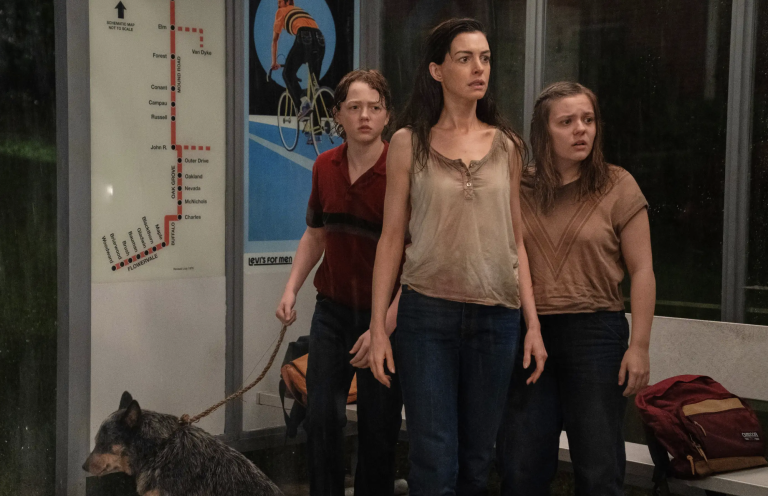
"caption": "Christian Convery, Anne Hathaway and Maisy Stella in a scene from ‘The End of Oak Street.’ ",
"credit": "Warner Bros. Pictures via AP ",
"altTag": "A bedraggled middle aged white woman with long dark hair stands between a young boy and teenage girl, looking worried. The boy has a dog on a leash. They are standing inside a subway car.",
"description": null,
"imgSizes": {
"thumbnail": {
"file": "https://cdn.kqed.org/wp-content/uploads/sites/2/2026/08/oak-street-160x103.png",
"width": 160,
"height": 103,
"mimeType": "image/png"
},
"medium_large": {
"file": "https://cdn.kqed.org/wp-content/uploads/sites/2/2026/08/oak-street-768x496.png",
"width": 768,
"height": 496,
"mimeType": "image/png"
},
"1536x1536": {
"file": "https://cdn.kqed.org/wp-content/uploads/sites/2/2026/08/oak-street-1536x991.png",
"width": 1536,
"height": 991,
"mimeType": "image/png"
},
"post-thumbnail": {
"file": "https://cdn.kqed.org/wp-content/uploads/sites/2/2026/08/oak-street-672x372.png",
"width": 672,
"height": 372,
"mimeType": "image/png"
},
"twentyfourteen-full-width": {
"file": "https://cdn.kqed.org/wp-content/uploads/sites/2/2026/08/oak-street-1038x576.png",
"width": 1038,
"height": 576,
"mimeType": "image/png"
},
"npr-cds-wide": {
"file": "https://cdn.kqed.org/wp-content/uploads/sites/2/2026/08/oak-street-1200x675.png",
"width": 1200,
"height": 675,
"mimeType": "image/png"
},
"npr-cds-square": {
"file": "https://cdn.kqed.org/wp-content/uploads/sites/2/2026/08/oak-street-600x600.png",
"width": 600,
"height": 600,
"mimeType": "image/png"
},
"kqedFullSize": {
"file": "https://cdn.kqed.org/wp-content/uploads/sites/2/2026/08/oak-street.png",
"width": 2000,
"height": 1291
}
},
"isLoading": false,
"fetchFailed": false
},
"arts_13992476": {
"type": "attachments",
"id": "arts_13992476",
"meta": {
"index": "attachments_1716263798",
"site": "arts",
"id": "13992476",
"found": true
},
"title": "one night only - 1",
"publishDate": 1786041923,
"status": "inherit",
"parent": 13992438,
"modified": 1786042050,
"caption": "Monica Barbaro and Callum Turner star in ‘One Night Only.’",
"credit": "Universal Pictures",
"altTag": "A woman leans over the counter, looking at a man making pizza.",
"description": null,
"imgSizes": {
"thumbnail": {
"file": "https://cdn.kqed.org/wp-content/uploads/sites/2/2026/08/one-night-only-1-160x107.png",
"width": 160,
"height": 107,
"mimeType": "image/png"
},
"medium_large": {
"file": "https://cdn.kqed.org/wp-content/uploads/sites/2/2026/08/one-night-only-1-768x512.png",
"width": 768,
"height": 512,
"mimeType": "image/png"
},
"1536x1536": {
"file": "https://cdn.kqed.org/wp-content/uploads/sites/2/2026/08/one-night-only-1-1536x1025.png",
"width": 1536,
"height": 1025,
"mimeType": "image/png"
},
"post-thumbnail": {
"file": "https://cdn.kqed.org/wp-content/uploads/sites/2/2026/08/one-night-only-1-672x372.png",
"width": 672,
"height": 372,
"mimeType": "image/png"
},
"twentyfourteen-full-width": {
"file": "https://cdn.kqed.org/wp-content/uploads/sites/2/2026/08/one-night-only-1-1038x576.png",
"width": 1038,
"height": 576,
"mimeType": "image/png"
},
"npr-cds-wide": {
"file": "https://cdn.kqed.org/wp-content/uploads/sites/2/2026/08/one-night-only-1-1200x675.png",
"width": 1200,
"height": 675,
"mimeType": "image/png"
},
"npr-cds-square": {
"file": "https://cdn.kqed.org/wp-content/uploads/sites/2/2026/08/one-night-only-1-600x600.png",
"width": 600,
"height": 600,
"mimeType": "image/png"
},
"kqedFullSize": {
"file": "https://cdn.kqed.org/wp-content/uploads/sites/2/2026/08/one-night-only-1.png",
"width": 2000,
"height": 1334
}
},
"isLoading": false,
"fetchFailed": false
},
"arts_13992351": {
"type": "attachments",
"id": "arts_13992351",
"meta": {
"index": "attachments_1716263798",
"site": "arts",
"id": "13992351",
"found": true
},
"title": "Hollywood-Shuffle",
"publishDate": 1785774653,
"status": "inherit",
"parent": 13992348,
"modified": 1785774820,
"caption": "(L–R) Jimmy Woodard and Robert Townsend portray Siskel-and-Ebert-like film critics during one of many satirical vignettes in Townsend’s 1987 film ‘Hollywood Shuffle.’",
"credit": "The Samuel Goldwyn Company",
"altTag": "Two young Black men sit in an otherwise empty movie theater, both showing a thumbs-down hand signal",
"description": null,
"imgSizes": {
"thumbnail": {
"file": "https://cdn.kqed.org/wp-content/uploads/sites/2/2026/08/Hollywood-Shuffle-30-years-160x107.jpg",
"width": 160,
"height": 107,
"mimeType": "image/jpeg"
},
"medium_large": {
"file": "https://cdn.kqed.org/wp-content/uploads/sites/2/2026/08/Hollywood-Shuffle-30-years-768x512.jpg",
"width": 768,
"height": 512,
"mimeType": "image/jpeg"
},
"1536x1536": {
"file": "https://cdn.kqed.org/wp-content/uploads/sites/2/2026/08/Hollywood-Shuffle-30-years-1536x1024.jpg",
"width": 1536,
"height": 1024,
"mimeType": "image/jpeg"
},
"post-thumbnail": {
"file": "https://cdn.kqed.org/wp-content/uploads/sites/2/2026/08/Hollywood-Shuffle-30-years-672x372.jpg",
"width": 672,
"height": 372,
"mimeType": "image/jpeg"
},
"twentyfourteen-full-width": {
"file": "https://cdn.kqed.org/wp-content/uploads/sites/2/2026/08/Hollywood-Shuffle-30-years-1038x576.jpg",
"width": 1038,
"height": 576,
"mimeType": "image/jpeg"
},
"npr-cds-wide": {
"file": "https://cdn.kqed.org/wp-content/uploads/sites/2/2026/08/Hollywood-Shuffle-30-years-1200x675.jpg",
"width": 1200,
"height": 675,
"mimeType": "image/jpeg"
},
"npr-cds-square": {
"file": "https://cdn.kqed.org/wp-content/uploads/sites/2/2026/08/Hollywood-Shuffle-30-years-600x600.jpg",
"width": 600,
"height": 600,
"mimeType": "image/jpeg"
},
"kqedFullSize": {
"file": "https://cdn.kqed.org/wp-content/uploads/sites/2/2026/08/Hollywood-Shuffle-30-years.jpg",
"width": 2000,
"height": 1333
}
},
"isLoading": false,
"fetchFailed": false
},
"arts_13989706": {
"type": "attachments",
"id": "arts_13989706",
"meta": {
"index": "attachments_1716263798",
"site": "arts",
"id": "13989706",
"found": true
},
"title": "IWYS_2000",
"publishDate": 1778875791,
"status": "inherit",
"parent": 13989211,
"modified": 1778882285,
"caption": "Olivia Wilde and Cooper Hoffman in a scene from Gregg Arak's 'I Want Your Sex.'",
"credit": "Magnolia Pictures",
"altTag": "blonde woman and blindfolded man face each other in near kiss",
"description": null,
"imgSizes": {
"thumbnail": {
"file": "https://cdn.kqed.org/wp-content/uploads/sites/2/2026/05/IWYS_2000-160x86.jpg",
"width": 160,
"height": 86,
"mimeType": "image/jpeg"
},
"medium_large": {
"file": "https://cdn.kqed.org/wp-content/uploads/sites/2/2026/05/IWYS_2000-768x415.jpg",
"width": 768,
"height": 415,
"mimeType": "image/jpeg"
},
"1536x1536": {
"file": "https://cdn.kqed.org/wp-content/uploads/sites/2/2026/05/IWYS_2000-1536x830.jpg",
"width": 1536,
"height": 830,
"mimeType": "image/jpeg"
},
"post-thumbnail": {
"file": "https://cdn.kqed.org/wp-content/uploads/sites/2/2026/05/IWYS_2000-672x372.jpg",
"width": 672,
"height": 372,
"mimeType": "image/jpeg"
},
"twentyfourteen-full-width": {
"file": "https://cdn.kqed.org/wp-content/uploads/sites/2/2026/05/IWYS_2000-1038x576.jpg",
"width": 1038,
"height": 576,
"mimeType": "image/jpeg"
},
"npr-cds-wide": {
"file": "https://cdn.kqed.org/wp-content/uploads/sites/2/2026/05/IWYS_2000-1200x675.jpg",
"width": 1200,
"height": 675,
"mimeType": "image/jpeg"
},
"npr-cds-square": {
"file": "https://cdn.kqed.org/wp-content/uploads/sites/2/2026/05/IWYS_2000-600x600.jpg",
"width": 600,
"height": 600,
"mimeType": "image/jpeg"
},
"kqedFullSize": {
"file": "https://cdn.kqed.org/wp-content/uploads/sites/2/2026/05/IWYS_2000.jpg",
"width": 2000,
"height": 1081
}
},
"isLoading": false,
"fetchFailed": false
},
"arts_13992060": {
"type": "attachments",
"id": "arts_13992060",
"meta": {
"index": "attachments_1716263798",
"site": "arts",
"id": "13992060",
"found": true
},
"title": "americanpachuco_still_01",
"publishDate": 1785171849,
"status": "inherit",
"parent": 0,
"modified": 1785172849,
"caption": "Luis Valdez reads a script in a scene from the documentary ‘American Pachuco: The Legend of Luis Valdez.’ ",
"credit": "Elizabeth Sunflower / Retro Photo Archive",
"altTag": "A Latino man, seen from a low angle, holds a pen and goes through papers against a wall background with theatre advertisements and photographs.",
"description": null,
"imgSizes": {
"thumbnail": {
"file": "https://cdn.kqed.org/wp-content/uploads/sites/2/2026/07/americanpachuco_still_01-160x90.jpg",
"width": 160,
"height": 90,
"mimeType": "image/jpeg"
},
"medium_large": {
"file": "https://cdn.kqed.org/wp-content/uploads/sites/2/2026/07/americanpachuco_still_01-768x432.jpg",
"width": 768,
"height": 432,
"mimeType": "image/jpeg"
},
"1536x1536": {
"file": "https://cdn.kqed.org/wp-content/uploads/sites/2/2026/07/americanpachuco_still_01-1536x864.jpg",
"width": 1536,
"height": 864,
"mimeType": "image/jpeg"
},
"post-thumbnail": {
"file": "https://cdn.kqed.org/wp-content/uploads/sites/2/2026/07/americanpachuco_still_01-672x372.jpg",
"width": 672,
"height": 372,
"mimeType": "image/jpeg"
},
"twentyfourteen-full-width": {
"file": "https://cdn.kqed.org/wp-content/uploads/sites/2/2026/07/americanpachuco_still_01-1038x576.jpg",
"width": 1038,
"height": 576,
"mimeType": "image/jpeg"
},
"npr-cds-wide": {
"file": "https://cdn.kqed.org/wp-content/uploads/sites/2/2026/07/americanpachuco_still_01-1200x675.jpg",
"width": 1200,
"height": 675,
"mimeType": "image/jpeg"
},
"npr-cds-square": {
"file": "https://cdn.kqed.org/wp-content/uploads/sites/2/2026/07/americanpachuco_still_01-600x600.jpg",
"width": 600,
"height": 600,
"mimeType": "image/jpeg"
},
"kqedFullSize": {
"file": "https://cdn.kqed.org/wp-content/uploads/sites/2/2026/07/americanpachuco_still_01.jpg",
"width": 2000,
"height": 1125
}
},
"isLoading": false,
"fetchFailed": false
},
"arts_13992017": {
"type": "attachments",
"id": "arts_13992017",
"meta": {
"index": "attachments_1716263798",
"site": "arts",
"id": "13992017",
"found": true
},
"title": "GalaxyBrooks.crop1",
"publishDate": 1784906718,
"status": "inherit",
"parent": 13991858,
"modified": 1784906822,
"caption": "Quincy ‘Galaxy’ Brooks plays Darnell ‘Dolo’ Ferguson in ‘Splash City.’ Brooks, the son of San Francisco rapper San Quinn, drew on real-life experiences for the role.",
"credit": "Benny Blanco",
"altTag": "A young Black man in a light blue button-up shirt over a white tank top stands between two walls in the nighttime, looking downward and to the left",
"description": null,
"imgSizes": {
"thumbnail": {
"file": "https://cdn.kqed.org/wp-content/uploads/sites/2/2026/07/GalaxyBrooks.crop1_-160x107.jpg",
"width": 160,
"height": 107,
"mimeType": "image/jpeg"
},
"medium_large": {
"file": "https://cdn.kqed.org/wp-content/uploads/sites/2/2026/07/GalaxyBrooks.crop1_-768x512.jpg",
"width": 768,
"height": 512,
"mimeType": "image/jpeg"
},
"1536x1536": {
"file": "https://cdn.kqed.org/wp-content/uploads/sites/2/2026/07/GalaxyBrooks.crop1_-1536x1024.jpg",
"width": 1536,
"height": 1024,
"mimeType": "image/jpeg"
},
"post-thumbnail": {
"file": "https://cdn.kqed.org/wp-content/uploads/sites/2/2026/07/GalaxyBrooks.crop1_-672x372.jpg",
"width": 672,
"height": 372,
"mimeType": "image/jpeg"
},
"twentyfourteen-full-width": {
"file": "https://cdn.kqed.org/wp-content/uploads/sites/2/2026/07/GalaxyBrooks.crop1_-1038x576.jpg",
"width": 1038,
"height": 576,
"mimeType": "image/jpeg"
},
"npr-cds-wide": {
"file": "https://cdn.kqed.org/wp-content/uploads/sites/2/2026/07/GalaxyBrooks.crop1_-1200x675.jpg",
"width": 1200,
"height": 675,
"mimeType": "image/jpeg"
},
"npr-cds-square": {
"file": "https://cdn.kqed.org/wp-content/uploads/sites/2/2026/07/GalaxyBrooks.crop1_-600x600.jpg",
"width": 600,
"height": 600,
"mimeType": "image/jpeg"
},
"kqedFullSize": {
"file": "https://cdn.kqed.org/wp-content/uploads/sites/2/2026/07/GalaxyBrooks.crop1_.jpg",
"width": 2000,
"height": 1333
}
},
"isLoading": false,
"fetchFailed": false
},
"arts_13991898": {
"type": "attachments",
"id": "arts_13991898",
"meta": {
"index": "attachments_1716263798",
"site": "arts",
"id": "13991898",
"found": true
},
"title": "the dink",
"publishDate": 1784679653,
"status": "inherit",
"parent": 13991897,
"modified": 1784679720,
"caption": "Mary Steenburgen stars in 'The Dink.' ",
"credit": "Andrew Cooper/Apple TV via AP",
"altTag": "An attractive senior woman cheers with clenched fists in the stands of a sporting event. A Black woman and an Asian man stand slightly behind her also cheering enthusiastically.",
"description": null,
"imgSizes": {
"thumbnail": {
"file": "https://cdn.kqed.org/wp-content/uploads/sites/2/2026/07/the-dink-160x109.png",
"width": 160,
"height": 109,
"mimeType": "image/png"
},
"medium_large": {
"file": "https://cdn.kqed.org/wp-content/uploads/sites/2/2026/07/the-dink-768x521.png",
"width": 768,
"height": 521,
"mimeType": "image/png"
},
"1536x1536": {
"file": "https://cdn.kqed.org/wp-content/uploads/sites/2/2026/07/the-dink-1536x1042.png",
"width": 1536,
"height": 1042,
"mimeType": "image/png"
},
"post-thumbnail": {
"file": "https://cdn.kqed.org/wp-content/uploads/sites/2/2026/07/the-dink-672x372.png",
"width": 672,
"height": 372,
"mimeType": "image/png"
},
"twentyfourteen-full-width": {
"file": "https://cdn.kqed.org/wp-content/uploads/sites/2/2026/07/the-dink-1038x576.png",
"width": 1038,
"height": 576,
"mimeType": "image/png"
},
"npr-cds-wide": {
"file": "https://cdn.kqed.org/wp-content/uploads/sites/2/2026/07/the-dink-1200x675.png",
"width": 1200,
"height": 675,
"mimeType": "image/png"
},
"npr-cds-square": {
"file": "https://cdn.kqed.org/wp-content/uploads/sites/2/2026/07/the-dink-600x600.png",
"width": 600,
"height": 600,
"mimeType": "image/png"
},
"kqedFullSize": {
"file": "https://cdn.kqed.org/wp-content/uploads/sites/2/2026/07/the-dink.png",
"width": 2000,
"height": 1357
}
},
"isLoading": false,
"fetchFailed": false
},
"arts_13991842": {
"type": "attachments",
"id": "arts_13991842",
"meta": {
"index": "attachments_1716263798",
"site": "arts",
"id": "13991842",
"found": true
},
"title": "Vivien's Wild Ride",
"publishDate": 1784578989,
"status": "inherit",
"parent": 13991838,
"modified": 1784579040,
"caption": "Catch ‘Vivien’s Wild Ride’ at the Roxie this weekend.",
"credit": "PBS Independent Lens",
"altTag": "A senior person on a couch holds up a large, black and white photo of a young woman's face. The image hides the face of the person on the couch.",
"description": null,
"imgSizes": {
"thumbnail": {
"file": "https://cdn.kqed.org/wp-content/uploads/sites/2/2026/07/Viviens-Wild-Ride-160x104.png",
"width": 160,
"height": 104,
"mimeType": "image/png"
},
"medium_large": {
"file": "https://cdn.kqed.org/wp-content/uploads/sites/2/2026/07/Viviens-Wild-Ride-768x499.png",
"width": 768,
"height": 499,
"mimeType": "image/png"
},
"1536x1536": {
"file": "https://cdn.kqed.org/wp-content/uploads/sites/2/2026/07/Viviens-Wild-Ride-1536x998.png",
"width": 1536,
"height": 998,
"mimeType": "image/png"
},
"post-thumbnail": {
"file": "https://cdn.kqed.org/wp-content/uploads/sites/2/2026/07/Viviens-Wild-Ride-672x372.png",
"width": 672,
"height": 372,
"mimeType": "image/png"
},
"twentyfourteen-full-width": {
"file": "https://cdn.kqed.org/wp-content/uploads/sites/2/2026/07/Viviens-Wild-Ride-1038x576.png",
"width": 1038,
"height": 576,
"mimeType": "image/png"
},
"npr-cds-wide": {
"file": "https://cdn.kqed.org/wp-content/uploads/sites/2/2026/07/Viviens-Wild-Ride-1200x675.png",
"width": 1200,
"height": 675,
"mimeType": "image/png"
},
"npr-cds-square": {
"file": "https://cdn.kqed.org/wp-content/uploads/sites/2/2026/07/Viviens-Wild-Ride-600x600.png",
"width": 600,
"height": 600,
"mimeType": "image/png"
},
"kqedFullSize": {
"file": "https://cdn.kqed.org/wp-content/uploads/sites/2/2026/07/Viviens-Wild-Ride.png",
"width": 2000,
"height": 1299
}
},
"isLoading": false,
"fetchFailed": false
},
"arts_13991706": {
"type": "attachments",
"id": "arts_13991706",
"meta": {
"index": "attachments_1716263798",
"site": "arts",
"id": "13991706",
"found": true
},
"title": "CT-04168_MSGCROP_2000",
"publishDate": 1784159239,
"status": "inherit",
"parent": 13991674,
"modified": 1784159305,
"caption": "L to R: Jimmy Gonzales is Cepheus, Matt Damon is Odysseus and Himesh Patel is Eurylochus in Christopher Nolan's 'The Odyssey.'",
"credit": "\tMelinda Sue Gordon/Universal Pictures",
"altTag": "three men in sword and sandal attire stand on sandy hill",
"description": null,
"imgSizes": {
"thumbnail": {
"file": "https://cdn.kqed.org/wp-content/uploads/sites/2/2026/07/CT-04168_MSGCROP_2000-160x111.jpg",
"width": 160,
"height": 111,
"mimeType": "image/jpeg"
},
"medium_large": {
"file": "https://cdn.kqed.org/wp-content/uploads/sites/2/2026/07/CT-04168_MSGCROP_2000-768x534.jpg",
"width": 768,
"height": 534,
"mimeType": "image/jpeg"
},
"1536x1536": {
"file": "https://cdn.kqed.org/wp-content/uploads/sites/2/2026/07/CT-04168_MSGCROP_2000-1536x1068.jpg",
"width": 1536,
"height": 1068,
"mimeType": "image/jpeg"
},
"post-thumbnail": {
"file": "https://cdn.kqed.org/wp-content/uploads/sites/2/2026/07/CT-04168_MSGCROP_2000-672x372.jpg",
"width": 672,
"height": 372,
"mimeType": "image/jpeg"
},
"twentyfourteen-full-width": {
"file": "https://cdn.kqed.org/wp-content/uploads/sites/2/2026/07/CT-04168_MSGCROP_2000-1038x576.jpg",
"width": 1038,
"height": 576,
"mimeType": "image/jpeg"
},
"npr-cds-wide": {
"file": "https://cdn.kqed.org/wp-content/uploads/sites/2/2026/07/CT-04168_MSGCROP_2000-1200x675.jpg",
"width": 1200,
"height": 675,
"mimeType": "image/jpeg"
},
"npr-cds-square": {
"file": "https://cdn.kqed.org/wp-content/uploads/sites/2/2026/07/CT-04168_MSGCROP_2000-600x600.jpg",
"width": 600,
"height": 600,
"mimeType": "image/jpeg"
},
"kqedFullSize": {
"file": "https://cdn.kqed.org/wp-content/uploads/sites/2/2026/07/CT-04168_MSGCROP_2000.jpg",
"width": 2000,
"height": 1391
}
},
"isLoading": false,
"fetchFailed": false
}
},
"audioPlayerReducer": {
"postId": "stream_live",
"isPaused": true,
"isPlaying": false,
"pfsActive": false,
"pledgeModalIsOpen": true,
"playerDrawerIsOpen": false,
"liveAudioPlayStartedAt": 0,
"liveAudioPlayContext": ""
},
"authorsReducer": {
"byline_arts_13992998": {
"type": "authors",
"id": "byline_arts_13992998",
"meta": {
"override": true
},
"slug": "byline_arts_13992998",
"name": "Lindsey Bahr, Associated Press",
"isLoading": false
},
"byline_arts_13992778": {
"type": "authors",
"id": "byline_arts_13992778",
"meta": {
"override": true
},
"slug": "byline_arts_13992778",
"name": "Jocelyn Noveck, Associated Press",
"isLoading": false
},
"byline_arts_13992753": {
"type": "authors",
"id": "byline_arts_13992753",
"meta": {
"override": true
},
"slug": "byline_arts_13992753",
"name": "Lindsey Bahr, Associated Press",
"isLoading": false
},
"byline_arts_13992716": {
"type": "authors",
"id": "byline_arts_13992716",
"meta": {
"override": true
},
"slug": "byline_arts_13992716",
"name": "Jake Coyle, Associated Press",
"isLoading": false
},
"byline_arts_13992438": {
"type": "authors",
"id": "byline_arts_13992438",
"meta": {
"override": true
},
"slug": "byline_arts_13992438",
"name": "Jake Coyle, Associated Press",
"isLoading": false
},
"byline_arts_13992200": {
"type": "authors",
"id": "byline_arts_13992200",
"meta": {
"override": true
},
"slug": "byline_arts_13992200",
"name": "Lindsey Bahr, Associated Press",
"isLoading": false
},
"byline_arts_13991897": {
"type": "authors",
"id": "byline_arts_13991897",
"meta": {
"override": true
},
"slug": "byline_arts_13991897",
"name": "Lindsey Bahr, Associated Press",
"isLoading": false
},
"mfox": {
"type": "authors",
"id": "22",
"meta": {
"index": "authors_1716337520",
"id": "22",
"found": true
},
"name": "Michael Fox",
"firstName": "Michael",
"lastName": "Fox",
"slug": "mfox",
"email": "foxonfilm@yahoo.com",
"display_author_email": false,
"staff_mastheads": [],
"title": "KQED Contributor",
"bio": "Michael Fox has written about film for dozens of publications since 1987. He is a founding member of the San Francisco Bay Area Film Critics Circle.",
"avatar": "https://secure.gravatar.com/avatar/d9849d6c659c41414795c471d907bb97b396e2a32b88e20e6ff66f65fbdd6dcd?s=600&d=blank&r=g",
"twitter": null,
"bluesky": null,
"facebook": null,
"instagram": null,
"linkedin": null,
"sites": [
{
"site": "arts",
"roles": [
"Contributor",
"contributor"
]
}
],
"headData": {
"title": "Michael Fox | KQED",
"description": "KQED Contributor",
"ogImgSrc": "https://secure.gravatar.com/avatar/d9849d6c659c41414795c471d907bb97b396e2a32b88e20e6ff66f65fbdd6dcd?s=600&d=blank&r=g",
"twImgSrc": "https://secure.gravatar.com/avatar/d9849d6c659c41414795c471d907bb97b396e2a32b88e20e6ff66f65fbdd6dcd?s=600&d=blank&r=g"
},
"isLoading": false,
"link": "/author/mfox"
},
"gmeline": {
"type": "authors",
"id": "185",
"meta": {
"index": "authors_1716337520",
"id": "185",
"found": true
},
"name": "Gabe Meline",
"firstName": "Gabe",
"lastName": "Meline",
"slug": "gmeline",
"email": "gmeline@kqed.org",
"display_author_email": true,
"staff_mastheads": [
"arts"
],
"title": "Senior Editor, KQED Arts & Culture",
"bio": "Gabe Meline entered journalism at age 15 making photocopied zines, and has since earned awards from the Edward R. Murrow Awards, the Society for Professional Journalists, the Online Journalism Awards, the Association of Alternative Newsweeklies and the California Newspaper Publishers Association. Prior to KQED, he was the editor of the \u003cem>North Bay Bohemian\u003c/em> and a touring musician. He lives with his wife and daughter in his hometown of Santa Rosa, CA.",
"avatar": "https://secure.gravatar.com/avatar/5bebe57be0d8bc2dd318934feb47299e2d2d10cba28d09d8d7afb389a2ce2bdd?s=600&d=blank&r=g",
"twitter": null,
"bluesky": null,
"facebook": null,
"instagram": null,
"linkedin": null,
"sites": [
{
"site": "",
"roles": [
"editor"
]
},
{
"site": "arts",
"roles": [
"administrator"
]
},
{
"site": "artschool",
"roles": [
"editor"
]
},
{
"site": "news",
"roles": [
"author"
]
},
{
"site": "pop",
"roles": [
"editor"
]
},
{
"site": "bayareabites",
"roles": [
"editor"
]
},
{
"site": "food",
"roles": [
"editor"
]
},
{
"site": "liveblog",
"roles": [
"editor"
]
},
{
"site": "hiphop",
"roles": [
"editor"
]
}
],
"headData": {
"title": "Gabe Meline | KQED",
"description": "Senior Editor, KQED Arts & Culture",
"ogImgSrc": "https://secure.gravatar.com/avatar/5bebe57be0d8bc2dd318934feb47299e2d2d10cba28d09d8d7afb389a2ce2bdd?s=600&d=blank&r=g",
"twImgSrc": "https://secure.gravatar.com/avatar/5bebe57be0d8bc2dd318934feb47299e2d2d10cba28d09d8d7afb389a2ce2bdd?s=600&d=blank&r=g"
},
"isLoading": false,
"link": "/author/gmeline"
},
"ralexandra": {
"type": "authors",
"id": "11242",
"meta": {
"index": "authors_1716337520",
"id": "11242",
"found": true
},
"name": "Rae Alexandra",
"firstName": "Rae",
"lastName": "Alexandra",
"slug": "ralexandra",
"email": "ralexandra@kqed.org",
"display_author_email": true,
"staff_mastheads": [
"arts"
],
"title": "Reporter/Producer",
"bio": "Rae Alexandra is a Reporter/Producer for KQED Arts & Culture, and the creator/author of the \u003ca href=\"https://www.kqed.org/arts/program/rebel-girls-from-bay-area-history\">Rebel Girls From Bay Area History\u003c/a> and \u003ca href=\"https://www.kqed.org/bizarrebayarea\">Bizarre Bay Area\u003c/a> series. Her debut book, \u003ca href=\"https://citylights.com/politics-current-events-history/unsung-heroines35-women-who-changed/\">Unsung Heroines: 35 Women Who Changed the Bay Area\u003c/a> was published by City Lights in March 2026. In 2023, Rae was awarded an SPJ Excellence in Journalism Award for Arts & Culture. Rae was born and raised in Wales and subsequently — even after two decades in Northern California — still uses phrases that regularly baffle her coworkers.",
"avatar": "https://secure.gravatar.com/avatar/edfee8176c80cc0a382b051190f5341997df378a934a5774dcb0977732dfd401?s=600&d=blank&r=g",
"twitter": null,
"bluesky": null,
"facebook": null,
"instagram": null,
"linkedin": null,
"sites": [
{
"site": "arts",
"roles": [
"editor"
]
},
{
"site": "news",
"roles": [
"editor"
]
},
{
"site": "pop",
"roles": [
"editor"
]
},
{
"site": "bayareabites",
"roles": [
"editor"
]
},
{
"site": "science",
"roles": [
"editor"
]
}
],
"headData": {
"title": "Rae Alexandra | KQED",
"description": "Reporter/Producer",
"ogImgSrc": "https://secure.gravatar.com/avatar/edfee8176c80cc0a382b051190f5341997df378a934a5774dcb0977732dfd401?s=600&d=blank&r=g",
"twImgSrc": "https://secure.gravatar.com/avatar/edfee8176c80cc0a382b051190f5341997df378a934a5774dcb0977732dfd401?s=600&d=blank&r=g"
},
"isLoading": false,
"link": "/author/ralexandra"
},
"ogpenn": {
"type": "authors",
"id": "11491",
"meta": {
"index": "authors_1716337520",
"id": "11491",
"found": true
},
"name": "Pendarvis Harshaw",
"firstName": "Pendarvis",
"lastName": "Harshaw",
"slug": "ogpenn",
"email": "ogpenn@gmail.com",
"display_author_email": false,
"staff_mastheads": [
"arts"
],
"title": "Community Engagement Reporter",
"bio": "Pendarvis Harshaw is an educator, host and writer with KQED Arts.",
"avatar": "https://secure.gravatar.com/avatar/972b77ee8e3f346ae2b00622661187fbfabd059b5693bbdc1475ea7a722fd4cd?s=600&d=blank&r=g",
"twitter": null,
"bluesky": null,
"facebook": null,
"instagram": "ogpenn",
"linkedin": null,
"sites": [
{
"site": "arts",
"roles": [
"administrator"
]
},
{
"site": "news",
"roles": [
"editor"
]
},
{
"site": "bayareabites",
"roles": [
"author"
]
},
{
"site": "hiphop",
"roles": [
"editor"
]
}
],
"headData": {
"title": "Pendarvis Harshaw | KQED",
"description": "Community Engagement Reporter",
"ogImgSrc": "https://secure.gravatar.com/avatar/972b77ee8e3f346ae2b00622661187fbfabd059b5693bbdc1475ea7a722fd4cd?s=600&d=blank&r=g",
"twImgSrc": "https://secure.gravatar.com/avatar/972b77ee8e3f346ae2b00622661187fbfabd059b5693bbdc1475ea7a722fd4cd?s=600&d=blank&r=g"
},
"isLoading": false,
"link": "/author/ogpenn"
}
},
"pagesReducer": {
"arts_category_movies": {
"type": "terms",
"id": "arts_74",
"meta": {
"index": "terms_1716263798",
"site": "arts",
"id": "74",
"score": 12.558474
},
"featImg": null,
"name": "Movies",
"description": null,
"taxonomy": "category",
"headData": {
"twImgId": null,
"twTitle": null,
"ogTitle": null,
"ogImgId": null,
"twDescription": null,
"description": null,
"title": "Movies Archives | KQED Arts",
"ogDescription": null
},
"ttid": 75,
"slug": "movies",
"isLoading": false,
"title": "Movies",
"pageMeta": {
"site": "arts",
"WpPageTemplate": "page-topic-editorial",
"currentPage": 1
},
"blocks": [
{
"blockName": "kqed/post-list",
"attrs": {
"layout": "cardArticle2",
"query": "posts/arts?category=movies",
"seeMore": false,
"paginated": true,
"page": 1
}
},
{
"blockName": "kqed/ad"
}
]
}
},
"pfsSessionReducer": {},
"postsReducer": {
"stream_live": {
"type": "live",
"id": "stream_live",
"audioUrl": "https://streams.kqed.org/kqedradio",
"title": "Live Stream",
"excerpt": "Live Stream information currently unavailable.",
"link": "/radio",
"featImg": "",
"label": {
"name": "KQED Live",
"link": "/"
}
},
"stream_kqedNewscast": {
"type": "posts",
"id": "stream_kqedNewscast",
"audioUrl": "https://www.kqed.org/.stream/anon/radio/RDnews/newscast.mp3?_=1",
"title": "KQED Newscast",
"featImg": "",
"label": {
"name": "88.5 FM",
"link": "/"
}
},
"arts_13992998": {
"type": "posts",
"id": "arts_13992998",
"meta": {
"index": "posts_1716263798",
"site": "arts",
"id": "13992998",
"score": null,
"sort": [
1787183074000
]
},
"guestAuthors": [],
"slug": "it-ends-movie-review-zombie-gen-z-horror-alexander-ullom",
"title": "‘It Ends’ Is a Meditative Zombie Movie, Tailor-Made for Gen Z",
"publishDate": 1787183074,
"format": "standard",
"headTitle": "‘It Ends’ Is a Meditative Zombie Movie, Tailor-Made for Gen Z | KQED",
"labelTerm": {
"site": "arts"
},
"content": "\u003cp>Every generation deserves its own postgrad malaise movie. Not every attempt is going to be \u003cem>The Graduate\u003c/em> or \u003cem>\u003ca href=\"https://www.kqed.org/arts/121172/greta_gerwig_blithely_spirited_as_frances_ha\">Frances Ha\u003c/a>\u003c/em>, but even when they’re mediocre, they’re also often a pure expression from a young filmmaker about what their contemporaries are feeling at that exact moment.\u003c/p>\n\n\n\n\u003cp>Though the details may change — the clothes, the hairstyles, the gadgets, the soundtrack — the vibe kind of stays the same even in a high concept horror like \u003cem>It Ends\u003c/em>, in which four friends find themselves on an endless road to nowhere. It’s kind of reassuring, unlike, say, the encroaching doom of adulthood.\u003c/p>\n\n\n\n\n\n\u003cp>\u003cem>It Ends\u003c/em> was written and directed by Alexander Ullom, who graduated from college during the pandemic and is open about how he struggled with dissociative depression. You don’t need to know this to watch the film, but it makes sense once you’ve met James (Phinehas Yoon). He’s the rational and inquisitive one whose seen-it-all-already jadedness about his future is its own kind of poison.\u003c/p>\n\n\n\n\u003cp>Somehow, however, he hasn’t alienated his high school friends. They still like him enough to help him move into his new apartment (which is, by all accounts, super depressing). We meet them as they all cram into a white Jeep Cherokee to find some food. Tyler (Mitchell Cole) is driving, and Fisher (Noah Toth) is leading a spirited discussion about which animals they’d pick to defend them (10,000 rats, 50 hawks, one man with a gun, or five gorillas etc., etc.). It was, apparently, a popular meme for a time. Day (Akira Jackson) is navigating with her phone’s maps app and wondering whether she could choose gorillas trained to use guns as a loophole.\u003c/p>\n\n\n\n\u003cfigure class=\"wp-block-embed is-type-video is-provider-youtube wp-block-embed-youtube wp-embed-aspect-16-9 wp-has-aspect-ratio\">\u003cdiv class=\"wp-block-embed__wrapper\">\nhttps://www.youtube.com/watch?v=zFszhQLMNXU\n\u003c/div>\u003c/figure>\n\n\n\n\u003cp>Tyler is the outlier in this group, the one who didn’t go to college. He went into the military and has been working for some time in HVAC. He’s even talking about wanting to get married sooner rather than later. And he’s the only one with a discernable Southern accent (they’re apparently in Florida).\u003c/p>\n\n\n\n\u003cp>[ad fullwidth]\u003c/p>\n\u003cp>The others are all just out of college and really feeling it. Day is ambling around on job search sites, trying to put her graphic design degree to work. James has an entry level engineering job and his future all mapped out (although the way he describes his inevitable life in a Midwestern city in which he’s married with kids and making six figures sounds like a death sentence). He’d rather, he says, be in a medically induced coma hooked up to “oxy serotonin” cocktails. Personally, I prefer \u003ca href=\"https://www.kqed.org/arts/13923388/noah-baumbachs-white-noise-adaptation-is-brave-even-if-not-entirely-successful\">Noah Baumbach\u003c/a>’s line from \u003cem>Kicking and Screaming\u003c/em> about wishing they were just retiring after a lifetime of hard work to the drugged out coma thought, but I long ago aged out of the postgrad demo.\u003c/p>\n\n\n\n\u003cp>Is it believable that these four would have stayed friends in high school and beyond? Not really, especially Tyler. But there needs to be a few different types to handle their new predicament of seemingly being stuck forever on a country road in this Jeep. Some hope in vain for a way out. Some are content to pass the time as happily and aimlessly as they can (learn dances, tell jokes, scream sometimes). James just wants to understand. And then there’s the question of the zombielike people in the woods who attack when they stop for more than 90 seconds, which is good for a few jump scares. The metaphors might not be especially subtle, but the film does have a kind of hypnotic appeal.\u003c/p>\n\n\n\n\u003cp>With its minimalist approach, \u003cem>It Ends\u003c/em> almost feels like a pandemic-era production. It’s a neat concept that wears a little thin after a while, but it’s a movie that shows promise not only in Ullom’s ability to create a sustained, ominous mood, but in his eye for casting a group of talented and essentially unknown actors.\u003c/p>\n\n\n\n\u003cp>Ullom’s bio says that he “makes films for anyone going through stuff.” And Gen Z, like all the generations before them and all the generations after, are certainly in the thick of “going through stuff.” Maybe \u003cem>It Ends\u003c/em> is just what they need.\u003c/p>\n\n\n\n\u003chr class=\"wp-block-separator has-alpha-channel-opacity\">\n\n\n\n\u003cp>\u003c/p>\n\u003cp>\u003cem>‘It Ends’ is released nationwide on Aug. 28, 2026.\u003c/em>\u003c/p>\n\n",
"blocks": [
{
"blockName": "core/paragraph",
"attrs": {
"dropCap": false
},
"innerHTML": "\n\u003cp>Every generation deserves its own postgrad malaise movie. Not every attempt is going to be \u003cem>The Graduate\u003c/em> or \u003cem>\u003ca href=\"https://www.kqed.org/arts/121172/greta_gerwig_blithely_spirited_as_frances_ha\">Frances Ha\u003c/a>\u003c/em>, but even when they’re mediocre, they’re also often a pure expression from a young filmmaker about what their contemporaries are feeling at that exact moment.\u003c/p>\n",
"innerContent": [
"\n\u003cp>Every generation deserves its own postgrad malaise movie. Not every attempt is going to be \u003cem>The Graduate\u003c/em> or \u003cem>\u003ca href=\"https://www.kqed.org/arts/121172/greta_gerwig_blithely_spirited_as_frances_ha\">Frances Ha\u003c/a>\u003c/em>, but even when they’re mediocre, they’re also often a pure expression from a young filmmaker about what their contemporaries are feeling at that exact moment.\u003c/p>\n"
],
"innerBlocks": []
},
{
"blockName": "core/paragraph",
"attrs": {
"dropCap": false
},
"innerHTML": "\n\u003cp>Though the details may change — the clothes, the hairstyles, the gadgets, the soundtrack — the vibe kind of stays the same even in a high concept horror like \u003cem>It Ends\u003c/em>, in which four friends find themselves on an endless road to nowhere. It’s kind of reassuring, unlike, say, the encroaching doom of adulthood.\u003c/p>\n",
"innerContent": [
"\n\u003cp>Though the details may change — the clothes, the hairstyles, the gadgets, the soundtrack — the vibe kind of stays the same even in a high concept horror like \u003cem>It Ends\u003c/em>, in which four friends find themselves on an endless road to nowhere. It’s kind of reassuring, unlike, say, the encroaching doom of adulthood.\u003c/p>\n"
],
"innerBlocks": []
},
{
"blockName": "kqed-v2/related-articles",
"attrs": {
"postIds": [
"arts_13992753",
"arts_13992716",
"arts_13992348"
],
"labelWasCleared": true,
"query": "",
"label": "",
"maxPosts": 3,
"showImages": true,
"heroImage": "",
"heroImageAlt": "",
"heroImageLink": "",
"labelLink": "",
"alignment": "right",
"target": "_self",
"manualLinks": [],
"posts": []
},
"innerHTML": "",
"innerContent": [],
"innerBlocks": []
},
{
"blockName": "core/paragraph",
"attrs": {
"dropCap": false
},
"innerHTML": "\n\u003cp>\u003cem>It Ends\u003c/em> was written and directed by Alexander Ullom, who graduated from college during the pandemic and is open about how he struggled with dissociative depression. You don’t need to know this to watch the film, but it makes sense once you’ve met James (Phinehas Yoon). He’s the rational and inquisitive one whose seen-it-all-already jadedness about his future is its own kind of poison.\u003c/p>\n",
"innerContent": [
"\n\u003cp>\u003cem>It Ends\u003c/em> was written and directed by Alexander Ullom, who graduated from college during the pandemic and is open about how he struggled with dissociative depression. You don’t need to know this to watch the film, but it makes sense once you’ve met James (Phinehas Yoon). He’s the rational and inquisitive one whose seen-it-all-already jadedness about his future is its own kind of poison.\u003c/p>\n"
],
"innerBlocks": []
},
{
"blockName": "core/paragraph",
"attrs": {
"dropCap": false
},
"innerHTML": "\n\u003cp>Somehow, however, he hasn’t alienated his high school friends. They still like him enough to help him move into his new apartment (which is, by all accounts, super depressing). We meet them as they all cram into a white Jeep Cherokee to find some food. Tyler (Mitchell Cole) is driving, and Fisher (Noah Toth) is leading a spirited discussion about which animals they’d pick to defend them (10,000 rats, 50 hawks, one man with a gun, or five gorillas etc., etc.). It was, apparently, a popular meme for a time. Day (Akira Jackson) is navigating with her phone’s maps app and wondering whether she could choose gorillas trained to use guns as a loophole.\u003c/p>\n",
"innerContent": [
"\n\u003cp>Somehow, however, he hasn’t alienated his high school friends. They still like him enough to help him move into his new apartment (which is, by all accounts, super depressing). We meet them as they all cram into a white Jeep Cherokee to find some food. Tyler (Mitchell Cole) is driving, and Fisher (Noah Toth) is leading a spirited discussion about which animals they’d pick to defend them (10,000 rats, 50 hawks, one man with a gun, or five gorillas etc., etc.). It was, apparently, a popular meme for a time. Day (Akira Jackson) is navigating with her phone’s maps app and wondering whether she could choose gorillas trained to use guns as a loophole.\u003c/p>\n"
],
"innerBlocks": []
},
{
"blockName": "core/embed",
"attrs": {
"url": "https://www.youtube.com/watch?v=zFszhQLMNXU",
"type": "video",
"providerNameSlug": "youtube",
"responsive": true,
"className": "wp-embed-aspect-16-9 wp-has-aspect-ratio",
"allowResponsive": true,
"previewable": true
},
"innerHTML": "\n\u003cfigure class=\"wp-block-embed is-type-video is-provider-youtube wp-block-embed-youtube wp-embed-aspect-16-9 wp-has-aspect-ratio\">\u003cdiv class=\"wp-block-embed__wrapper\">\nhttps://www.youtube.com/watch?v=zFszhQLMNXU\n\u003c/div>\u003c/figure>\n",
"innerContent": [
"\n\u003cfigure class=\"wp-block-embed is-type-video is-provider-youtube wp-block-embed-youtube wp-embed-aspect-16-9 wp-has-aspect-ratio\">\u003cdiv class=\"wp-block-embed__wrapper\">\nhttps://www.youtube.com/watch?v=zFszhQLMNXU\n\u003c/div>\u003c/figure>\n"
],
"innerBlocks": []
},
{
"blockName": "core/paragraph",
"attrs": {
"dropCap": false
},
"innerHTML": "\n\u003cp>Tyler is the outlier in this group, the one who didn’t go to college. He went into the military and has been working for some time in HVAC. He’s even talking about wanting to get married sooner rather than later. And he’s the only one with a discernable Southern accent (they’re apparently in Florida).\u003c/p>\n",
"innerContent": [
"\n\u003cp>Tyler is the outlier in this group, the one who didn’t go to college. He went into the military and has been working for some time in HVAC. He’s even talking about wanting to get married sooner rather than later. And he’s the only one with a discernable Southern accent (they’re apparently in Florida).\u003c/p>\n"
],
"innerBlocks": []
},
{
"blockName": "kqed/ad",
"attrs": {
"format": "fullwidth"
},
"innerBlocks": [],
"innerHTML": "",
"innerContent": []
},
{
"blockName": "core/paragraph",
"attrs": {
"dropCap": false
},
"innerHTML": "\n\u003cp>The others are all just out of college and really feeling it. Day is ambling around on job search sites, trying to put her graphic design degree to work. James has an entry level engineering job and his future all mapped out (although the way he describes his inevitable life in a Midwestern city in which he’s married with kids and making six figures sounds like a death sentence). He’d rather, he says, be in a medically induced coma hooked up to “oxy serotonin” cocktails. Personally, I prefer \u003ca href=\"https://www.kqed.org/arts/13923388/noah-baumbachs-white-noise-adaptation-is-brave-even-if-not-entirely-successful\">Noah Baumbach\u003c/a>’s line from \u003cem>Kicking and Screaming\u003c/em> about wishing they were just retiring after a lifetime of hard work to the drugged out coma thought, but I long ago aged out of the postgrad demo.\u003c/p>\n",
"innerContent": [
"\n\u003cp>The others are all just out of college and really feeling it. Day is ambling around on job search sites, trying to put her graphic design degree to work. James has an entry level engineering job and his future all mapped out (although the way he describes his inevitable life in a Midwestern city in which he’s married with kids and making six figures sounds like a death sentence). He’d rather, he says, be in a medically induced coma hooked up to “oxy serotonin” cocktails. Personally, I prefer \u003ca href=\"https://www.kqed.org/arts/13923388/noah-baumbachs-white-noise-adaptation-is-brave-even-if-not-entirely-successful\">Noah Baumbach\u003c/a>’s line from \u003cem>Kicking and Screaming\u003c/em> about wishing they were just retiring after a lifetime of hard work to the drugged out coma thought, but I long ago aged out of the postgrad demo.\u003c/p>\n"
],
"innerBlocks": []
},
{
"blockName": "core/paragraph",
"attrs": {
"dropCap": false
},
"innerHTML": "\n\u003cp>Is it believable that these four would have stayed friends in high school and beyond? Not really, especially Tyler. But there needs to be a few different types to handle their new predicament of seemingly being stuck forever on a country road in this Jeep. Some hope in vain for a way out. Some are content to pass the time as happily and aimlessly as they can (learn dances, tell jokes, scream sometimes). James just wants to understand. And then there’s the question of the zombielike people in the woods who attack when they stop for more than 90 seconds, which is good for a few jump scares. The metaphors might not be especially subtle, but the film does have a kind of hypnotic appeal.\u003c/p>\n",
"innerContent": [
"\n\u003cp>Is it believable that these four would have stayed friends in high school and beyond? Not really, especially Tyler. But there needs to be a few different types to handle their new predicament of seemingly being stuck forever on a country road in this Jeep. Some hope in vain for a way out. Some are content to pass the time as happily and aimlessly as they can (learn dances, tell jokes, scream sometimes). James just wants to understand. And then there’s the question of the zombielike people in the woods who attack when they stop for more than 90 seconds, which is good for a few jump scares. The metaphors might not be especially subtle, but the film does have a kind of hypnotic appeal.\u003c/p>\n"
],
"innerBlocks": []
},
{
"blockName": "core/paragraph",
"attrs": {
"dropCap": false
},
"innerHTML": "\n\u003cp>With its minimalist approach, \u003cem>It Ends\u003c/em> almost feels like a pandemic-era production. It’s a neat concept that wears a little thin after a while, but it’s a movie that shows promise not only in Ullom’s ability to create a sustained, ominous mood, but in his eye for casting a group of talented and essentially unknown actors.\u003c/p>\n",
"innerContent": [
"\n\u003cp>With its minimalist approach, \u003cem>It Ends\u003c/em> almost feels like a pandemic-era production. It’s a neat concept that wears a little thin after a while, but it’s a movie that shows promise not only in Ullom’s ability to create a sustained, ominous mood, but in his eye for casting a group of talented and essentially unknown actors.\u003c/p>\n"
],
"innerBlocks": []
},
{
"blockName": "core/paragraph",
"attrs": {
"dropCap": false
},
"innerHTML": "\n\u003cp>Ullom’s bio says that he “makes films for anyone going through stuff.” And Gen Z, like all the generations before them and all the generations after, are certainly in the thick of “going through stuff.” Maybe \u003cem>It Ends\u003c/em> is just what they need.\u003c/p>\n",
"innerContent": [
"\n\u003cp>Ullom’s bio says that he “makes films for anyone going through stuff.” And Gen Z, like all the generations before them and all the generations after, are certainly in the thick of “going through stuff.” Maybe \u003cem>It Ends\u003c/em> is just what they need.\u003c/p>\n"
],
"innerBlocks": []
},
{
"blockName": "core/separator",
"attrs": {
"opacity": "alpha-channel",
"tagName": "hr"
},
"innerHTML": "\n\u003chr class=\"wp-block-separator has-alpha-channel-opacity\" />\n",
"innerContent": [
"\n\u003chr class=\"wp-block-separator has-alpha-channel-opacity\" />\n"
],
"innerBlocks": []
},
{
"blockName": "kqed/ad",
"attrs": {
"format": "floatright"
},
"innerBlocks": [],
"innerHTML": "",
"innerContent": []
},
{
"blockName": "core/paragraph",
"attrs": {
"dropCap": false
},
"innerHTML": "\n\u003cp>\u003cem>‘It Ends’ is released nationwide on Aug. 28, 2026.\u003c/em>\u003c/p>\n",
"innerContent": [
"\n\u003cp>\u003cem>‘It Ends’ is released nationwide on Aug. 28, 2026.\u003c/em>\u003c/p>\n"
],
"innerBlocks": []
}
],
"excerpt": "Four recent graduates find themselves on an endless road to nowhere in Alexander Ullom’s doom-laden film.",
"status": "publish",
"parent": 0,
"modified": 1787183081,
"stats": {
"hasAudio": false,
"hasVideo": false,
"hasChartOrMap": false,
"iframeSrcs": [],
"hasGoogleForm": false,
"hasGallery": false,
"hasHearkenModule": false,
"hasPolis": false,
"paragraphCount": 12,
"wordCount": 751
},
"headData": {
"title": "Movie Review: ‘It Ends,’ With Phinehas Yoon | KQED",
"description": "Four recent graduates find themselves on an endless road to nowhere in Alexander Ullom’s doom-laden film.",
"ogTitle": "‘It Ends’ Is a Meditative Zombie Movie, Tailor-Made for Gen Z",
"ogDescription": "",
"ogImgId": "",
"twTitle": "‘It Ends’ Is a Meditative Zombie Movie, Tailor-Made for Gen Z",
"twDescription": "",
"twImgId": "",
"socialTitle": "Movie Review: ‘It Ends,’ With Phinehas Yoon %%page%% %%sep%% KQED",
"schema": {
"@context": "https://schema.org",
"@type": "Article",
"headline": "‘It Ends’ Is a Meditative Zombie Movie, Tailor-Made for Gen Z",
"datePublished": "2026-08-19T16:44:34-07:00",
"dateModified": "2026-08-19T16:44:41-07:00",
"image": "https://cdn.kqed.org/wp-content/uploads/2020/02/KQED-OG-Image@1x.png"
}
},
"primaryCategory": {
"termId": 74,
"slug": "movies",
"name": "Movies"
},
"sticky": false,
"nprByline": "Lindsey Bahr, Associated Press",
"templateType": "standard",
"featuredImageType": "standard",
"excludeFromSiteSearch": "Include",
"showOnAuthorArchivePages": "No",
"articleAge": "0",
"path": "/arts/13992998/it-ends-movie-review-zombie-gen-z-horror-alexander-ullom",
"audioTrackLength": null,
"parsedContent": [
{
"type": "contentString",
"content": "\u003cdiv class=\"post-body\">\u003cp>\u003cp>Every generation deserves its own postgrad malaise movie. Not every attempt is going to be \u003cem>The Graduate\u003c/em> or \u003cem>\u003ca href=\"https://www.kqed.org/arts/121172/greta_gerwig_blithely_spirited_as_frances_ha\">Frances Ha\u003c/a>\u003c/em>, but even when they’re mediocre, they’re also often a pure expression from a young filmmaker about what their contemporaries are feeling at that exact moment.\u003c/p>\n\n\n\n\u003cp>Though the details may change — the clothes, the hairstyles, the gadgets, the soundtrack — the vibe kind of stays the same even in a high concept horror like \u003cem>It Ends\u003c/em>, in which four friends find themselves on an endless road to nowhere. It’s kind of reassuring, unlike, say, the encroaching doom of adulthood.\u003c/p>\n\n\n\n\n\n\u003cp>\u003cem>It Ends\u003c/em> was written and directed by Alexander Ullom, who graduated from college during the pandemic and is open about how he struggled with dissociative depression. You don’t need to know this to watch the film, but it makes sense once you’ve met James (Phinehas Yoon). He’s the rational and inquisitive one whose seen-it-all-already jadedness about his future is its own kind of poison.\u003c/p>\n\n\n\n\u003cp>Somehow, however, he hasn’t alienated his high school friends. They still like him enough to help him move into his new apartment (which is, by all accounts, super depressing). We meet them as they all cram into a white Jeep Cherokee to find some food. Tyler (Mitchell Cole) is driving, and Fisher (Noah Toth) is leading a spirited discussion about which animals they’d pick to defend them (10,000 rats, 50 hawks, one man with a gun, or five gorillas etc., etc.). It was, apparently, a popular meme for a time. Day (Akira Jackson) is navigating with her phone’s maps app and wondering whether she could choose gorillas trained to use guns as a loophole.\u003c/p>\n\n\n\n\u003cfigure class=\"wp-block-embed is-type-video is-provider-youtube wp-block-embed-youtube wp-embed-aspect-16-9 wp-has-aspect-ratio\">\u003cdiv class=\"wp-block-embed__wrapper\">\u003c/p>\u003cp>\u003cspan class='utils-parseShortcode-shortcodes-__youtubeShortcode__embedYoutube'>\n \u003cspan class='utils-parseShortcode-shortcodes-__youtubeShortcode__embedYoutubeInside'>\n \u003ciframe\n loading='lazy'\n class='utils-parseShortcode-shortcodes-__youtubeShortcode__youtubePlayer'\n type='text/html'\n src='//www.youtube.com/embed/zFszhQLMNXU'\n title='//www.youtube.com/embed/zFszhQLMNXU'\n allowfullscreen='true'\n style='border:0;'>\u003c/iframe>\n \u003c/span>\n \u003c/span>\u003c/p>\u003cp>\u003c/div>\u003c/figure>\n\n\n\n\u003cp>Tyler is the outlier in this group, the one who didn’t go to college. He went into the military and has been working for some time in HVAC. He’s even talking about wanting to get married sooner rather than later. And he’s the only one with a discernable Southern accent (they’re apparently in Florida).\u003c/p>\n\n\n\n\u003cp>\u003c/p>\u003c/div>",
"attributes": {
"named": {},
"numeric": []
}
},
{
"type": "component",
"content": "",
"name": "ad",
"attributes": {
"named": {
"label": "fullwidth"
},
"numeric": [
"fullwidth"
]
}
},
{
"type": "contentString",
"content": "\u003cdiv class=\"post-body\">\u003cp>\u003c/p>\n\u003cp>The others are all just out of college and really feeling it. Day is ambling around on job search sites, trying to put her graphic design degree to work. James has an entry level engineering job and his future all mapped out (although the way he describes his inevitable life in a Midwestern city in which he’s married with kids and making six figures sounds like a death sentence). He’d rather, he says, be in a medically induced coma hooked up to “oxy serotonin” cocktails. Personally, I prefer \u003ca href=\"https://www.kqed.org/arts/13923388/noah-baumbachs-white-noise-adaptation-is-brave-even-if-not-entirely-successful\">Noah Baumbach\u003c/a>’s line from \u003cem>Kicking and Screaming\u003c/em> about wishing they were just retiring after a lifetime of hard work to the drugged out coma thought, but I long ago aged out of the postgrad demo.\u003c/p>\n\n\n\n\u003cp>Is it believable that these four would have stayed friends in high school and beyond? Not really, especially Tyler. But there needs to be a few different types to handle their new predicament of seemingly being stuck forever on a country road in this Jeep. Some hope in vain for a way out. Some are content to pass the time as happily and aimlessly as they can (learn dances, tell jokes, scream sometimes). James just wants to understand. And then there’s the question of the zombielike people in the woods who attack when they stop for more than 90 seconds, which is good for a few jump scares. The metaphors might not be especially subtle, but the film does have a kind of hypnotic appeal.\u003c/p>\n\n\n\n\u003cp>With its minimalist approach, \u003cem>It Ends\u003c/em> almost feels like a pandemic-era production. It’s a neat concept that wears a little thin after a while, but it’s a movie that shows promise not only in Ullom’s ability to create a sustained, ominous mood, but in his eye for casting a group of talented and essentially unknown actors.\u003c/p>\n\n\n\n\u003cp>Ullom’s bio says that he “makes films for anyone going through stuff.” And Gen Z, like all the generations before them and all the generations after, are certainly in the thick of “going through stuff.” Maybe \u003cem>It Ends\u003c/em> is just what they need.\u003c/p>\n\n\n\n\u003chr class=\"wp-block-separator has-alpha-channel-opacity\">\n\n\n\n\u003cp>\u003c/p>\n\u003cp>\u003cem>‘It Ends’ is released nationwide on Aug. 28, 2026.\u003c/em>\u003c/p>\n\n\u003c/div>\u003c/p>",
"attributes": {
"named": {},
"numeric": []
}
}
],
"link": "/arts/13992998/it-ends-movie-review-zombie-gen-z-horror-alexander-ullom",
"authors": [
"byline_arts_13992998"
],
"categories": [
"arts_1",
"arts_74",
"arts_75"
],
"tags": [
"arts_12735",
"arts_5087"
],
"featImg": "arts_13992999",
"label": "arts"
},
"arts_13992778": {
"type": "posts",
"id": "arts_13992778",
"meta": {
"index": "posts_1716263798",
"site": "arts",
"id": "13992778",
"score": null,
"sort": [
1786723500000
]
},
"guestAuthors": [],
"slug": "dont-say-good-luck-review-theater-kid-movie-waitress-julia-hart",
"title": "The Theater Kid in Your Life Is Going to Love ‘Don’t Say Good Luck’",
"publishDate": 1786723500,
"format": "standard",
"headTitle": "The Theater Kid in Your Life Is Going to Love ‘Don’t Say Good Luck’ | KQED",
"labelTerm": {
"site": "arts"
},
"content": "\u003cp>“She is gone, but she used to be mine,” go the words of Sara Bareilles’ poignant and powerful anthem from \u003cem>Waitress\u003c/em>, the quintessential Broadway 11 o’clock number. For musical theater fans, the mere sound of those opening chords is enough to send tear ducts into overdrive.\u003c/p>\n\n\n\n\u003cp>So when at the beginning of \u003cem>Don’t Say Good Luck\u003c/em>, high schooler Sophie Birenbaum gets the lead role of Jenna in \u003cem>Waitress\u003c/em>, we immediately know what’s eventually coming: a tear-jerking scene where “She Used to Be Mine” takes center stage. Everything that comes before? Just the appetizer.\u003c/p>\n\n\n\n\n\n\u003cp>\u003cem>Don’t Say Good Luck\u003c/em>, directed by Julia Hart, is one of those movies that knows its audience. Starring sweet-natured Sunny Sandler, 17-year-old daughter of Adam (who produces here, along with wife Jackie), the film is aimed squarely at those who get goose-bumps at the idea of playing the lead in the school play, and don’t find anything corny about the “Let’s put on a show!” spirit of theater kids.\u003c/p>\n\n\n\n\u003cp>Certainly, there are many corny moments in \u003cem>Don’t Say Good Luck\u003c/em>, in which Sophie’s breakout moment plays out against a family tragedy. The script, by Hart, Laura Hankin and Jordan Horowitz, makes easy work of any imagined conflicts. Nobody is nasty for more than a nanosecond, and plot complications — for example, tensions between Sophie’s mother (Melanie Lynskey) and grandmother (Broadway vet \u003ca href=\"https://www.kqed.org/forum/505111000/actress-bebe-neuwirth\">Bebe Neuwirth\u003c/a>) — are resolved without much ado.\u003c/p>\n\n\n\n\u003cp>But Sandler, who starred in the wonderfully titled \u003cem>You Are So Not Invited to My Bat Mitzvah\u003c/em>, has a winning enough presence to neutralize the corny stuff. She’s a pleasure to watch, even if her stage persona is at times a bit too intimate — she sings softly when she could be belting — befitting a movie actor more than a stage actor.\u003c/p>\n\n\n\n\u003cp>[ad fullwidth]\u003c/p>\n\u003cp>We first meet Sophie, a sensitive and less-than-confident sophomore, practicing her audition song before school. Her mom, loving and encouraging, wishes her luck, and Sophie admonishes her with an old theater adage. “Don’t say good luck!” she says. “Just say, ‘Break a leg.’” Mom says she’d be so sad if Sophie were to break a leg.\u003c/p>\n\n\n\n\u003cfigure class=\"wp-block-embed is-type-video is-provider-youtube wp-block-embed-youtube wp-embed-aspect-16-9 wp-has-aspect-ratio\">\u003cdiv class=\"wp-block-embed__wrapper\">\nhttps://www.youtube.com/watch?v=bvWqHSFkO5s\n\u003c/div>\u003c/figure>\n\n\n\n\u003cp>Sophie’s parents run a deli, and there’s a motif about the deli struggling with the need to serve healthy options, like kale wraps, which nobody likes. Jon Lovitz, as the cook, provides occasional comic fodder, but is underused — as is Steve Buscemi, a welcome presence as the grandfather.\u003c/p>\n\n\n\n\u003cp>At the audition, Sophie’s trying out for the supporting role of Dawn, because it’s obvious that the lead — Jenna, waitress and pie-baking whiz — will go to Mallory, the confident blonde. But while waiting to go on, Sophie inadvertently learns some terrible news — her mother’s cancer has returned.\u003c/p>\n\n\n\n\u003cp>Sophie needs to absorb this, just as she climbs the stage to audition. She imbues her song with genuine pathos, and soon finds out she’s unexpectedly won the role of Jenna.\u003c/p>\n\n\n\n\u003cp>The plot of \u003cem>Waitress\u003c/em> is not exactly school-appropriate: It’s about pregnant Jenna’s torrid affair with her gynecologist, while she’s in an abusive marriage with a violent husband (wisely absent from this high-school version).\u003c/p>\n\n\n\n\u003cp>The gynecologist is played by Jack, resident high-school heartthrob (\u003ca href=\"https://www.kqed.org/arts/13973907/freaky-tales-true-stories-pedro-pascal-too-short-924-gilman-oakland\">Jack Champion\u003c/a>), who’s only ever played a prince before. There’s some romantic tension between him and Sophie, but it’s fleeting.\u003c/p>\n\n\n\n\u003cp>The deepest relationship here is between Sophie and her mother, who’s losing strength daily but still struggling to give her kids the support they need. The most enjoyable scene between the two takes place in a mall, where, to help Sophie with her character in the show, they try out Southern accents together on the shopkeepers.\u003c/p>\n\n\n\n\u003cp>Every movie about a theater production ends, of course, with the performance itself. Earlier in the action, the empathetic teacher (Stephanie Beatriz) who directs the show had mentioned that Sophie’s rendition of “She Used to Be Mine” is “not quite there yet.” Wanna take bets on whether she ends up making it work?\u003c/p>\n\n\n\n\u003cp>“She’s imperfect, but she tries,” go the lyrics. The movie, too, is imperfect, but the effort — and young Sandler’s easy charm — will go a long way toward satisfying the theater geek inside many of us.\u003c/p>\n\n\n\n\u003chr class=\"wp-block-separator has-alpha-channel-opacity\">\n\n\n\n\u003cp>\u003c/p>\n\u003cp>\u003cem>‘Don’t Say Good Luck’\u003c/em> \u003cem>is released nationwide on Aug. 14, 2026.\u003c/em>\u003c/p>\n\n",
"blocks": [
{
"blockName": "core/paragraph",
"attrs": [],
"innerHTML": "\n\u003cp>“She is gone, but she used to be mine,” go the words of Sara Bareilles’ poignant and powerful anthem from \u003cem>Waitress\u003c/em>, the quintessential Broadway 11 o’clock number. For musical theater fans, the mere sound of those opening chords is enough to send tear ducts into overdrive.\u003c/p>\n",
"innerContent": [
"\n\u003cp>“She is gone, but she used to be mine,” go the words of Sara Bareilles’ poignant and powerful anthem from \u003cem>Waitress\u003c/em>, the quintessential Broadway 11 o’clock number. For musical theater fans, the mere sound of those opening chords is enough to send tear ducts into overdrive.\u003c/p>\n"
],
"innerBlocks": []
},
{
"blockName": "core/paragraph",
"attrs": [],
"innerHTML": "\n\u003cp>So when at the beginning of \u003cem>Don’t Say Good Luck\u003c/em>, high schooler Sophie Birenbaum gets the lead role of Jenna in \u003cem>Waitress\u003c/em>, we immediately know what’s eventually coming: a tear-jerking scene where “She Used to Be Mine” takes center stage. Everything that comes before? Just the appetizer.\u003c/p>\n",
"innerContent": [
"\n\u003cp>So when at the beginning of \u003cem>Don’t Say Good Luck\u003c/em>, high schooler Sophie Birenbaum gets the lead role of Jenna in \u003cem>Waitress\u003c/em>, we immediately know what’s eventually coming: a tear-jerking scene where “She Used to Be Mine” takes center stage. Everything that comes before? Just the appetizer.\u003c/p>\n"
],
"innerBlocks": []
},
{
"blockName": "kqed-v2/related-articles",
"attrs": {
"postIds": [
"arts_13972135",
"arts_13985730",
"arts_13972197"
],
"labelWasCleared": true
},
"innerHTML": "",
"innerContent": [],
"innerBlocks": []
},
{
"blockName": "core/paragraph",
"attrs": [],
"innerHTML": "\n\u003cp>\u003cem>Don’t Say Good Luck\u003c/em>, directed by Julia Hart, is one of those movies that knows its audience. Starring sweet-natured Sunny Sandler, 17-year-old daughter of Adam (who produces here, along with wife Jackie), the film is aimed squarely at those who get goose-bumps at the idea of playing the lead in the school play, and don’t find anything corny about the “Let’s put on a show!” spirit of theater kids.\u003c/p>\n",
"innerContent": [
"\n\u003cp>\u003cem>Don’t Say Good Luck\u003c/em>, directed by Julia Hart, is one of those movies that knows its audience. Starring sweet-natured Sunny Sandler, 17-year-old daughter of Adam (who produces here, along with wife Jackie), the film is aimed squarely at those who get goose-bumps at the idea of playing the lead in the school play, and don’t find anything corny about the “Let’s put on a show!” spirit of theater kids.\u003c/p>\n"
],
"innerBlocks": []
},
{
"blockName": "core/paragraph",
"attrs": [],
"innerHTML": "\n\u003cp>Certainly, there are many corny moments in \u003cem>Don’t Say Good Luck\u003c/em>, in which Sophie’s breakout moment plays out against a family tragedy. The script, by Hart, Laura Hankin and Jordan Horowitz, makes easy work of any imagined conflicts. Nobody is nasty for more than a nanosecond, and plot complications — for example, tensions between Sophie’s mother (Melanie Lynskey) and grandmother (Broadway vet \u003ca href=\"https://www.kqed.org/forum/505111000/actress-bebe-neuwirth\">Bebe Neuwirth\u003c/a>) — are resolved without much ado.\u003c/p>\n",
"innerContent": [
"\n\u003cp>Certainly, there are many corny moments in \u003cem>Don’t Say Good Luck\u003c/em>, in which Sophie’s breakout moment plays out against a family tragedy. The script, by Hart, Laura Hankin and Jordan Horowitz, makes easy work of any imagined conflicts. Nobody is nasty for more than a nanosecond, and plot complications — for example, tensions between Sophie’s mother (Melanie Lynskey) and grandmother (Broadway vet \u003ca href=\"https://www.kqed.org/forum/505111000/actress-bebe-neuwirth\">Bebe Neuwirth\u003c/a>) — are resolved without much ado.\u003c/p>\n"
],
"innerBlocks": []
},
{
"blockName": "core/paragraph",
"attrs": [],
"innerHTML": "\n\u003cp>But Sandler, who starred in the wonderfully titled \u003cem>You Are So Not Invited to My Bat Mitzvah\u003c/em>, has a winning enough presence to neutralize the corny stuff. She’s a pleasure to watch, even if her stage persona is at times a bit too intimate — she sings softly when she could be belting — befitting a movie actor more than a stage actor.\u003c/p>\n",
"innerContent": [
"\n\u003cp>But Sandler, who starred in the wonderfully titled \u003cem>You Are So Not Invited to My Bat Mitzvah\u003c/em>, has a winning enough presence to neutralize the corny stuff. She’s a pleasure to watch, even if her stage persona is at times a bit too intimate — she sings softly when she could be belting — befitting a movie actor more than a stage actor.\u003c/p>\n"
],
"innerBlocks": []
},
{
"blockName": "kqed/ad",
"attrs": {
"format": "fullwidth"
},
"innerBlocks": [],
"innerHTML": "",
"innerContent": []
},
{
"blockName": "core/paragraph",
"attrs": [],
"innerHTML": "\n\u003cp>We first meet Sophie, a sensitive and less-than-confident sophomore, practicing her audition song before school. Her mom, loving and encouraging, wishes her luck, and Sophie admonishes her with an old theater adage. “Don’t say good luck!” she says. “Just say, ‘Break a leg.’” Mom says she’d be so sad if Sophie were to break a leg.\u003c/p>\n",
"innerContent": [
"\n\u003cp>We first meet Sophie, a sensitive and less-than-confident sophomore, practicing her audition song before school. Her mom, loving and encouraging, wishes her luck, and Sophie admonishes her with an old theater adage. “Don’t say good luck!” she says. “Just say, ‘Break a leg.’” Mom says she’d be so sad if Sophie were to break a leg.\u003c/p>\n"
],
"innerBlocks": []
},
{
"blockName": "core/embed",
"attrs": {
"url": "https://www.youtube.com/watch?v=bvWqHSFkO5s",
"type": "video",
"providerNameSlug": "youtube",
"responsive": true,
"className": "wp-embed-aspect-16-9 wp-has-aspect-ratio"
},
"innerHTML": "\n\u003cfigure class=\"wp-block-embed is-type-video is-provider-youtube wp-block-embed-youtube wp-embed-aspect-16-9 wp-has-aspect-ratio\">\u003cdiv class=\"wp-block-embed__wrapper\">\nhttps://www.youtube.com/watch?v=bvWqHSFkO5s\n\u003c/div>\u003c/figure>\n",
"innerContent": [
"\n\u003cfigure class=\"wp-block-embed is-type-video is-provider-youtube wp-block-embed-youtube wp-embed-aspect-16-9 wp-has-aspect-ratio\">\u003cdiv class=\"wp-block-embed__wrapper\">\nhttps://www.youtube.com/watch?v=bvWqHSFkO5s\n\u003c/div>\u003c/figure>\n"
],
"innerBlocks": []
},
{
"blockName": "core/paragraph",
"attrs": [],
"innerHTML": "\n\u003cp>Sophie’s parents run a deli, and there’s a motif about the deli struggling with the need to serve healthy options, like kale wraps, which nobody likes. Jon Lovitz, as the cook, provides occasional comic fodder, but is underused — as is Steve Buscemi, a welcome presence as the grandfather.\u003c/p>\n",
"innerContent": [
"\n\u003cp>Sophie’s parents run a deli, and there’s a motif about the deli struggling with the need to serve healthy options, like kale wraps, which nobody likes. Jon Lovitz, as the cook, provides occasional comic fodder, but is underused — as is Steve Buscemi, a welcome presence as the grandfather.\u003c/p>\n"
],
"innerBlocks": []
},
{
"blockName": "core/paragraph",
"attrs": [],
"innerHTML": "\n\u003cp>At the audition, Sophie’s trying out for the supporting role of Dawn, because it’s obvious that the lead — Jenna, waitress and pie-baking whiz — will go to Mallory, the confident blonde. But while waiting to go on, Sophie inadvertently learns some terrible news — her mother’s cancer has returned.\u003c/p>\n",
"innerContent": [
"\n\u003cp>At the audition, Sophie’s trying out for the supporting role of Dawn, because it’s obvious that the lead — Jenna, waitress and pie-baking whiz — will go to Mallory, the confident blonde. But while waiting to go on, Sophie inadvertently learns some terrible news — her mother’s cancer has returned.\u003c/p>\n"
],
"innerBlocks": []
},
{
"blockName": "core/paragraph",
"attrs": [],
"innerHTML": "\n\u003cp>Sophie needs to absorb this, just as she climbs the stage to audition. She imbues her song with genuine pathos, and soon finds out she’s unexpectedly won the role of Jenna.\u003c/p>\n",
"innerContent": [
"\n\u003cp>Sophie needs to absorb this, just as she climbs the stage to audition. She imbues her song with genuine pathos, and soon finds out she’s unexpectedly won the role of Jenna.\u003c/p>\n"
],
"innerBlocks": []
},
{
"blockName": "core/paragraph",
"attrs": [],
"innerHTML": "\n\u003cp>The plot of \u003cem>Waitress\u003c/em> is not exactly school-appropriate: It’s about pregnant Jenna’s torrid affair with her gynecologist, while she’s in an abusive marriage with a violent husband (wisely absent from this high-school version).\u003c/p>\n",
"innerContent": [
"\n\u003cp>The plot of \u003cem>Waitress\u003c/em> is not exactly school-appropriate: It’s about pregnant Jenna’s torrid affair with her gynecologist, while she’s in an abusive marriage with a violent husband (wisely absent from this high-school version).\u003c/p>\n"
],
"innerBlocks": []
},
{
"blockName": "core/paragraph",
"attrs": [],
"innerHTML": "\n\u003cp>The gynecologist is played by Jack, resident high-school heartthrob (\u003ca href=\"https://www.kqed.org/arts/13973907/freaky-tales-true-stories-pedro-pascal-too-short-924-gilman-oakland\">Jack Champion\u003c/a>), who’s only ever played a prince before. There’s some romantic tension between him and Sophie, but it’s fleeting.\u003c/p>\n",
"innerContent": [
"\n\u003cp>The gynecologist is played by Jack, resident high-school heartthrob (\u003ca href=\"https://www.kqed.org/arts/13973907/freaky-tales-true-stories-pedro-pascal-too-short-924-gilman-oakland\">Jack Champion\u003c/a>), who’s only ever played a prince before. There’s some romantic tension between him and Sophie, but it’s fleeting.\u003c/p>\n"
],
"innerBlocks": []
},
{
"blockName": "core/paragraph",
"attrs": [],
"innerHTML": "\n\u003cp>The deepest relationship here is between Sophie and her mother, who’s losing strength daily but still struggling to give her kids the support they need. The most enjoyable scene between the two takes place in a mall, where, to help Sophie with her character in the show, they try out Southern accents together on the shopkeepers.\u003c/p>\n",
"innerContent": [
"\n\u003cp>The deepest relationship here is between Sophie and her mother, who’s losing strength daily but still struggling to give her kids the support they need. The most enjoyable scene between the two takes place in a mall, where, to help Sophie with her character in the show, they try out Southern accents together on the shopkeepers.\u003c/p>\n"
],
"innerBlocks": []
},
{
"blockName": "core/paragraph",
"attrs": [],
"innerHTML": "\n\u003cp>Every movie about a theater production ends, of course, with the performance itself. Earlier in the action, the empathetic teacher (Stephanie Beatriz) who directs the show had mentioned that Sophie’s rendition of “She Used to Be Mine” is “not quite there yet.” Wanna take bets on whether she ends up making it work?\u003c/p>\n",
"innerContent": [
"\n\u003cp>Every movie about a theater production ends, of course, with the performance itself. Earlier in the action, the empathetic teacher (Stephanie Beatriz) who directs the show had mentioned that Sophie’s rendition of “She Used to Be Mine” is “not quite there yet.” Wanna take bets on whether she ends up making it work?\u003c/p>\n"
],
"innerBlocks": []
},
{
"blockName": "core/paragraph",
"attrs": [],
"innerHTML": "\n\u003cp>“She’s imperfect, but she tries,” go the lyrics. The movie, too, is imperfect, but the effort — and young Sandler’s easy charm — will go a long way toward satisfying the theater geek inside many of us.\u003c/p>\n",
"innerContent": [
"\n\u003cp>“She’s imperfect, but she tries,” go the lyrics. The movie, too, is imperfect, but the effort — and young Sandler’s easy charm — will go a long way toward satisfying the theater geek inside many of us.\u003c/p>\n"
],
"innerBlocks": []
},
{
"blockName": "core/separator",
"attrs": [],
"innerHTML": "\n\u003chr class=\"wp-block-separator has-alpha-channel-opacity\" />\n",
"innerContent": [
"\n\u003chr class=\"wp-block-separator has-alpha-channel-opacity\" />\n"
],
"innerBlocks": []
},
{
"blockName": "kqed/ad",
"attrs": {
"format": "floatright"
},
"innerBlocks": [],
"innerHTML": "",
"innerContent": []
},
{
"blockName": "core/paragraph",
"attrs": [],
"innerHTML": "\n\u003cp>\u003cem>‘Don’t Say Good Luck’\u003c/em> \u003cem>is released nationwide on Aug. 14, 2026.\u003c/em>\u003c/p>\n",
"innerContent": [
"\n\u003cp>\u003cem>‘Don’t Say Good Luck’\u003c/em> \u003cem>is released nationwide on Aug. 14, 2026.\u003c/em>\u003c/p>\n"
],
"innerBlocks": []
}
],
"excerpt": "Is Julia Hart’s teen drama a bit cheesy? Sure! Should you just go with it? Absolutely!",
"status": "publish",
"parent": 0,
"modified": 1786661816,
"stats": {
"hasAudio": false,
"hasVideo": false,
"hasChartOrMap": false,
"iframeSrcs": [],
"hasGoogleForm": false,
"hasGallery": false,
"hasHearkenModule": false,
"hasPolis": false,
"paragraphCount": 17,
"wordCount": 799
},
"headData": {
"title": "Movie Review: ‘Don’t Say Good Luck’ With Melanie Lynskey | KQED",
"description": "Is Julia Hart’s teen drama a bit cheesy? Sure! Should you just go with it? Absolutely!",
"ogTitle": "Theater Kids Are Going to Love ‘Don’t Say Good Luck’",
"ogDescription": "",
"ogImgId": "",
"twTitle": "Theater Kids Are Going to Love ‘Don’t Say Good Luck’",
"twDescription": "",
"twImgId": "",
"socialTitle": "Movie Review: ‘Don’t Say Good Luck’ With Melanie Lynskey %%page%% %%sep%% KQED",
"schema": {
"@context": "https://schema.org",
"@type": "Article",
"headline": "The Theater Kid in Your Life Is Going to Love ‘Don’t Say Good Luck’",
"datePublished": "2026-08-14T09:05:00-07:00",
"dateModified": "2026-08-13T15:56:56-07:00",
"image": "https://cdn.kqed.org/wp-content/uploads/2020/02/KQED-OG-Image@1x.png"
}
},
"primaryCategory": {
"termId": 74,
"slug": "movies",
"name": "Movies"
},
"sticky": false,
"nprByline": "Jocelyn Noveck, Associated Press",
"templateType": "standard",
"featuredImageType": "standard",
"excludeFromSiteSearch": "Include",
"showOnAuthorArchivePages": "No",
"articleAge": "0",
"path": "/arts/13992778/dont-say-good-luck-review-theater-kid-movie-waitress-julia-hart",
"audioTrackLength": null,
"parsedContent": [
{
"type": "contentString",
"content": "\u003cdiv class=\"post-body\">\u003cp>\u003cp>“She is gone, but she used to be mine,” go the words of Sara Bareilles’ poignant and powerful anthem from \u003cem>Waitress\u003c/em>, the quintessential Broadway 11 o’clock number. For musical theater fans, the mere sound of those opening chords is enough to send tear ducts into overdrive.\u003c/p>\n\n\n\n\u003cp>So when at the beginning of \u003cem>Don’t Say Good Luck\u003c/em>, high schooler Sophie Birenbaum gets the lead role of Jenna in \u003cem>Waitress\u003c/em>, we immediately know what’s eventually coming: a tear-jerking scene where “She Used to Be Mine” takes center stage. Everything that comes before? Just the appetizer.\u003c/p>\n\n\n\n\n\n\u003cp>\u003cem>Don’t Say Good Luck\u003c/em>, directed by Julia Hart, is one of those movies that knows its audience. Starring sweet-natured Sunny Sandler, 17-year-old daughter of Adam (who produces here, along with wife Jackie), the film is aimed squarely at those who get goose-bumps at the idea of playing the lead in the school play, and don’t find anything corny about the “Let’s put on a show!” spirit of theater kids.\u003c/p>\n\n\n\n\u003cp>Certainly, there are many corny moments in \u003cem>Don’t Say Good Luck\u003c/em>, in which Sophie’s breakout moment plays out against a family tragedy. The script, by Hart, Laura Hankin and Jordan Horowitz, makes easy work of any imagined conflicts. Nobody is nasty for more than a nanosecond, and plot complications — for example, tensions between Sophie’s mother (Melanie Lynskey) and grandmother (Broadway vet \u003ca href=\"https://www.kqed.org/forum/505111000/actress-bebe-neuwirth\">Bebe Neuwirth\u003c/a>) — are resolved without much ado.\u003c/p>\n\n\n\n\u003cp>But Sandler, who starred in the wonderfully titled \u003cem>You Are So Not Invited to My Bat Mitzvah\u003c/em>, has a winning enough presence to neutralize the corny stuff. She’s a pleasure to watch, even if her stage persona is at times a bit too intimate — she sings softly when she could be belting — befitting a movie actor more than a stage actor.\u003c/p>\n\n\n\n\u003cp>\u003c/p>\u003c/div>",
"attributes": {
"named": {},
"numeric": []
}
},
{
"type": "component",
"content": "",
"name": "ad",
"attributes": {
"named": {
"label": "fullwidth"
},
"numeric": [
"fullwidth"
]
}
},
{
"type": "contentString",
"content": "\u003cdiv class=\"post-body\">\u003cp>\u003c/p>\n\u003cp>We first meet Sophie, a sensitive and less-than-confident sophomore, practicing her audition song before school. Her mom, loving and encouraging, wishes her luck, and Sophie admonishes her with an old theater adage. “Don’t say good luck!” she says. “Just say, ‘Break a leg.’” Mom says she’d be so sad if Sophie were to break a leg.\u003c/p>\n\n\n\n\u003cfigure class=\"wp-block-embed is-type-video is-provider-youtube wp-block-embed-youtube wp-embed-aspect-16-9 wp-has-aspect-ratio\">\u003cdiv class=\"wp-block-embed__wrapper\">\u003c/p>\u003cp>\u003cspan class='utils-parseShortcode-shortcodes-__youtubeShortcode__embedYoutube'>\n \u003cspan class='utils-parseShortcode-shortcodes-__youtubeShortcode__embedYoutubeInside'>\n \u003ciframe\n loading='lazy'\n class='utils-parseShortcode-shortcodes-__youtubeShortcode__youtubePlayer'\n type='text/html'\n src='//www.youtube.com/embed/bvWqHSFkO5s'\n title='//www.youtube.com/embed/bvWqHSFkO5s'\n allowfullscreen='true'\n style='border:0;'>\u003c/iframe>\n \u003c/span>\n \u003c/span>\u003c/p>\u003cp>\u003c/div>\u003c/figure>\n\n\n\n\u003cp>Sophie’s parents run a deli, and there’s a motif about the deli struggling with the need to serve healthy options, like kale wraps, which nobody likes. Jon Lovitz, as the cook, provides occasional comic fodder, but is underused — as is Steve Buscemi, a welcome presence as the grandfather.\u003c/p>\n\n\n\n\u003cp>At the audition, Sophie’s trying out for the supporting role of Dawn, because it’s obvious that the lead — Jenna, waitress and pie-baking whiz — will go to Mallory, the confident blonde. But while waiting to go on, Sophie inadvertently learns some terrible news — her mother’s cancer has returned.\u003c/p>\n\n\n\n\u003cp>Sophie needs to absorb this, just as she climbs the stage to audition. She imbues her song with genuine pathos, and soon finds out she’s unexpectedly won the role of Jenna.\u003c/p>\n\n\n\n\u003cp>The plot of \u003cem>Waitress\u003c/em> is not exactly school-appropriate: It’s about pregnant Jenna’s torrid affair with her gynecologist, while she’s in an abusive marriage with a violent husband (wisely absent from this high-school version).\u003c/p>\n\n\n\n\u003cp>The gynecologist is played by Jack, resident high-school heartthrob (\u003ca href=\"https://www.kqed.org/arts/13973907/freaky-tales-true-stories-pedro-pascal-too-short-924-gilman-oakland\">Jack Champion\u003c/a>), who’s only ever played a prince before. There’s some romantic tension between him and Sophie, but it’s fleeting.\u003c/p>\n\n\n\n\u003cp>The deepest relationship here is between Sophie and her mother, who’s losing strength daily but still struggling to give her kids the support they need. The most enjoyable scene between the two takes place in a mall, where, to help Sophie with her character in the show, they try out Southern accents together on the shopkeepers.\u003c/p>\n\n\n\n\u003cp>Every movie about a theater production ends, of course, with the performance itself. Earlier in the action, the empathetic teacher (Stephanie Beatriz) who directs the show had mentioned that Sophie’s rendition of “She Used to Be Mine” is “not quite there yet.” Wanna take bets on whether she ends up making it work?\u003c/p>\n\n\n\n\u003cp>“She’s imperfect, but she tries,” go the lyrics. The movie, too, is imperfect, but the effort — and young Sandler’s easy charm — will go a long way toward satisfying the theater geek inside many of us.\u003c/p>\n\n\n\n\u003chr class=\"wp-block-separator has-alpha-channel-opacity\">\n\n\n\n\u003cp>\u003c/p>\n\u003cp>\u003cem>‘Don’t Say Good Luck’\u003c/em> \u003cem>is released nationwide on Aug. 14, 2026.\u003c/em>\u003c/p>\n\n\u003c/div>\u003c/p>",
"attributes": {
"named": {},
"numeric": []
}
}
],
"link": "/arts/13992778/dont-say-good-luck-review-theater-kid-movie-waitress-julia-hart",
"authors": [
"byline_arts_13992778"
],
"categories": [
"arts_1",
"arts_74",
"arts_75"
],
"tags": [
"arts_8905",
"arts_5658"
],
"featImg": "arts_13992779",
"label": "arts"
},
"arts_13992753": {
"type": "posts",
"id": "arts_13992753",
"meta": {
"index": "posts_1716263798",
"site": "arts",
"id": "13992753",
"score": null,
"sort": [
1786641566000
]
},
"guestAuthors": [],
"slug": "teenage-sex-and-death-at-camp-miasma-review-hannah-einbinder-gillian-anderson-80s-pastiche",
"title": "Carnage and Catharsis in ‘Teenage Sex and Death at Camp Miasma’",
"publishDate": 1786641566,
"format": "standard",
"headTitle": "Carnage and Catharsis in ‘Teenage Sex and Death at Camp Miasma’ | KQED",
"labelTerm": {
"site": "arts"
},
"content": "\u003cp>It was an unexpected turn of events after seeing Jane Schoenbrun’s buzzy third feature \u003cem>Teenage Sex and Death at Camp Miasma\u003c/em>. Suddenly, after nearly 30 years of not thinking about the Counting Crows, their 1996 ballad “A Long December” was firmly stuck in my head, and it wouldn’t go away.\u003c/p>\n\n\n\n\u003cp>The film itself, a playful pastiche of shlocky, problematic slasher films, and send up of the pressure to create within the confines of Hollywood reboot culture, had not left me especially transported. It seemed, at first, like something that had been made expressly for film snobs and critics, the kind that flatters insider knowledge, niche fandoms and unabashed love of bad movies, a self-consciously styled cult classic in the making. But I couldn’t stop thinking about that song, and the strangely sublime sequence that accompanies it. “A Long December” was so ubiquitous when I was around 12 and 13 that it barely even registered as something to be moved by. I had no warm nostalgia for it; It was a song that I knew simply because it was there.\u003c/p>\n\n\n\n\n\n\u003cp>And yet in the context of \u003cem>Teenage Sex and Death at Camp Miasma\u003c/em>, a movie that I wasn’t even sure I liked very much at the time, in which it accompanies a pivotal and profound moment of carnage and catharsis, I fell in love with it. For weeks, it’s been playing on repeat in my head. This might seem like a weirdly small detail to focus on, but it was my truthful entry point to reconsidering a movie that is so personal to its filmmaker that it’s difficult to know how to even approach a review.\u003c/p>\n\n\n\n\u003cp>Schoenbrun is the most high-profile trans director working now and much of the heartbreak, horror and humor of that is embedded in \u003cem>Camp Miasma\u003c/em>, in which \u003ca href=\"https://www.kqed.org/arts/13974322/hacks-season-4-review-jean-smart-hannah-einbinder-chemistry\">Hannah Einbinder\u003c/a> plays Kris, a “Sundance wunderkind” director who has been hired to reboot a 1980s horror franchise and wants to recruit the original final girl Billy Presley (\u003ca href=\"https://www.kqed.org/arts/13984629/the-abandons-is-a-sudsy-soap-opera-dressed-up-in-spurs-and-a-cowboy-hat\">Gillian Anderson\u003c/a>) for the project.\u003c/p>\n\n\n\n\u003cfigure class=\"wp-block-embed is-type-video is-provider-youtube wp-block-embed-youtube wp-embed-aspect-16-9 wp-has-aspect-ratio\">\u003cdiv class=\"wp-block-embed__wrapper\">\nhttps://www.youtube.com/watch?v=dimCiC_hdoA\n\u003c/div>\u003c/figure>\n\n\n\n\u003cp>Kris is very much a Schoenbrun stand-in, from the fact of being Sundance breakouts down to the styling and the glasses. There is a cruel irony in the fact that Kris, who is queer, has been handed the keys to the fictional \u003cem>Camp Miasma\u003c/em> series which are famously transphobic. The killer, called Little Death (Jack Haven), is a trans kid who was murdered and who rises out of the lake to slaughter unsuspecting campers. But Kris has always been drawn to the franchise, despite and maybe because of its problematic nature; It might have been bad for her, but it was formative nonetheless, like the big brand candies she’s always buying at gas stations.\u003c/p>\n\n\n\n\u003cp>[ad fullwidth]\u003c/p>\n\u003cp>And Kris is on a mission to find Billy, the wide-eyed star of the original film (Amanda Fix as young Billy), who retreated from acting and now lives a solitary, reclusive life at the camp where the movie was shot. Anderson plays the older Billy as a kind of “it’s the pictures that got small” Norma Desmond-type, swanning around in bejeweled turbans, silky robes and furs and speaking in a dramatic southern/mid-Atlantic accent that, while incongruous with the idea of a one-time final girl, is enjoyable for its heightened camp, nonetheless. In reality Billy has faded into a footnote; Kris’ agent (a funny Sarah Sherman) barely knows who she is.\u003c/p>\n\n\n\n\u003cp>But nothing is quite real or especially believable in \u003cem>Camp Miasma\u003c/em>, it’s more of a collection of feelings, tropes, styles, ideas and actors that Schoenbrun evidently loves, from Patrick Fischler, as a foreboding convenience store employee, and Dylan Baker, as a blustering Hollywood executive, to Eva Victor and Zach Cherry as some of the ill-fated camp counselors in the movie-within-the-movie who spend some of their last moments ecstatically dancing to Sally Shapiro. At a certain point you may be surprised to find that you’re fully watching a large portion of the original \u003cem>Camp Miasma\u003c/em> along with Kris and Billy before both anti-realities bleed together to form a wild climax. This is a movie that is ultimately about sex, titillation and orgasm, after all. Even the killer’s name, Little Death, is a nod to the French expression.\u003c/p>\n\n\n\n\u003cp>What it’s not really is a grisly slasher; The murders are cartoonish, with blood spurting out of victims’ necks like a geyser. Instead, it’s a thoughtfully constructed fever dream that wears its high and low brow references on its sleeve — a bold and worthy vision that continues Schoenbrun’s exploration of transitioning using the cinematic and pop cultural tools at their disposal and reinventing them in their image.\u003c/p>\n\n\n\n\u003cp>Now, excuse me, I must go listen to “A Long December” again.\u003c/p>\n\n\n\n\u003chr class=\"wp-block-separator has-alpha-channel-opacity\">\n\n\n\n\u003cp>\u003c/p>\n\u003cp>\u003cem>‘Teenage Sex and Death at Camp Miasma’ is showing now across the Bay Area. The movie is released nationwide on Aug. 14, 2026. \u003c/em>\u003c/p>\n\n",
"blocks": [
{
"blockName": "core/paragraph",
"attrs": [],
"innerHTML": "\n\u003cp>It was an unexpected turn of events after seeing Jane Schoenbrun’s buzzy third feature \u003cem>Teenage Sex and Death at Camp Miasma\u003c/em>. Suddenly, after nearly 30 years of not thinking about the Counting Crows, their 1996 ballad “A Long December” was firmly stuck in my head, and it wouldn’t go away.\u003c/p>\n",
"innerContent": [
"\n\u003cp>It was an unexpected turn of events after seeing Jane Schoenbrun’s buzzy third feature \u003cem>Teenage Sex and Death at Camp Miasma\u003c/em>. Suddenly, after nearly 30 years of not thinking about the Counting Crows, their 1996 ballad “A Long December” was firmly stuck in my head, and it wouldn’t go away.\u003c/p>\n"
],
"innerBlocks": []
},
{
"blockName": "core/paragraph",
"attrs": [],
"innerHTML": "\n\u003cp>The film itself, a playful pastiche of shlocky, problematic slasher films, and send up of the pressure to create within the confines of Hollywood reboot culture, had not left me especially transported. It seemed, at first, like something that had been made expressly for film snobs and critics, the kind that flatters insider knowledge, niche fandoms and unabashed love of bad movies, a self-consciously styled cult classic in the making. But I couldn’t stop thinking about that song, and the strangely sublime sequence that accompanies it. “A Long December” was so ubiquitous when I was around 12 and 13 that it barely even registered as something to be moved by. I had no warm nostalgia for it; It was a song that I knew simply because it was there.\u003c/p>\n",
"innerContent": [
"\n\u003cp>The film itself, a playful pastiche of shlocky, problematic slasher films, and send up of the pressure to create within the confines of Hollywood reboot culture, had not left me especially transported. It seemed, at first, like something that had been made expressly for film snobs and critics, the kind that flatters insider knowledge, niche fandoms and unabashed love of bad movies, a self-consciously styled cult classic in the making. But I couldn’t stop thinking about that song, and the strangely sublime sequence that accompanies it. “A Long December” was so ubiquitous when I was around 12 and 13 that it barely even registered as something to be moved by. I had no warm nostalgia for it; It was a song that I knew simply because it was there.\u003c/p>\n"
],
"innerBlocks": []
},
{
"blockName": "kqed-v2/related-articles",
"attrs": {
"postIds": [
"arts_13990351",
"arts_13992716",
"arts_13990850"
],
"labelWasCleared": true
},
"innerHTML": "",
"innerContent": [],
"innerBlocks": []
},
{
"blockName": "core/paragraph",
"attrs": [],
"innerHTML": "\n\u003cp>And yet in the context of \u003cem>Teenage Sex and Death at Camp Miasma\u003c/em>, a movie that I wasn’t even sure I liked very much at the time, in which it accompanies a pivotal and profound moment of carnage and catharsis, I fell in love with it. For weeks, it’s been playing on repeat in my head. This might seem like a weirdly small detail to focus on, but it was my truthful entry point to reconsidering a movie that is so personal to its filmmaker that it’s difficult to know how to even approach a review.\u003c/p>\n",
"innerContent": [
"\n\u003cp>And yet in the context of \u003cem>Teenage Sex and Death at Camp Miasma\u003c/em>, a movie that I wasn’t even sure I liked very much at the time, in which it accompanies a pivotal and profound moment of carnage and catharsis, I fell in love with it. For weeks, it’s been playing on repeat in my head. This might seem like a weirdly small detail to focus on, but it was my truthful entry point to reconsidering a movie that is so personal to its filmmaker that it’s difficult to know how to even approach a review.\u003c/p>\n"
],
"innerBlocks": []
},
{
"blockName": "core/paragraph",
"attrs": [],
"innerHTML": "\n\u003cp>Schoenbrun is the most high-profile trans director working now and much of the heartbreak, horror and humor of that is embedded in \u003cem>Camp Miasma\u003c/em>, in which \u003ca href=\"https://www.kqed.org/arts/13974322/hacks-season-4-review-jean-smart-hannah-einbinder-chemistry\">Hannah Einbinder\u003c/a> plays Kris, a “Sundance wunderkind” director who has been hired to reboot a 1980s horror franchise and wants to recruit the original final girl Billy Presley (\u003ca href=\"https://www.kqed.org/arts/13984629/the-abandons-is-a-sudsy-soap-opera-dressed-up-in-spurs-and-a-cowboy-hat\">Gillian Anderson\u003c/a>) for the project.\u003c/p>\n",
"innerContent": [
"\n\u003cp>Schoenbrun is the most high-profile trans director working now and much of the heartbreak, horror and humor of that is embedded in \u003cem>Camp Miasma\u003c/em>, in which \u003ca href=\"https://www.kqed.org/arts/13974322/hacks-season-4-review-jean-smart-hannah-einbinder-chemistry\">Hannah Einbinder\u003c/a> plays Kris, a “Sundance wunderkind” director who has been hired to reboot a 1980s horror franchise and wants to recruit the original final girl Billy Presley (\u003ca href=\"https://www.kqed.org/arts/13984629/the-abandons-is-a-sudsy-soap-opera-dressed-up-in-spurs-and-a-cowboy-hat\">Gillian Anderson\u003c/a>) for the project.\u003c/p>\n"
],
"innerBlocks": []
},
{
"blockName": "core/embed",
"attrs": {
"url": "https://www.youtube.com/watch?v=dimCiC_hdoA",
"type": "video",
"providerNameSlug": "youtube",
"responsive": true,
"className": "wp-embed-aspect-16-9 wp-has-aspect-ratio"
},
"innerHTML": "\n\u003cfigure class=\"wp-block-embed is-type-video is-provider-youtube wp-block-embed-youtube wp-embed-aspect-16-9 wp-has-aspect-ratio\">\u003cdiv class=\"wp-block-embed__wrapper\">\nhttps://www.youtube.com/watch?v=dimCiC_hdoA\n\u003c/div>\u003c/figure>\n",
"innerContent": [
"\n\u003cfigure class=\"wp-block-embed is-type-video is-provider-youtube wp-block-embed-youtube wp-embed-aspect-16-9 wp-has-aspect-ratio\">\u003cdiv class=\"wp-block-embed__wrapper\">\nhttps://www.youtube.com/watch?v=dimCiC_hdoA\n\u003c/div>\u003c/figure>\n"
],
"innerBlocks": []
},
{
"blockName": "core/paragraph",
"attrs": [],
"innerHTML": "\n\u003cp>Kris is very much a Schoenbrun stand-in, from the fact of being Sundance breakouts down to the styling and the glasses. There is a cruel irony in the fact that Kris, who is queer, has been handed the keys to the fictional \u003cem>Camp Miasma\u003c/em> series which are famously transphobic. The killer, called Little Death (Jack Haven), is a trans kid who was murdered and who rises out of the lake to slaughter unsuspecting campers. But Kris has always been drawn to the franchise, despite and maybe because of its problematic nature; It might have been bad for her, but it was formative nonetheless, like the big brand candies she’s always buying at gas stations.\u003c/p>\n",
"innerContent": [
"\n\u003cp>Kris is very much a Schoenbrun stand-in, from the fact of being Sundance breakouts down to the styling and the glasses. There is a cruel irony in the fact that Kris, who is queer, has been handed the keys to the fictional \u003cem>Camp Miasma\u003c/em> series which are famously transphobic. The killer, called Little Death (Jack Haven), is a trans kid who was murdered and who rises out of the lake to slaughter unsuspecting campers. But Kris has always been drawn to the franchise, despite and maybe because of its problematic nature; It might have been bad for her, but it was formative nonetheless, like the big brand candies she’s always buying at gas stations.\u003c/p>\n"
],
"innerBlocks": []
},
{
"blockName": "kqed/ad",
"attrs": {
"format": "fullwidth"
},
"innerBlocks": [],
"innerHTML": "",
"innerContent": []
},
{
"blockName": "core/paragraph",
"attrs": [],
"innerHTML": "\n\u003cp>And Kris is on a mission to find Billy, the wide-eyed star of the original film (Amanda Fix as young Billy), who retreated from acting and now lives a solitary, reclusive life at the camp where the movie was shot. Anderson plays the older Billy as a kind of “it’s the pictures that got small” Norma Desmond-type, swanning around in bejeweled turbans, silky robes and furs and speaking in a dramatic southern/mid-Atlantic accent that, while incongruous with the idea of a one-time final girl, is enjoyable for its heightened camp, nonetheless. In reality Billy has faded into a footnote; Kris’ agent (a funny Sarah Sherman) barely knows who she is.\u003c/p>\n",
"innerContent": [
"\n\u003cp>And Kris is on a mission to find Billy, the wide-eyed star of the original film (Amanda Fix as young Billy), who retreated from acting and now lives a solitary, reclusive life at the camp where the movie was shot. Anderson plays the older Billy as a kind of “it’s the pictures that got small” Norma Desmond-type, swanning around in bejeweled turbans, silky robes and furs and speaking in a dramatic southern/mid-Atlantic accent that, while incongruous with the idea of a one-time final girl, is enjoyable for its heightened camp, nonetheless. In reality Billy has faded into a footnote; Kris’ agent (a funny Sarah Sherman) barely knows who she is.\u003c/p>\n"
],
"innerBlocks": []
},
{
"blockName": "core/paragraph",
"attrs": [],
"innerHTML": "\n\u003cp>But nothing is quite real or especially believable in \u003cem>Camp Miasma\u003c/em>, it’s more of a collection of feelings, tropes, styles, ideas and actors that Schoenbrun evidently loves, from Patrick Fischler, as a foreboding convenience store employee, and Dylan Baker, as a blustering Hollywood executive, to Eva Victor and Zach Cherry as some of the ill-fated camp counselors in the movie-within-the-movie who spend some of their last moments ecstatically dancing to Sally Shapiro. At a certain point you may be surprised to find that you’re fully watching a large portion of the original \u003cem>Camp Miasma\u003c/em> along with Kris and Billy before both anti-realities bleed together to form a wild climax. This is a movie that is ultimately about sex, titillation and orgasm, after all. Even the killer’s name, Little Death, is a nod to the French expression.\u003c/p>\n",
"innerContent": [
"\n\u003cp>But nothing is quite real or especially believable in \u003cem>Camp Miasma\u003c/em>, it’s more of a collection of feelings, tropes, styles, ideas and actors that Schoenbrun evidently loves, from Patrick Fischler, as a foreboding convenience store employee, and Dylan Baker, as a blustering Hollywood executive, to Eva Victor and Zach Cherry as some of the ill-fated camp counselors in the movie-within-the-movie who spend some of their last moments ecstatically dancing to Sally Shapiro. At a certain point you may be surprised to find that you’re fully watching a large portion of the original \u003cem>Camp Miasma\u003c/em> along with Kris and Billy before both anti-realities bleed together to form a wild climax. This is a movie that is ultimately about sex, titillation and orgasm, after all. Even the killer’s name, Little Death, is a nod to the French expression.\u003c/p>\n"
],
"innerBlocks": []
},
{
"blockName": "core/paragraph",
"attrs": [],
"innerHTML": "\n\u003cp>What it’s not really is a grisly slasher; The murders are cartoonish, with blood spurting out of victims’ necks like a geyser. Instead, it’s a thoughtfully constructed fever dream that wears its high and low brow references on its sleeve — a bold and worthy vision that continues Schoenbrun’s exploration of transitioning using the cinematic and pop cultural tools at their disposal and reinventing them in their image.\u003c/p>\n",
"innerContent": [
"\n\u003cp>What it’s not really is a grisly slasher; The murders are cartoonish, with blood spurting out of victims’ necks like a geyser. Instead, it’s a thoughtfully constructed fever dream that wears its high and low brow references on its sleeve — a bold and worthy vision that continues Schoenbrun’s exploration of transitioning using the cinematic and pop cultural tools at their disposal and reinventing them in their image.\u003c/p>\n"
],
"innerBlocks": []
},
{
"blockName": "core/paragraph",
"attrs": [],
"innerHTML": "\n\u003cp>Now, excuse me, I must go listen to “A Long December” again.\u003c/p>\n",
"innerContent": [
"\n\u003cp>Now, excuse me, I must go listen to “A Long December” again.\u003c/p>\n"
],
"innerBlocks": []
},
{
"blockName": "core/separator",
"attrs": [],
"innerHTML": "\n\u003chr class=\"wp-block-separator has-alpha-channel-opacity\" />\n",
"innerContent": [
"\n\u003chr class=\"wp-block-separator has-alpha-channel-opacity\" />\n"
],
"innerBlocks": []
},
{
"blockName": "kqed/ad",
"attrs": {
"format": "floatright"
},
"innerBlocks": [],
"innerHTML": "",
"innerContent": []
},
{
"blockName": "core/paragraph",
"attrs": [],
"innerHTML": "\n\u003cp>\u003cem>‘Teenage Sex and Death at Camp Miasma’ is showing now across the Bay Area. The movie is released nationwide on Aug. 14, 2026. \u003c/em>\u003c/p>\n",
"innerContent": [
"\n\u003cp>\u003cem>‘Teenage Sex and Death at Camp Miasma’ is showing now across the Bay Area. The movie is released nationwide on Aug. 14, 2026. \u003c/em>\u003c/p>\n"
],
"innerBlocks": []
}
],
"excerpt": "Jane Schoenbrun’s movie is a beautifully constructed fever dream, blending high and low brow references.",
"status": "publish",
"parent": 0,
"modified": 1786641572,
"stats": {
"hasAudio": false,
"hasVideo": false,
"hasChartOrMap": false,
"iframeSrcs": [],
"hasGoogleForm": false,
"hasGallery": false,
"hasHearkenModule": false,
"hasPolis": false,
"paragraphCount": 12,
"wordCount": 861
},
"headData": {
"title": "Movie Review: ‘Teenage Sex and Death at Camp Miasma’ | KQED",
"description": "Jane Schoenbrun’s movie is a beautifully constructed fever dream, blending high and low brow references.",
"ogTitle": "Carnage and Catharsis in ‘Teenage Sex and Death at Camp Miasma’",
"ogDescription": "",
"ogImgId": "",
"twTitle": "Carnage and Catharsis in ‘Teenage Sex and Death at Camp Miasma’",
"twDescription": "",
"twImgId": "",
"socialTitle": "Movie Review: ‘Teenage Sex and Death at Camp Miasma’ %%page%% %%sep%% KQED",
"schema": {
"@context": "https://schema.org",
"@type": "Article",
"headline": "Carnage and Catharsis in ‘Teenage Sex and Death at Camp Miasma’",
"datePublished": "2026-08-13T10:19:26-07:00",
"dateModified": "2026-08-13T10:19:32-07:00",
"image": "https://cdn.kqed.org/wp-content/uploads/2020/02/KQED-OG-Image@1x.png"
}
},
"primaryCategory": {
"termId": 74,
"slug": "movies",
"name": "Movies"
},
"sticky": false,
"nprByline": "Lindsey Bahr, Associated Press",
"templateType": "standard",
"featuredImageType": "standard",
"excludeFromSiteSearch": "Include",
"showOnAuthorArchivePages": "No",
"articleAge": "0",
"path": "/arts/13992753/teenage-sex-and-death-at-camp-miasma-review-hannah-einbinder-gillian-anderson-80s-pastiche",
"audioTrackLength": null,
"parsedContent": [
{
"type": "contentString",
"content": "\u003cdiv class=\"post-body\">\u003cp>\u003cp>It was an unexpected turn of events after seeing Jane Schoenbrun’s buzzy third feature \u003cem>Teenage Sex and Death at Camp Miasma\u003c/em>. Suddenly, after nearly 30 years of not thinking about the Counting Crows, their 1996 ballad “A Long December” was firmly stuck in my head, and it wouldn’t go away.\u003c/p>\n\n\n\n\u003cp>The film itself, a playful pastiche of shlocky, problematic slasher films, and send up of the pressure to create within the confines of Hollywood reboot culture, had not left me especially transported. It seemed, at first, like something that had been made expressly for film snobs and critics, the kind that flatters insider knowledge, niche fandoms and unabashed love of bad movies, a self-consciously styled cult classic in the making. But I couldn’t stop thinking about that song, and the strangely sublime sequence that accompanies it. “A Long December” was so ubiquitous when I was around 12 and 13 that it barely even registered as something to be moved by. I had no warm nostalgia for it; It was a song that I knew simply because it was there.\u003c/p>\n\n\n\n\n\n\u003cp>And yet in the context of \u003cem>Teenage Sex and Death at Camp Miasma\u003c/em>, a movie that I wasn’t even sure I liked very much at the time, in which it accompanies a pivotal and profound moment of carnage and catharsis, I fell in love with it. For weeks, it’s been playing on repeat in my head. This might seem like a weirdly small detail to focus on, but it was my truthful entry point to reconsidering a movie that is so personal to its filmmaker that it’s difficult to know how to even approach a review.\u003c/p>\n\n\n\n\u003cp>Schoenbrun is the most high-profile trans director working now and much of the heartbreak, horror and humor of that is embedded in \u003cem>Camp Miasma\u003c/em>, in which \u003ca href=\"https://www.kqed.org/arts/13974322/hacks-season-4-review-jean-smart-hannah-einbinder-chemistry\">Hannah Einbinder\u003c/a> plays Kris, a “Sundance wunderkind” director who has been hired to reboot a 1980s horror franchise and wants to recruit the original final girl Billy Presley (\u003ca href=\"https://www.kqed.org/arts/13984629/the-abandons-is-a-sudsy-soap-opera-dressed-up-in-spurs-and-a-cowboy-hat\">Gillian Anderson\u003c/a>) for the project.\u003c/p>\n\n\n\n\u003cfigure class=\"wp-block-embed is-type-video is-provider-youtube wp-block-embed-youtube wp-embed-aspect-16-9 wp-has-aspect-ratio\">\u003cdiv class=\"wp-block-embed__wrapper\">\u003c/p>\u003cp>\u003cspan class='utils-parseShortcode-shortcodes-__youtubeShortcode__embedYoutube'>\n \u003cspan class='utils-parseShortcode-shortcodes-__youtubeShortcode__embedYoutubeInside'>\n \u003ciframe\n loading='lazy'\n class='utils-parseShortcode-shortcodes-__youtubeShortcode__youtubePlayer'\n type='text/html'\n src='//www.youtube.com/embed/dimCiC_hdoA'\n title='//www.youtube.com/embed/dimCiC_hdoA'\n allowfullscreen='true'\n style='border:0;'>\u003c/iframe>\n \u003c/span>\n \u003c/span>\u003c/p>\u003cp>\u003c/div>\u003c/figure>\n\n\n\n\u003cp>Kris is very much a Schoenbrun stand-in, from the fact of being Sundance breakouts down to the styling and the glasses. There is a cruel irony in the fact that Kris, who is queer, has been handed the keys to the fictional \u003cem>Camp Miasma\u003c/em> series which are famously transphobic. The killer, called Little Death (Jack Haven), is a trans kid who was murdered and who rises out of the lake to slaughter unsuspecting campers. But Kris has always been drawn to the franchise, despite and maybe because of its problematic nature; It might have been bad for her, but it was formative nonetheless, like the big brand candies she’s always buying at gas stations.\u003c/p>\n\n\n\n\u003cp>\u003c/p>\u003c/div>",
"attributes": {
"named": {},
"numeric": []
}
},
{
"type": "component",
"content": "",
"name": "ad",
"attributes": {
"named": {
"label": "fullwidth"
},
"numeric": [
"fullwidth"
]
}
},
{
"type": "contentString",
"content": "\u003cdiv class=\"post-body\">\u003cp>\u003c/p>\n\u003cp>And Kris is on a mission to find Billy, the wide-eyed star of the original film (Amanda Fix as young Billy), who retreated from acting and now lives a solitary, reclusive life at the camp where the movie was shot. Anderson plays the older Billy as a kind of “it’s the pictures that got small” Norma Desmond-type, swanning around in bejeweled turbans, silky robes and furs and speaking in a dramatic southern/mid-Atlantic accent that, while incongruous with the idea of a one-time final girl, is enjoyable for its heightened camp, nonetheless. In reality Billy has faded into a footnote; Kris’ agent (a funny Sarah Sherman) barely knows who she is.\u003c/p>\n\n\n\n\u003cp>But nothing is quite real or especially believable in \u003cem>Camp Miasma\u003c/em>, it’s more of a collection of feelings, tropes, styles, ideas and actors that Schoenbrun evidently loves, from Patrick Fischler, as a foreboding convenience store employee, and Dylan Baker, as a blustering Hollywood executive, to Eva Victor and Zach Cherry as some of the ill-fated camp counselors in the movie-within-the-movie who spend some of their last moments ecstatically dancing to Sally Shapiro. At a certain point you may be surprised to find that you’re fully watching a large portion of the original \u003cem>Camp Miasma\u003c/em> along with Kris and Billy before both anti-realities bleed together to form a wild climax. This is a movie that is ultimately about sex, titillation and orgasm, after all. Even the killer’s name, Little Death, is a nod to the French expression.\u003c/p>\n\n\n\n\u003cp>What it’s not really is a grisly slasher; The murders are cartoonish, with blood spurting out of victims’ necks like a geyser. Instead, it’s a thoughtfully constructed fever dream that wears its high and low brow references on its sleeve — a bold and worthy vision that continues Schoenbrun’s exploration of transitioning using the cinematic and pop cultural tools at their disposal and reinventing them in their image.\u003c/p>\n\n\n\n\u003cp>Now, excuse me, I must go listen to “A Long December” again.\u003c/p>\n\n\n\n\u003chr class=\"wp-block-separator has-alpha-channel-opacity\">\n\n\n\n\u003cp>\u003c/p>\n\u003cp>\u003cem>‘Teenage Sex and Death at Camp Miasma’ is showing now across the Bay Area. The movie is released nationwide on Aug. 14, 2026. \u003c/em>\u003c/p>\n\n\u003c/div>\u003c/p>",
"attributes": {
"named": {},
"numeric": []
}
}
],
"link": "/arts/13992753/teenage-sex-and-death-at-camp-miasma-review-hannah-einbinder-gillian-anderson-80s-pastiche",
"authors": [
"byline_arts_13992753"
],
"categories": [
"arts_1",
"arts_74",
"arts_75"
],
"tags": [
"arts_10493",
"arts_5087"
],
"featImg": "arts_13992754",
"label": "arts"
},
"arts_13992716": {
"type": "posts",
"id": "arts_13992716",
"meta": {
"index": "posts_1716263798",
"site": "arts",
"id": "13992716",
"score": null,
"sort": [
1786558266000
]
},
"guestAuthors": [],
"slug": "the-end-of-oak-street-movie-review-dinosaurs-in-suburbia-hathaway-mcgregor",
"title": "Dinosaurs Invade 1980s Suburbia in ‘The End of Oak Street’",
"publishDate": 1786558266,
"format": "standard",
"headTitle": "Dinosaurs Invade 1980s Suburbia in ‘The End of Oak Street’ | KQED",
"labelTerm": {
"site": "arts"
},
"content": "\u003cp>At the end of the block in David Robert Mitchell’s \u003cem>The End of Oak Street\u003c/em>, is a cul-de-sac with a telephone pole in the middle and wires radiating out like the cables of a big top. It’s a fitting touch for a breakneck, carnivalesque movie made with throwback showmanship.\u003c/p>\n\n\n\n\u003cp>\u003ca href=\"https://www.kqed.org/arts/13989211/best-summer-movies-film-festivals-sf-berkeley-2026\">Summer movies\u003c/a>, of course, are not known for lacking in circus-like mayhem. But much of the pastiche delight of the 1980s-set \u003cem>The End of Oak Street\u003c/em>, a mid-August surprise, is how it absorbs an Amblin-style blockbuster spirit and conjures, without winking irony or belabored homage, a summer thrill ride seemingly designed for the drive-in.\u003c/p>\n\n\n\n\u003cp>Mitchell’s breakthrough was the nifty 2014 horror \u003cem>\u003ca href=\"https://www.kqed.org/arts/10488185/whats-familiar-becomes-unnerving-in-it-follows\">It Follows\u003c/a>\u003c/em>, which he followed up with an admirably ambitious but shaggily self-indulgent Los Angeles neo noir, \u003cem>Under the Silver Lake\u003c/em>. But any indulgences in \u003cem>The End of Oak Street\u003c/em>, about a 1980s suburban family whose neighborhood is transported through time, are for the audience. \u003cem>The End of Oak Street\u003c/em> is a bonkers blast.\u003c/p>\n\n\n\n\u003cp>It’s best going in not knowing anything about the movie’s twists, so tread carefully on the rest of this review. That’s not to say that an enormous amount of \u003cem>The End of Oak Street\u003c/em> isn’t immediately familiar, starting with the central family.\u003c/p>\n\n\n\n\u003cp>The Platts live in what looks like a San Fernando Valley neighborhood full of split levels and tidy little streets. Denise (\u003ca href=\"https://www.kqed.org/pop/tag/anne-hathaway\">Anne Hathaway\u003c/a>) and Greg (\u003ca href=\"https://www.kqed.org/forum/201202281030/ewan-mcgregor\">Ewan McGregor\u003c/a>) have two kids and a dog named Starbuck. Audrey (\u003ca href=\"https://www.kqed.org/arts/13964088/two-ideas-compete-for-the-soul-of-my-old-ass-but-sweetness-finally-wins\">Maisy Stella\u003c/a>) is a teenager and Brian (Christian Convery) is her younger brother.\u003c/p>\n\n\n\n\u003cp>[ad fullwidth]\u003c/p>\n\u003cp>But from the moment we meet them, during a neighborhood fair, there are obvious cracks in their all-American life. Greg is working a side job delivering pizzas while Denise is secretly typing up a maybe-aspirational novel about a woman dreaming of leaving her family. The kids have their own secrets, too. They suspect their parents are on the cusp of divorcing, and so, seemingly, do Greg and Denise.\u003c/p>\n\n\n\n\u003cfigure class=\"wp-block-embed is-type-video is-provider-youtube wp-block-embed-youtube wp-embed-aspect-16-9 wp-has-aspect-ratio\">\u003cdiv class=\"wp-block-embed__wrapper\">\nhttps://www.youtube.com/watch?v=3oB9AxspVow\n\u003c/div>\u003c/figure>\n\n\n\n\u003cp>Such a framework for sci-fi cataclysm is, naturally, Spielberg 101. But while \u003cem>The End of Oak Street\u003c/em> is sure to test and restore their familial bonds, Mitchell, who also wrote the script, takes a route that leans more into \u003ca href=\"https://www.kqed.org/arts/tag/horror\">horror\u003c/a>, absurdism and outright silliness.\u003c/p>\n\n\n\n\u003cp>In any case, yes, there are dinosaurs. It’s both skillful and a lot of fun how Mitchell teases them out. The first signs are mysterious. A flash of light. A strange exotic flower in a neighbor’s backyard. A giant mount of feces in another’s. But soon, the Platts find that their neighborhood is overrun with primordial beasts and surrounded by jungle: Oak Street is suddenly a suburban island in a prehistoric world.\u003c/p>\n\n\n\n\u003cp>It’s a perfectly \u003cem>\u003ca href=\"https://www.kqed.org/pop/tag/the-twilight-zone\">Twilight Zone\u003c/a>\u003c/em> plot that inadvertently solves the problems that have plagued the \u003cem>\u003ca href=\"https://www.kqed.org/pop/tag/jurassic-park\">Jurassic Park\u003c/a>\u003c/em> movies for 20 years. If those films have struggled to find an off-island setting, \u003cem>The End of Oak Street\u003c/em> instead brings the dino isle straight into suburbia. Encounters with raptors and worse transpire across front porches and shag carpets.\u003c/p>\n\n\n\n\u003cp>You could chalk it all up to good dumb fun. And it is mostly that, with set pieces built to make an audience groan in anticipation or cheer for the successful swing of a sledgehammer. But where \u003cem>The End of Oak Street\u003c/em> succeeds where so many others fail is in the sincerity it has for its characters. Ridiculous and over-the-top as the concept is, the Platts are firmly grounded. (Hathaway, especially, helps in this department.) The combination of an earnest family drama with CGI hijinks, plus increasingly nutty plotting, make \u003cem>The End of Oak Street\u003c/em> a fairly nonstop hoot.\u003c/p>\n\n\n\n\n\n\u003cp>Composer Michael Giacchino does his best John Williams impression to match. But Mitchell’s film also increasingly detours from the Spielberg playbook. Only Mitchell would take a moment for a freaked-out Audrey to sneak into the car to pop a cassette in and listen to Steve Winwood’s “Valerie.”\u003c/p>\n\n\n\n\u003cp>And while it would be pushing it to say there’s that much underneath \u003cem>The End of Oak Street\u003c/em>, its characters are united in keeping certain things secret out of fear that their spouse or kids or parents can’t handle the truth. The swiftness that the dinosaurs invade their neighborhood could be symbolic of any ecological disaster, but the subsequent challenges prove each member of the family can handle quite a bit more than expected — even when the parental assurance that everything’s going to be OK, like when a giant snake is slithering through their home, is laughably disputable.\u003c/p>\n\n\n\n\u003cp>It adds up to a gonzo good time that gives an old-school family adventure a darker, modern spin. Mitchell has quickly made suburbia his evident domain, where “it,” or something else, is sure to follow.\u003c/p>\n\n\n\n\u003chr class=\"wp-block-separator has-alpha-channel-opacity\">\n\n\n\n\u003cp>\u003c/p>\n\u003cp>\u003cem>‘The End of Oak Street’ is released nationwide on August 14, 2026.\u003c/em>\u003c/p>\n\n",
"blocks": [
{
"blockName": "core/paragraph",
"attrs": [],
"innerHTML": "\n\u003cp>At the end of the block in David Robert Mitchell’s \u003cem>The End of Oak Street\u003c/em>, is a cul-de-sac with a telephone pole in the middle and wires radiating out like the cables of a big top. It’s a fitting touch for a breakneck, carnivalesque movie made with throwback showmanship.\u003c/p>\n",
"innerContent": [
"\n\u003cp>At the end of the block in David Robert Mitchell’s \u003cem>The End of Oak Street\u003c/em>, is a cul-de-sac with a telephone pole in the middle and wires radiating out like the cables of a big top. It’s a fitting touch for a breakneck, carnivalesque movie made with throwback showmanship.\u003c/p>\n"
],
"innerBlocks": []
},
{
"blockName": "core/paragraph",
"attrs": [],
"innerHTML": "\n\u003cp>\u003ca href=\"https://www.kqed.org/arts/13989211/best-summer-movies-film-festivals-sf-berkeley-2026\">Summer movies\u003c/a>, of course, are not known for lacking in circus-like mayhem. But much of the pastiche delight of the 1980s-set \u003cem>The End of Oak Street\u003c/em>, a mid-August surprise, is how it absorbs an Amblin-style blockbuster spirit and conjures, without winking irony or belabored homage, a summer thrill ride seemingly designed for the drive-in.\u003c/p>\n",
"innerContent": [
"\n\u003cp>\u003ca href=\"https://www.kqed.org/arts/13989211/best-summer-movies-film-festivals-sf-berkeley-2026\">Summer movies\u003c/a>, of course, are not known for lacking in circus-like mayhem. But much of the pastiche delight of the 1980s-set \u003cem>The End of Oak Street\u003c/em>, a mid-August surprise, is how it absorbs an Amblin-style blockbuster spirit and conjures, without winking irony or belabored homage, a summer thrill ride seemingly designed for the drive-in.\u003c/p>\n"
],
"innerBlocks": []
},
{
"blockName": "core/paragraph",
"attrs": [],
"innerHTML": "\n\u003cp>Mitchell’s breakthrough was the nifty 2014 horror \u003cem>\u003ca href=\"https://www.kqed.org/arts/10488185/whats-familiar-becomes-unnerving-in-it-follows\">It Follows\u003c/a>\u003c/em>, which he followed up with an admirably ambitious but shaggily self-indulgent Los Angeles neo noir, \u003cem>Under the Silver Lake\u003c/em>. But any indulgences in \u003cem>The End of Oak Street\u003c/em>, about a 1980s suburban family whose neighborhood is transported through time, are for the audience. \u003cem>The End of Oak Street\u003c/em> is a bonkers blast.\u003c/p>\n",
"innerContent": [
"\n\u003cp>Mitchell’s breakthrough was the nifty 2014 horror \u003cem>\u003ca href=\"https://www.kqed.org/arts/10488185/whats-familiar-becomes-unnerving-in-it-follows\">It Follows\u003c/a>\u003c/em>, which he followed up with an admirably ambitious but shaggily self-indulgent Los Angeles neo noir, \u003cem>Under the Silver Lake\u003c/em>. But any indulgences in \u003cem>The End of Oak Street\u003c/em>, about a 1980s suburban family whose neighborhood is transported through time, are for the audience. \u003cem>The End of Oak Street\u003c/em> is a bonkers blast.\u003c/p>\n"
],
"innerBlocks": []
},
{
"blockName": "core/paragraph",
"attrs": [],
"innerHTML": "\n\u003cp>It’s best going in not knowing anything about the movie’s twists, so tread carefully on the rest of this review. That’s not to say that an enormous amount of \u003cem>The End of Oak Street\u003c/em> isn’t immediately familiar, starting with the central family.\u003c/p>\n",
"innerContent": [
"\n\u003cp>It’s best going in not knowing anything about the movie’s twists, so tread carefully on the rest of this review. That’s not to say that an enormous amount of \u003cem>The End of Oak Street\u003c/em> isn’t immediately familiar, starting with the central family.\u003c/p>\n"
],
"innerBlocks": []
},
{
"blockName": "core/paragraph",
"attrs": [],
"innerHTML": "\n\u003cp>The Platts live in what looks like a San Fernando Valley neighborhood full of split levels and tidy little streets. Denise (\u003ca href=\"https://www.kqed.org/pop/tag/anne-hathaway\">Anne Hathaway\u003c/a>) and Greg (\u003ca href=\"https://www.kqed.org/forum/201202281030/ewan-mcgregor\">Ewan McGregor\u003c/a>) have two kids and a dog named Starbuck. Audrey (\u003ca href=\"https://www.kqed.org/arts/13964088/two-ideas-compete-for-the-soul-of-my-old-ass-but-sweetness-finally-wins\">Maisy Stella\u003c/a>) is a teenager and Brian (Christian Convery) is her younger brother.\u003c/p>\n",
"innerContent": [
"\n\u003cp>The Platts live in what looks like a San Fernando Valley neighborhood full of split levels and tidy little streets. Denise (\u003ca href=\"https://www.kqed.org/pop/tag/anne-hathaway\">Anne Hathaway\u003c/a>) and Greg (\u003ca href=\"https://www.kqed.org/forum/201202281030/ewan-mcgregor\">Ewan McGregor\u003c/a>) have two kids and a dog named Starbuck. Audrey (\u003ca href=\"https://www.kqed.org/arts/13964088/two-ideas-compete-for-the-soul-of-my-old-ass-but-sweetness-finally-wins\">Maisy Stella\u003c/a>) is a teenager and Brian (Christian Convery) is her younger brother.\u003c/p>\n"
],
"innerBlocks": []
},
{
"blockName": "kqed/ad",
"attrs": {
"format": "fullwidth"
},
"innerBlocks": [],
"innerHTML": "",
"innerContent": []
},
{
"blockName": "core/paragraph",
"attrs": [],
"innerHTML": "\n\u003cp>But from the moment we meet them, during a neighborhood fair, there are obvious cracks in their all-American life. Greg is working a side job delivering pizzas while Denise is secretly typing up a maybe-aspirational novel about a woman dreaming of leaving her family. The kids have their own secrets, too. They suspect their parents are on the cusp of divorcing, and so, seemingly, do Greg and Denise.\u003c/p>\n",
"innerContent": [
"\n\u003cp>But from the moment we meet them, during a neighborhood fair, there are obvious cracks in their all-American life. Greg is working a side job delivering pizzas while Denise is secretly typing up a maybe-aspirational novel about a woman dreaming of leaving her family. The kids have their own secrets, too. They suspect their parents are on the cusp of divorcing, and so, seemingly, do Greg and Denise.\u003c/p>\n"
],
"innerBlocks": []
},
{
"blockName": "core/embed",
"attrs": {
"url": "https://www.youtube.com/watch?v=3oB9AxspVow",
"type": "video",
"providerNameSlug": "youtube",
"responsive": true,
"className": "wp-embed-aspect-16-9 wp-has-aspect-ratio"
},
"innerHTML": "\n\u003cfigure class=\"wp-block-embed is-type-video is-provider-youtube wp-block-embed-youtube wp-embed-aspect-16-9 wp-has-aspect-ratio\">\u003cdiv class=\"wp-block-embed__wrapper\">\nhttps://www.youtube.com/watch?v=3oB9AxspVow\n\u003c/div>\u003c/figure>\n",
"innerContent": [
"\n\u003cfigure class=\"wp-block-embed is-type-video is-provider-youtube wp-block-embed-youtube wp-embed-aspect-16-9 wp-has-aspect-ratio\">\u003cdiv class=\"wp-block-embed__wrapper\">\nhttps://www.youtube.com/watch?v=3oB9AxspVow\n\u003c/div>\u003c/figure>\n"
],
"innerBlocks": []
},
{
"blockName": "core/paragraph",
"attrs": [],
"innerHTML": "\n\u003cp>Such a framework for sci-fi cataclysm is, naturally, Spielberg 101. But while \u003cem>The End of Oak Street\u003c/em> is sure to test and restore their familial bonds, Mitchell, who also wrote the script, takes a route that leans more into \u003ca href=\"https://www.kqed.org/arts/tag/horror\">horror\u003c/a>, absurdism and outright silliness.\u003c/p>\n",
"innerContent": [
"\n\u003cp>Such a framework for sci-fi cataclysm is, naturally, Spielberg 101. But while \u003cem>The End of Oak Street\u003c/em> is sure to test and restore their familial bonds, Mitchell, who also wrote the script, takes a route that leans more into \u003ca href=\"https://www.kqed.org/arts/tag/horror\">horror\u003c/a>, absurdism and outright silliness.\u003c/p>\n"
],
"innerBlocks": []
},
{
"blockName": "core/paragraph",
"attrs": [],
"innerHTML": "\n\u003cp>In any case, yes, there are dinosaurs. It’s both skillful and a lot of fun how Mitchell teases them out. The first signs are mysterious. A flash of light. A strange exotic flower in a neighbor’s backyard. A giant mount of feces in another’s. But soon, the Platts find that their neighborhood is overrun with primordial beasts and surrounded by jungle: Oak Street is suddenly a suburban island in a prehistoric world.\u003c/p>\n",
"innerContent": [
"\n\u003cp>In any case, yes, there are dinosaurs. It’s both skillful and a lot of fun how Mitchell teases them out. The first signs are mysterious. A flash of light. A strange exotic flower in a neighbor’s backyard. A giant mount of feces in another’s. But soon, the Platts find that their neighborhood is overrun with primordial beasts and surrounded by jungle: Oak Street is suddenly a suburban island in a prehistoric world.\u003c/p>\n"
],
"innerBlocks": []
},
{
"blockName": "core/paragraph",
"attrs": [],
"innerHTML": "\n\u003cp>It’s a perfectly \u003cem>\u003ca href=\"https://www.kqed.org/pop/tag/the-twilight-zone\">Twilight Zone\u003c/a>\u003c/em> plot that inadvertently solves the problems that have plagued the \u003cem>\u003ca href=\"https://www.kqed.org/pop/tag/jurassic-park\">Jurassic Park\u003c/a>\u003c/em> movies for 20 years. If those films have struggled to find an off-island setting, \u003cem>The End of Oak Street\u003c/em> instead brings the dino isle straight into suburbia. Encounters with raptors and worse transpire across front porches and shag carpets.\u003c/p>\n",
"innerContent": [
"\n\u003cp>It’s a perfectly \u003cem>\u003ca href=\"https://www.kqed.org/pop/tag/the-twilight-zone\">Twilight Zone\u003c/a>\u003c/em> plot that inadvertently solves the problems that have plagued the \u003cem>\u003ca href=\"https://www.kqed.org/pop/tag/jurassic-park\">Jurassic Park\u003c/a>\u003c/em> movies for 20 years. If those films have struggled to find an off-island setting, \u003cem>The End of Oak Street\u003c/em> instead brings the dino isle straight into suburbia. Encounters with raptors and worse transpire across front porches and shag carpets.\u003c/p>\n"
],
"innerBlocks": []
},
{
"blockName": "core/paragraph",
"attrs": [],
"innerHTML": "\n\u003cp>You could chalk it all up to good dumb fun. And it is mostly that, with set pieces built to make an audience groan in anticipation or cheer for the successful swing of a sledgehammer. But where \u003cem>The End of Oak Street\u003c/em> succeeds where so many others fail is in the sincerity it has for its characters. Ridiculous and over-the-top as the concept is, the Platts are firmly grounded. (Hathaway, especially, helps in this department.) The combination of an earnest family drama with CGI hijinks, plus increasingly nutty plotting, make \u003cem>The End of Oak Street\u003c/em> a fairly nonstop hoot.\u003c/p>\n",
"innerContent": [
"\n\u003cp>You could chalk it all up to good dumb fun. And it is mostly that, with set pieces built to make an audience groan in anticipation or cheer for the successful swing of a sledgehammer. But where \u003cem>The End of Oak Street\u003c/em> succeeds where so many others fail is in the sincerity it has for its characters. Ridiculous and over-the-top as the concept is, the Platts are firmly grounded. (Hathaway, especially, helps in this department.) The combination of an earnest family drama with CGI hijinks, plus increasingly nutty plotting, make \u003cem>The End of Oak Street\u003c/em> a fairly nonstop hoot.\u003c/p>\n"
],
"innerBlocks": []
},
{
"blockName": "kqed-v2/related-articles",
"attrs": {
"postIds": [
"arts_13989211",
"arts_13990161",
"arts_13992438"
],
"labelWasCleared": true
},
"innerHTML": "",
"innerContent": [],
"innerBlocks": []
},
{
"blockName": "core/paragraph",
"attrs": [],
"innerHTML": "\n\u003cp>Composer Michael Giacchino does his best John Williams impression to match. But Mitchell’s film also increasingly detours from the Spielberg playbook. Only Mitchell would take a moment for a freaked-out Audrey to sneak into the car to pop a cassette in and listen to Steve Winwood’s “Valerie.”\u003c/p>\n",
"innerContent": [
"\n\u003cp>Composer Michael Giacchino does his best John Williams impression to match. But Mitchell’s film also increasingly detours from the Spielberg playbook. Only Mitchell would take a moment for a freaked-out Audrey to sneak into the car to pop a cassette in and listen to Steve Winwood’s “Valerie.”\u003c/p>\n"
],
"innerBlocks": []
},
{
"blockName": "core/paragraph",
"attrs": [],
"innerHTML": "\n\u003cp>And while it would be pushing it to say there’s that much underneath \u003cem>The End of Oak Street\u003c/em>, its characters are united in keeping certain things secret out of fear that their spouse or kids or parents can’t handle the truth. The swiftness that the dinosaurs invade their neighborhood could be symbolic of any ecological disaster, but the subsequent challenges prove each member of the family can handle quite a bit more than expected — even when the parental assurance that everything’s going to be OK, like when a giant snake is slithering through their home, is laughably disputable.\u003c/p>\n",
"innerContent": [
"\n\u003cp>And while it would be pushing it to say there’s that much underneath \u003cem>The End of Oak Street\u003c/em>, its characters are united in keeping certain things secret out of fear that their spouse or kids or parents can’t handle the truth. The swiftness that the dinosaurs invade their neighborhood could be symbolic of any ecological disaster, but the subsequent challenges prove each member of the family can handle quite a bit more than expected — even when the parental assurance that everything’s going to be OK, like when a giant snake is slithering through their home, is laughably disputable.\u003c/p>\n"
],
"innerBlocks": []
},
{
"blockName": "core/paragraph",
"attrs": [],
"innerHTML": "\n\u003cp>It adds up to a gonzo good time that gives an old-school family adventure a darker, modern spin. Mitchell has quickly made suburbia his evident domain, where “it,” or something else, is sure to follow.\u003c/p>\n",
"innerContent": [
"\n\u003cp>It adds up to a gonzo good time that gives an old-school family adventure a darker, modern spin. Mitchell has quickly made suburbia his evident domain, where “it,” or something else, is sure to follow.\u003c/p>\n"
],
"innerBlocks": []
},
{
"blockName": "core/separator",
"attrs": [],
"innerHTML": "\n\u003chr class=\"wp-block-separator has-alpha-channel-opacity\" />\n",
"innerContent": [
"\n\u003chr class=\"wp-block-separator has-alpha-channel-opacity\" />\n"
],
"innerBlocks": []
},
{
"blockName": "kqed/ad",
"attrs": {
"format": "floatright"
},
"innerBlocks": [],
"innerHTML": "",
"innerContent": []
},
{
"blockName": "core/paragraph",
"attrs": [],
"innerHTML": "\n\u003cp>\u003cem>‘The End of Oak Street’ is released nationwide on August 14, 2026.\u003c/em>\u003c/p>\n",
"innerContent": [
"\n\u003cp>\u003cem>‘The End of Oak Street’ is released nationwide on August 14, 2026.\u003c/em>\u003c/p>\n"
],
"innerBlocks": []
}
],
"excerpt": "Anne Hathaway and Ewan McGregor star in this time-travel thrill ride that’s perfect summer viewing.",
"status": "publish",
"parent": 0,
"modified": 1786559818,
"stats": {
"hasAudio": false,
"hasVideo": false,
"hasChartOrMap": false,
"iframeSrcs": [],
"hasGoogleForm": false,
"hasGallery": false,
"hasHearkenModule": false,
"hasPolis": false,
"paragraphCount": 16,
"wordCount": 850
},
"headData": {
"title": "Movie Review: ‘The End of Oak Street’ With Anne Hathaway | KQED",
"description": "Anne Hathaway and Ewan McGregor star in this time-travel thrill ride that’s perfect summer viewing.",
"ogTitle": "Dinosaurs Invade 1980s Suburbia in ‘The End of Oak Street’",
"ogDescription": "",
"ogImgId": "",
"twTitle": "Dinosaurs Invade 1980s Suburbia in ‘The End of Oak Street’",
"twDescription": "",
"twImgId": "",
"socialTitle": "Movie Review: ‘The End of Oak Street’ With Anne Hathaway %%page%% %%sep%% KQED",
"schema": {
"@context": "https://schema.org",
"@type": "Article",
"headline": "Dinosaurs Invade 1980s Suburbia in ‘The End of Oak Street’",
"datePublished": "2026-08-12T11:11:06-07:00",
"dateModified": "2026-08-12T11:36:58-07:00",
"image": "https://cdn.kqed.org/wp-content/uploads/2020/02/KQED-OG-Image@1x.png"
}
},
"primaryCategory": {
"termId": 74,
"slug": "movies",
"name": "Movies"
},
"sticky": false,
"nprByline": "Jake Coyle, Associated Press",
"templateType": "standard",
"featuredImageType": "standard",
"excludeFromSiteSearch": "Include",
"showOnAuthorArchivePages": "No",
"articleAge": "0",
"path": "/arts/13992716/the-end-of-oak-street-movie-review-dinosaurs-in-suburbia-hathaway-mcgregor",
"audioTrackLength": null,
"parsedContent": [
{
"type": "contentString",
"content": "\u003cdiv class=\"post-body\">\u003cp>\u003cp>At the end of the block in David Robert Mitchell’s \u003cem>The End of Oak Street\u003c/em>, is a cul-de-sac with a telephone pole in the middle and wires radiating out like the cables of a big top. It’s a fitting touch for a breakneck, carnivalesque movie made with throwback showmanship.\u003c/p>\n\n\n\n\u003cp>\u003ca href=\"https://www.kqed.org/arts/13989211/best-summer-movies-film-festivals-sf-berkeley-2026\">Summer movies\u003c/a>, of course, are not known for lacking in circus-like mayhem. But much of the pastiche delight of the 1980s-set \u003cem>The End of Oak Street\u003c/em>, a mid-August surprise, is how it absorbs an Amblin-style blockbuster spirit and conjures, without winking irony or belabored homage, a summer thrill ride seemingly designed for the drive-in.\u003c/p>\n\n\n\n\u003cp>Mitchell’s breakthrough was the nifty 2014 horror \u003cem>\u003ca href=\"https://www.kqed.org/arts/10488185/whats-familiar-becomes-unnerving-in-it-follows\">It Follows\u003c/a>\u003c/em>, which he followed up with an admirably ambitious but shaggily self-indulgent Los Angeles neo noir, \u003cem>Under the Silver Lake\u003c/em>. But any indulgences in \u003cem>The End of Oak Street\u003c/em>, about a 1980s suburban family whose neighborhood is transported through time, are for the audience. \u003cem>The End of Oak Street\u003c/em> is a bonkers blast.\u003c/p>\n\n\n\n\u003cp>It’s best going in not knowing anything about the movie’s twists, so tread carefully on the rest of this review. That’s not to say that an enormous amount of \u003cem>The End of Oak Street\u003c/em> isn’t immediately familiar, starting with the central family.\u003c/p>\n\n\n\n\u003cp>The Platts live in what looks like a San Fernando Valley neighborhood full of split levels and tidy little streets. Denise (\u003ca href=\"https://www.kqed.org/pop/tag/anne-hathaway\">Anne Hathaway\u003c/a>) and Greg (\u003ca href=\"https://www.kqed.org/forum/201202281030/ewan-mcgregor\">Ewan McGregor\u003c/a>) have two kids and a dog named Starbuck. Audrey (\u003ca href=\"https://www.kqed.org/arts/13964088/two-ideas-compete-for-the-soul-of-my-old-ass-but-sweetness-finally-wins\">Maisy Stella\u003c/a>) is a teenager and Brian (Christian Convery) is her younger brother.\u003c/p>\n\n\n\n\u003cp>\u003c/p>\u003c/div>",
"attributes": {
"named": {},
"numeric": []
}
},
{
"type": "component",
"content": "",
"name": "ad",
"attributes": {
"named": {
"label": "fullwidth"
},
"numeric": [
"fullwidth"
]
}
},
{
"type": "contentString",
"content": "\u003cdiv class=\"post-body\">\u003cp>\u003c/p>\n\u003cp>But from the moment we meet them, during a neighborhood fair, there are obvious cracks in their all-American life. Greg is working a side job delivering pizzas while Denise is secretly typing up a maybe-aspirational novel about a woman dreaming of leaving her family. The kids have their own secrets, too. They suspect their parents are on the cusp of divorcing, and so, seemingly, do Greg and Denise.\u003c/p>\n\n\n\n\u003cfigure class=\"wp-block-embed is-type-video is-provider-youtube wp-block-embed-youtube wp-embed-aspect-16-9 wp-has-aspect-ratio\">\u003cdiv class=\"wp-block-embed__wrapper\">\u003c/p>\u003cp>\u003cspan class='utils-parseShortcode-shortcodes-__youtubeShortcode__embedYoutube'>\n \u003cspan class='utils-parseShortcode-shortcodes-__youtubeShortcode__embedYoutubeInside'>\n \u003ciframe\n loading='lazy'\n class='utils-parseShortcode-shortcodes-__youtubeShortcode__youtubePlayer'\n type='text/html'\n src='//www.youtube.com/embed/3oB9AxspVow'\n title='//www.youtube.com/embed/3oB9AxspVow'\n allowfullscreen='true'\n style='border:0;'>\u003c/iframe>\n \u003c/span>\n \u003c/span>\u003c/p>\u003cp>\u003c/div>\u003c/figure>\n\n\n\n\u003cp>Such a framework for sci-fi cataclysm is, naturally, Spielberg 101. But while \u003cem>The End of Oak Street\u003c/em> is sure to test and restore their familial bonds, Mitchell, who also wrote the script, takes a route that leans more into \u003ca href=\"https://www.kqed.org/arts/tag/horror\">horror\u003c/a>, absurdism and outright silliness.\u003c/p>\n\n\n\n\u003cp>In any case, yes, there are dinosaurs. It’s both skillful and a lot of fun how Mitchell teases them out. The first signs are mysterious. A flash of light. A strange exotic flower in a neighbor’s backyard. A giant mount of feces in another’s. But soon, the Platts find that their neighborhood is overrun with primordial beasts and surrounded by jungle: Oak Street is suddenly a suburban island in a prehistoric world.\u003c/p>\n\n\n\n\u003cp>It’s a perfectly \u003cem>\u003ca href=\"https://www.kqed.org/pop/tag/the-twilight-zone\">Twilight Zone\u003c/a>\u003c/em> plot that inadvertently solves the problems that have plagued the \u003cem>\u003ca href=\"https://www.kqed.org/pop/tag/jurassic-park\">Jurassic Park\u003c/a>\u003c/em> movies for 20 years. If those films have struggled to find an off-island setting, \u003cem>The End of Oak Street\u003c/em> instead brings the dino isle straight into suburbia. Encounters with raptors and worse transpire across front porches and shag carpets.\u003c/p>\n\n\n\n\u003cp>You could chalk it all up to good dumb fun. And it is mostly that, with set pieces built to make an audience groan in anticipation or cheer for the successful swing of a sledgehammer. But where \u003cem>The End of Oak Street\u003c/em> succeeds where so many others fail is in the sincerity it has for its characters. Ridiculous and over-the-top as the concept is, the Platts are firmly grounded. (Hathaway, especially, helps in this department.) The combination of an earnest family drama with CGI hijinks, plus increasingly nutty plotting, make \u003cem>The End of Oak Street\u003c/em> a fairly nonstop hoot.\u003c/p>\n\n\n\n\n\n\u003cp>Composer Michael Giacchino does his best John Williams impression to match. But Mitchell’s film also increasingly detours from the Spielberg playbook. Only Mitchell would take a moment for a freaked-out Audrey to sneak into the car to pop a cassette in and listen to Steve Winwood’s “Valerie.”\u003c/p>\n\n\n\n\u003cp>And while it would be pushing it to say there’s that much underneath \u003cem>The End of Oak Street\u003c/em>, its characters are united in keeping certain things secret out of fear that their spouse or kids or parents can’t handle the truth. The swiftness that the dinosaurs invade their neighborhood could be symbolic of any ecological disaster, but the subsequent challenges prove each member of the family can handle quite a bit more than expected — even when the parental assurance that everything’s going to be OK, like when a giant snake is slithering through their home, is laughably disputable.\u003c/p>\n\n\n\n\u003cp>It adds up to a gonzo good time that gives an old-school family adventure a darker, modern spin. Mitchell has quickly made suburbia his evident domain, where “it,” or something else, is sure to follow.\u003c/p>\n\n\n\n\u003chr class=\"wp-block-separator has-alpha-channel-opacity\">\n\n\n\n\u003cp>\u003c/p>\n\u003cp>\u003cem>‘The End of Oak Street’ is released nationwide on August 14, 2026.\u003c/em>\u003c/p>\n\n\u003c/div>\u003c/p>",
"attributes": {
"named": {},
"numeric": []
}
}
],
"link": "/arts/13992716/the-end-of-oak-street-movie-review-dinosaurs-in-suburbia-hathaway-mcgregor",
"authors": [
"byline_arts_13992716"
],
"categories": [
"arts_1",
"arts_74",
"arts_75"
],
"tags": [
"arts_5087",
"arts_3797"
],
"featImg": "arts_13992717",
"label": "arts"
},
"arts_13992438": {
"type": "posts",
"id": "arts_13992438",
"meta": {
"index": "posts_1716263798",
"site": "arts",
"id": "13992438",
"score": null,
"sort": [
1786050000000
]
},
"guestAuthors": [],
"slug": "one-night-only-movie-review-callum-turner-monica-barbaro",
"title": "‘One Night Only’ Is a Tease, But Its Stars Score",
"publishDate": 1786050000,
"format": "standard",
"headTitle": "‘One Night Only’ Is a Tease, But Its Stars Score | KQED",
"labelTerm": {},
"content": "\u003cp>\u003cem>The Purge\u003c/em> for sex is the best way to describe the premise of \u003cem>One Night Only\u003c/em> unless you prefer Shirley Jackson’s \u003cem>The Lottery\u003c/em> for one-night stands.\u003c/p>\n\n\n\n\u003cp>As the movie announces right away: The U.S. government has passed a mandate that premarital sex is illegal except for one night a year. For the past three years, sex out of wedlock has been off limits except for an annual 12-hour reprieve. “It’s been a lot,” reads the opening title cards.\u003c/p>\n\n\n\n\u003cp>Such a concept, naturally, spawns a lot of questions. How could such a policy be policed? Where, exactly, are the lines drawn? And why hasn’t everyone moved to Canada?\u003c/p>\n\n\n\n\u003cfigure class=\"wp-block-embed is-type-video is-provider-youtube wp-block-embed-youtube wp-embed-aspect-16-9 wp-has-aspect-ratio\">\u003cdiv class=\"wp-block-embed__wrapper\">\nhttps://www.youtube.com/watch?v=AvKoSR3O4NQ\n\u003c/div>\u003c/figure>\n\n\n\n\u003cp>But \u003cem>One Night Only\u003c/em>, directed by Will Gluck (\u003cem>Easy A\u003c/em>, \u003cem>Anyone But You\u003c/em>), is less interested in extrapolating the potentially very bizarre ramifications of its dystopian concept than it is selling a surprisingly tame romantic tale. \u003cem>One Night Only\u003c/em> may be dressed up as a raunchy sex comedy, but it’s a rom-com at heart, and a chaste one at that.\u003c/p>\n\n\n\n\u003cp>That makes \u003cem>One Night Only\u003c/em> a disappointingly denuded comedy without the gumption to interrogate its satirical gimmick. And yet its charming leads, Monica Barbaro and Callum Turner, do enough to keep \u003cem>One Night Only\u003c/em> pleasantly watchable.\u003c/p>\n\n\n\n\u003cp>[ad fullwidth]\u003c/p>\n\u003cp>The health of the rom-com is perpetually debated, but one of the genre’s most abiding benefits is in giving young stars an uncluttered big-screen stage to shine on. Turner, the Bond-rumored British actor, has already appeared in one (also monogamy-friendly) rom-com in last year’s \u003cem>Eternity\u003c/em>.\u003c/p>\n\n\n\n\u003cfigure class=\"wp-block-image size-large\">\u003cimg loading=\"lazy\" decoding=\"async\" width=\"2000\" height=\"1333\" src=\"https://cdn.kqed.org/wp-content/uploads/sites/2/2026/08/f07f72ce-e46c-400a-8fb1-b31d3151532d-2000x1333.png\" alt=\"A man holds a large pizza box on the sidewalk.\" class=\"wp-image-13992481\" srcset=\"https://cdn.kqed.org/wp-content/uploads/sites/2/2026/08/f07f72ce-e46c-400a-8fb1-b31d3151532d-2000x1333.png 2000w, https://cdn.kqed.org/wp-content/uploads/sites/2/2026/08/f07f72ce-e46c-400a-8fb1-b31d3151532d-160x107.png 160w, https://cdn.kqed.org/wp-content/uploads/sites/2/2026/08/f07f72ce-e46c-400a-8fb1-b31d3151532d-768x512.png 768w, https://cdn.kqed.org/wp-content/uploads/sites/2/2026/08/f07f72ce-e46c-400a-8fb1-b31d3151532d-1536x1024.png 1536w, https://cdn.kqed.org/wp-content/uploads/sites/2/2026/08/f07f72ce-e46c-400a-8fb1-b31d3151532d-2048x1365.png 2048w\" sizes=\"auto, (max-width: 2000px) 100vw, 2000px\">\u003cfigcaption class=\"wp-element-caption\">Callum Turner in ‘One Night Only.’ (Universal Pictures)\u003c/figcaption>\u003c/figure>\n\n\n\n\u003cp>But \u003cem>One Night Only\u003c/em> is an especially welcome showcase for Barbaro, who has thus far stood out largely in male-dominated ensembles (\u003cem>Top Gun: Maverick\u003c/em>, \u003cem>\u003ca href=\"https://www.kqed.org/arts/13969721/a-complete-unknown-movie-review-timothee-chalamet\">A Complete Unknown\u003c/a>\u003c/em>, \u003cem>\u003ca href=\"https://www.kqed.org/arts/13986802/crime-101-movie-review-mark-ruffalo-chris-hemsworth-heist-thriller\">Crime 101\u003c/a>\u003c/em>). So, while \u003cem>One Night Only\u003c/em> is unlikely to be a standout in her filmography, it’s the one that most proves her lead-actor incandescence.\u003c/p>\n\n\n\n\u003cp>One of the biggest stretches in a movie full of them is that these two — neither of whom are exactly hard on the eyes — are among the only ones striking out on a night dedicated to scoring. Owen (Turner), who runs a Manhattan pizzeria, has his engagement plans thwarted when his longtime girlfriend (Maya Hawke) says she plans to sleep with someone else. Allie (Barbaro), meanwhile, is a single singer (she gets paid to belt out pharmaceutical jingles) who has to be coaxed by her friends into even going out.\u003c/p>\n\n\n\n\u003cp>Both are romantics on a night for flings. After bumping into each other and meeting on the street, they spend the night traversing New York, separately but often together, through nightclub escapades and condom shortages.\u003c/p>\n\n\n\n\u003cfigure class=\"wp-block-image size-large\">\u003cimg loading=\"lazy\" decoding=\"async\" width=\"2000\" height=\"1334\" src=\"https://cdn.kqed.org/wp-content/uploads/sites/2/2026/08/8a404eeb-5865-4c76-a6ed-759732bf49a4-2000x1334.png\" alt=\"A woman in a sparkly dress pictured in green neon lights.\" class=\"wp-image-13992482\" srcset=\"https://cdn.kqed.org/wp-content/uploads/sites/2/2026/08/8a404eeb-5865-4c76-a6ed-759732bf49a4-2000x1334.png 2000w, https://cdn.kqed.org/wp-content/uploads/sites/2/2026/08/8a404eeb-5865-4c76-a6ed-759732bf49a4-160x107.png 160w, https://cdn.kqed.org/wp-content/uploads/sites/2/2026/08/8a404eeb-5865-4c76-a6ed-759732bf49a4-768x512.png 768w, https://cdn.kqed.org/wp-content/uploads/sites/2/2026/08/8a404eeb-5865-4c76-a6ed-759732bf49a4-1536x1024.png 1536w, https://cdn.kqed.org/wp-content/uploads/sites/2/2026/08/8a404eeb-5865-4c76-a6ed-759732bf49a4-2048x1366.png 2048w\" sizes=\"auto, (max-width: 2000px) 100vw, 2000px\">\u003cfigcaption class=\"wp-element-caption\">Monica Barbaro in ‘One Night Only.’ (Universal Pictures)\u003c/figcaption>\u003c/figure>\n\n\n\n\u003cp>In Travis Braun’s high-concept script, the cleverest parody isn’t of conservative political intervention in private sex lives. It’s of a swipe-right sex culture, where old-fashioned romance is hard to find. But \u003cem>One Night Only\u003c/em> — populated in product placement ads from Durex to K-Y — has little about it that suggests something particularly sincere.\u003c/p>\n\n\n\n\n\n\u003cp>Instead, \u003cem>One Night Only\u003c/em> constantly feels like it’s narrowing its many possibilities. Early on, one character notes the night belongs to the straights because gay people long ago learned to circumvent repressive restrictions. Instead of widening its satire into contemporary sex life, Gluck’s film turns throwback, even leading to a climax atop a New York landmark.\u003c/p>\n\n\n\n\u003cp>So \u003cem>One Night Only\u003c/em> isn’t bawdy or trenchant enough for its concept or quite sweet enough for its romance. It’s more successful as a meta comedy about a pair of charismatic Hollywood stars reckoning with their onscreen sex appeal. Sydney Sweeney, Glen Powell and Pete Davidson all make a kind of cameo. And on that score, neither Barbaro nor Turner have much to worry about.\u003c/p>\n\n\n\n\u003cp>Hopefully, though, there are more \u003cem>Purge\u003c/em> riffs to come. One night only for … backgammon? Just imagine the chaos.\u003c/p>\n\n\n\n\u003chr class=\"wp-block-separator has-alpha-channel-opacity\">\n\n\n\n\u003cp>\u003c/p>\n\u003cp>\u003cem>‘One Night Only’ is released nationwide on Thursday, Aug. 6, 2026.\u003c/em>\u003c/p>\n\n",
"blocks": [
{
"blockName": "core/paragraph",
"attrs": [],
"innerHTML": "\n\u003cp>\u003cem>The Purge\u003c/em> for sex is the best way to describe the premise of \u003cem>One Night Only\u003c/em> unless you prefer Shirley Jackson’s \u003cem>The Lottery\u003c/em> for one-night stands.\u003c/p>\n",
"innerContent": [
"\n\u003cp>\u003cem>The Purge\u003c/em> for sex is the best way to describe the premise of \u003cem>One Night Only\u003c/em> unless you prefer Shirley Jackson’s \u003cem>The Lottery\u003c/em> for one-night stands.\u003c/p>\n"
],
"innerBlocks": []
},
{
"blockName": "core/paragraph",
"attrs": [],
"innerHTML": "\n\u003cp>As the movie announces right away: The U.S. government has passed a mandate that premarital sex is illegal except for one night a year. For the past three years, sex out of wedlock has been off limits except for an annual 12-hour reprieve. “It’s been a lot,” reads the opening title cards.\u003c/p>\n",
"innerContent": [
"\n\u003cp>As the movie announces right away: The U.S. government has passed a mandate that premarital sex is illegal except for one night a year. For the past three years, sex out of wedlock has been off limits except for an annual 12-hour reprieve. “It’s been a lot,” reads the opening title cards.\u003c/p>\n"
],
"innerBlocks": []
},
{
"blockName": "core/paragraph",
"attrs": [],
"innerHTML": "\n\u003cp>Such a concept, naturally, spawns a lot of questions. How could such a policy be policed? Where, exactly, are the lines drawn? And why hasn’t everyone moved to Canada?\u003c/p>\n",
"innerContent": [
"\n\u003cp>Such a concept, naturally, spawns a lot of questions. How could such a policy be policed? Where, exactly, are the lines drawn? And why hasn’t everyone moved to Canada?\u003c/p>\n"
],
"innerBlocks": []
},
{
"blockName": "core/embed",
"attrs": {
"url": "https://www.youtube.com/watch?v=AvKoSR3O4NQ",
"type": "video",
"providerNameSlug": "youtube",
"responsive": true,
"className": "wp-embed-aspect-16-9 wp-has-aspect-ratio"
},
"innerHTML": "\n\u003cfigure class=\"wp-block-embed is-type-video is-provider-youtube wp-block-embed-youtube wp-embed-aspect-16-9 wp-has-aspect-ratio\">\u003cdiv class=\"wp-block-embed__wrapper\">\nhttps://www.youtube.com/watch?v=AvKoSR3O4NQ\n\u003c/div>\u003c/figure>\n",
"innerContent": [
"\n\u003cfigure class=\"wp-block-embed is-type-video is-provider-youtube wp-block-embed-youtube wp-embed-aspect-16-9 wp-has-aspect-ratio\">\u003cdiv class=\"wp-block-embed__wrapper\">\nhttps://www.youtube.com/watch?v=AvKoSR3O4NQ\n\u003c/div>\u003c/figure>\n"
],
"innerBlocks": []
},
{
"blockName": "core/paragraph",
"attrs": [],
"innerHTML": "\n\u003cp>But \u003cem>One Night Only\u003c/em>, directed by Will Gluck (\u003cem>Easy A\u003c/em>, \u003cem>Anyone But You\u003c/em>), is less interested in extrapolating the potentially very bizarre ramifications of its dystopian concept than it is selling a surprisingly tame romantic tale. \u003cem>One Night Only\u003c/em> may be dressed up as a raunchy sex comedy, but it’s a rom-com at heart, and a chaste one at that.\u003c/p>\n",
"innerContent": [
"\n\u003cp>But \u003cem>One Night Only\u003c/em>, directed by Will Gluck (\u003cem>Easy A\u003c/em>, \u003cem>Anyone But You\u003c/em>), is less interested in extrapolating the potentially very bizarre ramifications of its dystopian concept than it is selling a surprisingly tame romantic tale. \u003cem>One Night Only\u003c/em> may be dressed up as a raunchy sex comedy, but it’s a rom-com at heart, and a chaste one at that.\u003c/p>\n"
],
"innerBlocks": []
},
{
"blockName": "core/paragraph",
"attrs": [],
"innerHTML": "\n\u003cp>That makes \u003cem>One Night Only\u003c/em> a disappointingly denuded comedy without the gumption to interrogate its satirical gimmick. And yet its charming leads, Monica Barbaro and Callum Turner, do enough to keep \u003cem>One Night Only\u003c/em> pleasantly watchable.\u003c/p>\n",
"innerContent": [
"\n\u003cp>That makes \u003cem>One Night Only\u003c/em> a disappointingly denuded comedy without the gumption to interrogate its satirical gimmick. And yet its charming leads, Monica Barbaro and Callum Turner, do enough to keep \u003cem>One Night Only\u003c/em> pleasantly watchable.\u003c/p>\n"
],
"innerBlocks": []
},
{
"blockName": "kqed/ad",
"attrs": {
"format": "fullwidth"
},
"innerBlocks": [],
"innerHTML": "",
"innerContent": []
},
{
"blockName": "core/paragraph",
"attrs": [],
"innerHTML": "\n\u003cp>The health of the rom-com is perpetually debated, but one of the genre’s most abiding benefits is in giving young stars an uncluttered big-screen stage to shine on. Turner, the Bond-rumored British actor, has already appeared in one (also monogamy-friendly) rom-com in last year’s \u003cem>Eternity\u003c/em>.\u003c/p>\n",
"innerContent": [
"\n\u003cp>The health of the rom-com is perpetually debated, but one of the genre’s most abiding benefits is in giving young stars an uncluttered big-screen stage to shine on. Turner, the Bond-rumored British actor, has already appeared in one (also monogamy-friendly) rom-com in last year’s \u003cem>Eternity\u003c/em>.\u003c/p>\n"
],
"innerBlocks": []
},
{
"blockName": "core/image",
"attrs": {
"id": 13992481,
"sizeSlug": "large",
"linkDestination": "none",
"imageCredit": "Universal Pictures",
"srcset": "https://cdn.kqed.org/wp-content/uploads/sites/2/2026/08/f07f72ce-e46c-400a-8fb1-b31d3151532d-2000x1333.png 2000w, https://cdn.kqed.org/wp-content/uploads/sites/2/2026/08/f07f72ce-e46c-400a-8fb1-b31d3151532d-160x107.png 160w, https://cdn.kqed.org/wp-content/uploads/sites/2/2026/08/f07f72ce-e46c-400a-8fb1-b31d3151532d-768x512.png 768w, https://cdn.kqed.org/wp-content/uploads/sites/2/2026/08/f07f72ce-e46c-400a-8fb1-b31d3151532d-1536x1024.png 1536w, https://cdn.kqed.org/wp-content/uploads/sites/2/2026/08/f07f72ce-e46c-400a-8fb1-b31d3151532d-2048x1365.png 2048w",
"sizes": "(min-width: 992px) min(100vw, 1536px), (min-width: 768px) min(100vw, 1280px), min(100vw, 1020px)"
},
"innerHTML": "\n\u003cfigure class=\"wp-block-image size-large\">\u003cimg src=\"https://cdn.kqed.org/wp-content/uploads/sites/2/2026/08/f07f72ce-e46c-400a-8fb1-b31d3151532d-2000x1333.png\" alt=\"A man holds a large pizza box on the sidewalk.\" class=\"wp-image-13992481\" srcset=\"https://cdn.kqed.org/wp-content/uploads/sites/2/2026/08/f07f72ce-e46c-400a-8fb1-b31d3151532d-2000x1333.png 2000w, https://cdn.kqed.org/wp-content/uploads/sites/2/2026/08/f07f72ce-e46c-400a-8fb1-b31d3151532d-160x107.png 160w, https://cdn.kqed.org/wp-content/uploads/sites/2/2026/08/f07f72ce-e46c-400a-8fb1-b31d3151532d-768x512.png 768w, https://cdn.kqed.org/wp-content/uploads/sites/2/2026/08/f07f72ce-e46c-400a-8fb1-b31d3151532d-1536x1024.png 1536w, https://cdn.kqed.org/wp-content/uploads/sites/2/2026/08/f07f72ce-e46c-400a-8fb1-b31d3151532d-2048x1365.png 2048w\" sizes=\"(min-width: 992px) min(100vw, 1536px), (min-width: 768px) min(100vw, 1280px), min(100vw, 1020px)\"/>\u003cfigcaption class=\"wp-element-caption\">Callum Turner in ‘One Night Only.’\u003c/figcaption>\u003c/figure>\n",
"innerContent": [
"\n\u003cfigure class=\"wp-block-image size-large\">\u003cimg src=\"https://cdn.kqed.org/wp-content/uploads/sites/2/2026/08/f07f72ce-e46c-400a-8fb1-b31d3151532d-2000x1333.png\" alt=\"A man holds a large pizza box on the sidewalk.\" class=\"wp-image-13992481\"/>\u003cfigcaption class=\"wp-element-caption\">Callum Turner in ‘One Night Only.’\u003c/figcaption>\u003c/figure>\n"
],
"innerBlocks": []
},
{
"blockName": "core/paragraph",
"attrs": [],
"innerHTML": "\n\u003cp>But \u003cem>One Night Only\u003c/em> is an especially welcome showcase for Barbaro, who has thus far stood out largely in male-dominated ensembles (\u003cem>Top Gun: Maverick\u003c/em>, \u003cem>\u003ca href=\"https://www.kqed.org/arts/13969721/a-complete-unknown-movie-review-timothee-chalamet\">A Complete Unknown\u003c/a>\u003c/em>, \u003cem>\u003ca href=\"https://www.kqed.org/arts/13986802/crime-101-movie-review-mark-ruffalo-chris-hemsworth-heist-thriller\">Crime 101\u003c/a>\u003c/em>). So, while \u003cem>One Night Only\u003c/em> is unlikely to be a standout in her filmography, it’s the one that most proves her lead-actor incandescence.\u003c/p>\n",
"innerContent": [
"\n\u003cp>But \u003cem>One Night Only\u003c/em> is an especially welcome showcase for Barbaro, who has thus far stood out largely in male-dominated ensembles (\u003cem>Top Gun: Maverick\u003c/em>, \u003cem>\u003ca href=\"https://www.kqed.org/arts/13969721/a-complete-unknown-movie-review-timothee-chalamet\">A Complete Unknown\u003c/a>\u003c/em>, \u003cem>\u003ca href=\"https://www.kqed.org/arts/13986802/crime-101-movie-review-mark-ruffalo-chris-hemsworth-heist-thriller\">Crime 101\u003c/a>\u003c/em>). So, while \u003cem>One Night Only\u003c/em> is unlikely to be a standout in her filmography, it’s the one that most proves her lead-actor incandescence.\u003c/p>\n"
],
"innerBlocks": []
},
{
"blockName": "core/paragraph",
"attrs": [],
"innerHTML": "\n\u003cp>One of the biggest stretches in a movie full of them is that these two — neither of whom are exactly hard on the eyes — are among the only ones striking out on a night dedicated to scoring. Owen (Turner), who runs a Manhattan pizzeria, has his engagement plans thwarted when his longtime girlfriend (Maya Hawke) says she plans to sleep with someone else. Allie (Barbaro), meanwhile, is a single singer (she gets paid to belt out pharmaceutical jingles) who has to be coaxed by her friends into even going out.\u003c/p>\n",
"innerContent": [
"\n\u003cp>One of the biggest stretches in a movie full of them is that these two — neither of whom are exactly hard on the eyes — are among the only ones striking out on a night dedicated to scoring. Owen (Turner), who runs a Manhattan pizzeria, has his engagement plans thwarted when his longtime girlfriend (Maya Hawke) says she plans to sleep with someone else. Allie (Barbaro), meanwhile, is a single singer (she gets paid to belt out pharmaceutical jingles) who has to be coaxed by her friends into even going out.\u003c/p>\n"
],
"innerBlocks": []
},
{
"blockName": "core/paragraph",
"attrs": [],
"innerHTML": "\n\u003cp>Both are romantics on a night for flings. After bumping into each other and meeting on the street, they spend the night traversing New York, separately but often together, through nightclub escapades and condom shortages.\u003c/p>\n",
"innerContent": [
"\n\u003cp>Both are romantics on a night for flings. After bumping into each other and meeting on the street, they spend the night traversing New York, separately but often together, through nightclub escapades and condom shortages.\u003c/p>\n"
],
"innerBlocks": []
},
{
"blockName": "core/image",
"attrs": {
"id": 13992482,
"sizeSlug": "large",
"linkDestination": "none",
"imageCredit": "Universal Pictures",
"srcset": "https://cdn.kqed.org/wp-content/uploads/sites/2/2026/08/8a404eeb-5865-4c76-a6ed-759732bf49a4-2000x1334.png 2000w, https://cdn.kqed.org/wp-content/uploads/sites/2/2026/08/8a404eeb-5865-4c76-a6ed-759732bf49a4-160x107.png 160w, https://cdn.kqed.org/wp-content/uploads/sites/2/2026/08/8a404eeb-5865-4c76-a6ed-759732bf49a4-768x512.png 768w, https://cdn.kqed.org/wp-content/uploads/sites/2/2026/08/8a404eeb-5865-4c76-a6ed-759732bf49a4-1536x1024.png 1536w, https://cdn.kqed.org/wp-content/uploads/sites/2/2026/08/8a404eeb-5865-4c76-a6ed-759732bf49a4-2048x1366.png 2048w",
"sizes": "(min-width: 992px) min(100vw, 1536px), (min-width: 768px) min(100vw, 1280px), min(100vw, 1020px)"
},
"innerHTML": "\n\u003cfigure class=\"wp-block-image size-large\">\u003cimg src=\"https://cdn.kqed.org/wp-content/uploads/sites/2/2026/08/8a404eeb-5865-4c76-a6ed-759732bf49a4-2000x1334.png\" alt=\"A woman in a sparkly dress pictured in green neon lights.\" class=\"wp-image-13992482\" srcset=\"https://cdn.kqed.org/wp-content/uploads/sites/2/2026/08/8a404eeb-5865-4c76-a6ed-759732bf49a4-2000x1334.png 2000w, https://cdn.kqed.org/wp-content/uploads/sites/2/2026/08/8a404eeb-5865-4c76-a6ed-759732bf49a4-160x107.png 160w, https://cdn.kqed.org/wp-content/uploads/sites/2/2026/08/8a404eeb-5865-4c76-a6ed-759732bf49a4-768x512.png 768w, https://cdn.kqed.org/wp-content/uploads/sites/2/2026/08/8a404eeb-5865-4c76-a6ed-759732bf49a4-1536x1024.png 1536w, https://cdn.kqed.org/wp-content/uploads/sites/2/2026/08/8a404eeb-5865-4c76-a6ed-759732bf49a4-2048x1366.png 2048w\" sizes=\"(min-width: 992px) min(100vw, 1536px), (min-width: 768px) min(100vw, 1280px), min(100vw, 1020px)\"/>\u003cfigcaption class=\"wp-element-caption\">Monica Barbaro in ‘One Night Only.’\u003c/figcaption>\u003c/figure>\n",
"innerContent": [
"\n\u003cfigure class=\"wp-block-image size-large\">\u003cimg src=\"https://cdn.kqed.org/wp-content/uploads/sites/2/2026/08/8a404eeb-5865-4c76-a6ed-759732bf49a4-2000x1334.png\" alt=\"A woman in a sparkly dress pictured in green neon lights.\" class=\"wp-image-13992482\"/>\u003cfigcaption class=\"wp-element-caption\">Monica Barbaro in ‘One Night Only.’\u003c/figcaption>\u003c/figure>\n"
],
"innerBlocks": []
},
{
"blockName": "core/paragraph",
"attrs": [],
"innerHTML": "\n\u003cp>In Travis Braun’s high-concept script, the cleverest parody isn’t of conservative political intervention in private sex lives. It’s of a swipe-right sex culture, where old-fashioned romance is hard to find. But \u003cem>One Night Only\u003c/em> — populated in product placement ads from Durex to K-Y — has little about it that suggests something particularly sincere.\u003c/p>\n",
"innerContent": [
"\n\u003cp>In Travis Braun’s high-concept script, the cleverest parody isn’t of conservative political intervention in private sex lives. It’s of a swipe-right sex culture, where old-fashioned romance is hard to find. But \u003cem>One Night Only\u003c/em> — populated in product placement ads from Durex to K-Y — has little about it that suggests something particularly sincere.\u003c/p>\n"
],
"innerBlocks": []
},
{
"blockName": "kqed-v2/related-articles",
"attrs": {
"postIds": [
"arts_13989211"
],
"labelWasCleared": true
},
"innerHTML": "",
"innerContent": [],
"innerBlocks": []
},
{
"blockName": "core/paragraph",
"attrs": [],
"innerHTML": "\n\u003cp>Instead, \u003cem>One Night Only\u003c/em> constantly feels like it’s narrowing its many possibilities. Early on, one character notes the night belongs to the straights because gay people long ago learned to circumvent repressive restrictions. Instead of widening its satire into contemporary sex life, Gluck’s film turns throwback, even leading to a climax atop a New York landmark.\u003c/p>\n",
"innerContent": [
"\n\u003cp>Instead, \u003cem>One Night Only\u003c/em> constantly feels like it’s narrowing its many possibilities. Early on, one character notes the night belongs to the straights because gay people long ago learned to circumvent repressive restrictions. Instead of widening its satire into contemporary sex life, Gluck’s film turns throwback, even leading to a climax atop a New York landmark.\u003c/p>\n"
],
"innerBlocks": []
},
{
"blockName": "core/paragraph",
"attrs": [],
"innerHTML": "\n\u003cp>So \u003cem>One Night Only\u003c/em> isn’t bawdy or trenchant enough for its concept or quite sweet enough for its romance. It’s more successful as a meta comedy about a pair of charismatic Hollywood stars reckoning with their onscreen sex appeal. Sydney Sweeney, Glen Powell and Pete Davidson all make a kind of cameo. And on that score, neither Barbaro nor Turner have much to worry about.\u003c/p>\n",
"innerContent": [
"\n\u003cp>So \u003cem>One Night Only\u003c/em> isn’t bawdy or trenchant enough for its concept or quite sweet enough for its romance. It’s more successful as a meta comedy about a pair of charismatic Hollywood stars reckoning with their onscreen sex appeal. Sydney Sweeney, Glen Powell and Pete Davidson all make a kind of cameo. And on that score, neither Barbaro nor Turner have much to worry about.\u003c/p>\n"
],
"innerBlocks": []
},
{
"blockName": "core/paragraph",
"attrs": [],
"innerHTML": "\n\u003cp>Hopefully, though, there are more \u003cem>Purge\u003c/em> riffs to come. One night only for … backgammon? Just imagine the chaos.\u003c/p>\n",
"innerContent": [
"\n\u003cp>Hopefully, though, there are more \u003cem>Purge\u003c/em> riffs to come. One night only for … backgammon? Just imagine the chaos.\u003c/p>\n"
],
"innerBlocks": []
},
{
"blockName": "core/separator",
"attrs": [],
"innerHTML": "\n\u003chr class=\"wp-block-separator has-alpha-channel-opacity\"/>\n",
"innerContent": [
"\n\u003chr class=\"wp-block-separator has-alpha-channel-opacity\"/>\n"
],
"innerBlocks": []
},
{
"blockName": "kqed/ad",
"attrs": {
"format": "floatright"
},
"innerBlocks": [],
"innerHTML": "",
"innerContent": []
},
{
"blockName": "core/paragraph",
"attrs": [],
"innerHTML": "\n\u003cp>\u003cem>‘One Night Only’ is released nationwide on Thursday, Aug. 6, 2026.\u003c/em>\u003c/p>\n",
"innerContent": [
"\n\u003cp>\u003cem>‘One Night Only’ is released nationwide on Thursday, Aug. 6, 2026.\u003c/em>\u003c/p>\n"
],
"innerBlocks": []
}
],
"excerpt": "Monica Barbaro and Callum Turner co-lead a new rom-com that can only be described as ‘The Purge’ for sex.",
"status": "publish",
"parent": 0,
"modified": 1786050289,
"stats": {
"hasAudio": false,
"hasVideo": false,
"hasChartOrMap": false,
"iframeSrcs": [],
"hasGoogleForm": false,
"hasGallery": false,
"hasHearkenModule": false,
"hasPolis": false,
"paragraphCount": 16,
"wordCount": 708
},
"headData": {
"title": "‘One Night Only’ Review: The Movie Teases, Its Stars Score | KQED",
"description": "Monica Barbaro and Callum Turner star — and score — in a new rom-com that can only be described as ‘The Purge’ for sex.",
"ogTitle": "‘One Night Only’ Is a Tease, But Its Stars Score",
"ogDescription": "",
"ogImgId": "",
"twTitle": "‘One Night Only’ Is a Tease, But Its Stars Score",
"twDescription": "",
"twImgId": "",
"socialTitle": "‘One Night Only’ Review: The Movie Teases, Its Stars Score %%page%% %%sep%% KQED",
"socialDescription": "Monica Barbaro and Callum Turner star — and score — in a new rom-com that can only be described as ‘The Purge’ for sex.",
"schema": {
"@context": "https://schema.org",
"@type": "Article",
"headline": "‘One Night Only’ Is a Tease, But Its Stars Score",
"datePublished": "2026-08-06T14:00:00-07:00",
"dateModified": "2026-08-06T14:04:49-07:00",
"image": "https://cdn.kqed.org/wp-content/uploads/2020/02/KQED-OG-Image@1x.png"
}
},
"primaryCategory": {
"termId": 74,
"slug": "movies",
"name": "Movies"
},
"source": "The Do List",
"sourceUrl": "https://www.kqed.org/thedolist",
"sticky": false,
"nprByline": "Jake Coyle, Associated Press",
"templateType": "standard",
"featuredImageType": "standard",
"excludeFromSiteSearch": "Include",
"showOnAuthorArchivePages": "No",
"articleAge": "0",
"path": "/arts/13992438/one-night-only-movie-review-callum-turner-monica-barbaro",
"audioTrackLength": null,
"parsedContent": [
{
"type": "contentString",
"content": "\u003cdiv class=\"post-body\">\u003cp>\u003cp>\u003cem>The Purge\u003c/em> for sex is the best way to describe the premise of \u003cem>One Night Only\u003c/em> unless you prefer Shirley Jackson’s \u003cem>The Lottery\u003c/em> for one-night stands.\u003c/p>\n\n\n\n\u003cp>As the movie announces right away: The U.S. government has passed a mandate that premarital sex is illegal except for one night a year. For the past three years, sex out of wedlock has been off limits except for an annual 12-hour reprieve. “It’s been a lot,” reads the opening title cards.\u003c/p>\n\n\n\n\u003cp>Such a concept, naturally, spawns a lot of questions. How could such a policy be policed? Where, exactly, are the lines drawn? And why hasn’t everyone moved to Canada?\u003c/p>\n\n\n\n\u003cfigure class=\"wp-block-embed is-type-video is-provider-youtube wp-block-embed-youtube wp-embed-aspect-16-9 wp-has-aspect-ratio\">\u003cdiv class=\"wp-block-embed__wrapper\">\u003c/p>\u003cp>\u003cspan class='utils-parseShortcode-shortcodes-__youtubeShortcode__embedYoutube'>\n \u003cspan class='utils-parseShortcode-shortcodes-__youtubeShortcode__embedYoutubeInside'>\n \u003ciframe\n loading='lazy'\n class='utils-parseShortcode-shortcodes-__youtubeShortcode__youtubePlayer'\n type='text/html'\n src='//www.youtube.com/embed/AvKoSR3O4NQ'\n title='//www.youtube.com/embed/AvKoSR3O4NQ'\n allowfullscreen='true'\n style='border:0;'>\u003c/iframe>\n \u003c/span>\n \u003c/span>\u003c/p>\u003cp>\u003c/div>\u003c/figure>\n\n\n\n\u003cp>But \u003cem>One Night Only\u003c/em>, directed by Will Gluck (\u003cem>Easy A\u003c/em>, \u003cem>Anyone But You\u003c/em>), is less interested in extrapolating the potentially very bizarre ramifications of its dystopian concept than it is selling a surprisingly tame romantic tale. \u003cem>One Night Only\u003c/em> may be dressed up as a raunchy sex comedy, but it’s a rom-com at heart, and a chaste one at that.\u003c/p>\n\n\n\n\u003cp>That makes \u003cem>One Night Only\u003c/em> a disappointingly denuded comedy without the gumption to interrogate its satirical gimmick. And yet its charming leads, Monica Barbaro and Callum Turner, do enough to keep \u003cem>One Night Only\u003c/em> pleasantly watchable.\u003c/p>\n\n\n\n\u003cp>\u003c/p>\u003c/div>",
"attributes": {
"named": {},
"numeric": []
}
},
{
"type": "component",
"content": "",
"name": "ad",
"attributes": {
"named": {
"label": "fullwidth"
},
"numeric": [
"fullwidth"
]
}
},
{
"type": "contentString",
"content": "\u003cdiv class=\"post-body\">\u003cp>\u003c/p>\n\u003cp>The health of the rom-com is perpetually debated, but one of the genre’s most abiding benefits is in giving young stars an uncluttered big-screen stage to shine on. Turner, the Bond-rumored British actor, has already appeared in one (also monogamy-friendly) rom-com in last year’s \u003cem>Eternity\u003c/em>.\u003c/p>\n\n\n\n\u003cfigure class=\"wp-block-image size-large\">\u003cimg loading=\"lazy\" decoding=\"async\" width=\"2000\" height=\"1333\" src=\"https://cdn.kqed.org/wp-content/uploads/sites/2/2026/08/f07f72ce-e46c-400a-8fb1-b31d3151532d-2000x1333.png\" alt=\"A man holds a large pizza box on the sidewalk.\" class=\"wp-image-13992481\" srcset=\"https://cdn.kqed.org/wp-content/uploads/sites/2/2026/08/f07f72ce-e46c-400a-8fb1-b31d3151532d-2000x1333.png 2000w, https://cdn.kqed.org/wp-content/uploads/sites/2/2026/08/f07f72ce-e46c-400a-8fb1-b31d3151532d-160x107.png 160w, https://cdn.kqed.org/wp-content/uploads/sites/2/2026/08/f07f72ce-e46c-400a-8fb1-b31d3151532d-768x512.png 768w, https://cdn.kqed.org/wp-content/uploads/sites/2/2026/08/f07f72ce-e46c-400a-8fb1-b31d3151532d-1536x1024.png 1536w, https://cdn.kqed.org/wp-content/uploads/sites/2/2026/08/f07f72ce-e46c-400a-8fb1-b31d3151532d-2048x1365.png 2048w\" sizes=\"auto, (max-width: 2000px) 100vw, 2000px\">\u003cfigcaption class=\"wp-element-caption\">Callum Turner in ‘One Night Only.’ (Universal Pictures)\u003c/figcaption>\u003c/figure>\n\n\n\n\u003cp>But \u003cem>One Night Only\u003c/em> is an especially welcome showcase for Barbaro, who has thus far stood out largely in male-dominated ensembles (\u003cem>Top Gun: Maverick\u003c/em>, \u003cem>\u003ca href=\"https://www.kqed.org/arts/13969721/a-complete-unknown-movie-review-timothee-chalamet\">A Complete Unknown\u003c/a>\u003c/em>, \u003cem>\u003ca href=\"https://www.kqed.org/arts/13986802/crime-101-movie-review-mark-ruffalo-chris-hemsworth-heist-thriller\">Crime 101\u003c/a>\u003c/em>). So, while \u003cem>One Night Only\u003c/em> is unlikely to be a standout in her filmography, it’s the one that most proves her lead-actor incandescence.\u003c/p>\n\n\n\n\u003cp>One of the biggest stretches in a movie full of them is that these two — neither of whom are exactly hard on the eyes — are among the only ones striking out on a night dedicated to scoring. Owen (Turner), who runs a Manhattan pizzeria, has his engagement plans thwarted when his longtime girlfriend (Maya Hawke) says she plans to sleep with someone else. Allie (Barbaro), meanwhile, is a single singer (she gets paid to belt out pharmaceutical jingles) who has to be coaxed by her friends into even going out.\u003c/p>\n\n\n\n\u003cp>Both are romantics on a night for flings. After bumping into each other and meeting on the street, they spend the night traversing New York, separately but often together, through nightclub escapades and condom shortages.\u003c/p>\n\n\n\n\u003cfigure class=\"wp-block-image size-large\">\u003cimg loading=\"lazy\" decoding=\"async\" width=\"2000\" height=\"1334\" src=\"https://cdn.kqed.org/wp-content/uploads/sites/2/2026/08/8a404eeb-5865-4c76-a6ed-759732bf49a4-2000x1334.png\" alt=\"A woman in a sparkly dress pictured in green neon lights.\" class=\"wp-image-13992482\" srcset=\"https://cdn.kqed.org/wp-content/uploads/sites/2/2026/08/8a404eeb-5865-4c76-a6ed-759732bf49a4-2000x1334.png 2000w, https://cdn.kqed.org/wp-content/uploads/sites/2/2026/08/8a404eeb-5865-4c76-a6ed-759732bf49a4-160x107.png 160w, https://cdn.kqed.org/wp-content/uploads/sites/2/2026/08/8a404eeb-5865-4c76-a6ed-759732bf49a4-768x512.png 768w, https://cdn.kqed.org/wp-content/uploads/sites/2/2026/08/8a404eeb-5865-4c76-a6ed-759732bf49a4-1536x1024.png 1536w, https://cdn.kqed.org/wp-content/uploads/sites/2/2026/08/8a404eeb-5865-4c76-a6ed-759732bf49a4-2048x1366.png 2048w\" sizes=\"auto, (max-width: 2000px) 100vw, 2000px\">\u003cfigcaption class=\"wp-element-caption\">Monica Barbaro in ‘One Night Only.’ (Universal Pictures)\u003c/figcaption>\u003c/figure>\n\n\n\n\u003cp>In Travis Braun’s high-concept script, the cleverest parody isn’t of conservative political intervention in private sex lives. It’s of a swipe-right sex culture, where old-fashioned romance is hard to find. But \u003cem>One Night Only\u003c/em> — populated in product placement ads from Durex to K-Y — has little about it that suggests something particularly sincere.\u003c/p>\n\n\n\n\n\n\u003cp>Instead, \u003cem>One Night Only\u003c/em> constantly feels like it’s narrowing its many possibilities. Early on, one character notes the night belongs to the straights because gay people long ago learned to circumvent repressive restrictions. Instead of widening its satire into contemporary sex life, Gluck’s film turns throwback, even leading to a climax atop a New York landmark.\u003c/p>\n\n\n\n\u003cp>So \u003cem>One Night Only\u003c/em> isn’t bawdy or trenchant enough for its concept or quite sweet enough for its romance. It’s more successful as a meta comedy about a pair of charismatic Hollywood stars reckoning with their onscreen sex appeal. Sydney Sweeney, Glen Powell and Pete Davidson all make a kind of cameo. And on that score, neither Barbaro nor Turner have much to worry about.\u003c/p>\n\n\n\n\u003cp>Hopefully, though, there are more \u003cem>Purge\u003c/em> riffs to come. One night only for … backgammon? Just imagine the chaos.\u003c/p>\n\n\n\n\u003chr class=\"wp-block-separator has-alpha-channel-opacity\">\n\n\n\n\u003cp>\u003c/p>\n\u003cp>\u003cem>‘One Night Only’ is released nationwide on Thursday, Aug. 6, 2026.\u003c/em>\u003c/p>\n\n\u003c/div>\u003c/p>",
"attributes": {
"named": {},
"numeric": []
}
}
],
"link": "/arts/13992438/one-night-only-movie-review-callum-turner-monica-barbaro",
"authors": [
"byline_arts_13992438"
],
"programs": [
"arts_140"
],
"categories": [
"arts_1",
"arts_74",
"arts_22313"
],
"tags": [
"arts_977",
"arts_22631",
"arts_3930",
"arts_585"
],
"featImg": "arts_13992476",
"label": "source_arts_13992438"
},
"arts_13992348": {
"type": "posts",
"id": "arts_13992348",
"meta": {
"index": "posts_1716263798",
"site": "arts",
"id": "13992348",
"score": null,
"sort": [
1785777816000
]
},
"guestAuthors": [],
"slug": "robert-townsend-balboa-4-star-artist-in-residence-film-series",
"title": "A Groundbreaking Black Filmmaker Kicks Off New Artist-in-Residence Screenings",
"publishDate": 1785777816,
"format": "standard",
"headTitle": "A Groundbreaking Black Filmmaker Kicks Off New Artist-in-Residence Screenings | KQED",
"labelTerm": {},
"content": "\u003cp>A hot dog stand isn’t where one typically finds a lesson in Black film history. Recent visitors to Oakland’s Temescal neighborhood, however, have taken note of the business that’s replaced the long-empty Kasper’s hot dog shack on 46th and Telegraph: \u003ca href=\"https://winkydinkydogs.com/\">Winky Dinky Dogs\u003c/a>.\u003c/p>\n\n\n\n\u003cp>To the uninitiated, the curious name might make little sense. But if you’ve seen Robert Townsend’s 1987 satire \u003cem>\u003ca href=\"https://www.balboamovies.com/calendar-of-events/hollywood-shuffle-august-5\">Hollywood Shuffle\u003c/a>\u003c/em>, which screens Aug. 5 at the Balboa Theater, you’ll recognize it as a reference to one of the most original and biting critiques of Hollywood’s racist machinations and depictions of Black stories on screen. \u003c/p>\n\n\n\n\u003cp>Townsend will present \u003cem>Hollywood Shuffle\u003c/em>, in person, to kick off the Balboa and 4-Star Theaters’ \u003ca href=\"https://www.balboamovies.com/robert-townsend-2026\">first-ever artist in residence series\u003c/a>. Encompassing nine films, four directed by and starring the filmmaker, the run includes Townsend’s introductions and post-screening Q&As with actors and directors like Boots Riley, Carl Franklin and Lawrence Hilton-Jacobs. \u003c/p>\n\n\n\n\u003cfigure class=\"wp-block-image size-full\">\u003cimg loading=\"lazy\" decoding=\"async\" width=\"2000\" height=\"1125\" src=\"https://cdn.kqed.org/wp-content/uploads/sites/2/2026/08/Ms1lNyWEaWF3WHcM9M2I13uO7qA3Uk_original.jpg\" alt=\"\" class=\"wp-image-13992352\" srcset=\"https://cdn.kqed.org/wp-content/uploads/sites/2/2026/08/Ms1lNyWEaWF3WHcM9M2I13uO7qA3Uk_original.jpg 2000w, https://cdn.kqed.org/wp-content/uploads/sites/2/2026/08/Ms1lNyWEaWF3WHcM9M2I13uO7qA3Uk_original-160x90.jpg 160w, https://cdn.kqed.org/wp-content/uploads/sites/2/2026/08/Ms1lNyWEaWF3WHcM9M2I13uO7qA3Uk_original-768x432.jpg 768w, https://cdn.kqed.org/wp-content/uploads/sites/2/2026/08/Ms1lNyWEaWF3WHcM9M2I13uO7qA3Uk_original-1536x864.jpg 1536w, https://cdn.kqed.org/wp-content/uploads/sites/2/2026/08/Ms1lNyWEaWF3WHcM9M2I13uO7qA3Uk_original-1200x675.jpg 1200w\" sizes=\"auto, (max-width: 2000px) 100vw, 2000px\">\u003cfigcaption class=\"wp-element-caption\">James Earl Jones, Diahann Carroll and Lawrence Hilton-Jacobs star in ‘Claudine’ (1974), which provided an alternative to the Blaxploitation wave of the 1970s. (20th Century Fox)\u003c/figcaption>\u003c/figure>\n\n\n\n\u003cp>Jim Crow meets the Civil Rights era in the Aug. 6 pairing of \u003cem>\u003ca href=\"https://www.balboamovies.com/calendar-of-events/the-great-white-hope-august-6\">The Great White Hope\u003c/a>\u003c/em> (1970), about boxer Jack Johnson, with \u003cem>\u003ca href=\"https://www.balboamovies.com/calendar-of-events/in-the-heat-of-the-night-august-6\">In the Heat of the Night\u003c/a>\u003c/em> (1967), about a Mississippi murder investigation. Blaxploitation — in both the music industry and in film — are addressed directly and indirectly on Aug. 8, with \u003cem>\u003ca href=\"https://www.4-star-movies.com/calendar-of-events/the-five-heartbeats-sat\">The Five Heartbeats\u003c/a>\u003c/em> (1991) and \u003cem>\u003ca href=\"https://www.4-star-movies.com/calendar-of-events/claudine-sat\">Claudine\u003c/a>\u003c/em> (1974). \u003c/p>\n\n\n\n\u003cp>And for a primer on how a major global power can be convinced to elect a reality TV star with no political experience as its president, Aug. 7 brings a timely twosome on media manipulation with \u003cem>\u003ca href=\"https://www.4-star-movies.com/calendar-of-events/a-face-in-the-crowd-fri\">A Face in the Crowd\u003c/a>\u003c/em> (1957) and \u003cem>Network\u003c/em> (1976). \u003c/p>\n\n\n\n\u003cp>[ad fullwidth]\u003c/p>\n\u003cp>Closing with Townsend’s own 1990s films \u003cem>\u003ca href=\"https://www.4-star-movies.com/calendar-of-events/baps-sun\">B*A*P*S*\u003c/a>\u003c/em> and \u003cem>The Meteor Man\u003c/em>, the series is the first in what theater owners plan as an ongoing program, with future filmmakers curating and hosting. If a recent one-off screening with director Carl Franklin of \u003cem>Devil in a Blue Dress\u003c/em> is any indication, they’re also sure to be well-attended; getting there early is advised. \u003c/p>\n\n\n\n\u003chr class=\"wp-block-separator has-alpha-channel-opacity\">\n\n\n\n\u003cp>\u003c/p>\n\u003cp>\u003cem>Robert Townsend hosts special screenings of his own films, plus his curated picks, Aug. 5–9 at the Balboa and 4-Star Theaters in San Francisco. \u003c/em>\u003ca href=\"https://www.balboamovies.com/robert-townsend-2026\">\u003cem>Program details and screening times here\u003c/em>\u003c/a>\u003cem>. \u003c/em>\u003c/p>\n\n",
"blocks": [
{
"blockName": "core/paragraph",
"attrs": [],
"innerHTML": "\n\u003cp>A hot dog stand isn’t where one typically finds a lesson in Black film history. Recent visitors to Oakland’s Temescal neighborhood, however, have taken note of the business that’s replaced the long-empty Kasper’s hot dog shack on 46th and Telegraph: \u003ca href=\"https://winkydinkydogs.com/\">Winky Dinky Dogs\u003c/a>.\u003c/p>\n",
"innerContent": [
"\n\u003cp>A hot dog stand isn’t where one typically finds a lesson in Black film history. Recent visitors to Oakland’s Temescal neighborhood, however, have taken note of the business that’s replaced the long-empty Kasper’s hot dog shack on 46th and Telegraph: \u003ca href=\"https://winkydinkydogs.com/\">Winky Dinky Dogs\u003c/a>.\u003c/p>\n"
],
"innerBlocks": []
},
{
"blockName": "core/paragraph",
"attrs": [],
"innerHTML": "\n\u003cp>To the uninitiated, the curious name might make little sense. But if you’ve seen Robert Townsend’s 1987 satire \u003cem>\u003ca href=\"https://www.balboamovies.com/calendar-of-events/hollywood-shuffle-august-5\">Hollywood Shuffle\u003c/a>\u003c/em>, which screens Aug. 5 at the Balboa Theater, you’ll recognize it as a reference to one of the most original and biting critiques of Hollywood’s racist machinations and depictions of Black stories on screen. \u003c/p>\n",
"innerContent": [
"\n\u003cp>To the uninitiated, the curious name might make little sense. But if you’ve seen Robert Townsend’s 1987 satire \u003cem>\u003ca href=\"https://www.balboamovies.com/calendar-of-events/hollywood-shuffle-august-5\">Hollywood Shuffle\u003c/a>\u003c/em>, which screens Aug. 5 at the Balboa Theater, you’ll recognize it as a reference to one of the most original and biting critiques of Hollywood’s racist machinations and depictions of Black stories on screen. \u003c/p>\n"
],
"innerBlocks": []
},
{
"blockName": "core/paragraph",
"attrs": [],
"innerHTML": "\n\u003cp>Townsend will present \u003cem>Hollywood Shuffle\u003c/em>, in person, to kick off the Balboa and 4-Star Theaters’ \u003ca href=\"https://www.balboamovies.com/robert-townsend-2026\">first-ever artist in residence series\u003c/a>. Encompassing nine films, four directed by and starring the filmmaker, the run includes Townsend’s introductions and post-screening Q&As with actors and directors like Boots Riley, Carl Franklin and Lawrence Hilton-Jacobs. \u003c/p>\n",
"innerContent": [
"\n\u003cp>Townsend will present \u003cem>Hollywood Shuffle\u003c/em>, in person, to kick off the Balboa and 4-Star Theaters’ \u003ca href=\"https://www.balboamovies.com/robert-townsend-2026\">first-ever artist in residence series\u003c/a>. Encompassing nine films, four directed by and starring the filmmaker, the run includes Townsend’s introductions and post-screening Q&As with actors and directors like Boots Riley, Carl Franklin and Lawrence Hilton-Jacobs. \u003c/p>\n"
],
"innerBlocks": []
},
{
"blockName": "core/image",
"attrs": {
"id": 13992352,
"sizeSlug": "full",
"linkDestination": "none",
"imageCredit": "20th Century Fox",
"srcset": "https://cdn.kqed.org/wp-content/uploads/sites/2/2026/08/Ms1lNyWEaWF3WHcM9M2I13uO7qA3Uk_original.jpg 2000w, https://cdn.kqed.org/wp-content/uploads/sites/2/2026/08/Ms1lNyWEaWF3WHcM9M2I13uO7qA3Uk_original-160x90.jpg 160w, https://cdn.kqed.org/wp-content/uploads/sites/2/2026/08/Ms1lNyWEaWF3WHcM9M2I13uO7qA3Uk_original-768x432.jpg 768w, https://cdn.kqed.org/wp-content/uploads/sites/2/2026/08/Ms1lNyWEaWF3WHcM9M2I13uO7qA3Uk_original-1536x864.jpg 1536w, https://cdn.kqed.org/wp-content/uploads/sites/2/2026/08/Ms1lNyWEaWF3WHcM9M2I13uO7qA3Uk_original-1200x675.jpg 1200w",
"sizes": "(min-width: 992px) min(100vw, 1536px), (min-width: 768px) min(100vw, 1280px), min(100vw, 1020px)"
},
"innerHTML": "\n\u003cfigure class=\"wp-block-image size-full\">\u003cimg src=\"https://cdn.kqed.org/wp-content/uploads/sites/2/2026/08/Ms1lNyWEaWF3WHcM9M2I13uO7qA3Uk_original.jpg\" alt=\"\" class=\"wp-image-13992352\" srcset=\"https://cdn.kqed.org/wp-content/uploads/sites/2/2026/08/Ms1lNyWEaWF3WHcM9M2I13uO7qA3Uk_original.jpg 2000w, https://cdn.kqed.org/wp-content/uploads/sites/2/2026/08/Ms1lNyWEaWF3WHcM9M2I13uO7qA3Uk_original-160x90.jpg 160w, https://cdn.kqed.org/wp-content/uploads/sites/2/2026/08/Ms1lNyWEaWF3WHcM9M2I13uO7qA3Uk_original-768x432.jpg 768w, https://cdn.kqed.org/wp-content/uploads/sites/2/2026/08/Ms1lNyWEaWF3WHcM9M2I13uO7qA3Uk_original-1536x864.jpg 1536w, https://cdn.kqed.org/wp-content/uploads/sites/2/2026/08/Ms1lNyWEaWF3WHcM9M2I13uO7qA3Uk_original-1200x675.jpg 1200w\" sizes=\"(min-width: 992px) min(100vw, 1536px), (min-width: 768px) min(100vw, 1280px), min(100vw, 1020px)\"/>\u003cfigcaption class=\"wp-element-caption\">James Earl Jones, Diahann Carroll and Lawrence Hilton-Jacobs star in ‘Claudine’ (1974), which provided an alternative to the Blaxploitation wave of the 1970s. \u003c/figcaption>\u003c/figure>\n",
"innerContent": [
"\n\u003cfigure class=\"wp-block-image size-full\">\u003cimg src=\"https://cdn.kqed.org/wp-content/uploads/sites/2/2026/08/Ms1lNyWEaWF3WHcM9M2I13uO7qA3Uk_original.jpg\" alt=\"\" class=\"wp-image-13992352\"/>\u003cfigcaption class=\"wp-element-caption\">James Earl Jones, Diahann Carroll and Lawrence Hilton-Jacobs star in ‘Claudine’ (1974), which provided an alternative to the Blaxploitation wave of the 1970s. \u003c/figcaption>\u003c/figure>\n"
],
"innerBlocks": []
},
{
"blockName": "core/paragraph",
"attrs": [],
"innerHTML": "\n\u003cp>Jim Crow meets the Civil Rights era in the Aug. 6 pairing of \u003cem>\u003ca href=\"https://www.balboamovies.com/calendar-of-events/the-great-white-hope-august-6\">The Great White Hope\u003c/a>\u003c/em> (1970), about boxer Jack Johnson, with \u003cem>\u003ca href=\"https://www.balboamovies.com/calendar-of-events/in-the-heat-of-the-night-august-6\">In the Heat of the Night\u003c/a>\u003c/em> (1967), about a Mississippi murder investigation. Blaxploitation — in both the music industry and in film — are addressed directly and indirectly on Aug. 8, with \u003cem>\u003ca href=\"https://www.4-star-movies.com/calendar-of-events/the-five-heartbeats-sat\">The Five Heartbeats\u003c/a>\u003c/em> (1991) and \u003cem>\u003ca href=\"https://www.4-star-movies.com/calendar-of-events/claudine-sat\">Claudine\u003c/a>\u003c/em> (1974). \u003c/p>\n",
"innerContent": [
"\n\u003cp>Jim Crow meets the Civil Rights era in the Aug. 6 pairing of \u003cem>\u003ca href=\"https://www.balboamovies.com/calendar-of-events/the-great-white-hope-august-6\">The Great White Hope\u003c/a>\u003c/em> (1970), about boxer Jack Johnson, with \u003cem>\u003ca href=\"https://www.balboamovies.com/calendar-of-events/in-the-heat-of-the-night-august-6\">In the Heat of the Night\u003c/a>\u003c/em> (1967), about a Mississippi murder investigation. Blaxploitation — in both the music industry and in film — are addressed directly and indirectly on Aug. 8, with \u003cem>\u003ca href=\"https://www.4-star-movies.com/calendar-of-events/the-five-heartbeats-sat\">The Five Heartbeats\u003c/a>\u003c/em> (1991) and \u003cem>\u003ca href=\"https://www.4-star-movies.com/calendar-of-events/claudine-sat\">Claudine\u003c/a>\u003c/em> (1974). \u003c/p>\n"
],
"innerBlocks": []
},
{
"blockName": "core/paragraph",
"attrs": [],
"innerHTML": "\n\u003cp>And for a primer on how a major global power can be convinced to elect a reality TV star with no political experience as its president, Aug. 7 brings a timely twosome on media manipulation with \u003cem>\u003ca href=\"https://www.4-star-movies.com/calendar-of-events/a-face-in-the-crowd-fri\">A Face in the Crowd\u003c/a>\u003c/em> (1957) and \u003cem>Network\u003c/em> (1976). \u003c/p>\n",
"innerContent": [
"\n\u003cp>And for a primer on how a major global power can be convinced to elect a reality TV star with no political experience as its president, Aug. 7 brings a timely twosome on media manipulation with \u003cem>\u003ca href=\"https://www.4-star-movies.com/calendar-of-events/a-face-in-the-crowd-fri\">A Face in the Crowd\u003c/a>\u003c/em> (1957) and \u003cem>Network\u003c/em> (1976). \u003c/p>\n"
],
"innerBlocks": []
},
{
"blockName": "kqed/ad",
"attrs": {
"format": "fullwidth"
},
"innerBlocks": [],
"innerHTML": "",
"innerContent": []
},
{
"blockName": "core/paragraph",
"attrs": [],
"innerHTML": "\n\u003cp>Closing with Townsend’s own 1990s films \u003cem>\u003ca href=\"https://www.4-star-movies.com/calendar-of-events/baps-sun\">B*A*P*S*\u003c/a>\u003c/em> and \u003cem>The Meteor Man\u003c/em>, the series is the first in what theater owners plan as an ongoing program, with future filmmakers curating and hosting. If a recent one-off screening with director Carl Franklin of \u003cem>Devil in a Blue Dress\u003c/em> is any indication, they’re also sure to be well-attended; getting there early is advised. \u003c/p>\n",
"innerContent": [
"\n\u003cp>Closing with Townsend’s own 1990s films \u003cem>\u003ca href=\"https://www.4-star-movies.com/calendar-of-events/baps-sun\">B*A*P*S*\u003c/a>\u003c/em> and \u003cem>The Meteor Man\u003c/em>, the series is the first in what theater owners plan as an ongoing program, with future filmmakers curating and hosting. If a recent one-off screening with director Carl Franklin of \u003cem>Devil in a Blue Dress\u003c/em> is any indication, they’re also sure to be well-attended; getting there early is advised. \u003c/p>\n"
],
"innerBlocks": []
},
{
"blockName": "core/separator",
"attrs": [],
"innerHTML": "\n\u003chr class=\"wp-block-separator has-alpha-channel-opacity\"/>\n",
"innerContent": [
"\n\u003chr class=\"wp-block-separator has-alpha-channel-opacity\"/>\n"
],
"innerBlocks": []
},
{
"blockName": "core/paragraph",
"attrs": [],
"innerHTML": "\n\u003cp>\u003cem>Robert Townsend hosts special screenings of his own films, plus his curated picks, Aug. 5–9 at the Balboa and 4-Star Theaters in San Francisco. \u003c/em>\u003ca href=\"https://www.balboamovies.com/robert-townsend-2026\">\u003cem>Program details and screening times here\u003c/em>\u003c/a>\u003cem>. \u003c/em>\u003c/p>\n",
"innerContent": [
"\n\u003cp>\u003cem>Robert Townsend hosts special screenings of his own films, plus his curated picks, Aug. 5–9 at the Balboa and 4-Star Theaters in San Francisco. \u003c/em>\u003ca href=\"https://www.balboamovies.com/robert-townsend-2026\">\u003cem>Program details and screening times here\u003c/em>\u003c/a>\u003cem>. \u003c/em>\u003c/p>\n"
],
"innerBlocks": []
}
],
"excerpt": "Robert Townsend hosts nine screenings in San Francisco, including his bold satire ‘Hollywood Shuffle.’",
"status": "publish",
"parent": 0,
"modified": 1785788843,
"stats": {
"hasAudio": false,
"hasVideo": false,
"hasChartOrMap": false,
"iframeSrcs": [],
"hasGoogleForm": false,
"hasGallery": false,
"hasHearkenModule": false,
"hasPolis": false,
"paragraphCount": 9,
"wordCount": 419
},
"headData": {
"title": "A Groundbreaking Black Filmmaker Kicks Off New Artist-in-Residence Screenings | KQED",
"description": "Robert Townsend hosts nine screenings in San Francisco, including his bold satire ‘Hollywood Shuffle.’",
"ogTitle": "A Groundbreaking Black Filmmaker Kicks Off New Artist-in-Residence Screenings",
"ogDescription": "",
"ogImgId": "",
"twTitle": "A Groundbreaking Black Filmmaker Kicks Off New Artist-in-Residence Screenings",
"twDescription": "",
"twImgId": "",
"schema": {
"@context": "https://schema.org",
"@type": "Article",
"headline": "A Groundbreaking Black Filmmaker Kicks Off New Artist-in-Residence Screenings",
"datePublished": "2026-08-03T10:23:36-07:00",
"dateModified": "2026-08-03T13:27:23-07:00",
"image": "https://cdn.kqed.org/wp-content/uploads/2020/02/KQED-OG-Image@1x.png"
}
},
"primaryCategory": {
"termId": 1,
"slug": "arts",
"name": "Arts"
},
"source": "The Do List",
"sourceUrl": "https://www.kqed.org/thedolist",
"sticky": false,
"nprStoryId": "kqed-13992348",
"templateType": "standard",
"featuredImageType": "standard",
"excludeFromSiteSearch": "Include",
"articleAge": "0",
"path": "/arts/13992348/robert-townsend-balboa-4-star-artist-in-residence-film-series",
"audioTrackLength": null,
"parsedContent": [
{
"type": "contentString",
"content": "\u003cdiv class=\"post-body\">\u003cp>\u003cp>A hot dog stand isn’t where one typically finds a lesson in Black film history. Recent visitors to Oakland’s Temescal neighborhood, however, have taken note of the business that’s replaced the long-empty Kasper’s hot dog shack on 46th and Telegraph: \u003ca href=\"https://winkydinkydogs.com/\">Winky Dinky Dogs\u003c/a>.\u003c/p>\n\n\n\n\u003cp>To the uninitiated, the curious name might make little sense. But if you’ve seen Robert Townsend’s 1987 satire \u003cem>\u003ca href=\"https://www.balboamovies.com/calendar-of-events/hollywood-shuffle-august-5\">Hollywood Shuffle\u003c/a>\u003c/em>, which screens Aug. 5 at the Balboa Theater, you’ll recognize it as a reference to one of the most original and biting critiques of Hollywood’s racist machinations and depictions of Black stories on screen. \u003c/p>\n\n\n\n\u003cp>Townsend will present \u003cem>Hollywood Shuffle\u003c/em>, in person, to kick off the Balboa and 4-Star Theaters’ \u003ca href=\"https://www.balboamovies.com/robert-townsend-2026\">first-ever artist in residence series\u003c/a>. Encompassing nine films, four directed by and starring the filmmaker, the run includes Townsend’s introductions and post-screening Q&As with actors and directors like Boots Riley, Carl Franklin and Lawrence Hilton-Jacobs. \u003c/p>\n\n\n\n\u003cfigure class=\"wp-block-image size-full\">\u003cimg loading=\"lazy\" decoding=\"async\" width=\"2000\" height=\"1125\" src=\"https://cdn.kqed.org/wp-content/uploads/sites/2/2026/08/Ms1lNyWEaWF3WHcM9M2I13uO7qA3Uk_original.jpg\" alt=\"\" class=\"wp-image-13992352\" srcset=\"https://cdn.kqed.org/wp-content/uploads/sites/2/2026/08/Ms1lNyWEaWF3WHcM9M2I13uO7qA3Uk_original.jpg 2000w, https://cdn.kqed.org/wp-content/uploads/sites/2/2026/08/Ms1lNyWEaWF3WHcM9M2I13uO7qA3Uk_original-160x90.jpg 160w, https://cdn.kqed.org/wp-content/uploads/sites/2/2026/08/Ms1lNyWEaWF3WHcM9M2I13uO7qA3Uk_original-768x432.jpg 768w, https://cdn.kqed.org/wp-content/uploads/sites/2/2026/08/Ms1lNyWEaWF3WHcM9M2I13uO7qA3Uk_original-1536x864.jpg 1536w, https://cdn.kqed.org/wp-content/uploads/sites/2/2026/08/Ms1lNyWEaWF3WHcM9M2I13uO7qA3Uk_original-1200x675.jpg 1200w\" sizes=\"auto, (max-width: 2000px) 100vw, 2000px\">\u003cfigcaption class=\"wp-element-caption\">James Earl Jones, Diahann Carroll and Lawrence Hilton-Jacobs star in ‘Claudine’ (1974), which provided an alternative to the Blaxploitation wave of the 1970s. (20th Century Fox)\u003c/figcaption>\u003c/figure>\n\n\n\n\u003cp>Jim Crow meets the Civil Rights era in the Aug. 6 pairing of \u003cem>\u003ca href=\"https://www.balboamovies.com/calendar-of-events/the-great-white-hope-august-6\">The Great White Hope\u003c/a>\u003c/em> (1970), about boxer Jack Johnson, with \u003cem>\u003ca href=\"https://www.balboamovies.com/calendar-of-events/in-the-heat-of-the-night-august-6\">In the Heat of the Night\u003c/a>\u003c/em> (1967), about a Mississippi murder investigation. Blaxploitation — in both the music industry and in film — are addressed directly and indirectly on Aug. 8, with \u003cem>\u003ca href=\"https://www.4-star-movies.com/calendar-of-events/the-five-heartbeats-sat\">The Five Heartbeats\u003c/a>\u003c/em> (1991) and \u003cem>\u003ca href=\"https://www.4-star-movies.com/calendar-of-events/claudine-sat\">Claudine\u003c/a>\u003c/em> (1974). \u003c/p>\n\n\n\n\u003cp>And for a primer on how a major global power can be convinced to elect a reality TV star with no political experience as its president, Aug. 7 brings a timely twosome on media manipulation with \u003cem>\u003ca href=\"https://www.4-star-movies.com/calendar-of-events/a-face-in-the-crowd-fri\">A Face in the Crowd\u003c/a>\u003c/em> (1957) and \u003cem>Network\u003c/em> (1976). \u003c/p>\n\n\n\n\u003cp>\u003c/p>\u003c/div>",
"attributes": {
"named": {},
"numeric": []
}
},
{
"type": "component",
"content": "",
"name": "ad",
"attributes": {
"named": {
"label": "fullwidth"
},
"numeric": [
"fullwidth"
]
}
},
{
"type": "contentString",
"content": "\u003cdiv class=\"post-body\">\u003cp>\u003c/p>\n\u003cp>Closing with Townsend’s own 1990s films \u003cem>\u003ca href=\"https://www.4-star-movies.com/calendar-of-events/baps-sun\">B*A*P*S*\u003c/a>\u003c/em> and \u003cem>The Meteor Man\u003c/em>, the series is the first in what theater owners plan as an ongoing program, with future filmmakers curating and hosting. If a recent one-off screening with director Carl Franklin of \u003cem>Devil in a Blue Dress\u003c/em> is any indication, they’re also sure to be well-attended; getting there early is advised. \u003c/p>\n\n\n\n\u003chr class=\"wp-block-separator has-alpha-channel-opacity\">\n\n\n\n\u003cp>\u003c/p>\n\u003cp>\u003cem>Robert Townsend hosts special screenings of his own films, plus his curated picks, Aug. 5–9 at the Balboa and 4-Star Theaters in San Francisco. \u003c/em>\u003ca href=\"https://www.balboamovies.com/robert-townsend-2026\">\u003cem>Program details and screening times here\u003c/em>\u003c/a>\u003cem>. \u003c/em>\u003c/p>\n\n\u003c/div>\u003c/p>",
"attributes": {
"named": {},
"numeric": []
}
}
],
"link": "/arts/13992348/robert-townsend-balboa-4-star-artist-in-residence-film-series",
"authors": [
"185"
],
"programs": [
"arts_140"
],
"categories": [
"arts_1",
"arts_74",
"arts_22313"
],
"tags": [
"arts_4097",
"arts_10422",
"arts_977",
"arts_1201",
"arts_1146",
"arts_585"
],
"featImg": "arts_13992351",
"label": "source_arts_13992348"
},
"arts_13992200": {
"type": "posts",
"id": "arts_13992200",
"meta": {
"index": "posts_1716263798",
"site": "arts",
"id": "13992200",
"score": null,
"sort": [
1785438000000
]
},
"guestAuthors": [],
"slug": "olivia-wilde-i-want-your-sex-movie-review",
"title": "Olivia Wilde Shines in Playful BDSM Comedy ‘I Want Your Sex’",
"publishDate": 1785438000,
"format": "standard",
"headTitle": "Olivia Wilde Shines in Playful BDSM Comedy ‘I Want Your Sex’ | KQED",
"labelTerm": {
"site": "arts"
},
"content": "\u003cp>Erika Tracy, the artist and provocateur at the heart of \u003cem>I Want Your Sex\u003c/em>, may be the most quotable fictional female executive since \u003ca href=\"https://www.kqed.org/arts/13989024/the-devil-wears-prada-sequel-review-stanley-tucci-meryl-streep-anne-hathaway\">Miranda Priestly\u003c/a> “that’s all-ed” her way into film history.\u003c/p>\n\n\n\n\u003cp>Yes, sure, it is a little strange to compare a very buttoned-up character in a mass-audience, PG-13-rated movie with one in a very R-rated movie who is often topless, in bondage or toting a sex object around as an accessory. But like Miranda, Erika, brought to vibrant life by Olivia Wilde, has a withering glare, a commanding presence and killer timing. In fact, it is difficult to imagine anyone else in the role — nor would you want to.\u003c/p>\n\n\n\n\u003cp>This playfully provocative comedy about sex and generational divides from New Queer Cinema pioneer Gregg Araki (in theaters Friday), really lives and dies on the plausibility of Erika Tracy. She could have very easily just been an eccentric cartoon. While \u003cem>I Want Your Sex\u003c/em> takes nothing terribly seriously, you do have to buy the many outrageous things she says, and to care a bit about how and why she ends up floating naked, unconscious, face-down and likely dead, in her pool. If you are going to reference \u003cem>Sunset Boulevard\u003c/em> you might as well go big, right?\u003c/p>\n\n\n\n\u003cfigure class=\"wp-block-embed aligncenter is-type-video is-provider-youtube wp-block-embed-youtube wp-embed-aspect-16-9 wp-has-aspect-ratio\">\u003cdiv class=\"wp-block-embed__wrapper\">\nhttps://www.youtube.com/watch?v=kjkTmTmC1iA\n\u003c/div>\u003c/figure>\n\n\n\n\u003cp>The noirish mystery propelling the narrative isn’t even really the point. Instead, Araki, who shares writing credits with Karley Sciortino, wants to talk about sex and the well-documented lack thereof among members of Generation Z. But, you know, in a sharp, humorous and outlandish way.\u003c/p>\n\n\n\n\u003cp>In the spirit of going big, this is a movie that takes on Gen Z’s crisis of intimacy in the wildest and most inappropriate of ways: a sex-only, dom-sub relationship between an employer and her younger employee Elliot, played by Cooper Hoffman. It was all consensual, he stresses over and over again to the detectives (Johnny Knoxville and Margaret Cho) interviewing him. But it does also kind of ruin his life, at least for a little bit.\u003c/p>\n\n\n\n\u003cp>[ad fullwidth]\u003c/p>\n\u003cp>Elliot is quite awkward, perhaps the least likely candidate for someone like Erika to hand-select for this anything-but-straightforward arrangement. He lives with his best friend Apple (Chase Sui Wonders) and has a girlfriend, Minerva (Charli xcx).\u003c/p>\n\n\n\u003cdiv class=\"wp-block-image\">\n\u003cfigure class=\"aligncenter size-large\">\u003cimg loading=\"lazy\" decoding=\"async\" width=\"2000\" height=\"1081\" src=\"https://cdn.kqed.org/wp-content/uploads/sites/2/2026/07/5-48-2000x1081.jpg\" alt=\"a woman wearing glasses reads a book in bed while her boyfriend looks at him\" class=\"wp-image-13992203\" srcset=\"https://cdn.kqed.org/wp-content/uploads/sites/2/2026/07/5-48-2000x1081.jpg 2000w, https://cdn.kqed.org/wp-content/uploads/sites/2/2026/07/5-48-160x86.jpg 160w, https://cdn.kqed.org/wp-content/uploads/sites/2/2026/07/5-48-768x415.jpg 768w, https://cdn.kqed.org/wp-content/uploads/sites/2/2026/07/5-48-1536x830.jpg 1536w, https://cdn.kqed.org/wp-content/uploads/sites/2/2026/07/5-48-2048x1107.jpg 2048w\" sizes=\"auto, (max-width: 2000px) 100vw, 2000px\">\u003cfigcaption class=\"wp-element-caption\">Charli xcx and Cooper Hoffman in ‘I Want Your Sex.’ (Magnolia Pictures)\u003c/figcaption>\u003c/figure>\n\u003c/div>\n\n\n\u003cp>But no one seems to be having sex. When Elliot proposes a little celebration after scoring the job at Erika’s gallery, Minerva complains that they just did it 11 days ago.\u003c/p>\n\n\n\n\u003cp>But his imagination is active and, soon, with Erika, the fantasies become real. Of course, it is only a matter of time before things get messy — there’s blood, tears, betrayal and maybe even murder. It is also self-consciously garish, an over-the-top satire of the art world and the personalities who encompass it, but the world is never not compelling, with fun supporting performances from the likes of Daveed Diggs and Mason Gooding. Wonders is also terrific, a ball of neuroses and repression, envious of Elliot’s exploits.\u003c/p>\n\n\n\n\n\n\u003cp>I’m not sure it reaches any profound conclusion about its topic, nor is it really trying to.\u003c/p>\n\n\n\n\u003cp>“Sex is everything,” Erika says. “It’s also nothing.”\u003c/p>\n\n\n\n\u003cp>Perhaps it’s just trying to remind everyone to lighten up.\u003c/p>\n\n\n\n\u003cp>But it is a terrific platform for Wilde, who as an actor Hollywood never quite knew how to use properly. Often, the movies just wanted her to be hot, ignoring her obvious intelligence and comedic prowess. Araki’s film figures out how to use all her qualities in wildly entertaining fashion. It would make a natural double feature with her own directorial effort, \u003cem>The Invite\u003c/em>, which adds to the modern sex conversation but also shows another side to her talents and range. Wilde, it turns out, is a world-class comedienne who is, two decades into her career, coming into her own.\u003c/p>\n\n\n\n\u003chr class=\"wp-block-separator has-alpha-channel-opacity\">\n\n\n\n\u003cp>\u003c/p>\n\u003cp>\u003cem>‘I Want Your Sex’ is released nationwide on July 31, 2026.\u003c/em>\u003c/p>\n\n",
"blocks": [
{
"blockName": "core/paragraph",
"attrs": [],
"innerHTML": "\n\u003cp>Erika Tracy, the artist and provocateur at the heart of \u003cem>I Want Your Sex\u003c/em>, may be the most quotable fictional female executive since \u003ca href=\"https://www.kqed.org/arts/13989024/the-devil-wears-prada-sequel-review-stanley-tucci-meryl-streep-anne-hathaway\">Miranda Priestly\u003c/a> “that’s all-ed” her way into film history.\u003c/p>\n",
"innerContent": [
"\n\u003cp>Erika Tracy, the artist and provocateur at the heart of \u003cem>I Want Your Sex\u003c/em>, may be the most quotable fictional female executive since \u003ca href=\"https://www.kqed.org/arts/13989024/the-devil-wears-prada-sequel-review-stanley-tucci-meryl-streep-anne-hathaway\">Miranda Priestly\u003c/a> “that’s all-ed” her way into film history.\u003c/p>\n"
],
"innerBlocks": []
},
{
"blockName": "core/paragraph",
"attrs": [],
"innerHTML": "\n\u003cp>Yes, sure, it is a little strange to compare a very buttoned-up character in a mass-audience, PG-13-rated movie with one in a very R-rated movie who is often topless, in bondage or toting a sex object around as an accessory. But like Miranda, Erika, brought to vibrant life by Olivia Wilde, has a withering glare, a commanding presence and killer timing. In fact, it is difficult to imagine anyone else in the role — nor would you want to.\u003c/p>\n",
"innerContent": [
"\n\u003cp>Yes, sure, it is a little strange to compare a very buttoned-up character in a mass-audience, PG-13-rated movie with one in a very R-rated movie who is often topless, in bondage or toting a sex object around as an accessory. But like Miranda, Erika, brought to vibrant life by Olivia Wilde, has a withering glare, a commanding presence and killer timing. In fact, it is difficult to imagine anyone else in the role — nor would you want to.\u003c/p>\n"
],
"innerBlocks": []
},
{
"blockName": "core/paragraph",
"attrs": [],
"innerHTML": "\n\u003cp>This playfully provocative comedy about sex and generational divides from New Queer Cinema pioneer Gregg Araki (in theaters Friday), really lives and dies on the plausibility of Erika Tracy. She could have very easily just been an eccentric cartoon. While \u003cem>I Want Your Sex\u003c/em> takes nothing terribly seriously, you do have to buy the many outrageous things she says, and to care a bit about how and why she ends up floating naked, unconscious, face-down and likely dead, in her pool. If you are going to reference \u003cem>Sunset Boulevard\u003c/em> you might as well go big, right?\u003c/p>\n",
"innerContent": [
"\n\u003cp>This playfully provocative comedy about sex and generational divides from New Queer Cinema pioneer Gregg Araki (in theaters Friday), really lives and dies on the plausibility of Erika Tracy. She could have very easily just been an eccentric cartoon. While \u003cem>I Want Your Sex\u003c/em> takes nothing terribly seriously, you do have to buy the many outrageous things she says, and to care a bit about how and why she ends up floating naked, unconscious, face-down and likely dead, in her pool. If you are going to reference \u003cem>Sunset Boulevard\u003c/em> you might as well go big, right?\u003c/p>\n"
],
"innerBlocks": []
},
{
"blockName": "core/embed",
"attrs": {
"url": "https://www.youtube.com/watch?v=kjkTmTmC1iA",
"type": "video",
"providerNameSlug": "youtube",
"responsive": true,
"align": "center",
"className": "wp-embed-aspect-16-9 wp-has-aspect-ratio"
},
"innerHTML": "\n\u003cfigure class=\"wp-block-embed aligncenter is-type-video is-provider-youtube wp-block-embed-youtube wp-embed-aspect-16-9 wp-has-aspect-ratio\">\u003cdiv class=\"wp-block-embed__wrapper\">\nhttps://www.youtube.com/watch?v=kjkTmTmC1iA\n\u003c/div>\u003c/figure>\n",
"innerContent": [
"\n\u003cfigure class=\"wp-block-embed aligncenter is-type-video is-provider-youtube wp-block-embed-youtube wp-embed-aspect-16-9 wp-has-aspect-ratio\">\u003cdiv class=\"wp-block-embed__wrapper\">\nhttps://www.youtube.com/watch?v=kjkTmTmC1iA\n\u003c/div>\u003c/figure>\n"
],
"innerBlocks": []
},
{
"blockName": "core/paragraph",
"attrs": [],
"innerHTML": "\n\u003cp>The noirish mystery propelling the narrative isn’t even really the point. Instead, Araki, who shares writing credits with Karley Sciortino, wants to talk about sex and the well-documented lack thereof among members of Generation Z. But, you know, in a sharp, humorous and outlandish way.\u003c/p>\n",
"innerContent": [
"\n\u003cp>The noirish mystery propelling the narrative isn’t even really the point. Instead, Araki, who shares writing credits with Karley Sciortino, wants to talk about sex and the well-documented lack thereof among members of Generation Z. But, you know, in a sharp, humorous and outlandish way.\u003c/p>\n"
],
"innerBlocks": []
},
{
"blockName": "core/paragraph",
"attrs": [],
"innerHTML": "\n\u003cp>In the spirit of going big, this is a movie that takes on Gen Z’s crisis of intimacy in the wildest and most inappropriate of ways: a sex-only, dom-sub relationship between an employer and her younger employee Elliot, played by Cooper Hoffman. It was all consensual, he stresses over and over again to the detectives (Johnny Knoxville and Margaret Cho) interviewing him. But it does also kind of ruin his life, at least for a little bit.\u003c/p>\n",
"innerContent": [
"\n\u003cp>In the spirit of going big, this is a movie that takes on Gen Z’s crisis of intimacy in the wildest and most inappropriate of ways: a sex-only, dom-sub relationship between an employer and her younger employee Elliot, played by Cooper Hoffman. It was all consensual, he stresses over and over again to the detectives (Johnny Knoxville and Margaret Cho) interviewing him. But it does also kind of ruin his life, at least for a little bit.\u003c/p>\n"
],
"innerBlocks": []
},
{
"blockName": "kqed/ad",
"attrs": {
"format": "fullwidth"
},
"innerBlocks": [],
"innerHTML": "",
"innerContent": []
},
{
"blockName": "core/paragraph",
"attrs": [],
"innerHTML": "\n\u003cp>Elliot is quite awkward, perhaps the least likely candidate for someone like Erika to hand-select for this anything-but-straightforward arrangement. He lives with his best friend Apple (Chase Sui Wonders) and has a girlfriend, Minerva (Charli xcx).\u003c/p>\n",
"innerContent": [
"\n\u003cp>Elliot is quite awkward, perhaps the least likely candidate for someone like Erika to hand-select for this anything-but-straightforward arrangement. He lives with his best friend Apple (Chase Sui Wonders) and has a girlfriend, Minerva (Charli xcx).\u003c/p>\n"
],
"innerBlocks": []
},
{
"blockName": "core/image",
"attrs": {
"id": 13992203,
"sizeSlug": "large",
"linkDestination": "none",
"align": "center",
"imageCredit": "Magnolia Pictures",
"srcset": "https://cdn.kqed.org/wp-content/uploads/sites/2/2026/07/5-48-2000x1081.jpg 2000w, https://cdn.kqed.org/wp-content/uploads/sites/2/2026/07/5-48-160x86.jpg 160w, https://cdn.kqed.org/wp-content/uploads/sites/2/2026/07/5-48-768x415.jpg 768w, https://cdn.kqed.org/wp-content/uploads/sites/2/2026/07/5-48-1536x830.jpg 1536w, https://cdn.kqed.org/wp-content/uploads/sites/2/2026/07/5-48-2048x1107.jpg 2048w",
"sizes": "(min-width: 992px) min(100vw, 1536px), (min-width: 768px) min(100vw, 1280px), min(100vw, 1020px)"
},
"innerHTML": "\n\u003cfigure class=\"wp-block-image aligncenter size-large\">\u003cimg src=\"https://cdn.kqed.org/wp-content/uploads/sites/2/2026/07/5-48-2000x1081.jpg\" alt=\"a woman wearing glasses reads a book in bed while her boyfriend looks at him\" class=\"wp-image-13992203\" srcset=\"https://cdn.kqed.org/wp-content/uploads/sites/2/2026/07/5-48-2000x1081.jpg 2000w, https://cdn.kqed.org/wp-content/uploads/sites/2/2026/07/5-48-160x86.jpg 160w, https://cdn.kqed.org/wp-content/uploads/sites/2/2026/07/5-48-768x415.jpg 768w, https://cdn.kqed.org/wp-content/uploads/sites/2/2026/07/5-48-1536x830.jpg 1536w, https://cdn.kqed.org/wp-content/uploads/sites/2/2026/07/5-48-2048x1107.jpg 2048w\" sizes=\"(min-width: 992px) min(100vw, 1536px), (min-width: 768px) min(100vw, 1280px), min(100vw, 1020px)\"/>\u003cfigcaption class=\"wp-element-caption\">Charli xcx and Cooper Hoffman in ‘I Want Your Sex.’\u003c/figcaption>\u003c/figure>\n",
"innerContent": [
"\n\u003cfigure class=\"wp-block-image aligncenter size-large\">\u003cimg src=\"https://cdn.kqed.org/wp-content/uploads/sites/2/2026/07/5-48-2000x1081.jpg\" alt=\"a woman wearing glasses reads a book in bed while her boyfriend looks at him\" class=\"wp-image-13992203\"/>\u003cfigcaption class=\"wp-element-caption\">Charli xcx and Cooper Hoffman in ‘I Want Your Sex.’\u003c/figcaption>\u003c/figure>\n"
],
"innerBlocks": []
},
{
"blockName": "core/paragraph",
"attrs": [],
"innerHTML": "\n\u003cp>But no one seems to be having sex. When Elliot proposes a little celebration after scoring the job at Erika’s gallery, Minerva complains that they just did it 11 days ago.\u003c/p>\n",
"innerContent": [
"\n\u003cp>But no one seems to be having sex. When Elliot proposes a little celebration after scoring the job at Erika’s gallery, Minerva complains that they just did it 11 days ago.\u003c/p>\n"
],
"innerBlocks": []
},
{
"blockName": "core/paragraph",
"attrs": [],
"innerHTML": "\n\u003cp>But his imagination is active and, soon, with Erika, the fantasies become real. Of course, it is only a matter of time before things get messy — there’s blood, tears, betrayal and maybe even murder. It is also self-consciously garish, an over-the-top satire of the art world and the personalities who encompass it, but the world is never not compelling, with fun supporting performances from the likes of Daveed Diggs and Mason Gooding. Wonders is also terrific, a ball of neuroses and repression, envious of Elliot’s exploits.\u003c/p>\n",
"innerContent": [
"\n\u003cp>But his imagination is active and, soon, with Erika, the fantasies become real. Of course, it is only a matter of time before things get messy — there’s blood, tears, betrayal and maybe even murder. It is also self-consciously garish, an over-the-top satire of the art world and the personalities who encompass it, but the world is never not compelling, with fun supporting performances from the likes of Daveed Diggs and Mason Gooding. Wonders is also terrific, a ball of neuroses and repression, envious of Elliot’s exploits.\u003c/p>\n"
],
"innerBlocks": []
},
{
"blockName": "kqed-v2/related-articles",
"attrs": {
"postIds": [
"arts_13991145"
],
"labelWasCleared": true
},
"innerHTML": "",
"innerContent": [],
"innerBlocks": []
},
{
"blockName": "core/paragraph",
"attrs": [],
"innerHTML": "\n\u003cp>I’m not sure it reaches any profound conclusion about its topic, nor is it really trying to.\u003c/p>\n",
"innerContent": [
"\n\u003cp>I’m not sure it reaches any profound conclusion about its topic, nor is it really trying to.\u003c/p>\n"
],
"innerBlocks": []
},
{
"blockName": "core/paragraph",
"attrs": [],
"innerHTML": "\n\u003cp>“Sex is everything,” Erika says. “It’s also nothing.”\u003c/p>\n",
"innerContent": [
"\n\u003cp>“Sex is everything,” Erika says. “It’s also nothing.”\u003c/p>\n"
],
"innerBlocks": []
},
{
"blockName": "core/paragraph",
"attrs": [],
"innerHTML": "\n\u003cp>Perhaps it’s just trying to remind everyone to lighten up.\u003c/p>\n",
"innerContent": [
"\n\u003cp>Perhaps it’s just trying to remind everyone to lighten up.\u003c/p>\n"
],
"innerBlocks": []
},
{
"blockName": "core/paragraph",
"attrs": [],
"innerHTML": "\n\u003cp>But it is a terrific platform for Wilde, who as an actor Hollywood never quite knew how to use properly. Often, the movies just wanted her to be hot, ignoring her obvious intelligence and comedic prowess. Araki’s film figures out how to use all her qualities in wildly entertaining fashion. It would make a natural double feature with her own directorial effort, \u003cem>The Invite\u003c/em>, which adds to the modern sex conversation but also shows another side to her talents and range. Wilde, it turns out, is a world-class comedienne who is, two decades into her career, coming into her own.\u003c/p>\n",
"innerContent": [
"\n\u003cp>But it is a terrific platform for Wilde, who as an actor Hollywood never quite knew how to use properly. Often, the movies just wanted her to be hot, ignoring her obvious intelligence and comedic prowess. Araki’s film figures out how to use all her qualities in wildly entertaining fashion. It would make a natural double feature with her own directorial effort, \u003cem>The Invite\u003c/em>, which adds to the modern sex conversation but also shows another side to her talents and range. Wilde, it turns out, is a world-class comedienne who is, two decades into her career, coming into her own.\u003c/p>\n"
],
"innerBlocks": []
},
{
"blockName": "core/separator",
"attrs": [],
"innerHTML": "\n\u003chr class=\"wp-block-separator has-alpha-channel-opacity\"/>\n",
"innerContent": [
"\n\u003chr class=\"wp-block-separator has-alpha-channel-opacity\"/>\n"
],
"innerBlocks": []
},
{
"blockName": "kqed/ad",
"attrs": {
"format": "floatright"
},
"innerBlocks": [],
"innerHTML": "",
"innerContent": []
},
{
"blockName": "core/paragraph",
"attrs": [],
"innerHTML": "\n\u003cp>\u003cem>‘I Want Your Sex’ is released nationwide on July 31, 2026.\u003c/em>\u003c/p>\n",
"innerContent": [
"\n\u003cp>\u003cem>‘I Want Your Sex’ is released nationwide on July 31, 2026.\u003c/em>\u003c/p>\n"
],
"innerBlocks": []
}
],
"excerpt": "Wilde plays a famous artist and provocateur who initiates a relationship with a younger employee.",
"status": "publish",
"parent": 0,
"modified": 1785435799,
"stats": {
"hasAudio": false,
"hasVideo": false,
"hasChartOrMap": false,
"iframeSrcs": [],
"hasGoogleForm": false,
"hasGallery": false,
"hasHearkenModule": false,
"hasPolis": false,
"paragraphCount": 15,
"wordCount": 697
},
"headData": {
"title": "Movie Review: ‘I Want Your Sex’ | KQED",
"description": "In this BDSM comedy, Olivia Wilde plays a famous artist who initiates a wild relationship with a younger employee.",
"ogTitle": "",
"ogDescription": "",
"ogImgId": "",
"twTitle": "",
"twDescription": "",
"twImgId": "",
"socialTitle": "Movie Review: ‘I Want Your Sex’ %%page%% %%sep%% KQED",
"socialDescription": "In this BDSM comedy, Olivia Wilde plays a famous artist who initiates a wild relationship with a younger employee.",
"schema": {
"@context": "https://schema.org",
"@type": "Article",
"headline": "Olivia Wilde Shines in Playful BDSM Comedy ‘I Want Your Sex’",
"datePublished": "2026-07-30T12:00:00-07:00",
"dateModified": "2026-07-30T11:23:19-07:00",
"image": "https://cdn.kqed.org/wp-content/uploads/2020/02/KQED-OG-Image@1x.png"
}
},
"primaryCategory": {
"termId": 74,
"slug": "movies",
"name": "Movies"
},
"sticky": false,
"nprByline": "Lindsey Bahr, Associated Press",
"templateType": "standard",
"featuredImageType": "standard",
"excludeFromSiteSearch": "Include",
"showOnAuthorArchivePages": "No",
"articleAge": "0",
"path": "/arts/13992200/olivia-wilde-i-want-your-sex-movie-review",
"audioTrackLength": null,
"parsedContent": [
{
"type": "contentString",
"content": "\u003cdiv class=\"post-body\">\u003cp>\u003cp>Erika Tracy, the artist and provocateur at the heart of \u003cem>I Want Your Sex\u003c/em>, may be the most quotable fictional female executive since \u003ca href=\"https://www.kqed.org/arts/13989024/the-devil-wears-prada-sequel-review-stanley-tucci-meryl-streep-anne-hathaway\">Miranda Priestly\u003c/a> “that’s all-ed” her way into film history.\u003c/p>\n\n\n\n\u003cp>Yes, sure, it is a little strange to compare a very buttoned-up character in a mass-audience, PG-13-rated movie with one in a very R-rated movie who is often topless, in bondage or toting a sex object around as an accessory. But like Miranda, Erika, brought to vibrant life by Olivia Wilde, has a withering glare, a commanding presence and killer timing. In fact, it is difficult to imagine anyone else in the role — nor would you want to.\u003c/p>\n\n\n\n\u003cp>This playfully provocative comedy about sex and generational divides from New Queer Cinema pioneer Gregg Araki (in theaters Friday), really lives and dies on the plausibility of Erika Tracy. She could have very easily just been an eccentric cartoon. While \u003cem>I Want Your Sex\u003c/em> takes nothing terribly seriously, you do have to buy the many outrageous things she says, and to care a bit about how and why she ends up floating naked, unconscious, face-down and likely dead, in her pool. If you are going to reference \u003cem>Sunset Boulevard\u003c/em> you might as well go big, right?\u003c/p>\n\n\n\n\u003cfigure class=\"wp-block-embed aligncenter is-type-video is-provider-youtube wp-block-embed-youtube wp-embed-aspect-16-9 wp-has-aspect-ratio\">\u003cdiv class=\"wp-block-embed__wrapper\">\u003c/p>\u003cp>\u003cspan class='utils-parseShortcode-shortcodes-__youtubeShortcode__embedYoutube'>\n \u003cspan class='utils-parseShortcode-shortcodes-__youtubeShortcode__embedYoutubeInside'>\n \u003ciframe\n loading='lazy'\n class='utils-parseShortcode-shortcodes-__youtubeShortcode__youtubePlayer'\n type='text/html'\n src='//www.youtube.com/embed/kjkTmTmC1iA'\n title='//www.youtube.com/embed/kjkTmTmC1iA'\n allowfullscreen='true'\n style='border:0;'>\u003c/iframe>\n \u003c/span>\n \u003c/span>\u003c/p>\u003cp>\u003c/div>\u003c/figure>\n\n\n\n\u003cp>The noirish mystery propelling the narrative isn’t even really the point. Instead, Araki, who shares writing credits with Karley Sciortino, wants to talk about sex and the well-documented lack thereof among members of Generation Z. But, you know, in a sharp, humorous and outlandish way.\u003c/p>\n\n\n\n\u003cp>In the spirit of going big, this is a movie that takes on Gen Z’s crisis of intimacy in the wildest and most inappropriate of ways: a sex-only, dom-sub relationship between an employer and her younger employee Elliot, played by Cooper Hoffman. It was all consensual, he stresses over and over again to the detectives (Johnny Knoxville and Margaret Cho) interviewing him. But it does also kind of ruin his life, at least for a little bit.\u003c/p>\n\n\n\n\u003cp>\u003c/p>\u003c/div>",
"attributes": {
"named": {},
"numeric": []
}
},
{
"type": "component",
"content": "",
"name": "ad",
"attributes": {
"named": {
"label": "fullwidth"
},
"numeric": [
"fullwidth"
]
}
},
{
"type": "contentString",
"content": "\u003cdiv class=\"post-body\">\u003cp>\u003c/p>\n\u003cp>Elliot is quite awkward, perhaps the least likely candidate for someone like Erika to hand-select for this anything-but-straightforward arrangement. He lives with his best friend Apple (Chase Sui Wonders) and has a girlfriend, Minerva (Charli xcx).\u003c/p>\n\n\n\u003cdiv class=\"wp-block-image\">\n\u003cfigure class=\"aligncenter size-large\">\u003cimg loading=\"lazy\" decoding=\"async\" width=\"2000\" height=\"1081\" src=\"https://cdn.kqed.org/wp-content/uploads/sites/2/2026/07/5-48-2000x1081.jpg\" alt=\"a woman wearing glasses reads a book in bed while her boyfriend looks at him\" class=\"wp-image-13992203\" srcset=\"https://cdn.kqed.org/wp-content/uploads/sites/2/2026/07/5-48-2000x1081.jpg 2000w, https://cdn.kqed.org/wp-content/uploads/sites/2/2026/07/5-48-160x86.jpg 160w, https://cdn.kqed.org/wp-content/uploads/sites/2/2026/07/5-48-768x415.jpg 768w, https://cdn.kqed.org/wp-content/uploads/sites/2/2026/07/5-48-1536x830.jpg 1536w, https://cdn.kqed.org/wp-content/uploads/sites/2/2026/07/5-48-2048x1107.jpg 2048w\" sizes=\"auto, (max-width: 2000px) 100vw, 2000px\">\u003cfigcaption class=\"wp-element-caption\">Charli xcx and Cooper Hoffman in ‘I Want Your Sex.’ (Magnolia Pictures)\u003c/figcaption>\u003c/figure>\n\u003c/div>\n\n\n\u003cp>But no one seems to be having sex. When Elliot proposes a little celebration after scoring the job at Erika’s gallery, Minerva complains that they just did it 11 days ago.\u003c/p>\n\n\n\n\u003cp>But his imagination is active and, soon, with Erika, the fantasies become real. Of course, it is only a matter of time before things get messy — there’s blood, tears, betrayal and maybe even murder. It is also self-consciously garish, an over-the-top satire of the art world and the personalities who encompass it, but the world is never not compelling, with fun supporting performances from the likes of Daveed Diggs and Mason Gooding. Wonders is also terrific, a ball of neuroses and repression, envious of Elliot’s exploits.\u003c/p>\n\n\n\n\n\n\u003cp>I’m not sure it reaches any profound conclusion about its topic, nor is it really trying to.\u003c/p>\n\n\n\n\u003cp>“Sex is everything,” Erika says. “It’s also nothing.”\u003c/p>\n\n\n\n\u003cp>Perhaps it’s just trying to remind everyone to lighten up.\u003c/p>\n\n\n\n\u003cp>But it is a terrific platform for Wilde, who as an actor Hollywood never quite knew how to use properly. Often, the movies just wanted her to be hot, ignoring her obvious intelligence and comedic prowess. Araki’s film figures out how to use all her qualities in wildly entertaining fashion. It would make a natural double feature with her own directorial effort, \u003cem>The Invite\u003c/em>, which adds to the modern sex conversation but also shows another side to her talents and range. Wilde, it turns out, is a world-class comedienne who is, two decades into her career, coming into her own.\u003c/p>\n\n\n\n\u003chr class=\"wp-block-separator has-alpha-channel-opacity\">\n\n\n\n\u003cp>\u003c/p>\n\u003cp>\u003cem>‘I Want Your Sex’ is released nationwide on July 31, 2026.\u003c/em>\u003c/p>\n\n\u003c/div>\u003c/p>",
"attributes": {
"named": {},
"numeric": []
}
}
],
"link": "/arts/13992200/olivia-wilde-i-want-your-sex-movie-review",
"authors": [
"byline_arts_13992200"
],
"categories": [
"arts_74"
],
"tags": [
"arts_977",
"arts_3465",
"arts_769",
"arts_1386"
],
"featImg": "arts_13989706",
"label": "arts"
},
"arts_13992108": {
"type": "posts",
"id": "arts_13992108",
"meta": {
"index": "posts_1716263798",
"site": "arts",
"id": "13992108",
"score": null,
"sort": [
1785342352000
]
},
"guestAuthors": [],
"slug": "luis-valdez-claims-the-spotlight-in-american-pachuco",
"title": "Luis Valdez Claims the Spotlight in ‘American Pachuco’",
"publishDate": 1785342352,
"format": "standard",
"headTitle": "Luis Valdez Claims the Spotlight in ‘American Pachuco’ | KQED",
"labelTerm": {},
"content": "\u003cp>Luis Valdez was just a young boy when he landed his first theatrical role. Before he could join his classmates on stage, however, his family was evicted on short notice, and forced to move.\u003c/p>\n\n\n\n\u003cp>All these years later, Valdez, one of 10 children of California migrant farmworkers, still remembers the pain. He could have slipped down the hole of disappointment. Instead, he says, “It became the hungry mouth of my creativity.”\u003c/p>\n\n\n\n\u003cp>In David Alvarado’s crisply entertaining documentary \u003cem>American Pachuco: The Legend of Luis Valdez\u003c/em>, ample justice is given to a gifted artist who transcended his circumstances and carved new trails. The film, which earlier this year won an Audience Award at Sundance, opens Friday, July 31 at the Roxie Theater with director David Alvarado and Valdez himself on hand.\u003c/p>\n\n\n\n\u003cp>The Delano, California-born Valdez wrote and directed plays for El Teatro Campesino (The Farm Workers Theatre), which he founded in his early 20s and led for decades. His major works include \u003cem>Zoot Suit\u003c/em> (the first Chicano play on Broadway, later adapted into a film) and \u003cem>Corridos! Tales of Passion and Revolution\u003c/em>, a hit at San Francisco’s Marines Memorial Theater in the early ’80s (and which Valdez adapted a few years later for PBS).\u003c/p>\n\n\n\n\u003cp>Valdez’s most widely seen work, however, is \u003cem>La Bamba\u003c/em>, the 1987 biopic of Chicano rock ‘n’ roller Richie Valens that Valdez researched, wrote and directed. (Among its other lasting merits, the film also yielded Los Lobos’ hit cover of the title track.)\u003c/p>\n\n\n\n\u003cfigure class=\"wp-block-image size-full\">\u003cimg loading=\"lazy\" decoding=\"async\" width=\"2000\" height=\"1125\" src=\"https://cdn.kqed.org/wp-content/uploads/sites/2/2026/07/americanpachuco_still_02.jpg\" alt=\"Four men, outdoors and seen from below, act out a scene dressed in simple clothes and wearing signs around their neck to indicate which group they belong to.\" class=\"wp-image-13992059\" srcset=\"https://cdn.kqed.org/wp-content/uploads/sites/2/2026/07/americanpachuco_still_02.jpg 2000w, https://cdn.kqed.org/wp-content/uploads/sites/2/2026/07/americanpachuco_still_02-160x90.jpg 160w, https://cdn.kqed.org/wp-content/uploads/sites/2/2026/07/americanpachuco_still_02-768x432.jpg 768w, https://cdn.kqed.org/wp-content/uploads/sites/2/2026/07/americanpachuco_still_02-1536x864.jpg 1536w, https://cdn.kqed.org/wp-content/uploads/sites/2/2026/07/americanpachuco_still_02-1200x675.jpg 1200w\" sizes=\"auto, (max-width: 2000px) 100vw, 2000px\">\u003cfigcaption class=\"wp-element-caption\">Luis Valdez (center) performing with El Teatro Campensino with Felipe Cantu (left) and Danny Valdez (right) in a scene from the documentary ‘American Pachuco: The Legend of Luis Valdez.’ (Courtesy of the Tom & Ethel Bradley Center at California State University, Northridge)\u003c/figcaption>\u003c/figure>\n\n\n\n\u003cp>\u003cem>American Pachuco: The Legend of Luis Valdez\u003c/em> employs two narrators. Valdez, sharp and jovial in his mid-80s, recalls his youthful stint with the San Francisco Mime Troupe before getting involved in the nascent National Farm Workers Association (NFWA) founded by Cesar Chavez in 1962. The Mime Troupe’s influence colors Valdez’s early plays like \u003cem>The Shrunken Head of Pancho Villa\u003c/em>, which used absurdist comedy to depict the economic and social situation of Mexican and Mexican-American laborers and their families.\u003c/p>\n\n\n\n\u003cp>[ad fullwidth]\u003c/p>\n\u003cp>During the catalytic NFWA march to Sacramento in the spring of 1966, El Teatro Campesino performed in many places along the route, attracting new participants to the cause. Chavez, meanwhile, decided he needed organizers and activists for NFWA’s expanding national campaign more than he needed actors, and Valdez and his cohorts set off on their own, making San Juan Bautista their base.\u003c/p>\n\n\n\n\u003cp>David Alvarado illustrates this splendid oral history with acres of compelling archival footage — the young Valdez, sporting an omnipresent Che Guevara-esque cigar, is charming and charismatic. Alvarado bolsters this through interviews with NFWA luminary Dolores Huerta, as well as Valdez’s brother and wife, who performed with El Teatro Campesino.\u003c/p>\n\n\n\n\u003cp>Alvarado also makes an unexpected and rather risky choice. He invites a second narrator, a streetwise commentator, to this genially mannered affair: a pachuco, similar to the swaggering L.A. protagonist of \u003cem>Zoot Suit\u003c/em>, a 1940s “street cat with style.”\u003c/p>\n\n\n\n\u003cp>For that play, Valdez drew on grim, forgotten events in Southern California history, namely the Sleepy Lagoon murder that preceded the Zoot Suit Riots of 1943. The riots consisted of servicemen and sailors attacking Mexican-American youths and ripping off their clothes – their justification being that zoot suits used an excessive and “unpatriotic” amount of fabric during wartime rationing.\u003c/p>\n\n\n\n\u003cp>It was blatant racism, of course. The zoot suit, in the ’40s and in Valdez’s play, was an expression of identity and style. It was adopted by guys whose parents worked menial jobs to make a better life for their kids. (Like the fieldwork of the ’60s and the stockyard labor of today, the jobs were essential, arduous and largely performed by immigrants.)\u003c/p>\n\n\n\n\u003cp>This is the quintessential American phenomenon — children of immigrants navigating racist treatment on the slow path to assimilation. The zoot suiters of the ’40s, just like the newly minted Chicanos of the ’60s, were simply trying to make their way.\u003c/p>\n\n\n\n\u003cfigure class=\"wp-block-image size-full\">\u003cimg loading=\"lazy\" decoding=\"async\" width=\"2000\" height=\"1125\" src=\"https://cdn.kqed.org/wp-content/uploads/sites/2/2026/07/americanpachuco_still_03.jpg\" alt=\"An older latino man in a Black jacket and glasses sits inside a high-ceiling church-like building, with chandeliers and wooden features\" class=\"wp-image-13992061\" srcset=\"https://cdn.kqed.org/wp-content/uploads/sites/2/2026/07/americanpachuco_still_03.jpg 2000w, https://cdn.kqed.org/wp-content/uploads/sites/2/2026/07/americanpachuco_still_03-160x90.jpg 160w, https://cdn.kqed.org/wp-content/uploads/sites/2/2026/07/americanpachuco_still_03-768x432.jpg 768w, https://cdn.kqed.org/wp-content/uploads/sites/2/2026/07/americanpachuco_still_03-1536x864.jpg 1536w, https://cdn.kqed.org/wp-content/uploads/sites/2/2026/07/americanpachuco_still_03-1200x675.jpg 1200w\" sizes=\"auto, (max-width: 2000px) 100vw, 2000px\">\u003cfigcaption class=\"wp-element-caption\">Luis Valdez being interviewed in a scene from the documentary ‘American Pachuco: The Legend of Luis Valdez.’ \u003cbr> (Frasier Bradshaw)\u003c/figcaption>\u003c/figure>\n\n\n\n\u003cp>A recurring thread of \u003cem>American Pachuco\u003c/em> is the divergent path of Luis Valdez’s older brother Frank, a science whiz who became an Air Force engineer. Frank believed that achieving the American dream was his ticket to burying and denying his roots as a child of farmworkers. No matter what he accomplished, though, the racism he encountered reminded him that many people saw him as Mexican, not American.\u003c/p>\n\n\n\n\u003cp>One of the functions of the documentary’s pachuco commentator (voiced by \u003cem>Zoot Suit\u003c/em> star Edward James Olmos) is to mirror Valdez’s affection for knocking down the fourth wall separating the audience from the performers. His early plays included improvisation and audience participation. The protagonist of \u003cem>Zoot Suit\u003c/em> famously addresses and confronts the audience directly.\u003c/p>\n\n\n\n\u003cp>By including the pachuco, I think Alvarado is nodding to Valdez’s sophistication as a writer and director. He was not only well-versed in the dynamics of agitprop and commedia del’arte, but in the theory and philosophy of theater. This intellectual component of Valdez’s practice — alluded to when the visionary director Peter Brook visits El Teatro Campesino — is downplayed in the documentary, as if it might distract us from the hard lessons of the fields and the streets. \u003c/p>\n\n\n\n\u003cp>The second half of \u003cem>American Pachuco\u003c/em> walks us backstage for Valdez’s greatest hits, \u003cem>Zoot Suit\u003c/em> and \u003cem>La Bamba\u003c/em>. The L.A. triumph of \u003cem>Zoot Suit\u003c/em> is the film’s highpoint, a moment of public celebration of Chicanos as well as of Valdez, while the New York reviewers’ failure to connect with the culture and language led to them criticizing what they couldn’t understand.\u003c/p>\n\n\n\n\u003cp>In the wake of the \u003cem>pachucos\u003c/em>, Richie Valens emerged in the ’50s with, as one interviewee notes, “Different threads. Different beats. But he had the same swagger.” It’s fair to say that Luis Valdez got past his devastating childhood letdown the same way: through talent and swagger.\u003c/p>\n\n\n\n\u003chr class=\"wp-block-separator has-alpha-channel-opacity\">\n\n\n\n\u003cp>\u003cem>‘American Pachuco: The Legend of Luis Valdez’ opens Friday, July 31, at the \u003ca href=\"https://roxie.com/film/american-pachuco-the-legend-of-luis-valdez/\">Roxie Theater\u003c/a> (3116 16th St., San Francisco). Following the 6:10 p.m. screening, Roberto Hernandez moderates a Q&A with Luis Valdez and filmmakers David Alvarado, Everett Katigbak and Lauren DeFilippo.\u003c/em>\u003c/p>\n\n\n\n\u003cp>[ad floatright]\u003c/p>\n\u003cp>\u003cem>Further Q&As with Alvarado take place on Saturday, Aug. 1 at the \u003ca href=\"https://rafaelfilm.cafilm.org/american-pachuco/\">Smith Rafael Film Center\u003c/a> in San Rafael; Saturday and Sunday, Aug. 1 and 2, at \u003ca href=\"https://rialtocinemas.com/now-playing-elm/american-pachuco-elm/\">Rialto Cinemas Elmwood\u003c/a> in Berkeley; and Sunday, Aug. 2, again at the Roxie\u003c/em>.\u003c/p>\n\n",
"blocks": [
{
"blockName": "core/paragraph",
"attrs": [],
"innerHTML": "\n\u003cp>Luis Valdez was just a young boy when he landed his first theatrical role. Before he could join his classmates on stage, however, his family was evicted on short notice, and forced to move.\u003c/p>\n",
"innerContent": [
"\n\u003cp>Luis Valdez was just a young boy when he landed his first theatrical role. Before he could join his classmates on stage, however, his family was evicted on short notice, and forced to move.\u003c/p>\n"
],
"innerBlocks": []
},
{
"blockName": "core/paragraph",
"attrs": [],
"innerHTML": "\n\u003cp>All these years later, Valdez, one of 10 children of California migrant farmworkers, still remembers the pain. He could have slipped down the hole of disappointment. Instead, he says, “It became the hungry mouth of my creativity.”\u003c/p>\n",
"innerContent": [
"\n\u003cp>All these years later, Valdez, one of 10 children of California migrant farmworkers, still remembers the pain. He could have slipped down the hole of disappointment. Instead, he says, “It became the hungry mouth of my creativity.”\u003c/p>\n"
],
"innerBlocks": []
},
{
"blockName": "core/paragraph",
"attrs": [],
"innerHTML": "\n\u003cp>In David Alvarado’s crisply entertaining documentary \u003cem>American Pachuco: The Legend of Luis Valdez\u003c/em>, ample justice is given to a gifted artist who transcended his circumstances and carved new trails. The film, which earlier this year won an Audience Award at Sundance, opens Friday, July 31 at the Roxie Theater with director David Alvarado and Valdez himself on hand.\u003c/p>\n",
"innerContent": [
"\n\u003cp>In David Alvarado’s crisply entertaining documentary \u003cem>American Pachuco: The Legend of Luis Valdez\u003c/em>, ample justice is given to a gifted artist who transcended his circumstances and carved new trails. The film, which earlier this year won an Audience Award at Sundance, opens Friday, July 31 at the Roxie Theater with director David Alvarado and Valdez himself on hand.\u003c/p>\n"
],
"innerBlocks": []
},
{
"blockName": "core/paragraph",
"attrs": [],
"innerHTML": "\n\u003cp>The Delano, California-born Valdez wrote and directed plays for El Teatro Campesino (The Farm Workers Theatre), which he founded in his early 20s and led for decades. His major works include \u003cem>Zoot Suit\u003c/em> (the first Chicano play on Broadway, later adapted into a film) and \u003cem>Corridos! Tales of Passion and Revolution\u003c/em>, a hit at San Francisco’s Marines Memorial Theater in the early ’80s (and which Valdez adapted a few years later for PBS).\u003c/p>\n",
"innerContent": [
"\n\u003cp>The Delano, California-born Valdez wrote and directed plays for El Teatro Campesino (The Farm Workers Theatre), which he founded in his early 20s and led for decades. His major works include \u003cem>Zoot Suit\u003c/em> (the first Chicano play on Broadway, later adapted into a film) and \u003cem>Corridos! Tales of Passion and Revolution\u003c/em>, a hit at San Francisco’s Marines Memorial Theater in the early ’80s (and which Valdez adapted a few years later for PBS).\u003c/p>\n"
],
"innerBlocks": []
},
{
"blockName": "core/paragraph",
"attrs": [],
"innerHTML": "\n\u003cp>Valdez’s most widely seen work, however, is \u003cem>La Bamba\u003c/em>, the 1987 biopic of Chicano rock ‘n’ roller Richie Valens that Valdez researched, wrote and directed. (Among its other lasting merits, the film also yielded Los Lobos’ hit cover of the title track.)\u003c/p>\n",
"innerContent": [
"\n\u003cp>Valdez’s most widely seen work, however, is \u003cem>La Bamba\u003c/em>, the 1987 biopic of Chicano rock ‘n’ roller Richie Valens that Valdez researched, wrote and directed. (Among its other lasting merits, the film also yielded Los Lobos’ hit cover of the title track.)\u003c/p>\n"
],
"innerBlocks": []
},
{
"blockName": "core/image",
"attrs": {
"id": 13992059,
"sizeSlug": "full",
"linkDestination": "none",
"imageCredit": "Courtesy of the Tom & Ethel Bradley Center at California State University, Northridge",
"srcset": "https://cdn.kqed.org/wp-content/uploads/sites/2/2026/07/americanpachuco_still_02.jpg 2000w, https://cdn.kqed.org/wp-content/uploads/sites/2/2026/07/americanpachuco_still_02-160x90.jpg 160w, https://cdn.kqed.org/wp-content/uploads/sites/2/2026/07/americanpachuco_still_02-768x432.jpg 768w, https://cdn.kqed.org/wp-content/uploads/sites/2/2026/07/americanpachuco_still_02-1536x864.jpg 1536w, https://cdn.kqed.org/wp-content/uploads/sites/2/2026/07/americanpachuco_still_02-1200x675.jpg 1200w",
"sizes": "(min-width: 992px) min(100vw, 1536px), (min-width: 768px) min(100vw, 1280px), min(100vw, 1020px)"
},
"innerHTML": "\n\u003cfigure class=\"wp-block-image size-full\">\u003cimg src=\"https://cdn.kqed.org/wp-content/uploads/sites/2/2026/07/americanpachuco_still_02.jpg\" alt=\"Four men, outdoors and seen from below, act out a scene dressed in simple clothes and wearing signs around their neck to indicate which group they belong to.\" class=\"wp-image-13992059\" srcset=\"https://cdn.kqed.org/wp-content/uploads/sites/2/2026/07/americanpachuco_still_02.jpg 2000w, https://cdn.kqed.org/wp-content/uploads/sites/2/2026/07/americanpachuco_still_02-160x90.jpg 160w, https://cdn.kqed.org/wp-content/uploads/sites/2/2026/07/americanpachuco_still_02-768x432.jpg 768w, https://cdn.kqed.org/wp-content/uploads/sites/2/2026/07/americanpachuco_still_02-1536x864.jpg 1536w, https://cdn.kqed.org/wp-content/uploads/sites/2/2026/07/americanpachuco_still_02-1200x675.jpg 1200w\" sizes=\"(min-width: 992px) min(100vw, 1536px), (min-width: 768px) min(100vw, 1280px), min(100vw, 1020px)\"/>\u003cfigcaption class=\"wp-element-caption\">Luis Valdez (center) performing with El Teatro Campensino with Felipe Cantu (left) and Danny Valdez (right) in a scene from the documentary ‘American Pachuco: The Legend of Luis Valdez.’ \u003c/figcaption>\u003c/figure>\n",
"innerContent": [
"\n\u003cfigure class=\"wp-block-image size-full\">\u003cimg src=\"https://cdn.kqed.org/wp-content/uploads/sites/2/2026/07/americanpachuco_still_02.jpg\" alt=\"Four men, outdoors and seen from below, act out a scene dressed in simple clothes and wearing signs around their neck to indicate which group they belong to.\" class=\"wp-image-13992059\"/>\u003cfigcaption class=\"wp-element-caption\">Luis Valdez (center) performing with El Teatro Campensino with Felipe Cantu (left) and Danny Valdez (right) in a scene from the documentary ‘American Pachuco: The Legend of Luis Valdez.’ \u003c/figcaption>\u003c/figure>\n"
],
"innerBlocks": []
},
{
"blockName": "core/paragraph",
"attrs": [],
"innerHTML": "\n\u003cp>\u003cem>American Pachuco: The Legend of Luis Valdez\u003c/em> employs two narrators. Valdez, sharp and jovial in his mid-80s, recalls his youthful stint with the San Francisco Mime Troupe before getting involved in the nascent National Farm Workers Association (NFWA) founded by Cesar Chavez in 1962. The Mime Troupe’s influence colors Valdez’s early plays like \u003cem>The Shrunken Head of Pancho Villa\u003c/em>, which used absurdist comedy to depict the economic and social situation of Mexican and Mexican-American laborers and their families.\u003c/p>\n",
"innerContent": [
"\n\u003cp>\u003cem>American Pachuco: The Legend of Luis Valdez\u003c/em> employs two narrators. Valdez, sharp and jovial in his mid-80s, recalls his youthful stint with the San Francisco Mime Troupe before getting involved in the nascent National Farm Workers Association (NFWA) founded by Cesar Chavez in 1962. The Mime Troupe’s influence colors Valdez’s early plays like \u003cem>The Shrunken Head of Pancho Villa\u003c/em>, which used absurdist comedy to depict the economic and social situation of Mexican and Mexican-American laborers and their families.\u003c/p>\n"
],
"innerBlocks": []
},
{
"blockName": "kqed/ad",
"attrs": {
"format": "fullwidth"
},
"innerBlocks": [],
"innerHTML": "",
"innerContent": []
},
{
"blockName": "core/paragraph",
"attrs": [],
"innerHTML": "\n\u003cp>During the catalytic NFWA march to Sacramento in the spring of 1966, El Teatro Campesino performed in many places along the route, attracting new participants to the cause. Chavez, meanwhile, decided he needed organizers and activists for NFWA’s expanding national campaign more than he needed actors, and Valdez and his cohorts set off on their own, making San Juan Bautista their base.\u003c/p>\n",
"innerContent": [
"\n\u003cp>During the catalytic NFWA march to Sacramento in the spring of 1966, El Teatro Campesino performed in many places along the route, attracting new participants to the cause. Chavez, meanwhile, decided he needed organizers and activists for NFWA’s expanding national campaign more than he needed actors, and Valdez and his cohorts set off on their own, making San Juan Bautista their base.\u003c/p>\n"
],
"innerBlocks": []
},
{
"blockName": "core/paragraph",
"attrs": [],
"innerHTML": "\n\u003cp>David Alvarado illustrates this splendid oral history with acres of compelling archival footage — the young Valdez, sporting an omnipresent Che Guevara-esque cigar, is charming and charismatic. Alvarado bolsters this through interviews with NFWA luminary Dolores Huerta, as well as Valdez’s brother and wife, who performed with El Teatro Campesino.\u003c/p>\n",
"innerContent": [
"\n\u003cp>David Alvarado illustrates this splendid oral history with acres of compelling archival footage — the young Valdez, sporting an omnipresent Che Guevara-esque cigar, is charming and charismatic. Alvarado bolsters this through interviews with NFWA luminary Dolores Huerta, as well as Valdez’s brother and wife, who performed with El Teatro Campesino.\u003c/p>\n"
],
"innerBlocks": []
},
{
"blockName": "core/paragraph",
"attrs": [],
"innerHTML": "\n\u003cp>Alvarado also makes an unexpected and rather risky choice. He invites a second narrator, a streetwise commentator, to this genially mannered affair: a pachuco, similar to the swaggering L.A. protagonist of \u003cem>Zoot Suit\u003c/em>, a 1940s “street cat with style.”\u003c/p>\n",
"innerContent": [
"\n\u003cp>Alvarado also makes an unexpected and rather risky choice. He invites a second narrator, a streetwise commentator, to this genially mannered affair: a pachuco, similar to the swaggering L.A. protagonist of \u003cem>Zoot Suit\u003c/em>, a 1940s “street cat with style.”\u003c/p>\n"
],
"innerBlocks": []
},
{
"blockName": "core/paragraph",
"attrs": [],
"innerHTML": "\n\u003cp>For that play, Valdez drew on grim, forgotten events in Southern California history, namely the Sleepy Lagoon murder that preceded the Zoot Suit Riots of 1943. The riots consisted of servicemen and sailors attacking Mexican-American youths and ripping off their clothes – their justification being that zoot suits used an excessive and “unpatriotic” amount of fabric during wartime rationing.\u003c/p>\n",
"innerContent": [
"\n\u003cp>For that play, Valdez drew on grim, forgotten events in Southern California history, namely the Sleepy Lagoon murder that preceded the Zoot Suit Riots of 1943. The riots consisted of servicemen and sailors attacking Mexican-American youths and ripping off their clothes – their justification being that zoot suits used an excessive and “unpatriotic” amount of fabric during wartime rationing.\u003c/p>\n"
],
"innerBlocks": []
},
{
"blockName": "core/paragraph",
"attrs": [],
"innerHTML": "\n\u003cp>It was blatant racism, of course. The zoot suit, in the ’40s and in Valdez’s play, was an expression of identity and style. It was adopted by guys whose parents worked menial jobs to make a better life for their kids. (Like the fieldwork of the ’60s and the stockyard labor of today, the jobs were essential, arduous and largely performed by immigrants.)\u003c/p>\n",
"innerContent": [
"\n\u003cp>It was blatant racism, of course. The zoot suit, in the ’40s and in Valdez’s play, was an expression of identity and style. It was adopted by guys whose parents worked menial jobs to make a better life for their kids. (Like the fieldwork of the ’60s and the stockyard labor of today, the jobs were essential, arduous and largely performed by immigrants.)\u003c/p>\n"
],
"innerBlocks": []
},
{
"blockName": "core/paragraph",
"attrs": [],
"innerHTML": "\n\u003cp>This is the quintessential American phenomenon — children of immigrants navigating racist treatment on the slow path to assimilation. The zoot suiters of the ’40s, just like the newly minted Chicanos of the ’60s, were simply trying to make their way.\u003c/p>\n",
"innerContent": [
"\n\u003cp>This is the quintessential American phenomenon — children of immigrants navigating racist treatment on the slow path to assimilation. The zoot suiters of the ’40s, just like the newly minted Chicanos of the ’60s, were simply trying to make their way.\u003c/p>\n"
],
"innerBlocks": []
},
{
"blockName": "core/image",
"attrs": {
"id": 13992061,
"sizeSlug": "full",
"linkDestination": "none",
"imageCredit": "Frasier Bradshaw",
"srcset": "https://cdn.kqed.org/wp-content/uploads/sites/2/2026/07/americanpachuco_still_03.jpg 2000w, https://cdn.kqed.org/wp-content/uploads/sites/2/2026/07/americanpachuco_still_03-160x90.jpg 160w, https://cdn.kqed.org/wp-content/uploads/sites/2/2026/07/americanpachuco_still_03-768x432.jpg 768w, https://cdn.kqed.org/wp-content/uploads/sites/2/2026/07/americanpachuco_still_03-1536x864.jpg 1536w, https://cdn.kqed.org/wp-content/uploads/sites/2/2026/07/americanpachuco_still_03-1200x675.jpg 1200w",
"sizes": "(min-width: 992px) min(100vw, 1536px), (min-width: 768px) min(100vw, 1280px), min(100vw, 1020px)"
},
"innerHTML": "\n\u003cfigure class=\"wp-block-image size-full\">\u003cimg src=\"https://cdn.kqed.org/wp-content/uploads/sites/2/2026/07/americanpachuco_still_03.jpg\" alt=\"An older latino man in a Black jacket and glasses sits inside a high-ceiling church-like building, with chandeliers and wooden features\" class=\"wp-image-13992061\" srcset=\"https://cdn.kqed.org/wp-content/uploads/sites/2/2026/07/americanpachuco_still_03.jpg 2000w, https://cdn.kqed.org/wp-content/uploads/sites/2/2026/07/americanpachuco_still_03-160x90.jpg 160w, https://cdn.kqed.org/wp-content/uploads/sites/2/2026/07/americanpachuco_still_03-768x432.jpg 768w, https://cdn.kqed.org/wp-content/uploads/sites/2/2026/07/americanpachuco_still_03-1536x864.jpg 1536w, https://cdn.kqed.org/wp-content/uploads/sites/2/2026/07/americanpachuco_still_03-1200x675.jpg 1200w\" sizes=\"(min-width: 992px) min(100vw, 1536px), (min-width: 768px) min(100vw, 1280px), min(100vw, 1020px)\"/>\u003cfigcaption class=\"wp-element-caption\">Luis Valdez being interviewed in a scene from the documentary ‘American Pachuco: The Legend of Luis Valdez.’ \u003cbr>\u003c/figcaption>\u003c/figure>\n",
"innerContent": [
"\n\u003cfigure class=\"wp-block-image size-full\">\u003cimg src=\"https://cdn.kqed.org/wp-content/uploads/sites/2/2026/07/americanpachuco_still_03.jpg\" alt=\"An older latino man in a Black jacket and glasses sits inside a high-ceiling church-like building, with chandeliers and wooden features\" class=\"wp-image-13992061\"/>\u003cfigcaption class=\"wp-element-caption\">Luis Valdez being interviewed in a scene from the documentary ‘American Pachuco: The Legend of Luis Valdez.’ \u003cbr>\u003c/figcaption>\u003c/figure>\n"
],
"innerBlocks": []
},
{
"blockName": "core/paragraph",
"attrs": [],
"innerHTML": "\n\u003cp>A recurring thread of \u003cem>American Pachuco\u003c/em> is the divergent path of Luis Valdez’s older brother Frank, a science whiz who became an Air Force engineer. Frank believed that achieving the American dream was his ticket to burying and denying his roots as a child of farmworkers. No matter what he accomplished, though, the racism he encountered reminded him that many people saw him as Mexican, not American.\u003c/p>\n",
"innerContent": [
"\n\u003cp>A recurring thread of \u003cem>American Pachuco\u003c/em> is the divergent path of Luis Valdez’s older brother Frank, a science whiz who became an Air Force engineer. Frank believed that achieving the American dream was his ticket to burying and denying his roots as a child of farmworkers. No matter what he accomplished, though, the racism he encountered reminded him that many people saw him as Mexican, not American.\u003c/p>\n"
],
"innerBlocks": []
},
{
"blockName": "core/paragraph",
"attrs": [],
"innerHTML": "\n\u003cp>One of the functions of the documentary’s pachuco commentator (voiced by \u003cem>Zoot Suit\u003c/em> star Edward James Olmos) is to mirror Valdez’s affection for knocking down the fourth wall separating the audience from the performers. His early plays included improvisation and audience participation. The protagonist of \u003cem>Zoot Suit\u003c/em> famously addresses and confronts the audience directly.\u003c/p>\n",
"innerContent": [
"\n\u003cp>One of the functions of the documentary’s pachuco commentator (voiced by \u003cem>Zoot Suit\u003c/em> star Edward James Olmos) is to mirror Valdez’s affection for knocking down the fourth wall separating the audience from the performers. His early plays included improvisation and audience participation. The protagonist of \u003cem>Zoot Suit\u003c/em> famously addresses and confronts the audience directly.\u003c/p>\n"
],
"innerBlocks": []
},
{
"blockName": "core/paragraph",
"attrs": [],
"innerHTML": "\n\u003cp>By including the pachuco, I think Alvarado is nodding to Valdez’s sophistication as a writer and director. He was not only well-versed in the dynamics of agitprop and commedia del’arte, but in the theory and philosophy of theater. This intellectual component of Valdez’s practice — alluded to when the visionary director Peter Brook visits El Teatro Campesino — is downplayed in the documentary, as if it might distract us from the hard lessons of the fields and the streets. \u003c/p>\n",
"innerContent": [
"\n\u003cp>By including the pachuco, I think Alvarado is nodding to Valdez’s sophistication as a writer and director. He was not only well-versed in the dynamics of agitprop and commedia del’arte, but in the theory and philosophy of theater. This intellectual component of Valdez’s practice — alluded to when the visionary director Peter Brook visits El Teatro Campesino — is downplayed in the documentary, as if it might distract us from the hard lessons of the fields and the streets. \u003c/p>\n"
],
"innerBlocks": []
},
{
"blockName": "core/paragraph",
"attrs": [],
"innerHTML": "\n\u003cp>The second half of \u003cem>American Pachuco\u003c/em> walks us backstage for Valdez’s greatest hits, \u003cem>Zoot Suit\u003c/em> and \u003cem>La Bamba\u003c/em>. The L.A. triumph of \u003cem>Zoot Suit\u003c/em> is the film’s highpoint, a moment of public celebration of Chicanos as well as of Valdez, while the New York reviewers’ failure to connect with the culture and language led to them criticizing what they couldn’t understand.\u003c/p>\n",
"innerContent": [
"\n\u003cp>The second half of \u003cem>American Pachuco\u003c/em> walks us backstage for Valdez’s greatest hits, \u003cem>Zoot Suit\u003c/em> and \u003cem>La Bamba\u003c/em>. The L.A. triumph of \u003cem>Zoot Suit\u003c/em> is the film’s highpoint, a moment of public celebration of Chicanos as well as of Valdez, while the New York reviewers’ failure to connect with the culture and language led to them criticizing what they couldn’t understand.\u003c/p>\n"
],
"innerBlocks": []
},
{
"blockName": "core/paragraph",
"attrs": [],
"innerHTML": "\n\u003cp>In the wake of the \u003cem>pachucos\u003c/em>, Richie Valens emerged in the ’50s with, as one interviewee notes, “Different threads. Different beats. But he had the same swagger.” It’s fair to say that Luis Valdez got past his devastating childhood letdown the same way: through talent and swagger.\u003c/p>\n",
"innerContent": [
"\n\u003cp>In the wake of the \u003cem>pachucos\u003c/em>, Richie Valens emerged in the ’50s with, as one interviewee notes, “Different threads. Different beats. But he had the same swagger.” It’s fair to say that Luis Valdez got past his devastating childhood letdown the same way: through talent and swagger.\u003c/p>\n"
],
"innerBlocks": []
},
{
"blockName": "core/separator",
"attrs": [],
"innerHTML": "\n\u003chr class=\"wp-block-separator has-alpha-channel-opacity\"/>\n",
"innerContent": [
"\n\u003chr class=\"wp-block-separator has-alpha-channel-opacity\"/>\n"
],
"innerBlocks": []
},
{
"blockName": "core/paragraph",
"attrs": [],
"innerHTML": "\n\u003cp>\u003cem>‘American Pachuco: The Legend of Luis Valdez’ opens Friday, July 31, at the \u003ca href=\"https://roxie.com/film/american-pachuco-the-legend-of-luis-valdez/\">Roxie Theater\u003c/a> (3116 16th St., San Francisco). Following the 6:10 p.m. screening, Roberto Hernandez moderates a Q&A with Luis Valdez and filmmakers David Alvarado, Everett Katigbak and Lauren DeFilippo.\u003c/em>\u003c/p>\n",
"innerContent": [
"\n\u003cp>\u003cem>‘American Pachuco: The Legend of Luis Valdez’ opens Friday, July 31, at the \u003ca href=\"https://roxie.com/film/american-pachuco-the-legend-of-luis-valdez/\">Roxie Theater\u003c/a> (3116 16th St., San Francisco). Following the 6:10 p.m. screening, Roberto Hernandez moderates a Q&A with Luis Valdez and filmmakers David Alvarado, Everett Katigbak and Lauren DeFilippo.\u003c/em>\u003c/p>\n"
],
"innerBlocks": []
},
{
"blockName": "kqed/ad",
"attrs": {
"format": "floatright"
},
"innerBlocks": [],
"innerHTML": "",
"innerContent": []
},
{
"blockName": "core/paragraph",
"attrs": [],
"innerHTML": "\n\u003cp>\u003cem>Further Q&As with Alvarado take place on Saturday, Aug. 1 at the \u003ca href=\"https://rafaelfilm.cafilm.org/american-pachuco/\">Smith Rafael Film Center\u003c/a> in San Rafael; Saturday and Sunday, Aug. 1 and 2, at \u003ca href=\"https://rialtocinemas.com/now-playing-elm/american-pachuco-elm/\">Rialto Cinemas Elmwood\u003c/a> in Berkeley; and Sunday, Aug. 2, again at the Roxie\u003c/em>.\u003c/p>\n",
"innerContent": [
"\n\u003cp>\u003cem>Further Q&As with Alvarado take place on Saturday, Aug. 1 at the \u003ca href=\"https://rafaelfilm.cafilm.org/american-pachuco/\">Smith Rafael Film Center\u003c/a> in San Rafael; Saturday and Sunday, Aug. 1 and 2, at \u003ca href=\"https://rialtocinemas.com/now-playing-elm/american-pachuco-elm/\">Rialto Cinemas Elmwood\u003c/a> in Berkeley; and Sunday, Aug. 2, again at the Roxie\u003c/em>.\u003c/p>\n"
],
"innerBlocks": []
}
],
"excerpt": "The writer-director of ‘La Bamba’ and ‘Zoot Suit’ was also the first Chicano playwright on Broadway.",
"status": "publish",
"parent": 0,
"modified": 1785882229,
"stats": {
"hasAudio": false,
"hasVideo": false,
"hasChartOrMap": false,
"iframeSrcs": [],
"hasGoogleForm": false,
"hasGallery": false,
"hasHearkenModule": false,
"hasPolis": false,
"paragraphCount": 21,
"wordCount": 1166
},
"headData": {
"title": "Luis Valdez Claims the Spotlight in ‘American Pachuco’ | KQED",
"description": "The writer-director of ‘La Bamba’ and ‘Zoot Suit’ was also the first Chicano playwright on Broadway.",
"ogTitle": "",
"ogDescription": "",
"ogImgId": "",
"twTitle": "",
"twDescription": "",
"twImgId": "",
"schema": {
"@context": "https://schema.org",
"@type": "Article",
"headline": "Luis Valdez Claims the Spotlight in ‘American Pachuco’",
"datePublished": "2026-07-29T09:25:52-07:00",
"dateModified": "2026-08-04T15:23:49-07:00",
"image": "https://cdn.kqed.org/wp-content/uploads/2020/02/KQED-OG-Image@1x.png"
}
},
"primaryCategory": {
"termId": 1,
"slug": "arts",
"name": "Arts"
},
"source": "The Do List",
"sourceUrl": "https://www.kqed.org/thedolist",
"audioUrl": "https://traffic.omny.fm/d/clips/0af137ef-751e-4b19-a055-aaef00d2d578/ffca7e9f-6831-41c5-bcaf-aaef00f5a073/0017bb39-8533-4359-9180-b49c01301089/audio.mp3",
"sticky": false,
"nprStoryId": "kqed-13992108",
"templateType": "standard",
"featuredImageType": "standard",
"excludeFromSiteSearch": "Include",
"articleAge": "0",
"path": "/arts/13992108/luis-valdez-claims-the-spotlight-in-american-pachuco",
"audioTrackLength": null,
"parsedContent": [
{
"type": "contentString",
"content": "\u003cdiv class=\"post-body\">\u003cp>\u003cp>Luis Valdez was just a young boy when he landed his first theatrical role. Before he could join his classmates on stage, however, his family was evicted on short notice, and forced to move.\u003c/p>\n\n\n\n\u003cp>All these years later, Valdez, one of 10 children of California migrant farmworkers, still remembers the pain. He could have slipped down the hole of disappointment. Instead, he says, “It became the hungry mouth of my creativity.”\u003c/p>\n\n\n\n\u003cp>In David Alvarado’s crisply entertaining documentary \u003cem>American Pachuco: The Legend of Luis Valdez\u003c/em>, ample justice is given to a gifted artist who transcended his circumstances and carved new trails. The film, which earlier this year won an Audience Award at Sundance, opens Friday, July 31 at the Roxie Theater with director David Alvarado and Valdez himself on hand.\u003c/p>\n\n\n\n\u003cp>The Delano, California-born Valdez wrote and directed plays for El Teatro Campesino (The Farm Workers Theatre), which he founded in his early 20s and led for decades. His major works include \u003cem>Zoot Suit\u003c/em> (the first Chicano play on Broadway, later adapted into a film) and \u003cem>Corridos! Tales of Passion and Revolution\u003c/em>, a hit at San Francisco’s Marines Memorial Theater in the early ’80s (and which Valdez adapted a few years later for PBS).\u003c/p>\n\n\n\n\u003cp>Valdez’s most widely seen work, however, is \u003cem>La Bamba\u003c/em>, the 1987 biopic of Chicano rock ‘n’ roller Richie Valens that Valdez researched, wrote and directed. (Among its other lasting merits, the film also yielded Los Lobos’ hit cover of the title track.)\u003c/p>\n\n\n\n\u003cfigure class=\"wp-block-image size-full\">\u003cimg loading=\"lazy\" decoding=\"async\" width=\"2000\" height=\"1125\" src=\"https://cdn.kqed.org/wp-content/uploads/sites/2/2026/07/americanpachuco_still_02.jpg\" alt=\"Four men, outdoors and seen from below, act out a scene dressed in simple clothes and wearing signs around their neck to indicate which group they belong to.\" class=\"wp-image-13992059\" srcset=\"https://cdn.kqed.org/wp-content/uploads/sites/2/2026/07/americanpachuco_still_02.jpg 2000w, https://cdn.kqed.org/wp-content/uploads/sites/2/2026/07/americanpachuco_still_02-160x90.jpg 160w, https://cdn.kqed.org/wp-content/uploads/sites/2/2026/07/americanpachuco_still_02-768x432.jpg 768w, https://cdn.kqed.org/wp-content/uploads/sites/2/2026/07/americanpachuco_still_02-1536x864.jpg 1536w, https://cdn.kqed.org/wp-content/uploads/sites/2/2026/07/americanpachuco_still_02-1200x675.jpg 1200w\" sizes=\"auto, (max-width: 2000px) 100vw, 2000px\">\u003cfigcaption class=\"wp-element-caption\">Luis Valdez (center) performing with El Teatro Campensino with Felipe Cantu (left) and Danny Valdez (right) in a scene from the documentary ‘American Pachuco: The Legend of Luis Valdez.’ (Courtesy of the Tom & Ethel Bradley Center at California State University, Northridge)\u003c/figcaption>\u003c/figure>\n\n\n\n\u003cp>\u003cem>American Pachuco: The Legend of Luis Valdez\u003c/em> employs two narrators. Valdez, sharp and jovial in his mid-80s, recalls his youthful stint with the San Francisco Mime Troupe before getting involved in the nascent National Farm Workers Association (NFWA) founded by Cesar Chavez in 1962. The Mime Troupe’s influence colors Valdez’s early plays like \u003cem>The Shrunken Head of Pancho Villa\u003c/em>, which used absurdist comedy to depict the economic and social situation of Mexican and Mexican-American laborers and their families.\u003c/p>\n\n\n\n\u003cp>\u003c/p>\u003c/div>",
"attributes": {
"named": {},
"numeric": []
}
},
{
"type": "component",
"content": "",
"name": "ad",
"attributes": {
"named": {
"label": "fullwidth"
},
"numeric": [
"fullwidth"
]
}
},
{
"type": "contentString",
"content": "\u003cdiv class=\"post-body\">\u003cp>\u003c/p>\n\u003cp>During the catalytic NFWA march to Sacramento in the spring of 1966, El Teatro Campesino performed in many places along the route, attracting new participants to the cause. Chavez, meanwhile, decided he needed organizers and activists for NFWA’s expanding national campaign more than he needed actors, and Valdez and his cohorts set off on their own, making San Juan Bautista their base.\u003c/p>\n\n\n\n\u003cp>David Alvarado illustrates this splendid oral history with acres of compelling archival footage — the young Valdez, sporting an omnipresent Che Guevara-esque cigar, is charming and charismatic. Alvarado bolsters this through interviews with NFWA luminary Dolores Huerta, as well as Valdez’s brother and wife, who performed with El Teatro Campesino.\u003c/p>\n\n\n\n\u003cp>Alvarado also makes an unexpected and rather risky choice. He invites a second narrator, a streetwise commentator, to this genially mannered affair: a pachuco, similar to the swaggering L.A. protagonist of \u003cem>Zoot Suit\u003c/em>, a 1940s “street cat with style.”\u003c/p>\n\n\n\n\u003cp>For that play, Valdez drew on grim, forgotten events in Southern California history, namely the Sleepy Lagoon murder that preceded the Zoot Suit Riots of 1943. The riots consisted of servicemen and sailors attacking Mexican-American youths and ripping off their clothes – their justification being that zoot suits used an excessive and “unpatriotic” amount of fabric during wartime rationing.\u003c/p>\n\n\n\n\u003cp>It was blatant racism, of course. The zoot suit, in the ’40s and in Valdez’s play, was an expression of identity and style. It was adopted by guys whose parents worked menial jobs to make a better life for their kids. (Like the fieldwork of the ’60s and the stockyard labor of today, the jobs were essential, arduous and largely performed by immigrants.)\u003c/p>\n\n\n\n\u003cp>This is the quintessential American phenomenon — children of immigrants navigating racist treatment on the slow path to assimilation. The zoot suiters of the ’40s, just like the newly minted Chicanos of the ’60s, were simply trying to make their way.\u003c/p>\n\n\n\n\u003cfigure class=\"wp-block-image size-full\">\u003cimg loading=\"lazy\" decoding=\"async\" width=\"2000\" height=\"1125\" src=\"https://cdn.kqed.org/wp-content/uploads/sites/2/2026/07/americanpachuco_still_03.jpg\" alt=\"An older latino man in a Black jacket and glasses sits inside a high-ceiling church-like building, with chandeliers and wooden features\" class=\"wp-image-13992061\" srcset=\"https://cdn.kqed.org/wp-content/uploads/sites/2/2026/07/americanpachuco_still_03.jpg 2000w, https://cdn.kqed.org/wp-content/uploads/sites/2/2026/07/americanpachuco_still_03-160x90.jpg 160w, https://cdn.kqed.org/wp-content/uploads/sites/2/2026/07/americanpachuco_still_03-768x432.jpg 768w, https://cdn.kqed.org/wp-content/uploads/sites/2/2026/07/americanpachuco_still_03-1536x864.jpg 1536w, https://cdn.kqed.org/wp-content/uploads/sites/2/2026/07/americanpachuco_still_03-1200x675.jpg 1200w\" sizes=\"auto, (max-width: 2000px) 100vw, 2000px\">\u003cfigcaption class=\"wp-element-caption\">Luis Valdez being interviewed in a scene from the documentary ‘American Pachuco: The Legend of Luis Valdez.’ \u003cbr> (Frasier Bradshaw)\u003c/figcaption>\u003c/figure>\n\n\n\n\u003cp>A recurring thread of \u003cem>American Pachuco\u003c/em> is the divergent path of Luis Valdez’s older brother Frank, a science whiz who became an Air Force engineer. Frank believed that achieving the American dream was his ticket to burying and denying his roots as a child of farmworkers. No matter what he accomplished, though, the racism he encountered reminded him that many people saw him as Mexican, not American.\u003c/p>\n\n\n\n\u003cp>One of the functions of the documentary’s pachuco commentator (voiced by \u003cem>Zoot Suit\u003c/em> star Edward James Olmos) is to mirror Valdez’s affection for knocking down the fourth wall separating the audience from the performers. His early plays included improvisation and audience participation. The protagonist of \u003cem>Zoot Suit\u003c/em> famously addresses and confronts the audience directly.\u003c/p>\n\n\n\n\u003cp>By including the pachuco, I think Alvarado is nodding to Valdez’s sophistication as a writer and director. He was not only well-versed in the dynamics of agitprop and commedia del’arte, but in the theory and philosophy of theater. This intellectual component of Valdez’s practice — alluded to when the visionary director Peter Brook visits El Teatro Campesino — is downplayed in the documentary, as if it might distract us from the hard lessons of the fields and the streets. \u003c/p>\n\n\n\n\u003cp>The second half of \u003cem>American Pachuco\u003c/em> walks us backstage for Valdez’s greatest hits, \u003cem>Zoot Suit\u003c/em> and \u003cem>La Bamba\u003c/em>. The L.A. triumph of \u003cem>Zoot Suit\u003c/em> is the film’s highpoint, a moment of public celebration of Chicanos as well as of Valdez, while the New York reviewers’ failure to connect with the culture and language led to them criticizing what they couldn’t understand.\u003c/p>\n\n\n\n\u003cp>In the wake of the \u003cem>pachucos\u003c/em>, Richie Valens emerged in the ’50s with, as one interviewee notes, “Different threads. Different beats. But he had the same swagger.” It’s fair to say that Luis Valdez got past his devastating childhood letdown the same way: through talent and swagger.\u003c/p>\n\n\n\n\u003chr class=\"wp-block-separator has-alpha-channel-opacity\">\n\n\n\n\u003cp>\u003cem>‘American Pachuco: The Legend of Luis Valdez’ opens Friday, July 31, at the \u003ca href=\"https://roxie.com/film/american-pachuco-the-legend-of-luis-valdez/\">Roxie Theater\u003c/a> (3116 16th St., San Francisco). Following the 6:10 p.m. screening, Roberto Hernandez moderates a Q&A with Luis Valdez and filmmakers David Alvarado, Everett Katigbak and Lauren DeFilippo.\u003c/em>\u003c/p>\n\n\n\n\u003cp>\u003c/p>\u003c/div>",
"attributes": {
"named": {},
"numeric": []
}
},
{
"type": "component",
"content": "",
"name": "ad",
"attributes": {
"named": {
"label": "floatright"
},
"numeric": [
"floatright"
]
}
},
{
"type": "contentString",
"content": "\u003cdiv class=\"post-body\">\u003cp>\u003c/p>\n\u003cp>\u003cem>Further Q&As with Alvarado take place on Saturday, Aug. 1 at the \u003ca href=\"https://rafaelfilm.cafilm.org/american-pachuco/\">Smith Rafael Film Center\u003c/a> in San Rafael; Saturday and Sunday, Aug. 1 and 2, at \u003ca href=\"https://rialtocinemas.com/now-playing-elm/american-pachuco-elm/\">Rialto Cinemas Elmwood\u003c/a> in Berkeley; and Sunday, Aug. 2, again at the Roxie\u003c/em>.\u003c/p>\n\n\u003c/div>\u003c/p>",
"attributes": {
"named": {},
"numeric": []
}
}
],
"link": "/arts/13992108/luis-valdez-claims-the-spotlight-in-american-pachuco",
"authors": [
"22"
],
"programs": [
"arts_140"
],
"categories": [
"arts_1",
"arts_74",
"arts_22313"
],
"tags": [
"arts_3419",
"arts_13672",
"arts_22453",
"arts_10278",
"arts_1256",
"arts_3163",
"arts_585"
],
"featImg": "arts_13992060",
"label": "source_arts_13992108"
},
"arts_13991858": {
"type": "posts",
"id": "arts_13991858",
"meta": {
"index": "posts_1716263798",
"site": "arts",
"id": "13991858",
"score": null,
"sort": [
1784907856000
]
},
"guestAuthors": [],
"slug": "splash-city-movie-galaxy-brooks-berner-bipping-san-francisco",
"title": "In ‘Splash City,’ Actor Galaxy Brooks Brings Firsthand Knowledge of the Streets",
"publishDate": 1784907856,
"format": "standard",
"headTitle": "In ‘Splash City,’ Actor Galaxy Brooks Brings Firsthand Knowledge of the Streets | KQED",
"labelTerm": {},
"content": "\u003cp>The crime drama \u003ca href=\"https://www.imdb.com/title/tt27666105/\">\u003cem>Splash City\u003c/em>\u003c/a> is a feature film with local star power, glossy cinematography and a dark storyline about an issue that has long plagued the Bay Area: \u003ca href=\"https://pitchfork.com/thepitch/let-me-show-you-how-to-bip-tracing-the-origins-of-hip-hop-favorite-new-word/\">bippin\u003c/a>‘.\u003c/p>\n\n\n\n\u003cp>Car windows are shattered. Backpacks are snatched. Underbuckets bend corners through busy San Francisco streets. There’s guns, sex, big money and high stakes. \u003cem>Splash City\u003c/em>, written and directed by \u003ca href=\"https://www.instagram.com/berner415/?hl=en\">Berner\u003c/a>, \u003ca href=\"https://www.imdb.com/name/nm6484571/?ref_=tt_ov_1_2\">Alex Ferrufino\u003c/a> and \u003ca href=\"https://www.imdb.com/name/nm7229790/?ref_=tt_ov_2_2\">David Mansanalez\u003c/a> (and distributed by Lionsgate), also features an affecting performance by Oakland lyricist \u003ca href=\"https://www.instagram.com/babygas/\">Baby Gas\u003c/a>, a cameo from Pinole-raised producer \u003ca href=\"https://www.kqed.org/arts/13971354/p-lo-for-the-soil-warriors-golden-state-entertainment-nba-all-star-weekend\">P-Lo\u003c/a> and a brief appearance by Fillmore rapper \u003ca href=\"https://www.instagram.com/mobetta__mochedda/?hl=en\">Ronski Mayfield\u003c/a>.\u003c/p>\n\n\n\n\u003cp>But it’s the film’s antagonist who embodies an archetype often seen in hood films. Through him, \u003cem>Splash City\u003c/em> brings into focus real-life issues caused by wealth inequality in the Bay Area.\u003c/p>\n\n\n\n\u003cfigure class=\"wp-block-image size-full\">\u003cimg loading=\"lazy\" decoding=\"async\" width=\"2000\" height=\"834\" src=\"https://cdn.kqed.org/wp-content/uploads/sites/2/2026/07/SPLASHCITY_SG_01166R.jpg\" alt=\"\" class=\"wp-image-13991926\" srcset=\"https://cdn.kqed.org/wp-content/uploads/sites/2/2026/07/SPLASHCITY_SG_01166R.jpg 2000w, https://cdn.kqed.org/wp-content/uploads/sites/2/2026/07/SPLASHCITY_SG_01166R-160x67.jpg 160w, https://cdn.kqed.org/wp-content/uploads/sites/2/2026/07/SPLASHCITY_SG_01166R-768x320.jpg 768w, https://cdn.kqed.org/wp-content/uploads/sites/2/2026/07/SPLASHCITY_SG_01166R-1536x641.jpg 1536w\" sizes=\"auto, (max-width: 2000px) 100vw, 2000px\">\u003cfigcaption class=\"wp-element-caption\">Reed Shannon as Julian ‘Juju’ Johnson and Quincy ‘Galaxy’ Brooks as Darnell ‘Dolo’ Ferguson in ‘Splash City.’ (Courtesy of Lionsgate)\u003c/figcaption>\u003c/figure>\n\n\n\n\u003cp>“It was a time in my life where I was waking up and bippin’ all day,” says \u003ca href=\"https://www.instagram.com/p/DbBmf7ovBO6/\">Quincy “Galaxy” Brooks\u003c/a> today. “That’s how I was getting my money to eat.”\u003c/p>\n\n\n\n\u003cp>Brooks, a 27 year-old rapper and son of San Francisco hip-hop legend \u003ca href=\"https://www.kqed.org/arts/tag/san-quinn\">San Quinn\u003c/a>, plays the menacing role of Darnell “Dolo” Ferguson in the film. As the ultimate bad guy, his character is a wolf in high-end clothing, tattoos and shiny jewels.\u003c/p>\n\n\n\n\u003cp>[ad fullwidth]\u003c/p>\n\u003cp>To prepare for the role, Brooks relied on his own lived experiences, and his mother’s mentality from a time when she, too, was forced to navigate all the streets entail. Lastly, Brooks says, he was heavily influenced by the iconic role Tupac played in 1992 film \u003cem>Juice\u003c/em>.\u003c/p>\n\n\n\n\u003cp>“I was like ‘I want make that new millennium 2026 Bishop,’” says Brooks, adding that he watched \u003cem>Juice\u003c/em> over a dozen times before taking the role of Dolo. In doing so, he saw beyond the ruthless character on the screen and identified with Tupac the person, a young rapper and actor influenced by the Bay’s culture. Tupac brought a certain “ummph” with him to the set of the film, says Brooks, and “that’s the same thing I wanted to do for Dolo.”\u003c/p>\n\n\n\n\u003cfigure class=\"wp-block-image size-full\">\u003cimg loading=\"lazy\" decoding=\"async\" width=\"2000\" height=\"834\" src=\"https://cdn.kqed.org/wp-content/uploads/sites/2/2026/07/SPLASHCITY_SG_00886R.jpg\" alt=\"\" class=\"wp-image-13991933\" srcset=\"https://cdn.kqed.org/wp-content/uploads/sites/2/2026/07/SPLASHCITY_SG_00886R.jpg 2000w, https://cdn.kqed.org/wp-content/uploads/sites/2/2026/07/SPLASHCITY_SG_00886R-160x67.jpg 160w, https://cdn.kqed.org/wp-content/uploads/sites/2/2026/07/SPLASHCITY_SG_00886R-768x320.jpg 768w, https://cdn.kqed.org/wp-content/uploads/sites/2/2026/07/SPLASHCITY_SG_00886R-1536x641.jpg 1536w\" sizes=\"auto, (max-width: 2000px) 100vw, 2000px\">\u003cfigcaption class=\"wp-element-caption\">Reed Shannon as Julian ‘Juju’ Johnson in ‘Splash City. ’ (Lionsgate)\u003c/figcaption>\u003c/figure>\n\n\n\n\u003cp>In \u003cem>Splash City\u003c/em>, Dolo is a headstrong character who holds a boss-like influence in the community. He pays for a couple younger homies’ jewelry when their stolen credit card is declined. He also does scandalous stuff to the younger ring of thieves, cutting them short on loads of cash because he runs the operation.\u003c/p>\n\n\n\n\u003cp>As the film’s story unfolds, a chain of events pits Dolo against a childhood friend and rising hoop star, Elijah “Slim” Johnson (\u003ca href=\"https://www.imdb.com/name/nm7094722/?ref_=tt_cst_t_8\">Zach Sowers\u003c/a>). Eventually, Slim’s brother and the main protagonist of the film, Julian “Juju” Johnson (\u003ca href=\"https://www.imdb.com/name/nm5476739/?ref_=tt_cst_t_2\">Reed Shannon\u003c/a>), steps up to bring Dolo to justice — but not before Dolo and his hot temper wreak havoc on the community.\u003c/p>\n\n\n\n\u003cp>As the outspoken live wire of the crew, Dolo is an archetype that we’ve seen before. Similar to Bishop in \u003cem>Juice\u003c/em>, O-Dog in \u003cem>Menace II Society\u003c/em> or Bundy in \u003cem>Belly\u003c/em>, he’s a Black man who’s both charismatic and a crashout. Full of ego and rage, he overly flexes his power to get revenge on those who once made him feel powerless.\u003c/p>\n\n\n\n\u003cfigure class=\"wp-block-image size-full\">\u003cimg loading=\"lazy\" decoding=\"async\" width=\"2000\" height=\"834\" src=\"https://cdn.kqed.org/wp-content/uploads/sites/2/2026/07/SPLASHCITY_SG_01655R.jpg\" alt=\"A young Black man in a beanie has a terrified look as a pistol is aimed at his face in a darkly-lit room\" class=\"wp-image-13991927\" srcset=\"https://cdn.kqed.org/wp-content/uploads/sites/2/2026/07/SPLASHCITY_SG_01655R.jpg 2000w, https://cdn.kqed.org/wp-content/uploads/sites/2/2026/07/SPLASHCITY_SG_01655R-160x67.jpg 160w, https://cdn.kqed.org/wp-content/uploads/sites/2/2026/07/SPLASHCITY_SG_01655R-768x320.jpg 768w, https://cdn.kqed.org/wp-content/uploads/sites/2/2026/07/SPLASHCITY_SG_01655R-1536x641.jpg 1536w\" sizes=\"auto, (max-width: 2000px) 100vw, 2000px\">\u003cfigcaption class=\"wp-element-caption\">Quincy ‘Galaxy’ Brooks as Darnell ‘Dolo’ Ferguson in ‘Splash City.’ Brooks, the son of San Francisco rapper San Quinn, drew on real-life experiences for the role. (Lionsgate)\u003c/figcaption>\u003c/figure>\n\n\n\n\u003cp>Thanks to Brooks’ performance, even as Dolo goes off the deep end, his character retains a relatable humanity.\u003c/p>\n\n\n\n\u003cp>“\u003cem>I know that dude\u003c/em>,” Brooks says, explaining his familiarity with the role, which he landed in a circuitous way. Initially in contact with \u003ca href=\"https://www.instagram.com/berner415/?hl=en\">Berner\u003c/a> (founder of the Cookies cannabis brand and San Francisco hip-hop artist) to play the role of Preach in the film, he heard Dolo described as “a young street dude from the city — the wild one.” Brooks said to himself: “I feel like I do that real good.”\u003c/p>\n\n\n\n\u003cp>He and his younger brother Zakee “\u003ca href=\"https://www.instagram.com/h2othawave/\">H20\u003c/a>” Brooks, who raps with Brooks in a group called \u003ca href=\"https://www.youtube.com/watch?v=9JnWE3QX96U\">THA SOULJAS\u003c/a>, each auditioned multiple times before being awarded roles in the film. “I wasn’t \u003cem>that\u003c/em> deeply involved in the streets,” the older Brooks says, contrasting his life with Dolo’s.\u003c/p>\n\n\n\n\u003cp>In order to really tap into that cutthroat mentality, he looked to his mother, Cheryl-T.\u003c/p>\n\n\n\n\u003cp>“My mom was ruthless out here on the streets,” says Brooks, adding that she’s done it all, from robberies to theft, all as a means of survival.\u003c/p>\n\n\n\n\u003cfigure class=\"wp-block-embed is-type-video is-provider-youtube wp-block-embed-youtube wp-embed-aspect-16-9 wp-has-aspect-ratio\">\u003cdiv class=\"wp-block-embed__wrapper\">\nhttps://youtu.be/Vrze2vx3avI?si=O3TLrzX2trGkEztl\n\u003c/div>\u003c/figure>\n\n\n\n\u003cp>As a child, Brooks’ mom moved from New Orleans to the West Point housing projects in Bayview-Hunters Point. She later lived in the notorious Harbor Road projects before being kicked out of the house at age 13. She became a parent while still young, mothering two children before Brooks, plus his younger brother soon after.\u003c/p>\n\n\n\n\u003cp>As a mom, Brooks says, Cheryl-T stole school clothes to ensure the kids had fresh fits in the classroom. She took football pads from the store to make sure Brooks had the gear he needed when he stepped on the gridiron.\u003c/p>\n\n\n\n\n\n\u003cp>“My mom made everything happen, by any means necessary,” says Brooks. Even as she settled down and found legal employment, Brooks saw her adapt that same hard-won “I’m gonna do what I have to do to make sure my kids get by” mentality in the corporate world.\u003c/p>\n\n\n\n\u003cp>“And Dolo was that same type of dude,” Brooks says.\u003c/p>\n\n\n\n\u003cp>“He’s a dude of logic,” explains Brooks, adding that he’s also “a little bit of a dictator.” Despite Dolo’s immoral actions throughout the film, Brooks says, there’s a certain rationale to his logic, based upon the circumstances from which he comes.\u003c/p>\n\n\n\n\u003cp>Ultimately, Brooks says, Dolo’s downfall is that he wants it all. “He didn’t know how to be a team player,” Brooks tells me. “There \u003cem>was\u003c/em> an ‘I’ in ‘team’ for Dolo.”\u003c/p>\n\n\n\n\u003cfigure class=\"wp-block-image size-full\">\u003cimg loading=\"lazy\" decoding=\"async\" width=\"2000\" height=\"834\" src=\"https://cdn.kqed.org/wp-content/uploads/sites/2/2026/07/SPLASHCITY_SG_00165R.jpg\" alt=\"\" class=\"wp-image-13991932\" srcset=\"https://cdn.kqed.org/wp-content/uploads/sites/2/2026/07/SPLASHCITY_SG_00165R.jpg 2000w, https://cdn.kqed.org/wp-content/uploads/sites/2/2026/07/SPLASHCITY_SG_00165R-160x67.jpg 160w, https://cdn.kqed.org/wp-content/uploads/sites/2/2026/07/SPLASHCITY_SG_00165R-768x320.jpg 768w, https://cdn.kqed.org/wp-content/uploads/sites/2/2026/07/SPLASHCITY_SG_00165R-1536x641.jpg 1536w\" sizes=\"auto, (max-width: 2000px) 100vw, 2000px\">\u003cfigcaption class=\"wp-element-caption\">Reed Shannon as Julian ‘Juju’ Johnson and Zach Sowers as Elijah ‘Slim’ Johnson in ‘Splash City.’ (Lionsgate)\u003c/figcaption>\u003c/figure>\n\n\n\n\u003cp>Even with Dolo’s snake-like mentality, many viewers may find themselves siding with him at times, much like Bundy in \u003cem>Belly\u003c/em> or Bishop in \u003cem>Juice\u003c/em>. \u003c/p>\n\n\n\n\u003cp>“I think we all have a little Bishop or O-Dog or Dolo in us,” says Brooks. A lot of folks have experienced the feeling of being pushed to the limit. “Especially as Black people, just because all the scrutiny and hardships. Dolo is just a young dude who’s been through hardships and isn’t turning down no more.”\u003c/p>\n\n\n\n\u003cp>What’s more human than navigating an oppressive system by taking vengeance out on those in close proximity? In the Bay Area, where the chasm between the haves and have nots is wider than the Salesforce Tower laying on its side, it’s no wonder that people wielding a spark plug are preying on the parked vehicles of others.\u003c/p>\n\n\n\n\n\n\u003cp>Bippin’ has been around for years. At this point, if you haven’t had your car window busted, it means you ride a bike to get around. People readily live in worry that they might be the next victim. It’s nearly impossible to get audiences to feel empathy for the head of a crime syndicate focused on burglarizing vehicles.\u003c/p>\n\n\n\n\u003cp>Dolo is a foul snake. But somehow, in \u003cem>Splash City\u003c/em>, you can \u003cem>lightweight\u003c/em> understand where he’s coming from.\u003c/p>\n\n\n\n\u003cp>“I think the reason he’s got that likability,” Brooks says, reflecting on his role, “is because I was able to add a little bit of myself in there.” Brooks credits the directors for allowing him to bring his full self to his first acting role, and for pushing him to “humanize” Dolo.\u003c/p>\n\n\n\n\u003cp>“I didn’t want him to be a ruthless murderer,” says Brooks. “He has a conscience too.”\u003c/p>\n\n\n\n\u003chr class=\"wp-block-separator has-alpha-channel-opacity\">\n\n\n\n\u003cp>[ad floatright]\u003c/p>\n\u003cp>‘\u003cem>Splash City’ is currently showing at select theaters nationwide, with upcoming screenings on \u003ca href=\"https://www.amctheatres.com/showtimes/145059063/seats\">Friday, July 31\u003c/a> in San José and \u003ca href=\"https://www.amctheatres.com/showtimes/145059056/seats\">Saturday, Aug. 1\u003c/a> in San Francisco. \u003ca href=\"https://www.instagram.com/splashcitythemovie/\">Screening times and more information here\u003c/a>.\u003c/em>\u003c/p>\n\n",
"blocks": [
{
"blockName": "core/paragraph",
"attrs": [],
"innerHTML": "\n\u003cp>The crime drama \u003ca href=\"https://www.imdb.com/title/tt27666105/\">\u003cem>Splash City\u003c/em>\u003c/a> is a feature film with local star power, glossy cinematography and a dark storyline about an issue that has long plagued the Bay Area: \u003ca href=\"https://pitchfork.com/thepitch/let-me-show-you-how-to-bip-tracing-the-origins-of-hip-hop-favorite-new-word/\">bippin\u003c/a>‘.\u003c/p>\n",
"innerContent": [
"\n\u003cp>The crime drama \u003ca href=\"https://www.imdb.com/title/tt27666105/\">\u003cem>Splash City\u003c/em>\u003c/a> is a feature film with local star power, glossy cinematography and a dark storyline about an issue that has long plagued the Bay Area: \u003ca href=\"https://pitchfork.com/thepitch/let-me-show-you-how-to-bip-tracing-the-origins-of-hip-hop-favorite-new-word/\">bippin\u003c/a>‘.\u003c/p>\n"
],
"innerBlocks": []
},
{
"blockName": "core/paragraph",
"attrs": [],
"innerHTML": "\n\u003cp>Car windows are shattered. Backpacks are snatched. Underbuckets bend corners through busy San Francisco streets. There’s guns, sex, big money and high stakes. \u003cem>Splash City\u003c/em>, written and directed by \u003ca href=\"https://www.instagram.com/berner415/?hl=en\">Berner\u003c/a>, \u003ca href=\"https://www.imdb.com/name/nm6484571/?ref_=tt_ov_1_2\">Alex Ferrufino\u003c/a> and \u003ca href=\"https://www.imdb.com/name/nm7229790/?ref_=tt_ov_2_2\">David Mansanalez\u003c/a> (and distributed by Lionsgate), also features an affecting performance by Oakland lyricist \u003ca href=\"https://www.instagram.com/babygas/\">Baby Gas\u003c/a>, a cameo from Pinole-raised producer \u003ca href=\"https://www.kqed.org/arts/13971354/p-lo-for-the-soil-warriors-golden-state-entertainment-nba-all-star-weekend\">P-Lo\u003c/a> and a brief appearance by Fillmore rapper \u003ca href=\"https://www.instagram.com/mobetta__mochedda/?hl=en\">Ronski Mayfield\u003c/a>.\u003c/p>\n",
"innerContent": [
"\n\u003cp>Car windows are shattered. Backpacks are snatched. Underbuckets bend corners through busy San Francisco streets. There’s guns, sex, big money and high stakes. \u003cem>Splash City\u003c/em>, written and directed by \u003ca href=\"https://www.instagram.com/berner415/?hl=en\">Berner\u003c/a>, \u003ca href=\"https://www.imdb.com/name/nm6484571/?ref_=tt_ov_1_2\">Alex Ferrufino\u003c/a> and \u003ca href=\"https://www.imdb.com/name/nm7229790/?ref_=tt_ov_2_2\">David Mansanalez\u003c/a> (and distributed by Lionsgate), also features an affecting performance by Oakland lyricist \u003ca href=\"https://www.instagram.com/babygas/\">Baby Gas\u003c/a>, a cameo from Pinole-raised producer \u003ca href=\"https://www.kqed.org/arts/13971354/p-lo-for-the-soil-warriors-golden-state-entertainment-nba-all-star-weekend\">P-Lo\u003c/a> and a brief appearance by Fillmore rapper \u003ca href=\"https://www.instagram.com/mobetta__mochedda/?hl=en\">Ronski Mayfield\u003c/a>.\u003c/p>\n"
],
"innerBlocks": []
},
{
"blockName": "core/paragraph",
"attrs": [],
"innerHTML": "\n\u003cp>But it’s the film’s antagonist who embodies an archetype often seen in hood films. Through him, \u003cem>Splash City\u003c/em> brings into focus real-life issues caused by wealth inequality in the Bay Area.\u003c/p>\n",
"innerContent": [
"\n\u003cp>But it’s the film’s antagonist who embodies an archetype often seen in hood films. Through him, \u003cem>Splash City\u003c/em> brings into focus real-life issues caused by wealth inequality in the Bay Area.\u003c/p>\n"
],
"innerBlocks": []
},
{
"blockName": "core/image",
"attrs": {
"id": 13991926,
"sizeSlug": "full",
"linkDestination": "none",
"imageCredit": "Courtesy of Lionsgate",
"srcset": "https://cdn.kqed.org/wp-content/uploads/sites/2/2026/07/SPLASHCITY_SG_01166R.jpg 2000w, https://cdn.kqed.org/wp-content/uploads/sites/2/2026/07/SPLASHCITY_SG_01166R-160x67.jpg 160w, https://cdn.kqed.org/wp-content/uploads/sites/2/2026/07/SPLASHCITY_SG_01166R-768x320.jpg 768w, https://cdn.kqed.org/wp-content/uploads/sites/2/2026/07/SPLASHCITY_SG_01166R-1536x641.jpg 1536w",
"sizes": "(min-width: 992px) min(100vw, 1536px), (min-width: 768px) min(100vw, 1280px), min(100vw, 1020px)"
},
"innerHTML": "\n\u003cfigure class=\"wp-block-image size-full\">\u003cimg src=\"https://cdn.kqed.org/wp-content/uploads/sites/2/2026/07/SPLASHCITY_SG_01166R.jpg\" alt=\"\" class=\"wp-image-13991926\" srcset=\"https://cdn.kqed.org/wp-content/uploads/sites/2/2026/07/SPLASHCITY_SG_01166R.jpg 2000w, https://cdn.kqed.org/wp-content/uploads/sites/2/2026/07/SPLASHCITY_SG_01166R-160x67.jpg 160w, https://cdn.kqed.org/wp-content/uploads/sites/2/2026/07/SPLASHCITY_SG_01166R-768x320.jpg 768w, https://cdn.kqed.org/wp-content/uploads/sites/2/2026/07/SPLASHCITY_SG_01166R-1536x641.jpg 1536w\" sizes=\"(min-width: 992px) min(100vw, 1536px), (min-width: 768px) min(100vw, 1280px), min(100vw, 1020px)\"/>\u003cfigcaption class=\"wp-element-caption\">Reed Shannon as Julian ‘Juju’ Johnson and Quincy ‘Galaxy’ Brooks as Darnell ‘Dolo’ Ferguson in ‘Splash City.’\u003c/figcaption>\u003c/figure>\n",
"innerContent": [
"\n\u003cfigure class=\"wp-block-image size-full\">\u003cimg src=\"https://cdn.kqed.org/wp-content/uploads/sites/2/2026/07/SPLASHCITY_SG_01166R.jpg\" alt=\"\" class=\"wp-image-13991926\"/>\u003cfigcaption class=\"wp-element-caption\">Reed Shannon as Julian ‘Juju’ Johnson and Quincy ‘Galaxy’ Brooks as Darnell ‘Dolo’ Ferguson in ‘Splash City.’\u003c/figcaption>\u003c/figure>\n"
],
"innerBlocks": []
},
{
"blockName": "core/paragraph",
"attrs": [],
"innerHTML": "\n\u003cp>“It was a time in my life where I was waking up and bippin’ all day,” says \u003ca href=\"https://www.instagram.com/p/DbBmf7ovBO6/\">Quincy “Galaxy” Brooks\u003c/a> today. “That’s how I was getting my money to eat.”\u003c/p>\n",
"innerContent": [
"\n\u003cp>“It was a time in my life where I was waking up and bippin’ all day,” says \u003ca href=\"https://www.instagram.com/p/DbBmf7ovBO6/\">Quincy “Galaxy” Brooks\u003c/a> today. “That’s how I was getting my money to eat.”\u003c/p>\n"
],
"innerBlocks": []
},
{
"blockName": "core/paragraph",
"attrs": [],
"innerHTML": "\n\u003cp>Brooks, a 27 year-old rapper and son of San Francisco hip-hop legend \u003ca href=\"https://www.kqed.org/arts/tag/san-quinn\">San Quinn\u003c/a>, plays the menacing role of Darnell “Dolo” Ferguson in the film. As the ultimate bad guy, his character is a wolf in high-end clothing, tattoos and shiny jewels.\u003c/p>\n",
"innerContent": [
"\n\u003cp>Brooks, a 27 year-old rapper and son of San Francisco hip-hop legend \u003ca href=\"https://www.kqed.org/arts/tag/san-quinn\">San Quinn\u003c/a>, plays the menacing role of Darnell “Dolo” Ferguson in the film. As the ultimate bad guy, his character is a wolf in high-end clothing, tattoos and shiny jewels.\u003c/p>\n"
],
"innerBlocks": []
},
{
"blockName": "kqed/ad",
"attrs": {
"format": "fullwidth"
},
"innerBlocks": [],
"innerHTML": "",
"innerContent": []
},
{
"blockName": "core/paragraph",
"attrs": [],
"innerHTML": "\n\u003cp>To prepare for the role, Brooks relied on his own lived experiences, and his mother’s mentality from a time when she, too, was forced to navigate all the streets entail. Lastly, Brooks says, he was heavily influenced by the iconic role Tupac played in 1992 film \u003cem>Juice\u003c/em>.\u003c/p>\n",
"innerContent": [
"\n\u003cp>To prepare for the role, Brooks relied on his own lived experiences, and his mother’s mentality from a time when she, too, was forced to navigate all the streets entail. Lastly, Brooks says, he was heavily influenced by the iconic role Tupac played in 1992 film \u003cem>Juice\u003c/em>.\u003c/p>\n"
],
"innerBlocks": []
},
{
"blockName": "core/paragraph",
"attrs": [],
"innerHTML": "\n\u003cp>“I was like ‘I want make that new millennium 2026 Bishop,’” says Brooks, adding that he watched \u003cem>Juice\u003c/em> over a dozen times before taking the role of Dolo. In doing so, he saw beyond the ruthless character on the screen and identified with Tupac the person, a young rapper and actor influenced by the Bay’s culture. Tupac brought a certain “ummph” with him to the set of the film, says Brooks, and “that’s the same thing I wanted to do for Dolo.”\u003c/p>\n",
"innerContent": [
"\n\u003cp>“I was like ‘I want make that new millennium 2026 Bishop,’” says Brooks, adding that he watched \u003cem>Juice\u003c/em> over a dozen times before taking the role of Dolo. In doing so, he saw beyond the ruthless character on the screen and identified with Tupac the person, a young rapper and actor influenced by the Bay’s culture. Tupac brought a certain “ummph” with him to the set of the film, says Brooks, and “that’s the same thing I wanted to do for Dolo.”\u003c/p>\n"
],
"innerBlocks": []
},
{
"blockName": "core/image",
"attrs": {
"id": 13991933,
"sizeSlug": "full",
"linkDestination": "none",
"imageCredit": "Lionsgate",
"srcset": "https://cdn.kqed.org/wp-content/uploads/sites/2/2026/07/SPLASHCITY_SG_00886R.jpg 2000w, https://cdn.kqed.org/wp-content/uploads/sites/2/2026/07/SPLASHCITY_SG_00886R-160x67.jpg 160w, https://cdn.kqed.org/wp-content/uploads/sites/2/2026/07/SPLASHCITY_SG_00886R-768x320.jpg 768w, https://cdn.kqed.org/wp-content/uploads/sites/2/2026/07/SPLASHCITY_SG_00886R-1536x641.jpg 1536w",
"sizes": "(min-width: 992px) min(100vw, 1536px), (min-width: 768px) min(100vw, 1280px), min(100vw, 1020px)"
},
"innerHTML": "\n\u003cfigure class=\"wp-block-image size-full\">\u003cimg src=\"https://cdn.kqed.org/wp-content/uploads/sites/2/2026/07/SPLASHCITY_SG_00886R.jpg\" alt=\"\" class=\"wp-image-13991933\" srcset=\"https://cdn.kqed.org/wp-content/uploads/sites/2/2026/07/SPLASHCITY_SG_00886R.jpg 2000w, https://cdn.kqed.org/wp-content/uploads/sites/2/2026/07/SPLASHCITY_SG_00886R-160x67.jpg 160w, https://cdn.kqed.org/wp-content/uploads/sites/2/2026/07/SPLASHCITY_SG_00886R-768x320.jpg 768w, https://cdn.kqed.org/wp-content/uploads/sites/2/2026/07/SPLASHCITY_SG_00886R-1536x641.jpg 1536w\" sizes=\"(min-width: 992px) min(100vw, 1536px), (min-width: 768px) min(100vw, 1280px), min(100vw, 1020px)\"/>\u003cfigcaption class=\"wp-element-caption\">Reed Shannon as Julian ‘Juju’ Johnson in ‘Splash City. ’\u003c/figcaption>\u003c/figure>\n",
"innerContent": [
"\n\u003cfigure class=\"wp-block-image size-full\">\u003cimg src=\"https://cdn.kqed.org/wp-content/uploads/sites/2/2026/07/SPLASHCITY_SG_00886R.jpg\" alt=\"\" class=\"wp-image-13991933\"/>\u003cfigcaption class=\"wp-element-caption\">Reed Shannon as Julian ‘Juju’ Johnson in ‘Splash City. ’\u003c/figcaption>\u003c/figure>\n"
],
"innerBlocks": []
},
{
"blockName": "core/paragraph",
"attrs": [],
"innerHTML": "\n\u003cp>In \u003cem>Splash City\u003c/em>, Dolo is a headstrong character who holds a boss-like influence in the community. He pays for a couple younger homies’ jewelry when their stolen credit card is declined. He also does scandalous stuff to the younger ring of thieves, cutting them short on loads of cash because he runs the operation.\u003c/p>\n",
"innerContent": [
"\n\u003cp>In \u003cem>Splash City\u003c/em>, Dolo is a headstrong character who holds a boss-like influence in the community. He pays for a couple younger homies’ jewelry when their stolen credit card is declined. He also does scandalous stuff to the younger ring of thieves, cutting them short on loads of cash because he runs the operation.\u003c/p>\n"
],
"innerBlocks": []
},
{
"blockName": "core/paragraph",
"attrs": [],
"innerHTML": "\n\u003cp>As the film’s story unfolds, a chain of events pits Dolo against a childhood friend and rising hoop star, Elijah “Slim” Johnson (\u003ca href=\"https://www.imdb.com/name/nm7094722/?ref_=tt_cst_t_8\">Zach Sowers\u003c/a>). Eventually, Slim’s brother and the main protagonist of the film, Julian “Juju” Johnson (\u003ca href=\"https://www.imdb.com/name/nm5476739/?ref_=tt_cst_t_2\">Reed Shannon\u003c/a>), steps up to bring Dolo to justice — but not before Dolo and his hot temper wreak havoc on the community.\u003c/p>\n",
"innerContent": [
"\n\u003cp>As the film’s story unfolds, a chain of events pits Dolo against a childhood friend and rising hoop star, Elijah “Slim” Johnson (\u003ca href=\"https://www.imdb.com/name/nm7094722/?ref_=tt_cst_t_8\">Zach Sowers\u003c/a>). Eventually, Slim’s brother and the main protagonist of the film, Julian “Juju” Johnson (\u003ca href=\"https://www.imdb.com/name/nm5476739/?ref_=tt_cst_t_2\">Reed Shannon\u003c/a>), steps up to bring Dolo to justice — but not before Dolo and his hot temper wreak havoc on the community.\u003c/p>\n"
],
"innerBlocks": []
},
{
"blockName": "core/paragraph",
"attrs": [],
"innerHTML": "\n\u003cp>As the outspoken live wire of the crew, Dolo is an archetype that we’ve seen before. Similar to Bishop in \u003cem>Juice\u003c/em>, O-Dog in \u003cem>Menace II Society\u003c/em> or Bundy in \u003cem>Belly\u003c/em>, he’s a Black man who’s both charismatic and a crashout. Full of ego and rage, he overly flexes his power to get revenge on those who once made him feel powerless.\u003c/p>\n",
"innerContent": [
"\n\u003cp>As the outspoken live wire of the crew, Dolo is an archetype that we’ve seen before. Similar to Bishop in \u003cem>Juice\u003c/em>, O-Dog in \u003cem>Menace II Society\u003c/em> or Bundy in \u003cem>Belly\u003c/em>, he’s a Black man who’s both charismatic and a crashout. Full of ego and rage, he overly flexes his power to get revenge on those who once made him feel powerless.\u003c/p>\n"
],
"innerBlocks": []
},
{
"blockName": "core/image",
"attrs": {
"id": 13991927,
"sizeSlug": "full",
"linkDestination": "none",
"imageCredit": "Lionsgate",
"srcset": "https://cdn.kqed.org/wp-content/uploads/sites/2/2026/07/SPLASHCITY_SG_01655R.jpg 2000w, https://cdn.kqed.org/wp-content/uploads/sites/2/2026/07/SPLASHCITY_SG_01655R-160x67.jpg 160w, https://cdn.kqed.org/wp-content/uploads/sites/2/2026/07/SPLASHCITY_SG_01655R-768x320.jpg 768w, https://cdn.kqed.org/wp-content/uploads/sites/2/2026/07/SPLASHCITY_SG_01655R-1536x641.jpg 1536w",
"sizes": "(min-width: 992px) min(100vw, 1536px), (min-width: 768px) min(100vw, 1280px), min(100vw, 1020px)"
},
"innerHTML": "\n\u003cfigure class=\"wp-block-image size-full\">\u003cimg src=\"https://cdn.kqed.org/wp-content/uploads/sites/2/2026/07/SPLASHCITY_SG_01655R.jpg\" alt=\"A young Black man in a beanie has a terrified look as a pistol is aimed at his face in a darkly-lit room\" class=\"wp-image-13991927\" srcset=\"https://cdn.kqed.org/wp-content/uploads/sites/2/2026/07/SPLASHCITY_SG_01655R.jpg 2000w, https://cdn.kqed.org/wp-content/uploads/sites/2/2026/07/SPLASHCITY_SG_01655R-160x67.jpg 160w, https://cdn.kqed.org/wp-content/uploads/sites/2/2026/07/SPLASHCITY_SG_01655R-768x320.jpg 768w, https://cdn.kqed.org/wp-content/uploads/sites/2/2026/07/SPLASHCITY_SG_01655R-1536x641.jpg 1536w\" sizes=\"(min-width: 992px) min(100vw, 1536px), (min-width: 768px) min(100vw, 1280px), min(100vw, 1020px)\"/>\u003cfigcaption class=\"wp-element-caption\">Quincy ‘Galaxy’ Brooks as Darnell ‘Dolo’ Ferguson in ‘Splash City.’ Brooks, the son of San Francisco rapper San Quinn, drew on real-life experiences for the role.\u003c/figcaption>\u003c/figure>\n",
"innerContent": [
"\n\u003cfigure class=\"wp-block-image size-full\">\u003cimg src=\"https://cdn.kqed.org/wp-content/uploads/sites/2/2026/07/SPLASHCITY_SG_01655R.jpg\" alt=\"A young Black man in a beanie has a terrified look as a pistol is aimed at his face in a darkly-lit room\" class=\"wp-image-13991927\"/>\u003cfigcaption class=\"wp-element-caption\">Quincy ‘Galaxy’ Brooks as Darnell ‘Dolo’ Ferguson in ‘Splash City.’ Brooks, the son of San Francisco rapper San Quinn, drew on real-life experiences for the role.\u003c/figcaption>\u003c/figure>\n"
],
"innerBlocks": []
},
{
"blockName": "core/paragraph",
"attrs": [],
"innerHTML": "\n\u003cp>Thanks to Brooks’ performance, even as Dolo goes off the deep end, his character retains a relatable humanity.\u003c/p>\n",
"innerContent": [
"\n\u003cp>Thanks to Brooks’ performance, even as Dolo goes off the deep end, his character retains a relatable humanity.\u003c/p>\n"
],
"innerBlocks": []
},
{
"blockName": "core/paragraph",
"attrs": [],
"innerHTML": "\n\u003cp>“\u003cem>I know that dude\u003c/em>,” Brooks says, explaining his familiarity with the role, which he landed in a circuitous way. Initially in contact with \u003ca href=\"https://www.instagram.com/berner415/?hl=en\">Berner\u003c/a> (founder of the Cookies cannabis brand and San Francisco hip-hop artist) to play the role of Preach in the film, he heard Dolo described as “a young street dude from the city — the wild one.” Brooks said to himself: “I feel like I do that real good.”\u003c/p>\n",
"innerContent": [
"\n\u003cp>“\u003cem>I know that dude\u003c/em>,” Brooks says, explaining his familiarity with the role, which he landed in a circuitous way. Initially in contact with \u003ca href=\"https://www.instagram.com/berner415/?hl=en\">Berner\u003c/a> (founder of the Cookies cannabis brand and San Francisco hip-hop artist) to play the role of Preach in the film, he heard Dolo described as “a young street dude from the city — the wild one.” Brooks said to himself: “I feel like I do that real good.”\u003c/p>\n"
],
"innerBlocks": []
},
{
"blockName": "core/paragraph",
"attrs": [],
"innerHTML": "\n\u003cp>He and his younger brother Zakee “\u003ca href=\"https://www.instagram.com/h2othawave/\">H20\u003c/a>” Brooks, who raps with Brooks in a group called \u003ca href=\"https://www.youtube.com/watch?v=9JnWE3QX96U\">THA SOULJAS\u003c/a>, each auditioned multiple times before being awarded roles in the film. “I wasn’t \u003cem>that\u003c/em> deeply involved in the streets,” the older Brooks says, contrasting his life with Dolo’s.\u003c/p>\n",
"innerContent": [
"\n\u003cp>He and his younger brother Zakee “\u003ca href=\"https://www.instagram.com/h2othawave/\">H20\u003c/a>” Brooks, who raps with Brooks in a group called \u003ca href=\"https://www.youtube.com/watch?v=9JnWE3QX96U\">THA SOULJAS\u003c/a>, each auditioned multiple times before being awarded roles in the film. “I wasn’t \u003cem>that\u003c/em> deeply involved in the streets,” the older Brooks says, contrasting his life with Dolo’s.\u003c/p>\n"
],
"innerBlocks": []
},
{
"blockName": "core/paragraph",
"attrs": [],
"innerHTML": "\n\u003cp>In order to really tap into that cutthroat mentality, he looked to his mother, Cheryl-T.\u003c/p>\n",
"innerContent": [
"\n\u003cp>In order to really tap into that cutthroat mentality, he looked to his mother, Cheryl-T.\u003c/p>\n"
],
"innerBlocks": []
},
{
"blockName": "core/paragraph",
"attrs": [],
"innerHTML": "\n\u003cp>“My mom was ruthless out here on the streets,” says Brooks, adding that she’s done it all, from robberies to theft, all as a means of survival.\u003c/p>\n",
"innerContent": [
"\n\u003cp>“My mom was ruthless out here on the streets,” says Brooks, adding that she’s done it all, from robberies to theft, all as a means of survival.\u003c/p>\n"
],
"innerBlocks": []
},
{
"blockName": "core/embed",
"attrs": {
"url": "https://youtu.be/Vrze2vx3avI?si=O3TLrzX2trGkEztl",
"type": "video",
"providerNameSlug": "youtube",
"responsive": true,
"className": "wp-embed-aspect-16-9 wp-has-aspect-ratio"
},
"innerHTML": "\n\u003cfigure class=\"wp-block-embed is-type-video is-provider-youtube wp-block-embed-youtube wp-embed-aspect-16-9 wp-has-aspect-ratio\">\u003cdiv class=\"wp-block-embed__wrapper\">\nhttps://youtu.be/Vrze2vx3avI?si=O3TLrzX2trGkEztl\n\u003c/div>\u003c/figure>\n",
"innerContent": [
"\n\u003cfigure class=\"wp-block-embed is-type-video is-provider-youtube wp-block-embed-youtube wp-embed-aspect-16-9 wp-has-aspect-ratio\">\u003cdiv class=\"wp-block-embed__wrapper\">\nhttps://youtu.be/Vrze2vx3avI?si=O3TLrzX2trGkEztl\n\u003c/div>\u003c/figure>\n"
],
"innerBlocks": []
},
{
"blockName": "core/paragraph",
"attrs": [],
"innerHTML": "\n\u003cp>As a child, Brooks’ mom moved from New Orleans to the West Point housing projects in Bayview-Hunters Point. She later lived in the notorious Harbor Road projects before being kicked out of the house at age 13. She became a parent while still young, mothering two children before Brooks, plus his younger brother soon after.\u003c/p>\n",
"innerContent": [
"\n\u003cp>As a child, Brooks’ mom moved from New Orleans to the West Point housing projects in Bayview-Hunters Point. She later lived in the notorious Harbor Road projects before being kicked out of the house at age 13. She became a parent while still young, mothering two children before Brooks, plus his younger brother soon after.\u003c/p>\n"
],
"innerBlocks": []
},
{
"blockName": "core/paragraph",
"attrs": [],
"innerHTML": "\n\u003cp>As a mom, Brooks says, Cheryl-T stole school clothes to ensure the kids had fresh fits in the classroom. She took football pads from the store to make sure Brooks had the gear he needed when he stepped on the gridiron.\u003c/p>\n",
"innerContent": [
"\n\u003cp>As a mom, Brooks says, Cheryl-T stole school clothes to ensure the kids had fresh fits in the classroom. She took football pads from the store to make sure Brooks had the gear he needed when he stepped on the gridiron.\u003c/p>\n"
],
"innerBlocks": []
},
{
"blockName": "kqed-v2/related-articles",
"attrs": {
"labelWasCleared": true,
"maxPosts": 1,
"manualLinks": [
{
"url": "https://www.kqed.org/arts/13989273/oakland-boxing-thomas-mcelroy-lightnings-gym-documentary",
"title": "A Young Oakland Boxer Carries on The Town's Deep Legacy"
}
]
},
"innerHTML": "",
"innerContent": [],
"innerBlocks": []
},
{
"blockName": "core/paragraph",
"attrs": [],
"innerHTML": "\n\u003cp>“My mom made everything happen, by any means necessary,” says Brooks. Even as she settled down and found legal employment, Brooks saw her adapt that same hard-won “I’m gonna do what I have to do to make sure my kids get by” mentality in the corporate world.\u003c/p>\n",
"innerContent": [
"\n\u003cp>“My mom made everything happen, by any means necessary,” says Brooks. Even as she settled down and found legal employment, Brooks saw her adapt that same hard-won “I’m gonna do what I have to do to make sure my kids get by” mentality in the corporate world.\u003c/p>\n"
],
"innerBlocks": []
},
{
"blockName": "core/paragraph",
"attrs": [],
"innerHTML": "\n\u003cp>“And Dolo was that same type of dude,” Brooks says.\u003c/p>\n",
"innerContent": [
"\n\u003cp>“And Dolo was that same type of dude,” Brooks says.\u003c/p>\n"
],
"innerBlocks": []
},
{
"blockName": "core/paragraph",
"attrs": [],
"innerHTML": "\n\u003cp>“He’s a dude of logic,” explains Brooks, adding that he’s also “a little bit of a dictator.” Despite Dolo’s immoral actions throughout the film, Brooks says, there’s a certain rationale to his logic, based upon the circumstances from which he comes.\u003c/p>\n",
"innerContent": [
"\n\u003cp>“He’s a dude of logic,” explains Brooks, adding that he’s also “a little bit of a dictator.” Despite Dolo’s immoral actions throughout the film, Brooks says, there’s a certain rationale to his logic, based upon the circumstances from which he comes.\u003c/p>\n"
],
"innerBlocks": []
},
{
"blockName": "core/paragraph",
"attrs": [],
"innerHTML": "\n\u003cp>Ultimately, Brooks says, Dolo’s downfall is that he wants it all. “He didn’t know how to be a team player,” Brooks tells me. “There \u003cem>was\u003c/em> an ‘I’ in ‘team’ for Dolo.”\u003c/p>\n",
"innerContent": [
"\n\u003cp>Ultimately, Brooks says, Dolo’s downfall is that he wants it all. “He didn’t know how to be a team player,” Brooks tells me. “There \u003cem>was\u003c/em> an ‘I’ in ‘team’ for Dolo.”\u003c/p>\n"
],
"innerBlocks": []
},
{
"blockName": "core/image",
"attrs": {
"id": 13991932,
"sizeSlug": "full",
"linkDestination": "none",
"imageCredit": "Lionsgate",
"srcset": "https://cdn.kqed.org/wp-content/uploads/sites/2/2026/07/SPLASHCITY_SG_00165R.jpg 2000w, https://cdn.kqed.org/wp-content/uploads/sites/2/2026/07/SPLASHCITY_SG_00165R-160x67.jpg 160w, https://cdn.kqed.org/wp-content/uploads/sites/2/2026/07/SPLASHCITY_SG_00165R-768x320.jpg 768w, https://cdn.kqed.org/wp-content/uploads/sites/2/2026/07/SPLASHCITY_SG_00165R-1536x641.jpg 1536w",
"sizes": "(min-width: 992px) min(100vw, 1536px), (min-width: 768px) min(100vw, 1280px), min(100vw, 1020px)"
},
"innerHTML": "\n\u003cfigure class=\"wp-block-image size-full\">\u003cimg src=\"https://cdn.kqed.org/wp-content/uploads/sites/2/2026/07/SPLASHCITY_SG_00165R.jpg\" alt=\"\" class=\"wp-image-13991932\" srcset=\"https://cdn.kqed.org/wp-content/uploads/sites/2/2026/07/SPLASHCITY_SG_00165R.jpg 2000w, https://cdn.kqed.org/wp-content/uploads/sites/2/2026/07/SPLASHCITY_SG_00165R-160x67.jpg 160w, https://cdn.kqed.org/wp-content/uploads/sites/2/2026/07/SPLASHCITY_SG_00165R-768x320.jpg 768w, https://cdn.kqed.org/wp-content/uploads/sites/2/2026/07/SPLASHCITY_SG_00165R-1536x641.jpg 1536w\" sizes=\"(min-width: 992px) min(100vw, 1536px), (min-width: 768px) min(100vw, 1280px), min(100vw, 1020px)\"/>\u003cfigcaption class=\"wp-element-caption\">Reed Shannon as Julian ‘Juju’ Johnson and Zach Sowers as Elijah ‘Slim’ Johnson in ‘Splash City.’ \u003c/figcaption>\u003c/figure>\n",
"innerContent": [
"\n\u003cfigure class=\"wp-block-image size-full\">\u003cimg src=\"https://cdn.kqed.org/wp-content/uploads/sites/2/2026/07/SPLASHCITY_SG_00165R.jpg\" alt=\"\" class=\"wp-image-13991932\"/>\u003cfigcaption class=\"wp-element-caption\">Reed Shannon as Julian ‘Juju’ Johnson and Zach Sowers as Elijah ‘Slim’ Johnson in ‘Splash City.’ \u003c/figcaption>\u003c/figure>\n"
],
"innerBlocks": []
},
{
"blockName": "core/paragraph",
"attrs": [],
"innerHTML": "\n\u003cp>Even with Dolo’s snake-like mentality, many viewers may find themselves siding with him at times, much like Bundy in \u003cem>Belly\u003c/em> or Bishop in \u003cem>Juice\u003c/em>. \u003c/p>\n",
"innerContent": [
"\n\u003cp>Even with Dolo’s snake-like mentality, many viewers may find themselves siding with him at times, much like Bundy in \u003cem>Belly\u003c/em> or Bishop in \u003cem>Juice\u003c/em>. \u003c/p>\n"
],
"innerBlocks": []
},
{
"blockName": "core/paragraph",
"attrs": [],
"innerHTML": "\n\u003cp>“I think we all have a little Bishop or O-Dog or Dolo in us,” says Brooks. A lot of folks have experienced the feeling of being pushed to the limit. “Especially as Black people, just because all the scrutiny and hardships. Dolo is just a young dude who’s been through hardships and isn’t turning down no more.”\u003c/p>\n",
"innerContent": [
"\n\u003cp>“I think we all have a little Bishop or O-Dog or Dolo in us,” says Brooks. A lot of folks have experienced the feeling of being pushed to the limit. “Especially as Black people, just because all the scrutiny and hardships. Dolo is just a young dude who’s been through hardships and isn’t turning down no more.”\u003c/p>\n"
],
"innerBlocks": []
},
{
"blockName": "core/paragraph",
"attrs": [],
"innerHTML": "\n\u003cp>What’s more human than navigating an oppressive system by taking vengeance out on those in close proximity? In the Bay Area, where the chasm between the haves and have nots is wider than the Salesforce Tower laying on its side, it’s no wonder that people wielding a spark plug are preying on the parked vehicles of others.\u003c/p>\n",
"innerContent": [
"\n\u003cp>What’s more human than navigating an oppressive system by taking vengeance out on those in close proximity? In the Bay Area, where the chasm between the haves and have nots is wider than the Salesforce Tower laying on its side, it’s no wonder that people wielding a spark plug are preying on the parked vehicles of others.\u003c/p>\n"
],
"innerBlocks": []
},
{
"blockName": "kqed-v2/related-articles",
"attrs": {
"labelWasCleared": true,
"maxPosts": 1,
"manualLinks": [
{
"url": "https://www.kqed.org/arts/13991183/the-mekanix-oakland-rap-hip-hop-production-bay-area",
"title": "20 Years On, The Mekanix Thrive on Willpower and Alignment"
}
]
},
"innerHTML": "",
"innerContent": [],
"innerBlocks": []
},
{
"blockName": "core/paragraph",
"attrs": [],
"innerHTML": "\n\u003cp>Bippin’ has been around for years. At this point, if you haven’t had your car window busted, it means you ride a bike to get around. People readily live in worry that they might be the next victim. It’s nearly impossible to get audiences to feel empathy for the head of a crime syndicate focused on burglarizing vehicles.\u003c/p>\n",
"innerContent": [
"\n\u003cp>Bippin’ has been around for years. At this point, if you haven’t had your car window busted, it means you ride a bike to get around. People readily live in worry that they might be the next victim. It’s nearly impossible to get audiences to feel empathy for the head of a crime syndicate focused on burglarizing vehicles.\u003c/p>\n"
],
"innerBlocks": []
},
{
"blockName": "core/paragraph",
"attrs": [],
"innerHTML": "\n\u003cp>Dolo is a foul snake. But somehow, in \u003cem>Splash City\u003c/em>, you can \u003cem>lightweight\u003c/em> understand where he’s coming from.\u003c/p>\n",
"innerContent": [
"\n\u003cp>Dolo is a foul snake. But somehow, in \u003cem>Splash City\u003c/em>, you can \u003cem>lightweight\u003c/em> understand where he’s coming from.\u003c/p>\n"
],
"innerBlocks": []
},
{
"blockName": "core/paragraph",
"attrs": [],
"innerHTML": "\n\u003cp>“I think the reason he’s got that likability,” Brooks says, reflecting on his role, “is because I was able to add a little bit of myself in there.” Brooks credits the directors for allowing him to bring his full self to his first acting role, and for pushing him to “humanize” Dolo.\u003c/p>\n",
"innerContent": [
"\n\u003cp>“I think the reason he’s got that likability,” Brooks says, reflecting on his role, “is because I was able to add a little bit of myself in there.” Brooks credits the directors for allowing him to bring his full self to his first acting role, and for pushing him to “humanize” Dolo.\u003c/p>\n"
],
"innerBlocks": []
},
{
"blockName": "core/paragraph",
"attrs": [],
"innerHTML": "\n\u003cp>“I didn’t want him to be a ruthless murderer,” says Brooks. “He has a conscience too.”\u003c/p>\n",
"innerContent": [
"\n\u003cp>“I didn’t want him to be a ruthless murderer,” says Brooks. “He has a conscience too.”\u003c/p>\n"
],
"innerBlocks": []
},
{
"blockName": "core/separator",
"attrs": [],
"innerHTML": "\n\u003chr class=\"wp-block-separator has-alpha-channel-opacity\"/>\n",
"innerContent": [
"\n\u003chr class=\"wp-block-separator has-alpha-channel-opacity\"/>\n"
],
"innerBlocks": []
},
{
"blockName": "kqed/ad",
"attrs": {
"format": "floatright"
},
"innerBlocks": [],
"innerHTML": "",
"innerContent": []
},
{
"blockName": "core/paragraph",
"attrs": [],
"innerHTML": "\n\u003cp>‘\u003cem>Splash City’ is currently showing at select theaters nationwide, with upcoming screenings on \u003ca href=\"https://www.amctheatres.com/showtimes/145059063/seats\">Friday, July 31\u003c/a> in San José and \u003ca href=\"https://www.amctheatres.com/showtimes/145059056/seats\">Saturday, Aug. 1\u003c/a> in San Francisco. \u003ca href=\"https://www.instagram.com/splashcitythemovie/\">Screening times and more information here\u003c/a>.\u003c/em>\u003c/p>\n",
"innerContent": [
"\n\u003cp>‘\u003cem>Splash City’ is currently showing at select theaters nationwide, with upcoming screenings on \u003ca href=\"https://www.amctheatres.com/showtimes/145059063/seats\">Friday, July 31\u003c/a> in San José and \u003ca href=\"https://www.amctheatres.com/showtimes/145059056/seats\">Saturday, Aug. 1\u003c/a> in San Francisco. \u003ca href=\"https://www.instagram.com/splashcitythemovie/\">Screening times and more information here\u003c/a>.\u003c/em>\u003c/p>\n"
],
"innerBlocks": []
}
],
"excerpt": "The rapper’s empathetic performance helps drive a new crime drama about the life of bippers in SF.",
"status": "publish",
"parent": 0,
"modified": 1785521970,
"stats": {
"hasAudio": false,
"hasVideo": false,
"hasChartOrMap": false,
"iframeSrcs": [],
"hasGoogleForm": false,
"hasGallery": false,
"hasHearkenModule": false,
"hasPolis": false,
"paragraphCount": 31,
"wordCount": 1479
},
"headData": {
"title": "In ‘Splash City,’ Actor Galaxy Brooks Brings Firsthand Knowledge of the Streets | KQED",
"description": "The rapper’s empathetic performance helps drive a new crime drama about the life of bippers in SF.",
"ogTitle": "",
"ogDescription": "",
"ogImgId": "",
"twTitle": "",
"twDescription": "",
"twImgId": "",
"schema": {
"@context": "https://schema.org",
"@type": "Article",
"headline": "In ‘Splash City,’ Actor Galaxy Brooks Brings Firsthand Knowledge of the Streets",
"datePublished": "2026-07-24T08:44:16-07:00",
"dateModified": "2026-07-31T11:19:30-07:00",
"image": "https://cdn.kqed.org/wp-content/uploads/2020/02/KQED-OG-Image@1x.png"
}
},
"primaryCategory": {
"termId": 1,
"slug": "arts",
"name": "Arts"
},
"source": "The Do List",
"sourceUrl": "https://www.kqed.org/thedolist",
"audioUrl": "https://traffic.omny.fm/d/clips/0af137ef-751e-4b19-a055-aaef00d2d578/ffca7e9f-6831-41c5-bcaf-aaef00f5a073/4879405a-f1b6-4ada-906d-b4980126ddcc/audio.mp3",
"sticky": false,
"nprStoryId": "kqed-13991858",
"templateType": "standard",
"featuredImageType": "standard",
"excludeFromSiteSearch": "Include",
"articleAge": "0",
"path": "/arts/13991858/splash-city-movie-galaxy-brooks-berner-bipping-san-francisco",
"audioTrackLength": null,
"parsedContent": [
{
"type": "contentString",
"content": "\u003cdiv class=\"post-body\">\u003cp>\u003cp>The crime drama \u003ca href=\"https://www.imdb.com/title/tt27666105/\">\u003cem>Splash City\u003c/em>\u003c/a> is a feature film with local star power, glossy cinematography and a dark storyline about an issue that has long plagued the Bay Area: \u003ca href=\"https://pitchfork.com/thepitch/let-me-show-you-how-to-bip-tracing-the-origins-of-hip-hop-favorite-new-word/\">bippin\u003c/a>‘.\u003c/p>\n\n\n\n\u003cp>Car windows are shattered. Backpacks are snatched. Underbuckets bend corners through busy San Francisco streets. There’s guns, sex, big money and high stakes. \u003cem>Splash City\u003c/em>, written and directed by \u003ca href=\"https://www.instagram.com/berner415/?hl=en\">Berner\u003c/a>, \u003ca href=\"https://www.imdb.com/name/nm6484571/?ref_=tt_ov_1_2\">Alex Ferrufino\u003c/a> and \u003ca href=\"https://www.imdb.com/name/nm7229790/?ref_=tt_ov_2_2\">David Mansanalez\u003c/a> (and distributed by Lionsgate), also features an affecting performance by Oakland lyricist \u003ca href=\"https://www.instagram.com/babygas/\">Baby Gas\u003c/a>, a cameo from Pinole-raised producer \u003ca href=\"https://www.kqed.org/arts/13971354/p-lo-for-the-soil-warriors-golden-state-entertainment-nba-all-star-weekend\">P-Lo\u003c/a> and a brief appearance by Fillmore rapper \u003ca href=\"https://www.instagram.com/mobetta__mochedda/?hl=en\">Ronski Mayfield\u003c/a>.\u003c/p>\n\n\n\n\u003cp>But it’s the film’s antagonist who embodies an archetype often seen in hood films. Through him, \u003cem>Splash City\u003c/em> brings into focus real-life issues caused by wealth inequality in the Bay Area.\u003c/p>\n\n\n\n\u003cfigure class=\"wp-block-image size-full\">\u003cimg loading=\"lazy\" decoding=\"async\" width=\"2000\" height=\"834\" src=\"https://cdn.kqed.org/wp-content/uploads/sites/2/2026/07/SPLASHCITY_SG_01166R.jpg\" alt=\"\" class=\"wp-image-13991926\" srcset=\"https://cdn.kqed.org/wp-content/uploads/sites/2/2026/07/SPLASHCITY_SG_01166R.jpg 2000w, https://cdn.kqed.org/wp-content/uploads/sites/2/2026/07/SPLASHCITY_SG_01166R-160x67.jpg 160w, https://cdn.kqed.org/wp-content/uploads/sites/2/2026/07/SPLASHCITY_SG_01166R-768x320.jpg 768w, https://cdn.kqed.org/wp-content/uploads/sites/2/2026/07/SPLASHCITY_SG_01166R-1536x641.jpg 1536w\" sizes=\"auto, (max-width: 2000px) 100vw, 2000px\">\u003cfigcaption class=\"wp-element-caption\">Reed Shannon as Julian ‘Juju’ Johnson and Quincy ‘Galaxy’ Brooks as Darnell ‘Dolo’ Ferguson in ‘Splash City.’ (Courtesy of Lionsgate)\u003c/figcaption>\u003c/figure>\n\n\n\n\u003cp>“It was a time in my life where I was waking up and bippin’ all day,” says \u003ca href=\"https://www.instagram.com/p/DbBmf7ovBO6/\">Quincy “Galaxy” Brooks\u003c/a> today. “That’s how I was getting my money to eat.”\u003c/p>\n\n\n\n\u003cp>Brooks, a 27 year-old rapper and son of San Francisco hip-hop legend \u003ca href=\"https://www.kqed.org/arts/tag/san-quinn\">San Quinn\u003c/a>, plays the menacing role of Darnell “Dolo” Ferguson in the film. As the ultimate bad guy, his character is a wolf in high-end clothing, tattoos and shiny jewels.\u003c/p>\n\n\n\n\u003cp>\u003c/p>\u003c/div>",
"attributes": {
"named": {},
"numeric": []
}
},
{
"type": "component",
"content": "",
"name": "ad",
"attributes": {
"named": {
"label": "fullwidth"
},
"numeric": [
"fullwidth"
]
}
},
{
"type": "contentString",
"content": "\u003cdiv class=\"post-body\">\u003cp>\u003c/p>\n\u003cp>To prepare for the role, Brooks relied on his own lived experiences, and his mother’s mentality from a time when she, too, was forced to navigate all the streets entail. Lastly, Brooks says, he was heavily influenced by the iconic role Tupac played in 1992 film \u003cem>Juice\u003c/em>.\u003c/p>\n\n\n\n\u003cp>“I was like ‘I want make that new millennium 2026 Bishop,’” says Brooks, adding that he watched \u003cem>Juice\u003c/em> over a dozen times before taking the role of Dolo. In doing so, he saw beyond the ruthless character on the screen and identified with Tupac the person, a young rapper and actor influenced by the Bay’s culture. Tupac brought a certain “ummph” with him to the set of the film, says Brooks, and “that’s the same thing I wanted to do for Dolo.”\u003c/p>\n\n\n\n\u003cfigure class=\"wp-block-image size-full\">\u003cimg loading=\"lazy\" decoding=\"async\" width=\"2000\" height=\"834\" src=\"https://cdn.kqed.org/wp-content/uploads/sites/2/2026/07/SPLASHCITY_SG_00886R.jpg\" alt=\"\" class=\"wp-image-13991933\" srcset=\"https://cdn.kqed.org/wp-content/uploads/sites/2/2026/07/SPLASHCITY_SG_00886R.jpg 2000w, https://cdn.kqed.org/wp-content/uploads/sites/2/2026/07/SPLASHCITY_SG_00886R-160x67.jpg 160w, https://cdn.kqed.org/wp-content/uploads/sites/2/2026/07/SPLASHCITY_SG_00886R-768x320.jpg 768w, https://cdn.kqed.org/wp-content/uploads/sites/2/2026/07/SPLASHCITY_SG_00886R-1536x641.jpg 1536w\" sizes=\"auto, (max-width: 2000px) 100vw, 2000px\">\u003cfigcaption class=\"wp-element-caption\">Reed Shannon as Julian ‘Juju’ Johnson in ‘Splash City. ’ (Lionsgate)\u003c/figcaption>\u003c/figure>\n\n\n\n\u003cp>In \u003cem>Splash City\u003c/em>, Dolo is a headstrong character who holds a boss-like influence in the community. He pays for a couple younger homies’ jewelry when their stolen credit card is declined. He also does scandalous stuff to the younger ring of thieves, cutting them short on loads of cash because he runs the operation.\u003c/p>\n\n\n\n\u003cp>As the film’s story unfolds, a chain of events pits Dolo against a childhood friend and rising hoop star, Elijah “Slim” Johnson (\u003ca href=\"https://www.imdb.com/name/nm7094722/?ref_=tt_cst_t_8\">Zach Sowers\u003c/a>). Eventually, Slim’s brother and the main protagonist of the film, Julian “Juju” Johnson (\u003ca href=\"https://www.imdb.com/name/nm5476739/?ref_=tt_cst_t_2\">Reed Shannon\u003c/a>), steps up to bring Dolo to justice — but not before Dolo and his hot temper wreak havoc on the community.\u003c/p>\n\n\n\n\u003cp>As the outspoken live wire of the crew, Dolo is an archetype that we’ve seen before. Similar to Bishop in \u003cem>Juice\u003c/em>, O-Dog in \u003cem>Menace II Society\u003c/em> or Bundy in \u003cem>Belly\u003c/em>, he’s a Black man who’s both charismatic and a crashout. Full of ego and rage, he overly flexes his power to get revenge on those who once made him feel powerless.\u003c/p>\n\n\n\n\u003cfigure class=\"wp-block-image size-full\">\u003cimg loading=\"lazy\" decoding=\"async\" width=\"2000\" height=\"834\" src=\"https://cdn.kqed.org/wp-content/uploads/sites/2/2026/07/SPLASHCITY_SG_01655R.jpg\" alt=\"A young Black man in a beanie has a terrified look as a pistol is aimed at his face in a darkly-lit room\" class=\"wp-image-13991927\" srcset=\"https://cdn.kqed.org/wp-content/uploads/sites/2/2026/07/SPLASHCITY_SG_01655R.jpg 2000w, https://cdn.kqed.org/wp-content/uploads/sites/2/2026/07/SPLASHCITY_SG_01655R-160x67.jpg 160w, https://cdn.kqed.org/wp-content/uploads/sites/2/2026/07/SPLASHCITY_SG_01655R-768x320.jpg 768w, https://cdn.kqed.org/wp-content/uploads/sites/2/2026/07/SPLASHCITY_SG_01655R-1536x641.jpg 1536w\" sizes=\"auto, (max-width: 2000px) 100vw, 2000px\">\u003cfigcaption class=\"wp-element-caption\">Quincy ‘Galaxy’ Brooks as Darnell ‘Dolo’ Ferguson in ‘Splash City.’ Brooks, the son of San Francisco rapper San Quinn, drew on real-life experiences for the role. (Lionsgate)\u003c/figcaption>\u003c/figure>\n\n\n\n\u003cp>Thanks to Brooks’ performance, even as Dolo goes off the deep end, his character retains a relatable humanity.\u003c/p>\n\n\n\n\u003cp>“\u003cem>I know that dude\u003c/em>,” Brooks says, explaining his familiarity with the role, which he landed in a circuitous way. Initially in contact with \u003ca href=\"https://www.instagram.com/berner415/?hl=en\">Berner\u003c/a> (founder of the Cookies cannabis brand and San Francisco hip-hop artist) to play the role of Preach in the film, he heard Dolo described as “a young street dude from the city — the wild one.” Brooks said to himself: “I feel like I do that real good.”\u003c/p>\n\n\n\n\u003cp>He and his younger brother Zakee “\u003ca href=\"https://www.instagram.com/h2othawave/\">H20\u003c/a>” Brooks, who raps with Brooks in a group called \u003ca href=\"https://www.youtube.com/watch?v=9JnWE3QX96U\">THA SOULJAS\u003c/a>, each auditioned multiple times before being awarded roles in the film. “I wasn’t \u003cem>that\u003c/em> deeply involved in the streets,” the older Brooks says, contrasting his life with Dolo’s.\u003c/p>\n\n\n\n\u003cp>In order to really tap into that cutthroat mentality, he looked to his mother, Cheryl-T.\u003c/p>\n\n\n\n\u003cp>“My mom was ruthless out here on the streets,” says Brooks, adding that she’s done it all, from robberies to theft, all as a means of survival.\u003c/p>\n\n\n\n\u003cfigure class=\"wp-block-embed is-type-video is-provider-youtube wp-block-embed-youtube wp-embed-aspect-16-9 wp-has-aspect-ratio\">\u003cdiv class=\"wp-block-embed__wrapper\">\u003c/p>\u003cp>\u003cspan class='utils-parseShortcode-shortcodes-__youtubeShortcode__embedYoutube'>\n \u003cspan class='utils-parseShortcode-shortcodes-__youtubeShortcode__embedYoutubeInside'>\n \u003ciframe\n loading='lazy'\n class='utils-parseShortcode-shortcodes-__youtubeShortcode__youtubePlayer'\n type='text/html'\n src='//www.youtube.com/embed/Vrze2vx3avI'\n title='//www.youtube.com/embed/Vrze2vx3avI'\n allowfullscreen='true'\n style='border:0;'>\u003c/iframe>\n \u003c/span>\n \u003c/span>\u003c/p>\u003cp>\u003c/div>\u003c/figure>\n\n\n\n\u003cp>As a child, Brooks’ mom moved from New Orleans to the West Point housing projects in Bayview-Hunters Point. She later lived in the notorious Harbor Road projects before being kicked out of the house at age 13. She became a parent while still young, mothering two children before Brooks, plus his younger brother soon after.\u003c/p>\n\n\n\n\u003cp>As a mom, Brooks says, Cheryl-T stole school clothes to ensure the kids had fresh fits in the classroom. She took football pads from the store to make sure Brooks had the gear he needed when he stepped on the gridiron.\u003c/p>\n\n\n\n\n\n\u003cp>“My mom made everything happen, by any means necessary,” says Brooks. Even as she settled down and found legal employment, Brooks saw her adapt that same hard-won “I’m gonna do what I have to do to make sure my kids get by” mentality in the corporate world.\u003c/p>\n\n\n\n\u003cp>“And Dolo was that same type of dude,” Brooks says.\u003c/p>\n\n\n\n\u003cp>“He’s a dude of logic,” explains Brooks, adding that he’s also “a little bit of a dictator.” Despite Dolo’s immoral actions throughout the film, Brooks says, there’s a certain rationale to his logic, based upon the circumstances from which he comes.\u003c/p>\n\n\n\n\u003cp>Ultimately, Brooks says, Dolo’s downfall is that he wants it all. “He didn’t know how to be a team player,” Brooks tells me. “There \u003cem>was\u003c/em> an ‘I’ in ‘team’ for Dolo.”\u003c/p>\n\n\n\n\u003cfigure class=\"wp-block-image size-full\">\u003cimg loading=\"lazy\" decoding=\"async\" width=\"2000\" height=\"834\" src=\"https://cdn.kqed.org/wp-content/uploads/sites/2/2026/07/SPLASHCITY_SG_00165R.jpg\" alt=\"\" class=\"wp-image-13991932\" srcset=\"https://cdn.kqed.org/wp-content/uploads/sites/2/2026/07/SPLASHCITY_SG_00165R.jpg 2000w, https://cdn.kqed.org/wp-content/uploads/sites/2/2026/07/SPLASHCITY_SG_00165R-160x67.jpg 160w, https://cdn.kqed.org/wp-content/uploads/sites/2/2026/07/SPLASHCITY_SG_00165R-768x320.jpg 768w, https://cdn.kqed.org/wp-content/uploads/sites/2/2026/07/SPLASHCITY_SG_00165R-1536x641.jpg 1536w\" sizes=\"auto, (max-width: 2000px) 100vw, 2000px\">\u003cfigcaption class=\"wp-element-caption\">Reed Shannon as Julian ‘Juju’ Johnson and Zach Sowers as Elijah ‘Slim’ Johnson in ‘Splash City.’ (Lionsgate)\u003c/figcaption>\u003c/figure>\n\n\n\n\u003cp>Even with Dolo’s snake-like mentality, many viewers may find themselves siding with him at times, much like Bundy in \u003cem>Belly\u003c/em> or Bishop in \u003cem>Juice\u003c/em>. \u003c/p>\n\n\n\n\u003cp>“I think we all have a little Bishop or O-Dog or Dolo in us,” says Brooks. A lot of folks have experienced the feeling of being pushed to the limit. “Especially as Black people, just because all the scrutiny and hardships. Dolo is just a young dude who’s been through hardships and isn’t turning down no more.”\u003c/p>\n\n\n\n\u003cp>What’s more human than navigating an oppressive system by taking vengeance out on those in close proximity? In the Bay Area, where the chasm between the haves and have nots is wider than the Salesforce Tower laying on its side, it’s no wonder that people wielding a spark plug are preying on the parked vehicles of others.\u003c/p>\n\n\n\n\n\n\u003cp>Bippin’ has been around for years. At this point, if you haven’t had your car window busted, it means you ride a bike to get around. People readily live in worry that they might be the next victim. It’s nearly impossible to get audiences to feel empathy for the head of a crime syndicate focused on burglarizing vehicles.\u003c/p>\n\n\n\n\u003cp>Dolo is a foul snake. But somehow, in \u003cem>Splash City\u003c/em>, you can \u003cem>lightweight\u003c/em> understand where he’s coming from.\u003c/p>\n\n\n\n\u003cp>“I think the reason he’s got that likability,” Brooks says, reflecting on his role, “is because I was able to add a little bit of myself in there.” Brooks credits the directors for allowing him to bring his full self to his first acting role, and for pushing him to “humanize” Dolo.\u003c/p>\n\n\n\n\u003cp>“I didn’t want him to be a ruthless murderer,” says Brooks. “He has a conscience too.”\u003c/p>\n\n\n\n\u003chr class=\"wp-block-separator has-alpha-channel-opacity\">\n\n\n\n\u003cp>\u003c/p>\u003c/div>",
"attributes": {
"named": {},
"numeric": []
}
},
{
"type": "component",
"content": "",
"name": "ad",
"attributes": {
"named": {
"label": "floatright"
},
"numeric": [
"floatright"
]
}
},
{
"type": "contentString",
"content": "\u003cdiv class=\"post-body\">\u003cp>\u003c/p>\n\u003cp>‘\u003cem>Splash City’ is currently showing at select theaters nationwide, with upcoming screenings on \u003ca href=\"https://www.amctheatres.com/showtimes/145059063/seats\">Friday, July 31\u003c/a> in San José and \u003ca href=\"https://www.amctheatres.com/showtimes/145059056/seats\">Saturday, Aug. 1\u003c/a> in San Francisco. \u003ca href=\"https://www.instagram.com/splashcitythemovie/\">Screening times and more information here\u003c/a>.\u003c/em>\u003c/p>\n\n\u003c/div>\u003c/p>",
"attributes": {
"named": {},
"numeric": []
}
}
],
"link": "/arts/13991858/splash-city-movie-galaxy-brooks-berner-bipping-san-francisco",
"authors": [
"11491"
],
"programs": [
"arts_140"
],
"categories": [
"arts_1",
"arts_74",
"arts_69",
"arts_235",
"arts_22313"
],
"tags": [
"arts_10278",
"arts_1806",
"arts_22664",
"arts_769",
"arts_14114"
],
"featImg": "arts_13992017",
"label": "source_arts_13991858"
},
"arts_13991897": {
"type": "posts",
"id": "arts_13991897",
"meta": {
"index": "posts_1716263798",
"site": "arts",
"id": "13991897",
"score": null,
"sort": [
1784730660000
]
},
"guestAuthors": [],
"slug": "dink-pickleball-comedy-film-review-ben-stiller-jake-johnson-ed-harris-mary-steenburgen",
"title": "‘The Dink’ Is the Pickleball Comedy You Didn’t Know You Needed",
"publishDate": 1784730660,
"format": "standard",
"headTitle": "‘The Dink’ Is the Pickleball Comedy You Didn’t Know You Needed | KQED",
"labelTerm": {
"site": "arts"
},
"content": "\u003cp>It’s the \u003ca href=\"https://www.kqed.org/forum/2010101889868/pickleball-gaining-popularity-one-dink-at-a-time\">tennis\u003c/a> establishment versus \u003ca href=\"https://www.kqed.org/perspectives/201601147600/oi-yan-chung-finding-community-at-the-courts\">pickleball\u003c/a> enthusiasts at an uptight club in \u003cem>The Dink\u003c/em>, a kind of spiritual descendant of \u003cem>Dodgeball: A True Underdog Story\u003c/em>. The story itself is very by the books: A once promising tennis prodigy learns to get over himself and his disdain for the “lesser sport.”\u003c/p>\n\n\n\n\u003cp>In one version of the world it could have been \u003cem>The Cutting Edge\u003c/em>. But \u003cem>The Dink\u003c/em> chose the grounded, goofy route, with memorably eccentric characters and a few high profile cameos that add up to an enjoyable watch.\u003c/p>\n\n\n\n\u003cp>Jake Johnson plays the has been, Dusty, whose domineering father, Chuck (\u003ca href=\"https://www.kqed.org/forum/201004291000/ed-harris\">Ed Harris\u003c/a>) had groomed him for tennis stardom since he was born. He called his son “The Hammer” long before he’d even told him his real name, we’re told in an amusing introduction. But as with so many sports prodigies, Dusty flamed out early (in a match against a young Andy Roddick, no less). Now he teaches tennis lessons to kids at his dad’s club and bores them with stories of his glory days. He has but one remaining friend: PJ, an earnest sycophant and kindhearted weirdo played by Australian comedian Aaron Chen.\u003c/p>\n\n\n\n\n\n\u003cp>Dusty and his father hate pickleball with a passion, so when Dusty’s doctor (a brief, funny appearance by \u003ca href=\"https://www.kqed.org/pop/tag/ben-stiller\">Ben Stiller\u003c/a>, who also produced) recommends it as rehab for a wrist injury, it’s a sentence worse than death. Naturally, he’ll eventually change his tune when he starts playing with a group of older women, including Candace (Mary Steenburgen), Gail (Cleo King) and Judy (the late Lynne Marie Stewart).\u003c/p>\n\n\n\n\u003cp>Johnson is excellent at playing the not-always-lovable loser. One of his new friends says she thinks he looks like Timothée Chalamet; He laughs that no one has ever said, or thought, that before. But she could be on to something: Dusty is kind of on the Marty Supreme spectrum.\u003c/p>\n\n\n\n\u003cp>[ad fullwidth]\u003c/p>\n\u003cp>Steenburgen is also lovely and funny, while Harris is the perfect alpha dad; Can’t more filmmakers and screenwriters figure out how to use our septuagenarians well?\u003c/p>\n\n\n\n\u003cfigure class=\"wp-block-embed is-type-video is-provider-youtube wp-block-embed-youtube wp-embed-aspect-16-9 wp-has-aspect-ratio\">\u003cdiv class=\"wp-block-embed__wrapper\">\nhttps://www.youtube.com/watch?v=YyVNFzx5Pl8\n\u003c/div>\u003c/figure>\n\n\n\n\u003cp>The film is packed with comic actors in smaller roles too: Patton Oswalt is the club’s resident pickleball enthusiast, Chloe Fineman is a crazy ex-girlfriend and Chris Parnell is a tennis pro. Directed by Josh Greenbaum and written by Sean Clements, it is moderately successful in toeing the line between silly and heartfelt. And, to its credit, it doesn’t go so low as to make pickleball and its players the butt of every joke. There are some, to be sure; But it’s mostly done so lovingly.\u003c/p>\n\n\n\n\u003cp>And within all this there is one sequence that might just be the funniest bit of the year. I won’t be so cruel as to spoil what I’m talking about (or so bold to think that words might do it justice) but I will say that it involves none of the main characters and has very little to do with the story. It is just ridiculous and perfect.\u003c/p>\n\n\n\n\u003cp>Greenbaum, who was also behind \u003cem>Barb and Star Go to Vista Del Mar\u003c/em> and the upcoming \u003cem>\u003ca href=\"https://video.kqed.org/video/spaceballs-rl1j85/\">Spaceballs\u003c/a>\u003c/em> sequel, is carving out a nice space for himself as a reliable director of comedies, a genre that seems almost endangered on the big screen.\u003c/p>\n\n\n\n\u003cp>This is a curious time for the movies: The appetite for theatrical moviegoing is clearly there, and not just for \u003cem>\u003ca href=\"https://www.kqed.org/arts/13991674/the-odyssey-review-christopher-nolan-matt-damon\">The Odyssey\u003c/a>\u003c/em>. And yet this week has two mainstream comedies, including the \u003ca href=\"https://www.kqed.org/pop/tag/kevin-hart\">Kevin Hart\u003c/a> bachelor party movie \u003cem>72 Hours\u003c/em>, with starry casts that are going straight to streaming. The silver lining is that people are still making straight comedies, but there’s something that’s lost when they skip the movie theater entirely. Sure, you can gather the family in the living room, but not all families have the same type of humor. It’s hard to submit to something if the people around you aren’t having a good time. In a theater, there’s at least a chance that there are some other kindred spirits around to laugh, or even groan, with. (I cannot speak to the quality of \u003cem>72 Hours\u003c/em>.)\u003c/p>\n\n\n\n\u003cp>Some are still getting the chance, like \u003cem>\u003ca href=\"https://www.kqed.org/arts/13991479/gail-daughtry-and-the-celebrity-sex-pass-review-jon-hamm-comedy\">Gail Daughtry and the Celebrity Sex Pass\u003c/a>\u003c/em>, but it’s hard to believe that moviegoing will ever really be “back” when big, dumb comedies aren’t part of the regular mix.\u003c/p>\n\n\n\n\u003chr class=\"wp-block-separator has-alpha-channel-opacity\">\n\n\n\n\u003cp>\u003c/p>\n\u003cp>\u003cem>‘The Dink’ begins streaming on Apple TV, on July 24, 2026.\u003c/em>\u003c/p>\n\n",
"blocks": [
{
"blockName": "core/paragraph",
"attrs": [],
"innerHTML": "\n\u003cp>It’s the \u003ca href=\"https://www.kqed.org/forum/2010101889868/pickleball-gaining-popularity-one-dink-at-a-time\">tennis\u003c/a> establishment versus \u003ca href=\"https://www.kqed.org/perspectives/201601147600/oi-yan-chung-finding-community-at-the-courts\">pickleball\u003c/a> enthusiasts at an uptight club in \u003cem>The Dink\u003c/em>, a kind of spiritual descendant of \u003cem>Dodgeball: A True Underdog Story\u003c/em>. The story itself is very by the books: A once promising tennis prodigy learns to get over himself and his disdain for the “lesser sport.”\u003c/p>\n",
"innerContent": [
"\n\u003cp>It’s the \u003ca href=\"https://www.kqed.org/forum/2010101889868/pickleball-gaining-popularity-one-dink-at-a-time\">tennis\u003c/a> establishment versus \u003ca href=\"https://www.kqed.org/perspectives/201601147600/oi-yan-chung-finding-community-at-the-courts\">pickleball\u003c/a> enthusiasts at an uptight club in \u003cem>The Dink\u003c/em>, a kind of spiritual descendant of \u003cem>Dodgeball: A True Underdog Story\u003c/em>. The story itself is very by the books: A once promising tennis prodigy learns to get over himself and his disdain for the “lesser sport.”\u003c/p>\n"
],
"innerBlocks": []
},
{
"blockName": "core/paragraph",
"attrs": [],
"innerHTML": "\n\u003cp>In one version of the world it could have been \u003cem>The Cutting Edge\u003c/em>. But \u003cem>The Dink\u003c/em> chose the grounded, goofy route, with memorably eccentric characters and a few high profile cameos that add up to an enjoyable watch.\u003c/p>\n",
"innerContent": [
"\n\u003cp>In one version of the world it could have been \u003cem>The Cutting Edge\u003c/em>. But \u003cem>The Dink\u003c/em> chose the grounded, goofy route, with memorably eccentric characters and a few high profile cameos that add up to an enjoyable watch.\u003c/p>\n"
],
"innerBlocks": []
},
{
"blockName": "core/paragraph",
"attrs": [],
"innerHTML": "\n\u003cp>Jake Johnson plays the has been, Dusty, whose domineering father, Chuck (\u003ca href=\"https://www.kqed.org/forum/201004291000/ed-harris\">Ed Harris\u003c/a>) had groomed him for tennis stardom since he was born. He called his son “The Hammer” long before he’d even told him his real name, we’re told in an amusing introduction. But as with so many sports prodigies, Dusty flamed out early (in a match against a young Andy Roddick, no less). Now he teaches tennis lessons to kids at his dad’s club and bores them with stories of his glory days. He has but one remaining friend: PJ, an earnest sycophant and kindhearted weirdo played by Australian comedian Aaron Chen.\u003c/p>\n",
"innerContent": [
"\n\u003cp>Jake Johnson plays the has been, Dusty, whose domineering father, Chuck (\u003ca href=\"https://www.kqed.org/forum/201004291000/ed-harris\">Ed Harris\u003c/a>) had groomed him for tennis stardom since he was born. He called his son “The Hammer” long before he’d even told him his real name, we’re told in an amusing introduction. But as with so many sports prodigies, Dusty flamed out early (in a match against a young Andy Roddick, no less). Now he teaches tennis lessons to kids at his dad’s club and bores them with stories of his glory days. He has but one remaining friend: PJ, an earnest sycophant and kindhearted weirdo played by Australian comedian Aaron Chen.\u003c/p>\n"
],
"innerBlocks": []
},
{
"blockName": "kqed-v2/related-articles",
"attrs": {
"postIds": [
"arts_13991479",
"arts_13991674",
"arts_13990161"
],
"labelWasCleared": true
},
"innerHTML": "",
"innerContent": [],
"innerBlocks": []
},
{
"blockName": "core/paragraph",
"attrs": [],
"innerHTML": "\n\u003cp>Dusty and his father hate pickleball with a passion, so when Dusty’s doctor (a brief, funny appearance by \u003ca href=\"https://www.kqed.org/pop/tag/ben-stiller\">Ben Stiller\u003c/a>, who also produced) recommends it as rehab for a wrist injury, it’s a sentence worse than death. Naturally, he’ll eventually change his tune when he starts playing with a group of older women, including Candace (Mary Steenburgen), Gail (Cleo King) and Judy (the late Lynne Marie Stewart).\u003c/p>\n",
"innerContent": [
"\n\u003cp>Dusty and his father hate pickleball with a passion, so when Dusty’s doctor (a brief, funny appearance by \u003ca href=\"https://www.kqed.org/pop/tag/ben-stiller\">Ben Stiller\u003c/a>, who also produced) recommends it as rehab for a wrist injury, it’s a sentence worse than death. Naturally, he’ll eventually change his tune when he starts playing with a group of older women, including Candace (Mary Steenburgen), Gail (Cleo King) and Judy (the late Lynne Marie Stewart).\u003c/p>\n"
],
"innerBlocks": []
},
{
"blockName": "core/paragraph",
"attrs": [],
"innerHTML": "\n\u003cp>Johnson is excellent at playing the not-always-lovable loser. One of his new friends says she thinks he looks like Timothée Chalamet; He laughs that no one has ever said, or thought, that before. But she could be on to something: Dusty is kind of on the Marty Supreme spectrum.\u003c/p>\n",
"innerContent": [
"\n\u003cp>Johnson is excellent at playing the not-always-lovable loser. One of his new friends says she thinks he looks like Timothée Chalamet; He laughs that no one has ever said, or thought, that before. But she could be on to something: Dusty is kind of on the Marty Supreme spectrum.\u003c/p>\n"
],
"innerBlocks": []
},
{
"blockName": "kqed/ad",
"attrs": {
"format": "fullwidth"
},
"innerBlocks": [],
"innerHTML": "",
"innerContent": []
},
{
"blockName": "core/paragraph",
"attrs": [],
"innerHTML": "\n\u003cp>Steenburgen is also lovely and funny, while Harris is the perfect alpha dad; Can’t more filmmakers and screenwriters figure out how to use our septuagenarians well?\u003c/p>\n",
"innerContent": [
"\n\u003cp>Steenburgen is also lovely and funny, while Harris is the perfect alpha dad; Can’t more filmmakers and screenwriters figure out how to use our septuagenarians well?\u003c/p>\n"
],
"innerBlocks": []
},
{
"blockName": "core/embed",
"attrs": {
"url": "https://www.youtube.com/watch?v=YyVNFzx5Pl8",
"type": "video",
"providerNameSlug": "youtube",
"responsive": true,
"className": "wp-embed-aspect-16-9 wp-has-aspect-ratio"
},
"innerHTML": "\n\u003cfigure class=\"wp-block-embed is-type-video is-provider-youtube wp-block-embed-youtube wp-embed-aspect-16-9 wp-has-aspect-ratio\">\u003cdiv class=\"wp-block-embed__wrapper\">\nhttps://www.youtube.com/watch?v=YyVNFzx5Pl8\n\u003c/div>\u003c/figure>\n",
"innerContent": [
"\n\u003cfigure class=\"wp-block-embed is-type-video is-provider-youtube wp-block-embed-youtube wp-embed-aspect-16-9 wp-has-aspect-ratio\">\u003cdiv class=\"wp-block-embed__wrapper\">\nhttps://www.youtube.com/watch?v=YyVNFzx5Pl8\n\u003c/div>\u003c/figure>\n"
],
"innerBlocks": []
},
{
"blockName": "core/paragraph",
"attrs": [],
"innerHTML": "\n\u003cp>The film is packed with comic actors in smaller roles too: Patton Oswalt is the club’s resident pickleball enthusiast, Chloe Fineman is a crazy ex-girlfriend and Chris Parnell is a tennis pro. Directed by Josh Greenbaum and written by Sean Clements, it is moderately successful in toeing the line between silly and heartfelt. And, to its credit, it doesn’t go so low as to make pickleball and its players the butt of every joke. There are some, to be sure; But it’s mostly done so lovingly.\u003c/p>\n",
"innerContent": [
"\n\u003cp>The film is packed with comic actors in smaller roles too: Patton Oswalt is the club’s resident pickleball enthusiast, Chloe Fineman is a crazy ex-girlfriend and Chris Parnell is a tennis pro. Directed by Josh Greenbaum and written by Sean Clements, it is moderately successful in toeing the line between silly and heartfelt. And, to its credit, it doesn’t go so low as to make pickleball and its players the butt of every joke. There are some, to be sure; But it’s mostly done so lovingly.\u003c/p>\n"
],
"innerBlocks": []
},
{
"blockName": "core/paragraph",
"attrs": [],
"innerHTML": "\n\u003cp>And within all this there is one sequence that might just be the funniest bit of the year. I won’t be so cruel as to spoil what I’m talking about (or so bold to think that words might do it justice) but I will say that it involves none of the main characters and has very little to do with the story. It is just ridiculous and perfect.\u003c/p>\n",
"innerContent": [
"\n\u003cp>And within all this there is one sequence that might just be the funniest bit of the year. I won’t be so cruel as to spoil what I’m talking about (or so bold to think that words might do it justice) but I will say that it involves none of the main characters and has very little to do with the story. It is just ridiculous and perfect.\u003c/p>\n"
],
"innerBlocks": []
},
{
"blockName": "core/paragraph",
"attrs": [],
"innerHTML": "\n\u003cp>Greenbaum, who was also behind \u003cem>Barb and Star Go to Vista Del Mar\u003c/em> and the upcoming \u003cem>\u003ca href=\"https://video.kqed.org/video/spaceballs-rl1j85/\">Spaceballs\u003c/a>\u003c/em> sequel, is carving out a nice space for himself as a reliable director of comedies, a genre that seems almost endangered on the big screen.\u003c/p>\n",
"innerContent": [
"\n\u003cp>Greenbaum, who was also behind \u003cem>Barb and Star Go to Vista Del Mar\u003c/em> and the upcoming \u003cem>\u003ca href=\"https://video.kqed.org/video/spaceballs-rl1j85/\">Spaceballs\u003c/a>\u003c/em> sequel, is carving out a nice space for himself as a reliable director of comedies, a genre that seems almost endangered on the big screen.\u003c/p>\n"
],
"innerBlocks": []
},
{
"blockName": "core/paragraph",
"attrs": [],
"innerHTML": "\n\u003cp>This is a curious time for the movies: The appetite for theatrical moviegoing is clearly there, and not just for \u003cem>\u003ca href=\"https://www.kqed.org/arts/13991674/the-odyssey-review-christopher-nolan-matt-damon\">The Odyssey\u003c/a>\u003c/em>. And yet this week has two mainstream comedies, including the \u003ca href=\"https://www.kqed.org/pop/tag/kevin-hart\">Kevin Hart\u003c/a> bachelor party movie \u003cem>72 Hours\u003c/em>, with starry casts that are going straight to streaming. The silver lining is that people are still making straight comedies, but there’s something that’s lost when they skip the movie theater entirely. Sure, you can gather the family in the living room, but not all families have the same type of humor. It’s hard to submit to something if the people around you aren’t having a good time. In a theater, there’s at least a chance that there are some other kindred spirits around to laugh, or even groan, with. (I cannot speak to the quality of \u003cem>72 Hours\u003c/em>.)\u003c/p>\n",
"innerContent": [
"\n\u003cp>This is a curious time for the movies: The appetite for theatrical moviegoing is clearly there, and not just for \u003cem>\u003ca href=\"https://www.kqed.org/arts/13991674/the-odyssey-review-christopher-nolan-matt-damon\">The Odyssey\u003c/a>\u003c/em>. And yet this week has two mainstream comedies, including the \u003ca href=\"https://www.kqed.org/pop/tag/kevin-hart\">Kevin Hart\u003c/a> bachelor party movie \u003cem>72 Hours\u003c/em>, with starry casts that are going straight to streaming. The silver lining is that people are still making straight comedies, but there’s something that’s lost when they skip the movie theater entirely. Sure, you can gather the family in the living room, but not all families have the same type of humor. It’s hard to submit to something if the people around you aren’t having a good time. In a theater, there’s at least a chance that there are some other kindred spirits around to laugh, or even groan, with. (I cannot speak to the quality of \u003cem>72 Hours\u003c/em>.)\u003c/p>\n"
],
"innerBlocks": []
},
{
"blockName": "core/paragraph",
"attrs": [],
"innerHTML": "\n\u003cp>Some are still getting the chance, like \u003cem>\u003ca href=\"https://www.kqed.org/arts/13991479/gail-daughtry-and-the-celebrity-sex-pass-review-jon-hamm-comedy\">Gail Daughtry and the Celebrity Sex Pass\u003c/a>\u003c/em>, but it’s hard to believe that moviegoing will ever really be “back” when big, dumb comedies aren’t part of the regular mix.\u003c/p>\n",
"innerContent": [
"\n\u003cp>Some are still getting the chance, like \u003cem>\u003ca href=\"https://www.kqed.org/arts/13991479/gail-daughtry-and-the-celebrity-sex-pass-review-jon-hamm-comedy\">Gail Daughtry and the Celebrity Sex Pass\u003c/a>\u003c/em>, but it’s hard to believe that moviegoing will ever really be “back” when big, dumb comedies aren’t part of the regular mix.\u003c/p>\n"
],
"innerBlocks": []
},
{
"blockName": "core/separator",
"attrs": [],
"innerHTML": "\n\u003chr class=\"wp-block-separator has-alpha-channel-opacity\" />\n",
"innerContent": [
"\n\u003chr class=\"wp-block-separator has-alpha-channel-opacity\" />\n"
],
"innerBlocks": []
},
{
"blockName": "kqed/ad",
"attrs": {
"format": "floatright"
},
"innerBlocks": [],
"innerHTML": "",
"innerContent": []
},
{
"blockName": "core/paragraph",
"attrs": [],
"innerHTML": "\n\u003cp>\u003cem>‘The Dink’ begins streaming on Apple TV, on July 24, 2026.\u003c/em>\u003c/p>\n",
"innerContent": [
"\n\u003cp>\u003cem>‘The Dink’ begins streaming on Apple TV, on July 24, 2026.\u003c/em>\u003c/p>\n"
],
"innerBlocks": []
}
],
"excerpt": "The Apple TV comedy runs a grounded but goofy route, with eccentric characters and quality cameos.",
"status": "publish",
"parent": 0,
"modified": 1786577176,
"stats": {
"hasAudio": false,
"hasVideo": false,
"hasChartOrMap": false,
"iframeSrcs": [],
"hasGoogleForm": false,
"hasGallery": false,
"hasHearkenModule": false,
"hasPolis": false,
"paragraphCount": 14,
"wordCount": 777
},
"headData": {
"title": "Movie Review: ‘The Dink’ on Apple TV | KQED",
"description": "The Apple TV comedy runs a grounded but goofy route, with eccentric characters and quality cameos.",
"ogTitle": "‘The Dink’ Is the Pickleball Comedy You Didn’t Know You Needed",
"ogDescription": "",
"ogImgId": "",
"twTitle": "‘The Dink’ Is the Pickleball Comedy You Didn’t Know You Needed",
"twDescription": "",
"twImgId": "",
"socialTitle": "Movie Review: ‘The Dink’ on Apple TV %%page%% %%sep%% KQED",
"schema": {
"@context": "https://schema.org",
"@type": "Article",
"headline": "‘The Dink’ Is the Pickleball Comedy You Didn’t Know You Needed",
"datePublished": "2026-07-22T07:31:00-07:00",
"dateModified": "2026-08-12T16:26:16-07:00",
"image": "https://cdn.kqed.org/wp-content/uploads/2020/02/KQED-OG-Image@1x.png"
}
},
"primaryCategory": {
"termId": 74,
"slug": "movies",
"name": "Movies"
},
"sticky": false,
"nprByline": "Lindsey Bahr, Associated Press",
"templateType": "standard",
"featuredImageType": "standard",
"excludeFromSiteSearch": "Include",
"showOnAuthorArchivePages": "No",
"articleAge": "0",
"path": "/arts/13991897/dink-pickleball-comedy-film-review-ben-stiller-jake-johnson-ed-harris-mary-steenburgen",
"audioTrackLength": null,
"parsedContent": [
{
"type": "contentString",
"content": "\u003cdiv class=\"post-body\">\u003cp>\u003cp>It’s the \u003ca href=\"https://www.kqed.org/forum/2010101889868/pickleball-gaining-popularity-one-dink-at-a-time\">tennis\u003c/a> establishment versus \u003ca href=\"https://www.kqed.org/perspectives/201601147600/oi-yan-chung-finding-community-at-the-courts\">pickleball\u003c/a> enthusiasts at an uptight club in \u003cem>The Dink\u003c/em>, a kind of spiritual descendant of \u003cem>Dodgeball: A True Underdog Story\u003c/em>. The story itself is very by the books: A once promising tennis prodigy learns to get over himself and his disdain for the “lesser sport.”\u003c/p>\n\n\n\n\u003cp>In one version of the world it could have been \u003cem>The Cutting Edge\u003c/em>. But \u003cem>The Dink\u003c/em> chose the grounded, goofy route, with memorably eccentric characters and a few high profile cameos that add up to an enjoyable watch.\u003c/p>\n\n\n\n\u003cp>Jake Johnson plays the has been, Dusty, whose domineering father, Chuck (\u003ca href=\"https://www.kqed.org/forum/201004291000/ed-harris\">Ed Harris\u003c/a>) had groomed him for tennis stardom since he was born. He called his son “The Hammer” long before he’d even told him his real name, we’re told in an amusing introduction. But as with so many sports prodigies, Dusty flamed out early (in a match against a young Andy Roddick, no less). Now he teaches tennis lessons to kids at his dad’s club and bores them with stories of his glory days. He has but one remaining friend: PJ, an earnest sycophant and kindhearted weirdo played by Australian comedian Aaron Chen.\u003c/p>\n\n\n\n\n\n\u003cp>Dusty and his father hate pickleball with a passion, so when Dusty’s doctor (a brief, funny appearance by \u003ca href=\"https://www.kqed.org/pop/tag/ben-stiller\">Ben Stiller\u003c/a>, who also produced) recommends it as rehab for a wrist injury, it’s a sentence worse than death. Naturally, he’ll eventually change his tune when he starts playing with a group of older women, including Candace (Mary Steenburgen), Gail (Cleo King) and Judy (the late Lynne Marie Stewart).\u003c/p>\n\n\n\n\u003cp>Johnson is excellent at playing the not-always-lovable loser. One of his new friends says she thinks he looks like Timothée Chalamet; He laughs that no one has ever said, or thought, that before. But she could be on to something: Dusty is kind of on the Marty Supreme spectrum.\u003c/p>\n\n\n\n\u003cp>\u003c/p>\u003c/div>",
"attributes": {
"named": {},
"numeric": []
}
},
{
"type": "component",
"content": "",
"name": "ad",
"attributes": {
"named": {
"label": "fullwidth"
},
"numeric": [
"fullwidth"
]
}
},
{
"type": "contentString",
"content": "\u003cdiv class=\"post-body\">\u003cp>\u003c/p>\n\u003cp>Steenburgen is also lovely and funny, while Harris is the perfect alpha dad; Can’t more filmmakers and screenwriters figure out how to use our septuagenarians well?\u003c/p>\n\n\n\n\u003cfigure class=\"wp-block-embed is-type-video is-provider-youtube wp-block-embed-youtube wp-embed-aspect-16-9 wp-has-aspect-ratio\">\u003cdiv class=\"wp-block-embed__wrapper\">\u003c/p>\u003cp>\u003cspan class='utils-parseShortcode-shortcodes-__youtubeShortcode__embedYoutube'>\n \u003cspan class='utils-parseShortcode-shortcodes-__youtubeShortcode__embedYoutubeInside'>\n \u003ciframe\n loading='lazy'\n class='utils-parseShortcode-shortcodes-__youtubeShortcode__youtubePlayer'\n type='text/html'\n src='//www.youtube.com/embed/YyVNFzx5Pl8'\n title='//www.youtube.com/embed/YyVNFzx5Pl8'\n allowfullscreen='true'\n style='border:0;'>\u003c/iframe>\n \u003c/span>\n \u003c/span>\u003c/p>\u003cp>\u003c/div>\u003c/figure>\n\n\n\n\u003cp>The film is packed with comic actors in smaller roles too: Patton Oswalt is the club’s resident pickleball enthusiast, Chloe Fineman is a crazy ex-girlfriend and Chris Parnell is a tennis pro. Directed by Josh Greenbaum and written by Sean Clements, it is moderately successful in toeing the line between silly and heartfelt. And, to its credit, it doesn’t go so low as to make pickleball and its players the butt of every joke. There are some, to be sure; But it’s mostly done so lovingly.\u003c/p>\n\n\n\n\u003cp>And within all this there is one sequence that might just be the funniest bit of the year. I won’t be so cruel as to spoil what I’m talking about (or so bold to think that words might do it justice) but I will say that it involves none of the main characters and has very little to do with the story. It is just ridiculous and perfect.\u003c/p>\n\n\n\n\u003cp>Greenbaum, who was also behind \u003cem>Barb and Star Go to Vista Del Mar\u003c/em> and the upcoming \u003cem>\u003ca href=\"https://video.kqed.org/video/spaceballs-rl1j85/\">Spaceballs\u003c/a>\u003c/em> sequel, is carving out a nice space for himself as a reliable director of comedies, a genre that seems almost endangered on the big screen.\u003c/p>\n\n\n\n\u003cp>This is a curious time for the movies: The appetite for theatrical moviegoing is clearly there, and not just for \u003cem>\u003ca href=\"https://www.kqed.org/arts/13991674/the-odyssey-review-christopher-nolan-matt-damon\">The Odyssey\u003c/a>\u003c/em>. And yet this week has two mainstream comedies, including the \u003ca href=\"https://www.kqed.org/pop/tag/kevin-hart\">Kevin Hart\u003c/a> bachelor party movie \u003cem>72 Hours\u003c/em>, with starry casts that are going straight to streaming. The silver lining is that people are still making straight comedies, but there’s something that’s lost when they skip the movie theater entirely. Sure, you can gather the family in the living room, but not all families have the same type of humor. It’s hard to submit to something if the people around you aren’t having a good time. In a theater, there’s at least a chance that there are some other kindred spirits around to laugh, or even groan, with. (I cannot speak to the quality of \u003cem>72 Hours\u003c/em>.)\u003c/p>\n\n\n\n\u003cp>Some are still getting the chance, like \u003cem>\u003ca href=\"https://www.kqed.org/arts/13991479/gail-daughtry-and-the-celebrity-sex-pass-review-jon-hamm-comedy\">Gail Daughtry and the Celebrity Sex Pass\u003c/a>\u003c/em>, but it’s hard to believe that moviegoing will ever really be “back” when big, dumb comedies aren’t part of the regular mix.\u003c/p>\n\n\n\n\u003chr class=\"wp-block-separator has-alpha-channel-opacity\">\n\n\n\n\u003cp>\u003c/p>\n\u003cp>\u003cem>‘The Dink’ begins streaming on Apple TV, on July 24, 2026.\u003c/em>\u003c/p>\n\n\u003c/div>\u003c/p>",
"attributes": {
"named": {},
"numeric": []
}
}
],
"link": "/arts/13991897/dink-pickleball-comedy-film-review-ben-stiller-jake-johnson-ed-harris-mary-steenburgen",
"authors": [
"byline_arts_13991897"
],
"categories": [
"arts_1",
"arts_74",
"arts_75",
"arts_990"
],
"tags": [
"arts_9222",
"arts_549"
],
"featImg": "arts_13991898",
"label": "arts"
},
"arts_13991838": {
"type": "posts",
"id": "arts_13991838",
"meta": {
"index": "posts_1716263798",
"site": "arts",
"id": "13991838",
"score": null,
"sort": [
1784660260000
]
},
"guestAuthors": [],
"slug": "ada-anniversary-celebration-the-roxie-glbt-historical-society-504-viviens-wild-ride-pbs",
"title": "Celebrating the Americans With Disabilities Act in San Francisco",
"publishDate": 1784660260,
"format": "standard",
"headTitle": "Celebrating the Americans With Disabilities Act in San Francisco | KQED",
"labelTerm": {},
"content": "\u003cp>On July 26, 1990, President George H.W. Bush signed the \u003ca href=\"https://www.kqed.org/news/tag/americans-with-disabilities-act\">Americans With Disabilities Act\u003c/a> into law, declaring: “Let the shameful wall of exclusion finally come tumbling down.” \u003c/p>\n\n\n\n\u003cp>The law had been hard-fought, with disability rights activists working for more than a decade to get it passed. An important core group of those activists, including \u003ca href=\"https://www.kqed.org/arts/13966861/judith-heumann-disability-rights-uc-berkeley-center-independent-living\">Judy Heumann\u003c/a> and \u003ca href=\"https://www.kqed.org/forum/2010101863500/disability-rights-advocates-recognized-on-ed-roberts-day\">Ed Roberts\u003c/a>, were based in the Bay Area, and had proved to be an unstoppable force.\u003c/p>\n\n\n\n\u003cp>Thirteen years earlier, they led more than 100 disability rights protesters in a 26-day occupation of the Department of Health, Education and Welfare inside San Francisco’s Federal Building. They demanded that Section 504 of 1973’s Rehabilitation Act finally be signed, so that any organization receiving federal funds would be compeled to make buildings accessible for the disabled.\u003c/p>\n\n\n\n\u003cp>The sit-in was brought to wider attention in 2020, thanks to the acclaimed Netflix documentary \u003cem>\u003ca href=\"https://www.kqed.org/arts/13877373/now-playing-crip-camp-recalls-coming-of-age-through-activism\">Crip Camp\u003c/a>\u003c/em>. This weekend, meanwhile, offers an opportunity to see the federal building occupation from a whole new angle.\u003c/p>\n\n\n\n\u003cp>To mark the 36th anniversary of the ADA’s passage, the GLBT Historical Society will screen its own short film about the protest at San Francisco’s \u003ca href=\"https://www.kqed.org/arts/tag/roxie-theater\">Roxie Theater\u003c/a>. \u003cem>Sign 504 Now!\u003c/em> lasts a swift 30 minutes, comprised of on-the-ground insider footage. The short, sometimes grainy black-and-white film offers an immersive view into what really went on behind the scenes during the grueling sit-in.\u003c/p>\n\n\n\n\u003cp>[ad fullwidth]\u003c/p>\n\u003cp>Inside the federal building, we see the squatters navigating overcrowded and inaccessible conditions using only a collective sense of righteousness, a tenacious dedication to organizing and — grabbing joy where they can — a surprising amount of singing and bubble-blowing. Holed up in the offices, the protesters pass the time engaged in philosophical debates, or discussing the erasure of disabled folks from pop culture. They also express gratitude for the support the protest receives from Black Panthers, union organizers and LGBTQ advocates, among many others.\u003c/p>\n\n\n\n\n\n\u003cp>Near the federal building’s front doors, we see supporters gathering, passionate speeches being made, and protest musicians demanding in song (accompanied by an ASL translator, of course) that 504 be signed. After almost a month of the federal building occupation, Secretary of Health, Education and Welfare Joseph Califano finally caved and 504 was enacted.\u003c/p>\n\n\n\n\u003cp>It marked a triumphant win for the protesters. Once their work was done, however, they soon regrouped and began campaigning for what would later become the ADA.\u003c/p>\n\n\n\n\u003cp>\u003cem>Sign 504 Now!\u003c/em> captures both the hardship and hardiness of the protesters during what was, at the time, the longest nonviolent occupation of a federal building in U.S. history. In 2026, their story serves as an inspiring reminder of what can happen when ordinary people fight back against oppression in large enough numbers.\u003c/p>\n\n\n\n\u003cp>At the Roxie Theater, which \u003ca href=\"https://www.kqed.org/arts/13899598/bay-area-historic-movie-theaters-move-towards-greater-accessibility\">made its own ADA upgrades\u003c/a> during the pandemic’s downtime, the \u003cem>Sign 504 Now!\u003c/em> screening will be followed by a panel discussion, moderated by \u003cem>Crip Camp\u003c/em> director Jim LeBrecht. Disability rights experts \u003ca href=\"https://www.pinedafoundation.org/\">Dr. Victor Santiago Pineda\u003c/a> and \u003ca href=\"https://med.stanford.edu/profiles/kevin-mintz\">Dr. Kevin Mintz\u003c/a> join as guests, along with renowned Bay Area film editor Vivien Hillgrove.\u003c/p>\n\n\n\n\u003cp>Following the conversation is a screening of Hillgrove’s own documentary, \u003cem>\u003ca href=\"https://www.kqed.org/arts/13974577/viviens-wild-ride-documentary-review\">Vivien’s Wild Ride\u003c/a>\u003c/em>. Self-directed, the film charts her struggles with macular degeneration and sight loss. As her disability progresses, Hillgrove mentally retreats into her past to examine the strengths she formed and lessons she learned in the 1960s as a single teen mom forced to give her child up for adoption. Like \u003cem>Sign 504 Now!\u003c/em>, Hillgrove’s story is one of resilience and disability, and also features fantastic footage of a bygone San Francisco.\u003c/p>\n\n\n\n\u003cfigure class=\"wp-block-embed is-type-video is-provider-youtube wp-block-embed-youtube wp-embed-aspect-16-9 wp-has-aspect-ratio\">\u003cdiv class=\"wp-block-embed__wrapper\">\nhttps://www.youtube.com/watch?v=VstYZ5DVLWY\n\u003c/div>\u003c/figure>\n\n\n\n\u003cp>The Roxie and GLBT Historical Society joined forces with the California State Council on Developmental Disabilities, and the Center for Independent Living for the double-feature event. It is a fitting way to celebrate the existence of the ADA, to remember what life might be like without it, and remember the tenacious activists who made the law a reality.\u003c/p>\n\n\n\n\u003chr class=\"wp-block-separator has-alpha-channel-opacity\">\n\n\n\n\u003cp>\u003c/p>\n\u003cp>\u003cem>\u003ca href=\"https://roxie.com/film/ada-celebration-viviens-wild-ride-sign-504-now/\">The Roxie’s ADA Celebration\u003c/a>, featuring ‘Sign 504 Now!’\u003c/em> and \u003cem>‘Vivien’s Wild Ride,’ takes place at the Roxie (3117 16th St., San Francisco) on July 26, 2026, at 1 p.m.\u003c/em>\u003c/p>\n\n",
"blocks": [
{
"blockName": "core/paragraph",
"attrs": [],
"innerHTML": "\n\u003cp>On July 26, 1990, President George H.W. Bush signed the \u003ca href=\"https://www.kqed.org/news/tag/americans-with-disabilities-act\">Americans With Disabilities Act\u003c/a> into law, declaring: “Let the shameful wall of exclusion finally come tumbling down.” \u003c/p>\n",
"innerContent": [
"\n\u003cp>On July 26, 1990, President George H.W. Bush signed the \u003ca href=\"https://www.kqed.org/news/tag/americans-with-disabilities-act\">Americans With Disabilities Act\u003c/a> into law, declaring: “Let the shameful wall of exclusion finally come tumbling down.” \u003c/p>\n"
],
"innerBlocks": []
},
{
"blockName": "core/paragraph",
"attrs": [],
"innerHTML": "\n\u003cp>The law had been hard-fought, with disability rights activists working for more than a decade to get it passed. An important core group of those activists, including \u003ca href=\"https://www.kqed.org/arts/13966861/judith-heumann-disability-rights-uc-berkeley-center-independent-living\">Judy Heumann\u003c/a> and \u003ca href=\"https://www.kqed.org/forum/2010101863500/disability-rights-advocates-recognized-on-ed-roberts-day\">Ed Roberts\u003c/a>, were based in the Bay Area, and had proved to be an unstoppable force.\u003c/p>\n",
"innerContent": [
"\n\u003cp>The law had been hard-fought, with disability rights activists working for more than a decade to get it passed. An important core group of those activists, including \u003ca href=\"https://www.kqed.org/arts/13966861/judith-heumann-disability-rights-uc-berkeley-center-independent-living\">Judy Heumann\u003c/a> and \u003ca href=\"https://www.kqed.org/forum/2010101863500/disability-rights-advocates-recognized-on-ed-roberts-day\">Ed Roberts\u003c/a>, were based in the Bay Area, and had proved to be an unstoppable force.\u003c/p>\n"
],
"innerBlocks": []
},
{
"blockName": "core/paragraph",
"attrs": [],
"innerHTML": "\n\u003cp>Thirteen years earlier, they led more than 100 disability rights protesters in a 26-day occupation of the Department of Health, Education and Welfare inside San Francisco’s Federal Building. They demanded that Section 504 of 1973’s Rehabilitation Act finally be signed, so that any organization receiving federal funds would be compeled to make buildings accessible for the disabled.\u003c/p>\n",
"innerContent": [
"\n\u003cp>Thirteen years earlier, they led more than 100 disability rights protesters in a 26-day occupation of the Department of Health, Education and Welfare inside San Francisco’s Federal Building. They demanded that Section 504 of 1973’s Rehabilitation Act finally be signed, so that any organization receiving federal funds would be compeled to make buildings accessible for the disabled.\u003c/p>\n"
],
"innerBlocks": []
},
{
"blockName": "core/paragraph",
"attrs": [],
"innerHTML": "\n\u003cp>The sit-in was brought to wider attention in 2020, thanks to the acclaimed Netflix documentary \u003cem>\u003ca href=\"https://www.kqed.org/arts/13877373/now-playing-crip-camp-recalls-coming-of-age-through-activism\">Crip Camp\u003c/a>\u003c/em>. This weekend, meanwhile, offers an opportunity to see the federal building occupation from a whole new angle.\u003c/p>\n",
"innerContent": [
"\n\u003cp>The sit-in was brought to wider attention in 2020, thanks to the acclaimed Netflix documentary \u003cem>\u003ca href=\"https://www.kqed.org/arts/13877373/now-playing-crip-camp-recalls-coming-of-age-through-activism\">Crip Camp\u003c/a>\u003c/em>. This weekend, meanwhile, offers an opportunity to see the federal building occupation from a whole new angle.\u003c/p>\n"
],
"innerBlocks": []
},
{
"blockName": "core/paragraph",
"attrs": [],
"innerHTML": "\n\u003cp>To mark the 36th anniversary of the ADA’s passage, the GLBT Historical Society will screen its own short film about the protest at San Francisco’s \u003ca href=\"https://www.kqed.org/arts/tag/roxie-theater\">Roxie Theater\u003c/a>. \u003cem>Sign 504 Now!\u003c/em> lasts a swift 30 minutes, comprised of on-the-ground insider footage. The short, sometimes grainy black-and-white film offers an immersive view into what really went on behind the scenes during the grueling sit-in.\u003c/p>\n",
"innerContent": [
"\n\u003cp>To mark the 36th anniversary of the ADA’s passage, the GLBT Historical Society will screen its own short film about the protest at San Francisco’s \u003ca href=\"https://www.kqed.org/arts/tag/roxie-theater\">Roxie Theater\u003c/a>. \u003cem>Sign 504 Now!\u003c/em> lasts a swift 30 minutes, comprised of on-the-ground insider footage. The short, sometimes grainy black-and-white film offers an immersive view into what really went on behind the scenes during the grueling sit-in.\u003c/p>\n"
],
"innerBlocks": []
},
{
"blockName": "kqed/ad",
"attrs": {
"format": "fullwidth"
},
"innerBlocks": [],
"innerHTML": "",
"innerContent": []
},
{
"blockName": "core/paragraph",
"attrs": [],
"innerHTML": "\n\u003cp>Inside the federal building, we see the squatters navigating overcrowded and inaccessible conditions using only a collective sense of righteousness, a tenacious dedication to organizing and — grabbing joy where they can — a surprising amount of singing and bubble-blowing. Holed up in the offices, the protesters pass the time engaged in philosophical debates, or discussing the erasure of disabled folks from pop culture. They also express gratitude for the support the protest receives from Black Panthers, union organizers and LGBTQ advocates, among many others.\u003c/p>\n",
"innerContent": [
"\n\u003cp>Inside the federal building, we see the squatters navigating overcrowded and inaccessible conditions using only a collective sense of righteousness, a tenacious dedication to organizing and — grabbing joy where they can — a surprising amount of singing and bubble-blowing. Holed up in the offices, the protesters pass the time engaged in philosophical debates, or discussing the erasure of disabled folks from pop culture. They also express gratitude for the support the protest receives from Black Panthers, union organizers and LGBTQ advocates, among many others.\u003c/p>\n"
],
"innerBlocks": []
},
{
"blockName": "kqed-v2/related-articles",
"attrs": {
"postIds": [
"arts_13966861",
"news_12053162",
"arts_13877373"
],
"labelWasCleared": true
},
"innerHTML": "",
"innerContent": [],
"innerBlocks": []
},
{
"blockName": "core/paragraph",
"attrs": [],
"innerHTML": "\n\u003cp>Near the federal building’s front doors, we see supporters gathering, passionate speeches being made, and protest musicians demanding in song (accompanied by an ASL translator, of course) that 504 be signed. After almost a month of the federal building occupation, Secretary of Health, Education and Welfare Joseph Califano finally caved and 504 was enacted.\u003c/p>\n",
"innerContent": [
"\n\u003cp>Near the federal building’s front doors, we see supporters gathering, passionate speeches being made, and protest musicians demanding in song (accompanied by an ASL translator, of course) that 504 be signed. After almost a month of the federal building occupation, Secretary of Health, Education and Welfare Joseph Califano finally caved and 504 was enacted.\u003c/p>\n"
],
"innerBlocks": []
},
{
"blockName": "core/paragraph",
"attrs": [],
"innerHTML": "\n\u003cp>It marked a triumphant win for the protesters. Once their work was done, however, they soon regrouped and began campaigning for what would later become the ADA.\u003c/p>\n",
"innerContent": [
"\n\u003cp>It marked a triumphant win for the protesters. Once their work was done, however, they soon regrouped and began campaigning for what would later become the ADA.\u003c/p>\n"
],
"innerBlocks": []
},
{
"blockName": "core/paragraph",
"attrs": [],
"innerHTML": "\n\u003cp>\u003cem>Sign 504 Now!\u003c/em> captures both the hardship and hardiness of the protesters during what was, at the time, the longest nonviolent occupation of a federal building in U.S. history. In 2026, their story serves as an inspiring reminder of what can happen when ordinary people fight back against oppression in large enough numbers.\u003c/p>\n",
"innerContent": [
"\n\u003cp>\u003cem>Sign 504 Now!\u003c/em> captures both the hardship and hardiness of the protesters during what was, at the time, the longest nonviolent occupation of a federal building in U.S. history. In 2026, their story serves as an inspiring reminder of what can happen when ordinary people fight back against oppression in large enough numbers.\u003c/p>\n"
],
"innerBlocks": []
},
{
"blockName": "core/paragraph",
"attrs": [],
"innerHTML": "\n\u003cp>At the Roxie Theater, which \u003ca href=\"https://www.kqed.org/arts/13899598/bay-area-historic-movie-theaters-move-towards-greater-accessibility\">made its own ADA upgrades\u003c/a> during the pandemic’s downtime, the \u003cem>Sign 504 Now!\u003c/em> screening will be followed by a panel discussion, moderated by \u003cem>Crip Camp\u003c/em> director Jim LeBrecht. Disability rights experts \u003ca href=\"https://www.pinedafoundation.org/\">Dr. Victor Santiago Pineda\u003c/a> and \u003ca href=\"https://med.stanford.edu/profiles/kevin-mintz\">Dr. Kevin Mintz\u003c/a> join as guests, along with renowned Bay Area film editor Vivien Hillgrove.\u003c/p>\n",
"innerContent": [
"\n\u003cp>At the Roxie Theater, which \u003ca href=\"https://www.kqed.org/arts/13899598/bay-area-historic-movie-theaters-move-towards-greater-accessibility\">made its own ADA upgrades\u003c/a> during the pandemic’s downtime, the \u003cem>Sign 504 Now!\u003c/em> screening will be followed by a panel discussion, moderated by \u003cem>Crip Camp\u003c/em> director Jim LeBrecht. Disability rights experts \u003ca href=\"https://www.pinedafoundation.org/\">Dr. Victor Santiago Pineda\u003c/a> and \u003ca href=\"https://med.stanford.edu/profiles/kevin-mintz\">Dr. Kevin Mintz\u003c/a> join as guests, along with renowned Bay Area film editor Vivien Hillgrove.\u003c/p>\n"
],
"innerBlocks": []
},
{
"blockName": "core/paragraph",
"attrs": [],
"innerHTML": "\n\u003cp>Following the conversation is a screening of Hillgrove’s own documentary, \u003cem>\u003ca href=\"https://www.kqed.org/arts/13974577/viviens-wild-ride-documentary-review\">Vivien’s Wild Ride\u003c/a>\u003c/em>. Self-directed, the film charts her struggles with macular degeneration and sight loss. As her disability progresses, Hillgrove mentally retreats into her past to examine the strengths she formed and lessons she learned in the 1960s as a single teen mom forced to give her child up for adoption. Like \u003cem>Sign 504 Now!\u003c/em>, Hillgrove’s story is one of resilience and disability, and also features fantastic footage of a bygone San Francisco.\u003c/p>\n",
"innerContent": [
"\n\u003cp>Following the conversation is a screening of Hillgrove’s own documentary, \u003cem>\u003ca href=\"https://www.kqed.org/arts/13974577/viviens-wild-ride-documentary-review\">Vivien’s Wild Ride\u003c/a>\u003c/em>. Self-directed, the film charts her struggles with macular degeneration and sight loss. As her disability progresses, Hillgrove mentally retreats into her past to examine the strengths she formed and lessons she learned in the 1960s as a single teen mom forced to give her child up for adoption. Like \u003cem>Sign 504 Now!\u003c/em>, Hillgrove’s story is one of resilience and disability, and also features fantastic footage of a bygone San Francisco.\u003c/p>\n"
],
"innerBlocks": []
},
{
"blockName": "core/embed",
"attrs": {
"url": "https://www.youtube.com/watch?v=VstYZ5DVLWY",
"type": "video",
"providerNameSlug": "youtube",
"responsive": true,
"className": "wp-embed-aspect-16-9 wp-has-aspect-ratio"
},
"innerHTML": "\n\u003cfigure class=\"wp-block-embed is-type-video is-provider-youtube wp-block-embed-youtube wp-embed-aspect-16-9 wp-has-aspect-ratio\">\u003cdiv class=\"wp-block-embed__wrapper\">\nhttps://www.youtube.com/watch?v=VstYZ5DVLWY\n\u003c/div>\u003c/figure>\n",
"innerContent": [
"\n\u003cfigure class=\"wp-block-embed is-type-video is-provider-youtube wp-block-embed-youtube wp-embed-aspect-16-9 wp-has-aspect-ratio\">\u003cdiv class=\"wp-block-embed__wrapper\">\nhttps://www.youtube.com/watch?v=VstYZ5DVLWY\n\u003c/div>\u003c/figure>\n"
],
"innerBlocks": []
},
{
"blockName": "core/paragraph",
"attrs": [],
"innerHTML": "\n\u003cp>The Roxie and GLBT Historical Society joined forces with the California State Council on Developmental Disabilities, and the Center for Independent Living for the double-feature event. It is a fitting way to celebrate the existence of the ADA, to remember what life might be like without it, and remember the tenacious activists who made the law a reality.\u003c/p>\n",
"innerContent": [
"\n\u003cp>The Roxie and GLBT Historical Society joined forces with the California State Council on Developmental Disabilities, and the Center for Independent Living for the double-feature event. It is a fitting way to celebrate the existence of the ADA, to remember what life might be like without it, and remember the tenacious activists who made the law a reality.\u003c/p>\n"
],
"innerBlocks": []
},
{
"blockName": "core/separator",
"attrs": [],
"innerHTML": "\n\u003chr class=\"wp-block-separator has-alpha-channel-opacity\"/>\n",
"innerContent": [
"\n\u003chr class=\"wp-block-separator has-alpha-channel-opacity\"/>\n"
],
"innerBlocks": []
},
{
"blockName": "kqed/ad",
"attrs": {
"format": "floatright"
},
"innerBlocks": [],
"innerHTML": "",
"innerContent": []
},
{
"blockName": "core/paragraph",
"attrs": [],
"innerHTML": "\n\u003cp>\u003cem>\u003ca href=\"https://roxie.com/film/ada-celebration-viviens-wild-ride-sign-504-now/\">The Roxie’s ADA Celebration\u003c/a>, featuring ‘Sign 504 Now!’\u003c/em> and \u003cem>‘Vivien’s Wild Ride,’ takes place at the Roxie (3117 16th St., San Francisco) on July 26, 2026, at 1 p.m.\u003c/em>\u003c/p>\n",
"innerContent": [
"\n\u003cp>\u003cem>\u003ca href=\"https://roxie.com/film/ada-celebration-viviens-wild-ride-sign-504-now/\">The Roxie’s ADA Celebration\u003c/a>, featuring ‘Sign 504 Now!’\u003c/em> and \u003cem>‘Vivien’s Wild Ride,’ takes place at the Roxie (3117 16th St., San Francisco) on July 26, 2026, at 1 p.m.\u003c/em>\u003c/p>\n"
],
"innerBlocks": []
}
],
"excerpt": "Roxie Theater screenings of ‘Sign 504 Now!’ and ‘Vivien’s Wild Ride’ are accompanied by a panel discussion.",
"status": "publish",
"parent": 0,
"modified": 1784660426,
"stats": {
"hasAudio": false,
"hasVideo": false,
"hasChartOrMap": false,
"iframeSrcs": [],
"hasGoogleForm": false,
"hasGallery": false,
"hasHearkenModule": false,
"hasPolis": false,
"paragraphCount": 15,
"wordCount": 722
},
"headData": {
"title": "The Roxie Celebrates the 36th Anniversary of the ADA | KQED",
"description": "Roxie Theater screenings of ‘Sign 504 Now!’ and ‘Vivien’s Wild Ride’ are accompanied by a panel discussion.",
"ogTitle": "Celebrating the Americans With Disabilities Act in San Francisco",
"ogDescription": "",
"ogImgId": "",
"twTitle": "Celebrating the Americans With Disabilities Act in San Francisco",
"twDescription": "",
"twImgId": "",
"socialTitle": "The Roxie Celebrates the 36th Anniversary of the ADA %%page%% %%sep%% KQED",
"schema": {
"@context": "https://schema.org",
"@type": "Article",
"headline": "Celebrating the Americans With Disabilities Act in San Francisco",
"datePublished": "2026-07-21T11:57:40-07:00",
"dateModified": "2026-07-21T12:00:26-07:00",
"image": "https://cdn.kqed.org/wp-content/uploads/2020/02/KQED-OG-Image@1x.png"
}
},
"primaryCategory": {
"termId": 22313,
"slug": "the-do-list",
"name": "The Do List"
},
"source": "The Do List",
"sourceUrl": "https://www.kqed.org/thedolist",
"sticky": false,
"nprStoryId": "kqed-13991838",
"templateType": "standard",
"featuredImageType": "standard",
"excludeFromSiteSearch": "Include",
"articleAge": "0",
"path": "/arts/13991838/ada-anniversary-celebration-the-roxie-glbt-historical-society-504-viviens-wild-ride-pbs",
"audioTrackLength": null,
"parsedContent": [
{
"type": "contentString",
"content": "\u003cdiv class=\"post-body\">\u003cp>\u003cp>On July 26, 1990, President George H.W. Bush signed the \u003ca href=\"https://www.kqed.org/news/tag/americans-with-disabilities-act\">Americans With Disabilities Act\u003c/a> into law, declaring: “Let the shameful wall of exclusion finally come tumbling down.” \u003c/p>\n\n\n\n\u003cp>The law had been hard-fought, with disability rights activists working for more than a decade to get it passed. An important core group of those activists, including \u003ca href=\"https://www.kqed.org/arts/13966861/judith-heumann-disability-rights-uc-berkeley-center-independent-living\">Judy Heumann\u003c/a> and \u003ca href=\"https://www.kqed.org/forum/2010101863500/disability-rights-advocates-recognized-on-ed-roberts-day\">Ed Roberts\u003c/a>, were based in the Bay Area, and had proved to be an unstoppable force.\u003c/p>\n\n\n\n\u003cp>Thirteen years earlier, they led more than 100 disability rights protesters in a 26-day occupation of the Department of Health, Education and Welfare inside San Francisco’s Federal Building. They demanded that Section 504 of 1973’s Rehabilitation Act finally be signed, so that any organization receiving federal funds would be compeled to make buildings accessible for the disabled.\u003c/p>\n\n\n\n\u003cp>The sit-in was brought to wider attention in 2020, thanks to the acclaimed Netflix documentary \u003cem>\u003ca href=\"https://www.kqed.org/arts/13877373/now-playing-crip-camp-recalls-coming-of-age-through-activism\">Crip Camp\u003c/a>\u003c/em>. This weekend, meanwhile, offers an opportunity to see the federal building occupation from a whole new angle.\u003c/p>\n\n\n\n\u003cp>To mark the 36th anniversary of the ADA’s passage, the GLBT Historical Society will screen its own short film about the protest at San Francisco’s \u003ca href=\"https://www.kqed.org/arts/tag/roxie-theater\">Roxie Theater\u003c/a>. \u003cem>Sign 504 Now!\u003c/em> lasts a swift 30 minutes, comprised of on-the-ground insider footage. The short, sometimes grainy black-and-white film offers an immersive view into what really went on behind the scenes during the grueling sit-in.\u003c/p>\n\n\n\n\u003cp>\u003c/p>\u003c/div>",
"attributes": {
"named": {},
"numeric": []
}
},
{
"type": "component",
"content": "",
"name": "ad",
"attributes": {
"named": {
"label": "fullwidth"
},
"numeric": [
"fullwidth"
]
}
},
{
"type": "contentString",
"content": "\u003cdiv class=\"post-body\">\u003cp>\u003c/p>\n\u003cp>Inside the federal building, we see the squatters navigating overcrowded and inaccessible conditions using only a collective sense of righteousness, a tenacious dedication to organizing and — grabbing joy where they can — a surprising amount of singing and bubble-blowing. Holed up in the offices, the protesters pass the time engaged in philosophical debates, or discussing the erasure of disabled folks from pop culture. They also express gratitude for the support the protest receives from Black Panthers, union organizers and LGBTQ advocates, among many others.\u003c/p>\n\n\n\n\n\n\u003cp>Near the federal building’s front doors, we see supporters gathering, passionate speeches being made, and protest musicians demanding in song (accompanied by an ASL translator, of course) that 504 be signed. After almost a month of the federal building occupation, Secretary of Health, Education and Welfare Joseph Califano finally caved and 504 was enacted.\u003c/p>\n\n\n\n\u003cp>It marked a triumphant win for the protesters. Once their work was done, however, they soon regrouped and began campaigning for what would later become the ADA.\u003c/p>\n\n\n\n\u003cp>\u003cem>Sign 504 Now!\u003c/em> captures both the hardship and hardiness of the protesters during what was, at the time, the longest nonviolent occupation of a federal building in U.S. history. In 2026, their story serves as an inspiring reminder of what can happen when ordinary people fight back against oppression in large enough numbers.\u003c/p>\n\n\n\n\u003cp>At the Roxie Theater, which \u003ca href=\"https://www.kqed.org/arts/13899598/bay-area-historic-movie-theaters-move-towards-greater-accessibility\">made its own ADA upgrades\u003c/a> during the pandemic’s downtime, the \u003cem>Sign 504 Now!\u003c/em> screening will be followed by a panel discussion, moderated by \u003cem>Crip Camp\u003c/em> director Jim LeBrecht. Disability rights experts \u003ca href=\"https://www.pinedafoundation.org/\">Dr. Victor Santiago Pineda\u003c/a> and \u003ca href=\"https://med.stanford.edu/profiles/kevin-mintz\">Dr. Kevin Mintz\u003c/a> join as guests, along with renowned Bay Area film editor Vivien Hillgrove.\u003c/p>\n\n\n\n\u003cp>Following the conversation is a screening of Hillgrove’s own documentary, \u003cem>\u003ca href=\"https://www.kqed.org/arts/13974577/viviens-wild-ride-documentary-review\">Vivien’s Wild Ride\u003c/a>\u003c/em>. Self-directed, the film charts her struggles with macular degeneration and sight loss. As her disability progresses, Hillgrove mentally retreats into her past to examine the strengths she formed and lessons she learned in the 1960s as a single teen mom forced to give her child up for adoption. Like \u003cem>Sign 504 Now!\u003c/em>, Hillgrove’s story is one of resilience and disability, and also features fantastic footage of a bygone San Francisco.\u003c/p>\n\n\n\n\u003cfigure class=\"wp-block-embed is-type-video is-provider-youtube wp-block-embed-youtube wp-embed-aspect-16-9 wp-has-aspect-ratio\">\u003cdiv class=\"wp-block-embed__wrapper\">\u003c/p>\u003cp>\u003cspan class='utils-parseShortcode-shortcodes-__youtubeShortcode__embedYoutube'>\n \u003cspan class='utils-parseShortcode-shortcodes-__youtubeShortcode__embedYoutubeInside'>\n \u003ciframe\n loading='lazy'\n class='utils-parseShortcode-shortcodes-__youtubeShortcode__youtubePlayer'\n type='text/html'\n src='//www.youtube.com/embed/VstYZ5DVLWY'\n title='//www.youtube.com/embed/VstYZ5DVLWY'\n allowfullscreen='true'\n style='border:0;'>\u003c/iframe>\n \u003c/span>\n \u003c/span>\u003c/p>\u003cp>\u003c/div>\u003c/figure>\n\n\n\n\u003cp>The Roxie and GLBT Historical Society joined forces with the California State Council on Developmental Disabilities, and the Center for Independent Living for the double-feature event. It is a fitting way to celebrate the existence of the ADA, to remember what life might be like without it, and remember the tenacious activists who made the law a reality.\u003c/p>\n\n\n\n\u003chr class=\"wp-block-separator has-alpha-channel-opacity\">\n\n\n\n\u003cp>\u003c/p>\n\u003cp>\u003cem>\u003ca href=\"https://roxie.com/film/ada-celebration-viviens-wild-ride-sign-504-now/\">The Roxie’s ADA Celebration\u003c/a>, featuring ‘Sign 504 Now!’\u003c/em> and \u003cem>‘Vivien’s Wild Ride,’ takes place at the Roxie (3117 16th St., San Francisco) on July 26, 2026, at 1 p.m.\u003c/em>\u003c/p>\n\n\u003c/div>\u003c/p>",
"attributes": {
"named": {},
"numeric": []
}
}
],
"link": "/arts/13991838/ada-anniversary-celebration-the-roxie-glbt-historical-society-504-viviens-wild-ride-pbs",
"authors": [
"11242"
],
"programs": [
"arts_140"
],
"categories": [
"arts_1",
"arts_74",
"arts_22313"
],
"tags": [
"arts_9693",
"arts_13672",
"arts_3226",
"arts_3163",
"arts_1146"
],
"featImg": "arts_13991842",
"label": "source_arts_13991838"
},
"arts_13991674": {
"type": "posts",
"id": "arts_13991674",
"meta": {
"index": "posts_1716263798",
"site": "arts",
"id": "13991674",
"score": null,
"sort": [
1784210400000
]
},
"guestAuthors": [],
"slug": "the-odyssey-review-christopher-nolan-matt-damon",
"title": "Thrills and Spills Highlight the Cursed Mediterranean Cruise of ‘The Odyssey’",
"publishDate": 1784210400,
"format": "standard",
"headTitle": "Thrills and Spills Highlight the Cursed Mediterranean Cruise of ‘The Odyssey’ | KQED",
"labelTerm": {},
"content": "\u003cp>Classic-rock fans know by heart the ’60s super-group Blind Faith’s \u003ca href=\"https://youtu.be/gm7JmCSymy4?si=LJ7E6W7MPjeee2eK\">most enduring song\u003c/a>: “Come down off your throne and leave your body alone/Somebody must change/You are the reason I’ve been waiting so long/Somebody holds the key.”\u003c/p>\n\n\n\n\n\n\u003cp>I don’t think Steve Winwood had the separated King Odysseus and Queen Penelope of ancient Ithaca in mind when he wrote \u003cem>Can’t Find My Way Home\u003c/em>. Nonetheless, one of writer-director Christopher Nolan’s inescapable and unsolvable challenges in adapting \u003cem>\u003ca href=\"https://www.odysseymovie.com/\">The Odyssey\u003c/a>\u003c/em> (opening Friday, July 17) is that Homer’s touchstone myths, foundational themes and indelible set pieces have inspired countless contemporary works of art and are embedded and assimilated into our stories and vocabulary.\u003c/p>\n\n\n\n\u003cp>Nolan (\u003cem>Inception\u003c/em>, \u003cem>Oppenheimer\u003c/em>) is probably the best person this side of Ridley Scott to devise a three-hour, mammoth-budget commercial movie with artistic, literary and intellectual filigrees. He is adept at working on a big canvas, though I’ve never understood how a pop philosopher attained a reputation as a director of profound ideas.\u003c/p>\n\n\n\n\u003cp>Like so much of Nolan’s oeuvre, \u003cem>The Odyssey\u003c/em> is a grand-scale, masculine action-adventure bow-tied with frilly robes of Hallmark-card philosophy. The filmmaker’s ability to thrust audiences into the center of chaotic battles and frenetic dangers — abetted, as always, by a crammed (Oscar, can you hear me?) sound design turbocharged at climactic moments by a drums-and-bass assault — carries the day.\u003c/p>\n\n\n\n\u003cfigure class=\"wp-block-image size-full\">\u003cimg loading=\"lazy\" decoding=\"async\" width=\"2000\" height=\"1333\" src=\"https://cdn.kqed.org/wp-content/uploads/sites/2/2026/07/CT-07772CC_MSG_2000.jpg\" alt=\"soldiers fight in front of burning ancient city\" class=\"wp-image-13991708\" srcset=\"https://cdn.kqed.org/wp-content/uploads/sites/2/2026/07/CT-07772CC_MSG_2000.jpg 2000w, https://cdn.kqed.org/wp-content/uploads/sites/2/2026/07/CT-07772CC_MSG_2000-160x107.jpg 160w, https://cdn.kqed.org/wp-content/uploads/sites/2/2026/07/CT-07772CC_MSG_2000-768x512.jpg 768w, https://cdn.kqed.org/wp-content/uploads/sites/2/2026/07/CT-07772CC_MSG_2000-1536x1024.jpg 1536w\" sizes=\"auto, (max-width: 2000px) 100vw, 2000px\">\u003cfigcaption class=\"wp-element-caption\">A scene from Christopher Nolan’s ‘The Odyssey.’ (Melinda Sue Gordon/Universal Pictures)\u003c/figcaption>\u003c/figure>\n\n\n\n\u003cp>Perhaps inevitably, the movie’s power is undercut by the many expository dialogue scenes. They aren’t boring, exactly, but matinee stars of limited range (Matt Damon, Anne Hathaway, Tom Holland, Robert Pattinson, Zendaya) delivering lines devoid of poetry does not make for emotionally involved audiences.\u003c/p>\n\n\n\n\u003cp>[ad fullwidth]\u003c/p>\n\u003cp>In other words, if you have any interest at all in \u003cem>The Odyssey\u003c/em>, see it now on the biggest screen you can. You will be rewarded with immersion in the spectacle and the scenery. However, if you are indifferent, I encourage you to respect Nolan’s formidable undertaking by avoiding the TV-size streaming and DVD formats down the road.\u003c/p>\n\n\n\n\u003cp>Nolan’s \u003cem>The Odyssey\u003c/em> is largely structured as a series of flashbacks (and flashbacks within flashbacks) recounted by the shipwrecked Odysseus to the ageless Calypso (Charlize Theron) seven years after his army invaded and defeated Troy. The poor guy just wants to get back to his wife and dog, but the gods have arrayed a litany of life-threatening obstacles (Cyclops, Circe, Sirens) for Odysseus and his ever-dwindling battalion of ocean-traveling soldier-sailors.\u003c/p>\n\n\n\n\u003cfigure class=\"wp-block-image size-full\">\u003cimg loading=\"lazy\" decoding=\"async\" width=\"2000\" height=\"1333\" src=\"https://cdn.kqed.org/wp-content/uploads/sites/2/2026/07/CT-19534_2000.jpg\" alt=\"woman in blue robe and younger man stand looking out from parapet to distance\" class=\"wp-image-13991709\" srcset=\"https://cdn.kqed.org/wp-content/uploads/sites/2/2026/07/CT-19534_2000.jpg 2000w, https://cdn.kqed.org/wp-content/uploads/sites/2/2026/07/CT-19534_2000-160x107.jpg 160w, https://cdn.kqed.org/wp-content/uploads/sites/2/2026/07/CT-19534_2000-768x512.jpg 768w, https://cdn.kqed.org/wp-content/uploads/sites/2/2026/07/CT-19534_2000-1536x1024.jpg 1536w\" sizes=\"auto, (max-width: 2000px) 100vw, 2000px\">\u003cfigcaption class=\"wp-element-caption\">Anne Hathaway is Penelope and Tom Holland is Telemachus in Christopher Nolan’s ‘The Odyssey.’ (Melinda Sue Gordon/Universal Pictures)\u003c/figcaption>\u003c/figure>\n\n\n\n\u003cp>Odysseus possesses supreme confidence but dubious decision-making ability; alas, Nolan and Damon portray him as a relentlessly heroic figure — tailor-made for audience identification — rather than a man of bottomless hubris who has brought his fate (and his men’s) upon himself, with a little assistance from the gods.\u003c/p>\n\n\n\n\u003cp>Meanwhile, back at the palace, the queen and her son Telemachus (a doughy Tom Holland) debate the dim possibility that the king still draws breath after so many years without a sighting. The dining room overflows with suitors for the queen’s hand and the king’s crown, with the pack headed by Antinous (Robert Pattinson, resembling a young, lean and hungry Dylan McDermott).\u003c/p>\n\n\n\n\u003cp>Late in the proceedings, after so much horror and death puts Odysseus in a reflective mood, Nolan finally shows us the horrific impact of war on Troy’s civilians. The suffering of these anonymous people is a catalyst for Odysseus’ awakening to the cost of his ego and ambition. In Happy Ending Hollywood, the director wants us to take strength along with that warning, so he reminds us yet again of the merits of sacrifice, loyalty and perseverance during the final stage of Odysseus’ return.\u003c/p>\n\n\n\n\u003cfigure class=\"wp-block-image size-full\">\u003cimg loading=\"lazy\" decoding=\"async\" width=\"2000\" height=\"1333\" src=\"https://cdn.kqed.org/wp-content/uploads/sites/2/2026/07/CT-44304_MSG_2000.jpg\" alt=\"man in robe with full beard looks worried\" class=\"wp-image-13991710\" srcset=\"https://cdn.kqed.org/wp-content/uploads/sites/2/2026/07/CT-44304_MSG_2000.jpg 2000w, https://cdn.kqed.org/wp-content/uploads/sites/2/2026/07/CT-44304_MSG_2000-160x107.jpg 160w, https://cdn.kqed.org/wp-content/uploads/sites/2/2026/07/CT-44304_MSG_2000-768x512.jpg 768w, https://cdn.kqed.org/wp-content/uploads/sites/2/2026/07/CT-44304_MSG_2000-1536x1024.jpg 1536w\" sizes=\"auto, (max-width: 2000px) 100vw, 2000px\">\u003cfigcaption class=\"wp-element-caption\">Matt Damon as Odysseus in Christopher Nolan’s ‘The Odyssey.’ (Melinda Sue Gordon/Universal Pictures)\u003c/figcaption>\u003c/figure>\n\n\n\n\u003cp>\u003cem>The Odyssey\u003c/em> isn’t sufficiently rich and wise enough to accommodate more than a couple jokes (unlike your blasphemous critic), nor is it anywhere near dull or bad enough to invite you to whisper wisecracks in your neighbor’s ear. Only afterward, when I was thinking about Jack Kerouac’s \u003cem>On the Road\u003c/em> as well as the extensive, irresistible subgenre of road movies, did it dawn on me that in \u003cem>Fear and Loathing in Las Vegas\u003c/em>, the protagonist (aka Hunter S. Thompson) receives his visions from the gods via acid and speed.\u003c/p>\n\n\n\n\u003cp>I invite you to come up with your own modern-day reference points during or after \u003cem>The Odyssey\u003c/em>. There’s the Coen Brothers’ \u003cem>O Brother, Where Art Thou\u003c/em>, of course, and Joseph Conrad’s \u003cem>Heart of Darkness\u003c/em> as reimagined by Francis Ford Coppola as \u003cem>Apocalypse Now\u003c/em>. Telemachus’ impatience, for that matter, may remind you of another stubborn son, \u003cem>Dune\u003c/em>’s Paul Atreides.\u003c/p>\n\n\n\n\u003cp>I do wish that Nolan had had the wit and whimsy to play Blind Faith (“I’m wasted and I can’t find my way home”) over the end credits. Or, swapping British yearning for Southern California wistfulness, Steely Dan’s \u003ca href=\"https://youtu.be/0Mv-zD9s58w?si=tpAn6ttMD9mjbNNk\">jazz-pop soliloquy\u003c/a>: “Well, the danger on the rocks is surely passed/Still I remain tied to the mast/Could it be that I have found my home at last/Home at last.”\u003c/p>\n\n\n\n\u003chr class=\"wp-block-separator has-alpha-channel-opacity\">\n\n\n\n\u003cp>\u003c/p>\n\u003cp>\u003cem>‘The Odyssey’ opens in theaters July 17.\u003c/em>\u003c/p>\n\n",
"blocks": [
{
"blockName": "core/paragraph",
"attrs": [],
"innerHTML": "\n\u003cp>Classic-rock fans know by heart the ’60s super-group Blind Faith’s \u003ca href=\"https://youtu.be/gm7JmCSymy4?si=LJ7E6W7MPjeee2eK\">most enduring song\u003c/a>: “Come down off your throne and leave your body alone/Somebody must change/You are the reason I’ve been waiting so long/Somebody holds the key.”\u003c/p>\n",
"innerContent": [
"\n\u003cp>Classic-rock fans know by heart the ’60s super-group Blind Faith’s \u003ca href=\"https://youtu.be/gm7JmCSymy4?si=LJ7E6W7MPjeee2eK\">most enduring song\u003c/a>: “Come down off your throne and leave your body alone/Somebody must change/You are the reason I’ve been waiting so long/Somebody holds the key.”\u003c/p>\n"
],
"innerBlocks": []
},
{
"blockName": "kqed-v2/related-articles",
"attrs": {
"postIds": [
"arts_13989211"
],
"labelWasCleared": true
},
"innerHTML": "",
"innerContent": [],
"innerBlocks": []
},
{
"blockName": "core/paragraph",
"attrs": [],
"innerHTML": "\n\u003cp>I don’t think Steve Winwood had the separated King Odysseus and Queen Penelope of ancient Ithaca in mind when he wrote \u003cem>Can’t Find My Way Home\u003c/em>. Nonetheless, one of writer-director Christopher Nolan’s inescapable and unsolvable challenges in adapting \u003cem>\u003ca href=\"https://www.odysseymovie.com/\">The Odyssey\u003c/a>\u003c/em> (opening Friday, July 17) is that Homer’s touchstone myths, foundational themes and indelible set pieces have inspired countless contemporary works of art and are embedded and assimilated into our stories and vocabulary.\u003c/p>\n",
"innerContent": [
"\n\u003cp>I don’t think Steve Winwood had the separated King Odysseus and Queen Penelope of ancient Ithaca in mind when he wrote \u003cem>Can’t Find My Way Home\u003c/em>. Nonetheless, one of writer-director Christopher Nolan’s inescapable and unsolvable challenges in adapting \u003cem>\u003ca href=\"https://www.odysseymovie.com/\">The Odyssey\u003c/a>\u003c/em> (opening Friday, July 17) is that Homer’s touchstone myths, foundational themes and indelible set pieces have inspired countless contemporary works of art and are embedded and assimilated into our stories and vocabulary.\u003c/p>\n"
],
"innerBlocks": []
},
{
"blockName": "core/paragraph",
"attrs": [],
"innerHTML": "\n\u003cp>Nolan (\u003cem>Inception\u003c/em>, \u003cem>Oppenheimer\u003c/em>) is probably the best person this side of Ridley Scott to devise a three-hour, mammoth-budget commercial movie with artistic, literary and intellectual filigrees. He is adept at working on a big canvas, though I’ve never understood how a pop philosopher attained a reputation as a director of profound ideas.\u003c/p>\n",
"innerContent": [
"\n\u003cp>Nolan (\u003cem>Inception\u003c/em>, \u003cem>Oppenheimer\u003c/em>) is probably the best person this side of Ridley Scott to devise a three-hour, mammoth-budget commercial movie with artistic, literary and intellectual filigrees. He is adept at working on a big canvas, though I’ve never understood how a pop philosopher attained a reputation as a director of profound ideas.\u003c/p>\n"
],
"innerBlocks": []
},
{
"blockName": "core/paragraph",
"attrs": [],
"innerHTML": "\n\u003cp>Like so much of Nolan’s oeuvre, \u003cem>The Odyssey\u003c/em> is a grand-scale, masculine action-adventure bow-tied with frilly robes of Hallmark-card philosophy. The filmmaker’s ability to thrust audiences into the center of chaotic battles and frenetic dangers — abetted, as always, by a crammed (Oscar, can you hear me?) sound design turbocharged at climactic moments by a drums-and-bass assault — carries the day.\u003c/p>\n",
"innerContent": [
"\n\u003cp>Like so much of Nolan’s oeuvre, \u003cem>The Odyssey\u003c/em> is a grand-scale, masculine action-adventure bow-tied with frilly robes of Hallmark-card philosophy. The filmmaker’s ability to thrust audiences into the center of chaotic battles and frenetic dangers — abetted, as always, by a crammed (Oscar, can you hear me?) sound design turbocharged at climactic moments by a drums-and-bass assault — carries the day.\u003c/p>\n"
],
"innerBlocks": []
},
{
"blockName": "core/image",
"attrs": {
"id": 13991708,
"sizeSlug": "full",
"linkDestination": "none",
"imageCredit": "\tMelinda Sue Gordon/Universal Pictures",
"srcset": "https://cdn.kqed.org/wp-content/uploads/sites/2/2026/07/CT-07772CC_MSG_2000.jpg 2000w, https://cdn.kqed.org/wp-content/uploads/sites/2/2026/07/CT-07772CC_MSG_2000-160x107.jpg 160w, https://cdn.kqed.org/wp-content/uploads/sites/2/2026/07/CT-07772CC_MSG_2000-768x512.jpg 768w, https://cdn.kqed.org/wp-content/uploads/sites/2/2026/07/CT-07772CC_MSG_2000-1536x1024.jpg 1536w",
"sizes": "(min-width: 992px) min(100vw, 1536px), (min-width: 768px) min(100vw, 1280px), min(100vw, 1020px)"
},
"innerHTML": "\n\u003cfigure class=\"wp-block-image size-full\">\u003cimg src=\"https://cdn.kqed.org/wp-content/uploads/sites/2/2026/07/CT-07772CC_MSG_2000.jpg\" alt=\"soldiers fight in front of burning ancient city\" class=\"wp-image-13991708\" srcset=\"https://cdn.kqed.org/wp-content/uploads/sites/2/2026/07/CT-07772CC_MSG_2000.jpg 2000w, https://cdn.kqed.org/wp-content/uploads/sites/2/2026/07/CT-07772CC_MSG_2000-160x107.jpg 160w, https://cdn.kqed.org/wp-content/uploads/sites/2/2026/07/CT-07772CC_MSG_2000-768x512.jpg 768w, https://cdn.kqed.org/wp-content/uploads/sites/2/2026/07/CT-07772CC_MSG_2000-1536x1024.jpg 1536w\" sizes=\"(min-width: 992px) min(100vw, 1536px), (min-width: 768px) min(100vw, 1280px), min(100vw, 1020px)\"/>\u003cfigcaption class=\"wp-element-caption\">A scene from Christopher Nolan’s ‘The Odyssey.’\u003c/figcaption>\u003c/figure>\n",
"innerContent": [
"\n\u003cfigure class=\"wp-block-image size-full\">\u003cimg src=\"https://cdn.kqed.org/wp-content/uploads/sites/2/2026/07/CT-07772CC_MSG_2000.jpg\" alt=\"soldiers fight in front of burning ancient city\" class=\"wp-image-13991708\"/>\u003cfigcaption class=\"wp-element-caption\">A scene from Christopher Nolan’s ‘The Odyssey.’\u003c/figcaption>\u003c/figure>\n"
],
"innerBlocks": []
},
{
"blockName": "core/paragraph",
"attrs": [],
"innerHTML": "\n\u003cp>Perhaps inevitably, the movie’s power is undercut by the many expository dialogue scenes. They aren’t boring, exactly, but matinee stars of limited range (Matt Damon, Anne Hathaway, Tom Holland, Robert Pattinson, Zendaya) delivering lines devoid of poetry does not make for emotionally involved audiences.\u003c/p>\n",
"innerContent": [
"\n\u003cp>Perhaps inevitably, the movie’s power is undercut by the many expository dialogue scenes. They aren’t boring, exactly, but matinee stars of limited range (Matt Damon, Anne Hathaway, Tom Holland, Robert Pattinson, Zendaya) delivering lines devoid of poetry does not make for emotionally involved audiences.\u003c/p>\n"
],
"innerBlocks": []
},
{
"blockName": "kqed/ad",
"attrs": {
"format": "fullwidth"
},
"innerBlocks": [],
"innerHTML": "",
"innerContent": []
},
{
"blockName": "core/paragraph",
"attrs": [],
"innerHTML": "\n\u003cp>In other words, if you have any interest at all in \u003cem>The Odyssey\u003c/em>, see it now on the biggest screen you can. You will be rewarded with immersion in the spectacle and the scenery. However, if you are indifferent, I encourage you to respect Nolan’s formidable undertaking by avoiding the TV-size streaming and DVD formats down the road.\u003c/p>\n",
"innerContent": [
"\n\u003cp>In other words, if you have any interest at all in \u003cem>The Odyssey\u003c/em>, see it now on the biggest screen you can. You will be rewarded with immersion in the spectacle and the scenery. However, if you are indifferent, I encourage you to respect Nolan’s formidable undertaking by avoiding the TV-size streaming and DVD formats down the road.\u003c/p>\n"
],
"innerBlocks": []
},
{
"blockName": "core/paragraph",
"attrs": [],
"innerHTML": "\n\u003cp>Nolan’s \u003cem>The Odyssey\u003c/em> is largely structured as a series of flashbacks (and flashbacks within flashbacks) recounted by the shipwrecked Odysseus to the ageless Calypso (Charlize Theron) seven years after his army invaded and defeated Troy. The poor guy just wants to get back to his wife and dog, but the gods have arrayed a litany of life-threatening obstacles (Cyclops, Circe, Sirens) for Odysseus and his ever-dwindling battalion of ocean-traveling soldier-sailors.\u003c/p>\n",
"innerContent": [
"\n\u003cp>Nolan’s \u003cem>The Odyssey\u003c/em> is largely structured as a series of flashbacks (and flashbacks within flashbacks) recounted by the shipwrecked Odysseus to the ageless Calypso (Charlize Theron) seven years after his army invaded and defeated Troy. The poor guy just wants to get back to his wife and dog, but the gods have arrayed a litany of life-threatening obstacles (Cyclops, Circe, Sirens) for Odysseus and his ever-dwindling battalion of ocean-traveling soldier-sailors.\u003c/p>\n"
],
"innerBlocks": []
},
{
"blockName": "core/image",
"attrs": {
"id": 13991709,
"sizeSlug": "full",
"linkDestination": "none",
"imageCredit": "Melinda Sue Gordon/Universal Pictures",
"srcset": "https://cdn.kqed.org/wp-content/uploads/sites/2/2026/07/CT-19534_2000.jpg 2000w, https://cdn.kqed.org/wp-content/uploads/sites/2/2026/07/CT-19534_2000-160x107.jpg 160w, https://cdn.kqed.org/wp-content/uploads/sites/2/2026/07/CT-19534_2000-768x512.jpg 768w, https://cdn.kqed.org/wp-content/uploads/sites/2/2026/07/CT-19534_2000-1536x1024.jpg 1536w",
"sizes": "(min-width: 992px) min(100vw, 1536px), (min-width: 768px) min(100vw, 1280px), min(100vw, 1020px)"
},
"innerHTML": "\n\u003cfigure class=\"wp-block-image size-full\">\u003cimg src=\"https://cdn.kqed.org/wp-content/uploads/sites/2/2026/07/CT-19534_2000.jpg\" alt=\"woman in blue robe and younger man stand looking out from parapet to distance\" class=\"wp-image-13991709\" srcset=\"https://cdn.kqed.org/wp-content/uploads/sites/2/2026/07/CT-19534_2000.jpg 2000w, https://cdn.kqed.org/wp-content/uploads/sites/2/2026/07/CT-19534_2000-160x107.jpg 160w, https://cdn.kqed.org/wp-content/uploads/sites/2/2026/07/CT-19534_2000-768x512.jpg 768w, https://cdn.kqed.org/wp-content/uploads/sites/2/2026/07/CT-19534_2000-1536x1024.jpg 1536w\" sizes=\"(min-width: 992px) min(100vw, 1536px), (min-width: 768px) min(100vw, 1280px), min(100vw, 1020px)\"/>\u003cfigcaption class=\"wp-element-caption\">Anne Hathaway is Penelope and Tom Holland is Telemachus in Christopher Nolan’s ‘The Odyssey.’\u003c/figcaption>\u003c/figure>\n",
"innerContent": [
"\n\u003cfigure class=\"wp-block-image size-full\">\u003cimg src=\"https://cdn.kqed.org/wp-content/uploads/sites/2/2026/07/CT-19534_2000.jpg\" alt=\"woman in blue robe and younger man stand looking out from parapet to distance\" class=\"wp-image-13991709\"/>\u003cfigcaption class=\"wp-element-caption\">Anne Hathaway is Penelope and Tom Holland is Telemachus in Christopher Nolan’s ‘The Odyssey.’\u003c/figcaption>\u003c/figure>\n"
],
"innerBlocks": []
},
{
"blockName": "core/paragraph",
"attrs": [],
"innerHTML": "\n\u003cp>Odysseus possesses supreme confidence but dubious decision-making ability; alas, Nolan and Damon portray him as a relentlessly heroic figure — tailor-made for audience identification — rather than a man of bottomless hubris who has brought his fate (and his men’s) upon himself, with a little assistance from the gods.\u003c/p>\n",
"innerContent": [
"\n\u003cp>Odysseus possesses supreme confidence but dubious decision-making ability; alas, Nolan and Damon portray him as a relentlessly heroic figure — tailor-made for audience identification — rather than a man of bottomless hubris who has brought his fate (and his men’s) upon himself, with a little assistance from the gods.\u003c/p>\n"
],
"innerBlocks": []
},
{
"blockName": "core/paragraph",
"attrs": [],
"innerHTML": "\n\u003cp>Meanwhile, back at the palace, the queen and her son Telemachus (a doughy Tom Holland) debate the dim possibility that the king still draws breath after so many years without a sighting. The dining room overflows with suitors for the queen’s hand and the king’s crown, with the pack headed by Antinous (Robert Pattinson, resembling a young, lean and hungry Dylan McDermott).\u003c/p>\n",
"innerContent": [
"\n\u003cp>Meanwhile, back at the palace, the queen and her son Telemachus (a doughy Tom Holland) debate the dim possibility that the king still draws breath after so many years without a sighting. The dining room overflows with suitors for the queen’s hand and the king’s crown, with the pack headed by Antinous (Robert Pattinson, resembling a young, lean and hungry Dylan McDermott).\u003c/p>\n"
],
"innerBlocks": []
},
{
"blockName": "core/paragraph",
"attrs": [],
"innerHTML": "\n\u003cp>Late in the proceedings, after so much horror and death puts Odysseus in a reflective mood, Nolan finally shows us the horrific impact of war on Troy’s civilians. The suffering of these anonymous people is a catalyst for Odysseus’ awakening to the cost of his ego and ambition. In Happy Ending Hollywood, the director wants us to take strength along with that warning, so he reminds us yet again of the merits of sacrifice, loyalty and perseverance during the final stage of Odysseus’ return.\u003c/p>\n",
"innerContent": [
"\n\u003cp>Late in the proceedings, after so much horror and death puts Odysseus in a reflective mood, Nolan finally shows us the horrific impact of war on Troy’s civilians. The suffering of these anonymous people is a catalyst for Odysseus’ awakening to the cost of his ego and ambition. In Happy Ending Hollywood, the director wants us to take strength along with that warning, so he reminds us yet again of the merits of sacrifice, loyalty and perseverance during the final stage of Odysseus’ return.\u003c/p>\n"
],
"innerBlocks": []
},
{
"blockName": "core/image",
"attrs": {
"id": 13991710,
"sizeSlug": "full",
"linkDestination": "none",
"imageCredit": "Melinda Sue Gordon/Universal Pictures",
"srcset": "https://cdn.kqed.org/wp-content/uploads/sites/2/2026/07/CT-44304_MSG_2000.jpg 2000w, https://cdn.kqed.org/wp-content/uploads/sites/2/2026/07/CT-44304_MSG_2000-160x107.jpg 160w, https://cdn.kqed.org/wp-content/uploads/sites/2/2026/07/CT-44304_MSG_2000-768x512.jpg 768w, https://cdn.kqed.org/wp-content/uploads/sites/2/2026/07/CT-44304_MSG_2000-1536x1024.jpg 1536w",
"sizes": "(min-width: 992px) min(100vw, 1536px), (min-width: 768px) min(100vw, 1280px), min(100vw, 1020px)"
},
"innerHTML": "\n\u003cfigure class=\"wp-block-image size-full\">\u003cimg src=\"https://cdn.kqed.org/wp-content/uploads/sites/2/2026/07/CT-44304_MSG_2000.jpg\" alt=\"man in robe with full beard looks worried\" class=\"wp-image-13991710\" srcset=\"https://cdn.kqed.org/wp-content/uploads/sites/2/2026/07/CT-44304_MSG_2000.jpg 2000w, https://cdn.kqed.org/wp-content/uploads/sites/2/2026/07/CT-44304_MSG_2000-160x107.jpg 160w, https://cdn.kqed.org/wp-content/uploads/sites/2/2026/07/CT-44304_MSG_2000-768x512.jpg 768w, https://cdn.kqed.org/wp-content/uploads/sites/2/2026/07/CT-44304_MSG_2000-1536x1024.jpg 1536w\" sizes=\"(min-width: 992px) min(100vw, 1536px), (min-width: 768px) min(100vw, 1280px), min(100vw, 1020px)\"/>\u003cfigcaption class=\"wp-element-caption\">Matt Damon as Odysseus in Christopher Nolan’s ‘The Odyssey.’\u003c/figcaption>\u003c/figure>\n",
"innerContent": [
"\n\u003cfigure class=\"wp-block-image size-full\">\u003cimg src=\"https://cdn.kqed.org/wp-content/uploads/sites/2/2026/07/CT-44304_MSG_2000.jpg\" alt=\"man in robe with full beard looks worried\" class=\"wp-image-13991710\"/>\u003cfigcaption class=\"wp-element-caption\">Matt Damon as Odysseus in Christopher Nolan’s ‘The Odyssey.’\u003c/figcaption>\u003c/figure>\n"
],
"innerBlocks": []
},
{
"blockName": "core/paragraph",
"attrs": [],
"innerHTML": "\n\u003cp>\u003cem>The Odyssey\u003c/em> isn’t sufficiently rich and wise enough to accommodate more than a couple jokes (unlike your blasphemous critic), nor is it anywhere near dull or bad enough to invite you to whisper wisecracks in your neighbor’s ear. Only afterward, when I was thinking about Jack Kerouac’s \u003cem>On the Road\u003c/em> as well as the extensive, irresistible subgenre of road movies, did it dawn on me that in \u003cem>Fear and Loathing in Las Vegas\u003c/em>, the protagonist (aka Hunter S. Thompson) receives his visions from the gods via acid and speed.\u003c/p>\n",
"innerContent": [
"\n\u003cp>\u003cem>The Odyssey\u003c/em> isn’t sufficiently rich and wise enough to accommodate more than a couple jokes (unlike your blasphemous critic), nor is it anywhere near dull or bad enough to invite you to whisper wisecracks in your neighbor’s ear. Only afterward, when I was thinking about Jack Kerouac’s \u003cem>On the Road\u003c/em> as well as the extensive, irresistible subgenre of road movies, did it dawn on me that in \u003cem>Fear and Loathing in Las Vegas\u003c/em>, the protagonist (aka Hunter S. Thompson) receives his visions from the gods via acid and speed.\u003c/p>\n"
],
"innerBlocks": []
},
{
"blockName": "core/paragraph",
"attrs": [],
"innerHTML": "\n\u003cp>I invite you to come up with your own modern-day reference points during or after \u003cem>The Odyssey\u003c/em>. There’s the Coen Brothers’ \u003cem>O Brother, Where Art Thou\u003c/em>, of course, and Joseph Conrad’s \u003cem>Heart of Darkness\u003c/em> as reimagined by Francis Ford Coppola as \u003cem>Apocalypse Now\u003c/em>. Telemachus’ impatience, for that matter, may remind you of another stubborn son, \u003cem>Dune\u003c/em>’s Paul Atreides.\u003c/p>\n",
"innerContent": [
"\n\u003cp>I invite you to come up with your own modern-day reference points during or after \u003cem>The Odyssey\u003c/em>. There’s the Coen Brothers’ \u003cem>O Brother, Where Art Thou\u003c/em>, of course, and Joseph Conrad’s \u003cem>Heart of Darkness\u003c/em> as reimagined by Francis Ford Coppola as \u003cem>Apocalypse Now\u003c/em>. Telemachus’ impatience, for that matter, may remind you of another stubborn son, \u003cem>Dune\u003c/em>’s Paul Atreides.\u003c/p>\n"
],
"innerBlocks": []
},
{
"blockName": "core/paragraph",
"attrs": [],
"innerHTML": "\n\u003cp>I do wish that Nolan had had the wit and whimsy to play Blind Faith (“I’m wasted and I can’t find my way home”) over the end credits. Or, swapping British yearning for Southern California wistfulness, Steely Dan’s \u003ca href=\"https://youtu.be/0Mv-zD9s58w?si=tpAn6ttMD9mjbNNk\">jazz-pop soliloquy\u003c/a>: “Well, the danger on the rocks is surely passed/Still I remain tied to the mast/Could it be that I have found my home at last/Home at last.”\u003c/p>\n",
"innerContent": [
"\n\u003cp>I do wish that Nolan had had the wit and whimsy to play Blind Faith (“I’m wasted and I can’t find my way home”) over the end credits. Or, swapping British yearning for Southern California wistfulness, Steely Dan’s \u003ca href=\"https://youtu.be/0Mv-zD9s58w?si=tpAn6ttMD9mjbNNk\">jazz-pop soliloquy\u003c/a>: “Well, the danger on the rocks is surely passed/Still I remain tied to the mast/Could it be that I have found my home at last/Home at last.”\u003c/p>\n"
],
"innerBlocks": []
},
{
"blockName": "core/separator",
"attrs": [],
"innerHTML": "\n\u003chr class=\"wp-block-separator has-alpha-channel-opacity\"/>\n",
"innerContent": [
"\n\u003chr class=\"wp-block-separator has-alpha-channel-opacity\"/>\n"
],
"innerBlocks": []
},
{
"blockName": "kqed/ad",
"attrs": {
"format": "floatright"
},
"innerBlocks": [],
"innerHTML": "",
"innerContent": []
},
{
"blockName": "core/paragraph",
"attrs": [],
"innerHTML": "\n\u003cp>\u003cem>‘The Odyssey’ opens in theaters July 17.\u003c/em>\u003c/p>\n",
"innerContent": [
"\n\u003cp>\u003cem>‘The Odyssey’ opens in theaters July 17.\u003c/em>\u003c/p>\n"
],
"innerBlocks": []
}
],
"excerpt": "Christopher Nolan’s latest epic is a grand-scale action-adventure bow-tied with Hallmark-card philosophy.",
"status": "publish",
"parent": 0,
"modified": 1784160148,
"stats": {
"hasAudio": false,
"hasVideo": false,
"hasChartOrMap": false,
"iframeSrcs": [],
"hasGoogleForm": false,
"hasGallery": false,
"hasHearkenModule": false,
"hasPolis": false,
"paragraphCount": 16,
"wordCount": 959
},
"headData": {
"title": "‘The Odyssey’ Review: Thrills and Spills Highlight Familiar Tale | KQED",
"description": "Christopher Nolan’s latest epic is a grand-scale action-adventure bow-tied with Hallmark-card philosophy.",
"ogTitle": "Thrills and Spills Highlight the Cursed Mediterranean Cruise of ‘The Odyssey’",
"ogDescription": "",
"ogImgId": "",
"twTitle": "Thrills and Spills Highlight the Cursed Mediterranean Cruise of ‘The Odyssey’",
"twDescription": "",
"twImgId": "",
"socialTitle": "‘The Odyssey’ Review: Thrills and Spills Highlight Familiar Tale %%page%% %%sep%% KQED",
"schema": {
"@context": "https://schema.org",
"@type": "Article",
"headline": "Thrills and Spills Highlight the Cursed Mediterranean Cruise of ‘The Odyssey’",
"datePublished": "2026-07-16T07:00:00-07:00",
"dateModified": "2026-07-15T17:02:28-07:00",
"image": "https://cdn.kqed.org/wp-content/uploads/2020/02/KQED-OG-Image@1x.png"
}
},
"primaryCategory": {
"termId": 1,
"slug": "arts",
"name": "Arts"
},
"source": "The Do List",
"sourceUrl": "https://www.kqed.org/thedolist",
"sticky": false,
"templateType": "standard",
"featuredImageType": "standard",
"subhead": "Christopher Nolan's entertaining three-hour adaptation of Homer's epic should be seen on the biggest screen possible.",
"excludeFromSiteSearch": "Include",
"articleAge": "0",
"path": "/arts/13991674/the-odyssey-review-christopher-nolan-matt-damon",
"audioTrackLength": null,
"parsedContent": [
{
"type": "contentString",
"content": "\u003cdiv class=\"post-body\">\u003cp>\u003cp>Classic-rock fans know by heart the ’60s super-group Blind Faith’s \u003ca href=\"https://youtu.be/gm7JmCSymy4?si=LJ7E6W7MPjeee2eK\">most enduring song\u003c/a>: “Come down off your throne and leave your body alone/Somebody must change/You are the reason I’ve been waiting so long/Somebody holds the key.”\u003c/p>\n\n\n\n\n\n\u003cp>I don’t think Steve Winwood had the separated King Odysseus and Queen Penelope of ancient Ithaca in mind when he wrote \u003cem>Can’t Find My Way Home\u003c/em>. Nonetheless, one of writer-director Christopher Nolan’s inescapable and unsolvable challenges in adapting \u003cem>\u003ca href=\"https://www.odysseymovie.com/\">The Odyssey\u003c/a>\u003c/em> (opening Friday, July 17) is that Homer’s touchstone myths, foundational themes and indelible set pieces have inspired countless contemporary works of art and are embedded and assimilated into our stories and vocabulary.\u003c/p>\n\n\n\n\u003cp>Nolan (\u003cem>Inception\u003c/em>, \u003cem>Oppenheimer\u003c/em>) is probably the best person this side of Ridley Scott to devise a three-hour, mammoth-budget commercial movie with artistic, literary and intellectual filigrees. He is adept at working on a big canvas, though I’ve never understood how a pop philosopher attained a reputation as a director of profound ideas.\u003c/p>\n\n\n\n\u003cp>Like so much of Nolan’s oeuvre, \u003cem>The Odyssey\u003c/em> is a grand-scale, masculine action-adventure bow-tied with frilly robes of Hallmark-card philosophy. The filmmaker’s ability to thrust audiences into the center of chaotic battles and frenetic dangers — abetted, as always, by a crammed (Oscar, can you hear me?) sound design turbocharged at climactic moments by a drums-and-bass assault — carries the day.\u003c/p>\n\n\n\n\u003cfigure class=\"wp-block-image size-full\">\u003cimg loading=\"lazy\" decoding=\"async\" width=\"2000\" height=\"1333\" src=\"https://cdn.kqed.org/wp-content/uploads/sites/2/2026/07/CT-07772CC_MSG_2000.jpg\" alt=\"soldiers fight in front of burning ancient city\" class=\"wp-image-13991708\" srcset=\"https://cdn.kqed.org/wp-content/uploads/sites/2/2026/07/CT-07772CC_MSG_2000.jpg 2000w, https://cdn.kqed.org/wp-content/uploads/sites/2/2026/07/CT-07772CC_MSG_2000-160x107.jpg 160w, https://cdn.kqed.org/wp-content/uploads/sites/2/2026/07/CT-07772CC_MSG_2000-768x512.jpg 768w, https://cdn.kqed.org/wp-content/uploads/sites/2/2026/07/CT-07772CC_MSG_2000-1536x1024.jpg 1536w\" sizes=\"auto, (max-width: 2000px) 100vw, 2000px\">\u003cfigcaption class=\"wp-element-caption\">A scene from Christopher Nolan’s ‘The Odyssey.’ (Melinda Sue Gordon/Universal Pictures)\u003c/figcaption>\u003c/figure>\n\n\n\n\u003cp>Perhaps inevitably, the movie’s power is undercut by the many expository dialogue scenes. They aren’t boring, exactly, but matinee stars of limited range (Matt Damon, Anne Hathaway, Tom Holland, Robert Pattinson, Zendaya) delivering lines devoid of poetry does not make for emotionally involved audiences.\u003c/p>\n\n\n\n\u003cp>\u003c/p>\u003c/div>",
"attributes": {
"named": {},
"numeric": []
}
},
{
"type": "component",
"content": "",
"name": "ad",
"attributes": {
"named": {
"label": "fullwidth"
},
"numeric": [
"fullwidth"
]
}
},
{
"type": "contentString",
"content": "\u003cdiv class=\"post-body\">\u003cp>\u003c/p>\n\u003cp>In other words, if you have any interest at all in \u003cem>The Odyssey\u003c/em>, see it now on the biggest screen you can. You will be rewarded with immersion in the spectacle and the scenery. However, if you are indifferent, I encourage you to respect Nolan’s formidable undertaking by avoiding the TV-size streaming and DVD formats down the road.\u003c/p>\n\n\n\n\u003cp>Nolan’s \u003cem>The Odyssey\u003c/em> is largely structured as a series of flashbacks (and flashbacks within flashbacks) recounted by the shipwrecked Odysseus to the ageless Calypso (Charlize Theron) seven years after his army invaded and defeated Troy. The poor guy just wants to get back to his wife and dog, but the gods have arrayed a litany of life-threatening obstacles (Cyclops, Circe, Sirens) for Odysseus and his ever-dwindling battalion of ocean-traveling soldier-sailors.\u003c/p>\n\n\n\n\u003cfigure class=\"wp-block-image size-full\">\u003cimg loading=\"lazy\" decoding=\"async\" width=\"2000\" height=\"1333\" src=\"https://cdn.kqed.org/wp-content/uploads/sites/2/2026/07/CT-19534_2000.jpg\" alt=\"woman in blue robe and younger man stand looking out from parapet to distance\" class=\"wp-image-13991709\" srcset=\"https://cdn.kqed.org/wp-content/uploads/sites/2/2026/07/CT-19534_2000.jpg 2000w, https://cdn.kqed.org/wp-content/uploads/sites/2/2026/07/CT-19534_2000-160x107.jpg 160w, https://cdn.kqed.org/wp-content/uploads/sites/2/2026/07/CT-19534_2000-768x512.jpg 768w, https://cdn.kqed.org/wp-content/uploads/sites/2/2026/07/CT-19534_2000-1536x1024.jpg 1536w\" sizes=\"auto, (max-width: 2000px) 100vw, 2000px\">\u003cfigcaption class=\"wp-element-caption\">Anne Hathaway is Penelope and Tom Holland is Telemachus in Christopher Nolan’s ‘The Odyssey.’ (Melinda Sue Gordon/Universal Pictures)\u003c/figcaption>\u003c/figure>\n\n\n\n\u003cp>Odysseus possesses supreme confidence but dubious decision-making ability; alas, Nolan and Damon portray him as a relentlessly heroic figure — tailor-made for audience identification — rather than a man of bottomless hubris who has brought his fate (and his men’s) upon himself, with a little assistance from the gods.\u003c/p>\n\n\n\n\u003cp>Meanwhile, back at the palace, the queen and her son Telemachus (a doughy Tom Holland) debate the dim possibility that the king still draws breath after so many years without a sighting. The dining room overflows with suitors for the queen’s hand and the king’s crown, with the pack headed by Antinous (Robert Pattinson, resembling a young, lean and hungry Dylan McDermott).\u003c/p>\n\n\n\n\u003cp>Late in the proceedings, after so much horror and death puts Odysseus in a reflective mood, Nolan finally shows us the horrific impact of war on Troy’s civilians. The suffering of these anonymous people is a catalyst for Odysseus’ awakening to the cost of his ego and ambition. In Happy Ending Hollywood, the director wants us to take strength along with that warning, so he reminds us yet again of the merits of sacrifice, loyalty and perseverance during the final stage of Odysseus’ return.\u003c/p>\n\n\n\n\u003cfigure class=\"wp-block-image size-full\">\u003cimg loading=\"lazy\" decoding=\"async\" width=\"2000\" height=\"1333\" src=\"https://cdn.kqed.org/wp-content/uploads/sites/2/2026/07/CT-44304_MSG_2000.jpg\" alt=\"man in robe with full beard looks worried\" class=\"wp-image-13991710\" srcset=\"https://cdn.kqed.org/wp-content/uploads/sites/2/2026/07/CT-44304_MSG_2000.jpg 2000w, https://cdn.kqed.org/wp-content/uploads/sites/2/2026/07/CT-44304_MSG_2000-160x107.jpg 160w, https://cdn.kqed.org/wp-content/uploads/sites/2/2026/07/CT-44304_MSG_2000-768x512.jpg 768w, https://cdn.kqed.org/wp-content/uploads/sites/2/2026/07/CT-44304_MSG_2000-1536x1024.jpg 1536w\" sizes=\"auto, (max-width: 2000px) 100vw, 2000px\">\u003cfigcaption class=\"wp-element-caption\">Matt Damon as Odysseus in Christopher Nolan’s ‘The Odyssey.’ (Melinda Sue Gordon/Universal Pictures)\u003c/figcaption>\u003c/figure>\n\n\n\n\u003cp>\u003cem>The Odyssey\u003c/em> isn’t sufficiently rich and wise enough to accommodate more than a couple jokes (unlike your blasphemous critic), nor is it anywhere near dull or bad enough to invite you to whisper wisecracks in your neighbor’s ear. Only afterward, when I was thinking about Jack Kerouac’s \u003cem>On the Road\u003c/em> as well as the extensive, irresistible subgenre of road movies, did it dawn on me that in \u003cem>Fear and Loathing in Las Vegas\u003c/em>, the protagonist (aka Hunter S. Thompson) receives his visions from the gods via acid and speed.\u003c/p>\n\n\n\n\u003cp>I invite you to come up with your own modern-day reference points during or after \u003cem>The Odyssey\u003c/em>. There’s the Coen Brothers’ \u003cem>O Brother, Where Art Thou\u003c/em>, of course, and Joseph Conrad’s \u003cem>Heart of Darkness\u003c/em> as reimagined by Francis Ford Coppola as \u003cem>Apocalypse Now\u003c/em>. Telemachus’ impatience, for that matter, may remind you of another stubborn son, \u003cem>Dune\u003c/em>’s Paul Atreides.\u003c/p>\n\n\n\n\u003cp>I do wish that Nolan had had the wit and whimsy to play Blind Faith (“I’m wasted and I can’t find my way home”) over the end credits. Or, swapping British yearning for Southern California wistfulness, Steely Dan’s \u003ca href=\"https://youtu.be/0Mv-zD9s58w?si=tpAn6ttMD9mjbNNk\">jazz-pop soliloquy\u003c/a>: “Well, the danger on the rocks is surely passed/Still I remain tied to the mast/Could it be that I have found my home at last/Home at last.”\u003c/p>\n\n\n\n\u003chr class=\"wp-block-separator has-alpha-channel-opacity\">\n\n\n\n\u003cp>\u003c/p>\n\u003cp>\u003cem>‘The Odyssey’ opens in theaters July 17.\u003c/em>\u003c/p>\n\n\u003c/div>\u003c/p>",
"attributes": {
"named": {},
"numeric": []
}
}
],
"link": "/arts/13991674/the-odyssey-review-christopher-nolan-matt-damon",
"authors": [
"22"
],
"programs": [
"arts_140"
],
"categories": [
"arts_1",
"arts_74",
"arts_22313"
],
"tags": [
"arts_10278",
"arts_977",
"arts_769",
"arts_585"
],
"featImg": "arts_13991706",
"label": "source_arts_13991674"
}
},
"podcastsReducer": {
"isFetching": false,
"fetchFailed": false,
"hasFetched": false,
"podcasts": {}
},
"radioProgramsReducer": {
"isFetching": false,
"fetchFailed": false,
"hasFetched": false,
"radioPrograms": {}
},
"radioSearchSegmentsReducer": {},
"programsReducer": {
"all-things-considered": {
"id": "all-things-considered",
"title": "All Things Considered",
"info": "Every weekday, \u003cem>All Things Considered\u003c/em> hosts Robert Siegel, Audie Cornish, Ari Shapiro, and Kelly McEvers present the program's trademark mix of news, interviews, commentaries, reviews, and offbeat features. Michel Martin hosts on the weekends.",
"airtime": "MON-FRI 1pm-2pm, 4:30pm-6:30pm\u003cbr />SAT-SUN 5pm-6pm",
"imageSrc": "https://cdn.kqed.org/wp-content/uploads/2024/04/All-Things-Considered-Podcast-Tile-360x360-1.jpg",
"officialWebsiteLink": "https://www.npr.org/programs/all-things-considered/",
"meta": {
"site": "news",
"source": "npr"
},
"link": "/radio/program/all-things-considered"
},
"american-suburb-podcast": {
"id": "american-suburb-podcast",
"title": "American Suburb: The Podcast",
"tagline": "The flip side of gentrification, told through one town",
"info": "Gentrification is changing cities across America, forcing people from neighborhoods they have long called home. Call them the displaced. Now those priced out of the Bay Area are looking for a better life in an unlikely place. American Suburb follows this migration to one California town along the Delta, 45 miles from San Francisco. But is this once sleepy suburb ready for them?",
"imageSrc": "https://cdn.kqed.org/wp-content/uploads/2024/04/American-Suburb-Podcast-Tile-703x703-1.jpg",
"officialWebsiteLink": "/news/series/american-suburb-podcast",
"meta": {
"site": "news",
"source": "kqed",
"order": 19
},
"link": "/news/series/american-suburb-podcast/",
"subscribe": {
"npr": "https://rpb3r.app.goo.gl/RBrW",
"apple": "https://itunes.apple.com/WebObjects/MZStore.woa/wa/viewPodcast?mt=2&id=1287748328",
"tuneIn": "https://tunein.com/radio/American-Suburb-p1086805/",
"rss": "https://ww2.kqed.org/news/series/american-suburb-podcast/feed/podcast",
"google": "https://podcasts.google.com/feed/aHR0cHM6Ly9mZWVkcy5tZWdhcGhvbmUuZm0vS1FJTkMzMDExODgxNjA5"
}
},
"baycurious": {
"id": "baycurious",
"title": "Bay Curious",
"tagline": "Exploring the Bay Area, one question at a time",
"info": "KQED’s new podcast, Bay Curious, gets to the bottom of the mysteries — both profound and peculiar — that give the Bay Area its unique identity. And we’ll do it with your help! You ask the questions. You decide what Bay Curious investigates. And you join us on the journey to find the answers.",
"imageSrc": "https://cdn.kqed.org/wp-content/uploads/2024/04/Bay-Curious-Podcast-Tile-703x703-1.jpg",
"imageAlt": "KQED Bay Curious",
"officialWebsiteLink": "/news/series/baycurious",
"meta": {
"site": "news",
"source": "kqed",
"order": 3
},
"link": "/podcasts/baycurious",
"subscribe": {
"apple": "https://podcasts.apple.com/us/podcast/bay-curious/id1172473406",
"npr": "https://www.npr.org/podcasts/500557090/bay-curious",
"rss": "https://ww2.kqed.org/news/category/bay-curious-podcast/feed/podcast",
"amazon": "https://music.amazon.com/podcasts/9a90d476-aa04-455d-9a4c-0871ed6216d4/bay-curious",
"stitcher": "https://www.stitcher.com/podcast/kqed/bay-curious",
"spotify": "https://open.spotify.com/show/6O76IdmhixfijmhTZLIJ8k"
}
},
"bbc-world-service": {
"id": "bbc-world-service",
"title": "BBC World Service",
"info": "The day's top stories from BBC News compiled twice daily in the week, once at weekends.",
"airtime": "MON-FRI 9pm-10pm, TUE-FRI 1am-2am",
"imageSrc": "https://cdn.kqed.org/wp-content/uploads/2024/04/BBC-World-Service-Podcast-Tile-360x360-1.jpg",
"officialWebsiteLink": "https://www.bbc.co.uk/sounds/play/live:bbc_world_service",
"meta": {
"site": "news",
"source": "BBC World Service"
},
"link": "/radio/program/bbc-world-service",
"subscribe": {
"apple": "https://itunes.apple.com/us/podcast/global-news-podcast/id135067274?mt=2",
"tuneIn": "https://tunein.com/radio/BBC-World-Service-p455581/",
"rss": "https://podcasts.files.bbci.co.uk/p02nq0gn.rss"
}
},
"californiareport": {
"id": "californiareport",
"title": "The California Report",
"tagline": "California, day by day",
"info": "KQED’s statewide radio news program providing daily coverage of issues, trends and public policy decisions.",
"imageSrc": "https://cdn.kqed.org/wp-content/uploads/2024/04/The-California-Report-Podcast-Tile-703x703-1.jpg",
"imageAlt": "KQED The California Report",
"officialWebsiteLink": "/californiareport",
"meta": {
"site": "news",
"source": "kqed",
"order": 8
},
"link": "/californiareport",
"subscribe": {
"apple": "https://podcasts.apple.com/us/podcast/kqeds-the-california-report/id79681292",
"amazon": "https://music.amazon.com/podcasts/26099305-72af-4542-9dde-ac1807fe36d5/kqed-s-the-california-report",
"npr": "https://www.npr.org/podcasts/432285393/the-california-report",
"stitcher": "https://www.stitcher.com/podcast/kqedfm-kqeds-the-california-report-podcast-8838",
"rss": "https://ww2.kqed.org/news/tag/tcram/feed/podcast"
}
},
"californiareportmagazine": {
"id": "californiareportmagazine",
"title": "The California Report Magazine",
"tagline": "Your state, your stories",
"info": "Every week, The California Report Magazine takes you on a road trip for the ears: to visit the places and meet the people who make California unique. The in-depth storytelling podcast from the California Report.",
"airtime": "FRI 4:30pm-5pm, 6:30pm-7pm, 11pm-11:30pm",
"imageSrc": "https://cdn.kqed.org/wp-content/uploads/2024/04/The-California-Report-Magazine-Podcast-Tile-703x703-1.jpg",
"imageAlt": "KQED The California Report Magazine",
"officialWebsiteLink": "/californiareportmagazine",
"meta": {
"site": "news",
"source": "kqed",
"order": 10
},
"link": "/californiareportmagazine",
"subscribe": {
"apple": "https://podcasts.apple.com/us/podcast/the-california-report-magazine/id1314750545",
"google": "https://podcasts.google.com/feed/aHR0cHM6Ly9mZWVkcy5tZWdhcGhvbmUuZm0vS1FJTkM3NjkwNjk1OTAz",
"npr": "https://www.npr.org/podcasts/564733126/the-california-report-magazine",
"stitcher": "https://www.stitcher.com/podcast/kqed/the-california-report-magazine",
"rss": "https://ww2.kqed.org/news/tag/tcrmag/feed/podcast"
}
},
"city-arts": {
"id": "city-arts",
"title": "City Arts & Lectures",
"info": "A one-hour radio program to hear celebrated writers, artists and thinkers address contemporary ideas and values, often discussing the creative process. Please note: tapes or transcripts are not available",
"imageSrc": "https://ww2.kqed.org/radio/wp-content/uploads/sites/50/2018/05/cityartsandlecture-300x300.jpg",
"officialWebsiteLink": "https://www.cityarts.net/",
"airtime": "SUN 1pm-2pm, TUE 10pm, WED 1am",
"meta": {
"site": "news",
"source": "City Arts & Lectures"
},
"link": "https://www.cityarts.net",
"subscribe": {
"tuneIn": "https://tunein.com/radio/City-Arts-and-Lectures-p692/",
"rss": "https://www.cityarts.net/feed/"
}
},
"closealltabs": {
"id": "closealltabs",
"title": "Close All Tabs",
"tagline": "Your irreverent guide to the trends redefining our world",
"info": "Close All Tabs breaks down how digital culture shapes our world through thoughtful insights and irreverent humor.",
"imageSrc": "https://cdn.kqed.org/wp-content/uploads/2025/02/CAT_2_Tile-scaled.jpg",
"imageAlt": "KQED Close All Tabs",
"officialWebsiteLink": "/podcasts/closealltabs",
"meta": {
"site": "news",
"source": "kqed",
"order": 1
},
"link": "/podcasts/closealltabs",
"subscribe": {
"apple": "https://podcasts.apple.com/us/podcast/close-all-tabs/id214663465",
"rss": "https://feeds.megaphone.fm/KQINC6993880386",
"amazon": "https://music.amazon.com/podcasts/92d9d4ac-67a3-4eed-b10a-fb45d45b1ef2/close-all-tabs",
"spotify": "https://open.spotify.com/show/6LAJFHnGK1pYXYzv6SIol6?si=deb0cae19813417c"
}
},
"code-switch-life-kit": {
"id": "code-switch-life-kit",
"title": "Code Switch / Life Kit",
"info": "\u003cem>Code Switch\u003c/em>, which listeners will hear in the first part of the hour, has fearless and much-needed conversations about race. Hosted by journalists of color, the show tackles the subject of race head-on, exploring how it impacts every part of society — from politics and pop culture to history, sports and more.\u003cbr />\u003cbr />\u003cem>Life Kit\u003c/em>, which will be in the second part of the hour, guides you through spaces and feelings no one prepares you for — from finances to mental health, from workplace microaggressions to imposter syndrome, from relationships to parenting. The show features experts with real world experience and shares their knowledge. Because everyone needs a little help being human.\u003cbr />\u003cbr />\u003ca href=\"https://www.npr.org/podcasts/510312/codeswitch\">\u003cem>Code Switch\u003c/em> offical site and podcast\u003c/a>\u003cbr />\u003ca href=\"https://www.npr.org/lifekit\">\u003cem>Life Kit\u003c/em> offical site and podcast\u003c/a>\u003cbr />",
"airtime": "SUN 9pm-10pm",
"imageSrc": "https://cdn.kqed.org/wp-content/uploads/2024/04/Code-Switch-Life-Kit-Podcast-Tile-360x360-1.jpg",
"meta": {
"site": "radio",
"source": "npr"
},
"link": "/radio/program/code-switch-life-kit",
"subscribe": {
"apple": "https://podcasts.apple.com/podcast/1112190608?mt=2&at=11l79Y&ct=nprdirectory",
"google": "https://podcasts.google.com/feed/aHR0cHM6Ly93d3cubnByLm9yZy9yc3MvcG9kY2FzdC5waHA_aWQ9NTEwMzEy",
"spotify": "https://open.spotify.com/show/3bExJ9JQpkwNhoHvaIIuyV",
"rss": "https://feeds.npr.org/510312/podcast.xml"
}
},
"commonwealth-club": {
"id": "commonwealth-club",
"title": "Commonwealth Club of California Podcast",
"info": "The Commonwealth Club of California is the nation's oldest and largest public affairs forum. As a non-partisan forum, The Club brings to the public airwaves diverse viewpoints on important topics. The Club's weekly radio broadcast - the oldest in the U.S., dating back to 1924 - is carried across the nation on public radio stations and is now podcasting. Our website archive features audio of our recent programs, as well as selected speeches from our long and distinguished history. This podcast feed is usually updated twice a week and is always un-edited.",
"airtime": "THU 10pm, FRI 1am",
"imageSrc": "https://cdn.kqed.org/wp-content/uploads/2024/04/Commonwealth-Club-Podcast-Tile-360x360-1.jpg",
"officialWebsiteLink": "https://www.commonwealthclub.org/podcasts",
"meta": {
"site": "news",
"source": "Commonwealth Club of California"
},
"link": "/radio/program/commonwealth-club",
"subscribe": {
"apple": "https://itunes.apple.com/us/podcast/commonwealth-club-of-california-podcast/id976334034?mt=2",
"google": "https://podcasts.google.com/feed/aHR0cDovL3d3dy5jb21tb253ZWFsdGhjbHViLm9yZy9hdWRpby9wb2RjYXN0L3dlZWtseS54bWw",
"tuneIn": "https://tunein.com/radio/Commonwealth-Club-of-California-p1060/"
}
},
"forum": {
"id": "forum",
"title": "Forum",
"tagline": "The conversation starts here",
"info": "KQED’s live call-in program discussing local, state, national and international issues, as well as in-depth interviews.",
"airtime": "MON-FRI 9am-11am, 10pm-11pm",
"imageSrc": "https://cdn.kqed.org/wp-content/uploads/2024/04/Forum-Podcast-Tile-703x703-1.jpg",
"imageAlt": "KQED Forum with Mina Kim and Alexis Madrigal",
"officialWebsiteLink": "/forum",
"meta": {
"site": "news",
"source": "kqed",
"order": 9
},
"link": "/forum",
"subscribe": {
"apple": "https://podcasts.apple.com/us/podcast/kqeds-forum/id73329719",
"google": "https://podcasts.google.com/feed/aHR0cHM6Ly9mZWVkcy5tZWdhcGhvbmUuZm0vS1FJTkM5NTU3MzgxNjMz",
"npr": "https://www.npr.org/podcasts/432307980/forum",
"stitcher": "https://www.stitcher.com/podcast/kqedfm-kqeds-forum-podcast",
"rss": "https://feeds.megaphone.fm/KQINC9557381633"
}
},
"freakonomics-radio": {
"id": "freakonomics-radio",
"title": "Freakonomics Radio",
"info": "Freakonomics Radio is a one-hour award-winning podcast and public-radio project hosted by Stephen Dubner, with co-author Steve Levitt as a regular guest. It is produced in partnership with WNYC.",
"imageSrc": "https://ww2.kqed.org/news/wp-content/uploads/sites/10/2018/05/freakonomicsRadio.png",
"officialWebsiteLink": "http://freakonomics.com/",
"airtime": "SUN 1am-2am, SAT 3pm-4pm",
"meta": {
"site": "radio",
"source": "WNYC"
},
"link": "/radio/program/freakonomics-radio",
"subscribe": {
"npr": "https://rpb3r.app.goo.gl/4s8b",
"apple": "https://itunes.apple.com/us/podcast/freakonomics-radio/id354668519",
"tuneIn": "https://tunein.com/podcasts/WNYC-Podcasts/Freakonomics-Radio-p272293/",
"rss": "https://feeds.feedburner.com/freakonomicsradio"
}
},
"fresh-air": {
"id": "fresh-air",
"title": "Fresh Air",
"info": "Hosted by Terry Gross, \u003cem>Fresh Air from WHYY\u003c/em> is the Peabody Award-winning weekday magazine of contemporary arts and issues. One of public radio's most popular programs, Fresh Air features intimate conversations with today's biggest luminaries.",
"airtime": "MON-FRI 7pm-8pm",
"imageSrc": "https://cdn.kqed.org/wp-content/uploads/2024/04/Fresh-Air-Podcast-Tile-360x360-1.jpg",
"officialWebsiteLink": "https://www.npr.org/programs/fresh-air/",
"meta": {
"site": "radio",
"source": "npr"
},
"link": "/radio/program/fresh-air",
"subscribe": {
"npr": "https://rpb3r.app.goo.gl/4s8b",
"apple": "https://itunes.apple.com/WebObjects/MZStore.woa/wa/viewPodcast?s=143441&mt=2&id=214089682&at=11l79Y&ct=nprdirectory",
"tuneIn": "https://tunein.com/radio/Fresh-Air-p17/",
"rss": "https://feeds.npr.org/381444908/podcast.xml"
}
},
"here-and-now": {
"id": "here-and-now",
"title": "Here & Now",
"info": "A live production of NPR and WBUR Boston, in collaboration with stations across the country, Here & Now reflects the fluid world of news as it's happening in the middle of the day, with timely, in-depth news, interviews and conversation. Hosted by Robin Young, Jeremy Hobson and Tonya Mosley.",
"airtime": "MON-THU 11am-12pm",
"imageSrc": "https://cdn.kqed.org/wp-content/uploads/2024/04/Here-And-Now-Podcast-Tile-360x360-1.jpg",
"officialWebsiteLink": "http://www.wbur.org/hereandnow",
"meta": {
"site": "news",
"source": "npr"
},
"link": "/radio/program/here-and-now",
"subsdcribe": {
"apple": "https://itunes.apple.com/WebObjects/MZStore.woa/wa/viewPodcast?mt=2&id=426698661",
"tuneIn": "https://tunein.com/radio/Here--Now-p211/",
"rss": "https://feeds.npr.org/510051/podcast.xml"
}
},
"hidden-brain": {
"id": "hidden-brain",
"title": "Hidden Brain",
"info": "Shankar Vedantam uses science and storytelling to reveal the unconscious patterns that drive human behavior, shape our choices and direct our relationships.",
"imageSrc": "https://ww2.kqed.org/radio/wp-content/uploads/sites/50/2018/05/hiddenbrain.jpg",
"officialWebsiteLink": "https://www.npr.org/series/423302056/hidden-brain",
"airtime": "SUN 7pm-8pm",
"meta": {
"site": "news",
"source": "NPR"
},
"link": "/radio/program/hidden-brain",
"subscribe": {
"apple": "https://itunes.apple.com/us/podcast/hidden-brain/id1028908750?mt=2",
"tuneIn": "https://tunein.com/podcasts/Science-Podcasts/Hidden-Brain-p787503/",
"rss": "https://feeds.npr.org/510308/podcast.xml"
}
},
"how-i-built-this": {
"id": "how-i-built-this",
"title": "How I Built This with Guy Raz",
"info": "Guy Raz dives into the stories behind some of the world's best known companies. How I Built This weaves a narrative journey about innovators, entrepreneurs and idealists—and the movements they built.",
"imageSrc": "https://ww2.kqed.org/news/wp-content/uploads/sites/10/2018/05/howIBuiltThis.png",
"officialWebsiteLink": "https://www.npr.org/podcasts/510313/how-i-built-this",
"airtime": "SUN 7:30pm-8pm",
"meta": {
"site": "news",
"source": "npr"
},
"link": "/radio/program/how-i-built-this",
"subscribe": {
"npr": "https://rpb3r.app.goo.gl/3zxy",
"apple": "https://itunes.apple.com/us/podcast/how-i-built-this-with-guy-raz/id1150510297?mt=2",
"tuneIn": "https://tunein.com/podcasts/Arts--Culture-Podcasts/How-I-Built-This-p910896/",
"rss": "https://feeds.npr.org/510313/podcast.xml"
}
},
"hyphenacion": {
"id": "hyphenacion",
"title": "Hyphenación",
"tagline": "Where conversation and cultura meet",
"info": "What kind of no sabo word is Hyphenación? For us, it’s about living within a hyphenation. Like being a third-gen Mexican-American from the Texas border now living that Bay Area Chicano life. Like Xorje! Each week we bring together a couple of hyphenated Latinos to talk all about personal life choices: family, careers, relationships, belonging … everything is on the table. ",
"imageSrc": "https://cdn.kqed.org/wp-content/uploads/2025/03/Hyphenacion_FinalAssets_PodcastTile.png",
"imageAlt": "KQED Hyphenación",
"officialWebsiteLink": "/podcasts/hyphenacion",
"meta": {
"site": "news",
"source": "kqed",
"order": 15
},
"link": "/podcasts/hyphenacion",
"subscribe": {
"apple": "https://podcasts.apple.com/us/podcast/hyphenaci%C3%B3n/id1191591838",
"spotify": "https://open.spotify.com/show/2p3Fifq96nw9BPcmFdIq0o?si=39209f7b25774f38",
"youtube": "https://www.youtube.com/c/kqedarts",
"amazon": "https://music.amazon.com/podcasts/6c3dd23c-93fb-4aab-97ba-1725fa6315f1/hyphenaci%C3%B3n",
"rss": "https://feeds.megaphone.fm/KQINC2275451163"
}
},
"jerrybrown": {
"id": "jerrybrown",
"title": "The Political Mind of Jerry Brown",
"tagline": "Lessons from a lifetime in politics",
"info": "The Political Mind of Jerry Brown brings listeners the wisdom of the former Governor, Mayor, and presidential candidate. Scott Shafer interviewed Brown for more than 40 hours, covering the former governor's life and half-century in the political game – and Brown has some lessons he'd like to share. ",
"imageSrc": "https://cdn.kqed.org/wp-content/uploads/2024/04/The-Political-Mind-of-Jerry-Brown-Podcast-Tile-703x703-1.jpg",
"imageAlt": "KQED The Political Mind of Jerry Brown",
"officialWebsiteLink": "/podcasts/jerrybrown",
"meta": {
"site": "news",
"source": "kqed",
"order": 18
},
"link": "/podcasts/jerrybrown",
"subscribe": {
"npr": "https://www.npr.org/podcasts/790253322/the-political-mind-of-jerry-brown",
"apple": "https://itunes.apple.com/us/podcast/id1492194549",
"rss": "https://ww2.kqed.org/news/series/jerrybrown/feed/podcast/",
"tuneIn": "http://tun.in/pjGcK",
"stitcher": "https://www.stitcher.com/podcast/kqed/the-political-mind-of-jerry-brown",
"spotify": "https://open.spotify.com/show/54C1dmuyFyKMFttY6X2j6r?si=K8SgRCoISNK6ZbjpXrX5-w",
"amazon": "https://music.amazon.com/podcasts/44420f75-3b0e-4301-ab3b-16da6b09e543/the-political-mind-of-jerry-brown"
}
},
"latino-usa": {
"id": "latino-usa",
"title": "Latino USA",
"airtime": "MON 1am-2am, SUN 6pm-7pm",
"info": "Latino USA, the radio journal of news and culture, is the only national, English-language radio program produced from a Latino perspective.",
"imageSrc": "https://ww2.kqed.org/radio/wp-content/uploads/sites/50/2018/04/latinoUsa.jpg",
"officialWebsiteLink": "http://latinousa.org/",
"meta": {
"site": "news",
"source": "npr"
},
"link": "/radio/program/latino-usa",
"subscribe": {
"npr": "https://rpb3r.app.goo.gl/xtTd",
"apple": "https://itunes.apple.com/WebObjects/MZStore.woa/wa/viewPodcast?s=143441&mt=2&id=79681317&at=11l79Y&ct=nprdirectory",
"tuneIn": "https://tunein.com/radio/Latino-USA-p621/",
"rss": "https://feeds.npr.org/510016/podcast.xml"
}
},
"marketplace": {
"id": "marketplace",
"title": "Marketplace",
"info": "Our flagship program, helmed by Kai Ryssdal, examines what the day in money delivered, through stories, conversations, newsworthy numbers and more. Updated Monday through Friday at about 3:30 p.m. PT.",
"airtime": "MON-FRI 4pm-4:30pm, MON-WED 6:30pm-7pm",
"imageSrc": "https://cdn.kqed.org/wp-content/uploads/2024/04/Marketplace-Podcast-Tile-360x360-1.jpg",
"officialWebsiteLink": "https://www.marketplace.org/",
"meta": {
"site": "news",
"source": "American Public Media"
},
"link": "/radio/program/marketplace",
"subscribe": {
"apple": "https://itunes.apple.com/WebObjects/MZStore.woa/wa/viewPodcast?s=143441&mt=2&id=201853034&at=11l79Y&ct=nprdirectory",
"tuneIn": "https://tunein.com/radio/APM-Marketplace-p88/",
"rss": "https://feeds.publicradio.org/public_feeds/marketplace-pm/rss/rss"
}
},
"masters-of-scale": {
"id": "masters-of-scale",
"title": "Masters of Scale",
"info": "Masters of Scale is an original podcast in which LinkedIn co-founder and Greylock Partner Reid Hoffman sets out to describe and prove theories that explain how great entrepreneurs take their companies from zero to a gazillion in ingenious fashion.",
"airtime": "Every other Wednesday June 12 through October 16 at 8pm (repeats Thursdays at 2am)",
"imageSrc": "https://cdn.kqed.org/wp-content/uploads/2024/04/Masters-of-Scale-Podcast-Tile-360x360-1.jpg",
"officialWebsiteLink": "https://mastersofscale.com/",
"meta": {
"site": "radio",
"source": "WaitWhat"
},
"link": "/radio/program/masters-of-scale",
"subscribe": {
"apple": "http://mastersofscale.app.link/",
"rss": "https://rss.art19.com/masters-of-scale"
}
},
"mindshift": {
"id": "mindshift",
"title": "MindShift",
"tagline": "A podcast about the future of learning and how we raise our kids",
"info": "The MindShift podcast explores the innovations in education that are shaping how kids learn. Hosts Ki Sung and Katrina Schwartz introduce listeners to educators, researchers, parents and students who are developing effective ways to improve how kids learn. We cover topics like how fed-up administrators are developing surprising tactics to deal with classroom disruptions; how listening to podcasts are helping kids develop reading skills; the consequences of overparenting; and why interdisciplinary learning can engage students on all ends of the traditional achievement spectrum. This podcast is part of the MindShift education site, a division of KQED News. KQED is an NPR/PBS member station based in San Francisco. You can also visit the MindShift website for episodes and supplemental blog posts or tweet us \u003ca href=\"https://twitter.com/MindShiftKQED\">@MindShiftKQED\u003c/a> or visit us at \u003ca href=\"/mindshift\">MindShift.KQED.org\u003c/a>",
"imageSrc": "https://cdn.kqed.org/wp-content/uploads/2024/04/Mindshift-Podcast-Tile-703x703-1.jpg",
"imageAlt": "KQED MindShift: How We Will Learn",
"officialWebsiteLink": "/mindshift/",
"meta": {
"site": "news",
"source": "kqed",
"order": 12
},
"link": "/podcasts/mindshift",
"subscribe": {
"apple": "https://podcasts.apple.com/us/podcast/mindshift-podcast/id1078765985",
"google": "https://podcasts.google.com/feed/aHR0cHM6Ly9mZWVkcy5tZWdhcGhvbmUuZm0vS1FJTkM1NzY0NjAwNDI5",
"npr": "https://www.npr.org/podcasts/464615685/mind-shift-podcast",
"stitcher": "https://www.stitcher.com/podcast/kqed/stories-teachers-share",
"spotify": "https://open.spotify.com/show/0MxSpNYZKNprFLCl7eEtyx"
}
},
"morning-edition": {
"id": "morning-edition",
"title": "Morning Edition",
"info": "\u003cem>Morning Edition\u003c/em> takes listeners around the country and the world with multi-faceted stories and commentaries every weekday. Hosts Steve Inskeep, David Greene and Rachel Martin bring you the latest breaking news and features to prepare you for the day.",
"airtime": "MON-FRI 3am-9am",
"imageSrc": "https://cdn.kqed.org/wp-content/uploads/2024/04/Morning-Edition-Podcast-Tile-360x360-1.jpg",
"officialWebsiteLink": "https://www.npr.org/programs/morning-edition/",
"meta": {
"site": "news",
"source": "npr"
},
"link": "/radio/program/morning-edition"
},
"onourwatch": {
"id": "onourwatch",
"title": "On Our Watch",
"tagline": "Deeply-reported investigative journalism",
"info": "For decades, the process for how police police themselves has been inconsistent – if not opaque. In some states, like California, these proceedings were completely hidden. After a new police transparency law unsealed scores of internal affairs files, our reporters set out to examine these cases and the shadow world of police discipline. On Our Watch brings listeners into the rooms where officers are questioned and witnesses are interrogated to find out who this system is really protecting. Is it the officers, or the public they've sworn to serve?",
"imageSrc": "https://cdn.kqed.org/wp-content/uploads/2024/04/On-Our-Watch-Podcast-Tile-703x703-1.jpg",
"imageAlt": "On Our Watch from NPR and KQED",
"officialWebsiteLink": "/podcasts/onourwatch",
"meta": {
"site": "news",
"source": "kqed",
"order": 11
},
"link": "/podcasts/onourwatch",
"subscribe": {
"apple": "https://podcasts.apple.com/podcast/id1567098962",
"google": "https://podcasts.google.com/feed/aHR0cHM6Ly9mZWVkcy5ucHIub3JnLzUxMDM2MC9wb2RjYXN0LnhtbD9zYz1nb29nbGVwb2RjYXN0cw",
"npr": "https://rpb3r.app.goo.gl/onourwatch",
"spotify": "https://open.spotify.com/show/0OLWoyizopu6tY1XiuX70x",
"tuneIn": "https://tunein.com/radio/On-Our-Watch-p1436229/",
"stitcher": "https://www.stitcher.com/show/on-our-watch",
"rss": "https://feeds.npr.org/510360/podcast.xml"
}
},
"on-the-media": {
"id": "on-the-media",
"title": "On The Media",
"info": "Our weekly podcast explores how the media 'sausage' is made, casts an incisive eye on fluctuations in the marketplace of ideas, and examines threats to the freedom of information and expression in America and abroad. For one hour a week, the show tries to lift the veil from the process of \"making media,\" especially news media, because it's through that lens that we see the world and the world sees us",
"airtime": "SUN 2pm-3pm, MON 12am-1am",
"imageSrc": "https://ww2.kqed.org/radio/wp-content/uploads/sites/50/2018/04/onTheMedia.png",
"officialWebsiteLink": "https://www.wnycstudios.org/shows/otm",
"meta": {
"site": "news",
"source": "wnyc"
},
"link": "/radio/program/on-the-media",
"subscribe": {
"apple": "https://itunes.apple.com/us/podcast/on-the-media/id73330715?mt=2",
"tuneIn": "https://tunein.com/radio/On-the-Media-p69/",
"rss": "http://feeds.wnyc.org/onthemedia"
}
},
"pbs-newshour": {
"id": "pbs-newshour",
"title": "PBS NewsHour",
"info": "Analysis, background reports and updates from the PBS NewsHour putting today's news in context.",
"airtime": "MON-FRI 3pm-4pm",
"imageSrc": "https://cdn.kqed.org/wp-content/uploads/2024/04/PBS-News-Hour-Podcast-Tile-360x360-1.jpg",
"officialWebsiteLink": "https://www.pbs.org/newshour/",
"meta": {
"site": "news",
"source": "pbs"
},
"link": "/radio/program/pbs-newshour",
"subscribe": {
"apple": "https://itunes.apple.com/us/podcast/pbs-newshour-full-show/id394432287?mt=2",
"tuneIn": "https://tunein.com/radio/PBS-NewsHour---Full-Show-p425698/",
"rss": "https://www.pbs.org/newshour/feeds/rss/podcasts/show"
}
},
"perspectives": {
"id": "perspectives",
"title": "Perspectives",
"tagline": "KQED's series of daily listener commentaries since 1991",
"info": "KQED's series of daily listener commentaries since 1991.",
"imageSrc": "https://cdn.kqed.org/wp-content/uploads/2025/01/Perspectives_Tile_Final.jpg",
"imageAlt": "KQED Perspectives",
"officialWebsiteLink": "/perspectives/",
"meta": {
"site": "radio",
"source": "kqed",
"order": 14
},
"link": "/perspectives",
"subscribe": {
"apple": "https://podcasts.apple.com/us/podcast/id73801135",
"npr": "https://www.npr.org/podcasts/432309616/perspectives",
"rss": "https://ww2.kqed.org/perspectives/category/perspectives/feed/",
"google": "https://podcasts.google.com/feed/aHR0cHM6Ly93dzIua3FlZC5vcmcvcGVyc3BlY3RpdmVzL2NhdGVnb3J5L3BlcnNwZWN0aXZlcy9mZWVkLw"
}
},
"planet-money": {
"id": "planet-money",
"title": "Planet Money",
"info": "The economy explained. Imagine you could call up a friend and say, Meet me at the bar and tell me what's going on with the economy. Now imagine that's actually a fun evening.",
"airtime": "SUN 3pm-4pm",
"imageSrc": "https://ww2.kqed.org/radio/wp-content/uploads/sites/50/2018/04/planetmoney.jpg",
"officialWebsiteLink": "https://www.npr.org/sections/money/",
"meta": {
"site": "news",
"source": "npr"
},
"link": "/radio/program/planet-money",
"subscribe": {
"npr": "https://rpb3r.app.goo.gl/M4f5",
"apple": "https://itunes.apple.com/us/podcast/planet-money/id290783428?mt=2",
"tuneIn": "https://tunein.com/podcasts/Business--Economics-Podcasts/Planet-Money-p164680/",
"rss": "https://feeds.npr.org/510289/podcast.xml"
}
},
"politicalbreakdown": {
"id": "politicalbreakdown",
"title": "Political Breakdown",
"tagline": "Politics from a personal perspective",
"info": "Political Breakdown is a new series that explores the political intersection of California and the nation. Each week hosts Scott Shafer and Marisa Lagos are joined with a new special guest to unpack politics -- with personality — and offer an insider’s glimpse at how politics happens.",
"airtime": "THU 6:30pm-7pm",
"imageSrc": "https://cdn.kqed.org/wp-content/uploads/2024/04/Political-Breakdown-2024-Podcast-Tile-703x703-1.jpg",
"imageAlt": "KQED Political Breakdown",
"officialWebsiteLink": "/podcasts/politicalbreakdown",
"meta": {
"site": "radio",
"source": "kqed",
"order": 5
},
"link": "/podcasts/politicalbreakdown",
"subscribe": {
"apple": "https://podcasts.apple.com/us/podcast/political-breakdown/id1327641087",
"amazon": "https://music.amazon.com/podcasts/e0c2d153-ad36-4c8d-901d-f1da6a724824/political-breakdown",
"npr": "https://www.npr.org/podcasts/572155894/political-breakdown",
"stitcher": "https://www.stitcher.com/podcast/kqed/political-breakdown",
"spotify": "https://open.spotify.com/show/07RVyIjIdk2WDuVehvBMoN",
"rss": "https://ww2.kqed.org/news/tag/political-breakdown/feed/podcast"
}
},
"possible": {
"id": "possible",
"title": "Possible",
"info": "Possible is hosted by entrepreneur Reid Hoffman and writer Aria Finger. Together in Possible, Hoffman and Finger lead enlightening discussions about building a brighter collective future. The show features interviews with visionary guests like Trevor Noah, Sam Altman and Janette Sadik-Khan. Possible paints an optimistic portrait of the world we can create through science, policy, business, art and our shared humanity. It asks: What if everything goes right for once? How can we get there? Each episode also includes a short fiction story generated by advanced AI GPT-4, serving as a thought-provoking springboard to speculate how humanity could leverage technology for good.",
"airtime": "SUN 2pm",
"imageSrc": "https://cdn.kqed.org/wp-content/uploads/2024/04/Possible-Podcast-Tile-360x360-1.jpg",
"officialWebsiteLink": "https://www.possible.fm/",
"meta": {
"site": "news",
"source": "Possible"
},
"link": "/radio/program/possible",
"subscribe": {
"apple": "https://podcasts.apple.com/us/podcast/possible/id1677184070",
"spotify": "https://open.spotify.com/show/730YpdUSNlMyPQwNnyjp4k"
}
},
"pri-the-world": {
"id": "pri-the-world",
"title": "PRI's The World: Latest Edition",
"info": "Each weekday, host Marco Werman and his team of producers bring you the world's most interesting stories in an hour of radio that reminds us just how small our planet really is.",
"airtime": "MON-FRI 2pm-3pm",
"imageSrc": "https://cdn.kqed.org/wp-content/uploads/2024/04/The-World-Podcast-Tile-360x360-1.jpg",
"officialWebsiteLink": "https://www.pri.org/programs/the-world",
"meta": {
"site": "news",
"source": "PRI"
},
"link": "/radio/program/pri-the-world",
"subscribe": {
"apple": "https://itunes.apple.com/us/podcast/pris-the-world-latest-edition/id278196007?mt=2",
"tuneIn": "https://tunein.com/podcasts/News--Politics-Podcasts/PRIs-The-World-p24/",
"rss": "http://feeds.feedburner.com/pri/theworld"
}
},
"radiolab": {
"id": "radiolab",
"title": "Radiolab",
"info": "A two-time Peabody Award-winner, Radiolab is an investigation told through sounds and stories, and centered around one big idea. In the Radiolab world, information sounds like music and science and culture collide. Hosted by Jad Abumrad and Robert Krulwich, the show is designed for listeners who demand skepticism, but appreciate wonder. WNYC Studios is the producer of other leading podcasts including Freakonomics Radio, Death, Sex & Money, On the Media and many more.",
"airtime": "SUN 12am-1am, SAT 2pm-3pm",
"imageSrc": "https://ww2.kqed.org/radio/wp-content/uploads/sites/50/2018/04/radiolab1400.png",
"officialWebsiteLink": "https://www.wnycstudios.org/shows/radiolab/",
"meta": {
"site": "science",
"source": "WNYC"
},
"link": "/radio/program/radiolab",
"subscribe": {
"apple": "https://itunes.apple.com/us/podcast/radiolab/id152249110?mt=2",
"tuneIn": "https://tunein.com/radio/RadioLab-p68032/",
"rss": "https://feeds.wnyc.org/radiolab"
}
},
"reveal": {
"id": "reveal",
"title": "Reveal",
"info": "Created by The Center for Investigative Reporting and PRX, Reveal is public radios first one-hour weekly radio show and podcast dedicated to investigative reporting. Credible, fact based and without a partisan agenda, Reveal combines the power and artistry of driveway moment storytelling with data-rich reporting on critically important issues. The result is stories that inform and inspire, arming our listeners with information to right injustices, hold the powerful accountable and improve lives.Reveal is hosted by Al Letson and showcases the award-winning work of CIR and newsrooms large and small across the nation. In a radio and podcast market crowded with choices, Reveal focuses on important and often surprising stories that illuminate the world for our listeners.",
"airtime": "SAT 4pm-5pm",
"imageSrc": "https://ww2.kqed.org/radio/wp-content/uploads/sites/50/2018/04/reveal300px.png",
"officialWebsiteLink": "https://www.revealnews.org/episodes/",
"meta": {
"site": "news",
"source": "npr"
},
"link": "/radio/program/reveal",
"subscribe": {
"apple": "https://itunes.apple.com/us/podcast/reveal/id886009669",
"tuneIn": "https://tunein.com/radio/Reveal-p679597/",
"rss": "http://feeds.revealradio.org/revealpodcast"
}
},
"rightnowish": {
"id": "rightnowish",
"title": "Rightnowish",
"tagline": "Art is where you find it",
"info": "Rightnowish digs into life in the Bay Area right now… ish. Journalist Pendarvis Harshaw takes us to galleries painted on the sides of liquor stores in West Oakland. We'll dance in warehouses in the Bayview, make smoothies with kids in South Berkeley, and listen to classical music in a 1984 Cutlass Supreme in Richmond. Every week, Pen talks to movers and shakers about how the Bay Area shapes what they create, and how they shape the place we call home.",
"imageSrc": "https://cdn.kqed.org/wp-content/uploads/2024/04/Rightnowish-Podcast-Tile-500x500-1.jpg",
"imageAlt": "KQED Rightnowish with Pendarvis Harshaw",
"officialWebsiteLink": "/podcasts/rightnowish",
"meta": {
"site": "arts",
"source": "kqed",
"order": 16
},
"link": "/podcasts/rightnowish",
"subscribe": {
"npr": "https://www.npr.org/podcasts/721590300/rightnowish",
"rss": "https://ww2.kqed.org/arts/programs/rightnowish/feed/podcast",
"apple": "https://podcasts.apple.com/us/podcast/rightnowish/id1482187648",
"stitcher": "https://www.stitcher.com/podcast/kqed/rightnowish",
"google": "https://podcasts.google.com/feed/aHR0cHM6Ly9mZWVkcy5tZWdhcGhvbmUuZm0vS1FJTkMxMjU5MTY3NDc4",
"spotify": "https://open.spotify.com/show/7kEJuafTzTVan7B78ttz1I"
}
},
"science-friday": {
"id": "science-friday",
"title": "Science Friday",
"info": "Science Friday is a weekly science talk show, broadcast live over public radio stations nationwide. Each week, the show focuses on science topics that are in the news and tries to bring an educated, balanced discussion to bear on the scientific issues at hand. Panels of expert guests join host Ira Flatow, a veteran science journalist, to discuss science and to take questions from listeners during the call-in portion of the program.",
"airtime": "FRI 11am-1pm",
"imageSrc": "https://cdn.kqed.org/wp-content/uploads/2024/04/Science-Friday-Podcast-Tile-360x360-1.jpg",
"officialWebsiteLink": "https://www.wnycstudios.org/shows/science-friday",
"meta": {
"site": "news",
"source": "npr"
},
"link": "/radio/program/science-friday",
"subscribe": {
"apple": "https://itunes.apple.com/WebObjects/MZStore.woa/wa/viewPodcast?s=143441&mt=2&id=73329284&at=11l79Y&ct=nprdirectory",
"tuneIn": "https://tunein.com/radio/Science-Friday-p394/",
"rss": "http://feeds.wnyc.org/science-friday"
}
},
"snap-judgment": {
"id": "snap-judgment",
"title": "Snap Judgment",
"tagline": "Real stories with killer beats",
"info": "The Snap Judgment radio show and podcast mixes real stories with killer beats to produce cinematic, dramatic radio. Snap's musical brand of storytelling dares listeners to see the world through the eyes of another. This is storytelling... with a BEAT!! Snap first aired on public radio stations nationwide in July 2010. Today, Snap Judgment airs on over 450 public radio stations and is brought to the airwaves by KQED & PRX.",
"airtime": "SAT 1pm-2pm, 9pm-10pm",
"imageSrc": "https://cdn.kqed.org/wp-content/uploads/2024/05/Snap-Judgment-Podcast-Tile-703x703-1.jpg",
"imageAlt": "KQED Snap Judgment",
"officialWebsiteLink": "https://snapjudgment.org",
"meta": {
"site": "arts",
"source": "kqed",
"order": 4
},
"link": "https://snapjudgment.org",
"subscribe": {
"apple": "https://podcasts.apple.com/us/podcast/snap-judgment/id283657561",
"npr": "https://www.npr.org/podcasts/449018144/snap-judgment",
"stitcher": "https://www.pandora.com/podcast/snap-judgment/PC:241?source=stitcher-sunset",
"spotify": "https://open.spotify.com/show/3Cct7ZWmxHNAtLgBTqjC5v",
"rss": "https://snap.feed.snapjudgment.org/"
}
},
"soldout": {
"id": "soldout",
"title": "SOLD OUT: Rethinking Housing in America",
"tagline": "A new future for housing",
"info": "Sold Out: Rethinking Housing in America",
"imageSrc": "https://cdn.kqed.org/wp-content/uploads/2024/04/Sold-Out-Podcast-Tile-703x703-1.jpg",
"imageAlt": "KQED Sold Out: Rethinking Housing in America",
"officialWebsiteLink": "/podcasts/soldout",
"meta": {
"site": "news",
"source": "kqed",
"order": 13
},
"link": "/podcasts/soldout",
"subscribe": {
"npr": "https://www.npr.org/podcasts/911586047/s-o-l-d-o-u-t-a-new-future-for-housing",
"apple": "https://podcasts.apple.com/us/podcast/introducing-sold-out-rethinking-housing-in-america/id1531354937",
"rss": "https://feeds.megaphone.fm/soldout",
"spotify": "https://open.spotify.com/show/38dTBSk2ISFoPiyYNoKn1X",
"stitcher": "https://www.stitcher.com/podcast/kqed/sold-out-rethinking-housing-in-america",
"tunein": "https://tunein.com/radio/SOLD-OUT-Rethinking-Housing-in-America-p1365871/"
}
},
"spooked": {
"id": "spooked",
"title": "Spooked",
"tagline": "True-life supernatural stories",
"info": "",
"imageSrc": "https://cdn.kqed.org/wp-content/uploads/2024/10/Spooked-Podcast-Tile-703x703-1.jpg",
"imageAlt": "KQED Spooked",
"officialWebsiteLink": "https://spookedpodcast.org/",
"meta": {
"site": "news",
"source": "kqed",
"order": 7
},
"link": "https://spookedpodcast.org/",
"subscribe": {
"apple": "https://podcasts.apple.com/us/podcast/spooked/id1279361017",
"npr": "https://www.npr.org/podcasts/549547848/snap-judgment-presents-spooked",
"spotify": "https://open.spotify.com/show/76571Rfl3m7PLJQZKQIGCT",
"rss": "https://feeds.simplecast.com/TBotaapn"
}
},
"tech-nation": {
"id": "tech-nation",
"title": "Tech Nation Radio Podcast",
"info": "Tech Nation is a weekly public radio program, hosted by Dr. Moira Gunn. Founded in 1993, it has grown from a simple interview show to a multi-faceted production, featuring conversations with noted technology and science leaders, and a weekly science and technology-related commentary.",
"airtime": "FRI 10pm",
"imageSrc": "https://cdn.kqed.org/wp-content/uploads/2024/04/Tech-Nation-Radio-Podcast-Tile-360x360-1.jpg",
"officialWebsiteLink": "http://technation.podomatic.com/",
"meta": {
"site": "science",
"source": "Tech Nation Media"
},
"link": "/radio/program/tech-nation",
"subscribe": {
"rss": "https://technation.podomatic.com/rss2.xml"
}
},
"ted-radio-hour": {
"id": "ted-radio-hour",
"title": "TED Radio Hour",
"info": "The TED Radio Hour is a journey through fascinating ideas, astonishing inventions, fresh approaches to old problems, and new ways to think and create.",
"airtime": "SUN 3pm-4pm, SAT 10pm-11pm",
"imageSrc": "https://ww2.kqed.org/radio/wp-content/uploads/sites/50/2018/04/tedRadioHour.jpg",
"officialWebsiteLink": "https://www.npr.org/programs/ted-radio-hour/?showDate=2018-06-22",
"meta": {
"site": "news",
"source": "npr"
},
"link": "/radio/program/ted-radio-hour",
"subscribe": {
"npr": "https://rpb3r.app.goo.gl/8vsS",
"apple": "https://itunes.apple.com/WebObjects/MZStore.woa/wa/viewPodcast?s=143441&mt=2&id=523121474&at=11l79Y&ct=nprdirectory",
"tuneIn": "https://tunein.com/radio/TED-Radio-Hour-p418021/",
"rss": "https://feeds.npr.org/510298/podcast.xml"
}
},
"thebay": {
"id": "thebay",
"title": "The Bay",
"tagline": "Local news to keep you rooted",
"info": "Host Devin Katayama walks you through the biggest story of the day with reporters and newsmakers.",
"imageSrc": "https://cdn.kqed.org/wp-content/uploads/2024/04/The-Bay-Podcast-Tile-703x703-1.jpg",
"imageAlt": "KQED The Bay",
"officialWebsiteLink": "/podcasts/thebay",
"meta": {
"site": "radio",
"source": "kqed",
"order": 2
},
"link": "/podcasts/thebay",
"subscribe": {
"apple": "https://podcasts.apple.com/us/podcast/the-bay/id1350043452",
"amazon": "https://music.amazon.com/podcasts/d800ea4c-7a2c-42f2-b861-edaf78a5db0b/the-bay",
"npr": "https://www.npr.org/podcasts/586725995/the-bay",
"stitcher": "https://www.stitcher.com/podcast/kqed/the-bay",
"spotify": "https://open.spotify.com/show/4BIKBKIujizLHlIlBNaAqQ",
"rss": "https://feeds.megaphone.fm/KQINC8259786327"
}
},
"thelatest": {
"id": "thelatest",
"title": "The Latest",
"tagline": "Trusted local news in real time",
"info": "",
"imageSrc": "https://cdn.kqed.org/wp-content/uploads/2025/05/The-Latest-2025-Podcast-Tile-703x703-1.jpg",
"imageAlt": "KQED The Latest",
"officialWebsiteLink": "/thelatest",
"meta": {
"site": "news",
"source": "kqed",
"order": 6
},
"link": "/thelatest",
"subscribe": {
"apple": "https://podcasts.apple.com/us/podcast/the-latest-from-kqed/id1197721799",
"npr": "https://www.npr.org/podcasts/1257949365/the-latest-from-k-q-e-d",
"spotify": "https://open.spotify.com/show/5KIIXMgM9GTi5AepwOYvIZ?si=bd3053fec7244dba",
"rss": "https://feeds.megaphone.fm/KQINC9137121918"
}
},
"theleap": {
"id": "theleap",
"title": "The Leap",
"tagline": "What if you closed your eyes, and jumped?",
"info": "Stories about people making dramatic, risky changes, told by award-winning public radio reporter Judy Campbell.",
"imageSrc": "https://cdn.kqed.org/wp-content/uploads/2024/04/The-Leap-Podcast-Tile-703x703-1.jpg",
"imageAlt": "KQED The Leap",
"officialWebsiteLink": "/podcasts/theleap",
"meta": {
"site": "news",
"source": "kqed",
"order": 17
},
"link": "/podcasts/theleap",
"subscribe": {
"apple": "https://podcasts.apple.com/us/podcast/the-leap/id1046668171",
"npr": "https://www.npr.org/podcasts/447248267/the-leap",
"stitcher": "https://www.stitcher.com/podcast/kqed/the-leap",
"spotify": "https://open.spotify.com/show/3sSlVHHzU0ytLwuGs1SD1U",
"rss": "https://ww2.kqed.org/news/programs/the-leap/feed/podcast"
}
},
"the-moth-radio-hour": {
"id": "the-moth-radio-hour",
"title": "The Moth Radio Hour",
"info": "Since its launch in 1997, The Moth has presented thousands of true stories, told live and without notes, to standing-room-only crowds worldwide. Moth storytellers stand alone, under a spotlight, with only a microphone and a roomful of strangers. The storyteller and the audience embark on a high-wire act of shared experience which is both terrifying and exhilarating. Since 2008, The Moth podcast has featured many of our favorite stories told live on Moth stages around the country. For information on all of our programs and live events, visit themoth.org.",
"airtime": "SAT 8pm-9pm and SUN 11am-12pm",
"imageSrc": "https://ww2.kqed.org/radio/wp-content/uploads/sites/50/2018/04/theMoth.jpg",
"officialWebsiteLink": "https://themoth.org/",
"meta": {
"site": "arts",
"source": "prx"
},
"link": "/radio/program/the-moth-radio-hour",
"subscribe": {
"apple": "https://itunes.apple.com/us/podcast/the-moth-podcast/id275699983?mt=2",
"tuneIn": "https://tunein.com/radio/The-Moth-p273888/",
"rss": "http://feeds.themoth.org/themothpodcast"
}
},
"the-new-yorker-radio-hour": {
"id": "the-new-yorker-radio-hour",
"title": "The New Yorker Radio Hour",
"info": "The New Yorker Radio Hour is a weekly program presented by the magazine's editor, David Remnick, and produced by WNYC Studios and The New Yorker. Each episode features a diverse mix of interviews, profiles, storytelling, and an occasional burst of humor inspired by the magazine, and shaped by its writers, artists, and editors. This isn't a radio version of a magazine, but something all its own, reflecting the rich possibilities of audio storytelling and conversation. Theme music for the show was composed and performed by Merrill Garbus of tUnE-YArDs.",
"airtime": "SAT 10am-11am",
"imageSrc": "https://cdn.kqed.org/wp-content/uploads/2024/04/The-New-Yorker-Podcast-Tile-360x360-1.jpg",
"officialWebsiteLink": "https://www.wnycstudios.org/shows/tnyradiohour",
"meta": {
"site": "arts",
"source": "WNYC"
},
"link": "/radio/program/the-new-yorker-radio-hour",
"subscribe": {
"apple": "https://itunes.apple.com/us/podcast/id1050430296",
"tuneIn": "https://tunein.com/podcasts/WNYC-Podcasts/New-Yorker-Radio-Hour-p803804/",
"rss": "https://feeds.feedburner.com/newyorkerradiohour"
}
},
"the-sam-sanders-show": {
"id": "the-sam-sanders-show",
"title": "The Sam Sanders Show",
"info": "One of public radio's most dynamic voices, Sam Sanders helped launch The NPR Politics Podcast and hosted NPR's hit show It's Been A Minute. Now, the award-winning host returns with something brand new, The Sam Sanders Show. Every week, Sam Sanders and friends dig into the culture that shapes our lives: what's driving the biggest trends, how artists really think, and even the memes you can't stop scrolling past. Sam is beloved for his way of unpacking the world and bringing you up close to fresh currents and engaging conversations. The Sam Sanders Show is smart, funny and always a good time.",
"airtime": "FRI 12-1pm AND SAT 11am-12pm",
"imageSrc": "https://cdn.kqed.org/wp-content/uploads/2025/11/The-Sam-Sanders-Show-Podcast-Tile-400x400-1.jpg",
"officialWebsiteLink": "https://www.kcrw.com/shows/the-sam-sanders-show/latest",
"meta": {
"site": "arts",
"source": "KCRW"
},
"link": "https://www.kcrw.com/shows/the-sam-sanders-show/latest",
"subscribe": {
"rss": "https://feed.cdnstream1.com/zjb/feed/download/ac/28/59/ac28594c-e1d0-4231-8728-61865cdc80e8.xml"
}
},
"the-splendid-table": {
"id": "the-splendid-table",
"title": "The Splendid Table",
"info": "\u003cem>The Splendid Table\u003c/em> hosts our nation's conversations about cooking, sustainability and food culture.",
"imageSrc": "https://cdn.kqed.org/wp-content/uploads/2024/04/The-Splendid-Table-Podcast-Tile-360x360-1.jpg",
"officialWebsiteLink": "https://www.splendidtable.org/",
"airtime": "SUN 10-11 pm",
"meta": {
"site": "radio",
"source": "npr"
},
"link": "/radio/program/the-splendid-table"
},
"this-american-life": {
"id": "this-american-life",
"title": "This American Life",
"info": "This American Life is a weekly public radio show, heard by 2.2 million people on more than 500 stations. Another 2.5 million people download the weekly podcast. It is hosted by Ira Glass, produced in collaboration with Chicago Public Media, delivered to stations by PRX The Public Radio Exchange, and has won all of the major broadcasting awards.",
"airtime": "SAT 12pm-1pm, 7pm-8pm",
"imageSrc": "https://ww2.kqed.org/radio/wp-content/uploads/sites/50/2018/04/thisAmericanLife.png",
"officialWebsiteLink": "https://www.thisamericanlife.org/",
"meta": {
"site": "news",
"source": "wbez"
},
"link": "/radio/program/this-american-life",
"subscribe": {
"apple": "https://itunes.apple.com/WebObjects/MZStore.woa/wa/viewPodcast?s=143441&mt=2&id=201671138&at=11l79Y&ct=nprdirectory",
"rss": "https://www.thisamericanlife.org/podcast/rss.xml"
}
},
"tinydeskradio": {
"id": "tinydeskradio",
"title": "Tiny Desk Radio",
"info": "We're bringing the best of Tiny Desk to the airwaves, only on public radio.",
"airtime": "SUN 8pm and SAT 9pm",
"imageSrc": "https://cdn.kqed.org/wp-content/uploads/2025/04/300x300-For-Member-Station-Logo-Tiny-Desk-Radio-@2x.png",
"officialWebsiteLink": "https://www.npr.org/series/g-s1-52030/tiny-desk-radio",
"meta": {
"site": "news",
"source": "npr"
},
"link": "/radio/program/tinydeskradio",
"subscribe": {
"rss": "https://feeds.npr.org/g-s1-52030/rss.xml"
}
},
"wait-wait-dont-tell-me": {
"id": "wait-wait-dont-tell-me",
"title": "Wait Wait... Don't Tell Me!",
"info": "Peter Sagal and Bill Kurtis host the weekly NPR News quiz show alongside some of the best and brightest news and entertainment personalities.",
"airtime": "SUN 10am-11am, SAT 11am-12pm, SAT 6pm-7pm",
"imageSrc": "https://cdn.kqed.org/wp-content/uploads/2024/04/Wait-Wait-Podcast-Tile-300x300-1.jpg",
"officialWebsiteLink": "https://www.npr.org/programs/wait-wait-dont-tell-me/",
"meta": {
"site": "news",
"source": "npr"
},
"link": "/radio/program/wait-wait-dont-tell-me",
"subscribe": {
"npr": "https://rpb3r.app.goo.gl/Xogv",
"apple": "https://itunes.apple.com/WebObjects/MZStore.woa/wa/viewPodcast?s=143441&mt=2&id=121493804&at=11l79Y&ct=nprdirectory",
"tuneIn": "https://tunein.com/radio/Wait-Wait-Dont-Tell-Me-p46/",
"rss": "https://feeds.npr.org/344098539/podcast.xml"
}
},
"weekend-edition-saturday": {
"id": "weekend-edition-saturday",
"title": "Weekend Edition Saturday",
"info": "Weekend Edition Saturday wraps up the week's news and offers a mix of analysis and features on a wide range of topics, including arts, sports, entertainment, and human interest stories. The two-hour program is hosted by NPR's Peabody Award-winning Scott Simon.",
"airtime": "SAT 5am-10am",
"imageSrc": "https://cdn.kqed.org/wp-content/uploads/2024/04/Weekend-Edition-Podcast-Tile-360x360-1.jpg",
"officialWebsiteLink": "https://www.npr.org/programs/weekend-edition-saturday/",
"meta": {
"site": "news",
"source": "npr"
},
"link": "/radio/program/weekend-edition-saturday"
},
"weekend-edition-sunday": {
"id": "weekend-edition-sunday",
"title": "Weekend Edition Sunday",
"info": "Weekend Edition Sunday features interviews with newsmakers, artists, scientists, politicians, musicians, writers, theologians and historians. The program has covered news events from Nelson Mandela's 1990 release from a South African prison to the capture of Saddam Hussein.",
"airtime": "SUN 5am-10am",
"imageSrc": "https://cdn.kqed.org/wp-content/uploads/2024/04/Weekend-Edition-Podcast-Tile-360x360-1.jpg",
"officialWebsiteLink": "https://www.npr.org/programs/weekend-edition-sunday/",
"meta": {
"site": "news",
"source": "npr"
},
"link": "/radio/program/weekend-edition-sunday"
}
},
"racesReducer": {},
"racesGenElectionReducer": {},
"racesGenElection2026Reducer": {},
"radioSchedulesReducer": {},
"listsReducer": {
"posts/arts?category=movies": {
"isFetching": false,
"latestQuery": {
"from": 0,
"size": 12
},
"vitalsOnly": false,
"totalRequested": 12,
"isLoading": false,
"isLoadingMore": true,
"total": {
"value": 3247,
"relation": "eq"
},
"items": [
"arts_13992998",
"arts_13992778",
"arts_13992753",
"arts_13992716",
"arts_13992438",
"arts_13992348",
"arts_13992200",
"arts_13992108",
"arts_13991858",
"arts_13991897",
"arts_13991838",
"arts_13991674"
],
"complete": true
}
},
"recallGuideReducer": {
"intros": {},
"policy": {},
"candidates": {}
},
"savedArticleReducer": {
"articles": [],
"status": {}
},
"newslettersReducer": {
"isFetching": false,
"fetchFailed": false,
"hasFetched": false,
"newsletters": {},
"isSubscribing": false,
"isUnsubscribing": false,
"subscribedNewsletters": {}
},
"termsReducer": {
"about": {
"name": "About",
"type": "terms",
"id": "about",
"slug": "about",
"link": "/about",
"taxonomy": "site"
},
"arts": {
"name": "Arts & Culture",
"grouping": [
"arts",
"pop",
"trulyca"
],
"description": "KQED Arts provides daily in-depth coverage of the Bay Area's music, art, film, performing arts, literature and arts news, as well as cultural commentary and criticism.",
"type": "terms",
"id": "arts",
"slug": "arts",
"link": "/arts",
"taxonomy": "site"
},
"artschool": {
"name": "Art School",
"parent": "arts",
"type": "terms",
"id": "artschool",
"slug": "artschool",
"link": "/artschool",
"taxonomy": "site"
},
"bayareabites": {
"name": "KQED food",
"grouping": [
"food",
"bayareabites",
"checkplease"
],
"parent": "food",
"type": "terms",
"id": "bayareabites",
"slug": "bayareabites",
"link": "/food",
"taxonomy": "site"
},
"bayareahiphop": {
"name": "Bay Area Hiphop",
"type": "terms",
"id": "bayareahiphop",
"slug": "bayareahiphop",
"link": "/bayareahiphop",
"taxonomy": "site"
},
"campaign21": {
"name": "Campaign 21",
"type": "terms",
"id": "campaign21",
"slug": "campaign21",
"link": "/campaign21",
"taxonomy": "site"
},
"careers": {
"name": "Careers",
"type": "terms",
"id": "careers",
"slug": "careers",
"link": "/careers",
"taxonomy": "site"
},
"checkplease": {
"name": "KQED food",
"grouping": [
"food",
"bayareabites",
"checkplease"
],
"parent": "food",
"type": "terms",
"id": "checkplease",
"slug": "checkplease",
"link": "/food",
"taxonomy": "site"
},
"education": {
"name": "Education",
"grouping": [
"education"
],
"type": "terms",
"id": "education",
"slug": "education",
"link": "/education",
"taxonomy": "site"
},
"elections": {
"name": "Elections",
"type": "terms",
"id": "elections",
"slug": "elections",
"link": "/elections",
"taxonomy": "site"
},
"events": {
"name": "Events",
"type": "terms",
"id": "events",
"slug": "events",
"link": "/events",
"taxonomy": "site"
},
"event": {
"name": "Event",
"alias": "events",
"type": "terms",
"id": "event",
"slug": "event",
"link": "/event",
"taxonomy": "site"
},
"filmschoolshorts": {
"name": "Film School Shorts",
"type": "terms",
"id": "filmschoolshorts",
"slug": "filmschoolshorts",
"link": "/filmschoolshorts",
"taxonomy": "site"
},
"food": {
"name": "KQED food",
"grouping": [
"food",
"bayareabites",
"checkplease"
],
"type": "terms",
"id": "food",
"slug": "food",
"link": "/food",
"taxonomy": "site"
},
"forum": {
"name": "Forum",
"relatedContentQuery": "posts/forum?",
"parent": "news",
"type": "terms",
"id": "forum",
"slug": "forum",
"link": "/forum",
"taxonomy": "site"
},
"futureofyou": {
"name": "Future of You",
"grouping": [
"science",
"futureofyou"
],
"parent": "science",
"type": "terms",
"id": "futureofyou",
"slug": "futureofyou",
"link": "/futureofyou",
"taxonomy": "site"
},
"jpepinheart": {
"name": "KQED food",
"relatedContentQuery": "posts/food,bayareabites,checkplease",
"parent": "food",
"type": "terms",
"id": "jpepinheart",
"slug": "jpepinheart",
"link": "/food",
"taxonomy": "site"
},
"liveblog": {
"name": "Live Blog",
"type": "terms",
"id": "liveblog",
"slug": "liveblog",
"link": "/liveblog",
"taxonomy": "site"
},
"livetv": {
"name": "Live TV",
"parent": "tv",
"type": "terms",
"id": "livetv",
"slug": "livetv",
"link": "/livetv",
"taxonomy": "site"
},
"lowdown": {
"name": "The Lowdown",
"relatedContentQuery": "posts/lowdown?",
"parent": "news",
"type": "terms",
"id": "lowdown",
"slug": "lowdown",
"link": "/lowdown",
"taxonomy": "site"
},
"mindshift": {
"name": "Mindshift",
"parent": "news",
"description": "MindShift explores the future of education by highlighting the innovative – and sometimes counterintuitive – ways educators and parents are helping all children succeed.",
"type": "terms",
"id": "mindshift",
"slug": "mindshift",
"link": "/mindshift",
"taxonomy": "site"
},
"news": {
"name": "News",
"grouping": [
"news",
"forum"
],
"type": "terms",
"id": "news",
"slug": "news",
"link": "/news",
"taxonomy": "site"
},
"newsletters": {
"name": "newsletters",
"type": "terms",
"id": "newsletters",
"slug": "newsletters",
"link": "/newsletters",
"taxonomy": "site"
},
"perspectives": {
"name": "Perspectives",
"parent": "radio",
"type": "terms",
"id": "perspectives",
"slug": "perspectives",
"link": "/perspectives",
"taxonomy": "site"
},
"podcasts": {
"name": "Podcasts",
"type": "terms",
"id": "podcasts",
"slug": "podcasts",
"link": "/podcasts",
"taxonomy": "site"
},
"pop": {
"name": "Pop",
"parent": "arts",
"type": "terms",
"id": "pop",
"slug": "pop",
"link": "/pop",
"taxonomy": "site"
},
"pressroom": {
"name": "Pressroom",
"type": "terms",
"id": "pressroom",
"slug": "pressroom",
"link": "/pressroom",
"taxonomy": "site"
},
"quest": {
"name": "Quest",
"parent": "science",
"type": "terms",
"id": "quest",
"slug": "quest",
"link": "/quest",
"taxonomy": "site"
},
"radio": {
"name": "Radio",
"grouping": [
"forum",
"perspectives"
],
"description": "Listen to KQED Public Radio – home of Forum and The California Report – on 88.5 FM in San Francisco, 89.3 FM in Sacramento, 88.3 FM in Santa Rosa and 88.1 FM in Martinez.",
"type": "terms",
"id": "radio",
"slug": "radio",
"link": "/radio",
"taxonomy": "site"
},
"root": {
"name": "KQED",
"image": "https://ww2.kqed.org/app/uploads/2020/02/KQED-OG-Image@1x.png",
"imageWidth": 1200,
"imageHeight": 630,
"headData": {
"title": "KQED | News, Radio, Podcasts, TV | Public Media for Northern California",
"description": "KQED provides public radio, television, and independent reporting on issues that matter to the Bay Area. We’re the NPR and PBS member station for Northern California."
},
"type": "terms",
"id": "root",
"slug": "root",
"link": "/root",
"taxonomy": "site"
},
"science": {
"name": "Science",
"grouping": [
"science",
"futureofyou"
],
"description": "KQED Science brings you award-winning science and environment coverage from the Bay Area and beyond.",
"type": "terms",
"id": "science",
"slug": "science",
"link": "/science",
"taxonomy": "site"
},
"stateofhealth": {
"name": "State of Health",
"parent": "science",
"type": "terms",
"id": "stateofhealth",
"slug": "stateofhealth",
"link": "/stateofhealth",
"taxonomy": "site"
},
"support": {
"name": "Support",
"type": "terms",
"id": "support",
"slug": "support",
"link": "/support",
"taxonomy": "site"
},
"thedolist": {
"name": "The Do List",
"parent": "arts",
"type": "terms",
"id": "thedolist",
"slug": "thedolist",
"link": "/thedolist",
"taxonomy": "site"
},
"trulyca": {
"name": "Truly CA",
"grouping": [
"arts",
"pop",
"trulyca"
],
"parent": "arts",
"type": "terms",
"id": "trulyca",
"slug": "trulyca",
"link": "/trulyca",
"taxonomy": "site"
},
"tv": {
"name": "TV",
"type": "terms",
"id": "tv",
"slug": "tv",
"link": "/tv",
"taxonomy": "site"
},
"voterguide": {
"name": "Voter Guide",
"parent": "elections",
"alias": "elections",
"type": "terms",
"id": "voterguide",
"slug": "voterguide",
"link": "/voterguide",
"taxonomy": "site"
},
"guiaelectoral": {
"name": "Guia Electoral",
"parent": "elections",
"alias": "elections",
"type": "terms",
"id": "guiaelectoral",
"slug": "guiaelectoral",
"link": "/guiaelectoral",
"taxonomy": "site"
},
"arts_category_movies": {
"isLoading": true
},
"arts_74": {
"type": "terms",
"id": "arts_74",
"meta": {
"index": "terms_1716263798",
"site": "arts",
"id": "74",
"found": true
},
"relationships": {},
"featImg": null,
"name": "Movies",
"description": null,
"taxonomy": "category",
"headData": {
"twImgId": null,
"twTitle": null,
"ogTitle": null,
"ogImgId": null,
"twDescription": null,
"description": null,
"title": "Movies Archives | KQED Arts",
"ogDescription": null
},
"ttid": 75,
"slug": "movies",
"isLoading": false,
"link": "/arts/category/movies"
},
"source_arts_13992438": {
"type": "terms",
"id": "source_arts_13992438",
"meta": {
"override": true
},
"name": "The Do List",
"link": "https://www.kqed.org/thedolist",
"isLoading": false
},
"source_arts_13992348": {
"type": "terms",
"id": "source_arts_13992348",
"meta": {
"override": true
},
"name": "The Do List",
"link": "https://www.kqed.org/thedolist",
"isLoading": false
},
"source_arts_13992108": {
"type": "terms",
"id": "source_arts_13992108",
"meta": {
"override": true
},
"name": "The Do List",
"link": "https://www.kqed.org/thedolist",
"isLoading": false
},
"source_arts_13991858": {
"type": "terms",
"id": "source_arts_13991858",
"meta": {
"override": true
},
"name": "The Do List",
"link": "https://www.kqed.org/thedolist",
"isLoading": false
},
"source_arts_13991838": {
"type": "terms",
"id": "source_arts_13991838",
"meta": {
"override": true
},
"name": "The Do List",
"link": "https://www.kqed.org/thedolist",
"isLoading": false
},
"source_arts_13991674": {
"type": "terms",
"id": "source_arts_13991674",
"meta": {
"override": true
},
"name": "The Do List",
"link": "https://www.kqed.org/thedolist",
"isLoading": false
},
"arts_1": {
"type": "terms",
"id": "arts_1",
"meta": {
"index": "terms_1716263798",
"site": "arts",
"id": "1",
"found": true
},
"relationships": {},
"featImg": null,
"name": "Arts",
"description": null,
"taxonomy": "category",
"headData": {
"twImgId": null,
"twTitle": null,
"ogTitle": null,
"ogImgId": null,
"twDescription": null,
"description": null,
"title": "Arts Archives | KQED Arts",
"ogDescription": null
},
"ttid": 1,
"slug": "arts",
"isLoading": false,
"link": "/arts/category/arts"
},
"arts_75": {
"type": "terms",
"id": "arts_75",
"meta": {
"index": "terms_1716263798",
"site": "arts",
"id": "75",
"found": true
},
"relationships": {},
"featImg": null,
"name": "Pop Culture",
"description": null,
"taxonomy": "category",
"headData": {
"twImgId": null,
"twTitle": null,
"ogTitle": null,
"ogImgId": null,
"twDescription": null,
"description": null,
"title": "Pop Culture Archives | KQED Arts",
"ogDescription": null
},
"ttid": 76,
"slug": "popculture",
"isLoading": false,
"link": "/arts/category/popculture"
},
"arts_12735": {
"type": "terms",
"id": "arts_12735",
"meta": {
"index": "terms_1716263798",
"site": "arts",
"id": "12735",
"found": true
},
"relationships": {},
"featImg": null,
"name": "Gen Z",
"description": null,
"taxonomy": "tag",
"headData": {
"twImgId": null,
"twTitle": null,
"ogTitle": null,
"ogImgId": null,
"twDescription": null,
"description": null,
"title": "Gen Z Archives | KQED Arts",
"ogDescription": null
},
"ttid": 12747,
"slug": "gen-z",
"isLoading": false,
"link": "/arts/tag/gen-z"
},
"arts_5087": {
"type": "terms",
"id": "arts_5087",
"meta": {
"index": "terms_1716263798",
"site": "arts",
"id": "5087",
"found": true
},
"relationships": {},
"featImg": null,
"name": "horror",
"description": null,
"taxonomy": "tag",
"headData": {
"twImgId": null,
"twTitle": null,
"ogTitle": null,
"ogImgId": null,
"twDescription": null,
"description": null,
"title": "horror Archives | KQED Arts",
"ogDescription": null
},
"ttid": 5099,
"slug": "horror",
"isLoading": false,
"link": "/arts/tag/horror"
},
"arts_21866": {
"type": "terms",
"id": "arts_21866",
"meta": {
"index": "terms_1716263798",
"site": "arts",
"id": "21866",
"found": true
},
"relationships": {},
"featImg": null,
"name": "Arts and Culture",
"description": null,
"taxonomy": "interest",
"headData": {
"twImgId": null,
"twTitle": null,
"ogTitle": null,
"ogImgId": null,
"twDescription": null,
"description": null,
"title": "Arts and Culture Archives | KQED Arts",
"ogDescription": null
},
"ttid": 21878,
"slug": "arts-and-culture",
"isLoading": false,
"link": "/arts/interest/arts-and-culture"
},
"arts_21879": {
"type": "terms",
"id": "arts_21879",
"meta": {
"index": "terms_1716263798",
"site": "arts",
"id": "21879",
"found": true
},
"relationships": {},
"featImg": null,
"name": "Entertainment",
"description": null,
"taxonomy": "interest",
"headData": {
"twImgId": null,
"twTitle": null,
"ogTitle": null,
"ogImgId": null,
"twDescription": null,
"description": null,
"title": "Entertainment Archives | KQED Arts",
"ogDescription": null
},
"ttid": 21891,
"slug": "entertainment",
"isLoading": false,
"link": "/arts/interest/entertainment"
},
"arts_8905": {
"type": "terms",
"id": "arts_8905",
"meta": {
"index": "terms_1716263798",
"site": "arts",
"id": "8905",
"found": true
},
"relationships": {},
"featImg": null,
"name": "drama",
"description": null,
"taxonomy": "tag",
"headData": {
"twImgId": null,
"twTitle": null,
"ogTitle": null,
"ogImgId": null,
"twDescription": null,
"description": null,
"title": "drama Archives | KQED Arts",
"ogDescription": null
},
"ttid": 8917,
"slug": "drama",
"isLoading": false,
"link": "/arts/tag/drama"
},
"arts_5658": {
"type": "terms",
"id": "arts_5658",
"meta": {
"index": "terms_1716263798",
"site": "arts",
"id": "5658",
"found": true
},
"relationships": {},
"featImg": null,
"name": "teenagers",
"description": null,
"taxonomy": "tag",
"headData": {
"twImgId": null,
"twTitle": null,
"ogTitle": null,
"ogImgId": null,
"twDescription": null,
"description": null,
"title": "teenagers Archives | KQED Arts",
"ogDescription": null
},
"ttid": 5670,
"slug": "teenagers",
"isLoading": false,
"link": "/arts/tag/teenagers"
},
"arts_10493": {
"type": "terms",
"id": "arts_10493",
"meta": {
"index": "terms_1716263798",
"site": "arts",
"id": "10493",
"found": true
},
"relationships": {},
"featImg": null,
"name": "1980s",
"description": null,
"taxonomy": "tag",
"headData": {
"twImgId": null,
"twTitle": null,
"ogTitle": null,
"ogImgId": null,
"twDescription": null,
"description": null,
"title": "1980s Archives | KQED Arts",
"ogDescription": null
},
"ttid": 10505,
"slug": "1980s",
"isLoading": false,
"link": "/arts/tag/1980s"
},
"arts_3797": {
"type": "terms",
"id": "arts_3797",
"meta": {
"index": "terms_1716263798",
"site": "arts",
"id": "3797",
"found": true
},
"relationships": {},
"featImg": null,
"name": "sci-fi",
"description": null,
"taxonomy": "tag",
"headData": {
"twImgId": null,
"twTitle": null,
"ogTitle": null,
"ogImgId": null,
"twDescription": null,
"description": null,
"title": "sci-fi Archives | KQED Arts",
"ogDescription": null
},
"ttid": 3809,
"slug": "sci-fi",
"isLoading": false,
"link": "/arts/tag/sci-fi"
},
"arts_140": {
"type": "terms",
"id": "arts_140",
"meta": {
"index": "terms_1716263798",
"site": "arts",
"id": "140",
"found": true
},
"relationships": {},
"name": "The Do List",
"slug": "the-do-list",
"taxonomy": "program",
"description": null,
"featImg": "https://cdn.kqed.org/wp-content/uploads/sites/2/2015/11/The-Do-LIst-logo-2014-horizontal-015.png",
"headData": {
"title": "The Do List Archives | KQED Arts",
"description": null,
"ogTitle": null,
"ogDescription": null,
"ogImgId": null,
"twTitle": null,
"twDescription": null,
"twImgId": null
},
"ttid": 141,
"isLoading": false,
"link": "/arts/program/the-do-list"
},
"arts_22313": {
"type": "terms",
"id": "arts_22313",
"meta": {
"index": "terms_1716263798",
"site": "arts",
"id": "22313",
"found": true
},
"relationships": {},
"name": "The Do List",
"slug": "the-do-list",
"taxonomy": "category",
"description": null,
"featImg": null,
"headData": {
"title": "The Do List | KQED Arts",
"description": null,
"ogTitle": null,
"ogDescription": null,
"ogImgId": null,
"twTitle": null,
"twDescription": null,
"twImgId": null
},
"ttid": 22325,
"isLoading": false,
"link": "/arts/category/the-do-list"
},
"arts_977": {
"type": "terms",
"id": "arts_977",
"meta": {
"index": "terms_1716263798",
"site": "arts",
"id": "977",
"found": true
},
"relationships": {},
"name": "Film",
"slug": "film",
"taxonomy": "tag",
"description": null,
"featImg": null,
"headData": {
"title": "Film Archives | KQED Arts",
"description": null,
"ogTitle": null,
"ogDescription": null,
"ogImgId": null,
"twTitle": null,
"twDescription": null,
"twImgId": null
},
"ttid": 995,
"isLoading": false,
"link": "/arts/tag/film"
},
"arts_22631": {
"type": "terms",
"id": "arts_22631",
"meta": {
"index": "terms_1716263798",
"site": "arts",
"id": "22631",
"found": true
},
"relationships": {},
"name": "movie review",
"slug": "movie-review",
"taxonomy": "tag",
"description": null,
"featImg": null,
"headData": {
"title": "movie review | KQED Arts",
"description": null,
"ogTitle": null,
"ogDescription": null,
"ogImgId": null,
"twTitle": null,
"twDescription": null,
"twImgId": null
},
"ttid": 22643,
"isLoading": false,
"link": "/arts/tag/movie-review"
},
"arts_3930": {
"type": "terms",
"id": "arts_3930",
"meta": {
"index": "terms_1716263798",
"site": "arts",
"id": "3930",
"found": true
},
"relationships": {},
"featImg": null,
"name": "romance",
"description": null,
"taxonomy": "tag",
"headData": {
"twImgId": null,
"twTitle": null,
"ogTitle": null,
"ogImgId": null,
"twDescription": null,
"description": null,
"title": "romance Archives | KQED Arts",
"ogDescription": null
},
"ttid": 3942,
"slug": "romance",
"isLoading": false,
"link": "/arts/tag/romance"
},
"arts_585": {
"type": "terms",
"id": "arts_585",
"meta": {
"index": "terms_1716263798",
"site": "arts",
"id": "585",
"found": true
},
"relationships": {},
"featImg": null,
"name": "thedolist",
"description": null,
"taxonomy": "tag",
"headData": {
"twImgId": null,
"twTitle": null,
"ogTitle": null,
"ogImgId": null,
"twDescription": null,
"description": null,
"title": "thedolist Archives | KQED Arts",
"ogDescription": null
},
"ttid": 590,
"slug": "thedolist",
"isLoading": false,
"link": "/arts/tag/thedolist"
},
"arts_4097": {
"type": "terms",
"id": "arts_4097",
"meta": {
"index": "terms_1716263798",
"site": "arts",
"id": "4097",
"found": true
},
"relationships": {},
"featImg": null,
"name": "black history",
"description": null,
"taxonomy": "tag",
"headData": {
"twImgId": null,
"twTitle": null,
"ogTitle": null,
"ogImgId": null,
"twDescription": null,
"description": null,
"title": "black history Archives | KQED Arts",
"ogDescription": null
},
"ttid": 4109,
"slug": "black-history",
"isLoading": false,
"link": "/arts/tag/black-history"
},
"arts_10422": {
"type": "terms",
"id": "arts_10422",
"meta": {
"index": "terms_1716263798",
"site": "arts",
"id": "10422",
"found": true
},
"relationships": {},
"featImg": null,
"name": "featured-news",
"description": null,
"taxonomy": "tag",
"headData": {
"twImgId": null,
"twTitle": null,
"ogTitle": null,
"ogImgId": null,
"twDescription": null,
"description": null,
"title": "featured-news Archives | KQED Arts",
"ogDescription": null
},
"ttid": 10434,
"slug": "featured-news",
"isLoading": false,
"link": "/arts/tag/featured-news"
},
"arts_1201": {
"type": "terms",
"id": "arts_1201",
"meta": {
"index": "terms_1716263798",
"site": "arts",
"id": "1201",
"found": true
},
"relationships": {},
"featImg": null,
"name": "film festivals",
"description": null,
"taxonomy": "tag",
"headData": {
"twImgId": null,
"twTitle": null,
"ogTitle": null,
"ogImgId": null,
"twDescription": null,
"description": null,
"title": "film festivals Archives | KQED Arts",
"ogDescription": null
},
"ttid": 1213,
"slug": "film-festivals",
"isLoading": false,
"link": "/arts/tag/film-festivals"
},
"arts_1146": {
"type": "terms",
"id": "arts_1146",
"meta": {
"index": "terms_1716263798",
"site": "arts",
"id": "1146",
"found": true
},
"relationships": {},
"featImg": null,
"name": "San Francisco",
"description": null,
"taxonomy": "tag",
"headData": {
"twImgId": null,
"twTitle": null,
"ogTitle": null,
"ogImgId": null,
"twDescription": null,
"description": null,
"title": "San Francisco Archives | KQED Arts",
"ogDescription": null
},
"ttid": 701,
"slug": "san-francisco",
"isLoading": false,
"link": "/arts/tag/san-francisco"
},
"arts_21870": {
"type": "terms",
"id": "arts_21870",
"meta": {
"index": "terms_1716263798",
"site": "arts",
"id": "21870",
"found": true
},
"relationships": {},
"featImg": null,
"name": "Events",
"description": null,
"taxonomy": "interest",
"headData": {
"twImgId": null,
"twTitle": null,
"ogTitle": null,
"ogImgId": null,
"twDescription": null,
"description": null,
"title": "Events Archives | KQED Arts",
"ogDescription": null
},
"ttid": 21882,
"slug": "events",
"isLoading": false,
"link": "/arts/interest/events"
},
"arts_21859": {
"type": "terms",
"id": "arts_21859",
"meta": {
"index": "terms_1716263798",
"site": "arts",
"id": "21859",
"found": true
},
"relationships": {},
"featImg": null,
"name": "San Francisco",
"description": null,
"taxonomy": "interest",
"headData": {
"twImgId": null,
"twTitle": null,
"ogTitle": null,
"ogImgId": null,
"twDescription": null,
"description": null,
"title": "San Francisco Archives | KQED Arts",
"ogDescription": null
},
"ttid": 21871,
"slug": "san-francisco",
"isLoading": false,
"link": "/arts/interest/san-francisco"
},
"arts_3465": {
"type": "terms",
"id": "arts_3465",
"meta": {
"index": "terms_1716263798",
"site": "arts",
"id": "3465",
"found": true
},
"relationships": {},
"featImg": null,
"name": "movies",
"description": null,
"taxonomy": "tag",
"headData": {
"twImgId": null,
"twTitle": null,
"ogTitle": null,
"ogImgId": null,
"twDescription": null,
"description": null,
"title": "movies Archives | KQED Arts",
"ogDescription": null
},
"ttid": 3477,
"slug": "movies",
"isLoading": false,
"link": "/arts/tag/movies"
},
"arts_769": {
"type": "terms",
"id": "arts_769",
"meta": {
"index": "terms_1716263798",
"site": "arts",
"id": "769",
"found": true
},
"relationships": {},
"featImg": null,
"name": "review",
"description": null,
"taxonomy": "tag",
"headData": {
"twImgId": null,
"twTitle": null,
"ogTitle": null,
"ogImgId": null,
"twDescription": null,
"description": null,
"title": "review Archives | KQED Arts",
"ogDescription": null
},
"ttid": 787,
"slug": "review",
"isLoading": false,
"link": "/arts/tag/review"
},
"arts_1386": {
"type": "terms",
"id": "arts_1386",
"meta": {
"index": "terms_1716263798",
"site": "arts",
"id": "1386",
"found": true
},
"relationships": {},
"featImg": null,
"name": "sex",
"description": null,
"taxonomy": "tag",
"headData": {
"twImgId": null,
"twTitle": null,
"ogTitle": null,
"ogImgId": null,
"twDescription": null,
"description": null,
"title": "sex Archives | KQED Arts",
"ogDescription": null
},
"ttid": 1398,
"slug": "sex",
"isLoading": false,
"link": "/arts/tag/sex"
},
"arts_3419": {
"type": "terms",
"id": "arts_3419",
"meta": {
"index": "terms_1716263798",
"site": "arts",
"id": "3419",
"found": true
},
"relationships": {},
"featImg": null,
"name": "Chicano",
"description": null,
"taxonomy": "tag",
"headData": {
"twImgId": null,
"twTitle": null,
"ogTitle": null,
"ogImgId": null,
"twDescription": null,
"description": null,
"title": "Chicano Archives | KQED Arts",
"ogDescription": null
},
"ttid": 3431,
"slug": "chicano",
"isLoading": false,
"link": "/arts/tag/chicano"
},
"arts_13672": {
"type": "terms",
"id": "arts_13672",
"meta": {
"index": "terms_1716263798",
"site": "arts",
"id": "13672",
"found": true
},
"relationships": {},
"name": "Documentaries",
"slug": "documentaries",
"taxonomy": "tag",
"description": null,
"featImg": null,
"headData": {
"title": "Documentaries | KQED Arts",
"description": null,
"ogTitle": null,
"ogDescription": null,
"ogImgId": null,
"twTitle": null,
"twDescription": null,
"twImgId": null
},
"ttid": 13684,
"isLoading": false,
"link": "/arts/tag/documentaries"
},
"arts_22453": {
"type": "terms",
"id": "arts_22453",
"meta": {
"index": "terms_1716263798",
"site": "arts",
"id": "22453",
"found": true
},
"relationships": {},
"name": "farmworkers",
"slug": "farmworkers",
"taxonomy": "tag",
"description": null,
"featImg": null,
"headData": {
"title": "farmworkers | KQED Arts",
"description": null,
"ogTitle": null,
"ogDescription": null,
"ogImgId": null,
"twTitle": null,
"twDescription": null,
"twImgId": null
},
"ttid": 22465,
"isLoading": false,
"link": "/arts/tag/farmworkers"
},
"arts_10278": {
"type": "terms",
"id": "arts_10278",
"meta": {
"index": "terms_1716263798",
"site": "arts",
"id": "10278",
"found": true
},
"relationships": {},
"featImg": null,
"name": "featured-arts",
"description": null,
"taxonomy": "tag",
"headData": {
"twImgId": null,
"twTitle": null,
"ogTitle": null,
"ogImgId": null,
"twDescription": null,
"description": null,
"title": "featured-arts Archives | KQED Arts",
"ogDescription": null
},
"ttid": 10290,
"slug": "featured-arts",
"isLoading": false,
"link": "/arts/tag/featured-arts"
},
"arts_1256": {
"type": "terms",
"id": "arts_1256",
"meta": {
"index": "terms_1716263798",
"site": "arts",
"id": "1256",
"found": true
},
"relationships": {},
"featImg": null,
"name": "Latino",
"description": null,
"taxonomy": "tag",
"headData": {
"twImgId": null,
"twTitle": null,
"ogTitle": null,
"ogImgId": null,
"twDescription": null,
"description": null,
"title": "Latino Archives | KQED Arts",
"ogDescription": null
},
"ttid": 1268,
"slug": "latino",
"isLoading": false,
"link": "/arts/tag/latino"
},
"arts_3163": {
"type": "terms",
"id": "arts_3163",
"meta": {
"index": "terms_1716263798",
"site": "arts",
"id": "3163",
"found": true
},
"relationships": {},
"featImg": null,
"name": "Roxie Theater",
"description": null,
"taxonomy": "tag",
"headData": {
"twImgId": null,
"twTitle": null,
"ogTitle": null,
"ogImgId": null,
"twDescription": null,
"description": null,
"title": "Roxie Theater Archives | KQED Arts",
"ogDescription": null
},
"ttid": 3175,
"slug": "roxie-theater",
"isLoading": false,
"link": "/arts/tag/roxie-theater"
},
"arts_69": {
"type": "terms",
"id": "arts_69",
"meta": {
"index": "terms_1716263798",
"site": "arts",
"id": "69",
"found": true
},
"relationships": {},
"featImg": null,
"name": "Music",
"description": null,
"taxonomy": "category",
"headData": {
"twImgId": null,
"twTitle": null,
"ogTitle": null,
"ogImgId": null,
"twDescription": null,
"description": null,
"title": "Music Archives | KQED Arts",
"ogDescription": null
},
"ttid": 70,
"slug": "music",
"isLoading": false,
"link": "/arts/category/music"
},
"arts_235": {
"type": "terms",
"id": "arts_235",
"meta": {
"index": "terms_1716263798",
"site": "arts",
"id": "235",
"found": true
},
"relationships": {},
"featImg": null,
"name": "News",
"description": null,
"taxonomy": "category",
"headData": {
"twImgId": null,
"twTitle": null,
"ogTitle": null,
"ogImgId": null,
"twDescription": null,
"description": null,
"title": "News Archives | KQED Arts",
"ogDescription": null
},
"ttid": 236,
"slug": "news",
"isLoading": false,
"link": "/arts/category/news"
},
"arts_1806": {
"type": "terms",
"id": "arts_1806",
"meta": {
"index": "terms_1716263798",
"site": "arts",
"id": "1806",
"found": true
},
"relationships": {},
"featImg": null,
"name": "fillmore",
"description": null,
"taxonomy": "tag",
"headData": {
"twImgId": null,
"twTitle": null,
"ogTitle": null,
"ogImgId": null,
"twDescription": null,
"description": null,
"title": "fillmore Archives | KQED Arts",
"ogDescription": null
},
"ttid": 1818,
"slug": "fillmore",
"isLoading": false,
"link": "/arts/tag/fillmore"
},
"arts_22664": {
"type": "terms",
"id": "arts_22664",
"meta": {
"index": "terms_1716263798",
"site": "arts",
"id": "22664",
"found": true
},
"relationships": {},
"name": "hip-hop",
"slug": "hip-hop-2",
"taxonomy": "tag",
"description": null,
"featImg": null,
"headData": {
"title": "hip-hop | KQED Arts",
"description": null,
"ogTitle": null,
"ogDescription": null,
"ogImgId": null,
"twTitle": null,
"twDescription": null,
"twImgId": null
},
"ttid": 22676,
"isLoading": false,
"link": "/arts/tag/hip-hop-2"
},
"arts_14114": {
"type": "terms",
"id": "arts_14114",
"meta": {
"index": "terms_1716263798",
"site": "arts",
"id": "14114",
"found": true
},
"relationships": {},
"featImg": null,
"name": "san quinn",
"description": null,
"taxonomy": "tag",
"headData": {
"twImgId": null,
"twTitle": null,
"ogTitle": null,
"ogImgId": null,
"twDescription": null,
"description": null,
"title": "san quinn Archives | KQED Arts",
"ogDescription": null
},
"ttid": 14126,
"slug": "san-quinn",
"isLoading": false,
"link": "/arts/tag/san-quinn"
},
"arts_21863": {
"type": "terms",
"id": "arts_21863",
"meta": {
"index": "terms_1716263798",
"site": "arts",
"id": "21863",
"found": true
},
"relationships": {},
"featImg": null,
"name": "News",
"description": null,
"taxonomy": "interest",
"headData": {
"twImgId": null,
"twTitle": null,
"ogTitle": null,
"ogImgId": null,
"twDescription": null,
"description": null,
"title": "News Archives | KQED Arts",
"ogDescription": null
},
"ttid": 21875,
"slug": "news",
"isLoading": false,
"link": "/arts/interest/news"
},
"arts_990": {
"type": "terms",
"id": "arts_990",
"meta": {
"index": "terms_1716263798",
"site": "arts",
"id": "990",
"found": true
},
"relationships": {},
"featImg": null,
"name": "TV",
"description": null,
"taxonomy": "category",
"headData": {
"twImgId": null,
"twTitle": null,
"ogTitle": null,
"ogImgId": null,
"twDescription": null,
"description": null,
"title": "TV Archives | KQED Arts",
"ogDescription": null
},
"ttid": 1008,
"slug": "tv",
"isLoading": false,
"link": "/arts/category/tv"
},
"arts_9222": {
"type": "terms",
"id": "arts_9222",
"meta": {
"index": "terms_1716263798",
"site": "arts",
"id": "9222",
"found": true
},
"relationships": {},
"featImg": null,
"name": "Apple TV+",
"description": null,
"taxonomy": "tag",
"headData": {
"twImgId": null,
"twTitle": null,
"ogTitle": null,
"ogImgId": null,
"twDescription": null,
"description": null,
"title": "Apple TV+ Archives | KQED Arts",
"ogDescription": null
},
"ttid": 9234,
"slug": "apple-tv",
"isLoading": false,
"link": "/arts/tag/apple-tv"
},
"arts_549": {
"type": "terms",
"id": "arts_549",
"meta": {
"index": "terms_1716263798",
"site": "arts",
"id": "549",
"found": true
},
"relationships": {},
"featImg": null,
"name": "comedy",
"description": null,
"taxonomy": "tag",
"headData": {
"twImgId": null,
"twTitle": null,
"ogTitle": null,
"ogImgId": null,
"twDescription": null,
"description": null,
"title": "comedy Archives | KQED Arts",
"ogDescription": null
},
"ttid": 550,
"slug": "comedy",
"isLoading": false,
"link": "/arts/tag/comedy"
},
"arts_9693": {
"type": "terms",
"id": "arts_9693",
"meta": {
"index": "terms_1716263798",
"site": "arts",
"id": "9693",
"found": true
},
"relationships": {},
"featImg": null,
"name": "disability",
"description": null,
"taxonomy": "tag",
"headData": {
"twImgId": null,
"twTitle": null,
"ogTitle": null,
"ogImgId": null,
"twDescription": null,
"description": null,
"title": "disability Archives | KQED Arts",
"ogDescription": null
},
"ttid": 9705,
"slug": "disability",
"isLoading": false,
"link": "/arts/tag/disability"
},
"arts_3226": {
"type": "terms",
"id": "arts_3226",
"meta": {
"index": "terms_1716263798",
"site": "arts",
"id": "3226",
"found": true
},
"relationships": {},
"name": "LGBTQ+",
"slug": "lgbtq",
"taxonomy": "tag",
"description": null,
"featImg": null,
"headData": {
"title": "LGBTQ+ | KQED Arts",
"description": null,
"ogTitle": null,
"ogDescription": null,
"ogImgId": null,
"twTitle": null,
"twDescription": null,
"twImgId": null
},
"ttid": 3238,
"isLoading": false,
"link": "/arts/tag/lgbtq"
}
},
"userPermissionsReducer": {
"wpLoggedIn": false
},
"eventsReducer": {},
"fssReducer": {},
"tvDailyScheduleReducer": {},
"tvWeeklyScheduleReducer": {},
"tvPrimetimeScheduleReducer": {},
"tvMonthlyScheduleReducer": {},
"userAccountReducer": {
"user": {
"email": null,
"emailStatus": "EMAIL_UNVALIDATED",
"loggedStatus": "LOGGED_OUT",
"loggingChecked": false,
"articles": [],
"firstName": null,
"lastName": null,
"phoneNumber": null,
"fetchingMembership": false,
"membershipError": false,
"memberships": [
{
"id": null,
"startDate": null,
"firstName": null,
"lastName": null,
"familyNumber": null,
"memberNumber": null,
"memberSince": null,
"expirationDate": null,
"pfsEligible": false,
"isSustaining": false,
"membershipLevel": "Prospect",
"membershipStatus": "Non Member",
"lastGiftDate": null,
"renewalDate": null,
"lastDonationAmount": null
}
]
},
"authModal": {
"isOpen": false,
"view": "LANDING_VIEW"
},
"error": null
},
"youthMediaReducer": {},
"checkPleaseReducer": {
"filterData": {
"region": {
"key": "Restaurant Region",
"filters": [
"Any Region"
]
},
"cuisine": {
"key": "Restaurant Cuisine",
"filters": [
"Any Cuisine"
]
}
},
"restaurantDataById": {},
"restaurantIdsSorted": [],
"error": null
},
"userAgentReducer": {
"userAgent": "Mozilla/4.5 (compatible; HTTrack 3.0x; Windows 98)",
"isBot": true
}
}