Katie DeBenedetti is a digital reporter covering daily news for the Express Desk. Prior to joining KQED as a culture reporting intern in January 2024, she covered education and city government for the Napa Valley Register.
By Katie DeBenedetti
Former Meta Engineer Arturo Béjar Testifies Mark Zuckerberg Put Profits Over Child Safety
Is Your Kid Maybe a Baseball Prodigy? That’ll Cost Thousands of Dollars
‘Meta Hooked Kids’: Federal Trial Against Tech Giant Kicks Off in Oakland
Most Teens Use AI for Homework, Even if Some Think They’re Missing Out on Learning
As SFUSD Welcomes Back Students, Officials Plan to Revamp Enrollment, Consider Closures
Major League Baseball to Hold 2028 All-Star Game at San Francisco’s Oracle Park
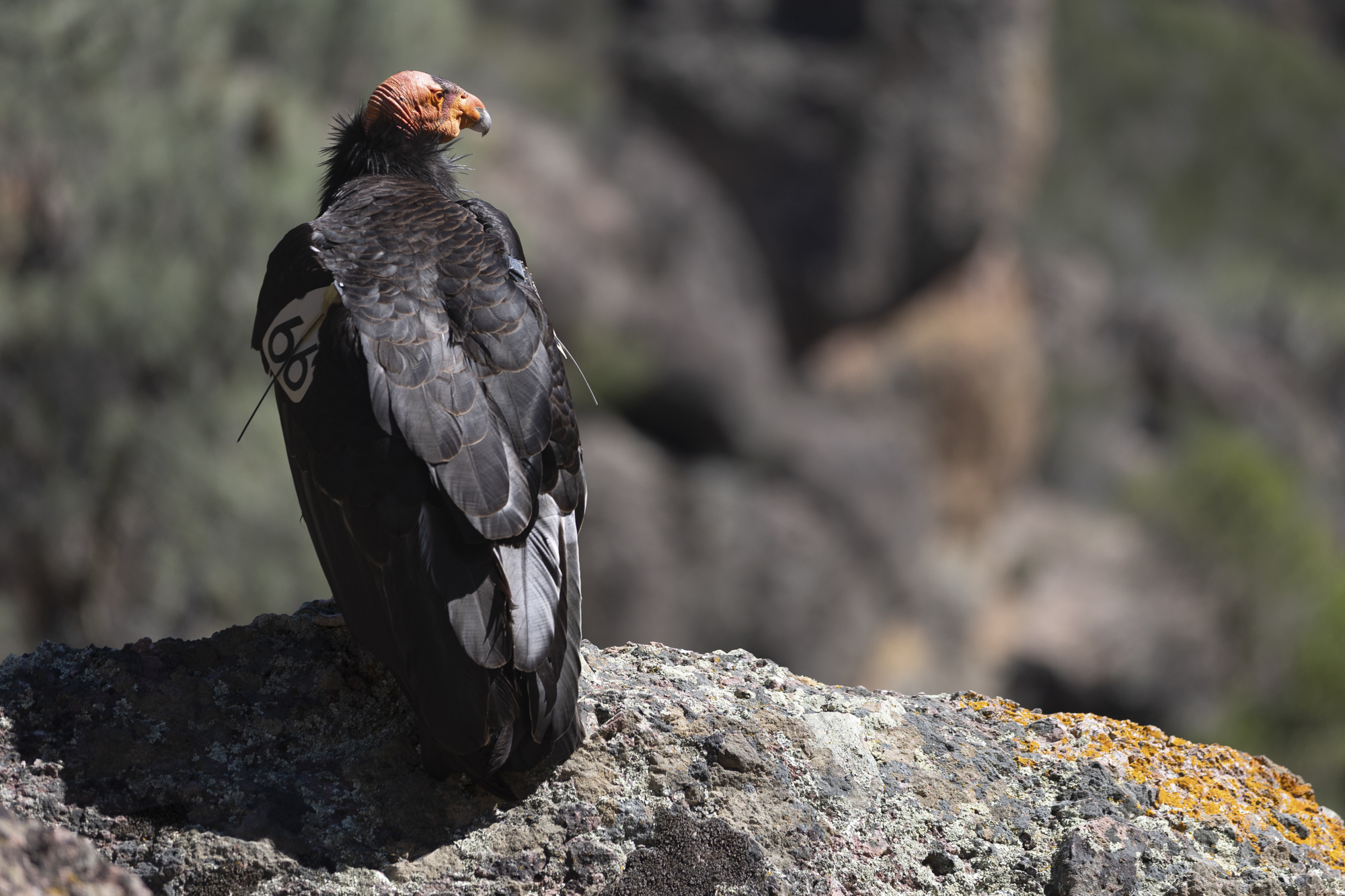
El Cóndor Pasa: Endangered Birds Trapped by Big Sur Timber Fire Back in Wild
Why Oakland Unified Is Banning Cellphones
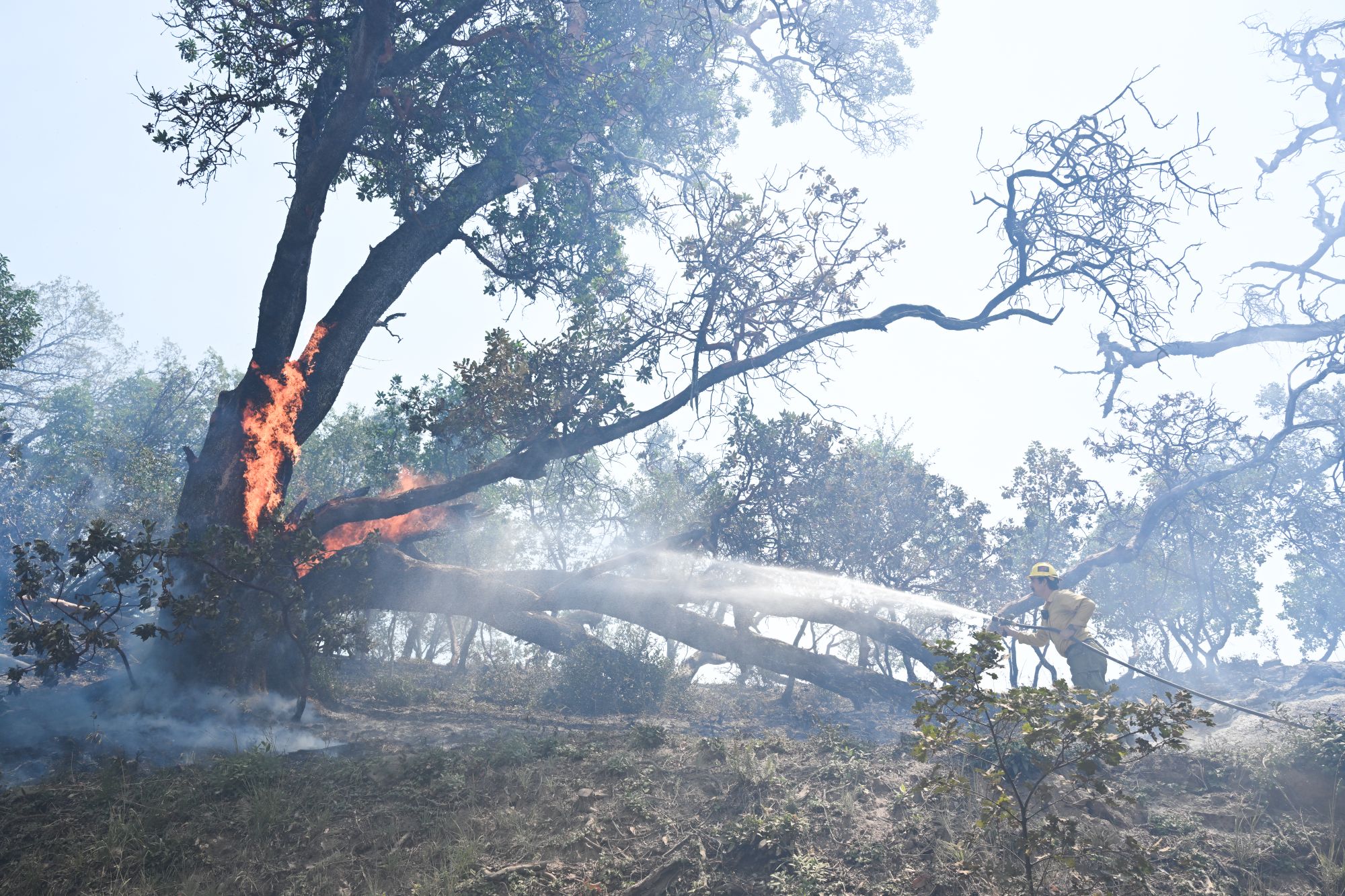
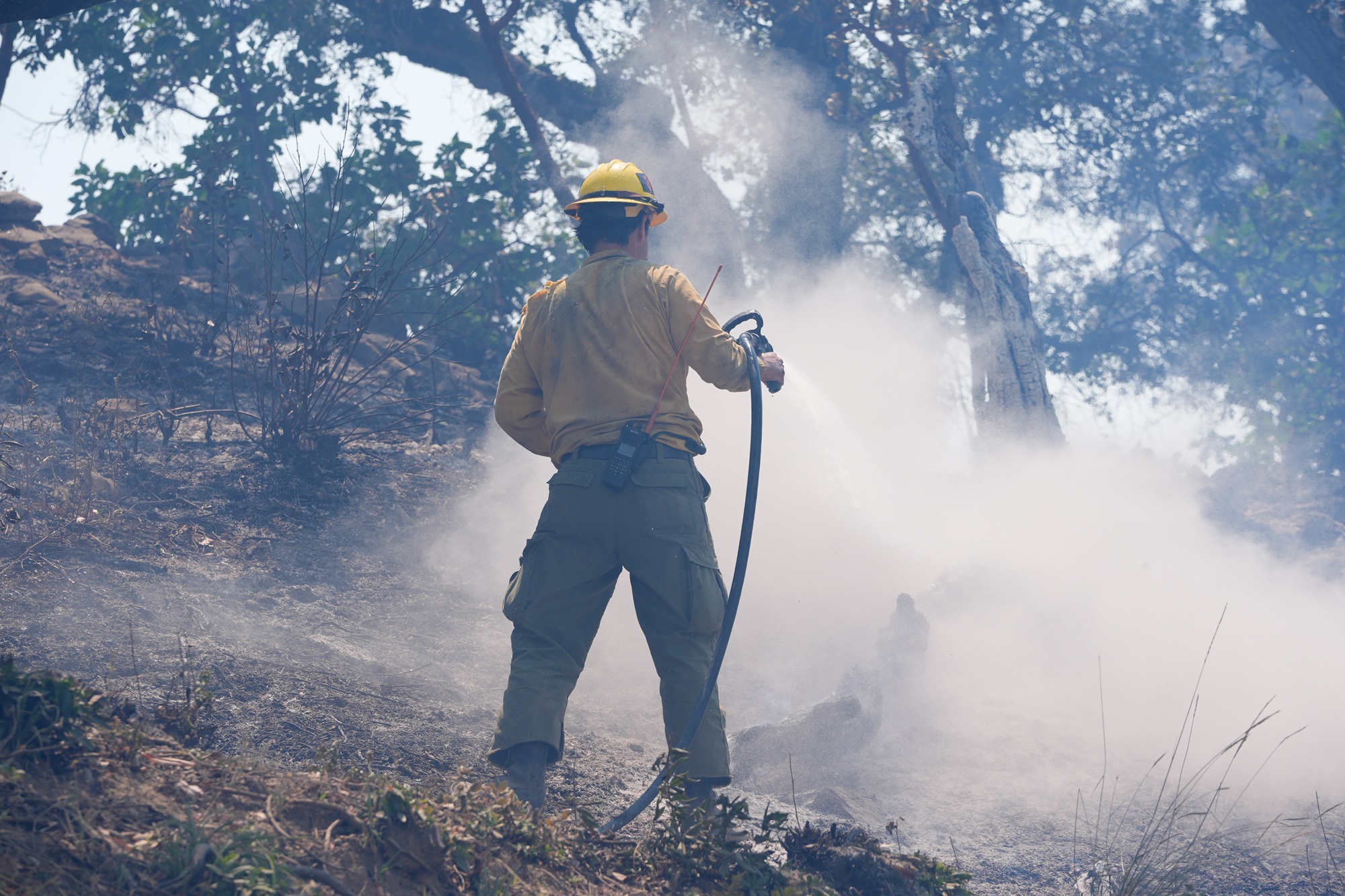
Timber Fire in Big Sur Forces Evacuations, Threatens Beloved Tourist Sites
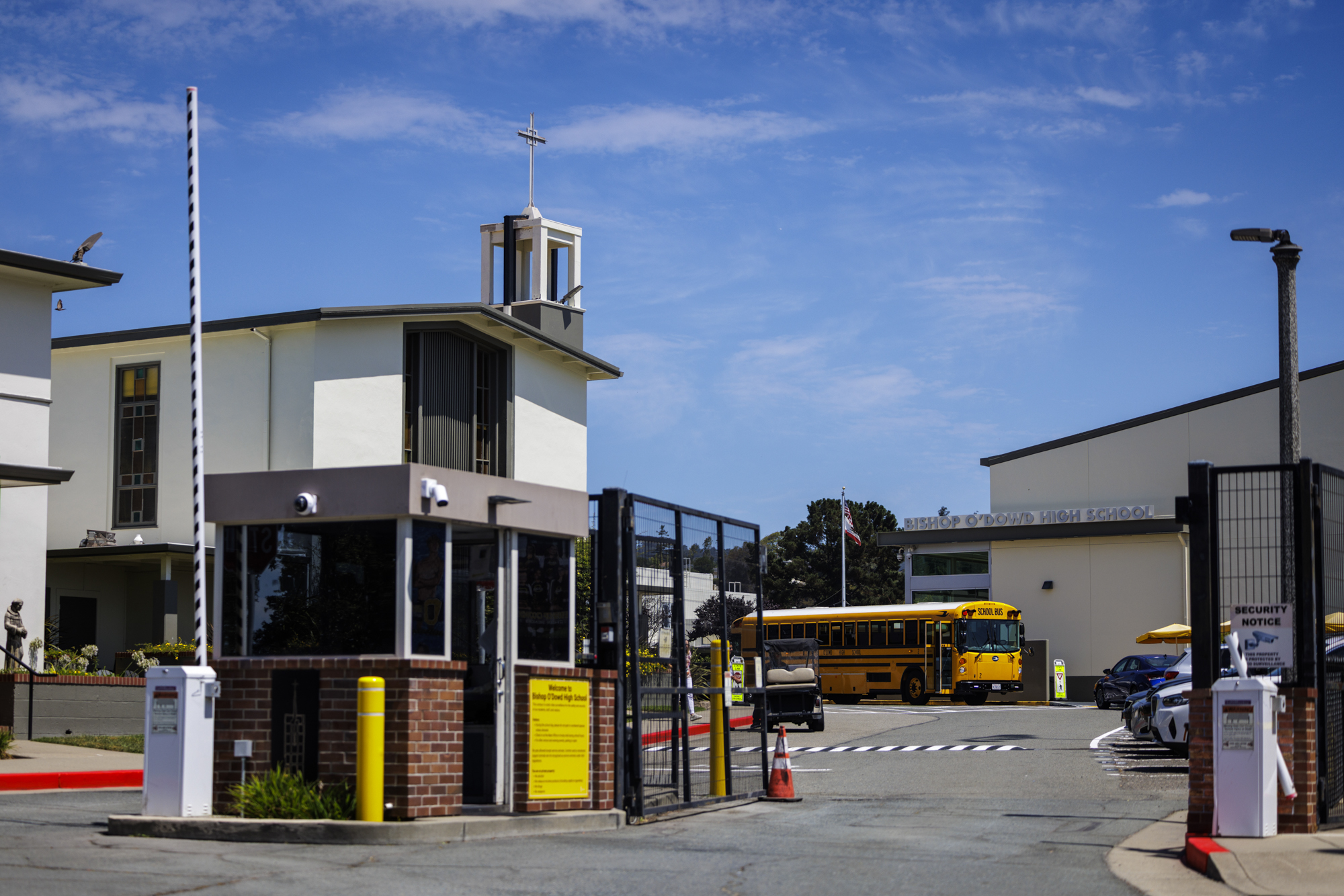
East Bay Catholic High School Removes and Replaces Pride Flag With New Symbol
Timber Fire in Big Sur Doubles Overnight, Forcing Evacuations of Popular Tourist Spots
OUSD Cellphone Ban for Students Takes Effect on the First Day of the School Year
Player sponsored by
window.__IS_SSR__=true
window.__INITIAL_STATE__={
"attachmentsReducer": {
"audio_0": {
"type": "attachments",
"id": "audio_0",
"imgSizes": {
"kqedFullSize": {
"file": "https://ww2.kqed.org/news/wp-content/themes/KQED-unified/img/audio_bgs/background0.jpg"
}
}
},
"audio_1": {
"type": "attachments",
"id": "audio_1",
"imgSizes": {
"kqedFullSize": {
"file": "https://ww2.kqed.org/news/wp-content/themes/KQED-unified/img/audio_bgs/background1.jpg"
}
}
},
"audio_2": {
"type": "attachments",
"id": "audio_2",
"imgSizes": {
"kqedFullSize": {
"file": "https://ww2.kqed.org/news/wp-content/themes/KQED-unified/img/audio_bgs/background2.jpg"
}
}
},
"audio_3": {
"type": "attachments",
"id": "audio_3",
"imgSizes": {
"kqedFullSize": {
"file": "https://ww2.kqed.org/news/wp-content/themes/KQED-unified/img/audio_bgs/background3.jpg"
}
}
},
"audio_4": {
"type": "attachments",
"id": "audio_4",
"imgSizes": {
"kqedFullSize": {
"file": "https://ww2.kqed.org/news/wp-content/themes/KQED-unified/img/audio_bgs/background4.jpg"
}
}
},
"placeholder": {
"type": "attachments",
"id": "placeholder",
"imgSizes": {
"thumbnail": {
"file": "https://cdn.kqed.org/wp-content/uploads/2024/12/KQED-Default-Image-816638274-2000x1333-1-160x107.jpg",
"width": 160,
"height": 107,
"mimeType": "image/jpeg"
},
"medium": {
"file": "https://cdn.kqed.org/wp-content/uploads/2024/12/KQED-Default-Image-816638274-2000x1333-1-800x533.jpg",
"width": 800,
"height": 533,
"mimeType": "image/jpeg"
},
"medium_large": {
"file": "https://cdn.kqed.org/wp-content/uploads/2024/12/KQED-Default-Image-816638274-2000x1333-1-768x512.jpg",
"width": 768,
"height": 512,
"mimeType": "image/jpeg"
},
"large": {
"file": "https://cdn.kqed.org/wp-content/uploads/2024/12/KQED-Default-Image-816638274-2000x1333-1-1020x680.jpg",
"width": 1020,
"height": 680,
"mimeType": "image/jpeg"
},
"1536x1536": {
"file": "https://cdn.kqed.org/wp-content/uploads/2024/12/KQED-Default-Image-816638274-2000x1333-1-1536x1024.jpg",
"width": 1536,
"height": 1024,
"mimeType": "image/jpeg"
},
"fd-lrg": {
"file": "https://cdn.kqed.org/wp-content/uploads/2024/12/KQED-Default-Image-816638274-2000x1333-1-1536x1024.jpg",
"width": 1536,
"height": 1024,
"mimeType": "image/jpeg"
},
"fd-med": {
"file": "https://cdn.kqed.org/wp-content/uploads/2024/12/KQED-Default-Image-816638274-2000x1333-1-1020x680.jpg",
"width": 1020,
"height": 680,
"mimeType": "image/jpeg"
},
"fd-sm": {
"file": "https://cdn.kqed.org/wp-content/uploads/2024/12/KQED-Default-Image-816638274-2000x1333-1-800x533.jpg",
"width": 800,
"height": 533,
"mimeType": "image/jpeg"
},
"post-thumbnail": {
"file": "https://cdn.kqed.org/wp-content/uploads/2024/12/KQED-Default-Image-816638274-2000x1333-1-672x372.jpg",
"width": 672,
"height": 372,
"mimeType": "image/jpeg"
},
"twentyfourteen-full-width": {
"file": "https://cdn.kqed.org/wp-content/uploads/2024/12/KQED-Default-Image-816638274-2000x1333-1-1038x576.jpg",
"width": 1038,
"height": 576,
"mimeType": "image/jpeg"
},
"xxsmall": {
"file": "https://cdn.kqed.org/wp-content/uploads/2024/12/KQED-Default-Image-816638274-2000x1333-1-160x107.jpg",
"width": 160,
"height": 107,
"mimeType": "image/jpeg"
},
"xsmall": {
"file": "https://cdn.kqed.org/wp-content/uploads/2024/12/KQED-Default-Image-816638274-2000x1333-1-672x372.jpg",
"width": 672,
"height": 372,
"mimeType": "image/jpeg"
},
"small": {
"file": "https://cdn.kqed.org/wp-content/uploads/2024/12/KQED-Default-Image-816638274-2000x1333-1-672x372.jpg",
"width": 672,
"height": 372,
"mimeType": "image/jpeg"
},
"xlarge": {
"file": "https://cdn.kqed.org/wp-content/uploads/2024/12/KQED-Default-Image-816638274-2000x1333-1-1020x680.jpg",
"width": 1020,
"height": 680,
"mimeType": "image/jpeg"
},
"full-width": {
"file": "https://cdn.kqed.org/wp-content/uploads/2024/12/KQED-Default-Image-816638274-2000x1333-1-1920x1280.jpg",
"width": 1920,
"height": 1280,
"mimeType": "image/jpeg"
},
"guest-author-32": {
"file": "https://cdn.kqed.org/wp-content/uploads/2025/01/KQED-Default-Image-816638274-1333x1333-1-160x160.jpg",
"width": 32,
"height": 32,
"mimeType": "image/jpeg"
},
"guest-author-50": {
"file": "https://cdn.kqed.org/wp-content/uploads/2025/01/KQED-Default-Image-816638274-1333x1333-1-160x160.jpg",
"width": 50,
"height": 50,
"mimeType": "image/jpeg"
},
"guest-author-64": {
"file": "https://cdn.kqed.org/wp-content/uploads/2025/01/KQED-Default-Image-816638274-1333x1333-1-160x160.jpg",
"width": 64,
"height": 64,
"mimeType": "image/jpeg"
},
"guest-author-96": {
"file": "https://cdn.kqed.org/wp-content/uploads/2025/01/KQED-Default-Image-816638274-1333x1333-1-160x160.jpg",
"width": 96,
"height": 96,
"mimeType": "image/jpeg"
},
"guest-author-128": {
"file": "https://cdn.kqed.org/wp-content/uploads/2025/01/KQED-Default-Image-816638274-1333x1333-1-160x160.jpg",
"width": 128,
"height": 128,
"mimeType": "image/jpeg"
},
"detail": {
"file": "https://cdn.kqed.org/wp-content/uploads/2025/01/KQED-Default-Image-816638274-1333x1333-1-160x160.jpg",
"width": 160,
"height": 160,
"mimeType": "image/jpeg"
},
"kqedFullSize": {
"file": "https://cdn.kqed.org/wp-content/uploads/2024/12/KQED-Default-Image-816638274-2000x1333-1.jpg",
"width": 2000,
"height": 1333
}
}
},
"news_12095995": {
"type": "attachments",
"id": "news_12095995",
"meta": {
"index": "attachments_1716263798",
"site": "news",
"id": "12095995",
"found": true
},
"title": "260819-MetaTrialSketch1_VB",
"publishDate": 1787162895,
"status": "inherit",
"parent": 0,
"modified": 1787179672,
"caption": "Arturo Bejar, a former Meta staffer and whistleblower, testified in court in Oakland, California, on Wednesday, Aug. 19, 2026. The company has acknowledged that it has a role to play in addressing teen well-being, and that some teens struggle to manage their time on social media, but says that it acts on those issues. ",
"credit": "Vicki Behringer for KQED",
"altTag": null,
"description": null,
"imgSizes": {
"medium": {
"file": "https://cdn.kqed.org/wp-content/uploads/sites/10/2026/08/260819-MetaTrialSketch1_VB-2000x1125.jpg",
"width": 2000,
"height": 1125,
"mimeType": "image/jpeg"
},
"large": {
"file": "https://cdn.kqed.org/wp-content/uploads/sites/10/2026/08/260819-MetaTrialSketch1_VB-2000x1125.jpg",
"width": 2000,
"height": 1125,
"mimeType": "image/jpeg"
},
"thumbnail": {
"file": "https://cdn.kqed.org/wp-content/uploads/sites/10/2026/08/260819-MetaTrialSketch1_VB-160x90.jpg",
"width": 160,
"height": 90,
"mimeType": "image/jpeg"
},
"1536x1536": {
"file": "https://cdn.kqed.org/wp-content/uploads/sites/10/2026/08/260819-MetaTrialSketch1_VB-1536x864.jpg",
"width": 1536,
"height": 864,
"mimeType": "image/jpeg"
},
"2048x2048": {
"file": "https://cdn.kqed.org/wp-content/uploads/sites/10/2026/08/260819-MetaTrialSketch1_VB-2048x1152.jpg",
"width": 2048,
"height": 1152,
"mimeType": "image/jpeg"
},
"post-thumbnail": {
"file": "https://cdn.kqed.org/wp-content/uploads/sites/10/2026/08/260819-MetaTrialSketch1_VB-672x372.jpg",
"width": 672,
"height": 372,
"mimeType": "image/jpeg"
},
"twentyfourteen-full-width": {
"file": "https://cdn.kqed.org/wp-content/uploads/sites/10/2026/08/260819-MetaTrialSketch1_VB-1038x576.jpg",
"width": 1038,
"height": 576,
"mimeType": "image/jpeg"
},
"full-width": {
"file": "https://cdn.kqed.org/wp-content/uploads/sites/10/2026/08/260819-MetaTrialSketch1_VB-2000x1125.jpg",
"width": 2000,
"height": 1125,
"mimeType": "image/jpeg"
},
"npr-cds-wide": {
"file": "https://cdn.kqed.org/wp-content/uploads/sites/10/2026/08/260819-MetaTrialSketch1_VB-1200x675.jpg",
"width": 1200,
"height": 675,
"mimeType": "image/jpeg"
},
"npr-cds-square": {
"file": "https://cdn.kqed.org/wp-content/uploads/sites/10/2026/08/260819-MetaTrialSketch1_VB-600x600.jpg",
"width": 600,
"height": 600,
"mimeType": "image/jpeg"
},
"kqedFullSize": {
"file": "https://cdn.kqed.org/wp-content/uploads/sites/10/2026/08/260819-MetaTrialSketch1_VB-scaled.jpg",
"width": 2560,
"height": 1440
}
},
"isLoading": false,
"fetchFailed": false
},
"news_12092732": {
"type": "attachments",
"id": "news_12092732",
"meta": {
"index": "attachments_1716263798",
"site": "news",
"id": "12092732",
"found": true
},
"title": "072526-YouthSports-36-MC-KQED",
"publishDate": 1785178826,
"status": "inherit",
"parent": 0,
"modified": 1785178859,
"caption": "Tyler Yu prepares his swing at the hitting station during the Oakland Baseball Foundation MLB Pitch Hit and Run competition at Bushrod Park in Oakland on July 23, 2026.",
"credit": "Miles Cull/KQED",
"altTag": null,
"description": null,
"imgSizes": {
"thumbnail": {
"file": "https://cdn.kqed.org/wp-content/uploads/sites/10/2026/07/072526-YouthSports-36-MC-KQED-160x107.jpg",
"width": 160,
"height": 107,
"mimeType": "image/jpeg"
},
"1536x1536": {
"file": "https://cdn.kqed.org/wp-content/uploads/sites/10/2026/07/072526-YouthSports-36-MC-KQED-1536x1024.jpg",
"width": 1536,
"height": 1024,
"mimeType": "image/jpeg"
},
"post-thumbnail": {
"file": "https://cdn.kqed.org/wp-content/uploads/sites/10/2026/07/072526-YouthSports-36-MC-KQED-672x372.jpg",
"width": 672,
"height": 372,
"mimeType": "image/jpeg"
},
"twentyfourteen-full-width": {
"file": "https://cdn.kqed.org/wp-content/uploads/sites/10/2026/07/072526-YouthSports-36-MC-KQED-1038x576.jpg",
"width": 1038,
"height": 576,
"mimeType": "image/jpeg"
},
"npr-cds-wide": {
"file": "https://cdn.kqed.org/wp-content/uploads/sites/10/2026/07/072526-YouthSports-36-MC-KQED-1200x675.jpg",
"width": 1200,
"height": 675,
"mimeType": "image/jpeg"
},
"npr-cds-square": {
"file": "https://cdn.kqed.org/wp-content/uploads/sites/10/2026/07/072526-YouthSports-36-MC-KQED-600x600.jpg",
"width": 600,
"height": 600,
"mimeType": "image/jpeg"
},
"kqedFullSize": {
"file": "https://cdn.kqed.org/wp-content/uploads/sites/10/2026/07/072526-YouthSports-36-MC-KQED.jpg",
"width": 2000,
"height": 1333
}
},
"isLoading": false,
"fetchFailed": false
},
"news_12095836": {
"type": "attachments",
"id": "news_12095836",
"meta": {
"index": "attachments_1716263798",
"site": "news",
"id": "12095836",
"found": true
},
"title": "MetaTrialSketch2_VB-KQED",
"publishDate": 1787084065,
"status": "inherit",
"parent": 0,
"modified": 1787094453,
"caption": "Meta's lead attorney Paul Schmidt delivers his opening statements for Meta on Aug. 18, 2026, in Oakland. Schmidt told the court that the company doesn’t deny that “some teens struggle to manage their time on social media,\" and some people “post negative things.”",
"credit": "Vicki Behringer for KQED",
"altTag": null,
"description": null,
"imgSizes": {
"thumbnail": {
"file": "https://cdn.kqed.org/wp-content/uploads/sites/10/2026/08/MetaTrialSketch2_VB-KQED-160x90.jpg",
"width": 160,
"height": 90,
"mimeType": "image/jpeg"
},
"1536x1536": {
"file": "https://cdn.kqed.org/wp-content/uploads/sites/10/2026/08/MetaTrialSketch2_VB-KQED-1536x864.jpg",
"width": 1536,
"height": 864,
"mimeType": "image/jpeg"
},
"post-thumbnail": {
"file": "https://cdn.kqed.org/wp-content/uploads/sites/10/2026/08/MetaTrialSketch2_VB-KQED-672x372.jpg",
"width": 672,
"height": 372,
"mimeType": "image/jpeg"
},
"twentyfourteen-full-width": {
"file": "https://cdn.kqed.org/wp-content/uploads/sites/10/2026/08/MetaTrialSketch2_VB-KQED-1038x576.jpg",
"width": 1038,
"height": 576,
"mimeType": "image/jpeg"
},
"npr-cds-wide": {
"file": "https://cdn.kqed.org/wp-content/uploads/sites/10/2026/08/MetaTrialSketch2_VB-KQED-1200x675.jpg",
"width": 1200,
"height": 675,
"mimeType": "image/jpeg"
},
"npr-cds-square": {
"file": "https://cdn.kqed.org/wp-content/uploads/sites/10/2026/08/MetaTrialSketch2_VB-KQED-600x600.jpg",
"width": 600,
"height": 600,
"mimeType": "image/jpeg"
},
"kqedFullSize": {
"file": "https://cdn.kqed.org/wp-content/uploads/sites/10/2026/08/MetaTrialSketch2_VB-KQED.jpg",
"width": 2000,
"height": 1125
}
},
"isLoading": false,
"fetchFailed": false
},
"news_11947437": {
"type": "attachments",
"id": "news_11947437",
"meta": {
"index": "attachments_1716263798",
"site": "news",
"id": "11947437",
"found": true
},
"parent": 11947432,
"imgSizes": {
"twentyfourteen-full-width": {
"file": "https://ww2.kqed.org/app/uploads/sites/10/2023/04/RS64554_005_KQED_ChatGPTBalboaHS_04172023-qut-1038x576.jpg",
"width": 1038,
"mimeType": "image/jpeg",
"height": 576
},
"thumbnail": {
"file": "https://ww2.kqed.org/app/uploads/sites/10/2023/04/RS64554_005_KQED_ChatGPTBalboaHS_04172023-qut-160x107.jpg",
"width": 160,
"mimeType": "image/jpeg",
"height": 107
},
"post-thumbnail": {
"file": "https://ww2.kqed.org/app/uploads/sites/10/2023/04/RS64554_005_KQED_ChatGPTBalboaHS_04172023-qut-672x372.jpg",
"width": 672,
"mimeType": "image/jpeg",
"height": 372
},
"kqedFullSize": {
"file": "https://ww2.kqed.org/app/uploads/sites/10/2023/04/RS64554_005_KQED_ChatGPTBalboaHS_04172023-qut.jpg",
"width": 1920,
"height": 1280
},
"large": {
"file": "https://ww2.kqed.org/app/uploads/sites/10/2023/04/RS64554_005_KQED_ChatGPTBalboaHS_04172023-qut-1020x680.jpg",
"width": 1020,
"mimeType": "image/jpeg",
"height": 680
},
"1536x1536": {
"file": "https://ww2.kqed.org/app/uploads/sites/10/2023/04/RS64554_005_KQED_ChatGPTBalboaHS_04172023-qut-1536x1024.jpg",
"width": 1536,
"mimeType": "image/jpeg",
"height": 1024
},
"medium": {
"file": "https://ww2.kqed.org/app/uploads/sites/10/2023/04/RS64554_005_KQED_ChatGPTBalboaHS_04172023-qut-800x533.jpg",
"width": 800,
"mimeType": "image/jpeg",
"height": 533
}
},
"publishDate": 1682360244,
"modified": 1682369415,
"caption": "Balboa High School teacher Michael Rosenberg checks the text from an essay assignment to see how much was generated by AI, at the school in San Francisco on April 17, 2023. The text highlighted in yellow is idenitified as AI generated text.",
"description": null,
"title": "RS64554_005_KQED_ChatGPTBalboaHS_04172023-qut",
"credit": "Beth LaBerge/KQED",
"status": "inherit",
"altTag": "A closeup of a laptop screen with text on display.",
"isLoading": false,
"fetchFailed": false
},
"news_12095558": {
"type": "attachments",
"id": "news_12095558",
"meta": {
"index": "attachments_1716263798",
"site": "news",
"id": "12095558",
"found": true
},
"title": "081726-SFUSDFIRSTDAY-02-MC-KQED",
"publishDate": 1786991448,
"status": "inherit",
"parent": 0,
"modified": 1786991564,
"caption": "Students arrive at Jose Ortega Elementary School for the first day of their school year on August 17, 2026, in San Francisco.",
"credit": "Miles Cull/KQED",
"altTag": null,
"description": null,
"imgSizes": {
"thumbnail": {
"file": "https://cdn.kqed.org/wp-content/uploads/sites/10/2026/08/081726-SFUSDFIRSTDAY-02-MC-KQED-160x107.jpg",
"width": 160,
"height": 107,
"mimeType": "image/jpeg"
},
"1536x1536": {
"file": "https://cdn.kqed.org/wp-content/uploads/sites/10/2026/08/081726-SFUSDFIRSTDAY-02-MC-KQED-1536x1025.jpg",
"width": 1536,
"height": 1025,
"mimeType": "image/jpeg"
},
"post-thumbnail": {
"file": "https://cdn.kqed.org/wp-content/uploads/sites/10/2026/08/081726-SFUSDFIRSTDAY-02-MC-KQED-672x372.jpg",
"width": 672,
"height": 372,
"mimeType": "image/jpeg"
},
"twentyfourteen-full-width": {
"file": "https://cdn.kqed.org/wp-content/uploads/sites/10/2026/08/081726-SFUSDFIRSTDAY-02-MC-KQED-1038x576.jpg",
"width": 1038,
"height": 576,
"mimeType": "image/jpeg"
},
"npr-cds-wide": {
"file": "https://cdn.kqed.org/wp-content/uploads/sites/10/2026/08/081726-SFUSDFIRSTDAY-02-MC-KQED-1200x675.jpg",
"width": 1200,
"height": 675,
"mimeType": "image/jpeg"
},
"npr-cds-square": {
"file": "https://cdn.kqed.org/wp-content/uploads/sites/10/2026/08/081726-SFUSDFIRSTDAY-02-MC-KQED-600x600.jpg",
"width": 600,
"height": 600,
"mimeType": "image/jpeg"
},
"kqedFullSize": {
"file": "https://cdn.kqed.org/wp-content/uploads/sites/10/2026/08/081726-SFUSDFIRSTDAY-02-MC-KQED.jpg",
"width": 2000,
"height": 1334
}
},
"isLoading": false,
"fetchFailed": false
},
"news_12095314": {
"type": "attachments",
"id": "news_12095314",
"meta": {
"index": "attachments_1716263798",
"site": "news",
"id": "12095314",
"found": true
},
"title": "Houston Astros v. San Francisco Giants",
"publishDate": 1786724212,
"status": "inherit",
"parent": 12095311,
"modified": 1786729467,
"caption": "Hunter Brown of the Houston Astros pitches during the game between the Houston Astros and the San Francisco Giants at Oracle Park on Tuesday, Aug. 11, 2026, in San Francisco, California. ",
"credit": "Bryan Kennedy/MLB Photos via Getty Images",
"altTag": null,
"description": null,
"imgSizes": {
"thumbnail": {
"file": "https://cdn.kqed.org/wp-content/uploads/sites/10/2026/08/GettyImages-2289632405-160x107.jpg",
"width": 160,
"height": 107,
"mimeType": "image/jpeg"
},
"1536x1536": {
"file": "https://cdn.kqed.org/wp-content/uploads/sites/10/2026/08/GettyImages-2289632405-1536x1024.jpg",
"width": 1536,
"height": 1024,
"mimeType": "image/jpeg"
},
"post-thumbnail": {
"file": "https://cdn.kqed.org/wp-content/uploads/sites/10/2026/08/GettyImages-2289632405-672x372.jpg",
"width": 672,
"height": 372,
"mimeType": "image/jpeg"
},
"twentyfourteen-full-width": {
"file": "https://cdn.kqed.org/wp-content/uploads/sites/10/2026/08/GettyImages-2289632405-1038x576.jpg",
"width": 1038,
"height": 576,
"mimeType": "image/jpeg"
},
"npr-cds-wide": {
"file": "https://cdn.kqed.org/wp-content/uploads/sites/10/2026/08/GettyImages-2289632405-1200x675.jpg",
"width": 1200,
"height": 675,
"mimeType": "image/jpeg"
},
"npr-cds-square": {
"file": "https://cdn.kqed.org/wp-content/uploads/sites/10/2026/08/GettyImages-2289632405-600x600.jpg",
"width": 600,
"height": 600,
"mimeType": "image/jpeg"
},
"kqedFullSize": {
"file": "https://cdn.kqed.org/wp-content/uploads/sites/10/2026/08/GettyImages-2289632405.jpg",
"width": 1980,
"height": 1320
}
},
"isLoading": false,
"fetchFailed": false
},
"news_12077265": {
"type": "attachments",
"id": "news_12077265",
"meta": {
"index": "attachments_1716263798",
"site": "news",
"id": "12077265",
"found": true
},
"title": "031626_PINNACLESFORTHEDAY _GH_030-KQED",
"publishDate": 1774273655,
"status": "inherit",
"parent": 12077266,
"modified": 1774274137,
"caption": "A California condor stands on a rocky outcrop near the Condor Gulch Trail viewpoint at Pinnacles National Park on March 16, 2026.",
"credit": "Gustavo Hernandez/KQED",
"altTag": null,
"description": null,
"imgSizes": {
"thumbnail": {
"file": "https://cdn.kqed.org/wp-content/uploads/sites/10/2026/03/031626_PINNACLESFORTHEDAY-_GH_030-KQED-160x107.jpg",
"width": 160,
"height": 107,
"mimeType": "image/jpeg"
},
"1536x1536": {
"file": "https://cdn.kqed.org/wp-content/uploads/sites/10/2026/03/031626_PINNACLESFORTHEDAY-_GH_030-KQED-1536x1024.jpg",
"width": 1536,
"height": 1024,
"mimeType": "image/jpeg"
},
"post-thumbnail": {
"file": "https://cdn.kqed.org/wp-content/uploads/sites/10/2026/03/031626_PINNACLESFORTHEDAY-_GH_030-KQED-672x372.jpg",
"width": 672,
"height": 372,
"mimeType": "image/jpeg"
},
"twentyfourteen-full-width": {
"file": "https://cdn.kqed.org/wp-content/uploads/sites/10/2026/03/031626_PINNACLESFORTHEDAY-_GH_030-KQED-1038x576.jpg",
"width": 1038,
"height": 576,
"mimeType": "image/jpeg"
},
"npr-cds-wide": {
"file": "https://cdn.kqed.org/wp-content/uploads/sites/10/2026/03/031626_PINNACLESFORTHEDAY-_GH_030-KQED-1200x675.jpg",
"width": 1200,
"height": 675,
"mimeType": "image/jpeg"
},
"kqedFullSize": {
"file": "https://cdn.kqed.org/wp-content/uploads/sites/10/2026/03/031626_PINNACLESFORTHEDAY-_GH_030-KQED.jpg",
"width": 2000,
"height": 1333
}
},
"isLoading": false,
"fetchFailed": false
},
"news_12069332": {
"type": "attachments",
"id": "news_12069332",
"meta": {
"index": "attachments_1716263798",
"site": "news",
"id": "12069332",
"found": true
},
"title": "Male Student Secretly Using Phone Under Table Cheating on Exam",
"publishDate": 1768005219,
"status": "inherit",
"parent": 12069286,
"modified": 1768005230,
"caption": "In September 2024, Governor Gavin Newsom signed the Phone‑Free Schools Act (AB 3216), which requires every school district, charter school, and county education office to adopt policies by July 1, 2026 that limit or prohibit the use of smartphones by students while on campus or under school supervision.\n",
"credit": null,
"altTag": null,
"description": null,
"imgSizes": {
"thumbnail": {
"file": "https://cdn.kqed.org/wp-content/uploads/sites/10/2026/01/phones-at-school-getty-160x107.jpg",
"width": 160,
"height": 107,
"mimeType": "image/jpeg"
},
"1536x1536": {
"file": "https://cdn.kqed.org/wp-content/uploads/sites/10/2026/01/phones-at-school-getty-1536x1024.jpg",
"width": 1536,
"height": 1024,
"mimeType": "image/jpeg"
},
"post-thumbnail": {
"file": "https://cdn.kqed.org/wp-content/uploads/sites/10/2026/01/phones-at-school-getty-672x372.jpg",
"width": 672,
"height": 372,
"mimeType": "image/jpeg"
},
"twentyfourteen-full-width": {
"file": "https://cdn.kqed.org/wp-content/uploads/sites/10/2026/01/phones-at-school-getty-1038x576.jpg",
"width": 1038,
"height": 576,
"mimeType": "image/jpeg"
},
"npr-cds-wide": {
"file": "https://cdn.kqed.org/wp-content/uploads/sites/10/2026/01/phones-at-school-getty-1200x675.jpg",
"width": 1200,
"height": 675,
"mimeType": "image/jpeg"
},
"kqedFullSize": {
"file": "https://cdn.kqed.org/wp-content/uploads/sites/10/2026/01/phones-at-school-getty.jpg",
"width": 2000,
"height": 1333
}
},
"isLoading": false,
"fetchFailed": false
},
"news_12094810": {
"type": "attachments",
"id": "news_12094810",
"meta": {
"index": "attachments_1716263798",
"site": "news",
"id": "12094810",
"found": true
},
"title": "timber fire 1 - larger",
"publishDate": 1786478956,
"status": "inherit",
"parent": 12094776,
"modified": 1786481039,
"caption": "A firefighter battles flames as the Timber Fire continues in Big Sur, California on Aug. 10, 2026. ",
"credit": "Tayfun Coskun Anadolu/Getty Images",
"altTag": null,
"description": null,
"imgSizes": {
"thumbnail": {
"file": "https://cdn.kqed.org/wp-content/uploads/sites/10/2026/08/timber-fire-1-larger-160x107.jpg",
"width": 160,
"height": 107,
"mimeType": "image/jpeg"
},
"1536x1536": {
"file": "https://cdn.kqed.org/wp-content/uploads/sites/10/2026/08/timber-fire-1-larger-1536x1024.jpg",
"width": 1536,
"height": 1024,
"mimeType": "image/jpeg"
},
"post-thumbnail": {
"file": "https://cdn.kqed.org/wp-content/uploads/sites/10/2026/08/timber-fire-1-larger-672x372.jpg",
"width": 672,
"height": 372,
"mimeType": "image/jpeg"
},
"twentyfourteen-full-width": {
"file": "https://cdn.kqed.org/wp-content/uploads/sites/10/2026/08/timber-fire-1-larger-1038x576.jpg",
"width": 1038,
"height": 576,
"mimeType": "image/jpeg"
},
"npr-cds-wide": {
"file": "https://cdn.kqed.org/wp-content/uploads/sites/10/2026/08/timber-fire-1-larger-1200x675.jpg",
"width": 1200,
"height": 675,
"mimeType": "image/jpeg"
},
"npr-cds-square": {
"file": "https://cdn.kqed.org/wp-content/uploads/sites/10/2026/08/timber-fire-1-larger-600x600.jpg",
"width": 600,
"height": 600,
"mimeType": "image/jpeg"
},
"kqedFullSize": {
"file": "https://cdn.kqed.org/wp-content/uploads/sites/10/2026/08/timber-fire-1-larger.jpg",
"width": 2000,
"height": 1333
}
},
"isLoading": false,
"fetchFailed": false
},
"news_12094624": {
"type": "attachments",
"id": "news_12094624",
"meta": {
"index": "attachments_1716263798",
"site": "news",
"id": "12094624",
"found": true
},
"title": "Bishop O'Dowd High School in Oakland on Aug. 10, 2026.",
"publishDate": 1786393239,
"status": "inherit",
"parent": 0,
"modified": 1786393284,
"caption": "Bishop O'Dowd High School in Oakland on Aug. 10, 2026.",
"credit": "Martin do Nascimento/KQED",
"altTag": null,
"description": null,
"imgSizes": {
"thumbnail": {
"file": "https://cdn.kqed.org/wp-content/uploads/sites/10/2026/08/260810-INCLUSIVE-O-MD-03-KQED-160x107.jpg",
"width": 160,
"height": 107,
"mimeType": "image/jpeg"
},
"1536x1536": {
"file": "https://cdn.kqed.org/wp-content/uploads/sites/10/2026/08/260810-INCLUSIVE-O-MD-03-KQED-1536x1025.jpg",
"width": 1536,
"height": 1025,
"mimeType": "image/jpeg"
},
"post-thumbnail": {
"file": "https://cdn.kqed.org/wp-content/uploads/sites/10/2026/08/260810-INCLUSIVE-O-MD-03-KQED-672x372.jpg",
"width": 672,
"height": 372,
"mimeType": "image/jpeg"
},
"twentyfourteen-full-width": {
"file": "https://cdn.kqed.org/wp-content/uploads/sites/10/2026/08/260810-INCLUSIVE-O-MD-03-KQED-1038x576.jpg",
"width": 1038,
"height": 576,
"mimeType": "image/jpeg"
},
"npr-cds-wide": {
"file": "https://cdn.kqed.org/wp-content/uploads/sites/10/2026/08/260810-INCLUSIVE-O-MD-03-KQED-1200x675.jpg",
"width": 1200,
"height": 675,
"mimeType": "image/jpeg"
},
"npr-cds-square": {
"file": "https://cdn.kqed.org/wp-content/uploads/sites/10/2026/08/260810-INCLUSIVE-O-MD-03-KQED-600x600.jpg",
"width": 600,
"height": 600,
"mimeType": "image/jpeg"
},
"kqedFullSize": {
"file": "https://cdn.kqed.org/wp-content/uploads/sites/10/2026/08/260810-INCLUSIVE-O-MD-03-KQED.jpg",
"width": 2000,
"height": 1334
}
},
"isLoading": false,
"fetchFailed": false
},
"news_12094843": {
"type": "attachments",
"id": "news_12094843",
"meta": {
"index": "attachments_1716263798",
"site": "news",
"id": "12094843",
"found": true
},
"title": "California's 'Timber Fire' of wildfire in Big Sur grows",
"publishDate": 1786483114,
"status": "inherit",
"parent": 12094539,
"modified": 1786483164,
"caption": "A firefighter battles with flames as the Timber Fire continues in Big Sur, California, Aug. 10, 2026. ",
"credit": "Tayfun Coskun/Anadolu via Getty Images",
"altTag": null,
"description": null,
"imgSizes": {
"thumbnail": {
"file": "https://cdn.kqed.org/wp-content/uploads/sites/10/2026/08/TimberFireGetty6-160x107.jpg",
"width": 160,
"height": 107,
"mimeType": "image/jpeg"
},
"1536x1536": {
"file": "https://cdn.kqed.org/wp-content/uploads/sites/10/2026/08/TimberFireGetty6-1536x1024.jpg",
"width": 1536,
"height": 1024,
"mimeType": "image/jpeg"
},
"post-thumbnail": {
"file": "https://cdn.kqed.org/wp-content/uploads/sites/10/2026/08/TimberFireGetty6-672x372.jpg",
"width": 672,
"height": 372,
"mimeType": "image/jpeg"
},
"twentyfourteen-full-width": {
"file": "https://cdn.kqed.org/wp-content/uploads/sites/10/2026/08/TimberFireGetty6-1038x576.jpg",
"width": 1038,
"height": 576,
"mimeType": "image/jpeg"
},
"npr-cds-wide": {
"file": "https://cdn.kqed.org/wp-content/uploads/sites/10/2026/08/TimberFireGetty6-1200x675.jpg",
"width": 1200,
"height": 675,
"mimeType": "image/jpeg"
},
"npr-cds-square": {
"file": "https://cdn.kqed.org/wp-content/uploads/sites/10/2026/08/TimberFireGetty6-600x600.jpg",
"width": 600,
"height": 600,
"mimeType": "image/jpeg"
},
"kqedFullSize": {
"file": "https://cdn.kqed.org/wp-content/uploads/sites/10/2026/08/TimberFireGetty6.jpg",
"width": 2000,
"height": 1333
}
},
"isLoading": false,
"fetchFailed": false
},
"news_11992395": {
"type": "attachments",
"id": "news_11992395",
"meta": {
"index": "attachments_1716263798",
"site": "news",
"id": "11992395",
"found": true
},
"title": "101023-AI-College-Toby-Reed-LA-CM-21 copy",
"publishDate": 1719601285,
"status": "inherit",
"parent": 11992394,
"modified": 1719601308,
"caption": "Students walk down a hallway at Fremont High School in Oakland on Oct. 10, 2023. ",
"credit": "Laure Andrillon for CalMatters",
"altTag": null,
"description": null,
"imgSizes": {
"medium": {
"file": "https://cdn.kqed.org/wp-content/uploads/sites/10/2024/06/101023-AI-College-Toby-Reed-LA-CM-21-copy-800x534.jpg",
"width": 800,
"height": 534,
"mimeType": "image/jpeg"
},
"large": {
"file": "https://cdn.kqed.org/wp-content/uploads/sites/10/2024/06/101023-AI-College-Toby-Reed-LA-CM-21-copy-1020x681.jpg",
"width": 1020,
"height": 681,
"mimeType": "image/jpeg"
},
"thumbnail": {
"file": "https://cdn.kqed.org/wp-content/uploads/sites/10/2024/06/101023-AI-College-Toby-Reed-LA-CM-21-copy-160x107.jpg",
"width": 160,
"height": 107,
"mimeType": "image/jpeg"
},
"1536x1536": {
"file": "https://cdn.kqed.org/wp-content/uploads/sites/10/2024/06/101023-AI-College-Toby-Reed-LA-CM-21-copy-1536x1025.jpg",
"width": 1536,
"height": 1025,
"mimeType": "image/jpeg"
},
"post-thumbnail": {
"file": "https://cdn.kqed.org/wp-content/uploads/sites/10/2024/06/101023-AI-College-Toby-Reed-LA-CM-21-copy-672x372.jpg",
"width": 672,
"height": 372,
"mimeType": "image/jpeg"
},
"twentyfourteen-full-width": {
"file": "https://cdn.kqed.org/wp-content/uploads/sites/10/2024/06/101023-AI-College-Toby-Reed-LA-CM-21-copy-1038x576.jpg",
"width": 1038,
"height": 576,
"mimeType": "image/jpeg"
},
"full-width": {
"file": "https://cdn.kqed.org/wp-content/uploads/sites/10/2024/06/101023-AI-College-Toby-Reed-LA-CM-21-copy-1920x1282.jpg",
"width": 1920,
"height": 1282,
"mimeType": "image/jpeg"
},
"kqedFullSize": {
"file": "https://cdn.kqed.org/wp-content/uploads/sites/10/2024/06/101023-AI-College-Toby-Reed-LA-CM-21-copy.jpg",
"width": 2000,
"height": 1335
}
},
"isLoading": false,
"fetchFailed": false
}
},
"audioPlayerReducer": {
"postId": "stream_live",
"isPaused": true,
"isPlaying": false,
"pfsActive": false,
"pledgeModalIsOpen": true,
"playerDrawerIsOpen": false,
"liveAudioPlayStartedAt": 0,
"liveAudioPlayContext": ""
},
"authorsReducer": {
"kdebenedetti": {
"type": "authors",
"id": "11913",
"meta": {
"index": "authors_1716337520",
"id": "11913",
"found": true
},
"name": "Katie DeBenedetti",
"firstName": "Katie",
"lastName": "DeBenedetti",
"slug": "kdebenedetti",
"email": "kdebenedetti@kqed.org",
"display_author_email": false,
"staff_mastheads": [
"news",
"science"
],
"title": "KQED Contributor",
"bio": "Katie DeBenedetti is a digital reporter covering daily news for the Express Desk. Prior to joining KQED as a culture reporting intern in January 2024, she covered education and city government for the Napa Valley Register.",
"avatar": "https://secure.gravatar.com/avatar/6e31073cb8f7e4214ab03f42771d0f45?s=600&d=blank&r=g",
"twitter": null,
"facebook": null,
"instagram": null,
"linkedin": null,
"sites": [
{
"site": "news",
"roles": [
"author"
]
},
{
"site": "science",
"roles": [
"author"
]
},
{
"site": "liveblog",
"roles": [
"author"
]
}
],
"headData": {
"title": "Katie DeBenedetti | KQED",
"description": "KQED Contributor",
"ogImgSrc": "https://secure.gravatar.com/avatar/6e31073cb8f7e4214ab03f42771d0f45?s=600&d=blank&r=g",
"twImgSrc": "https://secure.gravatar.com/avatar/6e31073cb8f7e4214ab03f42771d0f45?s=600&d=blank&r=g"
},
"isLoading": false,
"link": "/author/kdebenedetti"
},
"rachael-myrow": {
"type": "authors",
"id": "251",
"meta": {
"index": "authors_1716337520",
"id": "251",
"found": true
},
"name": "Rachael Myrow",
"firstName": "Rachael",
"lastName": "Myrow",
"slug": "rachael-myrow",
"email": "rmyrow@kqed.org",
"display_author_email": true,
"staff_mastheads": [
"news"
],
"title": "Senior Editor of KQED's Silicon Valley News Desk",
"bio": "• I write and edit stories about how Silicon Valley power and policies shape everyday life in California. I’m also passionate about making Bay Area history and culture more accessible to a broad public. • I’ve been a journalist for most of my life, starting in high school with The Franklin Press in Los Angeles, where I grew up. While earning my first degree in English at UC Berkeley, I got my start in public radio at KALX-FM. After completing a second degree in journalism at Cal, I landed my first professional job at Marketplace, then moved on to KPCC (now LAist), and then KQED, where I hosted The California Report for more than seven years. • My reporting has appeared on NPR, The World, WBUR’s \u003ci>Here & Now\u003c/i>, and the BBC. I also guest host for KQED’s \u003ci>Forum\u003c/i>, as well as the Commonwealth Club in San Francisco. • I speak periodically on media, democracy and technology issues, and do voiceover work for documentaries and educational video projects. • Outside of the studio, you'll find me hiking Bay Area trails and whipping up Insta-ready meals in my kitchen. • I do not accept gifts, money, or favors from anyone connected to my reporting, I don't pay people for information, and I do not support or donate to political causes. • I strive to treat the people I report on with fairness, honesty, and respect. I also recognize there are often multiple sides to a story and work to verify information through multiple sources and documentation. If I get something wrong, I correct it.",
"avatar": "https://secure.gravatar.com/avatar/3ed8a3c5f26025e4a805ba634cda8cd764906b97438a6d9ce216b044e340da4e?s=600&d=blank&r=g",
"twitter": "rachaelmyrow",
"bluesky": null,
"facebook": null,
"instagram": null,
"linkedin": "https://www.linkedin.com/in/rachaelmyrow/",
"sites": [
{
"site": "arts",
"roles": [
"administrator"
]
},
{
"site": "news",
"roles": [
"edit_others_posts",
"editor"
]
},
{
"site": "futureofyou",
"roles": [
"editor"
]
},
{
"site": "bayareabites",
"roles": [
"editor"
]
},
{
"site": "stateofhealth",
"roles": [
"editor"
]
},
{
"site": "science",
"roles": [
"editor"
]
},
{
"site": "food",
"roles": [
"editor"
]
},
{
"site": "forum",
"roles": [
"editor"
]
},
{
"site": "liveblog",
"roles": [
"author"
]
}
],
"headData": {
"title": "Rachael Myrow | KQED",
"description": "Senior Editor of KQED's Silicon Valley News Desk",
"ogImgSrc": "https://secure.gravatar.com/avatar/3ed8a3c5f26025e4a805ba634cda8cd764906b97438a6d9ce216b044e340da4e?s=600&d=blank&r=g",
"twImgSrc": "https://secure.gravatar.com/avatar/3ed8a3c5f26025e4a805ba634cda8cd764906b97438a6d9ce216b044e340da4e?s=600&d=blank&r=g"
},
"isLoading": false,
"link": "/author/rachael-myrow"
},
"ecruzguevarra": {
"type": "authors",
"id": "8654",
"meta": {
"index": "authors_1716337520",
"id": "8654",
"found": true
},
"name": "Ericka Cruz Guevarra",
"firstName": "Ericka",
"lastName": "Cruz Guevarra",
"slug": "ecruzguevarra",
"email": "ecruzguevarra@kqed.org",
"display_author_email": true,
"staff_mastheads": [
"news"
],
"title": "Producer, The Bay Podcast",
"bio": "Ericka Cruz Guevarra is host of \u003ca href=\"https://www.kqed.org/podcasts/thebay\">\u003cem>The Bay\u003c/em>\u003c/a> podcast at KQED. Before host, she was the show’s producer. Her work in that capacity includes a three-part reported series on policing in Vallejo, which won a 2020 excellence in journalism award from the Society of Professional Journalists. Ericka has worked as a breaking news reporter at Oregon Public Broadcasting, helped produce the Code Switch podcast, and was KQED’s inaugural Raul Ramirez Diversity Fund intern. She’s also an alumna of NPR’s Next Generation Radio program. Send her an email if you have strong feelings about whether Fairfield and Suisun City are the Bay. Ericka is represented by SAG-AFTRA.",
"avatar": "https://secure.gravatar.com/avatar/accefc1de4bafc7e234b69bcb9b6f6536c130fd84709bc3069ef11a78787e1bb?s=600&d=blank&r=g",
"twitter": "NotoriousECG",
"bluesky": null,
"facebook": null,
"instagram": null,
"linkedin": null,
"sites": [
{
"site": "arts",
"roles": [
"subscriber"
]
},
{
"site": "news",
"roles": [
"editor",
"manage_categories"
]
},
{
"site": "futureofyou",
"roles": [
"subscriber"
]
},
{
"site": "stateofhealth",
"roles": [
"subscriber"
]
},
{
"site": "science",
"roles": [
"editor"
]
},
{
"site": "forum",
"roles": [
"subscriber"
]
}
],
"headData": {
"title": "Ericka Cruz Guevarra | KQED",
"description": "Producer, The Bay Podcast",
"ogImgSrc": "https://secure.gravatar.com/avatar/accefc1de4bafc7e234b69bcb9b6f6536c130fd84709bc3069ef11a78787e1bb?s=600&d=blank&r=g",
"twImgSrc": "https://secure.gravatar.com/avatar/accefc1de4bafc7e234b69bcb9b6f6536c130fd84709bc3069ef11a78787e1bb?s=600&d=blank&r=g"
},
"isLoading": false,
"link": "/author/ecruzguevarra"
},
"amontecillo": {
"type": "authors",
"id": "11649",
"meta": {
"index": "authors_1716337520",
"id": "11649",
"found": true
},
"name": "Alan Montecillo",
"firstName": "Alan",
"lastName": "Montecillo",
"slug": "amontecillo",
"email": "amontecillo@kqed.org",
"display_author_email": false,
"staff_mastheads": [
"news"
],
"title": "KQED Contributor",
"bio": "Alan Montecillo is the senior editor of \u003cem>\u003ca href=\"http://kqed.org/thebay\">The Bay\u003c/a>, \u003c/em> KQED's local news podcast. Before moving to the Bay Area, he worked as a senior talk show producer for WILL in Champaign-Urbana, Illinois and at Oregon Public Broadcasting in Portland, Oregon. He has won journalism awards from the Society of Professional Journalists Northern California, the Public Media Journalists Association, The Signal Awards, and has also received a regional Edward R. Murrow award. Alan is a Filipino American from Hong Kong and a graduate of Reed College.",
"avatar": "https://secure.gravatar.com/avatar/268f53a2066899ea9efdd8a5900218b17c822d9862cbc9326cccec53ef41d349?s=600&d=blank&r=g",
"twitter": "alanmontecillo",
"bluesky": null,
"facebook": null,
"instagram": null,
"linkedin": null,
"sites": [
{
"site": "",
"roles": [
"editor"
]
},
{
"site": "news",
"roles": [
"editor",
"manage_categories"
]
}
],
"headData": {
"title": "Alan Montecillo | KQED",
"description": "KQED Contributor",
"ogImgSrc": "https://secure.gravatar.com/avatar/268f53a2066899ea9efdd8a5900218b17c822d9862cbc9326cccec53ef41d349?s=600&d=blank&r=g",
"twImgSrc": "https://secure.gravatar.com/avatar/268f53a2066899ea9efdd8a5900218b17c822d9862cbc9326cccec53ef41d349?s=600&d=blank&r=g"
},
"isLoading": false,
"link": "/author/amontecillo"
},
"gglueck": {
"type": "authors",
"id": "11946",
"meta": {
"index": "authors_1716337520",
"id": "11946",
"found": true
},
"name": "Gabriela Glueck",
"firstName": "Gabriela",
"lastName": "Glueck",
"slug": "gglueck",
"email": "gglueck@kqed.org",
"display_author_email": false,
"staff_mastheads": [
"news"
],
"title": "KQED Contributor",
"bio": null,
"avatar": "https://secure.gravatar.com/avatar/ec62b7e3f7727ce1070cc7046dde80271d1e63cf2178d6194f68bb8d1440f841?s=600&d=blank&r=g",
"twitter": null,
"bluesky": null,
"facebook": null,
"instagram": null,
"linkedin": null,
"sites": [
{
"site": "news",
"roles": [
"editor"
]
}
],
"headData": {
"title": "Gabriela Glueck | KQED",
"description": "KQED Contributor",
"ogImgSrc": "https://secure.gravatar.com/avatar/ec62b7e3f7727ce1070cc7046dde80271d1e63cf2178d6194f68bb8d1440f841?s=600&d=blank&r=g",
"twImgSrc": "https://secure.gravatar.com/avatar/ec62b7e3f7727ce1070cc7046dde80271d1e63cf2178d6194f68bb8d1440f841?s=600&d=blank&r=g"
},
"isLoading": false,
"link": "/author/gglueck"
}
},
"pagesReducer": {
"author_kdebenedetti": {
"type": "pages",
"id": "11913",
"meta": {
"index": "authors_1716337520",
"id": "11913",
"score": 6.698679,
"site": "authors"
},
"name": "Katie DeBenedetti",
"firstName": "Katie",
"lastName": "DeBenedetti",
"slug": "kdebenedetti",
"email": "kdebenedetti@kqed.org",
"display_author_email": false,
"staff_mastheads": [
"news",
"science"
],
"title": "KQED Contributor",
"bio": "Katie DeBenedetti is a digital reporter covering daily news for the Express Desk. Prior to joining KQED as a culture reporting intern in January 2024, she covered education and city government for the Napa Valley Register.",
"avatar": "https://secure.gravatar.com/avatar/6e31073cb8f7e4214ab03f42771d0f45?s=600&d=blank&r=g",
"twitter": null,
"facebook": null,
"instagram": null,
"linkedin": null,
"sites": [
{
"site": "news",
"roles": [
"author"
]
},
{
"site": "science",
"roles": [
"author"
]
},
{
"site": "liveblog",
"roles": [
"author"
]
}
],
"headData": {
"title": "Katie DeBenedetti | KQED",
"description": "KQED Contributor",
"ogImgSrc": "https://secure.gravatar.com/avatar/6e31073cb8f7e4214ab03f42771d0f45?s=600&d=blank&r=g",
"twImgSrc": "https://secure.gravatar.com/avatar/6e31073cb8f7e4214ab03f42771d0f45?s=600&d=blank&r=g"
},
"isLoading": false,
"hasAllInfo": true,
"blocks": [
{
"blockName": "kqed/staff-member",
"attrs": {
"author": {
"type": "authors",
"id": "11913",
"meta": {
"index": "authors_1716337520",
"id": "11913",
"score": 6.698679
},
"name": "Katie DeBenedetti",
"firstName": "Katie",
"lastName": "DeBenedetti",
"slug": "kdebenedetti",
"email": "kdebenedetti@kqed.org",
"display_author_email": false,
"staff_mastheads": "[Circular]",
"title": "KQED Contributor",
"bio": "Katie DeBenedetti is a digital reporter covering daily news for the Express Desk. Prior to joining KQED as a culture reporting intern in January 2024, she covered education and city government for the Napa Valley Register.",
"avatar": "https://secure.gravatar.com/avatar/6e31073cb8f7e4214ab03f42771d0f45?s=600&d=blank&r=g",
"twitter": null,
"facebook": null,
"instagram": null,
"linkedin": null,
"sites": "[Circular]",
"headData": {
"title": "Katie DeBenedetti | KQED",
"description": "KQED Contributor",
"ogImgSrc": "https://secure.gravatar.com/avatar/6e31073cb8f7e4214ab03f42771d0f45?s=600&d=blank&r=g",
"twImgSrc": "https://secure.gravatar.com/avatar/6e31073cb8f7e4214ab03f42771d0f45?s=600&d=blank&r=g"
},
"isLoading": false,
"link": "/author/kdebenedetti",
"hasAllInfo": true
}
}
},
{
"blockName": "kqed/post-list",
"attrs": {
"query": "posts?author=11913&authorName=Katie DeBenedetti",
"title": "By Katie DeBenedetti",
"layout": "cardArticle2",
"className": "wp-block--nomargintop",
"seeMore": true
}
}
]
}
},
"pfsSessionReducer": {},
"postsReducer": {
"stream_live": {
"type": "live",
"id": "stream_live",
"audioUrl": "https://streams.kqed.org/kqedradio",
"title": "Live Stream",
"excerpt": "Live Stream information currently unavailable.",
"link": "/radio",
"featImg": "",
"label": {
"name": "KQED Live",
"link": "/"
}
},
"stream_kqedNewscast": {
"type": "posts",
"id": "stream_kqedNewscast",
"audioUrl": "https://www.kqed.org/.stream/anon/radio/RDnews/newscast.mp3?_=1",
"title": "KQED Newscast",
"featImg": "",
"label": {
"name": "88.5 FM",
"link": "/"
}
},
"news_12095886": {
"type": "posts",
"id": "news_12095886",
"meta": {
"index": "posts_1716263798",
"site": "news",
"id": "12095886",
"score": null,
"sort": [
1787179186000
]
},
"guestAuthors": [],
"slug": "former-meta-engineer-arturo-bejar-testifies-mark-zuckerberg-put-profits-over-child-safety",
"title": "Former Meta Engineer Arturo Béjar Testifies Mark Zuckerberg Put Profits Over Child Safety",
"publishDate": 1787179186,
"format": "standard",
"headTitle": "Former Meta Engineer Arturo Béjar Testifies Mark Zuckerberg Put Profits Over Child Safety | KQED",
"labelTerm": {
"site": "news"
},
"content": "\u003cp>Mark Zuckerberg created a company culture that made it “practically impossible” to address safety and well-being issues in its products, Meta whistleblower Arturo Béjar said in a federal courtroom in Oakland on Wednesday during the \u003ca href=\"https://www.kqed.org/news/12095583/meta-hooked-kids-federal-trial-against-tech-giant-kicks-off-in-oakland\">landmark child safety trial\u003c/a> against the tech company. \u003c/p>\n\n\n\n\u003cp>The former Meta safety engineer said that features the company built to support mental health and counter social media addiction were “designed to fail.”\u003c/p>\n\n\n\n\u003cp>“It’s like [if] you have a car and they give you some brakes, but the brakes are in the trunk,” he said. “You have to go look for it and install it before you turn it on.” \u003c/p>\n\n\n\n\u003cfigure class=\"wp-block-image size-full\">\u003cimg loading=\"lazy\" decoding=\"async\" width=\"2560\" height=\"1440\" src=\"https://cdn.kqed.org/wp-content/uploads/sites/10/2026/08/260819-MetaTrialSketch3_VB-scaled.jpg\" alt=\"\" class=\"wp-image-12096038\" srcset=\"https://cdn.kqed.org/wp-content/uploads/sites/10/2026/08/260819-MetaTrialSketch3_VB-scaled.jpg 2560w, https://cdn.kqed.org/wp-content/uploads/sites/10/2026/08/260819-MetaTrialSketch3_VB-2000x1125.jpg 2000w, https://cdn.kqed.org/wp-content/uploads/sites/10/2026/08/260819-MetaTrialSketch3_VB-160x90.jpg 160w, https://cdn.kqed.org/wp-content/uploads/sites/10/2026/08/260819-MetaTrialSketch3_VB-1536x864.jpg 1536w, https://cdn.kqed.org/wp-content/uploads/sites/10/2026/08/260819-MetaTrialSketch3_VB-2048x1152.jpg 2048w, https://cdn.kqed.org/wp-content/uploads/sites/10/2026/08/260819-MetaTrialSketch3_VB-1200x675.jpg 1200w\" sizes=\"auto, (max-width: 2560px) 100vw, 2560px\">\u003cfigcaption class=\"wp-element-caption\">Chris Lewis, commissioner of consumer and senior protection of the Kentucky Attorney General’s Office, cross-examines psychology professor Jean Twenge on Aug. 19, 2026, in an Oakland courtroom. (Vicki Behringer for KQED)\u003c/figcaption>\u003c/figure>\n\n\n\n\u003cp>Béjar was the first witness called by the attorneys general of California, Colorado, Kentucky and New Jersey, who allege that the largest social media company in the world knowingly designed its products in ways that could harm children. \u003c/p>\n\n\n\n\u003cp>Meta, which owns Instagram, Facebook and WhatsApp, has denied the allegations.\u003c/p>\n\n\n\n\u003cp>[ad fullwidth]\u003c/p>\n\u003cp>The company has acknowledged that it has a role to play in addressing teen well-being, and that some teens struggle to manage their time on social media, but said that it acts on those issues. \u003c/p>\n\n\n\n\n\n\u003cp>Meta also said in a statement via email that it emphasized ongoing feedback, research and learning to improve safety features.\u003c/p>\n\n\n\n\u003cp>In his second day on the stand, Béjar said the company’s goal was to get products into users’ hands quickly. \u003c/p>\n\n\n\n\u003cp>While Béjar worked at Meta, leading Facebook’s Protect and Care team for six years in the 2010s, and as a consultant on Instagram’s well-being team from 2019 to 2021, he said office walls featured posters of Zuckerberg saying “Move Fast and Break Things.”\u003c/p>\n\n\n\n\u003cp>“Most of the time, safety and security was an afterthought,” Béjar said. \u003c/p>\n\n\n\n\u003cp>Béjar said during his first stint with the company, he felt that it cared about safety. When he returned between 2019 and 2021, though, he said he was not proud of the well-being products Instagram was sending. \u003c/p>\n\n\n\n\u003cp>Béjar said features that Instagram introduced over the years, advertised as helping users manage the amount of time they spent on the apps, were intentionally ineffective. \u003c/p>\n\n\n\n\u003cfigure class=\"wp-block-image size-full\">\u003cimg loading=\"lazy\" decoding=\"async\" width=\"2000\" height=\"1125\" src=\"https://cdn.kqed.org/wp-content/uploads/sites/10/2026/08/260819-MetaTrialSketch2_VB-KQED.jpg\" alt=\"\" class=\"wp-image-12096013\" srcset=\"https://cdn.kqed.org/wp-content/uploads/sites/10/2026/08/260819-MetaTrialSketch2_VB-KQED.jpg 2000w, https://cdn.kqed.org/wp-content/uploads/sites/10/2026/08/260819-MetaTrialSketch2_VB-KQED-160x90.jpg 160w, https://cdn.kqed.org/wp-content/uploads/sites/10/2026/08/260819-MetaTrialSketch2_VB-KQED-1536x864.jpg 1536w, https://cdn.kqed.org/wp-content/uploads/sites/10/2026/08/260819-MetaTrialSketch2_VB-KQED-1200x675.jpg 1200w\" sizes=\"auto, (max-width: 2000px) 100vw, 2000px\">\u003cfigcaption class=\"wp-element-caption\">Meta Attorney Brian Stekloff cross-examined Meta whistleblower Arturo Béjar on Aug. 19, 2026, in an Oakland courtroom. (Vicki Behringer for KQED)\u003c/figcaption>\u003c/figure>\n\n\n\n\u003cp>He pointed specifically to “Quiet Mode,” which pauses notifications and sets an account’s status as “away,” and a “Take a Break” button, a full-screen pop-up that gives users a nudge to close the app after a certain amount of continuous scrolling time. \u003c/p>\n\n\n\n\u003cp>Both are optional and user-initiated. They can also be ignored. \u003c/p>\n\n\n\n\u003cp>“If ‘Take a Break’ was designed to be effective, it would have been designed and measured by how effective it was to getting people to stop using the product,” Béjar said. \u003c/p>\n\n\n\n\u003cp>Under cross-examination, Meta attorney Brian Stekloff got Béjar to affirm his belief that there are benefits to social media, including for teens. \u003c/p>\n\n\n\n\u003cp>Béjar said that Meta hired highly educated and well-qualified people to work on safety, many of whom remained at the company after he left, and that during his first, full-time role, Zuckerberg and other executives would work to correct issues when they found them. Both times he departed the company were on good terms, Béjar said.\u003c/p>\n\n\n\n\u003cp>But the company hid evidence of the psychological harm it caused children behind euphemistic language and misleading metrics, Béjar said. \u003c/p>\n\n\n\n\u003cfigure class=\"wp-block-image size-full\">\u003cimg loading=\"lazy\" decoding=\"async\" width=\"2000\" height=\"1125\" src=\"https://cdn.kqed.org/wp-content/uploads/sites/10/2026/08/MetaTrialSketch1_VB-KQED-1.jpg\" alt=\"\" class=\"wp-image-12096040\" srcset=\"https://cdn.kqed.org/wp-content/uploads/sites/10/2026/08/MetaTrialSketch1_VB-KQED-1.jpg 2000w, https://cdn.kqed.org/wp-content/uploads/sites/10/2026/08/MetaTrialSketch1_VB-KQED-1-160x90.jpg 160w, https://cdn.kqed.org/wp-content/uploads/sites/10/2026/08/MetaTrialSketch1_VB-KQED-1-1536x864.jpg 1536w, https://cdn.kqed.org/wp-content/uploads/sites/10/2026/08/MetaTrialSketch1_VB-KQED-1-1200x675.jpg 1200w\" sizes=\"auto, (max-width: 2000px) 100vw, 2000px\">\u003cfigcaption class=\"wp-element-caption\">California Deputy Attorney General Megan O’Neill delivered her opening statement in the state’s case against Meta on Aug. 18, 2026, in Oakland. O’Neill accused Meta of hiding its own research that showed children were being harmed by its platforms. Opening arguments began Tuesday in the federal suit brought by four attorneys general against Meta. (Vicki Behringer for KQED)\u003c/figcaption>\u003c/figure>\n\n\n\n\u003cp>“It was the company culture that made it near impossible to deliver things that would have been invaluable to learn about harm so that you could reduce it,” Béjar said, adding that he “tried to do it the first year” he returned as a consultant. \u003c/p>\n\n\n\n\u003cp>He said that when Meta was accused of harming children, it responded with data showing that more kids benefited.\u003c/p>\n\n\n\n\u003cp>“If we make, out of 100 kids, 31 kids less anxious and 30 kids more anxious … [that to Meta is] more good than harm,” he said. “It’s like math with harm.\u003c/p>\n\n\n\n\u003cp>\u003c/p>\n\u003cp>“The work should be to protect the good … while bringing the harm as close to zero as possible,” Béjar said.\u003c/p>\n\n",
"blocks": [
{
"blockName": "core/paragraph",
"attrs": {
"dropCap": false
},
"innerHTML": "\n\u003cp>Mark Zuckerberg created a company culture that made it “practically impossible” to address safety and well-being issues in its products, Meta whistleblower Arturo Béjar said in a federal courtroom in Oakland on Wednesday during the \u003ca href=\"https://www.kqed.org/news/12095583/meta-hooked-kids-federal-trial-against-tech-giant-kicks-off-in-oakland\">landmark child safety trial\u003c/a> against the tech company. \u003c/p>\n",
"innerContent": [
"\n\u003cp>Mark Zuckerberg created a company culture that made it “practically impossible” to address safety and well-being issues in its products, Meta whistleblower Arturo Béjar said in a federal courtroom in Oakland on Wednesday during the \u003ca href=\"https://www.kqed.org/news/12095583/meta-hooked-kids-federal-trial-against-tech-giant-kicks-off-in-oakland\">landmark child safety trial\u003c/a> against the tech company. \u003c/p>\n"
],
"innerBlocks": []
},
{
"blockName": "core/paragraph",
"attrs": {
"dropCap": false
},
"innerHTML": "\n\u003cp>The former Meta safety engineer said that features the company built to support mental health and counter social media addiction were “designed to fail.”\u003c/p>\n",
"innerContent": [
"\n\u003cp>The former Meta safety engineer said that features the company built to support mental health and counter social media addiction were “designed to fail.”\u003c/p>\n"
],
"innerBlocks": []
},
{
"blockName": "core/paragraph",
"attrs": {
"dropCap": false
},
"innerHTML": "\n\u003cp>“It’s like [if] you have a car and they give you some brakes, but the brakes are in the trunk,” he said. “You have to go look for it and install it before you turn it on.” \u003c/p>\n",
"innerContent": [
"\n\u003cp>“It’s like [if] you have a car and they give you some brakes, but the brakes are in the trunk,” he said. “You have to go look for it and install it before you turn it on.” \u003c/p>\n"
],
"innerBlocks": []
},
{
"blockName": "core/image",
"attrs": {
"id": 12096038,
"sizeSlug": "full",
"linkDestination": "none",
"imageCredit": "Vicki Behringer for KQED",
"srcset": "https://cdn.kqed.org/wp-content/uploads/sites/10/2026/08/260819-MetaTrialSketch3_VB-scaled.jpg 2560w, https://cdn.kqed.org/wp-content/uploads/sites/10/2026/08/260819-MetaTrialSketch3_VB-2000x1125.jpg 2000w, https://cdn.kqed.org/wp-content/uploads/sites/10/2026/08/260819-MetaTrialSketch3_VB-160x90.jpg 160w, https://cdn.kqed.org/wp-content/uploads/sites/10/2026/08/260819-MetaTrialSketch3_VB-1536x864.jpg 1536w, https://cdn.kqed.org/wp-content/uploads/sites/10/2026/08/260819-MetaTrialSketch3_VB-2048x1152.jpg 2048w, https://cdn.kqed.org/wp-content/uploads/sites/10/2026/08/260819-MetaTrialSketch3_VB-1200x675.jpg 1200w",
"sizes": "(min-width: 992px) min(100vw, 1536px), (min-width: 768px) min(100vw, 1280px), min(100vw, 1020px)",
"alt": ""
},
"innerHTML": "\n\u003cfigure class=\"wp-block-image size-full\">\u003cimg src=\"https://cdn.kqed.org/wp-content/uploads/sites/10/2026/08/260819-MetaTrialSketch3_VB-scaled.jpg\" alt=\"\" class=\"wp-image-12096038\" srcset=\"https://cdn.kqed.org/wp-content/uploads/sites/10/2026/08/260819-MetaTrialSketch3_VB-scaled.jpg 2560w, https://cdn.kqed.org/wp-content/uploads/sites/10/2026/08/260819-MetaTrialSketch3_VB-2000x1125.jpg 2000w, https://cdn.kqed.org/wp-content/uploads/sites/10/2026/08/260819-MetaTrialSketch3_VB-160x90.jpg 160w, https://cdn.kqed.org/wp-content/uploads/sites/10/2026/08/260819-MetaTrialSketch3_VB-1536x864.jpg 1536w, https://cdn.kqed.org/wp-content/uploads/sites/10/2026/08/260819-MetaTrialSketch3_VB-2048x1152.jpg 2048w, https://cdn.kqed.org/wp-content/uploads/sites/10/2026/08/260819-MetaTrialSketch3_VB-1200x675.jpg 1200w\" sizes=\"(min-width: 992px) min(100vw, 1536px), (min-width: 768px) min(100vw, 1280px), min(100vw, 1020px)\" />\u003cfigcaption class=\"wp-element-caption\">Chris Lewis, commissioner of consumer and senior protection of the Kentucky Attorney General’s Office, cross-examines psychology professor Jean Twenge on Aug. 19, 2026, in an Oakland courtroom.\u003c/figcaption>\u003c/figure>\n",
"innerContent": [
"\n\u003cfigure class=\"wp-block-image size-full\">\u003cimg src=\"https://cdn.kqed.org/wp-content/uploads/sites/10/2026/08/260819-MetaTrialSketch3_VB-scaled.jpg\" alt=\"\" class=\"wp-image-12096038\" />\u003cfigcaption class=\"wp-element-caption\">Chris Lewis, commissioner of consumer and senior protection of the Kentucky Attorney General’s Office, cross-examines psychology professor Jean Twenge on Aug. 19, 2026, in an Oakland courtroom.\u003c/figcaption>\u003c/figure>\n"
],
"innerBlocks": []
},
{
"blockName": "core/paragraph",
"attrs": {
"dropCap": false
},
"innerHTML": "\n\u003cp>Béjar was the first witness called by the attorneys general of California, Colorado, Kentucky and New Jersey, who allege that the largest social media company in the world knowingly designed its products in ways that could harm children. \u003c/p>\n",
"innerContent": [
"\n\u003cp>Béjar was the first witness called by the attorneys general of California, Colorado, Kentucky and New Jersey, who allege that the largest social media company in the world knowingly designed its products in ways that could harm children. \u003c/p>\n"
],
"innerBlocks": []
},
{
"blockName": "core/paragraph",
"attrs": {
"dropCap": false
},
"innerHTML": "\n\u003cp>Meta, which owns Instagram, Facebook and WhatsApp, has denied the allegations.\u003c/p>\n",
"innerContent": [
"\n\u003cp>Meta, which owns Instagram, Facebook and WhatsApp, has denied the allegations.\u003c/p>\n"
],
"innerBlocks": []
},
{
"blockName": "kqed/ad",
"attrs": {
"format": "fullwidth"
},
"innerBlocks": [],
"innerHTML": "",
"innerContent": []
},
{
"blockName": "core/paragraph",
"attrs": {
"dropCap": false
},
"innerHTML": "\n\u003cp>The company has acknowledged that it has a role to play in addressing teen well-being, and that some teens struggle to manage their time on social media, but said that it acts on those issues. \u003c/p>\n",
"innerContent": [
"\n\u003cp>The company has acknowledged that it has a role to play in addressing teen well-being, and that some teens struggle to manage their time on social media, but said that it acts on those issues. \u003c/p>\n"
],
"innerBlocks": []
},
{
"blockName": "kqed-v2/related-articles",
"attrs": {
"postIds": [
"news_12095583"
],
"label": "Related Articles",
"maxPosts": 1,
"showImages": false,
"heroImage": "https://cdn.kqed.org/wp-content/uploads/sites/10/2026/08/MetaTrialSketch2_VB-KQED.jpg",
"query": "",
"labelWasCleared": false,
"heroImageAlt": "",
"heroImageLink": "",
"labelLink": "",
"alignment": "right",
"target": "_self",
"manualLinks": [],
"posts": []
},
"innerHTML": "",
"innerContent": [],
"innerBlocks": []
},
{
"blockName": "core/paragraph",
"attrs": {
"dropCap": false
},
"innerHTML": "\n\u003cp>Meta also said in a statement via email that it emphasized ongoing feedback, research and learning to improve safety features.\u003c/p>\n",
"innerContent": [
"\n\u003cp>Meta also said in a statement via email that it emphasized ongoing feedback, research and learning to improve safety features.\u003c/p>\n"
],
"innerBlocks": []
},
{
"blockName": "core/paragraph",
"attrs": {
"dropCap": false
},
"innerHTML": "\n\u003cp>In his second day on the stand, Béjar said the company’s goal was to get products into users’ hands quickly. \u003c/p>\n",
"innerContent": [
"\n\u003cp>In his second day on the stand, Béjar said the company’s goal was to get products into users’ hands quickly. \u003c/p>\n"
],
"innerBlocks": []
},
{
"blockName": "core/paragraph",
"attrs": {
"dropCap": false
},
"innerHTML": "\n\u003cp>While Béjar worked at Meta, leading Facebook’s Protect and Care team for six years in the 2010s, and as a consultant on Instagram’s well-being team from 2019 to 2021, he said office walls featured posters of Zuckerberg saying “Move Fast and Break Things.”\u003c/p>\n",
"innerContent": [
"\n\u003cp>While Béjar worked at Meta, leading Facebook’s Protect and Care team for six years in the 2010s, and as a consultant on Instagram’s well-being team from 2019 to 2021, he said office walls featured posters of Zuckerberg saying “Move Fast and Break Things.”\u003c/p>\n"
],
"innerBlocks": []
},
{
"blockName": "core/paragraph",
"attrs": {
"dropCap": false
},
"innerHTML": "\n\u003cp>“Most of the time, safety and security was an afterthought,” Béjar said. \u003c/p>\n",
"innerContent": [
"\n\u003cp>“Most of the time, safety and security was an afterthought,” Béjar said. \u003c/p>\n"
],
"innerBlocks": []
},
{
"blockName": "core/paragraph",
"attrs": {
"dropCap": false
},
"innerHTML": "\n\u003cp>Béjar said during his first stint with the company, he felt that it cared about safety. When he returned between 2019 and 2021, though, he said he was not proud of the well-being products Instagram was sending. \u003c/p>\n",
"innerContent": [
"\n\u003cp>Béjar said during his first stint with the company, he felt that it cared about safety. When he returned between 2019 and 2021, though, he said he was not proud of the well-being products Instagram was sending. \u003c/p>\n"
],
"innerBlocks": []
},
{
"blockName": "core/paragraph",
"attrs": {
"dropCap": false
},
"innerHTML": "\n\u003cp>Béjar said features that Instagram introduced over the years, advertised as helping users manage the amount of time they spent on the apps, were intentionally ineffective. \u003c/p>\n",
"innerContent": [
"\n\u003cp>Béjar said features that Instagram introduced over the years, advertised as helping users manage the amount of time they spent on the apps, were intentionally ineffective. \u003c/p>\n"
],
"innerBlocks": []
},
{
"blockName": "core/image",
"attrs": {
"id": 12096013,
"sizeSlug": "full",
"linkDestination": "none",
"imageCredit": "Vicki Behringer for KQED",
"srcset": "https://cdn.kqed.org/wp-content/uploads/sites/10/2026/08/260819-MetaTrialSketch2_VB-KQED.jpg 2000w, https://cdn.kqed.org/wp-content/uploads/sites/10/2026/08/260819-MetaTrialSketch2_VB-KQED-160x90.jpg 160w, https://cdn.kqed.org/wp-content/uploads/sites/10/2026/08/260819-MetaTrialSketch2_VB-KQED-1536x864.jpg 1536w, https://cdn.kqed.org/wp-content/uploads/sites/10/2026/08/260819-MetaTrialSketch2_VB-KQED-1200x675.jpg 1200w",
"sizes": "(min-width: 992px) min(100vw, 1536px), (min-width: 768px) min(100vw, 1280px), min(100vw, 1020px)",
"alt": ""
},
"innerHTML": "\n\u003cfigure class=\"wp-block-image size-full\">\u003cimg src=\"https://cdn.kqed.org/wp-content/uploads/sites/10/2026/08/260819-MetaTrialSketch2_VB-KQED.jpg\" alt=\"\" class=\"wp-image-12096013\" srcset=\"https://cdn.kqed.org/wp-content/uploads/sites/10/2026/08/260819-MetaTrialSketch2_VB-KQED.jpg 2000w, https://cdn.kqed.org/wp-content/uploads/sites/10/2026/08/260819-MetaTrialSketch2_VB-KQED-160x90.jpg 160w, https://cdn.kqed.org/wp-content/uploads/sites/10/2026/08/260819-MetaTrialSketch2_VB-KQED-1536x864.jpg 1536w, https://cdn.kqed.org/wp-content/uploads/sites/10/2026/08/260819-MetaTrialSketch2_VB-KQED-1200x675.jpg 1200w\" sizes=\"(min-width: 992px) min(100vw, 1536px), (min-width: 768px) min(100vw, 1280px), min(100vw, 1020px)\" />\u003cfigcaption class=\"wp-element-caption\">Meta Attorney Brian Stekloff cross-examined Meta whistleblower Arturo Béjar on Aug. 19, 2026, in an Oakland courtroom.\u003c/figcaption>\u003c/figure>\n",
"innerContent": [
"\n\u003cfigure class=\"wp-block-image size-full\">\u003cimg src=\"https://cdn.kqed.org/wp-content/uploads/sites/10/2026/08/260819-MetaTrialSketch2_VB-KQED.jpg\" alt=\"\" class=\"wp-image-12096013\" />\u003cfigcaption class=\"wp-element-caption\">Meta Attorney Brian Stekloff cross-examined Meta whistleblower Arturo Béjar on Aug. 19, 2026, in an Oakland courtroom.\u003c/figcaption>\u003c/figure>\n"
],
"innerBlocks": []
},
{
"blockName": "core/paragraph",
"attrs": {
"dropCap": false
},
"innerHTML": "\n\u003cp>He pointed specifically to “Quiet Mode,” which pauses notifications and sets an account’s status as “away,” and a “Take a Break” button, a full-screen pop-up that gives users a nudge to close the app after a certain amount of continuous scrolling time. \u003c/p>\n",
"innerContent": [
"\n\u003cp>He pointed specifically to “Quiet Mode,” which pauses notifications and sets an account’s status as “away,” and a “Take a Break” button, a full-screen pop-up that gives users a nudge to close the app after a certain amount of continuous scrolling time. \u003c/p>\n"
],
"innerBlocks": []
},
{
"blockName": "core/paragraph",
"attrs": {
"dropCap": false
},
"innerHTML": "\n\u003cp>Both are optional and user-initiated. They can also be ignored. \u003c/p>\n",
"innerContent": [
"\n\u003cp>Both are optional and user-initiated. They can also be ignored. \u003c/p>\n"
],
"innerBlocks": []
},
{
"blockName": "core/paragraph",
"attrs": {
"dropCap": false
},
"innerHTML": "\n\u003cp>“If ‘Take a Break’ was designed to be effective, it would have been designed and measured by how effective it was to getting people to stop using the product,” Béjar said. \u003c/p>\n",
"innerContent": [
"\n\u003cp>“If ‘Take a Break’ was designed to be effective, it would have been designed and measured by how effective it was to getting people to stop using the product,” Béjar said. \u003c/p>\n"
],
"innerBlocks": []
},
{
"blockName": "core/paragraph",
"attrs": {
"dropCap": false
},
"innerHTML": "\n\u003cp>Under cross-examination, Meta attorney Brian Stekloff got Béjar to affirm his belief that there are benefits to social media, including for teens. \u003c/p>\n",
"innerContent": [
"\n\u003cp>Under cross-examination, Meta attorney Brian Stekloff got Béjar to affirm his belief that there are benefits to social media, including for teens. \u003c/p>\n"
],
"innerBlocks": []
},
{
"blockName": "core/paragraph",
"attrs": {
"dropCap": false
},
"innerHTML": "\n\u003cp>Béjar said that Meta hired highly educated and well-qualified people to work on safety, many of whom remained at the company after he left, and that during his first, full-time role, Zuckerberg and other executives would work to correct issues when they found them. Both times he departed the company were on good terms, Béjar said.\u003c/p>\n",
"innerContent": [
"\n\u003cp>Béjar said that Meta hired highly educated and well-qualified people to work on safety, many of whom remained at the company after he left, and that during his first, full-time role, Zuckerberg and other executives would work to correct issues when they found them. Both times he departed the company were on good terms, Béjar said.\u003c/p>\n"
],
"innerBlocks": []
},
{
"blockName": "core/paragraph",
"attrs": {
"dropCap": false
},
"innerHTML": "\n\u003cp>But the company hid evidence of the psychological harm it caused children behind euphemistic language and misleading metrics, Béjar said. \u003c/p>\n",
"innerContent": [
"\n\u003cp>But the company hid evidence of the psychological harm it caused children behind euphemistic language and misleading metrics, Béjar said. \u003c/p>\n"
],
"innerBlocks": []
},
{
"blockName": "core/image",
"attrs": {
"id": 12096040,
"sizeSlug": "full",
"linkDestination": "none",
"imageCredit": "Vicki Behringer for KQED",
"srcset": "https://cdn.kqed.org/wp-content/uploads/sites/10/2026/08/MetaTrialSketch1_VB-KQED-1.jpg 2000w, https://cdn.kqed.org/wp-content/uploads/sites/10/2026/08/MetaTrialSketch1_VB-KQED-1-160x90.jpg 160w, https://cdn.kqed.org/wp-content/uploads/sites/10/2026/08/MetaTrialSketch1_VB-KQED-1-1536x864.jpg 1536w, https://cdn.kqed.org/wp-content/uploads/sites/10/2026/08/MetaTrialSketch1_VB-KQED-1-1200x675.jpg 1200w",
"sizes": "(min-width: 992px) min(100vw, 1536px), (min-width: 768px) min(100vw, 1280px), min(100vw, 1020px)",
"alt": ""
},
"innerHTML": "\n\u003cfigure class=\"wp-block-image size-full\">\u003cimg src=\"https://cdn.kqed.org/wp-content/uploads/sites/10/2026/08/MetaTrialSketch1_VB-KQED-1.jpg\" alt=\"\" class=\"wp-image-12096040\" srcset=\"https://cdn.kqed.org/wp-content/uploads/sites/10/2026/08/MetaTrialSketch1_VB-KQED-1.jpg 2000w, https://cdn.kqed.org/wp-content/uploads/sites/10/2026/08/MetaTrialSketch1_VB-KQED-1-160x90.jpg 160w, https://cdn.kqed.org/wp-content/uploads/sites/10/2026/08/MetaTrialSketch1_VB-KQED-1-1536x864.jpg 1536w, https://cdn.kqed.org/wp-content/uploads/sites/10/2026/08/MetaTrialSketch1_VB-KQED-1-1200x675.jpg 1200w\" sizes=\"(min-width: 992px) min(100vw, 1536px), (min-width: 768px) min(100vw, 1280px), min(100vw, 1020px)\" />\u003cfigcaption class=\"wp-element-caption\">California Deputy Attorney General Megan O’Neill delivered her opening statement in the state’s case against Meta on Aug. 18, 2026, in Oakland. O’Neill accused Meta of hiding its own research that showed children were being harmed by its platforms. Opening arguments began Tuesday in the federal suit brought by four attorneys general against Meta. \u003c/figcaption>\u003c/figure>\n",
"innerContent": [
"\n\u003cfigure class=\"wp-block-image size-full\">\u003cimg src=\"https://cdn.kqed.org/wp-content/uploads/sites/10/2026/08/MetaTrialSketch1_VB-KQED-1.jpg\" alt=\"\" class=\"wp-image-12096040\" />\u003cfigcaption class=\"wp-element-caption\">California Deputy Attorney General Megan O’Neill delivered her opening statement in the state’s case against Meta on Aug. 18, 2026, in Oakland. O’Neill accused Meta of hiding its own research that showed children were being harmed by its platforms. Opening arguments began Tuesday in the federal suit brought by four attorneys general against Meta. \u003c/figcaption>\u003c/figure>\n"
],
"innerBlocks": []
},
{
"blockName": "core/paragraph",
"attrs": {
"dropCap": false
},
"innerHTML": "\n\u003cp>“It was the company culture that made it near impossible to deliver things that would have been invaluable to learn about harm so that you could reduce it,” Béjar said, adding that he “tried to do it the first year” he returned as a consultant. \u003c/p>\n",
"innerContent": [
"\n\u003cp>“It was the company culture that made it near impossible to deliver things that would have been invaluable to learn about harm so that you could reduce it,” Béjar said, adding that he “tried to do it the first year” he returned as a consultant. \u003c/p>\n"
],
"innerBlocks": []
},
{
"blockName": "core/paragraph",
"attrs": {
"dropCap": false
},
"innerHTML": "\n\u003cp>He said that when Meta was accused of harming children, it responded with data showing that more kids benefited.\u003c/p>\n",
"innerContent": [
"\n\u003cp>He said that when Meta was accused of harming children, it responded with data showing that more kids benefited.\u003c/p>\n"
],
"innerBlocks": []
},
{
"blockName": "core/paragraph",
"attrs": {
"dropCap": false
},
"innerHTML": "\n\u003cp>“If we make, out of 100 kids, 31 kids less anxious and 30 kids more anxious … [that to Meta is] more good than harm,” he said. “It’s like math with harm.\u003c/p>\n",
"innerContent": [
"\n\u003cp>“If we make, out of 100 kids, 31 kids less anxious and 30 kids more anxious … [that to Meta is] more good than harm,” he said. “It’s like math with harm.\u003c/p>\n"
],
"innerBlocks": []
},
{
"blockName": "kqed/ad",
"attrs": {
"format": "floatright"
},
"innerBlocks": [],
"innerHTML": "",
"innerContent": []
},
{
"blockName": "core/paragraph",
"attrs": {
"dropCap": false
},
"innerHTML": "\n\u003cp>“The work should be to protect the good … while bringing the harm as close to zero as possible,” Béjar said.\u003c/p>\n",
"innerContent": [
"\n\u003cp>“The work should be to protect the good … while bringing the harm as close to zero as possible,” Béjar said.\u003c/p>\n"
],
"innerBlocks": []
}
],
"excerpt": "Meta has been sued by California and a coalition of states that accuse it of intentionally designing products to hook kids and teens.",
"status": "publish",
"parent": 0,
"modified": 1787180737,
"stats": {
"hasAudio": false,
"hasVideo": false,
"hasChartOrMap": false,
"iframeSrcs": [],
"hasGoogleForm": false,
"hasGallery": false,
"hasHearkenModule": false,
"hasPolis": false,
"paragraphCount": 24,
"wordCount": 864
},
"headData": {
"title": "Former Meta Engineer Arturo Béjar Testifies Mark Zuckerberg Put Profits Over Child Safety | KQED",
"description": "Meta has been sued by California and a coalition of states that accuse it of intentionally designing products to hook kids and teens.",
"ogTitle": "",
"ogDescription": "",
"ogImgId": "",
"twTitle": "",
"twDescription": "",
"twImgId": "",
"schema": {
"@context": "https://schema.org",
"@type": "NewsArticle",
"headline": "Former Meta Engineer Arturo Béjar Testifies Mark Zuckerberg Put Profits Over Child Safety",
"datePublished": "2026-08-19T15:39:46-07:00",
"dateModified": "2026-08-19T16:05:37-07:00",
"image": "https://cdn.kqed.org/wp-content/uploads/2020/02/KQED-OG-Image@1x.png",
"isAccessibleForFree": "True",
"publisher": {
"@type": "NewsMediaOrganization",
"@id": "https://www.kqed.org/#organization",
"name": "KQED",
"logo": "https://cdn.kqed.org/wp-content/uploads/2020/02/KQED-OG-Image@1x.png",
"url": "https://www.kqed.org",
"sameAs": [
"https://www.facebook.com/KQED",
"https://twitter.com/KQED",
"https://www.instagram.com/kqed/",
"https://www.tiktok.com/@kqedofficial",
"https://www.linkedin.com/company/kqed",
"https://www.youtube.com/channel/UCeC0IOo7i1P_61zVUWbJ4nw"
]
}
}
},
"primaryCategory": {
"termId": 248,
"slug": "technology",
"name": "Technology"
},
"sticky": false,
"nprStoryId": "kqed-12095886",
"templateType": "standard",
"featuredImageType": "standard",
"excludeFromSiteSearch": "Include",
"articleAge": "0",
"path": "/news/12095886/former-meta-engineer-arturo-bejar-testifies-mark-zuckerberg-put-profits-over-child-safety",
"audioTrackLength": null,
"parsedContent": [
{
"type": "contentString",
"content": "\u003cdiv class=\"post-body\">\u003cp>\u003cp>Mark Zuckerberg created a company culture that made it “practically impossible” to address safety and well-being issues in its products, Meta whistleblower Arturo Béjar said in a federal courtroom in Oakland on Wednesday during the \u003ca href=\"https://www.kqed.org/news/12095583/meta-hooked-kids-federal-trial-against-tech-giant-kicks-off-in-oakland\">landmark child safety trial\u003c/a> against the tech company. \u003c/p>\n\n\n\n\u003cp>The former Meta safety engineer said that features the company built to support mental health and counter social media addiction were “designed to fail.”\u003c/p>\n\n\n\n\u003cp>“It’s like [if] you have a car and they give you some brakes, but the brakes are in the trunk,” he said. “You have to go look for it and install it before you turn it on.” \u003c/p>\n\n\n\n\u003cfigure class=\"wp-block-image size-full\">\u003cimg loading=\"lazy\" decoding=\"async\" width=\"2560\" height=\"1440\" src=\"https://cdn.kqed.org/wp-content/uploads/sites/10/2026/08/260819-MetaTrialSketch3_VB-scaled.jpg\" alt=\"\" class=\"wp-image-12096038\" srcset=\"https://cdn.kqed.org/wp-content/uploads/sites/10/2026/08/260819-MetaTrialSketch3_VB-scaled.jpg 2560w, https://cdn.kqed.org/wp-content/uploads/sites/10/2026/08/260819-MetaTrialSketch3_VB-2000x1125.jpg 2000w, https://cdn.kqed.org/wp-content/uploads/sites/10/2026/08/260819-MetaTrialSketch3_VB-160x90.jpg 160w, https://cdn.kqed.org/wp-content/uploads/sites/10/2026/08/260819-MetaTrialSketch3_VB-1536x864.jpg 1536w, https://cdn.kqed.org/wp-content/uploads/sites/10/2026/08/260819-MetaTrialSketch3_VB-2048x1152.jpg 2048w, https://cdn.kqed.org/wp-content/uploads/sites/10/2026/08/260819-MetaTrialSketch3_VB-1200x675.jpg 1200w\" sizes=\"auto, (max-width: 2560px) 100vw, 2560px\">\u003cfigcaption class=\"wp-element-caption\">Chris Lewis, commissioner of consumer and senior protection of the Kentucky Attorney General’s Office, cross-examines psychology professor Jean Twenge on Aug. 19, 2026, in an Oakland courtroom. (Vicki Behringer for KQED)\u003c/figcaption>\u003c/figure>\n\n\n\n\u003cp>Béjar was the first witness called by the attorneys general of California, Colorado, Kentucky and New Jersey, who allege that the largest social media company in the world knowingly designed its products in ways that could harm children. \u003c/p>\n\n\n\n\u003cp>Meta, which owns Instagram, Facebook and WhatsApp, has denied the allegations.\u003c/p>\n\n\n\n\u003cp>\u003c/p>\u003c/div>",
"attributes": {
"named": {},
"numeric": []
}
},
{
"type": "component",
"content": "",
"name": "ad",
"attributes": {
"named": {
"label": "fullwidth"
},
"numeric": [
"fullwidth"
]
}
},
{
"type": "contentString",
"content": "\u003cdiv class=\"post-body\">\u003cp>\u003c/p>\n\u003cp>The company has acknowledged that it has a role to play in addressing teen well-being, and that some teens struggle to manage their time on social media, but said that it acts on those issues. \u003c/p>\n\n\n\n\n\n\u003cp>Meta also said in a statement via email that it emphasized ongoing feedback, research and learning to improve safety features.\u003c/p>\n\n\n\n\u003cp>In his second day on the stand, Béjar said the company’s goal was to get products into users’ hands quickly. \u003c/p>\n\n\n\n\u003cp>While Béjar worked at Meta, leading Facebook’s Protect and Care team for six years in the 2010s, and as a consultant on Instagram’s well-being team from 2019 to 2021, he said office walls featured posters of Zuckerberg saying “Move Fast and Break Things.”\u003c/p>\n\n\n\n\u003cp>“Most of the time, safety and security was an afterthought,” Béjar said. \u003c/p>\n\n\n\n\u003cp>Béjar said during his first stint with the company, he felt that it cared about safety. When he returned between 2019 and 2021, though, he said he was not proud of the well-being products Instagram was sending. \u003c/p>\n\n\n\n\u003cp>Béjar said features that Instagram introduced over the years, advertised as helping users manage the amount of time they spent on the apps, were intentionally ineffective. \u003c/p>\n\n\n\n\u003cfigure class=\"wp-block-image size-full\">\u003cimg loading=\"lazy\" decoding=\"async\" width=\"2000\" height=\"1125\" src=\"https://cdn.kqed.org/wp-content/uploads/sites/10/2026/08/260819-MetaTrialSketch2_VB-KQED.jpg\" alt=\"\" class=\"wp-image-12096013\" srcset=\"https://cdn.kqed.org/wp-content/uploads/sites/10/2026/08/260819-MetaTrialSketch2_VB-KQED.jpg 2000w, https://cdn.kqed.org/wp-content/uploads/sites/10/2026/08/260819-MetaTrialSketch2_VB-KQED-160x90.jpg 160w, https://cdn.kqed.org/wp-content/uploads/sites/10/2026/08/260819-MetaTrialSketch2_VB-KQED-1536x864.jpg 1536w, https://cdn.kqed.org/wp-content/uploads/sites/10/2026/08/260819-MetaTrialSketch2_VB-KQED-1200x675.jpg 1200w\" sizes=\"auto, (max-width: 2000px) 100vw, 2000px\">\u003cfigcaption class=\"wp-element-caption\">Meta Attorney Brian Stekloff cross-examined Meta whistleblower Arturo Béjar on Aug. 19, 2026, in an Oakland courtroom. (Vicki Behringer for KQED)\u003c/figcaption>\u003c/figure>\n\n\n\n\u003cp>He pointed specifically to “Quiet Mode,” which pauses notifications and sets an account’s status as “away,” and a “Take a Break” button, a full-screen pop-up that gives users a nudge to close the app after a certain amount of continuous scrolling time. \u003c/p>\n\n\n\n\u003cp>Both are optional and user-initiated. They can also be ignored. \u003c/p>\n\n\n\n\u003cp>“If ‘Take a Break’ was designed to be effective, it would have been designed and measured by how effective it was to getting people to stop using the product,” Béjar said. \u003c/p>\n\n\n\n\u003cp>Under cross-examination, Meta attorney Brian Stekloff got Béjar to affirm his belief that there are benefits to social media, including for teens. \u003c/p>\n\n\n\n\u003cp>Béjar said that Meta hired highly educated and well-qualified people to work on safety, many of whom remained at the company after he left, and that during his first, full-time role, Zuckerberg and other executives would work to correct issues when they found them. Both times he departed the company were on good terms, Béjar said.\u003c/p>\n\n\n\n\u003cp>But the company hid evidence of the psychological harm it caused children behind euphemistic language and misleading metrics, Béjar said. \u003c/p>\n\n\n\n\u003cfigure class=\"wp-block-image size-full\">\u003cimg loading=\"lazy\" decoding=\"async\" width=\"2000\" height=\"1125\" src=\"https://cdn.kqed.org/wp-content/uploads/sites/10/2026/08/MetaTrialSketch1_VB-KQED-1.jpg\" alt=\"\" class=\"wp-image-12096040\" srcset=\"https://cdn.kqed.org/wp-content/uploads/sites/10/2026/08/MetaTrialSketch1_VB-KQED-1.jpg 2000w, https://cdn.kqed.org/wp-content/uploads/sites/10/2026/08/MetaTrialSketch1_VB-KQED-1-160x90.jpg 160w, https://cdn.kqed.org/wp-content/uploads/sites/10/2026/08/MetaTrialSketch1_VB-KQED-1-1536x864.jpg 1536w, https://cdn.kqed.org/wp-content/uploads/sites/10/2026/08/MetaTrialSketch1_VB-KQED-1-1200x675.jpg 1200w\" sizes=\"auto, (max-width: 2000px) 100vw, 2000px\">\u003cfigcaption class=\"wp-element-caption\">California Deputy Attorney General Megan O’Neill delivered her opening statement in the state’s case against Meta on Aug. 18, 2026, in Oakland. O’Neill accused Meta of hiding its own research that showed children were being harmed by its platforms. Opening arguments began Tuesday in the federal suit brought by four attorneys general against Meta. (Vicki Behringer for KQED)\u003c/figcaption>\u003c/figure>\n\n\n\n\u003cp>“It was the company culture that made it near impossible to deliver things that would have been invaluable to learn about harm so that you could reduce it,” Béjar said, adding that he “tried to do it the first year” he returned as a consultant. \u003c/p>\n\n\n\n\u003cp>He said that when Meta was accused of harming children, it responded with data showing that more kids benefited.\u003c/p>\n\n\n\n\u003cp>“If we make, out of 100 kids, 31 kids less anxious and 30 kids more anxious … [that to Meta is] more good than harm,” he said. “It’s like math with harm.\u003c/p>\n\n\n\n\u003cp>\u003c/p>\n\u003cp>“The work should be to protect the good … while bringing the harm as close to zero as possible,” Béjar said.\u003c/p>\n\n\u003c/div>\u003c/p>",
"attributes": {
"named": {},
"numeric": []
}
}
],
"link": "/news/12095886/former-meta-engineer-arturo-bejar-testifies-mark-zuckerberg-put-profits-over-child-safety",
"authors": [
"11913",
"251"
],
"categories": [
"news_6188",
"news_28250",
"news_8",
"news_248"
],
"tags": [
"news_21434",
"news_2043",
"news_249",
"news_27626",
"news_2451",
"news_19954",
"news_250",
"news_2109",
"news_30214",
"news_34054",
"news_34586",
"news_1089",
"news_1631",
"news_20385"
],
"featImg": "news_12095995",
"label": "news"
},
"news_12095587": {
"type": "posts",
"id": "news_12095587",
"meta": {
"index": "posts_1716263798",
"site": "news",
"id": "12095587",
"score": null,
"sort": [
1787148000000
]
},
"guestAuthors": [],
"slug": "is-your-kid-maybe-a-baseball-prodigy-thatll-cost-thousands-of-dollars",
"title": "Is Your Kid Maybe a Baseball Prodigy? That’ll Cost Thousands of Dollars",
"publishDate": 1787148000,
"format": "standard",
"headTitle": "Is Your Kid Maybe a Baseball Prodigy? That’ll Cost Thousands of Dollars | KQED",
"labelTerm": {
"site": "news"
},
"content": "\u003cp>\u003cem>This story is part of How We Get By, a KQED series exploring how people are coping with rising costs in the Bay Area and California. Find the \u003c/em>\u003ca href=\"https://www.kqed.org/affordability\">\u003cem>full series here\u003c/em>\u003c/a>\u003cem>.\u003c/em> \u003c/p>\n\n\n\n\u003cp>Theo Steele, 13, has been playing baseball for nearly half of his life. Like a lot of kids, he began with an \u003ca href=\"https://www.kqed.org/news/tag/oakland\">Oakland\u003c/a> team at the Little League level, which is meant to be recreational. Fun over foul balls. \u003c/p>\n\n\n\n\u003cp>But a year ago, he wanted to step up his game after batting two home runs during a home run derby. \u003c/p>\n\n\n\n\u003cp>“That’s like when I thought I was actually pretty good at baseball,” Theo said.\u003c/p>\n\n\n\n\u003cp>Theo’s mom, Jonna Prinzing, enjoyed the low-stakes experience. Little League isn’t a huge time commitment, and the costs can be manageable. But when Theo asked to join a travel baseball team — the next rung in the aspiring youth athlete ladder — Prinzing hesitated.\u003c/p>\n\n\n\n\u003cp>[ad fullwidth]\u003c/p>\n\u003cp>“You pay per tournament, as well as a fee to be part of the team,” she said, as she cheered on her son during a recent Major League Baseball-sponsored skills competition in Oakland. The teams have multiple practices a week and tournaments most weekends. “All of that was what held us back from joining sooner.” \u003c/p>\n\n\n\u003cdiv class=\"wp-block-image\">\n\u003cfigure class=\"aligncenter size-full\">\u003cimg loading=\"lazy\" decoding=\"async\" width=\"2000\" height=\"1334\" src=\"https://cdn.kqed.org/wp-content/uploads/sites/10/2026/07/072526-YouthSports-21-MC-KQED.jpg\" alt=\"\" class=\"wp-image-12092729\" srcset=\"https://cdn.kqed.org/wp-content/uploads/sites/10/2026/07/072526-YouthSports-21-MC-KQED.jpg 2000w, https://cdn.kqed.org/wp-content/uploads/sites/10/2026/07/072526-YouthSports-21-MC-KQED-160x107.jpg 160w, https://cdn.kqed.org/wp-content/uploads/sites/10/2026/07/072526-YouthSports-21-MC-KQED-1536x1025.jpg 1536w\" sizes=\"auto, (max-width: 2000px) 100vw, 2000px\">\u003cfigcaption class=\"wp-element-caption\">Theodore Steele follows through on his pitch at the pitching event during the Oakland Baseball Foundation MLB Pitch Hit and Run competition at Bushrod Park in Oakland on July 23, 2026. (Miles Cull/KQED)\u003c/figcaption>\u003c/figure>\n\u003c/div>\n\n\n\u003cfigure class=\"wp-block-gallery has-nested-images columns-default is-cropped wp-block-gallery-5 is-layout-flex wp-block-gallery-is-layout-flex\">\n\u003cfigure class=\"wp-block-image size-large\">\u003cimg loading=\"lazy\" decoding=\"async\" width=\"2000\" height=\"1333\" data-id=\"12092731\" src=\"https://cdn.kqed.org/wp-content/uploads/sites/10/2026/07/072526-YouthSports-33-MC-KQED.jpg\" alt=\"\" class=\"wp-image-12092731\" srcset=\"https://cdn.kqed.org/wp-content/uploads/sites/10/2026/07/072526-YouthSports-33-MC-KQED.jpg 2000w, https://cdn.kqed.org/wp-content/uploads/sites/10/2026/07/072526-YouthSports-33-MC-KQED-160x107.jpg 160w, https://cdn.kqed.org/wp-content/uploads/sites/10/2026/07/072526-YouthSports-33-MC-KQED-1536x1024.jpg 1536w\" sizes=\"auto, (max-width: 2000px) 100vw, 2000px\">\u003cfigcaption class=\"wp-element-caption\">A volunteer scores a ball that flew all the way to zone 3 of the outfield during the Oakland Baseball Foundation MLB Pitch Hit and Run competition at Bushrod Park in Oakland on July 23, 2026. (Miles Cull/KQED)\u003c/figcaption>\u003c/figure>\n\n\n\n\u003cfigure class=\"wp-block-image size-large\">\u003cimg loading=\"lazy\" decoding=\"async\" width=\"2000\" height=\"1333\" data-id=\"12092728\" src=\"https://cdn.kqed.org/wp-content/uploads/sites/10/2026/07/072526-YouthSports-20-MC-KQED.jpg\" alt=\"\" class=\"wp-image-12092728\" srcset=\"https://cdn.kqed.org/wp-content/uploads/sites/10/2026/07/072526-YouthSports-20-MC-KQED.jpg 2000w, https://cdn.kqed.org/wp-content/uploads/sites/10/2026/07/072526-YouthSports-20-MC-KQED-160x107.jpg 160w, https://cdn.kqed.org/wp-content/uploads/sites/10/2026/07/072526-YouthSports-20-MC-KQED-1536x1024.jpg 1536w\" sizes=\"auto, (max-width: 2000px) 100vw, 2000px\">\u003cfigcaption class=\"wp-element-caption\">Balls lay in wait for the next competitor at the pitching station during the Oakland Baseball Foundation MLB Pitch Hit and Run competition at Bushrod Park in Oakland on July 23, 2026. (Miles Cull/KQED)\u003c/figcaption>\u003c/figure>\n\u003c/figure>\n\n\n\n\u003cp>A growing number of kids are pursuing competitive sports as young as elementary school. Since the 1980s, competitive club and travel teams have exploded into a \u003ca href=\"https://www.rwbaird.com/siteassets/gib/pdf/organized-sports-whitepaper.pdf\">$40 billion industry\u003c/a>, and many parents feel an enormous pressure to pay so that their kids can play. \u003c/p>\n\n\n\n\u003cp>According to a \u003ca href=\"https://rais.education/wp-content/uploads/0563.pdf\">2025 report\u003c/a> by the Research Association for Interdisciplinary Studies, since 2010, spending on youth sports has increased more than 55%, and nearly 60% of families are financially strained by their children’s sports — while 11% reported that they planned to take on debt.\u003c/p>\n\n\n\n\u003cp>According to \u003ca href=\"https://www.dataforadifference.com/ignite/pay-to-play-youth-sports-cost-bay-area-families-5610\">\u003cem>Data for a Difference\u003c/em>\u003c/a>\u003cem>,\u003c/em> on average, Bay Area families spend nearly $2,000 annually for one child to play one club sport.\u003c/p>\n\n\n\n\u003cp>Prinzing ultimately signed up her son for Future Stars Baseball, which \u003ca href=\"https://futurestarbaseball.com/travel-ball/\">charges\u003c/a> a $600 team fee for the upcoming fall season. Every tournament players attend costs another $125, and extra intramural games are $35 a piece. Plus, families are expected to buy uniforms, priced at $125 a year, along with gear, such as cleats, gloves and bats.\u003c/p>\n\n\n\n\u003cp>“People want to do the best things they can for the kids, so when opportunities come up to play baseball, parents are willing to pay,” said Joe Oh, co-founder of the Oakland Baseball Foundation, a nonprofit that runs baseball travel teams and camps. The organization is part of a growing movement attempting to keep costs lower than similar teams. \u003c/p>\n\n\n\n\u003ch2 class=\"wp-block-heading\">A changing youth sports landscape\u003c/h2>\n\n\n\n\u003cp>These efforts aim to counterbalance the \u003ca href=\"https://www.youtube.com/watch?v=zEOeQQ019aA\">rise in private equity firms\u003c/a> that invest in sports complexes and teams — raising costs for families along the way.\u003c/p>\n\n\n\n\u003cp>In 2024, Josh Harris, the co-founder of Apollo Global Management, and David Blitzer, a chairman at Blackstone and owner of multiple professional sports teams, launched a youth athletics holding company called Unrivaled Sports that owns sports camps, leagues and venues. They started with a portfolio of 12 facilities and now have 15. \u003c/p>\n\n\n\u003cdiv class=\"wp-block-image\">\n\u003cfigure class=\"aligncenter size-full\">\u003cimg loading=\"lazy\" decoding=\"async\" width=\"2000\" height=\"1334\" src=\"https://cdn.kqed.org/wp-content/uploads/sites/10/2026/07/072526-YOUTHSPORTS-25-MC-KQED.jpg\" alt=\"\" class=\"wp-image-12092876\" srcset=\"https://cdn.kqed.org/wp-content/uploads/sites/10/2026/07/072526-YOUTHSPORTS-25-MC-KQED.jpg 2000w, https://cdn.kqed.org/wp-content/uploads/sites/10/2026/07/072526-YOUTHSPORTS-25-MC-KQED-160x107.jpg 160w, https://cdn.kqed.org/wp-content/uploads/sites/10/2026/07/072526-YOUTHSPORTS-25-MC-KQED-1536x1025.jpg 1536w\" sizes=\"auto, (max-width: 2000px) 100vw, 2000px\">\u003cfigcaption class=\"wp-element-caption\">Orion Mitchell swings for the fences at the hitting station during the Oakland Baseball Foundation MLB Pitch Hit and Run competition on July 23, 2026, at Bushrod Park in Oakland. (Miles Cull/KQED)\u003c/figcaption>\u003c/figure>\n\u003c/div>\n\n\n\u003cp>In 2025, they acquired the \u003ca href=\"https://www.prnewswire.com/news-releases/unrivaled-sports-announces-long-term-investment-in-twin-creeks-sports-complex-302636796.html\">Twin Creeks Sports Complex\u003c/a> in Sunnyvale and Big League Dreams in Manteca.\u003c/p>\n\n\n\n\u003cp>Oh said tournament fees have increased significantly at Unrivaled Sports-owned properties. The teams’ entry fee for an upcoming two-day \u003ca href=\"https://cabaseball.usssa.com/event/summer-heat-south-bay/\">Twin Creeks tournament\u003c/a> is $930 — plus a $399 gate fee that teams pay upfront to help cover spectator admission. The \u003ca href=\"https://tprbaseball.com/tournaments/item/super-labor-day-weekend?category_id=38\">tournament fee\u003c/a> for a TPR Baseball event at Mistlin Fields later this month is $855.\u003c/p>\n\n\n\n\u003cp>“What the private equity firms realized was, ‘There’s an opportunity to capitalize on the fields, the uniforms, the equipment, the coaching — all the opportunities that come along with this,’” Oh said.\u003c/p>\n\n\n\n\u003ch2 class=\"wp-block-heading\">\u003cstrong>‘We don’t have thousands to spare’\u003c/strong>\u003c/h2>\n\n\n\n\u003cp>The percentage of children who participate in organized youth sports is significantly correlated with household income, according to the Aspen Institute’s most recent \u003ca href=\"https://projectplay.org/state-of-play-2025/introduction\">State of Play survey\u003c/a>. \u003c/p>\n\n\n\n\u003cp>In 2023, about 37% of kids in households with incomes below the national poverty level participated in \u003ca href=\"https://projectplay.org/state-of-play-2025/participation-trends#5\">organized youth sports\u003c/a>, compared to about 73% of kids in households whose income was four times the national poverty level. The data found that children from homes earning $100,000 or more are twice as likely to play travel sports than those in homes making under $50,000.\u003c/p>\n\n\n\u003cdiv class=\"wp-block-image\">\n\u003cfigure class=\"aligncenter size-full\">\u003cimg loading=\"lazy\" decoding=\"async\" width=\"2000\" height=\"1382\" src=\"https://cdn.kqed.org/wp-content/uploads/sites/10/2026/07/072526-YouthSports-09-MC-KQED.jpg\" alt=\"\" class=\"wp-image-12092727\" srcset=\"https://cdn.kqed.org/wp-content/uploads/sites/10/2026/07/072526-YouthSports-09-MC-KQED.jpg 2000w, https://cdn.kqed.org/wp-content/uploads/sites/10/2026/07/072526-YouthSports-09-MC-KQED-160x111.jpg 160w, https://cdn.kqed.org/wp-content/uploads/sites/10/2026/07/072526-YouthSports-09-MC-KQED-1536x1061.jpg 1536w\" sizes=\"auto, (max-width: 2000px) 100vw, 2000px\">\u003cfigcaption class=\"wp-element-caption\">Kids in the 7 to 8 age division wait their turn at the pitching station during the Oakland Baseball Foundation MLB Pitch Hit and Run competition at Bushrod Park in Oakland on July 23, 2026. (Miles Cull/KQED)\u003c/figcaption>\u003c/figure>\n\u003c/div>\n\n\n\u003cfigure class=\"wp-block-gallery has-nested-images columns-default is-cropped wp-block-gallery-6 is-layout-flex wp-block-gallery-is-layout-flex\">\n\u003cfigure class=\"wp-block-image size-large\">\u003cimg loading=\"lazy\" decoding=\"async\" width=\"2000\" height=\"1334\" data-id=\"12092730\" src=\"https://cdn.kqed.org/wp-content/uploads/sites/10/2026/07/072526-YouthSports-30-MC-KQED.jpg\" alt=\"\" class=\"wp-image-12092730\" srcset=\"https://cdn.kqed.org/wp-content/uploads/sites/10/2026/07/072526-YouthSports-30-MC-KQED.jpg 2000w, https://cdn.kqed.org/wp-content/uploads/sites/10/2026/07/072526-YouthSports-30-MC-KQED-160x107.jpg 160w, https://cdn.kqed.org/wp-content/uploads/sites/10/2026/07/072526-YouthSports-30-MC-KQED-1536x1025.jpg 1536w\" sizes=\"auto, (max-width: 2000px) 100vw, 2000px\">\u003cfigcaption class=\"wp-element-caption\">Matteo Mendoza returns with a ball as Kenny Lofton III watches on at warmups during the Oakland Baseball Foundation MLB Pitch Hit and Run competition at Bushrod Park in Oakland on July 23, 2026. (Miles Cull/KQED)\u003c/figcaption>\u003c/figure>\n\n\n\n\u003cfigure class=\"wp-block-image size-large\">\u003cimg loading=\"lazy\" decoding=\"async\" width=\"2000\" height=\"1323\" data-id=\"12092725\" src=\"https://cdn.kqed.org/wp-content/uploads/sites/10/2026/07/072526-YouthSports-04-MC-KQED.jpg\" alt=\"\" class=\"wp-image-12092725\" srcset=\"https://cdn.kqed.org/wp-content/uploads/sites/10/2026/07/072526-YouthSports-04-MC-KQED.jpg 2000w, https://cdn.kqed.org/wp-content/uploads/sites/10/2026/07/072526-YouthSports-04-MC-KQED-160x106.jpg 160w, https://cdn.kqed.org/wp-content/uploads/sites/10/2026/07/072526-YouthSports-04-MC-KQED-1536x1016.jpg 1536w\" sizes=\"auto, (max-width: 2000px) 100vw, 2000px\">\u003cfigcaption class=\"wp-element-caption\">Kids in the 7 to 8 age division listen to Ryland Henke as he lays down the rules of the event during the Oakland Baseball Foundation MLB Pitch Hit and Run competition at Bushrod Park in Oakland on July 23, 2026. (Miles Cull/KQED)\u003c/figcaption>\u003c/figure>\n\u003c/figure>\n\n\n\n\u003cp>Homero Espinosa, a board member for the Oakland Baseball Foundation, said that while not joining a club team doesn’t necessarily mean that a kid won’t play their sport at a high level, it does put them at a disadvantage.\u003c/p>\n\n\n\n\u003cp>“Kids who have access to the travel ball teams, who are playing a lot more baseball a lot more competitively, obviously are going to have a leg up,” he said. “It’s expensive, it limits access, but that’s how you get to start playing more and more competitively.”\u003c/p>\n\n\n\n\u003cp>There are low-cost and low-commitment options. Many elementary and middle schools have various team sports, and seasonal Little League, Pop Warner Football and AYSO soccer remain popular.\u003c/p>\n\n\n\n\n\n\u003cp>“That’s accessible. It’s a good entry point for beginner kids,” Espinosa said. “But for the kids who want to compete and want to further their opportunities, [that] is where the travel ball teams come into play.”\u003c/p>\n\n\n\n\u003cp>Emmalene Maile’s son has played in San Lorenzo’s Little League, which costs about $250 a season, for a few years. He loves baseball, but Maile said her family hasn’t considered travel ball yet. \u003c/p>\n\n\n\n\u003cp>“I heard it was a lot of money from another parent,” she said. “She did say that there was a payment plan, but like thousands of dollars. We don’t have thousands of dollars to spare.”\u003c/p>\n\n\n\n\u003cp>She said her son has asked about playing travel ball, but he hasn’t pushed for it yet. \u003c/p>\n\n\n\n\u003cp>“I know for sure as he gets older he’s definitely going to want to play,” Maile said. \u003c/p>\n\n\n\n\u003cp>“We’d do our best to save up for it,” she said. “Hopefully we would be able to afford it. It is a big expense.”\u003c/p>\n\n\n\n\u003ch2 class=\"wp-block-heading\">Expanding access\u003c/h2>\n\n\n\n\u003cp>Oh said travel ball is marketed to parents as essential if they want their kid to play at collegiate level. He said that’s not always the case, but “what was evident to us is that we are diminishing the number of kids who have the opportunity to at least even try.”\u003c/p>\n\n\n\n\u003cp>“The point of this organization is to create as much opportunity as possible, and then let the kids decide if they want to play,” Oh said. “Let us create an infrastructure where anyone who wants to play and shows the willingness to want to learn [can] be trained under high-level coaches.”\u003c/p>\n\n\n\n\u003cp>In the case of Oakland Baseball Foundation, its estimated costs are about $5,000 a year, compared with between $10,000 and $15,000 for some teams. A quarter of Foundation players receive scholarships, and they put profits into restoring city fields, like the one at Bushrod Park, where they hosted the recent MLB event.\u003c/p>\n\n\n\u003cdiv class=\"wp-block-image\">\n\u003cfigure class=\"aligncenter size-full\">\u003cimg loading=\"lazy\" decoding=\"async\" width=\"2000\" height=\"1385\" src=\"https://cdn.kqed.org/wp-content/uploads/sites/10/2026/07/072526-YouthSports-07-MC-KQED.jpg\" alt=\"\" class=\"wp-image-12092726\" srcset=\"https://cdn.kqed.org/wp-content/uploads/sites/10/2026/07/072526-YouthSports-07-MC-KQED.jpg 2000w, https://cdn.kqed.org/wp-content/uploads/sites/10/2026/07/072526-YouthSports-07-MC-KQED-160x111.jpg 160w, https://cdn.kqed.org/wp-content/uploads/sites/10/2026/07/072526-YouthSports-07-MC-KQED-1536x1064.jpg 1536w\" sizes=\"auto, (max-width: 2000px) 100vw, 2000px\">\u003cfigcaption class=\"wp-element-caption\">Matthias Hicks prepares his throw at the pitching station during the Oakland Baseball Foundation MLB Pitch Hit and Run competition at Bushrod Park in Oakland on July 23, 2026. (Miles Cull/KQED)\u003c/figcaption>\u003c/figure>\n\u003c/div>\n\n\n\u003cp>Other organizations, like the Volo Kids Foundation, aim to fill similar gaps outside of the competitive arena.\u003c/p>\n\n\n\n\u003cp>Becca Beltramo has registered her foster daughter for the organization’s free six-week sports programs consistently over the last year. \u003c/p>\n\n\n\n\u003cp>“I’m a single parent, so when looking online at the different leagues or the different opportunities for her, it’s a big cost for us and our family,” she said. “I’m on a single income, and it’s hard to make all those things happen for her, but I don’t want to limit her possibilities because of our finances.”\u003c/p>\n\n\n\n\u003cp>Beltramo’s foster daughter has played Volo soccer over the last year. The once-a-week programming includes a warmup, focused skills work and a scrimmage or a structured activity. They also provide T-shirts and the equipment required for the specific sport. \u003c/p>\n\n\n\n\u003cp>[ad floatright]\u003c/p>\n\u003cp>“Volo is a great middle ground for us,” Beltramo said. She said for now, club sports “come with a lot of hidden costs, I’ve found out, that I’m not sure that our family is ready to take on.”\u003c/p>\n\n",
"blocks": [
{
"blockName": "core/paragraph",
"attrs": {
"dropCap": false
},
"innerHTML": "\n\u003cp>\u003cem>This story is part of How We Get By, a KQED series exploring how people are coping with rising costs in the Bay Area and California. Find the \u003c/em>\u003ca href=\"https://www.kqed.org/affordability\">\u003cem>full series here\u003c/em>\u003c/a>\u003cem>.\u003c/em> \u003c/p>\n",
"innerContent": [
"\n\u003cp>\u003cem>This story is part of How We Get By, a KQED series exploring how people are coping with rising costs in the Bay Area and California. Find the \u003c/em>\u003ca href=\"https://www.kqed.org/affordability\">\u003cem>full series here\u003c/em>\u003c/a>\u003cem>.\u003c/em> \u003c/p>\n"
],
"innerBlocks": []
},
{
"blockName": "core/paragraph",
"attrs": {
"dropCap": false
},
"innerHTML": "\n\u003cp>Theo Steele, 13, has been playing baseball for nearly half of his life. Like a lot of kids, he began with an \u003ca href=\"https://www.kqed.org/news/tag/oakland\">Oakland\u003c/a> team at the Little League level, which is meant to be recreational. Fun over foul balls. \u003c/p>\n",
"innerContent": [
"\n\u003cp>Theo Steele, 13, has been playing baseball for nearly half of his life. Like a lot of kids, he began with an \u003ca href=\"https://www.kqed.org/news/tag/oakland\">Oakland\u003c/a> team at the Little League level, which is meant to be recreational. Fun over foul balls. \u003c/p>\n"
],
"innerBlocks": []
},
{
"blockName": "core/paragraph",
"attrs": {
"dropCap": false
},
"innerHTML": "\n\u003cp>But a year ago, he wanted to step up his game after batting two home runs during a home run derby. \u003c/p>\n",
"innerContent": [
"\n\u003cp>But a year ago, he wanted to step up his game after batting two home runs during a home run derby. \u003c/p>\n"
],
"innerBlocks": []
},
{
"blockName": "core/paragraph",
"attrs": {
"dropCap": false
},
"innerHTML": "\n\u003cp>“That’s like when I thought I was actually pretty good at baseball,” Theo said.\u003c/p>\n",
"innerContent": [
"\n\u003cp>“That’s like when I thought I was actually pretty good at baseball,” Theo said.\u003c/p>\n"
],
"innerBlocks": []
},
{
"blockName": "core/paragraph",
"attrs": {
"dropCap": false
},
"innerHTML": "\n\u003cp>Theo’s mom, Jonna Prinzing, enjoyed the low-stakes experience. Little League isn’t a huge time commitment, and the costs can be manageable. But when Theo asked to join a travel baseball team — the next rung in the aspiring youth athlete ladder — Prinzing hesitated.\u003c/p>\n",
"innerContent": [
"\n\u003cp>Theo’s mom, Jonna Prinzing, enjoyed the low-stakes experience. Little League isn’t a huge time commitment, and the costs can be manageable. But when Theo asked to join a travel baseball team — the next rung in the aspiring youth athlete ladder — Prinzing hesitated.\u003c/p>\n"
],
"innerBlocks": []
},
{
"blockName": "kqed/ad",
"attrs": {
"format": "fullwidth"
},
"innerBlocks": [],
"innerHTML": "",
"innerContent": []
},
{
"blockName": "core/paragraph",
"attrs": {
"dropCap": false
},
"innerHTML": "\n\u003cp>“You pay per tournament, as well as a fee to be part of the team,” she said, as she cheered on her son during a recent Major League Baseball-sponsored skills competition in Oakland. The teams have multiple practices a week and tournaments most weekends. “All of that was what held us back from joining sooner.” \u003c/p>\n",
"innerContent": [
"\n\u003cp>“You pay per tournament, as well as a fee to be part of the team,” she said, as she cheered on her son during a recent Major League Baseball-sponsored skills competition in Oakland. The teams have multiple practices a week and tournaments most weekends. “All of that was what held us back from joining sooner.” \u003c/p>\n"
],
"innerBlocks": []
},
{
"blockName": "core/image",
"attrs": {
"id": 12092729,
"sizeSlug": "full",
"linkDestination": "none",
"align": "center",
"imageCredit": "Miles Cull/KQED",
"srcset": "https://cdn.kqed.org/wp-content/uploads/sites/10/2026/07/072526-YouthSports-21-MC-KQED.jpg 2000w, https://cdn.kqed.org/wp-content/uploads/sites/10/2026/07/072526-YouthSports-21-MC-KQED-160x107.jpg 160w, https://cdn.kqed.org/wp-content/uploads/sites/10/2026/07/072526-YouthSports-21-MC-KQED-1536x1025.jpg 1536w",
"sizes": "(min-width: 992px) min(100vw, 1536px), (min-width: 768px) min(100vw, 1280px), min(100vw, 1020px)",
"alt": ""
},
"innerHTML": "\n\u003cfigure class=\"wp-block-image aligncenter size-full\">\u003cimg src=\"https://cdn.kqed.org/wp-content/uploads/sites/10/2026/07/072526-YouthSports-21-MC-KQED.jpg\" alt=\"\" class=\"wp-image-12092729\" srcset=\"https://cdn.kqed.org/wp-content/uploads/sites/10/2026/07/072526-YouthSports-21-MC-KQED.jpg 2000w, https://cdn.kqed.org/wp-content/uploads/sites/10/2026/07/072526-YouthSports-21-MC-KQED-160x107.jpg 160w, https://cdn.kqed.org/wp-content/uploads/sites/10/2026/07/072526-YouthSports-21-MC-KQED-1536x1025.jpg 1536w\" sizes=\"(min-width: 992px) min(100vw, 1536px), (min-width: 768px) min(100vw, 1280px), min(100vw, 1020px)\" />\u003cfigcaption class=\"wp-element-caption\">Theodore Steele follows through on his pitch at the pitching event during the Oakland Baseball Foundation MLB Pitch Hit and Run competition at Bushrod Park in Oakland on July 23, 2026.\u003c/figcaption>\u003c/figure>\n",
"innerContent": [
"\n\u003cfigure class=\"wp-block-image aligncenter size-full\">\u003cimg src=\"https://cdn.kqed.org/wp-content/uploads/sites/10/2026/07/072526-YouthSports-21-MC-KQED.jpg\" alt=\"\" class=\"wp-image-12092729\" />\u003cfigcaption class=\"wp-element-caption\">Theodore Steele follows through on his pitch at the pitching event during the Oakland Baseball Foundation MLB Pitch Hit and Run competition at Bushrod Park in Oakland on July 23, 2026.\u003c/figcaption>\u003c/figure>\n"
],
"innerBlocks": []
},
{
"blockName": "core/gallery",
"attrs": {
"linkTo": "none",
"images": [],
"ids": [],
"shortCodeTransforms": [],
"imageCrop": true,
"randomOrder": false,
"fixedHeight": true,
"sizeSlug": "large",
"allowResize": false,
"aspectRatio": "auto"
},
"innerHTML": "\n\u003cfigure class=\"wp-block-gallery has-nested-images columns-default is-cropped\">\n\n\u003c/figure>\n",
"innerContent": [
"\n\u003cfigure class=\"wp-block-gallery has-nested-images columns-default is-cropped\">",
null,
"\n\n",
null,
"\u003c/figure>\n"
],
"innerBlocks": [
{
"blockName": "core/image",
"attrs": {
"id": 12092731,
"sizeSlug": "large",
"linkDestination": "none",
"alt": ""
},
"innerBlocks": [],
"innerHTML": "\n\u003cfigure class=\"wp-block-image size-large\">\u003cimg src=\"https://cdn.kqed.org/wp-content/uploads/sites/10/2026/07/072526-YouthSports-33-MC-KQED.jpg\" alt=\"\" class=\"wp-image-12092731\" />\u003cfigcaption class=\"wp-element-caption\">A volunteer scores a ball that flew all the way to zone 3 of the outfield during the Oakland Baseball Foundation MLB Pitch Hit and Run competition at Bushrod Park in Oakland on July 23, 2026.\u003c/figcaption>\u003c/figure>\n",
"innerContent": [
"\n\u003cfigure class=\"wp-block-image size-large\">\u003cimg src=\"https://cdn.kqed.org/wp-content/uploads/sites/10/2026/07/072526-YouthSports-33-MC-KQED.jpg\" alt=\"\" class=\"wp-image-12092731\" />\u003cfigcaption class=\"wp-element-caption\">A volunteer scores a ball that flew all the way to zone 3 of the outfield during the Oakland Baseball Foundation MLB Pitch Hit and Run competition at Bushrod Park in Oakland on July 23, 2026.\u003c/figcaption>\u003c/figure>\n"
]
},
{
"blockName": "core/image",
"attrs": {
"id": 12092728,
"sizeSlug": "large",
"linkDestination": "none",
"alt": ""
},
"innerBlocks": [],
"innerHTML": "\n\u003cfigure class=\"wp-block-image size-large\">\u003cimg src=\"https://cdn.kqed.org/wp-content/uploads/sites/10/2026/07/072526-YouthSports-20-MC-KQED.jpg\" alt=\"\" class=\"wp-image-12092728\" />\u003cfigcaption class=\"wp-element-caption\">Balls lay in wait for the next competitor at the pitching station during the Oakland Baseball Foundation MLB Pitch Hit and Run competition at Bushrod Park in Oakland on July 23, 2026.\u003c/figcaption>\u003c/figure>\n",
"innerContent": [
"\n\u003cfigure class=\"wp-block-image size-large\">\u003cimg src=\"https://cdn.kqed.org/wp-content/uploads/sites/10/2026/07/072526-YouthSports-20-MC-KQED.jpg\" alt=\"\" class=\"wp-image-12092728\" />\u003cfigcaption class=\"wp-element-caption\">Balls lay in wait for the next competitor at the pitching station during the Oakland Baseball Foundation MLB Pitch Hit and Run competition at Bushrod Park in Oakland on July 23, 2026.\u003c/figcaption>\u003c/figure>\n"
]
}
]
},
{
"blockName": "core/paragraph",
"attrs": {
"dropCap": false
},
"innerHTML": "\n\u003cp>A growing number of kids are pursuing competitive sports as young as elementary school. Since the 1980s, competitive club and travel teams have exploded into a \u003ca href=\"https://www.rwbaird.com/siteassets/gib/pdf/organized-sports-whitepaper.pdf\">$40 billion industry\u003c/a>, and many parents feel an enormous pressure to pay so that their kids can play. \u003c/p>\n",
"innerContent": [
"\n\u003cp>A growing number of kids are pursuing competitive sports as young as elementary school. Since the 1980s, competitive club and travel teams have exploded into a \u003ca href=\"https://www.rwbaird.com/siteassets/gib/pdf/organized-sports-whitepaper.pdf\">$40 billion industry\u003c/a>, and many parents feel an enormous pressure to pay so that their kids can play. \u003c/p>\n"
],
"innerBlocks": []
},
{
"blockName": "core/paragraph",
"attrs": {
"dropCap": false
},
"innerHTML": "\n\u003cp>According to a \u003ca href=\"https://rais.education/wp-content/uploads/0563.pdf\">2025 report\u003c/a> by the Research Association for Interdisciplinary Studies, since 2010, spending on youth sports has increased more than 55%, and nearly 60% of families are financially strained by their children’s sports — while 11% reported that they planned to take on debt.\u003c/p>\n",
"innerContent": [
"\n\u003cp>According to a \u003ca href=\"https://rais.education/wp-content/uploads/0563.pdf\">2025 report\u003c/a> by the Research Association for Interdisciplinary Studies, since 2010, spending on youth sports has increased more than 55%, and nearly 60% of families are financially strained by their children’s sports — while 11% reported that they planned to take on debt.\u003c/p>\n"
],
"innerBlocks": []
},
{
"blockName": "core/paragraph",
"attrs": {
"dropCap": false
},
"innerHTML": "\n\u003cp>According to \u003ca href=\"https://www.dataforadifference.com/ignite/pay-to-play-youth-sports-cost-bay-area-families-5610\">\u003cem>Data for a Difference\u003c/em>\u003c/a>\u003cem>,\u003c/em> on average, Bay Area families spend nearly $2,000 annually for one child to play one club sport.\u003c/p>\n",
"innerContent": [
"\n\u003cp>According to \u003ca href=\"https://www.dataforadifference.com/ignite/pay-to-play-youth-sports-cost-bay-area-families-5610\">\u003cem>Data for a Difference\u003c/em>\u003c/a>\u003cem>,\u003c/em> on average, Bay Area families spend nearly $2,000 annually for one child to play one club sport.\u003c/p>\n"
],
"innerBlocks": []
},
{
"blockName": "core/paragraph",
"attrs": {
"dropCap": false
},
"innerHTML": "\n\u003cp>Prinzing ultimately signed up her son for Future Stars Baseball, which \u003ca href=\"https://futurestarbaseball.com/travel-ball/\">charges\u003c/a> a $600 team fee for the upcoming fall season. Every tournament players attend costs another $125, and extra intramural games are $35 a piece. Plus, families are expected to buy uniforms, priced at $125 a year, along with gear, such as cleats, gloves and bats.\u003c/p>\n",
"innerContent": [
"\n\u003cp>Prinzing ultimately signed up her son for Future Stars Baseball, which \u003ca href=\"https://futurestarbaseball.com/travel-ball/\">charges\u003c/a> a $600 team fee for the upcoming fall season. Every tournament players attend costs another $125, and extra intramural games are $35 a piece. Plus, families are expected to buy uniforms, priced at $125 a year, along with gear, such as cleats, gloves and bats.\u003c/p>\n"
],
"innerBlocks": []
},
{
"blockName": "core/paragraph",
"attrs": {
"dropCap": false
},
"innerHTML": "\n\u003cp>“People want to do the best things they can for the kids, so when opportunities come up to play baseball, parents are willing to pay,” said Joe Oh, co-founder of the Oakland Baseball Foundation, a nonprofit that runs baseball travel teams and camps. The organization is part of a growing movement attempting to keep costs lower than similar teams. \u003c/p>\n",
"innerContent": [
"\n\u003cp>“People want to do the best things they can for the kids, so when opportunities come up to play baseball, parents are willing to pay,” said Joe Oh, co-founder of the Oakland Baseball Foundation, a nonprofit that runs baseball travel teams and camps. The organization is part of a growing movement attempting to keep costs lower than similar teams. \u003c/p>\n"
],
"innerBlocks": []
},
{
"blockName": "core/heading",
"attrs": {
"text": "A changing youth sports landscape",
"level": 2
},
"innerHTML": "\n\u003ch2 class=\"wp-block-heading\">A changing youth sports landscape\u003c/h2>\n",
"innerContent": [
"\n\u003ch2 class=\"wp-block-heading\">A changing youth sports landscape\u003c/h2>\n"
],
"innerBlocks": []
},
{
"blockName": "core/paragraph",
"attrs": {
"dropCap": false
},
"innerHTML": "\n\u003cp>These efforts aim to counterbalance the \u003ca href=\"https://www.youtube.com/watch?v=zEOeQQ019aA\">rise in private equity firms\u003c/a> that invest in sports complexes and teams — raising costs for families along the way.\u003c/p>\n",
"innerContent": [
"\n\u003cp>These efforts aim to counterbalance the \u003ca href=\"https://www.youtube.com/watch?v=zEOeQQ019aA\">rise in private equity firms\u003c/a> that invest in sports complexes and teams — raising costs for families along the way.\u003c/p>\n"
],
"innerBlocks": []
},
{
"blockName": "core/paragraph",
"attrs": {
"dropCap": false
},
"innerHTML": "\n\u003cp>In 2024, Josh Harris, the co-founder of Apollo Global Management, and David Blitzer, a chairman at Blackstone and owner of multiple professional sports teams, launched a youth athletics holding company called Unrivaled Sports that owns sports camps, leagues and venues. They started with a portfolio of 12 facilities and now have 15. \u003c/p>\n",
"innerContent": [
"\n\u003cp>In 2024, Josh Harris, the co-founder of Apollo Global Management, and David Blitzer, a chairman at Blackstone and owner of multiple professional sports teams, launched a youth athletics holding company called Unrivaled Sports that owns sports camps, leagues and venues. They started with a portfolio of 12 facilities and now have 15. \u003c/p>\n"
],
"innerBlocks": []
},
{
"blockName": "core/image",
"attrs": {
"id": 12092876,
"sizeSlug": "full",
"linkDestination": "none",
"align": "center",
"imageCredit": "Miles Cull/KQED",
"srcset": "https://cdn.kqed.org/wp-content/uploads/sites/10/2026/07/072526-YOUTHSPORTS-25-MC-KQED.jpg 2000w, https://cdn.kqed.org/wp-content/uploads/sites/10/2026/07/072526-YOUTHSPORTS-25-MC-KQED-160x107.jpg 160w, https://cdn.kqed.org/wp-content/uploads/sites/10/2026/07/072526-YOUTHSPORTS-25-MC-KQED-1536x1025.jpg 1536w",
"sizes": "(min-width: 992px) min(100vw, 1536px), (min-width: 768px) min(100vw, 1280px), min(100vw, 1020px)",
"alt": ""
},
"innerHTML": "\n\u003cfigure class=\"wp-block-image aligncenter size-full\">\u003cimg src=\"https://cdn.kqed.org/wp-content/uploads/sites/10/2026/07/072526-YOUTHSPORTS-25-MC-KQED.jpg\" alt=\"\" class=\"wp-image-12092876\" srcset=\"https://cdn.kqed.org/wp-content/uploads/sites/10/2026/07/072526-YOUTHSPORTS-25-MC-KQED.jpg 2000w, https://cdn.kqed.org/wp-content/uploads/sites/10/2026/07/072526-YOUTHSPORTS-25-MC-KQED-160x107.jpg 160w, https://cdn.kqed.org/wp-content/uploads/sites/10/2026/07/072526-YOUTHSPORTS-25-MC-KQED-1536x1025.jpg 1536w\" sizes=\"(min-width: 992px) min(100vw, 1536px), (min-width: 768px) min(100vw, 1280px), min(100vw, 1020px)\" />\u003cfigcaption class=\"wp-element-caption\">Orion Mitchell swings for the fences at the hitting station during the Oakland Baseball Foundation MLB Pitch Hit and Run competition on July 23, 2026, at Bushrod Park in Oakland.\u003c/figcaption>\u003c/figure>\n",
"innerContent": [
"\n\u003cfigure class=\"wp-block-image aligncenter size-full\">\u003cimg src=\"https://cdn.kqed.org/wp-content/uploads/sites/10/2026/07/072526-YOUTHSPORTS-25-MC-KQED.jpg\" alt=\"\" class=\"wp-image-12092876\" />\u003cfigcaption class=\"wp-element-caption\">Orion Mitchell swings for the fences at the hitting station during the Oakland Baseball Foundation MLB Pitch Hit and Run competition on July 23, 2026, at Bushrod Park in Oakland.\u003c/figcaption>\u003c/figure>\n"
],
"innerBlocks": []
},
{
"blockName": "core/paragraph",
"attrs": {
"dropCap": false
},
"innerHTML": "\n\u003cp>In 2025, they acquired the \u003ca href=\"https://www.prnewswire.com/news-releases/unrivaled-sports-announces-long-term-investment-in-twin-creeks-sports-complex-302636796.html\">Twin Creeks Sports Complex\u003c/a> in Sunnyvale and Big League Dreams in Manteca.\u003c/p>\n",
"innerContent": [
"\n\u003cp>In 2025, they acquired the \u003ca href=\"https://www.prnewswire.com/news-releases/unrivaled-sports-announces-long-term-investment-in-twin-creeks-sports-complex-302636796.html\">Twin Creeks Sports Complex\u003c/a> in Sunnyvale and Big League Dreams in Manteca.\u003c/p>\n"
],
"innerBlocks": []
},
{
"blockName": "core/paragraph",
"attrs": {
"dropCap": false
},
"innerHTML": "\n\u003cp>Oh said tournament fees have increased significantly at Unrivaled Sports-owned properties. The teams’ entry fee for an upcoming two-day \u003ca href=\"https://cabaseball.usssa.com/event/summer-heat-south-bay/\">Twin Creeks tournament\u003c/a> is $930 — plus a $399 gate fee that teams pay upfront to help cover spectator admission. The \u003ca href=\"https://tprbaseball.com/tournaments/item/super-labor-day-weekend?category_id=38\">tournament fee\u003c/a> for a TPR Baseball event at Mistlin Fields later this month is $855.\u003c/p>\n",
"innerContent": [
"\n\u003cp>Oh said tournament fees have increased significantly at Unrivaled Sports-owned properties. The teams’ entry fee for an upcoming two-day \u003ca href=\"https://cabaseball.usssa.com/event/summer-heat-south-bay/\">Twin Creeks tournament\u003c/a> is $930 — plus a $399 gate fee that teams pay upfront to help cover spectator admission. The \u003ca href=\"https://tprbaseball.com/tournaments/item/super-labor-day-weekend?category_id=38\">tournament fee\u003c/a> for a TPR Baseball event at Mistlin Fields later this month is $855.\u003c/p>\n"
],
"innerBlocks": []
},
{
"blockName": "core/paragraph",
"attrs": {
"dropCap": false
},
"innerHTML": "\n\u003cp>“What the private equity firms realized was, ‘There’s an opportunity to capitalize on the fields, the uniforms, the equipment, the coaching — all the opportunities that come along with this,’” Oh said.\u003c/p>\n",
"innerContent": [
"\n\u003cp>“What the private equity firms realized was, ‘There’s an opportunity to capitalize on the fields, the uniforms, the equipment, the coaching — all the opportunities that come along with this,’” Oh said.\u003c/p>\n"
],
"innerBlocks": []
},
{
"blockName": "core/heading",
"attrs": {
"text": "‘We don’t have thousands to spare’",
"level": 2
},
"innerHTML": "\n\u003ch2 class=\"wp-block-heading\">\u003cstrong>‘We don’t have thousands to spare’\u003c/strong>\u003c/h2>\n",
"innerContent": [
"\n\u003ch2 class=\"wp-block-heading\">\u003cstrong>‘We don’t have thousands to spare’\u003c/strong>\u003c/h2>\n"
],
"innerBlocks": []
},
{
"blockName": "core/paragraph",
"attrs": {
"dropCap": false
},
"innerHTML": "\n\u003cp>The percentage of children who participate in organized youth sports is significantly correlated with household income, according to the Aspen Institute’s most recent \u003ca href=\"https://projectplay.org/state-of-play-2025/introduction\">State of Play survey\u003c/a>. \u003c/p>\n",
"innerContent": [
"\n\u003cp>The percentage of children who participate in organized youth sports is significantly correlated with household income, according to the Aspen Institute’s most recent \u003ca href=\"https://projectplay.org/state-of-play-2025/introduction\">State of Play survey\u003c/a>. \u003c/p>\n"
],
"innerBlocks": []
},
{
"blockName": "core/paragraph",
"attrs": {
"dropCap": false
},
"innerHTML": "\n\u003cp>In 2023, about 37% of kids in households with incomes below the national poverty level participated in \u003ca href=\"https://projectplay.org/state-of-play-2025/participation-trends#5\">organized youth sports\u003c/a>, compared to about 73% of kids in households whose income was four times the national poverty level. The data found that children from homes earning $100,000 or more are twice as likely to play travel sports than those in homes making under $50,000.\u003c/p>\n",
"innerContent": [
"\n\u003cp>In 2023, about 37% of kids in households with incomes below the national poverty level participated in \u003ca href=\"https://projectplay.org/state-of-play-2025/participation-trends#5\">organized youth sports\u003c/a>, compared to about 73% of kids in households whose income was four times the national poverty level. The data found that children from homes earning $100,000 or more are twice as likely to play travel sports than those in homes making under $50,000.\u003c/p>\n"
],
"innerBlocks": []
},
{
"blockName": "core/image",
"attrs": {
"id": 12092727,
"sizeSlug": "full",
"linkDestination": "none",
"align": "center",
"imageCredit": "Miles Cull/KQED",
"srcset": "https://cdn.kqed.org/wp-content/uploads/sites/10/2026/07/072526-YouthSports-09-MC-KQED.jpg 2000w, https://cdn.kqed.org/wp-content/uploads/sites/10/2026/07/072526-YouthSports-09-MC-KQED-160x111.jpg 160w, https://cdn.kqed.org/wp-content/uploads/sites/10/2026/07/072526-YouthSports-09-MC-KQED-1536x1061.jpg 1536w",
"sizes": "(min-width: 992px) min(100vw, 1536px), (min-width: 768px) min(100vw, 1280px), min(100vw, 1020px)",
"alt": ""
},
"innerHTML": "\n\u003cfigure class=\"wp-block-image aligncenter size-full\">\u003cimg src=\"https://cdn.kqed.org/wp-content/uploads/sites/10/2026/07/072526-YouthSports-09-MC-KQED.jpg\" alt=\"\" class=\"wp-image-12092727\" srcset=\"https://cdn.kqed.org/wp-content/uploads/sites/10/2026/07/072526-YouthSports-09-MC-KQED.jpg 2000w, https://cdn.kqed.org/wp-content/uploads/sites/10/2026/07/072526-YouthSports-09-MC-KQED-160x111.jpg 160w, https://cdn.kqed.org/wp-content/uploads/sites/10/2026/07/072526-YouthSports-09-MC-KQED-1536x1061.jpg 1536w\" sizes=\"(min-width: 992px) min(100vw, 1536px), (min-width: 768px) min(100vw, 1280px), min(100vw, 1020px)\" />\u003cfigcaption class=\"wp-element-caption\">Kids in the 7 to 8 age division wait their turn at the pitching station during the Oakland Baseball Foundation MLB Pitch Hit and Run competition at Bushrod Park in Oakland on July 23, 2026.\u003c/figcaption>\u003c/figure>\n",
"innerContent": [
"\n\u003cfigure class=\"wp-block-image aligncenter size-full\">\u003cimg src=\"https://cdn.kqed.org/wp-content/uploads/sites/10/2026/07/072526-YouthSports-09-MC-KQED.jpg\" alt=\"\" class=\"wp-image-12092727\" />\u003cfigcaption class=\"wp-element-caption\">Kids in the 7 to 8 age division wait their turn at the pitching station during the Oakland Baseball Foundation MLB Pitch Hit and Run competition at Bushrod Park in Oakland on July 23, 2026.\u003c/figcaption>\u003c/figure>\n"
],
"innerBlocks": []
},
{
"blockName": "core/gallery",
"attrs": {
"linkTo": "none",
"images": [],
"ids": [],
"shortCodeTransforms": [],
"imageCrop": true,
"randomOrder": false,
"fixedHeight": true,
"sizeSlug": "large",
"allowResize": false,
"aspectRatio": "auto"
},
"innerHTML": "\n\u003cfigure class=\"wp-block-gallery has-nested-images columns-default is-cropped\">\n\n\u003c/figure>\n",
"innerContent": [
"\n\u003cfigure class=\"wp-block-gallery has-nested-images columns-default is-cropped\">",
null,
"\n\n",
null,
"\u003c/figure>\n"
],
"innerBlocks": [
{
"blockName": "core/image",
"attrs": {
"id": 12092730,
"sizeSlug": "large",
"linkDestination": "none",
"alt": ""
},
"innerBlocks": [],
"innerHTML": "\n\u003cfigure class=\"wp-block-image size-large\">\u003cimg src=\"https://cdn.kqed.org/wp-content/uploads/sites/10/2026/07/072526-YouthSports-30-MC-KQED.jpg\" alt=\"\" class=\"wp-image-12092730\" />\u003cfigcaption class=\"wp-element-caption\">Matteo Mendoza returns with a ball as Kenny Lofton III watches on at warmups during the Oakland Baseball Foundation MLB Pitch Hit and Run competition at Bushrod Park in Oakland on July 23, 2026.\u003c/figcaption>\u003c/figure>\n",
"innerContent": [
"\n\u003cfigure class=\"wp-block-image size-large\">\u003cimg src=\"https://cdn.kqed.org/wp-content/uploads/sites/10/2026/07/072526-YouthSports-30-MC-KQED.jpg\" alt=\"\" class=\"wp-image-12092730\" />\u003cfigcaption class=\"wp-element-caption\">Matteo Mendoza returns with a ball as Kenny Lofton III watches on at warmups during the Oakland Baseball Foundation MLB Pitch Hit and Run competition at Bushrod Park in Oakland on July 23, 2026.\u003c/figcaption>\u003c/figure>\n"
]
},
{
"blockName": "core/image",
"attrs": {
"id": 12092725,
"sizeSlug": "large",
"linkDestination": "none",
"alt": ""
},
"innerBlocks": [],
"innerHTML": "\n\u003cfigure class=\"wp-block-image size-large\">\u003cimg src=\"https://cdn.kqed.org/wp-content/uploads/sites/10/2026/07/072526-YouthSports-04-MC-KQED.jpg\" alt=\"\" class=\"wp-image-12092725\" />\u003cfigcaption class=\"wp-element-caption\">Kids in the 7 to 8 age division listen to Ryland Henke as he lays down the rules of the event during the Oakland Baseball Foundation MLB Pitch Hit and Run competition at Bushrod Park in Oakland on July 23, 2026.\u003c/figcaption>\u003c/figure>\n",
"innerContent": [
"\n\u003cfigure class=\"wp-block-image size-large\">\u003cimg src=\"https://cdn.kqed.org/wp-content/uploads/sites/10/2026/07/072526-YouthSports-04-MC-KQED.jpg\" alt=\"\" class=\"wp-image-12092725\" />\u003cfigcaption class=\"wp-element-caption\">Kids in the 7 to 8 age division listen to Ryland Henke as he lays down the rules of the event during the Oakland Baseball Foundation MLB Pitch Hit and Run competition at Bushrod Park in Oakland on July 23, 2026.\u003c/figcaption>\u003c/figure>\n"
]
}
]
},
{
"blockName": "core/paragraph",
"attrs": {
"dropCap": false
},
"innerHTML": "\n\u003cp>Homero Espinosa, a board member for the Oakland Baseball Foundation, said that while not joining a club team doesn’t necessarily mean that a kid won’t play their sport at a high level, it does put them at a disadvantage.\u003c/p>\n",
"innerContent": [
"\n\u003cp>Homero Espinosa, a board member for the Oakland Baseball Foundation, said that while not joining a club team doesn’t necessarily mean that a kid won’t play their sport at a high level, it does put them at a disadvantage.\u003c/p>\n"
],
"innerBlocks": []
},
{
"blockName": "core/paragraph",
"attrs": {
"dropCap": false
},
"innerHTML": "\n\u003cp>“Kids who have access to the travel ball teams, who are playing a lot more baseball a lot more competitively, obviously are going to have a leg up,” he said. “It’s expensive, it limits access, but that’s how you get to start playing more and more competitively.”\u003c/p>\n",
"innerContent": [
"\n\u003cp>“Kids who have access to the travel ball teams, who are playing a lot more baseball a lot more competitively, obviously are going to have a leg up,” he said. “It’s expensive, it limits access, but that’s how you get to start playing more and more competitively.”\u003c/p>\n"
],
"innerBlocks": []
},
{
"blockName": "core/paragraph",
"attrs": {
"dropCap": false
},
"innerHTML": "\n\u003cp>There are low-cost and low-commitment options. Many elementary and middle schools have various team sports, and seasonal Little League, Pop Warner Football and AYSO soccer remain popular.\u003c/p>\n",
"innerContent": [
"\n\u003cp>There are low-cost and low-commitment options. Many elementary and middle schools have various team sports, and seasonal Little League, Pop Warner Football and AYSO soccer remain popular.\u003c/p>\n"
],
"innerBlocks": []
},
{
"blockName": "kqed-v2/related-articles",
"attrs": {
"postIds": [
"news_12094257"
],
"label": "Related Articles",
"maxPosts": 1,
"showImages": false,
"heroImage": "https://ww2.kqed.org/app/uploads/sites/10/2030/05/018_KQED_EachOneTeachOneChildCare_04262023.jpg",
"query": "",
"labelWasCleared": false,
"heroImageAlt": "",
"heroImageLink": "",
"labelLink": "",
"alignment": "right",
"target": "_self",
"manualLinks": [],
"posts": []
},
"innerHTML": "",
"innerContent": [],
"innerBlocks": []
},
{
"blockName": "core/paragraph",
"attrs": {
"dropCap": false
},
"innerHTML": "\n\u003cp>“That’s accessible. It’s a good entry point for beginner kids,” Espinosa said. “But for the kids who want to compete and want to further their opportunities, [that] is where the travel ball teams come into play.”\u003c/p>\n",
"innerContent": [
"\n\u003cp>“That’s accessible. It’s a good entry point for beginner kids,” Espinosa said. “But for the kids who want to compete and want to further their opportunities, [that] is where the travel ball teams come into play.”\u003c/p>\n"
],
"innerBlocks": []
},
{
"blockName": "core/paragraph",
"attrs": {
"dropCap": false
},
"innerHTML": "\n\u003cp>Emmalene Maile’s son has played in San Lorenzo’s Little League, which costs about $250 a season, for a few years. He loves baseball, but Maile said her family hasn’t considered travel ball yet. \u003c/p>\n",
"innerContent": [
"\n\u003cp>Emmalene Maile’s son has played in San Lorenzo’s Little League, which costs about $250 a season, for a few years. He loves baseball, but Maile said her family hasn’t considered travel ball yet. \u003c/p>\n"
],
"innerBlocks": []
},
{
"blockName": "core/paragraph",
"attrs": {
"dropCap": false
},
"innerHTML": "\n\u003cp>“I heard it was a lot of money from another parent,” she said. “She did say that there was a payment plan, but like thousands of dollars. We don’t have thousands of dollars to spare.”\u003c/p>\n",
"innerContent": [
"\n\u003cp>“I heard it was a lot of money from another parent,” she said. “She did say that there was a payment plan, but like thousands of dollars. We don’t have thousands of dollars to spare.”\u003c/p>\n"
],
"innerBlocks": []
},
{
"blockName": "core/paragraph",
"attrs": {
"dropCap": false
},
"innerHTML": "\n\u003cp>She said her son has asked about playing travel ball, but he hasn’t pushed for it yet. \u003c/p>\n",
"innerContent": [
"\n\u003cp>She said her son has asked about playing travel ball, but he hasn’t pushed for it yet. \u003c/p>\n"
],
"innerBlocks": []
},
{
"blockName": "core/paragraph",
"attrs": {
"dropCap": false
},
"innerHTML": "\n\u003cp>“I know for sure as he gets older he’s definitely going to want to play,” Maile said. \u003c/p>\n",
"innerContent": [
"\n\u003cp>“I know for sure as he gets older he’s definitely going to want to play,” Maile said. \u003c/p>\n"
],
"innerBlocks": []
},
{
"blockName": "core/paragraph",
"attrs": {
"dropCap": false
},
"innerHTML": "\n\u003cp>“We’d do our best to save up for it,” she said. “Hopefully we would be able to afford it. It is a big expense.”\u003c/p>\n",
"innerContent": [
"\n\u003cp>“We’d do our best to save up for it,” she said. “Hopefully we would be able to afford it. It is a big expense.”\u003c/p>\n"
],
"innerBlocks": []
},
{
"blockName": "core/heading",
"attrs": {
"text": "Expanding access",
"level": 2
},
"innerHTML": "\n\u003ch2 class=\"wp-block-heading\">Expanding access\u003c/h2>\n",
"innerContent": [
"\n\u003ch2 class=\"wp-block-heading\">Expanding access\u003c/h2>\n"
],
"innerBlocks": []
},
{
"blockName": "core/paragraph",
"attrs": {
"dropCap": false
},
"innerHTML": "\n\u003cp>Oh said travel ball is marketed to parents as essential if they want their kid to play at collegiate level. He said that’s not always the case, but “what was evident to us is that we are diminishing the number of kids who have the opportunity to at least even try.”\u003c/p>\n",
"innerContent": [
"\n\u003cp>Oh said travel ball is marketed to parents as essential if they want their kid to play at collegiate level. He said that’s not always the case, but “what was evident to us is that we are diminishing the number of kids who have the opportunity to at least even try.”\u003c/p>\n"
],
"innerBlocks": []
},
{
"blockName": "core/paragraph",
"attrs": {
"dropCap": false
},
"innerHTML": "\n\u003cp>“The point of this organization is to create as much opportunity as possible, and then let the kids decide if they want to play,” Oh said. “Let us create an infrastructure where anyone who wants to play and shows the willingness to want to learn [can] be trained under high-level coaches.”\u003c/p>\n",
"innerContent": [
"\n\u003cp>“The point of this organization is to create as much opportunity as possible, and then let the kids decide if they want to play,” Oh said. “Let us create an infrastructure where anyone who wants to play and shows the willingness to want to learn [can] be trained under high-level coaches.”\u003c/p>\n"
],
"innerBlocks": []
},
{
"blockName": "core/paragraph",
"attrs": {
"dropCap": false
},
"innerHTML": "\n\u003cp>In the case of Oakland Baseball Foundation, its estimated costs are about $5,000 a year, compared with between $10,000 and $15,000 for some teams. A quarter of Foundation players receive scholarships, and they put profits into restoring city fields, like the one at Bushrod Park, where they hosted the recent MLB event.\u003c/p>\n",
"innerContent": [
"\n\u003cp>In the case of Oakland Baseball Foundation, its estimated costs are about $5,000 a year, compared with between $10,000 and $15,000 for some teams. A quarter of Foundation players receive scholarships, and they put profits into restoring city fields, like the one at Bushrod Park, where they hosted the recent MLB event.\u003c/p>\n"
],
"innerBlocks": []
},
{
"blockName": "core/image",
"attrs": {
"id": 12092726,
"sizeSlug": "full",
"linkDestination": "none",
"align": "center",
"imageCredit": "Miles Cull/KQED",
"srcset": "https://cdn.kqed.org/wp-content/uploads/sites/10/2026/07/072526-YouthSports-07-MC-KQED.jpg 2000w, https://cdn.kqed.org/wp-content/uploads/sites/10/2026/07/072526-YouthSports-07-MC-KQED-160x111.jpg 160w, https://cdn.kqed.org/wp-content/uploads/sites/10/2026/07/072526-YouthSports-07-MC-KQED-1536x1064.jpg 1536w",
"sizes": "(min-width: 992px) min(100vw, 1536px), (min-width: 768px) min(100vw, 1280px), min(100vw, 1020px)",
"alt": ""
},
"innerHTML": "\n\u003cfigure class=\"wp-block-image aligncenter size-full\">\u003cimg src=\"https://cdn.kqed.org/wp-content/uploads/sites/10/2026/07/072526-YouthSports-07-MC-KQED.jpg\" alt=\"\" class=\"wp-image-12092726\" srcset=\"https://cdn.kqed.org/wp-content/uploads/sites/10/2026/07/072526-YouthSports-07-MC-KQED.jpg 2000w, https://cdn.kqed.org/wp-content/uploads/sites/10/2026/07/072526-YouthSports-07-MC-KQED-160x111.jpg 160w, https://cdn.kqed.org/wp-content/uploads/sites/10/2026/07/072526-YouthSports-07-MC-KQED-1536x1064.jpg 1536w\" sizes=\"(min-width: 992px) min(100vw, 1536px), (min-width: 768px) min(100vw, 1280px), min(100vw, 1020px)\" />\u003cfigcaption class=\"wp-element-caption\">Matthias Hicks prepares his throw at the pitching station during the Oakland Baseball Foundation MLB Pitch Hit and Run competition at Bushrod Park in Oakland on July 23, 2026.\u003c/figcaption>\u003c/figure>\n",
"innerContent": [
"\n\u003cfigure class=\"wp-block-image aligncenter size-full\">\u003cimg src=\"https://cdn.kqed.org/wp-content/uploads/sites/10/2026/07/072526-YouthSports-07-MC-KQED.jpg\" alt=\"\" class=\"wp-image-12092726\" />\u003cfigcaption class=\"wp-element-caption\">Matthias Hicks prepares his throw at the pitching station during the Oakland Baseball Foundation MLB Pitch Hit and Run competition at Bushrod Park in Oakland on July 23, 2026.\u003c/figcaption>\u003c/figure>\n"
],
"innerBlocks": []
},
{
"blockName": "core/paragraph",
"attrs": {
"dropCap": false
},
"innerHTML": "\n\u003cp>Other organizations, like the Volo Kids Foundation, aim to fill similar gaps outside of the competitive arena.\u003c/p>\n",
"innerContent": [
"\n\u003cp>Other organizations, like the Volo Kids Foundation, aim to fill similar gaps outside of the competitive arena.\u003c/p>\n"
],
"innerBlocks": []
},
{
"blockName": "core/paragraph",
"attrs": {
"dropCap": false
},
"innerHTML": "\n\u003cp>Becca Beltramo has registered her foster daughter for the organization’s free six-week sports programs consistently over the last year. \u003c/p>\n",
"innerContent": [
"\n\u003cp>Becca Beltramo has registered her foster daughter for the organization’s free six-week sports programs consistently over the last year. \u003c/p>\n"
],
"innerBlocks": []
},
{
"blockName": "core/paragraph",
"attrs": {
"dropCap": false
},
"innerHTML": "\n\u003cp>“I’m a single parent, so when looking online at the different leagues or the different opportunities for her, it’s a big cost for us and our family,” she said. “I’m on a single income, and it’s hard to make all those things happen for her, but I don’t want to limit her possibilities because of our finances.”\u003c/p>\n",
"innerContent": [
"\n\u003cp>“I’m a single parent, so when looking online at the different leagues or the different opportunities for her, it’s a big cost for us and our family,” she said. “I’m on a single income, and it’s hard to make all those things happen for her, but I don’t want to limit her possibilities because of our finances.”\u003c/p>\n"
],
"innerBlocks": []
},
{
"blockName": "core/paragraph",
"attrs": {
"dropCap": false
},
"innerHTML": "\n\u003cp>Beltramo’s foster daughter has played Volo soccer over the last year. The once-a-week programming includes a warmup, focused skills work and a scrimmage or a structured activity. They also provide T-shirts and the equipment required for the specific sport. \u003c/p>\n",
"innerContent": [
"\n\u003cp>Beltramo’s foster daughter has played Volo soccer over the last year. The once-a-week programming includes a warmup, focused skills work and a scrimmage or a structured activity. They also provide T-shirts and the equipment required for the specific sport. \u003c/p>\n"
],
"innerBlocks": []
},
{
"blockName": "kqed/ad",
"attrs": {
"format": "floatright"
},
"innerBlocks": [],
"innerHTML": "",
"innerContent": []
},
{
"blockName": "core/paragraph",
"attrs": {
"dropCap": false
},
"innerHTML": "\n\u003cp>“Volo is a great middle ground for us,” Beltramo said. She said for now, club sports “come with a lot of hidden costs, I’ve found out, that I’m not sure that our family is ready to take on.”\u003c/p>\n",
"innerContent": [
"\n\u003cp>“Volo is a great middle ground for us,” Beltramo said. She said for now, club sports “come with a lot of hidden costs, I’ve found out, that I’m not sure that our family is ready to take on.”\u003c/p>\n"
],
"innerBlocks": []
}
],
"excerpt": "Families are willing to take on debt so their kids can develop in expensive club teams. Those who can’t afford it worry their children could be left behind.",
"status": "publish",
"parent": 0,
"modified": 1787160521,
"stats": {
"hasAudio": false,
"hasVideo": false,
"hasChartOrMap": false,
"iframeSrcs": [],
"hasGoogleForm": false,
"hasGallery": false,
"hasHearkenModule": false,
"hasPolis": false,
"paragraphCount": 37,
"wordCount": 1753
},
"headData": {
"title": "Is Your Kid Maybe a Baseball Prodigy? That’ll Cost Thousands of Dollars | KQED",
"description": "Families are willing to take on debt so their kids can develop in expensive club teams. Those who can’t afford it worry their children could be left behind.",
"ogTitle": "",
"ogDescription": "",
"ogImgId": "",
"twTitle": "",
"twDescription": "",
"twImgId": "",
"schema": {
"@context": "https://schema.org",
"@type": "NewsArticle",
"headline": "Is Your Kid Maybe a Baseball Prodigy? That’ll Cost Thousands of Dollars",
"datePublished": "2026-08-19T07:00:00-07:00",
"dateModified": "2026-08-19T10:28:41-07:00",
"image": "https://cdn.kqed.org/wp-content/uploads/2020/02/KQED-OG-Image@1x.png",
"isAccessibleForFree": "True",
"publisher": {
"@type": "NewsMediaOrganization",
"@id": "https://www.kqed.org/#organization",
"name": "KQED",
"logo": "https://cdn.kqed.org/wp-content/uploads/2020/02/KQED-OG-Image@1x.png",
"url": "https://www.kqed.org",
"sameAs": [
"https://www.facebook.com/KQED",
"https://twitter.com/KQED",
"https://www.instagram.com/kqed/",
"https://www.tiktok.com/@kqedofficial",
"https://www.linkedin.com/company/kqed",
"https://www.youtube.com/channel/UCeC0IOo7i1P_61zVUWbJ4nw"
]
}
}
},
"primaryCategory": {
"termId": 10,
"slug": "sports",
"name": "Sports"
},
"audioUrl": "https://traffic.omny.fm/d/clips/0af137ef-751e-4b19-a055-aaef00d2d578/ffca7e9f-6831-41c5-bcaf-aaef00f5a073/6e7237d4-0628-42b2-af20-b4ab0115a886/audio.mp3",
"sticky": false,
"nprStoryId": "kqed-12095587",
"templateType": "standard",
"featuredImageType": "standard",
"excludeFromSiteSearch": "Include",
"articleAge": "0",
"path": "/news/12095587/is-your-kid-maybe-a-baseball-prodigy-thatll-cost-thousands-of-dollars",
"audioTrackLength": null,
"parsedContent": [
{
"type": "contentString",
"content": "\u003cdiv class=\"post-body\">\u003cp>\u003cp>\u003cem>This story is part of How We Get By, a KQED series exploring how people are coping with rising costs in the Bay Area and California. Find the \u003c/em>\u003ca href=\"https://www.kqed.org/affordability\">\u003cem>full series here\u003c/em>\u003c/a>\u003cem>.\u003c/em> \u003c/p>\n\n\n\n\u003cp>Theo Steele, 13, has been playing baseball for nearly half of his life. Like a lot of kids, he began with an \u003ca href=\"https://www.kqed.org/news/tag/oakland\">Oakland\u003c/a> team at the Little League level, which is meant to be recreational. Fun over foul balls. \u003c/p>\n\n\n\n\u003cp>But a year ago, he wanted to step up his game after batting two home runs during a home run derby. \u003c/p>\n\n\n\n\u003cp>“That’s like when I thought I was actually pretty good at baseball,” Theo said.\u003c/p>\n\n\n\n\u003cp>Theo’s mom, Jonna Prinzing, enjoyed the low-stakes experience. Little League isn’t a huge time commitment, and the costs can be manageable. But when Theo asked to join a travel baseball team — the next rung in the aspiring youth athlete ladder — Prinzing hesitated.\u003c/p>\n\n\n\n\u003cp>\u003c/p>\u003c/div>",
"attributes": {
"named": {},
"numeric": []
}
},
{
"type": "component",
"content": "",
"name": "ad",
"attributes": {
"named": {
"label": "fullwidth"
},
"numeric": [
"fullwidth"
]
}
},
{
"type": "contentString",
"content": "\u003cdiv class=\"post-body\">\u003cp>\u003c/p>\n\u003cp>“You pay per tournament, as well as a fee to be part of the team,” she said, as she cheered on her son during a recent Major League Baseball-sponsored skills competition in Oakland. The teams have multiple practices a week and tournaments most weekends. “All of that was what held us back from joining sooner.” \u003c/p>\n\n\n\u003cdiv class=\"wp-block-image\">\n\u003cfigure class=\"aligncenter size-full\">\u003cimg loading=\"lazy\" decoding=\"async\" width=\"2000\" height=\"1334\" src=\"https://cdn.kqed.org/wp-content/uploads/sites/10/2026/07/072526-YouthSports-21-MC-KQED.jpg\" alt=\"\" class=\"wp-image-12092729\" srcset=\"https://cdn.kqed.org/wp-content/uploads/sites/10/2026/07/072526-YouthSports-21-MC-KQED.jpg 2000w, https://cdn.kqed.org/wp-content/uploads/sites/10/2026/07/072526-YouthSports-21-MC-KQED-160x107.jpg 160w, https://cdn.kqed.org/wp-content/uploads/sites/10/2026/07/072526-YouthSports-21-MC-KQED-1536x1025.jpg 1536w\" sizes=\"auto, (max-width: 2000px) 100vw, 2000px\">\u003cfigcaption class=\"wp-element-caption\">Theodore Steele follows through on his pitch at the pitching event during the Oakland Baseball Foundation MLB Pitch Hit and Run competition at Bushrod Park in Oakland on July 23, 2026. (Miles Cull/KQED)\u003c/figcaption>\u003c/figure>\n\u003c/div>\n\n\n\u003cfigure class=\"wp-block-gallery has-nested-images columns-default is-cropped wp-block-gallery-5 is-layout-flex wp-block-gallery-is-layout-flex\">\n\u003cfigure class=\"wp-block-image size-large\">\u003cimg loading=\"lazy\" decoding=\"async\" width=\"2000\" height=\"1333\" data-id=\"12092731\" src=\"https://cdn.kqed.org/wp-content/uploads/sites/10/2026/07/072526-YouthSports-33-MC-KQED.jpg\" alt=\"\" class=\"wp-image-12092731\" srcset=\"https://cdn.kqed.org/wp-content/uploads/sites/10/2026/07/072526-YouthSports-33-MC-KQED.jpg 2000w, https://cdn.kqed.org/wp-content/uploads/sites/10/2026/07/072526-YouthSports-33-MC-KQED-160x107.jpg 160w, https://cdn.kqed.org/wp-content/uploads/sites/10/2026/07/072526-YouthSports-33-MC-KQED-1536x1024.jpg 1536w\" sizes=\"auto, (max-width: 2000px) 100vw, 2000px\">\u003cfigcaption class=\"wp-element-caption\">A volunteer scores a ball that flew all the way to zone 3 of the outfield during the Oakland Baseball Foundation MLB Pitch Hit and Run competition at Bushrod Park in Oakland on July 23, 2026. (Miles Cull/KQED)\u003c/figcaption>\u003c/figure>\n\n\n\n\u003cfigure class=\"wp-block-image size-large\">\u003cimg loading=\"lazy\" decoding=\"async\" width=\"2000\" height=\"1333\" data-id=\"12092728\" src=\"https://cdn.kqed.org/wp-content/uploads/sites/10/2026/07/072526-YouthSports-20-MC-KQED.jpg\" alt=\"\" class=\"wp-image-12092728\" srcset=\"https://cdn.kqed.org/wp-content/uploads/sites/10/2026/07/072526-YouthSports-20-MC-KQED.jpg 2000w, https://cdn.kqed.org/wp-content/uploads/sites/10/2026/07/072526-YouthSports-20-MC-KQED-160x107.jpg 160w, https://cdn.kqed.org/wp-content/uploads/sites/10/2026/07/072526-YouthSports-20-MC-KQED-1536x1024.jpg 1536w\" sizes=\"auto, (max-width: 2000px) 100vw, 2000px\">\u003cfigcaption class=\"wp-element-caption\">Balls lay in wait for the next competitor at the pitching station during the Oakland Baseball Foundation MLB Pitch Hit and Run competition at Bushrod Park in Oakland on July 23, 2026. (Miles Cull/KQED)\u003c/figcaption>\u003c/figure>\n\u003c/figure>\n\n\n\n\u003cp>A growing number of kids are pursuing competitive sports as young as elementary school. Since the 1980s, competitive club and travel teams have exploded into a \u003ca href=\"https://www.rwbaird.com/siteassets/gib/pdf/organized-sports-whitepaper.pdf\">$40 billion industry\u003c/a>, and many parents feel an enormous pressure to pay so that their kids can play. \u003c/p>\n\n\n\n\u003cp>According to a \u003ca href=\"https://rais.education/wp-content/uploads/0563.pdf\">2025 report\u003c/a> by the Research Association for Interdisciplinary Studies, since 2010, spending on youth sports has increased more than 55%, and nearly 60% of families are financially strained by their children’s sports — while 11% reported that they planned to take on debt.\u003c/p>\n\n\n\n\u003cp>According to \u003ca href=\"https://www.dataforadifference.com/ignite/pay-to-play-youth-sports-cost-bay-area-families-5610\">\u003cem>Data for a Difference\u003c/em>\u003c/a>\u003cem>,\u003c/em> on average, Bay Area families spend nearly $2,000 annually for one child to play one club sport.\u003c/p>\n\n\n\n\u003cp>Prinzing ultimately signed up her son for Future Stars Baseball, which \u003ca href=\"https://futurestarbaseball.com/travel-ball/\">charges\u003c/a> a $600 team fee for the upcoming fall season. Every tournament players attend costs another $125, and extra intramural games are $35 a piece. Plus, families are expected to buy uniforms, priced at $125 a year, along with gear, such as cleats, gloves and bats.\u003c/p>\n\n\n\n\u003cp>“People want to do the best things they can for the kids, so when opportunities come up to play baseball, parents are willing to pay,” said Joe Oh, co-founder of the Oakland Baseball Foundation, a nonprofit that runs baseball travel teams and camps. The organization is part of a growing movement attempting to keep costs lower than similar teams. \u003c/p>\n\n\n\n\u003ch2 class=\"wp-block-heading\">A changing youth sports landscape\u003c/h2>\n\n\n\n\u003cp>These efforts aim to counterbalance the \u003ca href=\"https://www.youtube.com/watch?v=zEOeQQ019aA\">rise in private equity firms\u003c/a> that invest in sports complexes and teams — raising costs for families along the way.\u003c/p>\n\n\n\n\u003cp>In 2024, Josh Harris, the co-founder of Apollo Global Management, and David Blitzer, a chairman at Blackstone and owner of multiple professional sports teams, launched a youth athletics holding company called Unrivaled Sports that owns sports camps, leagues and venues. They started with a portfolio of 12 facilities and now have 15. \u003c/p>\n\n\n\u003cdiv class=\"wp-block-image\">\n\u003cfigure class=\"aligncenter size-full\">\u003cimg loading=\"lazy\" decoding=\"async\" width=\"2000\" height=\"1334\" src=\"https://cdn.kqed.org/wp-content/uploads/sites/10/2026/07/072526-YOUTHSPORTS-25-MC-KQED.jpg\" alt=\"\" class=\"wp-image-12092876\" srcset=\"https://cdn.kqed.org/wp-content/uploads/sites/10/2026/07/072526-YOUTHSPORTS-25-MC-KQED.jpg 2000w, https://cdn.kqed.org/wp-content/uploads/sites/10/2026/07/072526-YOUTHSPORTS-25-MC-KQED-160x107.jpg 160w, https://cdn.kqed.org/wp-content/uploads/sites/10/2026/07/072526-YOUTHSPORTS-25-MC-KQED-1536x1025.jpg 1536w\" sizes=\"auto, (max-width: 2000px) 100vw, 2000px\">\u003cfigcaption class=\"wp-element-caption\">Orion Mitchell swings for the fences at the hitting station during the Oakland Baseball Foundation MLB Pitch Hit and Run competition on July 23, 2026, at Bushrod Park in Oakland. (Miles Cull/KQED)\u003c/figcaption>\u003c/figure>\n\u003c/div>\n\n\n\u003cp>In 2025, they acquired the \u003ca href=\"https://www.prnewswire.com/news-releases/unrivaled-sports-announces-long-term-investment-in-twin-creeks-sports-complex-302636796.html\">Twin Creeks Sports Complex\u003c/a> in Sunnyvale and Big League Dreams in Manteca.\u003c/p>\n\n\n\n\u003cp>Oh said tournament fees have increased significantly at Unrivaled Sports-owned properties. The teams’ entry fee for an upcoming two-day \u003ca href=\"https://cabaseball.usssa.com/event/summer-heat-south-bay/\">Twin Creeks tournament\u003c/a> is $930 — plus a $399 gate fee that teams pay upfront to help cover spectator admission. The \u003ca href=\"https://tprbaseball.com/tournaments/item/super-labor-day-weekend?category_id=38\">tournament fee\u003c/a> for a TPR Baseball event at Mistlin Fields later this month is $855.\u003c/p>\n\n\n\n\u003cp>“What the private equity firms realized was, ‘There’s an opportunity to capitalize on the fields, the uniforms, the equipment, the coaching — all the opportunities that come along with this,’” Oh said.\u003c/p>\n\n\n\n\u003ch2 class=\"wp-block-heading\">\u003cstrong>‘We don’t have thousands to spare’\u003c/strong>\u003c/h2>\n\n\n\n\u003cp>The percentage of children who participate in organized youth sports is significantly correlated with household income, according to the Aspen Institute’s most recent \u003ca href=\"https://projectplay.org/state-of-play-2025/introduction\">State of Play survey\u003c/a>. \u003c/p>\n\n\n\n\u003cp>In 2023, about 37% of kids in households with incomes below the national poverty level participated in \u003ca href=\"https://projectplay.org/state-of-play-2025/participation-trends#5\">organized youth sports\u003c/a>, compared to about 73% of kids in households whose income was four times the national poverty level. The data found that children from homes earning $100,000 or more are twice as likely to play travel sports than those in homes making under $50,000.\u003c/p>\n\n\n\u003cdiv class=\"wp-block-image\">\n\u003cfigure class=\"aligncenter size-full\">\u003cimg loading=\"lazy\" decoding=\"async\" width=\"2000\" height=\"1382\" src=\"https://cdn.kqed.org/wp-content/uploads/sites/10/2026/07/072526-YouthSports-09-MC-KQED.jpg\" alt=\"\" class=\"wp-image-12092727\" srcset=\"https://cdn.kqed.org/wp-content/uploads/sites/10/2026/07/072526-YouthSports-09-MC-KQED.jpg 2000w, https://cdn.kqed.org/wp-content/uploads/sites/10/2026/07/072526-YouthSports-09-MC-KQED-160x111.jpg 160w, https://cdn.kqed.org/wp-content/uploads/sites/10/2026/07/072526-YouthSports-09-MC-KQED-1536x1061.jpg 1536w\" sizes=\"auto, (max-width: 2000px) 100vw, 2000px\">\u003cfigcaption class=\"wp-element-caption\">Kids in the 7 to 8 age division wait their turn at the pitching station during the Oakland Baseball Foundation MLB Pitch Hit and Run competition at Bushrod Park in Oakland on July 23, 2026. (Miles Cull/KQED)\u003c/figcaption>\u003c/figure>\n\u003c/div>\n\n\n\u003cfigure class=\"wp-block-gallery has-nested-images columns-default is-cropped wp-block-gallery-6 is-layout-flex wp-block-gallery-is-layout-flex\">\n\u003cfigure class=\"wp-block-image size-large\">\u003cimg loading=\"lazy\" decoding=\"async\" width=\"2000\" height=\"1334\" data-id=\"12092730\" src=\"https://cdn.kqed.org/wp-content/uploads/sites/10/2026/07/072526-YouthSports-30-MC-KQED.jpg\" alt=\"\" class=\"wp-image-12092730\" srcset=\"https://cdn.kqed.org/wp-content/uploads/sites/10/2026/07/072526-YouthSports-30-MC-KQED.jpg 2000w, https://cdn.kqed.org/wp-content/uploads/sites/10/2026/07/072526-YouthSports-30-MC-KQED-160x107.jpg 160w, https://cdn.kqed.org/wp-content/uploads/sites/10/2026/07/072526-YouthSports-30-MC-KQED-1536x1025.jpg 1536w\" sizes=\"auto, (max-width: 2000px) 100vw, 2000px\">\u003cfigcaption class=\"wp-element-caption\">Matteo Mendoza returns with a ball as Kenny Lofton III watches on at warmups during the Oakland Baseball Foundation MLB Pitch Hit and Run competition at Bushrod Park in Oakland on July 23, 2026. (Miles Cull/KQED)\u003c/figcaption>\u003c/figure>\n\n\n\n\u003cfigure class=\"wp-block-image size-large\">\u003cimg loading=\"lazy\" decoding=\"async\" width=\"2000\" height=\"1323\" data-id=\"12092725\" src=\"https://cdn.kqed.org/wp-content/uploads/sites/10/2026/07/072526-YouthSports-04-MC-KQED.jpg\" alt=\"\" class=\"wp-image-12092725\" srcset=\"https://cdn.kqed.org/wp-content/uploads/sites/10/2026/07/072526-YouthSports-04-MC-KQED.jpg 2000w, https://cdn.kqed.org/wp-content/uploads/sites/10/2026/07/072526-YouthSports-04-MC-KQED-160x106.jpg 160w, https://cdn.kqed.org/wp-content/uploads/sites/10/2026/07/072526-YouthSports-04-MC-KQED-1536x1016.jpg 1536w\" sizes=\"auto, (max-width: 2000px) 100vw, 2000px\">\u003cfigcaption class=\"wp-element-caption\">Kids in the 7 to 8 age division listen to Ryland Henke as he lays down the rules of the event during the Oakland Baseball Foundation MLB Pitch Hit and Run competition at Bushrod Park in Oakland on July 23, 2026. (Miles Cull/KQED)\u003c/figcaption>\u003c/figure>\n\u003c/figure>\n\n\n\n\u003cp>Homero Espinosa, a board member for the Oakland Baseball Foundation, said that while not joining a club team doesn’t necessarily mean that a kid won’t play their sport at a high level, it does put them at a disadvantage.\u003c/p>\n\n\n\n\u003cp>“Kids who have access to the travel ball teams, who are playing a lot more baseball a lot more competitively, obviously are going to have a leg up,” he said. “It’s expensive, it limits access, but that’s how you get to start playing more and more competitively.”\u003c/p>\n\n\n\n\u003cp>There are low-cost and low-commitment options. Many elementary and middle schools have various team sports, and seasonal Little League, Pop Warner Football and AYSO soccer remain popular.\u003c/p>\n\n\n\n\n\n\u003cp>“That’s accessible. It’s a good entry point for beginner kids,” Espinosa said. “But for the kids who want to compete and want to further their opportunities, [that] is where the travel ball teams come into play.”\u003c/p>\n\n\n\n\u003cp>Emmalene Maile’s son has played in San Lorenzo’s Little League, which costs about $250 a season, for a few years. He loves baseball, but Maile said her family hasn’t considered travel ball yet. \u003c/p>\n\n\n\n\u003cp>“I heard it was a lot of money from another parent,” she said. “She did say that there was a payment plan, but like thousands of dollars. We don’t have thousands of dollars to spare.”\u003c/p>\n\n\n\n\u003cp>She said her son has asked about playing travel ball, but he hasn’t pushed for it yet. \u003c/p>\n\n\n\n\u003cp>“I know for sure as he gets older he’s definitely going to want to play,” Maile said. \u003c/p>\n\n\n\n\u003cp>“We’d do our best to save up for it,” she said. “Hopefully we would be able to afford it. It is a big expense.”\u003c/p>\n\n\n\n\u003ch2 class=\"wp-block-heading\">Expanding access\u003c/h2>\n\n\n\n\u003cp>Oh said travel ball is marketed to parents as essential if they want their kid to play at collegiate level. He said that’s not always the case, but “what was evident to us is that we are diminishing the number of kids who have the opportunity to at least even try.”\u003c/p>\n\n\n\n\u003cp>“The point of this organization is to create as much opportunity as possible, and then let the kids decide if they want to play,” Oh said. “Let us create an infrastructure where anyone who wants to play and shows the willingness to want to learn [can] be trained under high-level coaches.”\u003c/p>\n\n\n\n\u003cp>In the case of Oakland Baseball Foundation, its estimated costs are about $5,000 a year, compared with between $10,000 and $15,000 for some teams. A quarter of Foundation players receive scholarships, and they put profits into restoring city fields, like the one at Bushrod Park, where they hosted the recent MLB event.\u003c/p>\n\n\n\u003cdiv class=\"wp-block-image\">\n\u003cfigure class=\"aligncenter size-full\">\u003cimg loading=\"lazy\" decoding=\"async\" width=\"2000\" height=\"1385\" src=\"https://cdn.kqed.org/wp-content/uploads/sites/10/2026/07/072526-YouthSports-07-MC-KQED.jpg\" alt=\"\" class=\"wp-image-12092726\" srcset=\"https://cdn.kqed.org/wp-content/uploads/sites/10/2026/07/072526-YouthSports-07-MC-KQED.jpg 2000w, https://cdn.kqed.org/wp-content/uploads/sites/10/2026/07/072526-YouthSports-07-MC-KQED-160x111.jpg 160w, https://cdn.kqed.org/wp-content/uploads/sites/10/2026/07/072526-YouthSports-07-MC-KQED-1536x1064.jpg 1536w\" sizes=\"auto, (max-width: 2000px) 100vw, 2000px\">\u003cfigcaption class=\"wp-element-caption\">Matthias Hicks prepares his throw at the pitching station during the Oakland Baseball Foundation MLB Pitch Hit and Run competition at Bushrod Park in Oakland on July 23, 2026. (Miles Cull/KQED)\u003c/figcaption>\u003c/figure>\n\u003c/div>\n\n\n\u003cp>Other organizations, like the Volo Kids Foundation, aim to fill similar gaps outside of the competitive arena.\u003c/p>\n\n\n\n\u003cp>Becca Beltramo has registered her foster daughter for the organization’s free six-week sports programs consistently over the last year. \u003c/p>\n\n\n\n\u003cp>“I’m a single parent, so when looking online at the different leagues or the different opportunities for her, it’s a big cost for us and our family,” she said. “I’m on a single income, and it’s hard to make all those things happen for her, but I don’t want to limit her possibilities because of our finances.”\u003c/p>\n\n\n\n\u003cp>Beltramo’s foster daughter has played Volo soccer over the last year. The once-a-week programming includes a warmup, focused skills work and a scrimmage or a structured activity. They also provide T-shirts and the equipment required for the specific sport. \u003c/p>\n\n\n\n\u003cp>\u003c/p>\u003c/div>",
"attributes": {
"named": {},
"numeric": []
}
},
{
"type": "component",
"content": "",
"name": "ad",
"attributes": {
"named": {
"label": "floatright"
},
"numeric": [
"floatright"
]
}
},
{
"type": "contentString",
"content": "\u003cdiv class=\"post-body\">\u003cp>\u003c/p>\n\u003cp>“Volo is a great middle ground for us,” Beltramo said. She said for now, club sports “come with a lot of hidden costs, I’ve found out, that I’m not sure that our family is ready to take on.”\u003c/p>\n\n\u003c/div>\u003c/p>",
"attributes": {
"named": {},
"numeric": []
}
}
],
"link": "/news/12095587/is-your-kid-maybe-a-baseball-prodigy-thatll-cost-thousands-of-dollars",
"authors": [
"11913"
],
"categories": [
"news_28250",
"news_8",
"news_10"
],
"tags": [
"news_26598",
"news_1386",
"news_36350",
"news_27626",
"news_34078",
"news_98"
],
"featImg": "news_12092732",
"label": "news"
},
"news_12095583": {
"type": "posts",
"id": "news_12095583",
"meta": {
"index": "posts_1716263798",
"site": "news",
"id": "12095583",
"score": null,
"sort": [
1787093808000
]
},
"guestAuthors": [],
"slug": "meta-hooked-kids-federal-trial-against-tech-giant-kicks-off-in-oakland",
"title": "‘Meta Hooked Kids’: Federal Trial Against Tech Giant Kicks Off in Oakland",
"publishDate": 1787093808,
"format": "standard",
"headTitle": "‘Meta Hooked Kids’: Federal Trial Against Tech Giant Kicks Off in Oakland | KQED",
"labelTerm": {
"site": "news"
},
"content": "\u003cp>A \u003ca href=\"https://www.kqed.org/news/12094595/meta-faces-up-to-1-4-trillion-reckoning-as-youth-addiction-trial-opens-in-oakland\">landmark trial against Meta\u003c/a> opened in Oakland on Tuesday, with California leading a coalition of states accusing the largest social media company in the world of knowingly designing its products in ways that could harm children.\u003c/p>\n\n\n\n\u003cp>“What you’re going to hear in this trial is how Meta hooked kids on its platforms. How it designed those platforms so that kids kept coming back,” Megan O’Neill, a deputy attorney general for California, told the court during her opening statement on Tuesday morning. \u003c/p>\n\n\n\n\u003cp>“Meta had its own research showing how kids had bad, even traumatic, experiences on its apps,” O’Neill said. \u003c/p>\n\n\n\n\u003cp>If the states succeed, Meta could be held liable for up to $1.4 trillion in damages — roughly what the company is worth on Wall Street — and required to make changes to how it runs Instagram and Facebook platforms.\u003c/p>\n\n\n\n\u003cfigure class=\"wp-block-image size-full\">\u003cimg loading=\"lazy\" decoding=\"async\" width=\"2000\" height=\"1125\" src=\"https://cdn.kqed.org/wp-content/uploads/sites/10/2026/08/MetaTrialSketch1_VB-KQED.jpg\" alt=\"\" class=\"wp-image-12095798\" srcset=\"https://cdn.kqed.org/wp-content/uploads/sites/10/2026/08/MetaTrialSketch1_VB-KQED.jpg 2000w, https://cdn.kqed.org/wp-content/uploads/sites/10/2026/08/MetaTrialSketch1_VB-KQED-160x90.jpg 160w, https://cdn.kqed.org/wp-content/uploads/sites/10/2026/08/MetaTrialSketch1_VB-KQED-1536x864.jpg 1536w, https://cdn.kqed.org/wp-content/uploads/sites/10/2026/08/MetaTrialSketch1_VB-KQED-1200x675.jpg 1200w\" sizes=\"auto, (max-width: 2000px) 100vw, 2000px\">\u003cfigcaption class=\"wp-element-caption\">California Deputy Attorney General Megan O’Neill delivered her opening statement in the state’s case against Meta on Aug. 18, 2026, in Oakland. O’Neill accused Meta of hiding its own research that showed children were being harmed by its platforms. Opening arguments began Tuesday in the federal suit brought by four attorneys general against Meta. (Vicki Behringer for KQED)\u003c/figcaption>\u003c/figure>\n\n\n\n\u003cp>In recent years, Meta and other social media companies have been slammed with thousands of lawsuits brought by families and school districts, claiming social media addiction has harmed children’s mental health.\u003c/p>\n\n\n\n\u003cp>[ad fullwidth]\u003c/p>\n\u003cp>Over several decades, the companies have been able to defeat many lawsuits, arguing federal law protects platforms from being held liable for the content users publish on their sites. \u003c/p>\n\n\n\n\u003cp>But states, school districts and individuals have begun employing a different strategy that led to Meta losses in district courts in Los Angeles and New Mexico in recent years: arguing that social media platforms like Meta have deliberately engineered products to be addictive, even or especially for children, and misled the public about their behavior and the risks in order to make money and increase its customer base. \u003c/p>\n\n\n\n\u003cp>Tens of millions of teens and children under 13 have Instagram and Facebook accounts, earning Meta ad revenue and allowing it to harvest emails, phone numbers, images of kids’ faces and other personal information.\u003c/p>\n\n\n\n\u003cp>“Time and time again, profits won,” O’Neill said. \u003c/p>\n\n\n\n\u003cp>The federal suit — brought by the attorneys general of California, Colorado, Kentucky and New Jersey and joined by 29 others, whose cases will go to trial at a later time — argues that Meta built features that it knew would hook young people and did little to remove children under 13 from its platforms, while telling parents and regulators otherwise. \u003c/p>\n\n\n\n\n\n\u003cp>“We are not here to hold Meta responsible for the fact that there are bad people out there who post bad things that may harm kids,” O’Neill said. “We are holding Meta responsible for its own conduct. What Meta said and didn’t say, what Meta did and didn’t do. The choices that Meta made.”\u003c/p>\n\n\n\n\u003cp>Internal company documents and whistleblowers, including Arturo Béjar, the former leader of Integrity and Care Facebook, have revealed that Instagram aimed to increase the minutes that teen users spent on their platform each year, and that the company hid its own research showing the negative impacts its apps had on teens. The company also knew, they allege, that millions of children under the age of 13, barred from Facebook and Instagram in the company’s terms and conditions, were users. \u003c/p>\n\n\n\n\u003cp>Béjar testified that the company “has taken a ‘Don’t ask, don’t tell’ approach” to children under 13 using its platforms.\u003c/p>\n\n\n\n\u003cp>“Coco was 12 when she opened Instagram for the first time in 2017, four years before the world learned what Meta already knew: Instagram was harming teenage girls,” mom Julianna Arnold said outside the Oakland courtroom. There, advocates gathered to pay tribute to nearly 400 deceased young people who were allegedly lured into sexual exploitation through Facebook, or served content that made them feel worse about themselves and their bodies.\u003c/p>\n\n\n\n\u003cp>“By her teens, [Coco] could not look away. Her scrolling became depression, then anxiety she couldn’t escape,” Arnold said.\u003c/p>\n\n\n\n\u003cp>She said her daughter was groomed by a man on Instagram, who sold her what she thought was Percocet, but turned out to be a fatal dose of fentanyl, when she was 17. \u003c/p>\n\n\n\n\u003cp>“Coco’s story was not an accident. We know it was the predictable outcome of a platform Meta knew harmed children,” Arnold said. \u003c/p>\n\n\n\n\u003cfigure class=\"wp-block-image size-full\">\u003cimg loading=\"lazy\" decoding=\"async\" width=\"2000\" height=\"1125\" src=\"https://cdn.kqed.org/wp-content/uploads/sites/10/2026/08/MetaTrialSketch3_VB-KQED.jpg\" alt=\"\" class=\"wp-image-12095855\" srcset=\"https://cdn.kqed.org/wp-content/uploads/sites/10/2026/08/MetaTrialSketch3_VB-KQED.jpg 2000w, https://cdn.kqed.org/wp-content/uploads/sites/10/2026/08/MetaTrialSketch3_VB-KQED-160x90.jpg 160w, https://cdn.kqed.org/wp-content/uploads/sites/10/2026/08/MetaTrialSketch3_VB-KQED-1536x864.jpg 1536w, https://cdn.kqed.org/wp-content/uploads/sites/10/2026/08/MetaTrialSketch3_VB-KQED-1200x675.jpg 1200w\" sizes=\"auto, (max-width: 2000px) 100vw, 2000px\">\u003cfigcaption class=\"wp-element-caption\">Arturo Béjar, a security consultant who formerly worked for Meta, testified on Aug. 18, 2026, in a federal courthouse in Oakland. Béjar testified before the Senate in 2023 that the company knew about harms its platforms caused to children and teens, but failed to act. (Vicki Behringer for KQED)\u003c/figcaption>\u003c/figure>\n\n\n\n\u003cp>Meta has repeatedly denied that its platforms are responsible for this harm. \u003c/p>\n\n\n\n\u003cp>The company’s lead attorney, Paul Schmidt, told the court during his opening statement that Meta doesn’t deny that “some teens struggle to manage their time on social media, and some people “post negative things.\u003c/p>\n\n\n\n\u003cp>“That’s something Meta takes seriously, and tries to act on,” he said. \u003c/p>\n\n\n\n\u003cp>He said the whistleblower accounts and data shared by the states lacked context and were needles picked out of the haystack of employee and user statements over many years. \u003c/p>\n\n\n\n\u003cp>According to one internal report, one in five teens said Instagram made them feel worse about themselves, a statistic O’Neill quoted in her opening statement before the advisory jury in Oakland. Schmidt said that the same report noted 40% of those surveyed said they felt better, and 41% felt no different. In other internal documents, employees discussed making a product that “intentionally promotes wellbeing.”\u003c/p>\n\n\n\n\n\n\u003cp>Schmidt also said there are “real challenges in verifying age,” but that Meta has always required users to be at least 13, and has more recently developed detection tools to identify accounts belonging to children. \u003c/p>\n\n\n\n\u003cp>Meta said in a statement that it was “confident the evidence will show our longstanding commitment to supporting young people,” but parents and advocates at the courthouse on Tuesday said they believe the company will be held accountable in the coming weeks. \u003c/p>\n\n\n\n\u003cp>“We’re going to make history here,” said Erin Popolo, whose daughter Emily died by suicide after being cyberbullied and harassed. “This is going to be a groundbreaking trial. They’re going to be found liable for what they are doing to people.”\u003c/p>\n\n\n\n\u003cp>The trial is expected to go on for weeks and feature testimony from high-level Meta executives, including founder Mark Zuckerberg, who wasn’t present in the courtroom on Tuesday, as well as state health and education officials.\u003c/p>\n\n\n\n\u003cp>The jury will provide an advisory verdict, but Judge Yvonne Gonzalez Rogers — who has a track record of presiding over blockbuster tech industry cases, including this spring’s trial between \u003ca href=\"https://www.kqed.org/news/12081290/how-to-unscramble-an-omelet-in-silicon-valley-the-musk-v-altman-trial-that-will-try\">Sam Altman and Elon Musk\u003c/a> — will decide the civil penalties and any changes Meta will be required to make, if it is found liable.\u003c/p>\n\n\n\n\u003cp>[ad floatright]\u003c/p>\n\u003cp>“Meta, one of the largest, most powerful companies in the world, carried out a campaign to deceive, to mislead its users, legislators, teachers and parents,” O’Neill said. “At the end of this trial, we’re going to ask you to hold Meta accountable.”\u003c/p>\n\n",
"blocks": [
{
"blockName": "core/paragraph",
"attrs": {
"dropCap": false
},
"innerHTML": "\n\u003cp>A \u003ca href=\"https://www.kqed.org/news/12094595/meta-faces-up-to-1-4-trillion-reckoning-as-youth-addiction-trial-opens-in-oakland\">landmark trial against Meta\u003c/a> opened in Oakland on Tuesday, with California leading a coalition of states accusing the largest social media company in the world of knowingly designing its products in ways that could harm children.\u003c/p>\n",
"innerContent": [
"\n\u003cp>A \u003ca href=\"https://www.kqed.org/news/12094595/meta-faces-up-to-1-4-trillion-reckoning-as-youth-addiction-trial-opens-in-oakland\">landmark trial against Meta\u003c/a> opened in Oakland on Tuesday, with California leading a coalition of states accusing the largest social media company in the world of knowingly designing its products in ways that could harm children.\u003c/p>\n"
],
"innerBlocks": []
},
{
"blockName": "core/paragraph",
"attrs": {
"dropCap": false
},
"innerHTML": "\n\u003cp>“What you’re going to hear in this trial is how Meta hooked kids on its platforms. How it designed those platforms so that kids kept coming back,” Megan O’Neill, a deputy attorney general for California, told the court during her opening statement on Tuesday morning. \u003c/p>\n",
"innerContent": [
"\n\u003cp>“What you’re going to hear in this trial is how Meta hooked kids on its platforms. How it designed those platforms so that kids kept coming back,” Megan O’Neill, a deputy attorney general for California, told the court during her opening statement on Tuesday morning. \u003c/p>\n"
],
"innerBlocks": []
},
{
"blockName": "core/paragraph",
"attrs": {
"dropCap": false
},
"innerHTML": "\n\u003cp>“Meta had its own research showing how kids had bad, even traumatic, experiences on its apps,” O’Neill said. \u003c/p>\n",
"innerContent": [
"\n\u003cp>“Meta had its own research showing how kids had bad, even traumatic, experiences on its apps,” O’Neill said. \u003c/p>\n"
],
"innerBlocks": []
},
{
"blockName": "core/paragraph",
"attrs": {
"dropCap": false
},
"innerHTML": "\n\u003cp>If the states succeed, Meta could be held liable for up to $1.4 trillion in damages — roughly what the company is worth on Wall Street — and required to make changes to how it runs Instagram and Facebook platforms.\u003c/p>\n",
"innerContent": [
"\n\u003cp>If the states succeed, Meta could be held liable for up to $1.4 trillion in damages — roughly what the company is worth on Wall Street — and required to make changes to how it runs Instagram and Facebook platforms.\u003c/p>\n"
],
"innerBlocks": []
},
{
"blockName": "core/image",
"attrs": {
"id": 12095798,
"sizeSlug": "full",
"linkDestination": "none",
"imageCredit": "Vicki Behringer for KQED",
"srcset": "https://cdn.kqed.org/wp-content/uploads/sites/10/2026/08/MetaTrialSketch1_VB-KQED.jpg 2000w, https://cdn.kqed.org/wp-content/uploads/sites/10/2026/08/MetaTrialSketch1_VB-KQED-160x90.jpg 160w, https://cdn.kqed.org/wp-content/uploads/sites/10/2026/08/MetaTrialSketch1_VB-KQED-1536x864.jpg 1536w, https://cdn.kqed.org/wp-content/uploads/sites/10/2026/08/MetaTrialSketch1_VB-KQED-1200x675.jpg 1200w",
"sizes": "(min-width: 992px) min(100vw, 1536px), (min-width: 768px) min(100vw, 1280px), min(100vw, 1020px)",
"alt": ""
},
"innerHTML": "\n\u003cfigure class=\"wp-block-image size-full\">\u003cimg src=\"https://cdn.kqed.org/wp-content/uploads/sites/10/2026/08/MetaTrialSketch1_VB-KQED.jpg\" alt=\"\" class=\"wp-image-12095798\" srcset=\"https://cdn.kqed.org/wp-content/uploads/sites/10/2026/08/MetaTrialSketch1_VB-KQED.jpg 2000w, https://cdn.kqed.org/wp-content/uploads/sites/10/2026/08/MetaTrialSketch1_VB-KQED-160x90.jpg 160w, https://cdn.kqed.org/wp-content/uploads/sites/10/2026/08/MetaTrialSketch1_VB-KQED-1536x864.jpg 1536w, https://cdn.kqed.org/wp-content/uploads/sites/10/2026/08/MetaTrialSketch1_VB-KQED-1200x675.jpg 1200w\" sizes=\"(min-width: 992px) min(100vw, 1536px), (min-width: 768px) min(100vw, 1280px), min(100vw, 1020px)\" />\u003cfigcaption class=\"wp-element-caption\">California Deputy Attorney General Megan O’Neill delivered her opening statement in the state’s case against Meta on Aug. 18, 2026, in Oakland. O’Neill accused Meta of hiding its own research that showed children were being harmed by its platforms. Opening arguments began Tuesday in the federal suit brought by four attorneys general against Meta.\u003c/figcaption>\u003c/figure>\n",
"innerContent": [
"\n\u003cfigure class=\"wp-block-image size-full\">\u003cimg src=\"https://cdn.kqed.org/wp-content/uploads/sites/10/2026/08/MetaTrialSketch1_VB-KQED.jpg\" alt=\"\" class=\"wp-image-12095798\" />\u003cfigcaption class=\"wp-element-caption\">California Deputy Attorney General Megan O’Neill delivered her opening statement in the state’s case against Meta on Aug. 18, 2026, in Oakland. O’Neill accused Meta of hiding its own research that showed children were being harmed by its platforms. Opening arguments began Tuesday in the federal suit brought by four attorneys general against Meta.\u003c/figcaption>\u003c/figure>\n"
],
"innerBlocks": []
},
{
"blockName": "core/paragraph",
"attrs": {
"dropCap": false
},
"innerHTML": "\n\u003cp>In recent years, Meta and other social media companies have been slammed with thousands of lawsuits brought by families and school districts, claiming social media addiction has harmed children’s mental health.\u003c/p>\n",
"innerContent": [
"\n\u003cp>In recent years, Meta and other social media companies have been slammed with thousands of lawsuits brought by families and school districts, claiming social media addiction has harmed children’s mental health.\u003c/p>\n"
],
"innerBlocks": []
},
{
"blockName": "kqed/ad",
"attrs": {
"format": "fullwidth"
},
"innerBlocks": [],
"innerHTML": "",
"innerContent": []
},
{
"blockName": "core/paragraph",
"attrs": {
"dropCap": false
},
"innerHTML": "\n\u003cp>Over several decades, the companies have been able to defeat many lawsuits, arguing federal law protects platforms from being held liable for the content users publish on their sites. \u003c/p>\n",
"innerContent": [
"\n\u003cp>Over several decades, the companies have been able to defeat many lawsuits, arguing federal law protects platforms from being held liable for the content users publish on their sites. \u003c/p>\n"
],
"innerBlocks": []
},
{
"blockName": "core/paragraph",
"attrs": {
"dropCap": false
},
"innerHTML": "\n\u003cp>But states, school districts and individuals have begun employing a different strategy that led to Meta losses in district courts in Los Angeles and New Mexico in recent years: arguing that social media platforms like Meta have deliberately engineered products to be addictive, even or especially for children, and misled the public about their behavior and the risks in order to make money and increase its customer base. \u003c/p>\n",
"innerContent": [
"\n\u003cp>But states, school districts and individuals have begun employing a different strategy that led to Meta losses in district courts in Los Angeles and New Mexico in recent years: arguing that social media platforms like Meta have deliberately engineered products to be addictive, even or especially for children, and misled the public about their behavior and the risks in order to make money and increase its customer base. \u003c/p>\n"
],
"innerBlocks": []
},
{
"blockName": "core/paragraph",
"attrs": {
"dropCap": false
},
"innerHTML": "\n\u003cp>Tens of millions of teens and children under 13 have Instagram and Facebook accounts, earning Meta ad revenue and allowing it to harvest emails, phone numbers, images of kids’ faces and other personal information.\u003c/p>\n",
"innerContent": [
"\n\u003cp>Tens of millions of teens and children under 13 have Instagram and Facebook accounts, earning Meta ad revenue and allowing it to harvest emails, phone numbers, images of kids’ faces and other personal information.\u003c/p>\n"
],
"innerBlocks": []
},
{
"blockName": "core/paragraph",
"attrs": {
"dropCap": false
},
"innerHTML": "\n\u003cp>“Time and time again, profits won,” O’Neill said. \u003c/p>\n",
"innerContent": [
"\n\u003cp>“Time and time again, profits won,” O’Neill said. \u003c/p>\n"
],
"innerBlocks": []
},
{
"blockName": "core/paragraph",
"attrs": {
"dropCap": false
},
"innerHTML": "\n\u003cp>The federal suit — brought by the attorneys general of California, Colorado, Kentucky and New Jersey and joined by 29 others, whose cases will go to trial at a later time — argues that Meta built features that it knew would hook young people and did little to remove children under 13 from its platforms, while telling parents and regulators otherwise. \u003c/p>\n",
"innerContent": [
"\n\u003cp>The federal suit — brought by the attorneys general of California, Colorado, Kentucky and New Jersey and joined by 29 others, whose cases will go to trial at a later time — argues that Meta built features that it knew would hook young people and did little to remove children under 13 from its platforms, while telling parents and regulators otherwise. \u003c/p>\n"
],
"innerBlocks": []
},
{
"blockName": "kqed-v2/related-articles",
"attrs": {
"postIds": [
"news_12094595"
],
"label": "Related Articles",
"maxPosts": 1,
"showImages": false,
"heroImage": "https://cdn.kqed.org/wp-content/uploads/sites/10/2026/08/MetaTeensGetty.jpg",
"query": "",
"labelWasCleared": false,
"heroImageAlt": "",
"heroImageLink": "",
"labelLink": "",
"alignment": "right",
"target": "_self",
"manualLinks": [],
"posts": []
},
"innerHTML": "",
"innerContent": [],
"innerBlocks": []
},
{
"blockName": "core/paragraph",
"attrs": {
"dropCap": false
},
"innerHTML": "\n\u003cp>“We are not here to hold Meta responsible for the fact that there are bad people out there who post bad things that may harm kids,” O’Neill said. “We are holding Meta responsible for its own conduct. What Meta said and didn’t say, what Meta did and didn’t do. The choices that Meta made.”\u003c/p>\n",
"innerContent": [
"\n\u003cp>“We are not here to hold Meta responsible for the fact that there are bad people out there who post bad things that may harm kids,” O’Neill said. “We are holding Meta responsible for its own conduct. What Meta said and didn’t say, what Meta did and didn’t do. The choices that Meta made.”\u003c/p>\n"
],
"innerBlocks": []
},
{
"blockName": "core/paragraph",
"attrs": {
"dropCap": false
},
"innerHTML": "\n\u003cp>Internal company documents and whistleblowers, including Arturo Béjar, the former leader of Integrity and Care Facebook, have revealed that Instagram aimed to increase the minutes that teen users spent on their platform each year, and that the company hid its own research showing the negative impacts its apps had on teens. The company also knew, they allege, that millions of children under the age of 13, barred from Facebook and Instagram in the company’s terms and conditions, were users. \u003c/p>\n",
"innerContent": [
"\n\u003cp>Internal company documents and whistleblowers, including Arturo Béjar, the former leader of Integrity and Care Facebook, have revealed that Instagram aimed to increase the minutes that teen users spent on their platform each year, and that the company hid its own research showing the negative impacts its apps had on teens. The company also knew, they allege, that millions of children under the age of 13, barred from Facebook and Instagram in the company’s terms and conditions, were users. \u003c/p>\n"
],
"innerBlocks": []
},
{
"blockName": "core/paragraph",
"attrs": {
"dropCap": false
},
"innerHTML": "\n\u003cp>Béjar testified that the company “has taken a ‘Don’t ask, don’t tell’ approach” to children under 13 using its platforms.\u003c/p>\n",
"innerContent": [
"\n\u003cp>Béjar testified that the company “has taken a ‘Don’t ask, don’t tell’ approach” to children under 13 using its platforms.\u003c/p>\n"
],
"innerBlocks": []
},
{
"blockName": "core/paragraph",
"attrs": {
"dropCap": false
},
"innerHTML": "\n\u003cp>“Coco was 12 when she opened Instagram for the first time in 2017, four years before the world learned what Meta already knew: Instagram was harming teenage girls,” mom Julianna Arnold said outside the Oakland courtroom. There, advocates gathered to pay tribute to nearly 400 deceased young people who were allegedly lured into sexual exploitation through Facebook, or served content that made them feel worse about themselves and their bodies.\u003c/p>\n",
"innerContent": [
"\n\u003cp>“Coco was 12 when she opened Instagram for the first time in 2017, four years before the world learned what Meta already knew: Instagram was harming teenage girls,” mom Julianna Arnold said outside the Oakland courtroom. There, advocates gathered to pay tribute to nearly 400 deceased young people who were allegedly lured into sexual exploitation through Facebook, or served content that made them feel worse about themselves and their bodies.\u003c/p>\n"
],
"innerBlocks": []
},
{
"blockName": "core/paragraph",
"attrs": {
"dropCap": false
},
"innerHTML": "\n\u003cp>“By her teens, [Coco] could not look away. Her scrolling became depression, then anxiety she couldn’t escape,” Arnold said.\u003c/p>\n",
"innerContent": [
"\n\u003cp>“By her teens, [Coco] could not look away. Her scrolling became depression, then anxiety she couldn’t escape,” Arnold said.\u003c/p>\n"
],
"innerBlocks": []
},
{
"blockName": "core/paragraph",
"attrs": {
"dropCap": false
},
"innerHTML": "\n\u003cp>She said her daughter was groomed by a man on Instagram, who sold her what she thought was Percocet, but turned out to be a fatal dose of fentanyl, when she was 17. \u003c/p>\n",
"innerContent": [
"\n\u003cp>She said her daughter was groomed by a man on Instagram, who sold her what she thought was Percocet, but turned out to be a fatal dose of fentanyl, when she was 17. \u003c/p>\n"
],
"innerBlocks": []
},
{
"blockName": "core/paragraph",
"attrs": {
"dropCap": false
},
"innerHTML": "\n\u003cp>“Coco’s story was not an accident. We know it was the predictable outcome of a platform Meta knew harmed children,” Arnold said. \u003c/p>\n",
"innerContent": [
"\n\u003cp>“Coco’s story was not an accident. We know it was the predictable outcome of a platform Meta knew harmed children,” Arnold said. \u003c/p>\n"
],
"innerBlocks": []
},
{
"blockName": "core/image",
"attrs": {
"id": 12095855,
"sizeSlug": "full",
"linkDestination": "none",
"imageCredit": "Vicki Behringer for KQED",
"srcset": "https://cdn.kqed.org/wp-content/uploads/sites/10/2026/08/MetaTrialSketch3_VB-KQED.jpg 2000w, https://cdn.kqed.org/wp-content/uploads/sites/10/2026/08/MetaTrialSketch3_VB-KQED-160x90.jpg 160w, https://cdn.kqed.org/wp-content/uploads/sites/10/2026/08/MetaTrialSketch3_VB-KQED-1536x864.jpg 1536w, https://cdn.kqed.org/wp-content/uploads/sites/10/2026/08/MetaTrialSketch3_VB-KQED-1200x675.jpg 1200w",
"sizes": "(min-width: 992px) min(100vw, 1536px), (min-width: 768px) min(100vw, 1280px), min(100vw, 1020px)",
"alt": ""
},
"innerHTML": "\n\u003cfigure class=\"wp-block-image size-full\">\u003cimg src=\"https://cdn.kqed.org/wp-content/uploads/sites/10/2026/08/MetaTrialSketch3_VB-KQED.jpg\" alt=\"\" class=\"wp-image-12095855\" srcset=\"https://cdn.kqed.org/wp-content/uploads/sites/10/2026/08/MetaTrialSketch3_VB-KQED.jpg 2000w, https://cdn.kqed.org/wp-content/uploads/sites/10/2026/08/MetaTrialSketch3_VB-KQED-160x90.jpg 160w, https://cdn.kqed.org/wp-content/uploads/sites/10/2026/08/MetaTrialSketch3_VB-KQED-1536x864.jpg 1536w, https://cdn.kqed.org/wp-content/uploads/sites/10/2026/08/MetaTrialSketch3_VB-KQED-1200x675.jpg 1200w\" sizes=\"(min-width: 992px) min(100vw, 1536px), (min-width: 768px) min(100vw, 1280px), min(100vw, 1020px)\" />\u003cfigcaption class=\"wp-element-caption\">Arturo Béjar, a security consultant who formerly worked for Meta, testified on Aug. 18, 2026, in a federal courthouse in Oakland. Béjar testified before the Senate in 2023 that the company knew about harms its platforms caused to children and teens, but failed to act.\u003c/figcaption>\u003c/figure>\n",
"innerContent": [
"\n\u003cfigure class=\"wp-block-image size-full\">\u003cimg src=\"https://cdn.kqed.org/wp-content/uploads/sites/10/2026/08/MetaTrialSketch3_VB-KQED.jpg\" alt=\"\" class=\"wp-image-12095855\" />\u003cfigcaption class=\"wp-element-caption\">Arturo Béjar, a security consultant who formerly worked for Meta, testified on Aug. 18, 2026, in a federal courthouse in Oakland. Béjar testified before the Senate in 2023 that the company knew about harms its platforms caused to children and teens, but failed to act.\u003c/figcaption>\u003c/figure>\n"
],
"innerBlocks": []
},
{
"blockName": "core/paragraph",
"attrs": {
"dropCap": false
},
"innerHTML": "\n\u003cp>Meta has repeatedly denied that its platforms are responsible for this harm. \u003c/p>\n",
"innerContent": [
"\n\u003cp>Meta has repeatedly denied that its platforms are responsible for this harm. \u003c/p>\n"
],
"innerBlocks": []
},
{
"blockName": "core/paragraph",
"attrs": {
"dropCap": false
},
"innerHTML": "\n\u003cp>The company’s lead attorney, Paul Schmidt, told the court during his opening statement that Meta doesn’t deny that “some teens struggle to manage their time on social media, and some people “post negative things.\u003c/p>\n",
"innerContent": [
"\n\u003cp>The company’s lead attorney, Paul Schmidt, told the court during his opening statement that Meta doesn’t deny that “some teens struggle to manage their time on social media, and some people “post negative things.\u003c/p>\n"
],
"innerBlocks": []
},
{
"blockName": "core/paragraph",
"attrs": {
"dropCap": false
},
"innerHTML": "\n\u003cp>“That’s something Meta takes seriously, and tries to act on,” he said. \u003c/p>\n",
"innerContent": [
"\n\u003cp>“That’s something Meta takes seriously, and tries to act on,” he said. \u003c/p>\n"
],
"innerBlocks": []
},
{
"blockName": "core/paragraph",
"attrs": {
"dropCap": false
},
"innerHTML": "\n\u003cp>He said the whistleblower accounts and data shared by the states lacked context and were needles picked out of the haystack of employee and user statements over many years. \u003c/p>\n",
"innerContent": [
"\n\u003cp>He said the whistleblower accounts and data shared by the states lacked context and were needles picked out of the haystack of employee and user statements over many years. \u003c/p>\n"
],
"innerBlocks": []
},
{
"blockName": "core/paragraph",
"attrs": {
"dropCap": false
},
"innerHTML": "\n\u003cp>According to one internal report, one in five teens said Instagram made them feel worse about themselves, a statistic O’Neill quoted in her opening statement before the advisory jury in Oakland. Schmidt said that the same report noted 40% of those surveyed said they felt better, and 41% felt no different. In other internal documents, employees discussed making a product that “intentionally promotes wellbeing.”\u003c/p>\n",
"innerContent": [
"\n\u003cp>According to one internal report, one in five teens said Instagram made them feel worse about themselves, a statistic O’Neill quoted in her opening statement before the advisory jury in Oakland. Schmidt said that the same report noted 40% of those surveyed said they felt better, and 41% felt no different. In other internal documents, employees discussed making a product that “intentionally promotes wellbeing.”\u003c/p>\n"
],
"innerBlocks": []
},
{
"blockName": "kqed-v2/related-articles",
"attrs": {
"postIds": [
"news_12084499"
],
"label": "Related Articles",
"maxPosts": 1,
"showImages": false,
"heroImage": "https://cdn.kqed.org/wp-content/uploads/sites/10/2026/05/TeenagersMetaSocialMediaGetty.jpg",
"query": "",
"labelWasCleared": false,
"heroImageAlt": "",
"heroImageLink": "",
"labelLink": "",
"alignment": "right",
"target": "_self",
"manualLinks": [],
"posts": []
},
"innerHTML": "",
"innerContent": [],
"innerBlocks": []
},
{
"blockName": "core/paragraph",
"attrs": {
"dropCap": false
},
"innerHTML": "\n\u003cp>Schmidt also said there are “real challenges in verifying age,” but that Meta has always required users to be at least 13, and has more recently developed detection tools to identify accounts belonging to children. \u003c/p>\n",
"innerContent": [
"\n\u003cp>Schmidt also said there are “real challenges in verifying age,” but that Meta has always required users to be at least 13, and has more recently developed detection tools to identify accounts belonging to children. \u003c/p>\n"
],
"innerBlocks": []
},
{
"blockName": "core/paragraph",
"attrs": {
"dropCap": false
},
"innerHTML": "\n\u003cp>Meta said in a statement that it was “confident the evidence will show our longstanding commitment to supporting young people,” but parents and advocates at the courthouse on Tuesday said they believe the company will be held accountable in the coming weeks. \u003c/p>\n",
"innerContent": [
"\n\u003cp>Meta said in a statement that it was “confident the evidence will show our longstanding commitment to supporting young people,” but parents and advocates at the courthouse on Tuesday said they believe the company will be held accountable in the coming weeks. \u003c/p>\n"
],
"innerBlocks": []
},
{
"blockName": "core/paragraph",
"attrs": {
"dropCap": false
},
"innerHTML": "\n\u003cp>“We’re going to make history here,” said Erin Popolo, whose daughter Emily died by suicide after being cyberbullied and harassed. “This is going to be a groundbreaking trial. They’re going to be found liable for what they are doing to people.”\u003c/p>\n",
"innerContent": [
"\n\u003cp>“We’re going to make history here,” said Erin Popolo, whose daughter Emily died by suicide after being cyberbullied and harassed. “This is going to be a groundbreaking trial. They’re going to be found liable for what they are doing to people.”\u003c/p>\n"
],
"innerBlocks": []
},
{
"blockName": "core/paragraph",
"attrs": {
"dropCap": false
},
"innerHTML": "\n\u003cp>The trial is expected to go on for weeks and feature testimony from high-level Meta executives, including founder Mark Zuckerberg, who wasn’t present in the courtroom on Tuesday, as well as state health and education officials.\u003c/p>\n",
"innerContent": [
"\n\u003cp>The trial is expected to go on for weeks and feature testimony from high-level Meta executives, including founder Mark Zuckerberg, who wasn’t present in the courtroom on Tuesday, as well as state health and education officials.\u003c/p>\n"
],
"innerBlocks": []
},
{
"blockName": "core/paragraph",
"attrs": {
"dropCap": false
},
"innerHTML": "\n\u003cp>The jury will provide an advisory verdict, but Judge Yvonne Gonzalez Rogers — who has a track record of presiding over blockbuster tech industry cases, including this spring’s trial between \u003ca href=\"https://www.kqed.org/news/12081290/how-to-unscramble-an-omelet-in-silicon-valley-the-musk-v-altman-trial-that-will-try\">Sam Altman and Elon Musk\u003c/a> — will decide the civil penalties and any changes Meta will be required to make, if it is found liable.\u003c/p>\n",
"innerContent": [
"\n\u003cp>The jury will provide an advisory verdict, but Judge Yvonne Gonzalez Rogers — who has a track record of presiding over blockbuster tech industry cases, including this spring’s trial between \u003ca href=\"https://www.kqed.org/news/12081290/how-to-unscramble-an-omelet-in-silicon-valley-the-musk-v-altman-trial-that-will-try\">Sam Altman and Elon Musk\u003c/a> — will decide the civil penalties and any changes Meta will be required to make, if it is found liable.\u003c/p>\n"
],
"innerBlocks": []
},
{
"blockName": "kqed/ad",
"attrs": {
"format": "floatright"
},
"innerBlocks": [],
"innerHTML": "",
"innerContent": []
},
{
"blockName": "core/paragraph",
"attrs": {
"dropCap": false
},
"innerHTML": "\n\u003cp>“Meta, one of the largest, most powerful companies in the world, carried out a campaign to deceive, to mislead its users, legislators, teachers and parents,” O’Neill said. “At the end of this trial, we’re going to ask you to hold Meta accountable.”\u003c/p>\n",
"innerContent": [
"\n\u003cp>“Meta, one of the largest, most powerful companies in the world, carried out a campaign to deceive, to mislead its users, legislators, teachers and parents,” O’Neill said. “At the end of this trial, we’re going to ask you to hold Meta accountable.”\u003c/p>\n"
],
"innerBlocks": []
}
],
"excerpt": "California and other states allege that the company hid its social media addiction research to protect its bottom line, which Meta disputes.",
"status": "publish",
"parent": 0,
"modified": 1787164752,
"stats": {
"hasAudio": false,
"hasVideo": false,
"hasChartOrMap": false,
"iframeSrcs": [],
"hasGoogleForm": false,
"hasGallery": false,
"hasHearkenModule": false,
"hasPolis": false,
"paragraphCount": 30,
"wordCount": 1296
},
"headData": {
"title": "‘Meta Hooked Kids’: Federal Trial Against Tech Giant Kicks Off in Oakland | KQED",
"description": "California and other states allege that the company hid its social media addiction research to protect its bottom line, which Meta disputes.",
"ogTitle": "",
"ogDescription": "",
"ogImgId": "",
"twTitle": "",
"twDescription": "",
"twImgId": "",
"schema": {
"@context": "https://schema.org",
"@type": "NewsArticle",
"headline": "‘Meta Hooked Kids’: Federal Trial Against Tech Giant Kicks Off in Oakland",
"datePublished": "2026-08-18T15:56:48-07:00",
"dateModified": "2026-08-19T11:39:12-07:00",
"image": "https://cdn.kqed.org/wp-content/uploads/2020/02/KQED-OG-Image@1x.png",
"isAccessibleForFree": "True",
"publisher": {
"@type": "NewsMediaOrganization",
"@id": "https://www.kqed.org/#organization",
"name": "KQED",
"logo": "https://cdn.kqed.org/wp-content/uploads/2020/02/KQED-OG-Image@1x.png",
"url": "https://www.kqed.org",
"sameAs": [
"https://www.facebook.com/KQED",
"https://twitter.com/KQED",
"https://www.instagram.com/kqed/",
"https://www.tiktok.com/@kqedofficial",
"https://www.linkedin.com/company/kqed",
"https://www.youtube.com/channel/UCeC0IOo7i1P_61zVUWbJ4nw"
]
}
}
},
"primaryCategory": {
"termId": 248,
"slug": "technology",
"name": "Technology"
},
"audioUrl": "https://traffic.omny.fm/d/clips/0af137ef-751e-4b19-a055-aaef00d2d578/ffca7e9f-6831-41c5-bcaf-aaef00f5a073/5068f27f-dfc4-4352-8384-b4ab0115a885/audio.mp3",
"sticky": false,
"nprStoryId": "kqed-12095583",
"templateType": "standard",
"featuredImageType": "standard",
"excludeFromSiteSearch": "Include",
"articleAge": "0",
"path": "/news/12095583/meta-hooked-kids-federal-trial-against-tech-giant-kicks-off-in-oakland",
"audioTrackLength": null,
"parsedContent": [
{
"type": "contentString",
"content": "\u003cdiv class=\"post-body\">\u003cp>\u003cp>A \u003ca href=\"https://www.kqed.org/news/12094595/meta-faces-up-to-1-4-trillion-reckoning-as-youth-addiction-trial-opens-in-oakland\">landmark trial against Meta\u003c/a> opened in Oakland on Tuesday, with California leading a coalition of states accusing the largest social media company in the world of knowingly designing its products in ways that could harm children.\u003c/p>\n\n\n\n\u003cp>“What you’re going to hear in this trial is how Meta hooked kids on its platforms. How it designed those platforms so that kids kept coming back,” Megan O’Neill, a deputy attorney general for California, told the court during her opening statement on Tuesday morning. \u003c/p>\n\n\n\n\u003cp>“Meta had its own research showing how kids had bad, even traumatic, experiences on its apps,” O’Neill said. \u003c/p>\n\n\n\n\u003cp>If the states succeed, Meta could be held liable for up to $1.4 trillion in damages — roughly what the company is worth on Wall Street — and required to make changes to how it runs Instagram and Facebook platforms.\u003c/p>\n\n\n\n\u003cfigure class=\"wp-block-image size-full\">\u003cimg loading=\"lazy\" decoding=\"async\" width=\"2000\" height=\"1125\" src=\"https://cdn.kqed.org/wp-content/uploads/sites/10/2026/08/MetaTrialSketch1_VB-KQED.jpg\" alt=\"\" class=\"wp-image-12095798\" srcset=\"https://cdn.kqed.org/wp-content/uploads/sites/10/2026/08/MetaTrialSketch1_VB-KQED.jpg 2000w, https://cdn.kqed.org/wp-content/uploads/sites/10/2026/08/MetaTrialSketch1_VB-KQED-160x90.jpg 160w, https://cdn.kqed.org/wp-content/uploads/sites/10/2026/08/MetaTrialSketch1_VB-KQED-1536x864.jpg 1536w, https://cdn.kqed.org/wp-content/uploads/sites/10/2026/08/MetaTrialSketch1_VB-KQED-1200x675.jpg 1200w\" sizes=\"auto, (max-width: 2000px) 100vw, 2000px\">\u003cfigcaption class=\"wp-element-caption\">California Deputy Attorney General Megan O’Neill delivered her opening statement in the state’s case against Meta on Aug. 18, 2026, in Oakland. O’Neill accused Meta of hiding its own research that showed children were being harmed by its platforms. Opening arguments began Tuesday in the federal suit brought by four attorneys general against Meta. (Vicki Behringer for KQED)\u003c/figcaption>\u003c/figure>\n\n\n\n\u003cp>In recent years, Meta and other social media companies have been slammed with thousands of lawsuits brought by families and school districts, claiming social media addiction has harmed children’s mental health.\u003c/p>\n\n\n\n\u003cp>\u003c/p>\u003c/div>",
"attributes": {
"named": {},
"numeric": []
}
},
{
"type": "component",
"content": "",
"name": "ad",
"attributes": {
"named": {
"label": "fullwidth"
},
"numeric": [
"fullwidth"
]
}
},
{
"type": "contentString",
"content": "\u003cdiv class=\"post-body\">\u003cp>\u003c/p>\n\u003cp>Over several decades, the companies have been able to defeat many lawsuits, arguing federal law protects platforms from being held liable for the content users publish on their sites. \u003c/p>\n\n\n\n\u003cp>But states, school districts and individuals have begun employing a different strategy that led to Meta losses in district courts in Los Angeles and New Mexico in recent years: arguing that social media platforms like Meta have deliberately engineered products to be addictive, even or especially for children, and misled the public about their behavior and the risks in order to make money and increase its customer base. \u003c/p>\n\n\n\n\u003cp>Tens of millions of teens and children under 13 have Instagram and Facebook accounts, earning Meta ad revenue and allowing it to harvest emails, phone numbers, images of kids’ faces and other personal information.\u003c/p>\n\n\n\n\u003cp>“Time and time again, profits won,” O’Neill said. \u003c/p>\n\n\n\n\u003cp>The federal suit — brought by the attorneys general of California, Colorado, Kentucky and New Jersey and joined by 29 others, whose cases will go to trial at a later time — argues that Meta built features that it knew would hook young people and did little to remove children under 13 from its platforms, while telling parents and regulators otherwise. \u003c/p>\n\n\n\n\n\n\u003cp>“We are not here to hold Meta responsible for the fact that there are bad people out there who post bad things that may harm kids,” O’Neill said. “We are holding Meta responsible for its own conduct. What Meta said and didn’t say, what Meta did and didn’t do. The choices that Meta made.”\u003c/p>\n\n\n\n\u003cp>Internal company documents and whistleblowers, including Arturo Béjar, the former leader of Integrity and Care Facebook, have revealed that Instagram aimed to increase the minutes that teen users spent on their platform each year, and that the company hid its own research showing the negative impacts its apps had on teens. The company also knew, they allege, that millions of children under the age of 13, barred from Facebook and Instagram in the company’s terms and conditions, were users. \u003c/p>\n\n\n\n\u003cp>Béjar testified that the company “has taken a ‘Don’t ask, don’t tell’ approach” to children under 13 using its platforms.\u003c/p>\n\n\n\n\u003cp>“Coco was 12 when she opened Instagram for the first time in 2017, four years before the world learned what Meta already knew: Instagram was harming teenage girls,” mom Julianna Arnold said outside the Oakland courtroom. There, advocates gathered to pay tribute to nearly 400 deceased young people who were allegedly lured into sexual exploitation through Facebook, or served content that made them feel worse about themselves and their bodies.\u003c/p>\n\n\n\n\u003cp>“By her teens, [Coco] could not look away. Her scrolling became depression, then anxiety she couldn’t escape,” Arnold said.\u003c/p>\n\n\n\n\u003cp>She said her daughter was groomed by a man on Instagram, who sold her what she thought was Percocet, but turned out to be a fatal dose of fentanyl, when she was 17. \u003c/p>\n\n\n\n\u003cp>“Coco’s story was not an accident. We know it was the predictable outcome of a platform Meta knew harmed children,” Arnold said. \u003c/p>\n\n\n\n\u003cfigure class=\"wp-block-image size-full\">\u003cimg loading=\"lazy\" decoding=\"async\" width=\"2000\" height=\"1125\" src=\"https://cdn.kqed.org/wp-content/uploads/sites/10/2026/08/MetaTrialSketch3_VB-KQED.jpg\" alt=\"\" class=\"wp-image-12095855\" srcset=\"https://cdn.kqed.org/wp-content/uploads/sites/10/2026/08/MetaTrialSketch3_VB-KQED.jpg 2000w, https://cdn.kqed.org/wp-content/uploads/sites/10/2026/08/MetaTrialSketch3_VB-KQED-160x90.jpg 160w, https://cdn.kqed.org/wp-content/uploads/sites/10/2026/08/MetaTrialSketch3_VB-KQED-1536x864.jpg 1536w, https://cdn.kqed.org/wp-content/uploads/sites/10/2026/08/MetaTrialSketch3_VB-KQED-1200x675.jpg 1200w\" sizes=\"auto, (max-width: 2000px) 100vw, 2000px\">\u003cfigcaption class=\"wp-element-caption\">Arturo Béjar, a security consultant who formerly worked for Meta, testified on Aug. 18, 2026, in a federal courthouse in Oakland. Béjar testified before the Senate in 2023 that the company knew about harms its platforms caused to children and teens, but failed to act. (Vicki Behringer for KQED)\u003c/figcaption>\u003c/figure>\n\n\n\n\u003cp>Meta has repeatedly denied that its platforms are responsible for this harm. \u003c/p>\n\n\n\n\u003cp>The company’s lead attorney, Paul Schmidt, told the court during his opening statement that Meta doesn’t deny that “some teens struggle to manage their time on social media, and some people “post negative things.\u003c/p>\n\n\n\n\u003cp>“That’s something Meta takes seriously, and tries to act on,” he said. \u003c/p>\n\n\n\n\u003cp>He said the whistleblower accounts and data shared by the states lacked context and were needles picked out of the haystack of employee and user statements over many years. \u003c/p>\n\n\n\n\u003cp>According to one internal report, one in five teens said Instagram made them feel worse about themselves, a statistic O’Neill quoted in her opening statement before the advisory jury in Oakland. Schmidt said that the same report noted 40% of those surveyed said they felt better, and 41% felt no different. In other internal documents, employees discussed making a product that “intentionally promotes wellbeing.”\u003c/p>\n\n\n\n\n\n\u003cp>Schmidt also said there are “real challenges in verifying age,” but that Meta has always required users to be at least 13, and has more recently developed detection tools to identify accounts belonging to children. \u003c/p>\n\n\n\n\u003cp>Meta said in a statement that it was “confident the evidence will show our longstanding commitment to supporting young people,” but parents and advocates at the courthouse on Tuesday said they believe the company will be held accountable in the coming weeks. \u003c/p>\n\n\n\n\u003cp>“We’re going to make history here,” said Erin Popolo, whose daughter Emily died by suicide after being cyberbullied and harassed. “This is going to be a groundbreaking trial. They’re going to be found liable for what they are doing to people.”\u003c/p>\n\n\n\n\u003cp>The trial is expected to go on for weeks and feature testimony from high-level Meta executives, including founder Mark Zuckerberg, who wasn’t present in the courtroom on Tuesday, as well as state health and education officials.\u003c/p>\n\n\n\n\u003cp>The jury will provide an advisory verdict, but Judge Yvonne Gonzalez Rogers — who has a track record of presiding over blockbuster tech industry cases, including this spring’s trial between \u003ca href=\"https://www.kqed.org/news/12081290/how-to-unscramble-an-omelet-in-silicon-valley-the-musk-v-altman-trial-that-will-try\">Sam Altman and Elon Musk\u003c/a> — will decide the civil penalties and any changes Meta will be required to make, if it is found liable.\u003c/p>\n\n\n\n\u003cp>\u003c/p>\u003c/div>",
"attributes": {
"named": {},
"numeric": []
}
},
{
"type": "component",
"content": "",
"name": "ad",
"attributes": {
"named": {
"label": "floatright"
},
"numeric": [
"floatright"
]
}
},
{
"type": "contentString",
"content": "\u003cdiv class=\"post-body\">\u003cp>\u003c/p>\n\u003cp>“Meta, one of the largest, most powerful companies in the world, carried out a campaign to deceive, to mislead its users, legislators, teachers and parents,” O’Neill said. “At the end of this trial, we’re going to ask you to hold Meta accountable.”\u003c/p>\n\n\u003c/div>\u003c/p>",
"attributes": {
"named": {},
"numeric": []
}
}
],
"link": "/news/12095583/meta-hooked-kids-federal-trial-against-tech-giant-kicks-off-in-oakland",
"authors": [
"11913",
"251"
],
"categories": [
"news_6188",
"news_28250",
"news_8",
"news_248"
],
"tags": [
"news_21434",
"news_18538",
"news_2043",
"news_249",
"news_27626",
"news_2451",
"news_19954",
"news_250",
"news_30214",
"news_34054",
"news_34586",
"news_1089",
"news_1631"
],
"featImg": "news_12095836",
"label": "news"
},
"news_12095554": {
"type": "posts",
"id": "news_12095554",
"meta": {
"index": "posts_1716263798",
"site": "news",
"id": "12095554",
"score": null,
"sort": [
1787050800000
]
},
"guestAuthors": [],
"slug": "most-teens-use-ai-for-homework-even-if-some-think-theyre-missing-out-on-learning",
"title": "Most Teens Use AI for Homework, Even if Some Think They’re Missing Out on Learning",
"publishDate": 1787050800,
"format": "standard",
"headTitle": "Most Teens Use AI for Homework, Even if Some Think They’re Missing Out on Learning | KQED",
"labelTerm": {
"site": "news"
},
"content": "\u003cp>Seven in ten teenagers are \u003ca href=\"https://www.kqed.org/news/category/technology\">using artificial intelligence\u003c/a> for their schoolwork, according to new data released by San Francisco-based nonprofit Common Sense Media. \u003c/p>\n\n\n\n\u003cp>As schools and parents grapple with how to better control students’ technology and AI access, the survey of more than 1,000 teens across the U.S. found that the vast majority are already relying on the tools, while few are learning how to use them safely. \u003c/p>\n\n\n\n\u003cp>“AI has become routine in how teens do homework,” said Michael Robb, the head of research at Common Sense Media. “I actually think the more interesting finding is kind of how they are using AI.\u003c/p>\n\n\n\n\u003cfigure class=\"wp-block-image size-full\">\u003cimg loading=\"lazy\" decoding=\"async\" width=\"2000\" height=\"1334\" src=\"https://cdn.kqed.org/wp-content/uploads/sites/10/2025/09/GettyImages-2159671948-scaled-e1781542152687.jpg\" alt=\"\" class=\"wp-image-12058035\">\u003cfigcaption class=\"wp-element-caption\">Close-up of phone screen displaying Anthropic Claude, a Large Language Model (LLM) powered generative artificial intelligence chatbot in Lafayette, California, on June 27, 2024. (Smith Collection/Gado via Getty Images)\u003c/figcaption>\u003c/figure>\n\n\n\n\u003cp>“Our biggest concern … is that even if you think you are using AI in a way that’s beneficial to your learning, you might actually be subtly undermining your learning,” he said. \u003c/p>\n\n\n\n\u003cp>The survey found that 63% of teens using AI for schoolwork are getting an answer from the tool in some form. What they do with these responses varies: a quarter said they use the AI-generated text as is, while about 31% rewrite it in their voice and just 35% say they improve it with their own knowledge. \u003c/p>\n\n\n\n\u003cp>[ad fullwidth]\u003c/p>\n\u003cp>Robb said the concern with all of those uses is whether they are disrupting the learning process. The Common Sense Media report found that among the AI users surveyed, 38% say having the tools available leads them to develop fewer of their own ideas.\u003c/p>\n\n\n\n\n\n\u003cp>Two-thirds of teens said that AI helped them understand their schoolwork, but almost four in 10 reported feeling like they were missing out on learning when they used AI to complete assignments.\u003c/p>\n\n\n\n\u003cp>Schools, Robb said, should be “trying to design assignments so that AI is not removing the important thinking parts, things like drafting or revising, coming up with arguments.”\u003c/p>\n\n\n\n\u003cp>Teens reported that they believe the skills that will matter most for their future are social skills, fact-checking, critical thinking and understanding complex information. Robb said AI companies, school districts and employers should be considering if the tools available to their students are counterintuitive to those goals.\u003c/p>\n\n\n\n\u003cp>“The question is, if we’re introducing AI in all these various forms, are those things actually supporting human connection or critical thinking? Or are they replacing or disrupting them?” he asked. “Because if it’s the latter, then … we are undercutting the very things we set to value.”\u003c/p>\n\n\n\n\u003cp>While Robb said using AI to check work or get feedback can be useful, he worries about students who said they use it to brainstorm for assignments. \u003c/p>\n\n\n\n\u003cp>“They are starting with an answer before a student is trying the problem,” Robb said. “There are a couple of skills I think are at stake. Starting hard things, generating your own ideas flexibly — these are executive function skills that are still developing.”\u003c/p>\n\n\n\n\u003cfigure class=\"wp-block-image size-full\">\u003cimg loading=\"lazy\" decoding=\"async\" width=\"2000\" height=\"1335\" src=\"https://cdn.kqed.org/wp-content/uploads/sites/10/2024/06/101023-AI-College-Toby-Reed-LA-CM-21-copy.jpg\" alt=\"\" class=\"wp-image-11992395\" srcset=\"https://cdn.kqed.org/wp-content/uploads/sites/10/2024/06/101023-AI-College-Toby-Reed-LA-CM-21-copy.jpg 2000w, https://cdn.kqed.org/wp-content/uploads/sites/10/2024/06/101023-AI-College-Toby-Reed-LA-CM-21-copy-800x534.jpg 800w, https://cdn.kqed.org/wp-content/uploads/sites/10/2024/06/101023-AI-College-Toby-Reed-LA-CM-21-copy-1020x681.jpg 1020w, https://cdn.kqed.org/wp-content/uploads/sites/10/2024/06/101023-AI-College-Toby-Reed-LA-CM-21-copy-160x107.jpg 160w, https://cdn.kqed.org/wp-content/uploads/sites/10/2024/06/101023-AI-College-Toby-Reed-LA-CM-21-copy-1536x1025.jpg 1536w, https://cdn.kqed.org/wp-content/uploads/sites/10/2024/06/101023-AI-College-Toby-Reed-LA-CM-21-copy-1920x1282.jpg 1920w\" sizes=\"auto, (max-width: 2000px) 100vw, 2000px\">\u003cfigcaption class=\"wp-element-caption\">Students walk down a hallway at Fremont High School in Oakland on Oct. 10, 2023. (Laure Andrillon for CalMatters)\u003c/figcaption>\u003c/figure>\n\n\n\n\u003cp>“This is happening at a period in adolescence where you really want to hone and strengthen these skills, and I’m concerned that we are undermining them,” he continued. \u003c/p>\n\n\n\n\u003cp>Sixty-eight percent of students who use AI said they use one of those multi-purpose tools, like ChatGPT, for their schoolwork, while four in 10 reported that they use a reading or writing assistant, like Grammarly. Smaller percentages use AI-backed research tools, image and video generators or tutors.\u003c/p>\n\n\n\n\u003cp>San Francisco’s school district in 2025 introduced an AI-powered tutoring program called Amira, which it said provides students with individualized reading support, without the need for one-on-one human tutors. Amira’s \u003ca href=\"https://amiralearning.com/research\">website\u003c/a> said studies show that the software “outperforms high dosage human tutoring at scale,” though critics have \u003ca href=\"https://sfeducation.substack.com/p/no-amiras-ai-tutor-is-not-ready-to\">disputed\u003c/a> this claim. According to district documents, SFUSD uses the program for elementary students in class and at home.\u003c/p>\n\n\n\n\u003cp>“I think [something] that schools should be looking at is making sure that AI is not replacing learning from people,” Robb said. “People throw around the word ‘personalized’ a lot … but that should really just mean that kids need to be better supported, not leaving kids along with an AI system instead of a teacher or a classmate.”\u003c/p>\n\n\n\n\u003cp>The report comes amid a parent-led movement across some major school districts to restrict school technology use, as the majority have \u003ca href=\"https://www.cosn.org/edtech-topics/state-of-edtech-leadership/\">1:1\u003c/a> device programs that give students access to a laptop or tablet both in their classrooms and at home. \u003c/p>\n\n\n\n\u003cfigure class=\"wp-block-image size-full\">\u003cimg loading=\"lazy\" decoding=\"async\" width=\"2000\" height=\"1334\" src=\"https://cdn.kqed.org/wp-content/uploads/sites/10/2024/05/AP24134775174210-scaled-e1770337042768.jpg\" alt=\"\" class=\"wp-image-11985952\">\u003cfigcaption class=\"wp-element-caption\">The OpenAI logo is seen on a mobile phone in front of a computer screen displaying output from ChatGPT, March 21, 2023, in Boston, Massachusetts. (Michael Dwyer/Associated Press)\u003c/figcaption>\u003c/figure>\n\n\n\n\u003cp>Many of these devices make it easy for students to access artificial intelligence technology — from the automatically generated AI summary that tops Google search result pages to access to tools like ChatGPT, Grok and Gemini — leading the national parent group \u003ca href=\"https://www.schoolsbeyondscreens.com/reform-proposals\">Schools Beyond Screens\u003c/a> to call for a moratorium on AI in schools. \u003c/p>\n\n\n\n\u003cp>The Common Sense Media survey found that while many students have access to this tech, they aren’t all discussing how to use it safely or to support their learning. \u003c/p>\n\n\n\n\u003cp>“It’s important that schools make their rules really clear,” Robb said. \u003c/p>\n\n\n\n\u003cp>Common Sense Media has also created a new curriculum that focuses on safety concerns like deepfakes and social engineering, a technique cybercriminals use to get people to reveal sensitive data or grant access to restricted systems.\u003c/p>\n\n\n\n\u003cp>\u003c/p>\n\u003cp>\u003cem>KQED’s Jose Velazquez contributed to this report.\u003c/em>\u003c/p>\n\n",
"blocks": [
{
"blockName": "core/paragraph",
"attrs": {
"dropCap": false
},
"innerHTML": "\n\u003cp>Seven in ten teenagers are \u003ca href=\"https://www.kqed.org/news/category/technology\">using artificial intelligence\u003c/a> for their schoolwork, according to new data released by San Francisco-based nonprofit Common Sense Media. \u003c/p>\n",
"innerContent": [
"\n\u003cp>Seven in ten teenagers are \u003ca href=\"https://www.kqed.org/news/category/technology\">using artificial intelligence\u003c/a> for their schoolwork, according to new data released by San Francisco-based nonprofit Common Sense Media. \u003c/p>\n"
],
"innerBlocks": []
},
{
"blockName": "core/paragraph",
"attrs": {
"dropCap": false
},
"innerHTML": "\n\u003cp>As schools and parents grapple with how to better control students’ technology and AI access, the survey of more than 1,000 teens across the U.S. found that the vast majority are already relying on the tools, while few are learning how to use them safely. \u003c/p>\n",
"innerContent": [
"\n\u003cp>As schools and parents grapple with how to better control students’ technology and AI access, the survey of more than 1,000 teens across the U.S. found that the vast majority are already relying on the tools, while few are learning how to use them safely. \u003c/p>\n"
],
"innerBlocks": []
},
{
"blockName": "core/paragraph",
"attrs": {
"dropCap": false
},
"innerHTML": "\n\u003cp>“AI has become routine in how teens do homework,” said Michael Robb, the head of research at Common Sense Media. “I actually think the more interesting finding is kind of how they are using AI.\u003c/p>\n",
"innerContent": [
"\n\u003cp>“AI has become routine in how teens do homework,” said Michael Robb, the head of research at Common Sense Media. “I actually think the more interesting finding is kind of how they are using AI.\u003c/p>\n"
],
"innerBlocks": []
},
{
"blockName": "core/image",
"attrs": {
"id": 12058035,
"sizeSlug": "full",
"linkDestination": "none",
"imageCredit": "Smith Collection/Gado via Getty Images",
"alt": ""
},
"innerHTML": "\n\u003cfigure class=\"wp-block-image size-full\">\u003cimg src=\"https://cdn.kqed.org/wp-content/uploads/sites/10/2025/09/GettyImages-2159671948-scaled-e1781542152687.jpg\" alt=\"\" class=\"wp-image-12058035\" />\u003cfigcaption class=\"wp-element-caption\">Close-up of phone screen displaying Anthropic Claude, a Large Language Model (LLM) powered generative artificial intelligence chatbot in Lafayette, California, on June 27, 2024. \u003c/figcaption>\u003c/figure>\n",
"innerContent": [
"\n\u003cfigure class=\"wp-block-image size-full\">\u003cimg src=\"https://cdn.kqed.org/wp-content/uploads/sites/10/2025/09/GettyImages-2159671948-scaled-e1781542152687.jpg\" alt=\"\" class=\"wp-image-12058035\" />\u003cfigcaption class=\"wp-element-caption\">Close-up of phone screen displaying Anthropic Claude, a Large Language Model (LLM) powered generative artificial intelligence chatbot in Lafayette, California, on June 27, 2024. \u003c/figcaption>\u003c/figure>\n"
],
"innerBlocks": []
},
{
"blockName": "core/paragraph",
"attrs": {
"dropCap": false
},
"innerHTML": "\n\u003cp>“Our biggest concern … is that even if you think you are using AI in a way that’s beneficial to your learning, you might actually be subtly undermining your learning,” he said. \u003c/p>\n",
"innerContent": [
"\n\u003cp>“Our biggest concern … is that even if you think you are using AI in a way that’s beneficial to your learning, you might actually be subtly undermining your learning,” he said. \u003c/p>\n"
],
"innerBlocks": []
},
{
"blockName": "core/paragraph",
"attrs": {
"dropCap": false
},
"innerHTML": "\n\u003cp>The survey found that 63% of teens using AI for schoolwork are getting an answer from the tool in some form. What they do with these responses varies: a quarter said they use the AI-generated text as is, while about 31% rewrite it in their voice and just 35% say they improve it with their own knowledge. \u003c/p>\n",
"innerContent": [
"\n\u003cp>The survey found that 63% of teens using AI for schoolwork are getting an answer from the tool in some form. What they do with these responses varies: a quarter said they use the AI-generated text as is, while about 31% rewrite it in their voice and just 35% say they improve it with their own knowledge. \u003c/p>\n"
],
"innerBlocks": []
},
{
"blockName": "kqed/ad",
"attrs": {
"format": "fullwidth"
},
"innerBlocks": [],
"innerHTML": "",
"innerContent": []
},
{
"blockName": "core/paragraph",
"attrs": {
"dropCap": false
},
"innerHTML": "\n\u003cp>Robb said the concern with all of those uses is whether they are disrupting the learning process. The Common Sense Media report found that among the AI users surveyed, 38% say having the tools available leads them to develop fewer of their own ideas.\u003c/p>\n",
"innerContent": [
"\n\u003cp>Robb said the concern with all of those uses is whether they are disrupting the learning process. The Common Sense Media report found that among the AI users surveyed, 38% say having the tools available leads them to develop fewer of their own ideas.\u003c/p>\n"
],
"innerBlocks": []
},
{
"blockName": "kqed-v2/related-articles",
"attrs": {
"postIds": [
"news_12091964"
],
"label": "Related Articles",
"maxPosts": 1,
"showImages": false,
"heroImage": "https://cdn.kqed.org/wp-content/uploads/sites/10/2026/07/AIGetty.jpg",
"query": "",
"labelWasCleared": false,
"heroImageAlt": "",
"heroImageLink": "",
"labelLink": "",
"alignment": "right",
"target": "_self",
"manualLinks": [],
"posts": []
},
"innerHTML": "",
"innerContent": [],
"innerBlocks": []
},
{
"blockName": "core/paragraph",
"attrs": {
"dropCap": false
},
"innerHTML": "\n\u003cp>Two-thirds of teens said that AI helped them understand their schoolwork, but almost four in 10 reported feeling like they were missing out on learning when they used AI to complete assignments.\u003c/p>\n",
"innerContent": [
"\n\u003cp>Two-thirds of teens said that AI helped them understand their schoolwork, but almost four in 10 reported feeling like they were missing out on learning when they used AI to complete assignments.\u003c/p>\n"
],
"innerBlocks": []
},
{
"blockName": "core/paragraph",
"attrs": {
"dropCap": false
},
"innerHTML": "\n\u003cp>Schools, Robb said, should be “trying to design assignments so that AI is not removing the important thinking parts, things like drafting or revising, coming up with arguments.”\u003c/p>\n",
"innerContent": [
"\n\u003cp>Schools, Robb said, should be “trying to design assignments so that AI is not removing the important thinking parts, things like drafting or revising, coming up with arguments.”\u003c/p>\n"
],
"innerBlocks": []
},
{
"blockName": "core/paragraph",
"attrs": {
"dropCap": false
},
"innerHTML": "\n\u003cp>Teens reported that they believe the skills that will matter most for their future are social skills, fact-checking, critical thinking and understanding complex information. Robb said AI companies, school districts and employers should be considering if the tools available to their students are counterintuitive to those goals.\u003c/p>\n",
"innerContent": [
"\n\u003cp>Teens reported that they believe the skills that will matter most for their future are social skills, fact-checking, critical thinking and understanding complex information. Robb said AI companies, school districts and employers should be considering if the tools available to their students are counterintuitive to those goals.\u003c/p>\n"
],
"innerBlocks": []
},
{
"blockName": "core/paragraph",
"attrs": {
"dropCap": false
},
"innerHTML": "\n\u003cp>“The question is, if we’re introducing AI in all these various forms, are those things actually supporting human connection or critical thinking? Or are they replacing or disrupting them?” he asked. “Because if it’s the latter, then … we are undercutting the very things we set to value.”\u003c/p>\n",
"innerContent": [
"\n\u003cp>“The question is, if we’re introducing AI in all these various forms, are those things actually supporting human connection or critical thinking? Or are they replacing or disrupting them?” he asked. “Because if it’s the latter, then … we are undercutting the very things we set to value.”\u003c/p>\n"
],
"innerBlocks": []
},
{
"blockName": "core/paragraph",
"attrs": {
"dropCap": false
},
"innerHTML": "\n\u003cp>While Robb said using AI to check work or get feedback can be useful, he worries about students who said they use it to brainstorm for assignments. \u003c/p>\n",
"innerContent": [
"\n\u003cp>While Robb said using AI to check work or get feedback can be useful, he worries about students who said they use it to brainstorm for assignments. \u003c/p>\n"
],
"innerBlocks": []
},
{
"blockName": "core/paragraph",
"attrs": {
"dropCap": false
},
"innerHTML": "\n\u003cp>“They are starting with an answer before a student is trying the problem,” Robb said. “There are a couple of skills I think are at stake. Starting hard things, generating your own ideas flexibly — these are executive function skills that are still developing.”\u003c/p>\n",
"innerContent": [
"\n\u003cp>“They are starting with an answer before a student is trying the problem,” Robb said. “There are a couple of skills I think are at stake. Starting hard things, generating your own ideas flexibly — these are executive function skills that are still developing.”\u003c/p>\n"
],
"innerBlocks": []
},
{
"blockName": "core/image",
"attrs": {
"id": 11992395,
"sizeSlug": "full",
"linkDestination": "none",
"imageCredit": "Laure Andrillon for CalMatters",
"srcset": "https://cdn.kqed.org/wp-content/uploads/sites/10/2024/06/101023-AI-College-Toby-Reed-LA-CM-21-copy.jpg 2000w, https://cdn.kqed.org/wp-content/uploads/sites/10/2024/06/101023-AI-College-Toby-Reed-LA-CM-21-copy-800x534.jpg 800w, https://cdn.kqed.org/wp-content/uploads/sites/10/2024/06/101023-AI-College-Toby-Reed-LA-CM-21-copy-1020x681.jpg 1020w, https://cdn.kqed.org/wp-content/uploads/sites/10/2024/06/101023-AI-College-Toby-Reed-LA-CM-21-copy-160x107.jpg 160w, https://cdn.kqed.org/wp-content/uploads/sites/10/2024/06/101023-AI-College-Toby-Reed-LA-CM-21-copy-1536x1025.jpg 1536w, https://cdn.kqed.org/wp-content/uploads/sites/10/2024/06/101023-AI-College-Toby-Reed-LA-CM-21-copy-1920x1282.jpg 1920w",
"sizes": "(min-width: 992px) min(100vw, 1536px), (min-width: 768px) min(100vw, 1280px), min(100vw, 1020px)",
"alt": ""
},
"innerHTML": "\n\u003cfigure class=\"wp-block-image size-full\">\u003cimg src=\"https://cdn.kqed.org/wp-content/uploads/sites/10/2024/06/101023-AI-College-Toby-Reed-LA-CM-21-copy.jpg\" alt=\"\" class=\"wp-image-11992395\" srcset=\"https://cdn.kqed.org/wp-content/uploads/sites/10/2024/06/101023-AI-College-Toby-Reed-LA-CM-21-copy.jpg 2000w, https://cdn.kqed.org/wp-content/uploads/sites/10/2024/06/101023-AI-College-Toby-Reed-LA-CM-21-copy-800x534.jpg 800w, https://cdn.kqed.org/wp-content/uploads/sites/10/2024/06/101023-AI-College-Toby-Reed-LA-CM-21-copy-1020x681.jpg 1020w, https://cdn.kqed.org/wp-content/uploads/sites/10/2024/06/101023-AI-College-Toby-Reed-LA-CM-21-copy-160x107.jpg 160w, https://cdn.kqed.org/wp-content/uploads/sites/10/2024/06/101023-AI-College-Toby-Reed-LA-CM-21-copy-1536x1025.jpg 1536w, https://cdn.kqed.org/wp-content/uploads/sites/10/2024/06/101023-AI-College-Toby-Reed-LA-CM-21-copy-1920x1282.jpg 1920w\" sizes=\"(min-width: 992px) min(100vw, 1536px), (min-width: 768px) min(100vw, 1280px), min(100vw, 1020px)\" />\u003cfigcaption class=\"wp-element-caption\">Students walk down a hallway at Fremont High School in Oakland on Oct. 10, 2023. \u003c/figcaption>\u003c/figure>\n",
"innerContent": [
"\n\u003cfigure class=\"wp-block-image size-full\">\u003cimg src=\"https://cdn.kqed.org/wp-content/uploads/sites/10/2024/06/101023-AI-College-Toby-Reed-LA-CM-21-copy.jpg\" alt=\"\" class=\"wp-image-11992395\" />\u003cfigcaption class=\"wp-element-caption\">Students walk down a hallway at Fremont High School in Oakland on Oct. 10, 2023. \u003c/figcaption>\u003c/figure>\n"
],
"innerBlocks": []
},
{
"blockName": "core/paragraph",
"attrs": {
"dropCap": false
},
"innerHTML": "\n\u003cp>“This is happening at a period in adolescence where you really want to hone and strengthen these skills, and I’m concerned that we are undermining them,” he continued. \u003c/p>\n",
"innerContent": [
"\n\u003cp>“This is happening at a period in adolescence where you really want to hone and strengthen these skills, and I’m concerned that we are undermining them,” he continued. \u003c/p>\n"
],
"innerBlocks": []
},
{
"blockName": "core/paragraph",
"attrs": {
"dropCap": false
},
"innerHTML": "\n\u003cp>Sixty-eight percent of students who use AI said they use one of those multi-purpose tools, like ChatGPT, for their schoolwork, while four in 10 reported that they use a reading or writing assistant, like Grammarly. Smaller percentages use AI-backed research tools, image and video generators or tutors.\u003c/p>\n",
"innerContent": [
"\n\u003cp>Sixty-eight percent of students who use AI said they use one of those multi-purpose tools, like ChatGPT, for their schoolwork, while four in 10 reported that they use a reading or writing assistant, like Grammarly. Smaller percentages use AI-backed research tools, image and video generators or tutors.\u003c/p>\n"
],
"innerBlocks": []
},
{
"blockName": "core/paragraph",
"attrs": {
"dropCap": false
},
"innerHTML": "\n\u003cp>San Francisco’s school district in 2025 introduced an AI-powered tutoring program called Amira, which it said provides students with individualized reading support, without the need for one-on-one human tutors. Amira’s \u003ca href=\"https://amiralearning.com/research\">website\u003c/a> said studies show that the software “outperforms high dosage human tutoring at scale,” though critics have \u003ca href=\"https://sfeducation.substack.com/p/no-amiras-ai-tutor-is-not-ready-to\">disputed\u003c/a> this claim. According to district documents, SFUSD uses the program for elementary students in class and at home.\u003c/p>\n",
"innerContent": [
"\n\u003cp>San Francisco’s school district in 2025 introduced an AI-powered tutoring program called Amira, which it said provides students with individualized reading support, without the need for one-on-one human tutors. Amira’s \u003ca href=\"https://amiralearning.com/research\">website\u003c/a> said studies show that the software “outperforms high dosage human tutoring at scale,” though critics have \u003ca href=\"https://sfeducation.substack.com/p/no-amiras-ai-tutor-is-not-ready-to\">disputed\u003c/a> this claim. According to district documents, SFUSD uses the program for elementary students in class and at home.\u003c/p>\n"
],
"innerBlocks": []
},
{
"blockName": "core/paragraph",
"attrs": {
"dropCap": false
},
"innerHTML": "\n\u003cp>“I think [something] that schools should be looking at is making sure that AI is not replacing learning from people,” Robb said. “People throw around the word ‘personalized’ a lot … but that should really just mean that kids need to be better supported, not leaving kids along with an AI system instead of a teacher or a classmate.”\u003c/p>\n",
"innerContent": [
"\n\u003cp>“I think [something] that schools should be looking at is making sure that AI is not replacing learning from people,” Robb said. “People throw around the word ‘personalized’ a lot … but that should really just mean that kids need to be better supported, not leaving kids along with an AI system instead of a teacher or a classmate.”\u003c/p>\n"
],
"innerBlocks": []
},
{
"blockName": "core/paragraph",
"attrs": {
"dropCap": false
},
"innerHTML": "\n\u003cp>The report comes amid a parent-led movement across some major school districts to restrict school technology use, as the majority have \u003ca href=\"https://www.cosn.org/edtech-topics/state-of-edtech-leadership/\">1:1\u003c/a> device programs that give students access to a laptop or tablet both in their classrooms and at home. \u003c/p>\n",
"innerContent": [
"\n\u003cp>The report comes amid a parent-led movement across some major school districts to restrict school technology use, as the majority have \u003ca href=\"https://www.cosn.org/edtech-topics/state-of-edtech-leadership/\">1:1\u003c/a> device programs that give students access to a laptop or tablet both in their classrooms and at home. \u003c/p>\n"
],
"innerBlocks": []
},
{
"blockName": "core/image",
"attrs": {
"id": 11985952,
"sizeSlug": "full",
"linkDestination": "none",
"imageCredit": "Michael Dwyer/Associated Press",
"alt": ""
},
"innerHTML": "\n\u003cfigure class=\"wp-block-image size-full\">\u003cimg src=\"https://cdn.kqed.org/wp-content/uploads/sites/10/2024/05/AP24134775174210-scaled-e1770337042768.jpg\" alt=\"\" class=\"wp-image-11985952\" />\u003cfigcaption class=\"wp-element-caption\">The OpenAI logo is seen on a mobile phone in front of a computer screen displaying output from ChatGPT, March 21, 2023, in Boston, Massachusetts. \u003c/figcaption>\u003c/figure>\n",
"innerContent": [
"\n\u003cfigure class=\"wp-block-image size-full\">\u003cimg src=\"https://cdn.kqed.org/wp-content/uploads/sites/10/2024/05/AP24134775174210-scaled-e1770337042768.jpg\" alt=\"\" class=\"wp-image-11985952\" />\u003cfigcaption class=\"wp-element-caption\">The OpenAI logo is seen on a mobile phone in front of a computer screen displaying output from ChatGPT, March 21, 2023, in Boston, Massachusetts. \u003c/figcaption>\u003c/figure>\n"
],
"innerBlocks": []
},
{
"blockName": "core/paragraph",
"attrs": {
"dropCap": false
},
"innerHTML": "\n\u003cp>Many of these devices make it easy for students to access artificial intelligence technology — from the automatically generated AI summary that tops Google search result pages to access to tools like ChatGPT, Grok and Gemini — leading the national parent group \u003ca href=\"https://www.schoolsbeyondscreens.com/reform-proposals\">Schools Beyond Screens\u003c/a> to call for a moratorium on AI in schools. \u003c/p>\n",
"innerContent": [
"\n\u003cp>Many of these devices make it easy for students to access artificial intelligence technology — from the automatically generated AI summary that tops Google search result pages to access to tools like ChatGPT, Grok and Gemini — leading the national parent group \u003ca href=\"https://www.schoolsbeyondscreens.com/reform-proposals\">Schools Beyond Screens\u003c/a> to call for a moratorium on AI in schools. \u003c/p>\n"
],
"innerBlocks": []
},
{
"blockName": "core/paragraph",
"attrs": {
"dropCap": false
},
"innerHTML": "\n\u003cp>The Common Sense Media survey found that while many students have access to this tech, they aren’t all discussing how to use it safely or to support their learning. \u003c/p>\n",
"innerContent": [
"\n\u003cp>The Common Sense Media survey found that while many students have access to this tech, they aren’t all discussing how to use it safely or to support their learning. \u003c/p>\n"
],
"innerBlocks": []
},
{
"blockName": "core/paragraph",
"attrs": {
"dropCap": false
},
"innerHTML": "\n\u003cp>“It’s important that schools make their rules really clear,” Robb said. \u003c/p>\n",
"innerContent": [
"\n\u003cp>“It’s important that schools make their rules really clear,” Robb said. \u003c/p>\n"
],
"innerBlocks": []
},
{
"blockName": "core/paragraph",
"attrs": {
"dropCap": false
},
"innerHTML": "\n\u003cp>Common Sense Media has also created a new curriculum that focuses on safety concerns like deepfakes and social engineering, a technique cybercriminals use to get people to reveal sensitive data or grant access to restricted systems.\u003c/p>\n",
"innerContent": [
"\n\u003cp>Common Sense Media has also created a new curriculum that focuses on safety concerns like deepfakes and social engineering, a technique cybercriminals use to get people to reveal sensitive data or grant access to restricted systems.\u003c/p>\n"
],
"innerBlocks": []
},
{
"blockName": "kqed/ad",
"attrs": {
"format": "floatright"
},
"innerBlocks": [],
"innerHTML": "",
"innerContent": []
},
{
"blockName": "core/paragraph",
"attrs": {
"dropCap": false
},
"innerHTML": "\n\u003cp>\u003cem>KQED’s Jose Velazquez contributed to this report.\u003c/em>\u003c/p>\n",
"innerContent": [
"\n\u003cp>\u003cem>KQED’s Jose Velazquez contributed to this report.\u003c/em>\u003c/p>\n"
],
"innerBlocks": []
}
],
"excerpt": "A new study from Bay Area-based Common Sense Media suggests AI tools could be disrupting students’ development of key skills, like critical thinking and executive function.",
"status": "publish",
"parent": 0,
"modified": 1787009179,
"stats": {
"hasAudio": false,
"hasVideo": false,
"hasChartOrMap": false,
"iframeSrcs": [],
"hasGoogleForm": false,
"hasGallery": false,
"hasHearkenModule": false,
"hasPolis": false,
"paragraphCount": 24,
"wordCount": 992
},
"headData": {
"title": "Most Teens Use AI for Homework, Even if Some Think They’re Missing Out on Learning | KQED",
"description": "A new study from Bay Area-based Common Sense Media suggests AI tools could be disrupting students’ development of key skills, like critical thinking and executive function.",
"ogTitle": "",
"ogDescription": "",
"ogImgId": "",
"twTitle": "",
"twDescription": "",
"twImgId": "",
"schema": {
"@context": "https://schema.org",
"@type": "NewsArticle",
"headline": "Most Teens Use AI for Homework, Even if Some Think They’re Missing Out on Learning",
"datePublished": "2026-08-18T04:00:00-07:00",
"dateModified": "2026-08-17T16:26:19-07:00",
"image": "https://cdn.kqed.org/wp-content/uploads/2020/02/KQED-OG-Image@1x.png",
"isAccessibleForFree": "True",
"publisher": {
"@type": "NewsMediaOrganization",
"@id": "https://www.kqed.org/#organization",
"name": "KQED",
"logo": "https://cdn.kqed.org/wp-content/uploads/2020/02/KQED-OG-Image@1x.png",
"url": "https://www.kqed.org",
"sameAs": [
"https://www.facebook.com/KQED",
"https://twitter.com/KQED",
"https://www.instagram.com/kqed/",
"https://www.tiktok.com/@kqedofficial",
"https://www.linkedin.com/company/kqed",
"https://www.youtube.com/channel/UCeC0IOo7i1P_61zVUWbJ4nw"
]
}
}
},
"primaryCategory": {
"termId": 18540,
"slug": "education",
"name": "Education"
},
"sticky": false,
"templateType": "standard",
"featuredImageType": "standard",
"excludeFromSiteSearch": "Include",
"articleAge": "0",
"path": "/news/12095554/most-teens-use-ai-for-homework-even-if-some-think-theyre-missing-out-on-learning",
"audioTrackLength": null,
"parsedContent": [
{
"type": "contentString",
"content": "\u003cdiv class=\"post-body\">\u003cp>\u003cp>Seven in ten teenagers are \u003ca href=\"https://www.kqed.org/news/category/technology\">using artificial intelligence\u003c/a> for their schoolwork, according to new data released by San Francisco-based nonprofit Common Sense Media. \u003c/p>\n\n\n\n\u003cp>As schools and parents grapple with how to better control students’ technology and AI access, the survey of more than 1,000 teens across the U.S. found that the vast majority are already relying on the tools, while few are learning how to use them safely. \u003c/p>\n\n\n\n\u003cp>“AI has become routine in how teens do homework,” said Michael Robb, the head of research at Common Sense Media. “I actually think the more interesting finding is kind of how they are using AI.\u003c/p>\n\n\n\n\u003cfigure class=\"wp-block-image size-full\">\u003cimg loading=\"lazy\" decoding=\"async\" width=\"2000\" height=\"1334\" src=\"https://cdn.kqed.org/wp-content/uploads/sites/10/2025/09/GettyImages-2159671948-scaled-e1781542152687.jpg\" alt=\"\" class=\"wp-image-12058035\">\u003cfigcaption class=\"wp-element-caption\">Close-up of phone screen displaying Anthropic Claude, a Large Language Model (LLM) powered generative artificial intelligence chatbot in Lafayette, California, on June 27, 2024. (Smith Collection/Gado via Getty Images)\u003c/figcaption>\u003c/figure>\n\n\n\n\u003cp>“Our biggest concern … is that even if you think you are using AI in a way that’s beneficial to your learning, you might actually be subtly undermining your learning,” he said. \u003c/p>\n\n\n\n\u003cp>The survey found that 63% of teens using AI for schoolwork are getting an answer from the tool in some form. What they do with these responses varies: a quarter said they use the AI-generated text as is, while about 31% rewrite it in their voice and just 35% say they improve it with their own knowledge. \u003c/p>\n\n\n\n\u003cp>\u003c/p>\u003c/div>",
"attributes": {
"named": {},
"numeric": []
}
},
{
"type": "component",
"content": "",
"name": "ad",
"attributes": {
"named": {
"label": "fullwidth"
},
"numeric": [
"fullwidth"
]
}
},
{
"type": "contentString",
"content": "\u003cdiv class=\"post-body\">\u003cp>\u003c/p>\n\u003cp>Robb said the concern with all of those uses is whether they are disrupting the learning process. The Common Sense Media report found that among the AI users surveyed, 38% say having the tools available leads them to develop fewer of their own ideas.\u003c/p>\n\n\n\n\n\n\u003cp>Two-thirds of teens said that AI helped them understand their schoolwork, but almost four in 10 reported feeling like they were missing out on learning when they used AI to complete assignments.\u003c/p>\n\n\n\n\u003cp>Schools, Robb said, should be “trying to design assignments so that AI is not removing the important thinking parts, things like drafting or revising, coming up with arguments.”\u003c/p>\n\n\n\n\u003cp>Teens reported that they believe the skills that will matter most for their future are social skills, fact-checking, critical thinking and understanding complex information. Robb said AI companies, school districts and employers should be considering if the tools available to their students are counterintuitive to those goals.\u003c/p>\n\n\n\n\u003cp>“The question is, if we’re introducing AI in all these various forms, are those things actually supporting human connection or critical thinking? Or are they replacing or disrupting them?” he asked. “Because if it’s the latter, then … we are undercutting the very things we set to value.”\u003c/p>\n\n\n\n\u003cp>While Robb said using AI to check work or get feedback can be useful, he worries about students who said they use it to brainstorm for assignments. \u003c/p>\n\n\n\n\u003cp>“They are starting with an answer before a student is trying the problem,” Robb said. “There are a couple of skills I think are at stake. Starting hard things, generating your own ideas flexibly — these are executive function skills that are still developing.”\u003c/p>\n\n\n\n\u003cfigure class=\"wp-block-image size-full\">\u003cimg loading=\"lazy\" decoding=\"async\" width=\"2000\" height=\"1335\" src=\"https://cdn.kqed.org/wp-content/uploads/sites/10/2024/06/101023-AI-College-Toby-Reed-LA-CM-21-copy.jpg\" alt=\"\" class=\"wp-image-11992395\" srcset=\"https://cdn.kqed.org/wp-content/uploads/sites/10/2024/06/101023-AI-College-Toby-Reed-LA-CM-21-copy.jpg 2000w, https://cdn.kqed.org/wp-content/uploads/sites/10/2024/06/101023-AI-College-Toby-Reed-LA-CM-21-copy-800x534.jpg 800w, https://cdn.kqed.org/wp-content/uploads/sites/10/2024/06/101023-AI-College-Toby-Reed-LA-CM-21-copy-1020x681.jpg 1020w, https://cdn.kqed.org/wp-content/uploads/sites/10/2024/06/101023-AI-College-Toby-Reed-LA-CM-21-copy-160x107.jpg 160w, https://cdn.kqed.org/wp-content/uploads/sites/10/2024/06/101023-AI-College-Toby-Reed-LA-CM-21-copy-1536x1025.jpg 1536w, https://cdn.kqed.org/wp-content/uploads/sites/10/2024/06/101023-AI-College-Toby-Reed-LA-CM-21-copy-1920x1282.jpg 1920w\" sizes=\"auto, (max-width: 2000px) 100vw, 2000px\">\u003cfigcaption class=\"wp-element-caption\">Students walk down a hallway at Fremont High School in Oakland on Oct. 10, 2023. (Laure Andrillon for CalMatters)\u003c/figcaption>\u003c/figure>\n\n\n\n\u003cp>“This is happening at a period in adolescence where you really want to hone and strengthen these skills, and I’m concerned that we are undermining them,” he continued. \u003c/p>\n\n\n\n\u003cp>Sixty-eight percent of students who use AI said they use one of those multi-purpose tools, like ChatGPT, for their schoolwork, while four in 10 reported that they use a reading or writing assistant, like Grammarly. Smaller percentages use AI-backed research tools, image and video generators or tutors.\u003c/p>\n\n\n\n\u003cp>San Francisco’s school district in 2025 introduced an AI-powered tutoring program called Amira, which it said provides students with individualized reading support, without the need for one-on-one human tutors. Amira’s \u003ca href=\"https://amiralearning.com/research\">website\u003c/a> said studies show that the software “outperforms high dosage human tutoring at scale,” though critics have \u003ca href=\"https://sfeducation.substack.com/p/no-amiras-ai-tutor-is-not-ready-to\">disputed\u003c/a> this claim. According to district documents, SFUSD uses the program for elementary students in class and at home.\u003c/p>\n\n\n\n\u003cp>“I think [something] that schools should be looking at is making sure that AI is not replacing learning from people,” Robb said. “People throw around the word ‘personalized’ a lot … but that should really just mean that kids need to be better supported, not leaving kids along with an AI system instead of a teacher or a classmate.”\u003c/p>\n\n\n\n\u003cp>The report comes amid a parent-led movement across some major school districts to restrict school technology use, as the majority have \u003ca href=\"https://www.cosn.org/edtech-topics/state-of-edtech-leadership/\">1:1\u003c/a> device programs that give students access to a laptop or tablet both in their classrooms and at home. \u003c/p>\n\n\n\n\u003cfigure class=\"wp-block-image size-full\">\u003cimg loading=\"lazy\" decoding=\"async\" width=\"2000\" height=\"1334\" src=\"https://cdn.kqed.org/wp-content/uploads/sites/10/2024/05/AP24134775174210-scaled-e1770337042768.jpg\" alt=\"\" class=\"wp-image-11985952\">\u003cfigcaption class=\"wp-element-caption\">The OpenAI logo is seen on a mobile phone in front of a computer screen displaying output from ChatGPT, March 21, 2023, in Boston, Massachusetts. (Michael Dwyer/Associated Press)\u003c/figcaption>\u003c/figure>\n\n\n\n\u003cp>Many of these devices make it easy for students to access artificial intelligence technology — from the automatically generated AI summary that tops Google search result pages to access to tools like ChatGPT, Grok and Gemini — leading the national parent group \u003ca href=\"https://www.schoolsbeyondscreens.com/reform-proposals\">Schools Beyond Screens\u003c/a> to call for a moratorium on AI in schools. \u003c/p>\n\n\n\n\u003cp>The Common Sense Media survey found that while many students have access to this tech, they aren’t all discussing how to use it safely or to support their learning. \u003c/p>\n\n\n\n\u003cp>“It’s important that schools make their rules really clear,” Robb said. \u003c/p>\n\n\n\n\u003cp>Common Sense Media has also created a new curriculum that focuses on safety concerns like deepfakes and social engineering, a technique cybercriminals use to get people to reveal sensitive data or grant access to restricted systems.\u003c/p>\n\n\n\n\u003cp>\u003c/p>\n\u003cp>\u003cem>KQED’s Jose Velazquez contributed to this report.\u003c/em>\u003c/p>\n\n\u003c/div>\u003c/p>",
"attributes": {
"named": {},
"numeric": []
}
}
],
"link": "/news/12095554/most-teens-use-ai-for-homework-even-if-some-think-theyre-missing-out-on-learning",
"authors": [
"11913"
],
"categories": [
"news_18540",
"news_8",
"news_248"
],
"tags": [
"news_25184",
"news_32668",
"news_20013",
"news_27626",
"news_22602",
"news_3457",
"news_348",
"news_1631",
"news_20385",
"news_98"
],
"featImg": "news_11947437",
"label": "news"
},
"news_12095382": {
"type": "posts",
"id": "news_12095382",
"meta": {
"index": "posts_1716263798",
"site": "news",
"id": "12095382",
"score": null,
"sort": [
1786992118000
]
},
"guestAuthors": [],
"slug": "as-sfusd-welcomes-back-students-officials-plan-to-revamp-enrollment-consider-closures",
"title": "As SFUSD Welcomes Back Students, Officials Plan to Revamp Enrollment, Consider Closures",
"publishDate": 1786992118,
"format": "standard",
"headTitle": "As SFUSD Welcomes Back Students, Officials Plan to Revamp Enrollment, Consider Closures | KQED",
"labelTerm": {
"site": "news"
},
"content": "\u003cp>\u003ca href=\"https://www.kqed.org/news/tag/sfusd\">San Francisco public schools \u003c/a>welcomed students back to school Monday morning, touting high teacher staffing and brand-new gains in literacy and math proficiency districtwide. \u003c/p>\n\n\n\n\u003cp>Jose Ortega Elementary School in Ingleside buzzed with excitement in the early morning fog, as hundreds of young students greeted classmates, found their new teachers on the blacktop, and taught new transitional kindergarteners the “Jose Bears Cheer” — complete with a deafening, and high-pitched, roar.\u003c/p>\n\n\n\n\u003cp>First graders Ellie, Genevieve and Olivia said they were most excited to be reunited with their friends — they waited for each other on the campus’s front steps before making their way to the playground for the morning circle.\u003c/p>\n\n\n\n\u003cfigure class=\"wp-block-image size-full\">\u003cimg loading=\"lazy\" decoding=\"async\" width=\"2000\" height=\"1334\" src=\"https://cdn.kqed.org/wp-content/uploads/sites/10/2026/08/081726-SFUSDFIRSTDAY-03-MC-KQED.jpg\" alt=\"\" class=\"wp-image-12095559\" srcset=\"https://cdn.kqed.org/wp-content/uploads/sites/10/2026/08/081726-SFUSDFIRSTDAY-03-MC-KQED.jpg 2000w, https://cdn.kqed.org/wp-content/uploads/sites/10/2026/08/081726-SFUSDFIRSTDAY-03-MC-KQED-160x107.jpg 160w, https://cdn.kqed.org/wp-content/uploads/sites/10/2026/08/081726-SFUSDFIRSTDAY-03-MC-KQED-1536x1025.jpg 1536w\" sizes=\"auto, (max-width: 2000px) 100vw, 2000px\">\u003cfigcaption class=\"wp-element-caption\">A student takes a picture on his first day of school at Jose Ortega Elementary School on Aug. 17, 2026, in San Francisco. (Miles Cull/KQED)\u003c/figcaption>\u003c/figure>\n\n\n\n\u003cp>Mom Kathryn Yu said the first day was exciting, but also nerve-wracking for parents. \u003c/p>\n\n\n\n\u003cp>“We see them growing up,” Yu said. “It has been a great summer.”\u003c/p>\n\n\n\n\u003cp>[ad fullwidth]\u003c/p>\n\u003cp>The first day festivities marked the beginning of what Superintendent Maria Su hopes will be a period of stability for SFUSD, after a tumultuous few years,, which saw a \u003ca href=\"https://www.kqed.org/news/12010008/sf-schools-crisis-is-spiraling-with-top-official-to-resign-heres-all-thats-happened\">botched school closure plan\u003c/a>, unexpected superintendent departure, \u003ca href=\"https://www.kqed.org/news/12072729/san-francisco-teachers-walk-out-in-first-strike-in-nearly-50-years\">historic teachers’ strike\u003c/a> and federal inquiries into \u003ca href=\"https://www.kqed.org/news/12086634/white-house-opens-probe-into-san-francisco-schools-over-gender-ideology\">progressive district curriculum and policies\u003c/a>. But \u003ca href=\"https://www.kqed.org/news/tag/san-francisco-unified-school-district\">San Francisco Unified School District\u003c/a> is still far from smooth sailing. \u003c/p>\n\n\n\n\u003cp>Ahead of the first day of classes, the school board laid the groundwork to begin tackling two long-awaited and controversial changes this school year: a new enrollment system to take effect in 2028, and an evaluation of the district’s school portfolio, which could include campus closures and mergers. \u003c/p>\n\n\n\n\n\n\u003cp>“We are building operations and systems that are really meeting the demands of our students, our families and our employees. We’re moving in the right direction,” Superintendent Maria Su said at the district’s first board meeting of the academic year earlier this month. “But we’re not there yet; we’ve got a lot of work to do.”\u003c/p>\n\n\n\n\u003cp>By April, Su is expected to deliver a proposal for a new student assignment method to finally replace the embattled “lottery,” which SFUSD introduced in 2011.\u003c/p>\n\n\n\n\u003cp>The current system, which allows families to seek a spot at any campus, was intended to reduce the number of racially isolated and underenrolled schools, according to \u003ca href=\"https://drive.google.com/file/d/1hfSeb1kMqU6yVS5FNN3-HC3PkSMKP6je/view\">district documents\u003c/a>. \u003c/p>\n\n\n\n\u003cp>Instead, it’s created long waitlists and padded PTA funds at some of the most successful SFUSD campuses, while others suffer from significant underenrollment and limited resources. \u003c/p>\n\n\n\n\u003cp>In 2018, board members first proposed an overhaul after finding that “SFUSD’s choice system has increased inequity and has not provided equitable access to a range of opportunities.” \u003c/p>\n\n\n\n\u003cp>Two years later, district leaders approved a zone-based assignment system focused on elementary schools, slated to go into effect in 2023. That was pushed back to 2026, and later, delayed indefinitely amid leadership upheaval and budget concerns.\u003c/p>\n\n\n\n\u003cfigure class=\"wp-block-image size-full\">\u003cimg loading=\"lazy\" decoding=\"async\" width=\"2000\" height=\"1333\" src=\"https://cdn.kqed.org/wp-content/uploads/sites/10/2026/08/081726-SFUSDFIRSTDAY-14-MC-KQED.jpg\" alt=\"\" class=\"wp-image-12095566\" srcset=\"https://cdn.kqed.org/wp-content/uploads/sites/10/2026/08/081726-SFUSDFIRSTDAY-14-MC-KQED.jpg 2000w, https://cdn.kqed.org/wp-content/uploads/sites/10/2026/08/081726-SFUSDFIRSTDAY-14-MC-KQED-160x107.jpg 160w, https://cdn.kqed.org/wp-content/uploads/sites/10/2026/08/081726-SFUSDFIRSTDAY-14-MC-KQED-1536x1024.jpg 1536w\" sizes=\"auto, (max-width: 2000px) 100vw, 2000px\">\u003cfigcaption class=\"wp-element-caption\">San Francisco Unified School District superintendent, Dr. Maria Su, speaks during Jose Ortega Elementary School’s first morning circle of the school year on Aug. 17, 2026, in San Francisco. (Miles Cull/KQED)\u003c/figcaption>\u003c/figure>\n\n\n\n\u003cp>Last fall, the school board instructed Su to \u003ca href=\"https://www.kqed.org/news/12064366/sf-school-board-set-to-make-maria-su-the-permanent-superintendent-for-city-schools\">pick back up the project\u003c/a> and introduce a new strategy by the spring, but not all parents and commissioners seem confident that district staff will deliver. \u003c/p>\n\n\n\n\u003cp>“It constantly is coming up and then nothing happens,” said Veronica Gray, who has a second grader at Jose Ortega and an eighth grader who’s been in SFUSD for years. “I’m just going to take it day by day.”\u003c/p>\n\n\n\n\u003cp>In the spring, several board members expressed frustration after Su delayed the school assignment proposal by another two years — announcing her intention to roll out a new system in 2028 — without their input. She also told the board the conversation around whether schools could close or merge would wait until after the enrollment overhaul — by 2030.\u003c/p>\n\n\n\n\u003cp>At their first meeting this fall, the board made it clear that deferring further won’t be an option. \u003c/p>\n\n\n\n\u003cp>“I’ll just name my discomfort … because the board had indicated a timeline of two years and we saw that pushed out to four years. I just don’t want a repeat of what had happened,” Commissioner Parag Gupta said, referring to the spring. “That would be frankly unacceptable.”\u003c/p>\n\n\n\n\u003cp>Su assured the board that her team was on track to recommend an assignment system in April, and told them that developing the new enrollment process will lead to a “a very organic process” on school consolidations.\u003c/p>\n\n\n\n\u003cfigure class=\"wp-block-image size-full\">\u003cimg loading=\"lazy\" decoding=\"async\" width=\"2000\" height=\"1334\" src=\"https://cdn.kqed.org/wp-content/uploads/sites/10/2026/08/081726-SFUSDFIRSTDAY-04-MC-KQED.jpg\" alt=\"\" class=\"wp-image-12095560\" srcset=\"https://cdn.kqed.org/wp-content/uploads/sites/10/2026/08/081726-SFUSDFIRSTDAY-04-MC-KQED.jpg 2000w, https://cdn.kqed.org/wp-content/uploads/sites/10/2026/08/081726-SFUSDFIRSTDAY-04-MC-KQED-160x107.jpg 160w, https://cdn.kqed.org/wp-content/uploads/sites/10/2026/08/081726-SFUSDFIRSTDAY-04-MC-KQED-1536x1025.jpg 1536w\" sizes=\"auto, (max-width: 2000px) 100vw, 2000px\">\u003cfigcaption class=\"wp-element-caption\">Talya Huntley (left) hugs Jose Ortega Elementary School principal Paula Antram (right) while Shamir Caston waits for his first day of the school year to start on Aug. 17, 2026, in San Francisco. (Miles Cull/KQED)\u003c/figcaption>\u003c/figure>\n\n\n\n\u003cp>“As we start to decide how we are going to assign students to schools, we are going to very quickly see that perhaps there are some neighborhoods in our city that won’t have enough students for the number of schools we currently have in those neighborhoods,” she said. “We as a body will have to figure out what to do with that.”\u003c/p>\n\n\n\n\u003cp>That could mean changing how the district fills schools or uses its school buildings. \u003c/p>\n\n\n\n\u003cp>Su has repeatedly posited that some sites could be reconfigured for new language pathways — including a \u003ca href=\"https://www.kqed.org/news/12048313/san-francisco-unified-plans-new-mandarin-immersion-school-amid-charter-push\">forthcoming K-8 Mandarin Immersion program\u003c/a> — or \u003ca href=\"https://www.kqed.org/news/12085270/sfusd-to-open-new-special-education-program-for-students-with-extensive-needs\">expanded special education services\u003c/a>. \u003c/p>\n\n\n\n\u003cp>“We have committed to our community that number one, we are going to open a K-8 Mandarin school and number two, we will share with the community the temporary site of that school and then go through a community engagement process to identify the long-term site,” Su said. “That in and of itself is a portfolio change that is necessary and required.”\u003c/p>\n\n\n\n\u003cp>Since she took over the district in distress in the fall of 2024, Su focused primarily on balancing a $130 million budget deficit and settling multi-year contracts with the district’s labor partners.\u003c/p>\n\n\n\n\u003cp>Classrooms opening today have the highest rate of permanent teachers in years — with 96% of classrooms staffed — and students will be welcomed to a brand \u003ca href=\"https://www.kqed.org/news/12094176/im-ready-for-kindergarten-san-franciscos-mission-bay-gets-first-public-school-in-20-years\">new campus in Mission Bay\u003c/a>, the neighborhood’s first public school 25 years in the making.\u003c/p>\n\n\n\n\u003cfigure class=\"wp-block-image size-full\">\u003cimg loading=\"lazy\" decoding=\"async\" width=\"2000\" height=\"1334\" src=\"https://cdn.kqed.org/wp-content/uploads/sites/10/2026/08/081726-SFUSDFIRSTDAY-06-MC-KQED.jpg\" alt=\"\" class=\"wp-image-12095561\" srcset=\"https://cdn.kqed.org/wp-content/uploads/sites/10/2026/08/081726-SFUSDFIRSTDAY-06-MC-KQED.jpg 2000w, https://cdn.kqed.org/wp-content/uploads/sites/10/2026/08/081726-SFUSDFIRSTDAY-06-MC-KQED-160x107.jpg 160w, https://cdn.kqed.org/wp-content/uploads/sites/10/2026/08/081726-SFUSDFIRSTDAY-06-MC-KQED-1536x1025.jpg 1536w\" sizes=\"auto, (max-width: 2000px) 100vw, 2000px\">\u003cfigcaption class=\"wp-element-caption\">Students arrive at Jose Ortega Elementary School for the first day of their school year on Aug. 17, 2026, in San Francisco. (Miles Cull/KQED)\u003c/figcaption>\u003c/figure>\n\n\n\n\u003cp>“We’re excited to get this year started,” said Justin Schnieder, whose daughter is now a second grader at Jose Ortega. “I feel confident that we’re going to go through the whole year without any strikes or closures, so that’s all I can say.”\u003c/p>\n\n\n\n\u003cp>Now, major structural changes will be Su’s next target. The school board has also set lofty student achievement benchmarks for 3rd grade literacy rates and 8th grade math proficiency, both of which have slipped across the state since the COVID-19 pandemic. \u003c/p>\n\n\n\n\u003cp>On Tuesday, Su said that new data from the end of last year showed a 2% increase in 3rd grade reading, and a nearly 4% increase in 8th grade math. That data hasn’t been publicly released yet. \u003c/p>\n\n\n\n\u003cp>[ad floatright]\u003c/p>\n\u003cp>“The board has set some very audacious goals for us to achieve,” Su said. “They are our North Star.”\u003c/p>\n\n",
"blocks": [
{
"blockName": "core/paragraph",
"attrs": {
"dropCap": false
},
"innerHTML": "\n\u003cp>\u003ca href=\"https://www.kqed.org/news/tag/sfusd\">San Francisco public schools \u003c/a>welcomed students back to school Monday morning, touting high teacher staffing and brand-new gains in literacy and math proficiency districtwide. \u003c/p>\n",
"innerContent": [
"\n\u003cp>\u003ca href=\"https://www.kqed.org/news/tag/sfusd\">San Francisco public schools \u003c/a>welcomed students back to school Monday morning, touting high teacher staffing and brand-new gains in literacy and math proficiency districtwide. \u003c/p>\n"
],
"innerBlocks": []
},
{
"blockName": "core/paragraph",
"attrs": {
"dropCap": false
},
"innerHTML": "\n\u003cp>Jose Ortega Elementary School in Ingleside buzzed with excitement in the early morning fog, as hundreds of young students greeted classmates, found their new teachers on the blacktop, and taught new transitional kindergarteners the “Jose Bears Cheer” — complete with a deafening, and high-pitched, roar.\u003c/p>\n",
"innerContent": [
"\n\u003cp>Jose Ortega Elementary School in Ingleside buzzed with excitement in the early morning fog, as hundreds of young students greeted classmates, found their new teachers on the blacktop, and taught new transitional kindergarteners the “Jose Bears Cheer” — complete with a deafening, and high-pitched, roar.\u003c/p>\n"
],
"innerBlocks": []
},
{
"blockName": "core/paragraph",
"attrs": {
"dropCap": false
},
"innerHTML": "\n\u003cp>First graders Ellie, Genevieve and Olivia said they were most excited to be reunited with their friends — they waited for each other on the campus’s front steps before making their way to the playground for the morning circle.\u003c/p>\n",
"innerContent": [
"\n\u003cp>First graders Ellie, Genevieve and Olivia said they were most excited to be reunited with their friends — they waited for each other on the campus’s front steps before making their way to the playground for the morning circle.\u003c/p>\n"
],
"innerBlocks": []
},
{
"blockName": "core/image",
"attrs": {
"id": 12095559,
"sizeSlug": "full",
"linkDestination": "none",
"imageCredit": "Miles Cull/KQED",
"srcset": "https://cdn.kqed.org/wp-content/uploads/sites/10/2026/08/081726-SFUSDFIRSTDAY-03-MC-KQED.jpg 2000w, https://cdn.kqed.org/wp-content/uploads/sites/10/2026/08/081726-SFUSDFIRSTDAY-03-MC-KQED-160x107.jpg 160w, https://cdn.kqed.org/wp-content/uploads/sites/10/2026/08/081726-SFUSDFIRSTDAY-03-MC-KQED-1536x1025.jpg 1536w",
"sizes": "(min-width: 992px) min(100vw, 1536px), (min-width: 768px) min(100vw, 1280px), min(100vw, 1020px)",
"alt": ""
},
"innerHTML": "\n\u003cfigure class=\"wp-block-image size-full\">\u003cimg src=\"https://cdn.kqed.org/wp-content/uploads/sites/10/2026/08/081726-SFUSDFIRSTDAY-03-MC-KQED.jpg\" alt=\"\" class=\"wp-image-12095559\" srcset=\"https://cdn.kqed.org/wp-content/uploads/sites/10/2026/08/081726-SFUSDFIRSTDAY-03-MC-KQED.jpg 2000w, https://cdn.kqed.org/wp-content/uploads/sites/10/2026/08/081726-SFUSDFIRSTDAY-03-MC-KQED-160x107.jpg 160w, https://cdn.kqed.org/wp-content/uploads/sites/10/2026/08/081726-SFUSDFIRSTDAY-03-MC-KQED-1536x1025.jpg 1536w\" sizes=\"(min-width: 992px) min(100vw, 1536px), (min-width: 768px) min(100vw, 1280px), min(100vw, 1020px)\"/>\u003cfigcaption class=\"wp-element-caption\">A student takes a picture on his first day of school at Jose Ortega Elementary School on Aug. 17, 2026, in San Francisco.\u003c/figcaption>\u003c/figure>\n",
"innerContent": [
"\n\u003cfigure class=\"wp-block-image size-full\">\u003cimg src=\"https://cdn.kqed.org/wp-content/uploads/sites/10/2026/08/081726-SFUSDFIRSTDAY-03-MC-KQED.jpg\" alt=\"\" class=\"wp-image-12095559\"/>\u003cfigcaption class=\"wp-element-caption\">A student takes a picture on his first day of school at Jose Ortega Elementary School on Aug. 17, 2026, in San Francisco.\u003c/figcaption>\u003c/figure>\n"
],
"innerBlocks": []
},
{
"blockName": "core/paragraph",
"attrs": {
"dropCap": false
},
"innerHTML": "\n\u003cp>Mom Kathryn Yu said the first day was exciting, but also nerve-wracking for parents. \u003c/p>\n",
"innerContent": [
"\n\u003cp>Mom Kathryn Yu said the first day was exciting, but also nerve-wracking for parents. \u003c/p>\n"
],
"innerBlocks": []
},
{
"blockName": "core/paragraph",
"attrs": {
"dropCap": false
},
"innerHTML": "\n\u003cp>“We see them growing up,” Yu said. “It has been a great summer.”\u003c/p>\n",
"innerContent": [
"\n\u003cp>“We see them growing up,” Yu said. “It has been a great summer.”\u003c/p>\n"
],
"innerBlocks": []
},
{
"blockName": "kqed/ad",
"attrs": {
"format": "fullwidth"
},
"innerBlocks": [],
"innerHTML": "",
"innerContent": []
},
{
"blockName": "core/paragraph",
"attrs": {
"dropCap": false
},
"innerHTML": "\n\u003cp>The first day festivities marked the beginning of what Superintendent Maria Su hopes will be a period of stability for SFUSD, after a tumultuous few years,, which saw a \u003ca href=\"https://www.kqed.org/news/12010008/sf-schools-crisis-is-spiraling-with-top-official-to-resign-heres-all-thats-happened\">botched school closure plan\u003c/a>, unexpected superintendent departure, \u003ca href=\"https://www.kqed.org/news/12072729/san-francisco-teachers-walk-out-in-first-strike-in-nearly-50-years\">historic teachers’ strike\u003c/a> and federal inquiries into \u003ca href=\"https://www.kqed.org/news/12086634/white-house-opens-probe-into-san-francisco-schools-over-gender-ideology\">progressive district curriculum and policies\u003c/a>. But \u003ca href=\"https://www.kqed.org/news/tag/san-francisco-unified-school-district\">San Francisco Unified School District\u003c/a> is still far from smooth sailing. \u003c/p>\n",
"innerContent": [
"\n\u003cp>The first day festivities marked the beginning of what Superintendent Maria Su hopes will be a period of stability for SFUSD, after a tumultuous few years,, which saw a \u003ca href=\"https://www.kqed.org/news/12010008/sf-schools-crisis-is-spiraling-with-top-official-to-resign-heres-all-thats-happened\">botched school closure plan\u003c/a>, unexpected superintendent departure, \u003ca href=\"https://www.kqed.org/news/12072729/san-francisco-teachers-walk-out-in-first-strike-in-nearly-50-years\">historic teachers’ strike\u003c/a> and federal inquiries into \u003ca href=\"https://www.kqed.org/news/12086634/white-house-opens-probe-into-san-francisco-schools-over-gender-ideology\">progressive district curriculum and policies\u003c/a>. But \u003ca href=\"https://www.kqed.org/news/tag/san-francisco-unified-school-district\">San Francisco Unified School District\u003c/a> is still far from smooth sailing. \u003c/p>\n"
],
"innerBlocks": []
},
{
"blockName": "core/paragraph",
"attrs": {
"dropCap": false
},
"innerHTML": "\n\u003cp>Ahead of the first day of classes, the school board laid the groundwork to begin tackling two long-awaited and controversial changes this school year: a new enrollment system to take effect in 2028, and an evaluation of the district’s school portfolio, which could include campus closures and mergers. \u003c/p>\n",
"innerContent": [
"\n\u003cp>Ahead of the first day of classes, the school board laid the groundwork to begin tackling two long-awaited and controversial changes this school year: a new enrollment system to take effect in 2028, and an evaluation of the district’s school portfolio, which could include campus closures and mergers. \u003c/p>\n"
],
"innerBlocks": []
},
{
"blockName": "kqed-v2/related-articles",
"attrs": {
"postIds": [
"news_12094176"
],
"label": "Related Articles",
"maxPosts": 1,
"showImages": false,
"heroImage": "https://cdn.kqed.org/wp-content/uploads/sites/10/2026/08/20260806_SFUSDNEWSCHOOL_GC-34-KQED.jpg",
"query": "",
"labelWasCleared": false,
"heroImageAlt": "",
"heroImageLink": "",
"labelLink": "",
"alignment": "right",
"target": "_self",
"manualLinks": [],
"posts": []
},
"innerHTML": "",
"innerContent": [],
"innerBlocks": []
},
{
"blockName": "core/paragraph",
"attrs": {
"dropCap": false
},
"innerHTML": "\n\u003cp>“We are building operations and systems that are really meeting the demands of our students, our families and our employees. We’re moving in the right direction,” Superintendent Maria Su said at the district’s first board meeting of the academic year earlier this month. “But we’re not there yet; we’ve got a lot of work to do.”\u003c/p>\n",
"innerContent": [
"\n\u003cp>“We are building operations and systems that are really meeting the demands of our students, our families and our employees. We’re moving in the right direction,” Superintendent Maria Su said at the district’s first board meeting of the academic year earlier this month. “But we’re not there yet; we’ve got a lot of work to do.”\u003c/p>\n"
],
"innerBlocks": []
},
{
"blockName": "core/paragraph",
"attrs": {
"dropCap": false
},
"innerHTML": "\n\u003cp>By April, Su is expected to deliver a proposal for a new student assignment method to finally replace the embattled “lottery,” which SFUSD introduced in 2011.\u003c/p>\n",
"innerContent": [
"\n\u003cp>By April, Su is expected to deliver a proposal for a new student assignment method to finally replace the embattled “lottery,” which SFUSD introduced in 2011.\u003c/p>\n"
],
"innerBlocks": []
},
{
"blockName": "core/paragraph",
"attrs": {
"dropCap": false
},
"innerHTML": "\n\u003cp>The current system, which allows families to seek a spot at any campus, was intended to reduce the number of racially isolated and underenrolled schools, according to \u003ca href=\"https://drive.google.com/file/d/1hfSeb1kMqU6yVS5FNN3-HC3PkSMKP6je/view\">district documents\u003c/a>. \u003c/p>\n",
"innerContent": [
"\n\u003cp>The current system, which allows families to seek a spot at any campus, was intended to reduce the number of racially isolated and underenrolled schools, according to \u003ca href=\"https://drive.google.com/file/d/1hfSeb1kMqU6yVS5FNN3-HC3PkSMKP6je/view\">district documents\u003c/a>. \u003c/p>\n"
],
"innerBlocks": []
},
{
"blockName": "core/paragraph",
"attrs": {
"dropCap": false
},
"innerHTML": "\n\u003cp>Instead, it’s created long waitlists and padded PTA funds at some of the most successful SFUSD campuses, while others suffer from significant underenrollment and limited resources. \u003c/p>\n",
"innerContent": [
"\n\u003cp>Instead, it’s created long waitlists and padded PTA funds at some of the most successful SFUSD campuses, while others suffer from significant underenrollment and limited resources. \u003c/p>\n"
],
"innerBlocks": []
},
{
"blockName": "core/paragraph",
"attrs": {
"dropCap": false
},
"innerHTML": "\n\u003cp>In 2018, board members first proposed an overhaul after finding that “SFUSD’s choice system has increased inequity and has not provided equitable access to a range of opportunities.” \u003c/p>\n",
"innerContent": [
"\n\u003cp>In 2018, board members first proposed an overhaul after finding that “SFUSD’s choice system has increased inequity and has not provided equitable access to a range of opportunities.” \u003c/p>\n"
],
"innerBlocks": []
},
{
"blockName": "core/paragraph",
"attrs": {
"dropCap": false
},
"innerHTML": "\n\u003cp>Two years later, district leaders approved a zone-based assignment system focused on elementary schools, slated to go into effect in 2023. That was pushed back to 2026, and later, delayed indefinitely amid leadership upheaval and budget concerns.\u003c/p>\n",
"innerContent": [
"\n\u003cp>Two years later, district leaders approved a zone-based assignment system focused on elementary schools, slated to go into effect in 2023. That was pushed back to 2026, and later, delayed indefinitely amid leadership upheaval and budget concerns.\u003c/p>\n"
],
"innerBlocks": []
},
{
"blockName": "core/image",
"attrs": {
"id": 12095566,
"sizeSlug": "full",
"linkDestination": "none",
"imageCredit": "Miles Cull/KQED",
"srcset": "https://cdn.kqed.org/wp-content/uploads/sites/10/2026/08/081726-SFUSDFIRSTDAY-14-MC-KQED.jpg 2000w, https://cdn.kqed.org/wp-content/uploads/sites/10/2026/08/081726-SFUSDFIRSTDAY-14-MC-KQED-160x107.jpg 160w, https://cdn.kqed.org/wp-content/uploads/sites/10/2026/08/081726-SFUSDFIRSTDAY-14-MC-KQED-1536x1024.jpg 1536w",
"sizes": "(min-width: 992px) min(100vw, 1536px), (min-width: 768px) min(100vw, 1280px), min(100vw, 1020px)",
"alt": ""
},
"innerHTML": "\n\u003cfigure class=\"wp-block-image size-full\">\u003cimg src=\"https://cdn.kqed.org/wp-content/uploads/sites/10/2026/08/081726-SFUSDFIRSTDAY-14-MC-KQED.jpg\" alt=\"\" class=\"wp-image-12095566\" srcset=\"https://cdn.kqed.org/wp-content/uploads/sites/10/2026/08/081726-SFUSDFIRSTDAY-14-MC-KQED.jpg 2000w, https://cdn.kqed.org/wp-content/uploads/sites/10/2026/08/081726-SFUSDFIRSTDAY-14-MC-KQED-160x107.jpg 160w, https://cdn.kqed.org/wp-content/uploads/sites/10/2026/08/081726-SFUSDFIRSTDAY-14-MC-KQED-1536x1024.jpg 1536w\" sizes=\"(min-width: 992px) min(100vw, 1536px), (min-width: 768px) min(100vw, 1280px), min(100vw, 1020px)\"/>\u003cfigcaption class=\"wp-element-caption\">San Francisco Unified School District superintendent, Dr. Maria Su, speaks during Jose Ortega Elementary School’s first morning circle of the school year on Aug. 17, 2026, in San Francisco.\u003c/figcaption>\u003c/figure>\n",
"innerContent": [
"\n\u003cfigure class=\"wp-block-image size-full\">\u003cimg src=\"https://cdn.kqed.org/wp-content/uploads/sites/10/2026/08/081726-SFUSDFIRSTDAY-14-MC-KQED.jpg\" alt=\"\" class=\"wp-image-12095566\"/>\u003cfigcaption class=\"wp-element-caption\">San Francisco Unified School District superintendent, Dr. Maria Su, speaks during Jose Ortega Elementary School’s first morning circle of the school year on Aug. 17, 2026, in San Francisco.\u003c/figcaption>\u003c/figure>\n"
],
"innerBlocks": []
},
{
"blockName": "core/paragraph",
"attrs": {
"dropCap": false
},
"innerHTML": "\n\u003cp>Last fall, the school board instructed Su to \u003ca href=\"https://www.kqed.org/news/12064366/sf-school-board-set-to-make-maria-su-the-permanent-superintendent-for-city-schools\">pick back up the project\u003c/a> and introduce a new strategy by the spring, but not all parents and commissioners seem confident that district staff will deliver. \u003c/p>\n",
"innerContent": [
"\n\u003cp>Last fall, the school board instructed Su to \u003ca href=\"https://www.kqed.org/news/12064366/sf-school-board-set-to-make-maria-su-the-permanent-superintendent-for-city-schools\">pick back up the project\u003c/a> and introduce a new strategy by the spring, but not all parents and commissioners seem confident that district staff will deliver. \u003c/p>\n"
],
"innerBlocks": []
},
{
"blockName": "core/paragraph",
"attrs": {
"dropCap": false
},
"innerHTML": "\n\u003cp>“It constantly is coming up and then nothing happens,” said Veronica Gray, who has a second grader at Jose Ortega and an eighth grader who’s been in SFUSD for years. “I’m just going to take it day by day.”\u003c/p>\n",
"innerContent": [
"\n\u003cp>“It constantly is coming up and then nothing happens,” said Veronica Gray, who has a second grader at Jose Ortega and an eighth grader who’s been in SFUSD for years. “I’m just going to take it day by day.”\u003c/p>\n"
],
"innerBlocks": []
},
{
"blockName": "core/paragraph",
"attrs": {
"dropCap": false
},
"innerHTML": "\n\u003cp>In the spring, several board members expressed frustration after Su delayed the school assignment proposal by another two years — announcing her intention to roll out a new system in 2028 — without their input. She also told the board the conversation around whether schools could close or merge would wait until after the enrollment overhaul — by 2030.\u003c/p>\n",
"innerContent": [
"\n\u003cp>In the spring, several board members expressed frustration after Su delayed the school assignment proposal by another two years — announcing her intention to roll out a new system in 2028 — without their input. She also told the board the conversation around whether schools could close or merge would wait until after the enrollment overhaul — by 2030.\u003c/p>\n"
],
"innerBlocks": []
},
{
"blockName": "core/paragraph",
"attrs": {
"dropCap": false
},
"innerHTML": "\n\u003cp>At their first meeting this fall, the board made it clear that deferring further won’t be an option. \u003c/p>\n",
"innerContent": [
"\n\u003cp>At their first meeting this fall, the board made it clear that deferring further won’t be an option. \u003c/p>\n"
],
"innerBlocks": []
},
{
"blockName": "core/paragraph",
"attrs": {
"dropCap": false
},
"innerHTML": "\n\u003cp>“I’ll just name my discomfort … because the board had indicated a timeline of two years and we saw that pushed out to four years. I just don’t want a repeat of what had happened,” Commissioner Parag Gupta said, referring to the spring. “That would be frankly unacceptable.”\u003c/p>\n",
"innerContent": [
"\n\u003cp>“I’ll just name my discomfort … because the board had indicated a timeline of two years and we saw that pushed out to four years. I just don’t want a repeat of what had happened,” Commissioner Parag Gupta said, referring to the spring. “That would be frankly unacceptable.”\u003c/p>\n"
],
"innerBlocks": []
},
{
"blockName": "core/paragraph",
"attrs": {
"dropCap": false
},
"innerHTML": "\n\u003cp>Su assured the board that her team was on track to recommend an assignment system in April, and told them that developing the new enrollment process will lead to a “a very organic process” on school consolidations.\u003c/p>\n",
"innerContent": [
"\n\u003cp>Su assured the board that her team was on track to recommend an assignment system in April, and told them that developing the new enrollment process will lead to a “a very organic process” on school consolidations.\u003c/p>\n"
],
"innerBlocks": []
},
{
"blockName": "core/image",
"attrs": {
"id": 12095560,
"sizeSlug": "full",
"linkDestination": "none",
"imageCredit": "Miles Cull/KQED",
"srcset": "https://cdn.kqed.org/wp-content/uploads/sites/10/2026/08/081726-SFUSDFIRSTDAY-04-MC-KQED.jpg 2000w, https://cdn.kqed.org/wp-content/uploads/sites/10/2026/08/081726-SFUSDFIRSTDAY-04-MC-KQED-160x107.jpg 160w, https://cdn.kqed.org/wp-content/uploads/sites/10/2026/08/081726-SFUSDFIRSTDAY-04-MC-KQED-1536x1025.jpg 1536w",
"sizes": "(min-width: 992px) min(100vw, 1536px), (min-width: 768px) min(100vw, 1280px), min(100vw, 1020px)",
"alt": ""
},
"innerHTML": "\n\u003cfigure class=\"wp-block-image size-full\">\u003cimg src=\"https://cdn.kqed.org/wp-content/uploads/sites/10/2026/08/081726-SFUSDFIRSTDAY-04-MC-KQED.jpg\" alt=\"\" class=\"wp-image-12095560\" srcset=\"https://cdn.kqed.org/wp-content/uploads/sites/10/2026/08/081726-SFUSDFIRSTDAY-04-MC-KQED.jpg 2000w, https://cdn.kqed.org/wp-content/uploads/sites/10/2026/08/081726-SFUSDFIRSTDAY-04-MC-KQED-160x107.jpg 160w, https://cdn.kqed.org/wp-content/uploads/sites/10/2026/08/081726-SFUSDFIRSTDAY-04-MC-KQED-1536x1025.jpg 1536w\" sizes=\"(min-width: 992px) min(100vw, 1536px), (min-width: 768px) min(100vw, 1280px), min(100vw, 1020px)\"/>\u003cfigcaption class=\"wp-element-caption\">Talya Huntley (left) hugs Jose Ortega Elementary School principal Paula Antram (right) while Shamir Caston waits for his first day of the school year to start on Aug. 17, 2026, in San Francisco.\u003c/figcaption>\u003c/figure>\n",
"innerContent": [
"\n\u003cfigure class=\"wp-block-image size-full\">\u003cimg src=\"https://cdn.kqed.org/wp-content/uploads/sites/10/2026/08/081726-SFUSDFIRSTDAY-04-MC-KQED.jpg\" alt=\"\" class=\"wp-image-12095560\"/>\u003cfigcaption class=\"wp-element-caption\">Talya Huntley (left) hugs Jose Ortega Elementary School principal Paula Antram (right) while Shamir Caston waits for his first day of the school year to start on Aug. 17, 2026, in San Francisco.\u003c/figcaption>\u003c/figure>\n"
],
"innerBlocks": []
},
{
"blockName": "core/paragraph",
"attrs": {
"dropCap": false
},
"innerHTML": "\n\u003cp>“As we start to decide how we are going to assign students to schools, we are going to very quickly see that perhaps there are some neighborhoods in our city that won’t have enough students for the number of schools we currently have in those neighborhoods,” she said. “We as a body will have to figure out what to do with that.”\u003c/p>\n",
"innerContent": [
"\n\u003cp>“As we start to decide how we are going to assign students to schools, we are going to very quickly see that perhaps there are some neighborhoods in our city that won’t have enough students for the number of schools we currently have in those neighborhoods,” she said. “We as a body will have to figure out what to do with that.”\u003c/p>\n"
],
"innerBlocks": []
},
{
"blockName": "core/paragraph",
"attrs": {
"dropCap": false
},
"innerHTML": "\n\u003cp>That could mean changing how the district fills schools or uses its school buildings. \u003c/p>\n",
"innerContent": [
"\n\u003cp>That could mean changing how the district fills schools or uses its school buildings. \u003c/p>\n"
],
"innerBlocks": []
},
{
"blockName": "core/paragraph",
"attrs": {
"dropCap": false
},
"innerHTML": "\n\u003cp>Su has repeatedly posited that some sites could be reconfigured for new language pathways — including a \u003ca href=\"https://www.kqed.org/news/12048313/san-francisco-unified-plans-new-mandarin-immersion-school-amid-charter-push\">forthcoming K-8 Mandarin Immersion program\u003c/a> — or \u003ca href=\"https://www.kqed.org/news/12085270/sfusd-to-open-new-special-education-program-for-students-with-extensive-needs\">expanded special education services\u003c/a>. \u003c/p>\n",
"innerContent": [
"\n\u003cp>Su has repeatedly posited that some sites could be reconfigured for new language pathways — including a \u003ca href=\"https://www.kqed.org/news/12048313/san-francisco-unified-plans-new-mandarin-immersion-school-amid-charter-push\">forthcoming K-8 Mandarin Immersion program\u003c/a> — or \u003ca href=\"https://www.kqed.org/news/12085270/sfusd-to-open-new-special-education-program-for-students-with-extensive-needs\">expanded special education services\u003c/a>. \u003c/p>\n"
],
"innerBlocks": []
},
{
"blockName": "core/paragraph",
"attrs": {
"dropCap": false
},
"innerHTML": "\n\u003cp>“We have committed to our community that number one, we are going to open a K-8 Mandarin school and number two, we will share with the community the temporary site of that school and then go through a community engagement process to identify the long-term site,” Su said. “That in and of itself is a portfolio change that is necessary and required.”\u003c/p>\n",
"innerContent": [
"\n\u003cp>“We have committed to our community that number one, we are going to open a K-8 Mandarin school and number two, we will share with the community the temporary site of that school and then go through a community engagement process to identify the long-term site,” Su said. “That in and of itself is a portfolio change that is necessary and required.”\u003c/p>\n"
],
"innerBlocks": []
},
{
"blockName": "core/paragraph",
"attrs": {
"dropCap": false
},
"innerHTML": "\n\u003cp>Since she took over the district in distress in the fall of 2024, Su focused primarily on balancing a $130 million budget deficit and settling multi-year contracts with the district’s labor partners.\u003c/p>\n",
"innerContent": [
"\n\u003cp>Since she took over the district in distress in the fall of 2024, Su focused primarily on balancing a $130 million budget deficit and settling multi-year contracts with the district’s labor partners.\u003c/p>\n"
],
"innerBlocks": []
},
{
"blockName": "core/paragraph",
"attrs": {
"dropCap": false
},
"innerHTML": "\n\u003cp>Classrooms opening today have the highest rate of permanent teachers in years — with 96% of classrooms staffed — and students will be welcomed to a brand \u003ca href=\"https://www.kqed.org/news/12094176/im-ready-for-kindergarten-san-franciscos-mission-bay-gets-first-public-school-in-20-years\">new campus in Mission Bay\u003c/a>, the neighborhood’s first public school 25 years in the making.\u003c/p>\n",
"innerContent": [
"\n\u003cp>Classrooms opening today have the highest rate of permanent teachers in years — with 96% of classrooms staffed — and students will be welcomed to a brand \u003ca href=\"https://www.kqed.org/news/12094176/im-ready-for-kindergarten-san-franciscos-mission-bay-gets-first-public-school-in-20-years\">new campus in Mission Bay\u003c/a>, the neighborhood’s first public school 25 years in the making.\u003c/p>\n"
],
"innerBlocks": []
},
{
"blockName": "core/image",
"attrs": {
"id": 12095561,
"sizeSlug": "full",
"linkDestination": "none",
"imageCredit": "Miles Cull/KQED",
"srcset": "https://cdn.kqed.org/wp-content/uploads/sites/10/2026/08/081726-SFUSDFIRSTDAY-06-MC-KQED.jpg 2000w, https://cdn.kqed.org/wp-content/uploads/sites/10/2026/08/081726-SFUSDFIRSTDAY-06-MC-KQED-160x107.jpg 160w, https://cdn.kqed.org/wp-content/uploads/sites/10/2026/08/081726-SFUSDFIRSTDAY-06-MC-KQED-1536x1025.jpg 1536w",
"sizes": "(min-width: 992px) min(100vw, 1536px), (min-width: 768px) min(100vw, 1280px), min(100vw, 1020px)",
"alt": ""
},
"innerHTML": "\n\u003cfigure class=\"wp-block-image size-full\">\u003cimg src=\"https://cdn.kqed.org/wp-content/uploads/sites/10/2026/08/081726-SFUSDFIRSTDAY-06-MC-KQED.jpg\" alt=\"\" class=\"wp-image-12095561\" srcset=\"https://cdn.kqed.org/wp-content/uploads/sites/10/2026/08/081726-SFUSDFIRSTDAY-06-MC-KQED.jpg 2000w, https://cdn.kqed.org/wp-content/uploads/sites/10/2026/08/081726-SFUSDFIRSTDAY-06-MC-KQED-160x107.jpg 160w, https://cdn.kqed.org/wp-content/uploads/sites/10/2026/08/081726-SFUSDFIRSTDAY-06-MC-KQED-1536x1025.jpg 1536w\" sizes=\"(min-width: 992px) min(100vw, 1536px), (min-width: 768px) min(100vw, 1280px), min(100vw, 1020px)\"/>\u003cfigcaption class=\"wp-element-caption\">Students arrive at Jose Ortega Elementary School for the first day of their school year on Aug. 17, 2026, in San Francisco.\u003c/figcaption>\u003c/figure>\n",
"innerContent": [
"\n\u003cfigure class=\"wp-block-image size-full\">\u003cimg src=\"https://cdn.kqed.org/wp-content/uploads/sites/10/2026/08/081726-SFUSDFIRSTDAY-06-MC-KQED.jpg\" alt=\"\" class=\"wp-image-12095561\"/>\u003cfigcaption class=\"wp-element-caption\">Students arrive at Jose Ortega Elementary School for the first day of their school year on Aug. 17, 2026, in San Francisco.\u003c/figcaption>\u003c/figure>\n"
],
"innerBlocks": []
},
{
"blockName": "core/paragraph",
"attrs": {
"dropCap": false
},
"innerHTML": "\n\u003cp>“We’re excited to get this year started,” said Justin Schnieder, whose daughter is now a second grader at Jose Ortega. “I feel confident that we’re going to go through the whole year without any strikes or closures, so that’s all I can say.”\u003c/p>\n",
"innerContent": [
"\n\u003cp>“We’re excited to get this year started,” said Justin Schnieder, whose daughter is now a second grader at Jose Ortega. “I feel confident that we’re going to go through the whole year without any strikes or closures, so that’s all I can say.”\u003c/p>\n"
],
"innerBlocks": []
},
{
"blockName": "core/paragraph",
"attrs": {
"dropCap": false
},
"innerHTML": "\n\u003cp>Now, major structural changes will be Su’s next target. The school board has also set lofty student achievement benchmarks for 3rd grade literacy rates and 8th grade math proficiency, both of which have slipped across the state since the COVID-19 pandemic. \u003c/p>\n",
"innerContent": [
"\n\u003cp>Now, major structural changes will be Su’s next target. The school board has also set lofty student achievement benchmarks for 3rd grade literacy rates and 8th grade math proficiency, both of which have slipped across the state since the COVID-19 pandemic. \u003c/p>\n"
],
"innerBlocks": []
},
{
"blockName": "core/paragraph",
"attrs": {
"dropCap": false
},
"innerHTML": "\n\u003cp>On Tuesday, Su said that new data from the end of last year showed a 2% increase in 3rd grade reading, and a nearly 4% increase in 8th grade math. That data hasn’t been publicly released yet. \u003c/p>\n",
"innerContent": [
"\n\u003cp>On Tuesday, Su said that new data from the end of last year showed a 2% increase in 3rd grade reading, and a nearly 4% increase in 8th grade math. That data hasn’t been publicly released yet. \u003c/p>\n"
],
"innerBlocks": []
},
{
"blockName": "kqed/ad",
"attrs": {
"format": "floatright"
},
"innerBlocks": [],
"innerHTML": "",
"innerContent": []
},
{
"blockName": "core/paragraph",
"attrs": {
"dropCap": false
},
"innerHTML": "\n\u003cp>“The board has set some very audacious goals for us to achieve,” Su said. “They are our North Star.”\u003c/p>\n",
"innerContent": [
"\n\u003cp>“The board has set some very audacious goals for us to achieve,” Su said. “They are our North Star.”\u003c/p>\n"
],
"innerBlocks": []
}
],
"excerpt": "Superintendent Maria Su must present a new school assignment system by April; she told the Board of Education that school consolidations could follow.",
"status": "publish",
"parent": 0,
"modified": 1786993764,
"stats": {
"hasAudio": false,
"hasVideo": false,
"hasChartOrMap": false,
"iframeSrcs": [],
"hasGoogleForm": false,
"hasGallery": false,
"hasHearkenModule": false,
"hasPolis": false,
"paragraphCount": 31,
"wordCount": 1293
},
"headData": {
"title": "As SFUSD Welcomes Back Students, Officials Plan to Revamp Enrollment, Consider Closures | KQED",
"description": "Superintendent Maria Su must present a new school assignment system by April; she told the Board of Education that school consolidations could follow.",
"ogTitle": "",
"ogDescription": "",
"ogImgId": "",
"twTitle": "",
"twDescription": "",
"twImgId": "",
"schema": {
"@context": "https://schema.org",
"@type": "NewsArticle",
"headline": "As SFUSD Welcomes Back Students, Officials Plan to Revamp Enrollment, Consider Closures",
"datePublished": "2026-08-17T11:41:58-07:00",
"dateModified": "2026-08-17T12:09:24-07:00",
"image": "https://cdn.kqed.org/wp-content/uploads/2020/02/KQED-OG-Image@1x.png",
"isAccessibleForFree": "True",
"publisher": {
"@type": "NewsMediaOrganization",
"@id": "https://www.kqed.org/#organization",
"name": "KQED",
"logo": "https://cdn.kqed.org/wp-content/uploads/2020/02/KQED-OG-Image@1x.png",
"url": "https://www.kqed.org",
"sameAs": [
"https://www.facebook.com/KQED",
"https://twitter.com/KQED",
"https://www.instagram.com/kqed/",
"https://www.tiktok.com/@kqedofficial",
"https://www.linkedin.com/company/kqed",
"https://www.youtube.com/channel/UCeC0IOo7i1P_61zVUWbJ4nw"
]
}
}
},
"primaryCategory": {
"termId": 18540,
"slug": "education",
"name": "Education"
},
"sticky": false,
"nprStoryId": "kqed-12095382",
"templateType": "standard",
"featuredImageType": "standard",
"excludeFromSiteSearch": "Include",
"articleAge": "0",
"path": "/news/12095382/as-sfusd-welcomes-back-students-officials-plan-to-revamp-enrollment-consider-closures",
"audioTrackLength": null,
"parsedContent": [
{
"type": "contentString",
"content": "\u003cdiv class=\"post-body\">\u003cp>\u003cp>\u003ca href=\"https://www.kqed.org/news/tag/sfusd\">San Francisco public schools \u003c/a>welcomed students back to school Monday morning, touting high teacher staffing and brand-new gains in literacy and math proficiency districtwide. \u003c/p>\n\n\n\n\u003cp>Jose Ortega Elementary School in Ingleside buzzed with excitement in the early morning fog, as hundreds of young students greeted classmates, found their new teachers on the blacktop, and taught new transitional kindergarteners the “Jose Bears Cheer” — complete with a deafening, and high-pitched, roar.\u003c/p>\n\n\n\n\u003cp>First graders Ellie, Genevieve and Olivia said they were most excited to be reunited with their friends — they waited for each other on the campus’s front steps before making their way to the playground for the morning circle.\u003c/p>\n\n\n\n\u003cfigure class=\"wp-block-image size-full\">\u003cimg loading=\"lazy\" decoding=\"async\" width=\"2000\" height=\"1334\" src=\"https://cdn.kqed.org/wp-content/uploads/sites/10/2026/08/081726-SFUSDFIRSTDAY-03-MC-KQED.jpg\" alt=\"\" class=\"wp-image-12095559\" srcset=\"https://cdn.kqed.org/wp-content/uploads/sites/10/2026/08/081726-SFUSDFIRSTDAY-03-MC-KQED.jpg 2000w, https://cdn.kqed.org/wp-content/uploads/sites/10/2026/08/081726-SFUSDFIRSTDAY-03-MC-KQED-160x107.jpg 160w, https://cdn.kqed.org/wp-content/uploads/sites/10/2026/08/081726-SFUSDFIRSTDAY-03-MC-KQED-1536x1025.jpg 1536w\" sizes=\"auto, (max-width: 2000px) 100vw, 2000px\">\u003cfigcaption class=\"wp-element-caption\">A student takes a picture on his first day of school at Jose Ortega Elementary School on Aug. 17, 2026, in San Francisco. (Miles Cull/KQED)\u003c/figcaption>\u003c/figure>\n\n\n\n\u003cp>Mom Kathryn Yu said the first day was exciting, but also nerve-wracking for parents. \u003c/p>\n\n\n\n\u003cp>“We see them growing up,” Yu said. “It has been a great summer.”\u003c/p>\n\n\n\n\u003cp>\u003c/p>\u003c/div>",
"attributes": {
"named": {},
"numeric": []
}
},
{
"type": "component",
"content": "",
"name": "ad",
"attributes": {
"named": {
"label": "fullwidth"
},
"numeric": [
"fullwidth"
]
}
},
{
"type": "contentString",
"content": "\u003cdiv class=\"post-body\">\u003cp>\u003c/p>\n\u003cp>The first day festivities marked the beginning of what Superintendent Maria Su hopes will be a period of stability for SFUSD, after a tumultuous few years,, which saw a \u003ca href=\"https://www.kqed.org/news/12010008/sf-schools-crisis-is-spiraling-with-top-official-to-resign-heres-all-thats-happened\">botched school closure plan\u003c/a>, unexpected superintendent departure, \u003ca href=\"https://www.kqed.org/news/12072729/san-francisco-teachers-walk-out-in-first-strike-in-nearly-50-years\">historic teachers’ strike\u003c/a> and federal inquiries into \u003ca href=\"https://www.kqed.org/news/12086634/white-house-opens-probe-into-san-francisco-schools-over-gender-ideology\">progressive district curriculum and policies\u003c/a>. But \u003ca href=\"https://www.kqed.org/news/tag/san-francisco-unified-school-district\">San Francisco Unified School District\u003c/a> is still far from smooth sailing. \u003c/p>\n\n\n\n\u003cp>Ahead of the first day of classes, the school board laid the groundwork to begin tackling two long-awaited and controversial changes this school year: a new enrollment system to take effect in 2028, and an evaluation of the district’s school portfolio, which could include campus closures and mergers. \u003c/p>\n\n\n\n\n\n\u003cp>“We are building operations and systems that are really meeting the demands of our students, our families and our employees. We’re moving in the right direction,” Superintendent Maria Su said at the district’s first board meeting of the academic year earlier this month. “But we’re not there yet; we’ve got a lot of work to do.”\u003c/p>\n\n\n\n\u003cp>By April, Su is expected to deliver a proposal for a new student assignment method to finally replace the embattled “lottery,” which SFUSD introduced in 2011.\u003c/p>\n\n\n\n\u003cp>The current system, which allows families to seek a spot at any campus, was intended to reduce the number of racially isolated and underenrolled schools, according to \u003ca href=\"https://drive.google.com/file/d/1hfSeb1kMqU6yVS5FNN3-HC3PkSMKP6je/view\">district documents\u003c/a>. \u003c/p>\n\n\n\n\u003cp>Instead, it’s created long waitlists and padded PTA funds at some of the most successful SFUSD campuses, while others suffer from significant underenrollment and limited resources. \u003c/p>\n\n\n\n\u003cp>In 2018, board members first proposed an overhaul after finding that “SFUSD’s choice system has increased inequity and has not provided equitable access to a range of opportunities.” \u003c/p>\n\n\n\n\u003cp>Two years later, district leaders approved a zone-based assignment system focused on elementary schools, slated to go into effect in 2023. That was pushed back to 2026, and later, delayed indefinitely amid leadership upheaval and budget concerns.\u003c/p>\n\n\n\n\u003cfigure class=\"wp-block-image size-full\">\u003cimg loading=\"lazy\" decoding=\"async\" width=\"2000\" height=\"1333\" src=\"https://cdn.kqed.org/wp-content/uploads/sites/10/2026/08/081726-SFUSDFIRSTDAY-14-MC-KQED.jpg\" alt=\"\" class=\"wp-image-12095566\" srcset=\"https://cdn.kqed.org/wp-content/uploads/sites/10/2026/08/081726-SFUSDFIRSTDAY-14-MC-KQED.jpg 2000w, https://cdn.kqed.org/wp-content/uploads/sites/10/2026/08/081726-SFUSDFIRSTDAY-14-MC-KQED-160x107.jpg 160w, https://cdn.kqed.org/wp-content/uploads/sites/10/2026/08/081726-SFUSDFIRSTDAY-14-MC-KQED-1536x1024.jpg 1536w\" sizes=\"auto, (max-width: 2000px) 100vw, 2000px\">\u003cfigcaption class=\"wp-element-caption\">San Francisco Unified School District superintendent, Dr. Maria Su, speaks during Jose Ortega Elementary School’s first morning circle of the school year on Aug. 17, 2026, in San Francisco. (Miles Cull/KQED)\u003c/figcaption>\u003c/figure>\n\n\n\n\u003cp>Last fall, the school board instructed Su to \u003ca href=\"https://www.kqed.org/news/12064366/sf-school-board-set-to-make-maria-su-the-permanent-superintendent-for-city-schools\">pick back up the project\u003c/a> and introduce a new strategy by the spring, but not all parents and commissioners seem confident that district staff will deliver. \u003c/p>\n\n\n\n\u003cp>“It constantly is coming up and then nothing happens,” said Veronica Gray, who has a second grader at Jose Ortega and an eighth grader who’s been in SFUSD for years. “I’m just going to take it day by day.”\u003c/p>\n\n\n\n\u003cp>In the spring, several board members expressed frustration after Su delayed the school assignment proposal by another two years — announcing her intention to roll out a new system in 2028 — without their input. She also told the board the conversation around whether schools could close or merge would wait until after the enrollment overhaul — by 2030.\u003c/p>\n\n\n\n\u003cp>At their first meeting this fall, the board made it clear that deferring further won’t be an option. \u003c/p>\n\n\n\n\u003cp>“I’ll just name my discomfort … because the board had indicated a timeline of two years and we saw that pushed out to four years. I just don’t want a repeat of what had happened,” Commissioner Parag Gupta said, referring to the spring. “That would be frankly unacceptable.”\u003c/p>\n\n\n\n\u003cp>Su assured the board that her team was on track to recommend an assignment system in April, and told them that developing the new enrollment process will lead to a “a very organic process” on school consolidations.\u003c/p>\n\n\n\n\u003cfigure class=\"wp-block-image size-full\">\u003cimg loading=\"lazy\" decoding=\"async\" width=\"2000\" height=\"1334\" src=\"https://cdn.kqed.org/wp-content/uploads/sites/10/2026/08/081726-SFUSDFIRSTDAY-04-MC-KQED.jpg\" alt=\"\" class=\"wp-image-12095560\" srcset=\"https://cdn.kqed.org/wp-content/uploads/sites/10/2026/08/081726-SFUSDFIRSTDAY-04-MC-KQED.jpg 2000w, https://cdn.kqed.org/wp-content/uploads/sites/10/2026/08/081726-SFUSDFIRSTDAY-04-MC-KQED-160x107.jpg 160w, https://cdn.kqed.org/wp-content/uploads/sites/10/2026/08/081726-SFUSDFIRSTDAY-04-MC-KQED-1536x1025.jpg 1536w\" sizes=\"auto, (max-width: 2000px) 100vw, 2000px\">\u003cfigcaption class=\"wp-element-caption\">Talya Huntley (left) hugs Jose Ortega Elementary School principal Paula Antram (right) while Shamir Caston waits for his first day of the school year to start on Aug. 17, 2026, in San Francisco. (Miles Cull/KQED)\u003c/figcaption>\u003c/figure>\n\n\n\n\u003cp>“As we start to decide how we are going to assign students to schools, we are going to very quickly see that perhaps there are some neighborhoods in our city that won’t have enough students for the number of schools we currently have in those neighborhoods,” she said. “We as a body will have to figure out what to do with that.”\u003c/p>\n\n\n\n\u003cp>That could mean changing how the district fills schools or uses its school buildings. \u003c/p>\n\n\n\n\u003cp>Su has repeatedly posited that some sites could be reconfigured for new language pathways — including a \u003ca href=\"https://www.kqed.org/news/12048313/san-francisco-unified-plans-new-mandarin-immersion-school-amid-charter-push\">forthcoming K-8 Mandarin Immersion program\u003c/a> — or \u003ca href=\"https://www.kqed.org/news/12085270/sfusd-to-open-new-special-education-program-for-students-with-extensive-needs\">expanded special education services\u003c/a>. \u003c/p>\n\n\n\n\u003cp>“We have committed to our community that number one, we are going to open a K-8 Mandarin school and number two, we will share with the community the temporary site of that school and then go through a community engagement process to identify the long-term site,” Su said. “That in and of itself is a portfolio change that is necessary and required.”\u003c/p>\n\n\n\n\u003cp>Since she took over the district in distress in the fall of 2024, Su focused primarily on balancing a $130 million budget deficit and settling multi-year contracts with the district’s labor partners.\u003c/p>\n\n\n\n\u003cp>Classrooms opening today have the highest rate of permanent teachers in years — with 96% of classrooms staffed — and students will be welcomed to a brand \u003ca href=\"https://www.kqed.org/news/12094176/im-ready-for-kindergarten-san-franciscos-mission-bay-gets-first-public-school-in-20-years\">new campus in Mission Bay\u003c/a>, the neighborhood’s first public school 25 years in the making.\u003c/p>\n\n\n\n\u003cfigure class=\"wp-block-image size-full\">\u003cimg loading=\"lazy\" decoding=\"async\" width=\"2000\" height=\"1334\" src=\"https://cdn.kqed.org/wp-content/uploads/sites/10/2026/08/081726-SFUSDFIRSTDAY-06-MC-KQED.jpg\" alt=\"\" class=\"wp-image-12095561\" srcset=\"https://cdn.kqed.org/wp-content/uploads/sites/10/2026/08/081726-SFUSDFIRSTDAY-06-MC-KQED.jpg 2000w, https://cdn.kqed.org/wp-content/uploads/sites/10/2026/08/081726-SFUSDFIRSTDAY-06-MC-KQED-160x107.jpg 160w, https://cdn.kqed.org/wp-content/uploads/sites/10/2026/08/081726-SFUSDFIRSTDAY-06-MC-KQED-1536x1025.jpg 1536w\" sizes=\"auto, (max-width: 2000px) 100vw, 2000px\">\u003cfigcaption class=\"wp-element-caption\">Students arrive at Jose Ortega Elementary School for the first day of their school year on Aug. 17, 2026, in San Francisco. (Miles Cull/KQED)\u003c/figcaption>\u003c/figure>\n\n\n\n\u003cp>“We’re excited to get this year started,” said Justin Schnieder, whose daughter is now a second grader at Jose Ortega. “I feel confident that we’re going to go through the whole year without any strikes or closures, so that’s all I can say.”\u003c/p>\n\n\n\n\u003cp>Now, major structural changes will be Su’s next target. The school board has also set lofty student achievement benchmarks for 3rd grade literacy rates and 8th grade math proficiency, both of which have slipped across the state since the COVID-19 pandemic. \u003c/p>\n\n\n\n\u003cp>On Tuesday, Su said that new data from the end of last year showed a 2% increase in 3rd grade reading, and a nearly 4% increase in 8th grade math. That data hasn’t been publicly released yet. \u003c/p>\n\n\n\n\u003cp>\u003c/p>\u003c/div>",
"attributes": {
"named": {},
"numeric": []
}
},
{
"type": "component",
"content": "",
"name": "ad",
"attributes": {
"named": {
"label": "floatright"
},
"numeric": [
"floatright"
]
}
},
{
"type": "contentString",
"content": "\u003cdiv class=\"post-body\">\u003cp>\u003c/p>\n\u003cp>“The board has set some very audacious goals for us to achieve,” Su said. “They are our North Star.”\u003c/p>\n\n\u003c/div>\u003c/p>",
"attributes": {
"named": {},
"numeric": []
}
}
],
"link": "/news/12095382/as-sfusd-welcomes-back-students-officials-plan-to-revamp-enrollment-consider-closures",
"authors": [
"11913"
],
"categories": [
"news_18540",
"news_28250",
"news_8"
],
"tags": [
"news_1386",
"news_20013",
"news_38",
"news_3946",
"news_1290"
],
"featImg": "news_12095558",
"label": "news"
},
"news_12095311": {
"type": "posts",
"id": "news_12095311",
"meta": {
"index": "posts_1716263798",
"site": "news",
"id": "12095311",
"score": null,
"sort": [
1786727297000
]
},
"guestAuthors": [],
"slug": "major-league-baseball-to-hold-2028-all-star-game-at-san-franciscos-oracle-park",
"title": "Major League Baseball to Hold 2028 All-Star Game at San Francisco’s Oracle Park",
"publishDate": 1786727297,
"format": "standard",
"headTitle": "Major League Baseball to Hold 2028 All-Star Game at San Francisco’s Oracle Park | KQED",
"labelTerm": {
"site": "news"
},
"content": "\u003cp>The \u003ca href=\"https://www.kqed.org/news/tag/san-francisco-giants\">San Francisco Giants\u003c/a> will host the 2028 Major League Baseball All-Star Game, bringing yet another major sporting event to the Bay Area. \u003c/p>\n\n\n\n\u003cp>Mayor Daniel Lurie and the league announced Friday that baseball’s biggest summer showcase will be played at Oracle Park for the first time in more than 20 years.\u003c/p>\n\n\n\n\u003cp>“We’re thrilled to welcome the Midsummer Classic to San Francisco, the ultimate celebration of Major League Baseball and one of our game’s greatest annual traditions,” the Giants said in a statement. “This is a tremendous opportunity to showcase our organization, our city, and the incredible passion of our fans on baseball’s biggest summer stage.”\u003c/p>\n\n\n\n\u003cfigure class=\"wp-block-image size-full\">\u003cimg loading=\"lazy\" decoding=\"async\" width=\"1980\" height=\"1337\" src=\"https://cdn.kqed.org/wp-content/uploads/sites/10/2026/07/GettyImages-2208881091.jpg\" alt=\"\" class=\"wp-image-12090146\" srcset=\"https://cdn.kqed.org/wp-content/uploads/sites/10/2026/07/GettyImages-2208881091.jpg 1980w, https://cdn.kqed.org/wp-content/uploads/sites/10/2026/07/GettyImages-2208881091-160x108.jpg 160w, https://cdn.kqed.org/wp-content/uploads/sites/10/2026/07/GettyImages-2208881091-1536x1037.jpg 1536w\" sizes=\"auto, (max-width: 1980px) 100vw, 1980px\">\u003cfigcaption class=\"wp-element-caption\">Mike Yastrzemski and Heliot Ramos of the San Francisco Giants celebrate after Yastrzemski hit a three-run home run against the Seattle Mariners in the bottom of the fourth inning at Oracle Park on April 6, 2025, in San Francisco, California. (Thearon W. Henderson/Getty Images)\u003c/figcaption>\u003c/figure>\n\n\n\n\u003cp>The annual contest will feature the top players in Major League Baseball on July 12, 2028 — days before the 2028 Summer Olympics open in Los Angeles, where baseball returns for the first time since 2020. \u003c/p>\n\n\n\n\u003cp>Whether the Giants would be selected to host the year’s All-Star Game had reportedly been tied to whether MLB players would be allowed to participate in the 2028 games.\u003c/p>\n\n\n\n\u003cp>[ad fullwidth]\u003c/p>\n\u003cp>Historically, the league has not allowed its stars to compete in the Olympics due to concerns about disrupting a packed summer schedule and injury risk. \u003c/p>\n\n\n\n\n\n\u003cp>But the \u003ca href=\"https://www.sfchronicle.com/sports/giants/article/sf-frontrunner-2028-all-star-game-mlb-opts-la-20770751.php\">\u003cem>San Francisco Chronicle\u003c/em>\u003c/a> reported in July that MLB was considering the West Coast stadium so that its players could more easily travel to and from Los Angeles for the summer games. \u003c/p>\n\n\n\n\u003cp>Friday’s decision comes before any official call on MLB’s Olympic participation, but it seems to point to the league trying to make the schedule possible. \u003c/p>\n\n\n\n\u003cp>This will be the second All-Star Game at Oracle Park and the fourth the Giants have hosted in San Francisco. Both the 1961 and 1984 games were held at Candlestick Park. \u003c/p>\n\n\n\n\u003cp>In addition to the main event, Oracle Park will host the All-Star Futures Game, featuring top minor league players, and the Home Run Derby. \u003c/p>\n\n\n\n\u003cp>\u003c/p>\n\u003cp>“With its passionate fanbase, world-class ballpark, and rich baseball history, San Francisco will be an outstanding host for All-Star Week, which culminates in one of Major League Baseball’s best traditions, the Midsummer Classic,” MLB Commissioner Rob Manfred said in a statement. “We look forward to bringing the excitement of All-Star Week and the celebration of baseball to the Bay Area.”\u003c/p>\n\n",
"blocks": [
{
"blockName": "core/paragraph",
"attrs": {
"dropCap": false
},
"innerHTML": "\n\u003cp>The \u003ca href=\"https://www.kqed.org/news/tag/san-francisco-giants\">San Francisco Giants\u003c/a> will host the 2028 Major League Baseball All-Star Game, bringing yet another major sporting event to the Bay Area. \u003c/p>\n",
"innerContent": [
"\n\u003cp>The \u003ca href=\"https://www.kqed.org/news/tag/san-francisco-giants\">San Francisco Giants\u003c/a> will host the 2028 Major League Baseball All-Star Game, bringing yet another major sporting event to the Bay Area. \u003c/p>\n"
],
"innerBlocks": []
},
{
"blockName": "core/paragraph",
"attrs": {
"dropCap": false
},
"innerHTML": "\n\u003cp>Mayor Daniel Lurie and the league announced Friday that baseball’s biggest summer showcase will be played at Oracle Park for the first time in more than 20 years.\u003c/p>\n",
"innerContent": [
"\n\u003cp>Mayor Daniel Lurie and the league announced Friday that baseball’s biggest summer showcase will be played at Oracle Park for the first time in more than 20 years.\u003c/p>\n"
],
"innerBlocks": []
},
{
"blockName": "core/paragraph",
"attrs": {
"dropCap": false
},
"innerHTML": "\n\u003cp>“We’re thrilled to welcome the Midsummer Classic to San Francisco, the ultimate celebration of Major League Baseball and one of our game’s greatest annual traditions,” the Giants said in a statement. “This is a tremendous opportunity to showcase our organization, our city, and the incredible passion of our fans on baseball’s biggest summer stage.”\u003c/p>\n",
"innerContent": [
"\n\u003cp>“We’re thrilled to welcome the Midsummer Classic to San Francisco, the ultimate celebration of Major League Baseball and one of our game’s greatest annual traditions,” the Giants said in a statement. “This is a tremendous opportunity to showcase our organization, our city, and the incredible passion of our fans on baseball’s biggest summer stage.”\u003c/p>\n"
],
"innerBlocks": []
},
{
"blockName": "core/image",
"attrs": {
"id": 12090146,
"sizeSlug": "full",
"linkDestination": "none",
"imageCredit": "Thearon W. Henderson/Getty Images",
"srcset": "https://cdn.kqed.org/wp-content/uploads/sites/10/2026/07/GettyImages-2208881091.jpg 1980w, https://cdn.kqed.org/wp-content/uploads/sites/10/2026/07/GettyImages-2208881091-160x108.jpg 160w, https://cdn.kqed.org/wp-content/uploads/sites/10/2026/07/GettyImages-2208881091-1536x1037.jpg 1536w",
"sizes": "(min-width: 992px) min(100vw, 1536px), (min-width: 768px) min(100vw, 1280px), min(100vw, 1020px)",
"alt": ""
},
"innerHTML": "\n\u003cfigure class=\"wp-block-image size-full\">\u003cimg src=\"https://cdn.kqed.org/wp-content/uploads/sites/10/2026/07/GettyImages-2208881091.jpg\" alt=\"\" class=\"wp-image-12090146\" srcset=\"https://cdn.kqed.org/wp-content/uploads/sites/10/2026/07/GettyImages-2208881091.jpg 1980w, https://cdn.kqed.org/wp-content/uploads/sites/10/2026/07/GettyImages-2208881091-160x108.jpg 160w, https://cdn.kqed.org/wp-content/uploads/sites/10/2026/07/GettyImages-2208881091-1536x1037.jpg 1536w\" sizes=\"(min-width: 992px) min(100vw, 1536px), (min-width: 768px) min(100vw, 1280px), min(100vw, 1020px)\" />\u003cfigcaption class=\"wp-element-caption\">Mike Yastrzemski and Heliot Ramos of the San Francisco Giants celebrate after Yastrzemski hit a three-run home run against the Seattle Mariners in the bottom of the fourth inning at Oracle Park on April 6, 2025, in San Francisco, California.\u003c/figcaption>\u003c/figure>\n",
"innerContent": [
"\n\u003cfigure class=\"wp-block-image size-full\">\u003cimg src=\"https://cdn.kqed.org/wp-content/uploads/sites/10/2026/07/GettyImages-2208881091.jpg\" alt=\"\" class=\"wp-image-12090146\" />\u003cfigcaption class=\"wp-element-caption\">Mike Yastrzemski and Heliot Ramos of the San Francisco Giants celebrate after Yastrzemski hit a three-run home run against the Seattle Mariners in the bottom of the fourth inning at Oracle Park on April 6, 2025, in San Francisco, California.\u003c/figcaption>\u003c/figure>\n"
],
"innerBlocks": []
},
{
"blockName": "core/paragraph",
"attrs": {
"dropCap": false
},
"innerHTML": "\n\u003cp>The annual contest will feature the top players in Major League Baseball on July 12, 2028 — days before the 2028 Summer Olympics open in Los Angeles, where baseball returns for the first time since 2020. \u003c/p>\n",
"innerContent": [
"\n\u003cp>The annual contest will feature the top players in Major League Baseball on July 12, 2028 — days before the 2028 Summer Olympics open in Los Angeles, where baseball returns for the first time since 2020. \u003c/p>\n"
],
"innerBlocks": []
},
{
"blockName": "core/paragraph",
"attrs": {
"dropCap": false
},
"innerHTML": "\n\u003cp>Whether the Giants would be selected to host the year’s All-Star Game had reportedly been tied to whether MLB players would be allowed to participate in the 2028 games.\u003c/p>\n",
"innerContent": [
"\n\u003cp>Whether the Giants would be selected to host the year’s All-Star Game had reportedly been tied to whether MLB players would be allowed to participate in the 2028 games.\u003c/p>\n"
],
"innerBlocks": []
},
{
"blockName": "kqed/ad",
"attrs": {
"format": "fullwidth"
},
"innerBlocks": [],
"innerHTML": "",
"innerContent": []
},
{
"blockName": "core/paragraph",
"attrs": {
"dropCap": false
},
"innerHTML": "\n\u003cp>Historically, the league has not allowed its stars to compete in the Olympics due to concerns about disrupting a packed summer schedule and injury risk. \u003c/p>\n",
"innerContent": [
"\n\u003cp>Historically, the league has not allowed its stars to compete in the Olympics due to concerns about disrupting a packed summer schedule and injury risk. \u003c/p>\n"
],
"innerBlocks": []
},
{
"blockName": "kqed-v2/related-articles",
"attrs": {
"postIds": [
"news_12094592"
],
"label": "Related Articles",
"maxPosts": 1,
"showImages": false,
"heroImage": "https://cdn.kqed.org/wp-content/uploads/sites/10/2026/08/20260805_RichmondPlungeDay2_GC-4.jpg",
"query": "",
"labelWasCleared": false,
"heroImageAlt": "",
"heroImageLink": "",
"labelLink": "",
"alignment": "right",
"target": "_self",
"manualLinks": [],
"posts": []
},
"innerHTML": "",
"innerContent": [],
"innerBlocks": []
},
{
"blockName": "core/paragraph",
"attrs": {
"dropCap": false
},
"innerHTML": "\n\u003cp>But the \u003ca href=\"https://www.sfchronicle.com/sports/giants/article/sf-frontrunner-2028-all-star-game-mlb-opts-la-20770751.php\">\u003cem>San Francisco Chronicle\u003c/em>\u003c/a> reported in July that MLB was considering the West Coast stadium so that its players could more easily travel to and from Los Angeles for the summer games. \u003c/p>\n",
"innerContent": [
"\n\u003cp>But the \u003ca href=\"https://www.sfchronicle.com/sports/giants/article/sf-frontrunner-2028-all-star-game-mlb-opts-la-20770751.php\">\u003cem>San Francisco Chronicle\u003c/em>\u003c/a> reported in July that MLB was considering the West Coast stadium so that its players could more easily travel to and from Los Angeles for the summer games. \u003c/p>\n"
],
"innerBlocks": []
},
{
"blockName": "core/paragraph",
"attrs": {
"dropCap": false
},
"innerHTML": "\n\u003cp>Friday’s decision comes before any official call on MLB’s Olympic participation, but it seems to point to the league trying to make the schedule possible. \u003c/p>\n",
"innerContent": [
"\n\u003cp>Friday’s decision comes before any official call on MLB’s Olympic participation, but it seems to point to the league trying to make the schedule possible. \u003c/p>\n"
],
"innerBlocks": []
},
{
"blockName": "core/paragraph",
"attrs": {
"dropCap": false
},
"innerHTML": "\n\u003cp>This will be the second All-Star Game at Oracle Park and the fourth the Giants have hosted in San Francisco. Both the 1961 and 1984 games were held at Candlestick Park. \u003c/p>\n",
"innerContent": [
"\n\u003cp>This will be the second All-Star Game at Oracle Park and the fourth the Giants have hosted in San Francisco. Both the 1961 and 1984 games were held at Candlestick Park. \u003c/p>\n"
],
"innerBlocks": []
},
{
"blockName": "core/paragraph",
"attrs": {
"dropCap": false
},
"innerHTML": "\n\u003cp>In addition to the main event, Oracle Park will host the All-Star Futures Game, featuring top minor league players, and the Home Run Derby. \u003c/p>\n",
"innerContent": [
"\n\u003cp>In addition to the main event, Oracle Park will host the All-Star Futures Game, featuring top minor league players, and the Home Run Derby. \u003c/p>\n"
],
"innerBlocks": []
},
{
"blockName": "core/paragraph",
"attrs": {
"dropCap": false
},
"innerHTML": "\n\u003cp>“With its passionate fanbase, world-class ballpark, and rich baseball history, San Francisco will be an outstanding host for All-Star Week, which culminates in one of Major League Baseball’s best traditions, the Midsummer Classic,” MLB Commissioner Rob Manfred said in a statement. “We look forward to bringing the excitement of All-Star Week and the celebration of baseball to the Bay Area.”\u003c/p>\n",
"innerContent": [
"\n\u003cp>“With its passionate fanbase, world-class ballpark, and rich baseball history, San Francisco will be an outstanding host for All-Star Week, which culminates in one of Major League Baseball’s best traditions, the Midsummer Classic,” MLB Commissioner Rob Manfred said in a statement. “We look forward to bringing the excitement of All-Star Week and the celebration of baseball to the Bay Area.”\u003c/p>\n"
],
"innerBlocks": []
}
],
"excerpt": "The game will bring baseball’s biggest stars to the Bay Area, days before the 2028 Summer Olympics open in Los Angeles. ",
"status": "publish",
"parent": 0,
"modified": 1786730531,
"stats": {
"hasAudio": false,
"hasVideo": false,
"hasChartOrMap": false,
"iframeSrcs": [],
"hasGoogleForm": false,
"hasGallery": false,
"hasHearkenModule": false,
"hasPolis": false,
"paragraphCount": 13,
"wordCount": 452
},
"headData": {
"title": "Major League Baseball to Hold 2028 All-Star Game at San Francisco’s Oracle Park | KQED",
"description": "The game will bring baseball’s biggest stars to the Bay Area, days before the 2028 Summer Olympics open in Los Angeles. ",
"ogTitle": "",
"ogDescription": "",
"ogImgId": "",
"twTitle": "",
"twDescription": "",
"twImgId": "",
"schema": {
"@context": "https://schema.org",
"@type": "NewsArticle",
"headline": "Major League Baseball to Hold 2028 All-Star Game at San Francisco’s Oracle Park",
"datePublished": "2026-08-14T10:08:17-07:00",
"dateModified": "2026-08-14T11:02:11-07:00",
"image": "https://cdn.kqed.org/wp-content/uploads/2020/02/KQED-OG-Image@1x.png",
"isAccessibleForFree": "True",
"publisher": {
"@type": "NewsMediaOrganization",
"@id": "https://www.kqed.org/#organization",
"name": "KQED",
"logo": "https://cdn.kqed.org/wp-content/uploads/2020/02/KQED-OG-Image@1x.png",
"url": "https://www.kqed.org",
"sameAs": [
"https://www.facebook.com/KQED",
"https://twitter.com/KQED",
"https://www.instagram.com/kqed/",
"https://www.tiktok.com/@kqedofficial",
"https://www.linkedin.com/company/kqed",
"https://www.youtube.com/channel/UCeC0IOo7i1P_61zVUWbJ4nw"
]
}
}
},
"primaryCategory": {
"termId": 10,
"slug": "sports",
"name": "Sports"
},
"sticky": false,
"nprStoryId": "kqed-12095311",
"templateType": "standard",
"featuredImageType": "standard",
"excludeFromSiteSearch": "Include",
"articleAge": "0",
"path": "/news/12095311/major-league-baseball-to-hold-2028-all-star-game-at-san-franciscos-oracle-park",
"audioTrackLength": null,
"parsedContent": [
{
"type": "contentString",
"content": "\u003cdiv class=\"post-body\">\u003cp>\u003cp>The \u003ca href=\"https://www.kqed.org/news/tag/san-francisco-giants\">San Francisco Giants\u003c/a> will host the 2028 Major League Baseball All-Star Game, bringing yet another major sporting event to the Bay Area. \u003c/p>\n\n\n\n\u003cp>Mayor Daniel Lurie and the league announced Friday that baseball’s biggest summer showcase will be played at Oracle Park for the first time in more than 20 years.\u003c/p>\n\n\n\n\u003cp>“We’re thrilled to welcome the Midsummer Classic to San Francisco, the ultimate celebration of Major League Baseball and one of our game’s greatest annual traditions,” the Giants said in a statement. “This is a tremendous opportunity to showcase our organization, our city, and the incredible passion of our fans on baseball’s biggest summer stage.”\u003c/p>\n\n\n\n\u003cfigure class=\"wp-block-image size-full\">\u003cimg loading=\"lazy\" decoding=\"async\" width=\"1980\" height=\"1337\" src=\"https://cdn.kqed.org/wp-content/uploads/sites/10/2026/07/GettyImages-2208881091.jpg\" alt=\"\" class=\"wp-image-12090146\" srcset=\"https://cdn.kqed.org/wp-content/uploads/sites/10/2026/07/GettyImages-2208881091.jpg 1980w, https://cdn.kqed.org/wp-content/uploads/sites/10/2026/07/GettyImages-2208881091-160x108.jpg 160w, https://cdn.kqed.org/wp-content/uploads/sites/10/2026/07/GettyImages-2208881091-1536x1037.jpg 1536w\" sizes=\"auto, (max-width: 1980px) 100vw, 1980px\">\u003cfigcaption class=\"wp-element-caption\">Mike Yastrzemski and Heliot Ramos of the San Francisco Giants celebrate after Yastrzemski hit a three-run home run against the Seattle Mariners in the bottom of the fourth inning at Oracle Park on April 6, 2025, in San Francisco, California. (Thearon W. Henderson/Getty Images)\u003c/figcaption>\u003c/figure>\n\n\n\n\u003cp>The annual contest will feature the top players in Major League Baseball on July 12, 2028 — days before the 2028 Summer Olympics open in Los Angeles, where baseball returns for the first time since 2020. \u003c/p>\n\n\n\n\u003cp>Whether the Giants would be selected to host the year’s All-Star Game had reportedly been tied to whether MLB players would be allowed to participate in the 2028 games.\u003c/p>\n\n\n\n\u003cp>\u003c/p>\u003c/div>",
"attributes": {
"named": {},
"numeric": []
}
},
{
"type": "component",
"content": "",
"name": "ad",
"attributes": {
"named": {
"label": "fullwidth"
},
"numeric": [
"fullwidth"
]
}
},
{
"type": "contentString",
"content": "\u003cdiv class=\"post-body\">\u003cp>\u003c/p>\n\u003cp>Historically, the league has not allowed its stars to compete in the Olympics due to concerns about disrupting a packed summer schedule and injury risk. \u003c/p>\n\n\n\n\n\n\u003cp>But the \u003ca href=\"https://www.sfchronicle.com/sports/giants/article/sf-frontrunner-2028-all-star-game-mlb-opts-la-20770751.php\">\u003cem>San Francisco Chronicle\u003c/em>\u003c/a> reported in July that MLB was considering the West Coast stadium so that its players could more easily travel to and from Los Angeles for the summer games. \u003c/p>\n\n\n\n\u003cp>Friday’s decision comes before any official call on MLB’s Olympic participation, but it seems to point to the league trying to make the schedule possible. \u003c/p>\n\n\n\n\u003cp>This will be the second All-Star Game at Oracle Park and the fourth the Giants have hosted in San Francisco. Both the 1961 and 1984 games were held at Candlestick Park. \u003c/p>\n\n\n\n\u003cp>In addition to the main event, Oracle Park will host the All-Star Futures Game, featuring top minor league players, and the Home Run Derby. \u003c/p>\n\n\n\n\u003cp>\u003c/p>\n\u003cp>“With its passionate fanbase, world-class ballpark, and rich baseball history, San Francisco will be an outstanding host for All-Star Week, which culminates in one of Major League Baseball’s best traditions, the Midsummer Classic,” MLB Commissioner Rob Manfred said in a statement. “We look forward to bringing the excitement of All-Star Week and the celebration of baseball to the Bay Area.”\u003c/p>\n\n\u003c/div>\u003c/p>",
"attributes": {
"named": {},
"numeric": []
}
}
],
"link": "/news/12095311/major-league-baseball-to-hold-2028-all-star-game-at-san-franciscos-oracle-park",
"authors": [
"11913"
],
"categories": [
"news_28250",
"news_8",
"news_10"
],
"tags": [
"news_18203",
"news_34055",
"news_27",
"news_2540",
"news_23464",
"news_38",
"news_34078"
],
"featImg": "news_12095314",
"label": "news"
},
"news_12094947": {
"type": "posts",
"id": "news_12094947",
"meta": {
"index": "posts_1716263798",
"site": "news",
"id": "12094947",
"score": null,
"sort": [
1786569772000
]
},
"guestAuthors": [],
"slug": "el-condor-pasa-endangered-birds-trapped-by-big-sur-timber-fire-back-in-wild",
"title": "El Cóndor Pasa: Endangered Birds Trapped by Big Sur Timber Fire Back in Wild",
"publishDate": 1786569772,
"format": "standard",
"headTitle": "El Cóndor Pasa: Endangered Birds Trapped by Big Sur Timber Fire Back in Wild | KQED",
"labelTerm": {
"site": "news"
},
"content": "\u003cp>Two California condors who had been trapped in a Big Sur sanctuary during \u003ca href=\"https://www.kqed.org/news/12094776/timber-fire-in-big-sur-forces-evacuations-threatens-beloved-tourist-sites\">the Timber Fire\u003c/a> were freed Tuesday after fire officials escorted staff to open their pen, the Ventana Wildlife Society said.\u003c/p>\n\n\n\n\u003cp>The condors, the largest North American land birds, were recovering after receiving treatment for lead poisoning at the Big Sur Condor Sanctuary, which rehabilitates the endangered species and has helped grow the state’s population. \u003c/p>\n\n\n\n\u003cp>“Thankfully, as of yesterday afternoon, we took care of the primary concern, which was getting those two birds back out into the wild,” said Kelly Sorenson, the Wildlife Society’s executive director.\u003c/p>\n\n\n\n\u003cfigure class=\"wp-block-image size-full\">\u003cimg loading=\"lazy\" decoding=\"async\" width=\"2000\" height=\"1333\" src=\"https://cdn.kqed.org/wp-content/uploads/sites/10/2026/08/TimberFireGetty6.jpg\" alt=\"\" class=\"wp-image-12094843\" srcset=\"https://cdn.kqed.org/wp-content/uploads/sites/10/2026/08/TimberFireGetty6.jpg 2000w, https://cdn.kqed.org/wp-content/uploads/sites/10/2026/08/TimberFireGetty6-160x107.jpg 160w, https://cdn.kqed.org/wp-content/uploads/sites/10/2026/08/TimberFireGetty6-1536x1024.jpg 1536w\" sizes=\"auto, (max-width: 2000px) 100vw, 2000px\">\u003cfigcaption class=\"wp-element-caption\">A firefighter battles with flames as the Timber Fire continues in Big Sur, California, Aug. 10, 2026. (Tayfun Coskun/Anadolu via Getty Images)\u003c/figcaption>\u003c/figure>\n\n\n\n\u003cp>Shortly after the Timber Fire broke out Saturday night, it engulfed the single access road to the condor sanctuary. At the time, the condors, referred to as 868 and 340, were being held in a pen which Wildlife Society employees could no longer access. \u003c/p>\n\n\n\n\u003cp>Sorenson said the birds went days without fresh water or food\u003c/p>\n\n\n\n\u003cp>[ad fullwidth]\u003c/p>\n\u003cp>“They were trapped, essentially,” he told KQED.\u003c/p>\n\n\n\n\u003cp>On Tuesday afternoon, Cal Fire escorted the Wildlife Society’s senior wildlife biologist, Joe Burnett, to the sanctuary, where he was able to release the birds. \u003c/p>\n\n\n\n\u003cp>“Both condors, just recovered from lead poisoning thanks to the Oakland and Los Angeles Zoos, flew off well and are back where they belong,” the Ventana Wildlife Society posted in an update on its website.\u003c/p>\n\n\n\n\n\n\u003cp>While the pair of condors are now safe, Sorenson said wildfires in the region pose a risk to the condor population and other wildlife that makes their habitat in the vast Ventana Wilderness, which covers more than 100,000 acres in the Los Padres National Forest. \u003c/p>\n\n\n\n\u003cp>“In the short term, you’ve got air quality issues, there’s direct impacts to animals that just get burnt over,” Sorenson said. \u003c/p>\n\n\n\n\u003cp>In 2020, a \u003ca href=\"https://lookout.co/man-convicted-of-setting-big-sur-wildfire-that-killed-12-endangered-condors/story\">dozen critically endangered condors\u003c/a>, including two chicks, were killed during the Dolan Fire, which broke out about a mile from the Condor Sanctuary. Across the world, there are \u003ca href=\"https://www.ventanaws.org/condors.html\">about 600 condors\u003c/a>, up from just 27 in the 1980s, according to the Wildlife Society. \u003c/p>\n\n\n\n\u003cp>“We’ve been able to build up a wild population that now stands around 106 individuals,” since the Big Sur Sanctuary opened 30 years ago, Sorenson said. “They’re scattered all throughout central California from Big Sur down into San Luis Obispo County, all throughout San Benito County [and] Pinnacles National Park. The flock is really expanding its range, growing in number.”\u003c/p>\n\n\n\n\u003cp>Active fires can also interfere with condor nesting and endanger the animals’ lives if they are caught in flames or thick smoke in the middle of the night when they’re \u003ca href=\"https://www.allaboutbirds.org/news/bird-cams-faq-california-condor-nest/#Adults-sleep\">sleeping\u003c/a>. \u003c/p>\n\n\n\n\u003cfigure class=\"wp-block-image size-full\">\u003cimg loading=\"lazy\" decoding=\"async\" width=\"2000\" height=\"1333\" src=\"https://cdn.kqed.org/wp-content/uploads/sites/10/2026/04/031626_PinnaclesForTheDay-_GH_025_qed.jpg\" alt=\"\" class=\"wp-image-12078358\" srcset=\"https://cdn.kqed.org/wp-content/uploads/sites/10/2026/04/031626_PinnaclesForTheDay-_GH_025_qed.jpg 2000w, https://cdn.kqed.org/wp-content/uploads/sites/10/2026/04/031626_PinnaclesForTheDay-_GH_025_qed-160x107.jpg 160w, https://cdn.kqed.org/wp-content/uploads/sites/10/2026/04/031626_PinnaclesForTheDay-_GH_025_qed-1536x1024.jpg 1536w\" sizes=\"auto, (max-width: 2000px) 100vw, 2000px\">\u003cfigcaption class=\"wp-element-caption\">A California condor spreads its wings on a rocky viewpoint along the Condor Gulch Trail at Pinnacles National Park on March 16, 2026. (Gustavo Hernandez/KQED)\u003c/figcaption>\u003c/figure>\n\n\n\n\u003cp>Sorenson said that not all wildfire is bad for animal populations — while it burns vegetation, that can sometimes create more optimal conditions. Many California condors have made their nests in the cavities of coastal redwood trees that previous blazes have created. \u003c/p>\n\n\n\n\u003cp>“There’s definitely pros and cons,” Sorenson said. “But what’s really devastating is the size, the intensity and the frequency [of the fires]. They’re happening all too often, and they’re all too big.”\u003c/p>\n\n\n\n\u003cp>The Dolan Fire burned more than 125,000 acres less than a decade ago, and in the last twenty years, there have been two other large wildfires that blazed in the Los Padres National Forest. \u003c/p>\n\n\n\n\u003cp>\u003c/p>\n\u003cp>“These are giant, massive fires that just completely changed the vegetative landscape,” he said. \u003c/p>\n\n",
"blocks": [
{
"blockName": "core/paragraph",
"attrs": [],
"innerHTML": "\n\u003cp>Two California condors who had been trapped in a Big Sur sanctuary during \u003ca href=\"https://www.kqed.org/news/12094776/timber-fire-in-big-sur-forces-evacuations-threatens-beloved-tourist-sites\">the Timber Fire\u003c/a> were freed Tuesday after fire officials escorted staff to open their pen, the Ventana Wildlife Society said.\u003c/p>\n",
"innerContent": [
"\n\u003cp>Two California condors who had been trapped in a Big Sur sanctuary during \u003ca href=\"https://www.kqed.org/news/12094776/timber-fire-in-big-sur-forces-evacuations-threatens-beloved-tourist-sites\">the Timber Fire\u003c/a> were freed Tuesday after fire officials escorted staff to open their pen, the Ventana Wildlife Society said.\u003c/p>\n"
],
"innerBlocks": []
},
{
"blockName": "core/paragraph",
"attrs": [],
"innerHTML": "\n\u003cp>The condors, the largest North American land birds, were recovering after receiving treatment for lead poisoning at the Big Sur Condor Sanctuary, which rehabilitates the endangered species and has helped grow the state’s population. \u003c/p>\n",
"innerContent": [
"\n\u003cp>The condors, the largest North American land birds, were recovering after receiving treatment for lead poisoning at the Big Sur Condor Sanctuary, which rehabilitates the endangered species and has helped grow the state’s population. \u003c/p>\n"
],
"innerBlocks": []
},
{
"blockName": "core/paragraph",
"attrs": [],
"innerHTML": "\n\u003cp>“Thankfully, as of yesterday afternoon, we took care of the primary concern, which was getting those two birds back out into the wild,” said Kelly Sorenson, the Wildlife Society’s executive director.\u003c/p>\n",
"innerContent": [
"\n\u003cp>“Thankfully, as of yesterday afternoon, we took care of the primary concern, which was getting those two birds back out into the wild,” said Kelly Sorenson, the Wildlife Society’s executive director.\u003c/p>\n"
],
"innerBlocks": []
},
{
"blockName": "core/image",
"attrs": {
"id": 12094843,
"sizeSlug": "full",
"linkDestination": "none",
"imageCredit": "Tayfun Coskun/Anadolu via Getty Images",
"srcset": "https://cdn.kqed.org/wp-content/uploads/sites/10/2026/08/TimberFireGetty6.jpg 2000w, https://cdn.kqed.org/wp-content/uploads/sites/10/2026/08/TimberFireGetty6-160x107.jpg 160w, https://cdn.kqed.org/wp-content/uploads/sites/10/2026/08/TimberFireGetty6-1536x1024.jpg 1536w",
"sizes": "(min-width: 992px) min(100vw, 1536px), (min-width: 768px) min(100vw, 1280px), min(100vw, 1020px)"
},
"innerHTML": "\n\u003cfigure class=\"wp-block-image size-full\">\u003cimg src=\"https://cdn.kqed.org/wp-content/uploads/sites/10/2026/08/TimberFireGetty6.jpg\" alt=\"\" class=\"wp-image-12094843\" srcset=\"https://cdn.kqed.org/wp-content/uploads/sites/10/2026/08/TimberFireGetty6.jpg 2000w, https://cdn.kqed.org/wp-content/uploads/sites/10/2026/08/TimberFireGetty6-160x107.jpg 160w, https://cdn.kqed.org/wp-content/uploads/sites/10/2026/08/TimberFireGetty6-1536x1024.jpg 1536w\" sizes=\"(min-width: 992px) min(100vw, 1536px), (min-width: 768px) min(100vw, 1280px), min(100vw, 1020px)\" />\u003cfigcaption class=\"wp-element-caption\">A firefighter battles with flames as the Timber Fire continues in Big Sur, California, Aug. 10, 2026. \u003c/figcaption>\u003c/figure>\n",
"innerContent": [
"\n\u003cfigure class=\"wp-block-image size-full\">\u003cimg src=\"https://cdn.kqed.org/wp-content/uploads/sites/10/2026/08/TimberFireGetty6.jpg\" alt=\"\" class=\"wp-image-12094843\" />\u003cfigcaption class=\"wp-element-caption\">A firefighter battles with flames as the Timber Fire continues in Big Sur, California, Aug. 10, 2026. \u003c/figcaption>\u003c/figure>\n"
],
"innerBlocks": []
},
{
"blockName": "core/paragraph",
"attrs": [],
"innerHTML": "\n\u003cp>Shortly after the Timber Fire broke out Saturday night, it engulfed the single access road to the condor sanctuary. At the time, the condors, referred to as 868 and 340, were being held in a pen which Wildlife Society employees could no longer access. \u003c/p>\n",
"innerContent": [
"\n\u003cp>Shortly after the Timber Fire broke out Saturday night, it engulfed the single access road to the condor sanctuary. At the time, the condors, referred to as 868 and 340, were being held in a pen which Wildlife Society employees could no longer access. \u003c/p>\n"
],
"innerBlocks": []
},
{
"blockName": "core/paragraph",
"attrs": [],
"innerHTML": "\n\u003cp>Sorenson said the birds went days without fresh water or food\u003c/p>\n",
"innerContent": [
"\n\u003cp>Sorenson said the birds went days without fresh water or food\u003c/p>\n"
],
"innerBlocks": []
},
{
"blockName": "kqed/ad",
"attrs": {
"format": "fullwidth"
},
"innerBlocks": [],
"innerHTML": "",
"innerContent": []
},
{
"blockName": "core/paragraph",
"attrs": [],
"innerHTML": "\n\u003cp>“They were trapped, essentially,” he told KQED.\u003c/p>\n",
"innerContent": [
"\n\u003cp>“They were trapped, essentially,” he told KQED.\u003c/p>\n"
],
"innerBlocks": []
},
{
"blockName": "core/paragraph",
"attrs": [],
"innerHTML": "\n\u003cp>On Tuesday afternoon, Cal Fire escorted the Wildlife Society’s senior wildlife biologist, Joe Burnett, to the sanctuary, where he was able to release the birds. \u003c/p>\n",
"innerContent": [
"\n\u003cp>On Tuesday afternoon, Cal Fire escorted the Wildlife Society’s senior wildlife biologist, Joe Burnett, to the sanctuary, where he was able to release the birds. \u003c/p>\n"
],
"innerBlocks": []
},
{
"blockName": "core/paragraph",
"attrs": [],
"innerHTML": "\n\u003cp>“Both condors, just recovered from lead poisoning thanks to the Oakland and Los Angeles Zoos, flew off well and are back where they belong,” the Ventana Wildlife Society posted in an update on its website.\u003c/p>\n",
"innerContent": [
"\n\u003cp>“Both condors, just recovered from lead poisoning thanks to the Oakland and Los Angeles Zoos, flew off well and are back where they belong,” the Ventana Wildlife Society posted in an update on its website.\u003c/p>\n"
],
"innerBlocks": []
},
{
"blockName": "kqed-v2/related-articles",
"attrs": {
"postIds": [
"news_12094533"
],
"label": "Related Articles",
"maxPosts": 1,
"showImages": false,
"heroImage": "https://cdn.kqed.org/wp-content/uploads/sites/10/2026/08/BigSurGetty1.jpg"
},
"innerHTML": "",
"innerContent": [],
"innerBlocks": []
},
{
"blockName": "core/paragraph",
"attrs": [],
"innerHTML": "\n\u003cp>While the pair of condors are now safe, Sorenson said wildfires in the region pose a risk to the condor population and other wildlife that makes their habitat in the vast Ventana Wilderness, which covers more than 100,000 acres in the Los Padres National Forest. \u003c/p>\n",
"innerContent": [
"\n\u003cp>While the pair of condors are now safe, Sorenson said wildfires in the region pose a risk to the condor population and other wildlife that makes their habitat in the vast Ventana Wilderness, which covers more than 100,000 acres in the Los Padres National Forest. \u003c/p>\n"
],
"innerBlocks": []
},
{
"blockName": "core/paragraph",
"attrs": [],
"innerHTML": "\n\u003cp>“In the short term, you’ve got air quality issues, there’s direct impacts to animals that just get burnt over,” Sorenson said. \u003c/p>\n",
"innerContent": [
"\n\u003cp>“In the short term, you’ve got air quality issues, there’s direct impacts to animals that just get burnt over,” Sorenson said. \u003c/p>\n"
],
"innerBlocks": []
},
{
"blockName": "core/paragraph",
"attrs": [],
"innerHTML": "\n\u003cp>In 2020, a \u003ca href=\"https://lookout.co/man-convicted-of-setting-big-sur-wildfire-that-killed-12-endangered-condors/story\">dozen critically endangered condors\u003c/a>, including two chicks, were killed during the Dolan Fire, which broke out about a mile from the Condor Sanctuary. Across the world, there are \u003ca href=\"https://www.ventanaws.org/condors.html\">about 600 condors\u003c/a>, up from just 27 in the 1980s, according to the Wildlife Society. \u003c/p>\n",
"innerContent": [
"\n\u003cp>In 2020, a \u003ca href=\"https://lookout.co/man-convicted-of-setting-big-sur-wildfire-that-killed-12-endangered-condors/story\">dozen critically endangered condors\u003c/a>, including two chicks, were killed during the Dolan Fire, which broke out about a mile from the Condor Sanctuary. Across the world, there are \u003ca href=\"https://www.ventanaws.org/condors.html\">about 600 condors\u003c/a>, up from just 27 in the 1980s, according to the Wildlife Society. \u003c/p>\n"
],
"innerBlocks": []
},
{
"blockName": "core/paragraph",
"attrs": [],
"innerHTML": "\n\u003cp>“We’ve been able to build up a wild population that now stands around 106 individuals,” since the Big Sur Sanctuary opened 30 years ago, Sorenson said. “They’re scattered all throughout central California from Big Sur down into San Luis Obispo County, all throughout San Benito County [and] Pinnacles National Park. The flock is really expanding its range, growing in number.”\u003c/p>\n",
"innerContent": [
"\n\u003cp>“We’ve been able to build up a wild population that now stands around 106 individuals,” since the Big Sur Sanctuary opened 30 years ago, Sorenson said. “They’re scattered all throughout central California from Big Sur down into San Luis Obispo County, all throughout San Benito County [and] Pinnacles National Park. The flock is really expanding its range, growing in number.”\u003c/p>\n"
],
"innerBlocks": []
},
{
"blockName": "core/paragraph",
"attrs": [],
"innerHTML": "\n\u003cp>Active fires can also interfere with condor nesting and endanger the animals’ lives if they are caught in flames or thick smoke in the middle of the night when they’re \u003ca href=\"https://www.allaboutbirds.org/news/bird-cams-faq-california-condor-nest/#Adults-sleep\">sleeping\u003c/a>. \u003c/p>\n",
"innerContent": [
"\n\u003cp>Active fires can also interfere with condor nesting and endanger the animals’ lives if they are caught in flames or thick smoke in the middle of the night when they’re \u003ca href=\"https://www.allaboutbirds.org/news/bird-cams-faq-california-condor-nest/#Adults-sleep\">sleeping\u003c/a>. \u003c/p>\n"
],
"innerBlocks": []
},
{
"blockName": "core/image",
"attrs": {
"id": 12078358,
"sizeSlug": "full",
"linkDestination": "none",
"imageCredit": "Gustavo Hernandez/KQED",
"srcset": "https://cdn.kqed.org/wp-content/uploads/sites/10/2026/04/031626_PinnaclesForTheDay-_GH_025_qed.jpg 2000w, https://cdn.kqed.org/wp-content/uploads/sites/10/2026/04/031626_PinnaclesForTheDay-_GH_025_qed-160x107.jpg 160w, https://cdn.kqed.org/wp-content/uploads/sites/10/2026/04/031626_PinnaclesForTheDay-_GH_025_qed-1536x1024.jpg 1536w",
"sizes": "(min-width: 992px) min(100vw, 1536px), (min-width: 768px) min(100vw, 1280px), min(100vw, 1020px)"
},
"innerHTML": "\n\u003cfigure class=\"wp-block-image size-full\">\u003cimg src=\"https://cdn.kqed.org/wp-content/uploads/sites/10/2026/04/031626_PinnaclesForTheDay-_GH_025_qed.jpg\" alt=\"\" class=\"wp-image-12078358\" srcset=\"https://cdn.kqed.org/wp-content/uploads/sites/10/2026/04/031626_PinnaclesForTheDay-_GH_025_qed.jpg 2000w, https://cdn.kqed.org/wp-content/uploads/sites/10/2026/04/031626_PinnaclesForTheDay-_GH_025_qed-160x107.jpg 160w, https://cdn.kqed.org/wp-content/uploads/sites/10/2026/04/031626_PinnaclesForTheDay-_GH_025_qed-1536x1024.jpg 1536w\" sizes=\"(min-width: 992px) min(100vw, 1536px), (min-width: 768px) min(100vw, 1280px), min(100vw, 1020px)\" />\u003cfigcaption class=\"wp-element-caption\">A California condor spreads its wings on a rocky viewpoint along the Condor Gulch Trail at Pinnacles National Park on March 16, 2026.\u003c/figcaption>\u003c/figure>\n",
"innerContent": [
"\n\u003cfigure class=\"wp-block-image size-full\">\u003cimg src=\"https://cdn.kqed.org/wp-content/uploads/sites/10/2026/04/031626_PinnaclesForTheDay-_GH_025_qed.jpg\" alt=\"\" class=\"wp-image-12078358\" />\u003cfigcaption class=\"wp-element-caption\">A California condor spreads its wings on a rocky viewpoint along the Condor Gulch Trail at Pinnacles National Park on March 16, 2026.\u003c/figcaption>\u003c/figure>\n"
],
"innerBlocks": []
},
{
"blockName": "core/paragraph",
"attrs": [],
"innerHTML": "\n\u003cp>Sorenson said that not all wildfire is bad for animal populations — while it burns vegetation, that can sometimes create more optimal conditions. Many California condors have made their nests in the cavities of coastal redwood trees that previous blazes have created. \u003c/p>\n",
"innerContent": [
"\n\u003cp>Sorenson said that not all wildfire is bad for animal populations — while it burns vegetation, that can sometimes create more optimal conditions. Many California condors have made their nests in the cavities of coastal redwood trees that previous blazes have created. \u003c/p>\n"
],
"innerBlocks": []
},
{
"blockName": "core/paragraph",
"attrs": [],
"innerHTML": "\n\u003cp>“There’s definitely pros and cons,” Sorenson said. “But what’s really devastating is the size, the intensity and the frequency [of the fires]. They’re happening all too often, and they’re all too big.”\u003c/p>\n",
"innerContent": [
"\n\u003cp>“There’s definitely pros and cons,” Sorenson said. “But what’s really devastating is the size, the intensity and the frequency [of the fires]. They’re happening all too often, and they’re all too big.”\u003c/p>\n"
],
"innerBlocks": []
},
{
"blockName": "core/paragraph",
"attrs": [],
"innerHTML": "\n\u003cp>The Dolan Fire burned more than 125,000 acres less than a decade ago, and in the last twenty years, there have been two other large wildfires that blazed in the Los Padres National Forest. \u003c/p>\n",
"innerContent": [
"\n\u003cp>The Dolan Fire burned more than 125,000 acres less than a decade ago, and in the last twenty years, there have been two other large wildfires that blazed in the Los Padres National Forest. \u003c/p>\n"
],
"innerBlocks": []
},
{
"blockName": "kqed/ad",
"attrs": {
"format": "floatright"
},
"innerBlocks": [],
"innerHTML": "",
"innerContent": []
},
{
"blockName": "core/paragraph",
"attrs": [],
"innerHTML": "\n\u003cp>“These are giant, massive fires that just completely changed the vegetative landscape,” he said. \u003c/p>\n",
"innerContent": [
"\n\u003cp>“These are giant, massive fires that just completely changed the vegetative landscape,” he said. \u003c/p>\n"
],
"innerBlocks": []
}
],
"excerpt": "Though the pair of California condors are now safe, wildfires can pose a grave risk to the state’s wildlife. ",
"status": "publish",
"parent": 0,
"modified": 1786571171,
"stats": {
"hasAudio": false,
"hasVideo": false,
"hasChartOrMap": false,
"iframeSrcs": [],
"hasGoogleForm": false,
"hasGallery": false,
"hasHearkenModule": false,
"hasPolis": false,
"paragraphCount": 19,
"wordCount": 651
},
"headData": {
"title": "El Cóndor Pasa: Endangered Birds Trapped by Big Sur Timber Fire Back in Wild | KQED",
"description": "Though the pair of California condors are now safe, wildfires can pose a grave risk to the state’s wildlife. ",
"ogTitle": "",
"ogDescription": "",
"ogImgId": "",
"twTitle": "",
"twDescription": "",
"twImgId": "",
"schema": {
"@context": "https://schema.org",
"@type": "NewsArticle",
"headline": "El Cóndor Pasa: Endangered Birds Trapped by Big Sur Timber Fire Back in Wild",
"datePublished": "2026-08-12T14:22:52-07:00",
"dateModified": "2026-08-12T14:46:11-07:00",
"image": "https://cdn.kqed.org/wp-content/uploads/2020/02/KQED-OG-Image@1x.png",
"isAccessibleForFree": "True",
"publisher": {
"@type": "NewsMediaOrganization",
"@id": "https://www.kqed.org/#organization",
"name": "KQED",
"logo": "https://cdn.kqed.org/wp-content/uploads/2020/02/KQED-OG-Image@1x.png",
"url": "https://www.kqed.org",
"sameAs": [
"https://www.facebook.com/KQED",
"https://twitter.com/KQED",
"https://www.instagram.com/kqed/",
"https://www.tiktok.com/@kqedofficial",
"https://www.linkedin.com/company/kqed",
"https://www.youtube.com/channel/UCeC0IOo7i1P_61zVUWbJ4nw"
]
}
}
},
"primaryCategory": {
"termId": 34165,
"slug": "climate",
"name": "Climate"
},
"sticky": false,
"nprStoryId": "kqed-12094947",
"templateType": "standard",
"featuredImageType": "standard",
"excludeFromSiteSearch": "Include",
"articleAge": "0",
"path": "/news/12094947/el-condor-pasa-endangered-birds-trapped-by-big-sur-timber-fire-back-in-wild",
"audioTrackLength": null,
"parsedContent": [
{
"type": "contentString",
"content": "\u003cdiv class=\"post-body\">\u003cp>\u003cp>Two California condors who had been trapped in a Big Sur sanctuary during \u003ca href=\"https://www.kqed.org/news/12094776/timber-fire-in-big-sur-forces-evacuations-threatens-beloved-tourist-sites\">the Timber Fire\u003c/a> were freed Tuesday after fire officials escorted staff to open their pen, the Ventana Wildlife Society said.\u003c/p>\n\n\n\n\u003cp>The condors, the largest North American land birds, were recovering after receiving treatment for lead poisoning at the Big Sur Condor Sanctuary, which rehabilitates the endangered species and has helped grow the state’s population. \u003c/p>\n\n\n\n\u003cp>“Thankfully, as of yesterday afternoon, we took care of the primary concern, which was getting those two birds back out into the wild,” said Kelly Sorenson, the Wildlife Society’s executive director.\u003c/p>\n\n\n\n\u003cfigure class=\"wp-block-image size-full\">\u003cimg loading=\"lazy\" decoding=\"async\" width=\"2000\" height=\"1333\" src=\"https://cdn.kqed.org/wp-content/uploads/sites/10/2026/08/TimberFireGetty6.jpg\" alt=\"\" class=\"wp-image-12094843\" srcset=\"https://cdn.kqed.org/wp-content/uploads/sites/10/2026/08/TimberFireGetty6.jpg 2000w, https://cdn.kqed.org/wp-content/uploads/sites/10/2026/08/TimberFireGetty6-160x107.jpg 160w, https://cdn.kqed.org/wp-content/uploads/sites/10/2026/08/TimberFireGetty6-1536x1024.jpg 1536w\" sizes=\"auto, (max-width: 2000px) 100vw, 2000px\">\u003cfigcaption class=\"wp-element-caption\">A firefighter battles with flames as the Timber Fire continues in Big Sur, California, Aug. 10, 2026. (Tayfun Coskun/Anadolu via Getty Images)\u003c/figcaption>\u003c/figure>\n\n\n\n\u003cp>Shortly after the Timber Fire broke out Saturday night, it engulfed the single access road to the condor sanctuary. At the time, the condors, referred to as 868 and 340, were being held in a pen which Wildlife Society employees could no longer access. \u003c/p>\n\n\n\n\u003cp>Sorenson said the birds went days without fresh water or food\u003c/p>\n\n\n\n\u003cp>\u003c/p>\u003c/div>",
"attributes": {
"named": {},
"numeric": []
}
},
{
"type": "component",
"content": "",
"name": "ad",
"attributes": {
"named": {
"label": "fullwidth"
},
"numeric": [
"fullwidth"
]
}
},
{
"type": "contentString",
"content": "\u003cdiv class=\"post-body\">\u003cp>\u003c/p>\n\u003cp>“They were trapped, essentially,” he told KQED.\u003c/p>\n\n\n\n\u003cp>On Tuesday afternoon, Cal Fire escorted the Wildlife Society’s senior wildlife biologist, Joe Burnett, to the sanctuary, where he was able to release the birds. \u003c/p>\n\n\n\n\u003cp>“Both condors, just recovered from lead poisoning thanks to the Oakland and Los Angeles Zoos, flew off well and are back where they belong,” the Ventana Wildlife Society posted in an update on its website.\u003c/p>\n\n\n\n\n\n\u003cp>While the pair of condors are now safe, Sorenson said wildfires in the region pose a risk to the condor population and other wildlife that makes their habitat in the vast Ventana Wilderness, which covers more than 100,000 acres in the Los Padres National Forest. \u003c/p>\n\n\n\n\u003cp>“In the short term, you’ve got air quality issues, there’s direct impacts to animals that just get burnt over,” Sorenson said. \u003c/p>\n\n\n\n\u003cp>In 2020, a \u003ca href=\"https://lookout.co/man-convicted-of-setting-big-sur-wildfire-that-killed-12-endangered-condors/story\">dozen critically endangered condors\u003c/a>, including two chicks, were killed during the Dolan Fire, which broke out about a mile from the Condor Sanctuary. Across the world, there are \u003ca href=\"https://www.ventanaws.org/condors.html\">about 600 condors\u003c/a>, up from just 27 in the 1980s, according to the Wildlife Society. \u003c/p>\n\n\n\n\u003cp>“We’ve been able to build up a wild population that now stands around 106 individuals,” since the Big Sur Sanctuary opened 30 years ago, Sorenson said. “They’re scattered all throughout central California from Big Sur down into San Luis Obispo County, all throughout San Benito County [and] Pinnacles National Park. The flock is really expanding its range, growing in number.”\u003c/p>\n\n\n\n\u003cp>Active fires can also interfere with condor nesting and endanger the animals’ lives if they are caught in flames or thick smoke in the middle of the night when they’re \u003ca href=\"https://www.allaboutbirds.org/news/bird-cams-faq-california-condor-nest/#Adults-sleep\">sleeping\u003c/a>. \u003c/p>\n\n\n\n\u003cfigure class=\"wp-block-image size-full\">\u003cimg loading=\"lazy\" decoding=\"async\" width=\"2000\" height=\"1333\" src=\"https://cdn.kqed.org/wp-content/uploads/sites/10/2026/04/031626_PinnaclesForTheDay-_GH_025_qed.jpg\" alt=\"\" class=\"wp-image-12078358\" srcset=\"https://cdn.kqed.org/wp-content/uploads/sites/10/2026/04/031626_PinnaclesForTheDay-_GH_025_qed.jpg 2000w, https://cdn.kqed.org/wp-content/uploads/sites/10/2026/04/031626_PinnaclesForTheDay-_GH_025_qed-160x107.jpg 160w, https://cdn.kqed.org/wp-content/uploads/sites/10/2026/04/031626_PinnaclesForTheDay-_GH_025_qed-1536x1024.jpg 1536w\" sizes=\"auto, (max-width: 2000px) 100vw, 2000px\">\u003cfigcaption class=\"wp-element-caption\">A California condor spreads its wings on a rocky viewpoint along the Condor Gulch Trail at Pinnacles National Park on March 16, 2026. (Gustavo Hernandez/KQED)\u003c/figcaption>\u003c/figure>\n\n\n\n\u003cp>Sorenson said that not all wildfire is bad for animal populations — while it burns vegetation, that can sometimes create more optimal conditions. Many California condors have made their nests in the cavities of coastal redwood trees that previous blazes have created. \u003c/p>\n\n\n\n\u003cp>“There’s definitely pros and cons,” Sorenson said. “But what’s really devastating is the size, the intensity and the frequency [of the fires]. They’re happening all too often, and they’re all too big.”\u003c/p>\n\n\n\n\u003cp>The Dolan Fire burned more than 125,000 acres less than a decade ago, and in the last twenty years, there have been two other large wildfires that blazed in the Los Padres National Forest. \u003c/p>\n\n\n\n\u003cp>\u003c/p>\n\u003cp>“These are giant, massive fires that just completely changed the vegetative landscape,” he said. \u003c/p>\n\n\u003c/div>\u003c/p>",
"attributes": {
"named": {},
"numeric": []
}
}
],
"link": "/news/12094947/el-condor-pasa-endangered-birds-trapped-by-big-sur-timber-fire-back-in-wild",
"authors": [
"11913"
],
"categories": [
"news_31795",
"news_34165",
"news_8",
"news_356"
],
"tags": [
"news_5369",
"news_36654",
"news_27626",
"news_20523",
"news_3187",
"news_37320",
"news_4463"
],
"featImg": "news_12077265",
"label": "news"
},
"news_12094824": {
"type": "posts",
"id": "news_12094824",
"meta": {
"index": "posts_1716263798",
"site": "news",
"id": "12094824",
"score": null,
"sort": [
1786528800000
]
},
"guestAuthors": [],
"slug": "leave-your-phone-at-the-door-oakland-unified-bans-cellphones",
"title": "Why Oakland Unified Is Banning Cellphones",
"publishDate": 1786528800,
"format": "standard",
"headTitle": "Why Oakland Unified Is Banning Cellphones | KQED",
"labelTerm": {},
"content": "\u003cp>Class is back in session at OUSD schools this week, with one notable change: A strict phone-free policy. \u003c/p>\n\n\n\n\u003cp>KQED’s Katie DeBenedetti explains how a statewide mandate has pushed districts across the Bay to pass their own policies banning or restricting phones, and how it’s playing out in Oakland. \u003c/p>\n\n\n\n\u003cfigure class=\"wp-block-embed is-type-wp-embed is-provider-megaphone wp-block-embed-megaphone\">\u003cdiv class=\"wp-block-embed__wrapper\">\nhttps://playlist.megaphone.fm/?e=KQINC8565102522\n\u003c/div>\u003c/figure>\n\n\n\n\u003cp>\u003cstrong>Links:\u003c/strong>\u003c/p>\n\n\n\n\u003cul class=\"wp-block-list\">\n\u003cli>\u003ca href=\"https://www.kqed.org/news/12094226/ousd-cellphone-ban-for-students-takes-effect-on-the-first-day-of-the-school-year\">OUSD Cellphone Ban for Students Takes Effect on the First Day of the School Year\u003c/a>\u003c/li>\n\u003c/ul>\n\n\n\n\u003cp>\u003cstrong>Episode transcript\u003c/strong>\u003c/p>\n\n\n\n\u003cp>\u003cem>This transcript is computer-generated. While our team has reviewed it, there may be errors.\u003c/em>\u003c/p>\n\n\n\n\u003cp>[ad fullwidth]\u003c/p>\n\u003cp>\u003cstrong>Ericka Cruz Guevarra: \u003c/strong>\u003cem>[00:00:00] \u003c/em>I’m Ericka Cruz-Gavarra and welcome to The Bay, local news to keep you rooted. I remember about a year ago, I walked into a high school classroom and I was so shocked to find students with AirPods in, phones out on the desks, like so explicitly out. High school me could have never imagined that becoming the norm. But now, phone-free policies at schools have made a comeback. Oakland Unified has banned phones in schools across all grade levels. And districts across the state are banning or limiting phones as well. \u003c/p>\n\n\n\n\u003cp>\u003cstrong>Gabriel Khan: \u003c/strong>\u003cem>[00:00:44] \u003c/em>Although it’s not a silver bullet, I think it is like a necessary condition for a focused classroom that phones are not stealing young people’s attention. \u003c/p>\n\n\n\n\u003cp>\u003cstrong>Ericka Cruz Guevarra: \u003c/strong>\u003cem>[00:00:54] \u003c/em>Today, California’s push towards phone-free schools and what that looks like in Oakland.\u003c/p>\n\n\n\n\u003cp>\u003cstrong>Ericka Cruz Guevarra: \u003c/strong>\u003cem>[00:01:08] \u003c/em>So Katie, it’s the first week of school for Oakland Unified School District students and they came to school with a brand new cell phone policy. Oh, what is it exactly? \u003c/p>\n\n\n\n\u003cp>\u003cstrong>Katie DeBenedetti: \u003c/strong>\u003cem>[00:01:20] \u003c/em>When kids walked into school on Monday, one of the first things that will now be part of every morning is putting their phones away for the whole day. \u003c/p>\n\n\n\n\u003cp>\u003cstrong>Ericka Cruz Guevarra: \u003c/strong>\u003cem>[00:01:30] \u003c/em>Katie DeBenedetti is a reporter for KQED. \u003c/p>\n\n\n\n\u003cp>\u003cstrong>Katie DeBenedetti: \u003c/strong>\u003cem>[00:01:34] \u003c/em>That varies by school site, but in most elementary schools, they’ll have a lock box at the front of their classroom, and they’ll to put their phones in it for the day. And then in middle schools and high schools, they are going to be issued these pouches called Yondr pouches. They’re like canvas bags with a magnet at the top that locks during the day, their first period teacher, at least last year during the pilot phase was the person that kind of went around and made sure everyone. Had their pouch closed with their phone in it at the beginning of the day. \u003c/p>\n\n\n\n\u003cp>\u003cstrong>Ericka Cruz Guevarra: \u003c/strong>\u003cem>[00:02:08] \u003c/em>This is something that is happening at other Bay Area schools in a bunch of different ways as well. Why is this happening? Why are we seeing this sort of wave of no phone policy that schools happening across California? \u003c/p>\n\n\n\n\u003cp>\u003cstrong>Katie DeBenedetti: \u003c/strong>\u003cem>[00:02:21] \u003c/em>In 2024, Governor Gavin Newsom signed the Phone Free School Act, which basically requires all school districts to restrict or prohibit cell phone use, and that went into effect this July. The reasoning behind that was there was research showing that less phones was better for learning, better for attention, and also for kids’ mental health. So… OUSD’s ban is on the stricter side. They’re gonna be a bell-to-bell ban for all students, but you’re right, a lot of Bay Area districts are adopting similar policies. The San Mateo Foster City School District has been using yonder pouches for a couple years, actually, and a couple of high schools on the peninsula have as well. Up in Marin and Tamm Unified School District, they’re introducing a very similar lockable box that are individual for students. And then there are a lot of other districts that don’t have these full bans. So San Francisco actually voted to kind of keep their existing cell phone policy, which is just that mobile communication devices have to be turned off, have to put away during instructional time and passing periods. A lot of Bay Area districts have also put in place these like similar less restrictive rules, though they vary. \u003c/p>\n\n\n\n\u003cp>\u003cstrong>Ericka Cruz Guevarra: \u003c/strong>\u003cem>[00:03:40] \u003c/em>And you mentioned OUSD has one of the more stricter phone policies. What was their rationale behind this specific cell phone band that they went for with these Yondr pouches? \u003c/p>\n\n\n\n\u003cp>\u003cstrong>Katie DeBenedetti: \u003c/strong>\u003cem>[00:03:52] \u003c/em>Yeah, so when administrators were explaining why, you know, full ban versus partial van, they said it’s first of all just for consistency. You know, it’s a little bit easier for kids to understand.\u003c/p>\n\n\n\n\u003cp>\u003cstrong>Denise Saddler: \u003c/strong>\u003cem>[00:04:03] \u003c/em>We want our students to be focused on learning in the classroom.\u003c/p>\n\n\n\n\u003cp>\u003cstrong>Katie DeBenedetti: \u003c/strong>\u003cem>[00:04:08] \u003c/em>Here’s what Superintendent Denise Saddler had to say about the phone policy. That was a clip from ABC 7. \u003c/p>\n\n\n\n\u003cp>\u003cstrong>Denise Saddler: \u003c/strong>\u003cem>[00:04:15] \u003c/em>We also see this policy as a way to deal with some of the social media issues that come up, particularly in middle and high school, quite frankly, you know, bullying and some of the issues that have caused challenges for our students. \u003c/p>\n\n\n\n\u003cp>\u003cstrong>Katie DeBenedetti: \u003c/strong>\u003cem>[00:04:30] \u003c/em>Also, it kind of keeps people interacting during passing periods, during lunch, connecting face-to-face throughout the school day, and it eliminates distractions. Even if you see a text while you’re heading to class or at the lunch table, you might be still thinking about it when you’re in class wondering, am I gonna be able to respond again? But if you just wait until after school to see it to begin with, it’s supposed to be less distracting. \u003c/p>\n\n\n\n\u003cp>\u003cstrong>Ericka Cruz Guevarra: \u003c/strong>\u003cem>[00:04:56] \u003c/em>What has the reaction been from students and parents at OUSD so far? \u003c/p>\n\n\n\n\u003cp>\u003cstrong>Katie DeBenedetti: \u003c/strong>\u003cem>[00:05:01] \u003c/em>I think it’s been somewhat mixed. I think, you know, parents on the first day of school kind of told us that they’re happy that their kids will hopefully be less distracted. What are your thoughts on this new no cell phone policy? One parent, Chris Connolly, spoke with our colleague Farida Jabvala-Romero on the first day at school. \u003c/p>\n\n\n\n\u003cp>\u003cstrong>Chris Connolly: \u003c/strong>\u003cem>[00:05:21] \u003c/em>Personally, I am quite happy about it. I think it will be great for the kids, especially the high schoolers, who can easily be distracted by phones all day. \u003c/p>\n\n\n\n\u003cp>\u003cstrong>Katie DeBenedetti: \u003c/strong>\u003cem>[00:05:33] \u003c/em>Some of them did have some safety concerns and that was really echoed by a student I talked to, Blake Rodgers. She’s an Oakland Tech senior. I do understand. \u003c/p>\n\n\n\n\u003cp>\u003cstrong>Blake Rodgers: \u003c/strong>\u003cem>[00:05:43] \u003c/em>I understand that phones create distractions in classrooms, but I do think that the safety issues that have been like pretty prevalent recently outweigh that goal. \u003c/p>\n\n\n\n\u003cp>\u003cstrong>Katie DeBenedetti: \u003c/strong>\u003cem>[00:05:58] \u003c/em>She went to Skyline High School last year where there was a shooting on campus in the fall and she says it’s scary to think about not having access to her phone if something like that happens again.\u003c/p>\n\n\n\n\u003cp>\u003cstrong>Blake Rodgers: \u003c/strong>\u003cem>[00:06:10] \u003c/em>Its really hard to get in contact with people, even with your phone, because we’re not always sure what’s going on without a phone. I think people will be completely left in the dark and that is a scary thing to be in. \u003c/p>\n\n\n\n\u003cp>\u003cstrong>Ericka Cruz Guevarra: \u003c/strong>\u003cem>[00:06:25] \u003c/em>That is kind of interesting and also a little chilling that sort of the main concern that you’re hearing against these bands is this idea of safety. And I have to imagine like school shootings are probably also top of mind for folks as well. How does OUSD respond to that criticism?\u003c/p>\n\n\n\n\u003cp>\u003cstrong>Katie DeBenedetti: \u003c/strong>\u003cem>[00:06:44] \u003c/em>Yeah, so as part of the rule, OUSD says that students will be able to access their phones if there’s a genuine health or safety emergency or if a teacher or administrator or doctor authorizes it. So there are exceptions in emergencies. And also, administrators have said that the ban could actually help reduce misinformation spread during emergencies or even prevent conflict escalation that could be happening on social media or group messaging. So I think it could go, you know, a couple different ways. \u003c/p>\n\n\n\n\u003cp>\u003cstrong>Ericka Cruz Guevarra: \u003c/strong>\u003cem>[00:07:26] \u003c/em>We’ll have more with KQED’s Katie DiBenedetti right after this break. By the way, if you appreciate the local deep dives that we bring you on the bay, consider becoming a KQED sustaining member. Sustaining members really are the backbone of what we do here at KQED. Just go to donate.kqed.org slash podcasts. And thank you so much. We’ll be right back.\u003c/p>\n\n\n\n\u003cp>\u003cstrong>Ericka Cruz Guevarra: \u003c/strong>\u003cem>[00:08:01] \u003c/em>I mean, the reaction seems a little mixed, but I just have to imagine it’s overall, maybe a good thing that kids don’t have access to their phones at schools, maybe. I mean do we know whether bands like these actually work? \u003c/p>\n\n\n\n\u003cp>\u003cstrong>Katie DeBenedetti: \u003c/strong>\u003cem>[00:08:17] \u003c/em>The research is pretty new because a lot of these bans are just in the last couple of years. But one of the biggest studies that’s come out so far showed that schools that had these strict bans noticed a decrease in student phone use. But they haven’t seen all of the behavioral or academic results that they had kind of hoped for. So in some cases, suspensions actually went up in the immediate period after the ban. Test scores haven’t, you know, had a mark. Improvement. But again, these are still pretty new and teachers at least in Oakland seem pretty excited about it. \u003c/p>\n\n\n\n\u003cp>\u003cstrong>Gabriel Khan: \u003c/strong>\u003cem>[00:08:55] \u003c/em>Phones are engineered to take people’s attention and specifically young people’s intention. And so they really have no place in a focused classroom. \u003c/p>\n\n\n\n\u003cp>\u003cstrong>Katie DeBenedetti: \u003c/strong>\u003cem>[00:09:04] \u003c/em>I talked to Gabriel Kahn, who teaches at Life Academy, and he said he and his colleagues have been really impressed. They’re noticing students are more attentive, they’re less distracted. One thing that he said that was funny to me is they’re using the bathroom a lot less.\u003c/p>\n\n\n\n\u003cp>\u003cstrong>Gabriel Khan: \u003c/strong>\u003cem>[00:09:21] \u003c/em>I would say bathroom use decreased in my classroom by 80%. \u003c/p>\n\n\n\n\u003cp>\u003cstrong>Katie DeBenedetti: \u003c/strong>\u003cem>[00:09:26] \u003c/em>Because I guess that’s one of those places where teachers can’t be watching, so kids would often take their phone to the bathroom for a break. \u003c/p>\n\n\n\n\u003cp>\u003cstrong>Gabriel Khan: \u003c/strong>\u003cem>[00:09:35] \u003c/em>We do a pretty good job of making sure kids aren’t on their phones in the room, but when they go to the bathroom, it’s an unmonitored space, and if their phone isn’t put away in a yonder pouch, you can best believe that they’re on their phone when they take their bathroom break. I believe there’s a direct correlation between our instigating the yonderpouch policy and the massive decrease in bathroom use that we saw because there was no phone motivation to go to bathroom. \u003c/p>\n\n\n\n\u003cp>\u003cstrong>Ericka Cruz Guevarra: \u003c/strong>\u003cem>[00:10:04] \u003c/em>I feel like adults banning something doesn’t always mean that that thing fully goes away. There’s often ways that young people will find work around. Have we seen anything like that when it comes to this no phone policy at schools? \u003c/p>\n\n\n\n\u003cp>\u003cstrong>Katie DeBenedetti: \u003c/strong>\u003cem>[00:10:19] \u003c/em>Yeah, that’s definitely something I was curious about, and it did not take me long to find how students are getting around these bands. \u003c/p>\n\n\n\n\u003cp>\u003cstrong>Tik Tok: \u003c/strong>\u003cem>[00:10:27] \u003c/em>Alright guys so I just got back from school and guess what they’re making us put our phones in these little pouches right here. \u003c/p>\n\n\n\n\u003cp>\u003cstrong>Katie DeBenedetti: \u003c/strong>\u003cem>[00:10:36] \u003c/em>You know, I just did a quick TikTok search and found that kids are already sharing ways to open their pouches. \u003c/p>\n\n\n\n\u003cp>\u003cstrong>Tik Tok: \u003c/strong>\u003cem>[00:10:43] \u003c/em>So today, we’re gonna be making a tutorial so everybody can have their phone at school. Everybody and their mom’s gonna have their phones, all right? \u003c/p>\n\n\n\n\u003cp>\u003cstrong>Katie DeBenedetti: \u003c/strong>\u003cem>[00:10:51] \u003c/em>One of them involves sticking two pencils on the sides of the magnet and like banging the pouch against something hard. And that has like a million views. So kids are learning pretty quickly how to get around these rules. \u003c/p>\n\n\n\n\u003cp>\u003cstrong>Ericka Cruz Guevarra: \u003c/strong>\u003cem>[00:11:06] \u003c/em>The irony of that also, of them recording themselves doing this. \u003c/p>\n\n\n\n\u003cp>\u003cstrong>Ericka Cruz Guevarra: \u003c/strong>\u003cem>[00:11:13] \u003c/em>How does this compare to your experience with your phone in high school? \u003c/p>\n\n\n\n\u003cp>\u003cstrong>Katie DeBenedetti: \u003c/strong>\u003cem>[00:11:17] \u003c/em>There were really no restrictions on it. Our school blocked like certain apps, but even then we knew how to get around that, VPN apps, whatever. So I think it’s a familiar sight to see. Yeah, totally. \u003c/p>\n\n\n\n\u003cp>\u003cstrong>Ericka Cruz Guevarra: \u003c/strong>\u003cem>[00:11:31] \u003c/em>Well, Katie, the school year is I guess just starting and we’ll have to kind of see how this goes, but what big questions are you thinking about around these bands going forward? \u003c/p>\n\n\n\n\u003cp>\u003cstrong>Katie DeBenedetti: \u003c/strong>\u003cem>[00:11:42] \u003c/em>Yeah, I mean, I’m definitely interested to see, you know, how many kids are able to kind of get around the bands. But I’m also excited to see after a couple years, if there is any effect on test scores on how much students are learning and mental health. I think that would be really interesting to see if it really is better for kids not to be staring down at their screens during lunch. \u003c/p>\n\n\n\n\u003cp>\u003cstrong>Ericka Cruz Guevarra: \u003c/strong>\u003cem>[00:12:07] \u003c/em>Yeah and I don’t know, maybe one day our classrooms will go back to like pen and paper? \u003c/p>\n\n\n\n\u003cp>\u003cstrong>Katie DeBenedetti: \u003c/strong>\u003cem>[00:12:13] \u003c/em>We have the option, we have all the tools to do that, so we’ll see. \u003c/p>\n\n\n\n\u003cp>\u003cstrong>Ericka Cruz Guevarra: \u003c/strong>\u003cem>[00:12:20] \u003c/em>Well, Katie, thank you so much for chatting with me about this. Appreciate it. \u003c/p>\n\n\n\n\u003cp>\u003cstrong>Katie DeBenedetti: \u003c/strong>\u003cem>[00:12:24] \u003c/em>Thanks so much.\u003c/p>\n\n\n\n\u003cp>\u003cem>Some members of the KQED podcast team are represented by The Screen Actors Guild, American Federation of Television and Radio Artists, San Francisco-Northern California Local.\u003c/em>\u003c/p>\n\n\n\n\u003cp>[ad floatright]\u003c/p>\n\u003cp>\u003c/p>\n\n",
"blocks": [
{
"blockName": "core/paragraph",
"attrs": [],
"innerHTML": "\n\u003cp>Class is back in session at OUSD schools this week, with one notable change: A strict phone-free policy. \u003c/p>\n",
"innerContent": [
"\n\u003cp>Class is back in session at OUSD schools this week, with one notable change: A strict phone-free policy. \u003c/p>\n"
],
"innerBlocks": []
},
{
"blockName": "core/paragraph",
"attrs": [],
"innerHTML": "\n\u003cp>KQED’s Katie DeBenedetti explains how a statewide mandate has pushed districts across the Bay to pass their own policies banning or restricting phones, and how it’s playing out in Oakland. \u003c/p>\n",
"innerContent": [
"\n\u003cp>KQED’s Katie DeBenedetti explains how a statewide mandate has pushed districts across the Bay to pass their own policies banning or restricting phones, and how it’s playing out in Oakland. \u003c/p>\n"
],
"innerBlocks": []
},
{
"blockName": "core/embed",
"attrs": {
"url": "https://playlist.megaphone.fm/?e=KQINC8565102522",
"type": "wp-embed",
"providerNameSlug": "megaphone"
},
"innerHTML": "\n\u003cfigure class=\"wp-block-embed is-type-wp-embed is-provider-megaphone wp-block-embed-megaphone\">\u003cdiv class=\"wp-block-embed__wrapper\">\nhttps://playlist.megaphone.fm/?e=KQINC8565102522\n\u003c/div>\u003c/figure>\n",
"innerContent": [
"\n\u003cfigure class=\"wp-block-embed is-type-wp-embed is-provider-megaphone wp-block-embed-megaphone\">\u003cdiv class=\"wp-block-embed__wrapper\">\nhttps://playlist.megaphone.fm/?e=KQINC8565102522\n\u003c/div>\u003c/figure>\n"
],
"innerBlocks": []
},
{
"blockName": "core/paragraph",
"attrs": [],
"innerHTML": "\n\u003cp>\u003cstrong>Links:\u003c/strong>\u003c/p>\n",
"innerContent": [
"\n\u003cp>\u003cstrong>Links:\u003c/strong>\u003c/p>\n"
],
"innerBlocks": []
},
{
"blockName": "core/list",
"attrs": {
"items": [
"OUSD Cellphone Ban for Students Takes Effect on the First Day of the School Year"
]
},
"innerHTML": "\n\u003cul class=\"wp-block-list\">\u003c/ul>\n",
"innerContent": [
"\n\u003cul class=\"wp-block-list\">",
null,
"\u003c/ul>\n"
],
"innerBlocks": [
{
"blockName": "core/list-item",
"attrs": [],
"innerBlocks": [],
"innerHTML": "\n\u003cli>\u003ca href=\"https://www.kqed.org/news/12094226/ousd-cellphone-ban-for-students-takes-effect-on-the-first-day-of-the-school-year\">OUSD Cellphone Ban for Students Takes Effect on the First Day of the School Year\u003c/a>\u003c/li>\n",
"innerContent": [
"\n\u003cli>\u003ca href=\"https://www.kqed.org/news/12094226/ousd-cellphone-ban-for-students-takes-effect-on-the-first-day-of-the-school-year\">OUSD Cellphone Ban for Students Takes Effect on the First Day of the School Year\u003c/a>\u003c/li>\n"
]
}
]
},
{
"blockName": "core/paragraph",
"attrs": [],
"innerHTML": "\n\u003cp>\u003cstrong>Episode transcript\u003c/strong>\u003c/p>\n",
"innerContent": [
"\n\u003cp>\u003cstrong>Episode transcript\u003c/strong>\u003c/p>\n"
],
"innerBlocks": []
},
{
"blockName": "core/paragraph",
"attrs": [],
"innerHTML": "\n\u003cp>\u003cem>This transcript is computer-generated. While our team has reviewed it, there may be errors.\u003c/em>\u003c/p>\n",
"innerContent": [
"\n\u003cp>\u003cem>This transcript is computer-generated. While our team has reviewed it, there may be errors.\u003c/em>\u003c/p>\n"
],
"innerBlocks": []
},
{
"blockName": "kqed/ad",
"attrs": {
"format": "fullwidth"
},
"innerBlocks": [],
"innerHTML": "",
"innerContent": []
},
{
"blockName": "core/paragraph",
"attrs": [],
"innerHTML": "\n\u003cp>\u003cstrong>Ericka Cruz Guevarra: \u003c/strong>\u003cem>[00:00:00] \u003c/em>I’m Ericka Cruz-Gavarra and welcome to The Bay, local news to keep you rooted. I remember about a year ago, I walked into a high school classroom and I was so shocked to find students with AirPods in, phones out on the desks, like so explicitly out. High school me could have never imagined that becoming the norm. But now, phone-free policies at schools have made a comeback. Oakland Unified has banned phones in schools across all grade levels. And districts across the state are banning or limiting phones as well. \u003c/p>\n",
"innerContent": [
"\n\u003cp>\u003cstrong>Ericka Cruz Guevarra: \u003c/strong>\u003cem>[00:00:00] \u003c/em>I’m Ericka Cruz-Gavarra and welcome to The Bay, local news to keep you rooted. I remember about a year ago, I walked into a high school classroom and I was so shocked to find students with AirPods in, phones out on the desks, like so explicitly out. High school me could have never imagined that becoming the norm. But now, phone-free policies at schools have made a comeback. Oakland Unified has banned phones in schools across all grade levels. And districts across the state are banning or limiting phones as well. \u003c/p>\n"
],
"innerBlocks": []
},
{
"blockName": "core/paragraph",
"attrs": [],
"innerHTML": "\n\u003cp>\u003cstrong>Gabriel Khan: \u003c/strong>\u003cem>[00:00:44] \u003c/em>Although it’s not a silver bullet, I think it is like a necessary condition for a focused classroom that phones are not stealing young people’s attention. \u003c/p>\n",
"innerContent": [
"\n\u003cp>\u003cstrong>Gabriel Khan: \u003c/strong>\u003cem>[00:00:44] \u003c/em>Although it’s not a silver bullet, I think it is like a necessary condition for a focused classroom that phones are not stealing young people’s attention. \u003c/p>\n"
],
"innerBlocks": []
},
{
"blockName": "core/paragraph",
"attrs": [],
"innerHTML": "\n\u003cp>\u003cstrong>Ericka Cruz Guevarra: \u003c/strong>\u003cem>[00:00:54] \u003c/em>Today, California’s push towards phone-free schools and what that looks like in Oakland.\u003c/p>\n",
"innerContent": [
"\n\u003cp>\u003cstrong>Ericka Cruz Guevarra: \u003c/strong>\u003cem>[00:00:54] \u003c/em>Today, California’s push towards phone-free schools and what that looks like in Oakland.\u003c/p>\n"
],
"innerBlocks": []
},
{
"blockName": "core/paragraph",
"attrs": [],
"innerHTML": "\n\u003cp>\u003cstrong>Ericka Cruz Guevarra: \u003c/strong>\u003cem>[00:01:08] \u003c/em>So Katie, it’s the first week of school for Oakland Unified School District students and they came to school with a brand new cell phone policy. Oh, what is it exactly? \u003c/p>\n",
"innerContent": [
"\n\u003cp>\u003cstrong>Ericka Cruz Guevarra: \u003c/strong>\u003cem>[00:01:08] \u003c/em>So Katie, it’s the first week of school for Oakland Unified School District students and they came to school with a brand new cell phone policy. Oh, what is it exactly? \u003c/p>\n"
],
"innerBlocks": []
},
{
"blockName": "core/paragraph",
"attrs": [],
"innerHTML": "\n\u003cp>\u003cstrong>Katie DeBenedetti: \u003c/strong>\u003cem>[00:01:20] \u003c/em>When kids walked into school on Monday, one of the first things that will now be part of every morning is putting their phones away for the whole day. \u003c/p>\n",
"innerContent": [
"\n\u003cp>\u003cstrong>Katie DeBenedetti: \u003c/strong>\u003cem>[00:01:20] \u003c/em>When kids walked into school on Monday, one of the first things that will now be part of every morning is putting their phones away for the whole day. \u003c/p>\n"
],
"innerBlocks": []
},
{
"blockName": "core/paragraph",
"attrs": [],
"innerHTML": "\n\u003cp>\u003cstrong>Ericka Cruz Guevarra: \u003c/strong>\u003cem>[00:01:30] \u003c/em>Katie DeBenedetti is a reporter for KQED. \u003c/p>\n",
"innerContent": [
"\n\u003cp>\u003cstrong>Ericka Cruz Guevarra: \u003c/strong>\u003cem>[00:01:30] \u003c/em>Katie DeBenedetti is a reporter for KQED. \u003c/p>\n"
],
"innerBlocks": []
},
{
"blockName": "core/paragraph",
"attrs": [],
"innerHTML": "\n\u003cp>\u003cstrong>Katie DeBenedetti: \u003c/strong>\u003cem>[00:01:34] \u003c/em>That varies by school site, but in most elementary schools, they’ll have a lock box at the front of their classroom, and they’ll to put their phones in it for the day. And then in middle schools and high schools, they are going to be issued these pouches called Yondr pouches. They’re like canvas bags with a magnet at the top that locks during the day, their first period teacher, at least last year during the pilot phase was the person that kind of went around and made sure everyone. Had their pouch closed with their phone in it at the beginning of the day. \u003c/p>\n",
"innerContent": [
"\n\u003cp>\u003cstrong>Katie DeBenedetti: \u003c/strong>\u003cem>[00:01:34] \u003c/em>That varies by school site, but in most elementary schools, they’ll have a lock box at the front of their classroom, and they’ll to put their phones in it for the day. And then in middle schools and high schools, they are going to be issued these pouches called Yondr pouches. They’re like canvas bags with a magnet at the top that locks during the day, their first period teacher, at least last year during the pilot phase was the person that kind of went around and made sure everyone. Had their pouch closed with their phone in it at the beginning of the day. \u003c/p>\n"
],
"innerBlocks": []
},
{
"blockName": "core/paragraph",
"attrs": [],
"innerHTML": "\n\u003cp>\u003cstrong>Ericka Cruz Guevarra: \u003c/strong>\u003cem>[00:02:08] \u003c/em>This is something that is happening at other Bay Area schools in a bunch of different ways as well. Why is this happening? Why are we seeing this sort of wave of no phone policy that schools happening across California? \u003c/p>\n",
"innerContent": [
"\n\u003cp>\u003cstrong>Ericka Cruz Guevarra: \u003c/strong>\u003cem>[00:02:08] \u003c/em>This is something that is happening at other Bay Area schools in a bunch of different ways as well. Why is this happening? Why are we seeing this sort of wave of no phone policy that schools happening across California? \u003c/p>\n"
],
"innerBlocks": []
},
{
"blockName": "core/paragraph",
"attrs": [],
"innerHTML": "\n\u003cp>\u003cstrong>Katie DeBenedetti: \u003c/strong>\u003cem>[00:02:21] \u003c/em>In 2024, Governor Gavin Newsom signed the Phone Free School Act, which basically requires all school districts to restrict or prohibit cell phone use, and that went into effect this July. The reasoning behind that was there was research showing that less phones was better for learning, better for attention, and also for kids’ mental health. So… OUSD’s ban is on the stricter side. They’re gonna be a bell-to-bell ban for all students, but you’re right, a lot of Bay Area districts are adopting similar policies. The San Mateo Foster City School District has been using yonder pouches for a couple years, actually, and a couple of high schools on the peninsula have as well. Up in Marin and Tamm Unified School District, they’re introducing a very similar lockable box that are individual for students. And then there are a lot of other districts that don’t have these full bans. So San Francisco actually voted to kind of keep their existing cell phone policy, which is just that mobile communication devices have to be turned off, have to put away during instructional time and passing periods. A lot of Bay Area districts have also put in place these like similar less restrictive rules, though they vary. \u003c/p>\n",
"innerContent": [
"\n\u003cp>\u003cstrong>Katie DeBenedetti: \u003c/strong>\u003cem>[00:02:21] \u003c/em>In 2024, Governor Gavin Newsom signed the Phone Free School Act, which basically requires all school districts to restrict or prohibit cell phone use, and that went into effect this July. The reasoning behind that was there was research showing that less phones was better for learning, better for attention, and also for kids’ mental health. So… OUSD’s ban is on the stricter side. They’re gonna be a bell-to-bell ban for all students, but you’re right, a lot of Bay Area districts are adopting similar policies. The San Mateo Foster City School District has been using yonder pouches for a couple years, actually, and a couple of high schools on the peninsula have as well. Up in Marin and Tamm Unified School District, they’re introducing a very similar lockable box that are individual for students. And then there are a lot of other districts that don’t have these full bans. So San Francisco actually voted to kind of keep their existing cell phone policy, which is just that mobile communication devices have to be turned off, have to put away during instructional time and passing periods. A lot of Bay Area districts have also put in place these like similar less restrictive rules, though they vary. \u003c/p>\n"
],
"innerBlocks": []
},
{
"blockName": "core/paragraph",
"attrs": [],
"innerHTML": "\n\u003cp>\u003cstrong>Ericka Cruz Guevarra: \u003c/strong>\u003cem>[00:03:40] \u003c/em>And you mentioned OUSD has one of the more stricter phone policies. What was their rationale behind this specific cell phone band that they went for with these Yondr pouches? \u003c/p>\n",
"innerContent": [
"\n\u003cp>\u003cstrong>Ericka Cruz Guevarra: \u003c/strong>\u003cem>[00:03:40] \u003c/em>And you mentioned OUSD has one of the more stricter phone policies. What was their rationale behind this specific cell phone band that they went for with these Yondr pouches? \u003c/p>\n"
],
"innerBlocks": []
},
{
"blockName": "core/paragraph",
"attrs": [],
"innerHTML": "\n\u003cp>\u003cstrong>Katie DeBenedetti: \u003c/strong>\u003cem>[00:03:52] \u003c/em>Yeah, so when administrators were explaining why, you know, full ban versus partial van, they said it’s first of all just for consistency. You know, it’s a little bit easier for kids to understand.\u003c/p>\n",
"innerContent": [
"\n\u003cp>\u003cstrong>Katie DeBenedetti: \u003c/strong>\u003cem>[00:03:52] \u003c/em>Yeah, so when administrators were explaining why, you know, full ban versus partial van, they said it’s first of all just for consistency. You know, it’s a little bit easier for kids to understand.\u003c/p>\n"
],
"innerBlocks": []
},
{
"blockName": "core/paragraph",
"attrs": [],
"innerHTML": "\n\u003cp>\u003cstrong>Denise Saddler: \u003c/strong>\u003cem>[00:04:03] \u003c/em>We want our students to be focused on learning in the classroom.\u003c/p>\n",
"innerContent": [
"\n\u003cp>\u003cstrong>Denise Saddler: \u003c/strong>\u003cem>[00:04:03] \u003c/em>We want our students to be focused on learning in the classroom.\u003c/p>\n"
],
"innerBlocks": []
},
{
"blockName": "core/paragraph",
"attrs": [],
"innerHTML": "\n\u003cp>\u003cstrong>Katie DeBenedetti: \u003c/strong>\u003cem>[00:04:08] \u003c/em>Here’s what Superintendent Denise Saddler had to say about the phone policy. That was a clip from ABC 7. \u003c/p>\n",
"innerContent": [
"\n\u003cp>\u003cstrong>Katie DeBenedetti: \u003c/strong>\u003cem>[00:04:08] \u003c/em>Here’s what Superintendent Denise Saddler had to say about the phone policy. That was a clip from ABC 7. \u003c/p>\n"
],
"innerBlocks": []
},
{
"blockName": "core/paragraph",
"attrs": [],
"innerHTML": "\n\u003cp>\u003cstrong>Denise Saddler: \u003c/strong>\u003cem>[00:04:15] \u003c/em>We also see this policy as a way to deal with some of the social media issues that come up, particularly in middle and high school, quite frankly, you know, bullying and some of the issues that have caused challenges for our students. \u003c/p>\n",
"innerContent": [
"\n\u003cp>\u003cstrong>Denise Saddler: \u003c/strong>\u003cem>[00:04:15] \u003c/em>We also see this policy as a way to deal with some of the social media issues that come up, particularly in middle and high school, quite frankly, you know, bullying and some of the issues that have caused challenges for our students. \u003c/p>\n"
],
"innerBlocks": []
},
{
"blockName": "core/paragraph",
"attrs": [],
"innerHTML": "\n\u003cp>\u003cstrong>Katie DeBenedetti: \u003c/strong>\u003cem>[00:04:30] \u003c/em>Also, it kind of keeps people interacting during passing periods, during lunch, connecting face-to-face throughout the school day, and it eliminates distractions. Even if you see a text while you’re heading to class or at the lunch table, you might be still thinking about it when you’re in class wondering, am I gonna be able to respond again? But if you just wait until after school to see it to begin with, it’s supposed to be less distracting. \u003c/p>\n",
"innerContent": [
"\n\u003cp>\u003cstrong>Katie DeBenedetti: \u003c/strong>\u003cem>[00:04:30] \u003c/em>Also, it kind of keeps people interacting during passing periods, during lunch, connecting face-to-face throughout the school day, and it eliminates distractions. Even if you see a text while you’re heading to class or at the lunch table, you might be still thinking about it when you’re in class wondering, am I gonna be able to respond again? But if you just wait until after school to see it to begin with, it’s supposed to be less distracting. \u003c/p>\n"
],
"innerBlocks": []
},
{
"blockName": "core/paragraph",
"attrs": [],
"innerHTML": "\n\u003cp>\u003cstrong>Ericka Cruz Guevarra: \u003c/strong>\u003cem>[00:04:56] \u003c/em>What has the reaction been from students and parents at OUSD so far? \u003c/p>\n",
"innerContent": [
"\n\u003cp>\u003cstrong>Ericka Cruz Guevarra: \u003c/strong>\u003cem>[00:04:56] \u003c/em>What has the reaction been from students and parents at OUSD so far? \u003c/p>\n"
],
"innerBlocks": []
},
{
"blockName": "core/paragraph",
"attrs": [],
"innerHTML": "\n\u003cp>\u003cstrong>Katie DeBenedetti: \u003c/strong>\u003cem>[00:05:01] \u003c/em>I think it’s been somewhat mixed. I think, you know, parents on the first day of school kind of told us that they’re happy that their kids will hopefully be less distracted. What are your thoughts on this new no cell phone policy? One parent, Chris Connolly, spoke with our colleague Farida Jabvala-Romero on the first day at school. \u003c/p>\n",
"innerContent": [
"\n\u003cp>\u003cstrong>Katie DeBenedetti: \u003c/strong>\u003cem>[00:05:01] \u003c/em>I think it’s been somewhat mixed. I think, you know, parents on the first day of school kind of told us that they’re happy that their kids will hopefully be less distracted. What are your thoughts on this new no cell phone policy? One parent, Chris Connolly, spoke with our colleague Farida Jabvala-Romero on the first day at school. \u003c/p>\n"
],
"innerBlocks": []
},
{
"blockName": "core/paragraph",
"attrs": [],
"innerHTML": "\n\u003cp>\u003cstrong>Chris Connolly: \u003c/strong>\u003cem>[00:05:21] \u003c/em>Personally, I am quite happy about it. I think it will be great for the kids, especially the high schoolers, who can easily be distracted by phones all day. \u003c/p>\n",
"innerContent": [
"\n\u003cp>\u003cstrong>Chris Connolly: \u003c/strong>\u003cem>[00:05:21] \u003c/em>Personally, I am quite happy about it. I think it will be great for the kids, especially the high schoolers, who can easily be distracted by phones all day. \u003c/p>\n"
],
"innerBlocks": []
},
{
"blockName": "core/paragraph",
"attrs": [],
"innerHTML": "\n\u003cp>\u003cstrong>Katie DeBenedetti: \u003c/strong>\u003cem>[00:05:33] \u003c/em>Some of them did have some safety concerns and that was really echoed by a student I talked to, Blake Rodgers. She’s an Oakland Tech senior. I do understand. \u003c/p>\n",
"innerContent": [
"\n\u003cp>\u003cstrong>Katie DeBenedetti: \u003c/strong>\u003cem>[00:05:33] \u003c/em>Some of them did have some safety concerns and that was really echoed by a student I talked to, Blake Rodgers. She’s an Oakland Tech senior. I do understand. \u003c/p>\n"
],
"innerBlocks": []
},
{
"blockName": "core/paragraph",
"attrs": [],
"innerHTML": "\n\u003cp>\u003cstrong>Blake Rodgers: \u003c/strong>\u003cem>[00:05:43] \u003c/em>I understand that phones create distractions in classrooms, but I do think that the safety issues that have been like pretty prevalent recently outweigh that goal. \u003c/p>\n",
"innerContent": [
"\n\u003cp>\u003cstrong>Blake Rodgers: \u003c/strong>\u003cem>[00:05:43] \u003c/em>I understand that phones create distractions in classrooms, but I do think that the safety issues that have been like pretty prevalent recently outweigh that goal. \u003c/p>\n"
],
"innerBlocks": []
},
{
"blockName": "core/paragraph",
"attrs": [],
"innerHTML": "\n\u003cp>\u003cstrong>Katie DeBenedetti: \u003c/strong>\u003cem>[00:05:58] \u003c/em>She went to Skyline High School last year where there was a shooting on campus in the fall and she says it’s scary to think about not having access to her phone if something like that happens again.\u003c/p>\n",
"innerContent": [
"\n\u003cp>\u003cstrong>Katie DeBenedetti: \u003c/strong>\u003cem>[00:05:58] \u003c/em>She went to Skyline High School last year where there was a shooting on campus in the fall and she says it’s scary to think about not having access to her phone if something like that happens again.\u003c/p>\n"
],
"innerBlocks": []
},
{
"blockName": "core/paragraph",
"attrs": [],
"innerHTML": "\n\u003cp>\u003cstrong>Blake Rodgers: \u003c/strong>\u003cem>[00:06:10] \u003c/em>Its really hard to get in contact with people, even with your phone, because we’re not always sure what’s going on without a phone. I think people will be completely left in the dark and that is a scary thing to be in. \u003c/p>\n",
"innerContent": [
"\n\u003cp>\u003cstrong>Blake Rodgers: \u003c/strong>\u003cem>[00:06:10] \u003c/em>Its really hard to get in contact with people, even with your phone, because we’re not always sure what’s going on without a phone. I think people will be completely left in the dark and that is a scary thing to be in. \u003c/p>\n"
],
"innerBlocks": []
},
{
"blockName": "core/paragraph",
"attrs": [],
"innerHTML": "\n\u003cp>\u003cstrong>Ericka Cruz Guevarra: \u003c/strong>\u003cem>[00:06:25] \u003c/em>That is kind of interesting and also a little chilling that sort of the main concern that you’re hearing against these bands is this idea of safety. And I have to imagine like school shootings are probably also top of mind for folks as well. How does OUSD respond to that criticism?\u003c/p>\n",
"innerContent": [
"\n\u003cp>\u003cstrong>Ericka Cruz Guevarra: \u003c/strong>\u003cem>[00:06:25] \u003c/em>That is kind of interesting and also a little chilling that sort of the main concern that you’re hearing against these bands is this idea of safety. And I have to imagine like school shootings are probably also top of mind for folks as well. How does OUSD respond to that criticism?\u003c/p>\n"
],
"innerBlocks": []
},
{
"blockName": "core/paragraph",
"attrs": [],
"innerHTML": "\n\u003cp>\u003cstrong>Katie DeBenedetti: \u003c/strong>\u003cem>[00:06:44] \u003c/em>Yeah, so as part of the rule, OUSD says that students will be able to access their phones if there’s a genuine health or safety emergency or if a teacher or administrator or doctor authorizes it. So there are exceptions in emergencies. And also, administrators have said that the ban could actually help reduce misinformation spread during emergencies or even prevent conflict escalation that could be happening on social media or group messaging. So I think it could go, you know, a couple different ways. \u003c/p>\n",
"innerContent": [
"\n\u003cp>\u003cstrong>Katie DeBenedetti: \u003c/strong>\u003cem>[00:06:44] \u003c/em>Yeah, so as part of the rule, OUSD says that students will be able to access their phones if there’s a genuine health or safety emergency or if a teacher or administrator or doctor authorizes it. So there are exceptions in emergencies. And also, administrators have said that the ban could actually help reduce misinformation spread during emergencies or even prevent conflict escalation that could be happening on social media or group messaging. So I think it could go, you know, a couple different ways. \u003c/p>\n"
],
"innerBlocks": []
},
{
"blockName": "core/paragraph",
"attrs": [],
"innerHTML": "\n\u003cp>\u003cstrong>Ericka Cruz Guevarra: \u003c/strong>\u003cem>[00:07:26] \u003c/em>We’ll have more with KQED’s Katie DiBenedetti right after this break. By the way, if you appreciate the local deep dives that we bring you on the bay, consider becoming a KQED sustaining member. Sustaining members really are the backbone of what we do here at KQED. Just go to donate.kqed.org slash podcasts. And thank you so much. We’ll be right back.\u003c/p>\n",
"innerContent": [
"\n\u003cp>\u003cstrong>Ericka Cruz Guevarra: \u003c/strong>\u003cem>[00:07:26] \u003c/em>We’ll have more with KQED’s Katie DiBenedetti right after this break. By the way, if you appreciate the local deep dives that we bring you on the bay, consider becoming a KQED sustaining member. Sustaining members really are the backbone of what we do here at KQED. Just go to donate.kqed.org slash podcasts. And thank you so much. We’ll be right back.\u003c/p>\n"
],
"innerBlocks": []
},
{
"blockName": "core/paragraph",
"attrs": [],
"innerHTML": "\n\u003cp>\u003cstrong>Ericka Cruz Guevarra: \u003c/strong>\u003cem>[00:08:01] \u003c/em>I mean, the reaction seems a little mixed, but I just have to imagine it’s overall, maybe a good thing that kids don’t have access to their phones at schools, maybe. I mean do we know whether bands like these actually work? \u003c/p>\n",
"innerContent": [
"\n\u003cp>\u003cstrong>Ericka Cruz Guevarra: \u003c/strong>\u003cem>[00:08:01] \u003c/em>I mean, the reaction seems a little mixed, but I just have to imagine it’s overall, maybe a good thing that kids don’t have access to their phones at schools, maybe. I mean do we know whether bands like these actually work? \u003c/p>\n"
],
"innerBlocks": []
},
{
"blockName": "core/paragraph",
"attrs": [],
"innerHTML": "\n\u003cp>\u003cstrong>Katie DeBenedetti: \u003c/strong>\u003cem>[00:08:17] \u003c/em>The research is pretty new because a lot of these bans are just in the last couple of years. But one of the biggest studies that’s come out so far showed that schools that had these strict bans noticed a decrease in student phone use. But they haven’t seen all of the behavioral or academic results that they had kind of hoped for. So in some cases, suspensions actually went up in the immediate period after the ban. Test scores haven’t, you know, had a mark. Improvement. But again, these are still pretty new and teachers at least in Oakland seem pretty excited about it. \u003c/p>\n",
"innerContent": [
"\n\u003cp>\u003cstrong>Katie DeBenedetti: \u003c/strong>\u003cem>[00:08:17] \u003c/em>The research is pretty new because a lot of these bans are just in the last couple of years. But one of the biggest studies that’s come out so far showed that schools that had these strict bans noticed a decrease in student phone use. But they haven’t seen all of the behavioral or academic results that they had kind of hoped for. So in some cases, suspensions actually went up in the immediate period after the ban. Test scores haven’t, you know, had a mark. Improvement. But again, these are still pretty new and teachers at least in Oakland seem pretty excited about it. \u003c/p>\n"
],
"innerBlocks": []
},
{
"blockName": "core/paragraph",
"attrs": [],
"innerHTML": "\n\u003cp>\u003cstrong>Gabriel Khan: \u003c/strong>\u003cem>[00:08:55] \u003c/em>Phones are engineered to take people’s attention and specifically young people’s intention. And so they really have no place in a focused classroom. \u003c/p>\n",
"innerContent": [
"\n\u003cp>\u003cstrong>Gabriel Khan: \u003c/strong>\u003cem>[00:08:55] \u003c/em>Phones are engineered to take people’s attention and specifically young people’s intention. And so they really have no place in a focused classroom. \u003c/p>\n"
],
"innerBlocks": []
},
{
"blockName": "core/paragraph",
"attrs": [],
"innerHTML": "\n\u003cp>\u003cstrong>Katie DeBenedetti: \u003c/strong>\u003cem>[00:09:04] \u003c/em>I talked to Gabriel Kahn, who teaches at Life Academy, and he said he and his colleagues have been really impressed. They’re noticing students are more attentive, they’re less distracted. One thing that he said that was funny to me is they’re using the bathroom a lot less.\u003c/p>\n",
"innerContent": [
"\n\u003cp>\u003cstrong>Katie DeBenedetti: \u003c/strong>\u003cem>[00:09:04] \u003c/em>I talked to Gabriel Kahn, who teaches at Life Academy, and he said he and his colleagues have been really impressed. They’re noticing students are more attentive, they’re less distracted. One thing that he said that was funny to me is they’re using the bathroom a lot less.\u003c/p>\n"
],
"innerBlocks": []
},
{
"blockName": "core/paragraph",
"attrs": [],
"innerHTML": "\n\u003cp>\u003cstrong>Gabriel Khan: \u003c/strong>\u003cem>[00:09:21] \u003c/em>I would say bathroom use decreased in my classroom by 80%. \u003c/p>\n",
"innerContent": [
"\n\u003cp>\u003cstrong>Gabriel Khan: \u003c/strong>\u003cem>[00:09:21] \u003c/em>I would say bathroom use decreased in my classroom by 80%. \u003c/p>\n"
],
"innerBlocks": []
},
{
"blockName": "core/paragraph",
"attrs": [],
"innerHTML": "\n\u003cp>\u003cstrong>Katie DeBenedetti: \u003c/strong>\u003cem>[00:09:26] \u003c/em>Because I guess that’s one of those places where teachers can’t be watching, so kids would often take their phone to the bathroom for a break. \u003c/p>\n",
"innerContent": [
"\n\u003cp>\u003cstrong>Katie DeBenedetti: \u003c/strong>\u003cem>[00:09:26] \u003c/em>Because I guess that’s one of those places where teachers can’t be watching, so kids would often take their phone to the bathroom for a break. \u003c/p>\n"
],
"innerBlocks": []
},
{
"blockName": "core/paragraph",
"attrs": [],
"innerHTML": "\n\u003cp>\u003cstrong>Gabriel Khan: \u003c/strong>\u003cem>[00:09:35] \u003c/em>We do a pretty good job of making sure kids aren’t on their phones in the room, but when they go to the bathroom, it’s an unmonitored space, and if their phone isn’t put away in a yonder pouch, you can best believe that they’re on their phone when they take their bathroom break. I believe there’s a direct correlation between our instigating the yonderpouch policy and the massive decrease in bathroom use that we saw because there was no phone motivation to go to bathroom. \u003c/p>\n",
"innerContent": [
"\n\u003cp>\u003cstrong>Gabriel Khan: \u003c/strong>\u003cem>[00:09:35] \u003c/em>We do a pretty good job of making sure kids aren’t on their phones in the room, but when they go to the bathroom, it’s an unmonitored space, and if their phone isn’t put away in a yonder pouch, you can best believe that they’re on their phone when they take their bathroom break. I believe there’s a direct correlation between our instigating the yonderpouch policy and the massive decrease in bathroom use that we saw because there was no phone motivation to go to bathroom. \u003c/p>\n"
],
"innerBlocks": []
},
{
"blockName": "core/paragraph",
"attrs": [],
"innerHTML": "\n\u003cp>\u003cstrong>Ericka Cruz Guevarra: \u003c/strong>\u003cem>[00:10:04] \u003c/em>I feel like adults banning something doesn’t always mean that that thing fully goes away. There’s often ways that young people will find work around. Have we seen anything like that when it comes to this no phone policy at schools? \u003c/p>\n",
"innerContent": [
"\n\u003cp>\u003cstrong>Ericka Cruz Guevarra: \u003c/strong>\u003cem>[00:10:04] \u003c/em>I feel like adults banning something doesn’t always mean that that thing fully goes away. There’s often ways that young people will find work around. Have we seen anything like that when it comes to this no phone policy at schools? \u003c/p>\n"
],
"innerBlocks": []
},
{
"blockName": "core/paragraph",
"attrs": [],
"innerHTML": "\n\u003cp>\u003cstrong>Katie DeBenedetti: \u003c/strong>\u003cem>[00:10:19] \u003c/em>Yeah, that’s definitely something I was curious about, and it did not take me long to find how students are getting around these bands. \u003c/p>\n",
"innerContent": [
"\n\u003cp>\u003cstrong>Katie DeBenedetti: \u003c/strong>\u003cem>[00:10:19] \u003c/em>Yeah, that’s definitely something I was curious about, and it did not take me long to find how students are getting around these bands. \u003c/p>\n"
],
"innerBlocks": []
},
{
"blockName": "core/paragraph",
"attrs": [],
"innerHTML": "\n\u003cp>\u003cstrong>Tik Tok: \u003c/strong>\u003cem>[00:10:27] \u003c/em>Alright guys so I just got back from school and guess what they’re making us put our phones in these little pouches right here. \u003c/p>\n",
"innerContent": [
"\n\u003cp>\u003cstrong>Tik Tok: \u003c/strong>\u003cem>[00:10:27] \u003c/em>Alright guys so I just got back from school and guess what they’re making us put our phones in these little pouches right here. \u003c/p>\n"
],
"innerBlocks": []
},
{
"blockName": "core/paragraph",
"attrs": [],
"innerHTML": "\n\u003cp>\u003cstrong>Katie DeBenedetti: \u003c/strong>\u003cem>[00:10:36] \u003c/em>You know, I just did a quick TikTok search and found that kids are already sharing ways to open their pouches. \u003c/p>\n",
"innerContent": [
"\n\u003cp>\u003cstrong>Katie DeBenedetti: \u003c/strong>\u003cem>[00:10:36] \u003c/em>You know, I just did a quick TikTok search and found that kids are already sharing ways to open their pouches. \u003c/p>\n"
],
"innerBlocks": []
},
{
"blockName": "core/paragraph",
"attrs": [],
"innerHTML": "\n\u003cp>\u003cstrong>Tik Tok: \u003c/strong>\u003cem>[00:10:43] \u003c/em>So today, we’re gonna be making a tutorial so everybody can have their phone at school. Everybody and their mom’s gonna have their phones, all right? \u003c/p>\n",
"innerContent": [
"\n\u003cp>\u003cstrong>Tik Tok: \u003c/strong>\u003cem>[00:10:43] \u003c/em>So today, we’re gonna be making a tutorial so everybody can have their phone at school. Everybody and their mom’s gonna have their phones, all right? \u003c/p>\n"
],
"innerBlocks": []
},
{
"blockName": "core/paragraph",
"attrs": [],
"innerHTML": "\n\u003cp>\u003cstrong>Katie DeBenedetti: \u003c/strong>\u003cem>[00:10:51] \u003c/em>One of them involves sticking two pencils on the sides of the magnet and like banging the pouch against something hard. And that has like a million views. So kids are learning pretty quickly how to get around these rules. \u003c/p>\n",
"innerContent": [
"\n\u003cp>\u003cstrong>Katie DeBenedetti: \u003c/strong>\u003cem>[00:10:51] \u003c/em>One of them involves sticking two pencils on the sides of the magnet and like banging the pouch against something hard. And that has like a million views. So kids are learning pretty quickly how to get around these rules. \u003c/p>\n"
],
"innerBlocks": []
},
{
"blockName": "core/paragraph",
"attrs": [],
"innerHTML": "\n\u003cp>\u003cstrong>Ericka Cruz Guevarra: \u003c/strong>\u003cem>[00:11:06] \u003c/em>The irony of that also, of them recording themselves doing this. \u003c/p>\n",
"innerContent": [
"\n\u003cp>\u003cstrong>Ericka Cruz Guevarra: \u003c/strong>\u003cem>[00:11:06] \u003c/em>The irony of that also, of them recording themselves doing this. \u003c/p>\n"
],
"innerBlocks": []
},
{
"blockName": "core/paragraph",
"attrs": [],
"innerHTML": "\n\u003cp>\u003cstrong>Ericka Cruz Guevarra: \u003c/strong>\u003cem>[00:11:13] \u003c/em>How does this compare to your experience with your phone in high school? \u003c/p>\n",
"innerContent": [
"\n\u003cp>\u003cstrong>Ericka Cruz Guevarra: \u003c/strong>\u003cem>[00:11:13] \u003c/em>How does this compare to your experience with your phone in high school? \u003c/p>\n"
],
"innerBlocks": []
},
{
"blockName": "core/paragraph",
"attrs": [],
"innerHTML": "\n\u003cp>\u003cstrong>Katie DeBenedetti: \u003c/strong>\u003cem>[00:11:17] \u003c/em>There were really no restrictions on it. Our school blocked like certain apps, but even then we knew how to get around that, VPN apps, whatever. So I think it’s a familiar sight to see. Yeah, totally. \u003c/p>\n",
"innerContent": [
"\n\u003cp>\u003cstrong>Katie DeBenedetti: \u003c/strong>\u003cem>[00:11:17] \u003c/em>There were really no restrictions on it. Our school blocked like certain apps, but even then we knew how to get around that, VPN apps, whatever. So I think it’s a familiar sight to see. Yeah, totally. \u003c/p>\n"
],
"innerBlocks": []
},
{
"blockName": "core/paragraph",
"attrs": [],
"innerHTML": "\n\u003cp>\u003cstrong>Ericka Cruz Guevarra: \u003c/strong>\u003cem>[00:11:31] \u003c/em>Well, Katie, the school year is I guess just starting and we’ll have to kind of see how this goes, but what big questions are you thinking about around these bands going forward? \u003c/p>\n",
"innerContent": [
"\n\u003cp>\u003cstrong>Ericka Cruz Guevarra: \u003c/strong>\u003cem>[00:11:31] \u003c/em>Well, Katie, the school year is I guess just starting and we’ll have to kind of see how this goes, but what big questions are you thinking about around these bands going forward? \u003c/p>\n"
],
"innerBlocks": []
},
{
"blockName": "core/paragraph",
"attrs": [],
"innerHTML": "\n\u003cp>\u003cstrong>Katie DeBenedetti: \u003c/strong>\u003cem>[00:11:42] \u003c/em>Yeah, I mean, I’m definitely interested to see, you know, how many kids are able to kind of get around the bands. But I’m also excited to see after a couple years, if there is any effect on test scores on how much students are learning and mental health. I think that would be really interesting to see if it really is better for kids not to be staring down at their screens during lunch. \u003c/p>\n",
"innerContent": [
"\n\u003cp>\u003cstrong>Katie DeBenedetti: \u003c/strong>\u003cem>[00:11:42] \u003c/em>Yeah, I mean, I’m definitely interested to see, you know, how many kids are able to kind of get around the bands. But I’m also excited to see after a couple years, if there is any effect on test scores on how much students are learning and mental health. I think that would be really interesting to see if it really is better for kids not to be staring down at their screens during lunch. \u003c/p>\n"
],
"innerBlocks": []
},
{
"blockName": "core/paragraph",
"attrs": [],
"innerHTML": "\n\u003cp>\u003cstrong>Ericka Cruz Guevarra: \u003c/strong>\u003cem>[00:12:07] \u003c/em>Yeah and I don’t know, maybe one day our classrooms will go back to like pen and paper? \u003c/p>\n",
"innerContent": [
"\n\u003cp>\u003cstrong>Ericka Cruz Guevarra: \u003c/strong>\u003cem>[00:12:07] \u003c/em>Yeah and I don’t know, maybe one day our classrooms will go back to like pen and paper? \u003c/p>\n"
],
"innerBlocks": []
},
{
"blockName": "core/paragraph",
"attrs": [],
"innerHTML": "\n\u003cp>\u003cstrong>Katie DeBenedetti: \u003c/strong>\u003cem>[00:12:13] \u003c/em>We have the option, we have all the tools to do that, so we’ll see. \u003c/p>\n",
"innerContent": [
"\n\u003cp>\u003cstrong>Katie DeBenedetti: \u003c/strong>\u003cem>[00:12:13] \u003c/em>We have the option, we have all the tools to do that, so we’ll see. \u003c/p>\n"
],
"innerBlocks": []
},
{
"blockName": "core/paragraph",
"attrs": [],
"innerHTML": "\n\u003cp>\u003cstrong>Ericka Cruz Guevarra: \u003c/strong>\u003cem>[00:12:20] \u003c/em>Well, Katie, thank you so much for chatting with me about this. Appreciate it. \u003c/p>\n",
"innerContent": [
"\n\u003cp>\u003cstrong>Ericka Cruz Guevarra: \u003c/strong>\u003cem>[00:12:20] \u003c/em>Well, Katie, thank you so much for chatting with me about this. Appreciate it. \u003c/p>\n"
],
"innerBlocks": []
},
{
"blockName": "core/paragraph",
"attrs": [],
"innerHTML": "\n\u003cp>\u003cstrong>Katie DeBenedetti: \u003c/strong>\u003cem>[00:12:24] \u003c/em>Thanks so much.\u003c/p>\n",
"innerContent": [
"\n\u003cp>\u003cstrong>Katie DeBenedetti: \u003c/strong>\u003cem>[00:12:24] \u003c/em>Thanks so much.\u003c/p>\n"
],
"innerBlocks": []
},
{
"blockName": "core/paragraph",
"attrs": [],
"innerHTML": "\n\u003cp>\u003cem>Some members of the KQED podcast team are represented by The Screen Actors Guild, American Federation of Television and Radio Artists, San Francisco-Northern California Local.\u003c/em>\u003c/p>\n",
"innerContent": [
"\n\u003cp>\u003cem>Some members of the KQED podcast team are represented by The Screen Actors Guild, American Federation of Television and Radio Artists, San Francisco-Northern California Local.\u003c/em>\u003c/p>\n"
],
"innerBlocks": []
},
{
"blockName": "kqed/ad",
"attrs": {
"format": "floatright"
},
"innerBlocks": [],
"innerHTML": "",
"innerContent": []
},
{
"blockName": "core/paragraph",
"attrs": [],
"innerHTML": "\n\u003cp>\u003c/p>\n",
"innerContent": [
"\n\u003cp>\u003c/p>\n"
],
"innerBlocks": []
}
],
"excerpt": "Class is back in session at OUSD schools this week, with one notable change: A strict phone-free policy. ",
"status": "publish",
"parent": 0,
"modified": 1786557382,
"stats": {
"hasAudio": false,
"hasVideo": false,
"hasChartOrMap": false,
"iframeSrcs": [],
"hasGoogleForm": false,
"hasGallery": false,
"hasHearkenModule": false,
"hasPolis": false,
"paragraphCount": 56,
"wordCount": 2441
},
"headData": {
"title": "Why Oakland Unified Is Banning Cellphones | KQED",
"description": "Class is back in session at OUSD schools this week, with one notable change: A strict phone-free policy. ",
"ogTitle": "",
"ogDescription": "",
"ogImgId": "",
"twTitle": "",
"twDescription": "",
"twImgId": "",
"socialDescription": "Class is back in session at OUSD schools this week, with one notable change: A strict phone-free policy. ",
"schema": {
"@context": "https://schema.org",
"@type": "NewsArticle",
"headline": "Why Oakland Unified Is Banning Cellphones",
"datePublished": "2026-08-12T03:00:00-07:00",
"dateModified": "2026-08-12T10:56:22-07:00",
"image": "https://cdn.kqed.org/wp-content/uploads/2020/02/KQED-OG-Image@1x.png",
"isAccessibleForFree": "True",
"publisher": {
"@type": "NewsMediaOrganization",
"@id": "https://www.kqed.org/#organization",
"name": "KQED",
"logo": "https://cdn.kqed.org/wp-content/uploads/2020/02/KQED-OG-Image@1x.png",
"url": "https://www.kqed.org",
"sameAs": [
"https://www.facebook.com/KQED",
"https://twitter.com/KQED",
"https://www.instagram.com/kqed/",
"https://www.tiktok.com/@kqedofficial",
"https://www.linkedin.com/company/kqed",
"https://www.youtube.com/channel/UCeC0IOo7i1P_61zVUWbJ4nw"
]
}
}
},
"primaryCategory": {
"termId": 33520,
"slug": "podcast",
"name": "Podcast"
},
"source": "The Bay",
"sourceUrl": "https://www.kqed.org/podcasts/thebay",
"audioUrl": "https://www.podtrac.com/pts/redirect.mp3/traffic.megaphone.fm/KQINC8565102522.mp3",
"sticky": false,
"nprStoryId": "kqed-12094824",
"templateType": "standard",
"featuredImageType": "standard",
"excludeFromSiteSearch": "Include",
"articleAge": "0",
"path": "/news/12094824/leave-your-phone-at-the-door-oakland-unified-bans-cellphones",
"audioTrackLength": null,
"parsedContent": [
{
"type": "contentString",
"content": "\u003cdiv class=\"post-body\">\u003cp>\u003cp>Class is back in session at OUSD schools this week, with one notable change: A strict phone-free policy. \u003c/p>\n\n\n\n\u003cp>KQED’s Katie DeBenedetti explains how a statewide mandate has pushed districts across the Bay to pass their own policies banning or restricting phones, and how it’s playing out in Oakland. \u003c/p>\n\n\n\n\u003cfigure class=\"wp-block-embed is-type-wp-embed is-provider-megaphone wp-block-embed-megaphone\">\u003cdiv class=\"wp-block-embed__wrapper\">\nhttps://playlist.megaphone.fm/?e=KQINC8565102522\n\u003c/div>\u003c/figure>\n\n\n\n\u003cp>\u003cstrong>Links:\u003c/strong>\u003c/p>\n\n\n\n\u003cul class=\"wp-block-list\">\n\u003cli>\u003ca href=\"https://www.kqed.org/news/12094226/ousd-cellphone-ban-for-students-takes-effect-on-the-first-day-of-the-school-year\">OUSD Cellphone Ban for Students Takes Effect on the First Day of the School Year\u003c/a>\u003c/li>\n\u003c/ul>\n\n\n\n\u003cp>\u003cstrong>Episode transcript\u003c/strong>\u003c/p>\n\n\n\n\u003cp>\u003cem>This transcript is computer-generated. While our team has reviewed it, there may be errors.\u003c/em>\u003c/p>\n\n\n\n\u003cp>\u003c/p>\u003c/div>",
"attributes": {
"named": {},
"numeric": []
}
},
{
"type": "component",
"content": "",
"name": "ad",
"attributes": {
"named": {
"label": "fullwidth"
},
"numeric": [
"fullwidth"
]
}
},
{
"type": "contentString",
"content": "\u003cdiv class=\"post-body\">\u003cp>\u003c/p>\n\u003cp>\u003cstrong>Ericka Cruz Guevarra: \u003c/strong>\u003cem>[00:00:00] \u003c/em>I’m Ericka Cruz-Gavarra and welcome to The Bay, local news to keep you rooted. I remember about a year ago, I walked into a high school classroom and I was so shocked to find students with AirPods in, phones out on the desks, like so explicitly out. High school me could have never imagined that becoming the norm. But now, phone-free policies at schools have made a comeback. Oakland Unified has banned phones in schools across all grade levels. And districts across the state are banning or limiting phones as well. \u003c/p>\n\n\n\n\u003cp>\u003cstrong>Gabriel Khan: \u003c/strong>\u003cem>[00:00:44] \u003c/em>Although it’s not a silver bullet, I think it is like a necessary condition for a focused classroom that phones are not stealing young people’s attention. \u003c/p>\n\n\n\n\u003cp>\u003cstrong>Ericka Cruz Guevarra: \u003c/strong>\u003cem>[00:00:54] \u003c/em>Today, California’s push towards phone-free schools and what that looks like in Oakland.\u003c/p>\n\n\n\n\u003cp>\u003cstrong>Ericka Cruz Guevarra: \u003c/strong>\u003cem>[00:01:08] \u003c/em>So Katie, it’s the first week of school for Oakland Unified School District students and they came to school with a brand new cell phone policy. Oh, what is it exactly? \u003c/p>\n\n\n\n\u003cp>\u003cstrong>Katie DeBenedetti: \u003c/strong>\u003cem>[00:01:20] \u003c/em>When kids walked into school on Monday, one of the first things that will now be part of every morning is putting their phones away for the whole day. \u003c/p>\n\n\n\n\u003cp>\u003cstrong>Ericka Cruz Guevarra: \u003c/strong>\u003cem>[00:01:30] \u003c/em>Katie DeBenedetti is a reporter for KQED. \u003c/p>\n\n\n\n\u003cp>\u003cstrong>Katie DeBenedetti: \u003c/strong>\u003cem>[00:01:34] \u003c/em>That varies by school site, but in most elementary schools, they’ll have a lock box at the front of their classroom, and they’ll to put their phones in it for the day. And then in middle schools and high schools, they are going to be issued these pouches called Yondr pouches. They’re like canvas bags with a magnet at the top that locks during the day, their first period teacher, at least last year during the pilot phase was the person that kind of went around and made sure everyone. Had their pouch closed with their phone in it at the beginning of the day. \u003c/p>\n\n\n\n\u003cp>\u003cstrong>Ericka Cruz Guevarra: \u003c/strong>\u003cem>[00:02:08] \u003c/em>This is something that is happening at other Bay Area schools in a bunch of different ways as well. Why is this happening? Why are we seeing this sort of wave of no phone policy that schools happening across California? \u003c/p>\n\n\n\n\u003cp>\u003cstrong>Katie DeBenedetti: \u003c/strong>\u003cem>[00:02:21] \u003c/em>In 2024, Governor Gavin Newsom signed the Phone Free School Act, which basically requires all school districts to restrict or prohibit cell phone use, and that went into effect this July. The reasoning behind that was there was research showing that less phones was better for learning, better for attention, and also for kids’ mental health. So… OUSD’s ban is on the stricter side. They’re gonna be a bell-to-bell ban for all students, but you’re right, a lot of Bay Area districts are adopting similar policies. The San Mateo Foster City School District has been using yonder pouches for a couple years, actually, and a couple of high schools on the peninsula have as well. Up in Marin and Tamm Unified School District, they’re introducing a very similar lockable box that are individual for students. And then there are a lot of other districts that don’t have these full bans. So San Francisco actually voted to kind of keep their existing cell phone policy, which is just that mobile communication devices have to be turned off, have to put away during instructional time and passing periods. A lot of Bay Area districts have also put in place these like similar less restrictive rules, though they vary. \u003c/p>\n\n\n\n\u003cp>\u003cstrong>Ericka Cruz Guevarra: \u003c/strong>\u003cem>[00:03:40] \u003c/em>And you mentioned OUSD has one of the more stricter phone policies. What was their rationale behind this specific cell phone band that they went for with these Yondr pouches? \u003c/p>\n\n\n\n\u003cp>\u003cstrong>Katie DeBenedetti: \u003c/strong>\u003cem>[00:03:52] \u003c/em>Yeah, so when administrators were explaining why, you know, full ban versus partial van, they said it’s first of all just for consistency. You know, it’s a little bit easier for kids to understand.\u003c/p>\n\n\n\n\u003cp>\u003cstrong>Denise Saddler: \u003c/strong>\u003cem>[00:04:03] \u003c/em>We want our students to be focused on learning in the classroom.\u003c/p>\n\n\n\n\u003cp>\u003cstrong>Katie DeBenedetti: \u003c/strong>\u003cem>[00:04:08] \u003c/em>Here’s what Superintendent Denise Saddler had to say about the phone policy. That was a clip from ABC 7. \u003c/p>\n\n\n\n\u003cp>\u003cstrong>Denise Saddler: \u003c/strong>\u003cem>[00:04:15] \u003c/em>We also see this policy as a way to deal with some of the social media issues that come up, particularly in middle and high school, quite frankly, you know, bullying and some of the issues that have caused challenges for our students. \u003c/p>\n\n\n\n\u003cp>\u003cstrong>Katie DeBenedetti: \u003c/strong>\u003cem>[00:04:30] \u003c/em>Also, it kind of keeps people interacting during passing periods, during lunch, connecting face-to-face throughout the school day, and it eliminates distractions. Even if you see a text while you’re heading to class or at the lunch table, you might be still thinking about it when you’re in class wondering, am I gonna be able to respond again? But if you just wait until after school to see it to begin with, it’s supposed to be less distracting. \u003c/p>\n\n\n\n\u003cp>\u003cstrong>Ericka Cruz Guevarra: \u003c/strong>\u003cem>[00:04:56] \u003c/em>What has the reaction been from students and parents at OUSD so far? \u003c/p>\n\n\n\n\u003cp>\u003cstrong>Katie DeBenedetti: \u003c/strong>\u003cem>[00:05:01] \u003c/em>I think it’s been somewhat mixed. I think, you know, parents on the first day of school kind of told us that they’re happy that their kids will hopefully be less distracted. What are your thoughts on this new no cell phone policy? One parent, Chris Connolly, spoke with our colleague Farida Jabvala-Romero on the first day at school. \u003c/p>\n\n\n\n\u003cp>\u003cstrong>Chris Connolly: \u003c/strong>\u003cem>[00:05:21] \u003c/em>Personally, I am quite happy about it. I think it will be great for the kids, especially the high schoolers, who can easily be distracted by phones all day. \u003c/p>\n\n\n\n\u003cp>\u003cstrong>Katie DeBenedetti: \u003c/strong>\u003cem>[00:05:33] \u003c/em>Some of them did have some safety concerns and that was really echoed by a student I talked to, Blake Rodgers. She’s an Oakland Tech senior. I do understand. \u003c/p>\n\n\n\n\u003cp>\u003cstrong>Blake Rodgers: \u003c/strong>\u003cem>[00:05:43] \u003c/em>I understand that phones create distractions in classrooms, but I do think that the safety issues that have been like pretty prevalent recently outweigh that goal. \u003c/p>\n\n\n\n\u003cp>\u003cstrong>Katie DeBenedetti: \u003c/strong>\u003cem>[00:05:58] \u003c/em>She went to Skyline High School last year where there was a shooting on campus in the fall and she says it’s scary to think about not having access to her phone if something like that happens again.\u003c/p>\n\n\n\n\u003cp>\u003cstrong>Blake Rodgers: \u003c/strong>\u003cem>[00:06:10] \u003c/em>Its really hard to get in contact with people, even with your phone, because we’re not always sure what’s going on without a phone. I think people will be completely left in the dark and that is a scary thing to be in. \u003c/p>\n\n\n\n\u003cp>\u003cstrong>Ericka Cruz Guevarra: \u003c/strong>\u003cem>[00:06:25] \u003c/em>That is kind of interesting and also a little chilling that sort of the main concern that you’re hearing against these bands is this idea of safety. And I have to imagine like school shootings are probably also top of mind for folks as well. How does OUSD respond to that criticism?\u003c/p>\n\n\n\n\u003cp>\u003cstrong>Katie DeBenedetti: \u003c/strong>\u003cem>[00:06:44] \u003c/em>Yeah, so as part of the rule, OUSD says that students will be able to access their phones if there’s a genuine health or safety emergency or if a teacher or administrator or doctor authorizes it. So there are exceptions in emergencies. And also, administrators have said that the ban could actually help reduce misinformation spread during emergencies or even prevent conflict escalation that could be happening on social media or group messaging. So I think it could go, you know, a couple different ways. \u003c/p>\n\n\n\n\u003cp>\u003cstrong>Ericka Cruz Guevarra: \u003c/strong>\u003cem>[00:07:26] \u003c/em>We’ll have more with KQED’s Katie DiBenedetti right after this break. By the way, if you appreciate the local deep dives that we bring you on the bay, consider becoming a KQED sustaining member. Sustaining members really are the backbone of what we do here at KQED. Just go to donate.kqed.org slash podcasts. And thank you so much. We’ll be right back.\u003c/p>\n\n\n\n\u003cp>\u003cstrong>Ericka Cruz Guevarra: \u003c/strong>\u003cem>[00:08:01] \u003c/em>I mean, the reaction seems a little mixed, but I just have to imagine it’s overall, maybe a good thing that kids don’t have access to their phones at schools, maybe. I mean do we know whether bands like these actually work? \u003c/p>\n\n\n\n\u003cp>\u003cstrong>Katie DeBenedetti: \u003c/strong>\u003cem>[00:08:17] \u003c/em>The research is pretty new because a lot of these bans are just in the last couple of years. But one of the biggest studies that’s come out so far showed that schools that had these strict bans noticed a decrease in student phone use. But they haven’t seen all of the behavioral or academic results that they had kind of hoped for. So in some cases, suspensions actually went up in the immediate period after the ban. Test scores haven’t, you know, had a mark. Improvement. But again, these are still pretty new and teachers at least in Oakland seem pretty excited about it. \u003c/p>\n\n\n\n\u003cp>\u003cstrong>Gabriel Khan: \u003c/strong>\u003cem>[00:08:55] \u003c/em>Phones are engineered to take people’s attention and specifically young people’s intention. And so they really have no place in a focused classroom. \u003c/p>\n\n\n\n\u003cp>\u003cstrong>Katie DeBenedetti: \u003c/strong>\u003cem>[00:09:04] \u003c/em>I talked to Gabriel Kahn, who teaches at Life Academy, and he said he and his colleagues have been really impressed. They’re noticing students are more attentive, they’re less distracted. One thing that he said that was funny to me is they’re using the bathroom a lot less.\u003c/p>\n\n\n\n\u003cp>\u003cstrong>Gabriel Khan: \u003c/strong>\u003cem>[00:09:21] \u003c/em>I would say bathroom use decreased in my classroom by 80%. \u003c/p>\n\n\n\n\u003cp>\u003cstrong>Katie DeBenedetti: \u003c/strong>\u003cem>[00:09:26] \u003c/em>Because I guess that’s one of those places where teachers can’t be watching, so kids would often take their phone to the bathroom for a break. \u003c/p>\n\n\n\n\u003cp>\u003cstrong>Gabriel Khan: \u003c/strong>\u003cem>[00:09:35] \u003c/em>We do a pretty good job of making sure kids aren’t on their phones in the room, but when they go to the bathroom, it’s an unmonitored space, and if their phone isn’t put away in a yonder pouch, you can best believe that they’re on their phone when they take their bathroom break. I believe there’s a direct correlation between our instigating the yonderpouch policy and the massive decrease in bathroom use that we saw because there was no phone motivation to go to bathroom. \u003c/p>\n\n\n\n\u003cp>\u003cstrong>Ericka Cruz Guevarra: \u003c/strong>\u003cem>[00:10:04] \u003c/em>I feel like adults banning something doesn’t always mean that that thing fully goes away. There’s often ways that young people will find work around. Have we seen anything like that when it comes to this no phone policy at schools? \u003c/p>\n\n\n\n\u003cp>\u003cstrong>Katie DeBenedetti: \u003c/strong>\u003cem>[00:10:19] \u003c/em>Yeah, that’s definitely something I was curious about, and it did not take me long to find how students are getting around these bands. \u003c/p>\n\n\n\n\u003cp>\u003cstrong>Tik Tok: \u003c/strong>\u003cem>[00:10:27] \u003c/em>Alright guys so I just got back from school and guess what they’re making us put our phones in these little pouches right here. \u003c/p>\n\n\n\n\u003cp>\u003cstrong>Katie DeBenedetti: \u003c/strong>\u003cem>[00:10:36] \u003c/em>You know, I just did a quick TikTok search and found that kids are already sharing ways to open their pouches. \u003c/p>\n\n\n\n\u003cp>\u003cstrong>Tik Tok: \u003c/strong>\u003cem>[00:10:43] \u003c/em>So today, we’re gonna be making a tutorial so everybody can have their phone at school. Everybody and their mom’s gonna have their phones, all right? \u003c/p>\n\n\n\n\u003cp>\u003cstrong>Katie DeBenedetti: \u003c/strong>\u003cem>[00:10:51] \u003c/em>One of them involves sticking two pencils on the sides of the magnet and like banging the pouch against something hard. And that has like a million views. So kids are learning pretty quickly how to get around these rules. \u003c/p>\n\n\n\n\u003cp>\u003cstrong>Ericka Cruz Guevarra: \u003c/strong>\u003cem>[00:11:06] \u003c/em>The irony of that also, of them recording themselves doing this. \u003c/p>\n\n\n\n\u003cp>\u003cstrong>Ericka Cruz Guevarra: \u003c/strong>\u003cem>[00:11:13] \u003c/em>How does this compare to your experience with your phone in high school? \u003c/p>\n\n\n\n\u003cp>\u003cstrong>Katie DeBenedetti: \u003c/strong>\u003cem>[00:11:17] \u003c/em>There were really no restrictions on it. Our school blocked like certain apps, but even then we knew how to get around that, VPN apps, whatever. So I think it’s a familiar sight to see. Yeah, totally. \u003c/p>\n\n\n\n\u003cp>\u003cstrong>Ericka Cruz Guevarra: \u003c/strong>\u003cem>[00:11:31] \u003c/em>Well, Katie, the school year is I guess just starting and we’ll have to kind of see how this goes, but what big questions are you thinking about around these bands going forward? \u003c/p>\n\n\n\n\u003cp>\u003cstrong>Katie DeBenedetti: \u003c/strong>\u003cem>[00:11:42] \u003c/em>Yeah, I mean, I’m definitely interested to see, you know, how many kids are able to kind of get around the bands. But I’m also excited to see after a couple years, if there is any effect on test scores on how much students are learning and mental health. I think that would be really interesting to see if it really is better for kids not to be staring down at their screens during lunch. \u003c/p>\n\n\n\n\u003cp>\u003cstrong>Ericka Cruz Guevarra: \u003c/strong>\u003cem>[00:12:07] \u003c/em>Yeah and I don’t know, maybe one day our classrooms will go back to like pen and paper? \u003c/p>\n\n\n\n\u003cp>\u003cstrong>Katie DeBenedetti: \u003c/strong>\u003cem>[00:12:13] \u003c/em>We have the option, we have all the tools to do that, so we’ll see. \u003c/p>\n\n\n\n\u003cp>\u003cstrong>Ericka Cruz Guevarra: \u003c/strong>\u003cem>[00:12:20] \u003c/em>Well, Katie, thank you so much for chatting with me about this. Appreciate it. \u003c/p>\n\n\n\n\u003cp>\u003cstrong>Katie DeBenedetti: \u003c/strong>\u003cem>[00:12:24] \u003c/em>Thanks so much.\u003c/p>\n\n\n\n\u003cp>\u003cem>Some members of the KQED podcast team are represented by The Screen Actors Guild, American Federation of Television and Radio Artists, San Francisco-Northern California Local.\u003c/em>\u003c/p>\n\n\n\n\u003cp>\u003c/p>\u003c/div>",
"attributes": {
"named": {},
"numeric": []
}
},
{
"type": "component",
"content": "",
"name": "ad",
"attributes": {
"named": {
"label": "floatright"
},
"numeric": [
"floatright"
]
}
},
{
"type": "contentString",
"content": "\u003cdiv class=\"post-body\">\u003cp>\u003c/p>\n\u003cp>\u003c/p>\n\n\u003c/div>\u003c/p>",
"attributes": {
"named": {},
"numeric": []
}
}
],
"link": "/news/12094824/leave-your-phone-at-the-door-oakland-unified-bans-cellphones",
"authors": [
"8654",
"11913",
"11946",
"11649"
],
"categories": [
"news_18540",
"news_8",
"news_33520",
"news_248"
],
"tags": [
"news_20013",
"news_33812",
"news_34054",
"news_3366",
"news_1631",
"news_22598"
],
"featImg": "news_12069332",
"label": "source_news_12094824"
},
"news_12094776": {
"type": "posts",
"id": "news_12094776",
"meta": {
"index": "posts_1716263798",
"site": "news",
"id": "12094776",
"score": null,
"sort": [
1786483645000
]
},
"guestAuthors": [],
"slug": "timber-fire-in-big-sur-forces-evacuations-threatens-beloved-tourist-sites",
"title": "Timber Fire in Big Sur Forces Evacuations, Threatens Beloved Tourist Sites",
"publishDate": 1786483645,
"format": "standard",
"headTitle": "Timber Fire in Big Sur Forces Evacuations, Threatens Beloved Tourist Sites | KQED",
"labelTerm": {
"site": "news"
},
"content": "\u003cp>Locals and officials are urging tourists to avoid Big Sur as \u003ca href=\"https://www.kqed.org/news/12094539/timber-fire-in-big-sur-doubles-overnight-forcing-evacuations-of-popular-tourist-spots\">the Timber Fire\u003c/a> continues to spread along California’s Central Coast on Tuesday. \u003c/p>\n\n\n\n\u003cp>Evacuation orders expanded, and state park closures in Monterey County remained after the wildfire grew to nearly 2,500 acres by midday, according to fire officials. It is 5% contained. \u003c/p>\n\n\n\n\u003cp>The blaze southeast of the Loma Vista area moved at a slow pace through grass, brush and oak woodland in the Los Padres National Forest on Monday night and remains active in both the northern and eastern directions. \u003c/p>\n\n\n\n\u003cp>As of Tuesday morning, ground crews were attempting to access difficult terrain, focused on protecting homes near Highway 1 in the Ventana area, according to Cal Fire. The agency said so far, the fire has held to the east side of the road. \u003c/p>\n\n\n\n\u003cfigure class=\"wp-block-image size-full\">\u003cimg loading=\"lazy\" decoding=\"async\" width=\"2000\" height=\"1334\" src=\"https://cdn.kqed.org/wp-content/uploads/sites/10/2026/08/timber-fire-4-scaled-e1786481390761.jpg\" alt=\"\" class=\"wp-image-12094806\">\u003cfigcaption class=\"wp-element-caption\">A view of flames and smoke as the Timber Fire continues in Big Sur, California, on Aug. 10, 2026. (Tayfun Coskun/Getty Images)\u003c/figcaption>\u003c/figure>\n\n\n\n\u003cp>Residents said heavy fog in the area helped keep the fire close to the ground and reduced wind, but the condition also has downsides — including making it challenging for helicopters to access water below the fog line, and preventing planes from doing drops over the flames.\u003c/p>\n\n\n\n\u003cp>[ad fullwidth]\u003c/p>\n\u003cp>According to Cal Fire, warmer and drier conditions are expected to move in over the eastern portions of the fire. On Wednesday afternoon and evening, there is a 15% chance of showers and thunderstorms.\u003c/p>\n\n\n\n\u003cp>Since the Timber Fire broke out Sunday, it has forced evacuations along the northern coast. Zones near Partington Ridge Road and North Coast Ridge Road — MRY-F026 and MRY-F027— were evacuated Sunday night, while those directly adjacent, MRY-F025 and MRY-F028-A, were evacuated throughout the day on Monday. People living in MRY-F023 were ordered to leave their homes on Tuesday. In total, Cal Fire said just under 260 structures are threatened. \u003c/p>\n\n\n\n\u003cp>Additional surrounding areas — MRY-F022, MRY-F024, MRY-F028-B and MRY-F029 — are under evacuation warnings. \u003c/p>\n\n\n\n\u003cp>The area under immediate evacuation orders includes some of Big Sur’s top tourist destinations, including luxury resort the Ventana Inn, beloved restaurant Nepenthe and the Henry Miller Memorial Library.\u003c/p>\n\n\n\n\n\n\u003cp>“You could see the smoke from the patio at Nepenthe pretty clearly, and later that night, some flames,” said Meredith Gafill, whose husband and son run the restaurant, which overlooks the Pacific Ocean. \u003c/p>\n\n\n\n\u003cp>She said in the 30 years she’s lived in Big Sur, her home and restaurant have been close to many fires. \u003c/p>\n\n\n\n\u003cp>“I’ve gone to bed and looked off my back deck and thought, ‘How do you go to sleep when there’s a fire behind your house? When you can see the flames?’ so many times now,” she said. \u003c/p>\n\n\n\n\u003cp>Gafill and her family live on the restaurant property, which includes about 30 units that house employees on the remote cliffside. \u003c/p>\n\n\n\n\u003cp>In the past, Gafill and her husband have stayed onsite during fires, she said, but this week, she’s been staying at a home they recently purchased in Monterey. \u003c/p>\n\n\n\n\u003cp>“It’s really nice to have somewhere we could be during this time and [where] my daughter-in-law was able to bring her pet,” Gafill said. “Oftentimes during these moments, you get the evacuation notice, and you don’t have anywhere to go.”\u003c/p>\n\n\n\n\u003cp>Kate Novoa, who lives in the southern part of Big Sur, said she is far from the evacuation area, but can see Partington Ridge, shrouded in smoke, from her home. With binoculars, she has been able to see flames at times. \u003c/p>\n\n\n\n\u003cp>Novoa, who has chronicled the area’s fires \u003ca href=\"https://bigsurkate.blog/\">online\u003c/a> for years, said the Timber Fire’s movement reminded her and neighbors of the 2008 Basin Complex Fire, which burned more than 162,000 acres of the Los Padres National Forest almost 20 years ago. \u003c/p>\n\n\n\n\u003cfigure class=\"wp-block-image size-full\">\u003cimg loading=\"lazy\" decoding=\"async\" width=\"2000\" height=\"1333\" src=\"https://cdn.kqed.org/wp-content/uploads/sites/10/2026/08/timber-fire-getty-4.jpg\" alt=\"\" class=\"wp-image-12094837\" srcset=\"https://cdn.kqed.org/wp-content/uploads/sites/10/2026/08/timber-fire-getty-4.jpg 2000w, https://cdn.kqed.org/wp-content/uploads/sites/10/2026/08/timber-fire-getty-4-160x107.jpg 160w, https://cdn.kqed.org/wp-content/uploads/sites/10/2026/08/timber-fire-getty-4-1536x1024.jpg 1536w\" sizes=\"auto, (max-width: 2000px) 100vw, 2000px\">\u003cfigcaption class=\"wp-element-caption\">A bulldozer helps battle the Timber Fire in Big Sur, California, on Aug. 10, 2026. (Tayfun Coskun/Anadolu via Getty Images)\u003c/figcaption>\u003c/figure>\n\n\n\n\u003cp>“Once it gets into the wilderness, which was what happened with this one on Sunday afternoon, … at that point, most of us that live here and have been through this many times realized this is going to be a long, extended fight on this fire because it’s so rugged,” she said. \u003c/p>\n\n\n\n\u003cp>On Monday, Monterey County closed all of the Big Sur State Parks, including Andrew Molera, Julia Pfeiffer Burns, Pfeiffer Big Sur and Point Sur. While \u003ca href=\"https://www.kqed.org/news/12094533/big-sur-wildfire-map-evacuation-timber-fire-august-2026\">Highway 1 remains accessible\u003c/a>, the sheriff’s office has asked the public to keep roadways clear for first responders. \u003c/p>\n\n\n\n\u003cp>“Unnecessary traffic and sightseeing in the fire zone create hazards for emergency crews and slow down critical operations,” the sheriff’s office wrote on social media.\u003c/p>\n\n\n\n\u003cp>The fire comes during a busy tourist season for the famed stretch of Highway 1, as many people travel from Southern California to Monterey’s annual car week, which began Friday.\u003c/p>\n\n\n\n\u003cp>Caltrans spokesperson Kevin Drabinski said the agency is asking people making the drive to use alternate routes through the fire area. He said that because the fire is just above the highway, responders are transporting large amounts of equipment and personnel along the road. \u003c/p>\n\n\n\n\u003cp>“We want to leave as much space on the highway for emergency responders and that effort,” he told KQED.\u003c/p>\n\n\n\n\u003cp>The fire could also impact one of Car Week’s biggest events, the Pebble Beach Tour d’Elegance, which traditionally traces the coast from Pebble Beach to Big Sur. \u003c/p>\n\n\n\n\u003cp>Organizers announced Tuesday that they’ve developed a contingency plan for the Thursday event, planning an alternate route “that will protect spectators and participants and give first responders space to conduct their essential work.”\u003c/p>\n\n\n\n\u003cp>“Our thoughts are with the Big Sur community during this challenging time,” the event update from Pebble Beach Concours read. \u003c/p>\n\n\n\n\u003cp>Fire officials said an evacuation center was set up at Carmel Middle School, where people can access incident information and resources. \u003c/p>\n\n\n\n\u003cp>Nearly 500 fire personnel are currently fighting the blaze, including 36 engines, multiple dozers and helicopters. Cal Fire said numerous air tankers from throughout the state are also flying fire suppression missions as weather conditions allow.\u003c/p>\n\n\n\n\u003cp>Gafill said that Tuesday morning, she counted 30 fire engines headed south from Carmel. \u003c/p>\n\n\n\n\u003cp> “The good humans have arrived more and more every day, so it’s going to be okay,” she said.\u003c/p>\n\n\n\n\u003cp>“Everything about Big Sur is abundant,” she said. “The plants, the rain. That’s why it’s so beautiful. That’s why people love it so much. It also comes with a huge price tag — when we have a fire, it’s huge. When we have disaster, it’s abundant.”\u003c/p>\n\n\n\n\u003cp>[ad floatright]\u003c/p>\n\u003cp>\u003cem>KQED’s \u003c/em>\u003ca href=\"https://www.kqed.org/author/carlysevern\">\u003cem>Carly Severn\u003c/em>\u003c/a>\u003cem> contributed to this report. \u003c/em>\u003c/p>\n\n",
"blocks": [
{
"blockName": "core/paragraph",
"attrs": [],
"innerHTML": "\n\u003cp>Locals and officials are urging tourists to avoid Big Sur as \u003ca href=\"https://www.kqed.org/news/12094539/timber-fire-in-big-sur-doubles-overnight-forcing-evacuations-of-popular-tourist-spots\">the Timber Fire\u003c/a> continues to spread along California’s Central Coast on Tuesday. \u003c/p>\n",
"innerContent": [
"\n\u003cp>Locals and officials are urging tourists to avoid Big Sur as \u003ca href=\"https://www.kqed.org/news/12094539/timber-fire-in-big-sur-doubles-overnight-forcing-evacuations-of-popular-tourist-spots\">the Timber Fire\u003c/a> continues to spread along California’s Central Coast on Tuesday. \u003c/p>\n"
],
"innerBlocks": []
},
{
"blockName": "core/paragraph",
"attrs": [],
"innerHTML": "\n\u003cp>Evacuation orders expanded, and state park closures in Monterey County remained after the wildfire grew to nearly 2,500 acres by midday, according to fire officials. It is 5% contained. \u003c/p>\n",
"innerContent": [
"\n\u003cp>Evacuation orders expanded, and state park closures in Monterey County remained after the wildfire grew to nearly 2,500 acres by midday, according to fire officials. It is 5% contained. \u003c/p>\n"
],
"innerBlocks": []
},
{
"blockName": "core/paragraph",
"attrs": [],
"innerHTML": "\n\u003cp>The blaze southeast of the Loma Vista area moved at a slow pace through grass, brush and oak woodland in the Los Padres National Forest on Monday night and remains active in both the northern and eastern directions. \u003c/p>\n",
"innerContent": [
"\n\u003cp>The blaze southeast of the Loma Vista area moved at a slow pace through grass, brush and oak woodland in the Los Padres National Forest on Monday night and remains active in both the northern and eastern directions. \u003c/p>\n"
],
"innerBlocks": []
},
{
"blockName": "core/paragraph",
"attrs": [],
"innerHTML": "\n\u003cp>As of Tuesday morning, ground crews were attempting to access difficult terrain, focused on protecting homes near Highway 1 in the Ventana area, according to Cal Fire. The agency said so far, the fire has held to the east side of the road. \u003c/p>\n",
"innerContent": [
"\n\u003cp>As of Tuesday morning, ground crews were attempting to access difficult terrain, focused on protecting homes near Highway 1 in the Ventana area, according to Cal Fire. The agency said so far, the fire has held to the east side of the road. \u003c/p>\n"
],
"innerBlocks": []
},
{
"blockName": "core/image",
"attrs": {
"id": 12094806,
"sizeSlug": "full",
"linkDestination": "none",
"imageCredit": "Tayfun Coskun/Getty Images"
},
"innerHTML": "\n\u003cfigure class=\"wp-block-image size-full\">\u003cimg src=\"https://cdn.kqed.org/wp-content/uploads/sites/10/2026/08/timber-fire-4-scaled-e1786481390761.jpg\" alt=\"\" class=\"wp-image-12094806\" />\u003cfigcaption class=\"wp-element-caption\">A view of flames and smoke as the Timber Fire continues in Big Sur, California, on Aug. 10, 2026.\u003c/figcaption>\u003c/figure>\n",
"innerContent": [
"\n\u003cfigure class=\"wp-block-image size-full\">\u003cimg src=\"https://cdn.kqed.org/wp-content/uploads/sites/10/2026/08/timber-fire-4-scaled-e1786481390761.jpg\" alt=\"\" class=\"wp-image-12094806\" />\u003cfigcaption class=\"wp-element-caption\">A view of flames and smoke as the Timber Fire continues in Big Sur, California, on Aug. 10, 2026.\u003c/figcaption>\u003c/figure>\n"
],
"innerBlocks": []
},
{
"blockName": "core/paragraph",
"attrs": [],
"innerHTML": "\n\u003cp>Residents said heavy fog in the area helped keep the fire close to the ground and reduced wind, but the condition also has downsides — including making it challenging for helicopters to access water below the fog line, and preventing planes from doing drops over the flames.\u003c/p>\n",
"innerContent": [
"\n\u003cp>Residents said heavy fog in the area helped keep the fire close to the ground and reduced wind, but the condition also has downsides — including making it challenging for helicopters to access water below the fog line, and preventing planes from doing drops over the flames.\u003c/p>\n"
],
"innerBlocks": []
},
{
"blockName": "kqed/ad",
"attrs": {
"format": "fullwidth"
},
"innerBlocks": [],
"innerHTML": "",
"innerContent": []
},
{
"blockName": "core/paragraph",
"attrs": [],
"innerHTML": "\n\u003cp>According to Cal Fire, warmer and drier conditions are expected to move in over the eastern portions of the fire. On Wednesday afternoon and evening, there is a 15% chance of showers and thunderstorms.\u003c/p>\n",
"innerContent": [
"\n\u003cp>According to Cal Fire, warmer and drier conditions are expected to move in over the eastern portions of the fire. On Wednesday afternoon and evening, there is a 15% chance of showers and thunderstorms.\u003c/p>\n"
],
"innerBlocks": []
},
{
"blockName": "core/paragraph",
"attrs": [],
"innerHTML": "\n\u003cp>Since the Timber Fire broke out Sunday, it has forced evacuations along the northern coast. Zones near Partington Ridge Road and North Coast Ridge Road — MRY-F026 and MRY-F027— were evacuated Sunday night, while those directly adjacent, MRY-F025 and MRY-F028-A, were evacuated throughout the day on Monday. People living in MRY-F023 were ordered to leave their homes on Tuesday. In total, Cal Fire said just under 260 structures are threatened. \u003c/p>\n",
"innerContent": [
"\n\u003cp>Since the Timber Fire broke out Sunday, it has forced evacuations along the northern coast. Zones near Partington Ridge Road and North Coast Ridge Road — MRY-F026 and MRY-F027— were evacuated Sunday night, while those directly adjacent, MRY-F025 and MRY-F028-A, were evacuated throughout the day on Monday. People living in MRY-F023 were ordered to leave their homes on Tuesday. In total, Cal Fire said just under 260 structures are threatened. \u003c/p>\n"
],
"innerBlocks": []
},
{
"blockName": "core/paragraph",
"attrs": [],
"innerHTML": "\n\u003cp>Additional surrounding areas — MRY-F022, MRY-F024, MRY-F028-B and MRY-F029 — are under evacuation warnings. \u003c/p>\n",
"innerContent": [
"\n\u003cp>Additional surrounding areas — MRY-F022, MRY-F024, MRY-F028-B and MRY-F029 — are under evacuation warnings. \u003c/p>\n"
],
"innerBlocks": []
},
{
"blockName": "core/paragraph",
"attrs": [],
"innerHTML": "\n\u003cp>The area under immediate evacuation orders includes some of Big Sur’s top tourist destinations, including luxury resort the Ventana Inn, beloved restaurant Nepenthe and the Henry Miller Memorial Library.\u003c/p>\n",
"innerContent": [
"\n\u003cp>The area under immediate evacuation orders includes some of Big Sur’s top tourist destinations, including luxury resort the Ventana Inn, beloved restaurant Nepenthe and the Henry Miller Memorial Library.\u003c/p>\n"
],
"innerBlocks": []
},
{
"blockName": "kqed-v2/related-articles",
"attrs": {
"postIds": [
"news_12094533"
],
"label": "Related Articles",
"maxPosts": 1,
"showImages": false,
"heroImage": "https://cdn.kqed.org/wp-content/uploads/sites/10/2026/08/TimberFireGetty6.jpg"
},
"innerHTML": "",
"innerContent": [],
"innerBlocks": []
},
{
"blockName": "core/paragraph",
"attrs": [],
"innerHTML": "\n\u003cp>“You could see the smoke from the patio at Nepenthe pretty clearly, and later that night, some flames,” said Meredith Gafill, whose husband and son run the restaurant, which overlooks the Pacific Ocean. \u003c/p>\n",
"innerContent": [
"\n\u003cp>“You could see the smoke from the patio at Nepenthe pretty clearly, and later that night, some flames,” said Meredith Gafill, whose husband and son run the restaurant, which overlooks the Pacific Ocean. \u003c/p>\n"
],
"innerBlocks": []
},
{
"blockName": "core/paragraph",
"attrs": [],
"innerHTML": "\n\u003cp>She said in the 30 years she’s lived in Big Sur, her home and restaurant have been close to many fires. \u003c/p>\n",
"innerContent": [
"\n\u003cp>She said in the 30 years she’s lived in Big Sur, her home and restaurant have been close to many fires. \u003c/p>\n"
],
"innerBlocks": []
},
{
"blockName": "core/paragraph",
"attrs": [],
"innerHTML": "\n\u003cp>“I’ve gone to bed and looked off my back deck and thought, ‘How do you go to sleep when there’s a fire behind your house? When you can see the flames?’ so many times now,” she said. \u003c/p>\n",
"innerContent": [
"\n\u003cp>“I’ve gone to bed and looked off my back deck and thought, ‘How do you go to sleep when there’s a fire behind your house? When you can see the flames?’ so many times now,” she said. \u003c/p>\n"
],
"innerBlocks": []
},
{
"blockName": "core/paragraph",
"attrs": [],
"innerHTML": "\n\u003cp>Gafill and her family live on the restaurant property, which includes about 30 units that house employees on the remote cliffside. \u003c/p>\n",
"innerContent": [
"\n\u003cp>Gafill and her family live on the restaurant property, which includes about 30 units that house employees on the remote cliffside. \u003c/p>\n"
],
"innerBlocks": []
},
{
"blockName": "core/paragraph",
"attrs": [],
"innerHTML": "\n\u003cp>In the past, Gafill and her husband have stayed onsite during fires, she said, but this week, she’s been staying at a home they recently purchased in Monterey. \u003c/p>\n",
"innerContent": [
"\n\u003cp>In the past, Gafill and her husband have stayed onsite during fires, she said, but this week, she’s been staying at a home they recently purchased in Monterey. \u003c/p>\n"
],
"innerBlocks": []
},
{
"blockName": "core/paragraph",
"attrs": [],
"innerHTML": "\n\u003cp>“It’s really nice to have somewhere we could be during this time and [where] my daughter-in-law was able to bring her pet,” Gafill said. “Oftentimes during these moments, you get the evacuation notice, and you don’t have anywhere to go.”\u003c/p>\n",
"innerContent": [
"\n\u003cp>“It’s really nice to have somewhere we could be during this time and [where] my daughter-in-law was able to bring her pet,” Gafill said. “Oftentimes during these moments, you get the evacuation notice, and you don’t have anywhere to go.”\u003c/p>\n"
],
"innerBlocks": []
},
{
"blockName": "core/paragraph",
"attrs": [],
"innerHTML": "\n\u003cp>Kate Novoa, who lives in the southern part of Big Sur, said she is far from the evacuation area, but can see Partington Ridge, shrouded in smoke, from her home. With binoculars, she has been able to see flames at times. \u003c/p>\n",
"innerContent": [
"\n\u003cp>Kate Novoa, who lives in the southern part of Big Sur, said she is far from the evacuation area, but can see Partington Ridge, shrouded in smoke, from her home. With binoculars, she has been able to see flames at times. \u003c/p>\n"
],
"innerBlocks": []
},
{
"blockName": "core/paragraph",
"attrs": [],
"innerHTML": "\n\u003cp>Novoa, who has chronicled the area’s fires \u003ca href=\"https://bigsurkate.blog/\">online\u003c/a> for years, said the Timber Fire’s movement reminded her and neighbors of the 2008 Basin Complex Fire, which burned more than 162,000 acres of the Los Padres National Forest almost 20 years ago. \u003c/p>\n",
"innerContent": [
"\n\u003cp>Novoa, who has chronicled the area’s fires \u003ca href=\"https://bigsurkate.blog/\">online\u003c/a> for years, said the Timber Fire’s movement reminded her and neighbors of the 2008 Basin Complex Fire, which burned more than 162,000 acres of the Los Padres National Forest almost 20 years ago. \u003c/p>\n"
],
"innerBlocks": []
},
{
"blockName": "core/image",
"attrs": {
"id": 12094837,
"sizeSlug": "full",
"linkDestination": "none",
"imageCredit": "Tayfun Coskun/Anadolu via Getty Images",
"srcset": "https://cdn.kqed.org/wp-content/uploads/sites/10/2026/08/timber-fire-getty-4.jpg 2000w, https://cdn.kqed.org/wp-content/uploads/sites/10/2026/08/timber-fire-getty-4-160x107.jpg 160w, https://cdn.kqed.org/wp-content/uploads/sites/10/2026/08/timber-fire-getty-4-1536x1024.jpg 1536w",
"sizes": "(min-width: 992px) min(100vw, 1536px), (min-width: 768px) min(100vw, 1280px), min(100vw, 1020px)"
},
"innerHTML": "\n\u003cfigure class=\"wp-block-image size-full\">\u003cimg src=\"https://cdn.kqed.org/wp-content/uploads/sites/10/2026/08/timber-fire-getty-4.jpg\" alt=\"\" class=\"wp-image-12094837\" srcset=\"https://cdn.kqed.org/wp-content/uploads/sites/10/2026/08/timber-fire-getty-4.jpg 2000w, https://cdn.kqed.org/wp-content/uploads/sites/10/2026/08/timber-fire-getty-4-160x107.jpg 160w, https://cdn.kqed.org/wp-content/uploads/sites/10/2026/08/timber-fire-getty-4-1536x1024.jpg 1536w\" sizes=\"(min-width: 992px) min(100vw, 1536px), (min-width: 768px) min(100vw, 1280px), min(100vw, 1020px)\" />\u003cfigcaption class=\"wp-element-caption\">A bulldozer helps battle the Timber Fire in Big Sur, California, on Aug. 10, 2026.\u003c/figcaption>\u003c/figure>\n",
"innerContent": [
"\n\u003cfigure class=\"wp-block-image size-full\">\u003cimg src=\"https://cdn.kqed.org/wp-content/uploads/sites/10/2026/08/timber-fire-getty-4.jpg\" alt=\"\" class=\"wp-image-12094837\" />\u003cfigcaption class=\"wp-element-caption\">A bulldozer helps battle the Timber Fire in Big Sur, California, on Aug. 10, 2026.\u003c/figcaption>\u003c/figure>\n"
],
"innerBlocks": []
},
{
"blockName": "core/paragraph",
"attrs": [],
"innerHTML": "\n\u003cp>“Once it gets into the wilderness, which was what happened with this one on Sunday afternoon, … at that point, most of us that live here and have been through this many times realized this is going to be a long, extended fight on this fire because it’s so rugged,” she said. \u003c/p>\n",
"innerContent": [
"\n\u003cp>“Once it gets into the wilderness, which was what happened with this one on Sunday afternoon, … at that point, most of us that live here and have been through this many times realized this is going to be a long, extended fight on this fire because it’s so rugged,” she said. \u003c/p>\n"
],
"innerBlocks": []
},
{
"blockName": "core/paragraph",
"attrs": [],
"innerHTML": "\n\u003cp>On Monday, Monterey County closed all of the Big Sur State Parks, including Andrew Molera, Julia Pfeiffer Burns, Pfeiffer Big Sur and Point Sur. While \u003ca href=\"https://www.kqed.org/news/12094533/big-sur-wildfire-map-evacuation-timber-fire-august-2026\">Highway 1 remains accessible\u003c/a>, the sheriff’s office has asked the public to keep roadways clear for first responders. \u003c/p>\n",
"innerContent": [
"\n\u003cp>On Monday, Monterey County closed all of the Big Sur State Parks, including Andrew Molera, Julia Pfeiffer Burns, Pfeiffer Big Sur and Point Sur. While \u003ca href=\"https://www.kqed.org/news/12094533/big-sur-wildfire-map-evacuation-timber-fire-august-2026\">Highway 1 remains accessible\u003c/a>, the sheriff’s office has asked the public to keep roadways clear for first responders. \u003c/p>\n"
],
"innerBlocks": []
},
{
"blockName": "core/paragraph",
"attrs": [],
"innerHTML": "\n\u003cp>“Unnecessary traffic and sightseeing in the fire zone create hazards for emergency crews and slow down critical operations,” the sheriff’s office wrote on social media.\u003c/p>\n",
"innerContent": [
"\n\u003cp>“Unnecessary traffic and sightseeing in the fire zone create hazards for emergency crews and slow down critical operations,” the sheriff’s office wrote on social media.\u003c/p>\n"
],
"innerBlocks": []
},
{
"blockName": "core/paragraph",
"attrs": [],
"innerHTML": "\n\u003cp>The fire comes during a busy tourist season for the famed stretch of Highway 1, as many people travel from Southern California to Monterey’s annual car week, which began Friday.\u003c/p>\n",
"innerContent": [
"\n\u003cp>The fire comes during a busy tourist season for the famed stretch of Highway 1, as many people travel from Southern California to Monterey’s annual car week, which began Friday.\u003c/p>\n"
],
"innerBlocks": []
},
{
"blockName": "core/paragraph",
"attrs": [],
"innerHTML": "\n\u003cp>Caltrans spokesperson Kevin Drabinski said the agency is asking people making the drive to use alternate routes through the fire area. He said that because the fire is just above the highway, responders are transporting large amounts of equipment and personnel along the road. \u003c/p>\n",
"innerContent": [
"\n\u003cp>Caltrans spokesperson Kevin Drabinski said the agency is asking people making the drive to use alternate routes through the fire area. He said that because the fire is just above the highway, responders are transporting large amounts of equipment and personnel along the road. \u003c/p>\n"
],
"innerBlocks": []
},
{
"blockName": "core/paragraph",
"attrs": [],
"innerHTML": "\n\u003cp>“We want to leave as much space on the highway for emergency responders and that effort,” he told KQED.\u003c/p>\n",
"innerContent": [
"\n\u003cp>“We want to leave as much space on the highway for emergency responders and that effort,” he told KQED.\u003c/p>\n"
],
"innerBlocks": []
},
{
"blockName": "core/paragraph",
"attrs": [],
"innerHTML": "\n\u003cp>The fire could also impact one of Car Week’s biggest events, the Pebble Beach Tour d’Elegance, which traditionally traces the coast from Pebble Beach to Big Sur. \u003c/p>\n",
"innerContent": [
"\n\u003cp>The fire could also impact one of Car Week’s biggest events, the Pebble Beach Tour d’Elegance, which traditionally traces the coast from Pebble Beach to Big Sur. \u003c/p>\n"
],
"innerBlocks": []
},
{
"blockName": "core/paragraph",
"attrs": [],
"innerHTML": "\n\u003cp>Organizers announced Tuesday that they’ve developed a contingency plan for the Thursday event, planning an alternate route “that will protect spectators and participants and give first responders space to conduct their essential work.”\u003c/p>\n",
"innerContent": [
"\n\u003cp>Organizers announced Tuesday that they’ve developed a contingency plan for the Thursday event, planning an alternate route “that will protect spectators and participants and give first responders space to conduct their essential work.”\u003c/p>\n"
],
"innerBlocks": []
},
{
"blockName": "core/paragraph",
"attrs": [],
"innerHTML": "\n\u003cp>“Our thoughts are with the Big Sur community during this challenging time,” the event update from Pebble Beach Concours read. \u003c/p>\n",
"innerContent": [
"\n\u003cp>“Our thoughts are with the Big Sur community during this challenging time,” the event update from Pebble Beach Concours read. \u003c/p>\n"
],
"innerBlocks": []
},
{
"blockName": "core/paragraph",
"attrs": [],
"innerHTML": "\n\u003cp>Fire officials said an evacuation center was set up at Carmel Middle School, where people can access incident information and resources. \u003c/p>\n",
"innerContent": [
"\n\u003cp>Fire officials said an evacuation center was set up at Carmel Middle School, where people can access incident information and resources. \u003c/p>\n"
],
"innerBlocks": []
},
{
"blockName": "core/paragraph",
"attrs": [],
"innerHTML": "\n\u003cp>Nearly 500 fire personnel are currently fighting the blaze, including 36 engines, multiple dozers and helicopters. Cal Fire said numerous air tankers from throughout the state are also flying fire suppression missions as weather conditions allow.\u003c/p>\n",
"innerContent": [
"\n\u003cp>Nearly 500 fire personnel are currently fighting the blaze, including 36 engines, multiple dozers and helicopters. Cal Fire said numerous air tankers from throughout the state are also flying fire suppression missions as weather conditions allow.\u003c/p>\n"
],
"innerBlocks": []
},
{
"blockName": "core/paragraph",
"attrs": [],
"innerHTML": "\n\u003cp>Gafill said that Tuesday morning, she counted 30 fire engines headed south from Carmel. \u003c/p>\n",
"innerContent": [
"\n\u003cp>Gafill said that Tuesday morning, she counted 30 fire engines headed south from Carmel. \u003c/p>\n"
],
"innerBlocks": []
},
{
"blockName": "core/paragraph",
"attrs": [],
"innerHTML": "\n\u003cp> “The good humans have arrived more and more every day, so it’s going to be okay,” she said.\u003c/p>\n",
"innerContent": [
"\n\u003cp> “The good humans have arrived more and more every day, so it’s going to be okay,” she said.\u003c/p>\n"
],
"innerBlocks": []
},
{
"blockName": "core/paragraph",
"attrs": [],
"innerHTML": "\n\u003cp>“Everything about Big Sur is abundant,” she said. “The plants, the rain. That’s why it’s so beautiful. That’s why people love it so much. It also comes with a huge price tag — when we have a fire, it’s huge. When we have disaster, it’s abundant.”\u003c/p>\n",
"innerContent": [
"\n\u003cp>“Everything about Big Sur is abundant,” she said. “The plants, the rain. That’s why it’s so beautiful. That’s why people love it so much. It also comes with a huge price tag — when we have a fire, it’s huge. When we have disaster, it’s abundant.”\u003c/p>\n"
],
"innerBlocks": []
},
{
"blockName": "kqed/ad",
"attrs": {
"format": "floatright"
},
"innerBlocks": [],
"innerHTML": "",
"innerContent": []
},
{
"blockName": "core/paragraph",
"attrs": [],
"innerHTML": "\n\u003cp>\u003cem>KQED’s \u003c/em>\u003ca href=\"https://www.kqed.org/author/carlysevern\">\u003cem>Carly Severn\u003c/em>\u003c/a>\u003cem> contributed to this report. \u003c/em>\u003c/p>\n",
"innerContent": [
"\n\u003cp>\u003cem>KQED’s \u003c/em>\u003ca href=\"https://www.kqed.org/author/carlysevern\">\u003cem>Carly Severn\u003c/em>\u003c/a>\u003cem> contributed to this report. \u003c/em>\u003c/p>\n"
],
"innerBlocks": []
}
],
"excerpt": "Living in the famed area “comes with a huge price tag. When we have disaster, it's abundant,” said Meredith Gafill, whose family runs Nepenthe restaurant.",
"status": "publish",
"parent": 0,
"modified": 1786644271,
"stats": {
"hasAudio": false,
"hasVideo": false,
"hasChartOrMap": false,
"iframeSrcs": [],
"hasGoogleForm": false,
"hasGallery": false,
"hasHearkenModule": false,
"hasPolis": false,
"paragraphCount": 33,
"wordCount": 1185
},
"headData": {
"title": "Timber Fire in Big Sur Forces Evacuations, Threatens Beloved Tourist Sites | KQED",
"description": "Living in the famed area “comes with a huge price tag. When we have disaster, it's abundant,” said Meredith Gafill, whose family runs Nepenthe restaurant.",
"ogTitle": "",
"ogDescription": "",
"ogImgId": "",
"twTitle": "",
"twDescription": "",
"twImgId": "",
"schema": {
"@context": "https://schema.org",
"@type": "NewsArticle",
"headline": "Timber Fire in Big Sur Forces Evacuations, Threatens Beloved Tourist Sites",
"datePublished": "2026-08-11T14:27:25-07:00",
"dateModified": "2026-08-13T11:04:31-07:00",
"image": "https://cdn.kqed.org/wp-content/uploads/2020/02/KQED-OG-Image@1x.png",
"isAccessibleForFree": "True",
"publisher": {
"@type": "NewsMediaOrganization",
"@id": "https://www.kqed.org/#organization",
"name": "KQED",
"logo": "https://cdn.kqed.org/wp-content/uploads/2020/02/KQED-OG-Image@1x.png",
"url": "https://www.kqed.org",
"sameAs": [
"https://www.facebook.com/KQED",
"https://twitter.com/KQED",
"https://www.instagram.com/kqed/",
"https://www.tiktok.com/@kqedofficial",
"https://www.linkedin.com/company/kqed",
"https://www.youtube.com/channel/UCeC0IOo7i1P_61zVUWbJ4nw"
]
}
}
},
"primaryCategory": {
"termId": 31795,
"slug": "california",
"name": "California"
},
"audioUrl": "https://traffic.omny.fm/d/clips/0af137ef-751e-4b19-a055-aaef00d2d578/ffca7e9f-6831-41c5-bcaf-aaef00f5a073/b81440b0-c56e-469d-b5ee-b4a5011315d3/audio.mp3",
"sticky": false,
"nprStoryId": "kqed-12094776",
"templateType": "standard",
"featuredImageType": "standard",
"excludeFromSiteSearch": "Include",
"articleAge": "0",
"path": "/news/12094776/timber-fire-in-big-sur-forces-evacuations-threatens-beloved-tourist-sites",
"audioTrackLength": null,
"parsedContent": [
{
"type": "contentString",
"content": "\u003cdiv class=\"post-body\">\u003cp>\u003cp>Locals and officials are urging tourists to avoid Big Sur as \u003ca href=\"https://www.kqed.org/news/12094539/timber-fire-in-big-sur-doubles-overnight-forcing-evacuations-of-popular-tourist-spots\">the Timber Fire\u003c/a> continues to spread along California’s Central Coast on Tuesday. \u003c/p>\n\n\n\n\u003cp>Evacuation orders expanded, and state park closures in Monterey County remained after the wildfire grew to nearly 2,500 acres by midday, according to fire officials. It is 5% contained. \u003c/p>\n\n\n\n\u003cp>The blaze southeast of the Loma Vista area moved at a slow pace through grass, brush and oak woodland in the Los Padres National Forest on Monday night and remains active in both the northern and eastern directions. \u003c/p>\n\n\n\n\u003cp>As of Tuesday morning, ground crews were attempting to access difficult terrain, focused on protecting homes near Highway 1 in the Ventana area, according to Cal Fire. The agency said so far, the fire has held to the east side of the road. \u003c/p>\n\n\n\n\u003cfigure class=\"wp-block-image size-full\">\u003cimg loading=\"lazy\" decoding=\"async\" width=\"2000\" height=\"1334\" src=\"https://cdn.kqed.org/wp-content/uploads/sites/10/2026/08/timber-fire-4-scaled-e1786481390761.jpg\" alt=\"\" class=\"wp-image-12094806\">\u003cfigcaption class=\"wp-element-caption\">A view of flames and smoke as the Timber Fire continues in Big Sur, California, on Aug. 10, 2026. (Tayfun Coskun/Getty Images)\u003c/figcaption>\u003c/figure>\n\n\n\n\u003cp>Residents said heavy fog in the area helped keep the fire close to the ground and reduced wind, but the condition also has downsides — including making it challenging for helicopters to access water below the fog line, and preventing planes from doing drops over the flames.\u003c/p>\n\n\n\n\u003cp>\u003c/p>\u003c/div>",
"attributes": {
"named": {},
"numeric": []
}
},
{
"type": "component",
"content": "",
"name": "ad",
"attributes": {
"named": {
"label": "fullwidth"
},
"numeric": [
"fullwidth"
]
}
},
{
"type": "contentString",
"content": "\u003cdiv class=\"post-body\">\u003cp>\u003c/p>\n\u003cp>According to Cal Fire, warmer and drier conditions are expected to move in over the eastern portions of the fire. On Wednesday afternoon and evening, there is a 15% chance of showers and thunderstorms.\u003c/p>\n\n\n\n\u003cp>Since the Timber Fire broke out Sunday, it has forced evacuations along the northern coast. Zones near Partington Ridge Road and North Coast Ridge Road — MRY-F026 and MRY-F027— were evacuated Sunday night, while those directly adjacent, MRY-F025 and MRY-F028-A, were evacuated throughout the day on Monday. People living in MRY-F023 were ordered to leave their homes on Tuesday. In total, Cal Fire said just under 260 structures are threatened. \u003c/p>\n\n\n\n\u003cp>Additional surrounding areas — MRY-F022, MRY-F024, MRY-F028-B and MRY-F029 — are under evacuation warnings. \u003c/p>\n\n\n\n\u003cp>The area under immediate evacuation orders includes some of Big Sur’s top tourist destinations, including luxury resort the Ventana Inn, beloved restaurant Nepenthe and the Henry Miller Memorial Library.\u003c/p>\n\n\n\n\n\n\u003cp>“You could see the smoke from the patio at Nepenthe pretty clearly, and later that night, some flames,” said Meredith Gafill, whose husband and son run the restaurant, which overlooks the Pacific Ocean. \u003c/p>\n\n\n\n\u003cp>She said in the 30 years she’s lived in Big Sur, her home and restaurant have been close to many fires. \u003c/p>\n\n\n\n\u003cp>“I’ve gone to bed and looked off my back deck and thought, ‘How do you go to sleep when there’s a fire behind your house? When you can see the flames?’ so many times now,” she said. \u003c/p>\n\n\n\n\u003cp>Gafill and her family live on the restaurant property, which includes about 30 units that house employees on the remote cliffside. \u003c/p>\n\n\n\n\u003cp>In the past, Gafill and her husband have stayed onsite during fires, she said, but this week, she’s been staying at a home they recently purchased in Monterey. \u003c/p>\n\n\n\n\u003cp>“It’s really nice to have somewhere we could be during this time and [where] my daughter-in-law was able to bring her pet,” Gafill said. “Oftentimes during these moments, you get the evacuation notice, and you don’t have anywhere to go.”\u003c/p>\n\n\n\n\u003cp>Kate Novoa, who lives in the southern part of Big Sur, said she is far from the evacuation area, but can see Partington Ridge, shrouded in smoke, from her home. With binoculars, she has been able to see flames at times. \u003c/p>\n\n\n\n\u003cp>Novoa, who has chronicled the area’s fires \u003ca href=\"https://bigsurkate.blog/\">online\u003c/a> for years, said the Timber Fire’s movement reminded her and neighbors of the 2008 Basin Complex Fire, which burned more than 162,000 acres of the Los Padres National Forest almost 20 years ago. \u003c/p>\n\n\n\n\u003cfigure class=\"wp-block-image size-full\">\u003cimg loading=\"lazy\" decoding=\"async\" width=\"2000\" height=\"1333\" src=\"https://cdn.kqed.org/wp-content/uploads/sites/10/2026/08/timber-fire-getty-4.jpg\" alt=\"\" class=\"wp-image-12094837\" srcset=\"https://cdn.kqed.org/wp-content/uploads/sites/10/2026/08/timber-fire-getty-4.jpg 2000w, https://cdn.kqed.org/wp-content/uploads/sites/10/2026/08/timber-fire-getty-4-160x107.jpg 160w, https://cdn.kqed.org/wp-content/uploads/sites/10/2026/08/timber-fire-getty-4-1536x1024.jpg 1536w\" sizes=\"auto, (max-width: 2000px) 100vw, 2000px\">\u003cfigcaption class=\"wp-element-caption\">A bulldozer helps battle the Timber Fire in Big Sur, California, on Aug. 10, 2026. (Tayfun Coskun/Anadolu via Getty Images)\u003c/figcaption>\u003c/figure>\n\n\n\n\u003cp>“Once it gets into the wilderness, which was what happened with this one on Sunday afternoon, … at that point, most of us that live here and have been through this many times realized this is going to be a long, extended fight on this fire because it’s so rugged,” she said. \u003c/p>\n\n\n\n\u003cp>On Monday, Monterey County closed all of the Big Sur State Parks, including Andrew Molera, Julia Pfeiffer Burns, Pfeiffer Big Sur and Point Sur. While \u003ca href=\"https://www.kqed.org/news/12094533/big-sur-wildfire-map-evacuation-timber-fire-august-2026\">Highway 1 remains accessible\u003c/a>, the sheriff’s office has asked the public to keep roadways clear for first responders. \u003c/p>\n\n\n\n\u003cp>“Unnecessary traffic and sightseeing in the fire zone create hazards for emergency crews and slow down critical operations,” the sheriff’s office wrote on social media.\u003c/p>\n\n\n\n\u003cp>The fire comes during a busy tourist season for the famed stretch of Highway 1, as many people travel from Southern California to Monterey’s annual car week, which began Friday.\u003c/p>\n\n\n\n\u003cp>Caltrans spokesperson Kevin Drabinski said the agency is asking people making the drive to use alternate routes through the fire area. He said that because the fire is just above the highway, responders are transporting large amounts of equipment and personnel along the road. \u003c/p>\n\n\n\n\u003cp>“We want to leave as much space on the highway for emergency responders and that effort,” he told KQED.\u003c/p>\n\n\n\n\u003cp>The fire could also impact one of Car Week’s biggest events, the Pebble Beach Tour d’Elegance, which traditionally traces the coast from Pebble Beach to Big Sur. \u003c/p>\n\n\n\n\u003cp>Organizers announced Tuesday that they’ve developed a contingency plan for the Thursday event, planning an alternate route “that will protect spectators and participants and give first responders space to conduct their essential work.”\u003c/p>\n\n\n\n\u003cp>“Our thoughts are with the Big Sur community during this challenging time,” the event update from Pebble Beach Concours read. \u003c/p>\n\n\n\n\u003cp>Fire officials said an evacuation center was set up at Carmel Middle School, where people can access incident information and resources. \u003c/p>\n\n\n\n\u003cp>Nearly 500 fire personnel are currently fighting the blaze, including 36 engines, multiple dozers and helicopters. Cal Fire said numerous air tankers from throughout the state are also flying fire suppression missions as weather conditions allow.\u003c/p>\n\n\n\n\u003cp>Gafill said that Tuesday morning, she counted 30 fire engines headed south from Carmel. \u003c/p>\n\n\n\n\u003cp> “The good humans have arrived more and more every day, so it’s going to be okay,” she said.\u003c/p>\n\n\n\n\u003cp>“Everything about Big Sur is abundant,” she said. “The plants, the rain. That’s why it’s so beautiful. That’s why people love it so much. It also comes with a huge price tag — when we have a fire, it’s huge. When we have disaster, it’s abundant.”\u003c/p>\n\n\n\n\u003cp>\u003c/p>\u003c/div>",
"attributes": {
"named": {},
"numeric": []
}
},
{
"type": "component",
"content": "",
"name": "ad",
"attributes": {
"named": {
"label": "floatright"
},
"numeric": [
"floatright"
]
}
},
{
"type": "contentString",
"content": "\u003cdiv class=\"post-body\">\u003cp>\u003c/p>\n\u003cp>\u003cem>KQED’s \u003c/em>\u003ca href=\"https://www.kqed.org/author/carlysevern\">\u003cem>Carly Severn\u003c/em>\u003c/a>\u003cem> contributed to this report. \u003c/em>\u003c/p>\n\n\u003c/div>\u003c/p>",
"attributes": {
"named": {},
"numeric": []
}
}
],
"link": "/news/12094776/timber-fire-in-big-sur-forces-evacuations-threatens-beloved-tourist-sites",
"authors": [
"11913"
],
"categories": [
"news_31795",
"news_34165",
"news_19906",
"news_8",
"news_356"
],
"tags": [
"news_5369",
"news_18538",
"news_19204",
"news_20023",
"news_27626",
"news_3187",
"news_25347",
"news_4463"
],
"featImg": "news_12094810",
"label": "news"
},
"news_12094507": {
"type": "posts",
"id": "news_12094507",
"meta": {
"index": "posts_1716263798",
"site": "news",
"id": "12094507",
"score": null,
"sort": [
1786393608000
]
},
"guestAuthors": [],
"slug": "east-bay-catholic-high-school-removes-and-replaces-pride-flag-with-new-symbol",
"title": "East Bay Catholic High School Removes and Replaces Pride Flag With New Symbol",
"publishDate": 1786393608,
"format": "standard",
"headTitle": "East Bay Catholic High School Removes and Replaces Pride Flag With New Symbol | KQED",
"labelTerm": {
"site": "news"
},
"content": "\u003cp>A Catholic high school in the East Bay removed \u003ca href=\"https://www.kqed.org/news/tag/lgbtq\">pride flags\u003c/a> ahead of students’ return to campus this week, replacing them with a new symbol that it said affirms the LGBTQ+ community. \u003c/p>\n\n\n\n\u003cp>In a \u003ca href=\"https://www.bishopodowd.org/inclusive-o\">letter\u003c/a> to families last week, Bishop O’Dowd High School President Kim Walsh said the school would introduce the “Inclusive O,” a blocky letter washed in rainbow pride colors, after the classic flags became a “lightning rod” on campus last year. \u003c/p>\n\n\n\n\u003cp>Walsh wrote that the new “O” will be displayed across the Oakland Hills campus and is meant to “affirm that our LGBTQ+ students, families, faculty, and staff are seen, known, loved, and belong here.”\u003c/p>\n\n\n\n\u003cfigure class=\"wp-block-image size-full\">\u003cimg loading=\"lazy\" decoding=\"async\" width=\"2000\" height=\"1334\" src=\"https://cdn.kqed.org/wp-content/uploads/sites/10/2026/08/260810-INCLUSIVE-O-MD-05-KQED.jpg\" alt=\"\" class=\"wp-image-12094626\" srcset=\"https://cdn.kqed.org/wp-content/uploads/sites/10/2026/08/260810-INCLUSIVE-O-MD-05-KQED.jpg 2000w, https://cdn.kqed.org/wp-content/uploads/sites/10/2026/08/260810-INCLUSIVE-O-MD-05-KQED-160x107.jpg 160w, https://cdn.kqed.org/wp-content/uploads/sites/10/2026/08/260810-INCLUSIVE-O-MD-05-KQED-1536x1025.jpg 1536w\" sizes=\"auto, (max-width: 2000px) 100vw, 2000px\">\u003cfigcaption class=\"wp-element-caption\">Bishop O’Dowd High School in Oakland on Aug. 10, 2026. (Martin do Nascimento/KQED)\u003c/figcaption>\u003c/figure>\n\n\n\n\u003cp>The Diocese of Oakland asked the school to remove the pride flags after someone in the community saw a “progress” flag — which includes the traditional six pride colors, plus a chevron-shaped overlay to the left side in the transgender pride colors, and black and brown — on campus and reported it to Oakland Archbishop Michael Barber.\u003c/p>\n\n\n\n\u003cp>The school did not immediately comply with the order, but removed flags just before summer break, featuring them in a ceremony in the school’s chapel and replacing them with posters and shirts featuring the “Inclusive O.” \u003c/p>\n\n\n\n\u003cp>[ad fullwidth]\u003c/p>\n\u003cp>Walsh wrote that developing the alternative symbol was a “yearlong process,” during which school leaders “engaged faculty and staff, counselors, parents, the Board of Regents, LGBTQ+ community members, and student leaders” to ask “How do we continue to visibly communicate that every student belongs?”\u003c/p>\n\n\n\n\n\n\u003cp>She said that in recent years, the Catholic Church across the U.S. has begun discussing the flags.\u003c/p>\n\n\n\n\u003cp>In 2023, Barber and Archbishop of San Francisco Salvatore Cordileone issued a joint letter on gender ideology, saying that it “denies certain fundamental aspects of human existence,” including the differences between men and women, and is, as a concept, “opposed to reason, to science, and to a Christian view of the human person.”\u003c/p>\n\n\n\n\u003cp>Walsh wrote that the “Inclusive O,” introduced to students at orientation on Thursday, expresses unwavering commitment to LGBTQ+ members of O’Dowd’s community, which has included openly gay educators for decades, according to previous reporting by \u003ca href=\"https://oaklandside.org/2023/07/20/oakland-catholic-diocese-st-josephs-lgbtq-students-concerned-gender-identity-guidance/\">\u003cem>The\u003c/em> \u003cem>Oaklandside\u003c/em>\u003c/a>. \u003c/p>\n\n\n\n\u003cp>A spokesperson for the school said it has had a unity club for queer students for more than a decade and hosts an annual family day for LGBTQ+ families. \u003c/p>\n\n\n\n\u003cp>\u003c/p>\n\u003cp>Still, alumni who created a social media profile opposed to the decision said replacing the traditional flags “directly affects the LGBTQ+ population of the school by removing pieces of representation.”\u003c/p>\n\n",
"blocks": [
{
"blockName": "core/paragraph",
"attrs": [],
"innerHTML": "\n\u003cp>A Catholic high school in the East Bay removed \u003ca href=\"https://www.kqed.org/news/tag/lgbtq\">pride flags\u003c/a> ahead of students’ return to campus this week, replacing them with a new symbol that it said affirms the LGBTQ+ community. \u003c/p>\n",
"innerContent": [
"\n\u003cp>A Catholic high school in the East Bay removed \u003ca href=\"https://www.kqed.org/news/tag/lgbtq\">pride flags\u003c/a> ahead of students’ return to campus this week, replacing them with a new symbol that it said affirms the LGBTQ+ community. \u003c/p>\n"
],
"innerBlocks": []
},
{
"blockName": "core/paragraph",
"attrs": [],
"innerHTML": "\n\u003cp>In a \u003ca href=\"https://www.bishopodowd.org/inclusive-o\">letter\u003c/a> to families last week, Bishop O’Dowd High School President Kim Walsh said the school would introduce the “Inclusive O,” a blocky letter washed in rainbow pride colors, after the classic flags became a “lightning rod” on campus last year. \u003c/p>\n",
"innerContent": [
"\n\u003cp>In a \u003ca href=\"https://www.bishopodowd.org/inclusive-o\">letter\u003c/a> to families last week, Bishop O’Dowd High School President Kim Walsh said the school would introduce the “Inclusive O,” a blocky letter washed in rainbow pride colors, after the classic flags became a “lightning rod” on campus last year. \u003c/p>\n"
],
"innerBlocks": []
},
{
"blockName": "core/paragraph",
"attrs": [],
"innerHTML": "\n\u003cp>Walsh wrote that the new “O” will be displayed across the Oakland Hills campus and is meant to “affirm that our LGBTQ+ students, families, faculty, and staff are seen, known, loved, and belong here.”\u003c/p>\n",
"innerContent": [
"\n\u003cp>Walsh wrote that the new “O” will be displayed across the Oakland Hills campus and is meant to “affirm that our LGBTQ+ students, families, faculty, and staff are seen, known, loved, and belong here.”\u003c/p>\n"
],
"innerBlocks": []
},
{
"blockName": "core/image",
"attrs": {
"id": 12094626,
"sizeSlug": "full",
"linkDestination": "none",
"imageCredit": "Martin do Nascimento/KQED",
"srcset": "https://cdn.kqed.org/wp-content/uploads/sites/10/2026/08/260810-INCLUSIVE-O-MD-05-KQED.jpg 2000w, https://cdn.kqed.org/wp-content/uploads/sites/10/2026/08/260810-INCLUSIVE-O-MD-05-KQED-160x107.jpg 160w, https://cdn.kqed.org/wp-content/uploads/sites/10/2026/08/260810-INCLUSIVE-O-MD-05-KQED-1536x1025.jpg 1536w",
"sizes": "(min-width: 992px) min(100vw, 1536px), (min-width: 768px) min(100vw, 1280px), min(100vw, 1020px)"
},
"innerHTML": "\n\u003cfigure class=\"wp-block-image size-full\">\u003cimg src=\"https://cdn.kqed.org/wp-content/uploads/sites/10/2026/08/260810-INCLUSIVE-O-MD-05-KQED.jpg\" alt=\"\" class=\"wp-image-12094626\" srcset=\"https://cdn.kqed.org/wp-content/uploads/sites/10/2026/08/260810-INCLUSIVE-O-MD-05-KQED.jpg 2000w, https://cdn.kqed.org/wp-content/uploads/sites/10/2026/08/260810-INCLUSIVE-O-MD-05-KQED-160x107.jpg 160w, https://cdn.kqed.org/wp-content/uploads/sites/10/2026/08/260810-INCLUSIVE-O-MD-05-KQED-1536x1025.jpg 1536w\" sizes=\"(min-width: 992px) min(100vw, 1536px), (min-width: 768px) min(100vw, 1280px), min(100vw, 1020px)\" />\u003cfigcaption class=\"wp-element-caption\">Bishop O’Dowd High School in Oakland on Aug. 10, 2026.\u003c/figcaption>\u003c/figure>\n",
"innerContent": [
"\n\u003cfigure class=\"wp-block-image size-full\">\u003cimg src=\"https://cdn.kqed.org/wp-content/uploads/sites/10/2026/08/260810-INCLUSIVE-O-MD-05-KQED.jpg\" alt=\"\" class=\"wp-image-12094626\" />\u003cfigcaption class=\"wp-element-caption\">Bishop O’Dowd High School in Oakland on Aug. 10, 2026.\u003c/figcaption>\u003c/figure>\n"
],
"innerBlocks": []
},
{
"blockName": "core/paragraph",
"attrs": [],
"innerHTML": "\n\u003cp>The Diocese of Oakland asked the school to remove the pride flags after someone in the community saw a “progress” flag — which includes the traditional six pride colors, plus a chevron-shaped overlay to the left side in the transgender pride colors, and black and brown — on campus and reported it to Oakland Archbishop Michael Barber.\u003c/p>\n",
"innerContent": [
"\n\u003cp>The Diocese of Oakland asked the school to remove the pride flags after someone in the community saw a “progress” flag — which includes the traditional six pride colors, plus a chevron-shaped overlay to the left side in the transgender pride colors, and black and brown — on campus and reported it to Oakland Archbishop Michael Barber.\u003c/p>\n"
],
"innerBlocks": []
},
{
"blockName": "core/paragraph",
"attrs": [],
"innerHTML": "\n\u003cp>The school did not immediately comply with the order, but removed flags just before summer break, featuring them in a ceremony in the school’s chapel and replacing them with posters and shirts featuring the “Inclusive O.” \u003c/p>\n",
"innerContent": [
"\n\u003cp>The school did not immediately comply with the order, but removed flags just before summer break, featuring them in a ceremony in the school’s chapel and replacing them with posters and shirts featuring the “Inclusive O.” \u003c/p>\n"
],
"innerBlocks": []
},
{
"blockName": "kqed/ad",
"attrs": {
"format": "fullwidth"
},
"innerBlocks": [],
"innerHTML": "",
"innerContent": []
},
{
"blockName": "core/paragraph",
"attrs": [],
"innerHTML": "\n\u003cp>Walsh wrote that developing the alternative symbol was a “yearlong process,” during which school leaders “engaged faculty and staff, counselors, parents, the Board of Regents, LGBTQ+ community members, and student leaders” to ask “How do we continue to visibly communicate that every student belongs?”\u003c/p>\n",
"innerContent": [
"\n\u003cp>Walsh wrote that developing the alternative symbol was a “yearlong process,” during which school leaders “engaged faculty and staff, counselors, parents, the Board of Regents, LGBTQ+ community members, and student leaders” to ask “How do we continue to visibly communicate that every student belongs?”\u003c/p>\n"
],
"innerBlocks": []
},
{
"blockName": "kqed-v2/related-articles",
"attrs": {
"postIds": [
"news_12094226"
],
"label": "Related Articles",
"maxPosts": 1,
"showImages": false,
"heroImage": "https://cdn.kqed.org/wp-content/uploads/sites/10/2024/06/101023-AI-College-Toby-Reed-LA-CM-21-copy.jpg"
},
"innerHTML": "",
"innerContent": [],
"innerBlocks": []
},
{
"blockName": "core/paragraph",
"attrs": [],
"innerHTML": "\n\u003cp>She said that in recent years, the Catholic Church across the U.S. has begun discussing the flags.\u003c/p>\n",
"innerContent": [
"\n\u003cp>She said that in recent years, the Catholic Church across the U.S. has begun discussing the flags.\u003c/p>\n"
],
"innerBlocks": []
},
{
"blockName": "core/paragraph",
"attrs": [],
"innerHTML": "\n\u003cp>In 2023, Barber and Archbishop of San Francisco Salvatore Cordileone issued a joint letter on gender ideology, saying that it “denies certain fundamental aspects of human existence,” including the differences between men and women, and is, as a concept, “opposed to reason, to science, and to a Christian view of the human person.”\u003c/p>\n",
"innerContent": [
"\n\u003cp>In 2023, Barber and Archbishop of San Francisco Salvatore Cordileone issued a joint letter on gender ideology, saying that it “denies certain fundamental aspects of human existence,” including the differences between men and women, and is, as a concept, “opposed to reason, to science, and to a Christian view of the human person.”\u003c/p>\n"
],
"innerBlocks": []
},
{
"blockName": "core/paragraph",
"attrs": [],
"innerHTML": "\n\u003cp>Walsh wrote that the “Inclusive O,” introduced to students at orientation on Thursday, expresses unwavering commitment to LGBTQ+ members of O’Dowd’s community, which has included openly gay educators for decades, according to previous reporting by \u003ca href=\"https://oaklandside.org/2023/07/20/oakland-catholic-diocese-st-josephs-lgbtq-students-concerned-gender-identity-guidance/\">\u003cem>The\u003c/em> \u003cem>Oaklandside\u003c/em>\u003c/a>. \u003c/p>\n",
"innerContent": [
"\n\u003cp>Walsh wrote that the “Inclusive O,” introduced to students at orientation on Thursday, expresses unwavering commitment to LGBTQ+ members of O’Dowd’s community, which has included openly gay educators for decades, according to previous reporting by \u003ca href=\"https://oaklandside.org/2023/07/20/oakland-catholic-diocese-st-josephs-lgbtq-students-concerned-gender-identity-guidance/\">\u003cem>The\u003c/em> \u003cem>Oaklandside\u003c/em>\u003c/a>. \u003c/p>\n"
],
"innerBlocks": []
},
{
"blockName": "core/paragraph",
"attrs": [],
"innerHTML": "\n\u003cp>A spokesperson for the school said it has had a unity club for queer students for more than a decade and hosts an annual family day for LGBTQ+ families. \u003c/p>\n",
"innerContent": [
"\n\u003cp>A spokesperson for the school said it has had a unity club for queer students for more than a decade and hosts an annual family day for LGBTQ+ families. \u003c/p>\n"
],
"innerBlocks": []
},
{
"blockName": "core/paragraph",
"attrs": [],
"innerHTML": "\n\u003cp>Still, alumni who created a social media profile opposed to the decision said replacing the traditional flags “directly affects the LGBTQ+ population of the school by removing pieces of representation.”\u003c/p>\n",
"innerContent": [
"\n\u003cp>Still, alumni who created a social media profile opposed to the decision said replacing the traditional flags “directly affects the LGBTQ+ population of the school by removing pieces of representation.”\u003c/p>\n"
],
"innerBlocks": []
}
],
"excerpt": "Bishop O’Dowd High School introduced a rainbow-colored letter “O” after the Oakland Archdiocese asked the school to take the rainbow flags down. ",
"status": "publish",
"parent": 0,
"modified": 1786399915,
"stats": {
"hasAudio": false,
"hasVideo": false,
"hasChartOrMap": false,
"iframeSrcs": [],
"hasGoogleForm": false,
"hasGallery": false,
"hasHearkenModule": false,
"hasPolis": false,
"paragraphCount": 13,
"wordCount": 471
},
"headData": {
"title": "East Bay Catholic High School Removes and Replaces Pride Flag With New Symbol | KQED",
"description": "Bishop O’Dowd High School introduced a rainbow-colored letter “O” after the Oakland Archdiocese asked the school to take the rainbow flags down. ",
"ogTitle": "",
"ogDescription": "",
"ogImgId": "",
"twTitle": "",
"twDescription": "",
"twImgId": "",
"schema": {
"@context": "https://schema.org",
"@type": "NewsArticle",
"headline": "East Bay Catholic High School Removes and Replaces Pride Flag With New Symbol",
"datePublished": "2026-08-10T13:26:48-07:00",
"dateModified": "2026-08-10T15:11:55-07:00",
"image": "https://cdn.kqed.org/wp-content/uploads/2020/02/KQED-OG-Image@1x.png",
"isAccessibleForFree": "True",
"publisher": {
"@type": "NewsMediaOrganization",
"@id": "https://www.kqed.org/#organization",
"name": "KQED",
"logo": "https://cdn.kqed.org/wp-content/uploads/2020/02/KQED-OG-Image@1x.png",
"url": "https://www.kqed.org",
"sameAs": [
"https://www.facebook.com/KQED",
"https://twitter.com/KQED",
"https://www.instagram.com/kqed/",
"https://www.tiktok.com/@kqedofficial",
"https://www.linkedin.com/company/kqed",
"https://www.youtube.com/channel/UCeC0IOo7i1P_61zVUWbJ4nw"
]
}
}
},
"primaryCategory": {
"termId": 18540,
"slug": "education",
"name": "Education"
},
"sticky": false,
"nprStoryId": "kqed-12094507",
"templateType": "standard",
"featuredImageType": "standard",
"excludeFromSiteSearch": "Include",
"articleAge": "0",
"path": "/news/12094507/east-bay-catholic-high-school-removes-and-replaces-pride-flag-with-new-symbol",
"audioTrackLength": null,
"parsedContent": [
{
"type": "contentString",
"content": "\u003cdiv class=\"post-body\">\u003cp>\u003cp>A Catholic high school in the East Bay removed \u003ca href=\"https://www.kqed.org/news/tag/lgbtq\">pride flags\u003c/a> ahead of students’ return to campus this week, replacing them with a new symbol that it said affirms the LGBTQ+ community. \u003c/p>\n\n\n\n\u003cp>In a \u003ca href=\"https://www.bishopodowd.org/inclusive-o\">letter\u003c/a> to families last week, Bishop O’Dowd High School President Kim Walsh said the school would introduce the “Inclusive O,” a blocky letter washed in rainbow pride colors, after the classic flags became a “lightning rod” on campus last year. \u003c/p>\n\n\n\n\u003cp>Walsh wrote that the new “O” will be displayed across the Oakland Hills campus and is meant to “affirm that our LGBTQ+ students, families, faculty, and staff are seen, known, loved, and belong here.”\u003c/p>\n\n\n\n\u003cfigure class=\"wp-block-image size-full\">\u003cimg loading=\"lazy\" decoding=\"async\" width=\"2000\" height=\"1334\" src=\"https://cdn.kqed.org/wp-content/uploads/sites/10/2026/08/260810-INCLUSIVE-O-MD-05-KQED.jpg\" alt=\"\" class=\"wp-image-12094626\" srcset=\"https://cdn.kqed.org/wp-content/uploads/sites/10/2026/08/260810-INCLUSIVE-O-MD-05-KQED.jpg 2000w, https://cdn.kqed.org/wp-content/uploads/sites/10/2026/08/260810-INCLUSIVE-O-MD-05-KQED-160x107.jpg 160w, https://cdn.kqed.org/wp-content/uploads/sites/10/2026/08/260810-INCLUSIVE-O-MD-05-KQED-1536x1025.jpg 1536w\" sizes=\"auto, (max-width: 2000px) 100vw, 2000px\">\u003cfigcaption class=\"wp-element-caption\">Bishop O’Dowd High School in Oakland on Aug. 10, 2026. (Martin do Nascimento/KQED)\u003c/figcaption>\u003c/figure>\n\n\n\n\u003cp>The Diocese of Oakland asked the school to remove the pride flags after someone in the community saw a “progress” flag — which includes the traditional six pride colors, plus a chevron-shaped overlay to the left side in the transgender pride colors, and black and brown — on campus and reported it to Oakland Archbishop Michael Barber.\u003c/p>\n\n\n\n\u003cp>The school did not immediately comply with the order, but removed flags just before summer break, featuring them in a ceremony in the school’s chapel and replacing them with posters and shirts featuring the “Inclusive O.” \u003c/p>\n\n\n\n\u003cp>\u003c/p>\u003c/div>",
"attributes": {
"named": {},
"numeric": []
}
},
{
"type": "component",
"content": "",
"name": "ad",
"attributes": {
"named": {
"label": "fullwidth"
},
"numeric": [
"fullwidth"
]
}
},
{
"type": "contentString",
"content": "\u003cdiv class=\"post-body\">\u003cp>\u003c/p>\n\u003cp>Walsh wrote that developing the alternative symbol was a “yearlong process,” during which school leaders “engaged faculty and staff, counselors, parents, the Board of Regents, LGBTQ+ community members, and student leaders” to ask “How do we continue to visibly communicate that every student belongs?”\u003c/p>\n\n\n\n\n\n\u003cp>She said that in recent years, the Catholic Church across the U.S. has begun discussing the flags.\u003c/p>\n\n\n\n\u003cp>In 2023, Barber and Archbishop of San Francisco Salvatore Cordileone issued a joint letter on gender ideology, saying that it “denies certain fundamental aspects of human existence,” including the differences between men and women, and is, as a concept, “opposed to reason, to science, and to a Christian view of the human person.”\u003c/p>\n\n\n\n\u003cp>Walsh wrote that the “Inclusive O,” introduced to students at orientation on Thursday, expresses unwavering commitment to LGBTQ+ members of O’Dowd’s community, which has included openly gay educators for decades, according to previous reporting by \u003ca href=\"https://oaklandside.org/2023/07/20/oakland-catholic-diocese-st-josephs-lgbtq-students-concerned-gender-identity-guidance/\">\u003cem>The\u003c/em> \u003cem>Oaklandside\u003c/em>\u003c/a>. \u003c/p>\n\n\n\n\u003cp>A spokesperson for the school said it has had a unity club for queer students for more than a decade and hosts an annual family day for LGBTQ+ families. \u003c/p>\n\n\n\n\u003cp>\u003c/p>\n\u003cp>Still, alumni who created a social media profile opposed to the decision said replacing the traditional flags “directly affects the LGBTQ+ population of the school by removing pieces of representation.”\u003c/p>\n\n\u003c/div>\u003c/p>",
"attributes": {
"named": {},
"numeric": []
}
}
],
"link": "/news/12094507/east-bay-catholic-high-school-removes-and-replaces-pride-flag-with-new-symbol",
"authors": [
"11913"
],
"categories": [
"news_18540",
"news_28250",
"news_8"
],
"tags": [
"news_2824",
"news_18352",
"news_20013",
"news_20004",
"news_34054",
"news_33256",
"news_2439"
],
"featImg": "news_12094624",
"label": "news"
},
"news_12094539": {
"type": "posts",
"id": "news_12094539",
"meta": {
"index": "posts_1716263798",
"site": "news",
"id": "12094539",
"score": null,
"sort": [
1786391783000
]
},
"guestAuthors": [],
"slug": "timber-fire-in-big-sur-doubles-overnight-forcing-evacuations-of-popular-tourist-spots",
"title": "Timber Fire in Big Sur Doubles Overnight, Forcing Evacuations of Popular Tourist Spots",
"publishDate": 1786391783,
"format": "standard",
"headTitle": "Timber Fire in Big Sur Doubles Overnight, Forcing Evacuations of Popular Tourist Spots | KQED",
"labelTerm": {
"site": "news"
},
"content": "\u003cp>A \u003ca href=\"https://www.kqed.org/wildfires\">wildfire\u003c/a> near Big Sur doubled in size overnight, forcing evacuations in Monterey County as fire crews face difficult terrain.\u003c/p>\n\n\n\n\u003cp>The Timber Fire, which had burned 800 acres in the Los Padres National Forest as of Monday morning, is 5% contained, according to the U.S. Forest Service. \u003c/p>\n\n\n\n\u003cp>Officials said the blaze burned actively overnight, after fire behavior increased Sunday evening. \u003c/p>\n\n\n\n\u003cp>“The fire is burning in steep, rugged, and difficult terrain, which continues to hamper firefighter access and suppression efforts,” the Forest Service said in an update at 10 a.m. Monday. \u003c/p>\n\n\n\n\u003cfigure class=\"wp-block-image size-full\">\u003cimg loading=\"lazy\" decoding=\"async\" width=\"1920\" height=\"1350\" src=\"https://cdn.kqed.org/wp-content/uploads/sites/10/2017/03/NepentheRestaurant.jpg\" alt=\"Kirk Gafill, owner of the historic Nepenthe Restaurant, says they're using the unexpected closure to refinish the wood and update the restaurant.\" class=\"wp-image-11369833\" srcset=\"https://cdn.kqed.org/wp-content/uploads/sites/10/2017/03/NepentheRestaurant.jpg 1920w, https://cdn.kqed.org/wp-content/uploads/sites/10/2017/03/NepentheRestaurant-160x113.jpg 160w, https://cdn.kqed.org/wp-content/uploads/sites/10/2017/03/NepentheRestaurant-800x563.jpg 800w, https://cdn.kqed.org/wp-content/uploads/sites/10/2017/03/NepentheRestaurant-1020x717.jpg 1020w, https://cdn.kqed.org/wp-content/uploads/sites/10/2017/03/NepentheRestaurant-1180x830.jpg 1180w, https://cdn.kqed.org/wp-content/uploads/sites/10/2017/03/NepentheRestaurant-960x675.jpg 960w, https://cdn.kqed.org/wp-content/uploads/sites/10/2017/03/NepentheRestaurant-240x169.jpg 240w, https://cdn.kqed.org/wp-content/uploads/sites/10/2017/03/NepentheRestaurant-375x264.jpg 375w, https://cdn.kqed.org/wp-content/uploads/sites/10/2017/03/NepentheRestaurant-520x366.jpg 520w\" sizes=\"auto, (max-width: 1920px) 100vw, 1920px\">\u003cfigcaption class=\"wp-element-caption\">The historic Nepenthe Restaurant is among a list of locations forced to evacuate because of the Timber Fire on Aug. 10, 2026. (jongela19/Flickr)\u003c/figcaption>\u003c/figure>\n\n\n\n\u003cp>Big Sur has seen \u003ca href=\"https://www.kqed.org/science/1968870/california-wildfires-scorch-redwoods-and-threaten-condors-but-theres-still-hope\">multiple massive fires\u003c/a> in recent years, in part due to the mountainous landscape, limited water and roads that make suppression challenging. These fires have threatened the \u003ca href=\"https://www.kqed.org/science/1974648/last-years-santa-cruz-lightning-fires-still-causing-trouble\">area’s unique ecosystem\u003c/a> and wildlife. \u003c/p>\n\n\n\n\u003cp>[ad fullwidth]\u003c/p>\n\u003cp>The Timber Fire broke out shortly after 9:30 p.m. Saturday in a remote area of grass and brush southeast of Loma Vista. It spread throughout the day Sunday, prompting evacuation orders in two zones, MRY-F026 and MRY-F027 near Partington Ridge Road and North Coast Ridge Road, late last night. \u003c/p>\n\n\n\n\n\n\u003cp>The area under immediate evacuation orders includes some of the area’s top tourist destinations, including luxury resort the Ventana Inn, beloved restaurant Nepenthe and the Henry Miller Memorial Library. \u003c/p>\n\n\n\n\u003cp>Just after 11 p.m., the Monterey County Sheriff’s Office issued evacuation warnings for three more zones, MRY-F024, MRY-F025 and MRY-F028, to the immediate north and south of the existing orders along the Big Sur coast. \u003c/p>\n\n\n\n\u003cp>Assemblymember Dawn Addis, D-Morro Bay, said she was communicating with local, state and federal partners to navigate the developing fire. \u003c/p>\n\n\n\n\u003cp>\u003c/p>\n\u003cp>“Safety is the top priority,” she said in a statement on Monday. “Please follow all evacuation orders and guidance from authorities. Thank you to every firefighter, emergency responder and public safety professional working around the clock to protect our community.”\u003c/p>\n\n",
"blocks": [
{
"blockName": "core/paragraph",
"attrs": [],
"innerHTML": "\n\u003cp>A \u003ca href=\"https://www.kqed.org/wildfires\">wildfire\u003c/a> near Big Sur doubled in size overnight, forcing evacuations in Monterey County as fire crews face difficult terrain.\u003c/p>\n",
"innerContent": [
"\n\u003cp>A \u003ca href=\"https://www.kqed.org/wildfires\">wildfire\u003c/a> near Big Sur doubled in size overnight, forcing evacuations in Monterey County as fire crews face difficult terrain.\u003c/p>\n"
],
"innerBlocks": []
},
{
"blockName": "core/paragraph",
"attrs": [],
"innerHTML": "\n\u003cp>The Timber Fire, which had burned 800 acres in the Los Padres National Forest as of Monday morning, is 5% contained, according to the U.S. Forest Service. \u003c/p>\n",
"innerContent": [
"\n\u003cp>The Timber Fire, which had burned 800 acres in the Los Padres National Forest as of Monday morning, is 5% contained, according to the U.S. Forest Service. \u003c/p>\n"
],
"innerBlocks": []
},
{
"blockName": "core/paragraph",
"attrs": [],
"innerHTML": "\n\u003cp>Officials said the blaze burned actively overnight, after fire behavior increased Sunday evening. \u003c/p>\n",
"innerContent": [
"\n\u003cp>Officials said the blaze burned actively overnight, after fire behavior increased Sunday evening. \u003c/p>\n"
],
"innerBlocks": []
},
{
"blockName": "core/paragraph",
"attrs": [],
"innerHTML": "\n\u003cp>“The fire is burning in steep, rugged, and difficult terrain, which continues to hamper firefighter access and suppression efforts,” the Forest Service said in an update at 10 a.m. Monday. \u003c/p>\n",
"innerContent": [
"\n\u003cp>“The fire is burning in steep, rugged, and difficult terrain, which continues to hamper firefighter access and suppression efforts,” the Forest Service said in an update at 10 a.m. Monday. \u003c/p>\n"
],
"innerBlocks": []
},
{
"blockName": "core/image",
"attrs": {
"id": 11369833,
"sizeSlug": "full",
"linkDestination": "none",
"imageCredit": "jongela19/Flickr",
"srcset": "https://cdn.kqed.org/wp-content/uploads/sites/10/2017/03/NepentheRestaurant.jpg 1920w, https://cdn.kqed.org/wp-content/uploads/sites/10/2017/03/NepentheRestaurant-160x113.jpg 160w, https://cdn.kqed.org/wp-content/uploads/sites/10/2017/03/NepentheRestaurant-800x563.jpg 800w, https://cdn.kqed.org/wp-content/uploads/sites/10/2017/03/NepentheRestaurant-1020x717.jpg 1020w, https://cdn.kqed.org/wp-content/uploads/sites/10/2017/03/NepentheRestaurant-1180x830.jpg 1180w, https://cdn.kqed.org/wp-content/uploads/sites/10/2017/03/NepentheRestaurant-960x675.jpg 960w, https://cdn.kqed.org/wp-content/uploads/sites/10/2017/03/NepentheRestaurant-240x169.jpg 240w, https://cdn.kqed.org/wp-content/uploads/sites/10/2017/03/NepentheRestaurant-375x264.jpg 375w, https://cdn.kqed.org/wp-content/uploads/sites/10/2017/03/NepentheRestaurant-520x366.jpg 520w",
"sizes": "(min-width: 992px) min(100vw, 1536px), (min-width: 768px) min(100vw, 1280px), min(100vw, 1020px)"
},
"innerHTML": "\n\u003cfigure class=\"wp-block-image size-full\">\u003cimg src=\"https://cdn.kqed.org/wp-content/uploads/sites/10/2017/03/NepentheRestaurant.jpg\" alt=\"Kirk Gafill, owner of the historic Nepenthe Restaurant, says they're using the unexpected closure to refinish the wood and update the restaurant.\" class=\"wp-image-11369833\" srcset=\"https://cdn.kqed.org/wp-content/uploads/sites/10/2017/03/NepentheRestaurant.jpg 1920w, https://cdn.kqed.org/wp-content/uploads/sites/10/2017/03/NepentheRestaurant-160x113.jpg 160w, https://cdn.kqed.org/wp-content/uploads/sites/10/2017/03/NepentheRestaurant-800x563.jpg 800w, https://cdn.kqed.org/wp-content/uploads/sites/10/2017/03/NepentheRestaurant-1020x717.jpg 1020w, https://cdn.kqed.org/wp-content/uploads/sites/10/2017/03/NepentheRestaurant-1180x830.jpg 1180w, https://cdn.kqed.org/wp-content/uploads/sites/10/2017/03/NepentheRestaurant-960x675.jpg 960w, https://cdn.kqed.org/wp-content/uploads/sites/10/2017/03/NepentheRestaurant-240x169.jpg 240w, https://cdn.kqed.org/wp-content/uploads/sites/10/2017/03/NepentheRestaurant-375x264.jpg 375w, https://cdn.kqed.org/wp-content/uploads/sites/10/2017/03/NepentheRestaurant-520x366.jpg 520w\" sizes=\"(min-width: 992px) min(100vw, 1536px), (min-width: 768px) min(100vw, 1280px), min(100vw, 1020px)\" />\u003cfigcaption class=\"wp-element-caption\">The historic Nepenthe Restaurant is among a list of locations forced to evacuate because of the Timber Fire on Aug. 10, 2026.\u003c/figcaption>\u003c/figure>\n",
"innerContent": [
"\n\u003cfigure class=\"wp-block-image size-full\">\u003cimg src=\"https://cdn.kqed.org/wp-content/uploads/sites/10/2017/03/NepentheRestaurant.jpg\" alt=\"Kirk Gafill, owner of the historic Nepenthe Restaurant, says they're using the unexpected closure to refinish the wood and update the restaurant.\" class=\"wp-image-11369833\" />\u003cfigcaption class=\"wp-element-caption\">The historic Nepenthe Restaurant is among a list of locations forced to evacuate because of the Timber Fire on Aug. 10, 2026.\u003c/figcaption>\u003c/figure>\n"
],
"innerBlocks": []
},
{
"blockName": "core/paragraph",
"attrs": [],
"innerHTML": "\n\u003cp>Big Sur has seen \u003ca href=\"https://www.kqed.org/science/1968870/california-wildfires-scorch-redwoods-and-threaten-condors-but-theres-still-hope\">multiple massive fires\u003c/a> in recent years, in part due to the mountainous landscape, limited water and roads that make suppression challenging. These fires have threatened the \u003ca href=\"https://www.kqed.org/science/1974648/last-years-santa-cruz-lightning-fires-still-causing-trouble\">area’s unique ecosystem\u003c/a> and wildlife. \u003c/p>\n",
"innerContent": [
"\n\u003cp>Big Sur has seen \u003ca href=\"https://www.kqed.org/science/1968870/california-wildfires-scorch-redwoods-and-threaten-condors-but-theres-still-hope\">multiple massive fires\u003c/a> in recent years, in part due to the mountainous landscape, limited water and roads that make suppression challenging. These fires have threatened the \u003ca href=\"https://www.kqed.org/science/1974648/last-years-santa-cruz-lightning-fires-still-causing-trouble\">area’s unique ecosystem\u003c/a> and wildlife. \u003c/p>\n"
],
"innerBlocks": []
},
{
"blockName": "kqed/ad",
"attrs": {
"format": "fullwidth"
},
"innerBlocks": [],
"innerHTML": "",
"innerContent": []
},
{
"blockName": "core/paragraph",
"attrs": [],
"innerHTML": "\n\u003cp>The Timber Fire broke out shortly after 9:30 p.m. Saturday in a remote area of grass and brush southeast of Loma Vista. It spread throughout the day Sunday, prompting evacuation orders in two zones, MRY-F026 and MRY-F027 near Partington Ridge Road and North Coast Ridge Road, late last night. \u003c/p>\n",
"innerContent": [
"\n\u003cp>The Timber Fire broke out shortly after 9:30 p.m. Saturday in a remote area of grass and brush southeast of Loma Vista. It spread throughout the day Sunday, prompting evacuation orders in two zones, MRY-F026 and MRY-F027 near Partington Ridge Road and North Coast Ridge Road, late last night. \u003c/p>\n"
],
"innerBlocks": []
},
{
"blockName": "kqed-v2/related-articles",
"attrs": {
"postIds": [
"news_12094075"
],
"label": "Related Articles",
"maxPosts": 1,
"showImages": false,
"heroImage": "https://cdn.kqed.org/wp-content/uploads/sites/10/2026/08/gannfiregetty4.jpg"
},
"innerHTML": "",
"innerContent": [],
"innerBlocks": []
},
{
"blockName": "core/paragraph",
"attrs": [],
"innerHTML": "\n\u003cp>The area under immediate evacuation orders includes some of the area’s top tourist destinations, including luxury resort the Ventana Inn, beloved restaurant Nepenthe and the Henry Miller Memorial Library. \u003c/p>\n",
"innerContent": [
"\n\u003cp>The area under immediate evacuation orders includes some of the area’s top tourist destinations, including luxury resort the Ventana Inn, beloved restaurant Nepenthe and the Henry Miller Memorial Library. \u003c/p>\n"
],
"innerBlocks": []
},
{
"blockName": "core/paragraph",
"attrs": [],
"innerHTML": "\n\u003cp>Just after 11 p.m., the Monterey County Sheriff’s Office issued evacuation warnings for three more zones, MRY-F024, MRY-F025 and MRY-F028, to the immediate north and south of the existing orders along the Big Sur coast. \u003c/p>\n",
"innerContent": [
"\n\u003cp>Just after 11 p.m., the Monterey County Sheriff’s Office issued evacuation warnings for three more zones, MRY-F024, MRY-F025 and MRY-F028, to the immediate north and south of the existing orders along the Big Sur coast. \u003c/p>\n"
],
"innerBlocks": []
},
{
"blockName": "core/paragraph",
"attrs": [],
"innerHTML": "\n\u003cp>Assemblymember Dawn Addis, D-Morro Bay, said she was communicating with local, state and federal partners to navigate the developing fire. \u003c/p>\n",
"innerContent": [
"\n\u003cp>Assemblymember Dawn Addis, D-Morro Bay, said she was communicating with local, state and federal partners to navigate the developing fire. \u003c/p>\n"
],
"innerBlocks": []
},
{
"blockName": "core/paragraph",
"attrs": [],
"innerHTML": "\n\u003cp>“Safety is the top priority,” she said in a statement on Monday. “Please follow all evacuation orders and guidance from authorities. Thank you to every firefighter, emergency responder and public safety professional working around the clock to protect our community.”\u003c/p>\n",
"innerContent": [
"\n\u003cp>“Safety is the top priority,” she said in a statement on Monday. “Please follow all evacuation orders and guidance from authorities. Thank you to every firefighter, emergency responder and public safety professional working around the clock to protect our community.”\u003c/p>\n"
],
"innerBlocks": []
}
],
"excerpt": "Luxury resort Ventana Inn, beloved restaurant Nepenthe and the Henry Miller Memorial Library were included in the order to depart immediately.",
"status": "publish",
"parent": 0,
"modified": 1786484289,
"stats": {
"hasAudio": false,
"hasVideo": false,
"hasChartOrMap": false,
"iframeSrcs": [],
"hasGoogleForm": false,
"hasGallery": false,
"hasHearkenModule": false,
"hasPolis": false,
"paragraphCount": 12,
"wordCount": 354
},
"headData": {
"title": "Timber Fire in Big Sur Doubles Overnight, Forcing Evacuations of Popular Tourist Spots | KQED",
"description": "Luxury resort Ventana Inn, beloved restaurant Nepenthe and the Henry Miller Memorial Library were included in the order to depart immediately.",
"ogTitle": "",
"ogDescription": "",
"ogImgId": "",
"twTitle": "",
"twDescription": "",
"twImgId": "",
"schema": {
"@context": "https://schema.org",
"@type": "NewsArticle",
"headline": "Timber Fire in Big Sur Doubles Overnight, Forcing Evacuations of Popular Tourist Spots",
"datePublished": "2026-08-10T12:56:23-07:00",
"dateModified": "2026-08-11T14:38:09-07:00",
"image": "https://cdn.kqed.org/wp-content/uploads/2020/02/KQED-OG-Image@1x.png",
"isAccessibleForFree": "True",
"publisher": {
"@type": "NewsMediaOrganization",
"@id": "https://www.kqed.org/#organization",
"name": "KQED",
"logo": "https://cdn.kqed.org/wp-content/uploads/2020/02/KQED-OG-Image@1x.png",
"url": "https://www.kqed.org",
"sameAs": [
"https://www.facebook.com/KQED",
"https://twitter.com/KQED",
"https://www.instagram.com/kqed/",
"https://www.tiktok.com/@kqedofficial",
"https://www.linkedin.com/company/kqed",
"https://www.youtube.com/channel/UCeC0IOo7i1P_61zVUWbJ4nw"
]
}
}
},
"primaryCategory": {
"termId": 31795,
"slug": "california",
"name": "California"
},
"sticky": false,
"nprStoryId": "kqed-12094539",
"templateType": "standard",
"featuredImageType": "standard",
"excludeFromSiteSearch": "Include",
"articleAge": "0",
"path": "/news/12094539/timber-fire-in-big-sur-doubles-overnight-forcing-evacuations-of-popular-tourist-spots",
"audioTrackLength": null,
"parsedContent": [
{
"type": "contentString",
"content": "\u003cdiv class=\"post-body\">\u003cp>\u003cp>A \u003ca href=\"https://www.kqed.org/wildfires\">wildfire\u003c/a> near Big Sur doubled in size overnight, forcing evacuations in Monterey County as fire crews face difficult terrain.\u003c/p>\n\n\n\n\u003cp>The Timber Fire, which had burned 800 acres in the Los Padres National Forest as of Monday morning, is 5% contained, according to the U.S. Forest Service. \u003c/p>\n\n\n\n\u003cp>Officials said the blaze burned actively overnight, after fire behavior increased Sunday evening. \u003c/p>\n\n\n\n\u003cp>“The fire is burning in steep, rugged, and difficult terrain, which continues to hamper firefighter access and suppression efforts,” the Forest Service said in an update at 10 a.m. Monday. \u003c/p>\n\n\n\n\u003cfigure class=\"wp-block-image size-full\">\u003cimg loading=\"lazy\" decoding=\"async\" width=\"1920\" height=\"1350\" src=\"https://cdn.kqed.org/wp-content/uploads/sites/10/2017/03/NepentheRestaurant.jpg\" alt=\"Kirk Gafill, owner of the historic Nepenthe Restaurant, says they're using the unexpected closure to refinish the wood and update the restaurant.\" class=\"wp-image-11369833\" srcset=\"https://cdn.kqed.org/wp-content/uploads/sites/10/2017/03/NepentheRestaurant.jpg 1920w, https://cdn.kqed.org/wp-content/uploads/sites/10/2017/03/NepentheRestaurant-160x113.jpg 160w, https://cdn.kqed.org/wp-content/uploads/sites/10/2017/03/NepentheRestaurant-800x563.jpg 800w, https://cdn.kqed.org/wp-content/uploads/sites/10/2017/03/NepentheRestaurant-1020x717.jpg 1020w, https://cdn.kqed.org/wp-content/uploads/sites/10/2017/03/NepentheRestaurant-1180x830.jpg 1180w, https://cdn.kqed.org/wp-content/uploads/sites/10/2017/03/NepentheRestaurant-960x675.jpg 960w, https://cdn.kqed.org/wp-content/uploads/sites/10/2017/03/NepentheRestaurant-240x169.jpg 240w, https://cdn.kqed.org/wp-content/uploads/sites/10/2017/03/NepentheRestaurant-375x264.jpg 375w, https://cdn.kqed.org/wp-content/uploads/sites/10/2017/03/NepentheRestaurant-520x366.jpg 520w\" sizes=\"auto, (max-width: 1920px) 100vw, 1920px\">\u003cfigcaption class=\"wp-element-caption\">The historic Nepenthe Restaurant is among a list of locations forced to evacuate because of the Timber Fire on Aug. 10, 2026. (jongela19/Flickr)\u003c/figcaption>\u003c/figure>\n\n\n\n\u003cp>Big Sur has seen \u003ca href=\"https://www.kqed.org/science/1968870/california-wildfires-scorch-redwoods-and-threaten-condors-but-theres-still-hope\">multiple massive fires\u003c/a> in recent years, in part due to the mountainous landscape, limited water and roads that make suppression challenging. These fires have threatened the \u003ca href=\"https://www.kqed.org/science/1974648/last-years-santa-cruz-lightning-fires-still-causing-trouble\">area’s unique ecosystem\u003c/a> and wildlife. \u003c/p>\n\n\n\n\u003cp>\u003c/p>\u003c/div>",
"attributes": {
"named": {},
"numeric": []
}
},
{
"type": "component",
"content": "",
"name": "ad",
"attributes": {
"named": {
"label": "fullwidth"
},
"numeric": [
"fullwidth"
]
}
},
{
"type": "contentString",
"content": "\u003cdiv class=\"post-body\">\u003cp>\u003c/p>\n\u003cp>The Timber Fire broke out shortly after 9:30 p.m. Saturday in a remote area of grass and brush southeast of Loma Vista. It spread throughout the day Sunday, prompting evacuation orders in two zones, MRY-F026 and MRY-F027 near Partington Ridge Road and North Coast Ridge Road, late last night. \u003c/p>\n\n\n\n\n\n\u003cp>The area under immediate evacuation orders includes some of the area’s top tourist destinations, including luxury resort the Ventana Inn, beloved restaurant Nepenthe and the Henry Miller Memorial Library. \u003c/p>\n\n\n\n\u003cp>Just after 11 p.m., the Monterey County Sheriff’s Office issued evacuation warnings for three more zones, MRY-F024, MRY-F025 and MRY-F028, to the immediate north and south of the existing orders along the Big Sur coast. \u003c/p>\n\n\n\n\u003cp>Assemblymember Dawn Addis, D-Morro Bay, said she was communicating with local, state and federal partners to navigate the developing fire. \u003c/p>\n\n\n\n\u003cp>\u003c/p>\n\u003cp>“Safety is the top priority,” she said in a statement on Monday. “Please follow all evacuation orders and guidance from authorities. Thank you to every firefighter, emergency responder and public safety professional working around the clock to protect our community.”\u003c/p>\n\n\u003c/div>\u003c/p>",
"attributes": {
"named": {},
"numeric": []
}
}
],
"link": "/news/12094539/timber-fire-in-big-sur-doubles-overnight-forcing-evacuations-of-popular-tourist-spots",
"authors": [
"11913"
],
"categories": [
"news_31795",
"news_34165",
"news_19906",
"news_8",
"news_356"
],
"tags": [
"news_5369",
"news_6383",
"news_18538",
"news_19204",
"news_255",
"news_20116",
"news_4084",
"news_22456",
"news_3187",
"news_29698",
"news_4463"
],
"featImg": "news_12094843",
"label": "news"
},
"news_12094226": {
"type": "posts",
"id": "news_12094226",
"meta": {
"index": "posts_1716263798",
"site": "news",
"id": "12094226",
"score": null,
"sort": [
1786370400000
]
},
"guestAuthors": [],
"slug": "ousd-cellphone-ban-for-students-takes-effect-on-the-first-day-of-the-school-year",
"title": "OUSD Cellphone Ban for Students Takes Effect on the First Day of the School Year",
"publishDate": 1786370400,
"format": "standard",
"headTitle": "OUSD Cellphone Ban for Students Takes Effect on the First Day of the School Year | KQED",
"labelTerm": {
"site": "news"
},
"content": "\u003cp>As \u003ca href=\"https://www.kqed.org/news/tag/oakland-unified-school-district\">Oakland students\u003c/a> arrive back on campus on Monday, they’ll start their school year with a new daily routine — locking their cellphones away in boxes and pouches, instead of having access to them on campus. \u003c/p>\n\n\n\n\u003cp>The Oakland Unified School District in June approved a cellphone ban on its 80 campuses, in line with a state mandate that took effect over the summer. \u003c/p>\n\n\n\n\u003cp>OUSD’s policy, according to Superintendent Denise Saddler, is simple: “Every school day is now a Cell Phone Free Day.”\u003c/p>\n\n\n\n\u003cfigure class=\"wp-block-image size-full\">\u003cimg loading=\"lazy\" decoding=\"async\" width=\"2000\" height=\"1333\" src=\"https://cdn.kqed.org/wp-content/uploads/sites/10/2025/06/250428-OUSD-OFFICE-FILE-MD-04_qed.jpg\" alt=\"\" class=\"wp-image-12043210\" srcset=\"https://cdn.kqed.org/wp-content/uploads/sites/10/2025/06/250428-OUSD-OFFICE-FILE-MD-04_qed.jpg 2000w, https://cdn.kqed.org/wp-content/uploads/sites/10/2025/06/250428-OUSD-OFFICE-FILE-MD-04_qed-160x107.jpg 160w, https://cdn.kqed.org/wp-content/uploads/sites/10/2025/06/250428-OUSD-OFFICE-FILE-MD-04_qed-1536x1024.jpg 1536w\" sizes=\"auto, (max-width: 2000px) 100vw, 2000px\">\u003cfigcaption class=\"wp-element-caption\">The Oakland Unified School District Offices in Oakland on April 28, 2025. (Martin do Nascimento/KQED)\u003c/figcaption>\u003c/figure>\n\n\n\n\u003cp>“During class, between classes, and during lunch, students will not be allowed to use their cell phones except in limited circumstances,” she wrote in a letter to families in July. \u003c/p>\n\n\n\n\u003cp>How schools restrict cellphones on campus has become a controversial issue for districts across the state, as they balance concerns about distraction and cyberbullying with some parents’ desire to maintain communication with their children throughout the day. \u003c/p>\n\n\n\n\u003cp>[ad fullwidth]\u003c/p>\n\u003cp>Bay Area school districts in San Mateo, San José and Marin have tightened cellphone restrictions in recent years, and in 2024, Gov. Gavin Newsom signed new \u003ca href=\"https://www.gov.ca.gov/2024/09/23/governor-newsom-signs-legislation-to-limit-the-use-of-smartphones-during-school-hours/\">legislation\u003c/a> requiring districts to develop rules restricting student cellphone use during school by July 1. \u003c/p>\n\n\n\n\n\n\u003cp>Oakland’s enforcement methods will be two-fold: at most elementary campuses, students will be required to put their phones in classroom lockboxes, while at the secondary level, students will put their devices in individual pouches, called Yondr Pouches, that lock during school hours. \u003c/p>\n\n\n\n\u003cp>Phone bans have already been in effect at some campuses, including Life Academy in East Oakland, which piloted the Yondr Pouch system during the 2025-26 school year. \u003c/p>\n\n\n\n\u003cp>At the sixth through eighth grade campus in East Oakland, students are required to put their phone in the lockable, fabric bag at the start of the school day.\u003c/p>\n\n\n\n\u003cp>Their first period teacher — which for middle schoolers is an advisory and varies for high schoolers depending on their schedule — is required to do a pouch check each morning, according to eighth grade humanities teacher Gabriel Kahn. \u003c/p>\n\n\n\n\u003cp>Students keep their devices, which are locked in their pouch, throughout the day. It is unlocked at dismissal, according to OUSD.\u003c/p>\n\n\n\n\u003cfigure class=\"wp-block-image size-full\">\u003cimg loading=\"lazy\" decoding=\"async\" width=\"2000\" height=\"1333\" src=\"https://cdn.kqed.org/wp-content/uploads/sites/10/2026/07/AIGetty.jpg\" alt=\"\" class=\"wp-image-12092171\" srcset=\"https://cdn.kqed.org/wp-content/uploads/sites/10/2026/07/AIGetty.jpg 2000w, https://cdn.kqed.org/wp-content/uploads/sites/10/2026/07/AIGetty-160x107.jpg 160w, https://cdn.kqed.org/wp-content/uploads/sites/10/2026/07/AIGetty-1536x1024.jpg 1536w\" sizes=\"auto, (max-width: 2000px) 100vw, 2000px\">\u003cfigcaption class=\"wp-element-caption\">A 14-year-old boy looks at an iPhone screen displaying various social media and messaging apps on March 29, 2026, in Bath, England. (Anna Barclay/Getty Images)\u003c/figcaption>\u003c/figure>\n\n\n\n\u003cp>“The results were phenomenal,” Kahn said. “We saw a decrease in school drama, we saw an increase in focus, we saw an increase in attention from our students.”\u003c/p>\n\n\n\n\u003cp>One of the biggest differences, he said, is how often students left class to use the restroom. He said in his classroom, student bathroom use decreased by about 80% compared to previous years.\u003c/p>\n\n\n\n\u003cp>“We do a pretty good job of making sure kids aren’t on their phones in the room, but when they go to the bathroom, it’s an unmonitored space,” Kahn said. “If their phone isn’t put away in a Yondr Pouch, you can best believe that they’re on their phone.”\u003c/p>\n\n\n\n\u003cp>Blake Rodgers, a rising senior at Oakland Tech, said she understands the district’s desire to eliminate distractions, but worries about safety without her phone, especially after a shooting and other recent violence on OUSD campuses. \u003c/p>\n\n\n\n\u003cp>“It’s really hard to get in contact with people, even with your phone,” she said. “Without a phone, I think people will be completely left in the dark, and that is a scary thing to be in.”\u003c/p>\n\n\n\n\u003cp>While OUSD’s policy rolls out next week, other districts have been using Yondr Pouches for years, including the San Mateo-Foster City School District, which rolled out the technology in the fall of 2022. San Mateo’s high school district also utilizes the pouches on multiple campuses. \u003c/p>\n\n\n\n\u003cfigure class=\"wp-block-image size-full\">\u003cimg loading=\"lazy\" decoding=\"async\" width=\"1999\" height=\"1333\" src=\"https://cdn.kqed.org/wp-content/uploads/sites/10/2025/06/250418-SFUSD-01-BL_qed.jpg\" alt=\"\" class=\"wp-image-12046126\" srcset=\"https://cdn.kqed.org/wp-content/uploads/sites/10/2025/06/250418-SFUSD-01-BL_qed.jpg 1999w, https://cdn.kqed.org/wp-content/uploads/sites/10/2025/06/250418-SFUSD-01-BL_qed-160x107.jpg 160w, https://cdn.kqed.org/wp-content/uploads/sites/10/2025/06/250418-SFUSD-01-BL_qed-1536x1024.jpg 1536w\" sizes=\"auto, (max-width: 1999px) 100vw, 1999px\">\u003cfigcaption class=\"wp-element-caption\">The San Francisco Unified School District Administrative Offices in San Francisco on April 18, 2025. (Beth LaBerge/KQED)\u003c/figcaption>\u003c/figure>\n\n\n\n\u003cp>In Marin, the Tam Unified School District has required students to put their phones in numbered pouches during class periods since 2024, but strengthened its policy ahead of this fall, introducing locked plastic storage boxes that will block all use during the school day. \u003c/p>\n\n\n\n\u003cp>San Francisco’s school district avoided implementing a full ban, opting instead to maintain its existing cellphone policy, which states that “mobile communication devices shall be turned off and put away during instructional time, including during passing period.”\u003c/p>\n\n\n\n\u003cp>\u003c/p>\n\u003cp>According to Saddler’s letter, Oakland students will be allowed to access their phones under multiple circumstances per the state law, including if they have a health or safety emergency, or when a teacher, administrator or doctor authorizes it.\u003c/p>\n\n",
"blocks": [
{
"blockName": "core/paragraph",
"attrs": [],
"innerHTML": "\n\u003cp>As \u003ca href=\"https://www.kqed.org/news/tag/oakland-unified-school-district\">Oakland students\u003c/a> arrive back on campus on Monday, they’ll start their school year with a new daily routine — locking their cellphones away in boxes and pouches, instead of having access to them on campus. \u003c/p>\n",
"innerContent": [
"\n\u003cp>As \u003ca href=\"https://www.kqed.org/news/tag/oakland-unified-school-district\">Oakland students\u003c/a> arrive back on campus on Monday, they’ll start their school year with a new daily routine — locking their cellphones away in boxes and pouches, instead of having access to them on campus. \u003c/p>\n"
],
"innerBlocks": []
},
{
"blockName": "core/paragraph",
"attrs": [],
"innerHTML": "\n\u003cp>The Oakland Unified School District in June approved a cellphone ban on its 80 campuses, in line with a state mandate that took effect over the summer. \u003c/p>\n",
"innerContent": [
"\n\u003cp>The Oakland Unified School District in June approved a cellphone ban on its 80 campuses, in line with a state mandate that took effect over the summer. \u003c/p>\n"
],
"innerBlocks": []
},
{
"blockName": "core/paragraph",
"attrs": [],
"innerHTML": "\n\u003cp>OUSD’s policy, according to Superintendent Denise Saddler, is simple: “Every school day is now a Cell Phone Free Day.”\u003c/p>\n",
"innerContent": [
"\n\u003cp>OUSD’s policy, according to Superintendent Denise Saddler, is simple: “Every school day is now a Cell Phone Free Day.”\u003c/p>\n"
],
"innerBlocks": []
},
{
"blockName": "core/image",
"attrs": {
"id": 12043210,
"sizeSlug": "full",
"linkDestination": "none",
"imageCredit": "Martin do Nascimento/KQED",
"srcset": "https://cdn.kqed.org/wp-content/uploads/sites/10/2025/06/250428-OUSD-OFFICE-FILE-MD-04_qed.jpg 2000w, https://cdn.kqed.org/wp-content/uploads/sites/10/2025/06/250428-OUSD-OFFICE-FILE-MD-04_qed-160x107.jpg 160w, https://cdn.kqed.org/wp-content/uploads/sites/10/2025/06/250428-OUSD-OFFICE-FILE-MD-04_qed-1536x1024.jpg 1536w",
"sizes": "(min-width: 992px) min(100vw, 1536px), (min-width: 768px) min(100vw, 1280px), min(100vw, 1020px)"
},
"innerHTML": "\n\u003cfigure class=\"wp-block-image size-full\">\u003cimg src=\"https://cdn.kqed.org/wp-content/uploads/sites/10/2025/06/250428-OUSD-OFFICE-FILE-MD-04_qed.jpg\" alt=\"\" class=\"wp-image-12043210\" srcset=\"https://cdn.kqed.org/wp-content/uploads/sites/10/2025/06/250428-OUSD-OFFICE-FILE-MD-04_qed.jpg 2000w, https://cdn.kqed.org/wp-content/uploads/sites/10/2025/06/250428-OUSD-OFFICE-FILE-MD-04_qed-160x107.jpg 160w, https://cdn.kqed.org/wp-content/uploads/sites/10/2025/06/250428-OUSD-OFFICE-FILE-MD-04_qed-1536x1024.jpg 1536w\" sizes=\"(min-width: 992px) min(100vw, 1536px), (min-width: 768px) min(100vw, 1280px), min(100vw, 1020px)\" />\u003cfigcaption class=\"wp-element-caption\">The Oakland Unified School District Offices in Oakland on April 28, 2025.\u003c/figcaption>\u003c/figure>\n",
"innerContent": [
"\n\u003cfigure class=\"wp-block-image size-full\">\u003cimg src=\"https://cdn.kqed.org/wp-content/uploads/sites/10/2025/06/250428-OUSD-OFFICE-FILE-MD-04_qed.jpg\" alt=\"\" class=\"wp-image-12043210\" />\u003cfigcaption class=\"wp-element-caption\">The Oakland Unified School District Offices in Oakland on April 28, 2025.\u003c/figcaption>\u003c/figure>\n"
],
"innerBlocks": []
},
{
"blockName": "core/paragraph",
"attrs": [],
"innerHTML": "\n\u003cp>“During class, between classes, and during lunch, students will not be allowed to use their cell phones except in limited circumstances,” she wrote in a letter to families in July. \u003c/p>\n",
"innerContent": [
"\n\u003cp>“During class, between classes, and during lunch, students will not be allowed to use their cell phones except in limited circumstances,” she wrote in a letter to families in July. \u003c/p>\n"
],
"innerBlocks": []
},
{
"blockName": "core/paragraph",
"attrs": [],
"innerHTML": "\n\u003cp>How schools restrict cellphones on campus has become a controversial issue for districts across the state, as they balance concerns about distraction and cyberbullying with some parents’ desire to maintain communication with their children throughout the day. \u003c/p>\n",
"innerContent": [
"\n\u003cp>How schools restrict cellphones on campus has become a controversial issue for districts across the state, as they balance concerns about distraction and cyberbullying with some parents’ desire to maintain communication with their children throughout the day. \u003c/p>\n"
],
"innerBlocks": []
},
{
"blockName": "kqed/ad",
"attrs": {
"format": "fullwidth"
},
"innerBlocks": [],
"innerHTML": "",
"innerContent": []
},
{
"blockName": "core/paragraph",
"attrs": [],
"innerHTML": "\n\u003cp>Bay Area school districts in San Mateo, San José and Marin have tightened cellphone restrictions in recent years, and in 2024, Gov. Gavin Newsom signed new \u003ca href=\"https://www.gov.ca.gov/2024/09/23/governor-newsom-signs-legislation-to-limit-the-use-of-smartphones-during-school-hours/\">legislation\u003c/a> requiring districts to develop rules restricting student cellphone use during school by July 1. \u003c/p>\n",
"innerContent": [
"\n\u003cp>Bay Area school districts in San Mateo, San José and Marin have tightened cellphone restrictions in recent years, and in 2024, Gov. Gavin Newsom signed new \u003ca href=\"https://www.gov.ca.gov/2024/09/23/governor-newsom-signs-legislation-to-limit-the-use-of-smartphones-during-school-hours/\">legislation\u003c/a> requiring districts to develop rules restricting student cellphone use during school by July 1. \u003c/p>\n"
],
"innerBlocks": []
},
{
"blockName": "kqed-v2/related-articles",
"attrs": {
"postIds": [
"news_12080861"
],
"label": "Related Articles",
"maxPosts": 1,
"showImages": false,
"heroImage": "https://cdn.kqed.org/wp-content/uploads/sites/10/2026/04/027_KQED_GrassValleyElementarySchoolOakland_04282022_qed.jpg"
},
"innerHTML": "",
"innerContent": [],
"innerBlocks": []
},
{
"blockName": "core/paragraph",
"attrs": [],
"innerHTML": "\n\u003cp>Oakland’s enforcement methods will be two-fold: at most elementary campuses, students will be required to put their phones in classroom lockboxes, while at the secondary level, students will put their devices in individual pouches, called Yondr Pouches, that lock during school hours. \u003c/p>\n",
"innerContent": [
"\n\u003cp>Oakland’s enforcement methods will be two-fold: at most elementary campuses, students will be required to put their phones in classroom lockboxes, while at the secondary level, students will put their devices in individual pouches, called Yondr Pouches, that lock during school hours. \u003c/p>\n"
],
"innerBlocks": []
},
{
"blockName": "core/paragraph",
"attrs": [],
"innerHTML": "\n\u003cp>Phone bans have already been in effect at some campuses, including Life Academy in East Oakland, which piloted the Yondr Pouch system during the 2025-26 school year. \u003c/p>\n",
"innerContent": [
"\n\u003cp>Phone bans have already been in effect at some campuses, including Life Academy in East Oakland, which piloted the Yondr Pouch system during the 2025-26 school year. \u003c/p>\n"
],
"innerBlocks": []
},
{
"blockName": "core/paragraph",
"attrs": [],
"innerHTML": "\n\u003cp>At the sixth through eighth grade campus in East Oakland, students are required to put their phone in the lockable, fabric bag at the start of the school day.\u003c/p>\n",
"innerContent": [
"\n\u003cp>At the sixth through eighth grade campus in East Oakland, students are required to put their phone in the lockable, fabric bag at the start of the school day.\u003c/p>\n"
],
"innerBlocks": []
},
{
"blockName": "core/paragraph",
"attrs": [],
"innerHTML": "\n\u003cp>Their first period teacher — which for middle schoolers is an advisory and varies for high schoolers depending on their schedule — is required to do a pouch check each morning, according to eighth grade humanities teacher Gabriel Kahn. \u003c/p>\n",
"innerContent": [
"\n\u003cp>Their first period teacher — which for middle schoolers is an advisory and varies for high schoolers depending on their schedule — is required to do a pouch check each morning, according to eighth grade humanities teacher Gabriel Kahn. \u003c/p>\n"
],
"innerBlocks": []
},
{
"blockName": "core/paragraph",
"attrs": [],
"innerHTML": "\n\u003cp>Students keep their devices, which are locked in their pouch, throughout the day. It is unlocked at dismissal, according to OUSD.\u003c/p>\n",
"innerContent": [
"\n\u003cp>Students keep their devices, which are locked in their pouch, throughout the day. It is unlocked at dismissal, according to OUSD.\u003c/p>\n"
],
"innerBlocks": []
},
{
"blockName": "core/image",
"attrs": {
"id": 12092171,
"sizeSlug": "full",
"linkDestination": "none",
"imageCredit": "Anna Barclay/Getty Images",
"srcset": "https://cdn.kqed.org/wp-content/uploads/sites/10/2026/07/AIGetty.jpg 2000w, https://cdn.kqed.org/wp-content/uploads/sites/10/2026/07/AIGetty-160x107.jpg 160w, https://cdn.kqed.org/wp-content/uploads/sites/10/2026/07/AIGetty-1536x1024.jpg 1536w",
"sizes": "(min-width: 992px) min(100vw, 1536px), (min-width: 768px) min(100vw, 1280px), min(100vw, 1020px)"
},
"innerHTML": "\n\u003cfigure class=\"wp-block-image size-full\">\u003cimg src=\"https://cdn.kqed.org/wp-content/uploads/sites/10/2026/07/AIGetty.jpg\" alt=\"\" class=\"wp-image-12092171\" srcset=\"https://cdn.kqed.org/wp-content/uploads/sites/10/2026/07/AIGetty.jpg 2000w, https://cdn.kqed.org/wp-content/uploads/sites/10/2026/07/AIGetty-160x107.jpg 160w, https://cdn.kqed.org/wp-content/uploads/sites/10/2026/07/AIGetty-1536x1024.jpg 1536w\" sizes=\"(min-width: 992px) min(100vw, 1536px), (min-width: 768px) min(100vw, 1280px), min(100vw, 1020px)\" />\u003cfigcaption class=\"wp-element-caption\">A 14-year-old boy looks at an iPhone screen displaying various social media and messaging apps on March 29, 2026, in Bath, England.\u003c/figcaption>\u003c/figure>\n",
"innerContent": [
"\n\u003cfigure class=\"wp-block-image size-full\">\u003cimg src=\"https://cdn.kqed.org/wp-content/uploads/sites/10/2026/07/AIGetty.jpg\" alt=\"\" class=\"wp-image-12092171\" />\u003cfigcaption class=\"wp-element-caption\">A 14-year-old boy looks at an iPhone screen displaying various social media and messaging apps on March 29, 2026, in Bath, England.\u003c/figcaption>\u003c/figure>\n"
],
"innerBlocks": []
},
{
"blockName": "core/paragraph",
"attrs": [],
"innerHTML": "\n\u003cp>“The results were phenomenal,” Kahn said. “We saw a decrease in school drama, we saw an increase in focus, we saw an increase in attention from our students.”\u003c/p>\n",
"innerContent": [
"\n\u003cp>“The results were phenomenal,” Kahn said. “We saw a decrease in school drama, we saw an increase in focus, we saw an increase in attention from our students.”\u003c/p>\n"
],
"innerBlocks": []
},
{
"blockName": "core/paragraph",
"attrs": [],
"innerHTML": "\n\u003cp>One of the biggest differences, he said, is how often students left class to use the restroom. He said in his classroom, student bathroom use decreased by about 80% compared to previous years.\u003c/p>\n",
"innerContent": [
"\n\u003cp>One of the biggest differences, he said, is how often students left class to use the restroom. He said in his classroom, student bathroom use decreased by about 80% compared to previous years.\u003c/p>\n"
],
"innerBlocks": []
},
{
"blockName": "core/paragraph",
"attrs": [],
"innerHTML": "\n\u003cp>“We do a pretty good job of making sure kids aren’t on their phones in the room, but when they go to the bathroom, it’s an unmonitored space,” Kahn said. “If their phone isn’t put away in a Yondr Pouch, you can best believe that they’re on their phone.”\u003c/p>\n",
"innerContent": [
"\n\u003cp>“We do a pretty good job of making sure kids aren’t on their phones in the room, but when they go to the bathroom, it’s an unmonitored space,” Kahn said. “If their phone isn’t put away in a Yondr Pouch, you can best believe that they’re on their phone.”\u003c/p>\n"
],
"innerBlocks": []
},
{
"blockName": "core/paragraph",
"attrs": [],
"innerHTML": "\n\u003cp>Blake Rodgers, a rising senior at Oakland Tech, said she understands the district’s desire to eliminate distractions, but worries about safety without her phone, especially after a shooting and other recent violence on OUSD campuses. \u003c/p>\n",
"innerContent": [
"\n\u003cp>Blake Rodgers, a rising senior at Oakland Tech, said she understands the district’s desire to eliminate distractions, but worries about safety without her phone, especially after a shooting and other recent violence on OUSD campuses. \u003c/p>\n"
],
"innerBlocks": []
},
{
"blockName": "core/paragraph",
"attrs": [],
"innerHTML": "\n\u003cp>“It’s really hard to get in contact with people, even with your phone,” she said. “Without a phone, I think people will be completely left in the dark, and that is a scary thing to be in.”\u003c/p>\n",
"innerContent": [
"\n\u003cp>“It’s really hard to get in contact with people, even with your phone,” she said. “Without a phone, I think people will be completely left in the dark, and that is a scary thing to be in.”\u003c/p>\n"
],
"innerBlocks": []
},
{
"blockName": "core/paragraph",
"attrs": [],
"innerHTML": "\n\u003cp>While OUSD’s policy rolls out next week, other districts have been using Yondr Pouches for years, including the San Mateo-Foster City School District, which rolled out the technology in the fall of 2022. San Mateo’s high school district also utilizes the pouches on multiple campuses. \u003c/p>\n",
"innerContent": [
"\n\u003cp>While OUSD’s policy rolls out next week, other districts have been using Yondr Pouches for years, including the San Mateo-Foster City School District, which rolled out the technology in the fall of 2022. San Mateo’s high school district also utilizes the pouches on multiple campuses. \u003c/p>\n"
],
"innerBlocks": []
},
{
"blockName": "core/image",
"attrs": {
"id": 12046126,
"sizeSlug": "full",
"linkDestination": "none",
"imageCredit": "Beth LaBerge/KQED",
"srcset": "https://cdn.kqed.org/wp-content/uploads/sites/10/2025/06/250418-SFUSD-01-BL_qed.jpg 1999w, https://cdn.kqed.org/wp-content/uploads/sites/10/2025/06/250418-SFUSD-01-BL_qed-160x107.jpg 160w, https://cdn.kqed.org/wp-content/uploads/sites/10/2025/06/250418-SFUSD-01-BL_qed-1536x1024.jpg 1536w",
"sizes": "(min-width: 992px) min(100vw, 1536px), (min-width: 768px) min(100vw, 1280px), min(100vw, 1020px)"
},
"innerHTML": "\n\u003cfigure class=\"wp-block-image size-full\">\u003cimg src=\"https://cdn.kqed.org/wp-content/uploads/sites/10/2025/06/250418-SFUSD-01-BL_qed.jpg\" alt=\"\" class=\"wp-image-12046126\" srcset=\"https://cdn.kqed.org/wp-content/uploads/sites/10/2025/06/250418-SFUSD-01-BL_qed.jpg 1999w, https://cdn.kqed.org/wp-content/uploads/sites/10/2025/06/250418-SFUSD-01-BL_qed-160x107.jpg 160w, https://cdn.kqed.org/wp-content/uploads/sites/10/2025/06/250418-SFUSD-01-BL_qed-1536x1024.jpg 1536w\" sizes=\"(min-width: 992px) min(100vw, 1536px), (min-width: 768px) min(100vw, 1280px), min(100vw, 1020px)\" />\u003cfigcaption class=\"wp-element-caption\">The San Francisco Unified School District Administrative Offices in San Francisco on April 18, 2025.\u003c/figcaption>\u003c/figure>\n",
"innerContent": [
"\n\u003cfigure class=\"wp-block-image size-full\">\u003cimg src=\"https://cdn.kqed.org/wp-content/uploads/sites/10/2025/06/250418-SFUSD-01-BL_qed.jpg\" alt=\"\" class=\"wp-image-12046126\" />\u003cfigcaption class=\"wp-element-caption\">The San Francisco Unified School District Administrative Offices in San Francisco on April 18, 2025.\u003c/figcaption>\u003c/figure>\n"
],
"innerBlocks": []
},
{
"blockName": "core/paragraph",
"attrs": [],
"innerHTML": "\n\u003cp>In Marin, the Tam Unified School District has required students to put their phones in numbered pouches during class periods since 2024, but strengthened its policy ahead of this fall, introducing locked plastic storage boxes that will block all use during the school day. \u003c/p>\n",
"innerContent": [
"\n\u003cp>In Marin, the Tam Unified School District has required students to put their phones in numbered pouches during class periods since 2024, but strengthened its policy ahead of this fall, introducing locked plastic storage boxes that will block all use during the school day. \u003c/p>\n"
],
"innerBlocks": []
},
{
"blockName": "core/paragraph",
"attrs": [],
"innerHTML": "\n\u003cp>San Francisco’s school district avoided implementing a full ban, opting instead to maintain its existing cellphone policy, which states that “mobile communication devices shall be turned off and put away during instructional time, including during passing period.”\u003c/p>\n",
"innerContent": [
"\n\u003cp>San Francisco’s school district avoided implementing a full ban, opting instead to maintain its existing cellphone policy, which states that “mobile communication devices shall be turned off and put away during instructional time, including during passing period.”\u003c/p>\n"
],
"innerBlocks": []
},
{
"blockName": "kqed/ad",
"attrs": {
"format": "floatright"
},
"innerBlocks": [],
"innerHTML": "",
"innerContent": []
},
{
"blockName": "core/paragraph",
"attrs": [],
"innerHTML": "\n\u003cp>According to Saddler’s letter, Oakland students will be allowed to access their phones under multiple circumstances per the state law, including if they have a health or safety emergency, or when a teacher, administrator or doctor authorizes it.\u003c/p>\n",
"innerContent": [
"\n\u003cp>According to Saddler’s letter, Oakland students will be allowed to access their phones under multiple circumstances per the state law, including if they have a health or safety emergency, or when a teacher, administrator or doctor authorizes it.\u003c/p>\n"
],
"innerBlocks": []
}
],
"excerpt": "A new California law means school districts must develop new policies prohibiting phone use during school days.",
"status": "publish",
"parent": 0,
"modified": 1786381007,
"stats": {
"hasAudio": false,
"hasVideo": false,
"hasChartOrMap": false,
"iframeSrcs": [],
"hasGoogleForm": false,
"hasGallery": false,
"hasHearkenModule": false,
"hasPolis": false,
"paragraphCount": 22,
"wordCount": 818
},
"headData": {
"title": "OUSD Cellphone Ban for Students Takes Effect on the First Day of the School Year | KQED",
"description": "A new California law means school districts must develop new policies prohibiting phone use during school days.",
"ogTitle": "",
"ogDescription": "",
"ogImgId": "",
"twTitle": "",
"twDescription": "",
"twImgId": "",
"schema": {
"@context": "https://schema.org",
"@type": "NewsArticle",
"headline": "OUSD Cellphone Ban for Students Takes Effect on the First Day of the School Year",
"datePublished": "2026-08-10T07:00:00-07:00",
"dateModified": "2026-08-10T09:56:47-07:00",
"image": "https://cdn.kqed.org/wp-content/uploads/2020/02/KQED-OG-Image@1x.png",
"isAccessibleForFree": "True",
"publisher": {
"@type": "NewsMediaOrganization",
"@id": "https://www.kqed.org/#organization",
"name": "KQED",
"logo": "https://cdn.kqed.org/wp-content/uploads/2020/02/KQED-OG-Image@1x.png",
"url": "https://www.kqed.org",
"sameAs": [
"https://www.facebook.com/KQED",
"https://twitter.com/KQED",
"https://www.instagram.com/kqed/",
"https://www.tiktok.com/@kqedofficial",
"https://www.linkedin.com/company/kqed",
"https://www.youtube.com/channel/UCeC0IOo7i1P_61zVUWbJ4nw"
]
}
}
},
"primaryCategory": {
"termId": 18540,
"slug": "education",
"name": "Education"
},
"audioUrl": "https://traffic.omny.fm/d/clips/0af137ef-751e-4b19-a055-aaef00d2d578/ffca7e9f-6831-41c5-bcaf-aaef00f5a073/fd7ee72b-9ac6-47c2-95c6-b4a2011266c7/audio.mp3",
"sticky": false,
"nprStoryId": "kqed-12094226",
"templateType": "standard",
"featuredImageType": "standard",
"excludeFromSiteSearch": "Include",
"articleAge": "0",
"path": "/news/12094226/ousd-cellphone-ban-for-students-takes-effect-on-the-first-day-of-the-school-year",
"audioTrackLength": null,
"parsedContent": [
{
"type": "contentString",
"content": "\u003cdiv class=\"post-body\">\u003cp>\u003cp>As \u003ca href=\"https://www.kqed.org/news/tag/oakland-unified-school-district\">Oakland students\u003c/a> arrive back on campus on Monday, they’ll start their school year with a new daily routine — locking their cellphones away in boxes and pouches, instead of having access to them on campus. \u003c/p>\n\n\n\n\u003cp>The Oakland Unified School District in June approved a cellphone ban on its 80 campuses, in line with a state mandate that took effect over the summer. \u003c/p>\n\n\n\n\u003cp>OUSD’s policy, according to Superintendent Denise Saddler, is simple: “Every school day is now a Cell Phone Free Day.”\u003c/p>\n\n\n\n\u003cfigure class=\"wp-block-image size-full\">\u003cimg loading=\"lazy\" decoding=\"async\" width=\"2000\" height=\"1333\" src=\"https://cdn.kqed.org/wp-content/uploads/sites/10/2025/06/250428-OUSD-OFFICE-FILE-MD-04_qed.jpg\" alt=\"\" class=\"wp-image-12043210\" srcset=\"https://cdn.kqed.org/wp-content/uploads/sites/10/2025/06/250428-OUSD-OFFICE-FILE-MD-04_qed.jpg 2000w, https://cdn.kqed.org/wp-content/uploads/sites/10/2025/06/250428-OUSD-OFFICE-FILE-MD-04_qed-160x107.jpg 160w, https://cdn.kqed.org/wp-content/uploads/sites/10/2025/06/250428-OUSD-OFFICE-FILE-MD-04_qed-1536x1024.jpg 1536w\" sizes=\"auto, (max-width: 2000px) 100vw, 2000px\">\u003cfigcaption class=\"wp-element-caption\">The Oakland Unified School District Offices in Oakland on April 28, 2025. (Martin do Nascimento/KQED)\u003c/figcaption>\u003c/figure>\n\n\n\n\u003cp>“During class, between classes, and during lunch, students will not be allowed to use their cell phones except in limited circumstances,” she wrote in a letter to families in July. \u003c/p>\n\n\n\n\u003cp>How schools restrict cellphones on campus has become a controversial issue for districts across the state, as they balance concerns about distraction and cyberbullying with some parents’ desire to maintain communication with their children throughout the day. \u003c/p>\n\n\n\n\u003cp>\u003c/p>\u003c/div>",
"attributes": {
"named": {},
"numeric": []
}
},
{
"type": "component",
"content": "",
"name": "ad",
"attributes": {
"named": {
"label": "fullwidth"
},
"numeric": [
"fullwidth"
]
}
},
{
"type": "contentString",
"content": "\u003cdiv class=\"post-body\">\u003cp>\u003c/p>\n\u003cp>Bay Area school districts in San Mateo, San José and Marin have tightened cellphone restrictions in recent years, and in 2024, Gov. Gavin Newsom signed new \u003ca href=\"https://www.gov.ca.gov/2024/09/23/governor-newsom-signs-legislation-to-limit-the-use-of-smartphones-during-school-hours/\">legislation\u003c/a> requiring districts to develop rules restricting student cellphone use during school by July 1. \u003c/p>\n\n\n\n\n\n\u003cp>Oakland’s enforcement methods will be two-fold: at most elementary campuses, students will be required to put their phones in classroom lockboxes, while at the secondary level, students will put their devices in individual pouches, called Yondr Pouches, that lock during school hours. \u003c/p>\n\n\n\n\u003cp>Phone bans have already been in effect at some campuses, including Life Academy in East Oakland, which piloted the Yondr Pouch system during the 2025-26 school year. \u003c/p>\n\n\n\n\u003cp>At the sixth through eighth grade campus in East Oakland, students are required to put their phone in the lockable, fabric bag at the start of the school day.\u003c/p>\n\n\n\n\u003cp>Their first period teacher — which for middle schoolers is an advisory and varies for high schoolers depending on their schedule — is required to do a pouch check each morning, according to eighth grade humanities teacher Gabriel Kahn. \u003c/p>\n\n\n\n\u003cp>Students keep their devices, which are locked in their pouch, throughout the day. It is unlocked at dismissal, according to OUSD.\u003c/p>\n\n\n\n\u003cfigure class=\"wp-block-image size-full\">\u003cimg loading=\"lazy\" decoding=\"async\" width=\"2000\" height=\"1333\" src=\"https://cdn.kqed.org/wp-content/uploads/sites/10/2026/07/AIGetty.jpg\" alt=\"\" class=\"wp-image-12092171\" srcset=\"https://cdn.kqed.org/wp-content/uploads/sites/10/2026/07/AIGetty.jpg 2000w, https://cdn.kqed.org/wp-content/uploads/sites/10/2026/07/AIGetty-160x107.jpg 160w, https://cdn.kqed.org/wp-content/uploads/sites/10/2026/07/AIGetty-1536x1024.jpg 1536w\" sizes=\"auto, (max-width: 2000px) 100vw, 2000px\">\u003cfigcaption class=\"wp-element-caption\">A 14-year-old boy looks at an iPhone screen displaying various social media and messaging apps on March 29, 2026, in Bath, England. (Anna Barclay/Getty Images)\u003c/figcaption>\u003c/figure>\n\n\n\n\u003cp>“The results were phenomenal,” Kahn said. “We saw a decrease in school drama, we saw an increase in focus, we saw an increase in attention from our students.”\u003c/p>\n\n\n\n\u003cp>One of the biggest differences, he said, is how often students left class to use the restroom. He said in his classroom, student bathroom use decreased by about 80% compared to previous years.\u003c/p>\n\n\n\n\u003cp>“We do a pretty good job of making sure kids aren’t on their phones in the room, but when they go to the bathroom, it’s an unmonitored space,” Kahn said. “If their phone isn’t put away in a Yondr Pouch, you can best believe that they’re on their phone.”\u003c/p>\n\n\n\n\u003cp>Blake Rodgers, a rising senior at Oakland Tech, said she understands the district’s desire to eliminate distractions, but worries about safety without her phone, especially after a shooting and other recent violence on OUSD campuses. \u003c/p>\n\n\n\n\u003cp>“It’s really hard to get in contact with people, even with your phone,” she said. “Without a phone, I think people will be completely left in the dark, and that is a scary thing to be in.”\u003c/p>\n\n\n\n\u003cp>While OUSD’s policy rolls out next week, other districts have been using Yondr Pouches for years, including the San Mateo-Foster City School District, which rolled out the technology in the fall of 2022. San Mateo’s high school district also utilizes the pouches on multiple campuses. \u003c/p>\n\n\n\n\u003cfigure class=\"wp-block-image size-full\">\u003cimg loading=\"lazy\" decoding=\"async\" width=\"1999\" height=\"1333\" src=\"https://cdn.kqed.org/wp-content/uploads/sites/10/2025/06/250418-SFUSD-01-BL_qed.jpg\" alt=\"\" class=\"wp-image-12046126\" srcset=\"https://cdn.kqed.org/wp-content/uploads/sites/10/2025/06/250418-SFUSD-01-BL_qed.jpg 1999w, https://cdn.kqed.org/wp-content/uploads/sites/10/2025/06/250418-SFUSD-01-BL_qed-160x107.jpg 160w, https://cdn.kqed.org/wp-content/uploads/sites/10/2025/06/250418-SFUSD-01-BL_qed-1536x1024.jpg 1536w\" sizes=\"auto, (max-width: 1999px) 100vw, 1999px\">\u003cfigcaption class=\"wp-element-caption\">The San Francisco Unified School District Administrative Offices in San Francisco on April 18, 2025. (Beth LaBerge/KQED)\u003c/figcaption>\u003c/figure>\n\n\n\n\u003cp>In Marin, the Tam Unified School District has required students to put their phones in numbered pouches during class periods since 2024, but strengthened its policy ahead of this fall, introducing locked plastic storage boxes that will block all use during the school day. \u003c/p>\n\n\n\n\u003cp>San Francisco’s school district avoided implementing a full ban, opting instead to maintain its existing cellphone policy, which states that “mobile communication devices shall be turned off and put away during instructional time, including during passing period.”\u003c/p>\n\n\n\n\u003cp>\u003c/p>\n\u003cp>According to Saddler’s letter, Oakland students will be allowed to access their phones under multiple circumstances per the state law, including if they have a health or safety emergency, or when a teacher, administrator or doctor authorizes it.\u003c/p>\n\n\u003c/div>\u003c/p>",
"attributes": {
"named": {},
"numeric": []
}
}
],
"link": "/news/12094226/ousd-cellphone-ban-for-students-takes-effect-on-the-first-day-of-the-school-year",
"authors": [
"11913"
],
"categories": [
"news_18540",
"news_28250",
"news_8"
],
"tags": [
"news_2958",
"news_18352",
"news_20013",
"news_27626",
"news_34054",
"news_1826",
"news_3366",
"news_20516",
"news_1631"
],
"featImg": "news_11992395",
"label": "news"
}
},
"podcastsReducer": {
"isFetching": false,
"fetchFailed": false,
"hasFetched": false,
"podcasts": {}
},
"radioProgramsReducer": {
"isFetching": false,
"fetchFailed": false,
"hasFetched": false,
"radioPrograms": {}
},
"radioSearchSegmentsReducer": {},
"programsReducer": {
"all-things-considered": {
"id": "all-things-considered",
"title": "All Things Considered",
"info": "Every weekday, \u003cem>All Things Considered\u003c/em> hosts Robert Siegel, Audie Cornish, Ari Shapiro, and Kelly McEvers present the program's trademark mix of news, interviews, commentaries, reviews, and offbeat features. Michel Martin hosts on the weekends.",
"airtime": "MON-FRI 1pm-2pm, 4:30pm-6:30pm\u003cbr />SAT-SUN 5pm-6pm",
"imageSrc": "https://cdn.kqed.org/wp-content/uploads/2024/04/All-Things-Considered-Podcast-Tile-360x360-1.jpg",
"officialWebsiteLink": "https://www.npr.org/programs/all-things-considered/",
"meta": {
"site": "news",
"source": "npr"
},
"link": "/radio/program/all-things-considered"
},
"american-suburb-podcast": {
"id": "american-suburb-podcast",
"title": "American Suburb: The Podcast",
"tagline": "The flip side of gentrification, told through one town",
"info": "Gentrification is changing cities across America, forcing people from neighborhoods they have long called home. Call them the displaced. Now those priced out of the Bay Area are looking for a better life in an unlikely place. American Suburb follows this migration to one California town along the Delta, 45 miles from San Francisco. But is this once sleepy suburb ready for them?",
"imageSrc": "https://cdn.kqed.org/wp-content/uploads/2024/04/American-Suburb-Podcast-Tile-703x703-1.jpg",
"officialWebsiteLink": "/news/series/american-suburb-podcast",
"meta": {
"site": "news",
"source": "kqed",
"order": 19
},
"link": "/news/series/american-suburb-podcast/",
"subscribe": {
"npr": "https://rpb3r.app.goo.gl/RBrW",
"apple": "https://itunes.apple.com/WebObjects/MZStore.woa/wa/viewPodcast?mt=2&id=1287748328",
"tuneIn": "https://tunein.com/radio/American-Suburb-p1086805/",
"rss": "https://ww2.kqed.org/news/series/american-suburb-podcast/feed/podcast",
"google": "https://podcasts.google.com/feed/aHR0cHM6Ly9mZWVkcy5tZWdhcGhvbmUuZm0vS1FJTkMzMDExODgxNjA5"
}
},
"baycurious": {
"id": "baycurious",
"title": "Bay Curious",
"tagline": "Exploring the Bay Area, one question at a time",
"info": "KQED’s new podcast, Bay Curious, gets to the bottom of the mysteries — both profound and peculiar — that give the Bay Area its unique identity. And we’ll do it with your help! You ask the questions. You decide what Bay Curious investigates. And you join us on the journey to find the answers.",
"imageSrc": "https://cdn.kqed.org/wp-content/uploads/2024/04/Bay-Curious-Podcast-Tile-703x703-1.jpg",
"imageAlt": "KQED Bay Curious",
"officialWebsiteLink": "/news/series/baycurious",
"meta": {
"site": "news",
"source": "kqed",
"order": 3
},
"link": "/podcasts/baycurious",
"subscribe": {
"apple": "https://podcasts.apple.com/us/podcast/bay-curious/id1172473406",
"npr": "https://www.npr.org/podcasts/500557090/bay-curious",
"rss": "https://ww2.kqed.org/news/category/bay-curious-podcast/feed/podcast",
"amazon": "https://music.amazon.com/podcasts/9a90d476-aa04-455d-9a4c-0871ed6216d4/bay-curious",
"stitcher": "https://www.stitcher.com/podcast/kqed/bay-curious",
"spotify": "https://open.spotify.com/show/6O76IdmhixfijmhTZLIJ8k"
}
},
"bbc-world-service": {
"id": "bbc-world-service",
"title": "BBC World Service",
"info": "The day's top stories from BBC News compiled twice daily in the week, once at weekends.",
"airtime": "MON-FRI 9pm-10pm, TUE-FRI 1am-2am",
"imageSrc": "https://cdn.kqed.org/wp-content/uploads/2024/04/BBC-World-Service-Podcast-Tile-360x360-1.jpg",
"officialWebsiteLink": "https://www.bbc.co.uk/sounds/play/live:bbc_world_service",
"meta": {
"site": "news",
"source": "BBC World Service"
},
"link": "/radio/program/bbc-world-service",
"subscribe": {
"apple": "https://itunes.apple.com/us/podcast/global-news-podcast/id135067274?mt=2",
"tuneIn": "https://tunein.com/radio/BBC-World-Service-p455581/",
"rss": "https://podcasts.files.bbci.co.uk/p02nq0gn.rss"
}
},
"californiareport": {
"id": "californiareport",
"title": "The California Report",
"tagline": "California, day by day",
"info": "KQED’s statewide radio news program providing daily coverage of issues, trends and public policy decisions.",
"imageSrc": "https://cdn.kqed.org/wp-content/uploads/2024/04/The-California-Report-Podcast-Tile-703x703-1.jpg",
"imageAlt": "KQED The California Report",
"officialWebsiteLink": "/californiareport",
"meta": {
"site": "news",
"source": "kqed",
"order": 8
},
"link": "/californiareport",
"subscribe": {
"apple": "https://podcasts.apple.com/us/podcast/kqeds-the-california-report/id79681292",
"amazon": "https://music.amazon.com/podcasts/26099305-72af-4542-9dde-ac1807fe36d5/kqed-s-the-california-report",
"npr": "https://www.npr.org/podcasts/432285393/the-california-report",
"stitcher": "https://www.stitcher.com/podcast/kqedfm-kqeds-the-california-report-podcast-8838",
"rss": "https://ww2.kqed.org/news/tag/tcram/feed/podcast"
}
},
"californiareportmagazine": {
"id": "californiareportmagazine",
"title": "The California Report Magazine",
"tagline": "Your state, your stories",
"info": "Every week, The California Report Magazine takes you on a road trip for the ears: to visit the places and meet the people who make California unique. The in-depth storytelling podcast from the California Report.",
"airtime": "FRI 4:30pm-5pm, 6:30pm-7pm, 11pm-11:30pm",
"imageSrc": "https://cdn.kqed.org/wp-content/uploads/2024/04/The-California-Report-Magazine-Podcast-Tile-703x703-1.jpg",
"imageAlt": "KQED The California Report Magazine",
"officialWebsiteLink": "/californiareportmagazine",
"meta": {
"site": "news",
"source": "kqed",
"order": 10
},
"link": "/californiareportmagazine",
"subscribe": {
"apple": "https://podcasts.apple.com/us/podcast/the-california-report-magazine/id1314750545",
"google": "https://podcasts.google.com/feed/aHR0cHM6Ly9mZWVkcy5tZWdhcGhvbmUuZm0vS1FJTkM3NjkwNjk1OTAz",
"npr": "https://www.npr.org/podcasts/564733126/the-california-report-magazine",
"stitcher": "https://www.stitcher.com/podcast/kqed/the-california-report-magazine",
"rss": "https://ww2.kqed.org/news/tag/tcrmag/feed/podcast"
}
},
"city-arts": {
"id": "city-arts",
"title": "City Arts & Lectures",
"info": "A one-hour radio program to hear celebrated writers, artists and thinkers address contemporary ideas and values, often discussing the creative process. Please note: tapes or transcripts are not available",
"imageSrc": "https://ww2.kqed.org/radio/wp-content/uploads/sites/50/2018/05/cityartsandlecture-300x300.jpg",
"officialWebsiteLink": "https://www.cityarts.net/",
"airtime": "SUN 1pm-2pm, TUE 10pm, WED 1am",
"meta": {
"site": "news",
"source": "City Arts & Lectures"
},
"link": "https://www.cityarts.net",
"subscribe": {
"tuneIn": "https://tunein.com/radio/City-Arts-and-Lectures-p692/",
"rss": "https://www.cityarts.net/feed/"
}
},
"closealltabs": {
"id": "closealltabs",
"title": "Close All Tabs",
"tagline": "Your irreverent guide to the trends redefining our world",
"info": "Close All Tabs breaks down how digital culture shapes our world through thoughtful insights and irreverent humor.",
"imageSrc": "https://cdn.kqed.org/wp-content/uploads/2025/02/CAT_2_Tile-scaled.jpg",
"imageAlt": "KQED Close All Tabs",
"officialWebsiteLink": "/podcasts/closealltabs",
"meta": {
"site": "news",
"source": "kqed",
"order": 1
},
"link": "/podcasts/closealltabs",
"subscribe": {
"apple": "https://podcasts.apple.com/us/podcast/close-all-tabs/id214663465",
"rss": "https://feeds.megaphone.fm/KQINC6993880386",
"amazon": "https://music.amazon.com/podcasts/92d9d4ac-67a3-4eed-b10a-fb45d45b1ef2/close-all-tabs",
"spotify": "https://open.spotify.com/show/6LAJFHnGK1pYXYzv6SIol6?si=deb0cae19813417c"
}
},
"code-switch-life-kit": {
"id": "code-switch-life-kit",
"title": "Code Switch / Life Kit",
"info": "\u003cem>Code Switch\u003c/em>, which listeners will hear in the first part of the hour, has fearless and much-needed conversations about race. Hosted by journalists of color, the show tackles the subject of race head-on, exploring how it impacts every part of society — from politics and pop culture to history, sports and more.\u003cbr />\u003cbr />\u003cem>Life Kit\u003c/em>, which will be in the second part of the hour, guides you through spaces and feelings no one prepares you for — from finances to mental health, from workplace microaggressions to imposter syndrome, from relationships to parenting. The show features experts with real world experience and shares their knowledge. Because everyone needs a little help being human.\u003cbr />\u003cbr />\u003ca href=\"https://www.npr.org/podcasts/510312/codeswitch\">\u003cem>Code Switch\u003c/em> offical site and podcast\u003c/a>\u003cbr />\u003ca href=\"https://www.npr.org/lifekit\">\u003cem>Life Kit\u003c/em> offical site and podcast\u003c/a>\u003cbr />",
"airtime": "SUN 9pm-10pm",
"imageSrc": "https://cdn.kqed.org/wp-content/uploads/2024/04/Code-Switch-Life-Kit-Podcast-Tile-360x360-1.jpg",
"meta": {
"site": "radio",
"source": "npr"
},
"link": "/radio/program/code-switch-life-kit",
"subscribe": {
"apple": "https://podcasts.apple.com/podcast/1112190608?mt=2&at=11l79Y&ct=nprdirectory",
"google": "https://podcasts.google.com/feed/aHR0cHM6Ly93d3cubnByLm9yZy9yc3MvcG9kY2FzdC5waHA_aWQ9NTEwMzEy",
"spotify": "https://open.spotify.com/show/3bExJ9JQpkwNhoHvaIIuyV",
"rss": "https://feeds.npr.org/510312/podcast.xml"
}
},
"commonwealth-club": {
"id": "commonwealth-club",
"title": "Commonwealth Club of California Podcast",
"info": "The Commonwealth Club of California is the nation's oldest and largest public affairs forum. As a non-partisan forum, The Club brings to the public airwaves diverse viewpoints on important topics. The Club's weekly radio broadcast - the oldest in the U.S., dating back to 1924 - is carried across the nation on public radio stations and is now podcasting. Our website archive features audio of our recent programs, as well as selected speeches from our long and distinguished history. This podcast feed is usually updated twice a week and is always un-edited.",
"airtime": "THU 10pm, FRI 1am",
"imageSrc": "https://cdn.kqed.org/wp-content/uploads/2024/04/Commonwealth-Club-Podcast-Tile-360x360-1.jpg",
"officialWebsiteLink": "https://www.commonwealthclub.org/podcasts",
"meta": {
"site": "news",
"source": "Commonwealth Club of California"
},
"link": "/radio/program/commonwealth-club",
"subscribe": {
"apple": "https://itunes.apple.com/us/podcast/commonwealth-club-of-california-podcast/id976334034?mt=2",
"google": "https://podcasts.google.com/feed/aHR0cDovL3d3dy5jb21tb253ZWFsdGhjbHViLm9yZy9hdWRpby9wb2RjYXN0L3dlZWtseS54bWw",
"tuneIn": "https://tunein.com/radio/Commonwealth-Club-of-California-p1060/"
}
},
"forum": {
"id": "forum",
"title": "Forum",
"tagline": "The conversation starts here",
"info": "KQED’s live call-in program discussing local, state, national and international issues, as well as in-depth interviews.",
"airtime": "MON-FRI 9am-11am, 10pm-11pm",
"imageSrc": "https://cdn.kqed.org/wp-content/uploads/2024/04/Forum-Podcast-Tile-703x703-1.jpg",
"imageAlt": "KQED Forum with Mina Kim and Alexis Madrigal",
"officialWebsiteLink": "/forum",
"meta": {
"site": "news",
"source": "kqed",
"order": 9
},
"link": "/forum",
"subscribe": {
"apple": "https://podcasts.apple.com/us/podcast/kqeds-forum/id73329719",
"google": "https://podcasts.google.com/feed/aHR0cHM6Ly9mZWVkcy5tZWdhcGhvbmUuZm0vS1FJTkM5NTU3MzgxNjMz",
"npr": "https://www.npr.org/podcasts/432307980/forum",
"stitcher": "https://www.stitcher.com/podcast/kqedfm-kqeds-forum-podcast",
"rss": "https://feeds.megaphone.fm/KQINC9557381633"
}
},
"freakonomics-radio": {
"id": "freakonomics-radio",
"title": "Freakonomics Radio",
"info": "Freakonomics Radio is a one-hour award-winning podcast and public-radio project hosted by Stephen Dubner, with co-author Steve Levitt as a regular guest. It is produced in partnership with WNYC.",
"imageSrc": "https://ww2.kqed.org/news/wp-content/uploads/sites/10/2018/05/freakonomicsRadio.png",
"officialWebsiteLink": "http://freakonomics.com/",
"airtime": "SUN 1am-2am, SAT 3pm-4pm",
"meta": {
"site": "radio",
"source": "WNYC"
},
"link": "/radio/program/freakonomics-radio",
"subscribe": {
"npr": "https://rpb3r.app.goo.gl/4s8b",
"apple": "https://itunes.apple.com/us/podcast/freakonomics-radio/id354668519",
"tuneIn": "https://tunein.com/podcasts/WNYC-Podcasts/Freakonomics-Radio-p272293/",
"rss": "https://feeds.feedburner.com/freakonomicsradio"
}
},
"fresh-air": {
"id": "fresh-air",
"title": "Fresh Air",
"info": "Hosted by Terry Gross, \u003cem>Fresh Air from WHYY\u003c/em> is the Peabody Award-winning weekday magazine of contemporary arts and issues. One of public radio's most popular programs, Fresh Air features intimate conversations with today's biggest luminaries.",
"airtime": "MON-FRI 7pm-8pm",
"imageSrc": "https://cdn.kqed.org/wp-content/uploads/2024/04/Fresh-Air-Podcast-Tile-360x360-1.jpg",
"officialWebsiteLink": "https://www.npr.org/programs/fresh-air/",
"meta": {
"site": "radio",
"source": "npr"
},
"link": "/radio/program/fresh-air",
"subscribe": {
"npr": "https://rpb3r.app.goo.gl/4s8b",
"apple": "https://itunes.apple.com/WebObjects/MZStore.woa/wa/viewPodcast?s=143441&mt=2&id=214089682&at=11l79Y&ct=nprdirectory",
"tuneIn": "https://tunein.com/radio/Fresh-Air-p17/",
"rss": "https://feeds.npr.org/381444908/podcast.xml"
}
},
"here-and-now": {
"id": "here-and-now",
"title": "Here & Now",
"info": "A live production of NPR and WBUR Boston, in collaboration with stations across the country, Here & Now reflects the fluid world of news as it's happening in the middle of the day, with timely, in-depth news, interviews and conversation. Hosted by Robin Young, Jeremy Hobson and Tonya Mosley.",
"airtime": "MON-THU 11am-12pm",
"imageSrc": "https://cdn.kqed.org/wp-content/uploads/2024/04/Here-And-Now-Podcast-Tile-360x360-1.jpg",
"officialWebsiteLink": "http://www.wbur.org/hereandnow",
"meta": {
"site": "news",
"source": "npr"
},
"link": "/radio/program/here-and-now",
"subsdcribe": {
"apple": "https://itunes.apple.com/WebObjects/MZStore.woa/wa/viewPodcast?mt=2&id=426698661",
"tuneIn": "https://tunein.com/radio/Here--Now-p211/",
"rss": "https://feeds.npr.org/510051/podcast.xml"
}
},
"hidden-brain": {
"id": "hidden-brain",
"title": "Hidden Brain",
"info": "Shankar Vedantam uses science and storytelling to reveal the unconscious patterns that drive human behavior, shape our choices and direct our relationships.",
"imageSrc": "https://ww2.kqed.org/radio/wp-content/uploads/sites/50/2018/05/hiddenbrain.jpg",
"officialWebsiteLink": "https://www.npr.org/series/423302056/hidden-brain",
"airtime": "SUN 7pm-8pm",
"meta": {
"site": "news",
"source": "NPR"
},
"link": "/radio/program/hidden-brain",
"subscribe": {
"apple": "https://itunes.apple.com/us/podcast/hidden-brain/id1028908750?mt=2",
"tuneIn": "https://tunein.com/podcasts/Science-Podcasts/Hidden-Brain-p787503/",
"rss": "https://feeds.npr.org/510308/podcast.xml"
}
},
"how-i-built-this": {
"id": "how-i-built-this",
"title": "How I Built This with Guy Raz",
"info": "Guy Raz dives into the stories behind some of the world's best known companies. How I Built This weaves a narrative journey about innovators, entrepreneurs and idealists—and the movements they built.",
"imageSrc": "https://ww2.kqed.org/news/wp-content/uploads/sites/10/2018/05/howIBuiltThis.png",
"officialWebsiteLink": "https://www.npr.org/podcasts/510313/how-i-built-this",
"airtime": "SUN 7:30pm-8pm",
"meta": {
"site": "news",
"source": "npr"
},
"link": "/radio/program/how-i-built-this",
"subscribe": {
"npr": "https://rpb3r.app.goo.gl/3zxy",
"apple": "https://itunes.apple.com/us/podcast/how-i-built-this-with-guy-raz/id1150510297?mt=2",
"tuneIn": "https://tunein.com/podcasts/Arts--Culture-Podcasts/How-I-Built-This-p910896/",
"rss": "https://feeds.npr.org/510313/podcast.xml"
}
},
"hyphenacion": {
"id": "hyphenacion",
"title": "Hyphenación",
"tagline": "Where conversation and cultura meet",
"info": "What kind of no sabo word is Hyphenación? For us, it’s about living within a hyphenation. Like being a third-gen Mexican-American from the Texas border now living that Bay Area Chicano life. Like Xorje! Each week we bring together a couple of hyphenated Latinos to talk all about personal life choices: family, careers, relationships, belonging … everything is on the table. ",
"imageSrc": "https://cdn.kqed.org/wp-content/uploads/2025/03/Hyphenacion_FinalAssets_PodcastTile.png",
"imageAlt": "KQED Hyphenación",
"officialWebsiteLink": "/podcasts/hyphenacion",
"meta": {
"site": "news",
"source": "kqed",
"order": 15
},
"link": "/podcasts/hyphenacion",
"subscribe": {
"apple": "https://podcasts.apple.com/us/podcast/hyphenaci%C3%B3n/id1191591838",
"spotify": "https://open.spotify.com/show/2p3Fifq96nw9BPcmFdIq0o?si=39209f7b25774f38",
"youtube": "https://www.youtube.com/c/kqedarts",
"amazon": "https://music.amazon.com/podcasts/6c3dd23c-93fb-4aab-97ba-1725fa6315f1/hyphenaci%C3%B3n",
"rss": "https://feeds.megaphone.fm/KQINC2275451163"
}
},
"jerrybrown": {
"id": "jerrybrown",
"title": "The Political Mind of Jerry Brown",
"tagline": "Lessons from a lifetime in politics",
"info": "The Political Mind of Jerry Brown brings listeners the wisdom of the former Governor, Mayor, and presidential candidate. Scott Shafer interviewed Brown for more than 40 hours, covering the former governor's life and half-century in the political game – and Brown has some lessons he'd like to share. ",
"imageSrc": "https://cdn.kqed.org/wp-content/uploads/2024/04/The-Political-Mind-of-Jerry-Brown-Podcast-Tile-703x703-1.jpg",
"imageAlt": "KQED The Political Mind of Jerry Brown",
"officialWebsiteLink": "/podcasts/jerrybrown",
"meta": {
"site": "news",
"source": "kqed",
"order": 18
},
"link": "/podcasts/jerrybrown",
"subscribe": {
"npr": "https://www.npr.org/podcasts/790253322/the-political-mind-of-jerry-brown",
"apple": "https://itunes.apple.com/us/podcast/id1492194549",
"rss": "https://ww2.kqed.org/news/series/jerrybrown/feed/podcast/",
"tuneIn": "http://tun.in/pjGcK",
"stitcher": "https://www.stitcher.com/podcast/kqed/the-political-mind-of-jerry-brown",
"spotify": "https://open.spotify.com/show/54C1dmuyFyKMFttY6X2j6r?si=K8SgRCoISNK6ZbjpXrX5-w",
"amazon": "https://music.amazon.com/podcasts/44420f75-3b0e-4301-ab3b-16da6b09e543/the-political-mind-of-jerry-brown"
}
},
"latino-usa": {
"id": "latino-usa",
"title": "Latino USA",
"airtime": "MON 1am-2am, SUN 6pm-7pm",
"info": "Latino USA, the radio journal of news and culture, is the only national, English-language radio program produced from a Latino perspective.",
"imageSrc": "https://ww2.kqed.org/radio/wp-content/uploads/sites/50/2018/04/latinoUsa.jpg",
"officialWebsiteLink": "http://latinousa.org/",
"meta": {
"site": "news",
"source": "npr"
},
"link": "/radio/program/latino-usa",
"subscribe": {
"npr": "https://rpb3r.app.goo.gl/xtTd",
"apple": "https://itunes.apple.com/WebObjects/MZStore.woa/wa/viewPodcast?s=143441&mt=2&id=79681317&at=11l79Y&ct=nprdirectory",
"tuneIn": "https://tunein.com/radio/Latino-USA-p621/",
"rss": "https://feeds.npr.org/510016/podcast.xml"
}
},
"marketplace": {
"id": "marketplace",
"title": "Marketplace",
"info": "Our flagship program, helmed by Kai Ryssdal, examines what the day in money delivered, through stories, conversations, newsworthy numbers and more. Updated Monday through Friday at about 3:30 p.m. PT.",
"airtime": "MON-FRI 4pm-4:30pm, MON-WED 6:30pm-7pm",
"imageSrc": "https://cdn.kqed.org/wp-content/uploads/2024/04/Marketplace-Podcast-Tile-360x360-1.jpg",
"officialWebsiteLink": "https://www.marketplace.org/",
"meta": {
"site": "news",
"source": "American Public Media"
},
"link": "/radio/program/marketplace",
"subscribe": {
"apple": "https://itunes.apple.com/WebObjects/MZStore.woa/wa/viewPodcast?s=143441&mt=2&id=201853034&at=11l79Y&ct=nprdirectory",
"tuneIn": "https://tunein.com/radio/APM-Marketplace-p88/",
"rss": "https://feeds.publicradio.org/public_feeds/marketplace-pm/rss/rss"
}
},
"masters-of-scale": {
"id": "masters-of-scale",
"title": "Masters of Scale",
"info": "Masters of Scale is an original podcast in which LinkedIn co-founder and Greylock Partner Reid Hoffman sets out to describe and prove theories that explain how great entrepreneurs take their companies from zero to a gazillion in ingenious fashion.",
"airtime": "Every other Wednesday June 12 through October 16 at 8pm (repeats Thursdays at 2am)",
"imageSrc": "https://cdn.kqed.org/wp-content/uploads/2024/04/Masters-of-Scale-Podcast-Tile-360x360-1.jpg",
"officialWebsiteLink": "https://mastersofscale.com/",
"meta": {
"site": "radio",
"source": "WaitWhat"
},
"link": "/radio/program/masters-of-scale",
"subscribe": {
"apple": "http://mastersofscale.app.link/",
"rss": "https://rss.art19.com/masters-of-scale"
}
},
"mindshift": {
"id": "mindshift",
"title": "MindShift",
"tagline": "A podcast about the future of learning and how we raise our kids",
"info": "The MindShift podcast explores the innovations in education that are shaping how kids learn. Hosts Ki Sung and Katrina Schwartz introduce listeners to educators, researchers, parents and students who are developing effective ways to improve how kids learn. We cover topics like how fed-up administrators are developing surprising tactics to deal with classroom disruptions; how listening to podcasts are helping kids develop reading skills; the consequences of overparenting; and why interdisciplinary learning can engage students on all ends of the traditional achievement spectrum. This podcast is part of the MindShift education site, a division of KQED News. KQED is an NPR/PBS member station based in San Francisco. You can also visit the MindShift website for episodes and supplemental blog posts or tweet us \u003ca href=\"https://twitter.com/MindShiftKQED\">@MindShiftKQED\u003c/a> or visit us at \u003ca href=\"/mindshift\">MindShift.KQED.org\u003c/a>",
"imageSrc": "https://cdn.kqed.org/wp-content/uploads/2024/04/Mindshift-Podcast-Tile-703x703-1.jpg",
"imageAlt": "KQED MindShift: How We Will Learn",
"officialWebsiteLink": "/mindshift/",
"meta": {
"site": "news",
"source": "kqed",
"order": 12
},
"link": "/podcasts/mindshift",
"subscribe": {
"apple": "https://podcasts.apple.com/us/podcast/mindshift-podcast/id1078765985",
"google": "https://podcasts.google.com/feed/aHR0cHM6Ly9mZWVkcy5tZWdhcGhvbmUuZm0vS1FJTkM1NzY0NjAwNDI5",
"npr": "https://www.npr.org/podcasts/464615685/mind-shift-podcast",
"stitcher": "https://www.stitcher.com/podcast/kqed/stories-teachers-share",
"spotify": "https://open.spotify.com/show/0MxSpNYZKNprFLCl7eEtyx"
}
},
"morning-edition": {
"id": "morning-edition",
"title": "Morning Edition",
"info": "\u003cem>Morning Edition\u003c/em> takes listeners around the country and the world with multi-faceted stories and commentaries every weekday. Hosts Steve Inskeep, David Greene and Rachel Martin bring you the latest breaking news and features to prepare you for the day.",
"airtime": "MON-FRI 3am-9am",
"imageSrc": "https://cdn.kqed.org/wp-content/uploads/2024/04/Morning-Edition-Podcast-Tile-360x360-1.jpg",
"officialWebsiteLink": "https://www.npr.org/programs/morning-edition/",
"meta": {
"site": "news",
"source": "npr"
},
"link": "/radio/program/morning-edition"
},
"onourwatch": {
"id": "onourwatch",
"title": "On Our Watch",
"tagline": "Deeply-reported investigative journalism",
"info": "For decades, the process for how police police themselves has been inconsistent – if not opaque. In some states, like California, these proceedings were completely hidden. After a new police transparency law unsealed scores of internal affairs files, our reporters set out to examine these cases and the shadow world of police discipline. On Our Watch brings listeners into the rooms where officers are questioned and witnesses are interrogated to find out who this system is really protecting. Is it the officers, or the public they've sworn to serve?",
"imageSrc": "https://cdn.kqed.org/wp-content/uploads/2024/04/On-Our-Watch-Podcast-Tile-703x703-1.jpg",
"imageAlt": "On Our Watch from NPR and KQED",
"officialWebsiteLink": "/podcasts/onourwatch",
"meta": {
"site": "news",
"source": "kqed",
"order": 11
},
"link": "/podcasts/onourwatch",
"subscribe": {
"apple": "https://podcasts.apple.com/podcast/id1567098962",
"google": "https://podcasts.google.com/feed/aHR0cHM6Ly9mZWVkcy5ucHIub3JnLzUxMDM2MC9wb2RjYXN0LnhtbD9zYz1nb29nbGVwb2RjYXN0cw",
"npr": "https://rpb3r.app.goo.gl/onourwatch",
"spotify": "https://open.spotify.com/show/0OLWoyizopu6tY1XiuX70x",
"tuneIn": "https://tunein.com/radio/On-Our-Watch-p1436229/",
"stitcher": "https://www.stitcher.com/show/on-our-watch",
"rss": "https://feeds.npr.org/510360/podcast.xml"
}
},
"on-the-media": {
"id": "on-the-media",
"title": "On The Media",
"info": "Our weekly podcast explores how the media 'sausage' is made, casts an incisive eye on fluctuations in the marketplace of ideas, and examines threats to the freedom of information and expression in America and abroad. For one hour a week, the show tries to lift the veil from the process of \"making media,\" especially news media, because it's through that lens that we see the world and the world sees us",
"airtime": "SUN 2pm-3pm, MON 12am-1am",
"imageSrc": "https://ww2.kqed.org/radio/wp-content/uploads/sites/50/2018/04/onTheMedia.png",
"officialWebsiteLink": "https://www.wnycstudios.org/shows/otm",
"meta": {
"site": "news",
"source": "wnyc"
},
"link": "/radio/program/on-the-media",
"subscribe": {
"apple": "https://itunes.apple.com/us/podcast/on-the-media/id73330715?mt=2",
"tuneIn": "https://tunein.com/radio/On-the-Media-p69/",
"rss": "http://feeds.wnyc.org/onthemedia"
}
},
"pbs-newshour": {
"id": "pbs-newshour",
"title": "PBS NewsHour",
"info": "Analysis, background reports and updates from the PBS NewsHour putting today's news in context.",
"airtime": "MON-FRI 3pm-4pm",
"imageSrc": "https://cdn.kqed.org/wp-content/uploads/2024/04/PBS-News-Hour-Podcast-Tile-360x360-1.jpg",
"officialWebsiteLink": "https://www.pbs.org/newshour/",
"meta": {
"site": "news",
"source": "pbs"
},
"link": "/radio/program/pbs-newshour",
"subscribe": {
"apple": "https://itunes.apple.com/us/podcast/pbs-newshour-full-show/id394432287?mt=2",
"tuneIn": "https://tunein.com/radio/PBS-NewsHour---Full-Show-p425698/",
"rss": "https://www.pbs.org/newshour/feeds/rss/podcasts/show"
}
},
"perspectives": {
"id": "perspectives",
"title": "Perspectives",
"tagline": "KQED's series of daily listener commentaries since 1991",
"info": "KQED's series of daily listener commentaries since 1991.",
"imageSrc": "https://cdn.kqed.org/wp-content/uploads/2025/01/Perspectives_Tile_Final.jpg",
"imageAlt": "KQED Perspectives",
"officialWebsiteLink": "/perspectives/",
"meta": {
"site": "radio",
"source": "kqed",
"order": 14
},
"link": "/perspectives",
"subscribe": {
"apple": "https://podcasts.apple.com/us/podcast/id73801135",
"npr": "https://www.npr.org/podcasts/432309616/perspectives",
"rss": "https://ww2.kqed.org/perspectives/category/perspectives/feed/",
"google": "https://podcasts.google.com/feed/aHR0cHM6Ly93dzIua3FlZC5vcmcvcGVyc3BlY3RpdmVzL2NhdGVnb3J5L3BlcnNwZWN0aXZlcy9mZWVkLw"
}
},
"planet-money": {
"id": "planet-money",
"title": "Planet Money",
"info": "The economy explained. Imagine you could call up a friend and say, Meet me at the bar and tell me what's going on with the economy. Now imagine that's actually a fun evening.",
"airtime": "SUN 3pm-4pm",
"imageSrc": "https://ww2.kqed.org/radio/wp-content/uploads/sites/50/2018/04/planetmoney.jpg",
"officialWebsiteLink": "https://www.npr.org/sections/money/",
"meta": {
"site": "news",
"source": "npr"
},
"link": "/radio/program/planet-money",
"subscribe": {
"npr": "https://rpb3r.app.goo.gl/M4f5",
"apple": "https://itunes.apple.com/us/podcast/planet-money/id290783428?mt=2",
"tuneIn": "https://tunein.com/podcasts/Business--Economics-Podcasts/Planet-Money-p164680/",
"rss": "https://feeds.npr.org/510289/podcast.xml"
}
},
"politicalbreakdown": {
"id": "politicalbreakdown",
"title": "Political Breakdown",
"tagline": "Politics from a personal perspective",
"info": "Political Breakdown is a new series that explores the political intersection of California and the nation. Each week hosts Scott Shafer and Marisa Lagos are joined with a new special guest to unpack politics -- with personality — and offer an insider’s glimpse at how politics happens.",
"airtime": "THU 6:30pm-7pm",
"imageSrc": "https://cdn.kqed.org/wp-content/uploads/2024/04/Political-Breakdown-2024-Podcast-Tile-703x703-1.jpg",
"imageAlt": "KQED Political Breakdown",
"officialWebsiteLink": "/podcasts/politicalbreakdown",
"meta": {
"site": "radio",
"source": "kqed",
"order": 5
},
"link": "/podcasts/politicalbreakdown",
"subscribe": {
"apple": "https://podcasts.apple.com/us/podcast/political-breakdown/id1327641087",
"amazon": "https://music.amazon.com/podcasts/e0c2d153-ad36-4c8d-901d-f1da6a724824/political-breakdown",
"npr": "https://www.npr.org/podcasts/572155894/political-breakdown",
"stitcher": "https://www.stitcher.com/podcast/kqed/political-breakdown",
"spotify": "https://open.spotify.com/show/07RVyIjIdk2WDuVehvBMoN",
"rss": "https://ww2.kqed.org/news/tag/political-breakdown/feed/podcast"
}
},
"possible": {
"id": "possible",
"title": "Possible",
"info": "Possible is hosted by entrepreneur Reid Hoffman and writer Aria Finger. Together in Possible, Hoffman and Finger lead enlightening discussions about building a brighter collective future. The show features interviews with visionary guests like Trevor Noah, Sam Altman and Janette Sadik-Khan. Possible paints an optimistic portrait of the world we can create through science, policy, business, art and our shared humanity. It asks: What if everything goes right for once? How can we get there? Each episode also includes a short fiction story generated by advanced AI GPT-4, serving as a thought-provoking springboard to speculate how humanity could leverage technology for good.",
"airtime": "SUN 2pm",
"imageSrc": "https://cdn.kqed.org/wp-content/uploads/2024/04/Possible-Podcast-Tile-360x360-1.jpg",
"officialWebsiteLink": "https://www.possible.fm/",
"meta": {
"site": "news",
"source": "Possible"
},
"link": "/radio/program/possible",
"subscribe": {
"apple": "https://podcasts.apple.com/us/podcast/possible/id1677184070",
"spotify": "https://open.spotify.com/show/730YpdUSNlMyPQwNnyjp4k"
}
},
"pri-the-world": {
"id": "pri-the-world",
"title": "PRI's The World: Latest Edition",
"info": "Each weekday, host Marco Werman and his team of producers bring you the world's most interesting stories in an hour of radio that reminds us just how small our planet really is.",
"airtime": "MON-FRI 2pm-3pm",
"imageSrc": "https://cdn.kqed.org/wp-content/uploads/2024/04/The-World-Podcast-Tile-360x360-1.jpg",
"officialWebsiteLink": "https://www.pri.org/programs/the-world",
"meta": {
"site": "news",
"source": "PRI"
},
"link": "/radio/program/pri-the-world",
"subscribe": {
"apple": "https://itunes.apple.com/us/podcast/pris-the-world-latest-edition/id278196007?mt=2",
"tuneIn": "https://tunein.com/podcasts/News--Politics-Podcasts/PRIs-The-World-p24/",
"rss": "http://feeds.feedburner.com/pri/theworld"
}
},
"radiolab": {
"id": "radiolab",
"title": "Radiolab",
"info": "A two-time Peabody Award-winner, Radiolab is an investigation told through sounds and stories, and centered around one big idea. In the Radiolab world, information sounds like music and science and culture collide. Hosted by Jad Abumrad and Robert Krulwich, the show is designed for listeners who demand skepticism, but appreciate wonder. WNYC Studios is the producer of other leading podcasts including Freakonomics Radio, Death, Sex & Money, On the Media and many more.",
"airtime": "SUN 12am-1am, SAT 2pm-3pm",
"imageSrc": "https://ww2.kqed.org/radio/wp-content/uploads/sites/50/2018/04/radiolab1400.png",
"officialWebsiteLink": "https://www.wnycstudios.org/shows/radiolab/",
"meta": {
"site": "science",
"source": "WNYC"
},
"link": "/radio/program/radiolab",
"subscribe": {
"apple": "https://itunes.apple.com/us/podcast/radiolab/id152249110?mt=2",
"tuneIn": "https://tunein.com/radio/RadioLab-p68032/",
"rss": "https://feeds.wnyc.org/radiolab"
}
},
"reveal": {
"id": "reveal",
"title": "Reveal",
"info": "Created by The Center for Investigative Reporting and PRX, Reveal is public radios first one-hour weekly radio show and podcast dedicated to investigative reporting. Credible, fact based and without a partisan agenda, Reveal combines the power and artistry of driveway moment storytelling with data-rich reporting on critically important issues. The result is stories that inform and inspire, arming our listeners with information to right injustices, hold the powerful accountable and improve lives.Reveal is hosted by Al Letson and showcases the award-winning work of CIR and newsrooms large and small across the nation. In a radio and podcast market crowded with choices, Reveal focuses on important and often surprising stories that illuminate the world for our listeners.",
"airtime": "SAT 4pm-5pm",
"imageSrc": "https://ww2.kqed.org/radio/wp-content/uploads/sites/50/2018/04/reveal300px.png",
"officialWebsiteLink": "https://www.revealnews.org/episodes/",
"meta": {
"site": "news",
"source": "npr"
},
"link": "/radio/program/reveal",
"subscribe": {
"apple": "https://itunes.apple.com/us/podcast/reveal/id886009669",
"tuneIn": "https://tunein.com/radio/Reveal-p679597/",
"rss": "http://feeds.revealradio.org/revealpodcast"
}
},
"rightnowish": {
"id": "rightnowish",
"title": "Rightnowish",
"tagline": "Art is where you find it",
"info": "Rightnowish digs into life in the Bay Area right now… ish. Journalist Pendarvis Harshaw takes us to galleries painted on the sides of liquor stores in West Oakland. We'll dance in warehouses in the Bayview, make smoothies with kids in South Berkeley, and listen to classical music in a 1984 Cutlass Supreme in Richmond. Every week, Pen talks to movers and shakers about how the Bay Area shapes what they create, and how they shape the place we call home.",
"imageSrc": "https://cdn.kqed.org/wp-content/uploads/2024/04/Rightnowish-Podcast-Tile-500x500-1.jpg",
"imageAlt": "KQED Rightnowish with Pendarvis Harshaw",
"officialWebsiteLink": "/podcasts/rightnowish",
"meta": {
"site": "arts",
"source": "kqed",
"order": 16
},
"link": "/podcasts/rightnowish",
"subscribe": {
"npr": "https://www.npr.org/podcasts/721590300/rightnowish",
"rss": "https://ww2.kqed.org/arts/programs/rightnowish/feed/podcast",
"apple": "https://podcasts.apple.com/us/podcast/rightnowish/id1482187648",
"stitcher": "https://www.stitcher.com/podcast/kqed/rightnowish",
"google": "https://podcasts.google.com/feed/aHR0cHM6Ly9mZWVkcy5tZWdhcGhvbmUuZm0vS1FJTkMxMjU5MTY3NDc4",
"spotify": "https://open.spotify.com/show/7kEJuafTzTVan7B78ttz1I"
}
},
"science-friday": {
"id": "science-friday",
"title": "Science Friday",
"info": "Science Friday is a weekly science talk show, broadcast live over public radio stations nationwide. Each week, the show focuses on science topics that are in the news and tries to bring an educated, balanced discussion to bear on the scientific issues at hand. Panels of expert guests join host Ira Flatow, a veteran science journalist, to discuss science and to take questions from listeners during the call-in portion of the program.",
"airtime": "FRI 11am-1pm",
"imageSrc": "https://cdn.kqed.org/wp-content/uploads/2024/04/Science-Friday-Podcast-Tile-360x360-1.jpg",
"officialWebsiteLink": "https://www.wnycstudios.org/shows/science-friday",
"meta": {
"site": "news",
"source": "npr"
},
"link": "/radio/program/science-friday",
"subscribe": {
"apple": "https://itunes.apple.com/WebObjects/MZStore.woa/wa/viewPodcast?s=143441&mt=2&id=73329284&at=11l79Y&ct=nprdirectory",
"tuneIn": "https://tunein.com/radio/Science-Friday-p394/",
"rss": "http://feeds.wnyc.org/science-friday"
}
},
"snap-judgment": {
"id": "snap-judgment",
"title": "Snap Judgment",
"tagline": "Real stories with killer beats",
"info": "The Snap Judgment radio show and podcast mixes real stories with killer beats to produce cinematic, dramatic radio. Snap's musical brand of storytelling dares listeners to see the world through the eyes of another. This is storytelling... with a BEAT!! Snap first aired on public radio stations nationwide in July 2010. Today, Snap Judgment airs on over 450 public radio stations and is brought to the airwaves by KQED & PRX.",
"airtime": "SAT 1pm-2pm, 9pm-10pm",
"imageSrc": "https://cdn.kqed.org/wp-content/uploads/2024/05/Snap-Judgment-Podcast-Tile-703x703-1.jpg",
"imageAlt": "KQED Snap Judgment",
"officialWebsiteLink": "https://snapjudgment.org",
"meta": {
"site": "arts",
"source": "kqed",
"order": 4
},
"link": "https://snapjudgment.org",
"subscribe": {
"apple": "https://podcasts.apple.com/us/podcast/snap-judgment/id283657561",
"npr": "https://www.npr.org/podcasts/449018144/snap-judgment",
"stitcher": "https://www.pandora.com/podcast/snap-judgment/PC:241?source=stitcher-sunset",
"spotify": "https://open.spotify.com/show/3Cct7ZWmxHNAtLgBTqjC5v",
"rss": "https://snap.feed.snapjudgment.org/"
}
},
"soldout": {
"id": "soldout",
"title": "SOLD OUT: Rethinking Housing in America",
"tagline": "A new future for housing",
"info": "Sold Out: Rethinking Housing in America",
"imageSrc": "https://cdn.kqed.org/wp-content/uploads/2024/04/Sold-Out-Podcast-Tile-703x703-1.jpg",
"imageAlt": "KQED Sold Out: Rethinking Housing in America",
"officialWebsiteLink": "/podcasts/soldout",
"meta": {
"site": "news",
"source": "kqed",
"order": 13
},
"link": "/podcasts/soldout",
"subscribe": {
"npr": "https://www.npr.org/podcasts/911586047/s-o-l-d-o-u-t-a-new-future-for-housing",
"apple": "https://podcasts.apple.com/us/podcast/introducing-sold-out-rethinking-housing-in-america/id1531354937",
"rss": "https://feeds.megaphone.fm/soldout",
"spotify": "https://open.spotify.com/show/38dTBSk2ISFoPiyYNoKn1X",
"stitcher": "https://www.stitcher.com/podcast/kqed/sold-out-rethinking-housing-in-america",
"tunein": "https://tunein.com/radio/SOLD-OUT-Rethinking-Housing-in-America-p1365871/"
}
},
"spooked": {
"id": "spooked",
"title": "Spooked",
"tagline": "True-life supernatural stories",
"info": "",
"imageSrc": "https://cdn.kqed.org/wp-content/uploads/2024/10/Spooked-Podcast-Tile-703x703-1.jpg",
"imageAlt": "KQED Spooked",
"officialWebsiteLink": "https://spookedpodcast.org/",
"meta": {
"site": "news",
"source": "kqed",
"order": 7
},
"link": "https://spookedpodcast.org/",
"subscribe": {
"apple": "https://podcasts.apple.com/us/podcast/spooked/id1279361017",
"npr": "https://www.npr.org/podcasts/549547848/snap-judgment-presents-spooked",
"spotify": "https://open.spotify.com/show/76571Rfl3m7PLJQZKQIGCT",
"rss": "https://feeds.simplecast.com/TBotaapn"
}
},
"tech-nation": {
"id": "tech-nation",
"title": "Tech Nation Radio Podcast",
"info": "Tech Nation is a weekly public radio program, hosted by Dr. Moira Gunn. Founded in 1993, it has grown from a simple interview show to a multi-faceted production, featuring conversations with noted technology and science leaders, and a weekly science and technology-related commentary.",
"airtime": "FRI 10pm",
"imageSrc": "https://cdn.kqed.org/wp-content/uploads/2024/04/Tech-Nation-Radio-Podcast-Tile-360x360-1.jpg",
"officialWebsiteLink": "http://technation.podomatic.com/",
"meta": {
"site": "science",
"source": "Tech Nation Media"
},
"link": "/radio/program/tech-nation",
"subscribe": {
"rss": "https://technation.podomatic.com/rss2.xml"
}
},
"ted-radio-hour": {
"id": "ted-radio-hour",
"title": "TED Radio Hour",
"info": "The TED Radio Hour is a journey through fascinating ideas, astonishing inventions, fresh approaches to old problems, and new ways to think and create.",
"airtime": "SUN 3pm-4pm, SAT 10pm-11pm",
"imageSrc": "https://ww2.kqed.org/radio/wp-content/uploads/sites/50/2018/04/tedRadioHour.jpg",
"officialWebsiteLink": "https://www.npr.org/programs/ted-radio-hour/?showDate=2018-06-22",
"meta": {
"site": "news",
"source": "npr"
},
"link": "/radio/program/ted-radio-hour",
"subscribe": {
"npr": "https://rpb3r.app.goo.gl/8vsS",
"apple": "https://itunes.apple.com/WebObjects/MZStore.woa/wa/viewPodcast?s=143441&mt=2&id=523121474&at=11l79Y&ct=nprdirectory",
"tuneIn": "https://tunein.com/radio/TED-Radio-Hour-p418021/",
"rss": "https://feeds.npr.org/510298/podcast.xml"
}
},
"thebay": {
"id": "thebay",
"title": "The Bay",
"tagline": "Local news to keep you rooted",
"info": "Host Devin Katayama walks you through the biggest story of the day with reporters and newsmakers.",
"imageSrc": "https://cdn.kqed.org/wp-content/uploads/2024/04/The-Bay-Podcast-Tile-703x703-1.jpg",
"imageAlt": "KQED The Bay",
"officialWebsiteLink": "/podcasts/thebay",
"meta": {
"site": "radio",
"source": "kqed",
"order": 2
},
"link": "/podcasts/thebay",
"subscribe": {
"apple": "https://podcasts.apple.com/us/podcast/the-bay/id1350043452",
"amazon": "https://music.amazon.com/podcasts/d800ea4c-7a2c-42f2-b861-edaf78a5db0b/the-bay",
"npr": "https://www.npr.org/podcasts/586725995/the-bay",
"stitcher": "https://www.stitcher.com/podcast/kqed/the-bay",
"spotify": "https://open.spotify.com/show/4BIKBKIujizLHlIlBNaAqQ",
"rss": "https://feeds.megaphone.fm/KQINC8259786327"
}
},
"thelatest": {
"id": "thelatest",
"title": "The Latest",
"tagline": "Trusted local news in real time",
"info": "",
"imageSrc": "https://cdn.kqed.org/wp-content/uploads/2025/05/The-Latest-2025-Podcast-Tile-703x703-1.jpg",
"imageAlt": "KQED The Latest",
"officialWebsiteLink": "/thelatest",
"meta": {
"site": "news",
"source": "kqed",
"order": 6
},
"link": "/thelatest",
"subscribe": {
"apple": "https://podcasts.apple.com/us/podcast/the-latest-from-kqed/id1197721799",
"npr": "https://www.npr.org/podcasts/1257949365/the-latest-from-k-q-e-d",
"spotify": "https://open.spotify.com/show/5KIIXMgM9GTi5AepwOYvIZ?si=bd3053fec7244dba",
"rss": "https://feeds.megaphone.fm/KQINC9137121918"
}
},
"theleap": {
"id": "theleap",
"title": "The Leap",
"tagline": "What if you closed your eyes, and jumped?",
"info": "Stories about people making dramatic, risky changes, told by award-winning public radio reporter Judy Campbell.",
"imageSrc": "https://cdn.kqed.org/wp-content/uploads/2024/04/The-Leap-Podcast-Tile-703x703-1.jpg",
"imageAlt": "KQED The Leap",
"officialWebsiteLink": "/podcasts/theleap",
"meta": {
"site": "news",
"source": "kqed",
"order": 17
},
"link": "/podcasts/theleap",
"subscribe": {
"apple": "https://podcasts.apple.com/us/podcast/the-leap/id1046668171",
"npr": "https://www.npr.org/podcasts/447248267/the-leap",
"stitcher": "https://www.stitcher.com/podcast/kqed/the-leap",
"spotify": "https://open.spotify.com/show/3sSlVHHzU0ytLwuGs1SD1U",
"rss": "https://ww2.kqed.org/news/programs/the-leap/feed/podcast"
}
},
"the-moth-radio-hour": {
"id": "the-moth-radio-hour",
"title": "The Moth Radio Hour",
"info": "Since its launch in 1997, The Moth has presented thousands of true stories, told live and without notes, to standing-room-only crowds worldwide. Moth storytellers stand alone, under a spotlight, with only a microphone and a roomful of strangers. The storyteller and the audience embark on a high-wire act of shared experience which is both terrifying and exhilarating. Since 2008, The Moth podcast has featured many of our favorite stories told live on Moth stages around the country. For information on all of our programs and live events, visit themoth.org.",
"airtime": "SAT 8pm-9pm and SUN 11am-12pm",
"imageSrc": "https://ww2.kqed.org/radio/wp-content/uploads/sites/50/2018/04/theMoth.jpg",
"officialWebsiteLink": "https://themoth.org/",
"meta": {
"site": "arts",
"source": "prx"
},
"link": "/radio/program/the-moth-radio-hour",
"subscribe": {
"apple": "https://itunes.apple.com/us/podcast/the-moth-podcast/id275699983?mt=2",
"tuneIn": "https://tunein.com/radio/The-Moth-p273888/",
"rss": "http://feeds.themoth.org/themothpodcast"
}
},
"the-new-yorker-radio-hour": {
"id": "the-new-yorker-radio-hour",
"title": "The New Yorker Radio Hour",
"info": "The New Yorker Radio Hour is a weekly program presented by the magazine's editor, David Remnick, and produced by WNYC Studios and The New Yorker. Each episode features a diverse mix of interviews, profiles, storytelling, and an occasional burst of humor inspired by the magazine, and shaped by its writers, artists, and editors. This isn't a radio version of a magazine, but something all its own, reflecting the rich possibilities of audio storytelling and conversation. Theme music for the show was composed and performed by Merrill Garbus of tUnE-YArDs.",
"airtime": "SAT 10am-11am",
"imageSrc": "https://cdn.kqed.org/wp-content/uploads/2024/04/The-New-Yorker-Podcast-Tile-360x360-1.jpg",
"officialWebsiteLink": "https://www.wnycstudios.org/shows/tnyradiohour",
"meta": {
"site": "arts",
"source": "WNYC"
},
"link": "/radio/program/the-new-yorker-radio-hour",
"subscribe": {
"apple": "https://itunes.apple.com/us/podcast/id1050430296",
"tuneIn": "https://tunein.com/podcasts/WNYC-Podcasts/New-Yorker-Radio-Hour-p803804/",
"rss": "https://feeds.feedburner.com/newyorkerradiohour"
}
},
"the-sam-sanders-show": {
"id": "the-sam-sanders-show",
"title": "The Sam Sanders Show",
"info": "One of public radio's most dynamic voices, Sam Sanders helped launch The NPR Politics Podcast and hosted NPR's hit show It's Been A Minute. Now, the award-winning host returns with something brand new, The Sam Sanders Show. Every week, Sam Sanders and friends dig into the culture that shapes our lives: what's driving the biggest trends, how artists really think, and even the memes you can't stop scrolling past. Sam is beloved for his way of unpacking the world and bringing you up close to fresh currents and engaging conversations. The Sam Sanders Show is smart, funny and always a good time.",
"airtime": "FRI 12-1pm AND SAT 11am-12pm",
"imageSrc": "https://cdn.kqed.org/wp-content/uploads/2025/11/The-Sam-Sanders-Show-Podcast-Tile-400x400-1.jpg",
"officialWebsiteLink": "https://www.kcrw.com/shows/the-sam-sanders-show/latest",
"meta": {
"site": "arts",
"source": "KCRW"
},
"link": "https://www.kcrw.com/shows/the-sam-sanders-show/latest",
"subscribe": {
"rss": "https://feed.cdnstream1.com/zjb/feed/download/ac/28/59/ac28594c-e1d0-4231-8728-61865cdc80e8.xml"
}
},
"the-splendid-table": {
"id": "the-splendid-table",
"title": "The Splendid Table",
"info": "\u003cem>The Splendid Table\u003c/em> hosts our nation's conversations about cooking, sustainability and food culture.",
"imageSrc": "https://cdn.kqed.org/wp-content/uploads/2024/04/The-Splendid-Table-Podcast-Tile-360x360-1.jpg",
"officialWebsiteLink": "https://www.splendidtable.org/",
"airtime": "SUN 10-11 pm",
"meta": {
"site": "radio",
"source": "npr"
},
"link": "/radio/program/the-splendid-table"
},
"this-american-life": {
"id": "this-american-life",
"title": "This American Life",
"info": "This American Life is a weekly public radio show, heard by 2.2 million people on more than 500 stations. Another 2.5 million people download the weekly podcast. It is hosted by Ira Glass, produced in collaboration with Chicago Public Media, delivered to stations by PRX The Public Radio Exchange, and has won all of the major broadcasting awards.",
"airtime": "SAT 12pm-1pm, 7pm-8pm",
"imageSrc": "https://ww2.kqed.org/radio/wp-content/uploads/sites/50/2018/04/thisAmericanLife.png",
"officialWebsiteLink": "https://www.thisamericanlife.org/",
"meta": {
"site": "news",
"source": "wbez"
},
"link": "/radio/program/this-american-life",
"subscribe": {
"apple": "https://itunes.apple.com/WebObjects/MZStore.woa/wa/viewPodcast?s=143441&mt=2&id=201671138&at=11l79Y&ct=nprdirectory",
"rss": "https://www.thisamericanlife.org/podcast/rss.xml"
}
},
"tinydeskradio": {
"id": "tinydeskradio",
"title": "Tiny Desk Radio",
"info": "We're bringing the best of Tiny Desk to the airwaves, only on public radio.",
"airtime": "SUN 8pm and SAT 9pm",
"imageSrc": "https://cdn.kqed.org/wp-content/uploads/2025/04/300x300-For-Member-Station-Logo-Tiny-Desk-Radio-@2x.png",
"officialWebsiteLink": "https://www.npr.org/series/g-s1-52030/tiny-desk-radio",
"meta": {
"site": "news",
"source": "npr"
},
"link": "/radio/program/tinydeskradio",
"subscribe": {
"rss": "https://feeds.npr.org/g-s1-52030/rss.xml"
}
},
"wait-wait-dont-tell-me": {
"id": "wait-wait-dont-tell-me",
"title": "Wait Wait... Don't Tell Me!",
"info": "Peter Sagal and Bill Kurtis host the weekly NPR News quiz show alongside some of the best and brightest news and entertainment personalities.",
"airtime": "SUN 10am-11am, SAT 11am-12pm, SAT 6pm-7pm",
"imageSrc": "https://cdn.kqed.org/wp-content/uploads/2024/04/Wait-Wait-Podcast-Tile-300x300-1.jpg",
"officialWebsiteLink": "https://www.npr.org/programs/wait-wait-dont-tell-me/",
"meta": {
"site": "news",
"source": "npr"
},
"link": "/radio/program/wait-wait-dont-tell-me",
"subscribe": {
"npr": "https://rpb3r.app.goo.gl/Xogv",
"apple": "https://itunes.apple.com/WebObjects/MZStore.woa/wa/viewPodcast?s=143441&mt=2&id=121493804&at=11l79Y&ct=nprdirectory",
"tuneIn": "https://tunein.com/radio/Wait-Wait-Dont-Tell-Me-p46/",
"rss": "https://feeds.npr.org/344098539/podcast.xml"
}
},
"weekend-edition-saturday": {
"id": "weekend-edition-saturday",
"title": "Weekend Edition Saturday",
"info": "Weekend Edition Saturday wraps up the week's news and offers a mix of analysis and features on a wide range of topics, including arts, sports, entertainment, and human interest stories. The two-hour program is hosted by NPR's Peabody Award-winning Scott Simon.",
"airtime": "SAT 5am-10am",
"imageSrc": "https://cdn.kqed.org/wp-content/uploads/2024/04/Weekend-Edition-Podcast-Tile-360x360-1.jpg",
"officialWebsiteLink": "https://www.npr.org/programs/weekend-edition-saturday/",
"meta": {
"site": "news",
"source": "npr"
},
"link": "/radio/program/weekend-edition-saturday"
},
"weekend-edition-sunday": {
"id": "weekend-edition-sunday",
"title": "Weekend Edition Sunday",
"info": "Weekend Edition Sunday features interviews with newsmakers, artists, scientists, politicians, musicians, writers, theologians and historians. The program has covered news events from Nelson Mandela's 1990 release from a South African prison to the capture of Saddam Hussein.",
"airtime": "SUN 5am-10am",
"imageSrc": "https://cdn.kqed.org/wp-content/uploads/2024/04/Weekend-Edition-Podcast-Tile-360x360-1.jpg",
"officialWebsiteLink": "https://www.npr.org/programs/weekend-edition-sunday/",
"meta": {
"site": "news",
"source": "npr"
},
"link": "/radio/program/weekend-edition-sunday"
}
},
"racesReducer": {},
"racesGenElectionReducer": {},
"racesGenElection2026Reducer": {},
"radioSchedulesReducer": {},
"listsReducer": {
"posts?author=11913&authorName=Katie DeBenedetti": {
"isFetching": false,
"latestQuery": {
"from": 0,
"size": 12
},
"vitalsOnly": false,
"totalRequested": 12,
"isLoading": false,
"isLoadingMore": true,
"total": {
"value": 822,
"relation": "eq"
},
"items": [
"news_12095886",
"news_12095587",
"news_12095583",
"news_12095554",
"news_12095382",
"news_12095311",
"news_12094947",
"news_12094824",
"news_12094776",
"news_12094507",
"news_12094539",
"news_12094226"
],
"complete": true
}
},
"recallGuideReducer": {
"intros": {},
"policy": {},
"candidates": {}
},
"savedArticleReducer": {
"articles": [],
"status": {}
},
"newslettersReducer": {
"isFetching": false,
"fetchFailed": false,
"hasFetched": false,
"newsletters": {},
"isSubscribing": false,
"isUnsubscribing": false,
"subscribedNewsletters": {}
},
"termsReducer": {
"about": {
"name": "About",
"type": "terms",
"id": "about",
"slug": "about",
"link": "/about",
"taxonomy": "site"
},
"arts": {
"name": "Arts & Culture",
"grouping": [
"arts",
"pop",
"trulyca"
],
"description": "KQED Arts provides daily in-depth coverage of the Bay Area's music, art, film, performing arts, literature and arts news, as well as cultural commentary and criticism.",
"type": "terms",
"id": "arts",
"slug": "arts",
"link": "/arts",
"taxonomy": "site"
},
"artschool": {
"name": "Art School",
"parent": "arts",
"type": "terms",
"id": "artschool",
"slug": "artschool",
"link": "/artschool",
"taxonomy": "site"
},
"bayareabites": {
"name": "KQED food",
"grouping": [
"food",
"bayareabites",
"checkplease"
],
"parent": "food",
"type": "terms",
"id": "bayareabites",
"slug": "bayareabites",
"link": "/food",
"taxonomy": "site"
},
"bayareahiphop": {
"name": "Bay Area Hiphop",
"type": "terms",
"id": "bayareahiphop",
"slug": "bayareahiphop",
"link": "/bayareahiphop",
"taxonomy": "site"
},
"campaign21": {
"name": "Campaign 21",
"type": "terms",
"id": "campaign21",
"slug": "campaign21",
"link": "/campaign21",
"taxonomy": "site"
},
"careers": {
"name": "Careers",
"type": "terms",
"id": "careers",
"slug": "careers",
"link": "/careers",
"taxonomy": "site"
},
"checkplease": {
"name": "KQED food",
"grouping": [
"food",
"bayareabites",
"checkplease"
],
"parent": "food",
"type": "terms",
"id": "checkplease",
"slug": "checkplease",
"link": "/food",
"taxonomy": "site"
},
"education": {
"name": "Education",
"grouping": [
"education"
],
"type": "terms",
"id": "education",
"slug": "education",
"link": "/education",
"taxonomy": "site"
},
"elections": {
"name": "Elections",
"type": "terms",
"id": "elections",
"slug": "elections",
"link": "/elections",
"taxonomy": "site"
},
"events": {
"name": "Events",
"type": "terms",
"id": "events",
"slug": "events",
"link": "/events",
"taxonomy": "site"
},
"event": {
"name": "Event",
"alias": "events",
"type": "terms",
"id": "event",
"slug": "event",
"link": "/event",
"taxonomy": "site"
},
"filmschoolshorts": {
"name": "Film School Shorts",
"type": "terms",
"id": "filmschoolshorts",
"slug": "filmschoolshorts",
"link": "/filmschoolshorts",
"taxonomy": "site"
},
"food": {
"name": "KQED food",
"grouping": [
"food",
"bayareabites",
"checkplease"
],
"type": "terms",
"id": "food",
"slug": "food",
"link": "/food",
"taxonomy": "site"
},
"forum": {
"name": "Forum",
"relatedContentQuery": "posts/forum?",
"parent": "news",
"type": "terms",
"id": "forum",
"slug": "forum",
"link": "/forum",
"taxonomy": "site"
},
"futureofyou": {
"name": "Future of You",
"grouping": [
"science",
"futureofyou"
],
"parent": "science",
"type": "terms",
"id": "futureofyou",
"slug": "futureofyou",
"link": "/futureofyou",
"taxonomy": "site"
},
"jpepinheart": {
"name": "KQED food",
"relatedContentQuery": "posts/food,bayareabites,checkplease",
"parent": "food",
"type": "terms",
"id": "jpepinheart",
"slug": "jpepinheart",
"link": "/food",
"taxonomy": "site"
},
"liveblog": {
"name": "Live Blog",
"type": "terms",
"id": "liveblog",
"slug": "liveblog",
"link": "/liveblog",
"taxonomy": "site"
},
"livetv": {
"name": "Live TV",
"parent": "tv",
"type": "terms",
"id": "livetv",
"slug": "livetv",
"link": "/livetv",
"taxonomy": "site"
},
"lowdown": {
"name": "The Lowdown",
"relatedContentQuery": "posts/lowdown?",
"parent": "news",
"type": "terms",
"id": "lowdown",
"slug": "lowdown",
"link": "/lowdown",
"taxonomy": "site"
},
"mindshift": {
"name": "Mindshift",
"parent": "news",
"description": "MindShift explores the future of education by highlighting the innovative – and sometimes counterintuitive – ways educators and parents are helping all children succeed.",
"type": "terms",
"id": "mindshift",
"slug": "mindshift",
"link": "/mindshift",
"taxonomy": "site"
},
"news": {
"name": "News",
"grouping": [
"news",
"forum"
],
"type": "terms",
"id": "news",
"slug": "news",
"link": "/news",
"taxonomy": "site"
},
"newsletters": {
"name": "newsletters",
"type": "terms",
"id": "newsletters",
"slug": "newsletters",
"link": "/newsletters",
"taxonomy": "site"
},
"perspectives": {
"name": "Perspectives",
"parent": "radio",
"type": "terms",
"id": "perspectives",
"slug": "perspectives",
"link": "/perspectives",
"taxonomy": "site"
},
"podcasts": {
"name": "Podcasts",
"type": "terms",
"id": "podcasts",
"slug": "podcasts",
"link": "/podcasts",
"taxonomy": "site"
},
"pop": {
"name": "Pop",
"parent": "arts",
"type": "terms",
"id": "pop",
"slug": "pop",
"link": "/pop",
"taxonomy": "site"
},
"pressroom": {
"name": "Pressroom",
"type": "terms",
"id": "pressroom",
"slug": "pressroom",
"link": "/pressroom",
"taxonomy": "site"
},
"quest": {
"name": "Quest",
"parent": "science",
"type": "terms",
"id": "quest",
"slug": "quest",
"link": "/quest",
"taxonomy": "site"
},
"radio": {
"name": "Radio",
"grouping": [
"forum",
"perspectives"
],
"description": "Listen to KQED Public Radio – home of Forum and The California Report – on 88.5 FM in San Francisco, 89.3 FM in Sacramento, 88.3 FM in Santa Rosa and 88.1 FM in Martinez.",
"type": "terms",
"id": "radio",
"slug": "radio",
"link": "/radio",
"taxonomy": "site"
},
"root": {
"name": "KQED",
"image": "https://ww2.kqed.org/app/uploads/2020/02/KQED-OG-Image@1x.png",
"imageWidth": 1200,
"imageHeight": 630,
"headData": {
"title": "KQED | News, Radio, Podcasts, TV | Public Media for Northern California",
"description": "KQED provides public radio, television, and independent reporting on issues that matter to the Bay Area. We’re the NPR and PBS member station for Northern California."
},
"type": "terms",
"id": "root",
"slug": "root",
"link": "/root",
"taxonomy": "site"
},
"science": {
"name": "Science",
"grouping": [
"science",
"futureofyou"
],
"description": "KQED Science brings you award-winning science and environment coverage from the Bay Area and beyond.",
"type": "terms",
"id": "science",
"slug": "science",
"link": "/science",
"taxonomy": "site"
},
"stateofhealth": {
"name": "State of Health",
"parent": "science",
"type": "terms",
"id": "stateofhealth",
"slug": "stateofhealth",
"link": "/stateofhealth",
"taxonomy": "site"
},
"support": {
"name": "Support",
"type": "terms",
"id": "support",
"slug": "support",
"link": "/support",
"taxonomy": "site"
},
"thedolist": {
"name": "The Do List",
"parent": "arts",
"type": "terms",
"id": "thedolist",
"slug": "thedolist",
"link": "/thedolist",
"taxonomy": "site"
},
"trulyca": {
"name": "Truly CA",
"grouping": [
"arts",
"pop",
"trulyca"
],
"parent": "arts",
"type": "terms",
"id": "trulyca",
"slug": "trulyca",
"link": "/trulyca",
"taxonomy": "site"
},
"tv": {
"name": "TV",
"type": "terms",
"id": "tv",
"slug": "tv",
"link": "/tv",
"taxonomy": "site"
},
"voterguide": {
"name": "Voter Guide",
"parent": "elections",
"alias": "elections",
"type": "terms",
"id": "voterguide",
"slug": "voterguide",
"link": "/voterguide",
"taxonomy": "site"
},
"guiaelectoral": {
"name": "Guia Electoral",
"parent": "elections",
"alias": "elections",
"type": "terms",
"id": "guiaelectoral",
"slug": "guiaelectoral",
"link": "/guiaelectoral",
"taxonomy": "site"
},
"source_news_12094824": {
"type": "terms",
"id": "source_news_12094824",
"meta": {
"override": true
},
"name": "The Bay",
"link": "https://www.kqed.org/podcasts/thebay",
"isLoading": false
},
"news_6188": {
"type": "terms",
"id": "news_6188",
"meta": {
"index": "terms_1716263798",
"site": "news",
"id": "6188",
"found": true
},
"relationships": {},
"featImg": null,
"name": "Law and Justice",
"description": null,
"taxonomy": "category",
"headData": {
"twImgId": null,
"twTitle": null,
"ogTitle": null,
"ogImgId": null,
"twDescription": null,
"description": null,
"title": "Law and Justice Archives | KQED News",
"ogDescription": null
},
"ttid": 6212,
"slug": "law-and-justice",
"isLoading": false,
"link": "/news/category/law-and-justice"
},
"news_28250": {
"type": "terms",
"id": "news_28250",
"meta": {
"index": "terms_1716263798",
"site": "news",
"id": "28250",
"found": true
},
"relationships": {},
"featImg": null,
"name": "Local",
"description": null,
"taxonomy": "category",
"headData": {
"twImgId": null,
"twTitle": null,
"ogTitle": null,
"ogImgId": null,
"twDescription": null,
"description": null,
"title": "Local Archives | KQED News",
"ogDescription": null
},
"ttid": 28267,
"slug": "local",
"isLoading": false,
"link": "/news/category/local"
},
"news_8": {
"type": "terms",
"id": "news_8",
"meta": {
"index": "terms_1716263798",
"site": "news",
"id": "8",
"found": true
},
"relationships": {},
"featImg": null,
"name": "News",
"description": null,
"taxonomy": "category",
"headData": {
"twImgId": null,
"twTitle": null,
"ogTitle": null,
"ogImgId": null,
"twDescription": null,
"description": null,
"title": "News Archives | KQED News",
"ogDescription": null
},
"ttid": 8,
"slug": "news",
"isLoading": false,
"link": "/news/category/news"
},
"news_248": {
"type": "terms",
"id": "news_248",
"meta": {
"index": "terms_1716263798",
"site": "news",
"id": "248",
"found": true
},
"relationships": {},
"featImg": null,
"name": "Technology",
"description": null,
"taxonomy": "category",
"headData": {
"twImgId": null,
"twTitle": null,
"ogTitle": null,
"ogImgId": null,
"twDescription": null,
"description": null,
"title": "Technology Archives | KQED News",
"ogDescription": null
},
"ttid": 256,
"slug": "technology",
"isLoading": false,
"link": "/news/category/technology"
},
"news_21434": {
"type": "terms",
"id": "news_21434",
"meta": {
"index": "terms_1716263798",
"site": "news",
"id": "21434",
"found": true
},
"relationships": {},
"featImg": null,
"name": "addiction",
"description": null,
"taxonomy": "tag",
"headData": {
"twImgId": null,
"twTitle": null,
"ogTitle": null,
"ogImgId": null,
"twDescription": null,
"description": null,
"title": "addiction Archives | KQED News",
"ogDescription": null
},
"ttid": 21451,
"slug": "addiction",
"isLoading": false,
"link": "/news/tag/addiction"
},
"news_2043": {
"type": "terms",
"id": "news_2043",
"meta": {
"index": "terms_1716263798",
"site": "news",
"id": "2043",
"found": true
},
"relationships": {},
"featImg": null,
"name": "children",
"description": null,
"taxonomy": "tag",
"headData": {
"twImgId": null,
"twTitle": null,
"ogTitle": null,
"ogImgId": null,
"twDescription": null,
"description": null,
"title": "children Archives | KQED News",
"ogDescription": null
},
"ttid": 2058,
"slug": "children",
"isLoading": false,
"link": "/news/tag/children"
},
"news_249": {
"type": "terms",
"id": "news_249",
"meta": {
"index": "terms_1716263798",
"site": "news",
"id": "249",
"found": true
},
"relationships": {},
"featImg": null,
"name": "Facebook",
"description": null,
"taxonomy": "tag",
"headData": {
"twImgId": null,
"twTitle": null,
"ogTitle": null,
"ogImgId": null,
"twDescription": null,
"description": null,
"title": "Facebook Archives | KQED News",
"ogDescription": null
},
"ttid": 257,
"slug": "facebook",
"isLoading": false,
"link": "/news/tag/facebook"
},
"news_27626": {
"type": "terms",
"id": "news_27626",
"meta": {
"index": "terms_1716263798",
"site": "news",
"id": "27626",
"found": true
},
"relationships": {},
"featImg": null,
"name": "featured-news",
"description": null,
"taxonomy": "tag",
"headData": {
"twImgId": null,
"twTitle": null,
"ogTitle": null,
"ogImgId": null,
"twDescription": null,
"description": null,
"title": "featured-news Archives | KQED News",
"ogDescription": null
},
"ttid": 27643,
"slug": "featured-news",
"isLoading": false,
"link": "/news/tag/featured-news"
},
"news_2451": {
"type": "terms",
"id": "news_2451",
"meta": {
"index": "terms_1716263798",
"site": "news",
"id": "2451",
"found": true
},
"relationships": {},
"featImg": null,
"name": "Instagram",
"description": null,
"taxonomy": "tag",
"headData": {
"twImgId": null,
"twTitle": null,
"ogTitle": null,
"ogImgId": null,
"twDescription": null,
"description": null,
"title": "Instagram Archives | KQED News",
"ogDescription": null
},
"ttid": 2466,
"slug": "instagram",
"isLoading": false,
"link": "/news/tag/instagram"
},
"news_19954": {
"type": "terms",
"id": "news_19954",
"meta": {
"index": "terms_1716263798",
"site": "news",
"id": "19954",
"found": true
},
"relationships": {},
"featImg": null,
"name": "Law and Justice",
"description": null,
"taxonomy": "tag",
"headData": {
"twImgId": null,
"twTitle": null,
"ogTitle": null,
"ogImgId": null,
"twDescription": null,
"description": null,
"title": "Law and Justice Archives | KQED News",
"ogDescription": null
},
"ttid": 19971,
"slug": "law-and-justice",
"isLoading": false,
"link": "/news/tag/law-and-justice"
},
"news_250": {
"type": "terms",
"id": "news_250",
"meta": {
"index": "terms_1716263798",
"site": "news",
"id": "250",
"found": true
},
"relationships": {},
"featImg": null,
"name": "Mark Zuckerberg",
"description": null,
"taxonomy": "tag",
"headData": {
"twImgId": null,
"twTitle": null,
"ogTitle": null,
"ogImgId": null,
"twDescription": null,
"description": null,
"title": "Mark Zuckerberg Archives | KQED News",
"ogDescription": null
},
"ttid": 258,
"slug": "mark-zuckerberg",
"isLoading": false,
"link": "/news/tag/mark-zuckerberg"
},
"news_2109": {
"type": "terms",
"id": "news_2109",
"meta": {
"index": "terms_1716263798",
"site": "news",
"id": "2109",
"found": true
},
"relationships": {},
"featImg": null,
"name": "mental health",
"description": null,
"taxonomy": "tag",
"headData": {
"twImgId": null,
"twTitle": null,
"ogTitle": null,
"ogImgId": null,
"twDescription": null,
"description": null,
"title": "mental health Archives | KQED News",
"ogDescription": null
},
"ttid": 2124,
"slug": "mental-health",
"isLoading": false,
"link": "/news/tag/mental-health"
},
"news_30214": {
"type": "terms",
"id": "news_30214",
"meta": {
"index": "terms_1716263798",
"site": "news",
"id": "30214",
"found": true
},
"relationships": {},
"featImg": null,
"name": "Meta",
"description": null,
"taxonomy": "tag",
"headData": {
"twImgId": null,
"twTitle": null,
"ogTitle": null,
"ogImgId": null,
"twDescription": null,
"description": null,
"title": "Meta Archives | KQED News",
"ogDescription": null
},
"ttid": 30231,
"slug": "meta",
"isLoading": false,
"link": "/news/tag/meta"
},
"news_34054": {
"type": "terms",
"id": "news_34054",
"meta": {
"index": "terms_1716263798",
"site": "news",
"id": "34054",
"found": true
},
"relationships": {},
"featImg": null,
"name": "oakland",
"description": null,
"taxonomy": "tag",
"headData": {
"twImgId": null,
"twTitle": null,
"ogTitle": null,
"ogImgId": null,
"twDescription": null,
"description": null,
"title": "oakland Archives | KQED News",
"ogDescription": null
},
"ttid": 34071,
"slug": "oakland",
"isLoading": false,
"link": "/news/tag/oakland"
},
"news_34586": {
"type": "terms",
"id": "news_34586",
"meta": {
"index": "terms_1716263798",
"site": "news",
"id": "34586",
"found": true
},
"relationships": {},
"name": "Silicon Valley",
"slug": "silicon-valley",
"taxonomy": "tag",
"description": null,
"featImg": null,
"headData": {
"title": "Silicon Valley | KQED News",
"description": null,
"ogTitle": null,
"ogDescription": null,
"ogImgId": null,
"twTitle": null,
"twDescription": null,
"twImgId": null
},
"ttid": 34603,
"isLoading": false,
"link": "/news/tag/silicon-valley"
},
"news_1089": {
"type": "terms",
"id": "news_1089",
"meta": {
"index": "terms_1716263798",
"site": "news",
"id": "1089",
"found": true
},
"relationships": {},
"featImg": null,
"name": "social media",
"description": null,
"taxonomy": "tag",
"headData": {
"twImgId": null,
"twTitle": null,
"ogTitle": null,
"ogImgId": null,
"twDescription": null,
"description": null,
"title": "social media Archives | KQED News",
"ogDescription": null
},
"ttid": 1100,
"slug": "social-media",
"isLoading": false,
"link": "/news/tag/social-media"
},
"news_1631": {
"type": "terms",
"id": "news_1631",
"meta": {
"index": "terms_1716263798",
"site": "news",
"id": "1631",
"found": true
},
"relationships": {},
"name": "Technology",
"slug": "technology",
"taxonomy": "tag",
"description": null,
"featImg": null,
"headData": {
"title": "Technology | KQED News",
"description": null,
"ogTitle": null,
"ogDescription": null,
"ogImgId": null,
"twTitle": null,
"twDescription": null,
"twImgId": null
},
"ttid": 1643,
"isLoading": false,
"link": "/news/tag/technology"
},
"news_20385": {
"type": "terms",
"id": "news_20385",
"meta": {
"index": "terms_1716263798",
"site": "news",
"id": "20385",
"found": true
},
"relationships": {},
"featImg": null,
"name": "teens",
"description": null,
"taxonomy": "tag",
"headData": {
"twImgId": null,
"twTitle": null,
"ogTitle": null,
"ogImgId": null,
"twDescription": null,
"description": null,
"title": "teens Archives | KQED News",
"ogDescription": null
},
"ttid": 20402,
"slug": "teens",
"isLoading": false,
"link": "/news/tag/teens"
},
"news_33733": {
"type": "terms",
"id": "news_33733",
"meta": {
"index": "terms_1716263798",
"site": "news",
"id": "33733",
"found": true
},
"relationships": {},
"featImg": null,
"name": "News",
"description": null,
"taxonomy": "interest",
"headData": {
"twImgId": null,
"twTitle": null,
"ogTitle": null,
"ogImgId": null,
"twDescription": null,
"description": null,
"title": "News Archives | KQED News",
"ogDescription": null
},
"ttid": 33750,
"slug": "news",
"isLoading": false,
"link": "/news/interest/news"
},
"news_33730": {
"type": "terms",
"id": "news_33730",
"meta": {
"index": "terms_1716263798",
"site": "news",
"id": "33730",
"found": true
},
"relationships": {},
"featImg": null,
"name": "Oakland",
"description": null,
"taxonomy": "interest",
"headData": {
"twImgId": null,
"twTitle": null,
"ogTitle": null,
"ogImgId": null,
"twDescription": null,
"description": null,
"title": "Oakland Archives | KQED News",
"ogDescription": null
},
"ttid": 33747,
"slug": "oakland",
"isLoading": false,
"link": "/news/interest/oakland"
},
"news_33732": {
"type": "terms",
"id": "news_33732",
"meta": {
"index": "terms_1716263798",
"site": "news",
"id": "33732",
"found": true
},
"relationships": {},
"featImg": null,
"name": "Technology",
"description": null,
"taxonomy": "interest",
"headData": {
"twImgId": null,
"twTitle": null,
"ogTitle": null,
"ogImgId": null,
"twDescription": null,
"description": null,
"title": "Technology Archives | KQED News",
"ogDescription": null
},
"ttid": 33749,
"slug": "technology",
"isLoading": false,
"link": "/news/interest/technology"
},
"news_10": {
"type": "terms",
"id": "news_10",
"meta": {
"index": "terms_1716263798",
"site": "news",
"id": "10",
"found": true
},
"relationships": {},
"featImg": null,
"name": "Sports",
"description": null,
"taxonomy": "category",
"headData": {
"twImgId": null,
"twTitle": null,
"ogTitle": null,
"ogImgId": null,
"twDescription": null,
"description": null,
"title": "Sports Archives | KQED News",
"ogDescription": null
},
"ttid": 10,
"slug": "sports",
"isLoading": false,
"link": "/news/category/sports"
},
"news_26598": {
"type": "terms",
"id": "news_26598",
"meta": {
"index": "terms_1716263798",
"site": "news",
"id": "26598",
"found": true
},
"relationships": {},
"name": "affordability",
"slug": "affordability",
"taxonomy": "tag",
"description": null,
"featImg": null,
"headData": {
"title": "affordability | KQED News",
"description": null,
"ogTitle": null,
"ogDescription": null,
"ogImgId": null,
"twTitle": null,
"twDescription": null,
"twImgId": null,
"metaRobotsNoIndex": "noindex"
},
"ttid": 26615,
"isLoading": false,
"link": "/news/tag/affordability"
},
"news_1386": {
"type": "terms",
"id": "news_1386",
"meta": {
"index": "terms_1716263798",
"site": "news",
"id": "1386",
"found": true
},
"relationships": {},
"featImg": null,
"name": "Bay Area",
"description": null,
"taxonomy": "tag",
"headData": {
"twImgId": null,
"twTitle": null,
"ogTitle": null,
"ogImgId": null,
"twDescription": null,
"description": null,
"title": "Bay Area Archives | KQED News",
"ogDescription": null
},
"ttid": 1398,
"slug": "bay-area",
"isLoading": false,
"link": "/news/tag/bay-area"
},
"news_36350": {
"type": "terms",
"id": "news_36350",
"meta": {
"index": "terms_1716263798",
"site": "news",
"id": "36350",
"found": true
},
"relationships": {},
"name": "featured-affordability",
"slug": "featured-affordability",
"taxonomy": "tag",
"description": null,
"featImg": null,
"headData": {
"title": "featured-affordability | KQED News",
"description": null,
"ogTitle": null,
"ogDescription": null,
"ogImgId": null,
"twTitle": null,
"twDescription": null,
"twImgId": null
},
"ttid": 36367,
"isLoading": false,
"link": "/news/tag/featured-affordability"
},
"news_34078": {
"type": "terms",
"id": "news_34078",
"meta": {
"index": "terms_1716263798",
"site": "news",
"id": "34078",
"found": true
},
"relationships": {},
"featImg": null,
"name": "sports",
"description": null,
"taxonomy": "tag",
"headData": {
"twImgId": null,
"twTitle": null,
"ogTitle": null,
"ogImgId": null,
"twDescription": null,
"description": null,
"title": "sports Archives | KQED News",
"ogDescription": null
},
"ttid": 34095,
"slug": "sports",
"isLoading": false,
"link": "/news/tag/sports"
},
"news_98": {
"type": "terms",
"id": "news_98",
"meta": {
"index": "terms_1716263798",
"site": "news",
"id": "98",
"found": true
},
"relationships": {},
"featImg": null,
"name": "Youth",
"description": null,
"taxonomy": "tag",
"headData": {
"twImgId": null,
"twTitle": null,
"ogTitle": null,
"ogImgId": null,
"twDescription": null,
"description": null,
"title": "Youth Archives | KQED News",
"ogDescription": null
},
"ttid": 101,
"slug": "youth",
"isLoading": false,
"link": "/news/tag/youth"
},
"news_33746": {
"type": "terms",
"id": "news_33746",
"meta": {
"index": "terms_1716263798",
"site": "news",
"id": "33746",
"found": true
},
"relationships": {},
"featImg": null,
"name": "Education",
"description": null,
"taxonomy": "interest",
"headData": {
"twImgId": null,
"twTitle": null,
"ogTitle": null,
"ogImgId": null,
"twDescription": null,
"description": null,
"title": "Education Archives | KQED News",
"ogDescription": null
},
"ttid": 33763,
"slug": "education",
"isLoading": false,
"link": "/news/interest/education"
},
"news_18538": {
"type": "terms",
"id": "news_18538",
"meta": {
"index": "terms_1716263798",
"site": "news",
"id": "18538",
"found": true
},
"relationships": {},
"featImg": null,
"name": "California",
"description": null,
"taxonomy": "tag",
"headData": {
"twImgId": null,
"twTitle": null,
"ogTitle": null,
"ogImgId": null,
"twDescription": null,
"description": null,
"title": "California Archives | KQED News",
"ogDescription": null
},
"ttid": 31,
"slug": "california",
"isLoading": false,
"link": "/news/tag/california"
},
"news_18540": {
"type": "terms",
"id": "news_18540",
"meta": {
"index": "terms_1716263798",
"site": "news",
"id": "18540",
"found": true
},
"relationships": {},
"featImg": null,
"name": "Education",
"description": null,
"taxonomy": "category",
"headData": {
"twImgId": null,
"twTitle": null,
"ogTitle": null,
"ogImgId": null,
"twDescription": null,
"description": null,
"title": "Education Archives | KQED News",
"ogDescription": null
},
"ttid": 2595,
"slug": "education",
"isLoading": false,
"link": "/news/category/education"
},
"news_25184": {
"type": "terms",
"id": "news_25184",
"meta": {
"index": "terms_1716263798",
"site": "news",
"id": "25184",
"found": true
},
"relationships": {},
"featImg": null,
"name": "AI",
"description": null,
"taxonomy": "tag",
"headData": {
"twImgId": null,
"twTitle": null,
"ogTitle": null,
"ogImgId": null,
"twDescription": null,
"description": null,
"title": "AI Archives | KQED News",
"ogDescription": null
},
"ttid": 25201,
"slug": "ai",
"isLoading": false,
"link": "/news/tag/ai"
},
"news_32668": {
"type": "terms",
"id": "news_32668",
"meta": {
"index": "terms_1716263798",
"site": "news",
"id": "32668",
"found": true
},
"relationships": {},
"featImg": null,
"name": "ChatGPT",
"description": null,
"taxonomy": "tag",
"headData": {
"twImgId": null,
"twTitle": null,
"ogTitle": null,
"ogImgId": null,
"twDescription": null,
"description": null,
"title": "ChatGPT Archives | KQED News",
"ogDescription": null
},
"ttid": 32685,
"slug": "chatgpt",
"isLoading": false,
"link": "/news/tag/chatgpt"
},
"news_20013": {
"type": "terms",
"id": "news_20013",
"meta": {
"index": "terms_1716263798",
"site": "news",
"id": "20013",
"found": true
},
"relationships": {},
"featImg": null,
"name": "education",
"description": null,
"taxonomy": "tag",
"headData": {
"twImgId": null,
"twTitle": null,
"ogTitle": null,
"ogImgId": null,
"twDescription": null,
"description": null,
"title": "education Archives | KQED News",
"ogDescription": null
},
"ttid": 20030,
"slug": "education",
"isLoading": false,
"link": "/news/tag/education"
},
"news_22602": {
"type": "terms",
"id": "news_22602",
"meta": {
"index": "terms_1716263798",
"site": "news",
"id": "22602",
"found": true
},
"relationships": {},
"featImg": null,
"name": "school",
"description": null,
"taxonomy": "tag",
"headData": {
"twImgId": null,
"twTitle": null,
"ogTitle": null,
"ogImgId": null,
"twDescription": null,
"description": null,
"title": "school Archives | KQED News",
"ogDescription": null
},
"ttid": 22619,
"slug": "school",
"isLoading": false,
"link": "/news/tag/school"
},
"news_3457": {
"type": "terms",
"id": "news_3457",
"meta": {
"index": "terms_1716263798",
"site": "news",
"id": "3457",
"found": true
},
"relationships": {},
"name": "Students",
"slug": "students",
"taxonomy": "tag",
"description": null,
"featImg": null,
"headData": {
"title": "Students | KQED News",
"description": null,
"ogTitle": null,
"ogDescription": null,
"ogImgId": null,
"twTitle": null,
"twDescription": null,
"twImgId": null
},
"ttid": 3475,
"isLoading": false,
"link": "/news/tag/students"
},
"news_348": {
"type": "terms",
"id": "news_348",
"meta": {
"index": "terms_1716263798",
"site": "news",
"id": "348",
"found": true
},
"relationships": {},
"featImg": null,
"name": "surveys",
"description": null,
"taxonomy": "tag",
"headData": {
"twImgId": null,
"twTitle": null,
"ogTitle": null,
"ogImgId": null,
"twDescription": null,
"description": null,
"title": "surveys Archives | KQED News",
"ogDescription": null
},
"ttid": 356,
"slug": "surveys",
"isLoading": false,
"link": "/news/tag/surveys"
},
"news_38": {
"type": "terms",
"id": "news_38",
"meta": {
"index": "terms_1716263798",
"site": "news",
"id": "38",
"found": true
},
"relationships": {},
"featImg": null,
"name": "San Francisco",
"description": null,
"taxonomy": "tag",
"headData": {
"twImgId": null,
"twTitle": null,
"ogTitle": null,
"ogImgId": null,
"twDescription": null,
"description": null,
"title": "San Francisco Archives | KQED News",
"ogDescription": null
},
"ttid": 58,
"slug": "san-francisco",
"isLoading": false,
"link": "/news/tag/san-francisco"
},
"news_3946": {
"type": "terms",
"id": "news_3946",
"meta": {
"index": "terms_1716263798",
"site": "news",
"id": "3946",
"found": true
},
"relationships": {},
"featImg": null,
"name": "San Francisco Unified School District",
"description": null,
"taxonomy": "tag",
"headData": {
"twImgId": null,
"twTitle": null,
"ogTitle": null,
"ogImgId": null,
"twDescription": null,
"description": null,
"title": "San Francisco Unified School District Archives | KQED News",
"ogDescription": null
},
"ttid": 3965,
"slug": "san-francisco-unified-school-district",
"isLoading": false,
"link": "/news/tag/san-francisco-unified-school-district"
},
"news_1290": {
"type": "terms",
"id": "news_1290",
"meta": {
"index": "terms_1716263798",
"site": "news",
"id": "1290",
"found": true
},
"relationships": {},
"featImg": null,
"name": "SFUSD",
"description": null,
"taxonomy": "tag",
"headData": {
"twImgId": null,
"twTitle": null,
"ogTitle": null,
"ogImgId": null,
"twDescription": null,
"description": null,
"title": "SFUSD Archives | KQED News",
"ogDescription": null
},
"ttid": 1302,
"slug": "sfusd",
"isLoading": false,
"link": "/news/tag/sfusd"
},
"news_33729": {
"type": "terms",
"id": "news_33729",
"meta": {
"index": "terms_1716263798",
"site": "news",
"id": "33729",
"found": true
},
"relationships": {},
"featImg": null,
"name": "San Francisco",
"description": null,
"taxonomy": "interest",
"headData": {
"twImgId": null,
"twTitle": null,
"ogTitle": null,
"ogImgId": null,
"twDescription": null,
"description": null,
"title": "San Francisco Archives | KQED News",
"ogDescription": null
},
"ttid": 33746,
"slug": "san-francisco",
"isLoading": false,
"link": "/news/interest/san-francisco"
},
"news_18203": {
"type": "terms",
"id": "news_18203",
"meta": {
"index": "terms_1716263798",
"site": "news",
"id": "18203",
"found": true
},
"relationships": {},
"featImg": null,
"name": "baseball",
"description": null,
"taxonomy": "tag",
"headData": {
"twImgId": null,
"twTitle": null,
"ogTitle": null,
"ogImgId": null,
"twDescription": null,
"description": null,
"title": "baseball Archives | KQED News",
"ogDescription": null
},
"ttid": 18237,
"slug": "baseball",
"isLoading": false,
"link": "/news/tag/baseball"
},
"news_34055": {
"type": "terms",
"id": "news_34055",
"meta": {
"index": "terms_1716263798",
"site": "news",
"id": "34055",
"found": true
},
"relationships": {},
"name": "Daniel Lurie",
"slug": "daniel-lurie",
"taxonomy": "tag",
"description": null,
"featImg": null,
"headData": {
"title": "Daniel Lurie | KQED News",
"description": null,
"ogTitle": null,
"ogDescription": null,
"ogImgId": null,
"twTitle": null,
"twDescription": null,
"twImgId": null
},
"ttid": 34072,
"isLoading": false,
"link": "/news/tag/daniel-lurie"
},
"news_27": {
"type": "terms",
"id": "news_27",
"meta": {
"index": "terms_1716263798",
"site": "news",
"id": "27",
"found": true
},
"relationships": {},
"featImg": null,
"name": "Giants",
"description": null,
"taxonomy": "tag",
"headData": {
"twImgId": null,
"twTitle": null,
"ogTitle": null,
"ogImgId": null,
"twDescription": null,
"description": null,
"title": "Giants Archives | KQED News",
"ogDescription": null
},
"ttid": 27,
"slug": "giants",
"isLoading": false,
"link": "/news/tag/giants"
},
"news_2540": {
"type": "terms",
"id": "news_2540",
"meta": {
"index": "terms_1716263798",
"site": "news",
"id": "2540",
"found": true
},
"relationships": {},
"featImg": null,
"name": "MLB",
"description": null,
"taxonomy": "tag",
"headData": {
"twImgId": null,
"twTitle": null,
"ogTitle": null,
"ogImgId": null,
"twDescription": null,
"description": null,
"title": "MLB Archives | KQED News",
"ogDescription": null
},
"ttid": 2555,
"slug": "mlb",
"isLoading": false,
"link": "/news/tag/mlb"
},
"news_23464": {
"type": "terms",
"id": "news_23464",
"meta": {
"index": "terms_1716263798",
"site": "news",
"id": "23464",
"found": true
},
"relationships": {},
"name": "Oracle Arena",
"slug": "oracle-arena",
"taxonomy": "tag",
"description": null,
"featImg": null,
"headData": {
"title": "Oracle Arena | KQED News",
"description": null,
"ogTitle": null,
"ogDescription": null,
"ogImgId": null,
"twTitle": null,
"twDescription": null,
"twImgId": null,
"metaRobotsNoIndex": "noindex"
},
"ttid": 23481,
"isLoading": false,
"link": "/news/tag/oracle-arena"
},
"news_33749": {
"type": "terms",
"id": "news_33749",
"meta": {
"index": "terms_1716263798",
"site": "news",
"id": "33749",
"found": true
},
"relationships": {},
"featImg": null,
"name": "Entertainment",
"description": null,
"taxonomy": "interest",
"headData": {
"twImgId": null,
"twTitle": null,
"ogTitle": null,
"ogImgId": null,
"twDescription": null,
"description": null,
"title": "Entertainment Archives | KQED News",
"ogDescription": null
},
"ttid": 33766,
"slug": "entertainment",
"isLoading": false,
"link": "/news/interest/entertainment"
},
"news_31795": {
"type": "terms",
"id": "news_31795",
"meta": {
"index": "terms_1716263798",
"site": "news",
"id": "31795",
"found": true
},
"relationships": {},
"featImg": null,
"name": "California",
"description": null,
"taxonomy": "category",
"headData": {
"twImgId": null,
"twTitle": null,
"ogTitle": null,
"ogImgId": null,
"twDescription": null,
"description": null,
"title": "California Archives | KQED News",
"ogDescription": null
},
"ttid": 31812,
"slug": "california",
"isLoading": false,
"link": "/news/category/california"
},
"news_34165": {
"type": "terms",
"id": "news_34165",
"meta": {
"index": "terms_1716263798",
"site": "news",
"id": "34165",
"found": true
},
"relationships": {},
"name": "Climate",
"slug": "climate",
"taxonomy": "category",
"description": null,
"featImg": null,
"headData": {
"title": "Climate Archives | KQED News",
"description": null,
"ogTitle": null,
"ogDescription": null,
"ogImgId": null,
"twTitle": null,
"twDescription": null,
"twImgId": null
},
"ttid": 34182,
"isLoading": false,
"link": "/news/category/climate"
},
"news_356": {
"type": "terms",
"id": "news_356",
"meta": {
"index": "terms_1716263798",
"site": "news",
"id": "356",
"found": true
},
"relationships": {},
"featImg": null,
"name": "Science",
"description": null,
"taxonomy": "category",
"headData": {
"twImgId": null,
"twTitle": null,
"ogTitle": null,
"ogImgId": null,
"twDescription": null,
"description": null,
"title": "Science Archives | KQED News",
"ogDescription": null
},
"ttid": 364,
"slug": "science",
"isLoading": false,
"link": "/news/category/science"
},
"news_5369": {
"type": "terms",
"id": "news_5369",
"meta": {
"index": "terms_1716263798",
"site": "news",
"id": "5369",
"found": true
},
"relationships": {},
"featImg": null,
"name": "Big Sur",
"description": null,
"taxonomy": "tag",
"headData": {
"twImgId": null,
"twTitle": null,
"ogTitle": null,
"ogImgId": null,
"twDescription": null,
"description": null,
"title": "Big Sur Archives | KQED News",
"ogDescription": null
},
"ttid": 5391,
"slug": "big-sur",
"isLoading": false,
"link": "/news/tag/big-sur"
},
"news_36654": {
"type": "terms",
"id": "news_36654",
"meta": {
"index": "terms_1716263798",
"site": "news",
"id": "36654",
"found": true
},
"relationships": {},
"name": "Condor",
"slug": "condor",
"taxonomy": "tag",
"description": null,
"featImg": null,
"headData": {
"title": "Condor | KQED News",
"description": null,
"ogTitle": null,
"ogDescription": null,
"ogImgId": null,
"twTitle": null,
"twDescription": null,
"twImgId": null
},
"ttid": 36671,
"isLoading": false,
"link": "/news/tag/condor"
},
"news_20523": {
"type": "terms",
"id": "news_20523",
"meta": {
"index": "terms_1716263798",
"site": "news",
"id": "20523",
"found": true
},
"relationships": {},
"featImg": null,
"name": "Sanctuary",
"description": null,
"taxonomy": "tag",
"headData": {
"twImgId": null,
"twTitle": null,
"ogTitle": null,
"ogImgId": null,
"twDescription": null,
"description": null,
"title": "Sanctuary Archives | KQED News",
"ogDescription": null
},
"ttid": 20540,
"slug": "sanctuary",
"isLoading": false,
"link": "/news/tag/sanctuary"
},
"news_3187": {
"type": "terms",
"id": "news_3187",
"meta": {
"index": "terms_1716263798",
"site": "news",
"id": "3187",
"found": true
},
"relationships": {},
"featImg": null,
"name": "science",
"description": null,
"taxonomy": "tag",
"headData": {
"twImgId": null,
"twTitle": null,
"ogTitle": null,
"ogImgId": null,
"twDescription": null,
"description": null,
"title": "science Archives | KQED News",
"ogDescription": null
},
"ttid": 3205,
"slug": "science-2",
"isLoading": false,
"link": "/news/tag/science-2"
},
"news_37320": {
"type": "terms",
"id": "news_37320",
"meta": {
"index": "terms_1716263798",
"site": "news",
"id": "37320",
"found": true
},
"relationships": {},
"name": "Timber Fire",
"slug": "timber-fire",
"taxonomy": "tag",
"description": null,
"featImg": null,
"headData": {
"title": "Timber Fire | KQED News",
"description": null,
"ogTitle": null,
"ogDescription": null,
"ogImgId": null,
"twTitle": null,
"twDescription": null,
"twImgId": null
},
"ttid": 37337,
"isLoading": false,
"link": "/news/tag/timber-fire"
},
"news_4463": {
"type": "terms",
"id": "news_4463",
"meta": {
"index": "terms_1716263798",
"site": "news",
"id": "4463",
"found": true
},
"relationships": {},
"featImg": null,
"name": "wildfires",
"description": null,
"taxonomy": "tag",
"headData": {
"twImgId": null,
"twTitle": null,
"ogTitle": null,
"ogImgId": null,
"twDescription": null,
"description": null,
"title": "wildfires Archives | KQED News",
"ogDescription": null
},
"ttid": 4482,
"slug": "wildfires",
"isLoading": false,
"link": "/news/tag/wildfires"
},
"news_33738": {
"type": "terms",
"id": "news_33738",
"meta": {
"index": "terms_1716263798",
"site": "news",
"id": "33738",
"found": true
},
"relationships": {},
"featImg": null,
"name": "California",
"description": null,
"taxonomy": "interest",
"headData": {
"twImgId": null,
"twTitle": null,
"ogTitle": null,
"ogImgId": null,
"twDescription": null,
"description": null,
"title": "California Archives | KQED News",
"ogDescription": null
},
"ttid": 33755,
"slug": "california",
"isLoading": false,
"link": "/news/interest/california"
},
"news_33520": {
"type": "terms",
"id": "news_33520",
"meta": {
"index": "terms_1716263798",
"site": "news",
"id": "33520",
"found": true
},
"relationships": {},
"featImg": null,
"name": "Podcast",
"description": null,
"taxonomy": "category",
"headData": {
"twImgId": null,
"twTitle": null,
"ogTitle": null,
"ogImgId": null,
"twDescription": null,
"description": null,
"title": "Podcast Archives | KQED News",
"ogDescription": null
},
"ttid": 33537,
"slug": "podcast",
"isLoading": false,
"link": "/news/category/podcast"
},
"news_33812": {
"type": "terms",
"id": "news_33812",
"meta": {
"index": "terms_1716263798",
"site": "news",
"id": "33812",
"found": true
},
"relationships": {},
"featImg": null,
"name": "Interests",
"description": null,
"taxonomy": "tag",
"headData": {
"twImgId": null,
"twTitle": null,
"ogTitle": null,
"ogImgId": null,
"twDescription": null,
"description": null,
"title": "Interests Archives | KQED News",
"ogDescription": null
},
"ttid": 33829,
"slug": "interests",
"isLoading": false,
"link": "/news/tag/interests"
},
"news_3366": {
"type": "terms",
"id": "news_3366",
"meta": {
"index": "terms_1716263798",
"site": "news",
"id": "3366",
"found": true
},
"relationships": {},
"featImg": null,
"name": "OUSD",
"description": null,
"taxonomy": "tag",
"headData": {
"twImgId": null,
"twTitle": null,
"ogTitle": null,
"ogImgId": null,
"twDescription": null,
"description": null,
"title": "OUSD Archives | KQED News",
"ogDescription": null
},
"ttid": 3384,
"slug": "ousd",
"isLoading": false,
"link": "/news/tag/ousd"
},
"news_22598": {
"type": "terms",
"id": "news_22598",
"meta": {
"index": "terms_1716263798",
"site": "news",
"id": "22598",
"found": true
},
"relationships": {},
"featImg": null,
"name": "The Bay",
"description": "\u003cimg class=\"alignnone size-medium wp-image-11638190\" src=\"https://ww2.kqed.org/news/wp-content/uploads/sites/10/2018/02/TheBay_1200x6301.png\" alt=\"\" />\r\n\u003cbr/>\r\n\r\nEvery good story starts local. So that’s where we start. \u003ci>The Bay\u003c/i> is storytelling for daily news. KQED host Devin Katayama talks with reporters to help us make sense of what’s happening in the Bay Area. One story. One conversation. One idea.\r\n\r\n\u003cstrong>Subscribe to The Bay:\u003c/strong>\r\n\r\n\u003ca href=\"https://itunes.apple.com/us/podcast/the-bay/id1350043452?mt=2\">\u003cimg src=\"https://ww2.kqed.org/news/wp-content/uploads/sites/10/2018/01/Listen_on_Apple_Podcasts_sRGB_US-e1515635079510.png\" />\u003c/a>",
"taxonomy": "tag",
"headData": {
"twImgId": null,
"twTitle": null,
"ogTitle": null,
"ogImgId": null,
"twDescription": null,
"description": "Every good story starts local. So that’s where we start. The Bay is storytelling for daily news. KQED host Devin Katayama talks with reporters to help us make sense of what’s happening in the Bay Area. One story. One conversation. One idea. Subscribe to The Bay:",
"title": "The Bay Archives | KQED News",
"ogDescription": null
},
"ttid": 22615,
"slug": "the-bay",
"isLoading": false,
"link": "/news/tag/the-bay"
},
"news_19906": {
"type": "terms",
"id": "news_19906",
"meta": {
"index": "terms_1716263798",
"site": "news",
"id": "19906",
"found": true
},
"relationships": {},
"featImg": null,
"name": "Environment",
"description": null,
"taxonomy": "category",
"headData": {
"twImgId": null,
"twTitle": null,
"ogTitle": null,
"ogImgId": null,
"twDescription": null,
"description": null,
"title": "Environment Archives | KQED News",
"ogDescription": null
},
"ttid": 19923,
"slug": "environment",
"isLoading": false,
"link": "/news/category/environment"
},
"news_19204": {
"type": "terms",
"id": "news_19204",
"meta": {
"index": "terms_1716263798",
"site": "news",
"id": "19204",
"found": true
},
"relationships": {},
"featImg": null,
"name": "climate",
"description": null,
"taxonomy": "tag",
"headData": {
"twImgId": null,
"twTitle": null,
"ogTitle": null,
"ogImgId": null,
"twDescription": null,
"description": null,
"title": "climate Archives | KQED News",
"ogDescription": null
},
"ttid": 19221,
"slug": "climate",
"isLoading": false,
"link": "/news/tag/climate"
},
"news_20023": {
"type": "terms",
"id": "news_20023",
"meta": {
"index": "terms_1716263798",
"site": "news",
"id": "20023",
"found": true
},
"relationships": {},
"featImg": null,
"name": "environment",
"description": null,
"taxonomy": "tag",
"headData": {
"twImgId": null,
"twTitle": null,
"ogTitle": null,
"ogImgId": null,
"twDescription": null,
"description": null,
"title": "environment Archives | KQED News",
"ogDescription": null
},
"ttid": 20040,
"slug": "environment",
"isLoading": false,
"link": "/news/tag/environment"
},
"news_25347": {
"type": "terms",
"id": "news_25347",
"meta": {
"index": "terms_1716263798",
"site": "news",
"id": "25347",
"found": true
},
"relationships": {},
"featImg": null,
"name": "wildfire evacuation",
"description": null,
"taxonomy": "tag",
"headData": {
"twImgId": null,
"twTitle": null,
"ogTitle": null,
"ogImgId": null,
"twDescription": null,
"description": null,
"title": "wildfire evacuation Archives | KQED News",
"ogDescription": null
},
"ttid": 25364,
"slug": "wildfire-evacuation",
"isLoading": false,
"link": "/news/tag/wildfire-evacuation"
},
"news_33750": {
"type": "terms",
"id": "news_33750",
"meta": {
"index": "terms_1716263798",
"site": "news",
"id": "33750",
"found": true
},
"relationships": {},
"featImg": null,
"name": "Climate",
"description": null,
"taxonomy": "interest",
"headData": {
"twImgId": null,
"twTitle": null,
"ogTitle": null,
"ogImgId": null,
"twDescription": null,
"description": null,
"title": "Climate Archives | KQED News",
"ogDescription": null
},
"ttid": 33767,
"slug": "climate",
"isLoading": false,
"link": "/news/interest/climate"
},
"news_2824": {
"type": "terms",
"id": "news_2824",
"meta": {
"index": "terms_1716263798",
"site": "news",
"id": "2824",
"found": true
},
"relationships": {},
"featImg": null,
"name": "Catholic",
"description": null,
"taxonomy": "tag",
"headData": {
"twImgId": null,
"twTitle": null,
"ogTitle": null,
"ogImgId": null,
"twDescription": null,
"description": null,
"title": "Catholic Archives | KQED News",
"ogDescription": null
},
"ttid": 2842,
"slug": "catholic",
"isLoading": false,
"link": "/news/tag/catholic"
},
"news_18352": {
"type": "terms",
"id": "news_18352",
"meta": {
"index": "terms_1716263798",
"site": "news",
"id": "18352",
"found": true
},
"relationships": {},
"featImg": null,
"name": "East Bay",
"description": null,
"taxonomy": "tag",
"headData": {
"twImgId": null,
"twTitle": null,
"ogTitle": null,
"ogImgId": null,
"twDescription": null,
"description": null,
"title": "East Bay Archives | KQED News",
"ogDescription": null
},
"ttid": 18386,
"slug": "east-bay",
"isLoading": false,
"link": "/news/tag/east-bay"
},
"news_20004": {
"type": "terms",
"id": "news_20004",
"meta": {
"index": "terms_1716263798",
"site": "news",
"id": "20004",
"found": true
},
"relationships": {},
"featImg": null,
"name": "LGBTQ",
"description": null,
"taxonomy": "tag",
"headData": {
"twImgId": null,
"twTitle": null,
"ogTitle": null,
"ogImgId": null,
"twDescription": null,
"description": null,
"title": "LGBTQ Archives | KQED News",
"ogDescription": null
},
"ttid": 20021,
"slug": "lgbtq",
"isLoading": false,
"link": "/news/tag/lgbtq"
},
"news_33256": {
"type": "terms",
"id": "news_33256",
"meta": {
"index": "terms_1716263798",
"site": "news",
"id": "33256",
"found": true
},
"relationships": {},
"name": "pride flag",
"slug": "pride-flag",
"taxonomy": "tag",
"description": null,
"featImg": null,
"headData": {
"title": "pride flag | KQED News",
"description": null,
"ogTitle": null,
"ogDescription": null,
"ogImgId": null,
"twTitle": null,
"twDescription": null,
"twImgId": null,
"metaRobotsNoIndex": "noindex"
},
"ttid": 33273,
"isLoading": false,
"link": "/news/tag/pride-flag"
},
"news_2439": {
"type": "terms",
"id": "news_2439",
"meta": {
"index": "terms_1716263798",
"site": "news",
"id": "2439",
"found": true
},
"relationships": {},
"featImg": null,
"name": "San Francisco Archdiocese",
"description": null,
"taxonomy": "tag",
"headData": {
"twImgId": null,
"twTitle": null,
"ogTitle": null,
"ogImgId": null,
"twDescription": null,
"description": null,
"title": "San Francisco Archdiocese Archives | KQED News",
"ogDescription": null
},
"ttid": 2454,
"slug": "san-francisco-archdiocese",
"isLoading": false,
"link": "/news/tag/san-francisco-archdiocese"
},
"news_6383": {
"type": "terms",
"id": "news_6383",
"meta": {
"index": "terms_1716263798",
"site": "news",
"id": "6383",
"found": true
},
"relationships": {},
"featImg": null,
"name": "Cal Fire",
"description": null,
"taxonomy": "tag",
"headData": {
"twImgId": null,
"twTitle": null,
"ogTitle": null,
"ogImgId": null,
"twDescription": null,
"description": null,
"title": "Cal Fire Archives | KQED News",
"ogDescription": null
},
"ttid": 6407,
"slug": "cal-fire",
"isLoading": false,
"link": "/news/tag/cal-fire"
},
"news_255": {
"type": "terms",
"id": "news_255",
"meta": {
"index": "terms_1716263798",
"site": "news",
"id": "255",
"found": true
},
"relationships": {},
"featImg": null,
"name": "climate change",
"description": null,
"taxonomy": "tag",
"headData": {
"twImgId": null,
"twTitle": null,
"ogTitle": null,
"ogImgId": null,
"twDescription": null,
"description": null,
"title": "climate change Archives | KQED News",
"ogDescription": null
},
"ttid": 263,
"slug": "climate-change",
"isLoading": false,
"link": "/news/tag/climate-change"
},
"news_20116": {
"type": "terms",
"id": "news_20116",
"meta": {
"index": "terms_1716263798",
"site": "news",
"id": "20116",
"found": true
},
"relationships": {},
"featImg": null,
"name": "Highway 1",
"description": null,
"taxonomy": "tag",
"headData": {
"twImgId": null,
"twTitle": null,
"ogTitle": null,
"ogImgId": null,
"twDescription": null,
"description": null,
"title": "Highway 1 Archives | KQED News",
"ogDescription": null
},
"ttid": 20133,
"slug": "highway-1",
"isLoading": false,
"link": "/news/tag/highway-1"
},
"news_4084": {
"type": "terms",
"id": "news_4084",
"meta": {
"index": "terms_1716263798",
"site": "news",
"id": "4084",
"found": true
},
"relationships": {},
"featImg": null,
"name": "Monterey County",
"description": null,
"taxonomy": "tag",
"headData": {
"twImgId": null,
"twTitle": null,
"ogTitle": null,
"ogImgId": null,
"twDescription": null,
"description": null,
"title": "Monterey County Archives | KQED News",
"ogDescription": null
},
"ttid": 4103,
"slug": "monterey-county",
"isLoading": false,
"link": "/news/tag/monterey-county"
},
"news_22456": {
"type": "terms",
"id": "news_22456",
"meta": {
"index": "terms_1716263798",
"site": "news",
"id": "22456",
"found": true
},
"relationships": {},
"featImg": null,
"name": "public safety",
"description": null,
"taxonomy": "tag",
"headData": {
"twImgId": null,
"twTitle": null,
"ogTitle": null,
"ogImgId": null,
"twDescription": null,
"description": null,
"title": "public safety Archives | KQED News",
"ogDescription": null
},
"ttid": 22473,
"slug": "public-safety",
"isLoading": false,
"link": "/news/tag/public-safety"
},
"news_29698": {
"type": "terms",
"id": "news_29698",
"meta": {
"index": "terms_1716263798",
"site": "news",
"id": "29698",
"found": true
},
"relationships": {},
"featImg": null,
"name": "wildfire safety",
"description": null,
"taxonomy": "tag",
"headData": {
"twImgId": null,
"twTitle": null,
"ogTitle": null,
"ogImgId": null,
"twDescription": null,
"description": null,
"title": "wildfire safety Archives | KQED News",
"ogDescription": null
},
"ttid": 29715,
"slug": "wildfire-safety",
"isLoading": false,
"link": "/news/tag/wildfire-safety"
},
"news_2958": {
"type": "terms",
"id": "news_2958",
"meta": {
"index": "terms_1716263798",
"site": "news",
"id": "2958",
"found": true
},
"relationships": {},
"featImg": null,
"name": "cell phones",
"description": null,
"taxonomy": "tag",
"headData": {
"twImgId": null,
"twTitle": null,
"ogTitle": null,
"ogImgId": null,
"twDescription": null,
"description": null,
"title": "cell phones Archives | KQED News",
"ogDescription": null
},
"ttid": 2976,
"slug": "cell-phones",
"isLoading": false,
"link": "/news/tag/cell-phones"
},
"news_1826": {
"type": "terms",
"id": "news_1826",
"meta": {
"index": "terms_1716263798",
"site": "news",
"id": "1826",
"found": true
},
"relationships": {},
"featImg": null,
"name": "Oakland Unified School District",
"description": null,
"taxonomy": "tag",
"headData": {
"twImgId": null,
"twTitle": null,
"ogTitle": null,
"ogImgId": null,
"twDescription": null,
"description": null,
"title": "Oakland Unified School District Archives | KQED News",
"ogDescription": null
},
"ttid": 1841,
"slug": "oakland-unified-school-district",
"isLoading": false,
"link": "/news/tag/oakland-unified-school-district"
},
"news_20516": {
"type": "terms",
"id": "news_20516",
"meta": {
"index": "terms_1716263798",
"site": "news",
"id": "20516",
"found": true
},
"relationships": {},
"featImg": null,
"name": "public schools",
"description": null,
"taxonomy": "tag",
"headData": {
"twImgId": null,
"twTitle": null,
"ogTitle": null,
"ogImgId": null,
"twDescription": null,
"description": null,
"title": "public schools Archives | KQED News",
"ogDescription": null
},
"ttid": 20533,
"slug": "public-schools",
"isLoading": false,
"link": "/news/tag/public-schools"
}
},
"userPermissionsReducer": {
"wpLoggedIn": false
},
"eventsReducer": {},
"fssReducer": {},
"tvDailyScheduleReducer": {},
"tvWeeklyScheduleReducer": {},
"tvPrimetimeScheduleReducer": {},
"tvMonthlyScheduleReducer": {},
"userAccountReducer": {
"user": {
"email": null,
"emailStatus": "EMAIL_UNVALIDATED",
"loggedStatus": "LOGGED_OUT",
"loggingChecked": false,
"articles": [],
"firstName": null,
"lastName": null,
"phoneNumber": null,
"fetchingMembership": false,
"membershipError": false,
"memberships": [
{
"id": null,
"startDate": null,
"firstName": null,
"lastName": null,
"familyNumber": null,
"memberNumber": null,
"memberSince": null,
"expirationDate": null,
"pfsEligible": false,
"isSustaining": false,
"membershipLevel": "Prospect",
"membershipStatus": "Non Member",
"lastGiftDate": null,
"renewalDate": null,
"lastDonationAmount": null
}
]
},
"authModal": {
"isOpen": false,
"view": "LANDING_VIEW"
},
"error": null
},
"youthMediaReducer": {},
"checkPleaseReducer": {
"filterData": {
"region": {
"key": "Restaurant Region",
"filters": [
"Any Region"
]
},
"cuisine": {
"key": "Restaurant Cuisine",
"filters": [
"Any Cuisine"
]
}
},
"restaurantDataById": {},
"restaurantIdsSorted": [],
"error": null
},
"userAgentReducer": {
"userAgent": "Mozilla/4.5 (compatible; HTTrack 3.0x; Windows 98)",
"isBot": true
}
}