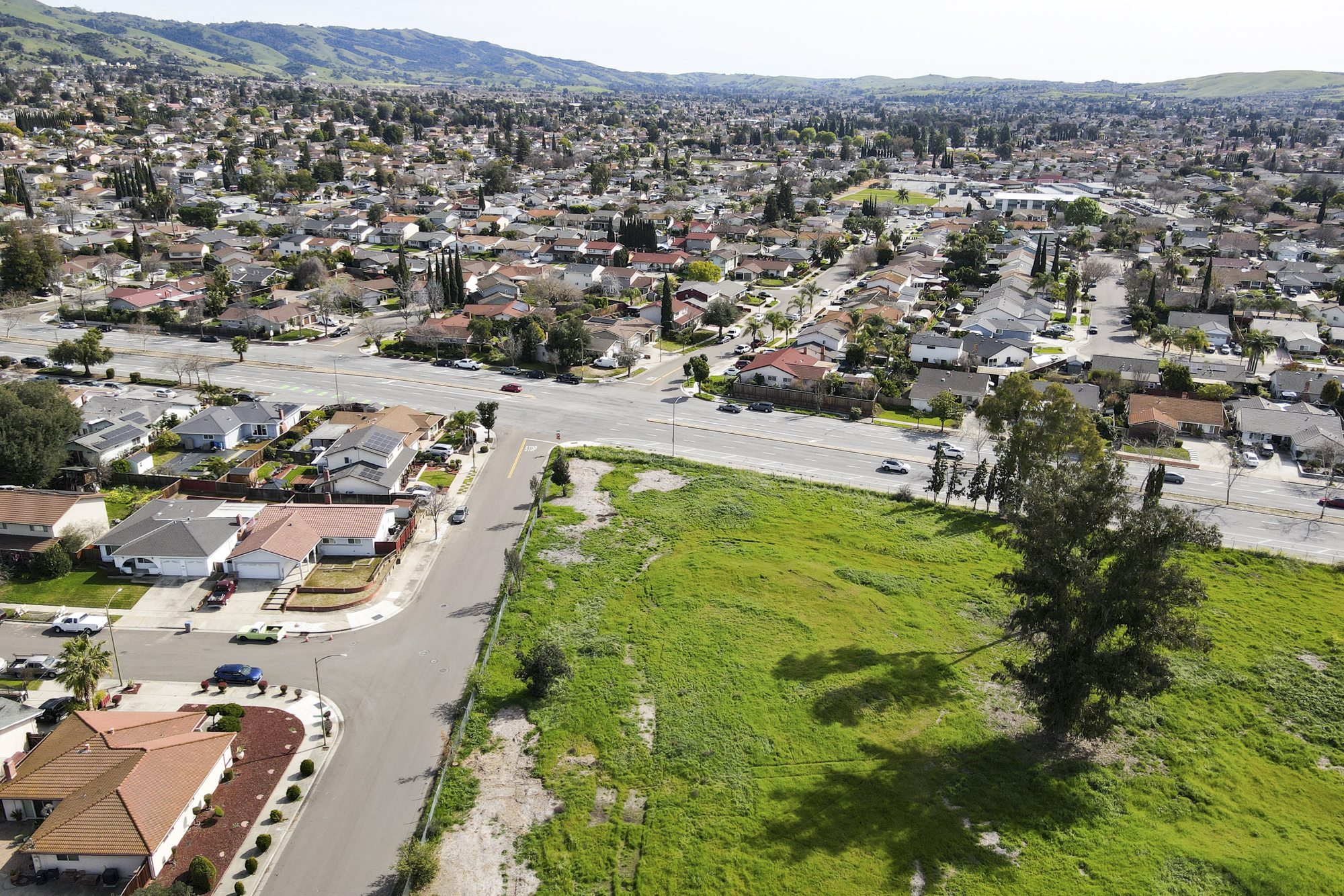
San José Leaders Eying More Multifamily Homes in Single-Family Neighborhoods
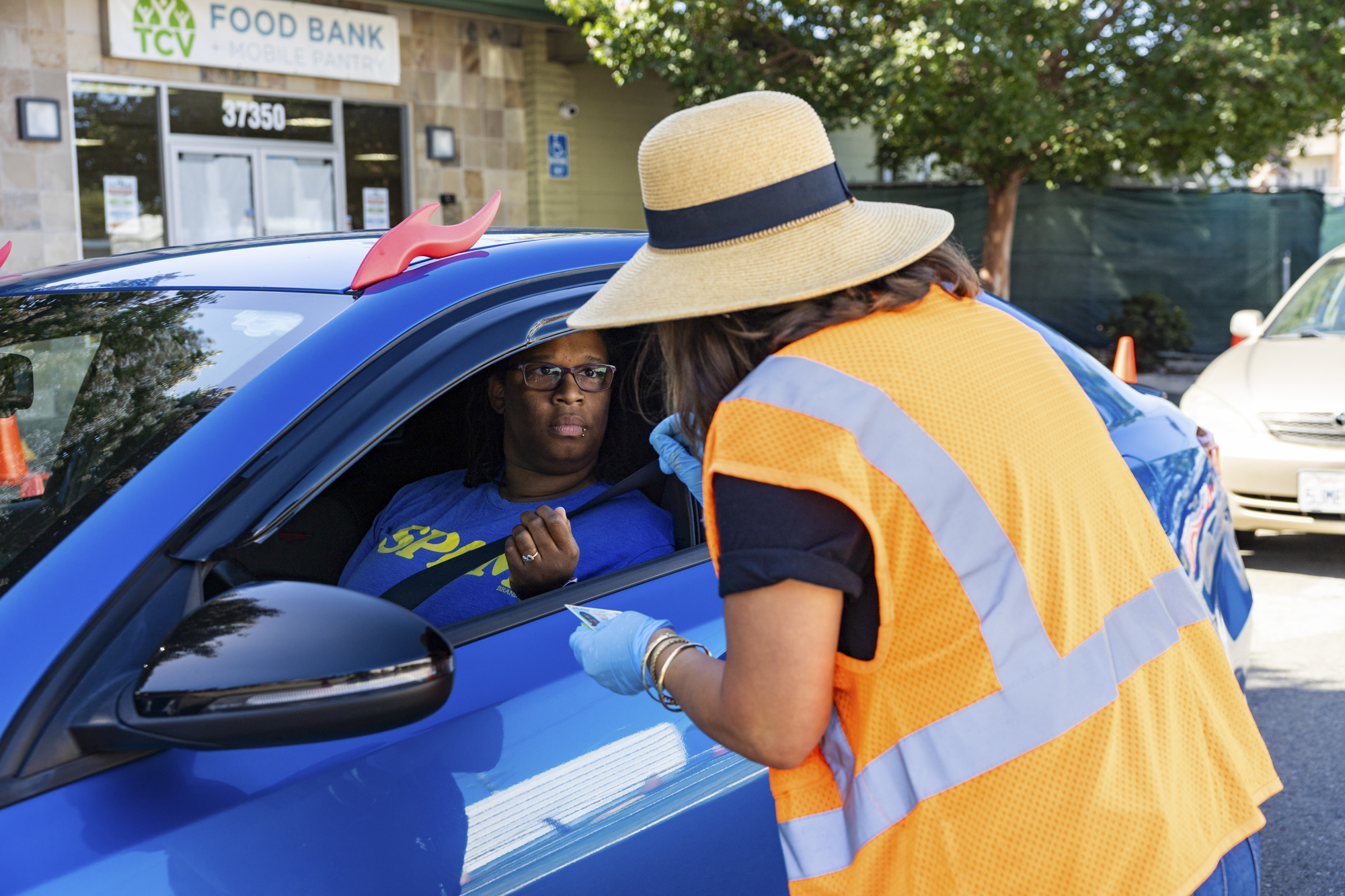
California Food Banks Brace for Slow-Moving Avalanche of SNAP Cuts
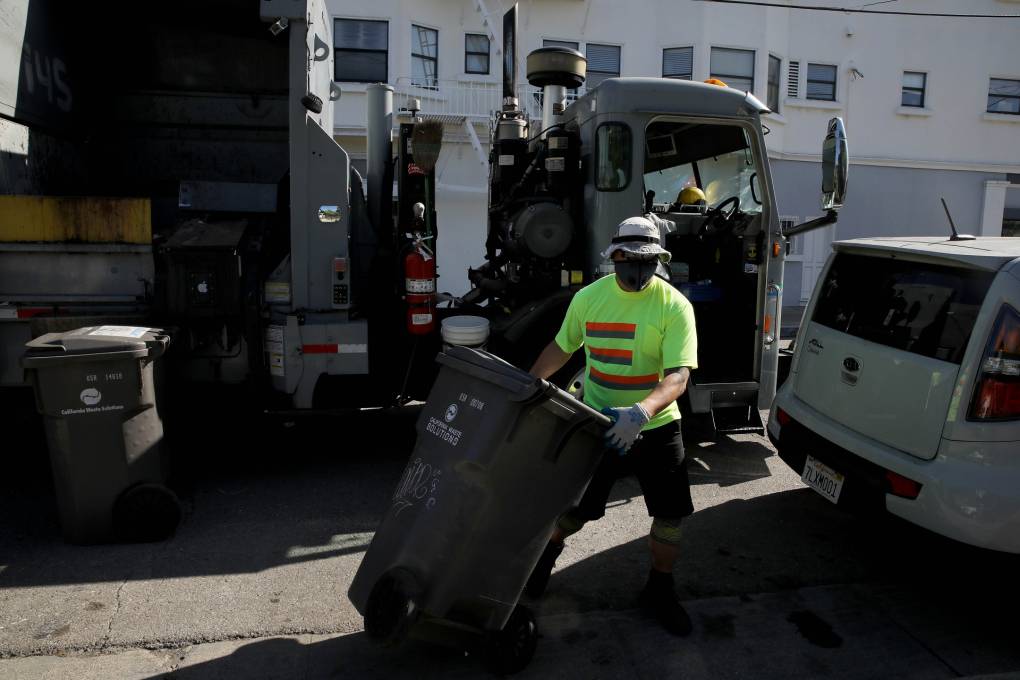
San José Settles Lawsuit With Duong Family Waste Company
San José Police Watchdog Retires Suddenly
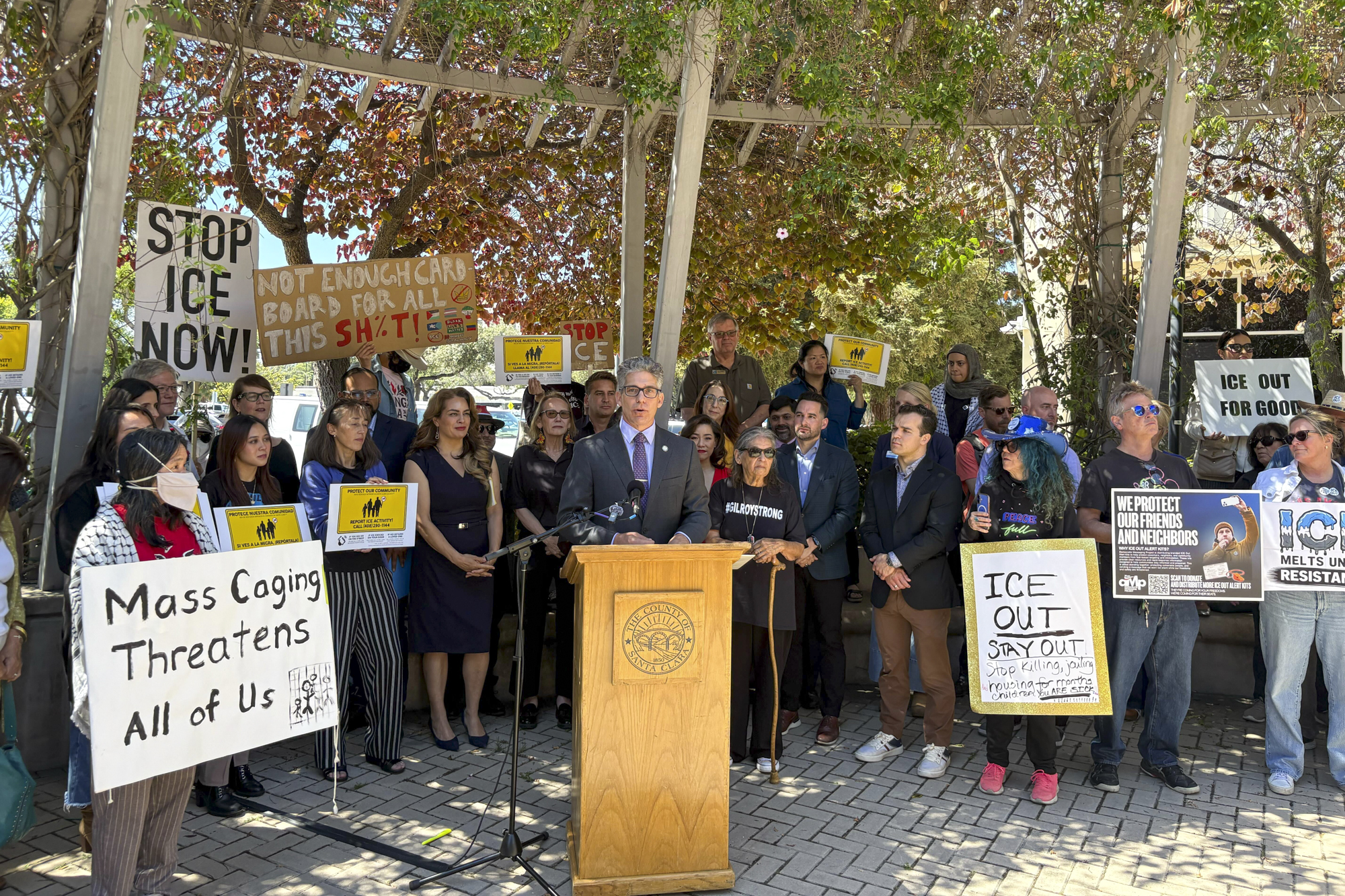
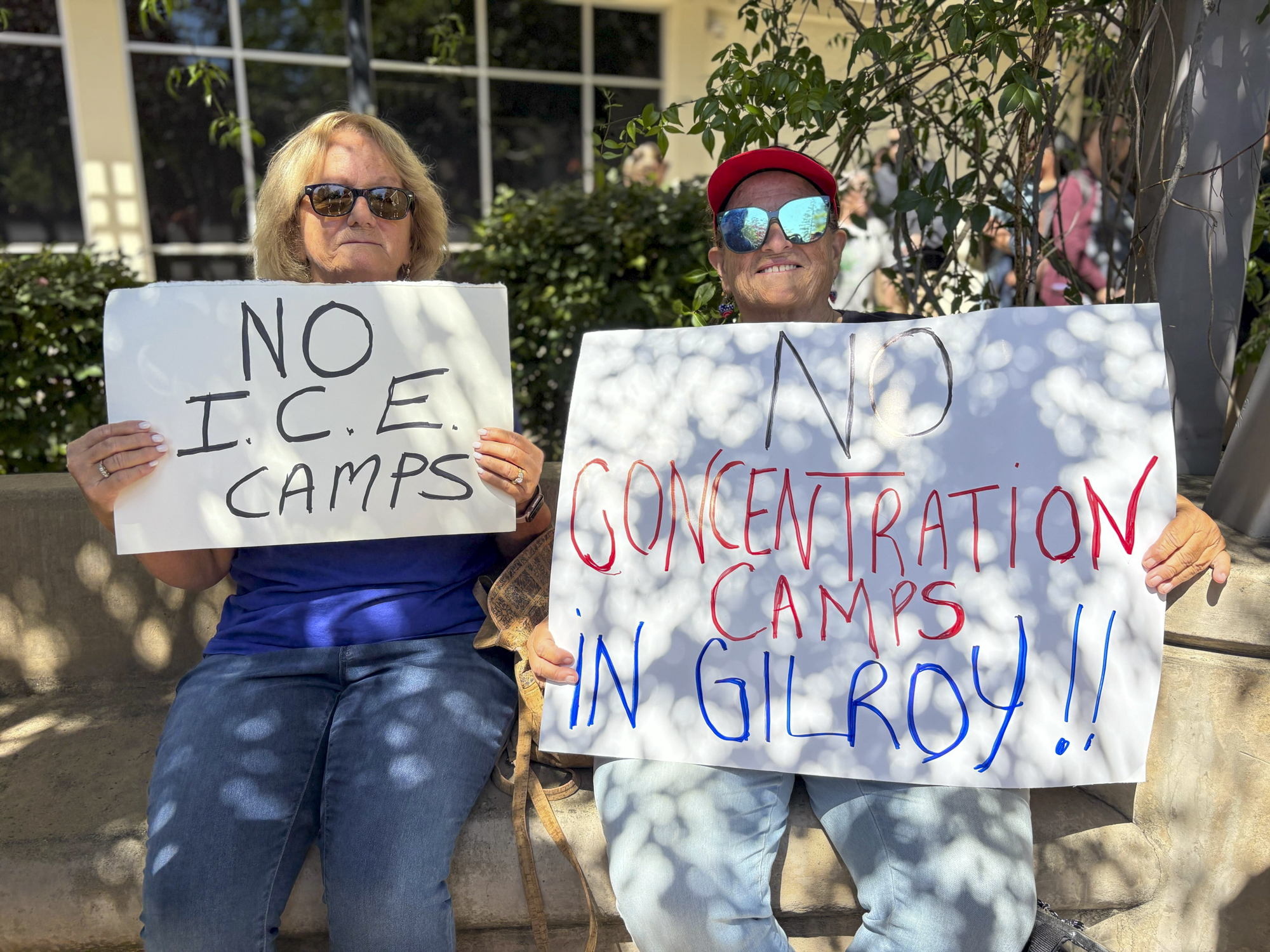
‘We’re Not Fighting This Alone’: Gilroy and Beyond Pushes Back Against Planned ICE Facility
Randy’s Donuts Opens in Santa Clara, Across From Stan’s Donuts
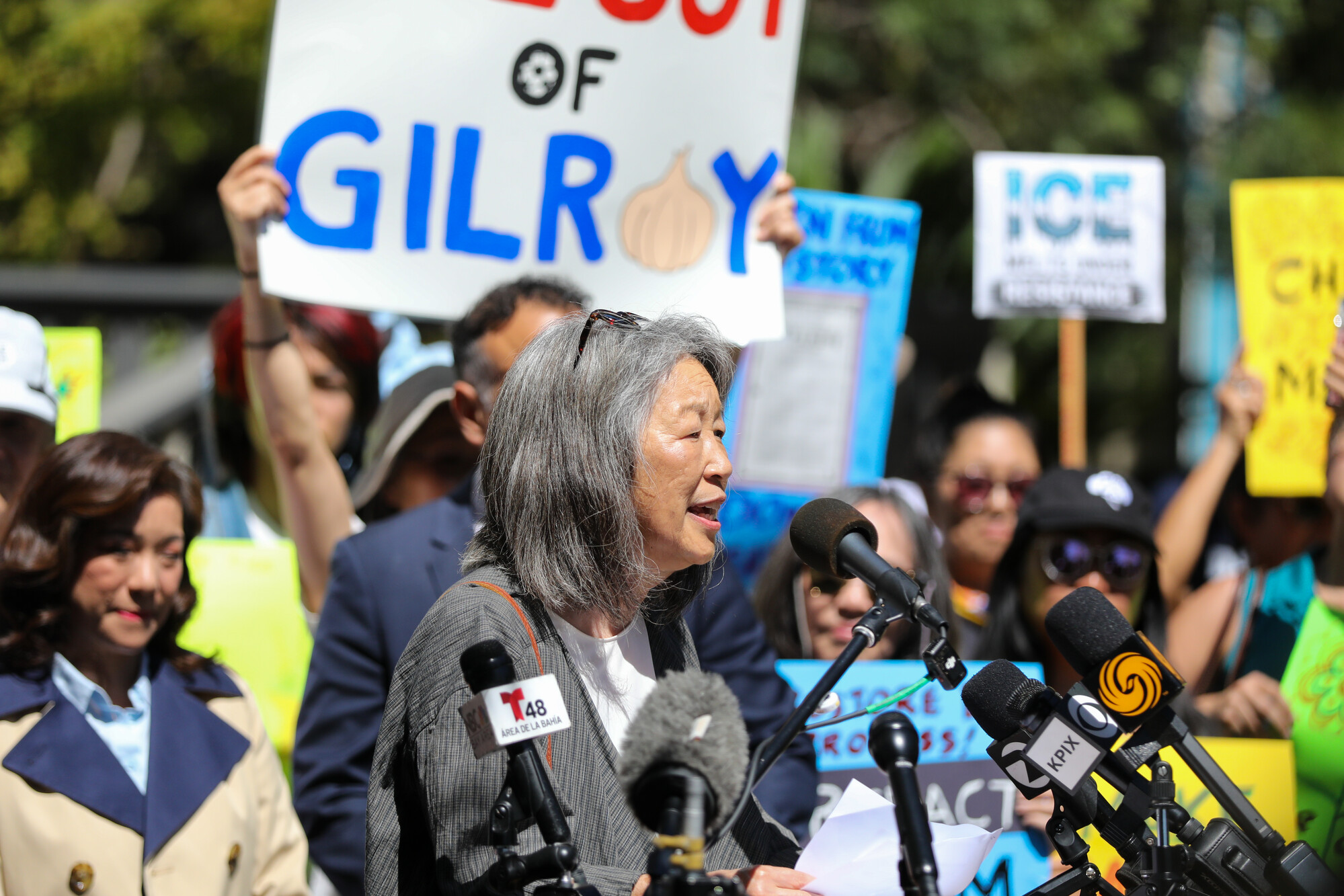
San José Japantown Coalition Rallies Against ICE Facility in Gilroy
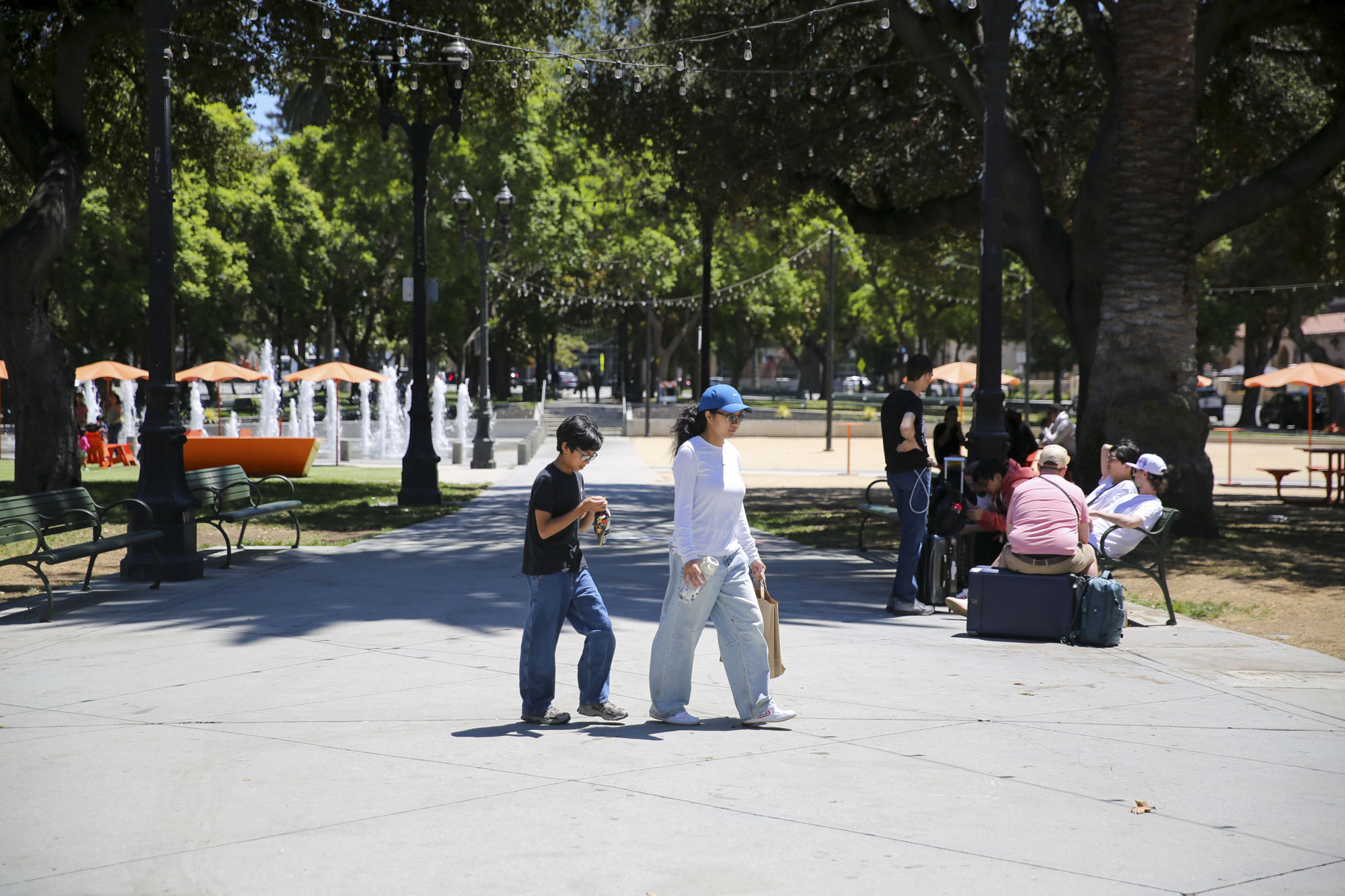
San José Asks for Help Renaming Plaza de Cesar Chavez
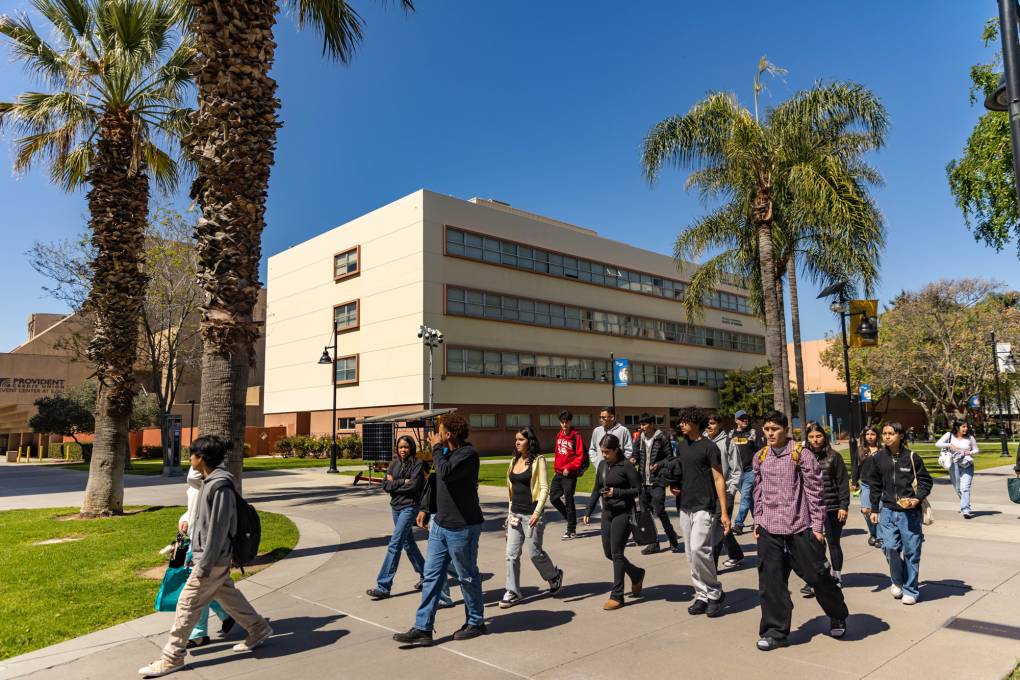
San José State Grad Student Charged for ‘Hateful and Threatening’ Message
ICE Will Pause Construction on Controversial South Bay Detention Facility
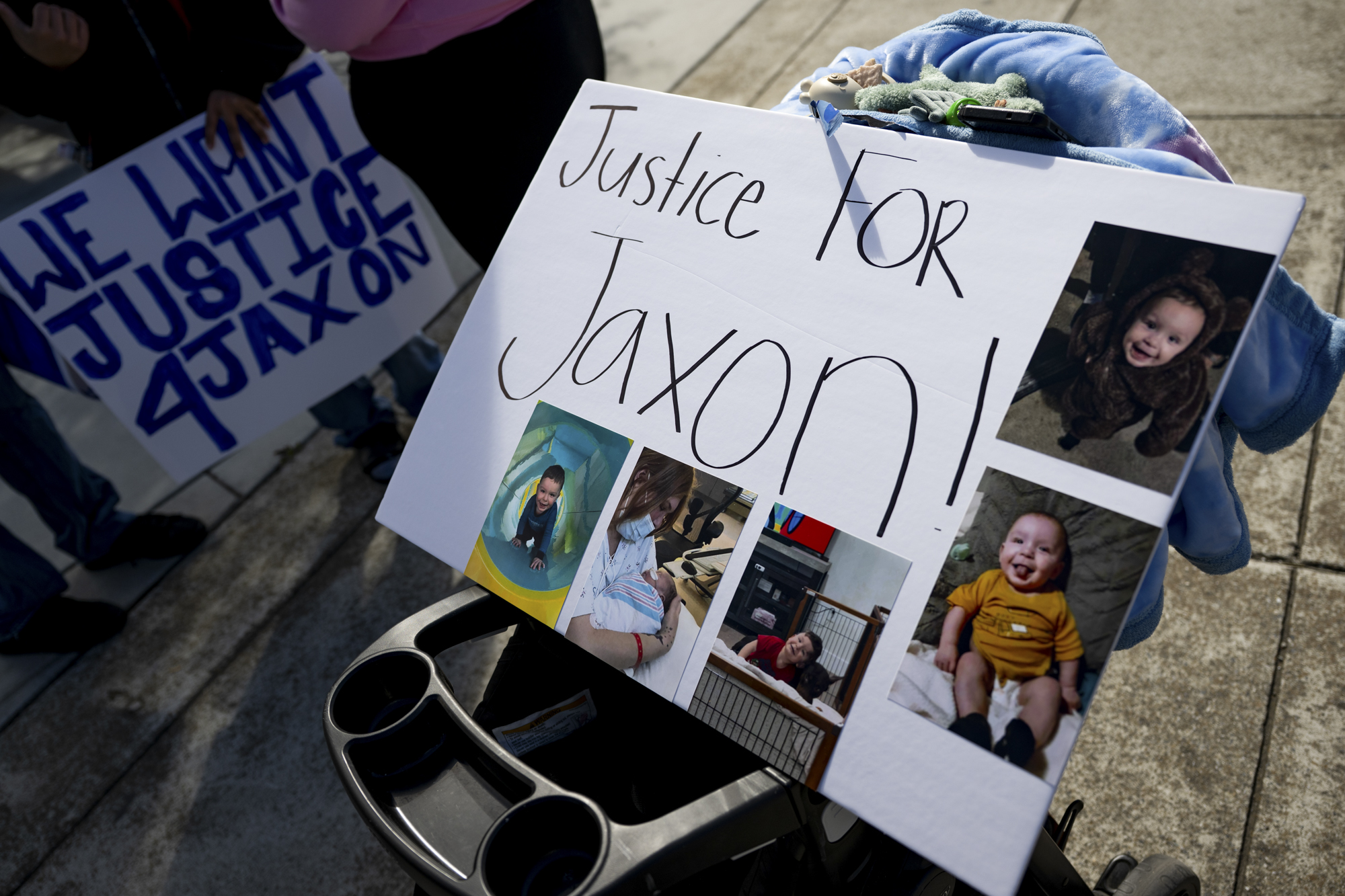
Family of Toddler Who Died in Foster Care Files Claim Against Santa Clara County
US Fans Rejoice as Team Beats Bosnia in Bay Area World Cup Match
Player sponsored by
window.__IS_SSR__=true
window.__INITIAL_STATE__={
"attachmentsReducer": {
"audio_0": {
"type": "attachments",
"id": "audio_0",
"imgSizes": {
"kqedFullSize": {
"file": "https://ww2.kqed.org/news/wp-content/themes/KQED-unified/img/audio_bgs/background0.jpg"
}
}
},
"audio_1": {
"type": "attachments",
"id": "audio_1",
"imgSizes": {
"kqedFullSize": {
"file": "https://ww2.kqed.org/news/wp-content/themes/KQED-unified/img/audio_bgs/background1.jpg"
}
}
},
"audio_2": {
"type": "attachments",
"id": "audio_2",
"imgSizes": {
"kqedFullSize": {
"file": "https://ww2.kqed.org/news/wp-content/themes/KQED-unified/img/audio_bgs/background2.jpg"
}
}
},
"audio_3": {
"type": "attachments",
"id": "audio_3",
"imgSizes": {
"kqedFullSize": {
"file": "https://ww2.kqed.org/news/wp-content/themes/KQED-unified/img/audio_bgs/background3.jpg"
}
}
},
"audio_4": {
"type": "attachments",
"id": "audio_4",
"imgSizes": {
"kqedFullSize": {
"file": "https://ww2.kqed.org/news/wp-content/themes/KQED-unified/img/audio_bgs/background4.jpg"
}
}
},
"placeholder": {
"type": "attachments",
"id": "placeholder",
"imgSizes": {
"thumbnail": {
"file": "https://cdn.kqed.org/wp-content/uploads/2024/12/KQED-Default-Image-816638274-2000x1333-1-160x107.jpg",
"width": 160,
"height": 107,
"mimeType": "image/jpeg"
},
"medium": {
"file": "https://cdn.kqed.org/wp-content/uploads/2024/12/KQED-Default-Image-816638274-2000x1333-1-800x533.jpg",
"width": 800,
"height": 533,
"mimeType": "image/jpeg"
},
"medium_large": {
"file": "https://cdn.kqed.org/wp-content/uploads/2024/12/KQED-Default-Image-816638274-2000x1333-1-768x512.jpg",
"width": 768,
"height": 512,
"mimeType": "image/jpeg"
},
"large": {
"file": "https://cdn.kqed.org/wp-content/uploads/2024/12/KQED-Default-Image-816638274-2000x1333-1-1020x680.jpg",
"width": 1020,
"height": 680,
"mimeType": "image/jpeg"
},
"1536x1536": {
"file": "https://cdn.kqed.org/wp-content/uploads/2024/12/KQED-Default-Image-816638274-2000x1333-1-1536x1024.jpg",
"width": 1536,
"height": 1024,
"mimeType": "image/jpeg"
},
"fd-lrg": {
"file": "https://cdn.kqed.org/wp-content/uploads/2024/12/KQED-Default-Image-816638274-2000x1333-1-1536x1024.jpg",
"width": 1536,
"height": 1024,
"mimeType": "image/jpeg"
},
"fd-med": {
"file": "https://cdn.kqed.org/wp-content/uploads/2024/12/KQED-Default-Image-816638274-2000x1333-1-1020x680.jpg",
"width": 1020,
"height": 680,
"mimeType": "image/jpeg"
},
"fd-sm": {
"file": "https://cdn.kqed.org/wp-content/uploads/2024/12/KQED-Default-Image-816638274-2000x1333-1-800x533.jpg",
"width": 800,
"height": 533,
"mimeType": "image/jpeg"
},
"post-thumbnail": {
"file": "https://cdn.kqed.org/wp-content/uploads/2024/12/KQED-Default-Image-816638274-2000x1333-1-672x372.jpg",
"width": 672,
"height": 372,
"mimeType": "image/jpeg"
},
"twentyfourteen-full-width": {
"file": "https://cdn.kqed.org/wp-content/uploads/2024/12/KQED-Default-Image-816638274-2000x1333-1-1038x576.jpg",
"width": 1038,
"height": 576,
"mimeType": "image/jpeg"
},
"xxsmall": {
"file": "https://cdn.kqed.org/wp-content/uploads/2024/12/KQED-Default-Image-816638274-2000x1333-1-160x107.jpg",
"width": 160,
"height": 107,
"mimeType": "image/jpeg"
},
"xsmall": {
"file": "https://cdn.kqed.org/wp-content/uploads/2024/12/KQED-Default-Image-816638274-2000x1333-1-672x372.jpg",
"width": 672,
"height": 372,
"mimeType": "image/jpeg"
},
"small": {
"file": "https://cdn.kqed.org/wp-content/uploads/2024/12/KQED-Default-Image-816638274-2000x1333-1-672x372.jpg",
"width": 672,
"height": 372,
"mimeType": "image/jpeg"
},
"xlarge": {
"file": "https://cdn.kqed.org/wp-content/uploads/2024/12/KQED-Default-Image-816638274-2000x1333-1-1020x680.jpg",
"width": 1020,
"height": 680,
"mimeType": "image/jpeg"
},
"full-width": {
"file": "https://cdn.kqed.org/wp-content/uploads/2024/12/KQED-Default-Image-816638274-2000x1333-1-1920x1280.jpg",
"width": 1920,
"height": 1280,
"mimeType": "image/jpeg"
},
"guest-author-32": {
"file": "https://cdn.kqed.org/wp-content/uploads/2025/01/KQED-Default-Image-816638274-1333x1333-1-160x160.jpg",
"width": 32,
"height": 32,
"mimeType": "image/jpeg"
},
"guest-author-50": {
"file": "https://cdn.kqed.org/wp-content/uploads/2025/01/KQED-Default-Image-816638274-1333x1333-1-160x160.jpg",
"width": 50,
"height": 50,
"mimeType": "image/jpeg"
},
"guest-author-64": {
"file": "https://cdn.kqed.org/wp-content/uploads/2025/01/KQED-Default-Image-816638274-1333x1333-1-160x160.jpg",
"width": 64,
"height": 64,
"mimeType": "image/jpeg"
},
"guest-author-96": {
"file": "https://cdn.kqed.org/wp-content/uploads/2025/01/KQED-Default-Image-816638274-1333x1333-1-160x160.jpg",
"width": 96,
"height": 96,
"mimeType": "image/jpeg"
},
"guest-author-128": {
"file": "https://cdn.kqed.org/wp-content/uploads/2025/01/KQED-Default-Image-816638274-1333x1333-1-160x160.jpg",
"width": 128,
"height": 128,
"mimeType": "image/jpeg"
},
"detail": {
"file": "https://cdn.kqed.org/wp-content/uploads/2025/01/KQED-Default-Image-816638274-1333x1333-1-160x160.jpg",
"width": 160,
"height": 160,
"mimeType": "image/jpeg"
},
"kqedFullSize": {
"file": "https://cdn.kqed.org/wp-content/uploads/2024/12/KQED-Default-Image-816638274-2000x1333-1.jpg",
"width": 2000,
"height": 1333
}
}
},
"news_12074330": {
"type": "attachments",
"id": "news_12074330",
"meta": {
"index": "attachments_1716263798",
"site": "news",
"id": "12074330",
"found": true
},
"title": "260223-PLEASANTHILLSDEV-09-BL-KQED",
"publishDate": 1771893285,
"status": "inherit",
"parent": 12074738,
"modified": 1772219782,
"caption": "An open grassy area at the former Pleasant Hills Golf Course in San José on Feb. 23, 2026. The golf course closed in 2004, and the site has since been the focus of redevelopment proposals that include housing and open space.",
"credit": "Beth LaBerge/KQED",
"altTag": null,
"description": null,
"imgSizes": {
"thumbnail": {
"file": "https://cdn.kqed.org/wp-content/uploads/sites/10/2026/02/260223-PLEASANTHILLSDEV-09-BL-KQED-160x107.jpg",
"width": 160,
"height": 107,
"mimeType": "image/jpeg"
},
"1536x1536": {
"file": "https://cdn.kqed.org/wp-content/uploads/sites/10/2026/02/260223-PLEASANTHILLSDEV-09-BL-KQED-1536x1025.jpg",
"width": 1536,
"height": 1025,
"mimeType": "image/jpeg"
},
"post-thumbnail": {
"file": "https://cdn.kqed.org/wp-content/uploads/sites/10/2026/02/260223-PLEASANTHILLSDEV-09-BL-KQED-672x372.jpg",
"width": 672,
"height": 372,
"mimeType": "image/jpeg"
},
"twentyfourteen-full-width": {
"file": "https://cdn.kqed.org/wp-content/uploads/sites/10/2026/02/260223-PLEASANTHILLSDEV-09-BL-KQED-1038x576.jpg",
"width": 1038,
"height": 576,
"mimeType": "image/jpeg"
},
"npr-cds-wide": {
"file": "https://cdn.kqed.org/wp-content/uploads/sites/10/2026/02/260223-PLEASANTHILLSDEV-09-BL-KQED-1200x675.jpg",
"width": 1200,
"height": 675,
"mimeType": "image/jpeg"
},
"kqedFullSize": {
"file": "https://cdn.kqed.org/wp-content/uploads/sites/10/2026/02/260223-PLEASANTHILLSDEV-09-BL-KQED.jpg",
"width": 2000,
"height": 1334
}
},
"isLoading": false,
"fetchFailed": false
},
"news_12091833": {
"type": "attachments",
"id": "news_12091833",
"meta": {
"index": "attachments_1716263798",
"site": "news",
"id": "12091833",
"found": true
},
"title": "20260717_FOODBANKSUPDATE_GC-15-KQED",
"publishDate": 1784566264,
"status": "inherit",
"parent": 0,
"modified": 1787005609,
"caption": "Ladonna Johnson receives assistance during a drive-through food distribution at Tri-City Volunteers Food Bank & Mobile Pantry’s main hub in Fremont on July 17, 2026.",
"credit": "Gina Castro for KQED",
"altTag": null,
"description": null,
"imgSizes": {
"thumbnail": {
"file": "https://cdn.kqed.org/wp-content/uploads/sites/10/2026/07/20260717_FOODBANKSUPDATE_GC-15-KQED-160x107.jpg",
"width": 160,
"height": 107,
"mimeType": "image/jpeg"
},
"1536x1536": {
"file": "https://cdn.kqed.org/wp-content/uploads/sites/10/2026/07/20260717_FOODBANKSUPDATE_GC-15-KQED-1536x1024.jpg",
"width": 1536,
"height": 1024,
"mimeType": "image/jpeg"
},
"post-thumbnail": {
"file": "https://cdn.kqed.org/wp-content/uploads/sites/10/2026/07/20260717_FOODBANKSUPDATE_GC-15-KQED-672x372.jpg",
"width": 672,
"height": 372,
"mimeType": "image/jpeg"
},
"twentyfourteen-full-width": {
"file": "https://cdn.kqed.org/wp-content/uploads/sites/10/2026/07/20260717_FOODBANKSUPDATE_GC-15-KQED-1038x576.jpg",
"width": 1038,
"height": 576,
"mimeType": "image/jpeg"
},
"npr-cds-wide": {
"file": "https://cdn.kqed.org/wp-content/uploads/sites/10/2026/07/20260717_FOODBANKSUPDATE_GC-15-KQED-1200x675.jpg",
"width": 1200,
"height": 675,
"mimeType": "image/jpeg"
},
"npr-cds-square": {
"file": "https://cdn.kqed.org/wp-content/uploads/sites/10/2026/07/20260717_FOODBANKSUPDATE_GC-15-KQED-600x600.jpg",
"width": 600,
"height": 600,
"mimeType": "image/jpeg"
},
"kqedFullSize": {
"file": "https://cdn.kqed.org/wp-content/uploads/sites/10/2026/07/20260717_FOODBANKSUPDATE_GC-15-KQED.jpg",
"width": 2000,
"height": 1333
}
},
"isLoading": false,
"fetchFailed": false
},
"news_11992169": {
"type": "attachments",
"id": "news_11992169",
"meta": {
"index": "attachments_1716263798",
"site": "news",
"id": "11992169",
"found": true
},
"title": "SFChronicleVirusDaily",
"publishDate": 1719445125,
"status": "inherit",
"parent": 11992073,
"modified": 1786748730,
"caption": "A California Waste Solutions worker empties recycling bins in the Rockridge neighborhood on April 22, 2020, in Oakland, California. A campaign finance investigation into the city’s curbside recycling contractor has received renewed attention since the FBI raids.",
"credit": "Yalonda M. James/The San Francisco Chronicle via Getty Images",
"altTag": null,
"description": null,
"imgSizes": {
"medium": {
"file": "https://cdn.kqed.org/wp-content/uploads/sites/10/2024/06/CalWasteSolutionsWorker01-800x533.jpg",
"width": 800,
"height": 533,
"mimeType": "image/jpeg"
},
"large": {
"file": "https://cdn.kqed.org/wp-content/uploads/sites/10/2024/06/CalWasteSolutionsWorker01-1020x680.jpg",
"width": 1020,
"height": 680,
"mimeType": "image/jpeg"
},
"thumbnail": {
"file": "https://cdn.kqed.org/wp-content/uploads/sites/10/2024/06/CalWasteSolutionsWorker01-160x107.jpg",
"width": 160,
"height": 107,
"mimeType": "image/jpeg"
},
"1536x1536": {
"file": "https://cdn.kqed.org/wp-content/uploads/sites/10/2024/06/CalWasteSolutionsWorker01-1536x1024.jpg",
"width": 1536,
"height": 1024,
"mimeType": "image/jpeg"
},
"post-thumbnail": {
"file": "https://cdn.kqed.org/wp-content/uploads/sites/10/2024/06/CalWasteSolutionsWorker01-672x372.jpg",
"width": 672,
"height": 372,
"mimeType": "image/jpeg"
},
"twentyfourteen-full-width": {
"file": "https://cdn.kqed.org/wp-content/uploads/sites/10/2024/06/CalWasteSolutionsWorker01-1038x576.jpg",
"width": 1038,
"height": 576,
"mimeType": "image/jpeg"
},
"kqedFullSize": {
"file": "https://cdn.kqed.org/wp-content/uploads/sites/10/2024/06/CalWasteSolutionsWorker01.jpg",
"width": 1920,
"height": 1280
}
},
"isLoading": false,
"fetchFailed": false
},
"news_11983170": {
"type": "attachments",
"id": "news_11983170",
"meta": {
"index": "attachments_1716263798",
"site": "news",
"id": "11983170",
"found": true
},
"title": "SJ NEW INDEPENDENT POLICE AUDITOR-4-GH-KQED",
"publishDate": 1713306301,
"status": "inherit",
"parent": 0,
"modified": 1786560069,
"caption": "Eddie Aubrey, who currently investigates police misconduct as the civilian manager for the Richmond Police Department, will take over as San José’s IPA on May 6, 2024.",
"credit": "Joseph Geha/KQED",
"altTag": null,
"description": null,
"imgSizes": {
"medium": {
"file": "https://cdn.kqed.org/wp-content/uploads/sites/10/2024/04/SJ-NEW-INDEPENDENT-POLICE-AUDITOR-4-GH-KQED-800x533.jpg",
"width": 800,
"height": 533,
"mimeType": "image/jpeg"
},
"large": {
"file": "https://cdn.kqed.org/wp-content/uploads/sites/10/2024/04/SJ-NEW-INDEPENDENT-POLICE-AUDITOR-4-GH-KQED-1020x680.jpg",
"width": 1020,
"height": 680,
"mimeType": "image/jpeg"
},
"thumbnail": {
"file": "https://cdn.kqed.org/wp-content/uploads/sites/10/2024/04/SJ-NEW-INDEPENDENT-POLICE-AUDITOR-4-GH-KQED-160x107.jpg",
"width": 160,
"height": 107,
"mimeType": "image/jpeg"
},
"1536x1536": {
"file": "https://cdn.kqed.org/wp-content/uploads/sites/10/2024/04/SJ-NEW-INDEPENDENT-POLICE-AUDITOR-4-GH-KQED-1536x1024.jpg",
"width": 1536,
"height": 1024,
"mimeType": "image/jpeg"
},
"post-thumbnail": {
"file": "https://cdn.kqed.org/wp-content/uploads/sites/10/2024/04/SJ-NEW-INDEPENDENT-POLICE-AUDITOR-4-GH-KQED-672x372.jpg",
"width": 672,
"height": 372,
"mimeType": "image/jpeg"
},
"twentyfourteen-full-width": {
"file": "https://cdn.kqed.org/wp-content/uploads/sites/10/2024/04/SJ-NEW-INDEPENDENT-POLICE-AUDITOR-4-GH-KQED-1038x576.jpg",
"width": 1038,
"height": 576,
"mimeType": "image/jpeg"
},
"full-width": {
"file": "https://cdn.kqed.org/wp-content/uploads/sites/10/2024/04/SJ-NEW-INDEPENDENT-POLICE-AUDITOR-4-GH-KQED-1920x1280.jpg",
"width": 1920,
"height": 1280,
"mimeType": "image/jpeg"
},
"kqedFullSize": {
"file": "https://cdn.kqed.org/wp-content/uploads/sites/10/2024/04/SJ-NEW-INDEPENDENT-POLICE-AUDITOR-4-GH-KQED.jpg",
"width": 2000,
"height": 1333
}
},
"isLoading": false,
"fetchFailed": false
},
"news_12083771": {
"type": "attachments",
"id": "news_12083771",
"meta": {
"index": "attachments_1716263798",
"site": "news",
"id": "12083771",
"found": true
},
"title": "260514-GILROY ICE-ADE-03-KQED",
"publishDate": 1778798137,
"status": "inherit",
"parent": 12083600,
"modified": 1785368962,
"caption": "Santa Clara County Counsel Tony LoPresti addresses a crowd at the Santa Clara County Government Center in San José on May 14, 2026.",
"credit": "Azul Dahlstrom-Eckman/KQED",
"altTag": null,
"description": null,
"imgSizes": {
"thumbnail": {
"file": "https://cdn.kqed.org/wp-content/uploads/sites/10/2026/05/260514-GILROY-ICE-ADE-03-KQED-160x107.jpg",
"width": 160,
"height": 107,
"mimeType": "image/jpeg"
},
"1536x1536": {
"file": "https://cdn.kqed.org/wp-content/uploads/sites/10/2026/05/260514-GILROY-ICE-ADE-03-KQED-1536x1024.jpg",
"width": 1536,
"height": 1024,
"mimeType": "image/jpeg"
},
"post-thumbnail": {
"file": "https://cdn.kqed.org/wp-content/uploads/sites/10/2026/05/260514-GILROY-ICE-ADE-03-KQED-672x372.jpg",
"width": 672,
"height": 372,
"mimeType": "image/jpeg"
},
"twentyfourteen-full-width": {
"file": "https://cdn.kqed.org/wp-content/uploads/sites/10/2026/05/260514-GILROY-ICE-ADE-03-KQED-1038x576.jpg",
"width": 1038,
"height": 576,
"mimeType": "image/jpeg"
},
"npr-cds-wide": {
"file": "https://cdn.kqed.org/wp-content/uploads/sites/10/2026/05/260514-GILROY-ICE-ADE-03-KQED-1200x675.jpg",
"width": 1200,
"height": 675,
"mimeType": "image/jpeg"
},
"npr-cds-square": {
"file": "https://cdn.kqed.org/wp-content/uploads/sites/10/2026/05/260514-GILROY-ICE-ADE-03-KQED-600x600.jpg",
"width": 600,
"height": 600,
"mimeType": "image/jpeg"
},
"kqedFullSize": {
"file": "https://cdn.kqed.org/wp-content/uploads/sites/10/2026/05/260514-GILROY-ICE-ADE-03-KQED.jpg",
"width": 2000,
"height": 1333
}
},
"isLoading": false,
"fetchFailed": false
},
"news_12093545": {
"type": "attachments",
"id": "news_12093545",
"meta": {
"index": "attachments_1716263798",
"site": "news",
"id": "12093545",
"found": true
},
"title": "260731-RANDYSDONUTS-JG-17_qed",
"publishDate": 1785538482,
"status": "inherit",
"parent": 0,
"modified": 1785538502,
"caption": "Customers flock to the new Randy’s Donuts location in Santa Clara during a grand opening event on July 31, 2026.",
"credit": "Joseph Geha/KQED",
"altTag": null,
"description": null,
"imgSizes": {
"thumbnail": {
"file": "https://cdn.kqed.org/wp-content/uploads/sites/10/2026/07/260731-RANDYSDONUTS-JG-17_qed-160x107.jpg",
"width": 160,
"height": 107,
"mimeType": "image/jpeg"
},
"1536x1536": {
"file": "https://cdn.kqed.org/wp-content/uploads/sites/10/2026/07/260731-RANDYSDONUTS-JG-17_qed-1536x1024.jpg",
"width": 1536,
"height": 1024,
"mimeType": "image/jpeg"
},
"post-thumbnail": {
"file": "https://cdn.kqed.org/wp-content/uploads/sites/10/2026/07/260731-RANDYSDONUTS-JG-17_qed-672x372.jpg",
"width": 672,
"height": 372,
"mimeType": "image/jpeg"
},
"twentyfourteen-full-width": {
"file": "https://cdn.kqed.org/wp-content/uploads/sites/10/2026/07/260731-RANDYSDONUTS-JG-17_qed-1038x576.jpg",
"width": 1038,
"height": 576,
"mimeType": "image/jpeg"
},
"npr-cds-wide": {
"file": "https://cdn.kqed.org/wp-content/uploads/sites/10/2026/07/260731-RANDYSDONUTS-JG-17_qed-1200x675.jpg",
"width": 1200,
"height": 675,
"mimeType": "image/jpeg"
},
"npr-cds-square": {
"file": "https://cdn.kqed.org/wp-content/uploads/sites/10/2026/07/260731-RANDYSDONUTS-JG-17_qed-600x600.jpg",
"width": 600,
"height": 600,
"mimeType": "image/jpeg"
},
"kqedFullSize": {
"file": "https://cdn.kqed.org/wp-content/uploads/sites/10/2026/07/260731-RANDYSDONUTS-JG-17_qed.jpg",
"width": 1999,
"height": 1333
}
},
"isLoading": false,
"fetchFailed": false
},
"news_12093197": {
"type": "attachments",
"id": "news_12093197",
"meta": {
"index": "attachments_1716263798",
"site": "news",
"id": "12093197",
"found": true
},
"title": "260729-SJICERALLY-JG-7_qed",
"publishDate": 1785370058,
"status": "inherit",
"parent": 0,
"modified": 1785425835,
"caption": "Susan Hayase, the co-founder of San José Nikkei Resisters, speaks during a rally held in San José’s Japantown opposing a planned ICE facility in Santa Clara County on July 29, 2026.",
"credit": "Joseph Geha/KQED",
"altTag": null,
"description": null,
"imgSizes": {
"thumbnail": {
"file": "https://cdn.kqed.org/wp-content/uploads/sites/10/2026/07/260729-SJICERALLY-JG-7_qed-160x107.jpg",
"width": 160,
"height": 107,
"mimeType": "image/jpeg"
},
"1536x1536": {
"file": "https://cdn.kqed.org/wp-content/uploads/sites/10/2026/07/260729-SJICERALLY-JG-7_qed-1536x1024.jpg",
"width": 1536,
"height": 1024,
"mimeType": "image/jpeg"
},
"post-thumbnail": {
"file": "https://cdn.kqed.org/wp-content/uploads/sites/10/2026/07/260729-SJICERALLY-JG-7_qed-672x372.jpg",
"width": 672,
"height": 372,
"mimeType": "image/jpeg"
},
"twentyfourteen-full-width": {
"file": "https://cdn.kqed.org/wp-content/uploads/sites/10/2026/07/260729-SJICERALLY-JG-7_qed-1038x576.jpg",
"width": 1038,
"height": 576,
"mimeType": "image/jpeg"
},
"npr-cds-wide": {
"file": "https://cdn.kqed.org/wp-content/uploads/sites/10/2026/07/260729-SJICERALLY-JG-7_qed-1200x675.jpg",
"width": 1200,
"height": 675,
"mimeType": "image/jpeg"
},
"npr-cds-square": {
"file": "https://cdn.kqed.org/wp-content/uploads/sites/10/2026/07/260729-SJICERALLY-JG-7_qed-600x600.jpg",
"width": 600,
"height": 600,
"mimeType": "image/jpeg"
},
"kqedFullSize": {
"file": "https://cdn.kqed.org/wp-content/uploads/sites/10/2026/07/260729-SJICERALLY-JG-7_qed.jpg",
"width": 1999,
"height": 1333
}
},
"isLoading": false,
"fetchFailed": false
},
"news_12092781": {
"type": "attachments",
"id": "news_12092781",
"meta": {
"index": "attachments_1716263798",
"site": "news",
"id": "12092781",
"found": true
},
"title": "260727-PLAZACESAR-JG-08-KQED",
"publishDate": 1785194597,
"status": "inherit",
"parent": 0,
"modified": 1785194631,
"caption": "People walk through Plaza de Cesar Chavez in downtown San José on Monday, July 27, 2026.",
"credit": "Joseph Geha/KQED",
"altTag": null,
"description": null,
"imgSizes": {
"thumbnail": {
"file": "https://cdn.kqed.org/wp-content/uploads/sites/10/2026/07/260727-PLAZACESAR-JG-08-KQED-160x107.jpg",
"width": 160,
"height": 107,
"mimeType": "image/jpeg"
},
"1536x1536": {
"file": "https://cdn.kqed.org/wp-content/uploads/sites/10/2026/07/260727-PLAZACESAR-JG-08-KQED-1536x1024.jpg",
"width": 1536,
"height": 1024,
"mimeType": "image/jpeg"
},
"post-thumbnail": {
"file": "https://cdn.kqed.org/wp-content/uploads/sites/10/2026/07/260727-PLAZACESAR-JG-08-KQED-672x372.jpg",
"width": 672,
"height": 372,
"mimeType": "image/jpeg"
},
"twentyfourteen-full-width": {
"file": "https://cdn.kqed.org/wp-content/uploads/sites/10/2026/07/260727-PLAZACESAR-JG-08-KQED-1038x576.jpg",
"width": 1038,
"height": 576,
"mimeType": "image/jpeg"
},
"npr-cds-wide": {
"file": "https://cdn.kqed.org/wp-content/uploads/sites/10/2026/07/260727-PLAZACESAR-JG-08-KQED-1200x675.jpg",
"width": 1200,
"height": 675,
"mimeType": "image/jpeg"
},
"npr-cds-square": {
"file": "https://cdn.kqed.org/wp-content/uploads/sites/10/2026/07/260727-PLAZACESAR-JG-08-KQED-600x600.jpg",
"width": 600,
"height": 600,
"mimeType": "image/jpeg"
},
"kqedFullSize": {
"file": "https://cdn.kqed.org/wp-content/uploads/sites/10/2026/07/260727-PLAZACESAR-JG-08-KQED.jpg",
"width": 2000,
"height": 1333
}
},
"isLoading": false,
"fetchFailed": false
},
"news_12037916": {
"type": "attachments",
"id": "news_12037916",
"meta": {
"index": "attachments_1716263798",
"site": "news",
"id": "12037916",
"found": true
},
"title": "Students walk on campus at San Jose State University on April 3, 2025.",
"publishDate": 1745863056,
"status": "inherit",
"parent": 0,
"modified": 1745863071,
"caption": "Students walk on campus at San Jose State University on April 3, 2025.",
"credit": "Gina Castro/KQED",
"altTag": null,
"description": null,
"imgSizes": {
"medium": {
"file": "https://cdn.kqed.org/wp-content/uploads/sites/10/2025/04/20240403_SJSUFILE_GC-18-KQED-800x533.jpg",
"width": 800,
"height": 533,
"mimeType": "image/jpeg"
},
"large": {
"file": "https://cdn.kqed.org/wp-content/uploads/sites/10/2025/04/20240403_SJSUFILE_GC-18-KQED-1020x680.jpg",
"width": 1020,
"height": 680,
"mimeType": "image/jpeg"
},
"thumbnail": {
"file": "https://cdn.kqed.org/wp-content/uploads/sites/10/2025/04/20240403_SJSUFILE_GC-18-KQED-160x107.jpg",
"width": 160,
"height": 107,
"mimeType": "image/jpeg"
},
"1536x1536": {
"file": "https://cdn.kqed.org/wp-content/uploads/sites/10/2025/04/20240403_SJSUFILE_GC-18-KQED-1536x1024.jpg",
"width": 1536,
"height": 1024,
"mimeType": "image/jpeg"
},
"post-thumbnail": {
"file": "https://cdn.kqed.org/wp-content/uploads/sites/10/2025/04/20240403_SJSUFILE_GC-18-KQED-672x372.jpg",
"width": 672,
"height": 372,
"mimeType": "image/jpeg"
},
"twentyfourteen-full-width": {
"file": "https://cdn.kqed.org/wp-content/uploads/sites/10/2025/04/20240403_SJSUFILE_GC-18-KQED-1038x576.jpg",
"width": 1038,
"height": 576,
"mimeType": "image/jpeg"
},
"full-width": {
"file": "https://cdn.kqed.org/wp-content/uploads/sites/10/2025/04/20240403_SJSUFILE_GC-18-KQED-1920x1280.jpg",
"width": 1920,
"height": 1280,
"mimeType": "image/jpeg"
},
"kqedFullSize": {
"file": "https://cdn.kqed.org/wp-content/uploads/sites/10/2025/04/20240403_SJSUFILE_GC-18-KQED.jpg",
"width": 2000,
"height": 1333
}
},
"isLoading": false,
"fetchFailed": false
},
"news_12083768": {
"type": "attachments",
"id": "news_12083768",
"meta": {
"index": "attachments_1716263798",
"site": "news",
"id": "12083768",
"found": true
},
"title": "260514-GILROY ICE-ADE-01-KQED",
"publishDate": 1778798125,
"status": "inherit",
"parent": 12083600,
"modified": 1778803915,
"caption": "Debbie Bradshaw (right) and Marilyn Kalpin (left) of Gilroy attend a rally in San José opposing a planned immigration detention center in Gilroy on May 14, 2026.",
"credit": "Azul Dahlstrom-Eckman/KQED",
"altTag": null,
"description": null,
"imgSizes": {
"thumbnail": {
"file": "https://cdn.kqed.org/wp-content/uploads/sites/10/2026/05/260514-GILROY-ICE-ADE-01-KQED-160x120.jpg",
"width": 160,
"height": 120,
"mimeType": "image/jpeg"
},
"1536x1536": {
"file": "https://cdn.kqed.org/wp-content/uploads/sites/10/2026/05/260514-GILROY-ICE-ADE-01-KQED-1536x1152.jpg",
"width": 1536,
"height": 1152,
"mimeType": "image/jpeg"
},
"post-thumbnail": {
"file": "https://cdn.kqed.org/wp-content/uploads/sites/10/2026/05/260514-GILROY-ICE-ADE-01-KQED-672x372.jpg",
"width": 672,
"height": 372,
"mimeType": "image/jpeg"
},
"twentyfourteen-full-width": {
"file": "https://cdn.kqed.org/wp-content/uploads/sites/10/2026/05/260514-GILROY-ICE-ADE-01-KQED-1038x576.jpg",
"width": 1038,
"height": 576,
"mimeType": "image/jpeg"
},
"npr-cds-wide": {
"file": "https://cdn.kqed.org/wp-content/uploads/sites/10/2026/05/260514-GILROY-ICE-ADE-01-KQED-1200x675.jpg",
"width": 1200,
"height": 675,
"mimeType": "image/jpeg"
},
"npr-cds-square": {
"file": "https://cdn.kqed.org/wp-content/uploads/sites/10/2026/05/260514-GILROY-ICE-ADE-01-KQED-600x600.jpg",
"width": 600,
"height": 600,
"mimeType": "image/jpeg"
},
"kqedFullSize": {
"file": "https://cdn.kqed.org/wp-content/uploads/sites/10/2026/05/260514-GILROY-ICE-ADE-01-KQED.jpg",
"width": 2000,
"height": 1500
}
},
"isLoading": false,
"fetchFailed": false
},
"news_12080617": {
"type": "attachments",
"id": "news_12080617",
"meta": {
"index": "attachments_1716263798",
"site": "news",
"id": "12080617",
"found": true
},
"title": "260420-SCCDAANNOUNCEMENT-23-BL-KQED",
"publishDate": 1776712337,
"status": "inherit",
"parent": 12080584,
"modified": 1776716645,
"caption": "A sign says, \"Justice for Jaxon\" outside the Santa Clara County Juvenile Court in San José on April 20, 2026, where prosecutors announced charges against a San José teen accused of killing his 2-year-old foster brother, Jaxon Juarez.",
"credit": "Beth LaBerge/KQED",
"altTag": null,
"description": null,
"imgSizes": {
"thumbnail": {
"file": "https://cdn.kqed.org/wp-content/uploads/sites/10/2026/04/260420-SCCDAANNOUNCEMENT-23-BL-KQED-160x107.jpg",
"width": 160,
"height": 107,
"mimeType": "image/jpeg"
},
"1536x1536": {
"file": "https://cdn.kqed.org/wp-content/uploads/sites/10/2026/04/260420-SCCDAANNOUNCEMENT-23-BL-KQED-1536x1024.jpg",
"width": 1536,
"height": 1024,
"mimeType": "image/jpeg"
},
"post-thumbnail": {
"file": "https://cdn.kqed.org/wp-content/uploads/sites/10/2026/04/260420-SCCDAANNOUNCEMENT-23-BL-KQED-672x372.jpg",
"width": 672,
"height": 372,
"mimeType": "image/jpeg"
},
"twentyfourteen-full-width": {
"file": "https://cdn.kqed.org/wp-content/uploads/sites/10/2026/04/260420-SCCDAANNOUNCEMENT-23-BL-KQED-1038x576.jpg",
"width": 1038,
"height": 576,
"mimeType": "image/jpeg"
},
"npr-cds-wide": {
"file": "https://cdn.kqed.org/wp-content/uploads/sites/10/2026/04/260420-SCCDAANNOUNCEMENT-23-BL-KQED-1200x675.jpg",
"width": 1200,
"height": 675,
"mimeType": "image/jpeg"
},
"npr-cds-square": {
"file": "https://cdn.kqed.org/wp-content/uploads/sites/10/2026/04/260420-SCCDAANNOUNCEMENT-23-BL-KQED-600x600.jpg",
"width": 600,
"height": 600,
"mimeType": "image/jpeg"
},
"kqedFullSize": {
"file": "https://cdn.kqed.org/wp-content/uploads/sites/10/2026/04/260420-SCCDAANNOUNCEMENT-23-BL-KQED.jpg",
"width": 2000,
"height": 1333
}
},
"isLoading": false,
"fetchFailed": false
},
"news_12089669": {
"type": "attachments",
"id": "news_12089669",
"meta": {
"index": "attachments_1716263798",
"site": "news",
"id": "12089669",
"found": true
},
"title": "260701-WORLDCUPUSALEVIS-07-BL-KQED",
"publishDate": 1782947579,
"status": "inherit",
"parent": 12089303,
"modified": 1782964388,
"caption": "Shannon Malone cheers before marching to the San Francisco Bay Area stadium for the FIFA World Cup game between the USA and Bosnia Herzegovina in Santa Clara, California, on July 1, 2026.",
"credit": "Beth LaBerge/KQED",
"altTag": null,
"description": null,
"imgSizes": {
"thumbnail": {
"file": "https://cdn.kqed.org/wp-content/uploads/sites/10/2026/07/260701-WORLDCUPUSALEVIS-07-BL-KQED-160x107.jpg",
"width": 160,
"height": 107,
"mimeType": "image/jpeg"
},
"1536x1536": {
"file": "https://cdn.kqed.org/wp-content/uploads/sites/10/2026/07/260701-WORLDCUPUSALEVIS-07-BL-KQED-1536x1024.jpg",
"width": 1536,
"height": 1024,
"mimeType": "image/jpeg"
},
"post-thumbnail": {
"file": "https://cdn.kqed.org/wp-content/uploads/sites/10/2026/07/260701-WORLDCUPUSALEVIS-07-BL-KQED-672x372.jpg",
"width": 672,
"height": 372,
"mimeType": "image/jpeg"
},
"twentyfourteen-full-width": {
"file": "https://cdn.kqed.org/wp-content/uploads/sites/10/2026/07/260701-WORLDCUPUSALEVIS-07-BL-KQED-1038x576.jpg",
"width": 1038,
"height": 576,
"mimeType": "image/jpeg"
},
"npr-cds-wide": {
"file": "https://cdn.kqed.org/wp-content/uploads/sites/10/2026/07/260701-WORLDCUPUSALEVIS-07-BL-KQED-1200x675.jpg",
"width": 1200,
"height": 675,
"mimeType": "image/jpeg"
},
"npr-cds-square": {
"file": "https://cdn.kqed.org/wp-content/uploads/sites/10/2026/07/260701-WORLDCUPUSALEVIS-07-BL-KQED-600x600.jpg",
"width": 600,
"height": 600,
"mimeType": "image/jpeg"
},
"kqedFullSize": {
"file": "https://cdn.kqed.org/wp-content/uploads/sites/10/2026/07/260701-WORLDCUPUSALEVIS-07-BL-KQED.jpg",
"width": 2000,
"height": 1333
}
},
"isLoading": false,
"fetchFailed": false
}
},
"audioPlayerReducer": {
"postId": "stream_live",
"isPaused": true,
"isPlaying": false,
"pfsActive": false,
"pledgeModalIsOpen": true,
"playerDrawerIsOpen": false,
"liveAudioPlayStartedAt": 0,
"liveAudioPlayContext": ""
},
"authorsReducer": {
"jgeha": {
"type": "authors",
"id": "11906",
"meta": {
"index": "authors_1716337520",
"id": "11906",
"found": true
},
"name": "Joseph Geha",
"firstName": "Joseph",
"lastName": "Geha",
"slug": "jgeha",
"email": "jgeha@kqed.org",
"display_author_email": false,
"staff_mastheads": [
"news",
"science"
],
"title": "KQED Contributor",
"bio": null,
"avatar": "https://secure.gravatar.com/avatar/ea84d2b6dd93d6369d453edf19dd583f117cd1759d2d9c9c92f9de77017354fe?s=600&d=blank&r=g",
"twitter": null,
"bluesky": null,
"facebook": null,
"instagram": null,
"linkedin": null,
"sites": [
{
"site": "news",
"roles": [
"editor"
]
},
{
"site": "liveblog",
"roles": [
"author"
]
}
],
"headData": {
"title": "Joseph Geha | KQED",
"description": "KQED Contributor",
"ogImgSrc": "https://secure.gravatar.com/avatar/ea84d2b6dd93d6369d453edf19dd583f117cd1759d2d9c9c92f9de77017354fe?s=600&d=blank&r=g",
"twImgSrc": "https://secure.gravatar.com/avatar/ea84d2b6dd93d6369d453edf19dd583f117cd1759d2d9c9c92f9de77017354fe?s=600&d=blank&r=g"
},
"isLoading": false,
"link": "/author/jgeha"
},
"ecruzguevarra": {
"type": "authors",
"id": "8654",
"meta": {
"index": "authors_1716337520",
"id": "8654",
"found": true
},
"name": "Ericka Cruz Guevarra",
"firstName": "Ericka",
"lastName": "Cruz Guevarra",
"slug": "ecruzguevarra",
"email": "ecruzguevarra@kqed.org",
"display_author_email": true,
"staff_mastheads": [
"news"
],
"title": "Producer, The Bay Podcast",
"bio": "Ericka Cruz Guevarra is host of \u003ca href=\"https://www.kqed.org/podcasts/thebay\">\u003cem>The Bay\u003c/em>\u003c/a> podcast at KQED. Before host, she was the show’s producer. Her work in that capacity includes a three-part reported series on policing in Vallejo, which won a 2020 excellence in journalism award from the Society of Professional Journalists. Ericka has worked as a breaking news reporter at Oregon Public Broadcasting, helped produce the Code Switch podcast, and was KQED’s inaugural Raul Ramirez Diversity Fund intern. She’s also an alumna of NPR’s Next Generation Radio program. Send her an email if you have strong feelings about whether Fairfield and Suisun City are the Bay. Ericka is represented by SAG-AFTRA.",
"avatar": "https://secure.gravatar.com/avatar/accefc1de4bafc7e234b69bcb9b6f6536c130fd84709bc3069ef11a78787e1bb?s=600&d=blank&r=g",
"twitter": "NotoriousECG",
"bluesky": null,
"facebook": null,
"instagram": null,
"linkedin": null,
"sites": [
{
"site": "arts",
"roles": [
"subscriber"
]
},
{
"site": "news",
"roles": [
"editor",
"manage_categories"
]
},
{
"site": "futureofyou",
"roles": [
"subscriber"
]
},
{
"site": "stateofhealth",
"roles": [
"subscriber"
]
},
{
"site": "science",
"roles": [
"editor"
]
},
{
"site": "forum",
"roles": [
"subscriber"
]
}
],
"headData": {
"title": "Ericka Cruz Guevarra | KQED",
"description": "Producer, The Bay Podcast",
"ogImgSrc": "https://secure.gravatar.com/avatar/accefc1de4bafc7e234b69bcb9b6f6536c130fd84709bc3069ef11a78787e1bb?s=600&d=blank&r=g",
"twImgSrc": "https://secure.gravatar.com/avatar/accefc1de4bafc7e234b69bcb9b6f6536c130fd84709bc3069ef11a78787e1bb?s=600&d=blank&r=g"
},
"isLoading": false,
"link": "/author/ecruzguevarra"
},
"kmoghadam": {
"type": "authors",
"id": "11637",
"meta": {
"index": "authors_1716337520",
"id": "11637",
"found": true
},
"name": "Kyana Moghadam",
"firstName": "Kyana",
"lastName": "Moghadam",
"slug": "kmoghadam",
"email": "kmoghadam@kqed.org",
"display_author_email": false,
"staff_mastheads": [
"news"
],
"title": "Senior Producer ",
"bio": "Kyana Moghadam is a senior producer at KQED. Prior to joining KQED, she was an audio producer and editor with Al Jazeera, Jetty Studios, VOX Media, Democracy Now!, and Global Press.",
"avatar": "https://secure.gravatar.com/avatar/cdbd6cb0b9e99deaa9eb618abdba56f265d374a2c614710aebeb4e58decbc5f0?s=600&d=blank&r=g",
"twitter": null,
"bluesky": null,
"facebook": null,
"instagram": null,
"linkedin": "https://www.linkedin.com/in/kyanamoghadam/",
"sites": [
{
"site": "",
"roles": [
"editor"
]
},
{
"site": "arts",
"roles": [
"editor"
]
},
{
"site": "news",
"roles": [
"administrator"
]
},
{
"site": "pop",
"roles": [
"editor"
]
},
{
"site": "about",
"roles": [
"editor"
]
},
{
"site": "forum",
"roles": [
"editor"
]
},
{
"site": "perspectives",
"roles": [
"editor"
]
},
{
"site": "podcasts",
"roles": [
"administrator"
]
}
],
"headData": {
"title": "Kyana Moghadam | KQED",
"description": "Senior Producer ",
"ogImgSrc": "https://secure.gravatar.com/avatar/cdbd6cb0b9e99deaa9eb618abdba56f265d374a2c614710aebeb4e58decbc5f0?s=600&d=blank&r=g",
"twImgSrc": "https://secure.gravatar.com/avatar/cdbd6cb0b9e99deaa9eb618abdba56f265d374a2c614710aebeb4e58decbc5f0?s=600&d=blank&r=g"
},
"isLoading": false,
"link": "/author/kmoghadam"
},
"amontecillo": {
"type": "authors",
"id": "11649",
"meta": {
"index": "authors_1716337520",
"id": "11649",
"found": true
},
"name": "Alan Montecillo",
"firstName": "Alan",
"lastName": "Montecillo",
"slug": "amontecillo",
"email": "amontecillo@kqed.org",
"display_author_email": false,
"staff_mastheads": [
"news"
],
"title": "KQED Contributor",
"bio": "Alan Montecillo is the senior editor of \u003cem>\u003ca href=\"http://kqed.org/thebay\">The Bay\u003c/a>, \u003c/em> KQED's local news podcast. Before moving to the Bay Area, he worked as a senior talk show producer for WILL in Champaign-Urbana, Illinois and at Oregon Public Broadcasting in Portland, Oregon. He has won journalism awards from the Society of Professional Journalists Northern California, the Public Media Journalists Association, The Signal Awards, and has also received a regional Edward R. Murrow award. Alan is a Filipino American from Hong Kong and a graduate of Reed College.",
"avatar": "https://secure.gravatar.com/avatar/268f53a2066899ea9efdd8a5900218b17c822d9862cbc9326cccec53ef41d349?s=600&d=blank&r=g",
"twitter": "alanmontecillo",
"bluesky": null,
"facebook": null,
"instagram": null,
"linkedin": null,
"sites": [
{
"site": "",
"roles": [
"editor"
]
},
{
"site": "news",
"roles": [
"editor",
"manage_categories"
]
}
],
"headData": {
"title": "Alan Montecillo | KQED",
"description": "KQED Contributor",
"ogImgSrc": "https://secure.gravatar.com/avatar/268f53a2066899ea9efdd8a5900218b17c822d9862cbc9326cccec53ef41d349?s=600&d=blank&r=g",
"twImgSrc": "https://secure.gravatar.com/avatar/268f53a2066899ea9efdd8a5900218b17c822d9862cbc9326cccec53ef41d349?s=600&d=blank&r=g"
},
"isLoading": false,
"link": "/author/amontecillo"
},
"adahlstromeckman": {
"type": "authors",
"id": "11785",
"meta": {
"index": "authors_1716337520",
"id": "11785",
"found": true
},
"name": "Azul Dahlstrom-Eckman",
"firstName": "Azul",
"lastName": "Dahlstrom-Eckman",
"slug": "adahlstromeckman",
"email": "adahlstrom-eckman@kqed.org",
"display_author_email": true,
"staff_mastheads": [],
"title": "Reporter",
"bio": "Azul is a reporter for KQED focusing on transportation and features. He joined KQED in 2021 as an alumna of KALW's Audio Academy radio journalism training program.",
"avatar": "https://secure.gravatar.com/avatar/9cb750298435add7815a777f55bf1f46845c1386bb8452555c60a7b820b5aba3?s=600&d=blank&r=g",
"twitter": "@zuliemann",
"bluesky": "@azul415.bsky.social",
"facebook": null,
"instagram": null,
"linkedin": null,
"sites": [
{
"site": "arts",
"roles": [
"editor"
]
},
{
"site": "news",
"roles": [
"editor"
]
},
{
"site": "science",
"roles": [
"editor"
]
},
{
"site": "liveblog",
"roles": [
"author"
]
}
],
"headData": {
"title": "Azul Dahlstrom-Eckman | KQED",
"description": "Reporter",
"ogImgSrc": "https://secure.gravatar.com/avatar/9cb750298435add7815a777f55bf1f46845c1386bb8452555c60a7b820b5aba3?s=600&d=blank&r=g",
"twImgSrc": "https://secure.gravatar.com/avatar/9cb750298435add7815a777f55bf1f46845c1386bb8452555c60a7b820b5aba3?s=600&d=blank&r=g"
},
"isLoading": false,
"link": "/author/adahlstromeckman"
},
"sjohnson": {
"type": "authors",
"id": "11840",
"meta": {
"index": "authors_1716337520",
"id": "11840",
"found": true
},
"name": "Sydney Johnson",
"firstName": "Sydney",
"lastName": "Johnson",
"slug": "sjohnson",
"email": "sjohnson@kqed.org",
"display_author_email": false,
"staff_mastheads": [
"news"
],
"title": "KQED Reporter",
"bio": "Sydney Johnson is a general assignment reporter at KQED. She previously reported on public health and city government at the San Francisco Examiner, and before that, she covered statewide education policy for EdSource. Her reporting has won multiple local, state and national awards. Sydney is a graduate of the University of California, Berkeley and lives in San Francisco.",
"avatar": "https://secure.gravatar.com/avatar/97855f2719b72ad6190b7c535fe642c8?s=600&d=blank&r=g",
"twitter": "sydneyfjohnson",
"facebook": null,
"instagram": null,
"linkedin": null,
"sites": [
{
"site": "news",
"roles": [
"editor"
]
}
],
"headData": {
"title": "Sydney Johnson | KQED",
"description": "KQED Reporter",
"ogImgSrc": "https://secure.gravatar.com/avatar/97855f2719b72ad6190b7c535fe642c8?s=600&d=blank&r=g",
"twImgSrc": "https://secure.gravatar.com/avatar/97855f2719b72ad6190b7c535fe642c8?s=600&d=blank&r=g"
},
"isLoading": false,
"link": "/author/sjohnson"
},
"gglueck": {
"type": "authors",
"id": "11946",
"meta": {
"index": "authors_1716337520",
"id": "11946",
"found": true
},
"name": "Gabriela Glueck",
"firstName": "Gabriela",
"lastName": "Glueck",
"slug": "gglueck",
"email": "gglueck@kqed.org",
"display_author_email": false,
"staff_mastheads": [
"news"
],
"title": "KQED Contributor",
"bio": null,
"avatar": "https://secure.gravatar.com/avatar/ec62b7e3f7727ce1070cc7046dde80271d1e63cf2178d6194f68bb8d1440f841?s=600&d=blank&r=g",
"twitter": null,
"bluesky": null,
"facebook": null,
"instagram": null,
"linkedin": null,
"sites": [
{
"site": "news",
"roles": [
"editor"
]
}
],
"headData": {
"title": "Gabriela Glueck | KQED",
"description": "KQED Contributor",
"ogImgSrc": "https://secure.gravatar.com/avatar/ec62b7e3f7727ce1070cc7046dde80271d1e63cf2178d6194f68bb8d1440f841?s=600&d=blank&r=g",
"twImgSrc": "https://secure.gravatar.com/avatar/ec62b7e3f7727ce1070cc7046dde80271d1e63cf2178d6194f68bb8d1440f841?s=600&d=blank&r=g"
},
"isLoading": false,
"link": "/author/gglueck"
}
},
"pagesReducer": {
"author_jgeha": {
"type": "pages",
"id": "11906",
"meta": {
"index": "authors_1716337520",
"id": "11906",
"score": 6.697857,
"site": "authors"
},
"name": "Joseph Geha",
"firstName": "Joseph",
"lastName": "Geha",
"slug": "jgeha",
"email": "jgeha@kqed.org",
"display_author_email": false,
"staff_mastheads": [
"news",
"science"
],
"title": "KQED Contributor",
"bio": null,
"avatar": "https://secure.gravatar.com/avatar/ea84d2b6dd93d6369d453edf19dd583f117cd1759d2d9c9c92f9de77017354fe?s=600&d=blank&r=g",
"twitter": null,
"bluesky": null,
"facebook": null,
"instagram": null,
"linkedin": null,
"sites": [
{
"site": "news",
"roles": [
"editor"
]
},
{
"site": "liveblog",
"roles": [
"author"
]
}
],
"headData": {
"title": "Joseph Geha | KQED",
"description": "KQED Contributor",
"ogImgSrc": "https://secure.gravatar.com/avatar/ea84d2b6dd93d6369d453edf19dd583f117cd1759d2d9c9c92f9de77017354fe?s=600&d=blank&r=g",
"twImgSrc": "https://secure.gravatar.com/avatar/ea84d2b6dd93d6369d453edf19dd583f117cd1759d2d9c9c92f9de77017354fe?s=600&d=blank&r=g"
},
"isLoading": false,
"hasAllInfo": true,
"blocks": [
{
"blockName": "kqed/staff-member",
"attrs": {
"author": {
"type": "authors",
"id": "11906",
"meta": {
"index": "authors_1716337520",
"id": "11906",
"score": 6.697857
},
"name": "Joseph Geha",
"firstName": "Joseph",
"lastName": "Geha",
"slug": "jgeha",
"email": "jgeha@kqed.org",
"display_author_email": false,
"staff_mastheads": "[Circular]",
"title": "KQED Contributor",
"bio": null,
"avatar": "https://secure.gravatar.com/avatar/ea84d2b6dd93d6369d453edf19dd583f117cd1759d2d9c9c92f9de77017354fe?s=600&d=blank&r=g",
"twitter": null,
"bluesky": null,
"facebook": null,
"instagram": null,
"linkedin": null,
"sites": "[Circular]",
"headData": {
"title": "Joseph Geha | KQED",
"description": "KQED Contributor",
"ogImgSrc": "https://secure.gravatar.com/avatar/ea84d2b6dd93d6369d453edf19dd583f117cd1759d2d9c9c92f9de77017354fe?s=600&d=blank&r=g",
"twImgSrc": "https://secure.gravatar.com/avatar/ea84d2b6dd93d6369d453edf19dd583f117cd1759d2d9c9c92f9de77017354fe?s=600&d=blank&r=g"
},
"isLoading": false,
"link": "/author/jgeha",
"hasAllInfo": true
}
}
},
{
"blockName": "kqed/post-list",
"attrs": {
"query": "posts?author=11906&authorName=Joseph Geha",
"title": "By Joseph Geha",
"layout": "cardArticle2",
"className": "wp-block--nomargintop",
"seeMore": true
}
}
]
}
},
"pfsSessionReducer": {},
"postsReducer": {
"stream_live": {
"type": "live",
"id": "stream_live",
"audioUrl": "https://streams.kqed.org/kqedradio",
"title": "Live Stream",
"excerpt": "Live Stream information currently unavailable.",
"link": "/radio",
"featImg": "",
"label": {
"name": "KQED Live",
"link": "/"
}
},
"stream_kqedNewscast": {
"type": "posts",
"id": "stream_kqedNewscast",
"audioUrl": "https://www.kqed.org/.stream/anon/radio/RDnews/newscast.mp3?_=1",
"title": "KQED Newscast",
"featImg": "",
"label": {
"name": "88.5 FM",
"link": "/"
}
},
"news_12095568": {
"type": "posts",
"id": "news_12095568",
"meta": {
"index": "posts_1716263798",
"site": "news",
"id": "12095568",
"score": null,
"sort": [
1787161014000
]
},
"guestAuthors": [],
"slug": "san-jose-leaders-eying-more-multifamily-homes-in-single-family-neighborhoods",
"title": "San José Leaders Eying More Multifamily Homes in Single-Family Neighborhoods",
"publishDate": 1787161014,
"format": "standard",
"headTitle": "San José Leaders Eying More Multifamily Homes in Single-Family Neighborhoods | KQED",
"labelTerm": {
"site": "news"
},
"content": "\u003cp>The San José City Council this week signaled support for big shifts in single-family home neighborhoods Tuesday that could eventually allow for much denser housing in \u003ca href=\"https://www.kqed.org/news/12078615/how-skyrocketing-housing-costs-and-policy-choices-reshaped-the-bay-area\">large swaths of the city\u003c/a> that have long been shielded from major change. \u003c/p>\n\n\n\n\u003cp>The council voted 8-3 Tuesday to have city staff craft zoning changes that, if finalized late next year, could help encourage more apartment buildings, triplexes and fourplexes in San José’s low-density single-family neighborhoods. \u003c/p>\n\n\n\n\u003cp>The outcome of the changes supported by the council could boost the city’s residential neighborhood density from its current 8 units of housing per acre to as high as 32 units of housing per acre, among a series of other proposed zoning changes in other areas of the city. \u003c/p>\n\n\n\n\u003cp>The vote came after several hours of debate, discussion and public comment, with well over 100 people sharing their thoughts, including many residents who were staunchly opposed to the changes, which they said will “destroy” whole neighborhoods. \u003c/p>\n\n\n\n\u003cp>Single-family neighborhoods currently make up about 85% of San José’s total residential area. Councilmembers in support of the changes and planning officials said building more and different types of homes in those areas will be necessary to ensure the city can meet ambitious housing goals set by the state. \u003c/p>\n\n\n\n\u003cfigure class=\"wp-block-image size-full\">\u003cimg loading=\"lazy\" decoding=\"async\" width=\"1999\" height=\"1333\" src=\"https://cdn.kqed.org/wp-content/uploads/sites/10/2025/11/250512-DAY-WITHOUT-CHILDCARE-MD-06_qed.jpg\" alt=\"\" class=\"wp-image-12063652\" srcset=\"https://cdn.kqed.org/wp-content/uploads/sites/10/2025/11/250512-DAY-WITHOUT-CHILDCARE-MD-06_qed.jpg 1999w, https://cdn.kqed.org/wp-content/uploads/sites/10/2025/11/250512-DAY-WITHOUT-CHILDCARE-MD-06_qed-160x107.jpg 160w, https://cdn.kqed.org/wp-content/uploads/sites/10/2025/11/250512-DAY-WITHOUT-CHILDCARE-MD-06_qed-1536x1024.jpg 1536w\" sizes=\"auto, (max-width: 1999px) 100vw, 1999px\">\u003cfigcaption class=\"wp-element-caption\">San José City Councilmember Pamela Campos speaks the the Day Without Childcare rally in front of the Federal Building in San José on May 12, 2025. (Martin do Nascimento/KQED)\u003c/figcaption>\u003c/figure>\n\n\n\n\u003cp>“We have not built enough housing for decades,” said councilmember Pamela Campos, whose district encompasses southern parts of the city. “Costs have increased so much that most of the housing in San José is not affordable.”\u003c/p>\n\n\n\n\u003cp>[ad fullwidth]\u003c/p>\n\u003cp>Councilmembers George Casey, Domingo Candelas and Bien Doan voted against the proposed changes, citing concerns that the revamped densities across the city were not thoughtful enough. \u003c/p>\n\n\n\n\u003cp>Candelas, who represents the Evergreen area and a large swath of East San José, said he was not opposed to more housing in the city. \u003c/p>\n\n\n\n\u003cp>“It’s opposition to what appears to be careless housing policy and the unintended consequences that may create,” he said. “I think we deserve a thoughtful approach that respects the differences between our neighborhoods, and recognizes that once density rights are granted…we can’t take it back.” \u003c/p>\n\n\n\n\u003cp>City planners and leaders have been eyeing ways to \u003ca href=\"https://www.kqed.org/news/12074738/housing-advocates-call-this-big-plot-of-san-jose-land-the-most-important-in-a-century\">foster more housing\u003c/a> overall to help comply with stringent state oversight of housing production, and to bring in more “missing-middle” housing, aimed at lowering the \u003ca href=\"https://www.kqed.org/news/11966342/how-the-bay-areas-biggest-city-wants-to-overcome-its-sprawl\">sky-high cost of homeownership\u003c/a> for people earning middle incomes. The median home sale price in Santa Clara County is about $2 million, and residents need an income of nearly $500,000 to purchase one, according to the \u003ca href=\"https://www.car.org/aboutus/mediacenter/newsreleases/2026releases/1qtr2026hai\">California Association of Realtors\u003c/a>. \u003c/p>\n\n\n\n\n\n\u003cp>“We have to strike a balance between allowing the city to change and evolve so that it can create space for our kids and grandkids on the one hand, and really thinking holistically about the built environment and things like access to transit and the walkability of community-serving amenities,” Mayor Matt Mahan said in an interview. \u003c/p>\n\n\n\n\u003cp>The proposed changes approved by council will be brought back for review by the Planning Commission and City Council around December 2027, according to city staff reports, so single-family neighborhoods are unlikely to transform anytime soon. Anyone seeking to build denser housing would also have to contend with high construction costs, which have for years affected the pace of residential development in the city. \u003c/p>\n\n\n\n\u003cp>The changes are supported by several pro-housing organizations and city leaders, but have sparked significant concern for some residents and longtime advocates of protecting established neighborhoods.\u003c/p>\n\n\n\n\u003cp>“The reality is San José has always built the lion’s share of housing, and it shouldn’t alter single-family home neighborhoods across the city permanently,” Pierluigi Oliverio, a city planning commissioner and former councilmember, said in an interview. \u003c/p>\n\n\n\n\u003cp>“The changes are radical. They would impact any city block in a city. Immediately, an entire block could change just by one house being converted to 16 units with no parking,” he said. “Most people would think that’s completely outrageous.” \u003c/p>\n\n\n\n\u003cp>Another planning commissioner, Michael Young, spoke to the council as a resident on Tuesday in support of more density. \u003c/p>\n\n\n\n\u003cfigure class=\"wp-block-image size-full\">\u003cimg loading=\"lazy\" decoding=\"async\" width=\"1999\" height=\"1333\" src=\"https://cdn.kqed.org/wp-content/uploads/sites/10/2026/03/20230801-SJCityHall-21-JY_qed.jpg\" alt=\"\" class=\"wp-image-12075969\" srcset=\"https://cdn.kqed.org/wp-content/uploads/sites/10/2026/03/20230801-SJCityHall-21-JY_qed.jpg 1999w, https://cdn.kqed.org/wp-content/uploads/sites/10/2026/03/20230801-SJCityHall-21-JY_qed-160x107.jpg 160w, https://cdn.kqed.org/wp-content/uploads/sites/10/2026/03/20230801-SJCityHall-21-JY_qed-1536x1024.jpg 1536w\" sizes=\"auto, (max-width: 1999px) 100vw, 1999px\">\u003cfigcaption class=\"wp-element-caption\">Pedestrians walk past City Hall in San José, California, on Aug. 1, 2023. (Juliana Yamada/KQED)\u003c/figcaption>\u003c/figure>\n\n\n\n\u003cp>“I feel as a resident in a single-family neighborhood, I need to give back and the best way I can give back is to be open to some changes,” he said. \u003c/p>\n\n\n\n\u003cp>Elva Wilson said she is worried about unintended consequences. \u003c/p>\n\n\n\n\u003cp>“Aggressively and dramatically increasing unmandated levels of density will have greater negative impacts in lower-income East San José,” she told the council. “We know it will be a fresh tool for predatory landlords to exploit vulnerable tenants by cramming even more renters into tiny cramped spaces to house people like cattle.” \u003c/p>\n\n\n\n\u003cp>The changes supported by the council would alter the city’s baseline standards for such neighborhoods, which officials say would create uniformity, simplicity and equity for homeowners or developers looking to change a housing plot, and allow the city to guide some development standards and consider individual neighborhood needs. \u003c/p>\n\n\n\n\u003cp>Under a patchwork of hundreds of state housing laws that have gone into effect over the past several years, such as SB 9, most single-family residential parcels in the city can already be legally altered to allow anywhere from two to 10 units, or possibly more, depending on the size of the lot and its location relevant to transit. \u003c/p>\n\n\n\n\n\n\u003cp>“And that I think is something that the community is not necessarily aware of,” Mahan said. “The question is, do we simply allow developers to buy properties and initiate redevelopment under SB 9 up to four units to the parcel today, or do we impose some local control and put more shape around what gets built?”\u003c/p>\n\n\n\n\u003cp>Lynn Repetsky, a resident who spoke during the meeting, said the council should have rejected the changes because the state laws have already opened the door for enough housing. \u003c/p>\n\n\n\n\u003cp>“As we implement these missing-middle guidelines, we need to evaluate their impact on parking, traffic and tree canopy and the use of services before we jump into more dramatic changes,” she said. \u003c/p>\n\n\n\n\u003cp>The council supported a memo from Mahan and four other councilmembers that asked city staff to evaluate a range of potential density increases for the council to consider in the future, and to ensure there are minimum amounts of parking required in areas of the city with low access to transit.\u003c/p>\n\n\n\n\u003cp>“We can encourage the creation of new homeownership housing, such as row homes, with parking,” the memo said. \u003c/p>\n\n\n\n\u003cp>However, Chris Burton, the city’s planning director, said during the meeting that density levels at 16 units per acre would likely not be enough to meet the needs the city has committed to under state guidance. \u003c/p>\n\n\n\n\u003cp>In dozens of emails from opposed residents to city leaders, the loss of character, parking space and the city’s tree canopy were raised as concerns, as well as doubts about whether newly built homes would be affordable. \u003c/p>\n\n\n\n\u003cfigure class=\"wp-block-image size-full\">\u003cimg loading=\"lazy\" decoding=\"async\" width=\"2000\" height=\"1333\" src=\"https://cdn.kqed.org/wp-content/uploads/sites/10/2025/06/20230801-SJCityHall-15-JY_qed.jpg\" alt=\"\" class=\"wp-image-12044177\" srcset=\"https://cdn.kqed.org/wp-content/uploads/sites/10/2025/06/20230801-SJCityHall-15-JY_qed.jpg 2000w, https://cdn.kqed.org/wp-content/uploads/sites/10/2025/06/20230801-SJCityHall-15-JY_qed-160x107.jpg 160w, https://cdn.kqed.org/wp-content/uploads/sites/10/2025/06/20230801-SJCityHall-15-JY_qed-1536x1024.jpg 1536w\" sizes=\"auto, (max-width: 2000px) 100vw, 2000px\">\u003cfigcaption class=\"wp-element-caption\">Pedestrians walk past City Hall in San José, California, on Aug. 1, 2023. (Juliana Yamada/KQED)\u003c/figcaption>\u003c/figure>\n\n\n\n\u003cp>But Luisiana Garcia, a resident who grew up in the city, told the council the changes are needed to help people like her have a better chance at remaining in San José. \u003c/p>\n\n\n\n\u003cp>“It’s really disheartening to hear how many homeowners — who I would one day love to be — don’t want more housing to be built,” Garcia said. \u003c/p>\n\n\n\n\u003cp>“I am commuting three hours a day to save up for what? If there is no housing, I will not be able to live here once I’m able to afford a home.” \u003c/p>\n\n\n\n\u003cp>The council also supported increasing density in mixed-use neighborhood areas from a maximum of 30 units per acre to a range of anywhere from 20 to 50 units per acre, and increasing allowable height from four to five stories. For far denser neighborhoods considered urban residential, such as downtown, the council supported raising them from their current 30 units per acre up to a new minimum of 50 units per acre, with the maximum staying at 95. \u003c/p>\n\n\n\n\u003cp>The council also supported making it easier for affordable housing to be built on public or quasi-public lands such as schools and churches. \u003c/p>\n\n\n\n\u003cp>[ad floatright]\u003c/p>\n\u003cp>\u003c/p>\n\n",
"blocks": [
{
"blockName": "core/paragraph",
"attrs": {
"dropCap": false
},
"innerHTML": "\n\u003cp>The San José City Council this week signaled support for big shifts in single-family home neighborhoods Tuesday that could eventually allow for much denser housing in \u003ca href=\"https://www.kqed.org/news/12078615/how-skyrocketing-housing-costs-and-policy-choices-reshaped-the-bay-area\">large swaths of the city\u003c/a> that have long been shielded from major change. \u003c/p>\n",
"innerContent": [
"\n\u003cp>The San José City Council this week signaled support for big shifts in single-family home neighborhoods Tuesday that could eventually allow for much denser housing in \u003ca href=\"https://www.kqed.org/news/12078615/how-skyrocketing-housing-costs-and-policy-choices-reshaped-the-bay-area\">large swaths of the city\u003c/a> that have long been shielded from major change. \u003c/p>\n"
],
"innerBlocks": []
},
{
"blockName": "core/paragraph",
"attrs": {
"dropCap": false
},
"innerHTML": "\n\u003cp>The council voted 8-3 Tuesday to have city staff craft zoning changes that, if finalized late next year, could help encourage more apartment buildings, triplexes and fourplexes in San José’s low-density single-family neighborhoods. \u003c/p>\n",
"innerContent": [
"\n\u003cp>The council voted 8-3 Tuesday to have city staff craft zoning changes that, if finalized late next year, could help encourage more apartment buildings, triplexes and fourplexes in San José’s low-density single-family neighborhoods. \u003c/p>\n"
],
"innerBlocks": []
},
{
"blockName": "core/paragraph",
"attrs": {
"dropCap": false
},
"innerHTML": "\n\u003cp>The outcome of the changes supported by the council could boost the city’s residential neighborhood density from its current 8 units of housing per acre to as high as 32 units of housing per acre, among a series of other proposed zoning changes in other areas of the city. \u003c/p>\n",
"innerContent": [
"\n\u003cp>The outcome of the changes supported by the council could boost the city’s residential neighborhood density from its current 8 units of housing per acre to as high as 32 units of housing per acre, among a series of other proposed zoning changes in other areas of the city. \u003c/p>\n"
],
"innerBlocks": []
},
{
"blockName": "core/paragraph",
"attrs": {
"dropCap": false
},
"innerHTML": "\n\u003cp>The vote came after several hours of debate, discussion and public comment, with well over 100 people sharing their thoughts, including many residents who were staunchly opposed to the changes, which they said will “destroy” whole neighborhoods. \u003c/p>\n",
"innerContent": [
"\n\u003cp>The vote came after several hours of debate, discussion and public comment, with well over 100 people sharing their thoughts, including many residents who were staunchly opposed to the changes, which they said will “destroy” whole neighborhoods. \u003c/p>\n"
],
"innerBlocks": []
},
{
"blockName": "core/paragraph",
"attrs": {
"dropCap": false
},
"innerHTML": "\n\u003cp>Single-family neighborhoods currently make up about 85% of San José’s total residential area. Councilmembers in support of the changes and planning officials said building more and different types of homes in those areas will be necessary to ensure the city can meet ambitious housing goals set by the state. \u003c/p>\n",
"innerContent": [
"\n\u003cp>Single-family neighborhoods currently make up about 85% of San José’s total residential area. Councilmembers in support of the changes and planning officials said building more and different types of homes in those areas will be necessary to ensure the city can meet ambitious housing goals set by the state. \u003c/p>\n"
],
"innerBlocks": []
},
{
"blockName": "core/image",
"attrs": {
"id": 12063652,
"sizeSlug": "full",
"linkDestination": "none",
"imageCredit": "Martin do Nascimento/KQED",
"srcset": "https://cdn.kqed.org/wp-content/uploads/sites/10/2025/11/250512-DAY-WITHOUT-CHILDCARE-MD-06_qed.jpg 1999w, https://cdn.kqed.org/wp-content/uploads/sites/10/2025/11/250512-DAY-WITHOUT-CHILDCARE-MD-06_qed-160x107.jpg 160w, https://cdn.kqed.org/wp-content/uploads/sites/10/2025/11/250512-DAY-WITHOUT-CHILDCARE-MD-06_qed-1536x1024.jpg 1536w",
"sizes": "(min-width: 992px) min(100vw, 1536px), (min-width: 768px) min(100vw, 1280px), min(100vw, 1020px)",
"alt": ""
},
"innerHTML": "\n\u003cfigure class=\"wp-block-image size-full\">\u003cimg src=\"https://cdn.kqed.org/wp-content/uploads/sites/10/2025/11/250512-DAY-WITHOUT-CHILDCARE-MD-06_qed.jpg\" alt=\"\" class=\"wp-image-12063652\" srcset=\"https://cdn.kqed.org/wp-content/uploads/sites/10/2025/11/250512-DAY-WITHOUT-CHILDCARE-MD-06_qed.jpg 1999w, https://cdn.kqed.org/wp-content/uploads/sites/10/2025/11/250512-DAY-WITHOUT-CHILDCARE-MD-06_qed-160x107.jpg 160w, https://cdn.kqed.org/wp-content/uploads/sites/10/2025/11/250512-DAY-WITHOUT-CHILDCARE-MD-06_qed-1536x1024.jpg 1536w\" sizes=\"(min-width: 992px) min(100vw, 1536px), (min-width: 768px) min(100vw, 1280px), min(100vw, 1020px)\"/>\u003cfigcaption class=\"wp-element-caption\">San José City Councilmember Pamela Campos speaks the the Day Without Childcare rally in front of the Federal Building in San José on May 12, 2025.\u003c/figcaption>\u003c/figure>\n",
"innerContent": [
"\n\u003cfigure class=\"wp-block-image size-full\">\u003cimg src=\"https://cdn.kqed.org/wp-content/uploads/sites/10/2025/11/250512-DAY-WITHOUT-CHILDCARE-MD-06_qed.jpg\" alt=\"\" class=\"wp-image-12063652\"/>\u003cfigcaption class=\"wp-element-caption\">San José City Councilmember Pamela Campos speaks the the Day Without Childcare rally in front of the Federal Building in San José on May 12, 2025.\u003c/figcaption>\u003c/figure>\n"
],
"innerBlocks": []
},
{
"blockName": "core/paragraph",
"attrs": {
"dropCap": false
},
"innerHTML": "\n\u003cp>“We have not built enough housing for decades,” said councilmember Pamela Campos, whose district encompasses southern parts of the city. “Costs have increased so much that most of the housing in San José is not affordable.”\u003c/p>\n",
"innerContent": [
"\n\u003cp>“We have not built enough housing for decades,” said councilmember Pamela Campos, whose district encompasses southern parts of the city. “Costs have increased so much that most of the housing in San José is not affordable.”\u003c/p>\n"
],
"innerBlocks": []
},
{
"blockName": "kqed/ad",
"attrs": {
"format": "fullwidth"
},
"innerBlocks": [],
"innerHTML": "",
"innerContent": []
},
{
"blockName": "core/paragraph",
"attrs": {
"dropCap": false
},
"innerHTML": "\n\u003cp>Councilmembers George Casey, Domingo Candelas and Bien Doan voted against the proposed changes, citing concerns that the revamped densities across the city were not thoughtful enough. \u003c/p>\n",
"innerContent": [
"\n\u003cp>Councilmembers George Casey, Domingo Candelas and Bien Doan voted against the proposed changes, citing concerns that the revamped densities across the city were not thoughtful enough. \u003c/p>\n"
],
"innerBlocks": []
},
{
"blockName": "core/paragraph",
"attrs": {
"dropCap": false
},
"innerHTML": "\n\u003cp>Candelas, who represents the Evergreen area and a large swath of East San José, said he was not opposed to more housing in the city. \u003c/p>\n",
"innerContent": [
"\n\u003cp>Candelas, who represents the Evergreen area and a large swath of East San José, said he was not opposed to more housing in the city. \u003c/p>\n"
],
"innerBlocks": []
},
{
"blockName": "core/paragraph",
"attrs": {
"dropCap": false
},
"innerHTML": "\n\u003cp>“It’s opposition to what appears to be careless housing policy and the unintended consequences that may create,” he said. “I think we deserve a thoughtful approach that respects the differences between our neighborhoods, and recognizes that once density rights are granted…we can’t take it back.” \u003c/p>\n",
"innerContent": [
"\n\u003cp>“It’s opposition to what appears to be careless housing policy and the unintended consequences that may create,” he said. “I think we deserve a thoughtful approach that respects the differences between our neighborhoods, and recognizes that once density rights are granted…we can’t take it back.” \u003c/p>\n"
],
"innerBlocks": []
},
{
"blockName": "core/paragraph",
"attrs": {
"dropCap": false
},
"innerHTML": "\n\u003cp>City planners and leaders have been eyeing ways to \u003ca href=\"https://www.kqed.org/news/12074738/housing-advocates-call-this-big-plot-of-san-jose-land-the-most-important-in-a-century\">foster more housing\u003c/a> overall to help comply with stringent state oversight of housing production, and to bring in more “missing-middle” housing, aimed at lowering the \u003ca href=\"https://www.kqed.org/news/11966342/how-the-bay-areas-biggest-city-wants-to-overcome-its-sprawl\">sky-high cost of homeownership\u003c/a> for people earning middle incomes. The median home sale price in Santa Clara County is about $2 million, and residents need an income of nearly $500,000 to purchase one, according to the \u003ca href=\"https://www.car.org/aboutus/mediacenter/newsreleases/2026releases/1qtr2026hai\">California Association of Realtors\u003c/a>. \u003c/p>\n",
"innerContent": [
"\n\u003cp>City planners and leaders have been eyeing ways to \u003ca href=\"https://www.kqed.org/news/12074738/housing-advocates-call-this-big-plot-of-san-jose-land-the-most-important-in-a-century\">foster more housing\u003c/a> overall to help comply with stringent state oversight of housing production, and to bring in more “missing-middle” housing, aimed at lowering the \u003ca href=\"https://www.kqed.org/news/11966342/how-the-bay-areas-biggest-city-wants-to-overcome-its-sprawl\">sky-high cost of homeownership\u003c/a> for people earning middle incomes. The median home sale price in Santa Clara County is about $2 million, and residents need an income of nearly $500,000 to purchase one, according to the \u003ca href=\"https://www.car.org/aboutus/mediacenter/newsreleases/2026releases/1qtr2026hai\">California Association of Realtors\u003c/a>. \u003c/p>\n"
],
"innerBlocks": []
},
{
"blockName": "kqed-v2/related-articles",
"attrs": {
"postIds": [
"news_12090688"
],
"label": "Related Articles",
"maxPosts": 1,
"showImages": false,
"heroImage": "https://cdn.kqed.org/wp-content/uploads/sites/10/2026/03/260116-NewsomLuriePresser-33-BL_qed.jpg",
"query": "",
"labelWasCleared": false,
"heroImageAlt": "",
"heroImageLink": "",
"labelLink": "",
"alignment": "right",
"target": "_self",
"manualLinks": [],
"posts": []
},
"innerHTML": "",
"innerContent": [],
"innerBlocks": []
},
{
"blockName": "core/paragraph",
"attrs": {
"dropCap": false
},
"innerHTML": "\n\u003cp>“We have to strike a balance between allowing the city to change and evolve so that it can create space for our kids and grandkids on the one hand, and really thinking holistically about the built environment and things like access to transit and the walkability of community-serving amenities,” Mayor Matt Mahan said in an interview. \u003c/p>\n",
"innerContent": [
"\n\u003cp>“We have to strike a balance between allowing the city to change and evolve so that it can create space for our kids and grandkids on the one hand, and really thinking holistically about the built environment and things like access to transit and the walkability of community-serving amenities,” Mayor Matt Mahan said in an interview. \u003c/p>\n"
],
"innerBlocks": []
},
{
"blockName": "core/paragraph",
"attrs": {
"dropCap": false
},
"innerHTML": "\n\u003cp>The proposed changes approved by council will be brought back for review by the Planning Commission and City Council around December 2027, according to city staff reports, so single-family neighborhoods are unlikely to transform anytime soon. Anyone seeking to build denser housing would also have to contend with high construction costs, which have for years affected the pace of residential development in the city. \u003c/p>\n",
"innerContent": [
"\n\u003cp>The proposed changes approved by council will be brought back for review by the Planning Commission and City Council around December 2027, according to city staff reports, so single-family neighborhoods are unlikely to transform anytime soon. Anyone seeking to build denser housing would also have to contend with high construction costs, which have for years affected the pace of residential development in the city. \u003c/p>\n"
],
"innerBlocks": []
},
{
"blockName": "core/paragraph",
"attrs": {
"dropCap": false
},
"innerHTML": "\n\u003cp>The changes are supported by several pro-housing organizations and city leaders, but have sparked significant concern for some residents and longtime advocates of protecting established neighborhoods.\u003c/p>\n",
"innerContent": [
"\n\u003cp>The changes are supported by several pro-housing organizations and city leaders, but have sparked significant concern for some residents and longtime advocates of protecting established neighborhoods.\u003c/p>\n"
],
"innerBlocks": []
},
{
"blockName": "core/paragraph",
"attrs": {
"dropCap": false
},
"innerHTML": "\n\u003cp>“The reality is San José has always built the lion’s share of housing, and it shouldn’t alter single-family home neighborhoods across the city permanently,” Pierluigi Oliverio, a city planning commissioner and former councilmember, said in an interview. \u003c/p>\n",
"innerContent": [
"\n\u003cp>“The reality is San José has always built the lion’s share of housing, and it shouldn’t alter single-family home neighborhoods across the city permanently,” Pierluigi Oliverio, a city planning commissioner and former councilmember, said in an interview. \u003c/p>\n"
],
"innerBlocks": []
},
{
"blockName": "core/paragraph",
"attrs": {
"dropCap": false
},
"innerHTML": "\n\u003cp>“The changes are radical. They would impact any city block in a city. Immediately, an entire block could change just by one house being converted to 16 units with no parking,” he said. “Most people would think that’s completely outrageous.” \u003c/p>\n",
"innerContent": [
"\n\u003cp>“The changes are radical. They would impact any city block in a city. Immediately, an entire block could change just by one house being converted to 16 units with no parking,” he said. “Most people would think that’s completely outrageous.” \u003c/p>\n"
],
"innerBlocks": []
},
{
"blockName": "core/paragraph",
"attrs": {
"dropCap": false
},
"innerHTML": "\n\u003cp>Another planning commissioner, Michael Young, spoke to the council as a resident on Tuesday in support of more density. \u003c/p>\n",
"innerContent": [
"\n\u003cp>Another planning commissioner, Michael Young, spoke to the council as a resident on Tuesday in support of more density. \u003c/p>\n"
],
"innerBlocks": []
},
{
"blockName": "core/image",
"attrs": {
"id": 12075969,
"sizeSlug": "full",
"linkDestination": "none",
"imageCredit": "Juliana Yamada/KQED",
"srcset": "https://cdn.kqed.org/wp-content/uploads/sites/10/2026/03/20230801-SJCityHall-21-JY_qed.jpg 1999w, https://cdn.kqed.org/wp-content/uploads/sites/10/2026/03/20230801-SJCityHall-21-JY_qed-160x107.jpg 160w, https://cdn.kqed.org/wp-content/uploads/sites/10/2026/03/20230801-SJCityHall-21-JY_qed-1536x1024.jpg 1536w",
"sizes": "(min-width: 992px) min(100vw, 1536px), (min-width: 768px) min(100vw, 1280px), min(100vw, 1020px)",
"alt": ""
},
"innerHTML": "\n\u003cfigure class=\"wp-block-image size-full\">\u003cimg src=\"https://cdn.kqed.org/wp-content/uploads/sites/10/2026/03/20230801-SJCityHall-21-JY_qed.jpg\" alt=\"\" class=\"wp-image-12075969\" srcset=\"https://cdn.kqed.org/wp-content/uploads/sites/10/2026/03/20230801-SJCityHall-21-JY_qed.jpg 1999w, https://cdn.kqed.org/wp-content/uploads/sites/10/2026/03/20230801-SJCityHall-21-JY_qed-160x107.jpg 160w, https://cdn.kqed.org/wp-content/uploads/sites/10/2026/03/20230801-SJCityHall-21-JY_qed-1536x1024.jpg 1536w\" sizes=\"(min-width: 992px) min(100vw, 1536px), (min-width: 768px) min(100vw, 1280px), min(100vw, 1020px)\"/>\u003cfigcaption class=\"wp-element-caption\">Pedestrians walk past City Hall in San José, California, on Aug. 1, 2023.\u003c/figcaption>\u003c/figure>\n",
"innerContent": [
"\n\u003cfigure class=\"wp-block-image size-full\">\u003cimg src=\"https://cdn.kqed.org/wp-content/uploads/sites/10/2026/03/20230801-SJCityHall-21-JY_qed.jpg\" alt=\"\" class=\"wp-image-12075969\"/>\u003cfigcaption class=\"wp-element-caption\">Pedestrians walk past City Hall in San José, California, on Aug. 1, 2023.\u003c/figcaption>\u003c/figure>\n"
],
"innerBlocks": []
},
{
"blockName": "core/paragraph",
"attrs": {
"dropCap": false
},
"innerHTML": "\n\u003cp>“I feel as a resident in a single-family neighborhood, I need to give back and the best way I can give back is to be open to some changes,” he said. \u003c/p>\n",
"innerContent": [
"\n\u003cp>“I feel as a resident in a single-family neighborhood, I need to give back and the best way I can give back is to be open to some changes,” he said. \u003c/p>\n"
],
"innerBlocks": []
},
{
"blockName": "core/paragraph",
"attrs": {
"dropCap": false
},
"innerHTML": "\n\u003cp>Elva Wilson said she is worried about unintended consequences. \u003c/p>\n",
"innerContent": [
"\n\u003cp>Elva Wilson said she is worried about unintended consequences. \u003c/p>\n"
],
"innerBlocks": []
},
{
"blockName": "core/paragraph",
"attrs": {
"dropCap": false
},
"innerHTML": "\n\u003cp>“Aggressively and dramatically increasing unmandated levels of density will have greater negative impacts in lower-income East San José,” she told the council. “We know it will be a fresh tool for predatory landlords to exploit vulnerable tenants by cramming even more renters into tiny cramped spaces to house people like cattle.” \u003c/p>\n",
"innerContent": [
"\n\u003cp>“Aggressively and dramatically increasing unmandated levels of density will have greater negative impacts in lower-income East San José,” she told the council. “We know it will be a fresh tool for predatory landlords to exploit vulnerable tenants by cramming even more renters into tiny cramped spaces to house people like cattle.” \u003c/p>\n"
],
"innerBlocks": []
},
{
"blockName": "core/paragraph",
"attrs": {
"dropCap": false
},
"innerHTML": "\n\u003cp>The changes supported by the council would alter the city’s baseline standards for such neighborhoods, which officials say would create uniformity, simplicity and equity for homeowners or developers looking to change a housing plot, and allow the city to guide some development standards and consider individual neighborhood needs. \u003c/p>\n",
"innerContent": [
"\n\u003cp>The changes supported by the council would alter the city’s baseline standards for such neighborhoods, which officials say would create uniformity, simplicity and equity for homeowners or developers looking to change a housing plot, and allow the city to guide some development standards and consider individual neighborhood needs. \u003c/p>\n"
],
"innerBlocks": []
},
{
"blockName": "core/paragraph",
"attrs": {
"dropCap": false
},
"innerHTML": "\n\u003cp>Under a patchwork of hundreds of state housing laws that have gone into effect over the past several years, such as SB 9, most single-family residential parcels in the city can already be legally altered to allow anywhere from two to 10 units, or possibly more, depending on the size of the lot and its location relevant to transit. \u003c/p>\n",
"innerContent": [
"\n\u003cp>Under a patchwork of hundreds of state housing laws that have gone into effect over the past several years, such as SB 9, most single-family residential parcels in the city can already be legally altered to allow anywhere from two to 10 units, or possibly more, depending on the size of the lot and its location relevant to transit. \u003c/p>\n"
],
"innerBlocks": []
},
{
"blockName": "kqed-v2/related-articles",
"attrs": {
"postIds": [
"news_12095536"
],
"label": "Related Articles",
"maxPosts": 1,
"showImages": false,
"heroImage": "https://cdn.kqed.org/wp-content/uploads/sites/10/2026/08/081426-RENTALSCAM-15-MC-KQED.jpg",
"query": "",
"labelWasCleared": false,
"heroImageAlt": "",
"heroImageLink": "",
"labelLink": "",
"alignment": "right",
"target": "_self",
"manualLinks": [],
"posts": []
},
"innerHTML": "",
"innerContent": [],
"innerBlocks": []
},
{
"blockName": "core/paragraph",
"attrs": {
"dropCap": false
},
"innerHTML": "\n\u003cp>“And that I think is something that the community is not necessarily aware of,” Mahan said. “The question is, do we simply allow developers to buy properties and initiate redevelopment under SB 9 up to four units to the parcel today, or do we impose some local control and put more shape around what gets built?”\u003c/p>\n",
"innerContent": [
"\n\u003cp>“And that I think is something that the community is not necessarily aware of,” Mahan said. “The question is, do we simply allow developers to buy properties and initiate redevelopment under SB 9 up to four units to the parcel today, or do we impose some local control and put more shape around what gets built?”\u003c/p>\n"
],
"innerBlocks": []
},
{
"blockName": "core/paragraph",
"attrs": {
"dropCap": false
},
"innerHTML": "\n\u003cp>Lynn Repetsky, a resident who spoke during the meeting, said the council should have rejected the changes because the state laws have already opened the door for enough housing. \u003c/p>\n",
"innerContent": [
"\n\u003cp>Lynn Repetsky, a resident who spoke during the meeting, said the council should have rejected the changes because the state laws have already opened the door for enough housing. \u003c/p>\n"
],
"innerBlocks": []
},
{
"blockName": "core/paragraph",
"attrs": {
"dropCap": false
},
"innerHTML": "\n\u003cp>“As we implement these missing-middle guidelines, we need to evaluate their impact on parking, traffic and tree canopy and the use of services before we jump into more dramatic changes,” she said. \u003c/p>\n",
"innerContent": [
"\n\u003cp>“As we implement these missing-middle guidelines, we need to evaluate their impact on parking, traffic and tree canopy and the use of services before we jump into more dramatic changes,” she said. \u003c/p>\n"
],
"innerBlocks": []
},
{
"blockName": "core/paragraph",
"attrs": {
"dropCap": false
},
"innerHTML": "\n\u003cp>The council supported a memo from Mahan and four other councilmembers that asked city staff to evaluate a range of potential density increases for the council to consider in the future, and to ensure there are minimum amounts of parking required in areas of the city with low access to transit.\u003c/p>\n",
"innerContent": [
"\n\u003cp>The council supported a memo from Mahan and four other councilmembers that asked city staff to evaluate a range of potential density increases for the council to consider in the future, and to ensure there are minimum amounts of parking required in areas of the city with low access to transit.\u003c/p>\n"
],
"innerBlocks": []
},
{
"blockName": "core/paragraph",
"attrs": {
"dropCap": false
},
"innerHTML": "\n\u003cp>“We can encourage the creation of new homeownership housing, such as row homes, with parking,” the memo said. \u003c/p>\n",
"innerContent": [
"\n\u003cp>“We can encourage the creation of new homeownership housing, such as row homes, with parking,” the memo said. \u003c/p>\n"
],
"innerBlocks": []
},
{
"blockName": "core/paragraph",
"attrs": {
"dropCap": false
},
"innerHTML": "\n\u003cp>However, Chris Burton, the city’s planning director, said during the meeting that density levels at 16 units per acre would likely not be enough to meet the needs the city has committed to under state guidance. \u003c/p>\n",
"innerContent": [
"\n\u003cp>However, Chris Burton, the city’s planning director, said during the meeting that density levels at 16 units per acre would likely not be enough to meet the needs the city has committed to under state guidance. \u003c/p>\n"
],
"innerBlocks": []
},
{
"blockName": "core/paragraph",
"attrs": {
"dropCap": false
},
"innerHTML": "\n\u003cp>In dozens of emails from opposed residents to city leaders, the loss of character, parking space and the city’s tree canopy were raised as concerns, as well as doubts about whether newly built homes would be affordable. \u003c/p>\n",
"innerContent": [
"\n\u003cp>In dozens of emails from opposed residents to city leaders, the loss of character, parking space and the city’s tree canopy were raised as concerns, as well as doubts about whether newly built homes would be affordable. \u003c/p>\n"
],
"innerBlocks": []
},
{
"blockName": "core/image",
"attrs": {
"id": 12044177,
"sizeSlug": "full",
"linkDestination": "none",
"imageCredit": "Juliana Yamada/KQED",
"srcset": "https://cdn.kqed.org/wp-content/uploads/sites/10/2025/06/20230801-SJCityHall-15-JY_qed.jpg 2000w, https://cdn.kqed.org/wp-content/uploads/sites/10/2025/06/20230801-SJCityHall-15-JY_qed-160x107.jpg 160w, https://cdn.kqed.org/wp-content/uploads/sites/10/2025/06/20230801-SJCityHall-15-JY_qed-1536x1024.jpg 1536w",
"sizes": "(min-width: 992px) min(100vw, 1536px), (min-width: 768px) min(100vw, 1280px), min(100vw, 1020px)",
"alt": ""
},
"innerHTML": "\n\u003cfigure class=\"wp-block-image size-full\">\u003cimg src=\"https://cdn.kqed.org/wp-content/uploads/sites/10/2025/06/20230801-SJCityHall-15-JY_qed.jpg\" alt=\"\" class=\"wp-image-12044177\" srcset=\"https://cdn.kqed.org/wp-content/uploads/sites/10/2025/06/20230801-SJCityHall-15-JY_qed.jpg 2000w, https://cdn.kqed.org/wp-content/uploads/sites/10/2025/06/20230801-SJCityHall-15-JY_qed-160x107.jpg 160w, https://cdn.kqed.org/wp-content/uploads/sites/10/2025/06/20230801-SJCityHall-15-JY_qed-1536x1024.jpg 1536w\" sizes=\"(min-width: 992px) min(100vw, 1536px), (min-width: 768px) min(100vw, 1280px), min(100vw, 1020px)\"/>\u003cfigcaption class=\"wp-element-caption\">Pedestrians walk past City Hall in San José, California, on Aug. 1, 2023.\u003c/figcaption>\u003c/figure>\n",
"innerContent": [
"\n\u003cfigure class=\"wp-block-image size-full\">\u003cimg src=\"https://cdn.kqed.org/wp-content/uploads/sites/10/2025/06/20230801-SJCityHall-15-JY_qed.jpg\" alt=\"\" class=\"wp-image-12044177\"/>\u003cfigcaption class=\"wp-element-caption\">Pedestrians walk past City Hall in San José, California, on Aug. 1, 2023.\u003c/figcaption>\u003c/figure>\n"
],
"innerBlocks": []
},
{
"blockName": "core/paragraph",
"attrs": {
"dropCap": false
},
"innerHTML": "\n\u003cp>But Luisiana Garcia, a resident who grew up in the city, told the council the changes are needed to help people like her have a better chance at remaining in San José. \u003c/p>\n",
"innerContent": [
"\n\u003cp>But Luisiana Garcia, a resident who grew up in the city, told the council the changes are needed to help people like her have a better chance at remaining in San José. \u003c/p>\n"
],
"innerBlocks": []
},
{
"blockName": "core/paragraph",
"attrs": {
"dropCap": false
},
"innerHTML": "\n\u003cp>“It’s really disheartening to hear how many homeowners — who I would one day love to be — don’t want more housing to be built,” Garcia said. \u003c/p>\n",
"innerContent": [
"\n\u003cp>“It’s really disheartening to hear how many homeowners — who I would one day love to be — don’t want more housing to be built,” Garcia said. \u003c/p>\n"
],
"innerBlocks": []
},
{
"blockName": "core/paragraph",
"attrs": {
"dropCap": false
},
"innerHTML": "\n\u003cp>“I am commuting three hours a day to save up for what? If there is no housing, I will not be able to live here once I’m able to afford a home.” \u003c/p>\n",
"innerContent": [
"\n\u003cp>“I am commuting three hours a day to save up for what? If there is no housing, I will not be able to live here once I’m able to afford a home.” \u003c/p>\n"
],
"innerBlocks": []
},
{
"blockName": "core/paragraph",
"attrs": {
"dropCap": false
},
"innerHTML": "\n\u003cp>The council also supported increasing density in mixed-use neighborhood areas from a maximum of 30 units per acre to a range of anywhere from 20 to 50 units per acre, and increasing allowable height from four to five stories. For far denser neighborhoods considered urban residential, such as downtown, the council supported raising them from their current 30 units per acre up to a new minimum of 50 units per acre, with the maximum staying at 95. \u003c/p>\n",
"innerContent": [
"\n\u003cp>The council also supported increasing density in mixed-use neighborhood areas from a maximum of 30 units per acre to a range of anywhere from 20 to 50 units per acre, and increasing allowable height from four to five stories. For far denser neighborhoods considered urban residential, such as downtown, the council supported raising them from their current 30 units per acre up to a new minimum of 50 units per acre, with the maximum staying at 95. \u003c/p>\n"
],
"innerBlocks": []
},
{
"blockName": "core/paragraph",
"attrs": {
"dropCap": false
},
"innerHTML": "\n\u003cp>The council also supported making it easier for affordable housing to be built on public or quasi-public lands such as schools and churches. \u003c/p>\n",
"innerContent": [
"\n\u003cp>The council also supported making it easier for affordable housing to be built on public or quasi-public lands such as schools and churches. \u003c/p>\n"
],
"innerBlocks": []
},
{
"blockName": "kqed/ad",
"attrs": {
"format": "floatright"
},
"innerBlocks": [],
"innerHTML": "",
"innerContent": []
},
{
"blockName": "core/paragraph",
"attrs": {
"dropCap": false
},
"innerHTML": "\n\u003cp>\u003c/p>\n",
"innerContent": [
"\n\u003cp>\u003c/p>\n"
],
"innerBlocks": []
}
],
"excerpt": "City leaders are considering allowing more density in single-family neighborhoods, which make up the bulk of the city’s residential space.",
"status": "publish",
"parent": 0,
"modified": 1787161104,
"stats": {
"hasAudio": false,
"hasVideo": false,
"hasChartOrMap": false,
"iframeSrcs": [],
"hasGoogleForm": false,
"hasGallery": false,
"hasHearkenModule": false,
"hasPolis": false,
"paragraphCount": 36,
"wordCount": 1499
},
"headData": {
"title": "San José Leaders Eying More Multifamily Homes in Single-Family Neighborhoods | KQED",
"description": "City leaders are considering allowing more density in single-family neighborhoods, which make up the bulk of the city’s residential space.",
"ogTitle": "",
"ogDescription": "",
"ogImgId": "",
"twTitle": "",
"twDescription": "",
"twImgId": "",
"schema": {
"@context": "https://schema.org",
"@type": "NewsArticle",
"headline": "San José Leaders Eying More Multifamily Homes in Single-Family Neighborhoods",
"datePublished": "2026-08-19T10:36:54-07:00",
"dateModified": "2026-08-19T10:38:24-07:00",
"image": "https://cdn.kqed.org/wp-content/uploads/2020/02/KQED-OG-Image@1x.png",
"isAccessibleForFree": "True",
"publisher": {
"@type": "NewsMediaOrganization",
"@id": "https://www.kqed.org/#organization",
"name": "KQED",
"logo": "https://cdn.kqed.org/wp-content/uploads/2020/02/KQED-OG-Image@1x.png",
"url": "https://www.kqed.org",
"sameAs": [
"https://www.facebook.com/KQED",
"https://twitter.com/KQED",
"https://www.instagram.com/kqed/",
"https://www.tiktok.com/@kqedofficial",
"https://www.linkedin.com/company/kqed",
"https://www.youtube.com/channel/UCeC0IOo7i1P_61zVUWbJ4nw"
]
}
}
},
"primaryCategory": {
"termId": 6266,
"slug": "housing",
"name": "Housing"
},
"sticky": false,
"nprStoryId": "kqed-12095568",
"templateType": "standard",
"featuredImageType": "standard",
"excludeFromSiteSearch": "Include",
"articleAge": "0",
"path": "/news/12095568/san-jose-leaders-eying-more-multifamily-homes-in-single-family-neighborhoods",
"audioTrackLength": null,
"parsedContent": [
{
"type": "contentString",
"content": "\u003cdiv class=\"post-body\">\u003cp>\u003cp>The San José City Council this week signaled support for big shifts in single-family home neighborhoods Tuesday that could eventually allow for much denser housing in \u003ca href=\"https://www.kqed.org/news/12078615/how-skyrocketing-housing-costs-and-policy-choices-reshaped-the-bay-area\">large swaths of the city\u003c/a> that have long been shielded from major change. \u003c/p>\n\n\n\n\u003cp>The council voted 8-3 Tuesday to have city staff craft zoning changes that, if finalized late next year, could help encourage more apartment buildings, triplexes and fourplexes in San José’s low-density single-family neighborhoods. \u003c/p>\n\n\n\n\u003cp>The outcome of the changes supported by the council could boost the city’s residential neighborhood density from its current 8 units of housing per acre to as high as 32 units of housing per acre, among a series of other proposed zoning changes in other areas of the city. \u003c/p>\n\n\n\n\u003cp>The vote came after several hours of debate, discussion and public comment, with well over 100 people sharing their thoughts, including many residents who were staunchly opposed to the changes, which they said will “destroy” whole neighborhoods. \u003c/p>\n\n\n\n\u003cp>Single-family neighborhoods currently make up about 85% of San José’s total residential area. Councilmembers in support of the changes and planning officials said building more and different types of homes in those areas will be necessary to ensure the city can meet ambitious housing goals set by the state. \u003c/p>\n\n\n\n\u003cfigure class=\"wp-block-image size-full\">\u003cimg loading=\"lazy\" decoding=\"async\" width=\"1999\" height=\"1333\" src=\"https://cdn.kqed.org/wp-content/uploads/sites/10/2025/11/250512-DAY-WITHOUT-CHILDCARE-MD-06_qed.jpg\" alt=\"\" class=\"wp-image-12063652\" srcset=\"https://cdn.kqed.org/wp-content/uploads/sites/10/2025/11/250512-DAY-WITHOUT-CHILDCARE-MD-06_qed.jpg 1999w, https://cdn.kqed.org/wp-content/uploads/sites/10/2025/11/250512-DAY-WITHOUT-CHILDCARE-MD-06_qed-160x107.jpg 160w, https://cdn.kqed.org/wp-content/uploads/sites/10/2025/11/250512-DAY-WITHOUT-CHILDCARE-MD-06_qed-1536x1024.jpg 1536w\" sizes=\"auto, (max-width: 1999px) 100vw, 1999px\">\u003cfigcaption class=\"wp-element-caption\">San José City Councilmember Pamela Campos speaks the the Day Without Childcare rally in front of the Federal Building in San José on May 12, 2025. (Martin do Nascimento/KQED)\u003c/figcaption>\u003c/figure>\n\n\n\n\u003cp>“We have not built enough housing for decades,” said councilmember Pamela Campos, whose district encompasses southern parts of the city. “Costs have increased so much that most of the housing in San José is not affordable.”\u003c/p>\n\n\n\n\u003cp>\u003c/p>\u003c/div>",
"attributes": {
"named": {},
"numeric": []
}
},
{
"type": "component",
"content": "",
"name": "ad",
"attributes": {
"named": {
"label": "fullwidth"
},
"numeric": [
"fullwidth"
]
}
},
{
"type": "contentString",
"content": "\u003cdiv class=\"post-body\">\u003cp>\u003c/p>\n\u003cp>Councilmembers George Casey, Domingo Candelas and Bien Doan voted against the proposed changes, citing concerns that the revamped densities across the city were not thoughtful enough. \u003c/p>\n\n\n\n\u003cp>Candelas, who represents the Evergreen area and a large swath of East San José, said he was not opposed to more housing in the city. \u003c/p>\n\n\n\n\u003cp>“It’s opposition to what appears to be careless housing policy and the unintended consequences that may create,” he said. “I think we deserve a thoughtful approach that respects the differences between our neighborhoods, and recognizes that once density rights are granted…we can’t take it back.” \u003c/p>\n\n\n\n\u003cp>City planners and leaders have been eyeing ways to \u003ca href=\"https://www.kqed.org/news/12074738/housing-advocates-call-this-big-plot-of-san-jose-land-the-most-important-in-a-century\">foster more housing\u003c/a> overall to help comply with stringent state oversight of housing production, and to bring in more “missing-middle” housing, aimed at lowering the \u003ca href=\"https://www.kqed.org/news/11966342/how-the-bay-areas-biggest-city-wants-to-overcome-its-sprawl\">sky-high cost of homeownership\u003c/a> for people earning middle incomes. The median home sale price in Santa Clara County is about $2 million, and residents need an income of nearly $500,000 to purchase one, according to the \u003ca href=\"https://www.car.org/aboutus/mediacenter/newsreleases/2026releases/1qtr2026hai\">California Association of Realtors\u003c/a>. \u003c/p>\n\n\n\n\n\n\u003cp>“We have to strike a balance between allowing the city to change and evolve so that it can create space for our kids and grandkids on the one hand, and really thinking holistically about the built environment and things like access to transit and the walkability of community-serving amenities,” Mayor Matt Mahan said in an interview. \u003c/p>\n\n\n\n\u003cp>The proposed changes approved by council will be brought back for review by the Planning Commission and City Council around December 2027, according to city staff reports, so single-family neighborhoods are unlikely to transform anytime soon. Anyone seeking to build denser housing would also have to contend with high construction costs, which have for years affected the pace of residential development in the city. \u003c/p>\n\n\n\n\u003cp>The changes are supported by several pro-housing organizations and city leaders, but have sparked significant concern for some residents and longtime advocates of protecting established neighborhoods.\u003c/p>\n\n\n\n\u003cp>“The reality is San José has always built the lion’s share of housing, and it shouldn’t alter single-family home neighborhoods across the city permanently,” Pierluigi Oliverio, a city planning commissioner and former councilmember, said in an interview. \u003c/p>\n\n\n\n\u003cp>“The changes are radical. They would impact any city block in a city. Immediately, an entire block could change just by one house being converted to 16 units with no parking,” he said. “Most people would think that’s completely outrageous.” \u003c/p>\n\n\n\n\u003cp>Another planning commissioner, Michael Young, spoke to the council as a resident on Tuesday in support of more density. \u003c/p>\n\n\n\n\u003cfigure class=\"wp-block-image size-full\">\u003cimg loading=\"lazy\" decoding=\"async\" width=\"1999\" height=\"1333\" src=\"https://cdn.kqed.org/wp-content/uploads/sites/10/2026/03/20230801-SJCityHall-21-JY_qed.jpg\" alt=\"\" class=\"wp-image-12075969\" srcset=\"https://cdn.kqed.org/wp-content/uploads/sites/10/2026/03/20230801-SJCityHall-21-JY_qed.jpg 1999w, https://cdn.kqed.org/wp-content/uploads/sites/10/2026/03/20230801-SJCityHall-21-JY_qed-160x107.jpg 160w, https://cdn.kqed.org/wp-content/uploads/sites/10/2026/03/20230801-SJCityHall-21-JY_qed-1536x1024.jpg 1536w\" sizes=\"auto, (max-width: 1999px) 100vw, 1999px\">\u003cfigcaption class=\"wp-element-caption\">Pedestrians walk past City Hall in San José, California, on Aug. 1, 2023. (Juliana Yamada/KQED)\u003c/figcaption>\u003c/figure>\n\n\n\n\u003cp>“I feel as a resident in a single-family neighborhood, I need to give back and the best way I can give back is to be open to some changes,” he said. \u003c/p>\n\n\n\n\u003cp>Elva Wilson said she is worried about unintended consequences. \u003c/p>\n\n\n\n\u003cp>“Aggressively and dramatically increasing unmandated levels of density will have greater negative impacts in lower-income East San José,” she told the council. “We know it will be a fresh tool for predatory landlords to exploit vulnerable tenants by cramming even more renters into tiny cramped spaces to house people like cattle.” \u003c/p>\n\n\n\n\u003cp>The changes supported by the council would alter the city’s baseline standards for such neighborhoods, which officials say would create uniformity, simplicity and equity for homeowners or developers looking to change a housing plot, and allow the city to guide some development standards and consider individual neighborhood needs. \u003c/p>\n\n\n\n\u003cp>Under a patchwork of hundreds of state housing laws that have gone into effect over the past several years, such as SB 9, most single-family residential parcels in the city can already be legally altered to allow anywhere from two to 10 units, or possibly more, depending on the size of the lot and its location relevant to transit. \u003c/p>\n\n\n\n\n\n\u003cp>“And that I think is something that the community is not necessarily aware of,” Mahan said. “The question is, do we simply allow developers to buy properties and initiate redevelopment under SB 9 up to four units to the parcel today, or do we impose some local control and put more shape around what gets built?”\u003c/p>\n\n\n\n\u003cp>Lynn Repetsky, a resident who spoke during the meeting, said the council should have rejected the changes because the state laws have already opened the door for enough housing. \u003c/p>\n\n\n\n\u003cp>“As we implement these missing-middle guidelines, we need to evaluate their impact on parking, traffic and tree canopy and the use of services before we jump into more dramatic changes,” she said. \u003c/p>\n\n\n\n\u003cp>The council supported a memo from Mahan and four other councilmembers that asked city staff to evaluate a range of potential density increases for the council to consider in the future, and to ensure there are minimum amounts of parking required in areas of the city with low access to transit.\u003c/p>\n\n\n\n\u003cp>“We can encourage the creation of new homeownership housing, such as row homes, with parking,” the memo said. \u003c/p>\n\n\n\n\u003cp>However, Chris Burton, the city’s planning director, said during the meeting that density levels at 16 units per acre would likely not be enough to meet the needs the city has committed to under state guidance. \u003c/p>\n\n\n\n\u003cp>In dozens of emails from opposed residents to city leaders, the loss of character, parking space and the city’s tree canopy were raised as concerns, as well as doubts about whether newly built homes would be affordable. \u003c/p>\n\n\n\n\u003cfigure class=\"wp-block-image size-full\">\u003cimg loading=\"lazy\" decoding=\"async\" width=\"2000\" height=\"1333\" src=\"https://cdn.kqed.org/wp-content/uploads/sites/10/2025/06/20230801-SJCityHall-15-JY_qed.jpg\" alt=\"\" class=\"wp-image-12044177\" srcset=\"https://cdn.kqed.org/wp-content/uploads/sites/10/2025/06/20230801-SJCityHall-15-JY_qed.jpg 2000w, https://cdn.kqed.org/wp-content/uploads/sites/10/2025/06/20230801-SJCityHall-15-JY_qed-160x107.jpg 160w, https://cdn.kqed.org/wp-content/uploads/sites/10/2025/06/20230801-SJCityHall-15-JY_qed-1536x1024.jpg 1536w\" sizes=\"auto, (max-width: 2000px) 100vw, 2000px\">\u003cfigcaption class=\"wp-element-caption\">Pedestrians walk past City Hall in San José, California, on Aug. 1, 2023. (Juliana Yamada/KQED)\u003c/figcaption>\u003c/figure>\n\n\n\n\u003cp>But Luisiana Garcia, a resident who grew up in the city, told the council the changes are needed to help people like her have a better chance at remaining in San José. \u003c/p>\n\n\n\n\u003cp>“It’s really disheartening to hear how many homeowners — who I would one day love to be — don’t want more housing to be built,” Garcia said. \u003c/p>\n\n\n\n\u003cp>“I am commuting three hours a day to save up for what? If there is no housing, I will not be able to live here once I’m able to afford a home.” \u003c/p>\n\n\n\n\u003cp>The council also supported increasing density in mixed-use neighborhood areas from a maximum of 30 units per acre to a range of anywhere from 20 to 50 units per acre, and increasing allowable height from four to five stories. For far denser neighborhoods considered urban residential, such as downtown, the council supported raising them from their current 30 units per acre up to a new minimum of 50 units per acre, with the maximum staying at 95. \u003c/p>\n\n\n\n\u003cp>The council also supported making it easier for affordable housing to be built on public or quasi-public lands such as schools and churches. \u003c/p>\n\n\n\n\u003cp>\u003c/p>\u003c/div>",
"attributes": {
"named": {},
"numeric": []
}
},
{
"type": "component",
"content": "",
"name": "ad",
"attributes": {
"named": {
"label": "floatright"
},
"numeric": [
"floatright"
]
}
},
{
"type": "contentString",
"content": "\u003cdiv class=\"post-body\">\u003cp>\u003c/p>\n\u003cp>\u003c/p>\n\n\u003c/div>\u003c/p>",
"attributes": {
"named": {},
"numeric": []
}
}
],
"link": "/news/12095568/san-jose-leaders-eying-more-multifamily-homes-in-single-family-neighborhoods",
"authors": [
"11906"
],
"categories": [
"news_1758",
"news_6266",
"news_28250",
"news_8",
"news_13"
],
"tags": [
"news_26598",
"news_3921",
"news_23333",
"news_1775",
"news_27208",
"news_34417",
"news_17968",
"news_18541",
"news_21285",
"news_92",
"news_25372"
],
"featImg": "news_12074330",
"label": "news"
},
"news_12091819": {
"type": "posts",
"id": "news_12091819",
"meta": {
"index": "posts_1716263798",
"site": "news",
"id": "12091819",
"score": null,
"sort": [
1787061600000
]
},
"guestAuthors": [],
"slug": "california-food-banks-brace-for-slow-moving-avalanche-of-snap-cuts",
"title": "California Food Banks Brace for Slow-Moving Avalanche of SNAP Cuts",
"publishDate": 1787061600,
"format": "standard",
"headTitle": "California Food Banks Brace for Slow-Moving Avalanche of SNAP Cuts | KQED",
"labelTerm": {
"site": "news"
},
"content": "\u003cp>\u003cem>This story is part of How We Get By, a KQED series exploring how people are coping with rising costs in the Bay Area and California. Find the \u003c/em>\u003ca href=\"https://www.kqed.org/affordability\">\u003cem>full series here\u003c/em>\u003c/a>\u003cem>.\u003c/em> \u003c/p>\n\n\n\n\u003cp>Food banks across California, already strained and serving millions of people each month, are bracing for a rolling crisis of even deeper need as unprecedented federal cuts to food assistance begin to take effect.\u003c/p>\n\n\n\n\u003cp>Rule changes enacted by the Trump administration restricting who is eligible for the federal Supplemental Nutrition Assistance Program are expected to put more than 650,000 people at risk of losing that support in California, where the program is known as CalFresh, over the next several months. \u003c/p>\n\n\n\n\u003cp>The program’s recipients, more than five million in California, receive an average of $190 per person each month, which is loaded onto an electronic benefit transfer card that can be used to buy groceries. \u003c/p>\n\n\n\n\u003cfigure class=\"wp-block-image size-full\">\u003cimg loading=\"lazy\" decoding=\"async\" width=\"2000\" height=\"1333\" src=\"https://cdn.kqed.org/wp-content/uploads/sites/10/2026/07/20260717_FOODBANKSUPDATE_GC-8-KQED.jpg\" alt=\"\" class=\"wp-image-12091827\" srcset=\"https://cdn.kqed.org/wp-content/uploads/sites/10/2026/07/20260717_FOODBANKSUPDATE_GC-8-KQED.jpg 2000w, https://cdn.kqed.org/wp-content/uploads/sites/10/2026/07/20260717_FOODBANKSUPDATE_GC-8-KQED-160x107.jpg 160w, https://cdn.kqed.org/wp-content/uploads/sites/10/2026/07/20260717_FOODBANKSUPDATE_GC-8-KQED-1536x1024.jpg 1536w\" sizes=\"auto, (max-width: 2000px) 100vw, 2000px\">\u003cfigcaption class=\"wp-element-caption\">Bags full of fresh produce rest on a rolling tray at Tri-City Volunteers Food Bank & Mobile Pantry’s main hub in Fremont on July 17, 2026. (Gina Castro for KQED)\u003c/figcaption>\u003c/figure>\n\n\n\n\u003cp>Without direct monthly payments through SNAP — widely considered the most effective anti-hunger program in the nation — more people are likely to turn to food banks and charities for help, at levels beyond what those systems say they can handle.\u003c/p>\n\n\n\n\u003cp>[ad fullwidth]\u003c/p>\n\u003cp>“We cannot food bank our way out of the problem that is being caused by the dismantling of SNAP. We need policies that are going to work to end hunger. What we have are policies that are creating hunger,” Tanis Crosby, executive director of the San Francisco-Marin Food Bank, said. \u003c/p>\n\n\n\n\u003cp>The $187 billion in SNAP cuts planned over a decade are a major tenet of H.R. 1, the federal tax bill signed into law by President Donald Trump in 2025. They represent one part of what some anti-hunger advocates have described as a broader assault on foundational aid systems that will have devastating impacts on people struggling to make ends meet. \u003c/p>\n\n\n\n\u003cp>In its push to tighten the grip on these lifeline benefits, the Trump administration has claimed there is rampant fraud and waste across the sprawling SNAP program. However, reporting has shown top officials often \u003ca href=\"https://www.cbsnews.com/news/snap-payment-errors-food-stamps-fraud-2026/\">conflate\u003c/a> administrative errors, like overpaying or underpaying a recipient for a variety of reasons, with intentional fraud, and there’s a lack of clear data about how pervasive fraud actually is in the system. The program already has robust checks and quality control measures, and some \u003ca href=\"https://civileats.com/2026/06/15/how-accurate-are-the-usdas-claims-over-snap-fraud/\">reports\u003c/a> say the narratives being built by federal leaders are weakening trust in safety net services, making them easier to pare back.\u003c/p>\n\n\n\n\n\n\u003cp>“It’s not just morally wrong, it’s bad policy,” said Jared Call, the director of public policy and advocacy at California Food Banks, an association of 43 food banks serving all 58 counties in the state. \u003c/p>\n\n\n\n\u003cp>“Food is a basic building block for success and good health. An investment in nutrition is an investment in people’s preventative health. And we’re seeing attacks on the healthcare system and on basic needs like food assistance at the same time. It’s not only causing unnecessary suffering, it’s short-sighted in terms of investing in people and investing in the country’s success,” Call said. \u003c/p>\n\n\n\n\u003cp>Even without factoring in the looming cuts, food bank leaders around California said they’re serving more people than they ever have before, as costs have steadily increased for food, utilities, childcare and healthcare, while the United States’ and Israel’s war with Iran has spiked already-high gas prices. \u003c/p>\n\n\n\n\u003cp>Recent survey data from a partnership between California Food Banks and the \u003ca href=\"https://datacatalog.urban.org/dataset/well-being-and-basic-needs-survey\">Urban Institute\u003c/a> indicates that in 2025, one out of four adults in California experienced food insecurity, and that number increased to one in three adults with children in their home. \u003c/p>\n\n\n\n\u003cp>The survey helped create a baseline of 2025 food insecurity data in the wake of the Trump administration ending a 30-year annual USDA \u003ca href=\"https://www.reuters.com/legal/litigation/trump-cut-food-security-survey-could-make-measuring-us-hunger-harder-2026-07-09/\">food insecurity survey\u003c/a> last year.\u003c/p>\n\n\n\n\u003cp>About 20% of all adults surveyed in the state reported receiving food from the charitable food system, including almost a third of households earning up to 400% of the federal poverty level, which is about $132,000 annually for a family of four.\u003c/p>\n\n\n\n\u003cfigure class=\"wp-block-image size-full\">\u003cimg loading=\"lazy\" decoding=\"async\" width=\"2000\" height=\"1333\" src=\"https://cdn.kqed.org/wp-content/uploads/sites/10/2026/07/20260716_FOODBANKSUPDATE_GC-2-KQED.jpg\" alt=\"\" class=\"wp-image-12091825\" srcset=\"https://cdn.kqed.org/wp-content/uploads/sites/10/2026/07/20260716_FOODBANKSUPDATE_GC-2-KQED.jpg 2000w, https://cdn.kqed.org/wp-content/uploads/sites/10/2026/07/20260716_FOODBANKSUPDATE_GC-2-KQED-160x107.jpg 160w, https://cdn.kqed.org/wp-content/uploads/sites/10/2026/07/20260716_FOODBANKSUPDATE_GC-2-KQED-1536x1024.jpg 1536w\" sizes=\"auto, (max-width: 2000px) 100vw, 2000px\">\u003cfigcaption class=\"wp-element-caption\">René Campos hugs his wife Carina Moya Martínez Campos at their home in San José on July 16, 2026. René got Valley Fever last year, which he thinks he developed while working as a truck driver, and Carina works part-time as a house cleaner. The couple relies heavily on food banks to alleviate spending costs. (Gina Castro for KQED)\u003c/figcaption>\u003c/figure>\n\n\n\n\u003cp>René Campos has leaned on a local food bank near his home in East San José over the last six months. \u003c/p>\n\n\n\n\u003cp>Campos has been a commercial truck driver for more than 25 years, earning several specialty licenses allowing him to transport larger loads and operate tankers. \u003c/p>\n\n\n\n\u003cp>His most recent job was with FedEx Ground, where he drove daily hauls from the Bay Area to near Bakersfield and back, until he contracted Valley Fever last year, a disease stemming from breathing in fungi in the soil. \u003c/p>\n\n\n\n\u003cp>The illness hit him hard, bringing on pneumonia and other issues that forced him into the hospital for a month and kept him out of work on disability. \u003c/p>\n\n\n\n\u003cp>“It was devastating. I would’ve never thought that something like that would ever happen to me, you know?” Campos said in an interview. “It really changed my life economically, physically and everything.” \u003c/p>\n\n\n\n\u003cfigure class=\"wp-block-image size-full\">\u003cimg loading=\"lazy\" decoding=\"async\" width=\"2000\" height=\"1333\" src=\"https://cdn.kqed.org/wp-content/uploads/sites/10/2026/07/20260717_FOODBANKSUPDATE_GC-12-KQED.jpg\" alt=\"\" class=\"wp-image-12091831\" srcset=\"https://cdn.kqed.org/wp-content/uploads/sites/10/2026/07/20260717_FOODBANKSUPDATE_GC-12-KQED.jpg 2000w, https://cdn.kqed.org/wp-content/uploads/sites/10/2026/07/20260717_FOODBANKSUPDATE_GC-12-KQED-160x107.jpg 160w, https://cdn.kqed.org/wp-content/uploads/sites/10/2026/07/20260717_FOODBANKSUPDATE_GC-12-KQED-1536x1024.jpg 1536w\" sizes=\"auto, (max-width: 2000px) 100vw, 2000px\">\u003cfigcaption class=\"wp-element-caption\">A Tri-City volunteer checks clients in during a drive-thru food distribution at Tri-City Volunteers Food Bank & Mobile Pantry’s main hub in Fremont on July 17, 2026. (Gina Castro for KQED)\u003c/figcaption>\u003c/figure>\n\n\n\n\u003cp>He and his wife, Carina Moya Martínez Campos, who works about three days a week cleaning homes and businesses, visit a food distribution site at a church around once a week, where they pick up vegetables, chicken, beans and other staples provided by Second Harvest. \u003c/p>\n\n\n\n\u003cp>The lines at their pickup site have been getting longer, something other food bank clients and officials also noted. \u003c/p>\n\n\n\n\u003cp>Together, they earn a little too much for benefits like SNAP, but they need assistance to make ends meet. \u003c/p>\n\n\n\n\u003cp>Martinez Campos said she enjoys her husband’s cooking with the food they receive, including tuna salads with jalapeño, and an occasional carrot cake, his specialty. \u003c/p>\n\n\n\n\u003cp>“I’m grateful that we live in a country where there’s help,” Campos said. “It’s a blessing.”\u003c/p>\n\n\n\n\u003cfigure class=\"wp-block-image size-full\">\u003cimg loading=\"lazy\" decoding=\"async\" width=\"2000\" height=\"1385\" src=\"https://cdn.kqed.org/wp-content/uploads/sites/10/2026/07/20260717_FOODBANKSUPDATE_GC-6-KQED.jpg\" alt=\"\" class=\"wp-image-12091826\" srcset=\"https://cdn.kqed.org/wp-content/uploads/sites/10/2026/07/20260717_FOODBANKSUPDATE_GC-6-KQED.jpg 2000w, https://cdn.kqed.org/wp-content/uploads/sites/10/2026/07/20260717_FOODBANKSUPDATE_GC-6-KQED-160x111.jpg 160w, https://cdn.kqed.org/wp-content/uploads/sites/10/2026/07/20260717_FOODBANKSUPDATE_GC-6-KQED-1536x1064.jpg 1536w\" sizes=\"auto, (max-width: 2000px) 100vw, 2000px\">\u003cfigcaption class=\"wp-element-caption\">A rack full of snack bags and hygiene products for homeless clients at Tri-City Volunteers Food Bank & Mobile Pantry’s main hub in Fremont on July 17, 2026. (Gina Castro for KQED)\u003c/figcaption>\u003c/figure>\n\n\n\n\u003cp>But the state’s network of food banks is facing increased pressure, in part due to the same challenges affecting residents, such as reduced federal food support and rising costs for transportation and fuel. \u003c/p>\n\n\n\n\u003cp>“And that, combined with the largest SNAP cuts in the history of the program … are combining to really be a perfect storm to cause this surge in need that has started and that we expect to really accelerate over the next few months,” Call said. \u003c/p>\n\n\n\n\u003cp>Those price pressures are particularly acute in the Bay Area, home to some of the widest \u003ca href=\"https://www.svcf.org/about/news-media/blog/state-of-the-valley-great-wealth-flat-job-growth-and-the-wealth-gap-is-worse-than-ever\">income gaps\u003c/a> in the country.\u003c/p>\n\n\n\n\u003cp>Shobana Gubbi, the chief philanthropy officer of Second Harvest of Silicon Valley, a major food bank serving Santa Clara and San Mateo counties, said that as income inequality has grown, the need for food assistance has increased as well. \u003c/p>\n\n\n\n\u003cp>“It affects everyone, but they hit lower-income households especially hard,” Gubbi said of rising costs. “Food becomes the flex item in people’s budget, and it’s a lot of pressure for low-income households on how to make it to the next paycheck,” she said. \u003c/p>\n\n\n\n\u003cfigure class=\"wp-block-image size-full\">\u003cimg loading=\"lazy\" decoding=\"async\" width=\"2000\" height=\"1333\" src=\"https://cdn.kqed.org/wp-content/uploads/sites/10/2026/07/20260717_FOODBANKSUPDATE_GC-19-KQED.jpg\" alt=\"\" class=\"wp-image-12091834\" srcset=\"https://cdn.kqed.org/wp-content/uploads/sites/10/2026/07/20260717_FOODBANKSUPDATE_GC-19-KQED.jpg 2000w, https://cdn.kqed.org/wp-content/uploads/sites/10/2026/07/20260717_FOODBANKSUPDATE_GC-19-KQED-160x107.jpg 160w, https://cdn.kqed.org/wp-content/uploads/sites/10/2026/07/20260717_FOODBANKSUPDATE_GC-19-KQED-1536x1024.jpg 1536w\" sizes=\"auto, (max-width: 2000px) 100vw, 2000px\">\u003cfigcaption class=\"wp-element-caption\">From left, Tri-City volunteers Arielle Asino, Michelle Nguyen and Michele Sayre load food into a client’s car at Tri-City’s Food Bank & Mobile Pantry main hub in Fremont on July 17, 2026. (Gina Castro for KQED)\u003c/figcaption>\u003c/figure>\n\n\n\n\u003cp>Some changes in the law have already taken effect, including a provision in April that booted certain groups of noncitizens out of CalFresh, including refugees or asylees, parolees and victims of violence or trafficking, according to the state.\u003c/p>\n\n\n\n\u003cp>The bigger proportion of cuts went into effect on paper in June, with work or volunteerism requirements of 20 hours a week expanding to people as old as 64, instead of the previous age of 54. \u003c/p>\n\n\n\n\u003cp>Able-bodied adults caring for dependents were previously exempt from the work requirements until those dependents turned 18. Now, the exemption ends when those dependents are 14 or older. \u003c/p>\n\n\n\n\u003cp>If those work requirements aren’t met, food assistance must be limited to three months during any three-year period. California previously held an exemption, like many other states, from those time-limit restrictions, but the new law has effectively ended that broad cover. The new changes also eliminate exemptions for former foster youth, veterans, and unhoused people. \u003c/p>\n\n\n\n\u003cp>Many of the changes will happen on a rolling basis, as annual recertification deadlines come up for people enrolled. Officials said they expect the impacts to become more visible around October and continue into next year. \u003c/p>\n\n\n\n\u003cfigure class=\"wp-block-image size-full\">\u003cimg loading=\"lazy\" decoding=\"async\" width=\"2000\" height=\"1333\" src=\"https://cdn.kqed.org/wp-content/uploads/sites/10/2026/07/20260717_FOODBANKSUPDATE_GC-11-KQED.jpg\" alt=\"\" class=\"wp-image-12091830\" srcset=\"https://cdn.kqed.org/wp-content/uploads/sites/10/2026/07/20260717_FOODBANKSUPDATE_GC-11-KQED.jpg 2000w, https://cdn.kqed.org/wp-content/uploads/sites/10/2026/07/20260717_FOODBANKSUPDATE_GC-11-KQED-160x107.jpg 160w, https://cdn.kqed.org/wp-content/uploads/sites/10/2026/07/20260717_FOODBANKSUPDATE_GC-11-KQED-1536x1024.jpg 1536w\" sizes=\"auto, (max-width: 2000px) 100vw, 2000px\">\u003cfigcaption class=\"wp-element-caption\">Billie Kallberg waits in line during a drive-thru food distribution at Tri-City Volunteers Food Bank & Mobile Pantry’s main hub in Fremont on July 17, 2026. (Gina Castro for KQED)\u003c/figcaption>\u003c/figure>\n\n\n\n\u003cp>Food bank officials say the majority of people receiving CalFresh benefits are people who are hard-working, some with multiple jobs, while others are caring for a family member, and others are on fixed incomes.\u003c/p>\n\n\n\n\u003cp>California Food Banks, using a model from the United Way reflecting the true costs of living in the state, created a \u003ca href=\"https://public.tableau.com/app/profile/cafb.research/viz/shared/P5RC7XD88\">new data dashboard\u003c/a> earlier this year that focused on potential need for food assistance. It shows that for roughly 40% of the population, “the cost of basic needs in their community exceeds their income,” which could push them toward food banks. \u003c/p>\n\n\n\n\u003cp>“The design of H.R. 1 is a slow drip, a slow, complicated implementation,” Crosby, with the San Francisco-Marin Food Bank, said. “It will then bury people in paperwork and bury states in new expenses and bury people in rules and requirements and make it much harder to get. So it is a slow-moving avalanche with sharp consequences that will be hidden,” she said. \u003c/p>\n\n\n\n\u003cp>Even in Republican strongholds where President Donald Trump won by significant margins, the cuts have prompted pushback and concern. \u003c/p>\n\n\n\n\u003cp>Kelly Lowery, executive director of the Community Action Partnership Food Bank in reliably red Kern County, said the Trump administration’s aim to change the law to ostensibly reduce waste and fraud is a good goal, but he and other food bank leaders up and down the state say the cuts are wrongheaded. \u003c/p>\n\n\n\n\u003cfigure class=\"wp-block-image size-full\">\u003cimg loading=\"lazy\" decoding=\"async\" width=\"2000\" height=\"1333\" src=\"https://cdn.kqed.org/wp-content/uploads/sites/10/2026/07/20260717_FOODBANKSUPDATE_GC-10-KQED.jpg\" alt=\"\" class=\"wp-image-12091829\" srcset=\"https://cdn.kqed.org/wp-content/uploads/sites/10/2026/07/20260717_FOODBANKSUPDATE_GC-10-KQED.jpg 2000w, https://cdn.kqed.org/wp-content/uploads/sites/10/2026/07/20260717_FOODBANKSUPDATE_GC-10-KQED-160x107.jpg 160w, https://cdn.kqed.org/wp-content/uploads/sites/10/2026/07/20260717_FOODBANKSUPDATE_GC-10-KQED-1536x1024.jpg 1536w\" sizes=\"auto, (max-width: 2000px) 100vw, 2000px\">\u003cfigcaption class=\"wp-element-caption\">Clients wait in their cars during a drive-thru food distribution at Tri-City Volunteers Food Bank & Mobile Pantry main hub in Fremont on July 17, 2026. (Gina Castro for KQED)\u003c/figcaption>\u003c/figure>\n\n\n\n\u003cp>“This is in some ways a throwing the baby out with the bath water type of situation, where you’re trying to solve an issue and in doing so, we’re creating layers of other issues,” Lowery said. \u003c/p>\n\n\n\n\u003cp>In Lowery’s service area, an 8,000 square-mile county, roughly 100,000 households are enrolled in CalFresh, and county officials expect about 30,000 of them to lose benefits in the coming months. About half already lean on food banks, and will likely need deeper levels of assistance, while the other half are estimated to have never used such services but may soon need them. \u003c/p>\n\n\n\n\u003cp>“The charitable food system is a safety net; it’s not designed to be the tip of the spear in hunger relief,” he said. “We just do not possess the resources that are needed to be able to make up that difference.” \u003c/p>\n\n\n\n\u003cp>But Lowery said his team will keep serving people in need. \u003c/p>\n\n\n\n\u003cp>“There is a Haitian proverb that says, if there’s food for one, there’s food for two,” he said. “It might mean that some families who are used to getting a certain level of support might be getting a little bit less in order to make room for more…But what we’re not going to do is turn people away.”\u003c/p>\n\n\n\n\u003cfigure class=\"wp-block-image size-full\">\u003cimg loading=\"lazy\" decoding=\"async\" width=\"2000\" height=\"1317\" src=\"https://cdn.kqed.org/wp-content/uploads/sites/10/2026/07/20260717_FOODBANKSUPDATE_GC-20-KQED.jpg\" alt=\"\" class=\"wp-image-12091835\" srcset=\"https://cdn.kqed.org/wp-content/uploads/sites/10/2026/07/20260717_FOODBANKSUPDATE_GC-20-KQED.jpg 2000w, https://cdn.kqed.org/wp-content/uploads/sites/10/2026/07/20260717_FOODBANKSUPDATE_GC-20-KQED-160x105.jpg 160w, https://cdn.kqed.org/wp-content/uploads/sites/10/2026/07/20260717_FOODBANKSUPDATE_GC-20-KQED-1536x1011.jpg 1536w\" sizes=\"auto, (max-width: 2000px) 100vw, 2000px\">\u003cfigcaption class=\"wp-element-caption\">Linda Leu, executive director of Tri-City Volunteers, poses for a photo at Tri-City Volunteers Food Bank & Mobile Pantry’s main hub in Fremont on July 17, 2026. (Gina Castro for KQED)\u003c/figcaption>\u003c/figure>\n\n\n\n\u003cp>In Fremont, one of the wealthier enclaves of the East Bay, Linda Leu runs the Tri-City Volunteers Food Bank, which the Alameda County Community Food Bank supports. \u003c/p>\n\n\n\n\u003cp>The food bank added a sixth day of distribution to its calendar this summer to meet increased need, which Leu attributes in part to the law changes affecting noncitizens that began in April. \u003c/p>\n\n\n\n\u003cp>“We only allow clients to pick up twice a month and there’s been a lot of people that come for a third time or a fourth time saying they just need more food,” she said. “We were never designed to be anyone’s sole source of food, but I think we have sort of become that.” \u003c/p>\n\n\n\n\u003cp>Ladonna Johnson, 33, has lived in Fremont for 12 years. She comes to the food bank often because of the high cost of groceries and rent. \u003c/p>\n\n\n\n\u003cp>“Just the pricing, it’s too high. It’s way too high, and I’m struggling with that. And then my mom’s not doing so well, so I have to take care of her as well, and that’s also digging into my pockets,” Johnson said on a sunny Friday morning after picking up a bag full of vegetables, chicken and eggs. \u003c/p>\n\n\n\n\u003cfigure class=\"wp-block-image size-full\">\u003cimg loading=\"lazy\" decoding=\"async\" width=\"2000\" height=\"1204\" src=\"https://cdn.kqed.org/wp-content/uploads/sites/10/2026/07/20260717_FOODBANKSUPDATE_GC-9-KQED.jpg\" alt=\"\" class=\"wp-image-12091828\" srcset=\"https://cdn.kqed.org/wp-content/uploads/sites/10/2026/07/20260717_FOODBANKSUPDATE_GC-9-KQED.jpg 2000w, https://cdn.kqed.org/wp-content/uploads/sites/10/2026/07/20260717_FOODBANKSUPDATE_GC-9-KQED-160x96.jpg 160w, https://cdn.kqed.org/wp-content/uploads/sites/10/2026/07/20260717_FOODBANKSUPDATE_GC-9-KQED-1536x925.jpg 1536w\" sizes=\"auto, (max-width: 2000px) 100vw, 2000px\">\u003cfigcaption class=\"wp-element-caption\">A checklist of what clients will receive at Tri-City Volunteers Food Bank & Mobile Pantry’s main hub is posted at the site in Fremont on July 17, 2026. (Gina Castro for KQED)\u003c/figcaption>\u003c/figure>\n\n\n\n\u003cp>Her work as a veterinary technician at a spay and neuter clinic is based on demand, so her hours fluctuate, making it difficult to apply for benefits like SNAP, and even harder to plan a budget. \u003c/p>\n\n\n\n\u003cp>Billie Kallberg, 73, called Tri-City Volunteers “lifesavers,” and said she comes about once a month to ensure there is enough food at home for herself and her 80-year-old husband, who became ill in recent years. \u003c/p>\n\n\n\n\u003cp>“We live on Social Security, and it’s been extremely hard,” Kallberg said, holding back tears. “I don’t know what we would have done without them.” \u003c/p>\n\n\n\n\u003cp>The food bank is located on a small side street in central Fremont, a bit out of sight for many residents who don’t use the service, like the issue of food insecurity itself, Leu said. \u003c/p>\n\n\n\n\u003cp>“I think that most people don’t realize how easy it is to become food insecure,” Leu said. “There is this perception that we don’t have hunger here. And I think people also don’t realize that in a community like this, everything costs more. The cost of living is so much higher here that it’s harder to be poor here, and there are so many fewer resources,” she said. \u003c/p>\n\n\n\n\n\n\u003cp>State leaders have worked to backfill some of the anticipated cuts to the tune of hundreds of millions of dollars in this year’s budget to help food banks buy California-grown food, help counties respond to the new work requirements, and to support some noncitizens who have already been impacted. \u003c/p>\n\n\n\n\u003cp>But food bank leaders, while they are ramping up efforts to increase service, agree pressure must be kept on Congress and other elected officials to undo the cuts to SNAP, saying it is a critical program on a scale that can’t be easily replicated. \u003c/p>\n\n\n\n\u003cp>Last fall, communities big and small caught a glimpse of what a loss of benefits meant for millions around the state, when a federal government shutdown delayed SNAP payments. \u003c/p>\n\n\n\n\u003cp>Michael Flood, CEO of the Los Angeles Regional Food Bank, said it was a “disaster type of event” for about 1.5 million residents in his area. \u003c/p>\n\n\n\n\u003cp>“Arguably some of the most vulnerable people in our community here were cut off of benefits at that time, and we absolutely saw a surge in demand,” Flood said. \u003c/p>\n\n\n\n\u003cp>But even compared to a year like 2025, which saw major fires devastate densely populated swaths of the region, and the delayed SNAP benefits, Flood said the need is still just as high in 2026. \u003c/p>\n\n\n\n\u003cp>“So it gives you a sense that, wow, there is really no letup, and that’s without some of the impacts we’re talking about with regards to H.R. 1 heavily coming,” he said. \u003c/p>\n\n\n\n\u003cfigure class=\"wp-block-image size-full\">\u003cimg loading=\"lazy\" decoding=\"async\" width=\"2000\" height=\"1333\" src=\"https://cdn.kqed.org/wp-content/uploads/sites/10/2026/08/20260717_FoodBanksUpdate_GC-16_qed.jpg\" alt=\"\" class=\"wp-image-12095654\" srcset=\"https://cdn.kqed.org/wp-content/uploads/sites/10/2026/08/20260717_FoodBanksUpdate_GC-16_qed.jpg 2000w, https://cdn.kqed.org/wp-content/uploads/sites/10/2026/08/20260717_FoodBanksUpdate_GC-16_qed-160x107.jpg 160w, https://cdn.kqed.org/wp-content/uploads/sites/10/2026/08/20260717_FoodBanksUpdate_GC-16_qed-1536x1024.jpg 1536w\" sizes=\"auto, (max-width: 2000px) 100vw, 2000px\">\u003cfigcaption class=\"wp-element-caption\">Tri-City volunteer Hillary Nguyen, right, loads food into Ladonna Johnson’s car at Tri-City Volunteers Food Bank & Mobile Pantry’s main hub in Fremont on July 17, 2026. (Gina Castro for KQED)\u003c/figcaption>\u003c/figure>\n\n\n\n\u003cp>That need is being felt all across California, from its rural pockets to its urban centers. \u003c/p>\n\n\n\n\u003cp>In the farthest northern reaches of the state, Del Norte County has one of the higher CalFresh participation rates in the state, with about one of every four residents enrolled, compared to about one of every seven across the state as a whole, according to a \u003ca href=\"https://ucdavis.app.box.com/s/eplylnar0l5ipuo1133faf8bqk70wzok\">UC Davis research paper\u003c/a>. The paper found that food insecurity in places that have limited job opportunities, like Del Norte, is likely to get worse in the wake of H.R. 1.\u003c/p>\n\n\n\n\u003cp>“It’s not making my life more difficult. It’s making everybody else’s that needs this difficult because they’re already under enough stress,” said Angel Carter, who runs a food bank program in the county. “Our services are very demanding and of high necessity.” \u003c/p>\n\n\n\n\u003cp>She said her clients — including many who are homeless, have disabilities or are elderly — panicked last fall during the shutdown, and she and her small team worked to reassure them there would be food for them.\u003c/p>\n\n\n\n\u003cp>[ad floatright]\u003c/p>\n\u003cp>“I honestly think our government needs to come in and work at a food bank for a week,” she said, “and maybe they’ll give us some extra funding instead of just saying, ‘Oh no, we’re going to cut you.’”\u003c/p>\n\n",
"blocks": [
{
"blockName": "core/paragraph",
"attrs": {
"dropCap": false
},
"innerHTML": "\n\u003cp>\u003cem>This story is part of How We Get By, a KQED series exploring how people are coping with rising costs in the Bay Area and California. Find the \u003c/em>\u003ca href=\"https://www.kqed.org/affordability\">\u003cem>full series here\u003c/em>\u003c/a>\u003cem>.\u003c/em> \u003c/p>\n",
"innerContent": [
"\n\u003cp>\u003cem>This story is part of How We Get By, a KQED series exploring how people are coping with rising costs in the Bay Area and California. Find the \u003c/em>\u003ca href=\"https://www.kqed.org/affordability\">\u003cem>full series here\u003c/em>\u003c/a>\u003cem>.\u003c/em> \u003c/p>\n"
],
"innerBlocks": []
},
{
"blockName": "core/paragraph",
"attrs": {
"dropCap": false
},
"innerHTML": "\n\u003cp>Food banks across California, already strained and serving millions of people each month, are bracing for a rolling crisis of even deeper need as unprecedented federal cuts to food assistance begin to take effect.\u003c/p>\n",
"innerContent": [
"\n\u003cp>Food banks across California, already strained and serving millions of people each month, are bracing for a rolling crisis of even deeper need as unprecedented federal cuts to food assistance begin to take effect.\u003c/p>\n"
],
"innerBlocks": []
},
{
"blockName": "core/paragraph",
"attrs": {
"dropCap": false
},
"innerHTML": "\n\u003cp>Rule changes enacted by the Trump administration restricting who is eligible for the federal Supplemental Nutrition Assistance Program are expected to put more than 650,000 people at risk of losing that support in California, where the program is known as CalFresh, over the next several months. \u003c/p>\n",
"innerContent": [
"\n\u003cp>Rule changes enacted by the Trump administration restricting who is eligible for the federal Supplemental Nutrition Assistance Program are expected to put more than 650,000 people at risk of losing that support in California, where the program is known as CalFresh, over the next several months. \u003c/p>\n"
],
"innerBlocks": []
},
{
"blockName": "core/paragraph",
"attrs": {
"dropCap": false
},
"innerHTML": "\n\u003cp>The program’s recipients, more than five million in California, receive an average of $190 per person each month, which is loaded onto an electronic benefit transfer card that can be used to buy groceries. \u003c/p>\n",
"innerContent": [
"\n\u003cp>The program’s recipients, more than five million in California, receive an average of $190 per person each month, which is loaded onto an electronic benefit transfer card that can be used to buy groceries. \u003c/p>\n"
],
"innerBlocks": []
},
{
"blockName": "core/image",
"attrs": {
"id": 12091827,
"sizeSlug": "full",
"linkDestination": "none",
"imageCredit": "Gina Castro for KQED",
"srcset": "https://cdn.kqed.org/wp-content/uploads/sites/10/2026/07/20260717_FOODBANKSUPDATE_GC-8-KQED.jpg 2000w, https://cdn.kqed.org/wp-content/uploads/sites/10/2026/07/20260717_FOODBANKSUPDATE_GC-8-KQED-160x107.jpg 160w, https://cdn.kqed.org/wp-content/uploads/sites/10/2026/07/20260717_FOODBANKSUPDATE_GC-8-KQED-1536x1024.jpg 1536w",
"sizes": "(min-width: 992px) min(100vw, 1536px), (min-width: 768px) min(100vw, 1280px), min(100vw, 1020px)",
"alt": ""
},
"innerHTML": "\n\u003cfigure class=\"wp-block-image size-full\">\u003cimg src=\"https://cdn.kqed.org/wp-content/uploads/sites/10/2026/07/20260717_FOODBANKSUPDATE_GC-8-KQED.jpg\" alt=\"\" class=\"wp-image-12091827\" srcset=\"https://cdn.kqed.org/wp-content/uploads/sites/10/2026/07/20260717_FOODBANKSUPDATE_GC-8-KQED.jpg 2000w, https://cdn.kqed.org/wp-content/uploads/sites/10/2026/07/20260717_FOODBANKSUPDATE_GC-8-KQED-160x107.jpg 160w, https://cdn.kqed.org/wp-content/uploads/sites/10/2026/07/20260717_FOODBANKSUPDATE_GC-8-KQED-1536x1024.jpg 1536w\" sizes=\"(min-width: 992px) min(100vw, 1536px), (min-width: 768px) min(100vw, 1280px), min(100vw, 1020px)\"/>\u003cfigcaption class=\"wp-element-caption\">Bags full of fresh produce rest on a rolling tray at Tri-City Volunteers Food Bank & Mobile Pantry’s main hub in Fremont on July 17, 2026.\u003c/figcaption>\u003c/figure>\n",
"innerContent": [
"\n\u003cfigure class=\"wp-block-image size-full\">\u003cimg src=\"https://cdn.kqed.org/wp-content/uploads/sites/10/2026/07/20260717_FOODBANKSUPDATE_GC-8-KQED.jpg\" alt=\"\" class=\"wp-image-12091827\"/>\u003cfigcaption class=\"wp-element-caption\">Bags full of fresh produce rest on a rolling tray at Tri-City Volunteers Food Bank & Mobile Pantry’s main hub in Fremont on July 17, 2026.\u003c/figcaption>\u003c/figure>\n"
],
"innerBlocks": []
},
{
"blockName": "core/paragraph",
"attrs": {
"dropCap": false
},
"innerHTML": "\n\u003cp>Without direct monthly payments through SNAP — widely considered the most effective anti-hunger program in the nation — more people are likely to turn to food banks and charities for help, at levels beyond what those systems say they can handle.\u003c/p>\n",
"innerContent": [
"\n\u003cp>Without direct monthly payments through SNAP — widely considered the most effective anti-hunger program in the nation — more people are likely to turn to food banks and charities for help, at levels beyond what those systems say they can handle.\u003c/p>\n"
],
"innerBlocks": []
},
{
"blockName": "kqed/ad",
"attrs": {
"format": "fullwidth"
},
"innerBlocks": [],
"innerHTML": "",
"innerContent": []
},
{
"blockName": "core/paragraph",
"attrs": {
"dropCap": false
},
"innerHTML": "\n\u003cp>“We cannot food bank our way out of the problem that is being caused by the dismantling of SNAP. We need policies that are going to work to end hunger. What we have are policies that are creating hunger,” Tanis Crosby, executive director of the San Francisco-Marin Food Bank, said. \u003c/p>\n",
"innerContent": [
"\n\u003cp>“We cannot food bank our way out of the problem that is being caused by the dismantling of SNAP. We need policies that are going to work to end hunger. What we have are policies that are creating hunger,” Tanis Crosby, executive director of the San Francisco-Marin Food Bank, said. \u003c/p>\n"
],
"innerBlocks": []
},
{
"blockName": "core/paragraph",
"attrs": {
"dropCap": false
},
"innerHTML": "\n\u003cp>The $187 billion in SNAP cuts planned over a decade are a major tenet of H.R. 1, the federal tax bill signed into law by President Donald Trump in 2025. They represent one part of what some anti-hunger advocates have described as a broader assault on foundational aid systems that will have devastating impacts on people struggling to make ends meet. \u003c/p>\n",
"innerContent": [
"\n\u003cp>The $187 billion in SNAP cuts planned over a decade are a major tenet of H.R. 1, the federal tax bill signed into law by President Donald Trump in 2025. They represent one part of what some anti-hunger advocates have described as a broader assault on foundational aid systems that will have devastating impacts on people struggling to make ends meet. \u003c/p>\n"
],
"innerBlocks": []
},
{
"blockName": "core/paragraph",
"attrs": {
"dropCap": false
},
"innerHTML": "\n\u003cp>In its push to tighten the grip on these lifeline benefits, the Trump administration has claimed there is rampant fraud and waste across the sprawling SNAP program. However, reporting has shown top officials often \u003ca href=\"https://www.cbsnews.com/news/snap-payment-errors-food-stamps-fraud-2026/\">conflate\u003c/a> administrative errors, like overpaying or underpaying a recipient for a variety of reasons, with intentional fraud, and there’s a lack of clear data about how pervasive fraud actually is in the system. The program already has robust checks and quality control measures, and some \u003ca href=\"https://civileats.com/2026/06/15/how-accurate-are-the-usdas-claims-over-snap-fraud/\">reports\u003c/a> say the narratives being built by federal leaders are weakening trust in safety net services, making them easier to pare back.\u003c/p>\n",
"innerContent": [
"\n\u003cp>In its push to tighten the grip on these lifeline benefits, the Trump administration has claimed there is rampant fraud and waste across the sprawling SNAP program. However, reporting has shown top officials often \u003ca href=\"https://www.cbsnews.com/news/snap-payment-errors-food-stamps-fraud-2026/\">conflate\u003c/a> administrative errors, like overpaying or underpaying a recipient for a variety of reasons, with intentional fraud, and there’s a lack of clear data about how pervasive fraud actually is in the system. The program already has robust checks and quality control measures, and some \u003ca href=\"https://civileats.com/2026/06/15/how-accurate-are-the-usdas-claims-over-snap-fraud/\">reports\u003c/a> say the narratives being built by federal leaders are weakening trust in safety net services, making them easier to pare back.\u003c/p>\n"
],
"innerBlocks": []
},
{
"blockName": "kqed-v2/related-articles",
"attrs": {
"postIds": [
"news_12081761"
],
"label": "Related Articles",
"maxPosts": 1,
"showImages": false,
"heroImage": "https://cdn.kqed.org/wp-content/uploads/sites/10/2026/04/260325-AFFORDIBILTYYOUNGPARENTS00248_TV-KQED.jpg",
"query": "",
"labelWasCleared": false,
"heroImageAlt": "",
"heroImageLink": "",
"labelLink": "",
"alignment": "right",
"target": "_self",
"manualLinks": [],
"posts": []
},
"innerHTML": "",
"innerContent": [],
"innerBlocks": []
},
{
"blockName": "core/paragraph",
"attrs": {
"dropCap": false
},
"innerHTML": "\n\u003cp>“It’s not just morally wrong, it’s bad policy,” said Jared Call, the director of public policy and advocacy at California Food Banks, an association of 43 food banks serving all 58 counties in the state. \u003c/p>\n",
"innerContent": [
"\n\u003cp>“It’s not just morally wrong, it’s bad policy,” said Jared Call, the director of public policy and advocacy at California Food Banks, an association of 43 food banks serving all 58 counties in the state. \u003c/p>\n"
],
"innerBlocks": []
},
{
"blockName": "core/paragraph",
"attrs": {
"dropCap": false
},
"innerHTML": "\n\u003cp>“Food is a basic building block for success and good health. An investment in nutrition is an investment in people’s preventative health. And we’re seeing attacks on the healthcare system and on basic needs like food assistance at the same time. It’s not only causing unnecessary suffering, it’s short-sighted in terms of investing in people and investing in the country’s success,” Call said. \u003c/p>\n",
"innerContent": [
"\n\u003cp>“Food is a basic building block for success and good health. An investment in nutrition is an investment in people’s preventative health. And we’re seeing attacks on the healthcare system and on basic needs like food assistance at the same time. It’s not only causing unnecessary suffering, it’s short-sighted in terms of investing in people and investing in the country’s success,” Call said. \u003c/p>\n"
],
"innerBlocks": []
},
{
"blockName": "core/paragraph",
"attrs": {
"dropCap": false
},
"innerHTML": "\n\u003cp>Even without factoring in the looming cuts, food bank leaders around California said they’re serving more people than they ever have before, as costs have steadily increased for food, utilities, childcare and healthcare, while the United States’ and Israel’s war with Iran has spiked already-high gas prices. \u003c/p>\n",
"innerContent": [
"\n\u003cp>Even without factoring in the looming cuts, food bank leaders around California said they’re serving more people than they ever have before, as costs have steadily increased for food, utilities, childcare and healthcare, while the United States’ and Israel’s war with Iran has spiked already-high gas prices. \u003c/p>\n"
],
"innerBlocks": []
},
{
"blockName": "core/paragraph",
"attrs": {
"dropCap": false
},
"innerHTML": "\n\u003cp>Recent survey data from a partnership between California Food Banks and the \u003ca href=\"https://datacatalog.urban.org/dataset/well-being-and-basic-needs-survey\">Urban Institute\u003c/a> indicates that in 2025, one out of four adults in California experienced food insecurity, and that number increased to one in three adults with children in their home. \u003c/p>\n",
"innerContent": [
"\n\u003cp>Recent survey data from a partnership between California Food Banks and the \u003ca href=\"https://datacatalog.urban.org/dataset/well-being-and-basic-needs-survey\">Urban Institute\u003c/a> indicates that in 2025, one out of four adults in California experienced food insecurity, and that number increased to one in three adults with children in their home. \u003c/p>\n"
],
"innerBlocks": []
},
{
"blockName": "core/paragraph",
"attrs": {
"dropCap": false
},
"innerHTML": "\n\u003cp>The survey helped create a baseline of 2025 food insecurity data in the wake of the Trump administration ending a 30-year annual USDA \u003ca href=\"https://www.reuters.com/legal/litigation/trump-cut-food-security-survey-could-make-measuring-us-hunger-harder-2026-07-09/\">food insecurity survey\u003c/a> last year.\u003c/p>\n",
"innerContent": [
"\n\u003cp>The survey helped create a baseline of 2025 food insecurity data in the wake of the Trump administration ending a 30-year annual USDA \u003ca href=\"https://www.reuters.com/legal/litigation/trump-cut-food-security-survey-could-make-measuring-us-hunger-harder-2026-07-09/\">food insecurity survey\u003c/a> last year.\u003c/p>\n"
],
"innerBlocks": []
},
{
"blockName": "core/paragraph",
"attrs": {
"dropCap": false
},
"innerHTML": "\n\u003cp>About 20% of all adults surveyed in the state reported receiving food from the charitable food system, including almost a third of households earning up to 400% of the federal poverty level, which is about $132,000 annually for a family of four.\u003c/p>\n",
"innerContent": [
"\n\u003cp>About 20% of all adults surveyed in the state reported receiving food from the charitable food system, including almost a third of households earning up to 400% of the federal poverty level, which is about $132,000 annually for a family of four.\u003c/p>\n"
],
"innerBlocks": []
},
{
"blockName": "core/image",
"attrs": {
"id": 12091825,
"sizeSlug": "full",
"linkDestination": "none",
"imageCredit": "Gina Castro for KQED",
"srcset": "https://cdn.kqed.org/wp-content/uploads/sites/10/2026/07/20260716_FOODBANKSUPDATE_GC-2-KQED.jpg 2000w, https://cdn.kqed.org/wp-content/uploads/sites/10/2026/07/20260716_FOODBANKSUPDATE_GC-2-KQED-160x107.jpg 160w, https://cdn.kqed.org/wp-content/uploads/sites/10/2026/07/20260716_FOODBANKSUPDATE_GC-2-KQED-1536x1024.jpg 1536w",
"sizes": "(min-width: 992px) min(100vw, 1536px), (min-width: 768px) min(100vw, 1280px), min(100vw, 1020px)",
"alt": ""
},
"innerHTML": "\n\u003cfigure class=\"wp-block-image size-full\">\u003cimg src=\"https://cdn.kqed.org/wp-content/uploads/sites/10/2026/07/20260716_FOODBANKSUPDATE_GC-2-KQED.jpg\" alt=\"\" class=\"wp-image-12091825\" srcset=\"https://cdn.kqed.org/wp-content/uploads/sites/10/2026/07/20260716_FOODBANKSUPDATE_GC-2-KQED.jpg 2000w, https://cdn.kqed.org/wp-content/uploads/sites/10/2026/07/20260716_FOODBANKSUPDATE_GC-2-KQED-160x107.jpg 160w, https://cdn.kqed.org/wp-content/uploads/sites/10/2026/07/20260716_FOODBANKSUPDATE_GC-2-KQED-1536x1024.jpg 1536w\" sizes=\"(min-width: 992px) min(100vw, 1536px), (min-width: 768px) min(100vw, 1280px), min(100vw, 1020px)\"/>\u003cfigcaption class=\"wp-element-caption\">René Campos hugs his wife Carina Moya Martínez Campos at their home in San José on July 16, 2026. René got Valley Fever last year, which he thinks he developed while working as a truck driver, and Carina works part-time as a house cleaner. The couple relies heavily on food banks to alleviate spending costs.\u003c/figcaption>\u003c/figure>\n",
"innerContent": [
"\n\u003cfigure class=\"wp-block-image size-full\">\u003cimg src=\"https://cdn.kqed.org/wp-content/uploads/sites/10/2026/07/20260716_FOODBANKSUPDATE_GC-2-KQED.jpg\" alt=\"\" class=\"wp-image-12091825\"/>\u003cfigcaption class=\"wp-element-caption\">René Campos hugs his wife Carina Moya Martínez Campos at their home in San José on July 16, 2026. René got Valley Fever last year, which he thinks he developed while working as a truck driver, and Carina works part-time as a house cleaner. The couple relies heavily on food banks to alleviate spending costs.\u003c/figcaption>\u003c/figure>\n"
],
"innerBlocks": []
},
{
"blockName": "core/paragraph",
"attrs": {
"dropCap": false
},
"innerHTML": "\n\u003cp>René Campos has leaned on a local food bank near his home in East San José over the last six months. \u003c/p>\n",
"innerContent": [
"\n\u003cp>René Campos has leaned on a local food bank near his home in East San José over the last six months. \u003c/p>\n"
],
"innerBlocks": []
},
{
"blockName": "core/paragraph",
"attrs": {
"dropCap": false
},
"innerHTML": "\n\u003cp>Campos has been a commercial truck driver for more than 25 years, earning several specialty licenses allowing him to transport larger loads and operate tankers. \u003c/p>\n",
"innerContent": [
"\n\u003cp>Campos has been a commercial truck driver for more than 25 years, earning several specialty licenses allowing him to transport larger loads and operate tankers. \u003c/p>\n"
],
"innerBlocks": []
},
{
"blockName": "core/paragraph",
"attrs": {
"dropCap": false
},
"innerHTML": "\n\u003cp>His most recent job was with FedEx Ground, where he drove daily hauls from the Bay Area to near Bakersfield and back, until he contracted Valley Fever last year, a disease stemming from breathing in fungi in the soil. \u003c/p>\n",
"innerContent": [
"\n\u003cp>His most recent job was with FedEx Ground, where he drove daily hauls from the Bay Area to near Bakersfield and back, until he contracted Valley Fever last year, a disease stemming from breathing in fungi in the soil. \u003c/p>\n"
],
"innerBlocks": []
},
{
"blockName": "core/paragraph",
"attrs": {
"dropCap": false
},
"innerHTML": "\n\u003cp>The illness hit him hard, bringing on pneumonia and other issues that forced him into the hospital for a month and kept him out of work on disability. \u003c/p>\n",
"innerContent": [
"\n\u003cp>The illness hit him hard, bringing on pneumonia and other issues that forced him into the hospital for a month and kept him out of work on disability. \u003c/p>\n"
],
"innerBlocks": []
},
{
"blockName": "core/paragraph",
"attrs": {
"dropCap": false
},
"innerHTML": "\n\u003cp>“It was devastating. I would’ve never thought that something like that would ever happen to me, you know?” Campos said in an interview. “It really changed my life economically, physically and everything.” \u003c/p>\n",
"innerContent": [
"\n\u003cp>“It was devastating. I would’ve never thought that something like that would ever happen to me, you know?” Campos said in an interview. “It really changed my life economically, physically and everything.” \u003c/p>\n"
],
"innerBlocks": []
},
{
"blockName": "core/image",
"attrs": {
"id": 12091831,
"sizeSlug": "full",
"linkDestination": "none",
"imageCredit": "Gina Castro for KQED",
"srcset": "https://cdn.kqed.org/wp-content/uploads/sites/10/2026/07/20260717_FOODBANKSUPDATE_GC-12-KQED.jpg 2000w, https://cdn.kqed.org/wp-content/uploads/sites/10/2026/07/20260717_FOODBANKSUPDATE_GC-12-KQED-160x107.jpg 160w, https://cdn.kqed.org/wp-content/uploads/sites/10/2026/07/20260717_FOODBANKSUPDATE_GC-12-KQED-1536x1024.jpg 1536w",
"sizes": "(min-width: 992px) min(100vw, 1536px), (min-width: 768px) min(100vw, 1280px), min(100vw, 1020px)",
"alt": ""
},
"innerHTML": "\n\u003cfigure class=\"wp-block-image size-full\">\u003cimg src=\"https://cdn.kqed.org/wp-content/uploads/sites/10/2026/07/20260717_FOODBANKSUPDATE_GC-12-KQED.jpg\" alt=\"\" class=\"wp-image-12091831\" srcset=\"https://cdn.kqed.org/wp-content/uploads/sites/10/2026/07/20260717_FOODBANKSUPDATE_GC-12-KQED.jpg 2000w, https://cdn.kqed.org/wp-content/uploads/sites/10/2026/07/20260717_FOODBANKSUPDATE_GC-12-KQED-160x107.jpg 160w, https://cdn.kqed.org/wp-content/uploads/sites/10/2026/07/20260717_FOODBANKSUPDATE_GC-12-KQED-1536x1024.jpg 1536w\" sizes=\"(min-width: 992px) min(100vw, 1536px), (min-width: 768px) min(100vw, 1280px), min(100vw, 1020px)\"/>\u003cfigcaption class=\"wp-element-caption\">A Tri-City volunteer checks clients in during a drive-thru food distribution at Tri-City Volunteers Food Bank & Mobile Pantry’s main hub in Fremont on July 17, 2026.\u003c/figcaption>\u003c/figure>\n",
"innerContent": [
"\n\u003cfigure class=\"wp-block-image size-full\">\u003cimg src=\"https://cdn.kqed.org/wp-content/uploads/sites/10/2026/07/20260717_FOODBANKSUPDATE_GC-12-KQED.jpg\" alt=\"\" class=\"wp-image-12091831\"/>\u003cfigcaption class=\"wp-element-caption\">A Tri-City volunteer checks clients in during a drive-thru food distribution at Tri-City Volunteers Food Bank & Mobile Pantry’s main hub in Fremont on July 17, 2026.\u003c/figcaption>\u003c/figure>\n"
],
"innerBlocks": []
},
{
"blockName": "core/paragraph",
"attrs": {
"dropCap": false
},
"innerHTML": "\n\u003cp>He and his wife, Carina Moya Martínez Campos, who works about three days a week cleaning homes and businesses, visit a food distribution site at a church around once a week, where they pick up vegetables, chicken, beans and other staples provided by Second Harvest. \u003c/p>\n",
"innerContent": [
"\n\u003cp>He and his wife, Carina Moya Martínez Campos, who works about three days a week cleaning homes and businesses, visit a food distribution site at a church around once a week, where they pick up vegetables, chicken, beans and other staples provided by Second Harvest. \u003c/p>\n"
],
"innerBlocks": []
},
{
"blockName": "core/paragraph",
"attrs": {
"dropCap": false
},
"innerHTML": "\n\u003cp>The lines at their pickup site have been getting longer, something other food bank clients and officials also noted. \u003c/p>\n",
"innerContent": [
"\n\u003cp>The lines at their pickup site have been getting longer, something other food bank clients and officials also noted. \u003c/p>\n"
],
"innerBlocks": []
},
{
"blockName": "core/paragraph",
"attrs": {
"dropCap": false
},
"innerHTML": "\n\u003cp>Together, they earn a little too much for benefits like SNAP, but they need assistance to make ends meet. \u003c/p>\n",
"innerContent": [
"\n\u003cp>Together, they earn a little too much for benefits like SNAP, but they need assistance to make ends meet. \u003c/p>\n"
],
"innerBlocks": []
},
{
"blockName": "core/paragraph",
"attrs": {
"dropCap": false
},
"innerHTML": "\n\u003cp>Martinez Campos said she enjoys her husband’s cooking with the food they receive, including tuna salads with jalapeño, and an occasional carrot cake, his specialty. \u003c/p>\n",
"innerContent": [
"\n\u003cp>Martinez Campos said she enjoys her husband’s cooking with the food they receive, including tuna salads with jalapeño, and an occasional carrot cake, his specialty. \u003c/p>\n"
],
"innerBlocks": []
},
{
"blockName": "core/paragraph",
"attrs": {
"dropCap": false
},
"innerHTML": "\n\u003cp>“I’m grateful that we live in a country where there’s help,” Campos said. “It’s a blessing.”\u003c/p>\n",
"innerContent": [
"\n\u003cp>“I’m grateful that we live in a country where there’s help,” Campos said. “It’s a blessing.”\u003c/p>\n"
],
"innerBlocks": []
},
{
"blockName": "core/image",
"attrs": {
"id": 12091826,
"sizeSlug": "full",
"linkDestination": "none",
"imageCredit": "Gina Castro for KQED",
"srcset": "https://cdn.kqed.org/wp-content/uploads/sites/10/2026/07/20260717_FOODBANKSUPDATE_GC-6-KQED.jpg 2000w, https://cdn.kqed.org/wp-content/uploads/sites/10/2026/07/20260717_FOODBANKSUPDATE_GC-6-KQED-160x111.jpg 160w, https://cdn.kqed.org/wp-content/uploads/sites/10/2026/07/20260717_FOODBANKSUPDATE_GC-6-KQED-1536x1064.jpg 1536w",
"sizes": "(min-width: 992px) min(100vw, 1536px), (min-width: 768px) min(100vw, 1280px), min(100vw, 1020px)",
"alt": ""
},
"innerHTML": "\n\u003cfigure class=\"wp-block-image size-full\">\u003cimg src=\"https://cdn.kqed.org/wp-content/uploads/sites/10/2026/07/20260717_FOODBANKSUPDATE_GC-6-KQED.jpg\" alt=\"\" class=\"wp-image-12091826\" srcset=\"https://cdn.kqed.org/wp-content/uploads/sites/10/2026/07/20260717_FOODBANKSUPDATE_GC-6-KQED.jpg 2000w, https://cdn.kqed.org/wp-content/uploads/sites/10/2026/07/20260717_FOODBANKSUPDATE_GC-6-KQED-160x111.jpg 160w, https://cdn.kqed.org/wp-content/uploads/sites/10/2026/07/20260717_FOODBANKSUPDATE_GC-6-KQED-1536x1064.jpg 1536w\" sizes=\"(min-width: 992px) min(100vw, 1536px), (min-width: 768px) min(100vw, 1280px), min(100vw, 1020px)\"/>\u003cfigcaption class=\"wp-element-caption\">A rack full of snack bags and hygiene products for homeless clients at Tri-City Volunteers Food Bank & Mobile Pantry’s main hub in Fremont on July 17, 2026.\u003c/figcaption>\u003c/figure>\n",
"innerContent": [
"\n\u003cfigure class=\"wp-block-image size-full\">\u003cimg src=\"https://cdn.kqed.org/wp-content/uploads/sites/10/2026/07/20260717_FOODBANKSUPDATE_GC-6-KQED.jpg\" alt=\"\" class=\"wp-image-12091826\"/>\u003cfigcaption class=\"wp-element-caption\">A rack full of snack bags and hygiene products for homeless clients at Tri-City Volunteers Food Bank & Mobile Pantry’s main hub in Fremont on July 17, 2026.\u003c/figcaption>\u003c/figure>\n"
],
"innerBlocks": []
},
{
"blockName": "core/paragraph",
"attrs": {
"dropCap": false
},
"innerHTML": "\n\u003cp>But the state’s network of food banks is facing increased pressure, in part due to the same challenges affecting residents, such as reduced federal food support and rising costs for transportation and fuel. \u003c/p>\n",
"innerContent": [
"\n\u003cp>But the state’s network of food banks is facing increased pressure, in part due to the same challenges affecting residents, such as reduced federal food support and rising costs for transportation and fuel. \u003c/p>\n"
],
"innerBlocks": []
},
{
"blockName": "core/paragraph",
"attrs": {
"dropCap": false
},
"innerHTML": "\n\u003cp>“And that, combined with the largest SNAP cuts in the history of the program … are combining to really be a perfect storm to cause this surge in need that has started and that we expect to really accelerate over the next few months,” Call said. \u003c/p>\n",
"innerContent": [
"\n\u003cp>“And that, combined with the largest SNAP cuts in the history of the program … are combining to really be a perfect storm to cause this surge in need that has started and that we expect to really accelerate over the next few months,” Call said. \u003c/p>\n"
],
"innerBlocks": []
},
{
"blockName": "core/paragraph",
"attrs": {
"dropCap": false
},
"innerHTML": "\n\u003cp>Those price pressures are particularly acute in the Bay Area, home to some of the widest \u003ca href=\"https://www.svcf.org/about/news-media/blog/state-of-the-valley-great-wealth-flat-job-growth-and-the-wealth-gap-is-worse-than-ever\">income gaps\u003c/a> in the country.\u003c/p>\n",
"innerContent": [
"\n\u003cp>Those price pressures are particularly acute in the Bay Area, home to some of the widest \u003ca href=\"https://www.svcf.org/about/news-media/blog/state-of-the-valley-great-wealth-flat-job-growth-and-the-wealth-gap-is-worse-than-ever\">income gaps\u003c/a> in the country.\u003c/p>\n"
],
"innerBlocks": []
},
{
"blockName": "core/paragraph",
"attrs": {
"dropCap": false
},
"innerHTML": "\n\u003cp>Shobana Gubbi, the chief philanthropy officer of Second Harvest of Silicon Valley, a major food bank serving Santa Clara and San Mateo counties, said that as income inequality has grown, the need for food assistance has increased as well. \u003c/p>\n",
"innerContent": [
"\n\u003cp>Shobana Gubbi, the chief philanthropy officer of Second Harvest of Silicon Valley, a major food bank serving Santa Clara and San Mateo counties, said that as income inequality has grown, the need for food assistance has increased as well. \u003c/p>\n"
],
"innerBlocks": []
},
{
"blockName": "core/paragraph",
"attrs": {
"dropCap": false
},
"innerHTML": "\n\u003cp>“It affects everyone, but they hit lower-income households especially hard,” Gubbi said of rising costs. “Food becomes the flex item in people’s budget, and it’s a lot of pressure for low-income households on how to make it to the next paycheck,” she said. \u003c/p>\n",
"innerContent": [
"\n\u003cp>“It affects everyone, but they hit lower-income households especially hard,” Gubbi said of rising costs. “Food becomes the flex item in people’s budget, and it’s a lot of pressure for low-income households on how to make it to the next paycheck,” she said. \u003c/p>\n"
],
"innerBlocks": []
},
{
"blockName": "core/image",
"attrs": {
"id": 12091834,
"sizeSlug": "full",
"linkDestination": "none",
"imageCredit": "Gina Castro for KQED",
"srcset": "https://cdn.kqed.org/wp-content/uploads/sites/10/2026/07/20260717_FOODBANKSUPDATE_GC-19-KQED.jpg 2000w, https://cdn.kqed.org/wp-content/uploads/sites/10/2026/07/20260717_FOODBANKSUPDATE_GC-19-KQED-160x107.jpg 160w, https://cdn.kqed.org/wp-content/uploads/sites/10/2026/07/20260717_FOODBANKSUPDATE_GC-19-KQED-1536x1024.jpg 1536w",
"sizes": "(min-width: 992px) min(100vw, 1536px), (min-width: 768px) min(100vw, 1280px), min(100vw, 1020px)",
"alt": ""
},
"innerHTML": "\n\u003cfigure class=\"wp-block-image size-full\">\u003cimg src=\"https://cdn.kqed.org/wp-content/uploads/sites/10/2026/07/20260717_FOODBANKSUPDATE_GC-19-KQED.jpg\" alt=\"\" class=\"wp-image-12091834\" srcset=\"https://cdn.kqed.org/wp-content/uploads/sites/10/2026/07/20260717_FOODBANKSUPDATE_GC-19-KQED.jpg 2000w, https://cdn.kqed.org/wp-content/uploads/sites/10/2026/07/20260717_FOODBANKSUPDATE_GC-19-KQED-160x107.jpg 160w, https://cdn.kqed.org/wp-content/uploads/sites/10/2026/07/20260717_FOODBANKSUPDATE_GC-19-KQED-1536x1024.jpg 1536w\" sizes=\"(min-width: 992px) min(100vw, 1536px), (min-width: 768px) min(100vw, 1280px), min(100vw, 1020px)\"/>\u003cfigcaption class=\"wp-element-caption\">From left, Tri-City volunteers Arielle Asino, Michelle Nguyen and Michele Sayre load food into a client’s car at Tri-City’s Food Bank & Mobile Pantry main hub in Fremont on July 17, 2026.\u003c/figcaption>\u003c/figure>\n",
"innerContent": [
"\n\u003cfigure class=\"wp-block-image size-full\">\u003cimg src=\"https://cdn.kqed.org/wp-content/uploads/sites/10/2026/07/20260717_FOODBANKSUPDATE_GC-19-KQED.jpg\" alt=\"\" class=\"wp-image-12091834\"/>\u003cfigcaption class=\"wp-element-caption\">From left, Tri-City volunteers Arielle Asino, Michelle Nguyen and Michele Sayre load food into a client’s car at Tri-City’s Food Bank & Mobile Pantry main hub in Fremont on July 17, 2026.\u003c/figcaption>\u003c/figure>\n"
],
"innerBlocks": []
},
{
"blockName": "core/paragraph",
"attrs": {
"dropCap": false
},
"innerHTML": "\n\u003cp>Some changes in the law have already taken effect, including a provision in April that booted certain groups of noncitizens out of CalFresh, including refugees or asylees, parolees and victims of violence or trafficking, according to the state.\u003c/p>\n",
"innerContent": [
"\n\u003cp>Some changes in the law have already taken effect, including a provision in April that booted certain groups of noncitizens out of CalFresh, including refugees or asylees, parolees and victims of violence or trafficking, according to the state.\u003c/p>\n"
],
"innerBlocks": []
},
{
"blockName": "core/paragraph",
"attrs": {
"dropCap": false
},
"innerHTML": "\n\u003cp>The bigger proportion of cuts went into effect on paper in June, with work or volunteerism requirements of 20 hours a week expanding to people as old as 64, instead of the previous age of 54. \u003c/p>\n",
"innerContent": [
"\n\u003cp>The bigger proportion of cuts went into effect on paper in June, with work or volunteerism requirements of 20 hours a week expanding to people as old as 64, instead of the previous age of 54. \u003c/p>\n"
],
"innerBlocks": []
},
{
"blockName": "core/paragraph",
"attrs": {
"dropCap": false
},
"innerHTML": "\n\u003cp>Able-bodied adults caring for dependents were previously exempt from the work requirements until those dependents turned 18. Now, the exemption ends when those dependents are 14 or older. \u003c/p>\n",
"innerContent": [
"\n\u003cp>Able-bodied adults caring for dependents were previously exempt from the work requirements until those dependents turned 18. Now, the exemption ends when those dependents are 14 or older. \u003c/p>\n"
],
"innerBlocks": []
},
{
"blockName": "core/paragraph",
"attrs": {
"dropCap": false
},
"innerHTML": "\n\u003cp>If those work requirements aren’t met, food assistance must be limited to three months during any three-year period. California previously held an exemption, like many other states, from those time-limit restrictions, but the new law has effectively ended that broad cover. The new changes also eliminate exemptions for former foster youth, veterans, and unhoused people. \u003c/p>\n",
"innerContent": [
"\n\u003cp>If those work requirements aren’t met, food assistance must be limited to three months during any three-year period. California previously held an exemption, like many other states, from those time-limit restrictions, but the new law has effectively ended that broad cover. The new changes also eliminate exemptions for former foster youth, veterans, and unhoused people. \u003c/p>\n"
],
"innerBlocks": []
},
{
"blockName": "core/paragraph",
"attrs": {
"dropCap": false
},
"innerHTML": "\n\u003cp>Many of the changes will happen on a rolling basis, as annual recertification deadlines come up for people enrolled. Officials said they expect the impacts to become more visible around October and continue into next year. \u003c/p>\n",
"innerContent": [
"\n\u003cp>Many of the changes will happen on a rolling basis, as annual recertification deadlines come up for people enrolled. Officials said they expect the impacts to become more visible around October and continue into next year. \u003c/p>\n"
],
"innerBlocks": []
},
{
"blockName": "core/image",
"attrs": {
"id": 12091830,
"sizeSlug": "full",
"linkDestination": "none",
"imageCredit": "Gina Castro for KQED",
"srcset": "https://cdn.kqed.org/wp-content/uploads/sites/10/2026/07/20260717_FOODBANKSUPDATE_GC-11-KQED.jpg 2000w, https://cdn.kqed.org/wp-content/uploads/sites/10/2026/07/20260717_FOODBANKSUPDATE_GC-11-KQED-160x107.jpg 160w, https://cdn.kqed.org/wp-content/uploads/sites/10/2026/07/20260717_FOODBANKSUPDATE_GC-11-KQED-1536x1024.jpg 1536w",
"sizes": "(min-width: 992px) min(100vw, 1536px), (min-width: 768px) min(100vw, 1280px), min(100vw, 1020px)",
"alt": ""
},
"innerHTML": "\n\u003cfigure class=\"wp-block-image size-full\">\u003cimg src=\"https://cdn.kqed.org/wp-content/uploads/sites/10/2026/07/20260717_FOODBANKSUPDATE_GC-11-KQED.jpg\" alt=\"\" class=\"wp-image-12091830\" srcset=\"https://cdn.kqed.org/wp-content/uploads/sites/10/2026/07/20260717_FOODBANKSUPDATE_GC-11-KQED.jpg 2000w, https://cdn.kqed.org/wp-content/uploads/sites/10/2026/07/20260717_FOODBANKSUPDATE_GC-11-KQED-160x107.jpg 160w, https://cdn.kqed.org/wp-content/uploads/sites/10/2026/07/20260717_FOODBANKSUPDATE_GC-11-KQED-1536x1024.jpg 1536w\" sizes=\"(min-width: 992px) min(100vw, 1536px), (min-width: 768px) min(100vw, 1280px), min(100vw, 1020px)\"/>\u003cfigcaption class=\"wp-element-caption\">Billie Kallberg waits in line during a drive-thru food distribution at Tri-City Volunteers Food Bank & Mobile Pantry’s main hub in Fremont on July 17, 2026.\u003c/figcaption>\u003c/figure>\n",
"innerContent": [
"\n\u003cfigure class=\"wp-block-image size-full\">\u003cimg src=\"https://cdn.kqed.org/wp-content/uploads/sites/10/2026/07/20260717_FOODBANKSUPDATE_GC-11-KQED.jpg\" alt=\"\" class=\"wp-image-12091830\"/>\u003cfigcaption class=\"wp-element-caption\">Billie Kallberg waits in line during a drive-thru food distribution at Tri-City Volunteers Food Bank & Mobile Pantry’s main hub in Fremont on July 17, 2026.\u003c/figcaption>\u003c/figure>\n"
],
"innerBlocks": []
},
{
"blockName": "core/paragraph",
"attrs": {
"dropCap": false
},
"innerHTML": "\n\u003cp>Food bank officials say the majority of people receiving CalFresh benefits are people who are hard-working, some with multiple jobs, while others are caring for a family member, and others are on fixed incomes.\u003c/p>\n",
"innerContent": [
"\n\u003cp>Food bank officials say the majority of people receiving CalFresh benefits are people who are hard-working, some with multiple jobs, while others are caring for a family member, and others are on fixed incomes.\u003c/p>\n"
],
"innerBlocks": []
},
{
"blockName": "core/paragraph",
"attrs": {
"dropCap": false
},
"innerHTML": "\n\u003cp>California Food Banks, using a model from the United Way reflecting the true costs of living in the state, created a \u003ca href=\"https://public.tableau.com/app/profile/cafb.research/viz/shared/P5RC7XD88\">new data dashboard\u003c/a> earlier this year that focused on potential need for food assistance. It shows that for roughly 40% of the population, “the cost of basic needs in their community exceeds their income,” which could push them toward food banks. \u003c/p>\n",
"innerContent": [
"\n\u003cp>California Food Banks, using a model from the United Way reflecting the true costs of living in the state, created a \u003ca href=\"https://public.tableau.com/app/profile/cafb.research/viz/shared/P5RC7XD88\">new data dashboard\u003c/a> earlier this year that focused on potential need for food assistance. It shows that for roughly 40% of the population, “the cost of basic needs in their community exceeds their income,” which could push them toward food banks. \u003c/p>\n"
],
"innerBlocks": []
},
{
"blockName": "core/paragraph",
"attrs": {
"dropCap": false
},
"innerHTML": "\n\u003cp>“The design of H.R. 1 is a slow drip, a slow, complicated implementation,” Crosby, with the San Francisco-Marin Food Bank, said. “It will then bury people in paperwork and bury states in new expenses and bury people in rules and requirements and make it much harder to get. So it is a slow-moving avalanche with sharp consequences that will be hidden,” she said. \u003c/p>\n",
"innerContent": [
"\n\u003cp>“The design of H.R. 1 is a slow drip, a slow, complicated implementation,” Crosby, with the San Francisco-Marin Food Bank, said. “It will then bury people in paperwork and bury states in new expenses and bury people in rules and requirements and make it much harder to get. So it is a slow-moving avalanche with sharp consequences that will be hidden,” she said. \u003c/p>\n"
],
"innerBlocks": []
},
{
"blockName": "core/paragraph",
"attrs": {
"dropCap": false
},
"innerHTML": "\n\u003cp>Even in Republican strongholds where President Donald Trump won by significant margins, the cuts have prompted pushback and concern. \u003c/p>\n",
"innerContent": [
"\n\u003cp>Even in Republican strongholds where President Donald Trump won by significant margins, the cuts have prompted pushback and concern. \u003c/p>\n"
],
"innerBlocks": []
},
{
"blockName": "core/paragraph",
"attrs": {
"dropCap": false
},
"innerHTML": "\n\u003cp>Kelly Lowery, executive director of the Community Action Partnership Food Bank in reliably red Kern County, said the Trump administration’s aim to change the law to ostensibly reduce waste and fraud is a good goal, but he and other food bank leaders up and down the state say the cuts are wrongheaded. \u003c/p>\n",
"innerContent": [
"\n\u003cp>Kelly Lowery, executive director of the Community Action Partnership Food Bank in reliably red Kern County, said the Trump administration’s aim to change the law to ostensibly reduce waste and fraud is a good goal, but he and other food bank leaders up and down the state say the cuts are wrongheaded. \u003c/p>\n"
],
"innerBlocks": []
},
{
"blockName": "core/image",
"attrs": {
"id": 12091829,
"sizeSlug": "full",
"linkDestination": "none",
"imageCredit": "Gina Castro for KQED",
"srcset": "https://cdn.kqed.org/wp-content/uploads/sites/10/2026/07/20260717_FOODBANKSUPDATE_GC-10-KQED.jpg 2000w, https://cdn.kqed.org/wp-content/uploads/sites/10/2026/07/20260717_FOODBANKSUPDATE_GC-10-KQED-160x107.jpg 160w, https://cdn.kqed.org/wp-content/uploads/sites/10/2026/07/20260717_FOODBANKSUPDATE_GC-10-KQED-1536x1024.jpg 1536w",
"sizes": "(min-width: 992px) min(100vw, 1536px), (min-width: 768px) min(100vw, 1280px), min(100vw, 1020px)",
"alt": ""
},
"innerHTML": "\n\u003cfigure class=\"wp-block-image size-full\">\u003cimg src=\"https://cdn.kqed.org/wp-content/uploads/sites/10/2026/07/20260717_FOODBANKSUPDATE_GC-10-KQED.jpg\" alt=\"\" class=\"wp-image-12091829\" srcset=\"https://cdn.kqed.org/wp-content/uploads/sites/10/2026/07/20260717_FOODBANKSUPDATE_GC-10-KQED.jpg 2000w, https://cdn.kqed.org/wp-content/uploads/sites/10/2026/07/20260717_FOODBANKSUPDATE_GC-10-KQED-160x107.jpg 160w, https://cdn.kqed.org/wp-content/uploads/sites/10/2026/07/20260717_FOODBANKSUPDATE_GC-10-KQED-1536x1024.jpg 1536w\" sizes=\"(min-width: 992px) min(100vw, 1536px), (min-width: 768px) min(100vw, 1280px), min(100vw, 1020px)\"/>\u003cfigcaption class=\"wp-element-caption\">Clients wait in their cars during a drive-thru food distribution at Tri-City Volunteers Food Bank & Mobile Pantry main hub in Fremont on July 17, 2026.\u003c/figcaption>\u003c/figure>\n",
"innerContent": [
"\n\u003cfigure class=\"wp-block-image size-full\">\u003cimg src=\"https://cdn.kqed.org/wp-content/uploads/sites/10/2026/07/20260717_FOODBANKSUPDATE_GC-10-KQED.jpg\" alt=\"\" class=\"wp-image-12091829\"/>\u003cfigcaption class=\"wp-element-caption\">Clients wait in their cars during a drive-thru food distribution at Tri-City Volunteers Food Bank & Mobile Pantry main hub in Fremont on July 17, 2026.\u003c/figcaption>\u003c/figure>\n"
],
"innerBlocks": []
},
{
"blockName": "core/paragraph",
"attrs": {
"dropCap": false
},
"innerHTML": "\n\u003cp>“This is in some ways a throwing the baby out with the bath water type of situation, where you’re trying to solve an issue and in doing so, we’re creating layers of other issues,” Lowery said. \u003c/p>\n",
"innerContent": [
"\n\u003cp>“This is in some ways a throwing the baby out with the bath water type of situation, where you’re trying to solve an issue and in doing so, we’re creating layers of other issues,” Lowery said. \u003c/p>\n"
],
"innerBlocks": []
},
{
"blockName": "core/paragraph",
"attrs": {
"dropCap": false
},
"innerHTML": "\n\u003cp>In Lowery’s service area, an 8,000 square-mile county, roughly 100,000 households are enrolled in CalFresh, and county officials expect about 30,000 of them to lose benefits in the coming months. About half already lean on food banks, and will likely need deeper levels of assistance, while the other half are estimated to have never used such services but may soon need them. \u003c/p>\n",
"innerContent": [
"\n\u003cp>In Lowery’s service area, an 8,000 square-mile county, roughly 100,000 households are enrolled in CalFresh, and county officials expect about 30,000 of them to lose benefits in the coming months. About half already lean on food banks, and will likely need deeper levels of assistance, while the other half are estimated to have never used such services but may soon need them. \u003c/p>\n"
],
"innerBlocks": []
},
{
"blockName": "core/paragraph",
"attrs": {
"dropCap": false
},
"innerHTML": "\n\u003cp>“The charitable food system is a safety net; it’s not designed to be the tip of the spear in hunger relief,” he said. “We just do not possess the resources that are needed to be able to make up that difference.” \u003c/p>\n",
"innerContent": [
"\n\u003cp>“The charitable food system is a safety net; it’s not designed to be the tip of the spear in hunger relief,” he said. “We just do not possess the resources that are needed to be able to make up that difference.” \u003c/p>\n"
],
"innerBlocks": []
},
{
"blockName": "core/paragraph",
"attrs": {
"dropCap": false
},
"innerHTML": "\n\u003cp>But Lowery said his team will keep serving people in need. \u003c/p>\n",
"innerContent": [
"\n\u003cp>But Lowery said his team will keep serving people in need. \u003c/p>\n"
],
"innerBlocks": []
},
{
"blockName": "core/paragraph",
"attrs": {
"dropCap": false
},
"innerHTML": "\n\u003cp>“There is a Haitian proverb that says, if there’s food for one, there’s food for two,” he said. “It might mean that some families who are used to getting a certain level of support might be getting a little bit less in order to make room for more…But what we’re not going to do is turn people away.”\u003c/p>\n",
"innerContent": [
"\n\u003cp>“There is a Haitian proverb that says, if there’s food for one, there’s food for two,” he said. “It might mean that some families who are used to getting a certain level of support might be getting a little bit less in order to make room for more…But what we’re not going to do is turn people away.”\u003c/p>\n"
],
"innerBlocks": []
},
{
"blockName": "core/image",
"attrs": {
"id": 12091835,
"sizeSlug": "full",
"linkDestination": "none",
"imageCredit": "Gina Castro for KQED",
"srcset": "https://cdn.kqed.org/wp-content/uploads/sites/10/2026/07/20260717_FOODBANKSUPDATE_GC-20-KQED.jpg 2000w, https://cdn.kqed.org/wp-content/uploads/sites/10/2026/07/20260717_FOODBANKSUPDATE_GC-20-KQED-160x105.jpg 160w, https://cdn.kqed.org/wp-content/uploads/sites/10/2026/07/20260717_FOODBANKSUPDATE_GC-20-KQED-1536x1011.jpg 1536w",
"sizes": "(min-width: 992px) min(100vw, 1536px), (min-width: 768px) min(100vw, 1280px), min(100vw, 1020px)",
"alt": ""
},
"innerHTML": "\n\u003cfigure class=\"wp-block-image size-full\">\u003cimg src=\"https://cdn.kqed.org/wp-content/uploads/sites/10/2026/07/20260717_FOODBANKSUPDATE_GC-20-KQED.jpg\" alt=\"\" class=\"wp-image-12091835\" srcset=\"https://cdn.kqed.org/wp-content/uploads/sites/10/2026/07/20260717_FOODBANKSUPDATE_GC-20-KQED.jpg 2000w, https://cdn.kqed.org/wp-content/uploads/sites/10/2026/07/20260717_FOODBANKSUPDATE_GC-20-KQED-160x105.jpg 160w, https://cdn.kqed.org/wp-content/uploads/sites/10/2026/07/20260717_FOODBANKSUPDATE_GC-20-KQED-1536x1011.jpg 1536w\" sizes=\"(min-width: 992px) min(100vw, 1536px), (min-width: 768px) min(100vw, 1280px), min(100vw, 1020px)\"/>\u003cfigcaption class=\"wp-element-caption\">Linda Leu, executive director of Tri-City Volunteers, poses for a photo at Tri-City Volunteers Food Bank & Mobile Pantry’s main hub in Fremont on July 17, 2026.\u003c/figcaption>\u003c/figure>\n",
"innerContent": [
"\n\u003cfigure class=\"wp-block-image size-full\">\u003cimg src=\"https://cdn.kqed.org/wp-content/uploads/sites/10/2026/07/20260717_FOODBANKSUPDATE_GC-20-KQED.jpg\" alt=\"\" class=\"wp-image-12091835\"/>\u003cfigcaption class=\"wp-element-caption\">Linda Leu, executive director of Tri-City Volunteers, poses for a photo at Tri-City Volunteers Food Bank & Mobile Pantry’s main hub in Fremont on July 17, 2026.\u003c/figcaption>\u003c/figure>\n"
],
"innerBlocks": []
},
{
"blockName": "core/paragraph",
"attrs": {
"dropCap": false
},
"innerHTML": "\n\u003cp>In Fremont, one of the wealthier enclaves of the East Bay, Linda Leu runs the Tri-City Volunteers Food Bank, which the Alameda County Community Food Bank supports. \u003c/p>\n",
"innerContent": [
"\n\u003cp>In Fremont, one of the wealthier enclaves of the East Bay, Linda Leu runs the Tri-City Volunteers Food Bank, which the Alameda County Community Food Bank supports. \u003c/p>\n"
],
"innerBlocks": []
},
{
"blockName": "core/paragraph",
"attrs": {
"dropCap": false
},
"innerHTML": "\n\u003cp>The food bank added a sixth day of distribution to its calendar this summer to meet increased need, which Leu attributes in part to the law changes affecting noncitizens that began in April. \u003c/p>\n",
"innerContent": [
"\n\u003cp>The food bank added a sixth day of distribution to its calendar this summer to meet increased need, which Leu attributes in part to the law changes affecting noncitizens that began in April. \u003c/p>\n"
],
"innerBlocks": []
},
{
"blockName": "core/paragraph",
"attrs": {
"dropCap": false
},
"innerHTML": "\n\u003cp>“We only allow clients to pick up twice a month and there’s been a lot of people that come for a third time or a fourth time saying they just need more food,” she said. “We were never designed to be anyone’s sole source of food, but I think we have sort of become that.” \u003c/p>\n",
"innerContent": [
"\n\u003cp>“We only allow clients to pick up twice a month and there’s been a lot of people that come for a third time or a fourth time saying they just need more food,” she said. “We were never designed to be anyone’s sole source of food, but I think we have sort of become that.” \u003c/p>\n"
],
"innerBlocks": []
},
{
"blockName": "core/paragraph",
"attrs": {
"dropCap": false
},
"innerHTML": "\n\u003cp>Ladonna Johnson, 33, has lived in Fremont for 12 years. She comes to the food bank often because of the high cost of groceries and rent. \u003c/p>\n",
"innerContent": [
"\n\u003cp>Ladonna Johnson, 33, has lived in Fremont for 12 years. She comes to the food bank often because of the high cost of groceries and rent. \u003c/p>\n"
],
"innerBlocks": []
},
{
"blockName": "core/paragraph",
"attrs": {
"dropCap": false
},
"innerHTML": "\n\u003cp>“Just the pricing, it’s too high. It’s way too high, and I’m struggling with that. And then my mom’s not doing so well, so I have to take care of her as well, and that’s also digging into my pockets,” Johnson said on a sunny Friday morning after picking up a bag full of vegetables, chicken and eggs. \u003c/p>\n",
"innerContent": [
"\n\u003cp>“Just the pricing, it’s too high. It’s way too high, and I’m struggling with that. And then my mom’s not doing so well, so I have to take care of her as well, and that’s also digging into my pockets,” Johnson said on a sunny Friday morning after picking up a bag full of vegetables, chicken and eggs. \u003c/p>\n"
],
"innerBlocks": []
},
{
"blockName": "core/image",
"attrs": {
"id": 12091828,
"sizeSlug": "full",
"linkDestination": "none",
"imageCredit": "Gina Castro for KQED",
"srcset": "https://cdn.kqed.org/wp-content/uploads/sites/10/2026/07/20260717_FOODBANKSUPDATE_GC-9-KQED.jpg 2000w, https://cdn.kqed.org/wp-content/uploads/sites/10/2026/07/20260717_FOODBANKSUPDATE_GC-9-KQED-160x96.jpg 160w, https://cdn.kqed.org/wp-content/uploads/sites/10/2026/07/20260717_FOODBANKSUPDATE_GC-9-KQED-1536x925.jpg 1536w",
"sizes": "(min-width: 992px) min(100vw, 1536px), (min-width: 768px) min(100vw, 1280px), min(100vw, 1020px)",
"alt": ""
},
"innerHTML": "\n\u003cfigure class=\"wp-block-image size-full\">\u003cimg src=\"https://cdn.kqed.org/wp-content/uploads/sites/10/2026/07/20260717_FOODBANKSUPDATE_GC-9-KQED.jpg\" alt=\"\" class=\"wp-image-12091828\" srcset=\"https://cdn.kqed.org/wp-content/uploads/sites/10/2026/07/20260717_FOODBANKSUPDATE_GC-9-KQED.jpg 2000w, https://cdn.kqed.org/wp-content/uploads/sites/10/2026/07/20260717_FOODBANKSUPDATE_GC-9-KQED-160x96.jpg 160w, https://cdn.kqed.org/wp-content/uploads/sites/10/2026/07/20260717_FOODBANKSUPDATE_GC-9-KQED-1536x925.jpg 1536w\" sizes=\"(min-width: 992px) min(100vw, 1536px), (min-width: 768px) min(100vw, 1280px), min(100vw, 1020px)\"/>\u003cfigcaption class=\"wp-element-caption\">A checklist of what clients will receive at Tri-City Volunteers Food Bank & Mobile Pantry’s main hub is posted at the site in Fremont on July 17, 2026.\u003c/figcaption>\u003c/figure>\n",
"innerContent": [
"\n\u003cfigure class=\"wp-block-image size-full\">\u003cimg src=\"https://cdn.kqed.org/wp-content/uploads/sites/10/2026/07/20260717_FOODBANKSUPDATE_GC-9-KQED.jpg\" alt=\"\" class=\"wp-image-12091828\"/>\u003cfigcaption class=\"wp-element-caption\">A checklist of what clients will receive at Tri-City Volunteers Food Bank & Mobile Pantry’s main hub is posted at the site in Fremont on July 17, 2026.\u003c/figcaption>\u003c/figure>\n"
],
"innerBlocks": []
},
{
"blockName": "core/paragraph",
"attrs": {
"dropCap": false
},
"innerHTML": "\n\u003cp>Her work as a veterinary technician at a spay and neuter clinic is based on demand, so her hours fluctuate, making it difficult to apply for benefits like SNAP, and even harder to plan a budget. \u003c/p>\n",
"innerContent": [
"\n\u003cp>Her work as a veterinary technician at a spay and neuter clinic is based on demand, so her hours fluctuate, making it difficult to apply for benefits like SNAP, and even harder to plan a budget. \u003c/p>\n"
],
"innerBlocks": []
},
{
"blockName": "core/paragraph",
"attrs": {
"dropCap": false
},
"innerHTML": "\n\u003cp>Billie Kallberg, 73, called Tri-City Volunteers “lifesavers,” and said she comes about once a month to ensure there is enough food at home for herself and her 80-year-old husband, who became ill in recent years. \u003c/p>\n",
"innerContent": [
"\n\u003cp>Billie Kallberg, 73, called Tri-City Volunteers “lifesavers,” and said she comes about once a month to ensure there is enough food at home for herself and her 80-year-old husband, who became ill in recent years. \u003c/p>\n"
],
"innerBlocks": []
},
{
"blockName": "core/paragraph",
"attrs": {
"dropCap": false
},
"innerHTML": "\n\u003cp>“We live on Social Security, and it’s been extremely hard,” Kallberg said, holding back tears. “I don’t know what we would have done without them.” \u003c/p>\n",
"innerContent": [
"\n\u003cp>“We live on Social Security, and it’s been extremely hard,” Kallberg said, holding back tears. “I don’t know what we would have done without them.” \u003c/p>\n"
],
"innerBlocks": []
},
{
"blockName": "core/paragraph",
"attrs": {
"dropCap": false
},
"innerHTML": "\n\u003cp>The food bank is located on a small side street in central Fremont, a bit out of sight for many residents who don’t use the service, like the issue of food insecurity itself, Leu said. \u003c/p>\n",
"innerContent": [
"\n\u003cp>The food bank is located on a small side street in central Fremont, a bit out of sight for many residents who don’t use the service, like the issue of food insecurity itself, Leu said. \u003c/p>\n"
],
"innerBlocks": []
},
{
"blockName": "core/paragraph",
"attrs": {
"dropCap": false
},
"innerHTML": "\n\u003cp>“I think that most people don’t realize how easy it is to become food insecure,” Leu said. “There is this perception that we don’t have hunger here. And I think people also don’t realize that in a community like this, everything costs more. The cost of living is so much higher here that it’s harder to be poor here, and there are so many fewer resources,” she said. \u003c/p>\n",
"innerContent": [
"\n\u003cp>“I think that most people don’t realize how easy it is to become food insecure,” Leu said. “There is this perception that we don’t have hunger here. And I think people also don’t realize that in a community like this, everything costs more. The cost of living is so much higher here that it’s harder to be poor here, and there are so many fewer resources,” she said. \u003c/p>\n"
],
"innerBlocks": []
},
{
"blockName": "kqed-v2/related-articles",
"attrs": {
"postIds": [
"news_12087737"
],
"label": "Related Articles",
"maxPosts": 1,
"showImages": false,
"heroImage": "https://cdn.kqed.org/wp-content/uploads/sites/10/2026/06/260616-SFAffordableGroceries-04-BL-KQED.jpg",
"query": "",
"labelWasCleared": false,
"heroImageAlt": "",
"heroImageLink": "",
"labelLink": "",
"alignment": "right",
"target": "_self",
"manualLinks": [],
"posts": []
},
"innerHTML": "",
"innerContent": [],
"innerBlocks": []
},
{
"blockName": "core/paragraph",
"attrs": {
"dropCap": false
},
"innerHTML": "\n\u003cp>State leaders have worked to backfill some of the anticipated cuts to the tune of hundreds of millions of dollars in this year’s budget to help food banks buy California-grown food, help counties respond to the new work requirements, and to support some noncitizens who have already been impacted. \u003c/p>\n",
"innerContent": [
"\n\u003cp>State leaders have worked to backfill some of the anticipated cuts to the tune of hundreds of millions of dollars in this year’s budget to help food banks buy California-grown food, help counties respond to the new work requirements, and to support some noncitizens who have already been impacted. \u003c/p>\n"
],
"innerBlocks": []
},
{
"blockName": "core/paragraph",
"attrs": {
"dropCap": false
},
"innerHTML": "\n\u003cp>But food bank leaders, while they are ramping up efforts to increase service, agree pressure must be kept on Congress and other elected officials to undo the cuts to SNAP, saying it is a critical program on a scale that can’t be easily replicated. \u003c/p>\n",
"innerContent": [
"\n\u003cp>But food bank leaders, while they are ramping up efforts to increase service, agree pressure must be kept on Congress and other elected officials to undo the cuts to SNAP, saying it is a critical program on a scale that can’t be easily replicated. \u003c/p>\n"
],
"innerBlocks": []
},
{
"blockName": "core/paragraph",
"attrs": {
"dropCap": false
},
"innerHTML": "\n\u003cp>Last fall, communities big and small caught a glimpse of what a loss of benefits meant for millions around the state, when a federal government shutdown delayed SNAP payments. \u003c/p>\n",
"innerContent": [
"\n\u003cp>Last fall, communities big and small caught a glimpse of what a loss of benefits meant for millions around the state, when a federal government shutdown delayed SNAP payments. \u003c/p>\n"
],
"innerBlocks": []
},
{
"blockName": "core/paragraph",
"attrs": {
"dropCap": false
},
"innerHTML": "\n\u003cp>Michael Flood, CEO of the Los Angeles Regional Food Bank, said it was a “disaster type of event” for about 1.5 million residents in his area. \u003c/p>\n",
"innerContent": [
"\n\u003cp>Michael Flood, CEO of the Los Angeles Regional Food Bank, said it was a “disaster type of event” for about 1.5 million residents in his area. \u003c/p>\n"
],
"innerBlocks": []
},
{
"blockName": "core/paragraph",
"attrs": {
"dropCap": false
},
"innerHTML": "\n\u003cp>“Arguably some of the most vulnerable people in our community here were cut off of benefits at that time, and we absolutely saw a surge in demand,” Flood said. \u003c/p>\n",
"innerContent": [
"\n\u003cp>“Arguably some of the most vulnerable people in our community here were cut off of benefits at that time, and we absolutely saw a surge in demand,” Flood said. \u003c/p>\n"
],
"innerBlocks": []
},
{
"blockName": "core/paragraph",
"attrs": {
"dropCap": false
},
"innerHTML": "\n\u003cp>But even compared to a year like 2025, which saw major fires devastate densely populated swaths of the region, and the delayed SNAP benefits, Flood said the need is still just as high in 2026. \u003c/p>\n",
"innerContent": [
"\n\u003cp>But even compared to a year like 2025, which saw major fires devastate densely populated swaths of the region, and the delayed SNAP benefits, Flood said the need is still just as high in 2026. \u003c/p>\n"
],
"innerBlocks": []
},
{
"blockName": "core/paragraph",
"attrs": {
"dropCap": false
},
"innerHTML": "\n\u003cp>“So it gives you a sense that, wow, there is really no letup, and that’s without some of the impacts we’re talking about with regards to H.R. 1 heavily coming,” he said. \u003c/p>\n",
"innerContent": [
"\n\u003cp>“So it gives you a sense that, wow, there is really no letup, and that’s without some of the impacts we’re talking about with regards to H.R. 1 heavily coming,” he said. \u003c/p>\n"
],
"innerBlocks": []
},
{
"blockName": "core/image",
"attrs": {
"id": 12095654,
"sizeSlug": "full",
"linkDestination": "none",
"imageCredit": "Gina Castro for KQED",
"srcset": "https://cdn.kqed.org/wp-content/uploads/sites/10/2026/08/20260717_FoodBanksUpdate_GC-16_qed.jpg 2000w, https://cdn.kqed.org/wp-content/uploads/sites/10/2026/08/20260717_FoodBanksUpdate_GC-16_qed-160x107.jpg 160w, https://cdn.kqed.org/wp-content/uploads/sites/10/2026/08/20260717_FoodBanksUpdate_GC-16_qed-1536x1024.jpg 1536w",
"sizes": "(min-width: 992px) min(100vw, 1536px), (min-width: 768px) min(100vw, 1280px), min(100vw, 1020px)",
"alt": ""
},
"innerHTML": "\n\u003cfigure class=\"wp-block-image size-full\">\u003cimg src=\"https://cdn.kqed.org/wp-content/uploads/sites/10/2026/08/20260717_FoodBanksUpdate_GC-16_qed.jpg\" alt=\"\" class=\"wp-image-12095654\" srcset=\"https://cdn.kqed.org/wp-content/uploads/sites/10/2026/08/20260717_FoodBanksUpdate_GC-16_qed.jpg 2000w, https://cdn.kqed.org/wp-content/uploads/sites/10/2026/08/20260717_FoodBanksUpdate_GC-16_qed-160x107.jpg 160w, https://cdn.kqed.org/wp-content/uploads/sites/10/2026/08/20260717_FoodBanksUpdate_GC-16_qed-1536x1024.jpg 1536w\" sizes=\"(min-width: 992px) min(100vw, 1536px), (min-width: 768px) min(100vw, 1280px), min(100vw, 1020px)\"/>\u003cfigcaption class=\"wp-element-caption\">Tri-City volunteer Hillary Nguyen, right, loads food into Ladonna Johnson’s car at Tri-City Volunteers Food Bank & Mobile Pantry’s main hub in Fremont on July 17, 2026.\u003c/figcaption>\u003c/figure>\n",
"innerContent": [
"\n\u003cfigure class=\"wp-block-image size-full\">\u003cimg src=\"https://cdn.kqed.org/wp-content/uploads/sites/10/2026/08/20260717_FoodBanksUpdate_GC-16_qed.jpg\" alt=\"\" class=\"wp-image-12095654\"/>\u003cfigcaption class=\"wp-element-caption\">Tri-City volunteer Hillary Nguyen, right, loads food into Ladonna Johnson’s car at Tri-City Volunteers Food Bank & Mobile Pantry’s main hub in Fremont on July 17, 2026.\u003c/figcaption>\u003c/figure>\n"
],
"innerBlocks": []
},
{
"blockName": "core/paragraph",
"attrs": {
"dropCap": false
},
"innerHTML": "\n\u003cp>That need is being felt all across California, from its rural pockets to its urban centers. \u003c/p>\n",
"innerContent": [
"\n\u003cp>That need is being felt all across California, from its rural pockets to its urban centers. \u003c/p>\n"
],
"innerBlocks": []
},
{
"blockName": "core/paragraph",
"attrs": {
"dropCap": false
},
"innerHTML": "\n\u003cp>In the farthest northern reaches of the state, Del Norte County has one of the higher CalFresh participation rates in the state, with about one of every four residents enrolled, compared to about one of every seven across the state as a whole, according to a \u003ca href=\"https://ucdavis.app.box.com/s/eplylnar0l5ipuo1133faf8bqk70wzok\">UC Davis research paper\u003c/a>. The paper found that food insecurity in places that have limited job opportunities, like Del Norte, is likely to get worse in the wake of H.R. 1.\u003c/p>\n",
"innerContent": [
"\n\u003cp>In the farthest northern reaches of the state, Del Norte County has one of the higher CalFresh participation rates in the state, with about one of every four residents enrolled, compared to about one of every seven across the state as a whole, according to a \u003ca href=\"https://ucdavis.app.box.com/s/eplylnar0l5ipuo1133faf8bqk70wzok\">UC Davis research paper\u003c/a>. The paper found that food insecurity in places that have limited job opportunities, like Del Norte, is likely to get worse in the wake of H.R. 1.\u003c/p>\n"
],
"innerBlocks": []
},
{
"blockName": "core/paragraph",
"attrs": {
"dropCap": false
},
"innerHTML": "\n\u003cp>“It’s not making my life more difficult. It’s making everybody else’s that needs this difficult because they’re already under enough stress,” said Angel Carter, who runs a food bank program in the county. “Our services are very demanding and of high necessity.” \u003c/p>\n",
"innerContent": [
"\n\u003cp>“It’s not making my life more difficult. It’s making everybody else’s that needs this difficult because they’re already under enough stress,” said Angel Carter, who runs a food bank program in the county. “Our services are very demanding and of high necessity.” \u003c/p>\n"
],
"innerBlocks": []
},
{
"blockName": "core/paragraph",
"attrs": {
"dropCap": false
},
"innerHTML": "\n\u003cp>She said her clients — including many who are homeless, have disabilities or are elderly — panicked last fall during the shutdown, and she and her small team worked to reassure them there would be food for them.\u003c/p>\n",
"innerContent": [
"\n\u003cp>She said her clients — including many who are homeless, have disabilities or are elderly — panicked last fall during the shutdown, and she and her small team worked to reassure them there would be food for them.\u003c/p>\n"
],
"innerBlocks": []
},
{
"blockName": "kqed/ad",
"attrs": {
"format": "floatright"
},
"innerBlocks": [],
"innerHTML": "",
"innerContent": []
},
{
"blockName": "core/paragraph",
"attrs": {
"dropCap": false
},
"innerHTML": "\n\u003cp>“I honestly think our government needs to come in and work at a food bank for a week,” she said, “and maybe they’ll give us some extra funding instead of just saying, ‘Oh no, we’re going to cut you.’”\u003c/p>\n",
"innerContent": [
"\n\u003cp>“I honestly think our government needs to come in and work at a food bank for a week,” she said, “and maybe they’ll give us some extra funding instead of just saying, ‘Oh no, we’re going to cut you.’”\u003c/p>\n"
],
"innerBlocks": []
}
],
"excerpt": "An already strained network of food banks across California is bracing for even greater need due to federal food assistance cuts. ",
"status": "publish",
"parent": 0,
"modified": 1787072249,
"stats": {
"hasAudio": false,
"hasVideo": false,
"hasChartOrMap": false,
"iframeSrcs": [],
"hasGoogleForm": false,
"hasGallery": false,
"hasHearkenModule": false,
"hasPolis": false,
"paragraphCount": 68,
"wordCount": 3244
},
"headData": {
"title": "California Food Banks Brace for Slow-Moving Avalanche of SNAP Cuts | KQED",
"description": "An already strained network of food banks across California is bracing for even greater need due to federal food assistance cuts. ",
"ogTitle": "",
"ogDescription": "",
"ogImgId": "",
"twTitle": "",
"twDescription": "",
"twImgId": "",
"schema": {
"@context": "https://schema.org",
"@type": "NewsArticle",
"headline": "California Food Banks Brace for Slow-Moving Avalanche of SNAP Cuts",
"datePublished": "2026-08-18T07:00:00-07:00",
"dateModified": "2026-08-18T09:57:29-07:00",
"image": "https://cdn.kqed.org/wp-content/uploads/2020/02/KQED-OG-Image@1x.png",
"isAccessibleForFree": "True",
"publisher": {
"@type": "NewsMediaOrganization",
"@id": "https://www.kqed.org/#organization",
"name": "KQED",
"logo": "https://cdn.kqed.org/wp-content/uploads/2020/02/KQED-OG-Image@1x.png",
"url": "https://www.kqed.org",
"sameAs": [
"https://www.facebook.com/KQED",
"https://twitter.com/KQED",
"https://www.instagram.com/kqed/",
"https://www.tiktok.com/@kqedofficial",
"https://www.linkedin.com/company/kqed",
"https://www.youtube.com/channel/UCeC0IOo7i1P_61zVUWbJ4nw"
]
}
}
},
"primaryCategory": {
"termId": 1758,
"slug": "economy",
"name": "Economy"
},
"sticky": false,
"nprStoryId": "kqed-12091819",
"templateType": "standard",
"featuredImageType": "standard",
"excludeFromSiteSearch": "Include",
"articleAge": "0",
"path": "/news/12091819/california-food-banks-brace-for-slow-moving-avalanche-of-snap-cuts",
"audioTrackLength": null,
"parsedContent": [
{
"type": "contentString",
"content": "\u003cdiv class=\"post-body\">\u003cp>\u003cp>\u003cem>This story is part of How We Get By, a KQED series exploring how people are coping with rising costs in the Bay Area and California. Find the \u003c/em>\u003ca href=\"https://www.kqed.org/affordability\">\u003cem>full series here\u003c/em>\u003c/a>\u003cem>.\u003c/em> \u003c/p>\n\n\n\n\u003cp>Food banks across California, already strained and serving millions of people each month, are bracing for a rolling crisis of even deeper need as unprecedented federal cuts to food assistance begin to take effect.\u003c/p>\n\n\n\n\u003cp>Rule changes enacted by the Trump administration restricting who is eligible for the federal Supplemental Nutrition Assistance Program are expected to put more than 650,000 people at risk of losing that support in California, where the program is known as CalFresh, over the next several months. \u003c/p>\n\n\n\n\u003cp>The program’s recipients, more than five million in California, receive an average of $190 per person each month, which is loaded onto an electronic benefit transfer card that can be used to buy groceries. \u003c/p>\n\n\n\n\u003cfigure class=\"wp-block-image size-full\">\u003cimg loading=\"lazy\" decoding=\"async\" width=\"2000\" height=\"1333\" src=\"https://cdn.kqed.org/wp-content/uploads/sites/10/2026/07/20260717_FOODBANKSUPDATE_GC-8-KQED.jpg\" alt=\"\" class=\"wp-image-12091827\" srcset=\"https://cdn.kqed.org/wp-content/uploads/sites/10/2026/07/20260717_FOODBANKSUPDATE_GC-8-KQED.jpg 2000w, https://cdn.kqed.org/wp-content/uploads/sites/10/2026/07/20260717_FOODBANKSUPDATE_GC-8-KQED-160x107.jpg 160w, https://cdn.kqed.org/wp-content/uploads/sites/10/2026/07/20260717_FOODBANKSUPDATE_GC-8-KQED-1536x1024.jpg 1536w\" sizes=\"auto, (max-width: 2000px) 100vw, 2000px\">\u003cfigcaption class=\"wp-element-caption\">Bags full of fresh produce rest on a rolling tray at Tri-City Volunteers Food Bank & Mobile Pantry’s main hub in Fremont on July 17, 2026. (Gina Castro for KQED)\u003c/figcaption>\u003c/figure>\n\n\n\n\u003cp>Without direct monthly payments through SNAP — widely considered the most effective anti-hunger program in the nation — more people are likely to turn to food banks and charities for help, at levels beyond what those systems say they can handle.\u003c/p>\n\n\n\n\u003cp>\u003c/p>\u003c/div>",
"attributes": {
"named": {},
"numeric": []
}
},
{
"type": "component",
"content": "",
"name": "ad",
"attributes": {
"named": {
"label": "fullwidth"
},
"numeric": [
"fullwidth"
]
}
},
{
"type": "contentString",
"content": "\u003cdiv class=\"post-body\">\u003cp>\u003c/p>\n\u003cp>“We cannot food bank our way out of the problem that is being caused by the dismantling of SNAP. We need policies that are going to work to end hunger. What we have are policies that are creating hunger,” Tanis Crosby, executive director of the San Francisco-Marin Food Bank, said. \u003c/p>\n\n\n\n\u003cp>The $187 billion in SNAP cuts planned over a decade are a major tenet of H.R. 1, the federal tax bill signed into law by President Donald Trump in 2025. They represent one part of what some anti-hunger advocates have described as a broader assault on foundational aid systems that will have devastating impacts on people struggling to make ends meet. \u003c/p>\n\n\n\n\u003cp>In its push to tighten the grip on these lifeline benefits, the Trump administration has claimed there is rampant fraud and waste across the sprawling SNAP program. However, reporting has shown top officials often \u003ca href=\"https://www.cbsnews.com/news/snap-payment-errors-food-stamps-fraud-2026/\">conflate\u003c/a> administrative errors, like overpaying or underpaying a recipient for a variety of reasons, with intentional fraud, and there’s a lack of clear data about how pervasive fraud actually is in the system. The program already has robust checks and quality control measures, and some \u003ca href=\"https://civileats.com/2026/06/15/how-accurate-are-the-usdas-claims-over-snap-fraud/\">reports\u003c/a> say the narratives being built by federal leaders are weakening trust in safety net services, making them easier to pare back.\u003c/p>\n\n\n\n\n\n\u003cp>“It’s not just morally wrong, it’s bad policy,” said Jared Call, the director of public policy and advocacy at California Food Banks, an association of 43 food banks serving all 58 counties in the state. \u003c/p>\n\n\n\n\u003cp>“Food is a basic building block for success and good health. An investment in nutrition is an investment in people’s preventative health. And we’re seeing attacks on the healthcare system and on basic needs like food assistance at the same time. It’s not only causing unnecessary suffering, it’s short-sighted in terms of investing in people and investing in the country’s success,” Call said. \u003c/p>\n\n\n\n\u003cp>Even without factoring in the looming cuts, food bank leaders around California said they’re serving more people than they ever have before, as costs have steadily increased for food, utilities, childcare and healthcare, while the United States’ and Israel’s war with Iran has spiked already-high gas prices. \u003c/p>\n\n\n\n\u003cp>Recent survey data from a partnership between California Food Banks and the \u003ca href=\"https://datacatalog.urban.org/dataset/well-being-and-basic-needs-survey\">Urban Institute\u003c/a> indicates that in 2025, one out of four adults in California experienced food insecurity, and that number increased to one in three adults with children in their home. \u003c/p>\n\n\n\n\u003cp>The survey helped create a baseline of 2025 food insecurity data in the wake of the Trump administration ending a 30-year annual USDA \u003ca href=\"https://www.reuters.com/legal/litigation/trump-cut-food-security-survey-could-make-measuring-us-hunger-harder-2026-07-09/\">food insecurity survey\u003c/a> last year.\u003c/p>\n\n\n\n\u003cp>About 20% of all adults surveyed in the state reported receiving food from the charitable food system, including almost a third of households earning up to 400% of the federal poverty level, which is about $132,000 annually for a family of four.\u003c/p>\n\n\n\n\u003cfigure class=\"wp-block-image size-full\">\u003cimg loading=\"lazy\" decoding=\"async\" width=\"2000\" height=\"1333\" src=\"https://cdn.kqed.org/wp-content/uploads/sites/10/2026/07/20260716_FOODBANKSUPDATE_GC-2-KQED.jpg\" alt=\"\" class=\"wp-image-12091825\" srcset=\"https://cdn.kqed.org/wp-content/uploads/sites/10/2026/07/20260716_FOODBANKSUPDATE_GC-2-KQED.jpg 2000w, https://cdn.kqed.org/wp-content/uploads/sites/10/2026/07/20260716_FOODBANKSUPDATE_GC-2-KQED-160x107.jpg 160w, https://cdn.kqed.org/wp-content/uploads/sites/10/2026/07/20260716_FOODBANKSUPDATE_GC-2-KQED-1536x1024.jpg 1536w\" sizes=\"auto, (max-width: 2000px) 100vw, 2000px\">\u003cfigcaption class=\"wp-element-caption\">René Campos hugs his wife Carina Moya Martínez Campos at their home in San José on July 16, 2026. René got Valley Fever last year, which he thinks he developed while working as a truck driver, and Carina works part-time as a house cleaner. The couple relies heavily on food banks to alleviate spending costs. (Gina Castro for KQED)\u003c/figcaption>\u003c/figure>\n\n\n\n\u003cp>René Campos has leaned on a local food bank near his home in East San José over the last six months. \u003c/p>\n\n\n\n\u003cp>Campos has been a commercial truck driver for more than 25 years, earning several specialty licenses allowing him to transport larger loads and operate tankers. \u003c/p>\n\n\n\n\u003cp>His most recent job was with FedEx Ground, where he drove daily hauls from the Bay Area to near Bakersfield and back, until he contracted Valley Fever last year, a disease stemming from breathing in fungi in the soil. \u003c/p>\n\n\n\n\u003cp>The illness hit him hard, bringing on pneumonia and other issues that forced him into the hospital for a month and kept him out of work on disability. \u003c/p>\n\n\n\n\u003cp>“It was devastating. I would’ve never thought that something like that would ever happen to me, you know?” Campos said in an interview. “It really changed my life economically, physically and everything.” \u003c/p>\n\n\n\n\u003cfigure class=\"wp-block-image size-full\">\u003cimg loading=\"lazy\" decoding=\"async\" width=\"2000\" height=\"1333\" src=\"https://cdn.kqed.org/wp-content/uploads/sites/10/2026/07/20260717_FOODBANKSUPDATE_GC-12-KQED.jpg\" alt=\"\" class=\"wp-image-12091831\" srcset=\"https://cdn.kqed.org/wp-content/uploads/sites/10/2026/07/20260717_FOODBANKSUPDATE_GC-12-KQED.jpg 2000w, https://cdn.kqed.org/wp-content/uploads/sites/10/2026/07/20260717_FOODBANKSUPDATE_GC-12-KQED-160x107.jpg 160w, https://cdn.kqed.org/wp-content/uploads/sites/10/2026/07/20260717_FOODBANKSUPDATE_GC-12-KQED-1536x1024.jpg 1536w\" sizes=\"auto, (max-width: 2000px) 100vw, 2000px\">\u003cfigcaption class=\"wp-element-caption\">A Tri-City volunteer checks clients in during a drive-thru food distribution at Tri-City Volunteers Food Bank & Mobile Pantry’s main hub in Fremont on July 17, 2026. (Gina Castro for KQED)\u003c/figcaption>\u003c/figure>\n\n\n\n\u003cp>He and his wife, Carina Moya Martínez Campos, who works about three days a week cleaning homes and businesses, visit a food distribution site at a church around once a week, where they pick up vegetables, chicken, beans and other staples provided by Second Harvest. \u003c/p>\n\n\n\n\u003cp>The lines at their pickup site have been getting longer, something other food bank clients and officials also noted. \u003c/p>\n\n\n\n\u003cp>Together, they earn a little too much for benefits like SNAP, but they need assistance to make ends meet. \u003c/p>\n\n\n\n\u003cp>Martinez Campos said she enjoys her husband’s cooking with the food they receive, including tuna salads with jalapeño, and an occasional carrot cake, his specialty. \u003c/p>\n\n\n\n\u003cp>“I’m grateful that we live in a country where there’s help,” Campos said. “It’s a blessing.”\u003c/p>\n\n\n\n\u003cfigure class=\"wp-block-image size-full\">\u003cimg loading=\"lazy\" decoding=\"async\" width=\"2000\" height=\"1385\" src=\"https://cdn.kqed.org/wp-content/uploads/sites/10/2026/07/20260717_FOODBANKSUPDATE_GC-6-KQED.jpg\" alt=\"\" class=\"wp-image-12091826\" srcset=\"https://cdn.kqed.org/wp-content/uploads/sites/10/2026/07/20260717_FOODBANKSUPDATE_GC-6-KQED.jpg 2000w, https://cdn.kqed.org/wp-content/uploads/sites/10/2026/07/20260717_FOODBANKSUPDATE_GC-6-KQED-160x111.jpg 160w, https://cdn.kqed.org/wp-content/uploads/sites/10/2026/07/20260717_FOODBANKSUPDATE_GC-6-KQED-1536x1064.jpg 1536w\" sizes=\"auto, (max-width: 2000px) 100vw, 2000px\">\u003cfigcaption class=\"wp-element-caption\">A rack full of snack bags and hygiene products for homeless clients at Tri-City Volunteers Food Bank & Mobile Pantry’s main hub in Fremont on July 17, 2026. (Gina Castro for KQED)\u003c/figcaption>\u003c/figure>\n\n\n\n\u003cp>But the state’s network of food banks is facing increased pressure, in part due to the same challenges affecting residents, such as reduced federal food support and rising costs for transportation and fuel. \u003c/p>\n\n\n\n\u003cp>“And that, combined with the largest SNAP cuts in the history of the program … are combining to really be a perfect storm to cause this surge in need that has started and that we expect to really accelerate over the next few months,” Call said. \u003c/p>\n\n\n\n\u003cp>Those price pressures are particularly acute in the Bay Area, home to some of the widest \u003ca href=\"https://www.svcf.org/about/news-media/blog/state-of-the-valley-great-wealth-flat-job-growth-and-the-wealth-gap-is-worse-than-ever\">income gaps\u003c/a> in the country.\u003c/p>\n\n\n\n\u003cp>Shobana Gubbi, the chief philanthropy officer of Second Harvest of Silicon Valley, a major food bank serving Santa Clara and San Mateo counties, said that as income inequality has grown, the need for food assistance has increased as well. \u003c/p>\n\n\n\n\u003cp>“It affects everyone, but they hit lower-income households especially hard,” Gubbi said of rising costs. “Food becomes the flex item in people’s budget, and it’s a lot of pressure for low-income households on how to make it to the next paycheck,” she said. \u003c/p>\n\n\n\n\u003cfigure class=\"wp-block-image size-full\">\u003cimg loading=\"lazy\" decoding=\"async\" width=\"2000\" height=\"1333\" src=\"https://cdn.kqed.org/wp-content/uploads/sites/10/2026/07/20260717_FOODBANKSUPDATE_GC-19-KQED.jpg\" alt=\"\" class=\"wp-image-12091834\" srcset=\"https://cdn.kqed.org/wp-content/uploads/sites/10/2026/07/20260717_FOODBANKSUPDATE_GC-19-KQED.jpg 2000w, https://cdn.kqed.org/wp-content/uploads/sites/10/2026/07/20260717_FOODBANKSUPDATE_GC-19-KQED-160x107.jpg 160w, https://cdn.kqed.org/wp-content/uploads/sites/10/2026/07/20260717_FOODBANKSUPDATE_GC-19-KQED-1536x1024.jpg 1536w\" sizes=\"auto, (max-width: 2000px) 100vw, 2000px\">\u003cfigcaption class=\"wp-element-caption\">From left, Tri-City volunteers Arielle Asino, Michelle Nguyen and Michele Sayre load food into a client’s car at Tri-City’s Food Bank & Mobile Pantry main hub in Fremont on July 17, 2026. (Gina Castro for KQED)\u003c/figcaption>\u003c/figure>\n\n\n\n\u003cp>Some changes in the law have already taken effect, including a provision in April that booted certain groups of noncitizens out of CalFresh, including refugees or asylees, parolees and victims of violence or trafficking, according to the state.\u003c/p>\n\n\n\n\u003cp>The bigger proportion of cuts went into effect on paper in June, with work or volunteerism requirements of 20 hours a week expanding to people as old as 64, instead of the previous age of 54. \u003c/p>\n\n\n\n\u003cp>Able-bodied adults caring for dependents were previously exempt from the work requirements until those dependents turned 18. Now, the exemption ends when those dependents are 14 or older. \u003c/p>\n\n\n\n\u003cp>If those work requirements aren’t met, food assistance must be limited to three months during any three-year period. California previously held an exemption, like many other states, from those time-limit restrictions, but the new law has effectively ended that broad cover. The new changes also eliminate exemptions for former foster youth, veterans, and unhoused people. \u003c/p>\n\n\n\n\u003cp>Many of the changes will happen on a rolling basis, as annual recertification deadlines come up for people enrolled. Officials said they expect the impacts to become more visible around October and continue into next year. \u003c/p>\n\n\n\n\u003cfigure class=\"wp-block-image size-full\">\u003cimg loading=\"lazy\" decoding=\"async\" width=\"2000\" height=\"1333\" src=\"https://cdn.kqed.org/wp-content/uploads/sites/10/2026/07/20260717_FOODBANKSUPDATE_GC-11-KQED.jpg\" alt=\"\" class=\"wp-image-12091830\" srcset=\"https://cdn.kqed.org/wp-content/uploads/sites/10/2026/07/20260717_FOODBANKSUPDATE_GC-11-KQED.jpg 2000w, https://cdn.kqed.org/wp-content/uploads/sites/10/2026/07/20260717_FOODBANKSUPDATE_GC-11-KQED-160x107.jpg 160w, https://cdn.kqed.org/wp-content/uploads/sites/10/2026/07/20260717_FOODBANKSUPDATE_GC-11-KQED-1536x1024.jpg 1536w\" sizes=\"auto, (max-width: 2000px) 100vw, 2000px\">\u003cfigcaption class=\"wp-element-caption\">Billie Kallberg waits in line during a drive-thru food distribution at Tri-City Volunteers Food Bank & Mobile Pantry’s main hub in Fremont on July 17, 2026. (Gina Castro for KQED)\u003c/figcaption>\u003c/figure>\n\n\n\n\u003cp>Food bank officials say the majority of people receiving CalFresh benefits are people who are hard-working, some with multiple jobs, while others are caring for a family member, and others are on fixed incomes.\u003c/p>\n\n\n\n\u003cp>California Food Banks, using a model from the United Way reflecting the true costs of living in the state, created a \u003ca href=\"https://public.tableau.com/app/profile/cafb.research/viz/shared/P5RC7XD88\">new data dashboard\u003c/a> earlier this year that focused on potential need for food assistance. It shows that for roughly 40% of the population, “the cost of basic needs in their community exceeds their income,” which could push them toward food banks. \u003c/p>\n\n\n\n\u003cp>“The design of H.R. 1 is a slow drip, a slow, complicated implementation,” Crosby, with the San Francisco-Marin Food Bank, said. “It will then bury people in paperwork and bury states in new expenses and bury people in rules and requirements and make it much harder to get. So it is a slow-moving avalanche with sharp consequences that will be hidden,” she said. \u003c/p>\n\n\n\n\u003cp>Even in Republican strongholds where President Donald Trump won by significant margins, the cuts have prompted pushback and concern. \u003c/p>\n\n\n\n\u003cp>Kelly Lowery, executive director of the Community Action Partnership Food Bank in reliably red Kern County, said the Trump administration’s aim to change the law to ostensibly reduce waste and fraud is a good goal, but he and other food bank leaders up and down the state say the cuts are wrongheaded. \u003c/p>\n\n\n\n\u003cfigure class=\"wp-block-image size-full\">\u003cimg loading=\"lazy\" decoding=\"async\" width=\"2000\" height=\"1333\" src=\"https://cdn.kqed.org/wp-content/uploads/sites/10/2026/07/20260717_FOODBANKSUPDATE_GC-10-KQED.jpg\" alt=\"\" class=\"wp-image-12091829\" srcset=\"https://cdn.kqed.org/wp-content/uploads/sites/10/2026/07/20260717_FOODBANKSUPDATE_GC-10-KQED.jpg 2000w, https://cdn.kqed.org/wp-content/uploads/sites/10/2026/07/20260717_FOODBANKSUPDATE_GC-10-KQED-160x107.jpg 160w, https://cdn.kqed.org/wp-content/uploads/sites/10/2026/07/20260717_FOODBANKSUPDATE_GC-10-KQED-1536x1024.jpg 1536w\" sizes=\"auto, (max-width: 2000px) 100vw, 2000px\">\u003cfigcaption class=\"wp-element-caption\">Clients wait in their cars during a drive-thru food distribution at Tri-City Volunteers Food Bank & Mobile Pantry main hub in Fremont on July 17, 2026. (Gina Castro for KQED)\u003c/figcaption>\u003c/figure>\n\n\n\n\u003cp>“This is in some ways a throwing the baby out with the bath water type of situation, where you’re trying to solve an issue and in doing so, we’re creating layers of other issues,” Lowery said. \u003c/p>\n\n\n\n\u003cp>In Lowery’s service area, an 8,000 square-mile county, roughly 100,000 households are enrolled in CalFresh, and county officials expect about 30,000 of them to lose benefits in the coming months. About half already lean on food banks, and will likely need deeper levels of assistance, while the other half are estimated to have never used such services but may soon need them. \u003c/p>\n\n\n\n\u003cp>“The charitable food system is a safety net; it’s not designed to be the tip of the spear in hunger relief,” he said. “We just do not possess the resources that are needed to be able to make up that difference.” \u003c/p>\n\n\n\n\u003cp>But Lowery said his team will keep serving people in need. \u003c/p>\n\n\n\n\u003cp>“There is a Haitian proverb that says, if there’s food for one, there’s food for two,” he said. “It might mean that some families who are used to getting a certain level of support might be getting a little bit less in order to make room for more…But what we’re not going to do is turn people away.”\u003c/p>\n\n\n\n\u003cfigure class=\"wp-block-image size-full\">\u003cimg loading=\"lazy\" decoding=\"async\" width=\"2000\" height=\"1317\" src=\"https://cdn.kqed.org/wp-content/uploads/sites/10/2026/07/20260717_FOODBANKSUPDATE_GC-20-KQED.jpg\" alt=\"\" class=\"wp-image-12091835\" srcset=\"https://cdn.kqed.org/wp-content/uploads/sites/10/2026/07/20260717_FOODBANKSUPDATE_GC-20-KQED.jpg 2000w, https://cdn.kqed.org/wp-content/uploads/sites/10/2026/07/20260717_FOODBANKSUPDATE_GC-20-KQED-160x105.jpg 160w, https://cdn.kqed.org/wp-content/uploads/sites/10/2026/07/20260717_FOODBANKSUPDATE_GC-20-KQED-1536x1011.jpg 1536w\" sizes=\"auto, (max-width: 2000px) 100vw, 2000px\">\u003cfigcaption class=\"wp-element-caption\">Linda Leu, executive director of Tri-City Volunteers, poses for a photo at Tri-City Volunteers Food Bank & Mobile Pantry’s main hub in Fremont on July 17, 2026. (Gina Castro for KQED)\u003c/figcaption>\u003c/figure>\n\n\n\n\u003cp>In Fremont, one of the wealthier enclaves of the East Bay, Linda Leu runs the Tri-City Volunteers Food Bank, which the Alameda County Community Food Bank supports. \u003c/p>\n\n\n\n\u003cp>The food bank added a sixth day of distribution to its calendar this summer to meet increased need, which Leu attributes in part to the law changes affecting noncitizens that began in April. \u003c/p>\n\n\n\n\u003cp>“We only allow clients to pick up twice a month and there’s been a lot of people that come for a third time or a fourth time saying they just need more food,” she said. “We were never designed to be anyone’s sole source of food, but I think we have sort of become that.” \u003c/p>\n\n\n\n\u003cp>Ladonna Johnson, 33, has lived in Fremont for 12 years. She comes to the food bank often because of the high cost of groceries and rent. \u003c/p>\n\n\n\n\u003cp>“Just the pricing, it’s too high. It’s way too high, and I’m struggling with that. And then my mom’s not doing so well, so I have to take care of her as well, and that’s also digging into my pockets,” Johnson said on a sunny Friday morning after picking up a bag full of vegetables, chicken and eggs. \u003c/p>\n\n\n\n\u003cfigure class=\"wp-block-image size-full\">\u003cimg loading=\"lazy\" decoding=\"async\" width=\"2000\" height=\"1204\" src=\"https://cdn.kqed.org/wp-content/uploads/sites/10/2026/07/20260717_FOODBANKSUPDATE_GC-9-KQED.jpg\" alt=\"\" class=\"wp-image-12091828\" srcset=\"https://cdn.kqed.org/wp-content/uploads/sites/10/2026/07/20260717_FOODBANKSUPDATE_GC-9-KQED.jpg 2000w, https://cdn.kqed.org/wp-content/uploads/sites/10/2026/07/20260717_FOODBANKSUPDATE_GC-9-KQED-160x96.jpg 160w, https://cdn.kqed.org/wp-content/uploads/sites/10/2026/07/20260717_FOODBANKSUPDATE_GC-9-KQED-1536x925.jpg 1536w\" sizes=\"auto, (max-width: 2000px) 100vw, 2000px\">\u003cfigcaption class=\"wp-element-caption\">A checklist of what clients will receive at Tri-City Volunteers Food Bank & Mobile Pantry’s main hub is posted at the site in Fremont on July 17, 2026. (Gina Castro for KQED)\u003c/figcaption>\u003c/figure>\n\n\n\n\u003cp>Her work as a veterinary technician at a spay and neuter clinic is based on demand, so her hours fluctuate, making it difficult to apply for benefits like SNAP, and even harder to plan a budget. \u003c/p>\n\n\n\n\u003cp>Billie Kallberg, 73, called Tri-City Volunteers “lifesavers,” and said she comes about once a month to ensure there is enough food at home for herself and her 80-year-old husband, who became ill in recent years. \u003c/p>\n\n\n\n\u003cp>“We live on Social Security, and it’s been extremely hard,” Kallberg said, holding back tears. “I don’t know what we would have done without them.” \u003c/p>\n\n\n\n\u003cp>The food bank is located on a small side street in central Fremont, a bit out of sight for many residents who don’t use the service, like the issue of food insecurity itself, Leu said. \u003c/p>\n\n\n\n\u003cp>“I think that most people don’t realize how easy it is to become food insecure,” Leu said. “There is this perception that we don’t have hunger here. And I think people also don’t realize that in a community like this, everything costs more. The cost of living is so much higher here that it’s harder to be poor here, and there are so many fewer resources,” she said. \u003c/p>\n\n\n\n\n\n\u003cp>State leaders have worked to backfill some of the anticipated cuts to the tune of hundreds of millions of dollars in this year’s budget to help food banks buy California-grown food, help counties respond to the new work requirements, and to support some noncitizens who have already been impacted. \u003c/p>\n\n\n\n\u003cp>But food bank leaders, while they are ramping up efforts to increase service, agree pressure must be kept on Congress and other elected officials to undo the cuts to SNAP, saying it is a critical program on a scale that can’t be easily replicated. \u003c/p>\n\n\n\n\u003cp>Last fall, communities big and small caught a glimpse of what a loss of benefits meant for millions around the state, when a federal government shutdown delayed SNAP payments. \u003c/p>\n\n\n\n\u003cp>Michael Flood, CEO of the Los Angeles Regional Food Bank, said it was a “disaster type of event” for about 1.5 million residents in his area. \u003c/p>\n\n\n\n\u003cp>“Arguably some of the most vulnerable people in our community here were cut off of benefits at that time, and we absolutely saw a surge in demand,” Flood said. \u003c/p>\n\n\n\n\u003cp>But even compared to a year like 2025, which saw major fires devastate densely populated swaths of the region, and the delayed SNAP benefits, Flood said the need is still just as high in 2026. \u003c/p>\n\n\n\n\u003cp>“So it gives you a sense that, wow, there is really no letup, and that’s without some of the impacts we’re talking about with regards to H.R. 1 heavily coming,” he said. \u003c/p>\n\n\n\n\u003cfigure class=\"wp-block-image size-full\">\u003cimg loading=\"lazy\" decoding=\"async\" width=\"2000\" height=\"1333\" src=\"https://cdn.kqed.org/wp-content/uploads/sites/10/2026/08/20260717_FoodBanksUpdate_GC-16_qed.jpg\" alt=\"\" class=\"wp-image-12095654\" srcset=\"https://cdn.kqed.org/wp-content/uploads/sites/10/2026/08/20260717_FoodBanksUpdate_GC-16_qed.jpg 2000w, https://cdn.kqed.org/wp-content/uploads/sites/10/2026/08/20260717_FoodBanksUpdate_GC-16_qed-160x107.jpg 160w, https://cdn.kqed.org/wp-content/uploads/sites/10/2026/08/20260717_FoodBanksUpdate_GC-16_qed-1536x1024.jpg 1536w\" sizes=\"auto, (max-width: 2000px) 100vw, 2000px\">\u003cfigcaption class=\"wp-element-caption\">Tri-City volunteer Hillary Nguyen, right, loads food into Ladonna Johnson’s car at Tri-City Volunteers Food Bank & Mobile Pantry’s main hub in Fremont on July 17, 2026. (Gina Castro for KQED)\u003c/figcaption>\u003c/figure>\n\n\n\n\u003cp>That need is being felt all across California, from its rural pockets to its urban centers. \u003c/p>\n\n\n\n\u003cp>In the farthest northern reaches of the state, Del Norte County has one of the higher CalFresh participation rates in the state, with about one of every four residents enrolled, compared to about one of every seven across the state as a whole, according to a \u003ca href=\"https://ucdavis.app.box.com/s/eplylnar0l5ipuo1133faf8bqk70wzok\">UC Davis research paper\u003c/a>. The paper found that food insecurity in places that have limited job opportunities, like Del Norte, is likely to get worse in the wake of H.R. 1.\u003c/p>\n\n\n\n\u003cp>“It’s not making my life more difficult. It’s making everybody else’s that needs this difficult because they’re already under enough stress,” said Angel Carter, who runs a food bank program in the county. “Our services are very demanding and of high necessity.” \u003c/p>\n\n\n\n\u003cp>She said her clients — including many who are homeless, have disabilities or are elderly — panicked last fall during the shutdown, and she and her small team worked to reassure them there would be food for them.\u003c/p>\n\n\n\n\u003cp>\u003c/p>\u003c/div>",
"attributes": {
"named": {},
"numeric": []
}
},
{
"type": "component",
"content": "",
"name": "ad",
"attributes": {
"named": {
"label": "floatright"
},
"numeric": [
"floatright"
]
}
},
{
"type": "contentString",
"content": "\u003cdiv class=\"post-body\">\u003cp>\u003c/p>\n\u003cp>“I honestly think our government needs to come in and work at a food bank for a week,” she said, “and maybe they’ll give us some extra funding instead of just saying, ‘Oh no, we’re going to cut you.’”\u003c/p>\n\n\u003c/div>\u003c/p>",
"attributes": {
"named": {},
"numeric": []
}
}
],
"link": "/news/12091819/california-food-banks-brace-for-slow-moving-avalanche-of-snap-cuts",
"authors": [
"11906"
],
"categories": [
"news_31795",
"news_1758",
"news_6266",
"news_28250",
"news_8"
],
"tags": [
"news_26598",
"news_1386",
"news_3651",
"news_18545",
"news_23333",
"news_36350",
"news_27626",
"news_23122",
"news_20337",
"news_1775",
"news_35718",
"news_36562",
"news_35193",
"news_18188",
"news_21285",
"news_35629"
],
"featImg": "news_12091833",
"label": "news"
},
"news_12095389": {
"type": "posts",
"id": "news_12095389",
"meta": {
"index": "posts_1716263798",
"site": "news",
"id": "12095389",
"score": null,
"sort": [
1786743916000
]
},
"guestAuthors": [],
"slug": "san-jose-settles-lawsuit-with-duong-family-waste-company",
"title": "San José Settles Lawsuit With Duong Family Waste Company",
"publishDate": 1786743916,
"format": "standard",
"headTitle": "San José Settles Lawsuit With Duong Family Waste Company | KQED",
"labelTerm": {
"site": "news"
},
"content": "\u003cp>San José will spend about $3.3 million to settle a yearslong lawsuit with California Waste Solutions, the city’s main recycling contractor, whose owners, \u003ca href=\"https://www.kqed.org/news/12022612/ex-oakland-mayor-sheng-thao-3-others-charged-with-bribery-sprawling-corruption-probe\">David and Andy Duong\u003c/a>, are charged with bribery and conspiracy in a \u003ca href=\"https://www.kqed.org/news/12081746/sheng-thao-corruption-case-judge-confirms-identity-of-key-fbi-informant\">corruption scheme\u003c/a> centered in Oakland. \u003c/p>\n\n\n\n\u003cp>The payout will end the lengthy litigation and is primarily going toward startup costs for CWS and another small recycling contractor to begin a curbside battery collection service for single-family homes in the city, according to city memos and contract documents. \u003c/p>\n\n\n\n\u003cp>San José will also be on the hook for the ongoing costs of battery collection services through the two contractors for a minimum of five years and potentially as long as a decade as a part of the settlement agreement, the documents said, but an estimate of what the total spend would amount to wasn’t immediately available. The city and the company are both paying for their own legal costs. \u003c/p>\n\n\n\n\u003cfigure class=\"wp-block-image size-full\">\u003cimg loading=\"lazy\" decoding=\"async\" width=\"1999\" height=\"1333\" src=\"https://cdn.kqed.org/wp-content/uploads/sites/10/2025/04/20230801-SJCityHall-04-JY_qed.jpg\" alt=\"\" class=\"wp-image-12037773\" srcset=\"https://cdn.kqed.org/wp-content/uploads/sites/10/2025/04/20230801-SJCityHall-04-JY_qed.jpg 1999w, https://cdn.kqed.org/wp-content/uploads/sites/10/2025/04/20230801-SJCityHall-04-JY_qed-800x533.jpg 800w, https://cdn.kqed.org/wp-content/uploads/sites/10/2025/04/20230801-SJCityHall-04-JY_qed-1020x680.jpg 1020w, https://cdn.kqed.org/wp-content/uploads/sites/10/2025/04/20230801-SJCityHall-04-JY_qed-160x107.jpg 160w, https://cdn.kqed.org/wp-content/uploads/sites/10/2025/04/20230801-SJCityHall-04-JY_qed-1536x1024.jpg 1536w, https://cdn.kqed.org/wp-content/uploads/sites/10/2025/04/20230801-SJCityHall-04-JY_qed-1920x1280.jpg 1920w\" sizes=\"auto, (max-width: 1999px) 100vw, 1999px\">\u003cfigcaption class=\"wp-element-caption\">Flags at City Hall in San José, California, on Aug. 1, 2023. (Juliana Yamada/KQED)\u003c/figcaption>\u003c/figure>\n\n\n\n\u003cp>The San José City Council unanimously approved the settlement agreement in late June. Councilmember Peter Ortiz was absent. \u003c/p>\n\n\n\n\u003cp>“CWS is extremely pleased to have achieved a fair settlement with the City of San José that will benefit the city’s residents,” Douglas Straus, an attorney for the company, told KQED in a text message. “CWS looks forward to providing recycling services in San José for many years to come in a positive, collaborative relationship with the city, its staff and its residents.” \u003c/p>\n\n\n\n\u003cp>[ad fullwidth]\u003c/p>\n\u003cp>Susana Alcala Wood, the city attorney for San José, did not immediately respond to requests for comment about the settlement Friday. \u003c/p>\n\n\n\n\n\n\u003cp>California Waste Solutions filed the lawsuit in January 2023, alleging several wrongs by the city, including breach of contract, unfair dealing, unequal treatment and race discrimination.\u003c/p>\n\n\n\n\u003cp>The company claimed the city was not doing enough to help prevent residents from putting extra trash in their recycling bins, forcing the recycler to “collect and process massive amounts of garbage at an extra cost to [CWS] of tens of millions of dollars,” court filings said.\u003c/p>\n\n\n\n\u003cp>The misplaced garbage made it “impossible” to meet required recycling minimums, leading to millions of dollars worth of diversion penalties on the company, the complaint said. It also claimed the city discriminated against the company because it is an immigrant-owned business, treating it differently than other non-minority waste contractors.\u003c/p>\n\n\n\n\u003cp>San José refuted the claims from the start, contending it did extensive work to support the company and educate residents on proper trash and recycling disposal practices, and claimed CWS was not meeting the standards needed for its role. \u003c/p>\n\n\n\n\u003cp>It also increased the company’s annual compensation and offered financial incentives worth millions, it said in past court filings. \u003c/p>\n\n\n\n\u003cp>“Due to CWS’s historically deficient performance under the contract throughout the years, the city could have re-initiated the competitive [bidding] process and sought out another service provider for residential recycling. But instead, the city decided to give CWS another chance,” the city filings said. \u003c/p>\n\n\n\n\u003cfigure class=\"wp-block-image size-full\">\u003cimg loading=\"lazy\" decoding=\"async\" width=\"2000\" height=\"1334\" src=\"https://cdn.kqed.org/wp-content/uploads/sites/10/2024/11/241105-ELECTION-NIGHT-THAO-PARTY-CC-01-KQED.jpg\" alt=\"\" class=\"wp-image-12012944\" srcset=\"https://cdn.kqed.org/wp-content/uploads/sites/10/2024/11/241105-ELECTION-NIGHT-THAO-PARTY-CC-01-KQED.jpg 2000w, https://cdn.kqed.org/wp-content/uploads/sites/10/2024/11/241105-ELECTION-NIGHT-THAO-PARTY-CC-01-KQED-800x534.jpg 800w, https://cdn.kqed.org/wp-content/uploads/sites/10/2024/11/241105-ELECTION-NIGHT-THAO-PARTY-CC-01-KQED-1020x680.jpg 1020w, https://cdn.kqed.org/wp-content/uploads/sites/10/2024/11/241105-ELECTION-NIGHT-THAO-PARTY-CC-01-KQED-160x107.jpg 160w, https://cdn.kqed.org/wp-content/uploads/sites/10/2024/11/241105-ELECTION-NIGHT-THAO-PARTY-CC-01-KQED-1536x1025.jpg 1536w, https://cdn.kqed.org/wp-content/uploads/sites/10/2024/11/241105-ELECTION-NIGHT-THAO-PARTY-CC-01-KQED-1920x1281.jpg 1920w\" sizes=\"auto, (max-width: 2000px) 100vw, 2000px\">\u003cfigcaption class=\"wp-element-caption\">Then-Oakland Mayor Sheng Thao fields questions from press at the election watch and recall party at Fluid510 in Oakland on election night, Nov. 5, 2024. (Camille Cohen for KQED)\u003c/figcaption>\u003c/figure>\n\n\n\n\u003cp>San José signed a 15-year contract extension with the company in July 2021 that runs through June 2036. The lawsuit’s allegations only applied to CWS’s previous contract with the city, which began in 2010, city reports said. \u003c/p>\n\n\n\n\u003cp>A judge granted the city’s request to throw out the discrimination and unequal treatment allegations in the case due to an expired statute of limitations in late 2025. Following that order, the litigation, including pretrial motions and hearings, as well as settlement discussions, continued. \u003c/p>\n\n\n\n\u003cp>About a year and a half after the San José lawsuit was filed, the powerful, politically connected Duong family was \u003ca href=\"https://www.kqed.org/news/11991426/oakland-fbi-raids-also-targeted-this-powerful-family-heres-what-we-know\">swept up\u003c/a> in the beginnings of what would become a sprawling FBI corruption probe centering on then-Oakland Mayor Sheng Thao. \u003c/p>\n\n\n\n\u003cp>The Oakland waterfront offices CWS occupied were raided by the FBI, along with the homes of CEO David Duong and his son, Andy, in June 2024. Federal authorities alleged a “pay-to-play” corruption scheme involving Thao, her romantic partner Andre Jones and the Duongs, who were all charged with multiple counts of bribery and conspiracy in January 2025. They have all pleaded not guilty. \u003c/p>\n\n\n\n\u003cp>Andy Duong also faces an additional charge of making a false statement to a government agency. \u003c/p>\n\n\n\n\u003cp>Asked if the attention on the federal criminal case in Oakland involving David and Andy Duong affected the company’s lawsuit and settlement negotiations in San José, Straus, the attorney for CWS, said no. \u003c/p>\n\n\n\n\u003cp>“No, they are completely unrelated,” he said. Straus and the firm he works for, Buchalter, are not representing the Duongs in the criminal case. \u003c/p>\n\n\n\n\u003cfigure class=\"wp-block-image size-full\">\u003cimg loading=\"lazy\" decoding=\"async\" width=\"1920\" height=\"1440\" src=\"https://cdn.kqed.org/wp-content/uploads/sites/10/2017/11/RS27955_IMG_8170-qut-1.jpg\" alt=\"\" class=\"wp-image-11629979\" srcset=\"https://cdn.kqed.org/wp-content/uploads/sites/10/2017/11/RS27955_IMG_8170-qut-1.jpg 1920w, https://cdn.kqed.org/wp-content/uploads/sites/10/2017/11/RS27955_IMG_8170-qut-1-160x120.jpg 160w, https://cdn.kqed.org/wp-content/uploads/sites/10/2017/11/RS27955_IMG_8170-qut-1-800x600.jpg 800w, https://cdn.kqed.org/wp-content/uploads/sites/10/2017/11/RS27955_IMG_8170-qut-1-1020x765.jpg 1020w, https://cdn.kqed.org/wp-content/uploads/sites/10/2017/11/RS27955_IMG_8170-qut-1-1180x885.jpg 1180w, https://cdn.kqed.org/wp-content/uploads/sites/10/2017/11/RS27955_IMG_8170-qut-1-960x720.jpg 960w, https://cdn.kqed.org/wp-content/uploads/sites/10/2017/11/RS27955_IMG_8170-qut-1-240x180.jpg 240w, https://cdn.kqed.org/wp-content/uploads/sites/10/2017/11/RS27955_IMG_8170-qut-1-375x281.jpg 375w, https://cdn.kqed.org/wp-content/uploads/sites/10/2017/11/RS27955_IMG_8170-qut-1-520x390.jpg 520w\" sizes=\"auto, (max-width: 1920px) 100vw, 1920px\">\u003cfigcaption class=\"wp-element-caption\">A California Waste Solutions manager at a plant in San José. (Brian Watt/KQED)\u003c/figcaption>\u003c/figure>\n\n\n\n\u003cp>The city said CWS provides recycling services to about 75% of the city’s single-family homes, while the remaining portion is handled by Waste Connections of California, Inc., known as GreenTeam of San José in the city. \u003c/p>\n\n\n\n\u003cp>Under the settlement terms, San José will pay $1 million to CWS and $250,000 to GreenTeam for their respective startup costs for the battery collection program. The city will also spend $750,000 for program outreach to residents. \u003c/p>\n\n\n\n\u003cp>The city will pay the two contractors 82 cents per household per month for the battery collection services, the city reports said. In the first year, San José estimated the costs of collection services to be about $1.29 million. \u003c/p>\n\n\n\n\u003cp>“Ongoing costs will be evaluated after the first full year of program implementation,” city reports said. \u003c/p>\n\n\n\n\u003cp>\u003c/p>\n\u003cp>“Unlike neighboring cities, San José does not currently offer battery collection through its residential garbage and recycling program, and the addition of this service provides a convenient way for residents to safely dispose of used batteries,” city reports said.\u003c/p>\n\n",
"blocks": [
{
"blockName": "core/paragraph",
"attrs": {
"dropCap": false
},
"innerHTML": "\n\u003cp>San José will spend about $3.3 million to settle a yearslong lawsuit with California Waste Solutions, the city’s main recycling contractor, whose owners, \u003ca href=\"https://www.kqed.org/news/12022612/ex-oakland-mayor-sheng-thao-3-others-charged-with-bribery-sprawling-corruption-probe\">David and Andy Duong\u003c/a>, are charged with bribery and conspiracy in a \u003ca href=\"https://www.kqed.org/news/12081746/sheng-thao-corruption-case-judge-confirms-identity-of-key-fbi-informant\">corruption scheme\u003c/a> centered in Oakland. \u003c/p>\n",
"innerContent": [
"\n\u003cp>San José will spend about $3.3 million to settle a yearslong lawsuit with California Waste Solutions, the city’s main recycling contractor, whose owners, \u003ca href=\"https://www.kqed.org/news/12022612/ex-oakland-mayor-sheng-thao-3-others-charged-with-bribery-sprawling-corruption-probe\">David and Andy Duong\u003c/a>, are charged with bribery and conspiracy in a \u003ca href=\"https://www.kqed.org/news/12081746/sheng-thao-corruption-case-judge-confirms-identity-of-key-fbi-informant\">corruption scheme\u003c/a> centered in Oakland. \u003c/p>\n"
],
"innerBlocks": []
},
{
"blockName": "core/paragraph",
"attrs": {
"dropCap": false
},
"innerHTML": "\n\u003cp>The payout will end the lengthy litigation and is primarily going toward startup costs for CWS and another small recycling contractor to begin a curbside battery collection service for single-family homes in the city, according to city memos and contract documents. \u003c/p>\n",
"innerContent": [
"\n\u003cp>The payout will end the lengthy litigation and is primarily going toward startup costs for CWS and another small recycling contractor to begin a curbside battery collection service for single-family homes in the city, according to city memos and contract documents. \u003c/p>\n"
],
"innerBlocks": []
},
{
"blockName": "core/paragraph",
"attrs": {
"dropCap": false
},
"innerHTML": "\n\u003cp>San José will also be on the hook for the ongoing costs of battery collection services through the two contractors for a minimum of five years and potentially as long as a decade as a part of the settlement agreement, the documents said, but an estimate of what the total spend would amount to wasn’t immediately available. The city and the company are both paying for their own legal costs. \u003c/p>\n",
"innerContent": [
"\n\u003cp>San José will also be on the hook for the ongoing costs of battery collection services through the two contractors for a minimum of five years and potentially as long as a decade as a part of the settlement agreement, the documents said, but an estimate of what the total spend would amount to wasn’t immediately available. The city and the company are both paying for their own legal costs. \u003c/p>\n"
],
"innerBlocks": []
},
{
"blockName": "core/image",
"attrs": {
"id": 12037773,
"sizeSlug": "full",
"linkDestination": "none",
"imageCredit": "Juliana Yamada/KQED",
"srcset": "https://cdn.kqed.org/wp-content/uploads/sites/10/2025/04/20230801-SJCityHall-04-JY_qed.jpg 1999w, https://cdn.kqed.org/wp-content/uploads/sites/10/2025/04/20230801-SJCityHall-04-JY_qed-800x533.jpg 800w, https://cdn.kqed.org/wp-content/uploads/sites/10/2025/04/20230801-SJCityHall-04-JY_qed-1020x680.jpg 1020w, https://cdn.kqed.org/wp-content/uploads/sites/10/2025/04/20230801-SJCityHall-04-JY_qed-160x107.jpg 160w, https://cdn.kqed.org/wp-content/uploads/sites/10/2025/04/20230801-SJCityHall-04-JY_qed-1536x1024.jpg 1536w, https://cdn.kqed.org/wp-content/uploads/sites/10/2025/04/20230801-SJCityHall-04-JY_qed-1920x1280.jpg 1920w",
"sizes": "(min-width: 992px) min(100vw, 1536px), (min-width: 768px) min(100vw, 1280px), min(100vw, 1020px)",
"alt": ""
},
"innerHTML": "\n\u003cfigure class=\"wp-block-image size-full\">\u003cimg src=\"https://cdn.kqed.org/wp-content/uploads/sites/10/2025/04/20230801-SJCityHall-04-JY_qed.jpg\" alt=\"\" class=\"wp-image-12037773\" srcset=\"https://cdn.kqed.org/wp-content/uploads/sites/10/2025/04/20230801-SJCityHall-04-JY_qed.jpg 1999w, https://cdn.kqed.org/wp-content/uploads/sites/10/2025/04/20230801-SJCityHall-04-JY_qed-800x533.jpg 800w, https://cdn.kqed.org/wp-content/uploads/sites/10/2025/04/20230801-SJCityHall-04-JY_qed-1020x680.jpg 1020w, https://cdn.kqed.org/wp-content/uploads/sites/10/2025/04/20230801-SJCityHall-04-JY_qed-160x107.jpg 160w, https://cdn.kqed.org/wp-content/uploads/sites/10/2025/04/20230801-SJCityHall-04-JY_qed-1536x1024.jpg 1536w, https://cdn.kqed.org/wp-content/uploads/sites/10/2025/04/20230801-SJCityHall-04-JY_qed-1920x1280.jpg 1920w\" sizes=\"(min-width: 992px) min(100vw, 1536px), (min-width: 768px) min(100vw, 1280px), min(100vw, 1020px)\" />\u003cfigcaption class=\"wp-element-caption\">Flags at City Hall in San José, California, on Aug. 1, 2023.\u003c/figcaption>\u003c/figure>\n",
"innerContent": [
"\n\u003cfigure class=\"wp-block-image size-full\">\u003cimg src=\"https://cdn.kqed.org/wp-content/uploads/sites/10/2025/04/20230801-SJCityHall-04-JY_qed.jpg\" alt=\"\" class=\"wp-image-12037773\" />\u003cfigcaption class=\"wp-element-caption\">Flags at City Hall in San José, California, on Aug. 1, 2023.\u003c/figcaption>\u003c/figure>\n"
],
"innerBlocks": []
},
{
"blockName": "core/paragraph",
"attrs": {
"dropCap": false
},
"innerHTML": "\n\u003cp>The San José City Council unanimously approved the settlement agreement in late June. Councilmember Peter Ortiz was absent. \u003c/p>\n",
"innerContent": [
"\n\u003cp>The San José City Council unanimously approved the settlement agreement in late June. Councilmember Peter Ortiz was absent. \u003c/p>\n"
],
"innerBlocks": []
},
{
"blockName": "core/paragraph",
"attrs": {
"dropCap": false
},
"innerHTML": "\n\u003cp>“CWS is extremely pleased to have achieved a fair settlement with the City of San José that will benefit the city’s residents,” Douglas Straus, an attorney for the company, told KQED in a text message. “CWS looks forward to providing recycling services in San José for many years to come in a positive, collaborative relationship with the city, its staff and its residents.” \u003c/p>\n",
"innerContent": [
"\n\u003cp>“CWS is extremely pleased to have achieved a fair settlement with the City of San José that will benefit the city’s residents,” Douglas Straus, an attorney for the company, told KQED in a text message. “CWS looks forward to providing recycling services in San José for many years to come in a positive, collaborative relationship with the city, its staff and its residents.” \u003c/p>\n"
],
"innerBlocks": []
},
{
"blockName": "kqed/ad",
"attrs": {
"format": "fullwidth"
},
"innerBlocks": [],
"innerHTML": "",
"innerContent": []
},
{
"blockName": "core/paragraph",
"attrs": {
"dropCap": false
},
"innerHTML": "\n\u003cp>Susana Alcala Wood, the city attorney for San José, did not immediately respond to requests for comment about the settlement Friday. \u003c/p>\n",
"innerContent": [
"\n\u003cp>Susana Alcala Wood, the city attorney for San José, did not immediately respond to requests for comment about the settlement Friday. \u003c/p>\n"
],
"innerBlocks": []
},
{
"blockName": "kqed-v2/related-articles",
"attrs": {
"postIds": [
"news_12081746"
],
"label": "Related Articles",
"maxPosts": 1,
"showImages": false,
"heroImage": "https://cdn.kqed.org/wp-content/uploads/sites/10/2026/04/240624-THAO-FBI-PRESSER-MD-05_qed.jpg",
"query": "",
"labelWasCleared": false,
"heroImageAlt": "",
"heroImageLink": "",
"labelLink": "",
"alignment": "right",
"target": "_self",
"manualLinks": [],
"posts": []
},
"innerHTML": "",
"innerContent": [],
"innerBlocks": []
},
{
"blockName": "core/paragraph",
"attrs": {
"dropCap": false
},
"innerHTML": "\n\u003cp>California Waste Solutions filed the lawsuit in January 2023, alleging several wrongs by the city, including breach of contract, unfair dealing, unequal treatment and race discrimination.\u003c/p>\n",
"innerContent": [
"\n\u003cp>California Waste Solutions filed the lawsuit in January 2023, alleging several wrongs by the city, including breach of contract, unfair dealing, unequal treatment and race discrimination.\u003c/p>\n"
],
"innerBlocks": []
},
{
"blockName": "core/paragraph",
"attrs": {
"dropCap": false
},
"innerHTML": "\n\u003cp>The company claimed the city was not doing enough to help prevent residents from putting extra trash in their recycling bins, forcing the recycler to “collect and process massive amounts of garbage at an extra cost to [CWS] of tens of millions of dollars,” court filings said.\u003c/p>\n",
"innerContent": [
"\n\u003cp>The company claimed the city was not doing enough to help prevent residents from putting extra trash in their recycling bins, forcing the recycler to “collect and process massive amounts of garbage at an extra cost to [CWS] of tens of millions of dollars,” court filings said.\u003c/p>\n"
],
"innerBlocks": []
},
{
"blockName": "core/paragraph",
"attrs": {
"dropCap": false
},
"innerHTML": "\n\u003cp>The misplaced garbage made it “impossible” to meet required recycling minimums, leading to millions of dollars worth of diversion penalties on the company, the complaint said. It also claimed the city discriminated against the company because it is an immigrant-owned business, treating it differently than other non-minority waste contractors.\u003c/p>\n",
"innerContent": [
"\n\u003cp>The misplaced garbage made it “impossible” to meet required recycling minimums, leading to millions of dollars worth of diversion penalties on the company, the complaint said. It also claimed the city discriminated against the company because it is an immigrant-owned business, treating it differently than other non-minority waste contractors.\u003c/p>\n"
],
"innerBlocks": []
},
{
"blockName": "core/paragraph",
"attrs": {
"dropCap": false
},
"innerHTML": "\n\u003cp>San José refuted the claims from the start, contending it did extensive work to support the company and educate residents on proper trash and recycling disposal practices, and claimed CWS was not meeting the standards needed for its role. \u003c/p>\n",
"innerContent": [
"\n\u003cp>San José refuted the claims from the start, contending it did extensive work to support the company and educate residents on proper trash and recycling disposal practices, and claimed CWS was not meeting the standards needed for its role. \u003c/p>\n"
],
"innerBlocks": []
},
{
"blockName": "core/paragraph",
"attrs": {
"dropCap": false
},
"innerHTML": "\n\u003cp>It also increased the company’s annual compensation and offered financial incentives worth millions, it said in past court filings. \u003c/p>\n",
"innerContent": [
"\n\u003cp>It also increased the company’s annual compensation and offered financial incentives worth millions, it said in past court filings. \u003c/p>\n"
],
"innerBlocks": []
},
{
"blockName": "core/paragraph",
"attrs": {
"dropCap": false
},
"innerHTML": "\n\u003cp>“Due to CWS’s historically deficient performance under the contract throughout the years, the city could have re-initiated the competitive [bidding] process and sought out another service provider for residential recycling. But instead, the city decided to give CWS another chance,” the city filings said. \u003c/p>\n",
"innerContent": [
"\n\u003cp>“Due to CWS’s historically deficient performance under the contract throughout the years, the city could have re-initiated the competitive [bidding] process and sought out another service provider for residential recycling. But instead, the city decided to give CWS another chance,” the city filings said. \u003c/p>\n"
],
"innerBlocks": []
},
{
"blockName": "core/image",
"attrs": {
"id": 12012944,
"sizeSlug": "full",
"linkDestination": "none",
"imageCredit": "Camille Cohen for KQED",
"srcset": "https://cdn.kqed.org/wp-content/uploads/sites/10/2024/11/241105-ELECTION-NIGHT-THAO-PARTY-CC-01-KQED.jpg 2000w, https://cdn.kqed.org/wp-content/uploads/sites/10/2024/11/241105-ELECTION-NIGHT-THAO-PARTY-CC-01-KQED-800x534.jpg 800w, https://cdn.kqed.org/wp-content/uploads/sites/10/2024/11/241105-ELECTION-NIGHT-THAO-PARTY-CC-01-KQED-1020x680.jpg 1020w, https://cdn.kqed.org/wp-content/uploads/sites/10/2024/11/241105-ELECTION-NIGHT-THAO-PARTY-CC-01-KQED-160x107.jpg 160w, https://cdn.kqed.org/wp-content/uploads/sites/10/2024/11/241105-ELECTION-NIGHT-THAO-PARTY-CC-01-KQED-1536x1025.jpg 1536w, https://cdn.kqed.org/wp-content/uploads/sites/10/2024/11/241105-ELECTION-NIGHT-THAO-PARTY-CC-01-KQED-1920x1281.jpg 1920w",
"sizes": "(min-width: 992px) min(100vw, 1536px), (min-width: 768px) min(100vw, 1280px), min(100vw, 1020px)",
"alt": ""
},
"innerHTML": "\n\u003cfigure class=\"wp-block-image size-full\">\u003cimg src=\"https://cdn.kqed.org/wp-content/uploads/sites/10/2024/11/241105-ELECTION-NIGHT-THAO-PARTY-CC-01-KQED.jpg\" alt=\"\" class=\"wp-image-12012944\" srcset=\"https://cdn.kqed.org/wp-content/uploads/sites/10/2024/11/241105-ELECTION-NIGHT-THAO-PARTY-CC-01-KQED.jpg 2000w, https://cdn.kqed.org/wp-content/uploads/sites/10/2024/11/241105-ELECTION-NIGHT-THAO-PARTY-CC-01-KQED-800x534.jpg 800w, https://cdn.kqed.org/wp-content/uploads/sites/10/2024/11/241105-ELECTION-NIGHT-THAO-PARTY-CC-01-KQED-1020x680.jpg 1020w, https://cdn.kqed.org/wp-content/uploads/sites/10/2024/11/241105-ELECTION-NIGHT-THAO-PARTY-CC-01-KQED-160x107.jpg 160w, https://cdn.kqed.org/wp-content/uploads/sites/10/2024/11/241105-ELECTION-NIGHT-THAO-PARTY-CC-01-KQED-1536x1025.jpg 1536w, https://cdn.kqed.org/wp-content/uploads/sites/10/2024/11/241105-ELECTION-NIGHT-THAO-PARTY-CC-01-KQED-1920x1281.jpg 1920w\" sizes=\"(min-width: 992px) min(100vw, 1536px), (min-width: 768px) min(100vw, 1280px), min(100vw, 1020px)\" />\u003cfigcaption class=\"wp-element-caption\">Then-Oakland Mayor Sheng Thao fields questions from press at the election watch and recall party at Fluid510 in Oakland on election night, Nov. 5, 2024.\u003c/figcaption>\u003c/figure>\n",
"innerContent": [
"\n\u003cfigure class=\"wp-block-image size-full\">\u003cimg src=\"https://cdn.kqed.org/wp-content/uploads/sites/10/2024/11/241105-ELECTION-NIGHT-THAO-PARTY-CC-01-KQED.jpg\" alt=\"\" class=\"wp-image-12012944\" />\u003cfigcaption class=\"wp-element-caption\">Then-Oakland Mayor Sheng Thao fields questions from press at the election watch and recall party at Fluid510 in Oakland on election night, Nov. 5, 2024.\u003c/figcaption>\u003c/figure>\n"
],
"innerBlocks": []
},
{
"blockName": "core/paragraph",
"attrs": {
"dropCap": false
},
"innerHTML": "\n\u003cp>San José signed a 15-year contract extension with the company in July 2021 that runs through June 2036. The lawsuit’s allegations only applied to CWS’s previous contract with the city, which began in 2010, city reports said. \u003c/p>\n",
"innerContent": [
"\n\u003cp>San José signed a 15-year contract extension with the company in July 2021 that runs through June 2036. The lawsuit’s allegations only applied to CWS’s previous contract with the city, which began in 2010, city reports said. \u003c/p>\n"
],
"innerBlocks": []
},
{
"blockName": "core/paragraph",
"attrs": {
"dropCap": false
},
"innerHTML": "\n\u003cp>A judge granted the city’s request to throw out the discrimination and unequal treatment allegations in the case due to an expired statute of limitations in late 2025. Following that order, the litigation, including pretrial motions and hearings, as well as settlement discussions, continued. \u003c/p>\n",
"innerContent": [
"\n\u003cp>A judge granted the city’s request to throw out the discrimination and unequal treatment allegations in the case due to an expired statute of limitations in late 2025. Following that order, the litigation, including pretrial motions and hearings, as well as settlement discussions, continued. \u003c/p>\n"
],
"innerBlocks": []
},
{
"blockName": "core/paragraph",
"attrs": {
"dropCap": false
},
"innerHTML": "\n\u003cp>About a year and a half after the San José lawsuit was filed, the powerful, politically connected Duong family was \u003ca href=\"https://www.kqed.org/news/11991426/oakland-fbi-raids-also-targeted-this-powerful-family-heres-what-we-know\">swept up\u003c/a> in the beginnings of what would become a sprawling FBI corruption probe centering on then-Oakland Mayor Sheng Thao. \u003c/p>\n",
"innerContent": [
"\n\u003cp>About a year and a half after the San José lawsuit was filed, the powerful, politically connected Duong family was \u003ca href=\"https://www.kqed.org/news/11991426/oakland-fbi-raids-also-targeted-this-powerful-family-heres-what-we-know\">swept up\u003c/a> in the beginnings of what would become a sprawling FBI corruption probe centering on then-Oakland Mayor Sheng Thao. \u003c/p>\n"
],
"innerBlocks": []
},
{
"blockName": "core/paragraph",
"attrs": {
"dropCap": false
},
"innerHTML": "\n\u003cp>The Oakland waterfront offices CWS occupied were raided by the FBI, along with the homes of CEO David Duong and his son, Andy, in June 2024. Federal authorities alleged a “pay-to-play” corruption scheme involving Thao, her romantic partner Andre Jones and the Duongs, who were all charged with multiple counts of bribery and conspiracy in January 2025. They have all pleaded not guilty. \u003c/p>\n",
"innerContent": [
"\n\u003cp>The Oakland waterfront offices CWS occupied were raided by the FBI, along with the homes of CEO David Duong and his son, Andy, in June 2024. Federal authorities alleged a “pay-to-play” corruption scheme involving Thao, her romantic partner Andre Jones and the Duongs, who were all charged with multiple counts of bribery and conspiracy in January 2025. They have all pleaded not guilty. \u003c/p>\n"
],
"innerBlocks": []
},
{
"blockName": "core/paragraph",
"attrs": {
"dropCap": false
},
"innerHTML": "\n\u003cp>Andy Duong also faces an additional charge of making a false statement to a government agency. \u003c/p>\n",
"innerContent": [
"\n\u003cp>Andy Duong also faces an additional charge of making a false statement to a government agency. \u003c/p>\n"
],
"innerBlocks": []
},
{
"blockName": "core/paragraph",
"attrs": {
"dropCap": false
},
"innerHTML": "\n\u003cp>Asked if the attention on the federal criminal case in Oakland involving David and Andy Duong affected the company’s lawsuit and settlement negotiations in San José, Straus, the attorney for CWS, said no. \u003c/p>\n",
"innerContent": [
"\n\u003cp>Asked if the attention on the federal criminal case in Oakland involving David and Andy Duong affected the company’s lawsuit and settlement negotiations in San José, Straus, the attorney for CWS, said no. \u003c/p>\n"
],
"innerBlocks": []
},
{
"blockName": "core/paragraph",
"attrs": {
"dropCap": false
},
"innerHTML": "\n\u003cp>“No, they are completely unrelated,” he said. Straus and the firm he works for, Buchalter, are not representing the Duongs in the criminal case. \u003c/p>\n",
"innerContent": [
"\n\u003cp>“No, they are completely unrelated,” he said. Straus and the firm he works for, Buchalter, are not representing the Duongs in the criminal case. \u003c/p>\n"
],
"innerBlocks": []
},
{
"blockName": "core/image",
"attrs": {
"id": 11629979,
"sizeSlug": "full",
"linkDestination": "none",
"imageCredit": "Brian Watt/KQED",
"srcset": "https://cdn.kqed.org/wp-content/uploads/sites/10/2017/11/RS27955_IMG_8170-qut-1.jpg 1920w, https://cdn.kqed.org/wp-content/uploads/sites/10/2017/11/RS27955_IMG_8170-qut-1-160x120.jpg 160w, https://cdn.kqed.org/wp-content/uploads/sites/10/2017/11/RS27955_IMG_8170-qut-1-800x600.jpg 800w, https://cdn.kqed.org/wp-content/uploads/sites/10/2017/11/RS27955_IMG_8170-qut-1-1020x765.jpg 1020w, https://cdn.kqed.org/wp-content/uploads/sites/10/2017/11/RS27955_IMG_8170-qut-1-1180x885.jpg 1180w, https://cdn.kqed.org/wp-content/uploads/sites/10/2017/11/RS27955_IMG_8170-qut-1-960x720.jpg 960w, https://cdn.kqed.org/wp-content/uploads/sites/10/2017/11/RS27955_IMG_8170-qut-1-240x180.jpg 240w, https://cdn.kqed.org/wp-content/uploads/sites/10/2017/11/RS27955_IMG_8170-qut-1-375x281.jpg 375w, https://cdn.kqed.org/wp-content/uploads/sites/10/2017/11/RS27955_IMG_8170-qut-1-520x390.jpg 520w",
"sizes": "(min-width: 992px) min(100vw, 1536px), (min-width: 768px) min(100vw, 1280px), min(100vw, 1020px)",
"alt": ""
},
"innerHTML": "\n\u003cfigure class=\"wp-block-image size-full\">\u003cimg src=\"https://cdn.kqed.org/wp-content/uploads/sites/10/2017/11/RS27955_IMG_8170-qut-1.jpg\" alt=\"\" class=\"wp-image-11629979\" srcset=\"https://cdn.kqed.org/wp-content/uploads/sites/10/2017/11/RS27955_IMG_8170-qut-1.jpg 1920w, https://cdn.kqed.org/wp-content/uploads/sites/10/2017/11/RS27955_IMG_8170-qut-1-160x120.jpg 160w, https://cdn.kqed.org/wp-content/uploads/sites/10/2017/11/RS27955_IMG_8170-qut-1-800x600.jpg 800w, https://cdn.kqed.org/wp-content/uploads/sites/10/2017/11/RS27955_IMG_8170-qut-1-1020x765.jpg 1020w, https://cdn.kqed.org/wp-content/uploads/sites/10/2017/11/RS27955_IMG_8170-qut-1-1180x885.jpg 1180w, https://cdn.kqed.org/wp-content/uploads/sites/10/2017/11/RS27955_IMG_8170-qut-1-960x720.jpg 960w, https://cdn.kqed.org/wp-content/uploads/sites/10/2017/11/RS27955_IMG_8170-qut-1-240x180.jpg 240w, https://cdn.kqed.org/wp-content/uploads/sites/10/2017/11/RS27955_IMG_8170-qut-1-375x281.jpg 375w, https://cdn.kqed.org/wp-content/uploads/sites/10/2017/11/RS27955_IMG_8170-qut-1-520x390.jpg 520w\" sizes=\"(min-width: 992px) min(100vw, 1536px), (min-width: 768px) min(100vw, 1280px), min(100vw, 1020px)\" />\u003cfigcaption class=\"wp-element-caption\">A California Waste Solutions manager at a plant in San José.\u003c/figcaption>\u003c/figure>\n",
"innerContent": [
"\n\u003cfigure class=\"wp-block-image size-full\">\u003cimg src=\"https://cdn.kqed.org/wp-content/uploads/sites/10/2017/11/RS27955_IMG_8170-qut-1.jpg\" alt=\"\" class=\"wp-image-11629979\" />\u003cfigcaption class=\"wp-element-caption\">A California Waste Solutions manager at a plant in San José.\u003c/figcaption>\u003c/figure>\n"
],
"innerBlocks": []
},
{
"blockName": "core/paragraph",
"attrs": {
"dropCap": false
},
"innerHTML": "\n\u003cp>The city said CWS provides recycling services to about 75% of the city’s single-family homes, while the remaining portion is handled by Waste Connections of California, Inc., known as GreenTeam of San José in the city. \u003c/p>\n",
"innerContent": [
"\n\u003cp>The city said CWS provides recycling services to about 75% of the city’s single-family homes, while the remaining portion is handled by Waste Connections of California, Inc., known as GreenTeam of San José in the city. \u003c/p>\n"
],
"innerBlocks": []
},
{
"blockName": "core/paragraph",
"attrs": {
"dropCap": false
},
"innerHTML": "\n\u003cp>Under the settlement terms, San José will pay $1 million to CWS and $250,000 to GreenTeam for their respective startup costs for the battery collection program. The city will also spend $750,000 for program outreach to residents. \u003c/p>\n",
"innerContent": [
"\n\u003cp>Under the settlement terms, San José will pay $1 million to CWS and $250,000 to GreenTeam for their respective startup costs for the battery collection program. The city will also spend $750,000 for program outreach to residents. \u003c/p>\n"
],
"innerBlocks": []
},
{
"blockName": "core/paragraph",
"attrs": {
"dropCap": false
},
"innerHTML": "\n\u003cp>The city will pay the two contractors 82 cents per household per month for the battery collection services, the city reports said. In the first year, San José estimated the costs of collection services to be about $1.29 million. \u003c/p>\n",
"innerContent": [
"\n\u003cp>The city will pay the two contractors 82 cents per household per month for the battery collection services, the city reports said. In the first year, San José estimated the costs of collection services to be about $1.29 million. \u003c/p>\n"
],
"innerBlocks": []
},
{
"blockName": "core/paragraph",
"attrs": {
"dropCap": false
},
"innerHTML": "\n\u003cp>“Ongoing costs will be evaluated after the first full year of program implementation,” city reports said. \u003c/p>\n",
"innerContent": [
"\n\u003cp>“Ongoing costs will be evaluated after the first full year of program implementation,” city reports said. \u003c/p>\n"
],
"innerBlocks": []
},
{
"blockName": "kqed/ad",
"attrs": {
"format": "floatright"
},
"innerBlocks": [],
"innerHTML": "",
"innerContent": []
},
{
"blockName": "core/paragraph",
"attrs": {
"dropCap": false
},
"innerHTML": "\n\u003cp>“Unlike neighboring cities, San José does not currently offer battery collection through its residential garbage and recycling program, and the addition of this service provides a convenient way for residents to safely dispose of used batteries,” city reports said.\u003c/p>\n",
"innerContent": [
"\n\u003cp>“Unlike neighboring cities, San José does not currently offer battery collection through its residential garbage and recycling program, and the addition of this service provides a convenient way for residents to safely dispose of used batteries,” city reports said.\u003c/p>\n"
],
"innerBlocks": []
}
],
"excerpt": "San José and its main recycling contractor, California Waste Solutions, are settling a yearslong lawsuit.",
"status": "publish",
"parent": 0,
"modified": 1786748958,
"stats": {
"hasAudio": false,
"hasVideo": false,
"hasChartOrMap": false,
"iframeSrcs": [],
"hasGoogleForm": false,
"hasGallery": false,
"hasHearkenModule": false,
"hasPolis": false,
"paragraphCount": 26,
"wordCount": 1049
},
"headData": {
"title": "San José Settles Lawsuit With Duong Family Waste Company | KQED",
"description": "San José and its main recycling contractor, California Waste Solutions, are settling a yearslong lawsuit.",
"ogTitle": "",
"ogDescription": "",
"ogImgId": "",
"twTitle": "",
"twDescription": "",
"twImgId": "",
"schema": {
"@context": "https://schema.org",
"@type": "NewsArticle",
"headline": "San José Settles Lawsuit With Duong Family Waste Company",
"datePublished": "2026-08-14T14:45:16-07:00",
"dateModified": "2026-08-14T16:09:18-07:00",
"image": "https://cdn.kqed.org/wp-content/uploads/2020/02/KQED-OG-Image@1x.png",
"isAccessibleForFree": "True",
"publisher": {
"@type": "NewsMediaOrganization",
"@id": "https://www.kqed.org/#organization",
"name": "KQED",
"logo": "https://cdn.kqed.org/wp-content/uploads/2020/02/KQED-OG-Image@1x.png",
"url": "https://www.kqed.org",
"sameAs": [
"https://www.facebook.com/KQED",
"https://twitter.com/KQED",
"https://www.instagram.com/kqed/",
"https://www.tiktok.com/@kqedofficial",
"https://www.linkedin.com/company/kqed",
"https://www.youtube.com/channel/UCeC0IOo7i1P_61zVUWbJ4nw"
]
}
}
},
"primaryCategory": {
"termId": 6188,
"slug": "law-and-justice",
"name": "Law and Justice"
},
"sticky": false,
"nprStoryId": "kqed-12095389",
"templateType": "standard",
"featuredImageType": "standard",
"excludeFromSiteSearch": "Include",
"articleAge": "0",
"path": "/news/12095389/san-jose-settles-lawsuit-with-duong-family-waste-company",
"audioTrackLength": null,
"parsedContent": [
{
"type": "contentString",
"content": "\u003cdiv class=\"post-body\">\u003cp>\u003cp>San José will spend about $3.3 million to settle a yearslong lawsuit with California Waste Solutions, the city’s main recycling contractor, whose owners, \u003ca href=\"https://www.kqed.org/news/12022612/ex-oakland-mayor-sheng-thao-3-others-charged-with-bribery-sprawling-corruption-probe\">David and Andy Duong\u003c/a>, are charged with bribery and conspiracy in a \u003ca href=\"https://www.kqed.org/news/12081746/sheng-thao-corruption-case-judge-confirms-identity-of-key-fbi-informant\">corruption scheme\u003c/a> centered in Oakland. \u003c/p>\n\n\n\n\u003cp>The payout will end the lengthy litigation and is primarily going toward startup costs for CWS and another small recycling contractor to begin a curbside battery collection service for single-family homes in the city, according to city memos and contract documents. \u003c/p>\n\n\n\n\u003cp>San José will also be on the hook for the ongoing costs of battery collection services through the two contractors for a minimum of five years and potentially as long as a decade as a part of the settlement agreement, the documents said, but an estimate of what the total spend would amount to wasn’t immediately available. The city and the company are both paying for their own legal costs. \u003c/p>\n\n\n\n\u003cfigure class=\"wp-block-image size-full\">\u003cimg loading=\"lazy\" decoding=\"async\" width=\"1999\" height=\"1333\" src=\"https://cdn.kqed.org/wp-content/uploads/sites/10/2025/04/20230801-SJCityHall-04-JY_qed.jpg\" alt=\"\" class=\"wp-image-12037773\" srcset=\"https://cdn.kqed.org/wp-content/uploads/sites/10/2025/04/20230801-SJCityHall-04-JY_qed.jpg 1999w, https://cdn.kqed.org/wp-content/uploads/sites/10/2025/04/20230801-SJCityHall-04-JY_qed-800x533.jpg 800w, https://cdn.kqed.org/wp-content/uploads/sites/10/2025/04/20230801-SJCityHall-04-JY_qed-1020x680.jpg 1020w, https://cdn.kqed.org/wp-content/uploads/sites/10/2025/04/20230801-SJCityHall-04-JY_qed-160x107.jpg 160w, https://cdn.kqed.org/wp-content/uploads/sites/10/2025/04/20230801-SJCityHall-04-JY_qed-1536x1024.jpg 1536w, https://cdn.kqed.org/wp-content/uploads/sites/10/2025/04/20230801-SJCityHall-04-JY_qed-1920x1280.jpg 1920w\" sizes=\"auto, (max-width: 1999px) 100vw, 1999px\">\u003cfigcaption class=\"wp-element-caption\">Flags at City Hall in San José, California, on Aug. 1, 2023. (Juliana Yamada/KQED)\u003c/figcaption>\u003c/figure>\n\n\n\n\u003cp>The San José City Council unanimously approved the settlement agreement in late June. Councilmember Peter Ortiz was absent. \u003c/p>\n\n\n\n\u003cp>“CWS is extremely pleased to have achieved a fair settlement with the City of San José that will benefit the city’s residents,” Douglas Straus, an attorney for the company, told KQED in a text message. “CWS looks forward to providing recycling services in San José for many years to come in a positive, collaborative relationship with the city, its staff and its residents.” \u003c/p>\n\n\n\n\u003cp>\u003c/p>\u003c/div>",
"attributes": {
"named": {},
"numeric": []
}
},
{
"type": "component",
"content": "",
"name": "ad",
"attributes": {
"named": {
"label": "fullwidth"
},
"numeric": [
"fullwidth"
]
}
},
{
"type": "contentString",
"content": "\u003cdiv class=\"post-body\">\u003cp>\u003c/p>\n\u003cp>Susana Alcala Wood, the city attorney for San José, did not immediately respond to requests for comment about the settlement Friday. \u003c/p>\n\n\n\n\n\n\u003cp>California Waste Solutions filed the lawsuit in January 2023, alleging several wrongs by the city, including breach of contract, unfair dealing, unequal treatment and race discrimination.\u003c/p>\n\n\n\n\u003cp>The company claimed the city was not doing enough to help prevent residents from putting extra trash in their recycling bins, forcing the recycler to “collect and process massive amounts of garbage at an extra cost to [CWS] of tens of millions of dollars,” court filings said.\u003c/p>\n\n\n\n\u003cp>The misplaced garbage made it “impossible” to meet required recycling minimums, leading to millions of dollars worth of diversion penalties on the company, the complaint said. It also claimed the city discriminated against the company because it is an immigrant-owned business, treating it differently than other non-minority waste contractors.\u003c/p>\n\n\n\n\u003cp>San José refuted the claims from the start, contending it did extensive work to support the company and educate residents on proper trash and recycling disposal practices, and claimed CWS was not meeting the standards needed for its role. \u003c/p>\n\n\n\n\u003cp>It also increased the company’s annual compensation and offered financial incentives worth millions, it said in past court filings. \u003c/p>\n\n\n\n\u003cp>“Due to CWS’s historically deficient performance under the contract throughout the years, the city could have re-initiated the competitive [bidding] process and sought out another service provider for residential recycling. But instead, the city decided to give CWS another chance,” the city filings said. \u003c/p>\n\n\n\n\u003cfigure class=\"wp-block-image size-full\">\u003cimg loading=\"lazy\" decoding=\"async\" width=\"2000\" height=\"1334\" src=\"https://cdn.kqed.org/wp-content/uploads/sites/10/2024/11/241105-ELECTION-NIGHT-THAO-PARTY-CC-01-KQED.jpg\" alt=\"\" class=\"wp-image-12012944\" srcset=\"https://cdn.kqed.org/wp-content/uploads/sites/10/2024/11/241105-ELECTION-NIGHT-THAO-PARTY-CC-01-KQED.jpg 2000w, https://cdn.kqed.org/wp-content/uploads/sites/10/2024/11/241105-ELECTION-NIGHT-THAO-PARTY-CC-01-KQED-800x534.jpg 800w, https://cdn.kqed.org/wp-content/uploads/sites/10/2024/11/241105-ELECTION-NIGHT-THAO-PARTY-CC-01-KQED-1020x680.jpg 1020w, https://cdn.kqed.org/wp-content/uploads/sites/10/2024/11/241105-ELECTION-NIGHT-THAO-PARTY-CC-01-KQED-160x107.jpg 160w, https://cdn.kqed.org/wp-content/uploads/sites/10/2024/11/241105-ELECTION-NIGHT-THAO-PARTY-CC-01-KQED-1536x1025.jpg 1536w, https://cdn.kqed.org/wp-content/uploads/sites/10/2024/11/241105-ELECTION-NIGHT-THAO-PARTY-CC-01-KQED-1920x1281.jpg 1920w\" sizes=\"auto, (max-width: 2000px) 100vw, 2000px\">\u003cfigcaption class=\"wp-element-caption\">Then-Oakland Mayor Sheng Thao fields questions from press at the election watch and recall party at Fluid510 in Oakland on election night, Nov. 5, 2024. (Camille Cohen for KQED)\u003c/figcaption>\u003c/figure>\n\n\n\n\u003cp>San José signed a 15-year contract extension with the company in July 2021 that runs through June 2036. The lawsuit’s allegations only applied to CWS’s previous contract with the city, which began in 2010, city reports said. \u003c/p>\n\n\n\n\u003cp>A judge granted the city’s request to throw out the discrimination and unequal treatment allegations in the case due to an expired statute of limitations in late 2025. Following that order, the litigation, including pretrial motions and hearings, as well as settlement discussions, continued. \u003c/p>\n\n\n\n\u003cp>About a year and a half after the San José lawsuit was filed, the powerful, politically connected Duong family was \u003ca href=\"https://www.kqed.org/news/11991426/oakland-fbi-raids-also-targeted-this-powerful-family-heres-what-we-know\">swept up\u003c/a> in the beginnings of what would become a sprawling FBI corruption probe centering on then-Oakland Mayor Sheng Thao. \u003c/p>\n\n\n\n\u003cp>The Oakland waterfront offices CWS occupied were raided by the FBI, along with the homes of CEO David Duong and his son, Andy, in June 2024. Federal authorities alleged a “pay-to-play” corruption scheme involving Thao, her romantic partner Andre Jones and the Duongs, who were all charged with multiple counts of bribery and conspiracy in January 2025. They have all pleaded not guilty. \u003c/p>\n\n\n\n\u003cp>Andy Duong also faces an additional charge of making a false statement to a government agency. \u003c/p>\n\n\n\n\u003cp>Asked if the attention on the federal criminal case in Oakland involving David and Andy Duong affected the company’s lawsuit and settlement negotiations in San José, Straus, the attorney for CWS, said no. \u003c/p>\n\n\n\n\u003cp>“No, they are completely unrelated,” he said. Straus and the firm he works for, Buchalter, are not representing the Duongs in the criminal case. \u003c/p>\n\n\n\n\u003cfigure class=\"wp-block-image size-full\">\u003cimg loading=\"lazy\" decoding=\"async\" width=\"1920\" height=\"1440\" src=\"https://cdn.kqed.org/wp-content/uploads/sites/10/2017/11/RS27955_IMG_8170-qut-1.jpg\" alt=\"\" class=\"wp-image-11629979\" srcset=\"https://cdn.kqed.org/wp-content/uploads/sites/10/2017/11/RS27955_IMG_8170-qut-1.jpg 1920w, https://cdn.kqed.org/wp-content/uploads/sites/10/2017/11/RS27955_IMG_8170-qut-1-160x120.jpg 160w, https://cdn.kqed.org/wp-content/uploads/sites/10/2017/11/RS27955_IMG_8170-qut-1-800x600.jpg 800w, https://cdn.kqed.org/wp-content/uploads/sites/10/2017/11/RS27955_IMG_8170-qut-1-1020x765.jpg 1020w, https://cdn.kqed.org/wp-content/uploads/sites/10/2017/11/RS27955_IMG_8170-qut-1-1180x885.jpg 1180w, https://cdn.kqed.org/wp-content/uploads/sites/10/2017/11/RS27955_IMG_8170-qut-1-960x720.jpg 960w, https://cdn.kqed.org/wp-content/uploads/sites/10/2017/11/RS27955_IMG_8170-qut-1-240x180.jpg 240w, https://cdn.kqed.org/wp-content/uploads/sites/10/2017/11/RS27955_IMG_8170-qut-1-375x281.jpg 375w, https://cdn.kqed.org/wp-content/uploads/sites/10/2017/11/RS27955_IMG_8170-qut-1-520x390.jpg 520w\" sizes=\"auto, (max-width: 1920px) 100vw, 1920px\">\u003cfigcaption class=\"wp-element-caption\">A California Waste Solutions manager at a plant in San José. (Brian Watt/KQED)\u003c/figcaption>\u003c/figure>\n\n\n\n\u003cp>The city said CWS provides recycling services to about 75% of the city’s single-family homes, while the remaining portion is handled by Waste Connections of California, Inc., known as GreenTeam of San José in the city. \u003c/p>\n\n\n\n\u003cp>Under the settlement terms, San José will pay $1 million to CWS and $250,000 to GreenTeam for their respective startup costs for the battery collection program. The city will also spend $750,000 for program outreach to residents. \u003c/p>\n\n\n\n\u003cp>The city will pay the two contractors 82 cents per household per month for the battery collection services, the city reports said. In the first year, San José estimated the costs of collection services to be about $1.29 million. \u003c/p>\n\n\n\n\u003cp>“Ongoing costs will be evaluated after the first full year of program implementation,” city reports said. \u003c/p>\n\n\n\n\u003cp>\u003c/p>\n\u003cp>“Unlike neighboring cities, San José does not currently offer battery collection through its residential garbage and recycling program, and the addition of this service provides a convenient way for residents to safely dispose of used batteries,” city reports said.\u003c/p>\n\n\u003c/div>\u003c/p>",
"attributes": {
"named": {},
"numeric": []
}
}
],
"link": "/news/12095389/san-jose-settles-lawsuit-with-duong-family-waste-company",
"authors": [
"11906"
],
"categories": [
"news_6188",
"news_8"
],
"tags": [
"news_1386",
"news_19954",
"news_21891",
"news_34054",
"news_18541",
"news_31962",
"news_21285"
],
"featImg": "news_11992169",
"label": "news"
},
"news_12094999": {
"type": "posts",
"id": "news_12094999",
"meta": {
"index": "posts_1716263798",
"site": "news",
"id": "12094999",
"score": null,
"sort": [
1786574176000
]
},
"guestAuthors": [],
"slug": "san-jose-police-watchdog-retires-suddenly",
"title": "San José Police Watchdog Retires Suddenly",
"publishDate": 1786574176,
"format": "standard",
"headTitle": "San José Police Watchdog Retires Suddenly | KQED",
"labelTerm": {
"site": "news"
},
"content": "\u003cp>San José’s \u003ca href=\"https://www.kqed.org/news/11983119/san-jose-city-council-appoints-new-independent-police-auditor\">independent police auditor\u003c/a> will retire at the end of the month, shortly after he was put on leave last week with no public explanation, city officials said. \u003c/p>\n\n\n\n\u003cp>Eddie Aubrey, a 67-year-old former police officer and prosecutor, was appointed to run the city’s Independent Police Auditor office in May 2024.\u003c/p>\n\n\n\n\u003cp>His sudden retirement puts him in league with a string of city police auditors who have left the role after a handful of years in the position or fewer, including some who departed amid controversy.\u003c/p>\n\n\n\n\u003cfigure class=\"wp-block-image size-full\">\u003cimg loading=\"lazy\" decoding=\"async\" width=\"1999\" height=\"1333\" src=\"https://cdn.kqed.org/wp-content/uploads/sites/10/2025/07/250725-SJPOWER-JG-8_qed.jpg\" alt=\"\" class=\"wp-image-12049894\" srcset=\"https://cdn.kqed.org/wp-content/uploads/sites/10/2025/07/250725-SJPOWER-JG-8_qed.jpg 1999w, https://cdn.kqed.org/wp-content/uploads/sites/10/2025/07/250725-SJPOWER-JG-8_qed-160x107.jpg 160w, https://cdn.kqed.org/wp-content/uploads/sites/10/2025/07/250725-SJPOWER-JG-8_qed-1536x1024.jpg 1536w\" sizes=\"auto, (max-width: 1999px) 100vw, 1999px\">\u003cfigcaption class=\"wp-element-caption\">San José Mayor Matt Mahan speaks during a July 25, 2025 press conference in North San José about a partnership with PG&E intended to attract more data center development to the city. (Joseph Geha/KQED)\u003c/figcaption>\u003c/figure>\n\n\n\n\u003cp>Without sharing a reason, San José Mayor Matt Mahan’s office confirmed last week that Aubrey was put on administrative leave on Aug. 4. \u003cem>The Mercury News \u003c/em>first reported the change. \u003c/p>\n\n\n\n\u003cp>On Tuesday afternoon, Mahan’s office issued a statement saying Aubrey would retire, and that a nationwide recruitment process would begin immediately to find a replacement. Aubrey did not respond to requests for comment. \u003c/p>\n\n\n\n\u003cp>[ad fullwidth]\u003c/p>\n\u003cp>Mahan told KQED on Wednesday that he cannot share details about Aubrey’s retirement because it is a confidential personnel matter, but he thanked Aubrey for his work and praised changes made under his tenure. \u003c/p>\n\n\n\n\n\n\u003cp>“We have much clearer protocols between the IPA and [SJPD] internal affairs when it comes to timely access to information and their working relationship,” Mahan said. He also said the office is fully staffed with “really talented” employees who are “delivering high-quality work product.”\u003c/p>\n\n\n\n\u003cp>The auditor, a civilian position, is charged with collecting and reviewing complaints about San José police department officers and officials, as well as reviewing the department’s own internal affairs investigations into misconduct allegations and police shootings. \u003c/p>\n\n\n\n\u003cp>The office works directly with internal affairs — the police division charged with investigating alleged misconduct by police officers — but does not have power to force changes. The auditor also produces an annual public report, which makes recommendations for policy changes and flags concerns or positive developments largely based on cases it reviewed.\u003c/p>\n\n\n\n\u003cp>The office, which Deputy Independent Police Auditor Dwight White is temporarily helming, will present its annual report to the council on Sept. 15, the mayor’s office said. \u003c/p>\n\n\n\n\u003cp>Aubrey was hailed as an experienced leader at the time of his appointment by the city council in 2024, which followed a period of tumult at the office. \u003c/p>\n\n\n\n\u003cfigure class=\"wp-block-image size-full\">\u003cimg loading=\"lazy\" decoding=\"async\" width=\"2000\" height=\"1333\" src=\"https://cdn.kqed.org/wp-content/uploads/sites/10/2025/07/240418-SJPDFILE-JG-6_qed.jpg\" alt=\"\" class=\"wp-image-12047902\" srcset=\"https://cdn.kqed.org/wp-content/uploads/sites/10/2025/07/240418-SJPDFILE-JG-6_qed.jpg 2000w, https://cdn.kqed.org/wp-content/uploads/sites/10/2025/07/240418-SJPDFILE-JG-6_qed-160x107.jpg 160w, https://cdn.kqed.org/wp-content/uploads/sites/10/2025/07/240418-SJPDFILE-JG-6_qed-1536x1024.jpg 1536w\" sizes=\"auto, (max-width: 2000px) 100vw, 2000px\">\u003cfigcaption class=\"wp-element-caption\">The exterior of the San José Police Department headquarters on April 18, 2024. (Joseph Geha/KQED)\u003c/figcaption>\u003c/figure>\n\n\n\n\u003cp>He succeeded interim Independent Police Auditor Karyn Sinunu-Towery, a former 30-year prosecutor in Santa Clara County. \u003c/p>\n\n\n\n\u003cp>She was selected for the temporary role after former auditor Shivaun Nurre’s unexpected retirement in June 2023. It was later revealed that just before retiring, Nurre got into a heated verbal argument with a San José police officer at the San José Greek Festival while she was drunk.\u003c/p>\n\n\n\n\u003cp>A few months later, the then-assistant IPA, Eva Roa, resigned and wrote a letter criticizing city management and officials for ignoring the IPA’s recommendations and chiding Sinunu-Towery for being too trusting of police department investigators.\u003c/p>\n\n\n\n\u003cp>Voters granted the office expanded investigatory access in a \u003ca href=\"https://www.kqed.org/news/11841767/6-bay-area-ballot-measures-that-could-strengthen-civilian-oversight-of-police#G\">2020 ballot measure\u003c/a>. Nurre, echoing a consultant’s report to the council, later advocated for the city to further expand the powers of the auditor, including the right to directly conduct investigations into alleged police misconduct instead of only auditing internal police investigations.\u003c/p>\n\n\n\n\u003cp>Former Mayor Sam Liccardo found council support for such a proposal in late 2022, but it faced harsh pushback from the powerful San José Police Officers’ Association. \u003c/p>\n\n\n\n\u003cp>In November 2023, while Sinunu-Towery was at the helm of the office, the council voted 8-2 to formally reject plans to expand those powers. \u003c/p>\n\n\n\n\u003cp>Teresa Guerrero-Daley served more than a decade as the city’s first-ever independent police auditor beginning in 1994. But since her retirement, the office has seen six other auditors come and go. \u003c/p>\n\n\n\n\u003cfigure class=\"wp-block-image size-full\">\u003cimg loading=\"lazy\" decoding=\"async\" width=\"1999\" height=\"1333\" src=\"https://cdn.kqed.org/wp-content/uploads/sites/10/2025/04/20230801-SJCityHall-04-JY_qed.jpg\" alt=\"\" class=\"wp-image-12037773\" srcset=\"https://cdn.kqed.org/wp-content/uploads/sites/10/2025/04/20230801-SJCityHall-04-JY_qed.jpg 1999w, https://cdn.kqed.org/wp-content/uploads/sites/10/2025/04/20230801-SJCityHall-04-JY_qed-800x533.jpg 800w, https://cdn.kqed.org/wp-content/uploads/sites/10/2025/04/20230801-SJCityHall-04-JY_qed-1020x680.jpg 1020w, https://cdn.kqed.org/wp-content/uploads/sites/10/2025/04/20230801-SJCityHall-04-JY_qed-160x107.jpg 160w, https://cdn.kqed.org/wp-content/uploads/sites/10/2025/04/20230801-SJCityHall-04-JY_qed-1536x1024.jpg 1536w, https://cdn.kqed.org/wp-content/uploads/sites/10/2025/04/20230801-SJCityHall-04-JY_qed-1920x1280.jpg 1920w\" sizes=\"auto, (max-width: 1999px) 100vw, 1999px\">\u003cfigcaption class=\"wp-element-caption\">Flags at City Hall in San José, California, on Aug. 1, 2023. (Juliana Yamada/KQED)\u003c/figcaption>\u003c/figure>\n\n\n\n\u003cp>Before Nurre, Aaron Zisser resigned after less than a year in the job, citing personal attacks from the police union. \u003c/p>\n\n\n\n\u003cp>Mahan on Wednesday acknowledged the scrutiny that comes with the job and the sometimes short tenures of IPAs in the city. \u003c/p>\n\n\n\n\u003cp>“My preference, of course, would be to have someone who is there for a longer period of time because I think it adds stability,” Mahan said. “I don’t know what the exact right number of years is. It’s a high-pressure, tough job, and you’ve got to expect a certain amount of turnover in all of the council-appointee jobs.” \u003c/p>\n\n\n\n\u003cp>Mahan said the role is critical to building trust in public safety officials in the large and diverse city. \u003c/p>\n\n\n\n\u003cp>\u003c/p>\n\u003cp>“We cannot continue to be the safest big city in the country if we don’t hire the best and brightest to ensure transparency and accountability,” he said.\u003c/p>\n\n",
"blocks": [
{
"blockName": "core/paragraph",
"attrs": [],
"innerHTML": "\n\u003cp>San José’s \u003ca href=\"https://www.kqed.org/news/11983119/san-jose-city-council-appoints-new-independent-police-auditor\">independent police auditor\u003c/a> will retire at the end of the month, shortly after he was put on leave last week with no public explanation, city officials said. \u003c/p>\n",
"innerContent": [
"\n\u003cp>San José’s \u003ca href=\"https://www.kqed.org/news/11983119/san-jose-city-council-appoints-new-independent-police-auditor\">independent police auditor\u003c/a> will retire at the end of the month, shortly after he was put on leave last week with no public explanation, city officials said. \u003c/p>\n"
],
"innerBlocks": []
},
{
"blockName": "core/paragraph",
"attrs": [],
"innerHTML": "\n\u003cp>Eddie Aubrey, a 67-year-old former police officer and prosecutor, was appointed to run the city’s Independent Police Auditor office in May 2024.\u003c/p>\n",
"innerContent": [
"\n\u003cp>Eddie Aubrey, a 67-year-old former police officer and prosecutor, was appointed to run the city’s Independent Police Auditor office in May 2024.\u003c/p>\n"
],
"innerBlocks": []
},
{
"blockName": "core/paragraph",
"attrs": [],
"innerHTML": "\n\u003cp>His sudden retirement puts him in league with a string of city police auditors who have left the role after a handful of years in the position or fewer, including some who departed amid controversy.\u003c/p>\n",
"innerContent": [
"\n\u003cp>His sudden retirement puts him in league with a string of city police auditors who have left the role after a handful of years in the position or fewer, including some who departed amid controversy.\u003c/p>\n"
],
"innerBlocks": []
},
{
"blockName": "core/image",
"attrs": {
"id": 12049894,
"sizeSlug": "full",
"linkDestination": "none",
"imageCredit": "Joseph Geha/KQED",
"srcset": "https://cdn.kqed.org/wp-content/uploads/sites/10/2025/07/250725-SJPOWER-JG-8_qed.jpg 1999w, https://cdn.kqed.org/wp-content/uploads/sites/10/2025/07/250725-SJPOWER-JG-8_qed-160x107.jpg 160w, https://cdn.kqed.org/wp-content/uploads/sites/10/2025/07/250725-SJPOWER-JG-8_qed-1536x1024.jpg 1536w",
"sizes": "(min-width: 992px) min(100vw, 1536px), (min-width: 768px) min(100vw, 1280px), min(100vw, 1020px)"
},
"innerHTML": "\n\u003cfigure class=\"wp-block-image size-full\">\u003cimg src=\"https://cdn.kqed.org/wp-content/uploads/sites/10/2025/07/250725-SJPOWER-JG-8_qed.jpg\" alt=\"\" class=\"wp-image-12049894\" srcset=\"https://cdn.kqed.org/wp-content/uploads/sites/10/2025/07/250725-SJPOWER-JG-8_qed.jpg 1999w, https://cdn.kqed.org/wp-content/uploads/sites/10/2025/07/250725-SJPOWER-JG-8_qed-160x107.jpg 160w, https://cdn.kqed.org/wp-content/uploads/sites/10/2025/07/250725-SJPOWER-JG-8_qed-1536x1024.jpg 1536w\" sizes=\"(min-width: 992px) min(100vw, 1536px), (min-width: 768px) min(100vw, 1280px), min(100vw, 1020px)\" />\u003cfigcaption class=\"wp-element-caption\">San José Mayor Matt Mahan speaks during a July 25, 2025 press conference in North San José about a partnership with PG&E intended to attract more data center development to the city. \u003c/figcaption>\u003c/figure>\n",
"innerContent": [
"\n\u003cfigure class=\"wp-block-image size-full\">\u003cimg src=\"https://cdn.kqed.org/wp-content/uploads/sites/10/2025/07/250725-SJPOWER-JG-8_qed.jpg\" alt=\"\" class=\"wp-image-12049894\" />\u003cfigcaption class=\"wp-element-caption\">San José Mayor Matt Mahan speaks during a July 25, 2025 press conference in North San José about a partnership with PG&E intended to attract more data center development to the city. \u003c/figcaption>\u003c/figure>\n"
],
"innerBlocks": []
},
{
"blockName": "core/paragraph",
"attrs": [],
"innerHTML": "\n\u003cp>Without sharing a reason, San José Mayor Matt Mahan’s office confirmed last week that Aubrey was put on administrative leave on Aug. 4. \u003cem>The Mercury News \u003c/em>first reported the change. \u003c/p>\n",
"innerContent": [
"\n\u003cp>Without sharing a reason, San José Mayor Matt Mahan’s office confirmed last week that Aubrey was put on administrative leave on Aug. 4. \u003cem>The Mercury News \u003c/em>first reported the change. \u003c/p>\n"
],
"innerBlocks": []
},
{
"blockName": "core/paragraph",
"attrs": [],
"innerHTML": "\n\u003cp>On Tuesday afternoon, Mahan’s office issued a statement saying Aubrey would retire, and that a nationwide recruitment process would begin immediately to find a replacement. Aubrey did not respond to requests for comment. \u003c/p>\n",
"innerContent": [
"\n\u003cp>On Tuesday afternoon, Mahan’s office issued a statement saying Aubrey would retire, and that a nationwide recruitment process would begin immediately to find a replacement. Aubrey did not respond to requests for comment. \u003c/p>\n"
],
"innerBlocks": []
},
{
"blockName": "kqed/ad",
"attrs": {
"format": "fullwidth"
},
"innerBlocks": [],
"innerHTML": "",
"innerContent": []
},
{
"blockName": "core/paragraph",
"attrs": [],
"innerHTML": "\n\u003cp>Mahan told KQED on Wednesday that he cannot share details about Aubrey’s retirement because it is a confidential personnel matter, but he thanked Aubrey for his work and praised changes made under his tenure. \u003c/p>\n",
"innerContent": [
"\n\u003cp>Mahan told KQED on Wednesday that he cannot share details about Aubrey’s retirement because it is a confidential personnel matter, but he thanked Aubrey for his work and praised changes made under his tenure. \u003c/p>\n"
],
"innerBlocks": []
},
{
"blockName": "kqed-v2/related-articles",
"attrs": {
"postIds": [
"news_12094873"
],
"label": "Related Articles",
"maxPosts": 1,
"showImages": false,
"heroImage": "https://cdn.kqed.org/wp-content/uploads/sites/10/2026/08/HumanoidRobotGetty.jpg"
},
"innerHTML": "",
"innerContent": [],
"innerBlocks": []
},
{
"blockName": "core/paragraph",
"attrs": [],
"innerHTML": "\n\u003cp>“We have much clearer protocols between the IPA and [SJPD] internal affairs when it comes to timely access to information and their working relationship,” Mahan said. He also said the office is fully staffed with “really talented” employees who are “delivering high-quality work product.”\u003c/p>\n",
"innerContent": [
"\n\u003cp>“We have much clearer protocols between the IPA and [SJPD] internal affairs when it comes to timely access to information and their working relationship,” Mahan said. He also said the office is fully staffed with “really talented” employees who are “delivering high-quality work product.”\u003c/p>\n"
],
"innerBlocks": []
},
{
"blockName": "core/paragraph",
"attrs": [],
"innerHTML": "\n\u003cp>The auditor, a civilian position, is charged with collecting and reviewing complaints about San José police department officers and officials, as well as reviewing the department’s own internal affairs investigations into misconduct allegations and police shootings. \u003c/p>\n",
"innerContent": [
"\n\u003cp>The auditor, a civilian position, is charged with collecting and reviewing complaints about San José police department officers and officials, as well as reviewing the department’s own internal affairs investigations into misconduct allegations and police shootings. \u003c/p>\n"
],
"innerBlocks": []
},
{
"blockName": "core/paragraph",
"attrs": [],
"innerHTML": "\n\u003cp>The office works directly with internal affairs — the police division charged with investigating alleged misconduct by police officers — but does not have power to force changes. The auditor also produces an annual public report, which makes recommendations for policy changes and flags concerns or positive developments largely based on cases it reviewed.\u003c/p>\n",
"innerContent": [
"\n\u003cp>The office works directly with internal affairs — the police division charged with investigating alleged misconduct by police officers — but does not have power to force changes. The auditor also produces an annual public report, which makes recommendations for policy changes and flags concerns or positive developments largely based on cases it reviewed.\u003c/p>\n"
],
"innerBlocks": []
},
{
"blockName": "core/paragraph",
"attrs": [],
"innerHTML": "\n\u003cp>The office, which Deputy Independent Police Auditor Dwight White is temporarily helming, will present its annual report to the council on Sept. 15, the mayor’s office said. \u003c/p>\n",
"innerContent": [
"\n\u003cp>The office, which Deputy Independent Police Auditor Dwight White is temporarily helming, will present its annual report to the council on Sept. 15, the mayor’s office said. \u003c/p>\n"
],
"innerBlocks": []
},
{
"blockName": "core/paragraph",
"attrs": [],
"innerHTML": "\n\u003cp>Aubrey was hailed as an experienced leader at the time of his appointment by the city council in 2024, which followed a period of tumult at the office. \u003c/p>\n",
"innerContent": [
"\n\u003cp>Aubrey was hailed as an experienced leader at the time of his appointment by the city council in 2024, which followed a period of tumult at the office. \u003c/p>\n"
],
"innerBlocks": []
},
{
"blockName": "core/image",
"attrs": {
"id": 12047902,
"sizeSlug": "full",
"linkDestination": "none",
"imageCredit": "Joseph Geha/KQED",
"srcset": "https://cdn.kqed.org/wp-content/uploads/sites/10/2025/07/240418-SJPDFILE-JG-6_qed.jpg 2000w, https://cdn.kqed.org/wp-content/uploads/sites/10/2025/07/240418-SJPDFILE-JG-6_qed-160x107.jpg 160w, https://cdn.kqed.org/wp-content/uploads/sites/10/2025/07/240418-SJPDFILE-JG-6_qed-1536x1024.jpg 1536w",
"sizes": "(min-width: 992px) min(100vw, 1536px), (min-width: 768px) min(100vw, 1280px), min(100vw, 1020px)"
},
"innerHTML": "\n\u003cfigure class=\"wp-block-image size-full\">\u003cimg src=\"https://cdn.kqed.org/wp-content/uploads/sites/10/2025/07/240418-SJPDFILE-JG-6_qed.jpg\" alt=\"\" class=\"wp-image-12047902\" srcset=\"https://cdn.kqed.org/wp-content/uploads/sites/10/2025/07/240418-SJPDFILE-JG-6_qed.jpg 2000w, https://cdn.kqed.org/wp-content/uploads/sites/10/2025/07/240418-SJPDFILE-JG-6_qed-160x107.jpg 160w, https://cdn.kqed.org/wp-content/uploads/sites/10/2025/07/240418-SJPDFILE-JG-6_qed-1536x1024.jpg 1536w\" sizes=\"(min-width: 992px) min(100vw, 1536px), (min-width: 768px) min(100vw, 1280px), min(100vw, 1020px)\" />\u003cfigcaption class=\"wp-element-caption\">The exterior of the San José Police Department headquarters on April 18, 2024.\u003c/figcaption>\u003c/figure>\n",
"innerContent": [
"\n\u003cfigure class=\"wp-block-image size-full\">\u003cimg src=\"https://cdn.kqed.org/wp-content/uploads/sites/10/2025/07/240418-SJPDFILE-JG-6_qed.jpg\" alt=\"\" class=\"wp-image-12047902\" />\u003cfigcaption class=\"wp-element-caption\">The exterior of the San José Police Department headquarters on April 18, 2024.\u003c/figcaption>\u003c/figure>\n"
],
"innerBlocks": []
},
{
"blockName": "core/paragraph",
"attrs": [],
"innerHTML": "\n\u003cp>He succeeded interim Independent Police Auditor Karyn Sinunu-Towery, a former 30-year prosecutor in Santa Clara County. \u003c/p>\n",
"innerContent": [
"\n\u003cp>He succeeded interim Independent Police Auditor Karyn Sinunu-Towery, a former 30-year prosecutor in Santa Clara County. \u003c/p>\n"
],
"innerBlocks": []
},
{
"blockName": "core/paragraph",
"attrs": [],
"innerHTML": "\n\u003cp>She was selected for the temporary role after former auditor Shivaun Nurre’s unexpected retirement in June 2023. It was later revealed that just before retiring, Nurre got into a heated verbal argument with a San José police officer at the San José Greek Festival while she was drunk.\u003c/p>\n",
"innerContent": [
"\n\u003cp>She was selected for the temporary role after former auditor Shivaun Nurre’s unexpected retirement in June 2023. It was later revealed that just before retiring, Nurre got into a heated verbal argument with a San José police officer at the San José Greek Festival while she was drunk.\u003c/p>\n"
],
"innerBlocks": []
},
{
"blockName": "core/paragraph",
"attrs": [],
"innerHTML": "\n\u003cp>A few months later, the then-assistant IPA, Eva Roa, resigned and wrote a letter criticizing city management and officials for ignoring the IPA’s recommendations and chiding Sinunu-Towery for being too trusting of police department investigators.\u003c/p>\n",
"innerContent": [
"\n\u003cp>A few months later, the then-assistant IPA, Eva Roa, resigned and wrote a letter criticizing city management and officials for ignoring the IPA’s recommendations and chiding Sinunu-Towery for being too trusting of police department investigators.\u003c/p>\n"
],
"innerBlocks": []
},
{
"blockName": "core/paragraph",
"attrs": [],
"innerHTML": "\n\u003cp>Voters granted the office expanded investigatory access in a \u003ca href=\"https://www.kqed.org/news/11841767/6-bay-area-ballot-measures-that-could-strengthen-civilian-oversight-of-police#G\">2020 ballot measure\u003c/a>. Nurre, echoing a consultant’s report to the council, later advocated for the city to further expand the powers of the auditor, including the right to directly conduct investigations into alleged police misconduct instead of only auditing internal police investigations.\u003c/p>\n",
"innerContent": [
"\n\u003cp>Voters granted the office expanded investigatory access in a \u003ca href=\"https://www.kqed.org/news/11841767/6-bay-area-ballot-measures-that-could-strengthen-civilian-oversight-of-police#G\">2020 ballot measure\u003c/a>. Nurre, echoing a consultant’s report to the council, later advocated for the city to further expand the powers of the auditor, including the right to directly conduct investigations into alleged police misconduct instead of only auditing internal police investigations.\u003c/p>\n"
],
"innerBlocks": []
},
{
"blockName": "core/paragraph",
"attrs": [],
"innerHTML": "\n\u003cp>Former Mayor Sam Liccardo found council support for such a proposal in late 2022, but it faced harsh pushback from the powerful San José Police Officers’ Association. \u003c/p>\n",
"innerContent": [
"\n\u003cp>Former Mayor Sam Liccardo found council support for such a proposal in late 2022, but it faced harsh pushback from the powerful San José Police Officers’ Association. \u003c/p>\n"
],
"innerBlocks": []
},
{
"blockName": "core/paragraph",
"attrs": [],
"innerHTML": "\n\u003cp>In November 2023, while Sinunu-Towery was at the helm of the office, the council voted 8-2 to formally reject plans to expand those powers. \u003c/p>\n",
"innerContent": [
"\n\u003cp>In November 2023, while Sinunu-Towery was at the helm of the office, the council voted 8-2 to formally reject plans to expand those powers. \u003c/p>\n"
],
"innerBlocks": []
},
{
"blockName": "core/paragraph",
"attrs": [],
"innerHTML": "\n\u003cp>Teresa Guerrero-Daley served more than a decade as the city’s first-ever independent police auditor beginning in 1994. But since her retirement, the office has seen six other auditors come and go. \u003c/p>\n",
"innerContent": [
"\n\u003cp>Teresa Guerrero-Daley served more than a decade as the city’s first-ever independent police auditor beginning in 1994. But since her retirement, the office has seen six other auditors come and go. \u003c/p>\n"
],
"innerBlocks": []
},
{
"blockName": "core/image",
"attrs": {
"id": 12037773,
"sizeSlug": "full",
"linkDestination": "none",
"imageCredit": "Juliana Yamada/KQED",
"srcset": "https://cdn.kqed.org/wp-content/uploads/sites/10/2025/04/20230801-SJCityHall-04-JY_qed.jpg 1999w, https://cdn.kqed.org/wp-content/uploads/sites/10/2025/04/20230801-SJCityHall-04-JY_qed-800x533.jpg 800w, https://cdn.kqed.org/wp-content/uploads/sites/10/2025/04/20230801-SJCityHall-04-JY_qed-1020x680.jpg 1020w, https://cdn.kqed.org/wp-content/uploads/sites/10/2025/04/20230801-SJCityHall-04-JY_qed-160x107.jpg 160w, https://cdn.kqed.org/wp-content/uploads/sites/10/2025/04/20230801-SJCityHall-04-JY_qed-1536x1024.jpg 1536w, https://cdn.kqed.org/wp-content/uploads/sites/10/2025/04/20230801-SJCityHall-04-JY_qed-1920x1280.jpg 1920w",
"sizes": "(min-width: 992px) min(100vw, 1536px), (min-width: 768px) min(100vw, 1280px), min(100vw, 1020px)"
},
"innerHTML": "\n\u003cfigure class=\"wp-block-image size-full\">\u003cimg src=\"https://cdn.kqed.org/wp-content/uploads/sites/10/2025/04/20230801-SJCityHall-04-JY_qed.jpg\" alt=\"\" class=\"wp-image-12037773\" srcset=\"https://cdn.kqed.org/wp-content/uploads/sites/10/2025/04/20230801-SJCityHall-04-JY_qed.jpg 1999w, https://cdn.kqed.org/wp-content/uploads/sites/10/2025/04/20230801-SJCityHall-04-JY_qed-800x533.jpg 800w, https://cdn.kqed.org/wp-content/uploads/sites/10/2025/04/20230801-SJCityHall-04-JY_qed-1020x680.jpg 1020w, https://cdn.kqed.org/wp-content/uploads/sites/10/2025/04/20230801-SJCityHall-04-JY_qed-160x107.jpg 160w, https://cdn.kqed.org/wp-content/uploads/sites/10/2025/04/20230801-SJCityHall-04-JY_qed-1536x1024.jpg 1536w, https://cdn.kqed.org/wp-content/uploads/sites/10/2025/04/20230801-SJCityHall-04-JY_qed-1920x1280.jpg 1920w\" sizes=\"(min-width: 992px) min(100vw, 1536px), (min-width: 768px) min(100vw, 1280px), min(100vw, 1020px)\" />\u003cfigcaption class=\"wp-element-caption\">Flags at City Hall in San José, California, on Aug. 1, 2023.\u003c/figcaption>\u003c/figure>\n",
"innerContent": [
"\n\u003cfigure class=\"wp-block-image size-full\">\u003cimg src=\"https://cdn.kqed.org/wp-content/uploads/sites/10/2025/04/20230801-SJCityHall-04-JY_qed.jpg\" alt=\"\" class=\"wp-image-12037773\" />\u003cfigcaption class=\"wp-element-caption\">Flags at City Hall in San José, California, on Aug. 1, 2023.\u003c/figcaption>\u003c/figure>\n"
],
"innerBlocks": []
},
{
"blockName": "core/paragraph",
"attrs": [],
"innerHTML": "\n\u003cp>Before Nurre, Aaron Zisser resigned after less than a year in the job, citing personal attacks from the police union. \u003c/p>\n",
"innerContent": [
"\n\u003cp>Before Nurre, Aaron Zisser resigned after less than a year in the job, citing personal attacks from the police union. \u003c/p>\n"
],
"innerBlocks": []
},
{
"blockName": "core/paragraph",
"attrs": [],
"innerHTML": "\n\u003cp>Mahan on Wednesday acknowledged the scrutiny that comes with the job and the sometimes short tenures of IPAs in the city. \u003c/p>\n",
"innerContent": [
"\n\u003cp>Mahan on Wednesday acknowledged the scrutiny that comes with the job and the sometimes short tenures of IPAs in the city. \u003c/p>\n"
],
"innerBlocks": []
},
{
"blockName": "core/paragraph",
"attrs": [],
"innerHTML": "\n\u003cp>“My preference, of course, would be to have someone who is there for a longer period of time because I think it adds stability,” Mahan said. “I don’t know what the exact right number of years is. It’s a high-pressure, tough job, and you’ve got to expect a certain amount of turnover in all of the council-appointee jobs.” \u003c/p>\n",
"innerContent": [
"\n\u003cp>“My preference, of course, would be to have someone who is there for a longer period of time because I think it adds stability,” Mahan said. “I don’t know what the exact right number of years is. It’s a high-pressure, tough job, and you’ve got to expect a certain amount of turnover in all of the council-appointee jobs.” \u003c/p>\n"
],
"innerBlocks": []
},
{
"blockName": "core/paragraph",
"attrs": [],
"innerHTML": "\n\u003cp>Mahan said the role is critical to building trust in public safety officials in the large and diverse city. \u003c/p>\n",
"innerContent": [
"\n\u003cp>Mahan said the role is critical to building trust in public safety officials in the large and diverse city. \u003c/p>\n"
],
"innerBlocks": []
},
{
"blockName": "kqed/ad",
"attrs": {
"format": "floatright"
},
"innerBlocks": [],
"innerHTML": "",
"innerContent": []
},
{
"blockName": "core/paragraph",
"attrs": [],
"innerHTML": "\n\u003cp>“We cannot continue to be the safest big city in the country if we don’t hire the best and brightest to ensure transparency and accountability,” he said.\u003c/p>\n",
"innerContent": [
"\n\u003cp>“We cannot continue to be the safest big city in the country if we don’t hire the best and brightest to ensure transparency and accountability,” he said.\u003c/p>\n"
],
"innerBlocks": []
}
],
"excerpt": "San José’s independent police auditor has retired suddenly without public explanation.",
"status": "publish",
"parent": 0,
"modified": 1786575520,
"stats": {
"hasAudio": false,
"hasVideo": false,
"hasChartOrMap": false,
"iframeSrcs": [],
"hasGoogleForm": false,
"hasGallery": false,
"hasHearkenModule": false,
"hasPolis": false,
"paragraphCount": 25,
"wordCount": 900
},
"headData": {
"title": "San José Police Watchdog Retires Suddenly | KQED",
"description": "San José’s independent police auditor has retired suddenly without public explanation.",
"ogTitle": "",
"ogDescription": "",
"ogImgId": "",
"twTitle": "",
"twDescription": "",
"twImgId": "",
"schema": {
"@context": "https://schema.org",
"@type": "NewsArticle",
"headline": "San José Police Watchdog Retires Suddenly",
"datePublished": "2026-08-12T15:36:16-07:00",
"dateModified": "2026-08-12T15:58:40-07:00",
"image": "https://cdn.kqed.org/wp-content/uploads/2020/02/KQED-OG-Image@1x.png",
"isAccessibleForFree": "True",
"publisher": {
"@type": "NewsMediaOrganization",
"@id": "https://www.kqed.org/#organization",
"name": "KQED",
"logo": "https://cdn.kqed.org/wp-content/uploads/2020/02/KQED-OG-Image@1x.png",
"url": "https://www.kqed.org",
"sameAs": [
"https://www.facebook.com/KQED",
"https://twitter.com/KQED",
"https://www.instagram.com/kqed/",
"https://www.tiktok.com/@kqedofficial",
"https://www.linkedin.com/company/kqed",
"https://www.youtube.com/channel/UCeC0IOo7i1P_61zVUWbJ4nw"
]
}
}
},
"primaryCategory": {
"termId": 6188,
"slug": "law-and-justice",
"name": "Law and Justice"
},
"sticky": false,
"nprStoryId": "kqed-12094999",
"templateType": "standard",
"featuredImageType": "standard",
"excludeFromSiteSearch": "Include",
"articleAge": "0",
"path": "/news/12094999/san-jose-police-watchdog-retires-suddenly",
"audioTrackLength": null,
"parsedContent": [
{
"type": "contentString",
"content": "\u003cdiv class=\"post-body\">\u003cp>\u003cp>San José’s \u003ca href=\"https://www.kqed.org/news/11983119/san-jose-city-council-appoints-new-independent-police-auditor\">independent police auditor\u003c/a> will retire at the end of the month, shortly after he was put on leave last week with no public explanation, city officials said. \u003c/p>\n\n\n\n\u003cp>Eddie Aubrey, a 67-year-old former police officer and prosecutor, was appointed to run the city’s Independent Police Auditor office in May 2024.\u003c/p>\n\n\n\n\u003cp>His sudden retirement puts him in league with a string of city police auditors who have left the role after a handful of years in the position or fewer, including some who departed amid controversy.\u003c/p>\n\n\n\n\u003cfigure class=\"wp-block-image size-full\">\u003cimg loading=\"lazy\" decoding=\"async\" width=\"1999\" height=\"1333\" src=\"https://cdn.kqed.org/wp-content/uploads/sites/10/2025/07/250725-SJPOWER-JG-8_qed.jpg\" alt=\"\" class=\"wp-image-12049894\" srcset=\"https://cdn.kqed.org/wp-content/uploads/sites/10/2025/07/250725-SJPOWER-JG-8_qed.jpg 1999w, https://cdn.kqed.org/wp-content/uploads/sites/10/2025/07/250725-SJPOWER-JG-8_qed-160x107.jpg 160w, https://cdn.kqed.org/wp-content/uploads/sites/10/2025/07/250725-SJPOWER-JG-8_qed-1536x1024.jpg 1536w\" sizes=\"auto, (max-width: 1999px) 100vw, 1999px\">\u003cfigcaption class=\"wp-element-caption\">San José Mayor Matt Mahan speaks during a July 25, 2025 press conference in North San José about a partnership with PG&E intended to attract more data center development to the city. (Joseph Geha/KQED)\u003c/figcaption>\u003c/figure>\n\n\n\n\u003cp>Without sharing a reason, San José Mayor Matt Mahan’s office confirmed last week that Aubrey was put on administrative leave on Aug. 4. \u003cem>The Mercury News \u003c/em>first reported the change. \u003c/p>\n\n\n\n\u003cp>On Tuesday afternoon, Mahan’s office issued a statement saying Aubrey would retire, and that a nationwide recruitment process would begin immediately to find a replacement. Aubrey did not respond to requests for comment. \u003c/p>\n\n\n\n\u003cp>\u003c/p>\u003c/div>",
"attributes": {
"named": {},
"numeric": []
}
},
{
"type": "component",
"content": "",
"name": "ad",
"attributes": {
"named": {
"label": "fullwidth"
},
"numeric": [
"fullwidth"
]
}
},
{
"type": "contentString",
"content": "\u003cdiv class=\"post-body\">\u003cp>\u003c/p>\n\u003cp>Mahan told KQED on Wednesday that he cannot share details about Aubrey’s retirement because it is a confidential personnel matter, but he thanked Aubrey for his work and praised changes made under his tenure. \u003c/p>\n\n\n\n\n\n\u003cp>“We have much clearer protocols between the IPA and [SJPD] internal affairs when it comes to timely access to information and their working relationship,” Mahan said. He also said the office is fully staffed with “really talented” employees who are “delivering high-quality work product.”\u003c/p>\n\n\n\n\u003cp>The auditor, a civilian position, is charged with collecting and reviewing complaints about San José police department officers and officials, as well as reviewing the department’s own internal affairs investigations into misconduct allegations and police shootings. \u003c/p>\n\n\n\n\u003cp>The office works directly with internal affairs — the police division charged with investigating alleged misconduct by police officers — but does not have power to force changes. The auditor also produces an annual public report, which makes recommendations for policy changes and flags concerns or positive developments largely based on cases it reviewed.\u003c/p>\n\n\n\n\u003cp>The office, which Deputy Independent Police Auditor Dwight White is temporarily helming, will present its annual report to the council on Sept. 15, the mayor’s office said. \u003c/p>\n\n\n\n\u003cp>Aubrey was hailed as an experienced leader at the time of his appointment by the city council in 2024, which followed a period of tumult at the office. \u003c/p>\n\n\n\n\u003cfigure class=\"wp-block-image size-full\">\u003cimg loading=\"lazy\" decoding=\"async\" width=\"2000\" height=\"1333\" src=\"https://cdn.kqed.org/wp-content/uploads/sites/10/2025/07/240418-SJPDFILE-JG-6_qed.jpg\" alt=\"\" class=\"wp-image-12047902\" srcset=\"https://cdn.kqed.org/wp-content/uploads/sites/10/2025/07/240418-SJPDFILE-JG-6_qed.jpg 2000w, https://cdn.kqed.org/wp-content/uploads/sites/10/2025/07/240418-SJPDFILE-JG-6_qed-160x107.jpg 160w, https://cdn.kqed.org/wp-content/uploads/sites/10/2025/07/240418-SJPDFILE-JG-6_qed-1536x1024.jpg 1536w\" sizes=\"auto, (max-width: 2000px) 100vw, 2000px\">\u003cfigcaption class=\"wp-element-caption\">The exterior of the San José Police Department headquarters on April 18, 2024. (Joseph Geha/KQED)\u003c/figcaption>\u003c/figure>\n\n\n\n\u003cp>He succeeded interim Independent Police Auditor Karyn Sinunu-Towery, a former 30-year prosecutor in Santa Clara County. \u003c/p>\n\n\n\n\u003cp>She was selected for the temporary role after former auditor Shivaun Nurre’s unexpected retirement in June 2023. It was later revealed that just before retiring, Nurre got into a heated verbal argument with a San José police officer at the San José Greek Festival while she was drunk.\u003c/p>\n\n\n\n\u003cp>A few months later, the then-assistant IPA, Eva Roa, resigned and wrote a letter criticizing city management and officials for ignoring the IPA’s recommendations and chiding Sinunu-Towery for being too trusting of police department investigators.\u003c/p>\n\n\n\n\u003cp>Voters granted the office expanded investigatory access in a \u003ca href=\"https://www.kqed.org/news/11841767/6-bay-area-ballot-measures-that-could-strengthen-civilian-oversight-of-police#G\">2020 ballot measure\u003c/a>. Nurre, echoing a consultant’s report to the council, later advocated for the city to further expand the powers of the auditor, including the right to directly conduct investigations into alleged police misconduct instead of only auditing internal police investigations.\u003c/p>\n\n\n\n\u003cp>Former Mayor Sam Liccardo found council support for such a proposal in late 2022, but it faced harsh pushback from the powerful San José Police Officers’ Association. \u003c/p>\n\n\n\n\u003cp>In November 2023, while Sinunu-Towery was at the helm of the office, the council voted 8-2 to formally reject plans to expand those powers. \u003c/p>\n\n\n\n\u003cp>Teresa Guerrero-Daley served more than a decade as the city’s first-ever independent police auditor beginning in 1994. But since her retirement, the office has seen six other auditors come and go. \u003c/p>\n\n\n\n\u003cfigure class=\"wp-block-image size-full\">\u003cimg loading=\"lazy\" decoding=\"async\" width=\"1999\" height=\"1333\" src=\"https://cdn.kqed.org/wp-content/uploads/sites/10/2025/04/20230801-SJCityHall-04-JY_qed.jpg\" alt=\"\" class=\"wp-image-12037773\" srcset=\"https://cdn.kqed.org/wp-content/uploads/sites/10/2025/04/20230801-SJCityHall-04-JY_qed.jpg 1999w, https://cdn.kqed.org/wp-content/uploads/sites/10/2025/04/20230801-SJCityHall-04-JY_qed-800x533.jpg 800w, https://cdn.kqed.org/wp-content/uploads/sites/10/2025/04/20230801-SJCityHall-04-JY_qed-1020x680.jpg 1020w, https://cdn.kqed.org/wp-content/uploads/sites/10/2025/04/20230801-SJCityHall-04-JY_qed-160x107.jpg 160w, https://cdn.kqed.org/wp-content/uploads/sites/10/2025/04/20230801-SJCityHall-04-JY_qed-1536x1024.jpg 1536w, https://cdn.kqed.org/wp-content/uploads/sites/10/2025/04/20230801-SJCityHall-04-JY_qed-1920x1280.jpg 1920w\" sizes=\"auto, (max-width: 1999px) 100vw, 1999px\">\u003cfigcaption class=\"wp-element-caption\">Flags at City Hall in San José, California, on Aug. 1, 2023. (Juliana Yamada/KQED)\u003c/figcaption>\u003c/figure>\n\n\n\n\u003cp>Before Nurre, Aaron Zisser resigned after less than a year in the job, citing personal attacks from the police union. \u003c/p>\n\n\n\n\u003cp>Mahan on Wednesday acknowledged the scrutiny that comes with the job and the sometimes short tenures of IPAs in the city. \u003c/p>\n\n\n\n\u003cp>“My preference, of course, would be to have someone who is there for a longer period of time because I think it adds stability,” Mahan said. “I don’t know what the exact right number of years is. It’s a high-pressure, tough job, and you’ve got to expect a certain amount of turnover in all of the council-appointee jobs.” \u003c/p>\n\n\n\n\u003cp>Mahan said the role is critical to building trust in public safety officials in the large and diverse city. \u003c/p>\n\n\n\n\u003cp>\u003c/p>\n\u003cp>“We cannot continue to be the safest big city in the country if we don’t hire the best and brightest to ensure transparency and accountability,” he said.\u003c/p>\n\n\u003c/div>\u003c/p>",
"attributes": {
"named": {},
"numeric": []
}
}
],
"link": "/news/12094999/san-jose-police-watchdog-retires-suddenly",
"authors": [
"11906"
],
"categories": [
"news_6188",
"news_28250",
"news_8"
],
"tags": [
"news_34420",
"news_19522",
"news_116",
"news_28780",
"news_6069",
"news_18541",
"news_667"
],
"featImg": "news_11983170",
"label": "news"
},
"news_12094439": {
"type": "posts",
"id": "news_12094439",
"meta": {
"index": "posts_1716263798",
"site": "news",
"id": "12094439",
"score": null,
"sort": [
1786356000000
]
},
"guestAuthors": [],
"slug": "were-not-fighting-this-alone-gilroy-and-beyond-pushes-back-against-planned-ice-facility",
"title": "‘We’re Not Fighting This Alone’: Gilroy and Beyond Pushes Back Against Planned ICE Facility",
"publishDate": 1786356000,
"format": "standard",
"headTitle": "‘We’re Not Fighting This Alone’: Gilroy and Beyond Pushes Back Against Planned ICE Facility | KQED",
"labelTerm": {},
"content": "\u003cp>State and local leaders are suing the federal government after alleging that Immigration and Customs Enforcement quietly broke ground on a proposal to build an ICE facility in Gilroy. Santa Clara County leaders and a number of other Bay Area cities, counties and community groups, have banded together to put a stop to the plan. At a recent press conference, members of San Jose’s Japanese American community also spoke out, drawing parallels to the incarceration of Japanese Americans during World War II.\u003c/p>\n\n\n\n\u003cfigure class=\"wp-block-embed is-type-wp-embed is-provider-megaphone wp-block-embed-megaphone\">\u003cdiv class=\"wp-block-embed__wrapper\">\nhttps://playlist.megaphone.fm?e=KQINC1862873733\n\u003c/div>\u003c/figure>\n\n\n\n\u003cp>\u003cem>Some members of the KQED podcast team are represented by The Screen Actors Guild, American Federation of Television and Radio Artists, San Francisco-Northern California Local.\u003c/em>\u003c/p>\n\n\n\n\u003cp>\u003cstrong>Episode transcript\u003c/strong>\u003c/p>\n\n\n\n\u003cp>\u003cem>This transcript is computer-generated. While our team has reviewed it, there may be errors.\u003c/em>\u003c/p>\n\n\n\n\u003cp>\u003cstrong>Ericka Cruz Guevarra: \u003c/strong>I’m Ericka Cruz Guevarra and welcome to The Bay, local news to keep you rooted. Back in April, Rebeca Armendariz got a message from someone in her community of Gilroy. Rumors were spreading of an immigration and customs enforcement facility coming to the city, where about 60% of the population identify as Hispanic or Latino, many of whom are also immigrants.\u003c/p>\n\n\n\n\u003cp>[ad fullwidth]\u003c/p>\n\u003cp>\u003cstrong>Rebeca Armendariz: \u003c/strong>We have lots of farm workers. We have farm workers that come documented, and we have farm work that migrate from Yuma and Texas and other parts of the Southwest.\u003c/p>\n\n\n\n\u003cp>\u003cstrong>Ericka Cruz Guevarra: \u003c/strong>Now it’s in this community where immigration and customs enforcement plans to build a 4,000 square foot facility that state and county leaders say will be an ICE detention center. And advocates warn that it could be used to hold immigrants not just from Gilroy, but from across the Bay Area.\u003c/p>\n\n\n\n\u003cp>\u003cstrong>Rebeca Armendariz: \u003c/strong>This is an issue that is impacting all of us, and that’s why all of us have to come together and fight against this deportation machine.\u003c/p>\n\n\n\n\u003cp>\u003cstrong>Ericka Cruz Guevarra: \u003c/strong>The state, along with dozens of cities, counties, and multi-ethnic community groups are now fighting to stop the ICE facility from being built. And long-time Gilroy residents like Armendariz say they’re ready for this fight.\u003c/p>\n\n\n\n\u003cp>\u003cstrong>Rebeca Armendariz: \u003c/strong>We’ve been organizing for decades, for generations, in my community, like my parents before me and others before them. I feel like we are in a place that we’re not fighting this alone, where I have, you know, dozens and dozens of other activists and community members who will also put themselves on the line and to fight back with all we have, right, with all we’ve got.\u003c/p>\n\n\n\n\u003cp>\u003cstrong>Ericka Cruz Guevarra: \u003c/strong>Today, the Bay Area’s fight against an ICE facility in Gilroy. So, Joseph, just to start, what do we know so far and at this point about the federal government’s plans for a potential detention center in the city of Gilroy?\u003c/p>\n\n\n\n\u003cp>\u003cstrong>Joseph Geha: \u003c/strong>Most of what we know is from documents that are filed as part of a lawsuit against ICE and against the federal government. That’s been brought by Santa Clara County and the state attorney general’s office.\u003c/p>\n\n\n\n\u003cp>\u003cstrong>Ericka Cruz Guevarra: \u003c/strong>Joseph Geha covers the South Bay for KQED.\u003c/p>\n\n\n\n\u003cp>\u003cstrong>Joseph Geha: \u003c/strong>And basically what the, what the lawsuit shows is that the federal government, ICE essentially wants to redevelop this 25 acre property on Holsclaw road. It’s a essentially a piece of farmland to, you know, make it an office for ICE operations and it would include concrete reinforced holding rooms for detainees. Santa Clara County and the state are basically alleging that this office would hold about 60 employees and possibly up to 150 detainees.\u003c/p>\n\n\n\n\u003cp>\u003cstrong>Ericka Cruz Guevarra: \u003c/strong>That’s interesting. So it sounds like the details that we know so far are not necessarily coming from the federal government or the Trump administration itself, but from this lawsuit from Santa Clara County and the state attorney general, essentially suing ICE and the federal government to try and stop this detention center from being built, right?\u003c/p>\n\n\n\n\u003cp>\u003cstrong>Joseph Geha: \u003c/strong>That’s correct. The county and the state say they had county investigators kind of taking a look at the property and watching it closely. And it was in late April that they started seeing fences go up. There was demolition taking place. So like, they’re very clear in their lawsuit that the government has started to develop this and started to do work on the site and then, you know, done a lease there and everything all in secret. At a high level, Santa Clara County and the state are arguing that, first of all, this property used to be used recently as an agricultural research facility where pesticides were often being tested. So there’s a lot of hazardous materials at the site and they are worried that that also makes it an inappropriate place for this facility. They’re also saying that the government is violating intergovernmental cooperation laws, essentially saying that federal government started developing this in secret and really told the county and the state nothing about this and that goes against laws where they are you know required to solicit the input of the communities that they’re intending to build or develop in and that this site is inappropriate and not allowed essentially to become a non-agricultural use without you know explicit permission from the county.\u003c/p>\n\n\n\n\u003cp>\u003cstrong>Ericka Cruz Guevarra: \u003c/strong>Or not an appropriate place to house more than 100 potential people for long periods of time.\u003c/p>\n\n\n\n\u003cp>\u003cstrong>Joseph Geha: \u003c/strong>That too, yeah. It’s been reported widely in media and other lawsuits that the Trump administration’s facilities for ICE and detention centers and temporary holding centers and offices have all kind of violated rights of people in their own right. That they’re not providing proper, you know, hygiene facilities, water, food, bathrooms, you know, sleeping sites. So that people are actually being held in very subpar, you cruel conditions. I think the concern from the county and the state is that it would indeed kind of bring that cruelty to their backyard.\u003c/p>\n\n\n\n\u003cp>\u003cstrong>Ericka Cruz Guevarra: \u003c/strong>And there’s some precedent for that concern, right? Because we have sort of seen the Trump administration in the last two years really beefing up detention centers across not just California, but the country, right.\u003c/p>\n\n\n\n\u003cp>\u003cstrong>Joseph Geha: \u003c/strong>That’s right. I mean, the government is and has kind of publicized the fact that it is rapidly expanding its deportation program. And as a part of that is purchasing all kinds of facilities. ICE as an agency has kind of touted from the top down that they are getting more funding and that this should not be a surprise that they’re going to continue to push these operations forward.\u003c/p>\n\n\n\n\u003cp>\u003cstrong>Ericka Cruz Guevarra: \u003c/strong>Do we know why they’re looking at building this facility in Gilroy specifically?\u003c/p>\n\n\n\n\u003cp>\u003cstrong>Joseph Geha: \u003c/strong>ICE itself and the federal government have not said very much about this site until recently. They told the Sacramento Bee in late July that this site is not for a detention center. A spokesperson for ICE said the South Bay facility would be for an ICE office that will support local operations and the enforcement of federal immigration laws. So even when they’re offering a statement, ICE has been pretty vague. But, if you listen to the concern from advocates, you know, they are saying that this is essentially a part of the Bay Area. It’s close to the central coast. It’s in South Santa Clara County, Gilroy within the county. These places are heavily immigrant rich communities, and this is something that has really concerned folks up and down the Bay Area here.\u003c/p>\n\n\n\n\u003cp>\u003cstrong>Rebeca Armendariz: \u003c/strong>Our local coalition has pulled together folks from Soledad to Stockton, Morgan Hill to Monterey because we know that if they build this gallery processing center and they open the Dublin Detention Center, they will fill it with our people from the Central Coast to the Bay Area.\u003c/p>\n\n\n\n\u003cp>\u003cstrong>Joseph Geha: \u003c/strong>But one of the most outspoken folks against this facility and a person who has really stood up for social justice issues in the South Bay is Rebeca Armendariz. She’s a former Gilroy council member and she currently is associated with Working Partnerships USA, which is a nonprofit in the south Bay.\u003c/p>\n\n\n\n\u003cp>\u003cstrong>Rebeca Armendariz: \u003c/strong>Leaders from Monterey, Santa Cruz, San Benito, and even Marin County have joined a dozen cities and others to sign on to an amicus brief in support of our lawsuit. They know that ICE will raid workplaces, schools, malls, neighborhoods, hospitals, and even places of worship. We see that our community will suffer together as they always have, but that’s why together we will gather, we will strategize, we’ll organize, and continue to fight together so that we will win back our country.\u003c/p>\n\n\n\n\u003cp>\u003cstrong>Ericka Cruz Guevarra: \u003c/strong>Coming up how the rest of the Bay Area is responding to the ICE facility in Gilroy. By the way, if you appreciate the local deep dives that we bring you here on The Bay, consider becoming a sustaining KQED member. KQED members are the backbone of our journalism here. Join the thousands of people who make it all happen. Just go to donate.kqed.org slash podcasts. We’ll be right back. You have specifically been reporting on the reaction from surrounding communities near and around Gilroy and their response to this potential detention center there. And it seems like the concern has really stretched beyond Gilroy itself.\u003c/p>\n\n\n\n\u003cp>\u003cstrong>Joseph Geha: \u003c/strong>The reaction was very strong. I mean, community members from Gilroy, uh, of course, but as well as San Jose and other Santa Clara County residents were coming together to call attention to this, I think a list of something like 25 or more cities and counties have signed onto this lawsuit to say that they, uh also oppose this and we’re talking about, yes, like the entire, you know, Monterey County board of supervisors, along with like small places like the city of Alameda in the Bay. Agricultural cities like Watsonville, but also Sunnyvale where Google and other major companies are based. Also yes, individually in local communities we’re seeing pockets of resistance. One community in particular that I think has really expressed a deep concern and connection to this issue is the Japanese American community in San Jose. So recently I went to a press conference and a rally in Japantown.\u003c/p>\n\n\n\n\u003cp>\u003cstrong>Press Conference: \u003c/strong>We will never be defeated!\u003c/p>\n\n\n\n\u003cp>\u003cstrong>Ericka Cruz Guevarra: \u003c/strong>What was the idea behind this press conference? Why were folks there to speak out?\u003c/p>\n\n\n\n\u003cp>\u003cstrong>Joseph Geha: \u003c/strong>It was like a whole coalition, like basically several different groups of people, but it was led by local Japanese American groups. One of them is called the San Jose Nikkei Resisters and the Neighbors Not Enemy Coalition of San Jose. And they’re drawing connections from the Japanese American community to the past, to the pretty recent past of, you know, the incarceration of Japanese Americans at concentration camps during World War II.\u003c/p>\n\n\n\n\u003cp>\u003cstrong>Susan Hayase \u003c/strong>You know, when we see people dragged away, we think of our grandparents and we think of our parents. We feel it deeply.\u003c/p>\n\n\n\n\u003cp>\u003cstrong>Joseph Geha: \u003c/strong>One of the main organizers of the San Jose Nikkei Resisters, the co-founder, is this person named Susan Hayase. And Susan is a person who’s been in the fight, I would say, for a long time. Decades ago, she helped participate in the effort to get reparations for Japanese Americans, the Japanese American redress effort, and an apology from the U.S., both in words, but in the form of these reparations for the incarceration of people during World War II.\u003c/p>\n\n\n\n\u003cp>\u003cstrong>Susan Hayase: \u003c/strong>We’ve had to stand up for ourselves and stand together with other communities in struggles for justice and equality. And so facing the demands of today with our neighbors being attacked by ICE, we’re not starting from scratch. We’re doing it again.\u003c/p>\n\n\n\n\u003cp>\u003cstrong>Joseph Geha: \u003c/strong>She told me, you know, this is this is very close to her because we’re talking about not some far away distant past We’re talking, about her parents generation.\u003c/p>\n\n\n\n\u003cp>\u003cstrong>Susan Hayase: \u003c/strong>We hoped that by illuminating our history, we could inspire people to make sure that it never happened again. But today, unfortunately, it’s too late to just say never again. The thing we feared is happening again now. In World War II, there were 75 confinement sites. Today, there are over 200, and there are reports of horrifying subhuman conditions. In World war II, over 125,000 were detained. Today, almost 400,000 have been arrested by ICE. Over 51 have died in ICE custody, and the number of those being shot in the street is growing.\u003c/p>\n\n\n\n\u003cp>\u003cstrong>Joseph Geha: \u003c/strong>It was not just Japanese Americans at this press conference. Certainly that was, I think, the focus of the day. But the point drawn by several speakers there is that this coalition, these various groups of people from around the community, were multiethnic, right? Different generations, different ages, different cultural backgrounds, different religions. And they’re all here to kind of say that this is not the right direction for this community.\u003c/p>\n\n\n\n\u003cp>\u003cstrong>Ericka Cruz Guevarra: \u003c/strong>What is the status of things now?\u003c/p>\n\n\n\n\u003cp>\u003cstrong>Joseph Geha: \u003c/strong>With the lawsuit, things right now are kind of in a holding pattern. So part of the ask of the lawsuit the big driving force of the lawsuits to stop this, right? But in the meantime, the county and the state have also filed a request with the courts for a preliminary injunction. Essentially meaning, can we put a court order to hold on everything until this litigation is done? And as part of kind of like a scheduling compromise with the federal government, they have agreed. To halt all operations there, like construction and demolition, until at least September 9th. And that right around then is going to be a court hearing on this request for preliminary injunction. So we may know more by early September about whether or not a court is going to have a favorable view of the lawsuit brought by Santa Clara County and the state.\u003c/p>\n\n\n\n\u003cp>\u003cstrong>Ericka Cruz Guevarra: \u003c/strong>I mean, one thing I’m thinking about is I feel like we’ve really seen the South Bay, Santa Clara County, really coming out against the Trump administration and ICE since the start of Trump’s second administration. I mean things like bans on masks for ICE in the county, for example. Is it safe to say that this is kind of just like another frontier in the South Bay’s pushback against the trump administration’s policies on immigration?\u003c/p>\n\n\n\n\u003cp>\u003cstrong>Joseph Geha: \u003c/strong>I think you hit the nail on the head. Santa Clara County, cities like San Jose and others here that represent a lot of people have, yes, taken steps to signal where their values are, to say that we’re in new territory here. We haven’t dealt with a federal administration like this that has gone after our people so aggressively and in ways that we believe violate myriad laws. So what we’re going to do is set up as many laws, protections, funding apparatus as possible. Within reason to make sure that our community members know that they are supported locally. That this immigrant rich community, city and county are not alone in this fight.\u003c/p>\n\n\n\n\u003cp>\u003cstrong>Ericka Cruz Guevarra: \u003c/strong>Well Joseph, thank you so much.\u003c/p>\n\n\n\n\u003cp>\u003cstrong>Joseph Geha: \u003c/strong>Thank you, Ericka. It’s always great talking to you.\u003c/p>\n\n\n\n\u003cp>\u003cstrong>Susan Hayase \u003c/strong>I think that sometimes people get used to bad news, you know, they become calloused. But I think in order to make this system work, everybody has to participate. In that same spirit, we can and should protest, object and resist today’s brutal, unlawful ICE, policies. Moi chiro. Let’s do it again.\u003c/p>\n\n\n\n\u003cp>\u003cstrong>Crowd: \u003c/strong>Woo!\u003c/p>\n\n\n\n\u003cp>[ad floatright]\u003c/p>\n\u003cp>\u003cstrong>Ericka Cruz Guevarra: \u003c/strong>That was Joseph Geha who covers the South Bay for KQED. This episode was cut down and edited by Kyana Moghadam and me. Gabriela Glueck is our producer. She scored this episode and added all the tape. She also conducted the interview that you heard with Rebeca Armendariz. Music courtesy of APM and Audio Network. If you ever want to get in touch with us here at the Bay. You could send us an email at thebay.kqed.org. The Bay is a production of listener-supported KQED public media. Support for The Bay is provided in part by the Osher Production Fund. Some members of the KQED podcast team are represented by the Screen Actors Guild, American Federation of Television and Radio Artists, San Francisco, Northern California Local. I’m Ericka Cruz Guevarra. Thank you so much for listening. Talk to you next time.\u003c/p>\n\n",
"blocks": [
{
"blockName": "core/paragraph",
"attrs": [],
"innerHTML": "\n\u003cp>State and local leaders are suing the federal government after alleging that Immigration and Customs Enforcement quietly broke ground on a proposal to build an ICE facility in Gilroy. Santa Clara County leaders and a number of other Bay Area cities, counties and community groups, have banded together to put a stop to the plan. At a recent press conference, members of San Jose’s Japanese American community also spoke out, drawing parallels to the incarceration of Japanese Americans during World War II.\u003c/p>\n",
"innerContent": [
"\n\u003cp>State and local leaders are suing the federal government after alleging that Immigration and Customs Enforcement quietly broke ground on a proposal to build an ICE facility in Gilroy. Santa Clara County leaders and a number of other Bay Area cities, counties and community groups, have banded together to put a stop to the plan. At a recent press conference, members of San Jose’s Japanese American community also spoke out, drawing parallels to the incarceration of Japanese Americans during World War II.\u003c/p>\n"
],
"innerBlocks": []
},
{
"blockName": "core/embed",
"attrs": {
"url": "https://playlist.megaphone.fm?e=KQINC1862873733",
"type": "wp-embed",
"providerNameSlug": "megaphone"
},
"innerHTML": "\n\u003cfigure class=\"wp-block-embed is-type-wp-embed is-provider-megaphone wp-block-embed-megaphone\">\u003cdiv class=\"wp-block-embed__wrapper\">\nhttps://playlist.megaphone.fm?e=KQINC1862873733\n\u003c/div>\u003c/figure>\n",
"innerContent": [
"\n\u003cfigure class=\"wp-block-embed is-type-wp-embed is-provider-megaphone wp-block-embed-megaphone\">\u003cdiv class=\"wp-block-embed__wrapper\">\nhttps://playlist.megaphone.fm?e=KQINC1862873733\n\u003c/div>\u003c/figure>\n"
],
"innerBlocks": []
},
{
"blockName": "core/paragraph",
"attrs": [],
"innerHTML": "\n\u003cp>\u003cem>Some members of the KQED podcast team are represented by The Screen Actors Guild, American Federation of Television and Radio Artists, San Francisco-Northern California Local.\u003c/em>\u003c/p>\n",
"innerContent": [
"\n\u003cp>\u003cem>Some members of the KQED podcast team are represented by The Screen Actors Guild, American Federation of Television and Radio Artists, San Francisco-Northern California Local.\u003c/em>\u003c/p>\n"
],
"innerBlocks": []
},
{
"blockName": "core/paragraph",
"attrs": [],
"innerHTML": "\n\u003cp>\u003cstrong>Episode transcript\u003c/strong>\u003c/p>\n",
"innerContent": [
"\n\u003cp>\u003cstrong>Episode transcript\u003c/strong>\u003c/p>\n"
],
"innerBlocks": []
},
{
"blockName": "core/paragraph",
"attrs": [],
"innerHTML": "\n\u003cp>\u003cem>This transcript is computer-generated. While our team has reviewed it, there may be errors.\u003c/em>\u003c/p>\n",
"innerContent": [
"\n\u003cp>\u003cem>This transcript is computer-generated. While our team has reviewed it, there may be errors.\u003c/em>\u003c/p>\n"
],
"innerBlocks": []
},
{
"blockName": "core/paragraph",
"attrs": [],
"innerHTML": "\n\u003cp>\u003cstrong>Ericka Cruz Guevarra: \u003c/strong>I’m Ericka Cruz Guevarra and welcome to The Bay, local news to keep you rooted. Back in April, Rebeca Armendariz got a message from someone in her community of Gilroy. Rumors were spreading of an immigration and customs enforcement facility coming to the city, where about 60% of the population identify as Hispanic or Latino, many of whom are also immigrants.\u003c/p>\n",
"innerContent": [
"\n\u003cp>\u003cstrong>Ericka Cruz Guevarra: \u003c/strong>I’m Ericka Cruz Guevarra and welcome to The Bay, local news to keep you rooted. Back in April, Rebeca Armendariz got a message from someone in her community of Gilroy. Rumors were spreading of an immigration and customs enforcement facility coming to the city, where about 60% of the population identify as Hispanic or Latino, many of whom are also immigrants.\u003c/p>\n"
],
"innerBlocks": []
},
{
"blockName": "kqed/ad",
"attrs": {
"format": "fullwidth"
},
"innerBlocks": [],
"innerHTML": "",
"innerContent": []
},
{
"blockName": "core/paragraph",
"attrs": [],
"innerHTML": "\n\u003cp>\u003cstrong>Rebeca Armendariz: \u003c/strong>We have lots of farm workers. We have farm workers that come documented, and we have farm work that migrate from Yuma and Texas and other parts of the Southwest.\u003c/p>\n",
"innerContent": [
"\n\u003cp>\u003cstrong>Rebeca Armendariz: \u003c/strong>We have lots of farm workers. We have farm workers that come documented, and we have farm work that migrate from Yuma and Texas and other parts of the Southwest.\u003c/p>\n"
],
"innerBlocks": []
},
{
"blockName": "core/paragraph",
"attrs": [],
"innerHTML": "\n\u003cp>\u003cstrong>Ericka Cruz Guevarra: \u003c/strong>Now it’s in this community where immigration and customs enforcement plans to build a 4,000 square foot facility that state and county leaders say will be an ICE detention center. And advocates warn that it could be used to hold immigrants not just from Gilroy, but from across the Bay Area.\u003c/p>\n",
"innerContent": [
"\n\u003cp>\u003cstrong>Ericka Cruz Guevarra: \u003c/strong>Now it’s in this community where immigration and customs enforcement plans to build a 4,000 square foot facility that state and county leaders say will be an ICE detention center. And advocates warn that it could be used to hold immigrants not just from Gilroy, but from across the Bay Area.\u003c/p>\n"
],
"innerBlocks": []
},
{
"blockName": "core/paragraph",
"attrs": [],
"innerHTML": "\n\u003cp>\u003cstrong>Rebeca Armendariz: \u003c/strong>This is an issue that is impacting all of us, and that’s why all of us have to come together and fight against this deportation machine.\u003c/p>\n",
"innerContent": [
"\n\u003cp>\u003cstrong>Rebeca Armendariz: \u003c/strong>This is an issue that is impacting all of us, and that’s why all of us have to come together and fight against this deportation machine.\u003c/p>\n"
],
"innerBlocks": []
},
{
"blockName": "core/paragraph",
"attrs": [],
"innerHTML": "\n\u003cp>\u003cstrong>Ericka Cruz Guevarra: \u003c/strong>The state, along with dozens of cities, counties, and multi-ethnic community groups are now fighting to stop the ICE facility from being built. And long-time Gilroy residents like Armendariz say they’re ready for this fight.\u003c/p>\n",
"innerContent": [
"\n\u003cp>\u003cstrong>Ericka Cruz Guevarra: \u003c/strong>The state, along with dozens of cities, counties, and multi-ethnic community groups are now fighting to stop the ICE facility from being built. And long-time Gilroy residents like Armendariz say they’re ready for this fight.\u003c/p>\n"
],
"innerBlocks": []
},
{
"blockName": "core/paragraph",
"attrs": [],
"innerHTML": "\n\u003cp>\u003cstrong>Rebeca Armendariz: \u003c/strong>We’ve been organizing for decades, for generations, in my community, like my parents before me and others before them. I feel like we are in a place that we’re not fighting this alone, where I have, you know, dozens and dozens of other activists and community members who will also put themselves on the line and to fight back with all we have, right, with all we’ve got.\u003c/p>\n",
"innerContent": [
"\n\u003cp>\u003cstrong>Rebeca Armendariz: \u003c/strong>We’ve been organizing for decades, for generations, in my community, like my parents before me and others before them. I feel like we are in a place that we’re not fighting this alone, where I have, you know, dozens and dozens of other activists and community members who will also put themselves on the line and to fight back with all we have, right, with all we’ve got.\u003c/p>\n"
],
"innerBlocks": []
},
{
"blockName": "core/paragraph",
"attrs": [],
"innerHTML": "\n\u003cp>\u003cstrong>Ericka Cruz Guevarra: \u003c/strong>Today, the Bay Area’s fight against an ICE facility in Gilroy. So, Joseph, just to start, what do we know so far and at this point about the federal government’s plans for a potential detention center in the city of Gilroy?\u003c/p>\n",
"innerContent": [
"\n\u003cp>\u003cstrong>Ericka Cruz Guevarra: \u003c/strong>Today, the Bay Area’s fight against an ICE facility in Gilroy. So, Joseph, just to start, what do we know so far and at this point about the federal government’s plans for a potential detention center in the city of Gilroy?\u003c/p>\n"
],
"innerBlocks": []
},
{
"blockName": "core/paragraph",
"attrs": [],
"innerHTML": "\n\u003cp>\u003cstrong>Joseph Geha: \u003c/strong>Most of what we know is from documents that are filed as part of a lawsuit against ICE and against the federal government. That’s been brought by Santa Clara County and the state attorney general’s office.\u003c/p>\n",
"innerContent": [
"\n\u003cp>\u003cstrong>Joseph Geha: \u003c/strong>Most of what we know is from documents that are filed as part of a lawsuit against ICE and against the federal government. That’s been brought by Santa Clara County and the state attorney general’s office.\u003c/p>\n"
],
"innerBlocks": []
},
{
"blockName": "core/paragraph",
"attrs": [],
"innerHTML": "\n\u003cp>\u003cstrong>Ericka Cruz Guevarra: \u003c/strong>Joseph Geha covers the South Bay for KQED.\u003c/p>\n",
"innerContent": [
"\n\u003cp>\u003cstrong>Ericka Cruz Guevarra: \u003c/strong>Joseph Geha covers the South Bay for KQED.\u003c/p>\n"
],
"innerBlocks": []
},
{
"blockName": "core/paragraph",
"attrs": [],
"innerHTML": "\n\u003cp>\u003cstrong>Joseph Geha: \u003c/strong>And basically what the, what the lawsuit shows is that the federal government, ICE essentially wants to redevelop this 25 acre property on Holsclaw road. It’s a essentially a piece of farmland to, you know, make it an office for ICE operations and it would include concrete reinforced holding rooms for detainees. Santa Clara County and the state are basically alleging that this office would hold about 60 employees and possibly up to 150 detainees.\u003c/p>\n",
"innerContent": [
"\n\u003cp>\u003cstrong>Joseph Geha: \u003c/strong>And basically what the, what the lawsuit shows is that the federal government, ICE essentially wants to redevelop this 25 acre property on Holsclaw road. It’s a essentially a piece of farmland to, you know, make it an office for ICE operations and it would include concrete reinforced holding rooms for detainees. Santa Clara County and the state are basically alleging that this office would hold about 60 employees and possibly up to 150 detainees.\u003c/p>\n"
],
"innerBlocks": []
},
{
"blockName": "core/paragraph",
"attrs": [],
"innerHTML": "\n\u003cp>\u003cstrong>Ericka Cruz Guevarra: \u003c/strong>That’s interesting. So it sounds like the details that we know so far are not necessarily coming from the federal government or the Trump administration itself, but from this lawsuit from Santa Clara County and the state attorney general, essentially suing ICE and the federal government to try and stop this detention center from being built, right?\u003c/p>\n",
"innerContent": [
"\n\u003cp>\u003cstrong>Ericka Cruz Guevarra: \u003c/strong>That’s interesting. So it sounds like the details that we know so far are not necessarily coming from the federal government or the Trump administration itself, but from this lawsuit from Santa Clara County and the state attorney general, essentially suing ICE and the federal government to try and stop this detention center from being built, right?\u003c/p>\n"
],
"innerBlocks": []
},
{
"blockName": "core/paragraph",
"attrs": [],
"innerHTML": "\n\u003cp>\u003cstrong>Joseph Geha: \u003c/strong>That’s correct. The county and the state say they had county investigators kind of taking a look at the property and watching it closely. And it was in late April that they started seeing fences go up. There was demolition taking place. So like, they’re very clear in their lawsuit that the government has started to develop this and started to do work on the site and then, you know, done a lease there and everything all in secret. At a high level, Santa Clara County and the state are arguing that, first of all, this property used to be used recently as an agricultural research facility where pesticides were often being tested. So there’s a lot of hazardous materials at the site and they are worried that that also makes it an inappropriate place for this facility. They’re also saying that the government is violating intergovernmental cooperation laws, essentially saying that federal government started developing this in secret and really told the county and the state nothing about this and that goes against laws where they are you know required to solicit the input of the communities that they’re intending to build or develop in and that this site is inappropriate and not allowed essentially to become a non-agricultural use without you know explicit permission from the county.\u003c/p>\n",
"innerContent": [
"\n\u003cp>\u003cstrong>Joseph Geha: \u003c/strong>That’s correct. The county and the state say they had county investigators kind of taking a look at the property and watching it closely. And it was in late April that they started seeing fences go up. There was demolition taking place. So like, they’re very clear in their lawsuit that the government has started to develop this and started to do work on the site and then, you know, done a lease there and everything all in secret. At a high level, Santa Clara County and the state are arguing that, first of all, this property used to be used recently as an agricultural research facility where pesticides were often being tested. So there’s a lot of hazardous materials at the site and they are worried that that also makes it an inappropriate place for this facility. They’re also saying that the government is violating intergovernmental cooperation laws, essentially saying that federal government started developing this in secret and really told the county and the state nothing about this and that goes against laws where they are you know required to solicit the input of the communities that they’re intending to build or develop in and that this site is inappropriate and not allowed essentially to become a non-agricultural use without you know explicit permission from the county.\u003c/p>\n"
],
"innerBlocks": []
},
{
"blockName": "core/paragraph",
"attrs": [],
"innerHTML": "\n\u003cp>\u003cstrong>Ericka Cruz Guevarra: \u003c/strong>Or not an appropriate place to house more than 100 potential people for long periods of time.\u003c/p>\n",
"innerContent": [
"\n\u003cp>\u003cstrong>Ericka Cruz Guevarra: \u003c/strong>Or not an appropriate place to house more than 100 potential people for long periods of time.\u003c/p>\n"
],
"innerBlocks": []
},
{
"blockName": "core/paragraph",
"attrs": [],
"innerHTML": "\n\u003cp>\u003cstrong>Joseph Geha: \u003c/strong>That too, yeah. It’s been reported widely in media and other lawsuits that the Trump administration’s facilities for ICE and detention centers and temporary holding centers and offices have all kind of violated rights of people in their own right. That they’re not providing proper, you know, hygiene facilities, water, food, bathrooms, you know, sleeping sites. So that people are actually being held in very subpar, you cruel conditions. I think the concern from the county and the state is that it would indeed kind of bring that cruelty to their backyard.\u003c/p>\n",
"innerContent": [
"\n\u003cp>\u003cstrong>Joseph Geha: \u003c/strong>That too, yeah. It’s been reported widely in media and other lawsuits that the Trump administration’s facilities for ICE and detention centers and temporary holding centers and offices have all kind of violated rights of people in their own right. That they’re not providing proper, you know, hygiene facilities, water, food, bathrooms, you know, sleeping sites. So that people are actually being held in very subpar, you cruel conditions. I think the concern from the county and the state is that it would indeed kind of bring that cruelty to their backyard.\u003c/p>\n"
],
"innerBlocks": []
},
{
"blockName": "core/paragraph",
"attrs": [],
"innerHTML": "\n\u003cp>\u003cstrong>Ericka Cruz Guevarra: \u003c/strong>And there’s some precedent for that concern, right? Because we have sort of seen the Trump administration in the last two years really beefing up detention centers across not just California, but the country, right.\u003c/p>\n",
"innerContent": [
"\n\u003cp>\u003cstrong>Ericka Cruz Guevarra: \u003c/strong>And there’s some precedent for that concern, right? Because we have sort of seen the Trump administration in the last two years really beefing up detention centers across not just California, but the country, right.\u003c/p>\n"
],
"innerBlocks": []
},
{
"blockName": "core/paragraph",
"attrs": [],
"innerHTML": "\n\u003cp>\u003cstrong>Joseph Geha: \u003c/strong>That’s right. I mean, the government is and has kind of publicized the fact that it is rapidly expanding its deportation program. And as a part of that is purchasing all kinds of facilities. ICE as an agency has kind of touted from the top down that they are getting more funding and that this should not be a surprise that they’re going to continue to push these operations forward.\u003c/p>\n",
"innerContent": [
"\n\u003cp>\u003cstrong>Joseph Geha: \u003c/strong>That’s right. I mean, the government is and has kind of publicized the fact that it is rapidly expanding its deportation program. And as a part of that is purchasing all kinds of facilities. ICE as an agency has kind of touted from the top down that they are getting more funding and that this should not be a surprise that they’re going to continue to push these operations forward.\u003c/p>\n"
],
"innerBlocks": []
},
{
"blockName": "core/paragraph",
"attrs": [],
"innerHTML": "\n\u003cp>\u003cstrong>Ericka Cruz Guevarra: \u003c/strong>Do we know why they’re looking at building this facility in Gilroy specifically?\u003c/p>\n",
"innerContent": [
"\n\u003cp>\u003cstrong>Ericka Cruz Guevarra: \u003c/strong>Do we know why they’re looking at building this facility in Gilroy specifically?\u003c/p>\n"
],
"innerBlocks": []
},
{
"blockName": "core/paragraph",
"attrs": [],
"innerHTML": "\n\u003cp>\u003cstrong>Joseph Geha: \u003c/strong>ICE itself and the federal government have not said very much about this site until recently. They told the Sacramento Bee in late July that this site is not for a detention center. A spokesperson for ICE said the South Bay facility would be for an ICE office that will support local operations and the enforcement of federal immigration laws. So even when they’re offering a statement, ICE has been pretty vague. But, if you listen to the concern from advocates, you know, they are saying that this is essentially a part of the Bay Area. It’s close to the central coast. It’s in South Santa Clara County, Gilroy within the county. These places are heavily immigrant rich communities, and this is something that has really concerned folks up and down the Bay Area here.\u003c/p>\n",
"innerContent": [
"\n\u003cp>\u003cstrong>Joseph Geha: \u003c/strong>ICE itself and the federal government have not said very much about this site until recently. They told the Sacramento Bee in late July that this site is not for a detention center. A spokesperson for ICE said the South Bay facility would be for an ICE office that will support local operations and the enforcement of federal immigration laws. So even when they’re offering a statement, ICE has been pretty vague. But, if you listen to the concern from advocates, you know, they are saying that this is essentially a part of the Bay Area. It’s close to the central coast. It’s in South Santa Clara County, Gilroy within the county. These places are heavily immigrant rich communities, and this is something that has really concerned folks up and down the Bay Area here.\u003c/p>\n"
],
"innerBlocks": []
},
{
"blockName": "core/paragraph",
"attrs": [],
"innerHTML": "\n\u003cp>\u003cstrong>Rebeca Armendariz: \u003c/strong>Our local coalition has pulled together folks from Soledad to Stockton, Morgan Hill to Monterey because we know that if they build this gallery processing center and they open the Dublin Detention Center, they will fill it with our people from the Central Coast to the Bay Area.\u003c/p>\n",
"innerContent": [
"\n\u003cp>\u003cstrong>Rebeca Armendariz: \u003c/strong>Our local coalition has pulled together folks from Soledad to Stockton, Morgan Hill to Monterey because we know that if they build this gallery processing center and they open the Dublin Detention Center, they will fill it with our people from the Central Coast to the Bay Area.\u003c/p>\n"
],
"innerBlocks": []
},
{
"blockName": "core/paragraph",
"attrs": [],
"innerHTML": "\n\u003cp>\u003cstrong>Joseph Geha: \u003c/strong>But one of the most outspoken folks against this facility and a person who has really stood up for social justice issues in the South Bay is Rebeca Armendariz. She’s a former Gilroy council member and she currently is associated with Working Partnerships USA, which is a nonprofit in the south Bay.\u003c/p>\n",
"innerContent": [
"\n\u003cp>\u003cstrong>Joseph Geha: \u003c/strong>But one of the most outspoken folks against this facility and a person who has really stood up for social justice issues in the South Bay is Rebeca Armendariz. She’s a former Gilroy council member and she currently is associated with Working Partnerships USA, which is a nonprofit in the south Bay.\u003c/p>\n"
],
"innerBlocks": []
},
{
"blockName": "core/paragraph",
"attrs": [],
"innerHTML": "\n\u003cp>\u003cstrong>Rebeca Armendariz: \u003c/strong>Leaders from Monterey, Santa Cruz, San Benito, and even Marin County have joined a dozen cities and others to sign on to an amicus brief in support of our lawsuit. They know that ICE will raid workplaces, schools, malls, neighborhoods, hospitals, and even places of worship. We see that our community will suffer together as they always have, but that’s why together we will gather, we will strategize, we’ll organize, and continue to fight together so that we will win back our country.\u003c/p>\n",
"innerContent": [
"\n\u003cp>\u003cstrong>Rebeca Armendariz: \u003c/strong>Leaders from Monterey, Santa Cruz, San Benito, and even Marin County have joined a dozen cities and others to sign on to an amicus brief in support of our lawsuit. They know that ICE will raid workplaces, schools, malls, neighborhoods, hospitals, and even places of worship. We see that our community will suffer together as they always have, but that’s why together we will gather, we will strategize, we’ll organize, and continue to fight together so that we will win back our country.\u003c/p>\n"
],
"innerBlocks": []
},
{
"blockName": "core/paragraph",
"attrs": [],
"innerHTML": "\n\u003cp>\u003cstrong>Ericka Cruz Guevarra: \u003c/strong>Coming up how the rest of the Bay Area is responding to the ICE facility in Gilroy. By the way, if you appreciate the local deep dives that we bring you here on The Bay, consider becoming a sustaining KQED member. KQED members are the backbone of our journalism here. Join the thousands of people who make it all happen. Just go to donate.kqed.org slash podcasts. We’ll be right back. You have specifically been reporting on the reaction from surrounding communities near and around Gilroy and their response to this potential detention center there. And it seems like the concern has really stretched beyond Gilroy itself.\u003c/p>\n",
"innerContent": [
"\n\u003cp>\u003cstrong>Ericka Cruz Guevarra: \u003c/strong>Coming up how the rest of the Bay Area is responding to the ICE facility in Gilroy. By the way, if you appreciate the local deep dives that we bring you here on The Bay, consider becoming a sustaining KQED member. KQED members are the backbone of our journalism here. Join the thousands of people who make it all happen. Just go to donate.kqed.org slash podcasts. We’ll be right back. You have specifically been reporting on the reaction from surrounding communities near and around Gilroy and their response to this potential detention center there. And it seems like the concern has really stretched beyond Gilroy itself.\u003c/p>\n"
],
"innerBlocks": []
},
{
"blockName": "core/paragraph",
"attrs": [],
"innerHTML": "\n\u003cp>\u003cstrong>Joseph Geha: \u003c/strong>The reaction was very strong. I mean, community members from Gilroy, uh, of course, but as well as San Jose and other Santa Clara County residents were coming together to call attention to this, I think a list of something like 25 or more cities and counties have signed onto this lawsuit to say that they, uh also oppose this and we’re talking about, yes, like the entire, you know, Monterey County board of supervisors, along with like small places like the city of Alameda in the Bay. Agricultural cities like Watsonville, but also Sunnyvale where Google and other major companies are based. Also yes, individually in local communities we’re seeing pockets of resistance. One community in particular that I think has really expressed a deep concern and connection to this issue is the Japanese American community in San Jose. So recently I went to a press conference and a rally in Japantown.\u003c/p>\n",
"innerContent": [
"\n\u003cp>\u003cstrong>Joseph Geha: \u003c/strong>The reaction was very strong. I mean, community members from Gilroy, uh, of course, but as well as San Jose and other Santa Clara County residents were coming together to call attention to this, I think a list of something like 25 or more cities and counties have signed onto this lawsuit to say that they, uh also oppose this and we’re talking about, yes, like the entire, you know, Monterey County board of supervisors, along with like small places like the city of Alameda in the Bay. Agricultural cities like Watsonville, but also Sunnyvale where Google and other major companies are based. Also yes, individually in local communities we’re seeing pockets of resistance. One community in particular that I think has really expressed a deep concern and connection to this issue is the Japanese American community in San Jose. So recently I went to a press conference and a rally in Japantown.\u003c/p>\n"
],
"innerBlocks": []
},
{
"blockName": "core/paragraph",
"attrs": [],
"innerHTML": "\n\u003cp>\u003cstrong>Press Conference: \u003c/strong>We will never be defeated!\u003c/p>\n",
"innerContent": [
"\n\u003cp>\u003cstrong>Press Conference: \u003c/strong>We will never be defeated!\u003c/p>\n"
],
"innerBlocks": []
},
{
"blockName": "core/paragraph",
"attrs": [],
"innerHTML": "\n\u003cp>\u003cstrong>Ericka Cruz Guevarra: \u003c/strong>What was the idea behind this press conference? Why were folks there to speak out?\u003c/p>\n",
"innerContent": [
"\n\u003cp>\u003cstrong>Ericka Cruz Guevarra: \u003c/strong>What was the idea behind this press conference? Why were folks there to speak out?\u003c/p>\n"
],
"innerBlocks": []
},
{
"blockName": "core/paragraph",
"attrs": [],
"innerHTML": "\n\u003cp>\u003cstrong>Joseph Geha: \u003c/strong>It was like a whole coalition, like basically several different groups of people, but it was led by local Japanese American groups. One of them is called the San Jose Nikkei Resisters and the Neighbors Not Enemy Coalition of San Jose. And they’re drawing connections from the Japanese American community to the past, to the pretty recent past of, you know, the incarceration of Japanese Americans at concentration camps during World War II.\u003c/p>\n",
"innerContent": [
"\n\u003cp>\u003cstrong>Joseph Geha: \u003c/strong>It was like a whole coalition, like basically several different groups of people, but it was led by local Japanese American groups. One of them is called the San Jose Nikkei Resisters and the Neighbors Not Enemy Coalition of San Jose. And they’re drawing connections from the Japanese American community to the past, to the pretty recent past of, you know, the incarceration of Japanese Americans at concentration camps during World War II.\u003c/p>\n"
],
"innerBlocks": []
},
{
"blockName": "core/paragraph",
"attrs": [],
"innerHTML": "\n\u003cp>\u003cstrong>Susan Hayase \u003c/strong>You know, when we see people dragged away, we think of our grandparents and we think of our parents. We feel it deeply.\u003c/p>\n",
"innerContent": [
"\n\u003cp>\u003cstrong>Susan Hayase \u003c/strong>You know, when we see people dragged away, we think of our grandparents and we think of our parents. We feel it deeply.\u003c/p>\n"
],
"innerBlocks": []
},
{
"blockName": "core/paragraph",
"attrs": [],
"innerHTML": "\n\u003cp>\u003cstrong>Joseph Geha: \u003c/strong>One of the main organizers of the San Jose Nikkei Resisters, the co-founder, is this person named Susan Hayase. And Susan is a person who’s been in the fight, I would say, for a long time. Decades ago, she helped participate in the effort to get reparations for Japanese Americans, the Japanese American redress effort, and an apology from the U.S., both in words, but in the form of these reparations for the incarceration of people during World War II.\u003c/p>\n",
"innerContent": [
"\n\u003cp>\u003cstrong>Joseph Geha: \u003c/strong>One of the main organizers of the San Jose Nikkei Resisters, the co-founder, is this person named Susan Hayase. And Susan is a person who’s been in the fight, I would say, for a long time. Decades ago, she helped participate in the effort to get reparations for Japanese Americans, the Japanese American redress effort, and an apology from the U.S., both in words, but in the form of these reparations for the incarceration of people during World War II.\u003c/p>\n"
],
"innerBlocks": []
},
{
"blockName": "core/paragraph",
"attrs": [],
"innerHTML": "\n\u003cp>\u003cstrong>Susan Hayase: \u003c/strong>We’ve had to stand up for ourselves and stand together with other communities in struggles for justice and equality. And so facing the demands of today with our neighbors being attacked by ICE, we’re not starting from scratch. We’re doing it again.\u003c/p>\n",
"innerContent": [
"\n\u003cp>\u003cstrong>Susan Hayase: \u003c/strong>We’ve had to stand up for ourselves and stand together with other communities in struggles for justice and equality. And so facing the demands of today with our neighbors being attacked by ICE, we’re not starting from scratch. We’re doing it again.\u003c/p>\n"
],
"innerBlocks": []
},
{
"blockName": "core/paragraph",
"attrs": [],
"innerHTML": "\n\u003cp>\u003cstrong>Joseph Geha: \u003c/strong>She told me, you know, this is this is very close to her because we’re talking about not some far away distant past We’re talking, about her parents generation.\u003c/p>\n",
"innerContent": [
"\n\u003cp>\u003cstrong>Joseph Geha: \u003c/strong>She told me, you know, this is this is very close to her because we’re talking about not some far away distant past We’re talking, about her parents generation.\u003c/p>\n"
],
"innerBlocks": []
},
{
"blockName": "core/paragraph",
"attrs": [],
"innerHTML": "\n\u003cp>\u003cstrong>Susan Hayase: \u003c/strong>We hoped that by illuminating our history, we could inspire people to make sure that it never happened again. But today, unfortunately, it’s too late to just say never again. The thing we feared is happening again now. In World War II, there were 75 confinement sites. Today, there are over 200, and there are reports of horrifying subhuman conditions. In World war II, over 125,000 were detained. Today, almost 400,000 have been arrested by ICE. Over 51 have died in ICE custody, and the number of those being shot in the street is growing.\u003c/p>\n",
"innerContent": [
"\n\u003cp>\u003cstrong>Susan Hayase: \u003c/strong>We hoped that by illuminating our history, we could inspire people to make sure that it never happened again. But today, unfortunately, it’s too late to just say never again. The thing we feared is happening again now. In World War II, there were 75 confinement sites. Today, there are over 200, and there are reports of horrifying subhuman conditions. In World war II, over 125,000 were detained. Today, almost 400,000 have been arrested by ICE. Over 51 have died in ICE custody, and the number of those being shot in the street is growing.\u003c/p>\n"
],
"innerBlocks": []
},
{
"blockName": "core/paragraph",
"attrs": [],
"innerHTML": "\n\u003cp>\u003cstrong>Joseph Geha: \u003c/strong>It was not just Japanese Americans at this press conference. Certainly that was, I think, the focus of the day. But the point drawn by several speakers there is that this coalition, these various groups of people from around the community, were multiethnic, right? Different generations, different ages, different cultural backgrounds, different religions. And they’re all here to kind of say that this is not the right direction for this community.\u003c/p>\n",
"innerContent": [
"\n\u003cp>\u003cstrong>Joseph Geha: \u003c/strong>It was not just Japanese Americans at this press conference. Certainly that was, I think, the focus of the day. But the point drawn by several speakers there is that this coalition, these various groups of people from around the community, were multiethnic, right? Different generations, different ages, different cultural backgrounds, different religions. And they’re all here to kind of say that this is not the right direction for this community.\u003c/p>\n"
],
"innerBlocks": []
},
{
"blockName": "core/paragraph",
"attrs": [],
"innerHTML": "\n\u003cp>\u003cstrong>Ericka Cruz Guevarra: \u003c/strong>What is the status of things now?\u003c/p>\n",
"innerContent": [
"\n\u003cp>\u003cstrong>Ericka Cruz Guevarra: \u003c/strong>What is the status of things now?\u003c/p>\n"
],
"innerBlocks": []
},
{
"blockName": "core/paragraph",
"attrs": [],
"innerHTML": "\n\u003cp>\u003cstrong>Joseph Geha: \u003c/strong>With the lawsuit, things right now are kind of in a holding pattern. So part of the ask of the lawsuit the big driving force of the lawsuits to stop this, right? But in the meantime, the county and the state have also filed a request with the courts for a preliminary injunction. Essentially meaning, can we put a court order to hold on everything until this litigation is done? And as part of kind of like a scheduling compromise with the federal government, they have agreed. To halt all operations there, like construction and demolition, until at least September 9th. And that right around then is going to be a court hearing on this request for preliminary injunction. So we may know more by early September about whether or not a court is going to have a favorable view of the lawsuit brought by Santa Clara County and the state.\u003c/p>\n",
"innerContent": [
"\n\u003cp>\u003cstrong>Joseph Geha: \u003c/strong>With the lawsuit, things right now are kind of in a holding pattern. So part of the ask of the lawsuit the big driving force of the lawsuits to stop this, right? But in the meantime, the county and the state have also filed a request with the courts for a preliminary injunction. Essentially meaning, can we put a court order to hold on everything until this litigation is done? And as part of kind of like a scheduling compromise with the federal government, they have agreed. To halt all operations there, like construction and demolition, until at least September 9th. And that right around then is going to be a court hearing on this request for preliminary injunction. So we may know more by early September about whether or not a court is going to have a favorable view of the lawsuit brought by Santa Clara County and the state.\u003c/p>\n"
],
"innerBlocks": []
},
{
"blockName": "core/paragraph",
"attrs": [],
"innerHTML": "\n\u003cp>\u003cstrong>Ericka Cruz Guevarra: \u003c/strong>I mean, one thing I’m thinking about is I feel like we’ve really seen the South Bay, Santa Clara County, really coming out against the Trump administration and ICE since the start of Trump’s second administration. I mean things like bans on masks for ICE in the county, for example. Is it safe to say that this is kind of just like another frontier in the South Bay’s pushback against the trump administration’s policies on immigration?\u003c/p>\n",
"innerContent": [
"\n\u003cp>\u003cstrong>Ericka Cruz Guevarra: \u003c/strong>I mean, one thing I’m thinking about is I feel like we’ve really seen the South Bay, Santa Clara County, really coming out against the Trump administration and ICE since the start of Trump’s second administration. I mean things like bans on masks for ICE in the county, for example. Is it safe to say that this is kind of just like another frontier in the South Bay’s pushback against the trump administration’s policies on immigration?\u003c/p>\n"
],
"innerBlocks": []
},
{
"blockName": "core/paragraph",
"attrs": [],
"innerHTML": "\n\u003cp>\u003cstrong>Joseph Geha: \u003c/strong>I think you hit the nail on the head. Santa Clara County, cities like San Jose and others here that represent a lot of people have, yes, taken steps to signal where their values are, to say that we’re in new territory here. We haven’t dealt with a federal administration like this that has gone after our people so aggressively and in ways that we believe violate myriad laws. So what we’re going to do is set up as many laws, protections, funding apparatus as possible. Within reason to make sure that our community members know that they are supported locally. That this immigrant rich community, city and county are not alone in this fight.\u003c/p>\n",
"innerContent": [
"\n\u003cp>\u003cstrong>Joseph Geha: \u003c/strong>I think you hit the nail on the head. Santa Clara County, cities like San Jose and others here that represent a lot of people have, yes, taken steps to signal where their values are, to say that we’re in new territory here. We haven’t dealt with a federal administration like this that has gone after our people so aggressively and in ways that we believe violate myriad laws. So what we’re going to do is set up as many laws, protections, funding apparatus as possible. Within reason to make sure that our community members know that they are supported locally. That this immigrant rich community, city and county are not alone in this fight.\u003c/p>\n"
],
"innerBlocks": []
},
{
"blockName": "core/paragraph",
"attrs": [],
"innerHTML": "\n\u003cp>\u003cstrong>Ericka Cruz Guevarra: \u003c/strong>Well Joseph, thank you so much.\u003c/p>\n",
"innerContent": [
"\n\u003cp>\u003cstrong>Ericka Cruz Guevarra: \u003c/strong>Well Joseph, thank you so much.\u003c/p>\n"
],
"innerBlocks": []
},
{
"blockName": "core/paragraph",
"attrs": [],
"innerHTML": "\n\u003cp>\u003cstrong>Joseph Geha: \u003c/strong>Thank you, Ericka. It’s always great talking to you.\u003c/p>\n",
"innerContent": [
"\n\u003cp>\u003cstrong>Joseph Geha: \u003c/strong>Thank you, Ericka. It’s always great talking to you.\u003c/p>\n"
],
"innerBlocks": []
},
{
"blockName": "core/paragraph",
"attrs": [],
"innerHTML": "\n\u003cp>\u003cstrong>Susan Hayase \u003c/strong>I think that sometimes people get used to bad news, you know, they become calloused. But I think in order to make this system work, everybody has to participate. In that same spirit, we can and should protest, object and resist today’s brutal, unlawful ICE, policies. Moi chiro. Let’s do it again.\u003c/p>\n",
"innerContent": [
"\n\u003cp>\u003cstrong>Susan Hayase \u003c/strong>I think that sometimes people get used to bad news, you know, they become calloused. But I think in order to make this system work, everybody has to participate. In that same spirit, we can and should protest, object and resist today’s brutal, unlawful ICE, policies. Moi chiro. Let’s do it again.\u003c/p>\n"
],
"innerBlocks": []
},
{
"blockName": "core/paragraph",
"attrs": [],
"innerHTML": "\n\u003cp>\u003cstrong>Crowd: \u003c/strong>Woo!\u003c/p>\n",
"innerContent": [
"\n\u003cp>\u003cstrong>Crowd: \u003c/strong>Woo!\u003c/p>\n"
],
"innerBlocks": []
},
{
"blockName": "kqed/ad",
"attrs": {
"format": "floatright"
},
"innerBlocks": [],
"innerHTML": "",
"innerContent": []
},
{
"blockName": "core/paragraph",
"attrs": [],
"innerHTML": "\n\u003cp>\u003cstrong>Ericka Cruz Guevarra: \u003c/strong>That was Joseph Geha who covers the South Bay for KQED. This episode was cut down and edited by Kyana Moghadam and me. Gabriela Glueck is our producer. She scored this episode and added all the tape. She also conducted the interview that you heard with Rebeca Armendariz. Music courtesy of APM and Audio Network. If you ever want to get in touch with us here at the Bay. You could send us an email at thebay.kqed.org. The Bay is a production of listener-supported KQED public media. Support for The Bay is provided in part by the Osher Production Fund. Some members of the KQED podcast team are represented by the Screen Actors Guild, American Federation of Television and Radio Artists, San Francisco, Northern California Local. I’m Ericka Cruz Guevarra. Thank you so much for listening. Talk to you next time.\u003c/p>\n",
"innerContent": [
"\n\u003cp>\u003cstrong>Ericka Cruz Guevarra: \u003c/strong>That was Joseph Geha who covers the South Bay for KQED. This episode was cut down and edited by Kyana Moghadam and me. Gabriela Glueck is our producer. She scored this episode and added all the tape. She also conducted the interview that you heard with Rebeca Armendariz. Music courtesy of APM and Audio Network. If you ever want to get in touch with us here at the Bay. You could send us an email at thebay.kqed.org. The Bay is a production of listener-supported KQED public media. Support for The Bay is provided in part by the Osher Production Fund. Some members of the KQED podcast team are represented by the Screen Actors Guild, American Federation of Television and Radio Artists, San Francisco, Northern California Local. I’m Ericka Cruz Guevarra. Thank you so much for listening. Talk to you next time.\u003c/p>\n"
],
"innerBlocks": []
}
],
"excerpt": "What’s going on with the planned ICE facility in Gilroy? Plus, how communities are fighting back.",
"status": "publish",
"parent": 0,
"modified": 1786552357,
"stats": {
"hasAudio": false,
"hasVideo": false,
"hasChartOrMap": false,
"iframeSrcs": [],
"hasGoogleForm": false,
"hasGallery": false,
"hasHearkenModule": false,
"hasPolis": false,
"paragraphCount": 47,
"wordCount": 2859
},
"headData": {
"title": "‘We’re Not Fighting This Alone’: Gilroy and Beyond Pushes Back Against Planned ICE Facility | KQED",
"description": "What’s going on with the planned ICE facility in Gilroy? Plus, how communities are fighting back.",
"ogTitle": "",
"ogDescription": "",
"ogImgId": "",
"twTitle": "",
"twDescription": "",
"twImgId": "",
"schema": {
"@context": "https://schema.org",
"@type": "NewsArticle",
"headline": "‘We’re Not Fighting This Alone’: Gilroy and Beyond Pushes Back Against Planned ICE Facility",
"datePublished": "2026-08-10T03:00:00-07:00",
"dateModified": "2026-08-12T09:32:37-07:00",
"image": "https://cdn.kqed.org/wp-content/uploads/2020/02/KQED-OG-Image@1x.png",
"isAccessibleForFree": "True",
"publisher": {
"@type": "NewsMediaOrganization",
"@id": "https://www.kqed.org/#organization",
"name": "KQED",
"logo": "https://cdn.kqed.org/wp-content/uploads/2020/02/KQED-OG-Image@1x.png",
"url": "https://www.kqed.org",
"sameAs": [
"https://www.facebook.com/KQED",
"https://twitter.com/KQED",
"https://www.instagram.com/kqed/",
"https://www.tiktok.com/@kqedofficial",
"https://www.linkedin.com/company/kqed",
"https://www.youtube.com/channel/UCeC0IOo7i1P_61zVUWbJ4nw"
]
}
}
},
"primaryCategory": {
"termId": 8,
"slug": "news",
"name": "News"
},
"source": "The Bay",
"sourceUrl": "https://www.kqed.org/podcasts/thebay",
"audioUrl": "https://www.podtrac.com/pts/redirect.mp3/traffic.megaphone.fm/KQINC1862873733.mp3",
"sticky": false,
"nprStoryId": "kqed-12094439",
"templateType": "standard",
"featuredImageType": "standard",
"excludeFromSiteSearch": "Include",
"articleAge": "0",
"path": "/news/12094439/were-not-fighting-this-alone-gilroy-and-beyond-pushes-back-against-planned-ice-facility",
"audioTrackLength": null,
"parsedContent": [
{
"type": "contentString",
"content": "\u003cdiv class=\"post-body\">\u003cp>\u003cp>State and local leaders are suing the federal government after alleging that Immigration and Customs Enforcement quietly broke ground on a proposal to build an ICE facility in Gilroy. Santa Clara County leaders and a number of other Bay Area cities, counties and community groups, have banded together to put a stop to the plan. At a recent press conference, members of San Jose’s Japanese American community also spoke out, drawing parallels to the incarceration of Japanese Americans during World War II.\u003c/p>\n\n\n\n\u003cfigure class=\"wp-block-embed is-type-wp-embed is-provider-megaphone wp-block-embed-megaphone\">\u003cdiv class=\"wp-block-embed__wrapper\">\nhttps://playlist.megaphone.fm?e=KQINC1862873733\n\u003c/div>\u003c/figure>\n\n\n\n\u003cp>\u003cem>Some members of the KQED podcast team are represented by The Screen Actors Guild, American Federation of Television and Radio Artists, San Francisco-Northern California Local.\u003c/em>\u003c/p>\n\n\n\n\u003cp>\u003cstrong>Episode transcript\u003c/strong>\u003c/p>\n\n\n\n\u003cp>\u003cem>This transcript is computer-generated. While our team has reviewed it, there may be errors.\u003c/em>\u003c/p>\n\n\n\n\u003cp>\u003cstrong>Ericka Cruz Guevarra: \u003c/strong>I’m Ericka Cruz Guevarra and welcome to The Bay, local news to keep you rooted. Back in April, Rebeca Armendariz got a message from someone in her community of Gilroy. Rumors were spreading of an immigration and customs enforcement facility coming to the city, where about 60% of the population identify as Hispanic or Latino, many of whom are also immigrants.\u003c/p>\n\n\n\n\u003cp>\u003c/p>\u003c/div>",
"attributes": {
"named": {},
"numeric": []
}
},
{
"type": "component",
"content": "",
"name": "ad",
"attributes": {
"named": {
"label": "fullwidth"
},
"numeric": [
"fullwidth"
]
}
},
{
"type": "contentString",
"content": "\u003cdiv class=\"post-body\">\u003cp>\u003c/p>\n\u003cp>\u003cstrong>Rebeca Armendariz: \u003c/strong>We have lots of farm workers. We have farm workers that come documented, and we have farm work that migrate from Yuma and Texas and other parts of the Southwest.\u003c/p>\n\n\n\n\u003cp>\u003cstrong>Ericka Cruz Guevarra: \u003c/strong>Now it’s in this community where immigration and customs enforcement plans to build a 4,000 square foot facility that state and county leaders say will be an ICE detention center. And advocates warn that it could be used to hold immigrants not just from Gilroy, but from across the Bay Area.\u003c/p>\n\n\n\n\u003cp>\u003cstrong>Rebeca Armendariz: \u003c/strong>This is an issue that is impacting all of us, and that’s why all of us have to come together and fight against this deportation machine.\u003c/p>\n\n\n\n\u003cp>\u003cstrong>Ericka Cruz Guevarra: \u003c/strong>The state, along with dozens of cities, counties, and multi-ethnic community groups are now fighting to stop the ICE facility from being built. And long-time Gilroy residents like Armendariz say they’re ready for this fight.\u003c/p>\n\n\n\n\u003cp>\u003cstrong>Rebeca Armendariz: \u003c/strong>We’ve been organizing for decades, for generations, in my community, like my parents before me and others before them. I feel like we are in a place that we’re not fighting this alone, where I have, you know, dozens and dozens of other activists and community members who will also put themselves on the line and to fight back with all we have, right, with all we’ve got.\u003c/p>\n\n\n\n\u003cp>\u003cstrong>Ericka Cruz Guevarra: \u003c/strong>Today, the Bay Area’s fight against an ICE facility in Gilroy. So, Joseph, just to start, what do we know so far and at this point about the federal government’s plans for a potential detention center in the city of Gilroy?\u003c/p>\n\n\n\n\u003cp>\u003cstrong>Joseph Geha: \u003c/strong>Most of what we know is from documents that are filed as part of a lawsuit against ICE and against the federal government. That’s been brought by Santa Clara County and the state attorney general’s office.\u003c/p>\n\n\n\n\u003cp>\u003cstrong>Ericka Cruz Guevarra: \u003c/strong>Joseph Geha covers the South Bay for KQED.\u003c/p>\n\n\n\n\u003cp>\u003cstrong>Joseph Geha: \u003c/strong>And basically what the, what the lawsuit shows is that the federal government, ICE essentially wants to redevelop this 25 acre property on Holsclaw road. It’s a essentially a piece of farmland to, you know, make it an office for ICE operations and it would include concrete reinforced holding rooms for detainees. Santa Clara County and the state are basically alleging that this office would hold about 60 employees and possibly up to 150 detainees.\u003c/p>\n\n\n\n\u003cp>\u003cstrong>Ericka Cruz Guevarra: \u003c/strong>That’s interesting. So it sounds like the details that we know so far are not necessarily coming from the federal government or the Trump administration itself, but from this lawsuit from Santa Clara County and the state attorney general, essentially suing ICE and the federal government to try and stop this detention center from being built, right?\u003c/p>\n\n\n\n\u003cp>\u003cstrong>Joseph Geha: \u003c/strong>That’s correct. The county and the state say they had county investigators kind of taking a look at the property and watching it closely. And it was in late April that they started seeing fences go up. There was demolition taking place. So like, they’re very clear in their lawsuit that the government has started to develop this and started to do work on the site and then, you know, done a lease there and everything all in secret. At a high level, Santa Clara County and the state are arguing that, first of all, this property used to be used recently as an agricultural research facility where pesticides were often being tested. So there’s a lot of hazardous materials at the site and they are worried that that also makes it an inappropriate place for this facility. They’re also saying that the government is violating intergovernmental cooperation laws, essentially saying that federal government started developing this in secret and really told the county and the state nothing about this and that goes against laws where they are you know required to solicit the input of the communities that they’re intending to build or develop in and that this site is inappropriate and not allowed essentially to become a non-agricultural use without you know explicit permission from the county.\u003c/p>\n\n\n\n\u003cp>\u003cstrong>Ericka Cruz Guevarra: \u003c/strong>Or not an appropriate place to house more than 100 potential people for long periods of time.\u003c/p>\n\n\n\n\u003cp>\u003cstrong>Joseph Geha: \u003c/strong>That too, yeah. It’s been reported widely in media and other lawsuits that the Trump administration’s facilities for ICE and detention centers and temporary holding centers and offices have all kind of violated rights of people in their own right. That they’re not providing proper, you know, hygiene facilities, water, food, bathrooms, you know, sleeping sites. So that people are actually being held in very subpar, you cruel conditions. I think the concern from the county and the state is that it would indeed kind of bring that cruelty to their backyard.\u003c/p>\n\n\n\n\u003cp>\u003cstrong>Ericka Cruz Guevarra: \u003c/strong>And there’s some precedent for that concern, right? Because we have sort of seen the Trump administration in the last two years really beefing up detention centers across not just California, but the country, right.\u003c/p>\n\n\n\n\u003cp>\u003cstrong>Joseph Geha: \u003c/strong>That’s right. I mean, the government is and has kind of publicized the fact that it is rapidly expanding its deportation program. And as a part of that is purchasing all kinds of facilities. ICE as an agency has kind of touted from the top down that they are getting more funding and that this should not be a surprise that they’re going to continue to push these operations forward.\u003c/p>\n\n\n\n\u003cp>\u003cstrong>Ericka Cruz Guevarra: \u003c/strong>Do we know why they’re looking at building this facility in Gilroy specifically?\u003c/p>\n\n\n\n\u003cp>\u003cstrong>Joseph Geha: \u003c/strong>ICE itself and the federal government have not said very much about this site until recently. They told the Sacramento Bee in late July that this site is not for a detention center. A spokesperson for ICE said the South Bay facility would be for an ICE office that will support local operations and the enforcement of federal immigration laws. So even when they’re offering a statement, ICE has been pretty vague. But, if you listen to the concern from advocates, you know, they are saying that this is essentially a part of the Bay Area. It’s close to the central coast. It’s in South Santa Clara County, Gilroy within the county. These places are heavily immigrant rich communities, and this is something that has really concerned folks up and down the Bay Area here.\u003c/p>\n\n\n\n\u003cp>\u003cstrong>Rebeca Armendariz: \u003c/strong>Our local coalition has pulled together folks from Soledad to Stockton, Morgan Hill to Monterey because we know that if they build this gallery processing center and they open the Dublin Detention Center, they will fill it with our people from the Central Coast to the Bay Area.\u003c/p>\n\n\n\n\u003cp>\u003cstrong>Joseph Geha: \u003c/strong>But one of the most outspoken folks against this facility and a person who has really stood up for social justice issues in the South Bay is Rebeca Armendariz. She’s a former Gilroy council member and she currently is associated with Working Partnerships USA, which is a nonprofit in the south Bay.\u003c/p>\n\n\n\n\u003cp>\u003cstrong>Rebeca Armendariz: \u003c/strong>Leaders from Monterey, Santa Cruz, San Benito, and even Marin County have joined a dozen cities and others to sign on to an amicus brief in support of our lawsuit. They know that ICE will raid workplaces, schools, malls, neighborhoods, hospitals, and even places of worship. We see that our community will suffer together as they always have, but that’s why together we will gather, we will strategize, we’ll organize, and continue to fight together so that we will win back our country.\u003c/p>\n\n\n\n\u003cp>\u003cstrong>Ericka Cruz Guevarra: \u003c/strong>Coming up how the rest of the Bay Area is responding to the ICE facility in Gilroy. By the way, if you appreciate the local deep dives that we bring you here on The Bay, consider becoming a sustaining KQED member. KQED members are the backbone of our journalism here. Join the thousands of people who make it all happen. Just go to donate.kqed.org slash podcasts. We’ll be right back. You have specifically been reporting on the reaction from surrounding communities near and around Gilroy and their response to this potential detention center there. And it seems like the concern has really stretched beyond Gilroy itself.\u003c/p>\n\n\n\n\u003cp>\u003cstrong>Joseph Geha: \u003c/strong>The reaction was very strong. I mean, community members from Gilroy, uh, of course, but as well as San Jose and other Santa Clara County residents were coming together to call attention to this, I think a list of something like 25 or more cities and counties have signed onto this lawsuit to say that they, uh also oppose this and we’re talking about, yes, like the entire, you know, Monterey County board of supervisors, along with like small places like the city of Alameda in the Bay. Agricultural cities like Watsonville, but also Sunnyvale where Google and other major companies are based. Also yes, individually in local communities we’re seeing pockets of resistance. One community in particular that I think has really expressed a deep concern and connection to this issue is the Japanese American community in San Jose. So recently I went to a press conference and a rally in Japantown.\u003c/p>\n\n\n\n\u003cp>\u003cstrong>Press Conference: \u003c/strong>We will never be defeated!\u003c/p>\n\n\n\n\u003cp>\u003cstrong>Ericka Cruz Guevarra: \u003c/strong>What was the idea behind this press conference? Why were folks there to speak out?\u003c/p>\n\n\n\n\u003cp>\u003cstrong>Joseph Geha: \u003c/strong>It was like a whole coalition, like basically several different groups of people, but it was led by local Japanese American groups. One of them is called the San Jose Nikkei Resisters and the Neighbors Not Enemy Coalition of San Jose. And they’re drawing connections from the Japanese American community to the past, to the pretty recent past of, you know, the incarceration of Japanese Americans at concentration camps during World War II.\u003c/p>\n\n\n\n\u003cp>\u003cstrong>Susan Hayase \u003c/strong>You know, when we see people dragged away, we think of our grandparents and we think of our parents. We feel it deeply.\u003c/p>\n\n\n\n\u003cp>\u003cstrong>Joseph Geha: \u003c/strong>One of the main organizers of the San Jose Nikkei Resisters, the co-founder, is this person named Susan Hayase. And Susan is a person who’s been in the fight, I would say, for a long time. Decades ago, she helped participate in the effort to get reparations for Japanese Americans, the Japanese American redress effort, and an apology from the U.S., both in words, but in the form of these reparations for the incarceration of people during World War II.\u003c/p>\n\n\n\n\u003cp>\u003cstrong>Susan Hayase: \u003c/strong>We’ve had to stand up for ourselves and stand together with other communities in struggles for justice and equality. And so facing the demands of today with our neighbors being attacked by ICE, we’re not starting from scratch. We’re doing it again.\u003c/p>\n\n\n\n\u003cp>\u003cstrong>Joseph Geha: \u003c/strong>She told me, you know, this is this is very close to her because we’re talking about not some far away distant past We’re talking, about her parents generation.\u003c/p>\n\n\n\n\u003cp>\u003cstrong>Susan Hayase: \u003c/strong>We hoped that by illuminating our history, we could inspire people to make sure that it never happened again. But today, unfortunately, it’s too late to just say never again. The thing we feared is happening again now. In World War II, there were 75 confinement sites. Today, there are over 200, and there are reports of horrifying subhuman conditions. In World war II, over 125,000 were detained. Today, almost 400,000 have been arrested by ICE. Over 51 have died in ICE custody, and the number of those being shot in the street is growing.\u003c/p>\n\n\n\n\u003cp>\u003cstrong>Joseph Geha: \u003c/strong>It was not just Japanese Americans at this press conference. Certainly that was, I think, the focus of the day. But the point drawn by several speakers there is that this coalition, these various groups of people from around the community, were multiethnic, right? Different generations, different ages, different cultural backgrounds, different religions. And they’re all here to kind of say that this is not the right direction for this community.\u003c/p>\n\n\n\n\u003cp>\u003cstrong>Ericka Cruz Guevarra: \u003c/strong>What is the status of things now?\u003c/p>\n\n\n\n\u003cp>\u003cstrong>Joseph Geha: \u003c/strong>With the lawsuit, things right now are kind of in a holding pattern. So part of the ask of the lawsuit the big driving force of the lawsuits to stop this, right? But in the meantime, the county and the state have also filed a request with the courts for a preliminary injunction. Essentially meaning, can we put a court order to hold on everything until this litigation is done? And as part of kind of like a scheduling compromise with the federal government, they have agreed. To halt all operations there, like construction and demolition, until at least September 9th. And that right around then is going to be a court hearing on this request for preliminary injunction. So we may know more by early September about whether or not a court is going to have a favorable view of the lawsuit brought by Santa Clara County and the state.\u003c/p>\n\n\n\n\u003cp>\u003cstrong>Ericka Cruz Guevarra: \u003c/strong>I mean, one thing I’m thinking about is I feel like we’ve really seen the South Bay, Santa Clara County, really coming out against the Trump administration and ICE since the start of Trump’s second administration. I mean things like bans on masks for ICE in the county, for example. Is it safe to say that this is kind of just like another frontier in the South Bay’s pushback against the trump administration’s policies on immigration?\u003c/p>\n\n\n\n\u003cp>\u003cstrong>Joseph Geha: \u003c/strong>I think you hit the nail on the head. Santa Clara County, cities like San Jose and others here that represent a lot of people have, yes, taken steps to signal where their values are, to say that we’re in new territory here. We haven’t dealt with a federal administration like this that has gone after our people so aggressively and in ways that we believe violate myriad laws. So what we’re going to do is set up as many laws, protections, funding apparatus as possible. Within reason to make sure that our community members know that they are supported locally. That this immigrant rich community, city and county are not alone in this fight.\u003c/p>\n\n\n\n\u003cp>\u003cstrong>Ericka Cruz Guevarra: \u003c/strong>Well Joseph, thank you so much.\u003c/p>\n\n\n\n\u003cp>\u003cstrong>Joseph Geha: \u003c/strong>Thank you, Ericka. It’s always great talking to you.\u003c/p>\n\n\n\n\u003cp>\u003cstrong>Susan Hayase \u003c/strong>I think that sometimes people get used to bad news, you know, they become calloused. But I think in order to make this system work, everybody has to participate. In that same spirit, we can and should protest, object and resist today’s brutal, unlawful ICE, policies. Moi chiro. Let’s do it again.\u003c/p>\n\n\n\n\u003cp>\u003cstrong>Crowd: \u003c/strong>Woo!\u003c/p>\n\n\n\n\u003cp>\u003c/p>\u003c/div>",
"attributes": {
"named": {},
"numeric": []
}
},
{
"type": "component",
"content": "",
"name": "ad",
"attributes": {
"named": {
"label": "floatright"
},
"numeric": [
"floatright"
]
}
},
{
"type": "contentString",
"content": "\u003cdiv class=\"post-body\">\u003cp>\u003c/p>\n\u003cp>\u003cstrong>Ericka Cruz Guevarra: \u003c/strong>That was Joseph Geha who covers the South Bay for KQED. This episode was cut down and edited by Kyana Moghadam and me. Gabriela Glueck is our producer. She scored this episode and added all the tape. She also conducted the interview that you heard with Rebeca Armendariz. Music courtesy of APM and Audio Network. If you ever want to get in touch with us here at the Bay. You could send us an email at thebay.kqed.org. The Bay is a production of listener-supported KQED public media. Support for The Bay is provided in part by the Osher Production Fund. Some members of the KQED podcast team are represented by the Screen Actors Guild, American Federation of Television and Radio Artists, San Francisco, Northern California Local. I’m Ericka Cruz Guevarra. Thank you so much for listening. Talk to you next time.\u003c/p>\n\n\u003c/div>\u003c/p>",
"attributes": {
"named": {},
"numeric": []
}
}
],
"link": "/news/12094439/were-not-fighting-this-alone-gilroy-and-beyond-pushes-back-against-planned-ice-facility",
"authors": [
"8654",
"11946",
"11637",
"11649",
"11906"
],
"categories": [
"news_8"
],
"tags": [
"news_1386",
"news_18538",
"news_20202",
"news_33812",
"news_17968",
"news_18541",
"news_22598"
],
"featImg": "news_12083771",
"label": "source_news_12094439"
},
"news_12093399": {
"type": "posts",
"id": "news_12093399",
"meta": {
"index": "posts_1716263798",
"site": "news",
"id": "12093399",
"score": null,
"sort": [
1785536539000
]
},
"guestAuthors": [],
"slug": "randys-donuts-opens-in-santa-clara-across-from-stans-donuts",
"title": "Randy’s Donuts Opens in Santa Clara, Across From Stan’s Donuts",
"publishDate": 1785536539,
"format": "standard",
"headTitle": "Randy’s Donuts Opens in Santa Clara, Across From Stan’s Donuts | KQED",
"labelTerm": {
"site": "news"
},
"content": "\u003cp>A hot and fresh battle is cooking in \u003ca href=\"https://www.kqed.org/news/tag/santa-clara\">Santa Clara\u003c/a>. \u003c/p>\n\n\n\n\u003cp>People are calling it doughnut wars. Dueling \u003ca href=\"https://www.kqed.org/arts/13967902/eizels-bakery-pop-up-donuts-san-jose\">doughnuts\u003c/a>.\u003c/p>\n\n\n\n\u003cp>Randy’s Donuts, the famed doughnut shop started in Inglewood in Southern California and known for its iconic 32-foot doughnut-shaped rooftop sign, has expanded into Northern California, with a grand opening event held for its first Bay Area franchise on Friday in \u003ca href=\"https://www.kqed.org/news/12071882/7-things-to-know-about-the-complicated-relationship-between-santa-clara-and-the-49ers\">Santa Clara\u003c/a>. \u003c/p>\n\n\n\n\u003cp>The mood was celebratory at Randy’s at 2595 Homestead Road, with hundreds of customers lining up in the early morning hours to partake in the festivities, which included some free samples, swag giveaways and music, under the shadow of an inflatable giant doughnut. \u003c/p>\n\n\n\u003cdiv class=\"wp-block-image\">\n\u003cfigure class=\"aligncenter size-full\">\u003cimg loading=\"lazy\" decoding=\"async\" width=\"2000\" height=\"1333\" src=\"https://cdn.kqed.org/wp-content/uploads/sites/10/2026/07/260731-RANDYSDONUTS-JG-7-KQED.jpg\" alt=\"\" class=\"wp-image-12093476\" srcset=\"https://cdn.kqed.org/wp-content/uploads/sites/10/2026/07/260731-RANDYSDONUTS-JG-7-KQED.jpg 2000w, https://cdn.kqed.org/wp-content/uploads/sites/10/2026/07/260731-RANDYSDONUTS-JG-7-KQED-160x107.jpg 160w, https://cdn.kqed.org/wp-content/uploads/sites/10/2026/07/260731-RANDYSDONUTS-JG-7-KQED-1536x1024.jpg 1536w\" sizes=\"auto, (max-width: 2000px) 100vw, 2000px\">\u003cfigcaption class=\"wp-element-caption\">Doughnuts are seen in the glass display case at Randy’s Donuts in Santa Clara on July 31, 2026. (Joseph Geha/KQED)\u003c/figcaption>\u003c/figure>\n\u003c/div>\n\n\n\u003cp>The bright orange shop is offering about 50 varieties of handmade doughnuts, including classic glazed raised, chocolate or maple Long Johns, and other spins such as mango Tajin and matcha tea, while some have toppings like Oreos, Fruity Pebbles, and s’mores. \u003c/p>\n\n\n\n\u003cp>[ad fullwidth]\u003c/p>\n\u003cp>Ausaf Masud, one of three co-owners of the new franchise under a company called Sweet Rings LLC, said his partners hope to open about five total Randy’s locations across the Bay Area in due time, and the opening on Friday was a good start. \u003c/p>\n\n\n\n\u003cp>“The line is across two blocks right now. I think we have 400 people right now waiting in the line,” Masud said. “It’s amazing to see the love.” \u003c/p>\n\n\n\n\u003cp>But it’s the location of Randy’s that has caused a yeast-like raising of eyebrows among armies of local doughnut eaters. It’s just across the street from Stan’s Donuts, a Santa Clara staple opened in 1959, still run by the family of the original founder. \u003c/p>\n\n\n\n\u003cfigure class=\"wp-block-gallery has-nested-images columns-default is-cropped wp-block-gallery-5 is-layout-flex wp-block-gallery-is-layout-flex\">\n\u003cfigure class=\"wp-block-image size-large\">\u003cimg loading=\"lazy\" decoding=\"async\" width=\"2000\" height=\"1333\" data-id=\"12093478\" src=\"https://cdn.kqed.org/wp-content/uploads/sites/10/2026/07/260731-RANDYSDONUTS-JG-9-KQED.jpg\" alt=\"\" class=\"wp-image-12093478\" srcset=\"https://cdn.kqed.org/wp-content/uploads/sites/10/2026/07/260731-RANDYSDONUTS-JG-9-KQED.jpg 2000w, https://cdn.kqed.org/wp-content/uploads/sites/10/2026/07/260731-RANDYSDONUTS-JG-9-KQED-160x107.jpg 160w, https://cdn.kqed.org/wp-content/uploads/sites/10/2026/07/260731-RANDYSDONUTS-JG-9-KQED-1536x1024.jpg 1536w\" sizes=\"auto, (max-width: 2000px) 100vw, 2000px\">\u003cfigcaption class=\"wp-element-caption\">Shawn Lemelle and his aunt Sheila Lemelle proudly display their Randy’s Donuts purchase during a grand opening event at the brand’s new location in Santa Clara on July 31, 2026. (Joseph Geha/KQED)\u003c/figcaption>\u003c/figure>\n\n\n\n\u003cfigure class=\"wp-block-image size-large\">\u003cimg loading=\"lazy\" decoding=\"async\" width=\"2000\" height=\"1333\" data-id=\"12093473\" src=\"https://cdn.kqed.org/wp-content/uploads/sites/10/2026/07/260731-RANDYSDONUTS-JG-3-KQED.jpg\" alt=\"\" class=\"wp-image-12093473\" srcset=\"https://cdn.kqed.org/wp-content/uploads/sites/10/2026/07/260731-RANDYSDONUTS-JG-3-KQED.jpg 2000w, https://cdn.kqed.org/wp-content/uploads/sites/10/2026/07/260731-RANDYSDONUTS-JG-3-KQED-160x107.jpg 160w, https://cdn.kqed.org/wp-content/uploads/sites/10/2026/07/260731-RANDYSDONUTS-JG-3-KQED-1536x1024.jpg 1536w\" sizes=\"auto, (max-width: 2000px) 100vw, 2000px\">\u003cfigcaption class=\"wp-element-caption\">Customers flood the new Randy’s Donuts location in Santa Clara during a grand opening event on July 31, 2026. (Joseph Geha/KQED)\u003c/figcaption>\u003c/figure>\n\u003c/figure>\n\n\n\n\u003cp>The cash-only establishment also makes its doughnuts by hand, many of which are formed right in front of a large plate-glass window in view of customers. \u003c/p>\n\n\n\n\u003cp>Their most popular offering is a raised glazed, along with their rotating selection of buttermilk doughnuts and old-fashioneds. The shop offers counter service for those who have a little time to sit and enjoy a pillowy pastry and a coffee on site. \u003c/p>\n\n\n\n\u003cp>The shop is regularly bustling, and often has a line that starts along the wall inside and wends its way down the shopping center sidewalk. \u003c/p>\n\n\n\n\u003cp>On this particular Friday, a very popular day for the business typically, owner Julie Clark said the line was four to five times as long as usual. \u003c/p>\n\n\n\n\u003cp>“It’s so heartwarming; it’s overwhelming, actually. And it just makes us so happy as a staff and as a business to see all the regulars, and we’ve seen so many today, as well as new people that we’re getting all the time,” Clark said. “It’s just been the biggest blessing. We are so fortunate.”\u003c/p>\n\n\n\u003cdiv class=\"wp-block-image\">\n\u003cfigure class=\"aligncenter size-full\">\u003cimg loading=\"lazy\" decoding=\"async\" width=\"2000\" height=\"1333\" src=\"https://cdn.kqed.org/wp-content/uploads/sites/10/2026/07/260731-RANDYSDONUTS-JG-2-KQED.jpg\" alt=\"\" class=\"wp-image-12093472\" srcset=\"https://cdn.kqed.org/wp-content/uploads/sites/10/2026/07/260731-RANDYSDONUTS-JG-2-KQED.jpg 2000w, https://cdn.kqed.org/wp-content/uploads/sites/10/2026/07/260731-RANDYSDONUTS-JG-2-KQED-160x107.jpg 160w, https://cdn.kqed.org/wp-content/uploads/sites/10/2026/07/260731-RANDYSDONUTS-JG-2-KQED-1536x1024.jpg 1536w\" sizes=\"auto, (max-width: 2000px) 100vw, 2000px\">\u003cfigcaption class=\"wp-element-caption\">Julie Clark, the owner of Stan’s Donuts in Santa Clara, poses for a photo in front of her shop and a long line of customers on July 31, 2026. (Joseph Geha/KQED)\u003c/figcaption>\u003c/figure>\n\u003c/div>\n\n\n\u003cp>Clark said her shop’s menu is a bit smaller on purpose. \u003c/p>\n\n\n\n\u003cp>“We’re old school. We stick to the classics,” she said. \u003c/p>\n\n\n\n\u003cp>Some longtime customers of Stan’s showed up on Friday just to ensure the shop was busy on the day of Randy’s grand opening. \u003c/p>\n\n\n\n\u003cp>James Stewart lives nearby and said he comes to Stan’s about once a week, and has been a customer for about 40 years. \u003c/p>\n\n\n\n\u003cp>“It’s just kind of a more mom-and-pop shop. I think Randy’s choosing that location was strategic, so I’m here to support Stan’s,” he said. \u003c/p>\n\n\n\n\n\n\u003cp>He said he hopes people will try out Stan’s and Randy’s to make a comparison. \u003c/p>\n\n\n\n\u003cp>“Stan’s will win every time,” he said. \u003c/p>\n\n\n\n\u003cp>Masud, of Randy’s, insisted he wasn’t trying to start a doughnut standoff. He said he and his partners chose the location for the size of its kitchen, as they plan to make doughnuts for future locations at the Santa Clara shop, and its drive-thru, which is planned to open later this year. \u003c/p>\n\n\n\n\u003cp>Masud even said he and his family live in the area and have been fans of Stan’s before getting into the doughnut business themselves. \u003c/p>\n\n\n\n\u003cp>“There’s nothing against anyone. It’s a business. You know, once in a while you do get competitors,” he said. “It’s just like Shell and Chevron having stations next to each other.”\u003c/p>\n\n\n\n\u003cp>Perhaps no one was more excited than Avery St. Lawrence, who said she loves waking up early, waiting in lines and sweet things. \u003c/p>\n\n\n\n\u003cp>She just moved to Santa Clara a week ago from Michigan, and plans to attend \u003ca href=\"https://www.kqed.org/news/12084071/bay-areas-first-medical-school-in-over-100-years-could-open-in-2030\">Santa Clara University\u003c/a> School of Law soon. \u003c/p>\n\n\n\n\u003cp>On Friday morning, she waited in two long lines to try both Randy’s and Stan’s for the first time, and did a taste test. \u003c/p>\n\n\n\n\u003cp>“This feels a lot fluffier,” she said outside of Stan’s, holding one of their glazed raised doughnuts. \u003c/p>\n\n\n\u003cdiv class=\"wp-block-image\">\n\u003cfigure class=\"aligncenter size-full\">\u003cimg loading=\"lazy\" decoding=\"async\" width=\"2000\" height=\"1333\" src=\"https://cdn.kqed.org/wp-content/uploads/sites/10/2026/07/260731-RANDYSDONUTS-JG-6-KQED.jpg\" alt=\"\" class=\"wp-image-12093475\" srcset=\"https://cdn.kqed.org/wp-content/uploads/sites/10/2026/07/260731-RANDYSDONUTS-JG-6-KQED.jpg 2000w, https://cdn.kqed.org/wp-content/uploads/sites/10/2026/07/260731-RANDYSDONUTS-JG-6-KQED-160x107.jpg 160w, https://cdn.kqed.org/wp-content/uploads/sites/10/2026/07/260731-RANDYSDONUTS-JG-6-KQED-1536x1024.jpg 1536w\" sizes=\"auto, (max-width: 2000px) 100vw, 2000px\">\u003cfigcaption class=\"wp-element-caption\">Avery St. Lawrence makes doughnut decisions while ordering at her doughnut order during a grand opening event at Randy’s Donuts in Santa Clara on July 31, 2026. (Joseph Geha/KQED)\u003c/figcaption>\u003c/figure>\n\u003c/div>\n\n\n\u003cp>One bite later: “This one is better. This one’s way better.” \u003c/p>\n\n\n\n\u003cp>Mark Kelegian, the CEO of Randy’s Donuts brand, said the company is not targeting Stan’s or its customers.\u003c/p>\n\n\n\n\u003cp>“No, that’s all manufactured. There’s no doughnut war,” he said. “The fact that there’s a doughnut shop across the street or a block away or two blocks away, there always is…There’s generally enough business for everyone.” \u003c/p>\n\n\n\n\u003cp>He said many people might initially find out about Randy’s because of its giant doughnut sign, which was prominently featured in the \u003cem>Iron Man 2\u003c/em> movie and other media, but they come back for the brand’s sweet treats. \u003c/p>\n\n\n\n\u003cfigure class=\"wp-block-gallery has-nested-images columns-default is-cropped wp-block-gallery-6 is-layout-flex wp-block-gallery-is-layout-flex\">\n\u003cfigure class=\"wp-block-image size-full\">\u003cimg loading=\"lazy\" decoding=\"async\" width=\"2000\" height=\"1333\" data-id=\"12093543\" src=\"https://cdn.kqed.org/wp-content/uploads/sites/10/2026/07/260731-RANDYSDONUTS-JG-10_qed.jpg\" alt=\"\" class=\"wp-image-12093543\" srcset=\"https://cdn.kqed.org/wp-content/uploads/sites/10/2026/07/260731-RANDYSDONUTS-JG-10_qed.jpg 2000w, https://cdn.kqed.org/wp-content/uploads/sites/10/2026/07/260731-RANDYSDONUTS-JG-10_qed-160x107.jpg 160w, https://cdn.kqed.org/wp-content/uploads/sites/10/2026/07/260731-RANDYSDONUTS-JG-10_qed-1536x1024.jpg 1536w\" sizes=\"auto, (max-width: 2000px) 100vw, 2000px\">\u003cfigcaption class=\"wp-element-caption\">A Stan’s Donuts employee forms doughnuts in the front window of the shop during a busy Friday morning in Santa Clara on July 31, 2026. (Joseph Geha/KQED)\u003c/figcaption>\u003c/figure>\n\n\n\n\u003cfigure class=\"wp-block-image size-large\">\u003cimg loading=\"lazy\" decoding=\"async\" width=\"2000\" height=\"1333\" data-id=\"12093471\" src=\"https://cdn.kqed.org/wp-content/uploads/sites/10/2026/07/260731-RANDYSDONUTS-JG-1-KQED.jpg\" alt=\"\" class=\"wp-image-12093471\" srcset=\"https://cdn.kqed.org/wp-content/uploads/sites/10/2026/07/260731-RANDYSDONUTS-JG-1-KQED.jpg 2000w, https://cdn.kqed.org/wp-content/uploads/sites/10/2026/07/260731-RANDYSDONUTS-JG-1-KQED-160x107.jpg 160w, https://cdn.kqed.org/wp-content/uploads/sites/10/2026/07/260731-RANDYSDONUTS-JG-1-KQED-1536x1024.jpg 1536w\" sizes=\"auto, (max-width: 2000px) 100vw, 2000px\">\u003cfigcaption class=\"wp-element-caption\">Rowena Chu and her son Zachary Bacher eat glazed doughnuts at the counter of crowded Stan’s Donuts in Santa Clara on July 31, 2026. (Joseph Geha/KQED)\u003c/figcaption>\u003c/figure>\n\u003c/figure>\n\n\n\n\u003cp>“Our doughnuts are unique, and we think they’re the best in the world,” he said. \u003c/p>\n\n\n\n\u003cp>Some customers on Friday said there is room in their hearts for doughnuts from both operations, and were celebrating the increasing number of purveyors in town. \u003c/p>\n\n\n\n\u003cp>[ad floatright]\u003c/p>\n\u003cp>“It’s just doughnuts,” Crystal Camarena, of Sunnyvale, said. “Be happy, eat doughnuts, all the doughnuts.”\u003c/p>\n\n",
"blocks": [
{
"blockName": "core/paragraph",
"attrs": [],
"innerHTML": "\n\u003cp>A hot and fresh battle is cooking in \u003ca href=\"https://www.kqed.org/news/tag/santa-clara\">Santa Clara\u003c/a>. \u003c/p>\n",
"innerContent": [
"\n\u003cp>A hot and fresh battle is cooking in \u003ca href=\"https://www.kqed.org/news/tag/santa-clara\">Santa Clara\u003c/a>. \u003c/p>\n"
],
"innerBlocks": []
},
{
"blockName": "core/paragraph",
"attrs": [],
"innerHTML": "\n\u003cp>People are calling it doughnut wars. Dueling \u003ca href=\"https://www.kqed.org/arts/13967902/eizels-bakery-pop-up-donuts-san-jose\">doughnuts\u003c/a>.\u003c/p>\n",
"innerContent": [
"\n\u003cp>People are calling it doughnut wars. Dueling \u003ca href=\"https://www.kqed.org/arts/13967902/eizels-bakery-pop-up-donuts-san-jose\">doughnuts\u003c/a>.\u003c/p>\n"
],
"innerBlocks": []
},
{
"blockName": "core/paragraph",
"attrs": [],
"innerHTML": "\n\u003cp>Randy’s Donuts, the famed doughnut shop started in Inglewood in Southern California and known for its iconic 32-foot doughnut-shaped rooftop sign, has expanded into Northern California, with a grand opening event held for its first Bay Area franchise on Friday in \u003ca href=\"https://www.kqed.org/news/12071882/7-things-to-know-about-the-complicated-relationship-between-santa-clara-and-the-49ers\">Santa Clara\u003c/a>. \u003c/p>\n",
"innerContent": [
"\n\u003cp>Randy’s Donuts, the famed doughnut shop started in Inglewood in Southern California and known for its iconic 32-foot doughnut-shaped rooftop sign, has expanded into Northern California, with a grand opening event held for its first Bay Area franchise on Friday in \u003ca href=\"https://www.kqed.org/news/12071882/7-things-to-know-about-the-complicated-relationship-between-santa-clara-and-the-49ers\">Santa Clara\u003c/a>. \u003c/p>\n"
],
"innerBlocks": []
},
{
"blockName": "core/paragraph",
"attrs": [],
"innerHTML": "\n\u003cp>The mood was celebratory at Randy’s at 2595 Homestead Road, with hundreds of customers lining up in the early morning hours to partake in the festivities, which included some free samples, swag giveaways and music, under the shadow of an inflatable giant doughnut. \u003c/p>\n",
"innerContent": [
"\n\u003cp>The mood was celebratory at Randy’s at 2595 Homestead Road, with hundreds of customers lining up in the early morning hours to partake in the festivities, which included some free samples, swag giveaways and music, under the shadow of an inflatable giant doughnut. \u003c/p>\n"
],
"innerBlocks": []
},
{
"blockName": "core/image",
"attrs": {
"id": 12093476,
"sizeSlug": "full",
"linkDestination": "none",
"align": "center",
"imageCredit": "Joseph Geha/KQED",
"srcset": "https://cdn.kqed.org/wp-content/uploads/sites/10/2026/07/260731-RANDYSDONUTS-JG-7-KQED.jpg 2000w, https://cdn.kqed.org/wp-content/uploads/sites/10/2026/07/260731-RANDYSDONUTS-JG-7-KQED-160x107.jpg 160w, https://cdn.kqed.org/wp-content/uploads/sites/10/2026/07/260731-RANDYSDONUTS-JG-7-KQED-1536x1024.jpg 1536w",
"sizes": "(min-width: 992px) min(100vw, 1536px), (min-width: 768px) min(100vw, 1280px), min(100vw, 1020px)"
},
"innerHTML": "\n\u003cfigure class=\"wp-block-image aligncenter size-full\">\u003cimg src=\"https://cdn.kqed.org/wp-content/uploads/sites/10/2026/07/260731-RANDYSDONUTS-JG-7-KQED.jpg\" alt=\"\" class=\"wp-image-12093476\" srcset=\"https://cdn.kqed.org/wp-content/uploads/sites/10/2026/07/260731-RANDYSDONUTS-JG-7-KQED.jpg 2000w, https://cdn.kqed.org/wp-content/uploads/sites/10/2026/07/260731-RANDYSDONUTS-JG-7-KQED-160x107.jpg 160w, https://cdn.kqed.org/wp-content/uploads/sites/10/2026/07/260731-RANDYSDONUTS-JG-7-KQED-1536x1024.jpg 1536w\" sizes=\"(min-width: 992px) min(100vw, 1536px), (min-width: 768px) min(100vw, 1280px), min(100vw, 1020px)\"/>\u003cfigcaption class=\"wp-element-caption\">Doughnuts are seen in the glass display case at Randy’s Donuts in Santa Clara on July 31, 2026.\u003c/figcaption>\u003c/figure>\n",
"innerContent": [
"\n\u003cfigure class=\"wp-block-image aligncenter size-full\">\u003cimg src=\"https://cdn.kqed.org/wp-content/uploads/sites/10/2026/07/260731-RANDYSDONUTS-JG-7-KQED.jpg\" alt=\"\" class=\"wp-image-12093476\"/>\u003cfigcaption class=\"wp-element-caption\">Doughnuts are seen in the glass display case at Randy’s Donuts in Santa Clara on July 31, 2026.\u003c/figcaption>\u003c/figure>\n"
],
"innerBlocks": []
},
{
"blockName": "core/paragraph",
"attrs": [],
"innerHTML": "\n\u003cp>The bright orange shop is offering about 50 varieties of handmade doughnuts, including classic glazed raised, chocolate or maple Long Johns, and other spins such as mango Tajin and matcha tea, while some have toppings like Oreos, Fruity Pebbles, and s’mores. \u003c/p>\n",
"innerContent": [
"\n\u003cp>The bright orange shop is offering about 50 varieties of handmade doughnuts, including classic glazed raised, chocolate or maple Long Johns, and other spins such as mango Tajin and matcha tea, while some have toppings like Oreos, Fruity Pebbles, and s’mores. \u003c/p>\n"
],
"innerBlocks": []
},
{
"blockName": "kqed/ad",
"attrs": {
"format": "fullwidth"
},
"innerBlocks": [],
"innerHTML": "",
"innerContent": []
},
{
"blockName": "core/paragraph",
"attrs": [],
"innerHTML": "\n\u003cp>Ausaf Masud, one of three co-owners of the new franchise under a company called Sweet Rings LLC, said his partners hope to open about five total Randy’s locations across the Bay Area in due time, and the opening on Friday was a good start. \u003c/p>\n",
"innerContent": [
"\n\u003cp>Ausaf Masud, one of three co-owners of the new franchise under a company called Sweet Rings LLC, said his partners hope to open about five total Randy’s locations across the Bay Area in due time, and the opening on Friday was a good start. \u003c/p>\n"
],
"innerBlocks": []
},
{
"blockName": "core/paragraph",
"attrs": [],
"innerHTML": "\n\u003cp>“The line is across two blocks right now. I think we have 400 people right now waiting in the line,” Masud said. “It’s amazing to see the love.” \u003c/p>\n",
"innerContent": [
"\n\u003cp>“The line is across two blocks right now. I think we have 400 people right now waiting in the line,” Masud said. “It’s amazing to see the love.” \u003c/p>\n"
],
"innerBlocks": []
},
{
"blockName": "core/paragraph",
"attrs": [],
"innerHTML": "\n\u003cp>But it’s the location of Randy’s that has caused a yeast-like raising of eyebrows among armies of local doughnut eaters. It’s just across the street from Stan’s Donuts, a Santa Clara staple opened in 1959, still run by the family of the original founder. \u003c/p>\n",
"innerContent": [
"\n\u003cp>But it’s the location of Randy’s that has caused a yeast-like raising of eyebrows among armies of local doughnut eaters. It’s just across the street from Stan’s Donuts, a Santa Clara staple opened in 1959, still run by the family of the original founder. \u003c/p>\n"
],
"innerBlocks": []
},
{
"blockName": "core/gallery",
"attrs": {
"linkTo": "none"
},
"innerHTML": "\n\u003cfigure class=\"wp-block-gallery has-nested-images columns-default is-cropped\">\n\n\u003c/figure>\n",
"innerContent": [
"\n\u003cfigure class=\"wp-block-gallery has-nested-images columns-default is-cropped\">",
null,
"\n\n",
null,
"\u003c/figure>\n"
],
"innerBlocks": [
{
"blockName": "core/image",
"attrs": {
"id": 12093478,
"sizeSlug": "large",
"linkDestination": "none"
},
"innerBlocks": [],
"innerHTML": "\n\u003cfigure class=\"wp-block-image size-large\">\u003cimg src=\"https://cdn.kqed.org/wp-content/uploads/sites/10/2026/07/260731-RANDYSDONUTS-JG-9-KQED.jpg\" alt=\"\" class=\"wp-image-12093478\"/>\u003cfigcaption class=\"wp-element-caption\">Shawn Lemelle and his aunt Sheila Lemelle proudly display their Randy’s Donuts purchase during a grand opening event at the brand’s new location in Santa Clara on July 31, 2026.\u003c/figcaption>\u003c/figure>\n",
"innerContent": [
"\n\u003cfigure class=\"wp-block-image size-large\">\u003cimg src=\"https://cdn.kqed.org/wp-content/uploads/sites/10/2026/07/260731-RANDYSDONUTS-JG-9-KQED.jpg\" alt=\"\" class=\"wp-image-12093478\"/>\u003cfigcaption class=\"wp-element-caption\">Shawn Lemelle and his aunt Sheila Lemelle proudly display their Randy’s Donuts purchase during a grand opening event at the brand’s new location in Santa Clara on July 31, 2026.\u003c/figcaption>\u003c/figure>\n"
]
},
{
"blockName": "core/image",
"attrs": {
"id": 12093473,
"sizeSlug": "large",
"linkDestination": "none"
},
"innerBlocks": [],
"innerHTML": "\n\u003cfigure class=\"wp-block-image size-large\">\u003cimg src=\"https://cdn.kqed.org/wp-content/uploads/sites/10/2026/07/260731-RANDYSDONUTS-JG-3-KQED.jpg\" alt=\"\" class=\"wp-image-12093473\"/>\u003cfigcaption class=\"wp-element-caption\">Customers flood the new Randy’s Donuts location in Santa Clara during a grand opening event on July 31, 2026.\u003c/figcaption>\u003c/figure>\n",
"innerContent": [
"\n\u003cfigure class=\"wp-block-image size-large\">\u003cimg src=\"https://cdn.kqed.org/wp-content/uploads/sites/10/2026/07/260731-RANDYSDONUTS-JG-3-KQED.jpg\" alt=\"\" class=\"wp-image-12093473\"/>\u003cfigcaption class=\"wp-element-caption\">Customers flood the new Randy’s Donuts location in Santa Clara during a grand opening event on July 31, 2026.\u003c/figcaption>\u003c/figure>\n"
]
}
]
},
{
"blockName": "core/paragraph",
"attrs": [],
"innerHTML": "\n\u003cp>The cash-only establishment also makes its doughnuts by hand, many of which are formed right in front of a large plate-glass window in view of customers. \u003c/p>\n",
"innerContent": [
"\n\u003cp>The cash-only establishment also makes its doughnuts by hand, many of which are formed right in front of a large plate-glass window in view of customers. \u003c/p>\n"
],
"innerBlocks": []
},
{
"blockName": "core/paragraph",
"attrs": [],
"innerHTML": "\n\u003cp>Their most popular offering is a raised glazed, along with their rotating selection of buttermilk doughnuts and old-fashioneds. The shop offers counter service for those who have a little time to sit and enjoy a pillowy pastry and a coffee on site. \u003c/p>\n",
"innerContent": [
"\n\u003cp>Their most popular offering is a raised glazed, along with their rotating selection of buttermilk doughnuts and old-fashioneds. The shop offers counter service for those who have a little time to sit and enjoy a pillowy pastry and a coffee on site. \u003c/p>\n"
],
"innerBlocks": []
},
{
"blockName": "core/paragraph",
"attrs": [],
"innerHTML": "\n\u003cp>The shop is regularly bustling, and often has a line that starts along the wall inside and wends its way down the shopping center sidewalk. \u003c/p>\n",
"innerContent": [
"\n\u003cp>The shop is regularly bustling, and often has a line that starts along the wall inside and wends its way down the shopping center sidewalk. \u003c/p>\n"
],
"innerBlocks": []
},
{
"blockName": "core/paragraph",
"attrs": [],
"innerHTML": "\n\u003cp>On this particular Friday, a very popular day for the business typically, owner Julie Clark said the line was four to five times as long as usual. \u003c/p>\n",
"innerContent": [
"\n\u003cp>On this particular Friday, a very popular day for the business typically, owner Julie Clark said the line was four to five times as long as usual. \u003c/p>\n"
],
"innerBlocks": []
},
{
"blockName": "core/paragraph",
"attrs": [],
"innerHTML": "\n\u003cp>“It’s so heartwarming; it’s overwhelming, actually. And it just makes us so happy as a staff and as a business to see all the regulars, and we’ve seen so many today, as well as new people that we’re getting all the time,” Clark said. “It’s just been the biggest blessing. We are so fortunate.”\u003c/p>\n",
"innerContent": [
"\n\u003cp>“It’s so heartwarming; it’s overwhelming, actually. And it just makes us so happy as a staff and as a business to see all the regulars, and we’ve seen so many today, as well as new people that we’re getting all the time,” Clark said. “It’s just been the biggest blessing. We are so fortunate.”\u003c/p>\n"
],
"innerBlocks": []
},
{
"blockName": "core/image",
"attrs": {
"id": 12093472,
"sizeSlug": "full",
"linkDestination": "none",
"align": "center",
"imageCredit": "Joseph Geha/KQED",
"srcset": "https://cdn.kqed.org/wp-content/uploads/sites/10/2026/07/260731-RANDYSDONUTS-JG-2-KQED.jpg 2000w, https://cdn.kqed.org/wp-content/uploads/sites/10/2026/07/260731-RANDYSDONUTS-JG-2-KQED-160x107.jpg 160w, https://cdn.kqed.org/wp-content/uploads/sites/10/2026/07/260731-RANDYSDONUTS-JG-2-KQED-1536x1024.jpg 1536w",
"sizes": "(min-width: 992px) min(100vw, 1536px), (min-width: 768px) min(100vw, 1280px), min(100vw, 1020px)"
},
"innerHTML": "\n\u003cfigure class=\"wp-block-image aligncenter size-full\">\u003cimg src=\"https://cdn.kqed.org/wp-content/uploads/sites/10/2026/07/260731-RANDYSDONUTS-JG-2-KQED.jpg\" alt=\"\" class=\"wp-image-12093472\" srcset=\"https://cdn.kqed.org/wp-content/uploads/sites/10/2026/07/260731-RANDYSDONUTS-JG-2-KQED.jpg 2000w, https://cdn.kqed.org/wp-content/uploads/sites/10/2026/07/260731-RANDYSDONUTS-JG-2-KQED-160x107.jpg 160w, https://cdn.kqed.org/wp-content/uploads/sites/10/2026/07/260731-RANDYSDONUTS-JG-2-KQED-1536x1024.jpg 1536w\" sizes=\"(min-width: 992px) min(100vw, 1536px), (min-width: 768px) min(100vw, 1280px), min(100vw, 1020px)\"/>\u003cfigcaption class=\"wp-element-caption\">Julie Clark, the owner of Stan’s Donuts in Santa Clara, poses for a photo in front of her shop and a long line of customers on July 31, 2026.\u003c/figcaption>\u003c/figure>\n",
"innerContent": [
"\n\u003cfigure class=\"wp-block-image aligncenter size-full\">\u003cimg src=\"https://cdn.kqed.org/wp-content/uploads/sites/10/2026/07/260731-RANDYSDONUTS-JG-2-KQED.jpg\" alt=\"\" class=\"wp-image-12093472\"/>\u003cfigcaption class=\"wp-element-caption\">Julie Clark, the owner of Stan’s Donuts in Santa Clara, poses for a photo in front of her shop and a long line of customers on July 31, 2026.\u003c/figcaption>\u003c/figure>\n"
],
"innerBlocks": []
},
{
"blockName": "core/paragraph",
"attrs": [],
"innerHTML": "\n\u003cp>Clark said her shop’s menu is a bit smaller on purpose. \u003c/p>\n",
"innerContent": [
"\n\u003cp>Clark said her shop’s menu is a bit smaller on purpose. \u003c/p>\n"
],
"innerBlocks": []
},
{
"blockName": "core/paragraph",
"attrs": [],
"innerHTML": "\n\u003cp>“We’re old school. We stick to the classics,” she said. \u003c/p>\n",
"innerContent": [
"\n\u003cp>“We’re old school. We stick to the classics,” she said. \u003c/p>\n"
],
"innerBlocks": []
},
{
"blockName": "core/paragraph",
"attrs": [],
"innerHTML": "\n\u003cp>Some longtime customers of Stan’s showed up on Friday just to ensure the shop was busy on the day of Randy’s grand opening. \u003c/p>\n",
"innerContent": [
"\n\u003cp>Some longtime customers of Stan’s showed up on Friday just to ensure the shop was busy on the day of Randy’s grand opening. \u003c/p>\n"
],
"innerBlocks": []
},
{
"blockName": "core/paragraph",
"attrs": [],
"innerHTML": "\n\u003cp>James Stewart lives nearby and said he comes to Stan’s about once a week, and has been a customer for about 40 years. \u003c/p>\n",
"innerContent": [
"\n\u003cp>James Stewart lives nearby and said he comes to Stan’s about once a week, and has been a customer for about 40 years. \u003c/p>\n"
],
"innerBlocks": []
},
{
"blockName": "core/paragraph",
"attrs": [],
"innerHTML": "\n\u003cp>“It’s just kind of a more mom-and-pop shop. I think Randy’s choosing that location was strategic, so I’m here to support Stan’s,” he said. \u003c/p>\n",
"innerContent": [
"\n\u003cp>“It’s just kind of a more mom-and-pop shop. I think Randy’s choosing that location was strategic, so I’m here to support Stan’s,” he said. \u003c/p>\n"
],
"innerBlocks": []
},
{
"blockName": "kqed-v2/related-articles",
"attrs": {
"postIds": [
"news_12093298"
],
"label": "Related Articles",
"maxPosts": 1,
"showImages": false,
"heroImage": "https://cdn.kqed.org/wp-content/uploads/sites/10/2026/07/20250321_BALCLUTHA_DMB_00005-KQED.jpg"
},
"innerHTML": "",
"innerContent": [],
"innerBlocks": []
},
{
"blockName": "core/paragraph",
"attrs": [],
"innerHTML": "\n\u003cp>He said he hopes people will try out Stan’s and Randy’s to make a comparison. \u003c/p>\n",
"innerContent": [
"\n\u003cp>He said he hopes people will try out Stan’s and Randy’s to make a comparison. \u003c/p>\n"
],
"innerBlocks": []
},
{
"blockName": "core/paragraph",
"attrs": [],
"innerHTML": "\n\u003cp>“Stan’s will win every time,” he said. \u003c/p>\n",
"innerContent": [
"\n\u003cp>“Stan’s will win every time,” he said. \u003c/p>\n"
],
"innerBlocks": []
},
{
"blockName": "core/paragraph",
"attrs": [],
"innerHTML": "\n\u003cp>Masud, of Randy’s, insisted he wasn’t trying to start a doughnut standoff. He said he and his partners chose the location for the size of its kitchen, as they plan to make doughnuts for future locations at the Santa Clara shop, and its drive-thru, which is planned to open later this year. \u003c/p>\n",
"innerContent": [
"\n\u003cp>Masud, of Randy’s, insisted he wasn’t trying to start a doughnut standoff. He said he and his partners chose the location for the size of its kitchen, as they plan to make doughnuts for future locations at the Santa Clara shop, and its drive-thru, which is planned to open later this year. \u003c/p>\n"
],
"innerBlocks": []
},
{
"blockName": "core/paragraph",
"attrs": [],
"innerHTML": "\n\u003cp>Masud even said he and his family live in the area and have been fans of Stan’s before getting into the doughnut business themselves. \u003c/p>\n",
"innerContent": [
"\n\u003cp>Masud even said he and his family live in the area and have been fans of Stan’s before getting into the doughnut business themselves. \u003c/p>\n"
],
"innerBlocks": []
},
{
"blockName": "core/paragraph",
"attrs": [],
"innerHTML": "\n\u003cp>“There’s nothing against anyone. It’s a business. You know, once in a while you do get competitors,” he said. “It’s just like Shell and Chevron having stations next to each other.”\u003c/p>\n",
"innerContent": [
"\n\u003cp>“There’s nothing against anyone. It’s a business. You know, once in a while you do get competitors,” he said. “It’s just like Shell and Chevron having stations next to each other.”\u003c/p>\n"
],
"innerBlocks": []
},
{
"blockName": "core/paragraph",
"attrs": [],
"innerHTML": "\n\u003cp>Perhaps no one was more excited than Avery St. Lawrence, who said she loves waking up early, waiting in lines and sweet things. \u003c/p>\n",
"innerContent": [
"\n\u003cp>Perhaps no one was more excited than Avery St. Lawrence, who said she loves waking up early, waiting in lines and sweet things. \u003c/p>\n"
],
"innerBlocks": []
},
{
"blockName": "core/paragraph",
"attrs": [],
"innerHTML": "\n\u003cp>She just moved to Santa Clara a week ago from Michigan, and plans to attend \u003ca href=\"https://www.kqed.org/news/12084071/bay-areas-first-medical-school-in-over-100-years-could-open-in-2030\">Santa Clara University\u003c/a> School of Law soon. \u003c/p>\n",
"innerContent": [
"\n\u003cp>She just moved to Santa Clara a week ago from Michigan, and plans to attend \u003ca href=\"https://www.kqed.org/news/12084071/bay-areas-first-medical-school-in-over-100-years-could-open-in-2030\">Santa Clara University\u003c/a> School of Law soon. \u003c/p>\n"
],
"innerBlocks": []
},
{
"blockName": "core/paragraph",
"attrs": [],
"innerHTML": "\n\u003cp>On Friday morning, she waited in two long lines to try both Randy’s and Stan’s for the first time, and did a taste test. \u003c/p>\n",
"innerContent": [
"\n\u003cp>On Friday morning, she waited in two long lines to try both Randy’s and Stan’s for the first time, and did a taste test. \u003c/p>\n"
],
"innerBlocks": []
},
{
"blockName": "core/paragraph",
"attrs": [],
"innerHTML": "\n\u003cp>“This feels a lot fluffier,” she said outside of Stan’s, holding one of their glazed raised doughnuts. \u003c/p>\n",
"innerContent": [
"\n\u003cp>“This feels a lot fluffier,” she said outside of Stan’s, holding one of their glazed raised doughnuts. \u003c/p>\n"
],
"innerBlocks": []
},
{
"blockName": "core/image",
"attrs": {
"id": 12093475,
"sizeSlug": "full",
"linkDestination": "none",
"align": "center",
"imageCredit": "Joseph Geha/KQED",
"srcset": "https://cdn.kqed.org/wp-content/uploads/sites/10/2026/07/260731-RANDYSDONUTS-JG-6-KQED.jpg 2000w, https://cdn.kqed.org/wp-content/uploads/sites/10/2026/07/260731-RANDYSDONUTS-JG-6-KQED-160x107.jpg 160w, https://cdn.kqed.org/wp-content/uploads/sites/10/2026/07/260731-RANDYSDONUTS-JG-6-KQED-1536x1024.jpg 1536w",
"sizes": "(min-width: 992px) min(100vw, 1536px), (min-width: 768px) min(100vw, 1280px), min(100vw, 1020px)"
},
"innerHTML": "\n\u003cfigure class=\"wp-block-image aligncenter size-full\">\u003cimg src=\"https://cdn.kqed.org/wp-content/uploads/sites/10/2026/07/260731-RANDYSDONUTS-JG-6-KQED.jpg\" alt=\"\" class=\"wp-image-12093475\" srcset=\"https://cdn.kqed.org/wp-content/uploads/sites/10/2026/07/260731-RANDYSDONUTS-JG-6-KQED.jpg 2000w, https://cdn.kqed.org/wp-content/uploads/sites/10/2026/07/260731-RANDYSDONUTS-JG-6-KQED-160x107.jpg 160w, https://cdn.kqed.org/wp-content/uploads/sites/10/2026/07/260731-RANDYSDONUTS-JG-6-KQED-1536x1024.jpg 1536w\" sizes=\"(min-width: 992px) min(100vw, 1536px), (min-width: 768px) min(100vw, 1280px), min(100vw, 1020px)\"/>\u003cfigcaption class=\"wp-element-caption\">Avery St. Lawrence makes doughnut decisions while ordering at her doughnut order during a grand opening event at Randy’s Donuts in Santa Clara on July 31, 2026.\u003c/figcaption>\u003c/figure>\n",
"innerContent": [
"\n\u003cfigure class=\"wp-block-image aligncenter size-full\">\u003cimg src=\"https://cdn.kqed.org/wp-content/uploads/sites/10/2026/07/260731-RANDYSDONUTS-JG-6-KQED.jpg\" alt=\"\" class=\"wp-image-12093475\"/>\u003cfigcaption class=\"wp-element-caption\">Avery St. Lawrence makes doughnut decisions while ordering at her doughnut order during a grand opening event at Randy’s Donuts in Santa Clara on July 31, 2026.\u003c/figcaption>\u003c/figure>\n"
],
"innerBlocks": []
},
{
"blockName": "core/paragraph",
"attrs": [],
"innerHTML": "\n\u003cp>One bite later: “This one is better. This one’s way better.” \u003c/p>\n",
"innerContent": [
"\n\u003cp>One bite later: “This one is better. This one’s way better.” \u003c/p>\n"
],
"innerBlocks": []
},
{
"blockName": "core/paragraph",
"attrs": [],
"innerHTML": "\n\u003cp>Mark Kelegian, the CEO of Randy’s Donuts brand, said the company is not targeting Stan’s or its customers.\u003c/p>\n",
"innerContent": [
"\n\u003cp>Mark Kelegian, the CEO of Randy’s Donuts brand, said the company is not targeting Stan’s or its customers.\u003c/p>\n"
],
"innerBlocks": []
},
{
"blockName": "core/paragraph",
"attrs": [],
"innerHTML": "\n\u003cp>“No, that’s all manufactured. There’s no doughnut war,” he said. “The fact that there’s a doughnut shop across the street or a block away or two blocks away, there always is…There’s generally enough business for everyone.” \u003c/p>\n",
"innerContent": [
"\n\u003cp>“No, that’s all manufactured. There’s no doughnut war,” he said. “The fact that there’s a doughnut shop across the street or a block away or two blocks away, there always is…There’s generally enough business for everyone.” \u003c/p>\n"
],
"innerBlocks": []
},
{
"blockName": "core/paragraph",
"attrs": [],
"innerHTML": "\n\u003cp>He said many people might initially find out about Randy’s because of its giant doughnut sign, which was prominently featured in the \u003cem>Iron Man 2\u003c/em> movie and other media, but they come back for the brand’s sweet treats. \u003c/p>\n",
"innerContent": [
"\n\u003cp>He said many people might initially find out about Randy’s because of its giant doughnut sign, which was prominently featured in the \u003cem>Iron Man 2\u003c/em> movie and other media, but they come back for the brand’s sweet treats. \u003c/p>\n"
],
"innerBlocks": []
},
{
"blockName": "core/gallery",
"attrs": {
"linkTo": "none"
},
"innerHTML": "\n\u003cfigure class=\"wp-block-gallery has-nested-images columns-default is-cropped\">\n\n\u003c/figure>\n",
"innerContent": [
"\n\u003cfigure class=\"wp-block-gallery has-nested-images columns-default is-cropped\">",
null,
"\n\n",
null,
"\u003c/figure>\n"
],
"innerBlocks": [
{
"blockName": "core/image",
"attrs": {
"id": 12093543,
"sizeSlug": "full",
"linkDestination": "none"
},
"innerBlocks": [],
"innerHTML": "\n\u003cfigure class=\"wp-block-image size-full\">\u003cimg src=\"https://cdn.kqed.org/wp-content/uploads/sites/10/2026/07/260731-RANDYSDONUTS-JG-10_qed.jpg\" alt=\"\" class=\"wp-image-12093543\"/>\u003cfigcaption class=\"wp-element-caption\">A Stan’s Donuts employee forms doughnuts in the front window of the shop during a busy Friday morning in Santa Clara on July 31, 2026.\u003c/figcaption>\u003c/figure>\n",
"innerContent": [
"\n\u003cfigure class=\"wp-block-image size-full\">\u003cimg src=\"https://cdn.kqed.org/wp-content/uploads/sites/10/2026/07/260731-RANDYSDONUTS-JG-10_qed.jpg\" alt=\"\" class=\"wp-image-12093543\"/>\u003cfigcaption class=\"wp-element-caption\">A Stan’s Donuts employee forms doughnuts in the front window of the shop during a busy Friday morning in Santa Clara on July 31, 2026.\u003c/figcaption>\u003c/figure>\n"
]
},
{
"blockName": "core/image",
"attrs": {
"id": 12093471,
"sizeSlug": "large",
"linkDestination": "none"
},
"innerBlocks": [],
"innerHTML": "\n\u003cfigure class=\"wp-block-image size-large\">\u003cimg src=\"https://cdn.kqed.org/wp-content/uploads/sites/10/2026/07/260731-RANDYSDONUTS-JG-1-KQED.jpg\" alt=\"\" class=\"wp-image-12093471\"/>\u003cfigcaption class=\"wp-element-caption\">Rowena Chu and her son Zachary Bacher eat glazed doughnuts at the counter of crowded Stan’s Donuts in Santa Clara on July 31, 2026.\u003c/figcaption>\u003c/figure>\n",
"innerContent": [
"\n\u003cfigure class=\"wp-block-image size-large\">\u003cimg src=\"https://cdn.kqed.org/wp-content/uploads/sites/10/2026/07/260731-RANDYSDONUTS-JG-1-KQED.jpg\" alt=\"\" class=\"wp-image-12093471\"/>\u003cfigcaption class=\"wp-element-caption\">Rowena Chu and her son Zachary Bacher eat glazed doughnuts at the counter of crowded Stan’s Donuts in Santa Clara on July 31, 2026.\u003c/figcaption>\u003c/figure>\n"
]
}
]
},
{
"blockName": "core/paragraph",
"attrs": [],
"innerHTML": "\n\u003cp>“Our doughnuts are unique, and we think they’re the best in the world,” he said. \u003c/p>\n",
"innerContent": [
"\n\u003cp>“Our doughnuts are unique, and we think they’re the best in the world,” he said. \u003c/p>\n"
],
"innerBlocks": []
},
{
"blockName": "core/paragraph",
"attrs": [],
"innerHTML": "\n\u003cp>Some customers on Friday said there is room in their hearts for doughnuts from both operations, and were celebrating the increasing number of purveyors in town. \u003c/p>\n",
"innerContent": [
"\n\u003cp>Some customers on Friday said there is room in their hearts for doughnuts from both operations, and were celebrating the increasing number of purveyors in town. \u003c/p>\n"
],
"innerBlocks": []
},
{
"blockName": "kqed/ad",
"attrs": {
"format": "floatright"
},
"innerBlocks": [],
"innerHTML": "",
"innerContent": []
},
{
"blockName": "core/paragraph",
"attrs": [],
"innerHTML": "\n\u003cp>“It’s just doughnuts,” Crystal Camarena, of Sunnyvale, said. “Be happy, eat doughnuts, all the doughnuts.”\u003c/p>\n",
"innerContent": [
"\n\u003cp>“It’s just doughnuts,” Crystal Camarena, of Sunnyvale, said. “Be happy, eat doughnuts, all the doughnuts.”\u003c/p>\n"
],
"innerBlocks": []
}
],
"excerpt": "Randy’s Donuts, known for its original location in Southern California with a giant doughnut sign, opened its first Bay Area franchise Friday. ",
"status": "publish",
"parent": 0,
"modified": 1785541990,
"stats": {
"hasAudio": false,
"hasVideo": false,
"hasChartOrMap": false,
"iframeSrcs": [],
"hasGoogleForm": false,
"hasGallery": false,
"hasHearkenModule": false,
"hasPolis": false,
"paragraphCount": 36,
"wordCount": 1278
},
"headData": {
"title": "Randy’s Donuts Opens in Santa Clara, Across From Stan’s Donuts | KQED",
"description": "Randy’s Donuts, known for its original location in Southern California with a giant doughnut sign, opened its first Bay Area franchise Friday. ",
"ogTitle": "",
"ogDescription": "",
"ogImgId": "",
"twTitle": "",
"twDescription": "",
"twImgId": "",
"schema": {
"@context": "https://schema.org",
"@type": "NewsArticle",
"headline": "Randy’s Donuts Opens in Santa Clara, Across From Stan’s Donuts",
"datePublished": "2026-07-31T15:22:19-07:00",
"dateModified": "2026-07-31T16:53:10-07:00",
"image": "https://cdn.kqed.org/wp-content/uploads/2020/02/KQED-OG-Image@1x.png",
"isAccessibleForFree": "True",
"publisher": {
"@type": "NewsMediaOrganization",
"@id": "https://www.kqed.org/#organization",
"name": "KQED",
"logo": "https://cdn.kqed.org/wp-content/uploads/2020/02/KQED-OG-Image@1x.png",
"url": "https://www.kqed.org",
"sameAs": [
"https://www.facebook.com/KQED",
"https://twitter.com/KQED",
"https://www.instagram.com/kqed/",
"https://www.tiktok.com/@kqedofficial",
"https://www.linkedin.com/company/kqed",
"https://www.youtube.com/channel/UCeC0IOo7i1P_61zVUWbJ4nw"
]
}
}
},
"primaryCategory": {
"termId": 24114,
"slug": "food",
"name": "Food"
},
"sticky": false,
"nprStoryId": "kqed-12093399",
"templateType": "standard",
"featuredImageType": "standard",
"excludeFromSiteSearch": "Include",
"articleAge": "0",
"path": "/news/12093399/randys-donuts-opens-in-santa-clara-across-from-stans-donuts",
"audioTrackLength": null,
"parsedContent": [
{
"type": "contentString",
"content": "\u003cdiv class=\"post-body\">\u003cp>\u003cp>A hot and fresh battle is cooking in \u003ca href=\"https://www.kqed.org/news/tag/santa-clara\">Santa Clara\u003c/a>. \u003c/p>\n\n\n\n\u003cp>People are calling it doughnut wars. Dueling \u003ca href=\"https://www.kqed.org/arts/13967902/eizels-bakery-pop-up-donuts-san-jose\">doughnuts\u003c/a>.\u003c/p>\n\n\n\n\u003cp>Randy’s Donuts, the famed doughnut shop started in Inglewood in Southern California and known for its iconic 32-foot doughnut-shaped rooftop sign, has expanded into Northern California, with a grand opening event held for its first Bay Area franchise on Friday in \u003ca href=\"https://www.kqed.org/news/12071882/7-things-to-know-about-the-complicated-relationship-between-santa-clara-and-the-49ers\">Santa Clara\u003c/a>. \u003c/p>\n\n\n\n\u003cp>The mood was celebratory at Randy’s at 2595 Homestead Road, with hundreds of customers lining up in the early morning hours to partake in the festivities, which included some free samples, swag giveaways and music, under the shadow of an inflatable giant doughnut. \u003c/p>\n\n\n\u003cdiv class=\"wp-block-image\">\n\u003cfigure class=\"aligncenter size-full\">\u003cimg loading=\"lazy\" decoding=\"async\" width=\"2000\" height=\"1333\" src=\"https://cdn.kqed.org/wp-content/uploads/sites/10/2026/07/260731-RANDYSDONUTS-JG-7-KQED.jpg\" alt=\"\" class=\"wp-image-12093476\" srcset=\"https://cdn.kqed.org/wp-content/uploads/sites/10/2026/07/260731-RANDYSDONUTS-JG-7-KQED.jpg 2000w, https://cdn.kqed.org/wp-content/uploads/sites/10/2026/07/260731-RANDYSDONUTS-JG-7-KQED-160x107.jpg 160w, https://cdn.kqed.org/wp-content/uploads/sites/10/2026/07/260731-RANDYSDONUTS-JG-7-KQED-1536x1024.jpg 1536w\" sizes=\"auto, (max-width: 2000px) 100vw, 2000px\">\u003cfigcaption class=\"wp-element-caption\">Doughnuts are seen in the glass display case at Randy’s Donuts in Santa Clara on July 31, 2026. (Joseph Geha/KQED)\u003c/figcaption>\u003c/figure>\n\u003c/div>\n\n\n\u003cp>The bright orange shop is offering about 50 varieties of handmade doughnuts, including classic glazed raised, chocolate or maple Long Johns, and other spins such as mango Tajin and matcha tea, while some have toppings like Oreos, Fruity Pebbles, and s’mores. \u003c/p>\n\n\n\n\u003cp>\u003c/p>\u003c/div>",
"attributes": {
"named": {},
"numeric": []
}
},
{
"type": "component",
"content": "",
"name": "ad",
"attributes": {
"named": {
"label": "fullwidth"
},
"numeric": [
"fullwidth"
]
}
},
{
"type": "contentString",
"content": "\u003cdiv class=\"post-body\">\u003cp>\u003c/p>\n\u003cp>Ausaf Masud, one of three co-owners of the new franchise under a company called Sweet Rings LLC, said his partners hope to open about five total Randy’s locations across the Bay Area in due time, and the opening on Friday was a good start. \u003c/p>\n\n\n\n\u003cp>“The line is across two blocks right now. I think we have 400 people right now waiting in the line,” Masud said. “It’s amazing to see the love.” \u003c/p>\n\n\n\n\u003cp>But it’s the location of Randy’s that has caused a yeast-like raising of eyebrows among armies of local doughnut eaters. It’s just across the street from Stan’s Donuts, a Santa Clara staple opened in 1959, still run by the family of the original founder. \u003c/p>\n\n\n\n\u003cfigure class=\"wp-block-gallery has-nested-images columns-default is-cropped wp-block-gallery-5 is-layout-flex wp-block-gallery-is-layout-flex\">\n\u003cfigure class=\"wp-block-image size-large\">\u003cimg loading=\"lazy\" decoding=\"async\" width=\"2000\" height=\"1333\" data-id=\"12093478\" src=\"https://cdn.kqed.org/wp-content/uploads/sites/10/2026/07/260731-RANDYSDONUTS-JG-9-KQED.jpg\" alt=\"\" class=\"wp-image-12093478\" srcset=\"https://cdn.kqed.org/wp-content/uploads/sites/10/2026/07/260731-RANDYSDONUTS-JG-9-KQED.jpg 2000w, https://cdn.kqed.org/wp-content/uploads/sites/10/2026/07/260731-RANDYSDONUTS-JG-9-KQED-160x107.jpg 160w, https://cdn.kqed.org/wp-content/uploads/sites/10/2026/07/260731-RANDYSDONUTS-JG-9-KQED-1536x1024.jpg 1536w\" sizes=\"auto, (max-width: 2000px) 100vw, 2000px\">\u003cfigcaption class=\"wp-element-caption\">Shawn Lemelle and his aunt Sheila Lemelle proudly display their Randy’s Donuts purchase during a grand opening event at the brand’s new location in Santa Clara on July 31, 2026. (Joseph Geha/KQED)\u003c/figcaption>\u003c/figure>\n\n\n\n\u003cfigure class=\"wp-block-image size-large\">\u003cimg loading=\"lazy\" decoding=\"async\" width=\"2000\" height=\"1333\" data-id=\"12093473\" src=\"https://cdn.kqed.org/wp-content/uploads/sites/10/2026/07/260731-RANDYSDONUTS-JG-3-KQED.jpg\" alt=\"\" class=\"wp-image-12093473\" srcset=\"https://cdn.kqed.org/wp-content/uploads/sites/10/2026/07/260731-RANDYSDONUTS-JG-3-KQED.jpg 2000w, https://cdn.kqed.org/wp-content/uploads/sites/10/2026/07/260731-RANDYSDONUTS-JG-3-KQED-160x107.jpg 160w, https://cdn.kqed.org/wp-content/uploads/sites/10/2026/07/260731-RANDYSDONUTS-JG-3-KQED-1536x1024.jpg 1536w\" sizes=\"auto, (max-width: 2000px) 100vw, 2000px\">\u003cfigcaption class=\"wp-element-caption\">Customers flood the new Randy’s Donuts location in Santa Clara during a grand opening event on July 31, 2026. (Joseph Geha/KQED)\u003c/figcaption>\u003c/figure>\n\u003c/figure>\n\n\n\n\u003cp>The cash-only establishment also makes its doughnuts by hand, many of which are formed right in front of a large plate-glass window in view of customers. \u003c/p>\n\n\n\n\u003cp>Their most popular offering is a raised glazed, along with their rotating selection of buttermilk doughnuts and old-fashioneds. The shop offers counter service for those who have a little time to sit and enjoy a pillowy pastry and a coffee on site. \u003c/p>\n\n\n\n\u003cp>The shop is regularly bustling, and often has a line that starts along the wall inside and wends its way down the shopping center sidewalk. \u003c/p>\n\n\n\n\u003cp>On this particular Friday, a very popular day for the business typically, owner Julie Clark said the line was four to five times as long as usual. \u003c/p>\n\n\n\n\u003cp>“It’s so heartwarming; it’s overwhelming, actually. And it just makes us so happy as a staff and as a business to see all the regulars, and we’ve seen so many today, as well as new people that we’re getting all the time,” Clark said. “It’s just been the biggest blessing. We are so fortunate.”\u003c/p>\n\n\n\u003cdiv class=\"wp-block-image\">\n\u003cfigure class=\"aligncenter size-full\">\u003cimg loading=\"lazy\" decoding=\"async\" width=\"2000\" height=\"1333\" src=\"https://cdn.kqed.org/wp-content/uploads/sites/10/2026/07/260731-RANDYSDONUTS-JG-2-KQED.jpg\" alt=\"\" class=\"wp-image-12093472\" srcset=\"https://cdn.kqed.org/wp-content/uploads/sites/10/2026/07/260731-RANDYSDONUTS-JG-2-KQED.jpg 2000w, https://cdn.kqed.org/wp-content/uploads/sites/10/2026/07/260731-RANDYSDONUTS-JG-2-KQED-160x107.jpg 160w, https://cdn.kqed.org/wp-content/uploads/sites/10/2026/07/260731-RANDYSDONUTS-JG-2-KQED-1536x1024.jpg 1536w\" sizes=\"auto, (max-width: 2000px) 100vw, 2000px\">\u003cfigcaption class=\"wp-element-caption\">Julie Clark, the owner of Stan’s Donuts in Santa Clara, poses for a photo in front of her shop and a long line of customers on July 31, 2026. (Joseph Geha/KQED)\u003c/figcaption>\u003c/figure>\n\u003c/div>\n\n\n\u003cp>Clark said her shop’s menu is a bit smaller on purpose. \u003c/p>\n\n\n\n\u003cp>“We’re old school. We stick to the classics,” she said. \u003c/p>\n\n\n\n\u003cp>Some longtime customers of Stan’s showed up on Friday just to ensure the shop was busy on the day of Randy’s grand opening. \u003c/p>\n\n\n\n\u003cp>James Stewart lives nearby and said he comes to Stan’s about once a week, and has been a customer for about 40 years. \u003c/p>\n\n\n\n\u003cp>“It’s just kind of a more mom-and-pop shop. I think Randy’s choosing that location was strategic, so I’m here to support Stan’s,” he said. \u003c/p>\n\n\n\n\n\n\u003cp>He said he hopes people will try out Stan’s and Randy’s to make a comparison. \u003c/p>\n\n\n\n\u003cp>“Stan’s will win every time,” he said. \u003c/p>\n\n\n\n\u003cp>Masud, of Randy’s, insisted he wasn’t trying to start a doughnut standoff. He said he and his partners chose the location for the size of its kitchen, as they plan to make doughnuts for future locations at the Santa Clara shop, and its drive-thru, which is planned to open later this year. \u003c/p>\n\n\n\n\u003cp>Masud even said he and his family live in the area and have been fans of Stan’s before getting into the doughnut business themselves. \u003c/p>\n\n\n\n\u003cp>“There’s nothing against anyone. It’s a business. You know, once in a while you do get competitors,” he said. “It’s just like Shell and Chevron having stations next to each other.”\u003c/p>\n\n\n\n\u003cp>Perhaps no one was more excited than Avery St. Lawrence, who said she loves waking up early, waiting in lines and sweet things. \u003c/p>\n\n\n\n\u003cp>She just moved to Santa Clara a week ago from Michigan, and plans to attend \u003ca href=\"https://www.kqed.org/news/12084071/bay-areas-first-medical-school-in-over-100-years-could-open-in-2030\">Santa Clara University\u003c/a> School of Law soon. \u003c/p>\n\n\n\n\u003cp>On Friday morning, she waited in two long lines to try both Randy’s and Stan’s for the first time, and did a taste test. \u003c/p>\n\n\n\n\u003cp>“This feels a lot fluffier,” she said outside of Stan’s, holding one of their glazed raised doughnuts. \u003c/p>\n\n\n\u003cdiv class=\"wp-block-image\">\n\u003cfigure class=\"aligncenter size-full\">\u003cimg loading=\"lazy\" decoding=\"async\" width=\"2000\" height=\"1333\" src=\"https://cdn.kqed.org/wp-content/uploads/sites/10/2026/07/260731-RANDYSDONUTS-JG-6-KQED.jpg\" alt=\"\" class=\"wp-image-12093475\" srcset=\"https://cdn.kqed.org/wp-content/uploads/sites/10/2026/07/260731-RANDYSDONUTS-JG-6-KQED.jpg 2000w, https://cdn.kqed.org/wp-content/uploads/sites/10/2026/07/260731-RANDYSDONUTS-JG-6-KQED-160x107.jpg 160w, https://cdn.kqed.org/wp-content/uploads/sites/10/2026/07/260731-RANDYSDONUTS-JG-6-KQED-1536x1024.jpg 1536w\" sizes=\"auto, (max-width: 2000px) 100vw, 2000px\">\u003cfigcaption class=\"wp-element-caption\">Avery St. Lawrence makes doughnut decisions while ordering at her doughnut order during a grand opening event at Randy’s Donuts in Santa Clara on July 31, 2026. (Joseph Geha/KQED)\u003c/figcaption>\u003c/figure>\n\u003c/div>\n\n\n\u003cp>One bite later: “This one is better. This one’s way better.” \u003c/p>\n\n\n\n\u003cp>Mark Kelegian, the CEO of Randy’s Donuts brand, said the company is not targeting Stan’s or its customers.\u003c/p>\n\n\n\n\u003cp>“No, that’s all manufactured. There’s no doughnut war,” he said. “The fact that there’s a doughnut shop across the street or a block away or two blocks away, there always is…There’s generally enough business for everyone.” \u003c/p>\n\n\n\n\u003cp>He said many people might initially find out about Randy’s because of its giant doughnut sign, which was prominently featured in the \u003cem>Iron Man 2\u003c/em> movie and other media, but they come back for the brand’s sweet treats. \u003c/p>\n\n\n\n\u003cfigure class=\"wp-block-gallery has-nested-images columns-default is-cropped wp-block-gallery-6 is-layout-flex wp-block-gallery-is-layout-flex\">\n\u003cfigure class=\"wp-block-image size-full\">\u003cimg loading=\"lazy\" decoding=\"async\" width=\"2000\" height=\"1333\" data-id=\"12093543\" src=\"https://cdn.kqed.org/wp-content/uploads/sites/10/2026/07/260731-RANDYSDONUTS-JG-10_qed.jpg\" alt=\"\" class=\"wp-image-12093543\" srcset=\"https://cdn.kqed.org/wp-content/uploads/sites/10/2026/07/260731-RANDYSDONUTS-JG-10_qed.jpg 2000w, https://cdn.kqed.org/wp-content/uploads/sites/10/2026/07/260731-RANDYSDONUTS-JG-10_qed-160x107.jpg 160w, https://cdn.kqed.org/wp-content/uploads/sites/10/2026/07/260731-RANDYSDONUTS-JG-10_qed-1536x1024.jpg 1536w\" sizes=\"auto, (max-width: 2000px) 100vw, 2000px\">\u003cfigcaption class=\"wp-element-caption\">A Stan’s Donuts employee forms doughnuts in the front window of the shop during a busy Friday morning in Santa Clara on July 31, 2026. (Joseph Geha/KQED)\u003c/figcaption>\u003c/figure>\n\n\n\n\u003cfigure class=\"wp-block-image size-large\">\u003cimg loading=\"lazy\" decoding=\"async\" width=\"2000\" height=\"1333\" data-id=\"12093471\" src=\"https://cdn.kqed.org/wp-content/uploads/sites/10/2026/07/260731-RANDYSDONUTS-JG-1-KQED.jpg\" alt=\"\" class=\"wp-image-12093471\" srcset=\"https://cdn.kqed.org/wp-content/uploads/sites/10/2026/07/260731-RANDYSDONUTS-JG-1-KQED.jpg 2000w, https://cdn.kqed.org/wp-content/uploads/sites/10/2026/07/260731-RANDYSDONUTS-JG-1-KQED-160x107.jpg 160w, https://cdn.kqed.org/wp-content/uploads/sites/10/2026/07/260731-RANDYSDONUTS-JG-1-KQED-1536x1024.jpg 1536w\" sizes=\"auto, (max-width: 2000px) 100vw, 2000px\">\u003cfigcaption class=\"wp-element-caption\">Rowena Chu and her son Zachary Bacher eat glazed doughnuts at the counter of crowded Stan’s Donuts in Santa Clara on July 31, 2026. (Joseph Geha/KQED)\u003c/figcaption>\u003c/figure>\n\u003c/figure>\n\n\n\n\u003cp>“Our doughnuts are unique, and we think they’re the best in the world,” he said. \u003c/p>\n\n\n\n\u003cp>Some customers on Friday said there is room in their hearts for doughnuts from both operations, and were celebrating the increasing number of purveyors in town. \u003c/p>\n\n\n\n\u003cp>\u003c/p>\u003c/div>",
"attributes": {
"named": {},
"numeric": []
}
},
{
"type": "component",
"content": "",
"name": "ad",
"attributes": {
"named": {
"label": "floatright"
},
"numeric": [
"floatright"
]
}
},
{
"type": "contentString",
"content": "\u003cdiv class=\"post-body\">\u003cp>\u003c/p>\n\u003cp>“It’s just doughnuts,” Crystal Camarena, of Sunnyvale, said. “Be happy, eat doughnuts, all the doughnuts.”\u003c/p>\n\n\u003c/div>\u003c/p>",
"attributes": {
"named": {},
"numeric": []
}
}
],
"link": "/news/12093399/randys-donuts-opens-in-santa-clara-across-from-stans-donuts",
"authors": [
"11906"
],
"categories": [
"news_29992",
"news_223",
"news_1758",
"news_24114",
"news_28250",
"news_8"
],
"tags": [
"news_24312",
"news_27626",
"news_333",
"news_4",
"news_1749",
"news_21285"
],
"featImg": "news_12093545",
"label": "news"
},
"news_12093093": {
"type": "posts",
"id": "news_12093093",
"meta": {
"index": "posts_1716263798",
"site": "news",
"id": "12093093",
"score": null,
"sort": [
1785367495000
]
},
"guestAuthors": [],
"slug": "san-jose-japantown-coalition-rallies-against-ice-facility-in-gilroy",
"title": "San José Japantown Coalition Rallies Against ICE Facility in Gilroy",
"publishDate": 1785367495,
"format": "standard",
"headTitle": "San José Japantown Coalition Rallies Against ICE Facility in Gilroy | KQED",
"labelTerm": {
"site": "news"
},
"content": "\u003cp>A Japanese American-led coalition of residents, elected officials and faith leaders is speaking out against the Trump administration’s deadly \u003ca href=\"https://www.kqed.org/news/12083908/6-people-have-died-in-california-ice-detention-centers-as-trump-deportations-soared\">immigration enforcement campaign\u003c/a> and opposing a planned Immigration and Customs Enforcement (ICE) \u003ca href=\"https://www.kqed.org/news/12090807/ice-will-pause-construction-on-controversial-south-bay-detention-facility\">detention facility\u003c/a> in Santa Clara County. \u003c/p>\n\n\n\n\u003cp>Members of the group said Wednesday the actions against immigrants and their families playing out in the nation today reflect the racist, white supremacist and unjust policies of the past, including when Japanese Americans were incarcerated based on their race during World War II. \u003c/p>\n\n\n\n\u003cp>“When you see your government begin to sort human beings into categories of who deserves rights and who doesn’t, who gets due process and who doesn’t, you do not stay quiet,” Rev. John Oda of the Wesley United Methodist Church said at a rally in San José’s Japantown.\u003c/p>\n\n\n\n\u003cfigure class=\"wp-block-image size-full\">\u003cimg loading=\"lazy\" decoding=\"async\" width=\"1999\" height=\"1333\" src=\"https://cdn.kqed.org/wp-content/uploads/sites/10/2026/07/260729-SJICERALLY-JG-2_qed.jpg\" alt=\"\" class=\"wp-image-12093195\" srcset=\"https://cdn.kqed.org/wp-content/uploads/sites/10/2026/07/260729-SJICERALLY-JG-2_qed.jpg 1999w, https://cdn.kqed.org/wp-content/uploads/sites/10/2026/07/260729-SJICERALLY-JG-2_qed-160x107.jpg 160w, https://cdn.kqed.org/wp-content/uploads/sites/10/2026/07/260729-SJICERALLY-JG-2_qed-1536x1024.jpg 1536w\" sizes=\"auto, (max-width: 1999px) 100vw, 1999px\">\u003cfigcaption class=\"wp-element-caption\">Advocates hold signs during a rally held in San José’s Japantown opposing a planned ICE facility in Santa Clara County on July 29, 2026. (Joseph Geha/KQED)\u003c/figcaption>\u003c/figure>\n\n\n\n\u003cp>His uncle fought and died for the United States during the war, while his family was locked away at the Heart Mountain American concentration camp in Wyoming, Oda said.\u003c/p>\n\n\n\n\u003cp>“You especially do not stay quiet when you have been taught via painful history exactly where that road leads,” he said. \u003c/p>\n\n\n\n\u003cp>[ad fullwidth]\u003c/p>\n\u003cp>Susan Hayase helped advance the movement for redress and reparations for Japanese Americans in the 1970s and 1980s, and co-founded San José Nikkei Resisters, a social justice organization. \u003c/p>\n\n\n\n\u003cp>“One of the things that former incarcerees like my parents’ generation and older told us is that they wanted to make sure that it would never happen to anybody else. And we took that as kind of a mission statement, kind of a command that was so important to us,” Hayase said in an interview.\u003c/p>\n\n\n\n\n\n\u003cp>That history is a driving force behind the group’s demand to stop the ICE office and detention facility being planned and built in South Santa Clara County, just outside Gilroy city limits. \u003c/p>\n\n\n\n\u003cp>The county and Attorney General Rob Bonta’s office filed a lawsuit against ICE in June aiming to stop the center from advancing, saying it was illegally being developed in secret, skipping over environmental and intergovernmental cooperation laws and regulations.\u003c/p>\n\n\n\n\u003cp>The federal agency has not offered much detail about its facility, saying earlier this year it was planning an office at the location and that it would support its work in the state and country. \u003c/p>\n\n\n\n\u003cp>The lawsuit alleges the facility at 7240 Holsclaw Road is planned to be nearly 19,000 square feet, and capable of holding roughly 150 people. \u003c/p>\n\n\n\n\u003cp>During the rally on Wednesday, Hayase said she feels “righteous anger” at what she views as the cruelty being inflicted at mass scale across the nation. Around 400,000 people have been detained by ICE since President Donald Trump began his second term, with widespread reports of poor conditions in detention facilities, more than 50 in-custody deaths and a growing number of fatal shootings in the street by federal agents, she said. \u003c/p>\n\n\n\n\u003cp>“We hoped that by illuminating our history, we could inspire people to make sure that it never happened again. But today, unfortunately, it’s too late to just say never again. The thing we feared is happening again now,” she said. \u003c/p>\n\n\n\n\u003cfigure class=\"wp-block-image size-full\">\u003cimg loading=\"lazy\" decoding=\"async\" width=\"2000\" height=\"1333\" src=\"https://cdn.kqed.org/wp-content/uploads/sites/10/2025/10/RobBontaAP.jpg\" alt=\"\" class=\"wp-image-12060760\" srcset=\"https://cdn.kqed.org/wp-content/uploads/sites/10/2025/10/RobBontaAP.jpg 2000w, https://cdn.kqed.org/wp-content/uploads/sites/10/2025/10/RobBontaAP-160x107.jpg 160w, https://cdn.kqed.org/wp-content/uploads/sites/10/2025/10/RobBontaAP-1536x1024.jpg 1536w\" sizes=\"auto, (max-width: 2000px) 100vw, 2000px\">\u003cfigcaption class=\"wp-element-caption\">California Attorney General Rob Bonta comments on the Supreme Court’s ruling overturning a federal judge’s limits on “roving patrols,” and enforcement stops by ICE agents in Southern California, during a news conference on Monday, Sept. 8, 2025. (Damian Dovarganes/AP Photo)\u003c/figcaption>\u003c/figure>\n\n\n\n\u003cp>The groups were joined by elected officials from local, county, state and federal offices, including Rep. Zoe Lofgren, State Assembly Speaker Robert Rivas, Assemblymembers Ash Kalra and Patrick Ahrens, Santa Clara County Supervisor Betty Duong and San José City Councilmember Anthony Tordillos. \u003c/p>\n\n\n\n\u003cp>“ICE is out of control. It needs to be rebuilt from top to bottom. We have dangerous, masked, armed men snatching people who’ve lived here for years and disappearing them off the streets,” Lofgren said. \u003c/p>\n\n\n\n\u003cp>“And if that detention center is opened…what it’s going to mean is that those masked, armed, dangerous agents can fan out across Northern California and bring their reign of terror to our communities. We cannot allow that to happen,” she said. \u003c/p>\n\n\n\n\u003cp>In recent court filings, ICE agreed to voluntarily hold off on further construction of the facility as part of a scheduling compromise with attorneys for Santa Clara County and the Attorney General’s office. \u003c/p>\n\n\n\n\u003cp>The county and the state are also asking a judge for a preliminary injunction to halt the project indefinitely while the long-term litigation plays out. \u003c/p>\n\n\n\n\u003cfigure class=\"wp-block-image size-full\">\u003cimg loading=\"lazy\" decoding=\"async\" width=\"1920\" height=\"1308\" src=\"https://cdn.kqed.org/wp-content/uploads/sites/10/2022/02/GettyImages-1330932126-scaled-e1643861298742.jpg\" alt=\"A close shot of Zoe Lofgren, a middle-aged white woman with shoulder-length blond hair and glasses, wearing large earrings and a dark blue blazer, speaks into a microphone in front of an American flag.\" class=\"wp-image-11903832\">\u003cfigcaption class=\"wp-element-caption\">U.S. Rep. Zoe Lofgren, D-San José, questions witnesses during a hearing by the House Select Committee investigating the Jan. 6 attack on the U.S. Capitol on July 27, 2021, at the Cannon House Office Building in Washington, D.C. (Chip Somodevilla/Getty Images)\u003c/figcaption>\u003c/figure>\n\n\n\n\u003cp>The federal court hearing addressing the preliminary injunction is set for Sept. 8. \u003c/p>\n\n\n\n\u003cp>Lofgren expressed hope the lawsuit will prevail, but added that “we need to stand ready to do what else is necessary should those efforts fail.” \u003c/p>\n\n\n\n\u003cp>Hayase said she is very hopeful rallies and community-led actions will make real change, and she hopes others are inspired to take up such work, even if they haven’t been directly affected by the current policies. \u003c/p>\n\n\n\n\u003cp>“Sometimes people get used to bad news. They become calloused. But I think deep down inside, nobody wants violations of human rights to be happening in the United States,” she said. \u003c/p>\n\n\n\n\u003cp>\u003c/p>\n\u003cp>“To make this system work, everybody has to participate,” she said. “You have to stand up for your own rights. But if you see somebody else’s rights being violated, you have to participate. And I think people aren’t used to that, but I think they can get used to it.”\u003c/p>\n\n",
"blocks": [
{
"blockName": "core/paragraph",
"attrs": [],
"innerHTML": "\n\u003cp>A Japanese American-led coalition of residents, elected officials and faith leaders is speaking out against the Trump administration’s deadly \u003ca href=\"https://www.kqed.org/news/12083908/6-people-have-died-in-california-ice-detention-centers-as-trump-deportations-soared\">immigration enforcement campaign\u003c/a> and opposing a planned Immigration and Customs Enforcement (ICE) \u003ca href=\"https://www.kqed.org/news/12090807/ice-will-pause-construction-on-controversial-south-bay-detention-facility\">detention facility\u003c/a> in Santa Clara County. \u003c/p>\n",
"innerContent": [
"\n\u003cp>A Japanese American-led coalition of residents, elected officials and faith leaders is speaking out against the Trump administration’s deadly \u003ca href=\"https://www.kqed.org/news/12083908/6-people-have-died-in-california-ice-detention-centers-as-trump-deportations-soared\">immigration enforcement campaign\u003c/a> and opposing a planned Immigration and Customs Enforcement (ICE) \u003ca href=\"https://www.kqed.org/news/12090807/ice-will-pause-construction-on-controversial-south-bay-detention-facility\">detention facility\u003c/a> in Santa Clara County. \u003c/p>\n"
],
"innerBlocks": []
},
{
"blockName": "core/paragraph",
"attrs": [],
"innerHTML": "\n\u003cp>Members of the group said Wednesday the actions against immigrants and their families playing out in the nation today reflect the racist, white supremacist and unjust policies of the past, including when Japanese Americans were incarcerated based on their race during World War II. \u003c/p>\n",
"innerContent": [
"\n\u003cp>Members of the group said Wednesday the actions against immigrants and their families playing out in the nation today reflect the racist, white supremacist and unjust policies of the past, including when Japanese Americans were incarcerated based on their race during World War II. \u003c/p>\n"
],
"innerBlocks": []
},
{
"blockName": "core/paragraph",
"attrs": [],
"innerHTML": "\n\u003cp>“When you see your government begin to sort human beings into categories of who deserves rights and who doesn’t, who gets due process and who doesn’t, you do not stay quiet,” Rev. John Oda of the Wesley United Methodist Church said at a rally in San José’s Japantown.\u003c/p>\n",
"innerContent": [
"\n\u003cp>“When you see your government begin to sort human beings into categories of who deserves rights and who doesn’t, who gets due process and who doesn’t, you do not stay quiet,” Rev. John Oda of the Wesley United Methodist Church said at a rally in San José’s Japantown.\u003c/p>\n"
],
"innerBlocks": []
},
{
"blockName": "core/image",
"attrs": {
"id": 12093195,
"sizeSlug": "full",
"linkDestination": "none",
"imageCredit": "Joseph Geha/KQED",
"srcset": "https://cdn.kqed.org/wp-content/uploads/sites/10/2026/07/260729-SJICERALLY-JG-2_qed.jpg 1999w, https://cdn.kqed.org/wp-content/uploads/sites/10/2026/07/260729-SJICERALLY-JG-2_qed-160x107.jpg 160w, https://cdn.kqed.org/wp-content/uploads/sites/10/2026/07/260729-SJICERALLY-JG-2_qed-1536x1024.jpg 1536w",
"sizes": "(min-width: 992px) min(100vw, 1536px), (min-width: 768px) min(100vw, 1280px), min(100vw, 1020px)"
},
"innerHTML": "\n\u003cfigure class=\"wp-block-image size-full\">\u003cimg src=\"https://cdn.kqed.org/wp-content/uploads/sites/10/2026/07/260729-SJICERALLY-JG-2_qed.jpg\" alt=\"\" class=\"wp-image-12093195\" srcset=\"https://cdn.kqed.org/wp-content/uploads/sites/10/2026/07/260729-SJICERALLY-JG-2_qed.jpg 1999w, https://cdn.kqed.org/wp-content/uploads/sites/10/2026/07/260729-SJICERALLY-JG-2_qed-160x107.jpg 160w, https://cdn.kqed.org/wp-content/uploads/sites/10/2026/07/260729-SJICERALLY-JG-2_qed-1536x1024.jpg 1536w\" sizes=\"(min-width: 992px) min(100vw, 1536px), (min-width: 768px) min(100vw, 1280px), min(100vw, 1020px)\" />\u003cfigcaption class=\"wp-element-caption\">Advocates hold signs during a rally held in San José’s Japantown opposing a planned ICE facility in Santa Clara County on July 29, 2026.\u003c/figcaption>\u003c/figure>\n",
"innerContent": [
"\n\u003cfigure class=\"wp-block-image size-full\">\u003cimg src=\"https://cdn.kqed.org/wp-content/uploads/sites/10/2026/07/260729-SJICERALLY-JG-2_qed.jpg\" alt=\"\" class=\"wp-image-12093195\" />\u003cfigcaption class=\"wp-element-caption\">Advocates hold signs during a rally held in San José’s Japantown opposing a planned ICE facility in Santa Clara County on July 29, 2026.\u003c/figcaption>\u003c/figure>\n"
],
"innerBlocks": []
},
{
"blockName": "core/paragraph",
"attrs": [],
"innerHTML": "\n\u003cp>His uncle fought and died for the United States during the war, while his family was locked away at the Heart Mountain American concentration camp in Wyoming, Oda said.\u003c/p>\n",
"innerContent": [
"\n\u003cp>His uncle fought and died for the United States during the war, while his family was locked away at the Heart Mountain American concentration camp in Wyoming, Oda said.\u003c/p>\n"
],
"innerBlocks": []
},
{
"blockName": "core/paragraph",
"attrs": [],
"innerHTML": "\n\u003cp>“You especially do not stay quiet when you have been taught via painful history exactly where that road leads,” he said. \u003c/p>\n",
"innerContent": [
"\n\u003cp>“You especially do not stay quiet when you have been taught via painful history exactly where that road leads,” he said. \u003c/p>\n"
],
"innerBlocks": []
},
{
"blockName": "kqed/ad",
"attrs": {
"format": "fullwidth"
},
"innerBlocks": [],
"innerHTML": "",
"innerContent": []
},
{
"blockName": "core/paragraph",
"attrs": [],
"innerHTML": "\n\u003cp>Susan Hayase helped advance the movement for redress and reparations for Japanese Americans in the 1970s and 1980s, and co-founded San José Nikkei Resisters, a social justice organization. \u003c/p>\n",
"innerContent": [
"\n\u003cp>Susan Hayase helped advance the movement for redress and reparations for Japanese Americans in the 1970s and 1980s, and co-founded San José Nikkei Resisters, a social justice organization. \u003c/p>\n"
],
"innerBlocks": []
},
{
"blockName": "core/paragraph",
"attrs": [],
"innerHTML": "\n\u003cp>“One of the things that former incarcerees like my parents’ generation and older told us is that they wanted to make sure that it would never happen to anybody else. And we took that as kind of a mission statement, kind of a command that was so important to us,” Hayase said in an interview.\u003c/p>\n",
"innerContent": [
"\n\u003cp>“One of the things that former incarcerees like my parents’ generation and older told us is that they wanted to make sure that it would never happen to anybody else. And we took that as kind of a mission statement, kind of a command that was so important to us,” Hayase said in an interview.\u003c/p>\n"
],
"innerBlocks": []
},
{
"blockName": "kqed-v2/related-articles",
"attrs": {
"postIds": [
"news_12090807"
],
"label": "Related Articles",
"maxPosts": 1,
"showImages": false,
"heroImage": "https://cdn.kqed.org/wp-content/uploads/sites/10/2026/05/260514-GILROY-ICE-ADE-01-KQED.jpg"
},
"innerHTML": "",
"innerContent": [],
"innerBlocks": []
},
{
"blockName": "core/paragraph",
"attrs": [],
"innerHTML": "\n\u003cp>That history is a driving force behind the group’s demand to stop the ICE office and detention facility being planned and built in South Santa Clara County, just outside Gilroy city limits. \u003c/p>\n",
"innerContent": [
"\n\u003cp>That history is a driving force behind the group’s demand to stop the ICE office and detention facility being planned and built in South Santa Clara County, just outside Gilroy city limits. \u003c/p>\n"
],
"innerBlocks": []
},
{
"blockName": "core/paragraph",
"attrs": [],
"innerHTML": "\n\u003cp>The county and Attorney General Rob Bonta’s office filed a lawsuit against ICE in June aiming to stop the center from advancing, saying it was illegally being developed in secret, skipping over environmental and intergovernmental cooperation laws and regulations.\u003c/p>\n",
"innerContent": [
"\n\u003cp>The county and Attorney General Rob Bonta’s office filed a lawsuit against ICE in June aiming to stop the center from advancing, saying it was illegally being developed in secret, skipping over environmental and intergovernmental cooperation laws and regulations.\u003c/p>\n"
],
"innerBlocks": []
},
{
"blockName": "core/paragraph",
"attrs": [],
"innerHTML": "\n\u003cp>The federal agency has not offered much detail about its facility, saying earlier this year it was planning an office at the location and that it would support its work in the state and country. \u003c/p>\n",
"innerContent": [
"\n\u003cp>The federal agency has not offered much detail about its facility, saying earlier this year it was planning an office at the location and that it would support its work in the state and country. \u003c/p>\n"
],
"innerBlocks": []
},
{
"blockName": "core/paragraph",
"attrs": [],
"innerHTML": "\n\u003cp>The lawsuit alleges the facility at 7240 Holsclaw Road is planned to be nearly 19,000 square feet, and capable of holding roughly 150 people. \u003c/p>\n",
"innerContent": [
"\n\u003cp>The lawsuit alleges the facility at 7240 Holsclaw Road is planned to be nearly 19,000 square feet, and capable of holding roughly 150 people. \u003c/p>\n"
],
"innerBlocks": []
},
{
"blockName": "core/paragraph",
"attrs": [],
"innerHTML": "\n\u003cp>During the rally on Wednesday, Hayase said she feels “righteous anger” at what she views as the cruelty being inflicted at mass scale across the nation. Around 400,000 people have been detained by ICE since President Donald Trump began his second term, with widespread reports of poor conditions in detention facilities, more than 50 in-custody deaths and a growing number of fatal shootings in the street by federal agents, she said. \u003c/p>\n",
"innerContent": [
"\n\u003cp>During the rally on Wednesday, Hayase said she feels “righteous anger” at what she views as the cruelty being inflicted at mass scale across the nation. Around 400,000 people have been detained by ICE since President Donald Trump began his second term, with widespread reports of poor conditions in detention facilities, more than 50 in-custody deaths and a growing number of fatal shootings in the street by federal agents, she said. \u003c/p>\n"
],
"innerBlocks": []
},
{
"blockName": "core/paragraph",
"attrs": [],
"innerHTML": "\n\u003cp>“We hoped that by illuminating our history, we could inspire people to make sure that it never happened again. But today, unfortunately, it’s too late to just say never again. The thing we feared is happening again now,” she said. \u003c/p>\n",
"innerContent": [
"\n\u003cp>“We hoped that by illuminating our history, we could inspire people to make sure that it never happened again. But today, unfortunately, it’s too late to just say never again. The thing we feared is happening again now,” she said. \u003c/p>\n"
],
"innerBlocks": []
},
{
"blockName": "core/image",
"attrs": {
"id": 12060760,
"sizeSlug": "full",
"linkDestination": "none",
"imageCredit": "Damian Dovarganes/AP Photo",
"srcset": "https://cdn.kqed.org/wp-content/uploads/sites/10/2025/10/RobBontaAP.jpg 2000w, https://cdn.kqed.org/wp-content/uploads/sites/10/2025/10/RobBontaAP-160x107.jpg 160w, https://cdn.kqed.org/wp-content/uploads/sites/10/2025/10/RobBontaAP-1536x1024.jpg 1536w",
"sizes": "(min-width: 992px) min(100vw, 1536px), (min-width: 768px) min(100vw, 1280px), min(100vw, 1020px)"
},
"innerHTML": "\n\u003cfigure class=\"wp-block-image size-full\">\u003cimg src=\"https://cdn.kqed.org/wp-content/uploads/sites/10/2025/10/RobBontaAP.jpg\" alt=\"\" class=\"wp-image-12060760\" srcset=\"https://cdn.kqed.org/wp-content/uploads/sites/10/2025/10/RobBontaAP.jpg 2000w, https://cdn.kqed.org/wp-content/uploads/sites/10/2025/10/RobBontaAP-160x107.jpg 160w, https://cdn.kqed.org/wp-content/uploads/sites/10/2025/10/RobBontaAP-1536x1024.jpg 1536w\" sizes=\"(min-width: 992px) min(100vw, 1536px), (min-width: 768px) min(100vw, 1280px), min(100vw, 1020px)\" />\u003cfigcaption class=\"wp-element-caption\">California Attorney General Rob Bonta comments on the Supreme Court’s ruling overturning a federal judge’s limits on “roving patrols,” and enforcement stops by ICE agents in Southern California, during a news conference on Monday, Sept. 8, 2025.\u003c/figcaption>\u003c/figure>\n",
"innerContent": [
"\n\u003cfigure class=\"wp-block-image size-full\">\u003cimg src=\"https://cdn.kqed.org/wp-content/uploads/sites/10/2025/10/RobBontaAP.jpg\" alt=\"\" class=\"wp-image-12060760\" />\u003cfigcaption class=\"wp-element-caption\">California Attorney General Rob Bonta comments on the Supreme Court’s ruling overturning a federal judge’s limits on “roving patrols,” and enforcement stops by ICE agents in Southern California, during a news conference on Monday, Sept. 8, 2025.\u003c/figcaption>\u003c/figure>\n"
],
"innerBlocks": []
},
{
"blockName": "core/paragraph",
"attrs": [],
"innerHTML": "\n\u003cp>The groups were joined by elected officials from local, county, state and federal offices, including Rep. Zoe Lofgren, State Assembly Speaker Robert Rivas, Assemblymembers Ash Kalra and Patrick Ahrens, Santa Clara County Supervisor Betty Duong and San José City Councilmember Anthony Tordillos. \u003c/p>\n",
"innerContent": [
"\n\u003cp>The groups were joined by elected officials from local, county, state and federal offices, including Rep. Zoe Lofgren, State Assembly Speaker Robert Rivas, Assemblymembers Ash Kalra and Patrick Ahrens, Santa Clara County Supervisor Betty Duong and San José City Councilmember Anthony Tordillos. \u003c/p>\n"
],
"innerBlocks": []
},
{
"blockName": "core/paragraph",
"attrs": [],
"innerHTML": "\n\u003cp>“ICE is out of control. It needs to be rebuilt from top to bottom. We have dangerous, masked, armed men snatching people who’ve lived here for years and disappearing them off the streets,” Lofgren said. \u003c/p>\n",
"innerContent": [
"\n\u003cp>“ICE is out of control. It needs to be rebuilt from top to bottom. We have dangerous, masked, armed men snatching people who’ve lived here for years and disappearing them off the streets,” Lofgren said. \u003c/p>\n"
],
"innerBlocks": []
},
{
"blockName": "core/paragraph",
"attrs": [],
"innerHTML": "\n\u003cp>“And if that detention center is opened…what it’s going to mean is that those masked, armed, dangerous agents can fan out across Northern California and bring their reign of terror to our communities. We cannot allow that to happen,” she said. \u003c/p>\n",
"innerContent": [
"\n\u003cp>“And if that detention center is opened…what it’s going to mean is that those masked, armed, dangerous agents can fan out across Northern California and bring their reign of terror to our communities. We cannot allow that to happen,” she said. \u003c/p>\n"
],
"innerBlocks": []
},
{
"blockName": "core/paragraph",
"attrs": [],
"innerHTML": "\n\u003cp>In recent court filings, ICE agreed to voluntarily hold off on further construction of the facility as part of a scheduling compromise with attorneys for Santa Clara County and the Attorney General’s office. \u003c/p>\n",
"innerContent": [
"\n\u003cp>In recent court filings, ICE agreed to voluntarily hold off on further construction of the facility as part of a scheduling compromise with attorneys for Santa Clara County and the Attorney General’s office. \u003c/p>\n"
],
"innerBlocks": []
},
{
"blockName": "core/paragraph",
"attrs": [],
"innerHTML": "\n\u003cp>The county and the state are also asking a judge for a preliminary injunction to halt the project indefinitely while the long-term litigation plays out. \u003c/p>\n",
"innerContent": [
"\n\u003cp>The county and the state are also asking a judge for a preliminary injunction to halt the project indefinitely while the long-term litigation plays out. \u003c/p>\n"
],
"innerBlocks": []
},
{
"blockName": "core/image",
"attrs": {
"id": 11903832,
"sizeSlug": "full",
"linkDestination": "none",
"imageCredit": "Chip Somodevilla/Getty Images"
},
"innerHTML": "\n\u003cfigure class=\"wp-block-image size-full\">\u003cimg src=\"https://cdn.kqed.org/wp-content/uploads/sites/10/2022/02/GettyImages-1330932126-scaled-e1643861298742.jpg\" alt=\"A close shot of Zoe Lofgren, a middle-aged white woman with shoulder-length blond hair and glasses, wearing large earrings and a dark blue blazer, speaks into a microphone in front of an American flag.\" class=\"wp-image-11903832\" />\u003cfigcaption class=\"wp-element-caption\">U.S. Rep. Zoe Lofgren, D-San José, questions witnesses during a hearing by the House Select Committee investigating the Jan. 6 attack on the U.S. Capitol on July 27, 2021, at the Cannon House Office Building in Washington, D.C.\u003c/figcaption>\u003c/figure>\n",
"innerContent": [
"\n\u003cfigure class=\"wp-block-image size-full\">\u003cimg src=\"https://cdn.kqed.org/wp-content/uploads/sites/10/2022/02/GettyImages-1330932126-scaled-e1643861298742.jpg\" alt=\"A close shot of Zoe Lofgren, a middle-aged white woman with shoulder-length blond hair and glasses, wearing large earrings and a dark blue blazer, speaks into a microphone in front of an American flag.\" class=\"wp-image-11903832\" />\u003cfigcaption class=\"wp-element-caption\">U.S. Rep. Zoe Lofgren, D-San José, questions witnesses during a hearing by the House Select Committee investigating the Jan. 6 attack on the U.S. Capitol on July 27, 2021, at the Cannon House Office Building in Washington, D.C.\u003c/figcaption>\u003c/figure>\n"
],
"innerBlocks": []
},
{
"blockName": "core/paragraph",
"attrs": [],
"innerHTML": "\n\u003cp>The federal court hearing addressing the preliminary injunction is set for Sept. 8. \u003c/p>\n",
"innerContent": [
"\n\u003cp>The federal court hearing addressing the preliminary injunction is set for Sept. 8. \u003c/p>\n"
],
"innerBlocks": []
},
{
"blockName": "core/paragraph",
"attrs": [],
"innerHTML": "\n\u003cp>Lofgren expressed hope the lawsuit will prevail, but added that “we need to stand ready to do what else is necessary should those efforts fail.” \u003c/p>\n",
"innerContent": [
"\n\u003cp>Lofgren expressed hope the lawsuit will prevail, but added that “we need to stand ready to do what else is necessary should those efforts fail.” \u003c/p>\n"
],
"innerBlocks": []
},
{
"blockName": "core/paragraph",
"attrs": [],
"innerHTML": "\n\u003cp>Hayase said she is very hopeful rallies and community-led actions will make real change, and she hopes others are inspired to take up such work, even if they haven’t been directly affected by the current policies. \u003c/p>\n",
"innerContent": [
"\n\u003cp>Hayase said she is very hopeful rallies and community-led actions will make real change, and she hopes others are inspired to take up such work, even if they haven’t been directly affected by the current policies. \u003c/p>\n"
],
"innerBlocks": []
},
{
"blockName": "core/paragraph",
"attrs": [],
"innerHTML": "\n\u003cp>“Sometimes people get used to bad news. They become calloused. But I think deep down inside, nobody wants violations of human rights to be happening in the United States,” she said. \u003c/p>\n",
"innerContent": [
"\n\u003cp>“Sometimes people get used to bad news. They become calloused. But I think deep down inside, nobody wants violations of human rights to be happening in the United States,” she said. \u003c/p>\n"
],
"innerBlocks": []
},
{
"blockName": "kqed/ad",
"attrs": {
"format": "floatright"
},
"innerBlocks": [],
"innerHTML": "",
"innerContent": []
},
{
"blockName": "core/paragraph",
"attrs": [],
"innerHTML": "\n\u003cp>“To make this system work, everybody has to participate,” she said. “You have to stand up for your own rights. But if you see somebody else’s rights being violated, you have to participate. And I think people aren’t used to that, but I think they can get used to it.”\u003c/p>\n",
"innerContent": [
"\n\u003cp>“To make this system work, everybody has to participate,” she said. “You have to stand up for your own rights. But if you see somebody else’s rights being violated, you have to participate. And I think people aren’t used to that, but I think they can get used to it.”\u003c/p>\n"
],
"innerBlocks": []
}
],
"excerpt": "Residents, elected officials and faith leaders spoke out against the planned ICE facility in Santa Clara County. ",
"status": "publish",
"parent": 0,
"modified": 1785433545,
"stats": {
"hasAudio": false,
"hasVideo": false,
"hasChartOrMap": false,
"iframeSrcs": [],
"hasGoogleForm": false,
"hasGallery": false,
"hasHearkenModule": false,
"hasPolis": false,
"paragraphCount": 25,
"wordCount": 1039
},
"headData": {
"title": "San José Japantown Coalition Rallies Against ICE Facility in Gilroy | KQED",
"description": "Residents, elected officials and faith leaders spoke out against the planned ICE facility in Santa Clara County. ",
"ogTitle": "",
"ogDescription": "",
"ogImgId": "",
"twTitle": "",
"twDescription": "",
"twImgId": "",
"schema": {
"@context": "https://schema.org",
"@type": "NewsArticle",
"headline": "San José Japantown Coalition Rallies Against ICE Facility in Gilroy",
"datePublished": "2026-07-29T16:24:55-07:00",
"dateModified": "2026-07-30T10:45:45-07:00",
"image": "https://cdn.kqed.org/wp-content/uploads/2020/02/KQED-OG-Image@1x.png",
"isAccessibleForFree": "True",
"publisher": {
"@type": "NewsMediaOrganization",
"@id": "https://www.kqed.org/#organization",
"name": "KQED",
"logo": "https://cdn.kqed.org/wp-content/uploads/2020/02/KQED-OG-Image@1x.png",
"url": "https://www.kqed.org",
"sameAs": [
"https://www.facebook.com/KQED",
"https://twitter.com/KQED",
"https://www.instagram.com/kqed/",
"https://www.tiktok.com/@kqedofficial",
"https://www.linkedin.com/company/kqed",
"https://www.youtube.com/channel/UCeC0IOo7i1P_61zVUWbJ4nw"
]
}
}
},
"primaryCategory": {
"termId": 1169,
"slug": "immigration",
"name": "Immigration"
},
"sticky": false,
"nprStoryId": "kqed-12093093",
"templateType": "standard",
"featuredImageType": "standard",
"excludeFromSiteSearch": "Include",
"articleAge": "0",
"path": "/news/12093093/san-jose-japantown-coalition-rallies-against-ice-facility-in-gilroy",
"audioTrackLength": null,
"parsedContent": [
{
"type": "contentString",
"content": "\u003cdiv class=\"post-body\">\u003cp>\u003cp>A Japanese American-led coalition of residents, elected officials and faith leaders is speaking out against the Trump administration’s deadly \u003ca href=\"https://www.kqed.org/news/12083908/6-people-have-died-in-california-ice-detention-centers-as-trump-deportations-soared\">immigration enforcement campaign\u003c/a> and opposing a planned Immigration and Customs Enforcement (ICE) \u003ca href=\"https://www.kqed.org/news/12090807/ice-will-pause-construction-on-controversial-south-bay-detention-facility\">detention facility\u003c/a> in Santa Clara County. \u003c/p>\n\n\n\n\u003cp>Members of the group said Wednesday the actions against immigrants and their families playing out in the nation today reflect the racist, white supremacist and unjust policies of the past, including when Japanese Americans were incarcerated based on their race during World War II. \u003c/p>\n\n\n\n\u003cp>“When you see your government begin to sort human beings into categories of who deserves rights and who doesn’t, who gets due process and who doesn’t, you do not stay quiet,” Rev. John Oda of the Wesley United Methodist Church said at a rally in San José’s Japantown.\u003c/p>\n\n\n\n\u003cfigure class=\"wp-block-image size-full\">\u003cimg loading=\"lazy\" decoding=\"async\" width=\"1999\" height=\"1333\" src=\"https://cdn.kqed.org/wp-content/uploads/sites/10/2026/07/260729-SJICERALLY-JG-2_qed.jpg\" alt=\"\" class=\"wp-image-12093195\" srcset=\"https://cdn.kqed.org/wp-content/uploads/sites/10/2026/07/260729-SJICERALLY-JG-2_qed.jpg 1999w, https://cdn.kqed.org/wp-content/uploads/sites/10/2026/07/260729-SJICERALLY-JG-2_qed-160x107.jpg 160w, https://cdn.kqed.org/wp-content/uploads/sites/10/2026/07/260729-SJICERALLY-JG-2_qed-1536x1024.jpg 1536w\" sizes=\"auto, (max-width: 1999px) 100vw, 1999px\">\u003cfigcaption class=\"wp-element-caption\">Advocates hold signs during a rally held in San José’s Japantown opposing a planned ICE facility in Santa Clara County on July 29, 2026. (Joseph Geha/KQED)\u003c/figcaption>\u003c/figure>\n\n\n\n\u003cp>His uncle fought and died for the United States during the war, while his family was locked away at the Heart Mountain American concentration camp in Wyoming, Oda said.\u003c/p>\n\n\n\n\u003cp>“You especially do not stay quiet when you have been taught via painful history exactly where that road leads,” he said. \u003c/p>\n\n\n\n\u003cp>\u003c/p>\u003c/div>",
"attributes": {
"named": {},
"numeric": []
}
},
{
"type": "component",
"content": "",
"name": "ad",
"attributes": {
"named": {
"label": "fullwidth"
},
"numeric": [
"fullwidth"
]
}
},
{
"type": "contentString",
"content": "\u003cdiv class=\"post-body\">\u003cp>\u003c/p>\n\u003cp>Susan Hayase helped advance the movement for redress and reparations for Japanese Americans in the 1970s and 1980s, and co-founded San José Nikkei Resisters, a social justice organization. \u003c/p>\n\n\n\n\u003cp>“One of the things that former incarcerees like my parents’ generation and older told us is that they wanted to make sure that it would never happen to anybody else. And we took that as kind of a mission statement, kind of a command that was so important to us,” Hayase said in an interview.\u003c/p>\n\n\n\n\n\n\u003cp>That history is a driving force behind the group’s demand to stop the ICE office and detention facility being planned and built in South Santa Clara County, just outside Gilroy city limits. \u003c/p>\n\n\n\n\u003cp>The county and Attorney General Rob Bonta’s office filed a lawsuit against ICE in June aiming to stop the center from advancing, saying it was illegally being developed in secret, skipping over environmental and intergovernmental cooperation laws and regulations.\u003c/p>\n\n\n\n\u003cp>The federal agency has not offered much detail about its facility, saying earlier this year it was planning an office at the location and that it would support its work in the state and country. \u003c/p>\n\n\n\n\u003cp>The lawsuit alleges the facility at 7240 Holsclaw Road is planned to be nearly 19,000 square feet, and capable of holding roughly 150 people. \u003c/p>\n\n\n\n\u003cp>During the rally on Wednesday, Hayase said she feels “righteous anger” at what she views as the cruelty being inflicted at mass scale across the nation. Around 400,000 people have been detained by ICE since President Donald Trump began his second term, with widespread reports of poor conditions in detention facilities, more than 50 in-custody deaths and a growing number of fatal shootings in the street by federal agents, she said. \u003c/p>\n\n\n\n\u003cp>“We hoped that by illuminating our history, we could inspire people to make sure that it never happened again. But today, unfortunately, it’s too late to just say never again. The thing we feared is happening again now,” she said. \u003c/p>\n\n\n\n\u003cfigure class=\"wp-block-image size-full\">\u003cimg loading=\"lazy\" decoding=\"async\" width=\"2000\" height=\"1333\" src=\"https://cdn.kqed.org/wp-content/uploads/sites/10/2025/10/RobBontaAP.jpg\" alt=\"\" class=\"wp-image-12060760\" srcset=\"https://cdn.kqed.org/wp-content/uploads/sites/10/2025/10/RobBontaAP.jpg 2000w, https://cdn.kqed.org/wp-content/uploads/sites/10/2025/10/RobBontaAP-160x107.jpg 160w, https://cdn.kqed.org/wp-content/uploads/sites/10/2025/10/RobBontaAP-1536x1024.jpg 1536w\" sizes=\"auto, (max-width: 2000px) 100vw, 2000px\">\u003cfigcaption class=\"wp-element-caption\">California Attorney General Rob Bonta comments on the Supreme Court’s ruling overturning a federal judge’s limits on “roving patrols,” and enforcement stops by ICE agents in Southern California, during a news conference on Monday, Sept. 8, 2025. (Damian Dovarganes/AP Photo)\u003c/figcaption>\u003c/figure>\n\n\n\n\u003cp>The groups were joined by elected officials from local, county, state and federal offices, including Rep. Zoe Lofgren, State Assembly Speaker Robert Rivas, Assemblymembers Ash Kalra and Patrick Ahrens, Santa Clara County Supervisor Betty Duong and San José City Councilmember Anthony Tordillos. \u003c/p>\n\n\n\n\u003cp>“ICE is out of control. It needs to be rebuilt from top to bottom. We have dangerous, masked, armed men snatching people who’ve lived here for years and disappearing them off the streets,” Lofgren said. \u003c/p>\n\n\n\n\u003cp>“And if that detention center is opened…what it’s going to mean is that those masked, armed, dangerous agents can fan out across Northern California and bring their reign of terror to our communities. We cannot allow that to happen,” she said. \u003c/p>\n\n\n\n\u003cp>In recent court filings, ICE agreed to voluntarily hold off on further construction of the facility as part of a scheduling compromise with attorneys for Santa Clara County and the Attorney General’s office. \u003c/p>\n\n\n\n\u003cp>The county and the state are also asking a judge for a preliminary injunction to halt the project indefinitely while the long-term litigation plays out. \u003c/p>\n\n\n\n\u003cfigure class=\"wp-block-image size-full\">\u003cimg loading=\"lazy\" decoding=\"async\" width=\"1920\" height=\"1308\" src=\"https://cdn.kqed.org/wp-content/uploads/sites/10/2022/02/GettyImages-1330932126-scaled-e1643861298742.jpg\" alt=\"A close shot of Zoe Lofgren, a middle-aged white woman with shoulder-length blond hair and glasses, wearing large earrings and a dark blue blazer, speaks into a microphone in front of an American flag.\" class=\"wp-image-11903832\">\u003cfigcaption class=\"wp-element-caption\">U.S. Rep. Zoe Lofgren, D-San José, questions witnesses during a hearing by the House Select Committee investigating the Jan. 6 attack on the U.S. Capitol on July 27, 2021, at the Cannon House Office Building in Washington, D.C. (Chip Somodevilla/Getty Images)\u003c/figcaption>\u003c/figure>\n\n\n\n\u003cp>The federal court hearing addressing the preliminary injunction is set for Sept. 8. \u003c/p>\n\n\n\n\u003cp>Lofgren expressed hope the lawsuit will prevail, but added that “we need to stand ready to do what else is necessary should those efforts fail.” \u003c/p>\n\n\n\n\u003cp>Hayase said she is very hopeful rallies and community-led actions will make real change, and she hopes others are inspired to take up such work, even if they haven’t been directly affected by the current policies. \u003c/p>\n\n\n\n\u003cp>“Sometimes people get used to bad news. They become calloused. But I think deep down inside, nobody wants violations of human rights to be happening in the United States,” she said. \u003c/p>\n\n\n\n\u003cp>\u003c/p>\n\u003cp>“To make this system work, everybody has to participate,” she said. “You have to stand up for your own rights. But if you see somebody else’s rights being violated, you have to participate. And I think people aren’t used to that, but I think they can get used to it.”\u003c/p>\n\n\u003c/div>\u003c/p>",
"attributes": {
"named": {},
"numeric": []
}
}
],
"link": "/news/12093093/san-jose-japantown-coalition-rallies-against-ice-facility-in-gilroy",
"authors": [
"11906"
],
"categories": [
"news_31795",
"news_1169",
"news_8",
"news_13"
],
"tags": [
"news_18538",
"news_27240",
"news_35701",
"news_25066",
"news_6884",
"news_34944",
"news_20202",
"news_17968",
"news_20529"
],
"featImg": "news_12093197",
"label": "news"
},
"news_12092702": {
"type": "posts",
"id": "news_12092702",
"meta": {
"index": "posts_1716263798",
"site": "news",
"id": "12092702",
"score": null,
"sort": [
1785247200000
]
},
"guestAuthors": [],
"slug": "san-jose-asks-for-help-renaming-plaza-de-cesar-chavez",
"title": "San José Asks for Help Renaming Plaza de Cesar Chavez",
"publishDate": 1785247200,
"format": "standard",
"headTitle": "San José Asks for Help Renaming Plaza de Cesar Chavez | KQED",
"labelTerm": {
"site": "news"
},
"content": "\u003cp>San José has opened a new ranked-choice survey so residents can help decide what to rename \u003ca href=\"https://www.kqed.org/news/12019573/in-downtown-san-jose-two-christmas-trees-make-space-for-community-grief\">the downtown park and plaza\u003c/a> that has long been named for Cesar Chavez. \u003c/p>\n\n\n\n\u003cp>The survey, available \u003ca href=\"https://www.surveymonkey.com/r/29TD923\">here\u003c/a>, is one of the last few steps in the city’s monthslong process to find a new name for the roughly 2-acre plaza at 194 South Market St., where many events, rallies and annual traditions like Christmas in the Park are held.\u003cbr>\u003cbr>Efforts to engage the community and solicit new naming suggestions began earlier this year, shortly after \u003ca href=\"https://www.kqed.org/news/12077159/east-san-jose-leaders-call-for-supporting-survivors-after-cesar-chavez-allegations\">allegations\u003c/a> broke that Chavez, a once revered labor rights figure, sexually abused women and girls, including Dolores Huerta, with whom he co-founded what would become the United Farm Workers union.\u003c/p>\n\n\n\n\u003cfigure class=\"wp-block-image size-full\">\u003cimg loading=\"lazy\" decoding=\"async\" width=\"2000\" height=\"1333\" src=\"https://cdn.kqed.org/wp-content/uploads/sites/10/2026/07/260727-PLAZACESAR-JG-01-KQED.jpg\" alt=\"\" class=\"wp-image-12092777\" srcset=\"https://cdn.kqed.org/wp-content/uploads/sites/10/2026/07/260727-PLAZACESAR-JG-01-KQED.jpg 2000w, https://cdn.kqed.org/wp-content/uploads/sites/10/2026/07/260727-PLAZACESAR-JG-01-KQED-160x107.jpg 160w, https://cdn.kqed.org/wp-content/uploads/sites/10/2026/07/260727-PLAZACESAR-JG-01-KQED-1536x1024.jpg 1536w\" sizes=\"auto, (max-width: 2000px) 100vw, 2000px\">\u003cfigcaption class=\"wp-element-caption\">The “Plumed Serpent” statue depicting Quetzalcóatl is seen in Plaza de Cesar Chavez in downtown San José on July 27, 2026. (Joseph Geha/KQED)\u003c/figcaption>\u003c/figure>\n\n\n\n\u003cp>In their initial call for input through community listening sessions and an open period for submissions, city officials said they received more than 600 suggestions from residents and organizations. \u003c/p>\n\n\n\n\u003cp>“The extraordinary response from our community reflects how deeply San Joséans care about this historic gathering place,” Mayor Matt Mahan said in a statement. “Residents shared an inspiring range of names and ideas, and now we’re inviting them to rank the finalists so we can move closer to a name that honors the plaza’s history, reflects our shared values and represents the community it serves.”\u003c/p>\n\n\n\n\u003cp>After tossing out naming suggestions that didn’t meet the city’s previously established \u003ca href=\"https://www.sanjoseca.gov/home/showpublisheddocument/12757/636669904910330000\">criteria\u003c/a> for park names, and combing through the most popular choices, parks officials have whittled the list down to five options:\u003c/p>\n\n\n\n\u003cul class=\"wp-block-list\">\n\u003cli>Farmworkers Plaza\u003c/li>\n\n\n\n\u003cli>Plaza de Quetzalcoatl\u003c/li>\n\n\n\n\u003cli>Plaza de San José \u003c/li>\n\n\n\n\u003cli>Plaza del Pueblo\u003c/li>\n\n\n\n\u003cli>Plaza Park\u003c/li>\n\u003c/ul>\n\n\n\n\u003cp>The city’s survey allows participants to move the naming choices around to rank them in order from their first preference to last preference. \u003c/p>\n\n\n\n\u003cp>[ad fullwidth]\u003c/p>\n\u003cp>The survey opened on July 24 and will be open through Aug. 3, according to the city. \u003c/p>\n\n\n\n\n\n\u003cp>Ed Bautista, a spokesperson for the city’s Parks, Recreation and Neighborhood Services department, said the city will promote the survey through social media posts, mailing lists and signs at the park featuring a QR code directing people to the survey.\u003c/p>\n\n\n\n\u003cp>“We’re going to be counting on the community, and we know they’re going to jump in and be part of this process,” Bautista said in an interview. “And so we’re really excited by making sure that the community is involved and that we’ll get to a new name sometime in the fall.” \u003c/p>\n\n\n\n\u003cp>Gabby Chavez-Lopez, executive director of the Latina Coalition of Silicon Valley, a South Bay nonprofit, said she appreciates the city’s immediate response to the allegations. \u003c/p>\n\n\n\n\u003cp>“Government isn’t always known to move super quick, but I think in this instance, they responded very quickly to the community’s calls to really acknowledge the harms that have transpired, but also that the legacy of the farmworker movement and the legacy and the history in this area, in particular in San José, also be considered,” she said in an interview. \u003c/p>\n\n\n\n\u003cp>“It’s been a place of celebration, of community joy, of music, and really just celebrating the diversity that is San José,” Chavez-Lopez said about the park and plaza. \u003c/p>\n\n\n\n\u003cfigure class=\"wp-block-image size-full\">\u003cimg loading=\"lazy\" decoding=\"async\" width=\"2000\" height=\"1333\" src=\"https://cdn.kqed.org/wp-content/uploads/sites/10/2026/07/260727-PLAZACESAR-JG-03-KQED.jpg\" alt=\"\" class=\"wp-image-12092778\" srcset=\"https://cdn.kqed.org/wp-content/uploads/sites/10/2026/07/260727-PLAZACESAR-JG-03-KQED.jpg 2000w, https://cdn.kqed.org/wp-content/uploads/sites/10/2026/07/260727-PLAZACESAR-JG-03-KQED-160x107.jpg 160w, https://cdn.kqed.org/wp-content/uploads/sites/10/2026/07/260727-PLAZACESAR-JG-03-KQED-1536x1024.jpg 1536w\" sizes=\"auto, (max-width: 2000px) 100vw, 2000px\">\u003cfigcaption class=\"wp-element-caption\">A person rides an electric single-wheel board through a shady walkway at Plaza de Cesar Chavez in downtown San José on July 27, 2026. (Joseph Geha/KQED)\u003c/figcaption>\u003c/figure>\n\n\n\n\u003cp>She expects the legacy of the park as a valuable shared space in the city’s downtown to continue, now and after the renaming. \u003c/p>\n\n\n\n\u003cp>“A name is a name, but at the end of the day, it’s about the memories and the community connections that are made in that place,” she said. \u003c/p>\n\n\n\n\u003cp>After the close of the survey, city staff will review the results and present recommendations to the Parks and Recreation Commission at its Sept. 2 meeting, according to the city. \u003c/p>\n\n\n\n\u003cp>The commission is expected to make a recommendation to the City Council, which will make the final decision on the park’s new name.\u003c/p>\n\n\n\n\u003cp>Jamie Ortizen, of San José, was visiting the park on Monday with her family and a friend from out of town. \u003c/p>\n\n\n\n\u003cp>After reviewing the five naming options, Ortizen said she likes Farmworkers Plaza. \u003c/p>\n\n\n\n\u003cp>“It still has the spirit of what Cesar Chavez was fighting for. And they’re a huge part of the economy in California, and it’s important to honor them,” she said. \u003c/p>\n\n\n\n\u003cfigure class=\"wp-block-image size-full\">\u003cimg loading=\"lazy\" decoding=\"async\" width=\"2000\" height=\"1333\" src=\"https://cdn.kqed.org/wp-content/uploads/sites/10/2026/07/260727-PLAZACESAR-JG-11-KQED.jpg\" alt=\"\" class=\"wp-image-12092783\" srcset=\"https://cdn.kqed.org/wp-content/uploads/sites/10/2026/07/260727-PLAZACESAR-JG-11-KQED.jpg 2000w, https://cdn.kqed.org/wp-content/uploads/sites/10/2026/07/260727-PLAZACESAR-JG-11-KQED-160x107.jpg 160w, https://cdn.kqed.org/wp-content/uploads/sites/10/2026/07/260727-PLAZACESAR-JG-11-KQED-1536x1024.jpg 1536w\" sizes=\"auto, (max-width: 2000px) 100vw, 2000px\">\u003cfigcaption class=\"wp-element-caption\">A stone stage platform at one end of Plaza de Cesar Chavez is seen in downtown San José on July 27, 2026. The platform’s engraved lettering bearing Chavez’s name has been removed. (Joseph Geha/KQED)\u003c/figcaption>\u003c/figure>\n\n\n\n\u003cp>“It’s always the effort of many people, of building a union or winning rights, and so actually honoring all of the farmworkers rather than just one person I think makes sense,” Oritzen said. \u003c/p>\n\n\n\n\u003cp>The park and plaza are one of the most prominent places in the city named for Chavez, who at one time lived in East San José. \u003c/p>\n\n\n\n\u003cp>But it is far from the only place in San José, with schools, libraries, and physical installations like the Arch of Dignity, Equality, and Justice at San José State University honoring his name or likeness. \u003c/p>\n\n\n\n\u003cp>\u003c/p>\n\u003cp>Community leaders and politicians have either renamed or begun work to rename dozens of parks, libraries, schools, monuments and streets \u003ca href=\"https://www.kqed.org/news/12077014/california-weighs-renaming-parks-streets-after-cesar-chavez-amid-abuse-allegations\">named for Chavez\u003c/a> around the state. \u003c/p>\n\n",
"blocks": [
{
"blockName": "core/paragraph",
"attrs": [],
"innerHTML": "\n\u003cp>San José has opened a new ranked-choice survey so residents can help decide what to rename \u003ca href=\"https://www.kqed.org/news/12019573/in-downtown-san-jose-two-christmas-trees-make-space-for-community-grief\">the downtown park and plaza\u003c/a> that has long been named for Cesar Chavez. \u003c/p>\n",
"innerContent": [
"\n\u003cp>San José has opened a new ranked-choice survey so residents can help decide what to rename \u003ca href=\"https://www.kqed.org/news/12019573/in-downtown-san-jose-two-christmas-trees-make-space-for-community-grief\">the downtown park and plaza\u003c/a> that has long been named for Cesar Chavez. \u003c/p>\n"
],
"innerBlocks": []
},
{
"blockName": "core/paragraph",
"attrs": [],
"innerHTML": "\n\u003cp>The survey, available \u003ca href=\"https://www.surveymonkey.com/r/29TD923\">here\u003c/a>, is one of the last few steps in the city’s monthslong process to find a new name for the roughly 2-acre plaza at 194 South Market St., where many events, rallies and annual traditions like Christmas in the Park are held.\u003cbr>\u003cbr>Efforts to engage the community and solicit new naming suggestions began earlier this year, shortly after \u003ca href=\"https://www.kqed.org/news/12077159/east-san-jose-leaders-call-for-supporting-survivors-after-cesar-chavez-allegations\">allegations\u003c/a> broke that Chavez, a once revered labor rights figure, sexually abused women and girls, including Dolores Huerta, with whom he co-founded what would become the United Farm Workers union.\u003c/p>\n",
"innerContent": [
"\n\u003cp>The survey, available \u003ca href=\"https://www.surveymonkey.com/r/29TD923\">here\u003c/a>, is one of the last few steps in the city’s monthslong process to find a new name for the roughly 2-acre plaza at 194 South Market St., where many events, rallies and annual traditions like Christmas in the Park are held.\u003cbr>\u003cbr>Efforts to engage the community and solicit new naming suggestions began earlier this year, shortly after \u003ca href=\"https://www.kqed.org/news/12077159/east-san-jose-leaders-call-for-supporting-survivors-after-cesar-chavez-allegations\">allegations\u003c/a> broke that Chavez, a once revered labor rights figure, sexually abused women and girls, including Dolores Huerta, with whom he co-founded what would become the United Farm Workers union.\u003c/p>\n"
],
"innerBlocks": []
},
{
"blockName": "core/image",
"attrs": {
"id": 12092777,
"sizeSlug": "full",
"linkDestination": "none",
"imageCredit": "Joseph Geha/KQED",
"srcset": "https://cdn.kqed.org/wp-content/uploads/sites/10/2026/07/260727-PLAZACESAR-JG-01-KQED.jpg 2000w, https://cdn.kqed.org/wp-content/uploads/sites/10/2026/07/260727-PLAZACESAR-JG-01-KQED-160x107.jpg 160w, https://cdn.kqed.org/wp-content/uploads/sites/10/2026/07/260727-PLAZACESAR-JG-01-KQED-1536x1024.jpg 1536w",
"sizes": "(min-width: 992px) min(100vw, 1536px), (min-width: 768px) min(100vw, 1280px), min(100vw, 1020px)"
},
"innerHTML": "\n\u003cfigure class=\"wp-block-image size-full\">\u003cimg src=\"https://cdn.kqed.org/wp-content/uploads/sites/10/2026/07/260727-PLAZACESAR-JG-01-KQED.jpg\" alt=\"\" class=\"wp-image-12092777\" srcset=\"https://cdn.kqed.org/wp-content/uploads/sites/10/2026/07/260727-PLAZACESAR-JG-01-KQED.jpg 2000w, https://cdn.kqed.org/wp-content/uploads/sites/10/2026/07/260727-PLAZACESAR-JG-01-KQED-160x107.jpg 160w, https://cdn.kqed.org/wp-content/uploads/sites/10/2026/07/260727-PLAZACESAR-JG-01-KQED-1536x1024.jpg 1536w\" sizes=\"(min-width: 992px) min(100vw, 1536px), (min-width: 768px) min(100vw, 1280px), min(100vw, 1020px)\" />\u003cfigcaption class=\"wp-element-caption\">The “Plumed Serpent” statue depicting Quetzalcóatl is seen in Plaza de Cesar Chavez in downtown San José on July 27, 2026.\u003c/figcaption>\u003c/figure>\n",
"innerContent": [
"\n\u003cfigure class=\"wp-block-image size-full\">\u003cimg src=\"https://cdn.kqed.org/wp-content/uploads/sites/10/2026/07/260727-PLAZACESAR-JG-01-KQED.jpg\" alt=\"\" class=\"wp-image-12092777\" />\u003cfigcaption class=\"wp-element-caption\">The “Plumed Serpent” statue depicting Quetzalcóatl is seen in Plaza de Cesar Chavez in downtown San José on July 27, 2026.\u003c/figcaption>\u003c/figure>\n"
],
"innerBlocks": []
},
{
"blockName": "core/paragraph",
"attrs": [],
"innerHTML": "\n\u003cp>In their initial call for input through community listening sessions and an open period for submissions, city officials said they received more than 600 suggestions from residents and organizations. \u003c/p>\n",
"innerContent": [
"\n\u003cp>In their initial call for input through community listening sessions and an open period for submissions, city officials said they received more than 600 suggestions from residents and organizations. \u003c/p>\n"
],
"innerBlocks": []
},
{
"blockName": "core/paragraph",
"attrs": [],
"innerHTML": "\n\u003cp>“The extraordinary response from our community reflects how deeply San Joséans care about this historic gathering place,” Mayor Matt Mahan said in a statement. “Residents shared an inspiring range of names and ideas, and now we’re inviting them to rank the finalists so we can move closer to a name that honors the plaza’s history, reflects our shared values and represents the community it serves.”\u003c/p>\n",
"innerContent": [
"\n\u003cp>“The extraordinary response from our community reflects how deeply San Joséans care about this historic gathering place,” Mayor Matt Mahan said in a statement. “Residents shared an inspiring range of names and ideas, and now we’re inviting them to rank the finalists so we can move closer to a name that honors the plaza’s history, reflects our shared values and represents the community it serves.”\u003c/p>\n"
],
"innerBlocks": []
},
{
"blockName": "core/paragraph",
"attrs": [],
"innerHTML": "\n\u003cp>After tossing out naming suggestions that didn’t meet the city’s previously established \u003ca href=\"https://www.sanjoseca.gov/home/showpublisheddocument/12757/636669904910330000\">criteria\u003c/a> for park names, and combing through the most popular choices, parks officials have whittled the list down to five options:\u003c/p>\n",
"innerContent": [
"\n\u003cp>After tossing out naming suggestions that didn’t meet the city’s previously established \u003ca href=\"https://www.sanjoseca.gov/home/showpublisheddocument/12757/636669904910330000\">criteria\u003c/a> for park names, and combing through the most popular choices, parks officials have whittled the list down to five options:\u003c/p>\n"
],
"innerBlocks": []
},
{
"blockName": "core/list",
"attrs": {
"items": [
"Farmworkers Plaza",
"Plaza de Quetzalcoatl",
"Plaza de San José ",
"Plaza del Pueblo",
"Plaza Park"
]
},
"innerHTML": "\n\u003cul class=\"wp-block-list\">\n\n\n\n\n\n\n\n\u003c/ul>\n",
"innerContent": [
"\n\u003cul class=\"wp-block-list\">",
null,
"\n\n",
null,
"\n\n",
null,
"\n\n",
null,
"\n\n",
null,
"\u003c/ul>\n"
],
"innerBlocks": [
{
"blockName": "core/list-item",
"attrs": [],
"innerBlocks": [],
"innerHTML": "\n\u003cli>Farmworkers Plaza\u003c/li>\n",
"innerContent": [
"\n\u003cli>Farmworkers Plaza\u003c/li>\n"
]
},
{
"blockName": "core/list-item",
"attrs": [],
"innerBlocks": [],
"innerHTML": "\n\u003cli>Plaza de Quetzalcoatl\u003c/li>\n",
"innerContent": [
"\n\u003cli>Plaza de Quetzalcoatl\u003c/li>\n"
]
},
{
"blockName": "core/list-item",
"attrs": [],
"innerBlocks": [],
"innerHTML": "\n\u003cli>Plaza de San José \u003c/li>\n",
"innerContent": [
"\n\u003cli>Plaza de San José \u003c/li>\n"
]
},
{
"blockName": "core/list-item",
"attrs": [],
"innerBlocks": [],
"innerHTML": "\n\u003cli>Plaza del Pueblo\u003c/li>\n",
"innerContent": [
"\n\u003cli>Plaza del Pueblo\u003c/li>\n"
]
},
{
"blockName": "core/list-item",
"attrs": [],
"innerBlocks": [],
"innerHTML": "\n\u003cli>Plaza Park\u003c/li>\n",
"innerContent": [
"\n\u003cli>Plaza Park\u003c/li>\n"
]
}
]
},
{
"blockName": "core/paragraph",
"attrs": [],
"innerHTML": "\n\u003cp>The city’s survey allows participants to move the naming choices around to rank them in order from their first preference to last preference. \u003c/p>\n",
"innerContent": [
"\n\u003cp>The city’s survey allows participants to move the naming choices around to rank them in order from their first preference to last preference. \u003c/p>\n"
],
"innerBlocks": []
},
{
"blockName": "kqed/ad",
"attrs": {
"format": "fullwidth"
},
"innerBlocks": [],
"innerHTML": "",
"innerContent": []
},
{
"blockName": "core/paragraph",
"attrs": [],
"innerHTML": "\n\u003cp>The survey opened on July 24 and will be open through Aug. 3, according to the city. \u003c/p>\n",
"innerContent": [
"\n\u003cp>The survey opened on July 24 and will be open through Aug. 3, according to the city. \u003c/p>\n"
],
"innerBlocks": []
},
{
"blockName": "kqed-v2/related-articles",
"attrs": {
"postIds": [
"news_12091408"
],
"label": "Related Articles",
"maxPosts": 1,
"showImages": false,
"heroImage": "https://cdn.kqed.org/wp-content/uploads/sites/10/2026/07/260718-MaledaYouthSoccer-JY-16-KQED.jpg"
},
"innerHTML": "",
"innerContent": [],
"innerBlocks": []
},
{
"blockName": "core/paragraph",
"attrs": [],
"innerHTML": "\n\u003cp>Ed Bautista, a spokesperson for the city’s Parks, Recreation and Neighborhood Services department, said the city will promote the survey through social media posts, mailing lists and signs at the park featuring a QR code directing people to the survey.\u003c/p>\n",
"innerContent": [
"\n\u003cp>Ed Bautista, a spokesperson for the city’s Parks, Recreation and Neighborhood Services department, said the city will promote the survey through social media posts, mailing lists and signs at the park featuring a QR code directing people to the survey.\u003c/p>\n"
],
"innerBlocks": []
},
{
"blockName": "core/paragraph",
"attrs": [],
"innerHTML": "\n\u003cp>“We’re going to be counting on the community, and we know they’re going to jump in and be part of this process,” Bautista said in an interview. “And so we’re really excited by making sure that the community is involved and that we’ll get to a new name sometime in the fall.” \u003c/p>\n",
"innerContent": [
"\n\u003cp>“We’re going to be counting on the community, and we know they’re going to jump in and be part of this process,” Bautista said in an interview. “And so we’re really excited by making sure that the community is involved and that we’ll get to a new name sometime in the fall.” \u003c/p>\n"
],
"innerBlocks": []
},
{
"blockName": "core/paragraph",
"attrs": [],
"innerHTML": "\n\u003cp>Gabby Chavez-Lopez, executive director of the Latina Coalition of Silicon Valley, a South Bay nonprofit, said she appreciates the city’s immediate response to the allegations. \u003c/p>\n",
"innerContent": [
"\n\u003cp>Gabby Chavez-Lopez, executive director of the Latina Coalition of Silicon Valley, a South Bay nonprofit, said she appreciates the city’s immediate response to the allegations. \u003c/p>\n"
],
"innerBlocks": []
},
{
"blockName": "core/paragraph",
"attrs": [],
"innerHTML": "\n\u003cp>“Government isn’t always known to move super quick, but I think in this instance, they responded very quickly to the community’s calls to really acknowledge the harms that have transpired, but also that the legacy of the farmworker movement and the legacy and the history in this area, in particular in San José, also be considered,” she said in an interview. \u003c/p>\n",
"innerContent": [
"\n\u003cp>“Government isn’t always known to move super quick, but I think in this instance, they responded very quickly to the community’s calls to really acknowledge the harms that have transpired, but also that the legacy of the farmworker movement and the legacy and the history in this area, in particular in San José, also be considered,” she said in an interview. \u003c/p>\n"
],
"innerBlocks": []
},
{
"blockName": "core/paragraph",
"attrs": [],
"innerHTML": "\n\u003cp>“It’s been a place of celebration, of community joy, of music, and really just celebrating the diversity that is San José,” Chavez-Lopez said about the park and plaza. \u003c/p>\n",
"innerContent": [
"\n\u003cp>“It’s been a place of celebration, of community joy, of music, and really just celebrating the diversity that is San José,” Chavez-Lopez said about the park and plaza. \u003c/p>\n"
],
"innerBlocks": []
},
{
"blockName": "core/image",
"attrs": {
"id": 12092778,
"sizeSlug": "full",
"linkDestination": "none",
"imageCredit": "Joseph Geha/KQED",
"srcset": "https://cdn.kqed.org/wp-content/uploads/sites/10/2026/07/260727-PLAZACESAR-JG-03-KQED.jpg 2000w, https://cdn.kqed.org/wp-content/uploads/sites/10/2026/07/260727-PLAZACESAR-JG-03-KQED-160x107.jpg 160w, https://cdn.kqed.org/wp-content/uploads/sites/10/2026/07/260727-PLAZACESAR-JG-03-KQED-1536x1024.jpg 1536w",
"sizes": "(min-width: 992px) min(100vw, 1536px), (min-width: 768px) min(100vw, 1280px), min(100vw, 1020px)"
},
"innerHTML": "\n\u003cfigure class=\"wp-block-image size-full\">\u003cimg src=\"https://cdn.kqed.org/wp-content/uploads/sites/10/2026/07/260727-PLAZACESAR-JG-03-KQED.jpg\" alt=\"\" class=\"wp-image-12092778\" srcset=\"https://cdn.kqed.org/wp-content/uploads/sites/10/2026/07/260727-PLAZACESAR-JG-03-KQED.jpg 2000w, https://cdn.kqed.org/wp-content/uploads/sites/10/2026/07/260727-PLAZACESAR-JG-03-KQED-160x107.jpg 160w, https://cdn.kqed.org/wp-content/uploads/sites/10/2026/07/260727-PLAZACESAR-JG-03-KQED-1536x1024.jpg 1536w\" sizes=\"(min-width: 992px) min(100vw, 1536px), (min-width: 768px) min(100vw, 1280px), min(100vw, 1020px)\" />\u003cfigcaption class=\"wp-element-caption\">A person rides an electric single-wheel board through a shady walkway at Plaza de Cesar Chavez in downtown San José on July 27, 2026.\u003c/figcaption>\u003c/figure>\n",
"innerContent": [
"\n\u003cfigure class=\"wp-block-image size-full\">\u003cimg src=\"https://cdn.kqed.org/wp-content/uploads/sites/10/2026/07/260727-PLAZACESAR-JG-03-KQED.jpg\" alt=\"\" class=\"wp-image-12092778\" />\u003cfigcaption class=\"wp-element-caption\">A person rides an electric single-wheel board through a shady walkway at Plaza de Cesar Chavez in downtown San José on July 27, 2026.\u003c/figcaption>\u003c/figure>\n"
],
"innerBlocks": []
},
{
"blockName": "core/paragraph",
"attrs": [],
"innerHTML": "\n\u003cp>She expects the legacy of the park as a valuable shared space in the city’s downtown to continue, now and after the renaming. \u003c/p>\n",
"innerContent": [
"\n\u003cp>She expects the legacy of the park as a valuable shared space in the city’s downtown to continue, now and after the renaming. \u003c/p>\n"
],
"innerBlocks": []
},
{
"blockName": "core/paragraph",
"attrs": [],
"innerHTML": "\n\u003cp>“A name is a name, but at the end of the day, it’s about the memories and the community connections that are made in that place,” she said. \u003c/p>\n",
"innerContent": [
"\n\u003cp>“A name is a name, but at the end of the day, it’s about the memories and the community connections that are made in that place,” she said. \u003c/p>\n"
],
"innerBlocks": []
},
{
"blockName": "core/paragraph",
"attrs": [],
"innerHTML": "\n\u003cp>After the close of the survey, city staff will review the results and present recommendations to the Parks and Recreation Commission at its Sept. 2 meeting, according to the city. \u003c/p>\n",
"innerContent": [
"\n\u003cp>After the close of the survey, city staff will review the results and present recommendations to the Parks and Recreation Commission at its Sept. 2 meeting, according to the city. \u003c/p>\n"
],
"innerBlocks": []
},
{
"blockName": "core/paragraph",
"attrs": [],
"innerHTML": "\n\u003cp>The commission is expected to make a recommendation to the City Council, which will make the final decision on the park’s new name.\u003c/p>\n",
"innerContent": [
"\n\u003cp>The commission is expected to make a recommendation to the City Council, which will make the final decision on the park’s new name.\u003c/p>\n"
],
"innerBlocks": []
},
{
"blockName": "core/paragraph",
"attrs": [],
"innerHTML": "\n\u003cp>Jamie Ortizen, of San José, was visiting the park on Monday with her family and a friend from out of town. \u003c/p>\n",
"innerContent": [
"\n\u003cp>Jamie Ortizen, of San José, was visiting the park on Monday with her family and a friend from out of town. \u003c/p>\n"
],
"innerBlocks": []
},
{
"blockName": "core/paragraph",
"attrs": [],
"innerHTML": "\n\u003cp>After reviewing the five naming options, Ortizen said she likes Farmworkers Plaza. \u003c/p>\n",
"innerContent": [
"\n\u003cp>After reviewing the five naming options, Ortizen said she likes Farmworkers Plaza. \u003c/p>\n"
],
"innerBlocks": []
},
{
"blockName": "core/paragraph",
"attrs": [],
"innerHTML": "\n\u003cp>“It still has the spirit of what Cesar Chavez was fighting for. And they’re a huge part of the economy in California, and it’s important to honor them,” she said. \u003c/p>\n",
"innerContent": [
"\n\u003cp>“It still has the spirit of what Cesar Chavez was fighting for. And they’re a huge part of the economy in California, and it’s important to honor them,” she said. \u003c/p>\n"
],
"innerBlocks": []
},
{
"blockName": "core/image",
"attrs": {
"id": 12092783,
"sizeSlug": "full",
"linkDestination": "none",
"imageCredit": "Joseph Geha/KQED",
"srcset": "https://cdn.kqed.org/wp-content/uploads/sites/10/2026/07/260727-PLAZACESAR-JG-11-KQED.jpg 2000w, https://cdn.kqed.org/wp-content/uploads/sites/10/2026/07/260727-PLAZACESAR-JG-11-KQED-160x107.jpg 160w, https://cdn.kqed.org/wp-content/uploads/sites/10/2026/07/260727-PLAZACESAR-JG-11-KQED-1536x1024.jpg 1536w",
"sizes": "(min-width: 992px) min(100vw, 1536px), (min-width: 768px) min(100vw, 1280px), min(100vw, 1020px)"
},
"innerHTML": "\n\u003cfigure class=\"wp-block-image size-full\">\u003cimg src=\"https://cdn.kqed.org/wp-content/uploads/sites/10/2026/07/260727-PLAZACESAR-JG-11-KQED.jpg\" alt=\"\" class=\"wp-image-12092783\" srcset=\"https://cdn.kqed.org/wp-content/uploads/sites/10/2026/07/260727-PLAZACESAR-JG-11-KQED.jpg 2000w, https://cdn.kqed.org/wp-content/uploads/sites/10/2026/07/260727-PLAZACESAR-JG-11-KQED-160x107.jpg 160w, https://cdn.kqed.org/wp-content/uploads/sites/10/2026/07/260727-PLAZACESAR-JG-11-KQED-1536x1024.jpg 1536w\" sizes=\"(min-width: 992px) min(100vw, 1536px), (min-width: 768px) min(100vw, 1280px), min(100vw, 1020px)\" />\u003cfigcaption class=\"wp-element-caption\">A stone stage platform at one end of Plaza de Cesar Chavez is seen in downtown San José on July 27, 2026. The platform’s engraved lettering bearing Chavez’s name has been removed.\u003c/figcaption>\u003c/figure>\n",
"innerContent": [
"\n\u003cfigure class=\"wp-block-image size-full\">\u003cimg src=\"https://cdn.kqed.org/wp-content/uploads/sites/10/2026/07/260727-PLAZACESAR-JG-11-KQED.jpg\" alt=\"\" class=\"wp-image-12092783\" />\u003cfigcaption class=\"wp-element-caption\">A stone stage platform at one end of Plaza de Cesar Chavez is seen in downtown San José on July 27, 2026. The platform’s engraved lettering bearing Chavez’s name has been removed.\u003c/figcaption>\u003c/figure>\n"
],
"innerBlocks": []
},
{
"blockName": "core/paragraph",
"attrs": [],
"innerHTML": "\n\u003cp>“It’s always the effort of many people, of building a union or winning rights, and so actually honoring all of the farmworkers rather than just one person I think makes sense,” Oritzen said. \u003c/p>\n",
"innerContent": [
"\n\u003cp>“It’s always the effort of many people, of building a union or winning rights, and so actually honoring all of the farmworkers rather than just one person I think makes sense,” Oritzen said. \u003c/p>\n"
],
"innerBlocks": []
},
{
"blockName": "core/paragraph",
"attrs": [],
"innerHTML": "\n\u003cp>The park and plaza are one of the most prominent places in the city named for Chavez, who at one time lived in East San José. \u003c/p>\n",
"innerContent": [
"\n\u003cp>The park and plaza are one of the most prominent places in the city named for Chavez, who at one time lived in East San José. \u003c/p>\n"
],
"innerBlocks": []
},
{
"blockName": "core/paragraph",
"attrs": [],
"innerHTML": "\n\u003cp>But it is far from the only place in San José, with schools, libraries, and physical installations like the Arch of Dignity, Equality, and Justice at San José State University honoring his name or likeness. \u003c/p>\n",
"innerContent": [
"\n\u003cp>But it is far from the only place in San José, with schools, libraries, and physical installations like the Arch of Dignity, Equality, and Justice at San José State University honoring his name or likeness. \u003c/p>\n"
],
"innerBlocks": []
},
{
"blockName": "kqed/ad",
"attrs": {
"format": "floatright"
},
"innerBlocks": [],
"innerHTML": "",
"innerContent": []
},
{
"blockName": "core/paragraph",
"attrs": [],
"innerHTML": "\n\u003cp>Community leaders and politicians have either renamed or begun work to rename dozens of parks, libraries, schools, monuments and streets \u003ca href=\"https://www.kqed.org/news/12077014/california-weighs-renaming-parks-streets-after-cesar-chavez-amid-abuse-allegations\">named for Chavez\u003c/a> around the state. \u003c/p>\n",
"innerContent": [
"\n\u003cp>Community leaders and politicians have either renamed or begun work to rename dozens of parks, libraries, schools, monuments and streets \u003ca href=\"https://www.kqed.org/news/12077014/california-weighs-renaming-parks-streets-after-cesar-chavez-amid-abuse-allegations\">named for Chavez\u003c/a> around the state. \u003c/p>\n"
],
"innerBlocks": []
}
],
"excerpt": "San José is asking residents to complete a ranked-choice survey to help rename a park and plaza long named for disgraced labor leader Cesar Chavez.",
"status": "publish",
"parent": 0,
"modified": 1785521809,
"stats": {
"hasAudio": false,
"hasVideo": false,
"hasChartOrMap": false,
"iframeSrcs": [],
"hasGoogleForm": false,
"hasGallery": false,
"hasHearkenModule": false,
"hasPolis": false,
"paragraphCount": 25,
"wordCount": 987
},
"headData": {
"title": "San José Asks for Help Renaming Plaza de Cesar Chavez | KQED",
"description": "San José is asking residents to complete a ranked-choice survey to help rename a park and plaza long named for disgraced labor leader Cesar Chavez.",
"ogTitle": "",
"ogDescription": "",
"ogImgId": "",
"twTitle": "",
"twDescription": "",
"twImgId": "",
"schema": {
"@context": "https://schema.org",
"@type": "NewsArticle",
"headline": "San José Asks for Help Renaming Plaza de Cesar Chavez",
"datePublished": "2026-07-28T07:00:00-07:00",
"dateModified": "2026-07-31T11:16:49-07:00",
"image": "https://cdn.kqed.org/wp-content/uploads/2020/02/KQED-OG-Image@1x.png",
"isAccessibleForFree": "True",
"publisher": {
"@type": "NewsMediaOrganization",
"@id": "https://www.kqed.org/#organization",
"name": "KQED",
"logo": "https://cdn.kqed.org/wp-content/uploads/2020/02/KQED-OG-Image@1x.png",
"url": "https://www.kqed.org",
"sameAs": [
"https://www.facebook.com/KQED",
"https://twitter.com/KQED",
"https://www.instagram.com/kqed/",
"https://www.tiktok.com/@kqedofficial",
"https://www.linkedin.com/company/kqed",
"https://www.youtube.com/channel/UCeC0IOo7i1P_61zVUWbJ4nw"
]
}
}
},
"primaryCategory": {
"termId": 28250,
"slug": "local",
"name": "Local"
},
"audioUrl": "https://traffic.omny.fm/d/clips/0af137ef-751e-4b19-a055-aaef00d2d578/ffca7e9f-6831-41c5-bcaf-aaef00f5a073/91d4d619-611f-4809-bcfa-b4980126ddd5/audio.mp3",
"sticky": false,
"nprStoryId": "kqed-12092702",
"templateType": "standard",
"featuredImageType": "standard",
"excludeFromSiteSearch": "Include",
"articleAge": "0",
"path": "/news/12092702/san-jose-asks-for-help-renaming-plaza-de-cesar-chavez",
"audioTrackLength": null,
"parsedContent": [
{
"type": "contentString",
"content": "\u003cdiv class=\"post-body\">\u003cp>\u003cp>San José has opened a new ranked-choice survey so residents can help decide what to rename \u003ca href=\"https://www.kqed.org/news/12019573/in-downtown-san-jose-two-christmas-trees-make-space-for-community-grief\">the downtown park and plaza\u003c/a> that has long been named for Cesar Chavez. \u003c/p>\n\n\n\n\u003cp>The survey, available \u003ca href=\"https://www.surveymonkey.com/r/29TD923\">here\u003c/a>, is one of the last few steps in the city’s monthslong process to find a new name for the roughly 2-acre plaza at 194 South Market St., where many events, rallies and annual traditions like Christmas in the Park are held.\u003cbr>\u003cbr>Efforts to engage the community and solicit new naming suggestions began earlier this year, shortly after \u003ca href=\"https://www.kqed.org/news/12077159/east-san-jose-leaders-call-for-supporting-survivors-after-cesar-chavez-allegations\">allegations\u003c/a> broke that Chavez, a once revered labor rights figure, sexually abused women and girls, including Dolores Huerta, with whom he co-founded what would become the United Farm Workers union.\u003c/p>\n\n\n\n\u003cfigure class=\"wp-block-image size-full\">\u003cimg loading=\"lazy\" decoding=\"async\" width=\"2000\" height=\"1333\" src=\"https://cdn.kqed.org/wp-content/uploads/sites/10/2026/07/260727-PLAZACESAR-JG-01-KQED.jpg\" alt=\"\" class=\"wp-image-12092777\" srcset=\"https://cdn.kqed.org/wp-content/uploads/sites/10/2026/07/260727-PLAZACESAR-JG-01-KQED.jpg 2000w, https://cdn.kqed.org/wp-content/uploads/sites/10/2026/07/260727-PLAZACESAR-JG-01-KQED-160x107.jpg 160w, https://cdn.kqed.org/wp-content/uploads/sites/10/2026/07/260727-PLAZACESAR-JG-01-KQED-1536x1024.jpg 1536w\" sizes=\"auto, (max-width: 2000px) 100vw, 2000px\">\u003cfigcaption class=\"wp-element-caption\">The “Plumed Serpent” statue depicting Quetzalcóatl is seen in Plaza de Cesar Chavez in downtown San José on July 27, 2026. (Joseph Geha/KQED)\u003c/figcaption>\u003c/figure>\n\n\n\n\u003cp>In their initial call for input through community listening sessions and an open period for submissions, city officials said they received more than 600 suggestions from residents and organizations. \u003c/p>\n\n\n\n\u003cp>“The extraordinary response from our community reflects how deeply San Joséans care about this historic gathering place,” Mayor Matt Mahan said in a statement. “Residents shared an inspiring range of names and ideas, and now we’re inviting them to rank the finalists so we can move closer to a name that honors the plaza’s history, reflects our shared values and represents the community it serves.”\u003c/p>\n\n\n\n\u003cp>After tossing out naming suggestions that didn’t meet the city’s previously established \u003ca href=\"https://www.sanjoseca.gov/home/showpublisheddocument/12757/636669904910330000\">criteria\u003c/a> for park names, and combing through the most popular choices, parks officials have whittled the list down to five options:\u003c/p>\n\n\n\n\u003cul class=\"wp-block-list\">\n\u003cli>Farmworkers Plaza\u003c/li>\n\n\n\n\u003cli>Plaza de Quetzalcoatl\u003c/li>\n\n\n\n\u003cli>Plaza de San José \u003c/li>\n\n\n\n\u003cli>Plaza del Pueblo\u003c/li>\n\n\n\n\u003cli>Plaza Park\u003c/li>\n\u003c/ul>\n\n\n\n\u003cp>The city’s survey allows participants to move the naming choices around to rank them in order from their first preference to last preference. \u003c/p>\n\n\n\n\u003cp>\u003c/p>\u003c/div>",
"attributes": {
"named": {},
"numeric": []
}
},
{
"type": "component",
"content": "",
"name": "ad",
"attributes": {
"named": {
"label": "fullwidth"
},
"numeric": [
"fullwidth"
]
}
},
{
"type": "contentString",
"content": "\u003cdiv class=\"post-body\">\u003cp>\u003c/p>\n\u003cp>The survey opened on July 24 and will be open through Aug. 3, according to the city. \u003c/p>\n\n\n\n\n\n\u003cp>Ed Bautista, a spokesperson for the city’s Parks, Recreation and Neighborhood Services department, said the city will promote the survey through social media posts, mailing lists and signs at the park featuring a QR code directing people to the survey.\u003c/p>\n\n\n\n\u003cp>“We’re going to be counting on the community, and we know they’re going to jump in and be part of this process,” Bautista said in an interview. “And so we’re really excited by making sure that the community is involved and that we’ll get to a new name sometime in the fall.” \u003c/p>\n\n\n\n\u003cp>Gabby Chavez-Lopez, executive director of the Latina Coalition of Silicon Valley, a South Bay nonprofit, said she appreciates the city’s immediate response to the allegations. \u003c/p>\n\n\n\n\u003cp>“Government isn’t always known to move super quick, but I think in this instance, they responded very quickly to the community’s calls to really acknowledge the harms that have transpired, but also that the legacy of the farmworker movement and the legacy and the history in this area, in particular in San José, also be considered,” she said in an interview. \u003c/p>\n\n\n\n\u003cp>“It’s been a place of celebration, of community joy, of music, and really just celebrating the diversity that is San José,” Chavez-Lopez said about the park and plaza. \u003c/p>\n\n\n\n\u003cfigure class=\"wp-block-image size-full\">\u003cimg loading=\"lazy\" decoding=\"async\" width=\"2000\" height=\"1333\" src=\"https://cdn.kqed.org/wp-content/uploads/sites/10/2026/07/260727-PLAZACESAR-JG-03-KQED.jpg\" alt=\"\" class=\"wp-image-12092778\" srcset=\"https://cdn.kqed.org/wp-content/uploads/sites/10/2026/07/260727-PLAZACESAR-JG-03-KQED.jpg 2000w, https://cdn.kqed.org/wp-content/uploads/sites/10/2026/07/260727-PLAZACESAR-JG-03-KQED-160x107.jpg 160w, https://cdn.kqed.org/wp-content/uploads/sites/10/2026/07/260727-PLAZACESAR-JG-03-KQED-1536x1024.jpg 1536w\" sizes=\"auto, (max-width: 2000px) 100vw, 2000px\">\u003cfigcaption class=\"wp-element-caption\">A person rides an electric single-wheel board through a shady walkway at Plaza de Cesar Chavez in downtown San José on July 27, 2026. (Joseph Geha/KQED)\u003c/figcaption>\u003c/figure>\n\n\n\n\u003cp>She expects the legacy of the park as a valuable shared space in the city’s downtown to continue, now and after the renaming. \u003c/p>\n\n\n\n\u003cp>“A name is a name, but at the end of the day, it’s about the memories and the community connections that are made in that place,” she said. \u003c/p>\n\n\n\n\u003cp>After the close of the survey, city staff will review the results and present recommendations to the Parks and Recreation Commission at its Sept. 2 meeting, according to the city. \u003c/p>\n\n\n\n\u003cp>The commission is expected to make a recommendation to the City Council, which will make the final decision on the park’s new name.\u003c/p>\n\n\n\n\u003cp>Jamie Ortizen, of San José, was visiting the park on Monday with her family and a friend from out of town. \u003c/p>\n\n\n\n\u003cp>After reviewing the five naming options, Ortizen said she likes Farmworkers Plaza. \u003c/p>\n\n\n\n\u003cp>“It still has the spirit of what Cesar Chavez was fighting for. And they’re a huge part of the economy in California, and it’s important to honor them,” she said. \u003c/p>\n\n\n\n\u003cfigure class=\"wp-block-image size-full\">\u003cimg loading=\"lazy\" decoding=\"async\" width=\"2000\" height=\"1333\" src=\"https://cdn.kqed.org/wp-content/uploads/sites/10/2026/07/260727-PLAZACESAR-JG-11-KQED.jpg\" alt=\"\" class=\"wp-image-12092783\" srcset=\"https://cdn.kqed.org/wp-content/uploads/sites/10/2026/07/260727-PLAZACESAR-JG-11-KQED.jpg 2000w, https://cdn.kqed.org/wp-content/uploads/sites/10/2026/07/260727-PLAZACESAR-JG-11-KQED-160x107.jpg 160w, https://cdn.kqed.org/wp-content/uploads/sites/10/2026/07/260727-PLAZACESAR-JG-11-KQED-1536x1024.jpg 1536w\" sizes=\"auto, (max-width: 2000px) 100vw, 2000px\">\u003cfigcaption class=\"wp-element-caption\">A stone stage platform at one end of Plaza de Cesar Chavez is seen in downtown San José on July 27, 2026. The platform’s engraved lettering bearing Chavez’s name has been removed. (Joseph Geha/KQED)\u003c/figcaption>\u003c/figure>\n\n\n\n\u003cp>“It’s always the effort of many people, of building a union or winning rights, and so actually honoring all of the farmworkers rather than just one person I think makes sense,” Oritzen said. \u003c/p>\n\n\n\n\u003cp>The park and plaza are one of the most prominent places in the city named for Chavez, who at one time lived in East San José. \u003c/p>\n\n\n\n\u003cp>But it is far from the only place in San José, with schools, libraries, and physical installations like the Arch of Dignity, Equality, and Justice at San José State University honoring his name or likeness. \u003c/p>\n\n\n\n\u003cp>\u003c/p>\n\u003cp>Community leaders and politicians have either renamed or begun work to rename dozens of parks, libraries, schools, monuments and streets \u003ca href=\"https://www.kqed.org/news/12077014/california-weighs-renaming-parks-streets-after-cesar-chavez-amid-abuse-allegations\">named for Chavez\u003c/a> around the state. \u003c/p>\n\n\u003c/div>\u003c/p>",
"attributes": {
"named": {},
"numeric": []
}
}
],
"link": "/news/12092702/san-jose-asks-for-help-renaming-plaza-de-cesar-chavez",
"authors": [
"11906"
],
"categories": [
"news_31795",
"news_28250",
"news_8"
],
"tags": [
"news_885",
"news_32847",
"news_27626",
"news_18541",
"news_18188",
"news_21285"
],
"featImg": "news_12092781",
"label": "news"
},
"news_12090911": {
"type": "posts",
"id": "news_12090911",
"meta": {
"index": "posts_1716263798",
"site": "news",
"id": "12090911",
"score": null,
"sort": [
1784059501000
]
},
"guestAuthors": [],
"slug": "san-jose-state-grad-student-charged-for-hateful-and-threatening-message",
"title": "San José State Grad Student Charged for ‘Hateful and Threatening’ Message",
"publishDate": 1784059501,
"format": "standard",
"headTitle": "San José State Grad Student Charged for ‘Hateful and Threatening’ Message | KQED",
"labelTerm": {
"site": "news"
},
"content": "\u003cp>Federal prosecutors have charged a San José State University graduate student for allegedly posting a “hateful and threatening” message in a school bathroom last fall, and have linked him to a string of other similar postings and graffiti scrawls at the campus.\u003c/p>\n\n\n\n\u003cp>Authorities say Ziheng “Tony” Fang, 30, of San José, wrote on a piece of paper “!Warning! Mass Bomb Next Week,” as well as “Kill all Muslims and [Chinese people],” while using a slur to describe Chinese people. \u003c/p>\n\n\n\n\u003cp>The page was placed in a plastic cover sheet and taped to the bathroom wall of a men’s restroom on the campus before it was discovered on Nov. 5, 2025. \u003c/p>\n\n\n\n\u003cp>The page also had swastikas drawn on it, “MAGA 2028,” and “Kill Zohran,” in an apparent reference to then-New York City Mayor-Elect Zohran Mamdani, along with the sentence, “This is a white nation.” \u003c/p>\n\n\n\n\u003cp>Another message on the wall of the bathroom was found at the same time, also calling for the killing of Muslims and Chinese people, as well as Jewish and Mexican people, and added possible dates of violence with the words, “Mass bombing 11/11 and 11/12 guess.”\u003c/p>\n\n\n\n\u003cfigure class=\"wp-block-image size-full\">\u003cimg loading=\"lazy\" decoding=\"async\" width=\"2000\" height=\"1124\" src=\"https://cdn.kqed.org/wp-content/uploads/sites/10/2024/10/SanJoseStateUniversityGetty1.jpg\" alt=\"\" class=\"wp-image-12007557\" srcset=\"https://cdn.kqed.org/wp-content/uploads/sites/10/2024/10/SanJoseStateUniversityGetty1.jpg 2000w, https://cdn.kqed.org/wp-content/uploads/sites/10/2024/10/SanJoseStateUniversityGetty1-800x450.jpg 800w, https://cdn.kqed.org/wp-content/uploads/sites/10/2024/10/SanJoseStateUniversityGetty1-1020x573.jpg 1020w, https://cdn.kqed.org/wp-content/uploads/sites/10/2024/10/SanJoseStateUniversityGetty1-160x90.jpg 160w, https://cdn.kqed.org/wp-content/uploads/sites/10/2024/10/SanJoseStateUniversityGetty1-1536x863.jpg 1536w, https://cdn.kqed.org/wp-content/uploads/sites/10/2024/10/SanJoseStateUniversityGetty1-1920x1079.jpg 1920w\" sizes=\"auto, (max-width: 2000px) 100vw, 2000px\">\u003cfigcaption class=\"wp-element-caption\">San José State University’s Washington Square Hall located in downtown San José. (Sundry Photography/Getty Images)\u003c/figcaption>\u003c/figure>\n\n\n\n\u003cp>The U.S. Attorney’s Office for the Northern District of California alleged Fang’s fingerprint was found on the paper, which serves as the basis for one charge of spreading false information and hoaxes that indicated a bombing would take place. If convicted, he could face up to five years in prison, along with a fine of up to $250,000, authorities said. \u003c/p>\n\n\n\n\u003cp>[ad fullwidth]\u003c/p>\n\u003cp>“The incidents of graffiti containing threats of violence, along with antisemitic, Islamophobic, racial and other discriminatory slurs against members of our campus community, caused real fear and harmed every member of the San José State Spartan community,” Michelle Smith McDonald, a spokesperson for the school, said in an emailed statement. \u003c/p>\n\n\n\n\u003cp>“Our Jewish and Muslim students, faculty and staff experienced these hateful acts in deeply personal ways,” she said. \u003c/p>\n\n\n\n\u003cp>Fang was a graduate student at SJSU, pursuing a master’s degree in data science. Smith McDonald said Fang is currently banned from campus, but could not share information about his academic status due to student privacy laws. \u003c/p>\n\n\n\n\u003cp>He was arrested last week and is being held in federal custody. He appeared in federal court in San José on July 10 and July 13, and is scheduled for a detention hearing on Thursday. His attorney did not immediately respond to a request for comment on Tuesday. \u003c/p>\n\n\n\n\u003cp>In an affidavit supporting the criminal complaint, an FBI special agent said the school’s police department has recorded more than twenty “similar hateful and threatening messages written in men’s and gender-neutral restrooms around the SJSU campus” from Oct. 24, 2024 through May 14 of this year. \u003c/p>\n\n\n\n\n\n\u003cp>“In many instances, these messages included threats specifying a particular date that an attack was allegedly intended to take place and/or weapons and methods that would be used such as bombs, knives and shooting,” the affidavit said. \u003c/p>\n\n\n\n\u003cp>On several occasions after the discovery of these messages, the SJSU President’s Office “put out alerts to notify students and staff before dates that attacks were allegedly set to take place,” and “SJSU professors independently decided whether to cancel class or hold it virtually,” the affidavit said. \u003c/p>\n\n\n\n\u003cp>While Fang is currently only charged for one of these instances, investigations from the FBI and campus police appear to be closely tying Fang to many of the other messages. \u003c/p>\n\n\n\n\u003cp>Fang, authorities said, was logged through his campus key card as being in buildings days before threatening messages were found in them on 16 different occasions, out of 18 times such messages were found in places requiring key card access. \u003c/p>\n\n\n\n\u003cp>He also reported a graffiti incident to campus police on Oct. 30, 2024. \u003c/p>\n\n\n\n\u003cp>The FBI and SJSU IT department also installed surveillance cameras outside of some campus restrooms in March. Following the installation of the cameras, four more threatening or hateful messages were discovered on campus. \u003c/p>\n\n\n\n\u003cp>In three of those instances, Fang was seen “entering and exiting the restrooms or restroom areas where the messages were written up to a day before their discovery,” the affidavit said. \u003c/p>\n\n\n\n\u003cp>\u003c/p>\n\u003cp>In an interview with campus police on May 20, Fang agreed he was in the buildings where these incidents took place, but told officers “he did not know anything about how the graffiti got there or who was doing it,” the affidavit said.\u003c/p>\n\n",
"blocks": [
{
"blockName": "core/paragraph",
"attrs": [],
"innerHTML": "\n\u003cp>Federal prosecutors have charged a San José State University graduate student for allegedly posting a “hateful and threatening” message in a school bathroom last fall, and have linked him to a string of other similar postings and graffiti scrawls at the campus.\u003c/p>\n",
"innerContent": [
"\n\u003cp>Federal prosecutors have charged a San José State University graduate student for allegedly posting a “hateful and threatening” message in a school bathroom last fall, and have linked him to a string of other similar postings and graffiti scrawls at the campus.\u003c/p>\n"
],
"innerBlocks": []
},
{
"blockName": "core/paragraph",
"attrs": [],
"innerHTML": "\n\u003cp>Authorities say Ziheng “Tony” Fang, 30, of San José, wrote on a piece of paper “!Warning! Mass Bomb Next Week,” as well as “Kill all Muslims and [Chinese people],” while using a slur to describe Chinese people. \u003c/p>\n",
"innerContent": [
"\n\u003cp>Authorities say Ziheng “Tony” Fang, 30, of San José, wrote on a piece of paper “!Warning! Mass Bomb Next Week,” as well as “Kill all Muslims and [Chinese people],” while using a slur to describe Chinese people. \u003c/p>\n"
],
"innerBlocks": []
},
{
"blockName": "core/paragraph",
"attrs": [],
"innerHTML": "\n\u003cp>The page was placed in a plastic cover sheet and taped to the bathroom wall of a men’s restroom on the campus before it was discovered on Nov. 5, 2025. \u003c/p>\n",
"innerContent": [
"\n\u003cp>The page was placed in a plastic cover sheet and taped to the bathroom wall of a men’s restroom on the campus before it was discovered on Nov. 5, 2025. \u003c/p>\n"
],
"innerBlocks": []
},
{
"blockName": "core/paragraph",
"attrs": [],
"innerHTML": "\n\u003cp>The page also had swastikas drawn on it, “MAGA 2028,” and “Kill Zohran,” in an apparent reference to then-New York City Mayor-Elect Zohran Mamdani, along with the sentence, “This is a white nation.” \u003c/p>\n",
"innerContent": [
"\n\u003cp>The page also had swastikas drawn on it, “MAGA 2028,” and “Kill Zohran,” in an apparent reference to then-New York City Mayor-Elect Zohran Mamdani, along with the sentence, “This is a white nation.” \u003c/p>\n"
],
"innerBlocks": []
},
{
"blockName": "core/paragraph",
"attrs": [],
"innerHTML": "\n\u003cp>Another message on the wall of the bathroom was found at the same time, also calling for the killing of Muslims and Chinese people, as well as Jewish and Mexican people, and added possible dates of violence with the words, “Mass bombing 11/11 and 11/12 guess.”\u003c/p>\n",
"innerContent": [
"\n\u003cp>Another message on the wall of the bathroom was found at the same time, also calling for the killing of Muslims and Chinese people, as well as Jewish and Mexican people, and added possible dates of violence with the words, “Mass bombing 11/11 and 11/12 guess.”\u003c/p>\n"
],
"innerBlocks": []
},
{
"blockName": "core/image",
"attrs": {
"id": 12007557,
"sizeSlug": "full",
"linkDestination": "none",
"imageCredit": "Sundry Photography/Getty Images",
"srcset": "https://cdn.kqed.org/wp-content/uploads/sites/10/2024/10/SanJoseStateUniversityGetty1.jpg 2000w, https://cdn.kqed.org/wp-content/uploads/sites/10/2024/10/SanJoseStateUniversityGetty1-800x450.jpg 800w, https://cdn.kqed.org/wp-content/uploads/sites/10/2024/10/SanJoseStateUniversityGetty1-1020x573.jpg 1020w, https://cdn.kqed.org/wp-content/uploads/sites/10/2024/10/SanJoseStateUniversityGetty1-160x90.jpg 160w, https://cdn.kqed.org/wp-content/uploads/sites/10/2024/10/SanJoseStateUniversityGetty1-1536x863.jpg 1536w, https://cdn.kqed.org/wp-content/uploads/sites/10/2024/10/SanJoseStateUniversityGetty1-1920x1079.jpg 1920w",
"sizes": "(min-width: 992px) min(100vw, 1536px), (min-width: 768px) min(100vw, 1280px), min(100vw, 1020px)"
},
"innerHTML": "\n\u003cfigure class=\"wp-block-image size-full\">\u003cimg src=\"https://cdn.kqed.org/wp-content/uploads/sites/10/2024/10/SanJoseStateUniversityGetty1.jpg\" alt=\"\" class=\"wp-image-12007557\" srcset=\"https://cdn.kqed.org/wp-content/uploads/sites/10/2024/10/SanJoseStateUniversityGetty1.jpg 2000w, https://cdn.kqed.org/wp-content/uploads/sites/10/2024/10/SanJoseStateUniversityGetty1-800x450.jpg 800w, https://cdn.kqed.org/wp-content/uploads/sites/10/2024/10/SanJoseStateUniversityGetty1-1020x573.jpg 1020w, https://cdn.kqed.org/wp-content/uploads/sites/10/2024/10/SanJoseStateUniversityGetty1-160x90.jpg 160w, https://cdn.kqed.org/wp-content/uploads/sites/10/2024/10/SanJoseStateUniversityGetty1-1536x863.jpg 1536w, https://cdn.kqed.org/wp-content/uploads/sites/10/2024/10/SanJoseStateUniversityGetty1-1920x1079.jpg 1920w\" sizes=\"(min-width: 992px) min(100vw, 1536px), (min-width: 768px) min(100vw, 1280px), min(100vw, 1020px)\" />\u003cfigcaption class=\"wp-element-caption\">San José State University’s Washington Square Hall located in downtown San José. \u003c/figcaption>\u003c/figure>\n",
"innerContent": [
"\n\u003cfigure class=\"wp-block-image size-full\">\u003cimg src=\"https://cdn.kqed.org/wp-content/uploads/sites/10/2024/10/SanJoseStateUniversityGetty1.jpg\" alt=\"\" class=\"wp-image-12007557\" />\u003cfigcaption class=\"wp-element-caption\">San José State University’s Washington Square Hall located in downtown San José. \u003c/figcaption>\u003c/figure>\n"
],
"innerBlocks": []
},
{
"blockName": "core/paragraph",
"attrs": [],
"innerHTML": "\n\u003cp>The U.S. Attorney’s Office for the Northern District of California alleged Fang’s fingerprint was found on the paper, which serves as the basis for one charge of spreading false information and hoaxes that indicated a bombing would take place. If convicted, he could face up to five years in prison, along with a fine of up to $250,000, authorities said. \u003c/p>\n",
"innerContent": [
"\n\u003cp>The U.S. Attorney’s Office for the Northern District of California alleged Fang’s fingerprint was found on the paper, which serves as the basis for one charge of spreading false information and hoaxes that indicated a bombing would take place. If convicted, he could face up to five years in prison, along with a fine of up to $250,000, authorities said. \u003c/p>\n"
],
"innerBlocks": []
},
{
"blockName": "kqed/ad",
"attrs": {
"format": "fullwidth"
},
"innerBlocks": [],
"innerHTML": "",
"innerContent": []
},
{
"blockName": "core/paragraph",
"attrs": [],
"innerHTML": "\n\u003cp>“The incidents of graffiti containing threats of violence, along with antisemitic, Islamophobic, racial and other discriminatory slurs against members of our campus community, caused real fear and harmed every member of the San José State Spartan community,” Michelle Smith McDonald, a spokesperson for the school, said in an emailed statement. \u003c/p>\n",
"innerContent": [
"\n\u003cp>“The incidents of graffiti containing threats of violence, along with antisemitic, Islamophobic, racial and other discriminatory slurs against members of our campus community, caused real fear and harmed every member of the San José State Spartan community,” Michelle Smith McDonald, a spokesperson for the school, said in an emailed statement. \u003c/p>\n"
],
"innerBlocks": []
},
{
"blockName": "core/paragraph",
"attrs": [],
"innerHTML": "\n\u003cp>“Our Jewish and Muslim students, faculty and staff experienced these hateful acts in deeply personal ways,” she said. \u003c/p>\n",
"innerContent": [
"\n\u003cp>“Our Jewish and Muslim students, faculty and staff experienced these hateful acts in deeply personal ways,” she said. \u003c/p>\n"
],
"innerBlocks": []
},
{
"blockName": "core/paragraph",
"attrs": [],
"innerHTML": "\n\u003cp>Fang was a graduate student at SJSU, pursuing a master’s degree in data science. Smith McDonald said Fang is currently banned from campus, but could not share information about his academic status due to student privacy laws. \u003c/p>\n",
"innerContent": [
"\n\u003cp>Fang was a graduate student at SJSU, pursuing a master’s degree in data science. Smith McDonald said Fang is currently banned from campus, but could not share information about his academic status due to student privacy laws. \u003c/p>\n"
],
"innerBlocks": []
},
{
"blockName": "core/paragraph",
"attrs": [],
"innerHTML": "\n\u003cp>He was arrested last week and is being held in federal custody. He appeared in federal court in San José on July 10 and July 13, and is scheduled for a detention hearing on Thursday. His attorney did not immediately respond to a request for comment on Tuesday. \u003c/p>\n",
"innerContent": [
"\n\u003cp>He was arrested last week and is being held in federal custody. He appeared in federal court in San José on July 10 and July 13, and is scheduled for a detention hearing on Thursday. His attorney did not immediately respond to a request for comment on Tuesday. \u003c/p>\n"
],
"innerBlocks": []
},
{
"blockName": "core/paragraph",
"attrs": [],
"innerHTML": "\n\u003cp>In an affidavit supporting the criminal complaint, an FBI special agent said the school’s police department has recorded more than twenty “similar hateful and threatening messages written in men’s and gender-neutral restrooms around the SJSU campus” from Oct. 24, 2024 through May 14 of this year. \u003c/p>\n",
"innerContent": [
"\n\u003cp>In an affidavit supporting the criminal complaint, an FBI special agent said the school’s police department has recorded more than twenty “similar hateful and threatening messages written in men’s and gender-neutral restrooms around the SJSU campus” from Oct. 24, 2024 through May 14 of this year. \u003c/p>\n"
],
"innerBlocks": []
},
{
"blockName": "kqed-v2/related-articles",
"attrs": {
"postIds": [
"news_12088425"
],
"label": "Related Articles",
"maxPosts": 1,
"showImages": false,
"heroImage": "https://cdn.kqed.org/wp-content/uploads/sites/10/2024/05/240125-SFSUStrike-08-BL_qut.jpg"
},
"innerHTML": "",
"innerContent": [],
"innerBlocks": []
},
{
"blockName": "core/paragraph",
"attrs": [],
"innerHTML": "\n\u003cp>“In many instances, these messages included threats specifying a particular date that an attack was allegedly intended to take place and/or weapons and methods that would be used such as bombs, knives and shooting,” the affidavit said. \u003c/p>\n",
"innerContent": [
"\n\u003cp>“In many instances, these messages included threats specifying a particular date that an attack was allegedly intended to take place and/or weapons and methods that would be used such as bombs, knives and shooting,” the affidavit said. \u003c/p>\n"
],
"innerBlocks": []
},
{
"blockName": "core/paragraph",
"attrs": [],
"innerHTML": "\n\u003cp>On several occasions after the discovery of these messages, the SJSU President’s Office “put out alerts to notify students and staff before dates that attacks were allegedly set to take place,” and “SJSU professors independently decided whether to cancel class or hold it virtually,” the affidavit said. \u003c/p>\n",
"innerContent": [
"\n\u003cp>On several occasions after the discovery of these messages, the SJSU President’s Office “put out alerts to notify students and staff before dates that attacks were allegedly set to take place,” and “SJSU professors independently decided whether to cancel class or hold it virtually,” the affidavit said. \u003c/p>\n"
],
"innerBlocks": []
},
{
"blockName": "core/paragraph",
"attrs": [],
"innerHTML": "\n\u003cp>While Fang is currently only charged for one of these instances, investigations from the FBI and campus police appear to be closely tying Fang to many of the other messages. \u003c/p>\n",
"innerContent": [
"\n\u003cp>While Fang is currently only charged for one of these instances, investigations from the FBI and campus police appear to be closely tying Fang to many of the other messages. \u003c/p>\n"
],
"innerBlocks": []
},
{
"blockName": "core/paragraph",
"attrs": [],
"innerHTML": "\n\u003cp>Fang, authorities said, was logged through his campus key card as being in buildings days before threatening messages were found in them on 16 different occasions, out of 18 times such messages were found in places requiring key card access. \u003c/p>\n",
"innerContent": [
"\n\u003cp>Fang, authorities said, was logged through his campus key card as being in buildings days before threatening messages were found in them on 16 different occasions, out of 18 times such messages were found in places requiring key card access. \u003c/p>\n"
],
"innerBlocks": []
},
{
"blockName": "core/paragraph",
"attrs": [],
"innerHTML": "\n\u003cp>He also reported a graffiti incident to campus police on Oct. 30, 2024. \u003c/p>\n",
"innerContent": [
"\n\u003cp>He also reported a graffiti incident to campus police on Oct. 30, 2024. \u003c/p>\n"
],
"innerBlocks": []
},
{
"blockName": "core/paragraph",
"attrs": [],
"innerHTML": "\n\u003cp>The FBI and SJSU IT department also installed surveillance cameras outside of some campus restrooms in March. Following the installation of the cameras, four more threatening or hateful messages were discovered on campus. \u003c/p>\n",
"innerContent": [
"\n\u003cp>The FBI and SJSU IT department also installed surveillance cameras outside of some campus restrooms in March. Following the installation of the cameras, four more threatening or hateful messages were discovered on campus. \u003c/p>\n"
],
"innerBlocks": []
},
{
"blockName": "core/paragraph",
"attrs": [],
"innerHTML": "\n\u003cp>In three of those instances, Fang was seen “entering and exiting the restrooms or restroom areas where the messages were written up to a day before their discovery,” the affidavit said. \u003c/p>\n",
"innerContent": [
"\n\u003cp>In three of those instances, Fang was seen “entering and exiting the restrooms or restroom areas where the messages were written up to a day before their discovery,” the affidavit said. \u003c/p>\n"
],
"innerBlocks": []
},
{
"blockName": "kqed/ad",
"attrs": {
"format": "floatright"
},
"innerBlocks": [],
"innerHTML": "",
"innerContent": []
},
{
"blockName": "core/paragraph",
"attrs": [],
"innerHTML": "\n\u003cp>In an interview with campus police on May 20, Fang agreed he was in the buildings where these incidents took place, but told officers “he did not know anything about how the graffiti got there or who was doing it,” the affidavit said.\u003c/p>\n",
"innerContent": [
"\n\u003cp>In an interview with campus police on May 20, Fang agreed he was in the buildings where these incidents took place, but told officers “he did not know anything about how the graffiti got there or who was doing it,” the affidavit said.\u003c/p>\n"
],
"innerBlocks": []
}
],
"excerpt": "Authorities have charged a San José State graduate student for allegedly posting a hateful and threatening message in a campus bathroom. ",
"status": "publish",
"parent": 0,
"modified": 1784060401,
"stats": {
"hasAudio": false,
"hasVideo": false,
"hasChartOrMap": false,
"iframeSrcs": [],
"hasGoogleForm": false,
"hasGallery": false,
"hasHearkenModule": false,
"hasPolis": false,
"paragraphCount": 21,
"wordCount": 817
},
"headData": {
"title": "San José State Grad Student Charged for ‘Hateful and Threatening’ Message | KQED",
"description": "Authorities have charged a San José State graduate student for allegedly posting a hateful and threatening message in a campus bathroom. ",
"ogTitle": "",
"ogDescription": "",
"ogImgId": "",
"twTitle": "",
"twDescription": "",
"twImgId": "",
"schema": {
"@context": "https://schema.org",
"@type": "NewsArticle",
"headline": "San José State Grad Student Charged for ‘Hateful and Threatening’ Message",
"datePublished": "2026-07-14T13:05:01-07:00",
"dateModified": "2026-07-14T13:20:01-07:00",
"image": "https://cdn.kqed.org/wp-content/uploads/2020/02/KQED-OG-Image@1x.png",
"isAccessibleForFree": "True",
"publisher": {
"@type": "NewsMediaOrganization",
"@id": "https://www.kqed.org/#organization",
"name": "KQED",
"logo": "https://cdn.kqed.org/wp-content/uploads/2020/02/KQED-OG-Image@1x.png",
"url": "https://www.kqed.org",
"sameAs": [
"https://www.facebook.com/KQED",
"https://twitter.com/KQED",
"https://www.instagram.com/kqed/",
"https://www.tiktok.com/@kqedofficial",
"https://www.linkedin.com/company/kqed",
"https://www.youtube.com/channel/UCeC0IOo7i1P_61zVUWbJ4nw"
]
}
}
},
"primaryCategory": {
"termId": 34167,
"slug": "criminal-justice",
"name": "Criminal Justice"
},
"sticky": false,
"nprStoryId": "kqed-12090911",
"templateType": "standard",
"featuredImageType": "standard",
"excludeFromSiteSearch": "Include",
"articleAge": "0",
"path": "/news/12090911/san-jose-state-grad-student-charged-for-hateful-and-threatening-message",
"audioTrackLength": null,
"parsedContent": [
{
"type": "contentString",
"content": "\u003cdiv class=\"post-body\">\u003cp>\u003cp>Federal prosecutors have charged a San José State University graduate student for allegedly posting a “hateful and threatening” message in a school bathroom last fall, and have linked him to a string of other similar postings and graffiti scrawls at the campus.\u003c/p>\n\n\n\n\u003cp>Authorities say Ziheng “Tony” Fang, 30, of San José, wrote on a piece of paper “!Warning! Mass Bomb Next Week,” as well as “Kill all Muslims and [Chinese people],” while using a slur to describe Chinese people. \u003c/p>\n\n\n\n\u003cp>The page was placed in a plastic cover sheet and taped to the bathroom wall of a men’s restroom on the campus before it was discovered on Nov. 5, 2025. \u003c/p>\n\n\n\n\u003cp>The page also had swastikas drawn on it, “MAGA 2028,” and “Kill Zohran,” in an apparent reference to then-New York City Mayor-Elect Zohran Mamdani, along with the sentence, “This is a white nation.” \u003c/p>\n\n\n\n\u003cp>Another message on the wall of the bathroom was found at the same time, also calling for the killing of Muslims and Chinese people, as well as Jewish and Mexican people, and added possible dates of violence with the words, “Mass bombing 11/11 and 11/12 guess.”\u003c/p>\n\n\n\n\u003cfigure class=\"wp-block-image size-full\">\u003cimg loading=\"lazy\" decoding=\"async\" width=\"2000\" height=\"1124\" src=\"https://cdn.kqed.org/wp-content/uploads/sites/10/2024/10/SanJoseStateUniversityGetty1.jpg\" alt=\"\" class=\"wp-image-12007557\" srcset=\"https://cdn.kqed.org/wp-content/uploads/sites/10/2024/10/SanJoseStateUniversityGetty1.jpg 2000w, https://cdn.kqed.org/wp-content/uploads/sites/10/2024/10/SanJoseStateUniversityGetty1-800x450.jpg 800w, https://cdn.kqed.org/wp-content/uploads/sites/10/2024/10/SanJoseStateUniversityGetty1-1020x573.jpg 1020w, https://cdn.kqed.org/wp-content/uploads/sites/10/2024/10/SanJoseStateUniversityGetty1-160x90.jpg 160w, https://cdn.kqed.org/wp-content/uploads/sites/10/2024/10/SanJoseStateUniversityGetty1-1536x863.jpg 1536w, https://cdn.kqed.org/wp-content/uploads/sites/10/2024/10/SanJoseStateUniversityGetty1-1920x1079.jpg 1920w\" sizes=\"auto, (max-width: 2000px) 100vw, 2000px\">\u003cfigcaption class=\"wp-element-caption\">San José State University’s Washington Square Hall located in downtown San José. (Sundry Photography/Getty Images)\u003c/figcaption>\u003c/figure>\n\n\n\n\u003cp>The U.S. Attorney’s Office for the Northern District of California alleged Fang’s fingerprint was found on the paper, which serves as the basis for one charge of spreading false information and hoaxes that indicated a bombing would take place. If convicted, he could face up to five years in prison, along with a fine of up to $250,000, authorities said. \u003c/p>\n\n\n\n\u003cp>\u003c/p>\u003c/div>",
"attributes": {
"named": {},
"numeric": []
}
},
{
"type": "component",
"content": "",
"name": "ad",
"attributes": {
"named": {
"label": "fullwidth"
},
"numeric": [
"fullwidth"
]
}
},
{
"type": "contentString",
"content": "\u003cdiv class=\"post-body\">\u003cp>\u003c/p>\n\u003cp>“The incidents of graffiti containing threats of violence, along with antisemitic, Islamophobic, racial and other discriminatory slurs against members of our campus community, caused real fear and harmed every member of the San José State Spartan community,” Michelle Smith McDonald, a spokesperson for the school, said in an emailed statement. \u003c/p>\n\n\n\n\u003cp>“Our Jewish and Muslim students, faculty and staff experienced these hateful acts in deeply personal ways,” she said. \u003c/p>\n\n\n\n\u003cp>Fang was a graduate student at SJSU, pursuing a master’s degree in data science. Smith McDonald said Fang is currently banned from campus, but could not share information about his academic status due to student privacy laws. \u003c/p>\n\n\n\n\u003cp>He was arrested last week and is being held in federal custody. He appeared in federal court in San José on July 10 and July 13, and is scheduled for a detention hearing on Thursday. His attorney did not immediately respond to a request for comment on Tuesday. \u003c/p>\n\n\n\n\u003cp>In an affidavit supporting the criminal complaint, an FBI special agent said the school’s police department has recorded more than twenty “similar hateful and threatening messages written in men’s and gender-neutral restrooms around the SJSU campus” from Oct. 24, 2024 through May 14 of this year. \u003c/p>\n\n\n\n\n\n\u003cp>“In many instances, these messages included threats specifying a particular date that an attack was allegedly intended to take place and/or weapons and methods that would be used such as bombs, knives and shooting,” the affidavit said. \u003c/p>\n\n\n\n\u003cp>On several occasions after the discovery of these messages, the SJSU President’s Office “put out alerts to notify students and staff before dates that attacks were allegedly set to take place,” and “SJSU professors independently decided whether to cancel class or hold it virtually,” the affidavit said. \u003c/p>\n\n\n\n\u003cp>While Fang is currently only charged for one of these instances, investigations from the FBI and campus police appear to be closely tying Fang to many of the other messages. \u003c/p>\n\n\n\n\u003cp>Fang, authorities said, was logged through his campus key card as being in buildings days before threatening messages were found in them on 16 different occasions, out of 18 times such messages were found in places requiring key card access. \u003c/p>\n\n\n\n\u003cp>He also reported a graffiti incident to campus police on Oct. 30, 2024. \u003c/p>\n\n\n\n\u003cp>The FBI and SJSU IT department also installed surveillance cameras outside of some campus restrooms in March. Following the installation of the cameras, four more threatening or hateful messages were discovered on campus. \u003c/p>\n\n\n\n\u003cp>In three of those instances, Fang was seen “entering and exiting the restrooms or restroom areas where the messages were written up to a day before their discovery,” the affidavit said. \u003c/p>\n\n\n\n\u003cp>\u003c/p>\n\u003cp>In an interview with campus police on May 20, Fang agreed he was in the buildings where these incidents took place, but told officers “he did not know anything about how the graffiti got there or who was doing it,” the affidavit said.\u003c/p>\n\n\u003c/div>\u003c/p>",
"attributes": {
"named": {},
"numeric": []
}
}
],
"link": "/news/12090911/san-jose-state-grad-student-charged-for-hateful-and-threatening-message",
"authors": [
"11906"
],
"categories": [
"news_34167",
"news_6188",
"news_28250",
"news_8"
],
"tags": [
"news_4082",
"news_21479",
"news_18541",
"news_1405",
"news_5711",
"news_1394",
"news_21285"
],
"featImg": "news_12037916",
"label": "news"
},
"news_12090807": {
"type": "posts",
"id": "news_12090807",
"meta": {
"index": "posts_1716263798",
"site": "news",
"id": "12090807",
"score": null,
"sort": [
1783986986000
]
},
"guestAuthors": [],
"slug": "ice-will-pause-construction-on-controversial-south-bay-detention-facility",
"title": "ICE Will Pause Construction on Controversial South Bay Detention Facility",
"publishDate": 1783986986,
"format": "standard",
"headTitle": "ICE Will Pause Construction on Controversial South Bay Detention Facility | KQED",
"labelTerm": {
"site": "news"
},
"content": "\u003cp>Construction will pause on a controversial planned \u003ca href=\"https://www.kqed.org/news/12083600/santa-clara-county-leaders-say-theyll-fight-planned-ice-facility-in-gilroy\">immigration detention facility\u003c/a> outside Gilroy in Santa Clara County. \u003c/p>\n\n\n\n\u003cp>The federal government has agreed to hold off on construction of the U.S. Immigration and Customs Enforcement (ICE) facility being developed just east of central Gilroy through Sept. 9. The voluntary stoppage is part of a scheduling compromise with attorneys for Santa Clara County and the Attorney General’s office, officials announced Monday evening. \u003c/p>\n\n\n\n\u003cp>Attorney General Rob Bonta’s office and the county have sued ICE, and that lawsuit will continue despite the temporary stoppage.\u003c/p>\n\n\n\n\u003cp>“This pause in the construction, demolition and development at the site of the challenged ICE facility is a significant step toward protecting our people, our communities and our environment while the case remains ongoing,” Bonta said in a joint statement. \u003c/p>\n\n\n\n\u003cp>The county and the state are suing ICE over what they call the illegal development of a detention facility at 7240 Holsclaw Road, aiming to block it in the short- and long-term. They claim it violates environmental law and also intergovernmental cooperation laws, as they allege the federal government began working on it in secret, without notifying local or state officials. \u003c/p>\n\n\n\n\u003cp>[ad fullwidth]\u003c/p>\n\u003cp>The proposal generated immediate pushback from community members and local elected leaders.\u003c/p>\n\n\n\n\n\n\u003cp>The initial lawsuit was filed on June 10, and later that month, the coalition also filed a request for a preliminary injunction, asking a judge to halt the project immediately. \u003c/p>\n\n\n\n\u003cp>The hearing for that request was set for October, and the federal government would have had to file its formal opposition statements to the court by Monday.\u003c/p>\n\n\n\n\u003cp>In the agreement with the county and state, attorneys for ICE will get more time to respond to the request for the preliminary injunction, but the hearing for the request would be moved up to Sept. 8, according to court filings. \u003c/p>\n\n\n\n\u003cp>The federal judge in the case, Eumi K. Lee, signed off on the agreement on Monday evening. \u003c/p>\n\n\n\n\u003cp>“Our lawsuit lays out the many ways the federal government and private property owner violated the law when they charged ahead with this project in secrecy,” Santa Clara County Counsel Tony LoPresti said in the statement. \u003c/p>\n\n\n\n\u003cp>“Now that the cat’s out of the bag, we’re pleased that the defendants have agreed to halt construction in advance of the court’s hearing on our request for a preliminary injunction,” he said. \u003c/p>\n\n\n\n\u003cp>\u003c/p>\n\u003cp>A spokesperson for ICE did not immediately respond to a request for comment.\u003c/p>\n\n",
"blocks": [
{
"blockName": "core/paragraph",
"attrs": [],
"innerHTML": "\n\u003cp>Construction will pause on a controversial planned \u003ca href=\"https://www.kqed.org/news/12083600/santa-clara-county-leaders-say-theyll-fight-planned-ice-facility-in-gilroy\">immigration detention facility\u003c/a> outside Gilroy in Santa Clara County. \u003c/p>\n",
"innerContent": [
"\n\u003cp>Construction will pause on a controversial planned \u003ca href=\"https://www.kqed.org/news/12083600/santa-clara-county-leaders-say-theyll-fight-planned-ice-facility-in-gilroy\">immigration detention facility\u003c/a> outside Gilroy in Santa Clara County. \u003c/p>\n"
],
"innerBlocks": []
},
{
"blockName": "core/paragraph",
"attrs": [],
"innerHTML": "\n\u003cp>The federal government has agreed to hold off on construction of the U.S. Immigration and Customs Enforcement (ICE) facility being developed just east of central Gilroy through Sept. 9. The voluntary stoppage is part of a scheduling compromise with attorneys for Santa Clara County and the Attorney General’s office, officials announced Monday evening. \u003c/p>\n",
"innerContent": [
"\n\u003cp>The federal government has agreed to hold off on construction of the U.S. Immigration and Customs Enforcement (ICE) facility being developed just east of central Gilroy through Sept. 9. The voluntary stoppage is part of a scheduling compromise with attorneys for Santa Clara County and the Attorney General’s office, officials announced Monday evening. \u003c/p>\n"
],
"innerBlocks": []
},
{
"blockName": "core/paragraph",
"attrs": [],
"innerHTML": "\n\u003cp>Attorney General Rob Bonta’s office and the county have sued ICE, and that lawsuit will continue despite the temporary stoppage.\u003c/p>\n",
"innerContent": [
"\n\u003cp>Attorney General Rob Bonta’s office and the county have sued ICE, and that lawsuit will continue despite the temporary stoppage.\u003c/p>\n"
],
"innerBlocks": []
},
{
"blockName": "core/paragraph",
"attrs": [],
"innerHTML": "\n\u003cp>“This pause in the construction, demolition and development at the site of the challenged ICE facility is a significant step toward protecting our people, our communities and our environment while the case remains ongoing,” Bonta said in a joint statement. \u003c/p>\n",
"innerContent": [
"\n\u003cp>“This pause in the construction, demolition and development at the site of the challenged ICE facility is a significant step toward protecting our people, our communities and our environment while the case remains ongoing,” Bonta said in a joint statement. \u003c/p>\n"
],
"innerBlocks": []
},
{
"blockName": "core/paragraph",
"attrs": [],
"innerHTML": "\n\u003cp>The county and the state are suing ICE over what they call the illegal development of a detention facility at 7240 Holsclaw Road, aiming to block it in the short- and long-term. They claim it violates environmental law and also intergovernmental cooperation laws, as they allege the federal government began working on it in secret, without notifying local or state officials. \u003c/p>\n",
"innerContent": [
"\n\u003cp>The county and the state are suing ICE over what they call the illegal development of a detention facility at 7240 Holsclaw Road, aiming to block it in the short- and long-term. They claim it violates environmental law and also intergovernmental cooperation laws, as they allege the federal government began working on it in secret, without notifying local or state officials. \u003c/p>\n"
],
"innerBlocks": []
},
{
"blockName": "kqed/ad",
"attrs": {
"format": "fullwidth"
},
"innerBlocks": [],
"innerHTML": "",
"innerContent": []
},
{
"blockName": "core/paragraph",
"attrs": [],
"innerHTML": "\n\u003cp>The proposal generated immediate pushback from community members and local elected leaders.\u003c/p>\n",
"innerContent": [
"\n\u003cp>The proposal generated immediate pushback from community members and local elected leaders.\u003c/p>\n"
],
"innerBlocks": []
},
{
"blockName": "kqed-v2/related-articles",
"attrs": {
"postIds": [
"news_12089974"
],
"label": "Related Articles",
"maxPosts": 1,
"showImages": false,
"heroImage": "https://cdn.kqed.org/wp-content/uploads/sites/10/2026/07/092225-CalCity-Detention-MV-CM-13.jpeg"
},
"innerHTML": "",
"innerContent": [],
"innerBlocks": []
},
{
"blockName": "core/paragraph",
"attrs": [],
"innerHTML": "\n\u003cp>The initial lawsuit was filed on June 10, and later that month, the coalition also filed a request for a preliminary injunction, asking a judge to halt the project immediately. \u003c/p>\n",
"innerContent": [
"\n\u003cp>The initial lawsuit was filed on June 10, and later that month, the coalition also filed a request for a preliminary injunction, asking a judge to halt the project immediately. \u003c/p>\n"
],
"innerBlocks": []
},
{
"blockName": "core/paragraph",
"attrs": [],
"innerHTML": "\n\u003cp>The hearing for that request was set for October, and the federal government would have had to file its formal opposition statements to the court by Monday.\u003c/p>\n",
"innerContent": [
"\n\u003cp>The hearing for that request was set for October, and the federal government would have had to file its formal opposition statements to the court by Monday.\u003c/p>\n"
],
"innerBlocks": []
},
{
"blockName": "core/paragraph",
"attrs": [],
"innerHTML": "\n\u003cp>In the agreement with the county and state, attorneys for ICE will get more time to respond to the request for the preliminary injunction, but the hearing for the request would be moved up to Sept. 8, according to court filings. \u003c/p>\n",
"innerContent": [
"\n\u003cp>In the agreement with the county and state, attorneys for ICE will get more time to respond to the request for the preliminary injunction, but the hearing for the request would be moved up to Sept. 8, according to court filings. \u003c/p>\n"
],
"innerBlocks": []
},
{
"blockName": "core/paragraph",
"attrs": [],
"innerHTML": "\n\u003cp>The federal judge in the case, Eumi K. Lee, signed off on the agreement on Monday evening. \u003c/p>\n",
"innerContent": [
"\n\u003cp>The federal judge in the case, Eumi K. Lee, signed off on the agreement on Monday evening. \u003c/p>\n"
],
"innerBlocks": []
},
{
"blockName": "core/paragraph",
"attrs": [],
"innerHTML": "\n\u003cp>“Our lawsuit lays out the many ways the federal government and private property owner violated the law when they charged ahead with this project in secrecy,” Santa Clara County Counsel Tony LoPresti said in the statement. \u003c/p>\n",
"innerContent": [
"\n\u003cp>“Our lawsuit lays out the many ways the federal government and private property owner violated the law when they charged ahead with this project in secrecy,” Santa Clara County Counsel Tony LoPresti said in the statement. \u003c/p>\n"
],
"innerBlocks": []
},
{
"blockName": "core/paragraph",
"attrs": [],
"innerHTML": "\n\u003cp>“Now that the cat’s out of the bag, we’re pleased that the defendants have agreed to halt construction in advance of the court’s hearing on our request for a preliminary injunction,” he said. \u003c/p>\n",
"innerContent": [
"\n\u003cp>“Now that the cat’s out of the bag, we’re pleased that the defendants have agreed to halt construction in advance of the court’s hearing on our request for a preliminary injunction,” he said. \u003c/p>\n"
],
"innerBlocks": []
},
{
"blockName": "core/paragraph",
"attrs": [],
"innerHTML": "\n\u003cp>A spokesperson for ICE did not immediately respond to a request for comment.\u003c/p>\n",
"innerContent": [
"\n\u003cp>A spokesperson for ICE did not immediately respond to a request for comment.\u003c/p>\n"
],
"innerBlocks": []
}
],
"excerpt": "The federal government will pause construction on a controversial planned immigration detention facility in South Santa Clara County. ",
"status": "publish",
"parent": 0,
"modified": 1784062700,
"stats": {
"hasAudio": false,
"hasVideo": false,
"hasChartOrMap": false,
"iframeSrcs": [],
"hasGoogleForm": false,
"hasGallery": false,
"hasHearkenModule": false,
"hasPolis": false,
"paragraphCount": 15,
"wordCount": 428
},
"headData": {
"title": "ICE Will Pause Construction on Controversial South Bay Detention Facility | KQED",
"description": "The federal government will pause construction on a controversial planned immigration detention facility in South Santa Clara County. ",
"ogTitle": "",
"ogDescription": "",
"ogImgId": "",
"twTitle": "",
"twDescription": "",
"twImgId": "",
"schema": {
"@context": "https://schema.org",
"@type": "NewsArticle",
"headline": "ICE Will Pause Construction on Controversial South Bay Detention Facility",
"datePublished": "2026-07-13T16:56:26-07:00",
"dateModified": "2026-07-14T13:58:20-07:00",
"image": "https://cdn.kqed.org/wp-content/uploads/2020/02/KQED-OG-Image@1x.png",
"isAccessibleForFree": "True",
"publisher": {
"@type": "NewsMediaOrganization",
"@id": "https://www.kqed.org/#organization",
"name": "KQED",
"logo": "https://cdn.kqed.org/wp-content/uploads/2020/02/KQED-OG-Image@1x.png",
"url": "https://www.kqed.org",
"sameAs": [
"https://www.facebook.com/KQED",
"https://twitter.com/KQED",
"https://www.instagram.com/kqed/",
"https://www.tiktok.com/@kqedofficial",
"https://www.linkedin.com/company/kqed",
"https://www.youtube.com/channel/UCeC0IOo7i1P_61zVUWbJ4nw"
]
}
}
},
"primaryCategory": {
"termId": 8,
"slug": "news",
"name": "News"
},
"sticky": false,
"nprStoryId": "kqed-12090807",
"templateType": "standard",
"featuredImageType": "standard",
"excludeFromSiteSearch": "Include",
"articleAge": "0",
"path": "/news/12090807/ice-will-pause-construction-on-controversial-south-bay-detention-facility",
"audioTrackLength": null,
"parsedContent": [
{
"type": "contentString",
"content": "\u003cdiv class=\"post-body\">\u003cp>\u003cp>Construction will pause on a controversial planned \u003ca href=\"https://www.kqed.org/news/12083600/santa-clara-county-leaders-say-theyll-fight-planned-ice-facility-in-gilroy\">immigration detention facility\u003c/a> outside Gilroy in Santa Clara County. \u003c/p>\n\n\n\n\u003cp>The federal government has agreed to hold off on construction of the U.S. Immigration and Customs Enforcement (ICE) facility being developed just east of central Gilroy through Sept. 9. The voluntary stoppage is part of a scheduling compromise with attorneys for Santa Clara County and the Attorney General’s office, officials announced Monday evening. \u003c/p>\n\n\n\n\u003cp>Attorney General Rob Bonta’s office and the county have sued ICE, and that lawsuit will continue despite the temporary stoppage.\u003c/p>\n\n\n\n\u003cp>“This pause in the construction, demolition and development at the site of the challenged ICE facility is a significant step toward protecting our people, our communities and our environment while the case remains ongoing,” Bonta said in a joint statement. \u003c/p>\n\n\n\n\u003cp>The county and the state are suing ICE over what they call the illegal development of a detention facility at 7240 Holsclaw Road, aiming to block it in the short- and long-term. They claim it violates environmental law and also intergovernmental cooperation laws, as they allege the federal government began working on it in secret, without notifying local or state officials. \u003c/p>\n\n\n\n\u003cp>\u003c/p>\u003c/div>",
"attributes": {
"named": {},
"numeric": []
}
},
{
"type": "component",
"content": "",
"name": "ad",
"attributes": {
"named": {
"label": "fullwidth"
},
"numeric": [
"fullwidth"
]
}
},
{
"type": "contentString",
"content": "\u003cdiv class=\"post-body\">\u003cp>\u003c/p>\n\u003cp>The proposal generated immediate pushback from community members and local elected leaders.\u003c/p>\n\n\n\n\n\n\u003cp>The initial lawsuit was filed on June 10, and later that month, the coalition also filed a request for a preliminary injunction, asking a judge to halt the project immediately. \u003c/p>\n\n\n\n\u003cp>The hearing for that request was set for October, and the federal government would have had to file its formal opposition statements to the court by Monday.\u003c/p>\n\n\n\n\u003cp>In the agreement with the county and state, attorneys for ICE will get more time to respond to the request for the preliminary injunction, but the hearing for the request would be moved up to Sept. 8, according to court filings. \u003c/p>\n\n\n\n\u003cp>The federal judge in the case, Eumi K. Lee, signed off on the agreement on Monday evening. \u003c/p>\n\n\n\n\u003cp>“Our lawsuit lays out the many ways the federal government and private property owner violated the law when they charged ahead with this project in secrecy,” Santa Clara County Counsel Tony LoPresti said in the statement. \u003c/p>\n\n\n\n\u003cp>“Now that the cat’s out of the bag, we’re pleased that the defendants have agreed to halt construction in advance of the court’s hearing on our request for a preliminary injunction,” he said. \u003c/p>\n\n\n\n\u003cp>\u003c/p>\n\u003cp>A spokesperson for ICE did not immediately respond to a request for comment.\u003c/p>\n\n\u003c/div>\u003c/p>",
"attributes": {
"named": {},
"numeric": []
}
}
],
"link": "/news/12090807/ice-will-pause-construction-on-controversial-south-bay-detention-facility",
"authors": [
"11906"
],
"categories": [
"news_31795",
"news_1169",
"news_8",
"news_13"
],
"tags": [
"news_35701",
"news_1323",
"news_27626",
"news_25066",
"news_22215",
"news_20202",
"news_17968",
"news_18188",
"news_21285",
"news_20529"
],
"featImg": "news_12083768",
"label": "news"
},
"news_12090220": {
"type": "posts",
"id": "news_12090220",
"meta": {
"index": "posts_1716263798",
"site": "news",
"id": "12090220",
"score": null,
"sort": [
1783543244000
]
},
"guestAuthors": [],
"slug": "family-of-toddler-who-died-in-foster-care-files-claim-against-santa-clara-county",
"title": "Family of Toddler Who Died in Foster Care Files Claim Against Santa Clara County",
"publishDate": 1783543244,
"format": "standard",
"headTitle": "Family of Toddler Who Died in Foster Care Files Claim Against Santa Clara County | KQED",
"labelTerm": {
"site": "news"
},
"content": "\u003cp>The family of a \u003ca href=\"https://www.kqed.org/news/tag/south-bay\">South Bay\u003c/a> toddler who \u003ca href=\"https://www.kqed.org/news/12080197/south-bay-toddler-dies-in-foster-care-after-alleged-sexual-assault\">died\u003c/a> after allegedly being abused in foster care has filed a wrongful death claim against Santa Clara County and the state.\u003c/p>\n\u003cp>Attorneys for Albert and Elva Juarez, the father and maternal grandmother of 2-year-old Jaxon Juarez, filed the identical claims on Tuesday against both the county’s Department of Family and Children’s Services and the \u003ca href=\"https://www.kqed.org/news/12081114/state-oversight-expanded-for-child-welfare-agency-after-toddler-death\">California Department of Social Services\u003c/a>.\u003c/p>\n\u003cp>The claims allege “Jaxon’s wrongful death is the direct result of the negligent and reckless actions and omissions” of the two agencies that placed him in the \u003ca href=\"https://www.kqed.org/news/12080399/south-bay-toddler-placed-with-woman-convicted-of-child-endangerment-before-death\">care of a relative\u003c/a> who had a “known or discoverable history of abuse and neglect, including a prior conviction of child endangerment.”\u003c/p>\n\u003cp>[ad fullwidth]\u003c/p>\n\u003cp>Jaxon, a special needs child whose mother died last year from alcohol abuse and whose father faced chronic medical conditions, was placed by the county agency into the care of Bridget Michelle Martinez, a relative of his father’s, in late February.\u003c/p>\n\u003cp>Martinez was convicted in 2014 of felony child endangerment tied to a DUI when her own 1-year-old child was in the car with her. That conviction should have barred social workers from placing Jaxon in her care, even in an emergency.\u003c/p>\n\u003cp>However, a social worker, their supervisor, division manager and bureau manager all signed off on a report certifying that Martinez had not been convicted of such a disqualifying crime, according to internal documents released by the county in response to a records request from KQED.\u003c/p>\n\u003cfigure id=\"attachment_12080419\" class=\"wp-caption aligncenter\" style=\"max-width: 2000px\">\u003cimg loading=\"lazy\" decoding=\"async\" class=\"size-full wp-image-12080419\" src=\"https://cdn.kqed.org/wp-content/uploads/sites/10/2026/04/260416-Jaxon-Folo-04-KQED.jpg\" alt=\"\" width=\"2000\" height=\"1334\" srcset=\"https://cdn.kqed.org/wp-content/uploads/sites/10/2026/04/260416-Jaxon-Folo-04-KQED.jpg 2000w, https://cdn.kqed.org/wp-content/uploads/sites/10/2026/04/260416-Jaxon-Folo-04-KQED-160x107.jpg 160w, https://cdn.kqed.org/wp-content/uploads/sites/10/2026/04/260416-Jaxon-Folo-04-KQED-1536x1025.jpg 1536w\" sizes=\"auto, (max-width: 2000px) 100vw, 2000px\">\u003cfigcaption class=\"wp-caption-text\">Jaxon, a 2-year-old South Bay boy who died while in Santa Clara County’s foster care system after allegedly being sexually assaulted, is seen in this photo provided by his aunt. \u003ccite>(Courtesy of Riley Wallace)\u003c/cite>\u003c/figcaption>\u003c/figure>\n\u003cp>The county is in the process of \u003ca href=\"https://www.kqed.org/news/12089481/santa-clara-county-plans-to-fire-social-workers-after-foster-care-toddler-death\">firing four workers\u003c/a> from the agency in connection with the case.\u003c/p>\n\u003cp>Jaxon died in a hospital on April 9 after authorities said he was repeatedly sexually and physically assaulted by Martinez’s 17-year-old son. The son, who has since turned 18, is currently facing \u003ca href=\"https://www.kqed.org/news/12080584/san-jose-teen-charged-with-murder-of-2-year-old-cousin\">murder\u003c/a> and assault charges in juvenile court but could ultimately be transferred to adult court.\u003c/p>\n\u003cp>The county and state “either failed to conduct the required background check of Martinez and others in the Martinez home, or did conduct the required background checks and, despite Martinez’s felony conviction for child endangerment and other known/knowable risks of abuse to Jaxon, elected to place Jaxon in the Martinez’s home nonetheless,” the claims said.\u003c/p>\n\u003cp>A spokesperson for CDSS said the department does not comment on litigation. The county said it is “reviewing the claim and will process it within the timelines provided by law.”[aside postID=news_12089481 hero='https://cdn.kqed.org/wp-content/uploads/sites/10/2026/04/260420-SCCDAANNOUNCEMENT-20-BL-KQED-1536x1024.jpg']The claims seek unspecified monetary damages. Under California law, the county and state each have 45 days to review the claims and decide whether to try to settle or to reject them. If the claims are rejected, the family would have six months to file a lawsuit.\u003c/p>\n\u003cp>The claims also say the county failed to “investigate and intervene after alarming reports indicated that Jaxon was being abused,” including “suspicious redness on Jaxon’s bottom during a diaper change as well as a red line on his neck at a supervised visit,” which were flagged with a social worker.\u003c/p>\n\u003cp>In early April, just days before his hospitalization, a doctor at a clinic reported suspected abuse of Jaxon to the county’s Child Abuse Neglect Center hotline, prompting a doctor to request that Jaxon be seen for an evaluation as soon as possible, the claims said.\u003c/p>\n\u003cp>“Instead, an emergency response social worker, who was called out to assess signs of possible physical abuse, marked Jaxon as ‘safe’ despite his not being evaluated by the Child Advocacy Center,” the claims said.\u003c/p>\n\u003cp>The county’s Department of Family and Children’s Services was previously placed under the oversight of the California Department of Social Services, following the deaths of two other children in foster care in 2023, including the fentanyl poisoning of 3-month-old Phoenix Castro and the stabbing death of 6-year-old Jordan Walker.\u003c/p>\n\u003cfigure id=\"attachment_12080615\" class=\"wp-caption aligncenter\" style=\"max-width: 2000px\">\u003cimg loading=\"lazy\" decoding=\"async\" class=\"size-full wp-image-12080615\" src=\"https://cdn.kqed.org/wp-content/uploads/sites/10/2026/04/260420-SCCDAANNOUNCEMENT-17-BL-KQED.jpg\" alt=\"\" width=\"2000\" height=\"1333\" srcset=\"https://cdn.kqed.org/wp-content/uploads/sites/10/2026/04/260420-SCCDAANNOUNCEMENT-17-BL-KQED.jpg 2000w, https://cdn.kqed.org/wp-content/uploads/sites/10/2026/04/260420-SCCDAANNOUNCEMENT-17-BL-KQED-160x107.jpg 160w, https://cdn.kqed.org/wp-content/uploads/sites/10/2026/04/260420-SCCDAANNOUNCEMENT-17-BL-KQED-1536x1024.jpg 1536w\" sizes=\"auto, (max-width: 2000px) 100vw, 2000px\">\u003cfigcaption class=\"wp-caption-text\">Evangeline Dominguez-Estrada (center) listens to District Attorney Jeff Rosen speak outside the Santa Clara County Juvenile Court in San José on April 20, 2026, where prosecutors announced charges against a San José teen accused of killing his 2-year-old foster brother, Jaxon Juarez. \u003ccite>(Beth LaBerge/KQED)\u003c/cite>\u003c/figcaption>\u003c/figure>\n\u003cp>The oversight included a corrective action plan and a series of improvements and policy changes that needed to be made and logged, with a goal of improving safety for children in the care of the foster system.\u003c/p>\n\u003cp>The state “failed to protect Jaxon from known risk of abuse and failed to adequately oversee DFCS with respect to its placement and supervision of Jaxon in the Martinez home,” the claims said.\u003c/p>\n\u003cp>The claims say the state “unquestionably failed to execute its mandatory regulatory oversight” and “effectively dismantled the systemic safeguards that were required to protect vulnerable youth, resulting in a failure to prevent the tragic loss of Jaxon.”\u003c/p>\n\u003cp>\u003c/p>\n",
"blocks": [],
"excerpt": "The father and grandmother of a toddler who died while in foster care filed a claim against Santa Clara County and the state.",
"status": "publish",
"parent": 0,
"modified": 1783545583,
"stats": {
"hasAudio": false,
"hasVideo": false,
"hasChartOrMap": false,
"iframeSrcs": [],
"hasGoogleForm": false,
"hasGallery": false,
"hasHearkenModule": false,
"hasPolis": false,
"paragraphCount": 19,
"wordCount": 892
},
"headData": {
"title": "Family of Toddler Who Died in Foster Care Files Claim Against Santa Clara County | KQED",
"description": "The father and grandmother of a toddler who died while in foster care filed a claim against Santa Clara County and the state.",
"ogTitle": "",
"ogDescription": "",
"ogImgId": "",
"twTitle": "",
"twDescription": "",
"twImgId": "",
"schema": {
"@context": "https://schema.org",
"@type": "NewsArticle",
"headline": "Family of Toddler Who Died in Foster Care Files Claim Against Santa Clara County",
"datePublished": "2026-07-08T13:40:44-07:00",
"dateModified": "2026-07-08T14:19:43-07:00",
"image": "https://cdn.kqed.org/wp-content/uploads/2020/02/KQED-OG-Image@1x.png",
"isAccessibleForFree": "True",
"publisher": {
"@type": "NewsMediaOrganization",
"@id": "https://www.kqed.org/#organization",
"name": "KQED",
"logo": "https://cdn.kqed.org/wp-content/uploads/2020/02/KQED-OG-Image@1x.png",
"url": "https://www.kqed.org",
"sameAs": [
"https://www.facebook.com/KQED",
"https://twitter.com/KQED",
"https://www.instagram.com/kqed/",
"https://www.tiktok.com/@kqedofficial",
"https://www.linkedin.com/company/kqed",
"https://www.youtube.com/channel/UCeC0IOo7i1P_61zVUWbJ4nw"
]
}
}
},
"primaryCategory": {
"termId": 6188,
"slug": "law-and-justice",
"name": "Law and Justice"
},
"sticky": false,
"nprStoryId": "kqed-12090220",
"templateType": "standard",
"featuredImageType": "standard",
"excludeFromSiteSearch": "Include",
"articleAge": "0",
"path": "/news/12090220/family-of-toddler-who-died-in-foster-care-files-claim-against-santa-clara-county",
"audioTrackLength": null,
"parsedContent": [
{
"type": "contentString",
"content": "\u003cdiv class=\"post-body\">\u003cp>\u003cp>The family of a \u003ca href=\"https://www.kqed.org/news/tag/south-bay\">South Bay\u003c/a> toddler who \u003ca href=\"https://www.kqed.org/news/12080197/south-bay-toddler-dies-in-foster-care-after-alleged-sexual-assault\">died\u003c/a> after allegedly being abused in foster care has filed a wrongful death claim against Santa Clara County and the state.\u003c/p>\n\u003cp>Attorneys for Albert and Elva Juarez, the father and maternal grandmother of 2-year-old Jaxon Juarez, filed the identical claims on Tuesday against both the county’s Department of Family and Children’s Services and the \u003ca href=\"https://www.kqed.org/news/12081114/state-oversight-expanded-for-child-welfare-agency-after-toddler-death\">California Department of Social Services\u003c/a>.\u003c/p>\n\u003cp>The claims allege “Jaxon’s wrongful death is the direct result of the negligent and reckless actions and omissions” of the two agencies that placed him in the \u003ca href=\"https://www.kqed.org/news/12080399/south-bay-toddler-placed-with-woman-convicted-of-child-endangerment-before-death\">care of a relative\u003c/a> who had a “known or discoverable history of abuse and neglect, including a prior conviction of child endangerment.”\u003c/p>\n\u003cp>\u003c/p>\u003c/div>",
"attributes": {
"named": {},
"numeric": []
}
},
{
"type": "component",
"content": "",
"name": "ad",
"attributes": {
"named": {
"label": "fullwidth"
},
"numeric": [
"fullwidth"
]
}
},
{
"type": "contentString",
"content": "\u003cdiv class=\"post-body\">\u003cp>\u003c/p>\n\u003cp>Jaxon, a special needs child whose mother died last year from alcohol abuse and whose father faced chronic medical conditions, was placed by the county agency into the care of Bridget Michelle Martinez, a relative of his father’s, in late February.\u003c/p>\n\u003cp>Martinez was convicted in 2014 of felony child endangerment tied to a DUI when her own 1-year-old child was in the car with her. That conviction should have barred social workers from placing Jaxon in her care, even in an emergency.\u003c/p>\n\u003cp>However, a social worker, their supervisor, division manager and bureau manager all signed off on a report certifying that Martinez had not been convicted of such a disqualifying crime, according to internal documents released by the county in response to a records request from KQED.\u003c/p>\n\u003cfigure id=\"attachment_12080419\" class=\"wp-caption aligncenter\" style=\"max-width: 2000px\">\u003cimg loading=\"lazy\" decoding=\"async\" class=\"size-full wp-image-12080419\" src=\"https://cdn.kqed.org/wp-content/uploads/sites/10/2026/04/260416-Jaxon-Folo-04-KQED.jpg\" alt=\"\" width=\"2000\" height=\"1334\" srcset=\"https://cdn.kqed.org/wp-content/uploads/sites/10/2026/04/260416-Jaxon-Folo-04-KQED.jpg 2000w, https://cdn.kqed.org/wp-content/uploads/sites/10/2026/04/260416-Jaxon-Folo-04-KQED-160x107.jpg 160w, https://cdn.kqed.org/wp-content/uploads/sites/10/2026/04/260416-Jaxon-Folo-04-KQED-1536x1025.jpg 1536w\" sizes=\"auto, (max-width: 2000px) 100vw, 2000px\">\u003cfigcaption class=\"wp-caption-text\">Jaxon, a 2-year-old South Bay boy who died while in Santa Clara County’s foster care system after allegedly being sexually assaulted, is seen in this photo provided by his aunt. \u003ccite>(Courtesy of Riley Wallace)\u003c/cite>\u003c/figcaption>\u003c/figure>\n\u003cp>The county is in the process of \u003ca href=\"https://www.kqed.org/news/12089481/santa-clara-county-plans-to-fire-social-workers-after-foster-care-toddler-death\">firing four workers\u003c/a> from the agency in connection with the case.\u003c/p>\n\u003cp>Jaxon died in a hospital on April 9 after authorities said he was repeatedly sexually and physically assaulted by Martinez’s 17-year-old son. The son, who has since turned 18, is currently facing \u003ca href=\"https://www.kqed.org/news/12080584/san-jose-teen-charged-with-murder-of-2-year-old-cousin\">murder\u003c/a> and assault charges in juvenile court but could ultimately be transferred to adult court.\u003c/p>\n\u003cp>The county and state “either failed to conduct the required background check of Martinez and others in the Martinez home, or did conduct the required background checks and, despite Martinez’s felony conviction for child endangerment and other known/knowable risks of abuse to Jaxon, elected to place Jaxon in the Martinez’s home nonetheless,” the claims said.\u003c/p>\n\u003cp>A spokesperson for CDSS said the department does not comment on litigation. The county said it is “reviewing the claim and will process it within the timelines provided by law.”\u003c/p>\u003c/div>",
"attributes": {
"named": {},
"numeric": []
}
},
{
"type": "component",
"content": "",
"name": "aside",
"attributes": {
"named": {
"postid": "news_12089481",
"hero": "https://cdn.kqed.org/wp-content/uploads/sites/10/2026/04/260420-SCCDAANNOUNCEMENT-20-BL-KQED-1536x1024.jpg",
"label": ""
},
"numeric": []
}
},
{
"type": "contentString",
"content": "\u003cdiv class=\"post-body\">\u003cp>The claims seek unspecified monetary damages. Under California law, the county and state each have 45 days to review the claims and decide whether to try to settle or to reject them. If the claims are rejected, the family would have six months to file a lawsuit.\u003c/p>\n\u003cp>The claims also say the county failed to “investigate and intervene after alarming reports indicated that Jaxon was being abused,” including “suspicious redness on Jaxon’s bottom during a diaper change as well as a red line on his neck at a supervised visit,” which were flagged with a social worker.\u003c/p>\n\u003cp>In early April, just days before his hospitalization, a doctor at a clinic reported suspected abuse of Jaxon to the county’s Child Abuse Neglect Center hotline, prompting a doctor to request that Jaxon be seen for an evaluation as soon as possible, the claims said.\u003c/p>\n\u003cp>“Instead, an emergency response social worker, who was called out to assess signs of possible physical abuse, marked Jaxon as ‘safe’ despite his not being evaluated by the Child Advocacy Center,” the claims said.\u003c/p>\n\u003cp>The county’s Department of Family and Children’s Services was previously placed under the oversight of the California Department of Social Services, following the deaths of two other children in foster care in 2023, including the fentanyl poisoning of 3-month-old Phoenix Castro and the stabbing death of 6-year-old Jordan Walker.\u003c/p>\n\u003cfigure id=\"attachment_12080615\" class=\"wp-caption aligncenter\" style=\"max-width: 2000px\">\u003cimg loading=\"lazy\" decoding=\"async\" class=\"size-full wp-image-12080615\" src=\"https://cdn.kqed.org/wp-content/uploads/sites/10/2026/04/260420-SCCDAANNOUNCEMENT-17-BL-KQED.jpg\" alt=\"\" width=\"2000\" height=\"1333\" srcset=\"https://cdn.kqed.org/wp-content/uploads/sites/10/2026/04/260420-SCCDAANNOUNCEMENT-17-BL-KQED.jpg 2000w, https://cdn.kqed.org/wp-content/uploads/sites/10/2026/04/260420-SCCDAANNOUNCEMENT-17-BL-KQED-160x107.jpg 160w, https://cdn.kqed.org/wp-content/uploads/sites/10/2026/04/260420-SCCDAANNOUNCEMENT-17-BL-KQED-1536x1024.jpg 1536w\" sizes=\"auto, (max-width: 2000px) 100vw, 2000px\">\u003cfigcaption class=\"wp-caption-text\">Evangeline Dominguez-Estrada (center) listens to District Attorney Jeff Rosen speak outside the Santa Clara County Juvenile Court in San José on April 20, 2026, where prosecutors announced charges against a San José teen accused of killing his 2-year-old foster brother, Jaxon Juarez. \u003ccite>(Beth LaBerge/KQED)\u003c/cite>\u003c/figcaption>\u003c/figure>\n\u003cp>The oversight included a corrective action plan and a series of improvements and policy changes that needed to be made and logged, with a goal of improving safety for children in the care of the foster system.\u003c/p>\n\u003cp>The state “failed to protect Jaxon from known risk of abuse and failed to adequately oversee DFCS with respect to its placement and supervision of Jaxon in the Martinez home,” the claims said.\u003c/p>\n\u003cp>The claims say the state “unquestionably failed to execute its mandatory regulatory oversight” and “effectively dismantled the systemic safeguards that were required to protect vulnerable youth, resulting in a failure to prevent the tragic loss of Jaxon.”\u003c/p>\n\u003cp>\u003c/p>\n\u003c/div>\u003c/p>",
"attributes": {
"named": {},
"numeric": []
}
}
],
"link": "/news/12090220/family-of-toddler-who-died-in-foster-care-files-claim-against-santa-clara-county",
"authors": [
"11906"
],
"categories": [
"news_6188",
"news_28250",
"news_8"
],
"tags": [
"news_5559",
"news_17626",
"news_17725",
"news_22434",
"news_4035",
"news_17629",
"news_33718",
"news_20199",
"news_18188",
"news_2700",
"news_21285"
],
"featImg": "news_12080617",
"label": "news"
},
"news_12089303": {
"type": "posts",
"id": "news_12089303",
"meta": {
"index": "posts_1716263798",
"site": "news",
"id": "12089303",
"score": null,
"sort": [
1782948655000
]
},
"guestAuthors": [],
"slug": "us-fans-geared-up-for-teams-bay-area-world-cup-match-against-bosnia",
"title": "US Fans Rejoice as Team Beats Bosnia in Bay Area World Cup Match",
"publishDate": 1782948655,
"format": "standard",
"headTitle": "US Fans Rejoice as Team Beats Bosnia in Bay Area World Cup Match | KQED",
"labelTerm": {
"site": "news"
},
"content": "\u003cp>Thousands of soccer fans, young and old, seasoned and new, flooded the streets of Santa Clara on Wednesday in their red, white and blue finest as the U.S. Men’s National Team won an elimination match at \u003ca href=\"https://www.kqed.org/news/tag/levis-stadium\">Levi’s Stadium\u003c/a> against Bosnia-Herzegovina’s squad.\u003c/p>\n\u003cp>The knockout game marked the first time the men’s team, which trounced Bosnia 2-0, has played a \u003ca href=\"https://www.kqed.org/news/12083101/world-cup-2026-bay-area-games-where-is-fifa-world-cup-santa-clara-levis-stadium-tickets-fan-zone-watch-parties\">World Cup match in the Bay Area\u003c/a> in 32 years and added a layer of drama and excitement to what was the last of this tournament’s games hosted locally.\u003c/p>\n\u003cp>Naseem Farooqi, decked out in an American flag t-shirt, a cowboy hat and boots, smoked a celebratory cigar outside the stadium after the game.\u003c/p>\n\u003cp>[ad fullwidth]\u003c/p>\n\u003cp>“We were able to pull through and execute when we needed to,” the Rancho Cucamonga resident said. “It’s a freaking good time, man.”\u003c/p>\n\u003cp>Casandra Rojas agreed. The 26-year-old Redwood City resident came to the game with her dad, Rudy.\u003c/p>\n\u003cp>“We’re a Latino family, so soccer truly means everything to us,” she said. “It’s part of our culture, part of who we are. It runs in our family.”\u003c/p>\n\u003cfigure id=\"attachment_12089716\" class=\"wp-caption aligncenter\" style=\"max-width: 2000px\">\u003cimg loading=\"lazy\" decoding=\"async\" class=\"size-full wp-image-12089716\" src=\"https://cdn.kqed.org/wp-content/uploads/sites/10/2026/07/260701-WORLDCUPUSALEVIS-43-BL-KQED.jpg\" alt=\"\" width=\"2000\" height=\"1333\" srcset=\"https://cdn.kqed.org/wp-content/uploads/sites/10/2026/07/260701-WORLDCUPUSALEVIS-43-BL-KQED.jpg 2000w, https://cdn.kqed.org/wp-content/uploads/sites/10/2026/07/260701-WORLDCUPUSALEVIS-43-BL-KQED-160x107.jpg 160w, https://cdn.kqed.org/wp-content/uploads/sites/10/2026/07/260701-WORLDCUPUSALEVIS-43-BL-KQED-1536x1024.jpg 1536w\" sizes=\"auto, (max-width: 2000px) 100vw, 2000px\">\u003cfigcaption class=\"wp-caption-text\">Casandra Rojas and her father Rudy Rojas leave the FIFA World Cup game between the USA and Bosnia Herzegovina at the San Francisco Bay Area Stadium in Santa Clara, California, on July 1, 2026. \u003ccite>(Beth LaBerge/KQED)\u003c/cite>\u003c/figcaption>\u003c/figure>\n\u003cp>Even the tournament’s youngest attendees recognized they were witnessing something special.\u003c/p>\n\u003cp>“This is like a golden age of players,” said Sammy Oltmans, an 11-year-old San Francisco resident and self-described big soccer fan. “It’s very fun to watch … every fan is cheering their loudest.”\u003c/p>\n\u003cp>Levi’s, which was temporarily\u003ca href=\"https://www.kqed.org/news/12086949/levis-stadium-is-no-more-san-francisco-bay-area-stadium-hosts-world-cup\"> renamed the San Francisco Bay Area Stadium\u003c/a> for the World Cup, previously hosted group stage matches, largely between teams that don’t garner as much attention on the world stage.\u003c/p>\n\u003cfigure id=\"attachment_12089674\" class=\"wp-caption aligncenter\" style=\"max-width: 2000px\">\u003cimg loading=\"lazy\" decoding=\"async\" class=\"wp-image-12089674 size-full\" src=\"https://cdn.kqed.org/wp-content/uploads/sites/10/2026/07/260701-WORLDCUPUSALEVIS-18-BL-KQED.jpg\" alt=\"\" width=\"2000\" height=\"1333\" srcset=\"https://cdn.kqed.org/wp-content/uploads/sites/10/2026/07/260701-WORLDCUPUSALEVIS-18-BL-KQED.jpg 2000w, https://cdn.kqed.org/wp-content/uploads/sites/10/2026/07/260701-WORLDCUPUSALEVIS-18-BL-KQED-160x107.jpg 160w, https://cdn.kqed.org/wp-content/uploads/sites/10/2026/07/260701-WORLDCUPUSALEVIS-18-BL-KQED-1536x1024.jpg 1536w\" sizes=\"auto, (max-width: 2000px) 100vw, 2000px\">\u003cfigcaption class=\"wp-caption-text\">U.S. national men’s team soccer fans march toward the San Francisco Bay Area stadium for the FIFA World Cup game between the USA and Bosnia-Herzegovina in Santa Clara, California, on July 1, 2026. \u003ccite>(Beth LaBerge/KQED)\u003c/cite>\u003c/figcaption>\u003c/figure>\n\u003cp>Fans of the U.S. team were thrilled the Stars and Stripes earned a chance to play at Levi’s and will play Belgium next week in a Round of 16 elimination game.\u003c/p>\n\u003cp>In a parking lot near Levi’s ahead of the match, thousands of American Outlaws, an unofficial support group of the team, celebrated, ate burritos, chanted, “USA, USA,” and sang anthems like John Denver’s “Take Me Home, Country Roads” and Woody Guthrie’s “When The Yanks Go Marching In.” The group’s drummers and horn players kept spirits high before much of the crowd headed out for a drumline-led march to the stadium.\u003c/p>\n\u003cp>Jacob Wong, a 29-year-old San Francisco resident, took the day off to attend the game.[aside postID=news_12089314 hero='https://cdn.kqed.org/wp-content/uploads/sites/10/2026/06/Dubioza-Kolektiv-Getty-1.jpg']“It’s kind of a once-in-a-lifetime opportunity,” said Wong, who was certain the U.S. would win “by 100.”\u003c/p>\n\u003cp>“You can feel the energy,” he said. “Everyone is excited.”\u003c/p>\n\u003cp>“It feels like Christmas morning,” said Joe Duffy, who, along with two friends, each paid $3,000 to sit in nosebleed seats.\u003c/p>\n\u003cp>While they were smaller in number, Bosnia fans were equally as excited to see their team take the pitch.\u003c/p>\n\u003cp>“It’s a homeland versus a motherland,” said Lejla Kuhinja, who was born and raised in Bosnia before moving to the U.S. in 1995 at age 16.\u003c/p>\n\u003cp>The Gilroy resident had hoped Bosnia would come out ahead. “It’s definitely amazing to see our little country make it here,” she said.\u003c/p>\n\u003cp>Armina Husic said the “love and happiness” of Bosnia’s local appearance in the World Cup was a welcome change of pace. “For many years, our country was recognized for war and suffering,” she said, referring to the civil war that gripped the country in the early 1990s.\u003c/p>\n\u003cp>The women tried to snag last-minute tickets to the game but had backup plans to go to a nearby bar.\u003c/p>\n\u003cfigure id=\"attachment_12089712\" class=\"wp-caption aligncenter\" style=\"max-width: 2000px\">\u003cimg loading=\"lazy\" decoding=\"async\" class=\"wp-image-12089712 size-full\" src=\"https://cdn.kqed.org/wp-content/uploads/sites/10/2026/07/260701-WORLDCUPUSALEVIS-31-BL-KQED.jpg\" alt=\"\" width=\"2000\" height=\"1333\" srcset=\"https://cdn.kqed.org/wp-content/uploads/sites/10/2026/07/260701-WORLDCUPUSALEVIS-31-BL-KQED.jpg 2000w, https://cdn.kqed.org/wp-content/uploads/sites/10/2026/07/260701-WORLDCUPUSALEVIS-31-BL-KQED-160x107.jpg 160w, https://cdn.kqed.org/wp-content/uploads/sites/10/2026/07/260701-WORLDCUPUSALEVIS-31-BL-KQED-1536x1024.jpg 1536w\" sizes=\"auto, (max-width: 2000px) 100vw, 2000px\">\u003cfigcaption class=\"wp-caption-text\">Bosnia fans watch the FIFA World Cup game between the USA and Bosnia and Herzegovina at Clara’s Junction, near the San Francisco Bay Area stadium, in Santa Clara, California, on July 1, 2026. \u003ccite>(Beth LaBerge/KQED)\u003c/cite>\u003c/figcaption>\u003c/figure>\n\u003cp>To the north, bars in San Francisco were packed with soccer fans. Revelers at Standard Deviant Brewing in the Mission District cheered after the U.S. clinched its spot in the Round of 16.\u003c/p>\n\u003cp>“Exciting!” Quinn Reilly said. “We had a good time!”\u003c/p>\n\u003cp>Many attendees making the trek to Santa Clara, heeding warnings about road closures and traffic, took public transportation to the game and local transit authorities said they were prepared for \u003ca href=\"https://www.kqed.org/news/12084960/world-cup-tickets-levis-stadium-santa-clara-parking-bart-vta-capitol-corridor\">an influx of riders\u003c/a>.\u003c/p>\n\u003cfigure id=\"attachment_12089671\" class=\"wp-caption aligncenter\" style=\"max-width: 2000px\">\u003cimg loading=\"lazy\" decoding=\"async\" class=\"size-full wp-image-12089671\" src=\"https://cdn.kqed.org/wp-content/uploads/sites/10/2026/07/260701-WORLDCUPUSALEVIS-12-BL-KQED.jpg\" alt=\"\" width=\"2000\" height=\"1333\" srcset=\"https://cdn.kqed.org/wp-content/uploads/sites/10/2026/07/260701-WORLDCUPUSALEVIS-12-BL-KQED.jpg 2000w, https://cdn.kqed.org/wp-content/uploads/sites/10/2026/07/260701-WORLDCUPUSALEVIS-12-BL-KQED-160x107.jpg 160w, https://cdn.kqed.org/wp-content/uploads/sites/10/2026/07/260701-WORLDCUPUSALEVIS-12-BL-KQED-1536x1024.jpg 1536w\" sizes=\"auto, (max-width: 2000px) 100vw, 2000px\">\u003cfigcaption class=\"wp-caption-text\">U.S. national men’s team soccer fans march toward the San Francisco Bay Area stadium for the FIFA World Cup game between the USA and Bosnia-Herzegovina in Santa Clara, California, on July 1, 2026. \u003ccite>(Beth LaBerge/KQED)\u003c/cite>\u003c/figcaption>\u003c/figure>\n\u003cp>Caltrain said it saw a 20% increase in ridership on game days and expected even larger crowds for the U.S. match. The agency was running two additional trains before the game and said it was keeping additional trains on standby to accommodate post-game crowds.\u003c/p>\n\u003cp>Raj Patel flew into town from Atlanta and rode the train from San Francisco with his college roommate, Sid Balireddy. The pair were luckier than Duffy’s crew. They scored tickets for $800.\u003c/p>\n\u003cp>“We don’t get this kind of thing in Atlanta,” Patel said of Caltrain. “A lot of other places could do with something like this.”\u003c/p>\n\u003cfigure id=\"attachment_12089709\" class=\"wp-caption aligncenter\" style=\"max-width: 2000px\">\u003cimg loading=\"lazy\" decoding=\"async\" class=\"wp-image-12089709 size-full\" src=\"https://cdn.kqed.org/wp-content/uploads/sites/10/2026/07/260701-WORLDCUPUSALEVIS-27-BL-KQED.jpg\" alt=\"\" width=\"2000\" height=\"1333\" srcset=\"https://cdn.kqed.org/wp-content/uploads/sites/10/2026/07/260701-WORLDCUPUSALEVIS-27-BL-KQED.jpg 2000w, https://cdn.kqed.org/wp-content/uploads/sites/10/2026/07/260701-WORLDCUPUSALEVIS-27-BL-KQED-160x107.jpg 160w, https://cdn.kqed.org/wp-content/uploads/sites/10/2026/07/260701-WORLDCUPUSALEVIS-27-BL-KQED-1536x1024.jpg 1536w\" sizes=\"auto, (max-width: 2000px) 100vw, 2000px\">\u003cfigcaption class=\"wp-caption-text\">A robot dances in front of the San Francisco Bay Area stadium before the FIFA World Cup game between the USA and Bosnia and Herzegovina in Santa Clara, California, on July 1, 2026. \u003ccite>(Beth LaBerge/KQED)\u003c/cite>\u003c/figcaption>\u003c/figure>\n\u003cp>Their train, full of boisterous fans, some of them sharing beers with new friends, experienced a brief delay in Menlo Park for what a conductor said was a quick “reset,” but continued on its way after a few minutes.\u003c/p>\n\u003cp>The Santa Clara Valley Transportation Authority, which has a light rail stop near the stadium, said it was expecting a record ridership day and was running supplemental bus service ahead of the game because trains were full.\u003c/p>\n\u003cp>VTA said it had about 80 train cars available after the game and planned to run them one behind the other to move people as quickly as possible. Trains were crowded after the game, but the platform was orderly.\u003c/p>\n\u003cfigure id=\"attachment_12089705\" class=\"wp-caption aligncenter\" style=\"max-width: 2000px\">\u003cimg loading=\"lazy\" decoding=\"async\" class=\"wp-image-12089705 size-full\" src=\"https://cdn.kqed.org/wp-content/uploads/sites/10/2026/07/20260701_WORLDCUPUSA_GC-32-KQED.jpg\" alt=\"\" width=\"2000\" height=\"1333\" srcset=\"https://cdn.kqed.org/wp-content/uploads/sites/10/2026/07/20260701_WORLDCUPUSA_GC-32-KQED.jpg 2000w, https://cdn.kqed.org/wp-content/uploads/sites/10/2026/07/20260701_WORLDCUPUSA_GC-32-KQED-160x107.jpg 160w, https://cdn.kqed.org/wp-content/uploads/sites/10/2026/07/20260701_WORLDCUPUSA_GC-32-KQED-1536x1024.jpg 1536w\" sizes=\"auto, (max-width: 2000px) 100vw, 2000px\">\u003cfigcaption class=\"wp-caption-text\">Brian Zander, a USA men’s national soccer team fan, wears a bald eagle costume during the FIFA World Cup knockout game between USA and Bosnia-Herzegovina at a watch party at Thrive City in San Francisco on July 1, 2026. \u003ccite>(Gina Castro for KQED)\u003c/cite>\u003c/figcaption>\u003c/figure>\n\u003cp>Outside the stadium wasn’t the only place bursting with fans in the South Bay. Interest in soccer appears to be \u003ca href=\"https://www.kqed.org/news/12084932/as-the-bay-area-prepares-for-world-cup-a-san-francisco-team-looks-for-a-way-forward\">growing in the Bay Area\u003c/a>, if the huge crowds gathering for watch parties in places like San Pedro Square in downtown San José are any indication, much to the delight of local boosters and businesses.\u003c/p>\n\u003cp>Closed streets, massive TV screens and special permission from the city to allow outdoor drinking have drawn in several thousand to tens of thousands of people per match, with some of the most popular games, including Wednesday’s U.S. match, bringing people to the area hours ahead of kickoff to nab spots.\u003c/p>\n\u003cp>Brian Kurtz, CEO of the San José Downtown Association, said watch parties exceeded expectations. He chalked up much of the success to the increasing popularity of soccer and the diversity of the city.\u003c/p>\n\u003cfigure id=\"attachment_12089703\" class=\"wp-caption aligncenter\" style=\"max-width: 2000px\">\u003cimg loading=\"lazy\" decoding=\"async\" class=\"size-full wp-image-12089703\" src=\"https://cdn.kqed.org/wp-content/uploads/sites/10/2026/07/20260701_WORLDCUPUSA_GC-16-KQED.jpg\" alt=\"\" width=\"2000\" height=\"1333\" srcset=\"https://cdn.kqed.org/wp-content/uploads/sites/10/2026/07/20260701_WORLDCUPUSA_GC-16-KQED.jpg 2000w, https://cdn.kqed.org/wp-content/uploads/sites/10/2026/07/20260701_WORLDCUPUSA_GC-16-KQED-160x107.jpg 160w, https://cdn.kqed.org/wp-content/uploads/sites/10/2026/07/20260701_WORLDCUPUSA_GC-16-KQED-1536x1024.jpg 1536w\" sizes=\"auto, (max-width: 2000px) 100vw, 2000px\">\u003cfigcaption class=\"wp-caption-text\">A USA men’s national soccer team fan watches the FIFA World Cup Round of 32 match between the United States and Bosnia and Herzegovina during a watch party at Thrive City in San Francisco on July 1, 2026. \u003ccite>(Gina Castro for KQED)\u003c/cite>\u003c/figcaption>\u003c/figure>\n\u003cp>“The World Cup celebrates culture, it celebrates countries, diversity and heritage. And what we’re seeing in downtown, in a city where more than 40% of our population is foreign-born, is that coming to real life,” Kurtz said. “And I see this as something that’s only going to grow and grow as the years go on.”\u003c/p>\n\u003cp>There have been some tense moments near watch parties, however. One man was killed, and another was critically wounded on Sunday in\u003ca href=\"https://www.kqed.org/news/12089204/1-dead-1-critically-hurt-in-downtown-san-jose-shooting\"> a shooting\u003c/a> just blocks from San Pedro Square.\u003c/p>\n\u003cp>In San Francisco, SPARK Social on Wednesday abruptly canceled all of its remaining watch parties “in the interest of protecting the safety of our guests, staff, vendors, and community” after two people were wounded in a \u003ca href=\"https://www.sfchronicle.com/sf/article/mission-bay-shooting-two-injured-22328065.php\">shooting in the area\u003c/a>.\u003c/p>\n\u003cfigure id=\"attachment_12089702\" class=\"wp-caption aligncenter\" style=\"max-width: 2000px\">\u003cimg loading=\"lazy\" decoding=\"async\" class=\"wp-image-12089702 size-full\" src=\"https://cdn.kqed.org/wp-content/uploads/sites/10/2026/07/20260701_WORLDCUPUSA_GC-11-KQED.jpg\" alt=\"\" width=\"2000\" height=\"1333\" srcset=\"https://cdn.kqed.org/wp-content/uploads/sites/10/2026/07/20260701_WORLDCUPUSA_GC-11-KQED.jpg 2000w, https://cdn.kqed.org/wp-content/uploads/sites/10/2026/07/20260701_WORLDCUPUSA_GC-11-KQED-160x107.jpg 160w, https://cdn.kqed.org/wp-content/uploads/sites/10/2026/07/20260701_WORLDCUPUSA_GC-11-KQED-1536x1024.jpg 1536w\" sizes=\"auto, (max-width: 2000px) 100vw, 2000px\">\u003cfigcaption class=\"wp-caption-text\">Irma Aguirre shows off her Croatia and Bosnia-Herzegovina nails ahead of the World Cup knockout game between USA and Bosnia-Herzegovina at a watch party at Thrive City in San Francisco on July 1, 2026. \u003ccite>(Gina Castro for KQED)\u003c/cite>\u003c/figcaption>\u003c/figure>\n\u003cp>San Francisco Mayor Daniel Lurie acknowledged the incident but said police responded quickly.\u003c/p>\n\u003cp>“We feel like our city is incredibly safe and people should feel welcome to come out to our watch parties,” he said during a halftime interview with KQED.\u003c/p>\n\u003cp>Lurie, who was attending the game, called the U.S.’s goal in the first half “electric.”\u003c/p>\n\u003cfigure id=\"attachment_12089704\" class=\"wp-caption aligncenter\" style=\"max-width: 2000px\">\u003cimg loading=\"lazy\" decoding=\"async\" class=\"size-full wp-image-12089704\" src=\"https://cdn.kqed.org/wp-content/uploads/sites/10/2026/07/20260701_WORLDCUPUSA_GC-31-KQED.jpg\" alt=\"\" width=\"2000\" height=\"1333\" srcset=\"https://cdn.kqed.org/wp-content/uploads/sites/10/2026/07/20260701_WORLDCUPUSA_GC-31-KQED.jpg 2000w, https://cdn.kqed.org/wp-content/uploads/sites/10/2026/07/20260701_WORLDCUPUSA_GC-31-KQED-160x107.jpg 160w, https://cdn.kqed.org/wp-content/uploads/sites/10/2026/07/20260701_WORLDCUPUSA_GC-31-KQED-1536x1024.jpg 1536w\" sizes=\"auto, (max-width: 2000px) 100vw, 2000px\">\u003cfigcaption class=\"wp-caption-text\">USA men’s national soccer team fan Patty Lewis, 69, cheers after the United States scored its second goal in the second half of the FIFA World Cup Round of 32 match against Bosnia and Herzegovina during a watch party at Thrive City in San Francisco on July 1, 2026. \u003ccite>(Gina Castro for KQED)\u003c/cite>\u003c/figcaption>\u003c/figure>\n\u003cp>“It’s just epic,” he said. “This is a culmination of a great first three weeks of the World Cup and to have the U.S. here, we couldn’t have asked for a better wrap-up in terms of hosting.”\u003c/p>\n\u003cp>Overall, the atmosphere surrounding the game near the stadium and at watch parties across the region has been upbeat and friendly.\u003c/p>\n\u003cp>A sea of red, white and blue jerseys took over the Chase Center courtyard in the Mission Bay neighborhood of San Francisco on Wednesday.\u003c/p>\n\u003cfigure id=\"attachment_12089713\" class=\"wp-caption aligncenter\" style=\"max-width: 2000px\">\u003cimg loading=\"lazy\" decoding=\"async\" class=\"size-full wp-image-12089713\" src=\"https://cdn.kqed.org/wp-content/uploads/sites/10/2026/07/260701-WORLDCUPUSALEVIS-33-BL-KQED.jpg\" alt=\"\" width=\"2000\" height=\"1333\" srcset=\"https://cdn.kqed.org/wp-content/uploads/sites/10/2026/07/260701-WORLDCUPUSALEVIS-33-BL-KQED.jpg 2000w, https://cdn.kqed.org/wp-content/uploads/sites/10/2026/07/260701-WORLDCUPUSALEVIS-33-BL-KQED-160x107.jpg 160w, https://cdn.kqed.org/wp-content/uploads/sites/10/2026/07/260701-WORLDCUPUSALEVIS-33-BL-KQED-1536x1024.jpg 1536w\" sizes=\"auto, (max-width: 2000px) 100vw, 2000px\">\u003cfigcaption class=\"wp-caption-text\">Jose Martinez, known as Mr. Cheez, prepares food down the street from the FIFA World Cup game between the USA and Bosnia Herzegovina at the San Francisco Bay Area Stadium in Santa Clara, California, on July 1, 2026. \u003ccite>(Beth LaBerge/KQED)\u003c/cite>\u003c/figcaption>\u003c/figure>\n\u003cp>Visitors hoping to experience some of the excitement happening in the South Bay found what they were looking for, with fans donning face paint, downing beers and, in some cases, dressing as founding fathers.\u003c/p>\n\u003cp>Carissa Umanzor traveled across the bay from Martinez to join the party dressed as George Washington and cheered with a drum in hand. She’s been following the tournament closely and went to two earlier matches at Levi’s.\u003c/p>\n\u003cp>“This is once in a lifetime,” Umanzor said. “I’ve been watching all the videos of people who are coming from other countries and then seeing another perspective of people’s experience in America, and I love that.”\u003c/p>\n\u003cfigure id=\"attachment_12089663\" class=\"wp-caption aligncenter\" style=\"max-width: 2000px\">\u003cimg loading=\"lazy\" decoding=\"async\" class=\"wp-image-12089663 size-full\" src=\"https://cdn.kqed.org/wp-content/uploads/sites/10/2026/07/20260701_WORLDCUPUSA_GC-4-KQED.jpg\" alt=\"\" width=\"2000\" height=\"1333\" srcset=\"https://cdn.kqed.org/wp-content/uploads/sites/10/2026/07/20260701_WORLDCUPUSA_GC-4-KQED.jpg 2000w, https://cdn.kqed.org/wp-content/uploads/sites/10/2026/07/20260701_WORLDCUPUSA_GC-4-KQED-160x107.jpg 160w, https://cdn.kqed.org/wp-content/uploads/sites/10/2026/07/20260701_WORLDCUPUSA_GC-4-KQED-1536x1024.jpg 1536w\" sizes=\"auto, (max-width: 2000px) 100vw, 2000px\">\u003cfigcaption class=\"wp-caption-text\">From left: Tenzin Nima, Tenzin Samten, Deckyi Dolma and Jigme Rapgyal, rooting for Team USA pose for a photo ahead of the World Cup knockout game between USA and Bosnia-Herzegovina at Thrive City in San Francisco on July 1, 2026. \u003ccite>(Gina Castro for KQED)\u003c/cite>\u003c/figcaption>\u003c/figure>\n\u003cp>\u003cspan style=\"font-weight: 400\">Tenzin Samten, 23, arrived more than two hours early to get a seat in front of the mega screen broadcasting World Cup games at Thrive City outside Chase Center. After picking up food nearby, Samten, who was watching with his parents and sister, eagerly waited for the U.S. kickoff as the Senegal versus Belgium game played. \u003c/span>\u003c/p>\n\u003cp>“It feels more fun to come out and support the team when they’re close by,” the Richmond resident said.\u003c/p>\n\u003cp>Dolores LeDesma, 69, sat in a folding chair alongside her son Jarmar, 41, at Chase. The two are major fans of Arsenal FC and have been enjoying seeing the tournament so close to home.\u003c/p>\n\u003cfigure id=\"attachment_12089661\" class=\"wp-caption aligncenter\" style=\"max-width: 2000px\">\u003cimg loading=\"lazy\" decoding=\"async\" class=\"size-full wp-image-12089661\" src=\"https://cdn.kqed.org/wp-content/uploads/sites/10/2026/07/20260701_WORLDCUPUSA_GC-2-KQED.jpg\" alt=\"\" width=\"2000\" height=\"1333\" srcset=\"https://cdn.kqed.org/wp-content/uploads/sites/10/2026/07/20260701_WORLDCUPUSA_GC-2-KQED.jpg 2000w, https://cdn.kqed.org/wp-content/uploads/sites/10/2026/07/20260701_WORLDCUPUSA_GC-2-KQED-160x107.jpg 160w, https://cdn.kqed.org/wp-content/uploads/sites/10/2026/07/20260701_WORLDCUPUSA_GC-2-KQED-1536x1024.jpg 1536w\" sizes=\"auto, (max-width: 2000px) 100vw, 2000px\">\u003cfigcaption class=\"wp-caption-text\">James Talcott, 69, rooting for Team USA, poses for a photo at Thrive City, ahead of the World Cup knockout game between USA and Bosnia and Herzegovina, in San Francisco on July 1, Stanford Stadium 2026. Talcott also attended a few games held at Stanford Stadium during the 1994 World Cup. \u003ccite>(Gina Castro for KQED)\u003c/cite>\u003c/figcaption>\u003c/figure>\n\u003cp>“I’m a proud Native American Indian of the Navajo tribe, and I can’t believe that there’s so many diverse people and different cultures that are coming together for the World Cup,” LeDesma said.\u003c/p>\n\u003cp>James Talcott, 69, also strolled through the Thrive City watch party early on Wednesday to get some food and find a seat before the 5 p.m. kickoff.\u003c/p>\n\u003cp>The Tenderloin resident was thrilled to watch the U.S. play and see the Bay Area hosting games. He recalled attending World Cup matches when the tournament took place at \u003ca href=\"https://www.kqed.org/news/12088203/how-the-1994-world-cup-helped-spark-soccers-rise-in-the-bay-area\">Stanford University in 1994\u003c/a>.\u003c/p>\n\u003cfigure id=\"attachment_12089715\" class=\"wp-caption aligncenter\" style=\"max-width: 2000px\">\u003cimg loading=\"lazy\" decoding=\"async\" class=\"size-full wp-image-12089715\" src=\"https://cdn.kqed.org/wp-content/uploads/sites/10/2026/07/260701-WORLDCUPUSALEVIS-41-BL-KQED.jpg\" alt=\"\" width=\"2000\" height=\"1333\" srcset=\"https://cdn.kqed.org/wp-content/uploads/sites/10/2026/07/260701-WORLDCUPUSALEVIS-41-BL-KQED.jpg 2000w, https://cdn.kqed.org/wp-content/uploads/sites/10/2026/07/260701-WORLDCUPUSALEVIS-41-BL-KQED-160x107.jpg 160w, https://cdn.kqed.org/wp-content/uploads/sites/10/2026/07/260701-WORLDCUPUSALEVIS-41-BL-KQED-1536x1024.jpg 1536w\" sizes=\"auto, (max-width: 2000px) 100vw, 2000px\">\u003cfigcaption class=\"wp-caption-text\">Fans leave the FIFA World Cup Round of 32 match between the United States and Bosnia and Herzegovina at San Francisco Bay Area Stadium in Santa Clara, Calif., on July 1, 2026. \u003ccite>(Beth LaBerge/KQED)\u003c/cite>\u003c/figcaption>\u003c/figure>\n\u003cp>“It’s been great, but I’ll tell you what, I went to the one they had 30 years ago here, at Stanford. And I remember the tickets were free. Now they’re talking about tickets like $3,000,” he said. “I mean, come on.”\u003c/p>\n\u003cp>\u003ca href=\"https://www.kqed.org/news/12088896/world-cup-tickets-us-mens-national-soccer-team-bay-area-july-1-bosnia-herzegovina-levis-stadium\">Ticket prices\u003c/a> weren’t the only thing spiking. Just a five-minute walk from Levi’s is the Hilton Santa Clara, which recently completed a renovation and hosts a “TailG8 Zone” for the public to gather, eat and drink before and after major events at the stadium.\u003c/p>\n\u003cp>Sales and marketing director Kunal Khandwala said it had been difficult to predict what bookings would be like for FIFA World Cup matches because so many factors, including inflation, war, politics and travel restrictions, could influence how many fans were attending various games.\u003c/p>\n\u003cfigure id=\"attachment_12089717\" class=\"wp-caption aligncenter\" style=\"max-width: 2000px\">\u003cimg loading=\"lazy\" decoding=\"async\" class=\"size-full wp-image-12089717\" src=\"https://cdn.kqed.org/wp-content/uploads/sites/10/2026/07/260701-WORLDCUPUSALEVIS-45-BL-KQED.jpg\" alt=\"\" width=\"2000\" height=\"1333\" srcset=\"https://cdn.kqed.org/wp-content/uploads/sites/10/2026/07/260701-WORLDCUPUSALEVIS-45-BL-KQED.jpg 2000w, https://cdn.kqed.org/wp-content/uploads/sites/10/2026/07/260701-WORLDCUPUSALEVIS-45-BL-KQED-160x107.jpg 160w, https://cdn.kqed.org/wp-content/uploads/sites/10/2026/07/260701-WORLDCUPUSALEVIS-45-BL-KQED-1536x1024.jpg 1536w\" sizes=\"auto, (max-width: 2000px) 100vw, 2000px\">\u003cfigcaption class=\"wp-caption-text\">Naseem Farooqi leaves the FIFA World Cup game between the USA and Bosnia Herzegovina at the San Francisco Bay Area Stadium in Santa Clara, Calif., on July 1, 2026. \u003ccite>(Beth LaBerge/KQED)\u003c/cite>\u003c/figcaption>\u003c/figure>\n\u003cp>But Khandwala said he saw a lot of demand with the U.S. team playing a match locally.\u003c/p>\n\u003cp>“We just picked up a lot more rooms over this past weekend. Once, I guess, the final teams were announced, people got more excited, and they started picking up hotel rooms and last-minute ticket sales at the stadium as well,” he said.\u003c/p>\n\u003cp>Rooms for Wednesday night at the hotel appeared sold out this week. Rates for a standard room on Tuesday night began around $500 and increased to more than $1,000 for a suite, according to the website.\u003c/p>\n\u003cp>[ad floatright]\u003c/p>\n",
"blocks": [],
"excerpt": "Fans gathered outside the stadium in Santa Clara and at watch parties in San Francisco to watch the game.\r\n",
"status": "publish",
"parent": 0,
"modified": 1783027045,
"stats": {
"hasAudio": false,
"hasVideo": false,
"hasChartOrMap": false,
"iframeSrcs": [],
"hasGoogleForm": false,
"hasGallery": false,
"hasHearkenModule": false,
"hasPolis": false,
"paragraphCount": 57,
"wordCount": 2587
},
"headData": {
"title": "US Fans Rejoice as Team Beats Bosnia in Bay Area World Cup Match | KQED",
"description": "Fans gathered outside the stadium in Santa Clara and at watch parties in San Francisco to watch the game.\r\n",
"ogTitle": "",
"ogDescription": "",
"ogImgId": "",
"twTitle": "",
"twDescription": "",
"twImgId": "",
"schema": {
"@context": "https://schema.org",
"@type": "NewsArticle",
"headline": "US Fans Rejoice as Team Beats Bosnia in Bay Area World Cup Match",
"datePublished": "2026-07-01T16:30:55-07:00",
"dateModified": "2026-07-02T14:17:25-07:00",
"image": "https://cdn.kqed.org/wp-content/uploads/2020/02/KQED-OG-Image@1x.png",
"isAccessibleForFree": "True",
"publisher": {
"@type": "NewsMediaOrganization",
"@id": "https://www.kqed.org/#organization",
"name": "KQED",
"logo": "https://cdn.kqed.org/wp-content/uploads/2020/02/KQED-OG-Image@1x.png",
"url": "https://www.kqed.org",
"sameAs": [
"https://www.facebook.com/KQED",
"https://twitter.com/KQED",
"https://www.instagram.com/kqed/",
"https://www.tiktok.com/@kqedofficial",
"https://www.linkedin.com/company/kqed",
"https://www.youtube.com/channel/UCeC0IOo7i1P_61zVUWbJ4nw"
]
}
}
},
"primaryCategory": {
"termId": 10,
"slug": "sports",
"name": "Sports"
},
"audioUrl": "https://traffic.omny.fm/d/clips/0af137ef-751e-4b19-a055-aaef00d2d578/ffca7e9f-6831-41c5-bcaf-aaef00f5a073/1211ea2d-37cb-41a2-8625-b47b00f04d6b/audio.mp3?download=true",
"sticky": false,
"nprStoryId": "kqed-12089303",
"templateType": "standard",
"featuredImageType": "standard",
"excludeFromSiteSearch": "Include",
"articleAge": "0",
"path": "/news/12089303/us-fans-geared-up-for-teams-bay-area-world-cup-match-against-bosnia",
"audioTrackLength": null,
"parsedContent": [
{
"type": "contentString",
"content": "\u003cdiv class=\"post-body\">\u003cp>\u003cp>Thousands of soccer fans, young and old, seasoned and new, flooded the streets of Santa Clara on Wednesday in their red, white and blue finest as the U.S. Men’s National Team won an elimination match at \u003ca href=\"https://www.kqed.org/news/tag/levis-stadium\">Levi’s Stadium\u003c/a> against Bosnia-Herzegovina’s squad.\u003c/p>\n\u003cp>The knockout game marked the first time the men’s team, which trounced Bosnia 2-0, has played a \u003ca href=\"https://www.kqed.org/news/12083101/world-cup-2026-bay-area-games-where-is-fifa-world-cup-santa-clara-levis-stadium-tickets-fan-zone-watch-parties\">World Cup match in the Bay Area\u003c/a> in 32 years and added a layer of drama and excitement to what was the last of this tournament’s games hosted locally.\u003c/p>\n\u003cp>Naseem Farooqi, decked out in an American flag t-shirt, a cowboy hat and boots, smoked a celebratory cigar outside the stadium after the game.\u003c/p>\n\u003cp>\u003c/p>\u003c/div>",
"attributes": {
"named": {},
"numeric": []
}
},
{
"type": "component",
"content": "",
"name": "ad",
"attributes": {
"named": {
"label": "fullwidth"
},
"numeric": [
"fullwidth"
]
}
},
{
"type": "contentString",
"content": "\u003cdiv class=\"post-body\">\u003cp>\u003c/p>\n\u003cp>“We were able to pull through and execute when we needed to,” the Rancho Cucamonga resident said. “It’s a freaking good time, man.”\u003c/p>\n\u003cp>Casandra Rojas agreed. The 26-year-old Redwood City resident came to the game with her dad, Rudy.\u003c/p>\n\u003cp>“We’re a Latino family, so soccer truly means everything to us,” she said. “It’s part of our culture, part of who we are. It runs in our family.”\u003c/p>\n\u003cfigure id=\"attachment_12089716\" class=\"wp-caption aligncenter\" style=\"max-width: 2000px\">\u003cimg loading=\"lazy\" decoding=\"async\" class=\"size-full wp-image-12089716\" src=\"https://cdn.kqed.org/wp-content/uploads/sites/10/2026/07/260701-WORLDCUPUSALEVIS-43-BL-KQED.jpg\" alt=\"\" width=\"2000\" height=\"1333\" srcset=\"https://cdn.kqed.org/wp-content/uploads/sites/10/2026/07/260701-WORLDCUPUSALEVIS-43-BL-KQED.jpg 2000w, https://cdn.kqed.org/wp-content/uploads/sites/10/2026/07/260701-WORLDCUPUSALEVIS-43-BL-KQED-160x107.jpg 160w, https://cdn.kqed.org/wp-content/uploads/sites/10/2026/07/260701-WORLDCUPUSALEVIS-43-BL-KQED-1536x1024.jpg 1536w\" sizes=\"auto, (max-width: 2000px) 100vw, 2000px\">\u003cfigcaption class=\"wp-caption-text\">Casandra Rojas and her father Rudy Rojas leave the FIFA World Cup game between the USA and Bosnia Herzegovina at the San Francisco Bay Area Stadium in Santa Clara, California, on July 1, 2026. \u003ccite>(Beth LaBerge/KQED)\u003c/cite>\u003c/figcaption>\u003c/figure>\n\u003cp>Even the tournament’s youngest attendees recognized they were witnessing something special.\u003c/p>\n\u003cp>“This is like a golden age of players,” said Sammy Oltmans, an 11-year-old San Francisco resident and self-described big soccer fan. “It’s very fun to watch … every fan is cheering their loudest.”\u003c/p>\n\u003cp>Levi’s, which was temporarily\u003ca href=\"https://www.kqed.org/news/12086949/levis-stadium-is-no-more-san-francisco-bay-area-stadium-hosts-world-cup\"> renamed the San Francisco Bay Area Stadium\u003c/a> for the World Cup, previously hosted group stage matches, largely between teams that don’t garner as much attention on the world stage.\u003c/p>\n\u003cfigure id=\"attachment_12089674\" class=\"wp-caption aligncenter\" style=\"max-width: 2000px\">\u003cimg loading=\"lazy\" decoding=\"async\" class=\"wp-image-12089674 size-full\" src=\"https://cdn.kqed.org/wp-content/uploads/sites/10/2026/07/260701-WORLDCUPUSALEVIS-18-BL-KQED.jpg\" alt=\"\" width=\"2000\" height=\"1333\" srcset=\"https://cdn.kqed.org/wp-content/uploads/sites/10/2026/07/260701-WORLDCUPUSALEVIS-18-BL-KQED.jpg 2000w, https://cdn.kqed.org/wp-content/uploads/sites/10/2026/07/260701-WORLDCUPUSALEVIS-18-BL-KQED-160x107.jpg 160w, https://cdn.kqed.org/wp-content/uploads/sites/10/2026/07/260701-WORLDCUPUSALEVIS-18-BL-KQED-1536x1024.jpg 1536w\" sizes=\"auto, (max-width: 2000px) 100vw, 2000px\">\u003cfigcaption class=\"wp-caption-text\">U.S. national men’s team soccer fans march toward the San Francisco Bay Area stadium for the FIFA World Cup game between the USA and Bosnia-Herzegovina in Santa Clara, California, on July 1, 2026. \u003ccite>(Beth LaBerge/KQED)\u003c/cite>\u003c/figcaption>\u003c/figure>\n\u003cp>Fans of the U.S. team were thrilled the Stars and Stripes earned a chance to play at Levi’s and will play Belgium next week in a Round of 16 elimination game.\u003c/p>\n\u003cp>In a parking lot near Levi’s ahead of the match, thousands of American Outlaws, an unofficial support group of the team, celebrated, ate burritos, chanted, “USA, USA,” and sang anthems like John Denver’s “Take Me Home, Country Roads” and Woody Guthrie’s “When The Yanks Go Marching In.” The group’s drummers and horn players kept spirits high before much of the crowd headed out for a drumline-led march to the stadium.\u003c/p>\n\u003cp>Jacob Wong, a 29-year-old San Francisco resident, took the day off to attend the game.\u003c/p>\u003c/div>",
"attributes": {
"named": {},
"numeric": []
}
},
{
"type": "component",
"content": "",
"name": "aside",
"attributes": {
"named": {
"postid": "news_12089314",
"hero": "https://cdn.kqed.org/wp-content/uploads/sites/10/2026/06/Dubioza-Kolektiv-Getty-1.jpg",
"label": ""
},
"numeric": []
}
},
{
"type": "contentString",
"content": "\u003cdiv class=\"post-body\">\u003cp>“It’s kind of a once-in-a-lifetime opportunity,” said Wong, who was certain the U.S. would win “by 100.”\u003c/p>\n\u003cp>“You can feel the energy,” he said. “Everyone is excited.”\u003c/p>\n\u003cp>“It feels like Christmas morning,” said Joe Duffy, who, along with two friends, each paid $3,000 to sit in nosebleed seats.\u003c/p>\n\u003cp>While they were smaller in number, Bosnia fans were equally as excited to see their team take the pitch.\u003c/p>\n\u003cp>“It’s a homeland versus a motherland,” said Lejla Kuhinja, who was born and raised in Bosnia before moving to the U.S. in 1995 at age 16.\u003c/p>\n\u003cp>The Gilroy resident had hoped Bosnia would come out ahead. “It’s definitely amazing to see our little country make it here,” she said.\u003c/p>\n\u003cp>Armina Husic said the “love and happiness” of Bosnia’s local appearance in the World Cup was a welcome change of pace. “For many years, our country was recognized for war and suffering,” she said, referring to the civil war that gripped the country in the early 1990s.\u003c/p>\n\u003cp>The women tried to snag last-minute tickets to the game but had backup plans to go to a nearby bar.\u003c/p>\n\u003cfigure id=\"attachment_12089712\" class=\"wp-caption aligncenter\" style=\"max-width: 2000px\">\u003cimg loading=\"lazy\" decoding=\"async\" class=\"wp-image-12089712 size-full\" src=\"https://cdn.kqed.org/wp-content/uploads/sites/10/2026/07/260701-WORLDCUPUSALEVIS-31-BL-KQED.jpg\" alt=\"\" width=\"2000\" height=\"1333\" srcset=\"https://cdn.kqed.org/wp-content/uploads/sites/10/2026/07/260701-WORLDCUPUSALEVIS-31-BL-KQED.jpg 2000w, https://cdn.kqed.org/wp-content/uploads/sites/10/2026/07/260701-WORLDCUPUSALEVIS-31-BL-KQED-160x107.jpg 160w, https://cdn.kqed.org/wp-content/uploads/sites/10/2026/07/260701-WORLDCUPUSALEVIS-31-BL-KQED-1536x1024.jpg 1536w\" sizes=\"auto, (max-width: 2000px) 100vw, 2000px\">\u003cfigcaption class=\"wp-caption-text\">Bosnia fans watch the FIFA World Cup game between the USA and Bosnia and Herzegovina at Clara’s Junction, near the San Francisco Bay Area stadium, in Santa Clara, California, on July 1, 2026. \u003ccite>(Beth LaBerge/KQED)\u003c/cite>\u003c/figcaption>\u003c/figure>\n\u003cp>To the north, bars in San Francisco were packed with soccer fans. Revelers at Standard Deviant Brewing in the Mission District cheered after the U.S. clinched its spot in the Round of 16.\u003c/p>\n\u003cp>“Exciting!” Quinn Reilly said. “We had a good time!”\u003c/p>\n\u003cp>Many attendees making the trek to Santa Clara, heeding warnings about road closures and traffic, took public transportation to the game and local transit authorities said they were prepared for \u003ca href=\"https://www.kqed.org/news/12084960/world-cup-tickets-levis-stadium-santa-clara-parking-bart-vta-capitol-corridor\">an influx of riders\u003c/a>.\u003c/p>\n\u003cfigure id=\"attachment_12089671\" class=\"wp-caption aligncenter\" style=\"max-width: 2000px\">\u003cimg loading=\"lazy\" decoding=\"async\" class=\"size-full wp-image-12089671\" src=\"https://cdn.kqed.org/wp-content/uploads/sites/10/2026/07/260701-WORLDCUPUSALEVIS-12-BL-KQED.jpg\" alt=\"\" width=\"2000\" height=\"1333\" srcset=\"https://cdn.kqed.org/wp-content/uploads/sites/10/2026/07/260701-WORLDCUPUSALEVIS-12-BL-KQED.jpg 2000w, https://cdn.kqed.org/wp-content/uploads/sites/10/2026/07/260701-WORLDCUPUSALEVIS-12-BL-KQED-160x107.jpg 160w, https://cdn.kqed.org/wp-content/uploads/sites/10/2026/07/260701-WORLDCUPUSALEVIS-12-BL-KQED-1536x1024.jpg 1536w\" sizes=\"auto, (max-width: 2000px) 100vw, 2000px\">\u003cfigcaption class=\"wp-caption-text\">U.S. national men’s team soccer fans march toward the San Francisco Bay Area stadium for the FIFA World Cup game between the USA and Bosnia-Herzegovina in Santa Clara, California, on July 1, 2026. \u003ccite>(Beth LaBerge/KQED)\u003c/cite>\u003c/figcaption>\u003c/figure>\n\u003cp>Caltrain said it saw a 20% increase in ridership on game days and expected even larger crowds for the U.S. match. The agency was running two additional trains before the game and said it was keeping additional trains on standby to accommodate post-game crowds.\u003c/p>\n\u003cp>Raj Patel flew into town from Atlanta and rode the train from San Francisco with his college roommate, Sid Balireddy. The pair were luckier than Duffy’s crew. They scored tickets for $800.\u003c/p>\n\u003cp>“We don’t get this kind of thing in Atlanta,” Patel said of Caltrain. “A lot of other places could do with something like this.”\u003c/p>\n\u003cfigure id=\"attachment_12089709\" class=\"wp-caption aligncenter\" style=\"max-width: 2000px\">\u003cimg loading=\"lazy\" decoding=\"async\" class=\"wp-image-12089709 size-full\" src=\"https://cdn.kqed.org/wp-content/uploads/sites/10/2026/07/260701-WORLDCUPUSALEVIS-27-BL-KQED.jpg\" alt=\"\" width=\"2000\" height=\"1333\" srcset=\"https://cdn.kqed.org/wp-content/uploads/sites/10/2026/07/260701-WORLDCUPUSALEVIS-27-BL-KQED.jpg 2000w, https://cdn.kqed.org/wp-content/uploads/sites/10/2026/07/260701-WORLDCUPUSALEVIS-27-BL-KQED-160x107.jpg 160w, https://cdn.kqed.org/wp-content/uploads/sites/10/2026/07/260701-WORLDCUPUSALEVIS-27-BL-KQED-1536x1024.jpg 1536w\" sizes=\"auto, (max-width: 2000px) 100vw, 2000px\">\u003cfigcaption class=\"wp-caption-text\">A robot dances in front of the San Francisco Bay Area stadium before the FIFA World Cup game between the USA and Bosnia and Herzegovina in Santa Clara, California, on July 1, 2026. \u003ccite>(Beth LaBerge/KQED)\u003c/cite>\u003c/figcaption>\u003c/figure>\n\u003cp>Their train, full of boisterous fans, some of them sharing beers with new friends, experienced a brief delay in Menlo Park for what a conductor said was a quick “reset,” but continued on its way after a few minutes.\u003c/p>\n\u003cp>The Santa Clara Valley Transportation Authority, which has a light rail stop near the stadium, said it was expecting a record ridership day and was running supplemental bus service ahead of the game because trains were full.\u003c/p>\n\u003cp>VTA said it had about 80 train cars available after the game and planned to run them one behind the other to move people as quickly as possible. Trains were crowded after the game, but the platform was orderly.\u003c/p>\n\u003cfigure id=\"attachment_12089705\" class=\"wp-caption aligncenter\" style=\"max-width: 2000px\">\u003cimg loading=\"lazy\" decoding=\"async\" class=\"wp-image-12089705 size-full\" src=\"https://cdn.kqed.org/wp-content/uploads/sites/10/2026/07/20260701_WORLDCUPUSA_GC-32-KQED.jpg\" alt=\"\" width=\"2000\" height=\"1333\" srcset=\"https://cdn.kqed.org/wp-content/uploads/sites/10/2026/07/20260701_WORLDCUPUSA_GC-32-KQED.jpg 2000w, https://cdn.kqed.org/wp-content/uploads/sites/10/2026/07/20260701_WORLDCUPUSA_GC-32-KQED-160x107.jpg 160w, https://cdn.kqed.org/wp-content/uploads/sites/10/2026/07/20260701_WORLDCUPUSA_GC-32-KQED-1536x1024.jpg 1536w\" sizes=\"auto, (max-width: 2000px) 100vw, 2000px\">\u003cfigcaption class=\"wp-caption-text\">Brian Zander, a USA men’s national soccer team fan, wears a bald eagle costume during the FIFA World Cup knockout game between USA and Bosnia-Herzegovina at a watch party at Thrive City in San Francisco on July 1, 2026. \u003ccite>(Gina Castro for KQED)\u003c/cite>\u003c/figcaption>\u003c/figure>\n\u003cp>Outside the stadium wasn’t the only place bursting with fans in the South Bay. Interest in soccer appears to be \u003ca href=\"https://www.kqed.org/news/12084932/as-the-bay-area-prepares-for-world-cup-a-san-francisco-team-looks-for-a-way-forward\">growing in the Bay Area\u003c/a>, if the huge crowds gathering for watch parties in places like San Pedro Square in downtown San José are any indication, much to the delight of local boosters and businesses.\u003c/p>\n\u003cp>Closed streets, massive TV screens and special permission from the city to allow outdoor drinking have drawn in several thousand to tens of thousands of people per match, with some of the most popular games, including Wednesday’s U.S. match, bringing people to the area hours ahead of kickoff to nab spots.\u003c/p>\n\u003cp>Brian Kurtz, CEO of the San José Downtown Association, said watch parties exceeded expectations. He chalked up much of the success to the increasing popularity of soccer and the diversity of the city.\u003c/p>\n\u003cfigure id=\"attachment_12089703\" class=\"wp-caption aligncenter\" style=\"max-width: 2000px\">\u003cimg loading=\"lazy\" decoding=\"async\" class=\"size-full wp-image-12089703\" src=\"https://cdn.kqed.org/wp-content/uploads/sites/10/2026/07/20260701_WORLDCUPUSA_GC-16-KQED.jpg\" alt=\"\" width=\"2000\" height=\"1333\" srcset=\"https://cdn.kqed.org/wp-content/uploads/sites/10/2026/07/20260701_WORLDCUPUSA_GC-16-KQED.jpg 2000w, https://cdn.kqed.org/wp-content/uploads/sites/10/2026/07/20260701_WORLDCUPUSA_GC-16-KQED-160x107.jpg 160w, https://cdn.kqed.org/wp-content/uploads/sites/10/2026/07/20260701_WORLDCUPUSA_GC-16-KQED-1536x1024.jpg 1536w\" sizes=\"auto, (max-width: 2000px) 100vw, 2000px\">\u003cfigcaption class=\"wp-caption-text\">A USA men’s national soccer team fan watches the FIFA World Cup Round of 32 match between the United States and Bosnia and Herzegovina during a watch party at Thrive City in San Francisco on July 1, 2026. \u003ccite>(Gina Castro for KQED)\u003c/cite>\u003c/figcaption>\u003c/figure>\n\u003cp>“The World Cup celebrates culture, it celebrates countries, diversity and heritage. And what we’re seeing in downtown, in a city where more than 40% of our population is foreign-born, is that coming to real life,” Kurtz said. “And I see this as something that’s only going to grow and grow as the years go on.”\u003c/p>\n\u003cp>There have been some tense moments near watch parties, however. One man was killed, and another was critically wounded on Sunday in\u003ca href=\"https://www.kqed.org/news/12089204/1-dead-1-critically-hurt-in-downtown-san-jose-shooting\"> a shooting\u003c/a> just blocks from San Pedro Square.\u003c/p>\n\u003cp>In San Francisco, SPARK Social on Wednesday abruptly canceled all of its remaining watch parties “in the interest of protecting the safety of our guests, staff, vendors, and community” after two people were wounded in a \u003ca href=\"https://www.sfchronicle.com/sf/article/mission-bay-shooting-two-injured-22328065.php\">shooting in the area\u003c/a>.\u003c/p>\n\u003cfigure id=\"attachment_12089702\" class=\"wp-caption aligncenter\" style=\"max-width: 2000px\">\u003cimg loading=\"lazy\" decoding=\"async\" class=\"wp-image-12089702 size-full\" src=\"https://cdn.kqed.org/wp-content/uploads/sites/10/2026/07/20260701_WORLDCUPUSA_GC-11-KQED.jpg\" alt=\"\" width=\"2000\" height=\"1333\" srcset=\"https://cdn.kqed.org/wp-content/uploads/sites/10/2026/07/20260701_WORLDCUPUSA_GC-11-KQED.jpg 2000w, https://cdn.kqed.org/wp-content/uploads/sites/10/2026/07/20260701_WORLDCUPUSA_GC-11-KQED-160x107.jpg 160w, https://cdn.kqed.org/wp-content/uploads/sites/10/2026/07/20260701_WORLDCUPUSA_GC-11-KQED-1536x1024.jpg 1536w\" sizes=\"auto, (max-width: 2000px) 100vw, 2000px\">\u003cfigcaption class=\"wp-caption-text\">Irma Aguirre shows off her Croatia and Bosnia-Herzegovina nails ahead of the World Cup knockout game between USA and Bosnia-Herzegovina at a watch party at Thrive City in San Francisco on July 1, 2026. \u003ccite>(Gina Castro for KQED)\u003c/cite>\u003c/figcaption>\u003c/figure>\n\u003cp>San Francisco Mayor Daniel Lurie acknowledged the incident but said police responded quickly.\u003c/p>\n\u003cp>“We feel like our city is incredibly safe and people should feel welcome to come out to our watch parties,” he said during a halftime interview with KQED.\u003c/p>\n\u003cp>Lurie, who was attending the game, called the U.S.’s goal in the first half “electric.”\u003c/p>\n\u003cfigure id=\"attachment_12089704\" class=\"wp-caption aligncenter\" style=\"max-width: 2000px\">\u003cimg loading=\"lazy\" decoding=\"async\" class=\"size-full wp-image-12089704\" src=\"https://cdn.kqed.org/wp-content/uploads/sites/10/2026/07/20260701_WORLDCUPUSA_GC-31-KQED.jpg\" alt=\"\" width=\"2000\" height=\"1333\" srcset=\"https://cdn.kqed.org/wp-content/uploads/sites/10/2026/07/20260701_WORLDCUPUSA_GC-31-KQED.jpg 2000w, https://cdn.kqed.org/wp-content/uploads/sites/10/2026/07/20260701_WORLDCUPUSA_GC-31-KQED-160x107.jpg 160w, https://cdn.kqed.org/wp-content/uploads/sites/10/2026/07/20260701_WORLDCUPUSA_GC-31-KQED-1536x1024.jpg 1536w\" sizes=\"auto, (max-width: 2000px) 100vw, 2000px\">\u003cfigcaption class=\"wp-caption-text\">USA men’s national soccer team fan Patty Lewis, 69, cheers after the United States scored its second goal in the second half of the FIFA World Cup Round of 32 match against Bosnia and Herzegovina during a watch party at Thrive City in San Francisco on July 1, 2026. \u003ccite>(Gina Castro for KQED)\u003c/cite>\u003c/figcaption>\u003c/figure>\n\u003cp>“It’s just epic,” he said. “This is a culmination of a great first three weeks of the World Cup and to have the U.S. here, we couldn’t have asked for a better wrap-up in terms of hosting.”\u003c/p>\n\u003cp>Overall, the atmosphere surrounding the game near the stadium and at watch parties across the region has been upbeat and friendly.\u003c/p>\n\u003cp>A sea of red, white and blue jerseys took over the Chase Center courtyard in the Mission Bay neighborhood of San Francisco on Wednesday.\u003c/p>\n\u003cfigure id=\"attachment_12089713\" class=\"wp-caption aligncenter\" style=\"max-width: 2000px\">\u003cimg loading=\"lazy\" decoding=\"async\" class=\"size-full wp-image-12089713\" src=\"https://cdn.kqed.org/wp-content/uploads/sites/10/2026/07/260701-WORLDCUPUSALEVIS-33-BL-KQED.jpg\" alt=\"\" width=\"2000\" height=\"1333\" srcset=\"https://cdn.kqed.org/wp-content/uploads/sites/10/2026/07/260701-WORLDCUPUSALEVIS-33-BL-KQED.jpg 2000w, https://cdn.kqed.org/wp-content/uploads/sites/10/2026/07/260701-WORLDCUPUSALEVIS-33-BL-KQED-160x107.jpg 160w, https://cdn.kqed.org/wp-content/uploads/sites/10/2026/07/260701-WORLDCUPUSALEVIS-33-BL-KQED-1536x1024.jpg 1536w\" sizes=\"auto, (max-width: 2000px) 100vw, 2000px\">\u003cfigcaption class=\"wp-caption-text\">Jose Martinez, known as Mr. Cheez, prepares food down the street from the FIFA World Cup game between the USA and Bosnia Herzegovina at the San Francisco Bay Area Stadium in Santa Clara, California, on July 1, 2026. \u003ccite>(Beth LaBerge/KQED)\u003c/cite>\u003c/figcaption>\u003c/figure>\n\u003cp>Visitors hoping to experience some of the excitement happening in the South Bay found what they were looking for, with fans donning face paint, downing beers and, in some cases, dressing as founding fathers.\u003c/p>\n\u003cp>Carissa Umanzor traveled across the bay from Martinez to join the party dressed as George Washington and cheered with a drum in hand. She’s been following the tournament closely and went to two earlier matches at Levi’s.\u003c/p>\n\u003cp>“This is once in a lifetime,” Umanzor said. “I’ve been watching all the videos of people who are coming from other countries and then seeing another perspective of people’s experience in America, and I love that.”\u003c/p>\n\u003cfigure id=\"attachment_12089663\" class=\"wp-caption aligncenter\" style=\"max-width: 2000px\">\u003cimg loading=\"lazy\" decoding=\"async\" class=\"wp-image-12089663 size-full\" src=\"https://cdn.kqed.org/wp-content/uploads/sites/10/2026/07/20260701_WORLDCUPUSA_GC-4-KQED.jpg\" alt=\"\" width=\"2000\" height=\"1333\" srcset=\"https://cdn.kqed.org/wp-content/uploads/sites/10/2026/07/20260701_WORLDCUPUSA_GC-4-KQED.jpg 2000w, https://cdn.kqed.org/wp-content/uploads/sites/10/2026/07/20260701_WORLDCUPUSA_GC-4-KQED-160x107.jpg 160w, https://cdn.kqed.org/wp-content/uploads/sites/10/2026/07/20260701_WORLDCUPUSA_GC-4-KQED-1536x1024.jpg 1536w\" sizes=\"auto, (max-width: 2000px) 100vw, 2000px\">\u003cfigcaption class=\"wp-caption-text\">From left: Tenzin Nima, Tenzin Samten, Deckyi Dolma and Jigme Rapgyal, rooting for Team USA pose for a photo ahead of the World Cup knockout game between USA and Bosnia-Herzegovina at Thrive City in San Francisco on July 1, 2026. \u003ccite>(Gina Castro for KQED)\u003c/cite>\u003c/figcaption>\u003c/figure>\n\u003cp>\u003cspan style=\"font-weight: 400\">Tenzin Samten, 23, arrived more than two hours early to get a seat in front of the mega screen broadcasting World Cup games at Thrive City outside Chase Center. After picking up food nearby, Samten, who was watching with his parents and sister, eagerly waited for the U.S. kickoff as the Senegal versus Belgium game played. \u003c/span>\u003c/p>\n\u003cp>“It feels more fun to come out and support the team when they’re close by,” the Richmond resident said.\u003c/p>\n\u003cp>Dolores LeDesma, 69, sat in a folding chair alongside her son Jarmar, 41, at Chase. The two are major fans of Arsenal FC and have been enjoying seeing the tournament so close to home.\u003c/p>\n\u003cfigure id=\"attachment_12089661\" class=\"wp-caption aligncenter\" style=\"max-width: 2000px\">\u003cimg loading=\"lazy\" decoding=\"async\" class=\"size-full wp-image-12089661\" src=\"https://cdn.kqed.org/wp-content/uploads/sites/10/2026/07/20260701_WORLDCUPUSA_GC-2-KQED.jpg\" alt=\"\" width=\"2000\" height=\"1333\" srcset=\"https://cdn.kqed.org/wp-content/uploads/sites/10/2026/07/20260701_WORLDCUPUSA_GC-2-KQED.jpg 2000w, https://cdn.kqed.org/wp-content/uploads/sites/10/2026/07/20260701_WORLDCUPUSA_GC-2-KQED-160x107.jpg 160w, https://cdn.kqed.org/wp-content/uploads/sites/10/2026/07/20260701_WORLDCUPUSA_GC-2-KQED-1536x1024.jpg 1536w\" sizes=\"auto, (max-width: 2000px) 100vw, 2000px\">\u003cfigcaption class=\"wp-caption-text\">James Talcott, 69, rooting for Team USA, poses for a photo at Thrive City, ahead of the World Cup knockout game between USA and Bosnia and Herzegovina, in San Francisco on July 1, Stanford Stadium 2026. Talcott also attended a few games held at Stanford Stadium during the 1994 World Cup. \u003ccite>(Gina Castro for KQED)\u003c/cite>\u003c/figcaption>\u003c/figure>\n\u003cp>“I’m a proud Native American Indian of the Navajo tribe, and I can’t believe that there’s so many diverse people and different cultures that are coming together for the World Cup,” LeDesma said.\u003c/p>\n\u003cp>James Talcott, 69, also strolled through the Thrive City watch party early on Wednesday to get some food and find a seat before the 5 p.m. kickoff.\u003c/p>\n\u003cp>The Tenderloin resident was thrilled to watch the U.S. play and see the Bay Area hosting games. He recalled attending World Cup matches when the tournament took place at \u003ca href=\"https://www.kqed.org/news/12088203/how-the-1994-world-cup-helped-spark-soccers-rise-in-the-bay-area\">Stanford University in 1994\u003c/a>.\u003c/p>\n\u003cfigure id=\"attachment_12089715\" class=\"wp-caption aligncenter\" style=\"max-width: 2000px\">\u003cimg loading=\"lazy\" decoding=\"async\" class=\"size-full wp-image-12089715\" src=\"https://cdn.kqed.org/wp-content/uploads/sites/10/2026/07/260701-WORLDCUPUSALEVIS-41-BL-KQED.jpg\" alt=\"\" width=\"2000\" height=\"1333\" srcset=\"https://cdn.kqed.org/wp-content/uploads/sites/10/2026/07/260701-WORLDCUPUSALEVIS-41-BL-KQED.jpg 2000w, https://cdn.kqed.org/wp-content/uploads/sites/10/2026/07/260701-WORLDCUPUSALEVIS-41-BL-KQED-160x107.jpg 160w, https://cdn.kqed.org/wp-content/uploads/sites/10/2026/07/260701-WORLDCUPUSALEVIS-41-BL-KQED-1536x1024.jpg 1536w\" sizes=\"auto, (max-width: 2000px) 100vw, 2000px\">\u003cfigcaption class=\"wp-caption-text\">Fans leave the FIFA World Cup Round of 32 match between the United States and Bosnia and Herzegovina at San Francisco Bay Area Stadium in Santa Clara, Calif., on July 1, 2026. \u003ccite>(Beth LaBerge/KQED)\u003c/cite>\u003c/figcaption>\u003c/figure>\n\u003cp>“It’s been great, but I’ll tell you what, I went to the one they had 30 years ago here, at Stanford. And I remember the tickets were free. Now they’re talking about tickets like $3,000,” he said. “I mean, come on.”\u003c/p>\n\u003cp>\u003ca href=\"https://www.kqed.org/news/12088896/world-cup-tickets-us-mens-national-soccer-team-bay-area-july-1-bosnia-herzegovina-levis-stadium\">Ticket prices\u003c/a> weren’t the only thing spiking. Just a five-minute walk from Levi’s is the Hilton Santa Clara, which recently completed a renovation and hosts a “TailG8 Zone” for the public to gather, eat and drink before and after major events at the stadium.\u003c/p>\n\u003cp>Sales and marketing director Kunal Khandwala said it had been difficult to predict what bookings would be like for FIFA World Cup matches because so many factors, including inflation, war, politics and travel restrictions, could influence how many fans were attending various games.\u003c/p>\n\u003cfigure id=\"attachment_12089717\" class=\"wp-caption aligncenter\" style=\"max-width: 2000px\">\u003cimg loading=\"lazy\" decoding=\"async\" class=\"size-full wp-image-12089717\" src=\"https://cdn.kqed.org/wp-content/uploads/sites/10/2026/07/260701-WORLDCUPUSALEVIS-45-BL-KQED.jpg\" alt=\"\" width=\"2000\" height=\"1333\" srcset=\"https://cdn.kqed.org/wp-content/uploads/sites/10/2026/07/260701-WORLDCUPUSALEVIS-45-BL-KQED.jpg 2000w, https://cdn.kqed.org/wp-content/uploads/sites/10/2026/07/260701-WORLDCUPUSALEVIS-45-BL-KQED-160x107.jpg 160w, https://cdn.kqed.org/wp-content/uploads/sites/10/2026/07/260701-WORLDCUPUSALEVIS-45-BL-KQED-1536x1024.jpg 1536w\" sizes=\"auto, (max-width: 2000px) 100vw, 2000px\">\u003cfigcaption class=\"wp-caption-text\">Naseem Farooqi leaves the FIFA World Cup game between the USA and Bosnia Herzegovina at the San Francisco Bay Area Stadium in Santa Clara, Calif., on July 1, 2026. \u003ccite>(Beth LaBerge/KQED)\u003c/cite>\u003c/figcaption>\u003c/figure>\n\u003cp>But Khandwala said he saw a lot of demand with the U.S. team playing a match locally.\u003c/p>\n\u003cp>“We just picked up a lot more rooms over this past weekend. Once, I guess, the final teams were announced, people got more excited, and they started picking up hotel rooms and last-minute ticket sales at the stadium as well,” he said.\u003c/p>\n\u003cp>Rooms for Wednesday night at the hotel appeared sold out this week. Rates for a standard room on Tuesday night began around $500 and increased to more than $1,000 for a suite, according to the website.\u003c/p>\n\u003cp>\u003c/p>\u003c/div>",
"attributes": {
"named": {},
"numeric": []
}
},
{
"type": "component",
"content": "",
"name": "ad",
"attributes": {
"named": {
"label": "floatright"
},
"numeric": [
"floatright"
]
}
},
{
"type": "contentString",
"content": "\u003cdiv class=\"post-body\">\u003cp>\u003c/p>\n\u003c/div>\u003c/p>",
"attributes": {
"named": {},
"numeric": []
}
}
],
"link": "/news/12089303/us-fans-geared-up-for-teams-bay-area-world-cup-match-against-bosnia",
"authors": [
"11906",
"11785",
"11840"
],
"categories": [
"news_28250",
"news_10"
],
"tags": [
"news_1386",
"news_27626",
"news_5379",
"news_2672",
"news_38",
"news_18541",
"news_1749",
"news_1489",
"news_36802",
"news_21285",
"news_34078",
"news_20517",
"news_6464"
],
"featImg": "news_12089669",
"label": "news"
}
},
"podcastsReducer": {
"isFetching": false,
"fetchFailed": false,
"hasFetched": false,
"podcasts": {}
},
"radioProgramsReducer": {
"isFetching": false,
"fetchFailed": false,
"hasFetched": false,
"radioPrograms": {}
},
"radioSearchSegmentsReducer": {},
"programsReducer": {
"all-things-considered": {
"id": "all-things-considered",
"title": "All Things Considered",
"info": "Every weekday, \u003cem>All Things Considered\u003c/em> hosts Robert Siegel, Audie Cornish, Ari Shapiro, and Kelly McEvers present the program's trademark mix of news, interviews, commentaries, reviews, and offbeat features. Michel Martin hosts on the weekends.",
"airtime": "MON-FRI 1pm-2pm, 4:30pm-6:30pm\u003cbr />SAT-SUN 5pm-6pm",
"imageSrc": "https://cdn.kqed.org/wp-content/uploads/2024/04/All-Things-Considered-Podcast-Tile-360x360-1.jpg",
"officialWebsiteLink": "https://www.npr.org/programs/all-things-considered/",
"meta": {
"site": "news",
"source": "npr"
},
"link": "/radio/program/all-things-considered"
},
"american-suburb-podcast": {
"id": "american-suburb-podcast",
"title": "American Suburb: The Podcast",
"tagline": "The flip side of gentrification, told through one town",
"info": "Gentrification is changing cities across America, forcing people from neighborhoods they have long called home. Call them the displaced. Now those priced out of the Bay Area are looking for a better life in an unlikely place. American Suburb follows this migration to one California town along the Delta, 45 miles from San Francisco. But is this once sleepy suburb ready for them?",
"imageSrc": "https://cdn.kqed.org/wp-content/uploads/2024/04/American-Suburb-Podcast-Tile-703x703-1.jpg",
"officialWebsiteLink": "/news/series/american-suburb-podcast",
"meta": {
"site": "news",
"source": "kqed",
"order": 19
},
"link": "/news/series/american-suburb-podcast/",
"subscribe": {
"npr": "https://rpb3r.app.goo.gl/RBrW",
"apple": "https://itunes.apple.com/WebObjects/MZStore.woa/wa/viewPodcast?mt=2&id=1287748328",
"tuneIn": "https://tunein.com/radio/American-Suburb-p1086805/",
"rss": "https://ww2.kqed.org/news/series/american-suburb-podcast/feed/podcast",
"google": "https://podcasts.google.com/feed/aHR0cHM6Ly9mZWVkcy5tZWdhcGhvbmUuZm0vS1FJTkMzMDExODgxNjA5"
}
},
"baycurious": {
"id": "baycurious",
"title": "Bay Curious",
"tagline": "Exploring the Bay Area, one question at a time",
"info": "KQED’s new podcast, Bay Curious, gets to the bottom of the mysteries — both profound and peculiar — that give the Bay Area its unique identity. And we’ll do it with your help! You ask the questions. You decide what Bay Curious investigates. And you join us on the journey to find the answers.",
"imageSrc": "https://cdn.kqed.org/wp-content/uploads/2024/04/Bay-Curious-Podcast-Tile-703x703-1.jpg",
"imageAlt": "KQED Bay Curious",
"officialWebsiteLink": "/news/series/baycurious",
"meta": {
"site": "news",
"source": "kqed",
"order": 3
},
"link": "/podcasts/baycurious",
"subscribe": {
"apple": "https://podcasts.apple.com/us/podcast/bay-curious/id1172473406",
"npr": "https://www.npr.org/podcasts/500557090/bay-curious",
"rss": "https://ww2.kqed.org/news/category/bay-curious-podcast/feed/podcast",
"amazon": "https://music.amazon.com/podcasts/9a90d476-aa04-455d-9a4c-0871ed6216d4/bay-curious",
"stitcher": "https://www.stitcher.com/podcast/kqed/bay-curious",
"spotify": "https://open.spotify.com/show/6O76IdmhixfijmhTZLIJ8k"
}
},
"bbc-world-service": {
"id": "bbc-world-service",
"title": "BBC World Service",
"info": "The day's top stories from BBC News compiled twice daily in the week, once at weekends.",
"airtime": "MON-FRI 9pm-10pm, TUE-FRI 1am-2am",
"imageSrc": "https://cdn.kqed.org/wp-content/uploads/2024/04/BBC-World-Service-Podcast-Tile-360x360-1.jpg",
"officialWebsiteLink": "https://www.bbc.co.uk/sounds/play/live:bbc_world_service",
"meta": {
"site": "news",
"source": "BBC World Service"
},
"link": "/radio/program/bbc-world-service",
"subscribe": {
"apple": "https://itunes.apple.com/us/podcast/global-news-podcast/id135067274?mt=2",
"tuneIn": "https://tunein.com/radio/BBC-World-Service-p455581/",
"rss": "https://podcasts.files.bbci.co.uk/p02nq0gn.rss"
}
},
"californiareport": {
"id": "californiareport",
"title": "The California Report",
"tagline": "California, day by day",
"info": "KQED’s statewide radio news program providing daily coverage of issues, trends and public policy decisions.",
"imageSrc": "https://cdn.kqed.org/wp-content/uploads/2024/04/The-California-Report-Podcast-Tile-703x703-1.jpg",
"imageAlt": "KQED The California Report",
"officialWebsiteLink": "/californiareport",
"meta": {
"site": "news",
"source": "kqed",
"order": 8
},
"link": "/californiareport",
"subscribe": {
"apple": "https://podcasts.apple.com/us/podcast/kqeds-the-california-report/id79681292",
"amazon": "https://music.amazon.com/podcasts/26099305-72af-4542-9dde-ac1807fe36d5/kqed-s-the-california-report",
"npr": "https://www.npr.org/podcasts/432285393/the-california-report",
"stitcher": "https://www.stitcher.com/podcast/kqedfm-kqeds-the-california-report-podcast-8838",
"rss": "https://ww2.kqed.org/news/tag/tcram/feed/podcast"
}
},
"californiareportmagazine": {
"id": "californiareportmagazine",
"title": "The California Report Magazine",
"tagline": "Your state, your stories",
"info": "Every week, The California Report Magazine takes you on a road trip for the ears: to visit the places and meet the people who make California unique. The in-depth storytelling podcast from the California Report.",
"airtime": "FRI 4:30pm-5pm, 6:30pm-7pm, 11pm-11:30pm",
"imageSrc": "https://cdn.kqed.org/wp-content/uploads/2024/04/The-California-Report-Magazine-Podcast-Tile-703x703-1.jpg",
"imageAlt": "KQED The California Report Magazine",
"officialWebsiteLink": "/californiareportmagazine",
"meta": {
"site": "news",
"source": "kqed",
"order": 10
},
"link": "/californiareportmagazine",
"subscribe": {
"apple": "https://podcasts.apple.com/us/podcast/the-california-report-magazine/id1314750545",
"google": "https://podcasts.google.com/feed/aHR0cHM6Ly9mZWVkcy5tZWdhcGhvbmUuZm0vS1FJTkM3NjkwNjk1OTAz",
"npr": "https://www.npr.org/podcasts/564733126/the-california-report-magazine",
"stitcher": "https://www.stitcher.com/podcast/kqed/the-california-report-magazine",
"rss": "https://ww2.kqed.org/news/tag/tcrmag/feed/podcast"
}
},
"city-arts": {
"id": "city-arts",
"title": "City Arts & Lectures",
"info": "A one-hour radio program to hear celebrated writers, artists and thinkers address contemporary ideas and values, often discussing the creative process. Please note: tapes or transcripts are not available",
"imageSrc": "https://ww2.kqed.org/radio/wp-content/uploads/sites/50/2018/05/cityartsandlecture-300x300.jpg",
"officialWebsiteLink": "https://www.cityarts.net/",
"airtime": "SUN 1pm-2pm, TUE 10pm, WED 1am",
"meta": {
"site": "news",
"source": "City Arts & Lectures"
},
"link": "https://www.cityarts.net",
"subscribe": {
"tuneIn": "https://tunein.com/radio/City-Arts-and-Lectures-p692/",
"rss": "https://www.cityarts.net/feed/"
}
},
"closealltabs": {
"id": "closealltabs",
"title": "Close All Tabs",
"tagline": "Your irreverent guide to the trends redefining our world",
"info": "Close All Tabs breaks down how digital culture shapes our world through thoughtful insights and irreverent humor.",
"imageSrc": "https://cdn.kqed.org/wp-content/uploads/2025/02/CAT_2_Tile-scaled.jpg",
"imageAlt": "KQED Close All Tabs",
"officialWebsiteLink": "/podcasts/closealltabs",
"meta": {
"site": "news",
"source": "kqed",
"order": 1
},
"link": "/podcasts/closealltabs",
"subscribe": {
"apple": "https://podcasts.apple.com/us/podcast/close-all-tabs/id214663465",
"rss": "https://feeds.megaphone.fm/KQINC6993880386",
"amazon": "https://music.amazon.com/podcasts/92d9d4ac-67a3-4eed-b10a-fb45d45b1ef2/close-all-tabs",
"spotify": "https://open.spotify.com/show/6LAJFHnGK1pYXYzv6SIol6?si=deb0cae19813417c"
}
},
"code-switch-life-kit": {
"id": "code-switch-life-kit",
"title": "Code Switch / Life Kit",
"info": "\u003cem>Code Switch\u003c/em>, which listeners will hear in the first part of the hour, has fearless and much-needed conversations about race. Hosted by journalists of color, the show tackles the subject of race head-on, exploring how it impacts every part of society — from politics and pop culture to history, sports and more.\u003cbr />\u003cbr />\u003cem>Life Kit\u003c/em>, which will be in the second part of the hour, guides you through spaces and feelings no one prepares you for — from finances to mental health, from workplace microaggressions to imposter syndrome, from relationships to parenting. The show features experts with real world experience and shares their knowledge. Because everyone needs a little help being human.\u003cbr />\u003cbr />\u003ca href=\"https://www.npr.org/podcasts/510312/codeswitch\">\u003cem>Code Switch\u003c/em> offical site and podcast\u003c/a>\u003cbr />\u003ca href=\"https://www.npr.org/lifekit\">\u003cem>Life Kit\u003c/em> offical site and podcast\u003c/a>\u003cbr />",
"airtime": "SUN 9pm-10pm",
"imageSrc": "https://cdn.kqed.org/wp-content/uploads/2024/04/Code-Switch-Life-Kit-Podcast-Tile-360x360-1.jpg",
"meta": {
"site": "radio",
"source": "npr"
},
"link": "/radio/program/code-switch-life-kit",
"subscribe": {
"apple": "https://podcasts.apple.com/podcast/1112190608?mt=2&at=11l79Y&ct=nprdirectory",
"google": "https://podcasts.google.com/feed/aHR0cHM6Ly93d3cubnByLm9yZy9yc3MvcG9kY2FzdC5waHA_aWQ9NTEwMzEy",
"spotify": "https://open.spotify.com/show/3bExJ9JQpkwNhoHvaIIuyV",
"rss": "https://feeds.npr.org/510312/podcast.xml"
}
},
"commonwealth-club": {
"id": "commonwealth-club",
"title": "Commonwealth Club of California Podcast",
"info": "The Commonwealth Club of California is the nation's oldest and largest public affairs forum. As a non-partisan forum, The Club brings to the public airwaves diverse viewpoints on important topics. The Club's weekly radio broadcast - the oldest in the U.S., dating back to 1924 - is carried across the nation on public radio stations and is now podcasting. Our website archive features audio of our recent programs, as well as selected speeches from our long and distinguished history. This podcast feed is usually updated twice a week and is always un-edited.",
"airtime": "THU 10pm, FRI 1am",
"imageSrc": "https://cdn.kqed.org/wp-content/uploads/2024/04/Commonwealth-Club-Podcast-Tile-360x360-1.jpg",
"officialWebsiteLink": "https://www.commonwealthclub.org/podcasts",
"meta": {
"site": "news",
"source": "Commonwealth Club of California"
},
"link": "/radio/program/commonwealth-club",
"subscribe": {
"apple": "https://itunes.apple.com/us/podcast/commonwealth-club-of-california-podcast/id976334034?mt=2",
"google": "https://podcasts.google.com/feed/aHR0cDovL3d3dy5jb21tb253ZWFsdGhjbHViLm9yZy9hdWRpby9wb2RjYXN0L3dlZWtseS54bWw",
"tuneIn": "https://tunein.com/radio/Commonwealth-Club-of-California-p1060/"
}
},
"forum": {
"id": "forum",
"title": "Forum",
"tagline": "The conversation starts here",
"info": "KQED’s live call-in program discussing local, state, national and international issues, as well as in-depth interviews.",
"airtime": "MON-FRI 9am-11am, 10pm-11pm",
"imageSrc": "https://cdn.kqed.org/wp-content/uploads/2024/04/Forum-Podcast-Tile-703x703-1.jpg",
"imageAlt": "KQED Forum with Mina Kim and Alexis Madrigal",
"officialWebsiteLink": "/forum",
"meta": {
"site": "news",
"source": "kqed",
"order": 9
},
"link": "/forum",
"subscribe": {
"apple": "https://podcasts.apple.com/us/podcast/kqeds-forum/id73329719",
"google": "https://podcasts.google.com/feed/aHR0cHM6Ly9mZWVkcy5tZWdhcGhvbmUuZm0vS1FJTkM5NTU3MzgxNjMz",
"npr": "https://www.npr.org/podcasts/432307980/forum",
"stitcher": "https://www.stitcher.com/podcast/kqedfm-kqeds-forum-podcast",
"rss": "https://feeds.megaphone.fm/KQINC9557381633"
}
},
"freakonomics-radio": {
"id": "freakonomics-radio",
"title": "Freakonomics Radio",
"info": "Freakonomics Radio is a one-hour award-winning podcast and public-radio project hosted by Stephen Dubner, with co-author Steve Levitt as a regular guest. It is produced in partnership with WNYC.",
"imageSrc": "https://ww2.kqed.org/news/wp-content/uploads/sites/10/2018/05/freakonomicsRadio.png",
"officialWebsiteLink": "http://freakonomics.com/",
"airtime": "SUN 1am-2am, SAT 3pm-4pm",
"meta": {
"site": "radio",
"source": "WNYC"
},
"link": "/radio/program/freakonomics-radio",
"subscribe": {
"npr": "https://rpb3r.app.goo.gl/4s8b",
"apple": "https://itunes.apple.com/us/podcast/freakonomics-radio/id354668519",
"tuneIn": "https://tunein.com/podcasts/WNYC-Podcasts/Freakonomics-Radio-p272293/",
"rss": "https://feeds.feedburner.com/freakonomicsradio"
}
},
"fresh-air": {
"id": "fresh-air",
"title": "Fresh Air",
"info": "Hosted by Terry Gross, \u003cem>Fresh Air from WHYY\u003c/em> is the Peabody Award-winning weekday magazine of contemporary arts and issues. One of public radio's most popular programs, Fresh Air features intimate conversations with today's biggest luminaries.",
"airtime": "MON-FRI 7pm-8pm",
"imageSrc": "https://cdn.kqed.org/wp-content/uploads/2024/04/Fresh-Air-Podcast-Tile-360x360-1.jpg",
"officialWebsiteLink": "https://www.npr.org/programs/fresh-air/",
"meta": {
"site": "radio",
"source": "npr"
},
"link": "/radio/program/fresh-air",
"subscribe": {
"npr": "https://rpb3r.app.goo.gl/4s8b",
"apple": "https://itunes.apple.com/WebObjects/MZStore.woa/wa/viewPodcast?s=143441&mt=2&id=214089682&at=11l79Y&ct=nprdirectory",
"tuneIn": "https://tunein.com/radio/Fresh-Air-p17/",
"rss": "https://feeds.npr.org/381444908/podcast.xml"
}
},
"here-and-now": {
"id": "here-and-now",
"title": "Here & Now",
"info": "A live production of NPR and WBUR Boston, in collaboration with stations across the country, Here & Now reflects the fluid world of news as it's happening in the middle of the day, with timely, in-depth news, interviews and conversation. Hosted by Robin Young, Jeremy Hobson and Tonya Mosley.",
"airtime": "MON-THU 11am-12pm",
"imageSrc": "https://cdn.kqed.org/wp-content/uploads/2024/04/Here-And-Now-Podcast-Tile-360x360-1.jpg",
"officialWebsiteLink": "http://www.wbur.org/hereandnow",
"meta": {
"site": "news",
"source": "npr"
},
"link": "/radio/program/here-and-now",
"subsdcribe": {
"apple": "https://itunes.apple.com/WebObjects/MZStore.woa/wa/viewPodcast?mt=2&id=426698661",
"tuneIn": "https://tunein.com/radio/Here--Now-p211/",
"rss": "https://feeds.npr.org/510051/podcast.xml"
}
},
"hidden-brain": {
"id": "hidden-brain",
"title": "Hidden Brain",
"info": "Shankar Vedantam uses science and storytelling to reveal the unconscious patterns that drive human behavior, shape our choices and direct our relationships.",
"imageSrc": "https://ww2.kqed.org/radio/wp-content/uploads/sites/50/2018/05/hiddenbrain.jpg",
"officialWebsiteLink": "https://www.npr.org/series/423302056/hidden-brain",
"airtime": "SUN 7pm-8pm",
"meta": {
"site": "news",
"source": "NPR"
},
"link": "/radio/program/hidden-brain",
"subscribe": {
"apple": "https://itunes.apple.com/us/podcast/hidden-brain/id1028908750?mt=2",
"tuneIn": "https://tunein.com/podcasts/Science-Podcasts/Hidden-Brain-p787503/",
"rss": "https://feeds.npr.org/510308/podcast.xml"
}
},
"how-i-built-this": {
"id": "how-i-built-this",
"title": "How I Built This with Guy Raz",
"info": "Guy Raz dives into the stories behind some of the world's best known companies. How I Built This weaves a narrative journey about innovators, entrepreneurs and idealists—and the movements they built.",
"imageSrc": "https://ww2.kqed.org/news/wp-content/uploads/sites/10/2018/05/howIBuiltThis.png",
"officialWebsiteLink": "https://www.npr.org/podcasts/510313/how-i-built-this",
"airtime": "SUN 7:30pm-8pm",
"meta": {
"site": "news",
"source": "npr"
},
"link": "/radio/program/how-i-built-this",
"subscribe": {
"npr": "https://rpb3r.app.goo.gl/3zxy",
"apple": "https://itunes.apple.com/us/podcast/how-i-built-this-with-guy-raz/id1150510297?mt=2",
"tuneIn": "https://tunein.com/podcasts/Arts--Culture-Podcasts/How-I-Built-This-p910896/",
"rss": "https://feeds.npr.org/510313/podcast.xml"
}
},
"hyphenacion": {
"id": "hyphenacion",
"title": "Hyphenación",
"tagline": "Where conversation and cultura meet",
"info": "What kind of no sabo word is Hyphenación? For us, it’s about living within a hyphenation. Like being a third-gen Mexican-American from the Texas border now living that Bay Area Chicano life. Like Xorje! Each week we bring together a couple of hyphenated Latinos to talk all about personal life choices: family, careers, relationships, belonging … everything is on the table. ",
"imageSrc": "https://cdn.kqed.org/wp-content/uploads/2025/03/Hyphenacion_FinalAssets_PodcastTile.png",
"imageAlt": "KQED Hyphenación",
"officialWebsiteLink": "/podcasts/hyphenacion",
"meta": {
"site": "news",
"source": "kqed",
"order": 15
},
"link": "/podcasts/hyphenacion",
"subscribe": {
"apple": "https://podcasts.apple.com/us/podcast/hyphenaci%C3%B3n/id1191591838",
"spotify": "https://open.spotify.com/show/2p3Fifq96nw9BPcmFdIq0o?si=39209f7b25774f38",
"youtube": "https://www.youtube.com/c/kqedarts",
"amazon": "https://music.amazon.com/podcasts/6c3dd23c-93fb-4aab-97ba-1725fa6315f1/hyphenaci%C3%B3n",
"rss": "https://feeds.megaphone.fm/KQINC2275451163"
}
},
"jerrybrown": {
"id": "jerrybrown",
"title": "The Political Mind of Jerry Brown",
"tagline": "Lessons from a lifetime in politics",
"info": "The Political Mind of Jerry Brown brings listeners the wisdom of the former Governor, Mayor, and presidential candidate. Scott Shafer interviewed Brown for more than 40 hours, covering the former governor's life and half-century in the political game – and Brown has some lessons he'd like to share. ",
"imageSrc": "https://cdn.kqed.org/wp-content/uploads/2024/04/The-Political-Mind-of-Jerry-Brown-Podcast-Tile-703x703-1.jpg",
"imageAlt": "KQED The Political Mind of Jerry Brown",
"officialWebsiteLink": "/podcasts/jerrybrown",
"meta": {
"site": "news",
"source": "kqed",
"order": 18
},
"link": "/podcasts/jerrybrown",
"subscribe": {
"npr": "https://www.npr.org/podcasts/790253322/the-political-mind-of-jerry-brown",
"apple": "https://itunes.apple.com/us/podcast/id1492194549",
"rss": "https://ww2.kqed.org/news/series/jerrybrown/feed/podcast/",
"tuneIn": "http://tun.in/pjGcK",
"stitcher": "https://www.stitcher.com/podcast/kqed/the-political-mind-of-jerry-brown",
"spotify": "https://open.spotify.com/show/54C1dmuyFyKMFttY6X2j6r?si=K8SgRCoISNK6ZbjpXrX5-w",
"amazon": "https://music.amazon.com/podcasts/44420f75-3b0e-4301-ab3b-16da6b09e543/the-political-mind-of-jerry-brown"
}
},
"latino-usa": {
"id": "latino-usa",
"title": "Latino USA",
"airtime": "MON 1am-2am, SUN 6pm-7pm",
"info": "Latino USA, the radio journal of news and culture, is the only national, English-language radio program produced from a Latino perspective.",
"imageSrc": "https://ww2.kqed.org/radio/wp-content/uploads/sites/50/2018/04/latinoUsa.jpg",
"officialWebsiteLink": "http://latinousa.org/",
"meta": {
"site": "news",
"source": "npr"
},
"link": "/radio/program/latino-usa",
"subscribe": {
"npr": "https://rpb3r.app.goo.gl/xtTd",
"apple": "https://itunes.apple.com/WebObjects/MZStore.woa/wa/viewPodcast?s=143441&mt=2&id=79681317&at=11l79Y&ct=nprdirectory",
"tuneIn": "https://tunein.com/radio/Latino-USA-p621/",
"rss": "https://feeds.npr.org/510016/podcast.xml"
}
},
"marketplace": {
"id": "marketplace",
"title": "Marketplace",
"info": "Our flagship program, helmed by Kai Ryssdal, examines what the day in money delivered, through stories, conversations, newsworthy numbers and more. Updated Monday through Friday at about 3:30 p.m. PT.",
"airtime": "MON-FRI 4pm-4:30pm, MON-WED 6:30pm-7pm",
"imageSrc": "https://cdn.kqed.org/wp-content/uploads/2024/04/Marketplace-Podcast-Tile-360x360-1.jpg",
"officialWebsiteLink": "https://www.marketplace.org/",
"meta": {
"site": "news",
"source": "American Public Media"
},
"link": "/radio/program/marketplace",
"subscribe": {
"apple": "https://itunes.apple.com/WebObjects/MZStore.woa/wa/viewPodcast?s=143441&mt=2&id=201853034&at=11l79Y&ct=nprdirectory",
"tuneIn": "https://tunein.com/radio/APM-Marketplace-p88/",
"rss": "https://feeds.publicradio.org/public_feeds/marketplace-pm/rss/rss"
}
},
"masters-of-scale": {
"id": "masters-of-scale",
"title": "Masters of Scale",
"info": "Masters of Scale is an original podcast in which LinkedIn co-founder and Greylock Partner Reid Hoffman sets out to describe and prove theories that explain how great entrepreneurs take their companies from zero to a gazillion in ingenious fashion.",
"airtime": "Every other Wednesday June 12 through October 16 at 8pm (repeats Thursdays at 2am)",
"imageSrc": "https://cdn.kqed.org/wp-content/uploads/2024/04/Masters-of-Scale-Podcast-Tile-360x360-1.jpg",
"officialWebsiteLink": "https://mastersofscale.com/",
"meta": {
"site": "radio",
"source": "WaitWhat"
},
"link": "/radio/program/masters-of-scale",
"subscribe": {
"apple": "http://mastersofscale.app.link/",
"rss": "https://rss.art19.com/masters-of-scale"
}
},
"mindshift": {
"id": "mindshift",
"title": "MindShift",
"tagline": "A podcast about the future of learning and how we raise our kids",
"info": "The MindShift podcast explores the innovations in education that are shaping how kids learn. Hosts Ki Sung and Katrina Schwartz introduce listeners to educators, researchers, parents and students who are developing effective ways to improve how kids learn. We cover topics like how fed-up administrators are developing surprising tactics to deal with classroom disruptions; how listening to podcasts are helping kids develop reading skills; the consequences of overparenting; and why interdisciplinary learning can engage students on all ends of the traditional achievement spectrum. This podcast is part of the MindShift education site, a division of KQED News. KQED is an NPR/PBS member station based in San Francisco. You can also visit the MindShift website for episodes and supplemental blog posts or tweet us \u003ca href=\"https://twitter.com/MindShiftKQED\">@MindShiftKQED\u003c/a> or visit us at \u003ca href=\"/mindshift\">MindShift.KQED.org\u003c/a>",
"imageSrc": "https://cdn.kqed.org/wp-content/uploads/2024/04/Mindshift-Podcast-Tile-703x703-1.jpg",
"imageAlt": "KQED MindShift: How We Will Learn",
"officialWebsiteLink": "/mindshift/",
"meta": {
"site": "news",
"source": "kqed",
"order": 12
},
"link": "/podcasts/mindshift",
"subscribe": {
"apple": "https://podcasts.apple.com/us/podcast/mindshift-podcast/id1078765985",
"google": "https://podcasts.google.com/feed/aHR0cHM6Ly9mZWVkcy5tZWdhcGhvbmUuZm0vS1FJTkM1NzY0NjAwNDI5",
"npr": "https://www.npr.org/podcasts/464615685/mind-shift-podcast",
"stitcher": "https://www.stitcher.com/podcast/kqed/stories-teachers-share",
"spotify": "https://open.spotify.com/show/0MxSpNYZKNprFLCl7eEtyx"
}
},
"morning-edition": {
"id": "morning-edition",
"title": "Morning Edition",
"info": "\u003cem>Morning Edition\u003c/em> takes listeners around the country and the world with multi-faceted stories and commentaries every weekday. Hosts Steve Inskeep, David Greene and Rachel Martin bring you the latest breaking news and features to prepare you for the day.",
"airtime": "MON-FRI 3am-9am",
"imageSrc": "https://cdn.kqed.org/wp-content/uploads/2024/04/Morning-Edition-Podcast-Tile-360x360-1.jpg",
"officialWebsiteLink": "https://www.npr.org/programs/morning-edition/",
"meta": {
"site": "news",
"source": "npr"
},
"link": "/radio/program/morning-edition"
},
"onourwatch": {
"id": "onourwatch",
"title": "On Our Watch",
"tagline": "Deeply-reported investigative journalism",
"info": "For decades, the process for how police police themselves has been inconsistent – if not opaque. In some states, like California, these proceedings were completely hidden. After a new police transparency law unsealed scores of internal affairs files, our reporters set out to examine these cases and the shadow world of police discipline. On Our Watch brings listeners into the rooms where officers are questioned and witnesses are interrogated to find out who this system is really protecting. Is it the officers, or the public they've sworn to serve?",
"imageSrc": "https://cdn.kqed.org/wp-content/uploads/2024/04/On-Our-Watch-Podcast-Tile-703x703-1.jpg",
"imageAlt": "On Our Watch from NPR and KQED",
"officialWebsiteLink": "/podcasts/onourwatch",
"meta": {
"site": "news",
"source": "kqed",
"order": 11
},
"link": "/podcasts/onourwatch",
"subscribe": {
"apple": "https://podcasts.apple.com/podcast/id1567098962",
"google": "https://podcasts.google.com/feed/aHR0cHM6Ly9mZWVkcy5ucHIub3JnLzUxMDM2MC9wb2RjYXN0LnhtbD9zYz1nb29nbGVwb2RjYXN0cw",
"npr": "https://rpb3r.app.goo.gl/onourwatch",
"spotify": "https://open.spotify.com/show/0OLWoyizopu6tY1XiuX70x",
"tuneIn": "https://tunein.com/radio/On-Our-Watch-p1436229/",
"stitcher": "https://www.stitcher.com/show/on-our-watch",
"rss": "https://feeds.npr.org/510360/podcast.xml"
}
},
"on-the-media": {
"id": "on-the-media",
"title": "On The Media",
"info": "Our weekly podcast explores how the media 'sausage' is made, casts an incisive eye on fluctuations in the marketplace of ideas, and examines threats to the freedom of information and expression in America and abroad. For one hour a week, the show tries to lift the veil from the process of \"making media,\" especially news media, because it's through that lens that we see the world and the world sees us",
"airtime": "SUN 2pm-3pm, MON 12am-1am",
"imageSrc": "https://ww2.kqed.org/radio/wp-content/uploads/sites/50/2018/04/onTheMedia.png",
"officialWebsiteLink": "https://www.wnycstudios.org/shows/otm",
"meta": {
"site": "news",
"source": "wnyc"
},
"link": "/radio/program/on-the-media",
"subscribe": {
"apple": "https://itunes.apple.com/us/podcast/on-the-media/id73330715?mt=2",
"tuneIn": "https://tunein.com/radio/On-the-Media-p69/",
"rss": "http://feeds.wnyc.org/onthemedia"
}
},
"pbs-newshour": {
"id": "pbs-newshour",
"title": "PBS NewsHour",
"info": "Analysis, background reports and updates from the PBS NewsHour putting today's news in context.",
"airtime": "MON-FRI 3pm-4pm",
"imageSrc": "https://cdn.kqed.org/wp-content/uploads/2024/04/PBS-News-Hour-Podcast-Tile-360x360-1.jpg",
"officialWebsiteLink": "https://www.pbs.org/newshour/",
"meta": {
"site": "news",
"source": "pbs"
},
"link": "/radio/program/pbs-newshour",
"subscribe": {
"apple": "https://itunes.apple.com/us/podcast/pbs-newshour-full-show/id394432287?mt=2",
"tuneIn": "https://tunein.com/radio/PBS-NewsHour---Full-Show-p425698/",
"rss": "https://www.pbs.org/newshour/feeds/rss/podcasts/show"
}
},
"perspectives": {
"id": "perspectives",
"title": "Perspectives",
"tagline": "KQED's series of daily listener commentaries since 1991",
"info": "KQED's series of daily listener commentaries since 1991.",
"imageSrc": "https://cdn.kqed.org/wp-content/uploads/2025/01/Perspectives_Tile_Final.jpg",
"imageAlt": "KQED Perspectives",
"officialWebsiteLink": "/perspectives/",
"meta": {
"site": "radio",
"source": "kqed",
"order": 14
},
"link": "/perspectives",
"subscribe": {
"apple": "https://podcasts.apple.com/us/podcast/id73801135",
"npr": "https://www.npr.org/podcasts/432309616/perspectives",
"rss": "https://ww2.kqed.org/perspectives/category/perspectives/feed/",
"google": "https://podcasts.google.com/feed/aHR0cHM6Ly93dzIua3FlZC5vcmcvcGVyc3BlY3RpdmVzL2NhdGVnb3J5L3BlcnNwZWN0aXZlcy9mZWVkLw"
}
},
"planet-money": {
"id": "planet-money",
"title": "Planet Money",
"info": "The economy explained. Imagine you could call up a friend and say, Meet me at the bar and tell me what's going on with the economy. Now imagine that's actually a fun evening.",
"airtime": "SUN 3pm-4pm",
"imageSrc": "https://ww2.kqed.org/radio/wp-content/uploads/sites/50/2018/04/planetmoney.jpg",
"officialWebsiteLink": "https://www.npr.org/sections/money/",
"meta": {
"site": "news",
"source": "npr"
},
"link": "/radio/program/planet-money",
"subscribe": {
"npr": "https://rpb3r.app.goo.gl/M4f5",
"apple": "https://itunes.apple.com/us/podcast/planet-money/id290783428?mt=2",
"tuneIn": "https://tunein.com/podcasts/Business--Economics-Podcasts/Planet-Money-p164680/",
"rss": "https://feeds.npr.org/510289/podcast.xml"
}
},
"politicalbreakdown": {
"id": "politicalbreakdown",
"title": "Political Breakdown",
"tagline": "Politics from a personal perspective",
"info": "Political Breakdown is a new series that explores the political intersection of California and the nation. Each week hosts Scott Shafer and Marisa Lagos are joined with a new special guest to unpack politics -- with personality — and offer an insider’s glimpse at how politics happens.",
"airtime": "THU 6:30pm-7pm",
"imageSrc": "https://cdn.kqed.org/wp-content/uploads/2024/04/Political-Breakdown-2024-Podcast-Tile-703x703-1.jpg",
"imageAlt": "KQED Political Breakdown",
"officialWebsiteLink": "/podcasts/politicalbreakdown",
"meta": {
"site": "radio",
"source": "kqed",
"order": 5
},
"link": "/podcasts/politicalbreakdown",
"subscribe": {
"apple": "https://podcasts.apple.com/us/podcast/political-breakdown/id1327641087",
"amazon": "https://music.amazon.com/podcasts/e0c2d153-ad36-4c8d-901d-f1da6a724824/political-breakdown",
"npr": "https://www.npr.org/podcasts/572155894/political-breakdown",
"stitcher": "https://www.stitcher.com/podcast/kqed/political-breakdown",
"spotify": "https://open.spotify.com/show/07RVyIjIdk2WDuVehvBMoN",
"rss": "https://ww2.kqed.org/news/tag/political-breakdown/feed/podcast"
}
},
"possible": {
"id": "possible",
"title": "Possible",
"info": "Possible is hosted by entrepreneur Reid Hoffman and writer Aria Finger. Together in Possible, Hoffman and Finger lead enlightening discussions about building a brighter collective future. The show features interviews with visionary guests like Trevor Noah, Sam Altman and Janette Sadik-Khan. Possible paints an optimistic portrait of the world we can create through science, policy, business, art and our shared humanity. It asks: What if everything goes right for once? How can we get there? Each episode also includes a short fiction story generated by advanced AI GPT-4, serving as a thought-provoking springboard to speculate how humanity could leverage technology for good.",
"airtime": "SUN 2pm",
"imageSrc": "https://cdn.kqed.org/wp-content/uploads/2024/04/Possible-Podcast-Tile-360x360-1.jpg",
"officialWebsiteLink": "https://www.possible.fm/",
"meta": {
"site": "news",
"source": "Possible"
},
"link": "/radio/program/possible",
"subscribe": {
"apple": "https://podcasts.apple.com/us/podcast/possible/id1677184070",
"spotify": "https://open.spotify.com/show/730YpdUSNlMyPQwNnyjp4k"
}
},
"pri-the-world": {
"id": "pri-the-world",
"title": "PRI's The World: Latest Edition",
"info": "Each weekday, host Marco Werman and his team of producers bring you the world's most interesting stories in an hour of radio that reminds us just how small our planet really is.",
"airtime": "MON-FRI 2pm-3pm",
"imageSrc": "https://cdn.kqed.org/wp-content/uploads/2024/04/The-World-Podcast-Tile-360x360-1.jpg",
"officialWebsiteLink": "https://www.pri.org/programs/the-world",
"meta": {
"site": "news",
"source": "PRI"
},
"link": "/radio/program/pri-the-world",
"subscribe": {
"apple": "https://itunes.apple.com/us/podcast/pris-the-world-latest-edition/id278196007?mt=2",
"tuneIn": "https://tunein.com/podcasts/News--Politics-Podcasts/PRIs-The-World-p24/",
"rss": "http://feeds.feedburner.com/pri/theworld"
}
},
"radiolab": {
"id": "radiolab",
"title": "Radiolab",
"info": "A two-time Peabody Award-winner, Radiolab is an investigation told through sounds and stories, and centered around one big idea. In the Radiolab world, information sounds like music and science and culture collide. Hosted by Jad Abumrad and Robert Krulwich, the show is designed for listeners who demand skepticism, but appreciate wonder. WNYC Studios is the producer of other leading podcasts including Freakonomics Radio, Death, Sex & Money, On the Media and many more.",
"airtime": "SUN 12am-1am, SAT 2pm-3pm",
"imageSrc": "https://ww2.kqed.org/radio/wp-content/uploads/sites/50/2018/04/radiolab1400.png",
"officialWebsiteLink": "https://www.wnycstudios.org/shows/radiolab/",
"meta": {
"site": "science",
"source": "WNYC"
},
"link": "/radio/program/radiolab",
"subscribe": {
"apple": "https://itunes.apple.com/us/podcast/radiolab/id152249110?mt=2",
"tuneIn": "https://tunein.com/radio/RadioLab-p68032/",
"rss": "https://feeds.wnyc.org/radiolab"
}
},
"reveal": {
"id": "reveal",
"title": "Reveal",
"info": "Created by The Center for Investigative Reporting and PRX, Reveal is public radios first one-hour weekly radio show and podcast dedicated to investigative reporting. Credible, fact based and without a partisan agenda, Reveal combines the power and artistry of driveway moment storytelling with data-rich reporting on critically important issues. The result is stories that inform and inspire, arming our listeners with information to right injustices, hold the powerful accountable and improve lives.Reveal is hosted by Al Letson and showcases the award-winning work of CIR and newsrooms large and small across the nation. In a radio and podcast market crowded with choices, Reveal focuses on important and often surprising stories that illuminate the world for our listeners.",
"airtime": "SAT 4pm-5pm",
"imageSrc": "https://ww2.kqed.org/radio/wp-content/uploads/sites/50/2018/04/reveal300px.png",
"officialWebsiteLink": "https://www.revealnews.org/episodes/",
"meta": {
"site": "news",
"source": "npr"
},
"link": "/radio/program/reveal",
"subscribe": {
"apple": "https://itunes.apple.com/us/podcast/reveal/id886009669",
"tuneIn": "https://tunein.com/radio/Reveal-p679597/",
"rss": "http://feeds.revealradio.org/revealpodcast"
}
},
"rightnowish": {
"id": "rightnowish",
"title": "Rightnowish",
"tagline": "Art is where you find it",
"info": "Rightnowish digs into life in the Bay Area right now… ish. Journalist Pendarvis Harshaw takes us to galleries painted on the sides of liquor stores in West Oakland. We'll dance in warehouses in the Bayview, make smoothies with kids in South Berkeley, and listen to classical music in a 1984 Cutlass Supreme in Richmond. Every week, Pen talks to movers and shakers about how the Bay Area shapes what they create, and how they shape the place we call home.",
"imageSrc": "https://cdn.kqed.org/wp-content/uploads/2024/04/Rightnowish-Podcast-Tile-500x500-1.jpg",
"imageAlt": "KQED Rightnowish with Pendarvis Harshaw",
"officialWebsiteLink": "/podcasts/rightnowish",
"meta": {
"site": "arts",
"source": "kqed",
"order": 16
},
"link": "/podcasts/rightnowish",
"subscribe": {
"npr": "https://www.npr.org/podcasts/721590300/rightnowish",
"rss": "https://ww2.kqed.org/arts/programs/rightnowish/feed/podcast",
"apple": "https://podcasts.apple.com/us/podcast/rightnowish/id1482187648",
"stitcher": "https://www.stitcher.com/podcast/kqed/rightnowish",
"google": "https://podcasts.google.com/feed/aHR0cHM6Ly9mZWVkcy5tZWdhcGhvbmUuZm0vS1FJTkMxMjU5MTY3NDc4",
"spotify": "https://open.spotify.com/show/7kEJuafTzTVan7B78ttz1I"
}
},
"science-friday": {
"id": "science-friday",
"title": "Science Friday",
"info": "Science Friday is a weekly science talk show, broadcast live over public radio stations nationwide. Each week, the show focuses on science topics that are in the news and tries to bring an educated, balanced discussion to bear on the scientific issues at hand. Panels of expert guests join host Ira Flatow, a veteran science journalist, to discuss science and to take questions from listeners during the call-in portion of the program.",
"airtime": "FRI 11am-1pm",
"imageSrc": "https://cdn.kqed.org/wp-content/uploads/2024/04/Science-Friday-Podcast-Tile-360x360-1.jpg",
"officialWebsiteLink": "https://www.wnycstudios.org/shows/science-friday",
"meta": {
"site": "news",
"source": "npr"
},
"link": "/radio/program/science-friday",
"subscribe": {
"apple": "https://itunes.apple.com/WebObjects/MZStore.woa/wa/viewPodcast?s=143441&mt=2&id=73329284&at=11l79Y&ct=nprdirectory",
"tuneIn": "https://tunein.com/radio/Science-Friday-p394/",
"rss": "http://feeds.wnyc.org/science-friday"
}
},
"snap-judgment": {
"id": "snap-judgment",
"title": "Snap Judgment",
"tagline": "Real stories with killer beats",
"info": "The Snap Judgment radio show and podcast mixes real stories with killer beats to produce cinematic, dramatic radio. Snap's musical brand of storytelling dares listeners to see the world through the eyes of another. This is storytelling... with a BEAT!! Snap first aired on public radio stations nationwide in July 2010. Today, Snap Judgment airs on over 450 public radio stations and is brought to the airwaves by KQED & PRX.",
"airtime": "SAT 1pm-2pm, 9pm-10pm",
"imageSrc": "https://cdn.kqed.org/wp-content/uploads/2024/05/Snap-Judgment-Podcast-Tile-703x703-1.jpg",
"imageAlt": "KQED Snap Judgment",
"officialWebsiteLink": "https://snapjudgment.org",
"meta": {
"site": "arts",
"source": "kqed",
"order": 4
},
"link": "https://snapjudgment.org",
"subscribe": {
"apple": "https://podcasts.apple.com/us/podcast/snap-judgment/id283657561",
"npr": "https://www.npr.org/podcasts/449018144/snap-judgment",
"stitcher": "https://www.pandora.com/podcast/snap-judgment/PC:241?source=stitcher-sunset",
"spotify": "https://open.spotify.com/show/3Cct7ZWmxHNAtLgBTqjC5v",
"rss": "https://snap.feed.snapjudgment.org/"
}
},
"soldout": {
"id": "soldout",
"title": "SOLD OUT: Rethinking Housing in America",
"tagline": "A new future for housing",
"info": "Sold Out: Rethinking Housing in America",
"imageSrc": "https://cdn.kqed.org/wp-content/uploads/2024/04/Sold-Out-Podcast-Tile-703x703-1.jpg",
"imageAlt": "KQED Sold Out: Rethinking Housing in America",
"officialWebsiteLink": "/podcasts/soldout",
"meta": {
"site": "news",
"source": "kqed",
"order": 13
},
"link": "/podcasts/soldout",
"subscribe": {
"npr": "https://www.npr.org/podcasts/911586047/s-o-l-d-o-u-t-a-new-future-for-housing",
"apple": "https://podcasts.apple.com/us/podcast/introducing-sold-out-rethinking-housing-in-america/id1531354937",
"rss": "https://feeds.megaphone.fm/soldout",
"spotify": "https://open.spotify.com/show/38dTBSk2ISFoPiyYNoKn1X",
"stitcher": "https://www.stitcher.com/podcast/kqed/sold-out-rethinking-housing-in-america",
"tunein": "https://tunein.com/radio/SOLD-OUT-Rethinking-Housing-in-America-p1365871/"
}
},
"spooked": {
"id": "spooked",
"title": "Spooked",
"tagline": "True-life supernatural stories",
"info": "",
"imageSrc": "https://cdn.kqed.org/wp-content/uploads/2024/10/Spooked-Podcast-Tile-703x703-1.jpg",
"imageAlt": "KQED Spooked",
"officialWebsiteLink": "https://spookedpodcast.org/",
"meta": {
"site": "news",
"source": "kqed",
"order": 7
},
"link": "https://spookedpodcast.org/",
"subscribe": {
"apple": "https://podcasts.apple.com/us/podcast/spooked/id1279361017",
"npr": "https://www.npr.org/podcasts/549547848/snap-judgment-presents-spooked",
"spotify": "https://open.spotify.com/show/76571Rfl3m7PLJQZKQIGCT",
"rss": "https://feeds.simplecast.com/TBotaapn"
}
},
"tech-nation": {
"id": "tech-nation",
"title": "Tech Nation Radio Podcast",
"info": "Tech Nation is a weekly public radio program, hosted by Dr. Moira Gunn. Founded in 1993, it has grown from a simple interview show to a multi-faceted production, featuring conversations with noted technology and science leaders, and a weekly science and technology-related commentary.",
"airtime": "FRI 10pm",
"imageSrc": "https://cdn.kqed.org/wp-content/uploads/2024/04/Tech-Nation-Radio-Podcast-Tile-360x360-1.jpg",
"officialWebsiteLink": "http://technation.podomatic.com/",
"meta": {
"site": "science",
"source": "Tech Nation Media"
},
"link": "/radio/program/tech-nation",
"subscribe": {
"rss": "https://technation.podomatic.com/rss2.xml"
}
},
"ted-radio-hour": {
"id": "ted-radio-hour",
"title": "TED Radio Hour",
"info": "The TED Radio Hour is a journey through fascinating ideas, astonishing inventions, fresh approaches to old problems, and new ways to think and create.",
"airtime": "SUN 3pm-4pm, SAT 10pm-11pm",
"imageSrc": "https://ww2.kqed.org/radio/wp-content/uploads/sites/50/2018/04/tedRadioHour.jpg",
"officialWebsiteLink": "https://www.npr.org/programs/ted-radio-hour/?showDate=2018-06-22",
"meta": {
"site": "news",
"source": "npr"
},
"link": "/radio/program/ted-radio-hour",
"subscribe": {
"npr": "https://rpb3r.app.goo.gl/8vsS",
"apple": "https://itunes.apple.com/WebObjects/MZStore.woa/wa/viewPodcast?s=143441&mt=2&id=523121474&at=11l79Y&ct=nprdirectory",
"tuneIn": "https://tunein.com/radio/TED-Radio-Hour-p418021/",
"rss": "https://feeds.npr.org/510298/podcast.xml"
}
},
"thebay": {
"id": "thebay",
"title": "The Bay",
"tagline": "Local news to keep you rooted",
"info": "Host Devin Katayama walks you through the biggest story of the day with reporters and newsmakers.",
"imageSrc": "https://cdn.kqed.org/wp-content/uploads/2024/04/The-Bay-Podcast-Tile-703x703-1.jpg",
"imageAlt": "KQED The Bay",
"officialWebsiteLink": "/podcasts/thebay",
"meta": {
"site": "radio",
"source": "kqed",
"order": 2
},
"link": "/podcasts/thebay",
"subscribe": {
"apple": "https://podcasts.apple.com/us/podcast/the-bay/id1350043452",
"amazon": "https://music.amazon.com/podcasts/d800ea4c-7a2c-42f2-b861-edaf78a5db0b/the-bay",
"npr": "https://www.npr.org/podcasts/586725995/the-bay",
"stitcher": "https://www.stitcher.com/podcast/kqed/the-bay",
"spotify": "https://open.spotify.com/show/4BIKBKIujizLHlIlBNaAqQ",
"rss": "https://feeds.megaphone.fm/KQINC8259786327"
}
},
"thelatest": {
"id": "thelatest",
"title": "The Latest",
"tagline": "Trusted local news in real time",
"info": "",
"imageSrc": "https://cdn.kqed.org/wp-content/uploads/2025/05/The-Latest-2025-Podcast-Tile-703x703-1.jpg",
"imageAlt": "KQED The Latest",
"officialWebsiteLink": "/thelatest",
"meta": {
"site": "news",
"source": "kqed",
"order": 6
},
"link": "/thelatest",
"subscribe": {
"apple": "https://podcasts.apple.com/us/podcast/the-latest-from-kqed/id1197721799",
"npr": "https://www.npr.org/podcasts/1257949365/the-latest-from-k-q-e-d",
"spotify": "https://open.spotify.com/show/5KIIXMgM9GTi5AepwOYvIZ?si=bd3053fec7244dba",
"rss": "https://feeds.megaphone.fm/KQINC9137121918"
}
},
"theleap": {
"id": "theleap",
"title": "The Leap",
"tagline": "What if you closed your eyes, and jumped?",
"info": "Stories about people making dramatic, risky changes, told by award-winning public radio reporter Judy Campbell.",
"imageSrc": "https://cdn.kqed.org/wp-content/uploads/2024/04/The-Leap-Podcast-Tile-703x703-1.jpg",
"imageAlt": "KQED The Leap",
"officialWebsiteLink": "/podcasts/theleap",
"meta": {
"site": "news",
"source": "kqed",
"order": 17
},
"link": "/podcasts/theleap",
"subscribe": {
"apple": "https://podcasts.apple.com/us/podcast/the-leap/id1046668171",
"npr": "https://www.npr.org/podcasts/447248267/the-leap",
"stitcher": "https://www.stitcher.com/podcast/kqed/the-leap",
"spotify": "https://open.spotify.com/show/3sSlVHHzU0ytLwuGs1SD1U",
"rss": "https://ww2.kqed.org/news/programs/the-leap/feed/podcast"
}
},
"the-moth-radio-hour": {
"id": "the-moth-radio-hour",
"title": "The Moth Radio Hour",
"info": "Since its launch in 1997, The Moth has presented thousands of true stories, told live and without notes, to standing-room-only crowds worldwide. Moth storytellers stand alone, under a spotlight, with only a microphone and a roomful of strangers. The storyteller and the audience embark on a high-wire act of shared experience which is both terrifying and exhilarating. Since 2008, The Moth podcast has featured many of our favorite stories told live on Moth stages around the country. For information on all of our programs and live events, visit themoth.org.",
"airtime": "SAT 8pm-9pm and SUN 11am-12pm",
"imageSrc": "https://ww2.kqed.org/radio/wp-content/uploads/sites/50/2018/04/theMoth.jpg",
"officialWebsiteLink": "https://themoth.org/",
"meta": {
"site": "arts",
"source": "prx"
},
"link": "/radio/program/the-moth-radio-hour",
"subscribe": {
"apple": "https://itunes.apple.com/us/podcast/the-moth-podcast/id275699983?mt=2",
"tuneIn": "https://tunein.com/radio/The-Moth-p273888/",
"rss": "http://feeds.themoth.org/themothpodcast"
}
},
"the-new-yorker-radio-hour": {
"id": "the-new-yorker-radio-hour",
"title": "The New Yorker Radio Hour",
"info": "The New Yorker Radio Hour is a weekly program presented by the magazine's editor, David Remnick, and produced by WNYC Studios and The New Yorker. Each episode features a diverse mix of interviews, profiles, storytelling, and an occasional burst of humor inspired by the magazine, and shaped by its writers, artists, and editors. This isn't a radio version of a magazine, but something all its own, reflecting the rich possibilities of audio storytelling and conversation. Theme music for the show was composed and performed by Merrill Garbus of tUnE-YArDs.",
"airtime": "SAT 10am-11am",
"imageSrc": "https://cdn.kqed.org/wp-content/uploads/2024/04/The-New-Yorker-Podcast-Tile-360x360-1.jpg",
"officialWebsiteLink": "https://www.wnycstudios.org/shows/tnyradiohour",
"meta": {
"site": "arts",
"source": "WNYC"
},
"link": "/radio/program/the-new-yorker-radio-hour",
"subscribe": {
"apple": "https://itunes.apple.com/us/podcast/id1050430296",
"tuneIn": "https://tunein.com/podcasts/WNYC-Podcasts/New-Yorker-Radio-Hour-p803804/",
"rss": "https://feeds.feedburner.com/newyorkerradiohour"
}
},
"the-sam-sanders-show": {
"id": "the-sam-sanders-show",
"title": "The Sam Sanders Show",
"info": "One of public radio's most dynamic voices, Sam Sanders helped launch The NPR Politics Podcast and hosted NPR's hit show It's Been A Minute. Now, the award-winning host returns with something brand new, The Sam Sanders Show. Every week, Sam Sanders and friends dig into the culture that shapes our lives: what's driving the biggest trends, how artists really think, and even the memes you can't stop scrolling past. Sam is beloved for his way of unpacking the world and bringing you up close to fresh currents and engaging conversations. The Sam Sanders Show is smart, funny and always a good time.",
"airtime": "FRI 12-1pm AND SAT 11am-12pm",
"imageSrc": "https://cdn.kqed.org/wp-content/uploads/2025/11/The-Sam-Sanders-Show-Podcast-Tile-400x400-1.jpg",
"officialWebsiteLink": "https://www.kcrw.com/shows/the-sam-sanders-show/latest",
"meta": {
"site": "arts",
"source": "KCRW"
},
"link": "https://www.kcrw.com/shows/the-sam-sanders-show/latest",
"subscribe": {
"rss": "https://feed.cdnstream1.com/zjb/feed/download/ac/28/59/ac28594c-e1d0-4231-8728-61865cdc80e8.xml"
}
},
"the-splendid-table": {
"id": "the-splendid-table",
"title": "The Splendid Table",
"info": "\u003cem>The Splendid Table\u003c/em> hosts our nation's conversations about cooking, sustainability and food culture.",
"imageSrc": "https://cdn.kqed.org/wp-content/uploads/2024/04/The-Splendid-Table-Podcast-Tile-360x360-1.jpg",
"officialWebsiteLink": "https://www.splendidtable.org/",
"airtime": "SUN 10-11 pm",
"meta": {
"site": "radio",
"source": "npr"
},
"link": "/radio/program/the-splendid-table"
},
"this-american-life": {
"id": "this-american-life",
"title": "This American Life",
"info": "This American Life is a weekly public radio show, heard by 2.2 million people on more than 500 stations. Another 2.5 million people download the weekly podcast. It is hosted by Ira Glass, produced in collaboration with Chicago Public Media, delivered to stations by PRX The Public Radio Exchange, and has won all of the major broadcasting awards.",
"airtime": "SAT 12pm-1pm, 7pm-8pm",
"imageSrc": "https://ww2.kqed.org/radio/wp-content/uploads/sites/50/2018/04/thisAmericanLife.png",
"officialWebsiteLink": "https://www.thisamericanlife.org/",
"meta": {
"site": "news",
"source": "wbez"
},
"link": "/radio/program/this-american-life",
"subscribe": {
"apple": "https://itunes.apple.com/WebObjects/MZStore.woa/wa/viewPodcast?s=143441&mt=2&id=201671138&at=11l79Y&ct=nprdirectory",
"rss": "https://www.thisamericanlife.org/podcast/rss.xml"
}
},
"tinydeskradio": {
"id": "tinydeskradio",
"title": "Tiny Desk Radio",
"info": "We're bringing the best of Tiny Desk to the airwaves, only on public radio.",
"airtime": "SUN 8pm and SAT 9pm",
"imageSrc": "https://cdn.kqed.org/wp-content/uploads/2025/04/300x300-For-Member-Station-Logo-Tiny-Desk-Radio-@2x.png",
"officialWebsiteLink": "https://www.npr.org/series/g-s1-52030/tiny-desk-radio",
"meta": {
"site": "news",
"source": "npr"
},
"link": "/radio/program/tinydeskradio",
"subscribe": {
"rss": "https://feeds.npr.org/g-s1-52030/rss.xml"
}
},
"wait-wait-dont-tell-me": {
"id": "wait-wait-dont-tell-me",
"title": "Wait Wait... Don't Tell Me!",
"info": "Peter Sagal and Bill Kurtis host the weekly NPR News quiz show alongside some of the best and brightest news and entertainment personalities.",
"airtime": "SUN 10am-11am, SAT 11am-12pm, SAT 6pm-7pm",
"imageSrc": "https://cdn.kqed.org/wp-content/uploads/2024/04/Wait-Wait-Podcast-Tile-300x300-1.jpg",
"officialWebsiteLink": "https://www.npr.org/programs/wait-wait-dont-tell-me/",
"meta": {
"site": "news",
"source": "npr"
},
"link": "/radio/program/wait-wait-dont-tell-me",
"subscribe": {
"npr": "https://rpb3r.app.goo.gl/Xogv",
"apple": "https://itunes.apple.com/WebObjects/MZStore.woa/wa/viewPodcast?s=143441&mt=2&id=121493804&at=11l79Y&ct=nprdirectory",
"tuneIn": "https://tunein.com/radio/Wait-Wait-Dont-Tell-Me-p46/",
"rss": "https://feeds.npr.org/344098539/podcast.xml"
}
},
"weekend-edition-saturday": {
"id": "weekend-edition-saturday",
"title": "Weekend Edition Saturday",
"info": "Weekend Edition Saturday wraps up the week's news and offers a mix of analysis and features on a wide range of topics, including arts, sports, entertainment, and human interest stories. The two-hour program is hosted by NPR's Peabody Award-winning Scott Simon.",
"airtime": "SAT 5am-10am",
"imageSrc": "https://cdn.kqed.org/wp-content/uploads/2024/04/Weekend-Edition-Podcast-Tile-360x360-1.jpg",
"officialWebsiteLink": "https://www.npr.org/programs/weekend-edition-saturday/",
"meta": {
"site": "news",
"source": "npr"
},
"link": "/radio/program/weekend-edition-saturday"
},
"weekend-edition-sunday": {
"id": "weekend-edition-sunday",
"title": "Weekend Edition Sunday",
"info": "Weekend Edition Sunday features interviews with newsmakers, artists, scientists, politicians, musicians, writers, theologians and historians. The program has covered news events from Nelson Mandela's 1990 release from a South African prison to the capture of Saddam Hussein.",
"airtime": "SUN 5am-10am",
"imageSrc": "https://cdn.kqed.org/wp-content/uploads/2024/04/Weekend-Edition-Podcast-Tile-360x360-1.jpg",
"officialWebsiteLink": "https://www.npr.org/programs/weekend-edition-sunday/",
"meta": {
"site": "news",
"source": "npr"
},
"link": "/radio/program/weekend-edition-sunday"
}
},
"racesReducer": {},
"racesGenElectionReducer": {},
"racesGenElection2026Reducer": {},
"radioSchedulesReducer": {},
"listsReducer": {
"posts?author=11906&authorName=Joseph Geha": {
"isFetching": false,
"latestQuery": {
"from": 0,
"size": 12
},
"vitalsOnly": false,
"totalRequested": 12,
"isLoading": false,
"isLoadingMore": true,
"total": {
"value": 208,
"relation": "eq"
},
"items": [
"news_12095568",
"news_12091819",
"news_12095389",
"news_12094999",
"news_12094439",
"news_12093399",
"news_12093093",
"news_12092702",
"news_12090911",
"news_12090807",
"news_12090220",
"news_12089303"
],
"complete": true
}
},
"recallGuideReducer": {
"intros": {},
"policy": {},
"candidates": {}
},
"savedArticleReducer": {
"articles": [],
"status": {}
},
"newslettersReducer": {
"isFetching": false,
"fetchFailed": false,
"hasFetched": false,
"newsletters": {},
"isSubscribing": false,
"isUnsubscribing": false,
"subscribedNewsletters": {}
},
"termsReducer": {
"about": {
"name": "About",
"type": "terms",
"id": "about",
"slug": "about",
"link": "/about",
"taxonomy": "site"
},
"arts": {
"name": "Arts & Culture",
"grouping": [
"arts",
"pop",
"trulyca"
],
"description": "KQED Arts provides daily in-depth coverage of the Bay Area's music, art, film, performing arts, literature and arts news, as well as cultural commentary and criticism.",
"type": "terms",
"id": "arts",
"slug": "arts",
"link": "/arts",
"taxonomy": "site"
},
"artschool": {
"name": "Art School",
"parent": "arts",
"type": "terms",
"id": "artschool",
"slug": "artschool",
"link": "/artschool",
"taxonomy": "site"
},
"bayareabites": {
"name": "KQED food",
"grouping": [
"food",
"bayareabites",
"checkplease"
],
"parent": "food",
"type": "terms",
"id": "bayareabites",
"slug": "bayareabites",
"link": "/food",
"taxonomy": "site"
},
"bayareahiphop": {
"name": "Bay Area Hiphop",
"type": "terms",
"id": "bayareahiphop",
"slug": "bayareahiphop",
"link": "/bayareahiphop",
"taxonomy": "site"
},
"campaign21": {
"name": "Campaign 21",
"type": "terms",
"id": "campaign21",
"slug": "campaign21",
"link": "/campaign21",
"taxonomy": "site"
},
"careers": {
"name": "Careers",
"type": "terms",
"id": "careers",
"slug": "careers",
"link": "/careers",
"taxonomy": "site"
},
"checkplease": {
"name": "KQED food",
"grouping": [
"food",
"bayareabites",
"checkplease"
],
"parent": "food",
"type": "terms",
"id": "checkplease",
"slug": "checkplease",
"link": "/food",
"taxonomy": "site"
},
"education": {
"name": "Education",
"grouping": [
"education"
],
"type": "terms",
"id": "education",
"slug": "education",
"link": "/education",
"taxonomy": "site"
},
"elections": {
"name": "Elections",
"type": "terms",
"id": "elections",
"slug": "elections",
"link": "/elections",
"taxonomy": "site"
},
"events": {
"name": "Events",
"type": "terms",
"id": "events",
"slug": "events",
"link": "/events",
"taxonomy": "site"
},
"event": {
"name": "Event",
"alias": "events",
"type": "terms",
"id": "event",
"slug": "event",
"link": "/event",
"taxonomy": "site"
},
"filmschoolshorts": {
"name": "Film School Shorts",
"type": "terms",
"id": "filmschoolshorts",
"slug": "filmschoolshorts",
"link": "/filmschoolshorts",
"taxonomy": "site"
},
"food": {
"name": "KQED food",
"grouping": [
"food",
"bayareabites",
"checkplease"
],
"type": "terms",
"id": "food",
"slug": "food",
"link": "/food",
"taxonomy": "site"
},
"forum": {
"name": "Forum",
"relatedContentQuery": "posts/forum?",
"parent": "news",
"type": "terms",
"id": "forum",
"slug": "forum",
"link": "/forum",
"taxonomy": "site"
},
"futureofyou": {
"name": "Future of You",
"grouping": [
"science",
"futureofyou"
],
"parent": "science",
"type": "terms",
"id": "futureofyou",
"slug": "futureofyou",
"link": "/futureofyou",
"taxonomy": "site"
},
"jpepinheart": {
"name": "KQED food",
"relatedContentQuery": "posts/food,bayareabites,checkplease",
"parent": "food",
"type": "terms",
"id": "jpepinheart",
"slug": "jpepinheart",
"link": "/food",
"taxonomy": "site"
},
"liveblog": {
"name": "Live Blog",
"type": "terms",
"id": "liveblog",
"slug": "liveblog",
"link": "/liveblog",
"taxonomy": "site"
},
"livetv": {
"name": "Live TV",
"parent": "tv",
"type": "terms",
"id": "livetv",
"slug": "livetv",
"link": "/livetv",
"taxonomy": "site"
},
"lowdown": {
"name": "The Lowdown",
"relatedContentQuery": "posts/lowdown?",
"parent": "news",
"type": "terms",
"id": "lowdown",
"slug": "lowdown",
"link": "/lowdown",
"taxonomy": "site"
},
"mindshift": {
"name": "Mindshift",
"parent": "news",
"description": "MindShift explores the future of education by highlighting the innovative – and sometimes counterintuitive – ways educators and parents are helping all children succeed.",
"type": "terms",
"id": "mindshift",
"slug": "mindshift",
"link": "/mindshift",
"taxonomy": "site"
},
"news": {
"name": "News",
"grouping": [
"news",
"forum"
],
"type": "terms",
"id": "news",
"slug": "news",
"link": "/news",
"taxonomy": "site"
},
"newsletters": {
"name": "newsletters",
"type": "terms",
"id": "newsletters",
"slug": "newsletters",
"link": "/newsletters",
"taxonomy": "site"
},
"perspectives": {
"name": "Perspectives",
"parent": "radio",
"type": "terms",
"id": "perspectives",
"slug": "perspectives",
"link": "/perspectives",
"taxonomy": "site"
},
"podcasts": {
"name": "Podcasts",
"type": "terms",
"id": "podcasts",
"slug": "podcasts",
"link": "/podcasts",
"taxonomy": "site"
},
"pop": {
"name": "Pop",
"parent": "arts",
"type": "terms",
"id": "pop",
"slug": "pop",
"link": "/pop",
"taxonomy": "site"
},
"pressroom": {
"name": "Pressroom",
"type": "terms",
"id": "pressroom",
"slug": "pressroom",
"link": "/pressroom",
"taxonomy": "site"
},
"quest": {
"name": "Quest",
"parent": "science",
"type": "terms",
"id": "quest",
"slug": "quest",
"link": "/quest",
"taxonomy": "site"
},
"radio": {
"name": "Radio",
"grouping": [
"forum",
"perspectives"
],
"description": "Listen to KQED Public Radio – home of Forum and The California Report – on 88.5 FM in San Francisco, 89.3 FM in Sacramento, 88.3 FM in Santa Rosa and 88.1 FM in Martinez.",
"type": "terms",
"id": "radio",
"slug": "radio",
"link": "/radio",
"taxonomy": "site"
},
"root": {
"name": "KQED",
"image": "https://ww2.kqed.org/app/uploads/2020/02/KQED-OG-Image@1x.png",
"imageWidth": 1200,
"imageHeight": 630,
"headData": {
"title": "KQED | News, Radio, Podcasts, TV | Public Media for Northern California",
"description": "KQED provides public radio, television, and independent reporting on issues that matter to the Bay Area. We’re the NPR and PBS member station for Northern California."
},
"type": "terms",
"id": "root",
"slug": "root",
"link": "/root",
"taxonomy": "site"
},
"science": {
"name": "Science",
"grouping": [
"science",
"futureofyou"
],
"description": "KQED Science brings you award-winning science and environment coverage from the Bay Area and beyond.",
"type": "terms",
"id": "science",
"slug": "science",
"link": "/science",
"taxonomy": "site"
},
"stateofhealth": {
"name": "State of Health",
"parent": "science",
"type": "terms",
"id": "stateofhealth",
"slug": "stateofhealth",
"link": "/stateofhealth",
"taxonomy": "site"
},
"support": {
"name": "Support",
"type": "terms",
"id": "support",
"slug": "support",
"link": "/support",
"taxonomy": "site"
},
"thedolist": {
"name": "The Do List",
"parent": "arts",
"type": "terms",
"id": "thedolist",
"slug": "thedolist",
"link": "/thedolist",
"taxonomy": "site"
},
"trulyca": {
"name": "Truly CA",
"grouping": [
"arts",
"pop",
"trulyca"
],
"parent": "arts",
"type": "terms",
"id": "trulyca",
"slug": "trulyca",
"link": "/trulyca",
"taxonomy": "site"
},
"tv": {
"name": "TV",
"type": "terms",
"id": "tv",
"slug": "tv",
"link": "/tv",
"taxonomy": "site"
},
"voterguide": {
"name": "Voter Guide",
"parent": "elections",
"alias": "elections",
"type": "terms",
"id": "voterguide",
"slug": "voterguide",
"link": "/voterguide",
"taxonomy": "site"
},
"guiaelectoral": {
"name": "Guia Electoral",
"parent": "elections",
"alias": "elections",
"type": "terms",
"id": "guiaelectoral",
"slug": "guiaelectoral",
"link": "/guiaelectoral",
"taxonomy": "site"
},
"source_news_12094439": {
"type": "terms",
"id": "source_news_12094439",
"meta": {
"override": true
},
"name": "The Bay",
"link": "https://www.kqed.org/podcasts/thebay",
"isLoading": false
},
"news_1758": {
"type": "terms",
"id": "news_1758",
"meta": {
"index": "terms_1716263798",
"site": "news",
"id": "1758",
"found": true
},
"relationships": {},
"featImg": null,
"name": "Economy",
"description": null,
"taxonomy": "category",
"headData": {
"twImgId": null,
"twTitle": null,
"ogTitle": null,
"ogImgId": null,
"twDescription": null,
"description": "Full coverage of the economy",
"title": "Economy Archives | KQED News",
"ogDescription": null
},
"ttid": 2648,
"slug": "economy",
"isLoading": false,
"link": "/news/category/economy"
},
"news_6266": {
"type": "terms",
"id": "news_6266",
"meta": {
"index": "terms_1716263798",
"site": "news",
"id": "6266",
"found": true
},
"relationships": {},
"featImg": null,
"name": "Housing",
"description": null,
"taxonomy": "category",
"headData": {
"twImgId": null,
"twTitle": null,
"ogTitle": null,
"ogImgId": null,
"twDescription": null,
"description": null,
"title": "Housing Archives | KQED News",
"ogDescription": null
},
"ttid": 6290,
"slug": "housing",
"isLoading": false,
"link": "/news/category/housing"
},
"news_28250": {
"type": "terms",
"id": "news_28250",
"meta": {
"index": "terms_1716263798",
"site": "news",
"id": "28250",
"found": true
},
"relationships": {},
"featImg": null,
"name": "Local",
"description": null,
"taxonomy": "category",
"headData": {
"twImgId": null,
"twTitle": null,
"ogTitle": null,
"ogImgId": null,
"twDescription": null,
"description": null,
"title": "Local Archives | KQED News",
"ogDescription": null
},
"ttid": 28267,
"slug": "local",
"isLoading": false,
"link": "/news/category/local"
},
"news_8": {
"type": "terms",
"id": "news_8",
"meta": {
"index": "terms_1716263798",
"site": "news",
"id": "8",
"found": true
},
"relationships": {},
"featImg": null,
"name": "News",
"description": null,
"taxonomy": "category",
"headData": {
"twImgId": null,
"twTitle": null,
"ogTitle": null,
"ogImgId": null,
"twDescription": null,
"description": null,
"title": "News Archives | KQED News",
"ogDescription": null
},
"ttid": 8,
"slug": "news",
"isLoading": false,
"link": "/news/category/news"
},
"news_13": {
"type": "terms",
"id": "news_13",
"meta": {
"index": "terms_1716263798",
"site": "news",
"id": "13",
"found": true
},
"relationships": {},
"name": "Politics",
"slug": "politics",
"taxonomy": "category",
"description": null,
"featImg": null,
"headData": {
"title": "Politics | KQED News",
"description": null,
"ogTitle": null,
"ogDescription": null,
"ogImgId": null,
"twTitle": null,
"twDescription": null,
"twImgId": null
},
"ttid": 13,
"isLoading": false,
"link": "/news/category/politics"
},
"news_26598": {
"type": "terms",
"id": "news_26598",
"meta": {
"index": "terms_1716263798",
"site": "news",
"id": "26598",
"found": true
},
"relationships": {},
"name": "affordability",
"slug": "affordability",
"taxonomy": "tag",
"description": null,
"featImg": null,
"headData": {
"title": "affordability | KQED News",
"description": null,
"ogTitle": null,
"ogDescription": null,
"ogImgId": null,
"twTitle": null,
"twDescription": null,
"twImgId": null,
"metaRobotsNoIndex": "noindex"
},
"ttid": 26615,
"isLoading": false,
"link": "/news/tag/affordability"
},
"news_3921": {
"type": "terms",
"id": "news_3921",
"meta": {
"index": "terms_1716263798",
"site": "news",
"id": "3921",
"found": true
},
"relationships": {},
"featImg": null,
"name": "affordable housing",
"description": null,
"taxonomy": "tag",
"headData": {
"twImgId": null,
"twTitle": null,
"ogTitle": null,
"ogImgId": null,
"twDescription": null,
"description": null,
"title": "affordable housing Archives | KQED News",
"ogDescription": null
},
"ttid": 3940,
"slug": "affordable-housing",
"isLoading": false,
"link": "/news/tag/affordable-housing"
},
"news_23333": {
"type": "terms",
"id": "news_23333",
"meta": {
"index": "terms_1716263798",
"site": "news",
"id": "23333",
"found": true
},
"relationships": {},
"featImg": null,
"name": "families",
"description": null,
"taxonomy": "tag",
"headData": {
"twImgId": null,
"twTitle": null,
"ogTitle": null,
"ogImgId": null,
"twDescription": null,
"description": null,
"title": "families Archives | KQED News",
"ogDescription": null
},
"ttid": 23350,
"slug": "families",
"isLoading": false,
"link": "/news/tag/families"
},
"news_1775": {
"type": "terms",
"id": "news_1775",
"meta": {
"index": "terms_1716263798",
"site": "news",
"id": "1775",
"found": true
},
"relationships": {},
"featImg": null,
"name": "housing",
"description": null,
"taxonomy": "tag",
"headData": {
"twImgId": null,
"twTitle": null,
"ogTitle": null,
"ogImgId": null,
"twDescription": null,
"description": null,
"title": "housing Archives | KQED News",
"ogDescription": null
},
"ttid": 1790,
"slug": "housing",
"isLoading": false,
"link": "/news/tag/housing"
},
"news_27208": {
"type": "terms",
"id": "news_27208",
"meta": {
"index": "terms_1716263798",
"site": "news",
"id": "27208",
"found": true
},
"relationships": {},
"featImg": null,
"name": "housing affordability",
"description": null,
"taxonomy": "tag",
"headData": {
"twImgId": null,
"twTitle": null,
"ogTitle": null,
"ogImgId": null,
"twDescription": null,
"description": null,
"title": "housing affordability Archives | KQED News",
"ogDescription": null
},
"ttid": 27225,
"slug": "housing-affordability",
"isLoading": false,
"link": "/news/tag/housing-affordability"
},
"news_34417": {
"type": "terms",
"id": "news_34417",
"meta": {
"index": "terms_1716263798",
"site": "news",
"id": "34417",
"found": true
},
"relationships": {},
"name": "housing shortage",
"slug": "housing-shortage",
"taxonomy": "tag",
"description": null,
"featImg": null,
"headData": {
"title": "housing shortage | KQED News",
"description": null,
"ogTitle": null,
"ogDescription": null,
"ogImgId": null,
"twTitle": null,
"twDescription": null,
"twImgId": null
},
"ttid": 34434,
"isLoading": false,
"link": "/news/tag/housing-shortage"
},
"news_17968": {
"type": "terms",
"id": "news_17968",
"meta": {
"index": "terms_1716263798",
"site": "news",
"id": "17968",
"found": true
},
"relationships": {},
"name": "Politics",
"slug": "politics",
"taxonomy": "tag",
"description": null,
"featImg": null,
"headData": {
"title": "Politics | KQED News",
"description": null,
"ogTitle": null,
"ogDescription": null,
"ogImgId": null,
"twTitle": null,
"twDescription": null,
"twImgId": null
},
"ttid": 18002,
"isLoading": false,
"link": "/news/tag/politics"
},
"news_18541": {
"type": "terms",
"id": "news_18541",
"meta": {
"index": "terms_1716263798",
"site": "news",
"id": "18541",
"found": true
},
"relationships": {},
"featImg": null,
"name": "San Jose",
"description": null,
"taxonomy": "tag",
"headData": {
"twImgId": null,
"twTitle": null,
"ogTitle": null,
"ogImgId": null,
"twDescription": null,
"description": null,
"title": "San Jose Archives | KQED News",
"ogDescription": null
},
"ttid": 91,
"slug": "san-jose",
"isLoading": false,
"link": "/news/tag/san-jose"
},
"news_21285": {
"type": "terms",
"id": "news_21285",
"meta": {
"index": "terms_1716263798",
"site": "news",
"id": "21285",
"found": true
},
"relationships": {},
"featImg": null,
"name": "South Bay",
"description": null,
"taxonomy": "tag",
"headData": {
"twImgId": null,
"twTitle": null,
"ogTitle": null,
"ogImgId": null,
"twDescription": null,
"description": null,
"title": "South Bay Archives | KQED News",
"ogDescription": null
},
"ttid": 21302,
"slug": "south-bay",
"isLoading": false,
"link": "/news/tag/south-bay"
},
"news_92": {
"type": "terms",
"id": "news_92",
"meta": {
"index": "terms_1716263798",
"site": "news",
"id": "92",
"found": true
},
"relationships": {},
"featImg": null,
"name": "traffic",
"description": null,
"taxonomy": "tag",
"headData": {
"twImgId": null,
"twTitle": null,
"ogTitle": null,
"ogImgId": null,
"twDescription": null,
"description": null,
"title": "traffic Archives | KQED News",
"ogDescription": null
},
"ttid": 95,
"slug": "traffic",
"isLoading": false,
"link": "/news/tag/traffic"
},
"news_25372": {
"type": "terms",
"id": "news_25372",
"meta": {
"index": "terms_1716263798",
"site": "news",
"id": "25372",
"found": true
},
"relationships": {},
"featImg": null,
"name": "zoning",
"description": null,
"taxonomy": "tag",
"headData": {
"twImgId": null,
"twTitle": null,
"ogTitle": null,
"ogImgId": null,
"twDescription": null,
"description": null,
"title": "zoning Archives | KQED News",
"ogDescription": null
},
"ttid": 25389,
"slug": "zoning",
"isLoading": false,
"link": "/news/tag/zoning"
},
"news_33739": {
"type": "terms",
"id": "news_33739",
"meta": {
"index": "terms_1716263798",
"site": "news",
"id": "33739",
"found": true
},
"relationships": {},
"featImg": null,
"name": "Housing",
"description": null,
"taxonomy": "interest",
"headData": {
"twImgId": null,
"twTitle": null,
"ogTitle": null,
"ogImgId": null,
"twDescription": null,
"description": null,
"title": "Housing Archives | KQED News",
"ogDescription": null
},
"ttid": 33756,
"slug": "housing",
"isLoading": false,
"link": "/news/interest/housing"
},
"news_33733": {
"type": "terms",
"id": "news_33733",
"meta": {
"index": "terms_1716263798",
"site": "news",
"id": "33733",
"found": true
},
"relationships": {},
"featImg": null,
"name": "News",
"description": null,
"taxonomy": "interest",
"headData": {
"twImgId": null,
"twTitle": null,
"ogTitle": null,
"ogImgId": null,
"twDescription": null,
"description": null,
"title": "News Archives | KQED News",
"ogDescription": null
},
"ttid": 33750,
"slug": "news",
"isLoading": false,
"link": "/news/interest/news"
},
"news_33731": {
"type": "terms",
"id": "news_33731",
"meta": {
"index": "terms_1716263798",
"site": "news",
"id": "33731",
"found": true
},
"relationships": {},
"featImg": null,
"name": "South Bay",
"description": null,
"taxonomy": "interest",
"headData": {
"twImgId": null,
"twTitle": null,
"ogTitle": null,
"ogImgId": null,
"twDescription": null,
"description": null,
"title": "South Bay Archives | KQED News",
"ogDescription": null
},
"ttid": 33748,
"slug": "south-bay",
"isLoading": false,
"link": "/news/interest/south-bay"
},
"news_31795": {
"type": "terms",
"id": "news_31795",
"meta": {
"index": "terms_1716263798",
"site": "news",
"id": "31795",
"found": true
},
"relationships": {},
"featImg": null,
"name": "California",
"description": null,
"taxonomy": "category",
"headData": {
"twImgId": null,
"twTitle": null,
"ogTitle": null,
"ogImgId": null,
"twDescription": null,
"description": null,
"title": "California Archives | KQED News",
"ogDescription": null
},
"ttid": 31812,
"slug": "california",
"isLoading": false,
"link": "/news/category/california"
},
"news_1386": {
"type": "terms",
"id": "news_1386",
"meta": {
"index": "terms_1716263798",
"site": "news",
"id": "1386",
"found": true
},
"relationships": {},
"featImg": null,
"name": "Bay Area",
"description": null,
"taxonomy": "tag",
"headData": {
"twImgId": null,
"twTitle": null,
"ogTitle": null,
"ogImgId": null,
"twDescription": null,
"description": null,
"title": "Bay Area Archives | KQED News",
"ogDescription": null
},
"ttid": 1398,
"slug": "bay-area",
"isLoading": false,
"link": "/news/tag/bay-area"
},
"news_3651": {
"type": "terms",
"id": "news_3651",
"meta": {
"index": "terms_1716263798",
"site": "news",
"id": "3651",
"found": true
},
"relationships": {},
"featImg": null,
"name": "California economy",
"description": null,
"taxonomy": "tag",
"headData": {
"twImgId": null,
"twTitle": null,
"ogTitle": null,
"ogImgId": null,
"twDescription": null,
"description": null,
"title": "California economy Archives | KQED News",
"ogDescription": null
},
"ttid": 3669,
"slug": "california-economy",
"isLoading": false,
"link": "/news/tag/california-economy"
},
"news_18545": {
"type": "terms",
"id": "news_18545",
"meta": {
"index": "terms_1716263798",
"site": "news",
"id": "18545",
"found": true
},
"relationships": {},
"featImg": null,
"name": "Economy",
"description": null,
"taxonomy": "tag",
"headData": {
"twImgId": null,
"twTitle": null,
"ogTitle": null,
"ogImgId": null,
"twDescription": null,
"description": null,
"title": "Economy Archives | KQED News",
"ogDescription": null
},
"ttid": 1771,
"slug": "economy",
"isLoading": false,
"link": "/news/tag/economy"
},
"news_36350": {
"type": "terms",
"id": "news_36350",
"meta": {
"index": "terms_1716263798",
"site": "news",
"id": "36350",
"found": true
},
"relationships": {},
"name": "featured-affordability",
"slug": "featured-affordability",
"taxonomy": "tag",
"description": null,
"featImg": null,
"headData": {
"title": "featured-affordability | KQED News",
"description": null,
"ogTitle": null,
"ogDescription": null,
"ogImgId": null,
"twTitle": null,
"twDescription": null,
"twImgId": null
},
"ttid": 36367,
"isLoading": false,
"link": "/news/tag/featured-affordability"
},
"news_27626": {
"type": "terms",
"id": "news_27626",
"meta": {
"index": "terms_1716263798",
"site": "news",
"id": "27626",
"found": true
},
"relationships": {},
"featImg": null,
"name": "featured-news",
"description": null,
"taxonomy": "tag",
"headData": {
"twImgId": null,
"twTitle": null,
"ogTitle": null,
"ogImgId": null,
"twDescription": null,
"description": null,
"title": "featured-news Archives | KQED News",
"ogDescription": null
},
"ttid": 27643,
"slug": "featured-news",
"isLoading": false,
"link": "/news/tag/featured-news"
},
"news_23122": {
"type": "terms",
"id": "news_23122",
"meta": {
"index": "terms_1716263798",
"site": "news",
"id": "23122",
"found": true
},
"relationships": {},
"featImg": null,
"name": "food assistance",
"description": null,
"taxonomy": "tag",
"headData": {
"twImgId": null,
"twTitle": null,
"ogTitle": null,
"ogImgId": null,
"twDescription": null,
"description": null,
"title": "food assistance Archives | KQED News",
"ogDescription": null
},
"ttid": 23139,
"slug": "food-assistance",
"isLoading": false,
"link": "/news/tag/food-assistance"
},
"news_20337": {
"type": "terms",
"id": "news_20337",
"meta": {
"index": "terms_1716263798",
"site": "news",
"id": "20337",
"found": true
},
"relationships": {},
"featImg": null,
"name": "food banks",
"description": null,
"taxonomy": "tag",
"headData": {
"twImgId": null,
"twTitle": null,
"ogTitle": null,
"ogImgId": null,
"twDescription": null,
"description": null,
"title": "food banks Archives | KQED News",
"ogDescription": null
},
"ttid": 20354,
"slug": "food-banks",
"isLoading": false,
"link": "/news/tag/food-banks"
},
"news_35718": {
"type": "terms",
"id": "news_35718",
"meta": {
"index": "terms_1716263798",
"site": "news",
"id": "35718",
"found": true
},
"relationships": {},
"name": "housing assistance",
"slug": "housing-assistance",
"taxonomy": "tag",
"description": null,
"featImg": null,
"headData": {
"title": "housing assistance | KQED News",
"description": null,
"ogTitle": null,
"ogDescription": null,
"ogImgId": null,
"twTitle": null,
"twDescription": null,
"twImgId": null
},
"ttid": 35735,
"isLoading": false,
"link": "/news/tag/housing-assistance"
},
"news_36562": {
"type": "terms",
"id": "news_36562",
"meta": {
"index": "terms_1716263798",
"site": "news",
"id": "36562",
"found": true
},
"relationships": {},
"name": "rent aid",
"slug": "rent-aid",
"taxonomy": "tag",
"description": null,
"featImg": null,
"headData": {
"title": "rent aid | KQED News",
"description": null,
"ogTitle": null,
"ogDescription": null,
"ogImgId": null,
"twTitle": null,
"twDescription": null,
"twImgId": null
},
"ttid": 36579,
"isLoading": false,
"link": "/news/tag/rent-aid"
},
"news_35193": {
"type": "terms",
"id": "news_35193",
"meta": {
"index": "terms_1716263798",
"site": "news",
"id": "35193",
"found": true
},
"relationships": {},
"name": "rental assistance",
"slug": "rental-assistance",
"taxonomy": "tag",
"description": null,
"featImg": null,
"headData": {
"title": "rental assistance | KQED News",
"description": null,
"ogTitle": null,
"ogDescription": null,
"ogImgId": null,
"twTitle": null,
"twDescription": null,
"twImgId": null
},
"ttid": 35210,
"isLoading": false,
"link": "/news/tag/rental-assistance"
},
"news_18188": {
"type": "terms",
"id": "news_18188",
"meta": {
"index": "terms_1716263798",
"site": "news",
"id": "18188",
"found": true
},
"relationships": {},
"featImg": null,
"name": "Santa Clara County",
"description": null,
"taxonomy": "tag",
"headData": {
"twImgId": null,
"twTitle": null,
"ogTitle": null,
"ogImgId": null,
"twDescription": null,
"description": null,
"title": "Santa Clara County Archives | KQED News",
"ogDescription": null
},
"ttid": 18222,
"slug": "santa-clara-county",
"isLoading": false,
"link": "/news/tag/santa-clara-county"
},
"news_35629": {
"type": "terms",
"id": "news_35629",
"meta": {
"index": "terms_1716263798",
"site": "news",
"id": "35629",
"found": true
},
"relationships": {},
"name": "working class",
"slug": "working-class",
"taxonomy": "tag",
"description": null,
"featImg": null,
"headData": {
"title": "working class | KQED News",
"description": null,
"ogTitle": null,
"ogDescription": null,
"ogImgId": null,
"twTitle": null,
"twDescription": null,
"twImgId": null
},
"ttid": 35646,
"isLoading": false,
"link": "/news/tag/working-class"
},
"news_6188": {
"type": "terms",
"id": "news_6188",
"meta": {
"index": "terms_1716263798",
"site": "news",
"id": "6188",
"found": true
},
"relationships": {},
"featImg": null,
"name": "Law and Justice",
"description": null,
"taxonomy": "category",
"headData": {
"twImgId": null,
"twTitle": null,
"ogTitle": null,
"ogImgId": null,
"twDescription": null,
"description": null,
"title": "Law and Justice Archives | KQED News",
"ogDescription": null
},
"ttid": 6212,
"slug": "law-and-justice",
"isLoading": false,
"link": "/news/category/law-and-justice"
},
"news_19954": {
"type": "terms",
"id": "news_19954",
"meta": {
"index": "terms_1716263798",
"site": "news",
"id": "19954",
"found": true
},
"relationships": {},
"featImg": null,
"name": "Law and Justice",
"description": null,
"taxonomy": "tag",
"headData": {
"twImgId": null,
"twTitle": null,
"ogTitle": null,
"ogImgId": null,
"twDescription": null,
"description": null,
"title": "Law and Justice Archives | KQED News",
"ogDescription": null
},
"ttid": 19971,
"slug": "law-and-justice",
"isLoading": false,
"link": "/news/tag/law-and-justice"
},
"news_21891": {
"type": "terms",
"id": "news_21891",
"meta": {
"index": "terms_1716263798",
"site": "news",
"id": "21891",
"found": true
},
"relationships": {},
"featImg": null,
"name": "lawsuits",
"description": null,
"taxonomy": "tag",
"headData": {
"twImgId": null,
"twTitle": null,
"ogTitle": null,
"ogImgId": null,
"twDescription": null,
"description": null,
"title": "lawsuits Archives | KQED News",
"ogDescription": null
},
"ttid": 21908,
"slug": "lawsuits",
"isLoading": false,
"link": "/news/tag/lawsuits"
},
"news_34054": {
"type": "terms",
"id": "news_34054",
"meta": {
"index": "terms_1716263798",
"site": "news",
"id": "34054",
"found": true
},
"relationships": {},
"featImg": null,
"name": "oakland",
"description": null,
"taxonomy": "tag",
"headData": {
"twImgId": null,
"twTitle": null,
"ogTitle": null,
"ogImgId": null,
"twDescription": null,
"description": null,
"title": "oakland Archives | KQED News",
"ogDescription": null
},
"ttid": 34071,
"slug": "oakland",
"isLoading": false,
"link": "/news/tag/oakland"
},
"news_31962": {
"type": "terms",
"id": "news_31962",
"meta": {
"index": "terms_1716263798",
"site": "news",
"id": "31962",
"found": true
},
"relationships": {},
"name": "Sheng Thao",
"slug": "sheng-thao",
"taxonomy": "tag",
"description": null,
"featImg": null,
"headData": {
"title": "Sheng Thao Archives | KQED News",
"description": null,
"ogTitle": null,
"ogDescription": null,
"ogImgId": null,
"twTitle": null,
"twDescription": null,
"twImgId": null
},
"ttid": 31979,
"isLoading": false,
"link": "/news/tag/sheng-thao"
},
"news_34420": {
"type": "terms",
"id": "news_34420",
"meta": {
"index": "terms_1716263798",
"site": "news",
"id": "34420",
"found": true
},
"relationships": {},
"name": "audit",
"slug": "audit",
"taxonomy": "tag",
"description": null,
"featImg": null,
"headData": {
"title": "audit | KQED News",
"description": null,
"ogTitle": null,
"ogDescription": null,
"ogImgId": null,
"twTitle": null,
"twDescription": null,
"twImgId": null
},
"ttid": 34437,
"isLoading": false,
"link": "/news/tag/audit"
},
"news_19522": {
"type": "terms",
"id": "news_19522",
"meta": {
"index": "terms_1716263798",
"site": "news",
"id": "19522",
"found": true
},
"relationships": {},
"featImg": null,
"name": "corruption",
"description": null,
"taxonomy": "tag",
"headData": {
"twImgId": null,
"twTitle": null,
"ogTitle": null,
"ogImgId": null,
"twDescription": null,
"description": null,
"title": "corruption Archives | KQED News",
"ogDescription": null
},
"ttid": 19539,
"slug": "corruption",
"isLoading": false,
"link": "/news/tag/corruption"
},
"news_116": {
"type": "terms",
"id": "news_116",
"meta": {
"index": "terms_1716263798",
"site": "news",
"id": "116",
"found": true
},
"relationships": {},
"featImg": null,
"name": "police",
"description": null,
"taxonomy": "tag",
"headData": {
"twImgId": null,
"twTitle": null,
"ogTitle": null,
"ogImgId": null,
"twDescription": null,
"description": null,
"title": "police Archives | KQED News",
"ogDescription": null
},
"ttid": 120,
"slug": "police",
"isLoading": false,
"link": "/news/tag/police"
},
"news_28780": {
"type": "terms",
"id": "news_28780",
"meta": {
"index": "terms_1716263798",
"site": "news",
"id": "28780",
"found": true
},
"relationships": {},
"featImg": null,
"name": "police accountability",
"description": null,
"taxonomy": "tag",
"headData": {
"twImgId": null,
"twTitle": null,
"ogTitle": null,
"ogImgId": null,
"twDescription": null,
"description": null,
"title": "police accountability Archives | KQED News",
"ogDescription": null
},
"ttid": 28797,
"slug": "police-accountability",
"isLoading": false,
"link": "/news/tag/police-accountability"
},
"news_6069": {
"type": "terms",
"id": "news_6069",
"meta": {
"index": "terms_1716263798",
"site": "news",
"id": "6069",
"found": true
},
"relationships": {},
"name": "political scandal",
"slug": "political-scandal",
"taxonomy": "tag",
"description": null,
"featImg": null,
"headData": {
"title": "political scandal | KQED News",
"description": null,
"ogTitle": null,
"ogDescription": null,
"ogImgId": null,
"twTitle": null,
"twDescription": null,
"twImgId": null,
"metaRobotsNoIndex": "noindex"
},
"ttid": 6093,
"isLoading": false,
"link": "/news/tag/political-scandal"
},
"news_667": {
"type": "terms",
"id": "news_667",
"meta": {
"index": "terms_1716263798",
"site": "news",
"id": "667",
"found": true
},
"relationships": {},
"featImg": null,
"name": "San Jose police",
"description": null,
"taxonomy": "tag",
"headData": {
"twImgId": null,
"twTitle": null,
"ogTitle": null,
"ogImgId": null,
"twDescription": null,
"description": null,
"title": "San Jose police Archives | KQED News",
"ogDescription": null
},
"ttid": 676,
"slug": "san-jose-police",
"isLoading": false,
"link": "/news/tag/san-jose-police"
},
"news_33745": {
"type": "terms",
"id": "news_33745",
"meta": {
"index": "terms_1716263798",
"site": "news",
"id": "33745",
"found": true
},
"relationships": {},
"featImg": null,
"name": "Criminal Justice",
"description": null,
"taxonomy": "interest",
"headData": {
"twImgId": null,
"twTitle": null,
"ogTitle": null,
"ogImgId": null,
"twDescription": null,
"description": null,
"title": "Criminal Justice Archives | KQED News",
"ogDescription": null
},
"ttid": 33762,
"slug": "criminal-justice",
"isLoading": false,
"link": "/news/interest/criminal-justice"
},
"news_18538": {
"type": "terms",
"id": "news_18538",
"meta": {
"index": "terms_1716263798",
"site": "news",
"id": "18538",
"found": true
},
"relationships": {},
"featImg": null,
"name": "California",
"description": null,
"taxonomy": "tag",
"headData": {
"twImgId": null,
"twTitle": null,
"ogTitle": null,
"ogImgId": null,
"twDescription": null,
"description": null,
"title": "California Archives | KQED News",
"ogDescription": null
},
"ttid": 31,
"slug": "california",
"isLoading": false,
"link": "/news/tag/california"
},
"news_20202": {
"type": "terms",
"id": "news_20202",
"meta": {
"index": "terms_1716263798",
"site": "news",
"id": "20202",
"found": true
},
"relationships": {},
"featImg": null,
"name": "immigration",
"description": null,
"taxonomy": "tag",
"headData": {
"twImgId": null,
"twTitle": null,
"ogTitle": null,
"ogImgId": null,
"twDescription": null,
"description": null,
"title": "immigration Archives | KQED News",
"ogDescription": null
},
"ttid": 20219,
"slug": "immigration",
"isLoading": false,
"link": "/news/tag/immigration"
},
"news_33812": {
"type": "terms",
"id": "news_33812",
"meta": {
"index": "terms_1716263798",
"site": "news",
"id": "33812",
"found": true
},
"relationships": {},
"featImg": null,
"name": "Interests",
"description": null,
"taxonomy": "tag",
"headData": {
"twImgId": null,
"twTitle": null,
"ogTitle": null,
"ogImgId": null,
"twDescription": null,
"description": null,
"title": "Interests Archives | KQED News",
"ogDescription": null
},
"ttid": 33829,
"slug": "interests",
"isLoading": false,
"link": "/news/tag/interests"
},
"news_22598": {
"type": "terms",
"id": "news_22598",
"meta": {
"index": "terms_1716263798",
"site": "news",
"id": "22598",
"found": true
},
"relationships": {},
"featImg": null,
"name": "The Bay",
"description": "\u003cimg class=\"alignnone size-medium wp-image-11638190\" src=\"https://ww2.kqed.org/news/wp-content/uploads/sites/10/2018/02/TheBay_1200x6301.png\" alt=\"\" />\r\n\u003cbr/>\r\n\r\nEvery good story starts local. So that’s where we start. \u003ci>The Bay\u003c/i> is storytelling for daily news. KQED host Devin Katayama talks with reporters to help us make sense of what’s happening in the Bay Area. One story. One conversation. One idea.\r\n\r\n\u003cstrong>Subscribe to The Bay:\u003c/strong>\r\n\r\n\u003ca href=\"https://itunes.apple.com/us/podcast/the-bay/id1350043452?mt=2\">\u003cimg src=\"https://ww2.kqed.org/news/wp-content/uploads/sites/10/2018/01/Listen_on_Apple_Podcasts_sRGB_US-e1515635079510.png\" />\u003c/a>",
"taxonomy": "tag",
"headData": {
"twImgId": null,
"twTitle": null,
"ogTitle": null,
"ogImgId": null,
"twDescription": null,
"description": "Every good story starts local. So that’s where we start. The Bay is storytelling for daily news. KQED host Devin Katayama talks with reporters to help us make sense of what’s happening in the Bay Area. One story. One conversation. One idea. Subscribe to The Bay:",
"title": "The Bay Archives | KQED News",
"ogDescription": null
},
"ttid": 22615,
"slug": "the-bay",
"isLoading": false,
"link": "/news/tag/the-bay"
},
"news_29992": {
"type": "terms",
"id": "news_29992",
"meta": {
"index": "terms_1716263798",
"site": "news",
"id": "29992",
"found": true
},
"relationships": {},
"featImg": null,
"name": "Arts",
"description": null,
"taxonomy": "category",
"headData": {
"twImgId": null,
"twTitle": null,
"ogTitle": null,
"ogImgId": null,
"twDescription": null,
"description": null,
"title": "Arts Archives | KQED News",
"ogDescription": null
},
"ttid": 30009,
"slug": "arts",
"isLoading": false,
"link": "/news/category/arts"
},
"news_223": {
"type": "terms",
"id": "news_223",
"meta": {
"index": "terms_1716263798",
"site": "news",
"id": "223",
"found": true
},
"relationships": {},
"featImg": null,
"name": "Arts and Culture",
"description": null,
"taxonomy": "category",
"headData": {
"twImgId": null,
"twTitle": null,
"ogTitle": null,
"ogImgId": null,
"twDescription": null,
"description": null,
"title": "Arts and Culture Archives | KQED News",
"ogDescription": null
},
"ttid": 231,
"slug": "arts-and-culture",
"isLoading": false,
"link": "/news/category/arts-and-culture"
},
"news_24114": {
"type": "terms",
"id": "news_24114",
"meta": {
"index": "terms_1716263798",
"site": "news",
"id": "24114",
"found": true
},
"relationships": {},
"featImg": null,
"name": "Food",
"description": null,
"taxonomy": "category",
"headData": {
"twImgId": null,
"twTitle": null,
"ogTitle": null,
"ogImgId": null,
"twDescription": null,
"description": null,
"title": "Food Archives | KQED News",
"ogDescription": null
},
"ttid": 24131,
"slug": "food",
"isLoading": false,
"link": "/news/category/food"
},
"news_24312": {
"type": "terms",
"id": "news_24312",
"meta": {
"index": "terms_1716263798",
"site": "news",
"id": "24312",
"found": true
},
"relationships": {},
"featImg": null,
"name": "Bay Area Food",
"description": null,
"taxonomy": "tag",
"headData": {
"twImgId": null,
"twTitle": null,
"ogTitle": null,
"ogImgId": null,
"twDescription": null,
"description": null,
"title": "Bay Area Food Archives | KQED News",
"ogDescription": null
},
"ttid": 24329,
"slug": "bay-area-food",
"isLoading": false,
"link": "/news/tag/bay-area-food"
},
"news_333": {
"type": "terms",
"id": "news_333",
"meta": {
"index": "terms_1716263798",
"site": "news",
"id": "333",
"found": true
},
"relationships": {},
"featImg": null,
"name": "Food",
"description": null,
"taxonomy": "tag",
"headData": {
"twImgId": null,
"twTitle": null,
"ogTitle": null,
"ogImgId": null,
"twDescription": null,
"description": null,
"title": "Food Archives | KQED News",
"ogDescription": null
},
"ttid": 341,
"slug": "food",
"isLoading": false,
"link": "/news/tag/food"
},
"news_4": {
"type": "terms",
"id": "news_4",
"meta": {
"index": "terms_1716263798",
"site": "news",
"id": "4",
"found": true
},
"relationships": {},
"featImg": null,
"name": "los angeles",
"description": null,
"taxonomy": "tag",
"headData": {
"twImgId": null,
"twTitle": null,
"ogTitle": null,
"ogImgId": null,
"twDescription": null,
"description": null,
"title": "los angeles Archives | KQED News",
"ogDescription": null
},
"ttid": 4,
"slug": "los-angeles",
"isLoading": false,
"link": "/news/tag/los-angeles"
},
"news_1749": {
"type": "terms",
"id": "news_1749",
"meta": {
"index": "terms_1716263798",
"site": "news",
"id": "1749",
"found": true
},
"relationships": {},
"featImg": null,
"name": "Santa Clara",
"description": null,
"taxonomy": "tag",
"headData": {
"twImgId": null,
"twTitle": null,
"ogTitle": null,
"ogImgId": null,
"twDescription": null,
"description": null,
"title": "Santa Clara Archives | KQED News",
"ogDescription": null
},
"ttid": 1761,
"slug": "santa-clara",
"isLoading": false,
"link": "/news/tag/santa-clara"
},
"news_33738": {
"type": "terms",
"id": "news_33738",
"meta": {
"index": "terms_1716263798",
"site": "news",
"id": "33738",
"found": true
},
"relationships": {},
"featImg": null,
"name": "California",
"description": null,
"taxonomy": "interest",
"headData": {
"twImgId": null,
"twTitle": null,
"ogTitle": null,
"ogImgId": null,
"twDescription": null,
"description": null,
"title": "California Archives | KQED News",
"ogDescription": null
},
"ttid": 33755,
"slug": "california",
"isLoading": false,
"link": "/news/interest/california"
},
"news_33735": {
"type": "terms",
"id": "news_33735",
"meta": {
"index": "terms_1716263798",
"site": "news",
"id": "33735",
"found": true
},
"relationships": {},
"featImg": null,
"name": "Food and Drink",
"description": null,
"taxonomy": "interest",
"headData": {
"twImgId": null,
"twTitle": null,
"ogTitle": null,
"ogImgId": null,
"twDescription": null,
"description": null,
"title": "Food and Drink Archives | KQED News",
"ogDescription": null
},
"ttid": 33752,
"slug": "food-and-drink",
"isLoading": false,
"link": "/news/interest/food-and-drink"
},
"news_1169": {
"type": "terms",
"id": "news_1169",
"meta": {
"index": "terms_1716263798",
"site": "news",
"id": "1169",
"found": true
},
"relationships": {},
"featImg": null,
"name": "Immigration",
"description": null,
"taxonomy": "category",
"headData": {
"twImgId": null,
"twTitle": null,
"ogTitle": null,
"ogImgId": null,
"twDescription": null,
"description": null,
"title": "Immigration Archives | KQED News",
"ogDescription": null
},
"ttid": 1180,
"slug": "immigration",
"isLoading": false,
"link": "/news/category/immigration"
},
"news_27240": {
"type": "terms",
"id": "news_27240",
"meta": {
"index": "terms_1716263798",
"site": "news",
"id": "27240",
"found": true
},
"relationships": {},
"featImg": null,
"name": "detention centers",
"description": null,
"taxonomy": "tag",
"headData": {
"twImgId": null,
"twTitle": null,
"ogTitle": null,
"ogImgId": null,
"twDescription": null,
"description": null,
"title": "detention centers Archives | KQED News",
"ogDescription": null
},
"ttid": 27257,
"slug": "detention-centers",
"isLoading": false,
"link": "/news/tag/detention-centers"
},
"news_35701": {
"type": "terms",
"id": "news_35701",
"meta": {
"index": "terms_1716263798",
"site": "news",
"id": "35701",
"found": true
},
"relationships": {},
"name": "detention facilities",
"slug": "detention-facilities",
"taxonomy": "tag",
"description": null,
"featImg": null,
"headData": {
"title": "detention facilities | KQED News",
"description": null,
"ogTitle": null,
"ogDescription": null,
"ogImgId": null,
"twTitle": null,
"twDescription": null,
"twImgId": null
},
"ttid": 35718,
"isLoading": false,
"link": "/news/tag/detention-facilities"
},
"news_25066": {
"type": "terms",
"id": "news_25066",
"meta": {
"index": "terms_1716263798",
"site": "news",
"id": "25066",
"found": true
},
"relationships": {},
"featImg": null,
"name": "Gilroy",
"description": null,
"taxonomy": "tag",
"headData": {
"twImgId": null,
"twTitle": null,
"ogTitle": null,
"ogImgId": null,
"twDescription": null,
"description": null,
"title": "Gilroy Archives | KQED News",
"ogDescription": null
},
"ttid": 25083,
"slug": "gilroy",
"isLoading": false,
"link": "/news/tag/gilroy"
},
"news_6884": {
"type": "terms",
"id": "news_6884",
"meta": {
"index": "terms_1716263798",
"site": "news",
"id": "6884",
"found": true
},
"relationships": {},
"featImg": null,
"name": "ICE detention",
"description": null,
"taxonomy": "tag",
"headData": {
"twImgId": null,
"twTitle": null,
"ogTitle": null,
"ogImgId": null,
"twDescription": null,
"description": null,
"title": "ICE detention Archives | KQED News",
"ogDescription": null
},
"ttid": 6908,
"slug": "ice-detention",
"isLoading": false,
"link": "/news/tag/ice-detention"
},
"news_34944": {
"type": "terms",
"id": "news_34944",
"meta": {
"index": "terms_1716263798",
"site": "news",
"id": "34944",
"found": true
},
"relationships": {},
"name": "ICE detention facility",
"slug": "ice-detention-facility",
"taxonomy": "tag",
"description": null,
"featImg": null,
"headData": {
"title": "ICE detention facility | KQED News",
"description": null,
"ogTitle": null,
"ogDescription": null,
"ogImgId": null,
"twTitle": null,
"twDescription": null,
"twImgId": null
},
"ttid": 34961,
"isLoading": false,
"link": "/news/tag/ice-detention-facility"
},
"news_20529": {
"type": "terms",
"id": "news_20529",
"meta": {
"index": "terms_1716263798",
"site": "news",
"id": "20529",
"found": true
},
"relationships": {},
"featImg": null,
"name": "U.S. Immigration and Customs Enforcement",
"description": null,
"taxonomy": "tag",
"headData": {
"twImgId": null,
"twTitle": null,
"ogTitle": null,
"ogImgId": null,
"twDescription": null,
"description": null,
"title": "U.S. Immigration and Customs Enforcement Archives | KQED News",
"ogDescription": null
},
"ttid": 20546,
"slug": "u-s-immigration-and-customs-enforcement",
"isLoading": false,
"link": "/news/tag/u-s-immigration-and-customs-enforcement"
},
"news_33748": {
"type": "terms",
"id": "news_33748",
"meta": {
"index": "terms_1716263798",
"site": "news",
"id": "33748",
"found": true
},
"relationships": {},
"featImg": null,
"name": "Immigration",
"description": null,
"taxonomy": "interest",
"headData": {
"twImgId": null,
"twTitle": null,
"ogTitle": null,
"ogImgId": null,
"twDescription": null,
"description": null,
"title": "Immigration Archives | KQED News",
"ogDescription": null
},
"ttid": 33765,
"slug": "immigration",
"isLoading": false,
"link": "/news/interest/immigration"
},
"news_885": {
"type": "terms",
"id": "news_885",
"meta": {
"index": "terms_1716263798",
"site": "news",
"id": "885",
"found": true
},
"relationships": {},
"featImg": null,
"name": "Cesar Chavez",
"description": null,
"taxonomy": "tag",
"headData": {
"twImgId": null,
"twTitle": null,
"ogTitle": null,
"ogImgId": null,
"twDescription": null,
"description": null,
"title": "Cesar Chavez Archives | KQED News",
"ogDescription": null
},
"ttid": 895,
"slug": "cesar-chavez",
"isLoading": false,
"link": "/news/tag/cesar-chavez"
},
"news_32847": {
"type": "terms",
"id": "news_32847",
"meta": {
"index": "terms_1716263798",
"site": "news",
"id": "32847",
"found": true
},
"relationships": {},
"featImg": null,
"name": "downtown",
"description": null,
"taxonomy": "tag",
"headData": {
"twImgId": null,
"twTitle": null,
"ogTitle": null,
"ogImgId": null,
"twDescription": null,
"description": null,
"title": "downtown Archives | KQED News",
"ogDescription": null
},
"ttid": 32864,
"slug": "downtown",
"isLoading": false,
"link": "/news/tag/downtown"
},
"news_34167": {
"type": "terms",
"id": "news_34167",
"meta": {
"index": "terms_1716263798",
"site": "news",
"id": "34167",
"found": true
},
"relationships": {},
"name": "Criminal Justice",
"slug": "criminal-justice",
"taxonomy": "category",
"description": null,
"featImg": null,
"headData": {
"title": "Criminal Justice Archives | KQED News",
"description": null,
"ogTitle": null,
"ogDescription": null,
"ogImgId": null,
"twTitle": null,
"twDescription": null,
"twImgId": null
},
"ttid": 34184,
"isLoading": false,
"link": "/news/category/criminal-justice"
},
"news_4082": {
"type": "terms",
"id": "news_4082",
"meta": {
"index": "terms_1716263798",
"site": "news",
"id": "4082",
"found": true
},
"relationships": {},
"name": "bomb threat",
"slug": "bomb-threat",
"taxonomy": "tag",
"description": null,
"featImg": null,
"headData": {
"title": "bomb threat | KQED News",
"description": null,
"ogTitle": null,
"ogDescription": null,
"ogImgId": null,
"twTitle": null,
"twDescription": null,
"twImgId": null
},
"ttid": 4101,
"isLoading": false,
"link": "/news/tag/bomb-threat"
},
"news_21479": {
"type": "terms",
"id": "news_21479",
"meta": {
"index": "terms_1716263798",
"site": "news",
"id": "21479",
"found": true
},
"relationships": {},
"featImg": null,
"name": "District Attorney",
"description": null,
"taxonomy": "tag",
"headData": {
"twImgId": null,
"twTitle": null,
"ogTitle": null,
"ogImgId": null,
"twDescription": null,
"description": null,
"title": "District Attorney Archives | KQED News",
"ogDescription": null
},
"ttid": 21496,
"slug": "district-attorney",
"isLoading": false,
"link": "/news/tag/district-attorney"
},
"news_1405": {
"type": "terms",
"id": "news_1405",
"meta": {
"index": "terms_1716263798",
"site": "news",
"id": "1405",
"found": true
},
"relationships": {},
"featImg": null,
"name": "San Jose State",
"description": null,
"taxonomy": "tag",
"headData": {
"twImgId": null,
"twTitle": null,
"ogTitle": null,
"ogImgId": null,
"twDescription": null,
"description": null,
"title": "San Jose State Archives | KQED News",
"ogDescription": null
},
"ttid": 1417,
"slug": "san-jose-state",
"isLoading": false,
"link": "/news/tag/san-jose-state"
},
"news_5711": {
"type": "terms",
"id": "news_5711",
"meta": {
"index": "terms_1716263798",
"site": "news",
"id": "5711",
"found": true
},
"relationships": {},
"featImg": null,
"name": "San Jose State University",
"description": null,
"taxonomy": "tag",
"headData": {
"twImgId": null,
"twTitle": null,
"ogTitle": null,
"ogImgId": null,
"twDescription": null,
"description": null,
"title": "San Jose State University Archives | KQED News",
"ogDescription": null
},
"ttid": 5735,
"slug": "san-jose-state-university",
"isLoading": false,
"link": "/news/tag/san-jose-state-university"
},
"news_1394": {
"type": "terms",
"id": "news_1394",
"meta": {
"index": "terms_1716263798",
"site": "news",
"id": "1394",
"found": true
},
"relationships": {},
"featImg": null,
"name": "SJSU",
"description": null,
"taxonomy": "tag",
"headData": {
"twImgId": null,
"twTitle": null,
"ogTitle": null,
"ogImgId": null,
"twDescription": null,
"description": null,
"title": "SJSU Archives | KQED News",
"ogDescription": null
},
"ttid": 1406,
"slug": "sjsu",
"isLoading": false,
"link": "/news/tag/sjsu"
},
"news_1323": {
"type": "terms",
"id": "news_1323",
"meta": {
"index": "terms_1716263798",
"site": "news",
"id": "1323",
"found": true
},
"relationships": {},
"featImg": null,
"name": "Donald Trump",
"description": null,
"taxonomy": "tag",
"headData": {
"twImgId": null,
"twTitle": null,
"ogTitle": null,
"ogImgId": null,
"twDescription": null,
"description": null,
"title": "Donald Trump Archives | KQED News",
"ogDescription": null
},
"ttid": 1335,
"slug": "donald-trump",
"isLoading": false,
"link": "/news/tag/donald-trump"
},
"news_22215": {
"type": "terms",
"id": "news_22215",
"meta": {
"index": "terms_1716263798",
"site": "news",
"id": "22215",
"found": true
},
"relationships": {},
"featImg": null,
"name": "immigrant detention centers",
"description": null,
"taxonomy": "tag",
"headData": {
"twImgId": null,
"twTitle": null,
"ogTitle": null,
"ogImgId": null,
"twDescription": null,
"description": null,
"title": "immigrant detention centers Archives | KQED News",
"ogDescription": null
},
"ttid": 22232,
"slug": "immigrant-detention-centers",
"isLoading": false,
"link": "/news/tag/immigrant-detention-centers"
},
"news_5559": {
"type": "terms",
"id": "news_5559",
"meta": {
"index": "terms_1716263798",
"site": "news",
"id": "5559",
"found": true
},
"relationships": {},
"featImg": null,
"name": "child abuse",
"description": null,
"taxonomy": "tag",
"headData": {
"twImgId": null,
"twTitle": null,
"ogTitle": null,
"ogImgId": null,
"twDescription": null,
"description": null,
"title": "child abuse Archives | KQED News",
"ogDescription": null
},
"ttid": 5582,
"slug": "child-abuse",
"isLoading": false,
"link": "/news/tag/child-abuse"
},
"news_17626": {
"type": "terms",
"id": "news_17626",
"meta": {
"index": "terms_1716263798",
"site": "news",
"id": "17626",
"found": true
},
"relationships": {},
"featImg": null,
"name": "crime",
"description": null,
"taxonomy": "tag",
"headData": {
"twImgId": null,
"twTitle": null,
"ogTitle": null,
"ogImgId": null,
"twDescription": null,
"description": null,
"title": "crime Archives | KQED News",
"ogDescription": null
},
"ttid": 17660,
"slug": "crime",
"isLoading": false,
"link": "/news/tag/crime"
},
"news_17725": {
"type": "terms",
"id": "news_17725",
"meta": {
"index": "terms_1716263798",
"site": "news",
"id": "17725",
"found": true
},
"relationships": {},
"featImg": null,
"name": "criminal justice",
"description": null,
"taxonomy": "tag",
"headData": {
"twImgId": null,
"twTitle": null,
"ogTitle": null,
"ogImgId": null,
"twDescription": null,
"description": null,
"title": "criminal justice Archives | KQED News",
"ogDescription": null
},
"ttid": 17759,
"slug": "criminal-justice",
"isLoading": false,
"link": "/news/tag/criminal-justice"
},
"news_22434": {
"type": "terms",
"id": "news_22434",
"meta": {
"index": "terms_1716263798",
"site": "news",
"id": "22434",
"found": true
},
"relationships": {},
"featImg": null,
"name": "death",
"description": null,
"taxonomy": "tag",
"headData": {
"twImgId": null,
"twTitle": null,
"ogTitle": null,
"ogImgId": null,
"twDescription": null,
"description": null,
"title": "death Archives | KQED News",
"ogDescription": null
},
"ttid": 22451,
"slug": "death",
"isLoading": false,
"link": "/news/tag/death"
},
"news_4035": {
"type": "terms",
"id": "news_4035",
"meta": {
"index": "terms_1716263798",
"site": "news",
"id": "4035",
"found": true
},
"relationships": {},
"featImg": null,
"name": "foster care",
"description": null,
"taxonomy": "tag",
"headData": {
"twImgId": null,
"twTitle": null,
"ogTitle": null,
"ogImgId": null,
"twDescription": null,
"description": null,
"title": "foster care Archives | KQED News",
"ogDescription": null
},
"ttid": 4054,
"slug": "foster-care",
"isLoading": false,
"link": "/news/tag/foster-care"
},
"news_17629": {
"type": "terms",
"id": "news_17629",
"meta": {
"index": "terms_1716263798",
"site": "news",
"id": "17629",
"found": true
},
"relationships": {},
"featImg": null,
"name": "foster kids",
"description": null,
"taxonomy": "tag",
"headData": {
"twImgId": null,
"twTitle": null,
"ogTitle": null,
"ogImgId": null,
"twDescription": null,
"description": null,
"title": "foster kids Archives | KQED News",
"ogDescription": null
},
"ttid": 17663,
"slug": "foster-kids",
"isLoading": false,
"link": "/news/tag/foster-kids"
},
"news_33718": {
"type": "terms",
"id": "news_33718",
"meta": {
"index": "terms_1716263798",
"site": "news",
"id": "33718",
"found": true
},
"relationships": {},
"name": "foster youth",
"slug": "foster-youth",
"taxonomy": "tag",
"description": null,
"featImg": null,
"headData": {
"title": "foster youth | KQED News",
"description": null,
"ogTitle": null,
"ogDescription": null,
"ogImgId": null,
"twTitle": null,
"twDescription": null,
"twImgId": null,
"metaRobotsNoIndex": "noindex"
},
"ttid": 33735,
"isLoading": false,
"link": "/news/tag/foster-youth"
},
"news_20199": {
"type": "terms",
"id": "news_20199",
"meta": {
"index": "terms_1716263798",
"site": "news",
"id": "20199",
"found": true
},
"relationships": {},
"featImg": null,
"name": "lawsuit",
"description": null,
"taxonomy": "tag",
"headData": {
"twImgId": null,
"twTitle": null,
"ogTitle": null,
"ogImgId": null,
"twDescription": null,
"description": null,
"title": "lawsuit Archives | KQED News",
"ogDescription": null
},
"ttid": 20216,
"slug": "lawsuit",
"isLoading": false,
"link": "/news/tag/lawsuit"
},
"news_2700": {
"type": "terms",
"id": "news_2700",
"meta": {
"index": "terms_1716263798",
"site": "news",
"id": "2700",
"found": true
},
"relationships": {},
"featImg": null,
"name": "sexual abuse",
"description": null,
"taxonomy": "tag",
"headData": {
"twImgId": null,
"twTitle": null,
"ogTitle": null,
"ogImgId": null,
"twDescription": null,
"description": null,
"title": "sexual abuse Archives | KQED News",
"ogDescription": null
},
"ttid": 2718,
"slug": "sexual-abuse",
"isLoading": false,
"link": "/news/tag/sexual-abuse"
},
"news_10": {
"type": "terms",
"id": "news_10",
"meta": {
"index": "terms_1716263798",
"site": "news",
"id": "10",
"found": true
},
"relationships": {},
"featImg": null,
"name": "Sports",
"description": null,
"taxonomy": "category",
"headData": {
"twImgId": null,
"twTitle": null,
"ogTitle": null,
"ogImgId": null,
"twDescription": null,
"description": null,
"title": "Sports Archives | KQED News",
"ogDescription": null
},
"ttid": 10,
"slug": "sports",
"isLoading": false,
"link": "/news/category/sports"
},
"news_5379": {
"type": "terms",
"id": "news_5379",
"meta": {
"index": "terms_1716263798",
"site": "news",
"id": "5379",
"found": true
},
"relationships": {},
"featImg": null,
"name": "Levi's Stadium",
"description": null,
"taxonomy": "tag",
"headData": {
"twImgId": null,
"twTitle": null,
"ogTitle": null,
"ogImgId": null,
"twDescription": null,
"description": null,
"title": "Levi's Stadium Archives | KQED News",
"ogDescription": null
},
"ttid": 5402,
"slug": "levis-stadium",
"isLoading": false,
"link": "/news/tag/levis-stadium"
},
"news_2672": {
"type": "terms",
"id": "news_2672",
"meta": {
"index": "terms_1716263798",
"site": "news",
"id": "2672",
"found": true
},
"relationships": {},
"featImg": null,
"name": "Photography",
"description": "Witness the Bay Area through captivating images and compelling narratives. Explore the latest visually-driven storytelling by KQED and immerse yourself in the heart of our community.",
"taxonomy": "tag",
"headData": {
"twImgId": null,
"twTitle": null,
"ogTitle": null,
"ogImgId": null,
"twDescription": null,
"description": "Witness the Bay Area through captivating images and compelling narratives. Explore the latest visually-driven storytelling by KQED and immerse yourself in the heart of our community.",
"title": "Photography Archives | KQED News",
"ogDescription": null
},
"ttid": 2689,
"slug": "photography",
"isLoading": false,
"link": "/news/tag/photography"
},
"news_38": {
"type": "terms",
"id": "news_38",
"meta": {
"index": "terms_1716263798",
"site": "news",
"id": "38",
"found": true
},
"relationships": {},
"featImg": null,
"name": "San Francisco",
"description": null,
"taxonomy": "tag",
"headData": {
"twImgId": null,
"twTitle": null,
"ogTitle": null,
"ogImgId": null,
"twDescription": null,
"description": null,
"title": "San Francisco Archives | KQED News",
"ogDescription": null
},
"ttid": 58,
"slug": "san-francisco",
"isLoading": false,
"link": "/news/tag/san-francisco"
},
"news_1489": {
"type": "terms",
"id": "news_1489",
"meta": {
"index": "terms_1716263798",
"site": "news",
"id": "1489",
"found": true
},
"relationships": {},
"featImg": null,
"name": "soccer",
"description": null,
"taxonomy": "tag",
"headData": {
"twImgId": null,
"twTitle": null,
"ogTitle": null,
"ogImgId": null,
"twDescription": null,
"description": null,
"title": "soccer Archives | KQED News",
"ogDescription": null
},
"ttid": 1501,
"slug": "soccer",
"isLoading": false,
"link": "/news/tag/soccer"
},
"news_36802": {
"type": "terms",
"id": "news_36802",
"meta": {
"index": "terms_1716263798",
"site": "news",
"id": "36802",
"found": true
},
"relationships": {},
"name": "SoFi Stadium",
"slug": "sofi-stadium",
"taxonomy": "tag",
"description": null,
"featImg": null,
"headData": {
"title": "SoFi Stadium | KQED News",
"description": null,
"ogTitle": null,
"ogDescription": null,
"ogImgId": null,
"twTitle": null,
"twDescription": null,
"twImgId": null
},
"ttid": 36819,
"isLoading": false,
"link": "/news/tag/sofi-stadium"
},
"news_34078": {
"type": "terms",
"id": "news_34078",
"meta": {
"index": "terms_1716263798",
"site": "news",
"id": "34078",
"found": true
},
"relationships": {},
"featImg": null,
"name": "sports",
"description": null,
"taxonomy": "tag",
"headData": {
"twImgId": null,
"twTitle": null,
"ogTitle": null,
"ogImgId": null,
"twDescription": null,
"description": null,
"title": "sports Archives | KQED News",
"ogDescription": null
},
"ttid": 34095,
"slug": "sports",
"isLoading": false,
"link": "/news/tag/sports"
},
"news_20517": {
"type": "terms",
"id": "news_20517",
"meta": {
"index": "terms_1716263798",
"site": "news",
"id": "20517",
"found": true
},
"relationships": {},
"featImg": null,
"name": "transportation",
"description": null,
"taxonomy": "tag",
"headData": {
"twImgId": null,
"twTitle": null,
"ogTitle": null,
"ogImgId": null,
"twDescription": null,
"description": null,
"title": "transportation Archives | KQED News",
"ogDescription": null
},
"ttid": 20534,
"slug": "transportation",
"isLoading": false,
"link": "/news/tag/transportation"
},
"news_6464": {
"type": "terms",
"id": "news_6464",
"meta": {
"index": "terms_1716263798",
"site": "news",
"id": "6464",
"found": true
},
"relationships": {},
"featImg": null,
"name": "World Cup",
"description": null,
"taxonomy": "tag",
"headData": {
"twImgId": null,
"twTitle": null,
"ogTitle": null,
"ogImgId": null,
"twDescription": null,
"description": null,
"title": "World Cup Archives | KQED News",
"ogDescription": null
},
"ttid": 6488,
"slug": "world-cup",
"isLoading": false,
"link": "/news/tag/world-cup"
},
"news_33740": {
"type": "terms",
"id": "news_33740",
"meta": {
"index": "terms_1716263798",
"site": "news",
"id": "33740",
"found": true
},
"relationships": {},
"featImg": null,
"name": "Events",
"description": null,
"taxonomy": "interest",
"headData": {
"twImgId": null,
"twTitle": null,
"ogTitle": null,
"ogImgId": null,
"twDescription": null,
"description": null,
"title": "Events Archives | KQED News",
"ogDescription": null
},
"ttid": 33757,
"slug": "events",
"isLoading": false,
"link": "/news/interest/events"
}
},
"userPermissionsReducer": {
"wpLoggedIn": false
},
"eventsReducer": {},
"fssReducer": {},
"tvDailyScheduleReducer": {},
"tvWeeklyScheduleReducer": {},
"tvPrimetimeScheduleReducer": {},
"tvMonthlyScheduleReducer": {},
"userAccountReducer": {
"user": {
"email": null,
"emailStatus": "EMAIL_UNVALIDATED",
"loggedStatus": "LOGGED_OUT",
"loggingChecked": false,
"articles": [],
"firstName": null,
"lastName": null,
"phoneNumber": null,
"fetchingMembership": false,
"membershipError": false,
"memberships": [
{
"id": null,
"startDate": null,
"firstName": null,
"lastName": null,
"familyNumber": null,
"memberNumber": null,
"memberSince": null,
"expirationDate": null,
"pfsEligible": false,
"isSustaining": false,
"membershipLevel": "Prospect",
"membershipStatus": "Non Member",
"lastGiftDate": null,
"renewalDate": null,
"lastDonationAmount": null
}
]
},
"authModal": {
"isOpen": false,
"view": "LANDING_VIEW"
},
"error": null
},
"youthMediaReducer": {},
"checkPleaseReducer": {
"filterData": {
"region": {
"key": "Restaurant Region",
"filters": [
"Any Region"
]
},
"cuisine": {
"key": "Restaurant Cuisine",
"filters": [
"Any Cuisine"
]
}
},
"restaurantDataById": {},
"restaurantIdsSorted": [],
"error": null
},
"userAgentReducer": {
"userAgent": "Mozilla/4.5 (compatible; HTTrack 3.0x; Windows 98)",
"isBot": true
}
}