window.__IS_SSR__=true
window.__INITIAL_STATE__={
"attachmentsReducer": {
"audio_0": {
"type": "attachments",
"id": "audio_0",
"imgSizes": {
"kqedFullSize": {
"file": "https://ww2.kqed.org/news/wp-content/themes/KQED-unified/img/audio_bgs/background0.jpg"
}
}
},
"audio_1": {
"type": "attachments",
"id": "audio_1",
"imgSizes": {
"kqedFullSize": {
"file": "https://ww2.kqed.org/news/wp-content/themes/KQED-unified/img/audio_bgs/background1.jpg"
}
}
},
"audio_2": {
"type": "attachments",
"id": "audio_2",
"imgSizes": {
"kqedFullSize": {
"file": "https://ww2.kqed.org/news/wp-content/themes/KQED-unified/img/audio_bgs/background2.jpg"
}
}
},
"audio_3": {
"type": "attachments",
"id": "audio_3",
"imgSizes": {
"kqedFullSize": {
"file": "https://ww2.kqed.org/news/wp-content/themes/KQED-unified/img/audio_bgs/background3.jpg"
}
}
},
"audio_4": {
"type": "attachments",
"id": "audio_4",
"imgSizes": {
"kqedFullSize": {
"file": "https://ww2.kqed.org/news/wp-content/themes/KQED-unified/img/audio_bgs/background4.jpg"
}
}
},
"placeholder": {
"type": "attachments",
"id": "placeholder",
"imgSizes": {
"thumbnail": {
"file": "https://cdn.kqed.org/wp-content/uploads/2024/12/KQED-Default-Image-816638274-2000x1333-1-160x107.jpg",
"width": 160,
"height": 107,
"mimeType": "image/jpeg"
},
"medium": {
"file": "https://cdn.kqed.org/wp-content/uploads/2024/12/KQED-Default-Image-816638274-2000x1333-1-800x533.jpg",
"width": 800,
"height": 533,
"mimeType": "image/jpeg"
},
"medium_large": {
"file": "https://cdn.kqed.org/wp-content/uploads/2024/12/KQED-Default-Image-816638274-2000x1333-1-768x512.jpg",
"width": 768,
"height": 512,
"mimeType": "image/jpeg"
},
"large": {
"file": "https://cdn.kqed.org/wp-content/uploads/2024/12/KQED-Default-Image-816638274-2000x1333-1-1020x680.jpg",
"width": 1020,
"height": 680,
"mimeType": "image/jpeg"
},
"1536x1536": {
"file": "https://cdn.kqed.org/wp-content/uploads/2024/12/KQED-Default-Image-816638274-2000x1333-1-1536x1024.jpg",
"width": 1536,
"height": 1024,
"mimeType": "image/jpeg"
},
"fd-lrg": {
"file": "https://cdn.kqed.org/wp-content/uploads/2024/12/KQED-Default-Image-816638274-2000x1333-1-1536x1024.jpg",
"width": 1536,
"height": 1024,
"mimeType": "image/jpeg"
},
"fd-med": {
"file": "https://cdn.kqed.org/wp-content/uploads/2024/12/KQED-Default-Image-816638274-2000x1333-1-1020x680.jpg",
"width": 1020,
"height": 680,
"mimeType": "image/jpeg"
},
"fd-sm": {
"file": "https://cdn.kqed.org/wp-content/uploads/2024/12/KQED-Default-Image-816638274-2000x1333-1-800x533.jpg",
"width": 800,
"height": 533,
"mimeType": "image/jpeg"
},
"post-thumbnail": {
"file": "https://cdn.kqed.org/wp-content/uploads/2024/12/KQED-Default-Image-816638274-2000x1333-1-672x372.jpg",
"width": 672,
"height": 372,
"mimeType": "image/jpeg"
},
"twentyfourteen-full-width": {
"file": "https://cdn.kqed.org/wp-content/uploads/2024/12/KQED-Default-Image-816638274-2000x1333-1-1038x576.jpg",
"width": 1038,
"height": 576,
"mimeType": "image/jpeg"
},
"xxsmall": {
"file": "https://cdn.kqed.org/wp-content/uploads/2024/12/KQED-Default-Image-816638274-2000x1333-1-160x107.jpg",
"width": 160,
"height": 107,
"mimeType": "image/jpeg"
},
"xsmall": {
"file": "https://cdn.kqed.org/wp-content/uploads/2024/12/KQED-Default-Image-816638274-2000x1333-1-672x372.jpg",
"width": 672,
"height": 372,
"mimeType": "image/jpeg"
},
"small": {
"file": "https://cdn.kqed.org/wp-content/uploads/2024/12/KQED-Default-Image-816638274-2000x1333-1-672x372.jpg",
"width": 672,
"height": 372,
"mimeType": "image/jpeg"
},
"xlarge": {
"file": "https://cdn.kqed.org/wp-content/uploads/2024/12/KQED-Default-Image-816638274-2000x1333-1-1020x680.jpg",
"width": 1020,
"height": 680,
"mimeType": "image/jpeg"
},
"full-width": {
"file": "https://cdn.kqed.org/wp-content/uploads/2024/12/KQED-Default-Image-816638274-2000x1333-1-1920x1280.jpg",
"width": 1920,
"height": 1280,
"mimeType": "image/jpeg"
},
"guest-author-32": {
"file": "https://cdn.kqed.org/wp-content/uploads/2025/01/KQED-Default-Image-816638274-1333x1333-1-160x160.jpg",
"width": 32,
"height": 32,
"mimeType": "image/jpeg"
},
"guest-author-50": {
"file": "https://cdn.kqed.org/wp-content/uploads/2025/01/KQED-Default-Image-816638274-1333x1333-1-160x160.jpg",
"width": 50,
"height": 50,
"mimeType": "image/jpeg"
},
"guest-author-64": {
"file": "https://cdn.kqed.org/wp-content/uploads/2025/01/KQED-Default-Image-816638274-1333x1333-1-160x160.jpg",
"width": 64,
"height": 64,
"mimeType": "image/jpeg"
},
"guest-author-96": {
"file": "https://cdn.kqed.org/wp-content/uploads/2025/01/KQED-Default-Image-816638274-1333x1333-1-160x160.jpg",
"width": 96,
"height": 96,
"mimeType": "image/jpeg"
},
"guest-author-128": {
"file": "https://cdn.kqed.org/wp-content/uploads/2025/01/KQED-Default-Image-816638274-1333x1333-1-160x160.jpg",
"width": 128,
"height": 128,
"mimeType": "image/jpeg"
},
"detail": {
"file": "https://cdn.kqed.org/wp-content/uploads/2025/01/KQED-Default-Image-816638274-1333x1333-1-160x160.jpg",
"width": 160,
"height": 160,
"mimeType": "image/jpeg"
},
"kqedFullSize": {
"file": "https://cdn.kqed.org/wp-content/uploads/2024/12/KQED-Default-Image-816638274-2000x1333-1.jpg",
"width": 2000,
"height": 1333
}
}
},
"news_12095286": {
"type": "attachments",
"id": "news_12095286",
"meta": {
"index": "attachments_1716263798",
"site": "news",
"id": "12095286",
"found": true
},
"title": "US-IMMIGRATION-POLITICS",
"publishDate": 1786666028,
"status": "inherit",
"parent": 12095281,
"modified": 1786666145,
"caption": "Three-year-old United States citizen, Franklin, holds his stuffed animal as he waits inside Miami International Airport in Florida, along with six other children, to leave the U.S. and reunite with their recently deported parents in Guatemala, on Dec. 4, 2025. Bay Area legal aid groups say they will still represent migrant children without contracts.\r\n",
"credit": "Chandan Khanna/AFP via Getty Images",
"altTag": null,
"description": null,
"imgSizes": {
"thumbnail": {
"file": "https://cdn.kqed.org/wp-content/uploads/sites/10/2026/08/UnaccompaniedMinorsGetty-160x107.jpg",
"width": 160,
"height": 107,
"mimeType": "image/jpeg"
},
"1536x1536": {
"file": "https://cdn.kqed.org/wp-content/uploads/sites/10/2026/08/UnaccompaniedMinorsGetty-1536x1024.jpg",
"width": 1536,
"height": 1024,
"mimeType": "image/jpeg"
},
"post-thumbnail": {
"file": "https://cdn.kqed.org/wp-content/uploads/sites/10/2026/08/UnaccompaniedMinorsGetty-672x372.jpg",
"width": 672,
"height": 372,
"mimeType": "image/jpeg"
},
"twentyfourteen-full-width": {
"file": "https://cdn.kqed.org/wp-content/uploads/sites/10/2026/08/UnaccompaniedMinorsGetty-1038x576.jpg",
"width": 1038,
"height": 576,
"mimeType": "image/jpeg"
},
"npr-cds-wide": {
"file": "https://cdn.kqed.org/wp-content/uploads/sites/10/2026/08/UnaccompaniedMinorsGetty-1200x675.jpg",
"width": 1200,
"height": 675,
"mimeType": "image/jpeg"
},
"npr-cds-square": {
"file": "https://cdn.kqed.org/wp-content/uploads/sites/10/2026/08/UnaccompaniedMinorsGetty-600x600.jpg",
"width": 600,
"height": 600,
"mimeType": "image/jpeg"
},
"kqedFullSize": {
"file": "https://cdn.kqed.org/wp-content/uploads/sites/10/2026/08/UnaccompaniedMinorsGetty.jpg",
"width": 2000,
"height": 1333
}
},
"isLoading": false,
"fetchFailed": false
},
"news_12093135": {
"type": "attachments",
"id": "news_12093135",
"meta": {
"index": "attachments_1716263798",
"site": "news",
"id": "12093135",
"found": true
},
"title": "260722-FAMILYSEPARATION-03-BL-KQED",
"publishDate": 1785359842,
"status": "inherit",
"parent": 0,
"modified": 1786559364,
"caption": "Alexandra, Peter and their 1-year-old son walk through Dolores Park in San Francisco on July 22, 2026.",
"credit": "Beth LaBerge/KQED",
"altTag": null,
"description": null,
"imgSizes": {
"thumbnail": {
"file": "https://cdn.kqed.org/wp-content/uploads/sites/10/2026/07/260722-FAMILYSEPARATION-03-BL-KQED-160x107.jpg",
"width": 160,
"height": 107,
"mimeType": "image/jpeg"
},
"1536x1536": {
"file": "https://cdn.kqed.org/wp-content/uploads/sites/10/2026/07/260722-FAMILYSEPARATION-03-BL-KQED-1536x1024.jpg",
"width": 1536,
"height": 1024,
"mimeType": "image/jpeg"
},
"post-thumbnail": {
"file": "https://cdn.kqed.org/wp-content/uploads/sites/10/2026/07/260722-FAMILYSEPARATION-03-BL-KQED-672x372.jpg",
"width": 672,
"height": 372,
"mimeType": "image/jpeg"
},
"twentyfourteen-full-width": {
"file": "https://cdn.kqed.org/wp-content/uploads/sites/10/2026/07/260722-FAMILYSEPARATION-03-BL-KQED-1038x576.jpg",
"width": 1038,
"height": 576,
"mimeType": "image/jpeg"
},
"npr-cds-wide": {
"file": "https://cdn.kqed.org/wp-content/uploads/sites/10/2026/07/260722-FAMILYSEPARATION-03-BL-KQED-1200x675.jpg",
"width": 1200,
"height": 675,
"mimeType": "image/jpeg"
},
"npr-cds-square": {
"file": "https://cdn.kqed.org/wp-content/uploads/sites/10/2026/07/260722-FAMILYSEPARATION-03-BL-KQED-600x600.jpg",
"width": 600,
"height": 600,
"mimeType": "image/jpeg"
},
"kqedFullSize": {
"file": "https://cdn.kqed.org/wp-content/uploads/sites/10/2026/07/260722-FAMILYSEPARATION-03-BL-KQED.jpg",
"width": 2000,
"height": 1333
}
},
"isLoading": false,
"fetchFailed": false
},
"news_12094634": {
"type": "attachments",
"id": "news_12094634",
"meta": {
"index": "attachments_1716263798",
"site": "news",
"id": "12094634",
"found": true
},
"title": "260531-californiabudgetchildcare00082_TV_qed",
"publishDate": 1786393916,
"status": "inherit",
"parent": 0,
"modified": 1786394346,
"caption": "Carmen Perez, a mother of four who lives in Marin County, poses for a portrait with her son at Pioneer Park in Novato on May 31, 2026. Perez has struggled to afford child care so she can work. Access to affordable child care is one of the main reasons experts say fertility levels are declining in the United States, especially among Latina women.",
"credit": "Tâm Vũ/KQED",
"altTag": null,
"description": null,
"imgSizes": {
"thumbnail": {
"file": "https://cdn.kqed.org/wp-content/uploads/sites/10/2026/08/260531-californiabudgetchildcare00082_TV_qed-160x107.jpg",
"width": 160,
"height": 107,
"mimeType": "image/jpeg"
},
"1536x1536": {
"file": "https://cdn.kqed.org/wp-content/uploads/sites/10/2026/08/260531-californiabudgetchildcare00082_TV_qed-1536x1024.jpg",
"width": 1536,
"height": 1024,
"mimeType": "image/jpeg"
},
"post-thumbnail": {
"file": "https://cdn.kqed.org/wp-content/uploads/sites/10/2026/08/260531-californiabudgetchildcare00082_TV_qed-672x372.jpg",
"width": 672,
"height": 372,
"mimeType": "image/jpeg"
},
"twentyfourteen-full-width": {
"file": "https://cdn.kqed.org/wp-content/uploads/sites/10/2026/08/260531-californiabudgetchildcare00082_TV_qed-1038x576.jpg",
"width": 1038,
"height": 576,
"mimeType": "image/jpeg"
},
"npr-cds-wide": {
"file": "https://cdn.kqed.org/wp-content/uploads/sites/10/2026/08/260531-californiabudgetchildcare00082_TV_qed-1200x675.jpg",
"width": 1200,
"height": 675,
"mimeType": "image/jpeg"
},
"npr-cds-square": {
"file": "https://cdn.kqed.org/wp-content/uploads/sites/10/2026/08/260531-californiabudgetchildcare00082_TV_qed-600x600.jpg",
"width": 600,
"height": 600,
"mimeType": "image/jpeg"
},
"kqedFullSize": {
"file": "https://cdn.kqed.org/wp-content/uploads/sites/10/2026/08/260531-californiabudgetchildcare00082_TV_qed.jpg",
"width": 2000,
"height": 1333
}
},
"isLoading": false,
"fetchFailed": false
},
"news_12093493": {
"type": "attachments",
"id": "news_12093493",
"meta": {
"index": "attachments_1716263798",
"site": "news",
"id": "12093493",
"found": true
},
"title": "020426_UCSD-Police_AH_003",
"publishDate": 1785532533,
"status": "inherit",
"parent": 12093465,
"modified": 1785532588,
"caption": "A person walks by the UC San Diego Police Department building at UC San Diego on Feb. 4, 2026. ",
"credit": "Adriana Heldiz/CalMatters",
"altTag": null,
"description": null,
"imgSizes": {
"thumbnail": {
"file": "https://cdn.kqed.org/wp-content/uploads/sites/10/2026/07/020426_UCSD-Police_AH_003-160x107.jpeg",
"width": 160,
"height": 107,
"mimeType": "image/jpeg"
},
"1536x1536": {
"file": "https://cdn.kqed.org/wp-content/uploads/sites/10/2026/07/020426_UCSD-Police_AH_003-1536x1024.jpeg",
"width": 1536,
"height": 1024,
"mimeType": "image/jpeg"
},
"post-thumbnail": {
"file": "https://cdn.kqed.org/wp-content/uploads/sites/10/2026/07/020426_UCSD-Police_AH_003-672x372.jpeg",
"width": 672,
"height": 372,
"mimeType": "image/jpeg"
},
"twentyfourteen-full-width": {
"file": "https://cdn.kqed.org/wp-content/uploads/sites/10/2026/07/020426_UCSD-Police_AH_003-1038x576.jpeg",
"width": 1038,
"height": 576,
"mimeType": "image/jpeg"
},
"npr-cds-wide": {
"file": "https://cdn.kqed.org/wp-content/uploads/sites/10/2026/07/020426_UCSD-Police_AH_003-1200x675.jpeg",
"width": 1200,
"height": 675,
"mimeType": "image/jpeg"
},
"npr-cds-square": {
"file": "https://cdn.kqed.org/wp-content/uploads/sites/10/2026/07/020426_UCSD-Police_AH_003-600x600.jpeg",
"width": 600,
"height": 600,
"mimeType": "image/jpeg"
},
"kqedFullSize": {
"file": "https://cdn.kqed.org/wp-content/uploads/sites/10/2026/07/020426_UCSD-Police_AH_003.jpeg",
"width": 2000,
"height": 1333
}
},
"isLoading": false,
"fetchFailed": false
},
"news_12093197": {
"type": "attachments",
"id": "news_12093197",
"meta": {
"index": "attachments_1716263798",
"site": "news",
"id": "12093197",
"found": true
},
"title": "260729-SJICERALLY-JG-7_qed",
"publishDate": 1785370058,
"status": "inherit",
"parent": 0,
"modified": 1785425835,
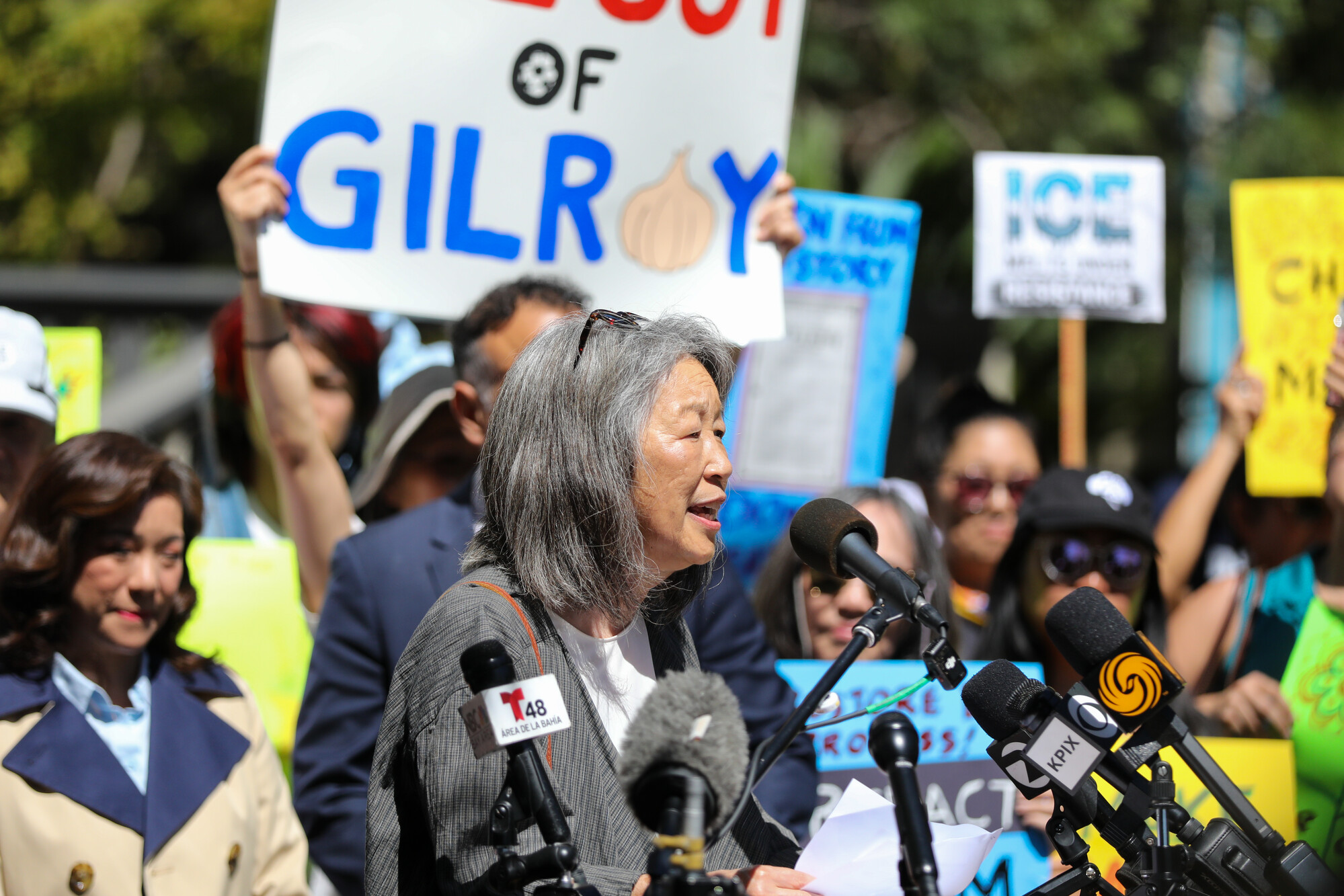
"caption": "Susan Hayase, the co-founder of San José Nikkei Resisters, speaks during a rally held in San José’s Japantown opposing a planned ICE facility in Santa Clara County on July 29, 2026.",
"credit": "Joseph Geha/KQED",
"altTag": null,
"description": null,
"imgSizes": {
"thumbnail": {
"file": "https://cdn.kqed.org/wp-content/uploads/sites/10/2026/07/260729-SJICERALLY-JG-7_qed-160x107.jpg",
"width": 160,
"height": 107,
"mimeType": "image/jpeg"
},
"1536x1536": {
"file": "https://cdn.kqed.org/wp-content/uploads/sites/10/2026/07/260729-SJICERALLY-JG-7_qed-1536x1024.jpg",
"width": 1536,
"height": 1024,
"mimeType": "image/jpeg"
},
"post-thumbnail": {
"file": "https://cdn.kqed.org/wp-content/uploads/sites/10/2026/07/260729-SJICERALLY-JG-7_qed-672x372.jpg",
"width": 672,
"height": 372,
"mimeType": "image/jpeg"
},
"twentyfourteen-full-width": {
"file": "https://cdn.kqed.org/wp-content/uploads/sites/10/2026/07/260729-SJICERALLY-JG-7_qed-1038x576.jpg",
"width": 1038,
"height": 576,
"mimeType": "image/jpeg"
},
"npr-cds-wide": {
"file": "https://cdn.kqed.org/wp-content/uploads/sites/10/2026/07/260729-SJICERALLY-JG-7_qed-1200x675.jpg",
"width": 1200,
"height": 675,
"mimeType": "image/jpeg"
},
"npr-cds-square": {
"file": "https://cdn.kqed.org/wp-content/uploads/sites/10/2026/07/260729-SJICERALLY-JG-7_qed-600x600.jpg",
"width": 600,
"height": 600,
"mimeType": "image/jpeg"
},
"kqedFullSize": {
"file": "https://cdn.kqed.org/wp-content/uploads/sites/10/2026/07/260729-SJICERALLY-JG-7_qed.jpg",
"width": 1999,
"height": 1333
}
},
"isLoading": false,
"fetchFailed": false
},
"news_12093064": {
"type": "attachments",
"id": "news_12093064",
"meta": {
"index": "attachments_1716263798",
"site": "news",
"id": "12093064",
"found": true
},
"title": "072826-PALESTINEACTIVISTMEMORIAL-15-MC-KQED_1",
"publishDate": 1785350010,
"status": "inherit",
"parent": 0,
"modified": 1785350250,
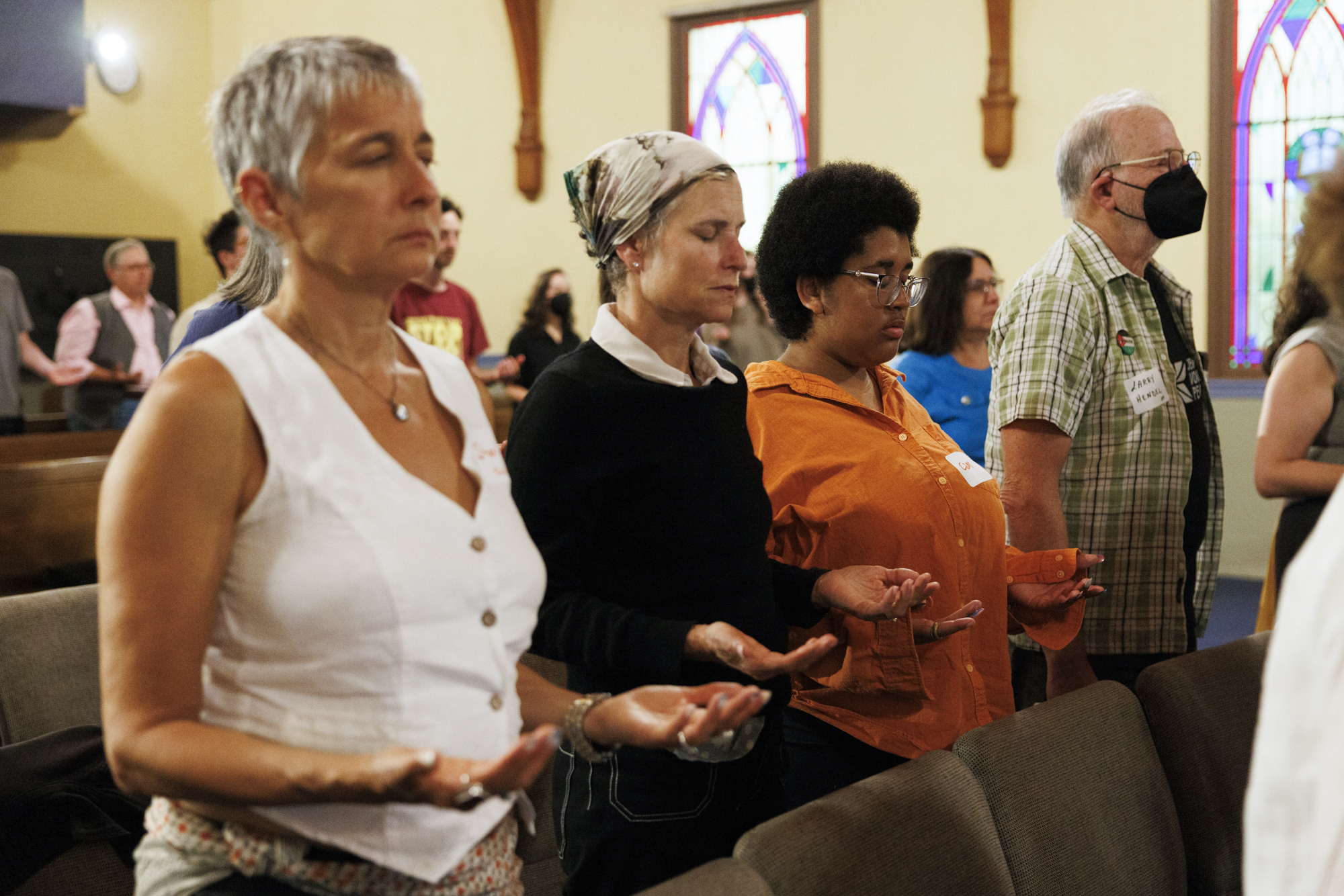
"caption": "Mourners are guided in prayer during a memorial for Palestinian activist, Awdah Hathaleen, at Kehilla Community Synagogue on July 28, 2026, in Piedmont.",
"credit": "Miles Cull/KQED",
"altTag": null,
"description": null,
"imgSizes": {
"thumbnail": {
"file": "https://cdn.kqed.org/wp-content/uploads/sites/10/2026/07/072826-PALESTINEACTIVISTMEMORIAL-15-MC-KQED_1-160x107.jpg",
"width": 160,
"height": 107,
"mimeType": "image/jpeg"
},
"1536x1536": {
"file": "https://cdn.kqed.org/wp-content/uploads/sites/10/2026/07/072826-PALESTINEACTIVISTMEMORIAL-15-MC-KQED_1-1536x1025.jpg",
"width": 1536,
"height": 1025,
"mimeType": "image/jpeg"
},
"post-thumbnail": {
"file": "https://cdn.kqed.org/wp-content/uploads/sites/10/2026/07/072826-PALESTINEACTIVISTMEMORIAL-15-MC-KQED_1-672x372.jpg",
"width": 672,
"height": 372,
"mimeType": "image/jpeg"
},
"twentyfourteen-full-width": {
"file": "https://cdn.kqed.org/wp-content/uploads/sites/10/2026/07/072826-PALESTINEACTIVISTMEMORIAL-15-MC-KQED_1-1038x576.jpg",
"width": 1038,
"height": 576,
"mimeType": "image/jpeg"
},
"npr-cds-wide": {
"file": "https://cdn.kqed.org/wp-content/uploads/sites/10/2026/07/072826-PALESTINEACTIVISTMEMORIAL-15-MC-KQED_1-1200x675.jpg",
"width": 1200,
"height": 675,
"mimeType": "image/jpeg"
},
"npr-cds-square": {
"file": "https://cdn.kqed.org/wp-content/uploads/sites/10/2026/07/072826-PALESTINEACTIVISTMEMORIAL-15-MC-KQED_1-600x600.jpg",
"width": 600,
"height": 600,
"mimeType": "image/jpeg"
},
"kqedFullSize": {
"file": "https://cdn.kqed.org/wp-content/uploads/sites/10/2026/07/072826-PALESTINEACTIVISTMEMORIAL-15-MC-KQED_1.jpg",
"width": 2000,
"height": 1334
}
},
"isLoading": false,
"fetchFailed": false
},
"news_12046564": {
"type": "attachments",
"id": "news_12046564",
"meta": {
"index": "attachments_1716263798",
"site": "news",
"id": "12046564",
"found": true
},
"title": "The Core Civic detention facility in California City on June 28, 2025.",
"publishDate": 1751304998,
"status": "inherit",
"parent": 12071374,
"modified": 1769642382,
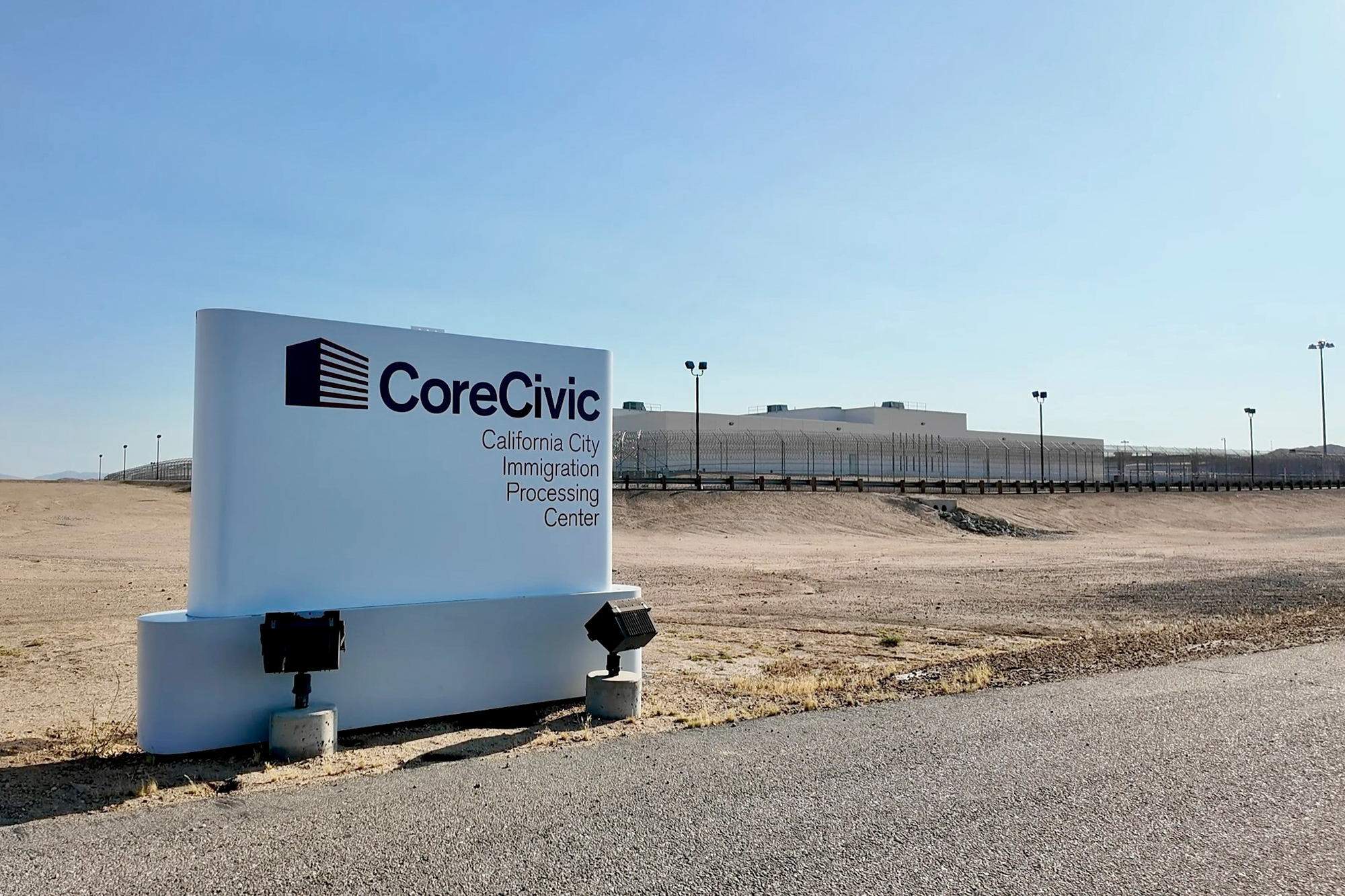
"caption": "The Core Civic detention facility in California City on June 28, 2025.",
"credit": "Saul Gonzalez/KQED",
"altTag": null,
"description": null,
"imgSizes": {
"thumbnail": {
"file": "https://cdn.kqed.org/wp-content/uploads/sites/10/2025/06/CORECIVICCALCITY1-KQED-160x107.jpg",
"width": 160,
"height": 107,
"mimeType": "image/jpeg"
},
"1536x1536": {
"file": "https://cdn.kqed.org/wp-content/uploads/sites/10/2025/06/CORECIVICCALCITY1-KQED-1536x1024.jpg",
"width": 1536,
"height": 1024,
"mimeType": "image/jpeg"
},
"post-thumbnail": {
"file": "https://cdn.kqed.org/wp-content/uploads/sites/10/2025/06/CORECIVICCALCITY1-KQED-672x372.jpg",
"width": 672,
"height": 372,
"mimeType": "image/jpeg"
},
"twentyfourteen-full-width": {
"file": "https://cdn.kqed.org/wp-content/uploads/sites/10/2025/06/CORECIVICCALCITY1-KQED-1038x576.jpg",
"width": 1038,
"height": 576,
"mimeType": "image/jpeg"
},
"kqedFullSize": {
"file": "https://cdn.kqed.org/wp-content/uploads/sites/10/2025/06/CORECIVICCALCITY1-KQED.jpg",
"width": 2000,
"height": 1333
}
},
"isLoading": false,
"fetchFailed": false
},
"news_12067757": {
"type": "attachments",
"id": "news_12067757",
"meta": {
"index": "attachments_1716263798",
"site": "news",
"id": "12067757",
"found": true
},
"title": "251210-SFOEating-24-BL_qed",
"publishDate": 1766083502,
"status": "inherit",
"parent": 12065518,
"modified": 1766083510,
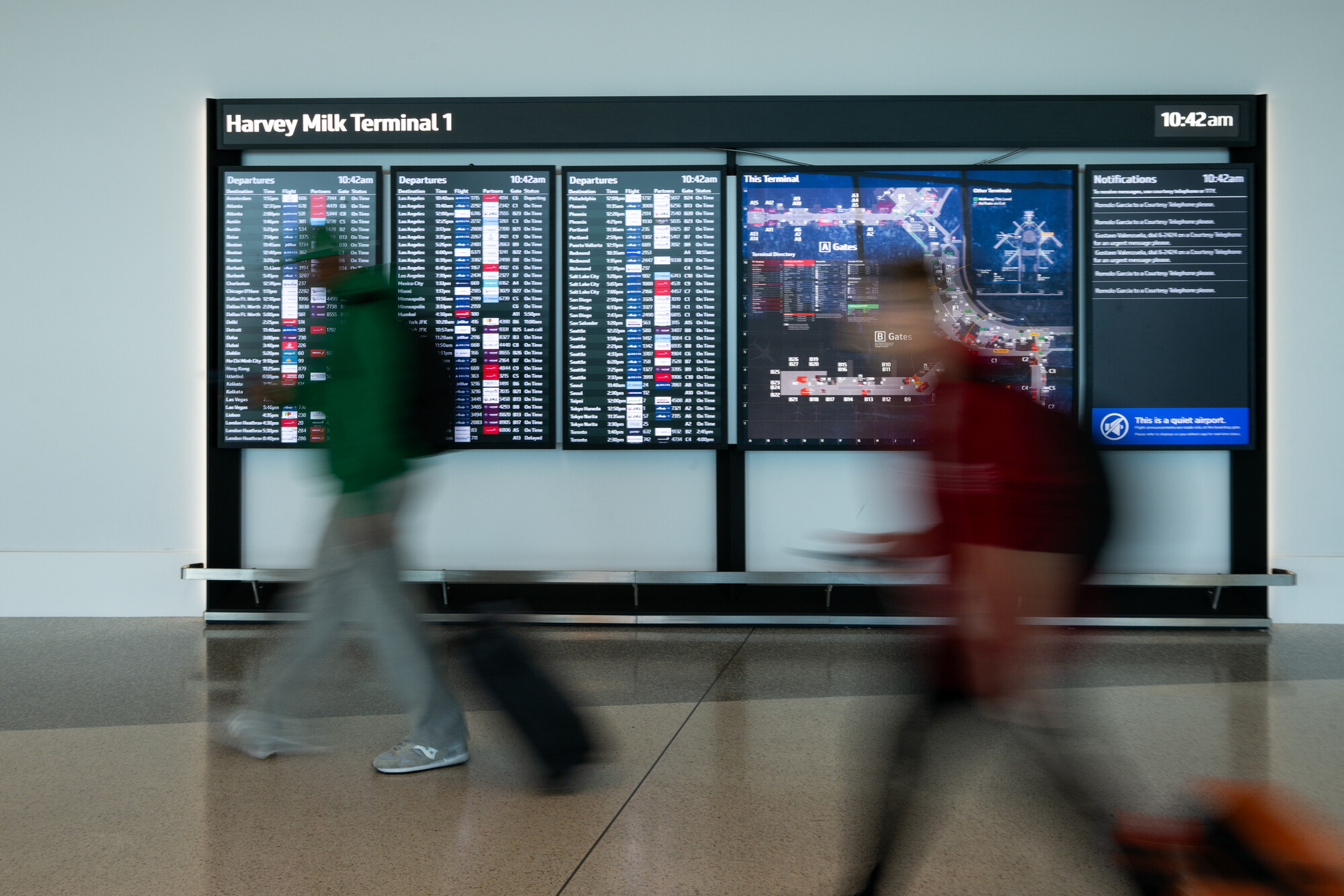
"caption": "Passengers walk past a flight board in Harvey Milk Terminal 1 at San Francisco International Airport on Dec. 10, 2025.",
"credit": "Beth LaBerge/KQED",
"altTag": null,
"description": null,
"imgSizes": {
"thumbnail": {
"file": "https://cdn.kqed.org/wp-content/uploads/sites/10/2025/11/251210-SFOEating-24-BL_qed-160x107.jpg",
"width": 160,
"height": 107,
"mimeType": "image/jpeg"
},
"1536x1536": {
"file": "https://cdn.kqed.org/wp-content/uploads/sites/10/2025/11/251210-SFOEating-24-BL_qed-1536x1024.jpg",
"width": 1536,
"height": 1024,
"mimeType": "image/jpeg"
},
"post-thumbnail": {
"file": "https://cdn.kqed.org/wp-content/uploads/sites/10/2025/11/251210-SFOEating-24-BL_qed-672x372.jpg",
"width": 672,
"height": 372,
"mimeType": "image/jpeg"
},
"twentyfourteen-full-width": {
"file": "https://cdn.kqed.org/wp-content/uploads/sites/10/2025/11/251210-SFOEating-24-BL_qed-1038x576.jpg",
"width": 1038,
"height": 576,
"mimeType": "image/jpeg"
},
"npr-cds-wide": {
"file": "https://cdn.kqed.org/wp-content/uploads/sites/10/2025/11/251210-SFOEating-24-BL_qed-1200x675.jpg",
"width": 1200,
"height": 675,
"mimeType": "image/jpeg"
},
"kqedFullSize": {
"file": "https://cdn.kqed.org/wp-content/uploads/sites/10/2025/11/251210-SFOEating-24-BL_qed.jpg",
"width": 1999,
"height": 1333
}
},
"isLoading": false,
"fetchFailed": false
},
"news_12042200": {
"type": "attachments",
"id": "news_12042200",
"meta": {
"index": "attachments_1716263798",
"site": "news",
"id": "12042200",
"found": true
},
"title": "008_KQED_630Sansome_02052020_1470_qed",
"publishDate": 1748630169,
"status": "inherit",
"parent": 12042197,
"modified": 1784932362,
"caption": "The U.S. Immigration & Customs Enforcement building at 630 Sansome St., in San Francisco, California, on Feb. 5, 2020.",
"credit": "Beth LaBerge/KQED",
"altTag": null,
"description": null,
"imgSizes": {
"medium": {
"file": "https://cdn.kqed.org/wp-content/uploads/sites/10/2025/05/008_KQED_630Sansome_02052020_1470_qed-800x533.jpg",
"width": 800,
"height": 533,
"mimeType": "image/jpeg"
},
"large": {
"file": "https://cdn.kqed.org/wp-content/uploads/sites/10/2025/05/008_KQED_630Sansome_02052020_1470_qed-1020x680.jpg",
"width": 1020,
"height": 680,
"mimeType": "image/jpeg"
},
"thumbnail": {
"file": "https://cdn.kqed.org/wp-content/uploads/sites/10/2025/05/008_KQED_630Sansome_02052020_1470_qed-160x107.jpg",
"width": 160,
"height": 107,
"mimeType": "image/jpeg"
},
"1536x1536": {
"file": "https://cdn.kqed.org/wp-content/uploads/sites/10/2025/05/008_KQED_630Sansome_02052020_1470_qed-1536x1024.jpg",
"width": 1536,
"height": 1024,
"mimeType": "image/jpeg"
},
"post-thumbnail": {
"file": "https://cdn.kqed.org/wp-content/uploads/sites/10/2025/05/008_KQED_630Sansome_02052020_1470_qed-672x372.jpg",
"width": 672,
"height": 372,
"mimeType": "image/jpeg"
},
"twentyfourteen-full-width": {
"file": "https://cdn.kqed.org/wp-content/uploads/sites/10/2025/05/008_KQED_630Sansome_02052020_1470_qed-1038x576.jpg",
"width": 1038,
"height": 576,
"mimeType": "image/jpeg"
},
"full-width": {
"file": "https://cdn.kqed.org/wp-content/uploads/sites/10/2025/05/008_KQED_630Sansome_02052020_1470_qed-1920x1280.jpg",
"width": 1920,
"height": 1280,
"mimeType": "image/jpeg"
},
"kqedFullSize": {
"file": "https://cdn.kqed.org/wp-content/uploads/sites/10/2025/05/008_KQED_630Sansome_02052020_1470_qed.jpg",
"width": 1999,
"height": 1333
}
},
"isLoading": false,
"fetchFailed": false
},
"news_12092618": {
"type": "attachments",
"id": "news_12092618",
"meta": {
"index": "attachments_1716263798",
"site": "news",
"id": "12092618",
"found": true
},
"title": "260724-SFO ICE-01-KQED",
"publishDate": 1784930874,
"status": "inherit",
"parent": 0,
"modified": 1784933063,
"caption": "Iryna Gorb, 38, lived in the United States for 16 years before she was detained by immigration officials at SFO this week. ",
"credit": "Courtesy of Andy Eblin",
"altTag": null,
"description": null,
"imgSizes": {
"thumbnail": {
"file": "https://cdn.kqed.org/wp-content/uploads/sites/10/2026/07/260724-SFO-ICE-01-KQED-160x107.jpeg",
"width": 160,
"height": 107,
"mimeType": "image/jpeg"
},
"1536x1536": {
"file": "https://cdn.kqed.org/wp-content/uploads/sites/10/2026/07/260724-SFO-ICE-01-KQED-1536x1025.jpeg",
"width": 1536,
"height": 1025,
"mimeType": "image/jpeg"
},
"post-thumbnail": {
"file": "https://cdn.kqed.org/wp-content/uploads/sites/10/2026/07/260724-SFO-ICE-01-KQED-672x372.jpeg",
"width": 672,
"height": 372,
"mimeType": "image/jpeg"
},
"twentyfourteen-full-width": {
"file": "https://cdn.kqed.org/wp-content/uploads/sites/10/2026/07/260724-SFO-ICE-01-KQED-1038x576.jpeg",
"width": 1038,
"height": 576,
"mimeType": "image/jpeg"
},
"npr-cds-wide": {
"file": "https://cdn.kqed.org/wp-content/uploads/sites/10/2026/07/260724-SFO-ICE-01-KQED-1200x675.jpeg",
"width": 1200,
"height": 675,
"mimeType": "image/jpeg"
},
"npr-cds-square": {
"file": "https://cdn.kqed.org/wp-content/uploads/sites/10/2026/07/260724-SFO-ICE-01-KQED-600x600.jpeg",
"width": 600,
"height": 600,
"mimeType": "image/jpeg"
},
"kqedFullSize": {
"file": "https://cdn.kqed.org/wp-content/uploads/sites/10/2026/07/260724-SFO-ICE-01-KQED.jpeg",
"width": 2000,
"height": 1334
}
},
"isLoading": false,
"fetchFailed": false
},
"news_12091688": {
"type": "attachments",
"id": "news_12091688",
"meta": {
"index": "attachments_1716263798",
"site": "news",
"id": "12091688",
"found": true
},
"title": "260717-RUSSIANJOURNALISTSEXILE-05-BL-KQED",
"publishDate": 1784330248,
"status": "inherit",
"parent": 0,
"modified": 1784334332,
"caption": "Roman Badanin sits down on the Stanford University campus in Stanford on July 17, 2026.",
"credit": "Beth LaBerge/KQED",
"altTag": null,
"description": null,
"imgSizes": {
"thumbnail": {
"file": "https://cdn.kqed.org/wp-content/uploads/sites/10/2026/07/260717-RUSSIANJOURNALISTSEXILE-05-BL-KQED-160x107.jpg",
"width": 160,
"height": 107,
"mimeType": "image/jpeg"
},
"1536x1536": {
"file": "https://cdn.kqed.org/wp-content/uploads/sites/10/2026/07/260717-RUSSIANJOURNALISTSEXILE-05-BL-KQED-1536x1024.jpg",
"width": 1536,
"height": 1024,
"mimeType": "image/jpeg"
},
"post-thumbnail": {
"file": "https://cdn.kqed.org/wp-content/uploads/sites/10/2026/07/260717-RUSSIANJOURNALISTSEXILE-05-BL-KQED-672x372.jpg",
"width": 672,
"height": 372,
"mimeType": "image/jpeg"
},
"twentyfourteen-full-width": {
"file": "https://cdn.kqed.org/wp-content/uploads/sites/10/2026/07/260717-RUSSIANJOURNALISTSEXILE-05-BL-KQED-1038x576.jpg",
"width": 1038,
"height": 576,
"mimeType": "image/jpeg"
},
"npr-cds-wide": {
"file": "https://cdn.kqed.org/wp-content/uploads/sites/10/2026/07/260717-RUSSIANJOURNALISTSEXILE-05-BL-KQED-1200x675.jpg",
"width": 1200,
"height": 675,
"mimeType": "image/jpeg"
},
"npr-cds-square": {
"file": "https://cdn.kqed.org/wp-content/uploads/sites/10/2026/07/260717-RUSSIANJOURNALISTSEXILE-05-BL-KQED-600x600.jpg",
"width": 600,
"height": 600,
"mimeType": "image/jpeg"
},
"kqedFullSize": {
"file": "https://cdn.kqed.org/wp-content/uploads/sites/10/2026/07/260717-RUSSIANJOURNALISTSEXILE-05-BL-KQED.jpg",
"width": 2000,
"height": 1333
}
},
"isLoading": false,
"fetchFailed": false
},
"news_12063307": {
"type": "attachments",
"id": "news_12063307",
"meta": {
"index": "attachments_1716263798",
"site": "news",
"id": "12063307",
"found": true
},
"title": "Planes at San Francisco International Airport (SFO) during rainy day",
"publishDate": 1762465457,
"status": "inherit",
"parent": 12063196,
"modified": 1784319115,
"caption": "A United Airlines plane takes off from the San Francisco International Airport (SFO) in San Francisco on Nov. 5, 2025.",
"credit": "Tayfun Coskun/Anadolu via Getty Images",
"altTag": null,
"description": null,
"imgSizes": {
"thumbnail": {
"file": "https://cdn.kqed.org/wp-content/uploads/sites/10/2025/11/GETTYIMAGES-2244764792-KQED-160x107.jpg",
"width": 160,
"height": 107,
"mimeType": "image/jpeg"
},
"1536x1536": {
"file": "https://cdn.kqed.org/wp-content/uploads/sites/10/2025/11/GETTYIMAGES-2244764792-KQED-1536x1023.jpg",
"width": 1536,
"height": 1023,
"mimeType": "image/jpeg"
},
"post-thumbnail": {
"file": "https://cdn.kqed.org/wp-content/uploads/sites/10/2025/11/GETTYIMAGES-2244764792-KQED-672x372.jpg",
"width": 672,
"height": 372,
"mimeType": "image/jpeg"
},
"twentyfourteen-full-width": {
"file": "https://cdn.kqed.org/wp-content/uploads/sites/10/2025/11/GETTYIMAGES-2244764792-KQED-1038x576.jpg",
"width": 1038,
"height": 576,
"mimeType": "image/jpeg"
},
"npr-cds-wide": {
"file": "https://cdn.kqed.org/wp-content/uploads/sites/10/2025/11/GETTYIMAGES-2244764792-KQED-1200x675.jpg",
"width": 1200,
"height": 675,
"mimeType": "image/jpeg"
},
"kqedFullSize": {
"file": "https://cdn.kqed.org/wp-content/uploads/sites/10/2025/11/GETTYIMAGES-2244764792-KQED.jpg",
"width": 2000,
"height": 1332
}
},
"isLoading": false,
"fetchFailed": false
}
},
"audioPlayerReducer": {
"postId": "stream_live",
"isPaused": true,
"isPlaying": false,
"pfsActive": false,
"pledgeModalIsOpen": true,
"playerDrawerIsOpen": false,
"liveAudioPlayStartedAt": 0,
"liveAudioPlayContext": ""
},
"authorsReducer": {
"byline_news_12093465": {
"type": "authors",
"id": "byline_news_12093465",
"meta": {
"override": true
},
"slug": "byline_news_12093465",
"name": "Phoebe Huss, CalMatters",
"isLoading": false
},
"byline_news_12092950": {
"type": "authors",
"id": "byline_news_12092950",
"meta": {
"override": true
},
"slug": "byline_news_12092950",
"name": "Nigel Duara, CalMatters",
"isLoading": false
},
"byline_news_12089920": {
"type": "authors",
"id": "byline_news_12089920",
"meta": {
"override": true
},
"slug": "byline_news_12089920",
"name": "George Porteous",
"isLoading": false
},
"tychehendricks": {
"type": "authors",
"id": "259",
"meta": {
"index": "authors_1716337520",
"id": "259",
"found": true
},
"name": "Tyche Hendricks",
"firstName": "Tyche",
"lastName": "Hendricks",
"slug": "tychehendricks",
"email": "thendricks@kqed.org",
"display_author_email": true,
"staff_mastheads": [
"news"
],
"title": "KQED Senior Editor, Immigration",
"bio": "\u003cspan style=\"font-weight: 400;\">Tyche Hendricks is KQED’s senior editor for immigration, leading coverage of the policy and politics that affect California’s immigrant communities. Her work for KQED’s radio and online audiences is also carried on NPR and other national outlets. She has been recognized with awards from the Radio and Television News Directors Association, the Society for Professional Journalists; the Education Writers Association; the Best of the West and the National Federation of Community Broadcasters. Before joining KQED in 2010, Tyche spent more than a dozen years as a newspaper reporter, notably at the \u003c/span>\u003ci>\u003cspan style=\"font-weight: 400;\">San Francisco Chronicle\u003c/span>\u003c/i>\u003cspan style=\"font-weight: 400;\">. At different times she has covered criminal justice, government and politics and urban planning. Tyche has taught in the MFA Creative Writing program at the University of San Francisco and at UC Berkeley’s Graduate School of Journalism, where she was co-director of a national immigration symposium for professional journalists. She is the author of \u003c/span>\u003ci>\u003cspan style=\"font-weight: 400;\">The Wind Doesn't Need a Passport: Stories from the U.S.-Mexico Borderlands\u003c/span>\u003c/i>\u003cspan style=\"font-weight: 400;\"> (University of California Press). \u003c/span>",
"avatar": "https://secure.gravatar.com/avatar/b8ee458e2731c2d43df86882ce17267e?s=600&d=blank&r=g",
"twitter": "tychehendricks",
"facebook": null,
"instagram": null,
"linkedin": null,
"sites": [
{
"site": "news",
"roles": [
"editor"
]
},
{
"site": "stateofhealth",
"roles": [
"editor"
]
}
],
"headData": {
"title": "Tyche Hendricks | KQED",
"description": "KQED Senior Editor, Immigration",
"ogImgSrc": "https://secure.gravatar.com/avatar/b8ee458e2731c2d43df86882ce17267e?s=600&d=blank&r=g",
"twImgSrc": "https://secure.gravatar.com/avatar/b8ee458e2731c2d43df86882ce17267e?s=600&d=blank&r=g"
},
"isLoading": false,
"link": "/author/tychehendricks"
},
"btorres": {
"type": "authors",
"id": "11666",
"meta": {
"index": "authors_1716337520",
"id": "11666",
"found": true
},
"name": "Blanca Torres",
"firstName": "Blanca",
"lastName": "Torres",
"slug": "btorres",
"email": "btorres@kqed.org",
"display_author_email": true,
"staff_mastheads": [
"news"
],
"title": "Producer, Forum",
"bio": "Blanca Torres brings sharp news judgement and keen sense of lively conversation to her work as producer for Forum. She loves producing shows that leave listeners feeling like they heard distinctive voices, learned something new and gained a fresh perspective.\r\n\r\nShe joined KQED in January of 2020 after 16 years of working as a newspaper reporter most recently at the \u003cem>San Francisco Business Times,\u003c/em> where she wrote about real estate and economic development. Before that, she covered a variety of beats including crime, education, retail, workplace, the economy, consumer issues, and small business for the \u003cem>Contra Costa Times, Baltimore Sun\u003c/em> and\u003cem> The Seattle Times\u003c/em>. In addition to reporting, she worked as an editorial writer and columnist for the \u003cem>Seattle Times\u003c/em>. From 2017 to 2020, Blanca won a total of ten awards from the National Association of Real Estate Editors and won first place for land use reporting from the California News Publishers Association two years in a row. She is also a member and former board member for the National Association of Hispanic Journalists.\r\n\r\nA native of the Pacific Northwest, Blanca earned her bachelor's degree from Vanderbilt University in Nashville and a master's in fine arts in creative writing at Mills College. She lives in the East Bay with her family.",
"avatar": "https://secure.gravatar.com/avatar/f2322ff46076d337f7ba731ee6068cb1?s=600&d=blank&r=g",
"twitter": "@blancawrites",
"facebook": null,
"instagram": null,
"linkedin": null,
"sites": [
{
"site": "arts",
"roles": [
"editor"
]
},
{
"site": "news",
"roles": [
"editor"
]
},
{
"site": "forum",
"roles": [
"editor"
]
}
],
"headData": {
"title": "Blanca Torres | KQED",
"description": "Producer, Forum",
"ogImgSrc": "https://secure.gravatar.com/avatar/f2322ff46076d337f7ba731ee6068cb1?s=600&d=blank&r=g",
"twImgSrc": "https://secure.gravatar.com/avatar/f2322ff46076d337f7ba731ee6068cb1?s=600&d=blank&r=g"
},
"isLoading": false,
"link": "/author/btorres"
},
"daisynguyen": {
"type": "authors",
"id": "11829",
"meta": {
"index": "authors_1716337520",
"id": "11829",
"found": true
},
"name": "Daisy Nguyen",
"firstName": "Daisy",
"lastName": "Nguyen",
"slug": "daisynguyen",
"email": "daisynguyen@kqed.org",
"display_author_email": true,
"staff_mastheads": [
"news"
],
"title": "KQED Contributor",
"bio": "I have covered early childhood education and child care for KQED since 2022. I focus on policies aimed at increasing access to early care and education and how they shape individual lives. I've been a journalist for more than two decades, with most of that time devoted to covering breaking news throughout California for The Associated Press. I grew up in San Francisco and studied at UC Davis and Columbia University's Graduate School of Journalism. I live in Oakland with my husband and two kids.",
"avatar": "https://secure.gravatar.com/avatar/2da2127c27f7143b53ebd419800fd55f?s=600&d=blank&r=g",
"twitter": null,
"facebook": null,
"instagram": null,
"linkedin": "https://www.linkedin.com/in/daisynguyen/",
"sites": [
{
"site": "news",
"roles": [
"author"
]
},
{
"site": "liveblog",
"roles": [
"author"
]
}
],
"headData": {
"title": "Daisy Nguyen | KQED",
"description": "KQED Contributor",
"ogImgSrc": "https://secure.gravatar.com/avatar/2da2127c27f7143b53ebd419800fd55f?s=600&d=blank&r=g",
"twImgSrc": "https://secure.gravatar.com/avatar/2da2127c27f7143b53ebd419800fd55f?s=600&d=blank&r=g"
},
"isLoading": false,
"link": "/author/daisynguyen"
},
"nkhan": {
"type": "authors",
"id": "11867",
"meta": {
"index": "authors_1716337520",
"id": "11867",
"found": true
},
"name": "Nisa Khan",
"firstName": "Nisa",
"lastName": "Khan",
"slug": "nkhan",
"email": "nkhan@kqed.org",
"display_author_email": false,
"staff_mastheads": [],
"title": "KQED Contributor",
"bio": "Nisa Khan is a reporter for KQED's Audience News Desk. She was formerly a data reporter at Michigan Radio. She earned a Bachelor of Science in Information from the University of Michigan and a Master of Arts in Communication from Stanford University.",
"avatar": "https://secure.gravatar.com/avatar/8720459eef081ff64582b3506b124d58523e80e120704a0cbd9892533c914991?s=600&d=blank&r=g",
"twitter": "mnisakhan",
"bluesky": null,
"facebook": null,
"instagram": null,
"linkedin": null,
"sites": [
{
"site": "arts",
"roles": [
"editor"
]
},
{
"site": "news",
"roles": [
"editor"
]
},
{
"site": "science",
"roles": [
"editor",
"author"
]
},
{
"site": "forum",
"roles": [
"editor"
]
},
{
"site": "liveblog",
"roles": [
"contributor"
]
}
],
"headData": {
"title": "Nisa Khan | KQED",
"description": "KQED Contributor",
"ogImgSrc": "https://secure.gravatar.com/avatar/8720459eef081ff64582b3506b124d58523e80e120704a0cbd9892533c914991?s=600&d=blank&r=g",
"twImgSrc": "https://secure.gravatar.com/avatar/8720459eef081ff64582b3506b124d58523e80e120704a0cbd9892533c914991?s=600&d=blank&r=g"
},
"isLoading": false,
"link": "/author/nkhan"
},
"jgeha": {
"type": "authors",
"id": "11906",
"meta": {
"index": "authors_1716337520",
"id": "11906",
"found": true
},
"name": "Joseph Geha",
"firstName": "Joseph",
"lastName": "Geha",
"slug": "jgeha",
"email": "jgeha@kqed.org",
"display_author_email": false,
"staff_mastheads": [
"news",
"science"
],
"title": "KQED Contributor",
"bio": null,
"avatar": "https://secure.gravatar.com/avatar/ea84d2b6dd93d6369d453edf19dd583f117cd1759d2d9c9c92f9de77017354fe?s=600&d=blank&r=g",
"twitter": null,
"bluesky": null,
"facebook": null,
"instagram": null,
"linkedin": null,
"sites": [
{
"site": "news",
"roles": [
"editor"
]
},
{
"site": "liveblog",
"roles": [
"author"
]
}
],
"headData": {
"title": "Joseph Geha | KQED",
"description": "KQED Contributor",
"ogImgSrc": "https://secure.gravatar.com/avatar/ea84d2b6dd93d6369d453edf19dd583f117cd1759d2d9c9c92f9de77017354fe?s=600&d=blank&r=g",
"twImgSrc": "https://secure.gravatar.com/avatar/ea84d2b6dd93d6369d453edf19dd583f117cd1759d2d9c9c92f9de77017354fe?s=600&d=blank&r=g"
},
"isLoading": false,
"link": "/author/jgeha"
},
"kdebenedetti": {
"type": "authors",
"id": "11913",
"meta": {
"index": "authors_1716337520",
"id": "11913",
"found": true
},
"name": "Katie DeBenedetti",
"firstName": "Katie",
"lastName": "DeBenedetti",
"slug": "kdebenedetti",
"email": "kdebenedetti@kqed.org",
"display_author_email": false,
"staff_mastheads": [
"news",
"science"
],
"title": "KQED Contributor",
"bio": "Katie DeBenedetti is a digital reporter covering daily news for the Express Desk. Prior to joining KQED as a culture reporting intern in January 2024, she covered education and city government for the Napa Valley Register.",
"avatar": "https://secure.gravatar.com/avatar/6e31073cb8f7e4214ab03f42771d0f45?s=600&d=blank&r=g",
"twitter": null,
"facebook": null,
"instagram": null,
"linkedin": null,
"sites": [
{
"site": "news",
"roles": [
"author"
]
},
{
"site": "science",
"roles": [
"author"
]
},
{
"site": "liveblog",
"roles": [
"author"
]
}
],
"headData": {
"title": "Katie DeBenedetti | KQED",
"description": "KQED Contributor",
"ogImgSrc": "https://secure.gravatar.com/avatar/6e31073cb8f7e4214ab03f42771d0f45?s=600&d=blank&r=g",
"twImgSrc": "https://secure.gravatar.com/avatar/6e31073cb8f7e4214ab03f42771d0f45?s=600&d=blank&r=g"
},
"isLoading": false,
"link": "/author/kdebenedetti"
},
"aaliahmad": {
"type": "authors",
"id": "11986",
"meta": {
"index": "authors_1716337520",
"id": "11986",
"found": true
},
"name": "Ayah Ali-Ahmad",
"firstName": "Ayah",
"lastName": "Ali-Ahmad",
"slug": "aaliahmad",
"email": "aaliahmad@KQED.org",
"display_author_email": false,
"staff_mastheads": [],
"title": "KQED Contributor",
"bio": null,
"avatar": "https://secure.gravatar.com/avatar/7f340465c69a2c816f6c07000137a3ee?s=600&d=blank&r=g",
"twitter": "ayahaliahmad",
"bluesky": null,
"facebook": null,
"instagram": null,
"linkedin": null,
"sites": [
{
"site": "news",
"roles": [
"author"
]
}
],
"headData": {
"title": "Ayah Ali-Ahmad | KQED",
"description": "KQED Contributor",
"ogImgSrc": "https://secure.gravatar.com/avatar/7f340465c69a2c816f6c07000137a3ee?s=600&d=blank&r=g",
"twImgSrc": "https://secure.gravatar.com/avatar/7f340465c69a2c816f6c07000137a3ee?s=600&d=blank&r=g"
},
"isLoading": false,
"link": "/author/aaliahmad"
}
},
"pagesReducer": {
"news_category_immigration": {
"type": "terms",
"id": "news_1169",
"meta": {
"index": "terms_1716263798",
"site": "news",
"id": "1169",
"score": 10.907793
},
"featImg": null,
"name": "Immigration",
"description": null,
"taxonomy": "category",
"headData": {
"twImgId": null,
"twTitle": null,
"ogTitle": null,
"ogImgId": null,
"twDescription": null,
"description": null,
"title": "Immigration Archives | KQED News",
"ogDescription": null
},
"ttid": 1180,
"slug": "immigration",
"isLoading": false,
"title": "Immigration",
"pageMeta": {
"site": "news",
"WpPageTemplate": "page-topic-editorial",
"currentPage": 1
},
"blocks": [
{
"blockName": "kqed/post-list",
"attrs": {
"layout": "cardArticle2",
"query": "posts/news?category=immigration",
"seeMore": false,
"paginated": true,
"page": 1
}
},
{
"blockName": "kqed/ad"
}
]
}
},
"pfsSessionReducer": {},
"postsReducer": {
"stream_live": {
"type": "live",
"id": "stream_live",
"audioUrl": "https://streams.kqed.org/kqedradio",
"title": "Live Stream",
"excerpt": "Live Stream information currently unavailable.",
"link": "/radio",
"featImg": "",
"label": {
"name": "KQED Live",
"link": "/"
}
},
"stream_kqedNewscast": {
"type": "posts",
"id": "stream_kqedNewscast",
"audioUrl": "https://www.kqed.org/.stream/anon/radio/RDnews/newscast.mp3?_=1",
"title": "KQED Newscast",
"featImg": "",
"label": {
"name": "88.5 FM",
"link": "/"
}
},
"news_12095281": {
"type": "posts",
"id": "news_12095281",
"meta": {
"index": "posts_1716263798",
"site": "news",
"id": "12095281",
"score": null,
"sort": [
1786996704000
]
},
"guestAuthors": [],
"slug": "unaccompanied-migrant-kids-may-face-legal-gaps-as-bay-area-groups-lose-federal-funding",
"title": "Unaccompanied Migrant Kids May Face Legal Gaps as Bay Area Groups Lose Federal Funding",
"publishDate": 1786996704,
"format": "standard",
"headTitle": "Unaccompanied Migrant Kids May Face Legal Gaps as Bay Area Groups Lose Federal Funding | KQED",
"labelTerm": {
"site": "news"
},
"content": "\u003cp>Legal aid groups said they will continue to represent \u003ca href=\"https://www.kqed.org/immigration\">unaccompanied immigrant children\u003c/a> in the Bay Area even after the Trump administration shifted federal funding away from seasoned service providers to a controversial anti-trafficking group.\u003c/p>\n\n\n\n\u003cp>Earlier this month, the U.S. Department of Health and Human Services awarded a \u003ca href=\"https://www.npr.org/2026/08/12/nx-s1-5929456/migrant-children-our-rescue\">$158 million contract —\u003c/a> which could grow to $244 million — to Our Rescue, a Utah-based anti-human-trafficking group whose founder was accused of sexual exploitation and whose current director led Homeland Security Investigations, a branch of U.S. Immigration and Customs Enforcement, during the first Trump administration. The group touts its expertise assisting law enforcement with sting operations, but advocates say it lacks experience representing children in immigration court.\u003c/p>\n\n\n\n\u003cp>Katrina Logan, executive director of \u003ca href=\"https://clsepa.org\">Community Legal Services in East Palo Alto,\u003c/a> said her team of lawyers and social workers is not walking away from the 33 children they represent, even though their contract funded by the U.S. Department of Health and Human Services expired July 31. \u003c/p>\n\n\n\n\u003cp>Immigration cases can go on for years and can involve complex forms of humanitarian relief, especially for children, she said.\u003c/p>\n\n\n\n\u003cfigure class=\"wp-block-image size-full\">\u003cimg loading=\"lazy\" decoding=\"async\" width=\"2000\" height=\"1334\" src=\"https://cdn.kqed.org/wp-content/uploads/sites/10/2024/05/GettyImages-1838184632-scaled-e1786995916941.jpg\" alt=\"a line of kids outside in the desert\" class=\"wp-image-11986452\">\u003cfigcaption class=\"wp-element-caption\">Immigrant children await transport from the U.S.-Mexico border in December 2023. (John Moore/Getty Images)\u003c/figcaption>\u003c/figure>\n\n\n\n\u003cp>“Our attorneys have been doing this type of law for many years. They’ve developed the expertise,” Logan said. “They understand how to support clients. So it’s definitely tough to be losing this funding.”\u003c/p>\n\n\n\n\u003cp>[ad fullwidth]\u003c/p>\n\u003cp>Logan’s organization is the lead plaintiff in a federal lawsuit that blocked HHS last year when it tried to terminate funding for lawyers to represent more than 20,000 children — including more than 4,000 in California. \u003c/p>\n\n\n\n\u003cp>On Aug. 6, an Oakland federal judge ordered HHS to release $65 million in back-due payments to the network of legal service providers, including Logan’s group and several others in California. The agency had stopped cutting checks in December, after the groups refused to comply with a new requirement to turn over information about the children and their cases. \u003c/p>\n\n\n\n\u003cp>U.S. District Judge Araceli Martínez-Olguín rejected the information-sharing requirement — which was not part of the original contract — and said the government was violating her 2025 order to pay for legal services, as Congress intended.\u003c/p>\n\n\n\n\n\n\u003cp>A 2008 law, the Trafficking Victims Protection Reauthorization Act, requires the government to ensure that unaccompanied migrant children “have counsel to represent them in legal proceedings or matters and protect them from mistreatment, exploitation, and trafficking,” Martínez-Olguín wrote. She noted that Congress has funded those services through 2027.\u003c/p>\n\n\n\n\u003cp>The $65 million — with interest — has now been paid, said Bilal Askaryar, spokesperson for the \u003ca href=\"https://acaciajustice.org\">Acacia Center for Justice\u003c/a>, which holds the master contract on behalf of Community Legal Services in East Palo Alto and roughly 100 other nonprofits. \u003c/p>\n\n\n\n\u003cp>With the contract now expired, he said, HHS’s \u003ca href=\"https://acf.gov/orr\">Office of Refugee Resettlement\u003c/a>, which is tasked with the welfare of unaccompanied migrant children, made the sharing of what he called confidential information — including the children’s alien numbers and their lawyers’ plans for arguing their cases — a requirement to renew.\u003c/p>\n\n\n\n\u003cp>“We told ORR that we would be happy to continue providing these services because we are the network with the trauma-informed lawyers who know how to work with children,” Askaryar said. “And we would not hand over our clients’ sensitive, confidential, privileged data in exchange for considering that work. ORR made that a requirement, and that was a red line that we would not cross.”\u003c/p>\n\n\n\n\u003cp>Acacia did not apply to renew the contract under those terms, and, with the expiration of the old contract, Martínez-Olguín said the government seemed to be scrambling to meet its legal obligation to ensure kids have lawyers. \u003c/p>\n\n\n\n\u003cp>“It appears to the Court that no mechanism presently exists by which Defendants are complying with the preliminary injunction,” she wrote in her Aug. 6 ruling, and ordered the government to explain how it would comply with the law.\u003c/p>\n\n\n\n\u003cfigure class=\"wp-block-image size-full\">\u003cimg loading=\"lazy\" decoding=\"async\" width=\"1920\" height=\"1280\" src=\"https://cdn.kqed.org/wp-content/uploads/sites/10/2019/01/gettyimages-91547950_slide-4d6100270cc91128d1beb27eca778a6dcd952acd-e1548610211215.jpg\" alt=\"\" class=\"wp-image-11721432\">\u003cfigcaption class=\"wp-element-caption\">Children of Mexican immigrants wait to receive a free health checkup inside a mobile clinic at the Mexican Consulate in Denver, Colorado, in 2009. (John Moore/Getty Images)\u003c/figcaption>\u003c/figure>\n\n\n\n\u003cp>In a declaration last week, the government said it was looking for additional contractors to provide legal representation for kids and trying to work out a transitional contract with Acacia to “support an orderly transition of cases to new legal service providers, including \u003ca href=\"https://ourrescue.org\">Our Rescue\u003c/a>.”\u003cbr>\u003cbr>It also said it had engaged the U.S. Committee for Refugees and Immigrants on a short-term $20 million contract to provide legal services for the 1,800 children who are in ORR shelters. The Virginia-based nonprofit has performed immigration legal services for Afghan arrivals and \u003ca href=\"https://www.npr.org/2025/05/12/g-s1-65984/south-african-afrikaner-refugee-us\">helped settle\u003c/a> white South Africans granted refugee status in an expedited process last year. \u003c/p>\n\n\n\n\u003cp>“These interim measures are intended to ensure that eligible children appearing without counsel have immediate access to representation while successor contracts are being negotiated,” attorneys for the government wrote. \u003c/p>\n\n\n\n\n\n\u003cp>But lawyers representing Community Legal Services in East Palo Alto and the other legal aid groups in the suit say they anticipate gaps — that could have big consequences for unaccompanied children, who are navigating an often-bewildering legal system without a parent for guidance.\u003c/p>\n\n\n\n\u003cp>“It really does unfortunately mean that a lot of children may have court next week and may not have an attorney by their side,” said Álvaro Huerta, with Los Angeles-based \u003ca href=\"https://www.immdef.org\">Immigrant Defenders Law Center\u003c/a>, which represents children in immigration court and is also fighting the lawsuit. \u003c/p>\n\n\n\n\u003cp>As the advocates wait for Martínez-Olguín’s next move in the case, leaders like Logan, at Community Legal Services in East Palo Alto, say they’ll keep forging ahead, in spite of uncertainty. \u003c/p>\n\n\n\n\u003cp>“We’re just in that mode of being ready for whatever is going to come and hopefully having the capacity to continue to do the important work that we’ve been doing,” she said.\u003c/p>\n\n\n\n\u003cp>Askaryar said the stakes of the work are greater than a contract or a federal program.\u003c/p>\n\n\n\n\u003cp>[ad floatright]\u003c/p>\n\u003cp>“This is about what kind of country the United States of America wants to be … when a child stumbles onto our doorstep asking for help,” he said. “Do we offer them a lawyer that knows how to work with kids in a child-friendly way to help them rebuild their life, or do we offer them someone who is just going to rubber stamp their deportation?”\u003c/p>\n\n",
"blocks": [
{
"blockName": "core/paragraph",
"attrs": {
"dropCap": false
},
"innerHTML": "\n\u003cp>Legal aid groups said they will continue to represent \u003ca href=\"https://www.kqed.org/immigration\">unaccompanied immigrant children\u003c/a> in the Bay Area even after the Trump administration shifted federal funding away from seasoned service providers to a controversial anti-trafficking group.\u003c/p>\n",
"innerContent": [
"\n\u003cp>Legal aid groups said they will continue to represent \u003ca href=\"https://www.kqed.org/immigration\">unaccompanied immigrant children\u003c/a> in the Bay Area even after the Trump administration shifted federal funding away from seasoned service providers to a controversial anti-trafficking group.\u003c/p>\n"
],
"innerBlocks": []
},
{
"blockName": "core/paragraph",
"attrs": {
"dropCap": false
},
"innerHTML": "\n\u003cp>Earlier this month, the U.S. Department of Health and Human Services awarded a \u003ca href=\"https://www.npr.org/2026/08/12/nx-s1-5929456/migrant-children-our-rescue\">$158 million contract —\u003c/a> which could grow to $244 million — to Our Rescue, a Utah-based anti-human-trafficking group whose founder was accused of sexual exploitation and whose current director led Homeland Security Investigations, a branch of U.S. Immigration and Customs Enforcement, during the first Trump administration. The group touts its expertise assisting law enforcement with sting operations, but advocates say it lacks experience representing children in immigration court.\u003c/p>\n",
"innerContent": [
"\n\u003cp>Earlier this month, the U.S. Department of Health and Human Services awarded a \u003ca href=\"https://www.npr.org/2026/08/12/nx-s1-5929456/migrant-children-our-rescue\">$158 million contract —\u003c/a> which could grow to $244 million — to Our Rescue, a Utah-based anti-human-trafficking group whose founder was accused of sexual exploitation and whose current director led Homeland Security Investigations, a branch of U.S. Immigration and Customs Enforcement, during the first Trump administration. The group touts its expertise assisting law enforcement with sting operations, but advocates say it lacks experience representing children in immigration court.\u003c/p>\n"
],
"innerBlocks": []
},
{
"blockName": "core/paragraph",
"attrs": {
"dropCap": false
},
"innerHTML": "\n\u003cp>Katrina Logan, executive director of \u003ca href=\"https://clsepa.org\">Community Legal Services in East Palo Alto,\u003c/a> said her team of lawyers and social workers is not walking away from the 33 children they represent, even though their contract funded by the U.S. Department of Health and Human Services expired July 31. \u003c/p>\n",
"innerContent": [
"\n\u003cp>Katrina Logan, executive director of \u003ca href=\"https://clsepa.org\">Community Legal Services in East Palo Alto,\u003c/a> said her team of lawyers and social workers is not walking away from the 33 children they represent, even though their contract funded by the U.S. Department of Health and Human Services expired July 31. \u003c/p>\n"
],
"innerBlocks": []
},
{
"blockName": "core/paragraph",
"attrs": {
"dropCap": false
},
"innerHTML": "\n\u003cp>Immigration cases can go on for years and can involve complex forms of humanitarian relief, especially for children, she said.\u003c/p>\n",
"innerContent": [
"\n\u003cp>Immigration cases can go on for years and can involve complex forms of humanitarian relief, especially for children, she said.\u003c/p>\n"
],
"innerBlocks": []
},
{
"blockName": "core/image",
"attrs": {
"id": 11986452,
"sizeSlug": "full",
"linkDestination": "none",
"imageCredit": "John Moore/Getty Images",
"alt": ""
},
"innerHTML": "\n\u003cfigure class=\"wp-block-image size-full\">\u003cimg src=\"https://cdn.kqed.org/wp-content/uploads/sites/10/2024/05/GettyImages-1838184632-scaled-e1786995916941.jpg\" alt=\"a line of kids outside in the desert\" class=\"wp-image-11986452\" />\u003cfigcaption class=\"wp-element-caption\">Immigrant children await transport from the U.S.-Mexico border in December 2023. \u003c/figcaption>\u003c/figure>\n",
"innerContent": [
"\n\u003cfigure class=\"wp-block-image size-full\">\u003cimg src=\"https://cdn.kqed.org/wp-content/uploads/sites/10/2024/05/GettyImages-1838184632-scaled-e1786995916941.jpg\" alt=\"a line of kids outside in the desert\" class=\"wp-image-11986452\" />\u003cfigcaption class=\"wp-element-caption\">Immigrant children await transport from the U.S.-Mexico border in December 2023. \u003c/figcaption>\u003c/figure>\n"
],
"innerBlocks": []
},
{
"blockName": "core/paragraph",
"attrs": {
"dropCap": false
},
"innerHTML": "\n\u003cp>“Our attorneys have been doing this type of law for many years. They’ve developed the expertise,” Logan said. “They understand how to support clients. So it’s definitely tough to be losing this funding.”\u003c/p>\n",
"innerContent": [
"\n\u003cp>“Our attorneys have been doing this type of law for many years. They’ve developed the expertise,” Logan said. “They understand how to support clients. So it’s definitely tough to be losing this funding.”\u003c/p>\n"
],
"innerBlocks": []
},
{
"blockName": "kqed/ad",
"attrs": {
"format": "fullwidth"
},
"innerBlocks": [],
"innerHTML": "",
"innerContent": []
},
{
"blockName": "core/paragraph",
"attrs": {
"dropCap": false
},
"innerHTML": "\n\u003cp>Logan’s organization is the lead plaintiff in a federal lawsuit that blocked HHS last year when it tried to terminate funding for lawyers to represent more than 20,000 children — including more than 4,000 in California. \u003c/p>\n",
"innerContent": [
"\n\u003cp>Logan’s organization is the lead plaintiff in a federal lawsuit that blocked HHS last year when it tried to terminate funding for lawyers to represent more than 20,000 children — including more than 4,000 in California. \u003c/p>\n"
],
"innerBlocks": []
},
{
"blockName": "core/paragraph",
"attrs": {
"dropCap": false
},
"innerHTML": "\n\u003cp>On Aug. 6, an Oakland federal judge ordered HHS to release $65 million in back-due payments to the network of legal service providers, including Logan’s group and several others in California. The agency had stopped cutting checks in December, after the groups refused to comply with a new requirement to turn over information about the children and their cases. \u003c/p>\n",
"innerContent": [
"\n\u003cp>On Aug. 6, an Oakland federal judge ordered HHS to release $65 million in back-due payments to the network of legal service providers, including Logan’s group and several others in California. The agency had stopped cutting checks in December, after the groups refused to comply with a new requirement to turn over information about the children and their cases. \u003c/p>\n"
],
"innerBlocks": []
},
{
"blockName": "core/paragraph",
"attrs": {
"dropCap": false
},
"innerHTML": "\n\u003cp>U.S. District Judge Araceli Martínez-Olguín rejected the information-sharing requirement — which was not part of the original contract — and said the government was violating her 2025 order to pay for legal services, as Congress intended.\u003c/p>\n",
"innerContent": [
"\n\u003cp>U.S. District Judge Araceli Martínez-Olguín rejected the information-sharing requirement — which was not part of the original contract — and said the government was violating her 2025 order to pay for legal services, as Congress intended.\u003c/p>\n"
],
"innerBlocks": []
},
{
"blockName": "kqed-v2/related-articles",
"attrs": {
"postIds": [
"news_12089505"
],
"label": "Related Articles",
"maxPosts": 1,
"showImages": false,
"heroImage": "https://cdn.kqed.org/wp-content/uploads/sites/10/2026/07/GettyImages-2269380398.jpg",
"query": "",
"labelWasCleared": false,
"heroImageAlt": "",
"heroImageLink": "",
"labelLink": "",
"alignment": "right",
"target": "_self",
"manualLinks": [],
"posts": []
},
"innerHTML": "",
"innerContent": [],
"innerBlocks": []
},
{
"blockName": "core/paragraph",
"attrs": {
"dropCap": false
},
"innerHTML": "\n\u003cp>A 2008 law, the Trafficking Victims Protection Reauthorization Act, requires the government to ensure that unaccompanied migrant children “have counsel to represent them in legal proceedings or matters and protect them from mistreatment, exploitation, and trafficking,” Martínez-Olguín wrote. She noted that Congress has funded those services through 2027.\u003c/p>\n",
"innerContent": [
"\n\u003cp>A 2008 law, the Trafficking Victims Protection Reauthorization Act, requires the government to ensure that unaccompanied migrant children “have counsel to represent them in legal proceedings or matters and protect them from mistreatment, exploitation, and trafficking,” Martínez-Olguín wrote. She noted that Congress has funded those services through 2027.\u003c/p>\n"
],
"innerBlocks": []
},
{
"blockName": "core/paragraph",
"attrs": {
"dropCap": false
},
"innerHTML": "\n\u003cp>The $65 million — with interest — has now been paid, said Bilal Askaryar, spokesperson for the \u003ca href=\"https://acaciajustice.org\">Acacia Center for Justice\u003c/a>, which holds the master contract on behalf of Community Legal Services in East Palo Alto and roughly 100 other nonprofits. \u003c/p>\n",
"innerContent": [
"\n\u003cp>The $65 million — with interest — has now been paid, said Bilal Askaryar, spokesperson for the \u003ca href=\"https://acaciajustice.org\">Acacia Center for Justice\u003c/a>, which holds the master contract on behalf of Community Legal Services in East Palo Alto and roughly 100 other nonprofits. \u003c/p>\n"
],
"innerBlocks": []
},
{
"blockName": "core/paragraph",
"attrs": {
"dropCap": false
},
"innerHTML": "\n\u003cp>With the contract now expired, he said, HHS’s \u003ca href=\"https://acf.gov/orr\">Office of Refugee Resettlement\u003c/a>, which is tasked with the welfare of unaccompanied migrant children, made the sharing of what he called confidential information — including the children’s alien numbers and their lawyers’ plans for arguing their cases — a requirement to renew.\u003c/p>\n",
"innerContent": [
"\n\u003cp>With the contract now expired, he said, HHS’s \u003ca href=\"https://acf.gov/orr\">Office of Refugee Resettlement\u003c/a>, which is tasked with the welfare of unaccompanied migrant children, made the sharing of what he called confidential information — including the children’s alien numbers and their lawyers’ plans for arguing their cases — a requirement to renew.\u003c/p>\n"
],
"innerBlocks": []
},
{
"blockName": "core/paragraph",
"attrs": {
"dropCap": false
},
"innerHTML": "\n\u003cp>“We told ORR that we would be happy to continue providing these services because we are the network with the trauma-informed lawyers who know how to work with children,” Askaryar said. “And we would not hand over our clients’ sensitive, confidential, privileged data in exchange for considering that work. ORR made that a requirement, and that was a red line that we would not cross.”\u003c/p>\n",
"innerContent": [
"\n\u003cp>“We told ORR that we would be happy to continue providing these services because we are the network with the trauma-informed lawyers who know how to work with children,” Askaryar said. “And we would not hand over our clients’ sensitive, confidential, privileged data in exchange for considering that work. ORR made that a requirement, and that was a red line that we would not cross.”\u003c/p>\n"
],
"innerBlocks": []
},
{
"blockName": "core/paragraph",
"attrs": {
"dropCap": false
},
"innerHTML": "\n\u003cp>Acacia did not apply to renew the contract under those terms, and, with the expiration of the old contract, Martínez-Olguín said the government seemed to be scrambling to meet its legal obligation to ensure kids have lawyers. \u003c/p>\n",
"innerContent": [
"\n\u003cp>Acacia did not apply to renew the contract under those terms, and, with the expiration of the old contract, Martínez-Olguín said the government seemed to be scrambling to meet its legal obligation to ensure kids have lawyers. \u003c/p>\n"
],
"innerBlocks": []
},
{
"blockName": "core/paragraph",
"attrs": {
"dropCap": false
},
"innerHTML": "\n\u003cp>“It appears to the Court that no mechanism presently exists by which Defendants are complying with the preliminary injunction,” she wrote in her Aug. 6 ruling, and ordered the government to explain how it would comply with the law.\u003c/p>\n",
"innerContent": [
"\n\u003cp>“It appears to the Court that no mechanism presently exists by which Defendants are complying with the preliminary injunction,” she wrote in her Aug. 6 ruling, and ordered the government to explain how it would comply with the law.\u003c/p>\n"
],
"innerBlocks": []
},
{
"blockName": "core/image",
"attrs": {
"id": 11721432,
"sizeSlug": "full",
"linkDestination": "none",
"imageCredit": "John Moore/Getty Images",
"alt": ""
},
"innerHTML": "\n\u003cfigure class=\"wp-block-image size-full\">\u003cimg src=\"https://cdn.kqed.org/wp-content/uploads/sites/10/2019/01/gettyimages-91547950_slide-4d6100270cc91128d1beb27eca778a6dcd952acd-e1548610211215.jpg\" alt=\"\" class=\"wp-image-11721432\" />\u003cfigcaption class=\"wp-element-caption\">Children of Mexican immigrants wait to receive a free health checkup inside a mobile clinic at the Mexican Consulate in Denver, Colorado, in 2009. \u003c/figcaption>\u003c/figure>\n",
"innerContent": [
"\n\u003cfigure class=\"wp-block-image size-full\">\u003cimg src=\"https://cdn.kqed.org/wp-content/uploads/sites/10/2019/01/gettyimages-91547950_slide-4d6100270cc91128d1beb27eca778a6dcd952acd-e1548610211215.jpg\" alt=\"\" class=\"wp-image-11721432\" />\u003cfigcaption class=\"wp-element-caption\">Children of Mexican immigrants wait to receive a free health checkup inside a mobile clinic at the Mexican Consulate in Denver, Colorado, in 2009. \u003c/figcaption>\u003c/figure>\n"
],
"innerBlocks": []
},
{
"blockName": "core/paragraph",
"attrs": {
"dropCap": false
},
"innerHTML": "\n\u003cp>In a declaration last week, the government said it was looking for additional contractors to provide legal representation for kids and trying to work out a transitional contract with Acacia to “support an orderly transition of cases to new legal service providers, including \u003ca href=\"https://ourrescue.org\">Our Rescue\u003c/a>.”\u003cbr>\u003cbr>It also said it had engaged the U.S. Committee for Refugees and Immigrants on a short-term $20 million contract to provide legal services for the 1,800 children who are in ORR shelters. The Virginia-based nonprofit has performed immigration legal services for Afghan arrivals and \u003ca href=\"https://www.npr.org/2025/05/12/g-s1-65984/south-african-afrikaner-refugee-us\">helped settle\u003c/a> white South Africans granted refugee status in an expedited process last year. \u003c/p>\n",
"innerContent": [
"\n\u003cp>In a declaration last week, the government said it was looking for additional contractors to provide legal representation for kids and trying to work out a transitional contract with Acacia to “support an orderly transition of cases to new legal service providers, including \u003ca href=\"https://ourrescue.org\">Our Rescue\u003c/a>.”\u003cbr>\u003cbr>It also said it had engaged the U.S. Committee for Refugees and Immigrants on a short-term $20 million contract to provide legal services for the 1,800 children who are in ORR shelters. The Virginia-based nonprofit has performed immigration legal services for Afghan arrivals and \u003ca href=\"https://www.npr.org/2025/05/12/g-s1-65984/south-african-afrikaner-refugee-us\">helped settle\u003c/a> white South Africans granted refugee status in an expedited process last year. \u003c/p>\n"
],
"innerBlocks": []
},
{
"blockName": "core/paragraph",
"attrs": {
"dropCap": false
},
"innerHTML": "\n\u003cp>“These interim measures are intended to ensure that eligible children appearing without counsel have immediate access to representation while successor contracts are being negotiated,” attorneys for the government wrote. \u003c/p>\n",
"innerContent": [
"\n\u003cp>“These interim measures are intended to ensure that eligible children appearing without counsel have immediate access to representation while successor contracts are being negotiated,” attorneys for the government wrote. \u003c/p>\n"
],
"innerBlocks": []
},
{
"blockName": "kqed-v2/related-articles",
"attrs": {
"postIds": [
"news_12094315"
],
"label": "Related Articles",
"maxPosts": 1,
"showImages": false,
"heroImage": "https://cdn.kqed.org/wp-content/uploads/sites/10/2026/08/260531-californiabudgetchildcare00082_TV_qed.jpg",
"query": "",
"labelWasCleared": false,
"heroImageAlt": "",
"heroImageLink": "",
"labelLink": "",
"alignment": "right",
"target": "_self",
"manualLinks": [],
"posts": []
},
"innerHTML": "",
"innerContent": [],
"innerBlocks": []
},
{
"blockName": "core/paragraph",
"attrs": {
"dropCap": false
},
"innerHTML": "\n\u003cp>But lawyers representing Community Legal Services in East Palo Alto and the other legal aid groups in the suit say they anticipate gaps — that could have big consequences for unaccompanied children, who are navigating an often-bewildering legal system without a parent for guidance.\u003c/p>\n",
"innerContent": [
"\n\u003cp>But lawyers representing Community Legal Services in East Palo Alto and the other legal aid groups in the suit say they anticipate gaps — that could have big consequences for unaccompanied children, who are navigating an often-bewildering legal system without a parent for guidance.\u003c/p>\n"
],
"innerBlocks": []
},
{
"blockName": "core/paragraph",
"attrs": {
"dropCap": false
},
"innerHTML": "\n\u003cp>“It really does unfortunately mean that a lot of children may have court next week and may not have an attorney by their side,” said Álvaro Huerta, with Los Angeles-based \u003ca href=\"https://www.immdef.org\">Immigrant Defenders Law Center\u003c/a>, which represents children in immigration court and is also fighting the lawsuit. \u003c/p>\n",
"innerContent": [
"\n\u003cp>“It really does unfortunately mean that a lot of children may have court next week and may not have an attorney by their side,” said Álvaro Huerta, with Los Angeles-based \u003ca href=\"https://www.immdef.org\">Immigrant Defenders Law Center\u003c/a>, which represents children in immigration court and is also fighting the lawsuit. \u003c/p>\n"
],
"innerBlocks": []
},
{
"blockName": "core/paragraph",
"attrs": {
"dropCap": false
},
"innerHTML": "\n\u003cp>As the advocates wait for Martínez-Olguín’s next move in the case, leaders like Logan, at Community Legal Services in East Palo Alto, say they’ll keep forging ahead, in spite of uncertainty. \u003c/p>\n",
"innerContent": [
"\n\u003cp>As the advocates wait for Martínez-Olguín’s next move in the case, leaders like Logan, at Community Legal Services in East Palo Alto, say they’ll keep forging ahead, in spite of uncertainty. \u003c/p>\n"
],
"innerBlocks": []
},
{
"blockName": "core/paragraph",
"attrs": {
"dropCap": false
},
"innerHTML": "\n\u003cp>“We’re just in that mode of being ready for whatever is going to come and hopefully having the capacity to continue to do the important work that we’ve been doing,” she said.\u003c/p>\n",
"innerContent": [
"\n\u003cp>“We’re just in that mode of being ready for whatever is going to come and hopefully having the capacity to continue to do the important work that we’ve been doing,” she said.\u003c/p>\n"
],
"innerBlocks": []
},
{
"blockName": "core/paragraph",
"attrs": {
"dropCap": false
},
"innerHTML": "\n\u003cp>Askaryar said the stakes of the work are greater than a contract or a federal program.\u003c/p>\n",
"innerContent": [
"\n\u003cp>Askaryar said the stakes of the work are greater than a contract or a federal program.\u003c/p>\n"
],
"innerBlocks": []
},
{
"blockName": "kqed/ad",
"attrs": {
"format": "floatright"
},
"innerBlocks": [],
"innerHTML": "",
"innerContent": []
},
{
"blockName": "core/paragraph",
"attrs": {
"dropCap": false
},
"innerHTML": "\n\u003cp>“This is about what kind of country the United States of America wants to be … when a child stumbles onto our doorstep asking for help,” he said. “Do we offer them a lawyer that knows how to work with kids in a child-friendly way to help them rebuild their life, or do we offer them someone who is just going to rubber stamp their deportation?”\u003c/p>\n",
"innerContent": [
"\n\u003cp>“This is about what kind of country the United States of America wants to be … when a child stumbles onto our doorstep asking for help,” he said. “Do we offer them a lawyer that knows how to work with kids in a child-friendly way to help them rebuild their life, or do we offer them someone who is just going to rubber stamp their deportation?”\u003c/p>\n"
],
"innerBlocks": []
}
],
"excerpt": "An Oakland judge is weighing whether a new Trump administration plan ensures that children are represented in immigration court as federal law requires. ",
"status": "publish",
"parent": 0,
"modified": 1787074188,
"stats": {
"hasAudio": false,
"hasVideo": false,
"hasChartOrMap": false,
"iframeSrcs": [],
"hasGoogleForm": false,
"hasGallery": false,
"hasHearkenModule": false,
"hasPolis": false,
"paragraphCount": 24,
"wordCount": 1136
},
"headData": {
"title": "Unaccompanied Migrant Kids May Face Legal Gaps as Bay Area Groups Lose Federal Funding | KQED",
"description": "An Oakland judge is weighing whether a new Trump administration plan ensures that children are represented in immigration court as federal law requires. ",
"ogTitle": "",
"ogDescription": "",
"ogImgId": "",
"twTitle": "",
"twDescription": "",
"twImgId": "",
"schema": {
"@context": "https://schema.org",
"@type": "NewsArticle",
"headline": "Unaccompanied Migrant Kids May Face Legal Gaps as Bay Area Groups Lose Federal Funding",
"datePublished": "2026-08-17T12:58:24-07:00",
"dateModified": "2026-08-18T10:29:48-07:00",
"image": "https://cdn.kqed.org/wp-content/uploads/2020/02/KQED-OG-Image@1x.png",
"isAccessibleForFree": "True",
"publisher": {
"@type": "NewsMediaOrganization",
"@id": "https://www.kqed.org/#organization",
"name": "KQED",
"logo": "https://cdn.kqed.org/wp-content/uploads/2020/02/KQED-OG-Image@1x.png",
"url": "https://www.kqed.org",
"sameAs": [
"https://www.facebook.com/KQED",
"https://twitter.com/KQED",
"https://www.instagram.com/kqed/",
"https://www.tiktok.com/@kqedofficial",
"https://www.linkedin.com/company/kqed",
"https://www.youtube.com/channel/UCeC0IOo7i1P_61zVUWbJ4nw"
]
}
}
},
"primaryCategory": {
"termId": 1169,
"slug": "immigration",
"name": "Immigration"
},
"audioUrl": "https://traffic.omny.fm/d/clips/0af137ef-751e-4b19-a055-aaef00d2d578/ffca7e9f-6831-41c5-bcaf-aaef00f5a073/9385f7d2-190e-4793-b47e-b4aa011a9bd1/audio.mp3",
"sticky": false,
"nprStoryId": "kqed-12095281",
"templateType": "standard",
"featuredImageType": "standard",
"excludeFromSiteSearch": "Include",
"articleAge": "0",
"path": "/news/12095281/unaccompanied-migrant-kids-may-face-legal-gaps-as-bay-area-groups-lose-federal-funding",
"audioTrackLength": null,
"parsedContent": [
{
"type": "contentString",
"content": "\u003cdiv class=\"post-body\">\u003cp>\u003cp>Legal aid groups said they will continue to represent \u003ca href=\"https://www.kqed.org/immigration\">unaccompanied immigrant children\u003c/a> in the Bay Area even after the Trump administration shifted federal funding away from seasoned service providers to a controversial anti-trafficking group.\u003c/p>\n\n\n\n\u003cp>Earlier this month, the U.S. Department of Health and Human Services awarded a \u003ca href=\"https://www.npr.org/2026/08/12/nx-s1-5929456/migrant-children-our-rescue\">$158 million contract —\u003c/a> which could grow to $244 million — to Our Rescue, a Utah-based anti-human-trafficking group whose founder was accused of sexual exploitation and whose current director led Homeland Security Investigations, a branch of U.S. Immigration and Customs Enforcement, during the first Trump administration. The group touts its expertise assisting law enforcement with sting operations, but advocates say it lacks experience representing children in immigration court.\u003c/p>\n\n\n\n\u003cp>Katrina Logan, executive director of \u003ca href=\"https://clsepa.org\">Community Legal Services in East Palo Alto,\u003c/a> said her team of lawyers and social workers is not walking away from the 33 children they represent, even though their contract funded by the U.S. Department of Health and Human Services expired July 31. \u003c/p>\n\n\n\n\u003cp>Immigration cases can go on for years and can involve complex forms of humanitarian relief, especially for children, she said.\u003c/p>\n\n\n\n\u003cfigure class=\"wp-block-image size-full\">\u003cimg loading=\"lazy\" decoding=\"async\" width=\"2000\" height=\"1334\" src=\"https://cdn.kqed.org/wp-content/uploads/sites/10/2024/05/GettyImages-1838184632-scaled-e1786995916941.jpg\" alt=\"a line of kids outside in the desert\" class=\"wp-image-11986452\">\u003cfigcaption class=\"wp-element-caption\">Immigrant children await transport from the U.S.-Mexico border in December 2023. (John Moore/Getty Images)\u003c/figcaption>\u003c/figure>\n\n\n\n\u003cp>“Our attorneys have been doing this type of law for many years. They’ve developed the expertise,” Logan said. “They understand how to support clients. So it’s definitely tough to be losing this funding.”\u003c/p>\n\n\n\n\u003cp>\u003c/p>\u003c/div>",
"attributes": {
"named": {},
"numeric": []
}
},
{
"type": "component",
"content": "",
"name": "ad",
"attributes": {
"named": {
"label": "fullwidth"
},
"numeric": [
"fullwidth"
]
}
},
{
"type": "contentString",
"content": "\u003cdiv class=\"post-body\">\u003cp>\u003c/p>\n\u003cp>Logan’s organization is the lead plaintiff in a federal lawsuit that blocked HHS last year when it tried to terminate funding for lawyers to represent more than 20,000 children — including more than 4,000 in California. \u003c/p>\n\n\n\n\u003cp>On Aug. 6, an Oakland federal judge ordered HHS to release $65 million in back-due payments to the network of legal service providers, including Logan’s group and several others in California. The agency had stopped cutting checks in December, after the groups refused to comply with a new requirement to turn over information about the children and their cases. \u003c/p>\n\n\n\n\u003cp>U.S. District Judge Araceli Martínez-Olguín rejected the information-sharing requirement — which was not part of the original contract — and said the government was violating her 2025 order to pay for legal services, as Congress intended.\u003c/p>\n\n\n\n\n\n\u003cp>A 2008 law, the Trafficking Victims Protection Reauthorization Act, requires the government to ensure that unaccompanied migrant children “have counsel to represent them in legal proceedings or matters and protect them from mistreatment, exploitation, and trafficking,” Martínez-Olguín wrote. She noted that Congress has funded those services through 2027.\u003c/p>\n\n\n\n\u003cp>The $65 million — with interest — has now been paid, said Bilal Askaryar, spokesperson for the \u003ca href=\"https://acaciajustice.org\">Acacia Center for Justice\u003c/a>, which holds the master contract on behalf of Community Legal Services in East Palo Alto and roughly 100 other nonprofits. \u003c/p>\n\n\n\n\u003cp>With the contract now expired, he said, HHS’s \u003ca href=\"https://acf.gov/orr\">Office of Refugee Resettlement\u003c/a>, which is tasked with the welfare of unaccompanied migrant children, made the sharing of what he called confidential information — including the children’s alien numbers and their lawyers’ plans for arguing their cases — a requirement to renew.\u003c/p>\n\n\n\n\u003cp>“We told ORR that we would be happy to continue providing these services because we are the network with the trauma-informed lawyers who know how to work with children,” Askaryar said. “And we would not hand over our clients’ sensitive, confidential, privileged data in exchange for considering that work. ORR made that a requirement, and that was a red line that we would not cross.”\u003c/p>\n\n\n\n\u003cp>Acacia did not apply to renew the contract under those terms, and, with the expiration of the old contract, Martínez-Olguín said the government seemed to be scrambling to meet its legal obligation to ensure kids have lawyers. \u003c/p>\n\n\n\n\u003cp>“It appears to the Court that no mechanism presently exists by which Defendants are complying with the preliminary injunction,” she wrote in her Aug. 6 ruling, and ordered the government to explain how it would comply with the law.\u003c/p>\n\n\n\n\u003cfigure class=\"wp-block-image size-full\">\u003cimg loading=\"lazy\" decoding=\"async\" width=\"1920\" height=\"1280\" src=\"https://cdn.kqed.org/wp-content/uploads/sites/10/2019/01/gettyimages-91547950_slide-4d6100270cc91128d1beb27eca778a6dcd952acd-e1548610211215.jpg\" alt=\"\" class=\"wp-image-11721432\">\u003cfigcaption class=\"wp-element-caption\">Children of Mexican immigrants wait to receive a free health checkup inside a mobile clinic at the Mexican Consulate in Denver, Colorado, in 2009. (John Moore/Getty Images)\u003c/figcaption>\u003c/figure>\n\n\n\n\u003cp>In a declaration last week, the government said it was looking for additional contractors to provide legal representation for kids and trying to work out a transitional contract with Acacia to “support an orderly transition of cases to new legal service providers, including \u003ca href=\"https://ourrescue.org\">Our Rescue\u003c/a>.”\u003cbr>\u003cbr>It also said it had engaged the U.S. Committee for Refugees and Immigrants on a short-term $20 million contract to provide legal services for the 1,800 children who are in ORR shelters. The Virginia-based nonprofit has performed immigration legal services for Afghan arrivals and \u003ca href=\"https://www.npr.org/2025/05/12/g-s1-65984/south-african-afrikaner-refugee-us\">helped settle\u003c/a> white South Africans granted refugee status in an expedited process last year. \u003c/p>\n\n\n\n\u003cp>“These interim measures are intended to ensure that eligible children appearing without counsel have immediate access to representation while successor contracts are being negotiated,” attorneys for the government wrote. \u003c/p>\n\n\n\n\n\n\u003cp>But lawyers representing Community Legal Services in East Palo Alto and the other legal aid groups in the suit say they anticipate gaps — that could have big consequences for unaccompanied children, who are navigating an often-bewildering legal system without a parent for guidance.\u003c/p>\n\n\n\n\u003cp>“It really does unfortunately mean that a lot of children may have court next week and may not have an attorney by their side,” said Álvaro Huerta, with Los Angeles-based \u003ca href=\"https://www.immdef.org\">Immigrant Defenders Law Center\u003c/a>, which represents children in immigration court and is also fighting the lawsuit. \u003c/p>\n\n\n\n\u003cp>As the advocates wait for Martínez-Olguín’s next move in the case, leaders like Logan, at Community Legal Services in East Palo Alto, say they’ll keep forging ahead, in spite of uncertainty. \u003c/p>\n\n\n\n\u003cp>“We’re just in that mode of being ready for whatever is going to come and hopefully having the capacity to continue to do the important work that we’ve been doing,” she said.\u003c/p>\n\n\n\n\u003cp>Askaryar said the stakes of the work are greater than a contract or a federal program.\u003c/p>\n\n\n\n\u003cp>\u003c/p>\u003c/div>",
"attributes": {
"named": {},
"numeric": []
}
},
{
"type": "component",
"content": "",
"name": "ad",
"attributes": {
"named": {
"label": "floatright"
},
"numeric": [
"floatright"
]
}
},
{
"type": "contentString",
"content": "\u003cdiv class=\"post-body\">\u003cp>\u003c/p>\n\u003cp>“This is about what kind of country the United States of America wants to be … when a child stumbles onto our doorstep asking for help,” he said. “Do we offer them a lawyer that knows how to work with kids in a child-friendly way to help them rebuild their life, or do we offer them someone who is just going to rubber stamp their deportation?”\u003c/p>\n\n\u003c/div>\u003c/p>",
"attributes": {
"named": {},
"numeric": []
}
}
],
"link": "/news/12095281/unaccompanied-migrant-kids-may-face-legal-gaps-as-bay-area-groups-lose-federal-funding",
"authors": [
"259"
],
"categories": [
"news_31795",
"news_1169",
"news_8",
"news_13"
],
"tags": [
"news_18538",
"news_2043",
"news_27626",
"news_6904",
"news_20202",
"news_6883",
"news_17968",
"news_6886"
],
"featImg": "news_12095286",
"label": "news"
},
"news_12094994": {
"type": "posts",
"id": "news_12094994",
"meta": {
"index": "posts_1716263798",
"site": "news",
"id": "12094994",
"score": null,
"sort": [
1786729935000
]
},
"guestAuthors": [],
"slug": "detained-at-green-card-interview-how-a-bay-area-family-is-healing-from-sudden-separation",
"title": "Detained at Green Card Interview: How a Bay Area Family Is Healing From Sudden Separation",
"publishDate": 1786729935,
"format": "standard",
"headTitle": "Detained at Green Card Interview: How a Bay Area Family Is Healing From Sudden Separation | KQED",
"labelTerm": {
"site": "news"
},
"content": "\u003cp>For the first year of his life, a baby boy went with his mom on 7-hour-long drives from their home in \u003ca href=\"https://www.kqed.org/news/tag/oakland\">Oakland\u003c/a> to the Mojave Desert to see his dad, Peter, at an immigration detention center.\u003c/p>\n\n\n\n\u003cp>A glass partition separated the baby and the dad, who used to hold him til he fell asleep. They made the best of the situation by playing peek-a-boo and giving each other high-fives, with hands touching the glass. But during one particular visit, the baby grew agitated and began banging on it. \u003c/p>\n\n\n\n\u003cp>Peter told the baby’s mom, Alexandra, they probably should cut the visit short “because it’s making the baby more upset to be here than to not be here.\u003c/p>\n\n\n\n\u003cp>“We ended up leaving a little bit early,” Alexandra said. “And in the car ride home, the baby looked really, really angry. And not just frustrated because kids look frustrated, he looked angry.”\u003c/p>\n\n\n\n\u003cp>Peter was the main caregiver to his son when he was taken into custody in November 2025, and the sudden separation took a toll not only on him and his wife, but also on their developing baby. \u003c/p>\n\n\n\n\u003cfigure class=\"wp-block-image size-full\">\u003cimg loading=\"lazy\" decoding=\"async\" width=\"2000\" height=\"1333\" src=\"https://cdn.kqed.org/wp-content/uploads/sites/10/2026/07/260722-FAMILYSEPARATION-18-BL-KQED.jpg\" alt=\"\" class=\"wp-image-12093139\" srcset=\"https://cdn.kqed.org/wp-content/uploads/sites/10/2026/07/260722-FAMILYSEPARATION-18-BL-KQED.jpg 2000w, https://cdn.kqed.org/wp-content/uploads/sites/10/2026/07/260722-FAMILYSEPARATION-18-BL-KQED-160x107.jpg 160w, https://cdn.kqed.org/wp-content/uploads/sites/10/2026/07/260722-FAMILYSEPARATION-18-BL-KQED-1536x1024.jpg 1536w\" sizes=\"auto, (max-width: 2000px) 100vw, 2000px\">\u003cfigcaption class=\"wp-element-caption\">Peter sits in Dolores Park in San Francisco on July 22, 2026. (Beth LaBerge/KQED)\u003c/figcaption>\u003c/figure>\n\n\n\n\u003cp>Since Trump’s deportation campaign began last year, more than 100,000 children who are American citizens have had a parent detained, according to an \u003ca href=\"https://www.brookings.edu/articles/how-many-children-are-affected-by-parental-immigrant-detention/\">analysis by the Brookings Institution\u003c/a>.\u003c/p>\n\n\n\n\u003cp>[ad fullwidth]\u003c/p>\n\u003cp>The trauma of family separation could lead to profound consequences on kids’ brains and bodies, even for those too young to understand.\u003c/p>\n\n\n\n\u003cp>“It has implications biologically, it has implications developmentally, it has implications for learning,” said Rahil Briggs, a clinical professor of pediatrics, psychiatry and behavioral science at the Albert Einstein College of Medicine in New York and national director of HealthySteps, a program with the early childhood advocacy group Zero To Three. \u003c/p>\n\n\n\n\u003cp>For Peter, not being able to touch or hold his son was one of the most difficult parts of a five-month nightmare in detention. \u003c/p>\n\n\n\n\u003cp>Peter is his adopted American name. We’re not using his full name because he fears telling his story may harm his immigration case.\u003c/p>\n\n\n\n\u003cp>He came to California from Kenya on a student visa almost 25 years ago. In the early 2000s, his country was in political and economic turmoil, and there were few opportunities to pursue higher education.\u003c/p>\n\n\n\n\n\n\u003cp>“Chances are you are not going to get anywhere there,” he said. “So let’s just take a chance and try to go somewhere else.”\u003cem> \u003c/em>\u003c/p>\n\n\n\n\u003cp>He went to a community college in Orange County. Then in 2018, he moved to the Bay Area to get a bachelor’s degree at San Francisco State University. As he pursued his education, he supported himself by working in cafes and bars and as a soccer and rugby referee. Then in 2024 he met his wife, Alexandra, an elementary school teacher.\u003c/p>\n\n\n\n\u003cp>They had their first date at the Ferry Building, on the San Francisco waterfront. Not long after that, Alexandra needed to undergo surgery. \u003c/p>\n\n\n\n\u003cp>“He came and stayed with me for I think a week or two and took care of me,” she said. “He’s just a really good person, a really thoughtful person. So we hit it off pretty quickly.”\u003c/p>\n\n\n\n\u003cp>They got married a year later and had their son in the spring of 2025.\u003cem> \u003c/em>\u003c/p>\n\n\n\n\u003cp>Peter became a full-time dad when Alexandra went back to work. She’s legally blind and cannot drive, and he said it made sense for him to stay home to take care of their baby. \u003c/p>\n\n\n\n\u003cp>“When you have a kid, in their first few years they have to go to a lot of checkups,” he said. “So it’s easier that way, and also she really, really loves teaching. I kind of felt guilty telling her, ‘Oh no, you stay.’ I was like, ‘No, I’ll stay with him.’”\u003c/p>\n\n\n\n\u003cp>After tying the knot, Alexandra petitioned to sponsor Peter’s green card because his student visa had expired.\u003c/p>\n\n\n\n\u003cp>In November 2025, the family went to a federal building in San Francisco for the green card interview. The appointment came several months after Pres. Donald Trump’s administration \u003ca href=\"https://www.youtube.com/watch?v=MJNXsOqFSZs\">directed ICE to make 3,000 arrests per day\u003c/a> to meet his pledge of mass deportations. Peter was worried about getting swept up in the crackdown.\u003c/p>\n\n\n\n\u003cfigure class=\"wp-block-image size-full\">\u003cimg loading=\"lazy\" decoding=\"async\" width=\"2000\" height=\"1333\" src=\"https://cdn.kqed.org/wp-content/uploads/sites/10/2026/07/260722-FAMILYSEPARATION-12-BL-KQED.jpg\" alt=\"\" class=\"wp-image-12093138\" srcset=\"https://cdn.kqed.org/wp-content/uploads/sites/10/2026/07/260722-FAMILYSEPARATION-12-BL-KQED.jpg 2000w, https://cdn.kqed.org/wp-content/uploads/sites/10/2026/07/260722-FAMILYSEPARATION-12-BL-KQED-160x107.jpg 160w, https://cdn.kqed.org/wp-content/uploads/sites/10/2026/07/260722-FAMILYSEPARATION-12-BL-KQED-1536x1024.jpg 1536w\" sizes=\"auto, (max-width: 2000px) 100vw, 2000px\">\u003cfigcaption class=\"wp-element-caption\">Peter and Alexandra spend time with their 1-year-old son at the playground in Dolores Park in San Francisco on July 22, 2026. (Beth LaBerge/KQED)\u003c/figcaption>\u003c/figure>\n\n\n\n\u003cp>About a week before the appointment, he said his baby might have felt his anxiety too. \u003c/p>\n\n\n\n\u003cp>“I picked him up in the morning, and he held my hand, and he wouldn’t let go,” he said. “He looked at me, and he held me for a long time.” \u003c/p>\n\n\n\n\u003cp>Green card interviews are usually the final step in the process for foreign spouses of American citizens to obtain permanent residency. Couples submit evidence that they have a legitimate marriage, and a U.S. Citizenship and Immigration Services officer verifies it at the in-person meeting. \u003c/p>\n\n\n\n\u003cp>Alexandra said the officer approved her petition to sponsor Peter and was going to issue him a green card. But in the middle of the interview, the baby needed a diaper change. Alexandra said the officer urged her to take her son to the bathroom.\u003c/p>\n\n\n\n\u003cp>She said she hesitated and said she’d rather wait to finish the interview and go with Peter to change the diaper.\u003c/p>\n\n\n\n\u003cp>She said the officer told her: “We’re almost done here. We’ll be waiting for you when the baby comes out.” \u003c/p>\n\n\n\n\n\n\u003cp>But as soon as Alexandra left for the bathroom, ICE agents swooped in with a warrant, alleging that he overstayed his student visa, handcuffed him and took him into custody.\u003c/p>\n\n\n\n\u003cp>When Alexandra came back and learned that Peter was detained, she tried to stay calm as she held her baby.\u003c/p>\n\n\n\n\u003cp>“I asked the ICE agent, ‘Well, how am I going to get home? How am I going to take care of my baby? You know, I don’t see well; how am I going to do that?” she said. “And they’re like, ’That’s not our problem.’”\u003cem> \u003c/em>\u003c/p>\n\n\n\n\u003cp>Peter was taken to a local holding cell for a night. The next day, he was driven seven hours away to a detention facility in California City, in the middle of the desert. \u003c/p>\n\n\n\n\u003cp>Once he got to the detention center, Peter said he was placed in a two-person cell within a unit of 80 people. The facility used to be a state prison, but federal immigration officials arranged to reopen it last August to hold up to 2,500 detainees and have it run by the private for-profit company CoreCivic. \u003c/p>\n\n\n\n\u003cp>Peter said it felt like prison. \u003c/p>\n\n\n\n\u003cp>“They’re putting you in a unit, they’re locking the doors, they’re counting people all the time,” he said. “You cannot be out. You cannot do certain things by certain times.”\u003c/p>\n\n\n\n\u003cp>In the Bay Area, Alexandra and Peter’s friends, family and community sprang into action. A relative helped find legal aid and a friend helped Alexandra with childcare while she continued teaching. \u003c/p>\n\n\n\n\u003cp>Abby Sullivan Engen, an immigration attorney at Centro Legal de la Raza in Oakland, said Peter’s arrest and detention were unlawful because he was following the proper procedures to adjust his status to permanent resident. She accused ICE and the USCIS of “colluding” to lure the couple to the interview and arrest Peter.\u003c/p>\n\n\n\n\u003cfigure class=\"wp-block-image size-full\">\u003cimg loading=\"lazy\" decoding=\"async\" width=\"2000\" height=\"1333\" src=\"https://cdn.kqed.org/wp-content/uploads/sites/10/2026/07/260722-FAMILYSEPARATION-10-BL-KQED.jpg\" alt=\"\" class=\"wp-image-12093137\" srcset=\"https://cdn.kqed.org/wp-content/uploads/sites/10/2026/07/260722-FAMILYSEPARATION-10-BL-KQED.jpg 2000w, https://cdn.kqed.org/wp-content/uploads/sites/10/2026/07/260722-FAMILYSEPARATION-10-BL-KQED-160x107.jpg 160w, https://cdn.kqed.org/wp-content/uploads/sites/10/2026/07/260722-FAMILYSEPARATION-10-BL-KQED-1536x1024.jpg 1536w\" sizes=\"auto, (max-width: 2000px) 100vw, 2000px\">\u003cfigcaption class=\"wp-element-caption\">Peter and Alexandra hold the hand of their 1-year-old son at Dolores Park in San Francisco on July 22, 2026. (Beth LaBerge/KQED)\u003c/figcaption>\u003c/figure>\n\n\n\n\u003cp>“They’re engaging in different tactics to satisfy that totally arbitrary metric [of 3,000 arrests per day],” she said. “Arresting people at interviews was kind of an easy way for them to fulfill this number and just get people in ICE custody.” \u003c/p>\n\n\n\n\u003cp>Andrew Nietor, an immigration attorney in San Diego, said between November and January, dozens of similar arrests occurred in his region during green card interviews.\u003c/p>\n\n\n\n\u003cp>He said while it’s not uncommon for foreign-born spouses of American citizens to have their visas lapse while their “adjustment of status” continues, they don’t usually get detained in the process. \u003c/p>\n\n\n\n\u003cp>“Traditionally ICE detention was based on risk of flight, or danger to the community,” Nietor said. “So when you’re detaining people who are showing up for appointments and have already passed background checks, it doesn’t make sense.”\u003c/p>\n\n\n\n\u003cp>As Peter’s lawyer worked to get him out of detention, he and Alexandra made daily video calls to maintain a sense of normalcy for their infant. After a while, Alexandra said the baby learned to recognize the automated announcement from the detention center when the phone rings.\u003c/p>\n\n\n\n\u003cp>“It’s kind of depressing and also heartwarming at the same time, but we would hear, ‘This is a call from Peter, a detainee at California,’ and anytime [he] heard that, he would just start smiling and laughing,” she said. “So he knew whenever that recording came on that his dad was going to be on the phone.” \u003c/p>\n\n\n\n\u003cfigure class=\"wp-block-image size-full\">\u003cimg loading=\"lazy\" decoding=\"async\" width=\"1440\" height=\"978\" src=\"https://cdn.kqed.org/wp-content/uploads/sites/10/2014/11/5446958381_9e90f58cab_o-e1416954725536.jpg\" alt=\"An SFPD squad car.\" class=\"wp-image-10356156\">\u003cfigcaption class=\"wp-element-caption\">San Francisco police car parked outside the Hall of Justice. (Todd Lappin/Flickr)\u003c/figcaption>\u003c/figure>\n\n\n\n\u003cp>Volunteers drove Alexandra and the baby to the detention center, but he often got fussy seeing his dad behind a glass partition. \u003c/p>\n\n\n\n\u003cp>“He was trying to touch my face through the glass, and that was frustrating,” Peter said. “We asked the detention [center] why they don’t allow a family to have personal visits. And they say we’re not ready and we don’t do it.” \u003c/p>\n\n\n\n\u003cp>Steven Owen, a spokesman for CoreCivic, said visitation policies are determined by ICE, “who have operational and security considerations that inform those decisions.” A Department of Homeland Security spokesperson said the California City detention center has a family visitation room, but no physical contact is allowed. They declined to explain the reason behind the policy.\u003c/p>\n\n\n\n\u003cp>\u003ca href=\"https://developingchild.harvard.edu/key-concept/toxic-stress/\">Research shows\u003c/a> that when young kids experience adversity and they don’t have anyone to help them cope, their body’s stress response system goes into overdrive. This type of stress is called toxic stress, and Briggs said it can rewire the brain and disrupt the healthy development of their bodies, increasing the risk for heart disease, diabetes, and depression later on. \u003c/p>\n\n\n\n\u003cp>“The early childhood brain, because it’s so plastic and it’s in this developing stage deciding which neural pathways to lay down, it’s especially sensitive to stress — more sensitive than your brain or my brain, and therefore more able to react positively to safety, to nurturing, to connection, but also likely to be worse off when the stress gets really toxic,” she said. \u003c/p>\n\n\n\n\u003cp>While Peter was in detention, the baby had difficulty falling asleep and became clingy, Alexandra said. If anyone sat in his dad’s favorite chair, he would throw a fit. \u003c/p>\n\n\n\n\u003cfigure class=\"wp-block-image size-full\">\u003cimg loading=\"lazy\" decoding=\"async\" width=\"2000\" height=\"1333\" src=\"https://cdn.kqed.org/wp-content/uploads/sites/10/2026/07/260722-FAMILYSEPARATION-07-BL-KQED.jpg\" alt=\"\" class=\"wp-image-12093136\" srcset=\"https://cdn.kqed.org/wp-content/uploads/sites/10/2026/07/260722-FAMILYSEPARATION-07-BL-KQED.jpg 2000w, https://cdn.kqed.org/wp-content/uploads/sites/10/2026/07/260722-FAMILYSEPARATION-07-BL-KQED-160x107.jpg 160w, https://cdn.kqed.org/wp-content/uploads/sites/10/2026/07/260722-FAMILYSEPARATION-07-BL-KQED-1536x1024.jpg 1536w\" sizes=\"auto, (max-width: 2000px) 100vw, 2000px\">\u003cfigcaption class=\"wp-element-caption\">Alexandra and Peter hold their 1-year-old son at Dolores Park in San Francisco on July 22, 2026. (Beth LaBerge/KQED)\u003c/figcaption>\u003c/figure>\n\n\n\n\u003cp>“He would not have anybody sitting in his dad’s chair. So clearly, he knew that dad was gone,” she said.\u003c/p>\n\n\n\n\u003cp>She said she has a hard time forgetting the look on her baby’s face the day they cut their visit to Peter short.\u003c/p>\n\n\n\n\u003cp>“I was just heartbroken because you want to give your kids everything, but I couldn’t give him the ability to touch or be held by his own dad.”\u003c/p>\n\n\n\n\u003cp>Peter lingered in detention for months waiting for a hearing. But the federal courts were flooded with lawsuits challenging detentions, and his case bounced from one court to another around the state, from Santa Ana to Sacramento. \u003c/p>\n\n\n\n\u003cp>Finally, in early April, five months after he was detained, a federal judge ruled his arrest was unlawful and ordered ICE to release him. A couple of days later, he got his green card. He was granted permanent resident status on a conditional basis — something given to couples married for less than two years. In a couple of years, he’ll be eligible to apply for naturalized citizenship. \u003c/p>\n\n\n\n\u003cp>“It happened after not only him and his family suffered for that amount of time, but [at] the government expense, the amount of resources that go to arresting somebody, placing them in immigration proceedings, having a judge and other staff in the immigration court review their case, having whatever it costs to detain somebody per day,” Engen, the attorney, said. “And for what? For no other reason than to be cruel.”\u003c/p>\n\n\n\n\n\n\u003cp>After Peter was released and taken to a processing center in Bakersfield, a friend picked him up. On the road back to the Bay Area, they stopped to savor something he had been missing while in detention: a good cup of coffee and a hamburger.\u003c/p>\n\n\n\n\u003cp>“I was just excited to be out. And just to walk on your own,” he said. “Just not have somebody screaming at the top of their lungs at anything and everything\u003cem>. \u003c/em>One of the problems we had with the detention officers there were some who were just yelling at people for nothing.” \u003c/p>\n\n\n\n\u003cp>When he got home, there was no dramatic reunion, no welcoming party. It was his baby’s bedtime, and he needed to jump back into his schedule.\u003c/p>\n\n\n\n\u003cp>“That also helped me a lot because you don’t have time to sit and wallow in your pity,” he said. “You just get back into the swing of things.”\u003c/p>\n\n\n\n\u003cp>While in detention, Peter missed his son’s first Christmas, and the couple missed their wedding anniversary. They also missed a marathon they had trained for, so in May, after Peter was released, they ran the Bay to Breakers race, pushing their baby in a stroller across San Francisco. \u003c/p>\n\n\n\n\u003cp>He also got to celebrate his son’s first birthday and see him take his first steps.\u003c/p>\n\n\n\n\u003cp>Peter said he’s thankful to the community who showed up for him, Alexandra and their baby, and helped him get through his ordeal. The family’s GoFundMe fundraiser doubled its goal, with more than 650 contributors. And he also made friends while in detention. \u003c/p>\n\n\n\n\u003cp>“I’m mad that it happened to me, but at the same time I made friends, and I saw the goodness of people, and you see how people with nothing or with very limited resources can be kind to each other,” he said. \u003c/p>\n\n\n\n\u003cp>Alexandra said she’s staying in touch with parents she met while visiting Peter, and still sends hand-me-down baby clothes to some of them.\u003c/p>\n\n\n\n\u003cp>“Some of the detainees that are in there with my husband never even met their children,” she said. “We had a lot of luck in the process, despite how hard it was.” \u003c/p>\n\n\n\n\u003cp>During his detention, Peter and Alexandra also wrote letters to each other. He always enclosed a drawing of birds that his baby liked to admire whenever they strolled around Oakland’s Lake Merritt together. \u003c/p>\n\n\n\n\u003cp>Alexandra said she hopes when their son grows up, he’ll read the letters and know that his parents did the best they could to help him get through a traumatic experience. \u003c/p>\n\n\n\n\u003cp>“And hopefully, who’s to say where this country will be in five, 10, 15, 20 years, but hopefully, he’ll just say: ‘Wow, I can’t believe they did that. I’m so glad they don’t do that anymore,” she said. “Or he’ll be fighting it.”\u003c/p>\n\n\n\n\u003cp>[ad floatright]\u003c/p>\n\u003cp>\u003cem>Editor’s Note: This story has been updated to include Prof. Rahil Briggs’ affiliation with the organization Zero To Three and its HealthySteps program.\u003c/em>\u003c/p>\n\n",
"blocks": [
{
"blockName": "core/paragraph",
"attrs": {
"dropCap": false
},
"innerHTML": "\n\u003cp>For the first year of his life, a baby boy went with his mom on 7-hour-long drives from their home in \u003ca href=\"https://www.kqed.org/news/tag/oakland\">Oakland\u003c/a> to the Mojave Desert to see his dad, Peter, at an immigration detention center.\u003c/p>\n",
"innerContent": [
"\n\u003cp>For the first year of his life, a baby boy went with his mom on 7-hour-long drives from their home in \u003ca href=\"https://www.kqed.org/news/tag/oakland\">Oakland\u003c/a> to the Mojave Desert to see his dad, Peter, at an immigration detention center.\u003c/p>\n"
],
"innerBlocks": []
},
{
"blockName": "core/paragraph",
"attrs": {
"dropCap": false
},
"innerHTML": "\n\u003cp>A glass partition separated the baby and the dad, who used to hold him til he fell asleep. They made the best of the situation by playing peek-a-boo and giving each other high-fives, with hands touching the glass. But during one particular visit, the baby grew agitated and began banging on it. \u003c/p>\n",
"innerContent": [
"\n\u003cp>A glass partition separated the baby and the dad, who used to hold him til he fell asleep. They made the best of the situation by playing peek-a-boo and giving each other high-fives, with hands touching the glass. But during one particular visit, the baby grew agitated and began banging on it. \u003c/p>\n"
],
"innerBlocks": []
},
{
"blockName": "core/paragraph",
"attrs": {
"dropCap": false
},
"innerHTML": "\n\u003cp>Peter told the baby’s mom, Alexandra, they probably should cut the visit short “because it’s making the baby more upset to be here than to not be here.\u003c/p>\n",
"innerContent": [
"\n\u003cp>Peter told the baby’s mom, Alexandra, they probably should cut the visit short “because it’s making the baby more upset to be here than to not be here.\u003c/p>\n"
],
"innerBlocks": []
},
{
"blockName": "core/paragraph",
"attrs": {
"dropCap": false
},
"innerHTML": "\n\u003cp>“We ended up leaving a little bit early,” Alexandra said. “And in the car ride home, the baby looked really, really angry. And not just frustrated because kids look frustrated, he looked angry.”\u003c/p>\n",
"innerContent": [
"\n\u003cp>“We ended up leaving a little bit early,” Alexandra said. “And in the car ride home, the baby looked really, really angry. And not just frustrated because kids look frustrated, he looked angry.”\u003c/p>\n"
],
"innerBlocks": []
},
{
"blockName": "core/paragraph",
"attrs": {
"dropCap": false
},
"innerHTML": "\n\u003cp>Peter was the main caregiver to his son when he was taken into custody in November 2025, and the sudden separation took a toll not only on him and his wife, but also on their developing baby. \u003c/p>\n",
"innerContent": [
"\n\u003cp>Peter was the main caregiver to his son when he was taken into custody in November 2025, and the sudden separation took a toll not only on him and his wife, but also on their developing baby. \u003c/p>\n"
],
"innerBlocks": []
},
{
"blockName": "core/image",
"attrs": {
"id": 12093139,
"sizeSlug": "full",
"linkDestination": "none",
"imageCredit": "Beth LaBerge/KQED",
"srcset": "https://cdn.kqed.org/wp-content/uploads/sites/10/2026/07/260722-FAMILYSEPARATION-18-BL-KQED.jpg 2000w, https://cdn.kqed.org/wp-content/uploads/sites/10/2026/07/260722-FAMILYSEPARATION-18-BL-KQED-160x107.jpg 160w, https://cdn.kqed.org/wp-content/uploads/sites/10/2026/07/260722-FAMILYSEPARATION-18-BL-KQED-1536x1024.jpg 1536w",
"sizes": "(min-width: 992px) min(100vw, 1536px), (min-width: 768px) min(100vw, 1280px), min(100vw, 1020px)",
"alt": ""
},
"innerHTML": "\n\u003cfigure class=\"wp-block-image size-full\">\u003cimg src=\"https://cdn.kqed.org/wp-content/uploads/sites/10/2026/07/260722-FAMILYSEPARATION-18-BL-KQED.jpg\" alt=\"\" class=\"wp-image-12093139\" srcset=\"https://cdn.kqed.org/wp-content/uploads/sites/10/2026/07/260722-FAMILYSEPARATION-18-BL-KQED.jpg 2000w, https://cdn.kqed.org/wp-content/uploads/sites/10/2026/07/260722-FAMILYSEPARATION-18-BL-KQED-160x107.jpg 160w, https://cdn.kqed.org/wp-content/uploads/sites/10/2026/07/260722-FAMILYSEPARATION-18-BL-KQED-1536x1024.jpg 1536w\" sizes=\"(min-width: 992px) min(100vw, 1536px), (min-width: 768px) min(100vw, 1280px), min(100vw, 1020px)\"/>\u003cfigcaption class=\"wp-element-caption\">Peter sits in Dolores Park in San Francisco on July 22, 2026. \u003c/figcaption>\u003c/figure>\n",
"innerContent": [
"\n\u003cfigure class=\"wp-block-image size-full\">\u003cimg src=\"https://cdn.kqed.org/wp-content/uploads/sites/10/2026/07/260722-FAMILYSEPARATION-18-BL-KQED.jpg\" alt=\"\" class=\"wp-image-12093139\"/>\u003cfigcaption class=\"wp-element-caption\">Peter sits in Dolores Park in San Francisco on July 22, 2026. \u003c/figcaption>\u003c/figure>\n"
],
"innerBlocks": []
},
{
"blockName": "core/paragraph",
"attrs": {
"dropCap": false
},
"innerHTML": "\n\u003cp>Since Trump’s deportation campaign began last year, more than 100,000 children who are American citizens have had a parent detained, according to an \u003ca href=\"https://www.brookings.edu/articles/how-many-children-are-affected-by-parental-immigrant-detention/\">analysis by the Brookings Institution\u003c/a>.\u003c/p>\n",
"innerContent": [
"\n\u003cp>Since Trump’s deportation campaign began last year, more than 100,000 children who are American citizens have had a parent detained, according to an \u003ca href=\"https://www.brookings.edu/articles/how-many-children-are-affected-by-parental-immigrant-detention/\">analysis by the Brookings Institution\u003c/a>.\u003c/p>\n"
],
"innerBlocks": []
},
{
"blockName": "kqed/ad",
"attrs": {
"format": "fullwidth"
},
"innerBlocks": [],
"innerHTML": "",
"innerContent": []
},
{
"blockName": "core/paragraph",
"attrs": {
"dropCap": false
},
"innerHTML": "\n\u003cp>The trauma of family separation could lead to profound consequences on kids’ brains and bodies, even for those too young to understand.\u003c/p>\n",
"innerContent": [
"\n\u003cp>The trauma of family separation could lead to profound consequences on kids’ brains and bodies, even for those too young to understand.\u003c/p>\n"
],
"innerBlocks": []
},
{
"blockName": "core/paragraph",
"attrs": {
"dropCap": false
},
"innerHTML": "\n\u003cp>“It has implications biologically, it has implications developmentally, it has implications for learning,” said Rahil Briggs, a clinical professor of pediatrics, psychiatry and behavioral science at the Albert Einstein College of Medicine in New York and national director of HealthySteps, a program with the early childhood advocacy group Zero To Three. \u003c/p>\n",
"innerContent": [
"\n\u003cp>“It has implications biologically, it has implications developmentally, it has implications for learning,” said Rahil Briggs, a clinical professor of pediatrics, psychiatry and behavioral science at the Albert Einstein College of Medicine in New York and national director of HealthySteps, a program with the early childhood advocacy group Zero To Three. \u003c/p>\n"
],
"innerBlocks": []
},
{
"blockName": "core/paragraph",
"attrs": {
"dropCap": false
},
"innerHTML": "\n\u003cp>For Peter, not being able to touch or hold his son was one of the most difficult parts of a five-month nightmare in detention. \u003c/p>\n",
"innerContent": [
"\n\u003cp>For Peter, not being able to touch or hold his son was one of the most difficult parts of a five-month nightmare in detention. \u003c/p>\n"
],
"innerBlocks": []
},
{
"blockName": "core/paragraph",
"attrs": {
"dropCap": false
},
"innerHTML": "\n\u003cp>Peter is his adopted American name. We’re not using his full name because he fears telling his story may harm his immigration case.\u003c/p>\n",
"innerContent": [
"\n\u003cp>Peter is his adopted American name. We’re not using his full name because he fears telling his story may harm his immigration case.\u003c/p>\n"
],
"innerBlocks": []
},
{
"blockName": "core/paragraph",
"attrs": {
"dropCap": false
},
"innerHTML": "\n\u003cp>He came to California from Kenya on a student visa almost 25 years ago. In the early 2000s, his country was in political and economic turmoil, and there were few opportunities to pursue higher education.\u003c/p>\n",
"innerContent": [
"\n\u003cp>He came to California from Kenya on a student visa almost 25 years ago. In the early 2000s, his country was in political and economic turmoil, and there were few opportunities to pursue higher education.\u003c/p>\n"
],
"innerBlocks": []
},
{
"blockName": "kqed-v2/related-articles",
"attrs": {
"postIds": [
"news_12075728"
],
"label": "Related Articles",
"showImages": false,
"heroImage": "https://cdn.kqed.org/wp-content/uploads/sites/10/2026/02/260219-SUNNYVALEDEPORTED-02-BL-KQED.jpg",
"query": "",
"labelWasCleared": false,
"maxPosts": 3,
"heroImageAlt": "",
"heroImageLink": "",
"labelLink": "",
"alignment": "right",
"target": "_self",
"manualLinks": [],
"posts": []
},
"innerHTML": "",
"innerContent": [],
"innerBlocks": []
},
{
"blockName": "core/paragraph",
"attrs": {
"dropCap": false
},
"innerHTML": "\n\u003cp>“Chances are you are not going to get anywhere there,” he said. “So let’s just take a chance and try to go somewhere else.”\u003cem> \u003c/em>\u003c/p>\n",
"innerContent": [
"\n\u003cp>“Chances are you are not going to get anywhere there,” he said. “So let’s just take a chance and try to go somewhere else.”\u003cem> \u003c/em>\u003c/p>\n"
],
"innerBlocks": []
},
{
"blockName": "core/paragraph",
"attrs": {
"dropCap": false
},
"innerHTML": "\n\u003cp>He went to a community college in Orange County. Then in 2018, he moved to the Bay Area to get a bachelor’s degree at San Francisco State University. As he pursued his education, he supported himself by working in cafes and bars and as a soccer and rugby referee. Then in 2024 he met his wife, Alexandra, an elementary school teacher.\u003c/p>\n",
"innerContent": [
"\n\u003cp>He went to a community college in Orange County. Then in 2018, he moved to the Bay Area to get a bachelor’s degree at San Francisco State University. As he pursued his education, he supported himself by working in cafes and bars and as a soccer and rugby referee. Then in 2024 he met his wife, Alexandra, an elementary school teacher.\u003c/p>\n"
],
"innerBlocks": []
},
{
"blockName": "core/paragraph",
"attrs": {
"dropCap": false
},
"innerHTML": "\n\u003cp>They had their first date at the Ferry Building, on the San Francisco waterfront. Not long after that, Alexandra needed to undergo surgery. \u003c/p>\n",
"innerContent": [
"\n\u003cp>They had their first date at the Ferry Building, on the San Francisco waterfront. Not long after that, Alexandra needed to undergo surgery. \u003c/p>\n"
],
"innerBlocks": []
},
{
"blockName": "core/paragraph",
"attrs": {
"dropCap": false
},
"innerHTML": "\n\u003cp>“He came and stayed with me for I think a week or two and took care of me,” she said. “He’s just a really good person, a really thoughtful person. So we hit it off pretty quickly.”\u003c/p>\n",
"innerContent": [
"\n\u003cp>“He came and stayed with me for I think a week or two and took care of me,” she said. “He’s just a really good person, a really thoughtful person. So we hit it off pretty quickly.”\u003c/p>\n"
],
"innerBlocks": []
},
{
"blockName": "core/paragraph",
"attrs": {
"dropCap": false
},
"innerHTML": "\n\u003cp>They got married a year later and had their son in the spring of 2025.\u003cem> \u003c/em>\u003c/p>\n",
"innerContent": [
"\n\u003cp>They got married a year later and had their son in the spring of 2025.\u003cem> \u003c/em>\u003c/p>\n"
],
"innerBlocks": []
},
{
"blockName": "core/paragraph",
"attrs": {
"dropCap": false
},
"innerHTML": "\n\u003cp>Peter became a full-time dad when Alexandra went back to work. She’s legally blind and cannot drive, and he said it made sense for him to stay home to take care of their baby. \u003c/p>\n",
"innerContent": [
"\n\u003cp>Peter became a full-time dad when Alexandra went back to work. She’s legally blind and cannot drive, and he said it made sense for him to stay home to take care of their baby. \u003c/p>\n"
],
"innerBlocks": []
},
{
"blockName": "core/paragraph",
"attrs": {
"dropCap": false
},
"innerHTML": "\n\u003cp>“When you have a kid, in their first few years they have to go to a lot of checkups,” he said. “So it’s easier that way, and also she really, really loves teaching. I kind of felt guilty telling her, ‘Oh no, you stay.’ I was like, ‘No, I’ll stay with him.’”\u003c/p>\n",
"innerContent": [
"\n\u003cp>“When you have a kid, in their first few years they have to go to a lot of checkups,” he said. “So it’s easier that way, and also she really, really loves teaching. I kind of felt guilty telling her, ‘Oh no, you stay.’ I was like, ‘No, I’ll stay with him.’”\u003c/p>\n"
],
"innerBlocks": []
},
{
"blockName": "core/paragraph",
"attrs": {
"dropCap": false
},
"innerHTML": "\n\u003cp>After tying the knot, Alexandra petitioned to sponsor Peter’s green card because his student visa had expired.\u003c/p>\n",
"innerContent": [
"\n\u003cp>After tying the knot, Alexandra petitioned to sponsor Peter’s green card because his student visa had expired.\u003c/p>\n"
],
"innerBlocks": []
},
{
"blockName": "core/paragraph",
"attrs": {
"dropCap": false
},
"innerHTML": "\n\u003cp>In November 2025, the family went to a federal building in San Francisco for the green card interview. The appointment came several months after Pres. Donald Trump’s administration \u003ca href=\"https://www.youtube.com/watch?v=MJNXsOqFSZs\">directed ICE to make 3,000 arrests per day\u003c/a> to meet his pledge of mass deportations. Peter was worried about getting swept up in the crackdown.\u003c/p>\n",
"innerContent": [
"\n\u003cp>In November 2025, the family went to a federal building in San Francisco for the green card interview. The appointment came several months after Pres. Donald Trump’s administration \u003ca href=\"https://www.youtube.com/watch?v=MJNXsOqFSZs\">directed ICE to make 3,000 arrests per day\u003c/a> to meet his pledge of mass deportations. Peter was worried about getting swept up in the crackdown.\u003c/p>\n"
],
"innerBlocks": []
},
{
"blockName": "core/image",
"attrs": {
"id": 12093138,
"sizeSlug": "full",
"linkDestination": "none",
"imageCredit": "Beth LaBerge/KQED",
"srcset": "https://cdn.kqed.org/wp-content/uploads/sites/10/2026/07/260722-FAMILYSEPARATION-12-BL-KQED.jpg 2000w, https://cdn.kqed.org/wp-content/uploads/sites/10/2026/07/260722-FAMILYSEPARATION-12-BL-KQED-160x107.jpg 160w, https://cdn.kqed.org/wp-content/uploads/sites/10/2026/07/260722-FAMILYSEPARATION-12-BL-KQED-1536x1024.jpg 1536w",
"sizes": "(min-width: 992px) min(100vw, 1536px), (min-width: 768px) min(100vw, 1280px), min(100vw, 1020px)",
"alt": ""
},
"innerHTML": "\n\u003cfigure class=\"wp-block-image size-full\">\u003cimg src=\"https://cdn.kqed.org/wp-content/uploads/sites/10/2026/07/260722-FAMILYSEPARATION-12-BL-KQED.jpg\" alt=\"\" class=\"wp-image-12093138\" srcset=\"https://cdn.kqed.org/wp-content/uploads/sites/10/2026/07/260722-FAMILYSEPARATION-12-BL-KQED.jpg 2000w, https://cdn.kqed.org/wp-content/uploads/sites/10/2026/07/260722-FAMILYSEPARATION-12-BL-KQED-160x107.jpg 160w, https://cdn.kqed.org/wp-content/uploads/sites/10/2026/07/260722-FAMILYSEPARATION-12-BL-KQED-1536x1024.jpg 1536w\" sizes=\"(min-width: 992px) min(100vw, 1536px), (min-width: 768px) min(100vw, 1280px), min(100vw, 1020px)\"/>\u003cfigcaption class=\"wp-element-caption\">Peter and Alexandra spend time with their 1-year-old son at the playground in Dolores Park in San Francisco on July 22, 2026. \u003c/figcaption>\u003c/figure>\n",
"innerContent": [
"\n\u003cfigure class=\"wp-block-image size-full\">\u003cimg src=\"https://cdn.kqed.org/wp-content/uploads/sites/10/2026/07/260722-FAMILYSEPARATION-12-BL-KQED.jpg\" alt=\"\" class=\"wp-image-12093138\"/>\u003cfigcaption class=\"wp-element-caption\">Peter and Alexandra spend time with their 1-year-old son at the playground in Dolores Park in San Francisco on July 22, 2026. \u003c/figcaption>\u003c/figure>\n"
],
"innerBlocks": []
},
{
"blockName": "core/paragraph",
"attrs": {
"dropCap": false
},
"innerHTML": "\n\u003cp>About a week before the appointment, he said his baby might have felt his anxiety too. \u003c/p>\n",
"innerContent": [
"\n\u003cp>About a week before the appointment, he said his baby might have felt his anxiety too. \u003c/p>\n"
],
"innerBlocks": []
},
{
"blockName": "core/paragraph",
"attrs": {
"dropCap": false
},
"innerHTML": "\n\u003cp>“I picked him up in the morning, and he held my hand, and he wouldn’t let go,” he said. “He looked at me, and he held me for a long time.” \u003c/p>\n",
"innerContent": [
"\n\u003cp>“I picked him up in the morning, and he held my hand, and he wouldn’t let go,” he said. “He looked at me, and he held me for a long time.” \u003c/p>\n"
],
"innerBlocks": []
},
{
"blockName": "core/paragraph",
"attrs": {
"dropCap": false
},
"innerHTML": "\n\u003cp>Green card interviews are usually the final step in the process for foreign spouses of American citizens to obtain permanent residency. Couples submit evidence that they have a legitimate marriage, and a U.S. Citizenship and Immigration Services officer verifies it at the in-person meeting. \u003c/p>\n",
"innerContent": [
"\n\u003cp>Green card interviews are usually the final step in the process for foreign spouses of American citizens to obtain permanent residency. Couples submit evidence that they have a legitimate marriage, and a U.S. Citizenship and Immigration Services officer verifies it at the in-person meeting. \u003c/p>\n"
],
"innerBlocks": []
},
{
"blockName": "core/paragraph",
"attrs": {
"dropCap": false
},
"innerHTML": "\n\u003cp>Alexandra said the officer approved her petition to sponsor Peter and was going to issue him a green card. But in the middle of the interview, the baby needed a diaper change. Alexandra said the officer urged her to take her son to the bathroom.\u003c/p>\n",
"innerContent": [
"\n\u003cp>Alexandra said the officer approved her petition to sponsor Peter and was going to issue him a green card. But in the middle of the interview, the baby needed a diaper change. Alexandra said the officer urged her to take her son to the bathroom.\u003c/p>\n"
],
"innerBlocks": []
},
{
"blockName": "core/paragraph",
"attrs": {
"dropCap": false
},
"innerHTML": "\n\u003cp>She said she hesitated and said she’d rather wait to finish the interview and go with Peter to change the diaper.\u003c/p>\n",
"innerContent": [
"\n\u003cp>She said she hesitated and said she’d rather wait to finish the interview and go with Peter to change the diaper.\u003c/p>\n"
],
"innerBlocks": []
},
{
"blockName": "core/paragraph",
"attrs": {
"dropCap": false
},
"innerHTML": "\n\u003cp>She said the officer told her: “We’re almost done here. We’ll be waiting for you when the baby comes out.” \u003c/p>\n",
"innerContent": [
"\n\u003cp>She said the officer told her: “We’re almost done here. We’ll be waiting for you when the baby comes out.” \u003c/p>\n"
],
"innerBlocks": []
},
{
"blockName": "kqed-v2/related-articles",
"attrs": {
"postIds": [
"news_12094315"
],
"label": "Related Articles",
"maxPosts": 1,
"showImages": false,
"heroImage": "https://cdn.kqed.org/wp-content/uploads/sites/10/2026/08/260531-californiabudgetchildcare00082_TV_qed.jpg",
"query": "",
"labelWasCleared": false,
"heroImageAlt": "",
"heroImageLink": "",
"labelLink": "",
"alignment": "right",
"target": "_self",
"manualLinks": [],
"posts": []
},
"innerHTML": "",
"innerContent": [],
"innerBlocks": []
},
{
"blockName": "core/paragraph",
"attrs": {
"dropCap": false
},
"innerHTML": "\n\u003cp>But as soon as Alexandra left for the bathroom, ICE agents swooped in with a warrant, alleging that he overstayed his student visa, handcuffed him and took him into custody.\u003c/p>\n",
"innerContent": [
"\n\u003cp>But as soon as Alexandra left for the bathroom, ICE agents swooped in with a warrant, alleging that he overstayed his student visa, handcuffed him and took him into custody.\u003c/p>\n"
],
"innerBlocks": []
},
{
"blockName": "core/paragraph",
"attrs": {
"dropCap": false
},
"innerHTML": "\n\u003cp>When Alexandra came back and learned that Peter was detained, she tried to stay calm as she held her baby.\u003c/p>\n",
"innerContent": [
"\n\u003cp>When Alexandra came back and learned that Peter was detained, she tried to stay calm as she held her baby.\u003c/p>\n"
],
"innerBlocks": []
},
{
"blockName": "core/paragraph",
"attrs": {
"dropCap": false
},
"innerHTML": "\n\u003cp>“I asked the ICE agent, ‘Well, how am I going to get home? How am I going to take care of my baby? You know, I don’t see well; how am I going to do that?” she said. “And they’re like, ’That’s not our problem.’”\u003cem> \u003c/em>\u003c/p>\n",
"innerContent": [
"\n\u003cp>“I asked the ICE agent, ‘Well, how am I going to get home? How am I going to take care of my baby? You know, I don’t see well; how am I going to do that?” she said. “And they’re like, ’That’s not our problem.’”\u003cem> \u003c/em>\u003c/p>\n"
],
"innerBlocks": []
},
{
"blockName": "core/paragraph",
"attrs": {
"dropCap": false
},
"innerHTML": "\n\u003cp>Peter was taken to a local holding cell for a night. The next day, he was driven seven hours away to a detention facility in California City, in the middle of the desert. \u003c/p>\n",
"innerContent": [
"\n\u003cp>Peter was taken to a local holding cell for a night. The next day, he was driven seven hours away to a detention facility in California City, in the middle of the desert. \u003c/p>\n"
],
"innerBlocks": []
},
{
"blockName": "core/paragraph",
"attrs": {
"dropCap": false
},
"innerHTML": "\n\u003cp>Once he got to the detention center, Peter said he was placed in a two-person cell within a unit of 80 people. The facility used to be a state prison, but federal immigration officials arranged to reopen it last August to hold up to 2,500 detainees and have it run by the private for-profit company CoreCivic. \u003c/p>\n",
"innerContent": [
"\n\u003cp>Once he got to the detention center, Peter said he was placed in a two-person cell within a unit of 80 people. The facility used to be a state prison, but federal immigration officials arranged to reopen it last August to hold up to 2,500 detainees and have it run by the private for-profit company CoreCivic. \u003c/p>\n"
],
"innerBlocks": []
},
{
"blockName": "core/paragraph",
"attrs": {
"dropCap": false
},
"innerHTML": "\n\u003cp>Peter said it felt like prison. \u003c/p>\n",
"innerContent": [
"\n\u003cp>Peter said it felt like prison. \u003c/p>\n"
],
"innerBlocks": []
},
{
"blockName": "core/paragraph",
"attrs": {
"dropCap": false
},
"innerHTML": "\n\u003cp>“They’re putting you in a unit, they’re locking the doors, they’re counting people all the time,” he said. “You cannot be out. You cannot do certain things by certain times.”\u003c/p>\n",
"innerContent": [
"\n\u003cp>“They’re putting you in a unit, they’re locking the doors, they’re counting people all the time,” he said. “You cannot be out. You cannot do certain things by certain times.”\u003c/p>\n"
],
"innerBlocks": []
},
{
"blockName": "core/paragraph",
"attrs": {
"dropCap": false
},
"innerHTML": "\n\u003cp>In the Bay Area, Alexandra and Peter’s friends, family and community sprang into action. A relative helped find legal aid and a friend helped Alexandra with childcare while she continued teaching. \u003c/p>\n",
"innerContent": [
"\n\u003cp>In the Bay Area, Alexandra and Peter’s friends, family and community sprang into action. A relative helped find legal aid and a friend helped Alexandra with childcare while she continued teaching. \u003c/p>\n"
],
"innerBlocks": []
},
{
"blockName": "core/paragraph",
"attrs": {
"dropCap": false
},
"innerHTML": "\n\u003cp>Abby Sullivan Engen, an immigration attorney at Centro Legal de la Raza in Oakland, said Peter’s arrest and detention were unlawful because he was following the proper procedures to adjust his status to permanent resident. She accused ICE and the USCIS of “colluding” to lure the couple to the interview and arrest Peter.\u003c/p>\n",
"innerContent": [
"\n\u003cp>Abby Sullivan Engen, an immigration attorney at Centro Legal de la Raza in Oakland, said Peter’s arrest and detention were unlawful because he was following the proper procedures to adjust his status to permanent resident. She accused ICE and the USCIS of “colluding” to lure the couple to the interview and arrest Peter.\u003c/p>\n"
],
"innerBlocks": []
},
{
"blockName": "core/image",
"attrs": {
"id": 12093137,
"sizeSlug": "full",
"linkDestination": "none",
"imageCredit": "Beth LaBerge/KQED",
"srcset": "https://cdn.kqed.org/wp-content/uploads/sites/10/2026/07/260722-FAMILYSEPARATION-10-BL-KQED.jpg 2000w, https://cdn.kqed.org/wp-content/uploads/sites/10/2026/07/260722-FAMILYSEPARATION-10-BL-KQED-160x107.jpg 160w, https://cdn.kqed.org/wp-content/uploads/sites/10/2026/07/260722-FAMILYSEPARATION-10-BL-KQED-1536x1024.jpg 1536w",
"sizes": "(min-width: 992px) min(100vw, 1536px), (min-width: 768px) min(100vw, 1280px), min(100vw, 1020px)",
"alt": ""
},
"innerHTML": "\n\u003cfigure class=\"wp-block-image size-full\">\u003cimg src=\"https://cdn.kqed.org/wp-content/uploads/sites/10/2026/07/260722-FAMILYSEPARATION-10-BL-KQED.jpg\" alt=\"\" class=\"wp-image-12093137\" srcset=\"https://cdn.kqed.org/wp-content/uploads/sites/10/2026/07/260722-FAMILYSEPARATION-10-BL-KQED.jpg 2000w, https://cdn.kqed.org/wp-content/uploads/sites/10/2026/07/260722-FAMILYSEPARATION-10-BL-KQED-160x107.jpg 160w, https://cdn.kqed.org/wp-content/uploads/sites/10/2026/07/260722-FAMILYSEPARATION-10-BL-KQED-1536x1024.jpg 1536w\" sizes=\"(min-width: 992px) min(100vw, 1536px), (min-width: 768px) min(100vw, 1280px), min(100vw, 1020px)\"/>\u003cfigcaption class=\"wp-element-caption\">Peter and Alexandra hold the hand of their 1-year-old son at Dolores Park in San Francisco on July 22, 2026.\u003c/figcaption>\u003c/figure>\n",
"innerContent": [
"\n\u003cfigure class=\"wp-block-image size-full\">\u003cimg src=\"https://cdn.kqed.org/wp-content/uploads/sites/10/2026/07/260722-FAMILYSEPARATION-10-BL-KQED.jpg\" alt=\"\" class=\"wp-image-12093137\"/>\u003cfigcaption class=\"wp-element-caption\">Peter and Alexandra hold the hand of their 1-year-old son at Dolores Park in San Francisco on July 22, 2026.\u003c/figcaption>\u003c/figure>\n"
],
"innerBlocks": []
},
{
"blockName": "core/paragraph",
"attrs": {
"dropCap": false
},
"innerHTML": "\n\u003cp>“They’re engaging in different tactics to satisfy that totally arbitrary metric [of 3,000 arrests per day],” she said. “Arresting people at interviews was kind of an easy way for them to fulfill this number and just get people in ICE custody.” \u003c/p>\n",
"innerContent": [
"\n\u003cp>“They’re engaging in different tactics to satisfy that totally arbitrary metric [of 3,000 arrests per day],” she said. “Arresting people at interviews was kind of an easy way for them to fulfill this number and just get people in ICE custody.” \u003c/p>\n"
],
"innerBlocks": []
},
{
"blockName": "core/paragraph",
"attrs": {
"dropCap": false
},
"innerHTML": "\n\u003cp>Andrew Nietor, an immigration attorney in San Diego, said between November and January, dozens of similar arrests occurred in his region during green card interviews.\u003c/p>\n",
"innerContent": [
"\n\u003cp>Andrew Nietor, an immigration attorney in San Diego, said between November and January, dozens of similar arrests occurred in his region during green card interviews.\u003c/p>\n"
],
"innerBlocks": []
},
{
"blockName": "core/paragraph",
"attrs": {
"dropCap": false
},
"innerHTML": "\n\u003cp>He said while it’s not uncommon for foreign-born spouses of American citizens to have their visas lapse while their “adjustment of status” continues, they don’t usually get detained in the process. \u003c/p>\n",
"innerContent": [
"\n\u003cp>He said while it’s not uncommon for foreign-born spouses of American citizens to have their visas lapse while their “adjustment of status” continues, they don’t usually get detained in the process. \u003c/p>\n"
],
"innerBlocks": []
},
{
"blockName": "core/paragraph",
"attrs": {
"dropCap": false
},
"innerHTML": "\n\u003cp>“Traditionally ICE detention was based on risk of flight, or danger to the community,” Nietor said. “So when you’re detaining people who are showing up for appointments and have already passed background checks, it doesn’t make sense.”\u003c/p>\n",
"innerContent": [
"\n\u003cp>“Traditionally ICE detention was based on risk of flight, or danger to the community,” Nietor said. “So when you’re detaining people who are showing up for appointments and have already passed background checks, it doesn’t make sense.”\u003c/p>\n"
],
"innerBlocks": []
},
{
"blockName": "core/paragraph",
"attrs": {
"dropCap": false
},
"innerHTML": "\n\u003cp>As Peter’s lawyer worked to get him out of detention, he and Alexandra made daily video calls to maintain a sense of normalcy for their infant. After a while, Alexandra said the baby learned to recognize the automated announcement from the detention center when the phone rings.\u003c/p>\n",
"innerContent": [
"\n\u003cp>As Peter’s lawyer worked to get him out of detention, he and Alexandra made daily video calls to maintain a sense of normalcy for their infant. After a while, Alexandra said the baby learned to recognize the automated announcement from the detention center when the phone rings.\u003c/p>\n"
],
"innerBlocks": []
},
{
"blockName": "core/paragraph",
"attrs": {
"dropCap": false
},
"innerHTML": "\n\u003cp>“It’s kind of depressing and also heartwarming at the same time, but we would hear, ‘This is a call from Peter, a detainee at California,’ and anytime [he] heard that, he would just start smiling and laughing,” she said. “So he knew whenever that recording came on that his dad was going to be on the phone.” \u003c/p>\n",
"innerContent": [
"\n\u003cp>“It’s kind of depressing and also heartwarming at the same time, but we would hear, ‘This is a call from Peter, a detainee at California,’ and anytime [he] heard that, he would just start smiling and laughing,” she said. “So he knew whenever that recording came on that his dad was going to be on the phone.” \u003c/p>\n"
],
"innerBlocks": []
},
{
"blockName": "core/image",
"attrs": {
"id": 10356156,
"sizeSlug": "full",
"linkDestination": "none",
"imageCredit": "Todd Lappin/Flickr",
"alt": ""
},
"innerHTML": "\n\u003cfigure class=\"wp-block-image size-full\">\u003cimg src=\"https://cdn.kqed.org/wp-content/uploads/sites/10/2014/11/5446958381_9e90f58cab_o-e1416954725536.jpg\" alt=\"An SFPD squad car.\" class=\"wp-image-10356156\"/>\u003cfigcaption class=\"wp-element-caption\">San Francisco police car parked outside the Hall of Justice. \u003c/figcaption>\u003c/figure>\n",
"innerContent": [
"\n\u003cfigure class=\"wp-block-image size-full\">\u003cimg src=\"https://cdn.kqed.org/wp-content/uploads/sites/10/2014/11/5446958381_9e90f58cab_o-e1416954725536.jpg\" alt=\"An SFPD squad car.\" class=\"wp-image-10356156\"/>\u003cfigcaption class=\"wp-element-caption\">San Francisco police car parked outside the Hall of Justice. \u003c/figcaption>\u003c/figure>\n"
],
"innerBlocks": []
},
{
"blockName": "core/paragraph",
"attrs": {
"dropCap": false
},
"innerHTML": "\n\u003cp>Volunteers drove Alexandra and the baby to the detention center, but he often got fussy seeing his dad behind a glass partition. \u003c/p>\n",
"innerContent": [
"\n\u003cp>Volunteers drove Alexandra and the baby to the detention center, but he often got fussy seeing his dad behind a glass partition. \u003c/p>\n"
],
"innerBlocks": []
},
{
"blockName": "core/paragraph",
"attrs": {
"dropCap": false
},
"innerHTML": "\n\u003cp>“He was trying to touch my face through the glass, and that was frustrating,” Peter said. “We asked the detention [center] why they don’t allow a family to have personal visits. And they say we’re not ready and we don’t do it.” \u003c/p>\n",
"innerContent": [
"\n\u003cp>“He was trying to touch my face through the glass, and that was frustrating,” Peter said. “We asked the detention [center] why they don’t allow a family to have personal visits. And they say we’re not ready and we don’t do it.” \u003c/p>\n"
],
"innerBlocks": []
},
{
"blockName": "core/paragraph",
"attrs": {
"dropCap": false
},
"innerHTML": "\n\u003cp>Steven Owen, a spokesman for CoreCivic, said visitation policies are determined by ICE, “who have operational and security considerations that inform those decisions.” A Department of Homeland Security spokesperson said the California City detention center has a family visitation room, but no physical contact is allowed. They declined to explain the reason behind the policy.\u003c/p>\n",
"innerContent": [
"\n\u003cp>Steven Owen, a spokesman for CoreCivic, said visitation policies are determined by ICE, “who have operational and security considerations that inform those decisions.” A Department of Homeland Security spokesperson said the California City detention center has a family visitation room, but no physical contact is allowed. They declined to explain the reason behind the policy.\u003c/p>\n"
],
"innerBlocks": []
},
{
"blockName": "core/paragraph",
"attrs": {
"dropCap": false
},
"innerHTML": "\n\u003cp>\u003ca href=\"https://developingchild.harvard.edu/key-concept/toxic-stress/\">Research shows\u003c/a> that when young kids experience adversity and they don’t have anyone to help them cope, their body’s stress response system goes into overdrive. This type of stress is called toxic stress, and Briggs said it can rewire the brain and disrupt the healthy development of their bodies, increasing the risk for heart disease, diabetes, and depression later on. \u003c/p>\n",
"innerContent": [
"\n\u003cp>\u003ca href=\"https://developingchild.harvard.edu/key-concept/toxic-stress/\">Research shows\u003c/a> that when young kids experience adversity and they don’t have anyone to help them cope, their body’s stress response system goes into overdrive. This type of stress is called toxic stress, and Briggs said it can rewire the brain and disrupt the healthy development of their bodies, increasing the risk for heart disease, diabetes, and depression later on. \u003c/p>\n"
],
"innerBlocks": []
},
{
"blockName": "core/paragraph",
"attrs": {
"dropCap": false
},
"innerHTML": "\n\u003cp>“The early childhood brain, because it’s so plastic and it’s in this developing stage deciding which neural pathways to lay down, it’s especially sensitive to stress — more sensitive than your brain or my brain, and therefore more able to react positively to safety, to nurturing, to connection, but also likely to be worse off when the stress gets really toxic,” she said. \u003c/p>\n",
"innerContent": [
"\n\u003cp>“The early childhood brain, because it’s so plastic and it’s in this developing stage deciding which neural pathways to lay down, it’s especially sensitive to stress — more sensitive than your brain or my brain, and therefore more able to react positively to safety, to nurturing, to connection, but also likely to be worse off when the stress gets really toxic,” she said. \u003c/p>\n"
],
"innerBlocks": []
},
{
"blockName": "core/paragraph",
"attrs": {
"dropCap": false
},
"innerHTML": "\n\u003cp>While Peter was in detention, the baby had difficulty falling asleep and became clingy, Alexandra said. If anyone sat in his dad’s favorite chair, he would throw a fit. \u003c/p>\n",
"innerContent": [
"\n\u003cp>While Peter was in detention, the baby had difficulty falling asleep and became clingy, Alexandra said. If anyone sat in his dad’s favorite chair, he would throw a fit. \u003c/p>\n"
],
"innerBlocks": []
},
{
"blockName": "core/image",
"attrs": {
"id": 12093136,
"sizeSlug": "full",
"linkDestination": "none",
"imageCredit": "Beth LaBerge/KQED",
"srcset": "https://cdn.kqed.org/wp-content/uploads/sites/10/2026/07/260722-FAMILYSEPARATION-07-BL-KQED.jpg 2000w, https://cdn.kqed.org/wp-content/uploads/sites/10/2026/07/260722-FAMILYSEPARATION-07-BL-KQED-160x107.jpg 160w, https://cdn.kqed.org/wp-content/uploads/sites/10/2026/07/260722-FAMILYSEPARATION-07-BL-KQED-1536x1024.jpg 1536w",
"sizes": "(min-width: 992px) min(100vw, 1536px), (min-width: 768px) min(100vw, 1280px), min(100vw, 1020px)",
"alt": ""
},
"innerHTML": "\n\u003cfigure class=\"wp-block-image size-full\">\u003cimg src=\"https://cdn.kqed.org/wp-content/uploads/sites/10/2026/07/260722-FAMILYSEPARATION-07-BL-KQED.jpg\" alt=\"\" class=\"wp-image-12093136\" srcset=\"https://cdn.kqed.org/wp-content/uploads/sites/10/2026/07/260722-FAMILYSEPARATION-07-BL-KQED.jpg 2000w, https://cdn.kqed.org/wp-content/uploads/sites/10/2026/07/260722-FAMILYSEPARATION-07-BL-KQED-160x107.jpg 160w, https://cdn.kqed.org/wp-content/uploads/sites/10/2026/07/260722-FAMILYSEPARATION-07-BL-KQED-1536x1024.jpg 1536w\" sizes=\"(min-width: 992px) min(100vw, 1536px), (min-width: 768px) min(100vw, 1280px), min(100vw, 1020px)\"/>\u003cfigcaption class=\"wp-element-caption\">Alexandra and Peter hold their 1-year-old son at Dolores Park in San Francisco on July 22, 2026.\u003c/figcaption>\u003c/figure>\n",
"innerContent": [
"\n\u003cfigure class=\"wp-block-image size-full\">\u003cimg src=\"https://cdn.kqed.org/wp-content/uploads/sites/10/2026/07/260722-FAMILYSEPARATION-07-BL-KQED.jpg\" alt=\"\" class=\"wp-image-12093136\"/>\u003cfigcaption class=\"wp-element-caption\">Alexandra and Peter hold their 1-year-old son at Dolores Park in San Francisco on July 22, 2026.\u003c/figcaption>\u003c/figure>\n"
],
"innerBlocks": []
},
{
"blockName": "core/paragraph",
"attrs": {
"dropCap": false
},
"innerHTML": "\n\u003cp>“He would not have anybody sitting in his dad’s chair. So clearly, he knew that dad was gone,” she said.\u003c/p>\n",
"innerContent": [
"\n\u003cp>“He would not have anybody sitting in his dad’s chair. So clearly, he knew that dad was gone,” she said.\u003c/p>\n"
],
"innerBlocks": []
},
{
"blockName": "core/paragraph",
"attrs": {
"dropCap": false
},
"innerHTML": "\n\u003cp>She said she has a hard time forgetting the look on her baby’s face the day they cut their visit to Peter short.\u003c/p>\n",
"innerContent": [
"\n\u003cp>She said she has a hard time forgetting the look on her baby’s face the day they cut their visit to Peter short.\u003c/p>\n"
],
"innerBlocks": []
},
{
"blockName": "core/paragraph",
"attrs": {
"dropCap": false
},
"innerHTML": "\n\u003cp>“I was just heartbroken because you want to give your kids everything, but I couldn’t give him the ability to touch or be held by his own dad.”\u003c/p>\n",
"innerContent": [
"\n\u003cp>“I was just heartbroken because you want to give your kids everything, but I couldn’t give him the ability to touch or be held by his own dad.”\u003c/p>\n"
],
"innerBlocks": []
},
{
"blockName": "core/paragraph",
"attrs": {
"dropCap": false
},
"innerHTML": "\n\u003cp>Peter lingered in detention for months waiting for a hearing. But the federal courts were flooded with lawsuits challenging detentions, and his case bounced from one court to another around the state, from Santa Ana to Sacramento. \u003c/p>\n",
"innerContent": [
"\n\u003cp>Peter lingered in detention for months waiting for a hearing. But the federal courts were flooded with lawsuits challenging detentions, and his case bounced from one court to another around the state, from Santa Ana to Sacramento. \u003c/p>\n"
],
"innerBlocks": []
},
{
"blockName": "core/paragraph",
"attrs": {
"dropCap": false
},
"innerHTML": "\n\u003cp>Finally, in early April, five months after he was detained, a federal judge ruled his arrest was unlawful and ordered ICE to release him. A couple of days later, he got his green card. He was granted permanent resident status on a conditional basis — something given to couples married for less than two years. In a couple of years, he’ll be eligible to apply for naturalized citizenship. \u003c/p>\n",
"innerContent": [
"\n\u003cp>Finally, in early April, five months after he was detained, a federal judge ruled his arrest was unlawful and ordered ICE to release him. A couple of days later, he got his green card. He was granted permanent resident status on a conditional basis — something given to couples married for less than two years. In a couple of years, he’ll be eligible to apply for naturalized citizenship. \u003c/p>\n"
],
"innerBlocks": []
},
{
"blockName": "core/paragraph",
"attrs": {
"dropCap": false
},
"innerHTML": "\n\u003cp>“It happened after not only him and his family suffered for that amount of time, but [at] the government expense, the amount of resources that go to arresting somebody, placing them in immigration proceedings, having a judge and other staff in the immigration court review their case, having whatever it costs to detain somebody per day,” Engen, the attorney, said. “And for what? For no other reason than to be cruel.”\u003c/p>\n",
"innerContent": [
"\n\u003cp>“It happened after not only him and his family suffered for that amount of time, but [at] the government expense, the amount of resources that go to arresting somebody, placing them in immigration proceedings, having a judge and other staff in the immigration court review their case, having whatever it costs to detain somebody per day,” Engen, the attorney, said. “And for what? For no other reason than to be cruel.”\u003c/p>\n"
],
"innerBlocks": []
},
{
"blockName": "kqed-v2/related-articles",
"attrs": {
"postIds": [
"news_12092697"
],
"label": "Related Articles",
"maxPosts": 1,
"showImages": false,
"heroImage": "https://cdn.kqed.org/wp-content/uploads/sites/10/2025/11/251210-SFOEating-24-BL_qed.jpg",
"query": "",
"labelWasCleared": false,
"heroImageAlt": "",
"heroImageLink": "",
"labelLink": "",
"alignment": "right",
"target": "_self",
"manualLinks": [],
"posts": []
},
"innerHTML": "",
"innerContent": [],
"innerBlocks": []
},
{
"blockName": "core/paragraph",
"attrs": {
"dropCap": false
},
"innerHTML": "\n\u003cp>After Peter was released and taken to a processing center in Bakersfield, a friend picked him up. On the road back to the Bay Area, they stopped to savor something he had been missing while in detention: a good cup of coffee and a hamburger.\u003c/p>\n",
"innerContent": [
"\n\u003cp>After Peter was released and taken to a processing center in Bakersfield, a friend picked him up. On the road back to the Bay Area, they stopped to savor something he had been missing while in detention: a good cup of coffee and a hamburger.\u003c/p>\n"
],
"innerBlocks": []
},
{
"blockName": "core/paragraph",
"attrs": {
"dropCap": false
},
"innerHTML": "\n\u003cp>“I was just excited to be out. And just to walk on your own,” he said. “Just not have somebody screaming at the top of their lungs at anything and everything\u003cem>. \u003c/em>One of the problems we had with the detention officers there were some who were just yelling at people for nothing.” \u003c/p>\n",
"innerContent": [
"\n\u003cp>“I was just excited to be out. And just to walk on your own,” he said. “Just not have somebody screaming at the top of their lungs at anything and everything\u003cem>. \u003c/em>One of the problems we had with the detention officers there were some who were just yelling at people for nothing.” \u003c/p>\n"
],
"innerBlocks": []
},
{
"blockName": "core/paragraph",
"attrs": {
"dropCap": false
},
"innerHTML": "\n\u003cp>When he got home, there was no dramatic reunion, no welcoming party. It was his baby’s bedtime, and he needed to jump back into his schedule.\u003c/p>\n",
"innerContent": [
"\n\u003cp>When he got home, there was no dramatic reunion, no welcoming party. It was his baby’s bedtime, and he needed to jump back into his schedule.\u003c/p>\n"
],
"innerBlocks": []
},
{
"blockName": "core/paragraph",
"attrs": {
"dropCap": false
},
"innerHTML": "\n\u003cp>“That also helped me a lot because you don’t have time to sit and wallow in your pity,” he said. “You just get back into the swing of things.”\u003c/p>\n",
"innerContent": [
"\n\u003cp>“That also helped me a lot because you don’t have time to sit and wallow in your pity,” he said. “You just get back into the swing of things.”\u003c/p>\n"
],
"innerBlocks": []
},
{
"blockName": "core/paragraph",
"attrs": {
"dropCap": false
},
"innerHTML": "\n\u003cp>While in detention, Peter missed his son’s first Christmas, and the couple missed their wedding anniversary. They also missed a marathon they had trained for, so in May, after Peter was released, they ran the Bay to Breakers race, pushing their baby in a stroller across San Francisco. \u003c/p>\n",
"innerContent": [
"\n\u003cp>While in detention, Peter missed his son’s first Christmas, and the couple missed their wedding anniversary. They also missed a marathon they had trained for, so in May, after Peter was released, they ran the Bay to Breakers race, pushing their baby in a stroller across San Francisco. \u003c/p>\n"
],
"innerBlocks": []
},
{
"blockName": "core/paragraph",
"attrs": {
"dropCap": false
},
"innerHTML": "\n\u003cp>He also got to celebrate his son’s first birthday and see him take his first steps.\u003c/p>\n",
"innerContent": [
"\n\u003cp>He also got to celebrate his son’s first birthday and see him take his first steps.\u003c/p>\n"
],
"innerBlocks": []
},
{
"blockName": "core/paragraph",
"attrs": {
"dropCap": false
},
"innerHTML": "\n\u003cp>Peter said he’s thankful to the community who showed up for him, Alexandra and their baby, and helped him get through his ordeal. The family’s GoFundMe fundraiser doubled its goal, with more than 650 contributors. And he also made friends while in detention. \u003c/p>\n",
"innerContent": [
"\n\u003cp>Peter said he’s thankful to the community who showed up for him, Alexandra and their baby, and helped him get through his ordeal. The family’s GoFundMe fundraiser doubled its goal, with more than 650 contributors. And he also made friends while in detention. \u003c/p>\n"
],
"innerBlocks": []
},
{
"blockName": "core/paragraph",
"attrs": {
"dropCap": false
},
"innerHTML": "\n\u003cp>“I’m mad that it happened to me, but at the same time I made friends, and I saw the goodness of people, and you see how people with nothing or with very limited resources can be kind to each other,” he said. \u003c/p>\n",
"innerContent": [
"\n\u003cp>“I’m mad that it happened to me, but at the same time I made friends, and I saw the goodness of people, and you see how people with nothing or with very limited resources can be kind to each other,” he said. \u003c/p>\n"
],
"innerBlocks": []
},
{
"blockName": "core/paragraph",
"attrs": {
"dropCap": false
},
"innerHTML": "\n\u003cp>Alexandra said she’s staying in touch with parents she met while visiting Peter, and still sends hand-me-down baby clothes to some of them.\u003c/p>\n",
"innerContent": [
"\n\u003cp>Alexandra said she’s staying in touch with parents she met while visiting Peter, and still sends hand-me-down baby clothes to some of them.\u003c/p>\n"
],
"innerBlocks": []
},
{
"blockName": "core/paragraph",
"attrs": {
"dropCap": false
},
"innerHTML": "\n\u003cp>“Some of the detainees that are in there with my husband never even met their children,” she said. “We had a lot of luck in the process, despite how hard it was.” \u003c/p>\n",
"innerContent": [
"\n\u003cp>“Some of the detainees that are in there with my husband never even met their children,” she said. “We had a lot of luck in the process, despite how hard it was.” \u003c/p>\n"
],
"innerBlocks": []
},
{
"blockName": "core/paragraph",
"attrs": {
"dropCap": false
},
"innerHTML": "\n\u003cp>During his detention, Peter and Alexandra also wrote letters to each other. He always enclosed a drawing of birds that his baby liked to admire whenever they strolled around Oakland’s Lake Merritt together. \u003c/p>\n",
"innerContent": [
"\n\u003cp>During his detention, Peter and Alexandra also wrote letters to each other. He always enclosed a drawing of birds that his baby liked to admire whenever they strolled around Oakland’s Lake Merritt together. \u003c/p>\n"
],
"innerBlocks": []
},
{
"blockName": "core/paragraph",
"attrs": {
"dropCap": false
},
"innerHTML": "\n\u003cp>Alexandra said she hopes when their son grows up, he’ll read the letters and know that his parents did the best they could to help him get through a traumatic experience. \u003c/p>\n",
"innerContent": [
"\n\u003cp>Alexandra said she hopes when their son grows up, he’ll read the letters and know that his parents did the best they could to help him get through a traumatic experience. \u003c/p>\n"
],
"innerBlocks": []
},
{
"blockName": "core/paragraph",
"attrs": {
"dropCap": false
},
"innerHTML": "\n\u003cp>“And hopefully, who’s to say where this country will be in five, 10, 15, 20 years, but hopefully, he’ll just say: ‘Wow, I can’t believe they did that. I’m so glad they don’t do that anymore,” she said. “Or he’ll be fighting it.”\u003c/p>\n",
"innerContent": [
"\n\u003cp>“And hopefully, who’s to say where this country will be in five, 10, 15, 20 years, but hopefully, he’ll just say: ‘Wow, I can’t believe they did that. I’m so glad they don’t do that anymore,” she said. “Or he’ll be fighting it.”\u003c/p>\n"
],
"innerBlocks": []
},
{
"blockName": "kqed/ad",
"attrs": {
"format": "floatright"
},
"innerBlocks": [],
"innerHTML": "",
"innerContent": []
},
{
"blockName": "core/paragraph",
"attrs": {
"dropCap": false
},
"innerHTML": "\n\u003cp>\u003cem>Editor’s Note: This story has been updated to include Prof. Rahil Briggs’ affiliation with the organization Zero To Three and its HealthySteps program.\u003c/em>\u003c/p>\n",
"innerContent": [
"\n\u003cp>\u003cem>Editor’s Note: This story has been updated to include Prof. Rahil Briggs’ affiliation with the organization Zero To Three and its HealthySteps program.\u003c/em>\u003c/p>\n"
],
"innerBlocks": []
}
],
"excerpt": "Green card interviews are usually the last step to obtaining permanent residency. Instead, ICE agents detained a man from Kenya while his American wife changed their baby’s diaper. ",
"status": "publish",
"parent": 0,
"modified": 1787098254,
"stats": {
"hasAudio": false,
"hasVideo": false,
"hasChartOrMap": false,
"iframeSrcs": [],
"hasGoogleForm": false,
"hasGallery": false,
"hasHearkenModule": false,
"hasPolis": false,
"paragraphCount": 69,
"wordCount": 2783
},
"headData": {
"title": "Detained at Green Card Interview: How a Bay Area Family Is Healing From Sudden Separation | KQED",
"description": "Green card interviews are usually the last step to obtaining permanent residency. Instead, ICE agents detained a man from Kenya while his American wife changed their baby’s diaper. ",
"ogTitle": "",
"ogDescription": "",
"ogImgId": "",
"twTitle": "",
"twDescription": "",
"twImgId": "",
"schema": {
"@context": "https://schema.org",
"@type": "NewsArticle",
"headline": "Detained at Green Card Interview: How a Bay Area Family Is Healing From Sudden Separation",
"datePublished": "2026-08-14T10:52:15-07:00",
"dateModified": "2026-08-18T17:10:54-07:00",
"image": "https://cdn.kqed.org/wp-content/uploads/2020/02/KQED-OG-Image@1x.png",
"isAccessibleForFree": "True",
"publisher": {
"@type": "NewsMediaOrganization",
"@id": "https://www.kqed.org/#organization",
"name": "KQED",
"logo": "https://cdn.kqed.org/wp-content/uploads/2020/02/KQED-OG-Image@1x.png",
"url": "https://www.kqed.org",
"sameAs": [
"https://www.facebook.com/KQED",
"https://twitter.com/KQED",
"https://www.instagram.com/kqed/",
"https://www.tiktok.com/@kqedofficial",
"https://www.linkedin.com/company/kqed",
"https://www.youtube.com/channel/UCeC0IOo7i1P_61zVUWbJ4nw"
]
}
}
},
"primaryCategory": {
"termId": 1169,
"slug": "immigration",
"name": "Immigration"
},
"sticky": false,
"nprStoryId": "kqed-12094994",
"templateType": "standard",
"featuredImageType": "standard",
"excludeFromSiteSearch": "Include",
"articleAge": "0",
"path": "/news/12094994/detained-at-green-card-interview-how-a-bay-area-family-is-healing-from-sudden-separation",
"audioTrackLength": null,
"parsedContent": [
{
"type": "contentString",
"content": "\u003cdiv class=\"post-body\">\u003cp>\u003cp>For the first year of his life, a baby boy went with his mom on 7-hour-long drives from their home in \u003ca href=\"https://www.kqed.org/news/tag/oakland\">Oakland\u003c/a> to the Mojave Desert to see his dad, Peter, at an immigration detention center.\u003c/p>\n\n\n\n\u003cp>A glass partition separated the baby and the dad, who used to hold him til he fell asleep. They made the best of the situation by playing peek-a-boo and giving each other high-fives, with hands touching the glass. But during one particular visit, the baby grew agitated and began banging on it. \u003c/p>\n\n\n\n\u003cp>Peter told the baby’s mom, Alexandra, they probably should cut the visit short “because it’s making the baby more upset to be here than to not be here.\u003c/p>\n\n\n\n\u003cp>“We ended up leaving a little bit early,” Alexandra said. “And in the car ride home, the baby looked really, really angry. And not just frustrated because kids look frustrated, he looked angry.”\u003c/p>\n\n\n\n\u003cp>Peter was the main caregiver to his son when he was taken into custody in November 2025, and the sudden separation took a toll not only on him and his wife, but also on their developing baby. \u003c/p>\n\n\n\n\u003cfigure class=\"wp-block-image size-full\">\u003cimg loading=\"lazy\" decoding=\"async\" width=\"2000\" height=\"1333\" src=\"https://cdn.kqed.org/wp-content/uploads/sites/10/2026/07/260722-FAMILYSEPARATION-18-BL-KQED.jpg\" alt=\"\" class=\"wp-image-12093139\" srcset=\"https://cdn.kqed.org/wp-content/uploads/sites/10/2026/07/260722-FAMILYSEPARATION-18-BL-KQED.jpg 2000w, https://cdn.kqed.org/wp-content/uploads/sites/10/2026/07/260722-FAMILYSEPARATION-18-BL-KQED-160x107.jpg 160w, https://cdn.kqed.org/wp-content/uploads/sites/10/2026/07/260722-FAMILYSEPARATION-18-BL-KQED-1536x1024.jpg 1536w\" sizes=\"auto, (max-width: 2000px) 100vw, 2000px\">\u003cfigcaption class=\"wp-element-caption\">Peter sits in Dolores Park in San Francisco on July 22, 2026. (Beth LaBerge/KQED)\u003c/figcaption>\u003c/figure>\n\n\n\n\u003cp>Since Trump’s deportation campaign began last year, more than 100,000 children who are American citizens have had a parent detained, according to an \u003ca href=\"https://www.brookings.edu/articles/how-many-children-are-affected-by-parental-immigrant-detention/\">analysis by the Brookings Institution\u003c/a>.\u003c/p>\n\n\n\n\u003cp>\u003c/p>\u003c/div>",
"attributes": {
"named": {},
"numeric": []
}
},
{
"type": "component",
"content": "",
"name": "ad",
"attributes": {
"named": {
"label": "fullwidth"
},
"numeric": [
"fullwidth"
]
}
},
{
"type": "contentString",
"content": "\u003cdiv class=\"post-body\">\u003cp>\u003c/p>\n\u003cp>The trauma of family separation could lead to profound consequences on kids’ brains and bodies, even for those too young to understand.\u003c/p>\n\n\n\n\u003cp>“It has implications biologically, it has implications developmentally, it has implications for learning,” said Rahil Briggs, a clinical professor of pediatrics, psychiatry and behavioral science at the Albert Einstein College of Medicine in New York and national director of HealthySteps, a program with the early childhood advocacy group Zero To Three. \u003c/p>\n\n\n\n\u003cp>For Peter, not being able to touch or hold his son was one of the most difficult parts of a five-month nightmare in detention. \u003c/p>\n\n\n\n\u003cp>Peter is his adopted American name. We’re not using his full name because he fears telling his story may harm his immigration case.\u003c/p>\n\n\n\n\u003cp>He came to California from Kenya on a student visa almost 25 years ago. In the early 2000s, his country was in political and economic turmoil, and there were few opportunities to pursue higher education.\u003c/p>\n\n\n\n\n\n\u003cp>“Chances are you are not going to get anywhere there,” he said. “So let’s just take a chance and try to go somewhere else.”\u003cem> \u003c/em>\u003c/p>\n\n\n\n\u003cp>He went to a community college in Orange County. Then in 2018, he moved to the Bay Area to get a bachelor’s degree at San Francisco State University. As he pursued his education, he supported himself by working in cafes and bars and as a soccer and rugby referee. Then in 2024 he met his wife, Alexandra, an elementary school teacher.\u003c/p>\n\n\n\n\u003cp>They had their first date at the Ferry Building, on the San Francisco waterfront. Not long after that, Alexandra needed to undergo surgery. \u003c/p>\n\n\n\n\u003cp>“He came and stayed with me for I think a week or two and took care of me,” she said. “He’s just a really good person, a really thoughtful person. So we hit it off pretty quickly.”\u003c/p>\n\n\n\n\u003cp>They got married a year later and had their son in the spring of 2025.\u003cem> \u003c/em>\u003c/p>\n\n\n\n\u003cp>Peter became a full-time dad when Alexandra went back to work. She’s legally blind and cannot drive, and he said it made sense for him to stay home to take care of their baby. \u003c/p>\n\n\n\n\u003cp>“When you have a kid, in their first few years they have to go to a lot of checkups,” he said. “So it’s easier that way, and also she really, really loves teaching. I kind of felt guilty telling her, ‘Oh no, you stay.’ I was like, ‘No, I’ll stay with him.’”\u003c/p>\n\n\n\n\u003cp>After tying the knot, Alexandra petitioned to sponsor Peter’s green card because his student visa had expired.\u003c/p>\n\n\n\n\u003cp>In November 2025, the family went to a federal building in San Francisco for the green card interview. The appointment came several months after Pres. Donald Trump’s administration \u003ca href=\"https://www.youtube.com/watch?v=MJNXsOqFSZs\">directed ICE to make 3,000 arrests per day\u003c/a> to meet his pledge of mass deportations. Peter was worried about getting swept up in the crackdown.\u003c/p>\n\n\n\n\u003cfigure class=\"wp-block-image size-full\">\u003cimg loading=\"lazy\" decoding=\"async\" width=\"2000\" height=\"1333\" src=\"https://cdn.kqed.org/wp-content/uploads/sites/10/2026/07/260722-FAMILYSEPARATION-12-BL-KQED.jpg\" alt=\"\" class=\"wp-image-12093138\" srcset=\"https://cdn.kqed.org/wp-content/uploads/sites/10/2026/07/260722-FAMILYSEPARATION-12-BL-KQED.jpg 2000w, https://cdn.kqed.org/wp-content/uploads/sites/10/2026/07/260722-FAMILYSEPARATION-12-BL-KQED-160x107.jpg 160w, https://cdn.kqed.org/wp-content/uploads/sites/10/2026/07/260722-FAMILYSEPARATION-12-BL-KQED-1536x1024.jpg 1536w\" sizes=\"auto, (max-width: 2000px) 100vw, 2000px\">\u003cfigcaption class=\"wp-element-caption\">Peter and Alexandra spend time with their 1-year-old son at the playground in Dolores Park in San Francisco on July 22, 2026. (Beth LaBerge/KQED)\u003c/figcaption>\u003c/figure>\n\n\n\n\u003cp>About a week before the appointment, he said his baby might have felt his anxiety too. \u003c/p>\n\n\n\n\u003cp>“I picked him up in the morning, and he held my hand, and he wouldn’t let go,” he said. “He looked at me, and he held me for a long time.” \u003c/p>\n\n\n\n\u003cp>Green card interviews are usually the final step in the process for foreign spouses of American citizens to obtain permanent residency. Couples submit evidence that they have a legitimate marriage, and a U.S. Citizenship and Immigration Services officer verifies it at the in-person meeting. \u003c/p>\n\n\n\n\u003cp>Alexandra said the officer approved her petition to sponsor Peter and was going to issue him a green card. But in the middle of the interview, the baby needed a diaper change. Alexandra said the officer urged her to take her son to the bathroom.\u003c/p>\n\n\n\n\u003cp>She said she hesitated and said she’d rather wait to finish the interview and go with Peter to change the diaper.\u003c/p>\n\n\n\n\u003cp>She said the officer told her: “We’re almost done here. We’ll be waiting for you when the baby comes out.” \u003c/p>\n\n\n\n\n\n\u003cp>But as soon as Alexandra left for the bathroom, ICE agents swooped in with a warrant, alleging that he overstayed his student visa, handcuffed him and took him into custody.\u003c/p>\n\n\n\n\u003cp>When Alexandra came back and learned that Peter was detained, she tried to stay calm as she held her baby.\u003c/p>\n\n\n\n\u003cp>“I asked the ICE agent, ‘Well, how am I going to get home? How am I going to take care of my baby? You know, I don’t see well; how am I going to do that?” she said. “And they’re like, ’That’s not our problem.’”\u003cem> \u003c/em>\u003c/p>\n\n\n\n\u003cp>Peter was taken to a local holding cell for a night. The next day, he was driven seven hours away to a detention facility in California City, in the middle of the desert. \u003c/p>\n\n\n\n\u003cp>Once he got to the detention center, Peter said he was placed in a two-person cell within a unit of 80 people. The facility used to be a state prison, but federal immigration officials arranged to reopen it last August to hold up to 2,500 detainees and have it run by the private for-profit company CoreCivic. \u003c/p>\n\n\n\n\u003cp>Peter said it felt like prison. \u003c/p>\n\n\n\n\u003cp>“They’re putting you in a unit, they’re locking the doors, they’re counting people all the time,” he said. “You cannot be out. You cannot do certain things by certain times.”\u003c/p>\n\n\n\n\u003cp>In the Bay Area, Alexandra and Peter’s friends, family and community sprang into action. A relative helped find legal aid and a friend helped Alexandra with childcare while she continued teaching. \u003c/p>\n\n\n\n\u003cp>Abby Sullivan Engen, an immigration attorney at Centro Legal de la Raza in Oakland, said Peter’s arrest and detention were unlawful because he was following the proper procedures to adjust his status to permanent resident. She accused ICE and the USCIS of “colluding” to lure the couple to the interview and arrest Peter.\u003c/p>\n\n\n\n\u003cfigure class=\"wp-block-image size-full\">\u003cimg loading=\"lazy\" decoding=\"async\" width=\"2000\" height=\"1333\" src=\"https://cdn.kqed.org/wp-content/uploads/sites/10/2026/07/260722-FAMILYSEPARATION-10-BL-KQED.jpg\" alt=\"\" class=\"wp-image-12093137\" srcset=\"https://cdn.kqed.org/wp-content/uploads/sites/10/2026/07/260722-FAMILYSEPARATION-10-BL-KQED.jpg 2000w, https://cdn.kqed.org/wp-content/uploads/sites/10/2026/07/260722-FAMILYSEPARATION-10-BL-KQED-160x107.jpg 160w, https://cdn.kqed.org/wp-content/uploads/sites/10/2026/07/260722-FAMILYSEPARATION-10-BL-KQED-1536x1024.jpg 1536w\" sizes=\"auto, (max-width: 2000px) 100vw, 2000px\">\u003cfigcaption class=\"wp-element-caption\">Peter and Alexandra hold the hand of their 1-year-old son at Dolores Park in San Francisco on July 22, 2026. (Beth LaBerge/KQED)\u003c/figcaption>\u003c/figure>\n\n\n\n\u003cp>“They’re engaging in different tactics to satisfy that totally arbitrary metric [of 3,000 arrests per day],” she said. “Arresting people at interviews was kind of an easy way for them to fulfill this number and just get people in ICE custody.” \u003c/p>\n\n\n\n\u003cp>Andrew Nietor, an immigration attorney in San Diego, said between November and January, dozens of similar arrests occurred in his region during green card interviews.\u003c/p>\n\n\n\n\u003cp>He said while it’s not uncommon for foreign-born spouses of American citizens to have their visas lapse while their “adjustment of status” continues, they don’t usually get detained in the process. \u003c/p>\n\n\n\n\u003cp>“Traditionally ICE detention was based on risk of flight, or danger to the community,” Nietor said. “So when you’re detaining people who are showing up for appointments and have already passed background checks, it doesn’t make sense.”\u003c/p>\n\n\n\n\u003cp>As Peter’s lawyer worked to get him out of detention, he and Alexandra made daily video calls to maintain a sense of normalcy for their infant. After a while, Alexandra said the baby learned to recognize the automated announcement from the detention center when the phone rings.\u003c/p>\n\n\n\n\u003cp>“It’s kind of depressing and also heartwarming at the same time, but we would hear, ‘This is a call from Peter, a detainee at California,’ and anytime [he] heard that, he would just start smiling and laughing,” she said. “So he knew whenever that recording came on that his dad was going to be on the phone.” \u003c/p>\n\n\n\n\u003cfigure class=\"wp-block-image size-full\">\u003cimg loading=\"lazy\" decoding=\"async\" width=\"1440\" height=\"978\" src=\"https://cdn.kqed.org/wp-content/uploads/sites/10/2014/11/5446958381_9e90f58cab_o-e1416954725536.jpg\" alt=\"An SFPD squad car.\" class=\"wp-image-10356156\">\u003cfigcaption class=\"wp-element-caption\">San Francisco police car parked outside the Hall of Justice. (Todd Lappin/Flickr)\u003c/figcaption>\u003c/figure>\n\n\n\n\u003cp>Volunteers drove Alexandra and the baby to the detention center, but he often got fussy seeing his dad behind a glass partition. \u003c/p>\n\n\n\n\u003cp>“He was trying to touch my face through the glass, and that was frustrating,” Peter said. “We asked the detention [center] why they don’t allow a family to have personal visits. And they say we’re not ready and we don’t do it.” \u003c/p>\n\n\n\n\u003cp>Steven Owen, a spokesman for CoreCivic, said visitation policies are determined by ICE, “who have operational and security considerations that inform those decisions.” A Department of Homeland Security spokesperson said the California City detention center has a family visitation room, but no physical contact is allowed. They declined to explain the reason behind the policy.\u003c/p>\n\n\n\n\u003cp>\u003ca href=\"https://developingchild.harvard.edu/key-concept/toxic-stress/\">Research shows\u003c/a> that when young kids experience adversity and they don’t have anyone to help them cope, their body’s stress response system goes into overdrive. This type of stress is called toxic stress, and Briggs said it can rewire the brain and disrupt the healthy development of their bodies, increasing the risk for heart disease, diabetes, and depression later on. \u003c/p>\n\n\n\n\u003cp>“The early childhood brain, because it’s so plastic and it’s in this developing stage deciding which neural pathways to lay down, it’s especially sensitive to stress — more sensitive than your brain or my brain, and therefore more able to react positively to safety, to nurturing, to connection, but also likely to be worse off when the stress gets really toxic,” she said. \u003c/p>\n\n\n\n\u003cp>While Peter was in detention, the baby had difficulty falling asleep and became clingy, Alexandra said. If anyone sat in his dad’s favorite chair, he would throw a fit. \u003c/p>\n\n\n\n\u003cfigure class=\"wp-block-image size-full\">\u003cimg loading=\"lazy\" decoding=\"async\" width=\"2000\" height=\"1333\" src=\"https://cdn.kqed.org/wp-content/uploads/sites/10/2026/07/260722-FAMILYSEPARATION-07-BL-KQED.jpg\" alt=\"\" class=\"wp-image-12093136\" srcset=\"https://cdn.kqed.org/wp-content/uploads/sites/10/2026/07/260722-FAMILYSEPARATION-07-BL-KQED.jpg 2000w, https://cdn.kqed.org/wp-content/uploads/sites/10/2026/07/260722-FAMILYSEPARATION-07-BL-KQED-160x107.jpg 160w, https://cdn.kqed.org/wp-content/uploads/sites/10/2026/07/260722-FAMILYSEPARATION-07-BL-KQED-1536x1024.jpg 1536w\" sizes=\"auto, (max-width: 2000px) 100vw, 2000px\">\u003cfigcaption class=\"wp-element-caption\">Alexandra and Peter hold their 1-year-old son at Dolores Park in San Francisco on July 22, 2026. (Beth LaBerge/KQED)\u003c/figcaption>\u003c/figure>\n\n\n\n\u003cp>“He would not have anybody sitting in his dad’s chair. So clearly, he knew that dad was gone,” she said.\u003c/p>\n\n\n\n\u003cp>She said she has a hard time forgetting the look on her baby’s face the day they cut their visit to Peter short.\u003c/p>\n\n\n\n\u003cp>“I was just heartbroken because you want to give your kids everything, but I couldn’t give him the ability to touch or be held by his own dad.”\u003c/p>\n\n\n\n\u003cp>Peter lingered in detention for months waiting for a hearing. But the federal courts were flooded with lawsuits challenging detentions, and his case bounced from one court to another around the state, from Santa Ana to Sacramento. \u003c/p>\n\n\n\n\u003cp>Finally, in early April, five months after he was detained, a federal judge ruled his arrest was unlawful and ordered ICE to release him. A couple of days later, he got his green card. He was granted permanent resident status on a conditional basis — something given to couples married for less than two years. In a couple of years, he’ll be eligible to apply for naturalized citizenship. \u003c/p>\n\n\n\n\u003cp>“It happened after not only him and his family suffered for that amount of time, but [at] the government expense, the amount of resources that go to arresting somebody, placing them in immigration proceedings, having a judge and other staff in the immigration court review their case, having whatever it costs to detain somebody per day,” Engen, the attorney, said. “And for what? For no other reason than to be cruel.”\u003c/p>\n\n\n\n\n\n\u003cp>After Peter was released and taken to a processing center in Bakersfield, a friend picked him up. On the road back to the Bay Area, they stopped to savor something he had been missing while in detention: a good cup of coffee and a hamburger.\u003c/p>\n\n\n\n\u003cp>“I was just excited to be out. And just to walk on your own,” he said. “Just not have somebody screaming at the top of their lungs at anything and everything\u003cem>. \u003c/em>One of the problems we had with the detention officers there were some who were just yelling at people for nothing.” \u003c/p>\n\n\n\n\u003cp>When he got home, there was no dramatic reunion, no welcoming party. It was his baby’s bedtime, and he needed to jump back into his schedule.\u003c/p>\n\n\n\n\u003cp>“That also helped me a lot because you don’t have time to sit and wallow in your pity,” he said. “You just get back into the swing of things.”\u003c/p>\n\n\n\n\u003cp>While in detention, Peter missed his son’s first Christmas, and the couple missed their wedding anniversary. They also missed a marathon they had trained for, so in May, after Peter was released, they ran the Bay to Breakers race, pushing their baby in a stroller across San Francisco. \u003c/p>\n\n\n\n\u003cp>He also got to celebrate his son’s first birthday and see him take his first steps.\u003c/p>\n\n\n\n\u003cp>Peter said he’s thankful to the community who showed up for him, Alexandra and their baby, and helped him get through his ordeal. The family’s GoFundMe fundraiser doubled its goal, with more than 650 contributors. And he also made friends while in detention. \u003c/p>\n\n\n\n\u003cp>“I’m mad that it happened to me, but at the same time I made friends, and I saw the goodness of people, and you see how people with nothing or with very limited resources can be kind to each other,” he said. \u003c/p>\n\n\n\n\u003cp>Alexandra said she’s staying in touch with parents she met while visiting Peter, and still sends hand-me-down baby clothes to some of them.\u003c/p>\n\n\n\n\u003cp>“Some of the detainees that are in there with my husband never even met their children,” she said. “We had a lot of luck in the process, despite how hard it was.” \u003c/p>\n\n\n\n\u003cp>During his detention, Peter and Alexandra also wrote letters to each other. He always enclosed a drawing of birds that his baby liked to admire whenever they strolled around Oakland’s Lake Merritt together. \u003c/p>\n\n\n\n\u003cp>Alexandra said she hopes when their son grows up, he’ll read the letters and know that his parents did the best they could to help him get through a traumatic experience. \u003c/p>\n\n\n\n\u003cp>“And hopefully, who’s to say where this country will be in five, 10, 15, 20 years, but hopefully, he’ll just say: ‘Wow, I can’t believe they did that. I’m so glad they don’t do that anymore,” she said. “Or he’ll be fighting it.”\u003c/p>\n\n\n\n\u003cp>\u003c/p>\u003c/div>",
"attributes": {
"named": {},
"numeric": []
}
},
{
"type": "component",
"content": "",
"name": "ad",
"attributes": {
"named": {
"label": "floatright"
},
"numeric": [
"floatright"
]
}
},
{
"type": "contentString",
"content": "\u003cdiv class=\"post-body\">\u003cp>\u003c/p>\n\u003cp>\u003cem>Editor’s Note: This story has been updated to include Prof. Rahil Briggs’ affiliation with the organization Zero To Three and its HealthySteps program.\u003c/em>\u003c/p>\n\n\u003c/div>\u003c/p>",
"attributes": {
"named": {},
"numeric": []
}
}
],
"link": "/news/12094994/detained-at-green-card-interview-how-a-bay-area-family-is-healing-from-sudden-separation",
"authors": [
"11829"
],
"categories": [
"news_457",
"news_1169",
"news_6188",
"news_8"
],
"tags": [
"news_32768",
"news_29886",
"news_32102",
"news_32928",
"news_20013",
"news_26800",
"news_18543",
"news_21027",
"news_6904",
"news_21791",
"news_35619",
"news_24739"
],
"featImg": "news_12093135",
"label": "news"
},
"news_12094315": {
"type": "posts",
"id": "news_12094315",
"meta": {
"index": "posts_1716263798",
"site": "news",
"id": "12094315",
"score": null,
"sort": [
1786446000000
]
},
"guestAuthors": [],
"slug": "trump-immigration-policy-may-have-chilling-effect-on-latino-birth-rates",
"title": "Trump Immigration Policy May Have ‘Chilling Effect’ on Latino Birth Rates",
"publishDate": 1786446000,
"format": "standard",
"headTitle": "Trump Immigration Policy May Have ‘Chilling Effect’ on Latino Birth Rates | KQED",
"labelTerm": {},
"content": "\u003cp>\u003cem>This story was reported for K Onda KQED, a monthly newsletter focused on the Bay Area’s Latinx community. \u003c/em>\u003ca href=\"https://www.kqed.org/newsletters/k-onda\">\u003cem>Click here to subscribe.\u003c/em>\u003c/a>\u003c/p>\n\n\n\n\u003cp>On a recent visit to my hometown, a close friend who got married last year came over while one of my tías had also stopped by. \u003c/p>\n\n\n\n\u003cp>As we sat around the kitchen table, my tía turned to my friend and asked, “When are you going to have a baby?” \u003c/p>\n\n\n\n\u003cp>My friend laughed and said, “You sound just like my mom!” \u003c/p>\n\n\n\n\u003cp>The decision to have children is a deeply personal one, and yet, for much of my adult life, I experienced these pushy, intrusive exchanges with my mom, tías and adults older than me, who seemed to think that telling me to have children was their mandate. \u003c/p>\n\n\n\n\u003cfigure class=\"wp-block-image size-full\">\u003cimg loading=\"lazy\" decoding=\"async\" width=\"2000\" height=\"1333\" src=\"https://cdn.kqed.org/wp-content/uploads/sites/10/2026/03/BirthrightCitizenshipGetty1.jpg\" alt=\"\" class=\"wp-image-12078178\" srcset=\"https://cdn.kqed.org/wp-content/uploads/sites/10/2026/03/BirthrightCitizenshipGetty1.jpg 2000w, https://cdn.kqed.org/wp-content/uploads/sites/10/2026/03/BirthrightCitizenshipGetty1-160x107.jpg 160w, https://cdn.kqed.org/wp-content/uploads/sites/10/2026/03/BirthrightCitizenshipGetty1-1536x1024.jpg 1536w\" sizes=\"auto, (max-width: 2000px) 100vw, 2000px\">\u003cfigcaption class=\"wp-element-caption\">A mother looking out the window while holding the baby in her arms. (Rawl Stock/Getty Images)\u003c/figcaption>\u003c/figure>\n\n\n\n\u003cp>While those conversations are cringey, they also align with the family-oriented, pro-baby, if you will, aspects of Latino culture.\u003c/p>\n\n\n\n\u003cp>[ad fullwidth]\u003c/p>\n\u003cp>Data proves that to be the case: Latinas have more children than women from any other demographic group and have been pulling up the U.S. birthrate for decades, according to research organization Child Trends. \u003c/p>\n\n\n\n\u003cp>So, while conservative women such as Erika Kirk tell mostly white young women to have “babies you can’t afford,” I find myself thinking, “Excuse me, \u003ca href=\"https://www.childtrends.org/publications/nearly-half-hispanic-children-families-low-incomes\">Latine\u003c/a> families have been doing that forever! And we don’t get credit for it.” \u003c/p>\n\n\n\n\u003cp>I started thinking about birth rates after learning that the U.S. population is now growing much more slowly. And how the Trump administration’s crackdown on immigration enforcement, which has largely targeted Latinos, and its unsuccessful attempt to strike down birthright citizenship, could worsen the problem. \u003c/p>\n\n\n\n\u003cfigure class=\"wp-block-image size-full\">\u003cimg loading=\"lazy\" decoding=\"async\" width=\"2000\" height=\"1334\" src=\"https://cdn.kqed.org/wp-content/uploads/sites/10/2025/02/GettyImages-2197914000-scaled-e1740613370625.jpg\" alt=\"\" class=\"wp-image-12026832\">\u003cfigcaption class=\"wp-element-caption\">A protester waves the national flags of Mexico during a demonstration for immigrants’ rights outside of Los Angeles City Hall on Feb. 5, 2025. (Qian Weizhong/VCG via Getty Images)\u003c/figcaption>\u003c/figure>\n\n\n\n\u003cp>I’ve been hearing about a Latino boom that would eventually lead to the entire country where white people were no longer the majority. This happened in \u003ca href=\"https://www.pewresearch.org/short-reads/2014/01/24/in-2014-latinos-will-surpass-whites-as-largest-racialethnic-group-in-california/\">California in 2014 when Latinos became the largest demographic group\u003c/a>. \u003c/p>\n\n\n\n\u003cp>“Demographics are destiny,” experts were often quoted as saying. For years, I thought growth would equate to “strength in numbers” for Latinos, allowing us to achieve socioeconomic parity with white people. That hasn’t happened.\u003c/p>\n\n\n\n\u003cp>Pew Research \u003ca href=\"https://www.pewresearch.org/short-reads/2025/10/22/key-facts-about-us-latinos/#latinos-have-played-a-major-role-in-u-s-population-growth\">reported last fall\u003c/a> that Latino immigrants and their children contributed significantly to U.S. population growth and “made up 20% of people in the U.S. in 2024, up from 13% in 2000 and just 5% in 1970.\u003c/p>\n\n\n\n\n\n\u003cp>“The nation’s population grew by 58.7 million people from 2000 to 2024, and Hispanics accounted for 56% of this increase — a greater share than any other racial or ethnic group,” Pew reported.\u003c/p>\n\n\n\n\u003cp>And now, with the Trump administration’s crackdown on all immigration, projections for Latine growth could change. \u003c/p>\n\n\n\n\u003cp>Hispanics were projected to reach 111.2 million or 27.5% of the total U.S. population by 2060, up from 57.4 million or 17.8% in 2016, according to a \u003ca href=\"https://www.census.gov/content/dam/Census/library/publications/2020/demo/p25-1144.pdf\">U.S. Census report from 2020\u003c/a>. \u003c/p>\n\n\n\n\u003cp>Trump’s deportation machine, which has largely targeted Latinos, has already led to up to an \u003ca href=\"https://www.dhs.gov/news/2026/01/20/dhs-sets-stage-another-historic-record-breaking-year-under-president-trump\">estimated 3 million people leaving the country, according to the U.S. Department of Homeland Security.\u003c/a> \u003c/p>\n\n\n\n\u003cp>“It’s too early to tell” how Trump’s immigration enforcement will alter the Latino population, said Lina Guzman, chief strategy officer at Child Trends and director of its Hispanic Institute.\u003c/p>\n\n\n\n\u003cp>“Part of it’s going to depend on who’s getting deported, the volume or number of people that are being deported,” she said, but impacts are already being felt. “Deportation efforts are impacting access to services. For example, access to doctors, including contraceptive services or prenatal care.”\u003c/p>\n\n\n\n\u003cp>In California, Latino babies account for about half of all babies, compared with a quarter of all babies nationwide. \u003c/p>\n\n\n\n\u003cp>More than 90% of Latino children are U.S. citizens, so it’s really future generations that hold the key to population growth, Guzman said. \u003c/p>\n\n\n\u003cdiv class=\"wp-block-image\">\n\u003cfigure class=\"alignleft size-full\">\u003cimg loading=\"lazy\" decoding=\"async\" width=\"1587\" height=\"1588\" src=\"https://cdn.kqed.org/wp-content/uploads/sites/10/2026/08/Lina_Guzman.jpg\" alt=\"\" class=\"wp-image-12094642\" srcset=\"https://cdn.kqed.org/wp-content/uploads/sites/10/2026/08/Lina_Guzman.jpg 1587w, https://cdn.kqed.org/wp-content/uploads/sites/10/2026/08/Lina_Guzman-160x160.jpg 160w, https://cdn.kqed.org/wp-content/uploads/sites/10/2026/08/Lina_Guzman-1536x1536.jpg 1536w, https://cdn.kqed.org/wp-content/uploads/sites/10/2026/08/Lina_Guzman-600x600.jpg 600w\" sizes=\"auto, (max-width: 1587px) 100vw, 1587px\">\u003cfigcaption class=\"wp-element-caption\">Lina Guzman, chief strategy officer at research organization Child Trends and director of its Hispanic Institute, said birth rates are going down for all demographic groups, but the rate has fallen fastest among Latinas. (Courtesy of Child Trends)\u003c/figcaption>\u003c/figure>\n\u003c/div>\n\n\n\u003cp>Trump’s deportation campaign is “also having a general chilling effect on Latino communities overall, including among those that are U.S. born citizens,” she told me. “It very much could impact a desire to have children when that time comes for them to have a child or to have another child.”\u003c/p>\n\n\n\n\u003cp>Overall U.S. birth rates have been in decline for decades, Guzman said, but “what’s been different in particular over more recent years and really since the turn of the century is that the decline in the fertility rates has been the steepest among Latina women,” she said. \u003c/p>\n\n\n\n\u003cp>It turns out that Latines are just as susceptible to the conditions that are making parenthood more out of reach for everyone: the high cost of raising a child, financial uncertainty, lack of access to affordable childcare and lack of paid parental leave.\u003c/p>\n\n\n\n\u003cp>The demographic profile of who gives birth is also changing, Guzman told me. \u003ca href=\"https://www.npr.org/2026/04/09/nx-s1-5777587/teen-birth-rates-hit-another-historical-low-2025-cdc\">Teen pregnancy fell \u003c/a>by about 80% from 1991 to 2025. \u003c/p>\n\n\n\n\u003cp>Women are choosing to have children later in life, but the data shows that earning degrees and working make women less likely to have children.\u003c/p>\n\n\n\n\u003cp>That seems like a contradiction given that for many would-be parents, financial stability is a precursor to having children. \u003c/p>\n\n\n\n\u003cp>Guzman said affordability often hinges on three key expenses: the cost of childcare, housing and healthcare. \u003c/p>\n\n\n\n\u003cp>“These three issues around affordability may be more pronounced among the Latino communities and for Latina women because of where they live, because of the kinds of jobs that they have, the kinds of salaries that they make and the options that they have in their community.” \u003c/p>\n\n\n\n\u003cp>Fertility is a delicate subject that I’ve learned requires care when talking about. It might be commonplace for elders to lecture younger generations on having babies, but those conversations can trigger sadness, shame and despair. \u003c/p>\n\n\n\n\u003cfigure class=\"wp-block-image size-full\">\u003cimg loading=\"lazy\" decoding=\"async\" width=\"2000\" height=\"1333\" src=\"https://cdn.kqed.org/wp-content/uploads/sites/10/2025/01/20250129_UCBerkeleyRally_GC-26.jpg\" alt=\"\" class=\"wp-image-12024749\" srcset=\"https://cdn.kqed.org/wp-content/uploads/sites/10/2025/01/20250129_UCBerkeleyRally_GC-26.jpg 2000w, https://cdn.kqed.org/wp-content/uploads/sites/10/2025/01/20250129_UCBerkeleyRally_GC-26-800x533.jpg 800w, https://cdn.kqed.org/wp-content/uploads/sites/10/2025/01/20250129_UCBerkeleyRally_GC-26-1020x680.jpg 1020w, https://cdn.kqed.org/wp-content/uploads/sites/10/2025/01/20250129_UCBerkeleyRally_GC-26-160x107.jpg 160w, https://cdn.kqed.org/wp-content/uploads/sites/10/2025/01/20250129_UCBerkeleyRally_GC-26-1536x1024.jpg 1536w, https://cdn.kqed.org/wp-content/uploads/sites/10/2025/01/20250129_UCBerkeleyRally_GC-26-1920x1280.jpg 1920w\" sizes=\"auto, (max-width: 2000px) 100vw, 2000px\">\u003cfigcaption class=\"wp-element-caption\">Students and supporters rally in response to the mass deportations ordered by the Trump administration at Sproul Plaza on the University of California, Berkeley campus on Wednesday, Jan. 29, 2025. (Gina Castro/KQED)\u003c/figcaption>\u003c/figure>\n\n\n\n\u003cp>“Motherhood seemed like a normal path to take if I were to ever meet my person, but it also seemed hard, scary, expensive, and consuming,” writes Johanna Ferreira, a Latina journalist, in \u003ca href=\"https://www.popsugar.com/health/latinas-egg-freezing-fertility-access-49453001\">an article about freezing her eggs\u003c/a> at age 39 for PopSugar Juntos. \u003c/p>\n\n\n\n\u003cp>She recalled being told repeatedly that “Latinas are naturally fertile” and just being a Latina meant she’d have no issues conceiving a baby if she ever wanted to. \u003c/p>\n\n\n\n\u003cp>Those myths obscure the reality that Latines experience infertility, and even when people do have children, raising them is increasingly more challenging. \u003c/p>\n\n\n\n\u003cp>As soon as I finished college and started working, I started heeding lots of pressure from elders to get married — advice I mostly brushed off. \u003c/p>\n\n\n\n\u003cp>I was 32 when my husband and I got engaged. The conversations turned into, “Congrats! Now, when are you going to have a baby?” And, of course, the demands only intensify as soon as you have one child. “When is the next one coming?” \u003c/p>\n\n\n\n\u003cp>Now, as a mom of two in my mid-40s, I’m regularly asked about a third one. My response: two is enough.\u003c/p>\n\n\n\n\u003cfigure class=\"wp-block-image size-full\">\u003cimg loading=\"lazy\" decoding=\"async\" width=\"2000\" height=\"1333\" src=\"https://cdn.kqed.org/wp-content/uploads/sites/10/2026/08/KOnda_BlancaTorresyFamilia1.jpg\" alt=\"\" class=\"wp-image-12094633\" srcset=\"https://cdn.kqed.org/wp-content/uploads/sites/10/2026/08/KOnda_BlancaTorresyFamilia1.jpg 2000w, https://cdn.kqed.org/wp-content/uploads/sites/10/2026/08/KOnda_BlancaTorresyFamilia1-160x107.jpg 160w, https://cdn.kqed.org/wp-content/uploads/sites/10/2026/08/KOnda_BlancaTorresyFamilia1-1536x1024.jpg 1536w\" sizes=\"auto, (max-width: 2000px) 100vw, 2000px\">\u003cfigcaption class=\"wp-element-caption\">Blanca Torres flanked by her two children in 2024. (Courtesy of Fabiola Sway)\u003c/figcaption>\u003c/figure>\n\n\n\n\u003cp>These brief questions and answers belie the complexity of all the decisions and feelings that go into becoming a parent. \u003c/p>\n\n\n\n\u003cp>Amid all the challenges of having and raising children, I would hope to see that Latine pro-family cultural norms would strengthen families. \u003c/p>\n\n\n\n\u003cp>I would like to see the conversation move forward; not asking when children are coming, but instead asking, “What can I do to support your decision to have or not have children?” \u003c/p>\n\n\n\n\u003cp>[ad floatright]\u003c/p>\n\u003cp>And, making sure that as a community, we support policies that empower Latines in whatever path they end up on.\u003c/p>\n\n",
"blocks": [
{
"blockName": "core/paragraph",
"attrs": [],
"innerHTML": "\n\u003cp>\u003cem>This story was reported for K Onda KQED, a monthly newsletter focused on the Bay Area’s Latinx community. \u003c/em>\u003ca href=\"https://www.kqed.org/newsletters/k-onda\">\u003cem>Click here to subscribe.\u003c/em>\u003c/a>\u003c/p>\n",
"innerContent": [
"\n\u003cp>\u003cem>This story was reported for K Onda KQED, a monthly newsletter focused on the Bay Area’s Latinx community. \u003c/em>\u003ca href=\"https://www.kqed.org/newsletters/k-onda\">\u003cem>Click here to subscribe.\u003c/em>\u003c/a>\u003c/p>\n"
],
"innerBlocks": []
},
{
"blockName": "core/paragraph",
"attrs": [],
"innerHTML": "\n\u003cp>On a recent visit to my hometown, a close friend who got married last year came over while one of my tías had also stopped by. \u003c/p>\n",
"innerContent": [
"\n\u003cp>On a recent visit to my hometown, a close friend who got married last year came over while one of my tías had also stopped by. \u003c/p>\n"
],
"innerBlocks": []
},
{
"blockName": "core/paragraph",
"attrs": [],
"innerHTML": "\n\u003cp>As we sat around the kitchen table, my tía turned to my friend and asked, “When are you going to have a baby?” \u003c/p>\n",
"innerContent": [
"\n\u003cp>As we sat around the kitchen table, my tía turned to my friend and asked, “When are you going to have a baby?” \u003c/p>\n"
],
"innerBlocks": []
},
{
"blockName": "core/paragraph",
"attrs": [],
"innerHTML": "\n\u003cp>My friend laughed and said, “You sound just like my mom!” \u003c/p>\n",
"innerContent": [
"\n\u003cp>My friend laughed and said, “You sound just like my mom!” \u003c/p>\n"
],
"innerBlocks": []
},
{
"blockName": "core/paragraph",
"attrs": [],
"innerHTML": "\n\u003cp>The decision to have children is a deeply personal one, and yet, for much of my adult life, I experienced these pushy, intrusive exchanges with my mom, tías and adults older than me, who seemed to think that telling me to have children was their mandate. \u003c/p>\n",
"innerContent": [
"\n\u003cp>The decision to have children is a deeply personal one, and yet, for much of my adult life, I experienced these pushy, intrusive exchanges with my mom, tías and adults older than me, who seemed to think that telling me to have children was their mandate. \u003c/p>\n"
],
"innerBlocks": []
},
{
"blockName": "core/image",
"attrs": {
"id": 12078178,
"sizeSlug": "full",
"linkDestination": "none",
"imageCredit": "Rawl Stock/Getty Images",
"srcset": "https://cdn.kqed.org/wp-content/uploads/sites/10/2026/03/BirthrightCitizenshipGetty1.jpg 2000w, https://cdn.kqed.org/wp-content/uploads/sites/10/2026/03/BirthrightCitizenshipGetty1-160x107.jpg 160w, https://cdn.kqed.org/wp-content/uploads/sites/10/2026/03/BirthrightCitizenshipGetty1-1536x1024.jpg 1536w",
"sizes": "(min-width: 992px) min(100vw, 1536px), (min-width: 768px) min(100vw, 1280px), min(100vw, 1020px)"
},
"innerHTML": "\n\u003cfigure class=\"wp-block-image size-full\">\u003cimg src=\"https://cdn.kqed.org/wp-content/uploads/sites/10/2026/03/BirthrightCitizenshipGetty1.jpg\" alt=\"\" class=\"wp-image-12078178\" srcset=\"https://cdn.kqed.org/wp-content/uploads/sites/10/2026/03/BirthrightCitizenshipGetty1.jpg 2000w, https://cdn.kqed.org/wp-content/uploads/sites/10/2026/03/BirthrightCitizenshipGetty1-160x107.jpg 160w, https://cdn.kqed.org/wp-content/uploads/sites/10/2026/03/BirthrightCitizenshipGetty1-1536x1024.jpg 1536w\" sizes=\"(min-width: 992px) min(100vw, 1536px), (min-width: 768px) min(100vw, 1280px), min(100vw, 1020px)\" />\u003cfigcaption class=\"wp-element-caption\">A mother looking out the window while holding the baby in her arms.\u003c/figcaption>\u003c/figure>\n",
"innerContent": [
"\n\u003cfigure class=\"wp-block-image size-full\">\u003cimg src=\"https://cdn.kqed.org/wp-content/uploads/sites/10/2026/03/BirthrightCitizenshipGetty1.jpg\" alt=\"\" class=\"wp-image-12078178\" />\u003cfigcaption class=\"wp-element-caption\">A mother looking out the window while holding the baby in her arms.\u003c/figcaption>\u003c/figure>\n"
],
"innerBlocks": []
},
{
"blockName": "core/paragraph",
"attrs": [],
"innerHTML": "\n\u003cp>While those conversations are cringey, they also align with the family-oriented, pro-baby, if you will, aspects of Latino culture.\u003c/p>\n",
"innerContent": [
"\n\u003cp>While those conversations are cringey, they also align with the family-oriented, pro-baby, if you will, aspects of Latino culture.\u003c/p>\n"
],
"innerBlocks": []
},
{
"blockName": "kqed/ad",
"attrs": {
"format": "fullwidth"
},
"innerBlocks": [],
"innerHTML": "",
"innerContent": []
},
{
"blockName": "core/paragraph",
"attrs": [],
"innerHTML": "\n\u003cp>Data proves that to be the case: Latinas have more children than women from any other demographic group and have been pulling up the U.S. birthrate for decades, according to research organization Child Trends. \u003c/p>\n",
"innerContent": [
"\n\u003cp>Data proves that to be the case: Latinas have more children than women from any other demographic group and have been pulling up the U.S. birthrate for decades, according to research organization Child Trends. \u003c/p>\n"
],
"innerBlocks": []
},
{
"blockName": "core/paragraph",
"attrs": [],
"innerHTML": "\n\u003cp>So, while conservative women such as Erika Kirk tell mostly white young women to have “babies you can’t afford,” I find myself thinking, “Excuse me, \u003ca href=\"https://www.childtrends.org/publications/nearly-half-hispanic-children-families-low-incomes\">Latine\u003c/a> families have been doing that forever! And we don’t get credit for it.” \u003c/p>\n",
"innerContent": [
"\n\u003cp>So, while conservative women such as Erika Kirk tell mostly white young women to have “babies you can’t afford,” I find myself thinking, “Excuse me, \u003ca href=\"https://www.childtrends.org/publications/nearly-half-hispanic-children-families-low-incomes\">Latine\u003c/a> families have been doing that forever! And we don’t get credit for it.” \u003c/p>\n"
],
"innerBlocks": []
},
{
"blockName": "core/paragraph",
"attrs": [],
"innerHTML": "\n\u003cp>I started thinking about birth rates after learning that the U.S. population is now growing much more slowly. And how the Trump administration’s crackdown on immigration enforcement, which has largely targeted Latinos, and its unsuccessful attempt to strike down birthright citizenship, could worsen the problem. \u003c/p>\n",
"innerContent": [
"\n\u003cp>I started thinking about birth rates after learning that the U.S. population is now growing much more slowly. And how the Trump administration’s crackdown on immigration enforcement, which has largely targeted Latinos, and its unsuccessful attempt to strike down birthright citizenship, could worsen the problem. \u003c/p>\n"
],
"innerBlocks": []
},
{
"blockName": "core/image",
"attrs": {
"id": 12026832,
"sizeSlug": "full",
"linkDestination": "none",
"imageCredit": "Qian Weizhong/VCG via Getty Images"
},
"innerHTML": "\n\u003cfigure class=\"wp-block-image size-full\">\u003cimg src=\"https://cdn.kqed.org/wp-content/uploads/sites/10/2025/02/GettyImages-2197914000-scaled-e1740613370625.jpg\" alt=\"\" class=\"wp-image-12026832\" />\u003cfigcaption class=\"wp-element-caption\">A protester waves the national flags of Mexico during a demonstration for immigrants’ rights outside of Los Angeles City Hall on Feb. 5, 2025.\u003c/figcaption>\u003c/figure>\n",
"innerContent": [
"\n\u003cfigure class=\"wp-block-image size-full\">\u003cimg src=\"https://cdn.kqed.org/wp-content/uploads/sites/10/2025/02/GettyImages-2197914000-scaled-e1740613370625.jpg\" alt=\"\" class=\"wp-image-12026832\" />\u003cfigcaption class=\"wp-element-caption\">A protester waves the national flags of Mexico during a demonstration for immigrants’ rights outside of Los Angeles City Hall on Feb. 5, 2025.\u003c/figcaption>\u003c/figure>\n"
],
"innerBlocks": []
},
{
"blockName": "core/paragraph",
"attrs": [],
"innerHTML": "\n\u003cp>I’ve been hearing about a Latino boom that would eventually lead to the entire country where white people were no longer the majority. This happened in \u003ca href=\"https://www.pewresearch.org/short-reads/2014/01/24/in-2014-latinos-will-surpass-whites-as-largest-racialethnic-group-in-california/\">California in 2014 when Latinos became the largest demographic group\u003c/a>. \u003c/p>\n",
"innerContent": [
"\n\u003cp>I’ve been hearing about a Latino boom that would eventually lead to the entire country where white people were no longer the majority. This happened in \u003ca href=\"https://www.pewresearch.org/short-reads/2014/01/24/in-2014-latinos-will-surpass-whites-as-largest-racialethnic-group-in-california/\">California in 2014 when Latinos became the largest demographic group\u003c/a>. \u003c/p>\n"
],
"innerBlocks": []
},
{
"blockName": "core/paragraph",
"attrs": [],
"innerHTML": "\n\u003cp>“Demographics are destiny,” experts were often quoted as saying. For years, I thought growth would equate to “strength in numbers” for Latinos, allowing us to achieve socioeconomic parity with white people. That hasn’t happened.\u003c/p>\n",
"innerContent": [
"\n\u003cp>“Demographics are destiny,” experts were often quoted as saying. For years, I thought growth would equate to “strength in numbers” for Latinos, allowing us to achieve socioeconomic parity with white people. That hasn’t happened.\u003c/p>\n"
],
"innerBlocks": []
},
{
"blockName": "core/paragraph",
"attrs": [],
"innerHTML": "\n\u003cp>Pew Research \u003ca href=\"https://www.pewresearch.org/short-reads/2025/10/22/key-facts-about-us-latinos/#latinos-have-played-a-major-role-in-u-s-population-growth\">reported last fall\u003c/a> that Latino immigrants and their children contributed significantly to U.S. population growth and “made up 20% of people in the U.S. in 2024, up from 13% in 2000 and just 5% in 1970.\u003c/p>\n",
"innerContent": [
"\n\u003cp>Pew Research \u003ca href=\"https://www.pewresearch.org/short-reads/2025/10/22/key-facts-about-us-latinos/#latinos-have-played-a-major-role-in-u-s-population-growth\">reported last fall\u003c/a> that Latino immigrants and their children contributed significantly to U.S. population growth and “made up 20% of people in the U.S. in 2024, up from 13% in 2000 and just 5% in 1970.\u003c/p>\n"
],
"innerBlocks": []
},
{
"blockName": "kqed-v2/related-articles",
"attrs": {
"postIds": [
"news_12093093"
],
"label": "Related Articles",
"maxPosts": 1,
"showImages": false,
"heroImage": "https://cdn.kqed.org/wp-content/uploads/sites/10/2026/07/260729-SJICERALLY-JG-7_qed.jpg"
},
"innerHTML": "",
"innerContent": [],
"innerBlocks": []
},
{
"blockName": "core/paragraph",
"attrs": [],
"innerHTML": "\n\u003cp>“The nation’s population grew by 58.7 million people from 2000 to 2024, and Hispanics accounted for 56% of this increase — a greater share than any other racial or ethnic group,” Pew reported.\u003c/p>\n",
"innerContent": [
"\n\u003cp>“The nation’s population grew by 58.7 million people from 2000 to 2024, and Hispanics accounted for 56% of this increase — a greater share than any other racial or ethnic group,” Pew reported.\u003c/p>\n"
],
"innerBlocks": []
},
{
"blockName": "core/paragraph",
"attrs": [],
"innerHTML": "\n\u003cp>And now, with the Trump administration’s crackdown on all immigration, projections for Latine growth could change. \u003c/p>\n",
"innerContent": [
"\n\u003cp>And now, with the Trump administration’s crackdown on all immigration, projections for Latine growth could change. \u003c/p>\n"
],
"innerBlocks": []
},
{
"blockName": "core/paragraph",
"attrs": [],
"innerHTML": "\n\u003cp>Hispanics were projected to reach 111.2 million or 27.5% of the total U.S. population by 2060, up from 57.4 million or 17.8% in 2016, according to a \u003ca href=\"https://www.census.gov/content/dam/Census/library/publications/2020/demo/p25-1144.pdf\">U.S. Census report from 2020\u003c/a>. \u003c/p>\n",
"innerContent": [
"\n\u003cp>Hispanics were projected to reach 111.2 million or 27.5% of the total U.S. population by 2060, up from 57.4 million or 17.8% in 2016, according to a \u003ca href=\"https://www.census.gov/content/dam/Census/library/publications/2020/demo/p25-1144.pdf\">U.S. Census report from 2020\u003c/a>. \u003c/p>\n"
],
"innerBlocks": []
},
{
"blockName": "core/paragraph",
"attrs": [],
"innerHTML": "\n\u003cp>Trump’s deportation machine, which has largely targeted Latinos, has already led to up to an \u003ca href=\"https://www.dhs.gov/news/2026/01/20/dhs-sets-stage-another-historic-record-breaking-year-under-president-trump\">estimated 3 million people leaving the country, according to the U.S. Department of Homeland Security.\u003c/a> \u003c/p>\n",
"innerContent": [
"\n\u003cp>Trump’s deportation machine, which has largely targeted Latinos, has already led to up to an \u003ca href=\"https://www.dhs.gov/news/2026/01/20/dhs-sets-stage-another-historic-record-breaking-year-under-president-trump\">estimated 3 million people leaving the country, according to the U.S. Department of Homeland Security.\u003c/a> \u003c/p>\n"
],
"innerBlocks": []
},
{
"blockName": "core/paragraph",
"attrs": [],
"innerHTML": "\n\u003cp>“It’s too early to tell” how Trump’s immigration enforcement will alter the Latino population, said Lina Guzman, chief strategy officer at Child Trends and director of its Hispanic Institute.\u003c/p>\n",
"innerContent": [
"\n\u003cp>“It’s too early to tell” how Trump’s immigration enforcement will alter the Latino population, said Lina Guzman, chief strategy officer at Child Trends and director of its Hispanic Institute.\u003c/p>\n"
],
"innerBlocks": []
},
{
"blockName": "core/paragraph",
"attrs": [],
"innerHTML": "\n\u003cp>“Part of it’s going to depend on who’s getting deported, the volume or number of people that are being deported,” she said, but impacts are already being felt. “Deportation efforts are impacting access to services. For example, access to doctors, including contraceptive services or prenatal care.”\u003c/p>\n",
"innerContent": [
"\n\u003cp>“Part of it’s going to depend on who’s getting deported, the volume or number of people that are being deported,” she said, but impacts are already being felt. “Deportation efforts are impacting access to services. For example, access to doctors, including contraceptive services or prenatal care.”\u003c/p>\n"
],
"innerBlocks": []
},
{
"blockName": "core/paragraph",
"attrs": [],
"innerHTML": "\n\u003cp>In California, Latino babies account for about half of all babies, compared with a quarter of all babies nationwide. \u003c/p>\n",
"innerContent": [
"\n\u003cp>In California, Latino babies account for about half of all babies, compared with a quarter of all babies nationwide. \u003c/p>\n"
],
"innerBlocks": []
},
{
"blockName": "core/paragraph",
"attrs": [],
"innerHTML": "\n\u003cp>More than 90% of Latino children are U.S. citizens, so it’s really future generations that hold the key to population growth, Guzman said. \u003c/p>\n",
"innerContent": [
"\n\u003cp>More than 90% of Latino children are U.S. citizens, so it’s really future generations that hold the key to population growth, Guzman said. \u003c/p>\n"
],
"innerBlocks": []
},
{
"blockName": "core/image",
"attrs": {
"id": 12094642,
"sizeSlug": "full",
"linkDestination": "none",
"align": "left",
"imageCredit": "Courtesy of Child Trends",
"srcset": "https://cdn.kqed.org/wp-content/uploads/sites/10/2026/08/Lina_Guzman.jpg 1587w, https://cdn.kqed.org/wp-content/uploads/sites/10/2026/08/Lina_Guzman-160x160.jpg 160w, https://cdn.kqed.org/wp-content/uploads/sites/10/2026/08/Lina_Guzman-1536x1536.jpg 1536w, https://cdn.kqed.org/wp-content/uploads/sites/10/2026/08/Lina_Guzman-600x600.jpg 600w",
"sizes": "(min-width: 992px) min(100vw, 1536px), (min-width: 768px) min(100vw, 1280px), min(100vw, 1020px)"
},
"innerHTML": "\n\u003cfigure class=\"wp-block-image alignleft size-full\">\u003cimg src=\"https://cdn.kqed.org/wp-content/uploads/sites/10/2026/08/Lina_Guzman.jpg\" alt=\"\" class=\"wp-image-12094642\" srcset=\"https://cdn.kqed.org/wp-content/uploads/sites/10/2026/08/Lina_Guzman.jpg 1587w, https://cdn.kqed.org/wp-content/uploads/sites/10/2026/08/Lina_Guzman-160x160.jpg 160w, https://cdn.kqed.org/wp-content/uploads/sites/10/2026/08/Lina_Guzman-1536x1536.jpg 1536w, https://cdn.kqed.org/wp-content/uploads/sites/10/2026/08/Lina_Guzman-600x600.jpg 600w\" sizes=\"(min-width: 992px) min(100vw, 1536px), (min-width: 768px) min(100vw, 1280px), min(100vw, 1020px)\" />\u003cfigcaption class=\"wp-element-caption\">Lina Guzman, chief strategy officer at research organization Child Trends and director of its Hispanic Institute, said birth rates are going down for all demographic groups, but the rate has fallen fastest among Latinas. \u003c/figcaption>\u003c/figure>\n",
"innerContent": [
"\n\u003cfigure class=\"wp-block-image alignleft size-full\">\u003cimg src=\"https://cdn.kqed.org/wp-content/uploads/sites/10/2026/08/Lina_Guzman.jpg\" alt=\"\" class=\"wp-image-12094642\" />\u003cfigcaption class=\"wp-element-caption\">Lina Guzman, chief strategy officer at research organization Child Trends and director of its Hispanic Institute, said birth rates are going down for all demographic groups, but the rate has fallen fastest among Latinas. \u003c/figcaption>\u003c/figure>\n"
],
"innerBlocks": []
},
{
"blockName": "core/paragraph",
"attrs": [],
"innerHTML": "\n\u003cp>Trump’s deportation campaign is “also having a general chilling effect on Latino communities overall, including among those that are U.S. born citizens,” she told me. “It very much could impact a desire to have children when that time comes for them to have a child or to have another child.”\u003c/p>\n",
"innerContent": [
"\n\u003cp>Trump’s deportation campaign is “also having a general chilling effect on Latino communities overall, including among those that are U.S. born citizens,” she told me. “It very much could impact a desire to have children when that time comes for them to have a child or to have another child.”\u003c/p>\n"
],
"innerBlocks": []
},
{
"blockName": "core/paragraph",
"attrs": [],
"innerHTML": "\n\u003cp>Overall U.S. birth rates have been in decline for decades, Guzman said, but “what’s been different in particular over more recent years and really since the turn of the century is that the decline in the fertility rates has been the steepest among Latina women,” she said. \u003c/p>\n",
"innerContent": [
"\n\u003cp>Overall U.S. birth rates have been in decline for decades, Guzman said, but “what’s been different in particular over more recent years and really since the turn of the century is that the decline in the fertility rates has been the steepest among Latina women,” she said. \u003c/p>\n"
],
"innerBlocks": []
},
{
"blockName": "core/paragraph",
"attrs": [],
"innerHTML": "\n\u003cp>It turns out that Latines are just as susceptible to the conditions that are making parenthood more out of reach for everyone: the high cost of raising a child, financial uncertainty, lack of access to affordable childcare and lack of paid parental leave.\u003c/p>\n",
"innerContent": [
"\n\u003cp>It turns out that Latines are just as susceptible to the conditions that are making parenthood more out of reach for everyone: the high cost of raising a child, financial uncertainty, lack of access to affordable childcare and lack of paid parental leave.\u003c/p>\n"
],
"innerBlocks": []
},
{
"blockName": "core/paragraph",
"attrs": [],
"innerHTML": "\n\u003cp>The demographic profile of who gives birth is also changing, Guzman told me. \u003ca href=\"https://www.npr.org/2026/04/09/nx-s1-5777587/teen-birth-rates-hit-another-historical-low-2025-cdc\">Teen pregnancy fell \u003c/a>by about 80% from 1991 to 2025. \u003c/p>\n",
"innerContent": [
"\n\u003cp>The demographic profile of who gives birth is also changing, Guzman told me. \u003ca href=\"https://www.npr.org/2026/04/09/nx-s1-5777587/teen-birth-rates-hit-another-historical-low-2025-cdc\">Teen pregnancy fell \u003c/a>by about 80% from 1991 to 2025. \u003c/p>\n"
],
"innerBlocks": []
},
{
"blockName": "core/paragraph",
"attrs": [],
"innerHTML": "\n\u003cp>Women are choosing to have children later in life, but the data shows that earning degrees and working make women less likely to have children.\u003c/p>\n",
"innerContent": [
"\n\u003cp>Women are choosing to have children later in life, but the data shows that earning degrees and working make women less likely to have children.\u003c/p>\n"
],
"innerBlocks": []
},
{
"blockName": "core/paragraph",
"attrs": [],
"innerHTML": "\n\u003cp>That seems like a contradiction given that for many would-be parents, financial stability is a precursor to having children. \u003c/p>\n",
"innerContent": [
"\n\u003cp>That seems like a contradiction given that for many would-be parents, financial stability is a precursor to having children. \u003c/p>\n"
],
"innerBlocks": []
},
{
"blockName": "core/paragraph",
"attrs": [],
"innerHTML": "\n\u003cp>Guzman said affordability often hinges on three key expenses: the cost of childcare, housing and healthcare. \u003c/p>\n",
"innerContent": [
"\n\u003cp>Guzman said affordability often hinges on three key expenses: the cost of childcare, housing and healthcare. \u003c/p>\n"
],
"innerBlocks": []
},
{
"blockName": "core/paragraph",
"attrs": [],
"innerHTML": "\n\u003cp>“These three issues around affordability may be more pronounced among the Latino communities and for Latina women because of where they live, because of the kinds of jobs that they have, the kinds of salaries that they make and the options that they have in their community.” \u003c/p>\n",
"innerContent": [
"\n\u003cp>“These three issues around affordability may be more pronounced among the Latino communities and for Latina women because of where they live, because of the kinds of jobs that they have, the kinds of salaries that they make and the options that they have in their community.” \u003c/p>\n"
],
"innerBlocks": []
},
{
"blockName": "core/paragraph",
"attrs": [],
"innerHTML": "\n\u003cp>Fertility is a delicate subject that I’ve learned requires care when talking about. It might be commonplace for elders to lecture younger generations on having babies, but those conversations can trigger sadness, shame and despair. \u003c/p>\n",
"innerContent": [
"\n\u003cp>Fertility is a delicate subject that I’ve learned requires care when talking about. It might be commonplace for elders to lecture younger generations on having babies, but those conversations can trigger sadness, shame and despair. \u003c/p>\n"
],
"innerBlocks": []
},
{
"blockName": "core/image",
"attrs": {
"id": 12024749,
"sizeSlug": "full",
"linkDestination": "none",
"imageCredit": "Gina Castro/KQED",
"srcset": "https://cdn.kqed.org/wp-content/uploads/sites/10/2025/01/20250129_UCBerkeleyRally_GC-26.jpg 2000w, https://cdn.kqed.org/wp-content/uploads/sites/10/2025/01/20250129_UCBerkeleyRally_GC-26-800x533.jpg 800w, https://cdn.kqed.org/wp-content/uploads/sites/10/2025/01/20250129_UCBerkeleyRally_GC-26-1020x680.jpg 1020w, https://cdn.kqed.org/wp-content/uploads/sites/10/2025/01/20250129_UCBerkeleyRally_GC-26-160x107.jpg 160w, https://cdn.kqed.org/wp-content/uploads/sites/10/2025/01/20250129_UCBerkeleyRally_GC-26-1536x1024.jpg 1536w, https://cdn.kqed.org/wp-content/uploads/sites/10/2025/01/20250129_UCBerkeleyRally_GC-26-1920x1280.jpg 1920w",
"sizes": "(min-width: 992px) min(100vw, 1536px), (min-width: 768px) min(100vw, 1280px), min(100vw, 1020px)"
},
"innerHTML": "\n\u003cfigure class=\"wp-block-image size-full\">\u003cimg src=\"https://cdn.kqed.org/wp-content/uploads/sites/10/2025/01/20250129_UCBerkeleyRally_GC-26.jpg\" alt=\"\" class=\"wp-image-12024749\" srcset=\"https://cdn.kqed.org/wp-content/uploads/sites/10/2025/01/20250129_UCBerkeleyRally_GC-26.jpg 2000w, https://cdn.kqed.org/wp-content/uploads/sites/10/2025/01/20250129_UCBerkeleyRally_GC-26-800x533.jpg 800w, https://cdn.kqed.org/wp-content/uploads/sites/10/2025/01/20250129_UCBerkeleyRally_GC-26-1020x680.jpg 1020w, https://cdn.kqed.org/wp-content/uploads/sites/10/2025/01/20250129_UCBerkeleyRally_GC-26-160x107.jpg 160w, https://cdn.kqed.org/wp-content/uploads/sites/10/2025/01/20250129_UCBerkeleyRally_GC-26-1536x1024.jpg 1536w, https://cdn.kqed.org/wp-content/uploads/sites/10/2025/01/20250129_UCBerkeleyRally_GC-26-1920x1280.jpg 1920w\" sizes=\"(min-width: 992px) min(100vw, 1536px), (min-width: 768px) min(100vw, 1280px), min(100vw, 1020px)\" />\u003cfigcaption class=\"wp-element-caption\">Students and supporters rally in response to the mass deportations ordered by the Trump administration at Sproul Plaza on the University of California, Berkeley campus on Wednesday, Jan. 29, 2025.\u003c/figcaption>\u003c/figure>\n",
"innerContent": [
"\n\u003cfigure class=\"wp-block-image size-full\">\u003cimg src=\"https://cdn.kqed.org/wp-content/uploads/sites/10/2025/01/20250129_UCBerkeleyRally_GC-26.jpg\" alt=\"\" class=\"wp-image-12024749\" />\u003cfigcaption class=\"wp-element-caption\">Students and supporters rally in response to the mass deportations ordered by the Trump administration at Sproul Plaza on the University of California, Berkeley campus on Wednesday, Jan. 29, 2025.\u003c/figcaption>\u003c/figure>\n"
],
"innerBlocks": []
},
{
"blockName": "core/paragraph",
"attrs": [],
"innerHTML": "\n\u003cp>“Motherhood seemed like a normal path to take if I were to ever meet my person, but it also seemed hard, scary, expensive, and consuming,” writes Johanna Ferreira, a Latina journalist, in \u003ca href=\"https://www.popsugar.com/health/latinas-egg-freezing-fertility-access-49453001\">an article about freezing her eggs\u003c/a> at age 39 for PopSugar Juntos. \u003c/p>\n",
"innerContent": [
"\n\u003cp>“Motherhood seemed like a normal path to take if I were to ever meet my person, but it also seemed hard, scary, expensive, and consuming,” writes Johanna Ferreira, a Latina journalist, in \u003ca href=\"https://www.popsugar.com/health/latinas-egg-freezing-fertility-access-49453001\">an article about freezing her eggs\u003c/a> at age 39 for PopSugar Juntos. \u003c/p>\n"
],
"innerBlocks": []
},
{
"blockName": "core/paragraph",
"attrs": [],
"innerHTML": "\n\u003cp>She recalled being told repeatedly that “Latinas are naturally fertile” and just being a Latina meant she’d have no issues conceiving a baby if she ever wanted to. \u003c/p>\n",
"innerContent": [
"\n\u003cp>She recalled being told repeatedly that “Latinas are naturally fertile” and just being a Latina meant she’d have no issues conceiving a baby if she ever wanted to. \u003c/p>\n"
],
"innerBlocks": []
},
{
"blockName": "core/paragraph",
"attrs": [],
"innerHTML": "\n\u003cp>Those myths obscure the reality that Latines experience infertility, and even when people do have children, raising them is increasingly more challenging. \u003c/p>\n",
"innerContent": [
"\n\u003cp>Those myths obscure the reality that Latines experience infertility, and even when people do have children, raising them is increasingly more challenging. \u003c/p>\n"
],
"innerBlocks": []
},
{
"blockName": "core/paragraph",
"attrs": [],
"innerHTML": "\n\u003cp>As soon as I finished college and started working, I started heeding lots of pressure from elders to get married — advice I mostly brushed off. \u003c/p>\n",
"innerContent": [
"\n\u003cp>As soon as I finished college and started working, I started heeding lots of pressure from elders to get married — advice I mostly brushed off. \u003c/p>\n"
],
"innerBlocks": []
},
{
"blockName": "core/paragraph",
"attrs": [],
"innerHTML": "\n\u003cp>I was 32 when my husband and I got engaged. The conversations turned into, “Congrats! Now, when are you going to have a baby?” And, of course, the demands only intensify as soon as you have one child. “When is the next one coming?” \u003c/p>\n",
"innerContent": [
"\n\u003cp>I was 32 when my husband and I got engaged. The conversations turned into, “Congrats! Now, when are you going to have a baby?” And, of course, the demands only intensify as soon as you have one child. “When is the next one coming?” \u003c/p>\n"
],
"innerBlocks": []
},
{
"blockName": "core/paragraph",
"attrs": [],
"innerHTML": "\n\u003cp>Now, as a mom of two in my mid-40s, I’m regularly asked about a third one. My response: two is enough.\u003c/p>\n",
"innerContent": [
"\n\u003cp>Now, as a mom of two in my mid-40s, I’m regularly asked about a third one. My response: two is enough.\u003c/p>\n"
],
"innerBlocks": []
},
{
"blockName": "core/image",
"attrs": {
"id": 12094633,
"sizeSlug": "full",
"linkDestination": "none",
"imageCredit": "Courtesy of Fabiola Sway",
"srcset": "https://cdn.kqed.org/wp-content/uploads/sites/10/2026/08/KOnda_BlancaTorresyFamilia1.jpg 2000w, https://cdn.kqed.org/wp-content/uploads/sites/10/2026/08/KOnda_BlancaTorresyFamilia1-160x107.jpg 160w, https://cdn.kqed.org/wp-content/uploads/sites/10/2026/08/KOnda_BlancaTorresyFamilia1-1536x1024.jpg 1536w",
"sizes": "(min-width: 992px) min(100vw, 1536px), (min-width: 768px) min(100vw, 1280px), min(100vw, 1020px)"
},
"innerHTML": "\n\u003cfigure class=\"wp-block-image size-full\">\u003cimg src=\"https://cdn.kqed.org/wp-content/uploads/sites/10/2026/08/KOnda_BlancaTorresyFamilia1.jpg\" alt=\"\" class=\"wp-image-12094633\" srcset=\"https://cdn.kqed.org/wp-content/uploads/sites/10/2026/08/KOnda_BlancaTorresyFamilia1.jpg 2000w, https://cdn.kqed.org/wp-content/uploads/sites/10/2026/08/KOnda_BlancaTorresyFamilia1-160x107.jpg 160w, https://cdn.kqed.org/wp-content/uploads/sites/10/2026/08/KOnda_BlancaTorresyFamilia1-1536x1024.jpg 1536w\" sizes=\"(min-width: 992px) min(100vw, 1536px), (min-width: 768px) min(100vw, 1280px), min(100vw, 1020px)\" />\u003cfigcaption class=\"wp-element-caption\">Blanca Torres flanked by her two children in 2024. \u003c/figcaption>\u003c/figure>\n",
"innerContent": [
"\n\u003cfigure class=\"wp-block-image size-full\">\u003cimg src=\"https://cdn.kqed.org/wp-content/uploads/sites/10/2026/08/KOnda_BlancaTorresyFamilia1.jpg\" alt=\"\" class=\"wp-image-12094633\" />\u003cfigcaption class=\"wp-element-caption\">Blanca Torres flanked by her two children in 2024. \u003c/figcaption>\u003c/figure>\n"
],
"innerBlocks": []
},
{
"blockName": "core/paragraph",
"attrs": [],
"innerHTML": "\n\u003cp>These brief questions and answers belie the complexity of all the decisions and feelings that go into becoming a parent. \u003c/p>\n",
"innerContent": [
"\n\u003cp>These brief questions and answers belie the complexity of all the decisions and feelings that go into becoming a parent. \u003c/p>\n"
],
"innerBlocks": []
},
{
"blockName": "core/paragraph",
"attrs": [],
"innerHTML": "\n\u003cp>Amid all the challenges of having and raising children, I would hope to see that Latine pro-family cultural norms would strengthen families. \u003c/p>\n",
"innerContent": [
"\n\u003cp>Amid all the challenges of having and raising children, I would hope to see that Latine pro-family cultural norms would strengthen families. \u003c/p>\n"
],
"innerBlocks": []
},
{
"blockName": "core/paragraph",
"attrs": [],
"innerHTML": "\n\u003cp>I would like to see the conversation move forward; not asking when children are coming, but instead asking, “What can I do to support your decision to have or not have children?” \u003c/p>\n",
"innerContent": [
"\n\u003cp>I would like to see the conversation move forward; not asking when children are coming, but instead asking, “What can I do to support your decision to have or not have children?” \u003c/p>\n"
],
"innerBlocks": []
},
{
"blockName": "kqed/ad",
"attrs": {
"format": "floatright"
},
"innerBlocks": [],
"innerHTML": "",
"innerContent": []
},
{
"blockName": "core/paragraph",
"attrs": [],
"innerHTML": "\n\u003cp>And, making sure that as a community, we support policies that empower Latines in whatever path they end up on.\u003c/p>\n",
"innerContent": [
"\n\u003cp>And, making sure that as a community, we support policies that empower Latines in whatever path they end up on.\u003c/p>\n"
],
"innerBlocks": []
}
],
"excerpt": "Latinos have long pulled up the U.S. birth rate, so why are they seeing the steepest declines in fertility rates?",
"status": "publish",
"parent": 0,
"modified": 1786406632,
"stats": {
"hasAudio": false,
"hasVideo": false,
"hasChartOrMap": false,
"iframeSrcs": [],
"hasGoogleForm": false,
"hasGallery": false,
"hasHearkenModule": false,
"hasPolis": false,
"paragraphCount": 41,
"wordCount": 1451
},
"headData": {
"title": "Trump Immigration Policy May Have ‘Chilling Effect’ on Latino Birth Rates | KQED",
"description": "Latinos have long pulled up the U.S. birth rate, so why are they seeing the steepest declines in fertility rates?",
"ogTitle": "",
"ogDescription": "",
"ogImgId": "",
"twTitle": "",
"twDescription": "",
"twImgId": "",
"schema": {
"@context": "https://schema.org",
"@type": "NewsArticle",
"headline": "Trump Immigration Policy May Have ‘Chilling Effect’ on Latino Birth Rates",
"datePublished": "2026-08-11T04:00:00-07:00",
"dateModified": "2026-08-10T17:03:52-07:00",
"image": "https://cdn.kqed.org/wp-content/uploads/2020/02/KQED-OG-Image@1x.png",
"isAccessibleForFree": "True",
"publisher": {
"@type": "NewsMediaOrganization",
"@id": "https://www.kqed.org/#organization",
"name": "KQED",
"logo": "https://cdn.kqed.org/wp-content/uploads/2020/02/KQED-OG-Image@1x.png",
"url": "https://www.kqed.org",
"sameAs": [
"https://www.facebook.com/KQED",
"https://twitter.com/KQED",
"https://www.instagram.com/kqed/",
"https://www.tiktok.com/@kqedofficial",
"https://www.linkedin.com/company/kqed",
"https://www.youtube.com/channel/UCeC0IOo7i1P_61zVUWbJ4nw"
]
}
}
},
"primaryCategory": {
"termId": 1169,
"slug": "immigration",
"name": "Immigration"
},
"source": "K Onda KQED",
"sourceUrl": "https://www.kqed.org/newsletters/k-onda",
"sticky": false,
"templateType": "standard",
"featuredImageType": "standard",
"excludeFromSiteSearch": "Include",
"articleAge": "0",
"path": "/news/12094315/trump-immigration-policy-may-have-chilling-effect-on-latino-birth-rates",
"audioTrackLength": null,
"parsedContent": [
{
"type": "contentString",
"content": "\u003cdiv class=\"post-body\">\u003cp>\u003cp>\u003cem>This story was reported for K Onda KQED, a monthly newsletter focused on the Bay Area’s Latinx community. \u003c/em>\u003ca href=\"https://www.kqed.org/newsletters/k-onda\">\u003cem>Click here to subscribe.\u003c/em>\u003c/a>\u003c/p>\n\n\n\n\u003cp>On a recent visit to my hometown, a close friend who got married last year came over while one of my tías had also stopped by. \u003c/p>\n\n\n\n\u003cp>As we sat around the kitchen table, my tía turned to my friend and asked, “When are you going to have a baby?” \u003c/p>\n\n\n\n\u003cp>My friend laughed and said, “You sound just like my mom!” \u003c/p>\n\n\n\n\u003cp>The decision to have children is a deeply personal one, and yet, for much of my adult life, I experienced these pushy, intrusive exchanges with my mom, tías and adults older than me, who seemed to think that telling me to have children was their mandate. \u003c/p>\n\n\n\n\u003cfigure class=\"wp-block-image size-full\">\u003cimg loading=\"lazy\" decoding=\"async\" width=\"2000\" height=\"1333\" src=\"https://cdn.kqed.org/wp-content/uploads/sites/10/2026/03/BirthrightCitizenshipGetty1.jpg\" alt=\"\" class=\"wp-image-12078178\" srcset=\"https://cdn.kqed.org/wp-content/uploads/sites/10/2026/03/BirthrightCitizenshipGetty1.jpg 2000w, https://cdn.kqed.org/wp-content/uploads/sites/10/2026/03/BirthrightCitizenshipGetty1-160x107.jpg 160w, https://cdn.kqed.org/wp-content/uploads/sites/10/2026/03/BirthrightCitizenshipGetty1-1536x1024.jpg 1536w\" sizes=\"auto, (max-width: 2000px) 100vw, 2000px\">\u003cfigcaption class=\"wp-element-caption\">A mother looking out the window while holding the baby in her arms. (Rawl Stock/Getty Images)\u003c/figcaption>\u003c/figure>\n\n\n\n\u003cp>While those conversations are cringey, they also align with the family-oriented, pro-baby, if you will, aspects of Latino culture.\u003c/p>\n\n\n\n\u003cp>\u003c/p>\u003c/div>",
"attributes": {
"named": {},
"numeric": []
}
},
{
"type": "component",
"content": "",
"name": "ad",
"attributes": {
"named": {
"label": "fullwidth"
},
"numeric": [
"fullwidth"
]
}
},
{
"type": "contentString",
"content": "\u003cdiv class=\"post-body\">\u003cp>\u003c/p>\n\u003cp>Data proves that to be the case: Latinas have more children than women from any other demographic group and have been pulling up the U.S. birthrate for decades, according to research organization Child Trends. \u003c/p>\n\n\n\n\u003cp>So, while conservative women such as Erika Kirk tell mostly white young women to have “babies you can’t afford,” I find myself thinking, “Excuse me, \u003ca href=\"https://www.childtrends.org/publications/nearly-half-hispanic-children-families-low-incomes\">Latine\u003c/a> families have been doing that forever! And we don’t get credit for it.” \u003c/p>\n\n\n\n\u003cp>I started thinking about birth rates after learning that the U.S. population is now growing much more slowly. And how the Trump administration’s crackdown on immigration enforcement, which has largely targeted Latinos, and its unsuccessful attempt to strike down birthright citizenship, could worsen the problem. \u003c/p>\n\n\n\n\u003cfigure class=\"wp-block-image size-full\">\u003cimg loading=\"lazy\" decoding=\"async\" width=\"2000\" height=\"1334\" src=\"https://cdn.kqed.org/wp-content/uploads/sites/10/2025/02/GettyImages-2197914000-scaled-e1740613370625.jpg\" alt=\"\" class=\"wp-image-12026832\">\u003cfigcaption class=\"wp-element-caption\">A protester waves the national flags of Mexico during a demonstration for immigrants’ rights outside of Los Angeles City Hall on Feb. 5, 2025. (Qian Weizhong/VCG via Getty Images)\u003c/figcaption>\u003c/figure>\n\n\n\n\u003cp>I’ve been hearing about a Latino boom that would eventually lead to the entire country where white people were no longer the majority. This happened in \u003ca href=\"https://www.pewresearch.org/short-reads/2014/01/24/in-2014-latinos-will-surpass-whites-as-largest-racialethnic-group-in-california/\">California in 2014 when Latinos became the largest demographic group\u003c/a>. \u003c/p>\n\n\n\n\u003cp>“Demographics are destiny,” experts were often quoted as saying. For years, I thought growth would equate to “strength in numbers” for Latinos, allowing us to achieve socioeconomic parity with white people. That hasn’t happened.\u003c/p>\n\n\n\n\u003cp>Pew Research \u003ca href=\"https://www.pewresearch.org/short-reads/2025/10/22/key-facts-about-us-latinos/#latinos-have-played-a-major-role-in-u-s-population-growth\">reported last fall\u003c/a> that Latino immigrants and their children contributed significantly to U.S. population growth and “made up 20% of people in the U.S. in 2024, up from 13% in 2000 and just 5% in 1970.\u003c/p>\n\n\n\n\n\n\u003cp>“The nation’s population grew by 58.7 million people from 2000 to 2024, and Hispanics accounted for 56% of this increase — a greater share than any other racial or ethnic group,” Pew reported.\u003c/p>\n\n\n\n\u003cp>And now, with the Trump administration’s crackdown on all immigration, projections for Latine growth could change. \u003c/p>\n\n\n\n\u003cp>Hispanics were projected to reach 111.2 million or 27.5% of the total U.S. population by 2060, up from 57.4 million or 17.8% in 2016, according to a \u003ca href=\"https://www.census.gov/content/dam/Census/library/publications/2020/demo/p25-1144.pdf\">U.S. Census report from 2020\u003c/a>. \u003c/p>\n\n\n\n\u003cp>Trump’s deportation machine, which has largely targeted Latinos, has already led to up to an \u003ca href=\"https://www.dhs.gov/news/2026/01/20/dhs-sets-stage-another-historic-record-breaking-year-under-president-trump\">estimated 3 million people leaving the country, according to the U.S. Department of Homeland Security.\u003c/a> \u003c/p>\n\n\n\n\u003cp>“It’s too early to tell” how Trump’s immigration enforcement will alter the Latino population, said Lina Guzman, chief strategy officer at Child Trends and director of its Hispanic Institute.\u003c/p>\n\n\n\n\u003cp>“Part of it’s going to depend on who’s getting deported, the volume or number of people that are being deported,” she said, but impacts are already being felt. “Deportation efforts are impacting access to services. For example, access to doctors, including contraceptive services or prenatal care.”\u003c/p>\n\n\n\n\u003cp>In California, Latino babies account for about half of all babies, compared with a quarter of all babies nationwide. \u003c/p>\n\n\n\n\u003cp>More than 90% of Latino children are U.S. citizens, so it’s really future generations that hold the key to population growth, Guzman said. \u003c/p>\n\n\n\u003cdiv class=\"wp-block-image\">\n\u003cfigure class=\"alignleft size-full\">\u003cimg loading=\"lazy\" decoding=\"async\" width=\"1587\" height=\"1588\" src=\"https://cdn.kqed.org/wp-content/uploads/sites/10/2026/08/Lina_Guzman.jpg\" alt=\"\" class=\"wp-image-12094642\" srcset=\"https://cdn.kqed.org/wp-content/uploads/sites/10/2026/08/Lina_Guzman.jpg 1587w, https://cdn.kqed.org/wp-content/uploads/sites/10/2026/08/Lina_Guzman-160x160.jpg 160w, https://cdn.kqed.org/wp-content/uploads/sites/10/2026/08/Lina_Guzman-1536x1536.jpg 1536w, https://cdn.kqed.org/wp-content/uploads/sites/10/2026/08/Lina_Guzman-600x600.jpg 600w\" sizes=\"auto, (max-width: 1587px) 100vw, 1587px\">\u003cfigcaption class=\"wp-element-caption\">Lina Guzman, chief strategy officer at research organization Child Trends and director of its Hispanic Institute, said birth rates are going down for all demographic groups, but the rate has fallen fastest among Latinas. (Courtesy of Child Trends)\u003c/figcaption>\u003c/figure>\n\u003c/div>\n\n\n\u003cp>Trump’s deportation campaign is “also having a general chilling effect on Latino communities overall, including among those that are U.S. born citizens,” she told me. “It very much could impact a desire to have children when that time comes for them to have a child or to have another child.”\u003c/p>\n\n\n\n\u003cp>Overall U.S. birth rates have been in decline for decades, Guzman said, but “what’s been different in particular over more recent years and really since the turn of the century is that the decline in the fertility rates has been the steepest among Latina women,” she said. \u003c/p>\n\n\n\n\u003cp>It turns out that Latines are just as susceptible to the conditions that are making parenthood more out of reach for everyone: the high cost of raising a child, financial uncertainty, lack of access to affordable childcare and lack of paid parental leave.\u003c/p>\n\n\n\n\u003cp>The demographic profile of who gives birth is also changing, Guzman told me. \u003ca href=\"https://www.npr.org/2026/04/09/nx-s1-5777587/teen-birth-rates-hit-another-historical-low-2025-cdc\">Teen pregnancy fell \u003c/a>by about 80% from 1991 to 2025. \u003c/p>\n\n\n\n\u003cp>Women are choosing to have children later in life, but the data shows that earning degrees and working make women less likely to have children.\u003c/p>\n\n\n\n\u003cp>That seems like a contradiction given that for many would-be parents, financial stability is a precursor to having children. \u003c/p>\n\n\n\n\u003cp>Guzman said affordability often hinges on three key expenses: the cost of childcare, housing and healthcare. \u003c/p>\n\n\n\n\u003cp>“These three issues around affordability may be more pronounced among the Latino communities and for Latina women because of where they live, because of the kinds of jobs that they have, the kinds of salaries that they make and the options that they have in their community.” \u003c/p>\n\n\n\n\u003cp>Fertility is a delicate subject that I’ve learned requires care when talking about. It might be commonplace for elders to lecture younger generations on having babies, but those conversations can trigger sadness, shame and despair. \u003c/p>\n\n\n\n\u003cfigure class=\"wp-block-image size-full\">\u003cimg loading=\"lazy\" decoding=\"async\" width=\"2000\" height=\"1333\" src=\"https://cdn.kqed.org/wp-content/uploads/sites/10/2025/01/20250129_UCBerkeleyRally_GC-26.jpg\" alt=\"\" class=\"wp-image-12024749\" srcset=\"https://cdn.kqed.org/wp-content/uploads/sites/10/2025/01/20250129_UCBerkeleyRally_GC-26.jpg 2000w, https://cdn.kqed.org/wp-content/uploads/sites/10/2025/01/20250129_UCBerkeleyRally_GC-26-800x533.jpg 800w, https://cdn.kqed.org/wp-content/uploads/sites/10/2025/01/20250129_UCBerkeleyRally_GC-26-1020x680.jpg 1020w, https://cdn.kqed.org/wp-content/uploads/sites/10/2025/01/20250129_UCBerkeleyRally_GC-26-160x107.jpg 160w, https://cdn.kqed.org/wp-content/uploads/sites/10/2025/01/20250129_UCBerkeleyRally_GC-26-1536x1024.jpg 1536w, https://cdn.kqed.org/wp-content/uploads/sites/10/2025/01/20250129_UCBerkeleyRally_GC-26-1920x1280.jpg 1920w\" sizes=\"auto, (max-width: 2000px) 100vw, 2000px\">\u003cfigcaption class=\"wp-element-caption\">Students and supporters rally in response to the mass deportations ordered by the Trump administration at Sproul Plaza on the University of California, Berkeley campus on Wednesday, Jan. 29, 2025. (Gina Castro/KQED)\u003c/figcaption>\u003c/figure>\n\n\n\n\u003cp>“Motherhood seemed like a normal path to take if I were to ever meet my person, but it also seemed hard, scary, expensive, and consuming,” writes Johanna Ferreira, a Latina journalist, in \u003ca href=\"https://www.popsugar.com/health/latinas-egg-freezing-fertility-access-49453001\">an article about freezing her eggs\u003c/a> at age 39 for PopSugar Juntos. \u003c/p>\n\n\n\n\u003cp>She recalled being told repeatedly that “Latinas are naturally fertile” and just being a Latina meant she’d have no issues conceiving a baby if she ever wanted to. \u003c/p>\n\n\n\n\u003cp>Those myths obscure the reality that Latines experience infertility, and even when people do have children, raising them is increasingly more challenging. \u003c/p>\n\n\n\n\u003cp>As soon as I finished college and started working, I started heeding lots of pressure from elders to get married — advice I mostly brushed off. \u003c/p>\n\n\n\n\u003cp>I was 32 when my husband and I got engaged. The conversations turned into, “Congrats! Now, when are you going to have a baby?” And, of course, the demands only intensify as soon as you have one child. “When is the next one coming?” \u003c/p>\n\n\n\n\u003cp>Now, as a mom of two in my mid-40s, I’m regularly asked about a third one. My response: two is enough.\u003c/p>\n\n\n\n\u003cfigure class=\"wp-block-image size-full\">\u003cimg loading=\"lazy\" decoding=\"async\" width=\"2000\" height=\"1333\" src=\"https://cdn.kqed.org/wp-content/uploads/sites/10/2026/08/KOnda_BlancaTorresyFamilia1.jpg\" alt=\"\" class=\"wp-image-12094633\" srcset=\"https://cdn.kqed.org/wp-content/uploads/sites/10/2026/08/KOnda_BlancaTorresyFamilia1.jpg 2000w, https://cdn.kqed.org/wp-content/uploads/sites/10/2026/08/KOnda_BlancaTorresyFamilia1-160x107.jpg 160w, https://cdn.kqed.org/wp-content/uploads/sites/10/2026/08/KOnda_BlancaTorresyFamilia1-1536x1024.jpg 1536w\" sizes=\"auto, (max-width: 2000px) 100vw, 2000px\">\u003cfigcaption class=\"wp-element-caption\">Blanca Torres flanked by her two children in 2024. (Courtesy of Fabiola Sway)\u003c/figcaption>\u003c/figure>\n\n\n\n\u003cp>These brief questions and answers belie the complexity of all the decisions and feelings that go into becoming a parent. \u003c/p>\n\n\n\n\u003cp>Amid all the challenges of having and raising children, I would hope to see that Latine pro-family cultural norms would strengthen families. \u003c/p>\n\n\n\n\u003cp>I would like to see the conversation move forward; not asking when children are coming, but instead asking, “What can I do to support your decision to have or not have children?” \u003c/p>\n\n\n\n\u003cp>\u003c/p>\u003c/div>",
"attributes": {
"named": {},
"numeric": []
}
},
{
"type": "component",
"content": "",
"name": "ad",
"attributes": {
"named": {
"label": "floatright"
},
"numeric": [
"floatright"
]
}
},
{
"type": "contentString",
"content": "\u003cdiv class=\"post-body\">\u003cp>\u003c/p>\n\u003cp>And, making sure that as a community, we support policies that empower Latines in whatever path they end up on.\u003c/p>\n\n\u003c/div>\u003c/p>",
"attributes": {
"named": {},
"numeric": []
}
}
],
"link": "/news/12094315/trump-immigration-policy-may-have-chilling-effect-on-latino-birth-rates",
"authors": [
"11666"
],
"categories": [
"news_31795",
"news_1169",
"news_8"
],
"tags": [
"news_34903",
"news_18123",
"news_27240",
"news_1323",
"news_27626",
"news_20202",
"news_25409",
"news_244"
],
"featImg": "news_12094634",
"label": "source_news_12094315"
},
"news_12093465": {
"type": "posts",
"id": "news_12093465",
"meta": {
"index": "posts_1716263798",
"site": "news",
"id": "12093465",
"score": null,
"sort": [
1785697240000
]
},
"guestAuthors": [],
"slug": "a-california-university-is-cutting-ties-with-us-border-patrol-after-student-outcry",
"title": "A California University Is Cutting Ties With US Border Patrol After Student Outcry",
"publishDate": 1785697240,
"format": "standard",
"headTitle": "A California University Is Cutting Ties With US Border Patrol After Student Outcry | KQED",
"labelTerm": {},
"content": "\u003cp>\u003c!-- Creative Commons Attribution-NonCommercial-NoDerivatives https://creativecommons.org/licenses/by-nc-nd/4.0/ -->\u003c/p>\n\u003cp>\u003cem>This story was originally published by \u003ca href=\"https://calmatters.org/\">CalMatters\u003c/a>. \u003ca href=\"https://calmatters.org/subscribe-to-calmatters/\">Sign up\u003c/a> for their newsletters.\u003c/em>\u003c/p>\n\u003cp>A \u003ca href=\"https://www.kqed.org/news/tag/california\">California\u003c/a> public university cut ties with a federal program that paid for campus police to aid Border Patrol, within weeks of CalMatters revealing the decade-long partnership.\u003c/p>\n\u003cp>Operation Stonegarden, a grant managed by the Department of Homeland Security, allocates an average of $11 million each year for California law enforcement agencies to work with U.S. Customs and Border Protection and its subagency Border Patrol on border security missions.\u003c/p>\n\u003cp>[ad fullwidth]\u003c/p>\n\u003cp>Dozens of police forces throughout the state receive the grant, including campus police at UC San Diego, a recipient since around 2012.\u003c/p>\n\u003cp>On Feb. 10, a \u003ca href=\"https://calmatters.org/education/2026/02/uc-san-diego-homeland-security-border-patrol/\">CalMatters article\u003c/a> explained how UC San Diego police used the grant to patrol sections of the coastline near campus, which quickly set off an uproar among students who felt it placed undocumented and international students at risk.\u003c/p>\n\u003cp>By Feb. 26, after students emailed complaints and threatened to hold a public rally, student Aryan Dixit said the campus police chief, Lamine Secka, agreed to leave the grant program in a one-on-one meeting.\u003c/p>\n\u003cfigure id=\"attachment_12011934\" class=\"wp-caption aligncenter\" style=\"max-width: 2000px\">\u003cimg loading=\"lazy\" decoding=\"async\" class=\"size-full wp-image-12011934\" src=\"https://cdn.kqed.org/wp-content/uploads/sites/10/2024/10/241031-BORDER-CROSSINGS-ZM-02-KQED.jpg\" alt=\"\" width=\"2000\" height=\"1333\" srcset=\"https://cdn.kqed.org/wp-content/uploads/sites/10/2024/10/241031-BORDER-CROSSINGS-ZM-02-KQED.jpg 2000w, https://cdn.kqed.org/wp-content/uploads/sites/10/2024/10/241031-BORDER-CROSSINGS-ZM-02-KQED-800x533.jpg 800w, https://cdn.kqed.org/wp-content/uploads/sites/10/2024/10/241031-BORDER-CROSSINGS-ZM-02-KQED-1020x680.jpg 1020w, https://cdn.kqed.org/wp-content/uploads/sites/10/2024/10/241031-BORDER-CROSSINGS-ZM-02-KQED-160x107.jpg 160w, https://cdn.kqed.org/wp-content/uploads/sites/10/2024/10/241031-BORDER-CROSSINGS-ZM-02-KQED-1536x1024.jpg 1536w, https://cdn.kqed.org/wp-content/uploads/sites/10/2024/10/241031-BORDER-CROSSINGS-ZM-02-KQED-1920x1280.jpg 1920w\" sizes=\"auto, (max-width: 2000px) 100vw, 2000px\">\u003cfigcaption class=\"wp-caption-text\">The heavily fortified U.S.-Mexico border fence ends in the Pacific Ocean between the Playas de Tijuana neighborhood and Border Field State Park in San Diego, Sept. 16, 2024. \u003ccite>(Zoë Meyers for KQED)\u003c/cite>\u003c/figcaption>\u003c/figure>\n\u003cp>Melinda Battenberg, a spokesperson at UC San Diego, declined to confirm whether campus police left the grant program.\u003c/p>\n\u003cp>However, internal \u003ca href=\"https://drive.google.com/file/d/1ZBMvcgRwHqnD-1ywkx0Ta4hOUxDvAYfS/view?usp=sharing\">emails\u003c/a> sent in March from a university vice chancellor, Niraj Dangoria, to Patrick Velasquez, a retired university employee and Chicano education advocacy leader, that were reviewed by CalMatters additionally confirmed that the college intended to cease using the grant and has no plans to reapply in the future.\u003c/p>\n\u003cp>In May, Lt. Michael Gonzales of the San Diego County Sheriff’s Office, which manages Stonegarden-funded operations in the San Diego area, told CalMatters the university will not be involved in future grant operations.\u003c/p>\n\u003ch2>Concern quickly spread\u003c/h2>\n\u003cp>Daniel Negrete, a fourth-year business economics student at UC San Diego, said he found it “crazy” his campus maintained a working relationship with Border Patrol.\u003c/p>\n\u003cp>Once the news broke, there was a lot of on-campus concern, he added. Students at a Feb. 18 anti-ICE walkout criticized the university’s relationship with Homeland Security, according to UC San Diego’s student newspaper, \u003ca href=\"https://ucsdguardian.org/2026/02/23/ucsd-students-walk-out-against-ice/#:~:text=Speakers%20at%20the%20walkout%20also%20criticized%20the%20University%E2%80%99s%20collaboration%20with%20immigration%20enforcement.%C2%A0\">The Guardian.\u003c/a>\u003c/p>\n\u003cp>“I was… shocked that the university was letting this happen,” Negrete said. “There’s no way that at least someone in higher administration wasn’t aware of this.”\u003c/p>\n\u003cfigure id=\"attachment_12074482\" class=\"wp-caption aligncenter\" style=\"max-width: 2000px\">\u003cimg loading=\"lazy\" decoding=\"async\" class=\"size-full wp-image-12074482\" src=\"https://cdn.kqed.org/wp-content/uploads/sites/10/2026/02/GettyImages-2262729717-scaled-e1773182284895.jpg\" alt=\"\" width=\"2000\" height=\"1413\">\u003cfigcaption class=\"wp-caption-text\">President Donald Trump speaks during a press briefing at the White House on Feb. 20, 2026, in Washington, D.C. \u003ccite>(Chen Mengtong/China News Service/VCG via Getty Images)\u003c/cite>\u003c/figcaption>\u003c/figure>\n\u003cp>According to a \u003ca href=\"https://www.fema.gov/sites/default/files/documents/fema_gpd_homeland-security-grant-program-nofo_fy2025.pdf#page=22\">2025 grant document\u003c/a>, Operation Stonegarden enhances collaboration between federal and local law enforcement to secure borders. The program also promotes information sharing, including through regular \u003ca href=\"https://oceanside.legistar.com/View.ashx?M=F&ID=14852095&GUID=4B35AB5F-D1E2-401E-87DD-97E1895C8257#page=5\">meetings\u003c/a> and mandatory reports.\u003c/p>\n\u003cp>Since its 2006 founding, the grant has raised concerns about privacy and adherence to California’s \u003ca href=\"https://leginfo.legislature.ca.gov/faces/billNavClient.xhtml?bill_id=201720180SB54\">sanctuary law.\u003c/a> The Electronic Frontier Foundation, a privacy advocacy group, asked President Donald Trump to end Stonegarden in a 2025 \u003ca href=\"https://www.eff.org/files/2025/01/30/2025_transition_memo.pdf#page=12\">memo,\u003c/a> adding that surveillance technology companies \u003ca href=\"https://www.pelco.com/blog/operation-stonegarden#how-can-you-use-operation-stonegarden-funds\">encourage police to join the program\u003c/a> to get them to buy their products.\u003c/p>\n\u003cp>Patrick Dobbins, a UC San Diego police sergeant and the university’s designated Stonegarden coordinator, told CalMatters in November 2025 that the university used the grant to pay for officers to work overtime on border patrols. He added that the grant was used to promote health and safety.[aside postID=news_12093093 hero='https://cdn.kqed.org/wp-content/uploads/sites/10/2026/07/260729-SJICERALLY-JG-7_qed.jpg']Every year since \u003ca href=\"https://web.archive.org/web/20200501091247/https://www.fema.gov/media-library-data/1583442273016-07cbcf9445f9fda3cdc5bf8439ec72c9/FY_2020_HSGP_NOFO_FINAL_508ML4.pdf\">2020,\u003c/a> Homeland Security requested grant recipients to prioritize \u003ca href=\"https://www.ice.gov/identify-and-arrest/287g\">training officers\u003c/a> as immigration agents, though that is illegal in California under the sanctuary law. In \u003ca href=\"https://www.fema.gov/grants/preparedness/homeland-security/fy-25-nofo#:~:text=F.%20OPSG,SHSP%20and%20UASI.\">2025\u003c/a> and \u003ca href=\"https://www.fema.gov/sites/default/files/documents/fema_gpd_hsgp-nofo-fy2026.pdf#page=24\">2026,\u003c/a> became the grant’s overall emphasis.\u003c/p>\n\u003cp>Dangoria wrote in a March email to Velasquez that the university’s Stonegarden funds are used “for operations focused on drug and human trafficking and not immigration enforcement.”\u003c/p>\n\u003cp>However, Negrete said he was bothered by a 2025 Office of Inspector General audit that found \u003ca href=\"https://www.oig.dhs.gov/sites/default/files/assets/2025-06/OIG-25-26-Jun25.pdf#page=8\">only 15%\u003c/a> of Stonegarden funds are used for drug enforcement and that, according to Homeland Security, drug interdiction is “incidental” to Stonegarden operations.\u003c/p>\n\u003cp>“The position that this is an innocent program and simply taking drugs off the streets is not true,” Negrete said.\u003c/p>\n\u003cp>In Riverside County, most traffic stops carried out for Stonegarden in \u003ca href=\"https://calmatters.org/wp-content/uploads/2026/02/DARs_OPSG_San_Diego_11.1.23-3.14.24.pdf\">2023\u003c/a> and \u003ca href=\"https://calmatters.org/wp-content/uploads/2026/02/RSO_DARS_2024-03-14_to_2024-10-15-1.pdf\">2024\u003c/a> by county sheriff’s officers resulted in “intel development” even when, as in most cases, no drugs were seized and no crime was committed. The sheriff’s department disclosed activity reports to CalMatters through public record requests, though other police agencies refused to provide the reports, stating that they are \u003ca href=\"https://calmatters.org/education/2026/02/uc-san-diego-homeland-security-border-patrol/#:~:text=Multiple%20police%20departments%20told%20CalMatters%20that%2C%20though%20they%20still%20have%20access%20to%20see%20the%20reports%2C%20they%20cannot%20provide%20them%20through%20public%20record%20requests%2C%20as%20the%20reports%20become%20federal%20property%20once%20entered%20into%20the%20Homeland%20Security%20Information%20Network.\">federal property.\u003c/a>\u003c/p>\n\u003cp>Battenberg said UC San Diego police can view but not access reports once they are submitted to Homeland Security, and did not answer whether UC San Diego could disclose its reports through record requests.\u003c/p>\n\u003ch2>Campus advocacy response\u003c/h2>\n\u003cp>On Feb. 17, Dixit contacted Secka, the campus police chief, by email, requesting to schedule a meeting regarding “critical student concerns” about campus police utilizing Homeland Security grants.\u003c/p>\n\u003cp>At the time, Dixit, an economics and cognitive science student, served in student government as the 2025-26 associate vice president of Diversity, Equity and Inclusion, and was the president of the \u003ca href=\"https://sclusd.org/\">Students’ Civil Liberties Union,\u003c/a> a nonprofit organization encouraging youth advocacy. Dixit copied Assistant Chief Frank Johnson and the police department’s general administrative contact on the email.\u003c/p>\n\u003cp>Dixit received no response, he told CalMatters.\u003c/p>\n\u003cfigure id=\"attachment_12093513\" class=\"wp-caption aligncenter\" style=\"max-width: 2560px\">\u003cimg loading=\"lazy\" decoding=\"async\" class=\"size-full wp-image-12093513\" src=\"https://cdn.kqed.org/wp-content/uploads/sites/10/2026/07/020426_UCSD-Police_AH_CM_06-scaled-1.jpeg\" alt=\"\" width=\"2560\" height=\"1707\" srcset=\"https://cdn.kqed.org/wp-content/uploads/sites/10/2026/07/020426_UCSD-Police_AH_CM_06-scaled-1.jpeg 2560w, https://cdn.kqed.org/wp-content/uploads/sites/10/2026/07/020426_UCSD-Police_AH_CM_06-scaled-1-2000x1334.jpeg 2000w, https://cdn.kqed.org/wp-content/uploads/sites/10/2026/07/020426_UCSD-Police_AH_CM_06-scaled-1-160x107.jpeg 160w, https://cdn.kqed.org/wp-content/uploads/sites/10/2026/07/020426_UCSD-Police_AH_CM_06-scaled-1-1536x1024.jpeg 1536w, https://cdn.kqed.org/wp-content/uploads/sites/10/2026/07/020426_UCSD-Police_AH_CM_06-scaled-1-2048x1366.jpeg 2048w\" sizes=\"auto, (max-width: 2560px) 100vw, 2560px\">\u003cfigcaption class=\"wp-caption-text\">The UC San Diego Police Department building at UC San Diego on Feb. 4, 2026. \u003ccite>(Adriana Heldiz/CalMatters)\u003c/cite>\u003c/figcaption>\u003c/figure>\n\u003cp>On Feb. 24, the Students’ Civil Liberties Union teamed up with the \u003ca href=\"https://elliscollective.org/\">Ellis Collective,\u003c/a> a research group directed by Negrete, and announced a \u003ca href=\"https://www.instagram.com/p/DVK2UXTlHNU/\">rally\u003c/a> scheduled for Feb. 26 to protest campus police getting money from the Department of Homeland Security.\u003c/p>\n\u003cp>After the announcement, Dixit said, Secka agreed to meet with him for a one-on-one discussion a day before the protest. The two debated various issues to find places of compromise, and Secka told Dixit that the UC San Diego Police Department would halt participation in Stonegarden and not re-apply for it the next year, Dixit said.\u003c/p>\n\u003cp>Secka did not respond to repeated interview requests from CalMatters.\u003c/p>\n\u003cp>On \u003ca href=\"https://ucsdguardian.org/2026/03/02/students-rally-against-ucsdpds-participation-in-dhs-program/\">Feb. 26,\u003c/a> about 100 students attended the demonstration, and speakers condemned the university’s long-standing practice of working with federal immigration authorities.\u003c/p>\n\u003cp>San Diego State University police received \u003ca href=\"http://cams.ocgov.com/Web_Publisher_Sam/Agenda09_30_2014_files/images/O00214-001398A.PDF\">2013 Stonegarden funding\u003c/a> while Secka was the \u003ca href=\"http://cams.ocgov.com/Web_Publisher_Sam/Agenda09_30_2014_files/images/O00214-001398A.PDF#page=13\">interim police chief there.\u003c/a> That university is not listed in any available funding documents more recent than that. Amanda Stills, a public information officer for San Diego State’s police department, said the funds supported drug interdiction efforts.\u003c/p>\n\u003ch2>Statewide funding increases\u003c/h2>\n\u003cp>Other agencies continue to collaborate with Homeland Security, which increased California’s Stonegarden allotment from\u003ca href=\"https://www.fema.gov/sites/default/files/documents/fema_gpd_homeland-security-grant-program-nofo_fy2025.pdf#page=57\"> $12.1 million\u003c/a> in 2025 to $13.4 million for 2026, per a recent \u003ca href=\"https://www.fema.gov/sites/default/files/documents/fema_gpd_hsgp-nofo-fy2026_0.pdf#page=75\">grant document.\u003c/a>\u003c/p>\n\u003cp>As of 2025, sheriff’s departments from 11 counties receive funding, including Riverside, Los Angeles, San Diego, Orange, San Luis Obispo, Santa Barbara, Ventura, Monterey, San Mateo, San Bernardino and Imperial.\u003c/p>\n\u003cp>Dozens of smaller police agencies have joined in as well, alongside \u003ca href=\"https://oceanside.legistar.com/View.ashx?M=F&ID=14852095&GUID=4B35AB5F-D1E2-401E-87DD-97E1895C8257\">state agencies\u003c/a> like the Department of Fish and Wildlife and Department of Parks and Recreation.\u003c/p>\n\u003cfigure id=\"attachment_12080718\" class=\"wp-caption aligncenter\" style=\"max-width: 1536px\">\u003cimg loading=\"lazy\" decoding=\"async\" class=\"size-full wp-image-12080718\" src=\"https://cdn.kqed.org/wp-content/uploads/sites/10/2026/04/032026-Chad-Bianco-GETTY-CM.jpeg\" alt=\"\" width=\"1536\" height=\"1024\" srcset=\"https://cdn.kqed.org/wp-content/uploads/sites/10/2026/04/032026-Chad-Bianco-GETTY-CM.jpeg 1536w, https://cdn.kqed.org/wp-content/uploads/sites/10/2026/04/032026-Chad-Bianco-GETTY-CM-160x107.jpeg 160w\" sizes=\"auto, (max-width: 1536px) 100vw, 1536px\">\u003cfigcaption class=\"wp-caption-text\">Riverside County Sheriff Chad Bianco speaks during a news conference on March 20, 2026. \u003ccite>(Anjali Sharif-Paul/The Sun via Getty Images)\u003c/cite>\u003c/figcaption>\u003c/figure>\n\u003cp>In Fiscal Year 2024, the Los Angeles Interagency Metropolitan Police Apprehension Crime Task Force — known as L.A. IMPACT — \u003ca href=\"https://costamesa.legistar.com/View.ashx?M=F&ID=14826607&GUID=E6601C50-2002-4E62-9EC1-D1612E35D48B\">joined Stonegarden.\u003c/a>\u003c/p>\n\u003cp>The task force investigates major crimes, especially involving narcotics, and possesses some of the state’s most extensive surveillance resources, according to the \u003ca href=\"https://oag.ca.gov/bi/laimpact\">Attorney General’s office.\u003c/a> It’s comprised of about 75 sworn officers from 48 local and state police agencies, a full list of which has not been made public previously.\u003cnoscript>\u003cimg decoding=\"async\" src=\"https://datawrapper.dwcdn.net/VvuqN/full.png\" alt=\"What agencies contribute to L.A. IMPACT? (Table)\">\u003c/noscript>\u003c/p>\n\u003cp>Michael Burke, L.A. IMPACT’s executive director, told CalMatters that the task force’s Stonegarden activities are limited to drug trafficking investigations in Los Angeles.\u003c/p>\n\u003ch2>Community weighed in\u003c/h2>\n\u003cp>UC San Diego police had not released any public statements about the grant by March.\u003c/p>\n\u003cp>So on March 2, a local coalition of educators called the \u003ca href=\"https://sdclchighered.org/\">San Diego Chicano/Latino Concilio on Higher Education,\u003c/a> which advocates for Latino student success, pressed UC San Diego Chancellor Pradeep Khosla directly in an email.\u003c/p>\n\u003cp>Velasquez, the coalition’s co-chair, argued that Stonegarden distracts police from campus safety and promotes surveillance by authorizing purchases of \u003ca href=\"http://cams.ocgov.com/Web_Publisher_SAM/Agenda11_17_2020_files/images/O00220-000903A.PDF#page=49\">search cameras\u003c/a> and \u003ca href=\"https://media.rivcocob.org/proceeds/2023/p2023_07_18_files/03.25001.pdf#page=37\">data-collecting devices.\u003c/a> He also noted that Dobbins told CalMatters campus officers do not enforce immigration law, but use the patrols to search for migrants that cross the border on panga boats.\u003c/p>\n\u003cfigure id=\"attachment_12093526\" class=\"wp-caption aligncenter\" style=\"max-width: 1980px\">\u003cimg loading=\"lazy\" decoding=\"async\" class=\"size-full wp-image-12093526\" src=\"https://cdn.kqed.org/wp-content/uploads/sites/10/2026/07/GettyImages-661610888.jpg\" alt=\"\" width=\"1980\" height=\"1320\" srcset=\"https://cdn.kqed.org/wp-content/uploads/sites/10/2026/07/GettyImages-661610888.jpg 1980w, https://cdn.kqed.org/wp-content/uploads/sites/10/2026/07/GettyImages-661610888-160x107.jpg 160w, https://cdn.kqed.org/wp-content/uploads/sites/10/2026/07/GettyImages-661610888-1536x1024.jpg 1536w\" sizes=\"auto, (max-width: 1980px) 100vw, 1980px\">\u003cfigcaption class=\"wp-caption-text\">University Of California, San Diego, Geisel Library, in La Jolla, California. \u003ccite>(Education Images/Citizens of the Planet/Universal Images Group via Getty Images)\u003c/cite>\u003c/figcaption>\u003c/figure>\n\u003cp>Also unsettling, Velasquez told the chancellor, is that civilians cannot obtain information about Stonegarden from local police.\u003c/p>\n\u003cp>Finally, Velasquez argued, since a 2025 \u003ca href=\"https://drive.google.com/file/d/1c3MTTKkTeI_vXtHLPiQPUZ4FkJLyY47O/view?usp=sharing\">grant document\u003c/a> from Imperial County encourages police to apprehend all “criminal aliens” suspected of violating immigration law, Latino students might be targeted on the basis of their appearance or language spoken. The coalition demanded the university leave the program, Velasquez wrote.\u003c/p>\n\u003cp>Dangoria, the vice chancellor, confirmed in a March 4 emailed response to Velasquez, reviewed by CalMatters, that university police would not reapply for the grant, also stating that campus police have followed a decade-old \u003ca href=\"https://www.universityofcalifornia.edu/sites/default/files/Statement-of-Principles-in-Support-of-Undocumented-Members-of-UC.pdf\">UC policy\u003c/a> barring campus police from working with ICE or detaining people based on suspected undocumented immigration status.[aside postID=news_12092703 hero='https://cdn.kqed.org/wp-content/uploads/sites/10/2026/07/072826-PALESTINEACTIVISTMEMORIAL-15-MC-KQED_1.jpg']In the 2025 interview, Dobbins told CalMatters that UC San Diego had participated in Operation Stonegarden every year since about 2012. Dangoria stated in her email that university police have not participated in Stonegarden activities since 2024, which the university’s Communications team affirmed. \u003ca href=\"https://oceanside.legistar.com/View.ashx?M=F&ID=14852095&GUID=4B35AB5F-D1E2-401E-87DD-97E1895C8257#page=2\">The 2024 funding agreement\u003c/a> states operations would last from April 2025 to February 2027.\u003c/p>\n\u003cp>Dangoria wrote in another message to Velasquez on March 11 that the police department might apply for other Homeland Security grants not related to immigration enforcement, “as DHS oversees many federal agencies, including the Federal Emergency Management Agency.” Stonegarden is \u003ca href=\"https://www.fema.gov/grants/preparedness/homeland-security\">run by FEMA.\u003c/a>\u003c/p>\n\u003cp>“I want to reiterate that UC San Diego is deeply committed to cultivating and maintaining a campus environment that is safe and welcoming for all members of our community, regardless of immigration status,” Dangoria wrote.\u003c/p>\n\u003cp>\u003cem>Phoebe Huss is a contributor with the College Journalism Network, a collaboration between CalMatters and student journalists from across California. CalMatters higher education coverage is supported by a grant from the College Futures Foundation.\u003c/em>\u003c/p>\n\u003cp>This article was \u003ca href=\"https://calmatters.org/education/2026/07/uc-san-diego-homeland-security-border-patrol-students-protest/\">originally published on CalMatters\u003c/a> and was republished under the \u003ca href=\"https://creativecommons.org/licenses/by-nc-nd/4.0/\">Creative Commons Attribution-NonCommercial-NoDerivatives\u003c/a> license.\u003c/p>\n\u003cp>[ad floatright]\u003c/p>\n",
"blocks": [],
"excerpt": "Following a CalMatters investigation, students and faculty at UC San Diego protested against campus police for collaborating with Border Patrol through a federal grant program. ",
"status": "publish",
"parent": 0,
"modified": 1785536556,
"stats": {
"hasAudio": false,
"hasVideo": false,
"hasChartOrMap": false,
"iframeSrcs": [],
"hasGoogleForm": false,
"hasGallery": false,
"hasHearkenModule": false,
"hasPolis": false,
"paragraphCount": 47,
"wordCount": 1848
},
"headData": {
"title": "A California University Is Cutting Ties With US Border Patrol After Student Outcry | KQED",
"description": "Following a CalMatters investigation, students and faculty at UC San Diego protested against campus police for collaborating with Border Patrol through a federal grant program. ",
"ogTitle": "",
"ogDescription": "",
"ogImgId": "",
"twTitle": "",
"twDescription": "",
"twImgId": "",
"schema": {
"@context": "https://schema.org",
"@type": "NewsArticle",
"headline": "A California University Is Cutting Ties With US Border Patrol After Student Outcry",
"datePublished": "2026-08-02T12:00:40-07:00",
"dateModified": "2026-07-31T15:22:36-07:00",
"image": "https://cdn.kqed.org/wp-content/uploads/2020/02/KQED-OG-Image@1x.png",
"isAccessibleForFree": "True",
"publisher": {
"@type": "NewsMediaOrganization",
"@id": "https://www.kqed.org/#organization",
"name": "KQED",
"logo": "https://cdn.kqed.org/wp-content/uploads/2020/02/KQED-OG-Image@1x.png",
"url": "https://www.kqed.org",
"sameAs": [
"https://www.facebook.com/KQED",
"https://twitter.com/KQED",
"https://www.instagram.com/kqed/",
"https://www.tiktok.com/@kqedofficial",
"https://www.linkedin.com/company/kqed",
"https://www.youtube.com/channel/UCeC0IOo7i1P_61zVUWbJ4nw"
]
}
}
},
"primaryCategory": {
"termId": 1169,
"slug": "immigration",
"name": "Immigration"
},
"source": "CalMatters",
"sourceUrl": "https://calmatters.org/",
"sticky": false,
"nprByline": "Phoebe Huss, CalMatters",
"templateType": "standard",
"featuredImageType": "standard",
"excludeFromSiteSearch": "Include",
"showOnAuthorArchivePages": "No",
"articleAge": "0",
"path": "/news/12093465/a-california-university-is-cutting-ties-with-us-border-patrol-after-student-outcry",
"audioTrackLength": null,
"parsedContent": [
{
"type": "contentString",
"content": "\u003cdiv class=\"post-body\">\u003cp>\u003cp>\u003c!-- Creative Commons Attribution-NonCommercial-NoDerivatives https://creativecommons.org/licenses/by-nc-nd/4.0/ -->\u003c/p>\n\u003cp>\u003cem>This story was originally published by \u003ca href=\"https://calmatters.org/\">CalMatters\u003c/a>. \u003ca href=\"https://calmatters.org/subscribe-to-calmatters/\">Sign up\u003c/a> for their newsletters.\u003c/em>\u003c/p>\n\u003cp>A \u003ca href=\"https://www.kqed.org/news/tag/california\">California\u003c/a> public university cut ties with a federal program that paid for campus police to aid Border Patrol, within weeks of CalMatters revealing the decade-long partnership.\u003c/p>\n\u003cp>Operation Stonegarden, a grant managed by the Department of Homeland Security, allocates an average of $11 million each year for California law enforcement agencies to work with U.S. Customs and Border Protection and its subagency Border Patrol on border security missions.\u003c/p>\n\u003cp>\u003c/p>\u003c/div>",
"attributes": {
"named": {},
"numeric": []
}
},
{
"type": "component",
"content": "",
"name": "ad",
"attributes": {
"named": {
"label": "fullwidth"
},
"numeric": [
"fullwidth"
]
}
},
{
"type": "contentString",
"content": "\u003cdiv class=\"post-body\">\u003cp>\u003c/p>\n\u003cp>Dozens of police forces throughout the state receive the grant, including campus police at UC San Diego, a recipient since around 2012.\u003c/p>\n\u003cp>On Feb. 10, a \u003ca href=\"https://calmatters.org/education/2026/02/uc-san-diego-homeland-security-border-patrol/\">CalMatters article\u003c/a> explained how UC San Diego police used the grant to patrol sections of the coastline near campus, which quickly set off an uproar among students who felt it placed undocumented and international students at risk.\u003c/p>\n\u003cp>By Feb. 26, after students emailed complaints and threatened to hold a public rally, student Aryan Dixit said the campus police chief, Lamine Secka, agreed to leave the grant program in a one-on-one meeting.\u003c/p>\n\u003cfigure id=\"attachment_12011934\" class=\"wp-caption aligncenter\" style=\"max-width: 2000px\">\u003cimg loading=\"lazy\" decoding=\"async\" class=\"size-full wp-image-12011934\" src=\"https://cdn.kqed.org/wp-content/uploads/sites/10/2024/10/241031-BORDER-CROSSINGS-ZM-02-KQED.jpg\" alt=\"\" width=\"2000\" height=\"1333\" srcset=\"https://cdn.kqed.org/wp-content/uploads/sites/10/2024/10/241031-BORDER-CROSSINGS-ZM-02-KQED.jpg 2000w, https://cdn.kqed.org/wp-content/uploads/sites/10/2024/10/241031-BORDER-CROSSINGS-ZM-02-KQED-800x533.jpg 800w, https://cdn.kqed.org/wp-content/uploads/sites/10/2024/10/241031-BORDER-CROSSINGS-ZM-02-KQED-1020x680.jpg 1020w, https://cdn.kqed.org/wp-content/uploads/sites/10/2024/10/241031-BORDER-CROSSINGS-ZM-02-KQED-160x107.jpg 160w, https://cdn.kqed.org/wp-content/uploads/sites/10/2024/10/241031-BORDER-CROSSINGS-ZM-02-KQED-1536x1024.jpg 1536w, https://cdn.kqed.org/wp-content/uploads/sites/10/2024/10/241031-BORDER-CROSSINGS-ZM-02-KQED-1920x1280.jpg 1920w\" sizes=\"auto, (max-width: 2000px) 100vw, 2000px\">\u003cfigcaption class=\"wp-caption-text\">The heavily fortified U.S.-Mexico border fence ends in the Pacific Ocean between the Playas de Tijuana neighborhood and Border Field State Park in San Diego, Sept. 16, 2024. \u003ccite>(Zoë Meyers for KQED)\u003c/cite>\u003c/figcaption>\u003c/figure>\n\u003cp>Melinda Battenberg, a spokesperson at UC San Diego, declined to confirm whether campus police left the grant program.\u003c/p>\n\u003cp>However, internal \u003ca href=\"https://drive.google.com/file/d/1ZBMvcgRwHqnD-1ywkx0Ta4hOUxDvAYfS/view?usp=sharing\">emails\u003c/a> sent in March from a university vice chancellor, Niraj Dangoria, to Patrick Velasquez, a retired university employee and Chicano education advocacy leader, that were reviewed by CalMatters additionally confirmed that the college intended to cease using the grant and has no plans to reapply in the future.\u003c/p>\n\u003cp>In May, Lt. Michael Gonzales of the San Diego County Sheriff’s Office, which manages Stonegarden-funded operations in the San Diego area, told CalMatters the university will not be involved in future grant operations.\u003c/p>\n\u003ch2>Concern quickly spread\u003c/h2>\n\u003cp>Daniel Negrete, a fourth-year business economics student at UC San Diego, said he found it “crazy” his campus maintained a working relationship with Border Patrol.\u003c/p>\n\u003cp>Once the news broke, there was a lot of on-campus concern, he added. Students at a Feb. 18 anti-ICE walkout criticized the university’s relationship with Homeland Security, according to UC San Diego’s student newspaper, \u003ca href=\"https://ucsdguardian.org/2026/02/23/ucsd-students-walk-out-against-ice/#:~:text=Speakers%20at%20the%20walkout%20also%20criticized%20the%20University%E2%80%99s%20collaboration%20with%20immigration%20enforcement.%C2%A0\">The Guardian.\u003c/a>\u003c/p>\n\u003cp>“I was… shocked that the university was letting this happen,” Negrete said. “There’s no way that at least someone in higher administration wasn’t aware of this.”\u003c/p>\n\u003cfigure id=\"attachment_12074482\" class=\"wp-caption aligncenter\" style=\"max-width: 2000px\">\u003cimg loading=\"lazy\" decoding=\"async\" class=\"size-full wp-image-12074482\" src=\"https://cdn.kqed.org/wp-content/uploads/sites/10/2026/02/GettyImages-2262729717-scaled-e1773182284895.jpg\" alt=\"\" width=\"2000\" height=\"1413\">\u003cfigcaption class=\"wp-caption-text\">President Donald Trump speaks during a press briefing at the White House on Feb. 20, 2026, in Washington, D.C. \u003ccite>(Chen Mengtong/China News Service/VCG via Getty Images)\u003c/cite>\u003c/figcaption>\u003c/figure>\n\u003cp>According to a \u003ca href=\"https://www.fema.gov/sites/default/files/documents/fema_gpd_homeland-security-grant-program-nofo_fy2025.pdf#page=22\">2025 grant document\u003c/a>, Operation Stonegarden enhances collaboration between federal and local law enforcement to secure borders. The program also promotes information sharing, including through regular \u003ca href=\"https://oceanside.legistar.com/View.ashx?M=F&ID=14852095&GUID=4B35AB5F-D1E2-401E-87DD-97E1895C8257#page=5\">meetings\u003c/a> and mandatory reports.\u003c/p>\n\u003cp>Since its 2006 founding, the grant has raised concerns about privacy and adherence to California’s \u003ca href=\"https://leginfo.legislature.ca.gov/faces/billNavClient.xhtml?bill_id=201720180SB54\">sanctuary law.\u003c/a> The Electronic Frontier Foundation, a privacy advocacy group, asked President Donald Trump to end Stonegarden in a 2025 \u003ca href=\"https://www.eff.org/files/2025/01/30/2025_transition_memo.pdf#page=12\">memo,\u003c/a> adding that surveillance technology companies \u003ca href=\"https://www.pelco.com/blog/operation-stonegarden#how-can-you-use-operation-stonegarden-funds\">encourage police to join the program\u003c/a> to get them to buy their products.\u003c/p>\n\u003cp>Patrick Dobbins, a UC San Diego police sergeant and the university’s designated Stonegarden coordinator, told CalMatters in November 2025 that the university used the grant to pay for officers to work overtime on border patrols. He added that the grant was used to promote health and safety.\u003c/p>\u003c/div>",
"attributes": {
"named": {},
"numeric": []
}
},
{
"type": "component",
"content": "",
"name": "aside",
"attributes": {
"named": {
"postid": "news_12093093",
"hero": "https://cdn.kqed.org/wp-content/uploads/sites/10/2026/07/260729-SJICERALLY-JG-7_qed.jpg",
"label": ""
},
"numeric": []
}
},
{
"type": "contentString",
"content": "\u003cdiv class=\"post-body\">\u003cp>Every year since \u003ca href=\"https://web.archive.org/web/20200501091247/https://www.fema.gov/media-library-data/1583442273016-07cbcf9445f9fda3cdc5bf8439ec72c9/FY_2020_HSGP_NOFO_FINAL_508ML4.pdf\">2020,\u003c/a> Homeland Security requested grant recipients to prioritize \u003ca href=\"https://www.ice.gov/identify-and-arrest/287g\">training officers\u003c/a> as immigration agents, though that is illegal in California under the sanctuary law. In \u003ca href=\"https://www.fema.gov/grants/preparedness/homeland-security/fy-25-nofo#:~:text=F.%20OPSG,SHSP%20and%20UASI.\">2025\u003c/a> and \u003ca href=\"https://www.fema.gov/sites/default/files/documents/fema_gpd_hsgp-nofo-fy2026.pdf#page=24\">2026,\u003c/a> became the grant’s overall emphasis.\u003c/p>\n\u003cp>Dangoria wrote in a March email to Velasquez that the university’s Stonegarden funds are used “for operations focused on drug and human trafficking and not immigration enforcement.”\u003c/p>\n\u003cp>However, Negrete said he was bothered by a 2025 Office of Inspector General audit that found \u003ca href=\"https://www.oig.dhs.gov/sites/default/files/assets/2025-06/OIG-25-26-Jun25.pdf#page=8\">only 15%\u003c/a> of Stonegarden funds are used for drug enforcement and that, according to Homeland Security, drug interdiction is “incidental” to Stonegarden operations.\u003c/p>\n\u003cp>“The position that this is an innocent program and simply taking drugs off the streets is not true,” Negrete said.\u003c/p>\n\u003cp>In Riverside County, most traffic stops carried out for Stonegarden in \u003ca href=\"https://calmatters.org/wp-content/uploads/2026/02/DARs_OPSG_San_Diego_11.1.23-3.14.24.pdf\">2023\u003c/a> and \u003ca href=\"https://calmatters.org/wp-content/uploads/2026/02/RSO_DARS_2024-03-14_to_2024-10-15-1.pdf\">2024\u003c/a> by county sheriff’s officers resulted in “intel development” even when, as in most cases, no drugs were seized and no crime was committed. The sheriff’s department disclosed activity reports to CalMatters through public record requests, though other police agencies refused to provide the reports, stating that they are \u003ca href=\"https://calmatters.org/education/2026/02/uc-san-diego-homeland-security-border-patrol/#:~:text=Multiple%20police%20departments%20told%20CalMatters%20that%2C%20though%20they%20still%20have%20access%20to%20see%20the%20reports%2C%20they%20cannot%20provide%20them%20through%20public%20record%20requests%2C%20as%20the%20reports%20become%20federal%20property%20once%20entered%20into%20the%20Homeland%20Security%20Information%20Network.\">federal property.\u003c/a>\u003c/p>\n\u003cp>Battenberg said UC San Diego police can view but not access reports once they are submitted to Homeland Security, and did not answer whether UC San Diego could disclose its reports through record requests.\u003c/p>\n\u003ch2>Campus advocacy response\u003c/h2>\n\u003cp>On Feb. 17, Dixit contacted Secka, the campus police chief, by email, requesting to schedule a meeting regarding “critical student concerns” about campus police utilizing Homeland Security grants.\u003c/p>\n\u003cp>At the time, Dixit, an economics and cognitive science student, served in student government as the 2025-26 associate vice president of Diversity, Equity and Inclusion, and was the president of the \u003ca href=\"https://sclusd.org/\">Students’ Civil Liberties Union,\u003c/a> a nonprofit organization encouraging youth advocacy. Dixit copied Assistant Chief Frank Johnson and the police department’s general administrative contact on the email.\u003c/p>\n\u003cp>Dixit received no response, he told CalMatters.\u003c/p>\n\u003cfigure id=\"attachment_12093513\" class=\"wp-caption aligncenter\" style=\"max-width: 2560px\">\u003cimg loading=\"lazy\" decoding=\"async\" class=\"size-full wp-image-12093513\" src=\"https://cdn.kqed.org/wp-content/uploads/sites/10/2026/07/020426_UCSD-Police_AH_CM_06-scaled-1.jpeg\" alt=\"\" width=\"2560\" height=\"1707\" srcset=\"https://cdn.kqed.org/wp-content/uploads/sites/10/2026/07/020426_UCSD-Police_AH_CM_06-scaled-1.jpeg 2560w, https://cdn.kqed.org/wp-content/uploads/sites/10/2026/07/020426_UCSD-Police_AH_CM_06-scaled-1-2000x1334.jpeg 2000w, https://cdn.kqed.org/wp-content/uploads/sites/10/2026/07/020426_UCSD-Police_AH_CM_06-scaled-1-160x107.jpeg 160w, https://cdn.kqed.org/wp-content/uploads/sites/10/2026/07/020426_UCSD-Police_AH_CM_06-scaled-1-1536x1024.jpeg 1536w, https://cdn.kqed.org/wp-content/uploads/sites/10/2026/07/020426_UCSD-Police_AH_CM_06-scaled-1-2048x1366.jpeg 2048w\" sizes=\"auto, (max-width: 2560px) 100vw, 2560px\">\u003cfigcaption class=\"wp-caption-text\">The UC San Diego Police Department building at UC San Diego on Feb. 4, 2026. \u003ccite>(Adriana Heldiz/CalMatters)\u003c/cite>\u003c/figcaption>\u003c/figure>\n\u003cp>On Feb. 24, the Students’ Civil Liberties Union teamed up with the \u003ca href=\"https://elliscollective.org/\">Ellis Collective,\u003c/a> a research group directed by Negrete, and announced a \u003ca href=\"https://www.instagram.com/p/DVK2UXTlHNU/\">rally\u003c/a> scheduled for Feb. 26 to protest campus police getting money from the Department of Homeland Security.\u003c/p>\n\u003cp>After the announcement, Dixit said, Secka agreed to meet with him for a one-on-one discussion a day before the protest. The two debated various issues to find places of compromise, and Secka told Dixit that the UC San Diego Police Department would halt participation in Stonegarden and not re-apply for it the next year, Dixit said.\u003c/p>\n\u003cp>Secka did not respond to repeated interview requests from CalMatters.\u003c/p>\n\u003cp>On \u003ca href=\"https://ucsdguardian.org/2026/03/02/students-rally-against-ucsdpds-participation-in-dhs-program/\">Feb. 26,\u003c/a> about 100 students attended the demonstration, and speakers condemned the university’s long-standing practice of working with federal immigration authorities.\u003c/p>\n\u003cp>San Diego State University police received \u003ca href=\"http://cams.ocgov.com/Web_Publisher_Sam/Agenda09_30_2014_files/images/O00214-001398A.PDF\">2013 Stonegarden funding\u003c/a> while Secka was the \u003ca href=\"http://cams.ocgov.com/Web_Publisher_Sam/Agenda09_30_2014_files/images/O00214-001398A.PDF#page=13\">interim police chief there.\u003c/a> That university is not listed in any available funding documents more recent than that. Amanda Stills, a public information officer for San Diego State’s police department, said the funds supported drug interdiction efforts.\u003c/p>\n\u003ch2>Statewide funding increases\u003c/h2>\n\u003cp>Other agencies continue to collaborate with Homeland Security, which increased California’s Stonegarden allotment from\u003ca href=\"https://www.fema.gov/sites/default/files/documents/fema_gpd_homeland-security-grant-program-nofo_fy2025.pdf#page=57\"> $12.1 million\u003c/a> in 2025 to $13.4 million for 2026, per a recent \u003ca href=\"https://www.fema.gov/sites/default/files/documents/fema_gpd_hsgp-nofo-fy2026_0.pdf#page=75\">grant document.\u003c/a>\u003c/p>\n\u003cp>As of 2025, sheriff’s departments from 11 counties receive funding, including Riverside, Los Angeles, San Diego, Orange, San Luis Obispo, Santa Barbara, Ventura, Monterey, San Mateo, San Bernardino and Imperial.\u003c/p>\n\u003cp>Dozens of smaller police agencies have joined in as well, alongside \u003ca href=\"https://oceanside.legistar.com/View.ashx?M=F&ID=14852095&GUID=4B35AB5F-D1E2-401E-87DD-97E1895C8257\">state agencies\u003c/a> like the Department of Fish and Wildlife and Department of Parks and Recreation.\u003c/p>\n\u003cfigure id=\"attachment_12080718\" class=\"wp-caption aligncenter\" style=\"max-width: 1536px\">\u003cimg loading=\"lazy\" decoding=\"async\" class=\"size-full wp-image-12080718\" src=\"https://cdn.kqed.org/wp-content/uploads/sites/10/2026/04/032026-Chad-Bianco-GETTY-CM.jpeg\" alt=\"\" width=\"1536\" height=\"1024\" srcset=\"https://cdn.kqed.org/wp-content/uploads/sites/10/2026/04/032026-Chad-Bianco-GETTY-CM.jpeg 1536w, https://cdn.kqed.org/wp-content/uploads/sites/10/2026/04/032026-Chad-Bianco-GETTY-CM-160x107.jpeg 160w\" sizes=\"auto, (max-width: 1536px) 100vw, 1536px\">\u003cfigcaption class=\"wp-caption-text\">Riverside County Sheriff Chad Bianco speaks during a news conference on March 20, 2026. \u003ccite>(Anjali Sharif-Paul/The Sun via Getty Images)\u003c/cite>\u003c/figcaption>\u003c/figure>\n\u003cp>In Fiscal Year 2024, the Los Angeles Interagency Metropolitan Police Apprehension Crime Task Force — known as L.A. IMPACT — \u003ca href=\"https://costamesa.legistar.com/View.ashx?M=F&ID=14826607&GUID=E6601C50-2002-4E62-9EC1-D1612E35D48B\">joined Stonegarden.\u003c/a>\u003c/p>\n\u003cp>The task force investigates major crimes, especially involving narcotics, and possesses some of the state’s most extensive surveillance resources, according to the \u003ca href=\"https://oag.ca.gov/bi/laimpact\">Attorney General’s office.\u003c/a> It’s comprised of about 75 sworn officers from 48 local and state police agencies, a full list of which has not been made public previously.\u003cnoscript>\u003cimg decoding=\"async\" src=\"https://datawrapper.dwcdn.net/VvuqN/full.png\" alt=\"What agencies contribute to L.A. IMPACT? (Table)\">\u003c/noscript>\u003c/p>\n\u003cp>Michael Burke, L.A. IMPACT’s executive director, told CalMatters that the task force’s Stonegarden activities are limited to drug trafficking investigations in Los Angeles.\u003c/p>\n\u003ch2>Community weighed in\u003c/h2>\n\u003cp>UC San Diego police had not released any public statements about the grant by March.\u003c/p>\n\u003cp>So on March 2, a local coalition of educators called the \u003ca href=\"https://sdclchighered.org/\">San Diego Chicano/Latino Concilio on Higher Education,\u003c/a> which advocates for Latino student success, pressed UC San Diego Chancellor Pradeep Khosla directly in an email.\u003c/p>\n\u003cp>Velasquez, the coalition’s co-chair, argued that Stonegarden distracts police from campus safety and promotes surveillance by authorizing purchases of \u003ca href=\"http://cams.ocgov.com/Web_Publisher_SAM/Agenda11_17_2020_files/images/O00220-000903A.PDF#page=49\">search cameras\u003c/a> and \u003ca href=\"https://media.rivcocob.org/proceeds/2023/p2023_07_18_files/03.25001.pdf#page=37\">data-collecting devices.\u003c/a> He also noted that Dobbins told CalMatters campus officers do not enforce immigration law, but use the patrols to search for migrants that cross the border on panga boats.\u003c/p>\n\u003cfigure id=\"attachment_12093526\" class=\"wp-caption aligncenter\" style=\"max-width: 1980px\">\u003cimg loading=\"lazy\" decoding=\"async\" class=\"size-full wp-image-12093526\" src=\"https://cdn.kqed.org/wp-content/uploads/sites/10/2026/07/GettyImages-661610888.jpg\" alt=\"\" width=\"1980\" height=\"1320\" srcset=\"https://cdn.kqed.org/wp-content/uploads/sites/10/2026/07/GettyImages-661610888.jpg 1980w, https://cdn.kqed.org/wp-content/uploads/sites/10/2026/07/GettyImages-661610888-160x107.jpg 160w, https://cdn.kqed.org/wp-content/uploads/sites/10/2026/07/GettyImages-661610888-1536x1024.jpg 1536w\" sizes=\"auto, (max-width: 1980px) 100vw, 1980px\">\u003cfigcaption class=\"wp-caption-text\">University Of California, San Diego, Geisel Library, in La Jolla, California. \u003ccite>(Education Images/Citizens of the Planet/Universal Images Group via Getty Images)\u003c/cite>\u003c/figcaption>\u003c/figure>\n\u003cp>Also unsettling, Velasquez told the chancellor, is that civilians cannot obtain information about Stonegarden from local police.\u003c/p>\n\u003cp>Finally, Velasquez argued, since a 2025 \u003ca href=\"https://drive.google.com/file/d/1c3MTTKkTeI_vXtHLPiQPUZ4FkJLyY47O/view?usp=sharing\">grant document\u003c/a> from Imperial County encourages police to apprehend all “criminal aliens” suspected of violating immigration law, Latino students might be targeted on the basis of their appearance or language spoken. The coalition demanded the university leave the program, Velasquez wrote.\u003c/p>\n\u003cp>Dangoria, the vice chancellor, confirmed in a March 4 emailed response to Velasquez, reviewed by CalMatters, that university police would not reapply for the grant, also stating that campus police have followed a decade-old \u003ca href=\"https://www.universityofcalifornia.edu/sites/default/files/Statement-of-Principles-in-Support-of-Undocumented-Members-of-UC.pdf\">UC policy\u003c/a> barring campus police from working with ICE or detaining people based on suspected undocumented immigration status.\u003c/p>\u003c/div>",
"attributes": {
"named": {},
"numeric": []
}
},
{
"type": "component",
"content": "",
"name": "aside",
"attributes": {
"named": {
"postid": "news_12092703",
"hero": "https://cdn.kqed.org/wp-content/uploads/sites/10/2026/07/072826-PALESTINEACTIVISTMEMORIAL-15-MC-KQED_1.jpg",
"label": ""
},
"numeric": []
}
},
{
"type": "contentString",
"content": "\u003cdiv class=\"post-body\">\u003cp>In the 2025 interview, Dobbins told CalMatters that UC San Diego had participated in Operation Stonegarden every year since about 2012. Dangoria stated in her email that university police have not participated in Stonegarden activities since 2024, which the university’s Communications team affirmed. \u003ca href=\"https://oceanside.legistar.com/View.ashx?M=F&ID=14852095&GUID=4B35AB5F-D1E2-401E-87DD-97E1895C8257#page=2\">The 2024 funding agreement\u003c/a> states operations would last from April 2025 to February 2027.\u003c/p>\n\u003cp>Dangoria wrote in another message to Velasquez on March 11 that the police department might apply for other Homeland Security grants not related to immigration enforcement, “as DHS oversees many federal agencies, including the Federal Emergency Management Agency.” Stonegarden is \u003ca href=\"https://www.fema.gov/grants/preparedness/homeland-security\">run by FEMA.\u003c/a>\u003c/p>\n\u003cp>“I want to reiterate that UC San Diego is deeply committed to cultivating and maintaining a campus environment that is safe and welcoming for all members of our community, regardless of immigration status,” Dangoria wrote.\u003c/p>\n\u003cp>\u003cem>Phoebe Huss is a contributor with the College Journalism Network, a collaboration between CalMatters and student journalists from across California. CalMatters higher education coverage is supported by a grant from the College Futures Foundation.\u003c/em>\u003c/p>\n\u003cp>This article was \u003ca href=\"https://calmatters.org/education/2026/07/uc-san-diego-homeland-security-border-patrol-students-protest/\">originally published on CalMatters\u003c/a> and was republished under the \u003ca href=\"https://creativecommons.org/licenses/by-nc-nd/4.0/\">Creative Commons Attribution-NonCommercial-NoDerivatives\u003c/a> license.\u003c/p>\n\u003cp>\u003c/p>\u003c/div>",
"attributes": {
"named": {},
"numeric": []
}
},
{
"type": "component",
"content": "",
"name": "ad",
"attributes": {
"named": {
"label": "floatright"
},
"numeric": [
"floatright"
]
}
},
{
"type": "contentString",
"content": "\u003cdiv class=\"post-body\">\u003cp>\u003c/p>\n\u003c/div>\u003c/p>",
"attributes": {
"named": {},
"numeric": []
}
}
],
"link": "/news/12093465/a-california-university-is-cutting-ties-with-us-border-patrol-after-student-outcry",
"authors": [
"byline_news_12093465"
],
"categories": [
"news_18540",
"news_1169",
"news_8"
],
"tags": [
"news_24239",
"news_27626",
"news_4486",
"news_23744",
"news_244",
"news_206"
],
"affiliates": [
"news_18481"
],
"featImg": "news_12093493",
"label": "source_news_12093465"
},
"news_12093093": {
"type": "posts",
"id": "news_12093093",
"meta": {
"index": "posts_1716263798",
"site": "news",
"id": "12093093",
"score": null,
"sort": [
1785367495000
]
},
"guestAuthors": [],
"slug": "san-jose-japantown-coalition-rallies-against-ice-facility-in-gilroy",
"title": "San José Japantown Coalition Rallies Against ICE Facility in Gilroy",
"publishDate": 1785367495,
"format": "standard",
"headTitle": "San José Japantown Coalition Rallies Against ICE Facility in Gilroy | KQED",
"labelTerm": {
"site": "news"
},
"content": "\u003cp>A Japanese American-led coalition of residents, elected officials and faith leaders is speaking out against the Trump administration’s deadly \u003ca href=\"https://www.kqed.org/news/12083908/6-people-have-died-in-california-ice-detention-centers-as-trump-deportations-soared\">immigration enforcement campaign\u003c/a> and opposing a planned Immigration and Customs Enforcement (ICE) \u003ca href=\"https://www.kqed.org/news/12090807/ice-will-pause-construction-on-controversial-south-bay-detention-facility\">detention facility\u003c/a> in Santa Clara County. \u003c/p>\n\n\n\n\u003cp>Members of the group said Wednesday the actions against immigrants and their families playing out in the nation today reflect the racist, white supremacist and unjust policies of the past, including when Japanese Americans were incarcerated based on their race during World War II. \u003c/p>\n\n\n\n\u003cp>“When you see your government begin to sort human beings into categories of who deserves rights and who doesn’t, who gets due process and who doesn’t, you do not stay quiet,” Rev. John Oda of the Wesley United Methodist Church said at a rally in San José’s Japantown.\u003c/p>\n\n\n\n\u003cfigure class=\"wp-block-image size-full\">\u003cimg loading=\"lazy\" decoding=\"async\" width=\"1999\" height=\"1333\" src=\"https://cdn.kqed.org/wp-content/uploads/sites/10/2026/07/260729-SJICERALLY-JG-2_qed.jpg\" alt=\"\" class=\"wp-image-12093195\" srcset=\"https://cdn.kqed.org/wp-content/uploads/sites/10/2026/07/260729-SJICERALLY-JG-2_qed.jpg 1999w, https://cdn.kqed.org/wp-content/uploads/sites/10/2026/07/260729-SJICERALLY-JG-2_qed-160x107.jpg 160w, https://cdn.kqed.org/wp-content/uploads/sites/10/2026/07/260729-SJICERALLY-JG-2_qed-1536x1024.jpg 1536w\" sizes=\"auto, (max-width: 1999px) 100vw, 1999px\">\u003cfigcaption class=\"wp-element-caption\">Advocates hold signs during a rally held in San José’s Japantown opposing a planned ICE facility in Santa Clara County on July 29, 2026. (Joseph Geha/KQED)\u003c/figcaption>\u003c/figure>\n\n\n\n\u003cp>His uncle fought and died for the United States during the war, while his family was locked away at the Heart Mountain American concentration camp in Wyoming, Oda said.\u003c/p>\n\n\n\n\u003cp>“You especially do not stay quiet when you have been taught via painful history exactly where that road leads,” he said. \u003c/p>\n\n\n\n\u003cp>[ad fullwidth]\u003c/p>\n\u003cp>Susan Hayase helped advance the movement for redress and reparations for Japanese Americans in the 1970s and 1980s, and co-founded San José Nikkei Resisters, a social justice organization. \u003c/p>\n\n\n\n\u003cp>“One of the things that former incarcerees like my parents’ generation and older told us is that they wanted to make sure that it would never happen to anybody else. And we took that as kind of a mission statement, kind of a command that was so important to us,” Hayase said in an interview.\u003c/p>\n\n\n\n\n\n\u003cp>That history is a driving force behind the group’s demand to stop the ICE office and detention facility being planned and built in South Santa Clara County, just outside Gilroy city limits. \u003c/p>\n\n\n\n\u003cp>The county and Attorney General Rob Bonta’s office filed a lawsuit against ICE in June aiming to stop the center from advancing, saying it was illegally being developed in secret, skipping over environmental and intergovernmental cooperation laws and regulations.\u003c/p>\n\n\n\n\u003cp>The federal agency has not offered much detail about its facility, saying earlier this year it was planning an office at the location and that it would support its work in the state and country. \u003c/p>\n\n\n\n\u003cp>The lawsuit alleges the facility at 7240 Holsclaw Road is planned to be nearly 19,000 square feet, and capable of holding roughly 150 people. \u003c/p>\n\n\n\n\u003cp>During the rally on Wednesday, Hayase said she feels “righteous anger” at what she views as the cruelty being inflicted at mass scale across the nation. Around 400,000 people have been detained by ICE since President Donald Trump began his second term, with widespread reports of poor conditions in detention facilities, more than 50 in-custody deaths and a growing number of fatal shootings in the street by federal agents, she said. \u003c/p>\n\n\n\n\u003cp>“We hoped that by illuminating our history, we could inspire people to make sure that it never happened again. But today, unfortunately, it’s too late to just say never again. The thing we feared is happening again now,” she said. \u003c/p>\n\n\n\n\u003cfigure class=\"wp-block-image size-full\">\u003cimg loading=\"lazy\" decoding=\"async\" width=\"2000\" height=\"1333\" src=\"https://cdn.kqed.org/wp-content/uploads/sites/10/2025/10/RobBontaAP.jpg\" alt=\"\" class=\"wp-image-12060760\" srcset=\"https://cdn.kqed.org/wp-content/uploads/sites/10/2025/10/RobBontaAP.jpg 2000w, https://cdn.kqed.org/wp-content/uploads/sites/10/2025/10/RobBontaAP-160x107.jpg 160w, https://cdn.kqed.org/wp-content/uploads/sites/10/2025/10/RobBontaAP-1536x1024.jpg 1536w\" sizes=\"auto, (max-width: 2000px) 100vw, 2000px\">\u003cfigcaption class=\"wp-element-caption\">California Attorney General Rob Bonta comments on the Supreme Court’s ruling overturning a federal judge’s limits on “roving patrols,” and enforcement stops by ICE agents in Southern California, during a news conference on Monday, Sept. 8, 2025. (Damian Dovarganes/AP Photo)\u003c/figcaption>\u003c/figure>\n\n\n\n\u003cp>The groups were joined by elected officials from local, county, state and federal offices, including Rep. Zoe Lofgren, State Assembly Speaker Robert Rivas, Assemblymembers Ash Kalra and Patrick Ahrens, Santa Clara County Supervisor Betty Duong and San José City Councilmember Anthony Tordillos. \u003c/p>\n\n\n\n\u003cp>“ICE is out of control. It needs to be rebuilt from top to bottom. We have dangerous, masked, armed men snatching people who’ve lived here for years and disappearing them off the streets,” Lofgren said. \u003c/p>\n\n\n\n\u003cp>“And if that detention center is opened…what it’s going to mean is that those masked, armed, dangerous agents can fan out across Northern California and bring their reign of terror to our communities. We cannot allow that to happen,” she said. \u003c/p>\n\n\n\n\u003cp>In recent court filings, ICE agreed to voluntarily hold off on further construction of the facility as part of a scheduling compromise with attorneys for Santa Clara County and the Attorney General’s office. \u003c/p>\n\n\n\n\u003cp>The county and the state are also asking a judge for a preliminary injunction to halt the project indefinitely while the long-term litigation plays out. \u003c/p>\n\n\n\n\u003cfigure class=\"wp-block-image size-full\">\u003cimg loading=\"lazy\" decoding=\"async\" width=\"1920\" height=\"1308\" src=\"https://cdn.kqed.org/wp-content/uploads/sites/10/2022/02/GettyImages-1330932126-scaled-e1643861298742.jpg\" alt=\"A close shot of Zoe Lofgren, a middle-aged white woman with shoulder-length blond hair and glasses, wearing large earrings and a dark blue blazer, speaks into a microphone in front of an American flag.\" class=\"wp-image-11903832\">\u003cfigcaption class=\"wp-element-caption\">U.S. Rep. Zoe Lofgren, D-San José, questions witnesses during a hearing by the House Select Committee investigating the Jan. 6 attack on the U.S. Capitol on July 27, 2021, at the Cannon House Office Building in Washington, D.C. (Chip Somodevilla/Getty Images)\u003c/figcaption>\u003c/figure>\n\n\n\n\u003cp>The federal court hearing addressing the preliminary injunction is set for Sept. 8. \u003c/p>\n\n\n\n\u003cp>Lofgren expressed hope the lawsuit will prevail, but added that “we need to stand ready to do what else is necessary should those efforts fail.” \u003c/p>\n\n\n\n\u003cp>Hayase said she is very hopeful rallies and community-led actions will make real change, and she hopes others are inspired to take up such work, even if they haven’t been directly affected by the current policies. \u003c/p>\n\n\n\n\u003cp>“Sometimes people get used to bad news. They become calloused. But I think deep down inside, nobody wants violations of human rights to be happening in the United States,” she said. \u003c/p>\n\n\n\n\u003cp>\u003c/p>\n\u003cp>“To make this system work, everybody has to participate,” she said. “You have to stand up for your own rights. But if you see somebody else’s rights being violated, you have to participate. And I think people aren’t used to that, but I think they can get used to it.”\u003c/p>\n\n",
"blocks": [
{
"blockName": "core/paragraph",
"attrs": [],
"innerHTML": "\n\u003cp>A Japanese American-led coalition of residents, elected officials and faith leaders is speaking out against the Trump administration’s deadly \u003ca href=\"https://www.kqed.org/news/12083908/6-people-have-died-in-california-ice-detention-centers-as-trump-deportations-soared\">immigration enforcement campaign\u003c/a> and opposing a planned Immigration and Customs Enforcement (ICE) \u003ca href=\"https://www.kqed.org/news/12090807/ice-will-pause-construction-on-controversial-south-bay-detention-facility\">detention facility\u003c/a> in Santa Clara County. \u003c/p>\n",
"innerContent": [
"\n\u003cp>A Japanese American-led coalition of residents, elected officials and faith leaders is speaking out against the Trump administration’s deadly \u003ca href=\"https://www.kqed.org/news/12083908/6-people-have-died-in-california-ice-detention-centers-as-trump-deportations-soared\">immigration enforcement campaign\u003c/a> and opposing a planned Immigration and Customs Enforcement (ICE) \u003ca href=\"https://www.kqed.org/news/12090807/ice-will-pause-construction-on-controversial-south-bay-detention-facility\">detention facility\u003c/a> in Santa Clara County. \u003c/p>\n"
],
"innerBlocks": []
},
{
"blockName": "core/paragraph",
"attrs": [],
"innerHTML": "\n\u003cp>Members of the group said Wednesday the actions against immigrants and their families playing out in the nation today reflect the racist, white supremacist and unjust policies of the past, including when Japanese Americans were incarcerated based on their race during World War II. \u003c/p>\n",
"innerContent": [
"\n\u003cp>Members of the group said Wednesday the actions against immigrants and their families playing out in the nation today reflect the racist, white supremacist and unjust policies of the past, including when Japanese Americans were incarcerated based on their race during World War II. \u003c/p>\n"
],
"innerBlocks": []
},
{
"blockName": "core/paragraph",
"attrs": [],
"innerHTML": "\n\u003cp>“When you see your government begin to sort human beings into categories of who deserves rights and who doesn’t, who gets due process and who doesn’t, you do not stay quiet,” Rev. John Oda of the Wesley United Methodist Church said at a rally in San José’s Japantown.\u003c/p>\n",
"innerContent": [
"\n\u003cp>“When you see your government begin to sort human beings into categories of who deserves rights and who doesn’t, who gets due process and who doesn’t, you do not stay quiet,” Rev. John Oda of the Wesley United Methodist Church said at a rally in San José’s Japantown.\u003c/p>\n"
],
"innerBlocks": []
},
{
"blockName": "core/image",
"attrs": {
"id": 12093195,
"sizeSlug": "full",
"linkDestination": "none",
"imageCredit": "Joseph Geha/KQED",
"srcset": "https://cdn.kqed.org/wp-content/uploads/sites/10/2026/07/260729-SJICERALLY-JG-2_qed.jpg 1999w, https://cdn.kqed.org/wp-content/uploads/sites/10/2026/07/260729-SJICERALLY-JG-2_qed-160x107.jpg 160w, https://cdn.kqed.org/wp-content/uploads/sites/10/2026/07/260729-SJICERALLY-JG-2_qed-1536x1024.jpg 1536w",
"sizes": "(min-width: 992px) min(100vw, 1536px), (min-width: 768px) min(100vw, 1280px), min(100vw, 1020px)"
},
"innerHTML": "\n\u003cfigure class=\"wp-block-image size-full\">\u003cimg src=\"https://cdn.kqed.org/wp-content/uploads/sites/10/2026/07/260729-SJICERALLY-JG-2_qed.jpg\" alt=\"\" class=\"wp-image-12093195\" srcset=\"https://cdn.kqed.org/wp-content/uploads/sites/10/2026/07/260729-SJICERALLY-JG-2_qed.jpg 1999w, https://cdn.kqed.org/wp-content/uploads/sites/10/2026/07/260729-SJICERALLY-JG-2_qed-160x107.jpg 160w, https://cdn.kqed.org/wp-content/uploads/sites/10/2026/07/260729-SJICERALLY-JG-2_qed-1536x1024.jpg 1536w\" sizes=\"(min-width: 992px) min(100vw, 1536px), (min-width: 768px) min(100vw, 1280px), min(100vw, 1020px)\" />\u003cfigcaption class=\"wp-element-caption\">Advocates hold signs during a rally held in San José’s Japantown opposing a planned ICE facility in Santa Clara County on July 29, 2026.\u003c/figcaption>\u003c/figure>\n",
"innerContent": [
"\n\u003cfigure class=\"wp-block-image size-full\">\u003cimg src=\"https://cdn.kqed.org/wp-content/uploads/sites/10/2026/07/260729-SJICERALLY-JG-2_qed.jpg\" alt=\"\" class=\"wp-image-12093195\" />\u003cfigcaption class=\"wp-element-caption\">Advocates hold signs during a rally held in San José’s Japantown opposing a planned ICE facility in Santa Clara County on July 29, 2026.\u003c/figcaption>\u003c/figure>\n"
],
"innerBlocks": []
},
{
"blockName": "core/paragraph",
"attrs": [],
"innerHTML": "\n\u003cp>His uncle fought and died for the United States during the war, while his family was locked away at the Heart Mountain American concentration camp in Wyoming, Oda said.\u003c/p>\n",
"innerContent": [
"\n\u003cp>His uncle fought and died for the United States during the war, while his family was locked away at the Heart Mountain American concentration camp in Wyoming, Oda said.\u003c/p>\n"
],
"innerBlocks": []
},
{
"blockName": "core/paragraph",
"attrs": [],
"innerHTML": "\n\u003cp>“You especially do not stay quiet when you have been taught via painful history exactly where that road leads,” he said. \u003c/p>\n",
"innerContent": [
"\n\u003cp>“You especially do not stay quiet when you have been taught via painful history exactly where that road leads,” he said. \u003c/p>\n"
],
"innerBlocks": []
},
{
"blockName": "kqed/ad",
"attrs": {
"format": "fullwidth"
},
"innerBlocks": [],
"innerHTML": "",
"innerContent": []
},
{
"blockName": "core/paragraph",
"attrs": [],
"innerHTML": "\n\u003cp>Susan Hayase helped advance the movement for redress and reparations for Japanese Americans in the 1970s and 1980s, and co-founded San José Nikkei Resisters, a social justice organization. \u003c/p>\n",
"innerContent": [
"\n\u003cp>Susan Hayase helped advance the movement for redress and reparations for Japanese Americans in the 1970s and 1980s, and co-founded San José Nikkei Resisters, a social justice organization. \u003c/p>\n"
],
"innerBlocks": []
},
{
"blockName": "core/paragraph",
"attrs": [],
"innerHTML": "\n\u003cp>“One of the things that former incarcerees like my parents’ generation and older told us is that they wanted to make sure that it would never happen to anybody else. And we took that as kind of a mission statement, kind of a command that was so important to us,” Hayase said in an interview.\u003c/p>\n",
"innerContent": [
"\n\u003cp>“One of the things that former incarcerees like my parents’ generation and older told us is that they wanted to make sure that it would never happen to anybody else. And we took that as kind of a mission statement, kind of a command that was so important to us,” Hayase said in an interview.\u003c/p>\n"
],
"innerBlocks": []
},
{
"blockName": "kqed-v2/related-articles",
"attrs": {
"postIds": [
"news_12090807"
],
"label": "Related Articles",
"maxPosts": 1,
"showImages": false,
"heroImage": "https://cdn.kqed.org/wp-content/uploads/sites/10/2026/05/260514-GILROY-ICE-ADE-01-KQED.jpg"
},
"innerHTML": "",
"innerContent": [],
"innerBlocks": []
},
{
"blockName": "core/paragraph",
"attrs": [],
"innerHTML": "\n\u003cp>That history is a driving force behind the group’s demand to stop the ICE office and detention facility being planned and built in South Santa Clara County, just outside Gilroy city limits. \u003c/p>\n",
"innerContent": [
"\n\u003cp>That history is a driving force behind the group’s demand to stop the ICE office and detention facility being planned and built in South Santa Clara County, just outside Gilroy city limits. \u003c/p>\n"
],
"innerBlocks": []
},
{
"blockName": "core/paragraph",
"attrs": [],
"innerHTML": "\n\u003cp>The county and Attorney General Rob Bonta’s office filed a lawsuit against ICE in June aiming to stop the center from advancing, saying it was illegally being developed in secret, skipping over environmental and intergovernmental cooperation laws and regulations.\u003c/p>\n",
"innerContent": [
"\n\u003cp>The county and Attorney General Rob Bonta’s office filed a lawsuit against ICE in June aiming to stop the center from advancing, saying it was illegally being developed in secret, skipping over environmental and intergovernmental cooperation laws and regulations.\u003c/p>\n"
],
"innerBlocks": []
},
{
"blockName": "core/paragraph",
"attrs": [],
"innerHTML": "\n\u003cp>The federal agency has not offered much detail about its facility, saying earlier this year it was planning an office at the location and that it would support its work in the state and country. \u003c/p>\n",
"innerContent": [
"\n\u003cp>The federal agency has not offered much detail about its facility, saying earlier this year it was planning an office at the location and that it would support its work in the state and country. \u003c/p>\n"
],
"innerBlocks": []
},
{
"blockName": "core/paragraph",
"attrs": [],
"innerHTML": "\n\u003cp>The lawsuit alleges the facility at 7240 Holsclaw Road is planned to be nearly 19,000 square feet, and capable of holding roughly 150 people. \u003c/p>\n",
"innerContent": [
"\n\u003cp>The lawsuit alleges the facility at 7240 Holsclaw Road is planned to be nearly 19,000 square feet, and capable of holding roughly 150 people. \u003c/p>\n"
],
"innerBlocks": []
},
{
"blockName": "core/paragraph",
"attrs": [],
"innerHTML": "\n\u003cp>During the rally on Wednesday, Hayase said she feels “righteous anger” at what she views as the cruelty being inflicted at mass scale across the nation. Around 400,000 people have been detained by ICE since President Donald Trump began his second term, with widespread reports of poor conditions in detention facilities, more than 50 in-custody deaths and a growing number of fatal shootings in the street by federal agents, she said. \u003c/p>\n",
"innerContent": [
"\n\u003cp>During the rally on Wednesday, Hayase said she feels “righteous anger” at what she views as the cruelty being inflicted at mass scale across the nation. Around 400,000 people have been detained by ICE since President Donald Trump began his second term, with widespread reports of poor conditions in detention facilities, more than 50 in-custody deaths and a growing number of fatal shootings in the street by federal agents, she said. \u003c/p>\n"
],
"innerBlocks": []
},
{
"blockName": "core/paragraph",
"attrs": [],
"innerHTML": "\n\u003cp>“We hoped that by illuminating our history, we could inspire people to make sure that it never happened again. But today, unfortunately, it’s too late to just say never again. The thing we feared is happening again now,” she said. \u003c/p>\n",
"innerContent": [
"\n\u003cp>“We hoped that by illuminating our history, we could inspire people to make sure that it never happened again. But today, unfortunately, it’s too late to just say never again. The thing we feared is happening again now,” she said. \u003c/p>\n"
],
"innerBlocks": []
},
{
"blockName": "core/image",
"attrs": {
"id": 12060760,
"sizeSlug": "full",
"linkDestination": "none",
"imageCredit": "Damian Dovarganes/AP Photo",
"srcset": "https://cdn.kqed.org/wp-content/uploads/sites/10/2025/10/RobBontaAP.jpg 2000w, https://cdn.kqed.org/wp-content/uploads/sites/10/2025/10/RobBontaAP-160x107.jpg 160w, https://cdn.kqed.org/wp-content/uploads/sites/10/2025/10/RobBontaAP-1536x1024.jpg 1536w",
"sizes": "(min-width: 992px) min(100vw, 1536px), (min-width: 768px) min(100vw, 1280px), min(100vw, 1020px)"
},
"innerHTML": "\n\u003cfigure class=\"wp-block-image size-full\">\u003cimg src=\"https://cdn.kqed.org/wp-content/uploads/sites/10/2025/10/RobBontaAP.jpg\" alt=\"\" class=\"wp-image-12060760\" srcset=\"https://cdn.kqed.org/wp-content/uploads/sites/10/2025/10/RobBontaAP.jpg 2000w, https://cdn.kqed.org/wp-content/uploads/sites/10/2025/10/RobBontaAP-160x107.jpg 160w, https://cdn.kqed.org/wp-content/uploads/sites/10/2025/10/RobBontaAP-1536x1024.jpg 1536w\" sizes=\"(min-width: 992px) min(100vw, 1536px), (min-width: 768px) min(100vw, 1280px), min(100vw, 1020px)\" />\u003cfigcaption class=\"wp-element-caption\">California Attorney General Rob Bonta comments on the Supreme Court’s ruling overturning a federal judge’s limits on “roving patrols,” and enforcement stops by ICE agents in Southern California, during a news conference on Monday, Sept. 8, 2025.\u003c/figcaption>\u003c/figure>\n",
"innerContent": [
"\n\u003cfigure class=\"wp-block-image size-full\">\u003cimg src=\"https://cdn.kqed.org/wp-content/uploads/sites/10/2025/10/RobBontaAP.jpg\" alt=\"\" class=\"wp-image-12060760\" />\u003cfigcaption class=\"wp-element-caption\">California Attorney General Rob Bonta comments on the Supreme Court’s ruling overturning a federal judge’s limits on “roving patrols,” and enforcement stops by ICE agents in Southern California, during a news conference on Monday, Sept. 8, 2025.\u003c/figcaption>\u003c/figure>\n"
],
"innerBlocks": []
},
{
"blockName": "core/paragraph",
"attrs": [],
"innerHTML": "\n\u003cp>The groups were joined by elected officials from local, county, state and federal offices, including Rep. Zoe Lofgren, State Assembly Speaker Robert Rivas, Assemblymembers Ash Kalra and Patrick Ahrens, Santa Clara County Supervisor Betty Duong and San José City Councilmember Anthony Tordillos. \u003c/p>\n",
"innerContent": [
"\n\u003cp>The groups were joined by elected officials from local, county, state and federal offices, including Rep. Zoe Lofgren, State Assembly Speaker Robert Rivas, Assemblymembers Ash Kalra and Patrick Ahrens, Santa Clara County Supervisor Betty Duong and San José City Councilmember Anthony Tordillos. \u003c/p>\n"
],
"innerBlocks": []
},
{
"blockName": "core/paragraph",
"attrs": [],
"innerHTML": "\n\u003cp>“ICE is out of control. It needs to be rebuilt from top to bottom. We have dangerous, masked, armed men snatching people who’ve lived here for years and disappearing them off the streets,” Lofgren said. \u003c/p>\n",
"innerContent": [
"\n\u003cp>“ICE is out of control. It needs to be rebuilt from top to bottom. We have dangerous, masked, armed men snatching people who’ve lived here for years and disappearing them off the streets,” Lofgren said. \u003c/p>\n"
],
"innerBlocks": []
},
{
"blockName": "core/paragraph",
"attrs": [],
"innerHTML": "\n\u003cp>“And if that detention center is opened…what it’s going to mean is that those masked, armed, dangerous agents can fan out across Northern California and bring their reign of terror to our communities. We cannot allow that to happen,” she said. \u003c/p>\n",
"innerContent": [
"\n\u003cp>“And if that detention center is opened…what it’s going to mean is that those masked, armed, dangerous agents can fan out across Northern California and bring their reign of terror to our communities. We cannot allow that to happen,” she said. \u003c/p>\n"
],
"innerBlocks": []
},
{
"blockName": "core/paragraph",
"attrs": [],
"innerHTML": "\n\u003cp>In recent court filings, ICE agreed to voluntarily hold off on further construction of the facility as part of a scheduling compromise with attorneys for Santa Clara County and the Attorney General’s office. \u003c/p>\n",
"innerContent": [
"\n\u003cp>In recent court filings, ICE agreed to voluntarily hold off on further construction of the facility as part of a scheduling compromise with attorneys for Santa Clara County and the Attorney General’s office. \u003c/p>\n"
],
"innerBlocks": []
},
{
"blockName": "core/paragraph",
"attrs": [],
"innerHTML": "\n\u003cp>The county and the state are also asking a judge for a preliminary injunction to halt the project indefinitely while the long-term litigation plays out. \u003c/p>\n",
"innerContent": [
"\n\u003cp>The county and the state are also asking a judge for a preliminary injunction to halt the project indefinitely while the long-term litigation plays out. \u003c/p>\n"
],
"innerBlocks": []
},
{
"blockName": "core/image",
"attrs": {
"id": 11903832,
"sizeSlug": "full",
"linkDestination": "none",
"imageCredit": "Chip Somodevilla/Getty Images"
},
"innerHTML": "\n\u003cfigure class=\"wp-block-image size-full\">\u003cimg src=\"https://cdn.kqed.org/wp-content/uploads/sites/10/2022/02/GettyImages-1330932126-scaled-e1643861298742.jpg\" alt=\"A close shot of Zoe Lofgren, a middle-aged white woman with shoulder-length blond hair and glasses, wearing large earrings and a dark blue blazer, speaks into a microphone in front of an American flag.\" class=\"wp-image-11903832\" />\u003cfigcaption class=\"wp-element-caption\">U.S. Rep. Zoe Lofgren, D-San José, questions witnesses during a hearing by the House Select Committee investigating the Jan. 6 attack on the U.S. Capitol on July 27, 2021, at the Cannon House Office Building in Washington, D.C.\u003c/figcaption>\u003c/figure>\n",
"innerContent": [
"\n\u003cfigure class=\"wp-block-image size-full\">\u003cimg src=\"https://cdn.kqed.org/wp-content/uploads/sites/10/2022/02/GettyImages-1330932126-scaled-e1643861298742.jpg\" alt=\"A close shot of Zoe Lofgren, a middle-aged white woman with shoulder-length blond hair and glasses, wearing large earrings and a dark blue blazer, speaks into a microphone in front of an American flag.\" class=\"wp-image-11903832\" />\u003cfigcaption class=\"wp-element-caption\">U.S. Rep. Zoe Lofgren, D-San José, questions witnesses during a hearing by the House Select Committee investigating the Jan. 6 attack on the U.S. Capitol on July 27, 2021, at the Cannon House Office Building in Washington, D.C.\u003c/figcaption>\u003c/figure>\n"
],
"innerBlocks": []
},
{
"blockName": "core/paragraph",
"attrs": [],
"innerHTML": "\n\u003cp>The federal court hearing addressing the preliminary injunction is set for Sept. 8. \u003c/p>\n",
"innerContent": [
"\n\u003cp>The federal court hearing addressing the preliminary injunction is set for Sept. 8. \u003c/p>\n"
],
"innerBlocks": []
},
{
"blockName": "core/paragraph",
"attrs": [],
"innerHTML": "\n\u003cp>Lofgren expressed hope the lawsuit will prevail, but added that “we need to stand ready to do what else is necessary should those efforts fail.” \u003c/p>\n",
"innerContent": [
"\n\u003cp>Lofgren expressed hope the lawsuit will prevail, but added that “we need to stand ready to do what else is necessary should those efforts fail.” \u003c/p>\n"
],
"innerBlocks": []
},
{
"blockName": "core/paragraph",
"attrs": [],
"innerHTML": "\n\u003cp>Hayase said she is very hopeful rallies and community-led actions will make real change, and she hopes others are inspired to take up such work, even if they haven’t been directly affected by the current policies. \u003c/p>\n",
"innerContent": [
"\n\u003cp>Hayase said she is very hopeful rallies and community-led actions will make real change, and she hopes others are inspired to take up such work, even if they haven’t been directly affected by the current policies. \u003c/p>\n"
],
"innerBlocks": []
},
{
"blockName": "core/paragraph",
"attrs": [],
"innerHTML": "\n\u003cp>“Sometimes people get used to bad news. They become calloused. But I think deep down inside, nobody wants violations of human rights to be happening in the United States,” she said. \u003c/p>\n",
"innerContent": [
"\n\u003cp>“Sometimes people get used to bad news. They become calloused. But I think deep down inside, nobody wants violations of human rights to be happening in the United States,” she said. \u003c/p>\n"
],
"innerBlocks": []
},
{
"blockName": "kqed/ad",
"attrs": {
"format": "floatright"
},
"innerBlocks": [],
"innerHTML": "",
"innerContent": []
},
{
"blockName": "core/paragraph",
"attrs": [],
"innerHTML": "\n\u003cp>“To make this system work, everybody has to participate,” she said. “You have to stand up for your own rights. But if you see somebody else’s rights being violated, you have to participate. And I think people aren’t used to that, but I think they can get used to it.”\u003c/p>\n",
"innerContent": [
"\n\u003cp>“To make this system work, everybody has to participate,” she said. “You have to stand up for your own rights. But if you see somebody else’s rights being violated, you have to participate. And I think people aren’t used to that, but I think they can get used to it.”\u003c/p>\n"
],
"innerBlocks": []
}
],
"excerpt": "Residents, elected officials and faith leaders spoke out against the planned ICE facility in Santa Clara County. ",
"status": "publish",
"parent": 0,
"modified": 1785433545,
"stats": {
"hasAudio": false,
"hasVideo": false,
"hasChartOrMap": false,
"iframeSrcs": [],
"hasGoogleForm": false,
"hasGallery": false,
"hasHearkenModule": false,
"hasPolis": false,
"paragraphCount": 25,
"wordCount": 1039
},
"headData": {
"title": "San José Japantown Coalition Rallies Against ICE Facility in Gilroy | KQED",
"description": "Residents, elected officials and faith leaders spoke out against the planned ICE facility in Santa Clara County. ",
"ogTitle": "",
"ogDescription": "",
"ogImgId": "",
"twTitle": "",
"twDescription": "",
"twImgId": "",
"schema": {
"@context": "https://schema.org",
"@type": "NewsArticle",
"headline": "San José Japantown Coalition Rallies Against ICE Facility in Gilroy",
"datePublished": "2026-07-29T16:24:55-07:00",
"dateModified": "2026-07-30T10:45:45-07:00",
"image": "https://cdn.kqed.org/wp-content/uploads/2020/02/KQED-OG-Image@1x.png",
"isAccessibleForFree": "True",
"publisher": {
"@type": "NewsMediaOrganization",
"@id": "https://www.kqed.org/#organization",
"name": "KQED",
"logo": "https://cdn.kqed.org/wp-content/uploads/2020/02/KQED-OG-Image@1x.png",
"url": "https://www.kqed.org",
"sameAs": [
"https://www.facebook.com/KQED",
"https://twitter.com/KQED",
"https://www.instagram.com/kqed/",
"https://www.tiktok.com/@kqedofficial",
"https://www.linkedin.com/company/kqed",
"https://www.youtube.com/channel/UCeC0IOo7i1P_61zVUWbJ4nw"
]
}
}
},
"primaryCategory": {
"termId": 1169,
"slug": "immigration",
"name": "Immigration"
},
"sticky": false,
"nprStoryId": "kqed-12093093",
"templateType": "standard",
"featuredImageType": "standard",
"excludeFromSiteSearch": "Include",
"articleAge": "0",
"path": "/news/12093093/san-jose-japantown-coalition-rallies-against-ice-facility-in-gilroy",
"audioTrackLength": null,
"parsedContent": [
{
"type": "contentString",
"content": "\u003cdiv class=\"post-body\">\u003cp>\u003cp>A Japanese American-led coalition of residents, elected officials and faith leaders is speaking out against the Trump administration’s deadly \u003ca href=\"https://www.kqed.org/news/12083908/6-people-have-died-in-california-ice-detention-centers-as-trump-deportations-soared\">immigration enforcement campaign\u003c/a> and opposing a planned Immigration and Customs Enforcement (ICE) \u003ca href=\"https://www.kqed.org/news/12090807/ice-will-pause-construction-on-controversial-south-bay-detention-facility\">detention facility\u003c/a> in Santa Clara County. \u003c/p>\n\n\n\n\u003cp>Members of the group said Wednesday the actions against immigrants and their families playing out in the nation today reflect the racist, white supremacist and unjust policies of the past, including when Japanese Americans were incarcerated based on their race during World War II. \u003c/p>\n\n\n\n\u003cp>“When you see your government begin to sort human beings into categories of who deserves rights and who doesn’t, who gets due process and who doesn’t, you do not stay quiet,” Rev. John Oda of the Wesley United Methodist Church said at a rally in San José’s Japantown.\u003c/p>\n\n\n\n\u003cfigure class=\"wp-block-image size-full\">\u003cimg loading=\"lazy\" decoding=\"async\" width=\"1999\" height=\"1333\" src=\"https://cdn.kqed.org/wp-content/uploads/sites/10/2026/07/260729-SJICERALLY-JG-2_qed.jpg\" alt=\"\" class=\"wp-image-12093195\" srcset=\"https://cdn.kqed.org/wp-content/uploads/sites/10/2026/07/260729-SJICERALLY-JG-2_qed.jpg 1999w, https://cdn.kqed.org/wp-content/uploads/sites/10/2026/07/260729-SJICERALLY-JG-2_qed-160x107.jpg 160w, https://cdn.kqed.org/wp-content/uploads/sites/10/2026/07/260729-SJICERALLY-JG-2_qed-1536x1024.jpg 1536w\" sizes=\"auto, (max-width: 1999px) 100vw, 1999px\">\u003cfigcaption class=\"wp-element-caption\">Advocates hold signs during a rally held in San José’s Japantown opposing a planned ICE facility in Santa Clara County on July 29, 2026. (Joseph Geha/KQED)\u003c/figcaption>\u003c/figure>\n\n\n\n\u003cp>His uncle fought and died for the United States during the war, while his family was locked away at the Heart Mountain American concentration camp in Wyoming, Oda said.\u003c/p>\n\n\n\n\u003cp>“You especially do not stay quiet when you have been taught via painful history exactly where that road leads,” he said. \u003c/p>\n\n\n\n\u003cp>\u003c/p>\u003c/div>",
"attributes": {
"named": {},
"numeric": []
}
},
{
"type": "component",
"content": "",
"name": "ad",
"attributes": {
"named": {
"label": "fullwidth"
},
"numeric": [
"fullwidth"
]
}
},
{
"type": "contentString",
"content": "\u003cdiv class=\"post-body\">\u003cp>\u003c/p>\n\u003cp>Susan Hayase helped advance the movement for redress and reparations for Japanese Americans in the 1970s and 1980s, and co-founded San José Nikkei Resisters, a social justice organization. \u003c/p>\n\n\n\n\u003cp>“One of the things that former incarcerees like my parents’ generation and older told us is that they wanted to make sure that it would never happen to anybody else. And we took that as kind of a mission statement, kind of a command that was so important to us,” Hayase said in an interview.\u003c/p>\n\n\n\n\n\n\u003cp>That history is a driving force behind the group’s demand to stop the ICE office and detention facility being planned and built in South Santa Clara County, just outside Gilroy city limits. \u003c/p>\n\n\n\n\u003cp>The county and Attorney General Rob Bonta’s office filed a lawsuit against ICE in June aiming to stop the center from advancing, saying it was illegally being developed in secret, skipping over environmental and intergovernmental cooperation laws and regulations.\u003c/p>\n\n\n\n\u003cp>The federal agency has not offered much detail about its facility, saying earlier this year it was planning an office at the location and that it would support its work in the state and country. \u003c/p>\n\n\n\n\u003cp>The lawsuit alleges the facility at 7240 Holsclaw Road is planned to be nearly 19,000 square feet, and capable of holding roughly 150 people. \u003c/p>\n\n\n\n\u003cp>During the rally on Wednesday, Hayase said she feels “righteous anger” at what she views as the cruelty being inflicted at mass scale across the nation. Around 400,000 people have been detained by ICE since President Donald Trump began his second term, with widespread reports of poor conditions in detention facilities, more than 50 in-custody deaths and a growing number of fatal shootings in the street by federal agents, she said. \u003c/p>\n\n\n\n\u003cp>“We hoped that by illuminating our history, we could inspire people to make sure that it never happened again. But today, unfortunately, it’s too late to just say never again. The thing we feared is happening again now,” she said. \u003c/p>\n\n\n\n\u003cfigure class=\"wp-block-image size-full\">\u003cimg loading=\"lazy\" decoding=\"async\" width=\"2000\" height=\"1333\" src=\"https://cdn.kqed.org/wp-content/uploads/sites/10/2025/10/RobBontaAP.jpg\" alt=\"\" class=\"wp-image-12060760\" srcset=\"https://cdn.kqed.org/wp-content/uploads/sites/10/2025/10/RobBontaAP.jpg 2000w, https://cdn.kqed.org/wp-content/uploads/sites/10/2025/10/RobBontaAP-160x107.jpg 160w, https://cdn.kqed.org/wp-content/uploads/sites/10/2025/10/RobBontaAP-1536x1024.jpg 1536w\" sizes=\"auto, (max-width: 2000px) 100vw, 2000px\">\u003cfigcaption class=\"wp-element-caption\">California Attorney General Rob Bonta comments on the Supreme Court’s ruling overturning a federal judge’s limits on “roving patrols,” and enforcement stops by ICE agents in Southern California, during a news conference on Monday, Sept. 8, 2025. (Damian Dovarganes/AP Photo)\u003c/figcaption>\u003c/figure>\n\n\n\n\u003cp>The groups were joined by elected officials from local, county, state and federal offices, including Rep. Zoe Lofgren, State Assembly Speaker Robert Rivas, Assemblymembers Ash Kalra and Patrick Ahrens, Santa Clara County Supervisor Betty Duong and San José City Councilmember Anthony Tordillos. \u003c/p>\n\n\n\n\u003cp>“ICE is out of control. It needs to be rebuilt from top to bottom. We have dangerous, masked, armed men snatching people who’ve lived here for years and disappearing them off the streets,” Lofgren said. \u003c/p>\n\n\n\n\u003cp>“And if that detention center is opened…what it’s going to mean is that those masked, armed, dangerous agents can fan out across Northern California and bring their reign of terror to our communities. We cannot allow that to happen,” she said. \u003c/p>\n\n\n\n\u003cp>In recent court filings, ICE agreed to voluntarily hold off on further construction of the facility as part of a scheduling compromise with attorneys for Santa Clara County and the Attorney General’s office. \u003c/p>\n\n\n\n\u003cp>The county and the state are also asking a judge for a preliminary injunction to halt the project indefinitely while the long-term litigation plays out. \u003c/p>\n\n\n\n\u003cfigure class=\"wp-block-image size-full\">\u003cimg loading=\"lazy\" decoding=\"async\" width=\"1920\" height=\"1308\" src=\"https://cdn.kqed.org/wp-content/uploads/sites/10/2022/02/GettyImages-1330932126-scaled-e1643861298742.jpg\" alt=\"A close shot of Zoe Lofgren, a middle-aged white woman with shoulder-length blond hair and glasses, wearing large earrings and a dark blue blazer, speaks into a microphone in front of an American flag.\" class=\"wp-image-11903832\">\u003cfigcaption class=\"wp-element-caption\">U.S. Rep. Zoe Lofgren, D-San José, questions witnesses during a hearing by the House Select Committee investigating the Jan. 6 attack on the U.S. Capitol on July 27, 2021, at the Cannon House Office Building in Washington, D.C. (Chip Somodevilla/Getty Images)\u003c/figcaption>\u003c/figure>\n\n\n\n\u003cp>The federal court hearing addressing the preliminary injunction is set for Sept. 8. \u003c/p>\n\n\n\n\u003cp>Lofgren expressed hope the lawsuit will prevail, but added that “we need to stand ready to do what else is necessary should those efforts fail.” \u003c/p>\n\n\n\n\u003cp>Hayase said she is very hopeful rallies and community-led actions will make real change, and she hopes others are inspired to take up such work, even if they haven’t been directly affected by the current policies. \u003c/p>\n\n\n\n\u003cp>“Sometimes people get used to bad news. They become calloused. But I think deep down inside, nobody wants violations of human rights to be happening in the United States,” she said. \u003c/p>\n\n\n\n\u003cp>\u003c/p>\n\u003cp>“To make this system work, everybody has to participate,” she said. “You have to stand up for your own rights. But if you see somebody else’s rights being violated, you have to participate. And I think people aren’t used to that, but I think they can get used to it.”\u003c/p>\n\n\u003c/div>\u003c/p>",
"attributes": {
"named": {},
"numeric": []
}
}
],
"link": "/news/12093093/san-jose-japantown-coalition-rallies-against-ice-facility-in-gilroy",
"authors": [
"11906"
],
"categories": [
"news_31795",
"news_1169",
"news_8",
"news_13"
],
"tags": [
"news_18538",
"news_27240",
"news_35701",
"news_25066",
"news_6884",
"news_34944",
"news_20202",
"news_17968",
"news_20529"
],
"featImg": "news_12093197",
"label": "news"
},
"news_12092703": {
"type": "posts",
"id": "news_12092703",
"meta": {
"index": "posts_1716263798",
"site": "news",
"id": "12092703",
"score": null,
"sort": [
1785352984000
]
},
"guestAuthors": [],
"slug": "bay-area-allies-remember-palestinian-activist-1-year-after-his-death",
"title": "Bay Area Allies Remember Palestinian Activist, 1 Year After His Death",
"publishDate": 1785352984,
"format": "standard",
"headTitle": "Bay Area Allies Remember Palestinian Activist, 1 Year After His Death | KQED",
"labelTerm": {
"site": "news"
},
"content": "\u003cp>Activist Avital Raff stood in front of a crowd of mourners gathered at Kehilla Community Synagogue in the East Bay and described her time in the occupied Palestinian territories, with the family of the late \u003ca href=\"https://www.kqed.org/news/12050131/activists-mourn-palestinian-man-killed-in-west-bank-after-being-denied-entry-at-sfo\">Palestinian activist Awdah Al-Hathaleen\u003c/a>. \u003c/p>\n\n\n\n\u003cp>“Ramadan is normally greeted with excitement for the happiest and holiest time of year, but it was greeted this year with dread and despair,” she said Tuesday. \u003c/p>\n\n\n\n\u003cp>She recalled Al-Hathaleen’s wife, Hanady, telling her that she feared the idea of waking up early for the pre-fast meal alone. \u003c/p>\n\n\n\n\u003cp>“Awdah would normally prepare for Suhoor for her,” Raff said. \u003c/p>\n\n\n\n\u003cp>Raff said she also helped babysit Al-Hathaleen’s three sons. The youngest began to walk in February. \u003c/p>\n\n\n\n\u003cfigure class=\"wp-block-gallery has-nested-images columns-default is-cropped wp-block-gallery-3 is-layout-flex wp-block-gallery-is-layout-flex\">\n\u003cfigure class=\"wp-block-image size-large\">\u003cimg loading=\"lazy\" decoding=\"async\" width=\"2000\" height=\"1334\" data-id=\"12093065\" src=\"https://cdn.kqed.org/wp-content/uploads/sites/10/2026/07/072826-PALESTINEACTIVISTMEMORIAL-17-MC-KQED.jpg\" alt=\"\" class=\"wp-image-12093065\" srcset=\"https://cdn.kqed.org/wp-content/uploads/sites/10/2026/07/072826-PALESTINEACTIVISTMEMORIAL-17-MC-KQED.jpg 2000w, https://cdn.kqed.org/wp-content/uploads/sites/10/2026/07/072826-PALESTINEACTIVISTMEMORIAL-17-MC-KQED-160x107.jpg 160w, https://cdn.kqed.org/wp-content/uploads/sites/10/2026/07/072826-PALESTINEACTIVISTMEMORIAL-17-MC-KQED-1536x1025.jpg 1536w\" sizes=\"auto, (max-width: 2000px) 100vw, 2000px\">\u003cfigcaption class=\"wp-element-caption\">Rev. Michael Yoshii leads mourners in prayer during a memorial for Palestinian activist Awdah Al-Hathaleen at Kehilla Community Synagogue on July 28, 2026, in Piedmont. (Miles Cull/KQED)\u003c/figcaption>\u003c/figure>\n\n\n\n\u003cfigure class=\"wp-block-image size-large\">\u003cimg loading=\"lazy\" decoding=\"async\" width=\"2000\" height=\"1334\" data-id=\"12093062\" src=\"https://cdn.kqed.org/wp-content/uploads/sites/10/2026/07/072826-PALESTINEACTIVISTMEMORIAL-07-MC-KQED.jpg\" alt=\"\" class=\"wp-image-12093062\" srcset=\"https://cdn.kqed.org/wp-content/uploads/sites/10/2026/07/072826-PALESTINEACTIVISTMEMORIAL-07-MC-KQED.jpg 2000w, https://cdn.kqed.org/wp-content/uploads/sites/10/2026/07/072826-PALESTINEACTIVISTMEMORIAL-07-MC-KQED-160x107.jpg 160w, https://cdn.kqed.org/wp-content/uploads/sites/10/2026/07/072826-PALESTINEACTIVISTMEMORIAL-07-MC-KQED-1536x1025.jpg 1536w\" sizes=\"auto, (max-width: 2000px) 100vw, 2000px\">\u003cfigcaption class=\"wp-element-caption\">Community members offer condolences and watch a slideshow of photos under a Muharram mourning tent during a memorial for Palestinian activist Awdah Al-Hathaleen at Kehilla Community Synagogue on July 28, 2026, in Piedmont. (Miles Cull/KQED)\u003c/figcaption>\u003c/figure>\n\u003c/figure>\n\n\n\n\u003cp>“We cheered and clapped for him, but we did so with tears in our eyes, knowing that his father was not here for this milestone,” she said. \u003c/p>\n\n\n\n\u003cp>[ad fullwidth]\u003c/p>\n\u003cp>Raff was one of many who attended and spoke at a Tuesday night memorial in Piedmont, honoring the life of 31-year-old Awdah Al-Hathaleen, who had deep ties to the Bay Area. A year after his killing, attendees shared memories, photos and videos of the teacher and his loved ones, recited \u003ca href=\"https://www.vashtimedia.com/things-that-should-never-be-extinguished/\">a poem by his widow\u003c/a> and emphasized his mission: protecting his village, Umm al-Khair. \u003c/p>\n\n\n\n\u003cp>Another speaker, Shira Wolkenfeld, said she worked with Al-Hathaleen on a project called \u003ca href=\"https://www.instagram.com/humansofmasaferyatta/?hl=en\">Humans of Masafer Yatta \u003c/a>on social media, which documents Israeli demolitions of Palestinian homes. She said they would often talk about how to end a story. \u003c/p>\n\n\n\n\u003cp>“Do you leave people with a piece of hope to hold onto, a call to action, something to keep them going?” she said. “Awdah usually chose to end his stories and his presentations with a simple request to share his story: to tell people what’s happening, to help others understand, not to let this be ignored.” \u003c/p>\n\n\n\n\u003cfigure class=\"wp-block-image size-full\">\u003cimg loading=\"lazy\" decoding=\"async\" width=\"2000\" height=\"1333\" src=\"https://cdn.kqed.org/wp-content/uploads/sites/10/2026/07/072826-PALESTINEACTIVISTMEMORIAL-24-MC-KQED.jpg\" alt=\"\" class=\"wp-image-12093067\" srcset=\"https://cdn.kqed.org/wp-content/uploads/sites/10/2026/07/072826-PALESTINEACTIVISTMEMORIAL-24-MC-KQED.jpg 2000w, https://cdn.kqed.org/wp-content/uploads/sites/10/2026/07/072826-PALESTINEACTIVISTMEMORIAL-24-MC-KQED-160x107.jpg 160w, https://cdn.kqed.org/wp-content/uploads/sites/10/2026/07/072826-PALESTINEACTIVISTMEMORIAL-24-MC-KQED-1536x1024.jpg 1536w\" sizes=\"auto, (max-width: 2000px) 100vw, 2000px\">\u003cfigcaption class=\"wp-element-caption\">Friends of Awdah Al-Hathaleen listen to memories and prayers during his memorial, at Kehilla Community Synagogue on July 28, 2026, in Piedmont. (Miles Cull/KQED)\u003c/figcaption>\u003c/figure>\n\n\n\n\u003cp>During the memorial video, Al-Hathaleen is leaning down, translating a young Palestinian girl’s words into English. \u003c/p>\n\n\n\n\u003cp>“We love our land,” he said. “We will not leave.”\u003c/p>\n\n\n\n\u003cp>Among his activist work, Al-Hathaleen captured footage for the 2025 Oscar-winning documentary \u003ca href=\"https://www.kqed.org/arts/13971802/no-other-land-review-palestinian-israeli-documentary-west-bank\">\u003cem>No Other Land\u003c/em>\u003c/a>, which follows the Israeli government’s bulldozing of a Palestinian community. \u003c/p>\n\n\n\n\u003cp>Last June, Al-Hathaleen was slated to speak at a series of events at synagogues and other places of worship in the Bay Area as part of a humanitarian mission. However, Al-Hathaleen and his cousin, another speaker, were denied \u003ca href=\"https://www.kqed.org/news/12043918/feds-detain-2-palestinian-men-at-sfo-in-us-to-speak-at-interfaith-gathering\">entry at San Francisco International Airport\u003c/a>, detained overnight and then sent back home.\u003c/p>\n\n\n\n\n\n\u003cp>A few weeks later, Al-Hathaleen was \u003ca href=\"https://www.kqed.org/news/12050131/activists-mourn-palestinian-man-killed-in-west-bank-after-being-denied-entry-at-sfo\">shot and killed by an Israeli settler\u003c/a> whom witnesses identified as Yinon Levi, according to Phil Weintraub, an organizer with the Palestinian Solidarity Committee at the Kehilla Community Synagogue in Piedmont, which sponsored Al-Hathaleen’s visit. A memorial video shown during the service said that Al-Hathaleen was filming settlers when he was killed.\u003c/p>\n\n\n\n\u003cp>“When I arrived in Umm al-Khair for the first time this past September, Awdah’s blood still stained the ground of the community center,” said another speaker, Emily Axelrod.\u003c/p>\n\n\n\n\u003cp>Kehilla is the host of the Face-to-Face Jewish-Palestinian Reparations Alliance, an organization created \u003ca href=\"https://kehillasynagogue.org/act/face-to-face-a-jewish-palestinian-reparations-alliance/\">in 2021\u003c/a> that connects allies in the Bay Area with residents of Umm al-Khair. \u003c/p>\n\n\n\n\u003cp>Last October, Face-to-Face advocates sounded the alarm over the future of Umm al-Khair, following \u003ca href=\"https://www.kqed.org/news/12062258/a-village-with-close-ties-to-the-bay-area-facing-demolition-in-the-west-bank\">reports of Israel’s plan\u003c/a> to demolish the village. A recent investigation by \u003ca href=\"https://www.aljazeera.com/features/2026/7/17/they-took-toilet-settlement-squeezed-palestinian-village\">\u003cem>Al Jazeera\u003c/em>\u003c/a> reported several Palestinians’ fears of a new Israeli outpost established nearby that has prevented them from moving and working freely in the area. \u003c/p>\n\n\n\n\u003cp>“I want to stress that this gathering is not just a memorial to Awdah,” Kehilla Rabbi David Cooper said. “It is an active recommitment to Umm al-Khair and to Palestinian freedom.”\u003c/p>\n\n\n\n\u003cfigure class=\"wp-block-image size-full\">\u003cimg loading=\"lazy\" decoding=\"async\" width=\"2000\" height=\"1333\" src=\"https://cdn.kqed.org/wp-content/uploads/sites/10/2026/07/072826-PALESTINEACTIVISTMEMORIAL-22-MC-KQED.jpg\" alt=\"\" class=\"wp-image-12093066\" srcset=\"https://cdn.kqed.org/wp-content/uploads/sites/10/2026/07/072826-PALESTINEACTIVISTMEMORIAL-22-MC-KQED.jpg 2000w, https://cdn.kqed.org/wp-content/uploads/sites/10/2026/07/072826-PALESTINEACTIVISTMEMORIAL-22-MC-KQED-160x107.jpg 160w, https://cdn.kqed.org/wp-content/uploads/sites/10/2026/07/072826-PALESTINEACTIVISTMEMORIAL-22-MC-KQED-1536x1024.jpg 1536w\" sizes=\"auto, (max-width: 2000px) 100vw, 2000px\">\u003cfigcaption class=\"wp-element-caption\">Rabbi David speaks to mourners during a memorial for Palestinian activist Awdah Al-Hathaleen at Kehilla Community Synagogue on July 28, 2026, in Piedmont. (Miles Cull/KQED)\u003c/figcaption>\u003c/figure>\n\n\n\n\u003cp>South Bay Rep. Ro Khanna — who was among \u003ca href=\"https://www.kqed.org/news/12050131/activists-mourn-palestinian-man-killed-in-west-bank-after-being-denied-entry-at-sfo\">several Bay Area elected officials\u003c/a> who condemned Al-Hathaleen’s detention and deportation from SFO last year — recently visited the village during his three-day \u003ca href=\"https://www.kqed.org/news/12090641/bay-area-congressman-says-he-was-detained-by-the-israeli-military-and-settlers-in-the-west-bank\">visit to the West Bank\u003c/a> this summer, according to Israeli American peace activist Ben Linder who accompanied the politician during the trip. Khanna has also recently shared \u003ca href=\"https://www.facebook.com/RoKhannaUSA/videos/umm-al-khair-is-surrounded-on-all-sides-by-settlements-listen-to-them-share-thei/2491224254724033/\">a social media post\u003c/a> featuring residents of the village, writing “Umm al-Khair is surrounded on all sides by settlements.” \u003c/p>\n\n\n\n\u003cp>During the trip, in the town of Khirbet Zanuta, Khanna said settlers and the Israeli military detained him, and he was only able to leave after contacting the American Embassy in Jerusalem.\u003c/p>\n\n\n\n\u003cp>In a statement to \u003ca href=\"https://www.kqed.org/news/12090641/bay-area-congressman-says-he-was-detained-by-the-israeli-military-and-settlers-in-the-west-bank\">the \u003cem>Associated Press\u003c/em>\u003c/a>, the Israeli military said, “IDF troops were dispatched to the scene, quickly dispersed the Israeli civilians, and reopened the blocked road … The IDF soldiers operating in the area did not take part in blocking the road.” \u003c/p>\n\n\n\n\u003cp>Khanna pushed back on the explanation \u003ca href=\"https://www.npr.org/2026/07/14/nx-s1-5893386/rep-ro-khanna-on-being-detained-by-israeli-settlers-in-the-west-bank\">on NPR\u003c/a>, saying that the IDF is “now claiming that they were just waiting for orders from the police, and that’s why they had detained us. But it still does not change the facts that there were illegal settlers that detained us and that the IDF sided with the settlers, as the videotape shows.”\u003c/p>\n\n\n\n\u003cfigure class=\"wp-block-image size-full\">\u003cimg loading=\"lazy\" decoding=\"async\" width=\"2000\" height=\"1334\" src=\"https://cdn.kqed.org/wp-content/uploads/sites/10/2026/07/072826-PALESTINEACTIVISTMEMORIAL-14-MC-KQED.jpg\" alt=\"\" class=\"wp-image-12093063\" srcset=\"https://cdn.kqed.org/wp-content/uploads/sites/10/2026/07/072826-PALESTINEACTIVISTMEMORIAL-14-MC-KQED.jpg 2000w, https://cdn.kqed.org/wp-content/uploads/sites/10/2026/07/072826-PALESTINEACTIVISTMEMORIAL-14-MC-KQED-160x107.jpg 160w, https://cdn.kqed.org/wp-content/uploads/sites/10/2026/07/072826-PALESTINEACTIVISTMEMORIAL-14-MC-KQED-1536x1025.jpg 1536w\" sizes=\"auto, (max-width: 2000px) 100vw, 2000px\">\u003cfigcaption class=\"wp-element-caption\">Mourners gather at a memorial for Palestinian activist Awdah Al-Hathaleen at Kehilla Community Synagogue on July 28, 2026, in Piedmont. (Miles Cull/KQED)\u003c/figcaption>\u003c/figure>\n\n\n\n\u003cp>Al-Hathaleen’s ceremony ended with a Kaddish, a mourner’s prayer, recited by San Francisco Rabbi Faryn Borella.\u003c/p>\n\n\n\n\u003cp>“When we mourn a loved one, we get this opportunity to remember, to praise, to remember to look toward what is beautiful in the world and look through their eyes at what they saw,” she said. \u003c/p>\n\n\n\n\u003cp>Borella asked the crowd what the ways Al-Hathaleen praised the world he lived in “even in the midst of such suffering.”\u003c/p>\n\n\n\n\u003cfigure class=\"wp-block-image size-full\">\u003cimg loading=\"lazy\" decoding=\"async\" width=\"2000\" height=\"1333\" src=\"https://cdn.kqed.org/wp-content/uploads/sites/10/2026/07/072826-PALESTINEACTIVISTMEMORIAL-40-MC-KQED.jpg\" alt=\"\" class=\"wp-image-12093072\" srcset=\"https://cdn.kqed.org/wp-content/uploads/sites/10/2026/07/072826-PALESTINEACTIVISTMEMORIAL-40-MC-KQED.jpg 2000w, https://cdn.kqed.org/wp-content/uploads/sites/10/2026/07/072826-PALESTINEACTIVISTMEMORIAL-40-MC-KQED-160x107.jpg 160w, https://cdn.kqed.org/wp-content/uploads/sites/10/2026/07/072826-PALESTINEACTIVISTMEMORIAL-40-MC-KQED-1536x1024.jpg 1536w\" sizes=\"auto, (max-width: 2000px) 100vw, 2000px\">\u003cfigcaption class=\"wp-element-caption\">Shira Wolkenfeld speaks to mourners during a memorial for Palestinian activist Awdah Al-Hathaleen at Kehilla Community Synagogue on July 28, 2026, in Piedmont. (Miles Cull/KQED)\u003c/figcaption>\u003c/figure>\n\n\n\n\u003cp>People chimed in:\u003c/p>\n\n\n\n\u003cp>“Friendship.”\u003c/p>\n\n\n\n\u003cp>“Soccer.” \u003c/p>\n\n\n\n\u003cp>“Barbecue.”\u003c/p>\n\n\n\n\u003cp>“The children.”\u003c/p>\n\n\n\n\u003cp>Borella asked them to hold these praises during the prayer. \u003c/p>\n\n\n\n\u003cp>“We’re going to see the world through his eyes for a moment,” she said. \u003c/p>\n\n\n\n\u003cp>[ad floatright]\u003c/p>\n\u003cp>“May his memory be for a blessing, may his memory be for revolution … may his memory be for a positive peace, a just peace, a lasting peace, in which all are free.”\u003c/p>\n\n",
"blocks": [
{
"blockName": "core/paragraph",
"attrs": [],
"innerHTML": "\n\u003cp>Activist Avital Raff stood in front of a crowd of mourners gathered at Kehilla Community Synagogue in the East Bay and described her time in the occupied Palestinian territories, with the family of the late \u003ca href=\"https://www.kqed.org/news/12050131/activists-mourn-palestinian-man-killed-in-west-bank-after-being-denied-entry-at-sfo\">Palestinian activist Awdah Al-Hathaleen\u003c/a>. \u003c/p>\n",
"innerContent": [
"\n\u003cp>Activist Avital Raff stood in front of a crowd of mourners gathered at Kehilla Community Synagogue in the East Bay and described her time in the occupied Palestinian territories, with the family of the late \u003ca href=\"https://www.kqed.org/news/12050131/activists-mourn-palestinian-man-killed-in-west-bank-after-being-denied-entry-at-sfo\">Palestinian activist Awdah Al-Hathaleen\u003c/a>. \u003c/p>\n"
],
"innerBlocks": []
},
{
"blockName": "core/paragraph",
"attrs": [],
"innerHTML": "\n\u003cp>“Ramadan is normally greeted with excitement for the happiest and holiest time of year, but it was greeted this year with dread and despair,” she said Tuesday. \u003c/p>\n",
"innerContent": [
"\n\u003cp>“Ramadan is normally greeted with excitement for the happiest and holiest time of year, but it was greeted this year with dread and despair,” she said Tuesday. \u003c/p>\n"
],
"innerBlocks": []
},
{
"blockName": "core/paragraph",
"attrs": [],
"innerHTML": "\n\u003cp>She recalled Al-Hathaleen’s wife, Hanady, telling her that she feared the idea of waking up early for the pre-fast meal alone. \u003c/p>\n",
"innerContent": [
"\n\u003cp>She recalled Al-Hathaleen’s wife, Hanady, telling her that she feared the idea of waking up early for the pre-fast meal alone. \u003c/p>\n"
],
"innerBlocks": []
},
{
"blockName": "core/paragraph",
"attrs": [],
"innerHTML": "\n\u003cp>“Awdah would normally prepare for Suhoor for her,” Raff said. \u003c/p>\n",
"innerContent": [
"\n\u003cp>“Awdah would normally prepare for Suhoor for her,” Raff said. \u003c/p>\n"
],
"innerBlocks": []
},
{
"blockName": "core/paragraph",
"attrs": [],
"innerHTML": "\n\u003cp>Raff said she also helped babysit Al-Hathaleen’s three sons. The youngest began to walk in February. \u003c/p>\n",
"innerContent": [
"\n\u003cp>Raff said she also helped babysit Al-Hathaleen’s three sons. The youngest began to walk in February. \u003c/p>\n"
],
"innerBlocks": []
},
{
"blockName": "core/gallery",
"attrs": {
"linkTo": "none"
},
"innerHTML": "\n\u003cfigure class=\"wp-block-gallery has-nested-images columns-default is-cropped\">\n\n\u003c/figure>\n",
"innerContent": [
"\n\u003cfigure class=\"wp-block-gallery has-nested-images columns-default is-cropped\">",
null,
"\n\n",
null,
"\u003c/figure>\n"
],
"innerBlocks": [
{
"blockName": "core/image",
"attrs": {
"id": 12093065,
"sizeSlug": "large",
"linkDestination": "none"
},
"innerBlocks": [],
"innerHTML": "\n\u003cfigure class=\"wp-block-image size-large\">\u003cimg src=\"https://cdn.kqed.org/wp-content/uploads/sites/10/2026/07/072826-PALESTINEACTIVISTMEMORIAL-17-MC-KQED.jpg\" alt=\"\" class=\"wp-image-12093065\" />\u003cfigcaption class=\"wp-element-caption\">Rev. Michael Yoshii leads mourners in prayer during a memorial for Palestinian activist Awdah Al-Hathaleen at Kehilla Community Synagogue on July 28, 2026, in Piedmont.\u003c/figcaption>\u003c/figure>\n",
"innerContent": [
"\n\u003cfigure class=\"wp-block-image size-large\">\u003cimg src=\"https://cdn.kqed.org/wp-content/uploads/sites/10/2026/07/072826-PALESTINEACTIVISTMEMORIAL-17-MC-KQED.jpg\" alt=\"\" class=\"wp-image-12093065\" />\u003cfigcaption class=\"wp-element-caption\">Rev. Michael Yoshii leads mourners in prayer during a memorial for Palestinian activist Awdah Al-Hathaleen at Kehilla Community Synagogue on July 28, 2026, in Piedmont.\u003c/figcaption>\u003c/figure>\n"
]
},
{
"blockName": "core/image",
"attrs": {
"id": 12093062,
"sizeSlug": "large",
"linkDestination": "none"
},
"innerBlocks": [],
"innerHTML": "\n\u003cfigure class=\"wp-block-image size-large\">\u003cimg src=\"https://cdn.kqed.org/wp-content/uploads/sites/10/2026/07/072826-PALESTINEACTIVISTMEMORIAL-07-MC-KQED.jpg\" alt=\"\" class=\"wp-image-12093062\" />\u003cfigcaption class=\"wp-element-caption\">Community members offer condolences and watch a slideshow of photos under a Muharram mourning tent during a memorial for Palestinian activist Awdah Al-Hathaleen at Kehilla Community Synagogue on July 28, 2026, in Piedmont.\u003c/figcaption>\u003c/figure>\n",
"innerContent": [
"\n\u003cfigure class=\"wp-block-image size-large\">\u003cimg src=\"https://cdn.kqed.org/wp-content/uploads/sites/10/2026/07/072826-PALESTINEACTIVISTMEMORIAL-07-MC-KQED.jpg\" alt=\"\" class=\"wp-image-12093062\" />\u003cfigcaption class=\"wp-element-caption\">Community members offer condolences and watch a slideshow of photos under a Muharram mourning tent during a memorial for Palestinian activist Awdah Al-Hathaleen at Kehilla Community Synagogue on July 28, 2026, in Piedmont.\u003c/figcaption>\u003c/figure>\n"
]
}
]
},
{
"blockName": "core/paragraph",
"attrs": [],
"innerHTML": "\n\u003cp>“We cheered and clapped for him, but we did so with tears in our eyes, knowing that his father was not here for this milestone,” she said. \u003c/p>\n",
"innerContent": [
"\n\u003cp>“We cheered and clapped for him, but we did so with tears in our eyes, knowing that his father was not here for this milestone,” she said. \u003c/p>\n"
],
"innerBlocks": []
},
{
"blockName": "kqed/ad",
"attrs": {
"format": "fullwidth"
},
"innerBlocks": [],
"innerHTML": "",
"innerContent": []
},
{
"blockName": "core/paragraph",
"attrs": [],
"innerHTML": "\n\u003cp>Raff was one of many who attended and spoke at a Tuesday night memorial in Piedmont, honoring the life of 31-year-old Awdah Al-Hathaleen, who had deep ties to the Bay Area. A year after his killing, attendees shared memories, photos and videos of the teacher and his loved ones, recited \u003ca href=\"https://www.vashtimedia.com/things-that-should-never-be-extinguished/\">a poem by his widow\u003c/a> and emphasized his mission: protecting his village, Umm al-Khair. \u003c/p>\n",
"innerContent": [
"\n\u003cp>Raff was one of many who attended and spoke at a Tuesday night memorial in Piedmont, honoring the life of 31-year-old Awdah Al-Hathaleen, who had deep ties to the Bay Area. A year after his killing, attendees shared memories, photos and videos of the teacher and his loved ones, recited \u003ca href=\"https://www.vashtimedia.com/things-that-should-never-be-extinguished/\">a poem by his widow\u003c/a> and emphasized his mission: protecting his village, Umm al-Khair. \u003c/p>\n"
],
"innerBlocks": []
},
{
"blockName": "core/paragraph",
"attrs": [],
"innerHTML": "\n\u003cp>Another speaker, Shira Wolkenfeld, said she worked with Al-Hathaleen on a project called \u003ca href=\"https://www.instagram.com/humansofmasaferyatta/?hl=en\">Humans of Masafer Yatta \u003c/a>on social media, which documents Israeli demolitions of Palestinian homes. She said they would often talk about how to end a story. \u003c/p>\n",
"innerContent": [
"\n\u003cp>Another speaker, Shira Wolkenfeld, said she worked with Al-Hathaleen on a project called \u003ca href=\"https://www.instagram.com/humansofmasaferyatta/?hl=en\">Humans of Masafer Yatta \u003c/a>on social media, which documents Israeli demolitions of Palestinian homes. She said they would often talk about how to end a story. \u003c/p>\n"
],
"innerBlocks": []
},
{
"blockName": "core/paragraph",
"attrs": [],
"innerHTML": "\n\u003cp>“Do you leave people with a piece of hope to hold onto, a call to action, something to keep them going?” she said. “Awdah usually chose to end his stories and his presentations with a simple request to share his story: to tell people what’s happening, to help others understand, not to let this be ignored.” \u003c/p>\n",
"innerContent": [
"\n\u003cp>“Do you leave people with a piece of hope to hold onto, a call to action, something to keep them going?” she said. “Awdah usually chose to end his stories and his presentations with a simple request to share his story: to tell people what’s happening, to help others understand, not to let this be ignored.” \u003c/p>\n"
],
"innerBlocks": []
},
{
"blockName": "core/image",
"attrs": {
"id": 12093067,
"sizeSlug": "full",
"linkDestination": "none",
"imageCredit": "Miles Cull/KQED",
"srcset": "https://cdn.kqed.org/wp-content/uploads/sites/10/2026/07/072826-PALESTINEACTIVISTMEMORIAL-24-MC-KQED.jpg 2000w, https://cdn.kqed.org/wp-content/uploads/sites/10/2026/07/072826-PALESTINEACTIVISTMEMORIAL-24-MC-KQED-160x107.jpg 160w, https://cdn.kqed.org/wp-content/uploads/sites/10/2026/07/072826-PALESTINEACTIVISTMEMORIAL-24-MC-KQED-1536x1024.jpg 1536w",
"sizes": "(min-width: 992px) min(100vw, 1536px), (min-width: 768px) min(100vw, 1280px), min(100vw, 1020px)"
},
"innerHTML": "\n\u003cfigure class=\"wp-block-image size-full\">\u003cimg src=\"https://cdn.kqed.org/wp-content/uploads/sites/10/2026/07/072826-PALESTINEACTIVISTMEMORIAL-24-MC-KQED.jpg\" alt=\"\" class=\"wp-image-12093067\" srcset=\"https://cdn.kqed.org/wp-content/uploads/sites/10/2026/07/072826-PALESTINEACTIVISTMEMORIAL-24-MC-KQED.jpg 2000w, https://cdn.kqed.org/wp-content/uploads/sites/10/2026/07/072826-PALESTINEACTIVISTMEMORIAL-24-MC-KQED-160x107.jpg 160w, https://cdn.kqed.org/wp-content/uploads/sites/10/2026/07/072826-PALESTINEACTIVISTMEMORIAL-24-MC-KQED-1536x1024.jpg 1536w\" sizes=\"(min-width: 992px) min(100vw, 1536px), (min-width: 768px) min(100vw, 1280px), min(100vw, 1020px)\" />\u003cfigcaption class=\"wp-element-caption\">Friends of Awdah Al-Hathaleen listen to memories and prayers during his memorial, at Kehilla Community Synagogue on July 28, 2026, in Piedmont.\u003c/figcaption>\u003c/figure>\n",
"innerContent": [
"\n\u003cfigure class=\"wp-block-image size-full\">\u003cimg src=\"https://cdn.kqed.org/wp-content/uploads/sites/10/2026/07/072826-PALESTINEACTIVISTMEMORIAL-24-MC-KQED.jpg\" alt=\"\" class=\"wp-image-12093067\" />\u003cfigcaption class=\"wp-element-caption\">Friends of Awdah Al-Hathaleen listen to memories and prayers during his memorial, at Kehilla Community Synagogue on July 28, 2026, in Piedmont.\u003c/figcaption>\u003c/figure>\n"
],
"innerBlocks": []
},
{
"blockName": "core/paragraph",
"attrs": [],
"innerHTML": "\n\u003cp>During the memorial video, Al-Hathaleen is leaning down, translating a young Palestinian girl’s words into English. \u003c/p>\n",
"innerContent": [
"\n\u003cp>During the memorial video, Al-Hathaleen is leaning down, translating a young Palestinian girl’s words into English. \u003c/p>\n"
],
"innerBlocks": []
},
{
"blockName": "core/paragraph",
"attrs": [],
"innerHTML": "\n\u003cp>“We love our land,” he said. “We will not leave.”\u003c/p>\n",
"innerContent": [
"\n\u003cp>“We love our land,” he said. “We will not leave.”\u003c/p>\n"
],
"innerBlocks": []
},
{
"blockName": "core/paragraph",
"attrs": [],
"innerHTML": "\n\u003cp>Among his activist work, Al-Hathaleen captured footage for the 2025 Oscar-winning documentary \u003ca href=\"https://www.kqed.org/arts/13971802/no-other-land-review-palestinian-israeli-documentary-west-bank\">\u003cem>No Other Land\u003c/em>\u003c/a>, which follows the Israeli government’s bulldozing of a Palestinian community. \u003c/p>\n",
"innerContent": [
"\n\u003cp>Among his activist work, Al-Hathaleen captured footage for the 2025 Oscar-winning documentary \u003ca href=\"https://www.kqed.org/arts/13971802/no-other-land-review-palestinian-israeli-documentary-west-bank\">\u003cem>No Other Land\u003c/em>\u003c/a>, which follows the Israeli government’s bulldozing of a Palestinian community. \u003c/p>\n"
],
"innerBlocks": []
},
{
"blockName": "core/paragraph",
"attrs": [],
"innerHTML": "\n\u003cp>Last June, Al-Hathaleen was slated to speak at a series of events at synagogues and other places of worship in the Bay Area as part of a humanitarian mission. However, Al-Hathaleen and his cousin, another speaker, were denied \u003ca href=\"https://www.kqed.org/news/12043918/feds-detain-2-palestinian-men-at-sfo-in-us-to-speak-at-interfaith-gathering\">entry at San Francisco International Airport\u003c/a>, detained overnight and then sent back home.\u003c/p>\n",
"innerContent": [
"\n\u003cp>Last June, Al-Hathaleen was slated to speak at a series of events at synagogues and other places of worship in the Bay Area as part of a humanitarian mission. However, Al-Hathaleen and his cousin, another speaker, were denied \u003ca href=\"https://www.kqed.org/news/12043918/feds-detain-2-palestinian-men-at-sfo-in-us-to-speak-at-interfaith-gathering\">entry at San Francisco International Airport\u003c/a>, detained overnight and then sent back home.\u003c/p>\n"
],
"innerBlocks": []
},
{
"blockName": "kqed-v2/related-articles",
"attrs": {
"postIds": [
"news_12092491"
],
"label": "Related Articles",
"maxPosts": 1,
"showImages": false,
"heroImage": "https://cdn.kqed.org/wp-content/uploads/sites/10/2026/07/260724-SFO-ICE-01-KQED.jpeg"
},
"innerHTML": "",
"innerContent": [],
"innerBlocks": []
},
{
"blockName": "core/paragraph",
"attrs": [],
"innerHTML": "\n\u003cp>A few weeks later, Al-Hathaleen was \u003ca href=\"https://www.kqed.org/news/12050131/activists-mourn-palestinian-man-killed-in-west-bank-after-being-denied-entry-at-sfo\">shot and killed by an Israeli settler\u003c/a> whom witnesses identified as Yinon Levi, according to Phil Weintraub, an organizer with the Palestinian Solidarity Committee at the Kehilla Community Synagogue in Piedmont, which sponsored Al-Hathaleen’s visit. A memorial video shown during the service said that Al-Hathaleen was filming settlers when he was killed.\u003c/p>\n",
"innerContent": [
"\n\u003cp>A few weeks later, Al-Hathaleen was \u003ca href=\"https://www.kqed.org/news/12050131/activists-mourn-palestinian-man-killed-in-west-bank-after-being-denied-entry-at-sfo\">shot and killed by an Israeli settler\u003c/a> whom witnesses identified as Yinon Levi, according to Phil Weintraub, an organizer with the Palestinian Solidarity Committee at the Kehilla Community Synagogue in Piedmont, which sponsored Al-Hathaleen’s visit. A memorial video shown during the service said that Al-Hathaleen was filming settlers when he was killed.\u003c/p>\n"
],
"innerBlocks": []
},
{
"blockName": "core/paragraph",
"attrs": [],
"innerHTML": "\n\u003cp>“When I arrived in Umm al-Khair for the first time this past September, Awdah’s blood still stained the ground of the community center,” said another speaker, Emily Axelrod.\u003c/p>\n",
"innerContent": [
"\n\u003cp>“When I arrived in Umm al-Khair for the first time this past September, Awdah’s blood still stained the ground of the community center,” said another speaker, Emily Axelrod.\u003c/p>\n"
],
"innerBlocks": []
},
{
"blockName": "core/paragraph",
"attrs": [],
"innerHTML": "\n\u003cp>Kehilla is the host of the Face-to-Face Jewish-Palestinian Reparations Alliance, an organization created \u003ca href=\"https://kehillasynagogue.org/act/face-to-face-a-jewish-palestinian-reparations-alliance/\">in 2021\u003c/a> that connects allies in the Bay Area with residents of Umm al-Khair. \u003c/p>\n",
"innerContent": [
"\n\u003cp>Kehilla is the host of the Face-to-Face Jewish-Palestinian Reparations Alliance, an organization created \u003ca href=\"https://kehillasynagogue.org/act/face-to-face-a-jewish-palestinian-reparations-alliance/\">in 2021\u003c/a> that connects allies in the Bay Area with residents of Umm al-Khair. \u003c/p>\n"
],
"innerBlocks": []
},
{
"blockName": "core/paragraph",
"attrs": [],
"innerHTML": "\n\u003cp>Last October, Face-to-Face advocates sounded the alarm over the future of Umm al-Khair, following \u003ca href=\"https://www.kqed.org/news/12062258/a-village-with-close-ties-to-the-bay-area-facing-demolition-in-the-west-bank\">reports of Israel’s plan\u003c/a> to demolish the village. A recent investigation by \u003ca href=\"https://www.aljazeera.com/features/2026/7/17/they-took-toilet-settlement-squeezed-palestinian-village\">\u003cem>Al Jazeera\u003c/em>\u003c/a> reported several Palestinians’ fears of a new Israeli outpost established nearby that has prevented them from moving and working freely in the area. \u003c/p>\n",
"innerContent": [
"\n\u003cp>Last October, Face-to-Face advocates sounded the alarm over the future of Umm al-Khair, following \u003ca href=\"https://www.kqed.org/news/12062258/a-village-with-close-ties-to-the-bay-area-facing-demolition-in-the-west-bank\">reports of Israel’s plan\u003c/a> to demolish the village. A recent investigation by \u003ca href=\"https://www.aljazeera.com/features/2026/7/17/they-took-toilet-settlement-squeezed-palestinian-village\">\u003cem>Al Jazeera\u003c/em>\u003c/a> reported several Palestinians’ fears of a new Israeli outpost established nearby that has prevented them from moving and working freely in the area. \u003c/p>\n"
],
"innerBlocks": []
},
{
"blockName": "core/paragraph",
"attrs": [],
"innerHTML": "\n\u003cp>“I want to stress that this gathering is not just a memorial to Awdah,” Kehilla Rabbi David Cooper said. “It is an active recommitment to Umm al-Khair and to Palestinian freedom.”\u003c/p>\n",
"innerContent": [
"\n\u003cp>“I want to stress that this gathering is not just a memorial to Awdah,” Kehilla Rabbi David Cooper said. “It is an active recommitment to Umm al-Khair and to Palestinian freedom.”\u003c/p>\n"
],
"innerBlocks": []
},
{
"blockName": "core/image",
"attrs": {
"id": 12093066,
"sizeSlug": "full",
"linkDestination": "none",
"imageCredit": "Miles Cull/KQED",
"srcset": "https://cdn.kqed.org/wp-content/uploads/sites/10/2026/07/072826-PALESTINEACTIVISTMEMORIAL-22-MC-KQED.jpg 2000w, https://cdn.kqed.org/wp-content/uploads/sites/10/2026/07/072826-PALESTINEACTIVISTMEMORIAL-22-MC-KQED-160x107.jpg 160w, https://cdn.kqed.org/wp-content/uploads/sites/10/2026/07/072826-PALESTINEACTIVISTMEMORIAL-22-MC-KQED-1536x1024.jpg 1536w",
"sizes": "(min-width: 992px) min(100vw, 1536px), (min-width: 768px) min(100vw, 1280px), min(100vw, 1020px)"
},
"innerHTML": "\n\u003cfigure class=\"wp-block-image size-full\">\u003cimg src=\"https://cdn.kqed.org/wp-content/uploads/sites/10/2026/07/072826-PALESTINEACTIVISTMEMORIAL-22-MC-KQED.jpg\" alt=\"\" class=\"wp-image-12093066\" srcset=\"https://cdn.kqed.org/wp-content/uploads/sites/10/2026/07/072826-PALESTINEACTIVISTMEMORIAL-22-MC-KQED.jpg 2000w, https://cdn.kqed.org/wp-content/uploads/sites/10/2026/07/072826-PALESTINEACTIVISTMEMORIAL-22-MC-KQED-160x107.jpg 160w, https://cdn.kqed.org/wp-content/uploads/sites/10/2026/07/072826-PALESTINEACTIVISTMEMORIAL-22-MC-KQED-1536x1024.jpg 1536w\" sizes=\"(min-width: 992px) min(100vw, 1536px), (min-width: 768px) min(100vw, 1280px), min(100vw, 1020px)\" />\u003cfigcaption class=\"wp-element-caption\">Rabbi David speaks to mourners during a memorial for Palestinian activist Awdah Al-Hathaleen at Kehilla Community Synagogue on July 28, 2026, in Piedmont.\u003c/figcaption>\u003c/figure>\n",
"innerContent": [
"\n\u003cfigure class=\"wp-block-image size-full\">\u003cimg src=\"https://cdn.kqed.org/wp-content/uploads/sites/10/2026/07/072826-PALESTINEACTIVISTMEMORIAL-22-MC-KQED.jpg\" alt=\"\" class=\"wp-image-12093066\" />\u003cfigcaption class=\"wp-element-caption\">Rabbi David speaks to mourners during a memorial for Palestinian activist Awdah Al-Hathaleen at Kehilla Community Synagogue on July 28, 2026, in Piedmont.\u003c/figcaption>\u003c/figure>\n"
],
"innerBlocks": []
},
{
"blockName": "core/paragraph",
"attrs": [],
"innerHTML": "\n\u003cp>South Bay Rep. Ro Khanna — who was among \u003ca href=\"https://www.kqed.org/news/12050131/activists-mourn-palestinian-man-killed-in-west-bank-after-being-denied-entry-at-sfo\">several Bay Area elected officials\u003c/a> who condemned Al-Hathaleen’s detention and deportation from SFO last year — recently visited the village during his three-day \u003ca href=\"https://www.kqed.org/news/12090641/bay-area-congressman-says-he-was-detained-by-the-israeli-military-and-settlers-in-the-west-bank\">visit to the West Bank\u003c/a> this summer, according to Israeli American peace activist Ben Linder who accompanied the politician during the trip. Khanna has also recently shared \u003ca href=\"https://www.facebook.com/RoKhannaUSA/videos/umm-al-khair-is-surrounded-on-all-sides-by-settlements-listen-to-them-share-thei/2491224254724033/\">a social media post\u003c/a> featuring residents of the village, writing “Umm al-Khair is surrounded on all sides by settlements.” \u003c/p>\n",
"innerContent": [
"\n\u003cp>South Bay Rep. Ro Khanna — who was among \u003ca href=\"https://www.kqed.org/news/12050131/activists-mourn-palestinian-man-killed-in-west-bank-after-being-denied-entry-at-sfo\">several Bay Area elected officials\u003c/a> who condemned Al-Hathaleen’s detention and deportation from SFO last year — recently visited the village during his three-day \u003ca href=\"https://www.kqed.org/news/12090641/bay-area-congressman-says-he-was-detained-by-the-israeli-military-and-settlers-in-the-west-bank\">visit to the West Bank\u003c/a> this summer, according to Israeli American peace activist Ben Linder who accompanied the politician during the trip. Khanna has also recently shared \u003ca href=\"https://www.facebook.com/RoKhannaUSA/videos/umm-al-khair-is-surrounded-on-all-sides-by-settlements-listen-to-them-share-thei/2491224254724033/\">a social media post\u003c/a> featuring residents of the village, writing “Umm al-Khair is surrounded on all sides by settlements.” \u003c/p>\n"
],
"innerBlocks": []
},
{
"blockName": "core/paragraph",
"attrs": [],
"innerHTML": "\n\u003cp>During the trip, in the town of Khirbet Zanuta, Khanna said settlers and the Israeli military detained him, and he was only able to leave after contacting the American Embassy in Jerusalem.\u003c/p>\n",
"innerContent": [
"\n\u003cp>During the trip, in the town of Khirbet Zanuta, Khanna said settlers and the Israeli military detained him, and he was only able to leave after contacting the American Embassy in Jerusalem.\u003c/p>\n"
],
"innerBlocks": []
},
{
"blockName": "core/paragraph",
"attrs": [],
"innerHTML": "\n\u003cp>In a statement to \u003ca href=\"https://www.kqed.org/news/12090641/bay-area-congressman-says-he-was-detained-by-the-israeli-military-and-settlers-in-the-west-bank\">the \u003cem>Associated Press\u003c/em>\u003c/a>, the Israeli military said, “IDF troops were dispatched to the scene, quickly dispersed the Israeli civilians, and reopened the blocked road … The IDF soldiers operating in the area did not take part in blocking the road.” \u003c/p>\n",
"innerContent": [
"\n\u003cp>In a statement to \u003ca href=\"https://www.kqed.org/news/12090641/bay-area-congressman-says-he-was-detained-by-the-israeli-military-and-settlers-in-the-west-bank\">the \u003cem>Associated Press\u003c/em>\u003c/a>, the Israeli military said, “IDF troops were dispatched to the scene, quickly dispersed the Israeli civilians, and reopened the blocked road … The IDF soldiers operating in the area did not take part in blocking the road.” \u003c/p>\n"
],
"innerBlocks": []
},
{
"blockName": "core/paragraph",
"attrs": [],
"innerHTML": "\n\u003cp>Khanna pushed back on the explanation \u003ca href=\"https://www.npr.org/2026/07/14/nx-s1-5893386/rep-ro-khanna-on-being-detained-by-israeli-settlers-in-the-west-bank\">on NPR\u003c/a>, saying that the IDF is “now claiming that they were just waiting for orders from the police, and that’s why they had detained us. But it still does not change the facts that there were illegal settlers that detained us and that the IDF sided with the settlers, as the videotape shows.”\u003c/p>\n",
"innerContent": [
"\n\u003cp>Khanna pushed back on the explanation \u003ca href=\"https://www.npr.org/2026/07/14/nx-s1-5893386/rep-ro-khanna-on-being-detained-by-israeli-settlers-in-the-west-bank\">on NPR\u003c/a>, saying that the IDF is “now claiming that they were just waiting for orders from the police, and that’s why they had detained us. But it still does not change the facts that there were illegal settlers that detained us and that the IDF sided with the settlers, as the videotape shows.”\u003c/p>\n"
],
"innerBlocks": []
},
{
"blockName": "core/image",
"attrs": {
"id": 12093063,
"sizeSlug": "full",
"linkDestination": "none",
"imageCredit": "Miles Cull/KQED",
"srcset": "https://cdn.kqed.org/wp-content/uploads/sites/10/2026/07/072826-PALESTINEACTIVISTMEMORIAL-14-MC-KQED.jpg 2000w, https://cdn.kqed.org/wp-content/uploads/sites/10/2026/07/072826-PALESTINEACTIVISTMEMORIAL-14-MC-KQED-160x107.jpg 160w, https://cdn.kqed.org/wp-content/uploads/sites/10/2026/07/072826-PALESTINEACTIVISTMEMORIAL-14-MC-KQED-1536x1025.jpg 1536w",
"sizes": "(min-width: 992px) min(100vw, 1536px), (min-width: 768px) min(100vw, 1280px), min(100vw, 1020px)"
},
"innerHTML": "\n\u003cfigure class=\"wp-block-image size-full\">\u003cimg src=\"https://cdn.kqed.org/wp-content/uploads/sites/10/2026/07/072826-PALESTINEACTIVISTMEMORIAL-14-MC-KQED.jpg\" alt=\"\" class=\"wp-image-12093063\" srcset=\"https://cdn.kqed.org/wp-content/uploads/sites/10/2026/07/072826-PALESTINEACTIVISTMEMORIAL-14-MC-KQED.jpg 2000w, https://cdn.kqed.org/wp-content/uploads/sites/10/2026/07/072826-PALESTINEACTIVISTMEMORIAL-14-MC-KQED-160x107.jpg 160w, https://cdn.kqed.org/wp-content/uploads/sites/10/2026/07/072826-PALESTINEACTIVISTMEMORIAL-14-MC-KQED-1536x1025.jpg 1536w\" sizes=\"(min-width: 992px) min(100vw, 1536px), (min-width: 768px) min(100vw, 1280px), min(100vw, 1020px)\" />\u003cfigcaption class=\"wp-element-caption\">Mourners gather at a memorial for Palestinian activist Awdah Al-Hathaleen at Kehilla Community Synagogue on July 28, 2026, in Piedmont.\u003c/figcaption>\u003c/figure>\n",
"innerContent": [
"\n\u003cfigure class=\"wp-block-image size-full\">\u003cimg src=\"https://cdn.kqed.org/wp-content/uploads/sites/10/2026/07/072826-PALESTINEACTIVISTMEMORIAL-14-MC-KQED.jpg\" alt=\"\" class=\"wp-image-12093063\" />\u003cfigcaption class=\"wp-element-caption\">Mourners gather at a memorial for Palestinian activist Awdah Al-Hathaleen at Kehilla Community Synagogue on July 28, 2026, in Piedmont.\u003c/figcaption>\u003c/figure>\n"
],
"innerBlocks": []
},
{
"blockName": "core/paragraph",
"attrs": [],
"innerHTML": "\n\u003cp>Al-Hathaleen’s ceremony ended with a Kaddish, a mourner’s prayer, recited by San Francisco Rabbi Faryn Borella.\u003c/p>\n",
"innerContent": [
"\n\u003cp>Al-Hathaleen’s ceremony ended with a Kaddish, a mourner’s prayer, recited by San Francisco Rabbi Faryn Borella.\u003c/p>\n"
],
"innerBlocks": []
},
{
"blockName": "core/paragraph",
"attrs": [],
"innerHTML": "\n\u003cp>“When we mourn a loved one, we get this opportunity to remember, to praise, to remember to look toward what is beautiful in the world and look through their eyes at what they saw,” she said. \u003c/p>\n",
"innerContent": [
"\n\u003cp>“When we mourn a loved one, we get this opportunity to remember, to praise, to remember to look toward what is beautiful in the world and look through their eyes at what they saw,” she said. \u003c/p>\n"
],
"innerBlocks": []
},
{
"blockName": "core/paragraph",
"attrs": [],
"innerHTML": "\n\u003cp>Borella asked the crowd what the ways Al-Hathaleen praised the world he lived in “even in the midst of such suffering.”\u003c/p>\n",
"innerContent": [
"\n\u003cp>Borella asked the crowd what the ways Al-Hathaleen praised the world he lived in “even in the midst of such suffering.”\u003c/p>\n"
],
"innerBlocks": []
},
{
"blockName": "core/image",
"attrs": {
"id": 12093072,
"sizeSlug": "full",
"linkDestination": "none",
"imageCredit": "Miles Cull/KQED",
"srcset": "https://cdn.kqed.org/wp-content/uploads/sites/10/2026/07/072826-PALESTINEACTIVISTMEMORIAL-40-MC-KQED.jpg 2000w, https://cdn.kqed.org/wp-content/uploads/sites/10/2026/07/072826-PALESTINEACTIVISTMEMORIAL-40-MC-KQED-160x107.jpg 160w, https://cdn.kqed.org/wp-content/uploads/sites/10/2026/07/072826-PALESTINEACTIVISTMEMORIAL-40-MC-KQED-1536x1024.jpg 1536w",
"sizes": "(min-width: 992px) min(100vw, 1536px), (min-width: 768px) min(100vw, 1280px), min(100vw, 1020px)"
},
"innerHTML": "\n\u003cfigure class=\"wp-block-image size-full\">\u003cimg src=\"https://cdn.kqed.org/wp-content/uploads/sites/10/2026/07/072826-PALESTINEACTIVISTMEMORIAL-40-MC-KQED.jpg\" alt=\"\" class=\"wp-image-12093072\" srcset=\"https://cdn.kqed.org/wp-content/uploads/sites/10/2026/07/072826-PALESTINEACTIVISTMEMORIAL-40-MC-KQED.jpg 2000w, https://cdn.kqed.org/wp-content/uploads/sites/10/2026/07/072826-PALESTINEACTIVISTMEMORIAL-40-MC-KQED-160x107.jpg 160w, https://cdn.kqed.org/wp-content/uploads/sites/10/2026/07/072826-PALESTINEACTIVISTMEMORIAL-40-MC-KQED-1536x1024.jpg 1536w\" sizes=\"(min-width: 992px) min(100vw, 1536px), (min-width: 768px) min(100vw, 1280px), min(100vw, 1020px)\" />\u003cfigcaption class=\"wp-element-caption\">Shira Wolkenfeld speaks to mourners during a memorial for Palestinian activist Awdah Al-Hathaleen at Kehilla Community Synagogue on July 28, 2026, in Piedmont.\u003c/figcaption>\u003c/figure>\n",
"innerContent": [
"\n\u003cfigure class=\"wp-block-image size-full\">\u003cimg src=\"https://cdn.kqed.org/wp-content/uploads/sites/10/2026/07/072826-PALESTINEACTIVISTMEMORIAL-40-MC-KQED.jpg\" alt=\"\" class=\"wp-image-12093072\" />\u003cfigcaption class=\"wp-element-caption\">Shira Wolkenfeld speaks to mourners during a memorial for Palestinian activist Awdah Al-Hathaleen at Kehilla Community Synagogue on July 28, 2026, in Piedmont.\u003c/figcaption>\u003c/figure>\n"
],
"innerBlocks": []
},
{
"blockName": "core/paragraph",
"attrs": [],
"innerHTML": "\n\u003cp>People chimed in:\u003c/p>\n",
"innerContent": [
"\n\u003cp>People chimed in:\u003c/p>\n"
],
"innerBlocks": []
},
{
"blockName": "core/paragraph",
"attrs": [],
"innerHTML": "\n\u003cp>“Friendship.”\u003c/p>\n",
"innerContent": [
"\n\u003cp>“Friendship.”\u003c/p>\n"
],
"innerBlocks": []
},
{
"blockName": "core/paragraph",
"attrs": [],
"innerHTML": "\n\u003cp>“Soccer.” \u003c/p>\n",
"innerContent": [
"\n\u003cp>“Soccer.” \u003c/p>\n"
],
"innerBlocks": []
},
{
"blockName": "core/paragraph",
"attrs": [],
"innerHTML": "\n\u003cp>“Barbecue.”\u003c/p>\n",
"innerContent": [
"\n\u003cp>“Barbecue.”\u003c/p>\n"
],
"innerBlocks": []
},
{
"blockName": "core/paragraph",
"attrs": [],
"innerHTML": "\n\u003cp>“The children.”\u003c/p>\n",
"innerContent": [
"\n\u003cp>“The children.”\u003c/p>\n"
],
"innerBlocks": []
},
{
"blockName": "core/paragraph",
"attrs": [],
"innerHTML": "\n\u003cp>Borella asked them to hold these praises during the prayer. \u003c/p>\n",
"innerContent": [
"\n\u003cp>Borella asked them to hold these praises during the prayer. \u003c/p>\n"
],
"innerBlocks": []
},
{
"blockName": "core/paragraph",
"attrs": [],
"innerHTML": "\n\u003cp>“We’re going to see the world through his eyes for a moment,” she said. \u003c/p>\n",
"innerContent": [
"\n\u003cp>“We’re going to see the world through his eyes for a moment,” she said. \u003c/p>\n"
],
"innerBlocks": []
},
{
"blockName": "kqed/ad",
"attrs": {
"format": "floatright"
},
"innerBlocks": [],
"innerHTML": "",
"innerContent": []
},
{
"blockName": "core/paragraph",
"attrs": [],
"innerHTML": "\n\u003cp>“May his memory be for a blessing, may his memory be for revolution … may his memory be for a positive peace, a just peace, a lasting peace, in which all are free.”\u003c/p>\n",
"innerContent": [
"\n\u003cp>“May his memory be for a blessing, may his memory be for revolution … may his memory be for a positive peace, a just peace, a lasting peace, in which all are free.”\u003c/p>\n"
],
"innerBlocks": []
}
],
"excerpt": "Awdah Al-Hathaleen, a 31-year-old teacher with close ties to an East Bay synagogue, made headlines last summer after he was detained and deported from SFO. An Israeli settler killed him, witnesses said, weeks later.",
"status": "publish",
"parent": 0,
"modified": 1785357724,
"stats": {
"hasAudio": false,
"hasVideo": false,
"hasChartOrMap": false,
"iframeSrcs": [],
"hasGoogleForm": false,
"hasGallery": false,
"hasHearkenModule": false,
"hasPolis": false,
"paragraphCount": 35,
"wordCount": 1241
},
"headData": {
"title": "Bay Area Allies Remember Palestinian Activist, 1 Year After His Death | KQED",
"description": "Awdah Al-Hathaleen, a 31-year-old teacher with close ties to an East Bay synagogue, made headlines last summer after he was detained and deported from SFO. An Israeli settler killed him, witnesses said, weeks later.",
"ogTitle": "",
"ogDescription": "",
"ogImgId": "",
"twTitle": "",
"twDescription": "",
"twImgId": "",
"schema": {
"@context": "https://schema.org",
"@type": "NewsArticle",
"headline": "Bay Area Allies Remember Palestinian Activist, 1 Year After His Death",
"datePublished": "2026-07-29T12:23:04-07:00",
"dateModified": "2026-07-29T13:42:04-07:00",
"image": "https://cdn.kqed.org/wp-content/uploads/2020/02/KQED-OG-Image@1x.png",
"isAccessibleForFree": "True",
"publisher": {
"@type": "NewsMediaOrganization",
"@id": "https://www.kqed.org/#organization",
"name": "KQED",
"logo": "https://cdn.kqed.org/wp-content/uploads/2020/02/KQED-OG-Image@1x.png",
"url": "https://www.kqed.org",
"sameAs": [
"https://www.facebook.com/KQED",
"https://twitter.com/KQED",
"https://www.instagram.com/kqed/",
"https://www.tiktok.com/@kqedofficial",
"https://www.linkedin.com/company/kqed",
"https://www.youtube.com/channel/UCeC0IOo7i1P_61zVUWbJ4nw"
]
}
}
},
"primaryCategory": {
"termId": 1169,
"slug": "immigration",
"name": "Immigration"
},
"sticky": false,
"nprStoryId": "kqed-12092703",
"templateType": "standard",
"featuredImageType": "standard",
"excludeFromSiteSearch": "Include",
"articleAge": "0",
"path": "/news/12092703/bay-area-allies-remember-palestinian-activist-1-year-after-his-death",
"audioTrackLength": null,
"parsedContent": [
{
"type": "contentString",
"content": "\u003cdiv class=\"post-body\">\u003cp>\u003cp>Activist Avital Raff stood in front of a crowd of mourners gathered at Kehilla Community Synagogue in the East Bay and described her time in the occupied Palestinian territories, with the family of the late \u003ca href=\"https://www.kqed.org/news/12050131/activists-mourn-palestinian-man-killed-in-west-bank-after-being-denied-entry-at-sfo\">Palestinian activist Awdah Al-Hathaleen\u003c/a>. \u003c/p>\n\n\n\n\u003cp>“Ramadan is normally greeted with excitement for the happiest and holiest time of year, but it was greeted this year with dread and despair,” she said Tuesday. \u003c/p>\n\n\n\n\u003cp>She recalled Al-Hathaleen’s wife, Hanady, telling her that she feared the idea of waking up early for the pre-fast meal alone. \u003c/p>\n\n\n\n\u003cp>“Awdah would normally prepare for Suhoor for her,” Raff said. \u003c/p>\n\n\n\n\u003cp>Raff said she also helped babysit Al-Hathaleen’s three sons. The youngest began to walk in February. \u003c/p>\n\n\n\n\u003cfigure class=\"wp-block-gallery has-nested-images columns-default is-cropped wp-block-gallery-3 is-layout-flex wp-block-gallery-is-layout-flex\">\n\u003cfigure class=\"wp-block-image size-large\">\u003cimg loading=\"lazy\" decoding=\"async\" width=\"2000\" height=\"1334\" data-id=\"12093065\" src=\"https://cdn.kqed.org/wp-content/uploads/sites/10/2026/07/072826-PALESTINEACTIVISTMEMORIAL-17-MC-KQED.jpg\" alt=\"\" class=\"wp-image-12093065\" srcset=\"https://cdn.kqed.org/wp-content/uploads/sites/10/2026/07/072826-PALESTINEACTIVISTMEMORIAL-17-MC-KQED.jpg 2000w, https://cdn.kqed.org/wp-content/uploads/sites/10/2026/07/072826-PALESTINEACTIVISTMEMORIAL-17-MC-KQED-160x107.jpg 160w, https://cdn.kqed.org/wp-content/uploads/sites/10/2026/07/072826-PALESTINEACTIVISTMEMORIAL-17-MC-KQED-1536x1025.jpg 1536w\" sizes=\"auto, (max-width: 2000px) 100vw, 2000px\">\u003cfigcaption class=\"wp-element-caption\">Rev. Michael Yoshii leads mourners in prayer during a memorial for Palestinian activist Awdah Al-Hathaleen at Kehilla Community Synagogue on July 28, 2026, in Piedmont. (Miles Cull/KQED)\u003c/figcaption>\u003c/figure>\n\n\n\n\u003cfigure class=\"wp-block-image size-large\">\u003cimg loading=\"lazy\" decoding=\"async\" width=\"2000\" height=\"1334\" data-id=\"12093062\" src=\"https://cdn.kqed.org/wp-content/uploads/sites/10/2026/07/072826-PALESTINEACTIVISTMEMORIAL-07-MC-KQED.jpg\" alt=\"\" class=\"wp-image-12093062\" srcset=\"https://cdn.kqed.org/wp-content/uploads/sites/10/2026/07/072826-PALESTINEACTIVISTMEMORIAL-07-MC-KQED.jpg 2000w, https://cdn.kqed.org/wp-content/uploads/sites/10/2026/07/072826-PALESTINEACTIVISTMEMORIAL-07-MC-KQED-160x107.jpg 160w, https://cdn.kqed.org/wp-content/uploads/sites/10/2026/07/072826-PALESTINEACTIVISTMEMORIAL-07-MC-KQED-1536x1025.jpg 1536w\" sizes=\"auto, (max-width: 2000px) 100vw, 2000px\">\u003cfigcaption class=\"wp-element-caption\">Community members offer condolences and watch a slideshow of photos under a Muharram mourning tent during a memorial for Palestinian activist Awdah Al-Hathaleen at Kehilla Community Synagogue on July 28, 2026, in Piedmont. (Miles Cull/KQED)\u003c/figcaption>\u003c/figure>\n\u003c/figure>\n\n\n\n\u003cp>“We cheered and clapped for him, but we did so with tears in our eyes, knowing that his father was not here for this milestone,” she said. \u003c/p>\n\n\n\n\u003cp>\u003c/p>\u003c/div>",
"attributes": {
"named": {},
"numeric": []
}
},
{
"type": "component",
"content": "",
"name": "ad",
"attributes": {
"named": {
"label": "fullwidth"
},
"numeric": [
"fullwidth"
]
}
},
{
"type": "contentString",
"content": "\u003cdiv class=\"post-body\">\u003cp>\u003c/p>\n\u003cp>Raff was one of many who attended and spoke at a Tuesday night memorial in Piedmont, honoring the life of 31-year-old Awdah Al-Hathaleen, who had deep ties to the Bay Area. A year after his killing, attendees shared memories, photos and videos of the teacher and his loved ones, recited \u003ca href=\"https://www.vashtimedia.com/things-that-should-never-be-extinguished/\">a poem by his widow\u003c/a> and emphasized his mission: protecting his village, Umm al-Khair. \u003c/p>\n\n\n\n\u003cp>Another speaker, Shira Wolkenfeld, said she worked with Al-Hathaleen on a project called \u003ca href=\"https://www.instagram.com/humansofmasaferyatta/?hl=en\">Humans of Masafer Yatta \u003c/a>on social media, which documents Israeli demolitions of Palestinian homes. She said they would often talk about how to end a story. \u003c/p>\n\n\n\n\u003cp>“Do you leave people with a piece of hope to hold onto, a call to action, something to keep them going?” she said. “Awdah usually chose to end his stories and his presentations with a simple request to share his story: to tell people what’s happening, to help others understand, not to let this be ignored.” \u003c/p>\n\n\n\n\u003cfigure class=\"wp-block-image size-full\">\u003cimg loading=\"lazy\" decoding=\"async\" width=\"2000\" height=\"1333\" src=\"https://cdn.kqed.org/wp-content/uploads/sites/10/2026/07/072826-PALESTINEACTIVISTMEMORIAL-24-MC-KQED.jpg\" alt=\"\" class=\"wp-image-12093067\" srcset=\"https://cdn.kqed.org/wp-content/uploads/sites/10/2026/07/072826-PALESTINEACTIVISTMEMORIAL-24-MC-KQED.jpg 2000w, https://cdn.kqed.org/wp-content/uploads/sites/10/2026/07/072826-PALESTINEACTIVISTMEMORIAL-24-MC-KQED-160x107.jpg 160w, https://cdn.kqed.org/wp-content/uploads/sites/10/2026/07/072826-PALESTINEACTIVISTMEMORIAL-24-MC-KQED-1536x1024.jpg 1536w\" sizes=\"auto, (max-width: 2000px) 100vw, 2000px\">\u003cfigcaption class=\"wp-element-caption\">Friends of Awdah Al-Hathaleen listen to memories and prayers during his memorial, at Kehilla Community Synagogue on July 28, 2026, in Piedmont. (Miles Cull/KQED)\u003c/figcaption>\u003c/figure>\n\n\n\n\u003cp>During the memorial video, Al-Hathaleen is leaning down, translating a young Palestinian girl’s words into English. \u003c/p>\n\n\n\n\u003cp>“We love our land,” he said. “We will not leave.”\u003c/p>\n\n\n\n\u003cp>Among his activist work, Al-Hathaleen captured footage for the 2025 Oscar-winning documentary \u003ca href=\"https://www.kqed.org/arts/13971802/no-other-land-review-palestinian-israeli-documentary-west-bank\">\u003cem>No Other Land\u003c/em>\u003c/a>, which follows the Israeli government’s bulldozing of a Palestinian community. \u003c/p>\n\n\n\n\u003cp>Last June, Al-Hathaleen was slated to speak at a series of events at synagogues and other places of worship in the Bay Area as part of a humanitarian mission. However, Al-Hathaleen and his cousin, another speaker, were denied \u003ca href=\"https://www.kqed.org/news/12043918/feds-detain-2-palestinian-men-at-sfo-in-us-to-speak-at-interfaith-gathering\">entry at San Francisco International Airport\u003c/a>, detained overnight and then sent back home.\u003c/p>\n\n\n\n\n\n\u003cp>A few weeks later, Al-Hathaleen was \u003ca href=\"https://www.kqed.org/news/12050131/activists-mourn-palestinian-man-killed-in-west-bank-after-being-denied-entry-at-sfo\">shot and killed by an Israeli settler\u003c/a> whom witnesses identified as Yinon Levi, according to Phil Weintraub, an organizer with the Palestinian Solidarity Committee at the Kehilla Community Synagogue in Piedmont, which sponsored Al-Hathaleen’s visit. A memorial video shown during the service said that Al-Hathaleen was filming settlers when he was killed.\u003c/p>\n\n\n\n\u003cp>“When I arrived in Umm al-Khair for the first time this past September, Awdah’s blood still stained the ground of the community center,” said another speaker, Emily Axelrod.\u003c/p>\n\n\n\n\u003cp>Kehilla is the host of the Face-to-Face Jewish-Palestinian Reparations Alliance, an organization created \u003ca href=\"https://kehillasynagogue.org/act/face-to-face-a-jewish-palestinian-reparations-alliance/\">in 2021\u003c/a> that connects allies in the Bay Area with residents of Umm al-Khair. \u003c/p>\n\n\n\n\u003cp>Last October, Face-to-Face advocates sounded the alarm over the future of Umm al-Khair, following \u003ca href=\"https://www.kqed.org/news/12062258/a-village-with-close-ties-to-the-bay-area-facing-demolition-in-the-west-bank\">reports of Israel’s plan\u003c/a> to demolish the village. A recent investigation by \u003ca href=\"https://www.aljazeera.com/features/2026/7/17/they-took-toilet-settlement-squeezed-palestinian-village\">\u003cem>Al Jazeera\u003c/em>\u003c/a> reported several Palestinians’ fears of a new Israeli outpost established nearby that has prevented them from moving and working freely in the area. \u003c/p>\n\n\n\n\u003cp>“I want to stress that this gathering is not just a memorial to Awdah,” Kehilla Rabbi David Cooper said. “It is an active recommitment to Umm al-Khair and to Palestinian freedom.”\u003c/p>\n\n\n\n\u003cfigure class=\"wp-block-image size-full\">\u003cimg loading=\"lazy\" decoding=\"async\" width=\"2000\" height=\"1333\" src=\"https://cdn.kqed.org/wp-content/uploads/sites/10/2026/07/072826-PALESTINEACTIVISTMEMORIAL-22-MC-KQED.jpg\" alt=\"\" class=\"wp-image-12093066\" srcset=\"https://cdn.kqed.org/wp-content/uploads/sites/10/2026/07/072826-PALESTINEACTIVISTMEMORIAL-22-MC-KQED.jpg 2000w, https://cdn.kqed.org/wp-content/uploads/sites/10/2026/07/072826-PALESTINEACTIVISTMEMORIAL-22-MC-KQED-160x107.jpg 160w, https://cdn.kqed.org/wp-content/uploads/sites/10/2026/07/072826-PALESTINEACTIVISTMEMORIAL-22-MC-KQED-1536x1024.jpg 1536w\" sizes=\"auto, (max-width: 2000px) 100vw, 2000px\">\u003cfigcaption class=\"wp-element-caption\">Rabbi David speaks to mourners during a memorial for Palestinian activist Awdah Al-Hathaleen at Kehilla Community Synagogue on July 28, 2026, in Piedmont. (Miles Cull/KQED)\u003c/figcaption>\u003c/figure>\n\n\n\n\u003cp>South Bay Rep. Ro Khanna — who was among \u003ca href=\"https://www.kqed.org/news/12050131/activists-mourn-palestinian-man-killed-in-west-bank-after-being-denied-entry-at-sfo\">several Bay Area elected officials\u003c/a> who condemned Al-Hathaleen’s detention and deportation from SFO last year — recently visited the village during his three-day \u003ca href=\"https://www.kqed.org/news/12090641/bay-area-congressman-says-he-was-detained-by-the-israeli-military-and-settlers-in-the-west-bank\">visit to the West Bank\u003c/a> this summer, according to Israeli American peace activist Ben Linder who accompanied the politician during the trip. Khanna has also recently shared \u003ca href=\"https://www.facebook.com/RoKhannaUSA/videos/umm-al-khair-is-surrounded-on-all-sides-by-settlements-listen-to-them-share-thei/2491224254724033/\">a social media post\u003c/a> featuring residents of the village, writing “Umm al-Khair is surrounded on all sides by settlements.” \u003c/p>\n\n\n\n\u003cp>During the trip, in the town of Khirbet Zanuta, Khanna said settlers and the Israeli military detained him, and he was only able to leave after contacting the American Embassy in Jerusalem.\u003c/p>\n\n\n\n\u003cp>In a statement to \u003ca href=\"https://www.kqed.org/news/12090641/bay-area-congressman-says-he-was-detained-by-the-israeli-military-and-settlers-in-the-west-bank\">the \u003cem>Associated Press\u003c/em>\u003c/a>, the Israeli military said, “IDF troops were dispatched to the scene, quickly dispersed the Israeli civilians, and reopened the blocked road … The IDF soldiers operating in the area did not take part in blocking the road.” \u003c/p>\n\n\n\n\u003cp>Khanna pushed back on the explanation \u003ca href=\"https://www.npr.org/2026/07/14/nx-s1-5893386/rep-ro-khanna-on-being-detained-by-israeli-settlers-in-the-west-bank\">on NPR\u003c/a>, saying that the IDF is “now claiming that they were just waiting for orders from the police, and that’s why they had detained us. But it still does not change the facts that there were illegal settlers that detained us and that the IDF sided with the settlers, as the videotape shows.”\u003c/p>\n\n\n\n\u003cfigure class=\"wp-block-image size-full\">\u003cimg loading=\"lazy\" decoding=\"async\" width=\"2000\" height=\"1334\" src=\"https://cdn.kqed.org/wp-content/uploads/sites/10/2026/07/072826-PALESTINEACTIVISTMEMORIAL-14-MC-KQED.jpg\" alt=\"\" class=\"wp-image-12093063\" srcset=\"https://cdn.kqed.org/wp-content/uploads/sites/10/2026/07/072826-PALESTINEACTIVISTMEMORIAL-14-MC-KQED.jpg 2000w, https://cdn.kqed.org/wp-content/uploads/sites/10/2026/07/072826-PALESTINEACTIVISTMEMORIAL-14-MC-KQED-160x107.jpg 160w, https://cdn.kqed.org/wp-content/uploads/sites/10/2026/07/072826-PALESTINEACTIVISTMEMORIAL-14-MC-KQED-1536x1025.jpg 1536w\" sizes=\"auto, (max-width: 2000px) 100vw, 2000px\">\u003cfigcaption class=\"wp-element-caption\">Mourners gather at a memorial for Palestinian activist Awdah Al-Hathaleen at Kehilla Community Synagogue on July 28, 2026, in Piedmont. (Miles Cull/KQED)\u003c/figcaption>\u003c/figure>\n\n\n\n\u003cp>Al-Hathaleen’s ceremony ended with a Kaddish, a mourner’s prayer, recited by San Francisco Rabbi Faryn Borella.\u003c/p>\n\n\n\n\u003cp>“When we mourn a loved one, we get this opportunity to remember, to praise, to remember to look toward what is beautiful in the world and look through their eyes at what they saw,” she said. \u003c/p>\n\n\n\n\u003cp>Borella asked the crowd what the ways Al-Hathaleen praised the world he lived in “even in the midst of such suffering.”\u003c/p>\n\n\n\n\u003cfigure class=\"wp-block-image size-full\">\u003cimg loading=\"lazy\" decoding=\"async\" width=\"2000\" height=\"1333\" src=\"https://cdn.kqed.org/wp-content/uploads/sites/10/2026/07/072826-PALESTINEACTIVISTMEMORIAL-40-MC-KQED.jpg\" alt=\"\" class=\"wp-image-12093072\" srcset=\"https://cdn.kqed.org/wp-content/uploads/sites/10/2026/07/072826-PALESTINEACTIVISTMEMORIAL-40-MC-KQED.jpg 2000w, https://cdn.kqed.org/wp-content/uploads/sites/10/2026/07/072826-PALESTINEACTIVISTMEMORIAL-40-MC-KQED-160x107.jpg 160w, https://cdn.kqed.org/wp-content/uploads/sites/10/2026/07/072826-PALESTINEACTIVISTMEMORIAL-40-MC-KQED-1536x1024.jpg 1536w\" sizes=\"auto, (max-width: 2000px) 100vw, 2000px\">\u003cfigcaption class=\"wp-element-caption\">Shira Wolkenfeld speaks to mourners during a memorial for Palestinian activist Awdah Al-Hathaleen at Kehilla Community Synagogue on July 28, 2026, in Piedmont. (Miles Cull/KQED)\u003c/figcaption>\u003c/figure>\n\n\n\n\u003cp>People chimed in:\u003c/p>\n\n\n\n\u003cp>“Friendship.”\u003c/p>\n\n\n\n\u003cp>“Soccer.” \u003c/p>\n\n\n\n\u003cp>“Barbecue.”\u003c/p>\n\n\n\n\u003cp>“The children.”\u003c/p>\n\n\n\n\u003cp>Borella asked them to hold these praises during the prayer. \u003c/p>\n\n\n\n\u003cp>“We’re going to see the world through his eyes for a moment,” she said. \u003c/p>\n\n\n\n\u003cp>\u003c/p>\u003c/div>",
"attributes": {
"named": {},
"numeric": []
}
},
{
"type": "component",
"content": "",
"name": "ad",
"attributes": {
"named": {
"label": "floatright"
},
"numeric": [
"floatright"
]
}
},
{
"type": "contentString",
"content": "\u003cdiv class=\"post-body\">\u003cp>\u003c/p>\n\u003cp>“May his memory be for a blessing, may his memory be for revolution … may his memory be for a positive peace, a just peace, a lasting peace, in which all are free.”\u003c/p>\n\n\u003c/div>\u003c/p>",
"attributes": {
"named": {},
"numeric": []
}
}
],
"link": "/news/12092703/bay-area-allies-remember-palestinian-activist-1-year-after-his-death",
"authors": [
"11867"
],
"categories": [
"news_1169",
"news_8",
"news_1397"
],
"tags": [
"news_20281",
"news_27626",
"news_6631",
"news_20202",
"news_33333",
"news_33440",
"news_38",
"news_2767",
"news_20517"
],
"featImg": "news_12093064",
"label": "news"
},
"news_12092950": {
"type": "posts",
"id": "news_12092950",
"meta": {
"index": "posts_1716263798",
"site": "news",
"id": "12092950",
"score": null,
"sort": [
1785322844000
]
},
"guestAuthors": [],
"slug": "a-judge-sent-a-doctor-to-evaluate-californias-largest-ice-detention-center-what-he-found",
"title": "A Judge Sent a Doctor to Evaluate California’s Largest ICE Detention Center. What He Found",
"publishDate": 1785322844,
"format": "standard",
"headTitle": "A Judge Sent a Doctor to Evaluate California’s Largest ICE Detention Center. What He Found | KQED",
"labelTerm": {},
"content": "\u003cp>\u003c!-- Creative Commons Attribution-NonCommercial-NoDerivatives https://creativecommons.org/licenses/by-nc-nd/4.0/ -->\u003c/p>\n\u003cp>\u003cem>This story was originally published by \u003ca href=\"https://calmatters.org/\">CalMatters\u003c/a>. \u003ca href=\"https://calmatters.org/subscribe-to-calmatters/\">Sign up\u003c/a> for their newsletters.\u003c/em>\u003c/p>\n\u003cp>\u003ca href=\"https://www.kqed.org/news/tag/ice\">U.S. Immigration and Customs Enforcement\u003c/a> is failing to provide adequate healthcare at a new detention center in California City, according to a report from an independent monitor at the facility, where detainees complained of missing medications and months-long delays to cancer treatment.\u003c/p>\n\u003cp>The findings appear in a report by Dr. Muthusamy Anandkumar, a court- appointed monitor of the California City Immigration Processing Center, which is about 75 miles east of Bakersfield and run by the private prison company CoreCivic. The federal government\u003ca href=\"https://calmatters.org/justice/2026/07/ice-detention-center-sales-why/\"> purchased the facility\u003c/a> earlier this month but CoreCivic continues to operate it.\u003c/p>\n\u003cp>[ad fullwidth]\u003c/p>\n\u003cp>A judge \u003ca href=\"https://www.fresnobee.com/news/local/article315241424.html\">appointed the monitor\u003c/a> in March as part of an \u003ca href=\"https://calmatters.org/justice/2025/11/ice-california-city-detainee-lawsuit/\">ongoing lawsuit \u003c/a>filed by seven detainees who allege the conditions in the California City facility are a violation of their due process rights.\u003c/p>\n\u003cp>“The facility lacks a reliable system to consistently provide adequate health care, placing individuals at serious risk of both immediate and long-term harm,” Anandkumar wrote. “This pattern indicates broader problems in the facility’s healthcare delivery system rather than occasional lapses in care.”\u003c/p>\n\u003cp>The fault, Anandkumar wrote, was not with the individual healthcare workers, but rather an issue of staffing, management and oversight. At times, staff was pulled out of training to cover a shift because of staffing shortages.\u003c/p>\n\u003cfigure id=\"attachment_12089978\" class=\"wp-caption aligncenter\" style=\"max-width: 2000px\">\u003cimg loading=\"lazy\" decoding=\"async\" class=\"size-full wp-image-12089978\" src=\"https://cdn.kqed.org/wp-content/uploads/sites/10/2026/07/092225-CalCity-Detention-MV-CM-13.jpeg\" alt=\"\" width=\"2000\" height=\"1333\" srcset=\"https://cdn.kqed.org/wp-content/uploads/sites/10/2026/07/092225-CalCity-Detention-MV-CM-13.jpeg 2000w, https://cdn.kqed.org/wp-content/uploads/sites/10/2026/07/092225-CalCity-Detention-MV-CM-13-160x107.jpeg 160w, https://cdn.kqed.org/wp-content/uploads/sites/10/2026/07/092225-CalCity-Detention-MV-CM-13-1536x1024.jpeg 1536w\" sizes=\"auto, (max-width: 2000px) 100vw, 2000px\">\u003cfigcaption class=\"wp-caption-text\">The CoreCivic California City Immigration Processing Center in California City on Sep. 22, 2025. \u003ccite>(Miguel Vasconcellos for CalMatters)\u003c/cite>\u003c/figcaption>\u003c/figure>\n\u003cp>“As a result, staff who had not been fully trained were themselves training new staff,” Anandkumar wrote. “Given the number of patients and the seriousness of their medical and mental health needs, these substantial gaps contribute to an unsafe environment.”\u003c/p>\n\u003cp>Anandkumar found 13 areas of deficiency in CoreCivic’s healthcare program in California City. Among them were inadequate emergency care, dental care and chronic disease management. The monitor also found that the facility did not provide timely access to prescribed medications.\u003c/p>\n\u003cp>ICE opened the immigration detention center at the site of a closed state prison and began admitting detainees in August.[aside postID=news_12092697 hero='https://cdn.kqed.org/wp-content/uploads/sites/10/2025/11/251210-SFOEating-24-BL_qed.jpg']In September, a state disability rights group conducted a\u003ca href=\"https://www.kqed.org/news/12062774/conditions-at-massive-new-california-immigration-facility-are-alarming-report-finds\"> two-day inspection\u003c/a> of the facility and found that its operators failed to distribute medication for life-threatening conditions and did not schedule timely surgeries for people that needed them.\u003c/p>\n\u003cp>The findings of that two-day inspection by Disability Rights California mirror many of the conclusions found 10 months later by Anandkumar, including delays in response to acute sick call requests and a failure to distribute prescription medication for conditions requiring consistent management like diabetes, high blood pressure and seizures.\u003c/p>\n\u003cp>A CoreCivic spokesperson said the facility provides daily access to physical and mental care services, and said emergency medical services are available 24 hours a day, every day.\u003c/p>\n\u003cp>“When specialty or advanced care is required beyond the services available onsite, facility healthcare staff coordinate with community physicians, hospitals, and specialty providers to facilitate access to medically necessary treatment,” said CoreCivic spokesperson Ryan Gustin. “While we work diligently to arrange and support those appointments, the scheduling, availability, and capacity of outside providers are not controlled by the facility.”\u003c/p>\n\u003cp>Gustin said compliance with detention standards in immigration detention facilities is monitored by an ICE compliance officer.\u003c/p>\n\u003cfigure id=\"attachment_12070623\" class=\"wp-caption aligncenter\" style=\"max-width: 2000px\">\u003cimg loading=\"lazy\" decoding=\"async\" class=\"size-full wp-image-12070623\" src=\"https://cdn.kqed.org/wp-content/uploads/sites/10/2026/01/AP26020826398216-KQED.jpg\" alt=\"\" width=\"2000\" height=\"1333\" srcset=\"https://cdn.kqed.org/wp-content/uploads/sites/10/2026/01/AP26020826398216-KQED.jpg 2000w, https://cdn.kqed.org/wp-content/uploads/sites/10/2026/01/AP26020826398216-KQED-160x107.jpg 160w, https://cdn.kqed.org/wp-content/uploads/sites/10/2026/01/AP26020826398216-KQED-1536x1024.jpg 1536w\" sizes=\"auto, (max-width: 2000px) 100vw, 2000px\">\u003cfigcaption class=\"wp-caption-text\">A guard walks to the entrance of an immigration detention center during a visit by California Democrats Sen. Adam Schiff and Sen. Alex Padilla, on Jan. 20, 2026, in California City, California. \u003ccite>(Marcio Jose Sanchez/AP Photo)\u003c/cite>\u003c/figcaption>\u003c/figure>\n\u003cp>The lawsuit filed in U.S. federal court in the Northern District of California by people held in California City claims detainees do not have appropriate clothing for the chilly desert nights, nor appropriate medical attention for life-threatening conditions. The lawsuit alleges detainees with mobility issues don’t have access to wheelchairs, and in some cases are unable to bathe or dress themselves.\u003c/p>\n\u003cp>Sokhean Keo, a California City detainee and a plaintiff in the lawsuit against ICE said in a statement distributed by the ACLU that he never received the medication he was prescribed for an infection.\u003c/p>\n\u003cp>“If there is no change to this system,” Keo said, “sick people are going to die.”\u003c/p>\n\u003cp>\u003cem>This article was \u003ca href=\"https://calmatters.org/justice/2026/07/ice-detention-center-healthcare-report/\">originally published on CalMatters\u003c/a> and was republished under the \u003ca href=\"https://creativecommons.org/licenses/by-nc-nd/4.0/\">Creative Commons Attribution-NonCommercial-NoDerivatives\u003c/a> license.\u003c/em>\u003c/p>\n\u003cp>\u003c/p>\n",
"blocks": [],
"excerpt": "Immigration and Customs Enforcement quickly opened a new detention center in a former California state prison last year. Detainees now are suing over their access to healthcare.",
"status": "publish",
"parent": 0,
"modified": 1785280579,
"stats": {
"hasAudio": false,
"hasVideo": false,
"hasChartOrMap": false,
"iframeSrcs": [],
"hasGoogleForm": false,
"hasGallery": false,
"hasHearkenModule": false,
"hasPolis": false,
"paragraphCount": 20,
"wordCount": 744
},
"headData": {
"title": "A Judge Sent a Doctor to Evaluate California’s Largest ICE Detention Center. What He Found | KQED",
"description": "Immigration and Customs Enforcement quickly opened a new detention center in a former California state prison last year. Detainees now are suing over their access to healthcare.",
"ogTitle": "",
"ogDescription": "",
"ogImgId": "",
"twTitle": "",
"twDescription": "",
"twImgId": "",
"schema": {
"@context": "https://schema.org",
"@type": "NewsArticle",
"headline": "A Judge Sent a Doctor to Evaluate California’s Largest ICE Detention Center. What He Found",
"datePublished": "2026-07-29T04:00:44-07:00",
"dateModified": "2026-07-28T16:16:19-07:00",
"image": "https://cdn.kqed.org/wp-content/uploads/2020/02/KQED-OG-Image@1x.png",
"isAccessibleForFree": "True",
"publisher": {
"@type": "NewsMediaOrganization",
"@id": "https://www.kqed.org/#organization",
"name": "KQED",
"logo": "https://cdn.kqed.org/wp-content/uploads/2020/02/KQED-OG-Image@1x.png",
"url": "https://www.kqed.org",
"sameAs": [
"https://www.facebook.com/KQED",
"https://twitter.com/KQED",
"https://www.instagram.com/kqed/",
"https://www.tiktok.com/@kqedofficial",
"https://www.linkedin.com/company/kqed",
"https://www.youtube.com/channel/UCeC0IOo7i1P_61zVUWbJ4nw"
]
}
}
},
"primaryCategory": {
"termId": 1169,
"slug": "immigration",
"name": "Immigration"
},
"source": "CalMatters",
"sourceUrl": "https://calmatters.org/",
"sticky": false,
"nprByline": "Nigel Duara, CalMatters",
"templateType": "standard",
"featuredImageType": "standard",
"excludeFromSiteSearch": "Include",
"showOnAuthorArchivePages": "No",
"articleAge": "0",
"path": "/news/12092950/a-judge-sent-a-doctor-to-evaluate-californias-largest-ice-detention-center-what-he-found",
"audioTrackLength": null,
"parsedContent": [
{
"type": "contentString",
"content": "\u003cdiv class=\"post-body\">\u003cp>\u003cp>\u003c!-- Creative Commons Attribution-NonCommercial-NoDerivatives https://creativecommons.org/licenses/by-nc-nd/4.0/ -->\u003c/p>\n\u003cp>\u003cem>This story was originally published by \u003ca href=\"https://calmatters.org/\">CalMatters\u003c/a>. \u003ca href=\"https://calmatters.org/subscribe-to-calmatters/\">Sign up\u003c/a> for their newsletters.\u003c/em>\u003c/p>\n\u003cp>\u003ca href=\"https://www.kqed.org/news/tag/ice\">U.S. Immigration and Customs Enforcement\u003c/a> is failing to provide adequate healthcare at a new detention center in California City, according to a report from an independent monitor at the facility, where detainees complained of missing medications and months-long delays to cancer treatment.\u003c/p>\n\u003cp>The findings appear in a report by Dr. Muthusamy Anandkumar, a court- appointed monitor of the California City Immigration Processing Center, which is about 75 miles east of Bakersfield and run by the private prison company CoreCivic. The federal government\u003ca href=\"https://calmatters.org/justice/2026/07/ice-detention-center-sales-why/\"> purchased the facility\u003c/a> earlier this month but CoreCivic continues to operate it.\u003c/p>\n\u003cp>\u003c/p>\u003c/div>",
"attributes": {
"named": {},
"numeric": []
}
},
{
"type": "component",
"content": "",
"name": "ad",
"attributes": {
"named": {
"label": "fullwidth"
},
"numeric": [
"fullwidth"
]
}
},
{
"type": "contentString",
"content": "\u003cdiv class=\"post-body\">\u003cp>\u003c/p>\n\u003cp>A judge \u003ca href=\"https://www.fresnobee.com/news/local/article315241424.html\">appointed the monitor\u003c/a> in March as part of an \u003ca href=\"https://calmatters.org/justice/2025/11/ice-california-city-detainee-lawsuit/\">ongoing lawsuit \u003c/a>filed by seven detainees who allege the conditions in the California City facility are a violation of their due process rights.\u003c/p>\n\u003cp>“The facility lacks a reliable system to consistently provide adequate health care, placing individuals at serious risk of both immediate and long-term harm,” Anandkumar wrote. “This pattern indicates broader problems in the facility’s healthcare delivery system rather than occasional lapses in care.”\u003c/p>\n\u003cp>The fault, Anandkumar wrote, was not with the individual healthcare workers, but rather an issue of staffing, management and oversight. At times, staff was pulled out of training to cover a shift because of staffing shortages.\u003c/p>\n\u003cfigure id=\"attachment_12089978\" class=\"wp-caption aligncenter\" style=\"max-width: 2000px\">\u003cimg loading=\"lazy\" decoding=\"async\" class=\"size-full wp-image-12089978\" src=\"https://cdn.kqed.org/wp-content/uploads/sites/10/2026/07/092225-CalCity-Detention-MV-CM-13.jpeg\" alt=\"\" width=\"2000\" height=\"1333\" srcset=\"https://cdn.kqed.org/wp-content/uploads/sites/10/2026/07/092225-CalCity-Detention-MV-CM-13.jpeg 2000w, https://cdn.kqed.org/wp-content/uploads/sites/10/2026/07/092225-CalCity-Detention-MV-CM-13-160x107.jpeg 160w, https://cdn.kqed.org/wp-content/uploads/sites/10/2026/07/092225-CalCity-Detention-MV-CM-13-1536x1024.jpeg 1536w\" sizes=\"auto, (max-width: 2000px) 100vw, 2000px\">\u003cfigcaption class=\"wp-caption-text\">The CoreCivic California City Immigration Processing Center in California City on Sep. 22, 2025. \u003ccite>(Miguel Vasconcellos for CalMatters)\u003c/cite>\u003c/figcaption>\u003c/figure>\n\u003cp>“As a result, staff who had not been fully trained were themselves training new staff,” Anandkumar wrote. “Given the number of patients and the seriousness of their medical and mental health needs, these substantial gaps contribute to an unsafe environment.”\u003c/p>\n\u003cp>Anandkumar found 13 areas of deficiency in CoreCivic’s healthcare program in California City. Among them were inadequate emergency care, dental care and chronic disease management. The monitor also found that the facility did not provide timely access to prescribed medications.\u003c/p>\n\u003cp>ICE opened the immigration detention center at the site of a closed state prison and began admitting detainees in August.\u003c/p>\u003c/div>",
"attributes": {
"named": {},
"numeric": []
}
},
{
"type": "component",
"content": "",
"name": "aside",
"attributes": {
"named": {
"postid": "news_12092697",
"hero": "https://cdn.kqed.org/wp-content/uploads/sites/10/2025/11/251210-SFOEating-24-BL_qed.jpg",
"label": ""
},
"numeric": []
}
},
{
"type": "contentString",
"content": "\u003cdiv class=\"post-body\">\u003cp>In September, a state disability rights group conducted a\u003ca href=\"https://www.kqed.org/news/12062774/conditions-at-massive-new-california-immigration-facility-are-alarming-report-finds\"> two-day inspection\u003c/a> of the facility and found that its operators failed to distribute medication for life-threatening conditions and did not schedule timely surgeries for people that needed them.\u003c/p>\n\u003cp>The findings of that two-day inspection by Disability Rights California mirror many of the conclusions found 10 months later by Anandkumar, including delays in response to acute sick call requests and a failure to distribute prescription medication for conditions requiring consistent management like diabetes, high blood pressure and seizures.\u003c/p>\n\u003cp>A CoreCivic spokesperson said the facility provides daily access to physical and mental care services, and said emergency medical services are available 24 hours a day, every day.\u003c/p>\n\u003cp>“When specialty or advanced care is required beyond the services available onsite, facility healthcare staff coordinate with community physicians, hospitals, and specialty providers to facilitate access to medically necessary treatment,” said CoreCivic spokesperson Ryan Gustin. “While we work diligently to arrange and support those appointments, the scheduling, availability, and capacity of outside providers are not controlled by the facility.”\u003c/p>\n\u003cp>Gustin said compliance with detention standards in immigration detention facilities is monitored by an ICE compliance officer.\u003c/p>\n\u003cfigure id=\"attachment_12070623\" class=\"wp-caption aligncenter\" style=\"max-width: 2000px\">\u003cimg loading=\"lazy\" decoding=\"async\" class=\"size-full wp-image-12070623\" src=\"https://cdn.kqed.org/wp-content/uploads/sites/10/2026/01/AP26020826398216-KQED.jpg\" alt=\"\" width=\"2000\" height=\"1333\" srcset=\"https://cdn.kqed.org/wp-content/uploads/sites/10/2026/01/AP26020826398216-KQED.jpg 2000w, https://cdn.kqed.org/wp-content/uploads/sites/10/2026/01/AP26020826398216-KQED-160x107.jpg 160w, https://cdn.kqed.org/wp-content/uploads/sites/10/2026/01/AP26020826398216-KQED-1536x1024.jpg 1536w\" sizes=\"auto, (max-width: 2000px) 100vw, 2000px\">\u003cfigcaption class=\"wp-caption-text\">A guard walks to the entrance of an immigration detention center during a visit by California Democrats Sen. Adam Schiff and Sen. Alex Padilla, on Jan. 20, 2026, in California City, California. \u003ccite>(Marcio Jose Sanchez/AP Photo)\u003c/cite>\u003c/figcaption>\u003c/figure>\n\u003cp>The lawsuit filed in U.S. federal court in the Northern District of California by people held in California City claims detainees do not have appropriate clothing for the chilly desert nights, nor appropriate medical attention for life-threatening conditions. The lawsuit alleges detainees with mobility issues don’t have access to wheelchairs, and in some cases are unable to bathe or dress themselves.\u003c/p>\n\u003cp>Sokhean Keo, a California City detainee and a plaintiff in the lawsuit against ICE said in a statement distributed by the ACLU that he never received the medication he was prescribed for an infection.\u003c/p>\n\u003cp>“If there is no change to this system,” Keo said, “sick people are going to die.”\u003c/p>\n\u003cp>\u003cem>This article was \u003ca href=\"https://calmatters.org/justice/2026/07/ice-detention-center-healthcare-report/\">originally published on CalMatters\u003c/a> and was republished under the \u003ca href=\"https://creativecommons.org/licenses/by-nc-nd/4.0/\">Creative Commons Attribution-NonCommercial-NoDerivatives\u003c/a> license.\u003c/em>\u003c/p>\n\u003cp>\u003c/p>\n\u003c/div>\u003c/p>",
"attributes": {
"named": {},
"numeric": []
}
}
],
"link": "/news/12092950/a-judge-sent-a-doctor-to-evaluate-californias-largest-ice-detention-center-what-he-found",
"authors": [
"byline_news_12092950"
],
"categories": [
"news_31795",
"news_457",
"news_1169",
"news_8"
],
"tags": [
"news_350",
"news_35598",
"news_27626",
"news_20606",
"news_20857",
"news_244"
],
"affiliates": [
"news_18481"
],
"featImg": "news_12046564",
"label": "source_news_12092950"
},
"news_12092697": {
"type": "posts",
"id": "news_12092697",
"meta": {
"index": "posts_1716263798",
"site": "news",
"id": "12092697",
"score": null,
"sort": [
1785236400000
]
},
"guestAuthors": [],
"slug": "bay-area-immigrant-advocates-warn-noncitizens-to-avoid-air-travel-after-ice-arrests",
"title": "Bay Area Immigrant Advocates Warn Noncitizens to Avoid Air Travel After ICE Arrests",
"publishDate": 1785236400,
"format": "standard",
"headTitle": "Bay Area Immigrant Advocates Warn Noncitizens to Avoid Air Travel After ICE Arrests | KQED",
"labelTerm": {
"site": "news"
},
"content": "\u003cp>More than a dozen people have been \u003ca href=\"https://www.kqed.org/news/12077353/ice-airports-tsa-trump-deployed-shutdown-sfo-incident-your-rights-what-to-know\">detained at Bay Area airports\u003c/a> since June 27, according to local rapid response networks, which monitor and respond to federal enforcement operations. \u003c/p>\n\n\n\n\u003cp>Following a surge in \u003ca href=\"https://www.nytimes.com/2026/07/01/us/politics/ice-immigrant-arrests-surge.html\">arrests \u003c/a>in recent weeks, immigrants’ rights advocates are urging people without U.S. citizenship to avoid air travel.\u003c/p>\n\n\n\n\u003cp>“We are recommending that during this period of time, during this administration … if you don’t have an urgent matter to travel for, even domestically, that you think about it to determine whether the risks are worth it,” said Jazmin Preciado, an attorney with Centro Legal de la Raza in Oakland.\u003c/p>\n\n\n\n\u003cp>On June 27, a man from Argentina, who entered the United States with his wife on a visa in 2020, was detained at Oakland San Francisco Bay Airport, where he planned to depart for Texas. \u003c/p>\n\n\n\n\u003cp>According to Preciado, the couple had overstayed their visas during the COVID-19 pandemic and remained in the country. But the man and his wife, along with their child, who was born in the U.S., planned to return to Argentina in October, Preciado said. \u003c/p>\n\n\n\n\u003cp>[ad fullwidth]\u003c/p>\n\u003cp>“The individual had taken a domestic flight maybe about three months ago, and it was without incident, so he figured, ‘I can take one more flight right before we take off permanently,’” Preciado said. “And it was different.”\u003c/p>\n\n\n\n\u003cp>She said the man spent multiple days in a detention facility before Alameda County’s Rapid Response Network was able to connect him with legal representation and secure a court order to release him from custody. \u003c/p>\n\n\n\n\u003cfigure class=\"wp-block-image size-full\">\u003cimg loading=\"lazy\" decoding=\"async\" width=\"2000\" height=\"1333\" src=\"https://cdn.kqed.org/wp-content/uploads/sites/10/2025/12/251210-SFOEATING-91-BL-KQED.jpg\" alt=\"\" class=\"wp-image-12067064\" srcset=\"https://cdn.kqed.org/wp-content/uploads/sites/10/2025/12/251210-SFOEATING-91-BL-KQED.jpg 2000w, https://cdn.kqed.org/wp-content/uploads/sites/10/2025/12/251210-SFOEATING-91-BL-KQED-160x107.jpg 160w, https://cdn.kqed.org/wp-content/uploads/sites/10/2025/12/251210-SFOEATING-91-BL-KQED-1536x1024.jpg 1536w\" sizes=\"auto, (max-width: 2000px) 100vw, 2000px\">\u003cfigcaption class=\"wp-element-caption\">The International Terminal at San Francisco International Airport on Dec. 10, 2025. (Beth LaBerge/KQED)\u003c/figcaption>\u003c/figure>\n\n\n\n\u003cp>In the last month, advocates have tracked similar arrests across the Bay Area. On July 22, video footage of San Francisco resident Iryna Gorb \u003ca href=\"https://www.kqed.org/news/12092491/it-wasnt-right-woman-arrested-by-ice-at-sfo-is-a-san-francisco-photographer-barista\">being forcibly detained\u003c/a> at San Francisco International Airport while traveling circulated online, and an Oakland woman was \u003ca href=\"https://oaklandside.org/2026/07/22/ice-oakland-resident-detained-denver-airport-immigration/\">detained\u003c/a> at the Denver International Airport on July 20.\u003c/p>\n\n\n\n\u003cp>According to a spokesperson for the Santa Clara County Rapid Response Network, the county’s coalition has recorded 10 arrests of residents traveling through SFO and San José Mineta International airports since July 1. Six were arrested at SFO, while four were at SJC.\u003c/p>\n\n\n\n\u003cp>San Francisco and Alameda County Rapid Response Networks said they weren’t able to provide a full account of arrests at airports for their counties’ residents, but both said the practice is becoming more regular.\u003c/p>\n\n\n\n\u003cp>“We’ve been seeing an uptick in reports, not just from the Bay Area, but from around the country, of similar arrests,” Preciado said. “It’s definitely been a lot more consistently that we’ve heard of this happening.”\u003c/p>\n\n\n\n\n\n\u003cp>Arrests of domestic travelers have become more common in the last year, as the Trump administration has significantly expanded Immigration and Customs Enforcement operations and budget over the last year and a half. \u003c/p>\n\n\n\n\u003cp>The first known airport arrest of a Santa Clara County resident at the San José Airport was in November, according to the county’s rapid response network spokesperson. Since then, the network has recorded a few arrests each month. In March, a mother and daughter who lived in Contra Costa County were detained at SFO, drawing \u003ca href=\"https://www.kqed.org/news/12082395/san-francisco-condemns-immigration-and-customs-enforcement-actions-at-sfo-airport\">broad condemnation\u003c/a> for the arrests in a sanctuary city.\u003c/p>\n\n\n\n\u003cp>The March detention sparked controversy again after \u003ca href=\"https://www.nytimes.com/2026/03/24/us/tsa-data-ice-deportation-san-francisco-airport.html\">\u003cem>New York Times\u003c/em>\u003c/a> reporting found that the Transportation Security Agency \u003ca href=\"https://www.kqed.org/news/12077581/bay-area-officials-raise-privacy-concerns-after-ice-arrest-at-sfo\">tipped off immigration officials\u003c/a> that the pair would be traveling after their names showed up on a flight’s passenger list. \u003c/p>\n\n\n\n\u003cp>The TSA has said that information sharing is routine and legal because the agency is a part of the Department of Homeland Security. \u003c/p>\n\n\n\n\u003cp>“It is not new policy to share information between the agencies of the Department of Homeland Security,” TSA’s acting director Ha Nguyen McNeill said during a Congressional hearing in January. \u003c/p>\n\n\n\n\u003cp>“We are supporting the mission of our colleagues at the Department of Homeland Security, and that includes enforcement of immigration laws,” she said.\u003c/p>\n\n\n\n\u003cp>Still, Milli Atkinson, director of the Immigrant Legal Defense Program at the San Francisco Bar Association, said the uptick in arrests indicates that TSA may be sharing passenger information more frequently than in the past. \u003c/p>\n\n\n\n\u003cfigure class=\"wp-block-image size-full\">\u003cimg loading=\"lazy\" decoding=\"async\" width=\"2000\" height=\"1333\" src=\"https://cdn.kqed.org/wp-content/uploads/sites/10/2025/12/251210-SFOEATING-87-BL-KQED.jpg\" alt=\"\" class=\"wp-image-12067062\" srcset=\"https://cdn.kqed.org/wp-content/uploads/sites/10/2025/12/251210-SFOEATING-87-BL-KQED.jpg 2000w, https://cdn.kqed.org/wp-content/uploads/sites/10/2025/12/251210-SFOEATING-87-BL-KQED-160x107.jpg 160w, https://cdn.kqed.org/wp-content/uploads/sites/10/2025/12/251210-SFOEATING-87-BL-KQED-1536x1024.jpg 1536w\" sizes=\"auto, (max-width: 2000px) 100vw, 2000px\">\u003cfigcaption class=\"wp-element-caption\">Passengers wait for their flight at San Francisco International Airport on Dec. 10, 2025. (Beth LaBerge/KQED)\u003c/figcaption>\u003c/figure>\n\n\n\n\u003cp>“What we’re seeing now is ICE showing up at airports because they have information about travelers, they have ID information,” she said. “It just appears that TSA is now cooperating with ICE at a level that we haven’t seen before.” \u003c/p>\n\n\n\n\u003cp>A spokesperson for the Santa Clara rapid response network said the coalition has seen airport arrests of people who have overstayed tourist visas, asylum seekers with open cases and permanent residents who may have had prior interaction with law enforcement that might show up on their record. \u003c/p>\n\n\n\n\u003cp>If people without legal status choose to travel, Preciado and other advocates suggest people consult an attorney who can provide a “full understanding of what risks they’re going to be undertaking.”\u003c/p>\n\n\n\n\u003cp>\u003c/p>\n\u003cp>“Now is not a safe time to be traveling through airports unless you’ve spoken to an attorney and you assess what risk there is,” Atkinson told KQED on Friday.\u003c/p>\n\n",
"blocks": [
{
"blockName": "core/paragraph",
"attrs": [],
"innerHTML": "\n\u003cp>More than a dozen people have been \u003ca href=\"https://www.kqed.org/news/12077353/ice-airports-tsa-trump-deployed-shutdown-sfo-incident-your-rights-what-to-know\">detained at Bay Area airports\u003c/a> since June 27, according to local rapid response networks, which monitor and respond to federal enforcement operations. \u003c/p>\n",
"innerContent": [
"\n\u003cp>More than a dozen people have been \u003ca href=\"https://www.kqed.org/news/12077353/ice-airports-tsa-trump-deployed-shutdown-sfo-incident-your-rights-what-to-know\">detained at Bay Area airports\u003c/a> since June 27, according to local rapid response networks, which monitor and respond to federal enforcement operations. \u003c/p>\n"
],
"innerBlocks": []
},
{
"blockName": "core/paragraph",
"attrs": [],
"innerHTML": "\n\u003cp>Following a surge in \u003ca href=\"https://www.nytimes.com/2026/07/01/us/politics/ice-immigrant-arrests-surge.html\">arrests \u003c/a>in recent weeks, immigrants’ rights advocates are urging people without U.S. citizenship to avoid air travel.\u003c/p>\n",
"innerContent": [
"\n\u003cp>Following a surge in \u003ca href=\"https://www.nytimes.com/2026/07/01/us/politics/ice-immigrant-arrests-surge.html\">arrests \u003c/a>in recent weeks, immigrants’ rights advocates are urging people without U.S. citizenship to avoid air travel.\u003c/p>\n"
],
"innerBlocks": []
},
{
"blockName": "core/paragraph",
"attrs": [],
"innerHTML": "\n\u003cp>“We are recommending that during this period of time, during this administration … if you don’t have an urgent matter to travel for, even domestically, that you think about it to determine whether the risks are worth it,” said Jazmin Preciado, an attorney with Centro Legal de la Raza in Oakland.\u003c/p>\n",
"innerContent": [
"\n\u003cp>“We are recommending that during this period of time, during this administration … if you don’t have an urgent matter to travel for, even domestically, that you think about it to determine whether the risks are worth it,” said Jazmin Preciado, an attorney with Centro Legal de la Raza in Oakland.\u003c/p>\n"
],
"innerBlocks": []
},
{
"blockName": "core/paragraph",
"attrs": [],
"innerHTML": "\n\u003cp>On June 27, a man from Argentina, who entered the United States with his wife on a visa in 2020, was detained at Oakland San Francisco Bay Airport, where he planned to depart for Texas. \u003c/p>\n",
"innerContent": [
"\n\u003cp>On June 27, a man from Argentina, who entered the United States with his wife on a visa in 2020, was detained at Oakland San Francisco Bay Airport, where he planned to depart for Texas. \u003c/p>\n"
],
"innerBlocks": []
},
{
"blockName": "core/paragraph",
"attrs": [],
"innerHTML": "\n\u003cp>According to Preciado, the couple had overstayed their visas during the COVID-19 pandemic and remained in the country. But the man and his wife, along with their child, who was born in the U.S., planned to return to Argentina in October, Preciado said. \u003c/p>\n",
"innerContent": [
"\n\u003cp>According to Preciado, the couple had overstayed their visas during the COVID-19 pandemic and remained in the country. But the man and his wife, along with their child, who was born in the U.S., planned to return to Argentina in October, Preciado said. \u003c/p>\n"
],
"innerBlocks": []
},
{
"blockName": "kqed/ad",
"attrs": {
"format": "fullwidth"
},
"innerBlocks": [],
"innerHTML": "",
"innerContent": []
},
{
"blockName": "core/paragraph",
"attrs": [],
"innerHTML": "\n\u003cp>“The individual had taken a domestic flight maybe about three months ago, and it was without incident, so he figured, ‘I can take one more flight right before we take off permanently,’” Preciado said. “And it was different.”\u003c/p>\n",
"innerContent": [
"\n\u003cp>“The individual had taken a domestic flight maybe about three months ago, and it was without incident, so he figured, ‘I can take one more flight right before we take off permanently,’” Preciado said. “And it was different.”\u003c/p>\n"
],
"innerBlocks": []
},
{
"blockName": "core/paragraph",
"attrs": [],
"innerHTML": "\n\u003cp>She said the man spent multiple days in a detention facility before Alameda County’s Rapid Response Network was able to connect him with legal representation and secure a court order to release him from custody. \u003c/p>\n",
"innerContent": [
"\n\u003cp>She said the man spent multiple days in a detention facility before Alameda County’s Rapid Response Network was able to connect him with legal representation and secure a court order to release him from custody. \u003c/p>\n"
],
"innerBlocks": []
},
{
"blockName": "core/image",
"attrs": {
"id": 12067064,
"sizeSlug": "full",
"linkDestination": "none",
"imageCredit": "Beth LaBerge/KQED",
"srcset": "https://cdn.kqed.org/wp-content/uploads/sites/10/2025/12/251210-SFOEATING-91-BL-KQED.jpg 2000w, https://cdn.kqed.org/wp-content/uploads/sites/10/2025/12/251210-SFOEATING-91-BL-KQED-160x107.jpg 160w, https://cdn.kqed.org/wp-content/uploads/sites/10/2025/12/251210-SFOEATING-91-BL-KQED-1536x1024.jpg 1536w",
"sizes": "(min-width: 992px) min(100vw, 1536px), (min-width: 768px) min(100vw, 1280px), min(100vw, 1020px)"
},
"innerHTML": "\n\u003cfigure class=\"wp-block-image size-full\">\u003cimg src=\"https://cdn.kqed.org/wp-content/uploads/sites/10/2025/12/251210-SFOEATING-91-BL-KQED.jpg\" alt=\"\" class=\"wp-image-12067064\" srcset=\"https://cdn.kqed.org/wp-content/uploads/sites/10/2025/12/251210-SFOEATING-91-BL-KQED.jpg 2000w, https://cdn.kqed.org/wp-content/uploads/sites/10/2025/12/251210-SFOEATING-91-BL-KQED-160x107.jpg 160w, https://cdn.kqed.org/wp-content/uploads/sites/10/2025/12/251210-SFOEATING-91-BL-KQED-1536x1024.jpg 1536w\" sizes=\"(min-width: 992px) min(100vw, 1536px), (min-width: 768px) min(100vw, 1280px), min(100vw, 1020px)\" />\u003cfigcaption class=\"wp-element-caption\">The International Terminal at San Francisco International Airport on Dec. 10, 2025.\u003c/figcaption>\u003c/figure>\n",
"innerContent": [
"\n\u003cfigure class=\"wp-block-image size-full\">\u003cimg src=\"https://cdn.kqed.org/wp-content/uploads/sites/10/2025/12/251210-SFOEATING-91-BL-KQED.jpg\" alt=\"\" class=\"wp-image-12067064\" />\u003cfigcaption class=\"wp-element-caption\">The International Terminal at San Francisco International Airport on Dec. 10, 2025.\u003c/figcaption>\u003c/figure>\n"
],
"innerBlocks": []
},
{
"blockName": "core/paragraph",
"attrs": [],
"innerHTML": "\n\u003cp>In the last month, advocates have tracked similar arrests across the Bay Area. On July 22, video footage of San Francisco resident Iryna Gorb \u003ca href=\"https://www.kqed.org/news/12092491/it-wasnt-right-woman-arrested-by-ice-at-sfo-is-a-san-francisco-photographer-barista\">being forcibly detained\u003c/a> at San Francisco International Airport while traveling circulated online, and an Oakland woman was \u003ca href=\"https://oaklandside.org/2026/07/22/ice-oakland-resident-detained-denver-airport-immigration/\">detained\u003c/a> at the Denver International Airport on July 20.\u003c/p>\n",
"innerContent": [
"\n\u003cp>In the last month, advocates have tracked similar arrests across the Bay Area. On July 22, video footage of San Francisco resident Iryna Gorb \u003ca href=\"https://www.kqed.org/news/12092491/it-wasnt-right-woman-arrested-by-ice-at-sfo-is-a-san-francisco-photographer-barista\">being forcibly detained\u003c/a> at San Francisco International Airport while traveling circulated online, and an Oakland woman was \u003ca href=\"https://oaklandside.org/2026/07/22/ice-oakland-resident-detained-denver-airport-immigration/\">detained\u003c/a> at the Denver International Airport on July 20.\u003c/p>\n"
],
"innerBlocks": []
},
{
"blockName": "core/paragraph",
"attrs": [],
"innerHTML": "\n\u003cp>According to a spokesperson for the Santa Clara County Rapid Response Network, the county’s coalition has recorded 10 arrests of residents traveling through SFO and San José Mineta International airports since July 1. Six were arrested at SFO, while four were at SJC.\u003c/p>\n",
"innerContent": [
"\n\u003cp>According to a spokesperson for the Santa Clara County Rapid Response Network, the county’s coalition has recorded 10 arrests of residents traveling through SFO and San José Mineta International airports since July 1. Six were arrested at SFO, while four were at SJC.\u003c/p>\n"
],
"innerBlocks": []
},
{
"blockName": "core/paragraph",
"attrs": [],
"innerHTML": "\n\u003cp>San Francisco and Alameda County Rapid Response Networks said they weren’t able to provide a full account of arrests at airports for their counties’ residents, but both said the practice is becoming more regular.\u003c/p>\n",
"innerContent": [
"\n\u003cp>San Francisco and Alameda County Rapid Response Networks said they weren’t able to provide a full account of arrests at airports for their counties’ residents, but both said the practice is becoming more regular.\u003c/p>\n"
],
"innerBlocks": []
},
{
"blockName": "core/paragraph",
"attrs": [],
"innerHTML": "\n\u003cp>“We’ve been seeing an uptick in reports, not just from the Bay Area, but from around the country, of similar arrests,” Preciado said. “It’s definitely been a lot more consistently that we’ve heard of this happening.”\u003c/p>\n",
"innerContent": [
"\n\u003cp>“We’ve been seeing an uptick in reports, not just from the Bay Area, but from around the country, of similar arrests,” Preciado said. “It’s definitely been a lot more consistently that we’ve heard of this happening.”\u003c/p>\n"
],
"innerBlocks": []
},
{
"blockName": "kqed-v2/related-articles",
"attrs": {
"postIds": [
"news_12092491"
],
"label": "Related Articles",
"maxPosts": 1,
"showImages": false,
"heroImage": "https://cdn.kqed.org/wp-content/uploads/sites/10/2026/07/260724-SFO-ICE-01-KQED.jpeg"
},
"innerHTML": "",
"innerContent": [],
"innerBlocks": []
},
{
"blockName": "core/paragraph",
"attrs": [],
"innerHTML": "\n\u003cp>Arrests of domestic travelers have become more common in the last year, as the Trump administration has significantly expanded Immigration and Customs Enforcement operations and budget over the last year and a half. \u003c/p>\n",
"innerContent": [
"\n\u003cp>Arrests of domestic travelers have become more common in the last year, as the Trump administration has significantly expanded Immigration and Customs Enforcement operations and budget over the last year and a half. \u003c/p>\n"
],
"innerBlocks": []
},
{
"blockName": "core/paragraph",
"attrs": [],
"innerHTML": "\n\u003cp>The first known airport arrest of a Santa Clara County resident at the San José Airport was in November, according to the county’s rapid response network spokesperson. Since then, the network has recorded a few arrests each month. In March, a mother and daughter who lived in Contra Costa County were detained at SFO, drawing \u003ca href=\"https://www.kqed.org/news/12082395/san-francisco-condemns-immigration-and-customs-enforcement-actions-at-sfo-airport\">broad condemnation\u003c/a> for the arrests in a sanctuary city.\u003c/p>\n",
"innerContent": [
"\n\u003cp>The first known airport arrest of a Santa Clara County resident at the San José Airport was in November, according to the county’s rapid response network spokesperson. Since then, the network has recorded a few arrests each month. In March, a mother and daughter who lived in Contra Costa County were detained at SFO, drawing \u003ca href=\"https://www.kqed.org/news/12082395/san-francisco-condemns-immigration-and-customs-enforcement-actions-at-sfo-airport\">broad condemnation\u003c/a> for the arrests in a sanctuary city.\u003c/p>\n"
],
"innerBlocks": []
},
{
"blockName": "core/paragraph",
"attrs": [],
"innerHTML": "\n\u003cp>The March detention sparked controversy again after \u003ca href=\"https://www.nytimes.com/2026/03/24/us/tsa-data-ice-deportation-san-francisco-airport.html\">\u003cem>New York Times\u003c/em>\u003c/a> reporting found that the Transportation Security Agency \u003ca href=\"https://www.kqed.org/news/12077581/bay-area-officials-raise-privacy-concerns-after-ice-arrest-at-sfo\">tipped off immigration officials\u003c/a> that the pair would be traveling after their names showed up on a flight’s passenger list. \u003c/p>\n",
"innerContent": [
"\n\u003cp>The March detention sparked controversy again after \u003ca href=\"https://www.nytimes.com/2026/03/24/us/tsa-data-ice-deportation-san-francisco-airport.html\">\u003cem>New York Times\u003c/em>\u003c/a> reporting found that the Transportation Security Agency \u003ca href=\"https://www.kqed.org/news/12077581/bay-area-officials-raise-privacy-concerns-after-ice-arrest-at-sfo\">tipped off immigration officials\u003c/a> that the pair would be traveling after their names showed up on a flight’s passenger list. \u003c/p>\n"
],
"innerBlocks": []
},
{
"blockName": "core/paragraph",
"attrs": [],
"innerHTML": "\n\u003cp>The TSA has said that information sharing is routine and legal because the agency is a part of the Department of Homeland Security. \u003c/p>\n",
"innerContent": [
"\n\u003cp>The TSA has said that information sharing is routine and legal because the agency is a part of the Department of Homeland Security. \u003c/p>\n"
],
"innerBlocks": []
},
{
"blockName": "core/paragraph",
"attrs": [],
"innerHTML": "\n\u003cp>“It is not new policy to share information between the agencies of the Department of Homeland Security,” TSA’s acting director Ha Nguyen McNeill said during a Congressional hearing in January. \u003c/p>\n",
"innerContent": [
"\n\u003cp>“It is not new policy to share information between the agencies of the Department of Homeland Security,” TSA’s acting director Ha Nguyen McNeill said during a Congressional hearing in January. \u003c/p>\n"
],
"innerBlocks": []
},
{
"blockName": "core/paragraph",
"attrs": [],
"innerHTML": "\n\u003cp>“We are supporting the mission of our colleagues at the Department of Homeland Security, and that includes enforcement of immigration laws,” she said.\u003c/p>\n",
"innerContent": [
"\n\u003cp>“We are supporting the mission of our colleagues at the Department of Homeland Security, and that includes enforcement of immigration laws,” she said.\u003c/p>\n"
],
"innerBlocks": []
},
{
"blockName": "core/paragraph",
"attrs": [],
"innerHTML": "\n\u003cp>Still, Milli Atkinson, director of the Immigrant Legal Defense Program at the San Francisco Bar Association, said the uptick in arrests indicates that TSA may be sharing passenger information more frequently than in the past. \u003c/p>\n",
"innerContent": [
"\n\u003cp>Still, Milli Atkinson, director of the Immigrant Legal Defense Program at the San Francisco Bar Association, said the uptick in arrests indicates that TSA may be sharing passenger information more frequently than in the past. \u003c/p>\n"
],
"innerBlocks": []
},
{
"blockName": "core/image",
"attrs": {
"id": 12067062,
"sizeSlug": "full",
"linkDestination": "none",
"imageCredit": "Beth LaBerge/KQED",
"srcset": "https://cdn.kqed.org/wp-content/uploads/sites/10/2025/12/251210-SFOEATING-87-BL-KQED.jpg 2000w, https://cdn.kqed.org/wp-content/uploads/sites/10/2025/12/251210-SFOEATING-87-BL-KQED-160x107.jpg 160w, https://cdn.kqed.org/wp-content/uploads/sites/10/2025/12/251210-SFOEATING-87-BL-KQED-1536x1024.jpg 1536w",
"sizes": "(min-width: 992px) min(100vw, 1536px), (min-width: 768px) min(100vw, 1280px), min(100vw, 1020px)"
},
"innerHTML": "\n\u003cfigure class=\"wp-block-image size-full\">\u003cimg src=\"https://cdn.kqed.org/wp-content/uploads/sites/10/2025/12/251210-SFOEATING-87-BL-KQED.jpg\" alt=\"\" class=\"wp-image-12067062\" srcset=\"https://cdn.kqed.org/wp-content/uploads/sites/10/2025/12/251210-SFOEATING-87-BL-KQED.jpg 2000w, https://cdn.kqed.org/wp-content/uploads/sites/10/2025/12/251210-SFOEATING-87-BL-KQED-160x107.jpg 160w, https://cdn.kqed.org/wp-content/uploads/sites/10/2025/12/251210-SFOEATING-87-BL-KQED-1536x1024.jpg 1536w\" sizes=\"(min-width: 992px) min(100vw, 1536px), (min-width: 768px) min(100vw, 1280px), min(100vw, 1020px)\" />\u003cfigcaption class=\"wp-element-caption\">Passengers wait for their flight at San Francisco International Airport on Dec. 10, 2025.\u003c/figcaption>\u003c/figure>\n",
"innerContent": [
"\n\u003cfigure class=\"wp-block-image size-full\">\u003cimg src=\"https://cdn.kqed.org/wp-content/uploads/sites/10/2025/12/251210-SFOEATING-87-BL-KQED.jpg\" alt=\"\" class=\"wp-image-12067062\" />\u003cfigcaption class=\"wp-element-caption\">Passengers wait for their flight at San Francisco International Airport on Dec. 10, 2025.\u003c/figcaption>\u003c/figure>\n"
],
"innerBlocks": []
},
{
"blockName": "core/paragraph",
"attrs": [],
"innerHTML": "\n\u003cp>“What we’re seeing now is ICE showing up at airports because they have information about travelers, they have ID information,” she said. “It just appears that TSA is now cooperating with ICE at a level that we haven’t seen before.” \u003c/p>\n",
"innerContent": [
"\n\u003cp>“What we’re seeing now is ICE showing up at airports because they have information about travelers, they have ID information,” she said. “It just appears that TSA is now cooperating with ICE at a level that we haven’t seen before.” \u003c/p>\n"
],
"innerBlocks": []
},
{
"blockName": "core/paragraph",
"attrs": [],
"innerHTML": "\n\u003cp>A spokesperson for the Santa Clara rapid response network said the coalition has seen airport arrests of people who have overstayed tourist visas, asylum seekers with open cases and permanent residents who may have had prior interaction with law enforcement that might show up on their record. \u003c/p>\n",
"innerContent": [
"\n\u003cp>A spokesperson for the Santa Clara rapid response network said the coalition has seen airport arrests of people who have overstayed tourist visas, asylum seekers with open cases and permanent residents who may have had prior interaction with law enforcement that might show up on their record. \u003c/p>\n"
],
"innerBlocks": []
},
{
"blockName": "core/paragraph",
"attrs": [],
"innerHTML": "\n\u003cp>If people without legal status choose to travel, Preciado and other advocates suggest people consult an attorney who can provide a “full understanding of what risks they’re going to be undertaking.”\u003c/p>\n",
"innerContent": [
"\n\u003cp>If people without legal status choose to travel, Preciado and other advocates suggest people consult an attorney who can provide a “full understanding of what risks they’re going to be undertaking.”\u003c/p>\n"
],
"innerBlocks": []
},
{
"blockName": "kqed/ad",
"attrs": {
"format": "floatright"
},
"innerBlocks": [],
"innerHTML": "",
"innerContent": []
},
{
"blockName": "core/paragraph",
"attrs": [],
"innerHTML": "\n\u003cp>“Now is not a safe time to be traveling through airports unless you’ve spoken to an attorney and you assess what risk there is,” Atkinson told KQED on Friday.\u003c/p>\n",
"innerContent": [
"\n\u003cp>“Now is not a safe time to be traveling through airports unless you’ve spoken to an attorney and you assess what risk there is,” Atkinson told KQED on Friday.\u003c/p>\n"
],
"innerBlocks": []
}
],
"excerpt": "More than a dozen travelers have been detained in recent weeks, prompting immigration lawyers to warn visa holders, asylum seekers and other noncitizens about the risks of flying.",
"status": "publish",
"parent": 0,
"modified": 1785265511,
"stats": {
"hasAudio": false,
"hasVideo": false,
"hasChartOrMap": false,
"iframeSrcs": [],
"hasGoogleForm": false,
"hasGallery": false,
"hasHearkenModule": false,
"hasPolis": false,
"paragraphCount": 24,
"wordCount": 911
},
"headData": {
"title": "Bay Area Immigrant Advocates Warn Noncitizens to Avoid Air Travel After ICE Arrests | KQED",
"description": "More than a dozen travelers have been detained in recent weeks, prompting immigration lawyers to warn visa holders, asylum seekers and other noncitizens about the risks of flying.",
"ogTitle": "",
"ogDescription": "",
"ogImgId": "",
"twTitle": "",
"twDescription": "",
"twImgId": "",
"schema": {
"@context": "https://schema.org",
"@type": "NewsArticle",
"headline": "Bay Area Immigrant Advocates Warn Noncitizens to Avoid Air Travel After ICE Arrests",
"datePublished": "2026-07-28T04:00:00-07:00",
"dateModified": "2026-07-28T12:05:11-07:00",
"image": "https://cdn.kqed.org/wp-content/uploads/2020/02/KQED-OG-Image@1x.png",
"isAccessibleForFree": "True",
"publisher": {
"@type": "NewsMediaOrganization",
"@id": "https://www.kqed.org/#organization",
"name": "KQED",
"logo": "https://cdn.kqed.org/wp-content/uploads/2020/02/KQED-OG-Image@1x.png",
"url": "https://www.kqed.org",
"sameAs": [
"https://www.facebook.com/KQED",
"https://twitter.com/KQED",
"https://www.instagram.com/kqed/",
"https://www.tiktok.com/@kqedofficial",
"https://www.linkedin.com/company/kqed",
"https://www.youtube.com/channel/UCeC0IOo7i1P_61zVUWbJ4nw"
]
}
}
},
"primaryCategory": {
"termId": 1169,
"slug": "immigration",
"name": "Immigration"
},
"sticky": false,
"nprStoryId": "kqed-12092697",
"templateType": "standard",
"featuredImageType": "standard",
"excludeFromSiteSearch": "Include",
"articleAge": "0",
"path": "/news/12092697/bay-area-immigrant-advocates-warn-noncitizens-to-avoid-air-travel-after-ice-arrests",
"audioTrackLength": null,
"parsedContent": [
{
"type": "contentString",
"content": "\u003cdiv class=\"post-body\">\u003cp>\u003cp>More than a dozen people have been \u003ca href=\"https://www.kqed.org/news/12077353/ice-airports-tsa-trump-deployed-shutdown-sfo-incident-your-rights-what-to-know\">detained at Bay Area airports\u003c/a> since June 27, according to local rapid response networks, which monitor and respond to federal enforcement operations. \u003c/p>\n\n\n\n\u003cp>Following a surge in \u003ca href=\"https://www.nytimes.com/2026/07/01/us/politics/ice-immigrant-arrests-surge.html\">arrests \u003c/a>in recent weeks, immigrants’ rights advocates are urging people without U.S. citizenship to avoid air travel.\u003c/p>\n\n\n\n\u003cp>“We are recommending that during this period of time, during this administration … if you don’t have an urgent matter to travel for, even domestically, that you think about it to determine whether the risks are worth it,” said Jazmin Preciado, an attorney with Centro Legal de la Raza in Oakland.\u003c/p>\n\n\n\n\u003cp>On June 27, a man from Argentina, who entered the United States with his wife on a visa in 2020, was detained at Oakland San Francisco Bay Airport, where he planned to depart for Texas. \u003c/p>\n\n\n\n\u003cp>According to Preciado, the couple had overstayed their visas during the COVID-19 pandemic and remained in the country. But the man and his wife, along with their child, who was born in the U.S., planned to return to Argentina in October, Preciado said. \u003c/p>\n\n\n\n\u003cp>\u003c/p>\u003c/div>",
"attributes": {
"named": {},
"numeric": []
}
},
{
"type": "component",
"content": "",
"name": "ad",
"attributes": {
"named": {
"label": "fullwidth"
},
"numeric": [
"fullwidth"
]
}
},
{
"type": "contentString",
"content": "\u003cdiv class=\"post-body\">\u003cp>\u003c/p>\n\u003cp>“The individual had taken a domestic flight maybe about three months ago, and it was without incident, so he figured, ‘I can take one more flight right before we take off permanently,’” Preciado said. “And it was different.”\u003c/p>\n\n\n\n\u003cp>She said the man spent multiple days in a detention facility before Alameda County’s Rapid Response Network was able to connect him with legal representation and secure a court order to release him from custody. \u003c/p>\n\n\n\n\u003cfigure class=\"wp-block-image size-full\">\u003cimg loading=\"lazy\" decoding=\"async\" width=\"2000\" height=\"1333\" src=\"https://cdn.kqed.org/wp-content/uploads/sites/10/2025/12/251210-SFOEATING-91-BL-KQED.jpg\" alt=\"\" class=\"wp-image-12067064\" srcset=\"https://cdn.kqed.org/wp-content/uploads/sites/10/2025/12/251210-SFOEATING-91-BL-KQED.jpg 2000w, https://cdn.kqed.org/wp-content/uploads/sites/10/2025/12/251210-SFOEATING-91-BL-KQED-160x107.jpg 160w, https://cdn.kqed.org/wp-content/uploads/sites/10/2025/12/251210-SFOEATING-91-BL-KQED-1536x1024.jpg 1536w\" sizes=\"auto, (max-width: 2000px) 100vw, 2000px\">\u003cfigcaption class=\"wp-element-caption\">The International Terminal at San Francisco International Airport on Dec. 10, 2025. (Beth LaBerge/KQED)\u003c/figcaption>\u003c/figure>\n\n\n\n\u003cp>In the last month, advocates have tracked similar arrests across the Bay Area. On July 22, video footage of San Francisco resident Iryna Gorb \u003ca href=\"https://www.kqed.org/news/12092491/it-wasnt-right-woman-arrested-by-ice-at-sfo-is-a-san-francisco-photographer-barista\">being forcibly detained\u003c/a> at San Francisco International Airport while traveling circulated online, and an Oakland woman was \u003ca href=\"https://oaklandside.org/2026/07/22/ice-oakland-resident-detained-denver-airport-immigration/\">detained\u003c/a> at the Denver International Airport on July 20.\u003c/p>\n\n\n\n\u003cp>According to a spokesperson for the Santa Clara County Rapid Response Network, the county’s coalition has recorded 10 arrests of residents traveling through SFO and San José Mineta International airports since July 1. Six were arrested at SFO, while four were at SJC.\u003c/p>\n\n\n\n\u003cp>San Francisco and Alameda County Rapid Response Networks said they weren’t able to provide a full account of arrests at airports for their counties’ residents, but both said the practice is becoming more regular.\u003c/p>\n\n\n\n\u003cp>“We’ve been seeing an uptick in reports, not just from the Bay Area, but from around the country, of similar arrests,” Preciado said. “It’s definitely been a lot more consistently that we’ve heard of this happening.”\u003c/p>\n\n\n\n\n\n\u003cp>Arrests of domestic travelers have become more common in the last year, as the Trump administration has significantly expanded Immigration and Customs Enforcement operations and budget over the last year and a half. \u003c/p>\n\n\n\n\u003cp>The first known airport arrest of a Santa Clara County resident at the San José Airport was in November, according to the county’s rapid response network spokesperson. Since then, the network has recorded a few arrests each month. In March, a mother and daughter who lived in Contra Costa County were detained at SFO, drawing \u003ca href=\"https://www.kqed.org/news/12082395/san-francisco-condemns-immigration-and-customs-enforcement-actions-at-sfo-airport\">broad condemnation\u003c/a> for the arrests in a sanctuary city.\u003c/p>\n\n\n\n\u003cp>The March detention sparked controversy again after \u003ca href=\"https://www.nytimes.com/2026/03/24/us/tsa-data-ice-deportation-san-francisco-airport.html\">\u003cem>New York Times\u003c/em>\u003c/a> reporting found that the Transportation Security Agency \u003ca href=\"https://www.kqed.org/news/12077581/bay-area-officials-raise-privacy-concerns-after-ice-arrest-at-sfo\">tipped off immigration officials\u003c/a> that the pair would be traveling after their names showed up on a flight’s passenger list. \u003c/p>\n\n\n\n\u003cp>The TSA has said that information sharing is routine and legal because the agency is a part of the Department of Homeland Security. \u003c/p>\n\n\n\n\u003cp>“It is not new policy to share information between the agencies of the Department of Homeland Security,” TSA’s acting director Ha Nguyen McNeill said during a Congressional hearing in January. \u003c/p>\n\n\n\n\u003cp>“We are supporting the mission of our colleagues at the Department of Homeland Security, and that includes enforcement of immigration laws,” she said.\u003c/p>\n\n\n\n\u003cp>Still, Milli Atkinson, director of the Immigrant Legal Defense Program at the San Francisco Bar Association, said the uptick in arrests indicates that TSA may be sharing passenger information more frequently than in the past. \u003c/p>\n\n\n\n\u003cfigure class=\"wp-block-image size-full\">\u003cimg loading=\"lazy\" decoding=\"async\" width=\"2000\" height=\"1333\" src=\"https://cdn.kqed.org/wp-content/uploads/sites/10/2025/12/251210-SFOEATING-87-BL-KQED.jpg\" alt=\"\" class=\"wp-image-12067062\" srcset=\"https://cdn.kqed.org/wp-content/uploads/sites/10/2025/12/251210-SFOEATING-87-BL-KQED.jpg 2000w, https://cdn.kqed.org/wp-content/uploads/sites/10/2025/12/251210-SFOEATING-87-BL-KQED-160x107.jpg 160w, https://cdn.kqed.org/wp-content/uploads/sites/10/2025/12/251210-SFOEATING-87-BL-KQED-1536x1024.jpg 1536w\" sizes=\"auto, (max-width: 2000px) 100vw, 2000px\">\u003cfigcaption class=\"wp-element-caption\">Passengers wait for their flight at San Francisco International Airport on Dec. 10, 2025. (Beth LaBerge/KQED)\u003c/figcaption>\u003c/figure>\n\n\n\n\u003cp>“What we’re seeing now is ICE showing up at airports because they have information about travelers, they have ID information,” she said. “It just appears that TSA is now cooperating with ICE at a level that we haven’t seen before.” \u003c/p>\n\n\n\n\u003cp>A spokesperson for the Santa Clara rapid response network said the coalition has seen airport arrests of people who have overstayed tourist visas, asylum seekers with open cases and permanent residents who may have had prior interaction with law enforcement that might show up on their record. \u003c/p>\n\n\n\n\u003cp>If people without legal status choose to travel, Preciado and other advocates suggest people consult an attorney who can provide a “full understanding of what risks they’re going to be undertaking.”\u003c/p>\n\n\n\n\u003cp>\u003c/p>\n\u003cp>“Now is not a safe time to be traveling through airports unless you’ve spoken to an attorney and you assess what risk there is,” Atkinson told KQED on Friday.\u003c/p>\n\n\u003c/div>\u003c/p>",
"attributes": {
"named": {},
"numeric": []
}
}
],
"link": "/news/12092697/bay-area-immigrant-advocates-warn-noncitizens-to-avoid-air-travel-after-ice-arrests",
"authors": [
"11913"
],
"categories": [
"news_1169",
"news_28250",
"news_8",
"news_1397"
],
"tags": [
"news_20281",
"news_1386",
"news_27626",
"news_21027",
"news_35957",
"news_36298",
"news_20202",
"news_38",
"news_2767",
"news_451",
"news_20517",
"news_20529"
],
"featImg": "news_12067757",
"label": "news"
},
"news_12092384": {
"type": "posts",
"id": "news_12092384",
"meta": {
"index": "posts_1716263798",
"site": "news",
"id": "12092384",
"score": null,
"sort": [
1784977200000
]
},
"guestAuthors": [],
"slug": "san-francisco-judge-to-weigh-the-fate-of-trial-in-ice-officer-assault-case",
"title": "San Francisco Judge to Weigh the Fate of Trial in ICE Officer Assault Case",
"publishDate": 1784977200,
"format": "standard",
"headTitle": "San Francisco Judge to Weigh the Fate of Trial in ICE Officer Assault Case | KQED",
"labelTerm": {
"site": "news"
},
"content": "\u003cp>A San Francisco judge will soon decide whether or not to proceed with the criminal trial of a man charged with assaulting \u003ca href=\"https://www.kqed.org/news/tag/ice\">an Immigration and Customs Enforcement officer.\u003c/a>\u003c/p>\n\n\n\n\u003cp>Caleb Alexander Ranney was arrested on Aug. 8, 2025, at 630 Sansome St., the city’s ICE field office and detention facility, after an hourslong standoff between protesters and ICE agents. \u003c/p>\n\n\n\n\u003cp>Roughly 10 protesters were outside when two vans left the building at 3:18 p.m., escorted by about a dozen uniformed officers who pointed pepper ball rifles and batons at the crowd, according to \u003ca href=\"https://missionlocal.org/2025/08/ice-tackles-detains-protesters/\">\u003cem>Mission Local\u003c/em>\u003c/a>, which obtained a video detailing the incident.\u003c/p>\n\n\n\n\u003cp>The outlet reported that ICE officers tackled and detained two protesters outside the building at around 3:25 p.m.\u003c/p>\n\n\n\n\u003cp>Protesters at the scene later told \u003cem>Mission Local\u003c/em> that approximately three minutes after detaining the protesters, officers fired pepper balls under the garage door.\u003c/p>\n\n\n\n\u003cfigure class=\"wp-block-image size-full\">\u003cimg loading=\"lazy\" decoding=\"async\" width=\"2000\" height=\"1333\" src=\"https://cdn.kqed.org/wp-content/uploads/sites/10/2025/10/251024-ICEPROTEST-09-BL-KQED.jpg\" alt=\"\" class=\"wp-image-12061608\" srcset=\"https://cdn.kqed.org/wp-content/uploads/sites/10/2025/10/251024-ICEPROTEST-09-BL-KQED.jpg 2000w, https://cdn.kqed.org/wp-content/uploads/sites/10/2025/10/251024-ICEPROTEST-09-BL-KQED-160x107.jpg 160w, https://cdn.kqed.org/wp-content/uploads/sites/10/2025/10/251024-ICEPROTEST-09-BL-KQED-1536x1024.jpg 1536w\" sizes=\"auto, (max-width: 2000px) 100vw, 2000px\">\u003cfigcaption class=\"wp-element-caption\">Led by Aztec traditional dancers, demonstrators march around the ICE Field Office on Sansome Street in San Francisco on Oct. 24, 2025, calling for the agency’s removal from the city. (Beth LaBerge/KQED)\u003c/figcaption>\u003c/figure>\n\n\n\n\u003cp>Prosecutors charged Ranney in December with two misdemeanors: assaulting a federal officer and destroying government property. They submitted the charges by information — a document that the U.S. Attorney’s Office files directly, without having to go through a grand jury.\u003c/p>\n\n\n\n\u003cp>[ad fullwidth]\u003c/p>\n\u003cp>The document alleges that Ranney “forcibly assaulted, resisted, opposed, impeded, intimidated, and interfered with” an ICE deportation officer it identifies only as “Victim One,” and that he damaged a secure vehicle entrance on the Jackson Street side of the building.\u003c/p>\n\n\n\n\u003cp>Jury selection is scheduled to begin Monday.\u003c/p>\n\n\n\n\u003cp>Ranney’s defense has asked the U.S. District Judge Thomas S. Hixson, who will preside over the trial, to consider the actions by a different officer at the scene: Federal Protective Service Inspector Stephen Glumaz. The public defenders alleged that Glumaz fired pepper ball rounds into the crowd shortly before the alleged assault. \u003c/p>\n\n\n\n\u003cp>The latest motion from Ranney’s defense marks the third allegation that the government mishandled evidence in the case. Hixson has already ruled that agents unconstitutionally searched Ranney’s backpack, and separately sanctioned the government for losing or destroying items taken from it, though he declined to dismiss the case on those grounds. \u003c/p>\n\n\n\n\u003cfigure class=\"wp-block-image size-full\">\u003cimg loading=\"lazy\" decoding=\"async\" width=\"2000\" height=\"1333\" src=\"https://cdn.kqed.org/wp-content/uploads/sites/10/2025/06/250608-ICE-OUT-OF-THE-BAY-AC-17-KQED.jpg\" alt=\"\" class=\"wp-image-12043374\" srcset=\"https://cdn.kqed.org/wp-content/uploads/sites/10/2025/06/250608-ICE-OUT-OF-THE-BAY-AC-17-KQED.jpg 2000w, https://cdn.kqed.org/wp-content/uploads/sites/10/2025/06/250608-ICE-OUT-OF-THE-BAY-AC-17-KQED-160x107.jpg 160w, https://cdn.kqed.org/wp-content/uploads/sites/10/2025/06/250608-ICE-OUT-OF-THE-BAY-AC-17-KQED-1536x1024.jpg 1536w\" sizes=\"auto, (max-width: 2000px) 100vw, 2000px\">\u003cfigcaption class=\"wp-element-caption\">Anti-ICE protesters chant over SFPD officers during a demonstration outside the ICE offices in San Francisco on June 8, 2025. (Aryk Copley for KQED)\u003c/figcaption>\u003c/figure>\n\n\n\n\u003cp>The defense now argues that those episodes amount to “a pattern of misconduct by government agents with regard to the search in this case, spoliation of evidence, and lying about it.”\u003c/p>\n\n\n\n\u003cp>In June, prosecutors left Glumaz off their witness list, and the defense subpoenaed him on July 9 to testify at trial.\u003c/p>\n\n\n\n\u003cp>According to the motion, Glumaz’s supervisor emailed him on March 25 to inform him that he had been decertified “as a PepperBall and FN303 operator” and could not possess or operate either weapon until further notice. The last line of that email, defense attorneys wrote, said the decertification was “in connection with the use of force incidents” on Aug. 8 and Aug. 20, 2025.\u003c/p>\n\n\n\n\u003cp>The motion said that prosecutors did not turn that email over until the evening of July 22 — nearly four months after it was sent — and five days before trial. \u003c/p>\n\n\n\n\u003cp>Whether Glumaz has since regained his certification is not clear from the filings.\u003c/p>\n\n\n\n\n\n\u003cp>“Not only was this the first time that the defense was made aware that Inspector Glumaz’s decertification from use of the pepper ball gun was caused by his actions on the date of the charged incident,” the motion stated, “this was also the first time the defense was made aware that Inspector Glumaz (or any other involved agent who was part of the same team) was involved in the subsequent protest on August 20, 2025.”\u003c/p>\n\n\n\n\u003cp>In an earlier filing, the defense pointed to surveillance footage, saying that it shows “a federal officer firing multiple pepper balls at unarmed protesters less than a minute before Mr. Ranney allegedly assaulted an ICE officer.” The defense said it may argue that Ranney acted in self-defense.\u003c/p>\n\n\n\n\u003cp>Under the 1963 Supreme Court ruling in \u003cem>Brady v. Maryland\u003c/em>, prosecutors must turn over evidence favorable to the defense regardless of whether or not it is requested.\u003c/p>\n\n\n\n\u003cp>The withheld material supports a claim that officers used excessive force, Assistant Public Defenders Angela Chuang and Samantha Jaffe said, and can help determine whether they were lawfully carrying out their duties when the alleged assault occurred.\u003c/p>\n\n\n\n\u003cp>None of the named officers have responded publicly, and prosecutors have not yet filed their response to the motion. Under the schedule Hixson set for July 30, the government’s response is due by end of day Friday. The judge is scheduled to take up the motion at 9 a.m. Monday — the hour the trial is set to begin.\u003c/p>\n\n\n\n\u003cfigure class=\"wp-block-image size-full\">\u003cimg loading=\"lazy\" decoding=\"async\" width=\"2000\" height=\"1333\" src=\"https://cdn.kqed.org/wp-content/uploads/sites/10/2025/06/250608-ICE-OUT-OF-THE-BAY-AC-11-KQED.jpg\" alt=\"\" class=\"wp-image-12043271\" srcset=\"https://cdn.kqed.org/wp-content/uploads/sites/10/2025/06/250608-ICE-OUT-OF-THE-BAY-AC-11-KQED.jpg 2000w, https://cdn.kqed.org/wp-content/uploads/sites/10/2025/06/250608-ICE-OUT-OF-THE-BAY-AC-11-KQED-160x107.jpg 160w, https://cdn.kqed.org/wp-content/uploads/sites/10/2025/06/250608-ICE-OUT-OF-THE-BAY-AC-11-KQED-1536x1024.jpg 1536w\" sizes=\"auto, (max-width: 2000px) 100vw, 2000px\">\u003cfigcaption class=\"wp-element-caption\">Protesters link arms during an anti-ICE protest on June 8, 2025. (Aryk Copley for KQED)\u003c/figcaption>\u003c/figure>\n\n\n\n\u003cp>Prosecutors objected at Thursday’s hearing to the defense’s follow-up discovery demands — such as personnel files, use-of-force reports, agent text messages, and records from other San Francisco protests involving the same agents. The defense’s motion said prosecutors called their demands overly broad or unworkable.\u003c/p>\n\n\n\n\u003cp>If Hixson does decline to dismiss the case, the defense said, they are asking him to instruct jurors that the government violated its disclosure obligations. That instruction would allow jurors to weigh the violation when they deliberate.\u003c/p>\n\n\n\n\u003cp>Ranney is not in custody and has been under pretrial supervision since December — when his first court appearance took place. According to the motion, Hixson warned prosecutors that failing to meet their disclosure obligations could result in dismissal.\u003c/p>\n\n\n\n\u003cp>\u003c/p>\n\u003cp>The U.S. Attorney’s Office did not immediately respond to a request for comment.\u003c/p>\n\n",
"blocks": [
{
"blockName": "core/paragraph",
"attrs": [],
"innerHTML": "\n\u003cp>A San Francisco judge will soon decide whether or not to proceed with the criminal trial of a man charged with assaulting \u003ca href=\"https://www.kqed.org/news/tag/ice\">an Immigration and Customs Enforcement officer.\u003c/a>\u003c/p>\n",
"innerContent": [
"\n\u003cp>A San Francisco judge will soon decide whether or not to proceed with the criminal trial of a man charged with assaulting \u003ca href=\"https://www.kqed.org/news/tag/ice\">an Immigration and Customs Enforcement officer.\u003c/a>\u003c/p>\n"
],
"innerBlocks": []
},
{
"blockName": "core/paragraph",
"attrs": [],
"innerHTML": "\n\u003cp>Caleb Alexander Ranney was arrested on Aug. 8, 2025, at 630 Sansome St., the city’s ICE field office and detention facility, after an hourslong standoff between protesters and ICE agents. \u003c/p>\n",
"innerContent": [
"\n\u003cp>Caleb Alexander Ranney was arrested on Aug. 8, 2025, at 630 Sansome St., the city’s ICE field office and detention facility, after an hourslong standoff between protesters and ICE agents. \u003c/p>\n"
],
"innerBlocks": []
},
{
"blockName": "core/paragraph",
"attrs": [],
"innerHTML": "\n\u003cp>Roughly 10 protesters were outside when two vans left the building at 3:18 p.m., escorted by about a dozen uniformed officers who pointed pepper ball rifles and batons at the crowd, according to \u003ca href=\"https://missionlocal.org/2025/08/ice-tackles-detains-protesters/\">\u003cem>Mission Local\u003c/em>\u003c/a>, which obtained a video detailing the incident.\u003c/p>\n",
"innerContent": [
"\n\u003cp>Roughly 10 protesters were outside when two vans left the building at 3:18 p.m., escorted by about a dozen uniformed officers who pointed pepper ball rifles and batons at the crowd, according to \u003ca href=\"https://missionlocal.org/2025/08/ice-tackles-detains-protesters/\">\u003cem>Mission Local\u003c/em>\u003c/a>, which obtained a video detailing the incident.\u003c/p>\n"
],
"innerBlocks": []
},
{
"blockName": "core/paragraph",
"attrs": [],
"innerHTML": "\n\u003cp>The outlet reported that ICE officers tackled and detained two protesters outside the building at around 3:25 p.m.\u003c/p>\n",
"innerContent": [
"\n\u003cp>The outlet reported that ICE officers tackled and detained two protesters outside the building at around 3:25 p.m.\u003c/p>\n"
],
"innerBlocks": []
},
{
"blockName": "core/paragraph",
"attrs": [],
"innerHTML": "\n\u003cp>Protesters at the scene later told \u003cem>Mission Local\u003c/em> that approximately three minutes after detaining the protesters, officers fired pepper balls under the garage door.\u003c/p>\n",
"innerContent": [
"\n\u003cp>Protesters at the scene later told \u003cem>Mission Local\u003c/em> that approximately three minutes after detaining the protesters, officers fired pepper balls under the garage door.\u003c/p>\n"
],
"innerBlocks": []
},
{
"blockName": "core/image",
"attrs": {
"id": 12061608,
"sizeSlug": "full",
"linkDestination": "none",
"imageCredit": "Beth LaBerge/KQED",
"srcset": "https://cdn.kqed.org/wp-content/uploads/sites/10/2025/10/251024-ICEPROTEST-09-BL-KQED.jpg 2000w, https://cdn.kqed.org/wp-content/uploads/sites/10/2025/10/251024-ICEPROTEST-09-BL-KQED-160x107.jpg 160w, https://cdn.kqed.org/wp-content/uploads/sites/10/2025/10/251024-ICEPROTEST-09-BL-KQED-1536x1024.jpg 1536w",
"sizes": "(min-width: 992px) min(100vw, 1536px), (min-width: 768px) min(100vw, 1280px), min(100vw, 1020px)"
},
"innerHTML": "\n\u003cfigure class=\"wp-block-image size-full\">\u003cimg src=\"https://cdn.kqed.org/wp-content/uploads/sites/10/2025/10/251024-ICEPROTEST-09-BL-KQED.jpg\" alt=\"\" class=\"wp-image-12061608\" srcset=\"https://cdn.kqed.org/wp-content/uploads/sites/10/2025/10/251024-ICEPROTEST-09-BL-KQED.jpg 2000w, https://cdn.kqed.org/wp-content/uploads/sites/10/2025/10/251024-ICEPROTEST-09-BL-KQED-160x107.jpg 160w, https://cdn.kqed.org/wp-content/uploads/sites/10/2025/10/251024-ICEPROTEST-09-BL-KQED-1536x1024.jpg 1536w\" sizes=\"(min-width: 992px) min(100vw, 1536px), (min-width: 768px) min(100vw, 1280px), min(100vw, 1020px)\" />\u003cfigcaption class=\"wp-element-caption\">Led by Aztec traditional dancers, demonstrators march around the ICE Field Office on Sansome Street in San Francisco on Oct. 24, 2025, calling for the agency’s removal from the city.\u003c/figcaption>\u003c/figure>\n",
"innerContent": [
"\n\u003cfigure class=\"wp-block-image size-full\">\u003cimg src=\"https://cdn.kqed.org/wp-content/uploads/sites/10/2025/10/251024-ICEPROTEST-09-BL-KQED.jpg\" alt=\"\" class=\"wp-image-12061608\" />\u003cfigcaption class=\"wp-element-caption\">Led by Aztec traditional dancers, demonstrators march around the ICE Field Office on Sansome Street in San Francisco on Oct. 24, 2025, calling for the agency’s removal from the city.\u003c/figcaption>\u003c/figure>\n"
],
"innerBlocks": []
},
{
"blockName": "core/paragraph",
"attrs": [],
"innerHTML": "\n\u003cp>Prosecutors charged Ranney in December with two misdemeanors: assaulting a federal officer and destroying government property. They submitted the charges by information — a document that the U.S. Attorney’s Office files directly, without having to go through a grand jury.\u003c/p>\n",
"innerContent": [
"\n\u003cp>Prosecutors charged Ranney in December with two misdemeanors: assaulting a federal officer and destroying government property. They submitted the charges by information — a document that the U.S. Attorney’s Office files directly, without having to go through a grand jury.\u003c/p>\n"
],
"innerBlocks": []
},
{
"blockName": "kqed/ad",
"attrs": {
"format": "fullwidth"
},
"innerBlocks": [],
"innerHTML": "",
"innerContent": []
},
{
"blockName": "core/paragraph",
"attrs": [],
"innerHTML": "\n\u003cp>The document alleges that Ranney “forcibly assaulted, resisted, opposed, impeded, intimidated, and interfered with” an ICE deportation officer it identifies only as “Victim One,” and that he damaged a secure vehicle entrance on the Jackson Street side of the building.\u003c/p>\n",
"innerContent": [
"\n\u003cp>The document alleges that Ranney “forcibly assaulted, resisted, opposed, impeded, intimidated, and interfered with” an ICE deportation officer it identifies only as “Victim One,” and that he damaged a secure vehicle entrance on the Jackson Street side of the building.\u003c/p>\n"
],
"innerBlocks": []
},
{
"blockName": "core/paragraph",
"attrs": [],
"innerHTML": "\n\u003cp>Jury selection is scheduled to begin Monday.\u003c/p>\n",
"innerContent": [
"\n\u003cp>Jury selection is scheduled to begin Monday.\u003c/p>\n"
],
"innerBlocks": []
},
{
"blockName": "core/paragraph",
"attrs": [],
"innerHTML": "\n\u003cp>Ranney’s defense has asked the U.S. District Judge Thomas S. Hixson, who will preside over the trial, to consider the actions by a different officer at the scene: Federal Protective Service Inspector Stephen Glumaz. The public defenders alleged that Glumaz fired pepper ball rounds into the crowd shortly before the alleged assault. \u003c/p>\n",
"innerContent": [
"\n\u003cp>Ranney’s defense has asked the U.S. District Judge Thomas S. Hixson, who will preside over the trial, to consider the actions by a different officer at the scene: Federal Protective Service Inspector Stephen Glumaz. The public defenders alleged that Glumaz fired pepper ball rounds into the crowd shortly before the alleged assault. \u003c/p>\n"
],
"innerBlocks": []
},
{
"blockName": "core/paragraph",
"attrs": [],
"innerHTML": "\n\u003cp>The latest motion from Ranney’s defense marks the third allegation that the government mishandled evidence in the case. Hixson has already ruled that agents unconstitutionally searched Ranney’s backpack, and separately sanctioned the government for losing or destroying items taken from it, though he declined to dismiss the case on those grounds. \u003c/p>\n",
"innerContent": [
"\n\u003cp>The latest motion from Ranney’s defense marks the third allegation that the government mishandled evidence in the case. Hixson has already ruled that agents unconstitutionally searched Ranney’s backpack, and separately sanctioned the government for losing or destroying items taken from it, though he declined to dismiss the case on those grounds. \u003c/p>\n"
],
"innerBlocks": []
},
{
"blockName": "core/image",
"attrs": {
"id": 12043374,
"sizeSlug": "full",
"linkDestination": "none",
"imageCredit": "Aryk Copley for KQED",
"srcset": "https://cdn.kqed.org/wp-content/uploads/sites/10/2025/06/250608-ICE-OUT-OF-THE-BAY-AC-17-KQED.jpg 2000w, https://cdn.kqed.org/wp-content/uploads/sites/10/2025/06/250608-ICE-OUT-OF-THE-BAY-AC-17-KQED-160x107.jpg 160w, https://cdn.kqed.org/wp-content/uploads/sites/10/2025/06/250608-ICE-OUT-OF-THE-BAY-AC-17-KQED-1536x1024.jpg 1536w",
"sizes": "(min-width: 992px) min(100vw, 1536px), (min-width: 768px) min(100vw, 1280px), min(100vw, 1020px)"
},
"innerHTML": "\n\u003cfigure class=\"wp-block-image size-full\">\u003cimg src=\"https://cdn.kqed.org/wp-content/uploads/sites/10/2025/06/250608-ICE-OUT-OF-THE-BAY-AC-17-KQED.jpg\" alt=\"\" class=\"wp-image-12043374\" srcset=\"https://cdn.kqed.org/wp-content/uploads/sites/10/2025/06/250608-ICE-OUT-OF-THE-BAY-AC-17-KQED.jpg 2000w, https://cdn.kqed.org/wp-content/uploads/sites/10/2025/06/250608-ICE-OUT-OF-THE-BAY-AC-17-KQED-160x107.jpg 160w, https://cdn.kqed.org/wp-content/uploads/sites/10/2025/06/250608-ICE-OUT-OF-THE-BAY-AC-17-KQED-1536x1024.jpg 1536w\" sizes=\"(min-width: 992px) min(100vw, 1536px), (min-width: 768px) min(100vw, 1280px), min(100vw, 1020px)\" />\u003cfigcaption class=\"wp-element-caption\">Anti-ICE protesters chant over SFPD officers during a demonstration outside the ICE offices in San Francisco on June 8, 2025.\u003c/figcaption>\u003c/figure>\n",
"innerContent": [
"\n\u003cfigure class=\"wp-block-image size-full\">\u003cimg src=\"https://cdn.kqed.org/wp-content/uploads/sites/10/2025/06/250608-ICE-OUT-OF-THE-BAY-AC-17-KQED.jpg\" alt=\"\" class=\"wp-image-12043374\" />\u003cfigcaption class=\"wp-element-caption\">Anti-ICE protesters chant over SFPD officers during a demonstration outside the ICE offices in San Francisco on June 8, 2025.\u003c/figcaption>\u003c/figure>\n"
],
"innerBlocks": []
},
{
"blockName": "core/paragraph",
"attrs": [],
"innerHTML": "\n\u003cp>The defense now argues that those episodes amount to “a pattern of misconduct by government agents with regard to the search in this case, spoliation of evidence, and lying about it.”\u003c/p>\n",
"innerContent": [
"\n\u003cp>The defense now argues that those episodes amount to “a pattern of misconduct by government agents with regard to the search in this case, spoliation of evidence, and lying about it.”\u003c/p>\n"
],
"innerBlocks": []
},
{
"blockName": "core/paragraph",
"attrs": [],
"innerHTML": "\n\u003cp>In June, prosecutors left Glumaz off their witness list, and the defense subpoenaed him on July 9 to testify at trial.\u003c/p>\n",
"innerContent": [
"\n\u003cp>In June, prosecutors left Glumaz off their witness list, and the defense subpoenaed him on July 9 to testify at trial.\u003c/p>\n"
],
"innerBlocks": []
},
{
"blockName": "core/paragraph",
"attrs": [],
"innerHTML": "\n\u003cp>According to the motion, Glumaz’s supervisor emailed him on March 25 to inform him that he had been decertified “as a PepperBall and FN303 operator” and could not possess or operate either weapon until further notice. The last line of that email, defense attorneys wrote, said the decertification was “in connection with the use of force incidents” on Aug. 8 and Aug. 20, 2025.\u003c/p>\n",
"innerContent": [
"\n\u003cp>According to the motion, Glumaz’s supervisor emailed him on March 25 to inform him that he had been decertified “as a PepperBall and FN303 operator” and could not possess or operate either weapon until further notice. The last line of that email, defense attorneys wrote, said the decertification was “in connection with the use of force incidents” on Aug. 8 and Aug. 20, 2025.\u003c/p>\n"
],
"innerBlocks": []
},
{
"blockName": "core/paragraph",
"attrs": [],
"innerHTML": "\n\u003cp>The motion said that prosecutors did not turn that email over until the evening of July 22 — nearly four months after it was sent — and five days before trial. \u003c/p>\n",
"innerContent": [
"\n\u003cp>The motion said that prosecutors did not turn that email over until the evening of July 22 — nearly four months after it was sent — and five days before trial. \u003c/p>\n"
],
"innerBlocks": []
},
{
"blockName": "core/paragraph",
"attrs": [],
"innerHTML": "\n\u003cp>Whether Glumaz has since regained his certification is not clear from the filings.\u003c/p>\n",
"innerContent": [
"\n\u003cp>Whether Glumaz has since regained his certification is not clear from the filings.\u003c/p>\n"
],
"innerBlocks": []
},
{
"blockName": "kqed-v2/related-articles",
"attrs": {
"postIds": [
"news_12091585"
],
"label": "Related Articles",
"maxPosts": 1,
"showImages": false,
"heroImage": "https://cdn.kqed.org/wp-content/uploads/sites/10/2025/11/GETTYIMAGES-2244764792-KQED.jpg"
},
"innerHTML": "",
"innerContent": [],
"innerBlocks": []
},
{
"blockName": "core/paragraph",
"attrs": [],
"innerHTML": "\n\u003cp>“Not only was this the first time that the defense was made aware that Inspector Glumaz’s decertification from use of the pepper ball gun was caused by his actions on the date of the charged incident,” the motion stated, “this was also the first time the defense was made aware that Inspector Glumaz (or any other involved agent who was part of the same team) was involved in the subsequent protest on August 20, 2025.”\u003c/p>\n",
"innerContent": [
"\n\u003cp>“Not only was this the first time that the defense was made aware that Inspector Glumaz’s decertification from use of the pepper ball gun was caused by his actions on the date of the charged incident,” the motion stated, “this was also the first time the defense was made aware that Inspector Glumaz (or any other involved agent who was part of the same team) was involved in the subsequent protest on August 20, 2025.”\u003c/p>\n"
],
"innerBlocks": []
},
{
"blockName": "core/paragraph",
"attrs": [],
"innerHTML": "\n\u003cp>In an earlier filing, the defense pointed to surveillance footage, saying that it shows “a federal officer firing multiple pepper balls at unarmed protesters less than a minute before Mr. Ranney allegedly assaulted an ICE officer.” The defense said it may argue that Ranney acted in self-defense.\u003c/p>\n",
"innerContent": [
"\n\u003cp>In an earlier filing, the defense pointed to surveillance footage, saying that it shows “a federal officer firing multiple pepper balls at unarmed protesters less than a minute before Mr. Ranney allegedly assaulted an ICE officer.” The defense said it may argue that Ranney acted in self-defense.\u003c/p>\n"
],
"innerBlocks": []
},
{
"blockName": "core/paragraph",
"attrs": [],
"innerHTML": "\n\u003cp>Under the 1963 Supreme Court ruling in \u003cem>Brady v. Maryland\u003c/em>, prosecutors must turn over evidence favorable to the defense regardless of whether or not it is requested.\u003c/p>\n",
"innerContent": [
"\n\u003cp>Under the 1963 Supreme Court ruling in \u003cem>Brady v. Maryland\u003c/em>, prosecutors must turn over evidence favorable to the defense regardless of whether or not it is requested.\u003c/p>\n"
],
"innerBlocks": []
},
{
"blockName": "core/paragraph",
"attrs": [],
"innerHTML": "\n\u003cp>The withheld material supports a claim that officers used excessive force, Assistant Public Defenders Angela Chuang and Samantha Jaffe said, and can help determine whether they were lawfully carrying out their duties when the alleged assault occurred.\u003c/p>\n",
"innerContent": [
"\n\u003cp>The withheld material supports a claim that officers used excessive force, Assistant Public Defenders Angela Chuang and Samantha Jaffe said, and can help determine whether they were lawfully carrying out their duties when the alleged assault occurred.\u003c/p>\n"
],
"innerBlocks": []
},
{
"blockName": "core/paragraph",
"attrs": [],
"innerHTML": "\n\u003cp>None of the named officers have responded publicly, and prosecutors have not yet filed their response to the motion. Under the schedule Hixson set for July 30, the government’s response is due by end of day Friday. The judge is scheduled to take up the motion at 9 a.m. Monday — the hour the trial is set to begin.\u003c/p>\n",
"innerContent": [
"\n\u003cp>None of the named officers have responded publicly, and prosecutors have not yet filed their response to the motion. Under the schedule Hixson set for July 30, the government’s response is due by end of day Friday. The judge is scheduled to take up the motion at 9 a.m. Monday — the hour the trial is set to begin.\u003c/p>\n"
],
"innerBlocks": []
},
{
"blockName": "core/image",
"attrs": {
"id": 12043271,
"sizeSlug": "full",
"linkDestination": "none",
"imageCredit": "Aryk Copley for KQED",
"srcset": "https://cdn.kqed.org/wp-content/uploads/sites/10/2025/06/250608-ICE-OUT-OF-THE-BAY-AC-11-KQED.jpg 2000w, https://cdn.kqed.org/wp-content/uploads/sites/10/2025/06/250608-ICE-OUT-OF-THE-BAY-AC-11-KQED-160x107.jpg 160w, https://cdn.kqed.org/wp-content/uploads/sites/10/2025/06/250608-ICE-OUT-OF-THE-BAY-AC-11-KQED-1536x1024.jpg 1536w",
"sizes": "(min-width: 992px) min(100vw, 1536px), (min-width: 768px) min(100vw, 1280px), min(100vw, 1020px)"
},
"innerHTML": "\n\u003cfigure class=\"wp-block-image size-full\">\u003cimg src=\"https://cdn.kqed.org/wp-content/uploads/sites/10/2025/06/250608-ICE-OUT-OF-THE-BAY-AC-11-KQED.jpg\" alt=\"\" class=\"wp-image-12043271\" srcset=\"https://cdn.kqed.org/wp-content/uploads/sites/10/2025/06/250608-ICE-OUT-OF-THE-BAY-AC-11-KQED.jpg 2000w, https://cdn.kqed.org/wp-content/uploads/sites/10/2025/06/250608-ICE-OUT-OF-THE-BAY-AC-11-KQED-160x107.jpg 160w, https://cdn.kqed.org/wp-content/uploads/sites/10/2025/06/250608-ICE-OUT-OF-THE-BAY-AC-11-KQED-1536x1024.jpg 1536w\" sizes=\"(min-width: 992px) min(100vw, 1536px), (min-width: 768px) min(100vw, 1280px), min(100vw, 1020px)\" />\u003cfigcaption class=\"wp-element-caption\">Protesters link arms during an anti-ICE protest on June 8, 2025.\u003c/figcaption>\u003c/figure>\n",
"innerContent": [
"\n\u003cfigure class=\"wp-block-image size-full\">\u003cimg src=\"https://cdn.kqed.org/wp-content/uploads/sites/10/2025/06/250608-ICE-OUT-OF-THE-BAY-AC-11-KQED.jpg\" alt=\"\" class=\"wp-image-12043271\" />\u003cfigcaption class=\"wp-element-caption\">Protesters link arms during an anti-ICE protest on June 8, 2025.\u003c/figcaption>\u003c/figure>\n"
],
"innerBlocks": []
},
{
"blockName": "core/paragraph",
"attrs": [],
"innerHTML": "\n\u003cp>Prosecutors objected at Thursday’s hearing to the defense’s follow-up discovery demands — such as personnel files, use-of-force reports, agent text messages, and records from other San Francisco protests involving the same agents. The defense’s motion said prosecutors called their demands overly broad or unworkable.\u003c/p>\n",
"innerContent": [
"\n\u003cp>Prosecutors objected at Thursday’s hearing to the defense’s follow-up discovery demands — such as personnel files, use-of-force reports, agent text messages, and records from other San Francisco protests involving the same agents. The defense’s motion said prosecutors called their demands overly broad or unworkable.\u003c/p>\n"
],
"innerBlocks": []
},
{
"blockName": "core/paragraph",
"attrs": [],
"innerHTML": "\n\u003cp>If Hixson does decline to dismiss the case, the defense said, they are asking him to instruct jurors that the government violated its disclosure obligations. That instruction would allow jurors to weigh the violation when they deliberate.\u003c/p>\n",
"innerContent": [
"\n\u003cp>If Hixson does decline to dismiss the case, the defense said, they are asking him to instruct jurors that the government violated its disclosure obligations. That instruction would allow jurors to weigh the violation when they deliberate.\u003c/p>\n"
],
"innerBlocks": []
},
{
"blockName": "core/paragraph",
"attrs": [],
"innerHTML": "\n\u003cp>Ranney is not in custody and has been under pretrial supervision since December — when his first court appearance took place. According to the motion, Hixson warned prosecutors that failing to meet their disclosure obligations could result in dismissal.\u003c/p>\n",
"innerContent": [
"\n\u003cp>Ranney is not in custody and has been under pretrial supervision since December — when his first court appearance took place. According to the motion, Hixson warned prosecutors that failing to meet their disclosure obligations could result in dismissal.\u003c/p>\n"
],
"innerBlocks": []
},
{
"blockName": "kqed/ad",
"attrs": {
"format": "floatright"
},
"innerBlocks": [],
"innerHTML": "",
"innerContent": []
},
{
"blockName": "core/paragraph",
"attrs": [],
"innerHTML": "\n\u003cp>The U.S. Attorney’s Office did not immediately respond to a request for comment.\u003c/p>\n",
"innerContent": [
"\n\u003cp>The U.S. Attorney’s Office did not immediately respond to a request for comment.\u003c/p>\n"
],
"innerBlocks": []
}
],
"excerpt": "Ranney’s lawyers argue that the government withheld critical evidence in his case.",
"status": "publish",
"parent": 0,
"modified": 1784934342,
"stats": {
"hasAudio": false,
"hasVideo": false,
"hasChartOrMap": false,
"iframeSrcs": [],
"hasGoogleForm": false,
"hasGallery": false,
"hasHearkenModule": false,
"hasPolis": false,
"paragraphCount": 26,
"wordCount": 1004
},
"headData": {
"title": "San Francisco Judge to Weigh the Fate of Trial in ICE Officer Assault Case | KQED",
"description": "Ranney’s lawyers argue that the government withheld critical evidence in his case.",
"ogTitle": "",
"ogDescription": "",
"ogImgId": "",
"twTitle": "",
"twDescription": "",
"twImgId": "",
"schema": {
"@context": "https://schema.org",
"@type": "NewsArticle",
"headline": "San Francisco Judge to Weigh the Fate of Trial in ICE Officer Assault Case",
"datePublished": "2026-07-25T04:00:00-07:00",
"dateModified": "2026-07-24T16:05:42-07:00",
"image": "https://cdn.kqed.org/wp-content/uploads/2020/02/KQED-OG-Image@1x.png",
"isAccessibleForFree": "True",
"publisher": {
"@type": "NewsMediaOrganization",
"@id": "https://www.kqed.org/#organization",
"name": "KQED",
"logo": "https://cdn.kqed.org/wp-content/uploads/2020/02/KQED-OG-Image@1x.png",
"url": "https://www.kqed.org",
"sameAs": [
"https://www.facebook.com/KQED",
"https://twitter.com/KQED",
"https://www.instagram.com/kqed/",
"https://www.tiktok.com/@kqedofficial",
"https://www.linkedin.com/company/kqed",
"https://www.youtube.com/channel/UCeC0IOo7i1P_61zVUWbJ4nw"
]
}
}
},
"primaryCategory": {
"termId": 1169,
"slug": "immigration",
"name": "Immigration"
},
"sticky": false,
"templateType": "standard",
"featuredImageType": "standard",
"excludeFromSiteSearch": "Include",
"articleAge": "0",
"path": "/news/12092384/san-francisco-judge-to-weigh-the-fate-of-trial-in-ice-officer-assault-case",
"audioTrackLength": null,
"parsedContent": [
{
"type": "contentString",
"content": "\u003cdiv class=\"post-body\">\u003cp>\u003cp>A San Francisco judge will soon decide whether or not to proceed with the criminal trial of a man charged with assaulting \u003ca href=\"https://www.kqed.org/news/tag/ice\">an Immigration and Customs Enforcement officer.\u003c/a>\u003c/p>\n\n\n\n\u003cp>Caleb Alexander Ranney was arrested on Aug. 8, 2025, at 630 Sansome St., the city’s ICE field office and detention facility, after an hourslong standoff between protesters and ICE agents. \u003c/p>\n\n\n\n\u003cp>Roughly 10 protesters were outside when two vans left the building at 3:18 p.m., escorted by about a dozen uniformed officers who pointed pepper ball rifles and batons at the crowd, according to \u003ca href=\"https://missionlocal.org/2025/08/ice-tackles-detains-protesters/\">\u003cem>Mission Local\u003c/em>\u003c/a>, which obtained a video detailing the incident.\u003c/p>\n\n\n\n\u003cp>The outlet reported that ICE officers tackled and detained two protesters outside the building at around 3:25 p.m.\u003c/p>\n\n\n\n\u003cp>Protesters at the scene later told \u003cem>Mission Local\u003c/em> that approximately three minutes after detaining the protesters, officers fired pepper balls under the garage door.\u003c/p>\n\n\n\n\u003cfigure class=\"wp-block-image size-full\">\u003cimg loading=\"lazy\" decoding=\"async\" width=\"2000\" height=\"1333\" src=\"https://cdn.kqed.org/wp-content/uploads/sites/10/2025/10/251024-ICEPROTEST-09-BL-KQED.jpg\" alt=\"\" class=\"wp-image-12061608\" srcset=\"https://cdn.kqed.org/wp-content/uploads/sites/10/2025/10/251024-ICEPROTEST-09-BL-KQED.jpg 2000w, https://cdn.kqed.org/wp-content/uploads/sites/10/2025/10/251024-ICEPROTEST-09-BL-KQED-160x107.jpg 160w, https://cdn.kqed.org/wp-content/uploads/sites/10/2025/10/251024-ICEPROTEST-09-BL-KQED-1536x1024.jpg 1536w\" sizes=\"auto, (max-width: 2000px) 100vw, 2000px\">\u003cfigcaption class=\"wp-element-caption\">Led by Aztec traditional dancers, demonstrators march around the ICE Field Office on Sansome Street in San Francisco on Oct. 24, 2025, calling for the agency’s removal from the city. (Beth LaBerge/KQED)\u003c/figcaption>\u003c/figure>\n\n\n\n\u003cp>Prosecutors charged Ranney in December with two misdemeanors: assaulting a federal officer and destroying government property. They submitted the charges by information — a document that the U.S. Attorney’s Office files directly, without having to go through a grand jury.\u003c/p>\n\n\n\n\u003cp>\u003c/p>\u003c/div>",
"attributes": {
"named": {},
"numeric": []
}
},
{
"type": "component",
"content": "",
"name": "ad",
"attributes": {
"named": {
"label": "fullwidth"
},
"numeric": [
"fullwidth"
]
}
},
{
"type": "contentString",
"content": "\u003cdiv class=\"post-body\">\u003cp>\u003c/p>\n\u003cp>The document alleges that Ranney “forcibly assaulted, resisted, opposed, impeded, intimidated, and interfered with” an ICE deportation officer it identifies only as “Victim One,” and that he damaged a secure vehicle entrance on the Jackson Street side of the building.\u003c/p>\n\n\n\n\u003cp>Jury selection is scheduled to begin Monday.\u003c/p>\n\n\n\n\u003cp>Ranney’s defense has asked the U.S. District Judge Thomas S. Hixson, who will preside over the trial, to consider the actions by a different officer at the scene: Federal Protective Service Inspector Stephen Glumaz. The public defenders alleged that Glumaz fired pepper ball rounds into the crowd shortly before the alleged assault. \u003c/p>\n\n\n\n\u003cp>The latest motion from Ranney’s defense marks the third allegation that the government mishandled evidence in the case. Hixson has already ruled that agents unconstitutionally searched Ranney’s backpack, and separately sanctioned the government for losing or destroying items taken from it, though he declined to dismiss the case on those grounds. \u003c/p>\n\n\n\n\u003cfigure class=\"wp-block-image size-full\">\u003cimg loading=\"lazy\" decoding=\"async\" width=\"2000\" height=\"1333\" src=\"https://cdn.kqed.org/wp-content/uploads/sites/10/2025/06/250608-ICE-OUT-OF-THE-BAY-AC-17-KQED.jpg\" alt=\"\" class=\"wp-image-12043374\" srcset=\"https://cdn.kqed.org/wp-content/uploads/sites/10/2025/06/250608-ICE-OUT-OF-THE-BAY-AC-17-KQED.jpg 2000w, https://cdn.kqed.org/wp-content/uploads/sites/10/2025/06/250608-ICE-OUT-OF-THE-BAY-AC-17-KQED-160x107.jpg 160w, https://cdn.kqed.org/wp-content/uploads/sites/10/2025/06/250608-ICE-OUT-OF-THE-BAY-AC-17-KQED-1536x1024.jpg 1536w\" sizes=\"auto, (max-width: 2000px) 100vw, 2000px\">\u003cfigcaption class=\"wp-element-caption\">Anti-ICE protesters chant over SFPD officers during a demonstration outside the ICE offices in San Francisco on June 8, 2025. (Aryk Copley for KQED)\u003c/figcaption>\u003c/figure>\n\n\n\n\u003cp>The defense now argues that those episodes amount to “a pattern of misconduct by government agents with regard to the search in this case, spoliation of evidence, and lying about it.”\u003c/p>\n\n\n\n\u003cp>In June, prosecutors left Glumaz off their witness list, and the defense subpoenaed him on July 9 to testify at trial.\u003c/p>\n\n\n\n\u003cp>According to the motion, Glumaz’s supervisor emailed him on March 25 to inform him that he had been decertified “as a PepperBall and FN303 operator” and could not possess or operate either weapon until further notice. The last line of that email, defense attorneys wrote, said the decertification was “in connection with the use of force incidents” on Aug. 8 and Aug. 20, 2025.\u003c/p>\n\n\n\n\u003cp>The motion said that prosecutors did not turn that email over until the evening of July 22 — nearly four months after it was sent — and five days before trial. \u003c/p>\n\n\n\n\u003cp>Whether Glumaz has since regained his certification is not clear from the filings.\u003c/p>\n\n\n\n\n\n\u003cp>“Not only was this the first time that the defense was made aware that Inspector Glumaz’s decertification from use of the pepper ball gun was caused by his actions on the date of the charged incident,” the motion stated, “this was also the first time the defense was made aware that Inspector Glumaz (or any other involved agent who was part of the same team) was involved in the subsequent protest on August 20, 2025.”\u003c/p>\n\n\n\n\u003cp>In an earlier filing, the defense pointed to surveillance footage, saying that it shows “a federal officer firing multiple pepper balls at unarmed protesters less than a minute before Mr. Ranney allegedly assaulted an ICE officer.” The defense said it may argue that Ranney acted in self-defense.\u003c/p>\n\n\n\n\u003cp>Under the 1963 Supreme Court ruling in \u003cem>Brady v. Maryland\u003c/em>, prosecutors must turn over evidence favorable to the defense regardless of whether or not it is requested.\u003c/p>\n\n\n\n\u003cp>The withheld material supports a claim that officers used excessive force, Assistant Public Defenders Angela Chuang and Samantha Jaffe said, and can help determine whether they were lawfully carrying out their duties when the alleged assault occurred.\u003c/p>\n\n\n\n\u003cp>None of the named officers have responded publicly, and prosecutors have not yet filed their response to the motion. Under the schedule Hixson set for July 30, the government’s response is due by end of day Friday. The judge is scheduled to take up the motion at 9 a.m. Monday — the hour the trial is set to begin.\u003c/p>\n\n\n\n\u003cfigure class=\"wp-block-image size-full\">\u003cimg loading=\"lazy\" decoding=\"async\" width=\"2000\" height=\"1333\" src=\"https://cdn.kqed.org/wp-content/uploads/sites/10/2025/06/250608-ICE-OUT-OF-THE-BAY-AC-11-KQED.jpg\" alt=\"\" class=\"wp-image-12043271\" srcset=\"https://cdn.kqed.org/wp-content/uploads/sites/10/2025/06/250608-ICE-OUT-OF-THE-BAY-AC-11-KQED.jpg 2000w, https://cdn.kqed.org/wp-content/uploads/sites/10/2025/06/250608-ICE-OUT-OF-THE-BAY-AC-11-KQED-160x107.jpg 160w, https://cdn.kqed.org/wp-content/uploads/sites/10/2025/06/250608-ICE-OUT-OF-THE-BAY-AC-11-KQED-1536x1024.jpg 1536w\" sizes=\"auto, (max-width: 2000px) 100vw, 2000px\">\u003cfigcaption class=\"wp-element-caption\">Protesters link arms during an anti-ICE protest on June 8, 2025. (Aryk Copley for KQED)\u003c/figcaption>\u003c/figure>\n\n\n\n\u003cp>Prosecutors objected at Thursday’s hearing to the defense’s follow-up discovery demands — such as personnel files, use-of-force reports, agent text messages, and records from other San Francisco protests involving the same agents. The defense’s motion said prosecutors called their demands overly broad or unworkable.\u003c/p>\n\n\n\n\u003cp>If Hixson does decline to dismiss the case, the defense said, they are asking him to instruct jurors that the government violated its disclosure obligations. That instruction would allow jurors to weigh the violation when they deliberate.\u003c/p>\n\n\n\n\u003cp>Ranney is not in custody and has been under pretrial supervision since December — when his first court appearance took place. According to the motion, Hixson warned prosecutors that failing to meet their disclosure obligations could result in dismissal.\u003c/p>\n\n\n\n\u003cp>\u003c/p>\n\u003cp>The U.S. Attorney’s Office did not immediately respond to a request for comment.\u003c/p>\n\n\u003c/div>\u003c/p>",
"attributes": {
"named": {},
"numeric": []
}
}
],
"link": "/news/12092384/san-francisco-judge-to-weigh-the-fate-of-trial-in-ice-officer-assault-case",
"authors": [
"11986"
],
"categories": [
"news_1169",
"news_6188",
"news_28250",
"news_8"
],
"tags": [
"news_1386",
"news_4750",
"news_17725",
"news_27626",
"news_21027",
"news_35957",
"news_36298",
"news_20202",
"news_19954",
"news_20529"
],
"featImg": "news_12042200",
"label": "news"
},
"news_12092491": {
"type": "posts",
"id": "news_12092491",
"meta": {
"index": "posts_1716263798",
"site": "news",
"id": "12092491",
"score": null,
"sort": [
1784926538000
]
},
"guestAuthors": [],
"slug": "it-wasnt-right-woman-arrested-by-ice-at-sfo-is-a-san-francisco-photographer-barista",
"title": "‘It Wasn’t Right’: Woman Arrested by ICE at SFO Is a San Francisco Photographer, Barista",
"publishDate": 1784926538,
"format": "standard",
"headTitle": "‘It Wasn’t Right’: Woman Arrested by ICE at SFO Is a San Francisco Photographer, Barista | KQED",
"labelTerm": {
"site": "news"
},
"content": "\u003cp>A Ukrainian woman who has lived in the U.S. for 16 years was detained by immigration enforcement agents at \u003ca href=\"https://www.kqed.org/news/tag/san-francisco-international-airport\">San Francisco International Airport\u003c/a> on Wednesday after a flight home from Portland. \u003c/p>\n\n\n\n\u003cp>Iryna Gorb, 38, was arrested by plainclothes Immigration and Customs Enforcement agents after landing in San Francisco, where she has lived and worked for more than a decade. \u003c/p>\n\n\n\n\u003cp>She is currently in detention at \u003ca href=\"https://www.kqed.org/news/12073215/judge-orders-ice-to-provide-medical-care-in-largest-immigration-jail-in-california\">California City Detention Facility\u003c/a> in Kern County, according to Andy Eblin, who’s been a friend of Gorb’s for 13 years.\u003c/p>\n\n\n\n\u003cp>Videos of Gorb’s arrest circulated on social media Wednesday evening after Richmond City Councilmember Doria Robinson, who was traveling through the airport at the time, \u003ca href=\"https://www.facebook.com/DoriaforRichmond\">posted\u003c/a> footage of the incident on Facebook. She said two ICE agents approached Gorb in a store in Terminal 3.\u003c/p>\n\n\n\n\u003cfigure class=\"wp-block-image size-full\">\u003cimg loading=\"lazy\" decoding=\"async\" width=\"2000\" height=\"1333\" src=\"https://cdn.kqed.org/wp-content/uploads/sites/10/2025/12/251205-WCCUSDSTRIKERALLY01540_TV-KQED.jpg\" alt=\"\" class=\"wp-image-12066313\" srcset=\"https://cdn.kqed.org/wp-content/uploads/sites/10/2025/12/251205-WCCUSDSTRIKERALLY01540_TV-KQED.jpg 2000w, https://cdn.kqed.org/wp-content/uploads/sites/10/2025/12/251205-WCCUSDSTRIKERALLY01540_TV-KQED-160x107.jpg 160w, https://cdn.kqed.org/wp-content/uploads/sites/10/2025/12/251205-WCCUSDSTRIKERALLY01540_TV-KQED-1536x1024.jpg 1536w\" sizes=\"auto, (max-width: 2000px) 100vw, 2000px\">\u003cfigcaption class=\"wp-element-caption\">Doria Robinson speaks at the West Contra Costa United School District rally at Marina Bay Park in Richmond on Dec. 5, 2025. (Tâm Vũ/KQED)\u003c/figcaption>\u003c/figure>\n\n\n\n\u003cp>“They put hands on her, pulled her down to the ground and we see the agent get on top of her,” Robinson said.\u003c/p>\n\n\n\n\u003cp>[ad fullwidth]\u003c/p>\n\u003cp>In the videos, Gorb can be heard yelling: “They’re f—n ICE, I’m from Ukraine, please, somebody.”\u003c/p>\n\n\n\n\u003cp>She can be seen telling the agents to let her go, and heard saying, “You’re f—ing choking me.”\u003c/p>\n\n\n\n\u003cp>Robinson said the officials did not respond to bystanders who asked them to identify themselves. They handcuffed Gorb to an airport wheelchair and rolled her away, she said. \u003c/p>\n\n\n\n\u003cp>“It wasn’t right,” Robinson said. “It just felt in your heart and your soul that that was not right. That was not the way we should be doing things.”\u003c/p>\n\n\n\n\n\n\u003cp>Eblin said Gorb called him from an ICE field office in Stockton late Wednesday, and told him she had been detained and would be transferred to the California City Detention Facility. She asked him to tell her boss at Better Half Coffee in Nob Hill, where she is a head barista, and a few friends whom she was supposed to cat-sit for this week, that she would not be able to work. Eblin said Gorb also requested that he ask her neighbor to water her plants. \u003c/p>\n\n\n\n\u003cp>“I can’t think of a better explanation of Iryna as a person than those concerns,” Eblin said. “She’s a good person that helped out a lot.”\u003c/p>\n\n\n\n\u003cp>Eblin said she was “not certain exactly” why she was detained, and as far as he knew, she hadn’t received any paperwork regarding her visa status. \u003c/p>\n\n\n\n\u003cp>A Department of Homeland Security spokesperson said Gorb entered the U.S. lawfully in 2010 under a visa that expired in May 2011. \u003c/p>\n\n\n\n\u003cp>“Gorb overstayed her visa and remained in the United States illegally for 15 years in violation of our nation’s laws. She will remain in ICE custody pending removal proceedings,” the spokesperson said in a statement. \u003c/p>\n\n\n\n\u003cp>Eblin said Gorb moved to the U.S. to attend college in Boston before relocating to San Francisco 13 years ago. He said she’s an active part of the city’s coffee and art communities. \u003c/p>\n\n\n\u003cdiv class=\"wp-block-image\">\n\u003cfigure class=\"alignleft size-large\">\u003cimg loading=\"lazy\" decoding=\"async\" width=\"2000\" height=\"2667\" src=\"https://cdn.kqed.org/wp-content/uploads/sites/10/2026/07/260724-SFO-ICE-02-KQED-2000x2667.jpeg\" alt=\"\" class=\"wp-image-12092619\" srcset=\"https://cdn.kqed.org/wp-content/uploads/sites/10/2026/07/260724-SFO-ICE-02-KQED-2000x2667.jpeg 2000w, https://cdn.kqed.org/wp-content/uploads/sites/10/2026/07/260724-SFO-ICE-02-KQED-160x213.jpeg 160w, https://cdn.kqed.org/wp-content/uploads/sites/10/2026/07/260724-SFO-ICE-02-KQED-1152x1536.jpeg 1152w, https://cdn.kqed.org/wp-content/uploads/sites/10/2026/07/260724-SFO-ICE-02-KQED-1536x2048.jpeg 1536w, https://cdn.kqed.org/wp-content/uploads/sites/10/2026/07/260724-SFO-ICE-02-KQED-scaled.jpeg 1920w\" sizes=\"auto, (max-width: 2000px) 100vw, 2000px\">\u003cfigcaption class=\"wp-element-caption\">Iryna Gorb worked as a head barista at Better Half Coffee in Nob Hill and was an active member of San Francisco’s coffee community, according to friends. (Courtesy of Andy Eblin)\u003c/figcaption>\u003c/figure>\n\u003c/div>\n\n\n\u003cp>Gorb is a professional photographer and has run a vintage pop-up over the years, he said. \u003c/p>\n\n\n\n\u003cp>“Her absence leaves a tremendous void in our cafe and in our community,” Better Half, the coffee shop where Gorb works, posted on social media Thursday. “She has been such an important part of this space, and her presence will be deeply missed.”\u003c/p>\n\n\n\n\u003cp>Eblin said that when he was able to connect with Gorb again Thursday evening, she had been transferred to California City and sounded “substantially rattled.”\u003c/p>\n\n\n\n\u003cp>He said she’s expected to meet with an attorney on Friday afternoon. \u003c/p>\n\n\n\n\u003cp>“Our predominant concern at this point is getting her released on bond so she’s able to wait out any proceedings in a safe, dignified place and dignified setting, which California City is absolutely not,” Eblin told KQED.\u003c/p>\n\n\n\n\u003cp>According to Milli Atkinson, director of the Immigrant Legal Defense Program at the San Francisco Bar Association, immigration advocates began seeing ICE detentions at airports outside of Customs and Border Protection last year anecdotally, but in the last month, they have become a “consistent tactic.”\u003c/p>\n\n\n\n\u003cp>“What we’re seeing now is ICE showing up at airports because they have information about travelers, they have ID information,” she said. “The Department of Homeland Security includes TSA, so it just appears that TSA is now cooperating with ICE at a level that we haven’t seen before.”\u003c/p>\n\n\n\n\u003cp>SFO spokesperson Doug Yakel said via email that ICE and DHS operate outside the jurisdiction of U.S. airports, and that SFO is “not involved in any decisions about their operations, nor are we notified when they occur.”\u003c/p>\n\n\n\n\u003cp>Atkinson said for people who are not U.S. citizens, “now is not a safe time to be traveling through airports unless you’ve spoken to an attorney and you assess what risk there is.”\u003c/p>\n\n\n\n\u003cp>\u003c/p>\n\u003cp>\u003cem>KQED’s \u003c/em>\u003ca href=\"https://www.kqed.org/author/jlara\">\u003cem>Juan Carlos Lara\u003c/em>\u003c/a>\u003cem> contributed to this report.\u003c/em>\u003c/p>\n\n",
"blocks": [
{
"blockName": "core/paragraph",
"attrs": [],
"innerHTML": "\n\u003cp>A Ukrainian woman who has lived in the U.S. for 16 years was detained by immigration enforcement agents at \u003ca href=\"https://www.kqed.org/news/tag/san-francisco-international-airport\">San Francisco International Airport\u003c/a> on Wednesday after a flight home from Portland. \u003c/p>\n",
"innerContent": [
"\n\u003cp>A Ukrainian woman who has lived in the U.S. for 16 years was detained by immigration enforcement agents at \u003ca href=\"https://www.kqed.org/news/tag/san-francisco-international-airport\">San Francisco International Airport\u003c/a> on Wednesday after a flight home from Portland. \u003c/p>\n"
],
"innerBlocks": []
},
{
"blockName": "core/paragraph",
"attrs": [],
"innerHTML": "\n\u003cp>Iryna Gorb, 38, was arrested by plainclothes Immigration and Customs Enforcement agents after landing in San Francisco, where she has lived and worked for more than a decade. \u003c/p>\n",
"innerContent": [
"\n\u003cp>Iryna Gorb, 38, was arrested by plainclothes Immigration and Customs Enforcement agents after landing in San Francisco, where she has lived and worked for more than a decade. \u003c/p>\n"
],
"innerBlocks": []
},
{
"blockName": "core/paragraph",
"attrs": [],
"innerHTML": "\n\u003cp>She is currently in detention at \u003ca href=\"https://www.kqed.org/news/12073215/judge-orders-ice-to-provide-medical-care-in-largest-immigration-jail-in-california\">California City Detention Facility\u003c/a> in Kern County, according to Andy Eblin, who’s been a friend of Gorb’s for 13 years.\u003c/p>\n",
"innerContent": [
"\n\u003cp>She is currently in detention at \u003ca href=\"https://www.kqed.org/news/12073215/judge-orders-ice-to-provide-medical-care-in-largest-immigration-jail-in-california\">California City Detention Facility\u003c/a> in Kern County, according to Andy Eblin, who’s been a friend of Gorb’s for 13 years.\u003c/p>\n"
],
"innerBlocks": []
},
{
"blockName": "core/paragraph",
"attrs": [],
"innerHTML": "\n\u003cp>Videos of Gorb’s arrest circulated on social media Wednesday evening after Richmond City Councilmember Doria Robinson, who was traveling through the airport at the time, \u003ca href=\"https://www.facebook.com/DoriaforRichmond\">posted\u003c/a> footage of the incident on Facebook. She said two ICE agents approached Gorb in a store in Terminal 3.\u003c/p>\n",
"innerContent": [
"\n\u003cp>Videos of Gorb’s arrest circulated on social media Wednesday evening after Richmond City Councilmember Doria Robinson, who was traveling through the airport at the time, \u003ca href=\"https://www.facebook.com/DoriaforRichmond\">posted\u003c/a> footage of the incident on Facebook. She said two ICE agents approached Gorb in a store in Terminal 3.\u003c/p>\n"
],
"innerBlocks": []
},
{
"blockName": "core/image",
"attrs": {
"id": 12066313,
"sizeSlug": "full",
"linkDestination": "none",
"imageCredit": "Tâm Vũ/KQED",
"srcset": "https://cdn.kqed.org/wp-content/uploads/sites/10/2025/12/251205-WCCUSDSTRIKERALLY01540_TV-KQED.jpg 2000w, https://cdn.kqed.org/wp-content/uploads/sites/10/2025/12/251205-WCCUSDSTRIKERALLY01540_TV-KQED-160x107.jpg 160w, https://cdn.kqed.org/wp-content/uploads/sites/10/2025/12/251205-WCCUSDSTRIKERALLY01540_TV-KQED-1536x1024.jpg 1536w",
"sizes": "(min-width: 992px) min(100vw, 1536px), (min-width: 768px) min(100vw, 1280px), min(100vw, 1020px)"
},
"innerHTML": "\n\u003cfigure class=\"wp-block-image size-full\">\u003cimg src=\"https://cdn.kqed.org/wp-content/uploads/sites/10/2025/12/251205-WCCUSDSTRIKERALLY01540_TV-KQED.jpg\" alt=\"\" class=\"wp-image-12066313\" srcset=\"https://cdn.kqed.org/wp-content/uploads/sites/10/2025/12/251205-WCCUSDSTRIKERALLY01540_TV-KQED.jpg 2000w, https://cdn.kqed.org/wp-content/uploads/sites/10/2025/12/251205-WCCUSDSTRIKERALLY01540_TV-KQED-160x107.jpg 160w, https://cdn.kqed.org/wp-content/uploads/sites/10/2025/12/251205-WCCUSDSTRIKERALLY01540_TV-KQED-1536x1024.jpg 1536w\" sizes=\"(min-width: 992px) min(100vw, 1536px), (min-width: 768px) min(100vw, 1280px), min(100vw, 1020px)\"/>\u003cfigcaption class=\"wp-element-caption\">Doria Robinson speaks at the West Contra Costa United School District rally at Marina Bay Park in Richmond on Dec. 5, 2025.\u003c/figcaption>\u003c/figure>\n",
"innerContent": [
"\n\u003cfigure class=\"wp-block-image size-full\">\u003cimg src=\"https://cdn.kqed.org/wp-content/uploads/sites/10/2025/12/251205-WCCUSDSTRIKERALLY01540_TV-KQED.jpg\" alt=\"\" class=\"wp-image-12066313\"/>\u003cfigcaption class=\"wp-element-caption\">Doria Robinson speaks at the West Contra Costa United School District rally at Marina Bay Park in Richmond on Dec. 5, 2025.\u003c/figcaption>\u003c/figure>\n"
],
"innerBlocks": []
},
{
"blockName": "core/paragraph",
"attrs": [],
"innerHTML": "\n\u003cp>“They put hands on her, pulled her down to the ground and we see the agent get on top of her,” Robinson said.\u003c/p>\n",
"innerContent": [
"\n\u003cp>“They put hands on her, pulled her down to the ground and we see the agent get on top of her,” Robinson said.\u003c/p>\n"
],
"innerBlocks": []
},
{
"blockName": "kqed/ad",
"attrs": {
"format": "fullwidth"
},
"innerBlocks": [],
"innerHTML": "",
"innerContent": []
},
{
"blockName": "core/paragraph",
"attrs": [],
"innerHTML": "\n\u003cp>In the videos, Gorb can be heard yelling: “They’re f—n ICE, I’m from Ukraine, please, somebody.”\u003c/p>\n",
"innerContent": [
"\n\u003cp>In the videos, Gorb can be heard yelling: “They’re f—n ICE, I’m from Ukraine, please, somebody.”\u003c/p>\n"
],
"innerBlocks": []
},
{
"blockName": "core/paragraph",
"attrs": [],
"innerHTML": "\n\u003cp>She can be seen telling the agents to let her go, and heard saying, “You’re f—ing choking me.”\u003c/p>\n",
"innerContent": [
"\n\u003cp>She can be seen telling the agents to let her go, and heard saying, “You’re f—ing choking me.”\u003c/p>\n"
],
"innerBlocks": []
},
{
"blockName": "core/paragraph",
"attrs": [],
"innerHTML": "\n\u003cp>Robinson said the officials did not respond to bystanders who asked them to identify themselves. They handcuffed Gorb to an airport wheelchair and rolled her away, she said. \u003c/p>\n",
"innerContent": [
"\n\u003cp>Robinson said the officials did not respond to bystanders who asked them to identify themselves. They handcuffed Gorb to an airport wheelchair and rolled her away, she said. \u003c/p>\n"
],
"innerBlocks": []
},
{
"blockName": "core/paragraph",
"attrs": [],
"innerHTML": "\n\u003cp>“It wasn’t right,” Robinson said. “It just felt in your heart and your soul that that was not right. That was not the way we should be doing things.”\u003c/p>\n",
"innerContent": [
"\n\u003cp>“It wasn’t right,” Robinson said. “It just felt in your heart and your soul that that was not right. That was not the way we should be doing things.”\u003c/p>\n"
],
"innerBlocks": []
},
{
"blockName": "kqed-v2/related-articles",
"attrs": {
"postIds": [
"news_12091585"
],
"label": "Related Articles",
"maxPosts": 1,
"showImages": false,
"heroImage": "https://cdn.kqed.org/wp-content/uploads/sites/10/2025/11/GETTYIMAGES-2244764792-KQED.jpg"
},
"innerHTML": "",
"innerContent": [],
"innerBlocks": []
},
{
"blockName": "core/paragraph",
"attrs": [],
"innerHTML": "\n\u003cp>Eblin said Gorb called him from an ICE field office in Stockton late Wednesday, and told him she had been detained and would be transferred to the California City Detention Facility. She asked him to tell her boss at Better Half Coffee in Nob Hill, where she is a head barista, and a few friends whom she was supposed to cat-sit for this week, that she would not be able to work. Eblin said Gorb also requested that he ask her neighbor to water her plants. \u003c/p>\n",
"innerContent": [
"\n\u003cp>Eblin said Gorb called him from an ICE field office in Stockton late Wednesday, and told him she had been detained and would be transferred to the California City Detention Facility. She asked him to tell her boss at Better Half Coffee in Nob Hill, where she is a head barista, and a few friends whom she was supposed to cat-sit for this week, that she would not be able to work. Eblin said Gorb also requested that he ask her neighbor to water her plants. \u003c/p>\n"
],
"innerBlocks": []
},
{
"blockName": "core/paragraph",
"attrs": [],
"innerHTML": "\n\u003cp>“I can’t think of a better explanation of Iryna as a person than those concerns,” Eblin said. “She’s a good person that helped out a lot.”\u003c/p>\n",
"innerContent": [
"\n\u003cp>“I can’t think of a better explanation of Iryna as a person than those concerns,” Eblin said. “She’s a good person that helped out a lot.”\u003c/p>\n"
],
"innerBlocks": []
},
{
"blockName": "core/paragraph",
"attrs": [],
"innerHTML": "\n\u003cp>Eblin said she was “not certain exactly” why she was detained, and as far as he knew, she hadn’t received any paperwork regarding her visa status. \u003c/p>\n",
"innerContent": [
"\n\u003cp>Eblin said she was “not certain exactly” why she was detained, and as far as he knew, she hadn’t received any paperwork regarding her visa status. \u003c/p>\n"
],
"innerBlocks": []
},
{
"blockName": "core/paragraph",
"attrs": [],
"innerHTML": "\n\u003cp>A Department of Homeland Security spokesperson said Gorb entered the U.S. lawfully in 2010 under a visa that expired in May 2011. \u003c/p>\n",
"innerContent": [
"\n\u003cp>A Department of Homeland Security spokesperson said Gorb entered the U.S. lawfully in 2010 under a visa that expired in May 2011. \u003c/p>\n"
],
"innerBlocks": []
},
{
"blockName": "core/paragraph",
"attrs": [],
"innerHTML": "\n\u003cp>“Gorb overstayed her visa and remained in the United States illegally for 15 years in violation of our nation’s laws. She will remain in ICE custody pending removal proceedings,” the spokesperson said in a statement. \u003c/p>\n",
"innerContent": [
"\n\u003cp>“Gorb overstayed her visa and remained in the United States illegally for 15 years in violation of our nation’s laws. She will remain in ICE custody pending removal proceedings,” the spokesperson said in a statement. \u003c/p>\n"
],
"innerBlocks": []
},
{
"blockName": "core/paragraph",
"attrs": [],
"innerHTML": "\n\u003cp>Eblin said Gorb moved to the U.S. to attend college in Boston before relocating to San Francisco 13 years ago. He said she’s an active part of the city’s coffee and art communities. \u003c/p>\n",
"innerContent": [
"\n\u003cp>Eblin said Gorb moved to the U.S. to attend college in Boston before relocating to San Francisco 13 years ago. He said she’s an active part of the city’s coffee and art communities. \u003c/p>\n"
],
"innerBlocks": []
},
{
"blockName": "core/image",
"attrs": {
"id": 12092619,
"sizeSlug": "large",
"linkDestination": "none",
"align": "left",
"imageCredit": "Courtesy of Andy Eblin",
"srcset": "https://cdn.kqed.org/wp-content/uploads/sites/10/2026/07/260724-SFO-ICE-02-KQED-2000x2667.jpeg 2000w, https://cdn.kqed.org/wp-content/uploads/sites/10/2026/07/260724-SFO-ICE-02-KQED-160x213.jpeg 160w, https://cdn.kqed.org/wp-content/uploads/sites/10/2026/07/260724-SFO-ICE-02-KQED-1152x1536.jpeg 1152w, https://cdn.kqed.org/wp-content/uploads/sites/10/2026/07/260724-SFO-ICE-02-KQED-1536x2048.jpeg 1536w, https://cdn.kqed.org/wp-content/uploads/sites/10/2026/07/260724-SFO-ICE-02-KQED-scaled.jpeg 1920w",
"sizes": "(min-width: 992px) min(100vw, 1536px), (min-width: 768px) min(100vw, 1280px), min(100vw, 1020px)"
},
"innerHTML": "\n\u003cfigure class=\"wp-block-image alignleft size-large\">\u003cimg src=\"https://cdn.kqed.org/wp-content/uploads/sites/10/2026/07/260724-SFO-ICE-02-KQED-2000x2667.jpeg\" alt=\"\" class=\"wp-image-12092619\" srcset=\"https://cdn.kqed.org/wp-content/uploads/sites/10/2026/07/260724-SFO-ICE-02-KQED-2000x2667.jpeg 2000w, https://cdn.kqed.org/wp-content/uploads/sites/10/2026/07/260724-SFO-ICE-02-KQED-160x213.jpeg 160w, https://cdn.kqed.org/wp-content/uploads/sites/10/2026/07/260724-SFO-ICE-02-KQED-1152x1536.jpeg 1152w, https://cdn.kqed.org/wp-content/uploads/sites/10/2026/07/260724-SFO-ICE-02-KQED-1536x2048.jpeg 1536w, https://cdn.kqed.org/wp-content/uploads/sites/10/2026/07/260724-SFO-ICE-02-KQED-scaled.jpeg 1920w\" sizes=\"(min-width: 992px) min(100vw, 1536px), (min-width: 768px) min(100vw, 1280px), min(100vw, 1020px)\"/>\u003cfigcaption class=\"wp-element-caption\">Iryna Gorb worked as a head barista at Better Half Coffee in Nob Hill and was an active member of San Francisco’s coffee community, according to friends. \u003c/figcaption>\u003c/figure>\n",
"innerContent": [
"\n\u003cfigure class=\"wp-block-image alignleft size-large\">\u003cimg src=\"https://cdn.kqed.org/wp-content/uploads/sites/10/2026/07/260724-SFO-ICE-02-KQED-2000x2667.jpeg\" alt=\"\" class=\"wp-image-12092619\"/>\u003cfigcaption class=\"wp-element-caption\">Iryna Gorb worked as a head barista at Better Half Coffee in Nob Hill and was an active member of San Francisco’s coffee community, according to friends. \u003c/figcaption>\u003c/figure>\n"
],
"innerBlocks": []
},
{
"blockName": "core/paragraph",
"attrs": [],
"innerHTML": "\n\u003cp>Gorb is a professional photographer and has run a vintage pop-up over the years, he said. \u003c/p>\n",
"innerContent": [
"\n\u003cp>Gorb is a professional photographer and has run a vintage pop-up over the years, he said. \u003c/p>\n"
],
"innerBlocks": []
},
{
"blockName": "core/paragraph",
"attrs": [],
"innerHTML": "\n\u003cp>“Her absence leaves a tremendous void in our cafe and in our community,” Better Half, the coffee shop where Gorb works, posted on social media Thursday. “She has been such an important part of this space, and her presence will be deeply missed.”\u003c/p>\n",
"innerContent": [
"\n\u003cp>“Her absence leaves a tremendous void in our cafe and in our community,” Better Half, the coffee shop where Gorb works, posted on social media Thursday. “She has been such an important part of this space, and her presence will be deeply missed.”\u003c/p>\n"
],
"innerBlocks": []
},
{
"blockName": "core/paragraph",
"attrs": [],
"innerHTML": "\n\u003cp>Eblin said that when he was able to connect with Gorb again Thursday evening, she had been transferred to California City and sounded “substantially rattled.”\u003c/p>\n",
"innerContent": [
"\n\u003cp>Eblin said that when he was able to connect with Gorb again Thursday evening, she had been transferred to California City and sounded “substantially rattled.”\u003c/p>\n"
],
"innerBlocks": []
},
{
"blockName": "core/paragraph",
"attrs": [],
"innerHTML": "\n\u003cp>He said she’s expected to meet with an attorney on Friday afternoon. \u003c/p>\n",
"innerContent": [
"\n\u003cp>He said she’s expected to meet with an attorney on Friday afternoon. \u003c/p>\n"
],
"innerBlocks": []
},
{
"blockName": "core/paragraph",
"attrs": [],
"innerHTML": "\n\u003cp>“Our predominant concern at this point is getting her released on bond so she’s able to wait out any proceedings in a safe, dignified place and dignified setting, which California City is absolutely not,” Eblin told KQED.\u003c/p>\n",
"innerContent": [
"\n\u003cp>“Our predominant concern at this point is getting her released on bond so she’s able to wait out any proceedings in a safe, dignified place and dignified setting, which California City is absolutely not,” Eblin told KQED.\u003c/p>\n"
],
"innerBlocks": []
},
{
"blockName": "core/paragraph",
"attrs": [],
"innerHTML": "\n\u003cp>According to Milli Atkinson, director of the Immigrant Legal Defense Program at the San Francisco Bar Association, immigration advocates began seeing ICE detentions at airports outside of Customs and Border Protection last year anecdotally, but in the last month, they have become a “consistent tactic.”\u003c/p>\n",
"innerContent": [
"\n\u003cp>According to Milli Atkinson, director of the Immigrant Legal Defense Program at the San Francisco Bar Association, immigration advocates began seeing ICE detentions at airports outside of Customs and Border Protection last year anecdotally, but in the last month, they have become a “consistent tactic.”\u003c/p>\n"
],
"innerBlocks": []
},
{
"blockName": "core/paragraph",
"attrs": [],
"innerHTML": "\n\u003cp>“What we’re seeing now is ICE showing up at airports because they have information about travelers, they have ID information,” she said. “The Department of Homeland Security includes TSA, so it just appears that TSA is now cooperating with ICE at a level that we haven’t seen before.”\u003c/p>\n",
"innerContent": [
"\n\u003cp>“What we’re seeing now is ICE showing up at airports because they have information about travelers, they have ID information,” she said. “The Department of Homeland Security includes TSA, so it just appears that TSA is now cooperating with ICE at a level that we haven’t seen before.”\u003c/p>\n"
],
"innerBlocks": []
},
{
"blockName": "core/paragraph",
"attrs": [],
"innerHTML": "\n\u003cp>SFO spokesperson Doug Yakel said via email that ICE and DHS operate outside the jurisdiction of U.S. airports, and that SFO is “not involved in any decisions about their operations, nor are we notified when they occur.”\u003c/p>\n",
"innerContent": [
"\n\u003cp>SFO spokesperson Doug Yakel said via email that ICE and DHS operate outside the jurisdiction of U.S. airports, and that SFO is “not involved in any decisions about their operations, nor are we notified when they occur.”\u003c/p>\n"
],
"innerBlocks": []
},
{
"blockName": "core/paragraph",
"attrs": [],
"innerHTML": "\n\u003cp>Atkinson said for people who are not U.S. citizens, “now is not a safe time to be traveling through airports unless you’ve spoken to an attorney and you assess what risk there is.”\u003c/p>\n",
"innerContent": [
"\n\u003cp>Atkinson said for people who are not U.S. citizens, “now is not a safe time to be traveling through airports unless you’ve spoken to an attorney and you assess what risk there is.”\u003c/p>\n"
],
"innerBlocks": []
},
{
"blockName": "kqed/ad",
"attrs": {
"format": "floatright"
},
"innerBlocks": [],
"innerHTML": "",
"innerContent": []
},
{
"blockName": "core/paragraph",
"attrs": [],
"innerHTML": "\n\u003cp>\u003cem>KQED’s \u003c/em>\u003ca href=\"https://www.kqed.org/author/jlara\">\u003cem>Juan Carlos Lara\u003c/em>\u003c/a>\u003cem> contributed to this report.\u003c/em>\u003c/p>\n",
"innerContent": [
"\n\u003cp>\u003cem>KQED’s \u003c/em>\u003ca href=\"https://www.kqed.org/author/jlara\">\u003cem>Juan Carlos Lara\u003c/em>\u003c/a>\u003cem> contributed to this report.\u003c/em>\u003c/p>\n"
],
"innerBlocks": []
}
],
"excerpt": "A friend coordinating her legal aid said the 38-year-old Ukrainian immigrant is in a federal immigration detention facility in California City. ",
"status": "publish",
"parent": 0,
"modified": 1784933291,
"stats": {
"hasAudio": false,
"hasVideo": false,
"hasChartOrMap": false,
"iframeSrcs": [],
"hasGoogleForm": false,
"hasGallery": false,
"hasHearkenModule": false,
"hasPolis": false,
"paragraphCount": 27,
"wordCount": 934
},
"headData": {
"title": "‘It Wasn’t Right’: Woman Arrested by ICE at SFO Is a San Francisco Photographer, Barista | KQED",
"description": "A friend coordinating her legal aid said the 38-year-old Ukrainian immigrant is in a federal immigration detention facility in California City. ",
"ogTitle": "",
"ogDescription": "",
"ogImgId": "",
"twTitle": "",
"twDescription": "",
"twImgId": "",
"schema": {
"@context": "https://schema.org",
"@type": "NewsArticle",
"headline": "‘It Wasn’t Right’: Woman Arrested by ICE at SFO Is a San Francisco Photographer, Barista",
"datePublished": "2026-07-24T13:55:38-07:00",
"dateModified": "2026-07-24T15:48:11-07:00",
"image": "https://cdn.kqed.org/wp-content/uploads/2020/02/KQED-OG-Image@1x.png",
"isAccessibleForFree": "True",
"publisher": {
"@type": "NewsMediaOrganization",
"@id": "https://www.kqed.org/#organization",
"name": "KQED",
"logo": "https://cdn.kqed.org/wp-content/uploads/2020/02/KQED-OG-Image@1x.png",
"url": "https://www.kqed.org",
"sameAs": [
"https://www.facebook.com/KQED",
"https://twitter.com/KQED",
"https://www.instagram.com/kqed/",
"https://www.tiktok.com/@kqedofficial",
"https://www.linkedin.com/company/kqed",
"https://www.youtube.com/channel/UCeC0IOo7i1P_61zVUWbJ4nw"
]
}
}
},
"primaryCategory": {
"termId": 1169,
"slug": "immigration",
"name": "Immigration"
},
"sticky": false,
"nprStoryId": "kqed-12092491",
"templateType": "standard",
"featuredImageType": "standard",
"excludeFromSiteSearch": "Include",
"articleAge": "0",
"path": "/news/12092491/it-wasnt-right-woman-arrested-by-ice-at-sfo-is-a-san-francisco-photographer-barista",
"audioTrackLength": null,
"parsedContent": [
{
"type": "contentString",
"content": "\u003cdiv class=\"post-body\">\u003cp>\u003cp>A Ukrainian woman who has lived in the U.S. for 16 years was detained by immigration enforcement agents at \u003ca href=\"https://www.kqed.org/news/tag/san-francisco-international-airport\">San Francisco International Airport\u003c/a> on Wednesday after a flight home from Portland. \u003c/p>\n\n\n\n\u003cp>Iryna Gorb, 38, was arrested by plainclothes Immigration and Customs Enforcement agents after landing in San Francisco, where she has lived and worked for more than a decade. \u003c/p>\n\n\n\n\u003cp>She is currently in detention at \u003ca href=\"https://www.kqed.org/news/12073215/judge-orders-ice-to-provide-medical-care-in-largest-immigration-jail-in-california\">California City Detention Facility\u003c/a> in Kern County, according to Andy Eblin, who’s been a friend of Gorb’s for 13 years.\u003c/p>\n\n\n\n\u003cp>Videos of Gorb’s arrest circulated on social media Wednesday evening after Richmond City Councilmember Doria Robinson, who was traveling through the airport at the time, \u003ca href=\"https://www.facebook.com/DoriaforRichmond\">posted\u003c/a> footage of the incident on Facebook. She said two ICE agents approached Gorb in a store in Terminal 3.\u003c/p>\n\n\n\n\u003cfigure class=\"wp-block-image size-full\">\u003cimg loading=\"lazy\" decoding=\"async\" width=\"2000\" height=\"1333\" src=\"https://cdn.kqed.org/wp-content/uploads/sites/10/2025/12/251205-WCCUSDSTRIKERALLY01540_TV-KQED.jpg\" alt=\"\" class=\"wp-image-12066313\" srcset=\"https://cdn.kqed.org/wp-content/uploads/sites/10/2025/12/251205-WCCUSDSTRIKERALLY01540_TV-KQED.jpg 2000w, https://cdn.kqed.org/wp-content/uploads/sites/10/2025/12/251205-WCCUSDSTRIKERALLY01540_TV-KQED-160x107.jpg 160w, https://cdn.kqed.org/wp-content/uploads/sites/10/2025/12/251205-WCCUSDSTRIKERALLY01540_TV-KQED-1536x1024.jpg 1536w\" sizes=\"auto, (max-width: 2000px) 100vw, 2000px\">\u003cfigcaption class=\"wp-element-caption\">Doria Robinson speaks at the West Contra Costa United School District rally at Marina Bay Park in Richmond on Dec. 5, 2025. (Tâm Vũ/KQED)\u003c/figcaption>\u003c/figure>\n\n\n\n\u003cp>“They put hands on her, pulled her down to the ground and we see the agent get on top of her,” Robinson said.\u003c/p>\n\n\n\n\u003cp>\u003c/p>\u003c/div>",
"attributes": {
"named": {},
"numeric": []
}
},
{
"type": "component",
"content": "",
"name": "ad",
"attributes": {
"named": {
"label": "fullwidth"
},
"numeric": [
"fullwidth"
]
}
},
{
"type": "contentString",
"content": "\u003cdiv class=\"post-body\">\u003cp>\u003c/p>\n\u003cp>In the videos, Gorb can be heard yelling: “They’re f—n ICE, I’m from Ukraine, please, somebody.”\u003c/p>\n\n\n\n\u003cp>She can be seen telling the agents to let her go, and heard saying, “You’re f—ing choking me.”\u003c/p>\n\n\n\n\u003cp>Robinson said the officials did not respond to bystanders who asked them to identify themselves. They handcuffed Gorb to an airport wheelchair and rolled her away, she said. \u003c/p>\n\n\n\n\u003cp>“It wasn’t right,” Robinson said. “It just felt in your heart and your soul that that was not right. That was not the way we should be doing things.”\u003c/p>\n\n\n\n\n\n\u003cp>Eblin said Gorb called him from an ICE field office in Stockton late Wednesday, and told him she had been detained and would be transferred to the California City Detention Facility. She asked him to tell her boss at Better Half Coffee in Nob Hill, where she is a head barista, and a few friends whom she was supposed to cat-sit for this week, that she would not be able to work. Eblin said Gorb also requested that he ask her neighbor to water her plants. \u003c/p>\n\n\n\n\u003cp>“I can’t think of a better explanation of Iryna as a person than those concerns,” Eblin said. “She’s a good person that helped out a lot.”\u003c/p>\n\n\n\n\u003cp>Eblin said she was “not certain exactly” why she was detained, and as far as he knew, she hadn’t received any paperwork regarding her visa status. \u003c/p>\n\n\n\n\u003cp>A Department of Homeland Security spokesperson said Gorb entered the U.S. lawfully in 2010 under a visa that expired in May 2011. \u003c/p>\n\n\n\n\u003cp>“Gorb overstayed her visa and remained in the United States illegally for 15 years in violation of our nation’s laws. She will remain in ICE custody pending removal proceedings,” the spokesperson said in a statement. \u003c/p>\n\n\n\n\u003cp>Eblin said Gorb moved to the U.S. to attend college in Boston before relocating to San Francisco 13 years ago. He said she’s an active part of the city’s coffee and art communities. \u003c/p>\n\n\n\u003cdiv class=\"wp-block-image\">\n\u003cfigure class=\"alignleft size-large\">\u003cimg loading=\"lazy\" decoding=\"async\" width=\"2000\" height=\"2667\" src=\"https://cdn.kqed.org/wp-content/uploads/sites/10/2026/07/260724-SFO-ICE-02-KQED-2000x2667.jpeg\" alt=\"\" class=\"wp-image-12092619\" srcset=\"https://cdn.kqed.org/wp-content/uploads/sites/10/2026/07/260724-SFO-ICE-02-KQED-2000x2667.jpeg 2000w, https://cdn.kqed.org/wp-content/uploads/sites/10/2026/07/260724-SFO-ICE-02-KQED-160x213.jpeg 160w, https://cdn.kqed.org/wp-content/uploads/sites/10/2026/07/260724-SFO-ICE-02-KQED-1152x1536.jpeg 1152w, https://cdn.kqed.org/wp-content/uploads/sites/10/2026/07/260724-SFO-ICE-02-KQED-1536x2048.jpeg 1536w, https://cdn.kqed.org/wp-content/uploads/sites/10/2026/07/260724-SFO-ICE-02-KQED-scaled.jpeg 1920w\" sizes=\"auto, (max-width: 2000px) 100vw, 2000px\">\u003cfigcaption class=\"wp-element-caption\">Iryna Gorb worked as a head barista at Better Half Coffee in Nob Hill and was an active member of San Francisco’s coffee community, according to friends. (Courtesy of Andy Eblin)\u003c/figcaption>\u003c/figure>\n\u003c/div>\n\n\n\u003cp>Gorb is a professional photographer and has run a vintage pop-up over the years, he said. \u003c/p>\n\n\n\n\u003cp>“Her absence leaves a tremendous void in our cafe and in our community,” Better Half, the coffee shop where Gorb works, posted on social media Thursday. “She has been such an important part of this space, and her presence will be deeply missed.”\u003c/p>\n\n\n\n\u003cp>Eblin said that when he was able to connect with Gorb again Thursday evening, she had been transferred to California City and sounded “substantially rattled.”\u003c/p>\n\n\n\n\u003cp>He said she’s expected to meet with an attorney on Friday afternoon. \u003c/p>\n\n\n\n\u003cp>“Our predominant concern at this point is getting her released on bond so she’s able to wait out any proceedings in a safe, dignified place and dignified setting, which California City is absolutely not,” Eblin told KQED.\u003c/p>\n\n\n\n\u003cp>According to Milli Atkinson, director of the Immigrant Legal Defense Program at the San Francisco Bar Association, immigration advocates began seeing ICE detentions at airports outside of Customs and Border Protection last year anecdotally, but in the last month, they have become a “consistent tactic.”\u003c/p>\n\n\n\n\u003cp>“What we’re seeing now is ICE showing up at airports because they have information about travelers, they have ID information,” she said. “The Department of Homeland Security includes TSA, so it just appears that TSA is now cooperating with ICE at a level that we haven’t seen before.”\u003c/p>\n\n\n\n\u003cp>SFO spokesperson Doug Yakel said via email that ICE and DHS operate outside the jurisdiction of U.S. airports, and that SFO is “not involved in any decisions about their operations, nor are we notified when they occur.”\u003c/p>\n\n\n\n\u003cp>Atkinson said for people who are not U.S. citizens, “now is not a safe time to be traveling through airports unless you’ve spoken to an attorney and you assess what risk there is.”\u003c/p>\n\n\n\n\u003cp>\u003c/p>\n\u003cp>\u003cem>KQED’s \u003c/em>\u003ca href=\"https://www.kqed.org/author/jlara\">\u003cem>Juan Carlos Lara\u003c/em>\u003c/a>\u003cem> contributed to this report.\u003c/em>\u003c/p>\n\n\u003c/div>\u003c/p>",
"attributes": {
"named": {},
"numeric": []
}
}
],
"link": "/news/12092491/it-wasnt-right-woman-arrested-by-ice-at-sfo-is-a-san-francisco-photographer-barista",
"authors": [
"11913"
],
"categories": [
"news_1169",
"news_28250",
"news_8"
],
"tags": [
"news_20281",
"news_1386",
"news_4750",
"news_27626",
"news_21027",
"news_36298",
"news_20579",
"news_20202",
"news_579",
"news_38",
"news_2767",
"news_451",
"news_20517",
"news_20529"
],
"featImg": "news_12092618",
"label": "news"
},
"news_12089920": {
"type": "posts",
"id": "news_12089920",
"meta": {
"index": "posts_1716263798",
"site": "news",
"id": "12089920",
"score": null,
"sort": [
1784556000000
]
},
"guestAuthors": [],
"slug": "how-two-exiled-russian-journalists-took-refuge-in-the-bay-area",
"title": "How 2 Exiled Russian Journalists Took Refuge in the Bay Area",
"publishDate": 1784556000,
"format": "standard",
"headTitle": "How 2 Exiled Russian Journalists Took Refuge in the Bay Area | KQED",
"labelTerm": {
"site": "news"
},
"content": "\u003cp>Roman Badanin was at home in the \u003ca href=\"https://www.kqed.org/news/tag/bay-area\">Bay Area\u003c/a> seven months ago when he heard a knock on his door. To the independent Russian journalist’s surprise, two FBI agents had come to see him in the middle of the day.\u003c/p>\n\n\n\n\u003cp>He was not in any trouble locally, the agents said. They had come to inform him that he was likely a person of interest for a foreign intelligence service.\u003c/p>\n\n\n\n\u003cp>Badanin could imagine what country they were talking about, the agents said.\u003c/p>\n\n\n\n\u003cp>Although an FBI visit was a “new experience” for Badanin, the Russian state’s intrusion into his life was not.\u003c/p>\n\n\n\n\u003cp>Since 2018, he has served as editor-in-chief and founder of Proekt, an independent media outlet known for publishing bold investigations into Russian President Vladimir Putin and the Russian state. Those stories, he said, have often led the Kremlin and powerful elites to intimidate and weaponize the law against staff members.\u003c/p>\n\n\n\n\u003cfigure class=\"wp-block-image size-full\">\u003cimg loading=\"lazy\" decoding=\"async\" width=\"2000\" height=\"1333\" src=\"https://cdn.kqed.org/wp-content/uploads/sites/10/2026/07/260717-Russian-journalists-STANFORD-KQED.jpg\" alt=\"\" class=\"wp-image-12091595\" srcset=\"https://cdn.kqed.org/wp-content/uploads/sites/10/2026/07/260717-Russian-journalists-STANFORD-KQED.jpg 2000w, https://cdn.kqed.org/wp-content/uploads/sites/10/2026/07/260717-Russian-journalists-STANFORD-KQED-160x107.jpg 160w, https://cdn.kqed.org/wp-content/uploads/sites/10/2026/07/260717-Russian-journalists-STANFORD-KQED-1536x1024.jpg 1536w\" sizes=\"auto, (max-width: 2000px) 100vw, 2000px\">\u003cfigcaption class=\"wp-element-caption\">Journalist Mikhail Rubin completed a fellowship at Stanford University after fleeing Russia. (Courtesy of George Porteous)\u003c/figcaption>\u003c/figure>\n\n\n\n\u003cp>In 2021, Russian authorities raided Badanin and his colleagues’ apartments in Moscow. Only a few weeks later, the state designated Proekt’s journalists “foreign agents” under a law that Putin has used to punish dissent. To save themselves from imprisonment or worse, many made the difficult decision to leave their country.\u003c/p>\n\n\n\n\u003cp>[ad fullwidth]\u003c/p>\n\u003cp>Almost five years later, Badanin and his deputy editor, Mikhail Rubin, were able to recount the raids from the relative safety of Northern California. The John S. Knight (JSK) journalism fellowship at Stanford University created an opportunity for them to move here with their young families and continue investigative reporting.\u003c/p>\n\n\n\n\u003cp>But the FBI visit came as a reminder of the Russian state’s watchful eye — even on the other side of the world — and the dangers of returning home.\u003c/p>\n\n\n\n\u003cp>Today, Proekt’s full-time staff of 17 people is scattered across the world.\u003c/p>\n\n\n\n\u003cp>Their situation is typical for independent journalists from Russia, which consistently \u003ca href=\"https://rsf.org/en/2026-rsf-index-press-freedom-25-year-low\">ranks\u003c/a> near the bottom of global press freedom rankings. According to Reporters Without Borders, nearly 50 journalists are currently jailed inside the country, while almost 70 exiles have been \u003ca href=\"https://rsf.org/en/exiled-convicted-surveilled-how-russia-has-prosecuted-nearly-70-journalists-beyond-its-borders\">prosecuted\u003c/a> in absentia. Dozens of reporters have been \u003ca href=\"https://cpj.org/reports/2006/11/russia-murders/\">murdered\u003c/a> or killed in suspicious \u003ca href=\"https://www.npr.org/2018/04/21/604497554/why-do-russian-journalists-keep-falling\">falls\u003c/a> from windows or balconies over the past few decades.\u003c/p>\n\n\n\n\n\n\u003cp>Badanin, 49, and Rubin, 38, described their predicament with a mix of humor and malaise, acknowledging the high price they’ve paid for their work.\u003c/p>\n\n\n\n\u003cp>“Most [exiled journalists] are depressed, totally unhappy,” Rubin said. “It’s stupid to be covering your country from Europe, from the States, from wherever. It’s definitely way better than being in prison, but this is it.”\u003c/p>\n\n\n\n\u003cp>The Kremlin blocks their website inside Russia, as well as internet platforms such as Telegram, WhatsApp, Facebook and YouTube, which Proekt has relied on to engage audiences. With little access to on-the-ground reporting, gathering information about Russia has never been more difficult.\u003c/p>\n\n\n\n\u003cp>“Whatever work used to take us one week, now takes a month,” Rubin said.\u003c/p>\n\n\n\n\u003cp>Yet producing independent journalism for Russian audiences still motivates Badanin and Rubin.\u003c/p>\n\n\n\n\u003cp>Alongside a daily news sub-outlet named Agentstvo or “Agency” — a play on the “foreign agent” designation — Proekt’s investigative work has continued. The team increasingly relies on leaks and data while taking precautions to protect sources.\u003c/p>\n\n\n\n\u003cp>In November 2025, they \u003ca href=\"https://www.proekt.media/guide/otsy-i-dedy/\">published\u003c/a> a sweeping investigation of nepotism and extreme wealth among Russia’s elite, tracking over 1,000 government officials.\u003c/p>\n\n\n\n\u003cp>“I still love this job,” Badanin said. “If I can enter Russia safely and not be arrested, I would do a lot of good things as a journalist being inside.”\u003c/p>\n\n\n\n\u003cp>But trying to raise his children there is another story. “I’m not ready to bet all I have on this trip,” he said.\u003c/p>\n\n\n\n\u003ch2 class=\"wp-block-heading\">A winding path to journalism\u003c/h2>\n\n\n\n\u003cp>Badanin never expected to become a journalist as a young man. He saw it as an unserious path compared to the rigor of history, his chosen field at Moscow State University, where he studied medieval Spain.\u003c/p>\n\n\n\n\u003cp>But when he entered Russia’s turbulent economy during the 1990s, his only way of making a living was working at the news website Gazeta.ru.\u003c/p>\n\n\n\n\u003cp>“I realized I [could] talk to real people about their real problems in real time,” he said. “I fell in love with journalism.”\u003c/p>\n\n\n\n\u003cp>For his part, Rubin took an early interest in politics, despite his father’s wishes for him to become a scientist. When his father brought up physics on long walks together, Rubin remembers feeling “terribly bored.”\u003c/p>\n\n\n\n\u003cp>“I’m stupid in these things,” he said. “Understood nothing. But the moment he started talking to me about politics, about history — I think I was 7 or 8 — I was so interested in what he was telling me.”\u003c/p>\n\n\n\n\u003cp>Later, as an undergraduate at the Higher School of Economics in Moscow, Rubin chose to study journalism, which he jokingly calls “the worst decision in my life.” Beginning in the aughts, he reported extensively on the Kremlin for Russian outlets like Izvestia and RBC.\u003c/p>\n\n\n\n\u003cp>In a shift from the relative openness that followed the Soviet collapse, the early 2000s brought signs of weakening press freedom in Russia.\u003c/p>\n\n\n\n\u003cp>Badanin lost his job at Gazeta.ru in 2011 when the Kremlin expressed disappointment in the outlet’s coverage of parliamentary elections. Putin returned to the presidency the following year, intensifying Russia’s authoritarian turn.\u003c/p>\n\n\n\n\n\n\u003cp>As domestic political freedoms steadily vanished and Russia’s foreign policy became increasingly aggressive, Badanin moved from outlet to outlet.\u003c/p>\n\n\n\n\u003cp>As editor-in-chief of RBC, Russia’s largest media holding, Badanin faced the Kremlin’s wrath for covering the annexation of Crimea. He and his colleagues were fired after publishing an investigation into the massive wealth of Putin’s daughter.\u003c/p>\n\n\n\n\u003cp>Badanin’s final role before he first came to Stanford was as editor-in-chief of TV Rain, a young, independent television channel. But he sensed the outlet would soon be punished, shuttered or bought out by the Kremlin.\u003c/p>\n\n\n\n\u003cp>“I perfectly understood that my time in Russia, basically, is limited,” he said. \u003c/p>\n\n\n\n\u003cp>He knew his RBC colleague Elizaveta Osetinskaya had once been a JSK Fellow at Stanford. The program seemed like an ideal opportunity to learn about tech and media, while finding a new path if his worst fears were realized.\u003c/p>\n\n\n\n\u003cp>When he arrived on campus in 2017, he remembers being struck by Silicon Valley’s diversity and dynamism. At the same time, he began to recognize the struggle for press freedom as a global one, including the decline of local journalism in the United States.\u003c/p>\n\n\n\n\u003cp>“We have a saying in Russian, ‘to wear pink sunglasses,’ which means to see everything better than it is,” he said. “That was my feeling when I came to the U.S. … One day, I realized that not everything is as cool as I imagined it before.”\u003c/p>\n\n\n\n\u003cp>As the yearlong fellowship came to an end, he learned he was the subject of a criminal investigation in Russia over alleged defamation, which carries a punishment of prison time. A man close to Putin had filed the charges in what Badanin believed was retaliation for an investigation he published.\u003c/p>\n\n\n\n\u003cfigure class=\"wp-block-image size-full\">\u003cimg loading=\"lazy\" decoding=\"async\" width=\"2000\" height=\"1333\" src=\"https://cdn.kqed.org/wp-content/uploads/sites/10/2025/12/251210-STANFORDFILE00183_TV-KQED.jpg\" alt=\"\" class=\"wp-image-12067139\" srcset=\"https://cdn.kqed.org/wp-content/uploads/sites/10/2025/12/251210-STANFORDFILE00183_TV-KQED.jpg 2000w, https://cdn.kqed.org/wp-content/uploads/sites/10/2025/12/251210-STANFORDFILE00183_TV-KQED-160x107.jpg 160w, https://cdn.kqed.org/wp-content/uploads/sites/10/2025/12/251210-STANFORDFILE00183_TV-KQED-1536x1024.jpg 1536w\" sizes=\"auto, (max-width: 2000px) 100vw, 2000px\">\u003cfigcaption class=\"wp-element-caption\">A view of Memorial Court through arches at Stanford University in Palo Alto on Dec. 10, 2025. (Tâm Vũ/KQED)\u003c/figcaption>\u003c/figure>\n\n\n\n\u003cp>The fellowship permitted Badanin to extend his stay at Stanford, given the risks he faced at home. He spent that time working remotely with colleagues in Russia.\u003c/p>\n\n\n\n\u003cp>Still, he was eager to return to Moscow. When the defamation charges expired, he did just that, founding Proekt in 2018.\u003c/p>\n\n\n\n\u003cp>The next few years were some of the most productive for Badanin and Rubin, who first met while both worked at Gazeta.ru in the early 2010s. They dedicated themselves to writing taboo stories that few other outlets would touch, covering corruption, killings and crimes by state-related actors.\u003c/p>\n\n\n\n\u003cp>But as the full-scale invasion of Ukraine in early 2022 drew near, Russia’s crackdown on journalists and internet freedom escalated.\u003c/p>\n\n\n\n\u003ch2 class=\"wp-block-heading\">The decision to flee \u003c/h2>\n\n\n\n\u003cp>The summer of 2021 brought an end to Proekt’s work inside the country.\u003c/p>\n\n\n\n\u003cp>Badanin was asleep when the raid on his Moscow apartment began at 6 a.m. on June 29. About 10 men — Russian law enforcement and Federal Security Service (FSB) agents — arrived with orders.\u003c/p>\n\n\n\n\u003cp>“It was clear that they wanted to intimidate us, to threaten us, to give us a feeling that we need to, at best, flee Russia, or to stop doing what we were doing,” Badanin said.\u003c/p>\n\n\n\n\u003cfigure class=\"wp-block-image size-full\">\u003cimg loading=\"lazy\" decoding=\"async\" width=\"1999\" height=\"1333\" src=\"https://cdn.kqed.org/wp-content/uploads/sites/10/2026/07/260717-RussianJournalistsExile-07-BL_qed.jpg\" alt=\"\" class=\"wp-image-12091714\" srcset=\"https://cdn.kqed.org/wp-content/uploads/sites/10/2026/07/260717-RussianJournalistsExile-07-BL_qed.jpg 1999w, https://cdn.kqed.org/wp-content/uploads/sites/10/2026/07/260717-RussianJournalistsExile-07-BL_qed-160x107.jpg 160w, https://cdn.kqed.org/wp-content/uploads/sites/10/2026/07/260717-RussianJournalistsExile-07-BL_qed-1536x1024.jpg 1536w\" sizes=\"auto, (max-width: 1999px) 100vw, 1999px\">\u003cfigcaption class=\"wp-element-caption\">Roman Badanin at Stanford University in Stanford on July 17, 2026. (Beth LaBerge/KQED)\u003c/figcaption>\u003c/figure>\n\n\n\n\u003cp>As the men burst into the home Badanin shared with his wife, their 5-month-old daughter began to cry.\u003c/p>\n\n\n\n\u003cp>It was not uncommon for Russian security services to conduct these kinds of searches in the early morning — the tradition had been inherited from Stalinism. Showing up early ensured that agents would find their targets asleep and likely disorient them.\u003c/p>\n\n\n\n\u003cp>Badanin was shocked and furious. \u003c/p>\n\n\n\n\u003cp>“What are you doing in my house at this early time?” he said, confronting the men. Only later did he realize his luck not to be killed, poisoned or imprisoned for life. “At that exact moment, my fate was decided,” he said.\u003c/p>\n\n\n\n\u003cp>The men began to confiscate electronics and CDs from the apartment. One agent, speaking to his superior over the phone, received approval to seize an expired Bank of America credit card.\u003c/p>\n\n\n\n\n\n\u003cp>They went on to interrogate Badanin, focusing in part on his ties to the United States.\u003c/p>\n\n\n\n\u003cp>That same morning, in another part of Moscow, Rubin received a text from Maria Zholobova, another member of Proekt. Police were pounding on her door, she said.\u003c/p>\n\n\n\n\u003cp>He hurried in a taxi to Zholobova’s home. From messages with a lawyer and his colleagues, the orchestrated nature of the raids was becoming clear. Badanin was not responding. “I should have understood that I would be next,” Rubin said.\u003c/p>\n\n\n\n\u003cp>A car filled with police was waiting for Rubin when he arrived at Zholobova’s building. Several burst out of the vehicle, shouting, “Stop, buster, don’t move.” None wore uniforms.\u003c/p>\n\n\n\n\u003cp>“They looked like criminals,” Rubin said.\u003c/p>\n\n\n\n\u003cp>For the rest of the day, Rubin \u003ca href=\"https://cpj.org/2021/06/russian-police-interrogate-3-journalists-with-investigative-outlet-proekt-raid-apartments/\">endured\u003c/a> mind-numbing interrogations, searches and bureaucratic absurdities, going hours without hearing a concrete charge against him. Authorities took his laptop.\u003c/p>\n\n\n\n\u003cp>Their final move before leaving was to place Rubin’s passport down on the table in front of him. “It was a very clear signal,” he said.\u003c/p>\n\n\n\n\u003cp>Ten days after the interrogations, Badanin flew with his family to Morocco for a pre-planned vacation. Rubin took charge of Proekt’s staff in Moscow. \u003c/p>\n\n\n\n\u003cfigure class=\"wp-block-image size-full\">\u003cimg loading=\"lazy\" decoding=\"async\" width=\"2000\" height=\"1311\" src=\"https://cdn.kqed.org/wp-content/uploads/sites/10/2026/07/RussiaGetty.jpg\" alt=\"\" class=\"wp-image-12091716\" srcset=\"https://cdn.kqed.org/wp-content/uploads/sites/10/2026/07/RussiaGetty.jpg 2000w, https://cdn.kqed.org/wp-content/uploads/sites/10/2026/07/RussiaGetty-160x105.jpg 160w, https://cdn.kqed.org/wp-content/uploads/sites/10/2026/07/RussiaGetty-1536x1007.jpg 1536w\" sizes=\"auto, (max-width: 2000px) 100vw, 2000px\">\u003cfigcaption class=\"wp-element-caption\">People walk along the Floating Bridge over the Moskva River against the backdrop of the Moscow Kremlin tower and St. Basil’s Cathedral on June 29, 2026, in Moscow, Russia. (Contributor/Getty Images)\u003c/figcaption>\u003c/figure>\n\n\n\n\u003cp>One evening, news broke that the Russian Federation had classified Proekt as an “undesirable organization” and Badanin and Rubin as “foreign agents.” Rubin’s colleagues urged him to leave the country. One journalist associated with the Kremlin who Rubin knew personally warned him he could be arrested. \u003c/p>\n\n\n\n\u003cp>“I think that was a provocation, but who knows,” Rubin said. The next morning, he boarded a flight to the United States with a small bag and a ticket purchased by his brother, who lived in America.\u003c/p>\n\n\n\n\u003cp>Badanin did not learn of the designations until he reached a small village in the Saharan desert and regained WiFi access. Returning to Russia now posed the immediate risk of imprisonment. While his wife and sons returned to Moscow to pick up his baby daughter, he flew to New York City using an American visa, bringing only a backpack. He and Rubin reunited there, making plans to continue Proekt’s work.\u003c/p>\n\n\n\n\u003cp>Then came a lucky offer: JSK invited Badanin to return to Stanford as a senior fellow.\u003c/p>\n\n\n\n\u003cp>It was not a difficult offer to accept. “I needed a place just to settle,” he said. Five years later, he has held several roles at Stanford and remains in Northern California with his family.\u003c/p>\n\n\n\n\u003cp>Rubin’s path to the Bay Area was less direct.\u003c/p>\n\n\n\n\u003cp>He lived with a friend in Los Angeles before moving to Tbilisi, Georgia, for a year, where Rubin met his wife, who was on vacation from Russia.\u003c/p>\n\n\n\n\u003cp>Rubin returned to the U.S. with her by his side, beginning a fellowship in Washington, D.C. After Rubin applied for and won the JSK fellowship in 2024, the couple made a cross-country road trip. Nine months later, their son was born at Lucile Packard Children’s Hospital at Stanford.\u003c/p>\n\n\n\n\u003ch2 class=\"wp-block-heading\">Adjusting to life in the Bay Area\u003c/h2>\n\n\n\n\u003cp>The Bay Area brought a different pace of life for Badanin and Rubin. Although raising children and the complexity of their work left little free time, both men came to enjoy California’s natural beauty and national parks.\u003c/p>\n\n\n\n\u003cp>“I’m in love with sequoias and redwoods,” Rubin said. “I love when things are big.”\u003c/p>\n\n\n\n\u003cp>The state’s forgiving climate is another perk compared with frigid Moscow. “I always hated running before I came here, but with this climate, you don’t have an excuse,” Rubin said.\u003c/p>\n\n\n\n\u003cp>Just as Badanin discovered in 2017, a two-year JSK fellowship gave Rubin time to improve his education, a lifelong goal. His classes ranged from history to politics, theatrical improv and public speaking at the business school.\u003c/p>\n\n\n\n\n\n\u003cp>When Badanin and Rubin came to the Bay Area, they joined a wider community of politically like-minded Russian emigrants who have settled here in recent years. Many connect over Telegram channels to share immigration advice and organize social events.\u003c/p>\n\n\n\n\u003cp>“The Bay Area is not the first destination, because it’s quite far and not easy to get access to the U.S.A.,” said Emil Kamalov, a postdoctoral fellow and political scientist at Stanford \u003ca href=\"https://outrush.io/eng\">researching\u003c/a> political emigration out of Russia. \u003c/p>\n\n\n\n\u003cp>Based on his survey data, however, around 40% of those who have left Russia since 2022 are connected to the IT sector, with the Bay Area as a “very obvious destination for this.” Tighter internet restrictions and Western sanctions following the full-scale invasion have \u003ca href=\"https://www.nytimes.com/2022/04/13/technology/russia-tech-workers.html\">driven\u003c/a> a “brain drain” of Russian tech companies and workers out of the country.\u003c/p>\n\n\n\n\u003cp>Other emigrants were drawn by academic opportunities at Stanford and the University of California, including Kamalov himself. “That’s a brain drain,” he said.\u003c/p>\n\n\n\n\u003cp>Stanford’s Russian-speaking community is composed of “amazing people,” Rubin said. “Language does matter.”\u003c/p>\n\n\n\n\u003cp>Badanin, however, draws a distinction between himself and Russians who moved to the Bay Area for high-paying jobs in tech. “It’s very difficult to find a common ground with many of them, because the vast majority of them came here voluntarily,” he said. “I came here involuntarily…I had to do that. I’m not a software engineer.”\u003c/p>\n\n\n\n\u003cp>Proekt’s work to engage ordinary Russians remains their focus, despite an uncertain future. While Badanin now holds a green card, Rubin’s fellowship with JSK ended this summer. For now, he and his wife have embarked on a move to the East Coast.\u003c/p>\n\n\n\n\u003cp>In April, Russia \u003ca href=\"https://stanforddaily.com/2026/04/15/russia-undesirable-label/\">labeled\u003c/a> Stanford University with the same “undesirable” designation as Proekt. Perhaps Badanin and Rubin really had found a new home.\u003c/p>\n\n\n\n\u003cp>[ad floatright]\u003c/p>\n\u003cp>\u003cem>George Porteous is editor-in-chief of The Stanford Daily.\u003c/em>\u003c/p>\n\n",
"blocks": [
{
"blockName": "core/paragraph",
"attrs": [],
"innerHTML": "\n\u003cp>Roman Badanin was at home in the \u003ca href=\"https://www.kqed.org/news/tag/bay-area\">Bay Area\u003c/a> seven months ago when he heard a knock on his door. To the independent Russian journalist’s surprise, two FBI agents had come to see him in the middle of the day.\u003c/p>\n",
"innerContent": [
"\n\u003cp>Roman Badanin was at home in the \u003ca href=\"https://www.kqed.org/news/tag/bay-area\">Bay Area\u003c/a> seven months ago when he heard a knock on his door. To the independent Russian journalist’s surprise, two FBI agents had come to see him in the middle of the day.\u003c/p>\n"
],
"innerBlocks": []
},
{
"blockName": "core/paragraph",
"attrs": [],
"innerHTML": "\n\u003cp>He was not in any trouble locally, the agents said. They had come to inform him that he was likely a person of interest for a foreign intelligence service.\u003c/p>\n",
"innerContent": [
"\n\u003cp>He was not in any trouble locally, the agents said. They had come to inform him that he was likely a person of interest for a foreign intelligence service.\u003c/p>\n"
],
"innerBlocks": []
},
{
"blockName": "core/paragraph",
"attrs": [],
"innerHTML": "\n\u003cp>Badanin could imagine what country they were talking about, the agents said.\u003c/p>\n",
"innerContent": [
"\n\u003cp>Badanin could imagine what country they were talking about, the agents said.\u003c/p>\n"
],
"innerBlocks": []
},
{
"blockName": "core/paragraph",
"attrs": [],
"innerHTML": "\n\u003cp>Although an FBI visit was a “new experience” for Badanin, the Russian state’s intrusion into his life was not.\u003c/p>\n",
"innerContent": [
"\n\u003cp>Although an FBI visit was a “new experience” for Badanin, the Russian state’s intrusion into his life was not.\u003c/p>\n"
],
"innerBlocks": []
},
{
"blockName": "core/paragraph",
"attrs": [],
"innerHTML": "\n\u003cp>Since 2018, he has served as editor-in-chief and founder of Proekt, an independent media outlet known for publishing bold investigations into Russian President Vladimir Putin and the Russian state. Those stories, he said, have often led the Kremlin and powerful elites to intimidate and weaponize the law against staff members.\u003c/p>\n",
"innerContent": [
"\n\u003cp>Since 2018, he has served as editor-in-chief and founder of Proekt, an independent media outlet known for publishing bold investigations into Russian President Vladimir Putin and the Russian state. Those stories, he said, have often led the Kremlin and powerful elites to intimidate and weaponize the law against staff members.\u003c/p>\n"
],
"innerBlocks": []
},
{
"blockName": "core/image",
"attrs": {
"id": 12091595,
"sizeSlug": "full",
"linkDestination": "none",
"imageCredit": "Courtesy of George Porteous",
"srcset": "https://cdn.kqed.org/wp-content/uploads/sites/10/2026/07/260717-Russian-journalists-STANFORD-KQED.jpg 2000w, https://cdn.kqed.org/wp-content/uploads/sites/10/2026/07/260717-Russian-journalists-STANFORD-KQED-160x107.jpg 160w, https://cdn.kqed.org/wp-content/uploads/sites/10/2026/07/260717-Russian-journalists-STANFORD-KQED-1536x1024.jpg 1536w",
"sizes": "(min-width: 992px) min(100vw, 1536px), (min-width: 768px) min(100vw, 1280px), min(100vw, 1020px)"
},
"innerHTML": "\n\u003cfigure class=\"wp-block-image size-full\">\u003cimg src=\"https://cdn.kqed.org/wp-content/uploads/sites/10/2026/07/260717-Russian-journalists-STANFORD-KQED.jpg\" alt=\"\" class=\"wp-image-12091595\" srcset=\"https://cdn.kqed.org/wp-content/uploads/sites/10/2026/07/260717-Russian-journalists-STANFORD-KQED.jpg 2000w, https://cdn.kqed.org/wp-content/uploads/sites/10/2026/07/260717-Russian-journalists-STANFORD-KQED-160x107.jpg 160w, https://cdn.kqed.org/wp-content/uploads/sites/10/2026/07/260717-Russian-journalists-STANFORD-KQED-1536x1024.jpg 1536w\" sizes=\"(min-width: 992px) min(100vw, 1536px), (min-width: 768px) min(100vw, 1280px), min(100vw, 1020px)\" />\u003cfigcaption class=\"wp-element-caption\">Journalist Mikhail Rubin completed a fellowship at Stanford University after fleeing Russia.\u003c/figcaption>\u003c/figure>\n",
"innerContent": [
"\n\u003cfigure class=\"wp-block-image size-full\">\u003cimg src=\"https://cdn.kqed.org/wp-content/uploads/sites/10/2026/07/260717-Russian-journalists-STANFORD-KQED.jpg\" alt=\"\" class=\"wp-image-12091595\" />\u003cfigcaption class=\"wp-element-caption\">Journalist Mikhail Rubin completed a fellowship at Stanford University after fleeing Russia.\u003c/figcaption>\u003c/figure>\n"
],
"innerBlocks": []
},
{
"blockName": "core/paragraph",
"attrs": [],
"innerHTML": "\n\u003cp>In 2021, Russian authorities raided Badanin and his colleagues’ apartments in Moscow. Only a few weeks later, the state designated Proekt’s journalists “foreign agents” under a law that Putin has used to punish dissent. To save themselves from imprisonment or worse, many made the difficult decision to leave their country.\u003c/p>\n",
"innerContent": [
"\n\u003cp>In 2021, Russian authorities raided Badanin and his colleagues’ apartments in Moscow. Only a few weeks later, the state designated Proekt’s journalists “foreign agents” under a law that Putin has used to punish dissent. To save themselves from imprisonment or worse, many made the difficult decision to leave their country.\u003c/p>\n"
],
"innerBlocks": []
},
{
"blockName": "kqed/ad",
"attrs": {
"format": "fullwidth"
},
"innerBlocks": [],
"innerHTML": "",
"innerContent": []
},
{
"blockName": "core/paragraph",
"attrs": [],
"innerHTML": "\n\u003cp>Almost five years later, Badanin and his deputy editor, Mikhail Rubin, were able to recount the raids from the relative safety of Northern California. The John S. Knight (JSK) journalism fellowship at Stanford University created an opportunity for them to move here with their young families and continue investigative reporting.\u003c/p>\n",
"innerContent": [
"\n\u003cp>Almost five years later, Badanin and his deputy editor, Mikhail Rubin, were able to recount the raids from the relative safety of Northern California. The John S. Knight (JSK) journalism fellowship at Stanford University created an opportunity for them to move here with their young families and continue investigative reporting.\u003c/p>\n"
],
"innerBlocks": []
},
{
"blockName": "core/paragraph",
"attrs": [],
"innerHTML": "\n\u003cp>But the FBI visit came as a reminder of the Russian state’s watchful eye — even on the other side of the world — and the dangers of returning home.\u003c/p>\n",
"innerContent": [
"\n\u003cp>But the FBI visit came as a reminder of the Russian state’s watchful eye — even on the other side of the world — and the dangers of returning home.\u003c/p>\n"
],
"innerBlocks": []
},
{
"blockName": "core/paragraph",
"attrs": [],
"innerHTML": "\n\u003cp>Today, Proekt’s full-time staff of 17 people is scattered across the world.\u003c/p>\n",
"innerContent": [
"\n\u003cp>Today, Proekt’s full-time staff of 17 people is scattered across the world.\u003c/p>\n"
],
"innerBlocks": []
},
{
"blockName": "core/paragraph",
"attrs": [],
"innerHTML": "\n\u003cp>Their situation is typical for independent journalists from Russia, which consistently \u003ca href=\"https://rsf.org/en/2026-rsf-index-press-freedom-25-year-low\">ranks\u003c/a> near the bottom of global press freedom rankings. According to Reporters Without Borders, nearly 50 journalists are currently jailed inside the country, while almost 70 exiles have been \u003ca href=\"https://rsf.org/en/exiled-convicted-surveilled-how-russia-has-prosecuted-nearly-70-journalists-beyond-its-borders\">prosecuted\u003c/a> in absentia. Dozens of reporters have been \u003ca href=\"https://cpj.org/reports/2006/11/russia-murders/\">murdered\u003c/a> or killed in suspicious \u003ca href=\"https://www.npr.org/2018/04/21/604497554/why-do-russian-journalists-keep-falling\">falls\u003c/a> from windows or balconies over the past few decades.\u003c/p>\n",
"innerContent": [
"\n\u003cp>Their situation is typical for independent journalists from Russia, which consistently \u003ca href=\"https://rsf.org/en/2026-rsf-index-press-freedom-25-year-low\">ranks\u003c/a> near the bottom of global press freedom rankings. According to Reporters Without Borders, nearly 50 journalists are currently jailed inside the country, while almost 70 exiles have been \u003ca href=\"https://rsf.org/en/exiled-convicted-surveilled-how-russia-has-prosecuted-nearly-70-journalists-beyond-its-borders\">prosecuted\u003c/a> in absentia. Dozens of reporters have been \u003ca href=\"https://cpj.org/reports/2006/11/russia-murders/\">murdered\u003c/a> or killed in suspicious \u003ca href=\"https://www.npr.org/2018/04/21/604497554/why-do-russian-journalists-keep-falling\">falls\u003c/a> from windows or balconies over the past few decades.\u003c/p>\n"
],
"innerBlocks": []
},
{
"blockName": "kqed-v2/related-articles",
"attrs": {
"postIds": [
"news_12089337"
],
"label": "Related Articles",
"maxPosts": 1,
"showImages": false,
"heroImage": "https://cdn.kqed.org/wp-content/uploads/sites/10/2026/06/260219-SunnyvaleDeported-09-BL_qed.jpg"
},
"innerHTML": "",
"innerContent": [],
"innerBlocks": []
},
{
"blockName": "core/paragraph",
"attrs": [],
"innerHTML": "\n\u003cp>Badanin, 49, and Rubin, 38, described their predicament with a mix of humor and malaise, acknowledging the high price they’ve paid for their work.\u003c/p>\n",
"innerContent": [
"\n\u003cp>Badanin, 49, and Rubin, 38, described their predicament with a mix of humor and malaise, acknowledging the high price they’ve paid for their work.\u003c/p>\n"
],
"innerBlocks": []
},
{
"blockName": "core/paragraph",
"attrs": [],
"innerHTML": "\n\u003cp>“Most [exiled journalists] are depressed, totally unhappy,” Rubin said. “It’s stupid to be covering your country from Europe, from the States, from wherever. It’s definitely way better than being in prison, but this is it.”\u003c/p>\n",
"innerContent": [
"\n\u003cp>“Most [exiled journalists] are depressed, totally unhappy,” Rubin said. “It’s stupid to be covering your country from Europe, from the States, from wherever. It’s definitely way better than being in prison, but this is it.”\u003c/p>\n"
],
"innerBlocks": []
},
{
"blockName": "core/paragraph",
"attrs": [],
"innerHTML": "\n\u003cp>The Kremlin blocks their website inside Russia, as well as internet platforms such as Telegram, WhatsApp, Facebook and YouTube, which Proekt has relied on to engage audiences. With little access to on-the-ground reporting, gathering information about Russia has never been more difficult.\u003c/p>\n",
"innerContent": [
"\n\u003cp>The Kremlin blocks their website inside Russia, as well as internet platforms such as Telegram, WhatsApp, Facebook and YouTube, which Proekt has relied on to engage audiences. With little access to on-the-ground reporting, gathering information about Russia has never been more difficult.\u003c/p>\n"
],
"innerBlocks": []
},
{
"blockName": "core/paragraph",
"attrs": [],
"innerHTML": "\n\u003cp>“Whatever work used to take us one week, now takes a month,” Rubin said.\u003c/p>\n",
"innerContent": [
"\n\u003cp>“Whatever work used to take us one week, now takes a month,” Rubin said.\u003c/p>\n"
],
"innerBlocks": []
},
{
"blockName": "core/paragraph",
"attrs": [],
"innerHTML": "\n\u003cp>Yet producing independent journalism for Russian audiences still motivates Badanin and Rubin.\u003c/p>\n",
"innerContent": [
"\n\u003cp>Yet producing independent journalism for Russian audiences still motivates Badanin and Rubin.\u003c/p>\n"
],
"innerBlocks": []
},
{
"blockName": "core/paragraph",
"attrs": [],
"innerHTML": "\n\u003cp>Alongside a daily news sub-outlet named Agentstvo or “Agency” — a play on the “foreign agent” designation — Proekt’s investigative work has continued. The team increasingly relies on leaks and data while taking precautions to protect sources.\u003c/p>\n",
"innerContent": [
"\n\u003cp>Alongside a daily news sub-outlet named Agentstvo or “Agency” — a play on the “foreign agent” designation — Proekt’s investigative work has continued. The team increasingly relies on leaks and data while taking precautions to protect sources.\u003c/p>\n"
],
"innerBlocks": []
},
{
"blockName": "core/paragraph",
"attrs": [],
"innerHTML": "\n\u003cp>In November 2025, they \u003ca href=\"https://www.proekt.media/guide/otsy-i-dedy/\">published\u003c/a> a sweeping investigation of nepotism and extreme wealth among Russia’s elite, tracking over 1,000 government officials.\u003c/p>\n",
"innerContent": [
"\n\u003cp>In November 2025, they \u003ca href=\"https://www.proekt.media/guide/otsy-i-dedy/\">published\u003c/a> a sweeping investigation of nepotism and extreme wealth among Russia’s elite, tracking over 1,000 government officials.\u003c/p>\n"
],
"innerBlocks": []
},
{
"blockName": "core/paragraph",
"attrs": [],
"innerHTML": "\n\u003cp>“I still love this job,” Badanin said. “If I can enter Russia safely and not be arrested, I would do a lot of good things as a journalist being inside.”\u003c/p>\n",
"innerContent": [
"\n\u003cp>“I still love this job,” Badanin said. “If I can enter Russia safely and not be arrested, I would do a lot of good things as a journalist being inside.”\u003c/p>\n"
],
"innerBlocks": []
},
{
"blockName": "core/paragraph",
"attrs": [],
"innerHTML": "\n\u003cp>But trying to raise his children there is another story. “I’m not ready to bet all I have on this trip,” he said.\u003c/p>\n",
"innerContent": [
"\n\u003cp>But trying to raise his children there is another story. “I’m not ready to bet all I have on this trip,” he said.\u003c/p>\n"
],
"innerBlocks": []
},
{
"blockName": "core/heading",
"attrs": {
"text": "A winding path to journalism",
"level": 2
},
"innerHTML": "\n\u003ch2 class=\"wp-block-heading\">A winding path to journalism\u003c/h2>\n",
"innerContent": [
"\n\u003ch2 class=\"wp-block-heading\">A winding path to journalism\u003c/h2>\n"
],
"innerBlocks": []
},
{
"blockName": "core/paragraph",
"attrs": [],
"innerHTML": "\n\u003cp>Badanin never expected to become a journalist as a young man. He saw it as an unserious path compared to the rigor of history, his chosen field at Moscow State University, where he studied medieval Spain.\u003c/p>\n",
"innerContent": [
"\n\u003cp>Badanin never expected to become a journalist as a young man. He saw it as an unserious path compared to the rigor of history, his chosen field at Moscow State University, where he studied medieval Spain.\u003c/p>\n"
],
"innerBlocks": []
},
{
"blockName": "core/paragraph",
"attrs": [],
"innerHTML": "\n\u003cp>But when he entered Russia’s turbulent economy during the 1990s, his only way of making a living was working at the news website Gazeta.ru.\u003c/p>\n",
"innerContent": [
"\n\u003cp>But when he entered Russia’s turbulent economy during the 1990s, his only way of making a living was working at the news website Gazeta.ru.\u003c/p>\n"
],
"innerBlocks": []
},
{
"blockName": "core/paragraph",
"attrs": [],
"innerHTML": "\n\u003cp>“I realized I [could] talk to real people about their real problems in real time,” he said. “I fell in love with journalism.”\u003c/p>\n",
"innerContent": [
"\n\u003cp>“I realized I [could] talk to real people about their real problems in real time,” he said. “I fell in love with journalism.”\u003c/p>\n"
],
"innerBlocks": []
},
{
"blockName": "core/paragraph",
"attrs": [],
"innerHTML": "\n\u003cp>For his part, Rubin took an early interest in politics, despite his father’s wishes for him to become a scientist. When his father brought up physics on long walks together, Rubin remembers feeling “terribly bored.”\u003c/p>\n",
"innerContent": [
"\n\u003cp>For his part, Rubin took an early interest in politics, despite his father’s wishes for him to become a scientist. When his father brought up physics on long walks together, Rubin remembers feeling “terribly bored.”\u003c/p>\n"
],
"innerBlocks": []
},
{
"blockName": "core/paragraph",
"attrs": [],
"innerHTML": "\n\u003cp>“I’m stupid in these things,” he said. “Understood nothing. But the moment he started talking to me about politics, about history — I think I was 7 or 8 — I was so interested in what he was telling me.”\u003c/p>\n",
"innerContent": [
"\n\u003cp>“I’m stupid in these things,” he said. “Understood nothing. But the moment he started talking to me about politics, about history — I think I was 7 or 8 — I was so interested in what he was telling me.”\u003c/p>\n"
],
"innerBlocks": []
},
{
"blockName": "core/paragraph",
"attrs": [],
"innerHTML": "\n\u003cp>Later, as an undergraduate at the Higher School of Economics in Moscow, Rubin chose to study journalism, which he jokingly calls “the worst decision in my life.” Beginning in the aughts, he reported extensively on the Kremlin for Russian outlets like Izvestia and RBC.\u003c/p>\n",
"innerContent": [
"\n\u003cp>Later, as an undergraduate at the Higher School of Economics in Moscow, Rubin chose to study journalism, which he jokingly calls “the worst decision in my life.” Beginning in the aughts, he reported extensively on the Kremlin for Russian outlets like Izvestia and RBC.\u003c/p>\n"
],
"innerBlocks": []
},
{
"blockName": "core/paragraph",
"attrs": [],
"innerHTML": "\n\u003cp>In a shift from the relative openness that followed the Soviet collapse, the early 2000s brought signs of weakening press freedom in Russia.\u003c/p>\n",
"innerContent": [
"\n\u003cp>In a shift from the relative openness that followed the Soviet collapse, the early 2000s brought signs of weakening press freedom in Russia.\u003c/p>\n"
],
"innerBlocks": []
},
{
"blockName": "core/paragraph",
"attrs": [],
"innerHTML": "\n\u003cp>Badanin lost his job at Gazeta.ru in 2011 when the Kremlin expressed disappointment in the outlet’s coverage of parliamentary elections. Putin returned to the presidency the following year, intensifying Russia’s authoritarian turn.\u003c/p>\n",
"innerContent": [
"\n\u003cp>Badanin lost his job at Gazeta.ru in 2011 when the Kremlin expressed disappointment in the outlet’s coverage of parliamentary elections. Putin returned to the presidency the following year, intensifying Russia’s authoritarian turn.\u003c/p>\n"
],
"innerBlocks": []
},
{
"blockName": "kqed-v2/related-articles",
"attrs": {
"postIds": [
"news_12091184"
],
"label": "Related Articles",
"maxPosts": 1,
"showImages": false,
"heroImage": "https://cdn.kqed.org/wp-content/uploads/sites/10/2026/06/GettyImages-2283313221.jpg"
},
"innerHTML": "",
"innerContent": [],
"innerBlocks": []
},
{
"blockName": "core/paragraph",
"attrs": [],
"innerHTML": "\n\u003cp>As domestic political freedoms steadily vanished and Russia’s foreign policy became increasingly aggressive, Badanin moved from outlet to outlet.\u003c/p>\n",
"innerContent": [
"\n\u003cp>As domestic political freedoms steadily vanished and Russia’s foreign policy became increasingly aggressive, Badanin moved from outlet to outlet.\u003c/p>\n"
],
"innerBlocks": []
},
{
"blockName": "core/paragraph",
"attrs": [],
"innerHTML": "\n\u003cp>As editor-in-chief of RBC, Russia’s largest media holding, Badanin faced the Kremlin’s wrath for covering the annexation of Crimea. He and his colleagues were fired after publishing an investigation into the massive wealth of Putin’s daughter.\u003c/p>\n",
"innerContent": [
"\n\u003cp>As editor-in-chief of RBC, Russia’s largest media holding, Badanin faced the Kremlin’s wrath for covering the annexation of Crimea. He and his colleagues were fired after publishing an investigation into the massive wealth of Putin’s daughter.\u003c/p>\n"
],
"innerBlocks": []
},
{
"blockName": "core/paragraph",
"attrs": [],
"innerHTML": "\n\u003cp>Badanin’s final role before he first came to Stanford was as editor-in-chief of TV Rain, a young, independent television channel. But he sensed the outlet would soon be punished, shuttered or bought out by the Kremlin.\u003c/p>\n",
"innerContent": [
"\n\u003cp>Badanin’s final role before he first came to Stanford was as editor-in-chief of TV Rain, a young, independent television channel. But he sensed the outlet would soon be punished, shuttered or bought out by the Kremlin.\u003c/p>\n"
],
"innerBlocks": []
},
{
"blockName": "core/paragraph",
"attrs": [],
"innerHTML": "\n\u003cp>“I perfectly understood that my time in Russia, basically, is limited,” he said. \u003c/p>\n",
"innerContent": [
"\n\u003cp>“I perfectly understood that my time in Russia, basically, is limited,” he said. \u003c/p>\n"
],
"innerBlocks": []
},
{
"blockName": "core/paragraph",
"attrs": [],
"innerHTML": "\n\u003cp>He knew his RBC colleague Elizaveta Osetinskaya had once been a JSK Fellow at Stanford. The program seemed like an ideal opportunity to learn about tech and media, while finding a new path if his worst fears were realized.\u003c/p>\n",
"innerContent": [
"\n\u003cp>He knew his RBC colleague Elizaveta Osetinskaya had once been a JSK Fellow at Stanford. The program seemed like an ideal opportunity to learn about tech and media, while finding a new path if his worst fears were realized.\u003c/p>\n"
],
"innerBlocks": []
},
{
"blockName": "core/paragraph",
"attrs": [],
"innerHTML": "\n\u003cp>When he arrived on campus in 2017, he remembers being struck by Silicon Valley’s diversity and dynamism. At the same time, he began to recognize the struggle for press freedom as a global one, including the decline of local journalism in the United States.\u003c/p>\n",
"innerContent": [
"\n\u003cp>When he arrived on campus in 2017, he remembers being struck by Silicon Valley’s diversity and dynamism. At the same time, he began to recognize the struggle for press freedom as a global one, including the decline of local journalism in the United States.\u003c/p>\n"
],
"innerBlocks": []
},
{
"blockName": "core/paragraph",
"attrs": [],
"innerHTML": "\n\u003cp>“We have a saying in Russian, ‘to wear pink sunglasses,’ which means to see everything better than it is,” he said. “That was my feeling when I came to the U.S. … One day, I realized that not everything is as cool as I imagined it before.”\u003c/p>\n",
"innerContent": [
"\n\u003cp>“We have a saying in Russian, ‘to wear pink sunglasses,’ which means to see everything better than it is,” he said. “That was my feeling when I came to the U.S. … One day, I realized that not everything is as cool as I imagined it before.”\u003c/p>\n"
],
"innerBlocks": []
},
{
"blockName": "core/paragraph",
"attrs": [],
"innerHTML": "\n\u003cp>As the yearlong fellowship came to an end, he learned he was the subject of a criminal investigation in Russia over alleged defamation, which carries a punishment of prison time. A man close to Putin had filed the charges in what Badanin believed was retaliation for an investigation he published.\u003c/p>\n",
"innerContent": [
"\n\u003cp>As the yearlong fellowship came to an end, he learned he was the subject of a criminal investigation in Russia over alleged defamation, which carries a punishment of prison time. A man close to Putin had filed the charges in what Badanin believed was retaliation for an investigation he published.\u003c/p>\n"
],
"innerBlocks": []
},
{
"blockName": "core/image",
"attrs": {
"id": 12067139,
"sizeSlug": "full",
"linkDestination": "none",
"imageCredit": "Tâm Vũ/KQED",
"srcset": "https://cdn.kqed.org/wp-content/uploads/sites/10/2025/12/251210-STANFORDFILE00183_TV-KQED.jpg 2000w, https://cdn.kqed.org/wp-content/uploads/sites/10/2025/12/251210-STANFORDFILE00183_TV-KQED-160x107.jpg 160w, https://cdn.kqed.org/wp-content/uploads/sites/10/2025/12/251210-STANFORDFILE00183_TV-KQED-1536x1024.jpg 1536w",
"sizes": "(min-width: 992px) min(100vw, 1536px), (min-width: 768px) min(100vw, 1280px), min(100vw, 1020px)"
},
"innerHTML": "\n\u003cfigure class=\"wp-block-image size-full\">\u003cimg src=\"https://cdn.kqed.org/wp-content/uploads/sites/10/2025/12/251210-STANFORDFILE00183_TV-KQED.jpg\" alt=\"\" class=\"wp-image-12067139\" srcset=\"https://cdn.kqed.org/wp-content/uploads/sites/10/2025/12/251210-STANFORDFILE00183_TV-KQED.jpg 2000w, https://cdn.kqed.org/wp-content/uploads/sites/10/2025/12/251210-STANFORDFILE00183_TV-KQED-160x107.jpg 160w, https://cdn.kqed.org/wp-content/uploads/sites/10/2025/12/251210-STANFORDFILE00183_TV-KQED-1536x1024.jpg 1536w\" sizes=\"(min-width: 992px) min(100vw, 1536px), (min-width: 768px) min(100vw, 1280px), min(100vw, 1020px)\" />\u003cfigcaption class=\"wp-element-caption\">A view of Memorial Court through arches at Stanford University in Palo Alto on Dec. 10, 2025.\u003c/figcaption>\u003c/figure>\n",
"innerContent": [
"\n\u003cfigure class=\"wp-block-image size-full\">\u003cimg src=\"https://cdn.kqed.org/wp-content/uploads/sites/10/2025/12/251210-STANFORDFILE00183_TV-KQED.jpg\" alt=\"\" class=\"wp-image-12067139\" />\u003cfigcaption class=\"wp-element-caption\">A view of Memorial Court through arches at Stanford University in Palo Alto on Dec. 10, 2025.\u003c/figcaption>\u003c/figure>\n"
],
"innerBlocks": []
},
{
"blockName": "core/paragraph",
"attrs": [],
"innerHTML": "\n\u003cp>The fellowship permitted Badanin to extend his stay at Stanford, given the risks he faced at home. He spent that time working remotely with colleagues in Russia.\u003c/p>\n",
"innerContent": [
"\n\u003cp>The fellowship permitted Badanin to extend his stay at Stanford, given the risks he faced at home. He spent that time working remotely with colleagues in Russia.\u003c/p>\n"
],
"innerBlocks": []
},
{
"blockName": "core/paragraph",
"attrs": [],
"innerHTML": "\n\u003cp>Still, he was eager to return to Moscow. When the defamation charges expired, he did just that, founding Proekt in 2018.\u003c/p>\n",
"innerContent": [
"\n\u003cp>Still, he was eager to return to Moscow. When the defamation charges expired, he did just that, founding Proekt in 2018.\u003c/p>\n"
],
"innerBlocks": []
},
{
"blockName": "core/paragraph",
"attrs": [],
"innerHTML": "\n\u003cp>The next few years were some of the most productive for Badanin and Rubin, who first met while both worked at Gazeta.ru in the early 2010s. They dedicated themselves to writing taboo stories that few other outlets would touch, covering corruption, killings and crimes by state-related actors.\u003c/p>\n",
"innerContent": [
"\n\u003cp>The next few years were some of the most productive for Badanin and Rubin, who first met while both worked at Gazeta.ru in the early 2010s. They dedicated themselves to writing taboo stories that few other outlets would touch, covering corruption, killings and crimes by state-related actors.\u003c/p>\n"
],
"innerBlocks": []
},
{
"blockName": "core/paragraph",
"attrs": [],
"innerHTML": "\n\u003cp>But as the full-scale invasion of Ukraine in early 2022 drew near, Russia’s crackdown on journalists and internet freedom escalated.\u003c/p>\n",
"innerContent": [
"\n\u003cp>But as the full-scale invasion of Ukraine in early 2022 drew near, Russia’s crackdown on journalists and internet freedom escalated.\u003c/p>\n"
],
"innerBlocks": []
},
{
"blockName": "core/heading",
"attrs": {
"text": "The decision to flee ",
"level": 2
},
"innerHTML": "\n\u003ch2 class=\"wp-block-heading\">The decision to flee \u003c/h2>\n",
"innerContent": [
"\n\u003ch2 class=\"wp-block-heading\">The decision to flee \u003c/h2>\n"
],
"innerBlocks": []
},
{
"blockName": "core/paragraph",
"attrs": [],
"innerHTML": "\n\u003cp>The summer of 2021 brought an end to Proekt’s work inside the country.\u003c/p>\n",
"innerContent": [
"\n\u003cp>The summer of 2021 brought an end to Proekt’s work inside the country.\u003c/p>\n"
],
"innerBlocks": []
},
{
"blockName": "core/paragraph",
"attrs": [],
"innerHTML": "\n\u003cp>Badanin was asleep when the raid on his Moscow apartment began at 6 a.m. on June 29. About 10 men — Russian law enforcement and Federal Security Service (FSB) agents — arrived with orders.\u003c/p>\n",
"innerContent": [
"\n\u003cp>Badanin was asleep when the raid on his Moscow apartment began at 6 a.m. on June 29. About 10 men — Russian law enforcement and Federal Security Service (FSB) agents — arrived with orders.\u003c/p>\n"
],
"innerBlocks": []
},
{
"blockName": "core/paragraph",
"attrs": [],
"innerHTML": "\n\u003cp>“It was clear that they wanted to intimidate us, to threaten us, to give us a feeling that we need to, at best, flee Russia, or to stop doing what we were doing,” Badanin said.\u003c/p>\n",
"innerContent": [
"\n\u003cp>“It was clear that they wanted to intimidate us, to threaten us, to give us a feeling that we need to, at best, flee Russia, or to stop doing what we were doing,” Badanin said.\u003c/p>\n"
],
"innerBlocks": []
},
{
"blockName": "core/image",
"attrs": {
"id": 12091714,
"sizeSlug": "full",
"linkDestination": "none",
"imageCredit": "Beth LaBerge/KQED",
"srcset": "https://cdn.kqed.org/wp-content/uploads/sites/10/2026/07/260717-RussianJournalistsExile-07-BL_qed.jpg 1999w, https://cdn.kqed.org/wp-content/uploads/sites/10/2026/07/260717-RussianJournalistsExile-07-BL_qed-160x107.jpg 160w, https://cdn.kqed.org/wp-content/uploads/sites/10/2026/07/260717-RussianJournalistsExile-07-BL_qed-1536x1024.jpg 1536w",
"sizes": "(min-width: 992px) min(100vw, 1536px), (min-width: 768px) min(100vw, 1280px), min(100vw, 1020px)"
},
"innerHTML": "\n\u003cfigure class=\"wp-block-image size-full\">\u003cimg src=\"https://cdn.kqed.org/wp-content/uploads/sites/10/2026/07/260717-RussianJournalistsExile-07-BL_qed.jpg\" alt=\"\" class=\"wp-image-12091714\" srcset=\"https://cdn.kqed.org/wp-content/uploads/sites/10/2026/07/260717-RussianJournalistsExile-07-BL_qed.jpg 1999w, https://cdn.kqed.org/wp-content/uploads/sites/10/2026/07/260717-RussianJournalistsExile-07-BL_qed-160x107.jpg 160w, https://cdn.kqed.org/wp-content/uploads/sites/10/2026/07/260717-RussianJournalistsExile-07-BL_qed-1536x1024.jpg 1536w\" sizes=\"(min-width: 992px) min(100vw, 1536px), (min-width: 768px) min(100vw, 1280px), min(100vw, 1020px)\" />\u003cfigcaption class=\"wp-element-caption\">Roman Badanin at Stanford University in Stanford on July 17, 2026.\u003c/figcaption>\u003c/figure>\n",
"innerContent": [
"\n\u003cfigure class=\"wp-block-image size-full\">\u003cimg src=\"https://cdn.kqed.org/wp-content/uploads/sites/10/2026/07/260717-RussianJournalistsExile-07-BL_qed.jpg\" alt=\"\" class=\"wp-image-12091714\" />\u003cfigcaption class=\"wp-element-caption\">Roman Badanin at Stanford University in Stanford on July 17, 2026.\u003c/figcaption>\u003c/figure>\n"
],
"innerBlocks": []
},
{
"blockName": "core/paragraph",
"attrs": [],
"innerHTML": "\n\u003cp>As the men burst into the home Badanin shared with his wife, their 5-month-old daughter began to cry.\u003c/p>\n",
"innerContent": [
"\n\u003cp>As the men burst into the home Badanin shared with his wife, their 5-month-old daughter began to cry.\u003c/p>\n"
],
"innerBlocks": []
},
{
"blockName": "core/paragraph",
"attrs": [],
"innerHTML": "\n\u003cp>It was not uncommon for Russian security services to conduct these kinds of searches in the early morning — the tradition had been inherited from Stalinism. Showing up early ensured that agents would find their targets asleep and likely disorient them.\u003c/p>\n",
"innerContent": [
"\n\u003cp>It was not uncommon for Russian security services to conduct these kinds of searches in the early morning — the tradition had been inherited from Stalinism. Showing up early ensured that agents would find their targets asleep and likely disorient them.\u003c/p>\n"
],
"innerBlocks": []
},
{
"blockName": "core/paragraph",
"attrs": [],
"innerHTML": "\n\u003cp>Badanin was shocked and furious. \u003c/p>\n",
"innerContent": [
"\n\u003cp>Badanin was shocked and furious. \u003c/p>\n"
],
"innerBlocks": []
},
{
"blockName": "core/paragraph",
"attrs": [],
"innerHTML": "\n\u003cp>“What are you doing in my house at this early time?” he said, confronting the men. Only later did he realize his luck not to be killed, poisoned or imprisoned for life. “At that exact moment, my fate was decided,” he said.\u003c/p>\n",
"innerContent": [
"\n\u003cp>“What are you doing in my house at this early time?” he said, confronting the men. Only later did he realize his luck not to be killed, poisoned or imprisoned for life. “At that exact moment, my fate was decided,” he said.\u003c/p>\n"
],
"innerBlocks": []
},
{
"blockName": "core/paragraph",
"attrs": [],
"innerHTML": "\n\u003cp>The men began to confiscate electronics and CDs from the apartment. One agent, speaking to his superior over the phone, received approval to seize an expired Bank of America credit card.\u003c/p>\n",
"innerContent": [
"\n\u003cp>The men began to confiscate electronics and CDs from the apartment. One agent, speaking to his superior over the phone, received approval to seize an expired Bank of America credit card.\u003c/p>\n"
],
"innerBlocks": []
},
{
"blockName": "kqed-v2/related-articles",
"attrs": {
"postIds": [
"news_12074367"
],
"label": "Related Articles",
"maxPosts": 1,
"showImages": false,
"heroImage": "https://cdn.kqed.org/wp-content/uploads/sites/10/2026/02/MaidanUkraineMemorialGetty1.jpg"
},
"innerHTML": "",
"innerContent": [],
"innerBlocks": []
},
{
"blockName": "core/paragraph",
"attrs": [],
"innerHTML": "\n\u003cp>They went on to interrogate Badanin, focusing in part on his ties to the United States.\u003c/p>\n",
"innerContent": [
"\n\u003cp>They went on to interrogate Badanin, focusing in part on his ties to the United States.\u003c/p>\n"
],
"innerBlocks": []
},
{
"blockName": "core/paragraph",
"attrs": [],
"innerHTML": "\n\u003cp>That same morning, in another part of Moscow, Rubin received a text from Maria Zholobova, another member of Proekt. Police were pounding on her door, she said.\u003c/p>\n",
"innerContent": [
"\n\u003cp>That same morning, in another part of Moscow, Rubin received a text from Maria Zholobova, another member of Proekt. Police were pounding on her door, she said.\u003c/p>\n"
],
"innerBlocks": []
},
{
"blockName": "core/paragraph",
"attrs": [],
"innerHTML": "\n\u003cp>He hurried in a taxi to Zholobova’s home. From messages with a lawyer and his colleagues, the orchestrated nature of the raids was becoming clear. Badanin was not responding. “I should have understood that I would be next,” Rubin said.\u003c/p>\n",
"innerContent": [
"\n\u003cp>He hurried in a taxi to Zholobova’s home. From messages with a lawyer and his colleagues, the orchestrated nature of the raids was becoming clear. Badanin was not responding. “I should have understood that I would be next,” Rubin said.\u003c/p>\n"
],
"innerBlocks": []
},
{
"blockName": "core/paragraph",
"attrs": [],
"innerHTML": "\n\u003cp>A car filled with police was waiting for Rubin when he arrived at Zholobova’s building. Several burst out of the vehicle, shouting, “Stop, buster, don’t move.” None wore uniforms.\u003c/p>\n",
"innerContent": [
"\n\u003cp>A car filled with police was waiting for Rubin when he arrived at Zholobova’s building. Several burst out of the vehicle, shouting, “Stop, buster, don’t move.” None wore uniforms.\u003c/p>\n"
],
"innerBlocks": []
},
{
"blockName": "core/paragraph",
"attrs": [],
"innerHTML": "\n\u003cp>“They looked like criminals,” Rubin said.\u003c/p>\n",
"innerContent": [
"\n\u003cp>“They looked like criminals,” Rubin said.\u003c/p>\n"
],
"innerBlocks": []
},
{
"blockName": "core/paragraph",
"attrs": [],
"innerHTML": "\n\u003cp>For the rest of the day, Rubin \u003ca href=\"https://cpj.org/2021/06/russian-police-interrogate-3-journalists-with-investigative-outlet-proekt-raid-apartments/\">endured\u003c/a> mind-numbing interrogations, searches and bureaucratic absurdities, going hours without hearing a concrete charge against him. Authorities took his laptop.\u003c/p>\n",
"innerContent": [
"\n\u003cp>For the rest of the day, Rubin \u003ca href=\"https://cpj.org/2021/06/russian-police-interrogate-3-journalists-with-investigative-outlet-proekt-raid-apartments/\">endured\u003c/a> mind-numbing interrogations, searches and bureaucratic absurdities, going hours without hearing a concrete charge against him. Authorities took his laptop.\u003c/p>\n"
],
"innerBlocks": []
},
{
"blockName": "core/paragraph",
"attrs": [],
"innerHTML": "\n\u003cp>Their final move before leaving was to place Rubin’s passport down on the table in front of him. “It was a very clear signal,” he said.\u003c/p>\n",
"innerContent": [
"\n\u003cp>Their final move before leaving was to place Rubin’s passport down on the table in front of him. “It was a very clear signal,” he said.\u003c/p>\n"
],
"innerBlocks": []
},
{
"blockName": "core/paragraph",
"attrs": [],
"innerHTML": "\n\u003cp>Ten days after the interrogations, Badanin flew with his family to Morocco for a pre-planned vacation. Rubin took charge of Proekt’s staff in Moscow. \u003c/p>\n",
"innerContent": [
"\n\u003cp>Ten days after the interrogations, Badanin flew with his family to Morocco for a pre-planned vacation. Rubin took charge of Proekt’s staff in Moscow. \u003c/p>\n"
],
"innerBlocks": []
},
{
"blockName": "core/image",
"attrs": {
"id": 12091716,
"sizeSlug": "full",
"linkDestination": "none",
"imageCredit": "Contributor/Getty Images",
"srcset": "https://cdn.kqed.org/wp-content/uploads/sites/10/2026/07/RussiaGetty.jpg 2000w, https://cdn.kqed.org/wp-content/uploads/sites/10/2026/07/RussiaGetty-160x105.jpg 160w, https://cdn.kqed.org/wp-content/uploads/sites/10/2026/07/RussiaGetty-1536x1007.jpg 1536w",
"sizes": "(min-width: 992px) min(100vw, 1536px), (min-width: 768px) min(100vw, 1280px), min(100vw, 1020px)"
},
"innerHTML": "\n\u003cfigure class=\"wp-block-image size-full\">\u003cimg src=\"https://cdn.kqed.org/wp-content/uploads/sites/10/2026/07/RussiaGetty.jpg\" alt=\"\" class=\"wp-image-12091716\" srcset=\"https://cdn.kqed.org/wp-content/uploads/sites/10/2026/07/RussiaGetty.jpg 2000w, https://cdn.kqed.org/wp-content/uploads/sites/10/2026/07/RussiaGetty-160x105.jpg 160w, https://cdn.kqed.org/wp-content/uploads/sites/10/2026/07/RussiaGetty-1536x1007.jpg 1536w\" sizes=\"(min-width: 992px) min(100vw, 1536px), (min-width: 768px) min(100vw, 1280px), min(100vw, 1020px)\" />\u003cfigcaption class=\"wp-element-caption\">People walk along the Floating Bridge over the Moskva River against the backdrop of the Moscow Kremlin tower and St. Basil’s Cathedral on June 29, 2026, in Moscow, Russia. \u003c/figcaption>\u003c/figure>\n",
"innerContent": [
"\n\u003cfigure class=\"wp-block-image size-full\">\u003cimg src=\"https://cdn.kqed.org/wp-content/uploads/sites/10/2026/07/RussiaGetty.jpg\" alt=\"\" class=\"wp-image-12091716\" />\u003cfigcaption class=\"wp-element-caption\">People walk along the Floating Bridge over the Moskva River against the backdrop of the Moscow Kremlin tower and St. Basil’s Cathedral on June 29, 2026, in Moscow, Russia. \u003c/figcaption>\u003c/figure>\n"
],
"innerBlocks": []
},
{
"blockName": "core/paragraph",
"attrs": [],
"innerHTML": "\n\u003cp>One evening, news broke that the Russian Federation had classified Proekt as an “undesirable organization” and Badanin and Rubin as “foreign agents.” Rubin’s colleagues urged him to leave the country. One journalist associated with the Kremlin who Rubin knew personally warned him he could be arrested. \u003c/p>\n",
"innerContent": [
"\n\u003cp>One evening, news broke that the Russian Federation had classified Proekt as an “undesirable organization” and Badanin and Rubin as “foreign agents.” Rubin’s colleagues urged him to leave the country. One journalist associated with the Kremlin who Rubin knew personally warned him he could be arrested. \u003c/p>\n"
],
"innerBlocks": []
},
{
"blockName": "core/paragraph",
"attrs": [],
"innerHTML": "\n\u003cp>“I think that was a provocation, but who knows,” Rubin said. The next morning, he boarded a flight to the United States with a small bag and a ticket purchased by his brother, who lived in America.\u003c/p>\n",
"innerContent": [
"\n\u003cp>“I think that was a provocation, but who knows,” Rubin said. The next morning, he boarded a flight to the United States with a small bag and a ticket purchased by his brother, who lived in America.\u003c/p>\n"
],
"innerBlocks": []
},
{
"blockName": "core/paragraph",
"attrs": [],
"innerHTML": "\n\u003cp>Badanin did not learn of the designations until he reached a small village in the Saharan desert and regained WiFi access. Returning to Russia now posed the immediate risk of imprisonment. While his wife and sons returned to Moscow to pick up his baby daughter, he flew to New York City using an American visa, bringing only a backpack. He and Rubin reunited there, making plans to continue Proekt’s work.\u003c/p>\n",
"innerContent": [
"\n\u003cp>Badanin did not learn of the designations until he reached a small village in the Saharan desert and regained WiFi access. Returning to Russia now posed the immediate risk of imprisonment. While his wife and sons returned to Moscow to pick up his baby daughter, he flew to New York City using an American visa, bringing only a backpack. He and Rubin reunited there, making plans to continue Proekt’s work.\u003c/p>\n"
],
"innerBlocks": []
},
{
"blockName": "core/paragraph",
"attrs": [],
"innerHTML": "\n\u003cp>Then came a lucky offer: JSK invited Badanin to return to Stanford as a senior fellow.\u003c/p>\n",
"innerContent": [
"\n\u003cp>Then came a lucky offer: JSK invited Badanin to return to Stanford as a senior fellow.\u003c/p>\n"
],
"innerBlocks": []
},
{
"blockName": "core/paragraph",
"attrs": [],
"innerHTML": "\n\u003cp>It was not a difficult offer to accept. “I needed a place just to settle,” he said. Five years later, he has held several roles at Stanford and remains in Northern California with his family.\u003c/p>\n",
"innerContent": [
"\n\u003cp>It was not a difficult offer to accept. “I needed a place just to settle,” he said. Five years later, he has held several roles at Stanford and remains in Northern California with his family.\u003c/p>\n"
],
"innerBlocks": []
},
{
"blockName": "core/paragraph",
"attrs": [],
"innerHTML": "\n\u003cp>Rubin’s path to the Bay Area was less direct.\u003c/p>\n",
"innerContent": [
"\n\u003cp>Rubin’s path to the Bay Area was less direct.\u003c/p>\n"
],
"innerBlocks": []
},
{
"blockName": "core/paragraph",
"attrs": [],
"innerHTML": "\n\u003cp>He lived with a friend in Los Angeles before moving to Tbilisi, Georgia, for a year, where Rubin met his wife, who was on vacation from Russia.\u003c/p>\n",
"innerContent": [
"\n\u003cp>He lived with a friend in Los Angeles before moving to Tbilisi, Georgia, for a year, where Rubin met his wife, who was on vacation from Russia.\u003c/p>\n"
],
"innerBlocks": []
},
{
"blockName": "core/paragraph",
"attrs": [],
"innerHTML": "\n\u003cp>Rubin returned to the U.S. with her by his side, beginning a fellowship in Washington, D.C. After Rubin applied for and won the JSK fellowship in 2024, the couple made a cross-country road trip. Nine months later, their son was born at Lucile Packard Children’s Hospital at Stanford.\u003c/p>\n",
"innerContent": [
"\n\u003cp>Rubin returned to the U.S. with her by his side, beginning a fellowship in Washington, D.C. After Rubin applied for and won the JSK fellowship in 2024, the couple made a cross-country road trip. Nine months later, their son was born at Lucile Packard Children’s Hospital at Stanford.\u003c/p>\n"
],
"innerBlocks": []
},
{
"blockName": "core/heading",
"attrs": {
"text": "Adjusting to life in the Bay Area",
"level": 2
},
"innerHTML": "\n\u003ch2 class=\"wp-block-heading\">Adjusting to life in the Bay Area\u003c/h2>\n",
"innerContent": [
"\n\u003ch2 class=\"wp-block-heading\">Adjusting to life in the Bay Area\u003c/h2>\n"
],
"innerBlocks": []
},
{
"blockName": "core/paragraph",
"attrs": [],
"innerHTML": "\n\u003cp>The Bay Area brought a different pace of life for Badanin and Rubin. Although raising children and the complexity of their work left little free time, both men came to enjoy California’s natural beauty and national parks.\u003c/p>\n",
"innerContent": [
"\n\u003cp>The Bay Area brought a different pace of life for Badanin and Rubin. Although raising children and the complexity of their work left little free time, both men came to enjoy California’s natural beauty and national parks.\u003c/p>\n"
],
"innerBlocks": []
},
{
"blockName": "core/paragraph",
"attrs": [],
"innerHTML": "\n\u003cp>“I’m in love with sequoias and redwoods,” Rubin said. “I love when things are big.”\u003c/p>\n",
"innerContent": [
"\n\u003cp>“I’m in love with sequoias and redwoods,” Rubin said. “I love when things are big.”\u003c/p>\n"
],
"innerBlocks": []
},
{
"blockName": "core/paragraph",
"attrs": [],
"innerHTML": "\n\u003cp>The state’s forgiving climate is another perk compared with frigid Moscow. “I always hated running before I came here, but with this climate, you don’t have an excuse,” Rubin said.\u003c/p>\n",
"innerContent": [
"\n\u003cp>The state’s forgiving climate is another perk compared with frigid Moscow. “I always hated running before I came here, but with this climate, you don’t have an excuse,” Rubin said.\u003c/p>\n"
],
"innerBlocks": []
},
{
"blockName": "core/paragraph",
"attrs": [],
"innerHTML": "\n\u003cp>Just as Badanin discovered in 2017, a two-year JSK fellowship gave Rubin time to improve his education, a lifelong goal. His classes ranged from history to politics, theatrical improv and public speaking at the business school.\u003c/p>\n",
"innerContent": [
"\n\u003cp>Just as Badanin discovered in 2017, a two-year JSK fellowship gave Rubin time to improve his education, a lifelong goal. His classes ranged from history to politics, theatrical improv and public speaking at the business school.\u003c/p>\n"
],
"innerBlocks": []
},
{
"blockName": "kqed-v2/related-articles",
"attrs": {
"postIds": [
"news_12066997"
],
"label": "Related Articles",
"maxPosts": 1,
"showImages": false,
"heroImage": "https://cdn.kqed.org/wp-content/uploads/sites/10/2025/12/UkraineGetty1.jpg"
},
"innerHTML": "",
"innerContent": [],
"innerBlocks": []
},
{
"blockName": "core/paragraph",
"attrs": [],
"innerHTML": "\n\u003cp>When Badanin and Rubin came to the Bay Area, they joined a wider community of politically like-minded Russian emigrants who have settled here in recent years. Many connect over Telegram channels to share immigration advice and organize social events.\u003c/p>\n",
"innerContent": [
"\n\u003cp>When Badanin and Rubin came to the Bay Area, they joined a wider community of politically like-minded Russian emigrants who have settled here in recent years. Many connect over Telegram channels to share immigration advice and organize social events.\u003c/p>\n"
],
"innerBlocks": []
},
{
"blockName": "core/paragraph",
"attrs": [],
"innerHTML": "\n\u003cp>“The Bay Area is not the first destination, because it’s quite far and not easy to get access to the U.S.A.,” said Emil Kamalov, a postdoctoral fellow and political scientist at Stanford \u003ca href=\"https://outrush.io/eng\">researching\u003c/a> political emigration out of Russia. \u003c/p>\n",
"innerContent": [
"\n\u003cp>“The Bay Area is not the first destination, because it’s quite far and not easy to get access to the U.S.A.,” said Emil Kamalov, a postdoctoral fellow and political scientist at Stanford \u003ca href=\"https://outrush.io/eng\">researching\u003c/a> political emigration out of Russia. \u003c/p>\n"
],
"innerBlocks": []
},
{
"blockName": "core/paragraph",
"attrs": [],
"innerHTML": "\n\u003cp>Based on his survey data, however, around 40% of those who have left Russia since 2022 are connected to the IT sector, with the Bay Area as a “very obvious destination for this.” Tighter internet restrictions and Western sanctions following the full-scale invasion have \u003ca href=\"https://www.nytimes.com/2022/04/13/technology/russia-tech-workers.html\">driven\u003c/a> a “brain drain” of Russian tech companies and workers out of the country.\u003c/p>\n",
"innerContent": [
"\n\u003cp>Based on his survey data, however, around 40% of those who have left Russia since 2022 are connected to the IT sector, with the Bay Area as a “very obvious destination for this.” Tighter internet restrictions and Western sanctions following the full-scale invasion have \u003ca href=\"https://www.nytimes.com/2022/04/13/technology/russia-tech-workers.html\">driven\u003c/a> a “brain drain” of Russian tech companies and workers out of the country.\u003c/p>\n"
],
"innerBlocks": []
},
{
"blockName": "core/paragraph",
"attrs": [],
"innerHTML": "\n\u003cp>Other emigrants were drawn by academic opportunities at Stanford and the University of California, including Kamalov himself. “That’s a brain drain,” he said.\u003c/p>\n",
"innerContent": [
"\n\u003cp>Other emigrants were drawn by academic opportunities at Stanford and the University of California, including Kamalov himself. “That’s a brain drain,” he said.\u003c/p>\n"
],
"innerBlocks": []
},
{
"blockName": "core/paragraph",
"attrs": [],
"innerHTML": "\n\u003cp>Stanford’s Russian-speaking community is composed of “amazing people,” Rubin said. “Language does matter.”\u003c/p>\n",
"innerContent": [
"\n\u003cp>Stanford’s Russian-speaking community is composed of “amazing people,” Rubin said. “Language does matter.”\u003c/p>\n"
],
"innerBlocks": []
},
{
"blockName": "core/paragraph",
"attrs": [],
"innerHTML": "\n\u003cp>Badanin, however, draws a distinction between himself and Russians who moved to the Bay Area for high-paying jobs in tech. “It’s very difficult to find a common ground with many of them, because the vast majority of them came here voluntarily,” he said. “I came here involuntarily…I had to do that. I’m not a software engineer.”\u003c/p>\n",
"innerContent": [
"\n\u003cp>Badanin, however, draws a distinction between himself and Russians who moved to the Bay Area for high-paying jobs in tech. “It’s very difficult to find a common ground with many of them, because the vast majority of them came here voluntarily,” he said. “I came here involuntarily…I had to do that. I’m not a software engineer.”\u003c/p>\n"
],
"innerBlocks": []
},
{
"blockName": "core/paragraph",
"attrs": [],
"innerHTML": "\n\u003cp>Proekt’s work to engage ordinary Russians remains their focus, despite an uncertain future. While Badanin now holds a green card, Rubin’s fellowship with JSK ended this summer. For now, he and his wife have embarked on a move to the East Coast.\u003c/p>\n",
"innerContent": [
"\n\u003cp>Proekt’s work to engage ordinary Russians remains their focus, despite an uncertain future. While Badanin now holds a green card, Rubin’s fellowship with JSK ended this summer. For now, he and his wife have embarked on a move to the East Coast.\u003c/p>\n"
],
"innerBlocks": []
},
{
"blockName": "core/paragraph",
"attrs": [],
"innerHTML": "\n\u003cp>In April, Russia \u003ca href=\"https://stanforddaily.com/2026/04/15/russia-undesirable-label/\">labeled\u003c/a> Stanford University with the same “undesirable” designation as Proekt. Perhaps Badanin and Rubin really had found a new home.\u003c/p>\n",
"innerContent": [
"\n\u003cp>In April, Russia \u003ca href=\"https://stanforddaily.com/2026/04/15/russia-undesirable-label/\">labeled\u003c/a> Stanford University with the same “undesirable” designation as Proekt. Perhaps Badanin and Rubin really had found a new home.\u003c/p>\n"
],
"innerBlocks": []
},
{
"blockName": "kqed/ad",
"attrs": {
"format": "floatright"
},
"innerBlocks": [],
"innerHTML": "",
"innerContent": []
},
{
"blockName": "core/paragraph",
"attrs": [],
"innerHTML": "\n\u003cp>\u003cem>George Porteous is editor-in-chief of The Stanford Daily.\u003c/em>\u003c/p>\n",
"innerContent": [
"\n\u003cp>\u003cem>George Porteous is editor-in-chief of The Stanford Daily.\u003c/em>\u003c/p>\n"
],
"innerBlocks": []
}
],
"excerpt": "A fellowship at Stanford University allowed them to continue their investigative reporting.",
"status": "publish",
"parent": 0,
"modified": 1784578452,
"stats": {
"hasAudio": false,
"hasVideo": false,
"hasChartOrMap": false,
"iframeSrcs": [],
"hasGoogleForm": false,
"hasGallery": false,
"hasHearkenModule": false,
"hasPolis": false,
"paragraphCount": 78,
"wordCount": 2699
},
"headData": {
"title": "How 2 Exiled Russian Journalists Took Refuge in the Bay Area | KQED",
"description": "A fellowship at Stanford University allowed them to continue their investigative reporting.",
"ogTitle": "",
"ogDescription": "",
"ogImgId": "",
"twTitle": "",
"twDescription": "",
"twImgId": "",
"schema": {
"@context": "https://schema.org",
"@type": "NewsArticle",
"headline": "How 2 Exiled Russian Journalists Took Refuge in the Bay Area",
"datePublished": "2026-07-20T07:00:00-07:00",
"dateModified": "2026-07-20T13:14:12-07:00",
"image": "https://cdn.kqed.org/wp-content/uploads/2020/02/KQED-OG-Image@1x.png",
"isAccessibleForFree": "True",
"publisher": {
"@type": "NewsMediaOrganization",
"@id": "https://www.kqed.org/#organization",
"name": "KQED",
"logo": "https://cdn.kqed.org/wp-content/uploads/2020/02/KQED-OG-Image@1x.png",
"url": "https://www.kqed.org",
"sameAs": [
"https://www.facebook.com/KQED",
"https://twitter.com/KQED",
"https://www.instagram.com/kqed/",
"https://www.tiktok.com/@kqedofficial",
"https://www.linkedin.com/company/kqed",
"https://www.youtube.com/channel/UCeC0IOo7i1P_61zVUWbJ4nw"
]
}
}
},
"primaryCategory": {
"termId": 13,
"slug": "politics",
"name": "Politics"
},
"sticky": false,
"nprByline": "George Porteous",
"nprStoryId": "kqed-12089920",
"templateType": "standard",
"featuredImageType": "standard",
"excludeFromSiteSearch": "Include",
"showOnAuthorArchivePages": "No",
"articleAge": "0",
"path": "/news/12089920/how-two-exiled-russian-journalists-took-refuge-in-the-bay-area",
"audioTrackLength": null,
"parsedContent": [
{
"type": "contentString",
"content": "\u003cdiv class=\"post-body\">\u003cp>\u003cp>Roman Badanin was at home in the \u003ca href=\"https://www.kqed.org/news/tag/bay-area\">Bay Area\u003c/a> seven months ago when he heard a knock on his door. To the independent Russian journalist’s surprise, two FBI agents had come to see him in the middle of the day.\u003c/p>\n\n\n\n\u003cp>He was not in any trouble locally, the agents said. They had come to inform him that he was likely a person of interest for a foreign intelligence service.\u003c/p>\n\n\n\n\u003cp>Badanin could imagine what country they were talking about, the agents said.\u003c/p>\n\n\n\n\u003cp>Although an FBI visit was a “new experience” for Badanin, the Russian state’s intrusion into his life was not.\u003c/p>\n\n\n\n\u003cp>Since 2018, he has served as editor-in-chief and founder of Proekt, an independent media outlet known for publishing bold investigations into Russian President Vladimir Putin and the Russian state. Those stories, he said, have often led the Kremlin and powerful elites to intimidate and weaponize the law against staff members.\u003c/p>\n\n\n\n\u003cfigure class=\"wp-block-image size-full\">\u003cimg loading=\"lazy\" decoding=\"async\" width=\"2000\" height=\"1333\" src=\"https://cdn.kqed.org/wp-content/uploads/sites/10/2026/07/260717-Russian-journalists-STANFORD-KQED.jpg\" alt=\"\" class=\"wp-image-12091595\" srcset=\"https://cdn.kqed.org/wp-content/uploads/sites/10/2026/07/260717-Russian-journalists-STANFORD-KQED.jpg 2000w, https://cdn.kqed.org/wp-content/uploads/sites/10/2026/07/260717-Russian-journalists-STANFORD-KQED-160x107.jpg 160w, https://cdn.kqed.org/wp-content/uploads/sites/10/2026/07/260717-Russian-journalists-STANFORD-KQED-1536x1024.jpg 1536w\" sizes=\"auto, (max-width: 2000px) 100vw, 2000px\">\u003cfigcaption class=\"wp-element-caption\">Journalist Mikhail Rubin completed a fellowship at Stanford University after fleeing Russia. (Courtesy of George Porteous)\u003c/figcaption>\u003c/figure>\n\n\n\n\u003cp>In 2021, Russian authorities raided Badanin and his colleagues’ apartments in Moscow. Only a few weeks later, the state designated Proekt’s journalists “foreign agents” under a law that Putin has used to punish dissent. To save themselves from imprisonment or worse, many made the difficult decision to leave their country.\u003c/p>\n\n\n\n\u003cp>\u003c/p>\u003c/div>",
"attributes": {
"named": {},
"numeric": []
}
},
{
"type": "component",
"content": "",
"name": "ad",
"attributes": {
"named": {
"label": "fullwidth"
},
"numeric": [
"fullwidth"
]
}
},
{
"type": "contentString",
"content": "\u003cdiv class=\"post-body\">\u003cp>\u003c/p>\n\u003cp>Almost five years later, Badanin and his deputy editor, Mikhail Rubin, were able to recount the raids from the relative safety of Northern California. The John S. Knight (JSK) journalism fellowship at Stanford University created an opportunity for them to move here with their young families and continue investigative reporting.\u003c/p>\n\n\n\n\u003cp>But the FBI visit came as a reminder of the Russian state’s watchful eye — even on the other side of the world — and the dangers of returning home.\u003c/p>\n\n\n\n\u003cp>Today, Proekt’s full-time staff of 17 people is scattered across the world.\u003c/p>\n\n\n\n\u003cp>Their situation is typical for independent journalists from Russia, which consistently \u003ca href=\"https://rsf.org/en/2026-rsf-index-press-freedom-25-year-low\">ranks\u003c/a> near the bottom of global press freedom rankings. According to Reporters Without Borders, nearly 50 journalists are currently jailed inside the country, while almost 70 exiles have been \u003ca href=\"https://rsf.org/en/exiled-convicted-surveilled-how-russia-has-prosecuted-nearly-70-journalists-beyond-its-borders\">prosecuted\u003c/a> in absentia. Dozens of reporters have been \u003ca href=\"https://cpj.org/reports/2006/11/russia-murders/\">murdered\u003c/a> or killed in suspicious \u003ca href=\"https://www.npr.org/2018/04/21/604497554/why-do-russian-journalists-keep-falling\">falls\u003c/a> from windows or balconies over the past few decades.\u003c/p>\n\n\n\n\n\n\u003cp>Badanin, 49, and Rubin, 38, described their predicament with a mix of humor and malaise, acknowledging the high price they’ve paid for their work.\u003c/p>\n\n\n\n\u003cp>“Most [exiled journalists] are depressed, totally unhappy,” Rubin said. “It’s stupid to be covering your country from Europe, from the States, from wherever. It’s definitely way better than being in prison, but this is it.”\u003c/p>\n\n\n\n\u003cp>The Kremlin blocks their website inside Russia, as well as internet platforms such as Telegram, WhatsApp, Facebook and YouTube, which Proekt has relied on to engage audiences. With little access to on-the-ground reporting, gathering information about Russia has never been more difficult.\u003c/p>\n\n\n\n\u003cp>“Whatever work used to take us one week, now takes a month,” Rubin said.\u003c/p>\n\n\n\n\u003cp>Yet producing independent journalism for Russian audiences still motivates Badanin and Rubin.\u003c/p>\n\n\n\n\u003cp>Alongside a daily news sub-outlet named Agentstvo or “Agency” — a play on the “foreign agent” designation — Proekt’s investigative work has continued. The team increasingly relies on leaks and data while taking precautions to protect sources.\u003c/p>\n\n\n\n\u003cp>In November 2025, they \u003ca href=\"https://www.proekt.media/guide/otsy-i-dedy/\">published\u003c/a> a sweeping investigation of nepotism and extreme wealth among Russia’s elite, tracking over 1,000 government officials.\u003c/p>\n\n\n\n\u003cp>“I still love this job,” Badanin said. “If I can enter Russia safely and not be arrested, I would do a lot of good things as a journalist being inside.”\u003c/p>\n\n\n\n\u003cp>But trying to raise his children there is another story. “I’m not ready to bet all I have on this trip,” he said.\u003c/p>\n\n\n\n\u003ch2 class=\"wp-block-heading\">A winding path to journalism\u003c/h2>\n\n\n\n\u003cp>Badanin never expected to become a journalist as a young man. He saw it as an unserious path compared to the rigor of history, his chosen field at Moscow State University, where he studied medieval Spain.\u003c/p>\n\n\n\n\u003cp>But when he entered Russia’s turbulent economy during the 1990s, his only way of making a living was working at the news website Gazeta.ru.\u003c/p>\n\n\n\n\u003cp>“I realized I [could] talk to real people about their real problems in real time,” he said. “I fell in love with journalism.”\u003c/p>\n\n\n\n\u003cp>For his part, Rubin took an early interest in politics, despite his father’s wishes for him to become a scientist. When his father brought up physics on long walks together, Rubin remembers feeling “terribly bored.”\u003c/p>\n\n\n\n\u003cp>“I’m stupid in these things,” he said. “Understood nothing. But the moment he started talking to me about politics, about history — I think I was 7 or 8 — I was so interested in what he was telling me.”\u003c/p>\n\n\n\n\u003cp>Later, as an undergraduate at the Higher School of Economics in Moscow, Rubin chose to study journalism, which he jokingly calls “the worst decision in my life.” Beginning in the aughts, he reported extensively on the Kremlin for Russian outlets like Izvestia and RBC.\u003c/p>\n\n\n\n\u003cp>In a shift from the relative openness that followed the Soviet collapse, the early 2000s brought signs of weakening press freedom in Russia.\u003c/p>\n\n\n\n\u003cp>Badanin lost his job at Gazeta.ru in 2011 when the Kremlin expressed disappointment in the outlet’s coverage of parliamentary elections. Putin returned to the presidency the following year, intensifying Russia’s authoritarian turn.\u003c/p>\n\n\n\n\n\n\u003cp>As domestic political freedoms steadily vanished and Russia’s foreign policy became increasingly aggressive, Badanin moved from outlet to outlet.\u003c/p>\n\n\n\n\u003cp>As editor-in-chief of RBC, Russia’s largest media holding, Badanin faced the Kremlin’s wrath for covering the annexation of Crimea. He and his colleagues were fired after publishing an investigation into the massive wealth of Putin’s daughter.\u003c/p>\n\n\n\n\u003cp>Badanin’s final role before he first came to Stanford was as editor-in-chief of TV Rain, a young, independent television channel. But he sensed the outlet would soon be punished, shuttered or bought out by the Kremlin.\u003c/p>\n\n\n\n\u003cp>“I perfectly understood that my time in Russia, basically, is limited,” he said. \u003c/p>\n\n\n\n\u003cp>He knew his RBC colleague Elizaveta Osetinskaya had once been a JSK Fellow at Stanford. The program seemed like an ideal opportunity to learn about tech and media, while finding a new path if his worst fears were realized.\u003c/p>\n\n\n\n\u003cp>When he arrived on campus in 2017, he remembers being struck by Silicon Valley’s diversity and dynamism. At the same time, he began to recognize the struggle for press freedom as a global one, including the decline of local journalism in the United States.\u003c/p>\n\n\n\n\u003cp>“We have a saying in Russian, ‘to wear pink sunglasses,’ which means to see everything better than it is,” he said. “That was my feeling when I came to the U.S. … One day, I realized that not everything is as cool as I imagined it before.”\u003c/p>\n\n\n\n\u003cp>As the yearlong fellowship came to an end, he learned he was the subject of a criminal investigation in Russia over alleged defamation, which carries a punishment of prison time. A man close to Putin had filed the charges in what Badanin believed was retaliation for an investigation he published.\u003c/p>\n\n\n\n\u003cfigure class=\"wp-block-image size-full\">\u003cimg loading=\"lazy\" decoding=\"async\" width=\"2000\" height=\"1333\" src=\"https://cdn.kqed.org/wp-content/uploads/sites/10/2025/12/251210-STANFORDFILE00183_TV-KQED.jpg\" alt=\"\" class=\"wp-image-12067139\" srcset=\"https://cdn.kqed.org/wp-content/uploads/sites/10/2025/12/251210-STANFORDFILE00183_TV-KQED.jpg 2000w, https://cdn.kqed.org/wp-content/uploads/sites/10/2025/12/251210-STANFORDFILE00183_TV-KQED-160x107.jpg 160w, https://cdn.kqed.org/wp-content/uploads/sites/10/2025/12/251210-STANFORDFILE00183_TV-KQED-1536x1024.jpg 1536w\" sizes=\"auto, (max-width: 2000px) 100vw, 2000px\">\u003cfigcaption class=\"wp-element-caption\">A view of Memorial Court through arches at Stanford University in Palo Alto on Dec. 10, 2025. (Tâm Vũ/KQED)\u003c/figcaption>\u003c/figure>\n\n\n\n\u003cp>The fellowship permitted Badanin to extend his stay at Stanford, given the risks he faced at home. He spent that time working remotely with colleagues in Russia.\u003c/p>\n\n\n\n\u003cp>Still, he was eager to return to Moscow. When the defamation charges expired, he did just that, founding Proekt in 2018.\u003c/p>\n\n\n\n\u003cp>The next few years were some of the most productive for Badanin and Rubin, who first met while both worked at Gazeta.ru in the early 2010s. They dedicated themselves to writing taboo stories that few other outlets would touch, covering corruption, killings and crimes by state-related actors.\u003c/p>\n\n\n\n\u003cp>But as the full-scale invasion of Ukraine in early 2022 drew near, Russia’s crackdown on journalists and internet freedom escalated.\u003c/p>\n\n\n\n\u003ch2 class=\"wp-block-heading\">The decision to flee \u003c/h2>\n\n\n\n\u003cp>The summer of 2021 brought an end to Proekt’s work inside the country.\u003c/p>\n\n\n\n\u003cp>Badanin was asleep when the raid on his Moscow apartment began at 6 a.m. on June 29. About 10 men — Russian law enforcement and Federal Security Service (FSB) agents — arrived with orders.\u003c/p>\n\n\n\n\u003cp>“It was clear that they wanted to intimidate us, to threaten us, to give us a feeling that we need to, at best, flee Russia, or to stop doing what we were doing,” Badanin said.\u003c/p>\n\n\n\n\u003cfigure class=\"wp-block-image size-full\">\u003cimg loading=\"lazy\" decoding=\"async\" width=\"1999\" height=\"1333\" src=\"https://cdn.kqed.org/wp-content/uploads/sites/10/2026/07/260717-RussianJournalistsExile-07-BL_qed.jpg\" alt=\"\" class=\"wp-image-12091714\" srcset=\"https://cdn.kqed.org/wp-content/uploads/sites/10/2026/07/260717-RussianJournalistsExile-07-BL_qed.jpg 1999w, https://cdn.kqed.org/wp-content/uploads/sites/10/2026/07/260717-RussianJournalistsExile-07-BL_qed-160x107.jpg 160w, https://cdn.kqed.org/wp-content/uploads/sites/10/2026/07/260717-RussianJournalistsExile-07-BL_qed-1536x1024.jpg 1536w\" sizes=\"auto, (max-width: 1999px) 100vw, 1999px\">\u003cfigcaption class=\"wp-element-caption\">Roman Badanin at Stanford University in Stanford on July 17, 2026. (Beth LaBerge/KQED)\u003c/figcaption>\u003c/figure>\n\n\n\n\u003cp>As the men burst into the home Badanin shared with his wife, their 5-month-old daughter began to cry.\u003c/p>\n\n\n\n\u003cp>It was not uncommon for Russian security services to conduct these kinds of searches in the early morning — the tradition had been inherited from Stalinism. Showing up early ensured that agents would find their targets asleep and likely disorient them.\u003c/p>\n\n\n\n\u003cp>Badanin was shocked and furious. \u003c/p>\n\n\n\n\u003cp>“What are you doing in my house at this early time?” he said, confronting the men. Only later did he realize his luck not to be killed, poisoned or imprisoned for life. “At that exact moment, my fate was decided,” he said.\u003c/p>\n\n\n\n\u003cp>The men began to confiscate electronics and CDs from the apartment. One agent, speaking to his superior over the phone, received approval to seize an expired Bank of America credit card.\u003c/p>\n\n\n\n\n\n\u003cp>They went on to interrogate Badanin, focusing in part on his ties to the United States.\u003c/p>\n\n\n\n\u003cp>That same morning, in another part of Moscow, Rubin received a text from Maria Zholobova, another member of Proekt. Police were pounding on her door, she said.\u003c/p>\n\n\n\n\u003cp>He hurried in a taxi to Zholobova’s home. From messages with a lawyer and his colleagues, the orchestrated nature of the raids was becoming clear. Badanin was not responding. “I should have understood that I would be next,” Rubin said.\u003c/p>\n\n\n\n\u003cp>A car filled with police was waiting for Rubin when he arrived at Zholobova’s building. Several burst out of the vehicle, shouting, “Stop, buster, don’t move.” None wore uniforms.\u003c/p>\n\n\n\n\u003cp>“They looked like criminals,” Rubin said.\u003c/p>\n\n\n\n\u003cp>For the rest of the day, Rubin \u003ca href=\"https://cpj.org/2021/06/russian-police-interrogate-3-journalists-with-investigative-outlet-proekt-raid-apartments/\">endured\u003c/a> mind-numbing interrogations, searches and bureaucratic absurdities, going hours without hearing a concrete charge against him. Authorities took his laptop.\u003c/p>\n\n\n\n\u003cp>Their final move before leaving was to place Rubin’s passport down on the table in front of him. “It was a very clear signal,” he said.\u003c/p>\n\n\n\n\u003cp>Ten days after the interrogations, Badanin flew with his family to Morocco for a pre-planned vacation. Rubin took charge of Proekt’s staff in Moscow. \u003c/p>\n\n\n\n\u003cfigure class=\"wp-block-image size-full\">\u003cimg loading=\"lazy\" decoding=\"async\" width=\"2000\" height=\"1311\" src=\"https://cdn.kqed.org/wp-content/uploads/sites/10/2026/07/RussiaGetty.jpg\" alt=\"\" class=\"wp-image-12091716\" srcset=\"https://cdn.kqed.org/wp-content/uploads/sites/10/2026/07/RussiaGetty.jpg 2000w, https://cdn.kqed.org/wp-content/uploads/sites/10/2026/07/RussiaGetty-160x105.jpg 160w, https://cdn.kqed.org/wp-content/uploads/sites/10/2026/07/RussiaGetty-1536x1007.jpg 1536w\" sizes=\"auto, (max-width: 2000px) 100vw, 2000px\">\u003cfigcaption class=\"wp-element-caption\">People walk along the Floating Bridge over the Moskva River against the backdrop of the Moscow Kremlin tower and St. Basil’s Cathedral on June 29, 2026, in Moscow, Russia. (Contributor/Getty Images)\u003c/figcaption>\u003c/figure>\n\n\n\n\u003cp>One evening, news broke that the Russian Federation had classified Proekt as an “undesirable organization” and Badanin and Rubin as “foreign agents.” Rubin’s colleagues urged him to leave the country. One journalist associated with the Kremlin who Rubin knew personally warned him he could be arrested. \u003c/p>\n\n\n\n\u003cp>“I think that was a provocation, but who knows,” Rubin said. The next morning, he boarded a flight to the United States with a small bag and a ticket purchased by his brother, who lived in America.\u003c/p>\n\n\n\n\u003cp>Badanin did not learn of the designations until he reached a small village in the Saharan desert and regained WiFi access. Returning to Russia now posed the immediate risk of imprisonment. While his wife and sons returned to Moscow to pick up his baby daughter, he flew to New York City using an American visa, bringing only a backpack. He and Rubin reunited there, making plans to continue Proekt’s work.\u003c/p>\n\n\n\n\u003cp>Then came a lucky offer: JSK invited Badanin to return to Stanford as a senior fellow.\u003c/p>\n\n\n\n\u003cp>It was not a difficult offer to accept. “I needed a place just to settle,” he said. Five years later, he has held several roles at Stanford and remains in Northern California with his family.\u003c/p>\n\n\n\n\u003cp>Rubin’s path to the Bay Area was less direct.\u003c/p>\n\n\n\n\u003cp>He lived with a friend in Los Angeles before moving to Tbilisi, Georgia, for a year, where Rubin met his wife, who was on vacation from Russia.\u003c/p>\n\n\n\n\u003cp>Rubin returned to the U.S. with her by his side, beginning a fellowship in Washington, D.C. After Rubin applied for and won the JSK fellowship in 2024, the couple made a cross-country road trip. Nine months later, their son was born at Lucile Packard Children’s Hospital at Stanford.\u003c/p>\n\n\n\n\u003ch2 class=\"wp-block-heading\">Adjusting to life in the Bay Area\u003c/h2>\n\n\n\n\u003cp>The Bay Area brought a different pace of life for Badanin and Rubin. Although raising children and the complexity of their work left little free time, both men came to enjoy California’s natural beauty and national parks.\u003c/p>\n\n\n\n\u003cp>“I’m in love with sequoias and redwoods,” Rubin said. “I love when things are big.”\u003c/p>\n\n\n\n\u003cp>The state’s forgiving climate is another perk compared with frigid Moscow. “I always hated running before I came here, but with this climate, you don’t have an excuse,” Rubin said.\u003c/p>\n\n\n\n\u003cp>Just as Badanin discovered in 2017, a two-year JSK fellowship gave Rubin time to improve his education, a lifelong goal. His classes ranged from history to politics, theatrical improv and public speaking at the business school.\u003c/p>\n\n\n\n\n\n\u003cp>When Badanin and Rubin came to the Bay Area, they joined a wider community of politically like-minded Russian emigrants who have settled here in recent years. Many connect over Telegram channels to share immigration advice and organize social events.\u003c/p>\n\n\n\n\u003cp>“The Bay Area is not the first destination, because it’s quite far and not easy to get access to the U.S.A.,” said Emil Kamalov, a postdoctoral fellow and political scientist at Stanford \u003ca href=\"https://outrush.io/eng\">researching\u003c/a> political emigration out of Russia. \u003c/p>\n\n\n\n\u003cp>Based on his survey data, however, around 40% of those who have left Russia since 2022 are connected to the IT sector, with the Bay Area as a “very obvious destination for this.” Tighter internet restrictions and Western sanctions following the full-scale invasion have \u003ca href=\"https://www.nytimes.com/2022/04/13/technology/russia-tech-workers.html\">driven\u003c/a> a “brain drain” of Russian tech companies and workers out of the country.\u003c/p>\n\n\n\n\u003cp>Other emigrants were drawn by academic opportunities at Stanford and the University of California, including Kamalov himself. “That’s a brain drain,” he said.\u003c/p>\n\n\n\n\u003cp>Stanford’s Russian-speaking community is composed of “amazing people,” Rubin said. “Language does matter.”\u003c/p>\n\n\n\n\u003cp>Badanin, however, draws a distinction between himself and Russians who moved to the Bay Area for high-paying jobs in tech. “It’s very difficult to find a common ground with many of them, because the vast majority of them came here voluntarily,” he said. “I came here involuntarily…I had to do that. I’m not a software engineer.”\u003c/p>\n\n\n\n\u003cp>Proekt’s work to engage ordinary Russians remains their focus, despite an uncertain future. While Badanin now holds a green card, Rubin’s fellowship with JSK ended this summer. For now, he and his wife have embarked on a move to the East Coast.\u003c/p>\n\n\n\n\u003cp>In April, Russia \u003ca href=\"https://stanforddaily.com/2026/04/15/russia-undesirable-label/\">labeled\u003c/a> Stanford University with the same “undesirable” designation as Proekt. Perhaps Badanin and Rubin really had found a new home.\u003c/p>\n\n\n\n\u003cp>\u003c/p>\u003c/div>",
"attributes": {
"named": {},
"numeric": []
}
},
{
"type": "component",
"content": "",
"name": "ad",
"attributes": {
"named": {
"label": "floatright"
},
"numeric": [
"floatright"
]
}
},
{
"type": "contentString",
"content": "\u003cdiv class=\"post-body\">\u003cp>\u003c/p>\n\u003cp>\u003cem>George Porteous is editor-in-chief of The Stanford Daily.\u003c/em>\u003c/p>\n\n\u003c/div>\u003c/p>",
"attributes": {
"named": {},
"numeric": []
}
}
],
"link": "/news/12089920/how-two-exiled-russian-journalists-took-refuge-in-the-bay-area",
"authors": [
"byline_news_12089920"
],
"categories": [
"news_18540",
"news_1169",
"news_8",
"news_13"
],
"tags": [
"news_20013",
"news_23960",
"news_20202",
"news_2670",
"news_205",
"news_17968",
"news_20279",
"news_178",
"news_1928"
],
"featImg": "news_12091688",
"label": "news"
},
"news_12091585": {
"type": "posts",
"id": "news_12091585",
"meta": {
"index": "posts_1716263798",
"site": "news",
"id": "12091585",
"score": null,
"sort": [
1784318516000
]
},
"guestAuthors": [],
"slug": "sfo-united-airlines-employee-allegedly-threatens-to-call-ice-on-us-citizen",
"title": "SFO United Airlines Employee Allegedly Threatens to Call ICE on US Citizen",
"publishDate": 1784318516,
"format": "standard",
"headTitle": "SFO United Airlines Employee Allegedly Threatens to Call ICE on US Citizen | KQED",
"labelTerm": {
"site": "news"
},
"content": "\u003cp>A Bay Area resident accused a United Airlines employee of threatening to call federal immigration authorities after a confrontation at the airline’s counter at \u003ca href=\"https://www.kqed.org/news/tag/san-francisco-international-airport\">San Francisco International Airport\u003c/a> on Tuesday, prompting an internal probe by the airline.\u003c/p>\n\n\n\n\u003cp>The incident was captured on video by the passenger, San Ramon business owner Julio Varela, and widely \u003ca href=\"https://www.reddit.com/r/unitedairlines/comments/1uynxya/new_video_follow_up_with_racist_united_airlines/\">circulated on Reddit\u003c/a>. In the footage, a person who appears to be a United employee is seen recording Varela with a cellphone before stating: “Maybe we should call ICE on you. You’re not acting like a citizen.”\u003c/p>\n\n\n\n\u003cp>Varela, a Mexican American and naturalized United States citizen, was traveling to Montreal with his wife and two daughters. KQED has reviewed Varela’s ticket and videos of the encounter and was able to confirm he was at the airport at that time. He told KQED the employee’s conduct was discriminatory and unprovoked. \u003c/p>\n\n\n\n\u003cp>“I am Mexican. I was born in Mexico, I am a U.S. citizen. I own my own business. I pay taxes. I employ people,” Varela said on Friday. “For her, especially with what’s going on right now in America … to say that to a minority, especially a Hispanic person, I think it’s really, really hateful and it’s really racist.”\u003c/p>\n\n\n\n\u003cfigure class=\"wp-block-embed is-type-video is-provider-youtube wp-block-embed-youtube wp-embed-aspect-16-9 wp-has-aspect-ratio\">\u003cdiv class=\"wp-block-embed__wrapper\">\nhttps://www.youtube.com/watch?v=HHMdIwkuegQ\n\u003c/div>\u003c/figure>\n\n\n\n\u003cp>United Airlines declined to answer specific questions regarding the employee’s conduct or employment status.\u003c/p>\n\n\n\n\u003cp>[ad fullwidth]\u003c/p>\n\u003cp>“We’re looking into the interaction in this video, but don’t have anything additional to share at this time,” a United media relations spokesperson told KQED.\u003c/p>\n\n\n\n\u003cp>Varela said he, his wife and two of their daughters arrived at SFO around 8:15 a.m. on Tuesday for an 11:40 a.m. flight to Montreal, Canada, where his wife was attending a work conference. \u003c/p>\n\n\n\n\u003cp>Weeks prior, he said, his wife had accidentally entered their daughter’s middle name in the last name field when booking through United for a flight operated by Air Canada. Varela said they spent roughly 15 hours on the phone in the two weeks leading up to the trip trying to fix the error, and were bounced repeatedly between the two airlines’ customer service lines.\u003c/p>\n\n\n\n\u003cfigure class=\"wp-block-image size-full\">\u003cimg loading=\"lazy\" decoding=\"async\" width=\"1536\" height=\"1024\" src=\"https://cdn.kqed.org/wp-content/uploads/sites/10/2026/03/United-Airlines.jpg\" alt=\"\" class=\"wp-image-12077958\" srcset=\"https://cdn.kqed.org/wp-content/uploads/sites/10/2026/03/United-Airlines.jpg 1536w, https://cdn.kqed.org/wp-content/uploads/sites/10/2026/03/United-Airlines-160x107.jpg 160w\" sizes=\"auto, (max-width: 1536px) 100vw, 1536px\">\u003cfigcaption class=\"wp-element-caption\">Passengers wait for their flights inside San Francisco International Airport on Dec. 10, 2025. (Beth LaBerge/KQED)\u003c/figcaption>\u003c/figure>\n\n\n\n\u003cp>At the airport, the family spent nearly three hours walking back and forth between the United and Air Canada counters, he said. According to Varela, Air Canada agents were trying to help, but needed United to release the ticket in their system. Four minutes before the family was supposed to board, he said, an Air Canada supervisor walked over to the United counter to plead the family’s case.\u003c/p>\n\n\n\n\u003cp>Varela said the United employee he spoke with was dismissive, allegedly telling the Air Canada supervisor that she didn’t care if the family missed their flight.\u003c/p>\n\n\n\n\u003cp>“She said, ‘I’m not dealing with it, it ain’t my problem,’” Varela said. “That is when I was like, man, you’re so lazy, so rude. And she was like, ‘Why are you calling me this?’ I go, ‘Yeah, what’s your name?’ That’s when I pulled out my phone.”\u003c/p>\n\n\n\n\u003cp>In the footage, the United employee — wearing a badge identifying her as an International Association of Machinists and Aerospace Workers union steward — refused to give her name and began recording Varela with her own phone.\u003c/p>\n\n\n\n\u003cp>When she reemerges from a back room, Varela again asks for her name.\u003c/p>\n\n\n\n\n\n\u003cp>That was when she could be heard making the comment about involving U.S. Customs and Immigration Enforcement. \u003c/p>\n\n\n\n\u003cp>“That’s when I lost my s—,” Varela said. “I was like, ‘Are you serious? Call ICE on me right now.’”\u003c/p>\n\n\n\n\u003cp>Varela said that, as the argument escalated, the employee stepped out from behind the counter and shoved his hand away, causing him to stop the recording. His 14-year-old daughter, standing next to him, was crying, he said.\u003c/p>\n\n\n\n\u003cp>The family eventually made their flight after another United representative stepped in to finalize the ticket release.\u003c/p>\n\n\n\n\u003cp>“We are aware of a video being circulated online, but we have no verification of its authenticity or the full context,” the IAM Union said in a statement. “As depicted, the comments made in the video do not reflect the views or values of the IAM Union. Any potential matters arising from this incident will be handled through the appropriate processes established by the collective bargaining agreement.”\u003c/p>\n\n\n\n\u003cp>SFO officials declined to comment, directing inquiries to United Airlines.\u003c/p>\n\n\n\n\u003cp>The incident comes amid mounting fear among travelers of federal immigration enforcement at transit hubs. On July 13, video footage captured plainclothes ICE \u003ca href=\"https://www.cbsnews.com/video/plainclothes-ice-officers-attempt-to-detain-man-las-vegas-airport/\">agents tackling and attempting to handcuff\u003c/a> a 57-year-old man at Harry Reid International Airport in Las Vegas. \u003c/p>\n\n\n\n\u003cp>In March, plainclothes ICE agents \u003ca href=\"https://www.kqed.org/news/12077292/is-ice-at-sfo-heres-what-we-know-about-videos-of-woman-being-forcefully-detained\">detained Angelina Lopez-Jimenez\u003c/a>, a Contra Costa County mother and her 9-year-old daughter at SFO’s Terminal 3. The two were deported to Guatemala within 48 hours. \u003c/p>\n\n\n\n\u003cfigure class=\"wp-block-image size-full\">\u003cimg loading=\"lazy\" decoding=\"async\" width=\"2000\" height=\"1333\" src=\"https://cdn.kqed.org/wp-content/uploads/sites/10/2026/02/260209-SFOSLEEPING-27-BL-KQED.jpg\" alt=\"\" class=\"wp-image-12073262\" srcset=\"https://cdn.kqed.org/wp-content/uploads/sites/10/2026/02/260209-SFOSLEEPING-27-BL-KQED.jpg 2000w, https://cdn.kqed.org/wp-content/uploads/sites/10/2026/02/260209-SFOSLEEPING-27-BL-KQED-160x107.jpg 160w, https://cdn.kqed.org/wp-content/uploads/sites/10/2026/02/260209-SFOSLEEPING-27-BL-KQED-1536x1024.jpg 1536w\" sizes=\"auto, (max-width: 2000px) 100vw, 2000px\">\u003cfigcaption class=\"wp-element-caption\">A person sits on a bench at San Francisco International Airport on Feb. 9, 2026. (Beth LaBerge/KQED)\u003c/figcaption>\u003c/figure>\n\n\n\n\u003cp>That arrest, which was prompted by \u003ca href=\"https://www.kqed.org/news/12077581/bay-area-officials-raise-privacy-concerns-after-ice-arrest-at-sfo\">data-sharing between the Transportation Security Administration and ICE\u003c/a>, drew intense backlash from civil rights advocates and prompted the \u003ca href=\"https://www.kqed.org/news/12082395/san-francisco-condemns-immigration-and-customs-enforcement-actions-at-sfo-airport\">San Francisco Board of Supervisors\u003c/a> to pass a resolution condemning federal immigration enforcement at the airport.\u003c/p>\n\n\n\n\u003cp>Though San Francisco is a sanctuary city, local policies cannot physically bar federal ICE agents from operating within the airport.\u003c/p>\n\n\n\n\u003cp>“Every time I fly, I’m like, ‘Are they going to let me in?’” Varela said. “You could be an American citizen born here. It doesn’t matter.”\u003c/p>\n\n\n\n\u003cp>Varela said that he heard through a personal connection at the airline that the employee had been suspended pending an investigation, though United did not confirm this.\u003c/p>\n\n\n\n\u003cp>The incident, he said, has cast a shadow over his family’s vacation, and he is currently considering seeking legal counsel regarding a potential civil rights violation. \u003c/p>\n\n\n\n\u003cp>\u003c/p>\n\u003cp>“You can’t normalize racism. You can’t treat racists with empathy,” Varela said. “I definitely hope she gets fired.”\u003c/p>\n\n",
"blocks": [
{
"blockName": "core/paragraph",
"attrs": [],
"innerHTML": "\n\u003cp>A Bay Area resident accused a United Airlines employee of threatening to call federal immigration authorities after a confrontation at the airline’s counter at \u003ca href=\"https://www.kqed.org/news/tag/san-francisco-international-airport\">San Francisco International Airport\u003c/a> on Tuesday, prompting an internal probe by the airline.\u003c/p>\n",
"innerContent": [
"\n\u003cp>A Bay Area resident accused a United Airlines employee of threatening to call federal immigration authorities after a confrontation at the airline’s counter at \u003ca href=\"https://www.kqed.org/news/tag/san-francisco-international-airport\">San Francisco International Airport\u003c/a> on Tuesday, prompting an internal probe by the airline.\u003c/p>\n"
],
"innerBlocks": []
},
{
"blockName": "core/paragraph",
"attrs": [],
"innerHTML": "\n\u003cp>The incident was captured on video by the passenger, San Ramon business owner Julio Varela, and widely \u003ca href=\"https://www.reddit.com/r/unitedairlines/comments/1uynxya/new_video_follow_up_with_racist_united_airlines/\">circulated on Reddit\u003c/a>. In the footage, a person who appears to be a United employee is seen recording Varela with a cellphone before stating: “Maybe we should call ICE on you. You’re not acting like a citizen.”\u003c/p>\n",
"innerContent": [
"\n\u003cp>The incident was captured on video by the passenger, San Ramon business owner Julio Varela, and widely \u003ca href=\"https://www.reddit.com/r/unitedairlines/comments/1uynxya/new_video_follow_up_with_racist_united_airlines/\">circulated on Reddit\u003c/a>. In the footage, a person who appears to be a United employee is seen recording Varela with a cellphone before stating: “Maybe we should call ICE on you. You’re not acting like a citizen.”\u003c/p>\n"
],
"innerBlocks": []
},
{
"blockName": "core/paragraph",
"attrs": [],
"innerHTML": "\n\u003cp>Varela, a Mexican American and naturalized United States citizen, was traveling to Montreal with his wife and two daughters. KQED has reviewed Varela’s ticket and videos of the encounter and was able to confirm he was at the airport at that time. He told KQED the employee’s conduct was discriminatory and unprovoked. \u003c/p>\n",
"innerContent": [
"\n\u003cp>Varela, a Mexican American and naturalized United States citizen, was traveling to Montreal with his wife and two daughters. KQED has reviewed Varela’s ticket and videos of the encounter and was able to confirm he was at the airport at that time. He told KQED the employee’s conduct was discriminatory and unprovoked. \u003c/p>\n"
],
"innerBlocks": []
},
{
"blockName": "core/paragraph",
"attrs": [],
"innerHTML": "\n\u003cp>“I am Mexican. I was born in Mexico, I am a U.S. citizen. I own my own business. I pay taxes. I employ people,” Varela said on Friday. “For her, especially with what’s going on right now in America … to say that to a minority, especially a Hispanic person, I think it’s really, really hateful and it’s really racist.”\u003c/p>\n",
"innerContent": [
"\n\u003cp>“I am Mexican. I was born in Mexico, I am a U.S. citizen. I own my own business. I pay taxes. I employ people,” Varela said on Friday. “For her, especially with what’s going on right now in America … to say that to a minority, especially a Hispanic person, I think it’s really, really hateful and it’s really racist.”\u003c/p>\n"
],
"innerBlocks": []
},
{
"blockName": "core/embed",
"attrs": {
"url": "https://www.youtube.com/watch?v=HHMdIwkuegQ",
"type": "video",
"providerNameSlug": "youtube",
"responsive": true,
"className": "wp-embed-aspect-16-9 wp-has-aspect-ratio"
},
"innerHTML": "\n\u003cfigure class=\"wp-block-embed is-type-video is-provider-youtube wp-block-embed-youtube wp-embed-aspect-16-9 wp-has-aspect-ratio\">\u003cdiv class=\"wp-block-embed__wrapper\">\nhttps://www.youtube.com/watch?v=HHMdIwkuegQ\n\u003c/div>\u003c/figure>\n",
"innerContent": [
"\n\u003cfigure class=\"wp-block-embed is-type-video is-provider-youtube wp-block-embed-youtube wp-embed-aspect-16-9 wp-has-aspect-ratio\">\u003cdiv class=\"wp-block-embed__wrapper\">\nhttps://www.youtube.com/watch?v=HHMdIwkuegQ\n\u003c/div>\u003c/figure>\n"
],
"innerBlocks": []
},
{
"blockName": "core/paragraph",
"attrs": [],
"innerHTML": "\n\u003cp>United Airlines declined to answer specific questions regarding the employee’s conduct or employment status.\u003c/p>\n",
"innerContent": [
"\n\u003cp>United Airlines declined to answer specific questions regarding the employee’s conduct or employment status.\u003c/p>\n"
],
"innerBlocks": []
},
{
"blockName": "kqed/ad",
"attrs": {
"format": "fullwidth"
},
"innerBlocks": [],
"innerHTML": "",
"innerContent": []
},
{
"blockName": "core/paragraph",
"attrs": [],
"innerHTML": "\n\u003cp>“We’re looking into the interaction in this video, but don’t have anything additional to share at this time,” a United media relations spokesperson told KQED.\u003c/p>\n",
"innerContent": [
"\n\u003cp>“We’re looking into the interaction in this video, but don’t have anything additional to share at this time,” a United media relations spokesperson told KQED.\u003c/p>\n"
],
"innerBlocks": []
},
{
"blockName": "core/paragraph",
"attrs": [],
"innerHTML": "\n\u003cp>Varela said he, his wife and two of their daughters arrived at SFO around 8:15 a.m. on Tuesday for an 11:40 a.m. flight to Montreal, Canada, where his wife was attending a work conference. \u003c/p>\n",
"innerContent": [
"\n\u003cp>Varela said he, his wife and two of their daughters arrived at SFO around 8:15 a.m. on Tuesday for an 11:40 a.m. flight to Montreal, Canada, where his wife was attending a work conference. \u003c/p>\n"
],
"innerBlocks": []
},
{
"blockName": "core/paragraph",
"attrs": [],
"innerHTML": "\n\u003cp>Weeks prior, he said, his wife had accidentally entered their daughter’s middle name in the last name field when booking through United for a flight operated by Air Canada. Varela said they spent roughly 15 hours on the phone in the two weeks leading up to the trip trying to fix the error, and were bounced repeatedly between the two airlines’ customer service lines.\u003c/p>\n",
"innerContent": [
"\n\u003cp>Weeks prior, he said, his wife had accidentally entered their daughter’s middle name in the last name field when booking through United for a flight operated by Air Canada. Varela said they spent roughly 15 hours on the phone in the two weeks leading up to the trip trying to fix the error, and were bounced repeatedly between the two airlines’ customer service lines.\u003c/p>\n"
],
"innerBlocks": []
},
{
"blockName": "core/image",
"attrs": {
"id": 12077958,
"sizeSlug": "full",
"linkDestination": "none",
"imageCredit": "Beth LaBerge/KQED",
"srcset": "https://cdn.kqed.org/wp-content/uploads/sites/10/2026/03/United-Airlines.jpg 1536w, https://cdn.kqed.org/wp-content/uploads/sites/10/2026/03/United-Airlines-160x107.jpg 160w",
"sizes": "(min-width: 992px) min(100vw, 1536px), (min-width: 768px) min(100vw, 1280px), min(100vw, 1020px)"
},
"innerHTML": "\n\u003cfigure class=\"wp-block-image size-full\">\u003cimg src=\"https://cdn.kqed.org/wp-content/uploads/sites/10/2026/03/United-Airlines.jpg\" alt=\"\" class=\"wp-image-12077958\" srcset=\"https://cdn.kqed.org/wp-content/uploads/sites/10/2026/03/United-Airlines.jpg 1536w, https://cdn.kqed.org/wp-content/uploads/sites/10/2026/03/United-Airlines-160x107.jpg 160w\" sizes=\"(min-width: 992px) min(100vw, 1536px), (min-width: 768px) min(100vw, 1280px), min(100vw, 1020px)\"/>\u003cfigcaption class=\"wp-element-caption\">Passengers wait for their flights inside San Francisco International Airport on Dec. 10, 2025.\u003c/figcaption>\u003c/figure>\n",
"innerContent": [
"\n\u003cfigure class=\"wp-block-image size-full\">\u003cimg src=\"https://cdn.kqed.org/wp-content/uploads/sites/10/2026/03/United-Airlines.jpg\" alt=\"\" class=\"wp-image-12077958\"/>\u003cfigcaption class=\"wp-element-caption\">Passengers wait for their flights inside San Francisco International Airport on Dec. 10, 2025.\u003c/figcaption>\u003c/figure>\n"
],
"innerBlocks": []
},
{
"blockName": "core/paragraph",
"attrs": [],
"innerHTML": "\n\u003cp>At the airport, the family spent nearly three hours walking back and forth between the United and Air Canada counters, he said. According to Varela, Air Canada agents were trying to help, but needed United to release the ticket in their system. Four minutes before the family was supposed to board, he said, an Air Canada supervisor walked over to the United counter to plead the family’s case.\u003c/p>\n",
"innerContent": [
"\n\u003cp>At the airport, the family spent nearly three hours walking back and forth between the United and Air Canada counters, he said. According to Varela, Air Canada agents were trying to help, but needed United to release the ticket in their system. Four minutes before the family was supposed to board, he said, an Air Canada supervisor walked over to the United counter to plead the family’s case.\u003c/p>\n"
],
"innerBlocks": []
},
{
"blockName": "core/paragraph",
"attrs": [],
"innerHTML": "\n\u003cp>Varela said the United employee he spoke with was dismissive, allegedly telling the Air Canada supervisor that she didn’t care if the family missed their flight.\u003c/p>\n",
"innerContent": [
"\n\u003cp>Varela said the United employee he spoke with was dismissive, allegedly telling the Air Canada supervisor that she didn’t care if the family missed their flight.\u003c/p>\n"
],
"innerBlocks": []
},
{
"blockName": "core/paragraph",
"attrs": [],
"innerHTML": "\n\u003cp>“She said, ‘I’m not dealing with it, it ain’t my problem,’” Varela said. “That is when I was like, man, you’re so lazy, so rude. And she was like, ‘Why are you calling me this?’ I go, ‘Yeah, what’s your name?’ That’s when I pulled out my phone.”\u003c/p>\n",
"innerContent": [
"\n\u003cp>“She said, ‘I’m not dealing with it, it ain’t my problem,’” Varela said. “That is when I was like, man, you’re so lazy, so rude. And she was like, ‘Why are you calling me this?’ I go, ‘Yeah, what’s your name?’ That’s when I pulled out my phone.”\u003c/p>\n"
],
"innerBlocks": []
},
{
"blockName": "core/paragraph",
"attrs": [],
"innerHTML": "\n\u003cp>In the footage, the United employee — wearing a badge identifying her as an International Association of Machinists and Aerospace Workers union steward — refused to give her name and began recording Varela with her own phone.\u003c/p>\n",
"innerContent": [
"\n\u003cp>In the footage, the United employee — wearing a badge identifying her as an International Association of Machinists and Aerospace Workers union steward — refused to give her name and began recording Varela with her own phone.\u003c/p>\n"
],
"innerBlocks": []
},
{
"blockName": "core/paragraph",
"attrs": [],
"innerHTML": "\n\u003cp>When she reemerges from a back room, Varela again asks for her name.\u003c/p>\n",
"innerContent": [
"\n\u003cp>When she reemerges from a back room, Varela again asks for her name.\u003c/p>\n"
],
"innerBlocks": []
},
{
"blockName": "kqed-v2/related-articles",
"attrs": {
"postIds": [
"news_12089337"
],
"label": "Related Articles",
"maxPosts": 1,
"showImages": false,
"heroImage": "https://cdn.kqed.org/wp-content/uploads/sites/10/2026/06/260219-SunnyvaleDeported-09-BL_qed.jpg"
},
"innerHTML": "",
"innerContent": [],
"innerBlocks": []
},
{
"blockName": "core/paragraph",
"attrs": [],
"innerHTML": "\n\u003cp>That was when she could be heard making the comment about involving U.S. Customs and Immigration Enforcement. \u003c/p>\n",
"innerContent": [
"\n\u003cp>That was when she could be heard making the comment about involving U.S. Customs and Immigration Enforcement. \u003c/p>\n"
],
"innerBlocks": []
},
{
"blockName": "core/paragraph",
"attrs": [],
"innerHTML": "\n\u003cp>“That’s when I lost my s—,” Varela said. “I was like, ‘Are you serious? Call ICE on me right now.’”\u003c/p>\n",
"innerContent": [
"\n\u003cp>“That’s when I lost my s—,” Varela said. “I was like, ‘Are you serious? Call ICE on me right now.’”\u003c/p>\n"
],
"innerBlocks": []
},
{
"blockName": "core/paragraph",
"attrs": [],
"innerHTML": "\n\u003cp>Varela said that, as the argument escalated, the employee stepped out from behind the counter and shoved his hand away, causing him to stop the recording. His 14-year-old daughter, standing next to him, was crying, he said.\u003c/p>\n",
"innerContent": [
"\n\u003cp>Varela said that, as the argument escalated, the employee stepped out from behind the counter and shoved his hand away, causing him to stop the recording. His 14-year-old daughter, standing next to him, was crying, he said.\u003c/p>\n"
],
"innerBlocks": []
},
{
"blockName": "core/paragraph",
"attrs": [],
"innerHTML": "\n\u003cp>The family eventually made their flight after another United representative stepped in to finalize the ticket release.\u003c/p>\n",
"innerContent": [
"\n\u003cp>The family eventually made their flight after another United representative stepped in to finalize the ticket release.\u003c/p>\n"
],
"innerBlocks": []
},
{
"blockName": "core/paragraph",
"attrs": [],
"innerHTML": "\n\u003cp>“We are aware of a video being circulated online, but we have no verification of its authenticity or the full context,” the IAM Union said in a statement. “As depicted, the comments made in the video do not reflect the views or values of the IAM Union. Any potential matters arising from this incident will be handled through the appropriate processes established by the collective bargaining agreement.”\u003c/p>\n",
"innerContent": [
"\n\u003cp>“We are aware of a video being circulated online, but we have no verification of its authenticity or the full context,” the IAM Union said in a statement. “As depicted, the comments made in the video do not reflect the views or values of the IAM Union. Any potential matters arising from this incident will be handled through the appropriate processes established by the collective bargaining agreement.”\u003c/p>\n"
],
"innerBlocks": []
},
{
"blockName": "core/paragraph",
"attrs": [],
"innerHTML": "\n\u003cp>SFO officials declined to comment, directing inquiries to United Airlines.\u003c/p>\n",
"innerContent": [
"\n\u003cp>SFO officials declined to comment, directing inquiries to United Airlines.\u003c/p>\n"
],
"innerBlocks": []
},
{
"blockName": "core/paragraph",
"attrs": [],
"innerHTML": "\n\u003cp>The incident comes amid mounting fear among travelers of federal immigration enforcement at transit hubs. On July 13, video footage captured plainclothes ICE \u003ca href=\"https://www.cbsnews.com/video/plainclothes-ice-officers-attempt-to-detain-man-las-vegas-airport/\">agents tackling and attempting to handcuff\u003c/a> a 57-year-old man at Harry Reid International Airport in Las Vegas. \u003c/p>\n",
"innerContent": [
"\n\u003cp>The incident comes amid mounting fear among travelers of federal immigration enforcement at transit hubs. On July 13, video footage captured plainclothes ICE \u003ca href=\"https://www.cbsnews.com/video/plainclothes-ice-officers-attempt-to-detain-man-las-vegas-airport/\">agents tackling and attempting to handcuff\u003c/a> a 57-year-old man at Harry Reid International Airport in Las Vegas. \u003c/p>\n"
],
"innerBlocks": []
},
{
"blockName": "core/paragraph",
"attrs": [],
"innerHTML": "\n\u003cp>In March, plainclothes ICE agents \u003ca href=\"https://www.kqed.org/news/12077292/is-ice-at-sfo-heres-what-we-know-about-videos-of-woman-being-forcefully-detained\">detained Angelina Lopez-Jimenez\u003c/a>, a Contra Costa County mother and her 9-year-old daughter at SFO’s Terminal 3. The two were deported to Guatemala within 48 hours. \u003c/p>\n",
"innerContent": [
"\n\u003cp>In March, plainclothes ICE agents \u003ca href=\"https://www.kqed.org/news/12077292/is-ice-at-sfo-heres-what-we-know-about-videos-of-woman-being-forcefully-detained\">detained Angelina Lopez-Jimenez\u003c/a>, a Contra Costa County mother and her 9-year-old daughter at SFO’s Terminal 3. The two were deported to Guatemala within 48 hours. \u003c/p>\n"
],
"innerBlocks": []
},
{
"blockName": "core/image",
"attrs": {
"id": 12073262,
"sizeSlug": "full",
"linkDestination": "none",
"imageCredit": "Beth LaBerge/KQED",
"srcset": "https://cdn.kqed.org/wp-content/uploads/sites/10/2026/02/260209-SFOSLEEPING-27-BL-KQED.jpg 2000w, https://cdn.kqed.org/wp-content/uploads/sites/10/2026/02/260209-SFOSLEEPING-27-BL-KQED-160x107.jpg 160w, https://cdn.kqed.org/wp-content/uploads/sites/10/2026/02/260209-SFOSLEEPING-27-BL-KQED-1536x1024.jpg 1536w",
"sizes": "(min-width: 992px) min(100vw, 1536px), (min-width: 768px) min(100vw, 1280px), min(100vw, 1020px)"
},
"innerHTML": "\n\u003cfigure class=\"wp-block-image size-full\">\u003cimg src=\"https://cdn.kqed.org/wp-content/uploads/sites/10/2026/02/260209-SFOSLEEPING-27-BL-KQED.jpg\" alt=\"\" class=\"wp-image-12073262\" srcset=\"https://cdn.kqed.org/wp-content/uploads/sites/10/2026/02/260209-SFOSLEEPING-27-BL-KQED.jpg 2000w, https://cdn.kqed.org/wp-content/uploads/sites/10/2026/02/260209-SFOSLEEPING-27-BL-KQED-160x107.jpg 160w, https://cdn.kqed.org/wp-content/uploads/sites/10/2026/02/260209-SFOSLEEPING-27-BL-KQED-1536x1024.jpg 1536w\" sizes=\"(min-width: 992px) min(100vw, 1536px), (min-width: 768px) min(100vw, 1280px), min(100vw, 1020px)\"/>\u003cfigcaption class=\"wp-element-caption\">A person sits on a bench at San Francisco International Airport on Feb. 9, 2026.\u003c/figcaption>\u003c/figure>\n",
"innerContent": [
"\n\u003cfigure class=\"wp-block-image size-full\">\u003cimg src=\"https://cdn.kqed.org/wp-content/uploads/sites/10/2026/02/260209-SFOSLEEPING-27-BL-KQED.jpg\" alt=\"\" class=\"wp-image-12073262\"/>\u003cfigcaption class=\"wp-element-caption\">A person sits on a bench at San Francisco International Airport on Feb. 9, 2026.\u003c/figcaption>\u003c/figure>\n"
],
"innerBlocks": []
},
{
"blockName": "core/paragraph",
"attrs": [],
"innerHTML": "\n\u003cp>That arrest, which was prompted by \u003ca href=\"https://www.kqed.org/news/12077581/bay-area-officials-raise-privacy-concerns-after-ice-arrest-at-sfo\">data-sharing between the Transportation Security Administration and ICE\u003c/a>, drew intense backlash from civil rights advocates and prompted the \u003ca href=\"https://www.kqed.org/news/12082395/san-francisco-condemns-immigration-and-customs-enforcement-actions-at-sfo-airport\">San Francisco Board of Supervisors\u003c/a> to pass a resolution condemning federal immigration enforcement at the airport.\u003c/p>\n",
"innerContent": [
"\n\u003cp>That arrest, which was prompted by \u003ca href=\"https://www.kqed.org/news/12077581/bay-area-officials-raise-privacy-concerns-after-ice-arrest-at-sfo\">data-sharing between the Transportation Security Administration and ICE\u003c/a>, drew intense backlash from civil rights advocates and prompted the \u003ca href=\"https://www.kqed.org/news/12082395/san-francisco-condemns-immigration-and-customs-enforcement-actions-at-sfo-airport\">San Francisco Board of Supervisors\u003c/a> to pass a resolution condemning federal immigration enforcement at the airport.\u003c/p>\n"
],
"innerBlocks": []
},
{
"blockName": "core/paragraph",
"attrs": [],
"innerHTML": "\n\u003cp>Though San Francisco is a sanctuary city, local policies cannot physically bar federal ICE agents from operating within the airport.\u003c/p>\n",
"innerContent": [
"\n\u003cp>Though San Francisco is a sanctuary city, local policies cannot physically bar federal ICE agents from operating within the airport.\u003c/p>\n"
],
"innerBlocks": []
},
{
"blockName": "core/paragraph",
"attrs": [],
"innerHTML": "\n\u003cp>“Every time I fly, I’m like, ‘Are they going to let me in?’” Varela said. “You could be an American citizen born here. It doesn’t matter.”\u003c/p>\n",
"innerContent": [
"\n\u003cp>“Every time I fly, I’m like, ‘Are they going to let me in?’” Varela said. “You could be an American citizen born here. It doesn’t matter.”\u003c/p>\n"
],
"innerBlocks": []
},
{
"blockName": "core/paragraph",
"attrs": [],
"innerHTML": "\n\u003cp>Varela said that he heard through a personal connection at the airline that the employee had been suspended pending an investigation, though United did not confirm this.\u003c/p>\n",
"innerContent": [
"\n\u003cp>Varela said that he heard through a personal connection at the airline that the employee had been suspended pending an investigation, though United did not confirm this.\u003c/p>\n"
],
"innerBlocks": []
},
{
"blockName": "core/paragraph",
"attrs": [],
"innerHTML": "\n\u003cp>The incident, he said, has cast a shadow over his family’s vacation, and he is currently considering seeking legal counsel regarding a potential civil rights violation. \u003c/p>\n",
"innerContent": [
"\n\u003cp>The incident, he said, has cast a shadow over his family’s vacation, and he is currently considering seeking legal counsel regarding a potential civil rights violation. \u003c/p>\n"
],
"innerBlocks": []
},
{
"blockName": "kqed/ad",
"attrs": {
"format": "floatright"
},
"innerBlocks": [],
"innerHTML": "",
"innerContent": []
},
{
"blockName": "core/paragraph",
"attrs": [],
"innerHTML": "\n\u003cp>“You can’t normalize racism. You can’t treat racists with empathy,” Varela said. “I definitely hope she gets fired.”\u003c/p>\n",
"innerContent": [
"\n\u003cp>“You can’t normalize racism. You can’t treat racists with empathy,” Varela said. “I definitely hope she gets fired.”\u003c/p>\n"
],
"innerBlocks": []
}
],
"excerpt": "A ticketing mix-up ahead of a family vacation to Canada escalated into a viral confrontation after a United Airlines worker allegedly told a Mexican-American passenger, “Maybe we should call ICE on you. You’re not acting like a citizen.”",
"status": "publish",
"parent": 0,
"modified": 1784321041,
"stats": {
"hasAudio": false,
"hasVideo": false,
"hasChartOrMap": false,
"iframeSrcs": [],
"hasGoogleForm": false,
"hasGallery": false,
"hasHearkenModule": false,
"hasPolis": false,
"paragraphCount": 29,
"wordCount": 1081
},
"headData": {
"title": "SFO United Airlines Employee Allegedly Threatens to Call ICE on US Citizen | KQED",
"description": "A ticketing mix-up ahead of a family vacation to Canada escalated into a viral confrontation after a United Airlines worker allegedly told a Mexican-American passenger, “Maybe we should call ICE on you. You’re not acting like a citizen.”",
"ogTitle": "",
"ogDescription": "",
"ogImgId": "",
"twTitle": "",
"twDescription": "",
"twImgId": "",
"schema": {
"@context": "https://schema.org",
"@type": "NewsArticle",
"headline": "SFO United Airlines Employee Allegedly Threatens to Call ICE on US Citizen",
"datePublished": "2026-07-17T13:01:56-07:00",
"dateModified": "2026-07-17T13:44:01-07:00",
"image": "https://cdn.kqed.org/wp-content/uploads/2020/02/KQED-OG-Image@1x.png",
"isAccessibleForFree": "True",
"publisher": {
"@type": "NewsMediaOrganization",
"@id": "https://www.kqed.org/#organization",
"name": "KQED",
"logo": "https://cdn.kqed.org/wp-content/uploads/2020/02/KQED-OG-Image@1x.png",
"url": "https://www.kqed.org",
"sameAs": [
"https://www.facebook.com/KQED",
"https://twitter.com/KQED",
"https://www.instagram.com/kqed/",
"https://www.tiktok.com/@kqedofficial",
"https://www.linkedin.com/company/kqed",
"https://www.youtube.com/channel/UCeC0IOo7i1P_61zVUWbJ4nw"
]
}
}
},
"primaryCategory": {
"termId": 1397,
"slug": "transportation",
"name": "Transportation"
},
"sticky": false,
"nprStoryId": "kqed-12091585",
"templateType": "standard",
"featuredImageType": "standard",
"excludeFromSiteSearch": "Include",
"articleAge": "0",
"path": "/news/12091585/sfo-united-airlines-employee-allegedly-threatens-to-call-ice-on-us-citizen",
"audioTrackLength": null,
"parsedContent": [
{
"type": "contentString",
"content": "\u003cdiv class=\"post-body\">\u003cp>\u003cp>A Bay Area resident accused a United Airlines employee of threatening to call federal immigration authorities after a confrontation at the airline’s counter at \u003ca href=\"https://www.kqed.org/news/tag/san-francisco-international-airport\">San Francisco International Airport\u003c/a> on Tuesday, prompting an internal probe by the airline.\u003c/p>\n\n\n\n\u003cp>The incident was captured on video by the passenger, San Ramon business owner Julio Varela, and widely \u003ca href=\"https://www.reddit.com/r/unitedairlines/comments/1uynxya/new_video_follow_up_with_racist_united_airlines/\">circulated on Reddit\u003c/a>. In the footage, a person who appears to be a United employee is seen recording Varela with a cellphone before stating: “Maybe we should call ICE on you. You’re not acting like a citizen.”\u003c/p>\n\n\n\n\u003cp>Varela, a Mexican American and naturalized United States citizen, was traveling to Montreal with his wife and two daughters. KQED has reviewed Varela’s ticket and videos of the encounter and was able to confirm he was at the airport at that time. He told KQED the employee’s conduct was discriminatory and unprovoked. \u003c/p>\n\n\n\n\u003cp>“I am Mexican. I was born in Mexico, I am a U.S. citizen. I own my own business. I pay taxes. I employ people,” Varela said on Friday. “For her, especially with what’s going on right now in America … to say that to a minority, especially a Hispanic person, I think it’s really, really hateful and it’s really racist.”\u003c/p>\n\n\n\n\u003cfigure class=\"wp-block-embed is-type-video is-provider-youtube wp-block-embed-youtube wp-embed-aspect-16-9 wp-has-aspect-ratio\">\u003cdiv class=\"wp-block-embed__wrapper\">\u003c/p>\u003cp>\u003cspan class='utils-parseShortcode-shortcodes-__youtubeShortcode__embedYoutube'>\n \u003cspan class='utils-parseShortcode-shortcodes-__youtubeShortcode__embedYoutubeInside'>\n \u003ciframe\n loading='lazy'\n class='utils-parseShortcode-shortcodes-__youtubeShortcode__youtubePlayer'\n type='text/html'\n src='//www.youtube.com/embed/HHMdIwkuegQ'\n title='//www.youtube.com/embed/HHMdIwkuegQ'\n allowfullscreen='true'\n style='border:0;'>\u003c/iframe>\n \u003c/span>\n \u003c/span>\u003c/p>\u003cp>\u003c/div>\u003c/figure>\n\n\n\n\u003cp>United Airlines declined to answer specific questions regarding the employee’s conduct or employment status.\u003c/p>\n\n\n\n\u003cp>\u003c/p>\u003c/div>",
"attributes": {
"named": {},
"numeric": []
}
},
{
"type": "component",
"content": "",
"name": "ad",
"attributes": {
"named": {
"label": "fullwidth"
},
"numeric": [
"fullwidth"
]
}
},
{
"type": "contentString",
"content": "\u003cdiv class=\"post-body\">\u003cp>\u003c/p>\n\u003cp>“We’re looking into the interaction in this video, but don’t have anything additional to share at this time,” a United media relations spokesperson told KQED.\u003c/p>\n\n\n\n\u003cp>Varela said he, his wife and two of their daughters arrived at SFO around 8:15 a.m. on Tuesday for an 11:40 a.m. flight to Montreal, Canada, where his wife was attending a work conference. \u003c/p>\n\n\n\n\u003cp>Weeks prior, he said, his wife had accidentally entered their daughter’s middle name in the last name field when booking through United for a flight operated by Air Canada. Varela said they spent roughly 15 hours on the phone in the two weeks leading up to the trip trying to fix the error, and were bounced repeatedly between the two airlines’ customer service lines.\u003c/p>\n\n\n\n\u003cfigure class=\"wp-block-image size-full\">\u003cimg loading=\"lazy\" decoding=\"async\" width=\"1536\" height=\"1024\" src=\"https://cdn.kqed.org/wp-content/uploads/sites/10/2026/03/United-Airlines.jpg\" alt=\"\" class=\"wp-image-12077958\" srcset=\"https://cdn.kqed.org/wp-content/uploads/sites/10/2026/03/United-Airlines.jpg 1536w, https://cdn.kqed.org/wp-content/uploads/sites/10/2026/03/United-Airlines-160x107.jpg 160w\" sizes=\"auto, (max-width: 1536px) 100vw, 1536px\">\u003cfigcaption class=\"wp-element-caption\">Passengers wait for their flights inside San Francisco International Airport on Dec. 10, 2025. (Beth LaBerge/KQED)\u003c/figcaption>\u003c/figure>\n\n\n\n\u003cp>At the airport, the family spent nearly three hours walking back and forth between the United and Air Canada counters, he said. According to Varela, Air Canada agents were trying to help, but needed United to release the ticket in their system. Four minutes before the family was supposed to board, he said, an Air Canada supervisor walked over to the United counter to plead the family’s case.\u003c/p>\n\n\n\n\u003cp>Varela said the United employee he spoke with was dismissive, allegedly telling the Air Canada supervisor that she didn’t care if the family missed their flight.\u003c/p>\n\n\n\n\u003cp>“She said, ‘I’m not dealing with it, it ain’t my problem,’” Varela said. “That is when I was like, man, you’re so lazy, so rude. And she was like, ‘Why are you calling me this?’ I go, ‘Yeah, what’s your name?’ That’s when I pulled out my phone.”\u003c/p>\n\n\n\n\u003cp>In the footage, the United employee — wearing a badge identifying her as an International Association of Machinists and Aerospace Workers union steward — refused to give her name and began recording Varela with her own phone.\u003c/p>\n\n\n\n\u003cp>When she reemerges from a back room, Varela again asks for her name.\u003c/p>\n\n\n\n\n\n\u003cp>That was when she could be heard making the comment about involving U.S. Customs and Immigration Enforcement. \u003c/p>\n\n\n\n\u003cp>“That’s when I lost my s—,” Varela said. “I was like, ‘Are you serious? Call ICE on me right now.’”\u003c/p>\n\n\n\n\u003cp>Varela said that, as the argument escalated, the employee stepped out from behind the counter and shoved his hand away, causing him to stop the recording. His 14-year-old daughter, standing next to him, was crying, he said.\u003c/p>\n\n\n\n\u003cp>The family eventually made their flight after another United representative stepped in to finalize the ticket release.\u003c/p>\n\n\n\n\u003cp>“We are aware of a video being circulated online, but we have no verification of its authenticity or the full context,” the IAM Union said in a statement. “As depicted, the comments made in the video do not reflect the views or values of the IAM Union. Any potential matters arising from this incident will be handled through the appropriate processes established by the collective bargaining agreement.”\u003c/p>\n\n\n\n\u003cp>SFO officials declined to comment, directing inquiries to United Airlines.\u003c/p>\n\n\n\n\u003cp>The incident comes amid mounting fear among travelers of federal immigration enforcement at transit hubs. On July 13, video footage captured plainclothes ICE \u003ca href=\"https://www.cbsnews.com/video/plainclothes-ice-officers-attempt-to-detain-man-las-vegas-airport/\">agents tackling and attempting to handcuff\u003c/a> a 57-year-old man at Harry Reid International Airport in Las Vegas. \u003c/p>\n\n\n\n\u003cp>In March, plainclothes ICE agents \u003ca href=\"https://www.kqed.org/news/12077292/is-ice-at-sfo-heres-what-we-know-about-videos-of-woman-being-forcefully-detained\">detained Angelina Lopez-Jimenez\u003c/a>, a Contra Costa County mother and her 9-year-old daughter at SFO’s Terminal 3. The two were deported to Guatemala within 48 hours. \u003c/p>\n\n\n\n\u003cfigure class=\"wp-block-image size-full\">\u003cimg loading=\"lazy\" decoding=\"async\" width=\"2000\" height=\"1333\" src=\"https://cdn.kqed.org/wp-content/uploads/sites/10/2026/02/260209-SFOSLEEPING-27-BL-KQED.jpg\" alt=\"\" class=\"wp-image-12073262\" srcset=\"https://cdn.kqed.org/wp-content/uploads/sites/10/2026/02/260209-SFOSLEEPING-27-BL-KQED.jpg 2000w, https://cdn.kqed.org/wp-content/uploads/sites/10/2026/02/260209-SFOSLEEPING-27-BL-KQED-160x107.jpg 160w, https://cdn.kqed.org/wp-content/uploads/sites/10/2026/02/260209-SFOSLEEPING-27-BL-KQED-1536x1024.jpg 1536w\" sizes=\"auto, (max-width: 2000px) 100vw, 2000px\">\u003cfigcaption class=\"wp-element-caption\">A person sits on a bench at San Francisco International Airport on Feb. 9, 2026. (Beth LaBerge/KQED)\u003c/figcaption>\u003c/figure>\n\n\n\n\u003cp>That arrest, which was prompted by \u003ca href=\"https://www.kqed.org/news/12077581/bay-area-officials-raise-privacy-concerns-after-ice-arrest-at-sfo\">data-sharing between the Transportation Security Administration and ICE\u003c/a>, drew intense backlash from civil rights advocates and prompted the \u003ca href=\"https://www.kqed.org/news/12082395/san-francisco-condemns-immigration-and-customs-enforcement-actions-at-sfo-airport\">San Francisco Board of Supervisors\u003c/a> to pass a resolution condemning federal immigration enforcement at the airport.\u003c/p>\n\n\n\n\u003cp>Though San Francisco is a sanctuary city, local policies cannot physically bar federal ICE agents from operating within the airport.\u003c/p>\n\n\n\n\u003cp>“Every time I fly, I’m like, ‘Are they going to let me in?’” Varela said. “You could be an American citizen born here. It doesn’t matter.”\u003c/p>\n\n\n\n\u003cp>Varela said that he heard through a personal connection at the airline that the employee had been suspended pending an investigation, though United did not confirm this.\u003c/p>\n\n\n\n\u003cp>The incident, he said, has cast a shadow over his family’s vacation, and he is currently considering seeking legal counsel regarding a potential civil rights violation. \u003c/p>\n\n\n\n\u003cp>\u003c/p>\n\u003cp>“You can’t normalize racism. You can’t treat racists with empathy,” Varela said. “I definitely hope she gets fired.”\u003c/p>\n\n\u003c/div>\u003c/p>",
"attributes": {
"named": {},
"numeric": []
}
}
],
"link": "/news/12091585/sfo-united-airlines-employee-allegedly-threatens-to-call-ice-on-us-citizen",
"authors": [
"11986"
],
"categories": [
"news_1169",
"news_8",
"news_1397"
],
"tags": [
"news_20281",
"news_27626",
"news_21027",
"news_20202",
"news_2767",
"news_451",
"news_20517",
"news_20529",
"news_1561"
],
"featImg": "news_12063307",
"label": "news"
}
},
"podcastsReducer": {
"isFetching": false,
"fetchFailed": false,
"hasFetched": false,
"podcasts": {}
},
"radioProgramsReducer": {
"isFetching": false,
"fetchFailed": false,
"hasFetched": false,
"radioPrograms": {}
},
"radioSearchSegmentsReducer": {},
"programsReducer": {
"all-things-considered": {
"id": "all-things-considered",
"title": "All Things Considered",
"info": "Every weekday, \u003cem>All Things Considered\u003c/em> hosts Robert Siegel, Audie Cornish, Ari Shapiro, and Kelly McEvers present the program's trademark mix of news, interviews, commentaries, reviews, and offbeat features. Michel Martin hosts on the weekends.",
"airtime": "MON-FRI 1pm-2pm, 4:30pm-6:30pm\u003cbr />SAT-SUN 5pm-6pm",
"imageSrc": "https://cdn.kqed.org/wp-content/uploads/2024/04/All-Things-Considered-Podcast-Tile-360x360-1.jpg",
"officialWebsiteLink": "https://www.npr.org/programs/all-things-considered/",
"meta": {
"site": "news",
"source": "npr"
},
"link": "/radio/program/all-things-considered"
},
"american-suburb-podcast": {
"id": "american-suburb-podcast",
"title": "American Suburb: The Podcast",
"tagline": "The flip side of gentrification, told through one town",
"info": "Gentrification is changing cities across America, forcing people from neighborhoods they have long called home. Call them the displaced. Now those priced out of the Bay Area are looking for a better life in an unlikely place. American Suburb follows this migration to one California town along the Delta, 45 miles from San Francisco. But is this once sleepy suburb ready for them?",
"imageSrc": "https://cdn.kqed.org/wp-content/uploads/2024/04/American-Suburb-Podcast-Tile-703x703-1.jpg",
"officialWebsiteLink": "/news/series/american-suburb-podcast",
"meta": {
"site": "news",
"source": "kqed",
"order": 19
},
"link": "/news/series/american-suburb-podcast/",
"subscribe": {
"npr": "https://rpb3r.app.goo.gl/RBrW",
"apple": "https://itunes.apple.com/WebObjects/MZStore.woa/wa/viewPodcast?mt=2&id=1287748328",
"tuneIn": "https://tunein.com/radio/American-Suburb-p1086805/",
"rss": "https://ww2.kqed.org/news/series/american-suburb-podcast/feed/podcast",
"google": "https://podcasts.google.com/feed/aHR0cHM6Ly9mZWVkcy5tZWdhcGhvbmUuZm0vS1FJTkMzMDExODgxNjA5"
}
},
"baycurious": {
"id": "baycurious",
"title": "Bay Curious",
"tagline": "Exploring the Bay Area, one question at a time",
"info": "KQED’s new podcast, Bay Curious, gets to the bottom of the mysteries — both profound and peculiar — that give the Bay Area its unique identity. And we’ll do it with your help! You ask the questions. You decide what Bay Curious investigates. And you join us on the journey to find the answers.",
"imageSrc": "https://cdn.kqed.org/wp-content/uploads/2024/04/Bay-Curious-Podcast-Tile-703x703-1.jpg",
"imageAlt": "KQED Bay Curious",
"officialWebsiteLink": "/news/series/baycurious",
"meta": {
"site": "news",
"source": "kqed",
"order": 3
},
"link": "/podcasts/baycurious",
"subscribe": {
"apple": "https://podcasts.apple.com/us/podcast/bay-curious/id1172473406",
"npr": "https://www.npr.org/podcasts/500557090/bay-curious",
"rss": "https://ww2.kqed.org/news/category/bay-curious-podcast/feed/podcast",
"amazon": "https://music.amazon.com/podcasts/9a90d476-aa04-455d-9a4c-0871ed6216d4/bay-curious",
"stitcher": "https://www.stitcher.com/podcast/kqed/bay-curious",
"spotify": "https://open.spotify.com/show/6O76IdmhixfijmhTZLIJ8k"
}
},
"bbc-world-service": {
"id": "bbc-world-service",
"title": "BBC World Service",
"info": "The day's top stories from BBC News compiled twice daily in the week, once at weekends.",
"airtime": "MON-FRI 9pm-10pm, TUE-FRI 1am-2am",
"imageSrc": "https://cdn.kqed.org/wp-content/uploads/2024/04/BBC-World-Service-Podcast-Tile-360x360-1.jpg",
"officialWebsiteLink": "https://www.bbc.co.uk/sounds/play/live:bbc_world_service",
"meta": {
"site": "news",
"source": "BBC World Service"
},
"link": "/radio/program/bbc-world-service",
"subscribe": {
"apple": "https://itunes.apple.com/us/podcast/global-news-podcast/id135067274?mt=2",
"tuneIn": "https://tunein.com/radio/BBC-World-Service-p455581/",
"rss": "https://podcasts.files.bbci.co.uk/p02nq0gn.rss"
}
},
"californiareport": {
"id": "californiareport",
"title": "The California Report",
"tagline": "California, day by day",
"info": "KQED’s statewide radio news program providing daily coverage of issues, trends and public policy decisions.",
"imageSrc": "https://cdn.kqed.org/wp-content/uploads/2024/04/The-California-Report-Podcast-Tile-703x703-1.jpg",
"imageAlt": "KQED The California Report",
"officialWebsiteLink": "/californiareport",
"meta": {
"site": "news",
"source": "kqed",
"order": 8
},
"link": "/californiareport",
"subscribe": {
"apple": "https://podcasts.apple.com/us/podcast/kqeds-the-california-report/id79681292",
"amazon": "https://music.amazon.com/podcasts/26099305-72af-4542-9dde-ac1807fe36d5/kqed-s-the-california-report",
"npr": "https://www.npr.org/podcasts/432285393/the-california-report",
"stitcher": "https://www.stitcher.com/podcast/kqedfm-kqeds-the-california-report-podcast-8838",
"rss": "https://ww2.kqed.org/news/tag/tcram/feed/podcast"
}
},
"californiareportmagazine": {
"id": "californiareportmagazine",
"title": "The California Report Magazine",
"tagline": "Your state, your stories",
"info": "Every week, The California Report Magazine takes you on a road trip for the ears: to visit the places and meet the people who make California unique. The in-depth storytelling podcast from the California Report.",
"airtime": "FRI 4:30pm-5pm, 6:30pm-7pm, 11pm-11:30pm",
"imageSrc": "https://cdn.kqed.org/wp-content/uploads/2024/04/The-California-Report-Magazine-Podcast-Tile-703x703-1.jpg",
"imageAlt": "KQED The California Report Magazine",
"officialWebsiteLink": "/californiareportmagazine",
"meta": {
"site": "news",
"source": "kqed",
"order": 10
},
"link": "/californiareportmagazine",
"subscribe": {
"apple": "https://podcasts.apple.com/us/podcast/the-california-report-magazine/id1314750545",
"google": "https://podcasts.google.com/feed/aHR0cHM6Ly9mZWVkcy5tZWdhcGhvbmUuZm0vS1FJTkM3NjkwNjk1OTAz",
"npr": "https://www.npr.org/podcasts/564733126/the-california-report-magazine",
"stitcher": "https://www.stitcher.com/podcast/kqed/the-california-report-magazine",
"rss": "https://ww2.kqed.org/news/tag/tcrmag/feed/podcast"
}
},
"city-arts": {
"id": "city-arts",
"title": "City Arts & Lectures",
"info": "A one-hour radio program to hear celebrated writers, artists and thinkers address contemporary ideas and values, often discussing the creative process. Please note: tapes or transcripts are not available",
"imageSrc": "https://ww2.kqed.org/radio/wp-content/uploads/sites/50/2018/05/cityartsandlecture-300x300.jpg",
"officialWebsiteLink": "https://www.cityarts.net/",
"airtime": "SUN 1pm-2pm, TUE 10pm, WED 1am",
"meta": {
"site": "news",
"source": "City Arts & Lectures"
},
"link": "https://www.cityarts.net",
"subscribe": {
"tuneIn": "https://tunein.com/radio/City-Arts-and-Lectures-p692/",
"rss": "https://www.cityarts.net/feed/"
}
},
"closealltabs": {
"id": "closealltabs",
"title": "Close All Tabs",
"tagline": "Your irreverent guide to the trends redefining our world",
"info": "Close All Tabs breaks down how digital culture shapes our world through thoughtful insights and irreverent humor.",
"imageSrc": "https://cdn.kqed.org/wp-content/uploads/2025/02/CAT_2_Tile-scaled.jpg",
"imageAlt": "KQED Close All Tabs",
"officialWebsiteLink": "/podcasts/closealltabs",
"meta": {
"site": "news",
"source": "kqed",
"order": 1
},
"link": "/podcasts/closealltabs",
"subscribe": {
"apple": "https://podcasts.apple.com/us/podcast/close-all-tabs/id214663465",
"rss": "https://feeds.megaphone.fm/KQINC6993880386",
"amazon": "https://music.amazon.com/podcasts/92d9d4ac-67a3-4eed-b10a-fb45d45b1ef2/close-all-tabs",
"spotify": "https://open.spotify.com/show/6LAJFHnGK1pYXYzv6SIol6?si=deb0cae19813417c"
}
},
"code-switch-life-kit": {
"id": "code-switch-life-kit",
"title": "Code Switch / Life Kit",
"info": "\u003cem>Code Switch\u003c/em>, which listeners will hear in the first part of the hour, has fearless and much-needed conversations about race. Hosted by journalists of color, the show tackles the subject of race head-on, exploring how it impacts every part of society — from politics and pop culture to history, sports and more.\u003cbr />\u003cbr />\u003cem>Life Kit\u003c/em>, which will be in the second part of the hour, guides you through spaces and feelings no one prepares you for — from finances to mental health, from workplace microaggressions to imposter syndrome, from relationships to parenting. The show features experts with real world experience and shares their knowledge. Because everyone needs a little help being human.\u003cbr />\u003cbr />\u003ca href=\"https://www.npr.org/podcasts/510312/codeswitch\">\u003cem>Code Switch\u003c/em> offical site and podcast\u003c/a>\u003cbr />\u003ca href=\"https://www.npr.org/lifekit\">\u003cem>Life Kit\u003c/em> offical site and podcast\u003c/a>\u003cbr />",
"airtime": "SUN 9pm-10pm",
"imageSrc": "https://cdn.kqed.org/wp-content/uploads/2024/04/Code-Switch-Life-Kit-Podcast-Tile-360x360-1.jpg",
"meta": {
"site": "radio",
"source": "npr"
},
"link": "/radio/program/code-switch-life-kit",
"subscribe": {
"apple": "https://podcasts.apple.com/podcast/1112190608?mt=2&at=11l79Y&ct=nprdirectory",
"google": "https://podcasts.google.com/feed/aHR0cHM6Ly93d3cubnByLm9yZy9yc3MvcG9kY2FzdC5waHA_aWQ9NTEwMzEy",
"spotify": "https://open.spotify.com/show/3bExJ9JQpkwNhoHvaIIuyV",
"rss": "https://feeds.npr.org/510312/podcast.xml"
}
},
"commonwealth-club": {
"id": "commonwealth-club",
"title": "Commonwealth Club of California Podcast",
"info": "The Commonwealth Club of California is the nation's oldest and largest public affairs forum. As a non-partisan forum, The Club brings to the public airwaves diverse viewpoints on important topics. The Club's weekly radio broadcast - the oldest in the U.S., dating back to 1924 - is carried across the nation on public radio stations and is now podcasting. Our website archive features audio of our recent programs, as well as selected speeches from our long and distinguished history. This podcast feed is usually updated twice a week and is always un-edited.",
"airtime": "THU 10pm, FRI 1am",
"imageSrc": "https://cdn.kqed.org/wp-content/uploads/2024/04/Commonwealth-Club-Podcast-Tile-360x360-1.jpg",
"officialWebsiteLink": "https://www.commonwealthclub.org/podcasts",
"meta": {
"site": "news",
"source": "Commonwealth Club of California"
},
"link": "/radio/program/commonwealth-club",
"subscribe": {
"apple": "https://itunes.apple.com/us/podcast/commonwealth-club-of-california-podcast/id976334034?mt=2",
"google": "https://podcasts.google.com/feed/aHR0cDovL3d3dy5jb21tb253ZWFsdGhjbHViLm9yZy9hdWRpby9wb2RjYXN0L3dlZWtseS54bWw",
"tuneIn": "https://tunein.com/radio/Commonwealth-Club-of-California-p1060/"
}
},
"forum": {
"id": "forum",
"title": "Forum",
"tagline": "The conversation starts here",
"info": "KQED’s live call-in program discussing local, state, national and international issues, as well as in-depth interviews.",
"airtime": "MON-FRI 9am-11am, 10pm-11pm",
"imageSrc": "https://cdn.kqed.org/wp-content/uploads/2024/04/Forum-Podcast-Tile-703x703-1.jpg",
"imageAlt": "KQED Forum with Mina Kim and Alexis Madrigal",
"officialWebsiteLink": "/forum",
"meta": {
"site": "news",
"source": "kqed",
"order": 9
},
"link": "/forum",
"subscribe": {
"apple": "https://podcasts.apple.com/us/podcast/kqeds-forum/id73329719",
"google": "https://podcasts.google.com/feed/aHR0cHM6Ly9mZWVkcy5tZWdhcGhvbmUuZm0vS1FJTkM5NTU3MzgxNjMz",
"npr": "https://www.npr.org/podcasts/432307980/forum",
"stitcher": "https://www.stitcher.com/podcast/kqedfm-kqeds-forum-podcast",
"rss": "https://feeds.megaphone.fm/KQINC9557381633"
}
},
"freakonomics-radio": {
"id": "freakonomics-radio",
"title": "Freakonomics Radio",
"info": "Freakonomics Radio is a one-hour award-winning podcast and public-radio project hosted by Stephen Dubner, with co-author Steve Levitt as a regular guest. It is produced in partnership with WNYC.",
"imageSrc": "https://ww2.kqed.org/news/wp-content/uploads/sites/10/2018/05/freakonomicsRadio.png",
"officialWebsiteLink": "http://freakonomics.com/",
"airtime": "SUN 1am-2am, SAT 3pm-4pm",
"meta": {
"site": "radio",
"source": "WNYC"
},
"link": "/radio/program/freakonomics-radio",
"subscribe": {
"npr": "https://rpb3r.app.goo.gl/4s8b",
"apple": "https://itunes.apple.com/us/podcast/freakonomics-radio/id354668519",
"tuneIn": "https://tunein.com/podcasts/WNYC-Podcasts/Freakonomics-Radio-p272293/",
"rss": "https://feeds.feedburner.com/freakonomicsradio"
}
},
"fresh-air": {
"id": "fresh-air",
"title": "Fresh Air",
"info": "Hosted by Terry Gross, \u003cem>Fresh Air from WHYY\u003c/em> is the Peabody Award-winning weekday magazine of contemporary arts and issues. One of public radio's most popular programs, Fresh Air features intimate conversations with today's biggest luminaries.",
"airtime": "MON-FRI 7pm-8pm",
"imageSrc": "https://cdn.kqed.org/wp-content/uploads/2024/04/Fresh-Air-Podcast-Tile-360x360-1.jpg",
"officialWebsiteLink": "https://www.npr.org/programs/fresh-air/",
"meta": {
"site": "radio",
"source": "npr"
},
"link": "/radio/program/fresh-air",
"subscribe": {
"npr": "https://rpb3r.app.goo.gl/4s8b",
"apple": "https://itunes.apple.com/WebObjects/MZStore.woa/wa/viewPodcast?s=143441&mt=2&id=214089682&at=11l79Y&ct=nprdirectory",
"tuneIn": "https://tunein.com/radio/Fresh-Air-p17/",
"rss": "https://feeds.npr.org/381444908/podcast.xml"
}
},
"here-and-now": {
"id": "here-and-now",
"title": "Here & Now",
"info": "A live production of NPR and WBUR Boston, in collaboration with stations across the country, Here & Now reflects the fluid world of news as it's happening in the middle of the day, with timely, in-depth news, interviews and conversation. Hosted by Robin Young, Jeremy Hobson and Tonya Mosley.",
"airtime": "MON-THU 11am-12pm",
"imageSrc": "https://cdn.kqed.org/wp-content/uploads/2024/04/Here-And-Now-Podcast-Tile-360x360-1.jpg",
"officialWebsiteLink": "http://www.wbur.org/hereandnow",
"meta": {
"site": "news",
"source": "npr"
},
"link": "/radio/program/here-and-now",
"subsdcribe": {
"apple": "https://itunes.apple.com/WebObjects/MZStore.woa/wa/viewPodcast?mt=2&id=426698661",
"tuneIn": "https://tunein.com/radio/Here--Now-p211/",
"rss": "https://feeds.npr.org/510051/podcast.xml"
}
},
"hidden-brain": {
"id": "hidden-brain",
"title": "Hidden Brain",
"info": "Shankar Vedantam uses science and storytelling to reveal the unconscious patterns that drive human behavior, shape our choices and direct our relationships.",
"imageSrc": "https://ww2.kqed.org/radio/wp-content/uploads/sites/50/2018/05/hiddenbrain.jpg",
"officialWebsiteLink": "https://www.npr.org/series/423302056/hidden-brain",
"airtime": "SUN 7pm-8pm",
"meta": {
"site": "news",
"source": "NPR"
},
"link": "/radio/program/hidden-brain",
"subscribe": {
"apple": "https://itunes.apple.com/us/podcast/hidden-brain/id1028908750?mt=2",
"tuneIn": "https://tunein.com/podcasts/Science-Podcasts/Hidden-Brain-p787503/",
"rss": "https://feeds.npr.org/510308/podcast.xml"
}
},
"how-i-built-this": {
"id": "how-i-built-this",
"title": "How I Built This with Guy Raz",
"info": "Guy Raz dives into the stories behind some of the world's best known companies. How I Built This weaves a narrative journey about innovators, entrepreneurs and idealists—and the movements they built.",
"imageSrc": "https://ww2.kqed.org/news/wp-content/uploads/sites/10/2018/05/howIBuiltThis.png",
"officialWebsiteLink": "https://www.npr.org/podcasts/510313/how-i-built-this",
"airtime": "SUN 7:30pm-8pm",
"meta": {
"site": "news",
"source": "npr"
},
"link": "/radio/program/how-i-built-this",
"subscribe": {
"npr": "https://rpb3r.app.goo.gl/3zxy",
"apple": "https://itunes.apple.com/us/podcast/how-i-built-this-with-guy-raz/id1150510297?mt=2",
"tuneIn": "https://tunein.com/podcasts/Arts--Culture-Podcasts/How-I-Built-This-p910896/",
"rss": "https://feeds.npr.org/510313/podcast.xml"
}
},
"hyphenacion": {
"id": "hyphenacion",
"title": "Hyphenación",
"tagline": "Where conversation and cultura meet",
"info": "What kind of no sabo word is Hyphenación? For us, it’s about living within a hyphenation. Like being a third-gen Mexican-American from the Texas border now living that Bay Area Chicano life. Like Xorje! Each week we bring together a couple of hyphenated Latinos to talk all about personal life choices: family, careers, relationships, belonging … everything is on the table. ",
"imageSrc": "https://cdn.kqed.org/wp-content/uploads/2025/03/Hyphenacion_FinalAssets_PodcastTile.png",
"imageAlt": "KQED Hyphenación",
"officialWebsiteLink": "/podcasts/hyphenacion",
"meta": {
"site": "news",
"source": "kqed",
"order": 15
},
"link": "/podcasts/hyphenacion",
"subscribe": {
"apple": "https://podcasts.apple.com/us/podcast/hyphenaci%C3%B3n/id1191591838",
"spotify": "https://open.spotify.com/show/2p3Fifq96nw9BPcmFdIq0o?si=39209f7b25774f38",
"youtube": "https://www.youtube.com/c/kqedarts",
"amazon": "https://music.amazon.com/podcasts/6c3dd23c-93fb-4aab-97ba-1725fa6315f1/hyphenaci%C3%B3n",
"rss": "https://feeds.megaphone.fm/KQINC2275451163"
}
},
"jerrybrown": {
"id": "jerrybrown",
"title": "The Political Mind of Jerry Brown",
"tagline": "Lessons from a lifetime in politics",
"info": "The Political Mind of Jerry Brown brings listeners the wisdom of the former Governor, Mayor, and presidential candidate. Scott Shafer interviewed Brown for more than 40 hours, covering the former governor's life and half-century in the political game – and Brown has some lessons he'd like to share. ",
"imageSrc": "https://cdn.kqed.org/wp-content/uploads/2024/04/The-Political-Mind-of-Jerry-Brown-Podcast-Tile-703x703-1.jpg",
"imageAlt": "KQED The Political Mind of Jerry Brown",
"officialWebsiteLink": "/podcasts/jerrybrown",
"meta": {
"site": "news",
"source": "kqed",
"order": 18
},
"link": "/podcasts/jerrybrown",
"subscribe": {
"npr": "https://www.npr.org/podcasts/790253322/the-political-mind-of-jerry-brown",
"apple": "https://itunes.apple.com/us/podcast/id1492194549",
"rss": "https://ww2.kqed.org/news/series/jerrybrown/feed/podcast/",
"tuneIn": "http://tun.in/pjGcK",
"stitcher": "https://www.stitcher.com/podcast/kqed/the-political-mind-of-jerry-brown",
"spotify": "https://open.spotify.com/show/54C1dmuyFyKMFttY6X2j6r?si=K8SgRCoISNK6ZbjpXrX5-w",
"amazon": "https://music.amazon.com/podcasts/44420f75-3b0e-4301-ab3b-16da6b09e543/the-political-mind-of-jerry-brown"
}
},
"latino-usa": {
"id": "latino-usa",
"title": "Latino USA",
"airtime": "MON 1am-2am, SUN 6pm-7pm",
"info": "Latino USA, the radio journal of news and culture, is the only national, English-language radio program produced from a Latino perspective.",
"imageSrc": "https://ww2.kqed.org/radio/wp-content/uploads/sites/50/2018/04/latinoUsa.jpg",
"officialWebsiteLink": "http://latinousa.org/",
"meta": {
"site": "news",
"source": "npr"
},
"link": "/radio/program/latino-usa",
"subscribe": {
"npr": "https://rpb3r.app.goo.gl/xtTd",
"apple": "https://itunes.apple.com/WebObjects/MZStore.woa/wa/viewPodcast?s=143441&mt=2&id=79681317&at=11l79Y&ct=nprdirectory",
"tuneIn": "https://tunein.com/radio/Latino-USA-p621/",
"rss": "https://feeds.npr.org/510016/podcast.xml"
}
},
"marketplace": {
"id": "marketplace",
"title": "Marketplace",
"info": "Our flagship program, helmed by Kai Ryssdal, examines what the day in money delivered, through stories, conversations, newsworthy numbers and more. Updated Monday through Friday at about 3:30 p.m. PT.",
"airtime": "MON-FRI 4pm-4:30pm, MON-WED 6:30pm-7pm",
"imageSrc": "https://cdn.kqed.org/wp-content/uploads/2024/04/Marketplace-Podcast-Tile-360x360-1.jpg",
"officialWebsiteLink": "https://www.marketplace.org/",
"meta": {
"site": "news",
"source": "American Public Media"
},
"link": "/radio/program/marketplace",
"subscribe": {
"apple": "https://itunes.apple.com/WebObjects/MZStore.woa/wa/viewPodcast?s=143441&mt=2&id=201853034&at=11l79Y&ct=nprdirectory",
"tuneIn": "https://tunein.com/radio/APM-Marketplace-p88/",
"rss": "https://feeds.publicradio.org/public_feeds/marketplace-pm/rss/rss"
}
},
"masters-of-scale": {
"id": "masters-of-scale",
"title": "Masters of Scale",
"info": "Masters of Scale is an original podcast in which LinkedIn co-founder and Greylock Partner Reid Hoffman sets out to describe and prove theories that explain how great entrepreneurs take their companies from zero to a gazillion in ingenious fashion.",
"airtime": "Every other Wednesday June 12 through October 16 at 8pm (repeats Thursdays at 2am)",
"imageSrc": "https://cdn.kqed.org/wp-content/uploads/2024/04/Masters-of-Scale-Podcast-Tile-360x360-1.jpg",
"officialWebsiteLink": "https://mastersofscale.com/",
"meta": {
"site": "radio",
"source": "WaitWhat"
},
"link": "/radio/program/masters-of-scale",
"subscribe": {
"apple": "http://mastersofscale.app.link/",
"rss": "https://rss.art19.com/masters-of-scale"
}
},
"mindshift": {
"id": "mindshift",
"title": "MindShift",
"tagline": "A podcast about the future of learning and how we raise our kids",
"info": "The MindShift podcast explores the innovations in education that are shaping how kids learn. Hosts Ki Sung and Katrina Schwartz introduce listeners to educators, researchers, parents and students who are developing effective ways to improve how kids learn. We cover topics like how fed-up administrators are developing surprising tactics to deal with classroom disruptions; how listening to podcasts are helping kids develop reading skills; the consequences of overparenting; and why interdisciplinary learning can engage students on all ends of the traditional achievement spectrum. This podcast is part of the MindShift education site, a division of KQED News. KQED is an NPR/PBS member station based in San Francisco. You can also visit the MindShift website for episodes and supplemental blog posts or tweet us \u003ca href=\"https://twitter.com/MindShiftKQED\">@MindShiftKQED\u003c/a> or visit us at \u003ca href=\"/mindshift\">MindShift.KQED.org\u003c/a>",
"imageSrc": "https://cdn.kqed.org/wp-content/uploads/2024/04/Mindshift-Podcast-Tile-703x703-1.jpg",
"imageAlt": "KQED MindShift: How We Will Learn",
"officialWebsiteLink": "/mindshift/",
"meta": {
"site": "news",
"source": "kqed",
"order": 12
},
"link": "/podcasts/mindshift",
"subscribe": {
"apple": "https://podcasts.apple.com/us/podcast/mindshift-podcast/id1078765985",
"google": "https://podcasts.google.com/feed/aHR0cHM6Ly9mZWVkcy5tZWdhcGhvbmUuZm0vS1FJTkM1NzY0NjAwNDI5",
"npr": "https://www.npr.org/podcasts/464615685/mind-shift-podcast",
"stitcher": "https://www.stitcher.com/podcast/kqed/stories-teachers-share",
"spotify": "https://open.spotify.com/show/0MxSpNYZKNprFLCl7eEtyx"
}
},
"morning-edition": {
"id": "morning-edition",
"title": "Morning Edition",
"info": "\u003cem>Morning Edition\u003c/em> takes listeners around the country and the world with multi-faceted stories and commentaries every weekday. Hosts Steve Inskeep, David Greene and Rachel Martin bring you the latest breaking news and features to prepare you for the day.",
"airtime": "MON-FRI 3am-9am",
"imageSrc": "https://cdn.kqed.org/wp-content/uploads/2024/04/Morning-Edition-Podcast-Tile-360x360-1.jpg",
"officialWebsiteLink": "https://www.npr.org/programs/morning-edition/",
"meta": {
"site": "news",
"source": "npr"
},
"link": "/radio/program/morning-edition"
},
"onourwatch": {
"id": "onourwatch",
"title": "On Our Watch",
"tagline": "Deeply-reported investigative journalism",
"info": "For decades, the process for how police police themselves has been inconsistent – if not opaque. In some states, like California, these proceedings were completely hidden. After a new police transparency law unsealed scores of internal affairs files, our reporters set out to examine these cases and the shadow world of police discipline. On Our Watch brings listeners into the rooms where officers are questioned and witnesses are interrogated to find out who this system is really protecting. Is it the officers, or the public they've sworn to serve?",
"imageSrc": "https://cdn.kqed.org/wp-content/uploads/2024/04/On-Our-Watch-Podcast-Tile-703x703-1.jpg",
"imageAlt": "On Our Watch from NPR and KQED",
"officialWebsiteLink": "/podcasts/onourwatch",
"meta": {
"site": "news",
"source": "kqed",
"order": 11
},
"link": "/podcasts/onourwatch",
"subscribe": {
"apple": "https://podcasts.apple.com/podcast/id1567098962",
"google": "https://podcasts.google.com/feed/aHR0cHM6Ly9mZWVkcy5ucHIub3JnLzUxMDM2MC9wb2RjYXN0LnhtbD9zYz1nb29nbGVwb2RjYXN0cw",
"npr": "https://rpb3r.app.goo.gl/onourwatch",
"spotify": "https://open.spotify.com/show/0OLWoyizopu6tY1XiuX70x",
"tuneIn": "https://tunein.com/radio/On-Our-Watch-p1436229/",
"stitcher": "https://www.stitcher.com/show/on-our-watch",
"rss": "https://feeds.npr.org/510360/podcast.xml"
}
},
"on-the-media": {
"id": "on-the-media",
"title": "On The Media",
"info": "Our weekly podcast explores how the media 'sausage' is made, casts an incisive eye on fluctuations in the marketplace of ideas, and examines threats to the freedom of information and expression in America and abroad. For one hour a week, the show tries to lift the veil from the process of \"making media,\" especially news media, because it's through that lens that we see the world and the world sees us",
"airtime": "SUN 2pm-3pm, MON 12am-1am",
"imageSrc": "https://ww2.kqed.org/radio/wp-content/uploads/sites/50/2018/04/onTheMedia.png",
"officialWebsiteLink": "https://www.wnycstudios.org/shows/otm",
"meta": {
"site": "news",
"source": "wnyc"
},
"link": "/radio/program/on-the-media",
"subscribe": {
"apple": "https://itunes.apple.com/us/podcast/on-the-media/id73330715?mt=2",
"tuneIn": "https://tunein.com/radio/On-the-Media-p69/",
"rss": "http://feeds.wnyc.org/onthemedia"
}
},
"pbs-newshour": {
"id": "pbs-newshour",
"title": "PBS NewsHour",
"info": "Analysis, background reports and updates from the PBS NewsHour putting today's news in context.",
"airtime": "MON-FRI 3pm-4pm",
"imageSrc": "https://cdn.kqed.org/wp-content/uploads/2024/04/PBS-News-Hour-Podcast-Tile-360x360-1.jpg",
"officialWebsiteLink": "https://www.pbs.org/newshour/",
"meta": {
"site": "news",
"source": "pbs"
},
"link": "/radio/program/pbs-newshour",
"subscribe": {
"apple": "https://itunes.apple.com/us/podcast/pbs-newshour-full-show/id394432287?mt=2",
"tuneIn": "https://tunein.com/radio/PBS-NewsHour---Full-Show-p425698/",
"rss": "https://www.pbs.org/newshour/feeds/rss/podcasts/show"
}
},
"perspectives": {
"id": "perspectives",
"title": "Perspectives",
"tagline": "KQED's series of daily listener commentaries since 1991",
"info": "KQED's series of daily listener commentaries since 1991.",
"imageSrc": "https://cdn.kqed.org/wp-content/uploads/2025/01/Perspectives_Tile_Final.jpg",
"imageAlt": "KQED Perspectives",
"officialWebsiteLink": "/perspectives/",
"meta": {
"site": "radio",
"source": "kqed",
"order": 14
},
"link": "/perspectives",
"subscribe": {
"apple": "https://podcasts.apple.com/us/podcast/id73801135",
"npr": "https://www.npr.org/podcasts/432309616/perspectives",
"rss": "https://ww2.kqed.org/perspectives/category/perspectives/feed/",
"google": "https://podcasts.google.com/feed/aHR0cHM6Ly93dzIua3FlZC5vcmcvcGVyc3BlY3RpdmVzL2NhdGVnb3J5L3BlcnNwZWN0aXZlcy9mZWVkLw"
}
},
"planet-money": {
"id": "planet-money",
"title": "Planet Money",
"info": "The economy explained. Imagine you could call up a friend and say, Meet me at the bar and tell me what's going on with the economy. Now imagine that's actually a fun evening.",
"airtime": "SUN 3pm-4pm",
"imageSrc": "https://ww2.kqed.org/radio/wp-content/uploads/sites/50/2018/04/planetmoney.jpg",
"officialWebsiteLink": "https://www.npr.org/sections/money/",
"meta": {
"site": "news",
"source": "npr"
},
"link": "/radio/program/planet-money",
"subscribe": {
"npr": "https://rpb3r.app.goo.gl/M4f5",
"apple": "https://itunes.apple.com/us/podcast/planet-money/id290783428?mt=2",
"tuneIn": "https://tunein.com/podcasts/Business--Economics-Podcasts/Planet-Money-p164680/",
"rss": "https://feeds.npr.org/510289/podcast.xml"
}
},
"politicalbreakdown": {
"id": "politicalbreakdown",
"title": "Political Breakdown",
"tagline": "Politics from a personal perspective",
"info": "Political Breakdown is a new series that explores the political intersection of California and the nation. Each week hosts Scott Shafer and Marisa Lagos are joined with a new special guest to unpack politics -- with personality — and offer an insider’s glimpse at how politics happens.",
"airtime": "THU 6:30pm-7pm",
"imageSrc": "https://cdn.kqed.org/wp-content/uploads/2024/04/Political-Breakdown-2024-Podcast-Tile-703x703-1.jpg",
"imageAlt": "KQED Political Breakdown",
"officialWebsiteLink": "/podcasts/politicalbreakdown",
"meta": {
"site": "radio",
"source": "kqed",
"order": 5
},
"link": "/podcasts/politicalbreakdown",
"subscribe": {
"apple": "https://podcasts.apple.com/us/podcast/political-breakdown/id1327641087",
"amazon": "https://music.amazon.com/podcasts/e0c2d153-ad36-4c8d-901d-f1da6a724824/political-breakdown",
"npr": "https://www.npr.org/podcasts/572155894/political-breakdown",
"stitcher": "https://www.stitcher.com/podcast/kqed/political-breakdown",
"spotify": "https://open.spotify.com/show/07RVyIjIdk2WDuVehvBMoN",
"rss": "https://ww2.kqed.org/news/tag/political-breakdown/feed/podcast"
}
},
"possible": {
"id": "possible",
"title": "Possible",
"info": "Possible is hosted by entrepreneur Reid Hoffman and writer Aria Finger. Together in Possible, Hoffman and Finger lead enlightening discussions about building a brighter collective future. The show features interviews with visionary guests like Trevor Noah, Sam Altman and Janette Sadik-Khan. Possible paints an optimistic portrait of the world we can create through science, policy, business, art and our shared humanity. It asks: What if everything goes right for once? How can we get there? Each episode also includes a short fiction story generated by advanced AI GPT-4, serving as a thought-provoking springboard to speculate how humanity could leverage technology for good.",
"airtime": "SUN 2pm",
"imageSrc": "https://cdn.kqed.org/wp-content/uploads/2024/04/Possible-Podcast-Tile-360x360-1.jpg",
"officialWebsiteLink": "https://www.possible.fm/",
"meta": {
"site": "news",
"source": "Possible"
},
"link": "/radio/program/possible",
"subscribe": {
"apple": "https://podcasts.apple.com/us/podcast/possible/id1677184070",
"spotify": "https://open.spotify.com/show/730YpdUSNlMyPQwNnyjp4k"
}
},
"pri-the-world": {
"id": "pri-the-world",
"title": "PRI's The World: Latest Edition",
"info": "Each weekday, host Marco Werman and his team of producers bring you the world's most interesting stories in an hour of radio that reminds us just how small our planet really is.",
"airtime": "MON-FRI 2pm-3pm",
"imageSrc": "https://cdn.kqed.org/wp-content/uploads/2024/04/The-World-Podcast-Tile-360x360-1.jpg",
"officialWebsiteLink": "https://www.pri.org/programs/the-world",
"meta": {
"site": "news",
"source": "PRI"
},
"link": "/radio/program/pri-the-world",
"subscribe": {
"apple": "https://itunes.apple.com/us/podcast/pris-the-world-latest-edition/id278196007?mt=2",
"tuneIn": "https://tunein.com/podcasts/News--Politics-Podcasts/PRIs-The-World-p24/",
"rss": "http://feeds.feedburner.com/pri/theworld"
}
},
"radiolab": {
"id": "radiolab",
"title": "Radiolab",
"info": "A two-time Peabody Award-winner, Radiolab is an investigation told through sounds and stories, and centered around one big idea. In the Radiolab world, information sounds like music and science and culture collide. Hosted by Jad Abumrad and Robert Krulwich, the show is designed for listeners who demand skepticism, but appreciate wonder. WNYC Studios is the producer of other leading podcasts including Freakonomics Radio, Death, Sex & Money, On the Media and many more.",
"airtime": "SUN 12am-1am, SAT 2pm-3pm",
"imageSrc": "https://ww2.kqed.org/radio/wp-content/uploads/sites/50/2018/04/radiolab1400.png",
"officialWebsiteLink": "https://www.wnycstudios.org/shows/radiolab/",
"meta": {
"site": "science",
"source": "WNYC"
},
"link": "/radio/program/radiolab",
"subscribe": {
"apple": "https://itunes.apple.com/us/podcast/radiolab/id152249110?mt=2",
"tuneIn": "https://tunein.com/radio/RadioLab-p68032/",
"rss": "https://feeds.wnyc.org/radiolab"
}
},
"reveal": {
"id": "reveal",
"title": "Reveal",
"info": "Created by The Center for Investigative Reporting and PRX, Reveal is public radios first one-hour weekly radio show and podcast dedicated to investigative reporting. Credible, fact based and without a partisan agenda, Reveal combines the power and artistry of driveway moment storytelling with data-rich reporting on critically important issues. The result is stories that inform and inspire, arming our listeners with information to right injustices, hold the powerful accountable and improve lives.Reveal is hosted by Al Letson and showcases the award-winning work of CIR and newsrooms large and small across the nation. In a radio and podcast market crowded with choices, Reveal focuses on important and often surprising stories that illuminate the world for our listeners.",
"airtime": "SAT 4pm-5pm",
"imageSrc": "https://ww2.kqed.org/radio/wp-content/uploads/sites/50/2018/04/reveal300px.png",
"officialWebsiteLink": "https://www.revealnews.org/episodes/",
"meta": {
"site": "news",
"source": "npr"
},
"link": "/radio/program/reveal",
"subscribe": {
"apple": "https://itunes.apple.com/us/podcast/reveal/id886009669",
"tuneIn": "https://tunein.com/radio/Reveal-p679597/",
"rss": "http://feeds.revealradio.org/revealpodcast"
}
},
"rightnowish": {
"id": "rightnowish",
"title": "Rightnowish",
"tagline": "Art is where you find it",
"info": "Rightnowish digs into life in the Bay Area right now… ish. Journalist Pendarvis Harshaw takes us to galleries painted on the sides of liquor stores in West Oakland. We'll dance in warehouses in the Bayview, make smoothies with kids in South Berkeley, and listen to classical music in a 1984 Cutlass Supreme in Richmond. Every week, Pen talks to movers and shakers about how the Bay Area shapes what they create, and how they shape the place we call home.",
"imageSrc": "https://cdn.kqed.org/wp-content/uploads/2024/04/Rightnowish-Podcast-Tile-500x500-1.jpg",
"imageAlt": "KQED Rightnowish with Pendarvis Harshaw",
"officialWebsiteLink": "/podcasts/rightnowish",
"meta": {
"site": "arts",
"source": "kqed",
"order": 16
},
"link": "/podcasts/rightnowish",
"subscribe": {
"npr": "https://www.npr.org/podcasts/721590300/rightnowish",
"rss": "https://ww2.kqed.org/arts/programs/rightnowish/feed/podcast",
"apple": "https://podcasts.apple.com/us/podcast/rightnowish/id1482187648",
"stitcher": "https://www.stitcher.com/podcast/kqed/rightnowish",
"google": "https://podcasts.google.com/feed/aHR0cHM6Ly9mZWVkcy5tZWdhcGhvbmUuZm0vS1FJTkMxMjU5MTY3NDc4",
"spotify": "https://open.spotify.com/show/7kEJuafTzTVan7B78ttz1I"
}
},
"science-friday": {
"id": "science-friday",
"title": "Science Friday",
"info": "Science Friday is a weekly science talk show, broadcast live over public radio stations nationwide. Each week, the show focuses on science topics that are in the news and tries to bring an educated, balanced discussion to bear on the scientific issues at hand. Panels of expert guests join host Ira Flatow, a veteran science journalist, to discuss science and to take questions from listeners during the call-in portion of the program.",
"airtime": "FRI 11am-1pm",
"imageSrc": "https://cdn.kqed.org/wp-content/uploads/2024/04/Science-Friday-Podcast-Tile-360x360-1.jpg",
"officialWebsiteLink": "https://www.wnycstudios.org/shows/science-friday",
"meta": {
"site": "news",
"source": "npr"
},
"link": "/radio/program/science-friday",
"subscribe": {
"apple": "https://itunes.apple.com/WebObjects/MZStore.woa/wa/viewPodcast?s=143441&mt=2&id=73329284&at=11l79Y&ct=nprdirectory",
"tuneIn": "https://tunein.com/radio/Science-Friday-p394/",
"rss": "http://feeds.wnyc.org/science-friday"
}
},
"snap-judgment": {
"id": "snap-judgment",
"title": "Snap Judgment",
"tagline": "Real stories with killer beats",
"info": "The Snap Judgment radio show and podcast mixes real stories with killer beats to produce cinematic, dramatic radio. Snap's musical brand of storytelling dares listeners to see the world through the eyes of another. This is storytelling... with a BEAT!! Snap first aired on public radio stations nationwide in July 2010. Today, Snap Judgment airs on over 450 public radio stations and is brought to the airwaves by KQED & PRX.",
"airtime": "SAT 1pm-2pm, 9pm-10pm",
"imageSrc": "https://cdn.kqed.org/wp-content/uploads/2024/05/Snap-Judgment-Podcast-Tile-703x703-1.jpg",
"imageAlt": "KQED Snap Judgment",
"officialWebsiteLink": "https://snapjudgment.org",
"meta": {
"site": "arts",
"source": "kqed",
"order": 4
},
"link": "https://snapjudgment.org",
"subscribe": {
"apple": "https://podcasts.apple.com/us/podcast/snap-judgment/id283657561",
"npr": "https://www.npr.org/podcasts/449018144/snap-judgment",
"stitcher": "https://www.pandora.com/podcast/snap-judgment/PC:241?source=stitcher-sunset",
"spotify": "https://open.spotify.com/show/3Cct7ZWmxHNAtLgBTqjC5v",
"rss": "https://snap.feed.snapjudgment.org/"
}
},
"soldout": {
"id": "soldout",
"title": "SOLD OUT: Rethinking Housing in America",
"tagline": "A new future for housing",
"info": "Sold Out: Rethinking Housing in America",
"imageSrc": "https://cdn.kqed.org/wp-content/uploads/2024/04/Sold-Out-Podcast-Tile-703x703-1.jpg",
"imageAlt": "KQED Sold Out: Rethinking Housing in America",
"officialWebsiteLink": "/podcasts/soldout",
"meta": {
"site": "news",
"source": "kqed",
"order": 13
},
"link": "/podcasts/soldout",
"subscribe": {
"npr": "https://www.npr.org/podcasts/911586047/s-o-l-d-o-u-t-a-new-future-for-housing",
"apple": "https://podcasts.apple.com/us/podcast/introducing-sold-out-rethinking-housing-in-america/id1531354937",
"rss": "https://feeds.megaphone.fm/soldout",
"spotify": "https://open.spotify.com/show/38dTBSk2ISFoPiyYNoKn1X",
"stitcher": "https://www.stitcher.com/podcast/kqed/sold-out-rethinking-housing-in-america",
"tunein": "https://tunein.com/radio/SOLD-OUT-Rethinking-Housing-in-America-p1365871/"
}
},
"spooked": {
"id": "spooked",
"title": "Spooked",
"tagline": "True-life supernatural stories",
"info": "",
"imageSrc": "https://cdn.kqed.org/wp-content/uploads/2024/10/Spooked-Podcast-Tile-703x703-1.jpg",
"imageAlt": "KQED Spooked",
"officialWebsiteLink": "https://spookedpodcast.org/",
"meta": {
"site": "news",
"source": "kqed",
"order": 7
},
"link": "https://spookedpodcast.org/",
"subscribe": {
"apple": "https://podcasts.apple.com/us/podcast/spooked/id1279361017",
"npr": "https://www.npr.org/podcasts/549547848/snap-judgment-presents-spooked",
"spotify": "https://open.spotify.com/show/76571Rfl3m7PLJQZKQIGCT",
"rss": "https://feeds.simplecast.com/TBotaapn"
}
},
"tech-nation": {
"id": "tech-nation",
"title": "Tech Nation Radio Podcast",
"info": "Tech Nation is a weekly public radio program, hosted by Dr. Moira Gunn. Founded in 1993, it has grown from a simple interview show to a multi-faceted production, featuring conversations with noted technology and science leaders, and a weekly science and technology-related commentary.",
"airtime": "FRI 10pm",
"imageSrc": "https://cdn.kqed.org/wp-content/uploads/2024/04/Tech-Nation-Radio-Podcast-Tile-360x360-1.jpg",
"officialWebsiteLink": "http://technation.podomatic.com/",
"meta": {
"site": "science",
"source": "Tech Nation Media"
},
"link": "/radio/program/tech-nation",
"subscribe": {
"rss": "https://technation.podomatic.com/rss2.xml"
}
},
"ted-radio-hour": {
"id": "ted-radio-hour",
"title": "TED Radio Hour",
"info": "The TED Radio Hour is a journey through fascinating ideas, astonishing inventions, fresh approaches to old problems, and new ways to think and create.",
"airtime": "SUN 3pm-4pm, SAT 10pm-11pm",
"imageSrc": "https://ww2.kqed.org/radio/wp-content/uploads/sites/50/2018/04/tedRadioHour.jpg",
"officialWebsiteLink": "https://www.npr.org/programs/ted-radio-hour/?showDate=2018-06-22",
"meta": {
"site": "news",
"source": "npr"
},
"link": "/radio/program/ted-radio-hour",
"subscribe": {
"npr": "https://rpb3r.app.goo.gl/8vsS",
"apple": "https://itunes.apple.com/WebObjects/MZStore.woa/wa/viewPodcast?s=143441&mt=2&id=523121474&at=11l79Y&ct=nprdirectory",
"tuneIn": "https://tunein.com/radio/TED-Radio-Hour-p418021/",
"rss": "https://feeds.npr.org/510298/podcast.xml"
}
},
"thebay": {
"id": "thebay",
"title": "The Bay",
"tagline": "Local news to keep you rooted",
"info": "Host Devin Katayama walks you through the biggest story of the day with reporters and newsmakers.",
"imageSrc": "https://cdn.kqed.org/wp-content/uploads/2024/04/The-Bay-Podcast-Tile-703x703-1.jpg",
"imageAlt": "KQED The Bay",
"officialWebsiteLink": "/podcasts/thebay",
"meta": {
"site": "radio",
"source": "kqed",
"order": 2
},
"link": "/podcasts/thebay",
"subscribe": {
"apple": "https://podcasts.apple.com/us/podcast/the-bay/id1350043452",
"amazon": "https://music.amazon.com/podcasts/d800ea4c-7a2c-42f2-b861-edaf78a5db0b/the-bay",
"npr": "https://www.npr.org/podcasts/586725995/the-bay",
"stitcher": "https://www.stitcher.com/podcast/kqed/the-bay",
"spotify": "https://open.spotify.com/show/4BIKBKIujizLHlIlBNaAqQ",
"rss": "https://feeds.megaphone.fm/KQINC8259786327"
}
},
"thelatest": {
"id": "thelatest",
"title": "The Latest",
"tagline": "Trusted local news in real time",
"info": "",
"imageSrc": "https://cdn.kqed.org/wp-content/uploads/2025/05/The-Latest-2025-Podcast-Tile-703x703-1.jpg",
"imageAlt": "KQED The Latest",
"officialWebsiteLink": "/thelatest",
"meta": {
"site": "news",
"source": "kqed",
"order": 6
},
"link": "/thelatest",
"subscribe": {
"apple": "https://podcasts.apple.com/us/podcast/the-latest-from-kqed/id1197721799",
"npr": "https://www.npr.org/podcasts/1257949365/the-latest-from-k-q-e-d",
"spotify": "https://open.spotify.com/show/5KIIXMgM9GTi5AepwOYvIZ?si=bd3053fec7244dba",
"rss": "https://feeds.megaphone.fm/KQINC9137121918"
}
},
"theleap": {
"id": "theleap",
"title": "The Leap",
"tagline": "What if you closed your eyes, and jumped?",
"info": "Stories about people making dramatic, risky changes, told by award-winning public radio reporter Judy Campbell.",
"imageSrc": "https://cdn.kqed.org/wp-content/uploads/2024/04/The-Leap-Podcast-Tile-703x703-1.jpg",
"imageAlt": "KQED The Leap",
"officialWebsiteLink": "/podcasts/theleap",
"meta": {
"site": "news",
"source": "kqed",
"order": 17
},
"link": "/podcasts/theleap",
"subscribe": {
"apple": "https://podcasts.apple.com/us/podcast/the-leap/id1046668171",
"npr": "https://www.npr.org/podcasts/447248267/the-leap",
"stitcher": "https://www.stitcher.com/podcast/kqed/the-leap",
"spotify": "https://open.spotify.com/show/3sSlVHHzU0ytLwuGs1SD1U",
"rss": "https://ww2.kqed.org/news/programs/the-leap/feed/podcast"
}
},
"the-moth-radio-hour": {
"id": "the-moth-radio-hour",
"title": "The Moth Radio Hour",
"info": "Since its launch in 1997, The Moth has presented thousands of true stories, told live and without notes, to standing-room-only crowds worldwide. Moth storytellers stand alone, under a spotlight, with only a microphone and a roomful of strangers. The storyteller and the audience embark on a high-wire act of shared experience which is both terrifying and exhilarating. Since 2008, The Moth podcast has featured many of our favorite stories told live on Moth stages around the country. For information on all of our programs and live events, visit themoth.org.",
"airtime": "SAT 8pm-9pm and SUN 11am-12pm",
"imageSrc": "https://ww2.kqed.org/radio/wp-content/uploads/sites/50/2018/04/theMoth.jpg",
"officialWebsiteLink": "https://themoth.org/",
"meta": {
"site": "arts",
"source": "prx"
},
"link": "/radio/program/the-moth-radio-hour",
"subscribe": {
"apple": "https://itunes.apple.com/us/podcast/the-moth-podcast/id275699983?mt=2",
"tuneIn": "https://tunein.com/radio/The-Moth-p273888/",
"rss": "http://feeds.themoth.org/themothpodcast"
}
},
"the-new-yorker-radio-hour": {
"id": "the-new-yorker-radio-hour",
"title": "The New Yorker Radio Hour",
"info": "The New Yorker Radio Hour is a weekly program presented by the magazine's editor, David Remnick, and produced by WNYC Studios and The New Yorker. Each episode features a diverse mix of interviews, profiles, storytelling, and an occasional burst of humor inspired by the magazine, and shaped by its writers, artists, and editors. This isn't a radio version of a magazine, but something all its own, reflecting the rich possibilities of audio storytelling and conversation. Theme music for the show was composed and performed by Merrill Garbus of tUnE-YArDs.",
"airtime": "SAT 10am-11am",
"imageSrc": "https://cdn.kqed.org/wp-content/uploads/2024/04/The-New-Yorker-Podcast-Tile-360x360-1.jpg",
"officialWebsiteLink": "https://www.wnycstudios.org/shows/tnyradiohour",
"meta": {
"site": "arts",
"source": "WNYC"
},
"link": "/radio/program/the-new-yorker-radio-hour",
"subscribe": {
"apple": "https://itunes.apple.com/us/podcast/id1050430296",
"tuneIn": "https://tunein.com/podcasts/WNYC-Podcasts/New-Yorker-Radio-Hour-p803804/",
"rss": "https://feeds.feedburner.com/newyorkerradiohour"
}
},
"the-sam-sanders-show": {
"id": "the-sam-sanders-show",
"title": "The Sam Sanders Show",
"info": "One of public radio's most dynamic voices, Sam Sanders helped launch The NPR Politics Podcast and hosted NPR's hit show It's Been A Minute. Now, the award-winning host returns with something brand new, The Sam Sanders Show. Every week, Sam Sanders and friends dig into the culture that shapes our lives: what's driving the biggest trends, how artists really think, and even the memes you can't stop scrolling past. Sam is beloved for his way of unpacking the world and bringing you up close to fresh currents and engaging conversations. The Sam Sanders Show is smart, funny and always a good time.",
"airtime": "FRI 12-1pm AND SAT 11am-12pm",
"imageSrc": "https://cdn.kqed.org/wp-content/uploads/2025/11/The-Sam-Sanders-Show-Podcast-Tile-400x400-1.jpg",
"officialWebsiteLink": "https://www.kcrw.com/shows/the-sam-sanders-show/latest",
"meta": {
"site": "arts",
"source": "KCRW"
},
"link": "https://www.kcrw.com/shows/the-sam-sanders-show/latest",
"subscribe": {
"rss": "https://feed.cdnstream1.com/zjb/feed/download/ac/28/59/ac28594c-e1d0-4231-8728-61865cdc80e8.xml"
}
},
"the-splendid-table": {
"id": "the-splendid-table",
"title": "The Splendid Table",
"info": "\u003cem>The Splendid Table\u003c/em> hosts our nation's conversations about cooking, sustainability and food culture.",
"imageSrc": "https://cdn.kqed.org/wp-content/uploads/2024/04/The-Splendid-Table-Podcast-Tile-360x360-1.jpg",
"officialWebsiteLink": "https://www.splendidtable.org/",
"airtime": "SUN 10-11 pm",
"meta": {
"site": "radio",
"source": "npr"
},
"link": "/radio/program/the-splendid-table"
},
"this-american-life": {
"id": "this-american-life",
"title": "This American Life",
"info": "This American Life is a weekly public radio show, heard by 2.2 million people on more than 500 stations. Another 2.5 million people download the weekly podcast. It is hosted by Ira Glass, produced in collaboration with Chicago Public Media, delivered to stations by PRX The Public Radio Exchange, and has won all of the major broadcasting awards.",
"airtime": "SAT 12pm-1pm, 7pm-8pm",
"imageSrc": "https://ww2.kqed.org/radio/wp-content/uploads/sites/50/2018/04/thisAmericanLife.png",
"officialWebsiteLink": "https://www.thisamericanlife.org/",
"meta": {
"site": "news",
"source": "wbez"
},
"link": "/radio/program/this-american-life",
"subscribe": {
"apple": "https://itunes.apple.com/WebObjects/MZStore.woa/wa/viewPodcast?s=143441&mt=2&id=201671138&at=11l79Y&ct=nprdirectory",
"rss": "https://www.thisamericanlife.org/podcast/rss.xml"
}
},
"tinydeskradio": {
"id": "tinydeskradio",
"title": "Tiny Desk Radio",
"info": "We're bringing the best of Tiny Desk to the airwaves, only on public radio.",
"airtime": "SUN 8pm and SAT 9pm",
"imageSrc": "https://cdn.kqed.org/wp-content/uploads/2025/04/300x300-For-Member-Station-Logo-Tiny-Desk-Radio-@2x.png",
"officialWebsiteLink": "https://www.npr.org/series/g-s1-52030/tiny-desk-radio",
"meta": {
"site": "news",
"source": "npr"
},
"link": "/radio/program/tinydeskradio",
"subscribe": {
"rss": "https://feeds.npr.org/g-s1-52030/rss.xml"
}
},
"wait-wait-dont-tell-me": {
"id": "wait-wait-dont-tell-me",
"title": "Wait Wait... Don't Tell Me!",
"info": "Peter Sagal and Bill Kurtis host the weekly NPR News quiz show alongside some of the best and brightest news and entertainment personalities.",
"airtime": "SUN 10am-11am, SAT 11am-12pm, SAT 6pm-7pm",
"imageSrc": "https://cdn.kqed.org/wp-content/uploads/2024/04/Wait-Wait-Podcast-Tile-300x300-1.jpg",
"officialWebsiteLink": "https://www.npr.org/programs/wait-wait-dont-tell-me/",
"meta": {
"site": "news",
"source": "npr"
},
"link": "/radio/program/wait-wait-dont-tell-me",
"subscribe": {
"npr": "https://rpb3r.app.goo.gl/Xogv",
"apple": "https://itunes.apple.com/WebObjects/MZStore.woa/wa/viewPodcast?s=143441&mt=2&id=121493804&at=11l79Y&ct=nprdirectory",
"tuneIn": "https://tunein.com/radio/Wait-Wait-Dont-Tell-Me-p46/",
"rss": "https://feeds.npr.org/344098539/podcast.xml"
}
},
"weekend-edition-saturday": {
"id": "weekend-edition-saturday",
"title": "Weekend Edition Saturday",
"info": "Weekend Edition Saturday wraps up the week's news and offers a mix of analysis and features on a wide range of topics, including arts, sports, entertainment, and human interest stories. The two-hour program is hosted by NPR's Peabody Award-winning Scott Simon.",
"airtime": "SAT 5am-10am",
"imageSrc": "https://cdn.kqed.org/wp-content/uploads/2024/04/Weekend-Edition-Podcast-Tile-360x360-1.jpg",
"officialWebsiteLink": "https://www.npr.org/programs/weekend-edition-saturday/",
"meta": {
"site": "news",
"source": "npr"
},
"link": "/radio/program/weekend-edition-saturday"
},
"weekend-edition-sunday": {
"id": "weekend-edition-sunday",
"title": "Weekend Edition Sunday",
"info": "Weekend Edition Sunday features interviews with newsmakers, artists, scientists, politicians, musicians, writers, theologians and historians. The program has covered news events from Nelson Mandela's 1990 release from a South African prison to the capture of Saddam Hussein.",
"airtime": "SUN 5am-10am",
"imageSrc": "https://cdn.kqed.org/wp-content/uploads/2024/04/Weekend-Edition-Podcast-Tile-360x360-1.jpg",
"officialWebsiteLink": "https://www.npr.org/programs/weekend-edition-sunday/",
"meta": {
"site": "news",
"source": "npr"
},
"link": "/radio/program/weekend-edition-sunday"
}
},
"racesReducer": {},
"racesGenElectionReducer": {},
"racesGenElection2026Reducer": {},
"radioSchedulesReducer": {},
"listsReducer": {
"posts/news?category=immigration": {
"isFetching": false,
"latestQuery": {
"from": 0,
"size": 12
},
"vitalsOnly": false,
"totalRequested": 12,
"isLoading": false,
"isLoadingMore": true,
"total": {
"value": 2359,
"relation": "eq"
},
"items": [
"news_12095281",
"news_12094994",
"news_12094315",
"news_12093465",
"news_12093093",
"news_12092703",
"news_12092950",
"news_12092697",
"news_12092384",
"news_12092491",
"news_12089920",
"news_12091585"
],
"complete": true
}
},
"recallGuideReducer": {
"intros": {},
"policy": {},
"candidates": {}
},
"savedArticleReducer": {
"articles": [],
"status": {}
},
"newslettersReducer": {
"isFetching": false,
"fetchFailed": false,
"hasFetched": false,
"newsletters": {},
"isSubscribing": false,
"isUnsubscribing": false,
"subscribedNewsletters": {}
},
"termsReducer": {
"about": {
"name": "About",
"type": "terms",
"id": "about",
"slug": "about",
"link": "/about",
"taxonomy": "site"
},
"arts": {
"name": "Arts & Culture",
"grouping": [
"arts",
"pop",
"trulyca"
],
"description": "KQED Arts provides daily in-depth coverage of the Bay Area's music, art, film, performing arts, literature and arts news, as well as cultural commentary and criticism.",
"type": "terms",
"id": "arts",
"slug": "arts",
"link": "/arts",
"taxonomy": "site"
},
"artschool": {
"name": "Art School",
"parent": "arts",
"type": "terms",
"id": "artschool",
"slug": "artschool",
"link": "/artschool",
"taxonomy": "site"
},
"bayareabites": {
"name": "KQED food",
"grouping": [
"food",
"bayareabites",
"checkplease"
],
"parent": "food",
"type": "terms",
"id": "bayareabites",
"slug": "bayareabites",
"link": "/food",
"taxonomy": "site"
},
"bayareahiphop": {
"name": "Bay Area Hiphop",
"type": "terms",
"id": "bayareahiphop",
"slug": "bayareahiphop",
"link": "/bayareahiphop",
"taxonomy": "site"
},
"campaign21": {
"name": "Campaign 21",
"type": "terms",
"id": "campaign21",
"slug": "campaign21",
"link": "/campaign21",
"taxonomy": "site"
},
"careers": {
"name": "Careers",
"type": "terms",
"id": "careers",
"slug": "careers",
"link": "/careers",
"taxonomy": "site"
},
"checkplease": {
"name": "KQED food",
"grouping": [
"food",
"bayareabites",
"checkplease"
],
"parent": "food",
"type": "terms",
"id": "checkplease",
"slug": "checkplease",
"link": "/food",
"taxonomy": "site"
},
"education": {
"name": "Education",
"grouping": [
"education"
],
"type": "terms",
"id": "education",
"slug": "education",
"link": "/education",
"taxonomy": "site"
},
"elections": {
"name": "Elections",
"type": "terms",
"id": "elections",
"slug": "elections",
"link": "/elections",
"taxonomy": "site"
},
"events": {
"name": "Events",
"type": "terms",
"id": "events",
"slug": "events",
"link": "/events",
"taxonomy": "site"
},
"event": {
"name": "Event",
"alias": "events",
"type": "terms",
"id": "event",
"slug": "event",
"link": "/event",
"taxonomy": "site"
},
"filmschoolshorts": {
"name": "Film School Shorts",
"type": "terms",
"id": "filmschoolshorts",
"slug": "filmschoolshorts",
"link": "/filmschoolshorts",
"taxonomy": "site"
},
"food": {
"name": "KQED food",
"grouping": [
"food",
"bayareabites",
"checkplease"
],
"type": "terms",
"id": "food",
"slug": "food",
"link": "/food",
"taxonomy": "site"
},
"forum": {
"name": "Forum",
"relatedContentQuery": "posts/forum?",
"parent": "news",
"type": "terms",
"id": "forum",
"slug": "forum",
"link": "/forum",
"taxonomy": "site"
},
"futureofyou": {
"name": "Future of You",
"grouping": [
"science",
"futureofyou"
],
"parent": "science",
"type": "terms",
"id": "futureofyou",
"slug": "futureofyou",
"link": "/futureofyou",
"taxonomy": "site"
},
"jpepinheart": {
"name": "KQED food",
"relatedContentQuery": "posts/food,bayareabites,checkplease",
"parent": "food",
"type": "terms",
"id": "jpepinheart",
"slug": "jpepinheart",
"link": "/food",
"taxonomy": "site"
},
"liveblog": {
"name": "Live Blog",
"type": "terms",
"id": "liveblog",
"slug": "liveblog",
"link": "/liveblog",
"taxonomy": "site"
},
"livetv": {
"name": "Live TV",
"parent": "tv",
"type": "terms",
"id": "livetv",
"slug": "livetv",
"link": "/livetv",
"taxonomy": "site"
},
"lowdown": {
"name": "The Lowdown",
"relatedContentQuery": "posts/lowdown?",
"parent": "news",
"type": "terms",
"id": "lowdown",
"slug": "lowdown",
"link": "/lowdown",
"taxonomy": "site"
},
"mindshift": {
"name": "Mindshift",
"parent": "news",
"description": "MindShift explores the future of education by highlighting the innovative – and sometimes counterintuitive – ways educators and parents are helping all children succeed.",
"type": "terms",
"id": "mindshift",
"slug": "mindshift",
"link": "/mindshift",
"taxonomy": "site"
},
"news": {
"name": "News",
"grouping": [
"news",
"forum"
],
"type": "terms",
"id": "news",
"slug": "news",
"link": "/news",
"taxonomy": "site"
},
"newsletters": {
"name": "newsletters",
"type": "terms",
"id": "newsletters",
"slug": "newsletters",
"link": "/newsletters",
"taxonomy": "site"
},
"perspectives": {
"name": "Perspectives",
"parent": "radio",
"type": "terms",
"id": "perspectives",
"slug": "perspectives",
"link": "/perspectives",
"taxonomy": "site"
},
"podcasts": {
"name": "Podcasts",
"type": "terms",
"id": "podcasts",
"slug": "podcasts",
"link": "/podcasts",
"taxonomy": "site"
},
"pop": {
"name": "Pop",
"parent": "arts",
"type": "terms",
"id": "pop",
"slug": "pop",
"link": "/pop",
"taxonomy": "site"
},
"pressroom": {
"name": "Pressroom",
"type": "terms",
"id": "pressroom",
"slug": "pressroom",
"link": "/pressroom",
"taxonomy": "site"
},
"quest": {
"name": "Quest",
"parent": "science",
"type": "terms",
"id": "quest",
"slug": "quest",
"link": "/quest",
"taxonomy": "site"
},
"radio": {
"name": "Radio",
"grouping": [
"forum",
"perspectives"
],
"description": "Listen to KQED Public Radio – home of Forum and The California Report – on 88.5 FM in San Francisco, 89.3 FM in Sacramento, 88.3 FM in Santa Rosa and 88.1 FM in Martinez.",
"type": "terms",
"id": "radio",
"slug": "radio",
"link": "/radio",
"taxonomy": "site"
},
"root": {
"name": "KQED",
"image": "https://ww2.kqed.org/app/uploads/2020/02/KQED-OG-Image@1x.png",
"imageWidth": 1200,
"imageHeight": 630,
"headData": {
"title": "KQED | News, Radio, Podcasts, TV | Public Media for Northern California",
"description": "KQED provides public radio, television, and independent reporting on issues that matter to the Bay Area. We’re the NPR and PBS member station for Northern California."
},
"type": "terms",
"id": "root",
"slug": "root",
"link": "/root",
"taxonomy": "site"
},
"science": {
"name": "Science",
"grouping": [
"science",
"futureofyou"
],
"description": "KQED Science brings you award-winning science and environment coverage from the Bay Area and beyond.",
"type": "terms",
"id": "science",
"slug": "science",
"link": "/science",
"taxonomy": "site"
},
"stateofhealth": {
"name": "State of Health",
"parent": "science",
"type": "terms",
"id": "stateofhealth",
"slug": "stateofhealth",
"link": "/stateofhealth",
"taxonomy": "site"
},
"support": {
"name": "Support",
"type": "terms",
"id": "support",
"slug": "support",
"link": "/support",
"taxonomy": "site"
},
"thedolist": {
"name": "The Do List",
"parent": "arts",
"type": "terms",
"id": "thedolist",
"slug": "thedolist",
"link": "/thedolist",
"taxonomy": "site"
},
"trulyca": {
"name": "Truly CA",
"grouping": [
"arts",
"pop",
"trulyca"
],
"parent": "arts",
"type": "terms",
"id": "trulyca",
"slug": "trulyca",
"link": "/trulyca",
"taxonomy": "site"
},
"tv": {
"name": "TV",
"type": "terms",
"id": "tv",
"slug": "tv",
"link": "/tv",
"taxonomy": "site"
},
"voterguide": {
"name": "Voter Guide",
"parent": "elections",
"alias": "elections",
"type": "terms",
"id": "voterguide",
"slug": "voterguide",
"link": "/voterguide",
"taxonomy": "site"
},
"guiaelectoral": {
"name": "Guia Electoral",
"parent": "elections",
"alias": "elections",
"type": "terms",
"id": "guiaelectoral",
"slug": "guiaelectoral",
"link": "/guiaelectoral",
"taxonomy": "site"
},
"news_category_immigration": {
"isLoading": true
},
"news_1169": {
"type": "terms",
"id": "news_1169",
"meta": {
"index": "terms_1716263798",
"site": "news",
"id": "1169",
"found": true
},
"relationships": {},
"featImg": null,
"name": "Immigration",
"description": null,
"taxonomy": "category",
"headData": {
"twImgId": null,
"twTitle": null,
"ogTitle": null,
"ogImgId": null,
"twDescription": null,
"description": null,
"title": "Immigration Archives | KQED News",
"ogDescription": null
},
"ttid": 1180,
"slug": "immigration",
"isLoading": false,
"link": "/news/category/immigration"
},
"source_news_12094315": {
"type": "terms",
"id": "source_news_12094315",
"meta": {
"override": true
},
"name": "K Onda KQED",
"link": "https://www.kqed.org/newsletters/k-onda",
"isLoading": false
},
"source_news_12093465": {
"type": "terms",
"id": "source_news_12093465",
"meta": {
"override": true
},
"name": "CalMatters",
"link": "https://calmatters.org/",
"isLoading": false
},
"source_news_12092950": {
"type": "terms",
"id": "source_news_12092950",
"meta": {
"override": true
},
"name": "CalMatters",
"link": "https://calmatters.org/",
"isLoading": false
},
"news_31795": {
"type": "terms",
"id": "news_31795",
"meta": {
"index": "terms_1716263798",
"site": "news",
"id": "31795",
"found": true
},
"relationships": {},
"featImg": null,
"name": "California",
"description": null,
"taxonomy": "category",
"headData": {
"twImgId": null,
"twTitle": null,
"ogTitle": null,
"ogImgId": null,
"twDescription": null,
"description": null,
"title": "California Archives | KQED News",
"ogDescription": null
},
"ttid": 31812,
"slug": "california",
"isLoading": false,
"link": "/news/category/california"
},
"news_8": {
"type": "terms",
"id": "news_8",
"meta": {
"index": "terms_1716263798",
"site": "news",
"id": "8",
"found": true
},
"relationships": {},
"featImg": null,
"name": "News",
"description": null,
"taxonomy": "category",
"headData": {
"twImgId": null,
"twTitle": null,
"ogTitle": null,
"ogImgId": null,
"twDescription": null,
"description": null,
"title": "News Archives | KQED News",
"ogDescription": null
},
"ttid": 8,
"slug": "news",
"isLoading": false,
"link": "/news/category/news"
},
"news_13": {
"type": "terms",
"id": "news_13",
"meta": {
"index": "terms_1716263798",
"site": "news",
"id": "13",
"found": true
},
"relationships": {},
"name": "Politics",
"slug": "politics",
"taxonomy": "category",
"description": null,
"featImg": null,
"headData": {
"title": "Politics | KQED News",
"description": null,
"ogTitle": null,
"ogDescription": null,
"ogImgId": null,
"twTitle": null,
"twDescription": null,
"twImgId": null
},
"ttid": 13,
"isLoading": false,
"link": "/news/category/politics"
},
"news_18538": {
"type": "terms",
"id": "news_18538",
"meta": {
"index": "terms_1716263798",
"site": "news",
"id": "18538",
"found": true
},
"relationships": {},
"featImg": null,
"name": "California",
"description": null,
"taxonomy": "tag",
"headData": {
"twImgId": null,
"twTitle": null,
"ogTitle": null,
"ogImgId": null,
"twDescription": null,
"description": null,
"title": "California Archives | KQED News",
"ogDescription": null
},
"ttid": 31,
"slug": "california",
"isLoading": false,
"link": "/news/tag/california"
},
"news_2043": {
"type": "terms",
"id": "news_2043",
"meta": {
"index": "terms_1716263798",
"site": "news",
"id": "2043",
"found": true
},
"relationships": {},
"featImg": null,
"name": "children",
"description": null,
"taxonomy": "tag",
"headData": {
"twImgId": null,
"twTitle": null,
"ogTitle": null,
"ogImgId": null,
"twDescription": null,
"description": null,
"title": "children Archives | KQED News",
"ogDescription": null
},
"ttid": 2058,
"slug": "children",
"isLoading": false,
"link": "/news/tag/children"
},
"news_27626": {
"type": "terms",
"id": "news_27626",
"meta": {
"index": "terms_1716263798",
"site": "news",
"id": "27626",
"found": true
},
"relationships": {},
"featImg": null,
"name": "featured-news",
"description": null,
"taxonomy": "tag",
"headData": {
"twImgId": null,
"twTitle": null,
"ogTitle": null,
"ogImgId": null,
"twDescription": null,
"description": null,
"title": "featured-news Archives | KQED News",
"ogDescription": null
},
"ttid": 27643,
"slug": "featured-news",
"isLoading": false,
"link": "/news/tag/featured-news"
},
"news_6904": {
"type": "terms",
"id": "news_6904",
"meta": {
"index": "terms_1716263798",
"site": "news",
"id": "6904",
"found": true
},
"relationships": {},
"featImg": null,
"name": "immigrant children",
"description": null,
"taxonomy": "tag",
"headData": {
"twImgId": null,
"twTitle": null,
"ogTitle": null,
"ogImgId": null,
"twDescription": null,
"description": null,
"title": "immigrant children Archives | KQED News",
"ogDescription": null
},
"ttid": 6928,
"slug": "immigrant-children",
"isLoading": false,
"link": "/news/tag/immigrant-children"
},
"news_20202": {
"type": "terms",
"id": "news_20202",
"meta": {
"index": "terms_1716263798",
"site": "news",
"id": "20202",
"found": true
},
"relationships": {},
"featImg": null,
"name": "immigration",
"description": null,
"taxonomy": "tag",
"headData": {
"twImgId": null,
"twTitle": null,
"ogTitle": null,
"ogImgId": null,
"twDescription": null,
"description": null,
"title": "immigration Archives | KQED News",
"ogDescription": null
},
"ttid": 20219,
"slug": "immigration",
"isLoading": false,
"link": "/news/tag/immigration"
},
"news_6883": {
"type": "terms",
"id": "news_6883",
"meta": {
"index": "terms_1716263798",
"site": "news",
"id": "6883",
"found": true
},
"relationships": {},
"featImg": null,
"name": "immigration courts",
"description": null,
"taxonomy": "tag",
"headData": {
"twImgId": null,
"twTitle": null,
"ogTitle": null,
"ogImgId": null,
"twDescription": null,
"description": null,
"title": "immigration courts Archives | KQED News",
"ogDescription": null
},
"ttid": 6907,
"slug": "immigration-courts",
"isLoading": false,
"link": "/news/tag/immigration-courts"
},
"news_17968": {
"type": "terms",
"id": "news_17968",
"meta": {
"index": "terms_1716263798",
"site": "news",
"id": "17968",
"found": true
},
"relationships": {},
"name": "Politics",
"slug": "politics",
"taxonomy": "tag",
"description": null,
"featImg": null,
"headData": {
"title": "Politics | KQED News",
"description": null,
"ogTitle": null,
"ogDescription": null,
"ogImgId": null,
"twTitle": null,
"twDescription": null,
"twImgId": null
},
"ttid": 18002,
"isLoading": false,
"link": "/news/tag/politics"
},
"news_6886": {
"type": "terms",
"id": "news_6886",
"meta": {
"index": "terms_1716263798",
"site": "news",
"id": "6886",
"found": true
},
"relationships": {},
"featImg": null,
"name": "unaccompanied minors",
"description": null,
"taxonomy": "tag",
"headData": {
"twImgId": null,
"twTitle": null,
"ogTitle": null,
"ogImgId": null,
"twDescription": null,
"description": null,
"title": "unaccompanied minors Archives | KQED News",
"ogDescription": null
},
"ttid": 6910,
"slug": "unaccompanied-minors",
"isLoading": false,
"link": "/news/tag/unaccompanied-minors"
},
"news_33748": {
"type": "terms",
"id": "news_33748",
"meta": {
"index": "terms_1716263798",
"site": "news",
"id": "33748",
"found": true
},
"relationships": {},
"featImg": null,
"name": "Immigration",
"description": null,
"taxonomy": "interest",
"headData": {
"twImgId": null,
"twTitle": null,
"ogTitle": null,
"ogImgId": null,
"twDescription": null,
"description": null,
"title": "Immigration Archives | KQED News",
"ogDescription": null
},
"ttid": 33765,
"slug": "immigration",
"isLoading": false,
"link": "/news/interest/immigration"
},
"news_33734": {
"type": "terms",
"id": "news_33734",
"meta": {
"index": "terms_1716263798",
"site": "news",
"id": "33734",
"found": true
},
"relationships": {},
"featImg": null,
"name": "Local Politics",
"description": null,
"taxonomy": "interest",
"headData": {
"twImgId": null,
"twTitle": null,
"ogTitle": null,
"ogImgId": null,
"twDescription": null,
"description": null,
"title": "Local Politics Archives | KQED News",
"ogDescription": null
},
"ttid": 33751,
"slug": "local-politics",
"isLoading": false,
"link": "/news/interest/local-politics"
},
"news_33733": {
"type": "terms",
"id": "news_33733",
"meta": {
"index": "terms_1716263798",
"site": "news",
"id": "33733",
"found": true
},
"relationships": {},
"featImg": null,
"name": "News",
"description": null,
"taxonomy": "interest",
"headData": {
"twImgId": null,
"twTitle": null,
"ogTitle": null,
"ogImgId": null,
"twDescription": null,
"description": null,
"title": "News Archives | KQED News",
"ogDescription": null
},
"ttid": 33750,
"slug": "news",
"isLoading": false,
"link": "/news/interest/news"
},
"news_457": {
"type": "terms",
"id": "news_457",
"meta": {
"index": "terms_1716263798",
"site": "news",
"id": "457",
"found": true
},
"relationships": {},
"featImg": null,
"name": "Health",
"description": null,
"taxonomy": "category",
"headData": {
"twImgId": null,
"twTitle": null,
"ogTitle": null,
"ogImgId": null,
"twDescription": null,
"description": null,
"title": "Health Archives | KQED News",
"ogDescription": null
},
"ttid": 16998,
"slug": "health",
"isLoading": false,
"link": "/news/category/health"
},
"news_6188": {
"type": "terms",
"id": "news_6188",
"meta": {
"index": "terms_1716263798",
"site": "news",
"id": "6188",
"found": true
},
"relationships": {},
"featImg": null,
"name": "Law and Justice",
"description": null,
"taxonomy": "category",
"headData": {
"twImgId": null,
"twTitle": null,
"ogTitle": null,
"ogImgId": null,
"twDescription": null,
"description": null,
"title": "Law and Justice Archives | KQED News",
"ogDescription": null
},
"ttid": 6212,
"slug": "law-and-justice",
"isLoading": false,
"link": "/news/category/law-and-justice"
},
"news_32768": {
"type": "terms",
"id": "news_32768",
"meta": {
"index": "terms_1716263798",
"site": "news",
"id": "32768",
"found": true
},
"relationships": {},
"featImg": null,
"name": "child care centers",
"description": null,
"taxonomy": "tag",
"headData": {
"twImgId": null,
"twTitle": null,
"ogTitle": null,
"ogImgId": null,
"twDescription": null,
"description": null,
"title": "child care centers Archives | KQED News",
"ogDescription": null
},
"ttid": 32785,
"slug": "child-care-centers",
"isLoading": false,
"link": "/news/tag/child-care-centers"
},
"news_29886": {
"type": "terms",
"id": "news_29886",
"meta": {
"index": "terms_1716263798",
"site": "news",
"id": "29886",
"found": true
},
"relationships": {},
"featImg": null,
"name": "children's health",
"description": null,
"taxonomy": "tag",
"headData": {
"twImgId": null,
"twTitle": null,
"ogTitle": null,
"ogImgId": null,
"twDescription": null,
"description": null,
"title": "children's health Archives | KQED News",
"ogDescription": null
},
"ttid": 29903,
"slug": "childrens-health",
"isLoading": false,
"link": "/news/tag/childrens-health"
},
"news_32102": {
"type": "terms",
"id": "news_32102",
"meta": {
"index": "terms_1716263798",
"site": "news",
"id": "32102",
"found": true
},
"relationships": {},
"featImg": null,
"name": "early childhood education and care",
"description": null,
"taxonomy": "tag",
"headData": {
"twImgId": null,
"twTitle": null,
"ogTitle": null,
"ogImgId": null,
"twDescription": null,
"description": null,
"title": "early childhood education and care Archives | KQED News",
"ogDescription": null
},
"ttid": 32119,
"slug": "early-childhood-education-and-care",
"isLoading": false,
"link": "/news/tag/early-childhood-education-and-care"
},
"news_32928": {
"type": "terms",
"id": "news_32928",
"meta": {
"index": "terms_1716263798",
"site": "news",
"id": "32928",
"found": true
},
"relationships": {},
"featImg": null,
"name": "early childhood services",
"description": null,
"taxonomy": "tag",
"headData": {
"twImgId": null,
"twTitle": null,
"ogTitle": null,
"ogImgId": null,
"twDescription": null,
"description": null,
"title": "early childhood services Archives | KQED News",
"ogDescription": null
},
"ttid": 32945,
"slug": "early-childhood-services",
"isLoading": false,
"link": "/news/tag/early-childhood-services"
},
"news_20013": {
"type": "terms",
"id": "news_20013",
"meta": {
"index": "terms_1716263798",
"site": "news",
"id": "20013",
"found": true
},
"relationships": {},
"featImg": null,
"name": "education",
"description": null,
"taxonomy": "tag",
"headData": {
"twImgId": null,
"twTitle": null,
"ogTitle": null,
"ogImgId": null,
"twDescription": null,
"description": null,
"title": "education Archives | KQED News",
"ogDescription": null
},
"ttid": 20030,
"slug": "education",
"isLoading": false,
"link": "/news/tag/education"
},
"news_26800": {
"type": "terms",
"id": "news_26800",
"meta": {
"index": "terms_1716263798",
"site": "news",
"id": "26800",
"found": true
},
"relationships": {},
"featImg": null,
"name": "farm workers",
"description": null,
"taxonomy": "tag",
"headData": {
"twImgId": null,
"twTitle": null,
"ogTitle": null,
"ogImgId": null,
"twDescription": null,
"description": null,
"title": "farm workers Archives | KQED News",
"ogDescription": null
},
"ttid": 26817,
"slug": "farm-workers",
"isLoading": false,
"link": "/news/tag/farm-workers"
},
"news_18543": {
"type": "terms",
"id": "news_18543",
"meta": {
"index": "terms_1716263798",
"site": "news",
"id": "18543",
"found": true
},
"relationships": {},
"featImg": null,
"name": "Health",
"description": null,
"taxonomy": "tag",
"headData": {
"twImgId": null,
"twTitle": null,
"ogTitle": null,
"ogImgId": null,
"twDescription": null,
"description": null,
"title": "Health Archives | KQED News",
"ogDescription": null
},
"ttid": 466,
"slug": "health",
"isLoading": false,
"link": "/news/tag/health"
},
"news_21027": {
"type": "terms",
"id": "news_21027",
"meta": {
"index": "terms_1716263798",
"site": "news",
"id": "21027",
"found": true
},
"relationships": {},
"featImg": null,
"name": "ICE",
"description": null,
"taxonomy": "tag",
"headData": {
"twImgId": null,
"twTitle": null,
"ogTitle": null,
"ogImgId": null,
"twDescription": null,
"description": null,
"title": "ICE Archives | KQED News",
"ogDescription": null
},
"ttid": 21044,
"slug": "ice",
"isLoading": false,
"link": "/news/tag/ice"
},
"news_21791": {
"type": "terms",
"id": "news_21791",
"meta": {
"index": "terms_1716263798",
"site": "news",
"id": "21791",
"found": true
},
"relationships": {},
"featImg": null,
"name": "immigration enforcement",
"description": null,
"taxonomy": "tag",
"headData": {
"twImgId": null,
"twTitle": null,
"ogTitle": null,
"ogImgId": null,
"twDescription": null,
"description": null,
"title": "immigration enforcement Archives | KQED News",
"ogDescription": null
},
"ttid": 21808,
"slug": "immigration-enforcement",
"isLoading": false,
"link": "/news/tag/immigration-enforcement"
},
"news_35619": {
"type": "terms",
"id": "news_35619",
"meta": {
"index": "terms_1716263798",
"site": "news",
"id": "35619",
"found": true
},
"relationships": {},
"name": "medical",
"slug": "medical",
"taxonomy": "tag",
"description": null,
"featImg": null,
"headData": {
"title": "medical | KQED News",
"description": null,
"ogTitle": null,
"ogDescription": null,
"ogImgId": null,
"twTitle": null,
"twDescription": null,
"twImgId": null
},
"ttid": 35636,
"isLoading": false,
"link": "/news/tag/medical"
},
"news_24739": {
"type": "terms",
"id": "news_24739",
"meta": {
"index": "terms_1716263798",
"site": "news",
"id": "24739",
"found": true
},
"relationships": {},
"featImg": null,
"name": "stress",
"description": null,
"taxonomy": "tag",
"headData": {
"twImgId": null,
"twTitle": null,
"ogTitle": null,
"ogImgId": null,
"twDescription": null,
"description": null,
"title": "stress Archives | KQED News",
"ogDescription": null
},
"ttid": 24756,
"slug": "stress",
"isLoading": false,
"link": "/news/tag/stress"
},
"news_33747": {
"type": "terms",
"id": "news_33747",
"meta": {
"index": "terms_1716263798",
"site": "news",
"id": "33747",
"found": true
},
"relationships": {},
"featImg": null,
"name": "Health",
"description": null,
"taxonomy": "interest",
"headData": {
"twImgId": null,
"twTitle": null,
"ogTitle": null,
"ogImgId": null,
"twDescription": null,
"description": null,
"title": "Health Archives | KQED News",
"ogDescription": null
},
"ttid": 33764,
"slug": "health",
"isLoading": false,
"link": "/news/interest/health"
},
"news_34903": {
"type": "terms",
"id": "news_34903",
"meta": {
"index": "terms_1716263798",
"site": "news",
"id": "34903",
"found": true
},
"relationships": {},
"name": "birthright citizenship",
"slug": "birthright-citizenship",
"taxonomy": "tag",
"description": null,
"featImg": null,
"headData": {
"title": "birthright citizenship | KQED News",
"description": null,
"ogTitle": null,
"ogDescription": null,
"ogImgId": null,
"twTitle": null,
"twDescription": null,
"twImgId": null
},
"ttid": 34920,
"isLoading": false,
"link": "/news/tag/birthright-citizenship"
},
"news_18123": {
"type": "terms",
"id": "news_18123",
"meta": {
"index": "terms_1716263798",
"site": "news",
"id": "18123",
"found": true
},
"relationships": {},
"featImg": null,
"name": "deportation",
"description": null,
"taxonomy": "tag",
"headData": {
"twImgId": null,
"twTitle": null,
"ogTitle": null,
"ogImgId": null,
"twDescription": null,
"description": null,
"title": "deportation Archives | KQED News",
"ogDescription": null
},
"ttid": 18157,
"slug": "deportation",
"isLoading": false,
"link": "/news/tag/deportation"
},
"news_27240": {
"type": "terms",
"id": "news_27240",
"meta": {
"index": "terms_1716263798",
"site": "news",
"id": "27240",
"found": true
},
"relationships": {},
"featImg": null,
"name": "detention centers",
"description": null,
"taxonomy": "tag",
"headData": {
"twImgId": null,
"twTitle": null,
"ogTitle": null,
"ogImgId": null,
"twDescription": null,
"description": null,
"title": "detention centers Archives | KQED News",
"ogDescription": null
},
"ttid": 27257,
"slug": "detention-centers",
"isLoading": false,
"link": "/news/tag/detention-centers"
},
"news_1323": {
"type": "terms",
"id": "news_1323",
"meta": {
"index": "terms_1716263798",
"site": "news",
"id": "1323",
"found": true
},
"relationships": {},
"featImg": null,
"name": "Donald Trump",
"description": null,
"taxonomy": "tag",
"headData": {
"twImgId": null,
"twTitle": null,
"ogTitle": null,
"ogImgId": null,
"twDescription": null,
"description": null,
"title": "Donald Trump Archives | KQED News",
"ogDescription": null
},
"ttid": 1335,
"slug": "donald-trump",
"isLoading": false,
"link": "/news/tag/donald-trump"
},
"news_25409": {
"type": "terms",
"id": "news_25409",
"meta": {
"index": "terms_1716263798",
"site": "news",
"id": "25409",
"found": true
},
"relationships": {},
"featImg": null,
"name": "Latinx",
"description": null,
"taxonomy": "tag",
"headData": {
"twImgId": null,
"twTitle": null,
"ogTitle": null,
"ogImgId": null,
"twDescription": null,
"description": null,
"title": "Latinx Archives | KQED News",
"ogDescription": null
},
"ttid": 25426,
"slug": "latinx",
"isLoading": false,
"link": "/news/tag/latinx"
},
"news_244": {
"type": "terms",
"id": "news_244",
"meta": {
"index": "terms_1716263798",
"site": "news",
"id": "244",
"found": true
},
"relationships": {},
"featImg": null,
"name": "undocumented immigrants",
"description": null,
"taxonomy": "tag",
"headData": {
"twImgId": null,
"twTitle": null,
"ogTitle": null,
"ogImgId": null,
"twDescription": null,
"description": null,
"title": "undocumented immigrants Archives | KQED News",
"ogDescription": null
},
"ttid": 252,
"slug": "undocumented-immigrants",
"isLoading": false,
"link": "/news/tag/undocumented-immigrants"
},
"news_33738": {
"type": "terms",
"id": "news_33738",
"meta": {
"index": "terms_1716263798",
"site": "news",
"id": "33738",
"found": true
},
"relationships": {},
"featImg": null,
"name": "California",
"description": null,
"taxonomy": "interest",
"headData": {
"twImgId": null,
"twTitle": null,
"ogTitle": null,
"ogImgId": null,
"twDescription": null,
"description": null,
"title": "California Archives | KQED News",
"ogDescription": null
},
"ttid": 33755,
"slug": "california",
"isLoading": false,
"link": "/news/interest/california"
},
"news_18540": {
"type": "terms",
"id": "news_18540",
"meta": {
"index": "terms_1716263798",
"site": "news",
"id": "18540",
"found": true
},
"relationships": {},
"featImg": null,
"name": "Education",
"description": null,
"taxonomy": "category",
"headData": {
"twImgId": null,
"twTitle": null,
"ogTitle": null,
"ogImgId": null,
"twDescription": null,
"description": null,
"title": "Education Archives | KQED News",
"ogDescription": null
},
"ttid": 2595,
"slug": "education",
"isLoading": false,
"link": "/news/category/education"
},
"news_24239": {
"type": "terms",
"id": "news_24239",
"meta": {
"index": "terms_1716263798",
"site": "news",
"id": "24239",
"found": true
},
"relationships": {},
"featImg": null,
"name": "DHS",
"description": null,
"taxonomy": "tag",
"headData": {
"twImgId": null,
"twTitle": null,
"ogTitle": null,
"ogImgId": null,
"twDescription": null,
"description": null,
"title": "DHS Archives | KQED News",
"ogDescription": null
},
"ttid": 24256,
"slug": "dhs",
"isLoading": false,
"link": "/news/tag/dhs"
},
"news_4486": {
"type": "terms",
"id": "news_4486",
"meta": {
"index": "terms_1716263798",
"site": "news",
"id": "4486",
"found": true
},
"relationships": {},
"featImg": null,
"name": "San Diego",
"description": null,
"taxonomy": "tag",
"headData": {
"twImgId": null,
"twTitle": null,
"ogTitle": null,
"ogImgId": null,
"twDescription": null,
"description": null,
"title": "San Diego Archives | KQED News",
"ogDescription": null
},
"ttid": 4505,
"slug": "san-diego",
"isLoading": false,
"link": "/news/tag/san-diego"
},
"news_23744": {
"type": "terms",
"id": "news_23744",
"meta": {
"index": "terms_1716263798",
"site": "news",
"id": "23744",
"found": true
},
"relationships": {},
"featImg": null,
"name": "U.S. Customs and Border Enforcement",
"description": null,
"taxonomy": "tag",
"headData": {
"twImgId": null,
"twTitle": null,
"ogTitle": null,
"ogImgId": null,
"twDescription": null,
"description": null,
"title": "U.S. Customs and Border Enforcement Archives | KQED News",
"ogDescription": null
},
"ttid": 23761,
"slug": "u-s-customs-and-border-enforcement",
"isLoading": false,
"link": "/news/tag/u-s-customs-and-border-enforcement"
},
"news_206": {
"type": "terms",
"id": "news_206",
"meta": {
"index": "terms_1716263798",
"site": "news",
"id": "206",
"found": true
},
"relationships": {},
"featImg": null,
"name": "University of California",
"description": null,
"taxonomy": "tag",
"headData": {
"twImgId": null,
"twTitle": null,
"ogTitle": null,
"ogImgId": null,
"twDescription": null,
"description": null,
"title": "University of California Archives | KQED News",
"ogDescription": null
},
"ttid": 214,
"slug": "university-of-california",
"isLoading": false,
"link": "/news/tag/university-of-california"
},
"news_18481": {
"type": "terms",
"id": "news_18481",
"meta": {
"index": "terms_1716263798",
"site": "news",
"id": "18481",
"found": true
},
"relationships": {},
"featImg": null,
"name": "CALmatters",
"description": null,
"taxonomy": "affiliate",
"headData": {
"twImgId": null,
"twTitle": null,
"ogTitle": null,
"ogImgId": null,
"twDescription": null,
"description": null,
"title": "CALmatters Archives | KQED Arts",
"ogDescription": null
},
"ttid": 18515,
"slug": "calmatters",
"isLoading": false,
"link": "/news/affiliate/calmatters"
},
"news_35701": {
"type": "terms",
"id": "news_35701",
"meta": {
"index": "terms_1716263798",
"site": "news",
"id": "35701",
"found": true
},
"relationships": {},
"name": "detention facilities",
"slug": "detention-facilities",
"taxonomy": "tag",
"description": null,
"featImg": null,
"headData": {
"title": "detention facilities | KQED News",
"description": null,
"ogTitle": null,
"ogDescription": null,
"ogImgId": null,
"twTitle": null,
"twDescription": null,
"twImgId": null
},
"ttid": 35718,
"isLoading": false,
"link": "/news/tag/detention-facilities"
},
"news_25066": {
"type": "terms",
"id": "news_25066",
"meta": {
"index": "terms_1716263798",
"site": "news",
"id": "25066",
"found": true
},
"relationships": {},
"featImg": null,
"name": "Gilroy",
"description": null,
"taxonomy": "tag",
"headData": {
"twImgId": null,
"twTitle": null,
"ogTitle": null,
"ogImgId": null,
"twDescription": null,
"description": null,
"title": "Gilroy Archives | KQED News",
"ogDescription": null
},
"ttid": 25083,
"slug": "gilroy",
"isLoading": false,
"link": "/news/tag/gilroy"
},
"news_6884": {
"type": "terms",
"id": "news_6884",
"meta": {
"index": "terms_1716263798",
"site": "news",
"id": "6884",
"found": true
},
"relationships": {},
"featImg": null,
"name": "ICE detention",
"description": null,
"taxonomy": "tag",
"headData": {
"twImgId": null,
"twTitle": null,
"ogTitle": null,
"ogImgId": null,
"twDescription": null,
"description": null,
"title": "ICE detention Archives | KQED News",
"ogDescription": null
},
"ttid": 6908,
"slug": "ice-detention",
"isLoading": false,
"link": "/news/tag/ice-detention"
},
"news_34944": {
"type": "terms",
"id": "news_34944",
"meta": {
"index": "terms_1716263798",
"site": "news",
"id": "34944",
"found": true
},
"relationships": {},
"name": "ICE detention facility",
"slug": "ice-detention-facility",
"taxonomy": "tag",
"description": null,
"featImg": null,
"headData": {
"title": "ICE detention facility | KQED News",
"description": null,
"ogTitle": null,
"ogDescription": null,
"ogImgId": null,
"twTitle": null,
"twDescription": null,
"twImgId": null
},
"ttid": 34961,
"isLoading": false,
"link": "/news/tag/ice-detention-facility"
},
"news_20529": {
"type": "terms",
"id": "news_20529",
"meta": {
"index": "terms_1716263798",
"site": "news",
"id": "20529",
"found": true
},
"relationships": {},
"featImg": null,
"name": "U.S. Immigration and Customs Enforcement",
"description": null,
"taxonomy": "tag",
"headData": {
"twImgId": null,
"twTitle": null,
"ogTitle": null,
"ogImgId": null,
"twDescription": null,
"description": null,
"title": "U.S. Immigration and Customs Enforcement Archives | KQED News",
"ogDescription": null
},
"ttid": 20546,
"slug": "u-s-immigration-and-customs-enforcement",
"isLoading": false,
"link": "/news/tag/u-s-immigration-and-customs-enforcement"
},
"news_1397": {
"type": "terms",
"id": "news_1397",
"meta": {
"index": "terms_1716263798",
"site": "news",
"id": "1397",
"found": true
},
"relationships": {},
"featImg": null,
"name": "Transportation",
"description": null,
"taxonomy": "category",
"headData": {
"twImgId": null,
"twTitle": null,
"ogTitle": null,
"ogImgId": null,
"twDescription": null,
"description": null,
"title": "Transportation Archives | KQED News",
"ogDescription": null
},
"ttid": 1409,
"slug": "transportation",
"isLoading": false,
"link": "/news/category/transportation"
},
"news_20281": {
"type": "terms",
"id": "news_20281",
"meta": {
"index": "terms_1716263798",
"site": "news",
"id": "20281",
"found": true
},
"relationships": {},
"featImg": null,
"name": "air travel",
"description": null,
"taxonomy": "tag",
"headData": {
"twImgId": null,
"twTitle": null,
"ogTitle": null,
"ogImgId": null,
"twDescription": null,
"description": null,
"title": "air travel Archives | KQED News",
"ogDescription": null
},
"ttid": 20298,
"slug": "air-travel",
"isLoading": false,
"link": "/news/tag/air-travel"
},
"news_6631": {
"type": "terms",
"id": "news_6631",
"meta": {
"index": "terms_1716263798",
"site": "news",
"id": "6631",
"found": true
},
"relationships": {},
"featImg": null,
"name": "Gaza",
"description": null,
"taxonomy": "tag",
"headData": {
"twImgId": null,
"twTitle": null,
"ogTitle": null,
"ogImgId": null,
"twDescription": null,
"description": null,
"title": "Gaza Archives | KQED News",
"ogDescription": null
},
"ttid": 6655,
"slug": "gaza",
"isLoading": false,
"link": "/news/tag/gaza"
},
"news_33333": {
"type": "terms",
"id": "news_33333",
"meta": {
"index": "terms_1716263798",
"site": "news",
"id": "33333",
"found": true
},
"relationships": {},
"featImg": null,
"name": "Israel-Hamas War",
"description": null,
"taxonomy": "tag",
"headData": {
"twImgId": null,
"twTitle": null,
"ogTitle": null,
"ogImgId": null,
"twDescription": null,
"description": null,
"title": "Israel-Hamas War Archives | KQED News",
"ogDescription": null
},
"ttid": 33350,
"slug": "israel-hamas-war",
"isLoading": false,
"link": "/news/tag/israel-hamas-war"
},
"news_33440": {
"type": "terms",
"id": "news_33440",
"meta": {
"index": "terms_1716263798",
"site": "news",
"id": "33440",
"found": true
},
"relationships": {},
"featImg": null,
"name": "Palestinians",
"description": null,
"taxonomy": "tag",
"headData": {
"twImgId": null,
"twTitle": null,
"ogTitle": null,
"ogImgId": null,
"twDescription": null,
"description": null,
"title": "Palestinians Archives | KQED News",
"ogDescription": null
},
"ttid": 33457,
"slug": "palestinians",
"isLoading": false,
"link": "/news/tag/palestinians"
},
"news_38": {
"type": "terms",
"id": "news_38",
"meta": {
"index": "terms_1716263798",
"site": "news",
"id": "38",
"found": true
},
"relationships": {},
"featImg": null,
"name": "San Francisco",
"description": null,
"taxonomy": "tag",
"headData": {
"twImgId": null,
"twTitle": null,
"ogTitle": null,
"ogImgId": null,
"twDescription": null,
"description": null,
"title": "San Francisco Archives | KQED News",
"ogDescription": null
},
"ttid": 58,
"slug": "san-francisco",
"isLoading": false,
"link": "/news/tag/san-francisco"
},
"news_2767": {
"type": "terms",
"id": "news_2767",
"meta": {
"index": "terms_1716263798",
"site": "news",
"id": "2767",
"found": true
},
"relationships": {},
"featImg": null,
"name": "San Francisco international Airport",
"description": null,
"taxonomy": "tag",
"headData": {
"twImgId": null,
"twTitle": null,
"ogTitle": null,
"ogImgId": null,
"twDescription": null,
"description": null,
"title": "San Francisco international Airport Archives | KQED News",
"ogDescription": null
},
"ttid": 2785,
"slug": "san-francisco-international-airport",
"isLoading": false,
"link": "/news/tag/san-francisco-international-airport"
},
"news_20517": {
"type": "terms",
"id": "news_20517",
"meta": {
"index": "terms_1716263798",
"site": "news",
"id": "20517",
"found": true
},
"relationships": {},
"featImg": null,
"name": "transportation",
"description": null,
"taxonomy": "tag",
"headData": {
"twImgId": null,
"twTitle": null,
"ogTitle": null,
"ogImgId": null,
"twDescription": null,
"description": null,
"title": "transportation Archives | KQED News",
"ogDescription": null
},
"ttid": 20534,
"slug": "transportation",
"isLoading": false,
"link": "/news/tag/transportation"
},
"news_33729": {
"type": "terms",
"id": "news_33729",
"meta": {
"index": "terms_1716263798",
"site": "news",
"id": "33729",
"found": true
},
"relationships": {},
"featImg": null,
"name": "San Francisco",
"description": null,
"taxonomy": "interest",
"headData": {
"twImgId": null,
"twTitle": null,
"ogTitle": null,
"ogImgId": null,
"twDescription": null,
"description": null,
"title": "San Francisco Archives | KQED News",
"ogDescription": null
},
"ttid": 33746,
"slug": "san-francisco",
"isLoading": false,
"link": "/news/interest/san-francisco"
},
"news_350": {
"type": "terms",
"id": "news_350",
"meta": {
"index": "terms_1716263798",
"site": "news",
"id": "350",
"found": true
},
"relationships": {},
"featImg": null,
"name": "ACLU",
"description": null,
"taxonomy": "tag",
"headData": {
"twImgId": null,
"twTitle": null,
"ogTitle": null,
"ogImgId": null,
"twDescription": null,
"description": null,
"title": "ACLU Archives | KQED News",
"ogDescription": null
},
"ttid": 358,
"slug": "aclu",
"isLoading": false,
"link": "/news/tag/aclu"
},
"news_35598": {
"type": "terms",
"id": "news_35598",
"meta": {
"index": "terms_1716263798",
"site": "news",
"id": "35598",
"found": true
},
"relationships": {},
"name": "CoreCivic",
"slug": "corecivic",
"taxonomy": "tag",
"description": null,
"featImg": null,
"headData": {
"title": "CoreCivic | KQED News",
"description": null,
"ogTitle": null,
"ogDescription": null,
"ogImgId": null,
"twTitle": null,
"twDescription": null,
"twImgId": null
},
"ttid": 35615,
"isLoading": false,
"link": "/news/tag/corecivic"
},
"news_20606": {
"type": "terms",
"id": "news_20606",
"meta": {
"index": "terms_1716263798",
"site": "news",
"id": "20606",
"found": true
},
"relationships": {},
"featImg": null,
"name": "immigrant detainees",
"description": null,
"taxonomy": "tag",
"headData": {
"twImgId": null,
"twTitle": null,
"ogTitle": null,
"ogImgId": null,
"twDescription": null,
"description": null,
"title": "immigrant detainees Archives | KQED News",
"ogDescription": null
},
"ttid": 20623,
"slug": "immigrant-detainees",
"isLoading": false,
"link": "/news/tag/immigrant-detainees"
},
"news_20857": {
"type": "terms",
"id": "news_20857",
"meta": {
"index": "terms_1716263798",
"site": "news",
"id": "20857",
"found": true
},
"relationships": {},
"featImg": null,
"name": "Immigration Customs and Enforcement",
"description": null,
"taxonomy": "tag",
"headData": {
"twImgId": null,
"twTitle": null,
"ogTitle": null,
"ogImgId": null,
"twDescription": null,
"description": null,
"title": "Immigration Customs and Enforcement Archives | KQED News",
"ogDescription": null
},
"ttid": 20874,
"slug": "immigration-customs-and-enforcement",
"isLoading": false,
"link": "/news/tag/immigration-customs-and-enforcement"
},
"news_28250": {
"type": "terms",
"id": "news_28250",
"meta": {
"index": "terms_1716263798",
"site": "news",
"id": "28250",
"found": true
},
"relationships": {},
"featImg": null,
"name": "Local",
"description": null,
"taxonomy": "category",
"headData": {
"twImgId": null,
"twTitle": null,
"ogTitle": null,
"ogImgId": null,
"twDescription": null,
"description": null,
"title": "Local Archives | KQED News",
"ogDescription": null
},
"ttid": 28267,
"slug": "local",
"isLoading": false,
"link": "/news/category/local"
},
"news_1386": {
"type": "terms",
"id": "news_1386",
"meta": {
"index": "terms_1716263798",
"site": "news",
"id": "1386",
"found": true
},
"relationships": {},
"featImg": null,
"name": "Bay Area",
"description": null,
"taxonomy": "tag",
"headData": {
"twImgId": null,
"twTitle": null,
"ogTitle": null,
"ogImgId": null,
"twDescription": null,
"description": null,
"title": "Bay Area Archives | KQED News",
"ogDescription": null
},
"ttid": 1398,
"slug": "bay-area",
"isLoading": false,
"link": "/news/tag/bay-area"
},
"news_35957": {
"type": "terms",
"id": "news_35957",
"meta": {
"index": "terms_1716263798",
"site": "news",
"id": "35957",
"found": true
},
"relationships": {},
"name": "ICE agents",
"slug": "ice-agents",
"taxonomy": "tag",
"description": null,
"featImg": null,
"headData": {
"title": "ICE agents | KQED News",
"description": null,
"ogTitle": null,
"ogDescription": null,
"ogImgId": null,
"twTitle": null,
"twDescription": null,
"twImgId": null
},
"ttid": 35974,
"isLoading": false,
"link": "/news/tag/ice-agents"
},
"news_36298": {
"type": "terms",
"id": "news_36298",
"meta": {
"index": "terms_1716263798",
"site": "news",
"id": "36298",
"found": true
},
"relationships": {},
"name": "ICE arrests",
"slug": "ice-arrests",
"taxonomy": "tag",
"description": null,
"featImg": null,
"headData": {
"title": "ICE arrests | KQED News",
"description": null,
"ogTitle": null,
"ogDescription": null,
"ogImgId": null,
"twTitle": null,
"twDescription": null,
"twImgId": null
},
"ttid": 36315,
"isLoading": false,
"link": "/news/tag/ice-arrests"
},
"news_451": {
"type": "terms",
"id": "news_451",
"meta": {
"index": "terms_1716263798",
"site": "news",
"id": "451",
"found": true
},
"relationships": {},
"featImg": null,
"name": "SFO",
"description": null,
"taxonomy": "tag",
"headData": {
"twImgId": null,
"twTitle": null,
"ogTitle": null,
"ogImgId": null,
"twDescription": null,
"description": null,
"title": "SFO Archives | KQED News",
"ogDescription": null
},
"ttid": 460,
"slug": "sfo",
"isLoading": false,
"link": "/news/tag/sfo"
},
"news_4750": {
"type": "terms",
"id": "news_4750",
"meta": {
"index": "terms_1716263798",
"site": "news",
"id": "4750",
"found": true
},
"relationships": {},
"featImg": null,
"name": "civil rights",
"description": null,
"taxonomy": "tag",
"headData": {
"twImgId": null,
"twTitle": null,
"ogTitle": null,
"ogImgId": null,
"twDescription": null,
"description": null,
"title": "civil rights Archives | KQED News",
"ogDescription": null
},
"ttid": 4769,
"slug": "civil-rights",
"isLoading": false,
"link": "/news/tag/civil-rights"
},
"news_17725": {
"type": "terms",
"id": "news_17725",
"meta": {
"index": "terms_1716263798",
"site": "news",
"id": "17725",
"found": true
},
"relationships": {},
"featImg": null,
"name": "criminal justice",
"description": null,
"taxonomy": "tag",
"headData": {
"twImgId": null,
"twTitle": null,
"ogTitle": null,
"ogImgId": null,
"twDescription": null,
"description": null,
"title": "criminal justice Archives | KQED News",
"ogDescription": null
},
"ttid": 17759,
"slug": "criminal-justice",
"isLoading": false,
"link": "/news/tag/criminal-justice"
},
"news_19954": {
"type": "terms",
"id": "news_19954",
"meta": {
"index": "terms_1716263798",
"site": "news",
"id": "19954",
"found": true
},
"relationships": {},
"featImg": null,
"name": "Law and Justice",
"description": null,
"taxonomy": "tag",
"headData": {
"twImgId": null,
"twTitle": null,
"ogTitle": null,
"ogImgId": null,
"twDescription": null,
"description": null,
"title": "Law and Justice Archives | KQED News",
"ogDescription": null
},
"ttid": 19971,
"slug": "law-and-justice",
"isLoading": false,
"link": "/news/tag/law-and-justice"
},
"news_20579": {
"type": "terms",
"id": "news_20579",
"meta": {
"index": "terms_1716263798",
"site": "news",
"id": "20579",
"found": true
},
"relationships": {},
"featImg": null,
"name": "immigrant rights",
"description": null,
"taxonomy": "tag",
"headData": {
"twImgId": null,
"twTitle": null,
"ogTitle": null,
"ogImgId": null,
"twDescription": null,
"description": null,
"title": "immigrant rights Archives | KQED News",
"ogDescription": null
},
"ttid": 20596,
"slug": "immigrant-rights",
"isLoading": false,
"link": "/news/tag/immigrant-rights"
},
"news_579": {
"type": "terms",
"id": "news_579",
"meta": {
"index": "terms_1716263798",
"site": "news",
"id": "579",
"found": true
},
"relationships": {},
"featImg": null,
"name": "Richmond",
"description": null,
"taxonomy": "tag",
"headData": {
"twImgId": null,
"twTitle": null,
"ogTitle": null,
"ogImgId": null,
"twDescription": null,
"description": null,
"title": "Richmond Archives | KQED News",
"ogDescription": null
},
"ttid": 2717,
"slug": "richmond",
"isLoading": false,
"link": "/news/tag/richmond"
},
"news_23960": {
"type": "terms",
"id": "news_23960",
"meta": {
"index": "terms_1716263798",
"site": "news",
"id": "23960",
"found": true
},
"relationships": {},
"featImg": null,
"name": "First Amendment",
"description": null,
"taxonomy": "tag",
"headData": {
"twImgId": null,
"twTitle": null,
"ogTitle": null,
"ogImgId": null,
"twDescription": null,
"description": null,
"title": "First Amendment Archives | KQED News",
"ogDescription": null
},
"ttid": 23977,
"slug": "first-amendment",
"isLoading": false,
"link": "/news/tag/first-amendment"
},
"news_2670": {
"type": "terms",
"id": "news_2670",
"meta": {
"index": "terms_1716263798",
"site": "news",
"id": "2670",
"found": true
},
"relationships": {},
"featImg": null,
"name": "journalism",
"description": null,
"taxonomy": "tag",
"headData": {
"twImgId": null,
"twTitle": null,
"ogTitle": null,
"ogImgId": null,
"twDescription": null,
"description": null,
"title": "journalism Archives | KQED News",
"ogDescription": null
},
"ttid": 2687,
"slug": "journalism",
"isLoading": false,
"link": "/news/tag/journalism"
},
"news_205": {
"type": "terms",
"id": "news_205",
"meta": {
"index": "terms_1716263798",
"site": "news",
"id": "205",
"found": true
},
"relationships": {},
"featImg": null,
"name": "Media",
"description": null,
"taxonomy": "tag",
"headData": {
"twImgId": null,
"twTitle": null,
"ogTitle": null,
"ogImgId": null,
"twDescription": null,
"description": null,
"title": "Media Archives | KQED News",
"ogDescription": null
},
"ttid": 213,
"slug": "media",
"isLoading": false,
"link": "/news/tag/media"
},
"news_20279": {
"type": "terms",
"id": "news_20279",
"meta": {
"index": "terms_1716263798",
"site": "news",
"id": "20279",
"found": true
},
"relationships": {},
"featImg": null,
"name": "Russia",
"description": null,
"taxonomy": "tag",
"headData": {
"twImgId": null,
"twTitle": null,
"ogTitle": null,
"ogImgId": null,
"twDescription": null,
"description": null,
"title": "Russia Archives | KQED News",
"ogDescription": null
},
"ttid": 20296,
"slug": "russia",
"isLoading": false,
"link": "/news/tag/russia"
},
"news_178": {
"type": "terms",
"id": "news_178",
"meta": {
"index": "terms_1716263798",
"site": "news",
"id": "178",
"found": true
},
"relationships": {},
"featImg": null,
"name": "Stanford",
"description": null,
"taxonomy": "tag",
"headData": {
"twImgId": null,
"twTitle": null,
"ogTitle": null,
"ogImgId": null,
"twDescription": null,
"description": null,
"title": "Stanford Archives | KQED News",
"ogDescription": null
},
"ttid": 185,
"slug": "stanford",
"isLoading": false,
"link": "/news/tag/stanford"
},
"news_1928": {
"type": "terms",
"id": "news_1928",
"meta": {
"index": "terms_1716263798",
"site": "news",
"id": "1928",
"found": true
},
"relationships": {},
"featImg": null,
"name": "Stanford University",
"description": null,
"taxonomy": "tag",
"headData": {
"twImgId": null,
"twTitle": null,
"ogTitle": null,
"ogImgId": null,
"twDescription": null,
"description": null,
"title": "Stanford University Archives | KQED News",
"ogDescription": null
},
"ttid": 1943,
"slug": "stanford-university",
"isLoading": false,
"link": "/news/tag/stanford-university"
},
"news_1561": {
"type": "terms",
"id": "news_1561",
"meta": {
"index": "terms_1716263798",
"site": "news",
"id": "1561",
"found": true
},
"relationships": {},
"featImg": null,
"name": "United Airlines",
"description": null,
"taxonomy": "tag",
"headData": {
"twImgId": null,
"twTitle": null,
"ogTitle": null,
"ogImgId": null,
"twDescription": null,
"description": null,
"title": "United Airlines Archives | KQED News",
"ogDescription": null
},
"ttid": 1573,
"slug": "united-airlines",
"isLoading": false,
"link": "/news/tag/united-airlines"
}
},
"userPermissionsReducer": {
"wpLoggedIn": false
},
"eventsReducer": {},
"fssReducer": {},
"tvDailyScheduleReducer": {},
"tvWeeklyScheduleReducer": {},
"tvPrimetimeScheduleReducer": {},
"tvMonthlyScheduleReducer": {},
"userAccountReducer": {
"user": {
"email": null,
"emailStatus": "EMAIL_UNVALIDATED",
"loggedStatus": "LOGGED_OUT",
"loggingChecked": false,
"articles": [],
"firstName": null,
"lastName": null,
"phoneNumber": null,
"fetchingMembership": false,
"membershipError": false,
"memberships": [
{
"id": null,
"startDate": null,
"firstName": null,
"lastName": null,
"familyNumber": null,
"memberNumber": null,
"memberSince": null,
"expirationDate": null,
"pfsEligible": false,
"isSustaining": false,
"membershipLevel": "Prospect",
"membershipStatus": "Non Member",
"lastGiftDate": null,
"renewalDate": null,
"lastDonationAmount": null
}
]
},
"authModal": {
"isOpen": false,
"view": "LANDING_VIEW"
},
"error": null
},
"youthMediaReducer": {},
"checkPleaseReducer": {
"filterData": {
"region": {
"key": "Restaurant Region",
"filters": [
"Any Region"
]
},
"cuisine": {
"key": "Restaurant Cuisine",
"filters": [
"Any Cuisine"
]
}
},
"restaurantDataById": {},
"restaurantIdsSorted": [],
"error": null
},
"userAgentReducer": {
"userAgent": "Mozilla/4.5 (compatible; HTTrack 3.0x; Windows 98)",
"isBot": true
}
}