Guy Marzorati is a correspondent on KQED's California Politics and Government Desk, based in San Jose. A graduate of Santa Clara University, Guy joined KQED in 2013. He reports on state and local politics and produces KQED's digital voter guide.
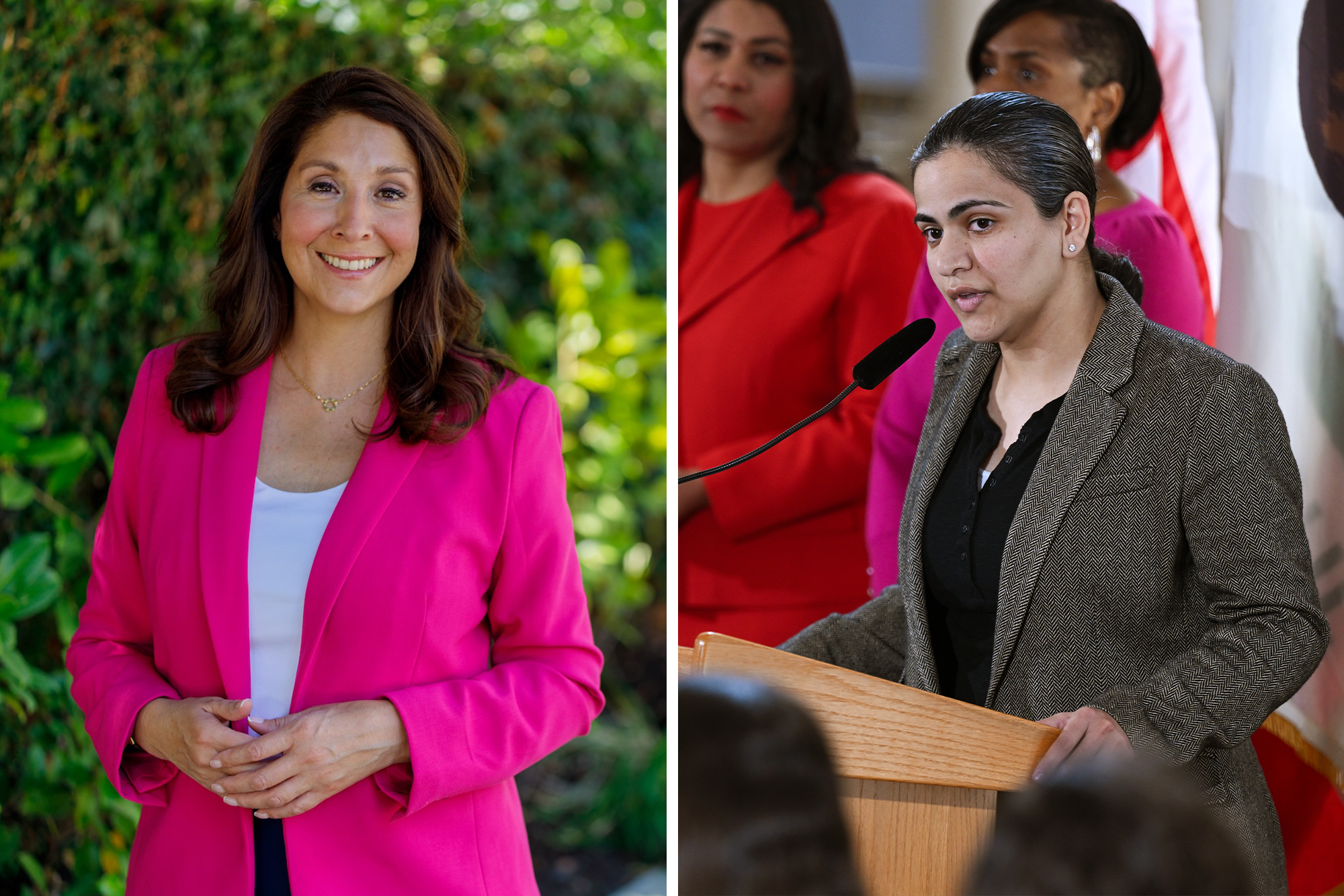
Wahab Leads Hernandez in Contentious East Bay Special Election for Congress
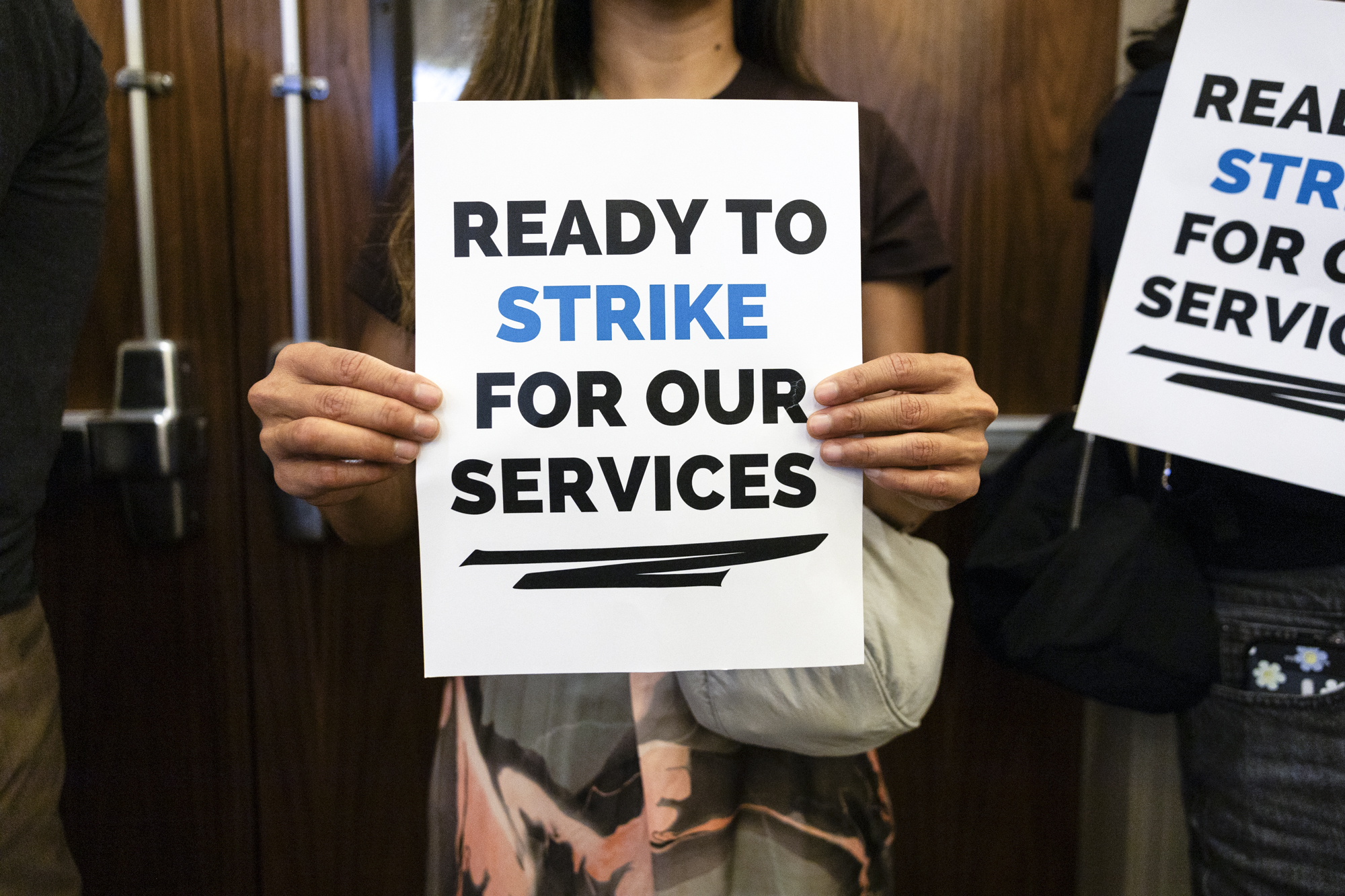
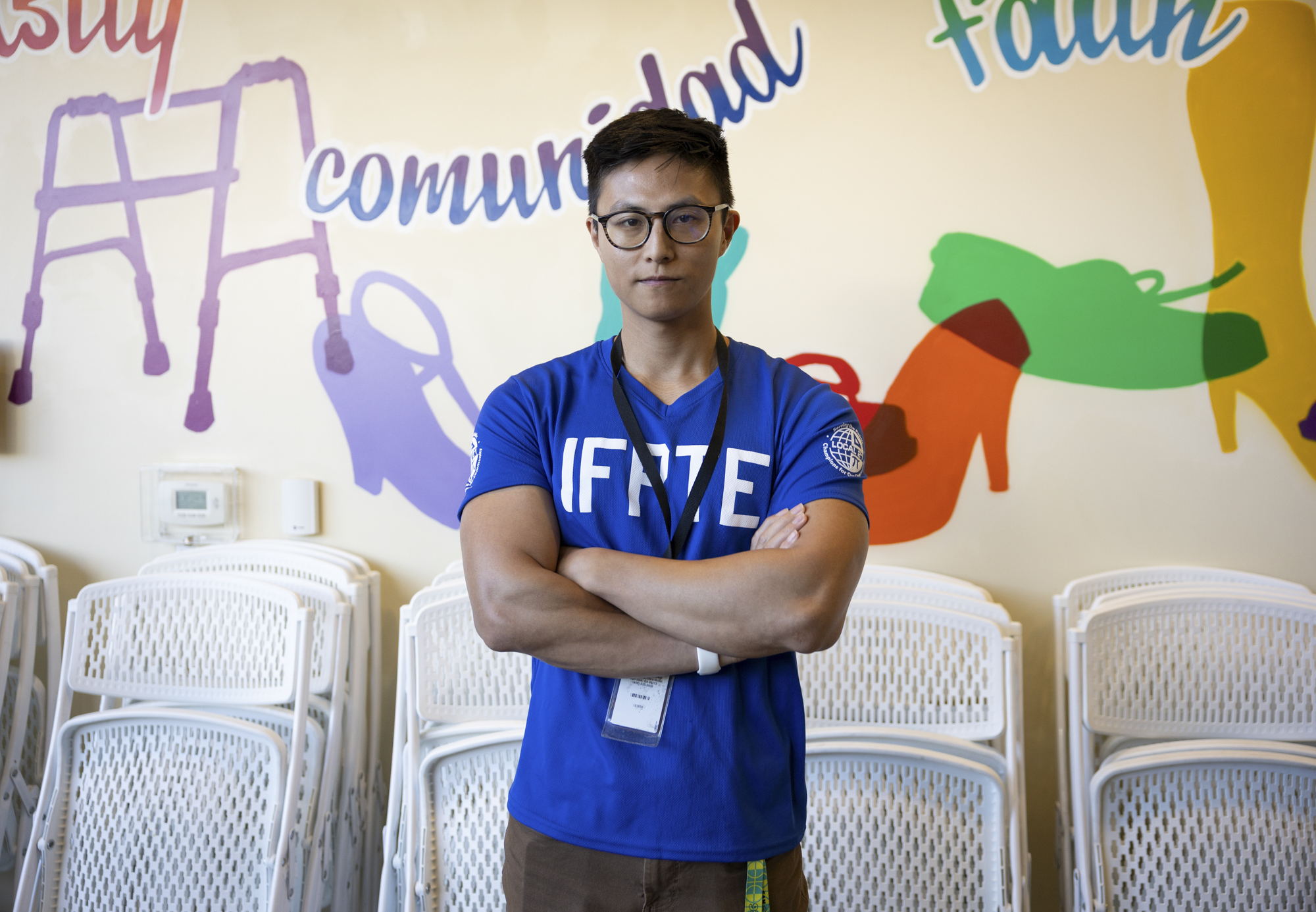
Thousands of San José City Workers Are Ready to Strike for Up to 3 Days
San José Strike Vote This Week Could Set Up a Major Work Stoppage
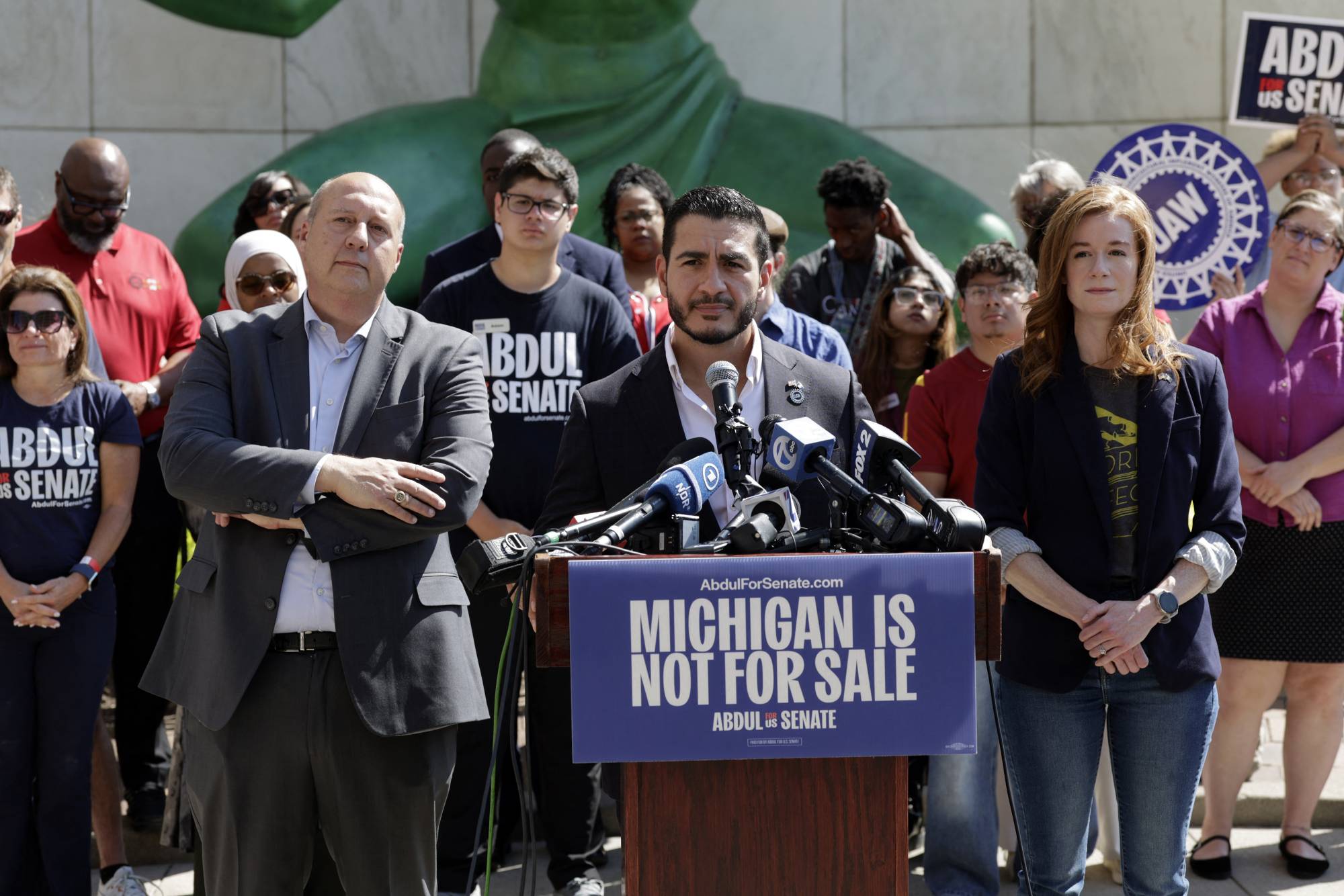
What Abdul El-Sayed’s Michigan Primary Win Means for California Democrats
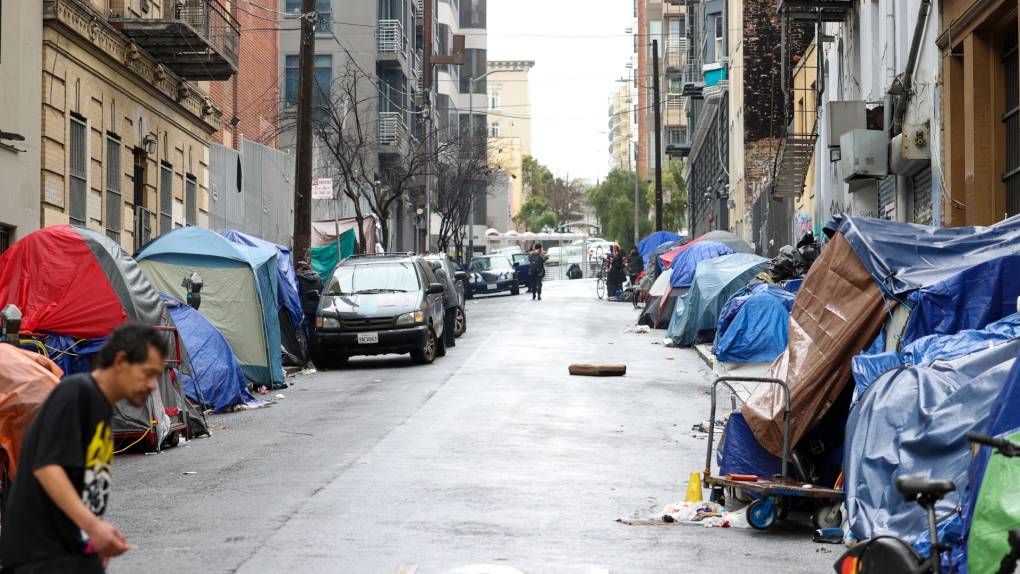
From Cash Checks to Shelter Mandates, The South Bay Is Betting Big on Homelessness Solutions
California Democratic Party Endorses Billionaire Tax, Splitting with Newsom
Inside the Fight for the Future of California’s Climate Dollars
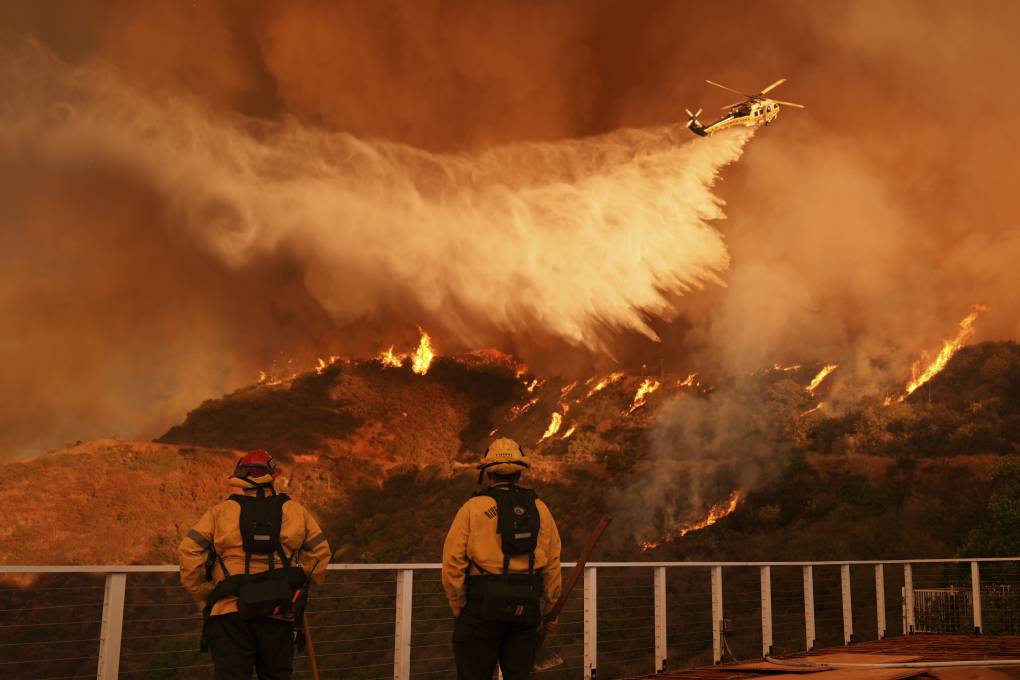
Lawmakers Return to Sacramento to Tackle Wildfire Costs, Climate Funding, AI Data Centers
The Backlash to Newsom’s Return-to-Office Mandate and HHS Withholds Medicaid Payments to California
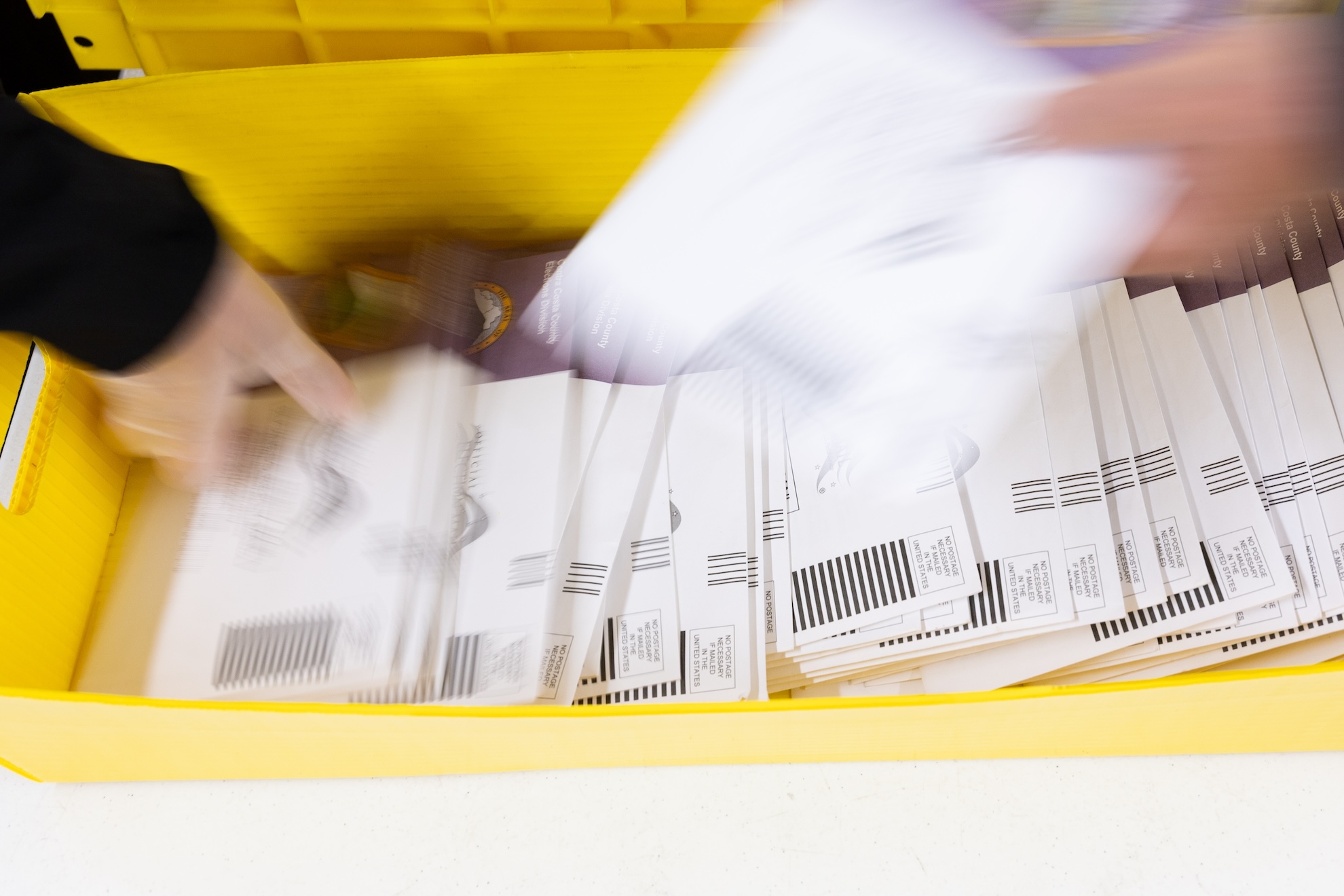
California Rejected 150,000 Mail Ballots, Marking Highest Rate Since 2014
The Roadblocks on Democrats’ Path to Retaking the House in 2026
Trump Targets California's Elections in Primetime Address
Player sponsored by
window.__IS_SSR__=true
window.__INITIAL_STATE__={
"attachmentsReducer": {
"audio_0": {
"type": "attachments",
"id": "audio_0",
"imgSizes": {
"kqedFullSize": {
"file": "https://ww2.kqed.org/news/wp-content/themes/KQED-unified/img/audio_bgs/background0.jpg"
}
}
},
"audio_1": {
"type": "attachments",
"id": "audio_1",
"imgSizes": {
"kqedFullSize": {
"file": "https://ww2.kqed.org/news/wp-content/themes/KQED-unified/img/audio_bgs/background1.jpg"
}
}
},
"audio_2": {
"type": "attachments",
"id": "audio_2",
"imgSizes": {
"kqedFullSize": {
"file": "https://ww2.kqed.org/news/wp-content/themes/KQED-unified/img/audio_bgs/background2.jpg"
}
}
},
"audio_3": {
"type": "attachments",
"id": "audio_3",
"imgSizes": {
"kqedFullSize": {
"file": "https://ww2.kqed.org/news/wp-content/themes/KQED-unified/img/audio_bgs/background3.jpg"
}
}
},
"audio_4": {
"type": "attachments",
"id": "audio_4",
"imgSizes": {
"kqedFullSize": {
"file": "https://ww2.kqed.org/news/wp-content/themes/KQED-unified/img/audio_bgs/background4.jpg"
}
}
},
"placeholder": {
"type": "attachments",
"id": "placeholder",
"imgSizes": {
"thumbnail": {
"file": "https://cdn.kqed.org/wp-content/uploads/2024/12/KQED-Default-Image-816638274-2000x1333-1-160x107.jpg",
"width": 160,
"height": 107,
"mimeType": "image/jpeg"
},
"medium": {
"file": "https://cdn.kqed.org/wp-content/uploads/2024/12/KQED-Default-Image-816638274-2000x1333-1-800x533.jpg",
"width": 800,
"height": 533,
"mimeType": "image/jpeg"
},
"medium_large": {
"file": "https://cdn.kqed.org/wp-content/uploads/2024/12/KQED-Default-Image-816638274-2000x1333-1-768x512.jpg",
"width": 768,
"height": 512,
"mimeType": "image/jpeg"
},
"large": {
"file": "https://cdn.kqed.org/wp-content/uploads/2024/12/KQED-Default-Image-816638274-2000x1333-1-1020x680.jpg",
"width": 1020,
"height": 680,
"mimeType": "image/jpeg"
},
"1536x1536": {
"file": "https://cdn.kqed.org/wp-content/uploads/2024/12/KQED-Default-Image-816638274-2000x1333-1-1536x1024.jpg",
"width": 1536,
"height": 1024,
"mimeType": "image/jpeg"
},
"fd-lrg": {
"file": "https://cdn.kqed.org/wp-content/uploads/2024/12/KQED-Default-Image-816638274-2000x1333-1-1536x1024.jpg",
"width": 1536,
"height": 1024,
"mimeType": "image/jpeg"
},
"fd-med": {
"file": "https://cdn.kqed.org/wp-content/uploads/2024/12/KQED-Default-Image-816638274-2000x1333-1-1020x680.jpg",
"width": 1020,
"height": 680,
"mimeType": "image/jpeg"
},
"fd-sm": {
"file": "https://cdn.kqed.org/wp-content/uploads/2024/12/KQED-Default-Image-816638274-2000x1333-1-800x533.jpg",
"width": 800,
"height": 533,
"mimeType": "image/jpeg"
},
"post-thumbnail": {
"file": "https://cdn.kqed.org/wp-content/uploads/2024/12/KQED-Default-Image-816638274-2000x1333-1-672x372.jpg",
"width": 672,
"height": 372,
"mimeType": "image/jpeg"
},
"twentyfourteen-full-width": {
"file": "https://cdn.kqed.org/wp-content/uploads/2024/12/KQED-Default-Image-816638274-2000x1333-1-1038x576.jpg",
"width": 1038,
"height": 576,
"mimeType": "image/jpeg"
},
"xxsmall": {
"file": "https://cdn.kqed.org/wp-content/uploads/2024/12/KQED-Default-Image-816638274-2000x1333-1-160x107.jpg",
"width": 160,
"height": 107,
"mimeType": "image/jpeg"
},
"xsmall": {
"file": "https://cdn.kqed.org/wp-content/uploads/2024/12/KQED-Default-Image-816638274-2000x1333-1-672x372.jpg",
"width": 672,
"height": 372,
"mimeType": "image/jpeg"
},
"small": {
"file": "https://cdn.kqed.org/wp-content/uploads/2024/12/KQED-Default-Image-816638274-2000x1333-1-672x372.jpg",
"width": 672,
"height": 372,
"mimeType": "image/jpeg"
},
"xlarge": {
"file": "https://cdn.kqed.org/wp-content/uploads/2024/12/KQED-Default-Image-816638274-2000x1333-1-1020x680.jpg",
"width": 1020,
"height": 680,
"mimeType": "image/jpeg"
},
"full-width": {
"file": "https://cdn.kqed.org/wp-content/uploads/2024/12/KQED-Default-Image-816638274-2000x1333-1-1920x1280.jpg",
"width": 1920,
"height": 1280,
"mimeType": "image/jpeg"
},
"guest-author-32": {
"file": "https://cdn.kqed.org/wp-content/uploads/2025/01/KQED-Default-Image-816638274-1333x1333-1-160x160.jpg",
"width": 32,
"height": 32,
"mimeType": "image/jpeg"
},
"guest-author-50": {
"file": "https://cdn.kqed.org/wp-content/uploads/2025/01/KQED-Default-Image-816638274-1333x1333-1-160x160.jpg",
"width": 50,
"height": 50,
"mimeType": "image/jpeg"
},
"guest-author-64": {
"file": "https://cdn.kqed.org/wp-content/uploads/2025/01/KQED-Default-Image-816638274-1333x1333-1-160x160.jpg",
"width": 64,
"height": 64,
"mimeType": "image/jpeg"
},
"guest-author-96": {
"file": "https://cdn.kqed.org/wp-content/uploads/2025/01/KQED-Default-Image-816638274-1333x1333-1-160x160.jpg",
"width": 96,
"height": 96,
"mimeType": "image/jpeg"
},
"guest-author-128": {
"file": "https://cdn.kqed.org/wp-content/uploads/2025/01/KQED-Default-Image-816638274-1333x1333-1-160x160.jpg",
"width": 128,
"height": 128,
"mimeType": "image/jpeg"
},
"detail": {
"file": "https://cdn.kqed.org/wp-content/uploads/2025/01/KQED-Default-Image-816638274-1333x1333-1-160x160.jpg",
"width": 160,
"height": 160,
"mimeType": "image/jpeg"
},
"kqedFullSize": {
"file": "https://cdn.kqed.org/wp-content/uploads/2024/12/KQED-Default-Image-816638274-2000x1333-1.jpg",
"width": 2000,
"height": 1333
}
}
},
"news_12095869": {
"type": "attachments",
"id": "news_12095869",
"meta": {
"index": "attachments_1716263798",
"site": "news",
"id": "12095869",
"found": true
},
"title": "260818-Hernandez Wahab-MD-01-KQED",
"publishDate": 1787093425,
"status": "inherit",
"parent": 0,
"modified": 1787100521,
"caption": "BART board director Melissa Hernandez (left) and state Sen. Aisha Wahab (right) are facing off in a special election to fill the House seat vacated by Eric Swalwell.",
"credit": "Courtesy of Melissa Hernandez; Tayfun Coskun/Anadolu Agency via Getty Images",
"altTag": null,
"description": null,
"imgSizes": {
"thumbnail": {
"file": "https://cdn.kqed.org/wp-content/uploads/sites/10/2026/08/260818-Hernandez-Wahab-MD-01-KQED-160x107.jpg",
"width": 160,
"height": 107,
"mimeType": "image/jpeg"
},
"1536x1536": {
"file": "https://cdn.kqed.org/wp-content/uploads/sites/10/2026/08/260818-Hernandez-Wahab-MD-01-KQED-1536x1025.jpg",
"width": 1536,
"height": 1025,
"mimeType": "image/jpeg"
},
"post-thumbnail": {
"file": "https://cdn.kqed.org/wp-content/uploads/sites/10/2026/08/260818-Hernandez-Wahab-MD-01-KQED-672x372.jpg",
"width": 672,
"height": 372,
"mimeType": "image/jpeg"
},
"twentyfourteen-full-width": {
"file": "https://cdn.kqed.org/wp-content/uploads/sites/10/2026/08/260818-Hernandez-Wahab-MD-01-KQED-1038x576.jpg",
"width": 1038,
"height": 576,
"mimeType": "image/jpeg"
},
"npr-cds-wide": {
"file": "https://cdn.kqed.org/wp-content/uploads/sites/10/2026/08/260818-Hernandez-Wahab-MD-01-KQED-1200x675.jpg",
"width": 1200,
"height": 675,
"mimeType": "image/jpeg"
},
"npr-cds-square": {
"file": "https://cdn.kqed.org/wp-content/uploads/sites/10/2026/08/260818-Hernandez-Wahab-MD-01-KQED-600x600.jpg",
"width": 600,
"height": 600,
"mimeType": "image/jpeg"
},
"kqedFullSize": {
"file": "https://cdn.kqed.org/wp-content/uploads/sites/10/2026/08/260818-Hernandez-Wahab-MD-01-KQED.jpg",
"width": 2000,
"height": 1334
}
},
"isLoading": false,
"fetchFailed": false
},
"news_12093645": {
"type": "attachments",
"id": "news_12093645",
"meta": {
"index": "attachments_1716263798",
"site": "news",
"id": "12093645",
"found": true
},
"title": "20260729_SJCITYWORKERS_GC-8-KQED",
"publishDate": 1785777203,
"status": "inherit",
"parent": 0,
"modified": 1785777226,
"caption": "A San Jose City employee holds a sign reading “ready to strike for our services” at Strike School in San Jose on July 29, 2026.",
"credit": "Gina Castro for KQED",
"altTag": null,
"description": null,
"imgSizes": {
"thumbnail": {
"file": "https://cdn.kqed.org/wp-content/uploads/sites/10/2026/08/20260729_SJCITYWORKERS_GC-8-KQED-160x107.jpg",
"width": 160,
"height": 107,
"mimeType": "image/jpeg"
},
"1536x1536": {
"file": "https://cdn.kqed.org/wp-content/uploads/sites/10/2026/08/20260729_SJCITYWORKERS_GC-8-KQED-1536x1024.jpg",
"width": 1536,
"height": 1024,
"mimeType": "image/jpeg"
},
"post-thumbnail": {
"file": "https://cdn.kqed.org/wp-content/uploads/sites/10/2026/08/20260729_SJCITYWORKERS_GC-8-KQED-672x372.jpg",
"width": 672,
"height": 372,
"mimeType": "image/jpeg"
},
"twentyfourteen-full-width": {
"file": "https://cdn.kqed.org/wp-content/uploads/sites/10/2026/08/20260729_SJCITYWORKERS_GC-8-KQED-1038x576.jpg",
"width": 1038,
"height": 576,
"mimeType": "image/jpeg"
},
"npr-cds-wide": {
"file": "https://cdn.kqed.org/wp-content/uploads/sites/10/2026/08/20260729_SJCITYWORKERS_GC-8-KQED-1200x675.jpg",
"width": 1200,
"height": 675,
"mimeType": "image/jpeg"
},
"npr-cds-square": {
"file": "https://cdn.kqed.org/wp-content/uploads/sites/10/2026/08/20260729_SJCITYWORKERS_GC-8-KQED-600x600.jpg",
"width": 600,
"height": 600,
"mimeType": "image/jpeg"
},
"kqedFullSize": {
"file": "https://cdn.kqed.org/wp-content/uploads/sites/10/2026/08/20260729_SJCITYWORKERS_GC-8-KQED.jpg",
"width": 2000,
"height": 1333
}
},
"isLoading": false,
"fetchFailed": false
},
"news_12093641": {
"type": "attachments",
"id": "news_12093641",
"meta": {
"index": "attachments_1716263798",
"site": "news",
"id": "12093641",
"found": true
},
"title": "20260729_SJCITYWORKERS_GC-4-KQED",
"publishDate": 1785777182,
"status": "inherit",
"parent": 0,
"modified": 1786147469,
"caption": "Kyle Wong, associate transportation specialist for the Department of Transportation, poses for a photo in San José on July 29, 2026.",
"credit": "Gina Castro for KQED",
"altTag": null,
"description": null,
"imgSizes": {
"thumbnail": {
"file": "https://cdn.kqed.org/wp-content/uploads/sites/10/2026/08/20260729_SJCITYWORKERS_GC-4-KQED-160x111.jpg",
"width": 160,
"height": 111,
"mimeType": "image/jpeg"
},
"1536x1536": {
"file": "https://cdn.kqed.org/wp-content/uploads/sites/10/2026/08/20260729_SJCITYWORKERS_GC-4-KQED-1536x1064.jpg",
"width": 1536,
"height": 1064,
"mimeType": "image/jpeg"
},
"post-thumbnail": {
"file": "https://cdn.kqed.org/wp-content/uploads/sites/10/2026/08/20260729_SJCITYWORKERS_GC-4-KQED-672x372.jpg",
"width": 672,
"height": 372,
"mimeType": "image/jpeg"
},
"twentyfourteen-full-width": {
"file": "https://cdn.kqed.org/wp-content/uploads/sites/10/2026/08/20260729_SJCITYWORKERS_GC-4-KQED-1038x576.jpg",
"width": 1038,
"height": 576,
"mimeType": "image/jpeg"
},
"npr-cds-wide": {
"file": "https://cdn.kqed.org/wp-content/uploads/sites/10/2026/08/20260729_SJCITYWORKERS_GC-4-KQED-1200x675.jpg",
"width": 1200,
"height": 675,
"mimeType": "image/jpeg"
},
"npr-cds-square": {
"file": "https://cdn.kqed.org/wp-content/uploads/sites/10/2026/08/20260729_SJCITYWORKERS_GC-4-KQED-600x600.jpg",
"width": 600,
"height": 600,
"mimeType": "image/jpeg"
},
"kqedFullSize": {
"file": "https://cdn.kqed.org/wp-content/uploads/sites/10/2026/08/20260729_SJCITYWORKERS_GC-4-KQED.jpg",
"width": 2000,
"height": 1386
}
},
"isLoading": false,
"fetchFailed": false
},
"news_12094275": {
"type": "attachments",
"id": "news_12094275",
"meta": {
"index": "attachments_1716263798",
"site": "news",
"id": "12094275",
"found": true
},
"title": "US-POLITICS-SENATE",
"publishDate": 1786085659,
"status": "inherit",
"parent": 12094274,
"modified": 1786579142,
"caption": "U.S. Democratic Senate candidate from Michigan, Abdul El-Sayed, called for Democratic unity Wednesday after narrowly defeating the party establishment's candidate in Michigan and claiming the nomination for one of November's most important US Senate races. ",
"credit": "Jeff Kowalsky / AFP via Getty Images",
"altTag": null,
"description": null,
"imgSizes": {
"medium": {
"file": "https://cdn.kqed.org/wp-content/uploads/sites/10/2026/08/GettyImages-2288364439-2000x1334.jpg",
"width": 2000,
"height": 1334,
"mimeType": "image/jpeg"
},
"large": {
"file": "https://cdn.kqed.org/wp-content/uploads/sites/10/2026/08/GettyImages-2288364439-2000x1334.jpg",
"width": 2000,
"height": 1334,
"mimeType": "image/jpeg"
},
"thumbnail": {
"file": "https://cdn.kqed.org/wp-content/uploads/sites/10/2026/08/GettyImages-2288364439-160x107.jpg",
"width": 160,
"height": 107,
"mimeType": "image/jpeg"
},
"1536x1536": {
"file": "https://cdn.kqed.org/wp-content/uploads/sites/10/2026/08/GettyImages-2288364439-1536x1024.jpg",
"width": 1536,
"height": 1024,
"mimeType": "image/jpeg"
},
"2048x2048": {
"file": "https://cdn.kqed.org/wp-content/uploads/sites/10/2026/08/GettyImages-2288364439-2048x1366.jpg",
"width": 2048,
"height": 1366,
"mimeType": "image/jpeg"
},
"post-thumbnail": {
"file": "https://cdn.kqed.org/wp-content/uploads/sites/10/2026/08/GettyImages-2288364439-672x372.jpg",
"width": 672,
"height": 372,
"mimeType": "image/jpeg"
},
"twentyfourteen-full-width": {
"file": "https://cdn.kqed.org/wp-content/uploads/sites/10/2026/08/GettyImages-2288364439-1038x576.jpg",
"width": 1038,
"height": 576,
"mimeType": "image/jpeg"
},
"full-width": {
"file": "https://cdn.kqed.org/wp-content/uploads/sites/10/2026/08/GettyImages-2288364439-2000x1334.jpg",
"width": 2000,
"height": 1334,
"mimeType": "image/jpeg"
},
"npr-cds-wide": {
"file": "https://cdn.kqed.org/wp-content/uploads/sites/10/2026/08/GettyImages-2288364439-1200x675.jpg",
"width": 1200,
"height": 675,
"mimeType": "image/jpeg"
},
"npr-cds-square": {
"file": "https://cdn.kqed.org/wp-content/uploads/sites/10/2026/08/GettyImages-2288364439-600x600.jpg",
"width": 600,
"height": 600,
"mimeType": "image/jpeg"
},
"kqedFullSize": {
"file": "https://cdn.kqed.org/wp-content/uploads/sites/10/2026/08/GettyImages-2288364439-scaled.jpg",
"width": 2560,
"height": 1707
}
},
"isLoading": false,
"fetchFailed": false
},
"forum_2010101905888": {
"type": "attachments",
"id": "forum_2010101905888",
"meta": {
"index": "attachments_1716263798",
"site": "forum",
"id": "2010101905888",
"found": true
},
"title": "GettyImages-1246212552 (1)",
"publishDate": 1716927503,
"status": "inherit",
"parent": 2010101905886,
"modified": 1716927561,
"caption": "Homeless tents and homeless people are seen by the Polk Street near the City Hall during rainy day in San Francisco.",
"credit": "Anadolu via Getty Images",
"altTag": null,
"description": null,
"imgSizes": {
"medium": {
"file": "https://cdn.kqed.org/wp-content/uploads/sites/43/2024/05/GettyImages-1246212552-1-1-800x450.jpg",
"width": 800,
"height": 450,
"mimeType": "image/jpeg"
},
"large": {
"file": "https://cdn.kqed.org/wp-content/uploads/sites/43/2024/05/GettyImages-1246212552-1-1-1020x574.jpg",
"width": 1020,
"height": 574,
"mimeType": "image/jpeg"
},
"thumbnail": {
"file": "https://cdn.kqed.org/wp-content/uploads/sites/43/2024/05/GettyImages-1246212552-1-1-160x90.jpg",
"width": 160,
"height": 90,
"mimeType": "image/jpeg"
},
"medium_large": {
"file": "https://cdn.kqed.org/wp-content/uploads/sites/43/2024/05/GettyImages-1246212552-1-1-768x432.jpg",
"width": 768,
"height": 432,
"mimeType": "image/jpeg"
},
"1536x1536": {
"file": "https://cdn.kqed.org/wp-content/uploads/sites/43/2024/05/GettyImages-1246212552-1-1-1536x864.jpg",
"width": 1536,
"height": 864,
"mimeType": "image/jpeg"
},
"post-thumbnail": {
"file": "https://cdn.kqed.org/wp-content/uploads/sites/43/2024/05/GettyImages-1246212552-1-1-672x372.jpg",
"width": 672,
"height": 372,
"mimeType": "image/jpeg"
},
"twentyfourteen-full-width": {
"file": "https://cdn.kqed.org/wp-content/uploads/sites/43/2024/05/GettyImages-1246212552-1-1-1038x576.jpg",
"width": 1038,
"height": 576,
"mimeType": "image/jpeg"
},
"kqedFullSize": {
"file": "https://cdn.kqed.org/wp-content/uploads/sites/43/2024/05/GettyImages-1246212552-1-1.jpg",
"width": 1920,
"height": 1080
}
},
"isLoading": false,
"fetchFailed": false
},
"news_12093728": {
"type": "attachments",
"id": "news_12093728",
"meta": {
"index": "attachments_1716263798",
"site": "news",
"id": "12093728",
"found": true
},
"title": "US-POLITICS-BILLIONAIRE-TAXATION",
"publishDate": 1785793384,
"status": "inherit",
"parent": 12093726,
"modified": 1785801077,
"caption": "A T-shirt with a campaign message is seen before the start of a rally led by U.S. Sen. Bernie Sanders, an Independent from Vermont, during the campaign kickoff for the California Billionaire Tax Act at The Wiltern in Los Angeles, on Feb. 18, 2026. Sanders is seeking the support of California voters for a November ballot initiative of an emergency tax on billionaires to help the state's healthcare system.",
"credit": "Patrick T. Fallon/AFP via Getty Images",
"altTag": null,
"description": null,
"imgSizes": {
"thumbnail": {
"file": "https://cdn.kqed.org/wp-content/uploads/sites/10/2026/08/CaliforniaBillionairesTaxGetty-160x107.jpg",
"width": 160,
"height": 107,
"mimeType": "image/jpeg"
},
"1536x1536": {
"file": "https://cdn.kqed.org/wp-content/uploads/sites/10/2026/08/CaliforniaBillionairesTaxGetty-1536x1024.jpg",
"width": 1536,
"height": 1024,
"mimeType": "image/jpeg"
},
"post-thumbnail": {
"file": "https://cdn.kqed.org/wp-content/uploads/sites/10/2026/08/CaliforniaBillionairesTaxGetty-672x372.jpg",
"width": 672,
"height": 372,
"mimeType": "image/jpeg"
},
"twentyfourteen-full-width": {
"file": "https://cdn.kqed.org/wp-content/uploads/sites/10/2026/08/CaliforniaBillionairesTaxGetty-1038x576.jpg",
"width": 1038,
"height": 576,
"mimeType": "image/jpeg"
},
"npr-cds-wide": {
"file": "https://cdn.kqed.org/wp-content/uploads/sites/10/2026/08/CaliforniaBillionairesTaxGetty-1200x675.jpg",
"width": 1200,
"height": 675,
"mimeType": "image/jpeg"
},
"npr-cds-square": {
"file": "https://cdn.kqed.org/wp-content/uploads/sites/10/2026/08/CaliforniaBillionairesTaxGetty-600x600.jpg",
"width": 600,
"height": 600,
"mimeType": "image/jpeg"
},
"kqedFullSize": {
"file": "https://cdn.kqed.org/wp-content/uploads/sites/10/2026/08/CaliforniaBillionairesTaxGetty.jpg",
"width": 2000,
"height": 1333
}
},
"isLoading": false,
"fetchFailed": false
},
"news_12091848": {
"type": "attachments",
"id": "news_12091848",
"meta": {
"index": "attachments_1716263798",
"site": "news",
"id": "12091848",
"found": true
},
"title": "20260716_ClimateSolutionsCapTrade_GC-6-KQED",
"publishDate": 1784567951,
"status": "inherit",
"parent": 0,
"modified": 1784568035,
"caption": "The construction site of RISE, an affordable housing development, across the street from the Berryessa/North San Jose BART Station, in San Jose on July 16, 2026. The 10-story building will have 195 units.",
"credit": "Gina Castro for KQED",
"altTag": null,
"description": null,
"imgSizes": {
"thumbnail": {
"file": "https://cdn.kqed.org/wp-content/uploads/sites/10/2026/07/20260716_ClimateSolutionsCapTrade_GC-6-KQED-160x107.jpg",
"width": 160,
"height": 107,
"mimeType": "image/jpeg"
},
"1536x1536": {
"file": "https://cdn.kqed.org/wp-content/uploads/sites/10/2026/07/20260716_ClimateSolutionsCapTrade_GC-6-KQED-1536x1024.jpg",
"width": 1536,
"height": 1024,
"mimeType": "image/jpeg"
},
"post-thumbnail": {
"file": "https://cdn.kqed.org/wp-content/uploads/sites/10/2026/07/20260716_ClimateSolutionsCapTrade_GC-6-KQED-672x372.jpg",
"width": 672,
"height": 372,
"mimeType": "image/jpeg"
},
"twentyfourteen-full-width": {
"file": "https://cdn.kqed.org/wp-content/uploads/sites/10/2026/07/20260716_ClimateSolutionsCapTrade_GC-6-KQED-1038x576.jpg",
"width": 1038,
"height": 576,
"mimeType": "image/jpeg"
},
"npr-cds-wide": {
"file": "https://cdn.kqed.org/wp-content/uploads/sites/10/2026/07/20260716_ClimateSolutionsCapTrade_GC-6-KQED-1200x675.jpg",
"width": 1200,
"height": 675,
"mimeType": "image/jpeg"
},
"npr-cds-square": {
"file": "https://cdn.kqed.org/wp-content/uploads/sites/10/2026/07/20260716_ClimateSolutionsCapTrade_GC-6-KQED-600x600.jpg",
"width": 600,
"height": 600,
"mimeType": "image/jpeg"
},
"kqedFullSize": {
"file": "https://cdn.kqed.org/wp-content/uploads/sites/10/2026/07/20260716_ClimateSolutionsCapTrade_GC-6-KQED.jpg",
"width": 2000,
"height": 1333
}
},
"isLoading": false,
"fetchFailed": false
},
"news_12021697": {
"type": "attachments",
"id": "news_12021697",
"meta": {
"index": "attachments_1716263798",
"site": "news",
"id": "12021697",
"found": true
},
"title": "APTOPIX California Wildfires",
"publishDate": 1736626993,
"status": "inherit",
"parent": 12021693,
"modified": 1736627046,
"caption": "Firefighters watch as water is dropped on the Palisades Fire in Mandeville Canyon Saturday, Jan. 11, 2025, in Los Angeles. ",
"credit": "Jae C. Hong/AP Photo",
"altTag": "Plane drops water as firefighters look on with smoke and flames below.",
"description": null,
"imgSizes": {
"medium": {
"file": "https://cdn.kqed.org/wp-content/uploads/sites/10/2025/01/AP25011593194481-800x533.jpg",
"width": 800,
"height": 533,
"mimeType": "image/jpeg"
},
"large": {
"file": "https://cdn.kqed.org/wp-content/uploads/sites/10/2025/01/AP25011593194481-1020x680.jpg",
"width": 1020,
"height": 680,
"mimeType": "image/jpeg"
},
"thumbnail": {
"file": "https://cdn.kqed.org/wp-content/uploads/sites/10/2025/01/AP25011593194481-160x107.jpg",
"width": 160,
"height": 107,
"mimeType": "image/jpeg"
},
"1536x1536": {
"file": "https://cdn.kqed.org/wp-content/uploads/sites/10/2025/01/AP25011593194481-1536x1024.jpg",
"width": 1536,
"height": 1024,
"mimeType": "image/jpeg"
},
"2048x2048": {
"file": "https://cdn.kqed.org/wp-content/uploads/sites/10/2025/01/AP25011593194481-2048x1365.jpg",
"width": 2048,
"height": 1365,
"mimeType": "image/jpeg"
},
"post-thumbnail": {
"file": "https://cdn.kqed.org/wp-content/uploads/sites/10/2025/01/AP25011593194481-672x372.jpg",
"width": 672,
"height": 372,
"mimeType": "image/jpeg"
},
"twentyfourteen-full-width": {
"file": "https://cdn.kqed.org/wp-content/uploads/sites/10/2025/01/AP25011593194481-1038x576.jpg",
"width": 1038,
"height": 576,
"mimeType": "image/jpeg"
},
"full-width": {
"file": "https://cdn.kqed.org/wp-content/uploads/sites/10/2025/01/AP25011593194481-1920x1280.jpg",
"width": 1920,
"height": 1280,
"mimeType": "image/jpeg"
},
"kqedFullSize": {
"file": "https://cdn.kqed.org/wp-content/uploads/sites/10/2025/01/AP25011593194481-scaled.jpg",
"width": 2560,
"height": 1706
}
},
"isLoading": false,
"fetchFailed": false
},
"news_11900732": {
"type": "attachments",
"id": "news_11900732",
"meta": {
"index": "attachments_1716263798",
"site": "news",
"id": "11900732",
"found": true
},
"parent": 11900724,
"imgSizes": {
"twentyfourteen-full-width": {
"file": "https://ww2.kqed.org/app/uploads/sites/10/2022/01/GettyImages-2576287-1024x576.jpg",
"width": 1024,
"mimeType": "image/jpeg",
"height": 576
},
"thumbnail": {
"file": "https://ww2.kqed.org/app/uploads/sites/10/2022/01/GettyImages-2576287-160x104.jpg",
"width": 160,
"mimeType": "image/jpeg",
"height": 104
},
"post-thumbnail": {
"file": "https://ww2.kqed.org/app/uploads/sites/10/2022/01/GettyImages-2576287-672x372.jpg",
"width": 672,
"mimeType": "image/jpeg",
"height": 372
},
"kqedFullSize": {
"file": "https://ww2.kqed.org/app/uploads/sites/10/2022/01/GettyImages-2576287.jpg",
"width": 1024,
"height": 667
},
"large": {
"file": "https://ww2.kqed.org/app/uploads/sites/10/2022/01/GettyImages-2576287-1020x664.jpg",
"width": 1020,
"mimeType": "image/jpeg",
"height": 664
},
"medium": {
"file": "https://ww2.kqed.org/app/uploads/sites/10/2022/01/GettyImages-2576287-800x521.jpg",
"width": 800,
"mimeType": "image/jpeg",
"height": 521
}
},
"publishDate": 1641332605,
"modified": 1653660793,
"caption": null,
"description": "The California state Capitol building.",
"title": "Davis Addresses Cabinet Members After Recall Defeat",
"credit": "David Paul Morris/Getty Images",
"status": "inherit",
"altTag": "A large white building seen from a distance with trees and people around the outside.",
"isLoading": false,
"fetchFailed": false
},
"news_12085438": {
"type": "attachments",
"id": "news_12085438",
"meta": {
"index": "attachments_1716263798",
"site": "news",
"id": "12085438",
"found": true
},
"title": "Mail-In Ballots Are Processed In Contra Costa County Before California Primary",
"publishDate": 1780009591,
"status": "inherit",
"parent": 12084978,
"modified": 1784935376,
"caption": "Election workers sort ballots at Contra Costa County's election operations facility on May 27, 2026, in Martinez, California. ",
"credit": "Benjamin Fanjoy/Getty Images",
"altTag": null,
"description": "Election workers sort ballots at Contra Costa County's election operations facility on May 27, 2026 in Martinez, California. June 2 is the last day to vote in-person or return a ballot ahead of California's statewide primary election. ",
"imgSizes": {
"thumbnail": {
"file": "https://cdn.kqed.org/wp-content/uploads/sites/10/2026/05/GettyImages-2277856381-160x107.jpg",
"width": 160,
"height": 107,
"mimeType": "image/jpeg"
},
"1536x1536": {
"file": "https://cdn.kqed.org/wp-content/uploads/sites/10/2026/05/GettyImages-2277856381-1536x1024.jpg",
"width": 1536,
"height": 1024,
"mimeType": "image/jpeg"
},
"post-thumbnail": {
"file": "https://cdn.kqed.org/wp-content/uploads/sites/10/2026/05/GettyImages-2277856381-672x372.jpg",
"width": 672,
"height": 372,
"mimeType": "image/jpeg"
},
"twentyfourteen-full-width": {
"file": "https://cdn.kqed.org/wp-content/uploads/sites/10/2026/05/GettyImages-2277856381-1038x576.jpg",
"width": 1038,
"height": 576,
"mimeType": "image/jpeg"
},
"npr-cds-wide": {
"file": "https://cdn.kqed.org/wp-content/uploads/sites/10/2026/05/GettyImages-2277856381-1200x675.jpg",
"width": 1200,
"height": 675,
"mimeType": "image/jpeg"
},
"npr-cds-square": {
"file": "https://cdn.kqed.org/wp-content/uploads/sites/10/2026/05/GettyImages-2277856381-600x600.jpg",
"width": 600,
"height": 600,
"mimeType": "image/jpeg"
},
"kqedFullSize": {
"file": "https://cdn.kqed.org/wp-content/uploads/sites/10/2026/05/GettyImages-2277856381.jpg",
"width": 1980,
"height": 1320
}
},
"isLoading": false,
"fetchFailed": false
},
"news_12092432": {
"type": "attachments",
"id": "news_12092432",
"meta": {
"index": "attachments_1716263798",
"site": "news",
"id": "12092432",
"found": true
},
"title": "U.S. Capitol Building Exterior",
"publishDate": 1784844040,
"status": "inherit",
"parent": 12092388,
"modified": 1784844138,
"caption": "Visitors look at the U.S. Capitol Building on July 20, 2026 in Washington, DC. ",
"credit": "Kevin Carter/Getty Images",
"altTag": null,
"description": null,
"imgSizes": {
"medium": {
"file": "https://cdn.kqed.org/wp-content/uploads/sites/10/2026/07/GettyImages-2286377892-2000x1333.jpg",
"width": 2000,
"height": 1333,
"mimeType": "image/jpeg"
},
"large": {
"file": "https://cdn.kqed.org/wp-content/uploads/sites/10/2026/07/GettyImages-2286377892-2000x1333.jpg",
"width": 2000,
"height": 1333,
"mimeType": "image/jpeg"
},
"thumbnail": {
"file": "https://cdn.kqed.org/wp-content/uploads/sites/10/2026/07/GettyImages-2286377892-160x107.jpg",
"width": 160,
"height": 107,
"mimeType": "image/jpeg"
},
"1536x1536": {
"file": "https://cdn.kqed.org/wp-content/uploads/sites/10/2026/07/GettyImages-2286377892-1536x1024.jpg",
"width": 1536,
"height": 1024,
"mimeType": "image/jpeg"
},
"2048x2048": {
"file": "https://cdn.kqed.org/wp-content/uploads/sites/10/2026/07/GettyImages-2286377892-2048x1365.jpg",
"width": 2048,
"height": 1365,
"mimeType": "image/jpeg"
},
"post-thumbnail": {
"file": "https://cdn.kqed.org/wp-content/uploads/sites/10/2026/07/GettyImages-2286377892-672x372.jpg",
"width": 672,
"height": 372,
"mimeType": "image/jpeg"
},
"twentyfourteen-full-width": {
"file": "https://cdn.kqed.org/wp-content/uploads/sites/10/2026/07/GettyImages-2286377892-1038x576.jpg",
"width": 1038,
"height": 576,
"mimeType": "image/jpeg"
},
"full-width": {
"file": "https://cdn.kqed.org/wp-content/uploads/sites/10/2026/07/GettyImages-2286377892-2000x1333.jpg",
"width": 2000,
"height": 1333,
"mimeType": "image/jpeg"
},
"npr-cds-wide": {
"file": "https://cdn.kqed.org/wp-content/uploads/sites/10/2026/07/GettyImages-2286377892-1200x675.jpg",
"width": 1200,
"height": 675,
"mimeType": "image/jpeg"
},
"npr-cds-square": {
"file": "https://cdn.kqed.org/wp-content/uploads/sites/10/2026/07/GettyImages-2286377892-600x600.jpg",
"width": 600,
"height": 600,
"mimeType": "image/jpeg"
},
"kqedFullSize": {
"file": "https://cdn.kqed.org/wp-content/uploads/sites/10/2026/07/GettyImages-2286377892-scaled.jpg",
"width": 2560,
"height": 1707
}
},
"isLoading": false,
"fetchFailed": false
},
"news_12091600": {
"type": "attachments",
"id": "news_12091600",
"meta": {
"index": "attachments_1716263798",
"site": "news",
"id": "12091600",
"found": true
},
"title": "President Trump Addresses The Nation From The East Room Of The White House",
"publishDate": 1784310550,
"status": "inherit",
"parent": 12091597,
"modified": 1784310582,
"caption": "U.S. President Donald Trump addresses the nation from the East Room of the White House on July 16, 2026 in Washington, DC. ",
"credit": "Saul Loeb/Pool - Getty Images",
"altTag": null,
"description": null,
"imgSizes": {
"medium": {
"file": "https://cdn.kqed.org/wp-content/uploads/sites/10/2026/07/GettyImages-2285787606-2000x1333.jpg",
"width": 2000,
"height": 1333,
"mimeType": "image/jpeg"
},
"large": {
"file": "https://cdn.kqed.org/wp-content/uploads/sites/10/2026/07/GettyImages-2285787606-2000x1333.jpg",
"width": 2000,
"height": 1333,
"mimeType": "image/jpeg"
},
"thumbnail": {
"file": "https://cdn.kqed.org/wp-content/uploads/sites/10/2026/07/GettyImages-2285787606-160x107.jpg",
"width": 160,
"height": 107,
"mimeType": "image/jpeg"
},
"1536x1536": {
"file": "https://cdn.kqed.org/wp-content/uploads/sites/10/2026/07/GettyImages-2285787606-1536x1024.jpg",
"width": 1536,
"height": 1024,
"mimeType": "image/jpeg"
},
"2048x2048": {
"file": "https://cdn.kqed.org/wp-content/uploads/sites/10/2026/07/GettyImages-2285787606-2048x1365.jpg",
"width": 2048,
"height": 1365,
"mimeType": "image/jpeg"
},
"post-thumbnail": {
"file": "https://cdn.kqed.org/wp-content/uploads/sites/10/2026/07/GettyImages-2285787606-672x372.jpg",
"width": 672,
"height": 372,
"mimeType": "image/jpeg"
},
"twentyfourteen-full-width": {
"file": "https://cdn.kqed.org/wp-content/uploads/sites/10/2026/07/GettyImages-2285787606-1038x576.jpg",
"width": 1038,
"height": 576,
"mimeType": "image/jpeg"
},
"full-width": {
"file": "https://cdn.kqed.org/wp-content/uploads/sites/10/2026/07/GettyImages-2285787606-2000x1333.jpg",
"width": 2000,
"height": 1333,
"mimeType": "image/jpeg"
},
"npr-cds-wide": {
"file": "https://cdn.kqed.org/wp-content/uploads/sites/10/2026/07/GettyImages-2285787606-1200x675.jpg",
"width": 1200,
"height": 675,
"mimeType": "image/jpeg"
},
"npr-cds-square": {
"file": "https://cdn.kqed.org/wp-content/uploads/sites/10/2026/07/GettyImages-2285787606-600x600.jpg",
"width": 600,
"height": 600,
"mimeType": "image/jpeg"
},
"kqedFullSize": {
"file": "https://cdn.kqed.org/wp-content/uploads/sites/10/2026/07/GettyImages-2285787606-scaled.jpg",
"width": 2560,
"height": 1707
}
},
"isLoading": false,
"fetchFailed": false
}
},
"audioPlayerReducer": {
"postId": "stream_live",
"isPaused": true,
"isPlaying": false,
"pfsActive": false,
"pledgeModalIsOpen": true,
"playerDrawerIsOpen": false,
"liveAudioPlayStartedAt": 0,
"liveAudioPlayContext": ""
},
"authorsReducer": {
"gmarzorati": {
"type": "authors",
"id": "227",
"meta": {
"index": "authors_1716337520",
"id": "227",
"found": true
},
"name": "Guy Marzorati",
"firstName": "Guy",
"lastName": "Marzorati",
"slug": "gmarzorati",
"email": "gmarzorati@KQED.org",
"display_author_email": true,
"staff_mastheads": [
"news"
],
"title": "Correspondent",
"bio": "Guy Marzorati is a correspondent on KQED's California Politics and Government Desk, based in San Jose. A graduate of Santa Clara University, Guy joined KQED in 2013. He reports on state and local politics and produces KQED's digital voter guide.",
"avatar": "https://secure.gravatar.com/avatar/e7038b8dbfd55b104369b76b1cd0b9de?s=600&d=blank&r=g",
"twitter": "guymarzorati",
"facebook": null,
"instagram": null,
"linkedin": null,
"sites": [
{
"site": "",
"roles": [
"editor"
]
},
{
"site": "news",
"roles": [
"editor"
]
},
{
"site": "science",
"roles": [
"editor"
]
},
{
"site": "forum",
"roles": [
"editor"
]
},
{
"site": "elections",
"roles": [
"editor"
]
},
{
"site": "liveblog",
"roles": [
"editor"
]
}
],
"headData": {
"title": "Guy Marzorati | KQED",
"description": "Correspondent",
"ogImgSrc": "https://secure.gravatar.com/avatar/e7038b8dbfd55b104369b76b1cd0b9de?s=600&d=blank&r=g",
"twImgSrc": "https://secure.gravatar.com/avatar/e7038b8dbfd55b104369b76b1cd0b9de?s=600&d=blank&r=g"
},
"isLoading": false,
"link": "/author/gmarzorati"
},
"shossaini": {
"type": "authors",
"id": "3214",
"meta": {
"index": "authors_1716337520",
"id": "3214",
"found": true
},
"name": "Sara Hossaini",
"firstName": "Sara",
"lastName": "Hossaini",
"slug": "shossaini",
"email": "shossaini@kqed.org",
"display_author_email": true,
"staff_mastheads": [
"news"
],
"title": "KQED Reporter",
"bio": "Sara Hossaini came to general assignment reporting at KQED in 2013 after two winters reporting at Wyoming Public Radio. She holds a bachelor's degree in broadcast journalism from the University of Nebraska-Lincoln. Her radio romance began after a bitter breakup with documentary film (Ok, maybe it's still complicated). Her first simultaneous jobs in San Francisco were as Associate Producer on a PBS film series through the Center for Asian American Media and as a butler. She likes to trot, plot and make things with her hands.",
"avatar": "https://secure.gravatar.com/avatar/060e9f56b9554e17942e89f413242774?s=600&d=blank&r=g",
"twitter": "mshossaini",
"facebook": null,
"instagram": null,
"linkedin": null,
"sites": [
{
"site": "news",
"roles": [
"author"
]
},
{
"site": "stateofhealth",
"roles": [
"author"
]
}
],
"headData": {
"title": "Sara Hossaini | KQED",
"description": "KQED Reporter",
"ogImgSrc": "https://secure.gravatar.com/avatar/060e9f56b9554e17942e89f413242774?s=600&d=blank&r=g",
"twImgSrc": "https://secure.gravatar.com/avatar/060e9f56b9554e17942e89f413242774?s=600&d=blank&r=g"
},
"isLoading": false,
"link": "/author/shossaini"
},
"mlagos": {
"type": "authors",
"id": "3239",
"meta": {
"index": "authors_1716337520",
"id": "3239",
"found": true
},
"name": "Marisa Lagos",
"firstName": "Marisa",
"lastName": "Lagos",
"slug": "mlagos",
"email": "mlagos@kqed.org",
"display_author_email": false,
"staff_mastheads": [
"news"
],
"title": "KQED Contributor",
"bio": "Marisa Lagos is a correspondent for KQED’s California Politics and Government Desk and co-hosts the award-winning show and podcast, Political Breakdown. At KQED, Lagos also conducts reporting, analysis and investigations into state, local and national politics for radio, TV, online and onstage. In 2022, she and co-host, Scott Shafer, moderated the only gubernatorial debate in California. In 2020, the \u003ci>Washington Post\u003c/i> named her one of the top political journalists in California; she was nominated for a Peabody and won several other awards for her work investigating the 2017 California wildfires. She has worked at the \u003ci>San Francisco Chronicle\u003c/i>, \u003ci>San Francisco Examiner\u003c/i> and \u003ci>Los Angeles Times\u003c/i>. A UC Santa Barbara graduate, she lives in San Francisco with her two sons and husband.",
"avatar": "https://secure.gravatar.com/avatar/a261a0d3696fc066871ef96b85b5e7d2?s=600&d=blank&r=g",
"twitter": "@mlagos",
"facebook": null,
"instagram": null,
"linkedin": null,
"sites": [
{
"site": "arts",
"roles": [
"author"
]
},
{
"site": "news",
"roles": [
"editor"
]
},
{
"site": "science",
"roles": [
"editor"
]
},
{
"site": "forum",
"roles": [
"author"
]
},
{
"site": "liveblog",
"roles": [
"author"
]
}
],
"headData": {
"title": "Marisa Lagos | KQED",
"description": "KQED Contributor",
"ogImgSrc": "https://secure.gravatar.com/avatar/a261a0d3696fc066871ef96b85b5e7d2?s=600&d=blank&r=g",
"twImgSrc": "https://secure.gravatar.com/avatar/a261a0d3696fc066871ef96b85b5e7d2?s=600&d=blank&r=g"
},
"isLoading": false,
"link": "/author/mlagos"
},
"ibloom": {
"type": "authors",
"id": "11805",
"meta": {
"index": "authors_1716337520",
"id": "11805",
"found": true
},
"name": "Izzy Bloom",
"firstName": "Izzy",
"lastName": "Bloom",
"slug": "ibloom",
"email": "ibloom@kqed.org",
"display_author_email": false,
"staff_mastheads": [],
"title": "KQED Reporter & Producer",
"bio": "Izzy is a reporter and producer on KQED's California Politics & Government Desk. She joined the desk in 2024 to produce Political Breakdown, covering local and national elections and attending the RNC and DNC in Milwaukee and Chicago. \r\n\r\nBefore that, Izzy was a producer on The California Report and reported long-form stories for The California Report Magazine. She was a finalist for the Third Coast/Richard H. Driehaus Foundation Competition and was awarded for her reporting on indigenous land back by the Society of Professional Journalists. Izzy received her master's in journalism from the University of California, Berkeley.",
"avatar": "https://secure.gravatar.com/avatar/cc4d272ca430783ee1a8efac470a6b1e0fdd082c3beb61da019801d0ff751c8c?s=600&d=blank&r=g",
"twitter": null,
"bluesky": null,
"facebook": null,
"instagram": null,
"linkedin": null,
"sites": [
{
"site": "news",
"roles": [
"editor"
]
},
{
"site": "perspectives",
"roles": [
"editor"
]
}
],
"headData": {
"title": "Izzy Bloom | KQED",
"description": "KQED Reporter & Producer",
"ogImgSrc": "https://secure.gravatar.com/avatar/cc4d272ca430783ee1a8efac470a6b1e0fdd082c3beb61da019801d0ff751c8c?s=600&d=blank&r=g",
"twImgSrc": "https://secure.gravatar.com/avatar/cc4d272ca430783ee1a8efac470a6b1e0fdd082c3beb61da019801d0ff751c8c?s=600&d=blank&r=g"
},
"isLoading": false,
"link": "/author/ibloom"
},
"ffenzi": {
"type": "authors",
"id": "11926",
"meta": {
"index": "authors_1716337520",
"id": "11926",
"found": true
},
"name": "Francesca Fenzi",
"firstName": "Francesca",
"lastName": "Fenzi",
"slug": "ffenzi",
"email": "ffenzi@kqed.org",
"display_author_email": false,
"staff_mastheads": [
"news"
],
"title": "Producer, Forum",
"bio": "Francesca Fenzi is a journalist and audio producer focused on making news media as transparent, participatory, and community-driven as possible. Since joining KQED's \u003cem>Forum\u003c/em> team in 2022, she's produced both local and statewide hours of the live public affairs show, and has reported other radio, podcast, and digital content for KQED News. She previously managed \u003ca href=\"https://discord.gg/kqed\">KQED's digital community on Discord\u003c/a> – connecting listeners with journalists, subject matter experts, and each other online.",
"avatar": "https://secure.gravatar.com/avatar/fcda5bbce7779d32c08ad4ff83a25f7a?s=600&d=blank&r=g",
"twitter": null,
"bluesky": null,
"facebook": null,
"instagram": null,
"linkedin": null,
"sites": [
{
"site": "",
"roles": [
"editor"
]
},
{
"site": "news",
"roles": [
"editor"
]
},
{
"site": "about",
"roles": [
"editor"
]
},
{
"site": "forum",
"roles": [
"editor"
]
}
],
"headData": {
"title": "Francesca Fenzi | KQED",
"description": "Producer, Forum",
"ogImgSrc": "https://secure.gravatar.com/avatar/fcda5bbce7779d32c08ad4ff83a25f7a?s=600&d=blank&r=g",
"twImgSrc": "https://secure.gravatar.com/avatar/fcda5bbce7779d32c08ad4ff83a25f7a?s=600&d=blank&r=g"
},
"isLoading": false,
"link": "/author/ffenzi"
}
},
"pagesReducer": {
"author_gmarzorati": {
"type": "pages",
"id": "227",
"meta": {
"index": "authors_1716337520",
"id": "227",
"score": 6.697857,
"site": "authors"
},
"name": "Guy Marzorati",
"firstName": "Guy",
"lastName": "Marzorati",
"slug": "gmarzorati",
"email": "gmarzorati@KQED.org",
"display_author_email": true,
"staff_mastheads": [
"news"
],
"title": "Correspondent",
"bio": "Guy Marzorati is a correspondent on KQED's California Politics and Government Desk, based in San Jose. A graduate of Santa Clara University, Guy joined KQED in 2013. He reports on state and local politics and produces KQED's digital voter guide.",
"avatar": "https://secure.gravatar.com/avatar/e7038b8dbfd55b104369b76b1cd0b9de?s=600&d=blank&r=g",
"twitter": "guymarzorati",
"facebook": null,
"instagram": null,
"linkedin": null,
"sites": [
{
"site": "",
"roles": [
"editor"
]
},
{
"site": "news",
"roles": [
"editor"
]
},
{
"site": "science",
"roles": [
"editor"
]
},
{
"site": "forum",
"roles": [
"editor"
]
},
{
"site": "elections",
"roles": [
"editor"
]
},
{
"site": "liveblog",
"roles": [
"editor"
]
}
],
"headData": {
"title": "Guy Marzorati | KQED",
"description": "Correspondent",
"ogImgSrc": "https://secure.gravatar.com/avatar/e7038b8dbfd55b104369b76b1cd0b9de?s=600&d=blank&r=g",
"twImgSrc": "https://secure.gravatar.com/avatar/e7038b8dbfd55b104369b76b1cd0b9de?s=600&d=blank&r=g"
},
"isLoading": false,
"hasAllInfo": true,
"blocks": [
{
"blockName": "kqed/staff-member",
"attrs": {
"author": {
"type": "authors",
"id": "227",
"meta": {
"index": "authors_1716337520",
"id": "227",
"score": 6.697857
},
"name": "Guy Marzorati",
"firstName": "Guy",
"lastName": "Marzorati",
"slug": "gmarzorati",
"email": "gmarzorati@KQED.org",
"display_author_email": true,
"staff_mastheads": "[Circular]",
"title": "Correspondent",
"bio": "Guy Marzorati is a correspondent on KQED's California Politics and Government Desk, based in San Jose. A graduate of Santa Clara University, Guy joined KQED in 2013. He reports on state and local politics and produces KQED's digital voter guide.",
"avatar": "https://secure.gravatar.com/avatar/e7038b8dbfd55b104369b76b1cd0b9de?s=600&d=blank&r=g",
"twitter": "guymarzorati",
"facebook": null,
"instagram": null,
"linkedin": null,
"sites": "[Circular]",
"headData": {
"title": "Guy Marzorati | KQED",
"description": "Correspondent",
"ogImgSrc": "https://secure.gravatar.com/avatar/e7038b8dbfd55b104369b76b1cd0b9de?s=600&d=blank&r=g",
"twImgSrc": "https://secure.gravatar.com/avatar/e7038b8dbfd55b104369b76b1cd0b9de?s=600&d=blank&r=g"
},
"isLoading": false,
"link": "/author/gmarzorati",
"hasAllInfo": true
}
}
},
{
"blockName": "kqed/post-list",
"attrs": {
"query": "posts?author=227&authorName=Guy Marzorati",
"title": "By Guy Marzorati",
"layout": "cardArticle2",
"className": "wp-block--nomargintop",
"seeMore": true
}
}
]
}
},
"pfsSessionReducer": {},
"postsReducer": {
"stream_live": {
"type": "live",
"id": "stream_live",
"audioUrl": "https://streams.kqed.org/kqedradio",
"title": "Live Stream",
"excerpt": "Live Stream information currently unavailable.",
"link": "/radio",
"featImg": "",
"label": {
"name": "KQED Live",
"link": "/"
}
},
"stream_kqedNewscast": {
"type": "posts",
"id": "stream_kqedNewscast",
"audioUrl": "https://www.kqed.org/.stream/anon/radio/RDnews/newscast.mp3?_=1",
"title": "KQED Newscast",
"featImg": "",
"label": {
"name": "88.5 FM",
"link": "/"
}
},
"news_12095863": {
"type": "posts",
"id": "news_12095863",
"meta": {
"index": "posts_1716263798",
"site": "news",
"id": "12095863",
"score": null,
"sort": [
1787100716000
]
},
"guestAuthors": [],
"slug": "contentious-east-bay-special-election-for-congress-comes-to-a-close",
"title": "Wahab Leads Hernandez in Contentious East Bay Special Election for Congress",
"publishDate": 1787100716,
"format": "standard",
"headTitle": "Wahab Leads Hernandez in Contentious East Bay Special Election for Congress | KQED",
"labelTerm": {
"site": "news"
},
"content": "\u003cp>State Sen. Aisha Wahab narrowly leads BART board director Melissa Hernandez in a fractious special election for Congress in the East Bay that will decide who will temporarily fill the seat formerly held by disgraced Rep. \u003ca href=\"https://www.kqed.org/news/tag/eric-swalwell\">Eric Swalwell\u003c/a>. \u003c/p>\n\n\n\n\u003cp>The race between \u003ca href=\"https://www.kqed.org/news/tag/aisha-wahab\">Wahab\u003c/a> and Hernandez, both Democrats, interrupted the typically sleepy summer months for voters in Fremont, Hayward and the Tri-Valley. Though Wahab topped a June primary field by a wide margin, \u003ca href=\"https://www.kqed.org/news/12095020/aisha-wahab-to-file-fec-complaint-over-alleged-election-interference-in-race-for-swalwell-seat\">millions of dollars of outside spending\u003c/a> have poured into the district — throwing Democratic divisions over Israel and party leadership into stark relief.\u003c/p>\n\n\n\n\u003cp>In initial returns on Tuesday night, Wahab was ahead of Hernandez 51% to 49% — a lead of fewer than 2,000 votes.\u003c/p>\n\n\n\n\u003cp>“I’m very proud of this district for not listening to the hate-mongering and really knowing and believing the work that I’ve done,” Wahab told KQED. “We believe that the numbers and the lead will just only grow.” \u003c/p>\n\n\n\n\u003cp>The infighting is unlikely to end with this week’s results. While the winner of the special election will complete Swalwell’s term through the end of the year, Wahab and Hernandez will again face off on the November general election ballot for a full two-year term. \u003c/p>\n\n\n\n\u003cfigure class=\"wp-block-image size-full\">\u003cimg loading=\"lazy\" decoding=\"async\" width=\"1980\" height=\"1393\" src=\"https://cdn.kqed.org/wp-content/uploads/sites/10/2026/08/GettyImages-2263914577.jpg\" alt=\"\" class=\"wp-image-12095858\" srcset=\"https://cdn.kqed.org/wp-content/uploads/sites/10/2026/08/GettyImages-2263914577.jpg 1980w, https://cdn.kqed.org/wp-content/uploads/sites/10/2026/08/GettyImages-2263914577-160x113.jpg 160w, https://cdn.kqed.org/wp-content/uploads/sites/10/2026/08/GettyImages-2263914577-1536x1081.jpg 1536w\" sizes=\"auto, (max-width: 1980px) 100vw, 1980px\">\u003cfigcaption class=\"wp-element-caption\">Sen. Aisha Wahab attends a press conference with Gov. Gavin Newsom about new statewide accountability and funding for homelessness and mental health in Hayward, California, on March 2, 2026. (Tayfun Coskun/Anadolu via Getty Images)\u003c/figcaption>\u003c/figure>\n\n\n\n\u003cp>In an interview, Hernandez said she was still looking forward to seeing more results — and was heartened by the gains she made since finishing well behind Wahab in the special election primary.\u003cbr>\u003cbr>“Initially we had a lot of folks in the race … now it’s only us two,” Hernandez said. “So it’s really folks getting to know who I am.” \u003c/p>\n\n\n\n\u003cp>[ad fullwidth]\u003c/p>\n\u003cp>In the nine-week sprint since the primary, the race has turned into a proxy war for larger divides between moderate and progressive Democrats, said David McCuan, political science professor at Sonoma State University. \u003c/p>\n\n\n\n\u003cp>“You see a lot of outside money, a lot of outside influences, and you see a battle between two seasoned, smart politicians that isn’t settled this week,” McCuan said. \u003c/p>\n\n\n\n\u003cp>Wahab, a former Hayward City Council member, has represented the area in the state Senate since 2023. In her run for Congress, she has the backing of the California Democratic Party, the California Federation of Labor Unions and the progressive advocacy group Our Revolution. \u003c/p>\n\n\n\n\u003cp>Before serving on BART’s board of directors, Hernandez was a councilmember in Dublin and mayor until 2024. She has been endorsed by NewDems, a political group that works to elect moderate Democrats, and nearly a dozen members of California’s Democratic congressional delegation. \u003c/p>\n\n\n\n\n\n\u003cp>The chair of the delegation, Rep. Zoe Lofgren, criticized Wahab this week for her decision not to bow out of the special election in favor of a caretaker candidate. Lofgren said other Democrats had agreed to step aside and back a single candidate — who could have won a majority of votes in the June 16 special election primary and taken office immediately in the closely divided Congress. Wahab has derided the process of picking a caretaker as heavy-handed and out of touch with the district. \u003c/p>\n\n\n\n\u003cp>In the \u003ca href=\"https://www.kqed.org/news/12087582/polls-close-tonight-in-special-election-for-swalwells-former-seat\">special election primary\u003c/a>, Wahab received 43% of the vote, with Hernandez in second at 17%. \u003c/p>\n\n\n\n\u003cp>The runoff is much closer, in part the result of a torrent of outside spending in support of Hernandez, much of it from United Democracy Project, the political arm of the American Israel Public Affairs Committee (AIPAC). \u003c/p>\n\n\n\n\u003cp>The pro-Israel group has become a flashpoint in Democratic primaries throughout the country. Neither Wahab nor Hernandez has focused their campaign on America’s relationship with Israel — although in a candidate forum this spring, Wahab said she believed what was happening to the Palestinian people constituted a genocide. \u003c/p>\n\n\n\n\u003cp>Hernandez responded to the yes-or-no question by saying she believed that Israel had a right to defend itself after Hamas’ attacks on Oct. 7, 2023, but that the subsequent destruction in Gaza has gone too far. \u003c/p>\n\n\n\n\u003cfigure class=\"wp-block-image size-full\">\u003cimg loading=\"lazy\" decoding=\"async\" width=\"2000\" height=\"1333\" src=\"https://cdn.kqed.org/wp-content/uploads/sites/10/2026/08/GH26_95996.jpg\" alt=\"\" class=\"wp-image-12095919\" srcset=\"https://cdn.kqed.org/wp-content/uploads/sites/10/2026/08/GH26_95996.jpg 2000w, https://cdn.kqed.org/wp-content/uploads/sites/10/2026/08/GH26_95996-160x107.jpg 160w, https://cdn.kqed.org/wp-content/uploads/sites/10/2026/08/GH26_95996-1536x1024.jpg 1536w\" sizes=\"auto, (max-width: 2000px) 100vw, 2000px\">\u003cfigcaption class=\"wp-element-caption\">BART board director Melissa Hernandez. (Courtesy of Melissa Hernandez)\u003c/figcaption>\u003c/figure>\n\n\n\n\u003cp>United Democracy Project, which cannot coordinate directly with Hernandez’s campaign, has spent $2.4 million to boost Hernandez and sink Wahab. The group has also sent money to BOLD America, another super PAC that has spent over $2 million to help Hernandez. \u003c/p>\n\n\n\n\u003cp>As she cast her ballot on Tuesday in Castro Valley, Leslie Hall bemoaned the polarizing political moment. \u003c/p>\n\n\n\n\u003cp>“The divisiveness that we have right now is mind-blowing,” Hall said. “What happened to love?”\u003c/p>\n\n\n\n\u003cp>\u003c/p>\n\u003cp>\u003cem>KQED’s Jose Velazquez contributed to this report.\u003c/em>\u003c/p>\n\n",
"blocks": [
{
"blockName": "core/paragraph",
"attrs": {
"dropCap": false
},
"innerHTML": "\n\u003cp>State Sen. Aisha Wahab narrowly leads BART board director Melissa Hernandez in a fractious special election for Congress in the East Bay that will decide who will temporarily fill the seat formerly held by disgraced Rep. \u003ca href=\"https://www.kqed.org/news/tag/eric-swalwell\">Eric Swalwell\u003c/a>. \u003c/p>\n",
"innerContent": [
"\n\u003cp>State Sen. Aisha Wahab narrowly leads BART board director Melissa Hernandez in a fractious special election for Congress in the East Bay that will decide who will temporarily fill the seat formerly held by disgraced Rep. \u003ca href=\"https://www.kqed.org/news/tag/eric-swalwell\">Eric Swalwell\u003c/a>. \u003c/p>\n"
],
"innerBlocks": []
},
{
"blockName": "core/paragraph",
"attrs": {
"dropCap": false
},
"innerHTML": "\n\u003cp>The race between \u003ca href=\"https://www.kqed.org/news/tag/aisha-wahab\">Wahab\u003c/a> and Hernandez, both Democrats, interrupted the typically sleepy summer months for voters in Fremont, Hayward and the Tri-Valley. Though Wahab topped a June primary field by a wide margin, \u003ca href=\"https://www.kqed.org/news/12095020/aisha-wahab-to-file-fec-complaint-over-alleged-election-interference-in-race-for-swalwell-seat\">millions of dollars of outside spending\u003c/a> have poured into the district — throwing Democratic divisions over Israel and party leadership into stark relief.\u003c/p>\n",
"innerContent": [
"\n\u003cp>The race between \u003ca href=\"https://www.kqed.org/news/tag/aisha-wahab\">Wahab\u003c/a> and Hernandez, both Democrats, interrupted the typically sleepy summer months for voters in Fremont, Hayward and the Tri-Valley. Though Wahab topped a June primary field by a wide margin, \u003ca href=\"https://www.kqed.org/news/12095020/aisha-wahab-to-file-fec-complaint-over-alleged-election-interference-in-race-for-swalwell-seat\">millions of dollars of outside spending\u003c/a> have poured into the district — throwing Democratic divisions over Israel and party leadership into stark relief.\u003c/p>\n"
],
"innerBlocks": []
},
{
"blockName": "core/paragraph",
"attrs": {
"dropCap": false
},
"innerHTML": "\n\u003cp>In initial returns on Tuesday night, Wahab was ahead of Hernandez 51% to 49% — a lead of fewer than 2,000 votes.\u003c/p>\n",
"innerContent": [
"\n\u003cp>In initial returns on Tuesday night, Wahab was ahead of Hernandez 51% to 49% — a lead of fewer than 2,000 votes.\u003c/p>\n"
],
"innerBlocks": []
},
{
"blockName": "core/paragraph",
"attrs": {
"dropCap": false
},
"innerHTML": "\n\u003cp>“I’m very proud of this district for not listening to the hate-mongering and really knowing and believing the work that I’ve done,” Wahab told KQED. “We believe that the numbers and the lead will just only grow.” \u003c/p>\n",
"innerContent": [
"\n\u003cp>“I’m very proud of this district for not listening to the hate-mongering and really knowing and believing the work that I’ve done,” Wahab told KQED. “We believe that the numbers and the lead will just only grow.” \u003c/p>\n"
],
"innerBlocks": []
},
{
"blockName": "core/paragraph",
"attrs": {
"dropCap": false
},
"innerHTML": "\n\u003cp>The infighting is unlikely to end with this week’s results. While the winner of the special election will complete Swalwell’s term through the end of the year, Wahab and Hernandez will again face off on the November general election ballot for a full two-year term. \u003c/p>\n",
"innerContent": [
"\n\u003cp>The infighting is unlikely to end with this week’s results. While the winner of the special election will complete Swalwell’s term through the end of the year, Wahab and Hernandez will again face off on the November general election ballot for a full two-year term. \u003c/p>\n"
],
"innerBlocks": []
},
{
"blockName": "core/image",
"attrs": {
"id": 12095858,
"sizeSlug": "full",
"linkDestination": "none",
"imageCredit": "Tayfun Coskun/Anadolu via Getty Images",
"srcset": "https://cdn.kqed.org/wp-content/uploads/sites/10/2026/08/GettyImages-2263914577.jpg 1980w, https://cdn.kqed.org/wp-content/uploads/sites/10/2026/08/GettyImages-2263914577-160x113.jpg 160w, https://cdn.kqed.org/wp-content/uploads/sites/10/2026/08/GettyImages-2263914577-1536x1081.jpg 1536w",
"sizes": "(min-width: 992px) min(100vw, 1536px), (min-width: 768px) min(100vw, 1280px), min(100vw, 1020px)",
"alt": ""
},
"innerHTML": "\n\u003cfigure class=\"wp-block-image size-full\">\u003cimg src=\"https://cdn.kqed.org/wp-content/uploads/sites/10/2026/08/GettyImages-2263914577.jpg\" alt=\"\" class=\"wp-image-12095858\" srcset=\"https://cdn.kqed.org/wp-content/uploads/sites/10/2026/08/GettyImages-2263914577.jpg 1980w, https://cdn.kqed.org/wp-content/uploads/sites/10/2026/08/GettyImages-2263914577-160x113.jpg 160w, https://cdn.kqed.org/wp-content/uploads/sites/10/2026/08/GettyImages-2263914577-1536x1081.jpg 1536w\" sizes=\"(min-width: 992px) min(100vw, 1536px), (min-width: 768px) min(100vw, 1280px), min(100vw, 1020px)\" />\u003cfigcaption class=\"wp-element-caption\">Sen. Aisha Wahab attends a press conference with Gov. Gavin Newsom about new statewide accountability and funding for homelessness and mental health in Hayward, California, on March 2, 2026. \u003c/figcaption>\u003c/figure>\n",
"innerContent": [
"\n\u003cfigure class=\"wp-block-image size-full\">\u003cimg src=\"https://cdn.kqed.org/wp-content/uploads/sites/10/2026/08/GettyImages-2263914577.jpg\" alt=\"\" class=\"wp-image-12095858\" />\u003cfigcaption class=\"wp-element-caption\">Sen. Aisha Wahab attends a press conference with Gov. Gavin Newsom about new statewide accountability and funding for homelessness and mental health in Hayward, California, on March 2, 2026. \u003c/figcaption>\u003c/figure>\n"
],
"innerBlocks": []
},
{
"blockName": "core/paragraph",
"attrs": {
"dropCap": false
},
"innerHTML": "\n\u003cp>In an interview, Hernandez said she was still looking forward to seeing more results — and was heartened by the gains she made since finishing well behind Wahab in the special election primary.\u003cbr>\u003cbr>“Initially we had a lot of folks in the race … now it’s only us two,” Hernandez said. “So it’s really folks getting to know who I am.” \u003c/p>\n",
"innerContent": [
"\n\u003cp>In an interview, Hernandez said she was still looking forward to seeing more results — and was heartened by the gains she made since finishing well behind Wahab in the special election primary.\u003cbr>\u003cbr>“Initially we had a lot of folks in the race … now it’s only us two,” Hernandez said. “So it’s really folks getting to know who I am.” \u003c/p>\n"
],
"innerBlocks": []
},
{
"blockName": "kqed/ad",
"attrs": {
"format": "fullwidth"
},
"innerBlocks": [],
"innerHTML": "",
"innerContent": []
},
{
"blockName": "core/paragraph",
"attrs": {
"dropCap": false
},
"innerHTML": "\n\u003cp>In the nine-week sprint since the primary, the race has turned into a proxy war for larger divides between moderate and progressive Democrats, said David McCuan, political science professor at Sonoma State University. \u003c/p>\n",
"innerContent": [
"\n\u003cp>In the nine-week sprint since the primary, the race has turned into a proxy war for larger divides between moderate and progressive Democrats, said David McCuan, political science professor at Sonoma State University. \u003c/p>\n"
],
"innerBlocks": []
},
{
"blockName": "core/paragraph",
"attrs": {
"dropCap": false
},
"innerHTML": "\n\u003cp>“You see a lot of outside money, a lot of outside influences, and you see a battle between two seasoned, smart politicians that isn’t settled this week,” McCuan said. \u003c/p>\n",
"innerContent": [
"\n\u003cp>“You see a lot of outside money, a lot of outside influences, and you see a battle between two seasoned, smart politicians that isn’t settled this week,” McCuan said. \u003c/p>\n"
],
"innerBlocks": []
},
{
"blockName": "core/paragraph",
"attrs": {
"dropCap": false
},
"innerHTML": "\n\u003cp>Wahab, a former Hayward City Council member, has represented the area in the state Senate since 2023. In her run for Congress, she has the backing of the California Democratic Party, the California Federation of Labor Unions and the progressive advocacy group Our Revolution. \u003c/p>\n",
"innerContent": [
"\n\u003cp>Wahab, a former Hayward City Council member, has represented the area in the state Senate since 2023. In her run for Congress, she has the backing of the California Democratic Party, the California Federation of Labor Unions and the progressive advocacy group Our Revolution. \u003c/p>\n"
],
"innerBlocks": []
},
{
"blockName": "core/paragraph",
"attrs": {
"dropCap": false
},
"innerHTML": "\n\u003cp>Before serving on BART’s board of directors, Hernandez was a councilmember in Dublin and mayor until 2024. She has been endorsed by NewDems, a political group that works to elect moderate Democrats, and nearly a dozen members of California’s Democratic congressional delegation. \u003c/p>\n",
"innerContent": [
"\n\u003cp>Before serving on BART’s board of directors, Hernandez was a councilmember in Dublin and mayor until 2024. She has been endorsed by NewDems, a political group that works to elect moderate Democrats, and nearly a dozen members of California’s Democratic congressional delegation. \u003c/p>\n"
],
"innerBlocks": []
},
{
"blockName": "kqed-v2/related-articles",
"attrs": {
"postIds": [
"news_12095616"
],
"label": "Related Articles",
"maxPosts": 1,
"showImages": false,
"heroImage": "https://cdn.kqed.org/wp-content/uploads/sites/10/2026/08/003_KQED_SanFrancisco_Muni_04062020_qed.jpg",
"query": "",
"labelWasCleared": false,
"heroImageAlt": "",
"heroImageLink": "",
"labelLink": "",
"alignment": "right",
"target": "_self",
"manualLinks": [],
"posts": []
},
"innerHTML": "",
"innerContent": [],
"innerBlocks": []
},
{
"blockName": "core/paragraph",
"attrs": {
"dropCap": false
},
"innerHTML": "\n\u003cp>The chair of the delegation, Rep. Zoe Lofgren, criticized Wahab this week for her decision not to bow out of the special election in favor of a caretaker candidate. Lofgren said other Democrats had agreed to step aside and back a single candidate — who could have won a majority of votes in the June 16 special election primary and taken office immediately in the closely divided Congress. Wahab has derided the process of picking a caretaker as heavy-handed and out of touch with the district. \u003c/p>\n",
"innerContent": [
"\n\u003cp>The chair of the delegation, Rep. Zoe Lofgren, criticized Wahab this week for her decision not to bow out of the special election in favor of a caretaker candidate. Lofgren said other Democrats had agreed to step aside and back a single candidate — who could have won a majority of votes in the June 16 special election primary and taken office immediately in the closely divided Congress. Wahab has derided the process of picking a caretaker as heavy-handed and out of touch with the district. \u003c/p>\n"
],
"innerBlocks": []
},
{
"blockName": "core/paragraph",
"attrs": {
"dropCap": false
},
"innerHTML": "\n\u003cp>In the \u003ca href=\"https://www.kqed.org/news/12087582/polls-close-tonight-in-special-election-for-swalwells-former-seat\">special election primary\u003c/a>, Wahab received 43% of the vote, with Hernandez in second at 17%. \u003c/p>\n",
"innerContent": [
"\n\u003cp>In the \u003ca href=\"https://www.kqed.org/news/12087582/polls-close-tonight-in-special-election-for-swalwells-former-seat\">special election primary\u003c/a>, Wahab received 43% of the vote, with Hernandez in second at 17%. \u003c/p>\n"
],
"innerBlocks": []
},
{
"blockName": "core/paragraph",
"attrs": {
"dropCap": false
},
"innerHTML": "\n\u003cp>The runoff is much closer, in part the result of a torrent of outside spending in support of Hernandez, much of it from United Democracy Project, the political arm of the American Israel Public Affairs Committee (AIPAC). \u003c/p>\n",
"innerContent": [
"\n\u003cp>The runoff is much closer, in part the result of a torrent of outside spending in support of Hernandez, much of it from United Democracy Project, the political arm of the American Israel Public Affairs Committee (AIPAC). \u003c/p>\n"
],
"innerBlocks": []
},
{
"blockName": "core/paragraph",
"attrs": {
"dropCap": false
},
"innerHTML": "\n\u003cp>The pro-Israel group has become a flashpoint in Democratic primaries throughout the country. Neither Wahab nor Hernandez has focused their campaign on America’s relationship with Israel — although in a candidate forum this spring, Wahab said she believed what was happening to the Palestinian people constituted a genocide. \u003c/p>\n",
"innerContent": [
"\n\u003cp>The pro-Israel group has become a flashpoint in Democratic primaries throughout the country. Neither Wahab nor Hernandez has focused their campaign on America’s relationship with Israel — although in a candidate forum this spring, Wahab said she believed what was happening to the Palestinian people constituted a genocide. \u003c/p>\n"
],
"innerBlocks": []
},
{
"blockName": "core/paragraph",
"attrs": {
"dropCap": false
},
"innerHTML": "\n\u003cp>Hernandez responded to the yes-or-no question by saying she believed that Israel had a right to defend itself after Hamas’ attacks on Oct. 7, 2023, but that the subsequent destruction in Gaza has gone too far. \u003c/p>\n",
"innerContent": [
"\n\u003cp>Hernandez responded to the yes-or-no question by saying she believed that Israel had a right to defend itself after Hamas’ attacks on Oct. 7, 2023, but that the subsequent destruction in Gaza has gone too far. \u003c/p>\n"
],
"innerBlocks": []
},
{
"blockName": "core/image",
"attrs": {
"id": 12095919,
"sizeSlug": "full",
"linkDestination": "none",
"imageCredit": "Courtesy of Melissa Hernandez",
"srcset": "https://cdn.kqed.org/wp-content/uploads/sites/10/2026/08/GH26_95996.jpg 2000w, https://cdn.kqed.org/wp-content/uploads/sites/10/2026/08/GH26_95996-160x107.jpg 160w, https://cdn.kqed.org/wp-content/uploads/sites/10/2026/08/GH26_95996-1536x1024.jpg 1536w",
"sizes": "(min-width: 992px) min(100vw, 1536px), (min-width: 768px) min(100vw, 1280px), min(100vw, 1020px)",
"alt": ""
},
"innerHTML": "\n\u003cfigure class=\"wp-block-image size-full\">\u003cimg src=\"https://cdn.kqed.org/wp-content/uploads/sites/10/2026/08/GH26_95996.jpg\" alt=\"\" class=\"wp-image-12095919\" srcset=\"https://cdn.kqed.org/wp-content/uploads/sites/10/2026/08/GH26_95996.jpg 2000w, https://cdn.kqed.org/wp-content/uploads/sites/10/2026/08/GH26_95996-160x107.jpg 160w, https://cdn.kqed.org/wp-content/uploads/sites/10/2026/08/GH26_95996-1536x1024.jpg 1536w\" sizes=\"(min-width: 992px) min(100vw, 1536px), (min-width: 768px) min(100vw, 1280px), min(100vw, 1020px)\" />\u003cfigcaption class=\"wp-element-caption\">BART board director Melissa Hernandez.\u003c/figcaption>\u003c/figure>\n",
"innerContent": [
"\n\u003cfigure class=\"wp-block-image size-full\">\u003cimg src=\"https://cdn.kqed.org/wp-content/uploads/sites/10/2026/08/GH26_95996.jpg\" alt=\"\" class=\"wp-image-12095919\" />\u003cfigcaption class=\"wp-element-caption\">BART board director Melissa Hernandez.\u003c/figcaption>\u003c/figure>\n"
],
"innerBlocks": []
},
{
"blockName": "core/paragraph",
"attrs": {
"dropCap": false
},
"innerHTML": "\n\u003cp>United Democracy Project, which cannot coordinate directly with Hernandez’s campaign, has spent $2.4 million to boost Hernandez and sink Wahab. The group has also sent money to BOLD America, another super PAC that has spent over $2 million to help Hernandez. \u003c/p>\n",
"innerContent": [
"\n\u003cp>United Democracy Project, which cannot coordinate directly with Hernandez’s campaign, has spent $2.4 million to boost Hernandez and sink Wahab. The group has also sent money to BOLD America, another super PAC that has spent over $2 million to help Hernandez. \u003c/p>\n"
],
"innerBlocks": []
},
{
"blockName": "core/paragraph",
"attrs": {
"dropCap": false
},
"innerHTML": "\n\u003cp>As she cast her ballot on Tuesday in Castro Valley, Leslie Hall bemoaned the polarizing political moment. \u003c/p>\n",
"innerContent": [
"\n\u003cp>As she cast her ballot on Tuesday in Castro Valley, Leslie Hall bemoaned the polarizing political moment. \u003c/p>\n"
],
"innerBlocks": []
},
{
"blockName": "core/paragraph",
"attrs": {
"dropCap": false
},
"innerHTML": "\n\u003cp>“The divisiveness that we have right now is mind-blowing,” Hall said. “What happened to love?”\u003c/p>\n",
"innerContent": [
"\n\u003cp>“The divisiveness that we have right now is mind-blowing,” Hall said. “What happened to love?”\u003c/p>\n"
],
"innerBlocks": []
},
{
"blockName": "kqed/ad",
"attrs": {
"format": "floatright"
},
"innerBlocks": [],
"innerHTML": "",
"innerContent": []
},
{
"blockName": "core/paragraph",
"attrs": {
"dropCap": false
},
"innerHTML": "\n\u003cp>\u003cem>KQED’s Jose Velazquez contributed to this report.\u003c/em>\u003c/p>\n",
"innerContent": [
"\n\u003cp>\u003cem>KQED’s Jose Velazquez contributed to this report.\u003c/em>\u003c/p>\n"
],
"innerBlocks": []
}
],
"excerpt": "State Sen. Aisha Wahab and BART board director Melissa Hernandez face off in the 14th District race to complete Eric Swalwell’s term, which has divided Democrats. ",
"status": "publish",
"parent": 0,
"modified": 1787116950,
"stats": {
"hasAudio": false,
"hasVideo": false,
"hasChartOrMap": false,
"iframeSrcs": [],
"hasGoogleForm": false,
"hasGallery": false,
"hasHearkenModule": false,
"hasPolis": false,
"paragraphCount": 21,
"wordCount": 822
},
"headData": {
"title": "Wahab Leads Hernandez in Contentious East Bay Special Election for Congress | KQED",
"description": "State Sen. Aisha Wahab and BART board director Melissa Hernandez face off in the 14th District race to complete Eric Swalwell’s term, which has divided Democrats. ",
"ogTitle": "",
"ogDescription": "",
"ogImgId": "",
"twTitle": "",
"twDescription": "",
"twImgId": "",
"schema": {
"@context": "https://schema.org",
"@type": "NewsArticle",
"headline": "Wahab Leads Hernandez in Contentious East Bay Special Election for Congress",
"datePublished": "2026-08-18T17:51:56-07:00",
"dateModified": "2026-08-18T22:22:30-07:00",
"image": "https://cdn.kqed.org/wp-content/uploads/2020/02/KQED-OG-Image@1x.png",
"isAccessibleForFree": "True",
"publisher": {
"@type": "NewsMediaOrganization",
"@id": "https://www.kqed.org/#organization",
"name": "KQED",
"logo": "https://cdn.kqed.org/wp-content/uploads/2020/02/KQED-OG-Image@1x.png",
"url": "https://www.kqed.org",
"sameAs": [
"https://www.facebook.com/KQED",
"https://twitter.com/KQED",
"https://www.instagram.com/kqed/",
"https://www.tiktok.com/@kqedofficial",
"https://www.linkedin.com/company/kqed",
"https://www.youtube.com/channel/UCeC0IOo7i1P_61zVUWbJ4nw"
]
}
}
},
"primaryCategory": {
"termId": 13,
"slug": "politics",
"name": "Politics"
},
"sticky": false,
"nprStoryId": "kqed-12095863",
"templateType": "standard",
"featuredImageType": "standard",
"excludeFromSiteSearch": "Include",
"articleAge": "0",
"path": "/news/12095863/contentious-east-bay-special-election-for-congress-comes-to-a-close",
"audioTrackLength": null,
"parsedContent": [
{
"type": "contentString",
"content": "\u003cdiv class=\"post-body\">\u003cp>\u003cp>State Sen. Aisha Wahab narrowly leads BART board director Melissa Hernandez in a fractious special election for Congress in the East Bay that will decide who will temporarily fill the seat formerly held by disgraced Rep. \u003ca href=\"https://www.kqed.org/news/tag/eric-swalwell\">Eric Swalwell\u003c/a>. \u003c/p>\n\n\n\n\u003cp>The race between \u003ca href=\"https://www.kqed.org/news/tag/aisha-wahab\">Wahab\u003c/a> and Hernandez, both Democrats, interrupted the typically sleepy summer months for voters in Fremont, Hayward and the Tri-Valley. Though Wahab topped a June primary field by a wide margin, \u003ca href=\"https://www.kqed.org/news/12095020/aisha-wahab-to-file-fec-complaint-over-alleged-election-interference-in-race-for-swalwell-seat\">millions of dollars of outside spending\u003c/a> have poured into the district — throwing Democratic divisions over Israel and party leadership into stark relief.\u003c/p>\n\n\n\n\u003cp>In initial returns on Tuesday night, Wahab was ahead of Hernandez 51% to 49% — a lead of fewer than 2,000 votes.\u003c/p>\n\n\n\n\u003cp>“I’m very proud of this district for not listening to the hate-mongering and really knowing and believing the work that I’ve done,” Wahab told KQED. “We believe that the numbers and the lead will just only grow.” \u003c/p>\n\n\n\n\u003cp>The infighting is unlikely to end with this week’s results. While the winner of the special election will complete Swalwell’s term through the end of the year, Wahab and Hernandez will again face off on the November general election ballot for a full two-year term. \u003c/p>\n\n\n\n\u003cfigure class=\"wp-block-image size-full\">\u003cimg loading=\"lazy\" decoding=\"async\" width=\"1980\" height=\"1393\" src=\"https://cdn.kqed.org/wp-content/uploads/sites/10/2026/08/GettyImages-2263914577.jpg\" alt=\"\" class=\"wp-image-12095858\" srcset=\"https://cdn.kqed.org/wp-content/uploads/sites/10/2026/08/GettyImages-2263914577.jpg 1980w, https://cdn.kqed.org/wp-content/uploads/sites/10/2026/08/GettyImages-2263914577-160x113.jpg 160w, https://cdn.kqed.org/wp-content/uploads/sites/10/2026/08/GettyImages-2263914577-1536x1081.jpg 1536w\" sizes=\"auto, (max-width: 1980px) 100vw, 1980px\">\u003cfigcaption class=\"wp-element-caption\">Sen. Aisha Wahab attends a press conference with Gov. Gavin Newsom about new statewide accountability and funding for homelessness and mental health in Hayward, California, on March 2, 2026. (Tayfun Coskun/Anadolu via Getty Images)\u003c/figcaption>\u003c/figure>\n\n\n\n\u003cp>In an interview, Hernandez said she was still looking forward to seeing more results — and was heartened by the gains she made since finishing well behind Wahab in the special election primary.\u003cbr>\u003cbr>“Initially we had a lot of folks in the race … now it’s only us two,” Hernandez said. “So it’s really folks getting to know who I am.” \u003c/p>\n\n\n\n\u003cp>\u003c/p>\u003c/div>",
"attributes": {
"named": {},
"numeric": []
}
},
{
"type": "component",
"content": "",
"name": "ad",
"attributes": {
"named": {
"label": "fullwidth"
},
"numeric": [
"fullwidth"
]
}
},
{
"type": "contentString",
"content": "\u003cdiv class=\"post-body\">\u003cp>\u003c/p>\n\u003cp>In the nine-week sprint since the primary, the race has turned into a proxy war for larger divides between moderate and progressive Democrats, said David McCuan, political science professor at Sonoma State University. \u003c/p>\n\n\n\n\u003cp>“You see a lot of outside money, a lot of outside influences, and you see a battle between two seasoned, smart politicians that isn’t settled this week,” McCuan said. \u003c/p>\n\n\n\n\u003cp>Wahab, a former Hayward City Council member, has represented the area in the state Senate since 2023. In her run for Congress, she has the backing of the California Democratic Party, the California Federation of Labor Unions and the progressive advocacy group Our Revolution. \u003c/p>\n\n\n\n\u003cp>Before serving on BART’s board of directors, Hernandez was a councilmember in Dublin and mayor until 2024. She has been endorsed by NewDems, a political group that works to elect moderate Democrats, and nearly a dozen members of California’s Democratic congressional delegation. \u003c/p>\n\n\n\n\n\n\u003cp>The chair of the delegation, Rep. Zoe Lofgren, criticized Wahab this week for her decision not to bow out of the special election in favor of a caretaker candidate. Lofgren said other Democrats had agreed to step aside and back a single candidate — who could have won a majority of votes in the June 16 special election primary and taken office immediately in the closely divided Congress. Wahab has derided the process of picking a caretaker as heavy-handed and out of touch with the district. \u003c/p>\n\n\n\n\u003cp>In the \u003ca href=\"https://www.kqed.org/news/12087582/polls-close-tonight-in-special-election-for-swalwells-former-seat\">special election primary\u003c/a>, Wahab received 43% of the vote, with Hernandez in second at 17%. \u003c/p>\n\n\n\n\u003cp>The runoff is much closer, in part the result of a torrent of outside spending in support of Hernandez, much of it from United Democracy Project, the political arm of the American Israel Public Affairs Committee (AIPAC). \u003c/p>\n\n\n\n\u003cp>The pro-Israel group has become a flashpoint in Democratic primaries throughout the country. Neither Wahab nor Hernandez has focused their campaign on America’s relationship with Israel — although in a candidate forum this spring, Wahab said she believed what was happening to the Palestinian people constituted a genocide. \u003c/p>\n\n\n\n\u003cp>Hernandez responded to the yes-or-no question by saying she believed that Israel had a right to defend itself after Hamas’ attacks on Oct. 7, 2023, but that the subsequent destruction in Gaza has gone too far. \u003c/p>\n\n\n\n\u003cfigure class=\"wp-block-image size-full\">\u003cimg loading=\"lazy\" decoding=\"async\" width=\"2000\" height=\"1333\" src=\"https://cdn.kqed.org/wp-content/uploads/sites/10/2026/08/GH26_95996.jpg\" alt=\"\" class=\"wp-image-12095919\" srcset=\"https://cdn.kqed.org/wp-content/uploads/sites/10/2026/08/GH26_95996.jpg 2000w, https://cdn.kqed.org/wp-content/uploads/sites/10/2026/08/GH26_95996-160x107.jpg 160w, https://cdn.kqed.org/wp-content/uploads/sites/10/2026/08/GH26_95996-1536x1024.jpg 1536w\" sizes=\"auto, (max-width: 2000px) 100vw, 2000px\">\u003cfigcaption class=\"wp-element-caption\">BART board director Melissa Hernandez. (Courtesy of Melissa Hernandez)\u003c/figcaption>\u003c/figure>\n\n\n\n\u003cp>United Democracy Project, which cannot coordinate directly with Hernandez’s campaign, has spent $2.4 million to boost Hernandez and sink Wahab. The group has also sent money to BOLD America, another super PAC that has spent over $2 million to help Hernandez. \u003c/p>\n\n\n\n\u003cp>As she cast her ballot on Tuesday in Castro Valley, Leslie Hall bemoaned the polarizing political moment. \u003c/p>\n\n\n\n\u003cp>“The divisiveness that we have right now is mind-blowing,” Hall said. “What happened to love?”\u003c/p>\n\n\n\n\u003cp>\u003c/p>\n\u003cp>\u003cem>KQED’s Jose Velazquez contributed to this report.\u003c/em>\u003c/p>\n\n\u003c/div>\u003c/p>",
"attributes": {
"named": {},
"numeric": []
}
}
],
"link": "/news/12095863/contentious-east-bay-special-election-for-congress-comes-to-a-close",
"authors": [
"227"
],
"categories": [
"news_31795",
"news_8",
"news_13"
],
"tags": [
"news_34056",
"news_24191",
"news_1386",
"news_18538",
"news_20156",
"news_20251",
"news_18352",
"news_20910",
"news_27626",
"news_34377",
"news_17968",
"news_36045"
],
"featImg": "news_12095869",
"label": "news"
},
"news_12095657": {
"type": "posts",
"id": "news_12095657",
"meta": {
"index": "posts_1716263798",
"site": "news",
"id": "12095657",
"score": null,
"sort": [
1787009361000
]
},
"guestAuthors": [],
"slug": "thousands-of-san-jose-city-workers-are-ready-to-strike-for-up-to-3-days",
"title": "Thousands of San José City Workers Are Ready to Strike for Up to 3 Days",
"publishDate": 1787009361,
"format": "standard",
"headTitle": "Thousands of San José City Workers Are Ready to Strike for Up to 3 Days | KQED",
"labelTerm": {
"site": "news"
},
"content": "\u003cp>Thousands of San José city workers on Monday moved one step closer to a historic work stoppage by \u003ca href=\"https://www.kqed.org/news/12094427/san-jose-strike-vote-this-week-could-set-up-a-major-work-stoppage\">authorizing a strike\u003c/a> that could put librarians, parks workers and other municipal employees on the picket line. \u003c/p>\n\n\n\n\u003cp>Members of two unions, IFPTE Local 21 and MEF-AFSCME Local 101, overwhelmingly approved a strike authorization vote giving union leaders the power to order a work stoppage of up to three days. The move comes after \u003ca href=\"https://www.kqed.org/news/12089834/san-jose-at-a-stalemate-with-its-largest-city-employee-union\">months of gridlock\u003c/a> between city leaders who argue San José is strapped for cash and workers who are demanding better pay. \u003c/p>\n\n\n\n\u003cp>“The biggest thing is wages,” said Hannah Ornellas, an environmental services specialist who manages trash and recycling in the city. \u003c/p>\n\n\n\n\u003cfigure class=\"wp-block-image size-full\">\u003cimg loading=\"lazy\" decoding=\"async\" width=\"2000\" height=\"1386\" src=\"https://cdn.kqed.org/wp-content/uploads/sites/10/2026/08/20260729_SJCITYWORKERS_GC-4-KQED.jpg\" alt=\"\" class=\"wp-image-12093641\" srcset=\"https://cdn.kqed.org/wp-content/uploads/sites/10/2026/08/20260729_SJCITYWORKERS_GC-4-KQED.jpg 2000w, https://cdn.kqed.org/wp-content/uploads/sites/10/2026/08/20260729_SJCITYWORKERS_GC-4-KQED-160x111.jpg 160w, https://cdn.kqed.org/wp-content/uploads/sites/10/2026/08/20260729_SJCITYWORKERS_GC-4-KQED-1536x1064.jpg 1536w\" sizes=\"auto, (max-width: 2000px) 100vw, 2000px\">\u003cfigcaption class=\"wp-element-caption\">Kyle Wong, associate transportation specialist for the Department of Transportation, poses for a photo in San José on July 29, 2026. (Gina Castro for KQED)\u003c/figcaption>\u003c/figure>\n\n\n\n\u003cp>During her four-year tenure, Ornellas said she’s seen massive attrition as coworkers leave for better-paying jurisdictions. \u003c/p>\n\n\n\n\u003cp>“The loss of institutional knowledge is just really great,” she said. “And every year with new staff, we just have to spend so much time training new staff on all of these annual processes.” \u003c/p>\n\n\n\n\u003cp>[ad fullwidth]\u003c/p>\n\u003cp>A potential work stoppage by the two unions, which collectively represent as many as 4,500 workers, would be San José’s largest since 1981. City officials have been preparing contingency plans. Just three years ago, the same unions came to the \u003ca href=\"https://www.kqed.org/news/11958216/san-jose-city-worker-strike-on-hold-after-agreement\">brink of a strike\u003c/a> before reaching an agreement with the city on raises. \u003c/p>\n\n\n\n\u003cp>Now, the city’s fiscal outlook is much worse, said Aram Kouyoumdjian, San José’s director of human resources and employee relations. \u003c/p>\n\n\n\n\n\n\u003cp>In 2023, the council approved a budget with a $35 million surplus. The budget approved in June closed a $50 million shortfall in the current fiscal year, and another deficit is expected next year. \u003c/p>\n\n\n\n\u003cp>While department directors are preparing for the “serious possibility” of a work stoppage, Kouyoumdjian said, “We are endeavoring to mitigate or prevent a strike in whatever way that we can while remaining responsible stewards of the public’s money.”\u003c/p>\n\n\n\n\u003cp>Before selecting the dates of a potential strike, the two unions have requested a process known as fact-finding. A three-person panel, facilitated by the California Public Employment Relations Board, will review the offers made by the two sides and issue non-binding recommendations. \u003c/p>\n\n\n\n\u003cp>The most recent public proposals show workers with the unions are asking for a 14% wage increase over three years, while the city has offered a 9% hike over that same time period. But Kouyoumdjian said the city is open to offering greater wage hikes that would be triggered if the budget situation improves.\u003c/p>\n\n\n\n\u003cp>The strike would not affect garbage and recycling services, which separate contractors provide. Depending on the length of a work stoppage and participation levels, library hours, permit wait times and operations at San José Mineta International Airport could be affected to varying degrees. \u003c/p>\n\n\n\n\u003cp>\u003c/p>\n\u003cp>“It’s not something that we take lightly,” Ornellas said.\u003c/p>\n\n",
"blocks": [
{
"blockName": "core/paragraph",
"attrs": {
"dropCap": false
},
"innerHTML": "\n\u003cp>Thousands of San José city workers on Monday moved one step closer to a historic work stoppage by \u003ca href=\"https://www.kqed.org/news/12094427/san-jose-strike-vote-this-week-could-set-up-a-major-work-stoppage\">authorizing a strike\u003c/a> that could put librarians, parks workers and other municipal employees on the picket line. \u003c/p>\n",
"innerContent": [
"\n\u003cp>Thousands of San José city workers on Monday moved one step closer to a historic work stoppage by \u003ca href=\"https://www.kqed.org/news/12094427/san-jose-strike-vote-this-week-could-set-up-a-major-work-stoppage\">authorizing a strike\u003c/a> that could put librarians, parks workers and other municipal employees on the picket line. \u003c/p>\n"
],
"innerBlocks": []
},
{
"blockName": "core/paragraph",
"attrs": {
"dropCap": false
},
"innerHTML": "\n\u003cp>Members of two unions, IFPTE Local 21 and MEF-AFSCME Local 101, overwhelmingly approved a strike authorization vote giving union leaders the power to order a work stoppage of up to three days. The move comes after \u003ca href=\"https://www.kqed.org/news/12089834/san-jose-at-a-stalemate-with-its-largest-city-employee-union\">months of gridlock\u003c/a> between city leaders who argue San José is strapped for cash and workers who are demanding better pay. \u003c/p>\n",
"innerContent": [
"\n\u003cp>Members of two unions, IFPTE Local 21 and MEF-AFSCME Local 101, overwhelmingly approved a strike authorization vote giving union leaders the power to order a work stoppage of up to three days. The move comes after \u003ca href=\"https://www.kqed.org/news/12089834/san-jose-at-a-stalemate-with-its-largest-city-employee-union\">months of gridlock\u003c/a> between city leaders who argue San José is strapped for cash and workers who are demanding better pay. \u003c/p>\n"
],
"innerBlocks": []
},
{
"blockName": "core/paragraph",
"attrs": {
"dropCap": false
},
"innerHTML": "\n\u003cp>“The biggest thing is wages,” said Hannah Ornellas, an environmental services specialist who manages trash and recycling in the city. \u003c/p>\n",
"innerContent": [
"\n\u003cp>“The biggest thing is wages,” said Hannah Ornellas, an environmental services specialist who manages trash and recycling in the city. \u003c/p>\n"
],
"innerBlocks": []
},
{
"blockName": "core/image",
"attrs": {
"id": 12093641,
"sizeSlug": "full",
"linkDestination": "none",
"imageCredit": "Gina Castro for KQED",
"srcset": "https://cdn.kqed.org/wp-content/uploads/sites/10/2026/08/20260729_SJCITYWORKERS_GC-4-KQED.jpg 2000w, https://cdn.kqed.org/wp-content/uploads/sites/10/2026/08/20260729_SJCITYWORKERS_GC-4-KQED-160x111.jpg 160w, https://cdn.kqed.org/wp-content/uploads/sites/10/2026/08/20260729_SJCITYWORKERS_GC-4-KQED-1536x1064.jpg 1536w",
"sizes": "(min-width: 992px) min(100vw, 1536px), (min-width: 768px) min(100vw, 1280px), min(100vw, 1020px)",
"alt": ""
},
"innerHTML": "\n\u003cfigure class=\"wp-block-image size-full\">\u003cimg src=\"https://cdn.kqed.org/wp-content/uploads/sites/10/2026/08/20260729_SJCITYWORKERS_GC-4-KQED.jpg\" alt=\"\" class=\"wp-image-12093641\" srcset=\"https://cdn.kqed.org/wp-content/uploads/sites/10/2026/08/20260729_SJCITYWORKERS_GC-4-KQED.jpg 2000w, https://cdn.kqed.org/wp-content/uploads/sites/10/2026/08/20260729_SJCITYWORKERS_GC-4-KQED-160x111.jpg 160w, https://cdn.kqed.org/wp-content/uploads/sites/10/2026/08/20260729_SJCITYWORKERS_GC-4-KQED-1536x1064.jpg 1536w\" sizes=\"(min-width: 992px) min(100vw, 1536px), (min-width: 768px) min(100vw, 1280px), min(100vw, 1020px)\" />\u003cfigcaption class=\"wp-element-caption\">Kyle Wong, associate transportation specialist for the Department of Transportation, poses for a photo in San José on July 29, 2026.\u003c/figcaption>\u003c/figure>\n",
"innerContent": [
"\n\u003cfigure class=\"wp-block-image size-full\">\u003cimg src=\"https://cdn.kqed.org/wp-content/uploads/sites/10/2026/08/20260729_SJCITYWORKERS_GC-4-KQED.jpg\" alt=\"\" class=\"wp-image-12093641\" />\u003cfigcaption class=\"wp-element-caption\">Kyle Wong, associate transportation specialist for the Department of Transportation, poses for a photo in San José on July 29, 2026.\u003c/figcaption>\u003c/figure>\n"
],
"innerBlocks": []
},
{
"blockName": "core/paragraph",
"attrs": {
"dropCap": false
},
"innerHTML": "\n\u003cp>During her four-year tenure, Ornellas said she’s seen massive attrition as coworkers leave for better-paying jurisdictions. \u003c/p>\n",
"innerContent": [
"\n\u003cp>During her four-year tenure, Ornellas said she’s seen massive attrition as coworkers leave for better-paying jurisdictions. \u003c/p>\n"
],
"innerBlocks": []
},
{
"blockName": "core/paragraph",
"attrs": {
"dropCap": false
},
"innerHTML": "\n\u003cp>“The loss of institutional knowledge is just really great,” she said. “And every year with new staff, we just have to spend so much time training new staff on all of these annual processes.” \u003c/p>\n",
"innerContent": [
"\n\u003cp>“The loss of institutional knowledge is just really great,” she said. “And every year with new staff, we just have to spend so much time training new staff on all of these annual processes.” \u003c/p>\n"
],
"innerBlocks": []
},
{
"blockName": "kqed/ad",
"attrs": {
"format": "fullwidth"
},
"innerBlocks": [],
"innerHTML": "",
"innerContent": []
},
{
"blockName": "core/paragraph",
"attrs": {
"dropCap": false
},
"innerHTML": "\n\u003cp>A potential work stoppage by the two unions, which collectively represent as many as 4,500 workers, would be San José’s largest since 1981. City officials have been preparing contingency plans. Just three years ago, the same unions came to the \u003ca href=\"https://www.kqed.org/news/11958216/san-jose-city-worker-strike-on-hold-after-agreement\">brink of a strike\u003c/a> before reaching an agreement with the city on raises. \u003c/p>\n",
"innerContent": [
"\n\u003cp>A potential work stoppage by the two unions, which collectively represent as many as 4,500 workers, would be San José’s largest since 1981. City officials have been preparing contingency plans. Just three years ago, the same unions came to the \u003ca href=\"https://www.kqed.org/news/11958216/san-jose-city-worker-strike-on-hold-after-agreement\">brink of a strike\u003c/a> before reaching an agreement with the city on raises. \u003c/p>\n"
],
"innerBlocks": []
},
{
"blockName": "core/paragraph",
"attrs": {
"dropCap": false
},
"innerHTML": "\n\u003cp>Now, the city’s fiscal outlook is much worse, said Aram Kouyoumdjian, San José’s director of human resources and employee relations. \u003c/p>\n",
"innerContent": [
"\n\u003cp>Now, the city’s fiscal outlook is much worse, said Aram Kouyoumdjian, San José’s director of human resources and employee relations. \u003c/p>\n"
],
"innerBlocks": []
},
{
"blockName": "kqed-v2/related-articles",
"attrs": {
"postIds": [
"news_12095408"
],
"label": "Related Articles",
"maxPosts": 1,
"showImages": false,
"heroImage": "https://cdn.kqed.org/wp-content/uploads/sites/10/2026/08/GettyImages-2274165178-scaled.jpg",
"query": "",
"labelWasCleared": false,
"heroImageAlt": "",
"heroImageLink": "",
"labelLink": "",
"alignment": "right",
"target": "_self",
"manualLinks": [],
"posts": []
},
"innerHTML": "",
"innerContent": [],
"innerBlocks": []
},
{
"blockName": "core/paragraph",
"attrs": {
"dropCap": false
},
"innerHTML": "\n\u003cp>In 2023, the council approved a budget with a $35 million surplus. The budget approved in June closed a $50 million shortfall in the current fiscal year, and another deficit is expected next year. \u003c/p>\n",
"innerContent": [
"\n\u003cp>In 2023, the council approved a budget with a $35 million surplus. The budget approved in June closed a $50 million shortfall in the current fiscal year, and another deficit is expected next year. \u003c/p>\n"
],
"innerBlocks": []
},
{
"blockName": "core/paragraph",
"attrs": {
"dropCap": false
},
"innerHTML": "\n\u003cp>While department directors are preparing for the “serious possibility” of a work stoppage, Kouyoumdjian said, “We are endeavoring to mitigate or prevent a strike in whatever way that we can while remaining responsible stewards of the public’s money.”\u003c/p>\n",
"innerContent": [
"\n\u003cp>While department directors are preparing for the “serious possibility” of a work stoppage, Kouyoumdjian said, “We are endeavoring to mitigate or prevent a strike in whatever way that we can while remaining responsible stewards of the public’s money.”\u003c/p>\n"
],
"innerBlocks": []
},
{
"blockName": "core/paragraph",
"attrs": {
"dropCap": false
},
"innerHTML": "\n\u003cp>Before selecting the dates of a potential strike, the two unions have requested a process known as fact-finding. A three-person panel, facilitated by the California Public Employment Relations Board, will review the offers made by the two sides and issue non-binding recommendations. \u003c/p>\n",
"innerContent": [
"\n\u003cp>Before selecting the dates of a potential strike, the two unions have requested a process known as fact-finding. A three-person panel, facilitated by the California Public Employment Relations Board, will review the offers made by the two sides and issue non-binding recommendations. \u003c/p>\n"
],
"innerBlocks": []
},
{
"blockName": "core/paragraph",
"attrs": {
"dropCap": false
},
"innerHTML": "\n\u003cp>The most recent public proposals show workers with the unions are asking for a 14% wage increase over three years, while the city has offered a 9% hike over that same time period. But Kouyoumdjian said the city is open to offering greater wage hikes that would be triggered if the budget situation improves.\u003c/p>\n",
"innerContent": [
"\n\u003cp>The most recent public proposals show workers with the unions are asking for a 14% wage increase over three years, while the city has offered a 9% hike over that same time period. But Kouyoumdjian said the city is open to offering greater wage hikes that would be triggered if the budget situation improves.\u003c/p>\n"
],
"innerBlocks": []
},
{
"blockName": "core/paragraph",
"attrs": {
"dropCap": false
},
"innerHTML": "\n\u003cp>The strike would not affect garbage and recycling services, which separate contractors provide. Depending on the length of a work stoppage and participation levels, library hours, permit wait times and operations at San José Mineta International Airport could be affected to varying degrees. \u003c/p>\n",
"innerContent": [
"\n\u003cp>The strike would not affect garbage and recycling services, which separate contractors provide. Depending on the length of a work stoppage and participation levels, library hours, permit wait times and operations at San José Mineta International Airport could be affected to varying degrees. \u003c/p>\n"
],
"innerBlocks": []
},
{
"blockName": "core/paragraph",
"attrs": {
"dropCap": false
},
"innerHTML": "\n\u003cp>“It’s not something that we take lightly,” Ornellas said.\u003c/p>\n",
"innerContent": [
"\n\u003cp>“It’s not something that we take lightly,” Ornellas said.\u003c/p>\n"
],
"innerBlocks": []
}
],
"excerpt": "Members of two municipal unions overwhelmingly approved a strike authorization vote after months of gridlock in negotiations with city leaders.",
"status": "publish",
"parent": 0,
"modified": 1787012287,
"stats": {
"hasAudio": false,
"hasVideo": false,
"hasChartOrMap": false,
"iframeSrcs": [],
"hasGoogleForm": false,
"hasGallery": false,
"hasHearkenModule": false,
"hasPolis": false,
"paragraphCount": 15,
"wordCount": 529
},
"headData": {
"title": "Thousands of San José City Workers Are Ready to Strike for Up to 3 Days | KQED",
"description": "Members of two municipal unions overwhelmingly approved a strike authorization vote after months of gridlock in negotiations with city leaders.",
"ogTitle": "",
"ogDescription": "",
"ogImgId": "",
"twTitle": "",
"twDescription": "",
"twImgId": "",
"schema": {
"@context": "https://schema.org",
"@type": "NewsArticle",
"headline": "Thousands of San José City Workers Are Ready to Strike for Up to 3 Days",
"datePublished": "2026-08-17T16:29:21-07:00",
"dateModified": "2026-08-17T17:18:07-07:00",
"image": "https://cdn.kqed.org/wp-content/uploads/2020/02/KQED-OG-Image@1x.png",
"isAccessibleForFree": "True",
"publisher": {
"@type": "NewsMediaOrganization",
"@id": "https://www.kqed.org/#organization",
"name": "KQED",
"logo": "https://cdn.kqed.org/wp-content/uploads/2020/02/KQED-OG-Image@1x.png",
"url": "https://www.kqed.org",
"sameAs": [
"https://www.facebook.com/KQED",
"https://twitter.com/KQED",
"https://www.instagram.com/kqed/",
"https://www.tiktok.com/@kqedofficial",
"https://www.linkedin.com/company/kqed",
"https://www.youtube.com/channel/UCeC0IOo7i1P_61zVUWbJ4nw"
]
}
}
},
"primaryCategory": {
"termId": 34551,
"slug": "labor",
"name": "Labor"
},
"sticky": false,
"nprStoryId": "kqed-12095657",
"templateType": "standard",
"featuredImageType": "standard",
"excludeFromSiteSearch": "Include",
"articleAge": "0",
"path": "/news/12095657/thousands-of-san-jose-city-workers-are-ready-to-strike-for-up-to-3-days",
"audioTrackLength": null,
"parsedContent": [
{
"type": "contentString",
"content": "\u003cdiv class=\"post-body\">\u003cp>\u003cp>Thousands of San José city workers on Monday moved one step closer to a historic work stoppage by \u003ca href=\"https://www.kqed.org/news/12094427/san-jose-strike-vote-this-week-could-set-up-a-major-work-stoppage\">authorizing a strike\u003c/a> that could put librarians, parks workers and other municipal employees on the picket line. \u003c/p>\n\n\n\n\u003cp>Members of two unions, IFPTE Local 21 and MEF-AFSCME Local 101, overwhelmingly approved a strike authorization vote giving union leaders the power to order a work stoppage of up to three days. The move comes after \u003ca href=\"https://www.kqed.org/news/12089834/san-jose-at-a-stalemate-with-its-largest-city-employee-union\">months of gridlock\u003c/a> between city leaders who argue San José is strapped for cash and workers who are demanding better pay. \u003c/p>\n\n\n\n\u003cp>“The biggest thing is wages,” said Hannah Ornellas, an environmental services specialist who manages trash and recycling in the city. \u003c/p>\n\n\n\n\u003cfigure class=\"wp-block-image size-full\">\u003cimg loading=\"lazy\" decoding=\"async\" width=\"2000\" height=\"1386\" src=\"https://cdn.kqed.org/wp-content/uploads/sites/10/2026/08/20260729_SJCITYWORKERS_GC-4-KQED.jpg\" alt=\"\" class=\"wp-image-12093641\" srcset=\"https://cdn.kqed.org/wp-content/uploads/sites/10/2026/08/20260729_SJCITYWORKERS_GC-4-KQED.jpg 2000w, https://cdn.kqed.org/wp-content/uploads/sites/10/2026/08/20260729_SJCITYWORKERS_GC-4-KQED-160x111.jpg 160w, https://cdn.kqed.org/wp-content/uploads/sites/10/2026/08/20260729_SJCITYWORKERS_GC-4-KQED-1536x1064.jpg 1536w\" sizes=\"auto, (max-width: 2000px) 100vw, 2000px\">\u003cfigcaption class=\"wp-element-caption\">Kyle Wong, associate transportation specialist for the Department of Transportation, poses for a photo in San José on July 29, 2026. (Gina Castro for KQED)\u003c/figcaption>\u003c/figure>\n\n\n\n\u003cp>During her four-year tenure, Ornellas said she’s seen massive attrition as coworkers leave for better-paying jurisdictions. \u003c/p>\n\n\n\n\u003cp>“The loss of institutional knowledge is just really great,” she said. “And every year with new staff, we just have to spend so much time training new staff on all of these annual processes.” \u003c/p>\n\n\n\n\u003cp>\u003c/p>\u003c/div>",
"attributes": {
"named": {},
"numeric": []
}
},
{
"type": "component",
"content": "",
"name": "ad",
"attributes": {
"named": {
"label": "fullwidth"
},
"numeric": [
"fullwidth"
]
}
},
{
"type": "contentString",
"content": "\u003cdiv class=\"post-body\">\u003cp>\u003c/p>\n\u003cp>A potential work stoppage by the two unions, which collectively represent as many as 4,500 workers, would be San José’s largest since 1981. City officials have been preparing contingency plans. Just three years ago, the same unions came to the \u003ca href=\"https://www.kqed.org/news/11958216/san-jose-city-worker-strike-on-hold-after-agreement\">brink of a strike\u003c/a> before reaching an agreement with the city on raises. \u003c/p>\n\n\n\n\u003cp>Now, the city’s fiscal outlook is much worse, said Aram Kouyoumdjian, San José’s director of human resources and employee relations. \u003c/p>\n\n\n\n\n\n\u003cp>In 2023, the council approved a budget with a $35 million surplus. The budget approved in June closed a $50 million shortfall in the current fiscal year, and another deficit is expected next year. \u003c/p>\n\n\n\n\u003cp>While department directors are preparing for the “serious possibility” of a work stoppage, Kouyoumdjian said, “We are endeavoring to mitigate or prevent a strike in whatever way that we can while remaining responsible stewards of the public’s money.”\u003c/p>\n\n\n\n\u003cp>Before selecting the dates of a potential strike, the two unions have requested a process known as fact-finding. A three-person panel, facilitated by the California Public Employment Relations Board, will review the offers made by the two sides and issue non-binding recommendations. \u003c/p>\n\n\n\n\u003cp>The most recent public proposals show workers with the unions are asking for a 14% wage increase over three years, while the city has offered a 9% hike over that same time period. But Kouyoumdjian said the city is open to offering greater wage hikes that would be triggered if the budget situation improves.\u003c/p>\n\n\n\n\u003cp>The strike would not affect garbage and recycling services, which separate contractors provide. Depending on the length of a work stoppage and participation levels, library hours, permit wait times and operations at San José Mineta International Airport could be affected to varying degrees. \u003c/p>\n\n\n\n\u003cp>\u003c/p>\n\u003cp>“It’s not something that we take lightly,” Ornellas said.\u003c/p>\n\n\u003c/div>\u003c/p>",
"attributes": {
"named": {},
"numeric": []
}
}
],
"link": "/news/12095657/thousands-of-san-jose-city-workers-are-ready-to-strike-for-up-to-3-days",
"authors": [
"3214",
"227"
],
"categories": [
"news_34551",
"news_28250",
"news_8",
"news_13"
],
"tags": [
"news_27626",
"news_34377",
"news_19904",
"news_24590",
"news_17968",
"news_18541",
"news_32925",
"news_21285",
"news_794"
],
"featImg": "news_12093645",
"label": "news"
},
"news_12094427": {
"type": "posts",
"id": "news_12094427",
"meta": {
"index": "posts_1716263798",
"site": "news",
"id": "12094427",
"score": null,
"sort": [
1786377600000
]
},
"guestAuthors": [],
"slug": "san-jose-strike-vote-this-week-could-set-up-a-major-work-stoppage",
"title": "San José Strike Vote This Week Could Set Up a Major Work Stoppage",
"publishDate": 1786377600,
"format": "standard",
"headTitle": "San José Strike Vote This Week Could Set Up a Major Work Stoppage | KQED",
"labelTerm": {
"site": "news"
},
"content": "\u003cp>Thousands of San José municipal workers will vote this week on whether to authorize a strike, hoping to \u003ca href=\"https://www.kqed.org/news/12089834/san-jose-at-a-stalemate-with-its-largest-city-employee-union\">break a monthslong stalemate\u003c/a> in contract talks with the city. \u003c/p>\n\n\n\n\u003cp>While a “yes” vote would not immediately launch a strike, it would give union leaders the go-ahead, moving the city closer to its largest work stoppage in 45 years. The two unions — the Municipal Employees’ Federation, AFSCME Local 101 (MEF) and the City Association of Management Personnel, IFPTE Local 21 — represent workers in city libraries, parks, housing and code enforcement. \u003c/p>\n\n\n\n\u003cp>Members will begin voting Tuesday, the same day the City Council returns from summer recess, and they will continue through Friday. The vote comes after a mediation process last month failed to yield a deal.\u003c/p>\n\n\n\n\u003cfigure class=\"wp-block-image size-full\">\u003cimg loading=\"lazy\" decoding=\"async\" width=\"2000\" height=\"1333\" src=\"https://cdn.kqed.org/wp-content/uploads/sites/10/2026/08/20260729_SJCITYWORKERS_GC-8-KQED.jpg\" alt=\"\" class=\"wp-image-12093645\" srcset=\"https://cdn.kqed.org/wp-content/uploads/sites/10/2026/08/20260729_SJCITYWORKERS_GC-8-KQED.jpg 2000w, https://cdn.kqed.org/wp-content/uploads/sites/10/2026/08/20260729_SJCITYWORKERS_GC-8-KQED-160x107.jpg 160w, https://cdn.kqed.org/wp-content/uploads/sites/10/2026/08/20260729_SJCITYWORKERS_GC-8-KQED-1536x1024.jpg 1536w\" sizes=\"auto, (max-width: 2000px) 100vw, 2000px\">\u003cfigcaption class=\"wp-element-caption\">A San José City employee holds a sign reading “ready to strike for our services” at Strike School in San José on July 29, 2026. (Gina Castro for KQED)\u003c/figcaption>\u003c/figure>\n\n\n\n\u003cp>The city has offered the two unions wage increases of 3% in each of the next three fiscal years. The unions are asking for a 4% raise in 2026-27, followed by a 4.5% increase in 2027-28 and a 5.5% hike in 2028-29.\u003c/p>\n\n\n\n\u003cp>“There’s a lot riding on this; we have a lot of members that are hurting and not being able to just sustain their livelihoods here within the city,” said Kyle Wong, a Department of Transportation worker and IFPTE member. “We want to be able to maintain our services at the level that they are and with the institutional knowledge that is so important to us.” \u003c/p>\n\n\n\n\u003cp>[ad fullwidth]\u003c/p>\n\u003cp>San José has long had one of the region’s most thinly staffed municipal workforces. \u003c/p>\n\n\n\n\u003cp>The unions have argued that without meaningful raises, workers will continue to leave for nearby cities. \u003c/p>\n\n\n\n\n\n\u003cp>“As a resident here, I really enjoy living near where I work,” Wong said. “But it is very hard to do so.” \u003c/p>\n\n\n\n\u003cp>City leaders contend that San José’s budget outlook constrains their ability to offer wage hikes. \u003c/p>\n\n\n\n\u003cp>Mayor Matt Mahan said the 3% annual raise offer is “as far as we can go at this moment in time without unacceptable cuts to city services.” \u003c/p>\n\n\n\n\u003cp>The council \u003ca href=\"https://www.kqed.org/news/12086842/san-jose-city-budget-new-immigrant-funding-cuts-reserve-spending\">voted in June\u003c/a> to close a $50.3 million shortfall in the 2026-27 spending plan, but city staffers have projected a $26.8 million deficit in the fiscal year beginning next July. \u003c/p>\n\n\n\n\u003cp>“I think we’d all agree it wouldn’t be right for us to further cut library hours or have to shut down a fire station or some other impact like that to give an unsustainable raise,” Mahan said. \u003c/p>\n\n\n\n\u003cp>The two sides are also apart on the use of artificial intelligence in city departments. \u003c/p>\n\n\n\n\u003cp>A strike by MEF and IFPTE, which collectively represent more than 3,000 workers, would be the largest municipal work stoppage in San José since 1981, when AFSCME workers struck for nine days to advocate for equal pay for female workers.\u003c/p>\n\n\n\n\u003cfigure class=\"wp-block-image size-full is-resized\">\u003cimg loading=\"lazy\" decoding=\"async\" width=\"2000\" height=\"1333\" src=\"https://cdn.kqed.org/wp-content/uploads/sites/10/2026/08/20260729_SJCITYWORKERS_GC-6-KQED.jpg\" alt=\"\" class=\"wp-image-12093643\" style=\"aspect-ratio:1.500418643594753;width:840px;height:auto\" srcset=\"https://cdn.kqed.org/wp-content/uploads/sites/10/2026/08/20260729_SJCITYWORKERS_GC-6-KQED.jpg 2000w, https://cdn.kqed.org/wp-content/uploads/sites/10/2026/08/20260729_SJCITYWORKERS_GC-6-KQED-160x107.jpg 160w, https://cdn.kqed.org/wp-content/uploads/sites/10/2026/08/20260729_SJCITYWORKERS_GC-6-KQED-1536x1024.jpg 1536w\" sizes=\"auto, (max-width: 2000px) 100vw, 2000px\">\u003cfigcaption class=\"wp-element-caption\">San José City employees attend Strike School in San José on July 29, 2026. (Gina Castro for KQED)\u003c/figcaption>\u003c/figure>\n\n\n\n\u003cp>In 2023, Mahan was the lone vote against a contract for the two unions. The wage agreement reached at the time \u003ca href=\"https://www.kqed.org/news/11958216/san-jose-city-worker-strike-on-hold-after-agreement\">narrowly avoided\u003c/a> a work stoppage that threatened to derail summer camps, permit processing and even flights at San José Mineta International Airport. \u003c/p>\n\n\n\n\u003cp>It remains to be seen whether the council members will ask the city manager to increase San José’s offer to the unions when they meet in a closed session on Tuesday morning. \u003c/p>\n\n\n\n\u003cp>The unions are holding the strike authorization votes at large worksites, including City Hall, the airport and the central service yard. Results are expected to be tallied Aug. 17, with a potential strike date announced afterward. \u003c/p>\n\n\n\n\u003cp>Last month, the unions held “strike schools” at San José First United Methodist Church, across the street from City Hall. Workers chanted, cheered and received a briefing from union leaders on what a work stoppage would entail. \u003c/p>\n\n\n\n\u003cp>\u003c/p>\n\u003cp>“We are doing this because we know, because of the way the city has behaved at the bargaining table, that we have to strike to get a deal,” said Charles Allen, union representative for MEF. “Painful, but we have to do it.”\u003c/p>\n\n",
"blocks": [
{
"blockName": "core/paragraph",
"attrs": [],
"innerHTML": "\n\u003cp>Thousands of San José municipal workers will vote this week on whether to authorize a strike, hoping to \u003ca href=\"https://www.kqed.org/news/12089834/san-jose-at-a-stalemate-with-its-largest-city-employee-union\">break a monthslong stalemate\u003c/a> in contract talks with the city. \u003c/p>\n",
"innerContent": [
"\n\u003cp>Thousands of San José municipal workers will vote this week on whether to authorize a strike, hoping to \u003ca href=\"https://www.kqed.org/news/12089834/san-jose-at-a-stalemate-with-its-largest-city-employee-union\">break a monthslong stalemate\u003c/a> in contract talks with the city. \u003c/p>\n"
],
"innerBlocks": []
},
{
"blockName": "core/paragraph",
"attrs": [],
"innerHTML": "\n\u003cp>While a “yes” vote would not immediately launch a strike, it would give union leaders the go-ahead, moving the city closer to its largest work stoppage in 45 years. The two unions — the Municipal Employees’ Federation, AFSCME Local 101 (MEF) and the City Association of Management Personnel, IFPTE Local 21 — represent workers in city libraries, parks, housing and code enforcement. \u003c/p>\n",
"innerContent": [
"\n\u003cp>While a “yes” vote would not immediately launch a strike, it would give union leaders the go-ahead, moving the city closer to its largest work stoppage in 45 years. The two unions — the Municipal Employees’ Federation, AFSCME Local 101 (MEF) and the City Association of Management Personnel, IFPTE Local 21 — represent workers in city libraries, parks, housing and code enforcement. \u003c/p>\n"
],
"innerBlocks": []
},
{
"blockName": "core/paragraph",
"attrs": [],
"innerHTML": "\n\u003cp>Members will begin voting Tuesday, the same day the City Council returns from summer recess, and they will continue through Friday. The vote comes after a mediation process last month failed to yield a deal.\u003c/p>\n",
"innerContent": [
"\n\u003cp>Members will begin voting Tuesday, the same day the City Council returns from summer recess, and they will continue through Friday. The vote comes after a mediation process last month failed to yield a deal.\u003c/p>\n"
],
"innerBlocks": []
},
{
"blockName": "core/image",
"attrs": {
"id": 12093645,
"sizeSlug": "full",
"linkDestination": "none",
"imageCredit": "Gina Castro for KQED",
"srcset": "https://cdn.kqed.org/wp-content/uploads/sites/10/2026/08/20260729_SJCITYWORKERS_GC-8-KQED.jpg 2000w, https://cdn.kqed.org/wp-content/uploads/sites/10/2026/08/20260729_SJCITYWORKERS_GC-8-KQED-160x107.jpg 160w, https://cdn.kqed.org/wp-content/uploads/sites/10/2026/08/20260729_SJCITYWORKERS_GC-8-KQED-1536x1024.jpg 1536w",
"sizes": "(min-width: 992px) min(100vw, 1536px), (min-width: 768px) min(100vw, 1280px), min(100vw, 1020px)"
},
"innerHTML": "\n\u003cfigure class=\"wp-block-image size-full\">\u003cimg src=\"https://cdn.kqed.org/wp-content/uploads/sites/10/2026/08/20260729_SJCITYWORKERS_GC-8-KQED.jpg\" alt=\"\" class=\"wp-image-12093645\" srcset=\"https://cdn.kqed.org/wp-content/uploads/sites/10/2026/08/20260729_SJCITYWORKERS_GC-8-KQED.jpg 2000w, https://cdn.kqed.org/wp-content/uploads/sites/10/2026/08/20260729_SJCITYWORKERS_GC-8-KQED-160x107.jpg 160w, https://cdn.kqed.org/wp-content/uploads/sites/10/2026/08/20260729_SJCITYWORKERS_GC-8-KQED-1536x1024.jpg 1536w\" sizes=\"(min-width: 992px) min(100vw, 1536px), (min-width: 768px) min(100vw, 1280px), min(100vw, 1020px)\" />\u003cfigcaption class=\"wp-element-caption\">A San José City employee holds a sign reading “ready to strike for our services” at Strike School in San José on July 29, 2026.\u003c/figcaption>\u003c/figure>\n",
"innerContent": [
"\n\u003cfigure class=\"wp-block-image size-full\">\u003cimg src=\"https://cdn.kqed.org/wp-content/uploads/sites/10/2026/08/20260729_SJCITYWORKERS_GC-8-KQED.jpg\" alt=\"\" class=\"wp-image-12093645\" />\u003cfigcaption class=\"wp-element-caption\">A San José City employee holds a sign reading “ready to strike for our services” at Strike School in San José on July 29, 2026.\u003c/figcaption>\u003c/figure>\n"
],
"innerBlocks": []
},
{
"blockName": "core/paragraph",
"attrs": [],
"innerHTML": "\n\u003cp>The city has offered the two unions wage increases of 3% in each of the next three fiscal years. The unions are asking for a 4% raise in 2026-27, followed by a 4.5% increase in 2027-28 and a 5.5% hike in 2028-29.\u003c/p>\n",
"innerContent": [
"\n\u003cp>The city has offered the two unions wage increases of 3% in each of the next three fiscal years. The unions are asking for a 4% raise in 2026-27, followed by a 4.5% increase in 2027-28 and a 5.5% hike in 2028-29.\u003c/p>\n"
],
"innerBlocks": []
},
{
"blockName": "core/paragraph",
"attrs": [],
"innerHTML": "\n\u003cp>“There’s a lot riding on this; we have a lot of members that are hurting and not being able to just sustain their livelihoods here within the city,” said Kyle Wong, a Department of Transportation worker and IFPTE member. “We want to be able to maintain our services at the level that they are and with the institutional knowledge that is so important to us.” \u003c/p>\n",
"innerContent": [
"\n\u003cp>“There’s a lot riding on this; we have a lot of members that are hurting and not being able to just sustain their livelihoods here within the city,” said Kyle Wong, a Department of Transportation worker and IFPTE member. “We want to be able to maintain our services at the level that they are and with the institutional knowledge that is so important to us.” \u003c/p>\n"
],
"innerBlocks": []
},
{
"blockName": "kqed/ad",
"attrs": {
"format": "fullwidth"
},
"innerBlocks": [],
"innerHTML": "",
"innerContent": []
},
{
"blockName": "core/paragraph",
"attrs": [],
"innerHTML": "\n\u003cp>San José has long had one of the region’s most thinly staffed municipal workforces. \u003c/p>\n",
"innerContent": [
"\n\u003cp>San José has long had one of the region’s most thinly staffed municipal workforces. \u003c/p>\n"
],
"innerBlocks": []
},
{
"blockName": "core/paragraph",
"attrs": [],
"innerHTML": "\n\u003cp>The unions have argued that without meaningful raises, workers will continue to leave for nearby cities. \u003c/p>\n",
"innerContent": [
"\n\u003cp>The unions have argued that without meaningful raises, workers will continue to leave for nearby cities. \u003c/p>\n"
],
"innerBlocks": []
},
{
"blockName": "kqed-v2/related-articles",
"attrs": {
"postIds": [
"news_12093947"
],
"label": "Related Articles",
"maxPosts": 1,
"showImages": false,
"heroImage": "https://cdn.kqed.org/wp-content/uploads/sites/10/2024/07/010_KQED_DomesticWorkerSocorroDiaz_01232023_scr.jpg"
},
"innerHTML": "",
"innerContent": [],
"innerBlocks": []
},
{
"blockName": "core/paragraph",
"attrs": [],
"innerHTML": "\n\u003cp>“As a resident here, I really enjoy living near where I work,” Wong said. “But it is very hard to do so.” \u003c/p>\n",
"innerContent": [
"\n\u003cp>“As a resident here, I really enjoy living near where I work,” Wong said. “But it is very hard to do so.” \u003c/p>\n"
],
"innerBlocks": []
},
{
"blockName": "core/paragraph",
"attrs": [],
"innerHTML": "\n\u003cp>City leaders contend that San José’s budget outlook constrains their ability to offer wage hikes. \u003c/p>\n",
"innerContent": [
"\n\u003cp>City leaders contend that San José’s budget outlook constrains their ability to offer wage hikes. \u003c/p>\n"
],
"innerBlocks": []
},
{
"blockName": "core/paragraph",
"attrs": [],
"innerHTML": "\n\u003cp>Mayor Matt Mahan said the 3% annual raise offer is “as far as we can go at this moment in time without unacceptable cuts to city services.” \u003c/p>\n",
"innerContent": [
"\n\u003cp>Mayor Matt Mahan said the 3% annual raise offer is “as far as we can go at this moment in time without unacceptable cuts to city services.” \u003c/p>\n"
],
"innerBlocks": []
},
{
"blockName": "core/paragraph",
"attrs": [],
"innerHTML": "\n\u003cp>The council \u003ca href=\"https://www.kqed.org/news/12086842/san-jose-city-budget-new-immigrant-funding-cuts-reserve-spending\">voted in June\u003c/a> to close a $50.3 million shortfall in the 2026-27 spending plan, but city staffers have projected a $26.8 million deficit in the fiscal year beginning next July. \u003c/p>\n",
"innerContent": [
"\n\u003cp>The council \u003ca href=\"https://www.kqed.org/news/12086842/san-jose-city-budget-new-immigrant-funding-cuts-reserve-spending\">voted in June\u003c/a> to close a $50.3 million shortfall in the 2026-27 spending plan, but city staffers have projected a $26.8 million deficit in the fiscal year beginning next July. \u003c/p>\n"
],
"innerBlocks": []
},
{
"blockName": "core/paragraph",
"attrs": [],
"innerHTML": "\n\u003cp>“I think we’d all agree it wouldn’t be right for us to further cut library hours or have to shut down a fire station or some other impact like that to give an unsustainable raise,” Mahan said. \u003c/p>\n",
"innerContent": [
"\n\u003cp>“I think we’d all agree it wouldn’t be right for us to further cut library hours or have to shut down a fire station or some other impact like that to give an unsustainable raise,” Mahan said. \u003c/p>\n"
],
"innerBlocks": []
},
{
"blockName": "core/paragraph",
"attrs": [],
"innerHTML": "\n\u003cp>The two sides are also apart on the use of artificial intelligence in city departments. \u003c/p>\n",
"innerContent": [
"\n\u003cp>The two sides are also apart on the use of artificial intelligence in city departments. \u003c/p>\n"
],
"innerBlocks": []
},
{
"blockName": "core/paragraph",
"attrs": [],
"innerHTML": "\n\u003cp>A strike by MEF and IFPTE, which collectively represent more than 3,000 workers, would be the largest municipal work stoppage in San José since 1981, when AFSCME workers struck for nine days to advocate for equal pay for female workers.\u003c/p>\n",
"innerContent": [
"\n\u003cp>A strike by MEF and IFPTE, which collectively represent more than 3,000 workers, would be the largest municipal work stoppage in San José since 1981, when AFSCME workers struck for nine days to advocate for equal pay for female workers.\u003c/p>\n"
],
"innerBlocks": []
},
{
"blockName": "core/image",
"attrs": {
"id": 12093643,
"width": "840px",
"height": "auto",
"aspectRatio": "1.500418643594753",
"sizeSlug": "full",
"linkDestination": "none",
"imageCredit": "Gina Castro for KQED",
"srcset": "https://cdn.kqed.org/wp-content/uploads/sites/10/2026/08/20260729_SJCITYWORKERS_GC-6-KQED.jpg 2000w, https://cdn.kqed.org/wp-content/uploads/sites/10/2026/08/20260729_SJCITYWORKERS_GC-6-KQED-160x107.jpg 160w, https://cdn.kqed.org/wp-content/uploads/sites/10/2026/08/20260729_SJCITYWORKERS_GC-6-KQED-1536x1024.jpg 1536w",
"sizes": "(min-width: 992px) min(100vw, 1536px), (min-width: 768px) min(100vw, 1280px), min(100vw, 1020px)"
},
"innerHTML": "\n\u003cfigure class=\"wp-block-image size-full is-resized\">\u003cimg src=\"https://cdn.kqed.org/wp-content/uploads/sites/10/2026/08/20260729_SJCITYWORKERS_GC-6-KQED.jpg\" alt=\"\" class=\"wp-image-12093643\" style=\"aspect-ratio:1.500418643594753;width:840px;height:auto\" srcset=\"https://cdn.kqed.org/wp-content/uploads/sites/10/2026/08/20260729_SJCITYWORKERS_GC-6-KQED.jpg 2000w, https://cdn.kqed.org/wp-content/uploads/sites/10/2026/08/20260729_SJCITYWORKERS_GC-6-KQED-160x107.jpg 160w, https://cdn.kqed.org/wp-content/uploads/sites/10/2026/08/20260729_SJCITYWORKERS_GC-6-KQED-1536x1024.jpg 1536w\" sizes=\"(min-width: 992px) min(100vw, 1536px), (min-width: 768px) min(100vw, 1280px), min(100vw, 1020px)\" />\u003cfigcaption class=\"wp-element-caption\">San José City employees attend Strike School in San José on July 29, 2026.\u003c/figcaption>\u003c/figure>\n",
"innerContent": [
"\n\u003cfigure class=\"wp-block-image size-full is-resized\">\u003cimg src=\"https://cdn.kqed.org/wp-content/uploads/sites/10/2026/08/20260729_SJCITYWORKERS_GC-6-KQED.jpg\" alt=\"\" class=\"wp-image-12093643\" style=\"aspect-ratio:1.500418643594753;width:840px;height:auto\" />\u003cfigcaption class=\"wp-element-caption\">San José City employees attend Strike School in San José on July 29, 2026.\u003c/figcaption>\u003c/figure>\n"
],
"innerBlocks": []
},
{
"blockName": "core/paragraph",
"attrs": [],
"innerHTML": "\n\u003cp>In 2023, Mahan was the lone vote against a contract for the two unions. The wage agreement reached at the time \u003ca href=\"https://www.kqed.org/news/11958216/san-jose-city-worker-strike-on-hold-after-agreement\">narrowly avoided\u003c/a> a work stoppage that threatened to derail summer camps, permit processing and even flights at San José Mineta International Airport. \u003c/p>\n",
"innerContent": [
"\n\u003cp>In 2023, Mahan was the lone vote against a contract for the two unions. The wage agreement reached at the time \u003ca href=\"https://www.kqed.org/news/11958216/san-jose-city-worker-strike-on-hold-after-agreement\">narrowly avoided\u003c/a> a work stoppage that threatened to derail summer camps, permit processing and even flights at San José Mineta International Airport. \u003c/p>\n"
],
"innerBlocks": []
},
{
"blockName": "core/paragraph",
"attrs": [],
"innerHTML": "\n\u003cp>It remains to be seen whether the council members will ask the city manager to increase San José’s offer to the unions when they meet in a closed session on Tuesday morning. \u003c/p>\n",
"innerContent": [
"\n\u003cp>It remains to be seen whether the council members will ask the city manager to increase San José’s offer to the unions when they meet in a closed session on Tuesday morning. \u003c/p>\n"
],
"innerBlocks": []
},
{
"blockName": "core/paragraph",
"attrs": [],
"innerHTML": "\n\u003cp>The unions are holding the strike authorization votes at large worksites, including City Hall, the airport and the central service yard. Results are expected to be tallied Aug. 17, with a potential strike date announced afterward. \u003c/p>\n",
"innerContent": [
"\n\u003cp>The unions are holding the strike authorization votes at large worksites, including City Hall, the airport and the central service yard. Results are expected to be tallied Aug. 17, with a potential strike date announced afterward. \u003c/p>\n"
],
"innerBlocks": []
},
{
"blockName": "core/paragraph",
"attrs": [],
"innerHTML": "\n\u003cp>Last month, the unions held “strike schools” at San José First United Methodist Church, across the street from City Hall. Workers chanted, cheered and received a briefing from union leaders on what a work stoppage would entail. \u003c/p>\n",
"innerContent": [
"\n\u003cp>Last month, the unions held “strike schools” at San José First United Methodist Church, across the street from City Hall. Workers chanted, cheered and received a briefing from union leaders on what a work stoppage would entail. \u003c/p>\n"
],
"innerBlocks": []
},
{
"blockName": "kqed/ad",
"attrs": {
"format": "floatright"
},
"innerBlocks": [],
"innerHTML": "",
"innerContent": []
},
{
"blockName": "core/paragraph",
"attrs": [],
"innerHTML": "\n\u003cp>“We are doing this because we know, because of the way the city has behaved at the bargaining table, that we have to strike to get a deal,” said Charles Allen, union representative for MEF. “Painful, but we have to do it.”\u003c/p>\n",
"innerContent": [
"\n\u003cp>“We are doing this because we know, because of the way the city has behaved at the bargaining table, that we have to strike to get a deal,” said Charles Allen, union representative for MEF. “Painful, but we have to do it.”\u003c/p>\n"
],
"innerBlocks": []
}
],
"excerpt": "Two city worker unions will hold a strike authorization vote as contract talks remain deadlocked. San José Mayor Matt Mahan has said the city has offered all it can afford. ",
"status": "publish",
"parent": 0,
"modified": 1786390344,
"stats": {
"hasAudio": false,
"hasVideo": false,
"hasChartOrMap": false,
"iframeSrcs": [],
"hasGoogleForm": false,
"hasGallery": false,
"hasHearkenModule": false,
"hasPolis": false,
"paragraphCount": 21,
"wordCount": 759
},
"headData": {
"title": "San José Strike Vote This Week Could Set Up a Major Work Stoppage | KQED",
"description": "Two city worker unions will hold a strike authorization vote as contract talks remain deadlocked. San José Mayor Matt Mahan has said the city has offered all it can afford. ",
"ogTitle": "",
"ogDescription": "",
"ogImgId": "",
"twTitle": "",
"twDescription": "",
"twImgId": "",
"schema": {
"@context": "https://schema.org",
"@type": "NewsArticle",
"headline": "San José Strike Vote This Week Could Set Up a Major Work Stoppage",
"datePublished": "2026-08-10T09:00:00-07:00",
"dateModified": "2026-08-10T12:32:24-07:00",
"image": "https://cdn.kqed.org/wp-content/uploads/2020/02/KQED-OG-Image@1x.png",
"isAccessibleForFree": "True",
"publisher": {
"@type": "NewsMediaOrganization",
"@id": "https://www.kqed.org/#organization",
"name": "KQED",
"logo": "https://cdn.kqed.org/wp-content/uploads/2020/02/KQED-OG-Image@1x.png",
"url": "https://www.kqed.org",
"sameAs": [
"https://www.facebook.com/KQED",
"https://twitter.com/KQED",
"https://www.instagram.com/kqed/",
"https://www.tiktok.com/@kqedofficial",
"https://www.linkedin.com/company/kqed",
"https://www.youtube.com/channel/UCeC0IOo7i1P_61zVUWbJ4nw"
]
}
}
},
"primaryCategory": {
"termId": 13,
"slug": "politics",
"name": "Politics"
},
"sticky": false,
"nprStoryId": "kqed-12094427",
"templateType": "standard",
"featuredImageType": "standard",
"excludeFromSiteSearch": "Include",
"articleAge": "0",
"path": "/news/12094427/san-jose-strike-vote-this-week-could-set-up-a-major-work-stoppage",
"audioTrackLength": null,
"parsedContent": [
{
"type": "contentString",
"content": "\u003cdiv class=\"post-body\">\u003cp>\u003cp>Thousands of San José municipal workers will vote this week on whether to authorize a strike, hoping to \u003ca href=\"https://www.kqed.org/news/12089834/san-jose-at-a-stalemate-with-its-largest-city-employee-union\">break a monthslong stalemate\u003c/a> in contract talks with the city. \u003c/p>\n\n\n\n\u003cp>While a “yes” vote would not immediately launch a strike, it would give union leaders the go-ahead, moving the city closer to its largest work stoppage in 45 years. The two unions — the Municipal Employees’ Federation, AFSCME Local 101 (MEF) and the City Association of Management Personnel, IFPTE Local 21 — represent workers in city libraries, parks, housing and code enforcement. \u003c/p>\n\n\n\n\u003cp>Members will begin voting Tuesday, the same day the City Council returns from summer recess, and they will continue through Friday. The vote comes after a mediation process last month failed to yield a deal.\u003c/p>\n\n\n\n\u003cfigure class=\"wp-block-image size-full\">\u003cimg loading=\"lazy\" decoding=\"async\" width=\"2000\" height=\"1333\" src=\"https://cdn.kqed.org/wp-content/uploads/sites/10/2026/08/20260729_SJCITYWORKERS_GC-8-KQED.jpg\" alt=\"\" class=\"wp-image-12093645\" srcset=\"https://cdn.kqed.org/wp-content/uploads/sites/10/2026/08/20260729_SJCITYWORKERS_GC-8-KQED.jpg 2000w, https://cdn.kqed.org/wp-content/uploads/sites/10/2026/08/20260729_SJCITYWORKERS_GC-8-KQED-160x107.jpg 160w, https://cdn.kqed.org/wp-content/uploads/sites/10/2026/08/20260729_SJCITYWORKERS_GC-8-KQED-1536x1024.jpg 1536w\" sizes=\"auto, (max-width: 2000px) 100vw, 2000px\">\u003cfigcaption class=\"wp-element-caption\">A San José City employee holds a sign reading “ready to strike for our services” at Strike School in San José on July 29, 2026. (Gina Castro for KQED)\u003c/figcaption>\u003c/figure>\n\n\n\n\u003cp>The city has offered the two unions wage increases of 3% in each of the next three fiscal years. The unions are asking for a 4% raise in 2026-27, followed by a 4.5% increase in 2027-28 and a 5.5% hike in 2028-29.\u003c/p>\n\n\n\n\u003cp>“There’s a lot riding on this; we have a lot of members that are hurting and not being able to just sustain their livelihoods here within the city,” said Kyle Wong, a Department of Transportation worker and IFPTE member. “We want to be able to maintain our services at the level that they are and with the institutional knowledge that is so important to us.” \u003c/p>\n\n\n\n\u003cp>\u003c/p>\u003c/div>",
"attributes": {
"named": {},
"numeric": []
}
},
{
"type": "component",
"content": "",
"name": "ad",
"attributes": {
"named": {
"label": "fullwidth"
},
"numeric": [
"fullwidth"
]
}
},
{
"type": "contentString",
"content": "\u003cdiv class=\"post-body\">\u003cp>\u003c/p>\n\u003cp>San José has long had one of the region’s most thinly staffed municipal workforces. \u003c/p>\n\n\n\n\u003cp>The unions have argued that without meaningful raises, workers will continue to leave for nearby cities. \u003c/p>\n\n\n\n\n\n\u003cp>“As a resident here, I really enjoy living near where I work,” Wong said. “But it is very hard to do so.” \u003c/p>\n\n\n\n\u003cp>City leaders contend that San José’s budget outlook constrains their ability to offer wage hikes. \u003c/p>\n\n\n\n\u003cp>Mayor Matt Mahan said the 3% annual raise offer is “as far as we can go at this moment in time without unacceptable cuts to city services.” \u003c/p>\n\n\n\n\u003cp>The council \u003ca href=\"https://www.kqed.org/news/12086842/san-jose-city-budget-new-immigrant-funding-cuts-reserve-spending\">voted in June\u003c/a> to close a $50.3 million shortfall in the 2026-27 spending plan, but city staffers have projected a $26.8 million deficit in the fiscal year beginning next July. \u003c/p>\n\n\n\n\u003cp>“I think we’d all agree it wouldn’t be right for us to further cut library hours or have to shut down a fire station or some other impact like that to give an unsustainable raise,” Mahan said. \u003c/p>\n\n\n\n\u003cp>The two sides are also apart on the use of artificial intelligence in city departments. \u003c/p>\n\n\n\n\u003cp>A strike by MEF and IFPTE, which collectively represent more than 3,000 workers, would be the largest municipal work stoppage in San José since 1981, when AFSCME workers struck for nine days to advocate for equal pay for female workers.\u003c/p>\n\n\n\n\u003cfigure class=\"wp-block-image size-full is-resized\">\u003cimg loading=\"lazy\" decoding=\"async\" width=\"2000\" height=\"1333\" src=\"https://cdn.kqed.org/wp-content/uploads/sites/10/2026/08/20260729_SJCITYWORKERS_GC-6-KQED.jpg\" alt=\"\" class=\"wp-image-12093643\" style=\"aspect-ratio:1.500418643594753;width:840px;height:auto\" srcset=\"https://cdn.kqed.org/wp-content/uploads/sites/10/2026/08/20260729_SJCITYWORKERS_GC-6-KQED.jpg 2000w, https://cdn.kqed.org/wp-content/uploads/sites/10/2026/08/20260729_SJCITYWORKERS_GC-6-KQED-160x107.jpg 160w, https://cdn.kqed.org/wp-content/uploads/sites/10/2026/08/20260729_SJCITYWORKERS_GC-6-KQED-1536x1024.jpg 1536w\" sizes=\"auto, (max-width: 2000px) 100vw, 2000px\">\u003cfigcaption class=\"wp-element-caption\">San José City employees attend Strike School in San José on July 29, 2026. (Gina Castro for KQED)\u003c/figcaption>\u003c/figure>\n\n\n\n\u003cp>In 2023, Mahan was the lone vote against a contract for the two unions. The wage agreement reached at the time \u003ca href=\"https://www.kqed.org/news/11958216/san-jose-city-worker-strike-on-hold-after-agreement\">narrowly avoided\u003c/a> a work stoppage that threatened to derail summer camps, permit processing and even flights at San José Mineta International Airport. \u003c/p>\n\n\n\n\u003cp>It remains to be seen whether the council members will ask the city manager to increase San José’s offer to the unions when they meet in a closed session on Tuesday morning. \u003c/p>\n\n\n\n\u003cp>The unions are holding the strike authorization votes at large worksites, including City Hall, the airport and the central service yard. Results are expected to be tallied Aug. 17, with a potential strike date announced afterward. \u003c/p>\n\n\n\n\u003cp>Last month, the unions held “strike schools” at San José First United Methodist Church, across the street from City Hall. Workers chanted, cheered and received a briefing from union leaders on what a work stoppage would entail. \u003c/p>\n\n\n\n\u003cp>\u003c/p>\n\u003cp>“We are doing this because we know, because of the way the city has behaved at the bargaining table, that we have to strike to get a deal,” said Charles Allen, union representative for MEF. “Painful, but we have to do it.”\u003c/p>\n\n\u003c/div>\u003c/p>",
"attributes": {
"named": {},
"numeric": []
}
}
],
"link": "/news/12094427/san-jose-strike-vote-this-week-could-set-up-a-major-work-stoppage",
"authors": [
"227"
],
"categories": [
"news_34551",
"news_8",
"news_13"
],
"tags": [
"news_34377",
"news_19904",
"news_17968",
"news_18541",
"news_32925",
"news_18188",
"news_35036",
"news_794",
"news_35322"
],
"featImg": "news_12093641",
"label": "news"
},
"news_12094274": {
"type": "posts",
"id": "news_12094274",
"meta": {
"index": "posts_1716263798",
"site": "news",
"id": "12094274",
"score": null,
"sort": [
1786143900000
]
},
"guestAuthors": [],
"slug": "what-abdul-el-sayeds-michigan-primary-win-means-for-california-democrats",
"title": "What Abdul El-Sayed’s Michigan Primary Win Means for California Democrats",
"publishDate": 1786143900,
"format": "standard",
"headTitle": "What Abdul El-Sayed’s Michigan Primary Win Means for California Democrats | KQED",
"labelTerm": {},
"content": "\u003cp>The California billionaire tax measure picked up \u003ca href=\"https://www.kqed.org/news/12093726/california-democratic-party-endorses-billionaire-tax-splitting-with-newsom\">major endorsements\u003c/a> this week from the state Democratic Party and the California Labor Federation. The proposal to issue a one-time, 5% tax on the assets of the state’s billionaires has split Democrats, echoing deeper divides in the party ahead of a consequential midterm election. Guy Marzorati and the San Francisco Chronicle’s senior political writer Joe Garofoli discuss Prop. 40’s growing momentum and what Gov. Gavin \u003ca href=\"https://www.sfchronicle.com/politics/joegarofoli/article/newsom-billionaire-tax-california-22372253.php\">Newsom’s continuing opposition\u003c/a> could mean for his presidential ambitions. \u003c/p>\n\n\n\n\u003cp>Then, they assess why \u003ca href=\"https://www.sfchronicle.com/politics/article/gavin-newsom-michigan-democrats-22376220.php\">Newsom is heading to Michigan\u003c/a> this weekend, fresh off progressive Democrat Abdul El-Sayed’s Senate primary victory. The race tested progressive candidates’ strength in a swing state and could shape midterm strategy here in California. \u003c/p>\n\n\n\n\u003cp>Check out \u003ca href=\"https://www.kqed.org/newsletters/political-breakdown\">Political Breakdown’s weekly newsletter\u003c/a>, delivered straight to your inbox.\u003c/p>\n\u003cp>[ad fullwidth]\u003c/p>\u003cp>\u003c/p>\n",
"blocks": [
{
"blockName": "core/paragraph",
"attrs": [],
"innerHTML": "\n\u003cp>The California billionaire tax measure picked up \u003ca href=\"https://www.kqed.org/news/12093726/california-democratic-party-endorses-billionaire-tax-splitting-with-newsom\">major endorsements\u003c/a> this week from the state Democratic Party and the California Labor Federation. The proposal to issue a one-time, 5% tax on the assets of the state’s billionaires has split Democrats, echoing deeper divides in the party ahead of a consequential midterm election. Guy Marzorati and the San Francisco Chronicle’s senior political writer Joe Garofoli discuss Prop. 40’s growing momentum and what Gov. Gavin \u003ca href=\"https://www.sfchronicle.com/politics/joegarofoli/article/newsom-billionaire-tax-california-22372253.php\">Newsom’s continuing opposition\u003c/a> could mean for his presidential ambitions. \u003c/p>\n",
"innerContent": [
"\n\u003cp>The California billionaire tax measure picked up \u003ca href=\"https://www.kqed.org/news/12093726/california-democratic-party-endorses-billionaire-tax-splitting-with-newsom\">major endorsements\u003c/a> this week from the state Democratic Party and the California Labor Federation. The proposal to issue a one-time, 5% tax on the assets of the state’s billionaires has split Democrats, echoing deeper divides in the party ahead of a consequential midterm election. Guy Marzorati and the San Francisco Chronicle’s senior political writer Joe Garofoli discuss Prop. 40’s growing momentum and what Gov. Gavin \u003ca href=\"https://www.sfchronicle.com/politics/joegarofoli/article/newsom-billionaire-tax-california-22372253.php\">Newsom’s continuing opposition\u003c/a> could mean for his presidential ambitions. \u003c/p>\n"
],
"innerBlocks": []
},
{
"blockName": "core/paragraph",
"attrs": [],
"innerHTML": "\n\u003cp>Then, they assess why \u003ca href=\"https://www.sfchronicle.com/politics/article/gavin-newsom-michigan-democrats-22376220.php\">Newsom is heading to Michigan\u003c/a> this weekend, fresh off progressive Democrat Abdul El-Sayed’s Senate primary victory. The race tested progressive candidates’ strength in a swing state and could shape midterm strategy here in California. \u003c/p>\n",
"innerContent": [
"\n\u003cp>Then, they assess why \u003ca href=\"https://www.sfchronicle.com/politics/article/gavin-newsom-michigan-democrats-22376220.php\">Newsom is heading to Michigan\u003c/a> this weekend, fresh off progressive Democrat Abdul El-Sayed’s Senate primary victory. The race tested progressive candidates’ strength in a swing state and could shape midterm strategy here in California. \u003c/p>\n"
],
"innerBlocks": []
},
{
"blockName": "core/paragraph",
"attrs": [],
"innerHTML": "\n\u003cp>Check out \u003ca href=\"https://www.kqed.org/newsletters/political-breakdown\">Political Breakdown’s weekly newsletter\u003c/a>, delivered straight to your inbox.\u003c/p>\n",
"innerContent": [
"\n\u003cp>Check out \u003ca href=\"https://www.kqed.org/newsletters/political-breakdown\">Political Breakdown’s weekly newsletter\u003c/a>, delivered straight to your inbox.\u003c/p>\n"
],
"innerBlocks": []
},
{
"blockName": "kqed/ad",
"attrs": {
"format": "fullwidth"
},
"innerBlocks": [],
"innerHTML": "",
"innerContent": []
}
],
"excerpt": "Newsom heads to Michigan this weekend to stump for Democrats just days after progressive Senate candidate Abdul El-Sayed’s primary victory. ",
"status": "publish",
"parent": 0,
"modified": 1786131597,
"stats": {
"hasAudio": false,
"hasVideo": false,
"hasChartOrMap": false,
"iframeSrcs": [],
"hasGoogleForm": false,
"hasGallery": false,
"hasHearkenModule": false,
"hasPolis": false,
"paragraphCount": 5,
"wordCount": 157
},
"headData": {
"title": "What Abdul El-Sayed’s Michigan Primary Win Means for California Democrats | KQED",
"description": "Newsom heads to Michigan this weekend to stump for Democrats just days after progressive Senate candidate Abdul El-Sayed’s primary victory. ",
"ogTitle": "",
"ogDescription": "",
"ogImgId": "",
"twTitle": "",
"twDescription": "",
"twImgId": "",
"schema": {
"@context": "https://schema.org",
"@type": "NewsArticle",
"headline": "What Abdul El-Sayed’s Michigan Primary Win Means for California Democrats",
"datePublished": "2026-08-07T16:05:00-07:00",
"dateModified": "2026-08-07T12:39:57-07:00",
"image": "https://cdn.kqed.org/wp-content/uploads/2020/02/KQED-OG-Image@1x.png",
"isAccessibleForFree": "True",
"publisher": {
"@type": "NewsMediaOrganization",
"@id": "https://www.kqed.org/#organization",
"name": "KQED",
"logo": "https://cdn.kqed.org/wp-content/uploads/2020/02/KQED-OG-Image@1x.png",
"url": "https://www.kqed.org",
"sameAs": [
"https://www.facebook.com/KQED",
"https://twitter.com/KQED",
"https://www.instagram.com/kqed/",
"https://www.tiktok.com/@kqedofficial",
"https://www.linkedin.com/company/kqed",
"https://www.youtube.com/channel/UCeC0IOo7i1P_61zVUWbJ4nw"
]
}
}
},
"primaryCategory": {
"termId": 13,
"slug": "politics",
"name": "Politics"
},
"source": "Political Breakdown",
"audioUrl": "https://www.podtrac.com/pts/redirect.mp3/traffic.megaphone.fm/KQINC3804103093.mp3",
"sticky": false,
"templateType": "standard",
"featuredImageType": "standard",
"excludeFromSiteSearch": "Include",
"articleAge": "0",
"path": "/news/12094274/what-abdul-el-sayeds-michigan-primary-win-means-for-california-democrats",
"audioTrackLength": null,
"parsedContent": [
{
"type": "contentString",
"content": "\u003cdiv class=\"post-body\">\u003cp>\u003cp>The California billionaire tax measure picked up \u003ca href=\"https://www.kqed.org/news/12093726/california-democratic-party-endorses-billionaire-tax-splitting-with-newsom\">major endorsements\u003c/a> this week from the state Democratic Party and the California Labor Federation. The proposal to issue a one-time, 5% tax on the assets of the state’s billionaires has split Democrats, echoing deeper divides in the party ahead of a consequential midterm election. Guy Marzorati and the San Francisco Chronicle’s senior political writer Joe Garofoli discuss Prop. 40’s growing momentum and what Gov. Gavin \u003ca href=\"https://www.sfchronicle.com/politics/joegarofoli/article/newsom-billionaire-tax-california-22372253.php\">Newsom’s continuing opposition\u003c/a> could mean for his presidential ambitions. \u003c/p>\n\n\n\n\u003cp>Then, they assess why \u003ca href=\"https://www.sfchronicle.com/politics/article/gavin-newsom-michigan-democrats-22376220.php\">Newsom is heading to Michigan\u003c/a> this weekend, fresh off progressive Democrat Abdul El-Sayed’s Senate primary victory. The race tested progressive candidates’ strength in a swing state and could shape midterm strategy here in California. \u003c/p>\n\n\n\n\u003cp>Check out \u003ca href=\"https://www.kqed.org/newsletters/political-breakdown\">Political Breakdown’s weekly newsletter\u003c/a>, delivered straight to your inbox.\u003c/p>\n\u003cp>\u003c/p>\u003c/div>",
"attributes": {
"named": {},
"numeric": []
}
},
{
"type": "component",
"content": "",
"name": "ad",
"attributes": {
"named": {
"label": "fullwidth"
},
"numeric": [
"fullwidth"
]
}
},
{
"type": "contentString",
"content": "\u003cdiv class=\"post-body\">\u003cp>\u003c/p>\u003cp>\u003c/p>\n\u003c/div>\u003c/p>",
"attributes": {
"named": {},
"numeric": []
}
}
],
"link": "/news/12094274/what-abdul-el-sayeds-michigan-primary-win-means-for-california-democrats",
"authors": [
"227"
],
"programs": [
"news_33544"
],
"categories": [
"news_8",
"news_13"
],
"tags": [
"news_37301",
"news_37055",
"news_37190",
"news_36059",
"news_37302",
"news_34564",
"news_22235",
"news_17968"
],
"featImg": "news_12094275",
"label": "source_news_12094274"
},
"forum_2010101914772": {
"type": "posts",
"id": "forum_2010101914772",
"meta": {
"index": "posts_1716263798",
"site": "forum",
"id": "2010101914772",
"score": null,
"sort": [
1785963275000
]
},
"guestAuthors": [],
"slug": "from-cash-checks-to-shelter-mandates-the-south-bay-is-betting-big-on-homelessness-solutions",
"title": "From Cash Checks to Shelter Mandates, The South Bay Is Betting Big on Homelessness Solutions",
"publishDate": 1785963275,
"format": "audio",
"headTitle": "From Cash Checks to Shelter Mandates, The South Bay Is Betting Big on Homelessness Solutions | KQED",
"labelTerm": {
"term": 3,
"site": "forum"
},
"content": "\u003ch2 class=\"wp-block-heading\">Airdate: Thursday, August 5, 2026 9 AM\u003c/h2>\n\n\n\n\u003cp>The Bay Area’s homelessness crisis is one of the most acute in the nation, and it has concentrated in the region’s biggest cities, like San Jose. Many communities have adopted new policies aimed at mitigating the crisis – from checks aimed at stabilizing vulnerable renters to making it illegal to refuse shelter beds. We examine the causes and potential solutions being implemented around the Bay Area, with a special look at a series of controversial new policies being implemented in the South Bay, including an effort to redirect funding from permanent housing projects to build more forms of temporary shelter.\u003c/p>\n\n\n\n\u003cp>\u003cstrong>Guests:\u003c/strong>\u003c/p>\n\n\n\n\u003cul class=\"wp-block-list\">\n\u003cli>\u003cstrong>Dr. Margot Kushel\u003c/strong>, director, Benioff Homelessness and Housing Initiative; professor of medicine, UCSF\u003c/li>\n\n\n\n\u003cli>\u003cstrong>Luis Melecio-Zambrano\u003c/strong>, journalist covering Cupertino, Milpitas and Sunnyvale, Bay Area News Group\u003c/li>\n\n\n\n\u003cli>\u003cstrong>Ethan Varian\u003c/strong>, accountability reporter, Bay Area News Group. Luis and Ethan’s recent reporting examines why homelessness is so severe in the Bay Area, what sets the region apart and what could help.\u003c/li>\n\u003c/ul>\n\n\n\n\u003ch2 class=\"wp-block-heading\">Episode Transcript\u003c/h2>\n\n\n\n\u003cp>\u003cem>\u003cstrong>This is a computer-generated transcript. While our team has reviewed it, there may be errors.\u003c/strong>\u003c/em>\u003c/p>\n\n\n\n\u003cp>\u003cstrong>Guy Marzorati:\u003c/strong> Welcome to \u003cem>Forum\u003c/em>. I’m Guy Marzorati, in for Alexis Madrigal.\u003c/p>\n\n\n\n\u003cp>The Bay Area has experienced something of a shelter shift in recent years. Some local leaders, most notably San Jose Mayor Matt Mahan, have invested heavily in building short-term shelter for people experiencing homelessness. But a new analysis from the Bay Area News Group finds our region still has a massive shortage of shelter beds, and for most people living in shelters, they’re not serving as an immediate jumping-off point for permanent housing.\u003c/p>\n\n\n\n\u003cp>[ad fullwidth]\u003c/p>\n\u003cp>Joining us to discuss their reporting are the co-authors of the series: Luis Melecio-Zambrano. Luis covers Cupertino, Milpitas, and Sunnyvale for the Bay Area News Group. Hey, Luis.\u003c/p>\n\n\n\n\u003cp>\u003cstrong>Luis Melecio-Zambrano:\u003c/strong> Hey.\u003c/p>\n\n\n\n\u003cp>\u003cstrong>Guy Marzorati:\u003c/strong> And Ethan Varian, accountability reporter for the Bay Area News Group. Thanks for joining us, Ethan.\u003c/p>\n\n\n\n\u003cp>\u003cstrong>Ethan Varian:\u003c/strong> Thanks for having us.\u003c/p>\n\n\n\n\u003cp>\u003cstrong>Guy Marzorati:\u003c/strong> Also joining us, \u003cstrong>Dr. Margot Kushel\u003c/strong>, director of UCSF’s Benioff Homelessness and Housing Initiative. Dr. Kushel, thanks so much for taking the time to be here.\u003c/p>\n\n\n\n\u003cp>\u003cstrong>Dr. Margot Kushel:\u003c/strong> Thanks for having me.\u003c/p>\n\n\n\n\u003cp>\u003cstrong>Guy Marzorati:\u003c/strong> So, Ethan, maybe I’ll start with you. In San Jose, they’ve arguably gone further than any other city in the Bay Area in focusing on building out a shelter system. What does that actually look like?\u003c/p>\n\n\n\n\u003cp>\u003cstrong>Ethan Varian:\u003c/strong> Yeah. So San Jose, starting under the previous mayor, Sam Liccardo, and really under current Mayor Matt Mahan, has invested a lot in building out a shelter system — a specific kind of shelter. It’s different than the group shelters with bunk beds that you may be imagining. It’s a lot of tiny homes with locked doors, more privacy, as well as converted motel rooms, which was a push that started a few years ago, really during the pandemic, to start converting these motel rooms into places for homeless people where they can stay temporarily. They don’t have to pay rent, and the goal is to connect them with services and, for most sites at least — and when you talk to most officials — to help them into permanent housing.\u003c/p>\n\n\n\n\u003cp>San Jose has added hundreds of these types of shelter units. They’re referred to as interim housing units, including these tiny homes, motel rooms, and some other modular housing developments. San Jose has, according to the last count, about 2,000 of these beds that it’s currently operating.\u003c/p>\n\n\n\n\u003cp>\u003cstrong>Guy Marzorati:\u003c/strong> And Dr. Kushel, do you see a meaningful difference in terms of maybe health outcomes or housing outcomes between what we traditionally think of as shelters — these larger congregate facilities — and these newer models that Ethan is describing in San Jose?\u003c/p>\n\n\n\n\u003cp>\u003cstrong>Dr. Margot Kushel:\u003c/strong> There’s no question that one of the most important things for people in deciding whether to accept shelter are really what we call the four Ps: having privacy, being able to bring their possessions, having their partner be with them, and being able to bring pets with them.\u003c/p>\n\n\n\n\u003cp>These single-occupancy units — or, if people are in a partnership, units for two people — can really provide a lot of those things. They provide protection from some infectious diseases, but more importantly, I think, psychological safety, the ability to sleep, and all of those things.\u003c/p>\n\n\n\n\u003cp>\u003cstrong>Guy Marzorati:\u003c/strong> Yeah. And Ethan, I know for this series you spent time with a man named Fernando Alcantara, who had been living in one of the largest homeless encampments in San Jose. Tell us a little bit about his story.\u003c/p>\n\n\n\n\u003cp>\u003cstrong>Ethan Varian:\u003c/strong> Yeah. Fernando was living in an RV at Columbus Park, which had been one of the largest — almost certainly the largest — encampments in San Jose, down by the airport.\u003c/p>\n\n\n\n\u003cp>It was a very dangerous encampment, frankly. Fernando did not feel at risk there, but it was not a great place to be. It’s not a place he wanted to stay. So when outreach teams with the city found him and offered him a space in one of these interim housing units, he really jumped at the chance to take it.\u003c/p>\n\n\n\n\u003cp>One of his biggest worries living on the street in an RV was constantly worrying about being ticketed or towed and losing his housing in his RV. So getting into one of those tiny homes really gave him the stability to not have to worry about that and then work with city outreach teams to eventually find housing in an affordable housing complex in San Jose.\u003c/p>\n\n\n\n\u003cp>So it was a real success story, but it took a lot of work to get him there, a lot of effort on the city’s part, and they had to find the housing for him, which, as our reporting shows, is often quite a challenge to get everyone in a shelter into housing.\u003c/p>\n\n\n\n\u003cp>\u003cstrong>Guy Marzorati:\u003c/strong> Yeah, let’s talk about that. Luis, as part of this project, you took a look at the wider shelter inventory across the Bay Area and also where people who were exiting shelter ended up. What did you find?\u003c/p>\n\n\n\n\u003cp>\u003cstrong>Luis Melecio-Zambrano:\u003c/strong> Yeah. So we looked at shelter data from HUD from across the country, really, and compared it to the Bay Area. The brass tacks here are that, in the United States, about two in three homeless people are in shelter. But in the Bay Area, that’s just over one in three. So we have a serious shortage here of shelter.\u003c/p>\n\n\n\n\u003cp>And what that shelter is doing is often not getting people into housing. This actually isn’t unique to the Bay Area. Both in California and in the United States at large, it’s also about one in three people who, in a given year, go from shelter to housing. A lot of those people who aren’t going into housing end up either back on the streets or in another shelter situation.\u003c/p>\n\n\n\n\u003cp>So that goal of transitioning someone from the street to a shelter to housing is not as clean a transition as we might expect or hope, really.\u003c/p>\n\n\n\n\u003cp>\u003cstrong>Guy Marzorati:\u003c/strong> Yeah. And on that first point, why is it that the Bay Area has ended up in a place with far fewer shelter beds than these other cities that you looked at?\u003c/p>\n\n\n\n\u003cp>\u003cstrong>Luis Melecio-Zambrano:\u003c/strong> So this isn’t a question we dove into too deeply, but my understanding here is that it’s a difference in policy priorities.\u003c/p>\n\n\n\n\u003cp>New York City and Washington, D.C., for example, both have some form of right-to-shelter law. These are largely tied — in D.C. explicitly — to freezing temperatures. All of these other places in the Northeast, which is kind of the other large concentration besides the West Coast of homeless populations, have much harsher winters, whereas here there isn’t as much of a drive to avoid loss of life by keeping people off the streets in the winter.\u003c/p>\n\n\n\n\u003cp>So it’s, in my view, based on my reporting, a policy choice based on that climate reality.\u003c/p>\n\n\n\n\u003cp>\u003cstrong>Ethan Varian:\u003c/strong> I’ll add that there are often court orders in those cold-weather cities enforcing a right to shelter, or more or less requiring cities to offer people shelter if they’re on the street or don’t have a place to go.\u003c/p>\n\n\n\n\u003cp>\u003cstrong>Guy Marzorati:\u003c/strong> And when you all looked at this data across the Bay Area — both the count of shelters and these exit rates, where people are going from shelter — did you find differences within our region? Are some places doing better than others as far as developing a system that is pushing people toward permanent housing?\u003c/p>\n\n\n\n\u003cp>\u003cstrong>Luis Melecio-Zambrano:\u003c/strong> The data is really messy and varies from year to year, sometimes really dramatically.\u003c/p>\n\n\n\n\u003cp>One thing we did notice — and this is based on an independent analysis of San Mateo County’s shelter system — is that there is a really significant difference between transitional housing —\u003c/p>\n\n\n\n\u003cp>\u003cstrong>Ethan Varian:\u003c/strong> Or interim housing.\u003c/p>\n\n\n\n\u003cp>\u003cstrong>Luis Melecio-Zambrano:\u003c/strong> Or interim housing, thanks.\u003c/p>\n\n\n\n\u003cp>\u003cstrong>Ethan Varian:\u003c/strong> The tiny homes and the motel conversions.\u003c/p>\n\n\n\n\u003cp>\u003cstrong>Luis Melecio-Zambrano:\u003c/strong> Yeah. And these congregate shelters — these groups of bunk beds. In San Mateo County’s case, they saw that three times as many people were able to transition from this interim housing to permanent housing than from these congregate shelters.\u003c/p>\n\n\n\n\u003cp>A hint as to why that might be is that a lot of the experts we spoke to talked about this revolving door between shelter and what we classically think of as homelessness, like living on the street.\u003c/p>\n\n\n\n\u003cp>The median amount of time someone was spending in these congregate shelters — these group shelters — was only three weeks. So if you’re in and out of these shelters, it’s a lot harder for someone to get you hooked up with a social worker, get you connected to services, and get you into housing.\u003c/p>\n\n\n\n\u003cp>\u003cstrong>Guy Marzorati:\u003c/strong> Yeah. Dr. Kushel, what do these findings say to you?\u003c/p>\n\n\n\n\u003cp>\u003cstrong>Dr. Margot Kushel:\u003c/strong> Yeah, I think it’s not surprising.\u003c/p>\n\n\n\n\u003cp>I think we know, for instance, that it is true that it’s easier to stay longer in these tiny homes. They’re often better staffed, and so people have more access to do the things that they need to do — in some ways, the minimum needed to get into housing: get their paperwork together, a driver’s license or some form of ID, certification of their income, all of those things that we make people do to get into housing.\u003c/p>\n\n\n\n\u003cp>But the bottom-line problem is that we just don’t have enough housing.\u003c/p>\n\n\n\n\u003cp>In the Bay Area, if you look in San Jose or so, the housing wage is about $67 an hour. That’s what someone would need to earn to get a one-bedroom apartment that isn’t subsidized. And we only have a very limited amount of subsidized housing.\u003c/p>\n\n\n\n\u003cp>So in a way, it is very helpful and necessary to have people get all their paperwork together so they can get into one of these subsidized units. And it’s easier to do that when you have your own tiny place. But if those subsidized units aren’t there, at the end of the day there’s really no place to go.\u003c/p>\n\n\n\n\u003cp>\u003cstrong>Guy Marzorati:\u003c/strong> It also strikes me, looking at this data about the lack of shelter beds, that it almost suggests the debate we often hear about what to do with people who are refusing shelter might be a little premature. Is that fair?\u003c/p>\n\n\n\n\u003cp>\u003cstrong>Dr. Margot Kushel:\u003c/strong> I think that’s absolutely fair.\u003c/p>\n\n\n\n\u003cp>We found in our studies that the vast majority of people would accept a shelter bed, but there just isn’t one.\u003c/p>\n\n\n\n\u003cp>And if people don’t accept a shelter bed, it’s really important to understand that does not mean they wouldn’t accept housing.\u003c/p>\n\n\n\n\u003cp>When I talk to people who refuse shelter, it’s people who are being asked to go into rooms of 400 people. There might be someone they’re afraid of there, someone they’ve had a conflict with. They might feel frail. There are often only top bunks, and much of our homeless population is aging and can’t get up there.\u003c/p>\n\n\n\n\u003cp>But the truth is, for every rare person who says no, there is a long line of people waiting to get in. So in some ways, exactly as you said, it’s the wrong conversation to be having.\u003c/p>\n\n\n\n\u003cp>\u003cstrong>Guy Marzorati:\u003c/strong> This is \u003cstrong>Dr. Margot Kushel\u003c/strong>, director of UCSF’s Benioff Homelessness and Housing Initiative.\u003c/p>\n\n\n\n\u003cp>We’re also talking with Luis Melecio-Zambrano and Ethan Varian, reporters with the Bay Area News Group, who have a new analysis about shelter capacity and homelessness in the Bay Area.\u003c/p>\n\n\n\n\u003cp>And we want to hear from you. How do you think your city is doing on this issue? Is there a policy that you’ve changed your mind about after seeing how it’s played out locally? Have you noticed a shelter or a tiny home site or a permanent supportive housing project open up in your neighborhood? Or, if you have experienced homelessness or are experiencing homelessness, what’s actually helped in your case?\u003c/p>\n\n\n\n\u003cp>You can give us a call at 866-733-6786. That’s 866-733-6786. You can find us on our social media channels — we’re @KQEDForum — or you can send us an email at \u003ca>forum@kqed.org\u003c/a>.\u003c/p>\n\n\n\n\u003cp>We’re going to take a short break. When we come back: Why is homelessness so severe in the Bay Area? Our guests found one factor that stands out above all others.\u003c/p>\n\n\n\n\u003cp>[ad floatright]\u003c/p>\n\u003cp>Stay with us.\u003c/p>\n\n\n\n",
"blocks": [
{
"blockName": "core/heading",
"attrs": {
"text": "Airdate: Thursday, August 5, 2026 9 AM",
"level": 2
},
"innerHTML": "\n\u003ch2 class=\"wp-block-heading\">Airdate: Thursday, August 5, 2026 9 AM\u003c/h2>\n",
"innerContent": [
"\n\u003ch2 class=\"wp-block-heading\">Airdate: Thursday, August 5, 2026 9 AM\u003c/h2>\n"
],
"innerBlocks": []
},
{
"blockName": "core/paragraph",
"attrs": [],
"innerHTML": "\n\u003cp>The Bay Area’s homelessness crisis is one of the most acute in the nation, and it has concentrated in the region’s biggest cities, like San Jose. Many communities have adopted new policies aimed at mitigating the crisis – from checks aimed at stabilizing vulnerable renters to making it illegal to refuse shelter beds. We examine the causes and potential solutions being implemented around the Bay Area, with a special look at a series of controversial new policies being implemented in the South Bay, including an effort to redirect funding from permanent housing projects to build more forms of temporary shelter.\u003c/p>\n",
"innerContent": [
"\n\u003cp>The Bay Area’s homelessness crisis is one of the most acute in the nation, and it has concentrated in the region’s biggest cities, like San Jose. Many communities have adopted new policies aimed at mitigating the crisis – from checks aimed at stabilizing vulnerable renters to making it illegal to refuse shelter beds. We examine the causes and potential solutions being implemented around the Bay Area, with a special look at a series of controversial new policies being implemented in the South Bay, including an effort to redirect funding from permanent housing projects to build more forms of temporary shelter.\u003c/p>\n"
],
"innerBlocks": []
},
{
"blockName": "core/paragraph",
"attrs": [],
"innerHTML": "\n\u003cp>\u003cstrong>Guests:\u003c/strong>\u003c/p>\n",
"innerContent": [
"\n\u003cp>\u003cstrong>Guests:\u003c/strong>\u003c/p>\n"
],
"innerBlocks": []
},
{
"blockName": "core/list",
"attrs": {
"items": [
"Dr. Margot Kushel, director, Benioff Homelessness and Housing Initiative; professor of medicine, UCSF",
"Luis Melecio-Zambrano, journalist covering Cupertino, Milpitas and Sunnyvale, Bay Area News Group",
"Ethan Varian, accountability reporter, Bay Area News Group. Luis and Ethan’s recent reporting examines why homelessness is so severe in the Bay Area, what sets the region apart and what could help."
]
},
"innerHTML": "\n\u003cul class=\"wp-block-list\">\n\n\n\n\u003c/ul>\n",
"innerContent": [
"\n\u003cul class=\"wp-block-list\">",
null,
"\n\n",
null,
"\n\n",
null,
"\u003c/ul>\n"
],
"innerBlocks": [
{
"blockName": "core/list-item",
"attrs": [],
"innerBlocks": [],
"innerHTML": "\n\u003cli>\u003cstrong>Dr. Margot Kushel\u003c/strong>, director, Benioff Homelessness and Housing Initiative; professor of medicine, UCSF\u003c/li>\n",
"innerContent": [
"\n\u003cli>\u003cstrong>Dr. Margot Kushel\u003c/strong>, director, Benioff Homelessness and Housing Initiative; professor of medicine, UCSF\u003c/li>\n"
]
},
{
"blockName": "core/list-item",
"attrs": [],
"innerBlocks": [],
"innerHTML": "\n\u003cli>\u003cstrong>Luis Melecio-Zambrano\u003c/strong>, journalist covering Cupertino, Milpitas and Sunnyvale, Bay Area News Group\u003c/li>\n",
"innerContent": [
"\n\u003cli>\u003cstrong>Luis Melecio-Zambrano\u003c/strong>, journalist covering Cupertino, Milpitas and Sunnyvale, Bay Area News Group\u003c/li>\n"
]
},
{
"blockName": "core/list-item",
"attrs": [],
"innerBlocks": [],
"innerHTML": "\n\u003cli>\u003cstrong>Ethan Varian\u003c/strong>, accountability reporter, Bay Area News Group. Luis and Ethan’s recent reporting examines why homelessness is so severe in the Bay Area, what sets the region apart and what could help.\u003c/li>\n",
"innerContent": [
"\n\u003cli>\u003cstrong>Ethan Varian\u003c/strong>, accountability reporter, Bay Area News Group. Luis and Ethan’s recent reporting examines why homelessness is so severe in the Bay Area, what sets the region apart and what could help.\u003c/li>\n"
]
}
]
},
{
"blockName": "core/heading",
"attrs": {
"text": "Episode Transcript",
"level": 2
},
"innerHTML": "\n\u003ch2 class=\"wp-block-heading\">Episode Transcript\u003c/h2>\n",
"innerContent": [
"\n\u003ch2 class=\"wp-block-heading\">Episode Transcript\u003c/h2>\n"
],
"innerBlocks": []
},
{
"blockName": "core/paragraph",
"attrs": [],
"innerHTML": "\n\u003cp>\u003cem>\u003cstrong>This is a computer-generated transcript. While our team has reviewed it, there may be errors.\u003c/strong>\u003c/em>\u003c/p>\n",
"innerContent": [
"\n\u003cp>\u003cem>\u003cstrong>This is a computer-generated transcript. While our team has reviewed it, there may be errors.\u003c/strong>\u003c/em>\u003c/p>\n"
],
"innerBlocks": []
},
{
"blockName": "core/paragraph",
"attrs": [],
"innerHTML": "\n\u003cp>\u003cstrong>Guy Marzorati:\u003c/strong> Welcome to \u003cem>Forum\u003c/em>. I’m Guy Marzorati, in for Alexis Madrigal.\u003c/p>\n",
"innerContent": [
"\n\u003cp>\u003cstrong>Guy Marzorati:\u003c/strong> Welcome to \u003cem>Forum\u003c/em>. I’m Guy Marzorati, in for Alexis Madrigal.\u003c/p>\n"
],
"innerBlocks": []
},
{
"blockName": "core/paragraph",
"attrs": [],
"innerHTML": "\n\u003cp>The Bay Area has experienced something of a shelter shift in recent years. Some local leaders, most notably San Jose Mayor Matt Mahan, have invested heavily in building short-term shelter for people experiencing homelessness. But a new analysis from the Bay Area News Group finds our region still has a massive shortage of shelter beds, and for most people living in shelters, they’re not serving as an immediate jumping-off point for permanent housing.\u003c/p>\n",
"innerContent": [
"\n\u003cp>The Bay Area has experienced something of a shelter shift in recent years. Some local leaders, most notably San Jose Mayor Matt Mahan, have invested heavily in building short-term shelter for people experiencing homelessness. But a new analysis from the Bay Area News Group finds our region still has a massive shortage of shelter beds, and for most people living in shelters, they’re not serving as an immediate jumping-off point for permanent housing.\u003c/p>\n"
],
"innerBlocks": []
},
{
"blockName": "kqed/ad",
"attrs": {
"format": "fullwidth"
},
"innerBlocks": [],
"innerHTML": "",
"innerContent": []
},
{
"blockName": "core/paragraph",
"attrs": [],
"innerHTML": "\n\u003cp>Joining us to discuss their reporting are the co-authors of the series: Luis Melecio-Zambrano. Luis covers Cupertino, Milpitas, and Sunnyvale for the Bay Area News Group. Hey, Luis.\u003c/p>\n",
"innerContent": [
"\n\u003cp>Joining us to discuss their reporting are the co-authors of the series: Luis Melecio-Zambrano. Luis covers Cupertino, Milpitas, and Sunnyvale for the Bay Area News Group. Hey, Luis.\u003c/p>\n"
],
"innerBlocks": []
},
{
"blockName": "core/paragraph",
"attrs": [],
"innerHTML": "\n\u003cp>\u003cstrong>Luis Melecio-Zambrano:\u003c/strong> Hey.\u003c/p>\n",
"innerContent": [
"\n\u003cp>\u003cstrong>Luis Melecio-Zambrano:\u003c/strong> Hey.\u003c/p>\n"
],
"innerBlocks": []
},
{
"blockName": "core/paragraph",
"attrs": [],
"innerHTML": "\n\u003cp>\u003cstrong>Guy Marzorati:\u003c/strong> And Ethan Varian, accountability reporter for the Bay Area News Group. Thanks for joining us, Ethan.\u003c/p>\n",
"innerContent": [
"\n\u003cp>\u003cstrong>Guy Marzorati:\u003c/strong> And Ethan Varian, accountability reporter for the Bay Area News Group. Thanks for joining us, Ethan.\u003c/p>\n"
],
"innerBlocks": []
},
{
"blockName": "core/paragraph",
"attrs": [],
"innerHTML": "\n\u003cp>\u003cstrong>Ethan Varian:\u003c/strong> Thanks for having us.\u003c/p>\n",
"innerContent": [
"\n\u003cp>\u003cstrong>Ethan Varian:\u003c/strong> Thanks for having us.\u003c/p>\n"
],
"innerBlocks": []
},
{
"blockName": "core/paragraph",
"attrs": [],
"innerHTML": "\n\u003cp>\u003cstrong>Guy Marzorati:\u003c/strong> Also joining us, \u003cstrong>Dr. Margot Kushel\u003c/strong>, director of UCSF’s Benioff Homelessness and Housing Initiative. Dr. Kushel, thanks so much for taking the time to be here.\u003c/p>\n",
"innerContent": [
"\n\u003cp>\u003cstrong>Guy Marzorati:\u003c/strong> Also joining us, \u003cstrong>Dr. Margot Kushel\u003c/strong>, director of UCSF’s Benioff Homelessness and Housing Initiative. Dr. Kushel, thanks so much for taking the time to be here.\u003c/p>\n"
],
"innerBlocks": []
},
{
"blockName": "core/paragraph",
"attrs": [],
"innerHTML": "\n\u003cp>\u003cstrong>Dr. Margot Kushel:\u003c/strong> Thanks for having me.\u003c/p>\n",
"innerContent": [
"\n\u003cp>\u003cstrong>Dr. Margot Kushel:\u003c/strong> Thanks for having me.\u003c/p>\n"
],
"innerBlocks": []
},
{
"blockName": "core/paragraph",
"attrs": [],
"innerHTML": "\n\u003cp>\u003cstrong>Guy Marzorati:\u003c/strong> So, Ethan, maybe I’ll start with you. In San Jose, they’ve arguably gone further than any other city in the Bay Area in focusing on building out a shelter system. What does that actually look like?\u003c/p>\n",
"innerContent": [
"\n\u003cp>\u003cstrong>Guy Marzorati:\u003c/strong> So, Ethan, maybe I’ll start with you. In San Jose, they’ve arguably gone further than any other city in the Bay Area in focusing on building out a shelter system. What does that actually look like?\u003c/p>\n"
],
"innerBlocks": []
},
{
"blockName": "core/paragraph",
"attrs": [],
"innerHTML": "\n\u003cp>\u003cstrong>Ethan Varian:\u003c/strong> Yeah. So San Jose, starting under the previous mayor, Sam Liccardo, and really under current Mayor Matt Mahan, has invested a lot in building out a shelter system — a specific kind of shelter. It’s different than the group shelters with bunk beds that you may be imagining. It’s a lot of tiny homes with locked doors, more privacy, as well as converted motel rooms, which was a push that started a few years ago, really during the pandemic, to start converting these motel rooms into places for homeless people where they can stay temporarily. They don’t have to pay rent, and the goal is to connect them with services and, for most sites at least — and when you talk to most officials — to help them into permanent housing.\u003c/p>\n",
"innerContent": [
"\n\u003cp>\u003cstrong>Ethan Varian:\u003c/strong> Yeah. So San Jose, starting under the previous mayor, Sam Liccardo, and really under current Mayor Matt Mahan, has invested a lot in building out a shelter system — a specific kind of shelter. It’s different than the group shelters with bunk beds that you may be imagining. It’s a lot of tiny homes with locked doors, more privacy, as well as converted motel rooms, which was a push that started a few years ago, really during the pandemic, to start converting these motel rooms into places for homeless people where they can stay temporarily. They don’t have to pay rent, and the goal is to connect them with services and, for most sites at least — and when you talk to most officials — to help them into permanent housing.\u003c/p>\n"
],
"innerBlocks": []
},
{
"blockName": "core/paragraph",
"attrs": [],
"innerHTML": "\n\u003cp>San Jose has added hundreds of these types of shelter units. They’re referred to as interim housing units, including these tiny homes, motel rooms, and some other modular housing developments. San Jose has, according to the last count, about 2,000 of these beds that it’s currently operating.\u003c/p>\n",
"innerContent": [
"\n\u003cp>San Jose has added hundreds of these types of shelter units. They’re referred to as interim housing units, including these tiny homes, motel rooms, and some other modular housing developments. San Jose has, according to the last count, about 2,000 of these beds that it’s currently operating.\u003c/p>\n"
],
"innerBlocks": []
},
{
"blockName": "core/paragraph",
"attrs": [],
"innerHTML": "\n\u003cp>\u003cstrong>Guy Marzorati:\u003c/strong> And Dr. Kushel, do you see a meaningful difference in terms of maybe health outcomes or housing outcomes between what we traditionally think of as shelters — these larger congregate facilities — and these newer models that Ethan is describing in San Jose?\u003c/p>\n",
"innerContent": [
"\n\u003cp>\u003cstrong>Guy Marzorati:\u003c/strong> And Dr. Kushel, do you see a meaningful difference in terms of maybe health outcomes or housing outcomes between what we traditionally think of as shelters — these larger congregate facilities — and these newer models that Ethan is describing in San Jose?\u003c/p>\n"
],
"innerBlocks": []
},
{
"blockName": "core/paragraph",
"attrs": [],
"innerHTML": "\n\u003cp>\u003cstrong>Dr. Margot Kushel:\u003c/strong> There’s no question that one of the most important things for people in deciding whether to accept shelter are really what we call the four Ps: having privacy, being able to bring their possessions, having their partner be with them, and being able to bring pets with them.\u003c/p>\n",
"innerContent": [
"\n\u003cp>\u003cstrong>Dr. Margot Kushel:\u003c/strong> There’s no question that one of the most important things for people in deciding whether to accept shelter are really what we call the four Ps: having privacy, being able to bring their possessions, having their partner be with them, and being able to bring pets with them.\u003c/p>\n"
],
"innerBlocks": []
},
{
"blockName": "core/paragraph",
"attrs": [],
"innerHTML": "\n\u003cp>These single-occupancy units — or, if people are in a partnership, units for two people — can really provide a lot of those things. They provide protection from some infectious diseases, but more importantly, I think, psychological safety, the ability to sleep, and all of those things.\u003c/p>\n",
"innerContent": [
"\n\u003cp>These single-occupancy units — or, if people are in a partnership, units for two people — can really provide a lot of those things. They provide protection from some infectious diseases, but more importantly, I think, psychological safety, the ability to sleep, and all of those things.\u003c/p>\n"
],
"innerBlocks": []
},
{
"blockName": "core/paragraph",
"attrs": [],
"innerHTML": "\n\u003cp>\u003cstrong>Guy Marzorati:\u003c/strong> Yeah. And Ethan, I know for this series you spent time with a man named Fernando Alcantara, who had been living in one of the largest homeless encampments in San Jose. Tell us a little bit about his story.\u003c/p>\n",
"innerContent": [
"\n\u003cp>\u003cstrong>Guy Marzorati:\u003c/strong> Yeah. And Ethan, I know for this series you spent time with a man named Fernando Alcantara, who had been living in one of the largest homeless encampments in San Jose. Tell us a little bit about his story.\u003c/p>\n"
],
"innerBlocks": []
},
{
"blockName": "core/paragraph",
"attrs": [],
"innerHTML": "\n\u003cp>\u003cstrong>Ethan Varian:\u003c/strong> Yeah. Fernando was living in an RV at Columbus Park, which had been one of the largest — almost certainly the largest — encampments in San Jose, down by the airport.\u003c/p>\n",
"innerContent": [
"\n\u003cp>\u003cstrong>Ethan Varian:\u003c/strong> Yeah. Fernando was living in an RV at Columbus Park, which had been one of the largest — almost certainly the largest — encampments in San Jose, down by the airport.\u003c/p>\n"
],
"innerBlocks": []
},
{
"blockName": "core/paragraph",
"attrs": [],
"innerHTML": "\n\u003cp>It was a very dangerous encampment, frankly. Fernando did not feel at risk there, but it was not a great place to be. It’s not a place he wanted to stay. So when outreach teams with the city found him and offered him a space in one of these interim housing units, he really jumped at the chance to take it.\u003c/p>\n",
"innerContent": [
"\n\u003cp>It was a very dangerous encampment, frankly. Fernando did not feel at risk there, but it was not a great place to be. It’s not a place he wanted to stay. So when outreach teams with the city found him and offered him a space in one of these interim housing units, he really jumped at the chance to take it.\u003c/p>\n"
],
"innerBlocks": []
},
{
"blockName": "core/paragraph",
"attrs": [],
"innerHTML": "\n\u003cp>One of his biggest worries living on the street in an RV was constantly worrying about being ticketed or towed and losing his housing in his RV. So getting into one of those tiny homes really gave him the stability to not have to worry about that and then work with city outreach teams to eventually find housing in an affordable housing complex in San Jose.\u003c/p>\n",
"innerContent": [
"\n\u003cp>One of his biggest worries living on the street in an RV was constantly worrying about being ticketed or towed and losing his housing in his RV. So getting into one of those tiny homes really gave him the stability to not have to worry about that and then work with city outreach teams to eventually find housing in an affordable housing complex in San Jose.\u003c/p>\n"
],
"innerBlocks": []
},
{
"blockName": "core/paragraph",
"attrs": [],
"innerHTML": "\n\u003cp>So it was a real success story, but it took a lot of work to get him there, a lot of effort on the city’s part, and they had to find the housing for him, which, as our reporting shows, is often quite a challenge to get everyone in a shelter into housing.\u003c/p>\n",
"innerContent": [
"\n\u003cp>So it was a real success story, but it took a lot of work to get him there, a lot of effort on the city’s part, and they had to find the housing for him, which, as our reporting shows, is often quite a challenge to get everyone in a shelter into housing.\u003c/p>\n"
],
"innerBlocks": []
},
{
"blockName": "core/paragraph",
"attrs": [],
"innerHTML": "\n\u003cp>\u003cstrong>Guy Marzorati:\u003c/strong> Yeah, let’s talk about that. Luis, as part of this project, you took a look at the wider shelter inventory across the Bay Area and also where people who were exiting shelter ended up. What did you find?\u003c/p>\n",
"innerContent": [
"\n\u003cp>\u003cstrong>Guy Marzorati:\u003c/strong> Yeah, let’s talk about that. Luis, as part of this project, you took a look at the wider shelter inventory across the Bay Area and also where people who were exiting shelter ended up. What did you find?\u003c/p>\n"
],
"innerBlocks": []
},
{
"blockName": "core/paragraph",
"attrs": [],
"innerHTML": "\n\u003cp>\u003cstrong>Luis Melecio-Zambrano:\u003c/strong> Yeah. So we looked at shelter data from HUD from across the country, really, and compared it to the Bay Area. The brass tacks here are that, in the United States, about two in three homeless people are in shelter. But in the Bay Area, that’s just over one in three. So we have a serious shortage here of shelter.\u003c/p>\n",
"innerContent": [
"\n\u003cp>\u003cstrong>Luis Melecio-Zambrano:\u003c/strong> Yeah. So we looked at shelter data from HUD from across the country, really, and compared it to the Bay Area. The brass tacks here are that, in the United States, about two in three homeless people are in shelter. But in the Bay Area, that’s just over one in three. So we have a serious shortage here of shelter.\u003c/p>\n"
],
"innerBlocks": []
},
{
"blockName": "core/paragraph",
"attrs": [],
"innerHTML": "\n\u003cp>And what that shelter is doing is often not getting people into housing. This actually isn’t unique to the Bay Area. Both in California and in the United States at large, it’s also about one in three people who, in a given year, go from shelter to housing. A lot of those people who aren’t going into housing end up either back on the streets or in another shelter situation.\u003c/p>\n",
"innerContent": [
"\n\u003cp>And what that shelter is doing is often not getting people into housing. This actually isn’t unique to the Bay Area. Both in California and in the United States at large, it’s also about one in three people who, in a given year, go from shelter to housing. A lot of those people who aren’t going into housing end up either back on the streets or in another shelter situation.\u003c/p>\n"
],
"innerBlocks": []
},
{
"blockName": "core/paragraph",
"attrs": [],
"innerHTML": "\n\u003cp>So that goal of transitioning someone from the street to a shelter to housing is not as clean a transition as we might expect or hope, really.\u003c/p>\n",
"innerContent": [
"\n\u003cp>So that goal of transitioning someone from the street to a shelter to housing is not as clean a transition as we might expect or hope, really.\u003c/p>\n"
],
"innerBlocks": []
},
{
"blockName": "core/paragraph",
"attrs": [],
"innerHTML": "\n\u003cp>\u003cstrong>Guy Marzorati:\u003c/strong> Yeah. And on that first point, why is it that the Bay Area has ended up in a place with far fewer shelter beds than these other cities that you looked at?\u003c/p>\n",
"innerContent": [
"\n\u003cp>\u003cstrong>Guy Marzorati:\u003c/strong> Yeah. And on that first point, why is it that the Bay Area has ended up in a place with far fewer shelter beds than these other cities that you looked at?\u003c/p>\n"
],
"innerBlocks": []
},
{
"blockName": "core/paragraph",
"attrs": [],
"innerHTML": "\n\u003cp>\u003cstrong>Luis Melecio-Zambrano:\u003c/strong> So this isn’t a question we dove into too deeply, but my understanding here is that it’s a difference in policy priorities.\u003c/p>\n",
"innerContent": [
"\n\u003cp>\u003cstrong>Luis Melecio-Zambrano:\u003c/strong> So this isn’t a question we dove into too deeply, but my understanding here is that it’s a difference in policy priorities.\u003c/p>\n"
],
"innerBlocks": []
},
{
"blockName": "core/paragraph",
"attrs": [],
"innerHTML": "\n\u003cp>New York City and Washington, D.C., for example, both have some form of right-to-shelter law. These are largely tied — in D.C. explicitly — to freezing temperatures. All of these other places in the Northeast, which is kind of the other large concentration besides the West Coast of homeless populations, have much harsher winters, whereas here there isn’t as much of a drive to avoid loss of life by keeping people off the streets in the winter.\u003c/p>\n",
"innerContent": [
"\n\u003cp>New York City and Washington, D.C., for example, both have some form of right-to-shelter law. These are largely tied — in D.C. explicitly — to freezing temperatures. All of these other places in the Northeast, which is kind of the other large concentration besides the West Coast of homeless populations, have much harsher winters, whereas here there isn’t as much of a drive to avoid loss of life by keeping people off the streets in the winter.\u003c/p>\n"
],
"innerBlocks": []
},
{
"blockName": "core/paragraph",
"attrs": [],
"innerHTML": "\n\u003cp>So it’s, in my view, based on my reporting, a policy choice based on that climate reality.\u003c/p>\n",
"innerContent": [
"\n\u003cp>So it’s, in my view, based on my reporting, a policy choice based on that climate reality.\u003c/p>\n"
],
"innerBlocks": []
},
{
"blockName": "core/paragraph",
"attrs": [],
"innerHTML": "\n\u003cp>\u003cstrong>Ethan Varian:\u003c/strong> I’ll add that there are often court orders in those cold-weather cities enforcing a right to shelter, or more or less requiring cities to offer people shelter if they’re on the street or don’t have a place to go.\u003c/p>\n",
"innerContent": [
"\n\u003cp>\u003cstrong>Ethan Varian:\u003c/strong> I’ll add that there are often court orders in those cold-weather cities enforcing a right to shelter, or more or less requiring cities to offer people shelter if they’re on the street or don’t have a place to go.\u003c/p>\n"
],
"innerBlocks": []
},
{
"blockName": "core/paragraph",
"attrs": [],
"innerHTML": "\n\u003cp>\u003cstrong>Guy Marzorati:\u003c/strong> And when you all looked at this data across the Bay Area — both the count of shelters and these exit rates, where people are going from shelter — did you find differences within our region? Are some places doing better than others as far as developing a system that is pushing people toward permanent housing?\u003c/p>\n",
"innerContent": [
"\n\u003cp>\u003cstrong>Guy Marzorati:\u003c/strong> And when you all looked at this data across the Bay Area — both the count of shelters and these exit rates, where people are going from shelter — did you find differences within our region? Are some places doing better than others as far as developing a system that is pushing people toward permanent housing?\u003c/p>\n"
],
"innerBlocks": []
},
{
"blockName": "core/paragraph",
"attrs": [],
"innerHTML": "\n\u003cp>\u003cstrong>Luis Melecio-Zambrano:\u003c/strong> The data is really messy and varies from year to year, sometimes really dramatically.\u003c/p>\n",
"innerContent": [
"\n\u003cp>\u003cstrong>Luis Melecio-Zambrano:\u003c/strong> The data is really messy and varies from year to year, sometimes really dramatically.\u003c/p>\n"
],
"innerBlocks": []
},
{
"blockName": "core/paragraph",
"attrs": [],
"innerHTML": "\n\u003cp>One thing we did notice — and this is based on an independent analysis of San Mateo County’s shelter system — is that there is a really significant difference between transitional housing —\u003c/p>\n",
"innerContent": [
"\n\u003cp>One thing we did notice — and this is based on an independent analysis of San Mateo County’s shelter system — is that there is a really significant difference between transitional housing —\u003c/p>\n"
],
"innerBlocks": []
},
{
"blockName": "core/paragraph",
"attrs": [],
"innerHTML": "\n\u003cp>\u003cstrong>Ethan Varian:\u003c/strong> Or interim housing.\u003c/p>\n",
"innerContent": [
"\n\u003cp>\u003cstrong>Ethan Varian:\u003c/strong> Or interim housing.\u003c/p>\n"
],
"innerBlocks": []
},
{
"blockName": "core/paragraph",
"attrs": [],
"innerHTML": "\n\u003cp>\u003cstrong>Luis Melecio-Zambrano:\u003c/strong> Or interim housing, thanks.\u003c/p>\n",
"innerContent": [
"\n\u003cp>\u003cstrong>Luis Melecio-Zambrano:\u003c/strong> Or interim housing, thanks.\u003c/p>\n"
],
"innerBlocks": []
},
{
"blockName": "core/paragraph",
"attrs": [],
"innerHTML": "\n\u003cp>\u003cstrong>Ethan Varian:\u003c/strong> The tiny homes and the motel conversions.\u003c/p>\n",
"innerContent": [
"\n\u003cp>\u003cstrong>Ethan Varian:\u003c/strong> The tiny homes and the motel conversions.\u003c/p>\n"
],
"innerBlocks": []
},
{
"blockName": "core/paragraph",
"attrs": [],
"innerHTML": "\n\u003cp>\u003cstrong>Luis Melecio-Zambrano:\u003c/strong> Yeah. And these congregate shelters — these groups of bunk beds. In San Mateo County’s case, they saw that three times as many people were able to transition from this interim housing to permanent housing than from these congregate shelters.\u003c/p>\n",
"innerContent": [
"\n\u003cp>\u003cstrong>Luis Melecio-Zambrano:\u003c/strong> Yeah. And these congregate shelters — these groups of bunk beds. In San Mateo County’s case, they saw that three times as many people were able to transition from this interim housing to permanent housing than from these congregate shelters.\u003c/p>\n"
],
"innerBlocks": []
},
{
"blockName": "core/paragraph",
"attrs": [],
"innerHTML": "\n\u003cp>A hint as to why that might be is that a lot of the experts we spoke to talked about this revolving door between shelter and what we classically think of as homelessness, like living on the street.\u003c/p>\n",
"innerContent": [
"\n\u003cp>A hint as to why that might be is that a lot of the experts we spoke to talked about this revolving door between shelter and what we classically think of as homelessness, like living on the street.\u003c/p>\n"
],
"innerBlocks": []
},
{
"blockName": "core/paragraph",
"attrs": [],
"innerHTML": "\n\u003cp>The median amount of time someone was spending in these congregate shelters — these group shelters — was only three weeks. So if you’re in and out of these shelters, it’s a lot harder for someone to get you hooked up with a social worker, get you connected to services, and get you into housing.\u003c/p>\n",
"innerContent": [
"\n\u003cp>The median amount of time someone was spending in these congregate shelters — these group shelters — was only three weeks. So if you’re in and out of these shelters, it’s a lot harder for someone to get you hooked up with a social worker, get you connected to services, and get you into housing.\u003c/p>\n"
],
"innerBlocks": []
},
{
"blockName": "core/paragraph",
"attrs": [],
"innerHTML": "\n\u003cp>\u003cstrong>Guy Marzorati:\u003c/strong> Yeah. Dr. Kushel, what do these findings say to you?\u003c/p>\n",
"innerContent": [
"\n\u003cp>\u003cstrong>Guy Marzorati:\u003c/strong> Yeah. Dr. Kushel, what do these findings say to you?\u003c/p>\n"
],
"innerBlocks": []
},
{
"blockName": "core/paragraph",
"attrs": [],
"innerHTML": "\n\u003cp>\u003cstrong>Dr. Margot Kushel:\u003c/strong> Yeah, I think it’s not surprising.\u003c/p>\n",
"innerContent": [
"\n\u003cp>\u003cstrong>Dr. Margot Kushel:\u003c/strong> Yeah, I think it’s not surprising.\u003c/p>\n"
],
"innerBlocks": []
},
{
"blockName": "core/paragraph",
"attrs": [],
"innerHTML": "\n\u003cp>I think we know, for instance, that it is true that it’s easier to stay longer in these tiny homes. They’re often better staffed, and so people have more access to do the things that they need to do — in some ways, the minimum needed to get into housing: get their paperwork together, a driver’s license or some form of ID, certification of their income, all of those things that we make people do to get into housing.\u003c/p>\n",
"innerContent": [
"\n\u003cp>I think we know, for instance, that it is true that it’s easier to stay longer in these tiny homes. They’re often better staffed, and so people have more access to do the things that they need to do — in some ways, the minimum needed to get into housing: get their paperwork together, a driver’s license or some form of ID, certification of their income, all of those things that we make people do to get into housing.\u003c/p>\n"
],
"innerBlocks": []
},
{
"blockName": "core/paragraph",
"attrs": [],
"innerHTML": "\n\u003cp>But the bottom-line problem is that we just don’t have enough housing.\u003c/p>\n",
"innerContent": [
"\n\u003cp>But the bottom-line problem is that we just don’t have enough housing.\u003c/p>\n"
],
"innerBlocks": []
},
{
"blockName": "core/paragraph",
"attrs": [],
"innerHTML": "\n\u003cp>In the Bay Area, if you look in San Jose or so, the housing wage is about $67 an hour. That’s what someone would need to earn to get a one-bedroom apartment that isn’t subsidized. And we only have a very limited amount of subsidized housing.\u003c/p>\n",
"innerContent": [
"\n\u003cp>In the Bay Area, if you look in San Jose or so, the housing wage is about $67 an hour. That’s what someone would need to earn to get a one-bedroom apartment that isn’t subsidized. And we only have a very limited amount of subsidized housing.\u003c/p>\n"
],
"innerBlocks": []
},
{
"blockName": "core/paragraph",
"attrs": [],
"innerHTML": "\n\u003cp>So in a way, it is very helpful and necessary to have people get all their paperwork together so they can get into one of these subsidized units. And it’s easier to do that when you have your own tiny place. But if those subsidized units aren’t there, at the end of the day there’s really no place to go.\u003c/p>\n",
"innerContent": [
"\n\u003cp>So in a way, it is very helpful and necessary to have people get all their paperwork together so they can get into one of these subsidized units. And it’s easier to do that when you have your own tiny place. But if those subsidized units aren’t there, at the end of the day there’s really no place to go.\u003c/p>\n"
],
"innerBlocks": []
},
{
"blockName": "core/paragraph",
"attrs": [],
"innerHTML": "\n\u003cp>\u003cstrong>Guy Marzorati:\u003c/strong> It also strikes me, looking at this data about the lack of shelter beds, that it almost suggests the debate we often hear about what to do with people who are refusing shelter might be a little premature. Is that fair?\u003c/p>\n",
"innerContent": [
"\n\u003cp>\u003cstrong>Guy Marzorati:\u003c/strong> It also strikes me, looking at this data about the lack of shelter beds, that it almost suggests the debate we often hear about what to do with people who are refusing shelter might be a little premature. Is that fair?\u003c/p>\n"
],
"innerBlocks": []
},
{
"blockName": "core/paragraph",
"attrs": [],
"innerHTML": "\n\u003cp>\u003cstrong>Dr. Margot Kushel:\u003c/strong> I think that’s absolutely fair.\u003c/p>\n",
"innerContent": [
"\n\u003cp>\u003cstrong>Dr. Margot Kushel:\u003c/strong> I think that’s absolutely fair.\u003c/p>\n"
],
"innerBlocks": []
},
{
"blockName": "core/paragraph",
"attrs": [],
"innerHTML": "\n\u003cp>We found in our studies that the vast majority of people would accept a shelter bed, but there just isn’t one.\u003c/p>\n",
"innerContent": [
"\n\u003cp>We found in our studies that the vast majority of people would accept a shelter bed, but there just isn’t one.\u003c/p>\n"
],
"innerBlocks": []
},
{
"blockName": "core/paragraph",
"attrs": [],
"innerHTML": "\n\u003cp>And if people don’t accept a shelter bed, it’s really important to understand that does not mean they wouldn’t accept housing.\u003c/p>\n",
"innerContent": [
"\n\u003cp>And if people don’t accept a shelter bed, it’s really important to understand that does not mean they wouldn’t accept housing.\u003c/p>\n"
],
"innerBlocks": []
},
{
"blockName": "core/paragraph",
"attrs": [],
"innerHTML": "\n\u003cp>When I talk to people who refuse shelter, it’s people who are being asked to go into rooms of 400 people. There might be someone they’re afraid of there, someone they’ve had a conflict with. They might feel frail. There are often only top bunks, and much of our homeless population is aging and can’t get up there.\u003c/p>\n",
"innerContent": [
"\n\u003cp>When I talk to people who refuse shelter, it’s people who are being asked to go into rooms of 400 people. There might be someone they’re afraid of there, someone they’ve had a conflict with. They might feel frail. There are often only top bunks, and much of our homeless population is aging and can’t get up there.\u003c/p>\n"
],
"innerBlocks": []
},
{
"blockName": "core/paragraph",
"attrs": [],
"innerHTML": "\n\u003cp>But the truth is, for every rare person who says no, there is a long line of people waiting to get in. So in some ways, exactly as you said, it’s the wrong conversation to be having.\u003c/p>\n",
"innerContent": [
"\n\u003cp>But the truth is, for every rare person who says no, there is a long line of people waiting to get in. So in some ways, exactly as you said, it’s the wrong conversation to be having.\u003c/p>\n"
],
"innerBlocks": []
},
{
"blockName": "core/paragraph",
"attrs": [],
"innerHTML": "\n\u003cp>\u003cstrong>Guy Marzorati:\u003c/strong> This is \u003cstrong>Dr. Margot Kushel\u003c/strong>, director of UCSF’s Benioff Homelessness and Housing Initiative.\u003c/p>\n",
"innerContent": [
"\n\u003cp>\u003cstrong>Guy Marzorati:\u003c/strong> This is \u003cstrong>Dr. Margot Kushel\u003c/strong>, director of UCSF’s Benioff Homelessness and Housing Initiative.\u003c/p>\n"
],
"innerBlocks": []
},
{
"blockName": "core/paragraph",
"attrs": [],
"innerHTML": "\n\u003cp>We’re also talking with Luis Melecio-Zambrano and Ethan Varian, reporters with the Bay Area News Group, who have a new analysis about shelter capacity and homelessness in the Bay Area.\u003c/p>\n",
"innerContent": [
"\n\u003cp>We’re also talking with Luis Melecio-Zambrano and Ethan Varian, reporters with the Bay Area News Group, who have a new analysis about shelter capacity and homelessness in the Bay Area.\u003c/p>\n"
],
"innerBlocks": []
},
{
"blockName": "core/paragraph",
"attrs": [],
"innerHTML": "\n\u003cp>And we want to hear from you. How do you think your city is doing on this issue? Is there a policy that you’ve changed your mind about after seeing how it’s played out locally? Have you noticed a shelter or a tiny home site or a permanent supportive housing project open up in your neighborhood? Or, if you have experienced homelessness or are experiencing homelessness, what’s actually helped in your case?\u003c/p>\n",
"innerContent": [
"\n\u003cp>And we want to hear from you. How do you think your city is doing on this issue? Is there a policy that you’ve changed your mind about after seeing how it’s played out locally? Have you noticed a shelter or a tiny home site or a permanent supportive housing project open up in your neighborhood? Or, if you have experienced homelessness or are experiencing homelessness, what’s actually helped in your case?\u003c/p>\n"
],
"innerBlocks": []
},
{
"blockName": "core/paragraph",
"attrs": [],
"innerHTML": "\n\u003cp>You can give us a call at 866-733-6786. That’s 866-733-6786. You can find us on our social media channels — we’re @KQEDForum — or you can send us an email at \u003ca>forum@kqed.org\u003c/a>.\u003c/p>\n",
"innerContent": [
"\n\u003cp>You can give us a call at 866-733-6786. That’s 866-733-6786. You can find us on our social media channels — we’re @KQEDForum — or you can send us an email at \u003ca>forum@kqed.org\u003c/a>.\u003c/p>\n"
],
"innerBlocks": []
},
{
"blockName": "core/paragraph",
"attrs": [],
"innerHTML": "\n\u003cp>We’re going to take a short break. When we come back: Why is homelessness so severe in the Bay Area? Our guests found one factor that stands out above all others.\u003c/p>\n",
"innerContent": [
"\n\u003cp>We’re going to take a short break. When we come back: Why is homelessness so severe in the Bay Area? Our guests found one factor that stands out above all others.\u003c/p>\n"
],
"innerBlocks": []
},
{
"blockName": "kqed/ad",
"attrs": {
"format": "floatright"
},
"innerBlocks": [],
"innerHTML": "",
"innerContent": []
},
{
"blockName": "core/paragraph",
"attrs": [],
"innerHTML": "\n\u003cp>Stay with us.\u003c/p>\n",
"innerContent": [
"\n\u003cp>Stay with us.\u003c/p>\n"
],
"innerBlocks": []
},
{
"blockName": "core/audio",
"attrs": [],
"innerHTML": "",
"innerContent": [],
"innerBlocks": []
}
],
"excerpt": "We examine the causes and potential solutions being implemented around the Bay Area. ",
"status": "publish",
"parent": 0,
"modified": 1786048270,
"stats": {
"hasAudio": false,
"hasVideo": false,
"hasChartOrMap": false,
"iframeSrcs": [],
"hasGoogleForm": false,
"hasGallery": false,
"hasHearkenModule": false,
"hasPolis": false,
"paragraphCount": 60,
"wordCount": 2367
},
"headData": {
"title": "From Cash Checks to Shelter Mandates, The South Bay Is Betting Big on Homelessness Solutions | KQED",
"description": "We examine the causes and potential solutions being implemented around the Bay Area. ",
"ogTitle": "",
"ogDescription": "",
"ogImgId": "",
"twTitle": "",
"twDescription": "",
"twImgId": "",
"schema": {
"@context": "https://schema.org",
"@type": "Article",
"headline": "From Cash Checks to Shelter Mandates, The South Bay Is Betting Big on Homelessness Solutions",
"datePublished": "2026-08-05T13:54:35-07:00",
"dateModified": "2026-08-06T13:31:10-07:00",
"image": "https://cdn.kqed.org/wp-content/uploads/2020/02/KQED-OG-Image@1x.png"
}
},
"primaryCategory": {
"termId": 1623,
"slug": "podcast",
"name": "Podcast"
},
"audioUrl": "https://www.podtrac.com/pts/redirect.mp3/pdst.fm/e/traffic.megaphone.fm/KQINC2723328048.mp3",
"airdate": 1786032000,
"sticky": false,
"templateType": "standard",
"featuredImageType": "standard",
"excludeFromSiteSearch": "Include",
"articleAge": "0",
"path": "/forum/2010101914772/from-cash-checks-to-shelter-mandates-the-south-bay-is-betting-big-on-homelessness-solutions",
"audioTrackLength": null,
"parsedContent": [
{
"type": "contentString",
"content": "\u003cdiv class=\"post-body\">\u003cp>\u003ch2 class=\"wp-block-heading\">Airdate: Thursday, August 5, 2026 9 AM\u003c/h2>\n\n\n\n\u003cp>The Bay Area’s homelessness crisis is one of the most acute in the nation, and it has concentrated in the region’s biggest cities, like San Jose. Many communities have adopted new policies aimed at mitigating the crisis – from checks aimed at stabilizing vulnerable renters to making it illegal to refuse shelter beds. We examine the causes and potential solutions being implemented around the Bay Area, with a special look at a series of controversial new policies being implemented in the South Bay, including an effort to redirect funding from permanent housing projects to build more forms of temporary shelter.\u003c/p>\n\n\n\n\u003cp>\u003cstrong>Guests:\u003c/strong>\u003c/p>\n\n\n\n\u003cul class=\"wp-block-list\">\n\u003cli>\u003cstrong>Dr. Margot Kushel\u003c/strong>, director, Benioff Homelessness and Housing Initiative; professor of medicine, UCSF\u003c/li>\n\n\n\n\u003cli>\u003cstrong>Luis Melecio-Zambrano\u003c/strong>, journalist covering Cupertino, Milpitas and Sunnyvale, Bay Area News Group\u003c/li>\n\n\n\n\u003cli>\u003cstrong>Ethan Varian\u003c/strong>, accountability reporter, Bay Area News Group. Luis and Ethan’s recent reporting examines why homelessness is so severe in the Bay Area, what sets the region apart and what could help.\u003c/li>\n\u003c/ul>\n\n\n\n\u003ch2 class=\"wp-block-heading\">Episode Transcript\u003c/h2>\n\n\n\n\u003cp>\u003cem>\u003cstrong>This is a computer-generated transcript. While our team has reviewed it, there may be errors.\u003c/strong>\u003c/em>\u003c/p>\n\n\n\n\u003cp>\u003cstrong>Guy Marzorati:\u003c/strong> Welcome to \u003cem>Forum\u003c/em>. I’m Guy Marzorati, in for Alexis Madrigal.\u003c/p>\n\n\n\n\u003cp>The Bay Area has experienced something of a shelter shift in recent years. Some local leaders, most notably San Jose Mayor Matt Mahan, have invested heavily in building short-term shelter for people experiencing homelessness. But a new analysis from the Bay Area News Group finds our region still has a massive shortage of shelter beds, and for most people living in shelters, they’re not serving as an immediate jumping-off point for permanent housing.\u003c/p>\n\n\n\n\u003cp>\u003c/p>\u003c/div>",
"attributes": {
"named": {},
"numeric": []
}
},
{
"type": "component",
"content": "",
"name": "ad",
"attributes": {
"named": {
"label": "fullwidth"
},
"numeric": [
"fullwidth"
]
}
},
{
"type": "contentString",
"content": "\u003cdiv class=\"post-body\">\u003cp>\u003c/p>\n\u003cp>Joining us to discuss their reporting are the co-authors of the series: Luis Melecio-Zambrano. Luis covers Cupertino, Milpitas, and Sunnyvale for the Bay Area News Group. Hey, Luis.\u003c/p>\n\n\n\n\u003cp>\u003cstrong>Luis Melecio-Zambrano:\u003c/strong> Hey.\u003c/p>\n\n\n\n\u003cp>\u003cstrong>Guy Marzorati:\u003c/strong> And Ethan Varian, accountability reporter for the Bay Area News Group. Thanks for joining us, Ethan.\u003c/p>\n\n\n\n\u003cp>\u003cstrong>Ethan Varian:\u003c/strong> Thanks for having us.\u003c/p>\n\n\n\n\u003cp>\u003cstrong>Guy Marzorati:\u003c/strong> Also joining us, \u003cstrong>Dr. Margot Kushel\u003c/strong>, director of UCSF’s Benioff Homelessness and Housing Initiative. Dr. Kushel, thanks so much for taking the time to be here.\u003c/p>\n\n\n\n\u003cp>\u003cstrong>Dr. Margot Kushel:\u003c/strong> Thanks for having me.\u003c/p>\n\n\n\n\u003cp>\u003cstrong>Guy Marzorati:\u003c/strong> So, Ethan, maybe I’ll start with you. In San Jose, they’ve arguably gone further than any other city in the Bay Area in focusing on building out a shelter system. What does that actually look like?\u003c/p>\n\n\n\n\u003cp>\u003cstrong>Ethan Varian:\u003c/strong> Yeah. So San Jose, starting under the previous mayor, Sam Liccardo, and really under current Mayor Matt Mahan, has invested a lot in building out a shelter system — a specific kind of shelter. It’s different than the group shelters with bunk beds that you may be imagining. It’s a lot of tiny homes with locked doors, more privacy, as well as converted motel rooms, which was a push that started a few years ago, really during the pandemic, to start converting these motel rooms into places for homeless people where they can stay temporarily. They don’t have to pay rent, and the goal is to connect them with services and, for most sites at least — and when you talk to most officials — to help them into permanent housing.\u003c/p>\n\n\n\n\u003cp>San Jose has added hundreds of these types of shelter units. They’re referred to as interim housing units, including these tiny homes, motel rooms, and some other modular housing developments. San Jose has, according to the last count, about 2,000 of these beds that it’s currently operating.\u003c/p>\n\n\n\n\u003cp>\u003cstrong>Guy Marzorati:\u003c/strong> And Dr. Kushel, do you see a meaningful difference in terms of maybe health outcomes or housing outcomes between what we traditionally think of as shelters — these larger congregate facilities — and these newer models that Ethan is describing in San Jose?\u003c/p>\n\n\n\n\u003cp>\u003cstrong>Dr. Margot Kushel:\u003c/strong> There’s no question that one of the most important things for people in deciding whether to accept shelter are really what we call the four Ps: having privacy, being able to bring their possessions, having their partner be with them, and being able to bring pets with them.\u003c/p>\n\n\n\n\u003cp>These single-occupancy units — or, if people are in a partnership, units for two people — can really provide a lot of those things. They provide protection from some infectious diseases, but more importantly, I think, psychological safety, the ability to sleep, and all of those things.\u003c/p>\n\n\n\n\u003cp>\u003cstrong>Guy Marzorati:\u003c/strong> Yeah. And Ethan, I know for this series you spent time with a man named Fernando Alcantara, who had been living in one of the largest homeless encampments in San Jose. Tell us a little bit about his story.\u003c/p>\n\n\n\n\u003cp>\u003cstrong>Ethan Varian:\u003c/strong> Yeah. Fernando was living in an RV at Columbus Park, which had been one of the largest — almost certainly the largest — encampments in San Jose, down by the airport.\u003c/p>\n\n\n\n\u003cp>It was a very dangerous encampment, frankly. Fernando did not feel at risk there, but it was not a great place to be. It’s not a place he wanted to stay. So when outreach teams with the city found him and offered him a space in one of these interim housing units, he really jumped at the chance to take it.\u003c/p>\n\n\n\n\u003cp>One of his biggest worries living on the street in an RV was constantly worrying about being ticketed or towed and losing his housing in his RV. So getting into one of those tiny homes really gave him the stability to not have to worry about that and then work with city outreach teams to eventually find housing in an affordable housing complex in San Jose.\u003c/p>\n\n\n\n\u003cp>So it was a real success story, but it took a lot of work to get him there, a lot of effort on the city’s part, and they had to find the housing for him, which, as our reporting shows, is often quite a challenge to get everyone in a shelter into housing.\u003c/p>\n\n\n\n\u003cp>\u003cstrong>Guy Marzorati:\u003c/strong> Yeah, let’s talk about that. Luis, as part of this project, you took a look at the wider shelter inventory across the Bay Area and also where people who were exiting shelter ended up. What did you find?\u003c/p>\n\n\n\n\u003cp>\u003cstrong>Luis Melecio-Zambrano:\u003c/strong> Yeah. So we looked at shelter data from HUD from across the country, really, and compared it to the Bay Area. The brass tacks here are that, in the United States, about two in three homeless people are in shelter. But in the Bay Area, that’s just over one in three. So we have a serious shortage here of shelter.\u003c/p>\n\n\n\n\u003cp>And what that shelter is doing is often not getting people into housing. This actually isn’t unique to the Bay Area. Both in California and in the United States at large, it’s also about one in three people who, in a given year, go from shelter to housing. A lot of those people who aren’t going into housing end up either back on the streets or in another shelter situation.\u003c/p>\n\n\n\n\u003cp>So that goal of transitioning someone from the street to a shelter to housing is not as clean a transition as we might expect or hope, really.\u003c/p>\n\n\n\n\u003cp>\u003cstrong>Guy Marzorati:\u003c/strong> Yeah. And on that first point, why is it that the Bay Area has ended up in a place with far fewer shelter beds than these other cities that you looked at?\u003c/p>\n\n\n\n\u003cp>\u003cstrong>Luis Melecio-Zambrano:\u003c/strong> So this isn’t a question we dove into too deeply, but my understanding here is that it’s a difference in policy priorities.\u003c/p>\n\n\n\n\u003cp>New York City and Washington, D.C., for example, both have some form of right-to-shelter law. These are largely tied — in D.C. explicitly — to freezing temperatures. All of these other places in the Northeast, which is kind of the other large concentration besides the West Coast of homeless populations, have much harsher winters, whereas here there isn’t as much of a drive to avoid loss of life by keeping people off the streets in the winter.\u003c/p>\n\n\n\n\u003cp>So it’s, in my view, based on my reporting, a policy choice based on that climate reality.\u003c/p>\n\n\n\n\u003cp>\u003cstrong>Ethan Varian:\u003c/strong> I’ll add that there are often court orders in those cold-weather cities enforcing a right to shelter, or more or less requiring cities to offer people shelter if they’re on the street or don’t have a place to go.\u003c/p>\n\n\n\n\u003cp>\u003cstrong>Guy Marzorati:\u003c/strong> And when you all looked at this data across the Bay Area — both the count of shelters and these exit rates, where people are going from shelter — did you find differences within our region? Are some places doing better than others as far as developing a system that is pushing people toward permanent housing?\u003c/p>\n\n\n\n\u003cp>\u003cstrong>Luis Melecio-Zambrano:\u003c/strong> The data is really messy and varies from year to year, sometimes really dramatically.\u003c/p>\n\n\n\n\u003cp>One thing we did notice — and this is based on an independent analysis of San Mateo County’s shelter system — is that there is a really significant difference between transitional housing —\u003c/p>\n\n\n\n\u003cp>\u003cstrong>Ethan Varian:\u003c/strong> Or interim housing.\u003c/p>\n\n\n\n\u003cp>\u003cstrong>Luis Melecio-Zambrano:\u003c/strong> Or interim housing, thanks.\u003c/p>\n\n\n\n\u003cp>\u003cstrong>Ethan Varian:\u003c/strong> The tiny homes and the motel conversions.\u003c/p>\n\n\n\n\u003cp>\u003cstrong>Luis Melecio-Zambrano:\u003c/strong> Yeah. And these congregate shelters — these groups of bunk beds. In San Mateo County’s case, they saw that three times as many people were able to transition from this interim housing to permanent housing than from these congregate shelters.\u003c/p>\n\n\n\n\u003cp>A hint as to why that might be is that a lot of the experts we spoke to talked about this revolving door between shelter and what we classically think of as homelessness, like living on the street.\u003c/p>\n\n\n\n\u003cp>The median amount of time someone was spending in these congregate shelters — these group shelters — was only three weeks. So if you’re in and out of these shelters, it’s a lot harder for someone to get you hooked up with a social worker, get you connected to services, and get you into housing.\u003c/p>\n\n\n\n\u003cp>\u003cstrong>Guy Marzorati:\u003c/strong> Yeah. Dr. Kushel, what do these findings say to you?\u003c/p>\n\n\n\n\u003cp>\u003cstrong>Dr. Margot Kushel:\u003c/strong> Yeah, I think it’s not surprising.\u003c/p>\n\n\n\n\u003cp>I think we know, for instance, that it is true that it’s easier to stay longer in these tiny homes. They’re often better staffed, and so people have more access to do the things that they need to do — in some ways, the minimum needed to get into housing: get their paperwork together, a driver’s license or some form of ID, certification of their income, all of those things that we make people do to get into housing.\u003c/p>\n\n\n\n\u003cp>But the bottom-line problem is that we just don’t have enough housing.\u003c/p>\n\n\n\n\u003cp>In the Bay Area, if you look in San Jose or so, the housing wage is about $67 an hour. That’s what someone would need to earn to get a one-bedroom apartment that isn’t subsidized. And we only have a very limited amount of subsidized housing.\u003c/p>\n\n\n\n\u003cp>So in a way, it is very helpful and necessary to have people get all their paperwork together so they can get into one of these subsidized units. And it’s easier to do that when you have your own tiny place. But if those subsidized units aren’t there, at the end of the day there’s really no place to go.\u003c/p>\n\n\n\n\u003cp>\u003cstrong>Guy Marzorati:\u003c/strong> It also strikes me, looking at this data about the lack of shelter beds, that it almost suggests the debate we often hear about what to do with people who are refusing shelter might be a little premature. Is that fair?\u003c/p>\n\n\n\n\u003cp>\u003cstrong>Dr. Margot Kushel:\u003c/strong> I think that’s absolutely fair.\u003c/p>\n\n\n\n\u003cp>We found in our studies that the vast majority of people would accept a shelter bed, but there just isn’t one.\u003c/p>\n\n\n\n\u003cp>And if people don’t accept a shelter bed, it’s really important to understand that does not mean they wouldn’t accept housing.\u003c/p>\n\n\n\n\u003cp>When I talk to people who refuse shelter, it’s people who are being asked to go into rooms of 400 people. There might be someone they’re afraid of there, someone they’ve had a conflict with. They might feel frail. There are often only top bunks, and much of our homeless population is aging and can’t get up there.\u003c/p>\n\n\n\n\u003cp>But the truth is, for every rare person who says no, there is a long line of people waiting to get in. So in some ways, exactly as you said, it’s the wrong conversation to be having.\u003c/p>\n\n\n\n\u003cp>\u003cstrong>Guy Marzorati:\u003c/strong> This is \u003cstrong>Dr. Margot Kushel\u003c/strong>, director of UCSF’s Benioff Homelessness and Housing Initiative.\u003c/p>\n\n\n\n\u003cp>We’re also talking with Luis Melecio-Zambrano and Ethan Varian, reporters with the Bay Area News Group, who have a new analysis about shelter capacity and homelessness in the Bay Area.\u003c/p>\n\n\n\n\u003cp>And we want to hear from you. How do you think your city is doing on this issue? Is there a policy that you’ve changed your mind about after seeing how it’s played out locally? Have you noticed a shelter or a tiny home site or a permanent supportive housing project open up in your neighborhood? Or, if you have experienced homelessness or are experiencing homelessness, what’s actually helped in your case?\u003c/p>\n\n\n\n\u003cp>You can give us a call at 866-733-6786. That’s 866-733-6786. You can find us on our social media channels — we’re @KQEDForum — or you can send us an email at \u003ca>forum@kqed.org\u003c/a>.\u003c/p>\n\n\n\n\u003cp>We’re going to take a short break. When we come back: Why is homelessness so severe in the Bay Area? Our guests found one factor that stands out above all others.\u003c/p>\n\n\n\n\u003cp>\u003c/p>\u003c/div>",
"attributes": {
"named": {},
"numeric": []
}
},
{
"type": "component",
"content": "",
"name": "ad",
"attributes": {
"named": {
"label": "floatright"
},
"numeric": [
"floatright"
]
}
},
{
"type": "contentString",
"content": "\u003cdiv class=\"post-body\">\u003cp>\u003c/p>\n\u003cp>Stay with us.\u003c/p>\n\n\n\n\u003c/div>\u003c/p>",
"attributes": {
"named": {},
"numeric": []
}
}
],
"link": "/forum/2010101914772/from-cash-checks-to-shelter-mandates-the-south-bay-is-betting-big-on-homelessness-solutions",
"authors": [
"227",
"11926"
],
"programs": [
"forum_3"
],
"categories": [
"forum_1623"
],
"featImg": "forum_2010101905888",
"label": "forum_3"
},
"news_12093726": {
"type": "posts",
"id": "news_12093726",
"meta": {
"index": "posts_1716263798",
"site": "news",
"id": "12093726",
"score": null,
"sort": [
1785800746000
]
},
"guestAuthors": [],
"slug": "california-democratic-party-endorses-billionaire-tax-splitting-with-newsom",
"title": "California Democratic Party Endorses Billionaire Tax, Splitting with Newsom",
"publishDate": 1785800746,
"format": "standard",
"headTitle": "California Democratic Party Endorses Billionaire Tax, Splitting with Newsom | KQED",
"labelTerm": {
"site": "news"
},
"content": "\u003cp>California Democrats’ internal conflict over the \u003ca href=\"https://www.kqed.org/news/tag/billionaire-tax\">billionaire tax\u003c/a> measure on November’s ballot ramped up Sunday with an endorsement from the state Democratic Party, pitting party activists against the state’s Democratic governor. \u003c/p>\n\n\n\n\u003cp>At a meeting in San Diego to take positions on Proposition 40 and other ballot initiatives, the party’s executive board voted to endorse the one-time wealth tax measure by a narrow margin of 61.7%, just above the 60% threshold needed to pass. \u003c/p>\n\n\n\n\u003cp>SEIU-UHW, the healthcare union behind the proposal, framed the endorsement vote as a huge boost to their campaign and a sign that the party is rallying behind the measure, which Gov. Gavin Newsom and some other powerful labor unions oppose. \u003c/p>\n\n\n\n\u003cfigure class=\"wp-block-image size-full\">\u003cimg loading=\"lazy\" decoding=\"async\" width=\"2000\" height=\"1333\" src=\"https://cdn.kqed.org/wp-content/uploads/sites/10/2026/03/BillionaireTaxAP.jpg\" alt=\"\" class=\"wp-image-12077053\" srcset=\"https://cdn.kqed.org/wp-content/uploads/sites/10/2026/03/BillionaireTaxAP.jpg 2000w, https://cdn.kqed.org/wp-content/uploads/sites/10/2026/03/BillionaireTaxAP-160x107.jpg 160w, https://cdn.kqed.org/wp-content/uploads/sites/10/2026/03/BillionaireTaxAP-1536x1024.jpg 1536w\" sizes=\"auto, (max-width: 2000px) 100vw, 2000px\">\u003cfigcaption class=\"wp-element-caption\">A man’s shirt and sticker are displayed at the Billionaire Tax Now booth at the 2026 California Democratic Party State Convention in San Francisco, on Saturday, Feb. 21, 2026. (Jeff Chiu/AP Photo)\u003c/figcaption>\u003c/figure>\n\n\n\n\u003cp>“What it shows is that Democrats are united across California to support the billionaire tax,” \u003ca href=\"https://www.kqed.org/news/12093303/the-union-man-taking-on-the-democratic-establishment-with-a-billionaire-tax\">union President Dave Regan\u003c/a> told KQED. “All of the efforts by people to give a different impression have just shown to be false.”\u003c/p>\n\n\n\n\u003cp>Nancy Tung, chair of the San Francisco Democratic Party and one of the voting executive board members, disputed that framing, pointing to how contentious and tight the final vote was. \u003c/p>\n\n\n\n\u003cp>[ad fullwidth]\u003c/p>\n\u003cp>“I wouldn’t say there’s overwhelming support,” Tung said. “That ignores the fact that this barely passed.”\u003c/p>\n\n\n\n\u003cp>The endorsement followed a first vote that fell short at 59.2%. A follow-up motion to take “no position, ” which needed a supermajority vote, also failed.\u003c/p>\n\n\n\n\n\n\u003cp>The 235 executive board members represent a small percentage of the thousands of Democratic State Central Committee members. The board includes both Democratic elected officials and activists from county Democratic committees and party caucuses.\u003c/p>\n\n\n\n\u003cp>“The e-board is made up of people who are very committed to the party,” Democratic strategist Andrew Acosta said. “They’re not your average bear; they’re probably more progressive than the rest of the world, but I don’t know if they’re as progressive as the Progressive Caucus within the Democratic Party.” \u003c/p>\n\n\n\n\u003cp>Rep. Maxine Waters of Los Angeles attended the Sunday board meeting, helping the Proposition 40 campaign whip the votes needed to secure an endorsement. She joins other high-ranking Democrats supporting the measure, including Vermont Sen. Bernie Sanders and South Bay Rep. Ro Khanna. \u003c/p>\n\n\n\n\u003cp>On the other side, Newsom, gubernatorial candidate Xavier Becerra and labor groups including the California Teachers Association oppose it. \u003c/p>\n\n\n\n\u003cp>This divide within the party complicates the value of the endorsement, according to Christian Grose, a political science professor at the University of Southern California.\u003c/p>\n\n\n\n\u003cfigure class=\"wp-block-image size-full\">\u003cimg loading=\"lazy\" decoding=\"async\" width=\"2000\" height=\"1333\" src=\"https://cdn.kqed.org/wp-content/uploads/sites/10/2026/06/Xavier-Becerra-Getty.jpg\" alt=\"\" class=\"wp-image-12086476\" srcset=\"https://cdn.kqed.org/wp-content/uploads/sites/10/2026/06/Xavier-Becerra-Getty.jpg 2000w, https://cdn.kqed.org/wp-content/uploads/sites/10/2026/06/Xavier-Becerra-Getty-160x107.jpg 160w, https://cdn.kqed.org/wp-content/uploads/sites/10/2026/06/Xavier-Becerra-Getty-1536x1024.jpg 1536w\" sizes=\"auto, (max-width: 2000px) 100vw, 2000px\">\u003cfigcaption class=\"wp-element-caption\">Xavier Becerra, a candidate for governor, speaks to supporters on election night on June 2, 2026. (David Crane/MediaNews Group/Los Angeles Daily News via Getty Images)\u003c/figcaption>\u003c/figure>\n\n\n\n\u003cp>“A Democratic Party endorsement in California is always going to help a ballot proposition because there are so many Democrats in the state,” Grose said. “It’s not as strong of a signal when there’s high-profile Democrats who are also opposed.”\u003c/p>\n\n\n\n\u003cp>The party endorsement doesn’t come with additional funding, messaging or organizing muscle. It allows the Proposition 40 campaign to claim party support on their mailers and ads instead of listing individual Democratic endorsers. \u003c/p>\n\n\n\n\u003cp>“Now what? The party is not going to spend $10 million to go promote Yes on Prop. 40,” Acosta said. “So whatever the Yes on Prop. 40 campaign wants to do with that endorsement, they’re going to have to figure out how to go tell the rest of the world what happened.”\u003c/p>\n\n\n\n\u003cp>Public opinion polls show early support for the measure. A May poll from the \u003ca href=\"https://www.ppic.org/press-release/becerra-hilton-lead-governors-race-majority-back-billionaire-wealth-tax/\">Public Policy Institute of California\u003c/a> shows 54% of likely voters and 76% of Democrats would vote for it.\u003c/p>\n\n\n\n\u003cp>Opponents argue the measure, if passed, will push wealthy residents and their tax dollars out of the state. Newsom has also argued a billionaire tax should be enacted at the federal, not state, level. \u003c/p>\n\n\n\n\u003cp>The opposition, including Google co-founder Sergey Brin, has already spent more than $100 million to undermine the measure and is expected to shell out tens of millions more before November. The state party also voted Sunday to oppose two measures funded by Brin, Propositions 41 and 42, seen as poison pill attempts to undercut the billionaire tax measure. \u003c/p>\n\n\n\n\u003cfigure class=\"wp-block-image size-full\">\u003cimg loading=\"lazy\" decoding=\"async\" width=\"1980\" height=\"1320\" src=\"https://cdn.kqed.org/wp-content/uploads/sites/10/2026/01/GettyImages-2256657926.jpg\" alt=\"\" class=\"wp-image-12070782\" srcset=\"https://cdn.kqed.org/wp-content/uploads/sites/10/2026/01/GettyImages-2256657926.jpg 1980w, https://cdn.kqed.org/wp-content/uploads/sites/10/2026/01/GettyImages-2256657926-160x107.jpg 160w, https://cdn.kqed.org/wp-content/uploads/sites/10/2026/01/GettyImages-2256657926-1536x1024.jpg 1536w\" sizes=\"auto, (max-width: 1980px) 100vw, 1980px\">\u003cfigcaption class=\"wp-element-caption\">Gov. Gavin Newsom speaks to the press on the sidelines of the World Economic Forum (WEF) annual meeting in Davos on Jan. 20, 2026. (Fabrice Coffrini/AFP)\u003c/figcaption>\u003c/figure>\n\n\n\n\u003cp>“Governor Newsom, Democratic Candidate for Governor Xavier Becerra, the California Teachers Association, California Professional Firefighters, Planned Parenthood Affiliates of California, and so many others are standing together against Prop. 40 because it’s bad for our budget, bad for our economy, and bad for our future,” the No on 40 campaign said in a statement. “We need smart, durable solutions to our biggest challenges, not unreliable, untested schemes that shortchange healthcare, education, and public safety.”\u003c/p>\n\n\n\n\u003cp>Newsom’s office did not respond to a request for an interview. Becerra’s office pointed to his earlier \u003ca href=\"https://www.politico.com/newsletters/california-playbook/2026/01/16/gov-field-isnt-buying-the-wealth-tax-00733083\">statement to \u003c/a>\u003cem>\u003ca href=\"https://www.politico.com/newsletters/california-playbook/2026/01/16/gov-field-isnt-buying-the-wealth-tax-00733083\">Politico\u003c/a> \u003c/em>warning against “half measures.” \u003c/p>\n\n\n\n\u003cp>“Every Californian must pay their fair share, and no billionaire should pay taxes at rates lower than teachers, firefighters or nurses. But this is sketchy policy,” Becerra said in the statement. \u003c/p>\n\n\n\n\u003cp>Regan said he hopes Newsom and Becerra will reconsider their positions to align with “the people who they relied on to be elected to office.”\u003c/p>\n\n\n\n\u003cp>\u003c/p>\n\u003cp>“The fact that Gov. Newsom and Secretary Becerra are opposed, I think, says more about them than it does about Democrats,” Regan said. “They are clearly out of step with a supermajority of the voters.”\u003c/p>\n\n",
"blocks": [
{
"blockName": "core/paragraph",
"attrs": [],
"innerHTML": "\n\u003cp>California Democrats’ internal conflict over the \u003ca href=\"https://www.kqed.org/news/tag/billionaire-tax\">billionaire tax\u003c/a> measure on November’s ballot ramped up Sunday with an endorsement from the state Democratic Party, pitting party activists against the state’s Democratic governor. \u003c/p>\n",
"innerContent": [
"\n\u003cp>California Democrats’ internal conflict over the \u003ca href=\"https://www.kqed.org/news/tag/billionaire-tax\">billionaire tax\u003c/a> measure on November’s ballot ramped up Sunday with an endorsement from the state Democratic Party, pitting party activists against the state’s Democratic governor. \u003c/p>\n"
],
"innerBlocks": []
},
{
"blockName": "core/paragraph",
"attrs": [],
"innerHTML": "\n\u003cp>At a meeting in San Diego to take positions on Proposition 40 and other ballot initiatives, the party’s executive board voted to endorse the one-time wealth tax measure by a narrow margin of 61.7%, just above the 60% threshold needed to pass. \u003c/p>\n",
"innerContent": [
"\n\u003cp>At a meeting in San Diego to take positions on Proposition 40 and other ballot initiatives, the party’s executive board voted to endorse the one-time wealth tax measure by a narrow margin of 61.7%, just above the 60% threshold needed to pass. \u003c/p>\n"
],
"innerBlocks": []
},
{
"blockName": "core/paragraph",
"attrs": [],
"innerHTML": "\n\u003cp>SEIU-UHW, the healthcare union behind the proposal, framed the endorsement vote as a huge boost to their campaign and a sign that the party is rallying behind the measure, which Gov. Gavin Newsom and some other powerful labor unions oppose. \u003c/p>\n",
"innerContent": [
"\n\u003cp>SEIU-UHW, the healthcare union behind the proposal, framed the endorsement vote as a huge boost to their campaign and a sign that the party is rallying behind the measure, which Gov. Gavin Newsom and some other powerful labor unions oppose. \u003c/p>\n"
],
"innerBlocks": []
},
{
"blockName": "core/image",
"attrs": {
"id": 12077053,
"sizeSlug": "full",
"linkDestination": "none",
"imageCredit": "Jeff Chiu/AP Photo",
"srcset": "https://cdn.kqed.org/wp-content/uploads/sites/10/2026/03/BillionaireTaxAP.jpg 2000w, https://cdn.kqed.org/wp-content/uploads/sites/10/2026/03/BillionaireTaxAP-160x107.jpg 160w, https://cdn.kqed.org/wp-content/uploads/sites/10/2026/03/BillionaireTaxAP-1536x1024.jpg 1536w",
"sizes": "(min-width: 992px) min(100vw, 1536px), (min-width: 768px) min(100vw, 1280px), min(100vw, 1020px)"
},
"innerHTML": "\n\u003cfigure class=\"wp-block-image size-full\">\u003cimg src=\"https://cdn.kqed.org/wp-content/uploads/sites/10/2026/03/BillionaireTaxAP.jpg\" alt=\"\" class=\"wp-image-12077053\" srcset=\"https://cdn.kqed.org/wp-content/uploads/sites/10/2026/03/BillionaireTaxAP.jpg 2000w, https://cdn.kqed.org/wp-content/uploads/sites/10/2026/03/BillionaireTaxAP-160x107.jpg 160w, https://cdn.kqed.org/wp-content/uploads/sites/10/2026/03/BillionaireTaxAP-1536x1024.jpg 1536w\" sizes=\"(min-width: 992px) min(100vw, 1536px), (min-width: 768px) min(100vw, 1280px), min(100vw, 1020px)\" />\u003cfigcaption class=\"wp-element-caption\">A man’s shirt and sticker are displayed at the Billionaire Tax Now booth at the 2026 California Democratic Party State Convention in San Francisco, on Saturday, Feb. 21, 2026. \u003c/figcaption>\u003c/figure>\n",
"innerContent": [
"\n\u003cfigure class=\"wp-block-image size-full\">\u003cimg src=\"https://cdn.kqed.org/wp-content/uploads/sites/10/2026/03/BillionaireTaxAP.jpg\" alt=\"\" class=\"wp-image-12077053\" />\u003cfigcaption class=\"wp-element-caption\">A man’s shirt and sticker are displayed at the Billionaire Tax Now booth at the 2026 California Democratic Party State Convention in San Francisco, on Saturday, Feb. 21, 2026. \u003c/figcaption>\u003c/figure>\n"
],
"innerBlocks": []
},
{
"blockName": "core/paragraph",
"attrs": [],
"innerHTML": "\n\u003cp>“What it shows is that Democrats are united across California to support the billionaire tax,” \u003ca href=\"https://www.kqed.org/news/12093303/the-union-man-taking-on-the-democratic-establishment-with-a-billionaire-tax\">union President Dave Regan\u003c/a> told KQED. “All of the efforts by people to give a different impression have just shown to be false.”\u003c/p>\n",
"innerContent": [
"\n\u003cp>“What it shows is that Democrats are united across California to support the billionaire tax,” \u003ca href=\"https://www.kqed.org/news/12093303/the-union-man-taking-on-the-democratic-establishment-with-a-billionaire-tax\">union President Dave Regan\u003c/a> told KQED. “All of the efforts by people to give a different impression have just shown to be false.”\u003c/p>\n"
],
"innerBlocks": []
},
{
"blockName": "core/paragraph",
"attrs": [],
"innerHTML": "\n\u003cp>Nancy Tung, chair of the San Francisco Democratic Party and one of the voting executive board members, disputed that framing, pointing to how contentious and tight the final vote was. \u003c/p>\n",
"innerContent": [
"\n\u003cp>Nancy Tung, chair of the San Francisco Democratic Party and one of the voting executive board members, disputed that framing, pointing to how contentious and tight the final vote was. \u003c/p>\n"
],
"innerBlocks": []
},
{
"blockName": "kqed/ad",
"attrs": {
"format": "fullwidth"
},
"innerBlocks": [],
"innerHTML": "",
"innerContent": []
},
{
"blockName": "core/paragraph",
"attrs": [],
"innerHTML": "\n\u003cp>“I wouldn’t say there’s overwhelming support,” Tung said. “That ignores the fact that this barely passed.”\u003c/p>\n",
"innerContent": [
"\n\u003cp>“I wouldn’t say there’s overwhelming support,” Tung said. “That ignores the fact that this barely passed.”\u003c/p>\n"
],
"innerBlocks": []
},
{
"blockName": "core/paragraph",
"attrs": [],
"innerHTML": "\n\u003cp>The endorsement followed a first vote that fell short at 59.2%. A follow-up motion to take “no position, ” which needed a supermajority vote, also failed.\u003c/p>\n",
"innerContent": [
"\n\u003cp>The endorsement followed a first vote that fell short at 59.2%. A follow-up motion to take “no position, ” which needed a supermajority vote, also failed.\u003c/p>\n"
],
"innerBlocks": []
},
{
"blockName": "kqed-v2/related-articles",
"attrs": {
"postIds": [
"news_12081502"
],
"label": "Related Articles",
"maxPosts": 1,
"showImages": false,
"heroImage": "https://cdn.kqed.org/wp-content/uploads/sites/10/2026/04/BillionaireTaxGetty.jpg"
},
"innerHTML": "",
"innerContent": [],
"innerBlocks": []
},
{
"blockName": "core/paragraph",
"attrs": [],
"innerHTML": "\n\u003cp>The 235 executive board members represent a small percentage of the thousands of Democratic State Central Committee members. The board includes both Democratic elected officials and activists from county Democratic committees and party caucuses.\u003c/p>\n",
"innerContent": [
"\n\u003cp>The 235 executive board members represent a small percentage of the thousands of Democratic State Central Committee members. The board includes both Democratic elected officials and activists from county Democratic committees and party caucuses.\u003c/p>\n"
],
"innerBlocks": []
},
{
"blockName": "core/paragraph",
"attrs": [],
"innerHTML": "\n\u003cp>“The e-board is made up of people who are very committed to the party,” Democratic strategist Andrew Acosta said. “They’re not your average bear; they’re probably more progressive than the rest of the world, but I don’t know if they’re as progressive as the Progressive Caucus within the Democratic Party.” \u003c/p>\n",
"innerContent": [
"\n\u003cp>“The e-board is made up of people who are very committed to the party,” Democratic strategist Andrew Acosta said. “They’re not your average bear; they’re probably more progressive than the rest of the world, but I don’t know if they’re as progressive as the Progressive Caucus within the Democratic Party.” \u003c/p>\n"
],
"innerBlocks": []
},
{
"blockName": "core/paragraph",
"attrs": [],
"innerHTML": "\n\u003cp>Rep. Maxine Waters of Los Angeles attended the Sunday board meeting, helping the Proposition 40 campaign whip the votes needed to secure an endorsement. She joins other high-ranking Democrats supporting the measure, including Vermont Sen. Bernie Sanders and South Bay Rep. Ro Khanna. \u003c/p>\n",
"innerContent": [
"\n\u003cp>Rep. Maxine Waters of Los Angeles attended the Sunday board meeting, helping the Proposition 40 campaign whip the votes needed to secure an endorsement. She joins other high-ranking Democrats supporting the measure, including Vermont Sen. Bernie Sanders and South Bay Rep. Ro Khanna. \u003c/p>\n"
],
"innerBlocks": []
},
{
"blockName": "core/paragraph",
"attrs": [],
"innerHTML": "\n\u003cp>On the other side, Newsom, gubernatorial candidate Xavier Becerra and labor groups including the California Teachers Association oppose it. \u003c/p>\n",
"innerContent": [
"\n\u003cp>On the other side, Newsom, gubernatorial candidate Xavier Becerra and labor groups including the California Teachers Association oppose it. \u003c/p>\n"
],
"innerBlocks": []
},
{
"blockName": "core/paragraph",
"attrs": [],
"innerHTML": "\n\u003cp>This divide within the party complicates the value of the endorsement, according to Christian Grose, a political science professor at the University of Southern California.\u003c/p>\n",
"innerContent": [
"\n\u003cp>This divide within the party complicates the value of the endorsement, according to Christian Grose, a political science professor at the University of Southern California.\u003c/p>\n"
],
"innerBlocks": []
},
{
"blockName": "core/image",
"attrs": {
"id": 12086476,
"sizeSlug": "full",
"linkDestination": "none",
"imageCredit": "David Crane/MediaNews Group/Los Angeles Daily News via Getty Images",
"srcset": "https://cdn.kqed.org/wp-content/uploads/sites/10/2026/06/Xavier-Becerra-Getty.jpg 2000w, https://cdn.kqed.org/wp-content/uploads/sites/10/2026/06/Xavier-Becerra-Getty-160x107.jpg 160w, https://cdn.kqed.org/wp-content/uploads/sites/10/2026/06/Xavier-Becerra-Getty-1536x1024.jpg 1536w",
"sizes": "(min-width: 992px) min(100vw, 1536px), (min-width: 768px) min(100vw, 1280px), min(100vw, 1020px)"
},
"innerHTML": "\n\u003cfigure class=\"wp-block-image size-full\">\u003cimg src=\"https://cdn.kqed.org/wp-content/uploads/sites/10/2026/06/Xavier-Becerra-Getty.jpg\" alt=\"\" class=\"wp-image-12086476\" srcset=\"https://cdn.kqed.org/wp-content/uploads/sites/10/2026/06/Xavier-Becerra-Getty.jpg 2000w, https://cdn.kqed.org/wp-content/uploads/sites/10/2026/06/Xavier-Becerra-Getty-160x107.jpg 160w, https://cdn.kqed.org/wp-content/uploads/sites/10/2026/06/Xavier-Becerra-Getty-1536x1024.jpg 1536w\" sizes=\"(min-width: 992px) min(100vw, 1536px), (min-width: 768px) min(100vw, 1280px), min(100vw, 1020px)\" />\u003cfigcaption class=\"wp-element-caption\">Xavier Becerra, a candidate for governor, speaks to supporters on election night on June 2, 2026. \u003c/figcaption>\u003c/figure>\n",
"innerContent": [
"\n\u003cfigure class=\"wp-block-image size-full\">\u003cimg src=\"https://cdn.kqed.org/wp-content/uploads/sites/10/2026/06/Xavier-Becerra-Getty.jpg\" alt=\"\" class=\"wp-image-12086476\" />\u003cfigcaption class=\"wp-element-caption\">Xavier Becerra, a candidate for governor, speaks to supporters on election night on June 2, 2026. \u003c/figcaption>\u003c/figure>\n"
],
"innerBlocks": []
},
{
"blockName": "core/paragraph",
"attrs": [],
"innerHTML": "\n\u003cp>“A Democratic Party endorsement in California is always going to help a ballot proposition because there are so many Democrats in the state,” Grose said. “It’s not as strong of a signal when there’s high-profile Democrats who are also opposed.”\u003c/p>\n",
"innerContent": [
"\n\u003cp>“A Democratic Party endorsement in California is always going to help a ballot proposition because there are so many Democrats in the state,” Grose said. “It’s not as strong of a signal when there’s high-profile Democrats who are also opposed.”\u003c/p>\n"
],
"innerBlocks": []
},
{
"blockName": "core/paragraph",
"attrs": [],
"innerHTML": "\n\u003cp>The party endorsement doesn’t come with additional funding, messaging or organizing muscle. It allows the Proposition 40 campaign to claim party support on their mailers and ads instead of listing individual Democratic endorsers. \u003c/p>\n",
"innerContent": [
"\n\u003cp>The party endorsement doesn’t come with additional funding, messaging or organizing muscle. It allows the Proposition 40 campaign to claim party support on their mailers and ads instead of listing individual Democratic endorsers. \u003c/p>\n"
],
"innerBlocks": []
},
{
"blockName": "core/paragraph",
"attrs": [],
"innerHTML": "\n\u003cp>“Now what? The party is not going to spend $10 million to go promote Yes on Prop. 40,” Acosta said. “So whatever the Yes on Prop. 40 campaign wants to do with that endorsement, they’re going to have to figure out how to go tell the rest of the world what happened.”\u003c/p>\n",
"innerContent": [
"\n\u003cp>“Now what? The party is not going to spend $10 million to go promote Yes on Prop. 40,” Acosta said. “So whatever the Yes on Prop. 40 campaign wants to do with that endorsement, they’re going to have to figure out how to go tell the rest of the world what happened.”\u003c/p>\n"
],
"innerBlocks": []
},
{
"blockName": "core/paragraph",
"attrs": [],
"innerHTML": "\n\u003cp>Public opinion polls show early support for the measure. A May poll from the \u003ca href=\"https://www.ppic.org/press-release/becerra-hilton-lead-governors-race-majority-back-billionaire-wealth-tax/\">Public Policy Institute of California\u003c/a> shows 54% of likely voters and 76% of Democrats would vote for it.\u003c/p>\n",
"innerContent": [
"\n\u003cp>Public opinion polls show early support for the measure. A May poll from the \u003ca href=\"https://www.ppic.org/press-release/becerra-hilton-lead-governors-race-majority-back-billionaire-wealth-tax/\">Public Policy Institute of California\u003c/a> shows 54% of likely voters and 76% of Democrats would vote for it.\u003c/p>\n"
],
"innerBlocks": []
},
{
"blockName": "core/paragraph",
"attrs": [],
"innerHTML": "\n\u003cp>Opponents argue the measure, if passed, will push wealthy residents and their tax dollars out of the state. Newsom has also argued a billionaire tax should be enacted at the federal, not state, level. \u003c/p>\n",
"innerContent": [
"\n\u003cp>Opponents argue the measure, if passed, will push wealthy residents and their tax dollars out of the state. Newsom has also argued a billionaire tax should be enacted at the federal, not state, level. \u003c/p>\n"
],
"innerBlocks": []
},
{
"blockName": "core/paragraph",
"attrs": [],
"innerHTML": "\n\u003cp>The opposition, including Google co-founder Sergey Brin, has already spent more than $100 million to undermine the measure and is expected to shell out tens of millions more before November. The state party also voted Sunday to oppose two measures funded by Brin, Propositions 41 and 42, seen as poison pill attempts to undercut the billionaire tax measure. \u003c/p>\n",
"innerContent": [
"\n\u003cp>The opposition, including Google co-founder Sergey Brin, has already spent more than $100 million to undermine the measure and is expected to shell out tens of millions more before November. The state party also voted Sunday to oppose two measures funded by Brin, Propositions 41 and 42, seen as poison pill attempts to undercut the billionaire tax measure. \u003c/p>\n"
],
"innerBlocks": []
},
{
"blockName": "core/image",
"attrs": {
"id": 12070782,
"sizeSlug": "full",
"linkDestination": "none",
"imageCredit": "Fabrice Coffrini/AFP",
"srcset": "https://cdn.kqed.org/wp-content/uploads/sites/10/2026/01/GettyImages-2256657926.jpg 1980w, https://cdn.kqed.org/wp-content/uploads/sites/10/2026/01/GettyImages-2256657926-160x107.jpg 160w, https://cdn.kqed.org/wp-content/uploads/sites/10/2026/01/GettyImages-2256657926-1536x1024.jpg 1536w",
"sizes": "(min-width: 992px) min(100vw, 1536px), (min-width: 768px) min(100vw, 1280px), min(100vw, 1020px)"
},
"innerHTML": "\n\u003cfigure class=\"wp-block-image size-full\">\u003cimg src=\"https://cdn.kqed.org/wp-content/uploads/sites/10/2026/01/GettyImages-2256657926.jpg\" alt=\"\" class=\"wp-image-12070782\" srcset=\"https://cdn.kqed.org/wp-content/uploads/sites/10/2026/01/GettyImages-2256657926.jpg 1980w, https://cdn.kqed.org/wp-content/uploads/sites/10/2026/01/GettyImages-2256657926-160x107.jpg 160w, https://cdn.kqed.org/wp-content/uploads/sites/10/2026/01/GettyImages-2256657926-1536x1024.jpg 1536w\" sizes=\"(min-width: 992px) min(100vw, 1536px), (min-width: 768px) min(100vw, 1280px), min(100vw, 1020px)\" />\u003cfigcaption class=\"wp-element-caption\">Gov. Gavin Newsom speaks to the press on the sidelines of the World Economic Forum (WEF) annual meeting in Davos on Jan. 20, 2026.\u003c/figcaption>\u003c/figure>\n",
"innerContent": [
"\n\u003cfigure class=\"wp-block-image size-full\">\u003cimg src=\"https://cdn.kqed.org/wp-content/uploads/sites/10/2026/01/GettyImages-2256657926.jpg\" alt=\"\" class=\"wp-image-12070782\" />\u003cfigcaption class=\"wp-element-caption\">Gov. Gavin Newsom speaks to the press on the sidelines of the World Economic Forum (WEF) annual meeting in Davos on Jan. 20, 2026.\u003c/figcaption>\u003c/figure>\n"
],
"innerBlocks": []
},
{
"blockName": "core/paragraph",
"attrs": [],
"innerHTML": "\n\u003cp>“Governor Newsom, Democratic Candidate for Governor Xavier Becerra, the California Teachers Association, California Professional Firefighters, Planned Parenthood Affiliates of California, and so many others are standing together against Prop. 40 because it’s bad for our budget, bad for our economy, and bad for our future,” the No on 40 campaign said in a statement. “We need smart, durable solutions to our biggest challenges, not unreliable, untested schemes that shortchange healthcare, education, and public safety.”\u003c/p>\n",
"innerContent": [
"\n\u003cp>“Governor Newsom, Democratic Candidate for Governor Xavier Becerra, the California Teachers Association, California Professional Firefighters, Planned Parenthood Affiliates of California, and so many others are standing together against Prop. 40 because it’s bad for our budget, bad for our economy, and bad for our future,” the No on 40 campaign said in a statement. “We need smart, durable solutions to our biggest challenges, not unreliable, untested schemes that shortchange healthcare, education, and public safety.”\u003c/p>\n"
],
"innerBlocks": []
},
{
"blockName": "core/paragraph",
"attrs": [],
"innerHTML": "\n\u003cp>Newsom’s office did not respond to a request for an interview. Becerra’s office pointed to his earlier \u003ca href=\"https://www.politico.com/newsletters/california-playbook/2026/01/16/gov-field-isnt-buying-the-wealth-tax-00733083\">statement to \u003c/a>\u003cem>\u003ca href=\"https://www.politico.com/newsletters/california-playbook/2026/01/16/gov-field-isnt-buying-the-wealth-tax-00733083\">Politico\u003c/a> \u003c/em>warning against “half measures.” \u003c/p>\n",
"innerContent": [
"\n\u003cp>Newsom’s office did not respond to a request for an interview. Becerra’s office pointed to his earlier \u003ca href=\"https://www.politico.com/newsletters/california-playbook/2026/01/16/gov-field-isnt-buying-the-wealth-tax-00733083\">statement to \u003c/a>\u003cem>\u003ca href=\"https://www.politico.com/newsletters/california-playbook/2026/01/16/gov-field-isnt-buying-the-wealth-tax-00733083\">Politico\u003c/a> \u003c/em>warning against “half measures.” \u003c/p>\n"
],
"innerBlocks": []
},
{
"blockName": "core/paragraph",
"attrs": [],
"innerHTML": "\n\u003cp>“Every Californian must pay their fair share, and no billionaire should pay taxes at rates lower than teachers, firefighters or nurses. But this is sketchy policy,” Becerra said in the statement. \u003c/p>\n",
"innerContent": [
"\n\u003cp>“Every Californian must pay their fair share, and no billionaire should pay taxes at rates lower than teachers, firefighters or nurses. But this is sketchy policy,” Becerra said in the statement. \u003c/p>\n"
],
"innerBlocks": []
},
{
"blockName": "core/paragraph",
"attrs": [],
"innerHTML": "\n\u003cp>Regan said he hopes Newsom and Becerra will reconsider their positions to align with “the people who they relied on to be elected to office.”\u003c/p>\n",
"innerContent": [
"\n\u003cp>Regan said he hopes Newsom and Becerra will reconsider their positions to align with “the people who they relied on to be elected to office.”\u003c/p>\n"
],
"innerBlocks": []
},
{
"blockName": "kqed/ad",
"attrs": {
"format": "floatright"
},
"innerBlocks": [],
"innerHTML": "",
"innerContent": []
},
{
"blockName": "core/paragraph",
"attrs": [],
"innerHTML": "\n\u003cp>“The fact that Gov. Newsom and Secretary Becerra are opposed, I think, says more about them than it does about Democrats,” Regan said. “They are clearly out of step with a supermajority of the voters.”\u003c/p>\n",
"innerContent": [
"\n\u003cp>“The fact that Gov. Newsom and Secretary Becerra are opposed, I think, says more about them than it does about Democrats,” Regan said. “They are clearly out of step with a supermajority of the voters.”\u003c/p>\n"
],
"innerBlocks": []
}
],
"excerpt": "The party narrowly endorsed the billionaire tax measure, which still faces high-profile opposition. How much will it help the Proposition 40 campaign?",
"status": "publish",
"parent": 0,
"modified": 1785802591,
"stats": {
"hasAudio": false,
"hasVideo": false,
"hasChartOrMap": false,
"iframeSrcs": [],
"hasGoogleForm": false,
"hasGallery": false,
"hasHearkenModule": false,
"hasPolis": false,
"paragraphCount": 25,
"wordCount": 1012
},
"headData": {
"title": "California Democratic Party Endorses Billionaire Tax, Splitting with Newsom | KQED",
"description": "The party narrowly endorsed the billionaire tax measure, which still faces high-profile opposition. How much will it help the Proposition 40 campaign?",
"ogTitle": "",
"ogDescription": "",
"ogImgId": "",
"twTitle": "",
"twDescription": "",
"twImgId": "",
"schema": {
"@context": "https://schema.org",
"@type": "NewsArticle",
"headline": "California Democratic Party Endorses Billionaire Tax, Splitting with Newsom",
"datePublished": "2026-08-03T16:45:46-07:00",
"dateModified": "2026-08-03T17:16:31-07:00",
"image": "https://cdn.kqed.org/wp-content/uploads/2020/02/KQED-OG-Image@1x.png",
"isAccessibleForFree": "True",
"publisher": {
"@type": "NewsMediaOrganization",
"@id": "https://www.kqed.org/#organization",
"name": "KQED",
"logo": "https://cdn.kqed.org/wp-content/uploads/2020/02/KQED-OG-Image@1x.png",
"url": "https://www.kqed.org",
"sameAs": [
"https://www.facebook.com/KQED",
"https://twitter.com/KQED",
"https://www.instagram.com/kqed/",
"https://www.tiktok.com/@kqedofficial",
"https://www.linkedin.com/company/kqed",
"https://www.youtube.com/channel/UCeC0IOo7i1P_61zVUWbJ4nw"
]
}
}
},
"primaryCategory": {
"termId": 13,
"slug": "politics",
"name": "Politics"
},
"sticky": false,
"nprStoryId": "kqed-12093726",
"templateType": "standard",
"featuredImageType": "standard",
"excludeFromSiteSearch": "Include",
"articleAge": "0",
"path": "/news/12093726/california-democratic-party-endorses-billionaire-tax-splitting-with-newsom",
"audioTrackLength": null,
"parsedContent": [
{
"type": "contentString",
"content": "\u003cdiv class=\"post-body\">\u003cp>\u003cp>California Democrats’ internal conflict over the \u003ca href=\"https://www.kqed.org/news/tag/billionaire-tax\">billionaire tax\u003c/a> measure on November’s ballot ramped up Sunday with an endorsement from the state Democratic Party, pitting party activists against the state’s Democratic governor. \u003c/p>\n\n\n\n\u003cp>At a meeting in San Diego to take positions on Proposition 40 and other ballot initiatives, the party’s executive board voted to endorse the one-time wealth tax measure by a narrow margin of 61.7%, just above the 60% threshold needed to pass. \u003c/p>\n\n\n\n\u003cp>SEIU-UHW, the healthcare union behind the proposal, framed the endorsement vote as a huge boost to their campaign and a sign that the party is rallying behind the measure, which Gov. Gavin Newsom and some other powerful labor unions oppose. \u003c/p>\n\n\n\n\u003cfigure class=\"wp-block-image size-full\">\u003cimg loading=\"lazy\" decoding=\"async\" width=\"2000\" height=\"1333\" src=\"https://cdn.kqed.org/wp-content/uploads/sites/10/2026/03/BillionaireTaxAP.jpg\" alt=\"\" class=\"wp-image-12077053\" srcset=\"https://cdn.kqed.org/wp-content/uploads/sites/10/2026/03/BillionaireTaxAP.jpg 2000w, https://cdn.kqed.org/wp-content/uploads/sites/10/2026/03/BillionaireTaxAP-160x107.jpg 160w, https://cdn.kqed.org/wp-content/uploads/sites/10/2026/03/BillionaireTaxAP-1536x1024.jpg 1536w\" sizes=\"auto, (max-width: 2000px) 100vw, 2000px\">\u003cfigcaption class=\"wp-element-caption\">A man’s shirt and sticker are displayed at the Billionaire Tax Now booth at the 2026 California Democratic Party State Convention in San Francisco, on Saturday, Feb. 21, 2026. (Jeff Chiu/AP Photo)\u003c/figcaption>\u003c/figure>\n\n\n\n\u003cp>“What it shows is that Democrats are united across California to support the billionaire tax,” \u003ca href=\"https://www.kqed.org/news/12093303/the-union-man-taking-on-the-democratic-establishment-with-a-billionaire-tax\">union President Dave Regan\u003c/a> told KQED. “All of the efforts by people to give a different impression have just shown to be false.”\u003c/p>\n\n\n\n\u003cp>Nancy Tung, chair of the San Francisco Democratic Party and one of the voting executive board members, disputed that framing, pointing to how contentious and tight the final vote was. \u003c/p>\n\n\n\n\u003cp>\u003c/p>\u003c/div>",
"attributes": {
"named": {},
"numeric": []
}
},
{
"type": "component",
"content": "",
"name": "ad",
"attributes": {
"named": {
"label": "fullwidth"
},
"numeric": [
"fullwidth"
]
}
},
{
"type": "contentString",
"content": "\u003cdiv class=\"post-body\">\u003cp>\u003c/p>\n\u003cp>“I wouldn’t say there’s overwhelming support,” Tung said. “That ignores the fact that this barely passed.”\u003c/p>\n\n\n\n\u003cp>The endorsement followed a first vote that fell short at 59.2%. A follow-up motion to take “no position, ” which needed a supermajority vote, also failed.\u003c/p>\n\n\n\n\n\n\u003cp>The 235 executive board members represent a small percentage of the thousands of Democratic State Central Committee members. The board includes both Democratic elected officials and activists from county Democratic committees and party caucuses.\u003c/p>\n\n\n\n\u003cp>“The e-board is made up of people who are very committed to the party,” Democratic strategist Andrew Acosta said. “They’re not your average bear; they’re probably more progressive than the rest of the world, but I don’t know if they’re as progressive as the Progressive Caucus within the Democratic Party.” \u003c/p>\n\n\n\n\u003cp>Rep. Maxine Waters of Los Angeles attended the Sunday board meeting, helping the Proposition 40 campaign whip the votes needed to secure an endorsement. She joins other high-ranking Democrats supporting the measure, including Vermont Sen. Bernie Sanders and South Bay Rep. Ro Khanna. \u003c/p>\n\n\n\n\u003cp>On the other side, Newsom, gubernatorial candidate Xavier Becerra and labor groups including the California Teachers Association oppose it. \u003c/p>\n\n\n\n\u003cp>This divide within the party complicates the value of the endorsement, according to Christian Grose, a political science professor at the University of Southern California.\u003c/p>\n\n\n\n\u003cfigure class=\"wp-block-image size-full\">\u003cimg loading=\"lazy\" decoding=\"async\" width=\"2000\" height=\"1333\" src=\"https://cdn.kqed.org/wp-content/uploads/sites/10/2026/06/Xavier-Becerra-Getty.jpg\" alt=\"\" class=\"wp-image-12086476\" srcset=\"https://cdn.kqed.org/wp-content/uploads/sites/10/2026/06/Xavier-Becerra-Getty.jpg 2000w, https://cdn.kqed.org/wp-content/uploads/sites/10/2026/06/Xavier-Becerra-Getty-160x107.jpg 160w, https://cdn.kqed.org/wp-content/uploads/sites/10/2026/06/Xavier-Becerra-Getty-1536x1024.jpg 1536w\" sizes=\"auto, (max-width: 2000px) 100vw, 2000px\">\u003cfigcaption class=\"wp-element-caption\">Xavier Becerra, a candidate for governor, speaks to supporters on election night on June 2, 2026. (David Crane/MediaNews Group/Los Angeles Daily News via Getty Images)\u003c/figcaption>\u003c/figure>\n\n\n\n\u003cp>“A Democratic Party endorsement in California is always going to help a ballot proposition because there are so many Democrats in the state,” Grose said. “It’s not as strong of a signal when there’s high-profile Democrats who are also opposed.”\u003c/p>\n\n\n\n\u003cp>The party endorsement doesn’t come with additional funding, messaging or organizing muscle. It allows the Proposition 40 campaign to claim party support on their mailers and ads instead of listing individual Democratic endorsers. \u003c/p>\n\n\n\n\u003cp>“Now what? The party is not going to spend $10 million to go promote Yes on Prop. 40,” Acosta said. “So whatever the Yes on Prop. 40 campaign wants to do with that endorsement, they’re going to have to figure out how to go tell the rest of the world what happened.”\u003c/p>\n\n\n\n\u003cp>Public opinion polls show early support for the measure. A May poll from the \u003ca href=\"https://www.ppic.org/press-release/becerra-hilton-lead-governors-race-majority-back-billionaire-wealth-tax/\">Public Policy Institute of California\u003c/a> shows 54% of likely voters and 76% of Democrats would vote for it.\u003c/p>\n\n\n\n\u003cp>Opponents argue the measure, if passed, will push wealthy residents and their tax dollars out of the state. Newsom has also argued a billionaire tax should be enacted at the federal, not state, level. \u003c/p>\n\n\n\n\u003cp>The opposition, including Google co-founder Sergey Brin, has already spent more than $100 million to undermine the measure and is expected to shell out tens of millions more before November. The state party also voted Sunday to oppose two measures funded by Brin, Propositions 41 and 42, seen as poison pill attempts to undercut the billionaire tax measure. \u003c/p>\n\n\n\n\u003cfigure class=\"wp-block-image size-full\">\u003cimg loading=\"lazy\" decoding=\"async\" width=\"1980\" height=\"1320\" src=\"https://cdn.kqed.org/wp-content/uploads/sites/10/2026/01/GettyImages-2256657926.jpg\" alt=\"\" class=\"wp-image-12070782\" srcset=\"https://cdn.kqed.org/wp-content/uploads/sites/10/2026/01/GettyImages-2256657926.jpg 1980w, https://cdn.kqed.org/wp-content/uploads/sites/10/2026/01/GettyImages-2256657926-160x107.jpg 160w, https://cdn.kqed.org/wp-content/uploads/sites/10/2026/01/GettyImages-2256657926-1536x1024.jpg 1536w\" sizes=\"auto, (max-width: 1980px) 100vw, 1980px\">\u003cfigcaption class=\"wp-element-caption\">Gov. Gavin Newsom speaks to the press on the sidelines of the World Economic Forum (WEF) annual meeting in Davos on Jan. 20, 2026. (Fabrice Coffrini/AFP)\u003c/figcaption>\u003c/figure>\n\n\n\n\u003cp>“Governor Newsom, Democratic Candidate for Governor Xavier Becerra, the California Teachers Association, California Professional Firefighters, Planned Parenthood Affiliates of California, and so many others are standing together against Prop. 40 because it’s bad for our budget, bad for our economy, and bad for our future,” the No on 40 campaign said in a statement. “We need smart, durable solutions to our biggest challenges, not unreliable, untested schemes that shortchange healthcare, education, and public safety.”\u003c/p>\n\n\n\n\u003cp>Newsom’s office did not respond to a request for an interview. Becerra’s office pointed to his earlier \u003ca href=\"https://www.politico.com/newsletters/california-playbook/2026/01/16/gov-field-isnt-buying-the-wealth-tax-00733083\">statement to \u003c/a>\u003cem>\u003ca href=\"https://www.politico.com/newsletters/california-playbook/2026/01/16/gov-field-isnt-buying-the-wealth-tax-00733083\">Politico\u003c/a> \u003c/em>warning against “half measures.” \u003c/p>\n\n\n\n\u003cp>“Every Californian must pay their fair share, and no billionaire should pay taxes at rates lower than teachers, firefighters or nurses. But this is sketchy policy,” Becerra said in the statement. \u003c/p>\n\n\n\n\u003cp>Regan said he hopes Newsom and Becerra will reconsider their positions to align with “the people who they relied on to be elected to office.”\u003c/p>\n\n\n\n\u003cp>\u003c/p>\n\u003cp>“The fact that Gov. Newsom and Secretary Becerra are opposed, I think, says more about them than it does about Democrats,” Regan said. “They are clearly out of step with a supermajority of the voters.”\u003c/p>\n\n\u003c/div>\u003c/p>",
"attributes": {
"named": {},
"numeric": []
}
}
],
"link": "/news/12093726/california-democratic-party-endorses-billionaire-tax-splitting-with-newsom",
"authors": [
"11805",
"227"
],
"categories": [
"news_31795",
"news_8",
"news_13"
],
"tags": [
"news_34061",
"news_18538",
"news_20251",
"news_176",
"news_27626",
"news_34377",
"news_25694",
"news_17968",
"news_423"
],
"featImg": "news_12093728",
"label": "news"
},
"news_12093409": {
"type": "posts",
"id": "news_12093409",
"meta": {
"index": "posts_1716263798",
"site": "news",
"id": "12093409",
"score": null,
"sort": [
1785772172000
]
},
"guestAuthors": [],
"slug": "inside-the-fight-for-the-future-of-californias-climate-dollars",
"title": "Inside the Fight for the Future of California’s Climate Dollars",
"publishDate": 1785772172,
"format": "standard",
"headTitle": "Inside the Fight for the Future of California’s Climate Dollars | KQED",
"labelTerm": {
"site": "news"
},
"content": "\u003cp>\u003cem>This story is part of KQED’s series “Flipping the Switch,” examining California’s transition to clean energy and what it means for you. Find the series and more of our climate coverage \u003c/em>\u003ca href=\"https://www.kqed.org/climate\">\u003cem>here\u003c/em>\u003c/a>\u003cem>. \u003c/em>\u003c/p>\n\n\n\n\u003cp>As state lawmakers return to the Capitol from summer recess on Monday, Democrats are spoiling for a fight with Gov. \u003ca href=\"https://www.kqed.org/news/tag/gavin-newsom\">Gavin Newsom\u003c/a> over the future of California’s signature climate fund. \u003c/p>\n\n\n\n\u003cp>Less than a year ago, Newsom and the Legislature \u003ca href=\"https://www.kqed.org/science/1998536/newsom-signs-climate-energy-bills-charting-state-course-through-perilous-mid-transition\">extended\u003c/a> the cap-and-trade program to 2045, renaming it cap-and-invest — a clear signal about lawmakers’ thoughts on the fiscal benefits of \u003ca href=\"https://www.kqed.org/news/12052825/whats-next-for-californias-landmark-climate-program\">the system\u003c/a>. By requiring major polluters to purchase permits to account for their emissions, it raises billions of dollars a year for programs ranging from high-speed rail to affordable housing. \u003c/p>\n\n\n\n\u003cp>But the climate fund could shrink by as much as half due to new rules governing cap-and-invest, forcing lawmakers to make tough choices about how to spend the polluter proceeds — all while Newsom argues the program was never meant to be a permanent source of revenue. Their negotiations could come to a head in the next few weeks, before the final legislative session of the governor’s tenure comes to a close. \u003c/p>\n\n\n\n\u003cfigure class=\"wp-block-image size-full\">\u003cimg loading=\"lazy\" decoding=\"async\" width=\"1999\" height=\"1333\" src=\"https://cdn.kqed.org/wp-content/uploads/sites/10/2025/05/250509-BeniciaRefinery-30-BL_qed.jpg\" alt=\"\" class=\"wp-image-12040943\" srcset=\"https://cdn.kqed.org/wp-content/uploads/sites/10/2025/05/250509-BeniciaRefinery-30-BL_qed.jpg 1999w, https://cdn.kqed.org/wp-content/uploads/sites/10/2025/05/250509-BeniciaRefinery-30-BL_qed-800x533.jpg 800w, https://cdn.kqed.org/wp-content/uploads/sites/10/2025/05/250509-BeniciaRefinery-30-BL_qed-1020x680.jpg 1020w, https://cdn.kqed.org/wp-content/uploads/sites/10/2025/05/250509-BeniciaRefinery-30-BL_qed-160x107.jpg 160w, https://cdn.kqed.org/wp-content/uploads/sites/10/2025/05/250509-BeniciaRefinery-30-BL_qed-1536x1024.jpg 1536w, https://cdn.kqed.org/wp-content/uploads/sites/10/2025/05/250509-BeniciaRefinery-30-BL_qed-1920x1280.jpg 1920w\" sizes=\"auto, (max-width: 1999px) 100vw, 1999px\">\u003cfigcaption class=\"wp-element-caption\">The Valero Benicia Refinery in Benicia, on May 8, 2025, processes up to 170,000 barrels of oil a day, making gasoline, diesel, and other fuels for California. Valero plans to shut down the Benicia refinery by April 2026, citing high costs and strict environmental rules. (Beth LaBerge/KQED)\u003c/figcaption>\u003c/figure>\n\n\n\n\u003cp>The cap-and-invest rules, \u003ca href=\"https://www.kqed.org/news/12085401/amid-opposition-california-regulators-approve-major-changes-to-cap-and-trade-program\">approved\u003c/a> by the California Air Resources Board this spring, are expected to drastically reduce the number of pollution permits, known as allowances, that are auctioned off to fill the Greenhouse Gas Reduction Fund over the next three years. \u003c/p>\n\n\n\n\u003cp>[ad fullwidth]\u003c/p>\n\u003cp>Instead, more pollution allowances will be given away to companies covered by the cap, such as oil refineries and factories, to prevent them from leaving California. \u003c/p>\n\n\n\n\u003cp>“There is tension here insofar as there was an effort to rebrand the program as cap-and-invest — and now there are some serious concerns about the magnitude of the investments that will be coming out of this program,” said Kyle Meng, a professor of environmental economics at UC Santa Barbara. \u003c/p>\n\n\n\n\u003ch2 class=\"wp-block-heading\">Regulations boost industry\u003c/h2>\n\n\n\n\u003cp>Newsom signed the reauthorization of cap-and-invest in September, as part of \u003ca href=\"https://www.kqed.org/news/12055461/california-lawmakers-reach-last-minute-deals-on-climate-energy\">sweeping negotiations\u003c/a> on climate and energy that included a bill meant to boost the state’s oil industry by making it easier to drill in Kern County. \u003c/p>\n\n\n\n\u003cp>Air regulators at CARB got to work designing a cap that would allow the state to achieve its climate goals — including reaching net-zero greenhouse gas emissions by 2045 — while also \u003ca href=\"https://www.kqed.org/news/12053867/affordability-concerns-at-center-of-cap-and-trade-renewal-debate\">addressing affordability\u003c/a>, a top priority for lawmakers during last year’s reauthorization debate. \u003c/p>\n\n\n\n\u003cp>The first set of cap-and-invest rules unveiled in January drew fierce lobbying from the oil industry, which had already seen the \u003ca href=\"https://www.kqed.org/forum/2010101910826/california-considers-more-drilling-and-other-concessions-to-big-oil-as-gas-prices-rise\">closure of refineries\u003c/a> in Los Angeles and Benicia in the last two years that supplied roughly 20% of the state’s refining capacity. A Chevron executive \u003ca href=\"https://www.chevron.com/newsroom/2026/q1/californias-economy-faces-threats-with-new-energy-policy-changes\">warned\u003c/a> in a March letter that the regulations would “cripple the survivability of the state’s remaining refineries.”\u003c/p>\n\n\n\n\u003cfigure class=\"wp-block-image size-full\">\u003cimg loading=\"lazy\" decoding=\"async\" width=\"1920\" height=\"1099\" src=\"https://cdn.kqed.org/wp-content/uploads/sites/10/2020/04/49114191696_1eaabc25a9_o-e1589575094581.jpg\" alt=\"Pumpjacks in western Kern County's South Belridge oil field as seen in November 2019.\" class=\"wp-image-11814822\">\u003cfigcaption class=\"wp-element-caption\">Pumpjacks in western Kern County’s South Belridge oil field as seen in November 2019. (Dan Brekke/KQED)\u003c/figcaption>\u003c/figure>\n\n\n\n\u003cp>CARB’s final blueprint, approved in May, increased the free allowances granted to polluters over the next three years. It also created the Manufacturing Decarbonization Incentive, which could grant companies additional allowances above the cap if they make investments in clean air technologies. The initiative is still being developed, but critics worry it could increase emissions and depress demand for allowances. \u003c/p>\n\n\n\n\u003cp>“I think that a big focus of these regulations, it seems to me, was to try to provide additional benefits to industry … to prevent businesses from leaving the state, and also help them decarbonize their production processes,” said Helen Kerstein, an analyst with the Legislative Analyst’s Office. \u003c/p>\n\n\n\n\u003cp>The tradeoff is a decline in the allowances given to utilities (which help fund a Climate Credit on customers’ bills) and a significant drop in allowances auctioned off to fill the Greenhouse Gas Reduction Fund. \u003c/p>\n\n\n\n\u003cp>As a result, CARB projects $2 billion annually will be deposited into the fund, roughly half the amount in recent years. \u003c/p>\n\n\n\n\u003ch2 class=\"wp-block-heading\">A revenue program?\u003c/h2>\n\n\n\n\u003cp>In an interview with KQED, Newsom defended CARB’s work as a pragmatic response to rising costs at the pump. \u003c/p>\n\n\n\n\u003cp>Cap-and-invest has historically added roughly $0.25 to the price of a gallon of gas in California. As the state lowers the cap on emissions by issuing fewer pollution allowances over time, the price of each allowance is expected to rise — increasing compliance costs for California’s embattled oil refineries and further complicating the state’s transition away from fossil fuels. \u003c/p>\n\n\n\n\u003cp>“As we accelerate that transition, we also need to stabilize the market so that we don’t have $10 gasoline,” Newsom told KQED. “And so there was some rebalancing and consideration in that space, especially in the impacts of refineries.”\u003c/p>\n\n\n\n\u003cfigure class=\"wp-block-image size-full\">\u003cimg loading=\"lazy\" decoding=\"async\" width=\"2000\" height=\"1211\" src=\"https://cdn.kqed.org/wp-content/uploads/sites/10/2026/03/GettyImages-2265237194-scaled-e1778026995886.jpg\" alt=\"\" class=\"wp-image-12076853\">\u003cfigcaption class=\"wp-element-caption\">High gas prices are listed at a Chevron gas station in Los Angeles on March 9, 2026, as gasoline prices surge amid the ongoing war with Iran. (Frederic J. Brown/AFP via Getty Images)\u003c/figcaption>\u003c/figure>\n\n\n\n\u003cp>Newsom and CARB officials have argued that the central purpose of cap-and-invest is to cost-effectively reduce emissions — not bankroll state programs through the revenue that goes to the Greenhouse Gas Reduction Fund. \u003c/p>\n\n\n\n\u003cp>“The whole idea was to reduce the allowances to reduce pollution — it was never to create a fund to subsidize [programs] in perpetuity,” Newsom said. “But now people have become so used to it, it’s become an ongoing funding source. So now everyone’s fighting for more and more resources.” \u003c/p>\n\n\n\n\u003cp>That argument has come as cold comfort to lawmakers who have eyed the fund to pay for housing, transit and wildfire mitigation in otherwise tight budget times. Even Newsom is banking on cap-and-invest revenue for the construction of high-speed rail in the Central Valley. \u003c/p>\n\n\n\n\n\n\u003cp>In fact, the most quantifiable benefit of cap-and-invest has been its ability to print cash. While it’s difficult to pinpoint exactly how much the program has reduced emissions or precisely how many businesses have been retained because of its market design, the carbon allowance auctions have raised $36.1 billion for the GGRF since they began in 2013. \u003c/p>\n\n\n\n\u003cp>Lawmakers see the revenue as key to the political survival of the state’s climate ambitions, by ensuring that a strict emissions cap will result in tangible benefits to California households beyond the avoided costs of climate damages.\u003c/p>\n\n\n\n\u003cp>“You can say cap-and-invest isn’t a revenue program, but we live and die on revenue programs,” state Sen. Dave Cortese, D-San José, said. “So you’re going to need to point us to where we’re going to get the revenue to backfill these programs because they’re not going to go away — I think that’s going to be the standoff.” \u003c/p>\n\n\n\n\u003cp>‘\u003cstrong>Mission critical’ \u003c/strong>\u003c/p>\n\n\n\n\u003cp>In North San José, money from the Greenhouse Gas Reduction Fund is helping transform a vacant lot next to the Berryessa BART station into an apartment complex with 195 units of affordable housing. \u003c/p>\n\n\n\n\u003cp>The development broke ground in May and is expected to open in 2028. On a recent weekday afternoon, construction crews were at work preparing the site’s foundation as BART trains whizzed by. \u003c/p>\n\n\n\n\u003cp>The project received $29 million from the state’s Affordable Housing and Sustainable Communities program, which uses money in the climate fund to build affordable housing near transit. \u003c/p>\n\n\n\n\u003cfigure class=\"wp-block-image size-full\">\u003cimg loading=\"lazy\" decoding=\"async\" width=\"2000\" height=\"1333\" src=\"https://cdn.kqed.org/wp-content/uploads/sites/10/2026/07/20260716_ClimateSolutionsCapTrade_GC-2-KQED.jpg\" alt=\"\" class=\"wp-image-12091847\" srcset=\"https://cdn.kqed.org/wp-content/uploads/sites/10/2026/07/20260716_ClimateSolutionsCapTrade_GC-2-KQED.jpg 2000w, https://cdn.kqed.org/wp-content/uploads/sites/10/2026/07/20260716_ClimateSolutionsCapTrade_GC-2-KQED-160x107.jpg 160w, https://cdn.kqed.org/wp-content/uploads/sites/10/2026/07/20260716_ClimateSolutionsCapTrade_GC-2-KQED-1536x1024.jpg 1536w\" sizes=\"auto, (max-width: 2000px) 100vw, 2000px\">\u003cfigcaption class=\"wp-element-caption\">Construction crews work at the site of RISE, an affordable housing development, across the street from the Berryessa/North San José BART Station, in San José on July 16, 2026. (Gina Castro for KQED)\u003c/figcaption>\u003c/figure>\n\n\n\n\u003cp>“When your front door is at a station area, the people who live there are much more likely to hop on transit and not utilize a single-occupancy vehicle to get to their destinations,” said Jessie O’Malley Solis, the Santa Clara Valley Transportation Authority’s director of multimodal planning and real estate. \u003c/p>\n\n\n\n\u003cp>VTA has a pipeline of 2,900 affordable units envisioned for future development projects at transit stations in San José, Campbell and Milpitas. All would rely on the AHSC funding generated by cap-and-invest. \u003c/p>\n\n\n\n\u003cp>“It’s critical,” Solis said. “Mission critical.” \u003c/p>\n\n\n\n\u003cp>But AHSC funding could be completely eliminated under the new cap-and-invest rules, according to the state’s Legislative Analyst’s Office.\u003c/p>\n\n\n\n\u003cp>Under a deal Newsom struck last year with Democratic lawmakers on how to spend Greenhouse Gas Reduction Fund revenue, programs would no longer be guaranteed a percentage share of the fund’s proceeds. \u003c/p>\n\n\n\n\u003cp>Instead, a fixed $1 billion a year would go toward the state’s high-speed rail system, a top Newsom priority, and $1 billion would be set aside for discretionary spending. Funding for housing, transit and reducing pollution in low-income hotspots fell further down the list. \u003c/p>\n\n\n\n\u003cfigure class=\"wp-block-image size-full\">\u003cimg loading=\"lazy\" decoding=\"async\" width=\"2000\" height=\"1333\" src=\"https://cdn.kqed.org/wp-content/uploads/sites/10/2026/07/20260716_ClimateSolutionsCapTrade_GC-10-KQED.jpg\" alt=\"\" class=\"wp-image-12091850\" srcset=\"https://cdn.kqed.org/wp-content/uploads/sites/10/2026/07/20260716_ClimateSolutionsCapTrade_GC-10-KQED.jpg 2000w, https://cdn.kqed.org/wp-content/uploads/sites/10/2026/07/20260716_ClimateSolutionsCapTrade_GC-10-KQED-160x107.jpg 160w, https://cdn.kqed.org/wp-content/uploads/sites/10/2026/07/20260716_ClimateSolutionsCapTrade_GC-10-KQED-1536x1024.jpg 1536w\" sizes=\"auto, (max-width: 2000px) 100vw, 2000px\">\u003cfigcaption class=\"wp-element-caption\">The construction site of RISE, an affordable housing development, next to the Berryessa/North San José BART Station, in San José on July 16, 2026. The 10-story building will have 195 units. (Gina Castro for KQED)\u003c/figcaption>\u003c/figure>\n\n\n\n\u003cp>If that spending blueprint remains unchanged, the Legislative Analyst’s Office estimated that there would be no money in the climate account left earmarked for housing, transit, wildfire resilience or the Community Air Protection Program, which was \u003ca href=\"https://www.kqed.org/news/12050096/californias-clean-air-program-for-polluted-communities-faces-crossroads\">created to reduce\u003c/a> local air pollution.\u003c/p>\n\n\n\n\u003cp>“When you cut funding for things like this, you’re undercutting years of community work,” said Lauren Gallagher, an attorney with Communities for a Better Environment. “The agreements that were made last year in the legislative process were not honored in this rulemaking.” \u003c/p>\n\n\n\n\u003cp>Communities for a Better Environment has sued CARB to block the new cap-and-invest rules, accusing the agency of failing to properly consider the environmental impacts of changes that would leave less money in the Greenhouse Gas Reduction Fund. \u003c/p>\n\n\n\n\u003cp>The new fiscal reality could upend the deal between Newsom and legislative Democrats on climate spending. \u003c/p>\n\n\n\n\u003ch2 class=\"wp-block-heading\">Competing priorities \u003c/h2>\n\n\n\n\u003cp>The governor has been steadfast in his desire to prioritize Greenhouse Gas Reduction Fund dollars for high-speed rail. \u003c/p>\n\n\n\n\u003cp>Rail officials have vowed that an annual $1 billion commitment will allow them to borrow enough money to complete an initial segment from Merced to Bakersfield.\u003c/p>\n\n\n\n\u003cp>“All those folks that are out there shaking their head on the high-speed rail, we can’t make up for the last 20, 30 years, but right now we’re laying damn tracks,” Newsom said. “I believe when it is done, people will look back and go, boy, this was worthwhile.” \u003c/p>\n\n\n\n\u003cp>But lawmakers and analysts have questioned the agency’s plan to complete even the initial segment, let alone the Los Angeles-to-San Francisco line that was promised to voters. \u003c/p>\n\n\n\n\u003cfigure class=\"wp-block-image size-full\">\u003cimg loading=\"lazy\" decoding=\"async\" width=\"2000\" height=\"1333\" src=\"https://cdn.kqed.org/wp-content/uploads/sites/10/2025/12/251208-BART-SILICON-VALLEY-TOUR-MD-03-KQED.jpg\" alt=\"\" class=\"wp-image-12066410\" srcset=\"https://cdn.kqed.org/wp-content/uploads/sites/10/2025/12/251208-BART-SILICON-VALLEY-TOUR-MD-03-KQED.jpg 2000w, https://cdn.kqed.org/wp-content/uploads/sites/10/2025/12/251208-BART-SILICON-VALLEY-TOUR-MD-03-KQED-160x107.jpg 160w, https://cdn.kqed.org/wp-content/uploads/sites/10/2025/12/251208-BART-SILICON-VALLEY-TOUR-MD-03-KQED-1536x1024.jpg 1536w\" sizes=\"auto, (max-width: 2000px) 100vw, 2000px\">\u003cfigcaption class=\"wp-element-caption\">The tunnel under construction at the West Portal Site of the BART Silicon Valley Phase II Project in San José on Dec. 8, 2025. (Martin do Nascimento/KQED)\u003c/figcaption>\u003c/figure>\n\n\n\n\u003cp>Meanwhile, local transit agencies from BART to Metrolink face ongoing budget shortfalls. The GGRF has historically funded daily transit operations as well as long-term capital improvements, such as VTA’s Eastridge light-rail extension in San José and the expansion of SMART train service in Sonoma County. \u003c/p>\n\n\n\n\u003cp>“Right now, we have high-speed rail in the tier that’s above transit, and I don’t think that makes sense,” Sen. Catherine Blakespear, D-Encinitas, said. “High-speed rail shouldn’t get a billion dollars, and then we’ll starve all the other transit agencies in the state.” \u003c/p>\n\n\n\n\u003cp>Others have advocated for prioritizing adaptation to the climate costs already piling up for Californians. Hotter temperatures and longer droughts have increased the frequency and severity of wildfires, which have raised costs for electric utilities and rattled California’s home insurance market. \u003c/p>\n\n\n\n\u003cp>Researchers at Stanford’s Climate & Energy Policy Program warned against eliminating GGRF funding used to manage forests and harden communities vulnerable to wildfires. \u003c/p>\n\n\n\n\u003cp>“Now is not the time to cut wildfire resilience funding,” they \u003ca href=\"https://cepp.substack.com/p/california-wildfire-resilience-funding\">wrote\u003c/a> on Substack. “Otherwise, we risk losing lives, property, and ecosystems while exacerbating the utility and insurance affordability crises, worsening air quality, and increasing greenhouse gas emissions.” \u003c/p>\n\n\n\n\u003cp>Not all legislators are jumping into the spending fight. Four members of the bipartisan California Problem Solvers Caucus \u003ca href=\"https://www.documentcloud.org/documents/28127828-psc-letter-to-carb-15-day-cap-and-invest-comments-final/\">penned a letter\u003c/a> to CARB supporting the agency’s decision to return pollution allowances to industry and utilities rather than leaving them for lawmakers to divert to pet projects.\u003c/p>\n\n\n\n\u003cp>“Value preserved through free allocation … stays in California,” they wrote. “It stays in worker wages, facility operations, local tax bases, fuel price stability, and ratepayer credits.” \u003c/p>\n\n\n\n\u003cfigure class=\"wp-block-image size-full\">\u003cimg loading=\"lazy\" decoding=\"async\" width=\"2000\" height=\"1334\" src=\"https://cdn.kqed.org/wp-content/uploads/sites/10/2025/12/251208-BART-SILICON-VALLEY-TOUR-MD-09-KQED.jpg\" alt=\"\" class=\"wp-image-12066415\" srcset=\"https://cdn.kqed.org/wp-content/uploads/sites/10/2025/12/251208-BART-SILICON-VALLEY-TOUR-MD-09-KQED.jpg 2000w, https://cdn.kqed.org/wp-content/uploads/sites/10/2025/12/251208-BART-SILICON-VALLEY-TOUR-MD-09-KQED-160x107.jpg 160w, https://cdn.kqed.org/wp-content/uploads/sites/10/2025/12/251208-BART-SILICON-VALLEY-TOUR-MD-09-KQED-1536x1025.jpg 1536w\" sizes=\"auto, (max-width: 2000px) 100vw, 2000px\">\u003cfigcaption class=\"wp-element-caption\">A crew works to install cross braces in the tunnel under construction at the West Portal Site of the BART Silicon Valley Phase II Project in San José on Dec. 8, 2025. (Martin do Nascimento/KQED)\u003c/figcaption>\u003c/figure>\n\n\n\n\u003cp>Air regulators have stressed that the shift in allowances is only temporary — a three-year adjustment to weather a turbulent energy transition. Come 2030, CARB will again consider a new distribution of pollution permits. \u003c/p>\n\n\n\n\u003cp>But in the meantime, Kerstein said, lawmakers are left with tough choices over prized programs. \u003c/p>\n\n\n\n\u003cp>“In the face of this uncertainty and this potential volatility, what are its priorities?” Kerstein said. “And how does it want to make sure that its top priorities are funded?” \u003c/p>\n\n\n\n\u003cp>For Newsom, there is an added element of time pressure. The last legislative session of his tenure comes to an end Aug. 31 — giving the governor less than a month to leave his mark on the future of California’s climate spending. \u003c/p>\n\n\n\n\u003cp>[ad floatright]\u003c/p>\n\u003cp>\u003cem>KQED’s \u003c/em>\u003ca href=\"https://www.kqed.org/author/scottshafer\">\u003cem>Scott Shafer\u003c/em>\u003c/a>\u003cem> contributed to this report.\u003c/em>\u003c/p>\n\n\n\n\u003cimg loading=\"lazy\" decoding=\"async\" class=\"size-medium aligncenter\" style=\"width: 500px; margin: 80px auto 40px;\" src=\"https://cdn.kqed.org/wp-content/uploads/2026/06/KQED-membership-your-support-makes-this-work-possible-500x353@2x.png\" alt=\"Your support makes this work possible.\" width=\"1000\" height=\"706\">\n\nFrom KQED’s Climate desk, “Flipping the Switch” documents California’s transition to clean energy and what it means for you. What works? What doesn’t? How much does it cost? Help us find these answers and more by donating today.\n\n\u003ca href=\"https://donate.kqed.org/sojo?ms=W2510EANXXXX26\" target=\"_blank\" rel=\"noopener\">\u003cimg loading=\"lazy\" decoding=\"async\" class=\"aligncenter\" style=\"width: 272px; margin: 40px auto;\" src=\"https://cdn.kqed.org/wp-content/uploads/2026/06/KQED-membership-support-kqed-journalism-272x57@2x.png\" alt=\"Button: Support KQED journalism\" width=\"544\" height=\"114\">\u003c/a>\n\n",
"blocks": [
{
"blockName": "core/paragraph",
"attrs": [],
"innerHTML": "\n\u003cp>\u003cem>This story is part of KQED’s series “Flipping the Switch,” examining California’s transition to clean energy and what it means for you. Find the series and more of our climate coverage \u003c/em>\u003ca href=\"https://www.kqed.org/climate\">\u003cem>here\u003c/em>\u003c/a>\u003cem>. \u003c/em>\u003c/p>\n",
"innerContent": [
"\n\u003cp>\u003cem>This story is part of KQED’s series “Flipping the Switch,” examining California’s transition to clean energy and what it means for you. Find the series and more of our climate coverage \u003c/em>\u003ca href=\"https://www.kqed.org/climate\">\u003cem>here\u003c/em>\u003c/a>\u003cem>. \u003c/em>\u003c/p>\n"
],
"innerBlocks": []
},
{
"blockName": "core/paragraph",
"attrs": [],
"innerHTML": "\n\u003cp>As state lawmakers return to the Capitol from summer recess on Monday, Democrats are spoiling for a fight with Gov. \u003ca href=\"https://www.kqed.org/news/tag/gavin-newsom\">Gavin Newsom\u003c/a> over the future of California’s signature climate fund. \u003c/p>\n",
"innerContent": [
"\n\u003cp>As state lawmakers return to the Capitol from summer recess on Monday, Democrats are spoiling for a fight with Gov. \u003ca href=\"https://www.kqed.org/news/tag/gavin-newsom\">Gavin Newsom\u003c/a> over the future of California’s signature climate fund. \u003c/p>\n"
],
"innerBlocks": []
},
{
"blockName": "core/paragraph",
"attrs": [],
"innerHTML": "\n\u003cp>Less than a year ago, Newsom and the Legislature \u003ca href=\"https://www.kqed.org/science/1998536/newsom-signs-climate-energy-bills-charting-state-course-through-perilous-mid-transition\">extended\u003c/a> the cap-and-trade program to 2045, renaming it cap-and-invest — a clear signal about lawmakers’ thoughts on the fiscal benefits of \u003ca href=\"https://www.kqed.org/news/12052825/whats-next-for-californias-landmark-climate-program\">the system\u003c/a>. By requiring major polluters to purchase permits to account for their emissions, it raises billions of dollars a year for programs ranging from high-speed rail to affordable housing. \u003c/p>\n",
"innerContent": [
"\n\u003cp>Less than a year ago, Newsom and the Legislature \u003ca href=\"https://www.kqed.org/science/1998536/newsom-signs-climate-energy-bills-charting-state-course-through-perilous-mid-transition\">extended\u003c/a> the cap-and-trade program to 2045, renaming it cap-and-invest — a clear signal about lawmakers’ thoughts on the fiscal benefits of \u003ca href=\"https://www.kqed.org/news/12052825/whats-next-for-californias-landmark-climate-program\">the system\u003c/a>. By requiring major polluters to purchase permits to account for their emissions, it raises billions of dollars a year for programs ranging from high-speed rail to affordable housing. \u003c/p>\n"
],
"innerBlocks": []
},
{
"blockName": "core/paragraph",
"attrs": [],
"innerHTML": "\n\u003cp>But the climate fund could shrink by as much as half due to new rules governing cap-and-invest, forcing lawmakers to make tough choices about how to spend the polluter proceeds — all while Newsom argues the program was never meant to be a permanent source of revenue. Their negotiations could come to a head in the next few weeks, before the final legislative session of the governor’s tenure comes to a close. \u003c/p>\n",
"innerContent": [
"\n\u003cp>But the climate fund could shrink by as much as half due to new rules governing cap-and-invest, forcing lawmakers to make tough choices about how to spend the polluter proceeds — all while Newsom argues the program was never meant to be a permanent source of revenue. Their negotiations could come to a head in the next few weeks, before the final legislative session of the governor’s tenure comes to a close. \u003c/p>\n"
],
"innerBlocks": []
},
{
"blockName": "core/image",
"attrs": {
"id": 12040943,
"sizeSlug": "full",
"linkDestination": "none",
"imageCredit": "Beth LaBerge/KQED",
"srcset": "https://cdn.kqed.org/wp-content/uploads/sites/10/2025/05/250509-BeniciaRefinery-30-BL_qed.jpg 1999w, https://cdn.kqed.org/wp-content/uploads/sites/10/2025/05/250509-BeniciaRefinery-30-BL_qed-800x533.jpg 800w, https://cdn.kqed.org/wp-content/uploads/sites/10/2025/05/250509-BeniciaRefinery-30-BL_qed-1020x680.jpg 1020w, https://cdn.kqed.org/wp-content/uploads/sites/10/2025/05/250509-BeniciaRefinery-30-BL_qed-160x107.jpg 160w, https://cdn.kqed.org/wp-content/uploads/sites/10/2025/05/250509-BeniciaRefinery-30-BL_qed-1536x1024.jpg 1536w, https://cdn.kqed.org/wp-content/uploads/sites/10/2025/05/250509-BeniciaRefinery-30-BL_qed-1920x1280.jpg 1920w",
"sizes": "(min-width: 992px) min(100vw, 1536px), (min-width: 768px) min(100vw, 1280px), min(100vw, 1020px)"
},
"innerHTML": "\n\u003cfigure class=\"wp-block-image size-full\">\u003cimg src=\"https://cdn.kqed.org/wp-content/uploads/sites/10/2025/05/250509-BeniciaRefinery-30-BL_qed.jpg\" alt=\"\" class=\"wp-image-12040943\" srcset=\"https://cdn.kqed.org/wp-content/uploads/sites/10/2025/05/250509-BeniciaRefinery-30-BL_qed.jpg 1999w, https://cdn.kqed.org/wp-content/uploads/sites/10/2025/05/250509-BeniciaRefinery-30-BL_qed-800x533.jpg 800w, https://cdn.kqed.org/wp-content/uploads/sites/10/2025/05/250509-BeniciaRefinery-30-BL_qed-1020x680.jpg 1020w, https://cdn.kqed.org/wp-content/uploads/sites/10/2025/05/250509-BeniciaRefinery-30-BL_qed-160x107.jpg 160w, https://cdn.kqed.org/wp-content/uploads/sites/10/2025/05/250509-BeniciaRefinery-30-BL_qed-1536x1024.jpg 1536w, https://cdn.kqed.org/wp-content/uploads/sites/10/2025/05/250509-BeniciaRefinery-30-BL_qed-1920x1280.jpg 1920w\" sizes=\"(min-width: 992px) min(100vw, 1536px), (min-width: 768px) min(100vw, 1280px), min(100vw, 1020px)\"/>\u003cfigcaption class=\"wp-element-caption\">The Valero Benicia Refinery in Benicia, on May 8, 2025, processes up to 170,000 barrels of oil a day, making gasoline, diesel, and other fuels for California. Valero plans to shut down the Benicia refinery by April 2026, citing high costs and strict environmental rules.\u003c/figcaption>\u003c/figure>\n",
"innerContent": [
"\n\u003cfigure class=\"wp-block-image size-full\">\u003cimg src=\"https://cdn.kqed.org/wp-content/uploads/sites/10/2025/05/250509-BeniciaRefinery-30-BL_qed.jpg\" alt=\"\" class=\"wp-image-12040943\"/>\u003cfigcaption class=\"wp-element-caption\">The Valero Benicia Refinery in Benicia, on May 8, 2025, processes up to 170,000 barrels of oil a day, making gasoline, diesel, and other fuels for California. Valero plans to shut down the Benicia refinery by April 2026, citing high costs and strict environmental rules.\u003c/figcaption>\u003c/figure>\n"
],
"innerBlocks": []
},
{
"blockName": "core/paragraph",
"attrs": [],
"innerHTML": "\n\u003cp>The cap-and-invest rules, \u003ca href=\"https://www.kqed.org/news/12085401/amid-opposition-california-regulators-approve-major-changes-to-cap-and-trade-program\">approved\u003c/a> by the California Air Resources Board this spring, are expected to drastically reduce the number of pollution permits, known as allowances, that are auctioned off to fill the Greenhouse Gas Reduction Fund over the next three years. \u003c/p>\n",
"innerContent": [
"\n\u003cp>The cap-and-invest rules, \u003ca href=\"https://www.kqed.org/news/12085401/amid-opposition-california-regulators-approve-major-changes-to-cap-and-trade-program\">approved\u003c/a> by the California Air Resources Board this spring, are expected to drastically reduce the number of pollution permits, known as allowances, that are auctioned off to fill the Greenhouse Gas Reduction Fund over the next three years. \u003c/p>\n"
],
"innerBlocks": []
},
{
"blockName": "kqed/ad",
"attrs": {
"format": "fullwidth"
},
"innerBlocks": [],
"innerHTML": "",
"innerContent": []
},
{
"blockName": "core/paragraph",
"attrs": [],
"innerHTML": "\n\u003cp>Instead, more pollution allowances will be given away to companies covered by the cap, such as oil refineries and factories, to prevent them from leaving California. \u003c/p>\n",
"innerContent": [
"\n\u003cp>Instead, more pollution allowances will be given away to companies covered by the cap, such as oil refineries and factories, to prevent them from leaving California. \u003c/p>\n"
],
"innerBlocks": []
},
{
"blockName": "core/paragraph",
"attrs": [],
"innerHTML": "\n\u003cp>“There is tension here insofar as there was an effort to rebrand the program as cap-and-invest — and now there are some serious concerns about the magnitude of the investments that will be coming out of this program,” said Kyle Meng, a professor of environmental economics at UC Santa Barbara. \u003c/p>\n",
"innerContent": [
"\n\u003cp>“There is tension here insofar as there was an effort to rebrand the program as cap-and-invest — and now there are some serious concerns about the magnitude of the investments that will be coming out of this program,” said Kyle Meng, a professor of environmental economics at UC Santa Barbara. \u003c/p>\n"
],
"innerBlocks": []
},
{
"blockName": "core/heading",
"attrs": {
"text": "Regulations boost industry",
"level": 2
},
"innerHTML": "\n\u003ch2 class=\"wp-block-heading\">Regulations boost industry\u003c/h2>\n",
"innerContent": [
"\n\u003ch2 class=\"wp-block-heading\">Regulations boost industry\u003c/h2>\n"
],
"innerBlocks": []
},
{
"blockName": "core/paragraph",
"attrs": [],
"innerHTML": "\n\u003cp>Newsom signed the reauthorization of cap-and-invest in September, as part of \u003ca href=\"https://www.kqed.org/news/12055461/california-lawmakers-reach-last-minute-deals-on-climate-energy\">sweeping negotiations\u003c/a> on climate and energy that included a bill meant to boost the state’s oil industry by making it easier to drill in Kern County. \u003c/p>\n",
"innerContent": [
"\n\u003cp>Newsom signed the reauthorization of cap-and-invest in September, as part of \u003ca href=\"https://www.kqed.org/news/12055461/california-lawmakers-reach-last-minute-deals-on-climate-energy\">sweeping negotiations\u003c/a> on climate and energy that included a bill meant to boost the state’s oil industry by making it easier to drill in Kern County. \u003c/p>\n"
],
"innerBlocks": []
},
{
"blockName": "core/paragraph",
"attrs": [],
"innerHTML": "\n\u003cp>Air regulators at CARB got to work designing a cap that would allow the state to achieve its climate goals — including reaching net-zero greenhouse gas emissions by 2045 — while also \u003ca href=\"https://www.kqed.org/news/12053867/affordability-concerns-at-center-of-cap-and-trade-renewal-debate\">addressing affordability\u003c/a>, a top priority for lawmakers during last year’s reauthorization debate. \u003c/p>\n",
"innerContent": [
"\n\u003cp>Air regulators at CARB got to work designing a cap that would allow the state to achieve its climate goals — including reaching net-zero greenhouse gas emissions by 2045 — while also \u003ca href=\"https://www.kqed.org/news/12053867/affordability-concerns-at-center-of-cap-and-trade-renewal-debate\">addressing affordability\u003c/a>, a top priority for lawmakers during last year’s reauthorization debate. \u003c/p>\n"
],
"innerBlocks": []
},
{
"blockName": "core/paragraph",
"attrs": [],
"innerHTML": "\n\u003cp>The first set of cap-and-invest rules unveiled in January drew fierce lobbying from the oil industry, which had already seen the \u003ca href=\"https://www.kqed.org/forum/2010101910826/california-considers-more-drilling-and-other-concessions-to-big-oil-as-gas-prices-rise\">closure of refineries\u003c/a> in Los Angeles and Benicia in the last two years that supplied roughly 20% of the state’s refining capacity. A Chevron executive \u003ca href=\"https://www.chevron.com/newsroom/2026/q1/californias-economy-faces-threats-with-new-energy-policy-changes\">warned\u003c/a> in a March letter that the regulations would “cripple the survivability of the state’s remaining refineries.”\u003c/p>\n",
"innerContent": [
"\n\u003cp>The first set of cap-and-invest rules unveiled in January drew fierce lobbying from the oil industry, which had already seen the \u003ca href=\"https://www.kqed.org/forum/2010101910826/california-considers-more-drilling-and-other-concessions-to-big-oil-as-gas-prices-rise\">closure of refineries\u003c/a> in Los Angeles and Benicia in the last two years that supplied roughly 20% of the state’s refining capacity. A Chevron executive \u003ca href=\"https://www.chevron.com/newsroom/2026/q1/californias-economy-faces-threats-with-new-energy-policy-changes\">warned\u003c/a> in a March letter that the regulations would “cripple the survivability of the state’s remaining refineries.”\u003c/p>\n"
],
"innerBlocks": []
},
{
"blockName": "core/image",
"attrs": {
"id": 11814822,
"sizeSlug": "full",
"linkDestination": "none",
"imageCredit": "Dan Brekke/KQED"
},
"innerHTML": "\n\u003cfigure class=\"wp-block-image size-full\">\u003cimg src=\"https://cdn.kqed.org/wp-content/uploads/sites/10/2020/04/49114191696_1eaabc25a9_o-e1589575094581.jpg\" alt=\"Pumpjacks in western Kern County's South Belridge oil field as seen in November 2019.\" class=\"wp-image-11814822\"/>\u003cfigcaption class=\"wp-element-caption\">Pumpjacks in western Kern County’s South Belridge oil field as seen in November 2019. \u003c/figcaption>\u003c/figure>\n",
"innerContent": [
"\n\u003cfigure class=\"wp-block-image size-full\">\u003cimg src=\"https://cdn.kqed.org/wp-content/uploads/sites/10/2020/04/49114191696_1eaabc25a9_o-e1589575094581.jpg\" alt=\"Pumpjacks in western Kern County's South Belridge oil field as seen in November 2019.\" class=\"wp-image-11814822\"/>\u003cfigcaption class=\"wp-element-caption\">Pumpjacks in western Kern County’s South Belridge oil field as seen in November 2019. \u003c/figcaption>\u003c/figure>\n"
],
"innerBlocks": []
},
{
"blockName": "core/paragraph",
"attrs": [],
"innerHTML": "\n\u003cp>CARB’s final blueprint, approved in May, increased the free allowances granted to polluters over the next three years. It also created the Manufacturing Decarbonization Incentive, which could grant companies additional allowances above the cap if they make investments in clean air technologies. The initiative is still being developed, but critics worry it could increase emissions and depress demand for allowances. \u003c/p>\n",
"innerContent": [
"\n\u003cp>CARB’s final blueprint, approved in May, increased the free allowances granted to polluters over the next three years. It also created the Manufacturing Decarbonization Incentive, which could grant companies additional allowances above the cap if they make investments in clean air technologies. The initiative is still being developed, but critics worry it could increase emissions and depress demand for allowances. \u003c/p>\n"
],
"innerBlocks": []
},
{
"blockName": "core/paragraph",
"attrs": [],
"innerHTML": "\n\u003cp>“I think that a big focus of these regulations, it seems to me, was to try to provide additional benefits to industry … to prevent businesses from leaving the state, and also help them decarbonize their production processes,” said Helen Kerstein, an analyst with the Legislative Analyst’s Office. \u003c/p>\n",
"innerContent": [
"\n\u003cp>“I think that a big focus of these regulations, it seems to me, was to try to provide additional benefits to industry … to prevent businesses from leaving the state, and also help them decarbonize their production processes,” said Helen Kerstein, an analyst with the Legislative Analyst’s Office. \u003c/p>\n"
],
"innerBlocks": []
},
{
"blockName": "core/paragraph",
"attrs": [],
"innerHTML": "\n\u003cp>The tradeoff is a decline in the allowances given to utilities (which help fund a Climate Credit on customers’ bills) and a significant drop in allowances auctioned off to fill the Greenhouse Gas Reduction Fund. \u003c/p>\n",
"innerContent": [
"\n\u003cp>The tradeoff is a decline in the allowances given to utilities (which help fund a Climate Credit on customers’ bills) and a significant drop in allowances auctioned off to fill the Greenhouse Gas Reduction Fund. \u003c/p>\n"
],
"innerBlocks": []
},
{
"blockName": "core/paragraph",
"attrs": [],
"innerHTML": "\n\u003cp>As a result, CARB projects $2 billion annually will be deposited into the fund, roughly half the amount in recent years. \u003c/p>\n",
"innerContent": [
"\n\u003cp>As a result, CARB projects $2 billion annually will be deposited into the fund, roughly half the amount in recent years. \u003c/p>\n"
],
"innerBlocks": []
},
{
"blockName": "core/heading",
"attrs": {
"text": "A revenue program?",
"level": 2
},
"innerHTML": "\n\u003ch2 class=\"wp-block-heading\">A revenue program?\u003c/h2>\n",
"innerContent": [
"\n\u003ch2 class=\"wp-block-heading\">A revenue program?\u003c/h2>\n"
],
"innerBlocks": []
},
{
"blockName": "core/paragraph",
"attrs": [],
"innerHTML": "\n\u003cp>In an interview with KQED, Newsom defended CARB’s work as a pragmatic response to rising costs at the pump. \u003c/p>\n",
"innerContent": [
"\n\u003cp>In an interview with KQED, Newsom defended CARB’s work as a pragmatic response to rising costs at the pump. \u003c/p>\n"
],
"innerBlocks": []
},
{
"blockName": "core/paragraph",
"attrs": [],
"innerHTML": "\n\u003cp>Cap-and-invest has historically added roughly $0.25 to the price of a gallon of gas in California. As the state lowers the cap on emissions by issuing fewer pollution allowances over time, the price of each allowance is expected to rise — increasing compliance costs for California’s embattled oil refineries and further complicating the state’s transition away from fossil fuels. \u003c/p>\n",
"innerContent": [
"\n\u003cp>Cap-and-invest has historically added roughly $0.25 to the price of a gallon of gas in California. As the state lowers the cap on emissions by issuing fewer pollution allowances over time, the price of each allowance is expected to rise — increasing compliance costs for California’s embattled oil refineries and further complicating the state’s transition away from fossil fuels. \u003c/p>\n"
],
"innerBlocks": []
},
{
"blockName": "core/paragraph",
"attrs": [],
"innerHTML": "\n\u003cp>“As we accelerate that transition, we also need to stabilize the market so that we don’t have $10 gasoline,” Newsom told KQED. “And so there was some rebalancing and consideration in that space, especially in the impacts of refineries.”\u003c/p>\n",
"innerContent": [
"\n\u003cp>“As we accelerate that transition, we also need to stabilize the market so that we don’t have $10 gasoline,” Newsom told KQED. “And so there was some rebalancing and consideration in that space, especially in the impacts of refineries.”\u003c/p>\n"
],
"innerBlocks": []
},
{
"blockName": "core/image",
"attrs": {
"id": 12076853,
"sizeSlug": "full",
"linkDestination": "none",
"imageCredit": "Frederic J. Brown/AFP via Getty Images"
},
"innerHTML": "\n\u003cfigure class=\"wp-block-image size-full\">\u003cimg src=\"https://cdn.kqed.org/wp-content/uploads/sites/10/2026/03/GettyImages-2265237194-scaled-e1778026995886.jpg\" alt=\"\" class=\"wp-image-12076853\"/>\u003cfigcaption class=\"wp-element-caption\">High gas prices are listed at a Chevron gas station in Los Angeles on March 9, 2026, as gasoline prices surge amid the ongoing war with Iran.\u003c/figcaption>\u003c/figure>\n",
"innerContent": [
"\n\u003cfigure class=\"wp-block-image size-full\">\u003cimg src=\"https://cdn.kqed.org/wp-content/uploads/sites/10/2026/03/GettyImages-2265237194-scaled-e1778026995886.jpg\" alt=\"\" class=\"wp-image-12076853\"/>\u003cfigcaption class=\"wp-element-caption\">High gas prices are listed at a Chevron gas station in Los Angeles on March 9, 2026, as gasoline prices surge amid the ongoing war with Iran.\u003c/figcaption>\u003c/figure>\n"
],
"innerBlocks": []
},
{
"blockName": "core/paragraph",
"attrs": [],
"innerHTML": "\n\u003cp>Newsom and CARB officials have argued that the central purpose of cap-and-invest is to cost-effectively reduce emissions — not bankroll state programs through the revenue that goes to the Greenhouse Gas Reduction Fund. \u003c/p>\n",
"innerContent": [
"\n\u003cp>Newsom and CARB officials have argued that the central purpose of cap-and-invest is to cost-effectively reduce emissions — not bankroll state programs through the revenue that goes to the Greenhouse Gas Reduction Fund. \u003c/p>\n"
],
"innerBlocks": []
},
{
"blockName": "core/paragraph",
"attrs": [],
"innerHTML": "\n\u003cp>“The whole idea was to reduce the allowances to reduce pollution — it was never to create a fund to subsidize [programs] in perpetuity,” Newsom said. “But now people have become so used to it, it’s become an ongoing funding source. So now everyone’s fighting for more and more resources.” \u003c/p>\n",
"innerContent": [
"\n\u003cp>“The whole idea was to reduce the allowances to reduce pollution — it was never to create a fund to subsidize [programs] in perpetuity,” Newsom said. “But now people have become so used to it, it’s become an ongoing funding source. So now everyone’s fighting for more and more resources.” \u003c/p>\n"
],
"innerBlocks": []
},
{
"blockName": "core/paragraph",
"attrs": [],
"innerHTML": "\n\u003cp>That argument has come as cold comfort to lawmakers who have eyed the fund to pay for housing, transit and wildfire mitigation in otherwise tight budget times. Even Newsom is banking on cap-and-invest revenue for the construction of high-speed rail in the Central Valley. \u003c/p>\n",
"innerContent": [
"\n\u003cp>That argument has come as cold comfort to lawmakers who have eyed the fund to pay for housing, transit and wildfire mitigation in otherwise tight budget times. Even Newsom is banking on cap-and-invest revenue for the construction of high-speed rail in the Central Valley. \u003c/p>\n"
],
"innerBlocks": []
},
{
"blockName": "kqed-v2/related-articles",
"attrs": {
"postIds": [
"news_12055461"
],
"label": "Related Articles",
"maxPosts": 1,
"showImages": false,
"heroImage": "https://cdn.kqed.org/wp-content/uploads/sites/10/2025/09/250509-BeniciaRefinery-31-BL_qed.jpg"
},
"innerHTML": "",
"innerContent": [],
"innerBlocks": []
},
{
"blockName": "core/paragraph",
"attrs": [],
"innerHTML": "\n\u003cp>In fact, the most quantifiable benefit of cap-and-invest has been its ability to print cash. While it’s difficult to pinpoint exactly how much the program has reduced emissions or precisely how many businesses have been retained because of its market design, the carbon allowance auctions have raised $36.1 billion for the GGRF since they began in 2013. \u003c/p>\n",
"innerContent": [
"\n\u003cp>In fact, the most quantifiable benefit of cap-and-invest has been its ability to print cash. While it’s difficult to pinpoint exactly how much the program has reduced emissions or precisely how many businesses have been retained because of its market design, the carbon allowance auctions have raised $36.1 billion for the GGRF since they began in 2013. \u003c/p>\n"
],
"innerBlocks": []
},
{
"blockName": "core/paragraph",
"attrs": [],
"innerHTML": "\n\u003cp>Lawmakers see the revenue as key to the political survival of the state’s climate ambitions, by ensuring that a strict emissions cap will result in tangible benefits to California households beyond the avoided costs of climate damages.\u003c/p>\n",
"innerContent": [
"\n\u003cp>Lawmakers see the revenue as key to the political survival of the state’s climate ambitions, by ensuring that a strict emissions cap will result in tangible benefits to California households beyond the avoided costs of climate damages.\u003c/p>\n"
],
"innerBlocks": []
},
{
"blockName": "core/paragraph",
"attrs": [],
"innerHTML": "\n\u003cp>“You can say cap-and-invest isn’t a revenue program, but we live and die on revenue programs,” state Sen. Dave Cortese, D-San José, said. “So you’re going to need to point us to where we’re going to get the revenue to backfill these programs because they’re not going to go away — I think that’s going to be the standoff.” \u003c/p>\n",
"innerContent": [
"\n\u003cp>“You can say cap-and-invest isn’t a revenue program, but we live and die on revenue programs,” state Sen. Dave Cortese, D-San José, said. “So you’re going to need to point us to where we’re going to get the revenue to backfill these programs because they’re not going to go away — I think that’s going to be the standoff.” \u003c/p>\n"
],
"innerBlocks": []
},
{
"blockName": "core/paragraph",
"attrs": [],
"innerHTML": "\n\u003cp>‘\u003cstrong>Mission critical’ \u003c/strong>\u003c/p>\n",
"innerContent": [
"\n\u003cp>‘\u003cstrong>Mission critical’ \u003c/strong>\u003c/p>\n"
],
"innerBlocks": []
},
{
"blockName": "core/paragraph",
"attrs": [],
"innerHTML": "\n\u003cp>In North San José, money from the Greenhouse Gas Reduction Fund is helping transform a vacant lot next to the Berryessa BART station into an apartment complex with 195 units of affordable housing. \u003c/p>\n",
"innerContent": [
"\n\u003cp>In North San José, money from the Greenhouse Gas Reduction Fund is helping transform a vacant lot next to the Berryessa BART station into an apartment complex with 195 units of affordable housing. \u003c/p>\n"
],
"innerBlocks": []
},
{
"blockName": "core/paragraph",
"attrs": [],
"innerHTML": "\n\u003cp>The development broke ground in May and is expected to open in 2028. On a recent weekday afternoon, construction crews were at work preparing the site’s foundation as BART trains whizzed by. \u003c/p>\n",
"innerContent": [
"\n\u003cp>The development broke ground in May and is expected to open in 2028. On a recent weekday afternoon, construction crews were at work preparing the site’s foundation as BART trains whizzed by. \u003c/p>\n"
],
"innerBlocks": []
},
{
"blockName": "core/paragraph",
"attrs": [],
"innerHTML": "\n\u003cp>The project received $29 million from the state’s Affordable Housing and Sustainable Communities program, which uses money in the climate fund to build affordable housing near transit. \u003c/p>\n",
"innerContent": [
"\n\u003cp>The project received $29 million from the state’s Affordable Housing and Sustainable Communities program, which uses money in the climate fund to build affordable housing near transit. \u003c/p>\n"
],
"innerBlocks": []
},
{
"blockName": "core/image",
"attrs": {
"id": 12091847,
"sizeSlug": "full",
"linkDestination": "none",
"imageCredit": "Gina Castro for KQED",
"srcset": "https://cdn.kqed.org/wp-content/uploads/sites/10/2026/07/20260716_ClimateSolutionsCapTrade_GC-2-KQED.jpg 2000w, https://cdn.kqed.org/wp-content/uploads/sites/10/2026/07/20260716_ClimateSolutionsCapTrade_GC-2-KQED-160x107.jpg 160w, https://cdn.kqed.org/wp-content/uploads/sites/10/2026/07/20260716_ClimateSolutionsCapTrade_GC-2-KQED-1536x1024.jpg 1536w",
"sizes": "(min-width: 992px) min(100vw, 1536px), (min-width: 768px) min(100vw, 1280px), min(100vw, 1020px)"
},
"innerHTML": "\n\u003cfigure class=\"wp-block-image size-full\">\u003cimg src=\"https://cdn.kqed.org/wp-content/uploads/sites/10/2026/07/20260716_ClimateSolutionsCapTrade_GC-2-KQED.jpg\" alt=\"\" class=\"wp-image-12091847\" srcset=\"https://cdn.kqed.org/wp-content/uploads/sites/10/2026/07/20260716_ClimateSolutionsCapTrade_GC-2-KQED.jpg 2000w, https://cdn.kqed.org/wp-content/uploads/sites/10/2026/07/20260716_ClimateSolutionsCapTrade_GC-2-KQED-160x107.jpg 160w, https://cdn.kqed.org/wp-content/uploads/sites/10/2026/07/20260716_ClimateSolutionsCapTrade_GC-2-KQED-1536x1024.jpg 1536w\" sizes=\"(min-width: 992px) min(100vw, 1536px), (min-width: 768px) min(100vw, 1280px), min(100vw, 1020px)\"/>\u003cfigcaption class=\"wp-element-caption\">Construction crews work at the site of RISE, an affordable housing development, across the street from the Berryessa/North San José BART Station, in San José on July 16, 2026.\u003c/figcaption>\u003c/figure>\n",
"innerContent": [
"\n\u003cfigure class=\"wp-block-image size-full\">\u003cimg src=\"https://cdn.kqed.org/wp-content/uploads/sites/10/2026/07/20260716_ClimateSolutionsCapTrade_GC-2-KQED.jpg\" alt=\"\" class=\"wp-image-12091847\"/>\u003cfigcaption class=\"wp-element-caption\">Construction crews work at the site of RISE, an affordable housing development, across the street from the Berryessa/North San José BART Station, in San José on July 16, 2026.\u003c/figcaption>\u003c/figure>\n"
],
"innerBlocks": []
},
{
"blockName": "core/paragraph",
"attrs": [],
"innerHTML": "\n\u003cp>“When your front door is at a station area, the people who live there are much more likely to hop on transit and not utilize a single-occupancy vehicle to get to their destinations,” said Jessie O’Malley Solis, the Santa Clara Valley Transportation Authority’s director of multimodal planning and real estate. \u003c/p>\n",
"innerContent": [
"\n\u003cp>“When your front door is at a station area, the people who live there are much more likely to hop on transit and not utilize a single-occupancy vehicle to get to their destinations,” said Jessie O’Malley Solis, the Santa Clara Valley Transportation Authority’s director of multimodal planning and real estate. \u003c/p>\n"
],
"innerBlocks": []
},
{
"blockName": "core/paragraph",
"attrs": [],
"innerHTML": "\n\u003cp>VTA has a pipeline of 2,900 affordable units envisioned for future development projects at transit stations in San José, Campbell and Milpitas. All would rely on the AHSC funding generated by cap-and-invest. \u003c/p>\n",
"innerContent": [
"\n\u003cp>VTA has a pipeline of 2,900 affordable units envisioned for future development projects at transit stations in San José, Campbell and Milpitas. All would rely on the AHSC funding generated by cap-and-invest. \u003c/p>\n"
],
"innerBlocks": []
},
{
"blockName": "core/paragraph",
"attrs": [],
"innerHTML": "\n\u003cp>“It’s critical,” Solis said. “Mission critical.” \u003c/p>\n",
"innerContent": [
"\n\u003cp>“It’s critical,” Solis said. “Mission critical.” \u003c/p>\n"
],
"innerBlocks": []
},
{
"blockName": "core/paragraph",
"attrs": [],
"innerHTML": "\n\u003cp>But AHSC funding could be completely eliminated under the new cap-and-invest rules, according to the state’s Legislative Analyst’s Office.\u003c/p>\n",
"innerContent": [
"\n\u003cp>But AHSC funding could be completely eliminated under the new cap-and-invest rules, according to the state’s Legislative Analyst’s Office.\u003c/p>\n"
],
"innerBlocks": []
},
{
"blockName": "core/paragraph",
"attrs": [],
"innerHTML": "\n\u003cp>Under a deal Newsom struck last year with Democratic lawmakers on how to spend Greenhouse Gas Reduction Fund revenue, programs would no longer be guaranteed a percentage share of the fund’s proceeds. \u003c/p>\n",
"innerContent": [
"\n\u003cp>Under a deal Newsom struck last year with Democratic lawmakers on how to spend Greenhouse Gas Reduction Fund revenue, programs would no longer be guaranteed a percentage share of the fund’s proceeds. \u003c/p>\n"
],
"innerBlocks": []
},
{
"blockName": "core/paragraph",
"attrs": [],
"innerHTML": "\n\u003cp>Instead, a fixed $1 billion a year would go toward the state’s high-speed rail system, a top Newsom priority, and $1 billion would be set aside for discretionary spending. Funding for housing, transit and reducing pollution in low-income hotspots fell further down the list. \u003c/p>\n",
"innerContent": [
"\n\u003cp>Instead, a fixed $1 billion a year would go toward the state’s high-speed rail system, a top Newsom priority, and $1 billion would be set aside for discretionary spending. Funding for housing, transit and reducing pollution in low-income hotspots fell further down the list. \u003c/p>\n"
],
"innerBlocks": []
},
{
"blockName": "core/image",
"attrs": {
"id": 12091850,
"sizeSlug": "full",
"linkDestination": "none",
"imageCredit": "Gina Castro for KQED",
"srcset": "https://cdn.kqed.org/wp-content/uploads/sites/10/2026/07/20260716_ClimateSolutionsCapTrade_GC-10-KQED.jpg 2000w, https://cdn.kqed.org/wp-content/uploads/sites/10/2026/07/20260716_ClimateSolutionsCapTrade_GC-10-KQED-160x107.jpg 160w, https://cdn.kqed.org/wp-content/uploads/sites/10/2026/07/20260716_ClimateSolutionsCapTrade_GC-10-KQED-1536x1024.jpg 1536w",
"sizes": "(min-width: 992px) min(100vw, 1536px), (min-width: 768px) min(100vw, 1280px), min(100vw, 1020px)"
},
"innerHTML": "\n\u003cfigure class=\"wp-block-image size-full\">\u003cimg src=\"https://cdn.kqed.org/wp-content/uploads/sites/10/2026/07/20260716_ClimateSolutionsCapTrade_GC-10-KQED.jpg\" alt=\"\" class=\"wp-image-12091850\" srcset=\"https://cdn.kqed.org/wp-content/uploads/sites/10/2026/07/20260716_ClimateSolutionsCapTrade_GC-10-KQED.jpg 2000w, https://cdn.kqed.org/wp-content/uploads/sites/10/2026/07/20260716_ClimateSolutionsCapTrade_GC-10-KQED-160x107.jpg 160w, https://cdn.kqed.org/wp-content/uploads/sites/10/2026/07/20260716_ClimateSolutionsCapTrade_GC-10-KQED-1536x1024.jpg 1536w\" sizes=\"(min-width: 992px) min(100vw, 1536px), (min-width: 768px) min(100vw, 1280px), min(100vw, 1020px)\"/>\u003cfigcaption class=\"wp-element-caption\">The construction site of RISE, an affordable housing development, next to the Berryessa/North San José BART Station, in San José on July 16, 2026. The 10-story building will have 195 units.\u003c/figcaption>\u003c/figure>\n",
"innerContent": [
"\n\u003cfigure class=\"wp-block-image size-full\">\u003cimg src=\"https://cdn.kqed.org/wp-content/uploads/sites/10/2026/07/20260716_ClimateSolutionsCapTrade_GC-10-KQED.jpg\" alt=\"\" class=\"wp-image-12091850\"/>\u003cfigcaption class=\"wp-element-caption\">The construction site of RISE, an affordable housing development, next to the Berryessa/North San José BART Station, in San José on July 16, 2026. The 10-story building will have 195 units.\u003c/figcaption>\u003c/figure>\n"
],
"innerBlocks": []
},
{
"blockName": "core/paragraph",
"attrs": [],
"innerHTML": "\n\u003cp>If that spending blueprint remains unchanged, the Legislative Analyst’s Office estimated that there would be no money in the climate account left earmarked for housing, transit, wildfire resilience or the Community Air Protection Program, which was \u003ca href=\"https://www.kqed.org/news/12050096/californias-clean-air-program-for-polluted-communities-faces-crossroads\">created to reduce\u003c/a> local air pollution.\u003c/p>\n",
"innerContent": [
"\n\u003cp>If that spending blueprint remains unchanged, the Legislative Analyst’s Office estimated that there would be no money in the climate account left earmarked for housing, transit, wildfire resilience or the Community Air Protection Program, which was \u003ca href=\"https://www.kqed.org/news/12050096/californias-clean-air-program-for-polluted-communities-faces-crossroads\">created to reduce\u003c/a> local air pollution.\u003c/p>\n"
],
"innerBlocks": []
},
{
"blockName": "core/paragraph",
"attrs": [],
"innerHTML": "\n\u003cp>“When you cut funding for things like this, you’re undercutting years of community work,” said Lauren Gallagher, an attorney with Communities for a Better Environment. “The agreements that were made last year in the legislative process were not honored in this rulemaking.” \u003c/p>\n",
"innerContent": [
"\n\u003cp>“When you cut funding for things like this, you’re undercutting years of community work,” said Lauren Gallagher, an attorney with Communities for a Better Environment. “The agreements that were made last year in the legislative process were not honored in this rulemaking.” \u003c/p>\n"
],
"innerBlocks": []
},
{
"blockName": "core/paragraph",
"attrs": [],
"innerHTML": "\n\u003cp>Communities for a Better Environment has sued CARB to block the new cap-and-invest rules, accusing the agency of failing to properly consider the environmental impacts of changes that would leave less money in the Greenhouse Gas Reduction Fund. \u003c/p>\n",
"innerContent": [
"\n\u003cp>Communities for a Better Environment has sued CARB to block the new cap-and-invest rules, accusing the agency of failing to properly consider the environmental impacts of changes that would leave less money in the Greenhouse Gas Reduction Fund. \u003c/p>\n"
],
"innerBlocks": []
},
{
"blockName": "core/paragraph",
"attrs": [],
"innerHTML": "\n\u003cp>The new fiscal reality could upend the deal between Newsom and legislative Democrats on climate spending. \u003c/p>\n",
"innerContent": [
"\n\u003cp>The new fiscal reality could upend the deal between Newsom and legislative Democrats on climate spending. \u003c/p>\n"
],
"innerBlocks": []
},
{
"blockName": "core/heading",
"attrs": {
"text": "Competing priorities ",
"level": 2
},
"innerHTML": "\n\u003ch2 class=\"wp-block-heading\">Competing priorities \u003c/h2>\n",
"innerContent": [
"\n\u003ch2 class=\"wp-block-heading\">Competing priorities \u003c/h2>\n"
],
"innerBlocks": []
},
{
"blockName": "core/paragraph",
"attrs": [],
"innerHTML": "\n\u003cp>The governor has been steadfast in his desire to prioritize Greenhouse Gas Reduction Fund dollars for high-speed rail. \u003c/p>\n",
"innerContent": [
"\n\u003cp>The governor has been steadfast in his desire to prioritize Greenhouse Gas Reduction Fund dollars for high-speed rail. \u003c/p>\n"
],
"innerBlocks": []
},
{
"blockName": "core/paragraph",
"attrs": [],
"innerHTML": "\n\u003cp>Rail officials have vowed that an annual $1 billion commitment will allow them to borrow enough money to complete an initial segment from Merced to Bakersfield.\u003c/p>\n",
"innerContent": [
"\n\u003cp>Rail officials have vowed that an annual $1 billion commitment will allow them to borrow enough money to complete an initial segment from Merced to Bakersfield.\u003c/p>\n"
],
"innerBlocks": []
},
{
"blockName": "core/paragraph",
"attrs": [],
"innerHTML": "\n\u003cp>“All those folks that are out there shaking their head on the high-speed rail, we can’t make up for the last 20, 30 years, but right now we’re laying damn tracks,” Newsom said. “I believe when it is done, people will look back and go, boy, this was worthwhile.” \u003c/p>\n",
"innerContent": [
"\n\u003cp>“All those folks that are out there shaking their head on the high-speed rail, we can’t make up for the last 20, 30 years, but right now we’re laying damn tracks,” Newsom said. “I believe when it is done, people will look back and go, boy, this was worthwhile.” \u003c/p>\n"
],
"innerBlocks": []
},
{
"blockName": "core/paragraph",
"attrs": [],
"innerHTML": "\n\u003cp>But lawmakers and analysts have questioned the agency’s plan to complete even the initial segment, let alone the Los Angeles-to-San Francisco line that was promised to voters. \u003c/p>\n",
"innerContent": [
"\n\u003cp>But lawmakers and analysts have questioned the agency’s plan to complete even the initial segment, let alone the Los Angeles-to-San Francisco line that was promised to voters. \u003c/p>\n"
],
"innerBlocks": []
},
{
"blockName": "core/image",
"attrs": {
"id": 12066410,
"sizeSlug": "full",
"linkDestination": "none",
"imageCredit": "Martin do Nascimento/KQED",
"srcset": "https://cdn.kqed.org/wp-content/uploads/sites/10/2025/12/251208-BART-SILICON-VALLEY-TOUR-MD-03-KQED.jpg 2000w, https://cdn.kqed.org/wp-content/uploads/sites/10/2025/12/251208-BART-SILICON-VALLEY-TOUR-MD-03-KQED-160x107.jpg 160w, https://cdn.kqed.org/wp-content/uploads/sites/10/2025/12/251208-BART-SILICON-VALLEY-TOUR-MD-03-KQED-1536x1024.jpg 1536w",
"sizes": "(min-width: 992px) min(100vw, 1536px), (min-width: 768px) min(100vw, 1280px), min(100vw, 1020px)"
},
"innerHTML": "\n\u003cfigure class=\"wp-block-image size-full\">\u003cimg src=\"https://cdn.kqed.org/wp-content/uploads/sites/10/2025/12/251208-BART-SILICON-VALLEY-TOUR-MD-03-KQED.jpg\" alt=\"\" class=\"wp-image-12066410\" srcset=\"https://cdn.kqed.org/wp-content/uploads/sites/10/2025/12/251208-BART-SILICON-VALLEY-TOUR-MD-03-KQED.jpg 2000w, https://cdn.kqed.org/wp-content/uploads/sites/10/2025/12/251208-BART-SILICON-VALLEY-TOUR-MD-03-KQED-160x107.jpg 160w, https://cdn.kqed.org/wp-content/uploads/sites/10/2025/12/251208-BART-SILICON-VALLEY-TOUR-MD-03-KQED-1536x1024.jpg 1536w\" sizes=\"(min-width: 992px) min(100vw, 1536px), (min-width: 768px) min(100vw, 1280px), min(100vw, 1020px)\"/>\u003cfigcaption class=\"wp-element-caption\">The tunnel under construction at the West Portal Site of the BART Silicon Valley Phase II Project in San José on Dec. 8, 2025.\u003c/figcaption>\u003c/figure>\n",
"innerContent": [
"\n\u003cfigure class=\"wp-block-image size-full\">\u003cimg src=\"https://cdn.kqed.org/wp-content/uploads/sites/10/2025/12/251208-BART-SILICON-VALLEY-TOUR-MD-03-KQED.jpg\" alt=\"\" class=\"wp-image-12066410\"/>\u003cfigcaption class=\"wp-element-caption\">The tunnel under construction at the West Portal Site of the BART Silicon Valley Phase II Project in San José on Dec. 8, 2025.\u003c/figcaption>\u003c/figure>\n"
],
"innerBlocks": []
},
{
"blockName": "core/paragraph",
"attrs": [],
"innerHTML": "\n\u003cp>Meanwhile, local transit agencies from BART to Metrolink face ongoing budget shortfalls. The GGRF has historically funded daily transit operations as well as long-term capital improvements, such as VTA’s Eastridge light-rail extension in San José and the expansion of SMART train service in Sonoma County. \u003c/p>\n",
"innerContent": [
"\n\u003cp>Meanwhile, local transit agencies from BART to Metrolink face ongoing budget shortfalls. The GGRF has historically funded daily transit operations as well as long-term capital improvements, such as VTA’s Eastridge light-rail extension in San José and the expansion of SMART train service in Sonoma County. \u003c/p>\n"
],
"innerBlocks": []
},
{
"blockName": "core/paragraph",
"attrs": [],
"innerHTML": "\n\u003cp>“Right now, we have high-speed rail in the tier that’s above transit, and I don’t think that makes sense,” Sen. Catherine Blakespear, D-Encinitas, said. “High-speed rail shouldn’t get a billion dollars, and then we’ll starve all the other transit agencies in the state.” \u003c/p>\n",
"innerContent": [
"\n\u003cp>“Right now, we have high-speed rail in the tier that’s above transit, and I don’t think that makes sense,” Sen. Catherine Blakespear, D-Encinitas, said. “High-speed rail shouldn’t get a billion dollars, and then we’ll starve all the other transit agencies in the state.” \u003c/p>\n"
],
"innerBlocks": []
},
{
"blockName": "core/paragraph",
"attrs": [],
"innerHTML": "\n\u003cp>Others have advocated for prioritizing adaptation to the climate costs already piling up for Californians. Hotter temperatures and longer droughts have increased the frequency and severity of wildfires, which have raised costs for electric utilities and rattled California’s home insurance market. \u003c/p>\n",
"innerContent": [
"\n\u003cp>Others have advocated for prioritizing adaptation to the climate costs already piling up for Californians. Hotter temperatures and longer droughts have increased the frequency and severity of wildfires, which have raised costs for electric utilities and rattled California’s home insurance market. \u003c/p>\n"
],
"innerBlocks": []
},
{
"blockName": "core/paragraph",
"attrs": [],
"innerHTML": "\n\u003cp>Researchers at Stanford’s Climate & Energy Policy Program warned against eliminating GGRF funding used to manage forests and harden communities vulnerable to wildfires. \u003c/p>\n",
"innerContent": [
"\n\u003cp>Researchers at Stanford’s Climate & Energy Policy Program warned against eliminating GGRF funding used to manage forests and harden communities vulnerable to wildfires. \u003c/p>\n"
],
"innerBlocks": []
},
{
"blockName": "core/paragraph",
"attrs": [],
"innerHTML": "\n\u003cp>“Now is not the time to cut wildfire resilience funding,” they \u003ca href=\"https://cepp.substack.com/p/california-wildfire-resilience-funding\">wrote\u003c/a> on Substack. “Otherwise, we risk losing lives, property, and ecosystems while exacerbating the utility and insurance affordability crises, worsening air quality, and increasing greenhouse gas emissions.” \u003c/p>\n",
"innerContent": [
"\n\u003cp>“Now is not the time to cut wildfire resilience funding,” they \u003ca href=\"https://cepp.substack.com/p/california-wildfire-resilience-funding\">wrote\u003c/a> on Substack. “Otherwise, we risk losing lives, property, and ecosystems while exacerbating the utility and insurance affordability crises, worsening air quality, and increasing greenhouse gas emissions.” \u003c/p>\n"
],
"innerBlocks": []
},
{
"blockName": "core/paragraph",
"attrs": [],
"innerHTML": "\n\u003cp>Not all legislators are jumping into the spending fight. Four members of the bipartisan California Problem Solvers Caucus \u003ca href=\"https://www.documentcloud.org/documents/28127828-psc-letter-to-carb-15-day-cap-and-invest-comments-final/\">penned a letter\u003c/a> to CARB supporting the agency’s decision to return pollution allowances to industry and utilities rather than leaving them for lawmakers to divert to pet projects.\u003c/p>\n",
"innerContent": [
"\n\u003cp>Not all legislators are jumping into the spending fight. Four members of the bipartisan California Problem Solvers Caucus \u003ca href=\"https://www.documentcloud.org/documents/28127828-psc-letter-to-carb-15-day-cap-and-invest-comments-final/\">penned a letter\u003c/a> to CARB supporting the agency’s decision to return pollution allowances to industry and utilities rather than leaving them for lawmakers to divert to pet projects.\u003c/p>\n"
],
"innerBlocks": []
},
{
"blockName": "core/paragraph",
"attrs": [],
"innerHTML": "\n\u003cp>“Value preserved through free allocation … stays in California,” they wrote. “It stays in worker wages, facility operations, local tax bases, fuel price stability, and ratepayer credits.” \u003c/p>\n",
"innerContent": [
"\n\u003cp>“Value preserved through free allocation … stays in California,” they wrote. “It stays in worker wages, facility operations, local tax bases, fuel price stability, and ratepayer credits.” \u003c/p>\n"
],
"innerBlocks": []
},
{
"blockName": "core/image",
"attrs": {
"id": 12066415,
"sizeSlug": "full",
"linkDestination": "none",
"imageCredit": "Martin do Nascimento/KQED",
"srcset": "https://cdn.kqed.org/wp-content/uploads/sites/10/2025/12/251208-BART-SILICON-VALLEY-TOUR-MD-09-KQED.jpg 2000w, https://cdn.kqed.org/wp-content/uploads/sites/10/2025/12/251208-BART-SILICON-VALLEY-TOUR-MD-09-KQED-160x107.jpg 160w, https://cdn.kqed.org/wp-content/uploads/sites/10/2025/12/251208-BART-SILICON-VALLEY-TOUR-MD-09-KQED-1536x1025.jpg 1536w",
"sizes": "(min-width: 992px) min(100vw, 1536px), (min-width: 768px) min(100vw, 1280px), min(100vw, 1020px)"
},
"innerHTML": "\n\u003cfigure class=\"wp-block-image size-full\">\u003cimg src=\"https://cdn.kqed.org/wp-content/uploads/sites/10/2025/12/251208-BART-SILICON-VALLEY-TOUR-MD-09-KQED.jpg\" alt=\"\" class=\"wp-image-12066415\" srcset=\"https://cdn.kqed.org/wp-content/uploads/sites/10/2025/12/251208-BART-SILICON-VALLEY-TOUR-MD-09-KQED.jpg 2000w, https://cdn.kqed.org/wp-content/uploads/sites/10/2025/12/251208-BART-SILICON-VALLEY-TOUR-MD-09-KQED-160x107.jpg 160w, https://cdn.kqed.org/wp-content/uploads/sites/10/2025/12/251208-BART-SILICON-VALLEY-TOUR-MD-09-KQED-1536x1025.jpg 1536w\" sizes=\"(min-width: 992px) min(100vw, 1536px), (min-width: 768px) min(100vw, 1280px), min(100vw, 1020px)\"/>\u003cfigcaption class=\"wp-element-caption\">A crew works to install cross braces in the tunnel under construction at the West Portal Site of the BART Silicon Valley Phase II Project in San José on Dec. 8, 2025.\u003c/figcaption>\u003c/figure>\n",
"innerContent": [
"\n\u003cfigure class=\"wp-block-image size-full\">\u003cimg src=\"https://cdn.kqed.org/wp-content/uploads/sites/10/2025/12/251208-BART-SILICON-VALLEY-TOUR-MD-09-KQED.jpg\" alt=\"\" class=\"wp-image-12066415\"/>\u003cfigcaption class=\"wp-element-caption\">A crew works to install cross braces in the tunnel under construction at the West Portal Site of the BART Silicon Valley Phase II Project in San José on Dec. 8, 2025.\u003c/figcaption>\u003c/figure>\n"
],
"innerBlocks": []
},
{
"blockName": "core/paragraph",
"attrs": [],
"innerHTML": "\n\u003cp>Air regulators have stressed that the shift in allowances is only temporary — a three-year adjustment to weather a turbulent energy transition. Come 2030, CARB will again consider a new distribution of pollution permits. \u003c/p>\n",
"innerContent": [
"\n\u003cp>Air regulators have stressed that the shift in allowances is only temporary — a three-year adjustment to weather a turbulent energy transition. Come 2030, CARB will again consider a new distribution of pollution permits. \u003c/p>\n"
],
"innerBlocks": []
},
{
"blockName": "core/paragraph",
"attrs": [],
"innerHTML": "\n\u003cp>But in the meantime, Kerstein said, lawmakers are left with tough choices over prized programs. \u003c/p>\n",
"innerContent": [
"\n\u003cp>But in the meantime, Kerstein said, lawmakers are left with tough choices over prized programs. \u003c/p>\n"
],
"innerBlocks": []
},
{
"blockName": "core/paragraph",
"attrs": [],
"innerHTML": "\n\u003cp>“In the face of this uncertainty and this potential volatility, what are its priorities?” Kerstein said. “And how does it want to make sure that its top priorities are funded?” \u003c/p>\n",
"innerContent": [
"\n\u003cp>“In the face of this uncertainty and this potential volatility, what are its priorities?” Kerstein said. “And how does it want to make sure that its top priorities are funded?” \u003c/p>\n"
],
"innerBlocks": []
},
{
"blockName": "core/paragraph",
"attrs": [],
"innerHTML": "\n\u003cp>For Newsom, there is an added element of time pressure. The last legislative session of his tenure comes to an end Aug. 31 — giving the governor less than a month to leave his mark on the future of California’s climate spending. \u003c/p>\n",
"innerContent": [
"\n\u003cp>For Newsom, there is an added element of time pressure. The last legislative session of his tenure comes to an end Aug. 31 — giving the governor less than a month to leave his mark on the future of California’s climate spending. \u003c/p>\n"
],
"innerBlocks": []
},
{
"blockName": "kqed/ad",
"attrs": {
"format": "floatright"
},
"innerBlocks": [],
"innerHTML": "",
"innerContent": []
},
{
"blockName": "core/paragraph",
"attrs": [],
"innerHTML": "\n\u003cp>\u003cem>KQED’s \u003c/em>\u003ca href=\"https://www.kqed.org/author/scottshafer\">\u003cem>Scott Shafer\u003c/em>\u003c/a>\u003cem> contributed to this report.\u003c/em>\u003c/p>\n",
"innerContent": [
"\n\u003cp>\u003cem>KQED’s \u003c/em>\u003ca href=\"https://www.kqed.org/author/scottshafer\">\u003cem>Scott Shafer\u003c/em>\u003c/a>\u003cem> contributed to this report.\u003c/em>\u003c/p>\n"
],
"innerBlocks": []
},
{
"blockName": "core/html",
"attrs": [],
"innerHTML": "\n\u003cimg class=\"size-medium aligncenter\" style=\"width: 500px; margin: 80px auto 40px;\" src=\"https://cdn.kqed.org/wp-content/uploads/2026/06/KQED-membership-your-support-makes-this-work-possible-500x353@2x.png\" alt=\"Your support makes this work possible.\" width=\"1000\" height=\"706\" />\n\nFrom KQED’s Climate desk, “Flipping the Switch” documents California’s transition to clean energy and what it means for you. What works? What doesn’t? How much does it cost? Help us find these answers and more by donating today.\n\n\u003ca href=\"https://donate.kqed.org/sojo?ms=W2510EANXXXX26\" target=\"_blank\" rel=\"noopener\">\u003cimg class=\"aligncenter\" style=\"width: 272px; margin: 40px auto;\" src=\"https://cdn.kqed.org/wp-content/uploads/2026/06/KQED-membership-support-kqed-journalism-272x57@2x.png\" alt=\"Button: Support KQED journalism\" width=\"544\" height=\"114\" />\u003c/a>\n",
"innerContent": [
"\n\u003cimg class=\"size-medium aligncenter\" style=\"width: 500px; margin: 80px auto 40px;\" src=\"https://cdn.kqed.org/wp-content/uploads/2026/06/KQED-membership-your-support-makes-this-work-possible-500x353@2x.png\" alt=\"Your support makes this work possible.\" width=\"1000\" height=\"706\" />\n\nFrom KQED’s Climate desk, “Flipping the Switch” documents California’s transition to clean energy and what it means for you. What works? What doesn’t? How much does it cost? Help us find these answers and more by donating today.\n\n\u003ca href=\"https://donate.kqed.org/sojo?ms=W2510EANXXXX26\" target=\"_blank\" rel=\"noopener\">\u003cimg class=\"aligncenter\" style=\"width: 272px; margin: 40px auto;\" src=\"https://cdn.kqed.org/wp-content/uploads/2026/06/KQED-membership-support-kqed-journalism-272x57@2x.png\" alt=\"Button: Support KQED journalism\" width=\"544\" height=\"114\" />\u003c/a>\n"
],
"innerBlocks": []
}
],
"excerpt": "Changes to the state’s cap-and-invest program could leave billions of dollars less for housing, transit or high-speed rail — forcing lawmakers to make tough spending choices.",
"status": "publish",
"parent": 0,
"modified": 1786131222,
"stats": {
"hasAudio": false,
"hasVideo": false,
"hasChartOrMap": false,
"iframeSrcs": [],
"hasGoogleForm": false,
"hasGallery": false,
"hasHearkenModule": false,
"hasPolis": false,
"paragraphCount": 55,
"wordCount": 2494
},
"headData": {
"title": "Inside the Fight for the Future of California’s Climate Dollars | KQED",
"description": "Changes to the state’s cap-and-invest program could leave billions of dollars less for housing, transit or high-speed rail — forcing lawmakers to make tough spending choices.",
"ogTitle": "",
"ogDescription": "",
"ogImgId": "",
"twTitle": "",
"twDescription": "",
"twImgId": "",
"schema": {
"@context": "https://schema.org",
"@type": "NewsArticle",
"headline": "Inside the Fight for the Future of California’s Climate Dollars",
"datePublished": "2026-08-03T08:49:32-07:00",
"dateModified": "2026-08-07T12:33:42-07:00",
"image": "https://cdn.kqed.org/wp-content/uploads/2020/02/KQED-OG-Image@1x.png",
"isAccessibleForFree": "True",
"publisher": {
"@type": "NewsMediaOrganization",
"@id": "https://www.kqed.org/#organization",
"name": "KQED",
"logo": "https://cdn.kqed.org/wp-content/uploads/2020/02/KQED-OG-Image@1x.png",
"url": "https://www.kqed.org",
"sameAs": [
"https://www.facebook.com/KQED",
"https://twitter.com/KQED",
"https://www.instagram.com/kqed/",
"https://www.tiktok.com/@kqedofficial",
"https://www.linkedin.com/company/kqed",
"https://www.youtube.com/channel/UCeC0IOo7i1P_61zVUWbJ4nw"
]
}
}
},
"primaryCategory": {
"termId": 13,
"slug": "politics",
"name": "Politics"
},
"sticky": false,
"nprStoryId": "kqed-12093409",
"templateType": "standard",
"featuredImageType": "standard",
"excludeFromSiteSearch": "Include",
"articleAge": "0",
"path": "/news/12093409/inside-the-fight-for-the-future-of-californias-climate-dollars",
"audioTrackLength": null,
"parsedContent": [
{
"type": "contentString",
"content": "\u003cdiv class=\"post-body\">\u003cp>\u003cp>\u003cem>This story is part of KQED’s series “Flipping the Switch,” examining California’s transition to clean energy and what it means for you. Find the series and more of our climate coverage \u003c/em>\u003ca href=\"https://www.kqed.org/climate\">\u003cem>here\u003c/em>\u003c/a>\u003cem>. \u003c/em>\u003c/p>\n\n\n\n\u003cp>As state lawmakers return to the Capitol from summer recess on Monday, Democrats are spoiling for a fight with Gov. \u003ca href=\"https://www.kqed.org/news/tag/gavin-newsom\">Gavin Newsom\u003c/a> over the future of California’s signature climate fund. \u003c/p>\n\n\n\n\u003cp>Less than a year ago, Newsom and the Legislature \u003ca href=\"https://www.kqed.org/science/1998536/newsom-signs-climate-energy-bills-charting-state-course-through-perilous-mid-transition\">extended\u003c/a> the cap-and-trade program to 2045, renaming it cap-and-invest — a clear signal about lawmakers’ thoughts on the fiscal benefits of \u003ca href=\"https://www.kqed.org/news/12052825/whats-next-for-californias-landmark-climate-program\">the system\u003c/a>. By requiring major polluters to purchase permits to account for their emissions, it raises billions of dollars a year for programs ranging from high-speed rail to affordable housing. \u003c/p>\n\n\n\n\u003cp>But the climate fund could shrink by as much as half due to new rules governing cap-and-invest, forcing lawmakers to make tough choices about how to spend the polluter proceeds — all while Newsom argues the program was never meant to be a permanent source of revenue. Their negotiations could come to a head in the next few weeks, before the final legislative session of the governor’s tenure comes to a close. \u003c/p>\n\n\n\n\u003cfigure class=\"wp-block-image size-full\">\u003cimg loading=\"lazy\" decoding=\"async\" width=\"1999\" height=\"1333\" src=\"https://cdn.kqed.org/wp-content/uploads/sites/10/2025/05/250509-BeniciaRefinery-30-BL_qed.jpg\" alt=\"\" class=\"wp-image-12040943\" srcset=\"https://cdn.kqed.org/wp-content/uploads/sites/10/2025/05/250509-BeniciaRefinery-30-BL_qed.jpg 1999w, https://cdn.kqed.org/wp-content/uploads/sites/10/2025/05/250509-BeniciaRefinery-30-BL_qed-800x533.jpg 800w, https://cdn.kqed.org/wp-content/uploads/sites/10/2025/05/250509-BeniciaRefinery-30-BL_qed-1020x680.jpg 1020w, https://cdn.kqed.org/wp-content/uploads/sites/10/2025/05/250509-BeniciaRefinery-30-BL_qed-160x107.jpg 160w, https://cdn.kqed.org/wp-content/uploads/sites/10/2025/05/250509-BeniciaRefinery-30-BL_qed-1536x1024.jpg 1536w, https://cdn.kqed.org/wp-content/uploads/sites/10/2025/05/250509-BeniciaRefinery-30-BL_qed-1920x1280.jpg 1920w\" sizes=\"auto, (max-width: 1999px) 100vw, 1999px\">\u003cfigcaption class=\"wp-element-caption\">The Valero Benicia Refinery in Benicia, on May 8, 2025, processes up to 170,000 barrels of oil a day, making gasoline, diesel, and other fuels for California. Valero plans to shut down the Benicia refinery by April 2026, citing high costs and strict environmental rules. (Beth LaBerge/KQED)\u003c/figcaption>\u003c/figure>\n\n\n\n\u003cp>The cap-and-invest rules, \u003ca href=\"https://www.kqed.org/news/12085401/amid-opposition-california-regulators-approve-major-changes-to-cap-and-trade-program\">approved\u003c/a> by the California Air Resources Board this spring, are expected to drastically reduce the number of pollution permits, known as allowances, that are auctioned off to fill the Greenhouse Gas Reduction Fund over the next three years. \u003c/p>\n\n\n\n\u003cp>\u003c/p>\u003c/div>",
"attributes": {
"named": {},
"numeric": []
}
},
{
"type": "component",
"content": "",
"name": "ad",
"attributes": {
"named": {
"label": "fullwidth"
},
"numeric": [
"fullwidth"
]
}
},
{
"type": "contentString",
"content": "\u003cdiv class=\"post-body\">\u003cp>\u003c/p>\n\u003cp>Instead, more pollution allowances will be given away to companies covered by the cap, such as oil refineries and factories, to prevent them from leaving California. \u003c/p>\n\n\n\n\u003cp>“There is tension here insofar as there was an effort to rebrand the program as cap-and-invest — and now there are some serious concerns about the magnitude of the investments that will be coming out of this program,” said Kyle Meng, a professor of environmental economics at UC Santa Barbara. \u003c/p>\n\n\n\n\u003ch2 class=\"wp-block-heading\">Regulations boost industry\u003c/h2>\n\n\n\n\u003cp>Newsom signed the reauthorization of cap-and-invest in September, as part of \u003ca href=\"https://www.kqed.org/news/12055461/california-lawmakers-reach-last-minute-deals-on-climate-energy\">sweeping negotiations\u003c/a> on climate and energy that included a bill meant to boost the state’s oil industry by making it easier to drill in Kern County. \u003c/p>\n\n\n\n\u003cp>Air regulators at CARB got to work designing a cap that would allow the state to achieve its climate goals — including reaching net-zero greenhouse gas emissions by 2045 — while also \u003ca href=\"https://www.kqed.org/news/12053867/affordability-concerns-at-center-of-cap-and-trade-renewal-debate\">addressing affordability\u003c/a>, a top priority for lawmakers during last year’s reauthorization debate. \u003c/p>\n\n\n\n\u003cp>The first set of cap-and-invest rules unveiled in January drew fierce lobbying from the oil industry, which had already seen the \u003ca href=\"https://www.kqed.org/forum/2010101910826/california-considers-more-drilling-and-other-concessions-to-big-oil-as-gas-prices-rise\">closure of refineries\u003c/a> in Los Angeles and Benicia in the last two years that supplied roughly 20% of the state’s refining capacity. A Chevron executive \u003ca href=\"https://www.chevron.com/newsroom/2026/q1/californias-economy-faces-threats-with-new-energy-policy-changes\">warned\u003c/a> in a March letter that the regulations would “cripple the survivability of the state’s remaining refineries.”\u003c/p>\n\n\n\n\u003cfigure class=\"wp-block-image size-full\">\u003cimg loading=\"lazy\" decoding=\"async\" width=\"1920\" height=\"1099\" src=\"https://cdn.kqed.org/wp-content/uploads/sites/10/2020/04/49114191696_1eaabc25a9_o-e1589575094581.jpg\" alt=\"Pumpjacks in western Kern County's South Belridge oil field as seen in November 2019.\" class=\"wp-image-11814822\">\u003cfigcaption class=\"wp-element-caption\">Pumpjacks in western Kern County’s South Belridge oil field as seen in November 2019. (Dan Brekke/KQED)\u003c/figcaption>\u003c/figure>\n\n\n\n\u003cp>CARB’s final blueprint, approved in May, increased the free allowances granted to polluters over the next three years. It also created the Manufacturing Decarbonization Incentive, which could grant companies additional allowances above the cap if they make investments in clean air technologies. The initiative is still being developed, but critics worry it could increase emissions and depress demand for allowances. \u003c/p>\n\n\n\n\u003cp>“I think that a big focus of these regulations, it seems to me, was to try to provide additional benefits to industry … to prevent businesses from leaving the state, and also help them decarbonize their production processes,” said Helen Kerstein, an analyst with the Legislative Analyst’s Office. \u003c/p>\n\n\n\n\u003cp>The tradeoff is a decline in the allowances given to utilities (which help fund a Climate Credit on customers’ bills) and a significant drop in allowances auctioned off to fill the Greenhouse Gas Reduction Fund. \u003c/p>\n\n\n\n\u003cp>As a result, CARB projects $2 billion annually will be deposited into the fund, roughly half the amount in recent years. \u003c/p>\n\n\n\n\u003ch2 class=\"wp-block-heading\">A revenue program?\u003c/h2>\n\n\n\n\u003cp>In an interview with KQED, Newsom defended CARB’s work as a pragmatic response to rising costs at the pump. \u003c/p>\n\n\n\n\u003cp>Cap-and-invest has historically added roughly $0.25 to the price of a gallon of gas in California. As the state lowers the cap on emissions by issuing fewer pollution allowances over time, the price of each allowance is expected to rise — increasing compliance costs for California’s embattled oil refineries and further complicating the state’s transition away from fossil fuels. \u003c/p>\n\n\n\n\u003cp>“As we accelerate that transition, we also need to stabilize the market so that we don’t have $10 gasoline,” Newsom told KQED. “And so there was some rebalancing and consideration in that space, especially in the impacts of refineries.”\u003c/p>\n\n\n\n\u003cfigure class=\"wp-block-image size-full\">\u003cimg loading=\"lazy\" decoding=\"async\" width=\"2000\" height=\"1211\" src=\"https://cdn.kqed.org/wp-content/uploads/sites/10/2026/03/GettyImages-2265237194-scaled-e1778026995886.jpg\" alt=\"\" class=\"wp-image-12076853\">\u003cfigcaption class=\"wp-element-caption\">High gas prices are listed at a Chevron gas station in Los Angeles on March 9, 2026, as gasoline prices surge amid the ongoing war with Iran. (Frederic J. Brown/AFP via Getty Images)\u003c/figcaption>\u003c/figure>\n\n\n\n\u003cp>Newsom and CARB officials have argued that the central purpose of cap-and-invest is to cost-effectively reduce emissions — not bankroll state programs through the revenue that goes to the Greenhouse Gas Reduction Fund. \u003c/p>\n\n\n\n\u003cp>“The whole idea was to reduce the allowances to reduce pollution — it was never to create a fund to subsidize [programs] in perpetuity,” Newsom said. “But now people have become so used to it, it’s become an ongoing funding source. So now everyone’s fighting for more and more resources.” \u003c/p>\n\n\n\n\u003cp>That argument has come as cold comfort to lawmakers who have eyed the fund to pay for housing, transit and wildfire mitigation in otherwise tight budget times. Even Newsom is banking on cap-and-invest revenue for the construction of high-speed rail in the Central Valley. \u003c/p>\n\n\n\n\n\n\u003cp>In fact, the most quantifiable benefit of cap-and-invest has been its ability to print cash. While it’s difficult to pinpoint exactly how much the program has reduced emissions or precisely how many businesses have been retained because of its market design, the carbon allowance auctions have raised $36.1 billion for the GGRF since they began in 2013. \u003c/p>\n\n\n\n\u003cp>Lawmakers see the revenue as key to the political survival of the state’s climate ambitions, by ensuring that a strict emissions cap will result in tangible benefits to California households beyond the avoided costs of climate damages.\u003c/p>\n\n\n\n\u003cp>“You can say cap-and-invest isn’t a revenue program, but we live and die on revenue programs,” state Sen. Dave Cortese, D-San José, said. “So you’re going to need to point us to where we’re going to get the revenue to backfill these programs because they’re not going to go away — I think that’s going to be the standoff.” \u003c/p>\n\n\n\n\u003cp>‘\u003cstrong>Mission critical’ \u003c/strong>\u003c/p>\n\n\n\n\u003cp>In North San José, money from the Greenhouse Gas Reduction Fund is helping transform a vacant lot next to the Berryessa BART station into an apartment complex with 195 units of affordable housing. \u003c/p>\n\n\n\n\u003cp>The development broke ground in May and is expected to open in 2028. On a recent weekday afternoon, construction crews were at work preparing the site’s foundation as BART trains whizzed by. \u003c/p>\n\n\n\n\u003cp>The project received $29 million from the state’s Affordable Housing and Sustainable Communities program, which uses money in the climate fund to build affordable housing near transit. \u003c/p>\n\n\n\n\u003cfigure class=\"wp-block-image size-full\">\u003cimg loading=\"lazy\" decoding=\"async\" width=\"2000\" height=\"1333\" src=\"https://cdn.kqed.org/wp-content/uploads/sites/10/2026/07/20260716_ClimateSolutionsCapTrade_GC-2-KQED.jpg\" alt=\"\" class=\"wp-image-12091847\" srcset=\"https://cdn.kqed.org/wp-content/uploads/sites/10/2026/07/20260716_ClimateSolutionsCapTrade_GC-2-KQED.jpg 2000w, https://cdn.kqed.org/wp-content/uploads/sites/10/2026/07/20260716_ClimateSolutionsCapTrade_GC-2-KQED-160x107.jpg 160w, https://cdn.kqed.org/wp-content/uploads/sites/10/2026/07/20260716_ClimateSolutionsCapTrade_GC-2-KQED-1536x1024.jpg 1536w\" sizes=\"auto, (max-width: 2000px) 100vw, 2000px\">\u003cfigcaption class=\"wp-element-caption\">Construction crews work at the site of RISE, an affordable housing development, across the street from the Berryessa/North San José BART Station, in San José on July 16, 2026. (Gina Castro for KQED)\u003c/figcaption>\u003c/figure>\n\n\n\n\u003cp>“When your front door is at a station area, the people who live there are much more likely to hop on transit and not utilize a single-occupancy vehicle to get to their destinations,” said Jessie O’Malley Solis, the Santa Clara Valley Transportation Authority’s director of multimodal planning and real estate. \u003c/p>\n\n\n\n\u003cp>VTA has a pipeline of 2,900 affordable units envisioned for future development projects at transit stations in San José, Campbell and Milpitas. All would rely on the AHSC funding generated by cap-and-invest. \u003c/p>\n\n\n\n\u003cp>“It’s critical,” Solis said. “Mission critical.” \u003c/p>\n\n\n\n\u003cp>But AHSC funding could be completely eliminated under the new cap-and-invest rules, according to the state’s Legislative Analyst’s Office.\u003c/p>\n\n\n\n\u003cp>Under a deal Newsom struck last year with Democratic lawmakers on how to spend Greenhouse Gas Reduction Fund revenue, programs would no longer be guaranteed a percentage share of the fund’s proceeds. \u003c/p>\n\n\n\n\u003cp>Instead, a fixed $1 billion a year would go toward the state’s high-speed rail system, a top Newsom priority, and $1 billion would be set aside for discretionary spending. Funding for housing, transit and reducing pollution in low-income hotspots fell further down the list. \u003c/p>\n\n\n\n\u003cfigure class=\"wp-block-image size-full\">\u003cimg loading=\"lazy\" decoding=\"async\" width=\"2000\" height=\"1333\" src=\"https://cdn.kqed.org/wp-content/uploads/sites/10/2026/07/20260716_ClimateSolutionsCapTrade_GC-10-KQED.jpg\" alt=\"\" class=\"wp-image-12091850\" srcset=\"https://cdn.kqed.org/wp-content/uploads/sites/10/2026/07/20260716_ClimateSolutionsCapTrade_GC-10-KQED.jpg 2000w, https://cdn.kqed.org/wp-content/uploads/sites/10/2026/07/20260716_ClimateSolutionsCapTrade_GC-10-KQED-160x107.jpg 160w, https://cdn.kqed.org/wp-content/uploads/sites/10/2026/07/20260716_ClimateSolutionsCapTrade_GC-10-KQED-1536x1024.jpg 1536w\" sizes=\"auto, (max-width: 2000px) 100vw, 2000px\">\u003cfigcaption class=\"wp-element-caption\">The construction site of RISE, an affordable housing development, next to the Berryessa/North San José BART Station, in San José on July 16, 2026. The 10-story building will have 195 units. (Gina Castro for KQED)\u003c/figcaption>\u003c/figure>\n\n\n\n\u003cp>If that spending blueprint remains unchanged, the Legislative Analyst’s Office estimated that there would be no money in the climate account left earmarked for housing, transit, wildfire resilience or the Community Air Protection Program, which was \u003ca href=\"https://www.kqed.org/news/12050096/californias-clean-air-program-for-polluted-communities-faces-crossroads\">created to reduce\u003c/a> local air pollution.\u003c/p>\n\n\n\n\u003cp>“When you cut funding for things like this, you’re undercutting years of community work,” said Lauren Gallagher, an attorney with Communities for a Better Environment. “The agreements that were made last year in the legislative process were not honored in this rulemaking.” \u003c/p>\n\n\n\n\u003cp>Communities for a Better Environment has sued CARB to block the new cap-and-invest rules, accusing the agency of failing to properly consider the environmental impacts of changes that would leave less money in the Greenhouse Gas Reduction Fund. \u003c/p>\n\n\n\n\u003cp>The new fiscal reality could upend the deal between Newsom and legislative Democrats on climate spending. \u003c/p>\n\n\n\n\u003ch2 class=\"wp-block-heading\">Competing priorities \u003c/h2>\n\n\n\n\u003cp>The governor has been steadfast in his desire to prioritize Greenhouse Gas Reduction Fund dollars for high-speed rail. \u003c/p>\n\n\n\n\u003cp>Rail officials have vowed that an annual $1 billion commitment will allow them to borrow enough money to complete an initial segment from Merced to Bakersfield.\u003c/p>\n\n\n\n\u003cp>“All those folks that are out there shaking their head on the high-speed rail, we can’t make up for the last 20, 30 years, but right now we’re laying damn tracks,” Newsom said. “I believe when it is done, people will look back and go, boy, this was worthwhile.” \u003c/p>\n\n\n\n\u003cp>But lawmakers and analysts have questioned the agency’s plan to complete even the initial segment, let alone the Los Angeles-to-San Francisco line that was promised to voters. \u003c/p>\n\n\n\n\u003cfigure class=\"wp-block-image size-full\">\u003cimg loading=\"lazy\" decoding=\"async\" width=\"2000\" height=\"1333\" src=\"https://cdn.kqed.org/wp-content/uploads/sites/10/2025/12/251208-BART-SILICON-VALLEY-TOUR-MD-03-KQED.jpg\" alt=\"\" class=\"wp-image-12066410\" srcset=\"https://cdn.kqed.org/wp-content/uploads/sites/10/2025/12/251208-BART-SILICON-VALLEY-TOUR-MD-03-KQED.jpg 2000w, https://cdn.kqed.org/wp-content/uploads/sites/10/2025/12/251208-BART-SILICON-VALLEY-TOUR-MD-03-KQED-160x107.jpg 160w, https://cdn.kqed.org/wp-content/uploads/sites/10/2025/12/251208-BART-SILICON-VALLEY-TOUR-MD-03-KQED-1536x1024.jpg 1536w\" sizes=\"auto, (max-width: 2000px) 100vw, 2000px\">\u003cfigcaption class=\"wp-element-caption\">The tunnel under construction at the West Portal Site of the BART Silicon Valley Phase II Project in San José on Dec. 8, 2025. (Martin do Nascimento/KQED)\u003c/figcaption>\u003c/figure>\n\n\n\n\u003cp>Meanwhile, local transit agencies from BART to Metrolink face ongoing budget shortfalls. The GGRF has historically funded daily transit operations as well as long-term capital improvements, such as VTA’s Eastridge light-rail extension in San José and the expansion of SMART train service in Sonoma County. \u003c/p>\n\n\n\n\u003cp>“Right now, we have high-speed rail in the tier that’s above transit, and I don’t think that makes sense,” Sen. Catherine Blakespear, D-Encinitas, said. “High-speed rail shouldn’t get a billion dollars, and then we’ll starve all the other transit agencies in the state.” \u003c/p>\n\n\n\n\u003cp>Others have advocated for prioritizing adaptation to the climate costs already piling up for Californians. Hotter temperatures and longer droughts have increased the frequency and severity of wildfires, which have raised costs for electric utilities and rattled California’s home insurance market. \u003c/p>\n\n\n\n\u003cp>Researchers at Stanford’s Climate & Energy Policy Program warned against eliminating GGRF funding used to manage forests and harden communities vulnerable to wildfires. \u003c/p>\n\n\n\n\u003cp>“Now is not the time to cut wildfire resilience funding,” they \u003ca href=\"https://cepp.substack.com/p/california-wildfire-resilience-funding\">wrote\u003c/a> on Substack. “Otherwise, we risk losing lives, property, and ecosystems while exacerbating the utility and insurance affordability crises, worsening air quality, and increasing greenhouse gas emissions.” \u003c/p>\n\n\n\n\u003cp>Not all legislators are jumping into the spending fight. Four members of the bipartisan California Problem Solvers Caucus \u003ca href=\"https://www.documentcloud.org/documents/28127828-psc-letter-to-carb-15-day-cap-and-invest-comments-final/\">penned a letter\u003c/a> to CARB supporting the agency’s decision to return pollution allowances to industry and utilities rather than leaving them for lawmakers to divert to pet projects.\u003c/p>\n\n\n\n\u003cp>“Value preserved through free allocation … stays in California,” they wrote. “It stays in worker wages, facility operations, local tax bases, fuel price stability, and ratepayer credits.” \u003c/p>\n\n\n\n\u003cfigure class=\"wp-block-image size-full\">\u003cimg loading=\"lazy\" decoding=\"async\" width=\"2000\" height=\"1334\" src=\"https://cdn.kqed.org/wp-content/uploads/sites/10/2025/12/251208-BART-SILICON-VALLEY-TOUR-MD-09-KQED.jpg\" alt=\"\" class=\"wp-image-12066415\" srcset=\"https://cdn.kqed.org/wp-content/uploads/sites/10/2025/12/251208-BART-SILICON-VALLEY-TOUR-MD-09-KQED.jpg 2000w, https://cdn.kqed.org/wp-content/uploads/sites/10/2025/12/251208-BART-SILICON-VALLEY-TOUR-MD-09-KQED-160x107.jpg 160w, https://cdn.kqed.org/wp-content/uploads/sites/10/2025/12/251208-BART-SILICON-VALLEY-TOUR-MD-09-KQED-1536x1025.jpg 1536w\" sizes=\"auto, (max-width: 2000px) 100vw, 2000px\">\u003cfigcaption class=\"wp-element-caption\">A crew works to install cross braces in the tunnel under construction at the West Portal Site of the BART Silicon Valley Phase II Project in San José on Dec. 8, 2025. (Martin do Nascimento/KQED)\u003c/figcaption>\u003c/figure>\n\n\n\n\u003cp>Air regulators have stressed that the shift in allowances is only temporary — a three-year adjustment to weather a turbulent energy transition. Come 2030, CARB will again consider a new distribution of pollution permits. \u003c/p>\n\n\n\n\u003cp>But in the meantime, Kerstein said, lawmakers are left with tough choices over prized programs. \u003c/p>\n\n\n\n\u003cp>“In the face of this uncertainty and this potential volatility, what are its priorities?” Kerstein said. “And how does it want to make sure that its top priorities are funded?” \u003c/p>\n\n\n\n\u003cp>For Newsom, there is an added element of time pressure. The last legislative session of his tenure comes to an end Aug. 31 — giving the governor less than a month to leave his mark on the future of California’s climate spending. \u003c/p>\n\n\n\n\u003cp>\u003c/p>\u003c/div>",
"attributes": {
"named": {},
"numeric": []
}
},
{
"type": "component",
"content": "",
"name": "ad",
"attributes": {
"named": {
"label": "floatright"
},
"numeric": [
"floatright"
]
}
},
{
"type": "contentString",
"content": "\u003cdiv class=\"post-body\">\u003cp>\u003c/p>\n\u003cp>\u003cem>KQED’s \u003c/em>\u003ca href=\"https://www.kqed.org/author/scottshafer\">\u003cem>Scott Shafer\u003c/em>\u003c/a>\u003cem> contributed to this report.\u003c/em>\u003c/p>\n\n\n\n\u003cimg loading=\"lazy\" decoding=\"async\" class=\"size-medium aligncenter\" style=\"width: 500px; margin: 80px auto 40px;\" src=\"https://cdn.kqed.org/wp-content/uploads/2026/06/KQED-membership-your-support-makes-this-work-possible-500x353@2x.png\" alt=\"Your support makes this work possible.\" width=\"1000\" height=\"706\">\n\nFrom KQED’s Climate desk, “Flipping the Switch” documents California’s transition to clean energy and what it means for you. What works? What doesn’t? How much does it cost? Help us find these answers and more by donating today.\n\n\u003ca href=\"https://donate.kqed.org/sojo?ms=W2510EANXXXX26\" target=\"_blank\" rel=\"noopener\">\u003cimg loading=\"lazy\" decoding=\"async\" class=\"aligncenter\" style=\"width: 272px; margin: 40px auto;\" src=\"https://cdn.kqed.org/wp-content/uploads/2026/06/KQED-membership-support-kqed-journalism-272x57@2x.png\" alt=\"Button: Support KQED journalism\" width=\"544\" height=\"114\">\u003c/a>\n\n\u003c/div>\u003c/p>",
"attributes": {
"named": {},
"numeric": []
}
}
],
"link": "/news/12093409/inside-the-fight-for-the-future-of-californias-climate-dollars",
"authors": [
"227"
],
"categories": [
"news_31795",
"news_34165",
"news_28250",
"news_8",
"news_13",
"news_356"
],
"tags": [
"news_1386",
"news_18538",
"news_782",
"news_19204",
"news_255",
"news_34353",
"news_20023",
"news_37270",
"news_27626",
"news_34377",
"news_28199",
"news_17968",
"news_3187"
],
"featImg": "news_12091848",
"label": "news"
},
"news_12093469": {
"type": "posts",
"id": "news_12093469",
"meta": {
"index": "posts_1716263798",
"site": "news",
"id": "12093469",
"score": null,
"sort": [
1785539473000
]
},
"guestAuthors": [],
"slug": "lawmakers-return-to-sacramento-to-tackle-wildfire-costs-climate-funding-ai-data-centers",
"title": "Lawmakers Return to Sacramento to Tackle Wildfire Costs, Climate Funding, AI Data Centers",
"publishDate": 1785539473,
"format": "standard",
"headTitle": "Lawmakers Return to Sacramento to Tackle Wildfire Costs, Climate Funding, AI Data Centers | KQED",
"labelTerm": {},
"content": "\u003cp>The state Legislature returns to Sacramento from summer recess on Monday, and they’ll face big questions about California’s messy energy transition. Who should bear the cost of damaging wildfires? How should the state prioritize its shrinking climate fund? What regulations should they impose on the rapid buildout of AI data centers? \u003c/p>\n\n\n\n\u003cp>Guy discusses all that with two contributors to Politico’s California Currents newsletter: California environment reporter Camille von Kaenel and California energy reporter Noah Baustin. \u003c/p>\n\n\n\n\u003cp>Check out \u003ca href=\"https://www.kqed.org/newsletters/political-breakdown\">Political Breakdown’s weekly newsletter\u003c/a>, delivered straight to your inbox.\u003c/p>\n\u003cp>[ad fullwidth]\u003c/p>\u003cp>\u003c/p>\n",
"blocks": [
{
"blockName": "core/paragraph",
"attrs": [],
"innerHTML": "\n\u003cp>The state Legislature returns to Sacramento from summer recess on Monday, and they’ll face big questions about California’s messy energy transition. Who should bear the cost of damaging wildfires? How should the state prioritize its shrinking climate fund? What regulations should they impose on the rapid buildout of AI data centers? \u003c/p>\n",
"innerContent": [
"\n\u003cp>The state Legislature returns to Sacramento from summer recess on Monday, and they’ll face big questions about California’s messy energy transition. Who should bear the cost of damaging wildfires? How should the state prioritize its shrinking climate fund? What regulations should they impose on the rapid buildout of AI data centers? \u003c/p>\n"
],
"innerBlocks": []
},
{
"blockName": "core/paragraph",
"attrs": [],
"innerHTML": "\n\u003cp>Guy discusses all that with two contributors to Politico’s California Currents newsletter: California environment reporter Camille von Kaenel and California energy reporter Noah Baustin. \u003c/p>\n",
"innerContent": [
"\n\u003cp>Guy discusses all that with two contributors to Politico’s California Currents newsletter: California environment reporter Camille von Kaenel and California energy reporter Noah Baustin. \u003c/p>\n"
],
"innerBlocks": []
},
{
"blockName": "core/paragraph",
"attrs": [],
"innerHTML": "\n\u003cp>Check out \u003ca href=\"https://www.kqed.org/newsletters/political-breakdown\">Political Breakdown’s weekly newsletter\u003c/a>, delivered straight to your inbox.\u003c/p>\n",
"innerContent": [
"\n\u003cp>Check out \u003ca href=\"https://www.kqed.org/newsletters/political-breakdown\">Political Breakdown’s weekly newsletter\u003c/a>, delivered straight to your inbox.\u003c/p>\n"
],
"innerBlocks": []
},
{
"blockName": "kqed/ad",
"attrs": {
"format": "fullwidth"
},
"innerBlocks": [],
"innerHTML": "",
"innerContent": []
}
],
"excerpt": "In the final weeks of the legislative session, Gov. Gavin Newsom and lawmakers will consider high-stakes decisions on energy and the environment.",
"status": "publish",
"parent": 0,
"modified": 1785541576,
"stats": {
"hasAudio": false,
"hasVideo": false,
"hasChartOrMap": false,
"iframeSrcs": [],
"hasGoogleForm": false,
"hasGallery": false,
"hasHearkenModule": false,
"hasPolis": false,
"paragraphCount": 5,
"wordCount": 106
},
"headData": {
"title": "Lawmakers Return to Sacramento to Tackle Wildfire Costs, Climate Funding, AI Data Centers | KQED",
"description": "In the final weeks of the legislative session, Gov. Gavin Newsom and lawmakers will consider high-stakes decisions on energy and the environment.",
"ogTitle": "",
"ogDescription": "",
"ogImgId": "",
"twTitle": "",
"twDescription": "",
"twImgId": "",
"schema": {
"@context": "https://schema.org",
"@type": "NewsArticle",
"headline": "Lawmakers Return to Sacramento to Tackle Wildfire Costs, Climate Funding, AI Data Centers",
"datePublished": "2026-07-31T16:11:13-07:00",
"dateModified": "2026-07-31T16:46:16-07:00",
"image": "https://cdn.kqed.org/wp-content/uploads/2020/02/KQED-OG-Image@1x.png",
"isAccessibleForFree": "True",
"publisher": {
"@type": "NewsMediaOrganization",
"@id": "https://www.kqed.org/#organization",
"name": "KQED",
"logo": "https://cdn.kqed.org/wp-content/uploads/2020/02/KQED-OG-Image@1x.png",
"url": "https://www.kqed.org",
"sameAs": [
"https://www.facebook.com/KQED",
"https://twitter.com/KQED",
"https://www.instagram.com/kqed/",
"https://www.tiktok.com/@kqedofficial",
"https://www.linkedin.com/company/kqed",
"https://www.youtube.com/channel/UCeC0IOo7i1P_61zVUWbJ4nw"
]
}
}
},
"primaryCategory": {
"termId": 8,
"slug": "news",
"name": "News"
},
"source": "Political Breakdown",
"audioUrl": "https://www.podtrac.com/pts/redirect.mp3/traffic.megaphone.fm/KQINC8876557739.mp3",
"sticky": false,
"nprStoryId": "kqed-12093469",
"templateType": "standard",
"featuredImageType": "standard",
"excludeFromSiteSearch": "Include",
"articleAge": "0",
"path": "/news/12093469/lawmakers-return-to-sacramento-to-tackle-wildfire-costs-climate-funding-ai-data-centers",
"audioTrackLength": null,
"parsedContent": [
{
"type": "contentString",
"content": "\u003cdiv class=\"post-body\">\u003cp>\u003cp>The state Legislature returns to Sacramento from summer recess on Monday, and they’ll face big questions about California’s messy energy transition. Who should bear the cost of damaging wildfires? How should the state prioritize its shrinking climate fund? What regulations should they impose on the rapid buildout of AI data centers? \u003c/p>\n\n\n\n\u003cp>Guy discusses all that with two contributors to Politico’s California Currents newsletter: California environment reporter Camille von Kaenel and California energy reporter Noah Baustin. \u003c/p>\n\n\n\n\u003cp>Check out \u003ca href=\"https://www.kqed.org/newsletters/political-breakdown\">Political Breakdown’s weekly newsletter\u003c/a>, delivered straight to your inbox.\u003c/p>\n\u003cp>\u003c/p>\u003c/div>",
"attributes": {
"named": {},
"numeric": []
}
},
{
"type": "component",
"content": "",
"name": "ad",
"attributes": {
"named": {
"label": "fullwidth"
},
"numeric": [
"fullwidth"
]
}
},
{
"type": "contentString",
"content": "\u003cdiv class=\"post-body\">\u003cp>\u003c/p>\u003cp>\u003c/p>\n\u003c/div>\u003c/p>",
"attributes": {
"named": {},
"numeric": []
}
}
],
"link": "/news/12093469/lawmakers-return-to-sacramento-to-tackle-wildfire-costs-climate-funding-ai-data-centers",
"authors": [
"227"
],
"programs": [
"news_33544"
],
"categories": [
"news_8",
"news_13"
],
"tags": [
"news_36792",
"news_19204",
"news_21973",
"news_37190",
"news_22235",
"news_17968",
"news_23900"
],
"featImg": "news_12021697",
"label": "source_news_12093469"
},
"news_12092520": {
"type": "posts",
"id": "news_12092520",
"meta": {
"index": "posts_1716263798",
"site": "news",
"id": "12092520",
"score": null,
"sort": [
1784935610000
]
},
"guestAuthors": [],
"slug": "the-backlash-to-newsoms-return-to-office-mandate-and-hhs-withholds-medicaid-payments-to-california",
"title": "The Backlash to Newsom’s Return-to-Office Mandate and HHS Withholds Medicaid Payments to California ",
"publishDate": 1784935610,
"format": "standard",
"headTitle": "The Backlash to Newsom’s Return-to-Office Mandate and HHS Withholds Medicaid Payments to California | KQED",
"labelTerm": {},
"content": "\u003cp>Gov. Gavin Newsom’s executive order requiring state workers to return to office four days a week took effect this month. The governor says it’s about battling a “crisis of loneliness” and wanting people to “develop relationships, friendships, fall in love.” But the mandate has been met with protests and lawsuits, putting him at odds with California’s powerful public employee labor unions. Marisa and Guy talk with CapRadio politics reporter Laura Fitzgerald about why Newsom is picking this fight and how it could affect his political ambitions. \u003c/p>\n\n\n\n\u003cp>Plus: the Trump administration withholds $867.5 million in Medicaid payments to California, claiming fraud in in-home care and immigrant eligibility. Who does the funding freeze impact and how are state officials responding?\u003c/p>\n\n\n\n\u003cp>Check out \u003ca href=\"https://www.kqed.org/newsletters/political-breakdown\">Political Breakdown’s weekly newsletter\u003c/a>, delivered straight to your inbox.\u003c/p>\n\u003cp>[ad fullwidth]\u003c/p>\u003cp>\u003c/p>\n",
"blocks": [
{
"blockName": "core/paragraph",
"attrs": [],
"innerHTML": "\n\u003cp>Gov. Gavin Newsom’s executive order requiring state workers to return to office four days a week took effect this month. The governor says it’s about battling a “crisis of loneliness” and wanting people to “develop relationships, friendships, fall in love.” But the mandate has been met with protests and lawsuits, putting him at odds with California’s powerful public employee labor unions. Marisa and Guy talk with CapRadio politics reporter Laura Fitzgerald about why Newsom is picking this fight and how it could affect his political ambitions. \u003c/p>\n",
"innerContent": [
"\n\u003cp>Gov. Gavin Newsom’s executive order requiring state workers to return to office four days a week took effect this month. The governor says it’s about battling a “crisis of loneliness” and wanting people to “develop relationships, friendships, fall in love.” But the mandate has been met with protests and lawsuits, putting him at odds with California’s powerful public employee labor unions. Marisa and Guy talk with CapRadio politics reporter Laura Fitzgerald about why Newsom is picking this fight and how it could affect his political ambitions. \u003c/p>\n"
],
"innerBlocks": []
},
{
"blockName": "core/paragraph",
"attrs": [],
"innerHTML": "\n\u003cp>Plus: the Trump administration withholds $867.5 million in Medicaid payments to California, claiming fraud in in-home care and immigrant eligibility. Who does the funding freeze impact and how are state officials responding?\u003c/p>\n",
"innerContent": [
"\n\u003cp>Plus: the Trump administration withholds $867.5 million in Medicaid payments to California, claiming fraud in in-home care and immigrant eligibility. Who does the funding freeze impact and how are state officials responding?\u003c/p>\n"
],
"innerBlocks": []
},
{
"blockName": "core/paragraph",
"attrs": [],
"innerHTML": "\n\u003cp>Check out \u003ca href=\"https://www.kqed.org/newsletters/political-breakdown\">Political Breakdown’s weekly newsletter\u003c/a>, delivered straight to your inbox.\u003c/p>\n",
"innerContent": [
"\n\u003cp>Check out \u003ca href=\"https://www.kqed.org/newsletters/political-breakdown\">Political Breakdown’s weekly newsletter\u003c/a>, delivered straight to your inbox.\u003c/p>\n"
],
"innerBlocks": []
},
{
"blockName": "kqed/ad",
"attrs": {
"format": "fullwidth"
},
"innerBlocks": [],
"innerHTML": "",
"innerContent": []
}
],
"excerpt": "Newsom’s return-to-office mandate may not help people “fall in love,” but it has created a standoff between the governor and California’s powerful state worker unions. ",
"status": "publish",
"parent": 0,
"modified": 1784936373,
"stats": {
"hasAudio": false,
"hasVideo": false,
"hasChartOrMap": false,
"iframeSrcs": [],
"hasGoogleForm": false,
"hasGallery": false,
"hasHearkenModule": false,
"hasPolis": false,
"paragraphCount": 5,
"wordCount": 154
},
"headData": {
"title": "The Backlash to Newsom’s Return-to-Office Mandate and HHS Withholds Medicaid Payments to California | KQED",
"description": "Newsom’s return-to-office mandate may not help people “fall in love,” but it has created a standoff between the governor and California’s powerful state worker unions. ",
"ogTitle": "",
"ogDescription": "",
"ogImgId": "",
"twTitle": "",
"twDescription": "",
"twImgId": "",
"schema": {
"@context": "https://schema.org",
"@type": "NewsArticle",
"headline": "The Backlash to Newsom’s Return-to-Office Mandate and HHS Withholds Medicaid Payments to California ",
"datePublished": "2026-07-24T16:26:50-07:00",
"dateModified": "2026-07-24T16:39:33-07:00",
"image": "https://cdn.kqed.org/wp-content/uploads/2020/02/KQED-OG-Image@1x.png",
"isAccessibleForFree": "True",
"publisher": {
"@type": "NewsMediaOrganization",
"@id": "https://www.kqed.org/#organization",
"name": "KQED",
"logo": "https://cdn.kqed.org/wp-content/uploads/2020/02/KQED-OG-Image@1x.png",
"url": "https://www.kqed.org",
"sameAs": [
"https://www.facebook.com/KQED",
"https://twitter.com/KQED",
"https://www.instagram.com/kqed/",
"https://www.tiktok.com/@kqedofficial",
"https://www.linkedin.com/company/kqed",
"https://www.youtube.com/channel/UCeC0IOo7i1P_61zVUWbJ4nw"
]
}
}
},
"primaryCategory": {
"termId": 8,
"slug": "news",
"name": "News"
},
"source": "Political Breakdown",
"audioUrl": "https://www.podtrac.com/pts/redirect.mp3/traffic.megaphone.fm/KQINC8684133786.mp3",
"sticky": false,
"nprStoryId": "kqed-12092520",
"templateType": "standard",
"featuredImageType": "standard",
"excludeFromSiteSearch": "Include",
"articleAge": "0",
"path": "/news/12092520/the-backlash-to-newsoms-return-to-office-mandate-and-hhs-withholds-medicaid-payments-to-california",
"audioTrackLength": null,
"parsedContent": [
{
"type": "contentString",
"content": "\u003cdiv class=\"post-body\">\u003cp>\u003cp>Gov. Gavin Newsom’s executive order requiring state workers to return to office four days a week took effect this month. The governor says it’s about battling a “crisis of loneliness” and wanting people to “develop relationships, friendships, fall in love.” But the mandate has been met with protests and lawsuits, putting him at odds with California’s powerful public employee labor unions. Marisa and Guy talk with CapRadio politics reporter Laura Fitzgerald about why Newsom is picking this fight and how it could affect his political ambitions. \u003c/p>\n\n\n\n\u003cp>Plus: the Trump administration withholds $867.5 million in Medicaid payments to California, claiming fraud in in-home care and immigrant eligibility. Who does the funding freeze impact and how are state officials responding?\u003c/p>\n\n\n\n\u003cp>Check out \u003ca href=\"https://www.kqed.org/newsletters/political-breakdown\">Political Breakdown’s weekly newsletter\u003c/a>, delivered straight to your inbox.\u003c/p>\n\u003cp>\u003c/p>\u003c/div>",
"attributes": {
"named": {},
"numeric": []
}
},
{
"type": "component",
"content": "",
"name": "ad",
"attributes": {
"named": {
"label": "fullwidth"
},
"numeric": [
"fullwidth"
]
}
},
{
"type": "contentString",
"content": "\u003cdiv class=\"post-body\">\u003cp>\u003c/p>\u003cp>\u003c/p>\n\u003c/div>\u003c/p>",
"attributes": {
"named": {},
"numeric": []
}
}
],
"link": "/news/12092520/the-backlash-to-newsoms-return-to-office-mandate-and-hhs-withholds-medicaid-payments-to-california",
"authors": [
"3239",
"227"
],
"programs": [
"news_33544"
],
"categories": [
"news_8",
"news_13"
],
"tags": [
"news_37190",
"news_20666",
"news_22235",
"news_17968",
"news_2669"
],
"featImg": "news_11900732",
"label": "source_news_12092520"
},
"news_12092639": {
"type": "posts",
"id": "news_12092639",
"meta": {
"index": "posts_1716263798",
"site": "news",
"id": "12092639",
"score": null,
"sort": [
1784934971000
]
},
"guestAuthors": [],
"slug": "california-rejected-150000-mail-ballots-marking-highest-rate-since-2014",
"title": "California Rejected 150,000 Mail Ballots, Marking Highest Rate Since 2014",
"publishDate": 1784934971,
"format": "standard",
"headTitle": "California Rejected 150,000 Mail Ballots, Marking Highest Rate Since 2014 | KQED",
"labelTerm": {
"site": "news"
},
"content": "\u003cp>California \u003ca href=\"https://www.kqed.org/electionsnews\">election\u003c/a> officials rejected nearly 150,000 ballots in the June 2 primary election, an increase of tens of thousands over recent elections, according to a report from the secretary of state’s office. \u003c/p>\n\n\n\n\u003cp>That accounted for 1.7% of all vote-by-mail ballots cast, marking the state’s highest rejection rate since 2014, according to the California Voter Foundation. Most of the rejected ballots were reported as “not received on time,” which can mean that the ballot was either postmarked after Election Day or arrived in election offices after the June 9 receipt deadline.\u003c/p>\n\n\n\n\u003cp>“It’s always troubling to see an increase,” said Kim Alexander, president of the California Voter Foundation. “Ballots rejected due to lateness are almost always because they’re postmarked too late — not because they don’t arrive during the grace period.” \u003c/p>\n\n\n\n\u003cfigure class=\"wp-block-image size-full\">\u003cimg loading=\"lazy\" decoding=\"async\" width=\"2000\" height=\"1333\" src=\"https://cdn.kqed.org/wp-content/uploads/sites/10/2026/06/CaliforniaBallotsSupremeCourtAP.jpg\" alt=\"\" class=\"wp-image-12089274\" srcset=\"https://cdn.kqed.org/wp-content/uploads/sites/10/2026/06/CaliforniaBallotsSupremeCourtAP.jpg 2000w, https://cdn.kqed.org/wp-content/uploads/sites/10/2026/06/CaliforniaBallotsSupremeCourtAP-160x107.jpg 160w, https://cdn.kqed.org/wp-content/uploads/sites/10/2026/06/CaliforniaBallotsSupremeCourtAP-1536x1024.jpg 1536w\" sizes=\"auto, (max-width: 2000px) 100vw, 2000px\">\u003cfigcaption class=\"wp-element-caption\">Ballots are sorted the day after California’s primary election at the L.A. County Ballot Processing Center on June 3, 2026, in City of Industry, California. (Jae C. Hong/AP Photo)\u003c/figcaption>\u003c/figure>\n\n\n\n\u003cp>Election officials and voting advocates attribute late ballots to changes in U.S. Postal Service practices that could result in mailpieces not being postmarked on the same day they were mailed, as well as a competitive primary for governor that \u003ca href=\"https://www.kqed.org/news/12084978/california-democrats-anxious-about-wasted-votes-are-clinging-to-their-ballots\">left many voters undecided\u003c/a> until the final days of the campaign. \u003c/p>\n\n\n\n\u003cp>“Our experience in this election was that voters were waiting until the last minute to vote a lot more than what we’ve seen in past elections,” said Matt Moreles, the registrar of voters in Santa Clara County, which had the highest rate of vote-by-mail ballot rejections in the Bay Area at 2.6%. \u003c/p>\n\n\n\n\u003cp>[ad fullwidth]\u003c/p>\n\u003cp>In California, every voter receives a ballot in the mail by default, roughly a month before Election Day. Ballots returned in the mail must be postmarked by Election Day and arrive at the county registrar’s office \u003ca href=\"https://www.kqed.org/news/12089268/supreme-court-ruling-allows-california-to-continue-accepting-ballots-after-election-day\">within a week\u003c/a> after that. \u003c/p>\n\n\n\n\n\n\u003cp>Last year, USPS officials announced \u003ca href=\"https://www.kqed.org/news/12085378/usps-changes-ballot-drop-box-near-me-deadline-california-primary-vote-for-governor\">a change in “transportation operations”\u003c/a> that resulted in some mailpieces not arriving at central processing facilities, where postmarks are applied, on the same day they are mailed. \u003c/p>\n\n\n\n\u003cp>As a result, a ballot dropped in a mailbox on Election Day in a community far from one of those hubs could receive a postmark the following day, making it ineligible to be counted. \u003c/p>\n\n\n\n\u003cp>Of the 148,241 vote-by-mail ballots left uncounted in California, 93,497 were rejected for late arrival. \u003c/p>\n\n\n\n\u003cp>“We are going to look at that as far as — is there anything we can do in our messaging to voters and in terms of educating voters about the importance of returning their ballots?” Moreles said. \u003c/p>\n\n\n\n\u003cp>A smaller number — 52,290 — were rejected because the voter either failed to sign their ballot envelope or because that signature did not match their signature on file. \u003c/p>\n\n\n\n\u003cp>California law allows election officials to resolve signature issues for weeks after Election Day. Under the process known as ballot “curing,” registrars are allowed to contact voters with a missing or mismatched signature and give them a chance to fix it.\u003c/p>\n\n\n\n\u003cp>Voting advocates argue that ballot rejections are a far more pertinent issue for state lawmakers to address than exceedingly rare cases of voter fraud. \u003c/p>\n\n\n\n\u003cfigure class=\"wp-block-image size-full\">\u003cimg loading=\"lazy\" decoding=\"async\" width=\"1980\" height=\"1320\" src=\"https://cdn.kqed.org/wp-content/uploads/sites/10/2026/01/GettyImages-2256657926.jpg\" alt=\"\" class=\"wp-image-12070782\" srcset=\"https://cdn.kqed.org/wp-content/uploads/sites/10/2026/01/GettyImages-2256657926.jpg 1980w, https://cdn.kqed.org/wp-content/uploads/sites/10/2026/01/GettyImages-2256657926-160x107.jpg 160w, https://cdn.kqed.org/wp-content/uploads/sites/10/2026/01/GettyImages-2256657926-1536x1024.jpg 1536w\" sizes=\"auto, (max-width: 1980px) 100vw, 1980px\">\u003cfigcaption class=\"wp-element-caption\">Gov. Gavin Newsom speaks to the press on the sidelines of the World Economic Forum (WEF) annual meeting in Davos on Jan. 20, 2026. (Fabrice Coffrini/AFP)\u003c/figcaption>\u003c/figure>\n\n\n\n\u003cp>In each of California’s last five statewide elections, more than 100,000 residents did not have their vote counted because their ballot arrived too late or had a signature issue. \u003c/p>\n\n\n\n\u003cp>“To me it’s always disappointing to see ballot rejection happening, because it’s a lot of work to be a California voter,” Alexander said. “But the fact that you see all of these ballots being rejected is evidence of the careful work election officials undertake each election to make sure that only valid ballots cast are counted and that nobody is voting more than once.” \u003c/p>\n\n\n\n\u003cp>Gov. Gavin Newsom and state lawmakers are hoping that an infusion of $10 million for voter education will help persuade Californians \u003ca href=\"https://www.kqed.org/news/12087984/three-ways-california-could-speed-up-vote-counting\">to vote early\u003c/a> and avoid ballot issues. \u003c/p>\n\n\n\n\u003cp>\u003c/p>\n\u003cp>The budget signed by Newsom in June includes $5 million each for the secretary of state’s office and county officials for the purpose of encouraging an earlier vote.\u003c/p>\n\n",
"blocks": [
{
"blockName": "core/paragraph",
"attrs": [],
"innerHTML": "\n\u003cp>California \u003ca href=\"https://www.kqed.org/electionsnews\">election\u003c/a> officials rejected nearly 150,000 ballots in the June 2 primary election, an increase of tens of thousands over recent elections, according to a report from the secretary of state’s office. \u003c/p>\n",
"innerContent": [
"\n\u003cp>California \u003ca href=\"https://www.kqed.org/electionsnews\">election\u003c/a> officials rejected nearly 150,000 ballots in the June 2 primary election, an increase of tens of thousands over recent elections, according to a report from the secretary of state’s office. \u003c/p>\n"
],
"innerBlocks": []
},
{
"blockName": "core/paragraph",
"attrs": [],
"innerHTML": "\n\u003cp>That accounted for 1.7% of all vote-by-mail ballots cast, marking the state’s highest rejection rate since 2014, according to the California Voter Foundation. Most of the rejected ballots were reported as “not received on time,” which can mean that the ballot was either postmarked after Election Day or arrived in election offices after the June 9 receipt deadline.\u003c/p>\n",
"innerContent": [
"\n\u003cp>That accounted for 1.7% of all vote-by-mail ballots cast, marking the state’s highest rejection rate since 2014, according to the California Voter Foundation. Most of the rejected ballots were reported as “not received on time,” which can mean that the ballot was either postmarked after Election Day or arrived in election offices after the June 9 receipt deadline.\u003c/p>\n"
],
"innerBlocks": []
},
{
"blockName": "core/paragraph",
"attrs": [],
"innerHTML": "\n\u003cp>“It’s always troubling to see an increase,” said Kim Alexander, president of the California Voter Foundation. “Ballots rejected due to lateness are almost always because they’re postmarked too late — not because they don’t arrive during the grace period.” \u003c/p>\n",
"innerContent": [
"\n\u003cp>“It’s always troubling to see an increase,” said Kim Alexander, president of the California Voter Foundation. “Ballots rejected due to lateness are almost always because they’re postmarked too late — not because they don’t arrive during the grace period.” \u003c/p>\n"
],
"innerBlocks": []
},
{
"blockName": "core/image",
"attrs": {
"id": 12089274,
"sizeSlug": "full",
"linkDestination": "none",
"imageCredit": "Jae C. Hong/AP Photo",
"srcset": "https://cdn.kqed.org/wp-content/uploads/sites/10/2026/06/CaliforniaBallotsSupremeCourtAP.jpg 2000w, https://cdn.kqed.org/wp-content/uploads/sites/10/2026/06/CaliforniaBallotsSupremeCourtAP-160x107.jpg 160w, https://cdn.kqed.org/wp-content/uploads/sites/10/2026/06/CaliforniaBallotsSupremeCourtAP-1536x1024.jpg 1536w",
"sizes": "(min-width: 992px) min(100vw, 1536px), (min-width: 768px) min(100vw, 1280px), min(100vw, 1020px)"
},
"innerHTML": "\n\u003cfigure class=\"wp-block-image size-full\">\u003cimg src=\"https://cdn.kqed.org/wp-content/uploads/sites/10/2026/06/CaliforniaBallotsSupremeCourtAP.jpg\" alt=\"\" class=\"wp-image-12089274\" srcset=\"https://cdn.kqed.org/wp-content/uploads/sites/10/2026/06/CaliforniaBallotsSupremeCourtAP.jpg 2000w, https://cdn.kqed.org/wp-content/uploads/sites/10/2026/06/CaliforniaBallotsSupremeCourtAP-160x107.jpg 160w, https://cdn.kqed.org/wp-content/uploads/sites/10/2026/06/CaliforniaBallotsSupremeCourtAP-1536x1024.jpg 1536w\" sizes=\"(min-width: 992px) min(100vw, 1536px), (min-width: 768px) min(100vw, 1280px), min(100vw, 1020px)\" />\u003cfigcaption class=\"wp-element-caption\">Ballots are sorted the day after California’s primary election at the L.A. County Ballot Processing Center on June 3, 2026, in City of Industry, California.\u003c/figcaption>\u003c/figure>\n",
"innerContent": [
"\n\u003cfigure class=\"wp-block-image size-full\">\u003cimg src=\"https://cdn.kqed.org/wp-content/uploads/sites/10/2026/06/CaliforniaBallotsSupremeCourtAP.jpg\" alt=\"\" class=\"wp-image-12089274\" />\u003cfigcaption class=\"wp-element-caption\">Ballots are sorted the day after California’s primary election at the L.A. County Ballot Processing Center on June 3, 2026, in City of Industry, California.\u003c/figcaption>\u003c/figure>\n"
],
"innerBlocks": []
},
{
"blockName": "core/paragraph",
"attrs": [],
"innerHTML": "\n\u003cp>Election officials and voting advocates attribute late ballots to changes in U.S. Postal Service practices that could result in mailpieces not being postmarked on the same day they were mailed, as well as a competitive primary for governor that \u003ca href=\"https://www.kqed.org/news/12084978/california-democrats-anxious-about-wasted-votes-are-clinging-to-their-ballots\">left many voters undecided\u003c/a> until the final days of the campaign. \u003c/p>\n",
"innerContent": [
"\n\u003cp>Election officials and voting advocates attribute late ballots to changes in U.S. Postal Service practices that could result in mailpieces not being postmarked on the same day they were mailed, as well as a competitive primary for governor that \u003ca href=\"https://www.kqed.org/news/12084978/california-democrats-anxious-about-wasted-votes-are-clinging-to-their-ballots\">left many voters undecided\u003c/a> until the final days of the campaign. \u003c/p>\n"
],
"innerBlocks": []
},
{
"blockName": "core/paragraph",
"attrs": [],
"innerHTML": "\n\u003cp>“Our experience in this election was that voters were waiting until the last minute to vote a lot more than what we’ve seen in past elections,” said Matt Moreles, the registrar of voters in Santa Clara County, which had the highest rate of vote-by-mail ballot rejections in the Bay Area at 2.6%. \u003c/p>\n",
"innerContent": [
"\n\u003cp>“Our experience in this election was that voters were waiting until the last minute to vote a lot more than what we’ve seen in past elections,” said Matt Moreles, the registrar of voters in Santa Clara County, which had the highest rate of vote-by-mail ballot rejections in the Bay Area at 2.6%. \u003c/p>\n"
],
"innerBlocks": []
},
{
"blockName": "kqed/ad",
"attrs": {
"format": "fullwidth"
},
"innerBlocks": [],
"innerHTML": "",
"innerContent": []
},
{
"blockName": "core/paragraph",
"attrs": [],
"innerHTML": "\n\u003cp>In California, every voter receives a ballot in the mail by default, roughly a month before Election Day. Ballots returned in the mail must be postmarked by Election Day and arrive at the county registrar’s office \u003ca href=\"https://www.kqed.org/news/12089268/supreme-court-ruling-allows-california-to-continue-accepting-ballots-after-election-day\">within a week\u003c/a> after that. \u003c/p>\n",
"innerContent": [
"\n\u003cp>In California, every voter receives a ballot in the mail by default, roughly a month before Election Day. Ballots returned in the mail must be postmarked by Election Day and arrive at the county registrar’s office \u003ca href=\"https://www.kqed.org/news/12089268/supreme-court-ruling-allows-california-to-continue-accepting-ballots-after-election-day\">within a week\u003c/a> after that. \u003c/p>\n"
],
"innerBlocks": []
},
{
"blockName": "kqed-v2/related-articles",
"attrs": {
"postIds": [
"news_12092573"
],
"label": "Related Articles",
"maxPosts": 1,
"showImages": false,
"heroImage": "https://cdn.kqed.org/wp-content/uploads/sites/10/2026/04/260409-SunsetDunesAnniversary-17-BL_qed.jpg"
},
"innerHTML": "",
"innerContent": [],
"innerBlocks": []
},
{
"blockName": "core/paragraph",
"attrs": [],
"innerHTML": "\n\u003cp>Last year, USPS officials announced \u003ca href=\"https://www.kqed.org/news/12085378/usps-changes-ballot-drop-box-near-me-deadline-california-primary-vote-for-governor\">a change in “transportation operations”\u003c/a> that resulted in some mailpieces not arriving at central processing facilities, where postmarks are applied, on the same day they are mailed. \u003c/p>\n",
"innerContent": [
"\n\u003cp>Last year, USPS officials announced \u003ca href=\"https://www.kqed.org/news/12085378/usps-changes-ballot-drop-box-near-me-deadline-california-primary-vote-for-governor\">a change in “transportation operations”\u003c/a> that resulted in some mailpieces not arriving at central processing facilities, where postmarks are applied, on the same day they are mailed. \u003c/p>\n"
],
"innerBlocks": []
},
{
"blockName": "core/paragraph",
"attrs": [],
"innerHTML": "\n\u003cp>As a result, a ballot dropped in a mailbox on Election Day in a community far from one of those hubs could receive a postmark the following day, making it ineligible to be counted. \u003c/p>\n",
"innerContent": [
"\n\u003cp>As a result, a ballot dropped in a mailbox on Election Day in a community far from one of those hubs could receive a postmark the following day, making it ineligible to be counted. \u003c/p>\n"
],
"innerBlocks": []
},
{
"blockName": "core/paragraph",
"attrs": [],
"innerHTML": "\n\u003cp>Of the 148,241 vote-by-mail ballots left uncounted in California, 93,497 were rejected for late arrival. \u003c/p>\n",
"innerContent": [
"\n\u003cp>Of the 148,241 vote-by-mail ballots left uncounted in California, 93,497 were rejected for late arrival. \u003c/p>\n"
],
"innerBlocks": []
},
{
"blockName": "core/paragraph",
"attrs": [],
"innerHTML": "\n\u003cp>“We are going to look at that as far as — is there anything we can do in our messaging to voters and in terms of educating voters about the importance of returning their ballots?” Moreles said. \u003c/p>\n",
"innerContent": [
"\n\u003cp>“We are going to look at that as far as — is there anything we can do in our messaging to voters and in terms of educating voters about the importance of returning their ballots?” Moreles said. \u003c/p>\n"
],
"innerBlocks": []
},
{
"blockName": "core/paragraph",
"attrs": [],
"innerHTML": "\n\u003cp>A smaller number — 52,290 — were rejected because the voter either failed to sign their ballot envelope or because that signature did not match their signature on file. \u003c/p>\n",
"innerContent": [
"\n\u003cp>A smaller number — 52,290 — were rejected because the voter either failed to sign their ballot envelope or because that signature did not match their signature on file. \u003c/p>\n"
],
"innerBlocks": []
},
{
"blockName": "core/paragraph",
"attrs": [],
"innerHTML": "\n\u003cp>California law allows election officials to resolve signature issues for weeks after Election Day. Under the process known as ballot “curing,” registrars are allowed to contact voters with a missing or mismatched signature and give them a chance to fix it.\u003c/p>\n",
"innerContent": [
"\n\u003cp>California law allows election officials to resolve signature issues for weeks after Election Day. Under the process known as ballot “curing,” registrars are allowed to contact voters with a missing or mismatched signature and give them a chance to fix it.\u003c/p>\n"
],
"innerBlocks": []
},
{
"blockName": "core/paragraph",
"attrs": [],
"innerHTML": "\n\u003cp>Voting advocates argue that ballot rejections are a far more pertinent issue for state lawmakers to address than exceedingly rare cases of voter fraud. \u003c/p>\n",
"innerContent": [
"\n\u003cp>Voting advocates argue that ballot rejections are a far more pertinent issue for state lawmakers to address than exceedingly rare cases of voter fraud. \u003c/p>\n"
],
"innerBlocks": []
},
{
"blockName": "core/image",
"attrs": {
"id": 12070782,
"sizeSlug": "full",
"linkDestination": "none",
"imageCredit": "Fabrice Coffrini/AFP",
"srcset": "https://cdn.kqed.org/wp-content/uploads/sites/10/2026/01/GettyImages-2256657926.jpg 1980w, https://cdn.kqed.org/wp-content/uploads/sites/10/2026/01/GettyImages-2256657926-160x107.jpg 160w, https://cdn.kqed.org/wp-content/uploads/sites/10/2026/01/GettyImages-2256657926-1536x1024.jpg 1536w",
"sizes": "(min-width: 992px) min(100vw, 1536px), (min-width: 768px) min(100vw, 1280px), min(100vw, 1020px)"
},
"innerHTML": "\n\u003cfigure class=\"wp-block-image size-full\">\u003cimg src=\"https://cdn.kqed.org/wp-content/uploads/sites/10/2026/01/GettyImages-2256657926.jpg\" alt=\"\" class=\"wp-image-12070782\" srcset=\"https://cdn.kqed.org/wp-content/uploads/sites/10/2026/01/GettyImages-2256657926.jpg 1980w, https://cdn.kqed.org/wp-content/uploads/sites/10/2026/01/GettyImages-2256657926-160x107.jpg 160w, https://cdn.kqed.org/wp-content/uploads/sites/10/2026/01/GettyImages-2256657926-1536x1024.jpg 1536w\" sizes=\"(min-width: 992px) min(100vw, 1536px), (min-width: 768px) min(100vw, 1280px), min(100vw, 1020px)\" />\u003cfigcaption class=\"wp-element-caption\">Gov. Gavin Newsom speaks to the press on the sidelines of the World Economic Forum (WEF) annual meeting in Davos on Jan. 20, 2026.\u003c/figcaption>\u003c/figure>\n",
"innerContent": [
"\n\u003cfigure class=\"wp-block-image size-full\">\u003cimg src=\"https://cdn.kqed.org/wp-content/uploads/sites/10/2026/01/GettyImages-2256657926.jpg\" alt=\"\" class=\"wp-image-12070782\" />\u003cfigcaption class=\"wp-element-caption\">Gov. Gavin Newsom speaks to the press on the sidelines of the World Economic Forum (WEF) annual meeting in Davos on Jan. 20, 2026.\u003c/figcaption>\u003c/figure>\n"
],
"innerBlocks": []
},
{
"blockName": "core/paragraph",
"attrs": [],
"innerHTML": "\n\u003cp>In each of California’s last five statewide elections, more than 100,000 residents did not have their vote counted because their ballot arrived too late or had a signature issue. \u003c/p>\n",
"innerContent": [
"\n\u003cp>In each of California’s last five statewide elections, more than 100,000 residents did not have their vote counted because their ballot arrived too late or had a signature issue. \u003c/p>\n"
],
"innerBlocks": []
},
{
"blockName": "core/paragraph",
"attrs": [],
"innerHTML": "\n\u003cp>“To me it’s always disappointing to see ballot rejection happening, because it’s a lot of work to be a California voter,” Alexander said. “But the fact that you see all of these ballots being rejected is evidence of the careful work election officials undertake each election to make sure that only valid ballots cast are counted and that nobody is voting more than once.” \u003c/p>\n",
"innerContent": [
"\n\u003cp>“To me it’s always disappointing to see ballot rejection happening, because it’s a lot of work to be a California voter,” Alexander said. “But the fact that you see all of these ballots being rejected is evidence of the careful work election officials undertake each election to make sure that only valid ballots cast are counted and that nobody is voting more than once.” \u003c/p>\n"
],
"innerBlocks": []
},
{
"blockName": "core/paragraph",
"attrs": [],
"innerHTML": "\n\u003cp>Gov. Gavin Newsom and state lawmakers are hoping that an infusion of $10 million for voter education will help persuade Californians \u003ca href=\"https://www.kqed.org/news/12087984/three-ways-california-could-speed-up-vote-counting\">to vote early\u003c/a> and avoid ballot issues. \u003c/p>\n",
"innerContent": [
"\n\u003cp>Gov. Gavin Newsom and state lawmakers are hoping that an infusion of $10 million for voter education will help persuade Californians \u003ca href=\"https://www.kqed.org/news/12087984/three-ways-california-could-speed-up-vote-counting\">to vote early\u003c/a> and avoid ballot issues. \u003c/p>\n"
],
"innerBlocks": []
},
{
"blockName": "kqed/ad",
"attrs": {
"format": "floatright"
},
"innerBlocks": [],
"innerHTML": "",
"innerContent": []
},
{
"blockName": "core/paragraph",
"attrs": [],
"innerHTML": "\n\u003cp>The budget signed by Newsom in June includes $5 million each for the secretary of state’s office and county officials for the purpose of encouraging an earlier vote.\u003c/p>\n",
"innerContent": [
"\n\u003cp>The budget signed by Newsom in June includes $5 million each for the secretary of state’s office and county officials for the purpose of encouraging an earlier vote.\u003c/p>\n"
],
"innerBlocks": []
}
],
"excerpt": "In the June primary, 1.7% of vote-by-mail ballots cast were rejected, in most cases because the ballot was not received on time. Election officials and advocates pointed to USPS changes and late-deciding voters.",
"status": "publish",
"parent": 0,
"modified": 1784936039,
"stats": {
"hasAudio": false,
"hasVideo": false,
"hasChartOrMap": false,
"iframeSrcs": [],
"hasGoogleForm": false,
"hasGallery": false,
"hasHearkenModule": false,
"hasPolis": false,
"paragraphCount": 19,
"wordCount": 762
},
"headData": {
"title": "California Rejected 150,000 Mail Ballots, Marking Highest Rate Since 2014 | KQED",
"description": "In the June primary, 1.7% of vote-by-mail ballots cast were rejected, in most cases because the ballot was not received on time. Election officials and advocates pointed to USPS changes and late-deciding voters.",
"ogTitle": "",
"ogDescription": "",
"ogImgId": "",
"twTitle": "",
"twDescription": "",
"twImgId": "",
"schema": {
"@context": "https://schema.org",
"@type": "NewsArticle",
"headline": "California Rejected 150,000 Mail Ballots, Marking Highest Rate Since 2014",
"datePublished": "2026-07-24T16:16:11-07:00",
"dateModified": "2026-07-24T16:33:59-07:00",
"image": "https://cdn.kqed.org/wp-content/uploads/2020/02/KQED-OG-Image@1x.png",
"isAccessibleForFree": "True",
"publisher": {
"@type": "NewsMediaOrganization",
"@id": "https://www.kqed.org/#organization",
"name": "KQED",
"logo": "https://cdn.kqed.org/wp-content/uploads/2020/02/KQED-OG-Image@1x.png",
"url": "https://www.kqed.org",
"sameAs": [
"https://www.facebook.com/KQED",
"https://twitter.com/KQED",
"https://www.instagram.com/kqed/",
"https://www.tiktok.com/@kqedofficial",
"https://www.linkedin.com/company/kqed",
"https://www.youtube.com/channel/UCeC0IOo7i1P_61zVUWbJ4nw"
]
}
}
},
"primaryCategory": {
"termId": 13,
"slug": "politics",
"name": "Politics"
},
"sticky": false,
"nprStoryId": "kqed-12092639",
"templateType": "standard",
"featuredImageType": "standard",
"excludeFromSiteSearch": "Include",
"articleAge": "0",
"path": "/news/12092639/california-rejected-150000-mail-ballots-marking-highest-rate-since-2014",
"audioTrackLength": null,
"parsedContent": [
{
"type": "contentString",
"content": "\u003cdiv class=\"post-body\">\u003cp>\u003cp>California \u003ca href=\"https://www.kqed.org/electionsnews\">election\u003c/a> officials rejected nearly 150,000 ballots in the June 2 primary election, an increase of tens of thousands over recent elections, according to a report from the secretary of state’s office. \u003c/p>\n\n\n\n\u003cp>That accounted for 1.7% of all vote-by-mail ballots cast, marking the state’s highest rejection rate since 2014, according to the California Voter Foundation. Most of the rejected ballots were reported as “not received on time,” which can mean that the ballot was either postmarked after Election Day or arrived in election offices after the June 9 receipt deadline.\u003c/p>\n\n\n\n\u003cp>“It’s always troubling to see an increase,” said Kim Alexander, president of the California Voter Foundation. “Ballots rejected due to lateness are almost always because they’re postmarked too late — not because they don’t arrive during the grace period.” \u003c/p>\n\n\n\n\u003cfigure class=\"wp-block-image size-full\">\u003cimg loading=\"lazy\" decoding=\"async\" width=\"2000\" height=\"1333\" src=\"https://cdn.kqed.org/wp-content/uploads/sites/10/2026/06/CaliforniaBallotsSupremeCourtAP.jpg\" alt=\"\" class=\"wp-image-12089274\" srcset=\"https://cdn.kqed.org/wp-content/uploads/sites/10/2026/06/CaliforniaBallotsSupremeCourtAP.jpg 2000w, https://cdn.kqed.org/wp-content/uploads/sites/10/2026/06/CaliforniaBallotsSupremeCourtAP-160x107.jpg 160w, https://cdn.kqed.org/wp-content/uploads/sites/10/2026/06/CaliforniaBallotsSupremeCourtAP-1536x1024.jpg 1536w\" sizes=\"auto, (max-width: 2000px) 100vw, 2000px\">\u003cfigcaption class=\"wp-element-caption\">Ballots are sorted the day after California’s primary election at the L.A. County Ballot Processing Center on June 3, 2026, in City of Industry, California. (Jae C. Hong/AP Photo)\u003c/figcaption>\u003c/figure>\n\n\n\n\u003cp>Election officials and voting advocates attribute late ballots to changes in U.S. Postal Service practices that could result in mailpieces not being postmarked on the same day they were mailed, as well as a competitive primary for governor that \u003ca href=\"https://www.kqed.org/news/12084978/california-democrats-anxious-about-wasted-votes-are-clinging-to-their-ballots\">left many voters undecided\u003c/a> until the final days of the campaign. \u003c/p>\n\n\n\n\u003cp>“Our experience in this election was that voters were waiting until the last minute to vote a lot more than what we’ve seen in past elections,” said Matt Moreles, the registrar of voters in Santa Clara County, which had the highest rate of vote-by-mail ballot rejections in the Bay Area at 2.6%. \u003c/p>\n\n\n\n\u003cp>\u003c/p>\u003c/div>",
"attributes": {
"named": {},
"numeric": []
}
},
{
"type": "component",
"content": "",
"name": "ad",
"attributes": {
"named": {
"label": "fullwidth"
},
"numeric": [
"fullwidth"
]
}
},
{
"type": "contentString",
"content": "\u003cdiv class=\"post-body\">\u003cp>\u003c/p>\n\u003cp>In California, every voter receives a ballot in the mail by default, roughly a month before Election Day. Ballots returned in the mail must be postmarked by Election Day and arrive at the county registrar’s office \u003ca href=\"https://www.kqed.org/news/12089268/supreme-court-ruling-allows-california-to-continue-accepting-ballots-after-election-day\">within a week\u003c/a> after that. \u003c/p>\n\n\n\n\n\n\u003cp>Last year, USPS officials announced \u003ca href=\"https://www.kqed.org/news/12085378/usps-changes-ballot-drop-box-near-me-deadline-california-primary-vote-for-governor\">a change in “transportation operations”\u003c/a> that resulted in some mailpieces not arriving at central processing facilities, where postmarks are applied, on the same day they are mailed. \u003c/p>\n\n\n\n\u003cp>As a result, a ballot dropped in a mailbox on Election Day in a community far from one of those hubs could receive a postmark the following day, making it ineligible to be counted. \u003c/p>\n\n\n\n\u003cp>Of the 148,241 vote-by-mail ballots left uncounted in California, 93,497 were rejected for late arrival. \u003c/p>\n\n\n\n\u003cp>“We are going to look at that as far as — is there anything we can do in our messaging to voters and in terms of educating voters about the importance of returning their ballots?” Moreles said. \u003c/p>\n\n\n\n\u003cp>A smaller number — 52,290 — were rejected because the voter either failed to sign their ballot envelope or because that signature did not match their signature on file. \u003c/p>\n\n\n\n\u003cp>California law allows election officials to resolve signature issues for weeks after Election Day. Under the process known as ballot “curing,” registrars are allowed to contact voters with a missing or mismatched signature and give them a chance to fix it.\u003c/p>\n\n\n\n\u003cp>Voting advocates argue that ballot rejections are a far more pertinent issue for state lawmakers to address than exceedingly rare cases of voter fraud. \u003c/p>\n\n\n\n\u003cfigure class=\"wp-block-image size-full\">\u003cimg loading=\"lazy\" decoding=\"async\" width=\"1980\" height=\"1320\" src=\"https://cdn.kqed.org/wp-content/uploads/sites/10/2026/01/GettyImages-2256657926.jpg\" alt=\"\" class=\"wp-image-12070782\" srcset=\"https://cdn.kqed.org/wp-content/uploads/sites/10/2026/01/GettyImages-2256657926.jpg 1980w, https://cdn.kqed.org/wp-content/uploads/sites/10/2026/01/GettyImages-2256657926-160x107.jpg 160w, https://cdn.kqed.org/wp-content/uploads/sites/10/2026/01/GettyImages-2256657926-1536x1024.jpg 1536w\" sizes=\"auto, (max-width: 1980px) 100vw, 1980px\">\u003cfigcaption class=\"wp-element-caption\">Gov. Gavin Newsom speaks to the press on the sidelines of the World Economic Forum (WEF) annual meeting in Davos on Jan. 20, 2026. (Fabrice Coffrini/AFP)\u003c/figcaption>\u003c/figure>\n\n\n\n\u003cp>In each of California’s last five statewide elections, more than 100,000 residents did not have their vote counted because their ballot arrived too late or had a signature issue. \u003c/p>\n\n\n\n\u003cp>“To me it’s always disappointing to see ballot rejection happening, because it’s a lot of work to be a California voter,” Alexander said. “But the fact that you see all of these ballots being rejected is evidence of the careful work election officials undertake each election to make sure that only valid ballots cast are counted and that nobody is voting more than once.” \u003c/p>\n\n\n\n\u003cp>Gov. Gavin Newsom and state lawmakers are hoping that an infusion of $10 million for voter education will help persuade Californians \u003ca href=\"https://www.kqed.org/news/12087984/three-ways-california-could-speed-up-vote-counting\">to vote early\u003c/a> and avoid ballot issues. \u003c/p>\n\n\n\n\u003cp>\u003c/p>\n\u003cp>The budget signed by Newsom in June includes $5 million each for the secretary of state’s office and county officials for the purpose of encouraging an earlier vote.\u003c/p>\n\n\u003c/div>\u003c/p>",
"attributes": {
"named": {},
"numeric": []
}
}
],
"link": "/news/12092639/california-rejected-150000-mail-ballots-marking-highest-rate-since-2014",
"authors": [
"227"
],
"categories": [
"news_31795",
"news_8",
"news_13"
],
"tags": [
"news_1386",
"news_18538",
"news_36336",
"news_36035",
"news_37190",
"news_28404",
"news_17968",
"news_20147"
],
"featImg": "news_12085438",
"label": "news"
},
"news_12092388": {
"type": "posts",
"id": "news_12092388",
"meta": {
"index": "posts_1716263798",
"site": "news",
"id": "12092388",
"score": null,
"sort": [
1784847900000
]
},
"guestAuthors": [],
"slug": "the-roadblocks-on-democrats-path-to-retaking-the-house-in-2026",
"title": "The Roadblocks on Democrats’ Path to Retaking the House in 2026",
"publishDate": 1784847900,
"format": "standard",
"headTitle": "The Roadblocks on Democrats’ Path to Retaking the House in 2026 | KQED",
"labelTerm": {},
"content": "\u003cp>The party in power in Washington, D.C. typically heads into a midterm election at a disadvantage. Democrats are favored to retake the House this fall, but the Democratic party brand is still deeply unpopular with voters. Plus, a national redistricting battle and recent Supreme Court case changing how party committees can spend money chip away at the party’s advantage. Marisa sits down with Guy and CalMatters politics reporter Maya C. Miller to check in on the state of play for congressional races nationally and in California. \u003c/p>\n\n\n\n\u003cfigure class=\"wp-block-embed is-type-video is-provider-youtube wp-block-embed-youtube wp-embed-aspect-16-9 wp-has-aspect-ratio\">\u003cdiv class=\"wp-block-embed__wrapper\">\nhttps://www.youtube.com/watch?v=DZ_94HReTgo\n\u003c/div>\u003c/figure>\n\n\n\n\u003cp>Check out \u003ca href=\"https://www.kqed.org/newsletters/political-breakdown\">Political Breakdown’s weekly newsletter\u003c/a>, delivered straight to your inbox.\u003c/p>\n\u003cp>[ad fullwidth]\u003c/p>\u003cp>\u003c/p>\n",
"blocks": [
{
"blockName": "core/paragraph",
"attrs": [],
"innerHTML": "\n\u003cp>The party in power in Washington, D.C. typically heads into a midterm election at a disadvantage. Democrats are favored to retake the House this fall, but the Democratic party brand is still deeply unpopular with voters. Plus, a national redistricting battle and recent Supreme Court case changing how party committees can spend money chip away at the party’s advantage. Marisa sits down with Guy and CalMatters politics reporter Maya C. Miller to check in on the state of play for congressional races nationally and in California. \u003c/p>\n",
"innerContent": [
"\n\u003cp>The party in power in Washington, D.C. typically heads into a midterm election at a disadvantage. Democrats are favored to retake the House this fall, but the Democratic party brand is still deeply unpopular with voters. Plus, a national redistricting battle and recent Supreme Court case changing how party committees can spend money chip away at the party’s advantage. Marisa sits down with Guy and CalMatters politics reporter Maya C. Miller to check in on the state of play for congressional races nationally and in California. \u003c/p>\n"
],
"innerBlocks": []
},
{
"blockName": "core/embed",
"attrs": {
"url": "https://www.youtube.com/watch?v=DZ_94HReTgo",
"type": "video",
"providerNameSlug": "youtube",
"responsive": true,
"className": "wp-embed-aspect-16-9 wp-has-aspect-ratio"
},
"innerHTML": "\n\u003cfigure class=\"wp-block-embed is-type-video is-provider-youtube wp-block-embed-youtube wp-embed-aspect-16-9 wp-has-aspect-ratio\">\u003cdiv class=\"wp-block-embed__wrapper\">\nhttps://www.youtube.com/watch?v=DZ_94HReTgo\n\u003c/div>\u003c/figure>\n",
"innerContent": [
"\n\u003cfigure class=\"wp-block-embed is-type-video is-provider-youtube wp-block-embed-youtube wp-embed-aspect-16-9 wp-has-aspect-ratio\">\u003cdiv class=\"wp-block-embed__wrapper\">\nhttps://www.youtube.com/watch?v=DZ_94HReTgo\n\u003c/div>\u003c/figure>\n"
],
"innerBlocks": []
},
{
"blockName": "core/paragraph",
"attrs": [],
"innerHTML": "\n\u003cp>Check out \u003ca href=\"https://www.kqed.org/newsletters/political-breakdown\">Political Breakdown’s weekly newsletter\u003c/a>, delivered straight to your inbox.\u003c/p>\n",
"innerContent": [
"\n\u003cp>Check out \u003ca href=\"https://www.kqed.org/newsletters/political-breakdown\">Political Breakdown’s weekly newsletter\u003c/a>, delivered straight to your inbox.\u003c/p>\n"
],
"innerBlocks": []
},
{
"blockName": "kqed/ad",
"attrs": {
"format": "fullwidth"
},
"innerBlocks": [],
"innerHTML": "",
"innerContent": []
}
],
"excerpt": "The ceiling of House districts that Democrats could retake this fall is much lower than previous midterms. ",
"status": "publish",
"parent": 0,
"modified": 1784917380,
"stats": {
"hasAudio": false,
"hasVideo": false,
"hasChartOrMap": false,
"iframeSrcs": [],
"hasGoogleForm": false,
"hasGallery": false,
"hasHearkenModule": false,
"hasPolis": false,
"paragraphCount": 4,
"wordCount": 120
},
"headData": {
"title": "The Roadblocks on Democrats’ Path to Retaking the House in 2026 | KQED",
"description": "The ceiling of House districts that Democrats could retake this fall is much lower than previous midterms. ",
"ogTitle": "",
"ogDescription": "",
"ogImgId": "",
"twTitle": "",
"twDescription": "",
"twImgId": "",
"schema": {
"@context": "https://schema.org",
"@type": "NewsArticle",
"headline": "The Roadblocks on Democrats’ Path to Retaking the House in 2026",
"datePublished": "2026-07-23T16:05:00-07:00",
"dateModified": "2026-07-24T11:23:00-07:00",
"image": "https://cdn.kqed.org/wp-content/uploads/2020/02/KQED-OG-Image@1x.png",
"isAccessibleForFree": "True",
"publisher": {
"@type": "NewsMediaOrganization",
"@id": "https://www.kqed.org/#organization",
"name": "KQED",
"logo": "https://cdn.kqed.org/wp-content/uploads/2020/02/KQED-OG-Image@1x.png",
"url": "https://www.kqed.org",
"sameAs": [
"https://www.facebook.com/KQED",
"https://twitter.com/KQED",
"https://www.instagram.com/kqed/",
"https://www.tiktok.com/@kqedofficial",
"https://www.linkedin.com/company/kqed",
"https://www.youtube.com/channel/UCeC0IOo7i1P_61zVUWbJ4nw"
]
}
}
},
"primaryCategory": {
"termId": 13,
"slug": "politics",
"name": "Politics"
},
"source": "Political Breakdown",
"audioUrl": "https://www.podtrac.com/pts/redirect.mp3/traffic.megaphone.fm/KQINC7563106559.mp3",
"sticky": false,
"nprStoryId": "kqed-12092388",
"templateType": "standard",
"featuredImageType": "standard",
"excludeFromSiteSearch": "Include",
"articleAge": "0",
"path": "/news/12092388/the-roadblocks-on-democrats-path-to-retaking-the-house-in-2026",
"audioTrackLength": null,
"parsedContent": [
{
"type": "contentString",
"content": "\u003cdiv class=\"post-body\">\u003cp>\u003cp>The party in power in Washington, D.C. typically heads into a midterm election at a disadvantage. Democrats are favored to retake the House this fall, but the Democratic party brand is still deeply unpopular with voters. Plus, a national redistricting battle and recent Supreme Court case changing how party committees can spend money chip away at the party’s advantage. Marisa sits down with Guy and CalMatters politics reporter Maya C. Miller to check in on the state of play for congressional races nationally and in California. \u003c/p>\n\n\n\n\u003cfigure class=\"wp-block-embed is-type-video is-provider-youtube wp-block-embed-youtube wp-embed-aspect-16-9 wp-has-aspect-ratio\">\u003cdiv class=\"wp-block-embed__wrapper\">\u003c/p>\u003cp>\u003cspan class='utils-parseShortcode-shortcodes-__youtubeShortcode__embedYoutube'>\n \u003cspan class='utils-parseShortcode-shortcodes-__youtubeShortcode__embedYoutubeInside'>\n \u003ciframe\n loading='lazy'\n class='utils-parseShortcode-shortcodes-__youtubeShortcode__youtubePlayer'\n type='text/html'\n src='//www.youtube.com/embed/DZ_94HReTgo'\n title='//www.youtube.com/embed/DZ_94HReTgo'\n allowfullscreen='true'\n style='border:0;'>\u003c/iframe>\n \u003c/span>\n \u003c/span>\u003c/p>\u003cp>\u003c/div>\u003c/figure>\n\n\n\n\u003cp>Check out \u003ca href=\"https://www.kqed.org/newsletters/political-breakdown\">Political Breakdown’s weekly newsletter\u003c/a>, delivered straight to your inbox.\u003c/p>\n\u003cp>\u003c/p>\u003c/div>",
"attributes": {
"named": {},
"numeric": []
}
},
{
"type": "component",
"content": "",
"name": "ad",
"attributes": {
"named": {
"label": "fullwidth"
},
"numeric": [
"fullwidth"
]
}
},
{
"type": "contentString",
"content": "\u003cdiv class=\"post-body\">\u003cp>\u003c/p>\u003cp>\u003c/p>\n\u003c/div>\u003c/p>",
"attributes": {
"named": {},
"numeric": []
}
}
],
"link": "/news/12092388/the-roadblocks-on-democrats-path-to-retaking-the-house-in-2026",
"authors": [
"3239",
"227"
],
"programs": [
"news_33544"
],
"categories": [
"news_8",
"news_13"
],
"tags": [
"news_35796",
"news_23728",
"news_37190",
"news_22235",
"news_17968",
"news_387"
],
"featImg": "news_12092432",
"label": "source_news_12092388"
},
"news_12091597": {
"type": "posts",
"id": "news_12091597",
"meta": {
"index": "posts_1716263798",
"site": "news",
"id": "12091597",
"score": null,
"sort": [
1784329200000
]
},
"guestAuthors": [],
"slug": "trump-targets-californias-elections-in-primetime-address",
"title": "Trump Targets California's Elections in Primetime Address",
"publishDate": 1784329200,
"format": "standard",
"headTitle": "Trump Targets California’s Elections in Primetime Address | KQED",
"labelTerm": {},
"content": "\u003cp>President Donald Trump used a primetime speech Thursday night to raise doubts on the integrity of America’s election system. He claimed that hundreds of thousands of noncitizens are registered to vote in California and other Democratic-led states. He also attacked the Golden State’s primary election for governor and Los Angeles mayor as an “example of the insanity.” Marisa and Guy dig into the president’s claims and the lack of evidence for them. \u003c/p>\n\n\n\n\u003cp>Then, they discuss a new statewide poll showing Californians say they care deeply about the environment but don’t want to pay more to protect it. \u003c/p>\n\n\n\n\u003cp>Check out \u003ca href=\"https://www.kqed.org/newsletters/political-breakdown\">Political Breakdown’s weekly newsletter\u003c/a>, delivered straight to your inbox.\u003cbr>\u003c/p>\n\n\n\n\u003cp>\u003c/p>\n\u003cp>[ad fullwidth]\u003c/p>\u003cp>\u003c/p>\n",
"blocks": [
{
"blockName": "core/paragraph",
"attrs": [],
"innerHTML": "\n\u003cp>President Donald Trump used a primetime speech Thursday night to raise doubts on the integrity of America’s election system. He claimed that hundreds of thousands of noncitizens are registered to vote in California and other Democratic-led states. He also attacked the Golden State’s primary election for governor and Los Angeles mayor as an “example of the insanity.” Marisa and Guy dig into the president’s claims and the lack of evidence for them. \u003c/p>\n",
"innerContent": [
"\n\u003cp>President Donald Trump used a primetime speech Thursday night to raise doubts on the integrity of America’s election system. He claimed that hundreds of thousands of noncitizens are registered to vote in California and other Democratic-led states. He also attacked the Golden State’s primary election for governor and Los Angeles mayor as an “example of the insanity.” Marisa and Guy dig into the president’s claims and the lack of evidence for them. \u003c/p>\n"
],
"innerBlocks": []
},
{
"blockName": "core/paragraph",
"attrs": [],
"innerHTML": "\n\u003cp>Then, they discuss a new statewide poll showing Californians say they care deeply about the environment but don’t want to pay more to protect it. \u003c/p>\n",
"innerContent": [
"\n\u003cp>Then, they discuss a new statewide poll showing Californians say they care deeply about the environment but don’t want to pay more to protect it. \u003c/p>\n"
],
"innerBlocks": []
},
{
"blockName": "core/paragraph",
"attrs": [],
"innerHTML": "\n\u003cp>Check out \u003ca href=\"https://www.kqed.org/newsletters/political-breakdown\">Political Breakdown’s weekly newsletter\u003c/a>, delivered straight to your inbox.\u003cbr>\u003c/p>\n",
"innerContent": [
"\n\u003cp>Check out \u003ca href=\"https://www.kqed.org/newsletters/political-breakdown\">Political Breakdown’s weekly newsletter\u003c/a>, delivered straight to your inbox.\u003cbr>\u003c/p>\n"
],
"innerBlocks": []
},
{
"blockName": "core/paragraph",
"attrs": [],
"innerHTML": "\n\u003cp>\u003c/p>\n",
"innerContent": [
"\n\u003cp>\u003c/p>\n"
],
"innerBlocks": []
},
{
"blockName": "kqed/ad",
"attrs": {
"format": "fullwidth"
},
"innerBlocks": [],
"innerHTML": "",
"innerContent": []
}
],
"excerpt": "In the president's primetime speech, he went after California's slow vote count and repeated debunked claims. ",
"status": "publish",
"parent": 0,
"modified": 1784328030,
"stats": {
"hasAudio": false,
"hasVideo": false,
"hasChartOrMap": false,
"iframeSrcs": [],
"hasGoogleForm": false,
"hasGallery": false,
"hasHearkenModule": false,
"hasPolis": false,
"paragraphCount": 6,
"wordCount": 132
},
"headData": {
"title": "Trump Targets California's Elections in Primetime Address | KQED",
"description": "In the president's primetime speech, he went after California's slow vote count and repeated debunked claims. ",
"ogTitle": "",
"ogDescription": "",
"ogImgId": "",
"twTitle": "",
"twDescription": "",
"twImgId": "",
"schema": {
"@context": "https://schema.org",
"@type": "NewsArticle",
"headline": "Trump Targets California's Elections in Primetime Address",
"datePublished": "2026-07-17T16:00:00-07:00",
"dateModified": "2026-07-17T15:40:30-07:00",
"image": "https://cdn.kqed.org/wp-content/uploads/2020/02/KQED-OG-Image@1x.png",
"isAccessibleForFree": "True",
"publisher": {
"@type": "NewsMediaOrganization",
"@id": "https://www.kqed.org/#organization",
"name": "KQED",
"logo": "https://cdn.kqed.org/wp-content/uploads/2020/02/KQED-OG-Image@1x.png",
"url": "https://www.kqed.org",
"sameAs": [
"https://www.facebook.com/KQED",
"https://twitter.com/KQED",
"https://www.instagram.com/kqed/",
"https://www.tiktok.com/@kqedofficial",
"https://www.linkedin.com/company/kqed",
"https://www.youtube.com/channel/UCeC0IOo7i1P_61zVUWbJ4nw"
]
}
}
},
"primaryCategory": {
"termId": 8,
"slug": "news",
"name": "News"
},
"source": "Political Breakdown",
"audioUrl": "https://www.podtrac.com/pts/redirect.mp3/traffic.megaphone.fm/KQINC8229817263.mp3",
"sticky": false,
"templateType": "standard",
"featuredImageType": "standard",
"excludeFromSiteSearch": "Include",
"articleAge": "0",
"path": "/news/12091597/trump-targets-californias-elections-in-primetime-address",
"audioTrackLength": null,
"parsedContent": [
{
"type": "contentString",
"content": "\u003cdiv class=\"post-body\">\u003cp>\u003cp>President Donald Trump used a primetime speech Thursday night to raise doubts on the integrity of America’s election system. He claimed that hundreds of thousands of noncitizens are registered to vote in California and other Democratic-led states. He also attacked the Golden State’s primary election for governor and Los Angeles mayor as an “example of the insanity.” Marisa and Guy dig into the president’s claims and the lack of evidence for them. \u003c/p>\n\n\n\n\u003cp>Then, they discuss a new statewide poll showing Californians say they care deeply about the environment but don’t want to pay more to protect it. \u003c/p>\n\n\n\n\u003cp>Check out \u003ca href=\"https://www.kqed.org/newsletters/political-breakdown\">Political Breakdown’s weekly newsletter\u003c/a>, delivered straight to your inbox.\u003cbr>\u003c/p>\n\n\n\n\u003cp>\u003c/p>\n\u003cp>\u003c/p>\u003c/div>",
"attributes": {
"named": {},
"numeric": []
}
},
{
"type": "component",
"content": "",
"name": "ad",
"attributes": {
"named": {
"label": "fullwidth"
},
"numeric": [
"fullwidth"
]
}
},
{
"type": "contentString",
"content": "\u003cdiv class=\"post-body\">\u003cp>\u003c/p>\u003cp>\u003c/p>\n\u003c/div>\u003c/p>",
"attributes": {
"named": {},
"numeric": []
}
}
],
"link": "/news/12091597/trump-targets-californias-elections-in-primetime-address",
"authors": [
"3239",
"227"
],
"programs": [
"news_33544"
],
"categories": [
"news_8",
"news_13"
],
"tags": [
"news_36989",
"news_37190",
"news_22235",
"news_17968"
],
"featImg": "news_12091600",
"label": "source_news_12091597"
}
},
"podcastsReducer": {
"isFetching": false,
"fetchFailed": false,
"hasFetched": false,
"podcasts": {}
},
"radioProgramsReducer": {
"isFetching": false,
"fetchFailed": false,
"hasFetched": false,
"radioPrograms": {}
},
"radioSearchSegmentsReducer": {},
"programsReducer": {
"all-things-considered": {
"id": "all-things-considered",
"title": "All Things Considered",
"info": "Every weekday, \u003cem>All Things Considered\u003c/em> hosts Robert Siegel, Audie Cornish, Ari Shapiro, and Kelly McEvers present the program's trademark mix of news, interviews, commentaries, reviews, and offbeat features. Michel Martin hosts on the weekends.",
"airtime": "MON-FRI 1pm-2pm, 4:30pm-6:30pm\u003cbr />SAT-SUN 5pm-6pm",
"imageSrc": "https://cdn.kqed.org/wp-content/uploads/2024/04/All-Things-Considered-Podcast-Tile-360x360-1.jpg",
"officialWebsiteLink": "https://www.npr.org/programs/all-things-considered/",
"meta": {
"site": "news",
"source": "npr"
},
"link": "/radio/program/all-things-considered"
},
"american-suburb-podcast": {
"id": "american-suburb-podcast",
"title": "American Suburb: The Podcast",
"tagline": "The flip side of gentrification, told through one town",
"info": "Gentrification is changing cities across America, forcing people from neighborhoods they have long called home. Call them the displaced. Now those priced out of the Bay Area are looking for a better life in an unlikely place. American Suburb follows this migration to one California town along the Delta, 45 miles from San Francisco. But is this once sleepy suburb ready for them?",
"imageSrc": "https://cdn.kqed.org/wp-content/uploads/2024/04/American-Suburb-Podcast-Tile-703x703-1.jpg",
"officialWebsiteLink": "/news/series/american-suburb-podcast",
"meta": {
"site": "news",
"source": "kqed",
"order": 19
},
"link": "/news/series/american-suburb-podcast/",
"subscribe": {
"npr": "https://rpb3r.app.goo.gl/RBrW",
"apple": "https://itunes.apple.com/WebObjects/MZStore.woa/wa/viewPodcast?mt=2&id=1287748328",
"tuneIn": "https://tunein.com/radio/American-Suburb-p1086805/",
"rss": "https://ww2.kqed.org/news/series/american-suburb-podcast/feed/podcast",
"google": "https://podcasts.google.com/feed/aHR0cHM6Ly9mZWVkcy5tZWdhcGhvbmUuZm0vS1FJTkMzMDExODgxNjA5"
}
},
"baycurious": {
"id": "baycurious",
"title": "Bay Curious",
"tagline": "Exploring the Bay Area, one question at a time",
"info": "KQED’s new podcast, Bay Curious, gets to the bottom of the mysteries — both profound and peculiar — that give the Bay Area its unique identity. And we’ll do it with your help! You ask the questions. You decide what Bay Curious investigates. And you join us on the journey to find the answers.",
"imageSrc": "https://cdn.kqed.org/wp-content/uploads/2024/04/Bay-Curious-Podcast-Tile-703x703-1.jpg",
"imageAlt": "KQED Bay Curious",
"officialWebsiteLink": "/news/series/baycurious",
"meta": {
"site": "news",
"source": "kqed",
"order": 3
},
"link": "/podcasts/baycurious",
"subscribe": {
"apple": "https://podcasts.apple.com/us/podcast/bay-curious/id1172473406",
"npr": "https://www.npr.org/podcasts/500557090/bay-curious",
"rss": "https://ww2.kqed.org/news/category/bay-curious-podcast/feed/podcast",
"amazon": "https://music.amazon.com/podcasts/9a90d476-aa04-455d-9a4c-0871ed6216d4/bay-curious",
"stitcher": "https://www.stitcher.com/podcast/kqed/bay-curious",
"spotify": "https://open.spotify.com/show/6O76IdmhixfijmhTZLIJ8k"
}
},
"bbc-world-service": {
"id": "bbc-world-service",
"title": "BBC World Service",
"info": "The day's top stories from BBC News compiled twice daily in the week, once at weekends.",
"airtime": "MON-FRI 9pm-10pm, TUE-FRI 1am-2am",
"imageSrc": "https://cdn.kqed.org/wp-content/uploads/2024/04/BBC-World-Service-Podcast-Tile-360x360-1.jpg",
"officialWebsiteLink": "https://www.bbc.co.uk/sounds/play/live:bbc_world_service",
"meta": {
"site": "news",
"source": "BBC World Service"
},
"link": "/radio/program/bbc-world-service",
"subscribe": {
"apple": "https://itunes.apple.com/us/podcast/global-news-podcast/id135067274?mt=2",
"tuneIn": "https://tunein.com/radio/BBC-World-Service-p455581/",
"rss": "https://podcasts.files.bbci.co.uk/p02nq0gn.rss"
}
},
"californiareport": {
"id": "californiareport",
"title": "The California Report",
"tagline": "California, day by day",
"info": "KQED’s statewide radio news program providing daily coverage of issues, trends and public policy decisions.",
"imageSrc": "https://cdn.kqed.org/wp-content/uploads/2024/04/The-California-Report-Podcast-Tile-703x703-1.jpg",
"imageAlt": "KQED The California Report",
"officialWebsiteLink": "/californiareport",
"meta": {
"site": "news",
"source": "kqed",
"order": 8
},
"link": "/californiareport",
"subscribe": {
"apple": "https://podcasts.apple.com/us/podcast/kqeds-the-california-report/id79681292",
"amazon": "https://music.amazon.com/podcasts/26099305-72af-4542-9dde-ac1807fe36d5/kqed-s-the-california-report",
"npr": "https://www.npr.org/podcasts/432285393/the-california-report",
"stitcher": "https://www.stitcher.com/podcast/kqedfm-kqeds-the-california-report-podcast-8838",
"rss": "https://ww2.kqed.org/news/tag/tcram/feed/podcast"
}
},
"californiareportmagazine": {
"id": "californiareportmagazine",
"title": "The California Report Magazine",
"tagline": "Your state, your stories",
"info": "Every week, The California Report Magazine takes you on a road trip for the ears: to visit the places and meet the people who make California unique. The in-depth storytelling podcast from the California Report.",
"airtime": "FRI 4:30pm-5pm, 6:30pm-7pm, 11pm-11:30pm",
"imageSrc": "https://cdn.kqed.org/wp-content/uploads/2024/04/The-California-Report-Magazine-Podcast-Tile-703x703-1.jpg",
"imageAlt": "KQED The California Report Magazine",
"officialWebsiteLink": "/californiareportmagazine",
"meta": {
"site": "news",
"source": "kqed",
"order": 10
},
"link": "/californiareportmagazine",
"subscribe": {
"apple": "https://podcasts.apple.com/us/podcast/the-california-report-magazine/id1314750545",
"google": "https://podcasts.google.com/feed/aHR0cHM6Ly9mZWVkcy5tZWdhcGhvbmUuZm0vS1FJTkM3NjkwNjk1OTAz",
"npr": "https://www.npr.org/podcasts/564733126/the-california-report-magazine",
"stitcher": "https://www.stitcher.com/podcast/kqed/the-california-report-magazine",
"rss": "https://ww2.kqed.org/news/tag/tcrmag/feed/podcast"
}
},
"city-arts": {
"id": "city-arts",
"title": "City Arts & Lectures",
"info": "A one-hour radio program to hear celebrated writers, artists and thinkers address contemporary ideas and values, often discussing the creative process. Please note: tapes or transcripts are not available",
"imageSrc": "https://ww2.kqed.org/radio/wp-content/uploads/sites/50/2018/05/cityartsandlecture-300x300.jpg",
"officialWebsiteLink": "https://www.cityarts.net/",
"airtime": "SUN 1pm-2pm, TUE 10pm, WED 1am",
"meta": {
"site": "news",
"source": "City Arts & Lectures"
},
"link": "https://www.cityarts.net",
"subscribe": {
"tuneIn": "https://tunein.com/radio/City-Arts-and-Lectures-p692/",
"rss": "https://www.cityarts.net/feed/"
}
},
"closealltabs": {
"id": "closealltabs",
"title": "Close All Tabs",
"tagline": "Your irreverent guide to the trends redefining our world",
"info": "Close All Tabs breaks down how digital culture shapes our world through thoughtful insights and irreverent humor.",
"imageSrc": "https://cdn.kqed.org/wp-content/uploads/2025/02/CAT_2_Tile-scaled.jpg",
"imageAlt": "KQED Close All Tabs",
"officialWebsiteLink": "/podcasts/closealltabs",
"meta": {
"site": "news",
"source": "kqed",
"order": 1
},
"link": "/podcasts/closealltabs",
"subscribe": {
"apple": "https://podcasts.apple.com/us/podcast/close-all-tabs/id214663465",
"rss": "https://feeds.megaphone.fm/KQINC6993880386",
"amazon": "https://music.amazon.com/podcasts/92d9d4ac-67a3-4eed-b10a-fb45d45b1ef2/close-all-tabs",
"spotify": "https://open.spotify.com/show/6LAJFHnGK1pYXYzv6SIol6?si=deb0cae19813417c"
}
},
"code-switch-life-kit": {
"id": "code-switch-life-kit",
"title": "Code Switch / Life Kit",
"info": "\u003cem>Code Switch\u003c/em>, which listeners will hear in the first part of the hour, has fearless and much-needed conversations about race. Hosted by journalists of color, the show tackles the subject of race head-on, exploring how it impacts every part of society — from politics and pop culture to history, sports and more.\u003cbr />\u003cbr />\u003cem>Life Kit\u003c/em>, which will be in the second part of the hour, guides you through spaces and feelings no one prepares you for — from finances to mental health, from workplace microaggressions to imposter syndrome, from relationships to parenting. The show features experts with real world experience and shares their knowledge. Because everyone needs a little help being human.\u003cbr />\u003cbr />\u003ca href=\"https://www.npr.org/podcasts/510312/codeswitch\">\u003cem>Code Switch\u003c/em> offical site and podcast\u003c/a>\u003cbr />\u003ca href=\"https://www.npr.org/lifekit\">\u003cem>Life Kit\u003c/em> offical site and podcast\u003c/a>\u003cbr />",
"airtime": "SUN 9pm-10pm",
"imageSrc": "https://cdn.kqed.org/wp-content/uploads/2024/04/Code-Switch-Life-Kit-Podcast-Tile-360x360-1.jpg",
"meta": {
"site": "radio",
"source": "npr"
},
"link": "/radio/program/code-switch-life-kit",
"subscribe": {
"apple": "https://podcasts.apple.com/podcast/1112190608?mt=2&at=11l79Y&ct=nprdirectory",
"google": "https://podcasts.google.com/feed/aHR0cHM6Ly93d3cubnByLm9yZy9yc3MvcG9kY2FzdC5waHA_aWQ9NTEwMzEy",
"spotify": "https://open.spotify.com/show/3bExJ9JQpkwNhoHvaIIuyV",
"rss": "https://feeds.npr.org/510312/podcast.xml"
}
},
"commonwealth-club": {
"id": "commonwealth-club",
"title": "Commonwealth Club of California Podcast",
"info": "The Commonwealth Club of California is the nation's oldest and largest public affairs forum. As a non-partisan forum, The Club brings to the public airwaves diverse viewpoints on important topics. The Club's weekly radio broadcast - the oldest in the U.S., dating back to 1924 - is carried across the nation on public radio stations and is now podcasting. Our website archive features audio of our recent programs, as well as selected speeches from our long and distinguished history. This podcast feed is usually updated twice a week and is always un-edited.",
"airtime": "THU 10pm, FRI 1am",
"imageSrc": "https://cdn.kqed.org/wp-content/uploads/2024/04/Commonwealth-Club-Podcast-Tile-360x360-1.jpg",
"officialWebsiteLink": "https://www.commonwealthclub.org/podcasts",
"meta": {
"site": "news",
"source": "Commonwealth Club of California"
},
"link": "/radio/program/commonwealth-club",
"subscribe": {
"apple": "https://itunes.apple.com/us/podcast/commonwealth-club-of-california-podcast/id976334034?mt=2",
"google": "https://podcasts.google.com/feed/aHR0cDovL3d3dy5jb21tb253ZWFsdGhjbHViLm9yZy9hdWRpby9wb2RjYXN0L3dlZWtseS54bWw",
"tuneIn": "https://tunein.com/radio/Commonwealth-Club-of-California-p1060/"
}
},
"forum": {
"id": "forum",
"title": "Forum",
"tagline": "The conversation starts here",
"info": "KQED’s live call-in program discussing local, state, national and international issues, as well as in-depth interviews.",
"airtime": "MON-FRI 9am-11am, 10pm-11pm",
"imageSrc": "https://cdn.kqed.org/wp-content/uploads/2024/04/Forum-Podcast-Tile-703x703-1.jpg",
"imageAlt": "KQED Forum with Mina Kim and Alexis Madrigal",
"officialWebsiteLink": "/forum",
"meta": {
"site": "news",
"source": "kqed",
"order": 9
},
"link": "/forum",
"subscribe": {
"apple": "https://podcasts.apple.com/us/podcast/kqeds-forum/id73329719",
"google": "https://podcasts.google.com/feed/aHR0cHM6Ly9mZWVkcy5tZWdhcGhvbmUuZm0vS1FJTkM5NTU3MzgxNjMz",
"npr": "https://www.npr.org/podcasts/432307980/forum",
"stitcher": "https://www.stitcher.com/podcast/kqedfm-kqeds-forum-podcast",
"rss": "https://feeds.megaphone.fm/KQINC9557381633"
}
},
"freakonomics-radio": {
"id": "freakonomics-radio",
"title": "Freakonomics Radio",
"info": "Freakonomics Radio is a one-hour award-winning podcast and public-radio project hosted by Stephen Dubner, with co-author Steve Levitt as a regular guest. It is produced in partnership with WNYC.",
"imageSrc": "https://ww2.kqed.org/news/wp-content/uploads/sites/10/2018/05/freakonomicsRadio.png",
"officialWebsiteLink": "http://freakonomics.com/",
"airtime": "SUN 1am-2am, SAT 3pm-4pm",
"meta": {
"site": "radio",
"source": "WNYC"
},
"link": "/radio/program/freakonomics-radio",
"subscribe": {
"npr": "https://rpb3r.app.goo.gl/4s8b",
"apple": "https://itunes.apple.com/us/podcast/freakonomics-radio/id354668519",
"tuneIn": "https://tunein.com/podcasts/WNYC-Podcasts/Freakonomics-Radio-p272293/",
"rss": "https://feeds.feedburner.com/freakonomicsradio"
}
},
"fresh-air": {
"id": "fresh-air",
"title": "Fresh Air",
"info": "Hosted by Terry Gross, \u003cem>Fresh Air from WHYY\u003c/em> is the Peabody Award-winning weekday magazine of contemporary arts and issues. One of public radio's most popular programs, Fresh Air features intimate conversations with today's biggest luminaries.",
"airtime": "MON-FRI 7pm-8pm",
"imageSrc": "https://cdn.kqed.org/wp-content/uploads/2024/04/Fresh-Air-Podcast-Tile-360x360-1.jpg",
"officialWebsiteLink": "https://www.npr.org/programs/fresh-air/",
"meta": {
"site": "radio",
"source": "npr"
},
"link": "/radio/program/fresh-air",
"subscribe": {
"npr": "https://rpb3r.app.goo.gl/4s8b",
"apple": "https://itunes.apple.com/WebObjects/MZStore.woa/wa/viewPodcast?s=143441&mt=2&id=214089682&at=11l79Y&ct=nprdirectory",
"tuneIn": "https://tunein.com/radio/Fresh-Air-p17/",
"rss": "https://feeds.npr.org/381444908/podcast.xml"
}
},
"here-and-now": {
"id": "here-and-now",
"title": "Here & Now",
"info": "A live production of NPR and WBUR Boston, in collaboration with stations across the country, Here & Now reflects the fluid world of news as it's happening in the middle of the day, with timely, in-depth news, interviews and conversation. Hosted by Robin Young, Jeremy Hobson and Tonya Mosley.",
"airtime": "MON-THU 11am-12pm",
"imageSrc": "https://cdn.kqed.org/wp-content/uploads/2024/04/Here-And-Now-Podcast-Tile-360x360-1.jpg",
"officialWebsiteLink": "http://www.wbur.org/hereandnow",
"meta": {
"site": "news",
"source": "npr"
},
"link": "/radio/program/here-and-now",
"subsdcribe": {
"apple": "https://itunes.apple.com/WebObjects/MZStore.woa/wa/viewPodcast?mt=2&id=426698661",
"tuneIn": "https://tunein.com/radio/Here--Now-p211/",
"rss": "https://feeds.npr.org/510051/podcast.xml"
}
},
"hidden-brain": {
"id": "hidden-brain",
"title": "Hidden Brain",
"info": "Shankar Vedantam uses science and storytelling to reveal the unconscious patterns that drive human behavior, shape our choices and direct our relationships.",
"imageSrc": "https://ww2.kqed.org/radio/wp-content/uploads/sites/50/2018/05/hiddenbrain.jpg",
"officialWebsiteLink": "https://www.npr.org/series/423302056/hidden-brain",
"airtime": "SUN 7pm-8pm",
"meta": {
"site": "news",
"source": "NPR"
},
"link": "/radio/program/hidden-brain",
"subscribe": {
"apple": "https://itunes.apple.com/us/podcast/hidden-brain/id1028908750?mt=2",
"tuneIn": "https://tunein.com/podcasts/Science-Podcasts/Hidden-Brain-p787503/",
"rss": "https://feeds.npr.org/510308/podcast.xml"
}
},
"how-i-built-this": {
"id": "how-i-built-this",
"title": "How I Built This with Guy Raz",
"info": "Guy Raz dives into the stories behind some of the world's best known companies. How I Built This weaves a narrative journey about innovators, entrepreneurs and idealists—and the movements they built.",
"imageSrc": "https://ww2.kqed.org/news/wp-content/uploads/sites/10/2018/05/howIBuiltThis.png",
"officialWebsiteLink": "https://www.npr.org/podcasts/510313/how-i-built-this",
"airtime": "SUN 7:30pm-8pm",
"meta": {
"site": "news",
"source": "npr"
},
"link": "/radio/program/how-i-built-this",
"subscribe": {
"npr": "https://rpb3r.app.goo.gl/3zxy",
"apple": "https://itunes.apple.com/us/podcast/how-i-built-this-with-guy-raz/id1150510297?mt=2",
"tuneIn": "https://tunein.com/podcasts/Arts--Culture-Podcasts/How-I-Built-This-p910896/",
"rss": "https://feeds.npr.org/510313/podcast.xml"
}
},
"hyphenacion": {
"id": "hyphenacion",
"title": "Hyphenación",
"tagline": "Where conversation and cultura meet",
"info": "What kind of no sabo word is Hyphenación? For us, it’s about living within a hyphenation. Like being a third-gen Mexican-American from the Texas border now living that Bay Area Chicano life. Like Xorje! Each week we bring together a couple of hyphenated Latinos to talk all about personal life choices: family, careers, relationships, belonging … everything is on the table. ",
"imageSrc": "https://cdn.kqed.org/wp-content/uploads/2025/03/Hyphenacion_FinalAssets_PodcastTile.png",
"imageAlt": "KQED Hyphenación",
"officialWebsiteLink": "/podcasts/hyphenacion",
"meta": {
"site": "news",
"source": "kqed",
"order": 15
},
"link": "/podcasts/hyphenacion",
"subscribe": {
"apple": "https://podcasts.apple.com/us/podcast/hyphenaci%C3%B3n/id1191591838",
"spotify": "https://open.spotify.com/show/2p3Fifq96nw9BPcmFdIq0o?si=39209f7b25774f38",
"youtube": "https://www.youtube.com/c/kqedarts",
"amazon": "https://music.amazon.com/podcasts/6c3dd23c-93fb-4aab-97ba-1725fa6315f1/hyphenaci%C3%B3n",
"rss": "https://feeds.megaphone.fm/KQINC2275451163"
}
},
"jerrybrown": {
"id": "jerrybrown",
"title": "The Political Mind of Jerry Brown",
"tagline": "Lessons from a lifetime in politics",
"info": "The Political Mind of Jerry Brown brings listeners the wisdom of the former Governor, Mayor, and presidential candidate. Scott Shafer interviewed Brown for more than 40 hours, covering the former governor's life and half-century in the political game – and Brown has some lessons he'd like to share. ",
"imageSrc": "https://cdn.kqed.org/wp-content/uploads/2024/04/The-Political-Mind-of-Jerry-Brown-Podcast-Tile-703x703-1.jpg",
"imageAlt": "KQED The Political Mind of Jerry Brown",
"officialWebsiteLink": "/podcasts/jerrybrown",
"meta": {
"site": "news",
"source": "kqed",
"order": 18
},
"link": "/podcasts/jerrybrown",
"subscribe": {
"npr": "https://www.npr.org/podcasts/790253322/the-political-mind-of-jerry-brown",
"apple": "https://itunes.apple.com/us/podcast/id1492194549",
"rss": "https://ww2.kqed.org/news/series/jerrybrown/feed/podcast/",
"tuneIn": "http://tun.in/pjGcK",
"stitcher": "https://www.stitcher.com/podcast/kqed/the-political-mind-of-jerry-brown",
"spotify": "https://open.spotify.com/show/54C1dmuyFyKMFttY6X2j6r?si=K8SgRCoISNK6ZbjpXrX5-w",
"amazon": "https://music.amazon.com/podcasts/44420f75-3b0e-4301-ab3b-16da6b09e543/the-political-mind-of-jerry-brown"
}
},
"latino-usa": {
"id": "latino-usa",
"title": "Latino USA",
"airtime": "MON 1am-2am, SUN 6pm-7pm",
"info": "Latino USA, the radio journal of news and culture, is the only national, English-language radio program produced from a Latino perspective.",
"imageSrc": "https://ww2.kqed.org/radio/wp-content/uploads/sites/50/2018/04/latinoUsa.jpg",
"officialWebsiteLink": "http://latinousa.org/",
"meta": {
"site": "news",
"source": "npr"
},
"link": "/radio/program/latino-usa",
"subscribe": {
"npr": "https://rpb3r.app.goo.gl/xtTd",
"apple": "https://itunes.apple.com/WebObjects/MZStore.woa/wa/viewPodcast?s=143441&mt=2&id=79681317&at=11l79Y&ct=nprdirectory",
"tuneIn": "https://tunein.com/radio/Latino-USA-p621/",
"rss": "https://feeds.npr.org/510016/podcast.xml"
}
},
"marketplace": {
"id": "marketplace",
"title": "Marketplace",
"info": "Our flagship program, helmed by Kai Ryssdal, examines what the day in money delivered, through stories, conversations, newsworthy numbers and more. Updated Monday through Friday at about 3:30 p.m. PT.",
"airtime": "MON-FRI 4pm-4:30pm, MON-WED 6:30pm-7pm",
"imageSrc": "https://cdn.kqed.org/wp-content/uploads/2024/04/Marketplace-Podcast-Tile-360x360-1.jpg",
"officialWebsiteLink": "https://www.marketplace.org/",
"meta": {
"site": "news",
"source": "American Public Media"
},
"link": "/radio/program/marketplace",
"subscribe": {
"apple": "https://itunes.apple.com/WebObjects/MZStore.woa/wa/viewPodcast?s=143441&mt=2&id=201853034&at=11l79Y&ct=nprdirectory",
"tuneIn": "https://tunein.com/radio/APM-Marketplace-p88/",
"rss": "https://feeds.publicradio.org/public_feeds/marketplace-pm/rss/rss"
}
},
"masters-of-scale": {
"id": "masters-of-scale",
"title": "Masters of Scale",
"info": "Masters of Scale is an original podcast in which LinkedIn co-founder and Greylock Partner Reid Hoffman sets out to describe and prove theories that explain how great entrepreneurs take their companies from zero to a gazillion in ingenious fashion.",
"airtime": "Every other Wednesday June 12 through October 16 at 8pm (repeats Thursdays at 2am)",
"imageSrc": "https://cdn.kqed.org/wp-content/uploads/2024/04/Masters-of-Scale-Podcast-Tile-360x360-1.jpg",
"officialWebsiteLink": "https://mastersofscale.com/",
"meta": {
"site": "radio",
"source": "WaitWhat"
},
"link": "/radio/program/masters-of-scale",
"subscribe": {
"apple": "http://mastersofscale.app.link/",
"rss": "https://rss.art19.com/masters-of-scale"
}
},
"mindshift": {
"id": "mindshift",
"title": "MindShift",
"tagline": "A podcast about the future of learning and how we raise our kids",
"info": "The MindShift podcast explores the innovations in education that are shaping how kids learn. Hosts Ki Sung and Katrina Schwartz introduce listeners to educators, researchers, parents and students who are developing effective ways to improve how kids learn. We cover topics like how fed-up administrators are developing surprising tactics to deal with classroom disruptions; how listening to podcasts are helping kids develop reading skills; the consequences of overparenting; and why interdisciplinary learning can engage students on all ends of the traditional achievement spectrum. This podcast is part of the MindShift education site, a division of KQED News. KQED is an NPR/PBS member station based in San Francisco. You can also visit the MindShift website for episodes and supplemental blog posts or tweet us \u003ca href=\"https://twitter.com/MindShiftKQED\">@MindShiftKQED\u003c/a> or visit us at \u003ca href=\"/mindshift\">MindShift.KQED.org\u003c/a>",
"imageSrc": "https://cdn.kqed.org/wp-content/uploads/2024/04/Mindshift-Podcast-Tile-703x703-1.jpg",
"imageAlt": "KQED MindShift: How We Will Learn",
"officialWebsiteLink": "/mindshift/",
"meta": {
"site": "news",
"source": "kqed",
"order": 12
},
"link": "/podcasts/mindshift",
"subscribe": {
"apple": "https://podcasts.apple.com/us/podcast/mindshift-podcast/id1078765985",
"google": "https://podcasts.google.com/feed/aHR0cHM6Ly9mZWVkcy5tZWdhcGhvbmUuZm0vS1FJTkM1NzY0NjAwNDI5",
"npr": "https://www.npr.org/podcasts/464615685/mind-shift-podcast",
"stitcher": "https://www.stitcher.com/podcast/kqed/stories-teachers-share",
"spotify": "https://open.spotify.com/show/0MxSpNYZKNprFLCl7eEtyx"
}
},
"morning-edition": {
"id": "morning-edition",
"title": "Morning Edition",
"info": "\u003cem>Morning Edition\u003c/em> takes listeners around the country and the world with multi-faceted stories and commentaries every weekday. Hosts Steve Inskeep, David Greene and Rachel Martin bring you the latest breaking news and features to prepare you for the day.",
"airtime": "MON-FRI 3am-9am",
"imageSrc": "https://cdn.kqed.org/wp-content/uploads/2024/04/Morning-Edition-Podcast-Tile-360x360-1.jpg",
"officialWebsiteLink": "https://www.npr.org/programs/morning-edition/",
"meta": {
"site": "news",
"source": "npr"
},
"link": "/radio/program/morning-edition"
},
"onourwatch": {
"id": "onourwatch",
"title": "On Our Watch",
"tagline": "Deeply-reported investigative journalism",
"info": "For decades, the process for how police police themselves has been inconsistent – if not opaque. In some states, like California, these proceedings were completely hidden. After a new police transparency law unsealed scores of internal affairs files, our reporters set out to examine these cases and the shadow world of police discipline. On Our Watch brings listeners into the rooms where officers are questioned and witnesses are interrogated to find out who this system is really protecting. Is it the officers, or the public they've sworn to serve?",
"imageSrc": "https://cdn.kqed.org/wp-content/uploads/2024/04/On-Our-Watch-Podcast-Tile-703x703-1.jpg",
"imageAlt": "On Our Watch from NPR and KQED",
"officialWebsiteLink": "/podcasts/onourwatch",
"meta": {
"site": "news",
"source": "kqed",
"order": 11
},
"link": "/podcasts/onourwatch",
"subscribe": {
"apple": "https://podcasts.apple.com/podcast/id1567098962",
"google": "https://podcasts.google.com/feed/aHR0cHM6Ly9mZWVkcy5ucHIub3JnLzUxMDM2MC9wb2RjYXN0LnhtbD9zYz1nb29nbGVwb2RjYXN0cw",
"npr": "https://rpb3r.app.goo.gl/onourwatch",
"spotify": "https://open.spotify.com/show/0OLWoyizopu6tY1XiuX70x",
"tuneIn": "https://tunein.com/radio/On-Our-Watch-p1436229/",
"stitcher": "https://www.stitcher.com/show/on-our-watch",
"rss": "https://feeds.npr.org/510360/podcast.xml"
}
},
"on-the-media": {
"id": "on-the-media",
"title": "On The Media",
"info": "Our weekly podcast explores how the media 'sausage' is made, casts an incisive eye on fluctuations in the marketplace of ideas, and examines threats to the freedom of information and expression in America and abroad. For one hour a week, the show tries to lift the veil from the process of \"making media,\" especially news media, because it's through that lens that we see the world and the world sees us",
"airtime": "SUN 2pm-3pm, MON 12am-1am",
"imageSrc": "https://ww2.kqed.org/radio/wp-content/uploads/sites/50/2018/04/onTheMedia.png",
"officialWebsiteLink": "https://www.wnycstudios.org/shows/otm",
"meta": {
"site": "news",
"source": "wnyc"
},
"link": "/radio/program/on-the-media",
"subscribe": {
"apple": "https://itunes.apple.com/us/podcast/on-the-media/id73330715?mt=2",
"tuneIn": "https://tunein.com/radio/On-the-Media-p69/",
"rss": "http://feeds.wnyc.org/onthemedia"
}
},
"pbs-newshour": {
"id": "pbs-newshour",
"title": "PBS NewsHour",
"info": "Analysis, background reports and updates from the PBS NewsHour putting today's news in context.",
"airtime": "MON-FRI 3pm-4pm",
"imageSrc": "https://cdn.kqed.org/wp-content/uploads/2024/04/PBS-News-Hour-Podcast-Tile-360x360-1.jpg",
"officialWebsiteLink": "https://www.pbs.org/newshour/",
"meta": {
"site": "news",
"source": "pbs"
},
"link": "/radio/program/pbs-newshour",
"subscribe": {
"apple": "https://itunes.apple.com/us/podcast/pbs-newshour-full-show/id394432287?mt=2",
"tuneIn": "https://tunein.com/radio/PBS-NewsHour---Full-Show-p425698/",
"rss": "https://www.pbs.org/newshour/feeds/rss/podcasts/show"
}
},
"perspectives": {
"id": "perspectives",
"title": "Perspectives",
"tagline": "KQED's series of daily listener commentaries since 1991",
"info": "KQED's series of daily listener commentaries since 1991.",
"imageSrc": "https://cdn.kqed.org/wp-content/uploads/2025/01/Perspectives_Tile_Final.jpg",
"imageAlt": "KQED Perspectives",
"officialWebsiteLink": "/perspectives/",
"meta": {
"site": "radio",
"source": "kqed",
"order": 14
},
"link": "/perspectives",
"subscribe": {
"apple": "https://podcasts.apple.com/us/podcast/id73801135",
"npr": "https://www.npr.org/podcasts/432309616/perspectives",
"rss": "https://ww2.kqed.org/perspectives/category/perspectives/feed/",
"google": "https://podcasts.google.com/feed/aHR0cHM6Ly93dzIua3FlZC5vcmcvcGVyc3BlY3RpdmVzL2NhdGVnb3J5L3BlcnNwZWN0aXZlcy9mZWVkLw"
}
},
"planet-money": {
"id": "planet-money",
"title": "Planet Money",
"info": "The economy explained. Imagine you could call up a friend and say, Meet me at the bar and tell me what's going on with the economy. Now imagine that's actually a fun evening.",
"airtime": "SUN 3pm-4pm",
"imageSrc": "https://ww2.kqed.org/radio/wp-content/uploads/sites/50/2018/04/planetmoney.jpg",
"officialWebsiteLink": "https://www.npr.org/sections/money/",
"meta": {
"site": "news",
"source": "npr"
},
"link": "/radio/program/planet-money",
"subscribe": {
"npr": "https://rpb3r.app.goo.gl/M4f5",
"apple": "https://itunes.apple.com/us/podcast/planet-money/id290783428?mt=2",
"tuneIn": "https://tunein.com/podcasts/Business--Economics-Podcasts/Planet-Money-p164680/",
"rss": "https://feeds.npr.org/510289/podcast.xml"
}
},
"politicalbreakdown": {
"id": "politicalbreakdown",
"title": "Political Breakdown",
"tagline": "Politics from a personal perspective",
"info": "Political Breakdown is a new series that explores the political intersection of California and the nation. Each week hosts Scott Shafer and Marisa Lagos are joined with a new special guest to unpack politics -- with personality — and offer an insider’s glimpse at how politics happens.",
"airtime": "THU 6:30pm-7pm",
"imageSrc": "https://cdn.kqed.org/wp-content/uploads/2024/04/Political-Breakdown-2024-Podcast-Tile-703x703-1.jpg",
"imageAlt": "KQED Political Breakdown",
"officialWebsiteLink": "/podcasts/politicalbreakdown",
"meta": {
"site": "radio",
"source": "kqed",
"order": 5
},
"link": "/podcasts/politicalbreakdown",
"subscribe": {
"apple": "https://podcasts.apple.com/us/podcast/political-breakdown/id1327641087",
"amazon": "https://music.amazon.com/podcasts/e0c2d153-ad36-4c8d-901d-f1da6a724824/political-breakdown",
"npr": "https://www.npr.org/podcasts/572155894/political-breakdown",
"stitcher": "https://www.stitcher.com/podcast/kqed/political-breakdown",
"spotify": "https://open.spotify.com/show/07RVyIjIdk2WDuVehvBMoN",
"rss": "https://ww2.kqed.org/news/tag/political-breakdown/feed/podcast"
}
},
"possible": {
"id": "possible",
"title": "Possible",
"info": "Possible is hosted by entrepreneur Reid Hoffman and writer Aria Finger. Together in Possible, Hoffman and Finger lead enlightening discussions about building a brighter collective future. The show features interviews with visionary guests like Trevor Noah, Sam Altman and Janette Sadik-Khan. Possible paints an optimistic portrait of the world we can create through science, policy, business, art and our shared humanity. It asks: What if everything goes right for once? How can we get there? Each episode also includes a short fiction story generated by advanced AI GPT-4, serving as a thought-provoking springboard to speculate how humanity could leverage technology for good.",
"airtime": "SUN 2pm",
"imageSrc": "https://cdn.kqed.org/wp-content/uploads/2024/04/Possible-Podcast-Tile-360x360-1.jpg",
"officialWebsiteLink": "https://www.possible.fm/",
"meta": {
"site": "news",
"source": "Possible"
},
"link": "/radio/program/possible",
"subscribe": {
"apple": "https://podcasts.apple.com/us/podcast/possible/id1677184070",
"spotify": "https://open.spotify.com/show/730YpdUSNlMyPQwNnyjp4k"
}
},
"pri-the-world": {
"id": "pri-the-world",
"title": "PRI's The World: Latest Edition",
"info": "Each weekday, host Marco Werman and his team of producers bring you the world's most interesting stories in an hour of radio that reminds us just how small our planet really is.",
"airtime": "MON-FRI 2pm-3pm",
"imageSrc": "https://cdn.kqed.org/wp-content/uploads/2024/04/The-World-Podcast-Tile-360x360-1.jpg",
"officialWebsiteLink": "https://www.pri.org/programs/the-world",
"meta": {
"site": "news",
"source": "PRI"
},
"link": "/radio/program/pri-the-world",
"subscribe": {
"apple": "https://itunes.apple.com/us/podcast/pris-the-world-latest-edition/id278196007?mt=2",
"tuneIn": "https://tunein.com/podcasts/News--Politics-Podcasts/PRIs-The-World-p24/",
"rss": "http://feeds.feedburner.com/pri/theworld"
}
},
"radiolab": {
"id": "radiolab",
"title": "Radiolab",
"info": "A two-time Peabody Award-winner, Radiolab is an investigation told through sounds and stories, and centered around one big idea. In the Radiolab world, information sounds like music and science and culture collide. Hosted by Jad Abumrad and Robert Krulwich, the show is designed for listeners who demand skepticism, but appreciate wonder. WNYC Studios is the producer of other leading podcasts including Freakonomics Radio, Death, Sex & Money, On the Media and many more.",
"airtime": "SUN 12am-1am, SAT 2pm-3pm",
"imageSrc": "https://ww2.kqed.org/radio/wp-content/uploads/sites/50/2018/04/radiolab1400.png",
"officialWebsiteLink": "https://www.wnycstudios.org/shows/radiolab/",
"meta": {
"site": "science",
"source": "WNYC"
},
"link": "/radio/program/radiolab",
"subscribe": {
"apple": "https://itunes.apple.com/us/podcast/radiolab/id152249110?mt=2",
"tuneIn": "https://tunein.com/radio/RadioLab-p68032/",
"rss": "https://feeds.wnyc.org/radiolab"
}
},
"reveal": {
"id": "reveal",
"title": "Reveal",
"info": "Created by The Center for Investigative Reporting and PRX, Reveal is public radios first one-hour weekly radio show and podcast dedicated to investigative reporting. Credible, fact based and without a partisan agenda, Reveal combines the power and artistry of driveway moment storytelling with data-rich reporting on critically important issues. The result is stories that inform and inspire, arming our listeners with information to right injustices, hold the powerful accountable and improve lives.Reveal is hosted by Al Letson and showcases the award-winning work of CIR and newsrooms large and small across the nation. In a radio and podcast market crowded with choices, Reveal focuses on important and often surprising stories that illuminate the world for our listeners.",
"airtime": "SAT 4pm-5pm",
"imageSrc": "https://ww2.kqed.org/radio/wp-content/uploads/sites/50/2018/04/reveal300px.png",
"officialWebsiteLink": "https://www.revealnews.org/episodes/",
"meta": {
"site": "news",
"source": "npr"
},
"link": "/radio/program/reveal",
"subscribe": {
"apple": "https://itunes.apple.com/us/podcast/reveal/id886009669",
"tuneIn": "https://tunein.com/radio/Reveal-p679597/",
"rss": "http://feeds.revealradio.org/revealpodcast"
}
},
"rightnowish": {
"id": "rightnowish",
"title": "Rightnowish",
"tagline": "Art is where you find it",
"info": "Rightnowish digs into life in the Bay Area right now… ish. Journalist Pendarvis Harshaw takes us to galleries painted on the sides of liquor stores in West Oakland. We'll dance in warehouses in the Bayview, make smoothies with kids in South Berkeley, and listen to classical music in a 1984 Cutlass Supreme in Richmond. Every week, Pen talks to movers and shakers about how the Bay Area shapes what they create, and how they shape the place we call home.",
"imageSrc": "https://cdn.kqed.org/wp-content/uploads/2024/04/Rightnowish-Podcast-Tile-500x500-1.jpg",
"imageAlt": "KQED Rightnowish with Pendarvis Harshaw",
"officialWebsiteLink": "/podcasts/rightnowish",
"meta": {
"site": "arts",
"source": "kqed",
"order": 16
},
"link": "/podcasts/rightnowish",
"subscribe": {
"npr": "https://www.npr.org/podcasts/721590300/rightnowish",
"rss": "https://ww2.kqed.org/arts/programs/rightnowish/feed/podcast",
"apple": "https://podcasts.apple.com/us/podcast/rightnowish/id1482187648",
"stitcher": "https://www.stitcher.com/podcast/kqed/rightnowish",
"google": "https://podcasts.google.com/feed/aHR0cHM6Ly9mZWVkcy5tZWdhcGhvbmUuZm0vS1FJTkMxMjU5MTY3NDc4",
"spotify": "https://open.spotify.com/show/7kEJuafTzTVan7B78ttz1I"
}
},
"science-friday": {
"id": "science-friday",
"title": "Science Friday",
"info": "Science Friday is a weekly science talk show, broadcast live over public radio stations nationwide. Each week, the show focuses on science topics that are in the news and tries to bring an educated, balanced discussion to bear on the scientific issues at hand. Panels of expert guests join host Ira Flatow, a veteran science journalist, to discuss science and to take questions from listeners during the call-in portion of the program.",
"airtime": "FRI 11am-1pm",
"imageSrc": "https://cdn.kqed.org/wp-content/uploads/2024/04/Science-Friday-Podcast-Tile-360x360-1.jpg",
"officialWebsiteLink": "https://www.wnycstudios.org/shows/science-friday",
"meta": {
"site": "news",
"source": "npr"
},
"link": "/radio/program/science-friday",
"subscribe": {
"apple": "https://itunes.apple.com/WebObjects/MZStore.woa/wa/viewPodcast?s=143441&mt=2&id=73329284&at=11l79Y&ct=nprdirectory",
"tuneIn": "https://tunein.com/radio/Science-Friday-p394/",
"rss": "http://feeds.wnyc.org/science-friday"
}
},
"snap-judgment": {
"id": "snap-judgment",
"title": "Snap Judgment",
"tagline": "Real stories with killer beats",
"info": "The Snap Judgment radio show and podcast mixes real stories with killer beats to produce cinematic, dramatic radio. Snap's musical brand of storytelling dares listeners to see the world through the eyes of another. This is storytelling... with a BEAT!! Snap first aired on public radio stations nationwide in July 2010. Today, Snap Judgment airs on over 450 public radio stations and is brought to the airwaves by KQED & PRX.",
"airtime": "SAT 1pm-2pm, 9pm-10pm",
"imageSrc": "https://cdn.kqed.org/wp-content/uploads/2024/05/Snap-Judgment-Podcast-Tile-703x703-1.jpg",
"imageAlt": "KQED Snap Judgment",
"officialWebsiteLink": "https://snapjudgment.org",
"meta": {
"site": "arts",
"source": "kqed",
"order": 4
},
"link": "https://snapjudgment.org",
"subscribe": {
"apple": "https://podcasts.apple.com/us/podcast/snap-judgment/id283657561",
"npr": "https://www.npr.org/podcasts/449018144/snap-judgment",
"stitcher": "https://www.pandora.com/podcast/snap-judgment/PC:241?source=stitcher-sunset",
"spotify": "https://open.spotify.com/show/3Cct7ZWmxHNAtLgBTqjC5v",
"rss": "https://snap.feed.snapjudgment.org/"
}
},
"soldout": {
"id": "soldout",
"title": "SOLD OUT: Rethinking Housing in America",
"tagline": "A new future for housing",
"info": "Sold Out: Rethinking Housing in America",
"imageSrc": "https://cdn.kqed.org/wp-content/uploads/2024/04/Sold-Out-Podcast-Tile-703x703-1.jpg",
"imageAlt": "KQED Sold Out: Rethinking Housing in America",
"officialWebsiteLink": "/podcasts/soldout",
"meta": {
"site": "news",
"source": "kqed",
"order": 13
},
"link": "/podcasts/soldout",
"subscribe": {
"npr": "https://www.npr.org/podcasts/911586047/s-o-l-d-o-u-t-a-new-future-for-housing",
"apple": "https://podcasts.apple.com/us/podcast/introducing-sold-out-rethinking-housing-in-america/id1531354937",
"rss": "https://feeds.megaphone.fm/soldout",
"spotify": "https://open.spotify.com/show/38dTBSk2ISFoPiyYNoKn1X",
"stitcher": "https://www.stitcher.com/podcast/kqed/sold-out-rethinking-housing-in-america",
"tunein": "https://tunein.com/radio/SOLD-OUT-Rethinking-Housing-in-America-p1365871/"
}
},
"spooked": {
"id": "spooked",
"title": "Spooked",
"tagline": "True-life supernatural stories",
"info": "",
"imageSrc": "https://cdn.kqed.org/wp-content/uploads/2024/10/Spooked-Podcast-Tile-703x703-1.jpg",
"imageAlt": "KQED Spooked",
"officialWebsiteLink": "https://spookedpodcast.org/",
"meta": {
"site": "news",
"source": "kqed",
"order": 7
},
"link": "https://spookedpodcast.org/",
"subscribe": {
"apple": "https://podcasts.apple.com/us/podcast/spooked/id1279361017",
"npr": "https://www.npr.org/podcasts/549547848/snap-judgment-presents-spooked",
"spotify": "https://open.spotify.com/show/76571Rfl3m7PLJQZKQIGCT",
"rss": "https://feeds.simplecast.com/TBotaapn"
}
},
"tech-nation": {
"id": "tech-nation",
"title": "Tech Nation Radio Podcast",
"info": "Tech Nation is a weekly public radio program, hosted by Dr. Moira Gunn. Founded in 1993, it has grown from a simple interview show to a multi-faceted production, featuring conversations with noted technology and science leaders, and a weekly science and technology-related commentary.",
"airtime": "FRI 10pm",
"imageSrc": "https://cdn.kqed.org/wp-content/uploads/2024/04/Tech-Nation-Radio-Podcast-Tile-360x360-1.jpg",
"officialWebsiteLink": "http://technation.podomatic.com/",
"meta": {
"site": "science",
"source": "Tech Nation Media"
},
"link": "/radio/program/tech-nation",
"subscribe": {
"rss": "https://technation.podomatic.com/rss2.xml"
}
},
"ted-radio-hour": {
"id": "ted-radio-hour",
"title": "TED Radio Hour",
"info": "The TED Radio Hour is a journey through fascinating ideas, astonishing inventions, fresh approaches to old problems, and new ways to think and create.",
"airtime": "SUN 3pm-4pm, SAT 10pm-11pm",
"imageSrc": "https://ww2.kqed.org/radio/wp-content/uploads/sites/50/2018/04/tedRadioHour.jpg",
"officialWebsiteLink": "https://www.npr.org/programs/ted-radio-hour/?showDate=2018-06-22",
"meta": {
"site": "news",
"source": "npr"
},
"link": "/radio/program/ted-radio-hour",
"subscribe": {
"npr": "https://rpb3r.app.goo.gl/8vsS",
"apple": "https://itunes.apple.com/WebObjects/MZStore.woa/wa/viewPodcast?s=143441&mt=2&id=523121474&at=11l79Y&ct=nprdirectory",
"tuneIn": "https://tunein.com/radio/TED-Radio-Hour-p418021/",
"rss": "https://feeds.npr.org/510298/podcast.xml"
}
},
"thebay": {
"id": "thebay",
"title": "The Bay",
"tagline": "Local news to keep you rooted",
"info": "Host Devin Katayama walks you through the biggest story of the day with reporters and newsmakers.",
"imageSrc": "https://cdn.kqed.org/wp-content/uploads/2024/04/The-Bay-Podcast-Tile-703x703-1.jpg",
"imageAlt": "KQED The Bay",
"officialWebsiteLink": "/podcasts/thebay",
"meta": {
"site": "radio",
"source": "kqed",
"order": 2
},
"link": "/podcasts/thebay",
"subscribe": {
"apple": "https://podcasts.apple.com/us/podcast/the-bay/id1350043452",
"amazon": "https://music.amazon.com/podcasts/d800ea4c-7a2c-42f2-b861-edaf78a5db0b/the-bay",
"npr": "https://www.npr.org/podcasts/586725995/the-bay",
"stitcher": "https://www.stitcher.com/podcast/kqed/the-bay",
"spotify": "https://open.spotify.com/show/4BIKBKIujizLHlIlBNaAqQ",
"rss": "https://feeds.megaphone.fm/KQINC8259786327"
}
},
"thelatest": {
"id": "thelatest",
"title": "The Latest",
"tagline": "Trusted local news in real time",
"info": "",
"imageSrc": "https://cdn.kqed.org/wp-content/uploads/2025/05/The-Latest-2025-Podcast-Tile-703x703-1.jpg",
"imageAlt": "KQED The Latest",
"officialWebsiteLink": "/thelatest",
"meta": {
"site": "news",
"source": "kqed",
"order": 6
},
"link": "/thelatest",
"subscribe": {
"apple": "https://podcasts.apple.com/us/podcast/the-latest-from-kqed/id1197721799",
"npr": "https://www.npr.org/podcasts/1257949365/the-latest-from-k-q-e-d",
"spotify": "https://open.spotify.com/show/5KIIXMgM9GTi5AepwOYvIZ?si=bd3053fec7244dba",
"rss": "https://feeds.megaphone.fm/KQINC9137121918"
}
},
"theleap": {
"id": "theleap",
"title": "The Leap",
"tagline": "What if you closed your eyes, and jumped?",
"info": "Stories about people making dramatic, risky changes, told by award-winning public radio reporter Judy Campbell.",
"imageSrc": "https://cdn.kqed.org/wp-content/uploads/2024/04/The-Leap-Podcast-Tile-703x703-1.jpg",
"imageAlt": "KQED The Leap",
"officialWebsiteLink": "/podcasts/theleap",
"meta": {
"site": "news",
"source": "kqed",
"order": 17
},
"link": "/podcasts/theleap",
"subscribe": {
"apple": "https://podcasts.apple.com/us/podcast/the-leap/id1046668171",
"npr": "https://www.npr.org/podcasts/447248267/the-leap",
"stitcher": "https://www.stitcher.com/podcast/kqed/the-leap",
"spotify": "https://open.spotify.com/show/3sSlVHHzU0ytLwuGs1SD1U",
"rss": "https://ww2.kqed.org/news/programs/the-leap/feed/podcast"
}
},
"the-moth-radio-hour": {
"id": "the-moth-radio-hour",
"title": "The Moth Radio Hour",
"info": "Since its launch in 1997, The Moth has presented thousands of true stories, told live and without notes, to standing-room-only crowds worldwide. Moth storytellers stand alone, under a spotlight, with only a microphone and a roomful of strangers. The storyteller and the audience embark on a high-wire act of shared experience which is both terrifying and exhilarating. Since 2008, The Moth podcast has featured many of our favorite stories told live on Moth stages around the country. For information on all of our programs and live events, visit themoth.org.",
"airtime": "SAT 8pm-9pm and SUN 11am-12pm",
"imageSrc": "https://ww2.kqed.org/radio/wp-content/uploads/sites/50/2018/04/theMoth.jpg",
"officialWebsiteLink": "https://themoth.org/",
"meta": {
"site": "arts",
"source": "prx"
},
"link": "/radio/program/the-moth-radio-hour",
"subscribe": {
"apple": "https://itunes.apple.com/us/podcast/the-moth-podcast/id275699983?mt=2",
"tuneIn": "https://tunein.com/radio/The-Moth-p273888/",
"rss": "http://feeds.themoth.org/themothpodcast"
}
},
"the-new-yorker-radio-hour": {
"id": "the-new-yorker-radio-hour",
"title": "The New Yorker Radio Hour",
"info": "The New Yorker Radio Hour is a weekly program presented by the magazine's editor, David Remnick, and produced by WNYC Studios and The New Yorker. Each episode features a diverse mix of interviews, profiles, storytelling, and an occasional burst of humor inspired by the magazine, and shaped by its writers, artists, and editors. This isn't a radio version of a magazine, but something all its own, reflecting the rich possibilities of audio storytelling and conversation. Theme music for the show was composed and performed by Merrill Garbus of tUnE-YArDs.",
"airtime": "SAT 10am-11am",
"imageSrc": "https://cdn.kqed.org/wp-content/uploads/2024/04/The-New-Yorker-Podcast-Tile-360x360-1.jpg",
"officialWebsiteLink": "https://www.wnycstudios.org/shows/tnyradiohour",
"meta": {
"site": "arts",
"source": "WNYC"
},
"link": "/radio/program/the-new-yorker-radio-hour",
"subscribe": {
"apple": "https://itunes.apple.com/us/podcast/id1050430296",
"tuneIn": "https://tunein.com/podcasts/WNYC-Podcasts/New-Yorker-Radio-Hour-p803804/",
"rss": "https://feeds.feedburner.com/newyorkerradiohour"
}
},
"the-sam-sanders-show": {
"id": "the-sam-sanders-show",
"title": "The Sam Sanders Show",
"info": "One of public radio's most dynamic voices, Sam Sanders helped launch The NPR Politics Podcast and hosted NPR's hit show It's Been A Minute. Now, the award-winning host returns with something brand new, The Sam Sanders Show. Every week, Sam Sanders and friends dig into the culture that shapes our lives: what's driving the biggest trends, how artists really think, and even the memes you can't stop scrolling past. Sam is beloved for his way of unpacking the world and bringing you up close to fresh currents and engaging conversations. The Sam Sanders Show is smart, funny and always a good time.",
"airtime": "FRI 12-1pm AND SAT 11am-12pm",
"imageSrc": "https://cdn.kqed.org/wp-content/uploads/2025/11/The-Sam-Sanders-Show-Podcast-Tile-400x400-1.jpg",
"officialWebsiteLink": "https://www.kcrw.com/shows/the-sam-sanders-show/latest",
"meta": {
"site": "arts",
"source": "KCRW"
},
"link": "https://www.kcrw.com/shows/the-sam-sanders-show/latest",
"subscribe": {
"rss": "https://feed.cdnstream1.com/zjb/feed/download/ac/28/59/ac28594c-e1d0-4231-8728-61865cdc80e8.xml"
}
},
"the-splendid-table": {
"id": "the-splendid-table",
"title": "The Splendid Table",
"info": "\u003cem>The Splendid Table\u003c/em> hosts our nation's conversations about cooking, sustainability and food culture.",
"imageSrc": "https://cdn.kqed.org/wp-content/uploads/2024/04/The-Splendid-Table-Podcast-Tile-360x360-1.jpg",
"officialWebsiteLink": "https://www.splendidtable.org/",
"airtime": "SUN 10-11 pm",
"meta": {
"site": "radio",
"source": "npr"
},
"link": "/radio/program/the-splendid-table"
},
"this-american-life": {
"id": "this-american-life",
"title": "This American Life",
"info": "This American Life is a weekly public radio show, heard by 2.2 million people on more than 500 stations. Another 2.5 million people download the weekly podcast. It is hosted by Ira Glass, produced in collaboration with Chicago Public Media, delivered to stations by PRX The Public Radio Exchange, and has won all of the major broadcasting awards.",
"airtime": "SAT 12pm-1pm, 7pm-8pm",
"imageSrc": "https://ww2.kqed.org/radio/wp-content/uploads/sites/50/2018/04/thisAmericanLife.png",
"officialWebsiteLink": "https://www.thisamericanlife.org/",
"meta": {
"site": "news",
"source": "wbez"
},
"link": "/radio/program/this-american-life",
"subscribe": {
"apple": "https://itunes.apple.com/WebObjects/MZStore.woa/wa/viewPodcast?s=143441&mt=2&id=201671138&at=11l79Y&ct=nprdirectory",
"rss": "https://www.thisamericanlife.org/podcast/rss.xml"
}
},
"tinydeskradio": {
"id": "tinydeskradio",
"title": "Tiny Desk Radio",
"info": "We're bringing the best of Tiny Desk to the airwaves, only on public radio.",
"airtime": "SUN 8pm and SAT 9pm",
"imageSrc": "https://cdn.kqed.org/wp-content/uploads/2025/04/300x300-For-Member-Station-Logo-Tiny-Desk-Radio-@2x.png",
"officialWebsiteLink": "https://www.npr.org/series/g-s1-52030/tiny-desk-radio",
"meta": {
"site": "news",
"source": "npr"
},
"link": "/radio/program/tinydeskradio",
"subscribe": {
"rss": "https://feeds.npr.org/g-s1-52030/rss.xml"
}
},
"wait-wait-dont-tell-me": {
"id": "wait-wait-dont-tell-me",
"title": "Wait Wait... Don't Tell Me!",
"info": "Peter Sagal and Bill Kurtis host the weekly NPR News quiz show alongside some of the best and brightest news and entertainment personalities.",
"airtime": "SUN 10am-11am, SAT 11am-12pm, SAT 6pm-7pm",
"imageSrc": "https://cdn.kqed.org/wp-content/uploads/2024/04/Wait-Wait-Podcast-Tile-300x300-1.jpg",
"officialWebsiteLink": "https://www.npr.org/programs/wait-wait-dont-tell-me/",
"meta": {
"site": "news",
"source": "npr"
},
"link": "/radio/program/wait-wait-dont-tell-me",
"subscribe": {
"npr": "https://rpb3r.app.goo.gl/Xogv",
"apple": "https://itunes.apple.com/WebObjects/MZStore.woa/wa/viewPodcast?s=143441&mt=2&id=121493804&at=11l79Y&ct=nprdirectory",
"tuneIn": "https://tunein.com/radio/Wait-Wait-Dont-Tell-Me-p46/",
"rss": "https://feeds.npr.org/344098539/podcast.xml"
}
},
"weekend-edition-saturday": {
"id": "weekend-edition-saturday",
"title": "Weekend Edition Saturday",
"info": "Weekend Edition Saturday wraps up the week's news and offers a mix of analysis and features on a wide range of topics, including arts, sports, entertainment, and human interest stories. The two-hour program is hosted by NPR's Peabody Award-winning Scott Simon.",
"airtime": "SAT 5am-10am",
"imageSrc": "https://cdn.kqed.org/wp-content/uploads/2024/04/Weekend-Edition-Podcast-Tile-360x360-1.jpg",
"officialWebsiteLink": "https://www.npr.org/programs/weekend-edition-saturday/",
"meta": {
"site": "news",
"source": "npr"
},
"link": "/radio/program/weekend-edition-saturday"
},
"weekend-edition-sunday": {
"id": "weekend-edition-sunday",
"title": "Weekend Edition Sunday",
"info": "Weekend Edition Sunday features interviews with newsmakers, artists, scientists, politicians, musicians, writers, theologians and historians. The program has covered news events from Nelson Mandela's 1990 release from a South African prison to the capture of Saddam Hussein.",
"airtime": "SUN 5am-10am",
"imageSrc": "https://cdn.kqed.org/wp-content/uploads/2024/04/Weekend-Edition-Podcast-Tile-360x360-1.jpg",
"officialWebsiteLink": "https://www.npr.org/programs/weekend-edition-sunday/",
"meta": {
"site": "news",
"source": "npr"
},
"link": "/radio/program/weekend-edition-sunday"
}
},
"racesReducer": {},
"racesGenElectionReducer": {},
"racesGenElection2026Reducer": {},
"radioSchedulesReducer": {},
"listsReducer": {
"posts?author=227&authorName=Guy Marzorati": {
"isFetching": false,
"latestQuery": {
"from": 0,
"size": 12
},
"vitalsOnly": false,
"totalRequested": 12,
"isLoading": false,
"isLoadingMore": true,
"total": {
"value": 857,
"relation": "eq"
},
"items": [
"news_12095863",
"news_12095657",
"news_12094427",
"news_12094274",
"forum_2010101914772",
"news_12093726",
"news_12093409",
"news_12093469",
"news_12092520",
"news_12092639",
"news_12092388",
"news_12091597"
],
"complete": true
}
},
"recallGuideReducer": {
"intros": {},
"policy": {},
"candidates": {}
},
"savedArticleReducer": {
"articles": [],
"status": {}
},
"newslettersReducer": {
"isFetching": false,
"fetchFailed": false,
"hasFetched": false,
"newsletters": {},
"isSubscribing": false,
"isUnsubscribing": false,
"subscribedNewsletters": {}
},
"termsReducer": {
"about": {
"name": "About",
"type": "terms",
"id": "about",
"slug": "about",
"link": "/about",
"taxonomy": "site"
},
"arts": {
"name": "Arts & Culture",
"grouping": [
"arts",
"pop",
"trulyca"
],
"description": "KQED Arts provides daily in-depth coverage of the Bay Area's music, art, film, performing arts, literature and arts news, as well as cultural commentary and criticism.",
"type": "terms",
"id": "arts",
"slug": "arts",
"link": "/arts",
"taxonomy": "site"
},
"artschool": {
"name": "Art School",
"parent": "arts",
"type": "terms",
"id": "artschool",
"slug": "artschool",
"link": "/artschool",
"taxonomy": "site"
},
"bayareabites": {
"name": "KQED food",
"grouping": [
"food",
"bayareabites",
"checkplease"
],
"parent": "food",
"type": "terms",
"id": "bayareabites",
"slug": "bayareabites",
"link": "/food",
"taxonomy": "site"
},
"bayareahiphop": {
"name": "Bay Area Hiphop",
"type": "terms",
"id": "bayareahiphop",
"slug": "bayareahiphop",
"link": "/bayareahiphop",
"taxonomy": "site"
},
"campaign21": {
"name": "Campaign 21",
"type": "terms",
"id": "campaign21",
"slug": "campaign21",
"link": "/campaign21",
"taxonomy": "site"
},
"careers": {
"name": "Careers",
"type": "terms",
"id": "careers",
"slug": "careers",
"link": "/careers",
"taxonomy": "site"
},
"checkplease": {
"name": "KQED food",
"grouping": [
"food",
"bayareabites",
"checkplease"
],
"parent": "food",
"type": "terms",
"id": "checkplease",
"slug": "checkplease",
"link": "/food",
"taxonomy": "site"
},
"education": {
"name": "Education",
"grouping": [
"education"
],
"type": "terms",
"id": "education",
"slug": "education",
"link": "/education",
"taxonomy": "site"
},
"elections": {
"name": "Elections",
"type": "terms",
"id": "elections",
"slug": "elections",
"link": "/elections",
"taxonomy": "site"
},
"events": {
"name": "Events",
"type": "terms",
"id": "events",
"slug": "events",
"link": "/events",
"taxonomy": "site"
},
"event": {
"name": "Event",
"alias": "events",
"type": "terms",
"id": "event",
"slug": "event",
"link": "/event",
"taxonomy": "site"
},
"filmschoolshorts": {
"name": "Film School Shorts",
"type": "terms",
"id": "filmschoolshorts",
"slug": "filmschoolshorts",
"link": "/filmschoolshorts",
"taxonomy": "site"
},
"food": {
"name": "KQED food",
"grouping": [
"food",
"bayareabites",
"checkplease"
],
"type": "terms",
"id": "food",
"slug": "food",
"link": "/food",
"taxonomy": "site"
},
"forum": {
"name": "Forum",
"relatedContentQuery": "posts/forum?",
"parent": "news",
"type": "terms",
"id": "forum",
"slug": "forum",
"link": "/forum",
"taxonomy": "site"
},
"futureofyou": {
"name": "Future of You",
"grouping": [
"science",
"futureofyou"
],
"parent": "science",
"type": "terms",
"id": "futureofyou",
"slug": "futureofyou",
"link": "/futureofyou",
"taxonomy": "site"
},
"jpepinheart": {
"name": "KQED food",
"relatedContentQuery": "posts/food,bayareabites,checkplease",
"parent": "food",
"type": "terms",
"id": "jpepinheart",
"slug": "jpepinheart",
"link": "/food",
"taxonomy": "site"
},
"liveblog": {
"name": "Live Blog",
"type": "terms",
"id": "liveblog",
"slug": "liveblog",
"link": "/liveblog",
"taxonomy": "site"
},
"livetv": {
"name": "Live TV",
"parent": "tv",
"type": "terms",
"id": "livetv",
"slug": "livetv",
"link": "/livetv",
"taxonomy": "site"
},
"lowdown": {
"name": "The Lowdown",
"relatedContentQuery": "posts/lowdown?",
"parent": "news",
"type": "terms",
"id": "lowdown",
"slug": "lowdown",
"link": "/lowdown",
"taxonomy": "site"
},
"mindshift": {
"name": "Mindshift",
"parent": "news",
"description": "MindShift explores the future of education by highlighting the innovative – and sometimes counterintuitive – ways educators and parents are helping all children succeed.",
"type": "terms",
"id": "mindshift",
"slug": "mindshift",
"link": "/mindshift",
"taxonomy": "site"
},
"news": {
"name": "News",
"grouping": [
"news",
"forum"
],
"type": "terms",
"id": "news",
"slug": "news",
"link": "/news",
"taxonomy": "site"
},
"newsletters": {
"name": "newsletters",
"type": "terms",
"id": "newsletters",
"slug": "newsletters",
"link": "/newsletters",
"taxonomy": "site"
},
"perspectives": {
"name": "Perspectives",
"parent": "radio",
"type": "terms",
"id": "perspectives",
"slug": "perspectives",
"link": "/perspectives",
"taxonomy": "site"
},
"podcasts": {
"name": "Podcasts",
"type": "terms",
"id": "podcasts",
"slug": "podcasts",
"link": "/podcasts",
"taxonomy": "site"
},
"pop": {
"name": "Pop",
"parent": "arts",
"type": "terms",
"id": "pop",
"slug": "pop",
"link": "/pop",
"taxonomy": "site"
},
"pressroom": {
"name": "Pressroom",
"type": "terms",
"id": "pressroom",
"slug": "pressroom",
"link": "/pressroom",
"taxonomy": "site"
},
"quest": {
"name": "Quest",
"parent": "science",
"type": "terms",
"id": "quest",
"slug": "quest",
"link": "/quest",
"taxonomy": "site"
},
"radio": {
"name": "Radio",
"grouping": [
"forum",
"perspectives"
],
"description": "Listen to KQED Public Radio – home of Forum and The California Report – on 88.5 FM in San Francisco, 89.3 FM in Sacramento, 88.3 FM in Santa Rosa and 88.1 FM in Martinez.",
"type": "terms",
"id": "radio",
"slug": "radio",
"link": "/radio",
"taxonomy": "site"
},
"root": {
"name": "KQED",
"image": "https://ww2.kqed.org/app/uploads/2020/02/KQED-OG-Image@1x.png",
"imageWidth": 1200,
"imageHeight": 630,
"headData": {
"title": "KQED | News, Radio, Podcasts, TV | Public Media for Northern California",
"description": "KQED provides public radio, television, and independent reporting on issues that matter to the Bay Area. We’re the NPR and PBS member station for Northern California."
},
"type": "terms",
"id": "root",
"slug": "root",
"link": "/root",
"taxonomy": "site"
},
"science": {
"name": "Science",
"grouping": [
"science",
"futureofyou"
],
"description": "KQED Science brings you award-winning science and environment coverage from the Bay Area and beyond.",
"type": "terms",
"id": "science",
"slug": "science",
"link": "/science",
"taxonomy": "site"
},
"stateofhealth": {
"name": "State of Health",
"parent": "science",
"type": "terms",
"id": "stateofhealth",
"slug": "stateofhealth",
"link": "/stateofhealth",
"taxonomy": "site"
},
"support": {
"name": "Support",
"type": "terms",
"id": "support",
"slug": "support",
"link": "/support",
"taxonomy": "site"
},
"thedolist": {
"name": "The Do List",
"parent": "arts",
"type": "terms",
"id": "thedolist",
"slug": "thedolist",
"link": "/thedolist",
"taxonomy": "site"
},
"trulyca": {
"name": "Truly CA",
"grouping": [
"arts",
"pop",
"trulyca"
],
"parent": "arts",
"type": "terms",
"id": "trulyca",
"slug": "trulyca",
"link": "/trulyca",
"taxonomy": "site"
},
"tv": {
"name": "TV",
"type": "terms",
"id": "tv",
"slug": "tv",
"link": "/tv",
"taxonomy": "site"
},
"voterguide": {
"name": "Voter Guide",
"parent": "elections",
"alias": "elections",
"type": "terms",
"id": "voterguide",
"slug": "voterguide",
"link": "/voterguide",
"taxonomy": "site"
},
"guiaelectoral": {
"name": "Guia Electoral",
"parent": "elections",
"alias": "elections",
"type": "terms",
"id": "guiaelectoral",
"slug": "guiaelectoral",
"link": "/guiaelectoral",
"taxonomy": "site"
},
"source_news_12094274": {
"type": "terms",
"id": "source_news_12094274",
"meta": {
"override": true
},
"name": "Political Breakdown",
"isLoading": false
},
"source_news_12093469": {
"type": "terms",
"id": "source_news_12093469",
"meta": {
"override": true
},
"name": "Political Breakdown",
"isLoading": false
},
"source_news_12092520": {
"type": "terms",
"id": "source_news_12092520",
"meta": {
"override": true
},
"name": "Political Breakdown",
"isLoading": false
},
"source_news_12092388": {
"type": "terms",
"id": "source_news_12092388",
"meta": {
"override": true
},
"name": "Political Breakdown",
"isLoading": false
},
"source_news_12091597": {
"type": "terms",
"id": "source_news_12091597",
"meta": {
"override": true
},
"name": "Political Breakdown",
"isLoading": false
},
"news_31795": {
"type": "terms",
"id": "news_31795",
"meta": {
"index": "terms_1716263798",
"site": "news",
"id": "31795",
"found": true
},
"relationships": {},
"featImg": null,
"name": "California",
"description": null,
"taxonomy": "category",
"headData": {
"twImgId": null,
"twTitle": null,
"ogTitle": null,
"ogImgId": null,
"twDescription": null,
"description": null,
"title": "California Archives | KQED News",
"ogDescription": null
},
"ttid": 31812,
"slug": "california",
"isLoading": false,
"link": "/news/category/california"
},
"news_8": {
"type": "terms",
"id": "news_8",
"meta": {
"index": "terms_1716263798",
"site": "news",
"id": "8",
"found": true
},
"relationships": {},
"featImg": null,
"name": "News",
"description": null,
"taxonomy": "category",
"headData": {
"twImgId": null,
"twTitle": null,
"ogTitle": null,
"ogImgId": null,
"twDescription": null,
"description": null,
"title": "News Archives | KQED News",
"ogDescription": null
},
"ttid": 8,
"slug": "news",
"isLoading": false,
"link": "/news/category/news"
},
"news_13": {
"type": "terms",
"id": "news_13",
"meta": {
"index": "terms_1716263798",
"site": "news",
"id": "13",
"found": true
},
"relationships": {},
"name": "Politics",
"slug": "politics",
"taxonomy": "category",
"description": null,
"featImg": null,
"headData": {
"title": "Politics | KQED News",
"description": null,
"ogTitle": null,
"ogDescription": null,
"ogImgId": null,
"twTitle": null,
"twDescription": null,
"twImgId": null
},
"ttid": 13,
"isLoading": false,
"link": "/news/category/politics"
},
"news_34056": {
"type": "terms",
"id": "news_34056",
"meta": {
"index": "terms_1716263798",
"site": "news",
"id": "34056",
"found": true
},
"relationships": {},
"name": "AIPAC",
"slug": "aipac",
"taxonomy": "tag",
"description": null,
"featImg": null,
"headData": {
"title": "AIPAC | KQED News",
"description": null,
"ogTitle": null,
"ogDescription": null,
"ogImgId": null,
"twTitle": null,
"twDescription": null,
"twImgId": null,
"metaRobotsNoIndex": "noindex"
},
"ttid": 34073,
"isLoading": false,
"link": "/news/tag/aipac"
},
"news_24191": {
"type": "terms",
"id": "news_24191",
"meta": {
"index": "terms_1716263798",
"site": "news",
"id": "24191",
"found": true
},
"relationships": {},
"name": "Aisha Wahab",
"slug": "aisha-wahab",
"taxonomy": "tag",
"description": null,
"featImg": null,
"headData": {
"title": "Aisha Wahab | KQED News",
"description": null,
"ogTitle": null,
"ogDescription": null,
"ogImgId": null,
"twTitle": null,
"twDescription": null,
"twImgId": null,
"metaRobotsNoIndex": "noindex"
},
"ttid": 24208,
"isLoading": false,
"link": "/news/tag/aisha-wahab"
},
"news_1386": {
"type": "terms",
"id": "news_1386",
"meta": {
"index": "terms_1716263798",
"site": "news",
"id": "1386",
"found": true
},
"relationships": {},
"featImg": null,
"name": "Bay Area",
"description": null,
"taxonomy": "tag",
"headData": {
"twImgId": null,
"twTitle": null,
"ogTitle": null,
"ogImgId": null,
"twDescription": null,
"description": null,
"title": "Bay Area Archives | KQED News",
"ogDescription": null
},
"ttid": 1398,
"slug": "bay-area",
"isLoading": false,
"link": "/news/tag/bay-area"
},
"news_18538": {
"type": "terms",
"id": "news_18538",
"meta": {
"index": "terms_1716263798",
"site": "news",
"id": "18538",
"found": true
},
"relationships": {},
"featImg": null,
"name": "California",
"description": null,
"taxonomy": "tag",
"headData": {
"twImgId": null,
"twTitle": null,
"ogTitle": null,
"ogImgId": null,
"twDescription": null,
"description": null,
"title": "California Archives | KQED News",
"ogDescription": null
},
"ttid": 31,
"slug": "california",
"isLoading": false,
"link": "/news/tag/california"
},
"news_20156": {
"type": "terms",
"id": "news_20156",
"meta": {
"index": "terms_1716263798",
"site": "news",
"id": "20156",
"found": true
},
"relationships": {},
"featImg": null,
"name": "California Democratic Party",
"description": null,
"taxonomy": "tag",
"headData": {
"twImgId": null,
"twTitle": null,
"ogTitle": null,
"ogImgId": null,
"twDescription": null,
"description": null,
"title": "California Democratic Party Archives | KQED News",
"ogDescription": null
},
"ttid": 20173,
"slug": "california-democratic-party",
"isLoading": false,
"link": "/news/tag/california-democratic-party"
},
"news_20251": {
"type": "terms",
"id": "news_20251",
"meta": {
"index": "terms_1716263798",
"site": "news",
"id": "20251",
"found": true
},
"relationships": {},
"featImg": null,
"name": "California Democrats",
"description": null,
"taxonomy": "tag",
"headData": {
"twImgId": null,
"twTitle": null,
"ogTitle": null,
"ogImgId": null,
"twDescription": null,
"description": null,
"title": "California Democrats Archives | KQED News",
"ogDescription": null
},
"ttid": 20268,
"slug": "california-democrats",
"isLoading": false,
"link": "/news/tag/california-democrats"
},
"news_18352": {
"type": "terms",
"id": "news_18352",
"meta": {
"index": "terms_1716263798",
"site": "news",
"id": "18352",
"found": true
},
"relationships": {},
"featImg": null,
"name": "East Bay",
"description": null,
"taxonomy": "tag",
"headData": {
"twImgId": null,
"twTitle": null,
"ogTitle": null,
"ogImgId": null,
"twDescription": null,
"description": null,
"title": "East Bay Archives | KQED News",
"ogDescription": null
},
"ttid": 18386,
"slug": "east-bay",
"isLoading": false,
"link": "/news/tag/east-bay"
},
"news_20910": {
"type": "terms",
"id": "news_20910",
"meta": {
"index": "terms_1716263798",
"site": "news",
"id": "20910",
"found": true
},
"relationships": {},
"featImg": null,
"name": "Eric Swalwell",
"description": null,
"taxonomy": "tag",
"headData": {
"twImgId": null,
"twTitle": null,
"ogTitle": null,
"ogImgId": null,
"twDescription": null,
"description": null,
"title": "Eric Swalwell Archives | KQED News",
"ogDescription": null
},
"ttid": 20927,
"slug": "eric-swalwell",
"isLoading": false,
"link": "/news/tag/eric-swalwell"
},
"news_27626": {
"type": "terms",
"id": "news_27626",
"meta": {
"index": "terms_1716263798",
"site": "news",
"id": "27626",
"found": true
},
"relationships": {},
"featImg": null,
"name": "featured-news",
"description": null,
"taxonomy": "tag",
"headData": {
"twImgId": null,
"twTitle": null,
"ogTitle": null,
"ogImgId": null,
"twDescription": null,
"description": null,
"title": "featured-news Archives | KQED News",
"ogDescription": null
},
"ttid": 27643,
"slug": "featured-news",
"isLoading": false,
"link": "/news/tag/featured-news"
},
"news_34377": {
"type": "terms",
"id": "news_34377",
"meta": {
"index": "terms_1716263798",
"site": "news",
"id": "34377",
"found": true
},
"relationships": {},
"name": "featured-politics",
"slug": "featured-politics",
"taxonomy": "tag",
"description": null,
"featImg": null,
"headData": {
"title": "featured-politics Archives | KQED News",
"description": null,
"ogTitle": null,
"ogDescription": null,
"ogImgId": null,
"twTitle": null,
"twDescription": null,
"twImgId": null
},
"ttid": 34394,
"isLoading": false,
"link": "/news/tag/featured-politics"
},
"news_17968": {
"type": "terms",
"id": "news_17968",
"meta": {
"index": "terms_1716263798",
"site": "news",
"id": "17968",
"found": true
},
"relationships": {},
"name": "Politics",
"slug": "politics",
"taxonomy": "tag",
"description": null,
"featImg": null,
"headData": {
"title": "Politics | KQED News",
"description": null,
"ogTitle": null,
"ogDescription": null,
"ogImgId": null,
"twTitle": null,
"twDescription": null,
"twImgId": null
},
"ttid": 18002,
"isLoading": false,
"link": "/news/tag/politics"
},
"news_36045": {
"type": "terms",
"id": "news_36045",
"meta": {
"index": "terms_1716263798",
"site": "news",
"id": "36045",
"found": true
},
"relationships": {},
"name": "Special Election",
"slug": "special-election",
"taxonomy": "tag",
"description": null,
"featImg": null,
"headData": {
"title": "Special Election | KQED News",
"description": null,
"ogTitle": null,
"ogDescription": null,
"ogImgId": null,
"twTitle": null,
"twDescription": null,
"twImgId": null
},
"ttid": 36062,
"isLoading": false,
"link": "/news/tag/special-election"
},
"news_33738": {
"type": "terms",
"id": "news_33738",
"meta": {
"index": "terms_1716263798",
"site": "news",
"id": "33738",
"found": true
},
"relationships": {},
"featImg": null,
"name": "California",
"description": null,
"taxonomy": "interest",
"headData": {
"twImgId": null,
"twTitle": null,
"ogTitle": null,
"ogImgId": null,
"twDescription": null,
"description": null,
"title": "California Archives | KQED News",
"ogDescription": null
},
"ttid": 33755,
"slug": "california",
"isLoading": false,
"link": "/news/interest/california"
},
"news_33734": {
"type": "terms",
"id": "news_33734",
"meta": {
"index": "terms_1716263798",
"site": "news",
"id": "33734",
"found": true
},
"relationships": {},
"featImg": null,
"name": "Local Politics",
"description": null,
"taxonomy": "interest",
"headData": {
"twImgId": null,
"twTitle": null,
"ogTitle": null,
"ogImgId": null,
"twDescription": null,
"description": null,
"title": "Local Politics Archives | KQED News",
"ogDescription": null
},
"ttid": 33751,
"slug": "local-politics",
"isLoading": false,
"link": "/news/interest/local-politics"
},
"news_33733": {
"type": "terms",
"id": "news_33733",
"meta": {
"index": "terms_1716263798",
"site": "news",
"id": "33733",
"found": true
},
"relationships": {},
"featImg": null,
"name": "News",
"description": null,
"taxonomy": "interest",
"headData": {
"twImgId": null,
"twTitle": null,
"ogTitle": null,
"ogImgId": null,
"twDescription": null,
"description": null,
"title": "News Archives | KQED News",
"ogDescription": null
},
"ttid": 33750,
"slug": "news",
"isLoading": false,
"link": "/news/interest/news"
},
"news_34551": {
"type": "terms",
"id": "news_34551",
"meta": {
"index": "terms_1716263798",
"site": "news",
"id": "34551",
"found": true
},
"relationships": {},
"name": "Labor",
"slug": "labor",
"taxonomy": "category",
"description": "We examine worker safety, workplace regulation, employment trends and union organizing.",
"featImg": null,
"headData": {
"title": "Labor | KQED News",
"description": "We examine worker safety, workplace regulation, employment trends and union organizing.",
"ogTitle": null,
"ogDescription": null,
"ogImgId": null,
"twTitle": null,
"twDescription": null,
"twImgId": null
},
"ttid": 34568,
"isLoading": false,
"link": "/news/category/labor"
},
"news_28250": {
"type": "terms",
"id": "news_28250",
"meta": {
"index": "terms_1716263798",
"site": "news",
"id": "28250",
"found": true
},
"relationships": {},
"featImg": null,
"name": "Local",
"description": null,
"taxonomy": "category",
"headData": {
"twImgId": null,
"twTitle": null,
"ogTitle": null,
"ogImgId": null,
"twDescription": null,
"description": null,
"title": "Local Archives | KQED News",
"ogDescription": null
},
"ttid": 28267,
"slug": "local",
"isLoading": false,
"link": "/news/category/local"
},
"news_19904": {
"type": "terms",
"id": "news_19904",
"meta": {
"index": "terms_1716263798",
"site": "news",
"id": "19904",
"found": true
},
"relationships": {},
"name": "Labor",
"slug": "labor",
"taxonomy": "tag",
"description": null,
"featImg": null,
"headData": {
"title": "Labor | KQED News",
"description": null,
"ogTitle": null,
"ogDescription": null,
"ogImgId": null,
"twTitle": null,
"twDescription": null,
"twImgId": null
},
"ttid": 19921,
"isLoading": false,
"link": "/news/tag/labor"
},
"news_24590": {
"type": "terms",
"id": "news_24590",
"meta": {
"index": "terms_1716263798",
"site": "news",
"id": "24590",
"found": true
},
"relationships": {},
"featImg": null,
"name": "labor strikes",
"description": null,
"taxonomy": "tag",
"headData": {
"twImgId": null,
"twTitle": null,
"ogTitle": null,
"ogImgId": null,
"twDescription": null,
"description": null,
"title": "labor strikes Archives | KQED News",
"ogDescription": null
},
"ttid": 24607,
"slug": "labor-strikes",
"isLoading": false,
"link": "/news/tag/labor-strikes"
},
"news_18541": {
"type": "terms",
"id": "news_18541",
"meta": {
"index": "terms_1716263798",
"site": "news",
"id": "18541",
"found": true
},
"relationships": {},
"featImg": null,
"name": "San Jose",
"description": null,
"taxonomy": "tag",
"headData": {
"twImgId": null,
"twTitle": null,
"ogTitle": null,
"ogImgId": null,
"twDescription": null,
"description": null,
"title": "San Jose Archives | KQED News",
"ogDescription": null
},
"ttid": 91,
"slug": "san-jose",
"isLoading": false,
"link": "/news/tag/san-jose"
},
"news_32925": {
"type": "terms",
"id": "news_32925",
"meta": {
"index": "terms_1716263798",
"site": "news",
"id": "32925",
"found": true
},
"relationships": {},
"featImg": null,
"name": "san jose city workers",
"description": null,
"taxonomy": "tag",
"headData": {
"twImgId": null,
"twTitle": null,
"ogTitle": null,
"ogImgId": null,
"twDescription": null,
"description": null,
"title": "san jose city workers Archives | KQED News",
"ogDescription": null
},
"ttid": 32942,
"slug": "san-jose-city-workers",
"isLoading": false,
"link": "/news/tag/san-jose-city-workers"
},
"news_21285": {
"type": "terms",
"id": "news_21285",
"meta": {
"index": "terms_1716263798",
"site": "news",
"id": "21285",
"found": true
},
"relationships": {},
"featImg": null,
"name": "South Bay",
"description": null,
"taxonomy": "tag",
"headData": {
"twImgId": null,
"twTitle": null,
"ogTitle": null,
"ogImgId": null,
"twDescription": null,
"description": null,
"title": "South Bay Archives | KQED News",
"ogDescription": null
},
"ttid": 21302,
"slug": "south-bay",
"isLoading": false,
"link": "/news/tag/south-bay"
},
"news_794": {
"type": "terms",
"id": "news_794",
"meta": {
"index": "terms_1716263798",
"site": "news",
"id": "794",
"found": true
},
"relationships": {},
"name": "Unions",
"slug": "unions",
"taxonomy": "tag",
"description": null,
"featImg": null,
"headData": {
"title": "Unions | KQED News",
"description": null,
"ogTitle": null,
"ogDescription": null,
"ogImgId": null,
"twTitle": null,
"twDescription": null,
"twImgId": null
},
"ttid": 804,
"isLoading": false,
"link": "/news/tag/unions"
},
"news_33731": {
"type": "terms",
"id": "news_33731",
"meta": {
"index": "terms_1716263798",
"site": "news",
"id": "33731",
"found": true
},
"relationships": {},
"featImg": null,
"name": "South Bay",
"description": null,
"taxonomy": "interest",
"headData": {
"twImgId": null,
"twTitle": null,
"ogTitle": null,
"ogImgId": null,
"twDescription": null,
"description": null,
"title": "South Bay Archives | KQED News",
"ogDescription": null
},
"ttid": 33748,
"slug": "south-bay",
"isLoading": false,
"link": "/news/interest/south-bay"
},
"news_18188": {
"type": "terms",
"id": "news_18188",
"meta": {
"index": "terms_1716263798",
"site": "news",
"id": "18188",
"found": true
},
"relationships": {},
"featImg": null,
"name": "Santa Clara County",
"description": null,
"taxonomy": "tag",
"headData": {
"twImgId": null,
"twTitle": null,
"ogTitle": null,
"ogImgId": null,
"twDescription": null,
"description": null,
"title": "Santa Clara County Archives | KQED News",
"ogDescription": null
},
"ttid": 18222,
"slug": "santa-clara-county",
"isLoading": false,
"link": "/news/tag/santa-clara-county"
},
"news_35036": {
"type": "terms",
"id": "news_35036",
"meta": {
"index": "terms_1716263798",
"site": "news",
"id": "35036",
"found": true
},
"relationships": {},
"name": "strike vote",
"slug": "strike-vote",
"taxonomy": "tag",
"description": null,
"featImg": null,
"headData": {
"title": "strike vote | KQED News",
"description": null,
"ogTitle": null,
"ogDescription": null,
"ogImgId": null,
"twTitle": null,
"twDescription": null,
"twImgId": null
},
"ttid": 35053,
"isLoading": false,
"link": "/news/tag/strike-vote"
},
"news_35322": {
"type": "terms",
"id": "news_35322",
"meta": {
"index": "terms_1716263798",
"site": "news",
"id": "35322",
"found": true
},
"relationships": {},
"name": "workers strike",
"slug": "workers-strike",
"taxonomy": "tag",
"description": null,
"featImg": null,
"headData": {
"title": "workers strike | KQED News",
"description": null,
"ogTitle": null,
"ogDescription": null,
"ogImgId": null,
"twTitle": null,
"twDescription": null,
"twImgId": null
},
"ttid": 35339,
"isLoading": false,
"link": "/news/tag/workers-strike"
},
"news_33544": {
"type": "terms",
"id": "news_33544",
"meta": {
"index": "terms_1716263798",
"site": "news",
"id": "33544",
"found": true
},
"relationships": {},
"featImg": null,
"name": "Political Breakdown",
"description": null,
"taxonomy": "program",
"headData": {
"twImgId": null,
"twTitle": null,
"ogTitle": null,
"ogImgId": null,
"twDescription": null,
"description": null,
"title": "Political Breakdown Archives | KQED News",
"ogDescription": null
},
"ttid": 33561,
"slug": "political-breakdown",
"isLoading": false,
"link": "/news/program/political-breakdown"
},
"news_37301": {
"type": "terms",
"id": "news_37301",
"meta": {
"index": "terms_1716263798",
"site": "news",
"id": "37301",
"found": true
},
"relationships": {},
"name": "Abdul El-Sayed",
"slug": "abdul-el-sayed",
"taxonomy": "tag",
"description": null,
"featImg": null,
"headData": {
"title": "Abdul El-Sayed | KQED News",
"description": null,
"ogTitle": null,
"ogDescription": null,
"ogImgId": null,
"twTitle": null,
"twDescription": null,
"twImgId": null
},
"ttid": 37318,
"isLoading": false,
"link": "/news/tag/abdul-el-sayed"
},
"news_37055": {
"type": "terms",
"id": "news_37055",
"meta": {
"index": "terms_1716263798",
"site": "news",
"id": "37055",
"found": true
},
"relationships": {},
"name": "billionaire tax",
"slug": "billionaire-tax",
"taxonomy": "tag",
"description": null,
"featImg": null,
"headData": {
"title": "billionaire tax | KQED News",
"description": null,
"ogTitle": null,
"ogDescription": null,
"ogImgId": null,
"twTitle": null,
"twDescription": null,
"twImgId": null
},
"ttid": 37072,
"isLoading": false,
"link": "/news/tag/billionaire-tax"
},
"news_37190": {
"type": "terms",
"id": "news_37190",
"meta": {
"index": "terms_1716263798",
"site": "news",
"id": "37190",
"found": true
},
"relationships": {},
"name": "featured politics",
"slug": "featured-politics-2",
"taxonomy": "tag",
"description": null,
"featImg": null,
"headData": {
"title": "featured politics | KQED News",
"description": null,
"ogTitle": null,
"ogDescription": null,
"ogImgId": null,
"twTitle": null,
"twDescription": null,
"twImgId": null
},
"ttid": 37207,
"isLoading": false,
"link": "/news/tag/featured-politics-2"
},
"news_36059": {
"type": "terms",
"id": "news_36059",
"meta": {
"index": "terms_1716263798",
"site": "news",
"id": "36059",
"found": true
},
"relationships": {},
"name": "Gov. Gavin Newsom",
"slug": "gov-gavin-newsom",
"taxonomy": "tag",
"description": null,
"featImg": null,
"headData": {
"title": "Gov. Gavin Newsom | KQED News",
"description": null,
"ogTitle": null,
"ogDescription": null,
"ogImgId": null,
"twTitle": null,
"twDescription": null,
"twImgId": null
},
"ttid": 36076,
"isLoading": false,
"link": "/news/tag/gov-gavin-newsom"
},
"news_37302": {
"type": "terms",
"id": "news_37302",
"meta": {
"index": "terms_1716263798",
"site": "news",
"id": "37302",
"found": true
},
"relationships": {},
"name": "Michigan",
"slug": "michigan",
"taxonomy": "tag",
"description": null,
"featImg": null,
"headData": {
"title": "Michigan | KQED News",
"description": null,
"ogTitle": null,
"ogDescription": null,
"ogImgId": null,
"twTitle": null,
"twDescription": null,
"twImgId": null
},
"ttid": 37319,
"isLoading": false,
"link": "/news/tag/michigan"
},
"news_34564": {
"type": "terms",
"id": "news_34564",
"meta": {
"index": "terms_1716263798",
"site": "news",
"id": "34564",
"found": true
},
"relationships": {},
"name": "newsom",
"slug": "newsom",
"taxonomy": "tag",
"description": null,
"featImg": null,
"headData": {
"title": "newsom | KQED News",
"description": null,
"ogTitle": null,
"ogDescription": null,
"ogImgId": null,
"twTitle": null,
"twDescription": null,
"twImgId": null
},
"ttid": 34581,
"isLoading": false,
"link": "/news/tag/newsom"
},
"news_22235": {
"type": "terms",
"id": "news_22235",
"meta": {
"index": "terms_1716263798",
"site": "news",
"id": "22235",
"found": true
},
"relationships": {},
"featImg": null,
"name": "Political Breakdown",
"description": "\u003cimg class=\"alignnone size-medium wp-image-11638190\" src=\"https://ww2.kqed.org/news/wp-content/uploads/sites/10/2018/01/PB-for-FB-links.png\" alt=\"\" />\r\n\r\nJoin hosts\u003cstrong> Scott Shafer\u003c/strong> and \u003cstrong>Marisa Lagos\u003c/strong> as they unpack the week in politics with a California perspective. Featuring interviews with reporters and other insiders involved in the craft of politics—including elected officials, candidates, pollsters, campaign managers, fundraisers, and other political players—\u003ci>Political Breakdown \u003c/i>pulls back the curtain to offer an insider’s glimpse at how politics works today.\r\n\r\n\u003ca href=\"https://itunes.apple.com/us/podcast/political-breakdown/id1327641087?mt=2\">\u003cimg src=\"https://ww2.kqed.org/news/wp-content/uploads/sites/10/2018/01/Listen_on_Apple_Podcasts_sRGB_US-e1515635079510.png\" />\u003c/a>",
"taxonomy": "tag",
"headData": {
"twImgId": null,
"twTitle": null,
"ogTitle": null,
"ogImgId": null,
"twDescription": null,
"description": "Join hosts Scott Shafer and Marisa Lagos as they unpack the week in politics with a California perspective. Featuring interviews with reporters and other insiders involved in the craft of politics—including elected officials, candidates, pollsters, campaign managers, fundraisers, and other political players—Political Breakdown pulls back the curtain to offer an insider’s glimpse at how politics works today.",
"title": "Political Breakdown Archives | KQED News",
"ogDescription": null
},
"ttid": 22252,
"slug": "political-breakdown",
"isLoading": false,
"link": "/news/tag/political-breakdown"
},
"forum_3": {
"type": "terms",
"id": "forum_3",
"meta": {
"index": "terms_1716263798",
"site": "forum",
"id": "3",
"found": true
},
"relationships": {},
"featImg": null,
"name": "Forum",
"description": "\u003cp>\u003cem>Forum\u003c/em> finds the most interesting stories about where we live and who we are, and charts where our region and world are headed. Hosts Mina Kim and Alexis Madrigal invite communities in the Bay Area and California to engage in meaningful conversation in a two-hour live show that informs and challenges listeners with big ideas and different viewpoints.\u003c/p>\r\n\u003cp>At 9 a.m., Alexis gives the mic to the Bay Area, from San Rafael to San Jose, and at 10 a.m. with Mina, the perspective widens to all of California.Want to call/submit your comments during our live \u003cem>Forum\u003c/em> program Mon-Fri, 9am-11am? We'd love to hear from you! Please dial 866.SF.FORUM or \u003cstrong>(866) 733-6786\u003c/strong>, email \u003ca href=\"mailto:forum@kqed.org\" target=\"_blank\" rel=\"noreferrer noopener\">forum@kqed.org\u003c/a>, \u003ca href=\"https://twitter.com/search?q=%40kqedforum\" target=\"_blank\" rel=\"noreferrer noopener\">tweet\u003c/a>, or post on \u003ca href=\"https://www.facebook.com/KQEDForum/\" target=\"_blank\" rel=\"noreferrer noopener\">Facebook\u003c/a>.\u003c/p>",
"taxonomy": "program",
"headData": {
"twImgId": null,
"twTitle": null,
"ogTitle": null,
"ogImgId": null,
"twDescription": null,
"description": "Forum finds the most interesting stories about where we live and who we are, and charts where our region and world are headed. Hosts Mina Kim and Alexis Madrigal invite communities in the Bay Area and California to engage in meaningful conversation in a two-hour live show that informs and challenges listeners with big ideas and different viewpoints. At 9 a.m., Alexis gives the mic to the Bay Area, from San Rafael to San Jose, and at 10 a.m. with Mina, the perspective widens to all of California.Want to call/submit your comments during our live Forum program Mon-Fri, 9am-11am? We'd love to hear from you! Please dial 866.SF.FORUM or (866) 733-6786, email forum@kqed.org, tweet, or post on Facebook.",
"title": "Forum Archives | KQED Arts",
"ogDescription": null
},
"ttid": 3,
"slug": "forum",
"isLoading": false,
"link": "/forum/program/forum"
},
"forum_1623": {
"type": "terms",
"id": "forum_1623",
"meta": {
"index": "terms_1716263798",
"site": "forum",
"id": "1623",
"found": true
},
"relationships": {},
"featImg": null,
"name": "Podcast",
"description": null,
"taxonomy": "category",
"headData": {
"twImgId": null,
"twTitle": null,
"ogTitle": null,
"ogImgId": null,
"twDescription": null,
"description": null,
"title": "Podcast Archives - KQED Forum",
"ogDescription": null
},
"ttid": 1623,
"slug": "podcast",
"isLoading": false,
"link": "/forum/category/podcast"
},
"forum_1646": {
"type": "terms",
"id": "forum_1646",
"meta": {
"index": "terms_1716263798",
"site": "forum",
"id": "1646",
"found": true
},
"relationships": {},
"featImg": null,
"name": "Health",
"description": null,
"taxonomy": "interest",
"headData": {
"twImgId": null,
"twTitle": null,
"ogTitle": null,
"ogImgId": null,
"twDescription": null,
"description": null,
"title": "Health Archives - Forum",
"ogDescription": null
},
"ttid": 1646,
"slug": "health",
"isLoading": false,
"link": "/forum/interest/health"
},
"forum_1638": {
"type": "terms",
"id": "forum_1638",
"meta": {
"index": "terms_1716263798",
"site": "forum",
"id": "1638",
"found": true
},
"relationships": {},
"featImg": null,
"name": "Housing",
"description": null,
"taxonomy": "interest",
"headData": {
"twImgId": null,
"twTitle": null,
"ogTitle": null,
"ogImgId": null,
"twDescription": null,
"description": null,
"title": "Housing Archives - Forum",
"ogDescription": null
},
"ttid": 1638,
"slug": "housing",
"isLoading": false,
"link": "/forum/interest/housing"
},
"forum_1630": {
"type": "terms",
"id": "forum_1630",
"meta": {
"index": "terms_1716263798",
"site": "forum",
"id": "1630",
"found": true
},
"relationships": {},
"featImg": null,
"name": "South Bay",
"description": null,
"taxonomy": "interest",
"headData": {
"twImgId": null,
"twTitle": null,
"ogTitle": null,
"ogImgId": null,
"twDescription": null,
"description": null,
"title": "South Bay Archives - Forum",
"ogDescription": null
},
"ttid": 1630,
"slug": "south-bay",
"isLoading": false,
"link": "/forum/interest/south-bay"
},
"news_34061": {
"type": "terms",
"id": "news_34061",
"meta": {
"index": "terms_1716263798",
"site": "news",
"id": "34061",
"found": true
},
"relationships": {},
"featImg": null,
"name": "billionaires",
"description": null,
"taxonomy": "tag",
"headData": {
"twImgId": null,
"twTitle": null,
"ogTitle": null,
"ogImgId": null,
"twDescription": null,
"description": null,
"title": "billionaires Archives | KQED News",
"ogDescription": null
},
"ttid": 34078,
"slug": "billionaires",
"isLoading": false,
"link": "/news/tag/billionaires"
},
"news_176": {
"type": "terms",
"id": "news_176",
"meta": {
"index": "terms_1716263798",
"site": "news",
"id": "176",
"found": true
},
"relationships": {},
"featImg": null,
"name": "Democrats",
"description": null,
"taxonomy": "tag",
"headData": {
"twImgId": null,
"twTitle": null,
"ogTitle": null,
"ogImgId": null,
"twDescription": null,
"description": null,
"title": "Democrats Archives | KQED News",
"ogDescription": null
},
"ttid": 183,
"slug": "democrats",
"isLoading": false,
"link": "/news/tag/democrats"
},
"news_25694": {
"type": "terms",
"id": "news_25694",
"meta": {
"index": "terms_1716263798",
"site": "news",
"id": "25694",
"found": true
},
"relationships": {},
"featImg": null,
"name": "income taxes",
"description": null,
"taxonomy": "tag",
"headData": {
"twImgId": null,
"twTitle": null,
"ogTitle": null,
"ogImgId": null,
"twDescription": null,
"description": null,
"title": "income taxes Archives | KQED News",
"ogDescription": null
},
"ttid": 25711,
"slug": "income-taxes",
"isLoading": false,
"link": "/news/tag/income-taxes"
},
"news_423": {
"type": "terms",
"id": "news_423",
"meta": {
"index": "terms_1716263798",
"site": "news",
"id": "423",
"found": true
},
"relationships": {},
"featImg": null,
"name": "taxes",
"description": null,
"taxonomy": "tag",
"headData": {
"twImgId": null,
"twTitle": null,
"ogTitle": null,
"ogImgId": null,
"twDescription": null,
"description": null,
"title": "taxes Archives | KQED News",
"ogDescription": null
},
"ttid": 432,
"slug": "taxes",
"isLoading": false,
"link": "/news/tag/taxes"
},
"news_34165": {
"type": "terms",
"id": "news_34165",
"meta": {
"index": "terms_1716263798",
"site": "news",
"id": "34165",
"found": true
},
"relationships": {},
"name": "Climate",
"slug": "climate",
"taxonomy": "category",
"description": null,
"featImg": null,
"headData": {
"title": "Climate Archives | KQED News",
"description": null,
"ogTitle": null,
"ogDescription": null,
"ogImgId": null,
"twTitle": null,
"twDescription": null,
"twImgId": null
},
"ttid": 34182,
"isLoading": false,
"link": "/news/category/climate"
},
"news_356": {
"type": "terms",
"id": "news_356",
"meta": {
"index": "terms_1716263798",
"site": "news",
"id": "356",
"found": true
},
"relationships": {},
"featImg": null,
"name": "Science",
"description": null,
"taxonomy": "category",
"headData": {
"twImgId": null,
"twTitle": null,
"ogTitle": null,
"ogImgId": null,
"twDescription": null,
"description": null,
"title": "Science Archives | KQED News",
"ogDescription": null
},
"ttid": 364,
"slug": "science",
"isLoading": false,
"link": "/news/category/science"
},
"news_782": {
"type": "terms",
"id": "news_782",
"meta": {
"index": "terms_1716263798",
"site": "news",
"id": "782",
"found": true
},
"relationships": {},
"featImg": null,
"name": "cap and trade",
"description": null,
"taxonomy": "tag",
"headData": {
"twImgId": null,
"twTitle": null,
"ogTitle": null,
"ogImgId": null,
"twDescription": null,
"description": null,
"title": "cap and trade Archives | KQED News",
"ogDescription": null
},
"ttid": 791,
"slug": "cap-and-trade",
"isLoading": false,
"link": "/news/tag/cap-and-trade"
},
"news_19204": {
"type": "terms",
"id": "news_19204",
"meta": {
"index": "terms_1716263798",
"site": "news",
"id": "19204",
"found": true
},
"relationships": {},
"featImg": null,
"name": "climate",
"description": null,
"taxonomy": "tag",
"headData": {
"twImgId": null,
"twTitle": null,
"ogTitle": null,
"ogImgId": null,
"twDescription": null,
"description": null,
"title": "climate Archives | KQED News",
"ogDescription": null
},
"ttid": 19221,
"slug": "climate",
"isLoading": false,
"link": "/news/tag/climate"
},
"news_255": {
"type": "terms",
"id": "news_255",
"meta": {
"index": "terms_1716263798",
"site": "news",
"id": "255",
"found": true
},
"relationships": {},
"featImg": null,
"name": "climate change",
"description": null,
"taxonomy": "tag",
"headData": {
"twImgId": null,
"twTitle": null,
"ogTitle": null,
"ogImgId": null,
"twDescription": null,
"description": null,
"title": "climate change Archives | KQED News",
"ogDescription": null
},
"ttid": 263,
"slug": "climate-change",
"isLoading": false,
"link": "/news/tag/climate-change"
},
"news_34353": {
"type": "terms",
"id": "news_34353",
"meta": {
"index": "terms_1716263798",
"site": "news",
"id": "34353",
"found": true
},
"relationships": {},
"name": "climate solutions",
"slug": "climate-solutions",
"taxonomy": "tag",
"description": null,
"featImg": null,
"headData": {
"title": "climate solutions | KQED News",
"description": null,
"ogTitle": null,
"ogDescription": null,
"ogImgId": null,
"twTitle": null,
"twDescription": null,
"twImgId": null,
"metaRobotsNoIndex": "noindex"
},
"ttid": 34370,
"isLoading": false,
"link": "/news/tag/climate-solutions"
},
"news_20023": {
"type": "terms",
"id": "news_20023",
"meta": {
"index": "terms_1716263798",
"site": "news",
"id": "20023",
"found": true
},
"relationships": {},
"featImg": null,
"name": "environment",
"description": null,
"taxonomy": "tag",
"headData": {
"twImgId": null,
"twTitle": null,
"ogTitle": null,
"ogImgId": null,
"twDescription": null,
"description": null,
"title": "environment Archives | KQED News",
"ogDescription": null
},
"ttid": 20040,
"slug": "environment",
"isLoading": false,
"link": "/news/tag/environment"
},
"news_37270": {
"type": "terms",
"id": "news_37270",
"meta": {
"index": "terms_1716263798",
"site": "news",
"id": "37270",
"found": true
},
"relationships": {},
"name": "featured-climate",
"slug": "featured-climate",
"taxonomy": "tag",
"description": null,
"featImg": null,
"headData": {
"title": "featured-climate | KQED News",
"description": null,
"ogTitle": null,
"ogDescription": null,
"ogImgId": null,
"twTitle": null,
"twDescription": null,
"twImgId": null
},
"ttid": 37287,
"isLoading": false,
"link": "/news/tag/featured-climate"
},
"news_28199": {
"type": "terms",
"id": "news_28199",
"meta": {
"index": "terms_1716263798",
"site": "news",
"id": "28199",
"found": true
},
"relationships": {},
"featImg": null,
"name": "featured-science",
"description": null,
"taxonomy": "tag",
"headData": {
"twImgId": null,
"twTitle": null,
"ogTitle": null,
"ogImgId": null,
"twDescription": null,
"description": null,
"title": "featured-science Archives | KQED News",
"ogDescription": null
},
"ttid": 28216,
"slug": "featured-science",
"isLoading": false,
"link": "/news/tag/featured-science"
},
"news_3187": {
"type": "terms",
"id": "news_3187",
"meta": {
"index": "terms_1716263798",
"site": "news",
"id": "3187",
"found": true
},
"relationships": {},
"featImg": null,
"name": "science",
"description": null,
"taxonomy": "tag",
"headData": {
"twImgId": null,
"twTitle": null,
"ogTitle": null,
"ogImgId": null,
"twDescription": null,
"description": null,
"title": "science Archives | KQED News",
"ogDescription": null
},
"ttid": 3205,
"slug": "science-2",
"isLoading": false,
"link": "/news/tag/science-2"
},
"news_33750": {
"type": "terms",
"id": "news_33750",
"meta": {
"index": "terms_1716263798",
"site": "news",
"id": "33750",
"found": true
},
"relationships": {},
"featImg": null,
"name": "Climate",
"description": null,
"taxonomy": "interest",
"headData": {
"twImgId": null,
"twTitle": null,
"ogTitle": null,
"ogImgId": null,
"twDescription": null,
"description": null,
"title": "Climate Archives | KQED News",
"ogDescription": null
},
"ttid": 33767,
"slug": "climate",
"isLoading": false,
"link": "/news/interest/climate"
},
"news_36792": {
"type": "terms",
"id": "news_36792",
"meta": {
"index": "terms_1716263798",
"site": "news",
"id": "36792",
"found": true
},
"relationships": {},
"name": "AI data centers",
"slug": "ai-data-centers",
"taxonomy": "tag",
"description": null,
"featImg": null,
"headData": {
"title": "AI data centers | KQED News",
"description": null,
"ogTitle": null,
"ogDescription": null,
"ogImgId": null,
"twTitle": null,
"twDescription": null,
"twImgId": null
},
"ttid": 36809,
"isLoading": false,
"link": "/news/tag/ai-data-centers"
},
"news_21973": {
"type": "terms",
"id": "news_21973",
"meta": {
"index": "terms_1716263798",
"site": "news",
"id": "21973",
"found": true
},
"relationships": {},
"featImg": null,
"name": "energy",
"description": null,
"taxonomy": "tag",
"headData": {
"twImgId": null,
"twTitle": null,
"ogTitle": null,
"ogImgId": null,
"twDescription": null,
"description": null,
"title": "energy Archives | KQED News",
"ogDescription": null
},
"ttid": 21990,
"slug": "energy",
"isLoading": false,
"link": "/news/tag/energy"
},
"news_23900": {
"type": "terms",
"id": "news_23900",
"meta": {
"index": "terms_1716263798",
"site": "news",
"id": "23900",
"found": true
},
"relationships": {},
"featImg": null,
"name": "utilities",
"description": null,
"taxonomy": "tag",
"headData": {
"twImgId": null,
"twTitle": null,
"ogTitle": null,
"ogImgId": null,
"twDescription": null,
"description": null,
"title": "utilities Archives | KQED News",
"ogDescription": null
},
"ttid": 23917,
"slug": "utilities",
"isLoading": false,
"link": "/news/tag/utilities"
},
"news_20666": {
"type": "terms",
"id": "news_20666",
"meta": {
"index": "terms_1716263798",
"site": "news",
"id": "20666",
"found": true
},
"relationships": {},
"featImg": null,
"name": "Medicaid",
"description": null,
"taxonomy": "tag",
"headData": {
"twImgId": null,
"twTitle": null,
"ogTitle": null,
"ogImgId": null,
"twDescription": null,
"description": null,
"title": "Medicaid Archives | KQED News",
"ogDescription": null
},
"ttid": 20683,
"slug": "medicaid",
"isLoading": false,
"link": "/news/tag/medicaid"
},
"news_2669": {
"type": "terms",
"id": "news_2669",
"meta": {
"index": "terms_1716263798",
"site": "news",
"id": "2669",
"found": true
},
"relationships": {},
"featImg": null,
"name": "state workers",
"description": null,
"taxonomy": "tag",
"headData": {
"twImgId": null,
"twTitle": null,
"ogTitle": null,
"ogImgId": null,
"twDescription": null,
"description": null,
"title": "state workers Archives | KQED News",
"ogDescription": null
},
"ttid": 2686,
"slug": "state-workers",
"isLoading": false,
"link": "/news/tag/state-workers"
},
"news_36336": {
"type": "terms",
"id": "news_36336",
"meta": {
"index": "terms_1716263798",
"site": "news",
"id": "36336",
"found": true
},
"relationships": {},
"name": "Election 2026",
"slug": "election-2026",
"taxonomy": "tag",
"description": null,
"featImg": null,
"headData": {
"title": "Election 2026 | KQED News",
"description": null,
"ogTitle": null,
"ogDescription": null,
"ogImgId": null,
"twTitle": null,
"twDescription": null,
"twImgId": null
},
"ttid": 36353,
"isLoading": false,
"link": "/news/tag/election-2026"
},
"news_36035": {
"type": "terms",
"id": "news_36035",
"meta": {
"index": "terms_1716263798",
"site": "news",
"id": "36035",
"found": true
},
"relationships": {},
"name": "election day",
"slug": "election-day",
"taxonomy": "tag",
"description": null,
"featImg": null,
"headData": {
"title": "election day | KQED News",
"description": null,
"ogTitle": null,
"ogDescription": null,
"ogImgId": null,
"twTitle": null,
"twDescription": null,
"twImgId": null
},
"ttid": 36052,
"isLoading": false,
"link": "/news/tag/election-day"
},
"news_28404": {
"type": "terms",
"id": "news_28404",
"meta": {
"index": "terms_1716263798",
"site": "news",
"id": "28404",
"found": true
},
"relationships": {},
"featImg": null,
"name": "mail-in ballots",
"description": null,
"taxonomy": "tag",
"headData": {
"twImgId": null,
"twTitle": null,
"ogTitle": null,
"ogImgId": null,
"twDescription": null,
"description": null,
"title": "mail-in ballots Archives | KQED News",
"ogDescription": null
},
"ttid": 28421,
"slug": "mail-in-ballots",
"isLoading": false,
"link": "/news/tag/mail-in-ballots"
},
"news_20147": {
"type": "terms",
"id": "news_20147",
"meta": {
"index": "terms_1716263798",
"site": "news",
"id": "20147",
"found": true
},
"relationships": {},
"featImg": null,
"name": "voters",
"description": null,
"taxonomy": "tag",
"headData": {
"twImgId": null,
"twTitle": null,
"ogTitle": null,
"ogImgId": null,
"twDescription": null,
"description": null,
"title": "voters Archives | KQED News",
"ogDescription": null
},
"ttid": 20164,
"slug": "voters",
"isLoading": false,
"link": "/news/tag/voters"
},
"news_35796": {
"type": "terms",
"id": "news_35796",
"meta": {
"index": "terms_1716263798",
"site": "news",
"id": "35796",
"found": true
},
"relationships": {},
"name": "2026 midterms",
"slug": "2026-midterms",
"taxonomy": "tag",
"description": null,
"featImg": null,
"headData": {
"title": "2026 midterms | KQED News",
"description": null,
"ogTitle": null,
"ogDescription": null,
"ogImgId": null,
"twTitle": null,
"twDescription": null,
"twImgId": null
},
"ttid": 35813,
"isLoading": false,
"link": "/news/tag/2026-midterms"
},
"news_23728": {
"type": "terms",
"id": "news_23728",
"meta": {
"index": "terms_1716263798",
"site": "news",
"id": "23728",
"found": true
},
"relationships": {},
"featImg": null,
"name": "Congressional races",
"description": null,
"taxonomy": "tag",
"headData": {
"twImgId": null,
"twTitle": null,
"ogTitle": null,
"ogImgId": null,
"twDescription": null,
"description": null,
"title": "Congressional races Archives | KQED News",
"ogDescription": null
},
"ttid": 23745,
"slug": "congressional-races",
"isLoading": false,
"link": "/news/tag/congressional-races"
},
"news_387": {
"type": "terms",
"id": "news_387",
"meta": {
"index": "terms_1716263798",
"site": "news",
"id": "387",
"found": true
},
"relationships": {},
"featImg": null,
"name": "U.S. House of Representatives",
"description": null,
"taxonomy": "tag",
"headData": {
"twImgId": null,
"twTitle": null,
"ogTitle": null,
"ogImgId": null,
"twDescription": null,
"description": null,
"title": "U.S. House of Representatives Archives | KQED News",
"ogDescription": null
},
"ttid": 395,
"slug": "u-s-house-of-representatives",
"isLoading": false,
"link": "/news/tag/u-s-house-of-representatives"
},
"news_36989": {
"type": "terms",
"id": "news_36989",
"meta": {
"index": "terms_1716263798",
"site": "news",
"id": "36989",
"found": true
},
"relationships": {},
"name": "election integrity",
"slug": "election-integrity",
"taxonomy": "tag",
"description": null,
"featImg": null,
"headData": {
"title": "election integrity | KQED News",
"description": null,
"ogTitle": null,
"ogDescription": null,
"ogImgId": null,
"twTitle": null,
"twDescription": null,
"twImgId": null
},
"ttid": 37006,
"isLoading": false,
"link": "/news/tag/election-integrity"
}
},
"userPermissionsReducer": {
"wpLoggedIn": false
},
"eventsReducer": {},
"fssReducer": {},
"tvDailyScheduleReducer": {},
"tvWeeklyScheduleReducer": {},
"tvPrimetimeScheduleReducer": {},
"tvMonthlyScheduleReducer": {},
"userAccountReducer": {
"user": {
"email": null,
"emailStatus": "EMAIL_UNVALIDATED",
"loggedStatus": "LOGGED_OUT",
"loggingChecked": false,
"articles": [],
"firstName": null,
"lastName": null,
"phoneNumber": null,
"fetchingMembership": false,
"membershipError": false,
"memberships": [
{
"id": null,
"startDate": null,
"firstName": null,
"lastName": null,
"familyNumber": null,
"memberNumber": null,
"memberSince": null,
"expirationDate": null,
"pfsEligible": false,
"isSustaining": false,
"membershipLevel": "Prospect",
"membershipStatus": "Non Member",
"lastGiftDate": null,
"renewalDate": null,
"lastDonationAmount": null
}
]
},
"authModal": {
"isOpen": false,
"view": "LANDING_VIEW"
},
"error": null
},
"youthMediaReducer": {},
"checkPleaseReducer": {
"filterData": {
"region": {
"key": "Restaurant Region",
"filters": [
"Any Region"
]
},
"cuisine": {
"key": "Restaurant Cuisine",
"filters": [
"Any Cuisine"
]
}
},
"restaurantDataById": {},
"restaurantIdsSorted": [],
"error": null
},
"userAgentReducer": {
"userAgent": "Mozilla/4.5 (compatible; HTTrack 3.0x; Windows 98)",
"isBot": true
}
}