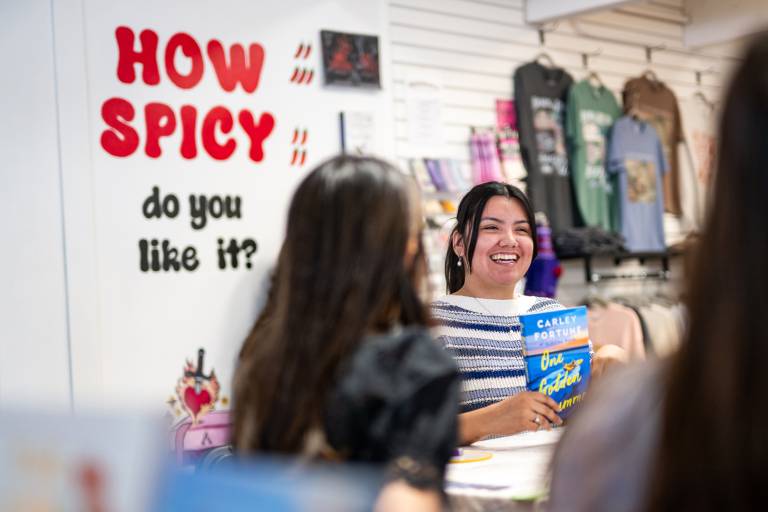
Readers Bond Over Faeries, Hockey Players and Dukes at This Romance Bookstore
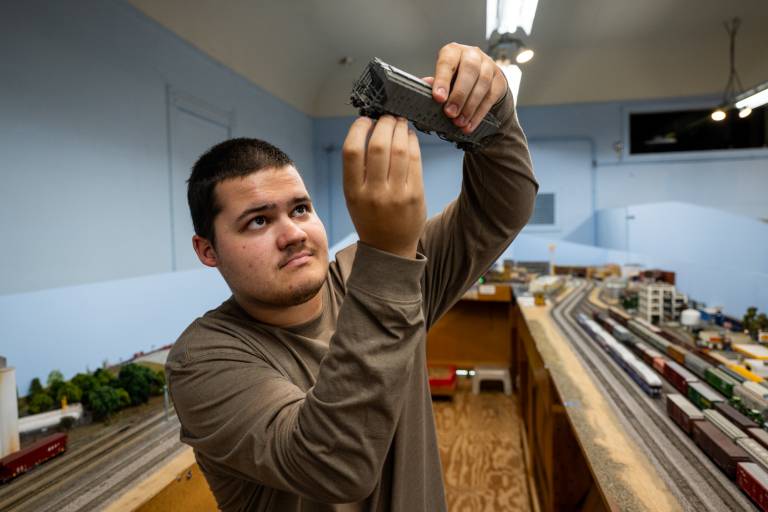
These Model Train Enthusiasts Have Built a Miniature, Welcoming World
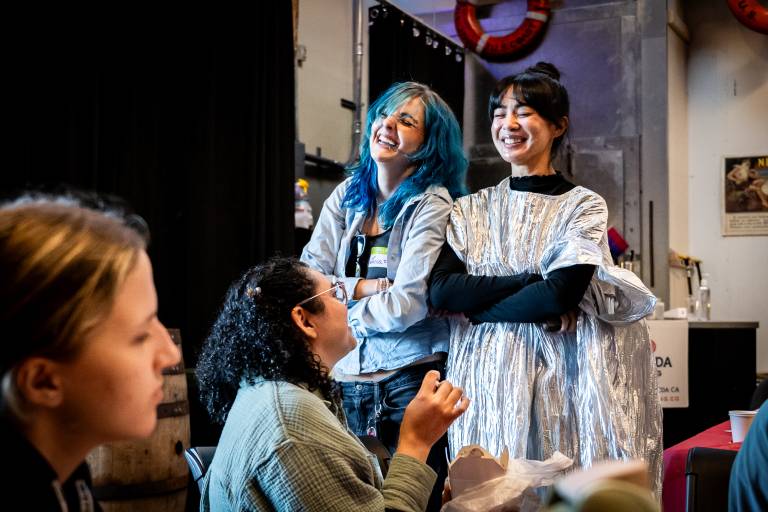
This Craft Night Might Be the Hottest Party in Alameda
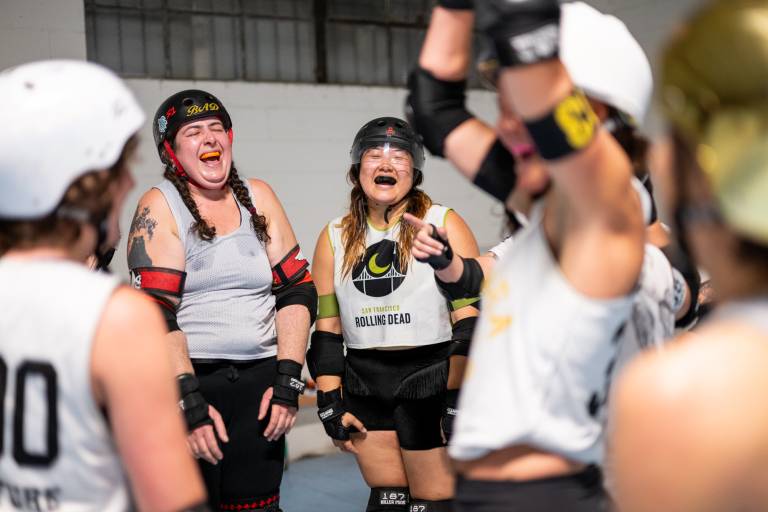
Is Roller Derby the Bay Area’s Queerest Sport?
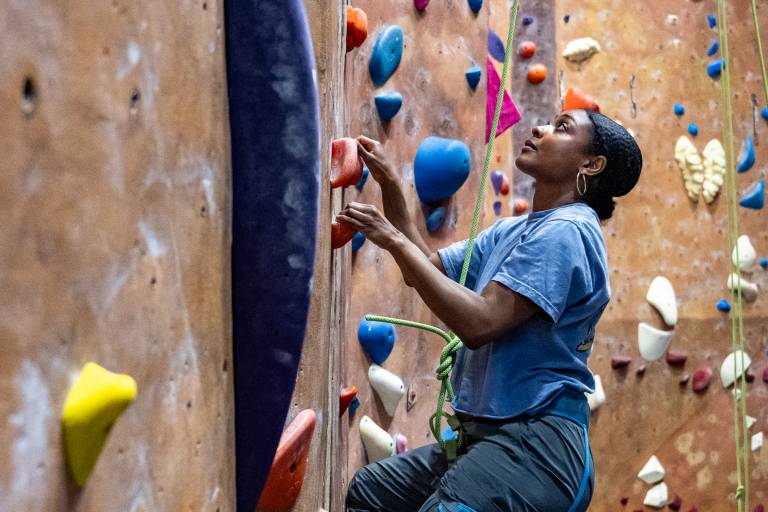
How Oakland’s Black Rock Climbers Find Each Other on the Crag
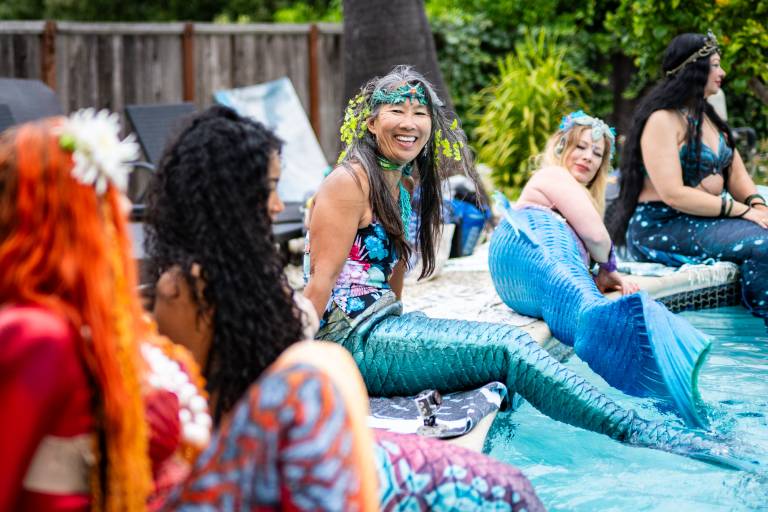
Meet the ‘Merfolk’ Frolicking in Northern California’s Pools and Swimming Holes
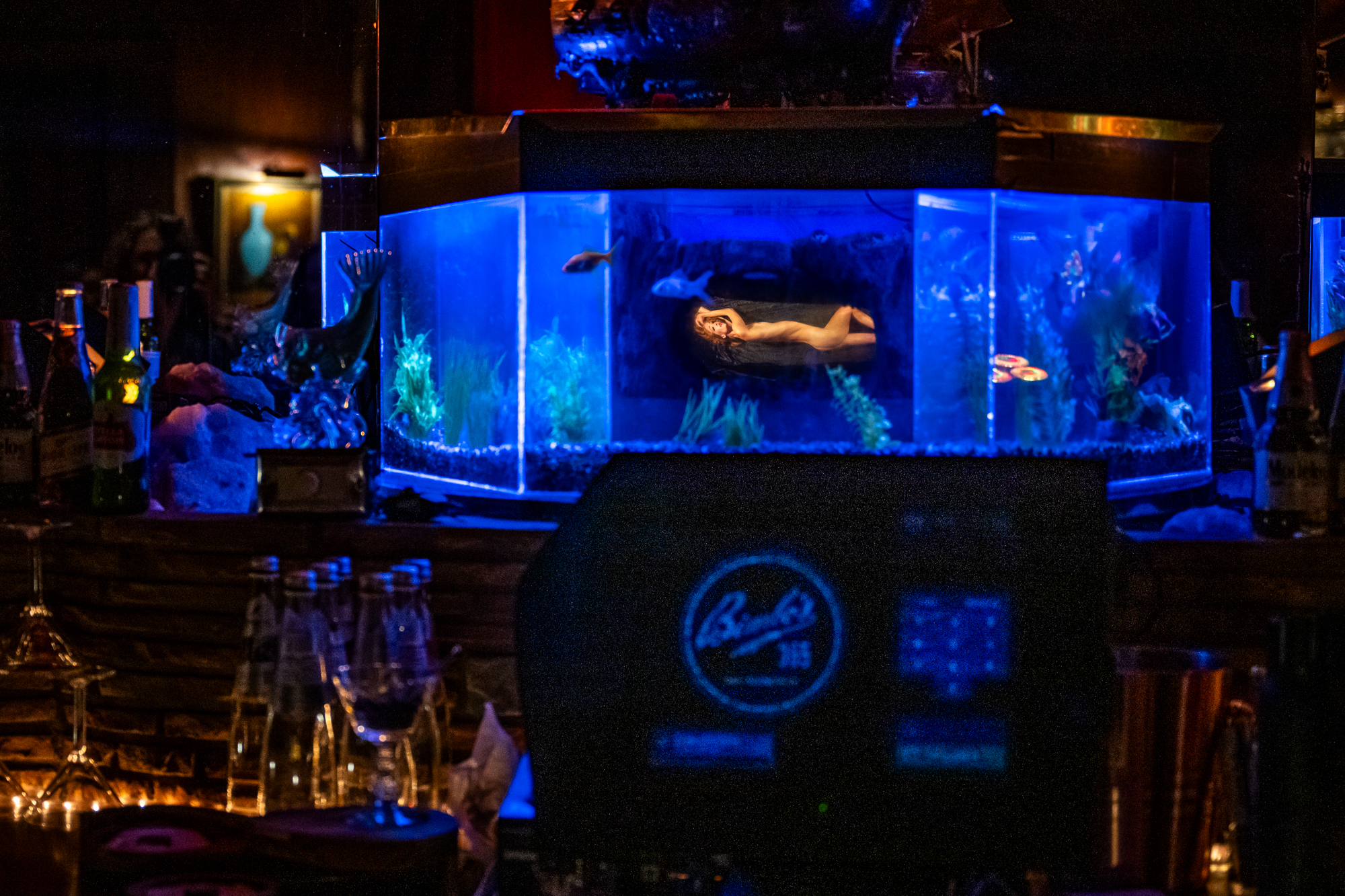
The Girl in the Fishbowl: The Secret Behind San Francisco's Quirkiest Nightclub Act
San Francisco Celebrates the Lunar New Year With Iconic Chinatown Parade
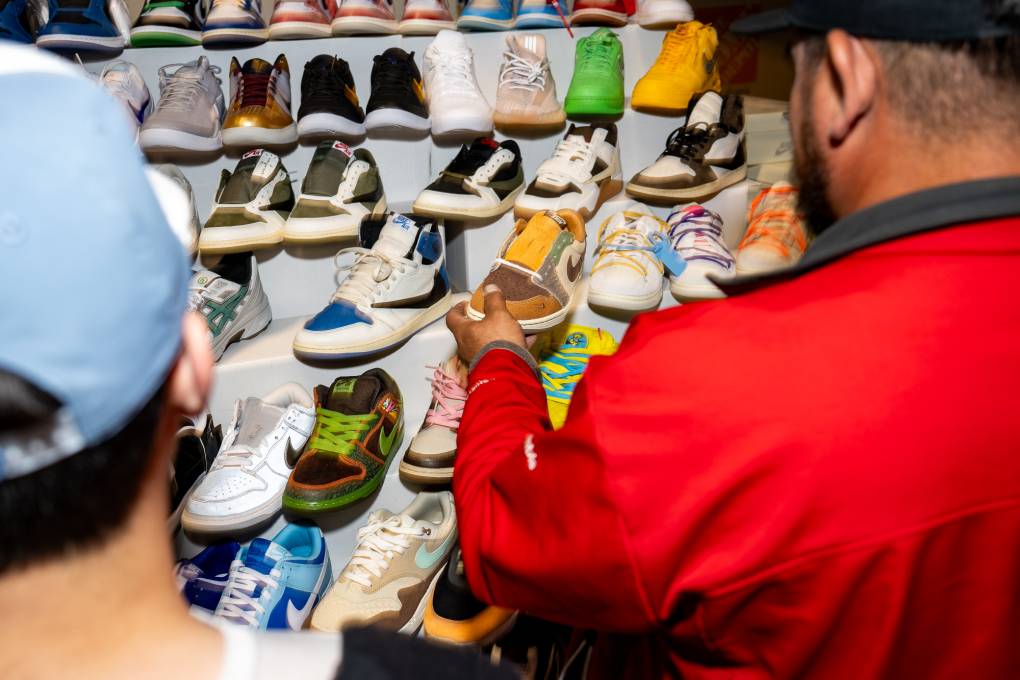
'It's a Big Family': Bay Area Sneakerheads Gather for 15th Anniversary Sneaker Con
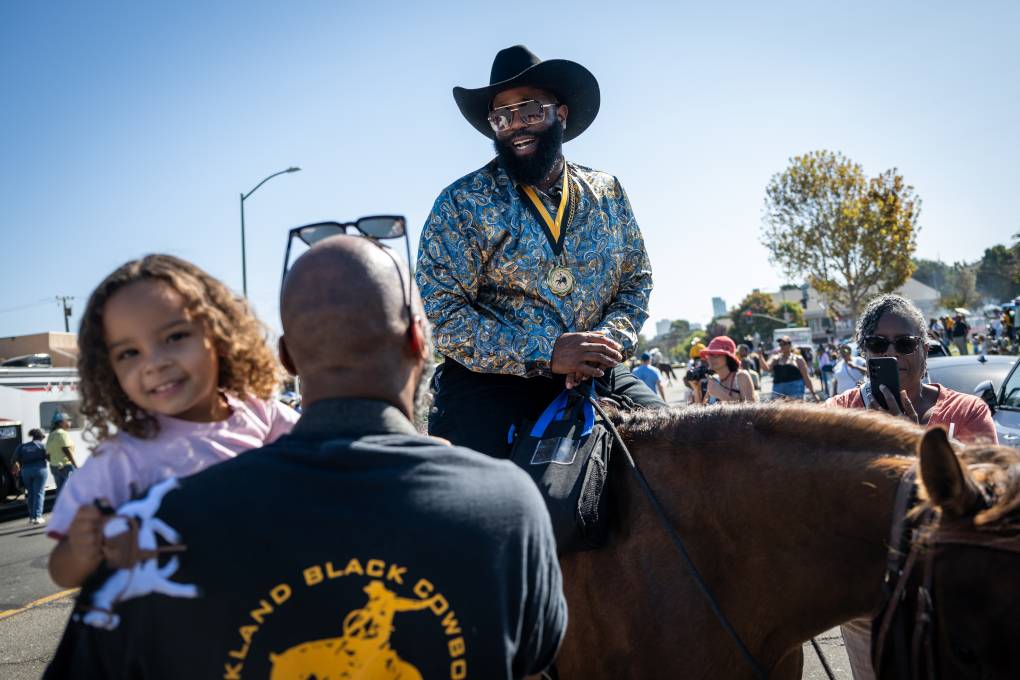
Oakland's Black Cowboy Association Celebrates 50 Years With Parade and Festival
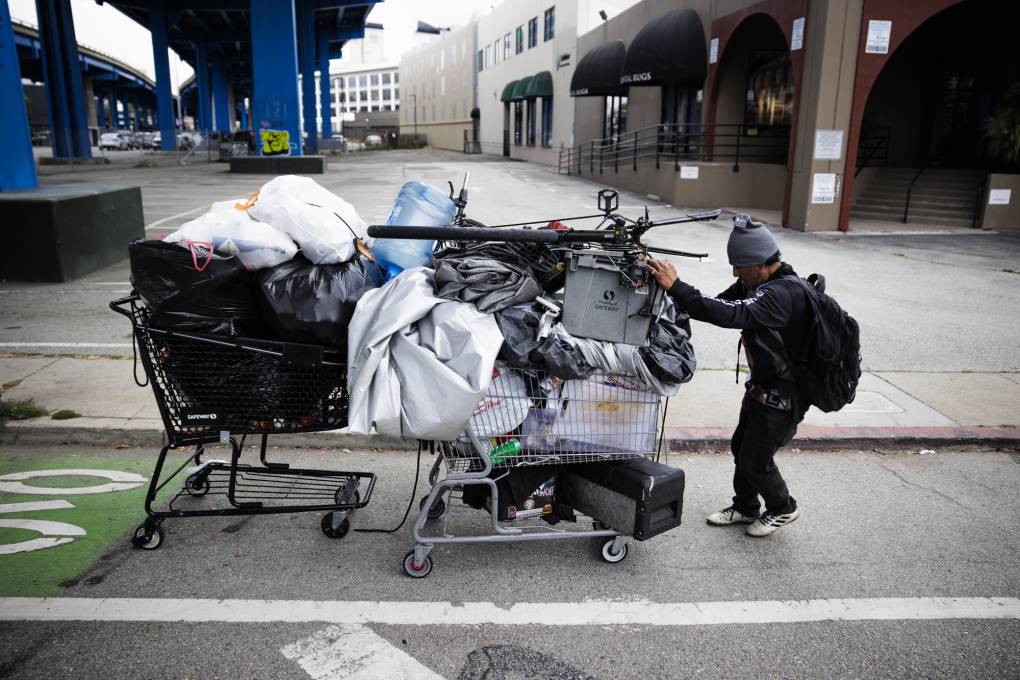
Scenes From San Francisco's Unhoused Encampment Sweeps
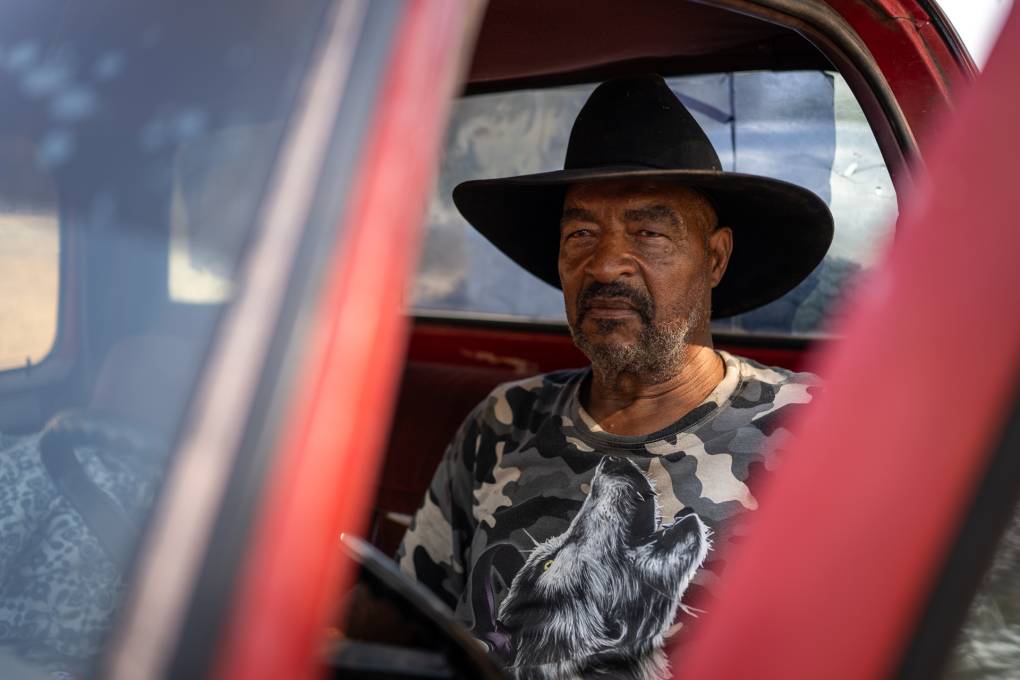
Park Fire Survivor Kenneth Gaines Rebuilds After Losing Everything But His Animals
Player sponsored by
window.__IS_SSR__=true
window.__INITIAL_STATE__={
"attachmentsReducer": {
"audio_0": {
"type": "attachments",
"id": "audio_0",
"imgSizes": {
"kqedFullSize": {
"file": "https://ww2.kqed.org/news/wp-content/themes/KQED-unified/img/audio_bgs/background0.jpg"
}
}
},
"audio_1": {
"type": "attachments",
"id": "audio_1",
"imgSizes": {
"kqedFullSize": {
"file": "https://ww2.kqed.org/news/wp-content/themes/KQED-unified/img/audio_bgs/background1.jpg"
}
}
},
"audio_2": {
"type": "attachments",
"id": "audio_2",
"imgSizes": {
"kqedFullSize": {
"file": "https://ww2.kqed.org/news/wp-content/themes/KQED-unified/img/audio_bgs/background2.jpg"
}
}
},
"audio_3": {
"type": "attachments",
"id": "audio_3",
"imgSizes": {
"kqedFullSize": {
"file": "https://ww2.kqed.org/news/wp-content/themes/KQED-unified/img/audio_bgs/background3.jpg"
}
}
},
"audio_4": {
"type": "attachments",
"id": "audio_4",
"imgSizes": {
"kqedFullSize": {
"file": "https://ww2.kqed.org/news/wp-content/themes/KQED-unified/img/audio_bgs/background4.jpg"
}
}
},
"placeholder": {
"type": "attachments",
"id": "placeholder",
"imgSizes": {
"thumbnail": {
"file": "https://cdn.kqed.org/wp-content/uploads/2024/12/KQED-Default-Image-816638274-2000x1333-1-160x107.jpg",
"width": 160,
"height": 107,
"mimeType": "image/jpeg"
},
"medium": {
"file": "https://cdn.kqed.org/wp-content/uploads/2024/12/KQED-Default-Image-816638274-2000x1333-1-800x533.jpg",
"width": 800,
"height": 533,
"mimeType": "image/jpeg"
},
"medium_large": {
"file": "https://cdn.kqed.org/wp-content/uploads/2024/12/KQED-Default-Image-816638274-2000x1333-1-768x512.jpg",
"width": 768,
"height": 512,
"mimeType": "image/jpeg"
},
"large": {
"file": "https://cdn.kqed.org/wp-content/uploads/2024/12/KQED-Default-Image-816638274-2000x1333-1-1020x680.jpg",
"width": 1020,
"height": 680,
"mimeType": "image/jpeg"
},
"1536x1536": {
"file": "https://cdn.kqed.org/wp-content/uploads/2024/12/KQED-Default-Image-816638274-2000x1333-1-1536x1024.jpg",
"width": 1536,
"height": 1024,
"mimeType": "image/jpeg"
},
"fd-lrg": {
"file": "https://cdn.kqed.org/wp-content/uploads/2024/12/KQED-Default-Image-816638274-2000x1333-1-1536x1024.jpg",
"width": 1536,
"height": 1024,
"mimeType": "image/jpeg"
},
"fd-med": {
"file": "https://cdn.kqed.org/wp-content/uploads/2024/12/KQED-Default-Image-816638274-2000x1333-1-1020x680.jpg",
"width": 1020,
"height": 680,
"mimeType": "image/jpeg"
},
"fd-sm": {
"file": "https://cdn.kqed.org/wp-content/uploads/2024/12/KQED-Default-Image-816638274-2000x1333-1-800x533.jpg",
"width": 800,
"height": 533,
"mimeType": "image/jpeg"
},
"post-thumbnail": {
"file": "https://cdn.kqed.org/wp-content/uploads/2024/12/KQED-Default-Image-816638274-2000x1333-1-672x372.jpg",
"width": 672,
"height": 372,
"mimeType": "image/jpeg"
},
"twentyfourteen-full-width": {
"file": "https://cdn.kqed.org/wp-content/uploads/2024/12/KQED-Default-Image-816638274-2000x1333-1-1038x576.jpg",
"width": 1038,
"height": 576,
"mimeType": "image/jpeg"
},
"xxsmall": {
"file": "https://cdn.kqed.org/wp-content/uploads/2024/12/KQED-Default-Image-816638274-2000x1333-1-160x107.jpg",
"width": 160,
"height": 107,
"mimeType": "image/jpeg"
},
"xsmall": {
"file": "https://cdn.kqed.org/wp-content/uploads/2024/12/KQED-Default-Image-816638274-2000x1333-1-672x372.jpg",
"width": 672,
"height": 372,
"mimeType": "image/jpeg"
},
"small": {
"file": "https://cdn.kqed.org/wp-content/uploads/2024/12/KQED-Default-Image-816638274-2000x1333-1-672x372.jpg",
"width": 672,
"height": 372,
"mimeType": "image/jpeg"
},
"xlarge": {
"file": "https://cdn.kqed.org/wp-content/uploads/2024/12/KQED-Default-Image-816638274-2000x1333-1-1020x680.jpg",
"width": 1020,
"height": 680,
"mimeType": "image/jpeg"
},
"full-width": {
"file": "https://cdn.kqed.org/wp-content/uploads/2024/12/KQED-Default-Image-816638274-2000x1333-1-1920x1280.jpg",
"width": 1920,
"height": 1280,
"mimeType": "image/jpeg"
},
"guest-author-32": {
"file": "https://cdn.kqed.org/wp-content/uploads/2025/01/KQED-Default-Image-816638274-1333x1333-1-160x160.jpg",
"width": 32,
"height": 32,
"mimeType": "image/jpeg"
},
"guest-author-50": {
"file": "https://cdn.kqed.org/wp-content/uploads/2025/01/KQED-Default-Image-816638274-1333x1333-1-160x160.jpg",
"width": 50,
"height": 50,
"mimeType": "image/jpeg"
},
"guest-author-64": {
"file": "https://cdn.kqed.org/wp-content/uploads/2025/01/KQED-Default-Image-816638274-1333x1333-1-160x160.jpg",
"width": 64,
"height": 64,
"mimeType": "image/jpeg"
},
"guest-author-96": {
"file": "https://cdn.kqed.org/wp-content/uploads/2025/01/KQED-Default-Image-816638274-1333x1333-1-160x160.jpg",
"width": 96,
"height": 96,
"mimeType": "image/jpeg"
},
"guest-author-128": {
"file": "https://cdn.kqed.org/wp-content/uploads/2025/01/KQED-Default-Image-816638274-1333x1333-1-160x160.jpg",
"width": 128,
"height": 128,
"mimeType": "image/jpeg"
},
"detail": {
"file": "https://cdn.kqed.org/wp-content/uploads/2025/01/KQED-Default-Image-816638274-1333x1333-1-160x160.jpg",
"width": 160,
"height": 160,
"mimeType": "image/jpeg"
},
"kqedFullSize": {
"file": "https://cdn.kqed.org/wp-content/uploads/2024/12/KQED-Default-Image-816638274-2000x1333-1.jpg",
"width": 2000,
"height": 1333
}
}
},
"arts_13992221": {
"type": "attachments",
"id": "arts_13992221",
"meta": {
"index": "attachments_1716263798",
"site": "arts",
"id": "13992221",
"found": true
},
"title": "260628-FYP-RomanceNovelCommunity-09-BL",
"publishDate": 1785469757,
"status": "inherit",
"parent": 0,
"modified": 1787091260,
"caption": "Ilse Solís moderates a book club event at A Novel Affair, a romance novel bookstore, in Los Altos on June 28, 2026. ",
"credit": "Beth LaBerge/KQED",
"altTag": "A woman laughs while holding up a book in front of a sign that says, \"How spicy do you like it?\"",
"description": null,
"imgSizes": {
"thumbnail": {
"file": "https://cdn.kqed.org/wp-content/uploads/sites/2/2026/07/260628-FYP-RomanceNovelCommunity-09-BL-160x107.jpg",
"width": 160,
"height": 107,
"mimeType": "image/jpeg"
},
"medium_large": {
"file": "https://cdn.kqed.org/wp-content/uploads/sites/2/2026/07/260628-FYP-RomanceNovelCommunity-09-BL-768x512.jpg",
"width": 768,
"height": 512,
"mimeType": "image/jpeg"
},
"1536x1536": {
"file": "https://cdn.kqed.org/wp-content/uploads/sites/2/2026/07/260628-FYP-RomanceNovelCommunity-09-BL-1536x1025.jpg",
"width": 1536,
"height": 1025,
"mimeType": "image/jpeg"
},
"post-thumbnail": {
"file": "https://cdn.kqed.org/wp-content/uploads/sites/2/2026/07/260628-FYP-RomanceNovelCommunity-09-BL-672x372.jpg",
"width": 672,
"height": 372,
"mimeType": "image/jpeg"
},
"twentyfourteen-full-width": {
"file": "https://cdn.kqed.org/wp-content/uploads/sites/2/2026/07/260628-FYP-RomanceNovelCommunity-09-BL-1038x576.jpg",
"width": 1038,
"height": 576,
"mimeType": "image/jpeg"
},
"npr-cds-wide": {
"file": "https://cdn.kqed.org/wp-content/uploads/sites/2/2026/07/260628-FYP-RomanceNovelCommunity-09-BL-1200x675.jpg",
"width": 1200,
"height": 675,
"mimeType": "image/jpeg"
},
"npr-cds-square": {
"file": "https://cdn.kqed.org/wp-content/uploads/sites/2/2026/07/260628-FYP-RomanceNovelCommunity-09-BL-600x600.jpg",
"width": 600,
"height": 600,
"mimeType": "image/jpeg"
},
"kqedFullSize": {
"file": "https://cdn.kqed.org/wp-content/uploads/sites/2/2026/07/260628-FYP-RomanceNovelCommunity-09-BL.jpg",
"width": 2000,
"height": 1334
}
},
"isLoading": false,
"fetchFailed": false
},
"arts_13992255": {
"type": "attachments",
"id": "arts_13992255",
"meta": {
"index": "attachments_1716263798",
"site": "arts",
"id": "13992255",
"found": true
},
"title": "260513-FYPSeries-CarquinezModelRailroad-23-BL",
"publishDate": 1785476076,
"status": "inherit",
"parent": 0,
"modified": 1785476242,
"caption": "Mikhail Zhuchkov inspects a model train at the Carquinez Model Railroad Society in Crockett on May 13, 2026. The volunteer-run organization maintains an expansive model railroad layout based on the Bay Area railroad towns, and hosts public open houses throughout the year.",
"credit": "Beth LaBerge/KQED",
"altTag": null,
"description": null,
"imgSizes": {
"thumbnail": {
"file": "https://cdn.kqed.org/wp-content/uploads/sites/2/2026/07/260513-FYPSeries-CarquinezModelRailroad-23-BL-160x107.jpg",
"width": 160,
"height": 107,
"mimeType": "image/jpeg"
},
"medium_large": {
"file": "https://cdn.kqed.org/wp-content/uploads/sites/2/2026/07/260513-FYPSeries-CarquinezModelRailroad-23-BL-768x512.jpg",
"width": 768,
"height": 512,
"mimeType": "image/jpeg"
},
"1536x1536": {
"file": "https://cdn.kqed.org/wp-content/uploads/sites/2/2026/07/260513-FYPSeries-CarquinezModelRailroad-23-BL-1536x1024.jpg",
"width": 1536,
"height": 1024,
"mimeType": "image/jpeg"
},
"post-thumbnail": {
"file": "https://cdn.kqed.org/wp-content/uploads/sites/2/2026/07/260513-FYPSeries-CarquinezModelRailroad-23-BL-672x372.jpg",
"width": 672,
"height": 372,
"mimeType": "image/jpeg"
},
"twentyfourteen-full-width": {
"file": "https://cdn.kqed.org/wp-content/uploads/sites/2/2026/07/260513-FYPSeries-CarquinezModelRailroad-23-BL-1038x576.jpg",
"width": 1038,
"height": 576,
"mimeType": "image/jpeg"
},
"npr-cds-wide": {
"file": "https://cdn.kqed.org/wp-content/uploads/sites/2/2026/07/260513-FYPSeries-CarquinezModelRailroad-23-BL-1200x675.jpg",
"width": 1200,
"height": 675,
"mimeType": "image/jpeg"
},
"npr-cds-square": {
"file": "https://cdn.kqed.org/wp-content/uploads/sites/2/2026/07/260513-FYPSeries-CarquinezModelRailroad-23-BL-600x600.jpg",
"width": 600,
"height": 600,
"mimeType": "image/jpeg"
},
"kqedFullSize": {
"file": "https://cdn.kqed.org/wp-content/uploads/sites/2/2026/07/260513-FYPSeries-CarquinezModelRailroad-23-BL.jpg",
"width": 2000,
"height": 1333
}
},
"isLoading": false,
"fetchFailed": false
},
"arts_13992677": {
"type": "attachments",
"id": "arts_13992677",
"meta": {
"index": "attachments_1716263798",
"site": "arts",
"id": "13992677",
"found": true
},
"title": "260709-FYP-CraftNight-15-BL",
"publishDate": 1786476225,
"status": "inherit",
"parent": 0,
"modified": 1786476407,
"caption": "Jenny Baquing (right) and her friend Lucia Capezzuto practice a dance routine during her craft event, Jenny and Cabbage, at Alameda Brewing on July 9, 2026.",
"credit": "Beth LaBerge/KQED",
"altTag": null,
"description": null,
"imgSizes": {
"thumbnail": {
"file": "https://cdn.kqed.org/wp-content/uploads/sites/2/2026/08/260709-FYP-CraftNight-15-BL-160x107.jpg",
"width": 160,
"height": 107,
"mimeType": "image/jpeg"
},
"medium_large": {
"file": "https://cdn.kqed.org/wp-content/uploads/sites/2/2026/08/260709-FYP-CraftNight-15-BL-768x512.jpg",
"width": 768,
"height": 512,
"mimeType": "image/jpeg"
},
"1536x1536": {
"file": "https://cdn.kqed.org/wp-content/uploads/sites/2/2026/08/260709-FYP-CraftNight-15-BL-1536x1024.jpg",
"width": 1536,
"height": 1024,
"mimeType": "image/jpeg"
},
"post-thumbnail": {
"file": "https://cdn.kqed.org/wp-content/uploads/sites/2/2026/08/260709-FYP-CraftNight-15-BL-672x372.jpg",
"width": 672,
"height": 372,
"mimeType": "image/jpeg"
},
"twentyfourteen-full-width": {
"file": "https://cdn.kqed.org/wp-content/uploads/sites/2/2026/08/260709-FYP-CraftNight-15-BL-1038x576.jpg",
"width": 1038,
"height": 576,
"mimeType": "image/jpeg"
},
"npr-cds-wide": {
"file": "https://cdn.kqed.org/wp-content/uploads/sites/2/2026/08/260709-FYP-CraftNight-15-BL-1200x675.jpg",
"width": 1200,
"height": 675,
"mimeType": "image/jpeg"
},
"npr-cds-square": {
"file": "https://cdn.kqed.org/wp-content/uploads/sites/2/2026/08/260709-FYP-CraftNight-15-BL-600x600.jpg",
"width": 600,
"height": 600,
"mimeType": "image/jpeg"
},
"kqedFullSize": {
"file": "https://cdn.kqed.org/wp-content/uploads/sites/2/2026/08/260709-FYP-CraftNight-15-BL.jpg",
"width": 2000,
"height": 1333
}
},
"isLoading": false,
"fetchFailed": false
},
"arts_13992414": {
"type": "attachments",
"id": "arts_13992414",
"meta": {
"index": "attachments_1716263798",
"site": "arts",
"id": "13992414",
"found": true
},
"title": "260507-RollerDerby-25-BL",
"publishDate": 1785880344,
"status": "inherit",
"parent": 0,
"modified": 1785881221,
"caption": "Soffia Bandril (center), known as Hello Killy, skates during a Bay Area Derby scrimmage in Oakland on May 7, 2026. Bay Area Derby is a women’s and gender-inclusive roller derby league with two home teams, the Oakland Outlaws and SF Rolling Dead.",
"credit": "Beth LaBerge/KQED",
"altTag": null,
"description": null,
"imgSizes": {
"thumbnail": {
"file": "https://cdn.kqed.org/wp-content/uploads/sites/2/2026/08/260507-RollerDerby-25-BL-160x107.jpg",
"width": 160,
"height": 107,
"mimeType": "image/jpeg"
},
"medium_large": {
"file": "https://cdn.kqed.org/wp-content/uploads/sites/2/2026/08/260507-RollerDerby-25-BL-768x512.jpg",
"width": 768,
"height": 512,
"mimeType": "image/jpeg"
},
"1536x1536": {
"file": "https://cdn.kqed.org/wp-content/uploads/sites/2/2026/08/260507-RollerDerby-25-BL-1536x1024.jpg",
"width": 1536,
"height": 1024,
"mimeType": "image/jpeg"
},
"post-thumbnail": {
"file": "https://cdn.kqed.org/wp-content/uploads/sites/2/2026/08/260507-RollerDerby-25-BL-672x372.jpg",
"width": 672,
"height": 372,
"mimeType": "image/jpeg"
},
"twentyfourteen-full-width": {
"file": "https://cdn.kqed.org/wp-content/uploads/sites/2/2026/08/260507-RollerDerby-25-BL-1038x576.jpg",
"width": 1038,
"height": 576,
"mimeType": "image/jpeg"
},
"npr-cds-wide": {
"file": "https://cdn.kqed.org/wp-content/uploads/sites/2/2026/08/260507-RollerDerby-25-BL-1200x675.jpg",
"width": 1200,
"height": 675,
"mimeType": "image/jpeg"
},
"npr-cds-square": {
"file": "https://cdn.kqed.org/wp-content/uploads/sites/2/2026/08/260507-RollerDerby-25-BL-600x600.jpg",
"width": 600,
"height": 600,
"mimeType": "image/jpeg"
},
"kqedFullSize": {
"file": "https://cdn.kqed.org/wp-content/uploads/sites/2/2026/08/260507-RollerDerby-25-BL.jpg",
"width": 2000,
"height": 1333
}
},
"isLoading": false,
"fetchFailed": false
},
"arts_13992218": {
"type": "attachments",
"id": "arts_13992218",
"meta": {
"index": "attachments_1716263798",
"site": "arts",
"id": "13992218",
"found": true
},
"title": "260507-FYP-BlackRockCollective-47-BL",
"publishDate": 1785459089,
"status": "inherit",
"parent": 0,
"modified": 1785459261,
"caption": "Courtney Williams climbs during a meetup of Black Rock Collective, a climbing group for Black climbers, at Great Western Power Company, a rock climbing gym, in Oakland on May 7, 2026. ",
"credit": "Beth LaBerge/KQED",
"altTag": null,
"description": null,
"imgSizes": {
"thumbnail": {
"file": "https://cdn.kqed.org/wp-content/uploads/sites/2/2026/07/260507-FYP-BlackRockCollective-47-BL-160x107.jpg",
"width": 160,
"height": 107,
"mimeType": "image/jpeg"
},
"medium_large": {
"file": "https://cdn.kqed.org/wp-content/uploads/sites/2/2026/07/260507-FYP-BlackRockCollective-47-BL-768x512.jpg",
"width": 768,
"height": 512,
"mimeType": "image/jpeg"
},
"1536x1536": {
"file": "https://cdn.kqed.org/wp-content/uploads/sites/2/2026/07/260507-FYP-BlackRockCollective-47-BL-1536x1024.jpg",
"width": 1536,
"height": 1024,
"mimeType": "image/jpeg"
},
"post-thumbnail": {
"file": "https://cdn.kqed.org/wp-content/uploads/sites/2/2026/07/260507-FYP-BlackRockCollective-47-BL-672x372.jpg",
"width": 672,
"height": 372,
"mimeType": "image/jpeg"
},
"twentyfourteen-full-width": {
"file": "https://cdn.kqed.org/wp-content/uploads/sites/2/2026/07/260507-FYP-BlackRockCollective-47-BL-1038x576.jpg",
"width": 1038,
"height": 576,
"mimeType": "image/jpeg"
},
"npr-cds-wide": {
"file": "https://cdn.kqed.org/wp-content/uploads/sites/2/2026/07/260507-FYP-BlackRockCollective-47-BL-1200x675.jpg",
"width": 1200,
"height": 675,
"mimeType": "image/jpeg"
},
"npr-cds-square": {
"file": "https://cdn.kqed.org/wp-content/uploads/sites/2/2026/07/260507-FYP-BlackRockCollective-47-BL-600x600.jpg",
"width": 600,
"height": 600,
"mimeType": "image/jpeg"
},
"kqedFullSize": {
"file": "https://cdn.kqed.org/wp-content/uploads/sites/2/2026/07/260507-FYP-BlackRockCollective-47-BL.jpg",
"width": 2000,
"height": 1333
}
},
"isLoading": false,
"fetchFailed": false
},
"arts_13992127": {
"type": "attachments",
"id": "arts_13992127",
"meta": {
"index": "attachments_1716263798",
"site": "arts",
"id": "13992127",
"found": true
},
"title": "260608-FYP-Mermaids-01-BL",
"publishDate": 1785279941,
"status": "inherit",
"parent": 0,
"modified": 1785459635,
"caption": "Meilin Duncan (center) sits with friends by a pool in Oakland on June 8, 2026, during a gathering with the local merfolk community.",
"credit": "Beth LaBerge/KQED",
"altTag": null,
"description": null,
"imgSizes": {
"thumbnail": {
"file": "https://cdn.kqed.org/wp-content/uploads/sites/2/2026/07/260608-FYP-Mermaids-01-BL-160x107.jpg",
"width": 160,
"height": 107,
"mimeType": "image/jpeg"
},
"medium_large": {
"file": "https://cdn.kqed.org/wp-content/uploads/sites/2/2026/07/260608-FYP-Mermaids-01-BL-768x512.jpg",
"width": 768,
"height": 512,
"mimeType": "image/jpeg"
},
"1536x1536": {
"file": "https://cdn.kqed.org/wp-content/uploads/sites/2/2026/07/260608-FYP-Mermaids-01-BL-1536x1024.jpg",
"width": 1536,
"height": 1024,
"mimeType": "image/jpeg"
},
"post-thumbnail": {
"file": "https://cdn.kqed.org/wp-content/uploads/sites/2/2026/07/260608-FYP-Mermaids-01-BL-672x372.jpg",
"width": 672,
"height": 372,
"mimeType": "image/jpeg"
},
"twentyfourteen-full-width": {
"file": "https://cdn.kqed.org/wp-content/uploads/sites/2/2026/07/260608-FYP-Mermaids-01-BL-1038x576.jpg",
"width": 1038,
"height": 576,
"mimeType": "image/jpeg"
},
"npr-cds-wide": {
"file": "https://cdn.kqed.org/wp-content/uploads/sites/2/2026/07/260608-FYP-Mermaids-01-BL-1200x675.jpg",
"width": 1200,
"height": 675,
"mimeType": "image/jpeg"
},
"npr-cds-square": {
"file": "https://cdn.kqed.org/wp-content/uploads/sites/2/2026/07/260608-FYP-Mermaids-01-BL-600x600.jpg",
"width": 600,
"height": 600,
"mimeType": "image/jpeg"
},
"kqedFullSize": {
"file": "https://cdn.kqed.org/wp-content/uploads/sites/2/2026/07/260608-FYP-Mermaids-01-BL.jpg",
"width": 2000,
"height": 1333
}
},
"isLoading": false,
"fetchFailed": false
},
"news_12062954": {
"type": "attachments",
"id": "news_12062954",
"meta": {
"index": "attachments_1716263798",
"site": "news",
"id": "12062954",
"found": true
},
"title": "251008-GirlintheFishbowl-01-BL",
"publishDate": 1762303194,
"status": "inherit",
"parent": 0,
"modified": 1762813797,
"caption": "Hanna Longwell performs as the 'Girl in the Fishbowl' at Bimbo’s 365 Club on Oct. 8, 2025. The act has been part of the venue since it opened in 1931.",
"credit": "Beth LaBerge/KQED",
"altTag": null,
"description": null,
"imgSizes": {
"thumbnail": {
"file": "https://cdn.kqed.org/wp-content/uploads/sites/10/2025/11/251008-GirlintheFishbowl-01-BL-160x107.jpg",
"width": 160,
"height": 107,
"mimeType": "image/jpeg"
},
"1536x1536": {
"file": "https://cdn.kqed.org/wp-content/uploads/sites/10/2025/11/251008-GirlintheFishbowl-01-BL-1536x1024.jpg",
"width": 1536,
"height": 1024,
"mimeType": "image/jpeg"
},
"post-thumbnail": {
"file": "https://cdn.kqed.org/wp-content/uploads/sites/10/2025/11/251008-GirlintheFishbowl-01-BL-672x372.jpg",
"width": 672,
"height": 372,
"mimeType": "image/jpeg"
},
"twentyfourteen-full-width": {
"file": "https://cdn.kqed.org/wp-content/uploads/sites/10/2025/11/251008-GirlintheFishbowl-01-BL-1038x576.jpg",
"width": 1038,
"height": 576,
"mimeType": "image/jpeg"
},
"npr-cds-wide": {
"file": "https://cdn.kqed.org/wp-content/uploads/sites/10/2025/11/251008-GirlintheFishbowl-01-BL-1200x675.jpg",
"width": 1200,
"height": 675,
"mimeType": "image/jpeg"
},
"kqedFullSize": {
"file": "https://cdn.kqed.org/wp-content/uploads/sites/10/2025/11/251008-GirlintheFishbowl-01-BL.jpg",
"width": 2000,
"height": 1333
}
},
"isLoading": false,
"fetchFailed": false
},
"news_12027372": {
"type": "attachments",
"id": "news_12027372",
"meta": {
"index": "attachments_1716263798",
"site": "news",
"id": "12027372",
"found": true
},
"title": "250215-ChineseNewYear-24-BL",
"publishDate": 1739729104,
"status": "inherit",
"parent": 0,
"modified": 1739742386,
"caption": "Leung's White Crane Lion and Dragon Dance Association carry a dragon during the finale of the Chinese New Year Parade in San Francisco on Feb. 15, 2025.",
"credit": "Beth LaBerge/KQED",
"altTag": "Several people carry a decorative dragon.",
"description": null,
"imgSizes": {
"medium": {
"file": "https://cdn.kqed.org/wp-content/uploads/sites/10/2025/02/250215-ChineseNewYear-24-BL-800x533.jpg",
"width": 800,
"height": 533,
"mimeType": "image/jpeg"
},
"large": {
"file": "https://cdn.kqed.org/wp-content/uploads/sites/10/2025/02/250215-ChineseNewYear-24-BL-1020x680.jpg",
"width": 1020,
"height": 680,
"mimeType": "image/jpeg"
},
"thumbnail": {
"file": "https://cdn.kqed.org/wp-content/uploads/sites/10/2025/02/250215-ChineseNewYear-24-BL-160x107.jpg",
"width": 160,
"height": 107,
"mimeType": "image/jpeg"
},
"1536x1536": {
"file": "https://cdn.kqed.org/wp-content/uploads/sites/10/2025/02/250215-ChineseNewYear-24-BL-1536x1024.jpg",
"width": 1536,
"height": 1024,
"mimeType": "image/jpeg"
},
"post-thumbnail": {
"file": "https://cdn.kqed.org/wp-content/uploads/sites/10/2025/02/250215-ChineseNewYear-24-BL-672x372.jpg",
"width": 672,
"height": 372,
"mimeType": "image/jpeg"
},
"twentyfourteen-full-width": {
"file": "https://cdn.kqed.org/wp-content/uploads/sites/10/2025/02/250215-ChineseNewYear-24-BL-1038x576.jpg",
"width": 1038,
"height": 576,
"mimeType": "image/jpeg"
},
"full-width": {
"file": "https://cdn.kqed.org/wp-content/uploads/sites/10/2025/02/250215-ChineseNewYear-24-BL-1920x1280.jpg",
"width": 1920,
"height": 1280,
"mimeType": "image/jpeg"
},
"kqedFullSize": {
"file": "https://cdn.kqed.org/wp-content/uploads/sites/10/2025/02/250215-ChineseNewYear-24-BL.jpg",
"width": 2000,
"height": 1333
}
},
"isLoading": false,
"fetchFailed": false
},
"news_12019560": {
"type": "attachments",
"id": "news_12019560",
"meta": {
"index": "attachments_1716263798",
"site": "news",
"id": "12019560",
"found": true
},
"title": "241221-SneakerCon-06-BL",
"publishDate": 1734832012,
"status": "inherit",
"parent": 0,
"modified": 1734978338,
"caption": "Juan Ruedas and his son Andrew, 16, look for sneakers at Sneaker Con Bay Area at the Santa Clara Convention Center on Dec. 21, 2024. The two traveled from Southern California to attend the event.",
"credit": "Beth LaBerge/KQED",
"altTag": null,
"description": null,
"imgSizes": {
"medium": {
"file": "https://cdn.kqed.org/wp-content/uploads/sites/10/2024/12/241221-SneakerCon-06-BL-800x533.jpg",
"width": 800,
"height": 533,
"mimeType": "image/jpeg"
},
"large": {
"file": "https://cdn.kqed.org/wp-content/uploads/sites/10/2024/12/241221-SneakerCon-06-BL-1020x680.jpg",
"width": 1020,
"height": 680,
"mimeType": "image/jpeg"
},
"thumbnail": {
"file": "https://cdn.kqed.org/wp-content/uploads/sites/10/2024/12/241221-SneakerCon-06-BL-160x107.jpg",
"width": 160,
"height": 107,
"mimeType": "image/jpeg"
},
"1536x1536": {
"file": "https://cdn.kqed.org/wp-content/uploads/sites/10/2024/12/241221-SneakerCon-06-BL-1536x1024.jpg",
"width": 1536,
"height": 1024,
"mimeType": "image/jpeg"
},
"post-thumbnail": {
"file": "https://cdn.kqed.org/wp-content/uploads/sites/10/2024/12/241221-SneakerCon-06-BL-672x372.jpg",
"width": 672,
"height": 372,
"mimeType": "image/jpeg"
},
"twentyfourteen-full-width": {
"file": "https://cdn.kqed.org/wp-content/uploads/sites/10/2024/12/241221-SneakerCon-06-BL-1038x576.jpg",
"width": 1038,
"height": 576,
"mimeType": "image/jpeg"
},
"full-width": {
"file": "https://cdn.kqed.org/wp-content/uploads/sites/10/2024/12/241221-SneakerCon-06-BL-1920x1280.jpg",
"width": 1920,
"height": 1280,
"mimeType": "image/jpeg"
},
"kqedFullSize": {
"file": "https://cdn.kqed.org/wp-content/uploads/sites/10/2024/12/241221-SneakerCon-06-BL.jpg",
"width": 2000,
"height": 1333
}
},
"isLoading": false,
"fetchFailed": false
},
"news_12008172": {
"type": "attachments",
"id": "news_12008172",
"meta": {
"index": "attachments_1716263798",
"site": "news",
"id": "12008172",
"found": true
},
"title": "241005-OaklandBlackCowboyParade-031-BL",
"publishDate": 1728170800,
"status": "inherit",
"parent": 0,
"modified": 1728170828,
"caption": "Samuel Styles, also known as Cowboy Styles, talks to a group gathered after the Oakland Black Cowboy Association parade in Oakland on Oct. 5, 2024.",
"credit": "Beth LaBerge/KQED",
"altTag": null,
"description": null,
"imgSizes": {
"medium": {
"file": "https://cdn.kqed.org/wp-content/uploads/sites/10/2024/10/241005-OaklandBlackCowboyParade-031-BL-800x533.jpg",
"width": 800,
"height": 533,
"mimeType": "image/jpeg"
},
"large": {
"file": "https://cdn.kqed.org/wp-content/uploads/sites/10/2024/10/241005-OaklandBlackCowboyParade-031-BL-1020x680.jpg",
"width": 1020,
"height": 680,
"mimeType": "image/jpeg"
},
"thumbnail": {
"file": "https://cdn.kqed.org/wp-content/uploads/sites/10/2024/10/241005-OaklandBlackCowboyParade-031-BL-160x107.jpg",
"width": 160,
"height": 107,
"mimeType": "image/jpeg"
},
"1536x1536": {
"file": "https://cdn.kqed.org/wp-content/uploads/sites/10/2024/10/241005-OaklandBlackCowboyParade-031-BL-1536x1024.jpg",
"width": 1536,
"height": 1024,
"mimeType": "image/jpeg"
},
"2048x2048": {
"file": "https://cdn.kqed.org/wp-content/uploads/sites/10/2024/10/241005-OaklandBlackCowboyParade-031-BL-2048x1365.jpg",
"width": 2048,
"height": 1365,
"mimeType": "image/jpeg"
},
"post-thumbnail": {
"file": "https://cdn.kqed.org/wp-content/uploads/sites/10/2024/10/241005-OaklandBlackCowboyParade-031-BL-672x372.jpg",
"width": 672,
"height": 372,
"mimeType": "image/jpeg"
},
"twentyfourteen-full-width": {
"file": "https://cdn.kqed.org/wp-content/uploads/sites/10/2024/10/241005-OaklandBlackCowboyParade-031-BL-1038x576.jpg",
"width": 1038,
"height": 576,
"mimeType": "image/jpeg"
},
"full-width": {
"file": "https://cdn.kqed.org/wp-content/uploads/sites/10/2024/10/241005-OaklandBlackCowboyParade-031-BL-1920x1280.jpg",
"width": 1920,
"height": 1280,
"mimeType": "image/jpeg"
},
"kqedFullSize": {
"file": "https://cdn.kqed.org/wp-content/uploads/sites/10/2024/10/241005-OaklandBlackCowboyParade-031-BL-scaled.jpg",
"width": 2560,
"height": 1707
}
},
"isLoading": false,
"fetchFailed": false
},
"news_11998571": {
"type": "attachments",
"id": "news_11998571",
"meta": {
"index": "attachments_1716263798",
"site": "news",
"id": "11998571",
"found": true
},
"title": "240801-ENCAMPMENT SWEEPS-MD-02-KQED",
"publishDate": 1722601919,
"status": "inherit",
"parent": 12000938,
"modified": 1732740082,
"caption": "An unhoused man relocates his belongings to a new site in anticipation of an encampment sweep by San Francisco's Department of Public Works near Showplace Square in San Francisco on Aug. 1, 2024.",
"credit": "Martin do Nascimento/KQED",
"altTag": "A person wearing black moves a shopping cart full of belongings.",
"description": null,
"imgSizes": {
"medium": {
"file": "https://cdn.kqed.org/wp-content/uploads/sites/10/2024/08/240801-ENCAMPMENT-SWEEPS-MD-02-KQED-800x533.jpg",
"width": 800,
"height": 533,
"mimeType": "image/jpeg"
},
"large": {
"file": "https://cdn.kqed.org/wp-content/uploads/sites/10/2024/08/240801-ENCAMPMENT-SWEEPS-MD-02-KQED-1020x680.jpg",
"width": 1020,
"height": 680,
"mimeType": "image/jpeg"
},
"thumbnail": {
"file": "https://cdn.kqed.org/wp-content/uploads/sites/10/2024/08/240801-ENCAMPMENT-SWEEPS-MD-02-KQED-160x107.jpg",
"width": 160,
"height": 107,
"mimeType": "image/jpeg"
},
"1536x1536": {
"file": "https://cdn.kqed.org/wp-content/uploads/sites/10/2024/08/240801-ENCAMPMENT-SWEEPS-MD-02-KQED-1536x1024.jpg",
"width": 1536,
"height": 1024,
"mimeType": "image/jpeg"
},
"post-thumbnail": {
"file": "https://cdn.kqed.org/wp-content/uploads/sites/10/2024/08/240801-ENCAMPMENT-SWEEPS-MD-02-KQED-672x372.jpg",
"width": 672,
"height": 372,
"mimeType": "image/jpeg"
},
"twentyfourteen-full-width": {
"file": "https://cdn.kqed.org/wp-content/uploads/sites/10/2024/08/240801-ENCAMPMENT-SWEEPS-MD-02-KQED-1038x576.jpg",
"width": 1038,
"height": 576,
"mimeType": "image/jpeg"
},
"full-width": {
"file": "https://cdn.kqed.org/wp-content/uploads/sites/10/2024/08/240801-ENCAMPMENT-SWEEPS-MD-02-KQED-1920x1280.jpg",
"width": 1920,
"height": 1280,
"mimeType": "image/jpeg"
},
"kqedFullSize": {
"file": "https://cdn.kqed.org/wp-content/uploads/sites/10/2024/08/240801-ENCAMPMENT-SWEEPS-MD-02-KQED.jpg?ver=1722631109",
"width": 2000,
"height": 1333
}
},
"isLoading": false,
"fetchFailed": false
},
"news_11998355": {
"type": "attachments",
"id": "news_11998355",
"meta": {
"index": "attachments_1716263798",
"site": "news",
"id": "11998355",
"found": true
},
"title": "240729-ParkFireEvacuee-66-BL",
"publishDate": 1722485811,
"status": "inherit",
"parent": 0,
"modified": 1722538871,
"caption": "Kenneth Gaines sits in the truck he evacuated in at a friend's home in Dales, California. He waits to be allowed entry to his property off Highway 36 near Paynes Creek in Tehama County on July 29, 2024, after the Park Fire swept through the area on July 26.",
"credit": "Beth LaBerge/KQED",
"altTag": null,
"description": null,
"imgSizes": {
"medium": {
"file": "https://cdn.kqed.org/wp-content/uploads/sites/10/2024/07/240729-ParkFireEvacuee-66-BL-800x533.jpg",
"width": 800,
"height": 533,
"mimeType": "image/jpeg"
},
"large": {
"file": "https://cdn.kqed.org/wp-content/uploads/sites/10/2024/07/240729-ParkFireEvacuee-66-BL-1020x680.jpg",
"width": 1020,
"height": 680,
"mimeType": "image/jpeg"
},
"thumbnail": {
"file": "https://cdn.kqed.org/wp-content/uploads/sites/10/2024/07/240729-ParkFireEvacuee-66-BL-160x107.jpg",
"width": 160,
"height": 107,
"mimeType": "image/jpeg"
},
"1536x1536": {
"file": "https://cdn.kqed.org/wp-content/uploads/sites/10/2024/07/240729-ParkFireEvacuee-66-BL-1536x1024.jpg",
"width": 1536,
"height": 1024,
"mimeType": "image/jpeg"
},
"post-thumbnail": {
"file": "https://cdn.kqed.org/wp-content/uploads/sites/10/2024/07/240729-ParkFireEvacuee-66-BL-672x372.jpg",
"width": 672,
"height": 372,
"mimeType": "image/jpeg"
},
"twentyfourteen-full-width": {
"file": "https://cdn.kqed.org/wp-content/uploads/sites/10/2024/07/240729-ParkFireEvacuee-66-BL-1038x576.jpg",
"width": 1038,
"height": 576,
"mimeType": "image/jpeg"
},
"kqedFullSize": {
"file": "https://cdn.kqed.org/wp-content/uploads/sites/10/2024/07/240729-ParkFireEvacuee-66-BL.jpg",
"width": 1920,
"height": 1280
}
},
"isLoading": false,
"fetchFailed": false
}
},
"audioPlayerReducer": {
"postId": "stream_live",
"isPaused": true,
"isPlaying": false,
"pfsActive": false,
"pledgeModalIsOpen": true,
"playerDrawerIsOpen": false,
"liveAudioPlayStartedAt": 0,
"liveAudioPlayContext": ""
},
"authorsReducer": {
"blaberge": {
"type": "authors",
"id": "11667",
"meta": {
"index": "authors_1716337520",
"id": "11667",
"found": true
},
"name": "Beth LaBerge",
"firstName": "Beth",
"lastName": "LaBerge",
"slug": "blaberge",
"email": "blaberge@KQED.org",
"display_author_email": true,
"staff_mastheads": [
"news"
],
"title": "Photographer, News",
"bio": "Beth LaBerge is a visual journalist for \u003ca href=\"https://www.kqed.org/news\">KQED News\u003c/a>.",
"avatar": "https://secure.gravatar.com/avatar/ce49ecd7a1306685637b45a1f6f5dedfc4ae9481966eb596fea5160466dd6319?s=600&d=blank&r=g",
"twitter": null,
"bluesky": null,
"facebook": null,
"instagram": "https://www.instagram.com/bethlaberge/",
"linkedin": null,
"sites": [
{
"site": "arts",
"roles": [
"editor",
"manage_categories"
]
},
{
"site": "news",
"roles": [
"editor",
"edit_plugins",
"manage_categories"
]
},
{
"site": "science",
"roles": [
"editor",
"contributor",
"author",
"manage_categories"
]
},
{
"site": "perspectives",
"roles": [
"editor"
]
},
{
"site": "liveblog",
"roles": [
"editor"
]
}
],
"headData": {
"title": "Beth LaBerge | KQED",
"description": "Photographer, News",
"ogImgSrc": "https://secure.gravatar.com/avatar/ce49ecd7a1306685637b45a1f6f5dedfc4ae9481966eb596fea5160466dd6319?s=600&d=blank&r=g",
"twImgSrc": "https://secure.gravatar.com/avatar/ce49ecd7a1306685637b45a1f6f5dedfc4ae9481966eb596fea5160466dd6319?s=600&d=blank&r=g"
},
"isLoading": false,
"link": "/author/blaberge"
},
"shotchkiss": {
"type": "authors",
"id": "61",
"meta": {
"index": "authors_1716337520",
"id": "61",
"found": true
},
"name": "Sarah Hotchkiss",
"firstName": "Sarah",
"lastName": "Hotchkiss",
"slug": "shotchkiss",
"email": "shotchkiss@kqed.org",
"display_author_email": true,
"staff_mastheads": [
"arts"
],
"title": "Senior Editor",
"bio": "Sarah Hotchkiss is a San Francisco \u003ca href=\"http://www.sarahhotchkiss.com\">artist\u003c/a> and arts writer. In 2019, she received the Dorothea & Leo Rabkin Foundation grant for visual art journalism and in 2020 she received a Society of Professional Journalists, Northern California award for excellence in arts and culture reporting.",
"avatar": "https://secure.gravatar.com/avatar/bc662df144b3d27fd8b1b6f1c2a420d34e91e53154d411bb7ad353cc8b6cea8d?s=600&d=blank&r=g",
"twitter": null,
"bluesky": null,
"facebook": null,
"instagram": null,
"linkedin": null,
"sites": [
{
"site": "",
"roles": [
"editor"
]
},
{
"site": "arts",
"roles": [
"Contributor",
"administrator"
]
},
{
"site": "artschool",
"roles": [
"administrator"
]
},
{
"site": "news",
"roles": [
"editor"
]
},
{
"site": "pop",
"roles": [
"administrator"
]
},
{
"site": "bayareabites",
"roles": [
"editor"
]
},
{
"site": "spark",
"roles": [
"editor"
]
},
{
"site": "checkplease",
"roles": [
"editor"
]
}
],
"headData": {
"title": "Sarah Hotchkiss | KQED",
"description": "Senior Editor",
"ogImgSrc": "https://secure.gravatar.com/avatar/bc662df144b3d27fd8b1b6f1c2a420d34e91e53154d411bb7ad353cc8b6cea8d?s=600&d=blank&r=g",
"twImgSrc": "https://secure.gravatar.com/avatar/bc662df144b3d27fd8b1b6f1c2a420d34e91e53154d411bb7ad353cc8b6cea8d?s=600&d=blank&r=g"
},
"isLoading": false,
"link": "/author/shotchkiss"
},
"ralexandra": {
"type": "authors",
"id": "11242",
"meta": {
"index": "authors_1716337520",
"id": "11242",
"found": true
},
"name": "Rae Alexandra",
"firstName": "Rae",
"lastName": "Alexandra",
"slug": "ralexandra",
"email": "ralexandra@kqed.org",
"display_author_email": true,
"staff_mastheads": [
"arts"
],
"title": "Reporter/Producer",
"bio": "Rae Alexandra is a Reporter/Producer for KQED Arts & Culture, and the creator/author of the \u003ca href=\"https://www.kqed.org/arts/program/rebel-girls-from-bay-area-history\">Rebel Girls From Bay Area History\u003c/a> and \u003ca href=\"https://www.kqed.org/bizarrebayarea\">Bizarre Bay Area\u003c/a> series. Her debut book, \u003ca href=\"https://citylights.com/politics-current-events-history/unsung-heroines35-women-who-changed/\">Unsung Heroines: 35 Women Who Changed the Bay Area\u003c/a> was published by City Lights in March 2026. In 2023, Rae was awarded an SPJ Excellence in Journalism Award for Arts & Culture. Rae was born and raised in Wales and subsequently — even after two decades in Northern California — still uses phrases that regularly baffle her coworkers.",
"avatar": "https://secure.gravatar.com/avatar/edfee8176c80cc0a382b051190f5341997df378a934a5774dcb0977732dfd401?s=600&d=blank&r=g",
"twitter": null,
"bluesky": null,
"facebook": null,
"instagram": null,
"linkedin": null,
"sites": [
{
"site": "arts",
"roles": [
"editor"
]
},
{
"site": "news",
"roles": [
"editor"
]
},
{
"site": "pop",
"roles": [
"editor"
]
},
{
"site": "bayareabites",
"roles": [
"editor"
]
},
{
"site": "science",
"roles": [
"editor"
]
}
],
"headData": {
"title": "Rae Alexandra | KQED",
"description": "Reporter/Producer",
"ogImgSrc": "https://secure.gravatar.com/avatar/edfee8176c80cc0a382b051190f5341997df378a934a5774dcb0977732dfd401?s=600&d=blank&r=g",
"twImgSrc": "https://secure.gravatar.com/avatar/edfee8176c80cc0a382b051190f5341997df378a934a5774dcb0977732dfd401?s=600&d=blank&r=g"
},
"isLoading": false,
"link": "/author/ralexandra"
},
"btaylor": {
"type": "authors",
"id": "11365",
"meta": {
"index": "authors_1716337520",
"id": "11365",
"found": true
},
"name": "Bianca Taylor",
"firstName": "Bianca",
"lastName": "Taylor",
"slug": "btaylor",
"email": "btaylor@KQED.org",
"display_author_email": false,
"staff_mastheads": [
"news"
],
"title": "Host and Producer ",
"bio": "Bianca Taylor is a news producer and host of KQED's The Latest podcast.\r\n\r\nHer work with KQED has been honored by the Society of Professional Journalists NorCal, the Webby's, the Regional Murrow Awards, and ONA. She has also worked with NPR, the BBC World Service, and the Washington Post Creative Group.\r\n\r\nBianca is represented by SAG-AFTRA.",
"avatar": "https://secure.gravatar.com/avatar/6b9d3f6552dd10470c5d1c2e58cfe717?s=600&d=blank&r=g",
"twitter": "SoundsLkeBianca",
"facebook": null,
"instagram": null,
"linkedin": null,
"sites": [
{
"site": "arts",
"roles": [
"editor"
]
},
{
"site": "news",
"roles": [
"edit_others_posts",
"editor"
]
},
{
"site": "pop",
"roles": [
"editor"
]
},
{
"site": "bayareabites",
"roles": [
"author"
]
},
{
"site": "science",
"roles": [
"editor"
]
},
{
"site": "forum",
"roles": [
"editor"
]
},
{
"site": "radio",
"roles": [
"editor"
]
},
{
"site": "podcasts",
"roles": [
"editor"
]
}
],
"headData": {
"title": "Bianca Taylor | KQED",
"description": "Host and Producer ",
"ogImgSrc": "https://secure.gravatar.com/avatar/6b9d3f6552dd10470c5d1c2e58cfe717?s=600&d=blank&r=g",
"twImgSrc": "https://secure.gravatar.com/avatar/6b9d3f6552dd10470c5d1c2e58cfe717?s=600&d=blank&r=g"
},
"isLoading": false,
"link": "/author/btaylor"
},
"nvoynovskaya": {
"type": "authors",
"id": "11387",
"meta": {
"index": "authors_1716337520",
"id": "11387",
"found": true
},
"name": "Nastia Voynovskaya",
"firstName": "Nastia",
"lastName": "Voynovskaya",
"slug": "nvoynovskaya",
"email": "nvoynovskaya@kqed.org",
"display_author_email": false,
"staff_mastheads": [
"arts"
],
"title": "Editor and reporter",
"bio": "Nastia Voynovskaya is a reporter, editor and host at KQED Arts & Culture. She's been covering the arts in the Bay Area for over a decade, with a focus on music, queer culture, labor issues and grassroots organizing. She has edited KQED story series such as Trans Bay: A History of San Francisco's Gender-Diverse Community, and co-created KQED's Bay Area hip-hop history project, That's My Word. Nastia's work has been recognized by the Society of Professional Journalists and San Francisco Press Club. She regularly appears on podcasts and radio programs, including NPR's All Songs Considered, and hosts live events where music, culture and conversation meet.",
"avatar": "https://secure.gravatar.com/avatar/5025ee460e5a85d69ca20ea6c6f2f80d7e17795c828f61ea3aecfcd924e9042e?s=600&d=blank&r=g",
"twitter": null,
"bluesky": null,
"facebook": null,
"instagram": "https://www.instagram.com/nananastia/",
"linkedin": null,
"sites": [
{
"site": "",
"roles": [
"editor"
]
},
{
"site": "arts",
"roles": [
"administrator"
]
},
{
"site": "news",
"roles": [
"editor"
]
},
{
"site": "pop",
"roles": [
"administrator"
]
},
{
"site": "bayareabites",
"roles": [
"editor"
]
},
{
"site": "podcasts",
"roles": [
"editor"
]
},
{
"site": "hiphop",
"roles": [
"editor"
]
}
],
"headData": {
"title": "Nastia Voynovskaya | KQED",
"description": "Editor and reporter",
"ogImgSrc": "https://secure.gravatar.com/avatar/5025ee460e5a85d69ca20ea6c6f2f80d7e17795c828f61ea3aecfcd924e9042e?s=600&d=blank&r=g",
"twImgSrc": "https://secure.gravatar.com/avatar/5025ee460e5a85d69ca20ea6c6f2f80d7e17795c828f61ea3aecfcd924e9042e?s=600&d=blank&r=g"
},
"isLoading": false,
"link": "/author/nvoynovskaya"
},
"lsarah": {
"type": "authors",
"id": "11626",
"meta": {
"index": "authors_1716337520",
"id": "11626",
"found": true
},
"name": "Lakshmi Sarah",
"firstName": "Lakshmi",
"lastName": "Sarah",
"slug": "lsarah",
"email": "lsarah@kqed.org",
"display_author_email": false,
"staff_mastheads": [],
"title": "Digital Producer",
"bio": "Lakshmi Sarah is an educator, author and journalist with a focus on innovative storytelling. She has worked with newspapers, radio and magazines from Ahmedabad, India to Los Angeles, California. She has written and produced for Die Zeit, Global Voices, AJ+, KQED, Fusion Media Group and the New York Times.",
"avatar": "https://secure.gravatar.com/avatar/652dcaecd8b28826fc17a8b2d6bb4e93?s=600&d=blank&r=g",
"twitter": "lakitalki",
"facebook": null,
"instagram": "https://www.instagram.com/laki.talki/",
"linkedin": "https://www.linkedin.com/in/lakisarah/",
"sites": [
{
"site": "arts",
"roles": []
},
{
"site": "news",
"roles": []
},
{
"site": "bayareabites",
"roles": []
},
{
"site": "science",
"roles": []
}
],
"headData": {
"title": "Lakshmi Sarah | KQED",
"description": "Digital Producer",
"ogImgSrc": "https://secure.gravatar.com/avatar/652dcaecd8b28826fc17a8b2d6bb4e93?s=600&d=blank&r=g",
"twImgSrc": "https://secure.gravatar.com/avatar/652dcaecd8b28826fc17a8b2d6bb4e93?s=600&d=blank&r=g"
},
"isLoading": false,
"link": "/author/lsarah"
},
"ltsai": {
"type": "authors",
"id": "11743",
"meta": {
"index": "authors_1716337520",
"id": "11743",
"found": true
},
"name": "Luke Tsai",
"firstName": "Luke",
"lastName": "Tsai",
"slug": "ltsai",
"email": "ltsai@kqed.org",
"display_author_email": true,
"staff_mastheads": [
"arts"
],
"title": "Food Editor",
"bio": "Luke Tsai is KQED's food editor and resident stinky tofu connoisseur. Prior to KQED, he was an editor at Eater SF, \u003cem>San Francisco \u003c/em>magazine, and the \u003cem>East Bay Express\u003c/em>, and his work has also appeared in TASTE, the \u003cem>San Francisco Chronicle\u003c/em>, and the \u003cem>Best Food Writing\u003c/em> anthology. When he isn't writing or editing, you'll find him eating most everything he can get his hands on.",
"avatar": "https://secure.gravatar.com/avatar/1e59b45bf191526e7339d6ba46e33a57b2030d25c27660ecc64ea3cb863e34f7?s=600&d=blank&r=g",
"twitter": "theluketsai",
"bluesky": null,
"facebook": null,
"instagram": null,
"linkedin": null,
"sites": [
{
"site": "",
"roles": [
"editor"
]
},
{
"site": "arts",
"roles": [
"administrator"
]
},
{
"site": "news",
"roles": [
"editor",
"contributor"
]
},
{
"site": "bayareabites",
"roles": [
"editor"
]
},
{
"site": "food",
"roles": [
"editor"
]
}
],
"headData": {
"title": "Luke Tsai | KQED",
"description": "Food Editor",
"ogImgSrc": "https://secure.gravatar.com/avatar/1e59b45bf191526e7339d6ba46e33a57b2030d25c27660ecc64ea3cb863e34f7?s=600&d=blank&r=g",
"twImgSrc": "https://secure.gravatar.com/avatar/1e59b45bf191526e7339d6ba46e33a57b2030d25c27660ecc64ea3cb863e34f7?s=600&d=blank&r=g"
},
"isLoading": false,
"link": "/author/ltsai"
},
"jlara": {
"type": "authors",
"id": "11761",
"meta": {
"index": "authors_1716337520",
"id": "11761",
"found": true
},
"name": "Juan Carlos Lara",
"firstName": "Juan Carlos",
"lastName": "Lara",
"slug": "jlara",
"email": "jlara@kqed.org",
"display_author_email": false,
"staff_mastheads": [],
"title": "KQED Contributor",
"bio": null,
"avatar": "https://secure.gravatar.com/avatar/19e2052b9b05657c5ff2af2121846e9c?s=600&d=blank&r=g",
"twitter": null,
"facebook": null,
"instagram": null,
"linkedin": null,
"sites": [
{
"site": "arts",
"roles": [
"editor"
]
},
{
"site": "news",
"roles": [
"editor"
]
},
{
"site": "forum",
"roles": [
"editor"
]
},
{
"site": "liveblog",
"roles": [
"contributor"
]
}
],
"headData": {
"title": "Juan Carlos Lara | KQED",
"description": "KQED Contributor",
"ogImgSrc": "https://secure.gravatar.com/avatar/19e2052b9b05657c5ff2af2121846e9c?s=600&d=blank&r=g",
"twImgSrc": "https://secure.gravatar.com/avatar/19e2052b9b05657c5ff2af2121846e9c?s=600&d=blank&r=g"
},
"isLoading": false,
"link": "/author/jlara"
},
"sjohnson": {
"type": "authors",
"id": "11840",
"meta": {
"index": "authors_1716337520",
"id": "11840",
"found": true
},
"name": "Sydney Johnson",
"firstName": "Sydney",
"lastName": "Johnson",
"slug": "sjohnson",
"email": "sjohnson@kqed.org",
"display_author_email": false,
"staff_mastheads": [
"news"
],
"title": "KQED Reporter",
"bio": "Sydney Johnson is a general assignment reporter at KQED. She previously reported on public health and city government at the San Francisco Examiner, and before that, she covered statewide education policy for EdSource. Her reporting has won multiple local, state and national awards. Sydney is a graduate of the University of California, Berkeley and lives in San Francisco.",
"avatar": "https://secure.gravatar.com/avatar/97855f2719b72ad6190b7c535fe642c8?s=600&d=blank&r=g",
"twitter": "sydneyfjohnson",
"facebook": null,
"instagram": null,
"linkedin": null,
"sites": [
{
"site": "news",
"roles": [
"editor"
]
}
],
"headData": {
"title": "Sydney Johnson | KQED",
"description": "KQED Reporter",
"ogImgSrc": "https://secure.gravatar.com/avatar/97855f2719b72ad6190b7c535fe642c8?s=600&d=blank&r=g",
"twImgSrc": "https://secure.gravatar.com/avatar/97855f2719b72ad6190b7c535fe642c8?s=600&d=blank&r=g"
},
"isLoading": false,
"link": "/author/sjohnson"
},
"mdonascimento": {
"type": "authors",
"id": "11865",
"meta": {
"index": "authors_1716337520",
"id": "11865",
"found": true
},
"name": "Martin do Nascimento",
"firstName": "Martin",
"lastName": "do Nascimento",
"slug": "mdonascimento",
"email": "mdonascimento@kqed.org",
"display_author_email": false,
"staff_mastheads": [
"news",
"science",
"arts"
],
"title": "KQED Contributor",
"bio": null,
"avatar": "https://secure.gravatar.com/avatar/e5337c4df47f2c1c9af0124a4550094c9ba92a05654bb02aea5e72d902b41744?s=600&d=mm&r=g",
"twitter": null,
"bluesky": null,
"facebook": null,
"instagram": null,
"linkedin": null,
"sites": [
{
"site": "arts",
"roles": [
"manage_categories",
"administrator"
]
},
{
"site": "news",
"roles": [
"manage_categories",
"administrator"
]
},
{
"site": "science",
"roles": [
"manage_categories",
"administrator"
]
},
{
"site": "perspectives",
"roles": [
"administrator"
]
},
{
"site": "liveblog",
"roles": [
"administrator"
]
}
],
"headData": {
"title": "Martin do Nascimento | KQED",
"description": "KQED Contributor",
"ogImgSrc": "https://secure.gravatar.com/avatar/e5337c4df47f2c1c9af0124a4550094c9ba92a05654bb02aea5e72d902b41744?s=600&d=mm&r=g",
"twImgSrc": "https://secure.gravatar.com/avatar/e5337c4df47f2c1c9af0124a4550094c9ba92a05654bb02aea5e72d902b41744?s=600&d=mm&r=g"
},
"isLoading": false,
"link": "/author/mdonascimento"
},
"nkhan": {
"type": "authors",
"id": "11867",
"meta": {
"index": "authors_1716337520",
"id": "11867",
"found": true
},
"name": "Nisa Khan",
"firstName": "Nisa",
"lastName": "Khan",
"slug": "nkhan",
"email": "nkhan@kqed.org",
"display_author_email": false,
"staff_mastheads": [],
"title": "KQED Contributor",
"bio": "Nisa Khan is a reporter for KQED's Audience News Desk. She was formerly a data reporter at Michigan Radio. She earned a Bachelor of Science in Information from the University of Michigan and a Master of Arts in Communication from Stanford University.",
"avatar": "https://secure.gravatar.com/avatar/8720459eef081ff64582b3506b124d58523e80e120704a0cbd9892533c914991?s=600&d=blank&r=g",
"twitter": "mnisakhan",
"bluesky": null,
"facebook": null,
"instagram": null,
"linkedin": null,
"sites": [
{
"site": "arts",
"roles": [
"editor"
]
},
{
"site": "news",
"roles": [
"editor"
]
},
{
"site": "science",
"roles": [
"editor",
"author"
]
},
{
"site": "forum",
"roles": [
"editor"
]
},
{
"site": "liveblog",
"roles": [
"contributor"
]
}
],
"headData": {
"title": "Nisa Khan | KQED",
"description": "KQED Contributor",
"ogImgSrc": "https://secure.gravatar.com/avatar/8720459eef081ff64582b3506b124d58523e80e120704a0cbd9892533c914991?s=600&d=blank&r=g",
"twImgSrc": "https://secure.gravatar.com/avatar/8720459eef081ff64582b3506b124d58523e80e120704a0cbd9892533c914991?s=600&d=blank&r=g"
},
"isLoading": false,
"link": "/author/nkhan"
},
"gcastro": {
"type": "authors",
"id": "11908",
"meta": {
"index": "authors_1716337520",
"id": "11908",
"found": true
},
"name": "Gina Castro",
"firstName": "Gina",
"lastName": "Castro",
"slug": "gcastro",
"email": "gcastro@kqed.org",
"display_author_email": false,
"staff_mastheads": [
"news"
],
"title": "KQED Contributor",
"bio": null,
"avatar": "https://secure.gravatar.com/avatar/27b36c9ac0b86aced91deb0fc63fc510307488fa6761ac6062ac2eb798ed123f?s=600&d=blank&r=g",
"twitter": null,
"bluesky": null,
"facebook": null,
"instagram": null,
"linkedin": null,
"sites": [
{
"site": "arts",
"roles": [
"editor"
]
},
{
"site": "news",
"roles": [
"editor"
]
},
{
"site": "science",
"roles": [
"editor"
]
}
],
"headData": {
"title": "Gina Castro | KQED",
"description": "KQED Contributor",
"ogImgSrc": "https://secure.gravatar.com/avatar/27b36c9ac0b86aced91deb0fc63fc510307488fa6761ac6062ac2eb798ed123f?s=600&d=blank&r=g",
"twImgSrc": "https://secure.gravatar.com/avatar/27b36c9ac0b86aced91deb0fc63fc510307488fa6761ac6062ac2eb798ed123f?s=600&d=blank&r=g"
},
"isLoading": false,
"link": "/author/gcastro"
},
"dbarreda": {
"type": "authors",
"id": "11933",
"meta": {
"index": "authors_1716337520",
"id": "11933",
"found": true
},
"name": "David M. Barreda",
"firstName": "David M.",
"lastName": "Barreda",
"slug": "dbarreda",
"email": "dbarreda@kqed.org",
"display_author_email": false,
"staff_mastheads": [],
"title": "KQED Photojournalist and Photo Editor",
"bio": null,
"avatar": "https://secure.gravatar.com/avatar/a04eda7b1670aec0811c6666c072677f?s=600&d=blank&r=g",
"twitter": "inkaman",
"facebook": null,
"instagram": "http://instagram.com/inkaman",
"linkedin": "https://www.linkedin.com/in/davidbarreda",
"sites": [
{
"site": "arts",
"roles": [
"editor",
"manage_categories"
]
},
{
"site": "news",
"roles": [
"editor",
"manage_categories"
]
},
{
"site": "science",
"roles": [
"editor",
"manage_categories"
]
}
],
"headData": {
"title": "David M. Barreda | KQED",
"description": "KQED Photojournalist and Photo Editor",
"ogImgSrc": "https://secure.gravatar.com/avatar/a04eda7b1670aec0811c6666c072677f?s=600&d=blank&r=g",
"twImgSrc": "https://secure.gravatar.com/avatar/a04eda7b1670aec0811c6666c072677f?s=600&d=blank&r=g"
},
"isLoading": false,
"link": "/author/dbarreda"
},
"jmelido": {
"type": "authors",
"id": "11972",
"meta": {
"index": "authors_1716337520",
"id": "11972",
"found": true
},
"name": "Janea Melido",
"firstName": "Janea",
"lastName": "Melido",
"slug": "jmelido",
"email": "jmelido@kqed.org",
"display_author_email": true,
"staff_mastheads": [
"arts"
],
"title": "Contributor, KQED Arts & Culture",
"bio": "Janea Melido holds a Bachelor of Arts in English and minor in Ethnic Studies from the University of Portland. She's drawn to the quiet power of everyday stories, especially ones that often go overlooked. When she's not reporting, she enjoys cutting up her old print stories and making collages out of them. She served as an intern for KQED Arts & Culture in 2025–26.",
"avatar": "https://secure.gravatar.com/avatar/a29821c5951064ade16b01245ce4604a599e1d4609df1ff590a8de6c7728826a?s=600&d=blank&r=g",
"twitter": null,
"bluesky": null,
"facebook": null,
"instagram": null,
"linkedin": null,
"sites": [
{
"site": "arts",
"roles": [
"contributor"
]
}
],
"headData": {
"title": "Janea Melido | KQED",
"description": "Contributor, KQED Arts & Culture",
"ogImgSrc": "https://secure.gravatar.com/avatar/a29821c5951064ade16b01245ce4604a599e1d4609df1ff590a8de6c7728826a?s=600&d=blank&r=g",
"twImgSrc": "https://secure.gravatar.com/avatar/a29821c5951064ade16b01245ce4604a599e1d4609df1ff590a8de6c7728826a?s=600&d=blank&r=g"
},
"isLoading": false,
"link": "/author/jmelido"
}
},
"pagesReducer": {
"author_blaberge": {
"type": "pages",
"id": "11667",
"meta": {
"index": "authors_1716337520",
"id": "11667",
"score": 6.697857,
"site": "authors"
},
"name": "Beth LaBerge",
"firstName": "Beth",
"lastName": "LaBerge",
"slug": "blaberge",
"email": "blaberge@KQED.org",
"display_author_email": true,
"staff_mastheads": [
"news"
],
"title": "Photographer, News",
"bio": "Beth LaBerge is a visual journalist for \u003ca href=\"https://www.kqed.org/news\">KQED News\u003c/a>.",
"avatar": "https://secure.gravatar.com/avatar/ce49ecd7a1306685637b45a1f6f5dedfc4ae9481966eb596fea5160466dd6319?s=600&d=blank&r=g",
"twitter": null,
"bluesky": null,
"facebook": null,
"instagram": "https://www.instagram.com/bethlaberge/",
"linkedin": null,
"sites": [
{
"site": "arts",
"roles": [
"editor",
"manage_categories"
]
},
{
"site": "news",
"roles": [
"editor",
"edit_plugins",
"manage_categories"
]
},
{
"site": "science",
"roles": [
"editor",
"contributor",
"author",
"manage_categories"
]
},
{
"site": "perspectives",
"roles": [
"editor"
]
},
{
"site": "liveblog",
"roles": [
"editor"
]
}
],
"headData": {
"title": "Beth LaBerge | KQED",
"description": "Photographer, News",
"ogImgSrc": "https://secure.gravatar.com/avatar/ce49ecd7a1306685637b45a1f6f5dedfc4ae9481966eb596fea5160466dd6319?s=600&d=blank&r=g",
"twImgSrc": "https://secure.gravatar.com/avatar/ce49ecd7a1306685637b45a1f6f5dedfc4ae9481966eb596fea5160466dd6319?s=600&d=blank&r=g"
},
"isLoading": false,
"hasAllInfo": true,
"blocks": [
{
"blockName": "kqed/staff-member",
"attrs": {
"author": {
"type": "authors",
"id": "11667",
"meta": {
"index": "authors_1716337520",
"id": "11667",
"score": 6.697857
},
"name": "Beth LaBerge",
"firstName": "Beth",
"lastName": "LaBerge",
"slug": "blaberge",
"email": "blaberge@KQED.org",
"display_author_email": true,
"staff_mastheads": "[Circular]",
"title": "Photographer, News",
"bio": "Beth LaBerge is a visual journalist for \u003ca href=\"https://www.kqed.org/news\">KQED News\u003c/a>.",
"avatar": "https://secure.gravatar.com/avatar/ce49ecd7a1306685637b45a1f6f5dedfc4ae9481966eb596fea5160466dd6319?s=600&d=blank&r=g",
"twitter": null,
"bluesky": null,
"facebook": null,
"instagram": "https://www.instagram.com/bethlaberge/",
"linkedin": null,
"sites": "[Circular]",
"headData": {
"title": "Beth LaBerge | KQED",
"description": "Photographer, News",
"ogImgSrc": "https://secure.gravatar.com/avatar/ce49ecd7a1306685637b45a1f6f5dedfc4ae9481966eb596fea5160466dd6319?s=600&d=blank&r=g",
"twImgSrc": "https://secure.gravatar.com/avatar/ce49ecd7a1306685637b45a1f6f5dedfc4ae9481966eb596fea5160466dd6319?s=600&d=blank&r=g"
},
"isLoading": false,
"link": "/author/blaberge",
"hasAllInfo": true
}
}
},
{
"blockName": "kqed/post-list",
"attrs": {
"query": "posts?author=11667&authorName=Beth LaBerge",
"title": "By Beth LaBerge",
"layout": "cardArticle2",
"className": "wp-block--nomargintop",
"seeMore": true
}
}
]
}
},
"pfsSessionReducer": {},
"postsReducer": {
"stream_live": {
"type": "live",
"id": "stream_live",
"audioUrl": "https://streams.kqed.org/kqedradio",
"title": "Live Stream",
"excerpt": "Live Stream information currently unavailable.",
"link": "/radio",
"featImg": "",
"label": {
"name": "KQED Live",
"link": "/"
}
},
"stream_kqedNewscast": {
"type": "posts",
"id": "stream_kqedNewscast",
"audioUrl": "https://www.kqed.org/.stream/anon/radio/RDnews/newscast.mp3?_=1",
"title": "KQED Newscast",
"featImg": "",
"label": {
"name": "88.5 FM",
"link": "/"
}
},
"arts_13992914": {
"type": "posts",
"id": "arts_13992914",
"meta": {
"index": "posts_1716263798",
"site": "arts",
"id": "13992914",
"score": null,
"sort": [
1787144400000
]
},
"guestAuthors": [],
"slug": "a-novel-affair-romance-bookstore-los-altos-bay-area",
"title": "Readers Bond Over Faeries, Hockey Players and Dukes at This Romance Bookstore",
"publishDate": 1787144400,
"format": "standard",
"headTitle": "Readers Bond Over Faeries, Hockey Players and Dukes at This Romance Bookstore | KQED",
"labelTerm": {},
"content": "\u003cp>\u003cem>This story is part of \u003ca href=\"https://www.kqed.org/findingyourpeople\">Finding Your People\u003c/a>, a series celebrating the Bay Area’s meetups and subcultures that bring people together IRL in an increasingly online world.\u003c/em>\u003c/p>\n\n\n\n\u003cp>Not many book clubs go from “opposites-attract workplace liaisons” one month to “bloody sapphic vampires” the next. But romance readers are just built different. \u003c/p>\n\n\n\n\u003cp>Tucked away in a charming corner of the South Bay town of Los Altos, A Novel Affair — the Bay Area’s first bookstore devoted to romance literature — is a proud home for them. \u003c/p>\n\n\n\n\u003cp>The readers convene every last Sunday of the month. For June, the pick was the aforementioned vampire novel: \u003cem>Bury Our Bones in the Midnight Soil \u003c/em>by V.E. Schwab. \u003c/p>\n\n\n\n\u003cp>Jeffery Spafford of Santa Clara gave it 4.8 stars. \u003c/p>\n\n\n\n\u003cp>[ad fullwidth]\u003c/p>\n\u003cp>“Schwab really likes to explore the idea of hunger and want — and the sacrifice one makes for it,” he said. He’s a fan of her pandemic hit, a poetically tragic tale of immortality called \u003cem>The Invisible Life of Addie LaRue\u003c/em>. “It questions all the characters’ moral compasses, and some of them were truly terrible.”\u003c/p>\n\n\n\n\u003cp>Right across from him was Daly City resident Janella Juan. She smiled and held up her whiteboard, revealing her rating: 1 star.\u003c/p>\n\n\n\u003cdiv class=\"wp-block-image\">\n\u003cfigure class=\"aligncenter size-full\">\u003cimg loading=\"lazy\" decoding=\"async\" width=\"2000\" height=\"1333\" src=\"https://cdn.kqed.org/wp-content/uploads/sites/2/2026/07/260628-FYP-RomanceNovelCommunity-12-BL.jpg\" alt=\"\" class=\"wp-image-13992225\" srcset=\"https://cdn.kqed.org/wp-content/uploads/sites/2/2026/07/260628-FYP-RomanceNovelCommunity-12-BL.jpg 2000w, https://cdn.kqed.org/wp-content/uploads/sites/2/2026/07/260628-FYP-RomanceNovelCommunity-12-BL-160x107.jpg 160w, https://cdn.kqed.org/wp-content/uploads/sites/2/2026/07/260628-FYP-RomanceNovelCommunity-12-BL-768x512.jpg 768w, https://cdn.kqed.org/wp-content/uploads/sites/2/2026/07/260628-FYP-RomanceNovelCommunity-12-BL-1536x1024.jpg 1536w\" sizes=\"auto, (max-width: 2000px) 100vw, 2000px\">\u003cfigcaption class=\"wp-element-caption\">Janella Juan speaks during a book club event at A Novel Affair. (Beth LaBerge/KQED)\u003c/figcaption>\u003c/figure>\n\u003c/div>\n\n\n\u003cp>No hard feelings, though. Unlike your pandemic-era book club, A Novel Affair’s members actually do their reading. Taylor Wardwell of Santa Clara was even head down, catching up on the last few pages before things got started. Fremont’s Ariel Flores said she started and finished the book in the last 24 hours. “[I] gotta get rid of this toxic book,” she said, laughing. \u003c/p>\n\n\n\n\u003cp>And then, they got \u003cem>into \u003c/em>it\u003cem>.\u003c/em> For over an hour, they laughed, debated and shot back and forth about the gothic affairs of the lesbian undead throughout time (“I don’t think she loved anyone.” “I think she loved herself!” “I \u003cem>hate\u003c/em> her mother-in-law. Absolutely \u003cem>not\u003c/em>.”) \u003c/p>\n\n\n\n\u003cp>It’s that kind of spirited discussion that has brought Spafford back to every single book club hosted by the store so far. \u003c/p>\n\n\n\u003cdiv class=\"wp-block-image\">\n\u003cfigure class=\"aligncenter size-full\">\u003cimg loading=\"lazy\" decoding=\"async\" width=\"2000\" height=\"1333\" src=\"https://cdn.kqed.org/wp-content/uploads/sites/2/2026/08/260628-FYP-RomanceNovelCommunity-08-BL.jpg\" alt=\"\" class=\"wp-image-13992405\" srcset=\"https://cdn.kqed.org/wp-content/uploads/sites/2/2026/08/260628-FYP-RomanceNovelCommunity-08-BL.jpg 2000w, https://cdn.kqed.org/wp-content/uploads/sites/2/2026/08/260628-FYP-RomanceNovelCommunity-08-BL-160x107.jpg 160w, https://cdn.kqed.org/wp-content/uploads/sites/2/2026/08/260628-FYP-RomanceNovelCommunity-08-BL-768x512.jpg 768w, https://cdn.kqed.org/wp-content/uploads/sites/2/2026/08/260628-FYP-RomanceNovelCommunity-08-BL-1536x1024.jpg 1536w\" sizes=\"auto, (max-width: 2000px) 100vw, 2000px\">\u003cfigcaption class=\"wp-element-caption\">Participants gather for a book club event at A Novel Affair. (Beth LaBerge/KQED)\u003c/figcaption>\u003c/figure>\n\u003c/div>\n\n\u003cdiv class=\"wp-block-image\">\n\u003cfigure class=\"aligncenter size-full\">\u003cimg loading=\"lazy\" decoding=\"async\" width=\"2000\" height=\"1333\" src=\"https://cdn.kqed.org/wp-content/uploads/sites/2/2026/08/260628-FYP-RomanceNovelCommunity-45-BL.jpg\" alt=\"\" class=\"wp-image-13992404\" srcset=\"https://cdn.kqed.org/wp-content/uploads/sites/2/2026/08/260628-FYP-RomanceNovelCommunity-45-BL.jpg 2000w, https://cdn.kqed.org/wp-content/uploads/sites/2/2026/08/260628-FYP-RomanceNovelCommunity-45-BL-160x107.jpg 160w, https://cdn.kqed.org/wp-content/uploads/sites/2/2026/08/260628-FYP-RomanceNovelCommunity-45-BL-768x512.jpg 768w, https://cdn.kqed.org/wp-content/uploads/sites/2/2026/08/260628-FYP-RomanceNovelCommunity-45-BL-1536x1024.jpg 1536w\" sizes=\"auto, (max-width: 2000px) 100vw, 2000px\">\u003cfigcaption class=\"wp-element-caption\">Jeffrey Spafford shares the rating he chose for the book during book club. (Beth LaBerge/KQED)\u003c/figcaption>\u003c/figure>\n\u003c/div>\n\n\n\u003cp>“I always kind of leave a little bit more inspired by other people’s perspective,” he said. \u003c/p>\n\n\n\n\u003cp>Romance novel discussions can get contentious online. It’s also much harder to make genuine connections on Goodreads. But the regular members of A Novel Affair’s book club are much more cordial, and have gotten to know each other through their tastes. Wardell, who was sitting next to Spafford, said to him, “I knew you were not gonna like this character.”\u003c/p>\n\n\n\n\u003ch2 class=\"wp-block-heading\">\u003cstrong>A slow burn\u003c/strong>\u003c/h2>\n\n\n\n\u003cp>Spafford admitted that at first, he didn’t consider himself a romance reader. \u003c/p>\n\n\n\n\u003cp>“It turned out to be the last few years, it was my top-most read genre,” Spafford said. “I’m a teacher. So my job can be stressful. And our world is really terrible.” \u003c/p>\n\n\n\n\u003cp>It can be nice to revisit the familiar beats of a good romance story, he explained. His \u003ca href=\"https://www.npr.org/2026/06/25/nx-s1-5673443/the-new-book-tropesick-is-a-love-letter-to-romance-novels\">favorite tropes are\u003c/a> second-chance love and enemies-to-lovers. “Most of [the stories] have happy endings,” he added.\u003c/p>\n\n\n\n\u003cp>Spafford is not alone in looking for an escape: Romance novel sales \u003ca href=\"https://www.forbes.com/sites/tonifitzgerald/2020/05/08/during-tough-times-romance-novel-sales-are-set-to-soar/\">tend to go up\u003c/a> during destabilizing times, including after \u003ca href=\"https://www.theguardian.com/books/2025/dec/21/not-just-love-actually-why-romance-fiction-is-booming\">the attack on the Twin Towers\u003c/a>, during the Great Recession and in the early days of the pandemic.\u003c/p>\n\n\n\u003cdiv class=\"wp-block-image\">\n\u003cfigure class=\"aligncenter size-full\">\u003cimg loading=\"lazy\" decoding=\"async\" width=\"2000\" height=\"1333\" src=\"https://cdn.kqed.org/wp-content/uploads/sites/2/2026/07/260517-FYP-RomanceNovelCommunity-07-BL.jpg\" alt=\"\" class=\"wp-image-13992226\" srcset=\"https://cdn.kqed.org/wp-content/uploads/sites/2/2026/07/260517-FYP-RomanceNovelCommunity-07-BL.jpg 2000w, https://cdn.kqed.org/wp-content/uploads/sites/2/2026/07/260517-FYP-RomanceNovelCommunity-07-BL-160x107.jpg 160w, https://cdn.kqed.org/wp-content/uploads/sites/2/2026/07/260517-FYP-RomanceNovelCommunity-07-BL-768x512.jpg 768w, https://cdn.kqed.org/wp-content/uploads/sites/2/2026/07/260517-FYP-RomanceNovelCommunity-07-BL-1536x1024.jpg 1536w\" sizes=\"auto, (max-width: 2000px) 100vw, 2000px\">\u003cfigcaption class=\"wp-element-caption\">Participants browse books before a bedazzling event at A Novel Affair. (Beth LaBerge/KQED)\u003c/figcaption>\u003c/figure>\n\u003c/div>\n\n\n\u003cp>Romance’s impact in the publishing world has never been more apparent. This formidable genre’s \u003ca href=\"https://www.marketplace.org/story/2025/10/14/romance-novels-float-floundering-publishing-industry\">sales support almost the entire industry\u003c/a>, and its passionate, built-in fanbase make romance novels no-brainers for TV and film adaptation, \u003ca href=\"https://www.rollingstone.com/tv-movies/tv-movie-features/why-rom-coms-not-in-theaters-anymore-1235548513/\">quenching viewers’ thirst for swoon-worthy plots\u003c/a>. A \u003ca href=\"https://therippedbodice.com/\">host\u003c/a> of \u003ca href=\"https://www.instagram.com/thelastchapterchi/\">themed\u003c/a> \u003ca href=\"https://lovestruckbooks.com/\">bookstores, some of them part cafes and part wine bars\u003c/a>, are \u003ca href=\"https://grumpandsunshine.com/\">opening\u003c/a> \u003ca href=\"https://www.tropebookshop.com/\">across the country\u003c/a> — including The Love Potion Library, which opened last spring in \u003ca href=\"https://www.instagram.com/thelovepotionlibrary/\">San Francisco’s Castro District\u003c/a>. \u003c/p>\n\n\n\n\u003cp>No matter the subgenre, no matter “how high-concept it is,” romance “just reaches people in a really deep way,” said Abigail Hing Wen, Bay Area writer of young adult romance \u003cem>Loveboat, Taipei\u003c/em>, which was adapted into a 2023 Netflix film.\u003c/p>\n\n\n\n\u003cp>“The longing and that desire for companionship — desire to be seen and understood and accepted for who you are — I think that’s something that’s just innate to all of us,” she continued (favorite trope: enemies-to-lovers).\u003c/p>\n\n\n\n\u003cp>But as a genre, romance doesn’t exactly get \u003ca href=\"https://www.theguardian.com/books/2025/dec/21/not-just-love-actually-why-romance-fiction-is-booming\">its dues or respect\u003c/a>, said Yung Le, co-founder of A Novel Affair.\u003c/p>\n\n\n\u003cdiv class=\"wp-block-image\">\n\u003cfigure class=\"aligncenter size-full\">\u003cimg loading=\"lazy\" decoding=\"async\" width=\"2000\" height=\"1333\" src=\"https://cdn.kqed.org/wp-content/uploads/sites/2/2026/07/260517-FYP-RomanceNovelCommunity-12-BL.jpg\" alt=\"\" class=\"wp-image-13992227\" srcset=\"https://cdn.kqed.org/wp-content/uploads/sites/2/2026/07/260517-FYP-RomanceNovelCommunity-12-BL.jpg 2000w, https://cdn.kqed.org/wp-content/uploads/sites/2/2026/07/260517-FYP-RomanceNovelCommunity-12-BL-160x107.jpg 160w, https://cdn.kqed.org/wp-content/uploads/sites/2/2026/07/260517-FYP-RomanceNovelCommunity-12-BL-768x512.jpg 768w, https://cdn.kqed.org/wp-content/uploads/sites/2/2026/07/260517-FYP-RomanceNovelCommunity-12-BL-1536x1024.jpg 1536w\" sizes=\"auto, (max-width: 2000px) 100vw, 2000px\">\u003cfigcaption class=\"wp-element-caption\">Yung Le, bookstore owner, speaks with participants during a book bedazzling event. (Beth LaBerge/KQED)\u003c/figcaption>\u003c/figure>\n\u003c/div>\n\n\n\u003cp>“It’s a genre majorly written by women and enjoyed by women — and a lot of people dismiss it as a category,” said Le. “Maybe because of it or not, but we thought that we’ll be the place to celebrate romance.”\u003c/p>\n\n\n\n\u003cp>Le started A Novel Affair over a year ago with Julie Pham when they “realized there really isn’t a third space for people like us, and we also realized that ‘people like us’ is a huge community — especially in the Bay Area.”\u003c/p>\n\n\n\n\u003ch2 class=\"wp-block-heading\">\u003cstrong>Forced proximity\u003c/strong>\u003c/h2>\n\n\n\n\u003cp>A Novel Affair is bright and airy, with bookshelves lining the edges of the store and an open floor in the center — giving people an opportunity to strike up conversations. Or be “at forced proximity,” Spafford said, using a beloved romance trope. \u003c/p>\n\n\n\n\u003cp>It feels a little like BookTok coming to life. For Pride, rainbow-themed paper chains are draped along the ceiling. Pop music gently plays in the background. A corner displays T-shirts and baseball hats with snappy one-liners: “Everything I Know About Hockey I Learned From Romance Novels.” “death by \u003ca href=\"https://help.goodreads.com/s/question/0D58V00008zYYOkSAO/what-does-tbr-mean\">tbr\u003c/a>.” There’s a Shane Hollander-scented candle for sale. (This reporter unfortunately could not verify the smell.)\u003c/p>\n\n\n\n\u003cfigure class=\"wp-block-gallery has-nested-images columns-default is-cropped wp-block-gallery-3 is-layout-flex wp-block-gallery-is-layout-flex\">\n\u003cfigure class=\"wp-block-image size-large\">\u003cimg loading=\"lazy\" decoding=\"async\" width=\"2000\" height=\"1333\" data-id=\"13992402\" src=\"https://cdn.kqed.org/wp-content/uploads/sites/2/2026/08/260517-FYP-RomanceNovelCommunity-02-BL.jpg\" alt=\"\" class=\"wp-image-13992402\" srcset=\"https://cdn.kqed.org/wp-content/uploads/sites/2/2026/08/260517-FYP-RomanceNovelCommunity-02-BL.jpg 2000w, https://cdn.kqed.org/wp-content/uploads/sites/2/2026/08/260517-FYP-RomanceNovelCommunity-02-BL-160x107.jpg 160w, https://cdn.kqed.org/wp-content/uploads/sites/2/2026/08/260517-FYP-RomanceNovelCommunity-02-BL-768x512.jpg 768w, https://cdn.kqed.org/wp-content/uploads/sites/2/2026/08/260517-FYP-RomanceNovelCommunity-02-BL-1536x1024.jpg 1536w\" sizes=\"auto, (max-width: 2000px) 100vw, 2000px\">\u003cfigcaption class=\"wp-element-caption\">Attendees read heart-shaped notes from readers sharing their book confessions. (Beth LaBerge/KQED)\u003c/figcaption>\u003c/figure>\n\n\n\n\u003cfigure class=\"wp-block-image size-large\">\u003cimg loading=\"lazy\" decoding=\"async\" width=\"2000\" height=\"1333\" data-id=\"13992403\" src=\"https://cdn.kqed.org/wp-content/uploads/sites/2/2026/08/260517-FYP-RomanceNovelCommunity-41-BL.jpg\" alt=\"\" class=\"wp-image-13992403\" srcset=\"https://cdn.kqed.org/wp-content/uploads/sites/2/2026/08/260517-FYP-RomanceNovelCommunity-41-BL.jpg 2000w, https://cdn.kqed.org/wp-content/uploads/sites/2/2026/08/260517-FYP-RomanceNovelCommunity-41-BL-160x107.jpg 160w, https://cdn.kqed.org/wp-content/uploads/sites/2/2026/08/260517-FYP-RomanceNovelCommunity-41-BL-768x512.jpg 768w, https://cdn.kqed.org/wp-content/uploads/sites/2/2026/08/260517-FYP-RomanceNovelCommunity-41-BL-1536x1024.jpg 1536w\" sizes=\"auto, (max-width: 2000px) 100vw, 2000px\">\u003cfigcaption class=\"wp-element-caption\">A confession at the shop reads, “Talking about the book with book friends is better than reading.” (Beth LaBerge/KQED)\u003c/figcaption>\u003c/figure>\n\u003c/figure>\n\n\n\n\u003cp>The most eye-catching part, however, is a window with a collage of Valentines stuck to it. A sign mimicking \u003cem>Bridgerton\u003c/em>’s elusive gossip Lady Whistledown asks readers to share their “most scandalous bookish confession.” Some highlights: \u003c/p>\n\n\n\n\u003cp>“Most love ‘triangles’ are just angles. Someone’s gotta be gay!” \u003c/p>\n\n\n\n\u003cp>“I hate a book featuring a man.” \u003c/p>\n\n\n\n\u003cp>“Hockey romances aren’t all that. Where are the karate romances?!?” \u003c/p>\n\n\n\n\u003ch2 class=\"wp-block-heading\">\u003cstrong>Established relationship\u003c/strong>\u003c/h2>\n\n\n\n\u003cp>Hannah Phamvu (favorite trope: enemies-to-lovers, fake dating) from Milpitas was at a full crafting event during a cozy May evening, bedazzling a copy of Ali Hazelwood’s \u003cem>Deep End\u003c/em>. As she methodically placed teal plastic jewels onto the paperback cover, Phamvu and others around the table snacked and recommended titles. \u003c/p>\n\n\n\n\u003cp>“A lot of people who were there did not come with anybody else,” she said. “It’s just a really wholesome space.” \u003c/p>\n\n\n\u003cdiv class=\"wp-block-image\">\n\u003cfigure class=\"aligncenter size-full\">\u003cimg loading=\"lazy\" decoding=\"async\" width=\"2000\" height=\"1333\" src=\"https://cdn.kqed.org/wp-content/uploads/sites/2/2026/07/260517-FYP-RomanceNovelCommunity-42-BL.jpg\" alt=\"\" class=\"wp-image-13992230\" srcset=\"https://cdn.kqed.org/wp-content/uploads/sites/2/2026/07/260517-FYP-RomanceNovelCommunity-42-BL.jpg 2000w, https://cdn.kqed.org/wp-content/uploads/sites/2/2026/07/260517-FYP-RomanceNovelCommunity-42-BL-160x107.jpg 160w, https://cdn.kqed.org/wp-content/uploads/sites/2/2026/07/260517-FYP-RomanceNovelCommunity-42-BL-768x512.jpg 768w, https://cdn.kqed.org/wp-content/uploads/sites/2/2026/07/260517-FYP-RomanceNovelCommunity-42-BL-1536x1024.jpg 1536w\" sizes=\"auto, (max-width: 2000px) 100vw, 2000px\">\u003cfigcaption class=\"wp-element-caption\">Hannah Phamvu chats with fellow romance book enthusiasts during a book bedazzling event. (Beth LaBerge/KQED)\u003c/figcaption>\u003c/figure>\n\u003c/div>\n\n\n\u003cp>She recalled her first big event: a Regency-romance tea party. “I was really nervous, because none of my friends locally in the Bay Area are [on] their reading game.”\u003c/p>\n\n\n\n\u003cp>Now she’s a regular, attending craft nights and watch parties, and curling up on the couch with a book in front of the shop’s synthetic fireplace.\u003c/p>\n\n\n\n\u003cp>“I’m a creature of habit, and so I feel like I’m always around people who are just like me, except when I’m at work,” Phamvu said. “A Novel Affair has really opened my world to like different people, different genres, different lifestyles. But everybody bonds over the same thing, which is reading.”\u003c/p>\n\n\n\u003cdiv class=\"wp-block-image\">\n\u003cfigure class=\"aligncenter size-full\">\u003cimg loading=\"lazy\" decoding=\"async\" width=\"2000\" height=\"1333\" src=\"https://cdn.kqed.org/wp-content/uploads/sites/2/2026/07/260517-FYP-RomanceNovelCommunity-43-BL.jpg\" alt=\"\" class=\"wp-image-13992232\" srcset=\"https://cdn.kqed.org/wp-content/uploads/sites/2/2026/07/260517-FYP-RomanceNovelCommunity-43-BL.jpg 2000w, https://cdn.kqed.org/wp-content/uploads/sites/2/2026/07/260517-FYP-RomanceNovelCommunity-43-BL-160x107.jpg 160w, https://cdn.kqed.org/wp-content/uploads/sites/2/2026/07/260517-FYP-RomanceNovelCommunity-43-BL-768x512.jpg 768w, https://cdn.kqed.org/wp-content/uploads/sites/2/2026/07/260517-FYP-RomanceNovelCommunity-43-BL-1536x1024.jpg 1536w\" sizes=\"auto, (max-width: 2000px) 100vw, 2000px\">\u003cfigcaption class=\"wp-element-caption\">The book Fang Fiction sits on a table before a book bedazzling event. (Beth LaBerge/KQED)\u003c/figcaption>\u003c/figure>\n\u003c/div>\n\n\n\u003cp>Romance — and its fans — also brought back her hunger to read for pleasure like she did in high school.\u003c/p>\n\n\n\n\u003cp>“I used to just love going to Borders Bookstores and Barnes & Noble, and begging my parents to buy a stack of books for me,” Phamvu said. “And laying around with my friends just reading.”\u003c/p>\n\n\n\n\u003cp>“It has brought that love back.” \u003c/p>\n\n\n\n\u003chr class=\"wp-block-separator has-alpha-channel-opacity\">\n\n\n\n\u003cp>[ad floatright]\u003c/p>\n\u003cp>\u003cem>\u003ca href=\"https://www.anovelaffairbookcafe.com/bookshop-events\">A Novel Affair’s book club\u003c/a> meets on the last Sunday of the month. The next meetings are on Aug. 30 at 11 a.m. and 1 p.m.\u003c/em>\u003c/p>\n\n",
"blocks": [
{
"blockName": "core/paragraph",
"attrs": {
"dropCap": false
},
"innerHTML": "\n\u003cp>\u003cem>This story is part of \u003ca href=\"https://www.kqed.org/findingyourpeople\">Finding Your People\u003c/a>, a series celebrating the Bay Area’s meetups and subcultures that bring people together IRL in an increasingly online world.\u003c/em>\u003c/p>\n",
"innerContent": [
"\n\u003cp>\u003cem>This story is part of \u003ca href=\"https://www.kqed.org/findingyourpeople\">Finding Your People\u003c/a>, a series celebrating the Bay Area’s meetups and subcultures that bring people together IRL in an increasingly online world.\u003c/em>\u003c/p>\n"
],
"innerBlocks": []
},
{
"blockName": "core/paragraph",
"attrs": {
"dropCap": false
},
"innerHTML": "\n\u003cp>Not many book clubs go from “opposites-attract workplace liaisons” one month to “bloody sapphic vampires” the next. But romance readers are just built different. \u003c/p>\n",
"innerContent": [
"\n\u003cp>Not many book clubs go from “opposites-attract workplace liaisons” one month to “bloody sapphic vampires” the next. But romance readers are just built different. \u003c/p>\n"
],
"innerBlocks": []
},
{
"blockName": "core/paragraph",
"attrs": {
"dropCap": false
},
"innerHTML": "\n\u003cp>Tucked away in a charming corner of the South Bay town of Los Altos, A Novel Affair — the Bay Area’s first bookstore devoted to romance literature — is a proud home for them. \u003c/p>\n",
"innerContent": [
"\n\u003cp>Tucked away in a charming corner of the South Bay town of Los Altos, A Novel Affair — the Bay Area’s first bookstore devoted to romance literature — is a proud home for them. \u003c/p>\n"
],
"innerBlocks": []
},
{
"blockName": "core/paragraph",
"attrs": {
"dropCap": false
},
"innerHTML": "\n\u003cp>The readers convene every last Sunday of the month. For June, the pick was the aforementioned vampire novel: \u003cem>Bury Our Bones in the Midnight Soil \u003c/em>by V.E. Schwab. \u003c/p>\n",
"innerContent": [
"\n\u003cp>The readers convene every last Sunday of the month. For June, the pick was the aforementioned vampire novel: \u003cem>Bury Our Bones in the Midnight Soil \u003c/em>by V.E. Schwab. \u003c/p>\n"
],
"innerBlocks": []
},
{
"blockName": "core/paragraph",
"attrs": {
"dropCap": false
},
"innerHTML": "\n\u003cp>Jeffery Spafford of Santa Clara gave it 4.8 stars. \u003c/p>\n",
"innerContent": [
"\n\u003cp>Jeffery Spafford of Santa Clara gave it 4.8 stars. \u003c/p>\n"
],
"innerBlocks": []
},
{
"blockName": "kqed/ad",
"attrs": {
"format": "fullwidth"
},
"innerBlocks": [],
"innerHTML": "",
"innerContent": []
},
{
"blockName": "core/paragraph",
"attrs": {
"dropCap": false
},
"innerHTML": "\n\u003cp>“Schwab really likes to explore the idea of hunger and want — and the sacrifice one makes for it,” he said. He’s a fan of her pandemic hit, a poetically tragic tale of immortality called \u003cem>The Invisible Life of Addie LaRue\u003c/em>. “It questions all the characters’ moral compasses, and some of them were truly terrible.”\u003c/p>\n",
"innerContent": [
"\n\u003cp>“Schwab really likes to explore the idea of hunger and want — and the sacrifice one makes for it,” he said. He’s a fan of her pandemic hit, a poetically tragic tale of immortality called \u003cem>The Invisible Life of Addie LaRue\u003c/em>. “It questions all the characters’ moral compasses, and some of them were truly terrible.”\u003c/p>\n"
],
"innerBlocks": []
},
{
"blockName": "core/paragraph",
"attrs": {
"dropCap": false
},
"innerHTML": "\n\u003cp>Right across from him was Daly City resident Janella Juan. She smiled and held up her whiteboard, revealing her rating: 1 star.\u003c/p>\n",
"innerContent": [
"\n\u003cp>Right across from him was Daly City resident Janella Juan. She smiled and held up her whiteboard, revealing her rating: 1 star.\u003c/p>\n"
],
"innerBlocks": []
},
{
"blockName": "core/image",
"attrs": {
"id": 13992225,
"sizeSlug": "full",
"linkDestination": "none",
"align": "center",
"imageCredit": "Beth LaBerge/KQED",
"srcset": "https://cdn.kqed.org/wp-content/uploads/sites/2/2026/07/260628-FYP-RomanceNovelCommunity-12-BL.jpg 2000w, https://cdn.kqed.org/wp-content/uploads/sites/2/2026/07/260628-FYP-RomanceNovelCommunity-12-BL-160x107.jpg 160w, https://cdn.kqed.org/wp-content/uploads/sites/2/2026/07/260628-FYP-RomanceNovelCommunity-12-BL-768x512.jpg 768w, https://cdn.kqed.org/wp-content/uploads/sites/2/2026/07/260628-FYP-RomanceNovelCommunity-12-BL-1536x1024.jpg 1536w",
"sizes": "(min-width: 992px) min(100vw, 1536px), (min-width: 768px) min(100vw, 1280px), min(100vw, 1020px)",
"alt": ""
},
"innerHTML": "\n\u003cfigure class=\"wp-block-image aligncenter size-full\">\u003cimg src=\"https://cdn.kqed.org/wp-content/uploads/sites/2/2026/07/260628-FYP-RomanceNovelCommunity-12-BL.jpg\" alt=\"\" class=\"wp-image-13992225\" srcset=\"https://cdn.kqed.org/wp-content/uploads/sites/2/2026/07/260628-FYP-RomanceNovelCommunity-12-BL.jpg 2000w, https://cdn.kqed.org/wp-content/uploads/sites/2/2026/07/260628-FYP-RomanceNovelCommunity-12-BL-160x107.jpg 160w, https://cdn.kqed.org/wp-content/uploads/sites/2/2026/07/260628-FYP-RomanceNovelCommunity-12-BL-768x512.jpg 768w, https://cdn.kqed.org/wp-content/uploads/sites/2/2026/07/260628-FYP-RomanceNovelCommunity-12-BL-1536x1024.jpg 1536w\" sizes=\"(min-width: 992px) min(100vw, 1536px), (min-width: 768px) min(100vw, 1280px), min(100vw, 1020px)\" />\u003cfigcaption class=\"wp-element-caption\">Janella Juan speaks during a book club event at A Novel Affair.\u003c/figcaption>\u003c/figure>\n",
"innerContent": [
"\n\u003cfigure class=\"wp-block-image aligncenter size-full\">\u003cimg src=\"https://cdn.kqed.org/wp-content/uploads/sites/2/2026/07/260628-FYP-RomanceNovelCommunity-12-BL.jpg\" alt=\"\" class=\"wp-image-13992225\" />\u003cfigcaption class=\"wp-element-caption\">Janella Juan speaks during a book club event at A Novel Affair.\u003c/figcaption>\u003c/figure>\n"
],
"innerBlocks": []
},
{
"blockName": "core/paragraph",
"attrs": {
"dropCap": false
},
"innerHTML": "\n\u003cp>No hard feelings, though. Unlike your pandemic-era book club, A Novel Affair’s members actually do their reading. Taylor Wardwell of Santa Clara was even head down, catching up on the last few pages before things got started. Fremont’s Ariel Flores said she started and finished the book in the last 24 hours. “[I] gotta get rid of this toxic book,” she said, laughing. \u003c/p>\n",
"innerContent": [
"\n\u003cp>No hard feelings, though. Unlike your pandemic-era book club, A Novel Affair’s members actually do their reading. Taylor Wardwell of Santa Clara was even head down, catching up on the last few pages before things got started. Fremont’s Ariel Flores said she started and finished the book in the last 24 hours. “[I] gotta get rid of this toxic book,” she said, laughing. \u003c/p>\n"
],
"innerBlocks": []
},
{
"blockName": "core/paragraph",
"attrs": {
"dropCap": false
},
"innerHTML": "\n\u003cp>And then, they got \u003cem>into \u003c/em>it\u003cem>.\u003c/em> For over an hour, they laughed, debated and shot back and forth about the gothic affairs of the lesbian undead throughout time (“I don’t think she loved anyone.” “I think she loved herself!” “I \u003cem>hate\u003c/em> her mother-in-law. Absolutely \u003cem>not\u003c/em>.”) \u003c/p>\n",
"innerContent": [
"\n\u003cp>And then, they got \u003cem>into \u003c/em>it\u003cem>.\u003c/em> For over an hour, they laughed, debated and shot back and forth about the gothic affairs of the lesbian undead throughout time (“I don’t think she loved anyone.” “I think she loved herself!” “I \u003cem>hate\u003c/em> her mother-in-law. Absolutely \u003cem>not\u003c/em>.”) \u003c/p>\n"
],
"innerBlocks": []
},
{
"blockName": "core/paragraph",
"attrs": {
"dropCap": false
},
"innerHTML": "\n\u003cp>It’s that kind of spirited discussion that has brought Spafford back to every single book club hosted by the store so far. \u003c/p>\n",
"innerContent": [
"\n\u003cp>It’s that kind of spirited discussion that has brought Spafford back to every single book club hosted by the store so far. \u003c/p>\n"
],
"innerBlocks": []
},
{
"blockName": "core/image",
"attrs": {
"id": 13992405,
"sizeSlug": "full",
"linkDestination": "none",
"align": "center",
"imageCredit": "Beth LaBerge/KQED",
"srcset": "https://cdn.kqed.org/wp-content/uploads/sites/2/2026/08/260628-FYP-RomanceNovelCommunity-08-BL.jpg 2000w, https://cdn.kqed.org/wp-content/uploads/sites/2/2026/08/260628-FYP-RomanceNovelCommunity-08-BL-160x107.jpg 160w, https://cdn.kqed.org/wp-content/uploads/sites/2/2026/08/260628-FYP-RomanceNovelCommunity-08-BL-768x512.jpg 768w, https://cdn.kqed.org/wp-content/uploads/sites/2/2026/08/260628-FYP-RomanceNovelCommunity-08-BL-1536x1024.jpg 1536w",
"sizes": "(min-width: 992px) min(100vw, 1536px), (min-width: 768px) min(100vw, 1280px), min(100vw, 1020px)",
"alt": ""
},
"innerHTML": "\n\u003cfigure class=\"wp-block-image aligncenter size-full\">\u003cimg src=\"https://cdn.kqed.org/wp-content/uploads/sites/2/2026/08/260628-FYP-RomanceNovelCommunity-08-BL.jpg\" alt=\"\" class=\"wp-image-13992405\" srcset=\"https://cdn.kqed.org/wp-content/uploads/sites/2/2026/08/260628-FYP-RomanceNovelCommunity-08-BL.jpg 2000w, https://cdn.kqed.org/wp-content/uploads/sites/2/2026/08/260628-FYP-RomanceNovelCommunity-08-BL-160x107.jpg 160w, https://cdn.kqed.org/wp-content/uploads/sites/2/2026/08/260628-FYP-RomanceNovelCommunity-08-BL-768x512.jpg 768w, https://cdn.kqed.org/wp-content/uploads/sites/2/2026/08/260628-FYP-RomanceNovelCommunity-08-BL-1536x1024.jpg 1536w\" sizes=\"(min-width: 992px) min(100vw, 1536px), (min-width: 768px) min(100vw, 1280px), min(100vw, 1020px)\" />\u003cfigcaption class=\"wp-element-caption\">Participants gather for a book club event at A Novel Affair.\u003c/figcaption>\u003c/figure>\n",
"innerContent": [
"\n\u003cfigure class=\"wp-block-image aligncenter size-full\">\u003cimg src=\"https://cdn.kqed.org/wp-content/uploads/sites/2/2026/08/260628-FYP-RomanceNovelCommunity-08-BL.jpg\" alt=\"\" class=\"wp-image-13992405\" />\u003cfigcaption class=\"wp-element-caption\">Participants gather for a book club event at A Novel Affair.\u003c/figcaption>\u003c/figure>\n"
],
"innerBlocks": []
},
{
"blockName": "core/image",
"attrs": {
"id": 13992404,
"sizeSlug": "full",
"linkDestination": "none",
"align": "center",
"imageCredit": "Beth LaBerge/KQED",
"srcset": "https://cdn.kqed.org/wp-content/uploads/sites/2/2026/08/260628-FYP-RomanceNovelCommunity-45-BL.jpg 2000w, https://cdn.kqed.org/wp-content/uploads/sites/2/2026/08/260628-FYP-RomanceNovelCommunity-45-BL-160x107.jpg 160w, https://cdn.kqed.org/wp-content/uploads/sites/2/2026/08/260628-FYP-RomanceNovelCommunity-45-BL-768x512.jpg 768w, https://cdn.kqed.org/wp-content/uploads/sites/2/2026/08/260628-FYP-RomanceNovelCommunity-45-BL-1536x1024.jpg 1536w",
"sizes": "(min-width: 992px) min(100vw, 1536px), (min-width: 768px) min(100vw, 1280px), min(100vw, 1020px)",
"alt": ""
},
"innerHTML": "\n\u003cfigure class=\"wp-block-image aligncenter size-full\">\u003cimg src=\"https://cdn.kqed.org/wp-content/uploads/sites/2/2026/08/260628-FYP-RomanceNovelCommunity-45-BL.jpg\" alt=\"\" class=\"wp-image-13992404\" srcset=\"https://cdn.kqed.org/wp-content/uploads/sites/2/2026/08/260628-FYP-RomanceNovelCommunity-45-BL.jpg 2000w, https://cdn.kqed.org/wp-content/uploads/sites/2/2026/08/260628-FYP-RomanceNovelCommunity-45-BL-160x107.jpg 160w, https://cdn.kqed.org/wp-content/uploads/sites/2/2026/08/260628-FYP-RomanceNovelCommunity-45-BL-768x512.jpg 768w, https://cdn.kqed.org/wp-content/uploads/sites/2/2026/08/260628-FYP-RomanceNovelCommunity-45-BL-1536x1024.jpg 1536w\" sizes=\"(min-width: 992px) min(100vw, 1536px), (min-width: 768px) min(100vw, 1280px), min(100vw, 1020px)\" />\u003cfigcaption class=\"wp-element-caption\">Jeffrey Spafford shares the rating he chose for the book during book club.\u003c/figcaption>\u003c/figure>\n",
"innerContent": [
"\n\u003cfigure class=\"wp-block-image aligncenter size-full\">\u003cimg src=\"https://cdn.kqed.org/wp-content/uploads/sites/2/2026/08/260628-FYP-RomanceNovelCommunity-45-BL.jpg\" alt=\"\" class=\"wp-image-13992404\" />\u003cfigcaption class=\"wp-element-caption\">Jeffrey Spafford shares the rating he chose for the book during book club.\u003c/figcaption>\u003c/figure>\n"
],
"innerBlocks": []
},
{
"blockName": "core/paragraph",
"attrs": {
"dropCap": false
},
"innerHTML": "\n\u003cp>“I always kind of leave a little bit more inspired by other people’s perspective,” he said. \u003c/p>\n",
"innerContent": [
"\n\u003cp>“I always kind of leave a little bit more inspired by other people’s perspective,” he said. \u003c/p>\n"
],
"innerBlocks": []
},
{
"blockName": "core/paragraph",
"attrs": {
"dropCap": false
},
"innerHTML": "\n\u003cp>Romance novel discussions can get contentious online. It’s also much harder to make genuine connections on Goodreads. But the regular members of A Novel Affair’s book club are much more cordial, and have gotten to know each other through their tastes. Wardell, who was sitting next to Spafford, said to him, “I knew you were not gonna like this character.”\u003c/p>\n",
"innerContent": [
"\n\u003cp>Romance novel discussions can get contentious online. It’s also much harder to make genuine connections on Goodreads. But the regular members of A Novel Affair’s book club are much more cordial, and have gotten to know each other through their tastes. Wardell, who was sitting next to Spafford, said to him, “I knew you were not gonna like this character.”\u003c/p>\n"
],
"innerBlocks": []
},
{
"blockName": "core/heading",
"attrs": {
"text": "A slow burn",
"level": 2
},
"innerHTML": "\n\u003ch2 class=\"wp-block-heading\">\u003cstrong>A slow burn\u003c/strong>\u003c/h2>\n",
"innerContent": [
"\n\u003ch2 class=\"wp-block-heading\">\u003cstrong>A slow burn\u003c/strong>\u003c/h2>\n"
],
"innerBlocks": []
},
{
"blockName": "core/paragraph",
"attrs": {
"dropCap": false
},
"innerHTML": "\n\u003cp>Spafford admitted that at first, he didn’t consider himself a romance reader. \u003c/p>\n",
"innerContent": [
"\n\u003cp>Spafford admitted that at first, he didn’t consider himself a romance reader. \u003c/p>\n"
],
"innerBlocks": []
},
{
"blockName": "core/paragraph",
"attrs": {
"dropCap": false
},
"innerHTML": "\n\u003cp>“It turned out to be the last few years, it was my top-most read genre,” Spafford said. “I’m a teacher. So my job can be stressful. And our world is really terrible.” \u003c/p>\n",
"innerContent": [
"\n\u003cp>“It turned out to be the last few years, it was my top-most read genre,” Spafford said. “I’m a teacher. So my job can be stressful. And our world is really terrible.” \u003c/p>\n"
],
"innerBlocks": []
},
{
"blockName": "core/paragraph",
"attrs": {
"dropCap": false
},
"innerHTML": "\n\u003cp>It can be nice to revisit the familiar beats of a good romance story, he explained. His \u003ca href=\"https://www.npr.org/2026/06/25/nx-s1-5673443/the-new-book-tropesick-is-a-love-letter-to-romance-novels\">favorite tropes are\u003c/a> second-chance love and enemies-to-lovers. “Most of [the stories] have happy endings,” he added.\u003c/p>\n",
"innerContent": [
"\n\u003cp>It can be nice to revisit the familiar beats of a good romance story, he explained. His \u003ca href=\"https://www.npr.org/2026/06/25/nx-s1-5673443/the-new-book-tropesick-is-a-love-letter-to-romance-novels\">favorite tropes are\u003c/a> second-chance love and enemies-to-lovers. “Most of [the stories] have happy endings,” he added.\u003c/p>\n"
],
"innerBlocks": []
},
{
"blockName": "core/paragraph",
"attrs": {
"dropCap": false
},
"innerHTML": "\n\u003cp>Spafford is not alone in looking for an escape: Romance novel sales \u003ca href=\"https://www.forbes.com/sites/tonifitzgerald/2020/05/08/during-tough-times-romance-novel-sales-are-set-to-soar/\">tend to go up\u003c/a> during destabilizing times, including after \u003ca href=\"https://www.theguardian.com/books/2025/dec/21/not-just-love-actually-why-romance-fiction-is-booming\">the attack on the Twin Towers\u003c/a>, during the Great Recession and in the early days of the pandemic.\u003c/p>\n",
"innerContent": [
"\n\u003cp>Spafford is not alone in looking for an escape: Romance novel sales \u003ca href=\"https://www.forbes.com/sites/tonifitzgerald/2020/05/08/during-tough-times-romance-novel-sales-are-set-to-soar/\">tend to go up\u003c/a> during destabilizing times, including after \u003ca href=\"https://www.theguardian.com/books/2025/dec/21/not-just-love-actually-why-romance-fiction-is-booming\">the attack on the Twin Towers\u003c/a>, during the Great Recession and in the early days of the pandemic.\u003c/p>\n"
],
"innerBlocks": []
},
{
"blockName": "core/image",
"attrs": {
"id": 13992226,
"sizeSlug": "full",
"linkDestination": "none",
"align": "center",
"imageCredit": "Beth LaBerge/KQED",
"srcset": "https://cdn.kqed.org/wp-content/uploads/sites/2/2026/07/260517-FYP-RomanceNovelCommunity-07-BL.jpg 2000w, https://cdn.kqed.org/wp-content/uploads/sites/2/2026/07/260517-FYP-RomanceNovelCommunity-07-BL-160x107.jpg 160w, https://cdn.kqed.org/wp-content/uploads/sites/2/2026/07/260517-FYP-RomanceNovelCommunity-07-BL-768x512.jpg 768w, https://cdn.kqed.org/wp-content/uploads/sites/2/2026/07/260517-FYP-RomanceNovelCommunity-07-BL-1536x1024.jpg 1536w",
"sizes": "(min-width: 992px) min(100vw, 1536px), (min-width: 768px) min(100vw, 1280px), min(100vw, 1020px)",
"alt": ""
},
"innerHTML": "\n\u003cfigure class=\"wp-block-image aligncenter size-full\">\u003cimg src=\"https://cdn.kqed.org/wp-content/uploads/sites/2/2026/07/260517-FYP-RomanceNovelCommunity-07-BL.jpg\" alt=\"\" class=\"wp-image-13992226\" srcset=\"https://cdn.kqed.org/wp-content/uploads/sites/2/2026/07/260517-FYP-RomanceNovelCommunity-07-BL.jpg 2000w, https://cdn.kqed.org/wp-content/uploads/sites/2/2026/07/260517-FYP-RomanceNovelCommunity-07-BL-160x107.jpg 160w, https://cdn.kqed.org/wp-content/uploads/sites/2/2026/07/260517-FYP-RomanceNovelCommunity-07-BL-768x512.jpg 768w, https://cdn.kqed.org/wp-content/uploads/sites/2/2026/07/260517-FYP-RomanceNovelCommunity-07-BL-1536x1024.jpg 1536w\" sizes=\"(min-width: 992px) min(100vw, 1536px), (min-width: 768px) min(100vw, 1280px), min(100vw, 1020px)\" />\u003cfigcaption class=\"wp-element-caption\">Participants browse books before a bedazzling event at A Novel Affair.\u003c/figcaption>\u003c/figure>\n",
"innerContent": [
"\n\u003cfigure class=\"wp-block-image aligncenter size-full\">\u003cimg src=\"https://cdn.kqed.org/wp-content/uploads/sites/2/2026/07/260517-FYP-RomanceNovelCommunity-07-BL.jpg\" alt=\"\" class=\"wp-image-13992226\" />\u003cfigcaption class=\"wp-element-caption\">Participants browse books before a bedazzling event at A Novel Affair.\u003c/figcaption>\u003c/figure>\n"
],
"innerBlocks": []
},
{
"blockName": "core/paragraph",
"attrs": {
"dropCap": false
},
"innerHTML": "\n\u003cp>Romance’s impact in the publishing world has never been more apparent. This formidable genre’s \u003ca href=\"https://www.marketplace.org/story/2025/10/14/romance-novels-float-floundering-publishing-industry\">sales support almost the entire industry\u003c/a>, and its passionate, built-in fanbase make romance novels no-brainers for TV and film adaptation, \u003ca href=\"https://www.rollingstone.com/tv-movies/tv-movie-features/why-rom-coms-not-in-theaters-anymore-1235548513/\">quenching viewers’ thirst for swoon-worthy plots\u003c/a>. A \u003ca href=\"https://therippedbodice.com/\">host\u003c/a> of \u003ca href=\"https://www.instagram.com/thelastchapterchi/\">themed\u003c/a> \u003ca href=\"https://lovestruckbooks.com/\">bookstores, some of them part cafes and part wine bars\u003c/a>, are \u003ca href=\"https://grumpandsunshine.com/\">opening\u003c/a> \u003ca href=\"https://www.tropebookshop.com/\">across the country\u003c/a> — including The Love Potion Library, which opened last spring in \u003ca href=\"https://www.instagram.com/thelovepotionlibrary/\">San Francisco’s Castro District\u003c/a>. \u003c/p>\n",
"innerContent": [
"\n\u003cp>Romance’s impact in the publishing world has never been more apparent. This formidable genre’s \u003ca href=\"https://www.marketplace.org/story/2025/10/14/romance-novels-float-floundering-publishing-industry\">sales support almost the entire industry\u003c/a>, and its passionate, built-in fanbase make romance novels no-brainers for TV and film adaptation, \u003ca href=\"https://www.rollingstone.com/tv-movies/tv-movie-features/why-rom-coms-not-in-theaters-anymore-1235548513/\">quenching viewers’ thirst for swoon-worthy plots\u003c/a>. A \u003ca href=\"https://therippedbodice.com/\">host\u003c/a> of \u003ca href=\"https://www.instagram.com/thelastchapterchi/\">themed\u003c/a> \u003ca href=\"https://lovestruckbooks.com/\">bookstores, some of them part cafes and part wine bars\u003c/a>, are \u003ca href=\"https://grumpandsunshine.com/\">opening\u003c/a> \u003ca href=\"https://www.tropebookshop.com/\">across the country\u003c/a> — including The Love Potion Library, which opened last spring in \u003ca href=\"https://www.instagram.com/thelovepotionlibrary/\">San Francisco’s Castro District\u003c/a>. \u003c/p>\n"
],
"innerBlocks": []
},
{
"blockName": "core/paragraph",
"attrs": {
"dropCap": false
},
"innerHTML": "\n\u003cp>No matter the subgenre, no matter “how high-concept it is,” romance “just reaches people in a really deep way,” said Abigail Hing Wen, Bay Area writer of young adult romance \u003cem>Loveboat, Taipei\u003c/em>, which was adapted into a 2023 Netflix film.\u003c/p>\n",
"innerContent": [
"\n\u003cp>No matter the subgenre, no matter “how high-concept it is,” romance “just reaches people in a really deep way,” said Abigail Hing Wen, Bay Area writer of young adult romance \u003cem>Loveboat, Taipei\u003c/em>, which was adapted into a 2023 Netflix film.\u003c/p>\n"
],
"innerBlocks": []
},
{
"blockName": "core/paragraph",
"attrs": {
"dropCap": false
},
"innerHTML": "\n\u003cp>“The longing and that desire for companionship — desire to be seen and understood and accepted for who you are — I think that’s something that’s just innate to all of us,” she continued (favorite trope: enemies-to-lovers).\u003c/p>\n",
"innerContent": [
"\n\u003cp>“The longing and that desire for companionship — desire to be seen and understood and accepted for who you are — I think that’s something that’s just innate to all of us,” she continued (favorite trope: enemies-to-lovers).\u003c/p>\n"
],
"innerBlocks": []
},
{
"blockName": "core/paragraph",
"attrs": {
"dropCap": false
},
"innerHTML": "\n\u003cp>But as a genre, romance doesn’t exactly get \u003ca href=\"https://www.theguardian.com/books/2025/dec/21/not-just-love-actually-why-romance-fiction-is-booming\">its dues or respect\u003c/a>, said Yung Le, co-founder of A Novel Affair.\u003c/p>\n",
"innerContent": [
"\n\u003cp>But as a genre, romance doesn’t exactly get \u003ca href=\"https://www.theguardian.com/books/2025/dec/21/not-just-love-actually-why-romance-fiction-is-booming\">its dues or respect\u003c/a>, said Yung Le, co-founder of A Novel Affair.\u003c/p>\n"
],
"innerBlocks": []
},
{
"blockName": "core/image",
"attrs": {
"id": 13992227,
"sizeSlug": "full",
"linkDestination": "none",
"align": "center",
"imageCredit": "Beth LaBerge/KQED",
"srcset": "https://cdn.kqed.org/wp-content/uploads/sites/2/2026/07/260517-FYP-RomanceNovelCommunity-12-BL.jpg 2000w, https://cdn.kqed.org/wp-content/uploads/sites/2/2026/07/260517-FYP-RomanceNovelCommunity-12-BL-160x107.jpg 160w, https://cdn.kqed.org/wp-content/uploads/sites/2/2026/07/260517-FYP-RomanceNovelCommunity-12-BL-768x512.jpg 768w, https://cdn.kqed.org/wp-content/uploads/sites/2/2026/07/260517-FYP-RomanceNovelCommunity-12-BL-1536x1024.jpg 1536w",
"sizes": "(min-width: 992px) min(100vw, 1536px), (min-width: 768px) min(100vw, 1280px), min(100vw, 1020px)",
"alt": ""
},
"innerHTML": "\n\u003cfigure class=\"wp-block-image aligncenter size-full\">\u003cimg src=\"https://cdn.kqed.org/wp-content/uploads/sites/2/2026/07/260517-FYP-RomanceNovelCommunity-12-BL.jpg\" alt=\"\" class=\"wp-image-13992227\" srcset=\"https://cdn.kqed.org/wp-content/uploads/sites/2/2026/07/260517-FYP-RomanceNovelCommunity-12-BL.jpg 2000w, https://cdn.kqed.org/wp-content/uploads/sites/2/2026/07/260517-FYP-RomanceNovelCommunity-12-BL-160x107.jpg 160w, https://cdn.kqed.org/wp-content/uploads/sites/2/2026/07/260517-FYP-RomanceNovelCommunity-12-BL-768x512.jpg 768w, https://cdn.kqed.org/wp-content/uploads/sites/2/2026/07/260517-FYP-RomanceNovelCommunity-12-BL-1536x1024.jpg 1536w\" sizes=\"(min-width: 992px) min(100vw, 1536px), (min-width: 768px) min(100vw, 1280px), min(100vw, 1020px)\" />\u003cfigcaption class=\"wp-element-caption\">Yung Le, bookstore owner, speaks with participants during a book bedazzling event.\u003c/figcaption>\u003c/figure>\n",
"innerContent": [
"\n\u003cfigure class=\"wp-block-image aligncenter size-full\">\u003cimg src=\"https://cdn.kqed.org/wp-content/uploads/sites/2/2026/07/260517-FYP-RomanceNovelCommunity-12-BL.jpg\" alt=\"\" class=\"wp-image-13992227\" />\u003cfigcaption class=\"wp-element-caption\">Yung Le, bookstore owner, speaks with participants during a book bedazzling event.\u003c/figcaption>\u003c/figure>\n"
],
"innerBlocks": []
},
{
"blockName": "core/paragraph",
"attrs": {
"dropCap": false
},
"innerHTML": "\n\u003cp>“It’s a genre majorly written by women and enjoyed by women — and a lot of people dismiss it as a category,” said Le. “Maybe because of it or not, but we thought that we’ll be the place to celebrate romance.”\u003c/p>\n",
"innerContent": [
"\n\u003cp>“It’s a genre majorly written by women and enjoyed by women — and a lot of people dismiss it as a category,” said Le. “Maybe because of it or not, but we thought that we’ll be the place to celebrate romance.”\u003c/p>\n"
],
"innerBlocks": []
},
{
"blockName": "core/paragraph",
"attrs": {
"dropCap": false
},
"innerHTML": "\n\u003cp>Le started A Novel Affair over a year ago with Julie Pham when they “realized there really isn’t a third space for people like us, and we also realized that ‘people like us’ is a huge community — especially in the Bay Area.”\u003c/p>\n",
"innerContent": [
"\n\u003cp>Le started A Novel Affair over a year ago with Julie Pham when they “realized there really isn’t a third space for people like us, and we also realized that ‘people like us’ is a huge community — especially in the Bay Area.”\u003c/p>\n"
],
"innerBlocks": []
},
{
"blockName": "core/heading",
"attrs": {
"text": "Forced proximity",
"level": 2
},
"innerHTML": "\n\u003ch2 class=\"wp-block-heading\">\u003cstrong>Forced proximity\u003c/strong>\u003c/h2>\n",
"innerContent": [
"\n\u003ch2 class=\"wp-block-heading\">\u003cstrong>Forced proximity\u003c/strong>\u003c/h2>\n"
],
"innerBlocks": []
},
{
"blockName": "core/paragraph",
"attrs": {
"dropCap": false
},
"innerHTML": "\n\u003cp>A Novel Affair is bright and airy, with bookshelves lining the edges of the store and an open floor in the center — giving people an opportunity to strike up conversations. Or be “at forced proximity,” Spafford said, using a beloved romance trope. \u003c/p>\n",
"innerContent": [
"\n\u003cp>A Novel Affair is bright and airy, with bookshelves lining the edges of the store and an open floor in the center — giving people an opportunity to strike up conversations. Or be “at forced proximity,” Spafford said, using a beloved romance trope. \u003c/p>\n"
],
"innerBlocks": []
},
{
"blockName": "core/paragraph",
"attrs": {
"dropCap": false
},
"innerHTML": "\n\u003cp>It feels a little like BookTok coming to life. For Pride, rainbow-themed paper chains are draped along the ceiling. Pop music gently plays in the background. A corner displays T-shirts and baseball hats with snappy one-liners: “Everything I Know About Hockey I Learned From Romance Novels.” “death by \u003ca href=\"https://help.goodreads.com/s/question/0D58V00008zYYOkSAO/what-does-tbr-mean\">tbr\u003c/a>.” There’s a Shane Hollander-scented candle for sale. (This reporter unfortunately could not verify the smell.)\u003c/p>\n",
"innerContent": [
"\n\u003cp>It feels a little like BookTok coming to life. For Pride, rainbow-themed paper chains are draped along the ceiling. Pop music gently plays in the background. A corner displays T-shirts and baseball hats with snappy one-liners: “Everything I Know About Hockey I Learned From Romance Novels.” “death by \u003ca href=\"https://help.goodreads.com/s/question/0D58V00008zYYOkSAO/what-does-tbr-mean\">tbr\u003c/a>.” There’s a Shane Hollander-scented candle for sale. (This reporter unfortunately could not verify the smell.)\u003c/p>\n"
],
"innerBlocks": []
},
{
"blockName": "core/gallery",
"attrs": {
"linkTo": "none",
"images": [],
"ids": [],
"shortCodeTransforms": [],
"imageCrop": true,
"randomOrder": false,
"fixedHeight": true,
"sizeSlug": "large",
"allowResize": false,
"aspectRatio": "auto"
},
"innerHTML": "\n\u003cfigure class=\"wp-block-gallery has-nested-images columns-default is-cropped\">\n\n\u003c/figure>\n",
"innerContent": [
"\n\u003cfigure class=\"wp-block-gallery has-nested-images columns-default is-cropped\">",
null,
"\n\n",
null,
"\u003c/figure>\n"
],
"innerBlocks": [
{
"blockName": "core/image",
"attrs": {
"id": 13992402,
"sizeSlug": "large",
"linkDestination": "none",
"alt": ""
},
"innerBlocks": [],
"innerHTML": "\n\u003cfigure class=\"wp-block-image size-large\">\u003cimg src=\"https://cdn.kqed.org/wp-content/uploads/sites/2/2026/08/260517-FYP-RomanceNovelCommunity-02-BL.jpg\" alt=\"\" class=\"wp-image-13992402\" />\u003cfigcaption class=\"wp-element-caption\">Attendees read heart-shaped notes from readers sharing their book confessions.\u003c/figcaption>\u003c/figure>\n",
"innerContent": [
"\n\u003cfigure class=\"wp-block-image size-large\">\u003cimg src=\"https://cdn.kqed.org/wp-content/uploads/sites/2/2026/08/260517-FYP-RomanceNovelCommunity-02-BL.jpg\" alt=\"\" class=\"wp-image-13992402\" />\u003cfigcaption class=\"wp-element-caption\">Attendees read heart-shaped notes from readers sharing their book confessions.\u003c/figcaption>\u003c/figure>\n"
]
},
{
"blockName": "core/image",
"attrs": {
"id": 13992403,
"sizeSlug": "large",
"linkDestination": "none",
"alt": ""
},
"innerBlocks": [],
"innerHTML": "\n\u003cfigure class=\"wp-block-image size-large\">\u003cimg src=\"https://cdn.kqed.org/wp-content/uploads/sites/2/2026/08/260517-FYP-RomanceNovelCommunity-41-BL.jpg\" alt=\"\" class=\"wp-image-13992403\" />\u003cfigcaption class=\"wp-element-caption\">A confession at the shop reads, “Talking about the book with book friends is better than reading.”\u003c/figcaption>\u003c/figure>\n",
"innerContent": [
"\n\u003cfigure class=\"wp-block-image size-large\">\u003cimg src=\"https://cdn.kqed.org/wp-content/uploads/sites/2/2026/08/260517-FYP-RomanceNovelCommunity-41-BL.jpg\" alt=\"\" class=\"wp-image-13992403\" />\u003cfigcaption class=\"wp-element-caption\">A confession at the shop reads, “Talking about the book with book friends is better than reading.”\u003c/figcaption>\u003c/figure>\n"
]
}
]
},
{
"blockName": "core/paragraph",
"attrs": {
"dropCap": false
},
"innerHTML": "\n\u003cp>The most eye-catching part, however, is a window with a collage of Valentines stuck to it. A sign mimicking \u003cem>Bridgerton\u003c/em>’s elusive gossip Lady Whistledown asks readers to share their “most scandalous bookish confession.” Some highlights: \u003c/p>\n",
"innerContent": [
"\n\u003cp>The most eye-catching part, however, is a window with a collage of Valentines stuck to it. A sign mimicking \u003cem>Bridgerton\u003c/em>’s elusive gossip Lady Whistledown asks readers to share their “most scandalous bookish confession.” Some highlights: \u003c/p>\n"
],
"innerBlocks": []
},
{
"blockName": "core/paragraph",
"attrs": {
"dropCap": false
},
"innerHTML": "\n\u003cp>“Most love ‘triangles’ are just angles. Someone’s gotta be gay!” \u003c/p>\n",
"innerContent": [
"\n\u003cp>“Most love ‘triangles’ are just angles. Someone’s gotta be gay!” \u003c/p>\n"
],
"innerBlocks": []
},
{
"blockName": "core/paragraph",
"attrs": {
"dropCap": false
},
"innerHTML": "\n\u003cp>“I hate a book featuring a man.” \u003c/p>\n",
"innerContent": [
"\n\u003cp>“I hate a book featuring a man.” \u003c/p>\n"
],
"innerBlocks": []
},
{
"blockName": "core/paragraph",
"attrs": {
"dropCap": false
},
"innerHTML": "\n\u003cp>“Hockey romances aren’t all that. Where are the karate romances?!?” \u003c/p>\n",
"innerContent": [
"\n\u003cp>“Hockey romances aren’t all that. Where are the karate romances?!?” \u003c/p>\n"
],
"innerBlocks": []
},
{
"blockName": "core/heading",
"attrs": {
"text": "Established relationship",
"level": 2
},
"innerHTML": "\n\u003ch2 class=\"wp-block-heading\">\u003cstrong>Established relationship\u003c/strong>\u003c/h2>\n",
"innerContent": [
"\n\u003ch2 class=\"wp-block-heading\">\u003cstrong>Established relationship\u003c/strong>\u003c/h2>\n"
],
"innerBlocks": []
},
{
"blockName": "core/paragraph",
"attrs": {
"dropCap": false
},
"innerHTML": "\n\u003cp>Hannah Phamvu (favorite trope: enemies-to-lovers, fake dating) from Milpitas was at a full crafting event during a cozy May evening, bedazzling a copy of Ali Hazelwood’s \u003cem>Deep End\u003c/em>. As she methodically placed teal plastic jewels onto the paperback cover, Phamvu and others around the table snacked and recommended titles. \u003c/p>\n",
"innerContent": [
"\n\u003cp>Hannah Phamvu (favorite trope: enemies-to-lovers, fake dating) from Milpitas was at a full crafting event during a cozy May evening, bedazzling a copy of Ali Hazelwood’s \u003cem>Deep End\u003c/em>. As she methodically placed teal plastic jewels onto the paperback cover, Phamvu and others around the table snacked and recommended titles. \u003c/p>\n"
],
"innerBlocks": []
},
{
"blockName": "core/paragraph",
"attrs": {
"dropCap": false
},
"innerHTML": "\n\u003cp>“A lot of people who were there did not come with anybody else,” she said. “It’s just a really wholesome space.” \u003c/p>\n",
"innerContent": [
"\n\u003cp>“A lot of people who were there did not come with anybody else,” she said. “It’s just a really wholesome space.” \u003c/p>\n"
],
"innerBlocks": []
},
{
"blockName": "core/image",
"attrs": {
"id": 13992230,
"sizeSlug": "full",
"linkDestination": "none",
"align": "center",
"imageCredit": "Beth LaBerge/KQED",
"srcset": "https://cdn.kqed.org/wp-content/uploads/sites/2/2026/07/260517-FYP-RomanceNovelCommunity-42-BL.jpg 2000w, https://cdn.kqed.org/wp-content/uploads/sites/2/2026/07/260517-FYP-RomanceNovelCommunity-42-BL-160x107.jpg 160w, https://cdn.kqed.org/wp-content/uploads/sites/2/2026/07/260517-FYP-RomanceNovelCommunity-42-BL-768x512.jpg 768w, https://cdn.kqed.org/wp-content/uploads/sites/2/2026/07/260517-FYP-RomanceNovelCommunity-42-BL-1536x1024.jpg 1536w",
"sizes": "(min-width: 992px) min(100vw, 1536px), (min-width: 768px) min(100vw, 1280px), min(100vw, 1020px)",
"alt": ""
},
"innerHTML": "\n\u003cfigure class=\"wp-block-image aligncenter size-full\">\u003cimg src=\"https://cdn.kqed.org/wp-content/uploads/sites/2/2026/07/260517-FYP-RomanceNovelCommunity-42-BL.jpg\" alt=\"\" class=\"wp-image-13992230\" srcset=\"https://cdn.kqed.org/wp-content/uploads/sites/2/2026/07/260517-FYP-RomanceNovelCommunity-42-BL.jpg 2000w, https://cdn.kqed.org/wp-content/uploads/sites/2/2026/07/260517-FYP-RomanceNovelCommunity-42-BL-160x107.jpg 160w, https://cdn.kqed.org/wp-content/uploads/sites/2/2026/07/260517-FYP-RomanceNovelCommunity-42-BL-768x512.jpg 768w, https://cdn.kqed.org/wp-content/uploads/sites/2/2026/07/260517-FYP-RomanceNovelCommunity-42-BL-1536x1024.jpg 1536w\" sizes=\"(min-width: 992px) min(100vw, 1536px), (min-width: 768px) min(100vw, 1280px), min(100vw, 1020px)\" />\u003cfigcaption class=\"wp-element-caption\">Hannah Phamvu chats with fellow romance book enthusiasts during a book bedazzling event.\u003c/figcaption>\u003c/figure>\n",
"innerContent": [
"\n\u003cfigure class=\"wp-block-image aligncenter size-full\">\u003cimg src=\"https://cdn.kqed.org/wp-content/uploads/sites/2/2026/07/260517-FYP-RomanceNovelCommunity-42-BL.jpg\" alt=\"\" class=\"wp-image-13992230\" />\u003cfigcaption class=\"wp-element-caption\">Hannah Phamvu chats with fellow romance book enthusiasts during a book bedazzling event.\u003c/figcaption>\u003c/figure>\n"
],
"innerBlocks": []
},
{
"blockName": "core/paragraph",
"attrs": {
"dropCap": false
},
"innerHTML": "\n\u003cp>She recalled her first big event: a Regency-romance tea party. “I was really nervous, because none of my friends locally in the Bay Area are [on] their reading game.”\u003c/p>\n",
"innerContent": [
"\n\u003cp>She recalled her first big event: a Regency-romance tea party. “I was really nervous, because none of my friends locally in the Bay Area are [on] their reading game.”\u003c/p>\n"
],
"innerBlocks": []
},
{
"blockName": "core/paragraph",
"attrs": {
"dropCap": false
},
"innerHTML": "\n\u003cp>Now she’s a regular, attending craft nights and watch parties, and curling up on the couch with a book in front of the shop’s synthetic fireplace.\u003c/p>\n",
"innerContent": [
"\n\u003cp>Now she’s a regular, attending craft nights and watch parties, and curling up on the couch with a book in front of the shop’s synthetic fireplace.\u003c/p>\n"
],
"innerBlocks": []
},
{
"blockName": "core/paragraph",
"attrs": {
"dropCap": false
},
"innerHTML": "\n\u003cp>“I’m a creature of habit, and so I feel like I’m always around people who are just like me, except when I’m at work,” Phamvu said. “A Novel Affair has really opened my world to like different people, different genres, different lifestyles. But everybody bonds over the same thing, which is reading.”\u003c/p>\n",
"innerContent": [
"\n\u003cp>“I’m a creature of habit, and so I feel like I’m always around people who are just like me, except when I’m at work,” Phamvu said. “A Novel Affair has really opened my world to like different people, different genres, different lifestyles. But everybody bonds over the same thing, which is reading.”\u003c/p>\n"
],
"innerBlocks": []
},
{
"blockName": "core/image",
"attrs": {
"id": 13992232,
"sizeSlug": "full",
"linkDestination": "none",
"align": "center",
"imageCredit": "Beth LaBerge/KQED",
"srcset": "https://cdn.kqed.org/wp-content/uploads/sites/2/2026/07/260517-FYP-RomanceNovelCommunity-43-BL.jpg 2000w, https://cdn.kqed.org/wp-content/uploads/sites/2/2026/07/260517-FYP-RomanceNovelCommunity-43-BL-160x107.jpg 160w, https://cdn.kqed.org/wp-content/uploads/sites/2/2026/07/260517-FYP-RomanceNovelCommunity-43-BL-768x512.jpg 768w, https://cdn.kqed.org/wp-content/uploads/sites/2/2026/07/260517-FYP-RomanceNovelCommunity-43-BL-1536x1024.jpg 1536w",
"sizes": "(min-width: 992px) min(100vw, 1536px), (min-width: 768px) min(100vw, 1280px), min(100vw, 1020px)",
"alt": ""
},
"innerHTML": "\n\u003cfigure class=\"wp-block-image aligncenter size-full\">\u003cimg src=\"https://cdn.kqed.org/wp-content/uploads/sites/2/2026/07/260517-FYP-RomanceNovelCommunity-43-BL.jpg\" alt=\"\" class=\"wp-image-13992232\" srcset=\"https://cdn.kqed.org/wp-content/uploads/sites/2/2026/07/260517-FYP-RomanceNovelCommunity-43-BL.jpg 2000w, https://cdn.kqed.org/wp-content/uploads/sites/2/2026/07/260517-FYP-RomanceNovelCommunity-43-BL-160x107.jpg 160w, https://cdn.kqed.org/wp-content/uploads/sites/2/2026/07/260517-FYP-RomanceNovelCommunity-43-BL-768x512.jpg 768w, https://cdn.kqed.org/wp-content/uploads/sites/2/2026/07/260517-FYP-RomanceNovelCommunity-43-BL-1536x1024.jpg 1536w\" sizes=\"(min-width: 992px) min(100vw, 1536px), (min-width: 768px) min(100vw, 1280px), min(100vw, 1020px)\" />\u003cfigcaption class=\"wp-element-caption\">The book Fang Fiction sits on a table before a book bedazzling event.\u003c/figcaption>\u003c/figure>\n",
"innerContent": [
"\n\u003cfigure class=\"wp-block-image aligncenter size-full\">\u003cimg src=\"https://cdn.kqed.org/wp-content/uploads/sites/2/2026/07/260517-FYP-RomanceNovelCommunity-43-BL.jpg\" alt=\"\" class=\"wp-image-13992232\" />\u003cfigcaption class=\"wp-element-caption\">The book Fang Fiction sits on a table before a book bedazzling event.\u003c/figcaption>\u003c/figure>\n"
],
"innerBlocks": []
},
{
"blockName": "core/paragraph",
"attrs": {
"dropCap": false
},
"innerHTML": "\n\u003cp>Romance — and its fans — also brought back her hunger to read for pleasure like she did in high school.\u003c/p>\n",
"innerContent": [
"\n\u003cp>Romance — and its fans — also brought back her hunger to read for pleasure like she did in high school.\u003c/p>\n"
],
"innerBlocks": []
},
{
"blockName": "core/paragraph",
"attrs": {
"dropCap": false
},
"innerHTML": "\n\u003cp>“I used to just love going to Borders Bookstores and Barnes & Noble, and begging my parents to buy a stack of books for me,” Phamvu said. “And laying around with my friends just reading.”\u003c/p>\n",
"innerContent": [
"\n\u003cp>“I used to just love going to Borders Bookstores and Barnes & Noble, and begging my parents to buy a stack of books for me,” Phamvu said. “And laying around with my friends just reading.”\u003c/p>\n"
],
"innerBlocks": []
},
{
"blockName": "core/paragraph",
"attrs": {
"dropCap": false
},
"innerHTML": "\n\u003cp>“It has brought that love back.” \u003c/p>\n",
"innerContent": [
"\n\u003cp>“It has brought that love back.” \u003c/p>\n"
],
"innerBlocks": []
},
{
"blockName": "core/separator",
"attrs": {
"opacity": "alpha-channel",
"tagName": "hr"
},
"innerHTML": "\n\u003chr class=\"wp-block-separator has-alpha-channel-opacity\" />\n",
"innerContent": [
"\n\u003chr class=\"wp-block-separator has-alpha-channel-opacity\" />\n"
],
"innerBlocks": []
},
{
"blockName": "kqed/ad",
"attrs": {
"format": "floatright"
},
"innerBlocks": [],
"innerHTML": "",
"innerContent": []
},
{
"blockName": "core/paragraph",
"attrs": {
"dropCap": false
},
"innerHTML": "\n\u003cp>\u003cem>\u003ca href=\"https://www.anovelaffairbookcafe.com/bookshop-events\">A Novel Affair’s book club\u003c/a> meets on the last Sunday of the month. The next meetings are on Aug. 30 at 11 a.m. and 1 p.m.\u003c/em>\u003c/p>\n",
"innerContent": [
"\n\u003cp>\u003cem>\u003ca href=\"https://www.anovelaffairbookcafe.com/bookshop-events\">A Novel Affair’s book club\u003c/a> meets on the last Sunday of the month. The next meetings are on Aug. 30 at 11 a.m. and 1 p.m.\u003c/em>\u003c/p>\n"
],
"innerBlocks": []
}
],
"excerpt": "Gatherings at A Novel Affair in Los Altos feel like the kindest parts of BookTok come to life.",
"status": "publish",
"parent": 0,
"modified": 1787164894,
"stats": {
"hasAudio": false,
"hasVideo": false,
"hasChartOrMap": false,
"iframeSrcs": [],
"hasGoogleForm": false,
"hasGallery": false,
"hasHearkenModule": false,
"hasPolis": false,
"paragraphCount": 39,
"wordCount": 1552
},
"headData": {
"title": "Romance Fans Read, Debate and Gush at A Novel Affair | KQED",
"description": "Gatherings at A Novel Affair in Los Altos feel like the kindest parts of BookTok come to life.",
"ogTitle": "Readers Bond Over Faeries, Hockey Players and Dukes at This Romance Bookstore",
"ogDescription": "",
"ogImgId": "",
"twTitle": "Readers Bond Over Faeries, Hockey Players and Dukes at This Romance Bookstore",
"twDescription": "",
"twImgId": "",
"socialTitle": "Romance Fans Read, Debate and Gush at A Novel Affair %%page%% %%sep%% KQED",
"socialDescription": "Gatherings at A Novel Affair in Los Altos feel like the kindest parts of BookTok come to life.",
"schema": {
"@context": "https://schema.org",
"@type": "Article",
"headline": "Readers Bond Over Faeries, Hockey Players and Dukes at This Romance Bookstore",
"datePublished": "2026-08-19T06:00:00-07:00",
"dateModified": "2026-08-19T11:41:34-07:00",
"image": "https://cdn.kqed.org/wp-content/uploads/2020/02/KQED-OG-Image@1x.png"
}
},
"primaryCategory": {
"termId": 1,
"slug": "arts",
"name": "Arts"
},
"source": "Finding Your People",
"sourceUrl": "https://www.kqed.org/findingyourpeople",
"sticky": false,
"nprStoryId": "kqed-13992914",
"templateType": "standard",
"featuredImageType": "standard",
"excludeFromSiteSearch": "Include",
"articleAge": "0",
"path": "/arts/13992914/a-novel-affair-romance-bookstore-los-altos-bay-area",
"audioTrackLength": null,
"parsedContent": [
{
"type": "contentString",
"content": "\u003cdiv class=\"post-body\">\u003cp>\u003cp>\u003cem>This story is part of \u003ca href=\"https://www.kqed.org/findingyourpeople\">Finding Your People\u003c/a>, a series celebrating the Bay Area’s meetups and subcultures that bring people together IRL in an increasingly online world.\u003c/em>\u003c/p>\n\n\n\n\u003cp>Not many book clubs go from “opposites-attract workplace liaisons” one month to “bloody sapphic vampires” the next. But romance readers are just built different. \u003c/p>\n\n\n\n\u003cp>Tucked away in a charming corner of the South Bay town of Los Altos, A Novel Affair — the Bay Area’s first bookstore devoted to romance literature — is a proud home for them. \u003c/p>\n\n\n\n\u003cp>The readers convene every last Sunday of the month. For June, the pick was the aforementioned vampire novel: \u003cem>Bury Our Bones in the Midnight Soil \u003c/em>by V.E. Schwab. \u003c/p>\n\n\n\n\u003cp>Jeffery Spafford of Santa Clara gave it 4.8 stars. \u003c/p>\n\n\n\n\u003cp>\u003c/p>\u003c/div>",
"attributes": {
"named": {},
"numeric": []
}
},
{
"type": "component",
"content": "",
"name": "ad",
"attributes": {
"named": {
"label": "fullwidth"
},
"numeric": [
"fullwidth"
]
}
},
{
"type": "contentString",
"content": "\u003cdiv class=\"post-body\">\u003cp>\u003c/p>\n\u003cp>“Schwab really likes to explore the idea of hunger and want — and the sacrifice one makes for it,” he said. He’s a fan of her pandemic hit, a poetically tragic tale of immortality called \u003cem>The Invisible Life of Addie LaRue\u003c/em>. “It questions all the characters’ moral compasses, and some of them were truly terrible.”\u003c/p>\n\n\n\n\u003cp>Right across from him was Daly City resident Janella Juan. She smiled and held up her whiteboard, revealing her rating: 1 star.\u003c/p>\n\n\n\u003cdiv class=\"wp-block-image\">\n\u003cfigure class=\"aligncenter size-full\">\u003cimg loading=\"lazy\" decoding=\"async\" width=\"2000\" height=\"1333\" src=\"https://cdn.kqed.org/wp-content/uploads/sites/2/2026/07/260628-FYP-RomanceNovelCommunity-12-BL.jpg\" alt=\"\" class=\"wp-image-13992225\" srcset=\"https://cdn.kqed.org/wp-content/uploads/sites/2/2026/07/260628-FYP-RomanceNovelCommunity-12-BL.jpg 2000w, https://cdn.kqed.org/wp-content/uploads/sites/2/2026/07/260628-FYP-RomanceNovelCommunity-12-BL-160x107.jpg 160w, https://cdn.kqed.org/wp-content/uploads/sites/2/2026/07/260628-FYP-RomanceNovelCommunity-12-BL-768x512.jpg 768w, https://cdn.kqed.org/wp-content/uploads/sites/2/2026/07/260628-FYP-RomanceNovelCommunity-12-BL-1536x1024.jpg 1536w\" sizes=\"auto, (max-width: 2000px) 100vw, 2000px\">\u003cfigcaption class=\"wp-element-caption\">Janella Juan speaks during a book club event at A Novel Affair. (Beth LaBerge/KQED)\u003c/figcaption>\u003c/figure>\n\u003c/div>\n\n\n\u003cp>No hard feelings, though. Unlike your pandemic-era book club, A Novel Affair’s members actually do their reading. Taylor Wardwell of Santa Clara was even head down, catching up on the last few pages before things got started. Fremont’s Ariel Flores said she started and finished the book in the last 24 hours. “[I] gotta get rid of this toxic book,” she said, laughing. \u003c/p>\n\n\n\n\u003cp>And then, they got \u003cem>into \u003c/em>it\u003cem>.\u003c/em> For over an hour, they laughed, debated and shot back and forth about the gothic affairs of the lesbian undead throughout time (“I don’t think she loved anyone.” “I think she loved herself!” “I \u003cem>hate\u003c/em> her mother-in-law. Absolutely \u003cem>not\u003c/em>.”) \u003c/p>\n\n\n\n\u003cp>It’s that kind of spirited discussion that has brought Spafford back to every single book club hosted by the store so far. \u003c/p>\n\n\n\u003cdiv class=\"wp-block-image\">\n\u003cfigure class=\"aligncenter size-full\">\u003cimg loading=\"lazy\" decoding=\"async\" width=\"2000\" height=\"1333\" src=\"https://cdn.kqed.org/wp-content/uploads/sites/2/2026/08/260628-FYP-RomanceNovelCommunity-08-BL.jpg\" alt=\"\" class=\"wp-image-13992405\" srcset=\"https://cdn.kqed.org/wp-content/uploads/sites/2/2026/08/260628-FYP-RomanceNovelCommunity-08-BL.jpg 2000w, https://cdn.kqed.org/wp-content/uploads/sites/2/2026/08/260628-FYP-RomanceNovelCommunity-08-BL-160x107.jpg 160w, https://cdn.kqed.org/wp-content/uploads/sites/2/2026/08/260628-FYP-RomanceNovelCommunity-08-BL-768x512.jpg 768w, https://cdn.kqed.org/wp-content/uploads/sites/2/2026/08/260628-FYP-RomanceNovelCommunity-08-BL-1536x1024.jpg 1536w\" sizes=\"auto, (max-width: 2000px) 100vw, 2000px\">\u003cfigcaption class=\"wp-element-caption\">Participants gather for a book club event at A Novel Affair. (Beth LaBerge/KQED)\u003c/figcaption>\u003c/figure>\n\u003c/div>\n\n\u003cdiv class=\"wp-block-image\">\n\u003cfigure class=\"aligncenter size-full\">\u003cimg loading=\"lazy\" decoding=\"async\" width=\"2000\" height=\"1333\" src=\"https://cdn.kqed.org/wp-content/uploads/sites/2/2026/08/260628-FYP-RomanceNovelCommunity-45-BL.jpg\" alt=\"\" class=\"wp-image-13992404\" srcset=\"https://cdn.kqed.org/wp-content/uploads/sites/2/2026/08/260628-FYP-RomanceNovelCommunity-45-BL.jpg 2000w, https://cdn.kqed.org/wp-content/uploads/sites/2/2026/08/260628-FYP-RomanceNovelCommunity-45-BL-160x107.jpg 160w, https://cdn.kqed.org/wp-content/uploads/sites/2/2026/08/260628-FYP-RomanceNovelCommunity-45-BL-768x512.jpg 768w, https://cdn.kqed.org/wp-content/uploads/sites/2/2026/08/260628-FYP-RomanceNovelCommunity-45-BL-1536x1024.jpg 1536w\" sizes=\"auto, (max-width: 2000px) 100vw, 2000px\">\u003cfigcaption class=\"wp-element-caption\">Jeffrey Spafford shares the rating he chose for the book during book club. (Beth LaBerge/KQED)\u003c/figcaption>\u003c/figure>\n\u003c/div>\n\n\n\u003cp>“I always kind of leave a little bit more inspired by other people’s perspective,” he said. \u003c/p>\n\n\n\n\u003cp>Romance novel discussions can get contentious online. It’s also much harder to make genuine connections on Goodreads. But the regular members of A Novel Affair’s book club are much more cordial, and have gotten to know each other through their tastes. Wardell, who was sitting next to Spafford, said to him, “I knew you were not gonna like this character.”\u003c/p>\n\n\n\n\u003ch2 class=\"wp-block-heading\">\u003cstrong>A slow burn\u003c/strong>\u003c/h2>\n\n\n\n\u003cp>Spafford admitted that at first, he didn’t consider himself a romance reader. \u003c/p>\n\n\n\n\u003cp>“It turned out to be the last few years, it was my top-most read genre,” Spafford said. “I’m a teacher. So my job can be stressful. And our world is really terrible.” \u003c/p>\n\n\n\n\u003cp>It can be nice to revisit the familiar beats of a good romance story, he explained. His \u003ca href=\"https://www.npr.org/2026/06/25/nx-s1-5673443/the-new-book-tropesick-is-a-love-letter-to-romance-novels\">favorite tropes are\u003c/a> second-chance love and enemies-to-lovers. “Most of [the stories] have happy endings,” he added.\u003c/p>\n\n\n\n\u003cp>Spafford is not alone in looking for an escape: Romance novel sales \u003ca href=\"https://www.forbes.com/sites/tonifitzgerald/2020/05/08/during-tough-times-romance-novel-sales-are-set-to-soar/\">tend to go up\u003c/a> during destabilizing times, including after \u003ca href=\"https://www.theguardian.com/books/2025/dec/21/not-just-love-actually-why-romance-fiction-is-booming\">the attack on the Twin Towers\u003c/a>, during the Great Recession and in the early days of the pandemic.\u003c/p>\n\n\n\u003cdiv class=\"wp-block-image\">\n\u003cfigure class=\"aligncenter size-full\">\u003cimg loading=\"lazy\" decoding=\"async\" width=\"2000\" height=\"1333\" src=\"https://cdn.kqed.org/wp-content/uploads/sites/2/2026/07/260517-FYP-RomanceNovelCommunity-07-BL.jpg\" alt=\"\" class=\"wp-image-13992226\" srcset=\"https://cdn.kqed.org/wp-content/uploads/sites/2/2026/07/260517-FYP-RomanceNovelCommunity-07-BL.jpg 2000w, https://cdn.kqed.org/wp-content/uploads/sites/2/2026/07/260517-FYP-RomanceNovelCommunity-07-BL-160x107.jpg 160w, https://cdn.kqed.org/wp-content/uploads/sites/2/2026/07/260517-FYP-RomanceNovelCommunity-07-BL-768x512.jpg 768w, https://cdn.kqed.org/wp-content/uploads/sites/2/2026/07/260517-FYP-RomanceNovelCommunity-07-BL-1536x1024.jpg 1536w\" sizes=\"auto, (max-width: 2000px) 100vw, 2000px\">\u003cfigcaption class=\"wp-element-caption\">Participants browse books before a bedazzling event at A Novel Affair. (Beth LaBerge/KQED)\u003c/figcaption>\u003c/figure>\n\u003c/div>\n\n\n\u003cp>Romance’s impact in the publishing world has never been more apparent. This formidable genre’s \u003ca href=\"https://www.marketplace.org/story/2025/10/14/romance-novels-float-floundering-publishing-industry\">sales support almost the entire industry\u003c/a>, and its passionate, built-in fanbase make romance novels no-brainers for TV and film adaptation, \u003ca href=\"https://www.rollingstone.com/tv-movies/tv-movie-features/why-rom-coms-not-in-theaters-anymore-1235548513/\">quenching viewers’ thirst for swoon-worthy plots\u003c/a>. A \u003ca href=\"https://therippedbodice.com/\">host\u003c/a> of \u003ca href=\"https://www.instagram.com/thelastchapterchi/\">themed\u003c/a> \u003ca href=\"https://lovestruckbooks.com/\">bookstores, some of them part cafes and part wine bars\u003c/a>, are \u003ca href=\"https://grumpandsunshine.com/\">opening\u003c/a> \u003ca href=\"https://www.tropebookshop.com/\">across the country\u003c/a> — including The Love Potion Library, which opened last spring in \u003ca href=\"https://www.instagram.com/thelovepotionlibrary/\">San Francisco’s Castro District\u003c/a>. \u003c/p>\n\n\n\n\u003cp>No matter the subgenre, no matter “how high-concept it is,” romance “just reaches people in a really deep way,” said Abigail Hing Wen, Bay Area writer of young adult romance \u003cem>Loveboat, Taipei\u003c/em>, which was adapted into a 2023 Netflix film.\u003c/p>\n\n\n\n\u003cp>“The longing and that desire for companionship — desire to be seen and understood and accepted for who you are — I think that’s something that’s just innate to all of us,” she continued (favorite trope: enemies-to-lovers).\u003c/p>\n\n\n\n\u003cp>But as a genre, romance doesn’t exactly get \u003ca href=\"https://www.theguardian.com/books/2025/dec/21/not-just-love-actually-why-romance-fiction-is-booming\">its dues or respect\u003c/a>, said Yung Le, co-founder of A Novel Affair.\u003c/p>\n\n\n\u003cdiv class=\"wp-block-image\">\n\u003cfigure class=\"aligncenter size-full\">\u003cimg loading=\"lazy\" decoding=\"async\" width=\"2000\" height=\"1333\" src=\"https://cdn.kqed.org/wp-content/uploads/sites/2/2026/07/260517-FYP-RomanceNovelCommunity-12-BL.jpg\" alt=\"\" class=\"wp-image-13992227\" srcset=\"https://cdn.kqed.org/wp-content/uploads/sites/2/2026/07/260517-FYP-RomanceNovelCommunity-12-BL.jpg 2000w, https://cdn.kqed.org/wp-content/uploads/sites/2/2026/07/260517-FYP-RomanceNovelCommunity-12-BL-160x107.jpg 160w, https://cdn.kqed.org/wp-content/uploads/sites/2/2026/07/260517-FYP-RomanceNovelCommunity-12-BL-768x512.jpg 768w, https://cdn.kqed.org/wp-content/uploads/sites/2/2026/07/260517-FYP-RomanceNovelCommunity-12-BL-1536x1024.jpg 1536w\" sizes=\"auto, (max-width: 2000px) 100vw, 2000px\">\u003cfigcaption class=\"wp-element-caption\">Yung Le, bookstore owner, speaks with participants during a book bedazzling event. (Beth LaBerge/KQED)\u003c/figcaption>\u003c/figure>\n\u003c/div>\n\n\n\u003cp>“It’s a genre majorly written by women and enjoyed by women — and a lot of people dismiss it as a category,” said Le. “Maybe because of it or not, but we thought that we’ll be the place to celebrate romance.”\u003c/p>\n\n\n\n\u003cp>Le started A Novel Affair over a year ago with Julie Pham when they “realized there really isn’t a third space for people like us, and we also realized that ‘people like us’ is a huge community — especially in the Bay Area.”\u003c/p>\n\n\n\n\u003ch2 class=\"wp-block-heading\">\u003cstrong>Forced proximity\u003c/strong>\u003c/h2>\n\n\n\n\u003cp>A Novel Affair is bright and airy, with bookshelves lining the edges of the store and an open floor in the center — giving people an opportunity to strike up conversations. Or be “at forced proximity,” Spafford said, using a beloved romance trope. \u003c/p>\n\n\n\n\u003cp>It feels a little like BookTok coming to life. For Pride, rainbow-themed paper chains are draped along the ceiling. Pop music gently plays in the background. A corner displays T-shirts and baseball hats with snappy one-liners: “Everything I Know About Hockey I Learned From Romance Novels.” “death by \u003ca href=\"https://help.goodreads.com/s/question/0D58V00008zYYOkSAO/what-does-tbr-mean\">tbr\u003c/a>.” There’s a Shane Hollander-scented candle for sale. (This reporter unfortunately could not verify the smell.)\u003c/p>\n\n\n\n\u003cfigure class=\"wp-block-gallery has-nested-images columns-default is-cropped wp-block-gallery-3 is-layout-flex wp-block-gallery-is-layout-flex\">\n\u003cfigure class=\"wp-block-image size-large\">\u003cimg loading=\"lazy\" decoding=\"async\" width=\"2000\" height=\"1333\" data-id=\"13992402\" src=\"https://cdn.kqed.org/wp-content/uploads/sites/2/2026/08/260517-FYP-RomanceNovelCommunity-02-BL.jpg\" alt=\"\" class=\"wp-image-13992402\" srcset=\"https://cdn.kqed.org/wp-content/uploads/sites/2/2026/08/260517-FYP-RomanceNovelCommunity-02-BL.jpg 2000w, https://cdn.kqed.org/wp-content/uploads/sites/2/2026/08/260517-FYP-RomanceNovelCommunity-02-BL-160x107.jpg 160w, https://cdn.kqed.org/wp-content/uploads/sites/2/2026/08/260517-FYP-RomanceNovelCommunity-02-BL-768x512.jpg 768w, https://cdn.kqed.org/wp-content/uploads/sites/2/2026/08/260517-FYP-RomanceNovelCommunity-02-BL-1536x1024.jpg 1536w\" sizes=\"auto, (max-width: 2000px) 100vw, 2000px\">\u003cfigcaption class=\"wp-element-caption\">Attendees read heart-shaped notes from readers sharing their book confessions. (Beth LaBerge/KQED)\u003c/figcaption>\u003c/figure>\n\n\n\n\u003cfigure class=\"wp-block-image size-large\">\u003cimg loading=\"lazy\" decoding=\"async\" width=\"2000\" height=\"1333\" data-id=\"13992403\" src=\"https://cdn.kqed.org/wp-content/uploads/sites/2/2026/08/260517-FYP-RomanceNovelCommunity-41-BL.jpg\" alt=\"\" class=\"wp-image-13992403\" srcset=\"https://cdn.kqed.org/wp-content/uploads/sites/2/2026/08/260517-FYP-RomanceNovelCommunity-41-BL.jpg 2000w, https://cdn.kqed.org/wp-content/uploads/sites/2/2026/08/260517-FYP-RomanceNovelCommunity-41-BL-160x107.jpg 160w, https://cdn.kqed.org/wp-content/uploads/sites/2/2026/08/260517-FYP-RomanceNovelCommunity-41-BL-768x512.jpg 768w, https://cdn.kqed.org/wp-content/uploads/sites/2/2026/08/260517-FYP-RomanceNovelCommunity-41-BL-1536x1024.jpg 1536w\" sizes=\"auto, (max-width: 2000px) 100vw, 2000px\">\u003cfigcaption class=\"wp-element-caption\">A confession at the shop reads, “Talking about the book with book friends is better than reading.” (Beth LaBerge/KQED)\u003c/figcaption>\u003c/figure>\n\u003c/figure>\n\n\n\n\u003cp>The most eye-catching part, however, is a window with a collage of Valentines stuck to it. A sign mimicking \u003cem>Bridgerton\u003c/em>’s elusive gossip Lady Whistledown asks readers to share their “most scandalous bookish confession.” Some highlights: \u003c/p>\n\n\n\n\u003cp>“Most love ‘triangles’ are just angles. Someone’s gotta be gay!” \u003c/p>\n\n\n\n\u003cp>“I hate a book featuring a man.” \u003c/p>\n\n\n\n\u003cp>“Hockey romances aren’t all that. Where are the karate romances?!?” \u003c/p>\n\n\n\n\u003ch2 class=\"wp-block-heading\">\u003cstrong>Established relationship\u003c/strong>\u003c/h2>\n\n\n\n\u003cp>Hannah Phamvu (favorite trope: enemies-to-lovers, fake dating) from Milpitas was at a full crafting event during a cozy May evening, bedazzling a copy of Ali Hazelwood’s \u003cem>Deep End\u003c/em>. As she methodically placed teal plastic jewels onto the paperback cover, Phamvu and others around the table snacked and recommended titles. \u003c/p>\n\n\n\n\u003cp>“A lot of people who were there did not come with anybody else,” she said. “It’s just a really wholesome space.” \u003c/p>\n\n\n\u003cdiv class=\"wp-block-image\">\n\u003cfigure class=\"aligncenter size-full\">\u003cimg loading=\"lazy\" decoding=\"async\" width=\"2000\" height=\"1333\" src=\"https://cdn.kqed.org/wp-content/uploads/sites/2/2026/07/260517-FYP-RomanceNovelCommunity-42-BL.jpg\" alt=\"\" class=\"wp-image-13992230\" srcset=\"https://cdn.kqed.org/wp-content/uploads/sites/2/2026/07/260517-FYP-RomanceNovelCommunity-42-BL.jpg 2000w, https://cdn.kqed.org/wp-content/uploads/sites/2/2026/07/260517-FYP-RomanceNovelCommunity-42-BL-160x107.jpg 160w, https://cdn.kqed.org/wp-content/uploads/sites/2/2026/07/260517-FYP-RomanceNovelCommunity-42-BL-768x512.jpg 768w, https://cdn.kqed.org/wp-content/uploads/sites/2/2026/07/260517-FYP-RomanceNovelCommunity-42-BL-1536x1024.jpg 1536w\" sizes=\"auto, (max-width: 2000px) 100vw, 2000px\">\u003cfigcaption class=\"wp-element-caption\">Hannah Phamvu chats with fellow romance book enthusiasts during a book bedazzling event. (Beth LaBerge/KQED)\u003c/figcaption>\u003c/figure>\n\u003c/div>\n\n\n\u003cp>She recalled her first big event: a Regency-romance tea party. “I was really nervous, because none of my friends locally in the Bay Area are [on] their reading game.”\u003c/p>\n\n\n\n\u003cp>Now she’s a regular, attending craft nights and watch parties, and curling up on the couch with a book in front of the shop’s synthetic fireplace.\u003c/p>\n\n\n\n\u003cp>“I’m a creature of habit, and so I feel like I’m always around people who are just like me, except when I’m at work,” Phamvu said. “A Novel Affair has really opened my world to like different people, different genres, different lifestyles. But everybody bonds over the same thing, which is reading.”\u003c/p>\n\n\n\u003cdiv class=\"wp-block-image\">\n\u003cfigure class=\"aligncenter size-full\">\u003cimg loading=\"lazy\" decoding=\"async\" width=\"2000\" height=\"1333\" src=\"https://cdn.kqed.org/wp-content/uploads/sites/2/2026/07/260517-FYP-RomanceNovelCommunity-43-BL.jpg\" alt=\"\" class=\"wp-image-13992232\" srcset=\"https://cdn.kqed.org/wp-content/uploads/sites/2/2026/07/260517-FYP-RomanceNovelCommunity-43-BL.jpg 2000w, https://cdn.kqed.org/wp-content/uploads/sites/2/2026/07/260517-FYP-RomanceNovelCommunity-43-BL-160x107.jpg 160w, https://cdn.kqed.org/wp-content/uploads/sites/2/2026/07/260517-FYP-RomanceNovelCommunity-43-BL-768x512.jpg 768w, https://cdn.kqed.org/wp-content/uploads/sites/2/2026/07/260517-FYP-RomanceNovelCommunity-43-BL-1536x1024.jpg 1536w\" sizes=\"auto, (max-width: 2000px) 100vw, 2000px\">\u003cfigcaption class=\"wp-element-caption\">The book Fang Fiction sits on a table before a book bedazzling event. (Beth LaBerge/KQED)\u003c/figcaption>\u003c/figure>\n\u003c/div>\n\n\n\u003cp>Romance — and its fans — also brought back her hunger to read for pleasure like she did in high school.\u003c/p>\n\n\n\n\u003cp>“I used to just love going to Borders Bookstores and Barnes & Noble, and begging my parents to buy a stack of books for me,” Phamvu said. “And laying around with my friends just reading.”\u003c/p>\n\n\n\n\u003cp>“It has brought that love back.” \u003c/p>\n\n\n\n\u003chr class=\"wp-block-separator has-alpha-channel-opacity\">\n\n\n\n\u003cp>\u003c/p>\u003c/div>",
"attributes": {
"named": {},
"numeric": []
}
},
{
"type": "component",
"content": "",
"name": "ad",
"attributes": {
"named": {
"label": "floatright"
},
"numeric": [
"floatright"
]
}
},
{
"type": "contentString",
"content": "\u003cdiv class=\"post-body\">\u003cp>\u003c/p>\n\u003cp>\u003cem>\u003ca href=\"https://www.anovelaffairbookcafe.com/bookshop-events\">A Novel Affair’s book club\u003c/a> meets on the last Sunday of the month. The next meetings are on Aug. 30 at 11 a.m. and 1 p.m.\u003c/em>\u003c/p>\n\n\u003c/div>\u003c/p>",
"attributes": {
"named": {},
"numeric": []
}
}
],
"link": "/arts/13992914/a-novel-affair-romance-bookstore-los-altos-bay-area",
"authors": [
"11867",
"11667"
],
"categories": [
"arts_1",
"arts_73"
],
"tags": [
"arts_22073",
"arts_21800",
"arts_10278",
"arts_22691",
"arts_822",
"arts_3930",
"arts_2475"
],
"featImg": "arts_13992221",
"label": "source_arts_13992914"
},
"arts_13992806": {
"type": "posts",
"id": "arts_13992806",
"meta": {
"index": "posts_1716263798",
"site": "arts",
"id": "13992806",
"score": null,
"sort": [
1786971600000
]
},
"guestAuthors": [],
"slug": "carquinez-model-railroad-society-trains-crockett-vallejo",
"title": "These Model Train Enthusiasts Have Built a Miniature, Welcoming World",
"publishDate": 1786971600,
"format": "standard",
"headTitle": "These Model Train Enthusiasts Have Built a Miniature, Welcoming World | KQED",
"labelTerm": {},
"content": "\u003cp>\u003cem>This story is part of \u003ca href=\"https://www.kqed.org/findingyourpeople\">Finding Your People\u003c/a>, a series celebrating the Bay Area’s meetups and subcultures that bring people together IRL in an increasingly online world.\u003c/em>\u003c/p>\n\n\n\n\u003cp>Up a steep flight of stairs off Crockett’s Loring Avenue, directly across from the C&H Sugar refinery, a wonderland awaits. \u003c/p>\n\n\n\n\u003cp>In this land, the mountains are made of plaster, the palm trees of plastic, and the people are just over three-quarters of an inch tall. Model trains run between miniature versions of Oakland, California and Sparks, Nevada — the old Southern Pacific mainline — on more than a mile of tracks.\u003c/p>\n\n\n\n\u003cp>Welcome to the \u003ca href=\"https://www.cmrstrainclub.org/\">Carquinez Model Railroad Society\u003c/a> (CMRS), a club for anyone interested in trains.\u003c/p>\n\n\n\n\u003cp>“I was struck by how friendly everyone was, how welcoming,” Roberto Lombardi says as he sprinkles dirt across a new stretch of the layout on a recent CMRS work day. “Sometimes these clubs — with any kind of club, doesn’t have to be model trains — can get a little bit cliquey and kind of cut off from the outside.”\u003c/p>\n\n\n\u003cdiv class=\"wp-block-image\">\n\u003cfigure class=\"aligncenter size-full\">\u003cimg loading=\"lazy\" decoding=\"async\" width=\"2000\" height=\"1333\" src=\"https://cdn.kqed.org/wp-content/uploads/sites/2/2026/07/260513-FYPSeries-CarquinezModelRailroad-21-BL.jpg\" alt=\"\" class=\"wp-image-13992254\" srcset=\"https://cdn.kqed.org/wp-content/uploads/sites/2/2026/07/260513-FYPSeries-CarquinezModelRailroad-21-BL.jpg 2000w, https://cdn.kqed.org/wp-content/uploads/sites/2/2026/07/260513-FYPSeries-CarquinezModelRailroad-21-BL-160x107.jpg 160w, https://cdn.kqed.org/wp-content/uploads/sites/2/2026/07/260513-FYPSeries-CarquinezModelRailroad-21-BL-768x512.jpg 768w, https://cdn.kqed.org/wp-content/uploads/sites/2/2026/07/260513-FYPSeries-CarquinezModelRailroad-21-BL-1536x1024.jpg 1536w\" sizes=\"auto, (max-width: 2000px) 100vw, 2000px\">\u003cfigcaption class=\"wp-element-caption\">Members repair tracks, operate trains and chat at the Carquinez Model Railroad Society. (Beth LaBerge/KQED)\u003c/figcaption>\u003c/figure>\n\u003c/div>\n\n\n\u003cp>Lombardi recently retired as head of facilities for the San Francisco Public Library, where he helped install a popular holiday train, designed and built by CMRS members, every winter. But the scale and ambition of the Crockett layout surpasses anything he’s been part of previously.\u003c/p>\n\n\n\n\u003cp>[ad fullwidth]\u003c/p>\n\u003cp>At his first CMRS open house, Lombardi says, “The number of people that came blew me away.” \u003c/p>\n\n\n\n\u003cp>“It makes it all worth it,” he adds. “I mean, the kids come in, their eyes just pop out of their heads, you know?” \u003c/p>\n\n\n\n\u003cp>The club, which has more than 180 members, stages these \u003ca href=\"https://www.cmrstrainclub.org/events\">popular open houses\u003c/a> every few months, guiding trains around the track and answering questions. Admission is just $5, and kids 16 and under get in for free. In one corner of the 2,000-square-foot hall that is home to the club’s three-tier layout, stepstools are ready to help shorter visitors watch the action.\u003c/p>\n\n\n\n\u003cfigure class=\"wp-block-gallery has-nested-images columns-default is-cropped wp-block-gallery-7 is-layout-flex wp-block-gallery-is-layout-flex\">\n\u003cfigure class=\"wp-block-image size-large\">\u003cimg loading=\"lazy\" decoding=\"async\" width=\"1352\" height=\"901\" data-id=\"13992797\" src=\"https://cdn.kqed.org/wp-content/uploads/sites/2/2026/08/260713-FYPSeries-CarquinezModelRailroad-11-BL-1.jpg\" alt=\"\" class=\"wp-image-13992797\" srcset=\"https://cdn.kqed.org/wp-content/uploads/sites/2/2026/08/260713-FYPSeries-CarquinezModelRailroad-11-BL-1.jpg 1352w, https://cdn.kqed.org/wp-content/uploads/sites/2/2026/08/260713-FYPSeries-CarquinezModelRailroad-11-BL-1-160x107.jpg 160w, https://cdn.kqed.org/wp-content/uploads/sites/2/2026/08/260713-FYPSeries-CarquinezModelRailroad-11-BL-1-768x512.jpg 768w\" sizes=\"auto, (max-width: 1352px) 100vw, 1352px\">\u003cfigcaption class=\"wp-element-caption\">Members bring their own model trains to run on the tracks and often maintain and customize them themselves. (Beth LaBerge/KQED)\u003c/figcaption>\u003c/figure>\n\n\n\n\u003cfigure class=\"wp-block-image size-large\">\u003cimg loading=\"lazy\" decoding=\"async\" width=\"2000\" height=\"1333\" data-id=\"13992791\" src=\"https://cdn.kqed.org/wp-content/uploads/sites/2/2026/08/260713-FYPSeries-CarquinezModelRailroad-25-BL.jpg\" alt=\"\" class=\"wp-image-13992791\" srcset=\"https://cdn.kqed.org/wp-content/uploads/sites/2/2026/08/260713-FYPSeries-CarquinezModelRailroad-25-BL.jpg 2000w, https://cdn.kqed.org/wp-content/uploads/sites/2/2026/08/260713-FYPSeries-CarquinezModelRailroad-25-BL-160x107.jpg 160w, https://cdn.kqed.org/wp-content/uploads/sites/2/2026/08/260713-FYPSeries-CarquinezModelRailroad-25-BL-768x512.jpg 768w, https://cdn.kqed.org/wp-content/uploads/sites/2/2026/08/260713-FYPSeries-CarquinezModelRailroad-25-BL-1536x1024.jpg 1536w\" sizes=\"auto, (max-width: 2000px) 100vw, 2000px\">\u003cfigcaption class=\"wp-element-caption\">Members follow their trains on the second level of the Carquinez Model Railroad Society (Beth LaBerge/KQED)\u003c/figcaption>\u003c/figure>\n\u003c/figure>\n\n\n\n\u003cp>The rest of the year, work — and play — continues behind the club’s doors. Club members help maintain the 129-year-old building, build out new stretches of track, fix each others’ trains and do operating sessions (a card-based game where people run their engines and complete assignments, just like a real railroad).\u003c/p>\n\n\n\n\u003cp>“One thing I like about this hobby is you’re actually the person doing it,” Lombardi says. “It’s not passive consumption.”\u003c/p>\n\n\n\n\u003cp>Or, as the self-appointed “mother of the club,” John Seibert explains, “You’re going home with super glue on your fingers that stays there for a couple days.”\u003c/p>\n\n\n\u003cdiv class=\"wp-block-image\">\n\u003cfigure class=\"aligncenter size-full\">\u003cimg loading=\"lazy\" decoding=\"async\" width=\"2000\" height=\"1333\" src=\"https://cdn.kqed.org/wp-content/uploads/sites/2/2026/08/260713-FYPSeries-CarquinezModelRailroad-29-BL.jpg\" alt=\"\" class=\"wp-image-13992786\" srcset=\"https://cdn.kqed.org/wp-content/uploads/sites/2/2026/08/260713-FYPSeries-CarquinezModelRailroad-29-BL.jpg 2000w, https://cdn.kqed.org/wp-content/uploads/sites/2/2026/08/260713-FYPSeries-CarquinezModelRailroad-29-BL-160x107.jpg 160w, https://cdn.kqed.org/wp-content/uploads/sites/2/2026/08/260713-FYPSeries-CarquinezModelRailroad-29-BL-768x512.jpg 768w, https://cdn.kqed.org/wp-content/uploads/sites/2/2026/08/260713-FYPSeries-CarquinezModelRailroad-29-BL-1536x1024.jpg 1536w\" sizes=\"auto, (max-width: 2000px) 100vw, 2000px\">\u003cfigcaption class=\"wp-element-caption\">John Seibert cleans and repairs scenery. (Beth LaBerge/KQED)\u003c/figcaption>\u003c/figure>\n\u003c/div>\n\n\n\u003ch2 class=\"wp-block-heading\">\u003cstrong>A hands-on hobby\u003c/strong>\u003c/h2>\n\n\n\n\u003cp>That hands-on aspect of the hobby has served CMRS well. Founded in 1976 as the Vallejo Model Railroad, the club originally operated out of a building on the Solano County fairgrounds. When it was forced to move in 2004, CMRS purchased their current building, a former Odd Fellows Hall, with the goal of never uprooting again.\u003c/p>\n\n\n\n\u003cp>“It’s really a lot of work to maintain this building,” Seibert says. “There’s a lot of camaraderie and faith involved.” His tour of CMRS includes the broom closet.\u003c/p>\n\n\n\n\u003cp>The club, a nonprofit, is sustained by a combination of membership dues and donations, volunteer labor, grants, ticket sales and rental income. CMRS rents its bottom floor to the Sugar Workers Union; the top floor is home to the \u003ca href=\"https://cttom.org/\">Carquinez Toy Train Operating Museum\u003c/a>, a separate model on a larger scale. (In the CMRS layout, 3.5 millimeters equals 1 foot; the world is shrunk down to 1/87th of its actual size.) \u003c/p>\n\n\n\n\u003cp>The scenic team, led by Dexter Day, a retired Amtrak employee, meets every Tuesday. The group breakfasts together at a local joint before the work begins and runs their trains after the work is through. Scenic projects can be long-term, like a multi-year buildout of the Port of Stockton, or routine maintenance, like battling dust. \u003c/p>\n\n\n\n\u003cp>“It’s just very relaxing,” Lombardi says. “There’s no client and there’s no schedule.”\u003c/p>\n\n\n\n\u003cp>At one end of the layout, miniature loggers fell a tree that pops upright every two-and-a-half minutes. A logging camp gives way to farmland and orchards, with little dramas playing out between farmers, cows and fencing. It’s an entrancing mix of fidelity and fantasy, where vast stretches of land and history have been compressed into emblematic scenes. \u003c/p>\n\n\n\n\u003cfigure class=\"wp-block-gallery has-nested-images columns-default is-cropped wp-block-gallery-8 is-layout-flex wp-block-gallery-is-layout-flex\">\n\u003cfigure class=\"wp-block-image size-large\">\u003cimg loading=\"lazy\" decoding=\"async\" width=\"1931\" height=\"1287\" data-id=\"13992800\" src=\"https://cdn.kqed.org/wp-content/uploads/sites/2/2026/08/260713-FYPSeries-CarquinezModelRailroad-38-BL.jpg\" alt=\"\" class=\"wp-image-13992800\" srcset=\"https://cdn.kqed.org/wp-content/uploads/sites/2/2026/08/260713-FYPSeries-CarquinezModelRailroad-38-BL.jpg 1931w, https://cdn.kqed.org/wp-content/uploads/sites/2/2026/08/260713-FYPSeries-CarquinezModelRailroad-38-BL-160x107.jpg 160w, https://cdn.kqed.org/wp-content/uploads/sites/2/2026/08/260713-FYPSeries-CarquinezModelRailroad-38-BL-768x512.jpg 768w, https://cdn.kqed.org/wp-content/uploads/sites/2/2026/08/260713-FYPSeries-CarquinezModelRailroad-38-BL-1536x1024.jpg 1536w\" sizes=\"auto, (max-width: 1931px) 100vw, 1931px\">\u003cfigcaption class=\"wp-element-caption\">Miniature loggers fell a tree. (Beth LaBerge/KQED)\u003c/figcaption>\u003c/figure>\n\n\n\n\u003cfigure class=\"wp-block-image size-large\">\u003cimg loading=\"lazy\" decoding=\"async\" width=\"2000\" height=\"1333\" data-id=\"13992259\" src=\"https://cdn.kqed.org/wp-content/uploads/sites/2/2026/07/260512-FYPSeries-CarquinezModelRailroad-07-BL.jpg\" alt=\"\" class=\"wp-image-13992259\" srcset=\"https://cdn.kqed.org/wp-content/uploads/sites/2/2026/07/260512-FYPSeries-CarquinezModelRailroad-07-BL.jpg 2000w, https://cdn.kqed.org/wp-content/uploads/sites/2/2026/07/260512-FYPSeries-CarquinezModelRailroad-07-BL-160x107.jpg 160w, https://cdn.kqed.org/wp-content/uploads/sites/2/2026/07/260512-FYPSeries-CarquinezModelRailroad-07-BL-768x512.jpg 768w, https://cdn.kqed.org/wp-content/uploads/sites/2/2026/07/260512-FYPSeries-CarquinezModelRailroad-07-BL-1536x1024.jpg 1536w\" sizes=\"auto, (max-width: 2000px) 100vw, 2000px\">\u003cfigcaption class=\"wp-element-caption\">Figures sit beside a sunflower field, among the detailed scenes members create. (Beth LaBerge/KQED)\u003c/figcaption>\u003c/figure>\n\u003c/figure>\n\n\n\u003cdiv class=\"wp-block-image\">\n\u003cfigure class=\"aligncenter size-full\">\u003cimg loading=\"lazy\" decoding=\"async\" width=\"2000\" height=\"1333\" src=\"https://cdn.kqed.org/wp-content/uploads/sites/2/2026/07/260512-FYPSeries-CarquinezModelRailroad-08-BL.jpg\" alt=\"\" class=\"wp-image-13992260\" srcset=\"https://cdn.kqed.org/wp-content/uploads/sites/2/2026/07/260512-FYPSeries-CarquinezModelRailroad-08-BL.jpg 2000w, https://cdn.kqed.org/wp-content/uploads/sites/2/2026/07/260512-FYPSeries-CarquinezModelRailroad-08-BL-160x107.jpg 160w, https://cdn.kqed.org/wp-content/uploads/sites/2/2026/07/260512-FYPSeries-CarquinezModelRailroad-08-BL-768x512.jpg 768w, https://cdn.kqed.org/wp-content/uploads/sites/2/2026/07/260512-FYPSeries-CarquinezModelRailroad-08-BL-1536x1024.jpg 1536w\" sizes=\"auto, (max-width: 2000px) 100vw, 2000px\">\u003cfigcaption class=\"wp-element-caption\">Members spend hours building and maintaining the detailed scenery that surrounds the railroad. (Beth LaBerge/KQED)\u003c/figcaption>\u003c/figure>\n\u003c/div>\n\n\n\u003cp>Each CMRS member has words of praise for the work of someone else. “Can you imagine somebody who built this thing?” Day points at a detailed model of the Carquinez Bridge, built by a late member. “I just keep looking at it. I go, I couldn’t do it. I mean I build a lot of stuff, but not like that.”\u003c/p>\n\n\n\n\u003ch2 class=\"wp-block-heading\">\u003cstrong>Different interests in one layout\u003c/strong>\u003c/h2>\n\n\n\n\u003cp>One of the most welcoming aspects of the club, says current Vice President Mason Denton, is that it’s not rigid about telling people \u003cem>how\u003c/em> to participate. \u003c/p>\n\n\n\n\u003cp>Members could be into a particular era of rail history, a certain stretch of scenery or just have a desire to see their trains run around a track. “It’s a huge amalgamation of different interests in one layout, which a lot of these clubs don’t have,” Denton explains.\u003c/p>\n\n\n\n\u003cp>Denton, who is 28, describes himself as a bridge between two generations of model train enthusiasts — an older crowd that is really into building, and a younger crowd that is more focused on the trains. “We joke that I almost never get to play anymore,” Denton laughs. “Like, I’m fixing everyone’s stuff.”\u003c/p>\n\n\n\u003cdiv class=\"wp-block-image\">\n\u003cfigure class=\"aligncenter size-full\">\u003cimg loading=\"lazy\" decoding=\"async\" width=\"2000\" height=\"1333\" src=\"https://cdn.kqed.org/wp-content/uploads/sites/2/2026/08/260513-FYPSeries-CarquinezModelRailroad-08-BL.jpg\" alt=\"\" class=\"wp-image-13992798\" srcset=\"https://cdn.kqed.org/wp-content/uploads/sites/2/2026/08/260513-FYPSeries-CarquinezModelRailroad-08-BL.jpg 2000w, https://cdn.kqed.org/wp-content/uploads/sites/2/2026/08/260513-FYPSeries-CarquinezModelRailroad-08-BL-160x107.jpg 160w, https://cdn.kqed.org/wp-content/uploads/sites/2/2026/08/260513-FYPSeries-CarquinezModelRailroad-08-BL-768x512.jpg 768w, https://cdn.kqed.org/wp-content/uploads/sites/2/2026/08/260513-FYPSeries-CarquinezModelRailroad-08-BL-1536x1024.jpg 1536w\" sizes=\"auto, (max-width: 2000px) 100vw, 2000px\">\u003cfigcaption class=\"wp-element-caption\">Mason Denton (right), vice president of the railroad society, speaks with fellow members as they watch trains. (Beth LaBerge/KQED)\u003c/figcaption>\u003c/figure>\n\u003c/div>\n\n\u003cdiv class=\"wp-block-image\">\n\u003cfigure class=\"aligncenter size-full\">\u003cimg loading=\"lazy\" decoding=\"async\" width=\"2000\" height=\"1333\" src=\"https://cdn.kqed.org/wp-content/uploads/sites/2/2026/08/260713-FYPSeries-CarquinezModelRailroad-20-BL.jpg\" alt=\"\" class=\"wp-image-13992792\" srcset=\"https://cdn.kqed.org/wp-content/uploads/sites/2/2026/08/260713-FYPSeries-CarquinezModelRailroad-20-BL.jpg 2000w, https://cdn.kqed.org/wp-content/uploads/sites/2/2026/08/260713-FYPSeries-CarquinezModelRailroad-20-BL-160x107.jpg 160w, https://cdn.kqed.org/wp-content/uploads/sites/2/2026/08/260713-FYPSeries-CarquinezModelRailroad-20-BL-768x512.jpg 768w, https://cdn.kqed.org/wp-content/uploads/sites/2/2026/08/260713-FYPSeries-CarquinezModelRailroad-20-BL-1536x1024.jpg 1536w\" sizes=\"auto, (max-width: 2000px) 100vw, 2000px\">\u003cfigcaption class=\"wp-element-caption\">The railroad society welcomes a new member, Mikhail Zhuchkov.\u003cbr> (Beth LaBerge/KQED)\u003c/figcaption>\u003c/figure>\n\u003c/div>\n\n\n\u003cp>Faces of all ages appear in photos of the club’s current members, spread across one stretch of wall. According to Seibert, children and their parents make up around 40 of the members. Ethan Verrier-Colmenares, now 21, has been visiting CMRS since he was five years old. He became a member in 2020, and makes a point of attending every open house he can.\u003c/p>\n\n\n\n\u003cp>For Verrier-Colmenares, CMRS is about socializing with other people who share his interests, specifically, diesel-electric locomotives. He lists his collection: an EMD SD40-2, an early Dash 9, an AC4400, an SD39, a B36-7 and an ALCO FA. Some of these, he says, you can still see in your local rail yard, moving freight cars around.\u003c/p>\n\n\n\n\u003cfigure class=\"wp-block-gallery has-nested-images columns-default is-cropped wp-block-gallery-9 is-layout-flex wp-block-gallery-is-layout-flex\">\n\u003cfigure class=\"wp-block-image size-large\">\u003cimg loading=\"lazy\" decoding=\"async\" width=\"2000\" height=\"1333\" data-id=\"13992253\" src=\"https://cdn.kqed.org/wp-content/uploads/sites/2/2026/07/260513-FYPSeries-CarquinezModelRailroad-16-BL.jpg\" alt=\"\" class=\"wp-image-13992253\" srcset=\"https://cdn.kqed.org/wp-content/uploads/sites/2/2026/07/260513-FYPSeries-CarquinezModelRailroad-16-BL.jpg 2000w, https://cdn.kqed.org/wp-content/uploads/sites/2/2026/07/260513-FYPSeries-CarquinezModelRailroad-16-BL-160x107.jpg 160w, https://cdn.kqed.org/wp-content/uploads/sites/2/2026/07/260513-FYPSeries-CarquinezModelRailroad-16-BL-768x512.jpg 768w, https://cdn.kqed.org/wp-content/uploads/sites/2/2026/07/260513-FYPSeries-CarquinezModelRailroad-16-BL-1536x1024.jpg 1536w\" sizes=\"auto, (max-width: 2000px) 100vw, 2000px\">\u003cfigcaption class=\"wp-element-caption\">Mason Denton (left), vice president, and member Ethan Verrier-Colmenares watch a rubber ducky run on the tracks. (Beth LaBerge/KQED)\u003c/figcaption>\u003c/figure>\n\n\n\n\u003cfigure class=\"wp-block-image size-large\">\u003cimg loading=\"lazy\" decoding=\"async\" width=\"2000\" height=\"1333\" data-id=\"13992796\" src=\"https://cdn.kqed.org/wp-content/uploads/sites/2/2026/08/260713-FYPSeries-CarquinezModelRailroad-37-BL.jpg\" alt=\"\" class=\"wp-image-13992796\" srcset=\"https://cdn.kqed.org/wp-content/uploads/sites/2/2026/08/260713-FYPSeries-CarquinezModelRailroad-37-BL.jpg 2000w, https://cdn.kqed.org/wp-content/uploads/sites/2/2026/08/260713-FYPSeries-CarquinezModelRailroad-37-BL-160x107.jpg 160w, https://cdn.kqed.org/wp-content/uploads/sites/2/2026/08/260713-FYPSeries-CarquinezModelRailroad-37-BL-768x512.jpg 768w, https://cdn.kqed.org/wp-content/uploads/sites/2/2026/08/260713-FYPSeries-CarquinezModelRailroad-37-BL-1536x1024.jpg 1536w\" sizes=\"auto, (max-width: 2000px) 100vw, 2000px\">\u003cfigcaption class=\"wp-element-caption\">Members set up their trains. (Beth LaBerge/KQED)\u003c/figcaption>\u003c/figure>\n\u003c/figure>\n\n\n\n\u003ch2 class=\"wp-block-heading\">\u003cstrong>‘They’ll teach me’\u003c/strong>\u003c/h2>\n\n\n\n\u003cp>CMRS members tend to be just as enthusiastic about real-life trains as they are about model ones. Several older CMRS members were employed by railroads, and even helped build track. Seibert, Denton and Day have all been involved with the \u003ca href=\"https://www.ncry.org/\">Niles Canyon Railway\u003c/a>, a volunteer-run scenic rail in Fremont. \u003c/p>\n\n\n\n\u003cp>“We’re losing the generation that saw all this stuff when they were our age,” Denton says. “I mean, Dexter used to ride the \u003ca href=\"https://en.wikipedia.org/wiki/Great_Northern_Railway_(U.S.)\">Great Northern\u003c/a>, now he models it, right?”\u003c/p>\n\n\n\n\u003cp>On a recent scenic work day, Cindy Huffstetter, wearing a CMRS hat, carefully dusts a green cargo car with a soft paintbrush. Her husband Steve, who passed away last year, was her entry point into the club.\u003c/p>\n\n\n\u003cdiv class=\"wp-block-image\">\n\u003cfigure class=\"aligncenter size-full\">\u003cimg loading=\"lazy\" decoding=\"async\" width=\"2000\" height=\"1333\" src=\"https://cdn.kqed.org/wp-content/uploads/sites/2/2026/07/260512-FYPSeries-CarquinezModelRailroad-11-BL.jpg\" alt=\"\" class=\"wp-image-13992261\" srcset=\"https://cdn.kqed.org/wp-content/uploads/sites/2/2026/07/260512-FYPSeries-CarquinezModelRailroad-11-BL.jpg 2000w, https://cdn.kqed.org/wp-content/uploads/sites/2/2026/07/260512-FYPSeries-CarquinezModelRailroad-11-BL-160x107.jpg 160w, https://cdn.kqed.org/wp-content/uploads/sites/2/2026/07/260512-FYPSeries-CarquinezModelRailroad-11-BL-768x512.jpg 768w, https://cdn.kqed.org/wp-content/uploads/sites/2/2026/07/260512-FYPSeries-CarquinezModelRailroad-11-BL-1536x1024.jpg 1536w\" sizes=\"auto, (max-width: 2000px) 100vw, 2000px\">\u003cfigcaption class=\"wp-element-caption\">Cindy Huffstetter dusts a model train on display. (Beth LaBerge/KQED)\u003c/figcaption>\u003c/figure>\n\u003c/div>\n\n\n\u003cp>“My husband was the one who was really into all this stuff and was able to fix locomotives,” she says. “I don’t have any of those abilities. So I’m like, they’ll teach me.”\u003c/p>\n\n\n\n\u003cp>Today, she has graduated from dusting to gluing down figures in a scene. “Dexter is a great teacher,” she says. “He let me loose on the people in the parking lot at the church.” \u003c/p>\n\n\n\u003cdiv class=\"wp-block-image\">\n\u003cfigure class=\"aligncenter size-full\">\u003cimg loading=\"lazy\" decoding=\"async\" width=\"2000\" height=\"1333\" src=\"https://cdn.kqed.org/wp-content/uploads/sites/2/2026/08/260512-FYPSeries-CarquinezModelRailroad-10-BL.jpg\" alt=\"\" class=\"wp-image-13992795\" srcset=\"https://cdn.kqed.org/wp-content/uploads/sites/2/2026/08/260512-FYPSeries-CarquinezModelRailroad-10-BL.jpg 2000w, https://cdn.kqed.org/wp-content/uploads/sites/2/2026/08/260512-FYPSeries-CarquinezModelRailroad-10-BL-160x107.jpg 160w, https://cdn.kqed.org/wp-content/uploads/sites/2/2026/08/260512-FYPSeries-CarquinezModelRailroad-10-BL-768x512.jpg 768w, https://cdn.kqed.org/wp-content/uploads/sites/2/2026/08/260512-FYPSeries-CarquinezModelRailroad-10-BL-1536x1024.jpg 1536w\" sizes=\"auto, (max-width: 2000px) 100vw, 2000px\">\u003cfigcaption class=\"wp-element-caption\">Huffstetter points to a scene she created in front of a church her husband built. (Beth LaBerge/KQED)\u003c/figcaption>\u003c/figure>\n\u003c/div>\n\n\n\u003cp>The white steepled church, built by her husband from a kit, now has a couple approaching its front steps, and kids playing in its fenced-in back yard. The sweet scene, like the rest of the layout, hugs the tracks; trains are at the heart of this small-scale universe. \u003c/p>\n\n\n\n\u003cp>[ad floatright]\u003c/p>\n\u003cp>Huffstetter lives close to the railroad tracks in Hercules, a fact her husband loved. Every time a train goes by, she says, “I think, that’s for you, dear.”\u003c/p>\n\n",
"blocks": [
{
"blockName": "core/paragraph",
"attrs": {
"dropCap": false
},
"innerHTML": "\n\u003cp>\u003cem>This story is part of \u003ca href=\"https://www.kqed.org/findingyourpeople\">Finding Your People\u003c/a>, a series celebrating the Bay Area’s meetups and subcultures that bring people together IRL in an increasingly online world.\u003c/em>\u003c/p>\n",
"innerContent": [
"\n\u003cp>\u003cem>This story is part of \u003ca href=\"https://www.kqed.org/findingyourpeople\">Finding Your People\u003c/a>, a series celebrating the Bay Area’s meetups and subcultures that bring people together IRL in an increasingly online world.\u003c/em>\u003c/p>\n"
],
"innerBlocks": []
},
{
"blockName": "core/paragraph",
"attrs": {
"dropCap": false
},
"innerHTML": "\n\u003cp>Up a steep flight of stairs off Crockett’s Loring Avenue, directly across from the C&H Sugar refinery, a wonderland awaits. \u003c/p>\n",
"innerContent": [
"\n\u003cp>Up a steep flight of stairs off Crockett’s Loring Avenue, directly across from the C&H Sugar refinery, a wonderland awaits. \u003c/p>\n"
],
"innerBlocks": []
},
{
"blockName": "core/paragraph",
"attrs": {
"dropCap": false
},
"innerHTML": "\n\u003cp>In this land, the mountains are made of plaster, the palm trees of plastic, and the people are just over three-quarters of an inch tall. Model trains run between miniature versions of Oakland, California and Sparks, Nevada — the old Southern Pacific mainline — on more than a mile of tracks.\u003c/p>\n",
"innerContent": [
"\n\u003cp>In this land, the mountains are made of plaster, the palm trees of plastic, and the people are just over three-quarters of an inch tall. Model trains run between miniature versions of Oakland, California and Sparks, Nevada — the old Southern Pacific mainline — on more than a mile of tracks.\u003c/p>\n"
],
"innerBlocks": []
},
{
"blockName": "core/paragraph",
"attrs": {
"dropCap": false
},
"innerHTML": "\n\u003cp>Welcome to the \u003ca href=\"https://www.cmrstrainclub.org/\">Carquinez Model Railroad Society\u003c/a> (CMRS), a club for anyone interested in trains.\u003c/p>\n",
"innerContent": [
"\n\u003cp>Welcome to the \u003ca href=\"https://www.cmrstrainclub.org/\">Carquinez Model Railroad Society\u003c/a> (CMRS), a club for anyone interested in trains.\u003c/p>\n"
],
"innerBlocks": []
},
{
"blockName": "core/paragraph",
"attrs": {
"dropCap": false
},
"innerHTML": "\n\u003cp>“I was struck by how friendly everyone was, how welcoming,” Roberto Lombardi says as he sprinkles dirt across a new stretch of the layout on a recent CMRS work day. “Sometimes these clubs — with any kind of club, doesn’t have to be model trains — can get a little bit cliquey and kind of cut off from the outside.”\u003c/p>\n",
"innerContent": [
"\n\u003cp>“I was struck by how friendly everyone was, how welcoming,” Roberto Lombardi says as he sprinkles dirt across a new stretch of the layout on a recent CMRS work day. “Sometimes these clubs — with any kind of club, doesn’t have to be model trains — can get a little bit cliquey and kind of cut off from the outside.”\u003c/p>\n"
],
"innerBlocks": []
},
{
"blockName": "core/image",
"attrs": {
"id": 13992254,
"sizeSlug": "full",
"linkDestination": "none",
"align": "center",
"imageCredit": "Beth LaBerge/KQED",
"srcset": "https://cdn.kqed.org/wp-content/uploads/sites/2/2026/07/260513-FYPSeries-CarquinezModelRailroad-21-BL.jpg 2000w, https://cdn.kqed.org/wp-content/uploads/sites/2/2026/07/260513-FYPSeries-CarquinezModelRailroad-21-BL-160x107.jpg 160w, https://cdn.kqed.org/wp-content/uploads/sites/2/2026/07/260513-FYPSeries-CarquinezModelRailroad-21-BL-768x512.jpg 768w, https://cdn.kqed.org/wp-content/uploads/sites/2/2026/07/260513-FYPSeries-CarquinezModelRailroad-21-BL-1536x1024.jpg 1536w",
"sizes": "(min-width: 992px) min(100vw, 1536px), (min-width: 768px) min(100vw, 1280px), min(100vw, 1020px)",
"alt": ""
},
"innerHTML": "\n\u003cfigure class=\"wp-block-image aligncenter size-full\">\u003cimg src=\"https://cdn.kqed.org/wp-content/uploads/sites/2/2026/07/260513-FYPSeries-CarquinezModelRailroad-21-BL.jpg\" alt=\"\" class=\"wp-image-13992254\" srcset=\"https://cdn.kqed.org/wp-content/uploads/sites/2/2026/07/260513-FYPSeries-CarquinezModelRailroad-21-BL.jpg 2000w, https://cdn.kqed.org/wp-content/uploads/sites/2/2026/07/260513-FYPSeries-CarquinezModelRailroad-21-BL-160x107.jpg 160w, https://cdn.kqed.org/wp-content/uploads/sites/2/2026/07/260513-FYPSeries-CarquinezModelRailroad-21-BL-768x512.jpg 768w, https://cdn.kqed.org/wp-content/uploads/sites/2/2026/07/260513-FYPSeries-CarquinezModelRailroad-21-BL-1536x1024.jpg 1536w\" sizes=\"(min-width: 992px) min(100vw, 1536px), (min-width: 768px) min(100vw, 1280px), min(100vw, 1020px)\" />\u003cfigcaption class=\"wp-element-caption\">Members repair tracks, operate trains and chat at the Carquinez Model Railroad Society. \u003c/figcaption>\u003c/figure>\n",
"innerContent": [
"\n\u003cfigure class=\"wp-block-image aligncenter size-full\">\u003cimg src=\"https://cdn.kqed.org/wp-content/uploads/sites/2/2026/07/260513-FYPSeries-CarquinezModelRailroad-21-BL.jpg\" alt=\"\" class=\"wp-image-13992254\" />\u003cfigcaption class=\"wp-element-caption\">Members repair tracks, operate trains and chat at the Carquinez Model Railroad Society. \u003c/figcaption>\u003c/figure>\n"
],
"innerBlocks": []
},
{
"blockName": "core/paragraph",
"attrs": {
"dropCap": false
},
"innerHTML": "\n\u003cp>Lombardi recently retired as head of facilities for the San Francisco Public Library, where he helped install a popular holiday train, designed and built by CMRS members, every winter. But the scale and ambition of the Crockett layout surpasses anything he’s been part of previously.\u003c/p>\n",
"innerContent": [
"\n\u003cp>Lombardi recently retired as head of facilities for the San Francisco Public Library, where he helped install a popular holiday train, designed and built by CMRS members, every winter. But the scale and ambition of the Crockett layout surpasses anything he’s been part of previously.\u003c/p>\n"
],
"innerBlocks": []
},
{
"blockName": "kqed/ad",
"attrs": {
"format": "fullwidth"
},
"innerBlocks": [],
"innerHTML": "",
"innerContent": []
},
{
"blockName": "core/paragraph",
"attrs": {
"dropCap": false
},
"innerHTML": "\n\u003cp>At his first CMRS open house, Lombardi says, “The number of people that came blew me away.” \u003c/p>\n",
"innerContent": [
"\n\u003cp>At his first CMRS open house, Lombardi says, “The number of people that came blew me away.” \u003c/p>\n"
],
"innerBlocks": []
},
{
"blockName": "core/paragraph",
"attrs": {
"dropCap": false
},
"innerHTML": "\n\u003cp>“It makes it all worth it,” he adds. “I mean, the kids come in, their eyes just pop out of their heads, you know?” \u003c/p>\n",
"innerContent": [
"\n\u003cp>“It makes it all worth it,” he adds. “I mean, the kids come in, their eyes just pop out of their heads, you know?” \u003c/p>\n"
],
"innerBlocks": []
},
{
"blockName": "core/paragraph",
"attrs": {
"dropCap": false
},
"innerHTML": "\n\u003cp>The club, which has more than 180 members, stages these \u003ca href=\"https://www.cmrstrainclub.org/events\">popular open houses\u003c/a> every few months, guiding trains around the track and answering questions. Admission is just $5, and kids 16 and under get in for free. In one corner of the 2,000-square-foot hall that is home to the club’s three-tier layout, stepstools are ready to help shorter visitors watch the action.\u003c/p>\n",
"innerContent": [
"\n\u003cp>The club, which has more than 180 members, stages these \u003ca href=\"https://www.cmrstrainclub.org/events\">popular open houses\u003c/a> every few months, guiding trains around the track and answering questions. Admission is just $5, and kids 16 and under get in for free. In one corner of the 2,000-square-foot hall that is home to the club’s three-tier layout, stepstools are ready to help shorter visitors watch the action.\u003c/p>\n"
],
"innerBlocks": []
},
{
"blockName": "core/gallery",
"attrs": {
"linkTo": "none",
"images": [],
"ids": [],
"shortCodeTransforms": [],
"imageCrop": true,
"randomOrder": false,
"fixedHeight": true,
"sizeSlug": "large",
"allowResize": false,
"aspectRatio": "auto"
},
"innerHTML": "\n\u003cfigure class=\"wp-block-gallery has-nested-images columns-default is-cropped\">\n\n\u003c/figure>\n",
"innerContent": [
"\n\u003cfigure class=\"wp-block-gallery has-nested-images columns-default is-cropped\">",
null,
"\n\n",
null,
"\u003c/figure>\n"
],
"innerBlocks": [
{
"blockName": "core/image",
"attrs": {
"id": 13992797,
"sizeSlug": "large",
"linkDestination": "none",
"alt": ""
},
"innerBlocks": [],
"innerHTML": "\n\u003cfigure class=\"wp-block-image size-large\">\u003cimg src=\"https://cdn.kqed.org/wp-content/uploads/sites/2/2026/08/260713-FYPSeries-CarquinezModelRailroad-11-BL-1.jpg\" alt=\"\" class=\"wp-image-13992797\" />\u003cfigcaption class=\"wp-element-caption\">Members bring their own model trains to run on the tracks and often maintain and customize them themselves.\u003c/figcaption>\u003c/figure>\n",
"innerContent": [
"\n\u003cfigure class=\"wp-block-image size-large\">\u003cimg src=\"https://cdn.kqed.org/wp-content/uploads/sites/2/2026/08/260713-FYPSeries-CarquinezModelRailroad-11-BL-1.jpg\" alt=\"\" class=\"wp-image-13992797\" />\u003cfigcaption class=\"wp-element-caption\">Members bring their own model trains to run on the tracks and often maintain and customize them themselves.\u003c/figcaption>\u003c/figure>\n"
]
},
{
"blockName": "core/image",
"attrs": {
"id": 13992791,
"sizeSlug": "large",
"linkDestination": "none",
"alt": ""
},
"innerBlocks": [],
"innerHTML": "\n\u003cfigure class=\"wp-block-image size-large\">\u003cimg src=\"https://cdn.kqed.org/wp-content/uploads/sites/2/2026/08/260713-FYPSeries-CarquinezModelRailroad-25-BL.jpg\" alt=\"\" class=\"wp-image-13992791\" />\u003cfigcaption class=\"wp-element-caption\">Members follow their trains on the second level of the Carquinez Model Railroad Society\u003c/figcaption>\u003c/figure>\n",
"innerContent": [
"\n\u003cfigure class=\"wp-block-image size-large\">\u003cimg src=\"https://cdn.kqed.org/wp-content/uploads/sites/2/2026/08/260713-FYPSeries-CarquinezModelRailroad-25-BL.jpg\" alt=\"\" class=\"wp-image-13992791\" />\u003cfigcaption class=\"wp-element-caption\">Members follow their trains on the second level of the Carquinez Model Railroad Society\u003c/figcaption>\u003c/figure>\n"
]
}
]
},
{
"blockName": "core/paragraph",
"attrs": {
"dropCap": false
},
"innerHTML": "\n\u003cp>The rest of the year, work — and play — continues behind the club’s doors. Club members help maintain the 129-year-old building, build out new stretches of track, fix each others’ trains and do operating sessions (a card-based game where people run their engines and complete assignments, just like a real railroad).\u003c/p>\n",
"innerContent": [
"\n\u003cp>The rest of the year, work — and play — continues behind the club’s doors. Club members help maintain the 129-year-old building, build out new stretches of track, fix each others’ trains and do operating sessions (a card-based game where people run their engines and complete assignments, just like a real railroad).\u003c/p>\n"
],
"innerBlocks": []
},
{
"blockName": "core/paragraph",
"attrs": {
"dropCap": false
},
"innerHTML": "\n\u003cp>“One thing I like about this hobby is you’re actually the person doing it,” Lombardi says. “It’s not passive consumption.”\u003c/p>\n",
"innerContent": [
"\n\u003cp>“One thing I like about this hobby is you’re actually the person doing it,” Lombardi says. “It’s not passive consumption.”\u003c/p>\n"
],
"innerBlocks": []
},
{
"blockName": "core/paragraph",
"attrs": {
"dropCap": false
},
"innerHTML": "\n\u003cp>Or, as the self-appointed “mother of the club,” John Seibert explains, “You’re going home with super glue on your fingers that stays there for a couple days.”\u003c/p>\n",
"innerContent": [
"\n\u003cp>Or, as the self-appointed “mother of the club,” John Seibert explains, “You’re going home with super glue on your fingers that stays there for a couple days.”\u003c/p>\n"
],
"innerBlocks": []
},
{
"blockName": "core/image",
"attrs": {
"id": 13992786,
"sizeSlug": "full",
"linkDestination": "none",
"align": "center",
"imageCredit": "Beth LaBerge/KQED",
"srcset": "https://cdn.kqed.org/wp-content/uploads/sites/2/2026/08/260713-FYPSeries-CarquinezModelRailroad-29-BL.jpg 2000w, https://cdn.kqed.org/wp-content/uploads/sites/2/2026/08/260713-FYPSeries-CarquinezModelRailroad-29-BL-160x107.jpg 160w, https://cdn.kqed.org/wp-content/uploads/sites/2/2026/08/260713-FYPSeries-CarquinezModelRailroad-29-BL-768x512.jpg 768w, https://cdn.kqed.org/wp-content/uploads/sites/2/2026/08/260713-FYPSeries-CarquinezModelRailroad-29-BL-1536x1024.jpg 1536w",
"sizes": "(min-width: 992px) min(100vw, 1536px), (min-width: 768px) min(100vw, 1280px), min(100vw, 1020px)",
"alt": ""
},
"innerHTML": "\n\u003cfigure class=\"wp-block-image aligncenter size-full\">\u003cimg src=\"https://cdn.kqed.org/wp-content/uploads/sites/2/2026/08/260713-FYPSeries-CarquinezModelRailroad-29-BL.jpg\" alt=\"\" class=\"wp-image-13992786\" srcset=\"https://cdn.kqed.org/wp-content/uploads/sites/2/2026/08/260713-FYPSeries-CarquinezModelRailroad-29-BL.jpg 2000w, https://cdn.kqed.org/wp-content/uploads/sites/2/2026/08/260713-FYPSeries-CarquinezModelRailroad-29-BL-160x107.jpg 160w, https://cdn.kqed.org/wp-content/uploads/sites/2/2026/08/260713-FYPSeries-CarquinezModelRailroad-29-BL-768x512.jpg 768w, https://cdn.kqed.org/wp-content/uploads/sites/2/2026/08/260713-FYPSeries-CarquinezModelRailroad-29-BL-1536x1024.jpg 1536w\" sizes=\"(min-width: 992px) min(100vw, 1536px), (min-width: 768px) min(100vw, 1280px), min(100vw, 1020px)\" />\u003cfigcaption class=\"wp-element-caption\">John Seibert cleans and repairs scenery.\u003c/figcaption>\u003c/figure>\n",
"innerContent": [
"\n\u003cfigure class=\"wp-block-image aligncenter size-full\">\u003cimg src=\"https://cdn.kqed.org/wp-content/uploads/sites/2/2026/08/260713-FYPSeries-CarquinezModelRailroad-29-BL.jpg\" alt=\"\" class=\"wp-image-13992786\" />\u003cfigcaption class=\"wp-element-caption\">John Seibert cleans and repairs scenery.\u003c/figcaption>\u003c/figure>\n"
],
"innerBlocks": []
},
{
"blockName": "core/heading",
"attrs": {
"text": "A hands-on hobby",
"level": 2
},
"innerHTML": "\n\u003ch2 class=\"wp-block-heading\">\u003cstrong>A hands-on hobby\u003c/strong>\u003c/h2>\n",
"innerContent": [
"\n\u003ch2 class=\"wp-block-heading\">\u003cstrong>A hands-on hobby\u003c/strong>\u003c/h2>\n"
],
"innerBlocks": []
},
{
"blockName": "core/paragraph",
"attrs": {
"dropCap": false
},
"innerHTML": "\n\u003cp>That hands-on aspect of the hobby has served CMRS well. Founded in 1976 as the Vallejo Model Railroad, the club originally operated out of a building on the Solano County fairgrounds. When it was forced to move in 2004, CMRS purchased their current building, a former Odd Fellows Hall, with the goal of never uprooting again.\u003c/p>\n",
"innerContent": [
"\n\u003cp>That hands-on aspect of the hobby has served CMRS well. Founded in 1976 as the Vallejo Model Railroad, the club originally operated out of a building on the Solano County fairgrounds. When it was forced to move in 2004, CMRS purchased their current building, a former Odd Fellows Hall, with the goal of never uprooting again.\u003c/p>\n"
],
"innerBlocks": []
},
{
"blockName": "core/paragraph",
"attrs": {
"dropCap": false
},
"innerHTML": "\n\u003cp>“It’s really a lot of work to maintain this building,” Seibert says. “There’s a lot of camaraderie and faith involved.” His tour of CMRS includes the broom closet.\u003c/p>\n",
"innerContent": [
"\n\u003cp>“It’s really a lot of work to maintain this building,” Seibert says. “There’s a lot of camaraderie and faith involved.” His tour of CMRS includes the broom closet.\u003c/p>\n"
],
"innerBlocks": []
},
{
"blockName": "core/paragraph",
"attrs": {
"dropCap": false
},
"innerHTML": "\n\u003cp>The club, a nonprofit, is sustained by a combination of membership dues and donations, volunteer labor, grants, ticket sales and rental income. CMRS rents its bottom floor to the Sugar Workers Union; the top floor is home to the \u003ca href=\"https://cttom.org/\">Carquinez Toy Train Operating Museum\u003c/a>, a separate model on a larger scale. (In the CMRS layout, 3.5 millimeters equals 1 foot; the world is shrunk down to 1/87th of its actual size.) \u003c/p>\n",
"innerContent": [
"\n\u003cp>The club, a nonprofit, is sustained by a combination of membership dues and donations, volunteer labor, grants, ticket sales and rental income. CMRS rents its bottom floor to the Sugar Workers Union; the top floor is home to the \u003ca href=\"https://cttom.org/\">Carquinez Toy Train Operating Museum\u003c/a>, a separate model on a larger scale. (In the CMRS layout, 3.5 millimeters equals 1 foot; the world is shrunk down to 1/87th of its actual size.) \u003c/p>\n"
],
"innerBlocks": []
},
{
"blockName": "core/paragraph",
"attrs": {
"dropCap": false
},
"innerHTML": "\n\u003cp>The scenic team, led by Dexter Day, a retired Amtrak employee, meets every Tuesday. The group breakfasts together at a local joint before the work begins and runs their trains after the work is through. Scenic projects can be long-term, like a multi-year buildout of the Port of Stockton, or routine maintenance, like battling dust. \u003c/p>\n",
"innerContent": [
"\n\u003cp>The scenic team, led by Dexter Day, a retired Amtrak employee, meets every Tuesday. The group breakfasts together at a local joint before the work begins and runs their trains after the work is through. Scenic projects can be long-term, like a multi-year buildout of the Port of Stockton, or routine maintenance, like battling dust. \u003c/p>\n"
],
"innerBlocks": []
},
{
"blockName": "core/paragraph",
"attrs": {
"dropCap": false
},
"innerHTML": "\n\u003cp>“It’s just very relaxing,” Lombardi says. “There’s no client and there’s no schedule.”\u003c/p>\n",
"innerContent": [
"\n\u003cp>“It’s just very relaxing,” Lombardi says. “There’s no client and there’s no schedule.”\u003c/p>\n"
],
"innerBlocks": []
},
{
"blockName": "core/paragraph",
"attrs": {
"dropCap": false
},
"innerHTML": "\n\u003cp>At one end of the layout, miniature loggers fell a tree that pops upright every two-and-a-half minutes. A logging camp gives way to farmland and orchards, with little dramas playing out between farmers, cows and fencing. It’s an entrancing mix of fidelity and fantasy, where vast stretches of land and history have been compressed into emblematic scenes. \u003c/p>\n",
"innerContent": [
"\n\u003cp>At one end of the layout, miniature loggers fell a tree that pops upright every two-and-a-half minutes. A logging camp gives way to farmland and orchards, with little dramas playing out between farmers, cows and fencing. It’s an entrancing mix of fidelity and fantasy, where vast stretches of land and history have been compressed into emblematic scenes. \u003c/p>\n"
],
"innerBlocks": []
},
{
"blockName": "core/gallery",
"attrs": {
"linkTo": "none",
"images": [],
"ids": [],
"shortCodeTransforms": [],
"imageCrop": true,
"randomOrder": false,
"fixedHeight": true,
"sizeSlug": "large",
"allowResize": false,
"aspectRatio": "auto"
},
"innerHTML": "\n\u003cfigure class=\"wp-block-gallery has-nested-images columns-default is-cropped\">\n\n\u003c/figure>\n",
"innerContent": [
"\n\u003cfigure class=\"wp-block-gallery has-nested-images columns-default is-cropped\">",
null,
"\n\n",
null,
"\u003c/figure>\n"
],
"innerBlocks": [
{
"blockName": "core/image",
"attrs": {
"id": 13992800,
"sizeSlug": "large",
"linkDestination": "none",
"alt": ""
},
"innerBlocks": [],
"innerHTML": "\n\u003cfigure class=\"wp-block-image size-large\">\u003cimg src=\"https://cdn.kqed.org/wp-content/uploads/sites/2/2026/08/260713-FYPSeries-CarquinezModelRailroad-38-BL.jpg\" alt=\"\" class=\"wp-image-13992800\" />\u003cfigcaption class=\"wp-element-caption\">Miniature loggers fell a tree.\u003c/figcaption>\u003c/figure>\n",
"innerContent": [
"\n\u003cfigure class=\"wp-block-image size-large\">\u003cimg src=\"https://cdn.kqed.org/wp-content/uploads/sites/2/2026/08/260713-FYPSeries-CarquinezModelRailroad-38-BL.jpg\" alt=\"\" class=\"wp-image-13992800\" />\u003cfigcaption class=\"wp-element-caption\">Miniature loggers fell a tree.\u003c/figcaption>\u003c/figure>\n"
]
},
{
"blockName": "core/image",
"attrs": {
"id": 13992259,
"sizeSlug": "large",
"linkDestination": "none",
"alt": ""
},
"innerBlocks": [],
"innerHTML": "\n\u003cfigure class=\"wp-block-image size-large\">\u003cimg src=\"https://cdn.kqed.org/wp-content/uploads/sites/2/2026/07/260512-FYPSeries-CarquinezModelRailroad-07-BL.jpg\" alt=\"\" class=\"wp-image-13992259\" />\u003cfigcaption class=\"wp-element-caption\">Figures sit beside a sunflower field, among the detailed scenes members create.\u003c/figcaption>\u003c/figure>\n",
"innerContent": [
"\n\u003cfigure class=\"wp-block-image size-large\">\u003cimg src=\"https://cdn.kqed.org/wp-content/uploads/sites/2/2026/07/260512-FYPSeries-CarquinezModelRailroad-07-BL.jpg\" alt=\"\" class=\"wp-image-13992259\" />\u003cfigcaption class=\"wp-element-caption\">Figures sit beside a sunflower field, among the detailed scenes members create.\u003c/figcaption>\u003c/figure>\n"
]
}
]
},
{
"blockName": "core/image",
"attrs": {
"id": 13992260,
"sizeSlug": "full",
"linkDestination": "none",
"align": "center",
"imageCredit": "Beth LaBerge/KQED",
"srcset": "https://cdn.kqed.org/wp-content/uploads/sites/2/2026/07/260512-FYPSeries-CarquinezModelRailroad-08-BL.jpg 2000w, https://cdn.kqed.org/wp-content/uploads/sites/2/2026/07/260512-FYPSeries-CarquinezModelRailroad-08-BL-160x107.jpg 160w, https://cdn.kqed.org/wp-content/uploads/sites/2/2026/07/260512-FYPSeries-CarquinezModelRailroad-08-BL-768x512.jpg 768w, https://cdn.kqed.org/wp-content/uploads/sites/2/2026/07/260512-FYPSeries-CarquinezModelRailroad-08-BL-1536x1024.jpg 1536w",
"sizes": "(min-width: 992px) min(100vw, 1536px), (min-width: 768px) min(100vw, 1280px), min(100vw, 1020px)",
"alt": ""
},
"innerHTML": "\n\u003cfigure class=\"wp-block-image aligncenter size-full\">\u003cimg src=\"https://cdn.kqed.org/wp-content/uploads/sites/2/2026/07/260512-FYPSeries-CarquinezModelRailroad-08-BL.jpg\" alt=\"\" class=\"wp-image-13992260\" srcset=\"https://cdn.kqed.org/wp-content/uploads/sites/2/2026/07/260512-FYPSeries-CarquinezModelRailroad-08-BL.jpg 2000w, https://cdn.kqed.org/wp-content/uploads/sites/2/2026/07/260512-FYPSeries-CarquinezModelRailroad-08-BL-160x107.jpg 160w, https://cdn.kqed.org/wp-content/uploads/sites/2/2026/07/260512-FYPSeries-CarquinezModelRailroad-08-BL-768x512.jpg 768w, https://cdn.kqed.org/wp-content/uploads/sites/2/2026/07/260512-FYPSeries-CarquinezModelRailroad-08-BL-1536x1024.jpg 1536w\" sizes=\"(min-width: 992px) min(100vw, 1536px), (min-width: 768px) min(100vw, 1280px), min(100vw, 1020px)\" />\u003cfigcaption class=\"wp-element-caption\">Members spend hours building and maintaining the detailed scenery that surrounds the railroad.\u003c/figcaption>\u003c/figure>\n",
"innerContent": [
"\n\u003cfigure class=\"wp-block-image aligncenter size-full\">\u003cimg src=\"https://cdn.kqed.org/wp-content/uploads/sites/2/2026/07/260512-FYPSeries-CarquinezModelRailroad-08-BL.jpg\" alt=\"\" class=\"wp-image-13992260\" />\u003cfigcaption class=\"wp-element-caption\">Members spend hours building and maintaining the detailed scenery that surrounds the railroad.\u003c/figcaption>\u003c/figure>\n"
],
"innerBlocks": []
},
{
"blockName": "core/paragraph",
"attrs": {
"dropCap": false
},
"innerHTML": "\n\u003cp>Each CMRS member has words of praise for the work of someone else. “Can you imagine somebody who built this thing?” Day points at a detailed model of the Carquinez Bridge, built by a late member. “I just keep looking at it. I go, I couldn’t do it. I mean I build a lot of stuff, but not like that.”\u003c/p>\n",
"innerContent": [
"\n\u003cp>Each CMRS member has words of praise for the work of someone else. “Can you imagine somebody who built this thing?” Day points at a detailed model of the Carquinez Bridge, built by a late member. “I just keep looking at it. I go, I couldn’t do it. I mean I build a lot of stuff, but not like that.”\u003c/p>\n"
],
"innerBlocks": []
},
{
"blockName": "core/heading",
"attrs": {
"text": "Different interests in one layout",
"level": 2
},
"innerHTML": "\n\u003ch2 class=\"wp-block-heading\">\u003cstrong>Different interests in one layout\u003c/strong>\u003c/h2>\n",
"innerContent": [
"\n\u003ch2 class=\"wp-block-heading\">\u003cstrong>Different interests in one layout\u003c/strong>\u003c/h2>\n"
],
"innerBlocks": []
},
{
"blockName": "core/paragraph",
"attrs": {
"dropCap": false
},
"innerHTML": "\n\u003cp>One of the most welcoming aspects of the club, says current Vice President Mason Denton, is that it’s not rigid about telling people \u003cem>how\u003c/em> to participate. \u003c/p>\n",
"innerContent": [
"\n\u003cp>One of the most welcoming aspects of the club, says current Vice President Mason Denton, is that it’s not rigid about telling people \u003cem>how\u003c/em> to participate. \u003c/p>\n"
],
"innerBlocks": []
},
{
"blockName": "core/paragraph",
"attrs": {
"dropCap": false
},
"innerHTML": "\n\u003cp>Members could be into a particular era of rail history, a certain stretch of scenery or just have a desire to see their trains run around a track. “It’s a huge amalgamation of different interests in one layout, which a lot of these clubs don’t have,” Denton explains.\u003c/p>\n",
"innerContent": [
"\n\u003cp>Members could be into a particular era of rail history, a certain stretch of scenery or just have a desire to see their trains run around a track. “It’s a huge amalgamation of different interests in one layout, which a lot of these clubs don’t have,” Denton explains.\u003c/p>\n"
],
"innerBlocks": []
},
{
"blockName": "core/paragraph",
"attrs": {
"dropCap": false
},
"innerHTML": "\n\u003cp>Denton, who is 28, describes himself as a bridge between two generations of model train enthusiasts — an older crowd that is really into building, and a younger crowd that is more focused on the trains. “We joke that I almost never get to play anymore,” Denton laughs. “Like, I’m fixing everyone’s stuff.”\u003c/p>\n",
"innerContent": [
"\n\u003cp>Denton, who is 28, describes himself as a bridge between two generations of model train enthusiasts — an older crowd that is really into building, and a younger crowd that is more focused on the trains. “We joke that I almost never get to play anymore,” Denton laughs. “Like, I’m fixing everyone’s stuff.”\u003c/p>\n"
],
"innerBlocks": []
},
{
"blockName": "core/image",
"attrs": {
"id": 13992798,
"sizeSlug": "full",
"linkDestination": "none",
"align": "center",
"imageCredit": "Beth LaBerge/KQED",
"srcset": "https://cdn.kqed.org/wp-content/uploads/sites/2/2026/08/260513-FYPSeries-CarquinezModelRailroad-08-BL.jpg 2000w, https://cdn.kqed.org/wp-content/uploads/sites/2/2026/08/260513-FYPSeries-CarquinezModelRailroad-08-BL-160x107.jpg 160w, https://cdn.kqed.org/wp-content/uploads/sites/2/2026/08/260513-FYPSeries-CarquinezModelRailroad-08-BL-768x512.jpg 768w, https://cdn.kqed.org/wp-content/uploads/sites/2/2026/08/260513-FYPSeries-CarquinezModelRailroad-08-BL-1536x1024.jpg 1536w",
"sizes": "(min-width: 992px) min(100vw, 1536px), (min-width: 768px) min(100vw, 1280px), min(100vw, 1020px)",
"alt": ""
},
"innerHTML": "\n\u003cfigure class=\"wp-block-image aligncenter size-full\">\u003cimg src=\"https://cdn.kqed.org/wp-content/uploads/sites/2/2026/08/260513-FYPSeries-CarquinezModelRailroad-08-BL.jpg\" alt=\"\" class=\"wp-image-13992798\" srcset=\"https://cdn.kqed.org/wp-content/uploads/sites/2/2026/08/260513-FYPSeries-CarquinezModelRailroad-08-BL.jpg 2000w, https://cdn.kqed.org/wp-content/uploads/sites/2/2026/08/260513-FYPSeries-CarquinezModelRailroad-08-BL-160x107.jpg 160w, https://cdn.kqed.org/wp-content/uploads/sites/2/2026/08/260513-FYPSeries-CarquinezModelRailroad-08-BL-768x512.jpg 768w, https://cdn.kqed.org/wp-content/uploads/sites/2/2026/08/260513-FYPSeries-CarquinezModelRailroad-08-BL-1536x1024.jpg 1536w\" sizes=\"(min-width: 992px) min(100vw, 1536px), (min-width: 768px) min(100vw, 1280px), min(100vw, 1020px)\" />\u003cfigcaption class=\"wp-element-caption\">Mason Denton (right), vice president of the railroad society, speaks with fellow members as they watch trains. \u003c/figcaption>\u003c/figure>\n",
"innerContent": [
"\n\u003cfigure class=\"wp-block-image aligncenter size-full\">\u003cimg src=\"https://cdn.kqed.org/wp-content/uploads/sites/2/2026/08/260513-FYPSeries-CarquinezModelRailroad-08-BL.jpg\" alt=\"\" class=\"wp-image-13992798\" />\u003cfigcaption class=\"wp-element-caption\">Mason Denton (right), vice president of the railroad society, speaks with fellow members as they watch trains. \u003c/figcaption>\u003c/figure>\n"
],
"innerBlocks": []
},
{
"blockName": "core/image",
"attrs": {
"id": 13992792,
"sizeSlug": "full",
"linkDestination": "none",
"align": "center",
"imageCredit": "Beth LaBerge/KQED",
"srcset": "https://cdn.kqed.org/wp-content/uploads/sites/2/2026/08/260713-FYPSeries-CarquinezModelRailroad-20-BL.jpg 2000w, https://cdn.kqed.org/wp-content/uploads/sites/2/2026/08/260713-FYPSeries-CarquinezModelRailroad-20-BL-160x107.jpg 160w, https://cdn.kqed.org/wp-content/uploads/sites/2/2026/08/260713-FYPSeries-CarquinezModelRailroad-20-BL-768x512.jpg 768w, https://cdn.kqed.org/wp-content/uploads/sites/2/2026/08/260713-FYPSeries-CarquinezModelRailroad-20-BL-1536x1024.jpg 1536w",
"sizes": "(min-width: 992px) min(100vw, 1536px), (min-width: 768px) min(100vw, 1280px), min(100vw, 1020px)",
"alt": ""
},
"innerHTML": "\n\u003cfigure class=\"wp-block-image aligncenter size-full\">\u003cimg src=\"https://cdn.kqed.org/wp-content/uploads/sites/2/2026/08/260713-FYPSeries-CarquinezModelRailroad-20-BL.jpg\" alt=\"\" class=\"wp-image-13992792\" srcset=\"https://cdn.kqed.org/wp-content/uploads/sites/2/2026/08/260713-FYPSeries-CarquinezModelRailroad-20-BL.jpg 2000w, https://cdn.kqed.org/wp-content/uploads/sites/2/2026/08/260713-FYPSeries-CarquinezModelRailroad-20-BL-160x107.jpg 160w, https://cdn.kqed.org/wp-content/uploads/sites/2/2026/08/260713-FYPSeries-CarquinezModelRailroad-20-BL-768x512.jpg 768w, https://cdn.kqed.org/wp-content/uploads/sites/2/2026/08/260713-FYPSeries-CarquinezModelRailroad-20-BL-1536x1024.jpg 1536w\" sizes=\"(min-width: 992px) min(100vw, 1536px), (min-width: 768px) min(100vw, 1280px), min(100vw, 1020px)\" />\u003cfigcaption class=\"wp-element-caption\">The railroad society welcomes a new member, Mikhail Zhuchkov.\u003cbr>\u003c/figcaption>\u003c/figure>\n",
"innerContent": [
"\n\u003cfigure class=\"wp-block-image aligncenter size-full\">\u003cimg src=\"https://cdn.kqed.org/wp-content/uploads/sites/2/2026/08/260713-FYPSeries-CarquinezModelRailroad-20-BL.jpg\" alt=\"\" class=\"wp-image-13992792\" />\u003cfigcaption class=\"wp-element-caption\">The railroad society welcomes a new member, Mikhail Zhuchkov.\u003cbr>\u003c/figcaption>\u003c/figure>\n"
],
"innerBlocks": []
},
{
"blockName": "core/paragraph",
"attrs": {
"dropCap": false
},
"innerHTML": "\n\u003cp>Faces of all ages appear in photos of the club’s current members, spread across one stretch of wall. According to Seibert, children and their parents make up around 40 of the members. Ethan Verrier-Colmenares, now 21, has been visiting CMRS since he was five years old. He became a member in 2020, and makes a point of attending every open house he can.\u003c/p>\n",
"innerContent": [
"\n\u003cp>Faces of all ages appear in photos of the club’s current members, spread across one stretch of wall. According to Seibert, children and their parents make up around 40 of the members. Ethan Verrier-Colmenares, now 21, has been visiting CMRS since he was five years old. He became a member in 2020, and makes a point of attending every open house he can.\u003c/p>\n"
],
"innerBlocks": []
},
{
"blockName": "core/paragraph",
"attrs": {
"dropCap": false
},
"innerHTML": "\n\u003cp>For Verrier-Colmenares, CMRS is about socializing with other people who share his interests, specifically, diesel-electric locomotives. He lists his collection: an EMD SD40-2, an early Dash 9, an AC4400, an SD39, a B36-7 and an ALCO FA. Some of these, he says, you can still see in your local rail yard, moving freight cars around.\u003c/p>\n",
"innerContent": [
"\n\u003cp>For Verrier-Colmenares, CMRS is about socializing with other people who share his interests, specifically, diesel-electric locomotives. He lists his collection: an EMD SD40-2, an early Dash 9, an AC4400, an SD39, a B36-7 and an ALCO FA. Some of these, he says, you can still see in your local rail yard, moving freight cars around.\u003c/p>\n"
],
"innerBlocks": []
},
{
"blockName": "core/gallery",
"attrs": {
"linkTo": "none",
"images": [],
"ids": [],
"shortCodeTransforms": [],
"imageCrop": true,
"randomOrder": false,
"fixedHeight": true,
"sizeSlug": "large",
"allowResize": false,
"aspectRatio": "auto"
},
"innerHTML": "\n\u003cfigure class=\"wp-block-gallery has-nested-images columns-default is-cropped\">\n\n\u003c/figure>\n",
"innerContent": [
"\n\u003cfigure class=\"wp-block-gallery has-nested-images columns-default is-cropped\">",
null,
"\n\n",
null,
"\u003c/figure>\n"
],
"innerBlocks": [
{
"blockName": "core/image",
"attrs": {
"id": 13992253,
"sizeSlug": "large",
"linkDestination": "none",
"alt": ""
},
"innerBlocks": [],
"innerHTML": "\n\u003cfigure class=\"wp-block-image size-large\">\u003cimg src=\"https://cdn.kqed.org/wp-content/uploads/sites/2/2026/07/260513-FYPSeries-CarquinezModelRailroad-16-BL.jpg\" alt=\"\" class=\"wp-image-13992253\" />\u003cfigcaption class=\"wp-element-caption\">Mason Denton (left), vice president, and member Ethan Verrier-Colmenares watch a rubber ducky run on the tracks. \u003c/figcaption>\u003c/figure>\n",
"innerContent": [
"\n\u003cfigure class=\"wp-block-image size-large\">\u003cimg src=\"https://cdn.kqed.org/wp-content/uploads/sites/2/2026/07/260513-FYPSeries-CarquinezModelRailroad-16-BL.jpg\" alt=\"\" class=\"wp-image-13992253\" />\u003cfigcaption class=\"wp-element-caption\">Mason Denton (left), vice president, and member Ethan Verrier-Colmenares watch a rubber ducky run on the tracks. \u003c/figcaption>\u003c/figure>\n"
]
},
{
"blockName": "core/image",
"attrs": {
"id": 13992796,
"sizeSlug": "large",
"linkDestination": "none",
"alt": ""
},
"innerBlocks": [],
"innerHTML": "\n\u003cfigure class=\"wp-block-image size-large\">\u003cimg src=\"https://cdn.kqed.org/wp-content/uploads/sites/2/2026/08/260713-FYPSeries-CarquinezModelRailroad-37-BL.jpg\" alt=\"\" class=\"wp-image-13992796\" />\u003cfigcaption class=\"wp-element-caption\">Members set up their trains.\u003c/figcaption>\u003c/figure>\n",
"innerContent": [
"\n\u003cfigure class=\"wp-block-image size-large\">\u003cimg src=\"https://cdn.kqed.org/wp-content/uploads/sites/2/2026/08/260713-FYPSeries-CarquinezModelRailroad-37-BL.jpg\" alt=\"\" class=\"wp-image-13992796\" />\u003cfigcaption class=\"wp-element-caption\">Members set up their trains.\u003c/figcaption>\u003c/figure>\n"
]
}
]
},
{
"blockName": "core/heading",
"attrs": {
"text": "‘They’ll teach me’",
"level": 2
},
"innerHTML": "\n\u003ch2 class=\"wp-block-heading\">\u003cstrong>‘They’ll teach me’\u003c/strong>\u003c/h2>\n",
"innerContent": [
"\n\u003ch2 class=\"wp-block-heading\">\u003cstrong>‘They’ll teach me’\u003c/strong>\u003c/h2>\n"
],
"innerBlocks": []
},
{
"blockName": "core/paragraph",
"attrs": {
"dropCap": false
},
"innerHTML": "\n\u003cp>CMRS members tend to be just as enthusiastic about real-life trains as they are about model ones. Several older CMRS members were employed by railroads, and even helped build track. Seibert, Denton and Day have all been involved with the \u003ca href=\"https://www.ncry.org/\">Niles Canyon Railway\u003c/a>, a volunteer-run scenic rail in Fremont. \u003c/p>\n",
"innerContent": [
"\n\u003cp>CMRS members tend to be just as enthusiastic about real-life trains as they are about model ones. Several older CMRS members were employed by railroads, and even helped build track. Seibert, Denton and Day have all been involved with the \u003ca href=\"https://www.ncry.org/\">Niles Canyon Railway\u003c/a>, a volunteer-run scenic rail in Fremont. \u003c/p>\n"
],
"innerBlocks": []
},
{
"blockName": "core/paragraph",
"attrs": {
"dropCap": false
},
"innerHTML": "\n\u003cp>“We’re losing the generation that saw all this stuff when they were our age,” Denton says. “I mean, Dexter used to ride the \u003ca href=\"https://en.wikipedia.org/wiki/Great_Northern_Railway_(U.S.)\">Great Northern\u003c/a>, now he models it, right?”\u003c/p>\n",
"innerContent": [
"\n\u003cp>“We’re losing the generation that saw all this stuff when they were our age,” Denton says. “I mean, Dexter used to ride the \u003ca href=\"https://en.wikipedia.org/wiki/Great_Northern_Railway_(U.S.)\">Great Northern\u003c/a>, now he models it, right?”\u003c/p>\n"
],
"innerBlocks": []
},
{
"blockName": "core/paragraph",
"attrs": {
"dropCap": false
},
"innerHTML": "\n\u003cp>On a recent scenic work day, Cindy Huffstetter, wearing a CMRS hat, carefully dusts a green cargo car with a soft paintbrush. Her husband Steve, who passed away last year, was her entry point into the club.\u003c/p>\n",
"innerContent": [
"\n\u003cp>On a recent scenic work day, Cindy Huffstetter, wearing a CMRS hat, carefully dusts a green cargo car with a soft paintbrush. Her husband Steve, who passed away last year, was her entry point into the club.\u003c/p>\n"
],
"innerBlocks": []
},
{
"blockName": "core/image",
"attrs": {
"id": 13992261,
"sizeSlug": "full",
"linkDestination": "none",
"align": "center",
"imageCredit": "Beth LaBerge/KQED",
"srcset": "https://cdn.kqed.org/wp-content/uploads/sites/2/2026/07/260512-FYPSeries-CarquinezModelRailroad-11-BL.jpg 2000w, https://cdn.kqed.org/wp-content/uploads/sites/2/2026/07/260512-FYPSeries-CarquinezModelRailroad-11-BL-160x107.jpg 160w, https://cdn.kqed.org/wp-content/uploads/sites/2/2026/07/260512-FYPSeries-CarquinezModelRailroad-11-BL-768x512.jpg 768w, https://cdn.kqed.org/wp-content/uploads/sites/2/2026/07/260512-FYPSeries-CarquinezModelRailroad-11-BL-1536x1024.jpg 1536w",
"sizes": "(min-width: 992px) min(100vw, 1536px), (min-width: 768px) min(100vw, 1280px), min(100vw, 1020px)",
"alt": ""
},
"innerHTML": "\n\u003cfigure class=\"wp-block-image aligncenter size-full\">\u003cimg src=\"https://cdn.kqed.org/wp-content/uploads/sites/2/2026/07/260512-FYPSeries-CarquinezModelRailroad-11-BL.jpg\" alt=\"\" class=\"wp-image-13992261\" srcset=\"https://cdn.kqed.org/wp-content/uploads/sites/2/2026/07/260512-FYPSeries-CarquinezModelRailroad-11-BL.jpg 2000w, https://cdn.kqed.org/wp-content/uploads/sites/2/2026/07/260512-FYPSeries-CarquinezModelRailroad-11-BL-160x107.jpg 160w, https://cdn.kqed.org/wp-content/uploads/sites/2/2026/07/260512-FYPSeries-CarquinezModelRailroad-11-BL-768x512.jpg 768w, https://cdn.kqed.org/wp-content/uploads/sites/2/2026/07/260512-FYPSeries-CarquinezModelRailroad-11-BL-1536x1024.jpg 1536w\" sizes=\"(min-width: 992px) min(100vw, 1536px), (min-width: 768px) min(100vw, 1280px), min(100vw, 1020px)\" />\u003cfigcaption class=\"wp-element-caption\">Cindy Huffstetter dusts a model train on display.\u003c/figcaption>\u003c/figure>\n",
"innerContent": [
"\n\u003cfigure class=\"wp-block-image aligncenter size-full\">\u003cimg src=\"https://cdn.kqed.org/wp-content/uploads/sites/2/2026/07/260512-FYPSeries-CarquinezModelRailroad-11-BL.jpg\" alt=\"\" class=\"wp-image-13992261\" />\u003cfigcaption class=\"wp-element-caption\">Cindy Huffstetter dusts a model train on display.\u003c/figcaption>\u003c/figure>\n"
],
"innerBlocks": []
},
{
"blockName": "core/paragraph",
"attrs": {
"dropCap": false
},
"innerHTML": "\n\u003cp>“My husband was the one who was really into all this stuff and was able to fix locomotives,” she says. “I don’t have any of those abilities. So I’m like, they’ll teach me.”\u003c/p>\n",
"innerContent": [
"\n\u003cp>“My husband was the one who was really into all this stuff and was able to fix locomotives,” she says. “I don’t have any of those abilities. So I’m like, they’ll teach me.”\u003c/p>\n"
],
"innerBlocks": []
},
{
"blockName": "core/paragraph",
"attrs": {
"dropCap": false
},
"innerHTML": "\n\u003cp>Today, she has graduated from dusting to gluing down figures in a scene. “Dexter is a great teacher,” she says. “He let me loose on the people in the parking lot at the church.” \u003c/p>\n",
"innerContent": [
"\n\u003cp>Today, she has graduated from dusting to gluing down figures in a scene. “Dexter is a great teacher,” she says. “He let me loose on the people in the parking lot at the church.” \u003c/p>\n"
],
"innerBlocks": []
},
{
"blockName": "core/image",
"attrs": {
"id": 13992795,
"sizeSlug": "full",
"linkDestination": "none",
"align": "center",
"imageCredit": "Beth LaBerge/KQED",
"srcset": "https://cdn.kqed.org/wp-content/uploads/sites/2/2026/08/260512-FYPSeries-CarquinezModelRailroad-10-BL.jpg 2000w, https://cdn.kqed.org/wp-content/uploads/sites/2/2026/08/260512-FYPSeries-CarquinezModelRailroad-10-BL-160x107.jpg 160w, https://cdn.kqed.org/wp-content/uploads/sites/2/2026/08/260512-FYPSeries-CarquinezModelRailroad-10-BL-768x512.jpg 768w, https://cdn.kqed.org/wp-content/uploads/sites/2/2026/08/260512-FYPSeries-CarquinezModelRailroad-10-BL-1536x1024.jpg 1536w",
"sizes": "(min-width: 992px) min(100vw, 1536px), (min-width: 768px) min(100vw, 1280px), min(100vw, 1020px)",
"alt": ""
},
"innerHTML": "\n\u003cfigure class=\"wp-block-image aligncenter size-full\">\u003cimg src=\"https://cdn.kqed.org/wp-content/uploads/sites/2/2026/08/260512-FYPSeries-CarquinezModelRailroad-10-BL.jpg\" alt=\"\" class=\"wp-image-13992795\" srcset=\"https://cdn.kqed.org/wp-content/uploads/sites/2/2026/08/260512-FYPSeries-CarquinezModelRailroad-10-BL.jpg 2000w, https://cdn.kqed.org/wp-content/uploads/sites/2/2026/08/260512-FYPSeries-CarquinezModelRailroad-10-BL-160x107.jpg 160w, https://cdn.kqed.org/wp-content/uploads/sites/2/2026/08/260512-FYPSeries-CarquinezModelRailroad-10-BL-768x512.jpg 768w, https://cdn.kqed.org/wp-content/uploads/sites/2/2026/08/260512-FYPSeries-CarquinezModelRailroad-10-BL-1536x1024.jpg 1536w\" sizes=\"(min-width: 992px) min(100vw, 1536px), (min-width: 768px) min(100vw, 1280px), min(100vw, 1020px)\" />\u003cfigcaption class=\"wp-element-caption\">Huffstetter points to a scene she created in front of a church her husband built.\u003c/figcaption>\u003c/figure>\n",
"innerContent": [
"\n\u003cfigure class=\"wp-block-image aligncenter size-full\">\u003cimg src=\"https://cdn.kqed.org/wp-content/uploads/sites/2/2026/08/260512-FYPSeries-CarquinezModelRailroad-10-BL.jpg\" alt=\"\" class=\"wp-image-13992795\" />\u003cfigcaption class=\"wp-element-caption\">Huffstetter points to a scene she created in front of a church her husband built.\u003c/figcaption>\u003c/figure>\n"
],
"innerBlocks": []
},
{
"blockName": "core/paragraph",
"attrs": {
"dropCap": false
},
"innerHTML": "\n\u003cp>The white steepled church, built by her husband from a kit, now has a couple approaching its front steps, and kids playing in its fenced-in back yard. The sweet scene, like the rest of the layout, hugs the tracks; trains are at the heart of this small-scale universe. \u003c/p>\n",
"innerContent": [
"\n\u003cp>The white steepled church, built by her husband from a kit, now has a couple approaching its front steps, and kids playing in its fenced-in back yard. The sweet scene, like the rest of the layout, hugs the tracks; trains are at the heart of this small-scale universe. \u003c/p>\n"
],
"innerBlocks": []
},
{
"blockName": "kqed/ad",
"attrs": {
"format": "floatright"
},
"innerBlocks": [],
"innerHTML": "",
"innerContent": []
},
{
"blockName": "core/paragraph",
"attrs": {
"dropCap": false
},
"innerHTML": "\n\u003cp>Huffstetter lives close to the railroad tracks in Hercules, a fact her husband loved. Every time a train goes by, she says, “I think, that’s for you, dear.”\u003c/p>\n",
"innerContent": [
"\n\u003cp>Huffstetter lives close to the railroad tracks in Hercules, a fact her husband loved. Every time a train goes by, she says, “I think, that’s for you, dear.”\u003c/p>\n"
],
"innerBlocks": []
}
],
"excerpt": "The Carquinez Model Railroad Society is a volunteer-run clubhouse with nearly 200 members.",
"status": "publish",
"parent": 0,
"modified": 1787162694,
"stats": {
"hasAudio": false,
"hasVideo": false,
"hasChartOrMap": false,
"iframeSrcs": [],
"hasGoogleForm": false,
"hasGallery": false,
"hasHearkenModule": false,
"hasPolis": false,
"paragraphCount": 33,
"wordCount": 1620
},
"headData": {
"title": "These Model Train Enthusiasts Have Built a Miniature, Welcoming World | KQED",
"description": "The Carquinez Model Railroad Society is a volunteer-run clubhouse with nearly 200 members.",
"ogTitle": "",
"ogDescription": "",
"ogImgId": "",
"twTitle": "",
"twDescription": "",
"twImgId": "",
"schema": {
"@context": "https://schema.org",
"@type": "Article",
"headline": "These Model Train Enthusiasts Have Built a Miniature, Welcoming World",
"datePublished": "2026-08-17T06:00:00-07:00",
"dateModified": "2026-08-19T11:04:54-07:00",
"image": "https://cdn.kqed.org/wp-content/uploads/2020/02/KQED-OG-Image@1x.png"
}
},
"primaryCategory": {
"termId": 1,
"slug": "arts",
"name": "Arts"
},
"source": "Finding Your People",
"sourceUrl": "https://www.kqed.org/findingyourpeople",
"sticky": false,
"nprStoryId": "kqed-13992806",
"templateType": "standard",
"featuredImageType": "standard",
"excludeFromSiteSearch": "Include",
"articleAge": "0",
"path": "/arts/13992806/carquinez-model-railroad-society-trains-crockett-vallejo",
"audioTrackLength": null,
"parsedContent": [
{
"type": "contentString",
"content": "\u003cdiv class=\"post-body\">\u003cp>\u003cp>\u003cem>This story is part of \u003ca href=\"https://www.kqed.org/findingyourpeople\">Finding Your People\u003c/a>, a series celebrating the Bay Area’s meetups and subcultures that bring people together IRL in an increasingly online world.\u003c/em>\u003c/p>\n\n\n\n\u003cp>Up a steep flight of stairs off Crockett’s Loring Avenue, directly across from the C&H Sugar refinery, a wonderland awaits. \u003c/p>\n\n\n\n\u003cp>In this land, the mountains are made of plaster, the palm trees of plastic, and the people are just over three-quarters of an inch tall. Model trains run between miniature versions of Oakland, California and Sparks, Nevada — the old Southern Pacific mainline — on more than a mile of tracks.\u003c/p>\n\n\n\n\u003cp>Welcome to the \u003ca href=\"https://www.cmrstrainclub.org/\">Carquinez Model Railroad Society\u003c/a> (CMRS), a club for anyone interested in trains.\u003c/p>\n\n\n\n\u003cp>“I was struck by how friendly everyone was, how welcoming,” Roberto Lombardi says as he sprinkles dirt across a new stretch of the layout on a recent CMRS work day. “Sometimes these clubs — with any kind of club, doesn’t have to be model trains — can get a little bit cliquey and kind of cut off from the outside.”\u003c/p>\n\n\n\u003cdiv class=\"wp-block-image\">\n\u003cfigure class=\"aligncenter size-full\">\u003cimg loading=\"lazy\" decoding=\"async\" width=\"2000\" height=\"1333\" src=\"https://cdn.kqed.org/wp-content/uploads/sites/2/2026/07/260513-FYPSeries-CarquinezModelRailroad-21-BL.jpg\" alt=\"\" class=\"wp-image-13992254\" srcset=\"https://cdn.kqed.org/wp-content/uploads/sites/2/2026/07/260513-FYPSeries-CarquinezModelRailroad-21-BL.jpg 2000w, https://cdn.kqed.org/wp-content/uploads/sites/2/2026/07/260513-FYPSeries-CarquinezModelRailroad-21-BL-160x107.jpg 160w, https://cdn.kqed.org/wp-content/uploads/sites/2/2026/07/260513-FYPSeries-CarquinezModelRailroad-21-BL-768x512.jpg 768w, https://cdn.kqed.org/wp-content/uploads/sites/2/2026/07/260513-FYPSeries-CarquinezModelRailroad-21-BL-1536x1024.jpg 1536w\" sizes=\"auto, (max-width: 2000px) 100vw, 2000px\">\u003cfigcaption class=\"wp-element-caption\">Members repair tracks, operate trains and chat at the Carquinez Model Railroad Society. (Beth LaBerge/KQED)\u003c/figcaption>\u003c/figure>\n\u003c/div>\n\n\n\u003cp>Lombardi recently retired as head of facilities for the San Francisco Public Library, where he helped install a popular holiday train, designed and built by CMRS members, every winter. But the scale and ambition of the Crockett layout surpasses anything he’s been part of previously.\u003c/p>\n\n\n\n\u003cp>\u003c/p>\u003c/div>",
"attributes": {
"named": {},
"numeric": []
}
},
{
"type": "component",
"content": "",
"name": "ad",
"attributes": {
"named": {
"label": "fullwidth"
},
"numeric": [
"fullwidth"
]
}
},
{
"type": "contentString",
"content": "\u003cdiv class=\"post-body\">\u003cp>\u003c/p>\n\u003cp>At his first CMRS open house, Lombardi says, “The number of people that came blew me away.” \u003c/p>\n\n\n\n\u003cp>“It makes it all worth it,” he adds. “I mean, the kids come in, their eyes just pop out of their heads, you know?” \u003c/p>\n\n\n\n\u003cp>The club, which has more than 180 members, stages these \u003ca href=\"https://www.cmrstrainclub.org/events\">popular open houses\u003c/a> every few months, guiding trains around the track and answering questions. Admission is just $5, and kids 16 and under get in for free. In one corner of the 2,000-square-foot hall that is home to the club’s three-tier layout, stepstools are ready to help shorter visitors watch the action.\u003c/p>\n\n\n\n\u003cfigure class=\"wp-block-gallery has-nested-images columns-default is-cropped wp-block-gallery-7 is-layout-flex wp-block-gallery-is-layout-flex\">\n\u003cfigure class=\"wp-block-image size-large\">\u003cimg loading=\"lazy\" decoding=\"async\" width=\"1352\" height=\"901\" data-id=\"13992797\" src=\"https://cdn.kqed.org/wp-content/uploads/sites/2/2026/08/260713-FYPSeries-CarquinezModelRailroad-11-BL-1.jpg\" alt=\"\" class=\"wp-image-13992797\" srcset=\"https://cdn.kqed.org/wp-content/uploads/sites/2/2026/08/260713-FYPSeries-CarquinezModelRailroad-11-BL-1.jpg 1352w, https://cdn.kqed.org/wp-content/uploads/sites/2/2026/08/260713-FYPSeries-CarquinezModelRailroad-11-BL-1-160x107.jpg 160w, https://cdn.kqed.org/wp-content/uploads/sites/2/2026/08/260713-FYPSeries-CarquinezModelRailroad-11-BL-1-768x512.jpg 768w\" sizes=\"auto, (max-width: 1352px) 100vw, 1352px\">\u003cfigcaption class=\"wp-element-caption\">Members bring their own model trains to run on the tracks and often maintain and customize them themselves. (Beth LaBerge/KQED)\u003c/figcaption>\u003c/figure>\n\n\n\n\u003cfigure class=\"wp-block-image size-large\">\u003cimg loading=\"lazy\" decoding=\"async\" width=\"2000\" height=\"1333\" data-id=\"13992791\" src=\"https://cdn.kqed.org/wp-content/uploads/sites/2/2026/08/260713-FYPSeries-CarquinezModelRailroad-25-BL.jpg\" alt=\"\" class=\"wp-image-13992791\" srcset=\"https://cdn.kqed.org/wp-content/uploads/sites/2/2026/08/260713-FYPSeries-CarquinezModelRailroad-25-BL.jpg 2000w, https://cdn.kqed.org/wp-content/uploads/sites/2/2026/08/260713-FYPSeries-CarquinezModelRailroad-25-BL-160x107.jpg 160w, https://cdn.kqed.org/wp-content/uploads/sites/2/2026/08/260713-FYPSeries-CarquinezModelRailroad-25-BL-768x512.jpg 768w, https://cdn.kqed.org/wp-content/uploads/sites/2/2026/08/260713-FYPSeries-CarquinezModelRailroad-25-BL-1536x1024.jpg 1536w\" sizes=\"auto, (max-width: 2000px) 100vw, 2000px\">\u003cfigcaption class=\"wp-element-caption\">Members follow their trains on the second level of the Carquinez Model Railroad Society (Beth LaBerge/KQED)\u003c/figcaption>\u003c/figure>\n\u003c/figure>\n\n\n\n\u003cp>The rest of the year, work — and play — continues behind the club’s doors. Club members help maintain the 129-year-old building, build out new stretches of track, fix each others’ trains and do operating sessions (a card-based game where people run their engines and complete assignments, just like a real railroad).\u003c/p>\n\n\n\n\u003cp>“One thing I like about this hobby is you’re actually the person doing it,” Lombardi says. “It’s not passive consumption.”\u003c/p>\n\n\n\n\u003cp>Or, as the self-appointed “mother of the club,” John Seibert explains, “You’re going home with super glue on your fingers that stays there for a couple days.”\u003c/p>\n\n\n\u003cdiv class=\"wp-block-image\">\n\u003cfigure class=\"aligncenter size-full\">\u003cimg loading=\"lazy\" decoding=\"async\" width=\"2000\" height=\"1333\" src=\"https://cdn.kqed.org/wp-content/uploads/sites/2/2026/08/260713-FYPSeries-CarquinezModelRailroad-29-BL.jpg\" alt=\"\" class=\"wp-image-13992786\" srcset=\"https://cdn.kqed.org/wp-content/uploads/sites/2/2026/08/260713-FYPSeries-CarquinezModelRailroad-29-BL.jpg 2000w, https://cdn.kqed.org/wp-content/uploads/sites/2/2026/08/260713-FYPSeries-CarquinezModelRailroad-29-BL-160x107.jpg 160w, https://cdn.kqed.org/wp-content/uploads/sites/2/2026/08/260713-FYPSeries-CarquinezModelRailroad-29-BL-768x512.jpg 768w, https://cdn.kqed.org/wp-content/uploads/sites/2/2026/08/260713-FYPSeries-CarquinezModelRailroad-29-BL-1536x1024.jpg 1536w\" sizes=\"auto, (max-width: 2000px) 100vw, 2000px\">\u003cfigcaption class=\"wp-element-caption\">John Seibert cleans and repairs scenery. (Beth LaBerge/KQED)\u003c/figcaption>\u003c/figure>\n\u003c/div>\n\n\n\u003ch2 class=\"wp-block-heading\">\u003cstrong>A hands-on hobby\u003c/strong>\u003c/h2>\n\n\n\n\u003cp>That hands-on aspect of the hobby has served CMRS well. Founded in 1976 as the Vallejo Model Railroad, the club originally operated out of a building on the Solano County fairgrounds. When it was forced to move in 2004, CMRS purchased their current building, a former Odd Fellows Hall, with the goal of never uprooting again.\u003c/p>\n\n\n\n\u003cp>“It’s really a lot of work to maintain this building,” Seibert says. “There’s a lot of camaraderie and faith involved.” His tour of CMRS includes the broom closet.\u003c/p>\n\n\n\n\u003cp>The club, a nonprofit, is sustained by a combination of membership dues and donations, volunteer labor, grants, ticket sales and rental income. CMRS rents its bottom floor to the Sugar Workers Union; the top floor is home to the \u003ca href=\"https://cttom.org/\">Carquinez Toy Train Operating Museum\u003c/a>, a separate model on a larger scale. (In the CMRS layout, 3.5 millimeters equals 1 foot; the world is shrunk down to 1/87th of its actual size.) \u003c/p>\n\n\n\n\u003cp>The scenic team, led by Dexter Day, a retired Amtrak employee, meets every Tuesday. The group breakfasts together at a local joint before the work begins and runs their trains after the work is through. Scenic projects can be long-term, like a multi-year buildout of the Port of Stockton, or routine maintenance, like battling dust. \u003c/p>\n\n\n\n\u003cp>“It’s just very relaxing,” Lombardi says. “There’s no client and there’s no schedule.”\u003c/p>\n\n\n\n\u003cp>At one end of the layout, miniature loggers fell a tree that pops upright every two-and-a-half minutes. A logging camp gives way to farmland and orchards, with little dramas playing out between farmers, cows and fencing. It’s an entrancing mix of fidelity and fantasy, where vast stretches of land and history have been compressed into emblematic scenes. \u003c/p>\n\n\n\n\u003cfigure class=\"wp-block-gallery has-nested-images columns-default is-cropped wp-block-gallery-8 is-layout-flex wp-block-gallery-is-layout-flex\">\n\u003cfigure class=\"wp-block-image size-large\">\u003cimg loading=\"lazy\" decoding=\"async\" width=\"1931\" height=\"1287\" data-id=\"13992800\" src=\"https://cdn.kqed.org/wp-content/uploads/sites/2/2026/08/260713-FYPSeries-CarquinezModelRailroad-38-BL.jpg\" alt=\"\" class=\"wp-image-13992800\" srcset=\"https://cdn.kqed.org/wp-content/uploads/sites/2/2026/08/260713-FYPSeries-CarquinezModelRailroad-38-BL.jpg 1931w, https://cdn.kqed.org/wp-content/uploads/sites/2/2026/08/260713-FYPSeries-CarquinezModelRailroad-38-BL-160x107.jpg 160w, https://cdn.kqed.org/wp-content/uploads/sites/2/2026/08/260713-FYPSeries-CarquinezModelRailroad-38-BL-768x512.jpg 768w, https://cdn.kqed.org/wp-content/uploads/sites/2/2026/08/260713-FYPSeries-CarquinezModelRailroad-38-BL-1536x1024.jpg 1536w\" sizes=\"auto, (max-width: 1931px) 100vw, 1931px\">\u003cfigcaption class=\"wp-element-caption\">Miniature loggers fell a tree. (Beth LaBerge/KQED)\u003c/figcaption>\u003c/figure>\n\n\n\n\u003cfigure class=\"wp-block-image size-large\">\u003cimg loading=\"lazy\" decoding=\"async\" width=\"2000\" height=\"1333\" data-id=\"13992259\" src=\"https://cdn.kqed.org/wp-content/uploads/sites/2/2026/07/260512-FYPSeries-CarquinezModelRailroad-07-BL.jpg\" alt=\"\" class=\"wp-image-13992259\" srcset=\"https://cdn.kqed.org/wp-content/uploads/sites/2/2026/07/260512-FYPSeries-CarquinezModelRailroad-07-BL.jpg 2000w, https://cdn.kqed.org/wp-content/uploads/sites/2/2026/07/260512-FYPSeries-CarquinezModelRailroad-07-BL-160x107.jpg 160w, https://cdn.kqed.org/wp-content/uploads/sites/2/2026/07/260512-FYPSeries-CarquinezModelRailroad-07-BL-768x512.jpg 768w, https://cdn.kqed.org/wp-content/uploads/sites/2/2026/07/260512-FYPSeries-CarquinezModelRailroad-07-BL-1536x1024.jpg 1536w\" sizes=\"auto, (max-width: 2000px) 100vw, 2000px\">\u003cfigcaption class=\"wp-element-caption\">Figures sit beside a sunflower field, among the detailed scenes members create. (Beth LaBerge/KQED)\u003c/figcaption>\u003c/figure>\n\u003c/figure>\n\n\n\u003cdiv class=\"wp-block-image\">\n\u003cfigure class=\"aligncenter size-full\">\u003cimg loading=\"lazy\" decoding=\"async\" width=\"2000\" height=\"1333\" src=\"https://cdn.kqed.org/wp-content/uploads/sites/2/2026/07/260512-FYPSeries-CarquinezModelRailroad-08-BL.jpg\" alt=\"\" class=\"wp-image-13992260\" srcset=\"https://cdn.kqed.org/wp-content/uploads/sites/2/2026/07/260512-FYPSeries-CarquinezModelRailroad-08-BL.jpg 2000w, https://cdn.kqed.org/wp-content/uploads/sites/2/2026/07/260512-FYPSeries-CarquinezModelRailroad-08-BL-160x107.jpg 160w, https://cdn.kqed.org/wp-content/uploads/sites/2/2026/07/260512-FYPSeries-CarquinezModelRailroad-08-BL-768x512.jpg 768w, https://cdn.kqed.org/wp-content/uploads/sites/2/2026/07/260512-FYPSeries-CarquinezModelRailroad-08-BL-1536x1024.jpg 1536w\" sizes=\"auto, (max-width: 2000px) 100vw, 2000px\">\u003cfigcaption class=\"wp-element-caption\">Members spend hours building and maintaining the detailed scenery that surrounds the railroad. (Beth LaBerge/KQED)\u003c/figcaption>\u003c/figure>\n\u003c/div>\n\n\n\u003cp>Each CMRS member has words of praise for the work of someone else. “Can you imagine somebody who built this thing?” Day points at a detailed model of the Carquinez Bridge, built by a late member. “I just keep looking at it. I go, I couldn’t do it. I mean I build a lot of stuff, but not like that.”\u003c/p>\n\n\n\n\u003ch2 class=\"wp-block-heading\">\u003cstrong>Different interests in one layout\u003c/strong>\u003c/h2>\n\n\n\n\u003cp>One of the most welcoming aspects of the club, says current Vice President Mason Denton, is that it’s not rigid about telling people \u003cem>how\u003c/em> to participate. \u003c/p>\n\n\n\n\u003cp>Members could be into a particular era of rail history, a certain stretch of scenery or just have a desire to see their trains run around a track. “It’s a huge amalgamation of different interests in one layout, which a lot of these clubs don’t have,” Denton explains.\u003c/p>\n\n\n\n\u003cp>Denton, who is 28, describes himself as a bridge between two generations of model train enthusiasts — an older crowd that is really into building, and a younger crowd that is more focused on the trains. “We joke that I almost never get to play anymore,” Denton laughs. “Like, I’m fixing everyone’s stuff.”\u003c/p>\n\n\n\u003cdiv class=\"wp-block-image\">\n\u003cfigure class=\"aligncenter size-full\">\u003cimg loading=\"lazy\" decoding=\"async\" width=\"2000\" height=\"1333\" src=\"https://cdn.kqed.org/wp-content/uploads/sites/2/2026/08/260513-FYPSeries-CarquinezModelRailroad-08-BL.jpg\" alt=\"\" class=\"wp-image-13992798\" srcset=\"https://cdn.kqed.org/wp-content/uploads/sites/2/2026/08/260513-FYPSeries-CarquinezModelRailroad-08-BL.jpg 2000w, https://cdn.kqed.org/wp-content/uploads/sites/2/2026/08/260513-FYPSeries-CarquinezModelRailroad-08-BL-160x107.jpg 160w, https://cdn.kqed.org/wp-content/uploads/sites/2/2026/08/260513-FYPSeries-CarquinezModelRailroad-08-BL-768x512.jpg 768w, https://cdn.kqed.org/wp-content/uploads/sites/2/2026/08/260513-FYPSeries-CarquinezModelRailroad-08-BL-1536x1024.jpg 1536w\" sizes=\"auto, (max-width: 2000px) 100vw, 2000px\">\u003cfigcaption class=\"wp-element-caption\">Mason Denton (right), vice president of the railroad society, speaks with fellow members as they watch trains. (Beth LaBerge/KQED)\u003c/figcaption>\u003c/figure>\n\u003c/div>\n\n\u003cdiv class=\"wp-block-image\">\n\u003cfigure class=\"aligncenter size-full\">\u003cimg loading=\"lazy\" decoding=\"async\" width=\"2000\" height=\"1333\" src=\"https://cdn.kqed.org/wp-content/uploads/sites/2/2026/08/260713-FYPSeries-CarquinezModelRailroad-20-BL.jpg\" alt=\"\" class=\"wp-image-13992792\" srcset=\"https://cdn.kqed.org/wp-content/uploads/sites/2/2026/08/260713-FYPSeries-CarquinezModelRailroad-20-BL.jpg 2000w, https://cdn.kqed.org/wp-content/uploads/sites/2/2026/08/260713-FYPSeries-CarquinezModelRailroad-20-BL-160x107.jpg 160w, https://cdn.kqed.org/wp-content/uploads/sites/2/2026/08/260713-FYPSeries-CarquinezModelRailroad-20-BL-768x512.jpg 768w, https://cdn.kqed.org/wp-content/uploads/sites/2/2026/08/260713-FYPSeries-CarquinezModelRailroad-20-BL-1536x1024.jpg 1536w\" sizes=\"auto, (max-width: 2000px) 100vw, 2000px\">\u003cfigcaption class=\"wp-element-caption\">The railroad society welcomes a new member, Mikhail Zhuchkov.\u003cbr> (Beth LaBerge/KQED)\u003c/figcaption>\u003c/figure>\n\u003c/div>\n\n\n\u003cp>Faces of all ages appear in photos of the club’s current members, spread across one stretch of wall. According to Seibert, children and their parents make up around 40 of the members. Ethan Verrier-Colmenares, now 21, has been visiting CMRS since he was five years old. He became a member in 2020, and makes a point of attending every open house he can.\u003c/p>\n\n\n\n\u003cp>For Verrier-Colmenares, CMRS is about socializing with other people who share his interests, specifically, diesel-electric locomotives. He lists his collection: an EMD SD40-2, an early Dash 9, an AC4400, an SD39, a B36-7 and an ALCO FA. Some of these, he says, you can still see in your local rail yard, moving freight cars around.\u003c/p>\n\n\n\n\u003cfigure class=\"wp-block-gallery has-nested-images columns-default is-cropped wp-block-gallery-9 is-layout-flex wp-block-gallery-is-layout-flex\">\n\u003cfigure class=\"wp-block-image size-large\">\u003cimg loading=\"lazy\" decoding=\"async\" width=\"2000\" height=\"1333\" data-id=\"13992253\" src=\"https://cdn.kqed.org/wp-content/uploads/sites/2/2026/07/260513-FYPSeries-CarquinezModelRailroad-16-BL.jpg\" alt=\"\" class=\"wp-image-13992253\" srcset=\"https://cdn.kqed.org/wp-content/uploads/sites/2/2026/07/260513-FYPSeries-CarquinezModelRailroad-16-BL.jpg 2000w, https://cdn.kqed.org/wp-content/uploads/sites/2/2026/07/260513-FYPSeries-CarquinezModelRailroad-16-BL-160x107.jpg 160w, https://cdn.kqed.org/wp-content/uploads/sites/2/2026/07/260513-FYPSeries-CarquinezModelRailroad-16-BL-768x512.jpg 768w, https://cdn.kqed.org/wp-content/uploads/sites/2/2026/07/260513-FYPSeries-CarquinezModelRailroad-16-BL-1536x1024.jpg 1536w\" sizes=\"auto, (max-width: 2000px) 100vw, 2000px\">\u003cfigcaption class=\"wp-element-caption\">Mason Denton (left), vice president, and member Ethan Verrier-Colmenares watch a rubber ducky run on the tracks. (Beth LaBerge/KQED)\u003c/figcaption>\u003c/figure>\n\n\n\n\u003cfigure class=\"wp-block-image size-large\">\u003cimg loading=\"lazy\" decoding=\"async\" width=\"2000\" height=\"1333\" data-id=\"13992796\" src=\"https://cdn.kqed.org/wp-content/uploads/sites/2/2026/08/260713-FYPSeries-CarquinezModelRailroad-37-BL.jpg\" alt=\"\" class=\"wp-image-13992796\" srcset=\"https://cdn.kqed.org/wp-content/uploads/sites/2/2026/08/260713-FYPSeries-CarquinezModelRailroad-37-BL.jpg 2000w, https://cdn.kqed.org/wp-content/uploads/sites/2/2026/08/260713-FYPSeries-CarquinezModelRailroad-37-BL-160x107.jpg 160w, https://cdn.kqed.org/wp-content/uploads/sites/2/2026/08/260713-FYPSeries-CarquinezModelRailroad-37-BL-768x512.jpg 768w, https://cdn.kqed.org/wp-content/uploads/sites/2/2026/08/260713-FYPSeries-CarquinezModelRailroad-37-BL-1536x1024.jpg 1536w\" sizes=\"auto, (max-width: 2000px) 100vw, 2000px\">\u003cfigcaption class=\"wp-element-caption\">Members set up their trains. (Beth LaBerge/KQED)\u003c/figcaption>\u003c/figure>\n\u003c/figure>\n\n\n\n\u003ch2 class=\"wp-block-heading\">\u003cstrong>‘They’ll teach me’\u003c/strong>\u003c/h2>\n\n\n\n\u003cp>CMRS members tend to be just as enthusiastic about real-life trains as they are about model ones. Several older CMRS members were employed by railroads, and even helped build track. Seibert, Denton and Day have all been involved with the \u003ca href=\"https://www.ncry.org/\">Niles Canyon Railway\u003c/a>, a volunteer-run scenic rail in Fremont. \u003c/p>\n\n\n\n\u003cp>“We’re losing the generation that saw all this stuff when they were our age,” Denton says. “I mean, Dexter used to ride the \u003ca href=\"https://en.wikipedia.org/wiki/Great_Northern_Railway_(U.S.)\">Great Northern\u003c/a>, now he models it, right?”\u003c/p>\n\n\n\n\u003cp>On a recent scenic work day, Cindy Huffstetter, wearing a CMRS hat, carefully dusts a green cargo car with a soft paintbrush. Her husband Steve, who passed away last year, was her entry point into the club.\u003c/p>\n\n\n\u003cdiv class=\"wp-block-image\">\n\u003cfigure class=\"aligncenter size-full\">\u003cimg loading=\"lazy\" decoding=\"async\" width=\"2000\" height=\"1333\" src=\"https://cdn.kqed.org/wp-content/uploads/sites/2/2026/07/260512-FYPSeries-CarquinezModelRailroad-11-BL.jpg\" alt=\"\" class=\"wp-image-13992261\" srcset=\"https://cdn.kqed.org/wp-content/uploads/sites/2/2026/07/260512-FYPSeries-CarquinezModelRailroad-11-BL.jpg 2000w, https://cdn.kqed.org/wp-content/uploads/sites/2/2026/07/260512-FYPSeries-CarquinezModelRailroad-11-BL-160x107.jpg 160w, https://cdn.kqed.org/wp-content/uploads/sites/2/2026/07/260512-FYPSeries-CarquinezModelRailroad-11-BL-768x512.jpg 768w, https://cdn.kqed.org/wp-content/uploads/sites/2/2026/07/260512-FYPSeries-CarquinezModelRailroad-11-BL-1536x1024.jpg 1536w\" sizes=\"auto, (max-width: 2000px) 100vw, 2000px\">\u003cfigcaption class=\"wp-element-caption\">Cindy Huffstetter dusts a model train on display. (Beth LaBerge/KQED)\u003c/figcaption>\u003c/figure>\n\u003c/div>\n\n\n\u003cp>“My husband was the one who was really into all this stuff and was able to fix locomotives,” she says. “I don’t have any of those abilities. So I’m like, they’ll teach me.”\u003c/p>\n\n\n\n\u003cp>Today, she has graduated from dusting to gluing down figures in a scene. “Dexter is a great teacher,” she says. “He let me loose on the people in the parking lot at the church.” \u003c/p>\n\n\n\u003cdiv class=\"wp-block-image\">\n\u003cfigure class=\"aligncenter size-full\">\u003cimg loading=\"lazy\" decoding=\"async\" width=\"2000\" height=\"1333\" src=\"https://cdn.kqed.org/wp-content/uploads/sites/2/2026/08/260512-FYPSeries-CarquinezModelRailroad-10-BL.jpg\" alt=\"\" class=\"wp-image-13992795\" srcset=\"https://cdn.kqed.org/wp-content/uploads/sites/2/2026/08/260512-FYPSeries-CarquinezModelRailroad-10-BL.jpg 2000w, https://cdn.kqed.org/wp-content/uploads/sites/2/2026/08/260512-FYPSeries-CarquinezModelRailroad-10-BL-160x107.jpg 160w, https://cdn.kqed.org/wp-content/uploads/sites/2/2026/08/260512-FYPSeries-CarquinezModelRailroad-10-BL-768x512.jpg 768w, https://cdn.kqed.org/wp-content/uploads/sites/2/2026/08/260512-FYPSeries-CarquinezModelRailroad-10-BL-1536x1024.jpg 1536w\" sizes=\"auto, (max-width: 2000px) 100vw, 2000px\">\u003cfigcaption class=\"wp-element-caption\">Huffstetter points to a scene she created in front of a church her husband built. (Beth LaBerge/KQED)\u003c/figcaption>\u003c/figure>\n\u003c/div>\n\n\n\u003cp>The white steepled church, built by her husband from a kit, now has a couple approaching its front steps, and kids playing in its fenced-in back yard. The sweet scene, like the rest of the layout, hugs the tracks; trains are at the heart of this small-scale universe. \u003c/p>\n\n\n\n\u003cp>\u003c/p>\u003c/div>",
"attributes": {
"named": {},
"numeric": []
}
},
{
"type": "component",
"content": "",
"name": "ad",
"attributes": {
"named": {
"label": "floatright"
},
"numeric": [
"floatright"
]
}
},
{
"type": "contentString",
"content": "\u003cdiv class=\"post-body\">\u003cp>\u003c/p>\n\u003cp>Huffstetter lives close to the railroad tracks in Hercules, a fact her husband loved. Every time a train goes by, she says, “I think, that’s for you, dear.”\u003c/p>\n\n\u003c/div>\u003c/p>",
"attributes": {
"named": {},
"numeric": []
}
}
],
"link": "/arts/13992806/carquinez-model-railroad-society-trains-crockett-vallejo",
"authors": [
"61",
"11667"
],
"categories": [
"arts_1",
"arts_70"
],
"tags": [
"arts_4900",
"arts_10342",
"arts_10278",
"arts_22691",
"arts_822",
"arts_22086"
],
"featImg": "arts_13992255",
"label": "source_arts_13992806"
},
"arts_13992702": {
"type": "posts",
"id": "arts_13992702",
"meta": {
"index": "posts_1716263798",
"site": "arts",
"id": "13992702",
"score": null,
"sort": [
1786539600000
]
},
"guestAuthors": [],
"slug": "jenny-cabbage-craft-night-alameda-oakland-free-events",
"title": "This Craft Night Might Be the Hottest Party in Alameda",
"publishDate": 1786539600,
"format": "standard",
"headTitle": "This Craft Night Might Be the Hottest Party in Alameda | KQED",
"labelTerm": {},
"content": "\u003cp>\u003cem>This story is part of \u003ca href=\"https://www.kqed.org/findingyourpeople\">Finding Your People\u003c/a>, a series celebrating the Bay Area’s meetups and subcultures that bring people together IRL in an increasingly online world.\u003c/em>\u003c/p>\n\n\n\n\u003cp>It’s almost 6 o’clock on a recent Thursday, and a 50-person line has formed in the narrow brick alleyway of the Alameda Brewing warehouse. Twenty-somethings with K-pop keychains; millennial parents pushing strollers; Gen X mothers with teenage daughters; tatted queer couples; and fashion girlies with bleached eyebrows are waiting to get into the hottest party on this side of the island: an all-ages craft night.\u003c/p>\n\n\n\n\u003cp>Wearing a silver dress shaped like an exquisitely frosted cupcake, Jenny Baquing flits about the line, exchanging smiles and hugs with regulars. When the doors open, she warmly welcomes each person and explains the instructions for tonight’s activity: coloring sticker designs — cowboy boots, teddy bears and kittens — that she’s laid out along with markers and pencils at each table, no art experience required.\u003c/p>\n\n\n\n\u003cp>This evening is part of the increasingly popular series of mixers Baquing calls \u003ca href=\"https://jennyandcabbage.com/\">Jenny and Cabbage\u003c/a>. (Cabbage is her fluffy brown poodle.) Baquing appears comfortable in her element, a true social butterfly, but when we go off to the side to chat, she confesses that she started her craft nights a year ago because she struggled to make friends.\u003c/p>\n\n\n\n\u003cp>“When I was growing up, socializing was very difficult for me,” she admits.\u003c/p>\n\n\n\u003cdiv class=\"wp-block-image\">\n\u003cfigure class=\"aligncenter size-full\">\u003cimg loading=\"lazy\" decoding=\"async\" width=\"2000\" height=\"1333\" src=\"https://cdn.kqed.org/wp-content/uploads/sites/2/2026/08/260709-FYP-CraftNight-01-BL.jpg\" alt=\"\" class=\"wp-image-13992675\" srcset=\"https://cdn.kqed.org/wp-content/uploads/sites/2/2026/08/260709-FYP-CraftNight-01-BL.jpg 2000w, https://cdn.kqed.org/wp-content/uploads/sites/2/2026/08/260709-FYP-CraftNight-01-BL-160x107.jpg 160w, https://cdn.kqed.org/wp-content/uploads/sites/2/2026/08/260709-FYP-CraftNight-01-BL-768x512.jpg 768w, https://cdn.kqed.org/wp-content/uploads/sites/2/2026/08/260709-FYP-CraftNight-01-BL-1536x1024.jpg 1536w\" sizes=\"auto, (max-width: 2000px) 100vw, 2000px\">\u003cfigcaption class=\"wp-element-caption\">Jenny Baquing speaks with attendees at Jenny and Cabbage at Alameda Brewing in Alameda on July 9, 2026. (Beth LaBerge/KQED)\u003c/figcaption>\u003c/figure>\n\u003c/div>\n\n\u003cdiv class=\"wp-block-image\">\n\u003cfigure class=\"aligncenter size-full\">\u003cimg loading=\"lazy\" decoding=\"async\" width=\"2000\" height=\"1333\" src=\"https://cdn.kqed.org/wp-content/uploads/sites/2/2026/08/260709-CraftNight-04-BL.jpg\" alt=\"\" class=\"wp-image-13992458\" srcset=\"https://cdn.kqed.org/wp-content/uploads/sites/2/2026/08/260709-CraftNight-04-BL.jpg 2000w, https://cdn.kqed.org/wp-content/uploads/sites/2/2026/08/260709-CraftNight-04-BL-160x107.jpg 160w, https://cdn.kqed.org/wp-content/uploads/sites/2/2026/08/260709-CraftNight-04-BL-768x512.jpg 768w, https://cdn.kqed.org/wp-content/uploads/sites/2/2026/08/260709-CraftNight-04-BL-1536x1024.jpg 1536w\" sizes=\"auto, (max-width: 2000px) 100vw, 2000px\">\u003cfigcaption class=\"wp-element-caption\">Jenny Baquing reacts to a surprise gift, a drawing of herself made by a friend. (Beth LaBerge/KQED)\u003c/figcaption>\u003c/figure>\n\u003c/div>\n\n\n\u003cp>Some of the event attendees describe themselves as neurodivergent, like Baquing herself. Many have told her they feel similarly out of sorts making small talk. It turns out shiny beads and cute drawings are the perfect ice breakers. “You technically could do all of these crafts by yourself at home,” she says, “but I think so many people come out because they want to be with other creative people. They want to make connections.”\u003c/p>\n\n\n\n\u003cp>[ad fullwidth]\u003c/p>\n\u003cp>Born in Oakland and raised in Antioch, Baquing, 38, has lived in Dallas, Japan and Los Angeles. When she moved back to the Bay Area two years ago, she realized she needed to expand her social circle in her home region.\u003c/p>\n\n\n\n\u003cp>“It can feel really vulnerable and scary and sad to say, ‘I want more friends, but I don’t know how to make them,’” she says. “When you are willing to come into a space like this, your bravery is really rewarded with friendship and community.”\u003c/p>\n\n\n\n\u003cp>Baquing’s first event, rock painting, drew 75 attendees. That one-off blossomed into a series, and she now hosts craft nights at least twice a month at rotating venues, including Oakland’s Temescal Brewing and Alameda’s Faction Brewing. Popular activities like purse-charm making have drawn upwards of 250 crafters. Her philosophy is simple: make the barrier to entry as low as possible, with supplies provided, and no cover charge or RSVP.\u003c/p>\n\n\n\n\u003cfigure class=\"wp-block-gallery has-nested-images columns-default is-cropped wp-block-gallery-5 is-layout-flex wp-block-gallery-is-layout-flex\">\n\u003cfigure class=\"wp-block-image size-large\">\u003cimg loading=\"lazy\" decoding=\"async\" width=\"2000\" height=\"1333\" data-id=\"13992234\" src=\"https://cdn.kqed.org/wp-content/uploads/sites/2/2026/07/260709-FYP-CraftNight-06-BL.jpg\" alt=\"\" class=\"wp-image-13992234\" srcset=\"https://cdn.kqed.org/wp-content/uploads/sites/2/2026/07/260709-FYP-CraftNight-06-BL.jpg 2000w, https://cdn.kqed.org/wp-content/uploads/sites/2/2026/07/260709-FYP-CraftNight-06-BL-160x107.jpg 160w, https://cdn.kqed.org/wp-content/uploads/sites/2/2026/07/260709-FYP-CraftNight-06-BL-768x512.jpg 768w, https://cdn.kqed.org/wp-content/uploads/sites/2/2026/07/260709-FYP-CraftNight-06-BL-1536x1024.jpg 1536w\" sizes=\"auto, (max-width: 2000px) 100vw, 2000px\">\u003cfigcaption class=\"wp-element-caption\">Participants make crafts at an event hosted by Jenny and Cabbage. (Beth LaBerge/KQED)\u003c/figcaption>\u003c/figure>\n\n\n\n\u003cfigure class=\"wp-block-image size-large\">\u003cimg loading=\"lazy\" decoding=\"async\" width=\"2000\" height=\"1333\" data-id=\"13992464\" src=\"https://cdn.kqed.org/wp-content/uploads/sites/2/2026/08/260709-FYP-CraftNight-04-BL.jpg\" alt=\"\" class=\"wp-image-13992464\" srcset=\"https://cdn.kqed.org/wp-content/uploads/sites/2/2026/08/260709-FYP-CraftNight-04-BL.jpg 2000w, https://cdn.kqed.org/wp-content/uploads/sites/2/2026/08/260709-FYP-CraftNight-04-BL-160x107.jpg 160w, https://cdn.kqed.org/wp-content/uploads/sites/2/2026/08/260709-FYP-CraftNight-04-BL-768x512.jpg 768w, https://cdn.kqed.org/wp-content/uploads/sites/2/2026/08/260709-FYP-CraftNight-04-BL-1536x1024.jpg 1536w\" sizes=\"auto, (max-width: 2000px) 100vw, 2000px\">\u003cfigcaption class=\"wp-element-caption\">An attendee cuts out stickers. (Beth LaBerge/KQED)\u003c/figcaption>\u003c/figure>\n\u003c/figure>\n\n\n\n\u003cp>“I feel like you can kind of show up, like in the good old days when you would just show up at a friend’s house,” says Baquing. “It just feels like a big party.”\u003c/p>\n\n\n\n\u003cp>Each attendee has a different reason for coming to Jenny and Cabbage, but as laughter echoes through the warehouse and scissors and pencils change hands, it becomes clear that everyone arrives with a sense of warmth and openness.\u003c/p>\n\n\n\n\u003cp>Tamia Manning, 27, recently moved to the Bay Area from Chicago. After completing two masters programs, she says she felt out of practice when it came to making friends outside of a campus setting.\u003c/p>\n\n\n\u003cdiv class=\"wp-block-image\">\n\u003cfigure class=\"aligncenter size-full\">\u003cimg loading=\"lazy\" decoding=\"async\" width=\"1953\" height=\"1301\" src=\"https://cdn.kqed.org/wp-content/uploads/sites/2/2026/08/260706-FYP-CraftNight-05-BL.jpg\" alt=\"\" class=\"wp-image-13992674\" srcset=\"https://cdn.kqed.org/wp-content/uploads/sites/2/2026/08/260706-FYP-CraftNight-05-BL.jpg 1953w, https://cdn.kqed.org/wp-content/uploads/sites/2/2026/08/260706-FYP-CraftNight-05-BL-160x107.jpg 160w, https://cdn.kqed.org/wp-content/uploads/sites/2/2026/08/260706-FYP-CraftNight-05-BL-768x512.jpg 768w, https://cdn.kqed.org/wp-content/uploads/sites/2/2026/08/260706-FYP-CraftNight-05-BL-1536x1023.jpg 1536w\" sizes=\"auto, (max-width: 1953px) 100vw, 1953px\">\u003cfigcaption class=\"wp-element-caption\">Tamia Manning greets participants attending the craft event at Alameda Brewing. (Beth LaBerge/KQED)\u003c/figcaption>\u003c/figure>\n\u003c/div>\n\n\n\u003cp>“This is really the first time that I’ve ventured out,” she says. “And honestly, it’s a process of relearning what my hobbies are, what my passions are.”\u003c/p>\n\n\n\n\u003cp>Now a volunteer for the event, Manning has played “bead fairy” on friendship bracelet night, and has done astrology readings for her fellow crafters on multiple occasions.\u003c/p>\n\n\n\n\u003cp>“I think joy is resistance,” she says. “I know people say that a lot, but truly it is.”\u003c/p>\n\n\n\n\u003cp>At a nearby table, Lucia Capezzuto, 20, draws Studio Ghibli-inspired characters freehand. As I join her table and start coloring in a cowboy boot, we chat about the phase of life she’s in. Many of her high school friends from El Cerrito have moved away, and bars and clubs aren’t an option since she’s not yet of drinking age. Instead, she goes to Jenny and Cabbage events to make friends of all ages.\u003c/p>\n\n\n\n\u003cp>“I’ve become insanely close to Jenny, and she’s truly like the biggest mentor to me,” Capezzuto gushes.\u003c/p>\n\n\n\u003cdiv class=\"wp-block-image\">\n\u003cfigure class=\"aligncenter size-full\">\u003cimg loading=\"lazy\" decoding=\"async\" width=\"2000\" height=\"1333\" src=\"https://cdn.kqed.org/wp-content/uploads/sites/2/2026/08/260709-CraftNight-02-BL.jpg\" alt=\"\" class=\"wp-image-13992457\" srcset=\"https://cdn.kqed.org/wp-content/uploads/sites/2/2026/08/260709-CraftNight-02-BL.jpg 2000w, https://cdn.kqed.org/wp-content/uploads/sites/2/2026/08/260709-CraftNight-02-BL-160x107.jpg 160w, https://cdn.kqed.org/wp-content/uploads/sites/2/2026/08/260709-CraftNight-02-BL-768x512.jpg 768w, https://cdn.kqed.org/wp-content/uploads/sites/2/2026/08/260709-CraftNight-02-BL-1536x1024.jpg 1536w\" sizes=\"auto, (max-width: 2000px) 100vw, 2000px\">\u003cfigcaption class=\"wp-element-caption\">Lucia Capezzuto (center) holds a drawing of herself. (Beth LaBerge/KQED)\u003c/figcaption>\u003c/figure>\n\u003c/div>\n\n\u003cdiv class=\"wp-block-image\">\n\u003cfigure class=\"aligncenter size-full\">\u003cimg loading=\"lazy\" decoding=\"async\" width=\"2000\" height=\"1333\" src=\"https://cdn.kqed.org/wp-content/uploads/sites/2/2026/07/260709-FYP-CraftNight-04-BL.jpg\" alt=\"\" class=\"wp-image-13992233\" srcset=\"https://cdn.kqed.org/wp-content/uploads/sites/2/2026/07/260709-FYP-CraftNight-04-BL.jpg 2000w, https://cdn.kqed.org/wp-content/uploads/sites/2/2026/07/260709-FYP-CraftNight-04-BL-160x107.jpg 160w, https://cdn.kqed.org/wp-content/uploads/sites/2/2026/07/260709-FYP-CraftNight-04-BL-768x512.jpg 768w, https://cdn.kqed.org/wp-content/uploads/sites/2/2026/07/260709-FYP-CraftNight-04-BL-1536x1024.jpg 1536w\" sizes=\"auto, (max-width: 2000px) 100vw, 2000px\">\u003cfigcaption class=\"wp-element-caption\">Jenny Baquing (left) sits with friend Lucia Capezzuto at Alameda Brewing.\u003cbr> (Beth LaBerge/KQED)\u003c/figcaption>\u003c/figure>\n\u003c/div>\n\n\n\u003cp>With blue hair, a lip ring and loud laugh, Capezzuto’s outgoing presence pulls shyer crafters like Natalie Vega into conversation. A fellow regular, Vega, 30, felt isolated working from home. After hearing about Jenny and Cabbage, it took her weeks to psych herself up to go.\u003c/p>\n\n\n\n\u003cp>“Coming to an event by yourself can be a little intimidating, but [Jenny] had, even just through her TikToks and Instagram videos, she had very good welcoming vibes,” she says.\u003c/p>\n\n\n\n\u003cp>Her first time attending, Vega told herself, “‘If it’s really bad, I can just head out.’ But it was lovely. … I was a little nervous at first, but very quickly, that went away.”\u003c/p>\n\n\n\u003cdiv class=\"wp-block-image\">\n\u003cfigure class=\"aligncenter size-full\">\u003cimg loading=\"lazy\" decoding=\"async\" width=\"2000\" height=\"1333\" src=\"https://cdn.kqed.org/wp-content/uploads/sites/2/2026/08/260709-FYP-CraftNight-02-BL.jpg\" alt=\"\" class=\"wp-image-13992460\" srcset=\"https://cdn.kqed.org/wp-content/uploads/sites/2/2026/08/260709-FYP-CraftNight-02-BL.jpg 2000w, https://cdn.kqed.org/wp-content/uploads/sites/2/2026/08/260709-FYP-CraftNight-02-BL-160x107.jpg 160w, https://cdn.kqed.org/wp-content/uploads/sites/2/2026/08/260709-FYP-CraftNight-02-BL-768x512.jpg 768w, https://cdn.kqed.org/wp-content/uploads/sites/2/2026/08/260709-FYP-CraftNight-02-BL-1536x1024.jpg 1536w\" sizes=\"auto, (max-width: 2000px) 100vw, 2000px\">\u003cfigcaption class=\"wp-element-caption\">Jenny Baquing (left) chats with Natalie Vega and Lucia Capezzuto during her craft event. (Beth LaBerge/KQED)\u003c/figcaption>\u003c/figure>\n\u003c/div>\n\n\n\u003cp>Baquing’s craft nights are a volunteer effort. In addition to a handful of regulars who sign up to help, her husband, Chris O’Brien, packs boxes and hauls tables so that Baquing can focus on designing the activities.\u003c/p>\n\n\n\n\u003cp>“I’m like the roadie,” he jokes.\u003c/p>\n\n\n\n\u003cp>The couple spends a lot of time talking about how to make it easier for people to connect face-to-face in our technology-addled world. They were both in college when Facebook began to take off, but any excitement O’Brien once felt about social media has curdled into disappointment.\u003c/p>\n\n\n\n\u003cp>“It felt like it was really going to connect a lot of people, and in a lot of ways it kind of did the opposite,” he reflects. “People are really isolated. They have every excuse in the world to just stay home.”\u003c/p>\n\n\n\n\u003cp>In addition to assisting with Jenny and Cabbage events, O’Brien hosts three trivia nights a week: Mondays at Dragon Gate in Oakland, Tuesdays at Doghouse in West Berkeley and Wednesdays at Raleigh’s near the UC Berkeley campus. The craft nights and trivia nights have created a positive feedback loop where people from one find out about the other and join in.\u003c/p>\n\n\n\n\u003cp>“I feel like people actually know how to connect with each other. It’s an ancient need that we all have,” Baquing says. “We’ve been doing it since the beginning of time, sharing stories and laughing together in community over food and something to do. And I feel if people are just given a little sunshine, then they can do the rest themselves.”\u003c/p>\n\n\n\n\u003cfigure class=\"wp-block-gallery has-nested-images columns-default is-cropped wp-block-gallery-6 is-layout-flex wp-block-gallery-is-layout-flex\">\n\u003cfigure class=\"wp-block-image size-large\">\u003cimg loading=\"lazy\" decoding=\"async\" width=\"2000\" height=\"1333\" data-id=\"13992467\" src=\"https://cdn.kqed.org/wp-content/uploads/sites/2/2026/08/260723-FYP-CraftNight-02-BL.jpg\" alt=\"\" class=\"wp-image-13992467\" srcset=\"https://cdn.kqed.org/wp-content/uploads/sites/2/2026/08/260723-FYP-CraftNight-02-BL.jpg 2000w, https://cdn.kqed.org/wp-content/uploads/sites/2/2026/08/260723-FYP-CraftNight-02-BL-160x107.jpg 160w, https://cdn.kqed.org/wp-content/uploads/sites/2/2026/08/260723-FYP-CraftNight-02-BL-768x512.jpg 768w, https://cdn.kqed.org/wp-content/uploads/sites/2/2026/08/260723-FYP-CraftNight-02-BL-1536x1024.jpg 1536w\" sizes=\"auto, (max-width: 2000px) 100vw, 2000px\">\u003cfigcaption class=\"wp-element-caption\">Participants make cat-related crafts at Emeryville Public Market. (Beth LaBerge/KQED)\u003c/figcaption>\u003c/figure>\n\n\n\n\u003cfigure class=\"wp-block-image size-large\">\u003cimg loading=\"lazy\" decoding=\"async\" width=\"1616\" height=\"1077\" data-id=\"13992459\" src=\"https://cdn.kqed.org/wp-content/uploads/sites/2/2026/08/260723-FYP-CraftNight-04-BL.jpg\" alt=\"\" class=\"wp-image-13992459\" srcset=\"https://cdn.kqed.org/wp-content/uploads/sites/2/2026/08/260723-FYP-CraftNight-04-BL.jpg 1616w, https://cdn.kqed.org/wp-content/uploads/sites/2/2026/08/260723-FYP-CraftNight-04-BL-160x107.jpg 160w, https://cdn.kqed.org/wp-content/uploads/sites/2/2026/08/260723-FYP-CraftNight-04-BL-768x512.jpg 768w, https://cdn.kqed.org/wp-content/uploads/sites/2/2026/08/260723-FYP-CraftNight-04-BL-1536x1024.jpg 1536w\" sizes=\"auto, (max-width: 1616px) 100vw, 1616px\">\u003cfigcaption class=\"wp-element-caption\">Marzan Woo holds a painting she made of her cat Mouse Catcher, who she calls MC, during a Jenny and Cabbage event at Emeryville Public Market. (Beth LaBerge/KQED)\u003c/figcaption>\u003c/figure>\n\u003c/figure>\n\n\n\u003cdiv class=\"wp-block-image\">\n\u003cfigure class=\"aligncenter size-full\">\u003cimg loading=\"lazy\" decoding=\"async\" width=\"2000\" height=\"1333\" src=\"https://cdn.kqed.org/wp-content/uploads/sites/2/2026/07/260723-FYP-CraftNight-07-BL.jpg\" alt=\"\" class=\"wp-image-13992238\" srcset=\"https://cdn.kqed.org/wp-content/uploads/sites/2/2026/07/260723-FYP-CraftNight-07-BL.jpg 2000w, https://cdn.kqed.org/wp-content/uploads/sites/2/2026/07/260723-FYP-CraftNight-07-BL-160x107.jpg 160w, https://cdn.kqed.org/wp-content/uploads/sites/2/2026/07/260723-FYP-CraftNight-07-BL-768x512.jpg 768w, https://cdn.kqed.org/wp-content/uploads/sites/2/2026/07/260723-FYP-CraftNight-07-BL-1536x1024.jpg 1536w\" sizes=\"auto, (max-width: 2000px) 100vw, 2000px\">\u003cfigcaption class=\"wp-element-caption\">Jenny Baquing practices a dance routine at Emeryville Public Market. (Beth LaBerge/KQED)\u003c/figcaption>\u003c/figure>\n\u003c/div>\n\n\n\u003cp>Back inside Alameda Brewing, the happy chatter of hundreds of eager crafters echoes through the cavernous space as Baquing proudly looks on. Everyone’s hands are busy, and she can now finally relax and color a few stickers herself. \u003c/p>\n\n\n\n\u003cp>While Jenny and Cabbage is certainly growing, the goal, Baquing says, has never been to build a crafting empire. It’s actually a bit more simple: to find more creative friends of her own. One year in, she’s more than succeeded, and is now paying it forward.\u003c/p>\n\n\n\n\u003cp>“I actually feel very lucky,” she sighs. “I’ve never had this many people that I cared about at the same time.”\u003c/p>\n\n\n\n\u003chr class=\"wp-block-separator has-alpha-channel-opacity\">\n\n\n\n\u003cp>[ad floatright]\u003c/p>\n\u003cp>\u003cem>Jenny and Cabbage’s next events take place at Temescal Brewing (4115 Telegraph Avenue, Oakland) on Aug. 13 and at Faction Brewing (2501 Monarch Street, Alameda) on Aug. 20. Check the \u003ca href=\"https://www.instagram.com/jennyandcabbage/\">Jenny and Cabbage Instagram\u003c/a> for additional details. \u003c/em>\u003c/p>\n\n",
"blocks": [
{
"blockName": "core/paragraph",
"attrs": {
"dropCap": false
},
"innerHTML": "\n\u003cp>\u003cem>This story is part of \u003ca href=\"https://www.kqed.org/findingyourpeople\">Finding Your People\u003c/a>, a series celebrating the Bay Area’s meetups and subcultures that bring people together IRL in an increasingly online world.\u003c/em>\u003c/p>\n",
"innerContent": [
"\n\u003cp>\u003cem>This story is part of \u003ca href=\"https://www.kqed.org/findingyourpeople\">Finding Your People\u003c/a>, a series celebrating the Bay Area’s meetups and subcultures that bring people together IRL in an increasingly online world.\u003c/em>\u003c/p>\n"
],
"innerBlocks": []
},
{
"blockName": "core/paragraph",
"attrs": {
"dropCap": false
},
"innerHTML": "\n\u003cp>It’s almost 6 o’clock on a recent Thursday, and a 50-person line has formed in the narrow brick alleyway of the Alameda Brewing warehouse. Twenty-somethings with K-pop keychains; millennial parents pushing strollers; Gen X mothers with teenage daughters; tatted queer couples; and fashion girlies with bleached eyebrows are waiting to get into the hottest party on this side of the island: an all-ages craft night.\u003c/p>\n",
"innerContent": [
"\n\u003cp>It’s almost 6 o’clock on a recent Thursday, and a 50-person line has formed in the narrow brick alleyway of the Alameda Brewing warehouse. Twenty-somethings with K-pop keychains; millennial parents pushing strollers; Gen X mothers with teenage daughters; tatted queer couples; and fashion girlies with bleached eyebrows are waiting to get into the hottest party on this side of the island: an all-ages craft night.\u003c/p>\n"
],
"innerBlocks": []
},
{
"blockName": "core/paragraph",
"attrs": {
"dropCap": false
},
"innerHTML": "\n\u003cp>Wearing a silver dress shaped like an exquisitely frosted cupcake, Jenny Baquing flits about the line, exchanging smiles and hugs with regulars. When the doors open, she warmly welcomes each person and explains the instructions for tonight’s activity: coloring sticker designs — cowboy boots, teddy bears and kittens — that she’s laid out along with markers and pencils at each table, no art experience required.\u003c/p>\n",
"innerContent": [
"\n\u003cp>Wearing a silver dress shaped like an exquisitely frosted cupcake, Jenny Baquing flits about the line, exchanging smiles and hugs with regulars. When the doors open, she warmly welcomes each person and explains the instructions for tonight’s activity: coloring sticker designs — cowboy boots, teddy bears and kittens — that she’s laid out along with markers and pencils at each table, no art experience required.\u003c/p>\n"
],
"innerBlocks": []
},
{
"blockName": "core/paragraph",
"attrs": {
"dropCap": false
},
"innerHTML": "\n\u003cp>This evening is part of the increasingly popular series of mixers Baquing calls \u003ca href=\"https://jennyandcabbage.com/\">Jenny and Cabbage\u003c/a>. (Cabbage is her fluffy brown poodle.) Baquing appears comfortable in her element, a true social butterfly, but when we go off to the side to chat, she confesses that she started her craft nights a year ago because she struggled to make friends.\u003c/p>\n",
"innerContent": [
"\n\u003cp>This evening is part of the increasingly popular series of mixers Baquing calls \u003ca href=\"https://jennyandcabbage.com/\">Jenny and Cabbage\u003c/a>. (Cabbage is her fluffy brown poodle.) Baquing appears comfortable in her element, a true social butterfly, but when we go off to the side to chat, she confesses that she started her craft nights a year ago because she struggled to make friends.\u003c/p>\n"
],
"innerBlocks": []
},
{
"blockName": "core/paragraph",
"attrs": {
"dropCap": false
},
"innerHTML": "\n\u003cp>“When I was growing up, socializing was very difficult for me,” she admits.\u003c/p>\n",
"innerContent": [
"\n\u003cp>“When I was growing up, socializing was very difficult for me,” she admits.\u003c/p>\n"
],
"innerBlocks": []
},
{
"blockName": "core/image",
"attrs": {
"id": 13992675,
"sizeSlug": "full",
"linkDestination": "none",
"align": "center",
"imageCredit": "Beth LaBerge/KQED",
"srcset": "https://cdn.kqed.org/wp-content/uploads/sites/2/2026/08/260709-FYP-CraftNight-01-BL.jpg 2000w, https://cdn.kqed.org/wp-content/uploads/sites/2/2026/08/260709-FYP-CraftNight-01-BL-160x107.jpg 160w, https://cdn.kqed.org/wp-content/uploads/sites/2/2026/08/260709-FYP-CraftNight-01-BL-768x512.jpg 768w, https://cdn.kqed.org/wp-content/uploads/sites/2/2026/08/260709-FYP-CraftNight-01-BL-1536x1024.jpg 1536w",
"sizes": "(min-width: 992px) min(100vw, 1536px), (min-width: 768px) min(100vw, 1280px), min(100vw, 1020px)",
"alt": ""
},
"innerHTML": "\n\u003cfigure class=\"wp-block-image aligncenter size-full\">\u003cimg src=\"https://cdn.kqed.org/wp-content/uploads/sites/2/2026/08/260709-FYP-CraftNight-01-BL.jpg\" alt=\"\" class=\"wp-image-13992675\" srcset=\"https://cdn.kqed.org/wp-content/uploads/sites/2/2026/08/260709-FYP-CraftNight-01-BL.jpg 2000w, https://cdn.kqed.org/wp-content/uploads/sites/2/2026/08/260709-FYP-CraftNight-01-BL-160x107.jpg 160w, https://cdn.kqed.org/wp-content/uploads/sites/2/2026/08/260709-FYP-CraftNight-01-BL-768x512.jpg 768w, https://cdn.kqed.org/wp-content/uploads/sites/2/2026/08/260709-FYP-CraftNight-01-BL-1536x1024.jpg 1536w\" sizes=\"(min-width: 992px) min(100vw, 1536px), (min-width: 768px) min(100vw, 1280px), min(100vw, 1020px)\" />\u003cfigcaption class=\"wp-element-caption\">Jenny Baquing speaks with attendees at Jenny and Cabbage at Alameda Brewing in Alameda on July 9, 2026.\u003c/figcaption>\u003c/figure>\n",
"innerContent": [
"\n\u003cfigure class=\"wp-block-image aligncenter size-full\">\u003cimg src=\"https://cdn.kqed.org/wp-content/uploads/sites/2/2026/08/260709-FYP-CraftNight-01-BL.jpg\" alt=\"\" class=\"wp-image-13992675\" />\u003cfigcaption class=\"wp-element-caption\">Jenny Baquing speaks with attendees at Jenny and Cabbage at Alameda Brewing in Alameda on July 9, 2026.\u003c/figcaption>\u003c/figure>\n"
],
"innerBlocks": []
},
{
"blockName": "core/image",
"attrs": {
"id": 13992458,
"sizeSlug": "full",
"linkDestination": "none",
"align": "center",
"imageCredit": "Beth LaBerge/KQED",
"srcset": "https://cdn.kqed.org/wp-content/uploads/sites/2/2026/08/260709-CraftNight-04-BL.jpg 2000w, https://cdn.kqed.org/wp-content/uploads/sites/2/2026/08/260709-CraftNight-04-BL-160x107.jpg 160w, https://cdn.kqed.org/wp-content/uploads/sites/2/2026/08/260709-CraftNight-04-BL-768x512.jpg 768w, https://cdn.kqed.org/wp-content/uploads/sites/2/2026/08/260709-CraftNight-04-BL-1536x1024.jpg 1536w",
"sizes": "(min-width: 992px) min(100vw, 1536px), (min-width: 768px) min(100vw, 1280px), min(100vw, 1020px)",
"alt": ""
},
"innerHTML": "\n\u003cfigure class=\"wp-block-image aligncenter size-full\">\u003cimg src=\"https://cdn.kqed.org/wp-content/uploads/sites/2/2026/08/260709-CraftNight-04-BL.jpg\" alt=\"\" class=\"wp-image-13992458\" srcset=\"https://cdn.kqed.org/wp-content/uploads/sites/2/2026/08/260709-CraftNight-04-BL.jpg 2000w, https://cdn.kqed.org/wp-content/uploads/sites/2/2026/08/260709-CraftNight-04-BL-160x107.jpg 160w, https://cdn.kqed.org/wp-content/uploads/sites/2/2026/08/260709-CraftNight-04-BL-768x512.jpg 768w, https://cdn.kqed.org/wp-content/uploads/sites/2/2026/08/260709-CraftNight-04-BL-1536x1024.jpg 1536w\" sizes=\"(min-width: 992px) min(100vw, 1536px), (min-width: 768px) min(100vw, 1280px), min(100vw, 1020px)\" />\u003cfigcaption class=\"wp-element-caption\">Jenny Baquing reacts to a surprise gift, a drawing of herself made by a friend.\u003c/figcaption>\u003c/figure>\n",
"innerContent": [
"\n\u003cfigure class=\"wp-block-image aligncenter size-full\">\u003cimg src=\"https://cdn.kqed.org/wp-content/uploads/sites/2/2026/08/260709-CraftNight-04-BL.jpg\" alt=\"\" class=\"wp-image-13992458\" />\u003cfigcaption class=\"wp-element-caption\">Jenny Baquing reacts to a surprise gift, a drawing of herself made by a friend.\u003c/figcaption>\u003c/figure>\n"
],
"innerBlocks": []
},
{
"blockName": "core/paragraph",
"attrs": {
"dropCap": false
},
"innerHTML": "\n\u003cp>Some of the event attendees describe themselves as neurodivergent, like Baquing herself. Many have told her they feel similarly out of sorts making small talk. It turns out shiny beads and cute drawings are the perfect ice breakers. “You technically could do all of these crafts by yourself at home,” she says, “but I think so many people come out because they want to be with other creative people. They want to make connections.”\u003c/p>\n",
"innerContent": [
"\n\u003cp>Some of the event attendees describe themselves as neurodivergent, like Baquing herself. Many have told her they feel similarly out of sorts making small talk. It turns out shiny beads and cute drawings are the perfect ice breakers. “You technically could do all of these crafts by yourself at home,” she says, “but I think so many people come out because they want to be with other creative people. They want to make connections.”\u003c/p>\n"
],
"innerBlocks": []
},
{
"blockName": "kqed/ad",
"attrs": {
"format": "fullwidth"
},
"innerBlocks": [],
"innerHTML": "",
"innerContent": []
},
{
"blockName": "core/paragraph",
"attrs": {
"dropCap": false
},
"innerHTML": "\n\u003cp>Born in Oakland and raised in Antioch, Baquing, 38, has lived in Dallas, Japan and Los Angeles. When she moved back to the Bay Area two years ago, she realized she needed to expand her social circle in her home region.\u003c/p>\n",
"innerContent": [
"\n\u003cp>Born in Oakland and raised in Antioch, Baquing, 38, has lived in Dallas, Japan and Los Angeles. When she moved back to the Bay Area two years ago, she realized she needed to expand her social circle in her home region.\u003c/p>\n"
],
"innerBlocks": []
},
{
"blockName": "core/paragraph",
"attrs": {
"dropCap": false
},
"innerHTML": "\n\u003cp>“It can feel really vulnerable and scary and sad to say, ‘I want more friends, but I don’t know how to make them,’” she says. “When you are willing to come into a space like this, your bravery is really rewarded with friendship and community.”\u003c/p>\n",
"innerContent": [
"\n\u003cp>“It can feel really vulnerable and scary and sad to say, ‘I want more friends, but I don’t know how to make them,’” she says. “When you are willing to come into a space like this, your bravery is really rewarded with friendship and community.”\u003c/p>\n"
],
"innerBlocks": []
},
{
"blockName": "core/paragraph",
"attrs": {
"dropCap": false
},
"innerHTML": "\n\u003cp>Baquing’s first event, rock painting, drew 75 attendees. That one-off blossomed into a series, and she now hosts craft nights at least twice a month at rotating venues, including Oakland’s Temescal Brewing and Alameda’s Faction Brewing. Popular activities like purse-charm making have drawn upwards of 250 crafters. Her philosophy is simple: make the barrier to entry as low as possible, with supplies provided, and no cover charge or RSVP.\u003c/p>\n",
"innerContent": [
"\n\u003cp>Baquing’s first event, rock painting, drew 75 attendees. That one-off blossomed into a series, and she now hosts craft nights at least twice a month at rotating venues, including Oakland’s Temescal Brewing and Alameda’s Faction Brewing. Popular activities like purse-charm making have drawn upwards of 250 crafters. Her philosophy is simple: make the barrier to entry as low as possible, with supplies provided, and no cover charge or RSVP.\u003c/p>\n"
],
"innerBlocks": []
},
{
"blockName": "core/gallery",
"attrs": {
"linkTo": "none",
"images": [],
"ids": [],
"shortCodeTransforms": [],
"imageCrop": true,
"randomOrder": false,
"fixedHeight": true,
"sizeSlug": "large",
"allowResize": false,
"aspectRatio": "auto"
},
"innerHTML": "\n\u003cfigure class=\"wp-block-gallery has-nested-images columns-default is-cropped\">\n\n\u003c/figure>\n",
"innerContent": [
"\n\u003cfigure class=\"wp-block-gallery has-nested-images columns-default is-cropped\">",
null,
"\n\n",
null,
"\u003c/figure>\n"
],
"innerBlocks": [
{
"blockName": "core/image",
"attrs": {
"id": 13992234,
"sizeSlug": "large",
"linkDestination": "none",
"alt": ""
},
"innerBlocks": [],
"innerHTML": "\n\u003cfigure class=\"wp-block-image size-large\">\u003cimg src=\"https://cdn.kqed.org/wp-content/uploads/sites/2/2026/07/260709-FYP-CraftNight-06-BL.jpg\" alt=\"\" class=\"wp-image-13992234\" />\u003cfigcaption class=\"wp-element-caption\">Participants make crafts at an event hosted by Jenny and Cabbage. \u003c/figcaption>\u003c/figure>\n",
"innerContent": [
"\n\u003cfigure class=\"wp-block-image size-large\">\u003cimg src=\"https://cdn.kqed.org/wp-content/uploads/sites/2/2026/07/260709-FYP-CraftNight-06-BL.jpg\" alt=\"\" class=\"wp-image-13992234\" />\u003cfigcaption class=\"wp-element-caption\">Participants make crafts at an event hosted by Jenny and Cabbage. \u003c/figcaption>\u003c/figure>\n"
]
},
{
"blockName": "core/image",
"attrs": {
"id": 13992464,
"sizeSlug": "large",
"linkDestination": "none",
"alt": ""
},
"innerBlocks": [],
"innerHTML": "\n\u003cfigure class=\"wp-block-image size-large\">\u003cimg src=\"https://cdn.kqed.org/wp-content/uploads/sites/2/2026/08/260709-FYP-CraftNight-04-BL.jpg\" alt=\"\" class=\"wp-image-13992464\" />\u003cfigcaption class=\"wp-element-caption\">An attendee cuts out stickers.\u003c/figcaption>\u003c/figure>\n",
"innerContent": [
"\n\u003cfigure class=\"wp-block-image size-large\">\u003cimg src=\"https://cdn.kqed.org/wp-content/uploads/sites/2/2026/08/260709-FYP-CraftNight-04-BL.jpg\" alt=\"\" class=\"wp-image-13992464\" />\u003cfigcaption class=\"wp-element-caption\">An attendee cuts out stickers.\u003c/figcaption>\u003c/figure>\n"
]
}
]
},
{
"blockName": "core/paragraph",
"attrs": {
"dropCap": false
},
"innerHTML": "\n\u003cp>“I feel like you can kind of show up, like in the good old days when you would just show up at a friend’s house,” says Baquing. “It just feels like a big party.”\u003c/p>\n",
"innerContent": [
"\n\u003cp>“I feel like you can kind of show up, like in the good old days when you would just show up at a friend’s house,” says Baquing. “It just feels like a big party.”\u003c/p>\n"
],
"innerBlocks": []
},
{
"blockName": "core/paragraph",
"attrs": {
"dropCap": false
},
"innerHTML": "\n\u003cp>Each attendee has a different reason for coming to Jenny and Cabbage, but as laughter echoes through the warehouse and scissors and pencils change hands, it becomes clear that everyone arrives with a sense of warmth and openness.\u003c/p>\n",
"innerContent": [
"\n\u003cp>Each attendee has a different reason for coming to Jenny and Cabbage, but as laughter echoes through the warehouse and scissors and pencils change hands, it becomes clear that everyone arrives with a sense of warmth and openness.\u003c/p>\n"
],
"innerBlocks": []
},
{
"blockName": "core/paragraph",
"attrs": {
"dropCap": false
},
"innerHTML": "\n\u003cp>Tamia Manning, 27, recently moved to the Bay Area from Chicago. After completing two masters programs, she says she felt out of practice when it came to making friends outside of a campus setting.\u003c/p>\n",
"innerContent": [
"\n\u003cp>Tamia Manning, 27, recently moved to the Bay Area from Chicago. After completing two masters programs, she says she felt out of practice when it came to making friends outside of a campus setting.\u003c/p>\n"
],
"innerBlocks": []
},
{
"blockName": "core/image",
"attrs": {
"id": 13992674,
"sizeSlug": "full",
"linkDestination": "none",
"align": "center",
"imageCredit": "Beth LaBerge/KQED",
"srcset": "https://cdn.kqed.org/wp-content/uploads/sites/2/2026/08/260706-FYP-CraftNight-05-BL.jpg 1953w, https://cdn.kqed.org/wp-content/uploads/sites/2/2026/08/260706-FYP-CraftNight-05-BL-160x107.jpg 160w, https://cdn.kqed.org/wp-content/uploads/sites/2/2026/08/260706-FYP-CraftNight-05-BL-768x512.jpg 768w, https://cdn.kqed.org/wp-content/uploads/sites/2/2026/08/260706-FYP-CraftNight-05-BL-1536x1023.jpg 1536w",
"sizes": "(min-width: 992px) min(100vw, 1536px), (min-width: 768px) min(100vw, 1280px), min(100vw, 1020px)",
"alt": ""
},
"innerHTML": "\n\u003cfigure class=\"wp-block-image aligncenter size-full\">\u003cimg src=\"https://cdn.kqed.org/wp-content/uploads/sites/2/2026/08/260706-FYP-CraftNight-05-BL.jpg\" alt=\"\" class=\"wp-image-13992674\" srcset=\"https://cdn.kqed.org/wp-content/uploads/sites/2/2026/08/260706-FYP-CraftNight-05-BL.jpg 1953w, https://cdn.kqed.org/wp-content/uploads/sites/2/2026/08/260706-FYP-CraftNight-05-BL-160x107.jpg 160w, https://cdn.kqed.org/wp-content/uploads/sites/2/2026/08/260706-FYP-CraftNight-05-BL-768x512.jpg 768w, https://cdn.kqed.org/wp-content/uploads/sites/2/2026/08/260706-FYP-CraftNight-05-BL-1536x1023.jpg 1536w\" sizes=\"(min-width: 992px) min(100vw, 1536px), (min-width: 768px) min(100vw, 1280px), min(100vw, 1020px)\" />\u003cfigcaption class=\"wp-element-caption\">Tamia Manning greets participants attending the craft event at Alameda Brewing.\u003c/figcaption>\u003c/figure>\n",
"innerContent": [
"\n\u003cfigure class=\"wp-block-image aligncenter size-full\">\u003cimg src=\"https://cdn.kqed.org/wp-content/uploads/sites/2/2026/08/260706-FYP-CraftNight-05-BL.jpg\" alt=\"\" class=\"wp-image-13992674\" />\u003cfigcaption class=\"wp-element-caption\">Tamia Manning greets participants attending the craft event at Alameda Brewing.\u003c/figcaption>\u003c/figure>\n"
],
"innerBlocks": []
},
{
"blockName": "core/paragraph",
"attrs": {
"dropCap": false
},
"innerHTML": "\n\u003cp>“This is really the first time that I’ve ventured out,” she says. “And honestly, it’s a process of relearning what my hobbies are, what my passions are.”\u003c/p>\n",
"innerContent": [
"\n\u003cp>“This is really the first time that I’ve ventured out,” she says. “And honestly, it’s a process of relearning what my hobbies are, what my passions are.”\u003c/p>\n"
],
"innerBlocks": []
},
{
"blockName": "core/paragraph",
"attrs": {
"dropCap": false
},
"innerHTML": "\n\u003cp>Now a volunteer for the event, Manning has played “bead fairy” on friendship bracelet night, and has done astrology readings for her fellow crafters on multiple occasions.\u003c/p>\n",
"innerContent": [
"\n\u003cp>Now a volunteer for the event, Manning has played “bead fairy” on friendship bracelet night, and has done astrology readings for her fellow crafters on multiple occasions.\u003c/p>\n"
],
"innerBlocks": []
},
{
"blockName": "core/paragraph",
"attrs": {
"dropCap": false
},
"innerHTML": "\n\u003cp>“I think joy is resistance,” she says. “I know people say that a lot, but truly it is.”\u003c/p>\n",
"innerContent": [
"\n\u003cp>“I think joy is resistance,” she says. “I know people say that a lot, but truly it is.”\u003c/p>\n"
],
"innerBlocks": []
},
{
"blockName": "core/paragraph",
"attrs": {
"dropCap": false
},
"innerHTML": "\n\u003cp>At a nearby table, Lucia Capezzuto, 20, draws Studio Ghibli-inspired characters freehand. As I join her table and start coloring in a cowboy boot, we chat about the phase of life she’s in. Many of her high school friends from El Cerrito have moved away, and bars and clubs aren’t an option since she’s not yet of drinking age. Instead, she goes to Jenny and Cabbage events to make friends of all ages.\u003c/p>\n",
"innerContent": [
"\n\u003cp>At a nearby table, Lucia Capezzuto, 20, draws Studio Ghibli-inspired characters freehand. As I join her table and start coloring in a cowboy boot, we chat about the phase of life she’s in. Many of her high school friends from El Cerrito have moved away, and bars and clubs aren’t an option since she’s not yet of drinking age. Instead, she goes to Jenny and Cabbage events to make friends of all ages.\u003c/p>\n"
],
"innerBlocks": []
},
{
"blockName": "core/paragraph",
"attrs": {
"dropCap": false
},
"innerHTML": "\n\u003cp>“I’ve become insanely close to Jenny, and she’s truly like the biggest mentor to me,” Capezzuto gushes.\u003c/p>\n",
"innerContent": [
"\n\u003cp>“I’ve become insanely close to Jenny, and she’s truly like the biggest mentor to me,” Capezzuto gushes.\u003c/p>\n"
],
"innerBlocks": []
},
{
"blockName": "core/image",
"attrs": {
"id": 13992457,
"sizeSlug": "full",
"linkDestination": "none",
"align": "center",
"imageCredit": "Beth LaBerge/KQED",
"srcset": "https://cdn.kqed.org/wp-content/uploads/sites/2/2026/08/260709-CraftNight-02-BL.jpg 2000w, https://cdn.kqed.org/wp-content/uploads/sites/2/2026/08/260709-CraftNight-02-BL-160x107.jpg 160w, https://cdn.kqed.org/wp-content/uploads/sites/2/2026/08/260709-CraftNight-02-BL-768x512.jpg 768w, https://cdn.kqed.org/wp-content/uploads/sites/2/2026/08/260709-CraftNight-02-BL-1536x1024.jpg 1536w",
"sizes": "(min-width: 992px) min(100vw, 1536px), (min-width: 768px) min(100vw, 1280px), min(100vw, 1020px)",
"alt": ""
},
"innerHTML": "\n\u003cfigure class=\"wp-block-image aligncenter size-full\">\u003cimg src=\"https://cdn.kqed.org/wp-content/uploads/sites/2/2026/08/260709-CraftNight-02-BL.jpg\" alt=\"\" class=\"wp-image-13992457\" srcset=\"https://cdn.kqed.org/wp-content/uploads/sites/2/2026/08/260709-CraftNight-02-BL.jpg 2000w, https://cdn.kqed.org/wp-content/uploads/sites/2/2026/08/260709-CraftNight-02-BL-160x107.jpg 160w, https://cdn.kqed.org/wp-content/uploads/sites/2/2026/08/260709-CraftNight-02-BL-768x512.jpg 768w, https://cdn.kqed.org/wp-content/uploads/sites/2/2026/08/260709-CraftNight-02-BL-1536x1024.jpg 1536w\" sizes=\"(min-width: 992px) min(100vw, 1536px), (min-width: 768px) min(100vw, 1280px), min(100vw, 1020px)\" />\u003cfigcaption class=\"wp-element-caption\">Lucia Capezzuto (center) holds a drawing of herself. \u003c/figcaption>\u003c/figure>\n",
"innerContent": [
"\n\u003cfigure class=\"wp-block-image aligncenter size-full\">\u003cimg src=\"https://cdn.kqed.org/wp-content/uploads/sites/2/2026/08/260709-CraftNight-02-BL.jpg\" alt=\"\" class=\"wp-image-13992457\" />\u003cfigcaption class=\"wp-element-caption\">Lucia Capezzuto (center) holds a drawing of herself. \u003c/figcaption>\u003c/figure>\n"
],
"innerBlocks": []
},
{
"blockName": "core/image",
"attrs": {
"id": 13992233,
"sizeSlug": "full",
"linkDestination": "none",
"align": "center",
"imageCredit": "Beth LaBerge/KQED",
"srcset": "https://cdn.kqed.org/wp-content/uploads/sites/2/2026/07/260709-FYP-CraftNight-04-BL.jpg 2000w, https://cdn.kqed.org/wp-content/uploads/sites/2/2026/07/260709-FYP-CraftNight-04-BL-160x107.jpg 160w, https://cdn.kqed.org/wp-content/uploads/sites/2/2026/07/260709-FYP-CraftNight-04-BL-768x512.jpg 768w, https://cdn.kqed.org/wp-content/uploads/sites/2/2026/07/260709-FYP-CraftNight-04-BL-1536x1024.jpg 1536w",
"sizes": "(min-width: 992px) min(100vw, 1536px), (min-width: 768px) min(100vw, 1280px), min(100vw, 1020px)",
"alt": ""
},
"innerHTML": "\n\u003cfigure class=\"wp-block-image aligncenter size-full\">\u003cimg src=\"https://cdn.kqed.org/wp-content/uploads/sites/2/2026/07/260709-FYP-CraftNight-04-BL.jpg\" alt=\"\" class=\"wp-image-13992233\" srcset=\"https://cdn.kqed.org/wp-content/uploads/sites/2/2026/07/260709-FYP-CraftNight-04-BL.jpg 2000w, https://cdn.kqed.org/wp-content/uploads/sites/2/2026/07/260709-FYP-CraftNight-04-BL-160x107.jpg 160w, https://cdn.kqed.org/wp-content/uploads/sites/2/2026/07/260709-FYP-CraftNight-04-BL-768x512.jpg 768w, https://cdn.kqed.org/wp-content/uploads/sites/2/2026/07/260709-FYP-CraftNight-04-BL-1536x1024.jpg 1536w\" sizes=\"(min-width: 992px) min(100vw, 1536px), (min-width: 768px) min(100vw, 1280px), min(100vw, 1020px)\" />\u003cfigcaption class=\"wp-element-caption\">Jenny Baquing (left) sits with friend Lucia Capezzuto at Alameda Brewing.\u003cbr>\u003c/figcaption>\u003c/figure>\n",
"innerContent": [
"\n\u003cfigure class=\"wp-block-image aligncenter size-full\">\u003cimg src=\"https://cdn.kqed.org/wp-content/uploads/sites/2/2026/07/260709-FYP-CraftNight-04-BL.jpg\" alt=\"\" class=\"wp-image-13992233\" />\u003cfigcaption class=\"wp-element-caption\">Jenny Baquing (left) sits with friend Lucia Capezzuto at Alameda Brewing.\u003cbr>\u003c/figcaption>\u003c/figure>\n"
],
"innerBlocks": []
},
{
"blockName": "core/paragraph",
"attrs": {
"dropCap": false
},
"innerHTML": "\n\u003cp>With blue hair, a lip ring and loud laugh, Capezzuto’s outgoing presence pulls shyer crafters like Natalie Vega into conversation. A fellow regular, Vega, 30, felt isolated working from home. After hearing about Jenny and Cabbage, it took her weeks to psych herself up to go.\u003c/p>\n",
"innerContent": [
"\n\u003cp>With blue hair, a lip ring and loud laugh, Capezzuto’s outgoing presence pulls shyer crafters like Natalie Vega into conversation. A fellow regular, Vega, 30, felt isolated working from home. After hearing about Jenny and Cabbage, it took her weeks to psych herself up to go.\u003c/p>\n"
],
"innerBlocks": []
},
{
"blockName": "core/paragraph",
"attrs": {
"dropCap": false
},
"innerHTML": "\n\u003cp>“Coming to an event by yourself can be a little intimidating, but [Jenny] had, even just through her TikToks and Instagram videos, she had very good welcoming vibes,” she says.\u003c/p>\n",
"innerContent": [
"\n\u003cp>“Coming to an event by yourself can be a little intimidating, but [Jenny] had, even just through her TikToks and Instagram videos, she had very good welcoming vibes,” she says.\u003c/p>\n"
],
"innerBlocks": []
},
{
"blockName": "core/paragraph",
"attrs": {
"dropCap": false
},
"innerHTML": "\n\u003cp>Her first time attending, Vega told herself, “‘If it’s really bad, I can just head out.’ But it was lovely. … I was a little nervous at first, but very quickly, that went away.”\u003c/p>\n",
"innerContent": [
"\n\u003cp>Her first time attending, Vega told herself, “‘If it’s really bad, I can just head out.’ But it was lovely. … I was a little nervous at first, but very quickly, that went away.”\u003c/p>\n"
],
"innerBlocks": []
},
{
"blockName": "core/image",
"attrs": {
"id": 13992460,
"sizeSlug": "full",
"linkDestination": "none",
"align": "center",
"imageCredit": "Beth LaBerge/KQED",
"srcset": "https://cdn.kqed.org/wp-content/uploads/sites/2/2026/08/260709-FYP-CraftNight-02-BL.jpg 2000w, https://cdn.kqed.org/wp-content/uploads/sites/2/2026/08/260709-FYP-CraftNight-02-BL-160x107.jpg 160w, https://cdn.kqed.org/wp-content/uploads/sites/2/2026/08/260709-FYP-CraftNight-02-BL-768x512.jpg 768w, https://cdn.kqed.org/wp-content/uploads/sites/2/2026/08/260709-FYP-CraftNight-02-BL-1536x1024.jpg 1536w",
"sizes": "(min-width: 992px) min(100vw, 1536px), (min-width: 768px) min(100vw, 1280px), min(100vw, 1020px)",
"alt": ""
},
"innerHTML": "\n\u003cfigure class=\"wp-block-image aligncenter size-full\">\u003cimg src=\"https://cdn.kqed.org/wp-content/uploads/sites/2/2026/08/260709-FYP-CraftNight-02-BL.jpg\" alt=\"\" class=\"wp-image-13992460\" srcset=\"https://cdn.kqed.org/wp-content/uploads/sites/2/2026/08/260709-FYP-CraftNight-02-BL.jpg 2000w, https://cdn.kqed.org/wp-content/uploads/sites/2/2026/08/260709-FYP-CraftNight-02-BL-160x107.jpg 160w, https://cdn.kqed.org/wp-content/uploads/sites/2/2026/08/260709-FYP-CraftNight-02-BL-768x512.jpg 768w, https://cdn.kqed.org/wp-content/uploads/sites/2/2026/08/260709-FYP-CraftNight-02-BL-1536x1024.jpg 1536w\" sizes=\"(min-width: 992px) min(100vw, 1536px), (min-width: 768px) min(100vw, 1280px), min(100vw, 1020px)\" />\u003cfigcaption class=\"wp-element-caption\">Jenny Baquing (left) chats with Natalie Vega and Lucia Capezzuto during her craft event.\u003c/figcaption>\u003c/figure>\n",
"innerContent": [
"\n\u003cfigure class=\"wp-block-image aligncenter size-full\">\u003cimg src=\"https://cdn.kqed.org/wp-content/uploads/sites/2/2026/08/260709-FYP-CraftNight-02-BL.jpg\" alt=\"\" class=\"wp-image-13992460\" />\u003cfigcaption class=\"wp-element-caption\">Jenny Baquing (left) chats with Natalie Vega and Lucia Capezzuto during her craft event.\u003c/figcaption>\u003c/figure>\n"
],
"innerBlocks": []
},
{
"blockName": "core/paragraph",
"attrs": {
"dropCap": false
},
"innerHTML": "\n\u003cp>Baquing’s craft nights are a volunteer effort. In addition to a handful of regulars who sign up to help, her husband, Chris O’Brien, packs boxes and hauls tables so that Baquing can focus on designing the activities.\u003c/p>\n",
"innerContent": [
"\n\u003cp>Baquing’s craft nights are a volunteer effort. In addition to a handful of regulars who sign up to help, her husband, Chris O’Brien, packs boxes and hauls tables so that Baquing can focus on designing the activities.\u003c/p>\n"
],
"innerBlocks": []
},
{
"blockName": "core/paragraph",
"attrs": {
"dropCap": false
},
"innerHTML": "\n\u003cp>“I’m like the roadie,” he jokes.\u003c/p>\n",
"innerContent": [
"\n\u003cp>“I’m like the roadie,” he jokes.\u003c/p>\n"
],
"innerBlocks": []
},
{
"blockName": "core/paragraph",
"attrs": {
"dropCap": false
},
"innerHTML": "\n\u003cp>The couple spends a lot of time talking about how to make it easier for people to connect face-to-face in our technology-addled world. They were both in college when Facebook began to take off, but any excitement O’Brien once felt about social media has curdled into disappointment.\u003c/p>\n",
"innerContent": [
"\n\u003cp>The couple spends a lot of time talking about how to make it easier for people to connect face-to-face in our technology-addled world. They were both in college when Facebook began to take off, but any excitement O’Brien once felt about social media has curdled into disappointment.\u003c/p>\n"
],
"innerBlocks": []
},
{
"blockName": "core/paragraph",
"attrs": {
"dropCap": false
},
"innerHTML": "\n\u003cp>“It felt like it was really going to connect a lot of people, and in a lot of ways it kind of did the opposite,” he reflects. “People are really isolated. They have every excuse in the world to just stay home.”\u003c/p>\n",
"innerContent": [
"\n\u003cp>“It felt like it was really going to connect a lot of people, and in a lot of ways it kind of did the opposite,” he reflects. “People are really isolated. They have every excuse in the world to just stay home.”\u003c/p>\n"
],
"innerBlocks": []
},
{
"blockName": "core/paragraph",
"attrs": {
"dropCap": false
},
"innerHTML": "\n\u003cp>In addition to assisting with Jenny and Cabbage events, O’Brien hosts three trivia nights a week: Mondays at Dragon Gate in Oakland, Tuesdays at Doghouse in West Berkeley and Wednesdays at Raleigh’s near the UC Berkeley campus. The craft nights and trivia nights have created a positive feedback loop where people from one find out about the other and join in.\u003c/p>\n",
"innerContent": [
"\n\u003cp>In addition to assisting with Jenny and Cabbage events, O’Brien hosts three trivia nights a week: Mondays at Dragon Gate in Oakland, Tuesdays at Doghouse in West Berkeley and Wednesdays at Raleigh’s near the UC Berkeley campus. The craft nights and trivia nights have created a positive feedback loop where people from one find out about the other and join in.\u003c/p>\n"
],
"innerBlocks": []
},
{
"blockName": "core/paragraph",
"attrs": {
"dropCap": false
},
"innerHTML": "\n\u003cp>“I feel like people actually know how to connect with each other. It’s an ancient need that we all have,” Baquing says. “We’ve been doing it since the beginning of time, sharing stories and laughing together in community over food and something to do. And I feel if people are just given a little sunshine, then they can do the rest themselves.”\u003c/p>\n",
"innerContent": [
"\n\u003cp>“I feel like people actually know how to connect with each other. It’s an ancient need that we all have,” Baquing says. “We’ve been doing it since the beginning of time, sharing stories and laughing together in community over food and something to do. And I feel if people are just given a little sunshine, then they can do the rest themselves.”\u003c/p>\n"
],
"innerBlocks": []
},
{
"blockName": "core/gallery",
"attrs": {
"linkTo": "none",
"images": [],
"ids": [],
"shortCodeTransforms": [],
"imageCrop": true,
"randomOrder": false,
"fixedHeight": true,
"sizeSlug": "large",
"allowResize": false,
"aspectRatio": "auto"
},
"innerHTML": "\n\u003cfigure class=\"wp-block-gallery has-nested-images columns-default is-cropped\">\n\n\u003c/figure>\n",
"innerContent": [
"\n\u003cfigure class=\"wp-block-gallery has-nested-images columns-default is-cropped\">",
null,
"\n\n",
null,
"\u003c/figure>\n"
],
"innerBlocks": [
{
"blockName": "core/image",
"attrs": {
"id": 13992467,
"sizeSlug": "large",
"linkDestination": "none",
"alt": ""
},
"innerBlocks": [],
"innerHTML": "\n\u003cfigure class=\"wp-block-image size-large\">\u003cimg src=\"https://cdn.kqed.org/wp-content/uploads/sites/2/2026/08/260723-FYP-CraftNight-02-BL.jpg\" alt=\"\" class=\"wp-image-13992467\" />\u003cfigcaption class=\"wp-element-caption\">Participants make cat-related crafts at Emeryville Public Market.\u003c/figcaption>\u003c/figure>\n",
"innerContent": [
"\n\u003cfigure class=\"wp-block-image size-large\">\u003cimg src=\"https://cdn.kqed.org/wp-content/uploads/sites/2/2026/08/260723-FYP-CraftNight-02-BL.jpg\" alt=\"\" class=\"wp-image-13992467\" />\u003cfigcaption class=\"wp-element-caption\">Participants make cat-related crafts at Emeryville Public Market.\u003c/figcaption>\u003c/figure>\n"
]
},
{
"blockName": "core/image",
"attrs": {
"id": 13992459,
"sizeSlug": "large",
"linkDestination": "none",
"alt": ""
},
"innerBlocks": [],
"innerHTML": "\n\u003cfigure class=\"wp-block-image size-large\">\u003cimg src=\"https://cdn.kqed.org/wp-content/uploads/sites/2/2026/08/260723-FYP-CraftNight-04-BL.jpg\" alt=\"\" class=\"wp-image-13992459\" />\u003cfigcaption class=\"wp-element-caption\">Marzan Woo holds a painting she made of her cat Mouse Catcher, who she calls MC, during a Jenny and Cabbage event at Emeryville Public Market.\u003c/figcaption>\u003c/figure>\n",
"innerContent": [
"\n\u003cfigure class=\"wp-block-image size-large\">\u003cimg src=\"https://cdn.kqed.org/wp-content/uploads/sites/2/2026/08/260723-FYP-CraftNight-04-BL.jpg\" alt=\"\" class=\"wp-image-13992459\" />\u003cfigcaption class=\"wp-element-caption\">Marzan Woo holds a painting she made of her cat Mouse Catcher, who she calls MC, during a Jenny and Cabbage event at Emeryville Public Market.\u003c/figcaption>\u003c/figure>\n"
]
}
]
},
{
"blockName": "core/image",
"attrs": {
"id": 13992238,
"sizeSlug": "full",
"linkDestination": "none",
"align": "center",
"imageCredit": "Beth LaBerge/KQED",
"srcset": "https://cdn.kqed.org/wp-content/uploads/sites/2/2026/07/260723-FYP-CraftNight-07-BL.jpg 2000w, https://cdn.kqed.org/wp-content/uploads/sites/2/2026/07/260723-FYP-CraftNight-07-BL-160x107.jpg 160w, https://cdn.kqed.org/wp-content/uploads/sites/2/2026/07/260723-FYP-CraftNight-07-BL-768x512.jpg 768w, https://cdn.kqed.org/wp-content/uploads/sites/2/2026/07/260723-FYP-CraftNight-07-BL-1536x1024.jpg 1536w",
"sizes": "(min-width: 992px) min(100vw, 1536px), (min-width: 768px) min(100vw, 1280px), min(100vw, 1020px)",
"alt": ""
},
"innerHTML": "\n\u003cfigure class=\"wp-block-image aligncenter size-full\">\u003cimg src=\"https://cdn.kqed.org/wp-content/uploads/sites/2/2026/07/260723-FYP-CraftNight-07-BL.jpg\" alt=\"\" class=\"wp-image-13992238\" srcset=\"https://cdn.kqed.org/wp-content/uploads/sites/2/2026/07/260723-FYP-CraftNight-07-BL.jpg 2000w, https://cdn.kqed.org/wp-content/uploads/sites/2/2026/07/260723-FYP-CraftNight-07-BL-160x107.jpg 160w, https://cdn.kqed.org/wp-content/uploads/sites/2/2026/07/260723-FYP-CraftNight-07-BL-768x512.jpg 768w, https://cdn.kqed.org/wp-content/uploads/sites/2/2026/07/260723-FYP-CraftNight-07-BL-1536x1024.jpg 1536w\" sizes=\"(min-width: 992px) min(100vw, 1536px), (min-width: 768px) min(100vw, 1280px), min(100vw, 1020px)\" />\u003cfigcaption class=\"wp-element-caption\">Jenny Baquing practices a dance routine at Emeryville Public Market.\u003c/figcaption>\u003c/figure>\n",
"innerContent": [
"\n\u003cfigure class=\"wp-block-image aligncenter size-full\">\u003cimg src=\"https://cdn.kqed.org/wp-content/uploads/sites/2/2026/07/260723-FYP-CraftNight-07-BL.jpg\" alt=\"\" class=\"wp-image-13992238\" />\u003cfigcaption class=\"wp-element-caption\">Jenny Baquing practices a dance routine at Emeryville Public Market.\u003c/figcaption>\u003c/figure>\n"
],
"innerBlocks": []
},
{
"blockName": "core/paragraph",
"attrs": {
"dropCap": false
},
"innerHTML": "\n\u003cp>Back inside Alameda Brewing, the happy chatter of hundreds of eager crafters echoes through the cavernous space as Baquing proudly looks on. Everyone’s hands are busy, and she can now finally relax and color a few stickers herself. \u003c/p>\n",
"innerContent": [
"\n\u003cp>Back inside Alameda Brewing, the happy chatter of hundreds of eager crafters echoes through the cavernous space as Baquing proudly looks on. Everyone’s hands are busy, and she can now finally relax and color a few stickers herself. \u003c/p>\n"
],
"innerBlocks": []
},
{
"blockName": "core/paragraph",
"attrs": {
"dropCap": false
},
"innerHTML": "\n\u003cp>While Jenny and Cabbage is certainly growing, the goal, Baquing says, has never been to build a crafting empire. It’s actually a bit more simple: to find more creative friends of her own. One year in, she’s more than succeeded, and is now paying it forward.\u003c/p>\n",
"innerContent": [
"\n\u003cp>While Jenny and Cabbage is certainly growing, the goal, Baquing says, has never been to build a crafting empire. It’s actually a bit more simple: to find more creative friends of her own. One year in, she’s more than succeeded, and is now paying it forward.\u003c/p>\n"
],
"innerBlocks": []
},
{
"blockName": "core/paragraph",
"attrs": {
"dropCap": false
},
"innerHTML": "\n\u003cp>“I actually feel very lucky,” she sighs. “I’ve never had this many people that I cared about at the same time.”\u003c/p>\n",
"innerContent": [
"\n\u003cp>“I actually feel very lucky,” she sighs. “I’ve never had this many people that I cared about at the same time.”\u003c/p>\n"
],
"innerBlocks": []
},
{
"blockName": "core/separator",
"attrs": {
"opacity": "alpha-channel",
"tagName": "hr"
},
"innerHTML": "\n\u003chr class=\"wp-block-separator has-alpha-channel-opacity\" />\n",
"innerContent": [
"\n\u003chr class=\"wp-block-separator has-alpha-channel-opacity\" />\n"
],
"innerBlocks": []
},
{
"blockName": "kqed/ad",
"attrs": {
"format": "floatright"
},
"innerBlocks": [],
"innerHTML": "",
"innerContent": []
},
{
"blockName": "core/paragraph",
"attrs": {
"dropCap": false
},
"innerHTML": "\n\u003cp>\u003cem>Jenny and Cabbage’s next events take place at Temescal Brewing (4115 Telegraph Avenue, Oakland) on Aug. 13 and at Faction Brewing (2501 Monarch Street, Alameda) on Aug. 20. Check the \u003ca href=\"https://www.instagram.com/jennyandcabbage/\">Jenny and Cabbage Instagram\u003c/a> for additional details. \u003c/em>\u003c/p>\n",
"innerContent": [
"\n\u003cp>\u003cem>Jenny and Cabbage’s next events take place at Temescal Brewing (4115 Telegraph Avenue, Oakland) on Aug. 13 and at Faction Brewing (2501 Monarch Street, Alameda) on Aug. 20. Check the \u003ca href=\"https://www.instagram.com/jennyandcabbage/\">Jenny and Cabbage Instagram\u003c/a> for additional details. \u003c/em>\u003c/p>\n"
],
"innerBlocks": []
}
],
"excerpt": "Jenny Baquing once struggled to make friends. Her craft nights now draw hundreds of attendees eager for new connections.",
"status": "publish",
"parent": 0,
"modified": 1787162633,
"stats": {
"hasAudio": false,
"hasVideo": false,
"hasChartOrMap": false,
"iframeSrcs": [],
"hasGoogleForm": false,
"hasGallery": false,
"hasHearkenModule": false,
"hasPolis": false,
"paragraphCount": 32,
"wordCount": 1533
},
"headData": {
"title": "This Craft Night Might Be the Hottest Party in Alameda | KQED",
"description": "Jenny Baquing once struggled to make friends. Her craft nights now draw hundreds of attendees eager for new connections.",
"ogTitle": "",
"ogDescription": "",
"ogImgId": "",
"twTitle": "",
"twDescription": "",
"twImgId": "",
"socialDescription": "Jenny Baquing once struggled to make friends. Her craft nights now draw hundreds of attendees eager for new connections.",
"schema": {
"@context": "https://schema.org",
"@type": "Article",
"headline": "This Craft Night Might Be the Hottest Party in Alameda",
"datePublished": "2026-08-12T06:00:00-07:00",
"dateModified": "2026-08-19T11:03:53-07:00",
"image": "https://cdn.kqed.org/wp-content/uploads/2020/02/KQED-OG-Image@1x.png"
}
},
"primaryCategory": {
"termId": 1,
"slug": "arts",
"name": "Arts"
},
"source": "Finding Your People",
"sourceUrl": "https://www.kqed.org/findingyourpeople",
"sticky": false,
"nprStoryId": "kqed-13992702",
"templateType": "standard",
"featuredImageType": "standard",
"excludeFromSiteSearch": "Include",
"articleAge": "0",
"path": "/arts/13992702/jenny-cabbage-craft-night-alameda-oakland-free-events",
"audioTrackLength": null,
"parsedContent": [
{
"type": "contentString",
"content": "\u003cdiv class=\"post-body\">\u003cp>\u003cp>\u003cem>This story is part of \u003ca href=\"https://www.kqed.org/findingyourpeople\">Finding Your People\u003c/a>, a series celebrating the Bay Area’s meetups and subcultures that bring people together IRL in an increasingly online world.\u003c/em>\u003c/p>\n\n\n\n\u003cp>It’s almost 6 o’clock on a recent Thursday, and a 50-person line has formed in the narrow brick alleyway of the Alameda Brewing warehouse. Twenty-somethings with K-pop keychains; millennial parents pushing strollers; Gen X mothers with teenage daughters; tatted queer couples; and fashion girlies with bleached eyebrows are waiting to get into the hottest party on this side of the island: an all-ages craft night.\u003c/p>\n\n\n\n\u003cp>Wearing a silver dress shaped like an exquisitely frosted cupcake, Jenny Baquing flits about the line, exchanging smiles and hugs with regulars. When the doors open, she warmly welcomes each person and explains the instructions for tonight’s activity: coloring sticker designs — cowboy boots, teddy bears and kittens — that she’s laid out along with markers and pencils at each table, no art experience required.\u003c/p>\n\n\n\n\u003cp>This evening is part of the increasingly popular series of mixers Baquing calls \u003ca href=\"https://jennyandcabbage.com/\">Jenny and Cabbage\u003c/a>. (Cabbage is her fluffy brown poodle.) Baquing appears comfortable in her element, a true social butterfly, but when we go off to the side to chat, she confesses that she started her craft nights a year ago because she struggled to make friends.\u003c/p>\n\n\n\n\u003cp>“When I was growing up, socializing was very difficult for me,” she admits.\u003c/p>\n\n\n\u003cdiv class=\"wp-block-image\">\n\u003cfigure class=\"aligncenter size-full\">\u003cimg loading=\"lazy\" decoding=\"async\" width=\"2000\" height=\"1333\" src=\"https://cdn.kqed.org/wp-content/uploads/sites/2/2026/08/260709-FYP-CraftNight-01-BL.jpg\" alt=\"\" class=\"wp-image-13992675\" srcset=\"https://cdn.kqed.org/wp-content/uploads/sites/2/2026/08/260709-FYP-CraftNight-01-BL.jpg 2000w, https://cdn.kqed.org/wp-content/uploads/sites/2/2026/08/260709-FYP-CraftNight-01-BL-160x107.jpg 160w, https://cdn.kqed.org/wp-content/uploads/sites/2/2026/08/260709-FYP-CraftNight-01-BL-768x512.jpg 768w, https://cdn.kqed.org/wp-content/uploads/sites/2/2026/08/260709-FYP-CraftNight-01-BL-1536x1024.jpg 1536w\" sizes=\"auto, (max-width: 2000px) 100vw, 2000px\">\u003cfigcaption class=\"wp-element-caption\">Jenny Baquing speaks with attendees at Jenny and Cabbage at Alameda Brewing in Alameda on July 9, 2026. (Beth LaBerge/KQED)\u003c/figcaption>\u003c/figure>\n\u003c/div>\n\n\u003cdiv class=\"wp-block-image\">\n\u003cfigure class=\"aligncenter size-full\">\u003cimg loading=\"lazy\" decoding=\"async\" width=\"2000\" height=\"1333\" src=\"https://cdn.kqed.org/wp-content/uploads/sites/2/2026/08/260709-CraftNight-04-BL.jpg\" alt=\"\" class=\"wp-image-13992458\" srcset=\"https://cdn.kqed.org/wp-content/uploads/sites/2/2026/08/260709-CraftNight-04-BL.jpg 2000w, https://cdn.kqed.org/wp-content/uploads/sites/2/2026/08/260709-CraftNight-04-BL-160x107.jpg 160w, https://cdn.kqed.org/wp-content/uploads/sites/2/2026/08/260709-CraftNight-04-BL-768x512.jpg 768w, https://cdn.kqed.org/wp-content/uploads/sites/2/2026/08/260709-CraftNight-04-BL-1536x1024.jpg 1536w\" sizes=\"auto, (max-width: 2000px) 100vw, 2000px\">\u003cfigcaption class=\"wp-element-caption\">Jenny Baquing reacts to a surprise gift, a drawing of herself made by a friend. (Beth LaBerge/KQED)\u003c/figcaption>\u003c/figure>\n\u003c/div>\n\n\n\u003cp>Some of the event attendees describe themselves as neurodivergent, like Baquing herself. Many have told her they feel similarly out of sorts making small talk. It turns out shiny beads and cute drawings are the perfect ice breakers. “You technically could do all of these crafts by yourself at home,” she says, “but I think so many people come out because they want to be with other creative people. They want to make connections.”\u003c/p>\n\n\n\n\u003cp>\u003c/p>\u003c/div>",
"attributes": {
"named": {},
"numeric": []
}
},
{
"type": "component",
"content": "",
"name": "ad",
"attributes": {
"named": {
"label": "fullwidth"
},
"numeric": [
"fullwidth"
]
}
},
{
"type": "contentString",
"content": "\u003cdiv class=\"post-body\">\u003cp>\u003c/p>\n\u003cp>Born in Oakland and raised in Antioch, Baquing, 38, has lived in Dallas, Japan and Los Angeles. When she moved back to the Bay Area two years ago, she realized she needed to expand her social circle in her home region.\u003c/p>\n\n\n\n\u003cp>“It can feel really vulnerable and scary and sad to say, ‘I want more friends, but I don’t know how to make them,’” she says. “When you are willing to come into a space like this, your bravery is really rewarded with friendship and community.”\u003c/p>\n\n\n\n\u003cp>Baquing’s first event, rock painting, drew 75 attendees. That one-off blossomed into a series, and she now hosts craft nights at least twice a month at rotating venues, including Oakland’s Temescal Brewing and Alameda’s Faction Brewing. Popular activities like purse-charm making have drawn upwards of 250 crafters. Her philosophy is simple: make the barrier to entry as low as possible, with supplies provided, and no cover charge or RSVP.\u003c/p>\n\n\n\n\u003cfigure class=\"wp-block-gallery has-nested-images columns-default is-cropped wp-block-gallery-5 is-layout-flex wp-block-gallery-is-layout-flex\">\n\u003cfigure class=\"wp-block-image size-large\">\u003cimg loading=\"lazy\" decoding=\"async\" width=\"2000\" height=\"1333\" data-id=\"13992234\" src=\"https://cdn.kqed.org/wp-content/uploads/sites/2/2026/07/260709-FYP-CraftNight-06-BL.jpg\" alt=\"\" class=\"wp-image-13992234\" srcset=\"https://cdn.kqed.org/wp-content/uploads/sites/2/2026/07/260709-FYP-CraftNight-06-BL.jpg 2000w, https://cdn.kqed.org/wp-content/uploads/sites/2/2026/07/260709-FYP-CraftNight-06-BL-160x107.jpg 160w, https://cdn.kqed.org/wp-content/uploads/sites/2/2026/07/260709-FYP-CraftNight-06-BL-768x512.jpg 768w, https://cdn.kqed.org/wp-content/uploads/sites/2/2026/07/260709-FYP-CraftNight-06-BL-1536x1024.jpg 1536w\" sizes=\"auto, (max-width: 2000px) 100vw, 2000px\">\u003cfigcaption class=\"wp-element-caption\">Participants make crafts at an event hosted by Jenny and Cabbage. (Beth LaBerge/KQED)\u003c/figcaption>\u003c/figure>\n\n\n\n\u003cfigure class=\"wp-block-image size-large\">\u003cimg loading=\"lazy\" decoding=\"async\" width=\"2000\" height=\"1333\" data-id=\"13992464\" src=\"https://cdn.kqed.org/wp-content/uploads/sites/2/2026/08/260709-FYP-CraftNight-04-BL.jpg\" alt=\"\" class=\"wp-image-13992464\" srcset=\"https://cdn.kqed.org/wp-content/uploads/sites/2/2026/08/260709-FYP-CraftNight-04-BL.jpg 2000w, https://cdn.kqed.org/wp-content/uploads/sites/2/2026/08/260709-FYP-CraftNight-04-BL-160x107.jpg 160w, https://cdn.kqed.org/wp-content/uploads/sites/2/2026/08/260709-FYP-CraftNight-04-BL-768x512.jpg 768w, https://cdn.kqed.org/wp-content/uploads/sites/2/2026/08/260709-FYP-CraftNight-04-BL-1536x1024.jpg 1536w\" sizes=\"auto, (max-width: 2000px) 100vw, 2000px\">\u003cfigcaption class=\"wp-element-caption\">An attendee cuts out stickers. (Beth LaBerge/KQED)\u003c/figcaption>\u003c/figure>\n\u003c/figure>\n\n\n\n\u003cp>“I feel like you can kind of show up, like in the good old days when you would just show up at a friend’s house,” says Baquing. “It just feels like a big party.”\u003c/p>\n\n\n\n\u003cp>Each attendee has a different reason for coming to Jenny and Cabbage, but as laughter echoes through the warehouse and scissors and pencils change hands, it becomes clear that everyone arrives with a sense of warmth and openness.\u003c/p>\n\n\n\n\u003cp>Tamia Manning, 27, recently moved to the Bay Area from Chicago. After completing two masters programs, she says she felt out of practice when it came to making friends outside of a campus setting.\u003c/p>\n\n\n\u003cdiv class=\"wp-block-image\">\n\u003cfigure class=\"aligncenter size-full\">\u003cimg loading=\"lazy\" decoding=\"async\" width=\"1953\" height=\"1301\" src=\"https://cdn.kqed.org/wp-content/uploads/sites/2/2026/08/260706-FYP-CraftNight-05-BL.jpg\" alt=\"\" class=\"wp-image-13992674\" srcset=\"https://cdn.kqed.org/wp-content/uploads/sites/2/2026/08/260706-FYP-CraftNight-05-BL.jpg 1953w, https://cdn.kqed.org/wp-content/uploads/sites/2/2026/08/260706-FYP-CraftNight-05-BL-160x107.jpg 160w, https://cdn.kqed.org/wp-content/uploads/sites/2/2026/08/260706-FYP-CraftNight-05-BL-768x512.jpg 768w, https://cdn.kqed.org/wp-content/uploads/sites/2/2026/08/260706-FYP-CraftNight-05-BL-1536x1023.jpg 1536w\" sizes=\"auto, (max-width: 1953px) 100vw, 1953px\">\u003cfigcaption class=\"wp-element-caption\">Tamia Manning greets participants attending the craft event at Alameda Brewing. (Beth LaBerge/KQED)\u003c/figcaption>\u003c/figure>\n\u003c/div>\n\n\n\u003cp>“This is really the first time that I’ve ventured out,” she says. “And honestly, it’s a process of relearning what my hobbies are, what my passions are.”\u003c/p>\n\n\n\n\u003cp>Now a volunteer for the event, Manning has played “bead fairy” on friendship bracelet night, and has done astrology readings for her fellow crafters on multiple occasions.\u003c/p>\n\n\n\n\u003cp>“I think joy is resistance,” she says. “I know people say that a lot, but truly it is.”\u003c/p>\n\n\n\n\u003cp>At a nearby table, Lucia Capezzuto, 20, draws Studio Ghibli-inspired characters freehand. As I join her table and start coloring in a cowboy boot, we chat about the phase of life she’s in. Many of her high school friends from El Cerrito have moved away, and bars and clubs aren’t an option since she’s not yet of drinking age. Instead, she goes to Jenny and Cabbage events to make friends of all ages.\u003c/p>\n\n\n\n\u003cp>“I’ve become insanely close to Jenny, and she’s truly like the biggest mentor to me,” Capezzuto gushes.\u003c/p>\n\n\n\u003cdiv class=\"wp-block-image\">\n\u003cfigure class=\"aligncenter size-full\">\u003cimg loading=\"lazy\" decoding=\"async\" width=\"2000\" height=\"1333\" src=\"https://cdn.kqed.org/wp-content/uploads/sites/2/2026/08/260709-CraftNight-02-BL.jpg\" alt=\"\" class=\"wp-image-13992457\" srcset=\"https://cdn.kqed.org/wp-content/uploads/sites/2/2026/08/260709-CraftNight-02-BL.jpg 2000w, https://cdn.kqed.org/wp-content/uploads/sites/2/2026/08/260709-CraftNight-02-BL-160x107.jpg 160w, https://cdn.kqed.org/wp-content/uploads/sites/2/2026/08/260709-CraftNight-02-BL-768x512.jpg 768w, https://cdn.kqed.org/wp-content/uploads/sites/2/2026/08/260709-CraftNight-02-BL-1536x1024.jpg 1536w\" sizes=\"auto, (max-width: 2000px) 100vw, 2000px\">\u003cfigcaption class=\"wp-element-caption\">Lucia Capezzuto (center) holds a drawing of herself. (Beth LaBerge/KQED)\u003c/figcaption>\u003c/figure>\n\u003c/div>\n\n\u003cdiv class=\"wp-block-image\">\n\u003cfigure class=\"aligncenter size-full\">\u003cimg loading=\"lazy\" decoding=\"async\" width=\"2000\" height=\"1333\" src=\"https://cdn.kqed.org/wp-content/uploads/sites/2/2026/07/260709-FYP-CraftNight-04-BL.jpg\" alt=\"\" class=\"wp-image-13992233\" srcset=\"https://cdn.kqed.org/wp-content/uploads/sites/2/2026/07/260709-FYP-CraftNight-04-BL.jpg 2000w, https://cdn.kqed.org/wp-content/uploads/sites/2/2026/07/260709-FYP-CraftNight-04-BL-160x107.jpg 160w, https://cdn.kqed.org/wp-content/uploads/sites/2/2026/07/260709-FYP-CraftNight-04-BL-768x512.jpg 768w, https://cdn.kqed.org/wp-content/uploads/sites/2/2026/07/260709-FYP-CraftNight-04-BL-1536x1024.jpg 1536w\" sizes=\"auto, (max-width: 2000px) 100vw, 2000px\">\u003cfigcaption class=\"wp-element-caption\">Jenny Baquing (left) sits with friend Lucia Capezzuto at Alameda Brewing.\u003cbr> (Beth LaBerge/KQED)\u003c/figcaption>\u003c/figure>\n\u003c/div>\n\n\n\u003cp>With blue hair, a lip ring and loud laugh, Capezzuto’s outgoing presence pulls shyer crafters like Natalie Vega into conversation. A fellow regular, Vega, 30, felt isolated working from home. After hearing about Jenny and Cabbage, it took her weeks to psych herself up to go.\u003c/p>\n\n\n\n\u003cp>“Coming to an event by yourself can be a little intimidating, but [Jenny] had, even just through her TikToks and Instagram videos, she had very good welcoming vibes,” she says.\u003c/p>\n\n\n\n\u003cp>Her first time attending, Vega told herself, “‘If it’s really bad, I can just head out.’ But it was lovely. … I was a little nervous at first, but very quickly, that went away.”\u003c/p>\n\n\n\u003cdiv class=\"wp-block-image\">\n\u003cfigure class=\"aligncenter size-full\">\u003cimg loading=\"lazy\" decoding=\"async\" width=\"2000\" height=\"1333\" src=\"https://cdn.kqed.org/wp-content/uploads/sites/2/2026/08/260709-FYP-CraftNight-02-BL.jpg\" alt=\"\" class=\"wp-image-13992460\" srcset=\"https://cdn.kqed.org/wp-content/uploads/sites/2/2026/08/260709-FYP-CraftNight-02-BL.jpg 2000w, https://cdn.kqed.org/wp-content/uploads/sites/2/2026/08/260709-FYP-CraftNight-02-BL-160x107.jpg 160w, https://cdn.kqed.org/wp-content/uploads/sites/2/2026/08/260709-FYP-CraftNight-02-BL-768x512.jpg 768w, https://cdn.kqed.org/wp-content/uploads/sites/2/2026/08/260709-FYP-CraftNight-02-BL-1536x1024.jpg 1536w\" sizes=\"auto, (max-width: 2000px) 100vw, 2000px\">\u003cfigcaption class=\"wp-element-caption\">Jenny Baquing (left) chats with Natalie Vega and Lucia Capezzuto during her craft event. (Beth LaBerge/KQED)\u003c/figcaption>\u003c/figure>\n\u003c/div>\n\n\n\u003cp>Baquing’s craft nights are a volunteer effort. In addition to a handful of regulars who sign up to help, her husband, Chris O’Brien, packs boxes and hauls tables so that Baquing can focus on designing the activities.\u003c/p>\n\n\n\n\u003cp>“I’m like the roadie,” he jokes.\u003c/p>\n\n\n\n\u003cp>The couple spends a lot of time talking about how to make it easier for people to connect face-to-face in our technology-addled world. They were both in college when Facebook began to take off, but any excitement O’Brien once felt about social media has curdled into disappointment.\u003c/p>\n\n\n\n\u003cp>“It felt like it was really going to connect a lot of people, and in a lot of ways it kind of did the opposite,” he reflects. “People are really isolated. They have every excuse in the world to just stay home.”\u003c/p>\n\n\n\n\u003cp>In addition to assisting with Jenny and Cabbage events, O’Brien hosts three trivia nights a week: Mondays at Dragon Gate in Oakland, Tuesdays at Doghouse in West Berkeley and Wednesdays at Raleigh’s near the UC Berkeley campus. The craft nights and trivia nights have created a positive feedback loop where people from one find out about the other and join in.\u003c/p>\n\n\n\n\u003cp>“I feel like people actually know how to connect with each other. It’s an ancient need that we all have,” Baquing says. “We’ve been doing it since the beginning of time, sharing stories and laughing together in community over food and something to do. And I feel if people are just given a little sunshine, then they can do the rest themselves.”\u003c/p>\n\n\n\n\u003cfigure class=\"wp-block-gallery has-nested-images columns-default is-cropped wp-block-gallery-6 is-layout-flex wp-block-gallery-is-layout-flex\">\n\u003cfigure class=\"wp-block-image size-large\">\u003cimg loading=\"lazy\" decoding=\"async\" width=\"2000\" height=\"1333\" data-id=\"13992467\" src=\"https://cdn.kqed.org/wp-content/uploads/sites/2/2026/08/260723-FYP-CraftNight-02-BL.jpg\" alt=\"\" class=\"wp-image-13992467\" srcset=\"https://cdn.kqed.org/wp-content/uploads/sites/2/2026/08/260723-FYP-CraftNight-02-BL.jpg 2000w, https://cdn.kqed.org/wp-content/uploads/sites/2/2026/08/260723-FYP-CraftNight-02-BL-160x107.jpg 160w, https://cdn.kqed.org/wp-content/uploads/sites/2/2026/08/260723-FYP-CraftNight-02-BL-768x512.jpg 768w, https://cdn.kqed.org/wp-content/uploads/sites/2/2026/08/260723-FYP-CraftNight-02-BL-1536x1024.jpg 1536w\" sizes=\"auto, (max-width: 2000px) 100vw, 2000px\">\u003cfigcaption class=\"wp-element-caption\">Participants make cat-related crafts at Emeryville Public Market. (Beth LaBerge/KQED)\u003c/figcaption>\u003c/figure>\n\n\n\n\u003cfigure class=\"wp-block-image size-large\">\u003cimg loading=\"lazy\" decoding=\"async\" width=\"1616\" height=\"1077\" data-id=\"13992459\" src=\"https://cdn.kqed.org/wp-content/uploads/sites/2/2026/08/260723-FYP-CraftNight-04-BL.jpg\" alt=\"\" class=\"wp-image-13992459\" srcset=\"https://cdn.kqed.org/wp-content/uploads/sites/2/2026/08/260723-FYP-CraftNight-04-BL.jpg 1616w, https://cdn.kqed.org/wp-content/uploads/sites/2/2026/08/260723-FYP-CraftNight-04-BL-160x107.jpg 160w, https://cdn.kqed.org/wp-content/uploads/sites/2/2026/08/260723-FYP-CraftNight-04-BL-768x512.jpg 768w, https://cdn.kqed.org/wp-content/uploads/sites/2/2026/08/260723-FYP-CraftNight-04-BL-1536x1024.jpg 1536w\" sizes=\"auto, (max-width: 1616px) 100vw, 1616px\">\u003cfigcaption class=\"wp-element-caption\">Marzan Woo holds a painting she made of her cat Mouse Catcher, who she calls MC, during a Jenny and Cabbage event at Emeryville Public Market. (Beth LaBerge/KQED)\u003c/figcaption>\u003c/figure>\n\u003c/figure>\n\n\n\u003cdiv class=\"wp-block-image\">\n\u003cfigure class=\"aligncenter size-full\">\u003cimg loading=\"lazy\" decoding=\"async\" width=\"2000\" height=\"1333\" src=\"https://cdn.kqed.org/wp-content/uploads/sites/2/2026/07/260723-FYP-CraftNight-07-BL.jpg\" alt=\"\" class=\"wp-image-13992238\" srcset=\"https://cdn.kqed.org/wp-content/uploads/sites/2/2026/07/260723-FYP-CraftNight-07-BL.jpg 2000w, https://cdn.kqed.org/wp-content/uploads/sites/2/2026/07/260723-FYP-CraftNight-07-BL-160x107.jpg 160w, https://cdn.kqed.org/wp-content/uploads/sites/2/2026/07/260723-FYP-CraftNight-07-BL-768x512.jpg 768w, https://cdn.kqed.org/wp-content/uploads/sites/2/2026/07/260723-FYP-CraftNight-07-BL-1536x1024.jpg 1536w\" sizes=\"auto, (max-width: 2000px) 100vw, 2000px\">\u003cfigcaption class=\"wp-element-caption\">Jenny Baquing practices a dance routine at Emeryville Public Market. (Beth LaBerge/KQED)\u003c/figcaption>\u003c/figure>\n\u003c/div>\n\n\n\u003cp>Back inside Alameda Brewing, the happy chatter of hundreds of eager crafters echoes through the cavernous space as Baquing proudly looks on. Everyone’s hands are busy, and she can now finally relax and color a few stickers herself. \u003c/p>\n\n\n\n\u003cp>While Jenny and Cabbage is certainly growing, the goal, Baquing says, has never been to build a crafting empire. It’s actually a bit more simple: to find more creative friends of her own. One year in, she’s more than succeeded, and is now paying it forward.\u003c/p>\n\n\n\n\u003cp>“I actually feel very lucky,” she sighs. “I’ve never had this many people that I cared about at the same time.”\u003c/p>\n\n\n\n\u003chr class=\"wp-block-separator has-alpha-channel-opacity\">\n\n\n\n\u003cp>\u003c/p>\u003c/div>",
"attributes": {
"named": {},
"numeric": []
}
},
{
"type": "component",
"content": "",
"name": "ad",
"attributes": {
"named": {
"label": "floatright"
},
"numeric": [
"floatright"
]
}
},
{
"type": "contentString",
"content": "\u003cdiv class=\"post-body\">\u003cp>\u003c/p>\n\u003cp>\u003cem>Jenny and Cabbage’s next events take place at Temescal Brewing (4115 Telegraph Avenue, Oakland) on Aug. 13 and at Faction Brewing (2501 Monarch Street, Alameda) on Aug. 20. Check the \u003ca href=\"https://www.instagram.com/jennyandcabbage/\">Jenny and Cabbage Instagram\u003c/a> for additional details. \u003c/em>\u003c/p>\n\n\u003c/div>\u003c/p>",
"attributes": {
"named": {},
"numeric": []
}
}
],
"link": "/arts/13992702/jenny-cabbage-craft-night-alameda-oakland-free-events",
"authors": [
"11387",
"11667"
],
"categories": [
"arts_1",
"arts_235"
],
"tags": [
"arts_14987",
"arts_5684",
"arts_10342",
"arts_10278",
"arts_22691",
"arts_1143",
"arts_822"
],
"featImg": "arts_13992677",
"label": "source_arts_13992702"
},
"arts_13988572": {
"type": "posts",
"id": "arts_13988572",
"meta": {
"index": "posts_1716263798",
"site": "arts",
"id": "13988572",
"score": null,
"sort": [
1786366800000
]
},
"guestAuthors": [],
"slug": "bay-area-roller-derby-queer-trans-skaters",
"title": "Is Roller Derby the Bay Area’s Queerest Sport?",
"publishDate": 1786366800,
"format": "standard",
"headTitle": "Is Roller Derby the Bay Area’s Queerest Sport? | KQED",
"labelTerm": {},
"content": "\u003cp>\u003cem>This story is part of \u003ca href=\"https://www.kqed.org/findingyourpeople\">Finding Your People\u003c/a>, a series celebrating the Bay Area’s meetups and subcultures that bring people together IRL in an increasingly online world.\u003c/em>\u003c/p>\n\n\n\n\u003cp>It’s the middle of May and roller skaters from all over the United States have descended on Richmond’s Memorial Auditorium for the Women’s Flat Track Derby Association’s North American West Playoffs. On an oval track, skaters face off in adrenaline-fueled bouts. Numbered torsos form twisted masses, limbs flail and flying bodies repeatedly hit the rink with echoing thuds.\u003c/p>\n\n\n\n\u003cp>Though for the uninitiated, this spectacle can resemble \u003cem>The Hunger Games \u003c/em>on wheels, roller derby’s general premise is simple. Two single skaters (called “jammers”) try to break through their opposing teams’ circling packs (made up of “blockers”) to win points. For fans, these wheeled battles offer controlled chaos that consistently raises the heartrate. But for the skaters involved, roller derby also offers closeness and camaraderie players can’t find anywhere else.\u003c/p>\n\n\n\n\u003cp>Simrill Smith (roller derby name: “She Creature”), 26, found skating while studying civil engineering at Georgia Tech University in Atlanta. When she joined Yellow Jacket Roller Derby there, she was one of just five skaters. Under her leadership, that number grew to 80 by the time she graduated. (“I put a lot of heart into that,” she tells KQED.) After she moved to San Francisco two years ago for work, she reached out to \u003ca href=\"https://www.bayareaderby.com/\">Bay Area Derby\u003c/a> (BAD) — a league comprised of four teams — to see if she could join.\u003c/p>\n\n\n\u003cdiv class=\"wp-block-image\">\n\u003cfigure class=\"aligncenter size-full\">\u003cimg loading=\"lazy\" decoding=\"async\" width=\"2000\" height=\"1333\" src=\"https://cdn.kqed.org/wp-content/uploads/sites/2/2026/08/260507-RollerDerby-21-BL.jpg\" alt=\"\" class=\"wp-image-13992410\" srcset=\"https://cdn.kqed.org/wp-content/uploads/sites/2/2026/08/260507-RollerDerby-21-BL.jpg 2000w, https://cdn.kqed.org/wp-content/uploads/sites/2/2026/08/260507-RollerDerby-21-BL-160x107.jpg 160w, https://cdn.kqed.org/wp-content/uploads/sites/2/2026/08/260507-RollerDerby-21-BL-768x512.jpg 768w, https://cdn.kqed.org/wp-content/uploads/sites/2/2026/08/260507-RollerDerby-21-BL-1536x1024.jpg 1536w\" sizes=\"auto, (max-width: 2000px) 100vw, 2000px\">\u003cfigcaption class=\"wp-element-caption\">Simrill Smith (center), known as She Creature or Creech, skates during a scrimmage. (Beth LaBerge/KQED)\u003c/figcaption>\u003c/figure>\n\u003c/div>\n\n\n\u003cfigure class=\"wp-block-gallery has-nested-images columns-default is-cropped wp-block-gallery-5 is-layout-flex wp-block-gallery-is-layout-flex\">\n\u003cfigure class=\"wp-block-image size-large\">\u003cimg loading=\"lazy\" decoding=\"async\" width=\"2000\" height=\"1333\" data-id=\"13992417\" src=\"https://cdn.kqed.org/wp-content/uploads/sites/2/2026/08/260723-FYP-RollerDerby-01-BL.jpg\" alt=\"\" class=\"wp-image-13992417\" srcset=\"https://cdn.kqed.org/wp-content/uploads/sites/2/2026/08/260723-FYP-RollerDerby-01-BL.jpg 2000w, https://cdn.kqed.org/wp-content/uploads/sites/2/2026/08/260723-FYP-RollerDerby-01-BL-160x107.jpg 160w, https://cdn.kqed.org/wp-content/uploads/sites/2/2026/08/260723-FYP-RollerDerby-01-BL-768x512.jpg 768w, https://cdn.kqed.org/wp-content/uploads/sites/2/2026/08/260723-FYP-RollerDerby-01-BL-1536x1024.jpg 1536w\" sizes=\"auto, (max-width: 2000px) 100vw, 2000px\">\u003cfigcaption class=\"wp-element-caption\">Teammates break during a scrimmage. (Beth LaBerge/KQED)\u003c/figcaption>\u003c/figure>\n\n\n\n\u003cfigure class=\"wp-block-image size-large\">\u003cimg loading=\"lazy\" decoding=\"async\" width=\"2000\" height=\"1333\" data-id=\"13992418\" src=\"https://cdn.kqed.org/wp-content/uploads/sites/2/2026/08/260507-RollerDerby-07-BL.jpg\" alt=\"\" class=\"wp-image-13992418\" srcset=\"https://cdn.kqed.org/wp-content/uploads/sites/2/2026/08/260507-RollerDerby-07-BL.jpg 2000w, https://cdn.kqed.org/wp-content/uploads/sites/2/2026/08/260507-RollerDerby-07-BL-160x107.jpg 160w, https://cdn.kqed.org/wp-content/uploads/sites/2/2026/08/260507-RollerDerby-07-BL-768x512.jpg 768w, https://cdn.kqed.org/wp-content/uploads/sites/2/2026/08/260507-RollerDerby-07-BL-1536x1024.jpg 1536w\" sizes=\"auto, (max-width: 2000px) 100vw, 2000px\">\u003cfigcaption class=\"wp-element-caption\">Smith skates as the jammer. (Beth LaBerge/KQED)\u003c/figcaption>\u003c/figure>\n\u003c/figure>\n\n\n\n\u003cp>“Now skating is my biggest community here, too,” Smith says. “The nature of the sport being high contact means you have to bond with people because you have to trust them enough to get hit, and to be able to hit back. So you get really close.” \u003c/p>\n\n\n\n\u003cp>[ad fullwidth]\u003c/p>\n\u003cp>“It’s a really competitive community, but also really welcoming and rooted in a lot of queer [culture],” Smith adds, comparing derby names to drag personas.\u003c/p>\n\n\n\n\u003cp>Since its earliest era in the 1930s, roller derby provided a space where women could defy gender expectations. Ask anyone involved in roller derby now, and the skaters will talk about the importance of holding space for transgender and nonbinary athletes. Doing so, they explain, hasn’t just been a boost for the derby community, it has become an important example of what can flourish when anti-trans discrimination is prohibited.\u003c/p>\n\n\n\n\u003cp>“My roller derby community was there for me when I didn’t have a house,” explains Wesley Haack, a 31-year-old transgender tattoo artist who’s been skating in roller derby for 16 years. Haack (derby name: “ByeeeeeYonic”) transitioned years after he’d already fallen in love with skating, and found the support he needed from his derby comrades. “I didn’t have a family to go back home to. [Teammates] were really my everything. That’s what brings me back to derby again and again.”\u003c/p>\n\n\n\u003cdiv class=\"wp-block-image\">\n\u003cfigure class=\"aligncenter size-full\">\u003cimg loading=\"lazy\" decoding=\"async\" width=\"2000\" height=\"1333\" src=\"https://cdn.kqed.org/wp-content/uploads/sites/2/2026/08/260507-RollerDerby-24-BL.jpg\" alt=\"\" class=\"wp-image-13992413\" srcset=\"https://cdn.kqed.org/wp-content/uploads/sites/2/2026/08/260507-RollerDerby-24-BL.jpg 2000w, https://cdn.kqed.org/wp-content/uploads/sites/2/2026/08/260507-RollerDerby-24-BL-160x107.jpg 160w, https://cdn.kqed.org/wp-content/uploads/sites/2/2026/08/260507-RollerDerby-24-BL-768x512.jpg 768w, https://cdn.kqed.org/wp-content/uploads/sites/2/2026/08/260507-RollerDerby-24-BL-1536x1024.jpg 1536w\" sizes=\"auto, (max-width: 2000px) 100vw, 2000px\">\u003cfigcaption class=\"wp-element-caption\">Wesley Haack, known as ByeeeeeeYonic, lies on the ground after a scrimmage. (Beth LaBerge/KQED)\u003c/figcaption>\u003c/figure>\n\u003c/div>\n\n\u003cdiv class=\"wp-block-image\">\n\u003cfigure class=\"aligncenter size-full\">\u003cimg loading=\"lazy\" decoding=\"async\" width=\"2000\" height=\"1333\" src=\"https://cdn.kqed.org/wp-content/uploads/sites/2/2026/08/260507-RollerDerby-12-BL.jpg\" alt=\"\" class=\"wp-image-13992416\" srcset=\"https://cdn.kqed.org/wp-content/uploads/sites/2/2026/08/260507-RollerDerby-12-BL.jpg 2000w, https://cdn.kqed.org/wp-content/uploads/sites/2/2026/08/260507-RollerDerby-12-BL-160x107.jpg 160w, https://cdn.kqed.org/wp-content/uploads/sites/2/2026/08/260507-RollerDerby-12-BL-768x512.jpg 768w, https://cdn.kqed.org/wp-content/uploads/sites/2/2026/08/260507-RollerDerby-12-BL-1536x1024.jpg 1536w\" sizes=\"auto, (max-width: 2000px) 100vw, 2000px\">\u003cfigcaption class=\"wp-element-caption\">During the scrimmage, two skaters, known as jammers, try to break through the other team’s pack, made up of blockers, to win points. (Beth LaBerge/KQED)\u003c/figcaption>\u003c/figure>\n\u003c/div>\n\n\n\u003cp>Haack, now based in Berkeley, skates on BAD’s home team and coaches the BAD All Stars. His life in derby started at age 15, when he found out the Sac City Bad Apples in Sacramento were looking for junior skaters.\u003c/p>\n\n\n\n\u003cp>“I think a lot of what appealed to me wasn’t something that I could put into words back then,” he says. “But as I’ve grown more into myself, [I realize] it was the queerness and the rebel, reject, outsider energy. Seeing Elliot Page in [the 2009 roller derby movie] \u003ca href=\"https://www.imdb.com/title/tt1172233/\">\u003cem>Whip It\u003c/em>\u003c/a>, I felt like I saw someone really like myself.” \u003c/p>\n\n\n\n\u003cp>Haack pauses and laughs. “I wish I could’ve known what it was sooner!”\u003c/p>\n\n\n\n\u003cp>One of the things that keeps roller derby a safe space for LGBTQ+ people is its independence. The teams are skater-owned, run and organized. The attempts of larger sports organizations to enter the derby fray have been largely unsuccessful.\u003c/p>\n\n\n\n\u003cp>“About eight years ago,” Haack explains, “ESPN wanted to air our championships, but they demanded that we not have any names that were offensive. The WFTDA [Women’s Flat Track Derby Association] said ‘You know what? We’re good.’ They aligned with the skaters instead of the money. That is the heart of roller derby to me.”\u003c/p>\n\n\n\n\u003cfigure class=\"wp-block-gallery has-nested-images columns-default is-cropped wp-block-gallery-6 is-layout-flex wp-block-gallery-is-layout-flex\">\n\u003cfigure class=\"wp-block-image size-large\">\u003cimg loading=\"lazy\" decoding=\"async\" width=\"2000\" height=\"1333\" data-id=\"13992408\" src=\"https://cdn.kqed.org/wp-content/uploads/sites/2/2026/08/260507-RollerDerby-20-BL.jpg\" alt=\"\" class=\"wp-image-13992408\" srcset=\"https://cdn.kqed.org/wp-content/uploads/sites/2/2026/08/260507-RollerDerby-20-BL.jpg 2000w, https://cdn.kqed.org/wp-content/uploads/sites/2/2026/08/260507-RollerDerby-20-BL-160x107.jpg 160w, https://cdn.kqed.org/wp-content/uploads/sites/2/2026/08/260507-RollerDerby-20-BL-768x512.jpg 768w, https://cdn.kqed.org/wp-content/uploads/sites/2/2026/08/260507-RollerDerby-20-BL-1536x1024.jpg 1536w\" sizes=\"auto, (max-width: 2000px) 100vw, 2000px\">\u003cfigcaption class=\"wp-element-caption\">Soffia Bandril, the jammer, plays in a scrimmage. A jammer is the point scorer for the team, designated by a star on their helmet. (Beth LaBerge/KQED)\u003c/figcaption>\u003c/figure>\n\n\n\n\u003cfigure class=\"wp-block-image size-large\">\u003cimg loading=\"lazy\" decoding=\"async\" width=\"1772\" height=\"1181\" data-id=\"13992265\" src=\"https://cdn.kqed.org/wp-content/uploads/sites/2/2026/07/260723-FYP-RollerDerby-17-BL.jpg\" alt=\"\" class=\"wp-image-13992265\" srcset=\"https://cdn.kqed.org/wp-content/uploads/sites/2/2026/07/260723-FYP-RollerDerby-17-BL.jpg 1772w, https://cdn.kqed.org/wp-content/uploads/sites/2/2026/07/260723-FYP-RollerDerby-17-BL-160x107.jpg 160w, https://cdn.kqed.org/wp-content/uploads/sites/2/2026/07/260723-FYP-RollerDerby-17-BL-768x512.jpg 768w, https://cdn.kqed.org/wp-content/uploads/sites/2/2026/07/260723-FYP-RollerDerby-17-BL-1536x1024.jpg 1536w\" sizes=\"auto, (max-width: 1772px) 100vw, 1772px\">\u003cfigcaption class=\"wp-element-caption\">Teammates work to block a jammer. (Beth LaBerge/KQED)\u003c/figcaption>\u003c/figure>\n\u003c/figure>\n\n\n\n\u003cp>The risk of injury inherent in derby is another factor that keeps players close. Aya Newman (derby name: Ringo Scarr) is a 29-year-old blocker with the Oakland Outlaws who honed her skating skills in 2022 at one of BAD’s “\u003ca href=\"https://www.bayareaderby.com/learn-to-skate\">Learn to Skate\u003c/a>” clinics. The 5-week bootcamp is designed to get novice skaters good enough to participate in bouts. Unfortunately, Newman wound up breaking her ankle during her very first scrimmage.\u003c/p>\n\n\n\n\u003cp>“I knew immediately something was wrong,” she laughs. “I was there army crawling across the ground. My mom had to come pick me up!”\u003c/p>\n\n\n\u003cdiv class=\"wp-block-image\">\n\u003cfigure class=\"aligncenter size-full\">\u003cimg loading=\"lazy\" decoding=\"async\" width=\"2000\" height=\"1333\" src=\"https://cdn.kqed.org/wp-content/uploads/sites/2/2026/08/260507-RollerDerby-22-BL.jpg\" alt=\"\" class=\"wp-image-13992411\" srcset=\"https://cdn.kqed.org/wp-content/uploads/sites/2/2026/08/260507-RollerDerby-22-BL.jpg 2000w, https://cdn.kqed.org/wp-content/uploads/sites/2/2026/08/260507-RollerDerby-22-BL-160x107.jpg 160w, https://cdn.kqed.org/wp-content/uploads/sites/2/2026/08/260507-RollerDerby-22-BL-768x512.jpg 768w, https://cdn.kqed.org/wp-content/uploads/sites/2/2026/08/260507-RollerDerby-22-BL-1536x1024.jpg 1536w\" sizes=\"auto, (max-width: 2000px) 100vw, 2000px\">\u003cfigcaption class=\"wp-element-caption\">Skaters huddle during a scrimmage. (Beth LaBerge/KQED)\u003c/figcaption>\u003c/figure>\n\u003c/div>\n\n\u003cdiv class=\"wp-block-image\">\n\u003cfigure class=\"aligncenter size-full\">\u003cimg loading=\"lazy\" decoding=\"async\" width=\"2000\" height=\"1333\" src=\"https://cdn.kqed.org/wp-content/uploads/sites/2/2026/08/260507-RollerDerby-23-BL.jpg\" alt=\"\" class=\"wp-image-13992412\" srcset=\"https://cdn.kqed.org/wp-content/uploads/sites/2/2026/08/260507-RollerDerby-23-BL.jpg 2000w, https://cdn.kqed.org/wp-content/uploads/sites/2/2026/08/260507-RollerDerby-23-BL-160x107.jpg 160w, https://cdn.kqed.org/wp-content/uploads/sites/2/2026/08/260507-RollerDerby-23-BL-768x512.jpg 768w, https://cdn.kqed.org/wp-content/uploads/sites/2/2026/08/260507-RollerDerby-23-BL-1536x1024.jpg 1536w\" sizes=\"auto, (max-width: 2000px) 100vw, 2000px\">\u003cfigcaption class=\"wp-element-caption\">Skaters high five each other after a scrimmage. (Beth LaBerge/KQED)\u003c/figcaption>\u003c/figure>\n\u003c/div>\n\n\n\u003cp>Newman’s ankle injury was so severe, she had to take 10 months off from derby. Despite the pain she endured, she couldn’t wait to return — thanks in part to the support of teammates during that downtime.\u003c/p>\n\n\n\n\u003cp>Though it’s still widely thought of as a women’s sport, today roller derby is a kind of commonwealth where everyone involved can live life beyond the binary, without fear of exclusion.\u003c/p>\n\n\n\n\u003cp>“I know the history of derby and I wonder if it’s always been really queer, but we’re just able to be more open about that now,” Smith says. “I just think it’s so cool to be involved in something where you get to be whoever you want to be.”\u003c/p>\n\n\n\n\u003chr class=\"wp-block-separator has-alpha-channel-opacity\">\n\n\n\n\u003cp>[ad floatright]\u003c/p>\n\u003cp>\u003cem>\u003ca href=\"https://events.humanitix.com/bay-area-derby-halloween-season-closer\">Bay Area Derby’s next match\u003c/a> takes place Oct. 24 at Richmond Memorial Auditorium (403 Civic Center Plaza, Richmond), with the Oakland Outlaws facing off against the San Francisco Rolling Dead. \u003c/em>\u003c/p>\n\n",
"blocks": [
{
"blockName": "core/paragraph",
"attrs": [],
"innerHTML": "\n\u003cp>\u003cem>This story is part of \u003ca href=\"https://www.kqed.org/findingyourpeople\">Finding Your People\u003c/a>, a series celebrating the Bay Area’s meetups and subcultures that bring people together IRL in an increasingly online world.\u003c/em>\u003c/p>\n",
"innerContent": [
"\n\u003cp>\u003cem>This story is part of \u003ca href=\"https://www.kqed.org/findingyourpeople\">Finding Your People\u003c/a>, a series celebrating the Bay Area’s meetups and subcultures that bring people together IRL in an increasingly online world.\u003c/em>\u003c/p>\n"
],
"innerBlocks": []
},
{
"blockName": "core/paragraph",
"attrs": [],
"innerHTML": "\n\u003cp>It’s the middle of May and roller skaters from all over the United States have descended on Richmond’s Memorial Auditorium for the Women’s Flat Track Derby Association’s North American West Playoffs. On an oval track, skaters face off in adrenaline-fueled bouts. Numbered torsos form twisted masses, limbs flail and flying bodies repeatedly hit the rink with echoing thuds.\u003c/p>\n",
"innerContent": [
"\n\u003cp>It’s the middle of May and roller skaters from all over the United States have descended on Richmond’s Memorial Auditorium for the Women’s Flat Track Derby Association’s North American West Playoffs. On an oval track, skaters face off in adrenaline-fueled bouts. Numbered torsos form twisted masses, limbs flail and flying bodies repeatedly hit the rink with echoing thuds.\u003c/p>\n"
],
"innerBlocks": []
},
{
"blockName": "core/paragraph",
"attrs": [],
"innerHTML": "\n\u003cp>Though for the uninitiated, this spectacle can resemble \u003cem>The Hunger Games \u003c/em>on wheels, roller derby’s general premise is simple. Two single skaters (called “jammers”) try to break through their opposing teams’ circling packs (made up of “blockers”) to win points. For fans, these wheeled battles offer controlled chaos that consistently raises the heartrate. But for the skaters involved, roller derby also offers closeness and camaraderie players can’t find anywhere else.\u003c/p>\n",
"innerContent": [
"\n\u003cp>Though for the uninitiated, this spectacle can resemble \u003cem>The Hunger Games \u003c/em>on wheels, roller derby’s general premise is simple. Two single skaters (called “jammers”) try to break through their opposing teams’ circling packs (made up of “blockers”) to win points. For fans, these wheeled battles offer controlled chaos that consistently raises the heartrate. But for the skaters involved, roller derby also offers closeness and camaraderie players can’t find anywhere else.\u003c/p>\n"
],
"innerBlocks": []
},
{
"blockName": "core/paragraph",
"attrs": [],
"innerHTML": "\n\u003cp>Simrill Smith (roller derby name: “She Creature”), 26, found skating while studying civil engineering at Georgia Tech University in Atlanta. When she joined Yellow Jacket Roller Derby there, she was one of just five skaters. Under her leadership, that number grew to 80 by the time she graduated. (“I put a lot of heart into that,” she tells KQED.) After she moved to San Francisco two years ago for work, she reached out to \u003ca href=\"https://www.bayareaderby.com/\">Bay Area Derby\u003c/a> (BAD) — a league comprised of four teams — to see if she could join.\u003c/p>\n",
"innerContent": [
"\n\u003cp>Simrill Smith (roller derby name: “She Creature”), 26, found skating while studying civil engineering at Georgia Tech University in Atlanta. When she joined Yellow Jacket Roller Derby there, she was one of just five skaters. Under her leadership, that number grew to 80 by the time she graduated. (“I put a lot of heart into that,” she tells KQED.) After she moved to San Francisco two years ago for work, she reached out to \u003ca href=\"https://www.bayareaderby.com/\">Bay Area Derby\u003c/a> (BAD) — a league comprised of four teams — to see if she could join.\u003c/p>\n"
],
"innerBlocks": []
},
{
"blockName": "core/image",
"attrs": {
"id": 13992410,
"sizeSlug": "full",
"linkDestination": "none",
"align": "center",
"imageCredit": "Beth LaBerge/KQED",
"srcset": "https://cdn.kqed.org/wp-content/uploads/sites/2/2026/08/260507-RollerDerby-21-BL.jpg 2000w, https://cdn.kqed.org/wp-content/uploads/sites/2/2026/08/260507-RollerDerby-21-BL-160x107.jpg 160w, https://cdn.kqed.org/wp-content/uploads/sites/2/2026/08/260507-RollerDerby-21-BL-768x512.jpg 768w, https://cdn.kqed.org/wp-content/uploads/sites/2/2026/08/260507-RollerDerby-21-BL-1536x1024.jpg 1536w",
"sizes": "(min-width: 992px) min(100vw, 1536px), (min-width: 768px) min(100vw, 1280px), min(100vw, 1020px)"
},
"innerHTML": "\n\u003cfigure class=\"wp-block-image aligncenter size-full\">\u003cimg src=\"https://cdn.kqed.org/wp-content/uploads/sites/2/2026/08/260507-RollerDerby-21-BL.jpg\" alt=\"\" class=\"wp-image-13992410\" srcset=\"https://cdn.kqed.org/wp-content/uploads/sites/2/2026/08/260507-RollerDerby-21-BL.jpg 2000w, https://cdn.kqed.org/wp-content/uploads/sites/2/2026/08/260507-RollerDerby-21-BL-160x107.jpg 160w, https://cdn.kqed.org/wp-content/uploads/sites/2/2026/08/260507-RollerDerby-21-BL-768x512.jpg 768w, https://cdn.kqed.org/wp-content/uploads/sites/2/2026/08/260507-RollerDerby-21-BL-1536x1024.jpg 1536w\" sizes=\"(min-width: 992px) min(100vw, 1536px), (min-width: 768px) min(100vw, 1280px), min(100vw, 1020px)\" />\u003cfigcaption class=\"wp-element-caption\">Simrill Smith (center), known as She Creature or Creech, skates during a scrimmage.\u003c/figcaption>\u003c/figure>\n",
"innerContent": [
"\n\u003cfigure class=\"wp-block-image aligncenter size-full\">\u003cimg src=\"https://cdn.kqed.org/wp-content/uploads/sites/2/2026/08/260507-RollerDerby-21-BL.jpg\" alt=\"\" class=\"wp-image-13992410\" />\u003cfigcaption class=\"wp-element-caption\">Simrill Smith (center), known as She Creature or Creech, skates during a scrimmage.\u003c/figcaption>\u003c/figure>\n"
],
"innerBlocks": []
},
{
"blockName": "core/gallery",
"attrs": {
"linkTo": "none"
},
"innerHTML": "\n\u003cfigure class=\"wp-block-gallery has-nested-images columns-default is-cropped\">\n\n\u003c/figure>\n",
"innerContent": [
"\n\u003cfigure class=\"wp-block-gallery has-nested-images columns-default is-cropped\">",
null,
"\n\n",
null,
"\u003c/figure>\n"
],
"innerBlocks": [
{
"blockName": "core/image",
"attrs": {
"id": 13992417,
"sizeSlug": "large",
"linkDestination": "none"
},
"innerBlocks": [],
"innerHTML": "\n\u003cfigure class=\"wp-block-image size-large\">\u003cimg src=\"https://cdn.kqed.org/wp-content/uploads/sites/2/2026/08/260723-FYP-RollerDerby-01-BL.jpg\" alt=\"\" class=\"wp-image-13992417\" />\u003cfigcaption class=\"wp-element-caption\">Teammates break during a scrimmage.\u003c/figcaption>\u003c/figure>\n",
"innerContent": [
"\n\u003cfigure class=\"wp-block-image size-large\">\u003cimg src=\"https://cdn.kqed.org/wp-content/uploads/sites/2/2026/08/260723-FYP-RollerDerby-01-BL.jpg\" alt=\"\" class=\"wp-image-13992417\" />\u003cfigcaption class=\"wp-element-caption\">Teammates break during a scrimmage.\u003c/figcaption>\u003c/figure>\n"
]
},
{
"blockName": "core/image",
"attrs": {
"id": 13992418,
"sizeSlug": "large",
"linkDestination": "none"
},
"innerBlocks": [],
"innerHTML": "\n\u003cfigure class=\"wp-block-image size-large\">\u003cimg src=\"https://cdn.kqed.org/wp-content/uploads/sites/2/2026/08/260507-RollerDerby-07-BL.jpg\" alt=\"\" class=\"wp-image-13992418\" />\u003cfigcaption class=\"wp-element-caption\">Smith skates as the jammer.\u003c/figcaption>\u003c/figure>\n",
"innerContent": [
"\n\u003cfigure class=\"wp-block-image size-large\">\u003cimg src=\"https://cdn.kqed.org/wp-content/uploads/sites/2/2026/08/260507-RollerDerby-07-BL.jpg\" alt=\"\" class=\"wp-image-13992418\" />\u003cfigcaption class=\"wp-element-caption\">Smith skates as the jammer.\u003c/figcaption>\u003c/figure>\n"
]
}
]
},
{
"blockName": "core/paragraph",
"attrs": [],
"innerHTML": "\n\u003cp>“Now skating is my biggest community here, too,” Smith says. “The nature of the sport being high contact means you have to bond with people because you have to trust them enough to get hit, and to be able to hit back. So you get really close.” \u003c/p>\n",
"innerContent": [
"\n\u003cp>“Now skating is my biggest community here, too,” Smith says. “The nature of the sport being high contact means you have to bond with people because you have to trust them enough to get hit, and to be able to hit back. So you get really close.” \u003c/p>\n"
],
"innerBlocks": []
},
{
"blockName": "kqed/ad",
"attrs": {
"format": "fullwidth"
},
"innerBlocks": [],
"innerHTML": "",
"innerContent": []
},
{
"blockName": "core/paragraph",
"attrs": [],
"innerHTML": "\n\u003cp>“It’s a really competitive community, but also really welcoming and rooted in a lot of queer [culture],” Smith adds, comparing derby names to drag personas.\u003c/p>\n",
"innerContent": [
"\n\u003cp>“It’s a really competitive community, but also really welcoming and rooted in a lot of queer [culture],” Smith adds, comparing derby names to drag personas.\u003c/p>\n"
],
"innerBlocks": []
},
{
"blockName": "core/paragraph",
"attrs": [],
"innerHTML": "\n\u003cp>Since its earliest era in the 1930s, roller derby provided a space where women could defy gender expectations. Ask anyone involved in roller derby now, and the skaters will talk about the importance of holding space for transgender and nonbinary athletes. Doing so, they explain, hasn’t just been a boost for the derby community, it has become an important example of what can flourish when anti-trans discrimination is prohibited.\u003c/p>\n",
"innerContent": [
"\n\u003cp>Since its earliest era in the 1930s, roller derby provided a space where women could defy gender expectations. Ask anyone involved in roller derby now, and the skaters will talk about the importance of holding space for transgender and nonbinary athletes. Doing so, they explain, hasn’t just been a boost for the derby community, it has become an important example of what can flourish when anti-trans discrimination is prohibited.\u003c/p>\n"
],
"innerBlocks": []
},
{
"blockName": "core/paragraph",
"attrs": [],
"innerHTML": "\n\u003cp>“My roller derby community was there for me when I didn’t have a house,” explains Wesley Haack, a 31-year-old transgender tattoo artist who’s been skating in roller derby for 16 years. Haack (derby name: “ByeeeeeYonic”) transitioned years after he’d already fallen in love with skating, and found the support he needed from his derby comrades. “I didn’t have a family to go back home to. [Teammates] were really my everything. That’s what brings me back to derby again and again.”\u003c/p>\n",
"innerContent": [
"\n\u003cp>“My roller derby community was there for me when I didn’t have a house,” explains Wesley Haack, a 31-year-old transgender tattoo artist who’s been skating in roller derby for 16 years. Haack (derby name: “ByeeeeeYonic”) transitioned years after he’d already fallen in love with skating, and found the support he needed from his derby comrades. “I didn’t have a family to go back home to. [Teammates] were really my everything. That’s what brings me back to derby again and again.”\u003c/p>\n"
],
"innerBlocks": []
},
{
"blockName": "core/image",
"attrs": {
"id": 13992413,
"sizeSlug": "full",
"linkDestination": "none",
"align": "center",
"imageCredit": "Beth LaBerge/KQED",
"srcset": "https://cdn.kqed.org/wp-content/uploads/sites/2/2026/08/260507-RollerDerby-24-BL.jpg 2000w, https://cdn.kqed.org/wp-content/uploads/sites/2/2026/08/260507-RollerDerby-24-BL-160x107.jpg 160w, https://cdn.kqed.org/wp-content/uploads/sites/2/2026/08/260507-RollerDerby-24-BL-768x512.jpg 768w, https://cdn.kqed.org/wp-content/uploads/sites/2/2026/08/260507-RollerDerby-24-BL-1536x1024.jpg 1536w",
"sizes": "(min-width: 992px) min(100vw, 1536px), (min-width: 768px) min(100vw, 1280px), min(100vw, 1020px)"
},
"innerHTML": "\n\u003cfigure class=\"wp-block-image aligncenter size-full\">\u003cimg src=\"https://cdn.kqed.org/wp-content/uploads/sites/2/2026/08/260507-RollerDerby-24-BL.jpg\" alt=\"\" class=\"wp-image-13992413\" srcset=\"https://cdn.kqed.org/wp-content/uploads/sites/2/2026/08/260507-RollerDerby-24-BL.jpg 2000w, https://cdn.kqed.org/wp-content/uploads/sites/2/2026/08/260507-RollerDerby-24-BL-160x107.jpg 160w, https://cdn.kqed.org/wp-content/uploads/sites/2/2026/08/260507-RollerDerby-24-BL-768x512.jpg 768w, https://cdn.kqed.org/wp-content/uploads/sites/2/2026/08/260507-RollerDerby-24-BL-1536x1024.jpg 1536w\" sizes=\"(min-width: 992px) min(100vw, 1536px), (min-width: 768px) min(100vw, 1280px), min(100vw, 1020px)\" />\u003cfigcaption class=\"wp-element-caption\">Wesley Haack, known as ByeeeeeeYonic, lies on the ground after a scrimmage.\u003c/figcaption>\u003c/figure>\n",
"innerContent": [
"\n\u003cfigure class=\"wp-block-image aligncenter size-full\">\u003cimg src=\"https://cdn.kqed.org/wp-content/uploads/sites/2/2026/08/260507-RollerDerby-24-BL.jpg\" alt=\"\" class=\"wp-image-13992413\" />\u003cfigcaption class=\"wp-element-caption\">Wesley Haack, known as ByeeeeeeYonic, lies on the ground after a scrimmage.\u003c/figcaption>\u003c/figure>\n"
],
"innerBlocks": []
},
{
"blockName": "core/image",
"attrs": {
"id": 13992416,
"sizeSlug": "full",
"linkDestination": "none",
"align": "center",
"imageCredit": "Beth LaBerge/KQED",
"srcset": "https://cdn.kqed.org/wp-content/uploads/sites/2/2026/08/260507-RollerDerby-12-BL.jpg 2000w, https://cdn.kqed.org/wp-content/uploads/sites/2/2026/08/260507-RollerDerby-12-BL-160x107.jpg 160w, https://cdn.kqed.org/wp-content/uploads/sites/2/2026/08/260507-RollerDerby-12-BL-768x512.jpg 768w, https://cdn.kqed.org/wp-content/uploads/sites/2/2026/08/260507-RollerDerby-12-BL-1536x1024.jpg 1536w",
"sizes": "(min-width: 992px) min(100vw, 1536px), (min-width: 768px) min(100vw, 1280px), min(100vw, 1020px)"
},
"innerHTML": "\n\u003cfigure class=\"wp-block-image aligncenter size-full\">\u003cimg src=\"https://cdn.kqed.org/wp-content/uploads/sites/2/2026/08/260507-RollerDerby-12-BL.jpg\" alt=\"\" class=\"wp-image-13992416\" srcset=\"https://cdn.kqed.org/wp-content/uploads/sites/2/2026/08/260507-RollerDerby-12-BL.jpg 2000w, https://cdn.kqed.org/wp-content/uploads/sites/2/2026/08/260507-RollerDerby-12-BL-160x107.jpg 160w, https://cdn.kqed.org/wp-content/uploads/sites/2/2026/08/260507-RollerDerby-12-BL-768x512.jpg 768w, https://cdn.kqed.org/wp-content/uploads/sites/2/2026/08/260507-RollerDerby-12-BL-1536x1024.jpg 1536w\" sizes=\"(min-width: 992px) min(100vw, 1536px), (min-width: 768px) min(100vw, 1280px), min(100vw, 1020px)\" />\u003cfigcaption class=\"wp-element-caption\">During the scrimmage, two skaters, known as jammers, try to break through the other team’s pack, made up of blockers, to win points.\u003c/figcaption>\u003c/figure>\n",
"innerContent": [
"\n\u003cfigure class=\"wp-block-image aligncenter size-full\">\u003cimg src=\"https://cdn.kqed.org/wp-content/uploads/sites/2/2026/08/260507-RollerDerby-12-BL.jpg\" alt=\"\" class=\"wp-image-13992416\" />\u003cfigcaption class=\"wp-element-caption\">During the scrimmage, two skaters, known as jammers, try to break through the other team’s pack, made up of blockers, to win points.\u003c/figcaption>\u003c/figure>\n"
],
"innerBlocks": []
},
{
"blockName": "core/paragraph",
"attrs": [],
"innerHTML": "\n\u003cp>Haack, now based in Berkeley, skates on BAD’s home team and coaches the BAD All Stars. His life in derby started at age 15, when he found out the Sac City Bad Apples in Sacramento were looking for junior skaters.\u003c/p>\n",
"innerContent": [
"\n\u003cp>Haack, now based in Berkeley, skates on BAD’s home team and coaches the BAD All Stars. His life in derby started at age 15, when he found out the Sac City Bad Apples in Sacramento were looking for junior skaters.\u003c/p>\n"
],
"innerBlocks": []
},
{
"blockName": "core/paragraph",
"attrs": [],
"innerHTML": "\n\u003cp>“I think a lot of what appealed to me wasn’t something that I could put into words back then,” he says. “But as I’ve grown more into myself, [I realize] it was the queerness and the rebel, reject, outsider energy. Seeing Elliot Page in [the 2009 roller derby movie] \u003ca href=\"https://www.imdb.com/title/tt1172233/\">\u003cem>Whip It\u003c/em>\u003c/a>, I felt like I saw someone really like myself.” \u003c/p>\n",
"innerContent": [
"\n\u003cp>“I think a lot of what appealed to me wasn’t something that I could put into words back then,” he says. “But as I’ve grown more into myself, [I realize] it was the queerness and the rebel, reject, outsider energy. Seeing Elliot Page in [the 2009 roller derby movie] \u003ca href=\"https://www.imdb.com/title/tt1172233/\">\u003cem>Whip It\u003c/em>\u003c/a>, I felt like I saw someone really like myself.” \u003c/p>\n"
],
"innerBlocks": []
},
{
"blockName": "core/paragraph",
"attrs": [],
"innerHTML": "\n\u003cp>Haack pauses and laughs. “I wish I could’ve known what it was sooner!”\u003c/p>\n",
"innerContent": [
"\n\u003cp>Haack pauses and laughs. “I wish I could’ve known what it was sooner!”\u003c/p>\n"
],
"innerBlocks": []
},
{
"blockName": "core/paragraph",
"attrs": [],
"innerHTML": "\n\u003cp>One of the things that keeps roller derby a safe space for LGBTQ+ people is its independence. The teams are skater-owned, run and organized. The attempts of larger sports organizations to enter the derby fray have been largely unsuccessful.\u003c/p>\n",
"innerContent": [
"\n\u003cp>One of the things that keeps roller derby a safe space for LGBTQ+ people is its independence. The teams are skater-owned, run and organized. The attempts of larger sports organizations to enter the derby fray have been largely unsuccessful.\u003c/p>\n"
],
"innerBlocks": []
},
{
"blockName": "core/paragraph",
"attrs": [],
"innerHTML": "\n\u003cp>“About eight years ago,” Haack explains, “ESPN wanted to air our championships, but they demanded that we not have any names that were offensive. The WFTDA [Women’s Flat Track Derby Association] said ‘You know what? We’re good.’ They aligned with the skaters instead of the money. That is the heart of roller derby to me.”\u003c/p>\n",
"innerContent": [
"\n\u003cp>“About eight years ago,” Haack explains, “ESPN wanted to air our championships, but they demanded that we not have any names that were offensive. The WFTDA [Women’s Flat Track Derby Association] said ‘You know what? We’re good.’ They aligned with the skaters instead of the money. That is the heart of roller derby to me.”\u003c/p>\n"
],
"innerBlocks": []
},
{
"blockName": "core/gallery",
"attrs": {
"linkTo": "none"
},
"innerHTML": "\n\u003cfigure class=\"wp-block-gallery has-nested-images columns-default is-cropped\">\n\n\u003c/figure>\n",
"innerContent": [
"\n\u003cfigure class=\"wp-block-gallery has-nested-images columns-default is-cropped\">",
null,
"\n\n",
null,
"\u003c/figure>\n"
],
"innerBlocks": [
{
"blockName": "core/image",
"attrs": {
"id": 13992408,
"sizeSlug": "large",
"linkDestination": "none"
},
"innerBlocks": [],
"innerHTML": "\n\u003cfigure class=\"wp-block-image size-large\">\u003cimg src=\"https://cdn.kqed.org/wp-content/uploads/sites/2/2026/08/260507-RollerDerby-20-BL.jpg\" alt=\"\" class=\"wp-image-13992408\" />\u003cfigcaption class=\"wp-element-caption\">Soffia Bandril, the jammer, plays in a scrimmage. A jammer is the point scorer for the team, designated by a star on their helmet. \u003c/figcaption>\u003c/figure>\n",
"innerContent": [
"\n\u003cfigure class=\"wp-block-image size-large\">\u003cimg src=\"https://cdn.kqed.org/wp-content/uploads/sites/2/2026/08/260507-RollerDerby-20-BL.jpg\" alt=\"\" class=\"wp-image-13992408\" />\u003cfigcaption class=\"wp-element-caption\">Soffia Bandril, the jammer, plays in a scrimmage. A jammer is the point scorer for the team, designated by a star on their helmet. \u003c/figcaption>\u003c/figure>\n"
]
},
{
"blockName": "core/image",
"attrs": {
"id": 13992265,
"sizeSlug": "large",
"linkDestination": "none"
},
"innerBlocks": [],
"innerHTML": "\n\u003cfigure class=\"wp-block-image size-large\">\u003cimg src=\"https://cdn.kqed.org/wp-content/uploads/sites/2/2026/07/260723-FYP-RollerDerby-17-BL.jpg\" alt=\"\" class=\"wp-image-13992265\" />\u003cfigcaption class=\"wp-element-caption\">Teammates work to block a jammer.\u003c/figcaption>\u003c/figure>\n",
"innerContent": [
"\n\u003cfigure class=\"wp-block-image size-large\">\u003cimg src=\"https://cdn.kqed.org/wp-content/uploads/sites/2/2026/07/260723-FYP-RollerDerby-17-BL.jpg\" alt=\"\" class=\"wp-image-13992265\" />\u003cfigcaption class=\"wp-element-caption\">Teammates work to block a jammer.\u003c/figcaption>\u003c/figure>\n"
]
}
]
},
{
"blockName": "core/paragraph",
"attrs": [],
"innerHTML": "\n\u003cp>The risk of injury inherent in derby is another factor that keeps players close. Aya Newman (derby name: Ringo Scarr) is a 29-year-old blocker with the Oakland Outlaws who honed her skating skills in 2022 at one of BAD’s “\u003ca href=\"https://www.bayareaderby.com/learn-to-skate\">Learn to Skate\u003c/a>” clinics. The 5-week bootcamp is designed to get novice skaters good enough to participate in bouts. Unfortunately, Newman wound up breaking her ankle during her very first scrimmage.\u003c/p>\n",
"innerContent": [
"\n\u003cp>The risk of injury inherent in derby is another factor that keeps players close. Aya Newman (derby name: Ringo Scarr) is a 29-year-old blocker with the Oakland Outlaws who honed her skating skills in 2022 at one of BAD’s “\u003ca href=\"https://www.bayareaderby.com/learn-to-skate\">Learn to Skate\u003c/a>” clinics. The 5-week bootcamp is designed to get novice skaters good enough to participate in bouts. Unfortunately, Newman wound up breaking her ankle during her very first scrimmage.\u003c/p>\n"
],
"innerBlocks": []
},
{
"blockName": "core/paragraph",
"attrs": [],
"innerHTML": "\n\u003cp>“I knew immediately something was wrong,” she laughs. “I was there army crawling across the ground. My mom had to come pick me up!”\u003c/p>\n",
"innerContent": [
"\n\u003cp>“I knew immediately something was wrong,” she laughs. “I was there army crawling across the ground. My mom had to come pick me up!”\u003c/p>\n"
],
"innerBlocks": []
},
{
"blockName": "core/image",
"attrs": {
"id": 13992411,
"sizeSlug": "full",
"linkDestination": "none",
"align": "center",
"imageCredit": "Beth LaBerge/KQED",
"srcset": "https://cdn.kqed.org/wp-content/uploads/sites/2/2026/08/260507-RollerDerby-22-BL.jpg 2000w, https://cdn.kqed.org/wp-content/uploads/sites/2/2026/08/260507-RollerDerby-22-BL-160x107.jpg 160w, https://cdn.kqed.org/wp-content/uploads/sites/2/2026/08/260507-RollerDerby-22-BL-768x512.jpg 768w, https://cdn.kqed.org/wp-content/uploads/sites/2/2026/08/260507-RollerDerby-22-BL-1536x1024.jpg 1536w",
"sizes": "(min-width: 992px) min(100vw, 1536px), (min-width: 768px) min(100vw, 1280px), min(100vw, 1020px)"
},
"innerHTML": "\n\u003cfigure class=\"wp-block-image aligncenter size-full\">\u003cimg src=\"https://cdn.kqed.org/wp-content/uploads/sites/2/2026/08/260507-RollerDerby-22-BL.jpg\" alt=\"\" class=\"wp-image-13992411\" srcset=\"https://cdn.kqed.org/wp-content/uploads/sites/2/2026/08/260507-RollerDerby-22-BL.jpg 2000w, https://cdn.kqed.org/wp-content/uploads/sites/2/2026/08/260507-RollerDerby-22-BL-160x107.jpg 160w, https://cdn.kqed.org/wp-content/uploads/sites/2/2026/08/260507-RollerDerby-22-BL-768x512.jpg 768w, https://cdn.kqed.org/wp-content/uploads/sites/2/2026/08/260507-RollerDerby-22-BL-1536x1024.jpg 1536w\" sizes=\"(min-width: 992px) min(100vw, 1536px), (min-width: 768px) min(100vw, 1280px), min(100vw, 1020px)\" />\u003cfigcaption class=\"wp-element-caption\">Skaters huddle during a scrimmage.\u003c/figcaption>\u003c/figure>\n",
"innerContent": [
"\n\u003cfigure class=\"wp-block-image aligncenter size-full\">\u003cimg src=\"https://cdn.kqed.org/wp-content/uploads/sites/2/2026/08/260507-RollerDerby-22-BL.jpg\" alt=\"\" class=\"wp-image-13992411\" />\u003cfigcaption class=\"wp-element-caption\">Skaters huddle during a scrimmage.\u003c/figcaption>\u003c/figure>\n"
],
"innerBlocks": []
},
{
"blockName": "core/image",
"attrs": {
"id": 13992412,
"sizeSlug": "full",
"linkDestination": "none",
"align": "center",
"imageCredit": "Beth LaBerge/KQED",
"srcset": "https://cdn.kqed.org/wp-content/uploads/sites/2/2026/08/260507-RollerDerby-23-BL.jpg 2000w, https://cdn.kqed.org/wp-content/uploads/sites/2/2026/08/260507-RollerDerby-23-BL-160x107.jpg 160w, https://cdn.kqed.org/wp-content/uploads/sites/2/2026/08/260507-RollerDerby-23-BL-768x512.jpg 768w, https://cdn.kqed.org/wp-content/uploads/sites/2/2026/08/260507-RollerDerby-23-BL-1536x1024.jpg 1536w",
"sizes": "(min-width: 992px) min(100vw, 1536px), (min-width: 768px) min(100vw, 1280px), min(100vw, 1020px)"
},
"innerHTML": "\n\u003cfigure class=\"wp-block-image aligncenter size-full\">\u003cimg src=\"https://cdn.kqed.org/wp-content/uploads/sites/2/2026/08/260507-RollerDerby-23-BL.jpg\" alt=\"\" class=\"wp-image-13992412\" srcset=\"https://cdn.kqed.org/wp-content/uploads/sites/2/2026/08/260507-RollerDerby-23-BL.jpg 2000w, https://cdn.kqed.org/wp-content/uploads/sites/2/2026/08/260507-RollerDerby-23-BL-160x107.jpg 160w, https://cdn.kqed.org/wp-content/uploads/sites/2/2026/08/260507-RollerDerby-23-BL-768x512.jpg 768w, https://cdn.kqed.org/wp-content/uploads/sites/2/2026/08/260507-RollerDerby-23-BL-1536x1024.jpg 1536w\" sizes=\"(min-width: 992px) min(100vw, 1536px), (min-width: 768px) min(100vw, 1280px), min(100vw, 1020px)\" />\u003cfigcaption class=\"wp-element-caption\">Skaters high five each other after a scrimmage.\u003c/figcaption>\u003c/figure>\n",
"innerContent": [
"\n\u003cfigure class=\"wp-block-image aligncenter size-full\">\u003cimg src=\"https://cdn.kqed.org/wp-content/uploads/sites/2/2026/08/260507-RollerDerby-23-BL.jpg\" alt=\"\" class=\"wp-image-13992412\" />\u003cfigcaption class=\"wp-element-caption\">Skaters high five each other after a scrimmage.\u003c/figcaption>\u003c/figure>\n"
],
"innerBlocks": []
},
{
"blockName": "core/paragraph",
"attrs": [],
"innerHTML": "\n\u003cp>Newman’s ankle injury was so severe, she had to take 10 months off from derby. Despite the pain she endured, she couldn’t wait to return — thanks in part to the support of teammates during that downtime.\u003c/p>\n",
"innerContent": [
"\n\u003cp>Newman’s ankle injury was so severe, she had to take 10 months off from derby. Despite the pain she endured, she couldn’t wait to return — thanks in part to the support of teammates during that downtime.\u003c/p>\n"
],
"innerBlocks": []
},
{
"blockName": "core/paragraph",
"attrs": [],
"innerHTML": "\n\u003cp>Though it’s still widely thought of as a women’s sport, today roller derby is a kind of commonwealth where everyone involved can live life beyond the binary, without fear of exclusion.\u003c/p>\n",
"innerContent": [
"\n\u003cp>Though it’s still widely thought of as a women’s sport, today roller derby is a kind of commonwealth where everyone involved can live life beyond the binary, without fear of exclusion.\u003c/p>\n"
],
"innerBlocks": []
},
{
"blockName": "core/paragraph",
"attrs": [],
"innerHTML": "\n\u003cp>“I know the history of derby and I wonder if it’s always been really queer, but we’re just able to be more open about that now,” Smith says. “I just think it’s so cool to be involved in something where you get to be whoever you want to be.”\u003c/p>\n",
"innerContent": [
"\n\u003cp>“I know the history of derby and I wonder if it’s always been really queer, but we’re just able to be more open about that now,” Smith says. “I just think it’s so cool to be involved in something where you get to be whoever you want to be.”\u003c/p>\n"
],
"innerBlocks": []
},
{
"blockName": "core/separator",
"attrs": [],
"innerHTML": "\n\u003chr class=\"wp-block-separator has-alpha-channel-opacity\" />\n",
"innerContent": [
"\n\u003chr class=\"wp-block-separator has-alpha-channel-opacity\" />\n"
],
"innerBlocks": []
},
{
"blockName": "kqed/ad",
"attrs": {
"format": "floatright"
},
"innerBlocks": [],
"innerHTML": "",
"innerContent": []
},
{
"blockName": "core/paragraph",
"attrs": [],
"innerHTML": "\n\u003cp>\u003cem>\u003ca href=\"https://events.humanitix.com/bay-area-derby-halloween-season-closer\">Bay Area Derby’s next match\u003c/a> takes place Oct. 24 at Richmond Memorial Auditorium (403 Civic Center Plaza, Richmond), with the Oakland Outlaws facing off against the San Francisco Rolling Dead. \u003c/em>\u003c/p>\n",
"innerContent": [
"\n\u003cp>\u003cem>\u003ca href=\"https://events.humanitix.com/bay-area-derby-halloween-season-closer\">Bay Area Derby’s next match\u003c/a> takes place Oct. 24 at Richmond Memorial Auditorium (403 Civic Center Plaza, Richmond), with the Oakland Outlaws facing off against the San Francisco Rolling Dead. \u003c/em>\u003c/p>\n"
],
"innerBlocks": []
}
],
"excerpt": "Slamming into opponents on wheels has its risks. But for gender-nonconforming skaters, the track is a safe haven.",
"status": "publish",
"parent": 0,
"modified": 1786394920,
"stats": {
"hasAudio": false,
"hasVideo": false,
"hasChartOrMap": false,
"iframeSrcs": [],
"hasGoogleForm": false,
"hasGallery": false,
"hasHearkenModule": false,
"hasPolis": false,
"paragraphCount": 21,
"wordCount": 1160
},
"headData": {
"title": "Is Roller Derby the Bay Area’s Queerest Sport? | KQED",
"description": "Slamming into opponents on wheels has its risks. But for gender-nonconforming skaters, it's a safe place to be.",
"ogTitle": "",
"ogDescription": "",
"ogImgId": "",
"twTitle": "",
"twDescription": "",
"twImgId": "",
"socialTitle": "Is Roller Derby the Bay Area’s Queerest Sport? %%page%% %%sep%% KQED",
"socialDescription": "Slamming into opponents on wheels has its risks. But for gender-nonconforming skaters, it's a safe place to be.",
"schema": {
"@context": "https://schema.org",
"@type": "Article",
"headline": "Is Roller Derby the Bay Area’s Queerest Sport?",
"datePublished": "2026-08-10T06:00:00-07:00",
"dateModified": "2026-08-10T13:48:40-07:00",
"image": "https://cdn.kqed.org/wp-content/uploads/2020/02/KQED-OG-Image@1x.png"
}
},
"primaryCategory": {
"termId": 13238,
"slug": "sports",
"name": "Sports"
},
"source": "Finding Your People",
"sourceUrl": "https://www.kqed.org/findingyourpeople",
"sticky": false,
"nprStoryId": "kqed-13988572",
"templateType": "standard",
"featuredImageType": "standard",
"excludeFromSiteSearch": "Include",
"articleAge": "0",
"path": "/arts/13988572/bay-area-roller-derby-queer-trans-skaters",
"audioTrackLength": null,
"parsedContent": [
{
"type": "contentString",
"content": "\u003cdiv class=\"post-body\">\u003cp>\u003cp>\u003cem>This story is part of \u003ca href=\"https://www.kqed.org/findingyourpeople\">Finding Your People\u003c/a>, a series celebrating the Bay Area’s meetups and subcultures that bring people together IRL in an increasingly online world.\u003c/em>\u003c/p>\n\n\n\n\u003cp>It’s the middle of May and roller skaters from all over the United States have descended on Richmond’s Memorial Auditorium for the Women’s Flat Track Derby Association’s North American West Playoffs. On an oval track, skaters face off in adrenaline-fueled bouts. Numbered torsos form twisted masses, limbs flail and flying bodies repeatedly hit the rink with echoing thuds.\u003c/p>\n\n\n\n\u003cp>Though for the uninitiated, this spectacle can resemble \u003cem>The Hunger Games \u003c/em>on wheels, roller derby’s general premise is simple. Two single skaters (called “jammers”) try to break through their opposing teams’ circling packs (made up of “blockers”) to win points. For fans, these wheeled battles offer controlled chaos that consistently raises the heartrate. But for the skaters involved, roller derby also offers closeness and camaraderie players can’t find anywhere else.\u003c/p>\n\n\n\n\u003cp>Simrill Smith (roller derby name: “She Creature”), 26, found skating while studying civil engineering at Georgia Tech University in Atlanta. When she joined Yellow Jacket Roller Derby there, she was one of just five skaters. Under her leadership, that number grew to 80 by the time she graduated. (“I put a lot of heart into that,” she tells KQED.) After she moved to San Francisco two years ago for work, she reached out to \u003ca href=\"https://www.bayareaderby.com/\">Bay Area Derby\u003c/a> (BAD) — a league comprised of four teams — to see if she could join.\u003c/p>\n\n\n\u003cdiv class=\"wp-block-image\">\n\u003cfigure class=\"aligncenter size-full\">\u003cimg loading=\"lazy\" decoding=\"async\" width=\"2000\" height=\"1333\" src=\"https://cdn.kqed.org/wp-content/uploads/sites/2/2026/08/260507-RollerDerby-21-BL.jpg\" alt=\"\" class=\"wp-image-13992410\" srcset=\"https://cdn.kqed.org/wp-content/uploads/sites/2/2026/08/260507-RollerDerby-21-BL.jpg 2000w, https://cdn.kqed.org/wp-content/uploads/sites/2/2026/08/260507-RollerDerby-21-BL-160x107.jpg 160w, https://cdn.kqed.org/wp-content/uploads/sites/2/2026/08/260507-RollerDerby-21-BL-768x512.jpg 768w, https://cdn.kqed.org/wp-content/uploads/sites/2/2026/08/260507-RollerDerby-21-BL-1536x1024.jpg 1536w\" sizes=\"auto, (max-width: 2000px) 100vw, 2000px\">\u003cfigcaption class=\"wp-element-caption\">Simrill Smith (center), known as She Creature or Creech, skates during a scrimmage. (Beth LaBerge/KQED)\u003c/figcaption>\u003c/figure>\n\u003c/div>\n\n\n\u003cfigure class=\"wp-block-gallery has-nested-images columns-default is-cropped wp-block-gallery-5 is-layout-flex wp-block-gallery-is-layout-flex\">\n\u003cfigure class=\"wp-block-image size-large\">\u003cimg loading=\"lazy\" decoding=\"async\" width=\"2000\" height=\"1333\" data-id=\"13992417\" src=\"https://cdn.kqed.org/wp-content/uploads/sites/2/2026/08/260723-FYP-RollerDerby-01-BL.jpg\" alt=\"\" class=\"wp-image-13992417\" srcset=\"https://cdn.kqed.org/wp-content/uploads/sites/2/2026/08/260723-FYP-RollerDerby-01-BL.jpg 2000w, https://cdn.kqed.org/wp-content/uploads/sites/2/2026/08/260723-FYP-RollerDerby-01-BL-160x107.jpg 160w, https://cdn.kqed.org/wp-content/uploads/sites/2/2026/08/260723-FYP-RollerDerby-01-BL-768x512.jpg 768w, https://cdn.kqed.org/wp-content/uploads/sites/2/2026/08/260723-FYP-RollerDerby-01-BL-1536x1024.jpg 1536w\" sizes=\"auto, (max-width: 2000px) 100vw, 2000px\">\u003cfigcaption class=\"wp-element-caption\">Teammates break during a scrimmage. (Beth LaBerge/KQED)\u003c/figcaption>\u003c/figure>\n\n\n\n\u003cfigure class=\"wp-block-image size-large\">\u003cimg loading=\"lazy\" decoding=\"async\" width=\"2000\" height=\"1333\" data-id=\"13992418\" src=\"https://cdn.kqed.org/wp-content/uploads/sites/2/2026/08/260507-RollerDerby-07-BL.jpg\" alt=\"\" class=\"wp-image-13992418\" srcset=\"https://cdn.kqed.org/wp-content/uploads/sites/2/2026/08/260507-RollerDerby-07-BL.jpg 2000w, https://cdn.kqed.org/wp-content/uploads/sites/2/2026/08/260507-RollerDerby-07-BL-160x107.jpg 160w, https://cdn.kqed.org/wp-content/uploads/sites/2/2026/08/260507-RollerDerby-07-BL-768x512.jpg 768w, https://cdn.kqed.org/wp-content/uploads/sites/2/2026/08/260507-RollerDerby-07-BL-1536x1024.jpg 1536w\" sizes=\"auto, (max-width: 2000px) 100vw, 2000px\">\u003cfigcaption class=\"wp-element-caption\">Smith skates as the jammer. (Beth LaBerge/KQED)\u003c/figcaption>\u003c/figure>\n\u003c/figure>\n\n\n\n\u003cp>“Now skating is my biggest community here, too,” Smith says. “The nature of the sport being high contact means you have to bond with people because you have to trust them enough to get hit, and to be able to hit back. So you get really close.” \u003c/p>\n\n\n\n\u003cp>\u003c/p>\u003c/div>",
"attributes": {
"named": {},
"numeric": []
}
},
{
"type": "component",
"content": "",
"name": "ad",
"attributes": {
"named": {
"label": "fullwidth"
},
"numeric": [
"fullwidth"
]
}
},
{
"type": "contentString",
"content": "\u003cdiv class=\"post-body\">\u003cp>\u003c/p>\n\u003cp>“It’s a really competitive community, but also really welcoming and rooted in a lot of queer [culture],” Smith adds, comparing derby names to drag personas.\u003c/p>\n\n\n\n\u003cp>Since its earliest era in the 1930s, roller derby provided a space where women could defy gender expectations. Ask anyone involved in roller derby now, and the skaters will talk about the importance of holding space for transgender and nonbinary athletes. Doing so, they explain, hasn’t just been a boost for the derby community, it has become an important example of what can flourish when anti-trans discrimination is prohibited.\u003c/p>\n\n\n\n\u003cp>“My roller derby community was there for me when I didn’t have a house,” explains Wesley Haack, a 31-year-old transgender tattoo artist who’s been skating in roller derby for 16 years. Haack (derby name: “ByeeeeeYonic”) transitioned years after he’d already fallen in love with skating, and found the support he needed from his derby comrades. “I didn’t have a family to go back home to. [Teammates] were really my everything. That’s what brings me back to derby again and again.”\u003c/p>\n\n\n\u003cdiv class=\"wp-block-image\">\n\u003cfigure class=\"aligncenter size-full\">\u003cimg loading=\"lazy\" decoding=\"async\" width=\"2000\" height=\"1333\" src=\"https://cdn.kqed.org/wp-content/uploads/sites/2/2026/08/260507-RollerDerby-24-BL.jpg\" alt=\"\" class=\"wp-image-13992413\" srcset=\"https://cdn.kqed.org/wp-content/uploads/sites/2/2026/08/260507-RollerDerby-24-BL.jpg 2000w, https://cdn.kqed.org/wp-content/uploads/sites/2/2026/08/260507-RollerDerby-24-BL-160x107.jpg 160w, https://cdn.kqed.org/wp-content/uploads/sites/2/2026/08/260507-RollerDerby-24-BL-768x512.jpg 768w, https://cdn.kqed.org/wp-content/uploads/sites/2/2026/08/260507-RollerDerby-24-BL-1536x1024.jpg 1536w\" sizes=\"auto, (max-width: 2000px) 100vw, 2000px\">\u003cfigcaption class=\"wp-element-caption\">Wesley Haack, known as ByeeeeeeYonic, lies on the ground after a scrimmage. (Beth LaBerge/KQED)\u003c/figcaption>\u003c/figure>\n\u003c/div>\n\n\u003cdiv class=\"wp-block-image\">\n\u003cfigure class=\"aligncenter size-full\">\u003cimg loading=\"lazy\" decoding=\"async\" width=\"2000\" height=\"1333\" src=\"https://cdn.kqed.org/wp-content/uploads/sites/2/2026/08/260507-RollerDerby-12-BL.jpg\" alt=\"\" class=\"wp-image-13992416\" srcset=\"https://cdn.kqed.org/wp-content/uploads/sites/2/2026/08/260507-RollerDerby-12-BL.jpg 2000w, https://cdn.kqed.org/wp-content/uploads/sites/2/2026/08/260507-RollerDerby-12-BL-160x107.jpg 160w, https://cdn.kqed.org/wp-content/uploads/sites/2/2026/08/260507-RollerDerby-12-BL-768x512.jpg 768w, https://cdn.kqed.org/wp-content/uploads/sites/2/2026/08/260507-RollerDerby-12-BL-1536x1024.jpg 1536w\" sizes=\"auto, (max-width: 2000px) 100vw, 2000px\">\u003cfigcaption class=\"wp-element-caption\">During the scrimmage, two skaters, known as jammers, try to break through the other team’s pack, made up of blockers, to win points. (Beth LaBerge/KQED)\u003c/figcaption>\u003c/figure>\n\u003c/div>\n\n\n\u003cp>Haack, now based in Berkeley, skates on BAD’s home team and coaches the BAD All Stars. His life in derby started at age 15, when he found out the Sac City Bad Apples in Sacramento were looking for junior skaters.\u003c/p>\n\n\n\n\u003cp>“I think a lot of what appealed to me wasn’t something that I could put into words back then,” he says. “But as I’ve grown more into myself, [I realize] it was the queerness and the rebel, reject, outsider energy. Seeing Elliot Page in [the 2009 roller derby movie] \u003ca href=\"https://www.imdb.com/title/tt1172233/\">\u003cem>Whip It\u003c/em>\u003c/a>, I felt like I saw someone really like myself.” \u003c/p>\n\n\n\n\u003cp>Haack pauses and laughs. “I wish I could’ve known what it was sooner!”\u003c/p>\n\n\n\n\u003cp>One of the things that keeps roller derby a safe space for LGBTQ+ people is its independence. The teams are skater-owned, run and organized. The attempts of larger sports organizations to enter the derby fray have been largely unsuccessful.\u003c/p>\n\n\n\n\u003cp>“About eight years ago,” Haack explains, “ESPN wanted to air our championships, but they demanded that we not have any names that were offensive. The WFTDA [Women’s Flat Track Derby Association] said ‘You know what? We’re good.’ They aligned with the skaters instead of the money. That is the heart of roller derby to me.”\u003c/p>\n\n\n\n\u003cfigure class=\"wp-block-gallery has-nested-images columns-default is-cropped wp-block-gallery-6 is-layout-flex wp-block-gallery-is-layout-flex\">\n\u003cfigure class=\"wp-block-image size-large\">\u003cimg loading=\"lazy\" decoding=\"async\" width=\"2000\" height=\"1333\" data-id=\"13992408\" src=\"https://cdn.kqed.org/wp-content/uploads/sites/2/2026/08/260507-RollerDerby-20-BL.jpg\" alt=\"\" class=\"wp-image-13992408\" srcset=\"https://cdn.kqed.org/wp-content/uploads/sites/2/2026/08/260507-RollerDerby-20-BL.jpg 2000w, https://cdn.kqed.org/wp-content/uploads/sites/2/2026/08/260507-RollerDerby-20-BL-160x107.jpg 160w, https://cdn.kqed.org/wp-content/uploads/sites/2/2026/08/260507-RollerDerby-20-BL-768x512.jpg 768w, https://cdn.kqed.org/wp-content/uploads/sites/2/2026/08/260507-RollerDerby-20-BL-1536x1024.jpg 1536w\" sizes=\"auto, (max-width: 2000px) 100vw, 2000px\">\u003cfigcaption class=\"wp-element-caption\">Soffia Bandril, the jammer, plays in a scrimmage. A jammer is the point scorer for the team, designated by a star on their helmet. (Beth LaBerge/KQED)\u003c/figcaption>\u003c/figure>\n\n\n\n\u003cfigure class=\"wp-block-image size-large\">\u003cimg loading=\"lazy\" decoding=\"async\" width=\"1772\" height=\"1181\" data-id=\"13992265\" src=\"https://cdn.kqed.org/wp-content/uploads/sites/2/2026/07/260723-FYP-RollerDerby-17-BL.jpg\" alt=\"\" class=\"wp-image-13992265\" srcset=\"https://cdn.kqed.org/wp-content/uploads/sites/2/2026/07/260723-FYP-RollerDerby-17-BL.jpg 1772w, https://cdn.kqed.org/wp-content/uploads/sites/2/2026/07/260723-FYP-RollerDerby-17-BL-160x107.jpg 160w, https://cdn.kqed.org/wp-content/uploads/sites/2/2026/07/260723-FYP-RollerDerby-17-BL-768x512.jpg 768w, https://cdn.kqed.org/wp-content/uploads/sites/2/2026/07/260723-FYP-RollerDerby-17-BL-1536x1024.jpg 1536w\" sizes=\"auto, (max-width: 1772px) 100vw, 1772px\">\u003cfigcaption class=\"wp-element-caption\">Teammates work to block a jammer. (Beth LaBerge/KQED)\u003c/figcaption>\u003c/figure>\n\u003c/figure>\n\n\n\n\u003cp>The risk of injury inherent in derby is another factor that keeps players close. Aya Newman (derby name: Ringo Scarr) is a 29-year-old blocker with the Oakland Outlaws who honed her skating skills in 2022 at one of BAD’s “\u003ca href=\"https://www.bayareaderby.com/learn-to-skate\">Learn to Skate\u003c/a>” clinics. The 5-week bootcamp is designed to get novice skaters good enough to participate in bouts. Unfortunately, Newman wound up breaking her ankle during her very first scrimmage.\u003c/p>\n\n\n\n\u003cp>“I knew immediately something was wrong,” she laughs. “I was there army crawling across the ground. My mom had to come pick me up!”\u003c/p>\n\n\n\u003cdiv class=\"wp-block-image\">\n\u003cfigure class=\"aligncenter size-full\">\u003cimg loading=\"lazy\" decoding=\"async\" width=\"2000\" height=\"1333\" src=\"https://cdn.kqed.org/wp-content/uploads/sites/2/2026/08/260507-RollerDerby-22-BL.jpg\" alt=\"\" class=\"wp-image-13992411\" srcset=\"https://cdn.kqed.org/wp-content/uploads/sites/2/2026/08/260507-RollerDerby-22-BL.jpg 2000w, https://cdn.kqed.org/wp-content/uploads/sites/2/2026/08/260507-RollerDerby-22-BL-160x107.jpg 160w, https://cdn.kqed.org/wp-content/uploads/sites/2/2026/08/260507-RollerDerby-22-BL-768x512.jpg 768w, https://cdn.kqed.org/wp-content/uploads/sites/2/2026/08/260507-RollerDerby-22-BL-1536x1024.jpg 1536w\" sizes=\"auto, (max-width: 2000px) 100vw, 2000px\">\u003cfigcaption class=\"wp-element-caption\">Skaters huddle during a scrimmage. (Beth LaBerge/KQED)\u003c/figcaption>\u003c/figure>\n\u003c/div>\n\n\u003cdiv class=\"wp-block-image\">\n\u003cfigure class=\"aligncenter size-full\">\u003cimg loading=\"lazy\" decoding=\"async\" width=\"2000\" height=\"1333\" src=\"https://cdn.kqed.org/wp-content/uploads/sites/2/2026/08/260507-RollerDerby-23-BL.jpg\" alt=\"\" class=\"wp-image-13992412\" srcset=\"https://cdn.kqed.org/wp-content/uploads/sites/2/2026/08/260507-RollerDerby-23-BL.jpg 2000w, https://cdn.kqed.org/wp-content/uploads/sites/2/2026/08/260507-RollerDerby-23-BL-160x107.jpg 160w, https://cdn.kqed.org/wp-content/uploads/sites/2/2026/08/260507-RollerDerby-23-BL-768x512.jpg 768w, https://cdn.kqed.org/wp-content/uploads/sites/2/2026/08/260507-RollerDerby-23-BL-1536x1024.jpg 1536w\" sizes=\"auto, (max-width: 2000px) 100vw, 2000px\">\u003cfigcaption class=\"wp-element-caption\">Skaters high five each other after a scrimmage. (Beth LaBerge/KQED)\u003c/figcaption>\u003c/figure>\n\u003c/div>\n\n\n\u003cp>Newman’s ankle injury was so severe, she had to take 10 months off from derby. Despite the pain she endured, she couldn’t wait to return — thanks in part to the support of teammates during that downtime.\u003c/p>\n\n\n\n\u003cp>Though it’s still widely thought of as a women’s sport, today roller derby is a kind of commonwealth where everyone involved can live life beyond the binary, without fear of exclusion.\u003c/p>\n\n\n\n\u003cp>“I know the history of derby and I wonder if it’s always been really queer, but we’re just able to be more open about that now,” Smith says. “I just think it’s so cool to be involved in something where you get to be whoever you want to be.”\u003c/p>\n\n\n\n\u003chr class=\"wp-block-separator has-alpha-channel-opacity\">\n\n\n\n\u003cp>\u003c/p>\u003c/div>",
"attributes": {
"named": {},
"numeric": []
}
},
{
"type": "component",
"content": "",
"name": "ad",
"attributes": {
"named": {
"label": "floatright"
},
"numeric": [
"floatright"
]
}
},
{
"type": "contentString",
"content": "\u003cdiv class=\"post-body\">\u003cp>\u003c/p>\n\u003cp>\u003cem>\u003ca href=\"https://events.humanitix.com/bay-area-derby-halloween-season-closer\">Bay Area Derby’s next match\u003c/a> takes place Oct. 24 at Richmond Memorial Auditorium (403 Civic Center Plaza, Richmond), with the Oakland Outlaws facing off against the San Francisco Rolling Dead. \u003c/em>\u003c/p>\n\n\u003c/div>\u003c/p>",
"attributes": {
"named": {},
"numeric": []
}
}
],
"link": "/arts/13988572/bay-area-roller-derby-queer-trans-skaters",
"authors": [
"11242",
"11667"
],
"categories": [
"arts_1",
"arts_235",
"arts_75",
"arts_13238"
],
"tags": [
"arts_10278",
"arts_10422",
"arts_22691",
"arts_822",
"arts_10474",
"arts_7679",
"arts_4506"
],
"featImg": "arts_13992414",
"label": "source_arts_13988572"
},
"arts_13992337": {
"type": "posts",
"id": "arts_13992337",
"meta": {
"index": "posts_1716263798",
"site": "arts",
"id": "13992337",
"score": null,
"sort": [
1785934800000
]
},
"guestAuthors": [],
"slug": "black-rock-collective-oakland-climbing-meetup-pacific-pipe-great-western",
"title": "How Oakland’s Black Rock Climbers Find Each Other on the Crag",
"publishDate": 1785934800,
"format": "standard",
"headTitle": "How Oakland’s Black Rock Climbers Find Each Other on the Crag | KQED",
"labelTerm": {},
"content": "\u003cp>\u003cem>This story is part of \u003ca href=\"http://kqed.org/findingyourpeople\">Finding Your People\u003c/a>, a series celebrating the Bay Area’s meetups and subcultures that bring people together IRL in an increasingly online world.\u003c/em>\u003c/p>\n\n\n\n\u003cp>On a recent Thursday evening, about a dozen \u003ca href=\"https://www.kqed.org/arts/13969423/sports-dad-rock-climbing-bouldering-parenting\">rock climbers\u003c/a> gather inside a hulking industrial building in downtown \u003ca href=\"https://www.kqed.org/arts/tag/oakland\">Oakland\u003c/a> to try their hand at defying gravity. \u003c/p>\n\n\n\n\u003cp>Named after the steam power plant that used to occupy the space, the \u003ca href=\"https://touchstoneclimbing.com/gwpower-co/\">Great Western Power Company\u003c/a> is an 11,000-square-foot climbing gym. The members of the \u003ca href=\"https://www.instagram.com/blackrock_collective/\">Black Rock Collective\u003c/a> fit right in among the fitness buffs and amateur daredevils who spend their days climbing plastic rocks as high as 30 or 40 feet. \u003c/p>\n\n\n\n\u003cp>The one thing that sets them apart? The Black Rock climbers are outliers in what is, at least in the United States, an overwhelmingly white sport and hobby.\u003c/p>\n\n\n\n\u003cp>Ahmed Nour, a 26-year-old relative newcomer to the sport, sums it up bluntly: “There just aren’t a lot of Black people who climb.” \u003c/p>\n\n\n\u003cdiv class=\"wp-block-image\">\n\u003cfigure class=\"aligncenter size-full\">\u003cimg loading=\"lazy\" decoding=\"async\" width=\"2000\" height=\"1333\" src=\"https://cdn.kqed.org/wp-content/uploads/sites/2/2026/07/260507-FYP-BlackRockCollective-24-BL.jpg\" alt=\"\" class=\"wp-image-13992181\" srcset=\"https://cdn.kqed.org/wp-content/uploads/sites/2/2026/07/260507-FYP-BlackRockCollective-24-BL.jpg 2000w, https://cdn.kqed.org/wp-content/uploads/sites/2/2026/07/260507-FYP-BlackRockCollective-24-BL-160x107.jpg 160w, https://cdn.kqed.org/wp-content/uploads/sites/2/2026/07/260507-FYP-BlackRockCollective-24-BL-768x512.jpg 768w, https://cdn.kqed.org/wp-content/uploads/sites/2/2026/07/260507-FYP-BlackRockCollective-24-BL-1536x1024.jpg 1536w\" sizes=\"auto, (max-width: 2000px) 100vw, 2000px\">\u003cfigcaption class=\"wp-element-caption\">Members of Black Rock Collective, a climbing group for Black climbers, meet at Great Western Power Company. (Beth LaBerge/KQED)\u003c/figcaption>\u003c/figure>\n\u003c/div>\n\n\n\u003cp>The numbers bear this out. While there’s little formal scholarship on issues of diversity in rock climbing, USA Climbing, the sport’s national governing body, reported in its 2023 internal \u003ca href=\"https://assets.contentstack.io/v3/assets/blt9e58afd92a18a0fc/blt7ebbea358d9a1357/667eabe3aaed412fad44c9e4/Scorecard_Climbing_2023_2_FINAL-ua.pdf\">diversity scorecard\u003c/a> that only about 22% of its nearly 25,000-plus dues-paying members were people of color. Meanwhile, existing surveys on climber demographics peg the percentage of Black climbers much, much lower — typically somewhere between \u003ca href=\"https://pmc.ncbi.nlm.nih.gov/articles/PMC11883046/pdf/44192_2025_Article_154.pdf\">1\u003c/a> \u003ca href=\"https://aac-publications.s3.amazonaws.com/articles/State_of_Climbing_Report_2019_Web.pdf\">and\u003c/a> \u003ca href=\"https://www.climbing.com/culture-climbing/diversity-climbing-community/\">1.5%\u003c/a>. \u003c/p>\n\n\n\n\u003cp>[ad fullwidth]\u003c/p>\n\u003cp>For Black Rock Collective founder Brittney Butler, the absence of other Black climbers felt extremely isolating. She’d fallen in love with the sport back in 2020, climbing outdoors with her now-husband at Lover’s Leap and Donner Summit, near Tahoe, during the thick of the pandemic. But even as she thrived on the physical challenges of the sport, she couldn’t help but notice that she was always the only Black person out there on the crag.\u003c/p>\n\n\n\n\u003cp>There are few activities where you feel as exposed as you do when you’re rock climbing, Butler explains. “[I’m] up on a rope doing something really hard, and there are \u003cem>a lot \u003c/em>of white people looking at me right now,” she remembers thinking. She’d never experienced the uncomfortable sensation of so many eyes on her at once — though “grad school was like that a little bit,” she says, laughing. “It was hard for me to be perceived so much.”\u003c/p>\n\n\n\u003cdiv class=\"wp-block-image\">\n\u003cfigure class=\"aligncenter size-full\">\u003cimg loading=\"lazy\" decoding=\"async\" width=\"2000\" height=\"1333\" src=\"https://cdn.kqed.org/wp-content/uploads/sites/2/2026/07/260507-FYP-BlackRockCollective-08-BL.jpg\" alt=\"\" class=\"wp-image-13992190\" srcset=\"https://cdn.kqed.org/wp-content/uploads/sites/2/2026/07/260507-FYP-BlackRockCollective-08-BL.jpg 2000w, https://cdn.kqed.org/wp-content/uploads/sites/2/2026/07/260507-FYP-BlackRockCollective-08-BL-160x107.jpg 160w, https://cdn.kqed.org/wp-content/uploads/sites/2/2026/07/260507-FYP-BlackRockCollective-08-BL-768x512.jpg 768w, https://cdn.kqed.org/wp-content/uploads/sites/2/2026/07/260507-FYP-BlackRockCollective-08-BL-1536x1024.jpg 1536w\" sizes=\"auto, (max-width: 2000px) 100vw, 2000px\">\u003cfigcaption class=\"wp-element-caption\">Members of Black Rock Collective prepare to climb. (Beth LaBerge/KQED)\u003c/figcaption>\u003c/figure>\n\u003c/div>\n\n\n\u003cp>In the end, she decided, “I want to be perceived by people I feel comfortable with.”\u003c/p>\n\n\n\n\u003cp>Back home in Oakland, Butler went to Pacific Pipe, the largest climbing gym in North America, and asked if they’d be willing to host an event for Black climbers. She put up flyers and advertised on Instagram. And as it turned out, there \u003cem>were \u003c/em>other Black climbers (and folks who were at least climbing-curious) in the Bay Area. They just hadn’t found each other yet. About 30 people showed up to the Black Rock Collective’s first meetup in December 2021 — more than Butler had dared to hope. A woman came and served Jamaican food, and over time, Butler and her collaborators were able to set up a fund for participants who couldn’t afford rental gear or a day pass at the gym. \u003c/p>\n\n\n\n\u003cp>Butler wound up moving to Arizona, but the community she built continues to thrive. These days, Black Rock hosts at least two \u003ca href=\"https://linktr.ee/blackrockcollective\">climbing meetups\u003c/a> every month and recently hosted its second-ever \u003ca href=\"https://www.instagram.com/p/DZ8rFTAmczl/?img_index=1\">outdoor climbing expedition\u003c/a> for Juneteenth.\u003c/p>\n\n\n\u003cdiv class=\"wp-block-image\">\n\u003cfigure class=\"aligncenter size-full\">\u003cimg loading=\"lazy\" decoding=\"async\" width=\"2000\" height=\"1333\" src=\"https://cdn.kqed.org/wp-content/uploads/sites/2/2026/07/260507-FYP-BlackRockCollective-44-BL.jpg\" alt=\"\" class=\"wp-image-13992186\" srcset=\"https://cdn.kqed.org/wp-content/uploads/sites/2/2026/07/260507-FYP-BlackRockCollective-44-BL.jpg 2000w, https://cdn.kqed.org/wp-content/uploads/sites/2/2026/07/260507-FYP-BlackRockCollective-44-BL-160x107.jpg 160w, https://cdn.kqed.org/wp-content/uploads/sites/2/2026/07/260507-FYP-BlackRockCollective-44-BL-768x512.jpg 768w, https://cdn.kqed.org/wp-content/uploads/sites/2/2026/07/260507-FYP-BlackRockCollective-44-BL-1536x1024.jpg 1536w\" sizes=\"auto, (max-width: 2000px) 100vw, 2000px\">\u003cfigcaption class=\"wp-element-caption\">Black Rock Collective members pose for a group photo. (Beth LaBerge/KQED)\u003c/figcaption>\u003c/figure>\n\u003c/div>\n\n\u003cdiv class=\"wp-block-image\">\n\u003cfigure class=\"aligncenter size-full\">\u003cimg loading=\"lazy\" decoding=\"async\" width=\"2000\" height=\"1334\" src=\"https://cdn.kqed.org/wp-content/uploads/sites/2/2026/07/260507-FYP-BlackRockCollective-04-BL-1.jpg\" alt=\"\" class=\"wp-image-13992196\" srcset=\"https://cdn.kqed.org/wp-content/uploads/sites/2/2026/07/260507-FYP-BlackRockCollective-04-BL-1.jpg 2000w, https://cdn.kqed.org/wp-content/uploads/sites/2/2026/07/260507-FYP-BlackRockCollective-04-BL-1-160x107.jpg 160w, https://cdn.kqed.org/wp-content/uploads/sites/2/2026/07/260507-FYP-BlackRockCollective-04-BL-1-768x512.jpg 768w, https://cdn.kqed.org/wp-content/uploads/sites/2/2026/07/260507-FYP-BlackRockCollective-04-BL-1-1536x1025.jpg 1536w\" sizes=\"auto, (max-width: 2000px) 100vw, 2000px\">\u003cfigcaption class=\"wp-element-caption\">Taqwa and other members of Black Rock Collective do warm-up stretches. (Beth LaBerge/KQED)\u003c/figcaption>\u003c/figure>\n\u003c/div>\n\n\n\u003cp>Based on the crowd at the Great Western event in May, you’d never guess that rock climbing has any kind of diversity problem. About two-thirds of the climbers at the gym that night are Black or brown, and if this was your first exposure to rock climbing, you’d come away thinking that it is \u003cem>very much\u003c/em> a Black sport.\u003c/p>\n\n\n\n\u003cp>“The energy that I get from the group when I’m stuck [on a climb] is always beautiful,” says Taqwa, an experienced climber who comes for Black Rock Collective’s intimate, supportive vibe.\u003c/p>\n\n\n\n\u003cp>Then there’s Philip Lang (aka \u003ca href=\"https://oaklandside.org/2026/01/29/oakland-rapper-philip-banks-new-album-east-bay-times/\">Philip Bank$\u003c/a>), a rapper and nonprofit worker who is the main organizer of the Black Rock Collective’s Great Western meetups. Lang says he’s never experienced overt racism at Bay Area climbing gyms — if anything, the climbing community is famous for how friendly it is. But the lack of a strong Black presence means there’s a cultural barrier.\u003c/p>\n\n\n\n\u003cp>“If you go into the gym [for the first time], you’re going to feel hella awkward,” Lang says. \u003c/p>\n\n\n\n\u003cp>Where do you get the chalky powder that you see everyone applying to their hands? What’s the etiquette for climbing a route when someone else is already on the wall? What do you do with your hair if you have long braids or locs?\u003c/p>\n\n\n\u003cdiv class=\"wp-block-image\">\n\u003cfigure class=\"aligncenter size-full\">\u003cimg loading=\"lazy\" decoding=\"async\" width=\"2000\" height=\"1333\" src=\"https://cdn.kqed.org/wp-content/uploads/sites/2/2026/07/260507-FYP-BlackRockCollective-36-BL.jpg\" alt=\"\" class=\"wp-image-13992194\" srcset=\"https://cdn.kqed.org/wp-content/uploads/sites/2/2026/07/260507-FYP-BlackRockCollective-36-BL.jpg 2000w, https://cdn.kqed.org/wp-content/uploads/sites/2/2026/07/260507-FYP-BlackRockCollective-36-BL-160x107.jpg 160w, https://cdn.kqed.org/wp-content/uploads/sites/2/2026/07/260507-FYP-BlackRockCollective-36-BL-768x512.jpg 768w, https://cdn.kqed.org/wp-content/uploads/sites/2/2026/07/260507-FYP-BlackRockCollective-36-BL-1536x1024.jpg 1536w\" sizes=\"auto, (max-width: 2000px) 100vw, 2000px\">\u003cfigcaption class=\"wp-element-caption\">Philip Lang climbs a wall at Great Western Power Company. (Beth LaBerge/KQED)\u003c/figcaption>\u003c/figure>\n\u003c/div>\n\n\n\u003cfigure class=\"wp-block-gallery has-nested-images columns-default is-cropped wp-block-gallery-5 is-layout-flex wp-block-gallery-is-layout-flex\">\n\u003cfigure class=\"wp-block-image size-large\">\u003cimg loading=\"lazy\" decoding=\"async\" width=\"2000\" height=\"1333\" data-id=\"13992195\" src=\"https://cdn.kqed.org/wp-content/uploads/sites/2/2026/07/260507-FYP-BlackRockCollective-03-BL-1.jpg\" alt=\"\" class=\"wp-image-13992195\" srcset=\"https://cdn.kqed.org/wp-content/uploads/sites/2/2026/07/260507-FYP-BlackRockCollective-03-BL-1.jpg 2000w, https://cdn.kqed.org/wp-content/uploads/sites/2/2026/07/260507-FYP-BlackRockCollective-03-BL-1-160x107.jpg 160w, https://cdn.kqed.org/wp-content/uploads/sites/2/2026/07/260507-FYP-BlackRockCollective-03-BL-1-768x512.jpg 768w, https://cdn.kqed.org/wp-content/uploads/sites/2/2026/07/260507-FYP-BlackRockCollective-03-BL-1-1536x1024.jpg 1536w\" sizes=\"auto, (max-width: 2000px) 100vw, 2000px\">\u003cfigcaption class=\"wp-element-caption\">Philip Lang leads warm-up stretches. (Beth LaBerge/KQED)\u003c/figcaption>\u003c/figure>\n\n\n\n\u003cfigure class=\"wp-block-image size-large\">\u003cimg loading=\"lazy\" decoding=\"async\" width=\"2000\" height=\"1333\" data-id=\"13992183\" src=\"https://cdn.kqed.org/wp-content/uploads/sites/2/2026/07/260507-FYP-BlackRockCollective-43-BL.jpg\" alt=\"\" class=\"wp-image-13992183\" srcset=\"https://cdn.kqed.org/wp-content/uploads/sites/2/2026/07/260507-FYP-BlackRockCollective-43-BL.jpg 2000w, https://cdn.kqed.org/wp-content/uploads/sites/2/2026/07/260507-FYP-BlackRockCollective-43-BL-160x107.jpg 160w, https://cdn.kqed.org/wp-content/uploads/sites/2/2026/07/260507-FYP-BlackRockCollective-43-BL-768x512.jpg 768w, https://cdn.kqed.org/wp-content/uploads/sites/2/2026/07/260507-FYP-BlackRockCollective-43-BL-1536x1024.jpg 1536w\" sizes=\"auto, (max-width: 2000px) 100vw, 2000px\">\u003cfigcaption class=\"wp-element-caption\">Philip Lang climbs during a Black Rock Collective meetup. (Beth LaBerge/KQED)\u003c/figcaption>\u003c/figure>\n\u003c/figure>\n\n\n\n\u003cp>“Everything in climbing is a cultural interaction, and all these little unspoken cultural rules aren’t written down,” he explains. “And being Black also has unspoken rules. So I’m able to be that liaison between Black culture and climbing culture.”\u003c/p>\n\n\n\n\u003cp>At a recent meetup, he recalls, there was a Black woman climbing for the first time who felt nervous about her long nails. His advice? She should try top-rope climbing, which would be less stressful on her manicure than trying to support her entire body weight on the steeply angled bouldering walls. \u003c/p>\n\n\n\n\u003cp>“We’re providing that initial catalyst for starting this cultural journey,” he says.\u003c/p>\n\n\n\u003cdiv class=\"wp-block-image\">\n\u003cfigure class=\"aligncenter size-full\">\u003cimg loading=\"lazy\" decoding=\"async\" width=\"2000\" height=\"1333\" src=\"https://cdn.kqed.org/wp-content/uploads/sites/2/2026/07/260507-FYP-BlackRockCollective-05-BL.jpg\" alt=\"\" class=\"wp-image-13992193\" srcset=\"https://cdn.kqed.org/wp-content/uploads/sites/2/2026/07/260507-FYP-BlackRockCollective-05-BL.jpg 2000w, https://cdn.kqed.org/wp-content/uploads/sites/2/2026/07/260507-FYP-BlackRockCollective-05-BL-160x107.jpg 160w, https://cdn.kqed.org/wp-content/uploads/sites/2/2026/07/260507-FYP-BlackRockCollective-05-BL-768x512.jpg 768w, https://cdn.kqed.org/wp-content/uploads/sites/2/2026/07/260507-FYP-BlackRockCollective-05-BL-1536x1024.jpg 1536w\" sizes=\"auto, (max-width: 2000px) 100vw, 2000px\">\u003cfigcaption class=\"wp-element-caption\">Courtney Williams (center) stretches alongside members of Black Rock Collective. (Beth LaBerge/KQED)\u003c/figcaption>\u003c/figure>\n\u003c/div>\n\n\n\u003cp>Lang says if climbing is going to become more diverse, changes need to happen at a deeper structural and institutional level. How, for instance, are climbing gyms supposed to be more inclusive of underrepresented communities if they keep raising their prices year after year? It’s good that Touchstone, the company that runs both Great Western and Pacific Pipe, hosts Black Rock meetups twice a month. But Lang thinks it could be doing more. Pacific Pipe is located right in the heart of a historically Black neighborhood, he points out: “They should be partnering with schools in West Oakland.”\u003c/p>\n\n\n\n\u003cp>Back at Great Western, Marissa Duckett is getting a quick lesson on how to belay from Lang. He’s harnessed to go up the route, and it’s her job to handle the ropes for him, safely “spotting” him in case he falls. Up and up he goes, and afterwards, Duckett is positively \u003cem>beaming \u003c/em>at having successfully completed the task. It was her first time belaying, she says — a kind of full-circle moment, she explains, since Lang was actually the one who first taught her how to climb at an earlier Black Rock Collective meetup just a few months ago. \u003c/p>\n\n\n\n\u003cfigure class=\"wp-block-gallery has-nested-images columns-default is-cropped wp-block-gallery-6 is-layout-flex wp-block-gallery-is-layout-flex\">\n\u003cfigure class=\"wp-block-image size-large\">\u003cimg loading=\"lazy\" decoding=\"async\" width=\"2000\" height=\"1333\" data-id=\"13992182\" src=\"https://cdn.kqed.org/wp-content/uploads/sites/2/2026/07/260507-FYP-BlackRockCollective-29-BL.jpg\" alt=\"\" class=\"wp-image-13992182\" srcset=\"https://cdn.kqed.org/wp-content/uploads/sites/2/2026/07/260507-FYP-BlackRockCollective-29-BL.jpg 2000w, https://cdn.kqed.org/wp-content/uploads/sites/2/2026/07/260507-FYP-BlackRockCollective-29-BL-160x107.jpg 160w, https://cdn.kqed.org/wp-content/uploads/sites/2/2026/07/260507-FYP-BlackRockCollective-29-BL-768x512.jpg 768w, https://cdn.kqed.org/wp-content/uploads/sites/2/2026/07/260507-FYP-BlackRockCollective-29-BL-1536x1024.jpg 1536w\" sizes=\"auto, (max-width: 2000px) 100vw, 2000px\">\u003cfigcaption class=\"wp-element-caption\">A member of Black Rock Collective, a climbing group for Black climbers, ties a knot at Great Western Power Company. (Beth LaBerge/KQED)\u003c/figcaption>\u003c/figure>\n\n\n\n\u003cfigure class=\"wp-block-image size-large\">\u003cimg loading=\"lazy\" decoding=\"async\" width=\"2000\" height=\"1333\" data-id=\"13992191\" src=\"https://cdn.kqed.org/wp-content/uploads/sites/2/2026/07/260507-FYP-BlackRockCollective-45-BL.jpg\" alt=\"\" class=\"wp-image-13992191\" srcset=\"https://cdn.kqed.org/wp-content/uploads/sites/2/2026/07/260507-FYP-BlackRockCollective-45-BL.jpg 2000w, https://cdn.kqed.org/wp-content/uploads/sites/2/2026/07/260507-FYP-BlackRockCollective-45-BL-160x107.jpg 160w, https://cdn.kqed.org/wp-content/uploads/sites/2/2026/07/260507-FYP-BlackRockCollective-45-BL-768x512.jpg 768w, https://cdn.kqed.org/wp-content/uploads/sites/2/2026/07/260507-FYP-BlackRockCollective-45-BL-1536x1024.jpg 1536w\" sizes=\"auto, (max-width: 2000px) 100vw, 2000px\">\u003cfigcaption class=\"wp-element-caption\">Philip Lang teaches Marissa Duckett climbing techniques. (Beth LaBerge/KQED)\u003c/figcaption>\u003c/figure>\n\u003c/figure>\n\n\n\n\u003cp>“They’re so welcoming,” she says of the group. “Phil has such a happy spirit to him. Every time you meet him, it’s like he’s known you for a while.”\u003c/p>\n\n\n\n\u003cp>Toward the end of the evening, someone brings out a big tray of Mexican food for the group to share — birria, chicken tinga, black beans and rice. And as Lang and Duckett stand around eating and chatting about their families, slowly it dawns on them that they’re both talking about the \u003cem>same\u003c/em> big family reunion in Oklahoma, the same family seal that they’ve had for generations. And while they haven’t quite figured out the exact connection (maybe it’s through her grandfather, Duckett muses), they are definitely related. \u003c/p>\n\n\n\n\u003cp>And if that’s not a metaphor for the whole concept behind the Black Rock Collective, I don’t know what is. A chance meetup on a random Thursday, and here they are \u003cem>literally\u003c/em> finding family. Finding their people.\u003c/p>\n\n\n\n\u003chr class=\"wp-block-separator has-alpha-channel-opacity\">\n\n\n\n\u003cp>[ad floatright]\u003c/p>\n\u003cp>\u003cem>The \u003c/em>\u003ca href=\"https://www.instagram.com/blackrock_collective/\">\u003cem>Black Rock Collective\u003c/em>\u003c/a>\u003cem> hosts regular meetups the first Thursday of every month at Great Western Power Company and the third Thursday of the month at Pacific Pipe. Attendees can sign up in advance \u003c/em>\u003ca href=\"https://linktr.ee/blackrockcollective\">\u003cem>online\u003c/em>\u003c/a>\u003cem>.\u003c/em>\u003c/p>\n\n",
"blocks": [
{
"blockName": "core/paragraph",
"attrs": {
"dropCap": false
},
"innerHTML": "\n\u003cp>\u003cem>This story is part of \u003ca href=\"http://kqed.org/findingyourpeople\">Finding Your People\u003c/a>, a series celebrating the Bay Area’s meetups and subcultures that bring people together IRL in an increasingly online world.\u003c/em>\u003c/p>\n",
"innerContent": [
"\n\u003cp>\u003cem>This story is part of \u003ca href=\"http://kqed.org/findingyourpeople\">Finding Your People\u003c/a>, a series celebrating the Bay Area’s meetups and subcultures that bring people together IRL in an increasingly online world.\u003c/em>\u003c/p>\n"
],
"innerBlocks": []
},
{
"blockName": "core/paragraph",
"attrs": {
"dropCap": false
},
"innerHTML": "\n\u003cp>On a recent Thursday evening, about a dozen \u003ca href=\"https://www.kqed.org/arts/13969423/sports-dad-rock-climbing-bouldering-parenting\">rock climbers\u003c/a> gather inside a hulking industrial building in downtown \u003ca href=\"https://www.kqed.org/arts/tag/oakland\">Oakland\u003c/a> to try their hand at defying gravity. \u003c/p>\n",
"innerContent": [
"\n\u003cp>On a recent Thursday evening, about a dozen \u003ca href=\"https://www.kqed.org/arts/13969423/sports-dad-rock-climbing-bouldering-parenting\">rock climbers\u003c/a> gather inside a hulking industrial building in downtown \u003ca href=\"https://www.kqed.org/arts/tag/oakland\">Oakland\u003c/a> to try their hand at defying gravity. \u003c/p>\n"
],
"innerBlocks": []
},
{
"blockName": "core/paragraph",
"attrs": {
"dropCap": false
},
"innerHTML": "\n\u003cp>Named after the steam power plant that used to occupy the space, the \u003ca href=\"https://touchstoneclimbing.com/gwpower-co/\">Great Western Power Company\u003c/a> is an 11,000-square-foot climbing gym. The members of the \u003ca href=\"https://www.instagram.com/blackrock_collective/\">Black Rock Collective\u003c/a> fit right in among the fitness buffs and amateur daredevils who spend their days climbing plastic rocks as high as 30 or 40 feet. \u003c/p>\n",
"innerContent": [
"\n\u003cp>Named after the steam power plant that used to occupy the space, the \u003ca href=\"https://touchstoneclimbing.com/gwpower-co/\">Great Western Power Company\u003c/a> is an 11,000-square-foot climbing gym. The members of the \u003ca href=\"https://www.instagram.com/blackrock_collective/\">Black Rock Collective\u003c/a> fit right in among the fitness buffs and amateur daredevils who spend their days climbing plastic rocks as high as 30 or 40 feet. \u003c/p>\n"
],
"innerBlocks": []
},
{
"blockName": "core/paragraph",
"attrs": {
"dropCap": false
},
"innerHTML": "\n\u003cp>The one thing that sets them apart? The Black Rock climbers are outliers in what is, at least in the United States, an overwhelmingly white sport and hobby.\u003c/p>\n",
"innerContent": [
"\n\u003cp>The one thing that sets them apart? The Black Rock climbers are outliers in what is, at least in the United States, an overwhelmingly white sport and hobby.\u003c/p>\n"
],
"innerBlocks": []
},
{
"blockName": "core/paragraph",
"attrs": {
"dropCap": false
},
"innerHTML": "\n\u003cp>Ahmed Nour, a 26-year-old relative newcomer to the sport, sums it up bluntly: “There just aren’t a lot of Black people who climb.” \u003c/p>\n",
"innerContent": [
"\n\u003cp>Ahmed Nour, a 26-year-old relative newcomer to the sport, sums it up bluntly: “There just aren’t a lot of Black people who climb.” \u003c/p>\n"
],
"innerBlocks": []
},
{
"blockName": "core/image",
"attrs": {
"id": 13992181,
"sizeSlug": "full",
"linkDestination": "none",
"align": "center",
"imageCredit": "Beth LaBerge/KQED",
"srcset": "https://cdn.kqed.org/wp-content/uploads/sites/2/2026/07/260507-FYP-BlackRockCollective-24-BL.jpg 2000w, https://cdn.kqed.org/wp-content/uploads/sites/2/2026/07/260507-FYP-BlackRockCollective-24-BL-160x107.jpg 160w, https://cdn.kqed.org/wp-content/uploads/sites/2/2026/07/260507-FYP-BlackRockCollective-24-BL-768x512.jpg 768w, https://cdn.kqed.org/wp-content/uploads/sites/2/2026/07/260507-FYP-BlackRockCollective-24-BL-1536x1024.jpg 1536w",
"sizes": "(min-width: 992px) min(100vw, 1536px), (min-width: 768px) min(100vw, 1280px), min(100vw, 1020px)",
"alt": ""
},
"innerHTML": "\n\u003cfigure class=\"wp-block-image aligncenter size-full\">\u003cimg src=\"https://cdn.kqed.org/wp-content/uploads/sites/2/2026/07/260507-FYP-BlackRockCollective-24-BL.jpg\" alt=\"\" class=\"wp-image-13992181\" srcset=\"https://cdn.kqed.org/wp-content/uploads/sites/2/2026/07/260507-FYP-BlackRockCollective-24-BL.jpg 2000w, https://cdn.kqed.org/wp-content/uploads/sites/2/2026/07/260507-FYP-BlackRockCollective-24-BL-160x107.jpg 160w, https://cdn.kqed.org/wp-content/uploads/sites/2/2026/07/260507-FYP-BlackRockCollective-24-BL-768x512.jpg 768w, https://cdn.kqed.org/wp-content/uploads/sites/2/2026/07/260507-FYP-BlackRockCollective-24-BL-1536x1024.jpg 1536w\" sizes=\"(min-width: 992px) min(100vw, 1536px), (min-width: 768px) min(100vw, 1280px), min(100vw, 1020px)\" />\u003cfigcaption class=\"wp-element-caption\">Members of Black Rock Collective, a climbing group for Black climbers, meet at Great Western Power Company.\u003c/figcaption>\u003c/figure>\n",
"innerContent": [
"\n\u003cfigure class=\"wp-block-image aligncenter size-full\">\u003cimg src=\"https://cdn.kqed.org/wp-content/uploads/sites/2/2026/07/260507-FYP-BlackRockCollective-24-BL.jpg\" alt=\"\" class=\"wp-image-13992181\" />\u003cfigcaption class=\"wp-element-caption\">Members of Black Rock Collective, a climbing group for Black climbers, meet at Great Western Power Company.\u003c/figcaption>\u003c/figure>\n"
],
"innerBlocks": []
},
{
"blockName": "core/paragraph",
"attrs": {
"dropCap": false
},
"innerHTML": "\n\u003cp>The numbers bear this out. While there’s little formal scholarship on issues of diversity in rock climbing, USA Climbing, the sport’s national governing body, reported in its 2023 internal \u003ca href=\"https://assets.contentstack.io/v3/assets/blt9e58afd92a18a0fc/blt7ebbea358d9a1357/667eabe3aaed412fad44c9e4/Scorecard_Climbing_2023_2_FINAL-ua.pdf\">diversity scorecard\u003c/a> that only about 22% of its nearly 25,000-plus dues-paying members were people of color. Meanwhile, existing surveys on climber demographics peg the percentage of Black climbers much, much lower — typically somewhere between \u003ca href=\"https://pmc.ncbi.nlm.nih.gov/articles/PMC11883046/pdf/44192_2025_Article_154.pdf\">1\u003c/a> \u003ca href=\"https://aac-publications.s3.amazonaws.com/articles/State_of_Climbing_Report_2019_Web.pdf\">and\u003c/a> \u003ca href=\"https://www.climbing.com/culture-climbing/diversity-climbing-community/\">1.5%\u003c/a>. \u003c/p>\n",
"innerContent": [
"\n\u003cp>The numbers bear this out. While there’s little formal scholarship on issues of diversity in rock climbing, USA Climbing, the sport’s national governing body, reported in its 2023 internal \u003ca href=\"https://assets.contentstack.io/v3/assets/blt9e58afd92a18a0fc/blt7ebbea358d9a1357/667eabe3aaed412fad44c9e4/Scorecard_Climbing_2023_2_FINAL-ua.pdf\">diversity scorecard\u003c/a> that only about 22% of its nearly 25,000-plus dues-paying members were people of color. Meanwhile, existing surveys on climber demographics peg the percentage of Black climbers much, much lower — typically somewhere between \u003ca href=\"https://pmc.ncbi.nlm.nih.gov/articles/PMC11883046/pdf/44192_2025_Article_154.pdf\">1\u003c/a> \u003ca href=\"https://aac-publications.s3.amazonaws.com/articles/State_of_Climbing_Report_2019_Web.pdf\">and\u003c/a> \u003ca href=\"https://www.climbing.com/culture-climbing/diversity-climbing-community/\">1.5%\u003c/a>. \u003c/p>\n"
],
"innerBlocks": []
},
{
"blockName": "kqed/ad",
"attrs": {
"format": "fullwidth"
},
"innerBlocks": [],
"innerHTML": "",
"innerContent": []
},
{
"blockName": "core/paragraph",
"attrs": {
"dropCap": false
},
"innerHTML": "\n\u003cp>For Black Rock Collective founder Brittney Butler, the absence of other Black climbers felt extremely isolating. She’d fallen in love with the sport back in 2020, climbing outdoors with her now-husband at Lover’s Leap and Donner Summit, near Tahoe, during the thick of the pandemic. But even as she thrived on the physical challenges of the sport, she couldn’t help but notice that she was always the only Black person out there on the crag.\u003c/p>\n",
"innerContent": [
"\n\u003cp>For Black Rock Collective founder Brittney Butler, the absence of other Black climbers felt extremely isolating. She’d fallen in love with the sport back in 2020, climbing outdoors with her now-husband at Lover’s Leap and Donner Summit, near Tahoe, during the thick of the pandemic. But even as she thrived on the physical challenges of the sport, she couldn’t help but notice that she was always the only Black person out there on the crag.\u003c/p>\n"
],
"innerBlocks": []
},
{
"blockName": "core/paragraph",
"attrs": {
"dropCap": false
},
"innerHTML": "\n\u003cp>There are few activities where you feel as exposed as you do when you’re rock climbing, Butler explains. “[I’m] up on a rope doing something really hard, and there are \u003cem>a lot \u003c/em>of white people looking at me right now,” she remembers thinking. She’d never experienced the uncomfortable sensation of so many eyes on her at once — though “grad school was like that a little bit,” she says, laughing. “It was hard for me to be perceived so much.”\u003c/p>\n",
"innerContent": [
"\n\u003cp>There are few activities where you feel as exposed as you do when you’re rock climbing, Butler explains. “[I’m] up on a rope doing something really hard, and there are \u003cem>a lot \u003c/em>of white people looking at me right now,” she remembers thinking. She’d never experienced the uncomfortable sensation of so many eyes on her at once — though “grad school was like that a little bit,” she says, laughing. “It was hard for me to be perceived so much.”\u003c/p>\n"
],
"innerBlocks": []
},
{
"blockName": "core/image",
"attrs": {
"id": 13992190,
"sizeSlug": "full",
"linkDestination": "none",
"align": "center",
"imageCredit": "Beth LaBerge/KQED",
"srcset": "https://cdn.kqed.org/wp-content/uploads/sites/2/2026/07/260507-FYP-BlackRockCollective-08-BL.jpg 2000w, https://cdn.kqed.org/wp-content/uploads/sites/2/2026/07/260507-FYP-BlackRockCollective-08-BL-160x107.jpg 160w, https://cdn.kqed.org/wp-content/uploads/sites/2/2026/07/260507-FYP-BlackRockCollective-08-BL-768x512.jpg 768w, https://cdn.kqed.org/wp-content/uploads/sites/2/2026/07/260507-FYP-BlackRockCollective-08-BL-1536x1024.jpg 1536w",
"sizes": "(min-width: 992px) min(100vw, 1536px), (min-width: 768px) min(100vw, 1280px), min(100vw, 1020px)",
"alt": ""
},
"innerHTML": "\n\u003cfigure class=\"wp-block-image aligncenter size-full\">\u003cimg src=\"https://cdn.kqed.org/wp-content/uploads/sites/2/2026/07/260507-FYP-BlackRockCollective-08-BL.jpg\" alt=\"\" class=\"wp-image-13992190\" srcset=\"https://cdn.kqed.org/wp-content/uploads/sites/2/2026/07/260507-FYP-BlackRockCollective-08-BL.jpg 2000w, https://cdn.kqed.org/wp-content/uploads/sites/2/2026/07/260507-FYP-BlackRockCollective-08-BL-160x107.jpg 160w, https://cdn.kqed.org/wp-content/uploads/sites/2/2026/07/260507-FYP-BlackRockCollective-08-BL-768x512.jpg 768w, https://cdn.kqed.org/wp-content/uploads/sites/2/2026/07/260507-FYP-BlackRockCollective-08-BL-1536x1024.jpg 1536w\" sizes=\"(min-width: 992px) min(100vw, 1536px), (min-width: 768px) min(100vw, 1280px), min(100vw, 1020px)\" />\u003cfigcaption class=\"wp-element-caption\">Members of Black Rock Collective prepare to climb. \u003c/figcaption>\u003c/figure>\n",
"innerContent": [
"\n\u003cfigure class=\"wp-block-image aligncenter size-full\">\u003cimg src=\"https://cdn.kqed.org/wp-content/uploads/sites/2/2026/07/260507-FYP-BlackRockCollective-08-BL.jpg\" alt=\"\" class=\"wp-image-13992190\" />\u003cfigcaption class=\"wp-element-caption\">Members of Black Rock Collective prepare to climb. \u003c/figcaption>\u003c/figure>\n"
],
"innerBlocks": []
},
{
"blockName": "core/paragraph",
"attrs": {
"dropCap": false
},
"innerHTML": "\n\u003cp>In the end, she decided, “I want to be perceived by people I feel comfortable with.”\u003c/p>\n",
"innerContent": [
"\n\u003cp>In the end, she decided, “I want to be perceived by people I feel comfortable with.”\u003c/p>\n"
],
"innerBlocks": []
},
{
"blockName": "core/paragraph",
"attrs": {
"dropCap": false
},
"innerHTML": "\n\u003cp>Back home in Oakland, Butler went to Pacific Pipe, the largest climbing gym in North America, and asked if they’d be willing to host an event for Black climbers. She put up flyers and advertised on Instagram. And as it turned out, there \u003cem>were \u003c/em>other Black climbers (and folks who were at least climbing-curious) in the Bay Area. They just hadn’t found each other yet. About 30 people showed up to the Black Rock Collective’s first meetup in December 2021 — more than Butler had dared to hope. A woman came and served Jamaican food, and over time, Butler and her collaborators were able to set up a fund for participants who couldn’t afford rental gear or a day pass at the gym. \u003c/p>\n",
"innerContent": [
"\n\u003cp>Back home in Oakland, Butler went to Pacific Pipe, the largest climbing gym in North America, and asked if they’d be willing to host an event for Black climbers. She put up flyers and advertised on Instagram. And as it turned out, there \u003cem>were \u003c/em>other Black climbers (and folks who were at least climbing-curious) in the Bay Area. They just hadn’t found each other yet. About 30 people showed up to the Black Rock Collective’s first meetup in December 2021 — more than Butler had dared to hope. A woman came and served Jamaican food, and over time, Butler and her collaborators were able to set up a fund for participants who couldn’t afford rental gear or a day pass at the gym. \u003c/p>\n"
],
"innerBlocks": []
},
{
"blockName": "core/paragraph",
"attrs": {
"dropCap": false
},
"innerHTML": "\n\u003cp>Butler wound up moving to Arizona, but the community she built continues to thrive. These days, Black Rock hosts at least two \u003ca href=\"https://linktr.ee/blackrockcollective\">climbing meetups\u003c/a> every month and recently hosted its second-ever \u003ca href=\"https://www.instagram.com/p/DZ8rFTAmczl/?img_index=1\">outdoor climbing expedition\u003c/a> for Juneteenth.\u003c/p>\n",
"innerContent": [
"\n\u003cp>Butler wound up moving to Arizona, but the community she built continues to thrive. These days, Black Rock hosts at least two \u003ca href=\"https://linktr.ee/blackrockcollective\">climbing meetups\u003c/a> every month and recently hosted its second-ever \u003ca href=\"https://www.instagram.com/p/DZ8rFTAmczl/?img_index=1\">outdoor climbing expedition\u003c/a> for Juneteenth.\u003c/p>\n"
],
"innerBlocks": []
},
{
"blockName": "core/image",
"attrs": {
"id": 13992186,
"sizeSlug": "full",
"linkDestination": "none",
"align": "center",
"imageCredit": "Beth LaBerge/KQED",
"srcset": "https://cdn.kqed.org/wp-content/uploads/sites/2/2026/07/260507-FYP-BlackRockCollective-44-BL.jpg 2000w, https://cdn.kqed.org/wp-content/uploads/sites/2/2026/07/260507-FYP-BlackRockCollective-44-BL-160x107.jpg 160w, https://cdn.kqed.org/wp-content/uploads/sites/2/2026/07/260507-FYP-BlackRockCollective-44-BL-768x512.jpg 768w, https://cdn.kqed.org/wp-content/uploads/sites/2/2026/07/260507-FYP-BlackRockCollective-44-BL-1536x1024.jpg 1536w",
"sizes": "(min-width: 992px) min(100vw, 1536px), (min-width: 768px) min(100vw, 1280px), min(100vw, 1020px)",
"alt": ""
},
"innerHTML": "\n\u003cfigure class=\"wp-block-image aligncenter size-full\">\u003cimg src=\"https://cdn.kqed.org/wp-content/uploads/sites/2/2026/07/260507-FYP-BlackRockCollective-44-BL.jpg\" alt=\"\" class=\"wp-image-13992186\" srcset=\"https://cdn.kqed.org/wp-content/uploads/sites/2/2026/07/260507-FYP-BlackRockCollective-44-BL.jpg 2000w, https://cdn.kqed.org/wp-content/uploads/sites/2/2026/07/260507-FYP-BlackRockCollective-44-BL-160x107.jpg 160w, https://cdn.kqed.org/wp-content/uploads/sites/2/2026/07/260507-FYP-BlackRockCollective-44-BL-768x512.jpg 768w, https://cdn.kqed.org/wp-content/uploads/sites/2/2026/07/260507-FYP-BlackRockCollective-44-BL-1536x1024.jpg 1536w\" sizes=\"(min-width: 992px) min(100vw, 1536px), (min-width: 768px) min(100vw, 1280px), min(100vw, 1020px)\" />\u003cfigcaption class=\"wp-element-caption\">Black Rock Collective members pose for a group photo.\u003c/figcaption>\u003c/figure>\n",
"innerContent": [
"\n\u003cfigure class=\"wp-block-image aligncenter size-full\">\u003cimg src=\"https://cdn.kqed.org/wp-content/uploads/sites/2/2026/07/260507-FYP-BlackRockCollective-44-BL.jpg\" alt=\"\" class=\"wp-image-13992186\" />\u003cfigcaption class=\"wp-element-caption\">Black Rock Collective members pose for a group photo.\u003c/figcaption>\u003c/figure>\n"
],
"innerBlocks": []
},
{
"blockName": "core/image",
"attrs": {
"id": 13992196,
"sizeSlug": "full",
"linkDestination": "none",
"align": "center",
"imageCredit": "Beth LaBerge/KQED",
"srcset": "https://cdn.kqed.org/wp-content/uploads/sites/2/2026/07/260507-FYP-BlackRockCollective-04-BL-1.jpg 2000w, https://cdn.kqed.org/wp-content/uploads/sites/2/2026/07/260507-FYP-BlackRockCollective-04-BL-1-160x107.jpg 160w, https://cdn.kqed.org/wp-content/uploads/sites/2/2026/07/260507-FYP-BlackRockCollective-04-BL-1-768x512.jpg 768w, https://cdn.kqed.org/wp-content/uploads/sites/2/2026/07/260507-FYP-BlackRockCollective-04-BL-1-1536x1025.jpg 1536w",
"sizes": "(min-width: 992px) min(100vw, 1536px), (min-width: 768px) min(100vw, 1280px), min(100vw, 1020px)",
"alt": ""
},
"innerHTML": "\n\u003cfigure class=\"wp-block-image aligncenter size-full\">\u003cimg src=\"https://cdn.kqed.org/wp-content/uploads/sites/2/2026/07/260507-FYP-BlackRockCollective-04-BL-1.jpg\" alt=\"\" class=\"wp-image-13992196\" srcset=\"https://cdn.kqed.org/wp-content/uploads/sites/2/2026/07/260507-FYP-BlackRockCollective-04-BL-1.jpg 2000w, https://cdn.kqed.org/wp-content/uploads/sites/2/2026/07/260507-FYP-BlackRockCollective-04-BL-1-160x107.jpg 160w, https://cdn.kqed.org/wp-content/uploads/sites/2/2026/07/260507-FYP-BlackRockCollective-04-BL-1-768x512.jpg 768w, https://cdn.kqed.org/wp-content/uploads/sites/2/2026/07/260507-FYP-BlackRockCollective-04-BL-1-1536x1025.jpg 1536w\" sizes=\"(min-width: 992px) min(100vw, 1536px), (min-width: 768px) min(100vw, 1280px), min(100vw, 1020px)\" />\u003cfigcaption class=\"wp-element-caption\">Taqwa and other members of Black Rock Collective do warm-up stretches.\u003c/figcaption>\u003c/figure>\n",
"innerContent": [
"\n\u003cfigure class=\"wp-block-image aligncenter size-full\">\u003cimg src=\"https://cdn.kqed.org/wp-content/uploads/sites/2/2026/07/260507-FYP-BlackRockCollective-04-BL-1.jpg\" alt=\"\" class=\"wp-image-13992196\" />\u003cfigcaption class=\"wp-element-caption\">Taqwa and other members of Black Rock Collective do warm-up stretches.\u003c/figcaption>\u003c/figure>\n"
],
"innerBlocks": []
},
{
"blockName": "core/paragraph",
"attrs": {
"dropCap": false
},
"innerHTML": "\n\u003cp>Based on the crowd at the Great Western event in May, you’d never guess that rock climbing has any kind of diversity problem. About two-thirds of the climbers at the gym that night are Black or brown, and if this was your first exposure to rock climbing, you’d come away thinking that it is \u003cem>very much\u003c/em> a Black sport.\u003c/p>\n",
"innerContent": [
"\n\u003cp>Based on the crowd at the Great Western event in May, you’d never guess that rock climbing has any kind of diversity problem. About two-thirds of the climbers at the gym that night are Black or brown, and if this was your first exposure to rock climbing, you’d come away thinking that it is \u003cem>very much\u003c/em> a Black sport.\u003c/p>\n"
],
"innerBlocks": []
},
{
"blockName": "core/paragraph",
"attrs": {
"dropCap": false
},
"innerHTML": "\n\u003cp>“The energy that I get from the group when I’m stuck [on a climb] is always beautiful,” says Taqwa, an experienced climber who comes for Black Rock Collective’s intimate, supportive vibe.\u003c/p>\n",
"innerContent": [
"\n\u003cp>“The energy that I get from the group when I’m stuck [on a climb] is always beautiful,” says Taqwa, an experienced climber who comes for Black Rock Collective’s intimate, supportive vibe.\u003c/p>\n"
],
"innerBlocks": []
},
{
"blockName": "core/paragraph",
"attrs": {
"dropCap": false
},
"innerHTML": "\n\u003cp>Then there’s Philip Lang (aka \u003ca href=\"https://oaklandside.org/2026/01/29/oakland-rapper-philip-banks-new-album-east-bay-times/\">Philip Bank$\u003c/a>), a rapper and nonprofit worker who is the main organizer of the Black Rock Collective’s Great Western meetups. Lang says he’s never experienced overt racism at Bay Area climbing gyms — if anything, the climbing community is famous for how friendly it is. But the lack of a strong Black presence means there’s a cultural barrier.\u003c/p>\n",
"innerContent": [
"\n\u003cp>Then there’s Philip Lang (aka \u003ca href=\"https://oaklandside.org/2026/01/29/oakland-rapper-philip-banks-new-album-east-bay-times/\">Philip Bank$\u003c/a>), a rapper and nonprofit worker who is the main organizer of the Black Rock Collective’s Great Western meetups. Lang says he’s never experienced overt racism at Bay Area climbing gyms — if anything, the climbing community is famous for how friendly it is. But the lack of a strong Black presence means there’s a cultural barrier.\u003c/p>\n"
],
"innerBlocks": []
},
{
"blockName": "core/paragraph",
"attrs": {
"dropCap": false
},
"innerHTML": "\n\u003cp>“If you go into the gym [for the first time], you’re going to feel hella awkward,” Lang says. \u003c/p>\n",
"innerContent": [
"\n\u003cp>“If you go into the gym [for the first time], you’re going to feel hella awkward,” Lang says. \u003c/p>\n"
],
"innerBlocks": []
},
{
"blockName": "core/paragraph",
"attrs": {
"dropCap": false
},
"innerHTML": "\n\u003cp>Where do you get the chalky powder that you see everyone applying to their hands? What’s the etiquette for climbing a route when someone else is already on the wall? What do you do with your hair if you have long braids or locs?\u003c/p>\n",
"innerContent": [
"\n\u003cp>Where do you get the chalky powder that you see everyone applying to their hands? What’s the etiquette for climbing a route when someone else is already on the wall? What do you do with your hair if you have long braids or locs?\u003c/p>\n"
],
"innerBlocks": []
},
{
"blockName": "core/image",
"attrs": {
"id": 13992194,
"sizeSlug": "full",
"linkDestination": "none",
"align": "center",
"imageCredit": "Beth LaBerge/KQED",
"srcset": "https://cdn.kqed.org/wp-content/uploads/sites/2/2026/07/260507-FYP-BlackRockCollective-36-BL.jpg 2000w, https://cdn.kqed.org/wp-content/uploads/sites/2/2026/07/260507-FYP-BlackRockCollective-36-BL-160x107.jpg 160w, https://cdn.kqed.org/wp-content/uploads/sites/2/2026/07/260507-FYP-BlackRockCollective-36-BL-768x512.jpg 768w, https://cdn.kqed.org/wp-content/uploads/sites/2/2026/07/260507-FYP-BlackRockCollective-36-BL-1536x1024.jpg 1536w",
"sizes": "(min-width: 992px) min(100vw, 1536px), (min-width: 768px) min(100vw, 1280px), min(100vw, 1020px)",
"alt": ""
},
"innerHTML": "\n\u003cfigure class=\"wp-block-image aligncenter size-full\">\u003cimg src=\"https://cdn.kqed.org/wp-content/uploads/sites/2/2026/07/260507-FYP-BlackRockCollective-36-BL.jpg\" alt=\"\" class=\"wp-image-13992194\" srcset=\"https://cdn.kqed.org/wp-content/uploads/sites/2/2026/07/260507-FYP-BlackRockCollective-36-BL.jpg 2000w, https://cdn.kqed.org/wp-content/uploads/sites/2/2026/07/260507-FYP-BlackRockCollective-36-BL-160x107.jpg 160w, https://cdn.kqed.org/wp-content/uploads/sites/2/2026/07/260507-FYP-BlackRockCollective-36-BL-768x512.jpg 768w, https://cdn.kqed.org/wp-content/uploads/sites/2/2026/07/260507-FYP-BlackRockCollective-36-BL-1536x1024.jpg 1536w\" sizes=\"(min-width: 992px) min(100vw, 1536px), (min-width: 768px) min(100vw, 1280px), min(100vw, 1020px)\" />\u003cfigcaption class=\"wp-element-caption\">Philip Lang climbs a wall at Great Western Power Company.\u003c/figcaption>\u003c/figure>\n",
"innerContent": [
"\n\u003cfigure class=\"wp-block-image aligncenter size-full\">\u003cimg src=\"https://cdn.kqed.org/wp-content/uploads/sites/2/2026/07/260507-FYP-BlackRockCollective-36-BL.jpg\" alt=\"\" class=\"wp-image-13992194\" />\u003cfigcaption class=\"wp-element-caption\">Philip Lang climbs a wall at Great Western Power Company.\u003c/figcaption>\u003c/figure>\n"
],
"innerBlocks": []
},
{
"blockName": "core/gallery",
"attrs": {
"linkTo": "none",
"images": [],
"ids": [],
"shortCodeTransforms": [],
"imageCrop": true,
"randomOrder": false,
"fixedHeight": true,
"sizeSlug": "large",
"allowResize": false,
"aspectRatio": "auto"
},
"innerHTML": "\n\u003cfigure class=\"wp-block-gallery has-nested-images columns-default is-cropped\">\n\n\u003c/figure>\n",
"innerContent": [
"\n\u003cfigure class=\"wp-block-gallery has-nested-images columns-default is-cropped\">",
null,
"\n\n",
null,
"\u003c/figure>\n"
],
"innerBlocks": [
{
"blockName": "core/image",
"attrs": {
"id": 13992195,
"sizeSlug": "large",
"linkDestination": "none",
"alt": ""
},
"innerBlocks": [],
"innerHTML": "\n\u003cfigure class=\"wp-block-image size-large\">\u003cimg src=\"https://cdn.kqed.org/wp-content/uploads/sites/2/2026/07/260507-FYP-BlackRockCollective-03-BL-1.jpg\" alt=\"\" class=\"wp-image-13992195\" />\u003cfigcaption class=\"wp-element-caption\">Philip Lang leads warm-up stretches.\u003c/figcaption>\u003c/figure>\n",
"innerContent": [
"\n\u003cfigure class=\"wp-block-image size-large\">\u003cimg src=\"https://cdn.kqed.org/wp-content/uploads/sites/2/2026/07/260507-FYP-BlackRockCollective-03-BL-1.jpg\" alt=\"\" class=\"wp-image-13992195\" />\u003cfigcaption class=\"wp-element-caption\">Philip Lang leads warm-up stretches.\u003c/figcaption>\u003c/figure>\n"
]
},
{
"blockName": "core/image",
"attrs": {
"id": 13992183,
"sizeSlug": "large",
"linkDestination": "none",
"alt": ""
},
"innerBlocks": [],
"innerHTML": "\n\u003cfigure class=\"wp-block-image size-large\">\u003cimg src=\"https://cdn.kqed.org/wp-content/uploads/sites/2/2026/07/260507-FYP-BlackRockCollective-43-BL.jpg\" alt=\"\" class=\"wp-image-13992183\" />\u003cfigcaption class=\"wp-element-caption\">Philip Lang climbs during a Black Rock Collective meetup.\u003c/figcaption>\u003c/figure>\n",
"innerContent": [
"\n\u003cfigure class=\"wp-block-image size-large\">\u003cimg src=\"https://cdn.kqed.org/wp-content/uploads/sites/2/2026/07/260507-FYP-BlackRockCollective-43-BL.jpg\" alt=\"\" class=\"wp-image-13992183\" />\u003cfigcaption class=\"wp-element-caption\">Philip Lang climbs during a Black Rock Collective meetup.\u003c/figcaption>\u003c/figure>\n"
]
}
]
},
{
"blockName": "core/paragraph",
"attrs": {
"dropCap": false
},
"innerHTML": "\n\u003cp>“Everything in climbing is a cultural interaction, and all these little unspoken cultural rules aren’t written down,” he explains. “And being Black also has unspoken rules. So I’m able to be that liaison between Black culture and climbing culture.”\u003c/p>\n",
"innerContent": [
"\n\u003cp>“Everything in climbing is a cultural interaction, and all these little unspoken cultural rules aren’t written down,” he explains. “And being Black also has unspoken rules. So I’m able to be that liaison between Black culture and climbing culture.”\u003c/p>\n"
],
"innerBlocks": []
},
{
"blockName": "core/paragraph",
"attrs": {
"dropCap": false
},
"innerHTML": "\n\u003cp>At a recent meetup, he recalls, there was a Black woman climbing for the first time who felt nervous about her long nails. His advice? She should try top-rope climbing, which would be less stressful on her manicure than trying to support her entire body weight on the steeply angled bouldering walls. \u003c/p>\n",
"innerContent": [
"\n\u003cp>At a recent meetup, he recalls, there was a Black woman climbing for the first time who felt nervous about her long nails. His advice? She should try top-rope climbing, which would be less stressful on her manicure than trying to support her entire body weight on the steeply angled bouldering walls. \u003c/p>\n"
],
"innerBlocks": []
},
{
"blockName": "core/paragraph",
"attrs": {
"dropCap": false
},
"innerHTML": "\n\u003cp>“We’re providing that initial catalyst for starting this cultural journey,” he says.\u003c/p>\n",
"innerContent": [
"\n\u003cp>“We’re providing that initial catalyst for starting this cultural journey,” he says.\u003c/p>\n"
],
"innerBlocks": []
},
{
"blockName": "core/image",
"attrs": {
"id": 13992193,
"sizeSlug": "full",
"linkDestination": "none",
"align": "center",
"imageCredit": "Beth LaBerge/KQED",
"srcset": "https://cdn.kqed.org/wp-content/uploads/sites/2/2026/07/260507-FYP-BlackRockCollective-05-BL.jpg 2000w, https://cdn.kqed.org/wp-content/uploads/sites/2/2026/07/260507-FYP-BlackRockCollective-05-BL-160x107.jpg 160w, https://cdn.kqed.org/wp-content/uploads/sites/2/2026/07/260507-FYP-BlackRockCollective-05-BL-768x512.jpg 768w, https://cdn.kqed.org/wp-content/uploads/sites/2/2026/07/260507-FYP-BlackRockCollective-05-BL-1536x1024.jpg 1536w",
"sizes": "(min-width: 992px) min(100vw, 1536px), (min-width: 768px) min(100vw, 1280px), min(100vw, 1020px)",
"alt": ""
},
"innerHTML": "\n\u003cfigure class=\"wp-block-image aligncenter size-full\">\u003cimg src=\"https://cdn.kqed.org/wp-content/uploads/sites/2/2026/07/260507-FYP-BlackRockCollective-05-BL.jpg\" alt=\"\" class=\"wp-image-13992193\" srcset=\"https://cdn.kqed.org/wp-content/uploads/sites/2/2026/07/260507-FYP-BlackRockCollective-05-BL.jpg 2000w, https://cdn.kqed.org/wp-content/uploads/sites/2/2026/07/260507-FYP-BlackRockCollective-05-BL-160x107.jpg 160w, https://cdn.kqed.org/wp-content/uploads/sites/2/2026/07/260507-FYP-BlackRockCollective-05-BL-768x512.jpg 768w, https://cdn.kqed.org/wp-content/uploads/sites/2/2026/07/260507-FYP-BlackRockCollective-05-BL-1536x1024.jpg 1536w\" sizes=\"(min-width: 992px) min(100vw, 1536px), (min-width: 768px) min(100vw, 1280px), min(100vw, 1020px)\" />\u003cfigcaption class=\"wp-element-caption\">Courtney Williams (center) stretches alongside members of Black Rock Collective.\u003c/figcaption>\u003c/figure>\n",
"innerContent": [
"\n\u003cfigure class=\"wp-block-image aligncenter size-full\">\u003cimg src=\"https://cdn.kqed.org/wp-content/uploads/sites/2/2026/07/260507-FYP-BlackRockCollective-05-BL.jpg\" alt=\"\" class=\"wp-image-13992193\" />\u003cfigcaption class=\"wp-element-caption\">Courtney Williams (center) stretches alongside members of Black Rock Collective.\u003c/figcaption>\u003c/figure>\n"
],
"innerBlocks": []
},
{
"blockName": "core/paragraph",
"attrs": {
"dropCap": false
},
"innerHTML": "\n\u003cp>Lang says if climbing is going to become more diverse, changes need to happen at a deeper structural and institutional level. How, for instance, are climbing gyms supposed to be more inclusive of underrepresented communities if they keep raising their prices year after year? It’s good that Touchstone, the company that runs both Great Western and Pacific Pipe, hosts Black Rock meetups twice a month. But Lang thinks it could be doing more. Pacific Pipe is located right in the heart of a historically Black neighborhood, he points out: “They should be partnering with schools in West Oakland.”\u003c/p>\n",
"innerContent": [
"\n\u003cp>Lang says if climbing is going to become more diverse, changes need to happen at a deeper structural and institutional level. How, for instance, are climbing gyms supposed to be more inclusive of underrepresented communities if they keep raising their prices year after year? It’s good that Touchstone, the company that runs both Great Western and Pacific Pipe, hosts Black Rock meetups twice a month. But Lang thinks it could be doing more. Pacific Pipe is located right in the heart of a historically Black neighborhood, he points out: “They should be partnering with schools in West Oakland.”\u003c/p>\n"
],
"innerBlocks": []
},
{
"blockName": "core/paragraph",
"attrs": {
"dropCap": false
},
"innerHTML": "\n\u003cp>Back at Great Western, Marissa Duckett is getting a quick lesson on how to belay from Lang. He’s harnessed to go up the route, and it’s her job to handle the ropes for him, safely “spotting” him in case he falls. Up and up he goes, and afterwards, Duckett is positively \u003cem>beaming \u003c/em>at having successfully completed the task. It was her first time belaying, she says — a kind of full-circle moment, she explains, since Lang was actually the one who first taught her how to climb at an earlier Black Rock Collective meetup just a few months ago. \u003c/p>\n",
"innerContent": [
"\n\u003cp>Back at Great Western, Marissa Duckett is getting a quick lesson on how to belay from Lang. He’s harnessed to go up the route, and it’s her job to handle the ropes for him, safely “spotting” him in case he falls. Up and up he goes, and afterwards, Duckett is positively \u003cem>beaming \u003c/em>at having successfully completed the task. It was her first time belaying, she says — a kind of full-circle moment, she explains, since Lang was actually the one who first taught her how to climb at an earlier Black Rock Collective meetup just a few months ago. \u003c/p>\n"
],
"innerBlocks": []
},
{
"blockName": "core/gallery",
"attrs": {
"linkTo": "none",
"images": [],
"ids": [],
"shortCodeTransforms": [],
"imageCrop": true,
"randomOrder": false,
"fixedHeight": true,
"sizeSlug": "large",
"allowResize": false,
"aspectRatio": "auto"
},
"innerHTML": "\n\u003cfigure class=\"wp-block-gallery has-nested-images columns-default is-cropped\">\n\n\u003c/figure>\n",
"innerContent": [
"\n\u003cfigure class=\"wp-block-gallery has-nested-images columns-default is-cropped\">",
null,
"\n\n",
null,
"\u003c/figure>\n"
],
"innerBlocks": [
{
"blockName": "core/image",
"attrs": {
"id": 13992182,
"sizeSlug": "large",
"linkDestination": "none",
"alt": ""
},
"innerBlocks": [],
"innerHTML": "\n\u003cfigure class=\"wp-block-image size-large\">\u003cimg src=\"https://cdn.kqed.org/wp-content/uploads/sites/2/2026/07/260507-FYP-BlackRockCollective-29-BL.jpg\" alt=\"\" class=\"wp-image-13992182\" />\u003cfigcaption class=\"wp-element-caption\">A member of Black Rock Collective, a climbing group for Black climbers, ties a knot at Great Western Power Company.\u003c/figcaption>\u003c/figure>\n",
"innerContent": [
"\n\u003cfigure class=\"wp-block-image size-large\">\u003cimg src=\"https://cdn.kqed.org/wp-content/uploads/sites/2/2026/07/260507-FYP-BlackRockCollective-29-BL.jpg\" alt=\"\" class=\"wp-image-13992182\" />\u003cfigcaption class=\"wp-element-caption\">A member of Black Rock Collective, a climbing group for Black climbers, ties a knot at Great Western Power Company.\u003c/figcaption>\u003c/figure>\n"
]
},
{
"blockName": "core/image",
"attrs": {
"id": 13992191,
"sizeSlug": "large",
"linkDestination": "none",
"alt": ""
},
"innerBlocks": [],
"innerHTML": "\n\u003cfigure class=\"wp-block-image size-large\">\u003cimg src=\"https://cdn.kqed.org/wp-content/uploads/sites/2/2026/07/260507-FYP-BlackRockCollective-45-BL.jpg\" alt=\"\" class=\"wp-image-13992191\" />\u003cfigcaption class=\"wp-element-caption\">Philip Lang teaches Marissa Duckett climbing techniques.\u003c/figcaption>\u003c/figure>\n",
"innerContent": [
"\n\u003cfigure class=\"wp-block-image size-large\">\u003cimg src=\"https://cdn.kqed.org/wp-content/uploads/sites/2/2026/07/260507-FYP-BlackRockCollective-45-BL.jpg\" alt=\"\" class=\"wp-image-13992191\" />\u003cfigcaption class=\"wp-element-caption\">Philip Lang teaches Marissa Duckett climbing techniques.\u003c/figcaption>\u003c/figure>\n"
]
}
]
},
{
"blockName": "core/paragraph",
"attrs": {
"dropCap": false
},
"innerHTML": "\n\u003cp>“They’re so welcoming,” she says of the group. “Phil has such a happy spirit to him. Every time you meet him, it’s like he’s known you for a while.”\u003c/p>\n",
"innerContent": [
"\n\u003cp>“They’re so welcoming,” she says of the group. “Phil has such a happy spirit to him. Every time you meet him, it’s like he’s known you for a while.”\u003c/p>\n"
],
"innerBlocks": []
},
{
"blockName": "core/paragraph",
"attrs": {
"dropCap": false
},
"innerHTML": "\n\u003cp>Toward the end of the evening, someone brings out a big tray of Mexican food for the group to share — birria, chicken tinga, black beans and rice. And as Lang and Duckett stand around eating and chatting about their families, slowly it dawns on them that they’re both talking about the \u003cem>same\u003c/em> big family reunion in Oklahoma, the same family seal that they’ve had for generations. And while they haven’t quite figured out the exact connection (maybe it’s through her grandfather, Duckett muses), they are definitely related. \u003c/p>\n",
"innerContent": [
"\n\u003cp>Toward the end of the evening, someone brings out a big tray of Mexican food for the group to share — birria, chicken tinga, black beans and rice. And as Lang and Duckett stand around eating and chatting about their families, slowly it dawns on them that they’re both talking about the \u003cem>same\u003c/em> big family reunion in Oklahoma, the same family seal that they’ve had for generations. And while they haven’t quite figured out the exact connection (maybe it’s through her grandfather, Duckett muses), they are definitely related. \u003c/p>\n"
],
"innerBlocks": []
},
{
"blockName": "core/paragraph",
"attrs": {
"dropCap": false
},
"innerHTML": "\n\u003cp>And if that’s not a metaphor for the whole concept behind the Black Rock Collective, I don’t know what is. A chance meetup on a random Thursday, and here they are \u003cem>literally\u003c/em> finding family. Finding their people.\u003c/p>\n",
"innerContent": [
"\n\u003cp>And if that’s not a metaphor for the whole concept behind the Black Rock Collective, I don’t know what is. A chance meetup on a random Thursday, and here they are \u003cem>literally\u003c/em> finding family. Finding their people.\u003c/p>\n"
],
"innerBlocks": []
},
{
"blockName": "core/separator",
"attrs": {
"opacity": "alpha-channel",
"tagName": "hr"
},
"innerHTML": "\n\u003chr class=\"wp-block-separator has-alpha-channel-opacity\" />\n",
"innerContent": [
"\n\u003chr class=\"wp-block-separator has-alpha-channel-opacity\" />\n"
],
"innerBlocks": []
},
{
"blockName": "kqed/ad",
"attrs": {
"format": "floatright"
},
"innerBlocks": [],
"innerHTML": "",
"innerContent": []
},
{
"blockName": "core/paragraph",
"attrs": {
"dropCap": false
},
"innerHTML": "\n\u003cp>\u003cem>The \u003c/em>\u003ca href=\"https://www.instagram.com/blackrock_collective/\">\u003cem>Black Rock Collective\u003c/em>\u003c/a>\u003cem> hosts regular meetups the first Thursday of every month at Great Western Power Company and the third Thursday of the month at Pacific Pipe. Attendees can sign up in advance \u003c/em>\u003ca href=\"https://linktr.ee/blackrockcollective\">\u003cem>online\u003c/em>\u003c/a>\u003cem>.\u003c/em>\u003c/p>\n",
"innerContent": [
"\n\u003cp>\u003cem>The \u003c/em>\u003ca href=\"https://www.instagram.com/blackrock_collective/\">\u003cem>Black Rock Collective\u003c/em>\u003c/a>\u003cem> hosts regular meetups the first Thursday of every month at Great Western Power Company and the third Thursday of the month at Pacific Pipe. Attendees can sign up in advance \u003c/em>\u003ca href=\"https://linktr.ee/blackrockcollective\">\u003cem>online\u003c/em>\u003c/a>\u003cem>.\u003c/em>\u003c/p>\n"
],
"innerBlocks": []
}
],
"excerpt": "Black Rock Collective creates a welcoming space within an overwhelmingly white sport.",
"status": "publish",
"parent": 0,
"modified": 1787162757,
"stats": {
"hasAudio": false,
"hasVideo": false,
"hasChartOrMap": false,
"iframeSrcs": [],
"hasGoogleForm": false,
"hasGallery": false,
"hasHearkenModule": false,
"hasPolis": false,
"paragraphCount": 27,
"wordCount": 1530
},
"headData": {
"title": "How Oakland’s Black Rock Climbers Find Each Other on the Crag | KQED",
"description": "Black Rock Collective creates a welcoming space within an overwhelmingly white sport.",
"ogTitle": "",
"ogDescription": "",
"ogImgId": "",
"twTitle": "",
"twDescription": "",
"twImgId": "",
"socialDescription": "Black Rock Collective creates a welcoming space within an overwhelmingly white sport.",
"schema": {
"@context": "https://schema.org",
"@type": "Article",
"headline": "How Oakland’s Black Rock Climbers Find Each Other on the Crag",
"datePublished": "2026-08-05T06:00:00-07:00",
"dateModified": "2026-08-19T11:05:57-07:00",
"image": "https://cdn.kqed.org/wp-content/uploads/2020/02/KQED-OG-Image@1x.png"
}
},
"primaryCategory": {
"termId": 1,
"slug": "arts",
"name": "Arts"
},
"source": "Finding Your People",
"sourceUrl": "https://www.kqed.org/findingyourpeople",
"sticky": false,
"nprStoryId": "kqed-13992337",
"templateType": "standard",
"featuredImageType": "standard",
"excludeFromSiteSearch": "Include",
"articleAge": "0",
"path": "/arts/13992337/black-rock-collective-oakland-climbing-meetup-pacific-pipe-great-western",
"audioTrackLength": null,
"parsedContent": [
{
"type": "contentString",
"content": "\u003cdiv class=\"post-body\">\u003cp>\u003cp>\u003cem>This story is part of \u003ca href=\"http://kqed.org/findingyourpeople\">Finding Your People\u003c/a>, a series celebrating the Bay Area’s meetups and subcultures that bring people together IRL in an increasingly online world.\u003c/em>\u003c/p>\n\n\n\n\u003cp>On a recent Thursday evening, about a dozen \u003ca href=\"https://www.kqed.org/arts/13969423/sports-dad-rock-climbing-bouldering-parenting\">rock climbers\u003c/a> gather inside a hulking industrial building in downtown \u003ca href=\"https://www.kqed.org/arts/tag/oakland\">Oakland\u003c/a> to try their hand at defying gravity. \u003c/p>\n\n\n\n\u003cp>Named after the steam power plant that used to occupy the space, the \u003ca href=\"https://touchstoneclimbing.com/gwpower-co/\">Great Western Power Company\u003c/a> is an 11,000-square-foot climbing gym. The members of the \u003ca href=\"https://www.instagram.com/blackrock_collective/\">Black Rock Collective\u003c/a> fit right in among the fitness buffs and amateur daredevils who spend their days climbing plastic rocks as high as 30 or 40 feet. \u003c/p>\n\n\n\n\u003cp>The one thing that sets them apart? The Black Rock climbers are outliers in what is, at least in the United States, an overwhelmingly white sport and hobby.\u003c/p>\n\n\n\n\u003cp>Ahmed Nour, a 26-year-old relative newcomer to the sport, sums it up bluntly: “There just aren’t a lot of Black people who climb.” \u003c/p>\n\n\n\u003cdiv class=\"wp-block-image\">\n\u003cfigure class=\"aligncenter size-full\">\u003cimg loading=\"lazy\" decoding=\"async\" width=\"2000\" height=\"1333\" src=\"https://cdn.kqed.org/wp-content/uploads/sites/2/2026/07/260507-FYP-BlackRockCollective-24-BL.jpg\" alt=\"\" class=\"wp-image-13992181\" srcset=\"https://cdn.kqed.org/wp-content/uploads/sites/2/2026/07/260507-FYP-BlackRockCollective-24-BL.jpg 2000w, https://cdn.kqed.org/wp-content/uploads/sites/2/2026/07/260507-FYP-BlackRockCollective-24-BL-160x107.jpg 160w, https://cdn.kqed.org/wp-content/uploads/sites/2/2026/07/260507-FYP-BlackRockCollective-24-BL-768x512.jpg 768w, https://cdn.kqed.org/wp-content/uploads/sites/2/2026/07/260507-FYP-BlackRockCollective-24-BL-1536x1024.jpg 1536w\" sizes=\"auto, (max-width: 2000px) 100vw, 2000px\">\u003cfigcaption class=\"wp-element-caption\">Members of Black Rock Collective, a climbing group for Black climbers, meet at Great Western Power Company. (Beth LaBerge/KQED)\u003c/figcaption>\u003c/figure>\n\u003c/div>\n\n\n\u003cp>The numbers bear this out. While there’s little formal scholarship on issues of diversity in rock climbing, USA Climbing, the sport’s national governing body, reported in its 2023 internal \u003ca href=\"https://assets.contentstack.io/v3/assets/blt9e58afd92a18a0fc/blt7ebbea358d9a1357/667eabe3aaed412fad44c9e4/Scorecard_Climbing_2023_2_FINAL-ua.pdf\">diversity scorecard\u003c/a> that only about 22% of its nearly 25,000-plus dues-paying members were people of color. Meanwhile, existing surveys on climber demographics peg the percentage of Black climbers much, much lower — typically somewhere between \u003ca href=\"https://pmc.ncbi.nlm.nih.gov/articles/PMC11883046/pdf/44192_2025_Article_154.pdf\">1\u003c/a> \u003ca href=\"https://aac-publications.s3.amazonaws.com/articles/State_of_Climbing_Report_2019_Web.pdf\">and\u003c/a> \u003ca href=\"https://www.climbing.com/culture-climbing/diversity-climbing-community/\">1.5%\u003c/a>. \u003c/p>\n\n\n\n\u003cp>\u003c/p>\u003c/div>",
"attributes": {
"named": {},
"numeric": []
}
},
{
"type": "component",
"content": "",
"name": "ad",
"attributes": {
"named": {
"label": "fullwidth"
},
"numeric": [
"fullwidth"
]
}
},
{
"type": "contentString",
"content": "\u003cdiv class=\"post-body\">\u003cp>\u003c/p>\n\u003cp>For Black Rock Collective founder Brittney Butler, the absence of other Black climbers felt extremely isolating. She’d fallen in love with the sport back in 2020, climbing outdoors with her now-husband at Lover’s Leap and Donner Summit, near Tahoe, during the thick of the pandemic. But even as she thrived on the physical challenges of the sport, she couldn’t help but notice that she was always the only Black person out there on the crag.\u003c/p>\n\n\n\n\u003cp>There are few activities where you feel as exposed as you do when you’re rock climbing, Butler explains. “[I’m] up on a rope doing something really hard, and there are \u003cem>a lot \u003c/em>of white people looking at me right now,” she remembers thinking. She’d never experienced the uncomfortable sensation of so many eyes on her at once — though “grad school was like that a little bit,” she says, laughing. “It was hard for me to be perceived so much.”\u003c/p>\n\n\n\u003cdiv class=\"wp-block-image\">\n\u003cfigure class=\"aligncenter size-full\">\u003cimg loading=\"lazy\" decoding=\"async\" width=\"2000\" height=\"1333\" src=\"https://cdn.kqed.org/wp-content/uploads/sites/2/2026/07/260507-FYP-BlackRockCollective-08-BL.jpg\" alt=\"\" class=\"wp-image-13992190\" srcset=\"https://cdn.kqed.org/wp-content/uploads/sites/2/2026/07/260507-FYP-BlackRockCollective-08-BL.jpg 2000w, https://cdn.kqed.org/wp-content/uploads/sites/2/2026/07/260507-FYP-BlackRockCollective-08-BL-160x107.jpg 160w, https://cdn.kqed.org/wp-content/uploads/sites/2/2026/07/260507-FYP-BlackRockCollective-08-BL-768x512.jpg 768w, https://cdn.kqed.org/wp-content/uploads/sites/2/2026/07/260507-FYP-BlackRockCollective-08-BL-1536x1024.jpg 1536w\" sizes=\"auto, (max-width: 2000px) 100vw, 2000px\">\u003cfigcaption class=\"wp-element-caption\">Members of Black Rock Collective prepare to climb. (Beth LaBerge/KQED)\u003c/figcaption>\u003c/figure>\n\u003c/div>\n\n\n\u003cp>In the end, she decided, “I want to be perceived by people I feel comfortable with.”\u003c/p>\n\n\n\n\u003cp>Back home in Oakland, Butler went to Pacific Pipe, the largest climbing gym in North America, and asked if they’d be willing to host an event for Black climbers. She put up flyers and advertised on Instagram. And as it turned out, there \u003cem>were \u003c/em>other Black climbers (and folks who were at least climbing-curious) in the Bay Area. They just hadn’t found each other yet. About 30 people showed up to the Black Rock Collective’s first meetup in December 2021 — more than Butler had dared to hope. A woman came and served Jamaican food, and over time, Butler and her collaborators were able to set up a fund for participants who couldn’t afford rental gear or a day pass at the gym. \u003c/p>\n\n\n\n\u003cp>Butler wound up moving to Arizona, but the community she built continues to thrive. These days, Black Rock hosts at least two \u003ca href=\"https://linktr.ee/blackrockcollective\">climbing meetups\u003c/a> every month and recently hosted its second-ever \u003ca href=\"https://www.instagram.com/p/DZ8rFTAmczl/?img_index=1\">outdoor climbing expedition\u003c/a> for Juneteenth.\u003c/p>\n\n\n\u003cdiv class=\"wp-block-image\">\n\u003cfigure class=\"aligncenter size-full\">\u003cimg loading=\"lazy\" decoding=\"async\" width=\"2000\" height=\"1333\" src=\"https://cdn.kqed.org/wp-content/uploads/sites/2/2026/07/260507-FYP-BlackRockCollective-44-BL.jpg\" alt=\"\" class=\"wp-image-13992186\" srcset=\"https://cdn.kqed.org/wp-content/uploads/sites/2/2026/07/260507-FYP-BlackRockCollective-44-BL.jpg 2000w, https://cdn.kqed.org/wp-content/uploads/sites/2/2026/07/260507-FYP-BlackRockCollective-44-BL-160x107.jpg 160w, https://cdn.kqed.org/wp-content/uploads/sites/2/2026/07/260507-FYP-BlackRockCollective-44-BL-768x512.jpg 768w, https://cdn.kqed.org/wp-content/uploads/sites/2/2026/07/260507-FYP-BlackRockCollective-44-BL-1536x1024.jpg 1536w\" sizes=\"auto, (max-width: 2000px) 100vw, 2000px\">\u003cfigcaption class=\"wp-element-caption\">Black Rock Collective members pose for a group photo. (Beth LaBerge/KQED)\u003c/figcaption>\u003c/figure>\n\u003c/div>\n\n\u003cdiv class=\"wp-block-image\">\n\u003cfigure class=\"aligncenter size-full\">\u003cimg loading=\"lazy\" decoding=\"async\" width=\"2000\" height=\"1334\" src=\"https://cdn.kqed.org/wp-content/uploads/sites/2/2026/07/260507-FYP-BlackRockCollective-04-BL-1.jpg\" alt=\"\" class=\"wp-image-13992196\" srcset=\"https://cdn.kqed.org/wp-content/uploads/sites/2/2026/07/260507-FYP-BlackRockCollective-04-BL-1.jpg 2000w, https://cdn.kqed.org/wp-content/uploads/sites/2/2026/07/260507-FYP-BlackRockCollective-04-BL-1-160x107.jpg 160w, https://cdn.kqed.org/wp-content/uploads/sites/2/2026/07/260507-FYP-BlackRockCollective-04-BL-1-768x512.jpg 768w, https://cdn.kqed.org/wp-content/uploads/sites/2/2026/07/260507-FYP-BlackRockCollective-04-BL-1-1536x1025.jpg 1536w\" sizes=\"auto, (max-width: 2000px) 100vw, 2000px\">\u003cfigcaption class=\"wp-element-caption\">Taqwa and other members of Black Rock Collective do warm-up stretches. (Beth LaBerge/KQED)\u003c/figcaption>\u003c/figure>\n\u003c/div>\n\n\n\u003cp>Based on the crowd at the Great Western event in May, you’d never guess that rock climbing has any kind of diversity problem. About two-thirds of the climbers at the gym that night are Black or brown, and if this was your first exposure to rock climbing, you’d come away thinking that it is \u003cem>very much\u003c/em> a Black sport.\u003c/p>\n\n\n\n\u003cp>“The energy that I get from the group when I’m stuck [on a climb] is always beautiful,” says Taqwa, an experienced climber who comes for Black Rock Collective’s intimate, supportive vibe.\u003c/p>\n\n\n\n\u003cp>Then there’s Philip Lang (aka \u003ca href=\"https://oaklandside.org/2026/01/29/oakland-rapper-philip-banks-new-album-east-bay-times/\">Philip Bank$\u003c/a>), a rapper and nonprofit worker who is the main organizer of the Black Rock Collective’s Great Western meetups. Lang says he’s never experienced overt racism at Bay Area climbing gyms — if anything, the climbing community is famous for how friendly it is. But the lack of a strong Black presence means there’s a cultural barrier.\u003c/p>\n\n\n\n\u003cp>“If you go into the gym [for the first time], you’re going to feel hella awkward,” Lang says. \u003c/p>\n\n\n\n\u003cp>Where do you get the chalky powder that you see everyone applying to their hands? What’s the etiquette for climbing a route when someone else is already on the wall? What do you do with your hair if you have long braids or locs?\u003c/p>\n\n\n\u003cdiv class=\"wp-block-image\">\n\u003cfigure class=\"aligncenter size-full\">\u003cimg loading=\"lazy\" decoding=\"async\" width=\"2000\" height=\"1333\" src=\"https://cdn.kqed.org/wp-content/uploads/sites/2/2026/07/260507-FYP-BlackRockCollective-36-BL.jpg\" alt=\"\" class=\"wp-image-13992194\" srcset=\"https://cdn.kqed.org/wp-content/uploads/sites/2/2026/07/260507-FYP-BlackRockCollective-36-BL.jpg 2000w, https://cdn.kqed.org/wp-content/uploads/sites/2/2026/07/260507-FYP-BlackRockCollective-36-BL-160x107.jpg 160w, https://cdn.kqed.org/wp-content/uploads/sites/2/2026/07/260507-FYP-BlackRockCollective-36-BL-768x512.jpg 768w, https://cdn.kqed.org/wp-content/uploads/sites/2/2026/07/260507-FYP-BlackRockCollective-36-BL-1536x1024.jpg 1536w\" sizes=\"auto, (max-width: 2000px) 100vw, 2000px\">\u003cfigcaption class=\"wp-element-caption\">Philip Lang climbs a wall at Great Western Power Company. (Beth LaBerge/KQED)\u003c/figcaption>\u003c/figure>\n\u003c/div>\n\n\n\u003cfigure class=\"wp-block-gallery has-nested-images columns-default is-cropped wp-block-gallery-5 is-layout-flex wp-block-gallery-is-layout-flex\">\n\u003cfigure class=\"wp-block-image size-large\">\u003cimg loading=\"lazy\" decoding=\"async\" width=\"2000\" height=\"1333\" data-id=\"13992195\" src=\"https://cdn.kqed.org/wp-content/uploads/sites/2/2026/07/260507-FYP-BlackRockCollective-03-BL-1.jpg\" alt=\"\" class=\"wp-image-13992195\" srcset=\"https://cdn.kqed.org/wp-content/uploads/sites/2/2026/07/260507-FYP-BlackRockCollective-03-BL-1.jpg 2000w, https://cdn.kqed.org/wp-content/uploads/sites/2/2026/07/260507-FYP-BlackRockCollective-03-BL-1-160x107.jpg 160w, https://cdn.kqed.org/wp-content/uploads/sites/2/2026/07/260507-FYP-BlackRockCollective-03-BL-1-768x512.jpg 768w, https://cdn.kqed.org/wp-content/uploads/sites/2/2026/07/260507-FYP-BlackRockCollective-03-BL-1-1536x1024.jpg 1536w\" sizes=\"auto, (max-width: 2000px) 100vw, 2000px\">\u003cfigcaption class=\"wp-element-caption\">Philip Lang leads warm-up stretches. (Beth LaBerge/KQED)\u003c/figcaption>\u003c/figure>\n\n\n\n\u003cfigure class=\"wp-block-image size-large\">\u003cimg loading=\"lazy\" decoding=\"async\" width=\"2000\" height=\"1333\" data-id=\"13992183\" src=\"https://cdn.kqed.org/wp-content/uploads/sites/2/2026/07/260507-FYP-BlackRockCollective-43-BL.jpg\" alt=\"\" class=\"wp-image-13992183\" srcset=\"https://cdn.kqed.org/wp-content/uploads/sites/2/2026/07/260507-FYP-BlackRockCollective-43-BL.jpg 2000w, https://cdn.kqed.org/wp-content/uploads/sites/2/2026/07/260507-FYP-BlackRockCollective-43-BL-160x107.jpg 160w, https://cdn.kqed.org/wp-content/uploads/sites/2/2026/07/260507-FYP-BlackRockCollective-43-BL-768x512.jpg 768w, https://cdn.kqed.org/wp-content/uploads/sites/2/2026/07/260507-FYP-BlackRockCollective-43-BL-1536x1024.jpg 1536w\" sizes=\"auto, (max-width: 2000px) 100vw, 2000px\">\u003cfigcaption class=\"wp-element-caption\">Philip Lang climbs during a Black Rock Collective meetup. (Beth LaBerge/KQED)\u003c/figcaption>\u003c/figure>\n\u003c/figure>\n\n\n\n\u003cp>“Everything in climbing is a cultural interaction, and all these little unspoken cultural rules aren’t written down,” he explains. “And being Black also has unspoken rules. So I’m able to be that liaison between Black culture and climbing culture.”\u003c/p>\n\n\n\n\u003cp>At a recent meetup, he recalls, there was a Black woman climbing for the first time who felt nervous about her long nails. His advice? She should try top-rope climbing, which would be less stressful on her manicure than trying to support her entire body weight on the steeply angled bouldering walls. \u003c/p>\n\n\n\n\u003cp>“We’re providing that initial catalyst for starting this cultural journey,” he says.\u003c/p>\n\n\n\u003cdiv class=\"wp-block-image\">\n\u003cfigure class=\"aligncenter size-full\">\u003cimg loading=\"lazy\" decoding=\"async\" width=\"2000\" height=\"1333\" src=\"https://cdn.kqed.org/wp-content/uploads/sites/2/2026/07/260507-FYP-BlackRockCollective-05-BL.jpg\" alt=\"\" class=\"wp-image-13992193\" srcset=\"https://cdn.kqed.org/wp-content/uploads/sites/2/2026/07/260507-FYP-BlackRockCollective-05-BL.jpg 2000w, https://cdn.kqed.org/wp-content/uploads/sites/2/2026/07/260507-FYP-BlackRockCollective-05-BL-160x107.jpg 160w, https://cdn.kqed.org/wp-content/uploads/sites/2/2026/07/260507-FYP-BlackRockCollective-05-BL-768x512.jpg 768w, https://cdn.kqed.org/wp-content/uploads/sites/2/2026/07/260507-FYP-BlackRockCollective-05-BL-1536x1024.jpg 1536w\" sizes=\"auto, (max-width: 2000px) 100vw, 2000px\">\u003cfigcaption class=\"wp-element-caption\">Courtney Williams (center) stretches alongside members of Black Rock Collective. (Beth LaBerge/KQED)\u003c/figcaption>\u003c/figure>\n\u003c/div>\n\n\n\u003cp>Lang says if climbing is going to become more diverse, changes need to happen at a deeper structural and institutional level. How, for instance, are climbing gyms supposed to be more inclusive of underrepresented communities if they keep raising their prices year after year? It’s good that Touchstone, the company that runs both Great Western and Pacific Pipe, hosts Black Rock meetups twice a month. But Lang thinks it could be doing more. Pacific Pipe is located right in the heart of a historically Black neighborhood, he points out: “They should be partnering with schools in West Oakland.”\u003c/p>\n\n\n\n\u003cp>Back at Great Western, Marissa Duckett is getting a quick lesson on how to belay from Lang. He’s harnessed to go up the route, and it’s her job to handle the ropes for him, safely “spotting” him in case he falls. Up and up he goes, and afterwards, Duckett is positively \u003cem>beaming \u003c/em>at having successfully completed the task. It was her first time belaying, she says — a kind of full-circle moment, she explains, since Lang was actually the one who first taught her how to climb at an earlier Black Rock Collective meetup just a few months ago. \u003c/p>\n\n\n\n\u003cfigure class=\"wp-block-gallery has-nested-images columns-default is-cropped wp-block-gallery-6 is-layout-flex wp-block-gallery-is-layout-flex\">\n\u003cfigure class=\"wp-block-image size-large\">\u003cimg loading=\"lazy\" decoding=\"async\" width=\"2000\" height=\"1333\" data-id=\"13992182\" src=\"https://cdn.kqed.org/wp-content/uploads/sites/2/2026/07/260507-FYP-BlackRockCollective-29-BL.jpg\" alt=\"\" class=\"wp-image-13992182\" srcset=\"https://cdn.kqed.org/wp-content/uploads/sites/2/2026/07/260507-FYP-BlackRockCollective-29-BL.jpg 2000w, https://cdn.kqed.org/wp-content/uploads/sites/2/2026/07/260507-FYP-BlackRockCollective-29-BL-160x107.jpg 160w, https://cdn.kqed.org/wp-content/uploads/sites/2/2026/07/260507-FYP-BlackRockCollective-29-BL-768x512.jpg 768w, https://cdn.kqed.org/wp-content/uploads/sites/2/2026/07/260507-FYP-BlackRockCollective-29-BL-1536x1024.jpg 1536w\" sizes=\"auto, (max-width: 2000px) 100vw, 2000px\">\u003cfigcaption class=\"wp-element-caption\">A member of Black Rock Collective, a climbing group for Black climbers, ties a knot at Great Western Power Company. (Beth LaBerge/KQED)\u003c/figcaption>\u003c/figure>\n\n\n\n\u003cfigure class=\"wp-block-image size-large\">\u003cimg loading=\"lazy\" decoding=\"async\" width=\"2000\" height=\"1333\" data-id=\"13992191\" src=\"https://cdn.kqed.org/wp-content/uploads/sites/2/2026/07/260507-FYP-BlackRockCollective-45-BL.jpg\" alt=\"\" class=\"wp-image-13992191\" srcset=\"https://cdn.kqed.org/wp-content/uploads/sites/2/2026/07/260507-FYP-BlackRockCollective-45-BL.jpg 2000w, https://cdn.kqed.org/wp-content/uploads/sites/2/2026/07/260507-FYP-BlackRockCollective-45-BL-160x107.jpg 160w, https://cdn.kqed.org/wp-content/uploads/sites/2/2026/07/260507-FYP-BlackRockCollective-45-BL-768x512.jpg 768w, https://cdn.kqed.org/wp-content/uploads/sites/2/2026/07/260507-FYP-BlackRockCollective-45-BL-1536x1024.jpg 1536w\" sizes=\"auto, (max-width: 2000px) 100vw, 2000px\">\u003cfigcaption class=\"wp-element-caption\">Philip Lang teaches Marissa Duckett climbing techniques. (Beth LaBerge/KQED)\u003c/figcaption>\u003c/figure>\n\u003c/figure>\n\n\n\n\u003cp>“They’re so welcoming,” she says of the group. “Phil has such a happy spirit to him. Every time you meet him, it’s like he’s known you for a while.”\u003c/p>\n\n\n\n\u003cp>Toward the end of the evening, someone brings out a big tray of Mexican food for the group to share — birria, chicken tinga, black beans and rice. And as Lang and Duckett stand around eating and chatting about their families, slowly it dawns on them that they’re both talking about the \u003cem>same\u003c/em> big family reunion in Oklahoma, the same family seal that they’ve had for generations. And while they haven’t quite figured out the exact connection (maybe it’s through her grandfather, Duckett muses), they are definitely related. \u003c/p>\n\n\n\n\u003cp>And if that’s not a metaphor for the whole concept behind the Black Rock Collective, I don’t know what is. A chance meetup on a random Thursday, and here they are \u003cem>literally\u003c/em> finding family. Finding their people.\u003c/p>\n\n\n\n\u003chr class=\"wp-block-separator has-alpha-channel-opacity\">\n\n\n\n\u003cp>\u003c/p>\u003c/div>",
"attributes": {
"named": {},
"numeric": []
}
},
{
"type": "component",
"content": "",
"name": "ad",
"attributes": {
"named": {
"label": "floatright"
},
"numeric": [
"floatright"
]
}
},
{
"type": "contentString",
"content": "\u003cdiv class=\"post-body\">\u003cp>\u003c/p>\n\u003cp>\u003cem>The \u003c/em>\u003ca href=\"https://www.instagram.com/blackrock_collective/\">\u003cem>Black Rock Collective\u003c/em>\u003c/a>\u003cem> hosts regular meetups the first Thursday of every month at Great Western Power Company and the third Thursday of the month at Pacific Pipe. Attendees can sign up in advance \u003c/em>\u003ca href=\"https://linktr.ee/blackrockcollective\">\u003cem>online\u003c/em>\u003c/a>\u003cem>.\u003c/em>\u003c/p>\n\n\u003c/div>\u003c/p>",
"attributes": {
"named": {},
"numeric": []
}
}
],
"link": "/arts/13992337/black-rock-collective-oakland-climbing-meetup-pacific-pipe-great-western",
"authors": [
"11743",
"11667"
],
"categories": [
"arts_1",
"arts_235",
"arts_13238"
],
"tags": [
"arts_10342",
"arts_10278",
"arts_10422",
"arts_22691",
"arts_1143",
"arts_822",
"arts_4506"
],
"featImg": "arts_13992218",
"label": "source_arts_13992337"
},
"arts_13992152": {
"type": "posts",
"id": "arts_13992152",
"meta": {
"index": "posts_1716263798",
"site": "arts",
"id": "13992152",
"score": null,
"sort": [
1785776182000
]
},
"guestAuthors": [],
"slug": "northern-california-mermaid-performers-pod-sacramento-oakland",
"title": "Meet the ‘Merfolk’ Frolicking in Northern California’s Pools and Swimming Holes",
"publishDate": 1785776182,
"format": "standard",
"headTitle": "Meet the ‘Merfolk’ Frolicking in Northern California’s Pools and Swimming Holes | KQED",
"labelTerm": {},
"content": "\u003cp>\u003cem>This story is part of \u003ca href=\"http://kqed.org/findingyourpeople\">Finding Your People\u003c/a>, a series celebrating the Bay Area’s meetups and subcultures that bring people together IRL in an increasingly online world.\u003c/em>\u003c/p>\n\n\n\n\u003cp>In a swimming hole called the Garden of Eden in the Santa Cruz Mountains, Tara Dimaggio swims around in her iridescent silicone tail. She finds peace in the quiet, bringing her fairytale dream to life. And she makes sure to pick up trash on the way out. \u003c/p>\n\n\n\n\u003cp>The 43-year-old San Jose resident, known as the \u003ca href=\"https://www.instagram.com/mermaidofeden/\">Mermaid of Eden\u003c/a>, describes herself as introverted and reserved. But when she puts on her tail and embodies her mermaid persona, or mersona, she gains a little more confidence.\u003c/p>\n\n\n\n\u003cp>“It helps open me up a little bit,” Dimaggio tells KQED. “And it’s helped with my anxiety, especially coming out of COVID.”\u003c/p>\n\n\n\u003cdiv class=\"wp-block-image\">\n\u003cfigure class=\"aligncenter size-full\">\u003cimg loading=\"lazy\" decoding=\"async\" width=\"2000\" height=\"1333\" src=\"https://cdn.kqed.org/wp-content/uploads/sites/2/2026/07/260608-FYP-Mermaid-40-BL.jpg\" alt=\"\" class=\"wp-image-13992142\" srcset=\"https://cdn.kqed.org/wp-content/uploads/sites/2/2026/07/260608-FYP-Mermaid-40-BL.jpg 2000w, https://cdn.kqed.org/wp-content/uploads/sites/2/2026/07/260608-FYP-Mermaid-40-BL-160x107.jpg 160w, https://cdn.kqed.org/wp-content/uploads/sites/2/2026/07/260608-FYP-Mermaid-40-BL-768x512.jpg 768w, https://cdn.kqed.org/wp-content/uploads/sites/2/2026/07/260608-FYP-Mermaid-40-BL-1536x1024.jpg 1536w\" sizes=\"auto, (max-width: 2000px) 100vw, 2000px\">\u003cfigcaption class=\"wp-element-caption\">Johanna King, known as Mermaid Chimera, swims in a pool while Tara Dimaggio, known as the Mermaid of Eden, prepares to get in the water. (Beth LaBerge/KQED)\u003c/figcaption>\u003c/figure>\n\u003c/div>\n\n\u003cdiv class=\"wp-block-image\">\n\u003cfigure class=\"aligncenter size-full\">\u003cimg loading=\"lazy\" decoding=\"async\" width=\"2000\" height=\"723\" src=\"https://cdn.kqed.org/wp-content/uploads/sites/2/2026/07/260608-FYP-Mermaid-Underwater-Final-BL.jpg\" alt=\"\" class=\"wp-image-13992139\" srcset=\"https://cdn.kqed.org/wp-content/uploads/sites/2/2026/07/260608-FYP-Mermaid-Underwater-Final-BL.jpg 2000w, https://cdn.kqed.org/wp-content/uploads/sites/2/2026/07/260608-FYP-Mermaid-Underwater-Final-BL-160x58.jpg 160w, https://cdn.kqed.org/wp-content/uploads/sites/2/2026/07/260608-FYP-Mermaid-Underwater-Final-BL-768x278.jpg 768w, https://cdn.kqed.org/wp-content/uploads/sites/2/2026/07/260608-FYP-Mermaid-Underwater-Final-BL-1536x555.jpg 1536w\" sizes=\"auto, (max-width: 2000px) 100vw, 2000px\">\u003cfigcaption class=\"wp-element-caption\">Merfolk friends from across the Bay Area swim in a pool in Oakland. (Beth LaBerge/KQED)\u003c/figcaption>\u003c/figure>\n\u003c/div>\n\n\n\u003cp>Dimaggio got her start mermaiding right before the pandemic hit. She immersed herself in the Northern California mermaid scene, which includes professionals who perform and advocate for ocean protection, as well as hobbyists who create accessories and art. Dimaggio felt like she finally found a space where she belonged.\u003c/p>\n\n\n\n\u003cp>[ad fullwidth]\u003c/p>\n\u003cp>“The craft has been around a very long time,” Dimaggio says, “but everybody is very open to making new friends or meeting new people in the industry. It’s not very cliquey or closed off.”\u003c/p>\n\n\n\n\u003cp>When Oakland resident Alan Lee, known as \u003ca href=\"https://www.instagram.com/merman.icarus/\">Merman Icarus\u003c/a>, first put on a tail in 2018, representation for mermen was “rare.” His initial struggle to find costumes and accessories prompted him to tap into his own creativity; he now makes and sells accessories like crowns and shoulder pieces. \u003c/p>\n\n\n\u003cdiv class=\"wp-block-image\">\n\u003cfigure class=\"aligncenter size-full\">\u003cimg loading=\"lazy\" decoding=\"async\" width=\"2000\" height=\"1333\" src=\"https://cdn.kqed.org/wp-content/uploads/sites/2/2026/07/260608-FYP-Mermaid-49-BL.jpg\" alt=\"\" class=\"wp-image-13992144\" srcset=\"https://cdn.kqed.org/wp-content/uploads/sites/2/2026/07/260608-FYP-Mermaid-49-BL.jpg 2000w, https://cdn.kqed.org/wp-content/uploads/sites/2/2026/07/260608-FYP-Mermaid-49-BL-160x107.jpg 160w, https://cdn.kqed.org/wp-content/uploads/sites/2/2026/07/260608-FYP-Mermaid-49-BL-768x512.jpg 768w, https://cdn.kqed.org/wp-content/uploads/sites/2/2026/07/260608-FYP-Mermaid-49-BL-1536x1024.jpg 1536w\" sizes=\"auto, (max-width: 2000px) 100vw, 2000px\">\u003cfigcaption class=\"wp-element-caption\">Tara Dimaggio (left), known as the Mermaid of Eden, and Alan Lee, known as Merman Icarus, swim in Oakland during a gathering with friends. (Beth LaBerge/KQED)\u003c/figcaption>\u003c/figure>\n\u003c/div>\n\n\n\u003cp>“I’ve picked up this whole world of creation and sculpting,” Lee says. “Learning to make things offline, for me, it’s given me this real-world experience of creation and design that I really kind of craved.”\u003c/p>\n\n\n\n\u003cp>While he still considers mermen a relative minority, he emphasises that the community “strives to welcome all ages, genders, body types, sexual orientations and gender identities.”\u003c/p>\n\n\n\n\u003cp>In mid-May, both Dimaggio and Lee were two of many Bay Area merpeople who made their way to the annual California Mermaid Convention. Merfolk from all over the country gathered in Sacramento for open swims, a Bubble Ball and other events. It’s a staple convention, though the event wasn’t always as big as it is now.\u003c/p>\n\n\n\u003cdiv class=\"wp-block-image\">\n\u003cfigure class=\"aligncenter size-full\">\u003cimg loading=\"lazy\" decoding=\"async\" width=\"2000\" height=\"1333\" src=\"https://cdn.kqed.org/wp-content/uploads/sites/2/2026/07/260516-FYP-Mermaids-07-BL.jpg\" alt=\"\" class=\"wp-image-13992145\" srcset=\"https://cdn.kqed.org/wp-content/uploads/sites/2/2026/07/260516-FYP-Mermaids-07-BL.jpg 2000w, https://cdn.kqed.org/wp-content/uploads/sites/2/2026/07/260516-FYP-Mermaids-07-BL-160x107.jpg 160w, https://cdn.kqed.org/wp-content/uploads/sites/2/2026/07/260516-FYP-Mermaids-07-BL-768x512.jpg 768w, https://cdn.kqed.org/wp-content/uploads/sites/2/2026/07/260516-FYP-Mermaids-07-BL-1536x1024.jpg 1536w\" sizes=\"auto, (max-width: 2000px) 100vw, 2000px\">\u003cfigcaption class=\"wp-element-caption\">Merfolk chat in the water during the annual California Mermaid Convention at the Cordova Community Pool in Rancho Cordova on May 16, 2026. (Beth LaBerge/KQED)\u003c/figcaption>\u003c/figure>\n\u003c/div>\n\n\n\u003cp>\u003ca href=\"https://www.instagram.com/themermaidatlantis/\">Mermaid Atlantis\u003c/a> helped start the event, which used to be called Sacramento Mermaid Weekend. After getting her costuming degree in 2011, she set out to create a mermaid tail she could swim in. She quickly discovered mermaiding, and from the beginning worked to make the space inclusive, advocating for more representation across big mermaiding events. \u003c/p>\n\n\n\n\u003cp>“Whenever I can, I just try to invite more people out and make sure that people feel heard and respected,” she says. \u003c/p>\n\n\n\n\u003cp>Mermaid Atlantis hosts her own \u003ca href=\"https://url.us.m.mimecastprotect.com/s/_hCJCo2OEku5KrJDH1fWfpuwdN?domain=youtube.com\">kids show\u003c/a> where she uses her mersona to educate her audience on environmental issues. She’s accompanied by her trash puppet named PI (short for Plastic Island) who helps her teach how to reduce, reuse and recycle in English, Spanish and ASL. \u003c/p>\n\n\n\u003cdiv class=\"wp-block-image\">\n\u003cfigure class=\"aligncenter size-full\">\u003cimg loading=\"lazy\" decoding=\"async\" width=\"2000\" height=\"1333\" src=\"https://cdn.kqed.org/wp-content/uploads/sites/2/2026/07/260608-FYP-MermaidCommunity-21-BL-2.jpg\" alt=\"\" class=\"wp-image-13992175\" srcset=\"https://cdn.kqed.org/wp-content/uploads/sites/2/2026/07/260608-FYP-MermaidCommunity-21-BL-2.jpg 2000w, https://cdn.kqed.org/wp-content/uploads/sites/2/2026/07/260608-FYP-MermaidCommunity-21-BL-2-160x107.jpg 160w, https://cdn.kqed.org/wp-content/uploads/sites/2/2026/07/260608-FYP-MermaidCommunity-21-BL-2-768x512.jpg 768w, https://cdn.kqed.org/wp-content/uploads/sites/2/2026/07/260608-FYP-MermaidCommunity-21-BL-2-1536x1024.jpg 1536w\" sizes=\"auto, (max-width: 2000px) 100vw, 2000px\">\u003cfigcaption class=\"wp-element-caption\">Merfolk friends from across the Bay Area pose for a photo at a pool in Oakland on June 8, 2026, to swim, socialize and wear their mermaid attire. (Beth LaBerge/KQED)\u003c/figcaption>\u003c/figure>\n\u003c/div>\n\n\u003cdiv class=\"wp-block-image\">\n\u003cfigure class=\"aligncenter size-full\">\u003cimg loading=\"lazy\" decoding=\"async\" width=\"2000\" height=\"1333\" src=\"https://cdn.kqed.org/wp-content/uploads/sites/2/2026/07/260608-FYP-Mermaid-05-BL.jpg\" alt=\"\" class=\"wp-image-13992143\" srcset=\"https://cdn.kqed.org/wp-content/uploads/sites/2/2026/07/260608-FYP-Mermaid-05-BL.jpg 2000w, https://cdn.kqed.org/wp-content/uploads/sites/2/2026/07/260608-FYP-Mermaid-05-BL-160x107.jpg 160w, https://cdn.kqed.org/wp-content/uploads/sites/2/2026/07/260608-FYP-Mermaid-05-BL-768x512.jpg 768w, https://cdn.kqed.org/wp-content/uploads/sites/2/2026/07/260608-FYP-Mermaid-05-BL-1536x1024.jpg 1536w\" sizes=\"auto, (max-width: 2000px) 100vw, 2000px\">\u003cfigcaption class=\"wp-element-caption\">Mermaid Atlantis (left) and Johanna King, known as Mermaid Chimera, sit by a pool in Oakland a gathering with fellow merfolk friends. (Beth LaBerge/KQED)\u003c/figcaption>\u003c/figure>\n\u003c/div>\n\n\n\u003cp>While the \u003ca href=\"https://californiamermaidcon.com/\">California Mermaid Convention\u003c/a> is the big event that brings the community together, many merfolk in the \u003ca href=\"https://www.facebook.com/groups/271568969577492/?locale=az_AZ\">Northern California “pod\u003c/a>” host more casual meet-ups at pools, friends’ houses or the beach. \u003c/p>\n\n\n\n\u003cp>And as the pod continues to grow, newcomers are welcomed in with open arms.\u003c/p>\n\n\n\n\u003cp>\u003c/p>\n\u003cp>“You don’t have to do it for money, you don’t have to be a professional, you don’t have to have the fanciest tail,” Mermaid Atlantis says. “The only requirement is that you’re friendly, you come out, you have fun and that you’re kind.”\u003c/p>\n\n",
"blocks": [
{
"blockName": "core/paragraph",
"attrs": [],
"innerHTML": "\n\u003cp>\u003cem>This story is part of \u003ca href=\"http://kqed.org/findingyourpeople\">Finding Your People\u003c/a>, a series celebrating the Bay Area’s meetups and subcultures that bring people together IRL in an increasingly online world.\u003c/em>\u003c/p>\n",
"innerContent": [
"\n\u003cp>\u003cem>This story is part of \u003ca href=\"http://kqed.org/findingyourpeople\">Finding Your People\u003c/a>, a series celebrating the Bay Area’s meetups and subcultures that bring people together IRL in an increasingly online world.\u003c/em>\u003c/p>\n"
],
"innerBlocks": []
},
{
"blockName": "core/paragraph",
"attrs": [],
"innerHTML": "\n\u003cp>In a swimming hole called the Garden of Eden in the Santa Cruz Mountains, Tara Dimaggio swims around in her iridescent silicone tail. She finds peace in the quiet, bringing her fairytale dream to life. And she makes sure to pick up trash on the way out. \u003c/p>\n",
"innerContent": [
"\n\u003cp>In a swimming hole called the Garden of Eden in the Santa Cruz Mountains, Tara Dimaggio swims around in her iridescent silicone tail. She finds peace in the quiet, bringing her fairytale dream to life. And she makes sure to pick up trash on the way out. \u003c/p>\n"
],
"innerBlocks": []
},
{
"blockName": "core/paragraph",
"attrs": [],
"innerHTML": "\n\u003cp>The 43-year-old San Jose resident, known as the \u003ca href=\"https://www.instagram.com/mermaidofeden/\">Mermaid of Eden\u003c/a>, describes herself as introverted and reserved. But when she puts on her tail and embodies her mermaid persona, or mersona, she gains a little more confidence.\u003c/p>\n",
"innerContent": [
"\n\u003cp>The 43-year-old San Jose resident, known as the \u003ca href=\"https://www.instagram.com/mermaidofeden/\">Mermaid of Eden\u003c/a>, describes herself as introverted and reserved. But when she puts on her tail and embodies her mermaid persona, or mersona, she gains a little more confidence.\u003c/p>\n"
],
"innerBlocks": []
},
{
"blockName": "core/paragraph",
"attrs": [],
"innerHTML": "\n\u003cp>“It helps open me up a little bit,” Dimaggio tells KQED. “And it’s helped with my anxiety, especially coming out of COVID.”\u003c/p>\n",
"innerContent": [
"\n\u003cp>“It helps open me up a little bit,” Dimaggio tells KQED. “And it’s helped with my anxiety, especially coming out of COVID.”\u003c/p>\n"
],
"innerBlocks": []
},
{
"blockName": "core/image",
"attrs": {
"id": 13992142,
"sizeSlug": "full",
"linkDestination": "none",
"align": "center",
"imageCredit": "Beth LaBerge/KQED",
"srcset": "https://cdn.kqed.org/wp-content/uploads/sites/2/2026/07/260608-FYP-Mermaid-40-BL.jpg 2000w, https://cdn.kqed.org/wp-content/uploads/sites/2/2026/07/260608-FYP-Mermaid-40-BL-160x107.jpg 160w, https://cdn.kqed.org/wp-content/uploads/sites/2/2026/07/260608-FYP-Mermaid-40-BL-768x512.jpg 768w, https://cdn.kqed.org/wp-content/uploads/sites/2/2026/07/260608-FYP-Mermaid-40-BL-1536x1024.jpg 1536w",
"sizes": "(min-width: 992px) min(100vw, 1536px), (min-width: 768px) min(100vw, 1280px), min(100vw, 1020px)"
},
"innerHTML": "\n\u003cfigure class=\"wp-block-image aligncenter size-full\">\u003cimg src=\"https://cdn.kqed.org/wp-content/uploads/sites/2/2026/07/260608-FYP-Mermaid-40-BL.jpg\" alt=\"\" class=\"wp-image-13992142\" srcset=\"https://cdn.kqed.org/wp-content/uploads/sites/2/2026/07/260608-FYP-Mermaid-40-BL.jpg 2000w, https://cdn.kqed.org/wp-content/uploads/sites/2/2026/07/260608-FYP-Mermaid-40-BL-160x107.jpg 160w, https://cdn.kqed.org/wp-content/uploads/sites/2/2026/07/260608-FYP-Mermaid-40-BL-768x512.jpg 768w, https://cdn.kqed.org/wp-content/uploads/sites/2/2026/07/260608-FYP-Mermaid-40-BL-1536x1024.jpg 1536w\" sizes=\"(min-width: 992px) min(100vw, 1536px), (min-width: 768px) min(100vw, 1280px), min(100vw, 1020px)\" />\u003cfigcaption class=\"wp-element-caption\">Johanna King, known as Mermaid Chimera, swims in a pool while Tara Dimaggio, known as the Mermaid of Eden, prepares to get in the water.\u003c/figcaption>\u003c/figure>\n",
"innerContent": [
"\n\u003cfigure class=\"wp-block-image aligncenter size-full\">\u003cimg src=\"https://cdn.kqed.org/wp-content/uploads/sites/2/2026/07/260608-FYP-Mermaid-40-BL.jpg\" alt=\"\" class=\"wp-image-13992142\" />\u003cfigcaption class=\"wp-element-caption\">Johanna King, known as Mermaid Chimera, swims in a pool while Tara Dimaggio, known as the Mermaid of Eden, prepares to get in the water.\u003c/figcaption>\u003c/figure>\n"
],
"innerBlocks": []
},
{
"blockName": "core/image",
"attrs": {
"id": 13992139,
"sizeSlug": "full",
"linkDestination": "none",
"align": "center",
"imageCredit": "Beth LaBerge/KQED",
"srcset": "https://cdn.kqed.org/wp-content/uploads/sites/2/2026/07/260608-FYP-Mermaid-Underwater-Final-BL.jpg 2000w, https://cdn.kqed.org/wp-content/uploads/sites/2/2026/07/260608-FYP-Mermaid-Underwater-Final-BL-160x58.jpg 160w, https://cdn.kqed.org/wp-content/uploads/sites/2/2026/07/260608-FYP-Mermaid-Underwater-Final-BL-768x278.jpg 768w, https://cdn.kqed.org/wp-content/uploads/sites/2/2026/07/260608-FYP-Mermaid-Underwater-Final-BL-1536x555.jpg 1536w",
"sizes": "(min-width: 992px) min(100vw, 1536px), (min-width: 768px) min(100vw, 1280px), min(100vw, 1020px)"
},
"innerHTML": "\n\u003cfigure class=\"wp-block-image aligncenter size-full\">\u003cimg src=\"https://cdn.kqed.org/wp-content/uploads/sites/2/2026/07/260608-FYP-Mermaid-Underwater-Final-BL.jpg\" alt=\"\" class=\"wp-image-13992139\" srcset=\"https://cdn.kqed.org/wp-content/uploads/sites/2/2026/07/260608-FYP-Mermaid-Underwater-Final-BL.jpg 2000w, https://cdn.kqed.org/wp-content/uploads/sites/2/2026/07/260608-FYP-Mermaid-Underwater-Final-BL-160x58.jpg 160w, https://cdn.kqed.org/wp-content/uploads/sites/2/2026/07/260608-FYP-Mermaid-Underwater-Final-BL-768x278.jpg 768w, https://cdn.kqed.org/wp-content/uploads/sites/2/2026/07/260608-FYP-Mermaid-Underwater-Final-BL-1536x555.jpg 1536w\" sizes=\"(min-width: 992px) min(100vw, 1536px), (min-width: 768px) min(100vw, 1280px), min(100vw, 1020px)\" />\u003cfigcaption class=\"wp-element-caption\">Merfolk friends from across the Bay Area swim in a pool in Oakland. \u003c/figcaption>\u003c/figure>\n",
"innerContent": [
"\n\u003cfigure class=\"wp-block-image aligncenter size-full\">\u003cimg src=\"https://cdn.kqed.org/wp-content/uploads/sites/2/2026/07/260608-FYP-Mermaid-Underwater-Final-BL.jpg\" alt=\"\" class=\"wp-image-13992139\" />\u003cfigcaption class=\"wp-element-caption\">Merfolk friends from across the Bay Area swim in a pool in Oakland. \u003c/figcaption>\u003c/figure>\n"
],
"innerBlocks": []
},
{
"blockName": "core/paragraph",
"attrs": [],
"innerHTML": "\n\u003cp>Dimaggio got her start mermaiding right before the pandemic hit. She immersed herself in the Northern California mermaid scene, which includes professionals who perform and advocate for ocean protection, as well as hobbyists who create accessories and art. Dimaggio felt like she finally found a space where she belonged.\u003c/p>\n",
"innerContent": [
"\n\u003cp>Dimaggio got her start mermaiding right before the pandemic hit. She immersed herself in the Northern California mermaid scene, which includes professionals who perform and advocate for ocean protection, as well as hobbyists who create accessories and art. Dimaggio felt like she finally found a space where she belonged.\u003c/p>\n"
],
"innerBlocks": []
},
{
"blockName": "kqed/ad",
"attrs": {
"format": "fullwidth"
},
"innerBlocks": [],
"innerHTML": "",
"innerContent": []
},
{
"blockName": "core/paragraph",
"attrs": [],
"innerHTML": "\n\u003cp>“The craft has been around a very long time,” Dimaggio says, “but everybody is very open to making new friends or meeting new people in the industry. It’s not very cliquey or closed off.”\u003c/p>\n",
"innerContent": [
"\n\u003cp>“The craft has been around a very long time,” Dimaggio says, “but everybody is very open to making new friends or meeting new people in the industry. It’s not very cliquey or closed off.”\u003c/p>\n"
],
"innerBlocks": []
},
{
"blockName": "core/paragraph",
"attrs": [],
"innerHTML": "\n\u003cp>When Oakland resident Alan Lee, known as \u003ca href=\"https://www.instagram.com/merman.icarus/\">Merman Icarus\u003c/a>, first put on a tail in 2018, representation for mermen was “rare.” His initial struggle to find costumes and accessories prompted him to tap into his own creativity; he now makes and sells accessories like crowns and shoulder pieces. \u003c/p>\n",
"innerContent": [
"\n\u003cp>When Oakland resident Alan Lee, known as \u003ca href=\"https://www.instagram.com/merman.icarus/\">Merman Icarus\u003c/a>, first put on a tail in 2018, representation for mermen was “rare.” His initial struggle to find costumes and accessories prompted him to tap into his own creativity; he now makes and sells accessories like crowns and shoulder pieces. \u003c/p>\n"
],
"innerBlocks": []
},
{
"blockName": "core/image",
"attrs": {
"id": 13992144,
"sizeSlug": "full",
"linkDestination": "none",
"align": "center",
"imageCredit": "Beth LaBerge/KQED",
"srcset": "https://cdn.kqed.org/wp-content/uploads/sites/2/2026/07/260608-FYP-Mermaid-49-BL.jpg 2000w, https://cdn.kqed.org/wp-content/uploads/sites/2/2026/07/260608-FYP-Mermaid-49-BL-160x107.jpg 160w, https://cdn.kqed.org/wp-content/uploads/sites/2/2026/07/260608-FYP-Mermaid-49-BL-768x512.jpg 768w, https://cdn.kqed.org/wp-content/uploads/sites/2/2026/07/260608-FYP-Mermaid-49-BL-1536x1024.jpg 1536w",
"sizes": "(min-width: 992px) min(100vw, 1536px), (min-width: 768px) min(100vw, 1280px), min(100vw, 1020px)"
},
"innerHTML": "\n\u003cfigure class=\"wp-block-image aligncenter size-full\">\u003cimg src=\"https://cdn.kqed.org/wp-content/uploads/sites/2/2026/07/260608-FYP-Mermaid-49-BL.jpg\" alt=\"\" class=\"wp-image-13992144\" srcset=\"https://cdn.kqed.org/wp-content/uploads/sites/2/2026/07/260608-FYP-Mermaid-49-BL.jpg 2000w, https://cdn.kqed.org/wp-content/uploads/sites/2/2026/07/260608-FYP-Mermaid-49-BL-160x107.jpg 160w, https://cdn.kqed.org/wp-content/uploads/sites/2/2026/07/260608-FYP-Mermaid-49-BL-768x512.jpg 768w, https://cdn.kqed.org/wp-content/uploads/sites/2/2026/07/260608-FYP-Mermaid-49-BL-1536x1024.jpg 1536w\" sizes=\"(min-width: 992px) min(100vw, 1536px), (min-width: 768px) min(100vw, 1280px), min(100vw, 1020px)\" />\u003cfigcaption class=\"wp-element-caption\">Tara Dimaggio (left), known as the Mermaid of Eden, and Alan Lee, known as Merman Icarus, swim in Oakland during a gathering with friends.\u003c/figcaption>\u003c/figure>\n",
"innerContent": [
"\n\u003cfigure class=\"wp-block-image aligncenter size-full\">\u003cimg src=\"https://cdn.kqed.org/wp-content/uploads/sites/2/2026/07/260608-FYP-Mermaid-49-BL.jpg\" alt=\"\" class=\"wp-image-13992144\" />\u003cfigcaption class=\"wp-element-caption\">Tara Dimaggio (left), known as the Mermaid of Eden, and Alan Lee, known as Merman Icarus, swim in Oakland during a gathering with friends.\u003c/figcaption>\u003c/figure>\n"
],
"innerBlocks": []
},
{
"blockName": "core/paragraph",
"attrs": [],
"innerHTML": "\n\u003cp>“I’ve picked up this whole world of creation and sculpting,” Lee says. “Learning to make things offline, for me, it’s given me this real-world experience of creation and design that I really kind of craved.”\u003c/p>\n",
"innerContent": [
"\n\u003cp>“I’ve picked up this whole world of creation and sculpting,” Lee says. “Learning to make things offline, for me, it’s given me this real-world experience of creation and design that I really kind of craved.”\u003c/p>\n"
],
"innerBlocks": []
},
{
"blockName": "core/paragraph",
"attrs": [],
"innerHTML": "\n\u003cp>While he still considers mermen a relative minority, he emphasises that the community “strives to welcome all ages, genders, body types, sexual orientations and gender identities.”\u003c/p>\n",
"innerContent": [
"\n\u003cp>While he still considers mermen a relative minority, he emphasises that the community “strives to welcome all ages, genders, body types, sexual orientations and gender identities.”\u003c/p>\n"
],
"innerBlocks": []
},
{
"blockName": "core/paragraph",
"attrs": [],
"innerHTML": "\n\u003cp>In mid-May, both Dimaggio and Lee were two of many Bay Area merpeople who made their way to the annual California Mermaid Convention. Merfolk from all over the country gathered in Sacramento for open swims, a Bubble Ball and other events. It’s a staple convention, though the event wasn’t always as big as it is now.\u003c/p>\n",
"innerContent": [
"\n\u003cp>In mid-May, both Dimaggio and Lee were two of many Bay Area merpeople who made their way to the annual California Mermaid Convention. Merfolk from all over the country gathered in Sacramento for open swims, a Bubble Ball and other events. It’s a staple convention, though the event wasn’t always as big as it is now.\u003c/p>\n"
],
"innerBlocks": []
},
{
"blockName": "core/image",
"attrs": {
"id": 13992145,
"sizeSlug": "full",
"linkDestination": "none",
"align": "center",
"imageCredit": "Beth LaBerge/KQED",
"srcset": "https://cdn.kqed.org/wp-content/uploads/sites/2/2026/07/260516-FYP-Mermaids-07-BL.jpg 2000w, https://cdn.kqed.org/wp-content/uploads/sites/2/2026/07/260516-FYP-Mermaids-07-BL-160x107.jpg 160w, https://cdn.kqed.org/wp-content/uploads/sites/2/2026/07/260516-FYP-Mermaids-07-BL-768x512.jpg 768w, https://cdn.kqed.org/wp-content/uploads/sites/2/2026/07/260516-FYP-Mermaids-07-BL-1536x1024.jpg 1536w",
"sizes": "(min-width: 992px) min(100vw, 1536px), (min-width: 768px) min(100vw, 1280px), min(100vw, 1020px)"
},
"innerHTML": "\n\u003cfigure class=\"wp-block-image aligncenter size-full\">\u003cimg src=\"https://cdn.kqed.org/wp-content/uploads/sites/2/2026/07/260516-FYP-Mermaids-07-BL.jpg\" alt=\"\" class=\"wp-image-13992145\" srcset=\"https://cdn.kqed.org/wp-content/uploads/sites/2/2026/07/260516-FYP-Mermaids-07-BL.jpg 2000w, https://cdn.kqed.org/wp-content/uploads/sites/2/2026/07/260516-FYP-Mermaids-07-BL-160x107.jpg 160w, https://cdn.kqed.org/wp-content/uploads/sites/2/2026/07/260516-FYP-Mermaids-07-BL-768x512.jpg 768w, https://cdn.kqed.org/wp-content/uploads/sites/2/2026/07/260516-FYP-Mermaids-07-BL-1536x1024.jpg 1536w\" sizes=\"(min-width: 992px) min(100vw, 1536px), (min-width: 768px) min(100vw, 1280px), min(100vw, 1020px)\" />\u003cfigcaption class=\"wp-element-caption\">Merfolk chat in the water during the annual California Mermaid Convention at the Cordova Community Pool in Rancho Cordova on May 16, 2026.\u003c/figcaption>\u003c/figure>\n",
"innerContent": [
"\n\u003cfigure class=\"wp-block-image aligncenter size-full\">\u003cimg src=\"https://cdn.kqed.org/wp-content/uploads/sites/2/2026/07/260516-FYP-Mermaids-07-BL.jpg\" alt=\"\" class=\"wp-image-13992145\" />\u003cfigcaption class=\"wp-element-caption\">Merfolk chat in the water during the annual California Mermaid Convention at the Cordova Community Pool in Rancho Cordova on May 16, 2026.\u003c/figcaption>\u003c/figure>\n"
],
"innerBlocks": []
},
{
"blockName": "core/paragraph",
"attrs": [],
"innerHTML": "\n\u003cp>\u003ca href=\"https://www.instagram.com/themermaidatlantis/\">Mermaid Atlantis\u003c/a> helped start the event, which used to be called Sacramento Mermaid Weekend. After getting her costuming degree in 2011, she set out to create a mermaid tail she could swim in. She quickly discovered mermaiding, and from the beginning worked to make the space inclusive, advocating for more representation across big mermaiding events. \u003c/p>\n",
"innerContent": [
"\n\u003cp>\u003ca href=\"https://www.instagram.com/themermaidatlantis/\">Mermaid Atlantis\u003c/a> helped start the event, which used to be called Sacramento Mermaid Weekend. After getting her costuming degree in 2011, she set out to create a mermaid tail she could swim in. She quickly discovered mermaiding, and from the beginning worked to make the space inclusive, advocating for more representation across big mermaiding events. \u003c/p>\n"
],
"innerBlocks": []
},
{
"blockName": "core/paragraph",
"attrs": [],
"innerHTML": "\n\u003cp>“Whenever I can, I just try to invite more people out and make sure that people feel heard and respected,” she says. \u003c/p>\n",
"innerContent": [
"\n\u003cp>“Whenever I can, I just try to invite more people out and make sure that people feel heard and respected,” she says. \u003c/p>\n"
],
"innerBlocks": []
},
{
"blockName": "core/paragraph",
"attrs": [],
"innerHTML": "\n\u003cp>Mermaid Atlantis hosts her own \u003ca href=\"https://url.us.m.mimecastprotect.com/s/_hCJCo2OEku5KrJDH1fWfpuwdN?domain=youtube.com\">kids show\u003c/a> where she uses her mersona to educate her audience on environmental issues. She’s accompanied by her trash puppet named PI (short for Plastic Island) who helps her teach how to reduce, reuse and recycle in English, Spanish and ASL. \u003c/p>\n",
"innerContent": [
"\n\u003cp>Mermaid Atlantis hosts her own \u003ca href=\"https://url.us.m.mimecastprotect.com/s/_hCJCo2OEku5KrJDH1fWfpuwdN?domain=youtube.com\">kids show\u003c/a> where she uses her mersona to educate her audience on environmental issues. She’s accompanied by her trash puppet named PI (short for Plastic Island) who helps her teach how to reduce, reuse and recycle in English, Spanish and ASL. \u003c/p>\n"
],
"innerBlocks": []
},
{
"blockName": "core/image",
"attrs": {
"id": 13992175,
"sizeSlug": "full",
"linkDestination": "none",
"align": "center",
"imageCredit": "Beth LaBerge/KQED",
"srcset": "https://cdn.kqed.org/wp-content/uploads/sites/2/2026/07/260608-FYP-MermaidCommunity-21-BL-2.jpg 2000w, https://cdn.kqed.org/wp-content/uploads/sites/2/2026/07/260608-FYP-MermaidCommunity-21-BL-2-160x107.jpg 160w, https://cdn.kqed.org/wp-content/uploads/sites/2/2026/07/260608-FYP-MermaidCommunity-21-BL-2-768x512.jpg 768w, https://cdn.kqed.org/wp-content/uploads/sites/2/2026/07/260608-FYP-MermaidCommunity-21-BL-2-1536x1024.jpg 1536w",
"sizes": "(min-width: 992px) min(100vw, 1536px), (min-width: 768px) min(100vw, 1280px), min(100vw, 1020px)"
},
"innerHTML": "\n\u003cfigure class=\"wp-block-image aligncenter size-full\">\u003cimg src=\"https://cdn.kqed.org/wp-content/uploads/sites/2/2026/07/260608-FYP-MermaidCommunity-21-BL-2.jpg\" alt=\"\" class=\"wp-image-13992175\" srcset=\"https://cdn.kqed.org/wp-content/uploads/sites/2/2026/07/260608-FYP-MermaidCommunity-21-BL-2.jpg 2000w, https://cdn.kqed.org/wp-content/uploads/sites/2/2026/07/260608-FYP-MermaidCommunity-21-BL-2-160x107.jpg 160w, https://cdn.kqed.org/wp-content/uploads/sites/2/2026/07/260608-FYP-MermaidCommunity-21-BL-2-768x512.jpg 768w, https://cdn.kqed.org/wp-content/uploads/sites/2/2026/07/260608-FYP-MermaidCommunity-21-BL-2-1536x1024.jpg 1536w\" sizes=\"(min-width: 992px) min(100vw, 1536px), (min-width: 768px) min(100vw, 1280px), min(100vw, 1020px)\" />\u003cfigcaption class=\"wp-element-caption\">Merfolk friends from across the Bay Area pose for a photo at a pool in Oakland on June 8, 2026, to swim, socialize and wear their mermaid attire.\u003c/figcaption>\u003c/figure>\n",
"innerContent": [
"\n\u003cfigure class=\"wp-block-image aligncenter size-full\">\u003cimg src=\"https://cdn.kqed.org/wp-content/uploads/sites/2/2026/07/260608-FYP-MermaidCommunity-21-BL-2.jpg\" alt=\"\" class=\"wp-image-13992175\" />\u003cfigcaption class=\"wp-element-caption\">Merfolk friends from across the Bay Area pose for a photo at a pool in Oakland on June 8, 2026, to swim, socialize and wear their mermaid attire.\u003c/figcaption>\u003c/figure>\n"
],
"innerBlocks": []
},
{
"blockName": "core/image",
"attrs": {
"id": 13992143,
"sizeSlug": "full",
"linkDestination": "none",
"align": "center",
"imageCredit": "Beth LaBerge/KQED",
"srcset": "https://cdn.kqed.org/wp-content/uploads/sites/2/2026/07/260608-FYP-Mermaid-05-BL.jpg 2000w, https://cdn.kqed.org/wp-content/uploads/sites/2/2026/07/260608-FYP-Mermaid-05-BL-160x107.jpg 160w, https://cdn.kqed.org/wp-content/uploads/sites/2/2026/07/260608-FYP-Mermaid-05-BL-768x512.jpg 768w, https://cdn.kqed.org/wp-content/uploads/sites/2/2026/07/260608-FYP-Mermaid-05-BL-1536x1024.jpg 1536w",
"sizes": "(min-width: 992px) min(100vw, 1536px), (min-width: 768px) min(100vw, 1280px), min(100vw, 1020px)"
},
"innerHTML": "\n\u003cfigure class=\"wp-block-image aligncenter size-full\">\u003cimg src=\"https://cdn.kqed.org/wp-content/uploads/sites/2/2026/07/260608-FYP-Mermaid-05-BL.jpg\" alt=\"\" class=\"wp-image-13992143\" srcset=\"https://cdn.kqed.org/wp-content/uploads/sites/2/2026/07/260608-FYP-Mermaid-05-BL.jpg 2000w, https://cdn.kqed.org/wp-content/uploads/sites/2/2026/07/260608-FYP-Mermaid-05-BL-160x107.jpg 160w, https://cdn.kqed.org/wp-content/uploads/sites/2/2026/07/260608-FYP-Mermaid-05-BL-768x512.jpg 768w, https://cdn.kqed.org/wp-content/uploads/sites/2/2026/07/260608-FYP-Mermaid-05-BL-1536x1024.jpg 1536w\" sizes=\"(min-width: 992px) min(100vw, 1536px), (min-width: 768px) min(100vw, 1280px), min(100vw, 1020px)\" />\u003cfigcaption class=\"wp-element-caption\">Mermaid Atlantis (left) and Johanna King, known as Mermaid Chimera, sit by a pool in Oakland a gathering with fellow merfolk friends.\u003c/figcaption>\u003c/figure>\n",
"innerContent": [
"\n\u003cfigure class=\"wp-block-image aligncenter size-full\">\u003cimg src=\"https://cdn.kqed.org/wp-content/uploads/sites/2/2026/07/260608-FYP-Mermaid-05-BL.jpg\" alt=\"\" class=\"wp-image-13992143\" />\u003cfigcaption class=\"wp-element-caption\">Mermaid Atlantis (left) and Johanna King, known as Mermaid Chimera, sit by a pool in Oakland a gathering with fellow merfolk friends.\u003c/figcaption>\u003c/figure>\n"
],
"innerBlocks": []
},
{
"blockName": "core/paragraph",
"attrs": [],
"innerHTML": "\n\u003cp>While the \u003ca href=\"https://californiamermaidcon.com/\">California Mermaid Convention\u003c/a> is the big event that brings the community together, many merfolk in the \u003ca href=\"https://www.facebook.com/groups/271568969577492/?locale=az_AZ\">Northern California “pod\u003c/a>” host more casual meet-ups at pools, friends’ houses or the beach. \u003c/p>\n",
"innerContent": [
"\n\u003cp>While the \u003ca href=\"https://californiamermaidcon.com/\">California Mermaid Convention\u003c/a> is the big event that brings the community together, many merfolk in the \u003ca href=\"https://www.facebook.com/groups/271568969577492/?locale=az_AZ\">Northern California “pod\u003c/a>” host more casual meet-ups at pools, friends’ houses or the beach. \u003c/p>\n"
],
"innerBlocks": []
},
{
"blockName": "core/paragraph",
"attrs": [],
"innerHTML": "\n\u003cp>And as the pod continues to grow, newcomers are welcomed in with open arms.\u003c/p>\n",
"innerContent": [
"\n\u003cp>And as the pod continues to grow, newcomers are welcomed in with open arms.\u003c/p>\n"
],
"innerBlocks": []
},
{
"blockName": "kqed/ad",
"attrs": {
"format": "floatright"
},
"innerBlocks": [],
"innerHTML": "",
"innerContent": []
},
{
"blockName": "core/paragraph",
"attrs": [],
"innerHTML": "\n\u003cp>“You don’t have to do it for money, you don’t have to be a professional, you don’t have to have the fanciest tail,” Mermaid Atlantis says. “The only requirement is that you’re friendly, you come out, you have fun and that you’re kind.”\u003c/p>\n",
"innerContent": [
"\n\u003cp>“You don’t have to do it for money, you don’t have to be a professional, you don’t have to have the fanciest tail,” Mermaid Atlantis says. “The only requirement is that you’re friendly, you come out, you have fun and that you’re kind.”\u003c/p>\n"
],
"innerBlocks": []
}
],
"excerpt": "These aquatically inclined performers and hobbyists express themselves through their ‘mersonas.’",
"status": "publish",
"parent": 0,
"modified": 1786553627,
"stats": {
"hasAudio": false,
"hasVideo": false,
"hasChartOrMap": false,
"iframeSrcs": [],
"hasGoogleForm": false,
"hasGallery": false,
"hasHearkenModule": false,
"hasPolis": false,
"paragraphCount": 18,
"wordCount": 811
},
"headData": {
"title": "Meet the ‘Merfolk’ Frolicking in Northern California’s Pools and Swimming Holes | KQED",
"description": "These aquatically inclined performers and hobbyists express themselves through their ‘mersonas.’",
"ogTitle": "",
"ogDescription": "",
"ogImgId": "",
"twTitle": "",
"twDescription": "",
"twImgId": "",
"schema": {
"@context": "https://schema.org",
"@type": "Article",
"headline": "Meet the ‘Merfolk’ Frolicking in Northern California’s Pools and Swimming Holes",
"datePublished": "2026-08-03T09:56:22-07:00",
"dateModified": "2026-08-12T09:53:47-07:00",
"image": "https://cdn.kqed.org/wp-content/uploads/2020/02/KQED-OG-Image@1x.png"
}
},
"primaryCategory": {
"termId": 1,
"slug": "arts",
"name": "Arts"
},
"source": "Finding Your People",
"sourceUrl": "https://www.kqed.org/findingyourpeople",
"sticky": false,
"nprStoryId": "kqed-13992152",
"templateType": "standard",
"featuredImageType": "standard",
"excludeFromSiteSearch": "Include",
"showOnAuthorArchivePages": "No",
"articleAge": "0",
"path": "/arts/13992152/northern-california-mermaid-performers-pod-sacramento-oakland",
"audioTrackLength": null,
"parsedContent": [
{
"type": "contentString",
"content": "\u003cdiv class=\"post-body\">\u003cp>\u003cp>\u003cem>This story is part of \u003ca href=\"http://kqed.org/findingyourpeople\">Finding Your People\u003c/a>, a series celebrating the Bay Area’s meetups and subcultures that bring people together IRL in an increasingly online world.\u003c/em>\u003c/p>\n\n\n\n\u003cp>In a swimming hole called the Garden of Eden in the Santa Cruz Mountains, Tara Dimaggio swims around in her iridescent silicone tail. She finds peace in the quiet, bringing her fairytale dream to life. And she makes sure to pick up trash on the way out. \u003c/p>\n\n\n\n\u003cp>The 43-year-old San Jose resident, known as the \u003ca href=\"https://www.instagram.com/mermaidofeden/\">Mermaid of Eden\u003c/a>, describes herself as introverted and reserved. But when she puts on her tail and embodies her mermaid persona, or mersona, she gains a little more confidence.\u003c/p>\n\n\n\n\u003cp>“It helps open me up a little bit,” Dimaggio tells KQED. “And it’s helped with my anxiety, especially coming out of COVID.”\u003c/p>\n\n\n\u003cdiv class=\"wp-block-image\">\n\u003cfigure class=\"aligncenter size-full\">\u003cimg loading=\"lazy\" decoding=\"async\" width=\"2000\" height=\"1333\" src=\"https://cdn.kqed.org/wp-content/uploads/sites/2/2026/07/260608-FYP-Mermaid-40-BL.jpg\" alt=\"\" class=\"wp-image-13992142\" srcset=\"https://cdn.kqed.org/wp-content/uploads/sites/2/2026/07/260608-FYP-Mermaid-40-BL.jpg 2000w, https://cdn.kqed.org/wp-content/uploads/sites/2/2026/07/260608-FYP-Mermaid-40-BL-160x107.jpg 160w, https://cdn.kqed.org/wp-content/uploads/sites/2/2026/07/260608-FYP-Mermaid-40-BL-768x512.jpg 768w, https://cdn.kqed.org/wp-content/uploads/sites/2/2026/07/260608-FYP-Mermaid-40-BL-1536x1024.jpg 1536w\" sizes=\"auto, (max-width: 2000px) 100vw, 2000px\">\u003cfigcaption class=\"wp-element-caption\">Johanna King, known as Mermaid Chimera, swims in a pool while Tara Dimaggio, known as the Mermaid of Eden, prepares to get in the water. (Beth LaBerge/KQED)\u003c/figcaption>\u003c/figure>\n\u003c/div>\n\n\u003cdiv class=\"wp-block-image\">\n\u003cfigure class=\"aligncenter size-full\">\u003cimg loading=\"lazy\" decoding=\"async\" width=\"2000\" height=\"723\" src=\"https://cdn.kqed.org/wp-content/uploads/sites/2/2026/07/260608-FYP-Mermaid-Underwater-Final-BL.jpg\" alt=\"\" class=\"wp-image-13992139\" srcset=\"https://cdn.kqed.org/wp-content/uploads/sites/2/2026/07/260608-FYP-Mermaid-Underwater-Final-BL.jpg 2000w, https://cdn.kqed.org/wp-content/uploads/sites/2/2026/07/260608-FYP-Mermaid-Underwater-Final-BL-160x58.jpg 160w, https://cdn.kqed.org/wp-content/uploads/sites/2/2026/07/260608-FYP-Mermaid-Underwater-Final-BL-768x278.jpg 768w, https://cdn.kqed.org/wp-content/uploads/sites/2/2026/07/260608-FYP-Mermaid-Underwater-Final-BL-1536x555.jpg 1536w\" sizes=\"auto, (max-width: 2000px) 100vw, 2000px\">\u003cfigcaption class=\"wp-element-caption\">Merfolk friends from across the Bay Area swim in a pool in Oakland. (Beth LaBerge/KQED)\u003c/figcaption>\u003c/figure>\n\u003c/div>\n\n\n\u003cp>Dimaggio got her start mermaiding right before the pandemic hit. She immersed herself in the Northern California mermaid scene, which includes professionals who perform and advocate for ocean protection, as well as hobbyists who create accessories and art. Dimaggio felt like she finally found a space where she belonged.\u003c/p>\n\n\n\n\u003cp>\u003c/p>\u003c/div>",
"attributes": {
"named": {},
"numeric": []
}
},
{
"type": "component",
"content": "",
"name": "ad",
"attributes": {
"named": {
"label": "fullwidth"
},
"numeric": [
"fullwidth"
]
}
},
{
"type": "contentString",
"content": "\u003cdiv class=\"post-body\">\u003cp>\u003c/p>\n\u003cp>“The craft has been around a very long time,” Dimaggio says, “but everybody is very open to making new friends or meeting new people in the industry. It’s not very cliquey or closed off.”\u003c/p>\n\n\n\n\u003cp>When Oakland resident Alan Lee, known as \u003ca href=\"https://www.instagram.com/merman.icarus/\">Merman Icarus\u003c/a>, first put on a tail in 2018, representation for mermen was “rare.” His initial struggle to find costumes and accessories prompted him to tap into his own creativity; he now makes and sells accessories like crowns and shoulder pieces. \u003c/p>\n\n\n\u003cdiv class=\"wp-block-image\">\n\u003cfigure class=\"aligncenter size-full\">\u003cimg loading=\"lazy\" decoding=\"async\" width=\"2000\" height=\"1333\" src=\"https://cdn.kqed.org/wp-content/uploads/sites/2/2026/07/260608-FYP-Mermaid-49-BL.jpg\" alt=\"\" class=\"wp-image-13992144\" srcset=\"https://cdn.kqed.org/wp-content/uploads/sites/2/2026/07/260608-FYP-Mermaid-49-BL.jpg 2000w, https://cdn.kqed.org/wp-content/uploads/sites/2/2026/07/260608-FYP-Mermaid-49-BL-160x107.jpg 160w, https://cdn.kqed.org/wp-content/uploads/sites/2/2026/07/260608-FYP-Mermaid-49-BL-768x512.jpg 768w, https://cdn.kqed.org/wp-content/uploads/sites/2/2026/07/260608-FYP-Mermaid-49-BL-1536x1024.jpg 1536w\" sizes=\"auto, (max-width: 2000px) 100vw, 2000px\">\u003cfigcaption class=\"wp-element-caption\">Tara Dimaggio (left), known as the Mermaid of Eden, and Alan Lee, known as Merman Icarus, swim in Oakland during a gathering with friends. (Beth LaBerge/KQED)\u003c/figcaption>\u003c/figure>\n\u003c/div>\n\n\n\u003cp>“I’ve picked up this whole world of creation and sculpting,” Lee says. “Learning to make things offline, for me, it’s given me this real-world experience of creation and design that I really kind of craved.”\u003c/p>\n\n\n\n\u003cp>While he still considers mermen a relative minority, he emphasises that the community “strives to welcome all ages, genders, body types, sexual orientations and gender identities.”\u003c/p>\n\n\n\n\u003cp>In mid-May, both Dimaggio and Lee were two of many Bay Area merpeople who made their way to the annual California Mermaid Convention. Merfolk from all over the country gathered in Sacramento for open swims, a Bubble Ball and other events. It’s a staple convention, though the event wasn’t always as big as it is now.\u003c/p>\n\n\n\u003cdiv class=\"wp-block-image\">\n\u003cfigure class=\"aligncenter size-full\">\u003cimg loading=\"lazy\" decoding=\"async\" width=\"2000\" height=\"1333\" src=\"https://cdn.kqed.org/wp-content/uploads/sites/2/2026/07/260516-FYP-Mermaids-07-BL.jpg\" alt=\"\" class=\"wp-image-13992145\" srcset=\"https://cdn.kqed.org/wp-content/uploads/sites/2/2026/07/260516-FYP-Mermaids-07-BL.jpg 2000w, https://cdn.kqed.org/wp-content/uploads/sites/2/2026/07/260516-FYP-Mermaids-07-BL-160x107.jpg 160w, https://cdn.kqed.org/wp-content/uploads/sites/2/2026/07/260516-FYP-Mermaids-07-BL-768x512.jpg 768w, https://cdn.kqed.org/wp-content/uploads/sites/2/2026/07/260516-FYP-Mermaids-07-BL-1536x1024.jpg 1536w\" sizes=\"auto, (max-width: 2000px) 100vw, 2000px\">\u003cfigcaption class=\"wp-element-caption\">Merfolk chat in the water during the annual California Mermaid Convention at the Cordova Community Pool in Rancho Cordova on May 16, 2026. (Beth LaBerge/KQED)\u003c/figcaption>\u003c/figure>\n\u003c/div>\n\n\n\u003cp>\u003ca href=\"https://www.instagram.com/themermaidatlantis/\">Mermaid Atlantis\u003c/a> helped start the event, which used to be called Sacramento Mermaid Weekend. After getting her costuming degree in 2011, she set out to create a mermaid tail she could swim in. She quickly discovered mermaiding, and from the beginning worked to make the space inclusive, advocating for more representation across big mermaiding events. \u003c/p>\n\n\n\n\u003cp>“Whenever I can, I just try to invite more people out and make sure that people feel heard and respected,” she says. \u003c/p>\n\n\n\n\u003cp>Mermaid Atlantis hosts her own \u003ca href=\"https://url.us.m.mimecastprotect.com/s/_hCJCo2OEku5KrJDH1fWfpuwdN?domain=youtube.com\">kids show\u003c/a> where she uses her mersona to educate her audience on environmental issues. She’s accompanied by her trash puppet named PI (short for Plastic Island) who helps her teach how to reduce, reuse and recycle in English, Spanish and ASL. \u003c/p>\n\n\n\u003cdiv class=\"wp-block-image\">\n\u003cfigure class=\"aligncenter size-full\">\u003cimg loading=\"lazy\" decoding=\"async\" width=\"2000\" height=\"1333\" src=\"https://cdn.kqed.org/wp-content/uploads/sites/2/2026/07/260608-FYP-MermaidCommunity-21-BL-2.jpg\" alt=\"\" class=\"wp-image-13992175\" srcset=\"https://cdn.kqed.org/wp-content/uploads/sites/2/2026/07/260608-FYP-MermaidCommunity-21-BL-2.jpg 2000w, https://cdn.kqed.org/wp-content/uploads/sites/2/2026/07/260608-FYP-MermaidCommunity-21-BL-2-160x107.jpg 160w, https://cdn.kqed.org/wp-content/uploads/sites/2/2026/07/260608-FYP-MermaidCommunity-21-BL-2-768x512.jpg 768w, https://cdn.kqed.org/wp-content/uploads/sites/2/2026/07/260608-FYP-MermaidCommunity-21-BL-2-1536x1024.jpg 1536w\" sizes=\"auto, (max-width: 2000px) 100vw, 2000px\">\u003cfigcaption class=\"wp-element-caption\">Merfolk friends from across the Bay Area pose for a photo at a pool in Oakland on June 8, 2026, to swim, socialize and wear their mermaid attire. (Beth LaBerge/KQED)\u003c/figcaption>\u003c/figure>\n\u003c/div>\n\n\u003cdiv class=\"wp-block-image\">\n\u003cfigure class=\"aligncenter size-full\">\u003cimg loading=\"lazy\" decoding=\"async\" width=\"2000\" height=\"1333\" src=\"https://cdn.kqed.org/wp-content/uploads/sites/2/2026/07/260608-FYP-Mermaid-05-BL.jpg\" alt=\"\" class=\"wp-image-13992143\" srcset=\"https://cdn.kqed.org/wp-content/uploads/sites/2/2026/07/260608-FYP-Mermaid-05-BL.jpg 2000w, https://cdn.kqed.org/wp-content/uploads/sites/2/2026/07/260608-FYP-Mermaid-05-BL-160x107.jpg 160w, https://cdn.kqed.org/wp-content/uploads/sites/2/2026/07/260608-FYP-Mermaid-05-BL-768x512.jpg 768w, https://cdn.kqed.org/wp-content/uploads/sites/2/2026/07/260608-FYP-Mermaid-05-BL-1536x1024.jpg 1536w\" sizes=\"auto, (max-width: 2000px) 100vw, 2000px\">\u003cfigcaption class=\"wp-element-caption\">Mermaid Atlantis (left) and Johanna King, known as Mermaid Chimera, sit by a pool in Oakland a gathering with fellow merfolk friends. (Beth LaBerge/KQED)\u003c/figcaption>\u003c/figure>\n\u003c/div>\n\n\n\u003cp>While the \u003ca href=\"https://californiamermaidcon.com/\">California Mermaid Convention\u003c/a> is the big event that brings the community together, many merfolk in the \u003ca href=\"https://www.facebook.com/groups/271568969577492/?locale=az_AZ\">Northern California “pod\u003c/a>” host more casual meet-ups at pools, friends’ houses or the beach. \u003c/p>\n\n\n\n\u003cp>And as the pod continues to grow, newcomers are welcomed in with open arms.\u003c/p>\n\n\n\n\u003cp>\u003c/p>\n\u003cp>“You don’t have to do it for money, you don’t have to be a professional, you don’t have to have the fanciest tail,” Mermaid Atlantis says. “The only requirement is that you’re friendly, you come out, you have fun and that you’re kind.”\u003c/p>\n\n\u003c/div>\u003c/p>",
"attributes": {
"named": {},
"numeric": []
}
}
],
"link": "/arts/13992152/northern-california-mermaid-performers-pod-sacramento-oakland",
"authors": [
"11972",
"11667"
],
"categories": [
"arts_1",
"arts_235"
],
"tags": [
"arts_10278",
"arts_22691",
"arts_1143",
"arts_822",
"arts_5779",
"arts_1084"
],
"featImg": "arts_13992127",
"label": "source_arts_13992152"
},
"news_12063643": {
"type": "posts",
"id": "news_12063643",
"meta": {
"index": "posts_1716263798",
"site": "news",
"id": "12063643",
"score": null,
"sort": [
1763031628000
]
},
"guestAuthors": [],
"slug": "the-girl-in-the-fishbowl-the-secret-behind-san-franciscos-quirkiest-nightclub-act",
"title": "The Girl in the Fishbowl: The Secret Behind San Francisco's Quirkiest Nightclub Act",
"publishDate": 1763031628,
"format": "standard",
"headTitle": "The Girl in the Fishbowl: The Secret Behind San Francisco’s Quirkiest Nightclub Act | KQED",
"labelTerm": {},
"content": "\u003cp>\u003ca href=\"#episode-transcript\">\u003ci>View the full episode transcript.\u003c/i>\u003c/a>\u003c/p>\n\u003cp>Rita Hayworth, Robin Williams, Adele — these are just a few of the huge stars that have graced the stage of \u003ca href=\"https://www.kqed.org/news/tag/san-francisco\">Bimbo’s 365 Club\u003c/a> over its 94 years.\u003c/p>\n\u003cp>But the act the club is most famous for is Dolphina — or the “Girl in the Fishbowl.” Artistic interpretations of her riding a fish are everywhere in the club: etched into the glass on the front doors, painted on murals on the walls, even immortalized in an Italian marble sculpture.\u003c/p>\n\u003cp>Dolphina isn’t a person, though; she’s a character who’s been played by many different women since 1931. When Dolphina performs, it looks like there is a real, live woman, shrunk down to 6 inches, swimming in a fish tank at the bar — hence the moniker, “The Girl in the Fishbowl.”\u003c/p>\n\u003cp>[ad fullwidth]\u003c/p>\n\u003cp>How did this quirky act come to be?\u003c/p>\n\u003cp>“My understanding is that a magician came up with this idea and presented it to my grandfather,” said Michael Cerchiai, the club’s current owner and general manager. “And he thought it was fantastic, so the two of them collaborated on the whole thing.”\u003c/p>\n\u003cfigure id=\"attachment_12062972\" class=\"wp-caption aligncenter\" style=\"max-width: 2000px\">\u003ca href=\"https://cdn.kqed.org/wp-content/uploads/sites/10/2025/11/Patrons-of-Bimbos-365-Club-watching-_the-girl-in-the-fishbowl_-1940-1980-San-Francisco-Historical-Photograph-Collection-SAN-FRANCISCO-PUBLIC-LIBRARY.jpg\">\u003cimg loading=\"lazy\" decoding=\"async\" class=\"size-full wp-image-12062972\" src=\"https://cdn.kqed.org/wp-content/uploads/sites/10/2025/11/Patrons-of-Bimbos-365-Club-watching-_the-girl-in-the-fishbowl_-1940-1980-San-Francisco-Historical-Photograph-Collection-SAN-FRANCISCO-PUBLIC-LIBRARY.jpg\" alt=\"\" width=\"2000\" height=\"1504\" srcset=\"https://cdn.kqed.org/wp-content/uploads/sites/10/2025/11/Patrons-of-Bimbos-365-Club-watching-_the-girl-in-the-fishbowl_-1940-1980-San-Francisco-Historical-Photograph-Collection-SAN-FRANCISCO-PUBLIC-LIBRARY.jpg 2000w, https://cdn.kqed.org/wp-content/uploads/sites/10/2025/11/Patrons-of-Bimbos-365-Club-watching-_the-girl-in-the-fishbowl_-1940-1980-San-Francisco-Historical-Photograph-Collection-SAN-FRANCISCO-PUBLIC-LIBRARY-160x120.jpg 160w, https://cdn.kqed.org/wp-content/uploads/sites/10/2025/11/Patrons-of-Bimbos-365-Club-watching-_the-girl-in-the-fishbowl_-1940-1980-San-Francisco-Historical-Photograph-Collection-SAN-FRANCISCO-PUBLIC-LIBRARY-1536x1155.jpg 1536w\" sizes=\"auto, (max-width: 2000px) 100vw, 2000px\">\u003c/a>\u003cfigcaption class=\"wp-caption-text\">Patrons watch the ‘Girl in the Fishbowl’ at Bimbo’s 365 Club in the late 1940s or 1950s. \u003ccite>(San Francisco History Center, San Francisco Public Library)\u003c/cite>\u003c/figcaption>\u003c/figure>\n\u003cp>Cerchiai practically grew up at Bimbo’s because his grandfather was the original owner and founder: Agostino “Bimbo” Giuntoli.\u003c/p>\n\u003cp>Giuntoli immigrated to the United States from Tuscany, Italy, in 1922. He got the nickname “Bimbo” (Italian slang for ‘boy’) from a man named Arthur Monk Young while working at a restaurant in San Francisco. In 1930, Bimbo and Young decided to strike out on their own and opened up the 365 Club, located at 365 Market Street.\u003c/p>\n\u003cfigure id=\"attachment_12062956\" class=\"wp-caption aligncenter\" style=\"max-width: 2225px\">\u003ca href=\"https://cdn.kqed.org/wp-content/uploads/sites/10/2025/11/Bimbos365Club-Diptych.jpg\">\u003cimg loading=\"lazy\" decoding=\"async\" class=\"size-full wp-image-12062956\" src=\"https://cdn.kqed.org/wp-content/uploads/sites/10/2025/11/Bimbos365Club-Diptych.jpg\" alt=\"\" width=\"2225\" height=\"1143\" srcset=\"https://cdn.kqed.org/wp-content/uploads/sites/10/2025/11/Bimbos365Club-Diptych.jpg 2225w, https://cdn.kqed.org/wp-content/uploads/sites/10/2025/11/Bimbos365Club-Diptych-2000x1027.jpg 2000w, https://cdn.kqed.org/wp-content/uploads/sites/10/2025/11/Bimbos365Club-Diptych-160x82.jpg 160w, https://cdn.kqed.org/wp-content/uploads/sites/10/2025/11/Bimbos365Club-Diptych-1536x789.jpg 1536w, https://cdn.kqed.org/wp-content/uploads/sites/10/2025/11/Bimbos365Club-Diptych-2048x1052.jpg 2048w\" sizes=\"auto, (max-width: 2225px) 100vw, 2225px\">\u003c/a>\u003cfigcaption class=\"wp-caption-text\">Left: Agostino “Bimbo” Giuntoli. Right: A stage show at Bimbo’s 365 Club around 1950. \u003ccite>(Left: Courtesy of Michael Cerchiai Right: San Francisco History Center, San Francisco Public Library)\u003c/cite>\u003c/figcaption>\u003c/figure>\n\u003cp>Even though it was technically Prohibition, guests drank gin out of coffee mugs while they enjoyed decadent chorus lines and $3.65 dinners. Eventually, Bimbo bought out his partner, renamed the joint to “Bimbo’s 365 Club,” and relocated to a bigger spot on Columbus Avenue, where it still stands today.\u003c/p>\n\u003cp>As Prohibition came to an end in 1933, the San Francisco nightlife scene exploded. \u003ca href=\"https://www.kqed.org/arts/13914487/the-chinatown-nightclub-dancer-who-helped-squash-asian-stereotypes\">Forbidden City\u003c/a> on Sutter Street broke barriers as the first Chinese nightclub in the U.S. \u003ca href=\"https://www.kqed.org/arts/13929998/historic-lesbian-bars-san-francisco-mauds-pegs-front-anns-monas-440-tommy-vasu\">Mona’s 440 Club\u003c/a> had drag kings on staff and advertised itself as a place where “girls could be boys.” Bimbo knew he needed something special to set Bimbo’s 365 Club apart from the rest of the scene. The Girl in the Fishbowl Act fit the bill perfectly.\u003c/p>\n\u003cfigure id=\"attachment_12063185\" class=\"wp-caption aligncenter\" style=\"max-width: 2000px\">\u003ca href=\"https://cdn.kqed.org/wp-content/uploads/sites/10/2025/11/Bimbos365Club-Diptych-04.jpg\">\u003cimg loading=\"lazy\" decoding=\"async\" class=\"size-full wp-image-12063185\" src=\"https://cdn.kqed.org/wp-content/uploads/sites/10/2025/11/Bimbos365Club-Diptych-04.jpg\" alt=\"\" width=\"2000\" height=\"884\" srcset=\"https://cdn.kqed.org/wp-content/uploads/sites/10/2025/11/Bimbos365Club-Diptych-04.jpg 2000w, https://cdn.kqed.org/wp-content/uploads/sites/10/2025/11/Bimbos365Club-Diptych-04-160x71.jpg 160w, https://cdn.kqed.org/wp-content/uploads/sites/10/2025/11/Bimbos365Club-Diptych-04-1536x679.jpg 1536w\" sizes=\"auto, (max-width: 2000px) 100vw, 2000px\">\u003c/a>\u003cfigcaption class=\"wp-caption-text\">Left: Owner Michael Cerchiai looks through a book featuring the club’s art at his office at Bimbo’s 365 Club on Oct. 22, 2025. Right: Cerchiai holds a patch made of the ‘Girl in the Fishbowl.’ \u003ccite>(Beth LaBerge/KQED)\u003c/cite>\u003c/figcaption>\u003c/figure>\n\u003cfigure id=\"attachment_12062966\" class=\"wp-caption aligncenter\" style=\"max-width: 1999px\">\u003ca href=\"https://cdn.kqed.org/wp-content/uploads/sites/10/2025/11/250718-BimbosGirlintheFishbowl-02_qed.jpg\">\u003cimg loading=\"lazy\" decoding=\"async\" class=\"size-full wp-image-12062966\" src=\"https://cdn.kqed.org/wp-content/uploads/sites/10/2025/11/250718-BimbosGirlintheFishbowl-02_qed.jpg\" alt=\"\" width=\"1999\" height=\"1333\" srcset=\"https://cdn.kqed.org/wp-content/uploads/sites/10/2025/11/250718-BimbosGirlintheFishbowl-02_qed.jpg 1999w, https://cdn.kqed.org/wp-content/uploads/sites/10/2025/11/250718-BimbosGirlintheFishbowl-02_qed-160x107.jpg 160w, https://cdn.kqed.org/wp-content/uploads/sites/10/2025/11/250718-BimbosGirlintheFishbowl-02_qed-1536x1024.jpg 1536w\" sizes=\"auto, (max-width: 1999px) 100vw, 1999px\">\u003c/a>\u003cfigcaption class=\"wp-caption-text\">Bimbo’s 365 Club in San Francisco’s North Beach neighborhood on July 18, 2025. \u003ccite>(Beth LaBerge/KQED)\u003c/cite>\u003c/figcaption>\u003c/figure>\n\u003cp>“[The Girl in the Fishbowl] was all about building the brand,” Cerchiai said. In between floor shows and comedy acts, the emcee would announce that Dolphina would be appearing in the fishtank. “People would get up and go to the bar, and want to see her, and of course, while they’re there, they were more likely to buy a cocktail. So it was just a gimmick to get people to go to the bar and spend some money.”\u003c/p>\n\u003cp>The illusion behind the Girl in the Fishbowl is remarkably low-tech and hasn’t changed since the 1930s. Down in the club’s basement, a motor powers a turntable topped with a black mattress. As Dolphina lies on the turntable, her image is projected up into the fishtank at the bar via a chute with curved mirrors that line the side of the tank. When the turntable rotates, her image ripples into the tank in such a way that it looks like she is swimming.\u003c/p>\n\u003cfigure id=\"attachment_12063618\" class=\"wp-caption aligncenter\" style=\"max-width: 2000px\">\u003ca href=\"https://cdn.kqed.org/wp-content/uploads/sites/10/2025/11/BimbosDiptych_04.jpg\">\u003cimg loading=\"lazy\" decoding=\"async\" class=\"size-full wp-image-12063618\" src=\"https://cdn.kqed.org/wp-content/uploads/sites/10/2025/11/BimbosDiptych_04.jpg\" alt=\"\" width=\"2000\" height=\"1033\" srcset=\"https://cdn.kqed.org/wp-content/uploads/sites/10/2025/11/BimbosDiptych_04.jpg 2000w, https://cdn.kqed.org/wp-content/uploads/sites/10/2025/11/BimbosDiptych_04-160x83.jpg 160w, https://cdn.kqed.org/wp-content/uploads/sites/10/2025/11/BimbosDiptych_04-1536x793.jpg 1536w\" sizes=\"auto, (max-width: 2000px) 100vw, 2000px\">\u003c/a>\u003cfigcaption class=\"wp-caption-text\">Left: Burlesque star Tempest Storm in 1965. Right: Stage performers relax in the dressing room at Bimbo’s 365 Club in 1943. \u003ccite>(San Francisco History Center, San Francisco Public Library)\u003c/cite>\u003c/figcaption>\u003c/figure>\n\u003cp>One of the earliest Dolphina performers was iconic burlesque star Tempest Storm. With her flaming red hair and infamous bust, “the Queen of Exotic Dancers,” as she was known, owned the stage in the ’50s and ’60s. With performers like her, it didn’t take long for Bimbo’s to become famous as the “Home of the Girl in the Fishbowl.” A 1939 travel guide called “How to Sin in San Francisco” described it like this:\u003c/p>\n\u003cp>“You’ll like the food, which is superb, because it was cooked by Bimbo. You’ll like your drinks because they’re good. You’ll like the Girl in the Fishbowl because she’s very naked.”\u003c/p>\n\u003cfigure id=\"attachment_12062967\" class=\"wp-caption aligncenter\" style=\"max-width: 2000px\">\u003ca href=\"https://cdn.kqed.org/wp-content/uploads/sites/10/2025/11/251008-GirlInTheFishbowl-01-BL_qed.jpg\">\u003cimg loading=\"lazy\" decoding=\"async\" class=\"size-full wp-image-12062967\" src=\"https://cdn.kqed.org/wp-content/uploads/sites/10/2025/11/251008-GirlInTheFishbowl-01-BL_qed.jpg\" alt=\"\" width=\"2000\" height=\"1333\" srcset=\"https://cdn.kqed.org/wp-content/uploads/sites/10/2025/11/251008-GirlInTheFishbowl-01-BL_qed.jpg 2000w, https://cdn.kqed.org/wp-content/uploads/sites/10/2025/11/251008-GirlInTheFishbowl-01-BL_qed-160x107.jpg 160w, https://cdn.kqed.org/wp-content/uploads/sites/10/2025/11/251008-GirlInTheFishbowl-01-BL_qed-1536x1024.jpg 1536w\" sizes=\"auto, (max-width: 2000px) 100vw, 2000px\">\u003c/a>\u003cfigcaption class=\"wp-caption-text\">Hanna Longwell sits in the vanity room at Bimbo’s 365 Club on Oct. 8, 2025. She performs as the club’s current ‘Girl in the Fishbowl,’ and is among many women who, over decades, have stepped into the role. \u003ccite>(Beth LaBerge/KQED)\u003c/cite>\u003c/figcaption>\u003c/figure>\n\u003cfigure id=\"attachment_12062970\" class=\"wp-caption aligncenter\" style=\"max-width: 2000px\">\u003ca href=\"https://cdn.kqed.org/wp-content/uploads/sites/10/2025/11/Bimbos365Club-Diptych-03.jpg\">\u003cimg loading=\"lazy\" decoding=\"async\" class=\"size-full wp-image-12062970\" src=\"https://cdn.kqed.org/wp-content/uploads/sites/10/2025/11/Bimbos365Club-Diptych-03.jpg\" alt=\"\" width=\"2000\" height=\"829\" srcset=\"https://cdn.kqed.org/wp-content/uploads/sites/10/2025/11/Bimbos365Club-Diptych-03.jpg 2000w, https://cdn.kqed.org/wp-content/uploads/sites/10/2025/11/Bimbos365Club-Diptych-03-160x66.jpg 160w, https://cdn.kqed.org/wp-content/uploads/sites/10/2025/11/Bimbos365Club-Diptych-03-1536x637.jpg 1536w\" sizes=\"auto, (max-width: 2000px) 100vw, 2000px\">\u003c/a>\u003cfigcaption class=\"wp-caption-text\">Left: A note from a former ‘Girl in the Fishbowl’ hangs in the vanity room at Bimbo’s 365 Club on Oct. 8, 2025. The note says, “Darla says bye after almost 3 years as Dolphina. Kisses!” Right: Items left by former performers sit by the mirror in the vanity room. \u003ccite>(Beth LaBerge/KQED)\u003c/cite>\u003c/figcaption>\u003c/figure>\n\u003cp>Dolphina may be naked, but Cerchiai insisted Bimbo never meant for the act to be lewd.\u003c/p>\n\u003cp>“It was all done with taste and class,” he said. “[Bimbo] used to always say, ‘There’s no substitute for class.’”\u003c/p>\n\u003cp>Plus, Cerchiai said it had to pass the approval of his grandmother, Bimbo’s wife, Emelia.\u003c/p>\n\u003cp>“Nothing happened [at Bimbo’s] without it going through her,” Cerchiai said. “He used to call her ‘the General.’ If you had a question for him that he didn’t want to answer, ‘You better go talk to the General.’”\u003c/p>\n\u003cfigure id=\"attachment_12062961\" class=\"wp-caption aligncenter\" style=\"max-width: 2000px\">\u003ca href=\"https://cdn.kqed.org/wp-content/uploads/sites/10/2025/11/251022-GirlInTheFishbowl-01-BL_qed.jpg\">\u003cimg loading=\"lazy\" decoding=\"async\" class=\"size-full wp-image-12062961\" src=\"https://cdn.kqed.org/wp-content/uploads/sites/10/2025/11/251022-GirlInTheFishbowl-01-BL_qed.jpg\" alt=\"\" width=\"2000\" height=\"1333\" srcset=\"https://cdn.kqed.org/wp-content/uploads/sites/10/2025/11/251022-GirlInTheFishbowl-01-BL_qed.jpg 2000w, https://cdn.kqed.org/wp-content/uploads/sites/10/2025/11/251022-GirlInTheFishbowl-01-BL_qed-160x107.jpg 160w, https://cdn.kqed.org/wp-content/uploads/sites/10/2025/11/251022-GirlInTheFishbowl-01-BL_qed-1536x1024.jpg 1536w\" sizes=\"auto, (max-width: 2000px) 100vw, 2000px\">\u003c/a>\u003cfigcaption class=\"wp-caption-text\">Owner Michael Cerchiai holds a photo of himself as a child surrounded by family at the club in his office at Bimbo’s 365 Club on Oct. 22, 2025. Cerchiai’s grandfather, Agostino “Bimbo” Giuntoli, founded the club in 1931, and Michael continues his family’s longtime management of the venue. \u003ccite>(Beth LaBerge/KQED)\u003c/cite>\u003c/figcaption>\u003c/figure>\n\u003cp>For nearly 4 decades, Dolphina performed every night of the week. She even made the cover of LIFE Magazine. But as the saying goes, all good things must come to an end, and the last nightly Dolphina show happened on New Year’s Eve, 1969. In an era when television was becoming more popular and people weren’t going out as much, Bimbo decided to shut down the club’s expensive nightly shows and rent out the venue for events instead.\u003c/p>\n\u003cp>Even though she no longer performs nightly, you \u003cem>can \u003c/em>hire Dolphina to perform at your Bimbo’s event.\u003c/p>\n\u003cfigure id=\"attachment_12062955\" class=\"wp-caption aligncenter\" style=\"max-width: 2000px\">\u003ca href=\"https://cdn.kqed.org/wp-content/uploads/sites/10/2025/11/251008-GirlintheFishbowl-06-BL.jpg\">\u003cimg loading=\"lazy\" decoding=\"async\" class=\"size-full wp-image-12062955\" src=\"https://cdn.kqed.org/wp-content/uploads/sites/10/2025/11/251008-GirlintheFishbowl-06-BL.jpg\" alt=\"\" width=\"2000\" height=\"1333\" srcset=\"https://cdn.kqed.org/wp-content/uploads/sites/10/2025/11/251008-GirlintheFishbowl-06-BL.jpg 2000w, https://cdn.kqed.org/wp-content/uploads/sites/10/2025/11/251008-GirlintheFishbowl-06-BL-160x107.jpg 160w, https://cdn.kqed.org/wp-content/uploads/sites/10/2025/11/251008-GirlintheFishbowl-06-BL-1536x1024.jpg 1536w\" sizes=\"auto, (max-width: 2000px) 100vw, 2000px\">\u003c/a>\u003cfigcaption class=\"wp-caption-text\">Hanna Longwell poses for a portrait in front of the fishbowl at Bimbo’s 365 Club on Oct. 8, 2025. She performs as the club’s current ‘Girl in the Fishbowl,’ and she is now developing a documentary about the role’s legacy and its place in San Francisco’s nightlife. \u003ccite>(Beth LaBerge/KQED)\u003c/cite>\u003c/figcaption>\u003c/figure>\n\u003cp>If you do, you will see Hanna Longwell, Bimbo’s current Dolphina. Longwell has been performing at Bimbo’s since April 2024 and is producing a documentary on Dolphina and all the women who have been a part of her history.\u003c/p>\n\u003cp>She said so far she’s found 35 former Girls in the Fishbowl.\u003c/p>\n\u003cp>“I am honored to be in the same role as them,” Longwell said. “They’re all really brave and powerful and creative.”\u003c/p>\n\u003cp>Outside of their gig at Bimbo’s, the women have held jobs ranging from contortionist to tattoo artist, wedding dress designer to Mexican masked wrestler. One of them, Donna Powers, was even a Richmond City Councilmember.\u003c/p>\n\u003cblockquote id=\"newscom-article-:r0:\" data-embed-url=\"https://www.newspapers.com/embed/183940268/\">\n\u003cp dir=\"ltr\" lang=\"en\">\u003ca href=\"https://www.newspapers.com/article/san-francisco-chronicle-donna-powers-as/183940268/\">Donna Powers as Dolphina\u003c/a>\u003c/p>\n\u003cp>Article from Mar 13, 1992 San Francisco Chronicle (San Francisco, California) <!— \u003cimg decoding=\"async\" src=\"https://img.newspapers.com/img/img?clippingId=183940268&width=700&height=511\"> –>\u003c/p>\u003c/blockquote>\n\u003cp>Powers started working as the Girl in the Fishbowl in 1969, when she was a 19-year-old art student. She performed as Dolphina for 25 years, a fact which surfaced when she ran for Richmond City Council in 1991. When people found out she “was swimming naked in the fishbowl,” there were calls for her to step down, but Powers refused. In 1992, she told the San Francisco Chronicle:\u003c/p>\n\u003cp>“A lot of people get to be politicians, but how many people get to be a mermaid? I love being the girl in the fishbowl, the whole mystique, it’s very glamorous and charming.”\u003c/p>\n\u003cfigure id=\"attachment_12062960\" class=\"wp-caption aligncenter\" style=\"max-width: 2000px\">\u003ca href=\"https://cdn.kqed.org/wp-content/uploads/sites/10/2025/11/250718-BimbosGirlintheFishbowl-04_qed.jpg\">\u003cimg loading=\"lazy\" decoding=\"async\" class=\"size-full wp-image-12062960\" src=\"https://cdn.kqed.org/wp-content/uploads/sites/10/2025/11/250718-BimbosGirlintheFishbowl-04_qed.jpg\" alt=\"\" width=\"2000\" height=\"1333\" srcset=\"https://cdn.kqed.org/wp-content/uploads/sites/10/2025/11/250718-BimbosGirlintheFishbowl-04_qed.jpg 2000w, https://cdn.kqed.org/wp-content/uploads/sites/10/2025/11/250718-BimbosGirlintheFishbowl-04_qed-160x107.jpg 160w, https://cdn.kqed.org/wp-content/uploads/sites/10/2025/11/250718-BimbosGirlintheFishbowl-04_qed-1536x1024.jpg 1536w\" sizes=\"auto, (max-width: 2000px) 100vw, 2000px\">\u003c/a>\u003cfigcaption class=\"wp-caption-text\">Celeste Knickerbocker, a former ‘Girl in the Fishbowl,’ at Bimbo’s 365 Club on July 18, 2025. \u003ccite>(Beth LaBerge/KQED)\u003c/cite>\u003c/figcaption>\u003c/figure>\n\u003cp>Pilates instructor Celeste Knickerbocker performed as Dolphina from 2011 to 2015. She said the experience was empowering, similar to her work as a burlesque performer.\u003c/p>\n\u003cp>“I’m very proud of having done it,” she said. “I got to be this iconic, San Francisco, elegant, classy homage to the days when women’s bodies were still somewhat mysterious and a lot was left to the imagination. Because a lot really is left to the imagination as the Girl in the Fishbowl.”\u003c/p>\n\u003cp>She’s got a point. Compared to what we see today on TV or online, the Girl in the Fishbowl seems almost demure. Dolphina is a reflection, just 6 inches long, seen for only seconds at a time as her watery image spins in and out of view. She’s a reminder of a time when there were no cell phones, martinis cost 85 cents, and San Francisco was a place where the weird and wonderful could truly shine.\u003c/p>\n\u003cp>[baycuriousquestion]\u003c/p>\n\u003ch2 id=\"episode-transcript\">Episode Transcript\u003c/h2>\n\u003cp>\u003cstrong>Katrina Schwartz: \u003c/strong>The inside of Bimbo’s 365 Club” in San Francisco’s North Beach is lush with red velvet, moody lighting, and dark wood paneling, you half expect the Rat Pack to step out from the coat room.\u003c/p>\n\u003cp>And almost everywhere you look, there are images of a naked woman on a fish. She’s etched into the glass on the front doors, painted on murals on the walls, even immortalized as an Italian marble statue in the lobby.\u003c/p>\n\u003cp>She’s Dolphina – the star of Bimbo’s Girl in the Fishbowl act who’s been luring customers in since 1931. What — and who — was this Girl in the Fish Bowl. And can you still see her?\u003c/p>\n\u003cp>Today on Bay Curious, we’re diving into the mysterious waters of the famous nightclub’s past. I’m Katrina Schwartz, stay with us.\u003c/p>\n\u003cp>\u003cem>Sponsor message\u003c/em>\u003c/p>\n\u003cp>\u003cstrong>Katrina Schwartz: \u003c/strong>Bimbo’s 365 Club has been entertaining San Franciscans for 94 years. Huge stars have graced its stage from a young Adele to Robin Williams… but the act it’s MOST famous for is Dolphina, the Girl in the Fishbowl. KQED’s Bianca Taylor visited Bimbo’s to find out more.\u003c/p>\n\u003cp>\u003cstrong>Bianca Taylor:\u003c/strong> The story of Dolphina actually starts with the story of Agostino Giuntoli.\u003c/p>\n\u003cp>19-year-old Agostino immigrated to the United States from Tuscany, Italy, in 1922. When he arrived in San Francisco, he started working in hospitality … first as a janitor, then a cook, where his boss, Arthur Monk Young, gave him the nickname “Bimbo” – Italian slang for “boy”.\u003c/p>\n\u003cp>\u003cstrong>Michael Cerchiai:\u003c/strong> You know, old school Italian, he had a hot temper, he let him have it, but once he got his point across, water under the bridge and you know he’d put his arm around you and move on.\u003c/p>\n\u003cp>\u003cstrong>Bianca Taylor: \u003c/strong>That’s Michael Cerchiai, the current owner of Bimbos’ 365 Club and Bimbo’s grandson.\u003c/p>\n\u003cp>In 1931, Bimbo and Arthur opened their own nightclub on Market Street called the 365 Club. There, A young Rita Hayworth danced in the chorus line and guests ate steaks and sipped gin out of coffee mugs. Even though it was technically Prohibition, San Francisco openly flouted the law. Over the next few decades, Bimbo would buy out his partner, rename the joint to Bimbo’s 365 Club, and move the venue to a bigger spot on Columbus Avenue, where it still stands today.\u003c/p>\n\u003cp>Like his namesake club, Bimbo the man was larger than life.\u003c/p>\n\u003cp>\u003cstrong>Michael Cerchiai:\u003c/strong> My grandfather was like a celebrity. He had a lot of personality. He was very jovial. He was a showman.\u003c/p>\n\u003cp>\u003cstrong>Bianca Taylor: \u003c/strong>Michael took over the family business from HIS dad, Graziano Cerchiai, who was Bimbo’s son-in-law. Michael’s earliest memories of being at the nightclub are running around with his cousins, drinking Shirley Temples, and meeting quite a few famous people.\u003c/p>\n\u003cp>\u003cstrong>Michael Cerchiai: \u003c/strong>I’ve got a picture sitting on Frank Sinatra, Jr.’s lap. Went up to meet Smokey Robinson.\u003c/p>\n\u003cp>\u003cstrong>Bianca Taylor: \u003c/strong>Here he is at 9 years old, on stage at Bimbo’s for a banquet honoring his grandfather in 1969.\u003c/p>\n\u003cp>\u003cstrong>Young Michael Cerchiai: \u003c/strong>Dear Nonna, I’m here tonight to thank you for all the things you have done. Like when you actually take me someplace or actually to help me or do something for me, you always say yes. And everyone says I look like you, and I’m glad I do because next to my dad, you’re the next man I love best.\u003c/p>\n\u003cp>\u003cstrong>Bianca Taylor: \u003c/strong>Michael may have grown up in the club, but his grandfather, Bimbo, was the club. He would do anything to drum up publicity and promote the Bimbo brand, including paging his own name at the airport so people would hear it.\u003c/p>\n\u003cp>\u003cstrong>Michael Cerchiai:\u003c/strong> You know, Mr. Bimbo, white courtesy telephone, Mr Bimbo, white, courtesy telephone, you know, and it was all about building the brand and all his publicity stunts. And the girl in the fishbowl was part of it.\u003c/p>\n\u003cp>\u003cstrong>Bianca Taylor: \u003c/strong>The Girl in the Fishbowl, aka Dolphina.\u003c/p>\n\u003cp>In post-prohibition San Francisco, every night club was competing for customers: Forbidden City on Sutter Street broke barriers as the first Chinese nightclub in the US… Mona’s 440 Club had drag kings on staff and advertised itself as a place where “girls could be boys.”\u003c/p>\n\u003cp>So, in addition to the good food and floor shows that the SF Chronicle called “miniature Broadway revues,” the Girl in the Fishbowl Act was yet another way to set Bimbo’s 365 Club apart from the crowd.\u003c/p>\n\u003cp>The Girl in the Fishbowl is both exactly what it sounds like and not.\u003c/p>\n\u003cp>\u003cstrong>Michael Cerchiai:\u003c/strong> Well, most people, to be honest, when they come in, they think that there’s a big fish tank, a huge fish tank with a life-size naked woman swimming in that tank. But that’s not the case.\u003c/p>\n\u003cp>\u003cstrong>Bianca Taylor: \u003c/strong>In the main bar of Bimbo’s sits a standard fishtank. When Dolphina is performing, it looks like there’s a real, live woman, but shrunk down to about 6 inches, swimming in the tank with fish.\u003c/p>\n\u003cp>\u003cstrong>Michael Cerchiai:\u003c/strong> From my understanding, is that a magician came up with this idea and presented it to my grandfather, and he thought it was fantastic, so the two of them collaborated on the whole thing.\u003c/p>\n\u003cp>\u003cstrong>Bianca Taylor: \u003c/strong>The illusion behind the Girl in the Fishbowl is remarkably low-tech. In the basement of the club, there’s a mattress on a motor-powered turntable. When Dolphina lies down on the turntable, her image is projected up into the fishtank at the bar via curved mirrors that line the side of the tank. When the turntable rotates, her image ripples into the tank in such a way that it looks like she is “swimming.”\u003c/p>\n\u003cp>In between floor shows and comedy acts, the emcee at Bimbo’s would announce that Dolphina would be appearing in the fishtank.\u003c/p>\n\u003cp>\u003cstrong>Michael Cerchiai:\u003c/strong> And so people would get up and go to the bar, and want to see her, and of course, while they’re there, they were more likely to buy a cocktail. So it was just like, you know, it was a gimmick just to get people to go to the bar and spend some money.\u003c/p>\n\u003cp>\u003cstrong>Bianca Taylor: \u003c/strong>One of the earliest Dolphina performers was iconic burlesque star, Tempest Storm. With her flaming red hair and infamous bust, “the Queen of Exotic Dancers,” as she was known, owned the stage in the 50’s and 60’s. With performers like her, it didn’t take long for Bimbo’s to become known as the Home of the Girl in the Fishbowl. A 1939 travel guide called “How to Sin in San Francisco” described it like this:\u003c/p>\n\u003cp>\u003cstrong>\u003cem>Voice over reading: \u003c/em>\u003c/strong>You’ll like the food, because it was cooked by Bimbo. You’ll like your drinks because they’re good. You’ll like the Girl in the Fish Bowl because she’s very naked.\u003c/p>\n\u003cp>\u003cstrong>Bianca Taylor: \u003c/strong>Yes, Dolphina was naked. But Michael says Bimbo never meant for the act to be be lewd:\u003c/p>\n\u003cp>\u003cstrong>Michael Cerchiai: \u003c/strong>Even though a naked woman and a club called Bimbo’s, you would think that it’s a strip joint, but it’s never ever not even close to something like that. But it was all done with taste and class. He used to always say, there’s no substitute for class.\u003c/p>\n\u003cp>\u003cstrong>Bianca Taylor: \u003c/strong>Bimbo himself was a conservative Italian Catholic family man, plus he had a tough critic who had to sign off on Dolphina: his wife Emelia.\u003c/p>\n\u003cp>\u003cstrong>Michael Cerchiai:\u003c/strong> It obviously got my grandmother’s approval because, really, nothing happened here without it going through her. And he used to call her the general, and if you had a question for him and you didn’t want to answer, you better go talk to the general.\u003c/p>\n\u003cp>\u003cstrong>Bianca Taylor: \u003c/strong>For nearly 4 decades, Dolphina performed every night of the week. She even made the cover of \u003cem>LIFE Magazine\u003c/em>.\u003c/p>\n\u003cp>\u003cstrong>Michael Cerchiai: I\u003c/strong>n the day, Life Magazine was, excuse my French, it was the s***, right? I mean, it was very prestigious. It was highly regarded. And to make it into \u003cem>LIFE Magazine\u003c/em> in 1947 was a big deal.\u003c/p>\n\u003cp>\u003cstrong>Bianca Taylor: \u003c/strong>The era of nightly Dolphina shows came to an end on New Year’s Eve, 1969. Bimbo had made the decision to shut down the club’s expensive nightly shows and rent out the venue for events instead.\u003c/p>\n\u003cp>\u003cstrong>Michael Cerchiai: \u003c/strong>My grandfather was competing with, TV was becoming popular, people weren’t going out as much. So times were changing, and he just said, you know, it’s time for me to call it quits.\u003c/p>\n\u003cp>\u003cstrong>Bianca Taylor: \u003c/strong>You can still see lots of music and comedy shows at Bimbo’s these days, but Dolphina only performs on rare occasions. And for those who heed her siren call, the chance to perform in the fishtank is an alluring opportunity.\u003c/p>\n\u003cp>\u003cstrong>Celeste Knickerbocker: \u003c/strong>I mean, who doesn’t want to be a mermaid?\u003c/p>\n\u003cp>\u003cstrong>Bianca Taylor: \u003c/strong>Celeste Knickerbocker performed as Dolphina for 5 years. At the time, she was doing burlesque and studying to become a pilates instructor. One night, a friend called her and asked if she wouldn’t mind filling in for her shift at Bimbo’s. Celeste barely hesitated:\u003c/p>\n\u003cp>\u003cstrong>Celeste Knickerbocker: \u003c/strong>So, I really felt excited about being an iconic sort of legendary San Francisco creature, for lack of a better term.\u003c/p>\n\u003cp>\u003cstrong>Bianca Taylor: \u003c/strong>For a three-hour shift, Celeste made $150. On New Year’s Eve, she made $200. She credits being Dolphina as one of the things that helped launch her pilates career: It was good money and she could study for her exams in the basement in between shifts.\u003c/p>\n\u003cp>Working at the old club, though, did have its eerie moments … like the time she says she saw a ghost in the coatroom. For the record, Michael Cerchiai agrees — there is just too much history here for it not to be haunted.\u003c/p>\n\u003cp>\u003cstrong>Michael Cerchiai:\u003c/strong> You know, you walk through the room, and if it’s dark before the lights are on or it’s late at night, we’re closing up, you might hear a laugh or two. But like I said, they’re happy ghosts.\u003c/p>\n\u003cp>\u003cstrong>Bianca Taylor: \u003c/strong>There was also the fact that down in the basement, lying underneath the tunnel of mirrors projecting her image, Celeste could hear everything the people at the bar were saying about her, even though they couldn’t see her.\u003c/p>\n\u003cp>\u003cstrong>Celeste Knickerbocker: \u003c/strong>You know I would hear bar patrons standing at the bar and noticing that, you know, she was performing and, they, you know, like. I don’t really remember specifics other than I do remember one gentleman was analyzing which one of my breasts he thought was bigger than the other, you know, which of course just could have been the water. Changing the visual or whatever.\u003c/p>\n\u003cp>\u003cstrong>Bianca Taylor: \u003c/strong>For the most part, though, Celeste says the performance of Dolphina was, like burlesque, a way to reclaim her body and sexuality.\u003c/p>\n\u003cp>\u003cstrong>Celeste Knickerbocker: \u003c/strong>It was never even a question of, you know, is this something taboo or is this something that I’m gonna regret doing one day?\u003c/p>\n\u003cp>\u003cstrong>Bianca Taylor: \u003c/strong>Another Dolphina from the past is former Richmond city councilmember Donna Powers.\u003c/p>\n\u003cp>Donna started working as the Girl in the Fishbowl in 1969, when she was a 19-year-old art student. She performed as Dolphina for 25 years … a fact which surfaced when she ran for Richmond City Council in 1991. When people found out she “was swimming naked in the fishbowl”, there were calls for her to step down…but Donna refused.\u003c/p>\n\u003cp>In a 1992 story for the SF Chronicle, she said:\u003c/p>\n\u003cp>\u003cstrong>\u003cem>Voice-over reading: \u003c/em>\u003c/strong>A lot of people get to be politicians, but how many people get to be a mermaid? I love being the girl in the fishbowl, the whole mystique, it’s very glamorous and charming.\u003c/p>\n\u003cp>\u003cstrong>Bianca Taylor: \u003c/strong>Like Donna, Celeste is PROUD of her time as Girl in the Fishbowl.\u003c/p>\n\u003cp>\u003cstrong>Celeste Knickerbocker: \u003c/strong>Plus, I got to be this iconic San Francisco, you know, to me, elegant, and classy kind of homage to the days when women’s bodies were still somewhat mysterious and you know, a lot was left to the imagination because a lot really is left to the imagination as the girl in the fishbowl.\u003c/p>\n\u003cp>\u003cstrong>Bianca Taylor: \u003c/strong>Yes, the Girl in the Fishbowl is a naked woman, but compared to advertisements and entertainment we see today, she seems almost demure. A reflection, just 6 inches long, seen for only seconds at a time as her watery image spins in and out of view. Dolphina is a reminder of a time when there were no cell phones, martinis cost 85 cents, and San Francisco was a place where the weird and wonderful could truly shine.\u003c/p>\n\u003cp>\u003cstrong>Katrina Schwartz: \u003c/strong>That was KQED’s Bianca Taylor.\u003c/p>\n\u003cp>Bay Curious is a production of member-supported KQED in San Francisco.\u003c/p>\n\u003cp>Our show is produced by Gabriela Glueck, Christopher Beale and me, Katrina Schwartz.\u003c/p>\n\u003cp>With extra support from Maha Sanad, Katie Sprenger, Jen Chien, Ethan Toven-Lindsey and everyone on team KQED.\u003c/p>\n\u003cp>Some members of the KQED podcast team are represented by the Screen Actors Guild American Federation of Television and Radio Artists, San Francisco, Northern California local.\u003c/p>\n\u003cp>I’m Katrina Schwartz. Have a great week.\u003c/p>\n\u003cp>[ad floatright]\u003c/p>\n",
"blocks": [],
"excerpt": "Since 1931, audiences at Bimbo’s 365 Club in North Beach have been shocked and delighted by Dolphina, the Girl in the Fishbowl. The act, which simulates a nude woman swimming in a fishtank, hasn’t changed since the club’s opening.",
"status": "publish",
"parent": 0,
"modified": 1763072762,
"stats": {
"hasAudio": false,
"hasVideo": false,
"hasChartOrMap": false,
"iframeSrcs": [],
"hasGoogleForm": false,
"hasGallery": false,
"hasHearkenModule": true,
"hasPolis": false,
"paragraphCount": 96,
"wordCount": 4098
},
"headData": {
"title": "The Girl in the Fishbowl: The Secret Behind San Francisco's Quirkiest Nightclub Act | KQED",
"description": "Since 1931, audiences at Bimbo’s 365 Club in North Beach have been shocked and delighted by Dolphina, the Girl in the Fishbowl. The act, which simulates a nude woman swimming in a fishtank, hasn’t changed since the club’s opening.",
"ogTitle": "",
"ogDescription": "",
"ogImgId": "",
"twTitle": "",
"twDescription": "",
"twImgId": "",
"schema": {
"@context": "https://schema.org",
"@type": "NewsArticle",
"headline": "The Girl in the Fishbowl: The Secret Behind San Francisco's Quirkiest Nightclub Act",
"datePublished": "2025-11-13T03:00:28-08:00",
"dateModified": "2025-11-13T14:26:02-08:00",
"image": "https://cdn.kqed.org/wp-content/uploads/2020/02/KQED-OG-Image@1x.png",
"isAccessibleForFree": "True",
"publisher": {
"@type": "NewsMediaOrganization",
"@id": "https://www.kqed.org/#organization",
"name": "KQED",
"logo": "https://cdn.kqed.org/wp-content/uploads/2020/02/KQED-OG-Image@1x.png",
"url": "https://www.kqed.org",
"sameAs": [
"https://www.facebook.com/KQED",
"https://twitter.com/KQED",
"https://www.instagram.com/kqed/",
"https://www.tiktok.com/@kqedofficial",
"https://www.linkedin.com/company/kqed",
"https://www.youtube.com/channel/UCeC0IOo7i1P_61zVUWbJ4nw"
]
}
}
},
"primaryCategory": {
"termId": 33520,
"slug": "podcast",
"name": "Podcast"
},
"source": "Bay Curious",
"sourceUrl": "https://www.kqed.org/podcasts/baycurious",
"audioUrl": "https://dcs-spotify.megaphone.fm/KQINC3929781169.mp3?key=e74ed33cf0064891bb2a664c3515665d&request_event_id=ac9d6d83-422d-48b0-af4d-bff22bd234f2&session_id=ac9d6d83-422d-48b0-af4d-bff22bd234f2&timetoken=1762984520_8638174A4A3B043283AEE73813A77905",
"sticky": false,
"templateType": "standard",
"featuredImageType": "standard",
"excludeFromSiteSearch": "Include",
"articleAge": "0",
"path": "/news/12063643/the-girl-in-the-fishbowl-the-secret-behind-san-franciscos-quirkiest-nightclub-act",
"audioTrackLength": null,
"parsedContent": [
{
"type": "contentString",
"content": "\u003cdiv class=\"post-body\">\u003cp>\u003cp>\u003ca href=\"#episode-transcript\">\u003ci>View the full episode transcript.\u003c/i>\u003c/a>\u003c/p>\n\u003cp>Rita Hayworth, Robin Williams, Adele — these are just a few of the huge stars that have graced the stage of \u003ca href=\"https://www.kqed.org/news/tag/san-francisco\">Bimbo’s 365 Club\u003c/a> over its 94 years.\u003c/p>\n\u003cp>But the act the club is most famous for is Dolphina — or the “Girl in the Fishbowl.” Artistic interpretations of her riding a fish are everywhere in the club: etched into the glass on the front doors, painted on murals on the walls, even immortalized in an Italian marble sculpture.\u003c/p>\n\u003cp>Dolphina isn’t a person, though; she’s a character who’s been played by many different women since 1931. When Dolphina performs, it looks like there is a real, live woman, shrunk down to 6 inches, swimming in a fish tank at the bar — hence the moniker, “The Girl in the Fishbowl.”\u003c/p>\n\u003cp>\u003c/p>\u003c/div>",
"attributes": {
"named": {},
"numeric": []
}
},
{
"type": "component",
"content": "",
"name": "ad",
"attributes": {
"named": {
"label": "fullwidth"
},
"numeric": [
"fullwidth"
]
}
},
{
"type": "contentString",
"content": "\u003cdiv class=\"post-body\">\u003cp>\u003c/p>\n\u003cp>How did this quirky act come to be?\u003c/p>\n\u003cp>“My understanding is that a magician came up with this idea and presented it to my grandfather,” said Michael Cerchiai, the club’s current owner and general manager. “And he thought it was fantastic, so the two of them collaborated on the whole thing.”\u003c/p>\n\u003cfigure id=\"attachment_12062972\" class=\"wp-caption aligncenter\" style=\"max-width: 2000px\">\u003ca href=\"https://cdn.kqed.org/wp-content/uploads/sites/10/2025/11/Patrons-of-Bimbos-365-Club-watching-_the-girl-in-the-fishbowl_-1940-1980-San-Francisco-Historical-Photograph-Collection-SAN-FRANCISCO-PUBLIC-LIBRARY.jpg\">\u003cimg loading=\"lazy\" decoding=\"async\" class=\"size-full wp-image-12062972\" src=\"https://cdn.kqed.org/wp-content/uploads/sites/10/2025/11/Patrons-of-Bimbos-365-Club-watching-_the-girl-in-the-fishbowl_-1940-1980-San-Francisco-Historical-Photograph-Collection-SAN-FRANCISCO-PUBLIC-LIBRARY.jpg\" alt=\"\" width=\"2000\" height=\"1504\" srcset=\"https://cdn.kqed.org/wp-content/uploads/sites/10/2025/11/Patrons-of-Bimbos-365-Club-watching-_the-girl-in-the-fishbowl_-1940-1980-San-Francisco-Historical-Photograph-Collection-SAN-FRANCISCO-PUBLIC-LIBRARY.jpg 2000w, https://cdn.kqed.org/wp-content/uploads/sites/10/2025/11/Patrons-of-Bimbos-365-Club-watching-_the-girl-in-the-fishbowl_-1940-1980-San-Francisco-Historical-Photograph-Collection-SAN-FRANCISCO-PUBLIC-LIBRARY-160x120.jpg 160w, https://cdn.kqed.org/wp-content/uploads/sites/10/2025/11/Patrons-of-Bimbos-365-Club-watching-_the-girl-in-the-fishbowl_-1940-1980-San-Francisco-Historical-Photograph-Collection-SAN-FRANCISCO-PUBLIC-LIBRARY-1536x1155.jpg 1536w\" sizes=\"auto, (max-width: 2000px) 100vw, 2000px\">\u003c/a>\u003cfigcaption class=\"wp-caption-text\">Patrons watch the ‘Girl in the Fishbowl’ at Bimbo’s 365 Club in the late 1940s or 1950s. \u003ccite>(San Francisco History Center, San Francisco Public Library)\u003c/cite>\u003c/figcaption>\u003c/figure>\n\u003cp>Cerchiai practically grew up at Bimbo’s because his grandfather was the original owner and founder: Agostino “Bimbo” Giuntoli.\u003c/p>\n\u003cp>Giuntoli immigrated to the United States from Tuscany, Italy, in 1922. He got the nickname “Bimbo” (Italian slang for ‘boy’) from a man named Arthur Monk Young while working at a restaurant in San Francisco. In 1930, Bimbo and Young decided to strike out on their own and opened up the 365 Club, located at 365 Market Street.\u003c/p>\n\u003cfigure id=\"attachment_12062956\" class=\"wp-caption aligncenter\" style=\"max-width: 2225px\">\u003ca href=\"https://cdn.kqed.org/wp-content/uploads/sites/10/2025/11/Bimbos365Club-Diptych.jpg\">\u003cimg loading=\"lazy\" decoding=\"async\" class=\"size-full wp-image-12062956\" src=\"https://cdn.kqed.org/wp-content/uploads/sites/10/2025/11/Bimbos365Club-Diptych.jpg\" alt=\"\" width=\"2225\" height=\"1143\" srcset=\"https://cdn.kqed.org/wp-content/uploads/sites/10/2025/11/Bimbos365Club-Diptych.jpg 2225w, https://cdn.kqed.org/wp-content/uploads/sites/10/2025/11/Bimbos365Club-Diptych-2000x1027.jpg 2000w, https://cdn.kqed.org/wp-content/uploads/sites/10/2025/11/Bimbos365Club-Diptych-160x82.jpg 160w, https://cdn.kqed.org/wp-content/uploads/sites/10/2025/11/Bimbos365Club-Diptych-1536x789.jpg 1536w, https://cdn.kqed.org/wp-content/uploads/sites/10/2025/11/Bimbos365Club-Diptych-2048x1052.jpg 2048w\" sizes=\"auto, (max-width: 2225px) 100vw, 2225px\">\u003c/a>\u003cfigcaption class=\"wp-caption-text\">Left: Agostino “Bimbo” Giuntoli. Right: A stage show at Bimbo’s 365 Club around 1950. \u003ccite>(Left: Courtesy of Michael Cerchiai Right: San Francisco History Center, San Francisco Public Library)\u003c/cite>\u003c/figcaption>\u003c/figure>\n\u003cp>Even though it was technically Prohibition, guests drank gin out of coffee mugs while they enjoyed decadent chorus lines and $3.65 dinners. Eventually, Bimbo bought out his partner, renamed the joint to “Bimbo’s 365 Club,” and relocated to a bigger spot on Columbus Avenue, where it still stands today.\u003c/p>\n\u003cp>As Prohibition came to an end in 1933, the San Francisco nightlife scene exploded. \u003ca href=\"https://www.kqed.org/arts/13914487/the-chinatown-nightclub-dancer-who-helped-squash-asian-stereotypes\">Forbidden City\u003c/a> on Sutter Street broke barriers as the first Chinese nightclub in the U.S. \u003ca href=\"https://www.kqed.org/arts/13929998/historic-lesbian-bars-san-francisco-mauds-pegs-front-anns-monas-440-tommy-vasu\">Mona’s 440 Club\u003c/a> had drag kings on staff and advertised itself as a place where “girls could be boys.” Bimbo knew he needed something special to set Bimbo’s 365 Club apart from the rest of the scene. The Girl in the Fishbowl Act fit the bill perfectly.\u003c/p>\n\u003cfigure id=\"attachment_12063185\" class=\"wp-caption aligncenter\" style=\"max-width: 2000px\">\u003ca href=\"https://cdn.kqed.org/wp-content/uploads/sites/10/2025/11/Bimbos365Club-Diptych-04.jpg\">\u003cimg loading=\"lazy\" decoding=\"async\" class=\"size-full wp-image-12063185\" src=\"https://cdn.kqed.org/wp-content/uploads/sites/10/2025/11/Bimbos365Club-Diptych-04.jpg\" alt=\"\" width=\"2000\" height=\"884\" srcset=\"https://cdn.kqed.org/wp-content/uploads/sites/10/2025/11/Bimbos365Club-Diptych-04.jpg 2000w, https://cdn.kqed.org/wp-content/uploads/sites/10/2025/11/Bimbos365Club-Diptych-04-160x71.jpg 160w, https://cdn.kqed.org/wp-content/uploads/sites/10/2025/11/Bimbos365Club-Diptych-04-1536x679.jpg 1536w\" sizes=\"auto, (max-width: 2000px) 100vw, 2000px\">\u003c/a>\u003cfigcaption class=\"wp-caption-text\">Left: Owner Michael Cerchiai looks through a book featuring the club’s art at his office at Bimbo’s 365 Club on Oct. 22, 2025. Right: Cerchiai holds a patch made of the ‘Girl in the Fishbowl.’ \u003ccite>(Beth LaBerge/KQED)\u003c/cite>\u003c/figcaption>\u003c/figure>\n\u003cfigure id=\"attachment_12062966\" class=\"wp-caption aligncenter\" style=\"max-width: 1999px\">\u003ca href=\"https://cdn.kqed.org/wp-content/uploads/sites/10/2025/11/250718-BimbosGirlintheFishbowl-02_qed.jpg\">\u003cimg loading=\"lazy\" decoding=\"async\" class=\"size-full wp-image-12062966\" src=\"https://cdn.kqed.org/wp-content/uploads/sites/10/2025/11/250718-BimbosGirlintheFishbowl-02_qed.jpg\" alt=\"\" width=\"1999\" height=\"1333\" srcset=\"https://cdn.kqed.org/wp-content/uploads/sites/10/2025/11/250718-BimbosGirlintheFishbowl-02_qed.jpg 1999w, https://cdn.kqed.org/wp-content/uploads/sites/10/2025/11/250718-BimbosGirlintheFishbowl-02_qed-160x107.jpg 160w, https://cdn.kqed.org/wp-content/uploads/sites/10/2025/11/250718-BimbosGirlintheFishbowl-02_qed-1536x1024.jpg 1536w\" sizes=\"auto, (max-width: 1999px) 100vw, 1999px\">\u003c/a>\u003cfigcaption class=\"wp-caption-text\">Bimbo’s 365 Club in San Francisco’s North Beach neighborhood on July 18, 2025. \u003ccite>(Beth LaBerge/KQED)\u003c/cite>\u003c/figcaption>\u003c/figure>\n\u003cp>“[The Girl in the Fishbowl] was all about building the brand,” Cerchiai said. In between floor shows and comedy acts, the emcee would announce that Dolphina would be appearing in the fishtank. “People would get up and go to the bar, and want to see her, and of course, while they’re there, they were more likely to buy a cocktail. So it was just a gimmick to get people to go to the bar and spend some money.”\u003c/p>\n\u003cp>The illusion behind the Girl in the Fishbowl is remarkably low-tech and hasn’t changed since the 1930s. Down in the club’s basement, a motor powers a turntable topped with a black mattress. As Dolphina lies on the turntable, her image is projected up into the fishtank at the bar via a chute with curved mirrors that line the side of the tank. When the turntable rotates, her image ripples into the tank in such a way that it looks like she is swimming.\u003c/p>\n\u003cfigure id=\"attachment_12063618\" class=\"wp-caption aligncenter\" style=\"max-width: 2000px\">\u003ca href=\"https://cdn.kqed.org/wp-content/uploads/sites/10/2025/11/BimbosDiptych_04.jpg\">\u003cimg loading=\"lazy\" decoding=\"async\" class=\"size-full wp-image-12063618\" src=\"https://cdn.kqed.org/wp-content/uploads/sites/10/2025/11/BimbosDiptych_04.jpg\" alt=\"\" width=\"2000\" height=\"1033\" srcset=\"https://cdn.kqed.org/wp-content/uploads/sites/10/2025/11/BimbosDiptych_04.jpg 2000w, https://cdn.kqed.org/wp-content/uploads/sites/10/2025/11/BimbosDiptych_04-160x83.jpg 160w, https://cdn.kqed.org/wp-content/uploads/sites/10/2025/11/BimbosDiptych_04-1536x793.jpg 1536w\" sizes=\"auto, (max-width: 2000px) 100vw, 2000px\">\u003c/a>\u003cfigcaption class=\"wp-caption-text\">Left: Burlesque star Tempest Storm in 1965. Right: Stage performers relax in the dressing room at Bimbo’s 365 Club in 1943. \u003ccite>(San Francisco History Center, San Francisco Public Library)\u003c/cite>\u003c/figcaption>\u003c/figure>\n\u003cp>One of the earliest Dolphina performers was iconic burlesque star Tempest Storm. With her flaming red hair and infamous bust, “the Queen of Exotic Dancers,” as she was known, owned the stage in the ’50s and ’60s. With performers like her, it didn’t take long for Bimbo’s to become famous as the “Home of the Girl in the Fishbowl.” A 1939 travel guide called “How to Sin in San Francisco” described it like this:\u003c/p>\n\u003cp>“You’ll like the food, which is superb, because it was cooked by Bimbo. You’ll like your drinks because they’re good. You’ll like the Girl in the Fishbowl because she’s very naked.”\u003c/p>\n\u003cfigure id=\"attachment_12062967\" class=\"wp-caption aligncenter\" style=\"max-width: 2000px\">\u003ca href=\"https://cdn.kqed.org/wp-content/uploads/sites/10/2025/11/251008-GirlInTheFishbowl-01-BL_qed.jpg\">\u003cimg loading=\"lazy\" decoding=\"async\" class=\"size-full wp-image-12062967\" src=\"https://cdn.kqed.org/wp-content/uploads/sites/10/2025/11/251008-GirlInTheFishbowl-01-BL_qed.jpg\" alt=\"\" width=\"2000\" height=\"1333\" srcset=\"https://cdn.kqed.org/wp-content/uploads/sites/10/2025/11/251008-GirlInTheFishbowl-01-BL_qed.jpg 2000w, https://cdn.kqed.org/wp-content/uploads/sites/10/2025/11/251008-GirlInTheFishbowl-01-BL_qed-160x107.jpg 160w, https://cdn.kqed.org/wp-content/uploads/sites/10/2025/11/251008-GirlInTheFishbowl-01-BL_qed-1536x1024.jpg 1536w\" sizes=\"auto, (max-width: 2000px) 100vw, 2000px\">\u003c/a>\u003cfigcaption class=\"wp-caption-text\">Hanna Longwell sits in the vanity room at Bimbo’s 365 Club on Oct. 8, 2025. She performs as the club’s current ‘Girl in the Fishbowl,’ and is among many women who, over decades, have stepped into the role. \u003ccite>(Beth LaBerge/KQED)\u003c/cite>\u003c/figcaption>\u003c/figure>\n\u003cfigure id=\"attachment_12062970\" class=\"wp-caption aligncenter\" style=\"max-width: 2000px\">\u003ca href=\"https://cdn.kqed.org/wp-content/uploads/sites/10/2025/11/Bimbos365Club-Diptych-03.jpg\">\u003cimg loading=\"lazy\" decoding=\"async\" class=\"size-full wp-image-12062970\" src=\"https://cdn.kqed.org/wp-content/uploads/sites/10/2025/11/Bimbos365Club-Diptych-03.jpg\" alt=\"\" width=\"2000\" height=\"829\" srcset=\"https://cdn.kqed.org/wp-content/uploads/sites/10/2025/11/Bimbos365Club-Diptych-03.jpg 2000w, https://cdn.kqed.org/wp-content/uploads/sites/10/2025/11/Bimbos365Club-Diptych-03-160x66.jpg 160w, https://cdn.kqed.org/wp-content/uploads/sites/10/2025/11/Bimbos365Club-Diptych-03-1536x637.jpg 1536w\" sizes=\"auto, (max-width: 2000px) 100vw, 2000px\">\u003c/a>\u003cfigcaption class=\"wp-caption-text\">Left: A note from a former ‘Girl in the Fishbowl’ hangs in the vanity room at Bimbo’s 365 Club on Oct. 8, 2025. The note says, “Darla says bye after almost 3 years as Dolphina. Kisses!” Right: Items left by former performers sit by the mirror in the vanity room. \u003ccite>(Beth LaBerge/KQED)\u003c/cite>\u003c/figcaption>\u003c/figure>\n\u003cp>Dolphina may be naked, but Cerchiai insisted Bimbo never meant for the act to be lewd.\u003c/p>\n\u003cp>“It was all done with taste and class,” he said. “[Bimbo] used to always say, ‘There’s no substitute for class.’”\u003c/p>\n\u003cp>Plus, Cerchiai said it had to pass the approval of his grandmother, Bimbo’s wife, Emelia.\u003c/p>\n\u003cp>“Nothing happened [at Bimbo’s] without it going through her,” Cerchiai said. “He used to call her ‘the General.’ If you had a question for him that he didn’t want to answer, ‘You better go talk to the General.’”\u003c/p>\n\u003cfigure id=\"attachment_12062961\" class=\"wp-caption aligncenter\" style=\"max-width: 2000px\">\u003ca href=\"https://cdn.kqed.org/wp-content/uploads/sites/10/2025/11/251022-GirlInTheFishbowl-01-BL_qed.jpg\">\u003cimg loading=\"lazy\" decoding=\"async\" class=\"size-full wp-image-12062961\" src=\"https://cdn.kqed.org/wp-content/uploads/sites/10/2025/11/251022-GirlInTheFishbowl-01-BL_qed.jpg\" alt=\"\" width=\"2000\" height=\"1333\" srcset=\"https://cdn.kqed.org/wp-content/uploads/sites/10/2025/11/251022-GirlInTheFishbowl-01-BL_qed.jpg 2000w, https://cdn.kqed.org/wp-content/uploads/sites/10/2025/11/251022-GirlInTheFishbowl-01-BL_qed-160x107.jpg 160w, https://cdn.kqed.org/wp-content/uploads/sites/10/2025/11/251022-GirlInTheFishbowl-01-BL_qed-1536x1024.jpg 1536w\" sizes=\"auto, (max-width: 2000px) 100vw, 2000px\">\u003c/a>\u003cfigcaption class=\"wp-caption-text\">Owner Michael Cerchiai holds a photo of himself as a child surrounded by family at the club in his office at Bimbo’s 365 Club on Oct. 22, 2025. Cerchiai’s grandfather, Agostino “Bimbo” Giuntoli, founded the club in 1931, and Michael continues his family’s longtime management of the venue. \u003ccite>(Beth LaBerge/KQED)\u003c/cite>\u003c/figcaption>\u003c/figure>\n\u003cp>For nearly 4 decades, Dolphina performed every night of the week. She even made the cover of LIFE Magazine. But as the saying goes, all good things must come to an end, and the last nightly Dolphina show happened on New Year’s Eve, 1969. In an era when television was becoming more popular and people weren’t going out as much, Bimbo decided to shut down the club’s expensive nightly shows and rent out the venue for events instead.\u003c/p>\n\u003cp>Even though she no longer performs nightly, you \u003cem>can \u003c/em>hire Dolphina to perform at your Bimbo’s event.\u003c/p>\n\u003cfigure id=\"attachment_12062955\" class=\"wp-caption aligncenter\" style=\"max-width: 2000px\">\u003ca href=\"https://cdn.kqed.org/wp-content/uploads/sites/10/2025/11/251008-GirlintheFishbowl-06-BL.jpg\">\u003cimg loading=\"lazy\" decoding=\"async\" class=\"size-full wp-image-12062955\" src=\"https://cdn.kqed.org/wp-content/uploads/sites/10/2025/11/251008-GirlintheFishbowl-06-BL.jpg\" alt=\"\" width=\"2000\" height=\"1333\" srcset=\"https://cdn.kqed.org/wp-content/uploads/sites/10/2025/11/251008-GirlintheFishbowl-06-BL.jpg 2000w, https://cdn.kqed.org/wp-content/uploads/sites/10/2025/11/251008-GirlintheFishbowl-06-BL-160x107.jpg 160w, https://cdn.kqed.org/wp-content/uploads/sites/10/2025/11/251008-GirlintheFishbowl-06-BL-1536x1024.jpg 1536w\" sizes=\"auto, (max-width: 2000px) 100vw, 2000px\">\u003c/a>\u003cfigcaption class=\"wp-caption-text\">Hanna Longwell poses for a portrait in front of the fishbowl at Bimbo’s 365 Club on Oct. 8, 2025. She performs as the club’s current ‘Girl in the Fishbowl,’ and she is now developing a documentary about the role’s legacy and its place in San Francisco’s nightlife. \u003ccite>(Beth LaBerge/KQED)\u003c/cite>\u003c/figcaption>\u003c/figure>\n\u003cp>If you do, you will see Hanna Longwell, Bimbo’s current Dolphina. Longwell has been performing at Bimbo’s since April 2024 and is producing a documentary on Dolphina and all the women who have been a part of her history.\u003c/p>\n\u003cp>She said so far she’s found 35 former Girls in the Fishbowl.\u003c/p>\n\u003cp>“I am honored to be in the same role as them,” Longwell said. “They’re all really brave and powerful and creative.”\u003c/p>\n\u003cp>Outside of their gig at Bimbo’s, the women have held jobs ranging from contortionist to tattoo artist, wedding dress designer to Mexican masked wrestler. One of them, Donna Powers, was even a Richmond City Councilmember.\u003c/p>\n\u003cblockquote id=\"newscom-article-:r0:\" data-embed-url=\"https://www.newspapers.com/embed/183940268/\">\n\u003cp dir=\"ltr\" lang=\"en\">\u003ca href=\"https://www.newspapers.com/article/san-francisco-chronicle-donna-powers-as/183940268/\">Donna Powers as Dolphina\u003c/a>\u003c/p>\n\u003cp>Article from Mar 13, 1992 San Francisco Chronicle (San Francisco, California) <!— \u003cimg decoding=\"async\" src=\"https://img.newspapers.com/img/img?clippingId=183940268&width=700&height=511\"> –>\u003c/p>\u003c/blockquote>\n\u003cp>Powers started working as the Girl in the Fishbowl in 1969, when she was a 19-year-old art student. She performed as Dolphina for 25 years, a fact which surfaced when she ran for Richmond City Council in 1991. When people found out she “was swimming naked in the fishbowl,” there were calls for her to step down, but Powers refused. In 1992, she told the San Francisco Chronicle:\u003c/p>\n\u003cp>“A lot of people get to be politicians, but how many people get to be a mermaid? I love being the girl in the fishbowl, the whole mystique, it’s very glamorous and charming.”\u003c/p>\n\u003cfigure id=\"attachment_12062960\" class=\"wp-caption aligncenter\" style=\"max-width: 2000px\">\u003ca href=\"https://cdn.kqed.org/wp-content/uploads/sites/10/2025/11/250718-BimbosGirlintheFishbowl-04_qed.jpg\">\u003cimg loading=\"lazy\" decoding=\"async\" class=\"size-full wp-image-12062960\" src=\"https://cdn.kqed.org/wp-content/uploads/sites/10/2025/11/250718-BimbosGirlintheFishbowl-04_qed.jpg\" alt=\"\" width=\"2000\" height=\"1333\" srcset=\"https://cdn.kqed.org/wp-content/uploads/sites/10/2025/11/250718-BimbosGirlintheFishbowl-04_qed.jpg 2000w, https://cdn.kqed.org/wp-content/uploads/sites/10/2025/11/250718-BimbosGirlintheFishbowl-04_qed-160x107.jpg 160w, https://cdn.kqed.org/wp-content/uploads/sites/10/2025/11/250718-BimbosGirlintheFishbowl-04_qed-1536x1024.jpg 1536w\" sizes=\"auto, (max-width: 2000px) 100vw, 2000px\">\u003c/a>\u003cfigcaption class=\"wp-caption-text\">Celeste Knickerbocker, a former ‘Girl in the Fishbowl,’ at Bimbo’s 365 Club on July 18, 2025. \u003ccite>(Beth LaBerge/KQED)\u003c/cite>\u003c/figcaption>\u003c/figure>\n\u003cp>Pilates instructor Celeste Knickerbocker performed as Dolphina from 2011 to 2015. She said the experience was empowering, similar to her work as a burlesque performer.\u003c/p>\n\u003cp>“I’m very proud of having done it,” she said. “I got to be this iconic, San Francisco, elegant, classy homage to the days when women’s bodies were still somewhat mysterious and a lot was left to the imagination. Because a lot really is left to the imagination as the Girl in the Fishbowl.”\u003c/p>\n\u003cp>She’s got a point. Compared to what we see today on TV or online, the Girl in the Fishbowl seems almost demure. Dolphina is a reflection, just 6 inches long, seen for only seconds at a time as her watery image spins in and out of view. She’s a reminder of a time when there were no cell phones, martinis cost 85 cents, and San Francisco was a place where the weird and wonderful could truly shine.\u003c/p>\n\u003cp>\u003c/p>\u003c/div>",
"attributes": {
"named": {},
"numeric": []
}
},
{
"type": "component",
"content": "",
"name": "baycuriousquestion",
"attributes": {
"named": {
"label": ""
},
"numeric": []
}
},
{
"type": "contentString",
"content": "\u003cdiv class=\"post-body\">\u003c/div>",
"attributes": {
"named": {},
"numeric": []
}
},
{
"type": "contentString",
"content": "\u003cdiv class=\"post-content post-body\">\u003ch2 id=\"episode-transcript\">Episode Transcript\u003c/h2>\n\u003cp>\u003cstrong>Katrina Schwartz: \u003c/strong>The inside of Bimbo’s 365 Club” in San Francisco’s North Beach is lush with red velvet, moody lighting, and dark wood paneling, you half expect the Rat Pack to step out from the coat room.\u003c/p>\n\u003cp>And almost everywhere you look, there are images of a naked woman on a fish. She’s etched into the glass on the front doors, painted on murals on the walls, even immortalized as an Italian marble statue in the lobby.\u003c/p>\n\u003cp>She’s Dolphina – the star of Bimbo’s Girl in the Fishbowl act who’s been luring customers in since 1931. What — and who — was this Girl in the Fish Bowl. And can you still see her?\u003c/p>\n\u003cp>Today on Bay Curious, we’re diving into the mysterious waters of the famous nightclub’s past. I’m Katrina Schwartz, stay with us.\u003c/p>\n\u003cp>\u003cem>Sponsor message\u003c/em>\u003c/p>\n\u003cp>\u003cstrong>Katrina Schwartz: \u003c/strong>Bimbo’s 365 Club has been entertaining San Franciscans for 94 years. Huge stars have graced its stage from a young Adele to Robin Williams… but the act it’s MOST famous for is Dolphina, the Girl in the Fishbowl. KQED’s Bianca Taylor visited Bimbo’s to find out more.\u003c/p>\n\u003cp>\u003cstrong>Bianca Taylor:\u003c/strong> The story of Dolphina actually starts with the story of Agostino Giuntoli.\u003c/p>\n\u003cp>19-year-old Agostino immigrated to the United States from Tuscany, Italy, in 1922. When he arrived in San Francisco, he started working in hospitality … first as a janitor, then a cook, where his boss, Arthur Monk Young, gave him the nickname “Bimbo” – Italian slang for “boy”.\u003c/p>\n\u003cp>\u003cstrong>Michael Cerchiai:\u003c/strong> You know, old school Italian, he had a hot temper, he let him have it, but once he got his point across, water under the bridge and you know he’d put his arm around you and move on.\u003c/p>\n\u003cp>\u003cstrong>Bianca Taylor: \u003c/strong>That’s Michael Cerchiai, the current owner of Bimbos’ 365 Club and Bimbo’s grandson.\u003c/p>\n\u003cp>In 1931, Bimbo and Arthur opened their own nightclub on Market Street called the 365 Club. There, A young Rita Hayworth danced in the chorus line and guests ate steaks and sipped gin out of coffee mugs. Even though it was technically Prohibition, San Francisco openly flouted the law. Over the next few decades, Bimbo would buy out his partner, rename the joint to Bimbo’s 365 Club, and move the venue to a bigger spot on Columbus Avenue, where it still stands today.\u003c/p>\n\u003cp>Like his namesake club, Bimbo the man was larger than life.\u003c/p>\n\u003cp>\u003cstrong>Michael Cerchiai:\u003c/strong> My grandfather was like a celebrity. He had a lot of personality. He was very jovial. He was a showman.\u003c/p>\n\u003cp>\u003cstrong>Bianca Taylor: \u003c/strong>Michael took over the family business from HIS dad, Graziano Cerchiai, who was Bimbo’s son-in-law. Michael’s earliest memories of being at the nightclub are running around with his cousins, drinking Shirley Temples, and meeting quite a few famous people.\u003c/p>\n\u003cp>\u003cstrong>Michael Cerchiai: \u003c/strong>I’ve got a picture sitting on Frank Sinatra, Jr.’s lap. Went up to meet Smokey Robinson.\u003c/p>\n\u003cp>\u003cstrong>Bianca Taylor: \u003c/strong>Here he is at 9 years old, on stage at Bimbo’s for a banquet honoring his grandfather in 1969.\u003c/p>\n\u003cp>\u003cstrong>Young Michael Cerchiai: \u003c/strong>Dear Nonna, I’m here tonight to thank you for all the things you have done. Like when you actually take me someplace or actually to help me or do something for me, you always say yes. And everyone says I look like you, and I’m glad I do because next to my dad, you’re the next man I love best.\u003c/p>\n\u003cp>\u003cstrong>Bianca Taylor: \u003c/strong>Michael may have grown up in the club, but his grandfather, Bimbo, was the club. He would do anything to drum up publicity and promote the Bimbo brand, including paging his own name at the airport so people would hear it.\u003c/p>\n\u003cp>\u003cstrong>Michael Cerchiai:\u003c/strong> You know, Mr. Bimbo, white courtesy telephone, Mr Bimbo, white, courtesy telephone, you know, and it was all about building the brand and all his publicity stunts. And the girl in the fishbowl was part of it.\u003c/p>\n\u003cp>\u003cstrong>Bianca Taylor: \u003c/strong>The Girl in the Fishbowl, aka Dolphina.\u003c/p>\n\u003cp>In post-prohibition San Francisco, every night club was competing for customers: Forbidden City on Sutter Street broke barriers as the first Chinese nightclub in the US… Mona’s 440 Club had drag kings on staff and advertised itself as a place where “girls could be boys.”\u003c/p>\n\u003cp>So, in addition to the good food and floor shows that the SF Chronicle called “miniature Broadway revues,” the Girl in the Fishbowl Act was yet another way to set Bimbo’s 365 Club apart from the crowd.\u003c/p>\n\u003cp>The Girl in the Fishbowl is both exactly what it sounds like and not.\u003c/p>\n\u003cp>\u003cstrong>Michael Cerchiai:\u003c/strong> Well, most people, to be honest, when they come in, they think that there’s a big fish tank, a huge fish tank with a life-size naked woman swimming in that tank. But that’s not the case.\u003c/p>\n\u003cp>\u003cstrong>Bianca Taylor: \u003c/strong>In the main bar of Bimbo’s sits a standard fishtank. When Dolphina is performing, it looks like there’s a real, live woman, but shrunk down to about 6 inches, swimming in the tank with fish.\u003c/p>\n\u003cp>\u003cstrong>Michael Cerchiai:\u003c/strong> From my understanding, is that a magician came up with this idea and presented it to my grandfather, and he thought it was fantastic, so the two of them collaborated on the whole thing.\u003c/p>\n\u003cp>\u003cstrong>Bianca Taylor: \u003c/strong>The illusion behind the Girl in the Fishbowl is remarkably low-tech. In the basement of the club, there’s a mattress on a motor-powered turntable. When Dolphina lies down on the turntable, her image is projected up into the fishtank at the bar via curved mirrors that line the side of the tank. When the turntable rotates, her image ripples into the tank in such a way that it looks like she is “swimming.”\u003c/p>\n\u003cp>In between floor shows and comedy acts, the emcee at Bimbo’s would announce that Dolphina would be appearing in the fishtank.\u003c/p>\n\u003cp>\u003cstrong>Michael Cerchiai:\u003c/strong> And so people would get up and go to the bar, and want to see her, and of course, while they’re there, they were more likely to buy a cocktail. So it was just like, you know, it was a gimmick just to get people to go to the bar and spend some money.\u003c/p>\n\u003cp>\u003cstrong>Bianca Taylor: \u003c/strong>One of the earliest Dolphina performers was iconic burlesque star, Tempest Storm. With her flaming red hair and infamous bust, “the Queen of Exotic Dancers,” as she was known, owned the stage in the 50’s and 60’s. With performers like her, it didn’t take long for Bimbo’s to become known as the Home of the Girl in the Fishbowl. A 1939 travel guide called “How to Sin in San Francisco” described it like this:\u003c/p>\n\u003cp>\u003cstrong>\u003cem>Voice over reading: \u003c/em>\u003c/strong>You’ll like the food, because it was cooked by Bimbo. You’ll like your drinks because they’re good. You’ll like the Girl in the Fish Bowl because she’s very naked.\u003c/p>\n\u003cp>\u003cstrong>Bianca Taylor: \u003c/strong>Yes, Dolphina was naked. But Michael says Bimbo never meant for the act to be be lewd:\u003c/p>\n\u003cp>\u003cstrong>Michael Cerchiai: \u003c/strong>Even though a naked woman and a club called Bimbo’s, you would think that it’s a strip joint, but it’s never ever not even close to something like that. But it was all done with taste and class. He used to always say, there’s no substitute for class.\u003c/p>\n\u003cp>\u003cstrong>Bianca Taylor: \u003c/strong>Bimbo himself was a conservative Italian Catholic family man, plus he had a tough critic who had to sign off on Dolphina: his wife Emelia.\u003c/p>\n\u003cp>\u003cstrong>Michael Cerchiai:\u003c/strong> It obviously got my grandmother’s approval because, really, nothing happened here without it going through her. And he used to call her the general, and if you had a question for him and you didn’t want to answer, you better go talk to the general.\u003c/p>\n\u003cp>\u003cstrong>Bianca Taylor: \u003c/strong>For nearly 4 decades, Dolphina performed every night of the week. She even made the cover of \u003cem>LIFE Magazine\u003c/em>.\u003c/p>\n\u003cp>\u003cstrong>Michael Cerchiai: I\u003c/strong>n the day, Life Magazine was, excuse my French, it was the s***, right? I mean, it was very prestigious. It was highly regarded. And to make it into \u003cem>LIFE Magazine\u003c/em> in 1947 was a big deal.\u003c/p>\n\u003cp>\u003cstrong>Bianca Taylor: \u003c/strong>The era of nightly Dolphina shows came to an end on New Year’s Eve, 1969. Bimbo had made the decision to shut down the club’s expensive nightly shows and rent out the venue for events instead.\u003c/p>\n\u003cp>\u003cstrong>Michael Cerchiai: \u003c/strong>My grandfather was competing with, TV was becoming popular, people weren’t going out as much. So times were changing, and he just said, you know, it’s time for me to call it quits.\u003c/p>\n\u003cp>\u003cstrong>Bianca Taylor: \u003c/strong>You can still see lots of music and comedy shows at Bimbo’s these days, but Dolphina only performs on rare occasions. And for those who heed her siren call, the chance to perform in the fishtank is an alluring opportunity.\u003c/p>\n\u003cp>\u003cstrong>Celeste Knickerbocker: \u003c/strong>I mean, who doesn’t want to be a mermaid?\u003c/p>\n\u003cp>\u003cstrong>Bianca Taylor: \u003c/strong>Celeste Knickerbocker performed as Dolphina for 5 years. At the time, she was doing burlesque and studying to become a pilates instructor. One night, a friend called her and asked if she wouldn’t mind filling in for her shift at Bimbo’s. Celeste barely hesitated:\u003c/p>\n\u003cp>\u003cstrong>Celeste Knickerbocker: \u003c/strong>So, I really felt excited about being an iconic sort of legendary San Francisco creature, for lack of a better term.\u003c/p>\n\u003cp>\u003cstrong>Bianca Taylor: \u003c/strong>For a three-hour shift, Celeste made $150. On New Year’s Eve, she made $200. She credits being Dolphina as one of the things that helped launch her pilates career: It was good money and she could study for her exams in the basement in between shifts.\u003c/p>\n\u003cp>Working at the old club, though, did have its eerie moments … like the time she says she saw a ghost in the coatroom. For the record, Michael Cerchiai agrees — there is just too much history here for it not to be haunted.\u003c/p>\n\u003cp>\u003cstrong>Michael Cerchiai:\u003c/strong> You know, you walk through the room, and if it’s dark before the lights are on or it’s late at night, we’re closing up, you might hear a laugh or two. But like I said, they’re happy ghosts.\u003c/p>\n\u003cp>\u003cstrong>Bianca Taylor: \u003c/strong>There was also the fact that down in the basement, lying underneath the tunnel of mirrors projecting her image, Celeste could hear everything the people at the bar were saying about her, even though they couldn’t see her.\u003c/p>\n\u003cp>\u003cstrong>Celeste Knickerbocker: \u003c/strong>You know I would hear bar patrons standing at the bar and noticing that, you know, she was performing and, they, you know, like. I don’t really remember specifics other than I do remember one gentleman was analyzing which one of my breasts he thought was bigger than the other, you know, which of course just could have been the water. Changing the visual or whatever.\u003c/p>\n\u003cp>\u003cstrong>Bianca Taylor: \u003c/strong>For the most part, though, Celeste says the performance of Dolphina was, like burlesque, a way to reclaim her body and sexuality.\u003c/p>\n\u003cp>\u003cstrong>Celeste Knickerbocker: \u003c/strong>It was never even a question of, you know, is this something taboo or is this something that I’m gonna regret doing one day?\u003c/p>\n\u003cp>\u003cstrong>Bianca Taylor: \u003c/strong>Another Dolphina from the past is former Richmond city councilmember Donna Powers.\u003c/p>\n\u003cp>Donna started working as the Girl in the Fishbowl in 1969, when she was a 19-year-old art student. She performed as Dolphina for 25 years … a fact which surfaced when she ran for Richmond City Council in 1991. When people found out she “was swimming naked in the fishbowl”, there were calls for her to step down…but Donna refused.\u003c/p>\n\u003cp>In a 1992 story for the SF Chronicle, she said:\u003c/p>\n\u003cp>\u003cstrong>\u003cem>Voice-over reading: \u003c/em>\u003c/strong>A lot of people get to be politicians, but how many people get to be a mermaid? I love being the girl in the fishbowl, the whole mystique, it’s very glamorous and charming.\u003c/p>\n\u003cp>\u003cstrong>Bianca Taylor: \u003c/strong>Like Donna, Celeste is PROUD of her time as Girl in the Fishbowl.\u003c/p>\n\u003cp>\u003cstrong>Celeste Knickerbocker: \u003c/strong>Plus, I got to be this iconic San Francisco, you know, to me, elegant, and classy kind of homage to the days when women’s bodies were still somewhat mysterious and you know, a lot was left to the imagination because a lot really is left to the imagination as the girl in the fishbowl.\u003c/p>\n\u003cp>\u003cstrong>Bianca Taylor: \u003c/strong>Yes, the Girl in the Fishbowl is a naked woman, but compared to advertisements and entertainment we see today, she seems almost demure. A reflection, just 6 inches long, seen for only seconds at a time as her watery image spins in and out of view. Dolphina is a reminder of a time when there were no cell phones, martinis cost 85 cents, and San Francisco was a place where the weird and wonderful could truly shine.\u003c/p>\n\u003cp>\u003cstrong>Katrina Schwartz: \u003c/strong>That was KQED’s Bianca Taylor.\u003c/p>\n\u003cp>Bay Curious is a production of member-supported KQED in San Francisco.\u003c/p>\n\u003cp>Our show is produced by Gabriela Glueck, Christopher Beale and me, Katrina Schwartz.\u003c/p>\n\u003cp>With extra support from Maha Sanad, Katie Sprenger, Jen Chien, Ethan Toven-Lindsey and everyone on team KQED.\u003c/p>\n\u003cp>Some members of the KQED podcast team are represented by the Screen Actors Guild American Federation of Television and Radio Artists, San Francisco, Northern California local.\u003c/p>\n\u003cp>I’m Katrina Schwartz. Have a great week.\u003c/p>\n\u003cp>\u003c/p>\n\u003c/div>"
}
],
"link": "/news/12063643/the-girl-in-the-fishbowl-the-secret-behind-san-franciscos-quirkiest-nightclub-act",
"authors": [
"11365",
"11667"
],
"programs": [
"news_33523",
"news_34552"
],
"series": [
"news_17986"
],
"categories": [
"news_28250",
"news_8",
"news_33520"
],
"tags": [
"news_3631",
"news_18426",
"news_18538",
"news_59",
"news_1198",
"news_2672",
"news_28426",
"news_38"
],
"featImg": "news_12062954",
"label": "source_news_12063643"
},
"news_12027348": {
"type": "posts",
"id": "news_12027348",
"meta": {
"index": "posts_1716263798",
"site": "news",
"id": "12027348",
"score": null,
"sort": [
1739742884000
]
},
"guestAuthors": [],
"slug": "san-francisco-celebrates-the-lunar-new-year-with-iconic-chinatown-parade",
"title": "San Francisco Celebrates the Lunar New Year With Iconic Chinatown Parade",
"publishDate": 1739742884,
"format": "image",
"headTitle": "San Francisco Celebrates the Lunar New Year With Iconic Chinatown Parade | KQED",
"labelTerm": {
"site": "news"
},
"content": "\u003cp>Thousands of revelers from throughout the Bay Area and beyond converged on San Francisco’s Chinatown Saturday for Lunar New Year celebrations.\u003c/p>\n\u003cp>The official first day of the Year of the Snake was in late January, but this weekend brought the peak of festivities, culminating in Saturday night’s annual parade along Market Street. The NBA All-Star Weekend also takes place in San Francisco this year, making for a lively weekend in the city at a time when concerns over its revitalization following the COVID-19 pandemic are front of mind.\u003c/p>\n\u003cfigure id=\"attachment_12027371\" class=\"wp-caption aligncenter\" style=\"max-width: 2000px\">\u003ca href=\"https://cdn.kqed.org/wp-content/uploads/sites/10/2025/02/250215-ChineseNewYear-04-BL.jpg\">\u003cimg loading=\"lazy\" decoding=\"async\" class=\"size-full wp-image-12027371\" src=\"https://cdn.kqed.org/wp-content/uploads/sites/10/2025/02/250215-ChineseNewYear-04-BL.jpg\" alt=\"Two people dressed in decorative outfits walk on stilts in the street.\" width=\"2000\" height=\"1333\" srcset=\"https://cdn.kqed.org/wp-content/uploads/sites/10/2025/02/250215-ChineseNewYear-04-BL.jpg 2000w, https://cdn.kqed.org/wp-content/uploads/sites/10/2025/02/250215-ChineseNewYear-04-BL-800x533.jpg 800w, https://cdn.kqed.org/wp-content/uploads/sites/10/2025/02/250215-ChineseNewYear-04-BL-1020x680.jpg 1020w, https://cdn.kqed.org/wp-content/uploads/sites/10/2025/02/250215-ChineseNewYear-04-BL-160x107.jpg 160w, https://cdn.kqed.org/wp-content/uploads/sites/10/2025/02/250215-ChineseNewYear-04-BL-1536x1024.jpg 1536w, https://cdn.kqed.org/wp-content/uploads/sites/10/2025/02/250215-ChineseNewYear-04-BL-1920x1280.jpg 1920w\" sizes=\"auto, (max-width: 2000px) 100vw, 2000px\">\u003c/a>\u003cfigcaption class=\"wp-caption-text\">Members of the Asian Performing Arts Program of San Francisco perform in the Chinese New Year Parade in San Francisco on Feb. 15, 2025. \u003ccite>(Beth LaBerge/KQED)\u003c/cite>\u003c/figcaption>\u003c/figure>\n\u003cp>“The Year of the Snake symbolizes rebirth and renewal,” said Malcolm Yeung, executive director of the Chinatown Community Development Center. “Every year the snake sheds its scales, it puts on new skin and it’s reborn…this was particularly important because this is a moment in which San Francisco and California could always use some rebirth and renewal and we’re really hoping the energy from the Year of the Snake is captured by the city as a whole.”\u003c/p>\n\u003cfigure id=\"attachment_12027370\" class=\"wp-caption aligncenter\" style=\"max-width: 2000px\">\u003ca href=\"https://cdn.kqed.org/wp-content/uploads/sites/10/2025/02/20250215_ChineseNewYearParade_GC-8_duo.jpg\">\u003cimg loading=\"lazy\" decoding=\"async\" class=\"size-full wp-image-12027370\" src=\"https://cdn.kqed.org/wp-content/uploads/sites/10/2025/02/20250215_ChineseNewYearParade_GC-8_duo.jpg\" alt=\"Left: A headshot of a Black woman wearing glasses and a red jacket.Right: Colorful masks and decor piled together on the street.\" width=\"2000\" height=\"790\" srcset=\"https://cdn.kqed.org/wp-content/uploads/sites/10/2025/02/20250215_ChineseNewYearParade_GC-8_duo.jpg 2000w, https://cdn.kqed.org/wp-content/uploads/sites/10/2025/02/20250215_ChineseNewYearParade_GC-8_duo-800x316.jpg 800w, https://cdn.kqed.org/wp-content/uploads/sites/10/2025/02/20250215_ChineseNewYearParade_GC-8_duo-1020x403.jpg 1020w, https://cdn.kqed.org/wp-content/uploads/sites/10/2025/02/20250215_ChineseNewYearParade_GC-8_duo-160x63.jpg 160w, https://cdn.kqed.org/wp-content/uploads/sites/10/2025/02/20250215_ChineseNewYearParade_GC-8_duo-1536x607.jpg 1536w, https://cdn.kqed.org/wp-content/uploads/sites/10/2025/02/20250215_ChineseNewYearParade_GC-8_duo-1920x758.jpg 1920w\" sizes=\"auto, (max-width: 2000px) 100vw, 2000px\">\u003c/a>\u003cfigcaption class=\"wp-caption-text\">(left) Lanai Windsong, of Castro Valley, wears earrings for the Year of the Snake on her way to see the Chinese New Year Parade for her first time in San Francisco. (right) Masks and decor with the Ma Tsu Temple rests on the sidewalk ahead of the Chinese New Year parade. \u003ccite>(Gina Castro/KQED)\u003c/cite>\u003c/figcaption>\u003c/figure>\n\u003cfigure id=\"attachment_12027369\" class=\"wp-caption aligncenter\" style=\"max-width: 2000px\">\u003ca href=\"https://cdn.kqed.org/wp-content/uploads/sites/10/2025/02/20250215_ChineseNewYearParade_GC-9_duo.jpg\">\u003cimg loading=\"lazy\" decoding=\"async\" class=\"size-full wp-image-12027369\" src=\"https://cdn.kqed.org/wp-content/uploads/sites/10/2025/02/20250215_ChineseNewYearParade_GC-9_duo.jpg\" alt=\"Left: A man wearing a red suit poses for a photo while another person holds the camera. Right: A young girl wearing a red and white outfit sits atop a man's shoulders.\" width=\"2000\" height=\"660\" srcset=\"https://cdn.kqed.org/wp-content/uploads/sites/10/2025/02/20250215_ChineseNewYearParade_GC-9_duo.jpg 2000w, https://cdn.kqed.org/wp-content/uploads/sites/10/2025/02/20250215_ChineseNewYearParade_GC-9_duo-800x264.jpg 800w, https://cdn.kqed.org/wp-content/uploads/sites/10/2025/02/20250215_ChineseNewYearParade_GC-9_duo-1020x337.jpg 1020w, https://cdn.kqed.org/wp-content/uploads/sites/10/2025/02/20250215_ChineseNewYearParade_GC-9_duo-160x53.jpg 160w, https://cdn.kqed.org/wp-content/uploads/sites/10/2025/02/20250215_ChineseNewYearParade_GC-9_duo-1536x507.jpg 1536w, https://cdn.kqed.org/wp-content/uploads/sites/10/2025/02/20250215_ChineseNewYearParade_GC-9_duo-1920x634.jpg 1920w\" sizes=\"auto, (max-width: 2000px) 100vw, 2000px\">\u003c/a>\u003cfigcaption class=\"wp-caption-text\">(left) Daniel Callejas, of Pacifica, poses for a photo taken by his friend Jaden De La Cruz, of Visitation Valley, in a Northeast China Big Flower suit on Grant Street in San Francisco. (right) Ziyan You and her father Xuehe You watch the parade on Market Street. \u003ccite>((left) David M. Barreda/KQED; (right) Gina Castro/KQED)\u003c/cite>\u003c/figcaption>\u003c/figure>\n\u003cp>[aside postID=news_12024779 hero='https://cdn.kqed.org/wp-content/uploads/sites/10/2026/01/240224-ChineseNYParade-38-BL_qed-1020x680.jpg'] The parade route began on Second and Market streets and continued for over a mile through Chinatown on Kearny Street. The celebrations continue on Sunday with a street fair on Grant Avenue until 5 p.m. Nearly 100 organizations participated in the parade, with colorful floats, signs and other decorations displayed as onlookers cheered and waved at the performers and dancers. Banners flying over Grant Avenue also acknowledged that this is the first year under new Mayor Daniel Lurie, who ran a campaign as an outsider to local government.\u003c/p>\n\u003cfigure id=\"attachment_12027368\" class=\"wp-caption aligncenter\" style=\"max-width: 2000px\">\u003ca href=\"https://cdn.kqed.org/wp-content/uploads/sites/10/2025/02/20250215_Lunar-Parade_DMB_02000.jpg\">\u003cimg loading=\"lazy\" decoding=\"async\" class=\"size-full wp-image-12027368\" src=\"https://cdn.kqed.org/wp-content/uploads/sites/10/2025/02/20250215_Lunar-Parade_DMB_02000.jpg\" alt=\"A fire truck flashes headlights with a man waving from the top of the vehicle on the street.\" width=\"2000\" height=\"1333\" srcset=\"https://cdn.kqed.org/wp-content/uploads/sites/10/2025/02/20250215_Lunar-Parade_DMB_02000.jpg 2000w, https://cdn.kqed.org/wp-content/uploads/sites/10/2025/02/20250215_Lunar-Parade_DMB_02000-800x533.jpg 800w, https://cdn.kqed.org/wp-content/uploads/sites/10/2025/02/20250215_Lunar-Parade_DMB_02000-1020x680.jpg 1020w, https://cdn.kqed.org/wp-content/uploads/sites/10/2025/02/20250215_Lunar-Parade_DMB_02000-160x107.jpg 160w, https://cdn.kqed.org/wp-content/uploads/sites/10/2025/02/20250215_Lunar-Parade_DMB_02000-1536x1024.jpg 1536w, https://cdn.kqed.org/wp-content/uploads/sites/10/2025/02/20250215_Lunar-Parade_DMB_02000-1920x1280.jpg 1920w\" sizes=\"auto, (max-width: 2000px) 100vw, 2000px\">\u003c/a>\u003cfigcaption class=\"wp-caption-text\">Members of the San Francisco Fire Department turn the corner from Kearney Street to Columbus Ave at the end of the Chinese New Year Parade in San Francisco on Saturday, Feb. 15, 2025. \u003ccite>(David M. Barreda/KQED)\u003c/cite>\u003c/figcaption>\u003c/figure>\n\u003cfigure id=\"attachment_12027366\" class=\"wp-caption aligncenter\" style=\"max-width: 2000px\">\u003ca href=\"https://cdn.kqed.org/wp-content/uploads/sites/10/2025/02/250215-ChineseNewYear-09-BL.jpg\">\u003cimg loading=\"lazy\" decoding=\"async\" class=\"size-full wp-image-12027366\" src=\"https://cdn.kqed.org/wp-content/uploads/sites/10/2025/02/250215-ChineseNewYear-09-BL.jpg\" alt=\"Several women dressed in dance costumes perform on the street.\" width=\"2000\" height=\"1333\" srcset=\"https://cdn.kqed.org/wp-content/uploads/sites/10/2025/02/250215-ChineseNewYear-09-BL.jpg 2000w, https://cdn.kqed.org/wp-content/uploads/sites/10/2025/02/250215-ChineseNewYear-09-BL-800x533.jpg 800w, https://cdn.kqed.org/wp-content/uploads/sites/10/2025/02/250215-ChineseNewYear-09-BL-1020x680.jpg 1020w, https://cdn.kqed.org/wp-content/uploads/sites/10/2025/02/250215-ChineseNewYear-09-BL-160x107.jpg 160w, https://cdn.kqed.org/wp-content/uploads/sites/10/2025/02/250215-ChineseNewYear-09-BL-1536x1024.jpg 1536w, https://cdn.kqed.org/wp-content/uploads/sites/10/2025/02/250215-ChineseNewYear-09-BL-1920x1280.jpg 1920w\" sizes=\"auto, (max-width: 2000px) 100vw, 2000px\">\u003c/a>\u003cfigcaption class=\"wp-caption-text\">Members of Xiaopei Chinese Dance perform in the Chinese New Year Parade in San Francisco. \u003ccite>(Beth LaBerge/KQED)\u003c/cite>\u003c/figcaption>\u003c/figure>\n\u003cfigure id=\"attachment_12027367\" class=\"wp-caption aligncenter\" style=\"max-width: 2000px\">\u003ca href=\"https://cdn.kqed.org/wp-content/uploads/sites/10/2025/02/20250215_ChineseNewYearParade_GC-29.jpg\">\u003cimg loading=\"lazy\" decoding=\"async\" class=\"size-full wp-image-12027367\" src=\"https://cdn.kqed.org/wp-content/uploads/sites/10/2025/02/20250215_ChineseNewYearParade_GC-29.jpg\" alt=\"Two people wearing yellow and holding stands to raise a decorative snake walk in front of a crowd.\" width=\"2000\" height=\"1333\" srcset=\"https://cdn.kqed.org/wp-content/uploads/sites/10/2025/02/20250215_ChineseNewYearParade_GC-29.jpg 2000w, https://cdn.kqed.org/wp-content/uploads/sites/10/2025/02/20250215_ChineseNewYearParade_GC-29-800x533.jpg 800w, https://cdn.kqed.org/wp-content/uploads/sites/10/2025/02/20250215_ChineseNewYearParade_GC-29-1020x680.jpg 1020w, https://cdn.kqed.org/wp-content/uploads/sites/10/2025/02/20250215_ChineseNewYearParade_GC-29-160x107.jpg 160w, https://cdn.kqed.org/wp-content/uploads/sites/10/2025/02/20250215_ChineseNewYearParade_GC-29-1536x1024.jpg 1536w, https://cdn.kqed.org/wp-content/uploads/sites/10/2025/02/20250215_ChineseNewYearParade_GC-29-1920x1280.jpg 1920w\" sizes=\"auto, (max-width: 2000px) 100vw, 2000px\">\u003c/a>\u003cfigcaption class=\"wp-caption-text\">Yau Kung Moon Kung Fu performers walk around holding a snake, for year of the snake, during the Chinese New Year parade. \u003ccite>(Gina Castro/KQED)\u003c/cite>\u003c/figcaption>\u003c/figure>\n\u003cp>A portion of Grant Avenue — where the parade was held until the 1970s — was closed to cars Saturday for the annual Community Street Fair. Attendees completely filled the street for several blocks, filtering in and out of neighborhood shops and stopping at the scores of booths selling snacks and holiday goods.\u003c/p>\n\u003cfigure id=\"attachment_12027365\" class=\"wp-caption aligncenter\" style=\"max-width: 2000px\">\u003ca href=\"https://cdn.kqed.org/wp-content/uploads/sites/10/2025/02/250215-ChineseNewYear-11-BL.jpg\">\u003cimg loading=\"lazy\" decoding=\"async\" class=\"size-full wp-image-12027365\" src=\"https://cdn.kqed.org/wp-content/uploads/sites/10/2025/02/250215-ChineseNewYear-11-BL.jpg\" alt=\"An Asian man and woman sit in a car with flags behind them.\" width=\"2000\" height=\"1333\" srcset=\"https://cdn.kqed.org/wp-content/uploads/sites/10/2025/02/250215-ChineseNewYear-11-BL.jpg 2000w, https://cdn.kqed.org/wp-content/uploads/sites/10/2025/02/250215-ChineseNewYear-11-BL-800x533.jpg 800w, https://cdn.kqed.org/wp-content/uploads/sites/10/2025/02/250215-ChineseNewYear-11-BL-1020x680.jpg 1020w, https://cdn.kqed.org/wp-content/uploads/sites/10/2025/02/250215-ChineseNewYear-11-BL-160x107.jpg 160w, https://cdn.kqed.org/wp-content/uploads/sites/10/2025/02/250215-ChineseNewYear-11-BL-1536x1024.jpg 1536w, https://cdn.kqed.org/wp-content/uploads/sites/10/2025/02/250215-ChineseNewYear-11-BL-1920x1280.jpg 1920w\" sizes=\"auto, (max-width: 2000px) 100vw, 2000px\">\u003c/a>\u003cfigcaption class=\"wp-caption-text\">Grand Marshal Joan Chen rides in a car during the Chinese New Year Parade in San Francisco. \u003ccite>(Beth LaBerge/KQED)\u003c/cite>\u003c/figcaption>\u003c/figure>\n\u003cfigure id=\"attachment_12027364\" class=\"wp-caption aligncenter\" style=\"max-width: 2000px\">\u003ca href=\"https://cdn.kqed.org/wp-content/uploads/sites/10/2025/02/250215-ChineseNewYear-14-BL.jpg\">\u003cimg loading=\"lazy\" decoding=\"async\" class=\"size-full wp-image-12027364\" src=\"https://cdn.kqed.org/wp-content/uploads/sites/10/2025/02/250215-ChineseNewYear-14-BL.jpg\" alt=\"Fireworks explode in the night sky while people on the street look.\" width=\"2000\" height=\"1333\" srcset=\"https://cdn.kqed.org/wp-content/uploads/sites/10/2025/02/250215-ChineseNewYear-14-BL.jpg 2000w, https://cdn.kqed.org/wp-content/uploads/sites/10/2025/02/250215-ChineseNewYear-14-BL-800x533.jpg 800w, https://cdn.kqed.org/wp-content/uploads/sites/10/2025/02/250215-ChineseNewYear-14-BL-1020x680.jpg 1020w, https://cdn.kqed.org/wp-content/uploads/sites/10/2025/02/250215-ChineseNewYear-14-BL-160x107.jpg 160w, https://cdn.kqed.org/wp-content/uploads/sites/10/2025/02/250215-ChineseNewYear-14-BL-1536x1024.jpg 1536w, https://cdn.kqed.org/wp-content/uploads/sites/10/2025/02/250215-ChineseNewYear-14-BL-1920x1280.jpg 1920w\" sizes=\"auto, (max-width: 2000px) 100vw, 2000px\">\u003c/a>\u003cfigcaption class=\"wp-caption-text\">Fireworks go off in Chinatown during the Chinese New Year Parade in San Francisco. \u003ccite>(Beth LaBerge/KQED)\u003c/cite>\u003c/figcaption>\u003c/figure>\n\u003cp>“I think it’s great, especially with the NBA All-Star weekend, there’s a lot more people coming in,” said Evan Wong, a local content creator and videographer selling merchandise from a booth.\u003c/p>\n\u003cp>“For us, it’s kind of like a full circle moment because when we were younger, we used to watch the parade,” Wong said of himself and his business partner. “Then years later, we would be in the parade as lion dancers, and now we’re here at the booth meeting the community.”\u003c/p>\n\u003cfigure id=\"attachment_12027363\" class=\"wp-caption aligncenter\" style=\"max-width: 2000px\">\u003ca href=\"https://cdn.kqed.org/wp-content/uploads/sites/10/2025/02/20250215_Lunar-Parade_DMB_04105.jpg\">\u003cimg loading=\"lazy\" decoding=\"async\" class=\"size-full wp-image-12027363\" src=\"https://cdn.kqed.org/wp-content/uploads/sites/10/2025/02/20250215_Lunar-Parade_DMB_04105.jpg\" alt=\"A large crowd behind metal gates on the street.\" width=\"2000\" height=\"1333\" srcset=\"https://cdn.kqed.org/wp-content/uploads/sites/10/2025/02/20250215_Lunar-Parade_DMB_04105.jpg 2000w, https://cdn.kqed.org/wp-content/uploads/sites/10/2025/02/20250215_Lunar-Parade_DMB_04105-800x533.jpg 800w, https://cdn.kqed.org/wp-content/uploads/sites/10/2025/02/20250215_Lunar-Parade_DMB_04105-1020x680.jpg 1020w, https://cdn.kqed.org/wp-content/uploads/sites/10/2025/02/20250215_Lunar-Parade_DMB_04105-160x107.jpg 160w, https://cdn.kqed.org/wp-content/uploads/sites/10/2025/02/20250215_Lunar-Parade_DMB_04105-1536x1024.jpg 1536w, https://cdn.kqed.org/wp-content/uploads/sites/10/2025/02/20250215_Lunar-Parade_DMB_04105-1920x1280.jpg 1920w\" sizes=\"auto, (max-width: 2000px) 100vw, 2000px\">\u003c/a>\u003cfigcaption class=\"wp-caption-text\">Crowds pack Kearney Street in the Chinese New Year Parade in San Francisco. \u003ccite>(David M. Barreda/KQED)\u003c/cite>\u003c/figcaption>\u003c/figure>\n\u003cfigure id=\"attachment_12027360\" class=\"wp-caption aligncenter\" style=\"max-width: 2020px\">\u003ca href=\"https://cdn.kqed.org/wp-content/uploads/sites/10/2025/02/20250215_Lunar-Parade_DMB_03050_duo.jpg\">\u003cimg loading=\"lazy\" decoding=\"async\" class=\"size-full wp-image-12027360\" src=\"https://cdn.kqed.org/wp-content/uploads/sites/10/2025/02/20250215_Lunar-Parade_DMB_03050_duo.jpg\" alt=\"Left: The remains of empty fireworks on the ground. Right: A snake-printed cape.\" width=\"2020\" height=\"667\" srcset=\"https://cdn.kqed.org/wp-content/uploads/sites/10/2025/02/20250215_Lunar-Parade_DMB_03050_duo.jpg 2020w, https://cdn.kqed.org/wp-content/uploads/sites/10/2025/02/20250215_Lunar-Parade_DMB_03050_duo-800x264.jpg 800w, https://cdn.kqed.org/wp-content/uploads/sites/10/2025/02/20250215_Lunar-Parade_DMB_03050_duo-1020x337.jpg 1020w, https://cdn.kqed.org/wp-content/uploads/sites/10/2025/02/20250215_Lunar-Parade_DMB_03050_duo-160x53.jpg 160w, https://cdn.kqed.org/wp-content/uploads/sites/10/2025/02/20250215_Lunar-Parade_DMB_03050_duo-1536x507.jpg 1536w, https://cdn.kqed.org/wp-content/uploads/sites/10/2025/02/20250215_Lunar-Parade_DMB_03050_duo-1920x634.jpg 1920w\" sizes=\"auto, (max-width: 2020px) 100vw, 2020px\">\u003c/a>\u003cfigcaption class=\"wp-caption-text\">(left) Fireworks on the street near the end of the parade. (right) A snake skin-printed cape nods to the Year of the Snake. \u003ccite>((left) Beth LaBerge/KQED; (right) David M. Barreda/KQED)\u003c/cite>\u003c/figcaption>\u003c/figure>\n\u003cp>Simon Huong grew up in the city and regularly attended the fair and parade.\u003c/p>\n\u003cp>“I moved to the East Bay about seven years ago,” Huong said. “I’m taking my son out to our second fair together just to see and expose him to the culture.”\u003c/p>\n\u003cp>Huong said they planned to watch the parade on television as he’s worried it will be too loud for his 3-year-old.\u003c/p>\n\u003cfigure id=\"attachment_12027361\" class=\"wp-caption aligncenter\" style=\"max-width: 2000px\">\u003ca href=\"https://cdn.kqed.org/wp-content/uploads/sites/10/2025/02/20250215_ChineseNewYearParade_GC-35.jpg\">\u003cimg loading=\"lazy\" decoding=\"async\" class=\"size-full wp-image-12027361\" src=\"https://cdn.kqed.org/wp-content/uploads/sites/10/2025/02/20250215_ChineseNewYearParade_GC-35.jpg\" alt=\"An Asian woman wearing a crown and sash sits next to a man in a red car with several people in the background.\" width=\"2000\" height=\"1333\" srcset=\"https://cdn.kqed.org/wp-content/uploads/sites/10/2025/02/20250215_ChineseNewYearParade_GC-35.jpg 2000w, https://cdn.kqed.org/wp-content/uploads/sites/10/2025/02/20250215_ChineseNewYearParade_GC-35-800x533.jpg 800w, https://cdn.kqed.org/wp-content/uploads/sites/10/2025/02/20250215_ChineseNewYearParade_GC-35-1020x680.jpg 1020w, https://cdn.kqed.org/wp-content/uploads/sites/10/2025/02/20250215_ChineseNewYearParade_GC-35-160x107.jpg 160w, https://cdn.kqed.org/wp-content/uploads/sites/10/2025/02/20250215_ChineseNewYearParade_GC-35-1536x1024.jpg 1536w, https://cdn.kqed.org/wp-content/uploads/sites/10/2025/02/20250215_ChineseNewYearParade_GC-35-1920x1280.jpg 1920w\" sizes=\"auto, (max-width: 2000px) 100vw, 2000px\">\u003c/a>\u003cfigcaption class=\"wp-caption-text\">Miss Chinatown USA 2024 Tara Wong Nash passes in a convertible during the Chinese New Year parade. \u003ccite>(Gina Castro/KQED)\u003c/cite>\u003c/figcaption>\u003c/figure>\n\u003cfigure id=\"attachment_12027362\" class=\"wp-caption aligncenter\" style=\"max-width: 2000px\">\u003ca href=\"https://cdn.kqed.org/wp-content/uploads/sites/10/2025/02/20250215_ChineseNewYearParade_GC-39.jpg\">\u003cimg loading=\"lazy\" decoding=\"async\" class=\"size-full wp-image-12027362\" src=\"https://cdn.kqed.org/wp-content/uploads/sites/10/2025/02/20250215_ChineseNewYearParade_GC-39.jpg\" alt=\"A crowd behind a metal gate reach out to touch a yellow decorative costume on the street.\" width=\"2000\" height=\"1333\" srcset=\"https://cdn.kqed.org/wp-content/uploads/sites/10/2025/02/20250215_ChineseNewYearParade_GC-39.jpg 2000w, https://cdn.kqed.org/wp-content/uploads/sites/10/2025/02/20250215_ChineseNewYearParade_GC-39-800x533.jpg 800w, https://cdn.kqed.org/wp-content/uploads/sites/10/2025/02/20250215_ChineseNewYearParade_GC-39-1020x680.jpg 1020w, https://cdn.kqed.org/wp-content/uploads/sites/10/2025/02/20250215_ChineseNewYearParade_GC-39-160x107.jpg 160w, https://cdn.kqed.org/wp-content/uploads/sites/10/2025/02/20250215_ChineseNewYearParade_GC-39-1536x1024.jpg 1536w, https://cdn.kqed.org/wp-content/uploads/sites/10/2025/02/20250215_ChineseNewYearParade_GC-39-1920x1280.jpg 1920w\" sizes=\"auto, (max-width: 2000px) 100vw, 2000px\">\u003c/a>\u003cfigcaption class=\"wp-caption-text\">West Coast Lion Dance Troupe dancers approach the crowd during the Chinese New Year parade. \u003ccite>(Gina Castro/KQED)\u003c/cite>\u003c/figcaption>\u003c/figure>\n\u003cp>Some visitors expressed hope that the new year will bring new opportunities.\u003c/p>\n\u003cp>“I’m going to be graduating from university this semester, and that’s going to be a bit nerve-wracking,” said Tricia Nguyen, who went to the fair with her mother and her film camera to capture the festivities. “I’m really hoping that a lot of things turn out well, especially with the job market and all.”\u003c/p>\n\u003cfigure id=\"attachment_12027359\" class=\"wp-caption aligncenter\" style=\"max-width: 2000px\">\u003ca href=\"https://cdn.kqed.org/wp-content/uploads/sites/10/2025/02/250215-ChineseNewYear-25-BL.jpg\">\u003cimg loading=\"lazy\" decoding=\"async\" class=\"size-full wp-image-12027359\" src=\"https://cdn.kqed.org/wp-content/uploads/sites/10/2025/02/250215-ChineseNewYear-25-BL.jpg\" alt=\"Fireworks are seen above a string of red lanterns.\" width=\"2000\" height=\"1333\" srcset=\"https://cdn.kqed.org/wp-content/uploads/sites/10/2025/02/250215-ChineseNewYear-25-BL.jpg 2000w, https://cdn.kqed.org/wp-content/uploads/sites/10/2025/02/250215-ChineseNewYear-25-BL-800x533.jpg 800w, https://cdn.kqed.org/wp-content/uploads/sites/10/2025/02/250215-ChineseNewYear-25-BL-1020x680.jpg 1020w, https://cdn.kqed.org/wp-content/uploads/sites/10/2025/02/250215-ChineseNewYear-25-BL-160x107.jpg 160w, https://cdn.kqed.org/wp-content/uploads/sites/10/2025/02/250215-ChineseNewYear-25-BL-1536x1024.jpg 1536w, https://cdn.kqed.org/wp-content/uploads/sites/10/2025/02/250215-ChineseNewYear-25-BL-1920x1280.jpg 1920w\" sizes=\"auto, (max-width: 2000px) 100vw, 2000px\">\u003c/a>\u003cfigcaption class=\"wp-caption-text\">Fireworks go off in Chinatown during the Chinese New Year Parade in San Francisco. \u003ccite>(Beth LaBerge/KQED)\u003c/cite>\u003c/figcaption>\u003c/figure>\n\u003cp>The festivities will continue in San Francisco with events and street fairs in accordance with the moon’s 12 phases through March 2.\u003c/p>\n\u003cp>[ad fullwidth]\u003c/p>\n\u003cp>\u003c/p>\n",
"blocks": [],
"excerpt": "Bay Area residents ushered in the Year of the Snake at San Francisco’s Chinese New Year Parade on Saturday, with actress Joan Chen as grand marshal.",
"status": "publish",
"parent": 0,
"modified": 1741278458,
"stats": {
"hasAudio": false,
"hasVideo": false,
"hasChartOrMap": false,
"iframeSrcs": [],
"hasGoogleForm": false,
"hasGallery": false,
"hasHearkenModule": false,
"hasPolis": false,
"paragraphCount": 15,
"wordCount": 978
},
"headData": {
"title": "San Francisco Celebrates the Lunar New Year With Iconic Chinatown Parade | KQED",
"description": "Bay Area residents ushered in the Year of the Snake at San Francisco’s Chinese New Year Parade on Saturday, with actress Joan Chen as grand marshal.",
"ogTitle": "",
"ogDescription": "",
"ogImgId": "",
"twTitle": "",
"twDescription": "",
"twImgId": "",
"schema": {
"@context": "https://schema.org",
"@type": "NewsArticle",
"headline": "San Francisco Celebrates the Lunar New Year With Iconic Chinatown Parade",
"datePublished": "2025-02-16T13:54:44-08:00",
"dateModified": "2025-03-06T08:27:38-08:00",
"image": "https://cdn.kqed.org/wp-content/uploads/2020/02/KQED-OG-Image@1x.png",
"isAccessibleForFree": "True",
"publisher": {
"@type": "NewsMediaOrganization",
"@id": "https://www.kqed.org/#organization",
"name": "KQED",
"logo": "https://cdn.kqed.org/wp-content/uploads/2020/02/KQED-OG-Image@1x.png",
"url": "https://www.kqed.org",
"sameAs": [
"https://www.facebook.com/KQED",
"https://twitter.com/KQED",
"https://www.instagram.com/kqed/",
"https://www.tiktok.com/@kqedofficial",
"https://www.linkedin.com/company/kqed",
"https://www.youtube.com/channel/UCeC0IOo7i1P_61zVUWbJ4nw"
]
}
}
},
"sticky": false,
"nprStoryId": "kqed-12027348",
"templateType": "standard",
"featuredImageType": "standard",
"excludeFromSiteSearch": "Include",
"articleAge": "0",
"path": "/news/12027348/san-francisco-celebrates-the-lunar-new-year-with-iconic-chinatown-parade",
"audioTrackLength": null,
"parsedContent": [
{
"type": "contentString",
"content": "\u003cdiv class=\"post-body\">\u003cp>\u003cp>Thousands of revelers from throughout the Bay Area and beyond converged on San Francisco’s Chinatown Saturday for Lunar New Year celebrations.\u003c/p>\n\u003cp>The official first day of the Year of the Snake was in late January, but this weekend brought the peak of festivities, culminating in Saturday night’s annual parade along Market Street. The NBA All-Star Weekend also takes place in San Francisco this year, making for a lively weekend in the city at a time when concerns over its revitalization following the COVID-19 pandemic are front of mind.\u003c/p>\n\u003cfigure id=\"attachment_12027371\" class=\"wp-caption aligncenter\" style=\"max-width: 2000px\">\u003ca href=\"https://cdn.kqed.org/wp-content/uploads/sites/10/2025/02/250215-ChineseNewYear-04-BL.jpg\">\u003cimg loading=\"lazy\" decoding=\"async\" class=\"size-full wp-image-12027371\" src=\"https://cdn.kqed.org/wp-content/uploads/sites/10/2025/02/250215-ChineseNewYear-04-BL.jpg\" alt=\"Two people dressed in decorative outfits walk on stilts in the street.\" width=\"2000\" height=\"1333\" srcset=\"https://cdn.kqed.org/wp-content/uploads/sites/10/2025/02/250215-ChineseNewYear-04-BL.jpg 2000w, https://cdn.kqed.org/wp-content/uploads/sites/10/2025/02/250215-ChineseNewYear-04-BL-800x533.jpg 800w, https://cdn.kqed.org/wp-content/uploads/sites/10/2025/02/250215-ChineseNewYear-04-BL-1020x680.jpg 1020w, https://cdn.kqed.org/wp-content/uploads/sites/10/2025/02/250215-ChineseNewYear-04-BL-160x107.jpg 160w, https://cdn.kqed.org/wp-content/uploads/sites/10/2025/02/250215-ChineseNewYear-04-BL-1536x1024.jpg 1536w, https://cdn.kqed.org/wp-content/uploads/sites/10/2025/02/250215-ChineseNewYear-04-BL-1920x1280.jpg 1920w\" sizes=\"auto, (max-width: 2000px) 100vw, 2000px\">\u003c/a>\u003cfigcaption class=\"wp-caption-text\">Members of the Asian Performing Arts Program of San Francisco perform in the Chinese New Year Parade in San Francisco on Feb. 15, 2025. \u003ccite>(Beth LaBerge/KQED)\u003c/cite>\u003c/figcaption>\u003c/figure>\n\u003cp>“The Year of the Snake symbolizes rebirth and renewal,” said Malcolm Yeung, executive director of the Chinatown Community Development Center. “Every year the snake sheds its scales, it puts on new skin and it’s reborn…this was particularly important because this is a moment in which San Francisco and California could always use some rebirth and renewal and we’re really hoping the energy from the Year of the Snake is captured by the city as a whole.”\u003c/p>\n\u003cfigure id=\"attachment_12027370\" class=\"wp-caption aligncenter\" style=\"max-width: 2000px\">\u003ca href=\"https://cdn.kqed.org/wp-content/uploads/sites/10/2025/02/20250215_ChineseNewYearParade_GC-8_duo.jpg\">\u003cimg loading=\"lazy\" decoding=\"async\" class=\"size-full wp-image-12027370\" src=\"https://cdn.kqed.org/wp-content/uploads/sites/10/2025/02/20250215_ChineseNewYearParade_GC-8_duo.jpg\" alt=\"Left: A headshot of a Black woman wearing glasses and a red jacket.Right: Colorful masks and decor piled together on the street.\" width=\"2000\" height=\"790\" srcset=\"https://cdn.kqed.org/wp-content/uploads/sites/10/2025/02/20250215_ChineseNewYearParade_GC-8_duo.jpg 2000w, https://cdn.kqed.org/wp-content/uploads/sites/10/2025/02/20250215_ChineseNewYearParade_GC-8_duo-800x316.jpg 800w, https://cdn.kqed.org/wp-content/uploads/sites/10/2025/02/20250215_ChineseNewYearParade_GC-8_duo-1020x403.jpg 1020w, https://cdn.kqed.org/wp-content/uploads/sites/10/2025/02/20250215_ChineseNewYearParade_GC-8_duo-160x63.jpg 160w, https://cdn.kqed.org/wp-content/uploads/sites/10/2025/02/20250215_ChineseNewYearParade_GC-8_duo-1536x607.jpg 1536w, https://cdn.kqed.org/wp-content/uploads/sites/10/2025/02/20250215_ChineseNewYearParade_GC-8_duo-1920x758.jpg 1920w\" sizes=\"auto, (max-width: 2000px) 100vw, 2000px\">\u003c/a>\u003cfigcaption class=\"wp-caption-text\">(left) Lanai Windsong, of Castro Valley, wears earrings for the Year of the Snake on her way to see the Chinese New Year Parade for her first time in San Francisco. (right) Masks and decor with the Ma Tsu Temple rests on the sidewalk ahead of the Chinese New Year parade. \u003ccite>(Gina Castro/KQED)\u003c/cite>\u003c/figcaption>\u003c/figure>\n\u003cfigure id=\"attachment_12027369\" class=\"wp-caption aligncenter\" style=\"max-width: 2000px\">\u003ca href=\"https://cdn.kqed.org/wp-content/uploads/sites/10/2025/02/20250215_ChineseNewYearParade_GC-9_duo.jpg\">\u003cimg loading=\"lazy\" decoding=\"async\" class=\"size-full wp-image-12027369\" src=\"https://cdn.kqed.org/wp-content/uploads/sites/10/2025/02/20250215_ChineseNewYearParade_GC-9_duo.jpg\" alt=\"Left: A man wearing a red suit poses for a photo while another person holds the camera. Right: A young girl wearing a red and white outfit sits atop a man's shoulders.\" width=\"2000\" height=\"660\" srcset=\"https://cdn.kqed.org/wp-content/uploads/sites/10/2025/02/20250215_ChineseNewYearParade_GC-9_duo.jpg 2000w, https://cdn.kqed.org/wp-content/uploads/sites/10/2025/02/20250215_ChineseNewYearParade_GC-9_duo-800x264.jpg 800w, https://cdn.kqed.org/wp-content/uploads/sites/10/2025/02/20250215_ChineseNewYearParade_GC-9_duo-1020x337.jpg 1020w, https://cdn.kqed.org/wp-content/uploads/sites/10/2025/02/20250215_ChineseNewYearParade_GC-9_duo-160x53.jpg 160w, https://cdn.kqed.org/wp-content/uploads/sites/10/2025/02/20250215_ChineseNewYearParade_GC-9_duo-1536x507.jpg 1536w, https://cdn.kqed.org/wp-content/uploads/sites/10/2025/02/20250215_ChineseNewYearParade_GC-9_duo-1920x634.jpg 1920w\" sizes=\"auto, (max-width: 2000px) 100vw, 2000px\">\u003c/a>\u003cfigcaption class=\"wp-caption-text\">(left) Daniel Callejas, of Pacifica, poses for a photo taken by his friend Jaden De La Cruz, of Visitation Valley, in a Northeast China Big Flower suit on Grant Street in San Francisco. (right) Ziyan You and her father Xuehe You watch the parade on Market Street. \u003ccite>((left) David M. Barreda/KQED; (right) Gina Castro/KQED)\u003c/cite>\u003c/figcaption>\u003c/figure>\n\u003cp>\u003c/p>\u003c/div>",
"attributes": {
"named": {},
"numeric": []
}
},
{
"type": "component",
"content": "",
"name": "aside",
"attributes": {
"named": {
"postid": "news_12024779",
"hero": "https://cdn.kqed.org/wp-content/uploads/sites/10/2026/01/240224-ChineseNYParade-38-BL_qed-1020x680.jpg",
"label": ""
},
"numeric": []
}
},
{
"type": "contentString",
"content": "\u003cdiv class=\"post-body\">\u003cp> The parade route began on Second and Market streets and continued for over a mile through Chinatown on Kearny Street. The celebrations continue on Sunday with a street fair on Grant Avenue until 5 p.m. Nearly 100 organizations participated in the parade, with colorful floats, signs and other decorations displayed as onlookers cheered and waved at the performers and dancers. Banners flying over Grant Avenue also acknowledged that this is the first year under new Mayor Daniel Lurie, who ran a campaign as an outsider to local government.\u003c/p>\n\u003cfigure id=\"attachment_12027368\" class=\"wp-caption aligncenter\" style=\"max-width: 2000px\">\u003ca href=\"https://cdn.kqed.org/wp-content/uploads/sites/10/2025/02/20250215_Lunar-Parade_DMB_02000.jpg\">\u003cimg loading=\"lazy\" decoding=\"async\" class=\"size-full wp-image-12027368\" src=\"https://cdn.kqed.org/wp-content/uploads/sites/10/2025/02/20250215_Lunar-Parade_DMB_02000.jpg\" alt=\"A fire truck flashes headlights with a man waving from the top of the vehicle on the street.\" width=\"2000\" height=\"1333\" srcset=\"https://cdn.kqed.org/wp-content/uploads/sites/10/2025/02/20250215_Lunar-Parade_DMB_02000.jpg 2000w, https://cdn.kqed.org/wp-content/uploads/sites/10/2025/02/20250215_Lunar-Parade_DMB_02000-800x533.jpg 800w, https://cdn.kqed.org/wp-content/uploads/sites/10/2025/02/20250215_Lunar-Parade_DMB_02000-1020x680.jpg 1020w, https://cdn.kqed.org/wp-content/uploads/sites/10/2025/02/20250215_Lunar-Parade_DMB_02000-160x107.jpg 160w, https://cdn.kqed.org/wp-content/uploads/sites/10/2025/02/20250215_Lunar-Parade_DMB_02000-1536x1024.jpg 1536w, https://cdn.kqed.org/wp-content/uploads/sites/10/2025/02/20250215_Lunar-Parade_DMB_02000-1920x1280.jpg 1920w\" sizes=\"auto, (max-width: 2000px) 100vw, 2000px\">\u003c/a>\u003cfigcaption class=\"wp-caption-text\">Members of the San Francisco Fire Department turn the corner from Kearney Street to Columbus Ave at the end of the Chinese New Year Parade in San Francisco on Saturday, Feb. 15, 2025. \u003ccite>(David M. Barreda/KQED)\u003c/cite>\u003c/figcaption>\u003c/figure>\n\u003cfigure id=\"attachment_12027366\" class=\"wp-caption aligncenter\" style=\"max-width: 2000px\">\u003ca href=\"https://cdn.kqed.org/wp-content/uploads/sites/10/2025/02/250215-ChineseNewYear-09-BL.jpg\">\u003cimg loading=\"lazy\" decoding=\"async\" class=\"size-full wp-image-12027366\" src=\"https://cdn.kqed.org/wp-content/uploads/sites/10/2025/02/250215-ChineseNewYear-09-BL.jpg\" alt=\"Several women dressed in dance costumes perform on the street.\" width=\"2000\" height=\"1333\" srcset=\"https://cdn.kqed.org/wp-content/uploads/sites/10/2025/02/250215-ChineseNewYear-09-BL.jpg 2000w, https://cdn.kqed.org/wp-content/uploads/sites/10/2025/02/250215-ChineseNewYear-09-BL-800x533.jpg 800w, https://cdn.kqed.org/wp-content/uploads/sites/10/2025/02/250215-ChineseNewYear-09-BL-1020x680.jpg 1020w, https://cdn.kqed.org/wp-content/uploads/sites/10/2025/02/250215-ChineseNewYear-09-BL-160x107.jpg 160w, https://cdn.kqed.org/wp-content/uploads/sites/10/2025/02/250215-ChineseNewYear-09-BL-1536x1024.jpg 1536w, https://cdn.kqed.org/wp-content/uploads/sites/10/2025/02/250215-ChineseNewYear-09-BL-1920x1280.jpg 1920w\" sizes=\"auto, (max-width: 2000px) 100vw, 2000px\">\u003c/a>\u003cfigcaption class=\"wp-caption-text\">Members of Xiaopei Chinese Dance perform in the Chinese New Year Parade in San Francisco. \u003ccite>(Beth LaBerge/KQED)\u003c/cite>\u003c/figcaption>\u003c/figure>\n\u003cfigure id=\"attachment_12027367\" class=\"wp-caption aligncenter\" style=\"max-width: 2000px\">\u003ca href=\"https://cdn.kqed.org/wp-content/uploads/sites/10/2025/02/20250215_ChineseNewYearParade_GC-29.jpg\">\u003cimg loading=\"lazy\" decoding=\"async\" class=\"size-full wp-image-12027367\" src=\"https://cdn.kqed.org/wp-content/uploads/sites/10/2025/02/20250215_ChineseNewYearParade_GC-29.jpg\" alt=\"Two people wearing yellow and holding stands to raise a decorative snake walk in front of a crowd.\" width=\"2000\" height=\"1333\" srcset=\"https://cdn.kqed.org/wp-content/uploads/sites/10/2025/02/20250215_ChineseNewYearParade_GC-29.jpg 2000w, https://cdn.kqed.org/wp-content/uploads/sites/10/2025/02/20250215_ChineseNewYearParade_GC-29-800x533.jpg 800w, https://cdn.kqed.org/wp-content/uploads/sites/10/2025/02/20250215_ChineseNewYearParade_GC-29-1020x680.jpg 1020w, https://cdn.kqed.org/wp-content/uploads/sites/10/2025/02/20250215_ChineseNewYearParade_GC-29-160x107.jpg 160w, https://cdn.kqed.org/wp-content/uploads/sites/10/2025/02/20250215_ChineseNewYearParade_GC-29-1536x1024.jpg 1536w, https://cdn.kqed.org/wp-content/uploads/sites/10/2025/02/20250215_ChineseNewYearParade_GC-29-1920x1280.jpg 1920w\" sizes=\"auto, (max-width: 2000px) 100vw, 2000px\">\u003c/a>\u003cfigcaption class=\"wp-caption-text\">Yau Kung Moon Kung Fu performers walk around holding a snake, for year of the snake, during the Chinese New Year parade. \u003ccite>(Gina Castro/KQED)\u003c/cite>\u003c/figcaption>\u003c/figure>\n\u003cp>A portion of Grant Avenue — where the parade was held until the 1970s — was closed to cars Saturday for the annual Community Street Fair. Attendees completely filled the street for several blocks, filtering in and out of neighborhood shops and stopping at the scores of booths selling snacks and holiday goods.\u003c/p>\n\u003cfigure id=\"attachment_12027365\" class=\"wp-caption aligncenter\" style=\"max-width: 2000px\">\u003ca href=\"https://cdn.kqed.org/wp-content/uploads/sites/10/2025/02/250215-ChineseNewYear-11-BL.jpg\">\u003cimg loading=\"lazy\" decoding=\"async\" class=\"size-full wp-image-12027365\" src=\"https://cdn.kqed.org/wp-content/uploads/sites/10/2025/02/250215-ChineseNewYear-11-BL.jpg\" alt=\"An Asian man and woman sit in a car with flags behind them.\" width=\"2000\" height=\"1333\" srcset=\"https://cdn.kqed.org/wp-content/uploads/sites/10/2025/02/250215-ChineseNewYear-11-BL.jpg 2000w, https://cdn.kqed.org/wp-content/uploads/sites/10/2025/02/250215-ChineseNewYear-11-BL-800x533.jpg 800w, https://cdn.kqed.org/wp-content/uploads/sites/10/2025/02/250215-ChineseNewYear-11-BL-1020x680.jpg 1020w, https://cdn.kqed.org/wp-content/uploads/sites/10/2025/02/250215-ChineseNewYear-11-BL-160x107.jpg 160w, https://cdn.kqed.org/wp-content/uploads/sites/10/2025/02/250215-ChineseNewYear-11-BL-1536x1024.jpg 1536w, https://cdn.kqed.org/wp-content/uploads/sites/10/2025/02/250215-ChineseNewYear-11-BL-1920x1280.jpg 1920w\" sizes=\"auto, (max-width: 2000px) 100vw, 2000px\">\u003c/a>\u003cfigcaption class=\"wp-caption-text\">Grand Marshal Joan Chen rides in a car during the Chinese New Year Parade in San Francisco. \u003ccite>(Beth LaBerge/KQED)\u003c/cite>\u003c/figcaption>\u003c/figure>\n\u003cfigure id=\"attachment_12027364\" class=\"wp-caption aligncenter\" style=\"max-width: 2000px\">\u003ca href=\"https://cdn.kqed.org/wp-content/uploads/sites/10/2025/02/250215-ChineseNewYear-14-BL.jpg\">\u003cimg loading=\"lazy\" decoding=\"async\" class=\"size-full wp-image-12027364\" src=\"https://cdn.kqed.org/wp-content/uploads/sites/10/2025/02/250215-ChineseNewYear-14-BL.jpg\" alt=\"Fireworks explode in the night sky while people on the street look.\" width=\"2000\" height=\"1333\" srcset=\"https://cdn.kqed.org/wp-content/uploads/sites/10/2025/02/250215-ChineseNewYear-14-BL.jpg 2000w, https://cdn.kqed.org/wp-content/uploads/sites/10/2025/02/250215-ChineseNewYear-14-BL-800x533.jpg 800w, https://cdn.kqed.org/wp-content/uploads/sites/10/2025/02/250215-ChineseNewYear-14-BL-1020x680.jpg 1020w, https://cdn.kqed.org/wp-content/uploads/sites/10/2025/02/250215-ChineseNewYear-14-BL-160x107.jpg 160w, https://cdn.kqed.org/wp-content/uploads/sites/10/2025/02/250215-ChineseNewYear-14-BL-1536x1024.jpg 1536w, https://cdn.kqed.org/wp-content/uploads/sites/10/2025/02/250215-ChineseNewYear-14-BL-1920x1280.jpg 1920w\" sizes=\"auto, (max-width: 2000px) 100vw, 2000px\">\u003c/a>\u003cfigcaption class=\"wp-caption-text\">Fireworks go off in Chinatown during the Chinese New Year Parade in San Francisco. \u003ccite>(Beth LaBerge/KQED)\u003c/cite>\u003c/figcaption>\u003c/figure>\n\u003cp>“I think it’s great, especially with the NBA All-Star weekend, there’s a lot more people coming in,” said Evan Wong, a local content creator and videographer selling merchandise from a booth.\u003c/p>\n\u003cp>“For us, it’s kind of like a full circle moment because when we were younger, we used to watch the parade,” Wong said of himself and his business partner. “Then years later, we would be in the parade as lion dancers, and now we’re here at the booth meeting the community.”\u003c/p>\n\u003cfigure id=\"attachment_12027363\" class=\"wp-caption aligncenter\" style=\"max-width: 2000px\">\u003ca href=\"https://cdn.kqed.org/wp-content/uploads/sites/10/2025/02/20250215_Lunar-Parade_DMB_04105.jpg\">\u003cimg loading=\"lazy\" decoding=\"async\" class=\"size-full wp-image-12027363\" src=\"https://cdn.kqed.org/wp-content/uploads/sites/10/2025/02/20250215_Lunar-Parade_DMB_04105.jpg\" alt=\"A large crowd behind metal gates on the street.\" width=\"2000\" height=\"1333\" srcset=\"https://cdn.kqed.org/wp-content/uploads/sites/10/2025/02/20250215_Lunar-Parade_DMB_04105.jpg 2000w, https://cdn.kqed.org/wp-content/uploads/sites/10/2025/02/20250215_Lunar-Parade_DMB_04105-800x533.jpg 800w, https://cdn.kqed.org/wp-content/uploads/sites/10/2025/02/20250215_Lunar-Parade_DMB_04105-1020x680.jpg 1020w, https://cdn.kqed.org/wp-content/uploads/sites/10/2025/02/20250215_Lunar-Parade_DMB_04105-160x107.jpg 160w, https://cdn.kqed.org/wp-content/uploads/sites/10/2025/02/20250215_Lunar-Parade_DMB_04105-1536x1024.jpg 1536w, https://cdn.kqed.org/wp-content/uploads/sites/10/2025/02/20250215_Lunar-Parade_DMB_04105-1920x1280.jpg 1920w\" sizes=\"auto, (max-width: 2000px) 100vw, 2000px\">\u003c/a>\u003cfigcaption class=\"wp-caption-text\">Crowds pack Kearney Street in the Chinese New Year Parade in San Francisco. \u003ccite>(David M. Barreda/KQED)\u003c/cite>\u003c/figcaption>\u003c/figure>\n\u003cfigure id=\"attachment_12027360\" class=\"wp-caption aligncenter\" style=\"max-width: 2020px\">\u003ca href=\"https://cdn.kqed.org/wp-content/uploads/sites/10/2025/02/20250215_Lunar-Parade_DMB_03050_duo.jpg\">\u003cimg loading=\"lazy\" decoding=\"async\" class=\"size-full wp-image-12027360\" src=\"https://cdn.kqed.org/wp-content/uploads/sites/10/2025/02/20250215_Lunar-Parade_DMB_03050_duo.jpg\" alt=\"Left: The remains of empty fireworks on the ground. Right: A snake-printed cape.\" width=\"2020\" height=\"667\" srcset=\"https://cdn.kqed.org/wp-content/uploads/sites/10/2025/02/20250215_Lunar-Parade_DMB_03050_duo.jpg 2020w, https://cdn.kqed.org/wp-content/uploads/sites/10/2025/02/20250215_Lunar-Parade_DMB_03050_duo-800x264.jpg 800w, https://cdn.kqed.org/wp-content/uploads/sites/10/2025/02/20250215_Lunar-Parade_DMB_03050_duo-1020x337.jpg 1020w, https://cdn.kqed.org/wp-content/uploads/sites/10/2025/02/20250215_Lunar-Parade_DMB_03050_duo-160x53.jpg 160w, https://cdn.kqed.org/wp-content/uploads/sites/10/2025/02/20250215_Lunar-Parade_DMB_03050_duo-1536x507.jpg 1536w, https://cdn.kqed.org/wp-content/uploads/sites/10/2025/02/20250215_Lunar-Parade_DMB_03050_duo-1920x634.jpg 1920w\" sizes=\"auto, (max-width: 2020px) 100vw, 2020px\">\u003c/a>\u003cfigcaption class=\"wp-caption-text\">(left) Fireworks on the street near the end of the parade. (right) A snake skin-printed cape nods to the Year of the Snake. \u003ccite>((left) Beth LaBerge/KQED; (right) David M. Barreda/KQED)\u003c/cite>\u003c/figcaption>\u003c/figure>\n\u003cp>Simon Huong grew up in the city and regularly attended the fair and parade.\u003c/p>\n\u003cp>“I moved to the East Bay about seven years ago,” Huong said. “I’m taking my son out to our second fair together just to see and expose him to the culture.”\u003c/p>\n\u003cp>Huong said they planned to watch the parade on television as he’s worried it will be too loud for his 3-year-old.\u003c/p>\n\u003cfigure id=\"attachment_12027361\" class=\"wp-caption aligncenter\" style=\"max-width: 2000px\">\u003ca href=\"https://cdn.kqed.org/wp-content/uploads/sites/10/2025/02/20250215_ChineseNewYearParade_GC-35.jpg\">\u003cimg loading=\"lazy\" decoding=\"async\" class=\"size-full wp-image-12027361\" src=\"https://cdn.kqed.org/wp-content/uploads/sites/10/2025/02/20250215_ChineseNewYearParade_GC-35.jpg\" alt=\"An Asian woman wearing a crown and sash sits next to a man in a red car with several people in the background.\" width=\"2000\" height=\"1333\" srcset=\"https://cdn.kqed.org/wp-content/uploads/sites/10/2025/02/20250215_ChineseNewYearParade_GC-35.jpg 2000w, https://cdn.kqed.org/wp-content/uploads/sites/10/2025/02/20250215_ChineseNewYearParade_GC-35-800x533.jpg 800w, https://cdn.kqed.org/wp-content/uploads/sites/10/2025/02/20250215_ChineseNewYearParade_GC-35-1020x680.jpg 1020w, https://cdn.kqed.org/wp-content/uploads/sites/10/2025/02/20250215_ChineseNewYearParade_GC-35-160x107.jpg 160w, https://cdn.kqed.org/wp-content/uploads/sites/10/2025/02/20250215_ChineseNewYearParade_GC-35-1536x1024.jpg 1536w, https://cdn.kqed.org/wp-content/uploads/sites/10/2025/02/20250215_ChineseNewYearParade_GC-35-1920x1280.jpg 1920w\" sizes=\"auto, (max-width: 2000px) 100vw, 2000px\">\u003c/a>\u003cfigcaption class=\"wp-caption-text\">Miss Chinatown USA 2024 Tara Wong Nash passes in a convertible during the Chinese New Year parade. \u003ccite>(Gina Castro/KQED)\u003c/cite>\u003c/figcaption>\u003c/figure>\n\u003cfigure id=\"attachment_12027362\" class=\"wp-caption aligncenter\" style=\"max-width: 2000px\">\u003ca href=\"https://cdn.kqed.org/wp-content/uploads/sites/10/2025/02/20250215_ChineseNewYearParade_GC-39.jpg\">\u003cimg loading=\"lazy\" decoding=\"async\" class=\"size-full wp-image-12027362\" src=\"https://cdn.kqed.org/wp-content/uploads/sites/10/2025/02/20250215_ChineseNewYearParade_GC-39.jpg\" alt=\"A crowd behind a metal gate reach out to touch a yellow decorative costume on the street.\" width=\"2000\" height=\"1333\" srcset=\"https://cdn.kqed.org/wp-content/uploads/sites/10/2025/02/20250215_ChineseNewYearParade_GC-39.jpg 2000w, https://cdn.kqed.org/wp-content/uploads/sites/10/2025/02/20250215_ChineseNewYearParade_GC-39-800x533.jpg 800w, https://cdn.kqed.org/wp-content/uploads/sites/10/2025/02/20250215_ChineseNewYearParade_GC-39-1020x680.jpg 1020w, https://cdn.kqed.org/wp-content/uploads/sites/10/2025/02/20250215_ChineseNewYearParade_GC-39-160x107.jpg 160w, https://cdn.kqed.org/wp-content/uploads/sites/10/2025/02/20250215_ChineseNewYearParade_GC-39-1536x1024.jpg 1536w, https://cdn.kqed.org/wp-content/uploads/sites/10/2025/02/20250215_ChineseNewYearParade_GC-39-1920x1280.jpg 1920w\" sizes=\"auto, (max-width: 2000px) 100vw, 2000px\">\u003c/a>\u003cfigcaption class=\"wp-caption-text\">West Coast Lion Dance Troupe dancers approach the crowd during the Chinese New Year parade. \u003ccite>(Gina Castro/KQED)\u003c/cite>\u003c/figcaption>\u003c/figure>\n\u003cp>Some visitors expressed hope that the new year will bring new opportunities.\u003c/p>\n\u003cp>“I’m going to be graduating from university this semester, and that’s going to be a bit nerve-wracking,” said Tricia Nguyen, who went to the fair with her mother and her film camera to capture the festivities. “I’m really hoping that a lot of things turn out well, especially with the job market and all.”\u003c/p>\n\u003cfigure id=\"attachment_12027359\" class=\"wp-caption aligncenter\" style=\"max-width: 2000px\">\u003ca href=\"https://cdn.kqed.org/wp-content/uploads/sites/10/2025/02/250215-ChineseNewYear-25-BL.jpg\">\u003cimg loading=\"lazy\" decoding=\"async\" class=\"size-full wp-image-12027359\" src=\"https://cdn.kqed.org/wp-content/uploads/sites/10/2025/02/250215-ChineseNewYear-25-BL.jpg\" alt=\"Fireworks are seen above a string of red lanterns.\" width=\"2000\" height=\"1333\" srcset=\"https://cdn.kqed.org/wp-content/uploads/sites/10/2025/02/250215-ChineseNewYear-25-BL.jpg 2000w, https://cdn.kqed.org/wp-content/uploads/sites/10/2025/02/250215-ChineseNewYear-25-BL-800x533.jpg 800w, https://cdn.kqed.org/wp-content/uploads/sites/10/2025/02/250215-ChineseNewYear-25-BL-1020x680.jpg 1020w, https://cdn.kqed.org/wp-content/uploads/sites/10/2025/02/250215-ChineseNewYear-25-BL-160x107.jpg 160w, https://cdn.kqed.org/wp-content/uploads/sites/10/2025/02/250215-ChineseNewYear-25-BL-1536x1024.jpg 1536w, https://cdn.kqed.org/wp-content/uploads/sites/10/2025/02/250215-ChineseNewYear-25-BL-1920x1280.jpg 1920w\" sizes=\"auto, (max-width: 2000px) 100vw, 2000px\">\u003c/a>\u003cfigcaption class=\"wp-caption-text\">Fireworks go off in Chinatown during the Chinese New Year Parade in San Francisco. \u003ccite>(Beth LaBerge/KQED)\u003c/cite>\u003c/figcaption>\u003c/figure>\n\u003cp>The festivities will continue in San Francisco with events and street fairs in accordance with the moon’s 12 phases through March 2.\u003c/p>\n\u003cp>\u003c/p>\u003c/div>",
"attributes": {
"named": {},
"numeric": []
}
},
{
"type": "component",
"content": "",
"name": "ad",
"attributes": {
"named": {
"label": "fullwidth"
},
"numeric": [
"fullwidth"
]
}
},
{
"type": "contentString",
"content": "\u003cdiv class=\"post-body\">\u003cp>\u003c/p>\n\u003cp>\u003c/p>\n\u003c/div>\u003c/p>",
"attributes": {
"named": {},
"numeric": []
}
}
],
"link": "/news/12027348/san-francisco-celebrates-the-lunar-new-year-with-iconic-chinatown-parade",
"authors": [
"11761",
"11667",
"11908",
"11933"
],
"categories": [
"news_223",
"news_8"
],
"tags": [
"news_24788",
"news_393",
"news_17653",
"news_31655",
"news_32319",
"news_27626",
"news_24932",
"news_2672",
"news_38",
"news_30076"
],
"featImg": "news_12027372",
"label": "news"
},
"news_12019521": {
"type": "posts",
"id": "news_12019521",
"meta": {
"index": "posts_1716263798",
"site": "news",
"id": "12019521",
"score": null,
"sort": [
1734917579000
]
},
"guestAuthors": [],
"slug": "its-a-big-family-bay-area-sneakerheads-gather-for-15th-anniversary-sneaker-con",
"title": "'It's a Big Family': Bay Area Sneakerheads Gather for 15th Anniversary Sneaker Con",
"publishDate": 1734917579,
"format": "standard",
"headTitle": "‘It’s a Big Family’: Bay Area Sneakerheads Gather for 15th Anniversary Sneaker Con | KQED",
"labelTerm": {
"site": "news"
},
"content": "\u003cp>Colorful sneakers are lined up at booths, tables and tarps as sneaker heads milled through the Santa Clara Convention Center for the 15th anniversary of Sneaker Con.\u003c/p>\n\u003cp>Shoe lovers from all over the Bay Area, and beyond, came out to buy, sell and get their sneakers autographed at “The Greatest Sneaker Show on Earth.”\u003c/p>\n\u003cp>“It’s a big family,” said Juan Ruedas, 36, who traveled seven hours by bus with his son for the convention. “Everybody supports everybody.”\u003c/p>\n\u003cp>Ruedas said he likes looking for sneakers as a hobby, because it’s something he can do with his son. They left the rest of the family at home in the San Gabriel Valley this weekend to explore the convention.\u003c/p>\n\u003cfigure id=\"attachment_12019563\" class=\"wp-caption alignnone\" style=\"max-width: 2000px\">\u003cimg loading=\"lazy\" decoding=\"async\" class=\"size-full wp-image-12019563\" src=\"https://cdn.kqed.org/wp-content/uploads/sites/10/2024/12/241221-SneakerCon-27-BL.jpg\" alt=\"\" width=\"2000\" height=\"1333\" srcset=\"https://cdn.kqed.org/wp-content/uploads/sites/10/2024/12/241221-SneakerCon-27-BL.jpg 2000w, https://cdn.kqed.org/wp-content/uploads/sites/10/2024/12/241221-SneakerCon-27-BL-800x533.jpg 800w, https://cdn.kqed.org/wp-content/uploads/sites/10/2024/12/241221-SneakerCon-27-BL-1020x680.jpg 1020w, https://cdn.kqed.org/wp-content/uploads/sites/10/2024/12/241221-SneakerCon-27-BL-160x107.jpg 160w, https://cdn.kqed.org/wp-content/uploads/sites/10/2024/12/241221-SneakerCon-27-BL-1536x1024.jpg 1536w, https://cdn.kqed.org/wp-content/uploads/sites/10/2024/12/241221-SneakerCon-27-BL-1920x1280.jpg 1920w\" sizes=\"auto, (max-width: 2000px) 100vw, 2000px\">\u003cfigcaption class=\"wp-caption-text\">Aaron Chen (left) and Calvin Wu carry boxes of shoes during Sneaker Con Bay Area at the Santa Clara Convention Center on Dec. 21, 2024. \u003ccite>(Beth LaBerge/KQED)\u003c/cite>\u003c/figcaption>\u003c/figure>\n\u003cfigure id=\"attachment_12019559\" class=\"wp-caption aligncenter\" style=\"max-width: 2000px\">\u003cimg loading=\"lazy\" decoding=\"async\" class=\"size-full wp-image-12019559\" src=\"https://cdn.kqed.org/wp-content/uploads/sites/10/2024/12/241221-SneakerCon-22-BL.jpg\" alt=\"\" width=\"2000\" height=\"1333\" srcset=\"https://cdn.kqed.org/wp-content/uploads/sites/10/2024/12/241221-SneakerCon-22-BL.jpg 2000w, https://cdn.kqed.org/wp-content/uploads/sites/10/2024/12/241221-SneakerCon-22-BL-800x533.jpg 800w, https://cdn.kqed.org/wp-content/uploads/sites/10/2024/12/241221-SneakerCon-22-BL-1020x680.jpg 1020w, https://cdn.kqed.org/wp-content/uploads/sites/10/2024/12/241221-SneakerCon-22-BL-160x107.jpg 160w, https://cdn.kqed.org/wp-content/uploads/sites/10/2024/12/241221-SneakerCon-22-BL-1536x1024.jpg 1536w, https://cdn.kqed.org/wp-content/uploads/sites/10/2024/12/241221-SneakerCon-22-BL-1920x1280.jpg 1920w\" sizes=\"auto, (max-width: 2000px) 100vw, 2000px\">\u003cfigcaption class=\"wp-caption-text\">Attendees buy, sell, and trade sneakers with collectors from around the country at Sneaker Con Bay Area at the Santa Clara Convention Center on Dec. 21, 2024. \u003ccite>(Beth LaBerge/KQED)\u003c/cite>\u003c/figcaption>\u003c/figure>\n\u003cfigure id=\"attachment_12019554\" class=\"wp-caption aligncenter\" style=\"max-width: 2000px\">\u003cimg loading=\"lazy\" decoding=\"async\" class=\"size-full wp-image-12019554\" src=\"https://cdn.kqed.org/wp-content/uploads/sites/10/2024/12/241221-SneakerCon-11-BL.jpg\" alt=\"\" width=\"2000\" height=\"1333\" srcset=\"https://cdn.kqed.org/wp-content/uploads/sites/10/2024/12/241221-SneakerCon-11-BL.jpg 2000w, https://cdn.kqed.org/wp-content/uploads/sites/10/2024/12/241221-SneakerCon-11-BL-800x533.jpg 800w, https://cdn.kqed.org/wp-content/uploads/sites/10/2024/12/241221-SneakerCon-11-BL-1020x680.jpg 1020w, https://cdn.kqed.org/wp-content/uploads/sites/10/2024/12/241221-SneakerCon-11-BL-160x107.jpg 160w, https://cdn.kqed.org/wp-content/uploads/sites/10/2024/12/241221-SneakerCon-11-BL-1536x1024.jpg 1536w, https://cdn.kqed.org/wp-content/uploads/sites/10/2024/12/241221-SneakerCon-11-BL-1920x1280.jpg 1920w\" sizes=\"auto, (max-width: 2000px) 100vw, 2000px\">\u003cfigcaption class=\"wp-caption-text\">Atiyah Brinson talks with a shopper at the booth All Star Finds during Sneaker Con Bay Area at the Santa Clara Convention Center on Dec. 21, 2024. Attendees can buy, sell, and trade with collectors from around the country. \u003ccite>(Beth LaBerge/KQED)\u003c/cite>\u003c/figcaption>\u003c/figure>\n\u003cp>Anthony Perez, from Fremont, says he got started in the sneaker community at a young age through thrifting and selling. “We didn’t have a lot growing up,” he said. “Having nice, expensive shoes wasn’t really feasible.”\u003c/p>\n\u003cp>He joined a Facebook group with other sneakerheads and said he would thrift and trade to get better ones — riding up and down BART in the East Bay.\u003c/p>\n\u003cp>Perez echoes Ruedas saying Bay Area sneaker fans are a real community. He likes being among others in the sneaker community who are able to talk about different aspects of sneaker history.\u003c/p>\n\u003cp>Picking up a red shoe, Perez explained that it’s a $300 shoe from 2018, adding “sneakerheads know that.” Perez brought 250 pairs of shoes, but his company has closer to 2000, he said.\u003c/p>\n\u003cfigure id=\"attachment_12019552\" class=\"wp-caption aligncenter\" style=\"max-width: 2000px\">\u003cimg loading=\"lazy\" decoding=\"async\" class=\"size-full wp-image-12019552\" src=\"https://cdn.kqed.org/wp-content/uploads/sites/10/2024/12/241221-SneakerCon-05-BL.jpg\" alt=\"\" width=\"2000\" height=\"1333\" srcset=\"https://cdn.kqed.org/wp-content/uploads/sites/10/2024/12/241221-SneakerCon-05-BL.jpg 2000w, https://cdn.kqed.org/wp-content/uploads/sites/10/2024/12/241221-SneakerCon-05-BL-800x533.jpg 800w, https://cdn.kqed.org/wp-content/uploads/sites/10/2024/12/241221-SneakerCon-05-BL-1020x680.jpg 1020w, https://cdn.kqed.org/wp-content/uploads/sites/10/2024/12/241221-SneakerCon-05-BL-160x107.jpg 160w, https://cdn.kqed.org/wp-content/uploads/sites/10/2024/12/241221-SneakerCon-05-BL-1536x1024.jpg 1536w, https://cdn.kqed.org/wp-content/uploads/sites/10/2024/12/241221-SneakerCon-05-BL-1920x1280.jpg 1920w\" sizes=\"auto, (max-width: 2000px) 100vw, 2000px\">\u003cfigcaption class=\"wp-caption-text\">Jose Angeles poses for a portrait at Sneaker Con Bay Area at the Santa Clara Convention Center on Dec. 21, 2024. Attendees can buy, sell, and trade with collectors from around the country. \u003ccite>(Beth LaBerge/KQED)\u003c/cite>\u003c/figcaption>\u003c/figure>\n\u003cfigure id=\"attachment_12019557\" class=\"wp-caption aligncenter\" style=\"max-width: 2000px\">\u003cimg loading=\"lazy\" decoding=\"async\" class=\"size-full wp-image-12019557\" src=\"https://cdn.kqed.org/wp-content/uploads/sites/10/2024/12/241221-SneakerCon-20-BL.jpg\" alt=\"\" width=\"2000\" height=\"1333\" srcset=\"https://cdn.kqed.org/wp-content/uploads/sites/10/2024/12/241221-SneakerCon-20-BL.jpg 2000w, https://cdn.kqed.org/wp-content/uploads/sites/10/2024/12/241221-SneakerCon-20-BL-800x533.jpg 800w, https://cdn.kqed.org/wp-content/uploads/sites/10/2024/12/241221-SneakerCon-20-BL-1020x680.jpg 1020w, https://cdn.kqed.org/wp-content/uploads/sites/10/2024/12/241221-SneakerCon-20-BL-160x107.jpg 160w, https://cdn.kqed.org/wp-content/uploads/sites/10/2024/12/241221-SneakerCon-20-BL-1536x1024.jpg 1536w, https://cdn.kqed.org/wp-content/uploads/sites/10/2024/12/241221-SneakerCon-20-BL-1920x1280.jpg 1920w\" sizes=\"auto, (max-width: 2000px) 100vw, 2000px\">\u003cfigcaption class=\"wp-caption-text\">Bobby Jackson holds a shoe called Lovers and Friends from the Black Love collection during Sneaker Con Bay Area at the Santa Clara Convention Center on Dec. 21, 2024. Jackson said the shoe celebrates the extra love during Black History Month and people coming together. \u003ccite>(Beth LaBerge/KQED)\u003c/cite>\u003c/figcaption>\u003c/figure>\n\u003cp>At a nearby booth, \u003ca href=\"https://www.instagram.com/twojskicks/?hl=en\">Jaysse Lopez\u003c/a>, from Las Vegas, is being asked to pose for photos. Lopez said his foray into sneakers changed his life. He went from “showering in fountains at Caesars Palace” and working there, to owning a store, he said.\u003c/p>\n\u003cfigure id=\"attachment_12019558\" class=\"wp-caption aligncenter\" style=\"max-width: 1920px\">\u003cimg loading=\"lazy\" decoding=\"async\" class=\"size-full wp-image-12019558\" src=\"https://cdn.kqed.org/wp-content/uploads/sites/10/2024/12/241221-SneakerCon-Diptych.jpg\" alt=\"\" width=\"1920\" height=\"1280\" srcset=\"https://cdn.kqed.org/wp-content/uploads/sites/10/2024/12/241221-SneakerCon-Diptych.jpg 1920w, https://cdn.kqed.org/wp-content/uploads/sites/10/2024/12/241221-SneakerCon-Diptych-800x533.jpg 800w, https://cdn.kqed.org/wp-content/uploads/sites/10/2024/12/241221-SneakerCon-Diptych-1020x680.jpg 1020w, https://cdn.kqed.org/wp-content/uploads/sites/10/2024/12/241221-SneakerCon-Diptych-160x107.jpg 160w, https://cdn.kqed.org/wp-content/uploads/sites/10/2024/12/241221-SneakerCon-Diptych-1536x1024.jpg 1536w\" sizes=\"auto, (max-width: 1920px) 100vw, 1920px\">\u003cfigcaption class=\"wp-caption-text\">Left: Anthony Vargas, from San Francisco, poses for a photo with former professional baseball player Jose Conseco during Sneaker Con Bay Area at the Santa Clara Convention Center on Dec. 21, 2024. Right: Vargas holds a baseball card signed by Conseco. \u003ccite>(Beth LaBerge/KQED)\u003c/cite>\u003c/figcaption>\u003c/figure>\n\u003cfigure id=\"attachment_12019562\" class=\"wp-caption aligncenter\" style=\"max-width: 2000px\">\u003cimg loading=\"lazy\" decoding=\"async\" class=\"size-full wp-image-12019562\" src=\"https://cdn.kqed.org/wp-content/uploads/sites/10/2024/12/241221-SneakerCon-26-BL.jpg\" alt=\"\" width=\"2000\" height=\"1333\" srcset=\"https://cdn.kqed.org/wp-content/uploads/sites/10/2024/12/241221-SneakerCon-26-BL.jpg 2000w, https://cdn.kqed.org/wp-content/uploads/sites/10/2024/12/241221-SneakerCon-26-BL-800x533.jpg 800w, https://cdn.kqed.org/wp-content/uploads/sites/10/2024/12/241221-SneakerCon-26-BL-1020x680.jpg 1020w, https://cdn.kqed.org/wp-content/uploads/sites/10/2024/12/241221-SneakerCon-26-BL-160x107.jpg 160w, https://cdn.kqed.org/wp-content/uploads/sites/10/2024/12/241221-SneakerCon-26-BL-1536x1024.jpg 1536w, https://cdn.kqed.org/wp-content/uploads/sites/10/2024/12/241221-SneakerCon-26-BL-1920x1280.jpg 1920w\" sizes=\"auto, (max-width: 2000px) 100vw, 2000px\">\u003cfigcaption class=\"wp-caption-text\">Sang Yu holds a Nike Grateful Dead Dunk at his booth, One Punch Panda, during Sneaker Con Bay Area at the Santa Clara Convention Center on Dec. 21, 2024. Yu also works with the non-profit Aaron & Marvin’s House of Sneakers to give away shoes to youth in the Bay Area. \u003ccite>(Beth LaBerge/KQED)\u003c/cite>\u003c/figcaption>\u003c/figure>\n\u003cp>He’s the founder of \u003ca href=\"https://urbannecessities.com/\">Urban Necessities\u003c/a> and though he no longer owns a store, he now travels around with Sneaker Con. “I’ve done almost 200 shows,” he said. He’s also the subject of a documentary called \u003ca href=\"https://www.youtube.com/watch?v=qfWHhIAdnw4\">\u003cem>Sole Survivor\u003c/em>\u003c/a>.\u003c/p>\n\u003cp>At his booth he has several pairs of sneakers in clear boxes, including the Paris Dunk. Lopez says it came out nearly 20 years ago. “This is a promo sample,” he said. “This is a six figure shoe.”\u003c/p>\n\u003cp>[ad fullwidth]\u003c/p>\n\u003cfigure id=\"attachment_12019553\" class=\"wp-caption aligncenter\" style=\"max-width: 2000px\">\u003cimg loading=\"lazy\" decoding=\"async\" class=\"size-full wp-image-12019553\" src=\"https://cdn.kqed.org/wp-content/uploads/sites/10/2024/12/241221-SneakerCon-09-BL.jpg\" alt=\"\" width=\"2000\" height=\"1333\" srcset=\"https://cdn.kqed.org/wp-content/uploads/sites/10/2024/12/241221-SneakerCon-09-BL.jpg 2000w, https://cdn.kqed.org/wp-content/uploads/sites/10/2024/12/241221-SneakerCon-09-BL-800x533.jpg 800w, https://cdn.kqed.org/wp-content/uploads/sites/10/2024/12/241221-SneakerCon-09-BL-1020x680.jpg 1020w, https://cdn.kqed.org/wp-content/uploads/sites/10/2024/12/241221-SneakerCon-09-BL-160x107.jpg 160w, https://cdn.kqed.org/wp-content/uploads/sites/10/2024/12/241221-SneakerCon-09-BL-1536x1024.jpg 1536w, https://cdn.kqed.org/wp-content/uploads/sites/10/2024/12/241221-SneakerCon-09-BL-1920x1280.jpg 1920w\" sizes=\"auto, (max-width: 2000px) 100vw, 2000px\">\u003cfigcaption class=\"wp-caption-text\">Haley Carson washes an Air Jordan 10 Retro ‘Tinker’ sneaker with Kika Cleaner, a shoe cleaner, at Sneaker Con Bay Area at the Santa Clara Convention Center on Dec. 21, 2024. \u003ccite>(Beth LaBerge/KQED)\u003c/cite>\u003c/figcaption>\u003c/figure>\n\u003cfigure id=\"attachment_12019551\" class=\"wp-caption aligncenter\" style=\"max-width: 2000px\">\u003cimg loading=\"lazy\" decoding=\"async\" class=\"size-full wp-image-12019551\" src=\"https://cdn.kqed.org/wp-content/uploads/sites/10/2024/12/241221-SneakerCon-02-BL.jpg\" alt=\"\" width=\"2000\" height=\"1333\" srcset=\"https://cdn.kqed.org/wp-content/uploads/sites/10/2024/12/241221-SneakerCon-02-BL.jpg 2000w, https://cdn.kqed.org/wp-content/uploads/sites/10/2024/12/241221-SneakerCon-02-BL-800x533.jpg 800w, https://cdn.kqed.org/wp-content/uploads/sites/10/2024/12/241221-SneakerCon-02-BL-1020x680.jpg 1020w, https://cdn.kqed.org/wp-content/uploads/sites/10/2024/12/241221-SneakerCon-02-BL-160x107.jpg 160w, https://cdn.kqed.org/wp-content/uploads/sites/10/2024/12/241221-SneakerCon-02-BL-1536x1024.jpg 1536w, https://cdn.kqed.org/wp-content/uploads/sites/10/2024/12/241221-SneakerCon-02-BL-1920x1280.jpg 1920w\" sizes=\"auto, (max-width: 2000px) 100vw, 2000px\">\u003cfigcaption class=\"wp-caption-text\">Brady Barraclough works at a booth for Fire Kicks Bay Area during Sneaker Con Bay Area at the Santa Clara Convention Center on Dec. 21, 2024. Attendees can buy, sell, and trade with collectors from around the country. \u003ccite>(Beth LaBerge/KQED)\u003c/cite>\u003c/figcaption>\u003c/figure>\n\u003cp>\u003cem>KQED’s Maria Fernanda Bernal contributed to this report.\u003c/em>\u003c/p>\n\u003cp>\u003c/p>\n",
"blocks": [],
"excerpt": "This weekend Santa Clara Convention Center hosts the 15th anniversary of Sneaker Con, where Bay Area sneaker fans are buying and selling shoes.",
"status": "publish",
"parent": 0,
"modified": 1734917500,
"stats": {
"hasAudio": false,
"hasVideo": false,
"hasChartOrMap": false,
"iframeSrcs": [],
"hasGoogleForm": false,
"hasGallery": false,
"hasHearkenModule": false,
"hasPolis": false,
"paragraphCount": 14,
"wordCount": 775
},
"headData": {
"title": "'It's a Big Family': Bay Area Sneakerheads Gather for 15th Anniversary Sneaker Con | KQED",
"description": "This weekend Santa Clara Convention Center hosts the 15th anniversary of Sneaker Con, where Bay Area sneaker fans are buying and selling shoes.",
"ogTitle": "",
"ogDescription": "",
"ogImgId": "",
"twTitle": "",
"twDescription": "",
"twImgId": "",
"schema": {
"@context": "https://schema.org",
"@type": "NewsArticle",
"headline": "'It's a Big Family': Bay Area Sneakerheads Gather for 15th Anniversary Sneaker Con",
"datePublished": "2024-12-22T17:32:59-08:00",
"dateModified": "2024-12-22T17:31:40-08:00",
"image": "https://cdn.kqed.org/wp-content/uploads/2020/02/KQED-OG-Image@1x.png",
"isAccessibleForFree": "True",
"publisher": {
"@type": "NewsMediaOrganization",
"@id": "https://www.kqed.org/#organization",
"name": "KQED",
"logo": "https://cdn.kqed.org/wp-content/uploads/2020/02/KQED-OG-Image@1x.png",
"url": "https://www.kqed.org",
"sameAs": [
"https://www.facebook.com/KQED",
"https://twitter.com/KQED",
"https://www.instagram.com/kqed/",
"https://www.tiktok.com/@kqedofficial",
"https://www.linkedin.com/company/kqed",
"https://www.youtube.com/channel/UCeC0IOo7i1P_61zVUWbJ4nw"
]
}
}
},
"sticky": false,
"excludeFromSiteSearch": "Include",
"showOnAuthorArchivePages": "No",
"articleAge": "0",
"path": "/news/12019521/its-a-big-family-bay-area-sneakerheads-gather-for-15th-anniversary-sneaker-con",
"audioTrackLength": null,
"parsedContent": [
{
"type": "contentString",
"content": "\u003cdiv class=\"post-body\">\u003cp>\u003cp>Colorful sneakers are lined up at booths, tables and tarps as sneaker heads milled through the Santa Clara Convention Center for the 15th anniversary of Sneaker Con.\u003c/p>\n\u003cp>Shoe lovers from all over the Bay Area, and beyond, came out to buy, sell and get their sneakers autographed at “The Greatest Sneaker Show on Earth.”\u003c/p>\n\u003cp>“It’s a big family,” said Juan Ruedas, 36, who traveled seven hours by bus with his son for the convention. “Everybody supports everybody.”\u003c/p>\n\u003cp>Ruedas said he likes looking for sneakers as a hobby, because it’s something he can do with his son. They left the rest of the family at home in the San Gabriel Valley this weekend to explore the convention.\u003c/p>\n\u003cfigure id=\"attachment_12019563\" class=\"wp-caption alignnone\" style=\"max-width: 2000px\">\u003cimg loading=\"lazy\" decoding=\"async\" class=\"size-full wp-image-12019563\" src=\"https://cdn.kqed.org/wp-content/uploads/sites/10/2024/12/241221-SneakerCon-27-BL.jpg\" alt=\"\" width=\"2000\" height=\"1333\" srcset=\"https://cdn.kqed.org/wp-content/uploads/sites/10/2024/12/241221-SneakerCon-27-BL.jpg 2000w, https://cdn.kqed.org/wp-content/uploads/sites/10/2024/12/241221-SneakerCon-27-BL-800x533.jpg 800w, https://cdn.kqed.org/wp-content/uploads/sites/10/2024/12/241221-SneakerCon-27-BL-1020x680.jpg 1020w, https://cdn.kqed.org/wp-content/uploads/sites/10/2024/12/241221-SneakerCon-27-BL-160x107.jpg 160w, https://cdn.kqed.org/wp-content/uploads/sites/10/2024/12/241221-SneakerCon-27-BL-1536x1024.jpg 1536w, https://cdn.kqed.org/wp-content/uploads/sites/10/2024/12/241221-SneakerCon-27-BL-1920x1280.jpg 1920w\" sizes=\"auto, (max-width: 2000px) 100vw, 2000px\">\u003cfigcaption class=\"wp-caption-text\">Aaron Chen (left) and Calvin Wu carry boxes of shoes during Sneaker Con Bay Area at the Santa Clara Convention Center on Dec. 21, 2024. \u003ccite>(Beth LaBerge/KQED)\u003c/cite>\u003c/figcaption>\u003c/figure>\n\u003cfigure id=\"attachment_12019559\" class=\"wp-caption aligncenter\" style=\"max-width: 2000px\">\u003cimg loading=\"lazy\" decoding=\"async\" class=\"size-full wp-image-12019559\" src=\"https://cdn.kqed.org/wp-content/uploads/sites/10/2024/12/241221-SneakerCon-22-BL.jpg\" alt=\"\" width=\"2000\" height=\"1333\" srcset=\"https://cdn.kqed.org/wp-content/uploads/sites/10/2024/12/241221-SneakerCon-22-BL.jpg 2000w, https://cdn.kqed.org/wp-content/uploads/sites/10/2024/12/241221-SneakerCon-22-BL-800x533.jpg 800w, https://cdn.kqed.org/wp-content/uploads/sites/10/2024/12/241221-SneakerCon-22-BL-1020x680.jpg 1020w, https://cdn.kqed.org/wp-content/uploads/sites/10/2024/12/241221-SneakerCon-22-BL-160x107.jpg 160w, https://cdn.kqed.org/wp-content/uploads/sites/10/2024/12/241221-SneakerCon-22-BL-1536x1024.jpg 1536w, https://cdn.kqed.org/wp-content/uploads/sites/10/2024/12/241221-SneakerCon-22-BL-1920x1280.jpg 1920w\" sizes=\"auto, (max-width: 2000px) 100vw, 2000px\">\u003cfigcaption class=\"wp-caption-text\">Attendees buy, sell, and trade sneakers with collectors from around the country at Sneaker Con Bay Area at the Santa Clara Convention Center on Dec. 21, 2024. \u003ccite>(Beth LaBerge/KQED)\u003c/cite>\u003c/figcaption>\u003c/figure>\n\u003cfigure id=\"attachment_12019554\" class=\"wp-caption aligncenter\" style=\"max-width: 2000px\">\u003cimg loading=\"lazy\" decoding=\"async\" class=\"size-full wp-image-12019554\" src=\"https://cdn.kqed.org/wp-content/uploads/sites/10/2024/12/241221-SneakerCon-11-BL.jpg\" alt=\"\" width=\"2000\" height=\"1333\" srcset=\"https://cdn.kqed.org/wp-content/uploads/sites/10/2024/12/241221-SneakerCon-11-BL.jpg 2000w, https://cdn.kqed.org/wp-content/uploads/sites/10/2024/12/241221-SneakerCon-11-BL-800x533.jpg 800w, https://cdn.kqed.org/wp-content/uploads/sites/10/2024/12/241221-SneakerCon-11-BL-1020x680.jpg 1020w, https://cdn.kqed.org/wp-content/uploads/sites/10/2024/12/241221-SneakerCon-11-BL-160x107.jpg 160w, https://cdn.kqed.org/wp-content/uploads/sites/10/2024/12/241221-SneakerCon-11-BL-1536x1024.jpg 1536w, https://cdn.kqed.org/wp-content/uploads/sites/10/2024/12/241221-SneakerCon-11-BL-1920x1280.jpg 1920w\" sizes=\"auto, (max-width: 2000px) 100vw, 2000px\">\u003cfigcaption class=\"wp-caption-text\">Atiyah Brinson talks with a shopper at the booth All Star Finds during Sneaker Con Bay Area at the Santa Clara Convention Center on Dec. 21, 2024. Attendees can buy, sell, and trade with collectors from around the country. \u003ccite>(Beth LaBerge/KQED)\u003c/cite>\u003c/figcaption>\u003c/figure>\n\u003cp>Anthony Perez, from Fremont, says he got started in the sneaker community at a young age through thrifting and selling. “We didn’t have a lot growing up,” he said. “Having nice, expensive shoes wasn’t really feasible.”\u003c/p>\n\u003cp>He joined a Facebook group with other sneakerheads and said he would thrift and trade to get better ones — riding up and down BART in the East Bay.\u003c/p>\n\u003cp>Perez echoes Ruedas saying Bay Area sneaker fans are a real community. He likes being among others in the sneaker community who are able to talk about different aspects of sneaker history.\u003c/p>\n\u003cp>Picking up a red shoe, Perez explained that it’s a $300 shoe from 2018, adding “sneakerheads know that.” Perez brought 250 pairs of shoes, but his company has closer to 2000, he said.\u003c/p>\n\u003cfigure id=\"attachment_12019552\" class=\"wp-caption aligncenter\" style=\"max-width: 2000px\">\u003cimg loading=\"lazy\" decoding=\"async\" class=\"size-full wp-image-12019552\" src=\"https://cdn.kqed.org/wp-content/uploads/sites/10/2024/12/241221-SneakerCon-05-BL.jpg\" alt=\"\" width=\"2000\" height=\"1333\" srcset=\"https://cdn.kqed.org/wp-content/uploads/sites/10/2024/12/241221-SneakerCon-05-BL.jpg 2000w, https://cdn.kqed.org/wp-content/uploads/sites/10/2024/12/241221-SneakerCon-05-BL-800x533.jpg 800w, https://cdn.kqed.org/wp-content/uploads/sites/10/2024/12/241221-SneakerCon-05-BL-1020x680.jpg 1020w, https://cdn.kqed.org/wp-content/uploads/sites/10/2024/12/241221-SneakerCon-05-BL-160x107.jpg 160w, https://cdn.kqed.org/wp-content/uploads/sites/10/2024/12/241221-SneakerCon-05-BL-1536x1024.jpg 1536w, https://cdn.kqed.org/wp-content/uploads/sites/10/2024/12/241221-SneakerCon-05-BL-1920x1280.jpg 1920w\" sizes=\"auto, (max-width: 2000px) 100vw, 2000px\">\u003cfigcaption class=\"wp-caption-text\">Jose Angeles poses for a portrait at Sneaker Con Bay Area at the Santa Clara Convention Center on Dec. 21, 2024. Attendees can buy, sell, and trade with collectors from around the country. \u003ccite>(Beth LaBerge/KQED)\u003c/cite>\u003c/figcaption>\u003c/figure>\n\u003cfigure id=\"attachment_12019557\" class=\"wp-caption aligncenter\" style=\"max-width: 2000px\">\u003cimg loading=\"lazy\" decoding=\"async\" class=\"size-full wp-image-12019557\" src=\"https://cdn.kqed.org/wp-content/uploads/sites/10/2024/12/241221-SneakerCon-20-BL.jpg\" alt=\"\" width=\"2000\" height=\"1333\" srcset=\"https://cdn.kqed.org/wp-content/uploads/sites/10/2024/12/241221-SneakerCon-20-BL.jpg 2000w, https://cdn.kqed.org/wp-content/uploads/sites/10/2024/12/241221-SneakerCon-20-BL-800x533.jpg 800w, https://cdn.kqed.org/wp-content/uploads/sites/10/2024/12/241221-SneakerCon-20-BL-1020x680.jpg 1020w, https://cdn.kqed.org/wp-content/uploads/sites/10/2024/12/241221-SneakerCon-20-BL-160x107.jpg 160w, https://cdn.kqed.org/wp-content/uploads/sites/10/2024/12/241221-SneakerCon-20-BL-1536x1024.jpg 1536w, https://cdn.kqed.org/wp-content/uploads/sites/10/2024/12/241221-SneakerCon-20-BL-1920x1280.jpg 1920w\" sizes=\"auto, (max-width: 2000px) 100vw, 2000px\">\u003cfigcaption class=\"wp-caption-text\">Bobby Jackson holds a shoe called Lovers and Friends from the Black Love collection during Sneaker Con Bay Area at the Santa Clara Convention Center on Dec. 21, 2024. Jackson said the shoe celebrates the extra love during Black History Month and people coming together. \u003ccite>(Beth LaBerge/KQED)\u003c/cite>\u003c/figcaption>\u003c/figure>\n\u003cp>At a nearby booth, \u003ca href=\"https://www.instagram.com/twojskicks/?hl=en\">Jaysse Lopez\u003c/a>, from Las Vegas, is being asked to pose for photos. Lopez said his foray into sneakers changed his life. He went from “showering in fountains at Caesars Palace” and working there, to owning a store, he said.\u003c/p>\n\u003cfigure id=\"attachment_12019558\" class=\"wp-caption aligncenter\" style=\"max-width: 1920px\">\u003cimg loading=\"lazy\" decoding=\"async\" class=\"size-full wp-image-12019558\" src=\"https://cdn.kqed.org/wp-content/uploads/sites/10/2024/12/241221-SneakerCon-Diptych.jpg\" alt=\"\" width=\"1920\" height=\"1280\" srcset=\"https://cdn.kqed.org/wp-content/uploads/sites/10/2024/12/241221-SneakerCon-Diptych.jpg 1920w, https://cdn.kqed.org/wp-content/uploads/sites/10/2024/12/241221-SneakerCon-Diptych-800x533.jpg 800w, https://cdn.kqed.org/wp-content/uploads/sites/10/2024/12/241221-SneakerCon-Diptych-1020x680.jpg 1020w, https://cdn.kqed.org/wp-content/uploads/sites/10/2024/12/241221-SneakerCon-Diptych-160x107.jpg 160w, https://cdn.kqed.org/wp-content/uploads/sites/10/2024/12/241221-SneakerCon-Diptych-1536x1024.jpg 1536w\" sizes=\"auto, (max-width: 1920px) 100vw, 1920px\">\u003cfigcaption class=\"wp-caption-text\">Left: Anthony Vargas, from San Francisco, poses for a photo with former professional baseball player Jose Conseco during Sneaker Con Bay Area at the Santa Clara Convention Center on Dec. 21, 2024. Right: Vargas holds a baseball card signed by Conseco. \u003ccite>(Beth LaBerge/KQED)\u003c/cite>\u003c/figcaption>\u003c/figure>\n\u003cfigure id=\"attachment_12019562\" class=\"wp-caption aligncenter\" style=\"max-width: 2000px\">\u003cimg loading=\"lazy\" decoding=\"async\" class=\"size-full wp-image-12019562\" src=\"https://cdn.kqed.org/wp-content/uploads/sites/10/2024/12/241221-SneakerCon-26-BL.jpg\" alt=\"\" width=\"2000\" height=\"1333\" srcset=\"https://cdn.kqed.org/wp-content/uploads/sites/10/2024/12/241221-SneakerCon-26-BL.jpg 2000w, https://cdn.kqed.org/wp-content/uploads/sites/10/2024/12/241221-SneakerCon-26-BL-800x533.jpg 800w, https://cdn.kqed.org/wp-content/uploads/sites/10/2024/12/241221-SneakerCon-26-BL-1020x680.jpg 1020w, https://cdn.kqed.org/wp-content/uploads/sites/10/2024/12/241221-SneakerCon-26-BL-160x107.jpg 160w, https://cdn.kqed.org/wp-content/uploads/sites/10/2024/12/241221-SneakerCon-26-BL-1536x1024.jpg 1536w, https://cdn.kqed.org/wp-content/uploads/sites/10/2024/12/241221-SneakerCon-26-BL-1920x1280.jpg 1920w\" sizes=\"auto, (max-width: 2000px) 100vw, 2000px\">\u003cfigcaption class=\"wp-caption-text\">Sang Yu holds a Nike Grateful Dead Dunk at his booth, One Punch Panda, during Sneaker Con Bay Area at the Santa Clara Convention Center on Dec. 21, 2024. Yu also works with the non-profit Aaron & Marvin’s House of Sneakers to give away shoes to youth in the Bay Area. \u003ccite>(Beth LaBerge/KQED)\u003c/cite>\u003c/figcaption>\u003c/figure>\n\u003cp>He’s the founder of \u003ca href=\"https://urbannecessities.com/\">Urban Necessities\u003c/a> and though he no longer owns a store, he now travels around with Sneaker Con. “I’ve done almost 200 shows,” he said. He’s also the subject of a documentary called \u003ca href=\"https://www.youtube.com/watch?v=qfWHhIAdnw4\">\u003cem>Sole Survivor\u003c/em>\u003c/a>.\u003c/p>\n\u003cp>At his booth he has several pairs of sneakers in clear boxes, including the Paris Dunk. Lopez says it came out nearly 20 years ago. “This is a promo sample,” he said. “This is a six figure shoe.”\u003c/p>\n\u003cp>\u003c/p>\u003c/div>",
"attributes": {
"named": {},
"numeric": []
}
},
{
"type": "component",
"content": "",
"name": "ad",
"attributes": {
"named": {
"label": "fullwidth"
},
"numeric": [
"fullwidth"
]
}
},
{
"type": "contentString",
"content": "\u003cdiv class=\"post-body\">\u003cp>\u003c/p>\n\u003cfigure id=\"attachment_12019553\" class=\"wp-caption aligncenter\" style=\"max-width: 2000px\">\u003cimg loading=\"lazy\" decoding=\"async\" class=\"size-full wp-image-12019553\" src=\"https://cdn.kqed.org/wp-content/uploads/sites/10/2024/12/241221-SneakerCon-09-BL.jpg\" alt=\"\" width=\"2000\" height=\"1333\" srcset=\"https://cdn.kqed.org/wp-content/uploads/sites/10/2024/12/241221-SneakerCon-09-BL.jpg 2000w, https://cdn.kqed.org/wp-content/uploads/sites/10/2024/12/241221-SneakerCon-09-BL-800x533.jpg 800w, https://cdn.kqed.org/wp-content/uploads/sites/10/2024/12/241221-SneakerCon-09-BL-1020x680.jpg 1020w, https://cdn.kqed.org/wp-content/uploads/sites/10/2024/12/241221-SneakerCon-09-BL-160x107.jpg 160w, https://cdn.kqed.org/wp-content/uploads/sites/10/2024/12/241221-SneakerCon-09-BL-1536x1024.jpg 1536w, https://cdn.kqed.org/wp-content/uploads/sites/10/2024/12/241221-SneakerCon-09-BL-1920x1280.jpg 1920w\" sizes=\"auto, (max-width: 2000px) 100vw, 2000px\">\u003cfigcaption class=\"wp-caption-text\">Haley Carson washes an Air Jordan 10 Retro ‘Tinker’ sneaker with Kika Cleaner, a shoe cleaner, at Sneaker Con Bay Area at the Santa Clara Convention Center on Dec. 21, 2024. \u003ccite>(Beth LaBerge/KQED)\u003c/cite>\u003c/figcaption>\u003c/figure>\n\u003cfigure id=\"attachment_12019551\" class=\"wp-caption aligncenter\" style=\"max-width: 2000px\">\u003cimg loading=\"lazy\" decoding=\"async\" class=\"size-full wp-image-12019551\" src=\"https://cdn.kqed.org/wp-content/uploads/sites/10/2024/12/241221-SneakerCon-02-BL.jpg\" alt=\"\" width=\"2000\" height=\"1333\" srcset=\"https://cdn.kqed.org/wp-content/uploads/sites/10/2024/12/241221-SneakerCon-02-BL.jpg 2000w, https://cdn.kqed.org/wp-content/uploads/sites/10/2024/12/241221-SneakerCon-02-BL-800x533.jpg 800w, https://cdn.kqed.org/wp-content/uploads/sites/10/2024/12/241221-SneakerCon-02-BL-1020x680.jpg 1020w, https://cdn.kqed.org/wp-content/uploads/sites/10/2024/12/241221-SneakerCon-02-BL-160x107.jpg 160w, https://cdn.kqed.org/wp-content/uploads/sites/10/2024/12/241221-SneakerCon-02-BL-1536x1024.jpg 1536w, https://cdn.kqed.org/wp-content/uploads/sites/10/2024/12/241221-SneakerCon-02-BL-1920x1280.jpg 1920w\" sizes=\"auto, (max-width: 2000px) 100vw, 2000px\">\u003cfigcaption class=\"wp-caption-text\">Brady Barraclough works at a booth for Fire Kicks Bay Area during Sneaker Con Bay Area at the Santa Clara Convention Center on Dec. 21, 2024. Attendees can buy, sell, and trade with collectors from around the country. \u003ccite>(Beth LaBerge/KQED)\u003c/cite>\u003c/figcaption>\u003c/figure>\n\u003cp>\u003cem>KQED’s Maria Fernanda Bernal contributed to this report.\u003c/em>\u003c/p>\n\u003cp>\u003c/p>\n\u003c/div>\u003c/p>",
"attributes": {
"named": {},
"numeric": []
}
}
],
"link": "/news/12019521/its-a-big-family-bay-area-sneakerheads-gather-for-15th-anniversary-sneaker-con",
"authors": [
"11626",
"11667"
],
"categories": [
"news_223",
"news_8",
"news_10"
],
"tags": [
"news_34078"
],
"featImg": "news_12019560",
"label": "news"
},
"news_12008139": {
"type": "posts",
"id": "news_12008139",
"meta": {
"index": "posts_1716263798",
"site": "news",
"id": "12008139",
"score": null,
"sort": [
1728234051000
]
},
"guestAuthors": [],
"slug": "oaklands-black-cowboy-association-celebrates-50-years-with-parade-and-festival",
"title": "Oakland's Black Cowboy Association Celebrates 50 Years With Parade and Festival",
"publishDate": 1728234051,
"format": "standard",
"headTitle": "Oakland’s Black Cowboy Association Celebrates 50 Years With Parade and Festival | KQED",
"labelTerm": {
"site": "news"
},
"content": "\u003cp>The \u003ca href=\"https://www.visitoakland.com/event/obca-50th-annual-black-cowboy-parade-and-festival/32722/#about\">Oakland Black Cowboy Association celebrated 50 years\u003c/a> this weekend as hundreds of Black Oaklanders flocked to De Fremery Park to enjoy music, good food, a shared love of horses and to celebrate and honor the contribution of Black cowboys to the history and settling of the American West.\u003c/p>\n\u003cp>OBCA President Wilbert McAlister said what he likes most about the parade is seeing the community come together.\u003c/p>\n\u003cp>“\u003cb>\u003c/b>The smiles on children’s faces, the smiles on young adults when they see the child happy and in a safe environment. The smiles on grandma … and grandpa, when they see the grandchildren having clean, safe, fun and they’re not worried and nervous and scared,” said McAlister, a grandparent himself.\u003c/p>\n\u003cfigure id=\"attachment_12008150\" class=\"wp-caption aligncenter\" style=\"max-width: 2000px\">\u003cimg loading=\"lazy\" decoding=\"async\" class=\"size-full wp-image-12008150\" src=\"https://cdn.kqed.org/wp-content/uploads/sites/10/2024/10/241005-OaklandBlackCowboyParade-Diptych-01-2000.jpg\" alt=\"\" width=\"2000\" height=\"1333\" srcset=\"https://cdn.kqed.org/wp-content/uploads/sites/10/2024/10/241005-OaklandBlackCowboyParade-Diptych-01-2000.jpg 2000w, https://cdn.kqed.org/wp-content/uploads/sites/10/2024/10/241005-OaklandBlackCowboyParade-Diptych-01-2000-800x533.jpg 800w, https://cdn.kqed.org/wp-content/uploads/sites/10/2024/10/241005-OaklandBlackCowboyParade-Diptych-01-2000-1020x680.jpg 1020w, https://cdn.kqed.org/wp-content/uploads/sites/10/2024/10/241005-OaklandBlackCowboyParade-Diptych-01-2000-160x107.jpg 160w, https://cdn.kqed.org/wp-content/uploads/sites/10/2024/10/241005-OaklandBlackCowboyParade-Diptych-01-2000-1536x1024.jpg 1536w, https://cdn.kqed.org/wp-content/uploads/sites/10/2024/10/241005-OaklandBlackCowboyParade-Diptych-01-2000-1920x1280.jpg 1920w\" sizes=\"(max-width: 2000px) 100vw, 2000px\">\u003cfigcaption class=\"wp-caption-text\">Left: Wilbert McAlister, president of the Oakland Black Cowboy Association, poses for a photo after the OBCA parade. Right: A belt buckle worn by McAlister. \u003ccite>(Beth LaBerge/KQED)\u003c/cite>\u003c/figcaption>\u003c/figure>\n\u003cp>“We have a lot of people out here, and we have the same clean pride. And since I’ve been a president, we just try to keep it going on. And today, it’s a beautiful day,” he added.\u003c/p>\n\u003cfigure id=\"attachment_12008155\" class=\"wp-caption aligncenter\" style=\"max-width: 2000px\">\u003cimg loading=\"lazy\" decoding=\"async\" class=\"size-full wp-image-12008155\" src=\"https://cdn.kqed.org/wp-content/uploads/sites/10/2024/10/241005-OaklandBlackCowboyParade-019-BL.jpg\" alt=\"\" width=\"2000\" height=\"1333\" srcset=\"https://cdn.kqed.org/wp-content/uploads/sites/10/2024/10/241005-OaklandBlackCowboyParade-019-BL.jpg 2000w, https://cdn.kqed.org/wp-content/uploads/sites/10/2024/10/241005-OaklandBlackCowboyParade-019-BL-800x533.jpg 800w, https://cdn.kqed.org/wp-content/uploads/sites/10/2024/10/241005-OaklandBlackCowboyParade-019-BL-1020x680.jpg 1020w, https://cdn.kqed.org/wp-content/uploads/sites/10/2024/10/241005-OaklandBlackCowboyParade-019-BL-160x107.jpg 160w, https://cdn.kqed.org/wp-content/uploads/sites/10/2024/10/241005-OaklandBlackCowboyParade-019-BL-1536x1024.jpg 1536w, https://cdn.kqed.org/wp-content/uploads/sites/10/2024/10/241005-OaklandBlackCowboyParade-019-BL-1920x1280.jpg 1920w\" sizes=\"(max-width: 2000px) 100vw, 2000px\">\u003cfigcaption class=\"wp-caption-text\">Jaelah (left), 12, a member of the Blue Bird Riders from Manteca, rides with her friend Aniyah, 13, during the parade. \u003ccite>(Beth LaBerge/KQED)\u003c/cite>\u003c/figcaption>\u003c/figure>\n\u003cfigure id=\"attachment_12008162\" class=\"wp-caption aligncenter\" style=\"max-width: 2000px\">\u003cimg loading=\"lazy\" decoding=\"async\" class=\"size-full wp-image-12008162\" src=\"https://cdn.kqed.org/wp-content/uploads/sites/10/2024/10/241005-OaklandBlackCowboyParade-012-BL.jpg\" alt=\"\" width=\"2000\" height=\"1333\" srcset=\"https://cdn.kqed.org/wp-content/uploads/sites/10/2024/10/241005-OaklandBlackCowboyParade-012-BL.jpg 2000w, https://cdn.kqed.org/wp-content/uploads/sites/10/2024/10/241005-OaklandBlackCowboyParade-012-BL-800x533.jpg 800w, https://cdn.kqed.org/wp-content/uploads/sites/10/2024/10/241005-OaklandBlackCowboyParade-012-BL-1020x680.jpg 1020w, https://cdn.kqed.org/wp-content/uploads/sites/10/2024/10/241005-OaklandBlackCowboyParade-012-BL-160x107.jpg 160w, https://cdn.kqed.org/wp-content/uploads/sites/10/2024/10/241005-OaklandBlackCowboyParade-012-BL-1536x1024.jpg 1536w, https://cdn.kqed.org/wp-content/uploads/sites/10/2024/10/241005-OaklandBlackCowboyParade-012-BL-1920x1280.jpg 1920w\" sizes=\"(max-width: 2000px) 100vw, 2000px\">\u003cfigcaption class=\"wp-caption-text\">Tolani King (left) cheers as the parade passes. \u003ccite>(Beth LaBerge/KQED)\u003c/cite>\u003c/figcaption>\u003c/figure>\n\u003cfigure id=\"attachment_12008207\" class=\"wp-caption aligncenter\" style=\"max-width: 2000px\">\u003cimg loading=\"lazy\" decoding=\"async\" class=\"size-full wp-image-12008207\" src=\"https://cdn.kqed.org/wp-content/uploads/sites/10/2024/10/241005-OaklandBlackCowboyParade-030-BL_qed.jpg\" alt=\"\" width=\"2000\" height=\"1333\" srcset=\"https://cdn.kqed.org/wp-content/uploads/sites/10/2024/10/241005-OaklandBlackCowboyParade-030-BL_qed.jpg 2000w, https://cdn.kqed.org/wp-content/uploads/sites/10/2024/10/241005-OaklandBlackCowboyParade-030-BL_qed-800x533.jpg 800w, https://cdn.kqed.org/wp-content/uploads/sites/10/2024/10/241005-OaklandBlackCowboyParade-030-BL_qed-1020x680.jpg 1020w, https://cdn.kqed.org/wp-content/uploads/sites/10/2024/10/241005-OaklandBlackCowboyParade-030-BL_qed-160x107.jpg 160w, https://cdn.kqed.org/wp-content/uploads/sites/10/2024/10/241005-OaklandBlackCowboyParade-030-BL_qed-1536x1024.jpg 1536w, https://cdn.kqed.org/wp-content/uploads/sites/10/2024/10/241005-OaklandBlackCowboyParade-030-BL_qed-1920x1280.jpg 1920w\" sizes=\"(max-width: 2000px) 100vw, 2000px\">\u003cfigcaption class=\"wp-caption-text\">Earl Riley (center) rides his horse Big Momma alongside Joe Cummings on Ghost during the parade. \u003ccite>(Beth LaBerge/KQED)\u003c/cite>\u003c/figcaption>\u003c/figure>\n\u003cp>Attendees reflected on the sense of community they’ve worked to preserve over the years and shared their hopes that future generations will keep the scene alive.\u003c/p>\n\u003cp>Melanie Jackson comes from a family of horse enthusiasts and is introducing her 3-year-old daughter to riding as well.\u003c/p>\n\u003cp>“Being able to learn things from both my parents, my mom and my dad have been riding for years and years, and then them passing on that passion to me and being able to just pass that along to my daughter, who’s just a toddler has been great,” Jackson said.\u003c/p>\n\u003cfigure id=\"attachment_12008182\" class=\"wp-caption aligncenter\" style=\"max-width: 2000px\">\u003cimg loading=\"lazy\" decoding=\"async\" class=\"size-full wp-image-12008182\" src=\"https://cdn.kqed.org/wp-content/uploads/sites/10/2024/10/241005-OaklandBlackCowboyParade-039-BL.jpg\" alt=\"\" width=\"2000\" height=\"1333\" srcset=\"https://cdn.kqed.org/wp-content/uploads/sites/10/2024/10/241005-OaklandBlackCowboyParade-039-BL.jpg 2000w, https://cdn.kqed.org/wp-content/uploads/sites/10/2024/10/241005-OaklandBlackCowboyParade-039-BL-800x533.jpg 800w, https://cdn.kqed.org/wp-content/uploads/sites/10/2024/10/241005-OaklandBlackCowboyParade-039-BL-1020x680.jpg 1020w, https://cdn.kqed.org/wp-content/uploads/sites/10/2024/10/241005-OaklandBlackCowboyParade-039-BL-160x107.jpg 160w, https://cdn.kqed.org/wp-content/uploads/sites/10/2024/10/241005-OaklandBlackCowboyParade-039-BL-1536x1024.jpg 1536w, https://cdn.kqed.org/wp-content/uploads/sites/10/2024/10/241005-OaklandBlackCowboyParade-039-BL-1920x1280.jpg 1920w\" sizes=\"(max-width: 2000px) 100vw, 2000px\">\u003cfigcaption class=\"wp-caption-text\">Jade, 3, rides Paloma alongside her mother, Melanie Jackson, during the OBCA parade. \u003ccite>(Beth LaBerge/KQED)\u003c/cite>\u003c/figcaption>\u003c/figure>\n\u003cfigure id=\"attachment_12008205\" class=\"wp-caption aligncenter\" style=\"max-width: 2000px\">\u003cimg loading=\"lazy\" decoding=\"async\" class=\"size-full wp-image-12008205\" src=\"https://cdn.kqed.org/wp-content/uploads/sites/10/2024/10/241005-OaklandBlackCowboyParade-Diptych-02-2.jpg\" alt=\"\" width=\"2000\" height=\"1333\" srcset=\"https://cdn.kqed.org/wp-content/uploads/sites/10/2024/10/241005-OaklandBlackCowboyParade-Diptych-02-2.jpg 2000w, https://cdn.kqed.org/wp-content/uploads/sites/10/2024/10/241005-OaklandBlackCowboyParade-Diptych-02-2-800x533.jpg 800w, https://cdn.kqed.org/wp-content/uploads/sites/10/2024/10/241005-OaklandBlackCowboyParade-Diptych-02-2-1020x680.jpg 1020w, https://cdn.kqed.org/wp-content/uploads/sites/10/2024/10/241005-OaklandBlackCowboyParade-Diptych-02-2-160x107.jpg 160w, https://cdn.kqed.org/wp-content/uploads/sites/10/2024/10/241005-OaklandBlackCowboyParade-Diptych-02-2-1536x1024.jpg 1536w, https://cdn.kqed.org/wp-content/uploads/sites/10/2024/10/241005-OaklandBlackCowboyParade-Diptych-02-2-1920x1280.jpg 1920w\" sizes=\"(max-width: 2000px) 100vw, 2000px\">\u003cfigcaption class=\"wp-caption-text\">Left: Levar, 12, rides Mocha before the Oakland Black Cowboy Association parade in Oakland on Oct. 5, 2024. Right: Kona Wood stands on the back of his horse Whiskey Smoke. \u003ccite>(Beth LaBerge/KQED)\u003c/cite>\u003c/figcaption>\u003c/figure>\n\u003cp>Samuel Styles is an avid horse rider who works with the Oakland Black Cowboy Association and traces his lifelong passion back to a moment over three decades ago.\u003c/p>\n\u003cp>“First time I saw black people on horses was at the Oakland Black Cowboy Parade when I was 5 years old. I’m 38 now,” Styles said.\u003c/p>\n\u003cfigure id=\"attachment_12008186\" class=\"wp-caption aligncenter\" style=\"max-width: 1999px\">\u003cimg loading=\"lazy\" decoding=\"async\" class=\"size-full wp-image-12008186\" src=\"https://cdn.kqed.org/wp-content/uploads/sites/10/2024/10/241005-OaklandBlackCowboyParade-018-BL_qed.jpg\" alt=\"\" width=\"1999\" height=\"1333\" srcset=\"https://cdn.kqed.org/wp-content/uploads/sites/10/2024/10/241005-OaklandBlackCowboyParade-018-BL_qed.jpg 1999w, https://cdn.kqed.org/wp-content/uploads/sites/10/2024/10/241005-OaklandBlackCowboyParade-018-BL_qed-800x533.jpg 800w, https://cdn.kqed.org/wp-content/uploads/sites/10/2024/10/241005-OaklandBlackCowboyParade-018-BL_qed-1020x680.jpg 1020w, https://cdn.kqed.org/wp-content/uploads/sites/10/2024/10/241005-OaklandBlackCowboyParade-018-BL_qed-160x107.jpg 160w, https://cdn.kqed.org/wp-content/uploads/sites/10/2024/10/241005-OaklandBlackCowboyParade-018-BL_qed-1536x1024.jpg 1536w, https://cdn.kqed.org/wp-content/uploads/sites/10/2024/10/241005-OaklandBlackCowboyParade-018-BL_qed-1920x1280.jpg 1920w\" sizes=\"(max-width: 1999px) 100vw, 1999px\">\u003cfigcaption class=\"wp-caption-text\">Samuel Styles (left), aka Cowboy Styles, rides in the parade near De Fremery Park. He’s talking to a member of ‘Shadows of The Knight’ whom Styles said helped block off side streets. \u003ccite>(Beth LaBerge/KQED)\u003c/cite>\u003c/figcaption>\u003c/figure>\n\u003cfigure id=\"attachment_12008187\" class=\"wp-caption aligncenter\" style=\"max-width: 2000px\">\u003cimg loading=\"lazy\" decoding=\"async\" class=\"size-full wp-image-12008187\" src=\"https://cdn.kqed.org/wp-content/uploads/sites/10/2024/10/241005-OaklandBlackCowboyParade-033-BL_qed.jpg\" alt=\"\" width=\"2000\" height=\"1333\" srcset=\"https://cdn.kqed.org/wp-content/uploads/sites/10/2024/10/241005-OaklandBlackCowboyParade-033-BL_qed.jpg 2000w, https://cdn.kqed.org/wp-content/uploads/sites/10/2024/10/241005-OaklandBlackCowboyParade-033-BL_qed-800x533.jpg 800w, https://cdn.kqed.org/wp-content/uploads/sites/10/2024/10/241005-OaklandBlackCowboyParade-033-BL_qed-1020x680.jpg 1020w, https://cdn.kqed.org/wp-content/uploads/sites/10/2024/10/241005-OaklandBlackCowboyParade-033-BL_qed-160x107.jpg 160w, https://cdn.kqed.org/wp-content/uploads/sites/10/2024/10/241005-OaklandBlackCowboyParade-033-BL_qed-1536x1024.jpg 1536w, https://cdn.kqed.org/wp-content/uploads/sites/10/2024/10/241005-OaklandBlackCowboyParade-033-BL_qed-1920x1280.jpg 1920w\" sizes=\"(max-width: 2000px) 100vw, 2000px\">\u003cfigcaption class=\"wp-caption-text\">Samuel Styles holds a medal after riding in the parade. \u003ccite>(Beth LaBerge/KQED)\u003c/cite>\u003c/figcaption>\u003c/figure>\n\u003cfigure id=\"attachment_12008198\" class=\"wp-caption aligncenter\" style=\"max-width: 2000px\">\u003cimg loading=\"lazy\" decoding=\"async\" class=\"size-full wp-image-12008198\" src=\"https://cdn.kqed.org/wp-content/uploads/sites/10/2024/10/241005-OaklandBlackCowboyParade-007-BL_qed.jpg\" alt=\"\" width=\"2000\" height=\"1333\" srcset=\"https://cdn.kqed.org/wp-content/uploads/sites/10/2024/10/241005-OaklandBlackCowboyParade-007-BL_qed.jpg 2000w, https://cdn.kqed.org/wp-content/uploads/sites/10/2024/10/241005-OaklandBlackCowboyParade-007-BL_qed-800x533.jpg 800w, https://cdn.kqed.org/wp-content/uploads/sites/10/2024/10/241005-OaklandBlackCowboyParade-007-BL_qed-1020x680.jpg 1020w, https://cdn.kqed.org/wp-content/uploads/sites/10/2024/10/241005-OaklandBlackCowboyParade-007-BL_qed-160x107.jpg 160w, https://cdn.kqed.org/wp-content/uploads/sites/10/2024/10/241005-OaklandBlackCowboyParade-007-BL_qed-1536x1024.jpg 1536w, https://cdn.kqed.org/wp-content/uploads/sites/10/2024/10/241005-OaklandBlackCowboyParade-007-BL_qed-1920x1280.jpg 1920w\" sizes=\"(max-width: 2000px) 100vw, 2000px\">\u003cfigcaption class=\"wp-caption-text\">A crowd watches as the Oakland Black Cowboy Association parade starts at De Fremery Park. \u003ccite>(Beth LaBerge/KQED)\u003c/cite>\u003c/figcaption>\u003c/figure>\n\u003cp>Styles said that while the parade has become shorter over the years, the celebration has been drawing more people at each parade, with music and horse rides serving as part of the attraction.\u003c/p>\n\u003cp>“\u003cb>\u003c/b>I usually have my family … we’ll come out and we’ll barbecue and be cowboys … just partying, playing music, having a good time, chilling as people kind of disperse amongst the day,” he said.\u003c/p>\n\u003cfigure id=\"attachment_12008183\" class=\"wp-caption aligncenter\" style=\"max-width: 2000px\">\u003cimg loading=\"lazy\" decoding=\"async\" class=\"size-full wp-image-12008183\" src=\"https://cdn.kqed.org/wp-content/uploads/sites/10/2024/10/241005-OaklandBlackCowboyParade-040-BL.jpg\" alt=\"\" width=\"2000\" height=\"1333\" srcset=\"https://cdn.kqed.org/wp-content/uploads/sites/10/2024/10/241005-OaklandBlackCowboyParade-040-BL.jpg 2000w, https://cdn.kqed.org/wp-content/uploads/sites/10/2024/10/241005-OaklandBlackCowboyParade-040-BL-800x533.jpg 800w, https://cdn.kqed.org/wp-content/uploads/sites/10/2024/10/241005-OaklandBlackCowboyParade-040-BL-1020x680.jpg 1020w, https://cdn.kqed.org/wp-content/uploads/sites/10/2024/10/241005-OaklandBlackCowboyParade-040-BL-160x107.jpg 160w, https://cdn.kqed.org/wp-content/uploads/sites/10/2024/10/241005-OaklandBlackCowboyParade-040-BL-1536x1024.jpg 1536w, https://cdn.kqed.org/wp-content/uploads/sites/10/2024/10/241005-OaklandBlackCowboyParade-040-BL-1920x1280.jpg 1920w\" sizes=\"(max-width: 2000px) 100vw, 2000px\">\u003cfigcaption class=\"wp-caption-text\">Oakland mayor Sheng Thao rides in the OBCA parade near De Fremery Park in Oakland on Oct. 5, 2024. \u003ccite>(Beth LaBerge/KQED)\u003c/cite>\u003c/figcaption>\u003c/figure>\n\u003cfigure id=\"attachment_12008196\" class=\"wp-caption aligncenter\" style=\"max-width: 1999px\">\u003cimg loading=\"lazy\" decoding=\"async\" class=\"size-full wp-image-12008196\" src=\"https://cdn.kqed.org/wp-content/uploads/sites/10/2024/10/241005-OaklandBlackCowboyParade-016-BL_qed.jpg\" alt=\"\" width=\"1999\" height=\"1333\" srcset=\"https://cdn.kqed.org/wp-content/uploads/sites/10/2024/10/241005-OaklandBlackCowboyParade-016-BL_qed.jpg 1999w, https://cdn.kqed.org/wp-content/uploads/sites/10/2024/10/241005-OaklandBlackCowboyParade-016-BL_qed-800x533.jpg 800w, https://cdn.kqed.org/wp-content/uploads/sites/10/2024/10/241005-OaklandBlackCowboyParade-016-BL_qed-1020x680.jpg 1020w, https://cdn.kqed.org/wp-content/uploads/sites/10/2024/10/241005-OaklandBlackCowboyParade-016-BL_qed-160x107.jpg 160w, https://cdn.kqed.org/wp-content/uploads/sites/10/2024/10/241005-OaklandBlackCowboyParade-016-BL_qed-1536x1024.jpg 1536w, https://cdn.kqed.org/wp-content/uploads/sites/10/2024/10/241005-OaklandBlackCowboyParade-016-BL_qed-1920x1280.jpg 1920w\" sizes=\"(max-width: 1999px) 100vw, 1999px\">\u003cfigcaption class=\"wp-caption-text\">Pete Taylor rides his horse Bueno during the OBCA parade. \u003ccite>(Beth LaBerge/KQED)\u003c/cite>\u003c/figcaption>\u003c/figure>\n\u003cfigure id=\"attachment_12008175\" class=\"wp-caption aligncenter\" style=\"max-width: 2560px\">\u003cimg loading=\"lazy\" decoding=\"async\" class=\"size-full wp-image-12008175\" src=\"https://cdn.kqed.org/wp-content/uploads/sites/10/2024/10/241005-OaklandBlackCowboyParade-020-BL-scaled.jpg\" alt=\"\" width=\"2560\" height=\"1707\" srcset=\"https://cdn.kqed.org/wp-content/uploads/sites/10/2024/10/241005-OaklandBlackCowboyParade-020-BL-scaled.jpg 2560w, https://cdn.kqed.org/wp-content/uploads/sites/10/2024/10/241005-OaklandBlackCowboyParade-020-BL-800x533.jpg 800w, https://cdn.kqed.org/wp-content/uploads/sites/10/2024/10/241005-OaklandBlackCowboyParade-020-BL-1020x680.jpg 1020w, https://cdn.kqed.org/wp-content/uploads/sites/10/2024/10/241005-OaklandBlackCowboyParade-020-BL-160x107.jpg 160w, https://cdn.kqed.org/wp-content/uploads/sites/10/2024/10/241005-OaklandBlackCowboyParade-020-BL-1536x1024.jpg 1536w, https://cdn.kqed.org/wp-content/uploads/sites/10/2024/10/241005-OaklandBlackCowboyParade-020-BL-2048x1365.jpg 2048w, https://cdn.kqed.org/wp-content/uploads/sites/10/2024/10/241005-OaklandBlackCowboyParade-020-BL-1920x1280.jpg 1920w\" sizes=\"(max-width: 2560px) 100vw, 2560px\">\u003cfigcaption class=\"wp-caption-text\">A group of riders participate in the parade. \u003ccite>(Beth LaBerge/KQED)\u003c/cite>\u003c/figcaption>\u003c/figure>\n\u003cp>Carolyn Jackson calls herself “an avid horseman” who has been at it for over 40 years. She has her own association of Black riders, too, but comes out to the OBCA parade to show support and celebrate a shared passion together.\u003c/p>\n\u003cp>“I am just so glad to see so many Black horsemen,” Jackson said. “I thought that after COVID and the recession, a lot of people got out of it. So I’m very happy to see,e especially younger people,e still trying to keep it alive. I love to see it.”\u003c/p>\n\u003cfigure id=\"attachment_12008188\" class=\"wp-caption aligncenter\" style=\"max-width: 2000px\">\u003cimg loading=\"lazy\" decoding=\"async\" class=\"size-full wp-image-12008188\" src=\"https://cdn.kqed.org/wp-content/uploads/sites/10/2024/10/241005-OaklandBlackCowboyParade-003-BL_qed.jpg\" alt=\"\" width=\"2000\" height=\"1333\" srcset=\"https://cdn.kqed.org/wp-content/uploads/sites/10/2024/10/241005-OaklandBlackCowboyParade-003-BL_qed.jpg 2000w, https://cdn.kqed.org/wp-content/uploads/sites/10/2024/10/241005-OaklandBlackCowboyParade-003-BL_qed-800x533.jpg 800w, https://cdn.kqed.org/wp-content/uploads/sites/10/2024/10/241005-OaklandBlackCowboyParade-003-BL_qed-1020x680.jpg 1020w, https://cdn.kqed.org/wp-content/uploads/sites/10/2024/10/241005-OaklandBlackCowboyParade-003-BL_qed-160x107.jpg 160w, https://cdn.kqed.org/wp-content/uploads/sites/10/2024/10/241005-OaklandBlackCowboyParade-003-BL_qed-1536x1024.jpg 1536w, https://cdn.kqed.org/wp-content/uploads/sites/10/2024/10/241005-OaklandBlackCowboyParade-003-BL_qed-1920x1280.jpg 1920w\" sizes=\"(max-width: 2000px) 100vw, 2000px\">\u003cfigcaption class=\"wp-caption-text\">Mariella, 9, gets her hair done before performing with the dance group Royal Chaos at the OBCA parade. \u003ccite>(Beth LaBerge/KQED)\u003c/cite>\u003c/figcaption>\u003c/figure>\n\u003cfigure id=\"attachment_12008192\" class=\"wp-caption aligncenter\" style=\"max-width: 2000px\">\u003cimg loading=\"lazy\" decoding=\"async\" class=\"size-full wp-image-12008192\" src=\"https://cdn.kqed.org/wp-content/uploads/sites/10/2024/10/241005-OaklandBlackCowboyParade-002-BL_qed.jpg\" alt=\"\" width=\"2000\" height=\"1333\" srcset=\"https://cdn.kqed.org/wp-content/uploads/sites/10/2024/10/241005-OaklandBlackCowboyParade-002-BL_qed.jpg 2000w, https://cdn.kqed.org/wp-content/uploads/sites/10/2024/10/241005-OaklandBlackCowboyParade-002-BL_qed-800x533.jpg 800w, https://cdn.kqed.org/wp-content/uploads/sites/10/2024/10/241005-OaklandBlackCowboyParade-002-BL_qed-1020x680.jpg 1020w, https://cdn.kqed.org/wp-content/uploads/sites/10/2024/10/241005-OaklandBlackCowboyParade-002-BL_qed-160x107.jpg 160w, https://cdn.kqed.org/wp-content/uploads/sites/10/2024/10/241005-OaklandBlackCowboyParade-002-BL_qed-1536x1024.jpg 1536w, https://cdn.kqed.org/wp-content/uploads/sites/10/2024/10/241005-OaklandBlackCowboyParade-002-BL_qed-1920x1280.jpg 1920w\" sizes=\"(max-width: 2000px) 100vw, 2000px\">\u003cfigcaption class=\"wp-caption-text\">Jaelah, 12, a member of the Blue Bird Riders from Manteca, prepares her horse Honey for her friend to ride before the OBCA parade. \u003ccite>(Beth LaBerge/KQED)\u003c/cite>\u003c/figcaption>\u003c/figure>\n\u003cp>In a hopeful sign that the parade will live on, kids lined up by the dozens to get a short ride.\u003c/p>\n\u003cfigure id=\"attachment_12008156\" class=\"wp-caption aligncenter\" style=\"max-width: 2000px\">\u003cimg loading=\"lazy\" decoding=\"async\" class=\"size-full wp-image-12008156\" src=\"https://cdn.kqed.org/wp-content/uploads/sites/10/2024/10/241005-OaklandBlackCowboyParade-006-BL.jpg\" alt=\"\" width=\"2000\" height=\"1333\" srcset=\"https://cdn.kqed.org/wp-content/uploads/sites/10/2024/10/241005-OaklandBlackCowboyParade-006-BL.jpg 2000w, https://cdn.kqed.org/wp-content/uploads/sites/10/2024/10/241005-OaklandBlackCowboyParade-006-BL-800x533.jpg 800w, https://cdn.kqed.org/wp-content/uploads/sites/10/2024/10/241005-OaklandBlackCowboyParade-006-BL-1020x680.jpg 1020w, https://cdn.kqed.org/wp-content/uploads/sites/10/2024/10/241005-OaklandBlackCowboyParade-006-BL-160x107.jpg 160w, https://cdn.kqed.org/wp-content/uploads/sites/10/2024/10/241005-OaklandBlackCowboyParade-006-BL-1536x1024.jpg 1536w, https://cdn.kqed.org/wp-content/uploads/sites/10/2024/10/241005-OaklandBlackCowboyParade-006-BL-1920x1280.jpg 1920w\" sizes=\"(max-width: 2000px) 100vw, 2000px\">\u003cfigcaption class=\"wp-caption-text\">Bryant Johnson rides his horse Cane with his son Bryant Jr. on the back during the Oakland Black Cowboy Association parade in Oakland on Oct. 5, 2024. \u003ccite>(Beth LaBerge/KQED)\u003c/cite>\u003c/figcaption>\u003c/figure>\n\u003cp>Mia Marshall explains how she started out just coming out to enjoy the parade, and after riding the same horse three parades in a row, she ended up becoming a Black cowgirl herself. She loves letting others ride the horses.\u003c/p>\n\u003cp>“\u003cb>\u003c/b>We love doing the parades. We set up shop and let people ride [the horses],” Marshall said. “We’ve gone to elderly facilities because horses are very therapeutic for the elderly, for people with dementia, old-timers, and so forth. And veterans.”\u003c/p>\n\u003cfigure id=\"attachment_12008193\" class=\"wp-caption aligncenter\" style=\"max-width: 2000px\">\u003cimg loading=\"lazy\" decoding=\"async\" class=\"size-full wp-image-12008193\" src=\"https://cdn.kqed.org/wp-content/uploads/sites/10/2024/10/241005-OaklandBlackCowboyParade-027-BL_qed.jpg\" alt=\"\" width=\"2000\" height=\"1333\" srcset=\"https://cdn.kqed.org/wp-content/uploads/sites/10/2024/10/241005-OaklandBlackCowboyParade-027-BL_qed.jpg 2000w, https://cdn.kqed.org/wp-content/uploads/sites/10/2024/10/241005-OaklandBlackCowboyParade-027-BL_qed-800x533.jpg 800w, https://cdn.kqed.org/wp-content/uploads/sites/10/2024/10/241005-OaklandBlackCowboyParade-027-BL_qed-1020x680.jpg 1020w, https://cdn.kqed.org/wp-content/uploads/sites/10/2024/10/241005-OaklandBlackCowboyParade-027-BL_qed-160x107.jpg 160w, https://cdn.kqed.org/wp-content/uploads/sites/10/2024/10/241005-OaklandBlackCowboyParade-027-BL_qed-1536x1024.jpg 1536w, https://cdn.kqed.org/wp-content/uploads/sites/10/2024/10/241005-OaklandBlackCowboyParade-027-BL_qed-1920x1280.jpg 1920w\" sizes=\"(max-width: 2000px) 100vw, 2000px\">\u003cfigcaption class=\"wp-caption-text\">A group of riders participate in the OBCA parade. \u003ccite>(Beth LaBerge/KQED)\u003c/cite>\u003c/figcaption>\u003c/figure>\n\u003cfigure id=\"attachment_12008194\" class=\"wp-caption aligncenter\" style=\"max-width: 1999px\">\u003cimg loading=\"lazy\" decoding=\"async\" class=\"size-full wp-image-12008194\" src=\"https://cdn.kqed.org/wp-content/uploads/sites/10/2024/10/241005-OaklandBlackCowboyParade-021-BL_qed.jpg\" alt=\"\" width=\"1999\" height=\"1333\" srcset=\"https://cdn.kqed.org/wp-content/uploads/sites/10/2024/10/241005-OaklandBlackCowboyParade-021-BL_qed.jpg 1999w, https://cdn.kqed.org/wp-content/uploads/sites/10/2024/10/241005-OaklandBlackCowboyParade-021-BL_qed-800x533.jpg 800w, https://cdn.kqed.org/wp-content/uploads/sites/10/2024/10/241005-OaklandBlackCowboyParade-021-BL_qed-1020x680.jpg 1020w, https://cdn.kqed.org/wp-content/uploads/sites/10/2024/10/241005-OaklandBlackCowboyParade-021-BL_qed-160x107.jpg 160w, https://cdn.kqed.org/wp-content/uploads/sites/10/2024/10/241005-OaklandBlackCowboyParade-021-BL_qed-1536x1024.jpg 1536w, https://cdn.kqed.org/wp-content/uploads/sites/10/2024/10/241005-OaklandBlackCowboyParade-021-BL_qed-1920x1280.jpg 1920w\" sizes=\"(max-width: 1999px) 100vw, 1999px\">\u003cfigcaption class=\"wp-caption-text\">Spectators watch as the parade passes by. \u003ccite>(Beth LaBerge/KQED)\u003c/cite>\u003c/figcaption>\u003c/figure>\n\u003cfigure id=\"attachment_12008195\" class=\"wp-caption aligncenter\" style=\"max-width: 2000px\">\u003cimg loading=\"lazy\" decoding=\"async\" class=\"size-full wp-image-12008195\" src=\"https://cdn.kqed.org/wp-content/uploads/sites/10/2024/10/241005-OaklandBlackCowboyParade-001-BL_qed.jpg\" alt=\"\" width=\"2000\" height=\"1333\" srcset=\"https://cdn.kqed.org/wp-content/uploads/sites/10/2024/10/241005-OaklandBlackCowboyParade-001-BL_qed.jpg 2000w, https://cdn.kqed.org/wp-content/uploads/sites/10/2024/10/241005-OaklandBlackCowboyParade-001-BL_qed-800x533.jpg 800w, https://cdn.kqed.org/wp-content/uploads/sites/10/2024/10/241005-OaklandBlackCowboyParade-001-BL_qed-1020x680.jpg 1020w, https://cdn.kqed.org/wp-content/uploads/sites/10/2024/10/241005-OaklandBlackCowboyParade-001-BL_qed-160x107.jpg 160w, https://cdn.kqed.org/wp-content/uploads/sites/10/2024/10/241005-OaklandBlackCowboyParade-001-BL_qed-1536x1024.jpg 1536w, https://cdn.kqed.org/wp-content/uploads/sites/10/2024/10/241005-OaklandBlackCowboyParade-001-BL_qed-1920x1280.jpg 1920w\" sizes=\"(max-width: 2000px) 100vw, 2000px\">\u003cfigcaption class=\"wp-caption-text\">Trophies sit on top of a vehicle representing Lonnie Scoggins Sr., one of the original members of the Oakland Black Cowboy Association, which was started in 1974, during the OBCA parade. \u003ccite>(Beth LaBerge/KQED)\u003c/cite>\u003c/figcaption>\u003c/figure>\n\u003cp>[ad fullwidth]\u003c/p>\n\u003cp>\u003c/p>\n",
"blocks": [],
"excerpt": "The OBCA marked its 50th anniversary in Oakland with a parade, rides and partying, celebrating the contribution of people of color in the settling of the West.",
"status": "publish",
"parent": 0,
"modified": 1728324392,
"stats": {
"hasAudio": false,
"hasVideo": false,
"hasChartOrMap": false,
"iframeSrcs": [],
"hasGoogleForm": false,
"hasGallery": false,
"hasHearkenModule": false,
"hasPolis": false,
"paragraphCount": 18,
"wordCount": 992
},
"headData": {
"title": "Oakland's Black Cowboy Association Celebrates 50 Years With Parade and Festival | KQED",
"description": "The OBCA marked its 50th anniversary in Oakland with a parade, rides and partying, celebrating the contribution of people of color in the settling of the West.",
"ogTitle": "",
"ogDescription": "",
"ogImgId": "",
"twTitle": "",
"twDescription": "",
"twImgId": "",
"schema": {
"@context": "https://schema.org",
"@type": "NewsArticle",
"headline": "Oakland's Black Cowboy Association Celebrates 50 Years With Parade and Festival",
"datePublished": "2024-10-06T10:00:51-07:00",
"dateModified": "2024-10-07T11:06:32-07:00",
"image": "https://cdn.kqed.org/wp-content/uploads/2020/02/KQED-OG-Image@1x.png",
"isAccessibleForFree": "True",
"publisher": {
"@type": "NewsMediaOrganization",
"@id": "https://www.kqed.org/#organization",
"name": "KQED",
"logo": "https://cdn.kqed.org/wp-content/uploads/2020/02/KQED-OG-Image@1x.png",
"url": "https://www.kqed.org",
"sameAs": [
"https://www.facebook.com/KQED",
"https://twitter.com/KQED",
"https://www.instagram.com/kqed/",
"https://www.tiktok.com/@kqedofficial",
"https://www.linkedin.com/company/kqed",
"https://www.youtube.com/channel/UCeC0IOo7i1P_61zVUWbJ4nw"
]
}
}
},
"sticky": false,
"nprStoryId": "kqed-12008139",
"excludeFromSiteSearch": "Include",
"articleAge": "0",
"path": "/news/12008139/oaklands-black-cowboy-association-celebrates-50-years-with-parade-and-festival",
"audioTrackLength": null,
"parsedContent": [
{
"type": "contentString",
"content": "\u003cdiv class=\"post-body\">\u003cp>\u003cp>The \u003ca href=\"https://www.visitoakland.com/event/obca-50th-annual-black-cowboy-parade-and-festival/32722/#about\">Oakland Black Cowboy Association celebrated 50 years\u003c/a> this weekend as hundreds of Black Oaklanders flocked to De Fremery Park to enjoy music, good food, a shared love of horses and to celebrate and honor the contribution of Black cowboys to the history and settling of the American West.\u003c/p>\n\u003cp>OBCA President Wilbert McAlister said what he likes most about the parade is seeing the community come together.\u003c/p>\n\u003cp>“\u003cb>\u003c/b>The smiles on children’s faces, the smiles on young adults when they see the child happy and in a safe environment. The smiles on grandma … and grandpa, when they see the grandchildren having clean, safe, fun and they’re not worried and nervous and scared,” said McAlister, a grandparent himself.\u003c/p>\n\u003cfigure id=\"attachment_12008150\" class=\"wp-caption aligncenter\" style=\"max-width: 2000px\">\u003cimg loading=\"lazy\" decoding=\"async\" class=\"size-full wp-image-12008150\" src=\"https://cdn.kqed.org/wp-content/uploads/sites/10/2024/10/241005-OaklandBlackCowboyParade-Diptych-01-2000.jpg\" alt=\"\" width=\"2000\" height=\"1333\" srcset=\"https://cdn.kqed.org/wp-content/uploads/sites/10/2024/10/241005-OaklandBlackCowboyParade-Diptych-01-2000.jpg 2000w, https://cdn.kqed.org/wp-content/uploads/sites/10/2024/10/241005-OaklandBlackCowboyParade-Diptych-01-2000-800x533.jpg 800w, https://cdn.kqed.org/wp-content/uploads/sites/10/2024/10/241005-OaklandBlackCowboyParade-Diptych-01-2000-1020x680.jpg 1020w, https://cdn.kqed.org/wp-content/uploads/sites/10/2024/10/241005-OaklandBlackCowboyParade-Diptych-01-2000-160x107.jpg 160w, https://cdn.kqed.org/wp-content/uploads/sites/10/2024/10/241005-OaklandBlackCowboyParade-Diptych-01-2000-1536x1024.jpg 1536w, https://cdn.kqed.org/wp-content/uploads/sites/10/2024/10/241005-OaklandBlackCowboyParade-Diptych-01-2000-1920x1280.jpg 1920w\" sizes=\"(max-width: 2000px) 100vw, 2000px\">\u003cfigcaption class=\"wp-caption-text\">Left: Wilbert McAlister, president of the Oakland Black Cowboy Association, poses for a photo after the OBCA parade. Right: A belt buckle worn by McAlister. \u003ccite>(Beth LaBerge/KQED)\u003c/cite>\u003c/figcaption>\u003c/figure>\n\u003cp>“We have a lot of people out here, and we have the same clean pride. And since I’ve been a president, we just try to keep it going on. And today, it’s a beautiful day,” he added.\u003c/p>\n\u003cfigure id=\"attachment_12008155\" class=\"wp-caption aligncenter\" style=\"max-width: 2000px\">\u003cimg loading=\"lazy\" decoding=\"async\" class=\"size-full wp-image-12008155\" src=\"https://cdn.kqed.org/wp-content/uploads/sites/10/2024/10/241005-OaklandBlackCowboyParade-019-BL.jpg\" alt=\"\" width=\"2000\" height=\"1333\" srcset=\"https://cdn.kqed.org/wp-content/uploads/sites/10/2024/10/241005-OaklandBlackCowboyParade-019-BL.jpg 2000w, https://cdn.kqed.org/wp-content/uploads/sites/10/2024/10/241005-OaklandBlackCowboyParade-019-BL-800x533.jpg 800w, https://cdn.kqed.org/wp-content/uploads/sites/10/2024/10/241005-OaklandBlackCowboyParade-019-BL-1020x680.jpg 1020w, https://cdn.kqed.org/wp-content/uploads/sites/10/2024/10/241005-OaklandBlackCowboyParade-019-BL-160x107.jpg 160w, https://cdn.kqed.org/wp-content/uploads/sites/10/2024/10/241005-OaklandBlackCowboyParade-019-BL-1536x1024.jpg 1536w, https://cdn.kqed.org/wp-content/uploads/sites/10/2024/10/241005-OaklandBlackCowboyParade-019-BL-1920x1280.jpg 1920w\" sizes=\"(max-width: 2000px) 100vw, 2000px\">\u003cfigcaption class=\"wp-caption-text\">Jaelah (left), 12, a member of the Blue Bird Riders from Manteca, rides with her friend Aniyah, 13, during the parade. \u003ccite>(Beth LaBerge/KQED)\u003c/cite>\u003c/figcaption>\u003c/figure>\n\u003cfigure id=\"attachment_12008162\" class=\"wp-caption aligncenter\" style=\"max-width: 2000px\">\u003cimg loading=\"lazy\" decoding=\"async\" class=\"size-full wp-image-12008162\" src=\"https://cdn.kqed.org/wp-content/uploads/sites/10/2024/10/241005-OaklandBlackCowboyParade-012-BL.jpg\" alt=\"\" width=\"2000\" height=\"1333\" srcset=\"https://cdn.kqed.org/wp-content/uploads/sites/10/2024/10/241005-OaklandBlackCowboyParade-012-BL.jpg 2000w, https://cdn.kqed.org/wp-content/uploads/sites/10/2024/10/241005-OaklandBlackCowboyParade-012-BL-800x533.jpg 800w, https://cdn.kqed.org/wp-content/uploads/sites/10/2024/10/241005-OaklandBlackCowboyParade-012-BL-1020x680.jpg 1020w, https://cdn.kqed.org/wp-content/uploads/sites/10/2024/10/241005-OaklandBlackCowboyParade-012-BL-160x107.jpg 160w, https://cdn.kqed.org/wp-content/uploads/sites/10/2024/10/241005-OaklandBlackCowboyParade-012-BL-1536x1024.jpg 1536w, https://cdn.kqed.org/wp-content/uploads/sites/10/2024/10/241005-OaklandBlackCowboyParade-012-BL-1920x1280.jpg 1920w\" sizes=\"(max-width: 2000px) 100vw, 2000px\">\u003cfigcaption class=\"wp-caption-text\">Tolani King (left) cheers as the parade passes. \u003ccite>(Beth LaBerge/KQED)\u003c/cite>\u003c/figcaption>\u003c/figure>\n\u003cfigure id=\"attachment_12008207\" class=\"wp-caption aligncenter\" style=\"max-width: 2000px\">\u003cimg loading=\"lazy\" decoding=\"async\" class=\"size-full wp-image-12008207\" src=\"https://cdn.kqed.org/wp-content/uploads/sites/10/2024/10/241005-OaklandBlackCowboyParade-030-BL_qed.jpg\" alt=\"\" width=\"2000\" height=\"1333\" srcset=\"https://cdn.kqed.org/wp-content/uploads/sites/10/2024/10/241005-OaklandBlackCowboyParade-030-BL_qed.jpg 2000w, https://cdn.kqed.org/wp-content/uploads/sites/10/2024/10/241005-OaklandBlackCowboyParade-030-BL_qed-800x533.jpg 800w, https://cdn.kqed.org/wp-content/uploads/sites/10/2024/10/241005-OaklandBlackCowboyParade-030-BL_qed-1020x680.jpg 1020w, https://cdn.kqed.org/wp-content/uploads/sites/10/2024/10/241005-OaklandBlackCowboyParade-030-BL_qed-160x107.jpg 160w, https://cdn.kqed.org/wp-content/uploads/sites/10/2024/10/241005-OaklandBlackCowboyParade-030-BL_qed-1536x1024.jpg 1536w, https://cdn.kqed.org/wp-content/uploads/sites/10/2024/10/241005-OaklandBlackCowboyParade-030-BL_qed-1920x1280.jpg 1920w\" sizes=\"(max-width: 2000px) 100vw, 2000px\">\u003cfigcaption class=\"wp-caption-text\">Earl Riley (center) rides his horse Big Momma alongside Joe Cummings on Ghost during the parade. \u003ccite>(Beth LaBerge/KQED)\u003c/cite>\u003c/figcaption>\u003c/figure>\n\u003cp>Attendees reflected on the sense of community they’ve worked to preserve over the years and shared their hopes that future generations will keep the scene alive.\u003c/p>\n\u003cp>Melanie Jackson comes from a family of horse enthusiasts and is introducing her 3-year-old daughter to riding as well.\u003c/p>\n\u003cp>“Being able to learn things from both my parents, my mom and my dad have been riding for years and years, and then them passing on that passion to me and being able to just pass that along to my daughter, who’s just a toddler has been great,” Jackson said.\u003c/p>\n\u003cfigure id=\"attachment_12008182\" class=\"wp-caption aligncenter\" style=\"max-width: 2000px\">\u003cimg loading=\"lazy\" decoding=\"async\" class=\"size-full wp-image-12008182\" src=\"https://cdn.kqed.org/wp-content/uploads/sites/10/2024/10/241005-OaklandBlackCowboyParade-039-BL.jpg\" alt=\"\" width=\"2000\" height=\"1333\" srcset=\"https://cdn.kqed.org/wp-content/uploads/sites/10/2024/10/241005-OaklandBlackCowboyParade-039-BL.jpg 2000w, https://cdn.kqed.org/wp-content/uploads/sites/10/2024/10/241005-OaklandBlackCowboyParade-039-BL-800x533.jpg 800w, https://cdn.kqed.org/wp-content/uploads/sites/10/2024/10/241005-OaklandBlackCowboyParade-039-BL-1020x680.jpg 1020w, https://cdn.kqed.org/wp-content/uploads/sites/10/2024/10/241005-OaklandBlackCowboyParade-039-BL-160x107.jpg 160w, https://cdn.kqed.org/wp-content/uploads/sites/10/2024/10/241005-OaklandBlackCowboyParade-039-BL-1536x1024.jpg 1536w, https://cdn.kqed.org/wp-content/uploads/sites/10/2024/10/241005-OaklandBlackCowboyParade-039-BL-1920x1280.jpg 1920w\" sizes=\"(max-width: 2000px) 100vw, 2000px\">\u003cfigcaption class=\"wp-caption-text\">Jade, 3, rides Paloma alongside her mother, Melanie Jackson, during the OBCA parade. \u003ccite>(Beth LaBerge/KQED)\u003c/cite>\u003c/figcaption>\u003c/figure>\n\u003cfigure id=\"attachment_12008205\" class=\"wp-caption aligncenter\" style=\"max-width: 2000px\">\u003cimg loading=\"lazy\" decoding=\"async\" class=\"size-full wp-image-12008205\" src=\"https://cdn.kqed.org/wp-content/uploads/sites/10/2024/10/241005-OaklandBlackCowboyParade-Diptych-02-2.jpg\" alt=\"\" width=\"2000\" height=\"1333\" srcset=\"https://cdn.kqed.org/wp-content/uploads/sites/10/2024/10/241005-OaklandBlackCowboyParade-Diptych-02-2.jpg 2000w, https://cdn.kqed.org/wp-content/uploads/sites/10/2024/10/241005-OaklandBlackCowboyParade-Diptych-02-2-800x533.jpg 800w, https://cdn.kqed.org/wp-content/uploads/sites/10/2024/10/241005-OaklandBlackCowboyParade-Diptych-02-2-1020x680.jpg 1020w, https://cdn.kqed.org/wp-content/uploads/sites/10/2024/10/241005-OaklandBlackCowboyParade-Diptych-02-2-160x107.jpg 160w, https://cdn.kqed.org/wp-content/uploads/sites/10/2024/10/241005-OaklandBlackCowboyParade-Diptych-02-2-1536x1024.jpg 1536w, https://cdn.kqed.org/wp-content/uploads/sites/10/2024/10/241005-OaklandBlackCowboyParade-Diptych-02-2-1920x1280.jpg 1920w\" sizes=\"(max-width: 2000px) 100vw, 2000px\">\u003cfigcaption class=\"wp-caption-text\">Left: Levar, 12, rides Mocha before the Oakland Black Cowboy Association parade in Oakland on Oct. 5, 2024. Right: Kona Wood stands on the back of his horse Whiskey Smoke. \u003ccite>(Beth LaBerge/KQED)\u003c/cite>\u003c/figcaption>\u003c/figure>\n\u003cp>Samuel Styles is an avid horse rider who works with the Oakland Black Cowboy Association and traces his lifelong passion back to a moment over three decades ago.\u003c/p>\n\u003cp>“First time I saw black people on horses was at the Oakland Black Cowboy Parade when I was 5 years old. I’m 38 now,” Styles said.\u003c/p>\n\u003cfigure id=\"attachment_12008186\" class=\"wp-caption aligncenter\" style=\"max-width: 1999px\">\u003cimg loading=\"lazy\" decoding=\"async\" class=\"size-full wp-image-12008186\" src=\"https://cdn.kqed.org/wp-content/uploads/sites/10/2024/10/241005-OaklandBlackCowboyParade-018-BL_qed.jpg\" alt=\"\" width=\"1999\" height=\"1333\" srcset=\"https://cdn.kqed.org/wp-content/uploads/sites/10/2024/10/241005-OaklandBlackCowboyParade-018-BL_qed.jpg 1999w, https://cdn.kqed.org/wp-content/uploads/sites/10/2024/10/241005-OaklandBlackCowboyParade-018-BL_qed-800x533.jpg 800w, https://cdn.kqed.org/wp-content/uploads/sites/10/2024/10/241005-OaklandBlackCowboyParade-018-BL_qed-1020x680.jpg 1020w, https://cdn.kqed.org/wp-content/uploads/sites/10/2024/10/241005-OaklandBlackCowboyParade-018-BL_qed-160x107.jpg 160w, https://cdn.kqed.org/wp-content/uploads/sites/10/2024/10/241005-OaklandBlackCowboyParade-018-BL_qed-1536x1024.jpg 1536w, https://cdn.kqed.org/wp-content/uploads/sites/10/2024/10/241005-OaklandBlackCowboyParade-018-BL_qed-1920x1280.jpg 1920w\" sizes=\"(max-width: 1999px) 100vw, 1999px\">\u003cfigcaption class=\"wp-caption-text\">Samuel Styles (left), aka Cowboy Styles, rides in the parade near De Fremery Park. He’s talking to a member of ‘Shadows of The Knight’ whom Styles said helped block off side streets. \u003ccite>(Beth LaBerge/KQED)\u003c/cite>\u003c/figcaption>\u003c/figure>\n\u003cfigure id=\"attachment_12008187\" class=\"wp-caption aligncenter\" style=\"max-width: 2000px\">\u003cimg loading=\"lazy\" decoding=\"async\" class=\"size-full wp-image-12008187\" src=\"https://cdn.kqed.org/wp-content/uploads/sites/10/2024/10/241005-OaklandBlackCowboyParade-033-BL_qed.jpg\" alt=\"\" width=\"2000\" height=\"1333\" srcset=\"https://cdn.kqed.org/wp-content/uploads/sites/10/2024/10/241005-OaklandBlackCowboyParade-033-BL_qed.jpg 2000w, https://cdn.kqed.org/wp-content/uploads/sites/10/2024/10/241005-OaklandBlackCowboyParade-033-BL_qed-800x533.jpg 800w, https://cdn.kqed.org/wp-content/uploads/sites/10/2024/10/241005-OaklandBlackCowboyParade-033-BL_qed-1020x680.jpg 1020w, https://cdn.kqed.org/wp-content/uploads/sites/10/2024/10/241005-OaklandBlackCowboyParade-033-BL_qed-160x107.jpg 160w, https://cdn.kqed.org/wp-content/uploads/sites/10/2024/10/241005-OaklandBlackCowboyParade-033-BL_qed-1536x1024.jpg 1536w, https://cdn.kqed.org/wp-content/uploads/sites/10/2024/10/241005-OaklandBlackCowboyParade-033-BL_qed-1920x1280.jpg 1920w\" sizes=\"(max-width: 2000px) 100vw, 2000px\">\u003cfigcaption class=\"wp-caption-text\">Samuel Styles holds a medal after riding in the parade. \u003ccite>(Beth LaBerge/KQED)\u003c/cite>\u003c/figcaption>\u003c/figure>\n\u003cfigure id=\"attachment_12008198\" class=\"wp-caption aligncenter\" style=\"max-width: 2000px\">\u003cimg loading=\"lazy\" decoding=\"async\" class=\"size-full wp-image-12008198\" src=\"https://cdn.kqed.org/wp-content/uploads/sites/10/2024/10/241005-OaklandBlackCowboyParade-007-BL_qed.jpg\" alt=\"\" width=\"2000\" height=\"1333\" srcset=\"https://cdn.kqed.org/wp-content/uploads/sites/10/2024/10/241005-OaklandBlackCowboyParade-007-BL_qed.jpg 2000w, https://cdn.kqed.org/wp-content/uploads/sites/10/2024/10/241005-OaklandBlackCowboyParade-007-BL_qed-800x533.jpg 800w, https://cdn.kqed.org/wp-content/uploads/sites/10/2024/10/241005-OaklandBlackCowboyParade-007-BL_qed-1020x680.jpg 1020w, https://cdn.kqed.org/wp-content/uploads/sites/10/2024/10/241005-OaklandBlackCowboyParade-007-BL_qed-160x107.jpg 160w, https://cdn.kqed.org/wp-content/uploads/sites/10/2024/10/241005-OaklandBlackCowboyParade-007-BL_qed-1536x1024.jpg 1536w, https://cdn.kqed.org/wp-content/uploads/sites/10/2024/10/241005-OaklandBlackCowboyParade-007-BL_qed-1920x1280.jpg 1920w\" sizes=\"(max-width: 2000px) 100vw, 2000px\">\u003cfigcaption class=\"wp-caption-text\">A crowd watches as the Oakland Black Cowboy Association parade starts at De Fremery Park. \u003ccite>(Beth LaBerge/KQED)\u003c/cite>\u003c/figcaption>\u003c/figure>\n\u003cp>Styles said that while the parade has become shorter over the years, the celebration has been drawing more people at each parade, with music and horse rides serving as part of the attraction.\u003c/p>\n\u003cp>“\u003cb>\u003c/b>I usually have my family … we’ll come out and we’ll barbecue and be cowboys … just partying, playing music, having a good time, chilling as people kind of disperse amongst the day,” he said.\u003c/p>\n\u003cfigure id=\"attachment_12008183\" class=\"wp-caption aligncenter\" style=\"max-width: 2000px\">\u003cimg loading=\"lazy\" decoding=\"async\" class=\"size-full wp-image-12008183\" src=\"https://cdn.kqed.org/wp-content/uploads/sites/10/2024/10/241005-OaklandBlackCowboyParade-040-BL.jpg\" alt=\"\" width=\"2000\" height=\"1333\" srcset=\"https://cdn.kqed.org/wp-content/uploads/sites/10/2024/10/241005-OaklandBlackCowboyParade-040-BL.jpg 2000w, https://cdn.kqed.org/wp-content/uploads/sites/10/2024/10/241005-OaklandBlackCowboyParade-040-BL-800x533.jpg 800w, https://cdn.kqed.org/wp-content/uploads/sites/10/2024/10/241005-OaklandBlackCowboyParade-040-BL-1020x680.jpg 1020w, https://cdn.kqed.org/wp-content/uploads/sites/10/2024/10/241005-OaklandBlackCowboyParade-040-BL-160x107.jpg 160w, https://cdn.kqed.org/wp-content/uploads/sites/10/2024/10/241005-OaklandBlackCowboyParade-040-BL-1536x1024.jpg 1536w, https://cdn.kqed.org/wp-content/uploads/sites/10/2024/10/241005-OaklandBlackCowboyParade-040-BL-1920x1280.jpg 1920w\" sizes=\"(max-width: 2000px) 100vw, 2000px\">\u003cfigcaption class=\"wp-caption-text\">Oakland mayor Sheng Thao rides in the OBCA parade near De Fremery Park in Oakland on Oct. 5, 2024. \u003ccite>(Beth LaBerge/KQED)\u003c/cite>\u003c/figcaption>\u003c/figure>\n\u003cfigure id=\"attachment_12008196\" class=\"wp-caption aligncenter\" style=\"max-width: 1999px\">\u003cimg loading=\"lazy\" decoding=\"async\" class=\"size-full wp-image-12008196\" src=\"https://cdn.kqed.org/wp-content/uploads/sites/10/2024/10/241005-OaklandBlackCowboyParade-016-BL_qed.jpg\" alt=\"\" width=\"1999\" height=\"1333\" srcset=\"https://cdn.kqed.org/wp-content/uploads/sites/10/2024/10/241005-OaklandBlackCowboyParade-016-BL_qed.jpg 1999w, https://cdn.kqed.org/wp-content/uploads/sites/10/2024/10/241005-OaklandBlackCowboyParade-016-BL_qed-800x533.jpg 800w, https://cdn.kqed.org/wp-content/uploads/sites/10/2024/10/241005-OaklandBlackCowboyParade-016-BL_qed-1020x680.jpg 1020w, https://cdn.kqed.org/wp-content/uploads/sites/10/2024/10/241005-OaklandBlackCowboyParade-016-BL_qed-160x107.jpg 160w, https://cdn.kqed.org/wp-content/uploads/sites/10/2024/10/241005-OaklandBlackCowboyParade-016-BL_qed-1536x1024.jpg 1536w, https://cdn.kqed.org/wp-content/uploads/sites/10/2024/10/241005-OaklandBlackCowboyParade-016-BL_qed-1920x1280.jpg 1920w\" sizes=\"(max-width: 1999px) 100vw, 1999px\">\u003cfigcaption class=\"wp-caption-text\">Pete Taylor rides his horse Bueno during the OBCA parade. \u003ccite>(Beth LaBerge/KQED)\u003c/cite>\u003c/figcaption>\u003c/figure>\n\u003cfigure id=\"attachment_12008175\" class=\"wp-caption aligncenter\" style=\"max-width: 2560px\">\u003cimg loading=\"lazy\" decoding=\"async\" class=\"size-full wp-image-12008175\" src=\"https://cdn.kqed.org/wp-content/uploads/sites/10/2024/10/241005-OaklandBlackCowboyParade-020-BL-scaled.jpg\" alt=\"\" width=\"2560\" height=\"1707\" srcset=\"https://cdn.kqed.org/wp-content/uploads/sites/10/2024/10/241005-OaklandBlackCowboyParade-020-BL-scaled.jpg 2560w, https://cdn.kqed.org/wp-content/uploads/sites/10/2024/10/241005-OaklandBlackCowboyParade-020-BL-800x533.jpg 800w, https://cdn.kqed.org/wp-content/uploads/sites/10/2024/10/241005-OaklandBlackCowboyParade-020-BL-1020x680.jpg 1020w, https://cdn.kqed.org/wp-content/uploads/sites/10/2024/10/241005-OaklandBlackCowboyParade-020-BL-160x107.jpg 160w, https://cdn.kqed.org/wp-content/uploads/sites/10/2024/10/241005-OaklandBlackCowboyParade-020-BL-1536x1024.jpg 1536w, https://cdn.kqed.org/wp-content/uploads/sites/10/2024/10/241005-OaklandBlackCowboyParade-020-BL-2048x1365.jpg 2048w, https://cdn.kqed.org/wp-content/uploads/sites/10/2024/10/241005-OaklandBlackCowboyParade-020-BL-1920x1280.jpg 1920w\" sizes=\"(max-width: 2560px) 100vw, 2560px\">\u003cfigcaption class=\"wp-caption-text\">A group of riders participate in the parade. \u003ccite>(Beth LaBerge/KQED)\u003c/cite>\u003c/figcaption>\u003c/figure>\n\u003cp>Carolyn Jackson calls herself “an avid horseman” who has been at it for over 40 years. She has her own association of Black riders, too, but comes out to the OBCA parade to show support and celebrate a shared passion together.\u003c/p>\n\u003cp>“I am just so glad to see so many Black horsemen,” Jackson said. “I thought that after COVID and the recession, a lot of people got out of it. So I’m very happy to see,e especially younger people,e still trying to keep it alive. I love to see it.”\u003c/p>\n\u003cfigure id=\"attachment_12008188\" class=\"wp-caption aligncenter\" style=\"max-width: 2000px\">\u003cimg loading=\"lazy\" decoding=\"async\" class=\"size-full wp-image-12008188\" src=\"https://cdn.kqed.org/wp-content/uploads/sites/10/2024/10/241005-OaklandBlackCowboyParade-003-BL_qed.jpg\" alt=\"\" width=\"2000\" height=\"1333\" srcset=\"https://cdn.kqed.org/wp-content/uploads/sites/10/2024/10/241005-OaklandBlackCowboyParade-003-BL_qed.jpg 2000w, https://cdn.kqed.org/wp-content/uploads/sites/10/2024/10/241005-OaklandBlackCowboyParade-003-BL_qed-800x533.jpg 800w, https://cdn.kqed.org/wp-content/uploads/sites/10/2024/10/241005-OaklandBlackCowboyParade-003-BL_qed-1020x680.jpg 1020w, https://cdn.kqed.org/wp-content/uploads/sites/10/2024/10/241005-OaklandBlackCowboyParade-003-BL_qed-160x107.jpg 160w, https://cdn.kqed.org/wp-content/uploads/sites/10/2024/10/241005-OaklandBlackCowboyParade-003-BL_qed-1536x1024.jpg 1536w, https://cdn.kqed.org/wp-content/uploads/sites/10/2024/10/241005-OaklandBlackCowboyParade-003-BL_qed-1920x1280.jpg 1920w\" sizes=\"(max-width: 2000px) 100vw, 2000px\">\u003cfigcaption class=\"wp-caption-text\">Mariella, 9, gets her hair done before performing with the dance group Royal Chaos at the OBCA parade. \u003ccite>(Beth LaBerge/KQED)\u003c/cite>\u003c/figcaption>\u003c/figure>\n\u003cfigure id=\"attachment_12008192\" class=\"wp-caption aligncenter\" style=\"max-width: 2000px\">\u003cimg loading=\"lazy\" decoding=\"async\" class=\"size-full wp-image-12008192\" src=\"https://cdn.kqed.org/wp-content/uploads/sites/10/2024/10/241005-OaklandBlackCowboyParade-002-BL_qed.jpg\" alt=\"\" width=\"2000\" height=\"1333\" srcset=\"https://cdn.kqed.org/wp-content/uploads/sites/10/2024/10/241005-OaklandBlackCowboyParade-002-BL_qed.jpg 2000w, https://cdn.kqed.org/wp-content/uploads/sites/10/2024/10/241005-OaklandBlackCowboyParade-002-BL_qed-800x533.jpg 800w, https://cdn.kqed.org/wp-content/uploads/sites/10/2024/10/241005-OaklandBlackCowboyParade-002-BL_qed-1020x680.jpg 1020w, https://cdn.kqed.org/wp-content/uploads/sites/10/2024/10/241005-OaklandBlackCowboyParade-002-BL_qed-160x107.jpg 160w, https://cdn.kqed.org/wp-content/uploads/sites/10/2024/10/241005-OaklandBlackCowboyParade-002-BL_qed-1536x1024.jpg 1536w, https://cdn.kqed.org/wp-content/uploads/sites/10/2024/10/241005-OaklandBlackCowboyParade-002-BL_qed-1920x1280.jpg 1920w\" sizes=\"(max-width: 2000px) 100vw, 2000px\">\u003cfigcaption class=\"wp-caption-text\">Jaelah, 12, a member of the Blue Bird Riders from Manteca, prepares her horse Honey for her friend to ride before the OBCA parade. \u003ccite>(Beth LaBerge/KQED)\u003c/cite>\u003c/figcaption>\u003c/figure>\n\u003cp>In a hopeful sign that the parade will live on, kids lined up by the dozens to get a short ride.\u003c/p>\n\u003cfigure id=\"attachment_12008156\" class=\"wp-caption aligncenter\" style=\"max-width: 2000px\">\u003cimg loading=\"lazy\" decoding=\"async\" class=\"size-full wp-image-12008156\" src=\"https://cdn.kqed.org/wp-content/uploads/sites/10/2024/10/241005-OaklandBlackCowboyParade-006-BL.jpg\" alt=\"\" width=\"2000\" height=\"1333\" srcset=\"https://cdn.kqed.org/wp-content/uploads/sites/10/2024/10/241005-OaklandBlackCowboyParade-006-BL.jpg 2000w, https://cdn.kqed.org/wp-content/uploads/sites/10/2024/10/241005-OaklandBlackCowboyParade-006-BL-800x533.jpg 800w, https://cdn.kqed.org/wp-content/uploads/sites/10/2024/10/241005-OaklandBlackCowboyParade-006-BL-1020x680.jpg 1020w, https://cdn.kqed.org/wp-content/uploads/sites/10/2024/10/241005-OaklandBlackCowboyParade-006-BL-160x107.jpg 160w, https://cdn.kqed.org/wp-content/uploads/sites/10/2024/10/241005-OaklandBlackCowboyParade-006-BL-1536x1024.jpg 1536w, https://cdn.kqed.org/wp-content/uploads/sites/10/2024/10/241005-OaklandBlackCowboyParade-006-BL-1920x1280.jpg 1920w\" sizes=\"(max-width: 2000px) 100vw, 2000px\">\u003cfigcaption class=\"wp-caption-text\">Bryant Johnson rides his horse Cane with his son Bryant Jr. on the back during the Oakland Black Cowboy Association parade in Oakland on Oct. 5, 2024. \u003ccite>(Beth LaBerge/KQED)\u003c/cite>\u003c/figcaption>\u003c/figure>\n\u003cp>Mia Marshall explains how she started out just coming out to enjoy the parade, and after riding the same horse three parades in a row, she ended up becoming a Black cowgirl herself. She loves letting others ride the horses.\u003c/p>\n\u003cp>“\u003cb>\u003c/b>We love doing the parades. We set up shop and let people ride [the horses],” Marshall said. “We’ve gone to elderly facilities because horses are very therapeutic for the elderly, for people with dementia, old-timers, and so forth. And veterans.”\u003c/p>\n\u003cfigure id=\"attachment_12008193\" class=\"wp-caption aligncenter\" style=\"max-width: 2000px\">\u003cimg loading=\"lazy\" decoding=\"async\" class=\"size-full wp-image-12008193\" src=\"https://cdn.kqed.org/wp-content/uploads/sites/10/2024/10/241005-OaklandBlackCowboyParade-027-BL_qed.jpg\" alt=\"\" width=\"2000\" height=\"1333\" srcset=\"https://cdn.kqed.org/wp-content/uploads/sites/10/2024/10/241005-OaklandBlackCowboyParade-027-BL_qed.jpg 2000w, https://cdn.kqed.org/wp-content/uploads/sites/10/2024/10/241005-OaklandBlackCowboyParade-027-BL_qed-800x533.jpg 800w, https://cdn.kqed.org/wp-content/uploads/sites/10/2024/10/241005-OaklandBlackCowboyParade-027-BL_qed-1020x680.jpg 1020w, https://cdn.kqed.org/wp-content/uploads/sites/10/2024/10/241005-OaklandBlackCowboyParade-027-BL_qed-160x107.jpg 160w, https://cdn.kqed.org/wp-content/uploads/sites/10/2024/10/241005-OaklandBlackCowboyParade-027-BL_qed-1536x1024.jpg 1536w, https://cdn.kqed.org/wp-content/uploads/sites/10/2024/10/241005-OaklandBlackCowboyParade-027-BL_qed-1920x1280.jpg 1920w\" sizes=\"(max-width: 2000px) 100vw, 2000px\">\u003cfigcaption class=\"wp-caption-text\">A group of riders participate in the OBCA parade. \u003ccite>(Beth LaBerge/KQED)\u003c/cite>\u003c/figcaption>\u003c/figure>\n\u003cfigure id=\"attachment_12008194\" class=\"wp-caption aligncenter\" style=\"max-width: 1999px\">\u003cimg loading=\"lazy\" decoding=\"async\" class=\"size-full wp-image-12008194\" src=\"https://cdn.kqed.org/wp-content/uploads/sites/10/2024/10/241005-OaklandBlackCowboyParade-021-BL_qed.jpg\" alt=\"\" width=\"1999\" height=\"1333\" srcset=\"https://cdn.kqed.org/wp-content/uploads/sites/10/2024/10/241005-OaklandBlackCowboyParade-021-BL_qed.jpg 1999w, https://cdn.kqed.org/wp-content/uploads/sites/10/2024/10/241005-OaklandBlackCowboyParade-021-BL_qed-800x533.jpg 800w, https://cdn.kqed.org/wp-content/uploads/sites/10/2024/10/241005-OaklandBlackCowboyParade-021-BL_qed-1020x680.jpg 1020w, https://cdn.kqed.org/wp-content/uploads/sites/10/2024/10/241005-OaklandBlackCowboyParade-021-BL_qed-160x107.jpg 160w, https://cdn.kqed.org/wp-content/uploads/sites/10/2024/10/241005-OaklandBlackCowboyParade-021-BL_qed-1536x1024.jpg 1536w, https://cdn.kqed.org/wp-content/uploads/sites/10/2024/10/241005-OaklandBlackCowboyParade-021-BL_qed-1920x1280.jpg 1920w\" sizes=\"(max-width: 1999px) 100vw, 1999px\">\u003cfigcaption class=\"wp-caption-text\">Spectators watch as the parade passes by. \u003ccite>(Beth LaBerge/KQED)\u003c/cite>\u003c/figcaption>\u003c/figure>\n\u003cfigure id=\"attachment_12008195\" class=\"wp-caption aligncenter\" style=\"max-width: 2000px\">\u003cimg loading=\"lazy\" decoding=\"async\" class=\"size-full wp-image-12008195\" src=\"https://cdn.kqed.org/wp-content/uploads/sites/10/2024/10/241005-OaklandBlackCowboyParade-001-BL_qed.jpg\" alt=\"\" width=\"2000\" height=\"1333\" srcset=\"https://cdn.kqed.org/wp-content/uploads/sites/10/2024/10/241005-OaklandBlackCowboyParade-001-BL_qed.jpg 2000w, https://cdn.kqed.org/wp-content/uploads/sites/10/2024/10/241005-OaklandBlackCowboyParade-001-BL_qed-800x533.jpg 800w, https://cdn.kqed.org/wp-content/uploads/sites/10/2024/10/241005-OaklandBlackCowboyParade-001-BL_qed-1020x680.jpg 1020w, https://cdn.kqed.org/wp-content/uploads/sites/10/2024/10/241005-OaklandBlackCowboyParade-001-BL_qed-160x107.jpg 160w, https://cdn.kqed.org/wp-content/uploads/sites/10/2024/10/241005-OaklandBlackCowboyParade-001-BL_qed-1536x1024.jpg 1536w, https://cdn.kqed.org/wp-content/uploads/sites/10/2024/10/241005-OaklandBlackCowboyParade-001-BL_qed-1920x1280.jpg 1920w\" sizes=\"(max-width: 2000px) 100vw, 2000px\">\u003cfigcaption class=\"wp-caption-text\">Trophies sit on top of a vehicle representing Lonnie Scoggins Sr., one of the original members of the Oakland Black Cowboy Association, which was started in 1974, during the OBCA parade. \u003ccite>(Beth LaBerge/KQED)\u003c/cite>\u003c/figcaption>\u003c/figure>\n\u003cp>\u003c/p>\u003c/div>",
"attributes": {
"named": {},
"numeric": []
}
},
{
"type": "component",
"content": "",
"name": "ad",
"attributes": {
"named": {
"label": "fullwidth"
},
"numeric": [
"fullwidth"
]
}
},
{
"type": "contentString",
"content": "\u003cdiv class=\"post-body\">\u003cp>\u003c/p>\n\u003cp>\u003c/p>\n\u003c/div>\u003c/p>",
"attributes": {
"named": {},
"numeric": []
}
}
],
"link": "/news/12008139/oaklands-black-cowboy-association-celebrates-50-years-with-parade-and-festival",
"authors": [
"11761",
"11667"
],
"categories": [
"news_223",
"news_28250",
"news_8"
],
"tags": [
"news_2780",
"news_34054",
"news_34619",
"news_2672"
],
"featImg": "news_12008172",
"label": "news"
},
"news_12000606": {
"type": "posts",
"id": "news_12000606",
"meta": {
"index": "posts_1716263798",
"site": "news",
"id": "12000606",
"score": null,
"sort": [
1724065259000
]
},
"guestAuthors": [],
"slug": "scenes-from-san-franciscos-unhoused-encampment-sweeps",
"title": "Scenes From San Francisco's Unhoused Encampment Sweeps",
"publishDate": 1724065259,
"format": "standard",
"headTitle": "Scenes From San Francisco’s Unhoused Encampment Sweeps | KQED",
"labelTerm": {
"site": "news"
},
"content": "\u003cp>[dropcap]S[/dropcap]an Francisco officials are ramping up citations and sweeps of unhoused people sleeping on the city’s streets.\u003c/p>\n\u003cp>The escalation in enforcement comes as Mayor London Breed \u003ca href=\"https://www.kqed.org/news/11998871/the-rhetoric-is-amplified-sf-homeless-sweeps-a-focal-point-of-mayors-race\">faces a tight reelection this November\u003c/a> and increasing pressure from opponents saying the city hasn’t done enough to solve the problem. In July, she \u003ca href=\"https://www.kqed.org/news/11996234/sf-mayor-says-very-aggressive-encampment-sweeps-will-start-in-august\">vowed to more aggressively clear encampments beginning in August\u003c/a>.\u003c/p>\n\u003cp>The mayor’s crackdown follows the recent \u003ca href=\"https://www.sfchronicle.com/politics/article/homelessness-grants-pass-ruling-19484767.php\">U.S. Supreme Court ruling\u003c/a> making it easier for cities to cite or even arrest unhoused people for sleeping on public property whether or not any alternative shelter is available. She has directed San Francisco city crews made up of police, emergency responders, social outreach workers and street cleaning workers to clear tent encampments throughout the city twice a day. Since the sweeps began, a federal judge \u003ca href=\"https://www.kqed.org/news/11999041/san-francisco-workers-clearing-homeless-encampments-need-better-training-judge-rules\">ruled the city must better train its workers\u003c/a> on how to handle unhoused people’s belongings.\u003c/p>\n\u003cp>The city has increased shelter capacity by more than 60% since 2018 and has added more housing units for formerly unhoused people, according to the mayor’s office. But San Francisco still \u003ca href=\"https://hsh.sfgov.org/services/how-to-get-services/accessing-temporary-shelter/adult-temporary-shelter/shelter-reservation-waitlist/\">lacks enough temporary shelter\u003c/a> and permanent homes for people to move into off the street.\u003c/p>\n\u003cp>KQED’s photo team spent a series of days over the past two weeks documenting the sweeps and speaking with the people impacted by them.\u003c/p>\n\u003cp>[ad fullwidth]\u003c/p>\n\u003ch2>August 1, Showplace Square Neighborhood\u003c/h2>\n\u003cp>City crews sweep encampments on Division Street, from Vermont Street to 9th Street, and on Alameda Street from San Bruno Ave. to Potrero Ave.\u003c/p>\n\u003cp>At 7:45 a.m. Alex Vallardo packs up his camp from under the I-80/Highway101 freeway interchange to avoid losing them to the city’s encampment sweep teams. Vallardo says he plans on staying in the same general part of San Francisco.\u003c/p>\n\u003cfigure id=\"attachment_11998743\" class=\"wp-caption aligncenter\" style=\"max-width: 2000px\">\u003cimg loading=\"lazy\" decoding=\"async\" class=\"size-full wp-image-11998743\" src=\"https://cdn.kqed.org/wp-content/uploads/sites/10/2024/08/240801-ENCAMPMENT-SWEEPS-MD-03-KQED.jpg\" alt=\"\" width=\"2000\" height=\"1333\" srcset=\"https://cdn.kqed.org/wp-content/uploads/sites/10/2024/08/240801-ENCAMPMENT-SWEEPS-MD-03-KQED.jpg 2000w, https://cdn.kqed.org/wp-content/uploads/sites/10/2024/08/240801-ENCAMPMENT-SWEEPS-MD-03-KQED-800x533.jpg 800w, https://cdn.kqed.org/wp-content/uploads/sites/10/2024/08/240801-ENCAMPMENT-SWEEPS-MD-03-KQED-1020x680.jpg 1020w, https://cdn.kqed.org/wp-content/uploads/sites/10/2024/08/240801-ENCAMPMENT-SWEEPS-MD-03-KQED-160x107.jpg 160w, https://cdn.kqed.org/wp-content/uploads/sites/10/2024/08/240801-ENCAMPMENT-SWEEPS-MD-03-KQED-1536x1024.jpg 1536w, https://cdn.kqed.org/wp-content/uploads/sites/10/2024/08/240801-ENCAMPMENT-SWEEPS-MD-03-KQED-1920x1280.jpg 1920w\" sizes=\"auto, (max-width: 2000px) 100vw, 2000px\">\u003cfigcaption class=\"wp-caption-text\">Alex Vallardo ties his belongings to a wagon as he prepares to relocate before the sweep team arrives. \u003ccite>(Martin do Nascimento/KQED)\u003c/cite>\u003c/figcaption>\u003c/figure>\n\u003cp>The sweep begins and a team from the San Francisco Department of Public works clears out a handful of unoccupied encampments and power washes the area.\u003c/p>\n\u003cfigure id=\"attachment_12000640\" class=\"wp-caption aligncenter\" style=\"max-width: 2500px\">\u003cimg loading=\"lazy\" decoding=\"async\" class=\"wp-image-12000640 size-full\" src=\"https://cdn.kqed.org/wp-content/uploads/sites/10/2024/08/ENCAMPMENT-SWEEPS-TRIPTYCH-01.jpg\" alt=\"\" width=\"2500\" height=\"2547\" srcset=\"https://cdn.kqed.org/wp-content/uploads/sites/10/2024/08/ENCAMPMENT-SWEEPS-TRIPTYCH-01.jpg 2500w, https://cdn.kqed.org/wp-content/uploads/sites/10/2024/08/ENCAMPMENT-SWEEPS-TRIPTYCH-01-800x815.jpg 800w, https://cdn.kqed.org/wp-content/uploads/sites/10/2024/08/ENCAMPMENT-SWEEPS-TRIPTYCH-01-1020x1039.jpg 1020w, https://cdn.kqed.org/wp-content/uploads/sites/10/2024/08/ENCAMPMENT-SWEEPS-TRIPTYCH-01-160x163.jpg 160w, https://cdn.kqed.org/wp-content/uploads/sites/10/2024/08/ENCAMPMENT-SWEEPS-TRIPTYCH-01-1508x1536.jpg 1508w, https://cdn.kqed.org/wp-content/uploads/sites/10/2024/08/ENCAMPMENT-SWEEPS-TRIPTYCH-01-2010x2048.jpg 2010w, https://cdn.kqed.org/wp-content/uploads/sites/10/2024/08/ENCAMPMENT-SWEEPS-TRIPTYCH-01-1920x1956.jpg 1920w\" sizes=\"auto, (max-width: 2500px) 100vw, 2500px\">\u003cfigcaption class=\"wp-caption-text\">Workers with the Department of Public Works examine and break down the contents of an unoccupied tent and load it into trucks headed for the dump. \u003ccite>(Martin do Nascimento/KQED)\u003c/cite>\u003c/figcaption>\u003c/figure>\n\u003cfigure id=\"attachment_11998575\" class=\"wp-caption aligncenter\" style=\"max-width: 2000px\">\u003cimg loading=\"lazy\" decoding=\"async\" class=\"size-full wp-image-11998575\" src=\"https://cdn.kqed.org/wp-content/uploads/sites/10/2024/08/240801-ENCAMPMENT-SWEEPS-MD-06-KQED.jpg\" alt=\"\" width=\"2000\" height=\"1333\" srcset=\"https://cdn.kqed.org/wp-content/uploads/sites/10/2024/08/240801-ENCAMPMENT-SWEEPS-MD-06-KQED.jpg 2000w, https://cdn.kqed.org/wp-content/uploads/sites/10/2024/08/240801-ENCAMPMENT-SWEEPS-MD-06-KQED-800x533.jpg 800w, https://cdn.kqed.org/wp-content/uploads/sites/10/2024/08/240801-ENCAMPMENT-SWEEPS-MD-06-KQED-1020x680.jpg 1020w, https://cdn.kqed.org/wp-content/uploads/sites/10/2024/08/240801-ENCAMPMENT-SWEEPS-MD-06-KQED-160x107.jpg 160w, https://cdn.kqed.org/wp-content/uploads/sites/10/2024/08/240801-ENCAMPMENT-SWEEPS-MD-06-KQED-1536x1024.jpg 1536w, https://cdn.kqed.org/wp-content/uploads/sites/10/2024/08/240801-ENCAMPMENT-SWEEPS-MD-06-KQED-1920x1280.jpg 1920w\" sizes=\"auto, (max-width: 2000px) 100vw, 2000px\">\u003cfigcaption class=\"wp-caption-text\">A worker with the Department of Public Works rakes a sidewalk in Showplace Square. \u003ccite>(Martin do Nascimento/KQED)\u003c/cite>\u003c/figcaption>\u003c/figure>\n\u003cfigure id=\"attachment_11998580\" class=\"wp-caption aligncenter\" style=\"max-width: 2000px\">\u003cimg loading=\"lazy\" decoding=\"async\" class=\"size-full wp-image-11998580\" src=\"https://cdn.kqed.org/wp-content/uploads/sites/10/2024/08/240801-ENCAMPMENT-SWEEPS-MD-16-KQED.jpg\" alt=\"\" width=\"2000\" height=\"1333\" srcset=\"https://cdn.kqed.org/wp-content/uploads/sites/10/2024/08/240801-ENCAMPMENT-SWEEPS-MD-16-KQED.jpg 2000w, https://cdn.kqed.org/wp-content/uploads/sites/10/2024/08/240801-ENCAMPMENT-SWEEPS-MD-16-KQED-800x533.jpg 800w, https://cdn.kqed.org/wp-content/uploads/sites/10/2024/08/240801-ENCAMPMENT-SWEEPS-MD-16-KQED-1020x680.jpg 1020w, https://cdn.kqed.org/wp-content/uploads/sites/10/2024/08/240801-ENCAMPMENT-SWEEPS-MD-16-KQED-160x107.jpg 160w, https://cdn.kqed.org/wp-content/uploads/sites/10/2024/08/240801-ENCAMPMENT-SWEEPS-MD-16-KQED-1536x1024.jpg 1536w, https://cdn.kqed.org/wp-content/uploads/sites/10/2024/08/240801-ENCAMPMENT-SWEEPS-MD-16-KQED-1920x1280.jpg 1920w\" sizes=\"auto, (max-width: 2000px) 100vw, 2000px\">\u003cfigcaption class=\"wp-caption-text\">After clearing an encampment, a worker with the Department of Public Works sprays disinfectant and power washes the area. \u003ccite>(Martin do Nascimento/KQED)\u003c/cite>\u003c/figcaption>\u003c/figure>\n\u003cp>By 10:50 a.m. the sweep is over in the area and Alex Vallardo returns to the same location where he’d been that morning. He says he’d like to go home to Mexico but can’t afford to.\u003c/p>\n\u003cfigure id=\"attachment_12000326\" class=\"wp-caption aligncenter\" style=\"max-width: 2000px\">\u003cimg loading=\"lazy\" decoding=\"async\" class=\"size-full wp-image-12000326\" src=\"https://cdn.kqed.org/wp-content/uploads/sites/10/2024/08/240801-ENCAMPMENT-SWEEPS-MD-17-KQED.jpg\" alt=\"\" width=\"2000\" height=\"1333\" srcset=\"https://cdn.kqed.org/wp-content/uploads/sites/10/2024/08/240801-ENCAMPMENT-SWEEPS-MD-17-KQED.jpg 2000w, https://cdn.kqed.org/wp-content/uploads/sites/10/2024/08/240801-ENCAMPMENT-SWEEPS-MD-17-KQED-800x533.jpg 800w, https://cdn.kqed.org/wp-content/uploads/sites/10/2024/08/240801-ENCAMPMENT-SWEEPS-MD-17-KQED-1020x680.jpg 1020w, https://cdn.kqed.org/wp-content/uploads/sites/10/2024/08/240801-ENCAMPMENT-SWEEPS-MD-17-KQED-160x107.jpg 160w, https://cdn.kqed.org/wp-content/uploads/sites/10/2024/08/240801-ENCAMPMENT-SWEEPS-MD-17-KQED-1536x1024.jpg 1536w, https://cdn.kqed.org/wp-content/uploads/sites/10/2024/08/240801-ENCAMPMENT-SWEEPS-MD-17-KQED-1920x1280.jpg 1920w\" sizes=\"auto, (max-width: 2000px) 100vw, 2000px\">\u003cfigcaption class=\"wp-caption-text\">Alex Vallardo reassembles his encampment following the sweep. \u003ccite>(Martin do Nascimento/KQED)\u003c/cite>\u003c/figcaption>\u003c/figure>\n\u003ch2>August 8, Bayview Neighborhood\u003c/h2>\n\u003cp>City crews sweep encampments on McKinnon Ave., from Selby Street to Toland Street, and on Toland Street from McKinnon Ave. to Jerrold Ave.\u003c/p>\n\u003cp>Ronnie Haggard pushes an overloaded cart up Selby Street away from McKinnon Street, where the city’s sweep will begin at 8 a.m.\u003c/p>\n\u003cp>Haggard and Ariel Young are relocating their camp and their four puppies two blocks from where they had been.\u003c/p>\n\u003cp>“We moved from one spot to another just until they’re finished doing what they’re doing,” says Haggard. “Then we’ll move back to where we was.”\u003c/p>\n\u003cfigure id=\"attachment_12000328\" class=\"wp-caption aligncenter\" style=\"max-width: 2000px\">\u003cimg loading=\"lazy\" decoding=\"async\" class=\"size-full wp-image-12000328\" src=\"https://cdn.kqed.org/wp-content/uploads/sites/10/2024/08/240808-ENCAMPMENT-SWEEP-MD-02-KQED.jpg\" alt=\"\" width=\"2000\" height=\"1333\" srcset=\"https://cdn.kqed.org/wp-content/uploads/sites/10/2024/08/240808-ENCAMPMENT-SWEEP-MD-02-KQED.jpg 2000w, https://cdn.kqed.org/wp-content/uploads/sites/10/2024/08/240808-ENCAMPMENT-SWEEP-MD-02-KQED-800x533.jpg 800w, https://cdn.kqed.org/wp-content/uploads/sites/10/2024/08/240808-ENCAMPMENT-SWEEP-MD-02-KQED-1020x680.jpg 1020w, https://cdn.kqed.org/wp-content/uploads/sites/10/2024/08/240808-ENCAMPMENT-SWEEP-MD-02-KQED-160x107.jpg 160w, https://cdn.kqed.org/wp-content/uploads/sites/10/2024/08/240808-ENCAMPMENT-SWEEP-MD-02-KQED-1536x1024.jpg 1536w, https://cdn.kqed.org/wp-content/uploads/sites/10/2024/08/240808-ENCAMPMENT-SWEEP-MD-02-KQED-1920x1280.jpg 1920w\" sizes=\"auto, (max-width: 2000px) 100vw, 2000px\">\u003cfigcaption class=\"wp-caption-text\">Ronnie Haggard pushes a cartload of belongings up Selby Street. \u003ccite>(Martin do Nascimento/KQED)\u003c/cite>\u003c/figcaption>\u003c/figure>\n\u003cfigure id=\"attachment_12000376\" class=\"wp-caption aligncenter\" style=\"max-width: 2500px\">\u003cimg loading=\"lazy\" decoding=\"async\" class=\"size-full wp-image-12000376\" src=\"https://cdn.kqed.org/wp-content/uploads/sites/10/2024/08/ENCAMPMENT-SWEEPS-DIPTYCH-02.jpg\" alt=\"\" width=\"2500\" height=\"866\" srcset=\"https://cdn.kqed.org/wp-content/uploads/sites/10/2024/08/ENCAMPMENT-SWEEPS-DIPTYCH-02.jpg 2500w, https://cdn.kqed.org/wp-content/uploads/sites/10/2024/08/ENCAMPMENT-SWEEPS-DIPTYCH-02-800x277.jpg 800w, https://cdn.kqed.org/wp-content/uploads/sites/10/2024/08/ENCAMPMENT-SWEEPS-DIPTYCH-02-1020x353.jpg 1020w, https://cdn.kqed.org/wp-content/uploads/sites/10/2024/08/ENCAMPMENT-SWEEPS-DIPTYCH-02-160x55.jpg 160w, https://cdn.kqed.org/wp-content/uploads/sites/10/2024/08/ENCAMPMENT-SWEEPS-DIPTYCH-02-1536x532.jpg 1536w, https://cdn.kqed.org/wp-content/uploads/sites/10/2024/08/ENCAMPMENT-SWEEPS-DIPTYCH-02-2048x709.jpg 2048w, https://cdn.kqed.org/wp-content/uploads/sites/10/2024/08/ENCAMPMENT-SWEEPS-DIPTYCH-02-1920x665.jpg 1920w\" sizes=\"auto, (max-width: 2500px) 100vw, 2500px\">\u003cfigcaption class=\"wp-caption-text\">Left: Haggard pushes another cartload of belongings up Selby Street. It took multiple trips to relocate his and Ariel Young’s encampment. Right: Haggard and Young’s puppies in their new encampment. \u003ccite>(Martin do Nascimento/KQED)\u003c/cite>\u003c/figcaption>\u003c/figure>\n\u003cfigure id=\"attachment_12000329\" class=\"wp-caption aligncenter\" style=\"max-width: 2000px\">\u003cimg loading=\"lazy\" decoding=\"async\" class=\"size-full wp-image-12000329\" src=\"https://cdn.kqed.org/wp-content/uploads/sites/10/2024/08/240808-ENCAMPMENT-SWEEP-MD-04-KQED.jpg\" alt=\"\" width=\"2000\" height=\"1333\" srcset=\"https://cdn.kqed.org/wp-content/uploads/sites/10/2024/08/240808-ENCAMPMENT-SWEEP-MD-04-KQED.jpg 2000w, https://cdn.kqed.org/wp-content/uploads/sites/10/2024/08/240808-ENCAMPMENT-SWEEP-MD-04-KQED-800x533.jpg 800w, https://cdn.kqed.org/wp-content/uploads/sites/10/2024/08/240808-ENCAMPMENT-SWEEP-MD-04-KQED-1020x680.jpg 1020w, https://cdn.kqed.org/wp-content/uploads/sites/10/2024/08/240808-ENCAMPMENT-SWEEP-MD-04-KQED-160x107.jpg 160w, https://cdn.kqed.org/wp-content/uploads/sites/10/2024/08/240808-ENCAMPMENT-SWEEP-MD-04-KQED-1536x1024.jpg 1536w, https://cdn.kqed.org/wp-content/uploads/sites/10/2024/08/240808-ENCAMPMENT-SWEEP-MD-04-KQED-1920x1280.jpg 1920w\" sizes=\"auto, (max-width: 2000px) 100vw, 2000px\">\u003cfigcaption class=\"wp-caption-text\">Ariel Young cleans out a pen for her puppies at the new encampment. \u003ccite>(Martin do Nascimento/KQED)\u003c/cite>\u003c/figcaption>\u003c/figure>\n\u003cp>On McKinnon Ave., a man known as MacGyver goes through his belongings deciding what to take with him and what he’ll have to leave.\u003c/p>\n\u003cp>Like several residents of the area, he’s not in a tent but has built a shelter out of wooden pallets. When he leaves, MacGyver is forced to leave the pallets behind.\u003c/p>\n\u003cfigure id=\"attachment_12000330\" class=\"wp-caption aligncenter\" style=\"max-width: 2000px\">\u003cimg loading=\"lazy\" decoding=\"async\" class=\"size-full wp-image-12000330\" src=\"https://cdn.kqed.org/wp-content/uploads/sites/10/2024/08/240808-ENCAMPMENT-SWEEP-MD-08-KQED.jpg\" alt=\"\" width=\"2000\" height=\"1333\" srcset=\"https://cdn.kqed.org/wp-content/uploads/sites/10/2024/08/240808-ENCAMPMENT-SWEEP-MD-08-KQED.jpg 2000w, https://cdn.kqed.org/wp-content/uploads/sites/10/2024/08/240808-ENCAMPMENT-SWEEP-MD-08-KQED-800x533.jpg 800w, https://cdn.kqed.org/wp-content/uploads/sites/10/2024/08/240808-ENCAMPMENT-SWEEP-MD-08-KQED-1020x680.jpg 1020w, https://cdn.kqed.org/wp-content/uploads/sites/10/2024/08/240808-ENCAMPMENT-SWEEP-MD-08-KQED-160x107.jpg 160w, https://cdn.kqed.org/wp-content/uploads/sites/10/2024/08/240808-ENCAMPMENT-SWEEP-MD-08-KQED-1536x1024.jpg 1536w, https://cdn.kqed.org/wp-content/uploads/sites/10/2024/08/240808-ENCAMPMENT-SWEEP-MD-08-KQED-1920x1280.jpg 1920w\" sizes=\"auto, (max-width: 2000px) 100vw, 2000px\">\u003cfigcaption class=\"wp-caption-text\">MacGyver breaks down his encampment. \u003ccite>(Martin do Nascimento/KQED)\u003c/cite>\u003c/figcaption>\u003c/figure>\n\u003cfigure id=\"attachment_12000331\" class=\"wp-caption aligncenter\" style=\"max-width: 2000px\">\u003cimg loading=\"lazy\" decoding=\"async\" class=\"size-full wp-image-12000331\" src=\"https://cdn.kqed.org/wp-content/uploads/sites/10/2024/08/240808-ENCAMPMENT-SWEEP-MD-12-KQED.jpg\" alt=\"\" width=\"2000\" height=\"1333\" srcset=\"https://cdn.kqed.org/wp-content/uploads/sites/10/2024/08/240808-ENCAMPMENT-SWEEP-MD-12-KQED.jpg 2000w, https://cdn.kqed.org/wp-content/uploads/sites/10/2024/08/240808-ENCAMPMENT-SWEEP-MD-12-KQED-800x533.jpg 800w, https://cdn.kqed.org/wp-content/uploads/sites/10/2024/08/240808-ENCAMPMENT-SWEEP-MD-12-KQED-1020x680.jpg 1020w, https://cdn.kqed.org/wp-content/uploads/sites/10/2024/08/240808-ENCAMPMENT-SWEEP-MD-12-KQED-160x107.jpg 160w, https://cdn.kqed.org/wp-content/uploads/sites/10/2024/08/240808-ENCAMPMENT-SWEEP-MD-12-KQED-1536x1024.jpg 1536w, https://cdn.kqed.org/wp-content/uploads/sites/10/2024/08/240808-ENCAMPMENT-SWEEP-MD-12-KQED-1920x1280.jpg 1920w\" sizes=\"auto, (max-width: 2000px) 100vw, 2000px\">\u003cfigcaption class=\"wp-caption-text\">MacGyver relocates the belongings he’s able to move in a shopping cart. \u003ccite>(Martin do Nascimento/KQED)\u003c/cite>\u003c/figcaption>\u003c/figure>\n\u003cp>As the sweep team works its way up at McKinnon Ave., nearby residents Suyen and José Zapatano desperately try to relocate the RV where they live with their 11-year-old son.\u003c/p>\n\u003cp>The battery is dead and they say they’ve been trying to replace it since the night prior.\u003c/p>\n\u003cp>As José calls out of work for the day to address the situation, a mechanic friend tries to install a new battery in the RV. DPW tells the Zapatanos that they have until 9 a.m. to move their vehicle or it will be towed.\u003c/p>\n\u003cfigure id=\"attachment_12000332\" class=\"wp-caption aligncenter\" style=\"max-width: 2000px\">\u003cimg loading=\"lazy\" decoding=\"async\" class=\"size-full wp-image-12000332\" src=\"https://cdn.kqed.org/wp-content/uploads/sites/10/2024/08/240808-ENCAMPMENT-SWEEP-MD-13-KQED.jpg\" alt=\"\" width=\"2000\" height=\"1333\" srcset=\"https://cdn.kqed.org/wp-content/uploads/sites/10/2024/08/240808-ENCAMPMENT-SWEEP-MD-13-KQED.jpg 2000w, https://cdn.kqed.org/wp-content/uploads/sites/10/2024/08/240808-ENCAMPMENT-SWEEP-MD-13-KQED-800x533.jpg 800w, https://cdn.kqed.org/wp-content/uploads/sites/10/2024/08/240808-ENCAMPMENT-SWEEP-MD-13-KQED-1020x680.jpg 1020w, https://cdn.kqed.org/wp-content/uploads/sites/10/2024/08/240808-ENCAMPMENT-SWEEP-MD-13-KQED-160x107.jpg 160w, https://cdn.kqed.org/wp-content/uploads/sites/10/2024/08/240808-ENCAMPMENT-SWEEP-MD-13-KQED-1536x1024.jpg 1536w, https://cdn.kqed.org/wp-content/uploads/sites/10/2024/08/240808-ENCAMPMENT-SWEEP-MD-13-KQED-1920x1280.jpg 1920w\" sizes=\"auto, (max-width: 2000px) 100vw, 2000px\">\u003cfigcaption class=\"wp-caption-text\">José Zapatano (left) calls out of work in order to try to relocate his family’s RV. \u003ccite>(Martin do Nascimento/KQED)\u003c/cite>\u003c/figcaption>\u003c/figure>\n\u003cfigure id=\"attachment_12000333\" class=\"wp-caption aligncenter\" style=\"max-width: 2000px\">\u003cimg loading=\"lazy\" decoding=\"async\" class=\"size-full wp-image-12000333\" src=\"https://cdn.kqed.org/wp-content/uploads/sites/10/2024/08/240808-ENCAMPMENT-SWEEP-MD-14-KQED.jpg\" alt=\"\" width=\"2000\" height=\"1333\" srcset=\"https://cdn.kqed.org/wp-content/uploads/sites/10/2024/08/240808-ENCAMPMENT-SWEEP-MD-14-KQED.jpg 2000w, https://cdn.kqed.org/wp-content/uploads/sites/10/2024/08/240808-ENCAMPMENT-SWEEP-MD-14-KQED-800x533.jpg 800w, https://cdn.kqed.org/wp-content/uploads/sites/10/2024/08/240808-ENCAMPMENT-SWEEP-MD-14-KQED-1020x680.jpg 1020w, https://cdn.kqed.org/wp-content/uploads/sites/10/2024/08/240808-ENCAMPMENT-SWEEP-MD-14-KQED-160x107.jpg 160w, https://cdn.kqed.org/wp-content/uploads/sites/10/2024/08/240808-ENCAMPMENT-SWEEP-MD-14-KQED-1536x1024.jpg 1536w, https://cdn.kqed.org/wp-content/uploads/sites/10/2024/08/240808-ENCAMPMENT-SWEEP-MD-14-KQED-1920x1280.jpg 1920w\" sizes=\"auto, (max-width: 2000px) 100vw, 2000px\">\u003cfigcaption class=\"wp-caption-text\">Suyen Zapatano hugs her son not knowing if they will be able to relocate their RV or if it will be towed. \u003ccite>(Martin do Nascimento/KQED)\u003c/cite>\u003c/figcaption>\u003c/figure>\n\u003cp>The replacement battery doesn’t work – but by strapping the RV to his car, their friend is able to tow the RV one block over and out of the sweep zone.\u003c/p>\n\u003cp>“Nobody would choose to live like this”, says Suyen. She says the family would like to find an apartment to live in but can’t because they don’t have credit.\u003c/p>\n\u003cfigure id=\"attachment_12000334\" class=\"wp-caption aligncenter\" style=\"max-width: 2000px\">\u003cimg loading=\"lazy\" decoding=\"async\" class=\"size-full wp-image-12000334\" src=\"https://cdn.kqed.org/wp-content/uploads/sites/10/2024/08/240808-ENCAMPMENT-SWEEP-MD-15-KQED.jpg\" alt=\"\" width=\"2000\" height=\"1333\" srcset=\"https://cdn.kqed.org/wp-content/uploads/sites/10/2024/08/240808-ENCAMPMENT-SWEEP-MD-15-KQED.jpg 2000w, https://cdn.kqed.org/wp-content/uploads/sites/10/2024/08/240808-ENCAMPMENT-SWEEP-MD-15-KQED-800x533.jpg 800w, https://cdn.kqed.org/wp-content/uploads/sites/10/2024/08/240808-ENCAMPMENT-SWEEP-MD-15-KQED-1020x680.jpg 1020w, https://cdn.kqed.org/wp-content/uploads/sites/10/2024/08/240808-ENCAMPMENT-SWEEP-MD-15-KQED-160x107.jpg 160w, https://cdn.kqed.org/wp-content/uploads/sites/10/2024/08/240808-ENCAMPMENT-SWEEP-MD-15-KQED-1536x1024.jpg 1536w, https://cdn.kqed.org/wp-content/uploads/sites/10/2024/08/240808-ENCAMPMENT-SWEEP-MD-15-KQED-1920x1280.jpg 1920w\" sizes=\"auto, (max-width: 2000px) 100vw, 2000px\">\u003cfigcaption class=\"wp-caption-text\">José Zapatano and a friend strap the RV to the back of the friend’s car. \u003ccite>(Martin do Nascimento/KQED)\u003c/cite>\u003c/figcaption>\u003c/figure>\n\u003cfigure id=\"attachment_12000335\" class=\"wp-caption aligncenter\" style=\"max-width: 2000px\">\u003cimg loading=\"lazy\" decoding=\"async\" class=\"size-full wp-image-12000335\" src=\"https://cdn.kqed.org/wp-content/uploads/sites/10/2024/08/240808-ENCAMPMENT-SWEEP-MD-16-KQED.jpg\" alt=\"\" width=\"2000\" height=\"1333\" srcset=\"https://cdn.kqed.org/wp-content/uploads/sites/10/2024/08/240808-ENCAMPMENT-SWEEP-MD-16-KQED.jpg 2000w, https://cdn.kqed.org/wp-content/uploads/sites/10/2024/08/240808-ENCAMPMENT-SWEEP-MD-16-KQED-800x533.jpg 800w, https://cdn.kqed.org/wp-content/uploads/sites/10/2024/08/240808-ENCAMPMENT-SWEEP-MD-16-KQED-1020x680.jpg 1020w, https://cdn.kqed.org/wp-content/uploads/sites/10/2024/08/240808-ENCAMPMENT-SWEEP-MD-16-KQED-160x107.jpg 160w, https://cdn.kqed.org/wp-content/uploads/sites/10/2024/08/240808-ENCAMPMENT-SWEEP-MD-16-KQED-1536x1024.jpg 1536w, https://cdn.kqed.org/wp-content/uploads/sites/10/2024/08/240808-ENCAMPMENT-SWEEP-MD-16-KQED-1920x1280.jpg 1920w\" sizes=\"auto, (max-width: 2000px) 100vw, 2000px\">\u003cfigcaption class=\"wp-caption-text\">The Zapatanos’ RV is towed by a friend one block over and out of the sweep area. \u003ccite>(Martin do Nascimento/KQED)\u003c/cite>\u003c/figcaption>\u003c/figure>\n\u003cp>The sweep moves up McKinnon Ave. and around the corner on Tolland Ave., alongside the perimeter of a large Amazon facility with crews filling the backs of pickup trucks with trash and discarded belongings to be taken to the dump. A front-end loader is used to demolish larger encampments.\u003c/p>\n\u003cfigure id=\"attachment_12000377\" class=\"wp-caption aligncenter\" style=\"max-width: 2500px\">\u003cimg loading=\"lazy\" decoding=\"async\" class=\"size-full wp-image-12000377\" src=\"https://cdn.kqed.org/wp-content/uploads/sites/10/2024/08/ENCAMPMENT-SWEEPS-DIPTYCH-03.jpg\" alt=\"\" width=\"2500\" height=\"866\" srcset=\"https://cdn.kqed.org/wp-content/uploads/sites/10/2024/08/ENCAMPMENT-SWEEPS-DIPTYCH-03.jpg 2500w, https://cdn.kqed.org/wp-content/uploads/sites/10/2024/08/ENCAMPMENT-SWEEPS-DIPTYCH-03-800x277.jpg 800w, https://cdn.kqed.org/wp-content/uploads/sites/10/2024/08/ENCAMPMENT-SWEEPS-DIPTYCH-03-1020x353.jpg 1020w, https://cdn.kqed.org/wp-content/uploads/sites/10/2024/08/ENCAMPMENT-SWEEPS-DIPTYCH-03-160x55.jpg 160w, https://cdn.kqed.org/wp-content/uploads/sites/10/2024/08/ENCAMPMENT-SWEEPS-DIPTYCH-03-1536x532.jpg 1536w, https://cdn.kqed.org/wp-content/uploads/sites/10/2024/08/ENCAMPMENT-SWEEPS-DIPTYCH-03-2048x709.jpg 2048w, https://cdn.kqed.org/wp-content/uploads/sites/10/2024/08/ENCAMPMENT-SWEEPS-DIPTYCH-03-1920x665.jpg 1920w\" sizes=\"auto, (max-width: 2500px) 100vw, 2500px\">\u003cfigcaption class=\"wp-caption-text\">Crews with the Department of Public Works dispose of the contents of encampments along McKinnon Ave. \u003ccite>(Martin do Nascimento/KQED)\u003c/cite>\u003c/figcaption>\u003c/figure>\n\u003cfigure id=\"attachment_12000337\" class=\"wp-caption aligncenter\" style=\"max-width: 2000px\">\u003cimg loading=\"lazy\" decoding=\"async\" class=\"size-full wp-image-12000337\" src=\"https://cdn.kqed.org/wp-content/uploads/sites/10/2024/08/240808-ENCAMPMENT-SWEEP-MD-18-KQED.jpg\" alt=\"\" width=\"2000\" height=\"1333\" srcset=\"https://cdn.kqed.org/wp-content/uploads/sites/10/2024/08/240808-ENCAMPMENT-SWEEP-MD-18-KQED.jpg 2000w, https://cdn.kqed.org/wp-content/uploads/sites/10/2024/08/240808-ENCAMPMENT-SWEEP-MD-18-KQED-800x533.jpg 800w, https://cdn.kqed.org/wp-content/uploads/sites/10/2024/08/240808-ENCAMPMENT-SWEEP-MD-18-KQED-1020x680.jpg 1020w, https://cdn.kqed.org/wp-content/uploads/sites/10/2024/08/240808-ENCAMPMENT-SWEEP-MD-18-KQED-160x107.jpg 160w, https://cdn.kqed.org/wp-content/uploads/sites/10/2024/08/240808-ENCAMPMENT-SWEEP-MD-18-KQED-1536x1024.jpg 1536w, https://cdn.kqed.org/wp-content/uploads/sites/10/2024/08/240808-ENCAMPMENT-SWEEP-MD-18-KQED-1920x1280.jpg 1920w\" sizes=\"auto, (max-width: 2000px) 100vw, 2000px\">\u003cfigcaption class=\"wp-caption-text\">A Department of Public Works crew uses a front-end loader to scrape an encampment along Tolland Ave. \u003ccite>(Martin do Nascimento/KQED)\u003c/cite>\u003c/figcaption>\u003c/figure>\n\u003cp>After leaving her encampment briefly to relocate a shopping cart full of belongings, a resident of McKinnon Ave. is blocked by San Francisco police officers from returning to gather the remainder of her possessions.\u003c/p>\n\u003cfigure id=\"attachment_12000338\" class=\"wp-caption aligncenter\" style=\"max-width: 2000px\">\u003cimg loading=\"lazy\" decoding=\"async\" class=\"size-full wp-image-12000338\" src=\"https://cdn.kqed.org/wp-content/uploads/sites/10/2024/08/240808-ENCAMPMENT-SWEEP-MD-21-KQED.jpg\" alt=\"\" width=\"2000\" height=\"1333\" srcset=\"https://cdn.kqed.org/wp-content/uploads/sites/10/2024/08/240808-ENCAMPMENT-SWEEP-MD-21-KQED.jpg 2000w, https://cdn.kqed.org/wp-content/uploads/sites/10/2024/08/240808-ENCAMPMENT-SWEEP-MD-21-KQED-800x533.jpg 800w, https://cdn.kqed.org/wp-content/uploads/sites/10/2024/08/240808-ENCAMPMENT-SWEEP-MD-21-KQED-1020x680.jpg 1020w, https://cdn.kqed.org/wp-content/uploads/sites/10/2024/08/240808-ENCAMPMENT-SWEEP-MD-21-KQED-160x107.jpg 160w, https://cdn.kqed.org/wp-content/uploads/sites/10/2024/08/240808-ENCAMPMENT-SWEEP-MD-21-KQED-1536x1024.jpg 1536w, https://cdn.kqed.org/wp-content/uploads/sites/10/2024/08/240808-ENCAMPMENT-SWEEP-MD-21-KQED-1920x1280.jpg 1920w\" sizes=\"auto, (max-width: 2000px) 100vw, 2000px\">\u003cfigcaption class=\"wp-caption-text\">Police bar a resident of McKinnon Ave. from returning to her encampment. \u003ccite>(Martin do Nascimento/KQED)\u003c/cite>\u003c/figcaption>\u003c/figure>\n\u003cp>Gilbert Cayago says he’s been living in an RV along Tolland Ave. for three years. It’s ironic, he says, that after supporting neighbors in repairing their vehicles for years, he’s now unable to start his own and will have to surrender it.\u003c/p>\n\u003cp>Cayago says he’s learned to smile through the pain and jokes with the SFPD officers on the scene. He accepts an offer from the city for placement in housing services and leaves Tolland Ave. after selecting a few prize possessions to take with him, including his guitar.\u003c/p>\n\u003cfigure id=\"attachment_12000339\" class=\"wp-caption aligncenter\" style=\"max-width: 2000px\">\u003cimg loading=\"lazy\" decoding=\"async\" class=\"size-full wp-image-12000339\" src=\"https://cdn.kqed.org/wp-content/uploads/sites/10/2024/08/240808-ENCAMPMENT-SWEEP-MD-23-KQED.jpg\" alt=\"\" width=\"2000\" height=\"1333\" srcset=\"https://cdn.kqed.org/wp-content/uploads/sites/10/2024/08/240808-ENCAMPMENT-SWEEP-MD-23-KQED.jpg 2000w, https://cdn.kqed.org/wp-content/uploads/sites/10/2024/08/240808-ENCAMPMENT-SWEEP-MD-23-KQED-800x533.jpg 800w, https://cdn.kqed.org/wp-content/uploads/sites/10/2024/08/240808-ENCAMPMENT-SWEEP-MD-23-KQED-1020x680.jpg 1020w, https://cdn.kqed.org/wp-content/uploads/sites/10/2024/08/240808-ENCAMPMENT-SWEEP-MD-23-KQED-160x107.jpg 160w, https://cdn.kqed.org/wp-content/uploads/sites/10/2024/08/240808-ENCAMPMENT-SWEEP-MD-23-KQED-1536x1024.jpg 1536w, https://cdn.kqed.org/wp-content/uploads/sites/10/2024/08/240808-ENCAMPMENT-SWEEP-MD-23-KQED-1920x1280.jpg 1920w\" sizes=\"auto, (max-width: 2000px) 100vw, 2000px\">\u003cfigcaption class=\"wp-caption-text\">Gilbert Cayago speaks with police officers after he is unable to relocate his RV from Tolland Ave. \u003ccite>(Martin do Nascimento/KQED)\u003c/cite>\u003c/figcaption>\u003c/figure>\n\u003cfigure id=\"attachment_12000378\" class=\"wp-caption aligncenter\" style=\"max-width: 2500px\">\u003cimg loading=\"lazy\" decoding=\"async\" class=\"size-full wp-image-12000378\" src=\"https://cdn.kqed.org/wp-content/uploads/sites/10/2024/08/ENCAMPMENT-SWEEPS-DIPTYCH-04.jpg\" alt=\"\" width=\"2500\" height=\"866\" srcset=\"https://cdn.kqed.org/wp-content/uploads/sites/10/2024/08/ENCAMPMENT-SWEEPS-DIPTYCH-04.jpg 2500w, https://cdn.kqed.org/wp-content/uploads/sites/10/2024/08/ENCAMPMENT-SWEEPS-DIPTYCH-04-800x277.jpg 800w, https://cdn.kqed.org/wp-content/uploads/sites/10/2024/08/ENCAMPMENT-SWEEPS-DIPTYCH-04-1020x353.jpg 1020w, https://cdn.kqed.org/wp-content/uploads/sites/10/2024/08/ENCAMPMENT-SWEEPS-DIPTYCH-04-160x55.jpg 160w, https://cdn.kqed.org/wp-content/uploads/sites/10/2024/08/ENCAMPMENT-SWEEPS-DIPTYCH-04-1536x532.jpg 1536w, https://cdn.kqed.org/wp-content/uploads/sites/10/2024/08/ENCAMPMENT-SWEEPS-DIPTYCH-04-2048x709.jpg 2048w, https://cdn.kqed.org/wp-content/uploads/sites/10/2024/08/ENCAMPMENT-SWEEPS-DIPTYCH-04-1920x665.jpg 1920w\" sizes=\"auto, (max-width: 2500px) 100vw, 2500px\">\u003cfigcaption class=\"wp-caption-text\">Left: Cayago’s RV is towed. Right: Cayago departs Tolland Ave. for city-provided housing. \u003ccite>(Martin do Nascimento/KQED)\u003c/cite>\u003c/figcaption>\u003c/figure>\n\u003ch2>August 8, Tenderloin Neighborhood\u003c/h2>\n\u003cp>Crews sweep encampments on Leavenworth Street, between Turk and Eddy streets.\u003c/p>\n\u003cp>As the afternoon sweep begins, unhoused people in the area begin packing up their things.\u003c/p>\n\u003cp>Alongside the city’s sweep team, Jay Paulino, a youth reporter at POOR Magazine, is on the scene handing out bagels to unhoused people in the area, and live streaming video documenting the sweeps.\u003c/p>\n\u003cfigure id=\"attachment_12000343\" class=\"wp-caption aligncenter\" style=\"max-width: 2000px\">\u003cimg loading=\"lazy\" decoding=\"async\" class=\"size-full wp-image-12000343\" src=\"https://cdn.kqed.org/wp-content/uploads/sites/10/2024/08/20240808_ENCAMPMENTSWEEP_GC-23-KQED.jpg\" alt=\"\" width=\"2000\" height=\"1342\" srcset=\"https://cdn.kqed.org/wp-content/uploads/sites/10/2024/08/20240808_ENCAMPMENTSWEEP_GC-23-KQED.jpg 2000w, https://cdn.kqed.org/wp-content/uploads/sites/10/2024/08/20240808_ENCAMPMENTSWEEP_GC-23-KQED-800x537.jpg 800w, https://cdn.kqed.org/wp-content/uploads/sites/10/2024/08/20240808_ENCAMPMENTSWEEP_GC-23-KQED-1020x684.jpg 1020w, https://cdn.kqed.org/wp-content/uploads/sites/10/2024/08/20240808_ENCAMPMENTSWEEP_GC-23-KQED-160x107.jpg 160w, https://cdn.kqed.org/wp-content/uploads/sites/10/2024/08/20240808_ENCAMPMENTSWEEP_GC-23-KQED-1536x1031.jpg 1536w, https://cdn.kqed.org/wp-content/uploads/sites/10/2024/08/20240808_ENCAMPMENTSWEEP_GC-23-KQED-1920x1288.jpg 1920w\" sizes=\"auto, (max-width: 2000px) 100vw, 2000px\">\u003cfigcaption class=\"wp-caption-text\">Department of Public Works crews begin their work on Leavenworth Street as unhoused people prepare to relocate from the area. \u003ccite>(Gina Castro/KQED)\u003c/cite>\u003c/figcaption>\u003c/figure>\n\u003cfigure id=\"attachment_12000342\" class=\"wp-caption aligncenter\" style=\"max-width: 2000px\">\u003cimg loading=\"lazy\" decoding=\"async\" class=\"size-full wp-image-12000342\" src=\"https://cdn.kqed.org/wp-content/uploads/sites/10/2024/08/20240808_ENCAMPMENTSWEEP_GC-21-KQED.jpg\" alt=\"\" width=\"2000\" height=\"1333\" srcset=\"https://cdn.kqed.org/wp-content/uploads/sites/10/2024/08/20240808_ENCAMPMENTSWEEP_GC-21-KQED.jpg 2000w, https://cdn.kqed.org/wp-content/uploads/sites/10/2024/08/20240808_ENCAMPMENTSWEEP_GC-21-KQED-800x533.jpg 800w, https://cdn.kqed.org/wp-content/uploads/sites/10/2024/08/20240808_ENCAMPMENTSWEEP_GC-21-KQED-1020x680.jpg 1020w, https://cdn.kqed.org/wp-content/uploads/sites/10/2024/08/20240808_ENCAMPMENTSWEEP_GC-21-KQED-160x107.jpg 160w, https://cdn.kqed.org/wp-content/uploads/sites/10/2024/08/20240808_ENCAMPMENTSWEEP_GC-21-KQED-1536x1024.jpg 1536w, https://cdn.kqed.org/wp-content/uploads/sites/10/2024/08/20240808_ENCAMPMENTSWEEP_GC-21-KQED-1920x1280.jpg 1920w\" sizes=\"auto, (max-width: 2000px) 100vw, 2000px\">\u003cfigcaption class=\"wp-caption-text\">Jay Paulino offers bagels to unhoused people on Leavenworth Street. \u003ccite>(Gina Castro/KQED)\u003c/cite>\u003c/figcaption>\u003c/figure>\n\u003cfigure id=\"attachment_12000341\" class=\"wp-caption aligncenter\" style=\"max-width: 2000px\">\u003cimg loading=\"lazy\" decoding=\"async\" class=\"size-full wp-image-12000341\" src=\"https://cdn.kqed.org/wp-content/uploads/sites/10/2024/08/20240808_ENCAMPMENTSWEEP_GC-6-KQED.jpg\" alt=\"\" width=\"2000\" height=\"1333\" srcset=\"https://cdn.kqed.org/wp-content/uploads/sites/10/2024/08/20240808_ENCAMPMENTSWEEP_GC-6-KQED.jpg 2000w, https://cdn.kqed.org/wp-content/uploads/sites/10/2024/08/20240808_ENCAMPMENTSWEEP_GC-6-KQED-800x533.jpg 800w, https://cdn.kqed.org/wp-content/uploads/sites/10/2024/08/20240808_ENCAMPMENTSWEEP_GC-6-KQED-1020x680.jpg 1020w, https://cdn.kqed.org/wp-content/uploads/sites/10/2024/08/20240808_ENCAMPMENTSWEEP_GC-6-KQED-160x107.jpg 160w, https://cdn.kqed.org/wp-content/uploads/sites/10/2024/08/20240808_ENCAMPMENTSWEEP_GC-6-KQED-1536x1024.jpg 1536w, https://cdn.kqed.org/wp-content/uploads/sites/10/2024/08/20240808_ENCAMPMENTSWEEP_GC-6-KQED-1920x1280.jpg 1920w\" sizes=\"auto, (max-width: 2000px) 100vw, 2000px\">\u003cfigcaption class=\"wp-caption-text\">A Department of Public Works crewmember clears Leavenworth Street. \u003ccite>(Gina Castro/KQED)\u003c/cite>\u003c/figcaption>\u003c/figure>\n\u003cp>As the DPW teams move up Leavenworth Street between Eddy and Ellis streets, an unhoused resident named Jasmine is asked to pack her belongings and clear the area. The sweep team power washes the sidewalks where the people had been.\u003c/p>\n\u003cfigure id=\"attachment_12000574\" class=\"wp-caption aligncenter\" style=\"max-width: 2000px\">\u003cimg loading=\"lazy\" decoding=\"async\" class=\"size-full wp-image-12000574\" src=\"https://cdn.kqed.org/wp-content/uploads/sites/10/2024/08/20240808_EncampmentSweep_GC-29_qed.jpg\" alt=\"\" width=\"2000\" height=\"1333\" srcset=\"https://cdn.kqed.org/wp-content/uploads/sites/10/2024/08/20240808_EncampmentSweep_GC-29_qed.jpg 2000w, https://cdn.kqed.org/wp-content/uploads/sites/10/2024/08/20240808_EncampmentSweep_GC-29_qed-800x533.jpg 800w, https://cdn.kqed.org/wp-content/uploads/sites/10/2024/08/20240808_EncampmentSweep_GC-29_qed-1020x680.jpg 1020w, https://cdn.kqed.org/wp-content/uploads/sites/10/2024/08/20240808_EncampmentSweep_GC-29_qed-160x107.jpg 160w, https://cdn.kqed.org/wp-content/uploads/sites/10/2024/08/20240808_EncampmentSweep_GC-29_qed-1536x1024.jpg 1536w, https://cdn.kqed.org/wp-content/uploads/sites/10/2024/08/20240808_EncampmentSweep_GC-29_qed-1920x1280.jpg 1920w\" sizes=\"auto, (max-width: 2000px) 100vw, 2000px\">\u003cfigcaption class=\"wp-caption-text\">Department of Public Works crew members ask Jasmine to relocate from Leavenworth Street. \u003ccite>(Gina Castro/KQED)\u003c/cite>\u003c/figcaption>\u003c/figure>\n\u003cfigure id=\"attachment_12000345\" class=\"wp-caption aligncenter\" style=\"max-width: 2000px\">\u003cimg loading=\"lazy\" decoding=\"async\" class=\"size-full wp-image-12000345\" src=\"https://cdn.kqed.org/wp-content/uploads/sites/10/2024/08/20240808_ENCAMPMENTSWEEP_GC-40-KQED.jpg\" alt=\"\" width=\"2000\" height=\"1333\" srcset=\"https://cdn.kqed.org/wp-content/uploads/sites/10/2024/08/20240808_ENCAMPMENTSWEEP_GC-40-KQED.jpg 2000w, https://cdn.kqed.org/wp-content/uploads/sites/10/2024/08/20240808_ENCAMPMENTSWEEP_GC-40-KQED-800x533.jpg 800w, https://cdn.kqed.org/wp-content/uploads/sites/10/2024/08/20240808_ENCAMPMENTSWEEP_GC-40-KQED-1020x680.jpg 1020w, https://cdn.kqed.org/wp-content/uploads/sites/10/2024/08/20240808_ENCAMPMENTSWEEP_GC-40-KQED-160x107.jpg 160w, https://cdn.kqed.org/wp-content/uploads/sites/10/2024/08/20240808_ENCAMPMENTSWEEP_GC-40-KQED-1536x1024.jpg 1536w, https://cdn.kqed.org/wp-content/uploads/sites/10/2024/08/20240808_ENCAMPMENTSWEEP_GC-40-KQED-1920x1280.jpg 1920w\" sizes=\"auto, (max-width: 2000px) 100vw, 2000px\">\u003cfigcaption class=\"wp-caption-text\">A Department of Public Works crew member power washes the sidewalk. \u003ccite>(Gina Castro/KQED)\u003c/cite>\u003c/figcaption>\u003c/figure>\n\u003ch2>August 9, South of Market Neighborhood\u003c/h2>\n\u003cp>Crews sweep encampments on Merlin Street, near the intersection of Harrison and 5th streets.\u003c/p>\n\u003cp>“If you don’t know your rights, you’re stuck in this wave,” says Tracey Luz, a Bay Area native who was forced to move.\u003c/p>\n\u003cp>[aside label='More Photo Stories' tag='photography']\u003c/p>\n\u003cp>In the morning, Luz packs her clothes and blankets into a cart and walks with her dog around the corner from where she had been sleeping on Merlin Street, where she’s lived on and off for nearly a year. She says city crews used to clear the area once every six months or so, but it’s happened multiple times in the last couple of weeks.\u003c/p>\n\u003cp>The city notified Luz on August 5 that crews would be clearing the street on August 9, she said. When they arrive, she accepts an offer for shelter for the day. But she doesn’t know where she will go after that, saying the shuffle around had been “disconcerting.”\u003c/p>\n\u003cp>“Some people lose almost everything. They might fall asleep or they are gone and come back and everything is gone,” Luz says.\u003c/p>\n\u003cfigure id=\"attachment_12000348\" class=\"wp-caption aligncenter\" style=\"max-width: 2000px\">\u003cimg loading=\"lazy\" decoding=\"async\" class=\"size-full wp-image-12000348\" src=\"https://cdn.kqed.org/wp-content/uploads/sites/10/2024/08/20240809_ENCAMPMENTSWEEP_GC-11-KQED.jpg\" alt=\"\" width=\"2000\" height=\"1333\" srcset=\"https://cdn.kqed.org/wp-content/uploads/sites/10/2024/08/20240809_ENCAMPMENTSWEEP_GC-11-KQED.jpg 2000w, https://cdn.kqed.org/wp-content/uploads/sites/10/2024/08/20240809_ENCAMPMENTSWEEP_GC-11-KQED-800x533.jpg 800w, https://cdn.kqed.org/wp-content/uploads/sites/10/2024/08/20240809_ENCAMPMENTSWEEP_GC-11-KQED-1020x680.jpg 1020w, https://cdn.kqed.org/wp-content/uploads/sites/10/2024/08/20240809_ENCAMPMENTSWEEP_GC-11-KQED-160x107.jpg 160w, https://cdn.kqed.org/wp-content/uploads/sites/10/2024/08/20240809_ENCAMPMENTSWEEP_GC-11-KQED-1536x1024.jpg 1536w, https://cdn.kqed.org/wp-content/uploads/sites/10/2024/08/20240809_ENCAMPMENTSWEEP_GC-11-KQED-1920x1280.jpg 1920w\" sizes=\"auto, (max-width: 2000px) 100vw, 2000px\">\u003cfigcaption class=\"wp-caption-text\">Tracey Luz with her 7-month-old puppy Scooby on Merlin Street. \u003ccite>(Gina Castro/KQED)\u003c/cite>\u003c/figcaption>\u003c/figure>\n\u003cfigure id=\"attachment_12000687\" class=\"wp-caption aligncenter\" style=\"max-width: 2500px\">\u003cimg loading=\"lazy\" decoding=\"async\" class=\"size-full wp-image-12000687\" src=\"https://cdn.kqed.org/wp-content/uploads/sites/10/2024/08/ENCAMPMENT-SWEEPS-TRIPTYCH-2.jpg\" alt=\"\" width=\"2500\" height=\"2547\" srcset=\"https://cdn.kqed.org/wp-content/uploads/sites/10/2024/08/ENCAMPMENT-SWEEPS-TRIPTYCH-2.jpg 2500w, https://cdn.kqed.org/wp-content/uploads/sites/10/2024/08/ENCAMPMENT-SWEEPS-TRIPTYCH-2-800x815.jpg 800w, https://cdn.kqed.org/wp-content/uploads/sites/10/2024/08/ENCAMPMENT-SWEEPS-TRIPTYCH-2-1020x1039.jpg 1020w, https://cdn.kqed.org/wp-content/uploads/sites/10/2024/08/ENCAMPMENT-SWEEPS-TRIPTYCH-2-160x163.jpg 160w, https://cdn.kqed.org/wp-content/uploads/sites/10/2024/08/ENCAMPMENT-SWEEPS-TRIPTYCH-2-1508x1536.jpg 1508w, https://cdn.kqed.org/wp-content/uploads/sites/10/2024/08/ENCAMPMENT-SWEEPS-TRIPTYCH-2-2010x2048.jpg 2010w, https://cdn.kqed.org/wp-content/uploads/sites/10/2024/08/ENCAMPMENT-SWEEPS-TRIPTYCH-2-1920x1956.jpg 1920w\" sizes=\"auto, (max-width: 2500px) 100vw, 2500px\">\u003cfigcaption class=\"wp-caption-text\">Department of Public Works crews clear encampments from Merlin Street. \u003ccite>(Gina Castro/KQED)\u003c/cite>\u003c/figcaption>\u003c/figure>\n\u003cp>In the nearby Embarcadero Neighborhood, James Harris was told he needed to leave an F-train stop where he’d been staying. Harris, an army veteran, has lived in San Francisco for 33 years.\u003c/p>\n\u003cfigure id=\"attachment_12000351\" class=\"wp-caption aligncenter\" style=\"max-width: 2000px\">\u003cimg loading=\"lazy\" decoding=\"async\" class=\"size-full wp-image-12000351\" src=\"https://cdn.kqed.org/wp-content/uploads/sites/10/2024/08/20240809_ENCAMPMENTSWEEP_GC-41-KQED.jpg\" alt=\"\" width=\"2000\" height=\"1333\" srcset=\"https://cdn.kqed.org/wp-content/uploads/sites/10/2024/08/20240809_ENCAMPMENTSWEEP_GC-41-KQED.jpg 2000w, https://cdn.kqed.org/wp-content/uploads/sites/10/2024/08/20240809_ENCAMPMENTSWEEP_GC-41-KQED-800x533.jpg 800w, https://cdn.kqed.org/wp-content/uploads/sites/10/2024/08/20240809_ENCAMPMENTSWEEP_GC-41-KQED-1020x680.jpg 1020w, https://cdn.kqed.org/wp-content/uploads/sites/10/2024/08/20240809_ENCAMPMENTSWEEP_GC-41-KQED-160x107.jpg 160w, https://cdn.kqed.org/wp-content/uploads/sites/10/2024/08/20240809_ENCAMPMENTSWEEP_GC-41-KQED-1536x1024.jpg 1536w, https://cdn.kqed.org/wp-content/uploads/sites/10/2024/08/20240809_ENCAMPMENTSWEEP_GC-41-KQED-1920x1280.jpg 1920w\" sizes=\"auto, (max-width: 2000px) 100vw, 2000px\">\u003cfigcaption class=\"wp-caption-text\">San Francisco Fire Dept. Incident Commander Leslie Fong speaks with James Harris. \u003ccite>(Gina Castro/KQED)\u003c/cite>\u003c/figcaption>\u003c/figure>\n\u003cfigure id=\"attachment_12000350\" class=\"wp-caption aligncenter\" style=\"max-width: 2000px\">\u003cimg loading=\"lazy\" decoding=\"async\" class=\"size-full wp-image-12000350\" src=\"https://cdn.kqed.org/wp-content/uploads/sites/10/2024/08/20240809_ENCAMPMENTSWEEP_GC-38-KQED.jpg\" alt=\"\" width=\"2000\" height=\"1358\" srcset=\"https://cdn.kqed.org/wp-content/uploads/sites/10/2024/08/20240809_ENCAMPMENTSWEEP_GC-38-KQED.jpg 2000w, https://cdn.kqed.org/wp-content/uploads/sites/10/2024/08/20240809_ENCAMPMENTSWEEP_GC-38-KQED-800x543.jpg 800w, https://cdn.kqed.org/wp-content/uploads/sites/10/2024/08/20240809_ENCAMPMENTSWEEP_GC-38-KQED-1020x693.jpg 1020w, https://cdn.kqed.org/wp-content/uploads/sites/10/2024/08/20240809_ENCAMPMENTSWEEP_GC-38-KQED-160x109.jpg 160w, https://cdn.kqed.org/wp-content/uploads/sites/10/2024/08/20240809_ENCAMPMENTSWEEP_GC-38-KQED-1536x1043.jpg 1536w, https://cdn.kqed.org/wp-content/uploads/sites/10/2024/08/20240809_ENCAMPMENTSWEEP_GC-38-KQED-1920x1304.jpg 1920w\" sizes=\"auto, (max-width: 2000px) 100vw, 2000px\">\u003cfigcaption class=\"wp-caption-text\">James Harris packs his things to relocate his encampment. \u003ccite>(Gina Castro/KQED)\u003c/cite>\u003c/figcaption>\u003c/figure>\n\u003ch2>August 9, South of Market Neighborhood\u003c/h2>\n\u003cp>Crews sweep encampments on 6th Street, between Howard and Minna streets.\u003c/p>\n\u003cp>Seeing the sweep team arrive and begin their work, Gary Lai begins folding and packing his belongings. He says he and his dog Creed are headed “westward,” as far as he can go.\u003c/p>\n\u003cp>Lai says his father is from Hawaii and he wishes he could go there. Lai says he’s been on the street in the area for 5 years but has only been staying where the sweep will take place for the past 24 hours.\u003c/p>\n\u003cfigure id=\"attachment_12000354\" class=\"wp-caption aligncenter\" style=\"max-width: 2000px\">\u003cimg loading=\"lazy\" decoding=\"async\" class=\"size-full wp-image-12000354\" src=\"https://cdn.kqed.org/wp-content/uploads/sites/10/2024/08/080924-ENCAMPMENT-SWEEP-MD-01-KQED.jpg\" alt=\"\" width=\"2000\" height=\"1333\" srcset=\"https://cdn.kqed.org/wp-content/uploads/sites/10/2024/08/080924-ENCAMPMENT-SWEEP-MD-01-KQED.jpg 2000w, https://cdn.kqed.org/wp-content/uploads/sites/10/2024/08/080924-ENCAMPMENT-SWEEP-MD-01-KQED-800x533.jpg 800w, https://cdn.kqed.org/wp-content/uploads/sites/10/2024/08/080924-ENCAMPMENT-SWEEP-MD-01-KQED-1020x680.jpg 1020w, https://cdn.kqed.org/wp-content/uploads/sites/10/2024/08/080924-ENCAMPMENT-SWEEP-MD-01-KQED-160x107.jpg 160w, https://cdn.kqed.org/wp-content/uploads/sites/10/2024/08/080924-ENCAMPMENT-SWEEP-MD-01-KQED-1536x1024.jpg 1536w, https://cdn.kqed.org/wp-content/uploads/sites/10/2024/08/080924-ENCAMPMENT-SWEEP-MD-01-KQED-1920x1280.jpg 1920w\" sizes=\"auto, (max-width: 2000px) 100vw, 2000px\">\u003cfigcaption class=\"wp-caption-text\">Gary Lai carefully folds a blanket while packing up his encampment. \u003ccite>(Martin do Nascimento/KQED)\u003c/cite>\u003c/figcaption>\u003c/figure>\n\u003cfigure id=\"attachment_12000380\" class=\"wp-caption aligncenter\" style=\"max-width: 2500px\">\u003cimg loading=\"lazy\" decoding=\"async\" class=\"size-full wp-image-12000380\" src=\"https://cdn.kqed.org/wp-content/uploads/sites/10/2024/08/ENCAMPMENT-SWEEPS-DIPTYCH-06.jpg\" alt=\"\" width=\"2500\" height=\"866\" srcset=\"https://cdn.kqed.org/wp-content/uploads/sites/10/2024/08/ENCAMPMENT-SWEEPS-DIPTYCH-06.jpg 2500w, https://cdn.kqed.org/wp-content/uploads/sites/10/2024/08/ENCAMPMENT-SWEEPS-DIPTYCH-06-800x277.jpg 800w, https://cdn.kqed.org/wp-content/uploads/sites/10/2024/08/ENCAMPMENT-SWEEPS-DIPTYCH-06-1020x353.jpg 1020w, https://cdn.kqed.org/wp-content/uploads/sites/10/2024/08/ENCAMPMENT-SWEEPS-DIPTYCH-06-160x55.jpg 160w, https://cdn.kqed.org/wp-content/uploads/sites/10/2024/08/ENCAMPMENT-SWEEPS-DIPTYCH-06-1536x532.jpg 1536w, https://cdn.kqed.org/wp-content/uploads/sites/10/2024/08/ENCAMPMENT-SWEEPS-DIPTYCH-06-2048x709.jpg 2048w, https://cdn.kqed.org/wp-content/uploads/sites/10/2024/08/ENCAMPMENT-SWEEPS-DIPTYCH-06-1920x665.jpg 1920w\" sizes=\"auto, (max-width: 2500px) 100vw, 2500px\">\u003cfigcaption class=\"wp-caption-text\">Lai and his dog Creed relocate their encampment to outside the sweep area. \u003ccite>(Martin do Nascimento/KQED)\u003c/cite>\u003c/figcaption>\u003c/figure>\n\u003cp>As others prepare their things to relocate, Incident Commander Leslie Fong with the San Francisco Fire Department approaches several unhoused people within the sweep area to inform them that city officials are on the scene offering services including housing.\u003c/p>\n\u003cfigure id=\"attachment_12000355\" class=\"wp-caption aligncenter\" style=\"max-width: 2000px\">\u003cimg loading=\"lazy\" decoding=\"async\" class=\"size-full wp-image-12000355\" src=\"https://cdn.kqed.org/wp-content/uploads/sites/10/2024/08/080924-ENCAMPMENT-SWEEP-MD-04-KQED.jpg\" alt=\"\" width=\"2000\" height=\"1333\" srcset=\"https://cdn.kqed.org/wp-content/uploads/sites/10/2024/08/080924-ENCAMPMENT-SWEEP-MD-04-KQED.jpg 2000w, https://cdn.kqed.org/wp-content/uploads/sites/10/2024/08/080924-ENCAMPMENT-SWEEP-MD-04-KQED-800x533.jpg 800w, https://cdn.kqed.org/wp-content/uploads/sites/10/2024/08/080924-ENCAMPMENT-SWEEP-MD-04-KQED-1020x680.jpg 1020w, https://cdn.kqed.org/wp-content/uploads/sites/10/2024/08/080924-ENCAMPMENT-SWEEP-MD-04-KQED-160x107.jpg 160w, https://cdn.kqed.org/wp-content/uploads/sites/10/2024/08/080924-ENCAMPMENT-SWEEP-MD-04-KQED-1536x1024.jpg 1536w, https://cdn.kqed.org/wp-content/uploads/sites/10/2024/08/080924-ENCAMPMENT-SWEEP-MD-04-KQED-1920x1280.jpg 1920w\" sizes=\"auto, (max-width: 2000px) 100vw, 2000px\">\u003cfigcaption class=\"wp-caption-text\">Incident Commander Leslie Fong speaks with unhoused people in the sweep area. \u003ccite>(Martin do Nascimento/KQED)\u003c/cite>\u003c/figcaption>\u003c/figure>\n\u003cfigure id=\"attachment_12000358\" class=\"wp-caption aligncenter\" style=\"max-width: 2000px\">\u003cimg loading=\"lazy\" decoding=\"async\" class=\"size-full wp-image-12000358\" src=\"https://cdn.kqed.org/wp-content/uploads/sites/10/2024/08/080924-ENCAMPMENT-SWEEP-MD-12-KQED.jpg\" alt=\"\" width=\"2000\" height=\"1333\" srcset=\"https://cdn.kqed.org/wp-content/uploads/sites/10/2024/08/080924-ENCAMPMENT-SWEEP-MD-12-KQED.jpg 2000w, https://cdn.kqed.org/wp-content/uploads/sites/10/2024/08/080924-ENCAMPMENT-SWEEP-MD-12-KQED-800x533.jpg 800w, https://cdn.kqed.org/wp-content/uploads/sites/10/2024/08/080924-ENCAMPMENT-SWEEP-MD-12-KQED-1020x680.jpg 1020w, https://cdn.kqed.org/wp-content/uploads/sites/10/2024/08/080924-ENCAMPMENT-SWEEP-MD-12-KQED-160x107.jpg 160w, https://cdn.kqed.org/wp-content/uploads/sites/10/2024/08/080924-ENCAMPMENT-SWEEP-MD-12-KQED-1536x1024.jpg 1536w, https://cdn.kqed.org/wp-content/uploads/sites/10/2024/08/080924-ENCAMPMENT-SWEEP-MD-12-KQED-1920x1280.jpg 1920w\" sizes=\"auto, (max-width: 2000px) 100vw, 2000px\">\u003cfigcaption class=\"wp-caption-text\">Department of Public Works teams clear trash from the corner of 6th and Natoma streets. \u003ccite>(Martin do Nascimento/KQED)\u003c/cite>\u003c/figcaption>\u003c/figure>\n\u003cp>“You’d be surprised how quickly your shoes get holes in them,” says Erin Henry as she laces up a pair of shoes on Minna and 6th streets.\u003c/p>\n\u003cp>Henry and her partner Michael Johnson are packing away their tent and getting ready to relocate as the sweep moves up 6th Street towards their encampment.\u003c/p>\n\u003cp>Johnson says that the last time the area was swept he was away from his things and his good wagon was taken, making it harder to move this time.\u003c/p>\n\u003cp>As the sweep approaches, Henry and Johnson relocate their things across 6th Street. to Natoma Street a block that has just been cleared.\u003c/p>\n\u003cfigure id=\"attachment_12000356\" class=\"wp-caption aligncenter\" style=\"max-width: 2000px\">\u003cimg loading=\"lazy\" decoding=\"async\" class=\"size-full wp-image-12000356\" src=\"https://cdn.kqed.org/wp-content/uploads/sites/10/2024/08/080924-ENCAMPMENT-SWEEP-MD-07-KQED.jpg\" alt=\"\" width=\"2000\" height=\"1333\" srcset=\"https://cdn.kqed.org/wp-content/uploads/sites/10/2024/08/080924-ENCAMPMENT-SWEEP-MD-07-KQED.jpg 2000w, https://cdn.kqed.org/wp-content/uploads/sites/10/2024/08/080924-ENCAMPMENT-SWEEP-MD-07-KQED-800x533.jpg 800w, https://cdn.kqed.org/wp-content/uploads/sites/10/2024/08/080924-ENCAMPMENT-SWEEP-MD-07-KQED-1020x680.jpg 1020w, https://cdn.kqed.org/wp-content/uploads/sites/10/2024/08/080924-ENCAMPMENT-SWEEP-MD-07-KQED-160x107.jpg 160w, https://cdn.kqed.org/wp-content/uploads/sites/10/2024/08/080924-ENCAMPMENT-SWEEP-MD-07-KQED-1536x1024.jpg 1536w, https://cdn.kqed.org/wp-content/uploads/sites/10/2024/08/080924-ENCAMPMENT-SWEEP-MD-07-KQED-1920x1280.jpg 1920w\" sizes=\"auto, (max-width: 2000px) 100vw, 2000px\">\u003cfigcaption class=\"wp-caption-text\">Erin Henry laces up a pair of shoes after wearing her old pair through. \u003ccite>(Martin do Nascimento/KQED)\u003c/cite>\u003c/figcaption>\u003c/figure>\n\u003cfigure id=\"attachment_12000381\" class=\"wp-caption aligncenter\" style=\"max-width: 2500px\">\u003cimg loading=\"lazy\" decoding=\"async\" class=\"size-full wp-image-12000381\" src=\"https://cdn.kqed.org/wp-content/uploads/sites/10/2024/08/ENCAMPMENT-SWEEPS-DIPTYCH-07.jpg\" alt=\"\" width=\"2500\" height=\"866\" srcset=\"https://cdn.kqed.org/wp-content/uploads/sites/10/2024/08/ENCAMPMENT-SWEEPS-DIPTYCH-07.jpg 2500w, https://cdn.kqed.org/wp-content/uploads/sites/10/2024/08/ENCAMPMENT-SWEEPS-DIPTYCH-07-800x277.jpg 800w, https://cdn.kqed.org/wp-content/uploads/sites/10/2024/08/ENCAMPMENT-SWEEPS-DIPTYCH-07-1020x353.jpg 1020w, https://cdn.kqed.org/wp-content/uploads/sites/10/2024/08/ENCAMPMENT-SWEEPS-DIPTYCH-07-160x55.jpg 160w, https://cdn.kqed.org/wp-content/uploads/sites/10/2024/08/ENCAMPMENT-SWEEPS-DIPTYCH-07-1536x532.jpg 1536w, https://cdn.kqed.org/wp-content/uploads/sites/10/2024/08/ENCAMPMENT-SWEEPS-DIPTYCH-07-2048x709.jpg 2048w, https://cdn.kqed.org/wp-content/uploads/sites/10/2024/08/ENCAMPMENT-SWEEPS-DIPTYCH-07-1920x665.jpg 1920w\" sizes=\"auto, (max-width: 2500px) 100vw, 2500px\">\u003cfigcaption class=\"wp-caption-text\">Henry and Johnson pack up and relocate their encampment to a block that has just been cleared. \u003ccite>(Martin do Nascimento/KQED)\u003c/cite>\u003c/figcaption>\u003c/figure>\n\u003ch2>August 14, Produce Market Neighborhood\u003c/h2>\n\u003cp>Crews sweep an area underneath the Highway 101 onramp near Cesar Chavez Street, known as The Hairball.\u003c/p>\n\u003cp>Shortly before 8 a.m., Salomon Bello Molina is approached by a member of the Encampment Resolution Team known as ERT. The ERT is an initiative by the city’s Department of Homelessness and Supportive Housing to provide services for unhoused people, including shelter placement.\u003c/p>\n\u003cp>As he packs his belongings, Molina is advised about temporary housing options available to him, but he ultimately declines.\u003c/p>\n\u003cfigure id=\"attachment_12000359\" class=\"wp-caption aligncenter\" style=\"max-width: 2000px\">\u003cimg loading=\"lazy\" decoding=\"async\" class=\"size-full wp-image-12000359\" src=\"https://cdn.kqed.org/wp-content/uploads/sites/10/2024/08/240814-ENCAMPMENTSWEEP-06-BL-KQED.jpg\" alt=\"\" width=\"2000\" height=\"1333\" srcset=\"https://cdn.kqed.org/wp-content/uploads/sites/10/2024/08/240814-ENCAMPMENTSWEEP-06-BL-KQED.jpg 2000w, https://cdn.kqed.org/wp-content/uploads/sites/10/2024/08/240814-ENCAMPMENTSWEEP-06-BL-KQED-800x533.jpg 800w, https://cdn.kqed.org/wp-content/uploads/sites/10/2024/08/240814-ENCAMPMENTSWEEP-06-BL-KQED-1020x680.jpg 1020w, https://cdn.kqed.org/wp-content/uploads/sites/10/2024/08/240814-ENCAMPMENTSWEEP-06-BL-KQED-160x107.jpg 160w, https://cdn.kqed.org/wp-content/uploads/sites/10/2024/08/240814-ENCAMPMENTSWEEP-06-BL-KQED-1536x1024.jpg 1536w, https://cdn.kqed.org/wp-content/uploads/sites/10/2024/08/240814-ENCAMPMENTSWEEP-06-BL-KQED-1920x1280.jpg 1920w\" sizes=\"auto, (max-width: 2000px) 100vw, 2000px\">\u003cfigcaption class=\"wp-caption-text\">An Encampment Resolution Team member speaks with Molina about temporary housing. \u003ccite>(Beth LaBerge/KQED)\u003c/cite>\u003c/figcaption>\u003c/figure>\n\u003cfigure id=\"attachment_12000384\" class=\"wp-caption aligncenter\" style=\"max-width: 2500px\">\u003cimg loading=\"lazy\" decoding=\"async\" class=\"size-full wp-image-12000384\" src=\"https://cdn.kqed.org/wp-content/uploads/sites/10/2024/08/ENCAMPMENT-SWEEPS-DIPTYCH-10.jpg\" alt=\"\" width=\"2500\" height=\"866\" srcset=\"https://cdn.kqed.org/wp-content/uploads/sites/10/2024/08/ENCAMPMENT-SWEEPS-DIPTYCH-10.jpg 2500w, https://cdn.kqed.org/wp-content/uploads/sites/10/2024/08/ENCAMPMENT-SWEEPS-DIPTYCH-10-800x277.jpg 800w, https://cdn.kqed.org/wp-content/uploads/sites/10/2024/08/ENCAMPMENT-SWEEPS-DIPTYCH-10-1020x353.jpg 1020w, https://cdn.kqed.org/wp-content/uploads/sites/10/2024/08/ENCAMPMENT-SWEEPS-DIPTYCH-10-160x55.jpg 160w, https://cdn.kqed.org/wp-content/uploads/sites/10/2024/08/ENCAMPMENT-SWEEPS-DIPTYCH-10-1536x532.jpg 1536w, https://cdn.kqed.org/wp-content/uploads/sites/10/2024/08/ENCAMPMENT-SWEEPS-DIPTYCH-10-2048x709.jpg 2048w, https://cdn.kqed.org/wp-content/uploads/sites/10/2024/08/ENCAMPMENT-SWEEPS-DIPTYCH-10-1920x665.jpg 1920w\" sizes=\"auto, (max-width: 2500px) 100vw, 2500px\">\u003cfigcaption class=\"wp-caption-text\">Left: Molina pets his dog Melvin, who has been his companion for seven years. Right: An Encampment Resolution Team member speaks with Molina about housing options with dogs. \u003ccite>(Beth LaBerge/KQED)\u003c/cite>\u003c/figcaption>\u003c/figure>\n\u003cp>Molina, 52, came to San Francisco 10 years ago with hopes of supporting his children and mother in Mexico. However, two years after his arrival, he became addicted to drugs and has been unhoused ever since.\u003c/p>\n\u003cp>“I came here to work, but I got lost in drugs – I relapsed,” he says. “That addiction is so powerful, you can’t have anything; you sell your things, you lose your principles.”\u003c/p>\n\u003cfigure id=\"attachment_12000360\" class=\"wp-caption aligncenter\" style=\"max-width: 2000px\">\u003cimg loading=\"lazy\" decoding=\"async\" class=\"size-full wp-image-12000360\" src=\"https://cdn.kqed.org/wp-content/uploads/sites/10/2024/08/240814-ENCAMPMENTSWEEP-45-BL-KQED.jpg\" alt=\"\" width=\"2000\" height=\"1333\" srcset=\"https://cdn.kqed.org/wp-content/uploads/sites/10/2024/08/240814-ENCAMPMENTSWEEP-45-BL-KQED.jpg 2000w, https://cdn.kqed.org/wp-content/uploads/sites/10/2024/08/240814-ENCAMPMENTSWEEP-45-BL-KQED-800x533.jpg 800w, https://cdn.kqed.org/wp-content/uploads/sites/10/2024/08/240814-ENCAMPMENTSWEEP-45-BL-KQED-1020x680.jpg 1020w, https://cdn.kqed.org/wp-content/uploads/sites/10/2024/08/240814-ENCAMPMENTSWEEP-45-BL-KQED-160x107.jpg 160w, https://cdn.kqed.org/wp-content/uploads/sites/10/2024/08/240814-ENCAMPMENTSWEEP-45-BL-KQED-1536x1024.jpg 1536w, https://cdn.kqed.org/wp-content/uploads/sites/10/2024/08/240814-ENCAMPMENTSWEEP-45-BL-KQED-1920x1280.jpg 1920w\" sizes=\"auto, (max-width: 2000px) 100vw, 2000px\">\u003cfigcaption class=\"wp-caption-text\">Public Works employees clear debris left under Highway 101 near Cesar Chavez Street. \u003ccite>(Beth LaBerge/KQED)\u003c/cite>\u003c/figcaption>\u003c/figure>\n\u003cfigure id=\"attachment_12000382\" class=\"wp-caption aligncenter\" style=\"max-width: 2500px\">\u003cimg loading=\"lazy\" decoding=\"async\" class=\"size-full wp-image-12000382\" src=\"https://cdn.kqed.org/wp-content/uploads/sites/10/2024/08/ENCAMPMENT-SWEEPS-DIPTYCH-08.jpg\" alt=\"\" width=\"2500\" height=\"866\" srcset=\"https://cdn.kqed.org/wp-content/uploads/sites/10/2024/08/ENCAMPMENT-SWEEPS-DIPTYCH-08.jpg 2500w, https://cdn.kqed.org/wp-content/uploads/sites/10/2024/08/ENCAMPMENT-SWEEPS-DIPTYCH-08-800x277.jpg 800w, https://cdn.kqed.org/wp-content/uploads/sites/10/2024/08/ENCAMPMENT-SWEEPS-DIPTYCH-08-1020x353.jpg 1020w, https://cdn.kqed.org/wp-content/uploads/sites/10/2024/08/ENCAMPMENT-SWEEPS-DIPTYCH-08-160x55.jpg 160w, https://cdn.kqed.org/wp-content/uploads/sites/10/2024/08/ENCAMPMENT-SWEEPS-DIPTYCH-08-1536x532.jpg 1536w, https://cdn.kqed.org/wp-content/uploads/sites/10/2024/08/ENCAMPMENT-SWEEPS-DIPTYCH-08-2048x709.jpg 2048w, https://cdn.kqed.org/wp-content/uploads/sites/10/2024/08/ENCAMPMENT-SWEEPS-DIPTYCH-08-1920x665.jpg 1920w\" sizes=\"auto, (max-width: 2500px) 100vw, 2500px\">\u003cfigcaption class=\"wp-caption-text\">Left: Public Works employees carry wood from a housing structure to a nearby trash truck. Right: Molina moves a cart of his belongings, including a lamp he hopes to trade for food. \u003ccite>(Beth LaBerge/KQED)\u003c/cite>\u003c/figcaption>\u003c/figure>\n\u003cp>Molina describes the encampment sweeps as overwhelming, and during this sweep, he abandoned most of his belongings.\u003c/p>\n\u003cp>“The city shows up – the police, the cleaning crew – and they all want my attention. I can’t give them all my attention. It’s chaos,” he says, adding that the experience gives him “stage fright.”\u003c/p>\n\u003cp>When he leaves, Molina takes only a few small carts filled with food, clothes, a bike he plans to sell and a pair of table lamps he hopes to trade for food.\u003c/p>\n\u003cfigure id=\"attachment_12000361\" class=\"wp-caption aligncenter\" style=\"max-width: 2000px\">\u003cimg loading=\"lazy\" decoding=\"async\" class=\"size-full wp-image-12000361\" src=\"https://cdn.kqed.org/wp-content/uploads/sites/10/2024/08/240814-ENCAMPMENTSWEEP-59-BL-KQED.jpg\" alt=\"\" width=\"2000\" height=\"1333\" srcset=\"https://cdn.kqed.org/wp-content/uploads/sites/10/2024/08/240814-ENCAMPMENTSWEEP-59-BL-KQED.jpg 2000w, https://cdn.kqed.org/wp-content/uploads/sites/10/2024/08/240814-ENCAMPMENTSWEEP-59-BL-KQED-800x533.jpg 800w, https://cdn.kqed.org/wp-content/uploads/sites/10/2024/08/240814-ENCAMPMENTSWEEP-59-BL-KQED-1020x680.jpg 1020w, https://cdn.kqed.org/wp-content/uploads/sites/10/2024/08/240814-ENCAMPMENTSWEEP-59-BL-KQED-160x107.jpg 160w, https://cdn.kqed.org/wp-content/uploads/sites/10/2024/08/240814-ENCAMPMENTSWEEP-59-BL-KQED-1536x1024.jpg 1536w, https://cdn.kqed.org/wp-content/uploads/sites/10/2024/08/240814-ENCAMPMENTSWEEP-59-BL-KQED-1920x1280.jpg 1920w\" sizes=\"auto, (max-width: 2000px) 100vw, 2000px\">\u003cfigcaption class=\"wp-caption-text\">Molina and a friend watch as Public Works employees clean a bicycle path where Molina moved his belongings, just a few hundred feet from where he had been living. \u003ccite>(Beth LaBerge/KQED)\u003c/cite>\u003c/figcaption>\u003c/figure>\n\u003cfigure id=\"attachment_12000383\" class=\"wp-caption aligncenter\" style=\"max-width: 2500px\">\u003cimg loading=\"lazy\" decoding=\"async\" class=\"size-full wp-image-12000383\" src=\"https://cdn.kqed.org/wp-content/uploads/sites/10/2024/08/ENCAMPMENT-SWEEPS-DIPTYCH-09.jpg\" alt=\"\" width=\"2500\" height=\"866\" srcset=\"https://cdn.kqed.org/wp-content/uploads/sites/10/2024/08/ENCAMPMENT-SWEEPS-DIPTYCH-09.jpg 2500w, https://cdn.kqed.org/wp-content/uploads/sites/10/2024/08/ENCAMPMENT-SWEEPS-DIPTYCH-09-800x277.jpg 800w, https://cdn.kqed.org/wp-content/uploads/sites/10/2024/08/ENCAMPMENT-SWEEPS-DIPTYCH-09-1020x353.jpg 1020w, https://cdn.kqed.org/wp-content/uploads/sites/10/2024/08/ENCAMPMENT-SWEEPS-DIPTYCH-09-160x55.jpg 160w, https://cdn.kqed.org/wp-content/uploads/sites/10/2024/08/ENCAMPMENT-SWEEPS-DIPTYCH-09-1536x532.jpg 1536w, https://cdn.kqed.org/wp-content/uploads/sites/10/2024/08/ENCAMPMENT-SWEEPS-DIPTYCH-09-2048x709.jpg 2048w, https://cdn.kqed.org/wp-content/uploads/sites/10/2024/08/ENCAMPMENT-SWEEPS-DIPTYCH-09-1920x665.jpg 1920w\" sizes=\"auto, (max-width: 2500px) 100vw, 2500px\">\u003cfigcaption class=\"wp-caption-text\">Left: Molina holds his dog, Melvin. Right: Public Works employees clean around Molina’s belongings and allow him to remain. \u003ccite>(Beth LaBerge/KQED)\u003c/cite>\u003c/figcaption>\u003c/figure>\n\u003cp>When asked about the kind of support he ideally wants, Molina says he would appreciate a decent job and a quiet place to clean up and keep his dog – a small room with a bathroom, kitchen and refrigerator.\u003c/p>\n\u003cfigure id=\"attachment_12000362\" class=\"wp-caption aligncenter\" style=\"max-width: 2000px\">\u003cimg loading=\"lazy\" decoding=\"async\" class=\"size-full wp-image-12000362\" src=\"https://cdn.kqed.org/wp-content/uploads/sites/10/2024/08/240814-ENCAMPMENTSWEEP-64-BL-KQED.jpg\" alt=\"\" width=\"2000\" height=\"1333\" srcset=\"https://cdn.kqed.org/wp-content/uploads/sites/10/2024/08/240814-ENCAMPMENTSWEEP-64-BL-KQED.jpg 2000w, https://cdn.kqed.org/wp-content/uploads/sites/10/2024/08/240814-ENCAMPMENTSWEEP-64-BL-KQED-800x533.jpg 800w, https://cdn.kqed.org/wp-content/uploads/sites/10/2024/08/240814-ENCAMPMENTSWEEP-64-BL-KQED-1020x680.jpg 1020w, https://cdn.kqed.org/wp-content/uploads/sites/10/2024/08/240814-ENCAMPMENTSWEEP-64-BL-KQED-160x107.jpg 160w, https://cdn.kqed.org/wp-content/uploads/sites/10/2024/08/240814-ENCAMPMENTSWEEP-64-BL-KQED-1536x1024.jpg 1536w, https://cdn.kqed.org/wp-content/uploads/sites/10/2024/08/240814-ENCAMPMENTSWEEP-64-BL-KQED-1920x1280.jpg 1920w\" sizes=\"auto, (max-width: 2000px) 100vw, 2000px\">\u003cfigcaption class=\"wp-caption-text\">The area where Molina lived is cleared of debris and items left behind. \u003ccite>(Beth LaBerge/KQED)\u003c/cite>\u003c/figcaption>\u003c/figure>\n\u003cp>Although he was offered a motel room in the past, he turned it down, citing concerns about neighbors, bedbugs and fleas.\u003c/p>\n\u003cp>“With a decent job, I can stop bothering people here. I can leave. But right now, I have nothing,” he says.\u003c/p>\n\u003cp>\u003cem>KQED’s Vanessa Rancano contributed to this story.\u003c/em>\u003c/p>\n\u003cp>[ad floatright]\u003c/p>\n",
"blocks": [],
"excerpt": "KQED's photo team has been documenting the city's ongoing, ramped-up sweeps of unhoused encampments and speaking with the people impacted by them over the past two weeks.",
"status": "publish",
"parent": 0,
"modified": 1740516461,
"stats": {
"hasAudio": false,
"hasVideo": false,
"hasChartOrMap": false,
"iframeSrcs": [],
"hasGoogleForm": false,
"hasGallery": false,
"hasHearkenModule": false,
"hasPolis": false,
"paragraphCount": 57,
"wordCount": 2625
},
"headData": {
"title": "Scenes From San Francisco's Unhoused Encampment Sweeps | KQED",
"description": "KQED's photo team has been documenting the city's ongoing, ramped-up sweeps of unhoused encampments and speaking with the people impacted by them over the past two weeks.",
"ogTitle": "",
"ogDescription": "",
"ogImgId": "",
"twTitle": "",
"twDescription": "",
"twImgId": "",
"schema": {
"@context": "https://schema.org",
"@type": "NewsArticle",
"headline": "Scenes From San Francisco's Unhoused Encampment Sweeps",
"datePublished": "2024-08-19T04:00:59-07:00",
"dateModified": "2025-02-25T12:47:41-08:00",
"image": "https://cdn.kqed.org/wp-content/uploads/2020/02/KQED-OG-Image@1x.png",
"isAccessibleForFree": "True",
"publisher": {
"@type": "NewsMediaOrganization",
"@id": "https://www.kqed.org/#organization",
"name": "KQED",
"logo": "https://cdn.kqed.org/wp-content/uploads/2020/02/KQED-OG-Image@1x.png",
"url": "https://www.kqed.org",
"sameAs": [
"https://www.facebook.com/KQED",
"https://twitter.com/KQED",
"https://www.instagram.com/kqed/",
"https://www.tiktok.com/@kqedofficial",
"https://www.linkedin.com/company/kqed",
"https://www.youtube.com/channel/UCeC0IOo7i1P_61zVUWbJ4nw"
]
}
}
},
"sticky": false,
"nprStoryId": "kqed-12000606",
"excludeFromSiteSearch": "Include",
"articleAge": "0",
"path": "/news/12000606/scenes-from-san-franciscos-unhoused-encampment-sweeps",
"audioTrackLength": null,
"parsedContent": [
{
"type": "contentString",
"content": "\u003cdiv class=\"post-body\">\u003cp>\u003cp>\u003c/p>\u003cp>\u003cspan class=\"utils-parseShortcode-shortcodes-__dropcapShortcode__dropcap\">S\u003c/span>\u003c/p>\u003cp>an Francisco officials are ramping up citations and sweeps of unhoused people sleeping on the city’s streets.\u003c/p>\n\u003cp>The escalation in enforcement comes as Mayor London Breed \u003ca href=\"https://www.kqed.org/news/11998871/the-rhetoric-is-amplified-sf-homeless-sweeps-a-focal-point-of-mayors-race\">faces a tight reelection this November\u003c/a> and increasing pressure from opponents saying the city hasn’t done enough to solve the problem. In July, she \u003ca href=\"https://www.kqed.org/news/11996234/sf-mayor-says-very-aggressive-encampment-sweeps-will-start-in-august\">vowed to more aggressively clear encampments beginning in August\u003c/a>.\u003c/p>\n\u003cp>The mayor’s crackdown follows the recent \u003ca href=\"https://www.sfchronicle.com/politics/article/homelessness-grants-pass-ruling-19484767.php\">U.S. Supreme Court ruling\u003c/a> making it easier for cities to cite or even arrest unhoused people for sleeping on public property whether or not any alternative shelter is available. She has directed San Francisco city crews made up of police, emergency responders, social outreach workers and street cleaning workers to clear tent encampments throughout the city twice a day. Since the sweeps began, a federal judge \u003ca href=\"https://www.kqed.org/news/11999041/san-francisco-workers-clearing-homeless-encampments-need-better-training-judge-rules\">ruled the city must better train its workers\u003c/a> on how to handle unhoused people’s belongings.\u003c/p>\n\u003cp>The city has increased shelter capacity by more than 60% since 2018 and has added more housing units for formerly unhoused people, according to the mayor’s office. But San Francisco still \u003ca href=\"https://hsh.sfgov.org/services/how-to-get-services/accessing-temporary-shelter/adult-temporary-shelter/shelter-reservation-waitlist/\">lacks enough temporary shelter\u003c/a> and permanent homes for people to move into off the street.\u003c/p>\n\u003cp>KQED’s photo team spent a series of days over the past two weeks documenting the sweeps and speaking with the people impacted by them.\u003c/p>\n\u003cp>\u003c/p>\u003c/div>",
"attributes": {
"named": {},
"numeric": []
}
},
{
"type": "component",
"content": "",
"name": "ad",
"attributes": {
"named": {
"label": "fullwidth"
},
"numeric": [
"fullwidth"
]
}
},
{
"type": "contentString",
"content": "\u003cdiv class=\"post-body\">\u003cp>\u003c/p>\n\u003ch2>August 1, Showplace Square Neighborhood\u003c/h2>\n\u003cp>City crews sweep encampments on Division Street, from Vermont Street to 9th Street, and on Alameda Street from San Bruno Ave. to Potrero Ave.\u003c/p>\n\u003cp>At 7:45 a.m. Alex Vallardo packs up his camp from under the I-80/Highway101 freeway interchange to avoid losing them to the city’s encampment sweep teams. Vallardo says he plans on staying in the same general part of San Francisco.\u003c/p>\n\u003cfigure id=\"attachment_11998743\" class=\"wp-caption aligncenter\" style=\"max-width: 2000px\">\u003cimg loading=\"lazy\" decoding=\"async\" class=\"size-full wp-image-11998743\" src=\"https://cdn.kqed.org/wp-content/uploads/sites/10/2024/08/240801-ENCAMPMENT-SWEEPS-MD-03-KQED.jpg\" alt=\"\" width=\"2000\" height=\"1333\" srcset=\"https://cdn.kqed.org/wp-content/uploads/sites/10/2024/08/240801-ENCAMPMENT-SWEEPS-MD-03-KQED.jpg 2000w, https://cdn.kqed.org/wp-content/uploads/sites/10/2024/08/240801-ENCAMPMENT-SWEEPS-MD-03-KQED-800x533.jpg 800w, https://cdn.kqed.org/wp-content/uploads/sites/10/2024/08/240801-ENCAMPMENT-SWEEPS-MD-03-KQED-1020x680.jpg 1020w, https://cdn.kqed.org/wp-content/uploads/sites/10/2024/08/240801-ENCAMPMENT-SWEEPS-MD-03-KQED-160x107.jpg 160w, https://cdn.kqed.org/wp-content/uploads/sites/10/2024/08/240801-ENCAMPMENT-SWEEPS-MD-03-KQED-1536x1024.jpg 1536w, https://cdn.kqed.org/wp-content/uploads/sites/10/2024/08/240801-ENCAMPMENT-SWEEPS-MD-03-KQED-1920x1280.jpg 1920w\" sizes=\"auto, (max-width: 2000px) 100vw, 2000px\">\u003cfigcaption class=\"wp-caption-text\">Alex Vallardo ties his belongings to a wagon as he prepares to relocate before the sweep team arrives. \u003ccite>(Martin do Nascimento/KQED)\u003c/cite>\u003c/figcaption>\u003c/figure>\n\u003cp>The sweep begins and a team from the San Francisco Department of Public works clears out a handful of unoccupied encampments and power washes the area.\u003c/p>\n\u003cfigure id=\"attachment_12000640\" class=\"wp-caption aligncenter\" style=\"max-width: 2500px\">\u003cimg loading=\"lazy\" decoding=\"async\" class=\"wp-image-12000640 size-full\" src=\"https://cdn.kqed.org/wp-content/uploads/sites/10/2024/08/ENCAMPMENT-SWEEPS-TRIPTYCH-01.jpg\" alt=\"\" width=\"2500\" height=\"2547\" srcset=\"https://cdn.kqed.org/wp-content/uploads/sites/10/2024/08/ENCAMPMENT-SWEEPS-TRIPTYCH-01.jpg 2500w, https://cdn.kqed.org/wp-content/uploads/sites/10/2024/08/ENCAMPMENT-SWEEPS-TRIPTYCH-01-800x815.jpg 800w, https://cdn.kqed.org/wp-content/uploads/sites/10/2024/08/ENCAMPMENT-SWEEPS-TRIPTYCH-01-1020x1039.jpg 1020w, https://cdn.kqed.org/wp-content/uploads/sites/10/2024/08/ENCAMPMENT-SWEEPS-TRIPTYCH-01-160x163.jpg 160w, https://cdn.kqed.org/wp-content/uploads/sites/10/2024/08/ENCAMPMENT-SWEEPS-TRIPTYCH-01-1508x1536.jpg 1508w, https://cdn.kqed.org/wp-content/uploads/sites/10/2024/08/ENCAMPMENT-SWEEPS-TRIPTYCH-01-2010x2048.jpg 2010w, https://cdn.kqed.org/wp-content/uploads/sites/10/2024/08/ENCAMPMENT-SWEEPS-TRIPTYCH-01-1920x1956.jpg 1920w\" sizes=\"auto, (max-width: 2500px) 100vw, 2500px\">\u003cfigcaption class=\"wp-caption-text\">Workers with the Department of Public Works examine and break down the contents of an unoccupied tent and load it into trucks headed for the dump. \u003ccite>(Martin do Nascimento/KQED)\u003c/cite>\u003c/figcaption>\u003c/figure>\n\u003cfigure id=\"attachment_11998575\" class=\"wp-caption aligncenter\" style=\"max-width: 2000px\">\u003cimg loading=\"lazy\" decoding=\"async\" class=\"size-full wp-image-11998575\" src=\"https://cdn.kqed.org/wp-content/uploads/sites/10/2024/08/240801-ENCAMPMENT-SWEEPS-MD-06-KQED.jpg\" alt=\"\" width=\"2000\" height=\"1333\" srcset=\"https://cdn.kqed.org/wp-content/uploads/sites/10/2024/08/240801-ENCAMPMENT-SWEEPS-MD-06-KQED.jpg 2000w, https://cdn.kqed.org/wp-content/uploads/sites/10/2024/08/240801-ENCAMPMENT-SWEEPS-MD-06-KQED-800x533.jpg 800w, https://cdn.kqed.org/wp-content/uploads/sites/10/2024/08/240801-ENCAMPMENT-SWEEPS-MD-06-KQED-1020x680.jpg 1020w, https://cdn.kqed.org/wp-content/uploads/sites/10/2024/08/240801-ENCAMPMENT-SWEEPS-MD-06-KQED-160x107.jpg 160w, https://cdn.kqed.org/wp-content/uploads/sites/10/2024/08/240801-ENCAMPMENT-SWEEPS-MD-06-KQED-1536x1024.jpg 1536w, https://cdn.kqed.org/wp-content/uploads/sites/10/2024/08/240801-ENCAMPMENT-SWEEPS-MD-06-KQED-1920x1280.jpg 1920w\" sizes=\"auto, (max-width: 2000px) 100vw, 2000px\">\u003cfigcaption class=\"wp-caption-text\">A worker with the Department of Public Works rakes a sidewalk in Showplace Square. \u003ccite>(Martin do Nascimento/KQED)\u003c/cite>\u003c/figcaption>\u003c/figure>\n\u003cfigure id=\"attachment_11998580\" class=\"wp-caption aligncenter\" style=\"max-width: 2000px\">\u003cimg loading=\"lazy\" decoding=\"async\" class=\"size-full wp-image-11998580\" src=\"https://cdn.kqed.org/wp-content/uploads/sites/10/2024/08/240801-ENCAMPMENT-SWEEPS-MD-16-KQED.jpg\" alt=\"\" width=\"2000\" height=\"1333\" srcset=\"https://cdn.kqed.org/wp-content/uploads/sites/10/2024/08/240801-ENCAMPMENT-SWEEPS-MD-16-KQED.jpg 2000w, https://cdn.kqed.org/wp-content/uploads/sites/10/2024/08/240801-ENCAMPMENT-SWEEPS-MD-16-KQED-800x533.jpg 800w, https://cdn.kqed.org/wp-content/uploads/sites/10/2024/08/240801-ENCAMPMENT-SWEEPS-MD-16-KQED-1020x680.jpg 1020w, https://cdn.kqed.org/wp-content/uploads/sites/10/2024/08/240801-ENCAMPMENT-SWEEPS-MD-16-KQED-160x107.jpg 160w, https://cdn.kqed.org/wp-content/uploads/sites/10/2024/08/240801-ENCAMPMENT-SWEEPS-MD-16-KQED-1536x1024.jpg 1536w, https://cdn.kqed.org/wp-content/uploads/sites/10/2024/08/240801-ENCAMPMENT-SWEEPS-MD-16-KQED-1920x1280.jpg 1920w\" sizes=\"auto, (max-width: 2000px) 100vw, 2000px\">\u003cfigcaption class=\"wp-caption-text\">After clearing an encampment, a worker with the Department of Public Works sprays disinfectant and power washes the area. \u003ccite>(Martin do Nascimento/KQED)\u003c/cite>\u003c/figcaption>\u003c/figure>\n\u003cp>By 10:50 a.m. the sweep is over in the area and Alex Vallardo returns to the same location where he’d been that morning. He says he’d like to go home to Mexico but can’t afford to.\u003c/p>\n\u003cfigure id=\"attachment_12000326\" class=\"wp-caption aligncenter\" style=\"max-width: 2000px\">\u003cimg loading=\"lazy\" decoding=\"async\" class=\"size-full wp-image-12000326\" src=\"https://cdn.kqed.org/wp-content/uploads/sites/10/2024/08/240801-ENCAMPMENT-SWEEPS-MD-17-KQED.jpg\" alt=\"\" width=\"2000\" height=\"1333\" srcset=\"https://cdn.kqed.org/wp-content/uploads/sites/10/2024/08/240801-ENCAMPMENT-SWEEPS-MD-17-KQED.jpg 2000w, https://cdn.kqed.org/wp-content/uploads/sites/10/2024/08/240801-ENCAMPMENT-SWEEPS-MD-17-KQED-800x533.jpg 800w, https://cdn.kqed.org/wp-content/uploads/sites/10/2024/08/240801-ENCAMPMENT-SWEEPS-MD-17-KQED-1020x680.jpg 1020w, https://cdn.kqed.org/wp-content/uploads/sites/10/2024/08/240801-ENCAMPMENT-SWEEPS-MD-17-KQED-160x107.jpg 160w, https://cdn.kqed.org/wp-content/uploads/sites/10/2024/08/240801-ENCAMPMENT-SWEEPS-MD-17-KQED-1536x1024.jpg 1536w, https://cdn.kqed.org/wp-content/uploads/sites/10/2024/08/240801-ENCAMPMENT-SWEEPS-MD-17-KQED-1920x1280.jpg 1920w\" sizes=\"auto, (max-width: 2000px) 100vw, 2000px\">\u003cfigcaption class=\"wp-caption-text\">Alex Vallardo reassembles his encampment following the sweep. \u003ccite>(Martin do Nascimento/KQED)\u003c/cite>\u003c/figcaption>\u003c/figure>\n\u003ch2>August 8, Bayview Neighborhood\u003c/h2>\n\u003cp>City crews sweep encampments on McKinnon Ave., from Selby Street to Toland Street, and on Toland Street from McKinnon Ave. to Jerrold Ave.\u003c/p>\n\u003cp>Ronnie Haggard pushes an overloaded cart up Selby Street away from McKinnon Street, where the city’s sweep will begin at 8 a.m.\u003c/p>\n\u003cp>Haggard and Ariel Young are relocating their camp and their four puppies two blocks from where they had been.\u003c/p>\n\u003cp>“We moved from one spot to another just until they’re finished doing what they’re doing,” says Haggard. “Then we’ll move back to where we was.”\u003c/p>\n\u003cfigure id=\"attachment_12000328\" class=\"wp-caption aligncenter\" style=\"max-width: 2000px\">\u003cimg loading=\"lazy\" decoding=\"async\" class=\"size-full wp-image-12000328\" src=\"https://cdn.kqed.org/wp-content/uploads/sites/10/2024/08/240808-ENCAMPMENT-SWEEP-MD-02-KQED.jpg\" alt=\"\" width=\"2000\" height=\"1333\" srcset=\"https://cdn.kqed.org/wp-content/uploads/sites/10/2024/08/240808-ENCAMPMENT-SWEEP-MD-02-KQED.jpg 2000w, https://cdn.kqed.org/wp-content/uploads/sites/10/2024/08/240808-ENCAMPMENT-SWEEP-MD-02-KQED-800x533.jpg 800w, https://cdn.kqed.org/wp-content/uploads/sites/10/2024/08/240808-ENCAMPMENT-SWEEP-MD-02-KQED-1020x680.jpg 1020w, https://cdn.kqed.org/wp-content/uploads/sites/10/2024/08/240808-ENCAMPMENT-SWEEP-MD-02-KQED-160x107.jpg 160w, https://cdn.kqed.org/wp-content/uploads/sites/10/2024/08/240808-ENCAMPMENT-SWEEP-MD-02-KQED-1536x1024.jpg 1536w, https://cdn.kqed.org/wp-content/uploads/sites/10/2024/08/240808-ENCAMPMENT-SWEEP-MD-02-KQED-1920x1280.jpg 1920w\" sizes=\"auto, (max-width: 2000px) 100vw, 2000px\">\u003cfigcaption class=\"wp-caption-text\">Ronnie Haggard pushes a cartload of belongings up Selby Street. \u003ccite>(Martin do Nascimento/KQED)\u003c/cite>\u003c/figcaption>\u003c/figure>\n\u003cfigure id=\"attachment_12000376\" class=\"wp-caption aligncenter\" style=\"max-width: 2500px\">\u003cimg loading=\"lazy\" decoding=\"async\" class=\"size-full wp-image-12000376\" src=\"https://cdn.kqed.org/wp-content/uploads/sites/10/2024/08/ENCAMPMENT-SWEEPS-DIPTYCH-02.jpg\" alt=\"\" width=\"2500\" height=\"866\" srcset=\"https://cdn.kqed.org/wp-content/uploads/sites/10/2024/08/ENCAMPMENT-SWEEPS-DIPTYCH-02.jpg 2500w, https://cdn.kqed.org/wp-content/uploads/sites/10/2024/08/ENCAMPMENT-SWEEPS-DIPTYCH-02-800x277.jpg 800w, https://cdn.kqed.org/wp-content/uploads/sites/10/2024/08/ENCAMPMENT-SWEEPS-DIPTYCH-02-1020x353.jpg 1020w, https://cdn.kqed.org/wp-content/uploads/sites/10/2024/08/ENCAMPMENT-SWEEPS-DIPTYCH-02-160x55.jpg 160w, https://cdn.kqed.org/wp-content/uploads/sites/10/2024/08/ENCAMPMENT-SWEEPS-DIPTYCH-02-1536x532.jpg 1536w, https://cdn.kqed.org/wp-content/uploads/sites/10/2024/08/ENCAMPMENT-SWEEPS-DIPTYCH-02-2048x709.jpg 2048w, https://cdn.kqed.org/wp-content/uploads/sites/10/2024/08/ENCAMPMENT-SWEEPS-DIPTYCH-02-1920x665.jpg 1920w\" sizes=\"auto, (max-width: 2500px) 100vw, 2500px\">\u003cfigcaption class=\"wp-caption-text\">Left: Haggard pushes another cartload of belongings up Selby Street. It took multiple trips to relocate his and Ariel Young’s encampment. Right: Haggard and Young’s puppies in their new encampment. \u003ccite>(Martin do Nascimento/KQED)\u003c/cite>\u003c/figcaption>\u003c/figure>\n\u003cfigure id=\"attachment_12000329\" class=\"wp-caption aligncenter\" style=\"max-width: 2000px\">\u003cimg loading=\"lazy\" decoding=\"async\" class=\"size-full wp-image-12000329\" src=\"https://cdn.kqed.org/wp-content/uploads/sites/10/2024/08/240808-ENCAMPMENT-SWEEP-MD-04-KQED.jpg\" alt=\"\" width=\"2000\" height=\"1333\" srcset=\"https://cdn.kqed.org/wp-content/uploads/sites/10/2024/08/240808-ENCAMPMENT-SWEEP-MD-04-KQED.jpg 2000w, https://cdn.kqed.org/wp-content/uploads/sites/10/2024/08/240808-ENCAMPMENT-SWEEP-MD-04-KQED-800x533.jpg 800w, https://cdn.kqed.org/wp-content/uploads/sites/10/2024/08/240808-ENCAMPMENT-SWEEP-MD-04-KQED-1020x680.jpg 1020w, https://cdn.kqed.org/wp-content/uploads/sites/10/2024/08/240808-ENCAMPMENT-SWEEP-MD-04-KQED-160x107.jpg 160w, https://cdn.kqed.org/wp-content/uploads/sites/10/2024/08/240808-ENCAMPMENT-SWEEP-MD-04-KQED-1536x1024.jpg 1536w, https://cdn.kqed.org/wp-content/uploads/sites/10/2024/08/240808-ENCAMPMENT-SWEEP-MD-04-KQED-1920x1280.jpg 1920w\" sizes=\"auto, (max-width: 2000px) 100vw, 2000px\">\u003cfigcaption class=\"wp-caption-text\">Ariel Young cleans out a pen for her puppies at the new encampment. \u003ccite>(Martin do Nascimento/KQED)\u003c/cite>\u003c/figcaption>\u003c/figure>\n\u003cp>On McKinnon Ave., a man known as MacGyver goes through his belongings deciding what to take with him and what he’ll have to leave.\u003c/p>\n\u003cp>Like several residents of the area, he’s not in a tent but has built a shelter out of wooden pallets. When he leaves, MacGyver is forced to leave the pallets behind.\u003c/p>\n\u003cfigure id=\"attachment_12000330\" class=\"wp-caption aligncenter\" style=\"max-width: 2000px\">\u003cimg loading=\"lazy\" decoding=\"async\" class=\"size-full wp-image-12000330\" src=\"https://cdn.kqed.org/wp-content/uploads/sites/10/2024/08/240808-ENCAMPMENT-SWEEP-MD-08-KQED.jpg\" alt=\"\" width=\"2000\" height=\"1333\" srcset=\"https://cdn.kqed.org/wp-content/uploads/sites/10/2024/08/240808-ENCAMPMENT-SWEEP-MD-08-KQED.jpg 2000w, https://cdn.kqed.org/wp-content/uploads/sites/10/2024/08/240808-ENCAMPMENT-SWEEP-MD-08-KQED-800x533.jpg 800w, https://cdn.kqed.org/wp-content/uploads/sites/10/2024/08/240808-ENCAMPMENT-SWEEP-MD-08-KQED-1020x680.jpg 1020w, https://cdn.kqed.org/wp-content/uploads/sites/10/2024/08/240808-ENCAMPMENT-SWEEP-MD-08-KQED-160x107.jpg 160w, https://cdn.kqed.org/wp-content/uploads/sites/10/2024/08/240808-ENCAMPMENT-SWEEP-MD-08-KQED-1536x1024.jpg 1536w, https://cdn.kqed.org/wp-content/uploads/sites/10/2024/08/240808-ENCAMPMENT-SWEEP-MD-08-KQED-1920x1280.jpg 1920w\" sizes=\"auto, (max-width: 2000px) 100vw, 2000px\">\u003cfigcaption class=\"wp-caption-text\">MacGyver breaks down his encampment. \u003ccite>(Martin do Nascimento/KQED)\u003c/cite>\u003c/figcaption>\u003c/figure>\n\u003cfigure id=\"attachment_12000331\" class=\"wp-caption aligncenter\" style=\"max-width: 2000px\">\u003cimg loading=\"lazy\" decoding=\"async\" class=\"size-full wp-image-12000331\" src=\"https://cdn.kqed.org/wp-content/uploads/sites/10/2024/08/240808-ENCAMPMENT-SWEEP-MD-12-KQED.jpg\" alt=\"\" width=\"2000\" height=\"1333\" srcset=\"https://cdn.kqed.org/wp-content/uploads/sites/10/2024/08/240808-ENCAMPMENT-SWEEP-MD-12-KQED.jpg 2000w, https://cdn.kqed.org/wp-content/uploads/sites/10/2024/08/240808-ENCAMPMENT-SWEEP-MD-12-KQED-800x533.jpg 800w, https://cdn.kqed.org/wp-content/uploads/sites/10/2024/08/240808-ENCAMPMENT-SWEEP-MD-12-KQED-1020x680.jpg 1020w, https://cdn.kqed.org/wp-content/uploads/sites/10/2024/08/240808-ENCAMPMENT-SWEEP-MD-12-KQED-160x107.jpg 160w, https://cdn.kqed.org/wp-content/uploads/sites/10/2024/08/240808-ENCAMPMENT-SWEEP-MD-12-KQED-1536x1024.jpg 1536w, https://cdn.kqed.org/wp-content/uploads/sites/10/2024/08/240808-ENCAMPMENT-SWEEP-MD-12-KQED-1920x1280.jpg 1920w\" sizes=\"auto, (max-width: 2000px) 100vw, 2000px\">\u003cfigcaption class=\"wp-caption-text\">MacGyver relocates the belongings he’s able to move in a shopping cart. \u003ccite>(Martin do Nascimento/KQED)\u003c/cite>\u003c/figcaption>\u003c/figure>\n\u003cp>As the sweep team works its way up at McKinnon Ave., nearby residents Suyen and José Zapatano desperately try to relocate the RV where they live with their 11-year-old son.\u003c/p>\n\u003cp>The battery is dead and they say they’ve been trying to replace it since the night prior.\u003c/p>\n\u003cp>As José calls out of work for the day to address the situation, a mechanic friend tries to install a new battery in the RV. DPW tells the Zapatanos that they have until 9 a.m. to move their vehicle or it will be towed.\u003c/p>\n\u003cfigure id=\"attachment_12000332\" class=\"wp-caption aligncenter\" style=\"max-width: 2000px\">\u003cimg loading=\"lazy\" decoding=\"async\" class=\"size-full wp-image-12000332\" src=\"https://cdn.kqed.org/wp-content/uploads/sites/10/2024/08/240808-ENCAMPMENT-SWEEP-MD-13-KQED.jpg\" alt=\"\" width=\"2000\" height=\"1333\" srcset=\"https://cdn.kqed.org/wp-content/uploads/sites/10/2024/08/240808-ENCAMPMENT-SWEEP-MD-13-KQED.jpg 2000w, https://cdn.kqed.org/wp-content/uploads/sites/10/2024/08/240808-ENCAMPMENT-SWEEP-MD-13-KQED-800x533.jpg 800w, https://cdn.kqed.org/wp-content/uploads/sites/10/2024/08/240808-ENCAMPMENT-SWEEP-MD-13-KQED-1020x680.jpg 1020w, https://cdn.kqed.org/wp-content/uploads/sites/10/2024/08/240808-ENCAMPMENT-SWEEP-MD-13-KQED-160x107.jpg 160w, https://cdn.kqed.org/wp-content/uploads/sites/10/2024/08/240808-ENCAMPMENT-SWEEP-MD-13-KQED-1536x1024.jpg 1536w, https://cdn.kqed.org/wp-content/uploads/sites/10/2024/08/240808-ENCAMPMENT-SWEEP-MD-13-KQED-1920x1280.jpg 1920w\" sizes=\"auto, (max-width: 2000px) 100vw, 2000px\">\u003cfigcaption class=\"wp-caption-text\">José Zapatano (left) calls out of work in order to try to relocate his family’s RV. \u003ccite>(Martin do Nascimento/KQED)\u003c/cite>\u003c/figcaption>\u003c/figure>\n\u003cfigure id=\"attachment_12000333\" class=\"wp-caption aligncenter\" style=\"max-width: 2000px\">\u003cimg loading=\"lazy\" decoding=\"async\" class=\"size-full wp-image-12000333\" src=\"https://cdn.kqed.org/wp-content/uploads/sites/10/2024/08/240808-ENCAMPMENT-SWEEP-MD-14-KQED.jpg\" alt=\"\" width=\"2000\" height=\"1333\" srcset=\"https://cdn.kqed.org/wp-content/uploads/sites/10/2024/08/240808-ENCAMPMENT-SWEEP-MD-14-KQED.jpg 2000w, https://cdn.kqed.org/wp-content/uploads/sites/10/2024/08/240808-ENCAMPMENT-SWEEP-MD-14-KQED-800x533.jpg 800w, https://cdn.kqed.org/wp-content/uploads/sites/10/2024/08/240808-ENCAMPMENT-SWEEP-MD-14-KQED-1020x680.jpg 1020w, https://cdn.kqed.org/wp-content/uploads/sites/10/2024/08/240808-ENCAMPMENT-SWEEP-MD-14-KQED-160x107.jpg 160w, https://cdn.kqed.org/wp-content/uploads/sites/10/2024/08/240808-ENCAMPMENT-SWEEP-MD-14-KQED-1536x1024.jpg 1536w, https://cdn.kqed.org/wp-content/uploads/sites/10/2024/08/240808-ENCAMPMENT-SWEEP-MD-14-KQED-1920x1280.jpg 1920w\" sizes=\"auto, (max-width: 2000px) 100vw, 2000px\">\u003cfigcaption class=\"wp-caption-text\">Suyen Zapatano hugs her son not knowing if they will be able to relocate their RV or if it will be towed. \u003ccite>(Martin do Nascimento/KQED)\u003c/cite>\u003c/figcaption>\u003c/figure>\n\u003cp>The replacement battery doesn’t work – but by strapping the RV to his car, their friend is able to tow the RV one block over and out of the sweep zone.\u003c/p>\n\u003cp>“Nobody would choose to live like this”, says Suyen. She says the family would like to find an apartment to live in but can’t because they don’t have credit.\u003c/p>\n\u003cfigure id=\"attachment_12000334\" class=\"wp-caption aligncenter\" style=\"max-width: 2000px\">\u003cimg loading=\"lazy\" decoding=\"async\" class=\"size-full wp-image-12000334\" src=\"https://cdn.kqed.org/wp-content/uploads/sites/10/2024/08/240808-ENCAMPMENT-SWEEP-MD-15-KQED.jpg\" alt=\"\" width=\"2000\" height=\"1333\" srcset=\"https://cdn.kqed.org/wp-content/uploads/sites/10/2024/08/240808-ENCAMPMENT-SWEEP-MD-15-KQED.jpg 2000w, https://cdn.kqed.org/wp-content/uploads/sites/10/2024/08/240808-ENCAMPMENT-SWEEP-MD-15-KQED-800x533.jpg 800w, https://cdn.kqed.org/wp-content/uploads/sites/10/2024/08/240808-ENCAMPMENT-SWEEP-MD-15-KQED-1020x680.jpg 1020w, https://cdn.kqed.org/wp-content/uploads/sites/10/2024/08/240808-ENCAMPMENT-SWEEP-MD-15-KQED-160x107.jpg 160w, https://cdn.kqed.org/wp-content/uploads/sites/10/2024/08/240808-ENCAMPMENT-SWEEP-MD-15-KQED-1536x1024.jpg 1536w, https://cdn.kqed.org/wp-content/uploads/sites/10/2024/08/240808-ENCAMPMENT-SWEEP-MD-15-KQED-1920x1280.jpg 1920w\" sizes=\"auto, (max-width: 2000px) 100vw, 2000px\">\u003cfigcaption class=\"wp-caption-text\">José Zapatano and a friend strap the RV to the back of the friend’s car. \u003ccite>(Martin do Nascimento/KQED)\u003c/cite>\u003c/figcaption>\u003c/figure>\n\u003cfigure id=\"attachment_12000335\" class=\"wp-caption aligncenter\" style=\"max-width: 2000px\">\u003cimg loading=\"lazy\" decoding=\"async\" class=\"size-full wp-image-12000335\" src=\"https://cdn.kqed.org/wp-content/uploads/sites/10/2024/08/240808-ENCAMPMENT-SWEEP-MD-16-KQED.jpg\" alt=\"\" width=\"2000\" height=\"1333\" srcset=\"https://cdn.kqed.org/wp-content/uploads/sites/10/2024/08/240808-ENCAMPMENT-SWEEP-MD-16-KQED.jpg 2000w, https://cdn.kqed.org/wp-content/uploads/sites/10/2024/08/240808-ENCAMPMENT-SWEEP-MD-16-KQED-800x533.jpg 800w, https://cdn.kqed.org/wp-content/uploads/sites/10/2024/08/240808-ENCAMPMENT-SWEEP-MD-16-KQED-1020x680.jpg 1020w, https://cdn.kqed.org/wp-content/uploads/sites/10/2024/08/240808-ENCAMPMENT-SWEEP-MD-16-KQED-160x107.jpg 160w, https://cdn.kqed.org/wp-content/uploads/sites/10/2024/08/240808-ENCAMPMENT-SWEEP-MD-16-KQED-1536x1024.jpg 1536w, https://cdn.kqed.org/wp-content/uploads/sites/10/2024/08/240808-ENCAMPMENT-SWEEP-MD-16-KQED-1920x1280.jpg 1920w\" sizes=\"auto, (max-width: 2000px) 100vw, 2000px\">\u003cfigcaption class=\"wp-caption-text\">The Zapatanos’ RV is towed by a friend one block over and out of the sweep area. \u003ccite>(Martin do Nascimento/KQED)\u003c/cite>\u003c/figcaption>\u003c/figure>\n\u003cp>The sweep moves up McKinnon Ave. and around the corner on Tolland Ave., alongside the perimeter of a large Amazon facility with crews filling the backs of pickup trucks with trash and discarded belongings to be taken to the dump. A front-end loader is used to demolish larger encampments.\u003c/p>\n\u003cfigure id=\"attachment_12000377\" class=\"wp-caption aligncenter\" style=\"max-width: 2500px\">\u003cimg loading=\"lazy\" decoding=\"async\" class=\"size-full wp-image-12000377\" src=\"https://cdn.kqed.org/wp-content/uploads/sites/10/2024/08/ENCAMPMENT-SWEEPS-DIPTYCH-03.jpg\" alt=\"\" width=\"2500\" height=\"866\" srcset=\"https://cdn.kqed.org/wp-content/uploads/sites/10/2024/08/ENCAMPMENT-SWEEPS-DIPTYCH-03.jpg 2500w, https://cdn.kqed.org/wp-content/uploads/sites/10/2024/08/ENCAMPMENT-SWEEPS-DIPTYCH-03-800x277.jpg 800w, https://cdn.kqed.org/wp-content/uploads/sites/10/2024/08/ENCAMPMENT-SWEEPS-DIPTYCH-03-1020x353.jpg 1020w, https://cdn.kqed.org/wp-content/uploads/sites/10/2024/08/ENCAMPMENT-SWEEPS-DIPTYCH-03-160x55.jpg 160w, https://cdn.kqed.org/wp-content/uploads/sites/10/2024/08/ENCAMPMENT-SWEEPS-DIPTYCH-03-1536x532.jpg 1536w, https://cdn.kqed.org/wp-content/uploads/sites/10/2024/08/ENCAMPMENT-SWEEPS-DIPTYCH-03-2048x709.jpg 2048w, https://cdn.kqed.org/wp-content/uploads/sites/10/2024/08/ENCAMPMENT-SWEEPS-DIPTYCH-03-1920x665.jpg 1920w\" sizes=\"auto, (max-width: 2500px) 100vw, 2500px\">\u003cfigcaption class=\"wp-caption-text\">Crews with the Department of Public Works dispose of the contents of encampments along McKinnon Ave. \u003ccite>(Martin do Nascimento/KQED)\u003c/cite>\u003c/figcaption>\u003c/figure>\n\u003cfigure id=\"attachment_12000337\" class=\"wp-caption aligncenter\" style=\"max-width: 2000px\">\u003cimg loading=\"lazy\" decoding=\"async\" class=\"size-full wp-image-12000337\" src=\"https://cdn.kqed.org/wp-content/uploads/sites/10/2024/08/240808-ENCAMPMENT-SWEEP-MD-18-KQED.jpg\" alt=\"\" width=\"2000\" height=\"1333\" srcset=\"https://cdn.kqed.org/wp-content/uploads/sites/10/2024/08/240808-ENCAMPMENT-SWEEP-MD-18-KQED.jpg 2000w, https://cdn.kqed.org/wp-content/uploads/sites/10/2024/08/240808-ENCAMPMENT-SWEEP-MD-18-KQED-800x533.jpg 800w, https://cdn.kqed.org/wp-content/uploads/sites/10/2024/08/240808-ENCAMPMENT-SWEEP-MD-18-KQED-1020x680.jpg 1020w, https://cdn.kqed.org/wp-content/uploads/sites/10/2024/08/240808-ENCAMPMENT-SWEEP-MD-18-KQED-160x107.jpg 160w, https://cdn.kqed.org/wp-content/uploads/sites/10/2024/08/240808-ENCAMPMENT-SWEEP-MD-18-KQED-1536x1024.jpg 1536w, https://cdn.kqed.org/wp-content/uploads/sites/10/2024/08/240808-ENCAMPMENT-SWEEP-MD-18-KQED-1920x1280.jpg 1920w\" sizes=\"auto, (max-width: 2000px) 100vw, 2000px\">\u003cfigcaption class=\"wp-caption-text\">A Department of Public Works crew uses a front-end loader to scrape an encampment along Tolland Ave. \u003ccite>(Martin do Nascimento/KQED)\u003c/cite>\u003c/figcaption>\u003c/figure>\n\u003cp>After leaving her encampment briefly to relocate a shopping cart full of belongings, a resident of McKinnon Ave. is blocked by San Francisco police officers from returning to gather the remainder of her possessions.\u003c/p>\n\u003cfigure id=\"attachment_12000338\" class=\"wp-caption aligncenter\" style=\"max-width: 2000px\">\u003cimg loading=\"lazy\" decoding=\"async\" class=\"size-full wp-image-12000338\" src=\"https://cdn.kqed.org/wp-content/uploads/sites/10/2024/08/240808-ENCAMPMENT-SWEEP-MD-21-KQED.jpg\" alt=\"\" width=\"2000\" height=\"1333\" srcset=\"https://cdn.kqed.org/wp-content/uploads/sites/10/2024/08/240808-ENCAMPMENT-SWEEP-MD-21-KQED.jpg 2000w, https://cdn.kqed.org/wp-content/uploads/sites/10/2024/08/240808-ENCAMPMENT-SWEEP-MD-21-KQED-800x533.jpg 800w, https://cdn.kqed.org/wp-content/uploads/sites/10/2024/08/240808-ENCAMPMENT-SWEEP-MD-21-KQED-1020x680.jpg 1020w, https://cdn.kqed.org/wp-content/uploads/sites/10/2024/08/240808-ENCAMPMENT-SWEEP-MD-21-KQED-160x107.jpg 160w, https://cdn.kqed.org/wp-content/uploads/sites/10/2024/08/240808-ENCAMPMENT-SWEEP-MD-21-KQED-1536x1024.jpg 1536w, https://cdn.kqed.org/wp-content/uploads/sites/10/2024/08/240808-ENCAMPMENT-SWEEP-MD-21-KQED-1920x1280.jpg 1920w\" sizes=\"auto, (max-width: 2000px) 100vw, 2000px\">\u003cfigcaption class=\"wp-caption-text\">Police bar a resident of McKinnon Ave. from returning to her encampment. \u003ccite>(Martin do Nascimento/KQED)\u003c/cite>\u003c/figcaption>\u003c/figure>\n\u003cp>Gilbert Cayago says he’s been living in an RV along Tolland Ave. for three years. It’s ironic, he says, that after supporting neighbors in repairing their vehicles for years, he’s now unable to start his own and will have to surrender it.\u003c/p>\n\u003cp>Cayago says he’s learned to smile through the pain and jokes with the SFPD officers on the scene. He accepts an offer from the city for placement in housing services and leaves Tolland Ave. after selecting a few prize possessions to take with him, including his guitar.\u003c/p>\n\u003cfigure id=\"attachment_12000339\" class=\"wp-caption aligncenter\" style=\"max-width: 2000px\">\u003cimg loading=\"lazy\" decoding=\"async\" class=\"size-full wp-image-12000339\" src=\"https://cdn.kqed.org/wp-content/uploads/sites/10/2024/08/240808-ENCAMPMENT-SWEEP-MD-23-KQED.jpg\" alt=\"\" width=\"2000\" height=\"1333\" srcset=\"https://cdn.kqed.org/wp-content/uploads/sites/10/2024/08/240808-ENCAMPMENT-SWEEP-MD-23-KQED.jpg 2000w, https://cdn.kqed.org/wp-content/uploads/sites/10/2024/08/240808-ENCAMPMENT-SWEEP-MD-23-KQED-800x533.jpg 800w, https://cdn.kqed.org/wp-content/uploads/sites/10/2024/08/240808-ENCAMPMENT-SWEEP-MD-23-KQED-1020x680.jpg 1020w, https://cdn.kqed.org/wp-content/uploads/sites/10/2024/08/240808-ENCAMPMENT-SWEEP-MD-23-KQED-160x107.jpg 160w, https://cdn.kqed.org/wp-content/uploads/sites/10/2024/08/240808-ENCAMPMENT-SWEEP-MD-23-KQED-1536x1024.jpg 1536w, https://cdn.kqed.org/wp-content/uploads/sites/10/2024/08/240808-ENCAMPMENT-SWEEP-MD-23-KQED-1920x1280.jpg 1920w\" sizes=\"auto, (max-width: 2000px) 100vw, 2000px\">\u003cfigcaption class=\"wp-caption-text\">Gilbert Cayago speaks with police officers after he is unable to relocate his RV from Tolland Ave. \u003ccite>(Martin do Nascimento/KQED)\u003c/cite>\u003c/figcaption>\u003c/figure>\n\u003cfigure id=\"attachment_12000378\" class=\"wp-caption aligncenter\" style=\"max-width: 2500px\">\u003cimg loading=\"lazy\" decoding=\"async\" class=\"size-full wp-image-12000378\" src=\"https://cdn.kqed.org/wp-content/uploads/sites/10/2024/08/ENCAMPMENT-SWEEPS-DIPTYCH-04.jpg\" alt=\"\" width=\"2500\" height=\"866\" srcset=\"https://cdn.kqed.org/wp-content/uploads/sites/10/2024/08/ENCAMPMENT-SWEEPS-DIPTYCH-04.jpg 2500w, https://cdn.kqed.org/wp-content/uploads/sites/10/2024/08/ENCAMPMENT-SWEEPS-DIPTYCH-04-800x277.jpg 800w, https://cdn.kqed.org/wp-content/uploads/sites/10/2024/08/ENCAMPMENT-SWEEPS-DIPTYCH-04-1020x353.jpg 1020w, https://cdn.kqed.org/wp-content/uploads/sites/10/2024/08/ENCAMPMENT-SWEEPS-DIPTYCH-04-160x55.jpg 160w, https://cdn.kqed.org/wp-content/uploads/sites/10/2024/08/ENCAMPMENT-SWEEPS-DIPTYCH-04-1536x532.jpg 1536w, https://cdn.kqed.org/wp-content/uploads/sites/10/2024/08/ENCAMPMENT-SWEEPS-DIPTYCH-04-2048x709.jpg 2048w, https://cdn.kqed.org/wp-content/uploads/sites/10/2024/08/ENCAMPMENT-SWEEPS-DIPTYCH-04-1920x665.jpg 1920w\" sizes=\"auto, (max-width: 2500px) 100vw, 2500px\">\u003cfigcaption class=\"wp-caption-text\">Left: Cayago’s RV is towed. Right: Cayago departs Tolland Ave. for city-provided housing. \u003ccite>(Martin do Nascimento/KQED)\u003c/cite>\u003c/figcaption>\u003c/figure>\n\u003ch2>August 8, Tenderloin Neighborhood\u003c/h2>\n\u003cp>Crews sweep encampments on Leavenworth Street, between Turk and Eddy streets.\u003c/p>\n\u003cp>As the afternoon sweep begins, unhoused people in the area begin packing up their things.\u003c/p>\n\u003cp>Alongside the city’s sweep team, Jay Paulino, a youth reporter at POOR Magazine, is on the scene handing out bagels to unhoused people in the area, and live streaming video documenting the sweeps.\u003c/p>\n\u003cfigure id=\"attachment_12000343\" class=\"wp-caption aligncenter\" style=\"max-width: 2000px\">\u003cimg loading=\"lazy\" decoding=\"async\" class=\"size-full wp-image-12000343\" src=\"https://cdn.kqed.org/wp-content/uploads/sites/10/2024/08/20240808_ENCAMPMENTSWEEP_GC-23-KQED.jpg\" alt=\"\" width=\"2000\" height=\"1342\" srcset=\"https://cdn.kqed.org/wp-content/uploads/sites/10/2024/08/20240808_ENCAMPMENTSWEEP_GC-23-KQED.jpg 2000w, https://cdn.kqed.org/wp-content/uploads/sites/10/2024/08/20240808_ENCAMPMENTSWEEP_GC-23-KQED-800x537.jpg 800w, https://cdn.kqed.org/wp-content/uploads/sites/10/2024/08/20240808_ENCAMPMENTSWEEP_GC-23-KQED-1020x684.jpg 1020w, https://cdn.kqed.org/wp-content/uploads/sites/10/2024/08/20240808_ENCAMPMENTSWEEP_GC-23-KQED-160x107.jpg 160w, https://cdn.kqed.org/wp-content/uploads/sites/10/2024/08/20240808_ENCAMPMENTSWEEP_GC-23-KQED-1536x1031.jpg 1536w, https://cdn.kqed.org/wp-content/uploads/sites/10/2024/08/20240808_ENCAMPMENTSWEEP_GC-23-KQED-1920x1288.jpg 1920w\" sizes=\"auto, (max-width: 2000px) 100vw, 2000px\">\u003cfigcaption class=\"wp-caption-text\">Department of Public Works crews begin their work on Leavenworth Street as unhoused people prepare to relocate from the area. \u003ccite>(Gina Castro/KQED)\u003c/cite>\u003c/figcaption>\u003c/figure>\n\u003cfigure id=\"attachment_12000342\" class=\"wp-caption aligncenter\" style=\"max-width: 2000px\">\u003cimg loading=\"lazy\" decoding=\"async\" class=\"size-full wp-image-12000342\" src=\"https://cdn.kqed.org/wp-content/uploads/sites/10/2024/08/20240808_ENCAMPMENTSWEEP_GC-21-KQED.jpg\" alt=\"\" width=\"2000\" height=\"1333\" srcset=\"https://cdn.kqed.org/wp-content/uploads/sites/10/2024/08/20240808_ENCAMPMENTSWEEP_GC-21-KQED.jpg 2000w, https://cdn.kqed.org/wp-content/uploads/sites/10/2024/08/20240808_ENCAMPMENTSWEEP_GC-21-KQED-800x533.jpg 800w, https://cdn.kqed.org/wp-content/uploads/sites/10/2024/08/20240808_ENCAMPMENTSWEEP_GC-21-KQED-1020x680.jpg 1020w, https://cdn.kqed.org/wp-content/uploads/sites/10/2024/08/20240808_ENCAMPMENTSWEEP_GC-21-KQED-160x107.jpg 160w, https://cdn.kqed.org/wp-content/uploads/sites/10/2024/08/20240808_ENCAMPMENTSWEEP_GC-21-KQED-1536x1024.jpg 1536w, https://cdn.kqed.org/wp-content/uploads/sites/10/2024/08/20240808_ENCAMPMENTSWEEP_GC-21-KQED-1920x1280.jpg 1920w\" sizes=\"auto, (max-width: 2000px) 100vw, 2000px\">\u003cfigcaption class=\"wp-caption-text\">Jay Paulino offers bagels to unhoused people on Leavenworth Street. \u003ccite>(Gina Castro/KQED)\u003c/cite>\u003c/figcaption>\u003c/figure>\n\u003cfigure id=\"attachment_12000341\" class=\"wp-caption aligncenter\" style=\"max-width: 2000px\">\u003cimg loading=\"lazy\" decoding=\"async\" class=\"size-full wp-image-12000341\" src=\"https://cdn.kqed.org/wp-content/uploads/sites/10/2024/08/20240808_ENCAMPMENTSWEEP_GC-6-KQED.jpg\" alt=\"\" width=\"2000\" height=\"1333\" srcset=\"https://cdn.kqed.org/wp-content/uploads/sites/10/2024/08/20240808_ENCAMPMENTSWEEP_GC-6-KQED.jpg 2000w, https://cdn.kqed.org/wp-content/uploads/sites/10/2024/08/20240808_ENCAMPMENTSWEEP_GC-6-KQED-800x533.jpg 800w, https://cdn.kqed.org/wp-content/uploads/sites/10/2024/08/20240808_ENCAMPMENTSWEEP_GC-6-KQED-1020x680.jpg 1020w, https://cdn.kqed.org/wp-content/uploads/sites/10/2024/08/20240808_ENCAMPMENTSWEEP_GC-6-KQED-160x107.jpg 160w, https://cdn.kqed.org/wp-content/uploads/sites/10/2024/08/20240808_ENCAMPMENTSWEEP_GC-6-KQED-1536x1024.jpg 1536w, https://cdn.kqed.org/wp-content/uploads/sites/10/2024/08/20240808_ENCAMPMENTSWEEP_GC-6-KQED-1920x1280.jpg 1920w\" sizes=\"auto, (max-width: 2000px) 100vw, 2000px\">\u003cfigcaption class=\"wp-caption-text\">A Department of Public Works crewmember clears Leavenworth Street. \u003ccite>(Gina Castro/KQED)\u003c/cite>\u003c/figcaption>\u003c/figure>\n\u003cp>As the DPW teams move up Leavenworth Street between Eddy and Ellis streets, an unhoused resident named Jasmine is asked to pack her belongings and clear the area. The sweep team power washes the sidewalks where the people had been.\u003c/p>\n\u003cfigure id=\"attachment_12000574\" class=\"wp-caption aligncenter\" style=\"max-width: 2000px\">\u003cimg loading=\"lazy\" decoding=\"async\" class=\"size-full wp-image-12000574\" src=\"https://cdn.kqed.org/wp-content/uploads/sites/10/2024/08/20240808_EncampmentSweep_GC-29_qed.jpg\" alt=\"\" width=\"2000\" height=\"1333\" srcset=\"https://cdn.kqed.org/wp-content/uploads/sites/10/2024/08/20240808_EncampmentSweep_GC-29_qed.jpg 2000w, https://cdn.kqed.org/wp-content/uploads/sites/10/2024/08/20240808_EncampmentSweep_GC-29_qed-800x533.jpg 800w, https://cdn.kqed.org/wp-content/uploads/sites/10/2024/08/20240808_EncampmentSweep_GC-29_qed-1020x680.jpg 1020w, https://cdn.kqed.org/wp-content/uploads/sites/10/2024/08/20240808_EncampmentSweep_GC-29_qed-160x107.jpg 160w, https://cdn.kqed.org/wp-content/uploads/sites/10/2024/08/20240808_EncampmentSweep_GC-29_qed-1536x1024.jpg 1536w, https://cdn.kqed.org/wp-content/uploads/sites/10/2024/08/20240808_EncampmentSweep_GC-29_qed-1920x1280.jpg 1920w\" sizes=\"auto, (max-width: 2000px) 100vw, 2000px\">\u003cfigcaption class=\"wp-caption-text\">Department of Public Works crew members ask Jasmine to relocate from Leavenworth Street. \u003ccite>(Gina Castro/KQED)\u003c/cite>\u003c/figcaption>\u003c/figure>\n\u003cfigure id=\"attachment_12000345\" class=\"wp-caption aligncenter\" style=\"max-width: 2000px\">\u003cimg loading=\"lazy\" decoding=\"async\" class=\"size-full wp-image-12000345\" src=\"https://cdn.kqed.org/wp-content/uploads/sites/10/2024/08/20240808_ENCAMPMENTSWEEP_GC-40-KQED.jpg\" alt=\"\" width=\"2000\" height=\"1333\" srcset=\"https://cdn.kqed.org/wp-content/uploads/sites/10/2024/08/20240808_ENCAMPMENTSWEEP_GC-40-KQED.jpg 2000w, https://cdn.kqed.org/wp-content/uploads/sites/10/2024/08/20240808_ENCAMPMENTSWEEP_GC-40-KQED-800x533.jpg 800w, https://cdn.kqed.org/wp-content/uploads/sites/10/2024/08/20240808_ENCAMPMENTSWEEP_GC-40-KQED-1020x680.jpg 1020w, https://cdn.kqed.org/wp-content/uploads/sites/10/2024/08/20240808_ENCAMPMENTSWEEP_GC-40-KQED-160x107.jpg 160w, https://cdn.kqed.org/wp-content/uploads/sites/10/2024/08/20240808_ENCAMPMENTSWEEP_GC-40-KQED-1536x1024.jpg 1536w, https://cdn.kqed.org/wp-content/uploads/sites/10/2024/08/20240808_ENCAMPMENTSWEEP_GC-40-KQED-1920x1280.jpg 1920w\" sizes=\"auto, (max-width: 2000px) 100vw, 2000px\">\u003cfigcaption class=\"wp-caption-text\">A Department of Public Works crew member power washes the sidewalk. \u003ccite>(Gina Castro/KQED)\u003c/cite>\u003c/figcaption>\u003c/figure>\n\u003ch2>August 9, South of Market Neighborhood\u003c/h2>\n\u003cp>Crews sweep encampments on Merlin Street, near the intersection of Harrison and 5th streets.\u003c/p>\n\u003cp>“If you don’t know your rights, you’re stuck in this wave,” says Tracey Luz, a Bay Area native who was forced to move.\u003c/p>\n\u003cp>\u003c/p>\u003c/div>",
"attributes": {
"named": {},
"numeric": []
}
},
{
"type": "component",
"content": "",
"name": "aside",
"attributes": {
"named": {
"label": "More Photo Stories ",
"tag": "photography"
},
"numeric": []
}
},
{
"type": "contentString",
"content": "\u003cdiv class=\"post-body\">\u003cp>\u003c/p>\n\u003cp>In the morning, Luz packs her clothes and blankets into a cart and walks with her dog around the corner from where she had been sleeping on Merlin Street, where she’s lived on and off for nearly a year. She says city crews used to clear the area once every six months or so, but it’s happened multiple times in the last couple of weeks.\u003c/p>\n\u003cp>The city notified Luz on August 5 that crews would be clearing the street on August 9, she said. When they arrive, she accepts an offer for shelter for the day. But she doesn’t know where she will go after that, saying the shuffle around had been “disconcerting.”\u003c/p>\n\u003cp>“Some people lose almost everything. They might fall asleep or they are gone and come back and everything is gone,” Luz says.\u003c/p>\n\u003cfigure id=\"attachment_12000348\" class=\"wp-caption aligncenter\" style=\"max-width: 2000px\">\u003cimg loading=\"lazy\" decoding=\"async\" class=\"size-full wp-image-12000348\" src=\"https://cdn.kqed.org/wp-content/uploads/sites/10/2024/08/20240809_ENCAMPMENTSWEEP_GC-11-KQED.jpg\" alt=\"\" width=\"2000\" height=\"1333\" srcset=\"https://cdn.kqed.org/wp-content/uploads/sites/10/2024/08/20240809_ENCAMPMENTSWEEP_GC-11-KQED.jpg 2000w, https://cdn.kqed.org/wp-content/uploads/sites/10/2024/08/20240809_ENCAMPMENTSWEEP_GC-11-KQED-800x533.jpg 800w, https://cdn.kqed.org/wp-content/uploads/sites/10/2024/08/20240809_ENCAMPMENTSWEEP_GC-11-KQED-1020x680.jpg 1020w, https://cdn.kqed.org/wp-content/uploads/sites/10/2024/08/20240809_ENCAMPMENTSWEEP_GC-11-KQED-160x107.jpg 160w, https://cdn.kqed.org/wp-content/uploads/sites/10/2024/08/20240809_ENCAMPMENTSWEEP_GC-11-KQED-1536x1024.jpg 1536w, https://cdn.kqed.org/wp-content/uploads/sites/10/2024/08/20240809_ENCAMPMENTSWEEP_GC-11-KQED-1920x1280.jpg 1920w\" sizes=\"auto, (max-width: 2000px) 100vw, 2000px\">\u003cfigcaption class=\"wp-caption-text\">Tracey Luz with her 7-month-old puppy Scooby on Merlin Street. \u003ccite>(Gina Castro/KQED)\u003c/cite>\u003c/figcaption>\u003c/figure>\n\u003cfigure id=\"attachment_12000687\" class=\"wp-caption aligncenter\" style=\"max-width: 2500px\">\u003cimg loading=\"lazy\" decoding=\"async\" class=\"size-full wp-image-12000687\" src=\"https://cdn.kqed.org/wp-content/uploads/sites/10/2024/08/ENCAMPMENT-SWEEPS-TRIPTYCH-2.jpg\" alt=\"\" width=\"2500\" height=\"2547\" srcset=\"https://cdn.kqed.org/wp-content/uploads/sites/10/2024/08/ENCAMPMENT-SWEEPS-TRIPTYCH-2.jpg 2500w, https://cdn.kqed.org/wp-content/uploads/sites/10/2024/08/ENCAMPMENT-SWEEPS-TRIPTYCH-2-800x815.jpg 800w, https://cdn.kqed.org/wp-content/uploads/sites/10/2024/08/ENCAMPMENT-SWEEPS-TRIPTYCH-2-1020x1039.jpg 1020w, https://cdn.kqed.org/wp-content/uploads/sites/10/2024/08/ENCAMPMENT-SWEEPS-TRIPTYCH-2-160x163.jpg 160w, https://cdn.kqed.org/wp-content/uploads/sites/10/2024/08/ENCAMPMENT-SWEEPS-TRIPTYCH-2-1508x1536.jpg 1508w, https://cdn.kqed.org/wp-content/uploads/sites/10/2024/08/ENCAMPMENT-SWEEPS-TRIPTYCH-2-2010x2048.jpg 2010w, https://cdn.kqed.org/wp-content/uploads/sites/10/2024/08/ENCAMPMENT-SWEEPS-TRIPTYCH-2-1920x1956.jpg 1920w\" sizes=\"auto, (max-width: 2500px) 100vw, 2500px\">\u003cfigcaption class=\"wp-caption-text\">Department of Public Works crews clear encampments from Merlin Street. \u003ccite>(Gina Castro/KQED)\u003c/cite>\u003c/figcaption>\u003c/figure>\n\u003cp>In the nearby Embarcadero Neighborhood, James Harris was told he needed to leave an F-train stop where he’d been staying. Harris, an army veteran, has lived in San Francisco for 33 years.\u003c/p>\n\u003cfigure id=\"attachment_12000351\" class=\"wp-caption aligncenter\" style=\"max-width: 2000px\">\u003cimg loading=\"lazy\" decoding=\"async\" class=\"size-full wp-image-12000351\" src=\"https://cdn.kqed.org/wp-content/uploads/sites/10/2024/08/20240809_ENCAMPMENTSWEEP_GC-41-KQED.jpg\" alt=\"\" width=\"2000\" height=\"1333\" srcset=\"https://cdn.kqed.org/wp-content/uploads/sites/10/2024/08/20240809_ENCAMPMENTSWEEP_GC-41-KQED.jpg 2000w, https://cdn.kqed.org/wp-content/uploads/sites/10/2024/08/20240809_ENCAMPMENTSWEEP_GC-41-KQED-800x533.jpg 800w, https://cdn.kqed.org/wp-content/uploads/sites/10/2024/08/20240809_ENCAMPMENTSWEEP_GC-41-KQED-1020x680.jpg 1020w, https://cdn.kqed.org/wp-content/uploads/sites/10/2024/08/20240809_ENCAMPMENTSWEEP_GC-41-KQED-160x107.jpg 160w, https://cdn.kqed.org/wp-content/uploads/sites/10/2024/08/20240809_ENCAMPMENTSWEEP_GC-41-KQED-1536x1024.jpg 1536w, https://cdn.kqed.org/wp-content/uploads/sites/10/2024/08/20240809_ENCAMPMENTSWEEP_GC-41-KQED-1920x1280.jpg 1920w\" sizes=\"auto, (max-width: 2000px) 100vw, 2000px\">\u003cfigcaption class=\"wp-caption-text\">San Francisco Fire Dept. Incident Commander Leslie Fong speaks with James Harris. \u003ccite>(Gina Castro/KQED)\u003c/cite>\u003c/figcaption>\u003c/figure>\n\u003cfigure id=\"attachment_12000350\" class=\"wp-caption aligncenter\" style=\"max-width: 2000px\">\u003cimg loading=\"lazy\" decoding=\"async\" class=\"size-full wp-image-12000350\" src=\"https://cdn.kqed.org/wp-content/uploads/sites/10/2024/08/20240809_ENCAMPMENTSWEEP_GC-38-KQED.jpg\" alt=\"\" width=\"2000\" height=\"1358\" srcset=\"https://cdn.kqed.org/wp-content/uploads/sites/10/2024/08/20240809_ENCAMPMENTSWEEP_GC-38-KQED.jpg 2000w, https://cdn.kqed.org/wp-content/uploads/sites/10/2024/08/20240809_ENCAMPMENTSWEEP_GC-38-KQED-800x543.jpg 800w, https://cdn.kqed.org/wp-content/uploads/sites/10/2024/08/20240809_ENCAMPMENTSWEEP_GC-38-KQED-1020x693.jpg 1020w, https://cdn.kqed.org/wp-content/uploads/sites/10/2024/08/20240809_ENCAMPMENTSWEEP_GC-38-KQED-160x109.jpg 160w, https://cdn.kqed.org/wp-content/uploads/sites/10/2024/08/20240809_ENCAMPMENTSWEEP_GC-38-KQED-1536x1043.jpg 1536w, https://cdn.kqed.org/wp-content/uploads/sites/10/2024/08/20240809_ENCAMPMENTSWEEP_GC-38-KQED-1920x1304.jpg 1920w\" sizes=\"auto, (max-width: 2000px) 100vw, 2000px\">\u003cfigcaption class=\"wp-caption-text\">James Harris packs his things to relocate his encampment. \u003ccite>(Gina Castro/KQED)\u003c/cite>\u003c/figcaption>\u003c/figure>\n\u003ch2>August 9, South of Market Neighborhood\u003c/h2>\n\u003cp>Crews sweep encampments on 6th Street, between Howard and Minna streets.\u003c/p>\n\u003cp>Seeing the sweep team arrive and begin their work, Gary Lai begins folding and packing his belongings. He says he and his dog Creed are headed “westward,” as far as he can go.\u003c/p>\n\u003cp>Lai says his father is from Hawaii and he wishes he could go there. Lai says he’s been on the street in the area for 5 years but has only been staying where the sweep will take place for the past 24 hours.\u003c/p>\n\u003cfigure id=\"attachment_12000354\" class=\"wp-caption aligncenter\" style=\"max-width: 2000px\">\u003cimg loading=\"lazy\" decoding=\"async\" class=\"size-full wp-image-12000354\" src=\"https://cdn.kqed.org/wp-content/uploads/sites/10/2024/08/080924-ENCAMPMENT-SWEEP-MD-01-KQED.jpg\" alt=\"\" width=\"2000\" height=\"1333\" srcset=\"https://cdn.kqed.org/wp-content/uploads/sites/10/2024/08/080924-ENCAMPMENT-SWEEP-MD-01-KQED.jpg 2000w, https://cdn.kqed.org/wp-content/uploads/sites/10/2024/08/080924-ENCAMPMENT-SWEEP-MD-01-KQED-800x533.jpg 800w, https://cdn.kqed.org/wp-content/uploads/sites/10/2024/08/080924-ENCAMPMENT-SWEEP-MD-01-KQED-1020x680.jpg 1020w, https://cdn.kqed.org/wp-content/uploads/sites/10/2024/08/080924-ENCAMPMENT-SWEEP-MD-01-KQED-160x107.jpg 160w, https://cdn.kqed.org/wp-content/uploads/sites/10/2024/08/080924-ENCAMPMENT-SWEEP-MD-01-KQED-1536x1024.jpg 1536w, https://cdn.kqed.org/wp-content/uploads/sites/10/2024/08/080924-ENCAMPMENT-SWEEP-MD-01-KQED-1920x1280.jpg 1920w\" sizes=\"auto, (max-width: 2000px) 100vw, 2000px\">\u003cfigcaption class=\"wp-caption-text\">Gary Lai carefully folds a blanket while packing up his encampment. \u003ccite>(Martin do Nascimento/KQED)\u003c/cite>\u003c/figcaption>\u003c/figure>\n\u003cfigure id=\"attachment_12000380\" class=\"wp-caption aligncenter\" style=\"max-width: 2500px\">\u003cimg loading=\"lazy\" decoding=\"async\" class=\"size-full wp-image-12000380\" src=\"https://cdn.kqed.org/wp-content/uploads/sites/10/2024/08/ENCAMPMENT-SWEEPS-DIPTYCH-06.jpg\" alt=\"\" width=\"2500\" height=\"866\" srcset=\"https://cdn.kqed.org/wp-content/uploads/sites/10/2024/08/ENCAMPMENT-SWEEPS-DIPTYCH-06.jpg 2500w, https://cdn.kqed.org/wp-content/uploads/sites/10/2024/08/ENCAMPMENT-SWEEPS-DIPTYCH-06-800x277.jpg 800w, https://cdn.kqed.org/wp-content/uploads/sites/10/2024/08/ENCAMPMENT-SWEEPS-DIPTYCH-06-1020x353.jpg 1020w, https://cdn.kqed.org/wp-content/uploads/sites/10/2024/08/ENCAMPMENT-SWEEPS-DIPTYCH-06-160x55.jpg 160w, https://cdn.kqed.org/wp-content/uploads/sites/10/2024/08/ENCAMPMENT-SWEEPS-DIPTYCH-06-1536x532.jpg 1536w, https://cdn.kqed.org/wp-content/uploads/sites/10/2024/08/ENCAMPMENT-SWEEPS-DIPTYCH-06-2048x709.jpg 2048w, https://cdn.kqed.org/wp-content/uploads/sites/10/2024/08/ENCAMPMENT-SWEEPS-DIPTYCH-06-1920x665.jpg 1920w\" sizes=\"auto, (max-width: 2500px) 100vw, 2500px\">\u003cfigcaption class=\"wp-caption-text\">Lai and his dog Creed relocate their encampment to outside the sweep area. \u003ccite>(Martin do Nascimento/KQED)\u003c/cite>\u003c/figcaption>\u003c/figure>\n\u003cp>As others prepare their things to relocate, Incident Commander Leslie Fong with the San Francisco Fire Department approaches several unhoused people within the sweep area to inform them that city officials are on the scene offering services including housing.\u003c/p>\n\u003cfigure id=\"attachment_12000355\" class=\"wp-caption aligncenter\" style=\"max-width: 2000px\">\u003cimg loading=\"lazy\" decoding=\"async\" class=\"size-full wp-image-12000355\" src=\"https://cdn.kqed.org/wp-content/uploads/sites/10/2024/08/080924-ENCAMPMENT-SWEEP-MD-04-KQED.jpg\" alt=\"\" width=\"2000\" height=\"1333\" srcset=\"https://cdn.kqed.org/wp-content/uploads/sites/10/2024/08/080924-ENCAMPMENT-SWEEP-MD-04-KQED.jpg 2000w, https://cdn.kqed.org/wp-content/uploads/sites/10/2024/08/080924-ENCAMPMENT-SWEEP-MD-04-KQED-800x533.jpg 800w, https://cdn.kqed.org/wp-content/uploads/sites/10/2024/08/080924-ENCAMPMENT-SWEEP-MD-04-KQED-1020x680.jpg 1020w, https://cdn.kqed.org/wp-content/uploads/sites/10/2024/08/080924-ENCAMPMENT-SWEEP-MD-04-KQED-160x107.jpg 160w, https://cdn.kqed.org/wp-content/uploads/sites/10/2024/08/080924-ENCAMPMENT-SWEEP-MD-04-KQED-1536x1024.jpg 1536w, https://cdn.kqed.org/wp-content/uploads/sites/10/2024/08/080924-ENCAMPMENT-SWEEP-MD-04-KQED-1920x1280.jpg 1920w\" sizes=\"auto, (max-width: 2000px) 100vw, 2000px\">\u003cfigcaption class=\"wp-caption-text\">Incident Commander Leslie Fong speaks with unhoused people in the sweep area. \u003ccite>(Martin do Nascimento/KQED)\u003c/cite>\u003c/figcaption>\u003c/figure>\n\u003cfigure id=\"attachment_12000358\" class=\"wp-caption aligncenter\" style=\"max-width: 2000px\">\u003cimg loading=\"lazy\" decoding=\"async\" class=\"size-full wp-image-12000358\" src=\"https://cdn.kqed.org/wp-content/uploads/sites/10/2024/08/080924-ENCAMPMENT-SWEEP-MD-12-KQED.jpg\" alt=\"\" width=\"2000\" height=\"1333\" srcset=\"https://cdn.kqed.org/wp-content/uploads/sites/10/2024/08/080924-ENCAMPMENT-SWEEP-MD-12-KQED.jpg 2000w, https://cdn.kqed.org/wp-content/uploads/sites/10/2024/08/080924-ENCAMPMENT-SWEEP-MD-12-KQED-800x533.jpg 800w, https://cdn.kqed.org/wp-content/uploads/sites/10/2024/08/080924-ENCAMPMENT-SWEEP-MD-12-KQED-1020x680.jpg 1020w, https://cdn.kqed.org/wp-content/uploads/sites/10/2024/08/080924-ENCAMPMENT-SWEEP-MD-12-KQED-160x107.jpg 160w, https://cdn.kqed.org/wp-content/uploads/sites/10/2024/08/080924-ENCAMPMENT-SWEEP-MD-12-KQED-1536x1024.jpg 1536w, https://cdn.kqed.org/wp-content/uploads/sites/10/2024/08/080924-ENCAMPMENT-SWEEP-MD-12-KQED-1920x1280.jpg 1920w\" sizes=\"auto, (max-width: 2000px) 100vw, 2000px\">\u003cfigcaption class=\"wp-caption-text\">Department of Public Works teams clear trash from the corner of 6th and Natoma streets. \u003ccite>(Martin do Nascimento/KQED)\u003c/cite>\u003c/figcaption>\u003c/figure>\n\u003cp>“You’d be surprised how quickly your shoes get holes in them,” says Erin Henry as she laces up a pair of shoes on Minna and 6th streets.\u003c/p>\n\u003cp>Henry and her partner Michael Johnson are packing away their tent and getting ready to relocate as the sweep moves up 6th Street towards their encampment.\u003c/p>\n\u003cp>Johnson says that the last time the area was swept he was away from his things and his good wagon was taken, making it harder to move this time.\u003c/p>\n\u003cp>As the sweep approaches, Henry and Johnson relocate their things across 6th Street. to Natoma Street a block that has just been cleared.\u003c/p>\n\u003cfigure id=\"attachment_12000356\" class=\"wp-caption aligncenter\" style=\"max-width: 2000px\">\u003cimg loading=\"lazy\" decoding=\"async\" class=\"size-full wp-image-12000356\" src=\"https://cdn.kqed.org/wp-content/uploads/sites/10/2024/08/080924-ENCAMPMENT-SWEEP-MD-07-KQED.jpg\" alt=\"\" width=\"2000\" height=\"1333\" srcset=\"https://cdn.kqed.org/wp-content/uploads/sites/10/2024/08/080924-ENCAMPMENT-SWEEP-MD-07-KQED.jpg 2000w, https://cdn.kqed.org/wp-content/uploads/sites/10/2024/08/080924-ENCAMPMENT-SWEEP-MD-07-KQED-800x533.jpg 800w, https://cdn.kqed.org/wp-content/uploads/sites/10/2024/08/080924-ENCAMPMENT-SWEEP-MD-07-KQED-1020x680.jpg 1020w, https://cdn.kqed.org/wp-content/uploads/sites/10/2024/08/080924-ENCAMPMENT-SWEEP-MD-07-KQED-160x107.jpg 160w, https://cdn.kqed.org/wp-content/uploads/sites/10/2024/08/080924-ENCAMPMENT-SWEEP-MD-07-KQED-1536x1024.jpg 1536w, https://cdn.kqed.org/wp-content/uploads/sites/10/2024/08/080924-ENCAMPMENT-SWEEP-MD-07-KQED-1920x1280.jpg 1920w\" sizes=\"auto, (max-width: 2000px) 100vw, 2000px\">\u003cfigcaption class=\"wp-caption-text\">Erin Henry laces up a pair of shoes after wearing her old pair through. \u003ccite>(Martin do Nascimento/KQED)\u003c/cite>\u003c/figcaption>\u003c/figure>\n\u003cfigure id=\"attachment_12000381\" class=\"wp-caption aligncenter\" style=\"max-width: 2500px\">\u003cimg loading=\"lazy\" decoding=\"async\" class=\"size-full wp-image-12000381\" src=\"https://cdn.kqed.org/wp-content/uploads/sites/10/2024/08/ENCAMPMENT-SWEEPS-DIPTYCH-07.jpg\" alt=\"\" width=\"2500\" height=\"866\" srcset=\"https://cdn.kqed.org/wp-content/uploads/sites/10/2024/08/ENCAMPMENT-SWEEPS-DIPTYCH-07.jpg 2500w, https://cdn.kqed.org/wp-content/uploads/sites/10/2024/08/ENCAMPMENT-SWEEPS-DIPTYCH-07-800x277.jpg 800w, https://cdn.kqed.org/wp-content/uploads/sites/10/2024/08/ENCAMPMENT-SWEEPS-DIPTYCH-07-1020x353.jpg 1020w, https://cdn.kqed.org/wp-content/uploads/sites/10/2024/08/ENCAMPMENT-SWEEPS-DIPTYCH-07-160x55.jpg 160w, https://cdn.kqed.org/wp-content/uploads/sites/10/2024/08/ENCAMPMENT-SWEEPS-DIPTYCH-07-1536x532.jpg 1536w, https://cdn.kqed.org/wp-content/uploads/sites/10/2024/08/ENCAMPMENT-SWEEPS-DIPTYCH-07-2048x709.jpg 2048w, https://cdn.kqed.org/wp-content/uploads/sites/10/2024/08/ENCAMPMENT-SWEEPS-DIPTYCH-07-1920x665.jpg 1920w\" sizes=\"auto, (max-width: 2500px) 100vw, 2500px\">\u003cfigcaption class=\"wp-caption-text\">Henry and Johnson pack up and relocate their encampment to a block that has just been cleared. \u003ccite>(Martin do Nascimento/KQED)\u003c/cite>\u003c/figcaption>\u003c/figure>\n\u003ch2>August 14, Produce Market Neighborhood\u003c/h2>\n\u003cp>Crews sweep an area underneath the Highway 101 onramp near Cesar Chavez Street, known as The Hairball.\u003c/p>\n\u003cp>Shortly before 8 a.m., Salomon Bello Molina is approached by a member of the Encampment Resolution Team known as ERT. The ERT is an initiative by the city’s Department of Homelessness and Supportive Housing to provide services for unhoused people, including shelter placement.\u003c/p>\n\u003cp>As he packs his belongings, Molina is advised about temporary housing options available to him, but he ultimately declines.\u003c/p>\n\u003cfigure id=\"attachment_12000359\" class=\"wp-caption aligncenter\" style=\"max-width: 2000px\">\u003cimg loading=\"lazy\" decoding=\"async\" class=\"size-full wp-image-12000359\" src=\"https://cdn.kqed.org/wp-content/uploads/sites/10/2024/08/240814-ENCAMPMENTSWEEP-06-BL-KQED.jpg\" alt=\"\" width=\"2000\" height=\"1333\" srcset=\"https://cdn.kqed.org/wp-content/uploads/sites/10/2024/08/240814-ENCAMPMENTSWEEP-06-BL-KQED.jpg 2000w, https://cdn.kqed.org/wp-content/uploads/sites/10/2024/08/240814-ENCAMPMENTSWEEP-06-BL-KQED-800x533.jpg 800w, https://cdn.kqed.org/wp-content/uploads/sites/10/2024/08/240814-ENCAMPMENTSWEEP-06-BL-KQED-1020x680.jpg 1020w, https://cdn.kqed.org/wp-content/uploads/sites/10/2024/08/240814-ENCAMPMENTSWEEP-06-BL-KQED-160x107.jpg 160w, https://cdn.kqed.org/wp-content/uploads/sites/10/2024/08/240814-ENCAMPMENTSWEEP-06-BL-KQED-1536x1024.jpg 1536w, https://cdn.kqed.org/wp-content/uploads/sites/10/2024/08/240814-ENCAMPMENTSWEEP-06-BL-KQED-1920x1280.jpg 1920w\" sizes=\"auto, (max-width: 2000px) 100vw, 2000px\">\u003cfigcaption class=\"wp-caption-text\">An Encampment Resolution Team member speaks with Molina about temporary housing. \u003ccite>(Beth LaBerge/KQED)\u003c/cite>\u003c/figcaption>\u003c/figure>\n\u003cfigure id=\"attachment_12000384\" class=\"wp-caption aligncenter\" style=\"max-width: 2500px\">\u003cimg loading=\"lazy\" decoding=\"async\" class=\"size-full wp-image-12000384\" src=\"https://cdn.kqed.org/wp-content/uploads/sites/10/2024/08/ENCAMPMENT-SWEEPS-DIPTYCH-10.jpg\" alt=\"\" width=\"2500\" height=\"866\" srcset=\"https://cdn.kqed.org/wp-content/uploads/sites/10/2024/08/ENCAMPMENT-SWEEPS-DIPTYCH-10.jpg 2500w, https://cdn.kqed.org/wp-content/uploads/sites/10/2024/08/ENCAMPMENT-SWEEPS-DIPTYCH-10-800x277.jpg 800w, https://cdn.kqed.org/wp-content/uploads/sites/10/2024/08/ENCAMPMENT-SWEEPS-DIPTYCH-10-1020x353.jpg 1020w, https://cdn.kqed.org/wp-content/uploads/sites/10/2024/08/ENCAMPMENT-SWEEPS-DIPTYCH-10-160x55.jpg 160w, https://cdn.kqed.org/wp-content/uploads/sites/10/2024/08/ENCAMPMENT-SWEEPS-DIPTYCH-10-1536x532.jpg 1536w, https://cdn.kqed.org/wp-content/uploads/sites/10/2024/08/ENCAMPMENT-SWEEPS-DIPTYCH-10-2048x709.jpg 2048w, https://cdn.kqed.org/wp-content/uploads/sites/10/2024/08/ENCAMPMENT-SWEEPS-DIPTYCH-10-1920x665.jpg 1920w\" sizes=\"auto, (max-width: 2500px) 100vw, 2500px\">\u003cfigcaption class=\"wp-caption-text\">Left: Molina pets his dog Melvin, who has been his companion for seven years. Right: An Encampment Resolution Team member speaks with Molina about housing options with dogs. \u003ccite>(Beth LaBerge/KQED)\u003c/cite>\u003c/figcaption>\u003c/figure>\n\u003cp>Molina, 52, came to San Francisco 10 years ago with hopes of supporting his children and mother in Mexico. However, two years after his arrival, he became addicted to drugs and has been unhoused ever since.\u003c/p>\n\u003cp>“I came here to work, but I got lost in drugs – I relapsed,” he says. “That addiction is so powerful, you can’t have anything; you sell your things, you lose your principles.”\u003c/p>\n\u003cfigure id=\"attachment_12000360\" class=\"wp-caption aligncenter\" style=\"max-width: 2000px\">\u003cimg loading=\"lazy\" decoding=\"async\" class=\"size-full wp-image-12000360\" src=\"https://cdn.kqed.org/wp-content/uploads/sites/10/2024/08/240814-ENCAMPMENTSWEEP-45-BL-KQED.jpg\" alt=\"\" width=\"2000\" height=\"1333\" srcset=\"https://cdn.kqed.org/wp-content/uploads/sites/10/2024/08/240814-ENCAMPMENTSWEEP-45-BL-KQED.jpg 2000w, https://cdn.kqed.org/wp-content/uploads/sites/10/2024/08/240814-ENCAMPMENTSWEEP-45-BL-KQED-800x533.jpg 800w, https://cdn.kqed.org/wp-content/uploads/sites/10/2024/08/240814-ENCAMPMENTSWEEP-45-BL-KQED-1020x680.jpg 1020w, https://cdn.kqed.org/wp-content/uploads/sites/10/2024/08/240814-ENCAMPMENTSWEEP-45-BL-KQED-160x107.jpg 160w, https://cdn.kqed.org/wp-content/uploads/sites/10/2024/08/240814-ENCAMPMENTSWEEP-45-BL-KQED-1536x1024.jpg 1536w, https://cdn.kqed.org/wp-content/uploads/sites/10/2024/08/240814-ENCAMPMENTSWEEP-45-BL-KQED-1920x1280.jpg 1920w\" sizes=\"auto, (max-width: 2000px) 100vw, 2000px\">\u003cfigcaption class=\"wp-caption-text\">Public Works employees clear debris left under Highway 101 near Cesar Chavez Street. \u003ccite>(Beth LaBerge/KQED)\u003c/cite>\u003c/figcaption>\u003c/figure>\n\u003cfigure id=\"attachment_12000382\" class=\"wp-caption aligncenter\" style=\"max-width: 2500px\">\u003cimg loading=\"lazy\" decoding=\"async\" class=\"size-full wp-image-12000382\" src=\"https://cdn.kqed.org/wp-content/uploads/sites/10/2024/08/ENCAMPMENT-SWEEPS-DIPTYCH-08.jpg\" alt=\"\" width=\"2500\" height=\"866\" srcset=\"https://cdn.kqed.org/wp-content/uploads/sites/10/2024/08/ENCAMPMENT-SWEEPS-DIPTYCH-08.jpg 2500w, https://cdn.kqed.org/wp-content/uploads/sites/10/2024/08/ENCAMPMENT-SWEEPS-DIPTYCH-08-800x277.jpg 800w, https://cdn.kqed.org/wp-content/uploads/sites/10/2024/08/ENCAMPMENT-SWEEPS-DIPTYCH-08-1020x353.jpg 1020w, https://cdn.kqed.org/wp-content/uploads/sites/10/2024/08/ENCAMPMENT-SWEEPS-DIPTYCH-08-160x55.jpg 160w, https://cdn.kqed.org/wp-content/uploads/sites/10/2024/08/ENCAMPMENT-SWEEPS-DIPTYCH-08-1536x532.jpg 1536w, https://cdn.kqed.org/wp-content/uploads/sites/10/2024/08/ENCAMPMENT-SWEEPS-DIPTYCH-08-2048x709.jpg 2048w, https://cdn.kqed.org/wp-content/uploads/sites/10/2024/08/ENCAMPMENT-SWEEPS-DIPTYCH-08-1920x665.jpg 1920w\" sizes=\"auto, (max-width: 2500px) 100vw, 2500px\">\u003cfigcaption class=\"wp-caption-text\">Left: Public Works employees carry wood from a housing structure to a nearby trash truck. Right: Molina moves a cart of his belongings, including a lamp he hopes to trade for food. \u003ccite>(Beth LaBerge/KQED)\u003c/cite>\u003c/figcaption>\u003c/figure>\n\u003cp>Molina describes the encampment sweeps as overwhelming, and during this sweep, he abandoned most of his belongings.\u003c/p>\n\u003cp>“The city shows up – the police, the cleaning crew – and they all want my attention. I can’t give them all my attention. It’s chaos,” he says, adding that the experience gives him “stage fright.”\u003c/p>\n\u003cp>When he leaves, Molina takes only a few small carts filled with food, clothes, a bike he plans to sell and a pair of table lamps he hopes to trade for food.\u003c/p>\n\u003cfigure id=\"attachment_12000361\" class=\"wp-caption aligncenter\" style=\"max-width: 2000px\">\u003cimg loading=\"lazy\" decoding=\"async\" class=\"size-full wp-image-12000361\" src=\"https://cdn.kqed.org/wp-content/uploads/sites/10/2024/08/240814-ENCAMPMENTSWEEP-59-BL-KQED.jpg\" alt=\"\" width=\"2000\" height=\"1333\" srcset=\"https://cdn.kqed.org/wp-content/uploads/sites/10/2024/08/240814-ENCAMPMENTSWEEP-59-BL-KQED.jpg 2000w, https://cdn.kqed.org/wp-content/uploads/sites/10/2024/08/240814-ENCAMPMENTSWEEP-59-BL-KQED-800x533.jpg 800w, https://cdn.kqed.org/wp-content/uploads/sites/10/2024/08/240814-ENCAMPMENTSWEEP-59-BL-KQED-1020x680.jpg 1020w, https://cdn.kqed.org/wp-content/uploads/sites/10/2024/08/240814-ENCAMPMENTSWEEP-59-BL-KQED-160x107.jpg 160w, https://cdn.kqed.org/wp-content/uploads/sites/10/2024/08/240814-ENCAMPMENTSWEEP-59-BL-KQED-1536x1024.jpg 1536w, https://cdn.kqed.org/wp-content/uploads/sites/10/2024/08/240814-ENCAMPMENTSWEEP-59-BL-KQED-1920x1280.jpg 1920w\" sizes=\"auto, (max-width: 2000px) 100vw, 2000px\">\u003cfigcaption class=\"wp-caption-text\">Molina and a friend watch as Public Works employees clean a bicycle path where Molina moved his belongings, just a few hundred feet from where he had been living. \u003ccite>(Beth LaBerge/KQED)\u003c/cite>\u003c/figcaption>\u003c/figure>\n\u003cfigure id=\"attachment_12000383\" class=\"wp-caption aligncenter\" style=\"max-width: 2500px\">\u003cimg loading=\"lazy\" decoding=\"async\" class=\"size-full wp-image-12000383\" src=\"https://cdn.kqed.org/wp-content/uploads/sites/10/2024/08/ENCAMPMENT-SWEEPS-DIPTYCH-09.jpg\" alt=\"\" width=\"2500\" height=\"866\" srcset=\"https://cdn.kqed.org/wp-content/uploads/sites/10/2024/08/ENCAMPMENT-SWEEPS-DIPTYCH-09.jpg 2500w, https://cdn.kqed.org/wp-content/uploads/sites/10/2024/08/ENCAMPMENT-SWEEPS-DIPTYCH-09-800x277.jpg 800w, https://cdn.kqed.org/wp-content/uploads/sites/10/2024/08/ENCAMPMENT-SWEEPS-DIPTYCH-09-1020x353.jpg 1020w, https://cdn.kqed.org/wp-content/uploads/sites/10/2024/08/ENCAMPMENT-SWEEPS-DIPTYCH-09-160x55.jpg 160w, https://cdn.kqed.org/wp-content/uploads/sites/10/2024/08/ENCAMPMENT-SWEEPS-DIPTYCH-09-1536x532.jpg 1536w, https://cdn.kqed.org/wp-content/uploads/sites/10/2024/08/ENCAMPMENT-SWEEPS-DIPTYCH-09-2048x709.jpg 2048w, https://cdn.kqed.org/wp-content/uploads/sites/10/2024/08/ENCAMPMENT-SWEEPS-DIPTYCH-09-1920x665.jpg 1920w\" sizes=\"auto, (max-width: 2500px) 100vw, 2500px\">\u003cfigcaption class=\"wp-caption-text\">Left: Molina holds his dog, Melvin. Right: Public Works employees clean around Molina’s belongings and allow him to remain. \u003ccite>(Beth LaBerge/KQED)\u003c/cite>\u003c/figcaption>\u003c/figure>\n\u003cp>When asked about the kind of support he ideally wants, Molina says he would appreciate a decent job and a quiet place to clean up and keep his dog – a small room with a bathroom, kitchen and refrigerator.\u003c/p>\n\u003cfigure id=\"attachment_12000362\" class=\"wp-caption aligncenter\" style=\"max-width: 2000px\">\u003cimg loading=\"lazy\" decoding=\"async\" class=\"size-full wp-image-12000362\" src=\"https://cdn.kqed.org/wp-content/uploads/sites/10/2024/08/240814-ENCAMPMENTSWEEP-64-BL-KQED.jpg\" alt=\"\" width=\"2000\" height=\"1333\" srcset=\"https://cdn.kqed.org/wp-content/uploads/sites/10/2024/08/240814-ENCAMPMENTSWEEP-64-BL-KQED.jpg 2000w, https://cdn.kqed.org/wp-content/uploads/sites/10/2024/08/240814-ENCAMPMENTSWEEP-64-BL-KQED-800x533.jpg 800w, https://cdn.kqed.org/wp-content/uploads/sites/10/2024/08/240814-ENCAMPMENTSWEEP-64-BL-KQED-1020x680.jpg 1020w, https://cdn.kqed.org/wp-content/uploads/sites/10/2024/08/240814-ENCAMPMENTSWEEP-64-BL-KQED-160x107.jpg 160w, https://cdn.kqed.org/wp-content/uploads/sites/10/2024/08/240814-ENCAMPMENTSWEEP-64-BL-KQED-1536x1024.jpg 1536w, https://cdn.kqed.org/wp-content/uploads/sites/10/2024/08/240814-ENCAMPMENTSWEEP-64-BL-KQED-1920x1280.jpg 1920w\" sizes=\"auto, (max-width: 2000px) 100vw, 2000px\">\u003cfigcaption class=\"wp-caption-text\">The area where Molina lived is cleared of debris and items left behind. \u003ccite>(Beth LaBerge/KQED)\u003c/cite>\u003c/figcaption>\u003c/figure>\n\u003cp>Although he was offered a motel room in the past, he turned it down, citing concerns about neighbors, bedbugs and fleas.\u003c/p>\n\u003cp>“With a decent job, I can stop bothering people here. I can leave. But right now, I have nothing,” he says.\u003c/p>\n\u003cp>\u003cem>KQED’s Vanessa Rancano contributed to this story.\u003c/em>\u003c/p>\n\u003cp>\u003c/p>\u003c/div>",
"attributes": {
"named": {},
"numeric": []
}
},
{
"type": "component",
"content": "",
"name": "ad",
"attributes": {
"named": {
"label": "floatright"
},
"numeric": [
"floatright"
]
}
},
{
"type": "contentString",
"content": "\u003cdiv class=\"post-body\">\u003cp>\u003c/p>\n\u003c/div>\u003c/p>",
"attributes": {
"named": {},
"numeric": []
}
}
],
"link": "/news/12000606/scenes-from-san-franciscos-unhoused-encampment-sweeps",
"authors": [
"11865",
"11667",
"11908",
"11840"
],
"categories": [
"news_31795",
"news_6266",
"news_8",
"news_13"
],
"tags": [
"news_27626",
"news_4020",
"news_1775",
"news_2672",
"news_38",
"news_29607"
],
"featImg": "news_11998571",
"label": "news"
},
"news_11998471": {
"type": "posts",
"id": "news_11998471",
"meta": {
"index": "posts_1716263798",
"site": "news",
"id": "11998471",
"score": null,
"sort": [
1722704420000
]
},
"guestAuthors": [],
"slug": "park-fire-survivor-kenneth-gaines-rebuilds-after-losing-everything-but-his-animals",
"title": "Park Fire Survivor Kenneth Gaines Rebuilds After Losing Everything But His Animals",
"publishDate": 1722704420,
"format": "standard",
"headTitle": "Park Fire Survivor Kenneth Gaines Rebuilds After Losing Everything But His Animals | KQED",
"labelTerm": {
"site": "news"
},
"content": "\u003cp>As Kenneth Gaines drove out of his driveway in his red Chevy Silverado truck around 7 p.m. on July 26, he could see fire glowing in the distance.\u003c/p>\n\u003cp>“I saw the flames, and they jumped the highway,” Gaines, 74, said. “It was less than a mile from my gate.”\u003c/p>\n\u003cp>Gaines evacuated from his 160-acre ranch in Paynes Creek, a census-designated place in Tehama County with a population under 100. It’s been his home for 25 years.\u003c/p>\n\u003cp>The Park Fire rapidly approached. He grabbed his phone and wallet but had no time to collect cherished mementos. He had already rounded his flock of 13 sheep and nine dogs into pens surrounded by space that he cleared of brush.\u003c/p>\n\u003cp>[ad fullwidth]\u003c/p>\n\u003cp>“I didn’t want to leave. I stayed through the Ponderosa Fire,” Gaines, an Oakland native, said, referring to the 2017 wildfire that destroyed 54 buildings, including 32 homes, in neighboring Butte County. He thought, “This is a much bigger fire. It’s moving a lot faster, and it’s moving in my direction.”\u003c/p>\n\u003cp>The Park Fire, \u003ca href=\"https://www.kqed.org/news/11997808/northern-california-man-accused-of-starting-massive-park-fire-charged-with-arson\">allegedly started by a man who pushed a burning car into a gully\u003c/a>, is now the fifth largest in the state’s history. It has \u003ca href=\"https://www.kqed.org/news/11997987/hundreds-of-pge-poles-damaged-in-massive-park-fire-as-crews-work-to-restore-power\">burned over 385,000 acres\u003c/a> — 600 square miles — in Butte and Tehama counties and destroyed at least 192 structures. Hundreds of PG&E power poles and other equipment suffered extensive damage as the fire swept through a vast area of rural Northern California, leaving thousands of people without electricity.\u003c/p>\n\u003cfigure id=\"attachment_11998356\" class=\"wp-caption aligncenter\" style=\"max-width: 1920px\">\u003cimg loading=\"lazy\" decoding=\"async\" class=\"size-full wp-image-11998356\" src=\"https://cdn.kqed.org/wp-content/uploads/sites/10/2024/07/240727-ParkFireEvacuee-007-BL.jpg\" alt=\"\" width=\"1920\" height=\"1280\" srcset=\"https://cdn.kqed.org/wp-content/uploads/sites/10/2024/07/240727-ParkFireEvacuee-007-BL.jpg 1920w, https://cdn.kqed.org/wp-content/uploads/sites/10/2024/07/240727-ParkFireEvacuee-007-BL-800x533.jpg 800w, https://cdn.kqed.org/wp-content/uploads/sites/10/2024/07/240727-ParkFireEvacuee-007-BL-1020x680.jpg 1020w, https://cdn.kqed.org/wp-content/uploads/sites/10/2024/07/240727-ParkFireEvacuee-007-BL-160x107.jpg 160w, https://cdn.kqed.org/wp-content/uploads/sites/10/2024/07/240727-ParkFireEvacuee-007-BL-1536x1024.jpg 1536w\" sizes=\"(max-width: 1920px) 100vw, 1920px\">\u003cfigcaption class=\"wp-caption-text\">Gaines waits for news about his property and livestock in the town of Dales, Tehama County, on July 27, after evacuating his property near Paynes Creek the evening before. \u003ccite>(Beth LaBerge/KQED)\u003c/cite>\u003c/figcaption>\u003c/figure>\n\u003cfigure id=\"attachment_11998358\" class=\"wp-caption aligncenter\" style=\"max-width: 1920px\">\u003cimg loading=\"lazy\" decoding=\"async\" class=\"size-full wp-image-11998358\" src=\"https://cdn.kqed.org/wp-content/uploads/sites/10/2024/07/240727-ParkFireEvacuee-024-BL.jpg\" alt=\"\" width=\"1920\" height=\"1280\" srcset=\"https://cdn.kqed.org/wp-content/uploads/sites/10/2024/07/240727-ParkFireEvacuee-024-BL.jpg 1920w, https://cdn.kqed.org/wp-content/uploads/sites/10/2024/07/240727-ParkFireEvacuee-024-BL-800x533.jpg 800w, https://cdn.kqed.org/wp-content/uploads/sites/10/2024/07/240727-ParkFireEvacuee-024-BL-1020x680.jpg 1020w, https://cdn.kqed.org/wp-content/uploads/sites/10/2024/07/240727-ParkFireEvacuee-024-BL-160x107.jpg 160w, https://cdn.kqed.org/wp-content/uploads/sites/10/2024/07/240727-ParkFireEvacuee-024-BL-1536x1024.jpg 1536w\" sizes=\"(max-width: 1920px) 100vw, 1920px\">\u003cfigcaption class=\"wp-caption-text\">Gaines shows a photo on his phone of his sheep named Gray Boy. \u003ccite>(Beth LaBerge/KQED)\u003c/cite>\u003c/figcaption>\u003c/figure>\n\u003cp>Gaines’ property is situated along Highway 36 in Tehama County, about 150 miles north of Sacramento. Dense forests, open grazing fields and rugged volcanic rock formations mark the rural landscape. In the last week, a KQED photographer spent three days with Gaines as he waited to return to his property.\u003c/p>\n\u003cp>A retired Oakland Unified School District gardener, Gaines, who friends know as Kenny, was inspired to buy his land by fellow Oakland cowboys who purchased land outside the Bay. After seeing an ad for the property in the Oakland Tribune and visiting, Gaines said he fell in love. “I knew exactly where I wanted to be.”\u003c/p>\n\u003cp>The area is known for its hot, dry summers and history of wildfires. The Finley Lake Fire scorched Gaines’ property in 1990, one year after he purchased it. The fire claimed ornate manzanita trees, some that were hundreds of years old, as well as California junipers.\u003c/p>\n\u003cp>“I was heartbroken, but it came back. It opened [the land] up, actually. Because it was really too thick,” Gaines said, referring to the brush that covered his land.\u003c/p>\n\u003cp>Gaines sold his one-bedroom house in the Brookfield Village neighborhood of East Oakland and moved to Paynes Creek in 1999.\u003c/p>\n\u003cp>He spent most of his early years living on a farm in Bakersfield, working alongside his parents to pick cotton and vegetables. His first real paycheck was from working cattle at a nearby ranch.\u003c/p>\n\u003cp>Gaines knew of the potential wildfire dangers and took precautions to keep his animals safe. He trained his sheep to come in when he blew a whistle, and he created defensible space.\u003c/p>\n\u003cp>“I live in a heavily wooded, heavily brushy area. And this is just part of it,” he said. “I like it better than living in Oakland. I have my solitude. I’m right on Battle Creek Canyon. I don’t have to see anybody if I don’t want to. I really don’t have any neighbors. I love it.”\u003c/p>\n\u003cfigure id=\"attachment_11998372\" class=\"wp-caption aligncenter\" style=\"max-width: 1920px\">\u003cimg loading=\"lazy\" decoding=\"async\" class=\"size-full wp-image-11998372\" src=\"https://cdn.kqed.org/wp-content/uploads/sites/10/2024/07/240727-ParkFire-30-BL.jpg\" alt=\"\" width=\"1920\" height=\"1280\" srcset=\"https://cdn.kqed.org/wp-content/uploads/sites/10/2024/07/240727-ParkFire-30-BL.jpg 1920w, https://cdn.kqed.org/wp-content/uploads/sites/10/2024/07/240727-ParkFire-30-BL-800x533.jpg 800w, https://cdn.kqed.org/wp-content/uploads/sites/10/2024/07/240727-ParkFire-30-BL-1020x680.jpg 1020w, https://cdn.kqed.org/wp-content/uploads/sites/10/2024/07/240727-ParkFire-30-BL-160x107.jpg 160w, https://cdn.kqed.org/wp-content/uploads/sites/10/2024/07/240727-ParkFire-30-BL-1536x1024.jpg 1536w\" sizes=\"(max-width: 1920px) 100vw, 1920px\">\u003cfigcaption class=\"wp-caption-text\">A fire burns next to charred ground along Highway 36 near Gaines’ property on July 27 after the Park Fire swept through the area the evening before. \u003ccite>(Beth LaBerge/KQED)\u003c/cite>\u003c/figcaption>\u003c/figure>\n\u003cp>After leaving his property, Gaines went to a trailhead parking lot about 15 miles away. He spent the night in the front seat of his truck, getting what little sleep he could. As he watched the wildfire in the distance, he worried about his animals.\u003c/p>\n\u003cp>Early on July 27, he drove to the police checkpoint three times to see if they would let him enter the mandatory evacuation zone to check on the sheep and dogs. He was denied each time because the fire was still active near his home. After the third visit to the checkpoint, his truck broke down. His close friend, Ken Coates, helped Gaines work on the truck in Coates’ front yard. They watched fire trucks rolling past. That afternoon, a Cal Fire officer told Gaines that his animals had survived but that his home, a single-wide trailer, had not.\u003c/p>\n\u003cfigure id=\"attachment_11998357\" class=\"wp-caption aligncenter\" style=\"max-width: 1920px\">\u003cimg loading=\"lazy\" decoding=\"async\" class=\"size-full wp-image-11998357\" src=\"https://cdn.kqed.org/wp-content/uploads/sites/10/2024/07/240727-ParkFireEvacuee-020-BL.jpg\" alt=\"\" width=\"1920\" height=\"1280\" srcset=\"https://cdn.kqed.org/wp-content/uploads/sites/10/2024/07/240727-ParkFireEvacuee-020-BL.jpg 1920w, https://cdn.kqed.org/wp-content/uploads/sites/10/2024/07/240727-ParkFireEvacuee-020-BL-800x533.jpg 800w, https://cdn.kqed.org/wp-content/uploads/sites/10/2024/07/240727-ParkFireEvacuee-020-BL-1020x680.jpg 1020w, https://cdn.kqed.org/wp-content/uploads/sites/10/2024/07/240727-ParkFireEvacuee-020-BL-160x107.jpg 160w, https://cdn.kqed.org/wp-content/uploads/sites/10/2024/07/240727-ParkFireEvacuee-020-BL-1536x1024.jpg 1536w\" sizes=\"(max-width: 1920px) 100vw, 1920px\">\u003cfigcaption class=\"wp-caption-text\">A Cal Fire officer informs Gaines on July 27 that while his home was destroyed in the Park Fire, his animals survived. \u003ccite>(Beth LaBerge/KQED)\u003c/cite>\u003c/figcaption>\u003c/figure>\n\u003cfigure id=\"attachment_11998361\" class=\"wp-caption aligncenter\" style=\"max-width: 2560px\">\u003cimg loading=\"lazy\" decoding=\"async\" class=\"size-full wp-image-11998361\" src=\"https://cdn.kqed.org/wp-content/uploads/sites/10/2024/07/240728-ParkFireEvacuee-01-BL-scaled.jpg\" alt=\"\" width=\"2560\" height=\"1707\" srcset=\"https://cdn.kqed.org/wp-content/uploads/sites/10/2024/07/240728-ParkFireEvacuee-01-BL-scaled.jpg 2560w, https://cdn.kqed.org/wp-content/uploads/sites/10/2024/07/240728-ParkFireEvacuee-01-BL-800x533.jpg 800w, https://cdn.kqed.org/wp-content/uploads/sites/10/2024/07/240728-ParkFireEvacuee-01-BL-1020x680.jpg 1020w, https://cdn.kqed.org/wp-content/uploads/sites/10/2024/07/240728-ParkFireEvacuee-01-BL-160x107.jpg 160w, https://cdn.kqed.org/wp-content/uploads/sites/10/2024/07/240728-ParkFireEvacuee-01-BL-1536x1024.jpg 1536w, https://cdn.kqed.org/wp-content/uploads/sites/10/2024/07/240728-ParkFireEvacuee-01-BL-2048x1365.jpg 2048w, https://cdn.kqed.org/wp-content/uploads/sites/10/2024/07/240728-ParkFireEvacuee-01-BL-1920x1280.jpg 1920w\" sizes=\"(max-width: 2560px) 100vw, 2560px\">\u003cfigcaption class=\"wp-caption-text\">Gaines works on the truck he evacuated in, which broke down the next day. \u003ccite>(Beth LaBerge/KQED)\u003c/cite>\u003c/figcaption>\u003c/figure>\n\u003cfigure id=\"attachment_11998409\" class=\"wp-caption aligncenter\" style=\"max-width: 1920px\">\u003cimg loading=\"lazy\" decoding=\"async\" class=\"size-full wp-image-11998409\" src=\"https://cdn.kqed.org/wp-content/uploads/sites/10/2024/08/240728-ParkFireEvacuee-03-BL.jpg\" alt=\"\" width=\"1920\" height=\"1280\" srcset=\"https://cdn.kqed.org/wp-content/uploads/sites/10/2024/08/240728-ParkFireEvacuee-03-BL.jpg 1920w, https://cdn.kqed.org/wp-content/uploads/sites/10/2024/08/240728-ParkFireEvacuee-03-BL-800x533.jpg 800w, https://cdn.kqed.org/wp-content/uploads/sites/10/2024/08/240728-ParkFireEvacuee-03-BL-1020x680.jpg 1020w, https://cdn.kqed.org/wp-content/uploads/sites/10/2024/08/240728-ParkFireEvacuee-03-BL-160x107.jpg 160w, https://cdn.kqed.org/wp-content/uploads/sites/10/2024/08/240728-ParkFireEvacuee-03-BL-1536x1024.jpg 1536w\" sizes=\"(max-width: 1920px) 100vw, 1920px\">\u003cfigcaption class=\"wp-caption-text\">Gaines works underneath his truck while Coates assists in Dales, California, near the police checkpoint for the Park Fire mandatory evacuation zone. \u003ccite>(Beth LaBerge/KQED)\u003c/cite>\u003c/figcaption>\u003c/figure>\n\u003cp>Like many of his neighbors, Gaines does not have fire insurance.\u003c/p>\n\u003cp>“What are you going to do? Take the bitter with the sweet,” he said. “Thank God I didn’t get burned up.”\u003c/p>\n\u003cp>Gaines was relieved and saddened but remained resolute.\u003c/p>\n\u003cp>“Even though my place is burnt to cinders, it’s still my place,” he said. “Burn the trees. You can’t burn the land. The trees will come back. The grass will come back. It’ll green up,” he said.\u003c/p>\n\u003cp>When he evacuated, he left behind items like photo albums and a leather carving that won him first prize at the Kern County Art Exposition in the 11th grade.\u003c/p>\n\u003cp>Nearly 60 hours after evacuating, Gaines was escorted by the Tehama County Sheriff’s Search and Rescue team to tend to his livestock. Coates gave him a ride. As they two entered the property, they passed by the charred remains of his single-wide trailer and a truck he had parked in front. Navigating through the hazy, blackened landscape, they reached the pen.\u003c/p>\n\u003cp>He was only allowed 20 minutes on the property to feed his animals, which didn’t leave time to assess damages to the property.\u003c/p>\n\u003cfigure id=\"attachment_11998362\" class=\"wp-caption aligncenter\" style=\"max-width: 1920px\">\u003cimg loading=\"lazy\" decoding=\"async\" class=\"size-full wp-image-11998362\" src=\"https://cdn.kqed.org/wp-content/uploads/sites/10/2024/07/240729-ParkFireEvacuee-06-BL.jpg\" alt=\"\" width=\"1920\" height=\"1280\" srcset=\"https://cdn.kqed.org/wp-content/uploads/sites/10/2024/07/240729-ParkFireEvacuee-06-BL.jpg 1920w, https://cdn.kqed.org/wp-content/uploads/sites/10/2024/07/240729-ParkFireEvacuee-06-BL-800x533.jpg 800w, https://cdn.kqed.org/wp-content/uploads/sites/10/2024/07/240729-ParkFireEvacuee-06-BL-1020x680.jpg 1020w, https://cdn.kqed.org/wp-content/uploads/sites/10/2024/07/240729-ParkFireEvacuee-06-BL-160x107.jpg 160w, https://cdn.kqed.org/wp-content/uploads/sites/10/2024/07/240729-ParkFireEvacuee-06-BL-1536x1024.jpg 1536w\" sizes=\"(max-width: 1920px) 100vw, 1920px\">\u003cfigcaption class=\"wp-caption-text\">Ken Coates drives Gaines through his property to give food and water to his dogs and sheep on July 29. \u003ccite>(Beth LaBerge/KQED)\u003c/cite>\u003c/figcaption>\u003c/figure>\n\u003cfigure id=\"attachment_11998364\" class=\"wp-caption aligncenter\" style=\"max-width: 1878px\">\u003cimg loading=\"lazy\" decoding=\"async\" class=\"size-full wp-image-11998364\" src=\"https://cdn.kqed.org/wp-content/uploads/sites/10/2024/07/240729-ParkFireEvacuee-58-BL.jpg\" alt=\"\" width=\"1878\" height=\"1252\" srcset=\"https://cdn.kqed.org/wp-content/uploads/sites/10/2024/07/240729-ParkFireEvacuee-58-BL.jpg 1878w, https://cdn.kqed.org/wp-content/uploads/sites/10/2024/07/240729-ParkFireEvacuee-58-BL-800x533.jpg 800w, https://cdn.kqed.org/wp-content/uploads/sites/10/2024/07/240729-ParkFireEvacuee-58-BL-1020x680.jpg 1020w, https://cdn.kqed.org/wp-content/uploads/sites/10/2024/07/240729-ParkFireEvacuee-58-BL-160x107.jpg 160w, https://cdn.kqed.org/wp-content/uploads/sites/10/2024/07/240729-ParkFireEvacuee-58-BL-1536x1024.jpg 1536w\" sizes=\"(max-width: 1878px) 100vw, 1878px\">\u003cfigcaption class=\"wp-caption-text\">The charred remains of Gaines’ home and truck on July 29. \u003ccite>(Beth LaBerge/KQED)\u003c/cite>\u003c/figcaption>\u003c/figure>\n\u003cfigure id=\"attachment_11998363\" class=\"wp-caption aligncenter\" style=\"max-width: 1920px\">\u003cimg loading=\"lazy\" decoding=\"async\" class=\"size-full wp-image-11998363\" src=\"https://cdn.kqed.org/wp-content/uploads/sites/10/2024/07/240729-ParkFireEvacuee-09-BL.jpg\" alt=\"\" width=\"1920\" height=\"1280\" srcset=\"https://cdn.kqed.org/wp-content/uploads/sites/10/2024/07/240729-ParkFireEvacuee-09-BL.jpg 1920w, https://cdn.kqed.org/wp-content/uploads/sites/10/2024/07/240729-ParkFireEvacuee-09-BL-800x533.jpg 800w, https://cdn.kqed.org/wp-content/uploads/sites/10/2024/07/240729-ParkFireEvacuee-09-BL-1020x680.jpg 1020w, https://cdn.kqed.org/wp-content/uploads/sites/10/2024/07/240729-ParkFireEvacuee-09-BL-160x107.jpg 160w, https://cdn.kqed.org/wp-content/uploads/sites/10/2024/07/240729-ParkFireEvacuee-09-BL-1536x1024.jpg 1536w\" sizes=\"(max-width: 1920px) 100vw, 1920px\">\u003cfigcaption class=\"wp-caption-text\">Gaines speaks with Tehama County Sheriff’s Search and Rescue team members Garrett Gantenbein (center) and Mick Quirke about the location of the animals on his property. Gaines brought ice chests and other containers filled with water for the animals. \u003ccite>(Beth LaBerge/KQED)\u003c/cite>\u003c/figcaption>\u003c/figure>\n\u003cfigure id=\"attachment_11998365\" class=\"wp-caption aligncenter\" style=\"max-width: 1920px\">\u003cimg loading=\"lazy\" decoding=\"async\" class=\"size-full wp-image-11998365\" src=\"https://cdn.kqed.org/wp-content/uploads/sites/10/2024/07/240729-ParkFireEvacuee-18-BL.jpg\" alt=\"\" width=\"1920\" height=\"1280\" srcset=\"https://cdn.kqed.org/wp-content/uploads/sites/10/2024/07/240729-ParkFireEvacuee-18-BL.jpg 1920w, https://cdn.kqed.org/wp-content/uploads/sites/10/2024/07/240729-ParkFireEvacuee-18-BL-800x533.jpg 800w, https://cdn.kqed.org/wp-content/uploads/sites/10/2024/07/240729-ParkFireEvacuee-18-BL-1020x680.jpg 1020w, https://cdn.kqed.org/wp-content/uploads/sites/10/2024/07/240729-ParkFireEvacuee-18-BL-160x107.jpg 160w, https://cdn.kqed.org/wp-content/uploads/sites/10/2024/07/240729-ParkFireEvacuee-18-BL-1536x1024.jpg 1536w\" sizes=\"(max-width: 1920px) 100vw, 1920px\">\u003cfigcaption class=\"wp-caption-text\">Gaines’ flock of sheep wait to be fed on July 29, after they survived the Park Fire. \u003ccite>(Beth LaBerge/KQED)\u003c/cite>\u003c/figcaption>\u003c/figure>\n\u003cfigure id=\"attachment_11998426\" class=\"wp-caption aligncenter\" style=\"max-width: 1920px\">\u003cimg loading=\"lazy\" decoding=\"async\" class=\"size-full wp-image-11998426\" src=\"https://cdn.kqed.org/wp-content/uploads/sites/10/2024/08/240729-ParkFireEvacuee-80-BL.jpg\" alt=\"\" width=\"1920\" height=\"1280\" srcset=\"https://cdn.kqed.org/wp-content/uploads/sites/10/2024/08/240729-ParkFireEvacuee-80-BL.jpg 1920w, https://cdn.kqed.org/wp-content/uploads/sites/10/2024/08/240729-ParkFireEvacuee-80-BL-800x533.jpg 800w, https://cdn.kqed.org/wp-content/uploads/sites/10/2024/08/240729-ParkFireEvacuee-80-BL-1020x680.jpg 1020w, https://cdn.kqed.org/wp-content/uploads/sites/10/2024/08/240729-ParkFireEvacuee-80-BL-160x107.jpg 160w, https://cdn.kqed.org/wp-content/uploads/sites/10/2024/08/240729-ParkFireEvacuee-80-BL-1536x1024.jpg 1536w\" sizes=\"(max-width: 1920px) 100vw, 1920px\">\u003cfigcaption class=\"wp-caption-text\">Gaines feeds his sheep and dogs on July 29. \u003ccite>(Beth LaBerge/KQED)\u003c/cite>\u003c/figcaption>\u003c/figure>\n\u003cp>Gaines is focused on fixing his truck, finding clothes at Goodwill and buying a generator. He also needs another trailer to live on his property once again.\u003c/p>\n\u003cp>Despite facing yet another wildfire on his land, he declared, ‘‘I’m going to tell them to scatter my ashes there.”\u003c/p>\n\u003cp>\u003cem>If you’d like to help fire victims, \u003c/em>\u003cem>\u003ca href=\"https://www.gofundme.com/c/act/wildfire-relief/california/northern\">here’s a verified list of GoFundMe campaigns\u003c/a>, \u003ca href=\"https://www.gofundme.com/f/help-Kenneth-Gaines-rebuild-after-park-fire\">including Kenneth Gaines\u003c/a>,\u003c/em>\u003cem> for Northern California wildfire relief.\u003cbr>\n\u003c/em>\u003c/p>\n\u003cp>[ad floatright]\u003c/p>\n",
"blocks": [],
"excerpt": "Kenneth Gaines lost nearly everything in the Park Fire, the second time in 34 years that a wildfire has scorched the Oakland native's property. ",
"status": "publish",
"parent": 0,
"modified": 1722712827,
"stats": {
"hasAudio": false,
"hasVideo": false,
"hasChartOrMap": false,
"iframeSrcs": [],
"hasGoogleForm": false,
"hasGallery": false,
"hasHearkenModule": false,
"hasPolis": false,
"paragraphCount": 28,
"wordCount": 1310
},
"headData": {
"title": "Park Fire Survivor Kenneth Gaines Rebuilds After Losing Everything But His Animals | KQED",
"description": "Kenneth Gaines lost nearly everything in the Park Fire, the second time in 34 years that a wildfire has scorched the Oakland native's property. ",
"ogTitle": "",
"ogDescription": "",
"ogImgId": "",
"twTitle": "",
"twDescription": "",
"twImgId": "",
"schema": {
"@context": "https://schema.org",
"@type": "NewsArticle",
"headline": "Park Fire Survivor Kenneth Gaines Rebuilds After Losing Everything But His Animals",
"datePublished": "2024-08-03T10:00:20-07:00",
"dateModified": "2024-08-03T12:20:27-07:00",
"image": "https://cdn.kqed.org/wp-content/uploads/2020/02/KQED-OG-Image@1x.png",
"isAccessibleForFree": "True",
"publisher": {
"@type": "NewsMediaOrganization",
"@id": "https://www.kqed.org/#organization",
"name": "KQED",
"logo": "https://cdn.kqed.org/wp-content/uploads/2020/02/KQED-OG-Image@1x.png",
"url": "https://www.kqed.org",
"sameAs": [
"https://www.facebook.com/KQED",
"https://twitter.com/KQED",
"https://www.instagram.com/kqed/",
"https://www.tiktok.com/@kqedofficial",
"https://www.linkedin.com/company/kqed",
"https://www.youtube.com/channel/UCeC0IOo7i1P_61zVUWbJ4nw"
]
}
}
},
"sticky": false,
"nprStoryId": "kqed-11998471",
"excludeFromSiteSearch": "Include",
"articleAge": "0",
"path": "/news/11998471/park-fire-survivor-kenneth-gaines-rebuilds-after-losing-everything-but-his-animals",
"audioTrackLength": null,
"parsedContent": [
{
"type": "contentString",
"content": "\u003cdiv class=\"post-body\">\u003cp>\u003cp>As Kenneth Gaines drove out of his driveway in his red Chevy Silverado truck around 7 p.m. on July 26, he could see fire glowing in the distance.\u003c/p>\n\u003cp>“I saw the flames, and they jumped the highway,” Gaines, 74, said. “It was less than a mile from my gate.”\u003c/p>\n\u003cp>Gaines evacuated from his 160-acre ranch in Paynes Creek, a census-designated place in Tehama County with a population under 100. It’s been his home for 25 years.\u003c/p>\n\u003cp>The Park Fire rapidly approached. He grabbed his phone and wallet but had no time to collect cherished mementos. He had already rounded his flock of 13 sheep and nine dogs into pens surrounded by space that he cleared of brush.\u003c/p>\n\u003cp>\u003c/p>\u003c/div>",
"attributes": {
"named": {},
"numeric": []
}
},
{
"type": "component",
"content": "",
"name": "ad",
"attributes": {
"named": {
"label": "fullwidth"
},
"numeric": [
"fullwidth"
]
}
},
{
"type": "contentString",
"content": "\u003cdiv class=\"post-body\">\u003cp>\u003c/p>\n\u003cp>“I didn’t want to leave. I stayed through the Ponderosa Fire,” Gaines, an Oakland native, said, referring to the 2017 wildfire that destroyed 54 buildings, including 32 homes, in neighboring Butte County. He thought, “This is a much bigger fire. It’s moving a lot faster, and it’s moving in my direction.”\u003c/p>\n\u003cp>The Park Fire, \u003ca href=\"https://www.kqed.org/news/11997808/northern-california-man-accused-of-starting-massive-park-fire-charged-with-arson\">allegedly started by a man who pushed a burning car into a gully\u003c/a>, is now the fifth largest in the state’s history. It has \u003ca href=\"https://www.kqed.org/news/11997987/hundreds-of-pge-poles-damaged-in-massive-park-fire-as-crews-work-to-restore-power\">burned over 385,000 acres\u003c/a> — 600 square miles — in Butte and Tehama counties and destroyed at least 192 structures. Hundreds of PG&E power poles and other equipment suffered extensive damage as the fire swept through a vast area of rural Northern California, leaving thousands of people without electricity.\u003c/p>\n\u003cfigure id=\"attachment_11998356\" class=\"wp-caption aligncenter\" style=\"max-width: 1920px\">\u003cimg loading=\"lazy\" decoding=\"async\" class=\"size-full wp-image-11998356\" src=\"https://cdn.kqed.org/wp-content/uploads/sites/10/2024/07/240727-ParkFireEvacuee-007-BL.jpg\" alt=\"\" width=\"1920\" height=\"1280\" srcset=\"https://cdn.kqed.org/wp-content/uploads/sites/10/2024/07/240727-ParkFireEvacuee-007-BL.jpg 1920w, https://cdn.kqed.org/wp-content/uploads/sites/10/2024/07/240727-ParkFireEvacuee-007-BL-800x533.jpg 800w, https://cdn.kqed.org/wp-content/uploads/sites/10/2024/07/240727-ParkFireEvacuee-007-BL-1020x680.jpg 1020w, https://cdn.kqed.org/wp-content/uploads/sites/10/2024/07/240727-ParkFireEvacuee-007-BL-160x107.jpg 160w, https://cdn.kqed.org/wp-content/uploads/sites/10/2024/07/240727-ParkFireEvacuee-007-BL-1536x1024.jpg 1536w\" sizes=\"(max-width: 1920px) 100vw, 1920px\">\u003cfigcaption class=\"wp-caption-text\">Gaines waits for news about his property and livestock in the town of Dales, Tehama County, on July 27, after evacuating his property near Paynes Creek the evening before. \u003ccite>(Beth LaBerge/KQED)\u003c/cite>\u003c/figcaption>\u003c/figure>\n\u003cfigure id=\"attachment_11998358\" class=\"wp-caption aligncenter\" style=\"max-width: 1920px\">\u003cimg loading=\"lazy\" decoding=\"async\" class=\"size-full wp-image-11998358\" src=\"https://cdn.kqed.org/wp-content/uploads/sites/10/2024/07/240727-ParkFireEvacuee-024-BL.jpg\" alt=\"\" width=\"1920\" height=\"1280\" srcset=\"https://cdn.kqed.org/wp-content/uploads/sites/10/2024/07/240727-ParkFireEvacuee-024-BL.jpg 1920w, https://cdn.kqed.org/wp-content/uploads/sites/10/2024/07/240727-ParkFireEvacuee-024-BL-800x533.jpg 800w, https://cdn.kqed.org/wp-content/uploads/sites/10/2024/07/240727-ParkFireEvacuee-024-BL-1020x680.jpg 1020w, https://cdn.kqed.org/wp-content/uploads/sites/10/2024/07/240727-ParkFireEvacuee-024-BL-160x107.jpg 160w, https://cdn.kqed.org/wp-content/uploads/sites/10/2024/07/240727-ParkFireEvacuee-024-BL-1536x1024.jpg 1536w\" sizes=\"(max-width: 1920px) 100vw, 1920px\">\u003cfigcaption class=\"wp-caption-text\">Gaines shows a photo on his phone of his sheep named Gray Boy. \u003ccite>(Beth LaBerge/KQED)\u003c/cite>\u003c/figcaption>\u003c/figure>\n\u003cp>Gaines’ property is situated along Highway 36 in Tehama County, about 150 miles north of Sacramento. Dense forests, open grazing fields and rugged volcanic rock formations mark the rural landscape. In the last week, a KQED photographer spent three days with Gaines as he waited to return to his property.\u003c/p>\n\u003cp>A retired Oakland Unified School District gardener, Gaines, who friends know as Kenny, was inspired to buy his land by fellow Oakland cowboys who purchased land outside the Bay. After seeing an ad for the property in the Oakland Tribune and visiting, Gaines said he fell in love. “I knew exactly where I wanted to be.”\u003c/p>\n\u003cp>The area is known for its hot, dry summers and history of wildfires. The Finley Lake Fire scorched Gaines’ property in 1990, one year after he purchased it. The fire claimed ornate manzanita trees, some that were hundreds of years old, as well as California junipers.\u003c/p>\n\u003cp>“I was heartbroken, but it came back. It opened [the land] up, actually. Because it was really too thick,” Gaines said, referring to the brush that covered his land.\u003c/p>\n\u003cp>Gaines sold his one-bedroom house in the Brookfield Village neighborhood of East Oakland and moved to Paynes Creek in 1999.\u003c/p>\n\u003cp>He spent most of his early years living on a farm in Bakersfield, working alongside his parents to pick cotton and vegetables. His first real paycheck was from working cattle at a nearby ranch.\u003c/p>\n\u003cp>Gaines knew of the potential wildfire dangers and took precautions to keep his animals safe. He trained his sheep to come in when he blew a whistle, and he created defensible space.\u003c/p>\n\u003cp>“I live in a heavily wooded, heavily brushy area. And this is just part of it,” he said. “I like it better than living in Oakland. I have my solitude. I’m right on Battle Creek Canyon. I don’t have to see anybody if I don’t want to. I really don’t have any neighbors. I love it.”\u003c/p>\n\u003cfigure id=\"attachment_11998372\" class=\"wp-caption aligncenter\" style=\"max-width: 1920px\">\u003cimg loading=\"lazy\" decoding=\"async\" class=\"size-full wp-image-11998372\" src=\"https://cdn.kqed.org/wp-content/uploads/sites/10/2024/07/240727-ParkFire-30-BL.jpg\" alt=\"\" width=\"1920\" height=\"1280\" srcset=\"https://cdn.kqed.org/wp-content/uploads/sites/10/2024/07/240727-ParkFire-30-BL.jpg 1920w, https://cdn.kqed.org/wp-content/uploads/sites/10/2024/07/240727-ParkFire-30-BL-800x533.jpg 800w, https://cdn.kqed.org/wp-content/uploads/sites/10/2024/07/240727-ParkFire-30-BL-1020x680.jpg 1020w, https://cdn.kqed.org/wp-content/uploads/sites/10/2024/07/240727-ParkFire-30-BL-160x107.jpg 160w, https://cdn.kqed.org/wp-content/uploads/sites/10/2024/07/240727-ParkFire-30-BL-1536x1024.jpg 1536w\" sizes=\"(max-width: 1920px) 100vw, 1920px\">\u003cfigcaption class=\"wp-caption-text\">A fire burns next to charred ground along Highway 36 near Gaines’ property on July 27 after the Park Fire swept through the area the evening before. \u003ccite>(Beth LaBerge/KQED)\u003c/cite>\u003c/figcaption>\u003c/figure>\n\u003cp>After leaving his property, Gaines went to a trailhead parking lot about 15 miles away. He spent the night in the front seat of his truck, getting what little sleep he could. As he watched the wildfire in the distance, he worried about his animals.\u003c/p>\n\u003cp>Early on July 27, he drove to the police checkpoint three times to see if they would let him enter the mandatory evacuation zone to check on the sheep and dogs. He was denied each time because the fire was still active near his home. After the third visit to the checkpoint, his truck broke down. His close friend, Ken Coates, helped Gaines work on the truck in Coates’ front yard. They watched fire trucks rolling past. That afternoon, a Cal Fire officer told Gaines that his animals had survived but that his home, a single-wide trailer, had not.\u003c/p>\n\u003cfigure id=\"attachment_11998357\" class=\"wp-caption aligncenter\" style=\"max-width: 1920px\">\u003cimg loading=\"lazy\" decoding=\"async\" class=\"size-full wp-image-11998357\" src=\"https://cdn.kqed.org/wp-content/uploads/sites/10/2024/07/240727-ParkFireEvacuee-020-BL.jpg\" alt=\"\" width=\"1920\" height=\"1280\" srcset=\"https://cdn.kqed.org/wp-content/uploads/sites/10/2024/07/240727-ParkFireEvacuee-020-BL.jpg 1920w, https://cdn.kqed.org/wp-content/uploads/sites/10/2024/07/240727-ParkFireEvacuee-020-BL-800x533.jpg 800w, https://cdn.kqed.org/wp-content/uploads/sites/10/2024/07/240727-ParkFireEvacuee-020-BL-1020x680.jpg 1020w, https://cdn.kqed.org/wp-content/uploads/sites/10/2024/07/240727-ParkFireEvacuee-020-BL-160x107.jpg 160w, https://cdn.kqed.org/wp-content/uploads/sites/10/2024/07/240727-ParkFireEvacuee-020-BL-1536x1024.jpg 1536w\" sizes=\"(max-width: 1920px) 100vw, 1920px\">\u003cfigcaption class=\"wp-caption-text\">A Cal Fire officer informs Gaines on July 27 that while his home was destroyed in the Park Fire, his animals survived. \u003ccite>(Beth LaBerge/KQED)\u003c/cite>\u003c/figcaption>\u003c/figure>\n\u003cfigure id=\"attachment_11998361\" class=\"wp-caption aligncenter\" style=\"max-width: 2560px\">\u003cimg loading=\"lazy\" decoding=\"async\" class=\"size-full wp-image-11998361\" src=\"https://cdn.kqed.org/wp-content/uploads/sites/10/2024/07/240728-ParkFireEvacuee-01-BL-scaled.jpg\" alt=\"\" width=\"2560\" height=\"1707\" srcset=\"https://cdn.kqed.org/wp-content/uploads/sites/10/2024/07/240728-ParkFireEvacuee-01-BL-scaled.jpg 2560w, https://cdn.kqed.org/wp-content/uploads/sites/10/2024/07/240728-ParkFireEvacuee-01-BL-800x533.jpg 800w, https://cdn.kqed.org/wp-content/uploads/sites/10/2024/07/240728-ParkFireEvacuee-01-BL-1020x680.jpg 1020w, https://cdn.kqed.org/wp-content/uploads/sites/10/2024/07/240728-ParkFireEvacuee-01-BL-160x107.jpg 160w, https://cdn.kqed.org/wp-content/uploads/sites/10/2024/07/240728-ParkFireEvacuee-01-BL-1536x1024.jpg 1536w, https://cdn.kqed.org/wp-content/uploads/sites/10/2024/07/240728-ParkFireEvacuee-01-BL-2048x1365.jpg 2048w, https://cdn.kqed.org/wp-content/uploads/sites/10/2024/07/240728-ParkFireEvacuee-01-BL-1920x1280.jpg 1920w\" sizes=\"(max-width: 2560px) 100vw, 2560px\">\u003cfigcaption class=\"wp-caption-text\">Gaines works on the truck he evacuated in, which broke down the next day. \u003ccite>(Beth LaBerge/KQED)\u003c/cite>\u003c/figcaption>\u003c/figure>\n\u003cfigure id=\"attachment_11998409\" class=\"wp-caption aligncenter\" style=\"max-width: 1920px\">\u003cimg loading=\"lazy\" decoding=\"async\" class=\"size-full wp-image-11998409\" src=\"https://cdn.kqed.org/wp-content/uploads/sites/10/2024/08/240728-ParkFireEvacuee-03-BL.jpg\" alt=\"\" width=\"1920\" height=\"1280\" srcset=\"https://cdn.kqed.org/wp-content/uploads/sites/10/2024/08/240728-ParkFireEvacuee-03-BL.jpg 1920w, https://cdn.kqed.org/wp-content/uploads/sites/10/2024/08/240728-ParkFireEvacuee-03-BL-800x533.jpg 800w, https://cdn.kqed.org/wp-content/uploads/sites/10/2024/08/240728-ParkFireEvacuee-03-BL-1020x680.jpg 1020w, https://cdn.kqed.org/wp-content/uploads/sites/10/2024/08/240728-ParkFireEvacuee-03-BL-160x107.jpg 160w, https://cdn.kqed.org/wp-content/uploads/sites/10/2024/08/240728-ParkFireEvacuee-03-BL-1536x1024.jpg 1536w\" sizes=\"(max-width: 1920px) 100vw, 1920px\">\u003cfigcaption class=\"wp-caption-text\">Gaines works underneath his truck while Coates assists in Dales, California, near the police checkpoint for the Park Fire mandatory evacuation zone. \u003ccite>(Beth LaBerge/KQED)\u003c/cite>\u003c/figcaption>\u003c/figure>\n\u003cp>Like many of his neighbors, Gaines does not have fire insurance.\u003c/p>\n\u003cp>“What are you going to do? Take the bitter with the sweet,” he said. “Thank God I didn’t get burned up.”\u003c/p>\n\u003cp>Gaines was relieved and saddened but remained resolute.\u003c/p>\n\u003cp>“Even though my place is burnt to cinders, it’s still my place,” he said. “Burn the trees. You can’t burn the land. The trees will come back. The grass will come back. It’ll green up,” he said.\u003c/p>\n\u003cp>When he evacuated, he left behind items like photo albums and a leather carving that won him first prize at the Kern County Art Exposition in the 11th grade.\u003c/p>\n\u003cp>Nearly 60 hours after evacuating, Gaines was escorted by the Tehama County Sheriff’s Search and Rescue team to tend to his livestock. Coates gave him a ride. As they two entered the property, they passed by the charred remains of his single-wide trailer and a truck he had parked in front. Navigating through the hazy, blackened landscape, they reached the pen.\u003c/p>\n\u003cp>He was only allowed 20 minutes on the property to feed his animals, which didn’t leave time to assess damages to the property.\u003c/p>\n\u003cfigure id=\"attachment_11998362\" class=\"wp-caption aligncenter\" style=\"max-width: 1920px\">\u003cimg loading=\"lazy\" decoding=\"async\" class=\"size-full wp-image-11998362\" src=\"https://cdn.kqed.org/wp-content/uploads/sites/10/2024/07/240729-ParkFireEvacuee-06-BL.jpg\" alt=\"\" width=\"1920\" height=\"1280\" srcset=\"https://cdn.kqed.org/wp-content/uploads/sites/10/2024/07/240729-ParkFireEvacuee-06-BL.jpg 1920w, https://cdn.kqed.org/wp-content/uploads/sites/10/2024/07/240729-ParkFireEvacuee-06-BL-800x533.jpg 800w, https://cdn.kqed.org/wp-content/uploads/sites/10/2024/07/240729-ParkFireEvacuee-06-BL-1020x680.jpg 1020w, https://cdn.kqed.org/wp-content/uploads/sites/10/2024/07/240729-ParkFireEvacuee-06-BL-160x107.jpg 160w, https://cdn.kqed.org/wp-content/uploads/sites/10/2024/07/240729-ParkFireEvacuee-06-BL-1536x1024.jpg 1536w\" sizes=\"(max-width: 1920px) 100vw, 1920px\">\u003cfigcaption class=\"wp-caption-text\">Ken Coates drives Gaines through his property to give food and water to his dogs and sheep on July 29. \u003ccite>(Beth LaBerge/KQED)\u003c/cite>\u003c/figcaption>\u003c/figure>\n\u003cfigure id=\"attachment_11998364\" class=\"wp-caption aligncenter\" style=\"max-width: 1878px\">\u003cimg loading=\"lazy\" decoding=\"async\" class=\"size-full wp-image-11998364\" src=\"https://cdn.kqed.org/wp-content/uploads/sites/10/2024/07/240729-ParkFireEvacuee-58-BL.jpg\" alt=\"\" width=\"1878\" height=\"1252\" srcset=\"https://cdn.kqed.org/wp-content/uploads/sites/10/2024/07/240729-ParkFireEvacuee-58-BL.jpg 1878w, https://cdn.kqed.org/wp-content/uploads/sites/10/2024/07/240729-ParkFireEvacuee-58-BL-800x533.jpg 800w, https://cdn.kqed.org/wp-content/uploads/sites/10/2024/07/240729-ParkFireEvacuee-58-BL-1020x680.jpg 1020w, https://cdn.kqed.org/wp-content/uploads/sites/10/2024/07/240729-ParkFireEvacuee-58-BL-160x107.jpg 160w, https://cdn.kqed.org/wp-content/uploads/sites/10/2024/07/240729-ParkFireEvacuee-58-BL-1536x1024.jpg 1536w\" sizes=\"(max-width: 1878px) 100vw, 1878px\">\u003cfigcaption class=\"wp-caption-text\">The charred remains of Gaines’ home and truck on July 29. \u003ccite>(Beth LaBerge/KQED)\u003c/cite>\u003c/figcaption>\u003c/figure>\n\u003cfigure id=\"attachment_11998363\" class=\"wp-caption aligncenter\" style=\"max-width: 1920px\">\u003cimg loading=\"lazy\" decoding=\"async\" class=\"size-full wp-image-11998363\" src=\"https://cdn.kqed.org/wp-content/uploads/sites/10/2024/07/240729-ParkFireEvacuee-09-BL.jpg\" alt=\"\" width=\"1920\" height=\"1280\" srcset=\"https://cdn.kqed.org/wp-content/uploads/sites/10/2024/07/240729-ParkFireEvacuee-09-BL.jpg 1920w, https://cdn.kqed.org/wp-content/uploads/sites/10/2024/07/240729-ParkFireEvacuee-09-BL-800x533.jpg 800w, https://cdn.kqed.org/wp-content/uploads/sites/10/2024/07/240729-ParkFireEvacuee-09-BL-1020x680.jpg 1020w, https://cdn.kqed.org/wp-content/uploads/sites/10/2024/07/240729-ParkFireEvacuee-09-BL-160x107.jpg 160w, https://cdn.kqed.org/wp-content/uploads/sites/10/2024/07/240729-ParkFireEvacuee-09-BL-1536x1024.jpg 1536w\" sizes=\"(max-width: 1920px) 100vw, 1920px\">\u003cfigcaption class=\"wp-caption-text\">Gaines speaks with Tehama County Sheriff’s Search and Rescue team members Garrett Gantenbein (center) and Mick Quirke about the location of the animals on his property. Gaines brought ice chests and other containers filled with water for the animals. \u003ccite>(Beth LaBerge/KQED)\u003c/cite>\u003c/figcaption>\u003c/figure>\n\u003cfigure id=\"attachment_11998365\" class=\"wp-caption aligncenter\" style=\"max-width: 1920px\">\u003cimg loading=\"lazy\" decoding=\"async\" class=\"size-full wp-image-11998365\" src=\"https://cdn.kqed.org/wp-content/uploads/sites/10/2024/07/240729-ParkFireEvacuee-18-BL.jpg\" alt=\"\" width=\"1920\" height=\"1280\" srcset=\"https://cdn.kqed.org/wp-content/uploads/sites/10/2024/07/240729-ParkFireEvacuee-18-BL.jpg 1920w, https://cdn.kqed.org/wp-content/uploads/sites/10/2024/07/240729-ParkFireEvacuee-18-BL-800x533.jpg 800w, https://cdn.kqed.org/wp-content/uploads/sites/10/2024/07/240729-ParkFireEvacuee-18-BL-1020x680.jpg 1020w, https://cdn.kqed.org/wp-content/uploads/sites/10/2024/07/240729-ParkFireEvacuee-18-BL-160x107.jpg 160w, https://cdn.kqed.org/wp-content/uploads/sites/10/2024/07/240729-ParkFireEvacuee-18-BL-1536x1024.jpg 1536w\" sizes=\"(max-width: 1920px) 100vw, 1920px\">\u003cfigcaption class=\"wp-caption-text\">Gaines’ flock of sheep wait to be fed on July 29, after they survived the Park Fire. \u003ccite>(Beth LaBerge/KQED)\u003c/cite>\u003c/figcaption>\u003c/figure>\n\u003cfigure id=\"attachment_11998426\" class=\"wp-caption aligncenter\" style=\"max-width: 1920px\">\u003cimg loading=\"lazy\" decoding=\"async\" class=\"size-full wp-image-11998426\" src=\"https://cdn.kqed.org/wp-content/uploads/sites/10/2024/08/240729-ParkFireEvacuee-80-BL.jpg\" alt=\"\" width=\"1920\" height=\"1280\" srcset=\"https://cdn.kqed.org/wp-content/uploads/sites/10/2024/08/240729-ParkFireEvacuee-80-BL.jpg 1920w, https://cdn.kqed.org/wp-content/uploads/sites/10/2024/08/240729-ParkFireEvacuee-80-BL-800x533.jpg 800w, https://cdn.kqed.org/wp-content/uploads/sites/10/2024/08/240729-ParkFireEvacuee-80-BL-1020x680.jpg 1020w, https://cdn.kqed.org/wp-content/uploads/sites/10/2024/08/240729-ParkFireEvacuee-80-BL-160x107.jpg 160w, https://cdn.kqed.org/wp-content/uploads/sites/10/2024/08/240729-ParkFireEvacuee-80-BL-1536x1024.jpg 1536w\" sizes=\"(max-width: 1920px) 100vw, 1920px\">\u003cfigcaption class=\"wp-caption-text\">Gaines feeds his sheep and dogs on July 29. \u003ccite>(Beth LaBerge/KQED)\u003c/cite>\u003c/figcaption>\u003c/figure>\n\u003cp>Gaines is focused on fixing his truck, finding clothes at Goodwill and buying a generator. He also needs another trailer to live on his property once again.\u003c/p>\n\u003cp>Despite facing yet another wildfire on his land, he declared, ‘‘I’m going to tell them to scatter my ashes there.”\u003c/p>\n\u003cp>\u003cem>If you’d like to help fire victims, \u003c/em>\u003cem>\u003ca href=\"https://www.gofundme.com/c/act/wildfire-relief/california/northern\">here’s a verified list of GoFundMe campaigns\u003c/a>, \u003ca href=\"https://www.gofundme.com/f/help-Kenneth-Gaines-rebuild-after-park-fire\">including Kenneth Gaines\u003c/a>,\u003c/em>\u003cem> for Northern California wildfire relief.\u003cbr>\n\u003c/em>\u003c/p>\n\u003cp>\u003c/p>\u003c/div>",
"attributes": {
"named": {},
"numeric": []
}
},
{
"type": "component",
"content": "",
"name": "ad",
"attributes": {
"named": {
"label": "floatright"
},
"numeric": [
"floatright"
]
}
},
{
"type": "contentString",
"content": "\u003cdiv class=\"post-body\">\u003cp>\u003c/p>\n\u003c/div>\u003c/p>",
"attributes": {
"named": {},
"numeric": []
}
}
],
"link": "/news/11998471/park-fire-survivor-kenneth-gaines-rebuilds-after-losing-everything-but-his-animals",
"authors": [
"11667"
],
"categories": [
"news_8"
],
"tags": [
"news_22754",
"news_18538",
"news_24512",
"news_27626",
"news_34332",
"news_2672",
"news_4463"
],
"featImg": "news_11998355",
"label": "news"
}
},
"podcastsReducer": {
"isFetching": false,
"fetchFailed": false,
"hasFetched": false,
"podcasts": {}
},
"radioProgramsReducer": {
"isFetching": false,
"fetchFailed": false,
"hasFetched": false,
"radioPrograms": {}
},
"radioSearchSegmentsReducer": {},
"programsReducer": {
"all-things-considered": {
"id": "all-things-considered",
"title": "All Things Considered",
"info": "Every weekday, \u003cem>All Things Considered\u003c/em> hosts Robert Siegel, Audie Cornish, Ari Shapiro, and Kelly McEvers present the program's trademark mix of news, interviews, commentaries, reviews, and offbeat features. Michel Martin hosts on the weekends.",
"airtime": "MON-FRI 1pm-2pm, 4:30pm-6:30pm\u003cbr />SAT-SUN 5pm-6pm",
"imageSrc": "https://cdn.kqed.org/wp-content/uploads/2024/04/All-Things-Considered-Podcast-Tile-360x360-1.jpg",
"officialWebsiteLink": "https://www.npr.org/programs/all-things-considered/",
"meta": {
"site": "news",
"source": "npr"
},
"link": "/radio/program/all-things-considered"
},
"american-suburb-podcast": {
"id": "american-suburb-podcast",
"title": "American Suburb: The Podcast",
"tagline": "The flip side of gentrification, told through one town",
"info": "Gentrification is changing cities across America, forcing people from neighborhoods they have long called home. Call them the displaced. Now those priced out of the Bay Area are looking for a better life in an unlikely place. American Suburb follows this migration to one California town along the Delta, 45 miles from San Francisco. But is this once sleepy suburb ready for them?",
"imageSrc": "https://cdn.kqed.org/wp-content/uploads/2024/04/American-Suburb-Podcast-Tile-703x703-1.jpg",
"officialWebsiteLink": "/news/series/american-suburb-podcast",
"meta": {
"site": "news",
"source": "kqed",
"order": 19
},
"link": "/news/series/american-suburb-podcast/",
"subscribe": {
"npr": "https://rpb3r.app.goo.gl/RBrW",
"apple": "https://itunes.apple.com/WebObjects/MZStore.woa/wa/viewPodcast?mt=2&id=1287748328",
"tuneIn": "https://tunein.com/radio/American-Suburb-p1086805/",
"rss": "https://ww2.kqed.org/news/series/american-suburb-podcast/feed/podcast",
"google": "https://podcasts.google.com/feed/aHR0cHM6Ly9mZWVkcy5tZWdhcGhvbmUuZm0vS1FJTkMzMDExODgxNjA5"
}
},
"baycurious": {
"id": "baycurious",
"title": "Bay Curious",
"tagline": "Exploring the Bay Area, one question at a time",
"info": "KQED’s new podcast, Bay Curious, gets to the bottom of the mysteries — both profound and peculiar — that give the Bay Area its unique identity. And we’ll do it with your help! You ask the questions. You decide what Bay Curious investigates. And you join us on the journey to find the answers.",
"imageSrc": "https://cdn.kqed.org/wp-content/uploads/2024/04/Bay-Curious-Podcast-Tile-703x703-1.jpg",
"imageAlt": "KQED Bay Curious",
"officialWebsiteLink": "/news/series/baycurious",
"meta": {
"site": "news",
"source": "kqed",
"order": 3
},
"link": "/podcasts/baycurious",
"subscribe": {
"apple": "https://podcasts.apple.com/us/podcast/bay-curious/id1172473406",
"npr": "https://www.npr.org/podcasts/500557090/bay-curious",
"rss": "https://ww2.kqed.org/news/category/bay-curious-podcast/feed/podcast",
"amazon": "https://music.amazon.com/podcasts/9a90d476-aa04-455d-9a4c-0871ed6216d4/bay-curious",
"stitcher": "https://www.stitcher.com/podcast/kqed/bay-curious",
"spotify": "https://open.spotify.com/show/6O76IdmhixfijmhTZLIJ8k"
}
},
"bbc-world-service": {
"id": "bbc-world-service",
"title": "BBC World Service",
"info": "The day's top stories from BBC News compiled twice daily in the week, once at weekends.",
"airtime": "MON-FRI 9pm-10pm, TUE-FRI 1am-2am",
"imageSrc": "https://cdn.kqed.org/wp-content/uploads/2024/04/BBC-World-Service-Podcast-Tile-360x360-1.jpg",
"officialWebsiteLink": "https://www.bbc.co.uk/sounds/play/live:bbc_world_service",
"meta": {
"site": "news",
"source": "BBC World Service"
},
"link": "/radio/program/bbc-world-service",
"subscribe": {
"apple": "https://itunes.apple.com/us/podcast/global-news-podcast/id135067274?mt=2",
"tuneIn": "https://tunein.com/radio/BBC-World-Service-p455581/",
"rss": "https://podcasts.files.bbci.co.uk/p02nq0gn.rss"
}
},
"californiareport": {
"id": "californiareport",
"title": "The California Report",
"tagline": "California, day by day",
"info": "KQED’s statewide radio news program providing daily coverage of issues, trends and public policy decisions.",
"imageSrc": "https://cdn.kqed.org/wp-content/uploads/2024/04/The-California-Report-Podcast-Tile-703x703-1.jpg",
"imageAlt": "KQED The California Report",
"officialWebsiteLink": "/californiareport",
"meta": {
"site": "news",
"source": "kqed",
"order": 8
},
"link": "/californiareport",
"subscribe": {
"apple": "https://podcasts.apple.com/us/podcast/kqeds-the-california-report/id79681292",
"amazon": "https://music.amazon.com/podcasts/26099305-72af-4542-9dde-ac1807fe36d5/kqed-s-the-california-report",
"npr": "https://www.npr.org/podcasts/432285393/the-california-report",
"stitcher": "https://www.stitcher.com/podcast/kqedfm-kqeds-the-california-report-podcast-8838",
"rss": "https://ww2.kqed.org/news/tag/tcram/feed/podcast"
}
},
"californiareportmagazine": {
"id": "californiareportmagazine",
"title": "The California Report Magazine",
"tagline": "Your state, your stories",
"info": "Every week, The California Report Magazine takes you on a road trip for the ears: to visit the places and meet the people who make California unique. The in-depth storytelling podcast from the California Report.",
"airtime": "FRI 4:30pm-5pm, 6:30pm-7pm, 11pm-11:30pm",
"imageSrc": "https://cdn.kqed.org/wp-content/uploads/2024/04/The-California-Report-Magazine-Podcast-Tile-703x703-1.jpg",
"imageAlt": "KQED The California Report Magazine",
"officialWebsiteLink": "/californiareportmagazine",
"meta": {
"site": "news",
"source": "kqed",
"order": 10
},
"link": "/californiareportmagazine",
"subscribe": {
"apple": "https://podcasts.apple.com/us/podcast/the-california-report-magazine/id1314750545",
"google": "https://podcasts.google.com/feed/aHR0cHM6Ly9mZWVkcy5tZWdhcGhvbmUuZm0vS1FJTkM3NjkwNjk1OTAz",
"npr": "https://www.npr.org/podcasts/564733126/the-california-report-magazine",
"stitcher": "https://www.stitcher.com/podcast/kqed/the-california-report-magazine",
"rss": "https://ww2.kqed.org/news/tag/tcrmag/feed/podcast"
}
},
"city-arts": {
"id": "city-arts",
"title": "City Arts & Lectures",
"info": "A one-hour radio program to hear celebrated writers, artists and thinkers address contemporary ideas and values, often discussing the creative process. Please note: tapes or transcripts are not available",
"imageSrc": "https://ww2.kqed.org/radio/wp-content/uploads/sites/50/2018/05/cityartsandlecture-300x300.jpg",
"officialWebsiteLink": "https://www.cityarts.net/",
"airtime": "SUN 1pm-2pm, TUE 10pm, WED 1am",
"meta": {
"site": "news",
"source": "City Arts & Lectures"
},
"link": "https://www.cityarts.net",
"subscribe": {
"tuneIn": "https://tunein.com/radio/City-Arts-and-Lectures-p692/",
"rss": "https://www.cityarts.net/feed/"
}
},
"closealltabs": {
"id": "closealltabs",
"title": "Close All Tabs",
"tagline": "Your irreverent guide to the trends redefining our world",
"info": "Close All Tabs breaks down how digital culture shapes our world through thoughtful insights and irreverent humor.",
"imageSrc": "https://cdn.kqed.org/wp-content/uploads/2025/02/CAT_2_Tile-scaled.jpg",
"imageAlt": "KQED Close All Tabs",
"officialWebsiteLink": "/podcasts/closealltabs",
"meta": {
"site": "news",
"source": "kqed",
"order": 1
},
"link": "/podcasts/closealltabs",
"subscribe": {
"apple": "https://podcasts.apple.com/us/podcast/close-all-tabs/id214663465",
"rss": "https://feeds.megaphone.fm/KQINC6993880386",
"amazon": "https://music.amazon.com/podcasts/92d9d4ac-67a3-4eed-b10a-fb45d45b1ef2/close-all-tabs",
"spotify": "https://open.spotify.com/show/6LAJFHnGK1pYXYzv6SIol6?si=deb0cae19813417c"
}
},
"code-switch-life-kit": {
"id": "code-switch-life-kit",
"title": "Code Switch / Life Kit",
"info": "\u003cem>Code Switch\u003c/em>, which listeners will hear in the first part of the hour, has fearless and much-needed conversations about race. Hosted by journalists of color, the show tackles the subject of race head-on, exploring how it impacts every part of society — from politics and pop culture to history, sports and more.\u003cbr />\u003cbr />\u003cem>Life Kit\u003c/em>, which will be in the second part of the hour, guides you through spaces and feelings no one prepares you for — from finances to mental health, from workplace microaggressions to imposter syndrome, from relationships to parenting. The show features experts with real world experience and shares their knowledge. Because everyone needs a little help being human.\u003cbr />\u003cbr />\u003ca href=\"https://www.npr.org/podcasts/510312/codeswitch\">\u003cem>Code Switch\u003c/em> offical site and podcast\u003c/a>\u003cbr />\u003ca href=\"https://www.npr.org/lifekit\">\u003cem>Life Kit\u003c/em> offical site and podcast\u003c/a>\u003cbr />",
"airtime": "SUN 9pm-10pm",
"imageSrc": "https://cdn.kqed.org/wp-content/uploads/2024/04/Code-Switch-Life-Kit-Podcast-Tile-360x360-1.jpg",
"meta": {
"site": "radio",
"source": "npr"
},
"link": "/radio/program/code-switch-life-kit",
"subscribe": {
"apple": "https://podcasts.apple.com/podcast/1112190608?mt=2&at=11l79Y&ct=nprdirectory",
"google": "https://podcasts.google.com/feed/aHR0cHM6Ly93d3cubnByLm9yZy9yc3MvcG9kY2FzdC5waHA_aWQ9NTEwMzEy",
"spotify": "https://open.spotify.com/show/3bExJ9JQpkwNhoHvaIIuyV",
"rss": "https://feeds.npr.org/510312/podcast.xml"
}
},
"commonwealth-club": {
"id": "commonwealth-club",
"title": "Commonwealth Club of California Podcast",
"info": "The Commonwealth Club of California is the nation's oldest and largest public affairs forum. As a non-partisan forum, The Club brings to the public airwaves diverse viewpoints on important topics. The Club's weekly radio broadcast - the oldest in the U.S., dating back to 1924 - is carried across the nation on public radio stations and is now podcasting. Our website archive features audio of our recent programs, as well as selected speeches from our long and distinguished history. This podcast feed is usually updated twice a week and is always un-edited.",
"airtime": "THU 10pm, FRI 1am",
"imageSrc": "https://cdn.kqed.org/wp-content/uploads/2024/04/Commonwealth-Club-Podcast-Tile-360x360-1.jpg",
"officialWebsiteLink": "https://www.commonwealthclub.org/podcasts",
"meta": {
"site": "news",
"source": "Commonwealth Club of California"
},
"link": "/radio/program/commonwealth-club",
"subscribe": {
"apple": "https://itunes.apple.com/us/podcast/commonwealth-club-of-california-podcast/id976334034?mt=2",
"google": "https://podcasts.google.com/feed/aHR0cDovL3d3dy5jb21tb253ZWFsdGhjbHViLm9yZy9hdWRpby9wb2RjYXN0L3dlZWtseS54bWw",
"tuneIn": "https://tunein.com/radio/Commonwealth-Club-of-California-p1060/"
}
},
"forum": {
"id": "forum",
"title": "Forum",
"tagline": "The conversation starts here",
"info": "KQED’s live call-in program discussing local, state, national and international issues, as well as in-depth interviews.",
"airtime": "MON-FRI 9am-11am, 10pm-11pm",
"imageSrc": "https://cdn.kqed.org/wp-content/uploads/2024/04/Forum-Podcast-Tile-703x703-1.jpg",
"imageAlt": "KQED Forum with Mina Kim and Alexis Madrigal",
"officialWebsiteLink": "/forum",
"meta": {
"site": "news",
"source": "kqed",
"order": 9
},
"link": "/forum",
"subscribe": {
"apple": "https://podcasts.apple.com/us/podcast/kqeds-forum/id73329719",
"google": "https://podcasts.google.com/feed/aHR0cHM6Ly9mZWVkcy5tZWdhcGhvbmUuZm0vS1FJTkM5NTU3MzgxNjMz",
"npr": "https://www.npr.org/podcasts/432307980/forum",
"stitcher": "https://www.stitcher.com/podcast/kqedfm-kqeds-forum-podcast",
"rss": "https://feeds.megaphone.fm/KQINC9557381633"
}
},
"freakonomics-radio": {
"id": "freakonomics-radio",
"title": "Freakonomics Radio",
"info": "Freakonomics Radio is a one-hour award-winning podcast and public-radio project hosted by Stephen Dubner, with co-author Steve Levitt as a regular guest. It is produced in partnership with WNYC.",
"imageSrc": "https://ww2.kqed.org/news/wp-content/uploads/sites/10/2018/05/freakonomicsRadio.png",
"officialWebsiteLink": "http://freakonomics.com/",
"airtime": "SUN 1am-2am, SAT 3pm-4pm",
"meta": {
"site": "radio",
"source": "WNYC"
},
"link": "/radio/program/freakonomics-radio",
"subscribe": {
"npr": "https://rpb3r.app.goo.gl/4s8b",
"apple": "https://itunes.apple.com/us/podcast/freakonomics-radio/id354668519",
"tuneIn": "https://tunein.com/podcasts/WNYC-Podcasts/Freakonomics-Radio-p272293/",
"rss": "https://feeds.feedburner.com/freakonomicsradio"
}
},
"fresh-air": {
"id": "fresh-air",
"title": "Fresh Air",
"info": "Hosted by Terry Gross, \u003cem>Fresh Air from WHYY\u003c/em> is the Peabody Award-winning weekday magazine of contemporary arts and issues. One of public radio's most popular programs, Fresh Air features intimate conversations with today's biggest luminaries.",
"airtime": "MON-FRI 7pm-8pm",
"imageSrc": "https://cdn.kqed.org/wp-content/uploads/2024/04/Fresh-Air-Podcast-Tile-360x360-1.jpg",
"officialWebsiteLink": "https://www.npr.org/programs/fresh-air/",
"meta": {
"site": "radio",
"source": "npr"
},
"link": "/radio/program/fresh-air",
"subscribe": {
"npr": "https://rpb3r.app.goo.gl/4s8b",
"apple": "https://itunes.apple.com/WebObjects/MZStore.woa/wa/viewPodcast?s=143441&mt=2&id=214089682&at=11l79Y&ct=nprdirectory",
"tuneIn": "https://tunein.com/radio/Fresh-Air-p17/",
"rss": "https://feeds.npr.org/381444908/podcast.xml"
}
},
"here-and-now": {
"id": "here-and-now",
"title": "Here & Now",
"info": "A live production of NPR and WBUR Boston, in collaboration with stations across the country, Here & Now reflects the fluid world of news as it's happening in the middle of the day, with timely, in-depth news, interviews and conversation. Hosted by Robin Young, Jeremy Hobson and Tonya Mosley.",
"airtime": "MON-THU 11am-12pm",
"imageSrc": "https://cdn.kqed.org/wp-content/uploads/2024/04/Here-And-Now-Podcast-Tile-360x360-1.jpg",
"officialWebsiteLink": "http://www.wbur.org/hereandnow",
"meta": {
"site": "news",
"source": "npr"
},
"link": "/radio/program/here-and-now",
"subsdcribe": {
"apple": "https://itunes.apple.com/WebObjects/MZStore.woa/wa/viewPodcast?mt=2&id=426698661",
"tuneIn": "https://tunein.com/radio/Here--Now-p211/",
"rss": "https://feeds.npr.org/510051/podcast.xml"
}
},
"hidden-brain": {
"id": "hidden-brain",
"title": "Hidden Brain",
"info": "Shankar Vedantam uses science and storytelling to reveal the unconscious patterns that drive human behavior, shape our choices and direct our relationships.",
"imageSrc": "https://ww2.kqed.org/radio/wp-content/uploads/sites/50/2018/05/hiddenbrain.jpg",
"officialWebsiteLink": "https://www.npr.org/series/423302056/hidden-brain",
"airtime": "SUN 7pm-8pm",
"meta": {
"site": "news",
"source": "NPR"
},
"link": "/radio/program/hidden-brain",
"subscribe": {
"apple": "https://itunes.apple.com/us/podcast/hidden-brain/id1028908750?mt=2",
"tuneIn": "https://tunein.com/podcasts/Science-Podcasts/Hidden-Brain-p787503/",
"rss": "https://feeds.npr.org/510308/podcast.xml"
}
},
"how-i-built-this": {
"id": "how-i-built-this",
"title": "How I Built This with Guy Raz",
"info": "Guy Raz dives into the stories behind some of the world's best known companies. How I Built This weaves a narrative journey about innovators, entrepreneurs and idealists—and the movements they built.",
"imageSrc": "https://ww2.kqed.org/news/wp-content/uploads/sites/10/2018/05/howIBuiltThis.png",
"officialWebsiteLink": "https://www.npr.org/podcasts/510313/how-i-built-this",
"airtime": "SUN 7:30pm-8pm",
"meta": {
"site": "news",
"source": "npr"
},
"link": "/radio/program/how-i-built-this",
"subscribe": {
"npr": "https://rpb3r.app.goo.gl/3zxy",
"apple": "https://itunes.apple.com/us/podcast/how-i-built-this-with-guy-raz/id1150510297?mt=2",
"tuneIn": "https://tunein.com/podcasts/Arts--Culture-Podcasts/How-I-Built-This-p910896/",
"rss": "https://feeds.npr.org/510313/podcast.xml"
}
},
"hyphenacion": {
"id": "hyphenacion",
"title": "Hyphenación",
"tagline": "Where conversation and cultura meet",
"info": "What kind of no sabo word is Hyphenación? For us, it’s about living within a hyphenation. Like being a third-gen Mexican-American from the Texas border now living that Bay Area Chicano life. Like Xorje! Each week we bring together a couple of hyphenated Latinos to talk all about personal life choices: family, careers, relationships, belonging … everything is on the table. ",
"imageSrc": "https://cdn.kqed.org/wp-content/uploads/2025/03/Hyphenacion_FinalAssets_PodcastTile.png",
"imageAlt": "KQED Hyphenación",
"officialWebsiteLink": "/podcasts/hyphenacion",
"meta": {
"site": "news",
"source": "kqed",
"order": 15
},
"link": "/podcasts/hyphenacion",
"subscribe": {
"apple": "https://podcasts.apple.com/us/podcast/hyphenaci%C3%B3n/id1191591838",
"spotify": "https://open.spotify.com/show/2p3Fifq96nw9BPcmFdIq0o?si=39209f7b25774f38",
"youtube": "https://www.youtube.com/c/kqedarts",
"amazon": "https://music.amazon.com/podcasts/6c3dd23c-93fb-4aab-97ba-1725fa6315f1/hyphenaci%C3%B3n",
"rss": "https://feeds.megaphone.fm/KQINC2275451163"
}
},
"jerrybrown": {
"id": "jerrybrown",
"title": "The Political Mind of Jerry Brown",
"tagline": "Lessons from a lifetime in politics",
"info": "The Political Mind of Jerry Brown brings listeners the wisdom of the former Governor, Mayor, and presidential candidate. Scott Shafer interviewed Brown for more than 40 hours, covering the former governor's life and half-century in the political game – and Brown has some lessons he'd like to share. ",
"imageSrc": "https://cdn.kqed.org/wp-content/uploads/2024/04/The-Political-Mind-of-Jerry-Brown-Podcast-Tile-703x703-1.jpg",
"imageAlt": "KQED The Political Mind of Jerry Brown",
"officialWebsiteLink": "/podcasts/jerrybrown",
"meta": {
"site": "news",
"source": "kqed",
"order": 18
},
"link": "/podcasts/jerrybrown",
"subscribe": {
"npr": "https://www.npr.org/podcasts/790253322/the-political-mind-of-jerry-brown",
"apple": "https://itunes.apple.com/us/podcast/id1492194549",
"rss": "https://ww2.kqed.org/news/series/jerrybrown/feed/podcast/",
"tuneIn": "http://tun.in/pjGcK",
"stitcher": "https://www.stitcher.com/podcast/kqed/the-political-mind-of-jerry-brown",
"spotify": "https://open.spotify.com/show/54C1dmuyFyKMFttY6X2j6r?si=K8SgRCoISNK6ZbjpXrX5-w",
"amazon": "https://music.amazon.com/podcasts/44420f75-3b0e-4301-ab3b-16da6b09e543/the-political-mind-of-jerry-brown"
}
},
"latino-usa": {
"id": "latino-usa",
"title": "Latino USA",
"airtime": "MON 1am-2am, SUN 6pm-7pm",
"info": "Latino USA, the radio journal of news and culture, is the only national, English-language radio program produced from a Latino perspective.",
"imageSrc": "https://ww2.kqed.org/radio/wp-content/uploads/sites/50/2018/04/latinoUsa.jpg",
"officialWebsiteLink": "http://latinousa.org/",
"meta": {
"site": "news",
"source": "npr"
},
"link": "/radio/program/latino-usa",
"subscribe": {
"npr": "https://rpb3r.app.goo.gl/xtTd",
"apple": "https://itunes.apple.com/WebObjects/MZStore.woa/wa/viewPodcast?s=143441&mt=2&id=79681317&at=11l79Y&ct=nprdirectory",
"tuneIn": "https://tunein.com/radio/Latino-USA-p621/",
"rss": "https://feeds.npr.org/510016/podcast.xml"
}
},
"marketplace": {
"id": "marketplace",
"title": "Marketplace",
"info": "Our flagship program, helmed by Kai Ryssdal, examines what the day in money delivered, through stories, conversations, newsworthy numbers and more. Updated Monday through Friday at about 3:30 p.m. PT.",
"airtime": "MON-FRI 4pm-4:30pm, MON-WED 6:30pm-7pm",
"imageSrc": "https://cdn.kqed.org/wp-content/uploads/2024/04/Marketplace-Podcast-Tile-360x360-1.jpg",
"officialWebsiteLink": "https://www.marketplace.org/",
"meta": {
"site": "news",
"source": "American Public Media"
},
"link": "/radio/program/marketplace",
"subscribe": {
"apple": "https://itunes.apple.com/WebObjects/MZStore.woa/wa/viewPodcast?s=143441&mt=2&id=201853034&at=11l79Y&ct=nprdirectory",
"tuneIn": "https://tunein.com/radio/APM-Marketplace-p88/",
"rss": "https://feeds.publicradio.org/public_feeds/marketplace-pm/rss/rss"
}
},
"masters-of-scale": {
"id": "masters-of-scale",
"title": "Masters of Scale",
"info": "Masters of Scale is an original podcast in which LinkedIn co-founder and Greylock Partner Reid Hoffman sets out to describe and prove theories that explain how great entrepreneurs take their companies from zero to a gazillion in ingenious fashion.",
"airtime": "Every other Wednesday June 12 through October 16 at 8pm (repeats Thursdays at 2am)",
"imageSrc": "https://cdn.kqed.org/wp-content/uploads/2024/04/Masters-of-Scale-Podcast-Tile-360x360-1.jpg",
"officialWebsiteLink": "https://mastersofscale.com/",
"meta": {
"site": "radio",
"source": "WaitWhat"
},
"link": "/radio/program/masters-of-scale",
"subscribe": {
"apple": "http://mastersofscale.app.link/",
"rss": "https://rss.art19.com/masters-of-scale"
}
},
"mindshift": {
"id": "mindshift",
"title": "MindShift",
"tagline": "A podcast about the future of learning and how we raise our kids",
"info": "The MindShift podcast explores the innovations in education that are shaping how kids learn. Hosts Ki Sung and Katrina Schwartz introduce listeners to educators, researchers, parents and students who are developing effective ways to improve how kids learn. We cover topics like how fed-up administrators are developing surprising tactics to deal with classroom disruptions; how listening to podcasts are helping kids develop reading skills; the consequences of overparenting; and why interdisciplinary learning can engage students on all ends of the traditional achievement spectrum. This podcast is part of the MindShift education site, a division of KQED News. KQED is an NPR/PBS member station based in San Francisco. You can also visit the MindShift website for episodes and supplemental blog posts or tweet us \u003ca href=\"https://twitter.com/MindShiftKQED\">@MindShiftKQED\u003c/a> or visit us at \u003ca href=\"/mindshift\">MindShift.KQED.org\u003c/a>",
"imageSrc": "https://cdn.kqed.org/wp-content/uploads/2024/04/Mindshift-Podcast-Tile-703x703-1.jpg",
"imageAlt": "KQED MindShift: How We Will Learn",
"officialWebsiteLink": "/mindshift/",
"meta": {
"site": "news",
"source": "kqed",
"order": 12
},
"link": "/podcasts/mindshift",
"subscribe": {
"apple": "https://podcasts.apple.com/us/podcast/mindshift-podcast/id1078765985",
"google": "https://podcasts.google.com/feed/aHR0cHM6Ly9mZWVkcy5tZWdhcGhvbmUuZm0vS1FJTkM1NzY0NjAwNDI5",
"npr": "https://www.npr.org/podcasts/464615685/mind-shift-podcast",
"stitcher": "https://www.stitcher.com/podcast/kqed/stories-teachers-share",
"spotify": "https://open.spotify.com/show/0MxSpNYZKNprFLCl7eEtyx"
}
},
"morning-edition": {
"id": "morning-edition",
"title": "Morning Edition",
"info": "\u003cem>Morning Edition\u003c/em> takes listeners around the country and the world with multi-faceted stories and commentaries every weekday. Hosts Steve Inskeep, David Greene and Rachel Martin bring you the latest breaking news and features to prepare you for the day.",
"airtime": "MON-FRI 3am-9am",
"imageSrc": "https://cdn.kqed.org/wp-content/uploads/2024/04/Morning-Edition-Podcast-Tile-360x360-1.jpg",
"officialWebsiteLink": "https://www.npr.org/programs/morning-edition/",
"meta": {
"site": "news",
"source": "npr"
},
"link": "/radio/program/morning-edition"
},
"onourwatch": {
"id": "onourwatch",
"title": "On Our Watch",
"tagline": "Deeply-reported investigative journalism",
"info": "For decades, the process for how police police themselves has been inconsistent – if not opaque. In some states, like California, these proceedings were completely hidden. After a new police transparency law unsealed scores of internal affairs files, our reporters set out to examine these cases and the shadow world of police discipline. On Our Watch brings listeners into the rooms where officers are questioned and witnesses are interrogated to find out who this system is really protecting. Is it the officers, or the public they've sworn to serve?",
"imageSrc": "https://cdn.kqed.org/wp-content/uploads/2024/04/On-Our-Watch-Podcast-Tile-703x703-1.jpg",
"imageAlt": "On Our Watch from NPR and KQED",
"officialWebsiteLink": "/podcasts/onourwatch",
"meta": {
"site": "news",
"source": "kqed",
"order": 11
},
"link": "/podcasts/onourwatch",
"subscribe": {
"apple": "https://podcasts.apple.com/podcast/id1567098962",
"google": "https://podcasts.google.com/feed/aHR0cHM6Ly9mZWVkcy5ucHIub3JnLzUxMDM2MC9wb2RjYXN0LnhtbD9zYz1nb29nbGVwb2RjYXN0cw",
"npr": "https://rpb3r.app.goo.gl/onourwatch",
"spotify": "https://open.spotify.com/show/0OLWoyizopu6tY1XiuX70x",
"tuneIn": "https://tunein.com/radio/On-Our-Watch-p1436229/",
"stitcher": "https://www.stitcher.com/show/on-our-watch",
"rss": "https://feeds.npr.org/510360/podcast.xml"
}
},
"on-the-media": {
"id": "on-the-media",
"title": "On The Media",
"info": "Our weekly podcast explores how the media 'sausage' is made, casts an incisive eye on fluctuations in the marketplace of ideas, and examines threats to the freedom of information and expression in America and abroad. For one hour a week, the show tries to lift the veil from the process of \"making media,\" especially news media, because it's through that lens that we see the world and the world sees us",
"airtime": "SUN 2pm-3pm, MON 12am-1am",
"imageSrc": "https://ww2.kqed.org/radio/wp-content/uploads/sites/50/2018/04/onTheMedia.png",
"officialWebsiteLink": "https://www.wnycstudios.org/shows/otm",
"meta": {
"site": "news",
"source": "wnyc"
},
"link": "/radio/program/on-the-media",
"subscribe": {
"apple": "https://itunes.apple.com/us/podcast/on-the-media/id73330715?mt=2",
"tuneIn": "https://tunein.com/radio/On-the-Media-p69/",
"rss": "http://feeds.wnyc.org/onthemedia"
}
},
"pbs-newshour": {
"id": "pbs-newshour",
"title": "PBS NewsHour",
"info": "Analysis, background reports and updates from the PBS NewsHour putting today's news in context.",
"airtime": "MON-FRI 3pm-4pm",
"imageSrc": "https://cdn.kqed.org/wp-content/uploads/2024/04/PBS-News-Hour-Podcast-Tile-360x360-1.jpg",
"officialWebsiteLink": "https://www.pbs.org/newshour/",
"meta": {
"site": "news",
"source": "pbs"
},
"link": "/radio/program/pbs-newshour",
"subscribe": {
"apple": "https://itunes.apple.com/us/podcast/pbs-newshour-full-show/id394432287?mt=2",
"tuneIn": "https://tunein.com/radio/PBS-NewsHour---Full-Show-p425698/",
"rss": "https://www.pbs.org/newshour/feeds/rss/podcasts/show"
}
},
"perspectives": {
"id": "perspectives",
"title": "Perspectives",
"tagline": "KQED's series of daily listener commentaries since 1991",
"info": "KQED's series of daily listener commentaries since 1991.",
"imageSrc": "https://cdn.kqed.org/wp-content/uploads/2025/01/Perspectives_Tile_Final.jpg",
"imageAlt": "KQED Perspectives",
"officialWebsiteLink": "/perspectives/",
"meta": {
"site": "radio",
"source": "kqed",
"order": 14
},
"link": "/perspectives",
"subscribe": {
"apple": "https://podcasts.apple.com/us/podcast/id73801135",
"npr": "https://www.npr.org/podcasts/432309616/perspectives",
"rss": "https://ww2.kqed.org/perspectives/category/perspectives/feed/",
"google": "https://podcasts.google.com/feed/aHR0cHM6Ly93dzIua3FlZC5vcmcvcGVyc3BlY3RpdmVzL2NhdGVnb3J5L3BlcnNwZWN0aXZlcy9mZWVkLw"
}
},
"planet-money": {
"id": "planet-money",
"title": "Planet Money",
"info": "The economy explained. Imagine you could call up a friend and say, Meet me at the bar and tell me what's going on with the economy. Now imagine that's actually a fun evening.",
"airtime": "SUN 3pm-4pm",
"imageSrc": "https://ww2.kqed.org/radio/wp-content/uploads/sites/50/2018/04/planetmoney.jpg",
"officialWebsiteLink": "https://www.npr.org/sections/money/",
"meta": {
"site": "news",
"source": "npr"
},
"link": "/radio/program/planet-money",
"subscribe": {
"npr": "https://rpb3r.app.goo.gl/M4f5",
"apple": "https://itunes.apple.com/us/podcast/planet-money/id290783428?mt=2",
"tuneIn": "https://tunein.com/podcasts/Business--Economics-Podcasts/Planet-Money-p164680/",
"rss": "https://feeds.npr.org/510289/podcast.xml"
}
},
"politicalbreakdown": {
"id": "politicalbreakdown",
"title": "Political Breakdown",
"tagline": "Politics from a personal perspective",
"info": "Political Breakdown is a new series that explores the political intersection of California and the nation. Each week hosts Scott Shafer and Marisa Lagos are joined with a new special guest to unpack politics -- with personality — and offer an insider’s glimpse at how politics happens.",
"airtime": "THU 6:30pm-7pm",
"imageSrc": "https://cdn.kqed.org/wp-content/uploads/2024/04/Political-Breakdown-2024-Podcast-Tile-703x703-1.jpg",
"imageAlt": "KQED Political Breakdown",
"officialWebsiteLink": "/podcasts/politicalbreakdown",
"meta": {
"site": "radio",
"source": "kqed",
"order": 5
},
"link": "/podcasts/politicalbreakdown",
"subscribe": {
"apple": "https://podcasts.apple.com/us/podcast/political-breakdown/id1327641087",
"amazon": "https://music.amazon.com/podcasts/e0c2d153-ad36-4c8d-901d-f1da6a724824/political-breakdown",
"npr": "https://www.npr.org/podcasts/572155894/political-breakdown",
"stitcher": "https://www.stitcher.com/podcast/kqed/political-breakdown",
"spotify": "https://open.spotify.com/show/07RVyIjIdk2WDuVehvBMoN",
"rss": "https://ww2.kqed.org/news/tag/political-breakdown/feed/podcast"
}
},
"possible": {
"id": "possible",
"title": "Possible",
"info": "Possible is hosted by entrepreneur Reid Hoffman and writer Aria Finger. Together in Possible, Hoffman and Finger lead enlightening discussions about building a brighter collective future. The show features interviews with visionary guests like Trevor Noah, Sam Altman and Janette Sadik-Khan. Possible paints an optimistic portrait of the world we can create through science, policy, business, art and our shared humanity. It asks: What if everything goes right for once? How can we get there? Each episode also includes a short fiction story generated by advanced AI GPT-4, serving as a thought-provoking springboard to speculate how humanity could leverage technology for good.",
"airtime": "SUN 2pm",
"imageSrc": "https://cdn.kqed.org/wp-content/uploads/2024/04/Possible-Podcast-Tile-360x360-1.jpg",
"officialWebsiteLink": "https://www.possible.fm/",
"meta": {
"site": "news",
"source": "Possible"
},
"link": "/radio/program/possible",
"subscribe": {
"apple": "https://podcasts.apple.com/us/podcast/possible/id1677184070",
"spotify": "https://open.spotify.com/show/730YpdUSNlMyPQwNnyjp4k"
}
},
"pri-the-world": {
"id": "pri-the-world",
"title": "PRI's The World: Latest Edition",
"info": "Each weekday, host Marco Werman and his team of producers bring you the world's most interesting stories in an hour of radio that reminds us just how small our planet really is.",
"airtime": "MON-FRI 2pm-3pm",
"imageSrc": "https://cdn.kqed.org/wp-content/uploads/2024/04/The-World-Podcast-Tile-360x360-1.jpg",
"officialWebsiteLink": "https://www.pri.org/programs/the-world",
"meta": {
"site": "news",
"source": "PRI"
},
"link": "/radio/program/pri-the-world",
"subscribe": {
"apple": "https://itunes.apple.com/us/podcast/pris-the-world-latest-edition/id278196007?mt=2",
"tuneIn": "https://tunein.com/podcasts/News--Politics-Podcasts/PRIs-The-World-p24/",
"rss": "http://feeds.feedburner.com/pri/theworld"
}
},
"radiolab": {
"id": "radiolab",
"title": "Radiolab",
"info": "A two-time Peabody Award-winner, Radiolab is an investigation told through sounds and stories, and centered around one big idea. In the Radiolab world, information sounds like music and science and culture collide. Hosted by Jad Abumrad and Robert Krulwich, the show is designed for listeners who demand skepticism, but appreciate wonder. WNYC Studios is the producer of other leading podcasts including Freakonomics Radio, Death, Sex & Money, On the Media and many more.",
"airtime": "SUN 12am-1am, SAT 2pm-3pm",
"imageSrc": "https://ww2.kqed.org/radio/wp-content/uploads/sites/50/2018/04/radiolab1400.png",
"officialWebsiteLink": "https://www.wnycstudios.org/shows/radiolab/",
"meta": {
"site": "science",
"source": "WNYC"
},
"link": "/radio/program/radiolab",
"subscribe": {
"apple": "https://itunes.apple.com/us/podcast/radiolab/id152249110?mt=2",
"tuneIn": "https://tunein.com/radio/RadioLab-p68032/",
"rss": "https://feeds.wnyc.org/radiolab"
}
},
"reveal": {
"id": "reveal",
"title": "Reveal",
"info": "Created by The Center for Investigative Reporting and PRX, Reveal is public radios first one-hour weekly radio show and podcast dedicated to investigative reporting. Credible, fact based and without a partisan agenda, Reveal combines the power and artistry of driveway moment storytelling with data-rich reporting on critically important issues. The result is stories that inform and inspire, arming our listeners with information to right injustices, hold the powerful accountable and improve lives.Reveal is hosted by Al Letson and showcases the award-winning work of CIR and newsrooms large and small across the nation. In a radio and podcast market crowded with choices, Reveal focuses on important and often surprising stories that illuminate the world for our listeners.",
"airtime": "SAT 4pm-5pm",
"imageSrc": "https://ww2.kqed.org/radio/wp-content/uploads/sites/50/2018/04/reveal300px.png",
"officialWebsiteLink": "https://www.revealnews.org/episodes/",
"meta": {
"site": "news",
"source": "npr"
},
"link": "/radio/program/reveal",
"subscribe": {
"apple": "https://itunes.apple.com/us/podcast/reveal/id886009669",
"tuneIn": "https://tunein.com/radio/Reveal-p679597/",
"rss": "http://feeds.revealradio.org/revealpodcast"
}
},
"rightnowish": {
"id": "rightnowish",
"title": "Rightnowish",
"tagline": "Art is where you find it",
"info": "Rightnowish digs into life in the Bay Area right now… ish. Journalist Pendarvis Harshaw takes us to galleries painted on the sides of liquor stores in West Oakland. We'll dance in warehouses in the Bayview, make smoothies with kids in South Berkeley, and listen to classical music in a 1984 Cutlass Supreme in Richmond. Every week, Pen talks to movers and shakers about how the Bay Area shapes what they create, and how they shape the place we call home.",
"imageSrc": "https://cdn.kqed.org/wp-content/uploads/2024/04/Rightnowish-Podcast-Tile-500x500-1.jpg",
"imageAlt": "KQED Rightnowish with Pendarvis Harshaw",
"officialWebsiteLink": "/podcasts/rightnowish",
"meta": {
"site": "arts",
"source": "kqed",
"order": 16
},
"link": "/podcasts/rightnowish",
"subscribe": {
"npr": "https://www.npr.org/podcasts/721590300/rightnowish",
"rss": "https://ww2.kqed.org/arts/programs/rightnowish/feed/podcast",
"apple": "https://podcasts.apple.com/us/podcast/rightnowish/id1482187648",
"stitcher": "https://www.stitcher.com/podcast/kqed/rightnowish",
"google": "https://podcasts.google.com/feed/aHR0cHM6Ly9mZWVkcy5tZWdhcGhvbmUuZm0vS1FJTkMxMjU5MTY3NDc4",
"spotify": "https://open.spotify.com/show/7kEJuafTzTVan7B78ttz1I"
}
},
"science-friday": {
"id": "science-friday",
"title": "Science Friday",
"info": "Science Friday is a weekly science talk show, broadcast live over public radio stations nationwide. Each week, the show focuses on science topics that are in the news and tries to bring an educated, balanced discussion to bear on the scientific issues at hand. Panels of expert guests join host Ira Flatow, a veteran science journalist, to discuss science and to take questions from listeners during the call-in portion of the program.",
"airtime": "FRI 11am-1pm",
"imageSrc": "https://cdn.kqed.org/wp-content/uploads/2024/04/Science-Friday-Podcast-Tile-360x360-1.jpg",
"officialWebsiteLink": "https://www.wnycstudios.org/shows/science-friday",
"meta": {
"site": "news",
"source": "npr"
},
"link": "/radio/program/science-friday",
"subscribe": {
"apple": "https://itunes.apple.com/WebObjects/MZStore.woa/wa/viewPodcast?s=143441&mt=2&id=73329284&at=11l79Y&ct=nprdirectory",
"tuneIn": "https://tunein.com/radio/Science-Friday-p394/",
"rss": "http://feeds.wnyc.org/science-friday"
}
},
"snap-judgment": {
"id": "snap-judgment",
"title": "Snap Judgment",
"tagline": "Real stories with killer beats",
"info": "The Snap Judgment radio show and podcast mixes real stories with killer beats to produce cinematic, dramatic radio. Snap's musical brand of storytelling dares listeners to see the world through the eyes of another. This is storytelling... with a BEAT!! Snap first aired on public radio stations nationwide in July 2010. Today, Snap Judgment airs on over 450 public radio stations and is brought to the airwaves by KQED & PRX.",
"airtime": "SAT 1pm-2pm, 9pm-10pm",
"imageSrc": "https://cdn.kqed.org/wp-content/uploads/2024/05/Snap-Judgment-Podcast-Tile-703x703-1.jpg",
"imageAlt": "KQED Snap Judgment",
"officialWebsiteLink": "https://snapjudgment.org",
"meta": {
"site": "arts",
"source": "kqed",
"order": 4
},
"link": "https://snapjudgment.org",
"subscribe": {
"apple": "https://podcasts.apple.com/us/podcast/snap-judgment/id283657561",
"npr": "https://www.npr.org/podcasts/449018144/snap-judgment",
"stitcher": "https://www.pandora.com/podcast/snap-judgment/PC:241?source=stitcher-sunset",
"spotify": "https://open.spotify.com/show/3Cct7ZWmxHNAtLgBTqjC5v",
"rss": "https://snap.feed.snapjudgment.org/"
}
},
"soldout": {
"id": "soldout",
"title": "SOLD OUT: Rethinking Housing in America",
"tagline": "A new future for housing",
"info": "Sold Out: Rethinking Housing in America",
"imageSrc": "https://cdn.kqed.org/wp-content/uploads/2024/04/Sold-Out-Podcast-Tile-703x703-1.jpg",
"imageAlt": "KQED Sold Out: Rethinking Housing in America",
"officialWebsiteLink": "/podcasts/soldout",
"meta": {
"site": "news",
"source": "kqed",
"order": 13
},
"link": "/podcasts/soldout",
"subscribe": {
"npr": "https://www.npr.org/podcasts/911586047/s-o-l-d-o-u-t-a-new-future-for-housing",
"apple": "https://podcasts.apple.com/us/podcast/introducing-sold-out-rethinking-housing-in-america/id1531354937",
"rss": "https://feeds.megaphone.fm/soldout",
"spotify": "https://open.spotify.com/show/38dTBSk2ISFoPiyYNoKn1X",
"stitcher": "https://www.stitcher.com/podcast/kqed/sold-out-rethinking-housing-in-america",
"tunein": "https://tunein.com/radio/SOLD-OUT-Rethinking-Housing-in-America-p1365871/"
}
},
"spooked": {
"id": "spooked",
"title": "Spooked",
"tagline": "True-life supernatural stories",
"info": "",
"imageSrc": "https://cdn.kqed.org/wp-content/uploads/2024/10/Spooked-Podcast-Tile-703x703-1.jpg",
"imageAlt": "KQED Spooked",
"officialWebsiteLink": "https://spookedpodcast.org/",
"meta": {
"site": "news",
"source": "kqed",
"order": 7
},
"link": "https://spookedpodcast.org/",
"subscribe": {
"apple": "https://podcasts.apple.com/us/podcast/spooked/id1279361017",
"npr": "https://www.npr.org/podcasts/549547848/snap-judgment-presents-spooked",
"spotify": "https://open.spotify.com/show/76571Rfl3m7PLJQZKQIGCT",
"rss": "https://feeds.simplecast.com/TBotaapn"
}
},
"tech-nation": {
"id": "tech-nation",
"title": "Tech Nation Radio Podcast",
"info": "Tech Nation is a weekly public radio program, hosted by Dr. Moira Gunn. Founded in 1993, it has grown from a simple interview show to a multi-faceted production, featuring conversations with noted technology and science leaders, and a weekly science and technology-related commentary.",
"airtime": "FRI 10pm",
"imageSrc": "https://cdn.kqed.org/wp-content/uploads/2024/04/Tech-Nation-Radio-Podcast-Tile-360x360-1.jpg",
"officialWebsiteLink": "http://technation.podomatic.com/",
"meta": {
"site": "science",
"source": "Tech Nation Media"
},
"link": "/radio/program/tech-nation",
"subscribe": {
"rss": "https://technation.podomatic.com/rss2.xml"
}
},
"ted-radio-hour": {
"id": "ted-radio-hour",
"title": "TED Radio Hour",
"info": "The TED Radio Hour is a journey through fascinating ideas, astonishing inventions, fresh approaches to old problems, and new ways to think and create.",
"airtime": "SUN 3pm-4pm, SAT 10pm-11pm",
"imageSrc": "https://ww2.kqed.org/radio/wp-content/uploads/sites/50/2018/04/tedRadioHour.jpg",
"officialWebsiteLink": "https://www.npr.org/programs/ted-radio-hour/?showDate=2018-06-22",
"meta": {
"site": "news",
"source": "npr"
},
"link": "/radio/program/ted-radio-hour",
"subscribe": {
"npr": "https://rpb3r.app.goo.gl/8vsS",
"apple": "https://itunes.apple.com/WebObjects/MZStore.woa/wa/viewPodcast?s=143441&mt=2&id=523121474&at=11l79Y&ct=nprdirectory",
"tuneIn": "https://tunein.com/radio/TED-Radio-Hour-p418021/",
"rss": "https://feeds.npr.org/510298/podcast.xml"
}
},
"thebay": {
"id": "thebay",
"title": "The Bay",
"tagline": "Local news to keep you rooted",
"info": "Host Devin Katayama walks you through the biggest story of the day with reporters and newsmakers.",
"imageSrc": "https://cdn.kqed.org/wp-content/uploads/2024/04/The-Bay-Podcast-Tile-703x703-1.jpg",
"imageAlt": "KQED The Bay",
"officialWebsiteLink": "/podcasts/thebay",
"meta": {
"site": "radio",
"source": "kqed",
"order": 2
},
"link": "/podcasts/thebay",
"subscribe": {
"apple": "https://podcasts.apple.com/us/podcast/the-bay/id1350043452",
"amazon": "https://music.amazon.com/podcasts/d800ea4c-7a2c-42f2-b861-edaf78a5db0b/the-bay",
"npr": "https://www.npr.org/podcasts/586725995/the-bay",
"stitcher": "https://www.stitcher.com/podcast/kqed/the-bay",
"spotify": "https://open.spotify.com/show/4BIKBKIujizLHlIlBNaAqQ",
"rss": "https://feeds.megaphone.fm/KQINC8259786327"
}
},
"thelatest": {
"id": "thelatest",
"title": "The Latest",
"tagline": "Trusted local news in real time",
"info": "",
"imageSrc": "https://cdn.kqed.org/wp-content/uploads/2025/05/The-Latest-2025-Podcast-Tile-703x703-1.jpg",
"imageAlt": "KQED The Latest",
"officialWebsiteLink": "/thelatest",
"meta": {
"site": "news",
"source": "kqed",
"order": 6
},
"link": "/thelatest",
"subscribe": {
"apple": "https://podcasts.apple.com/us/podcast/the-latest-from-kqed/id1197721799",
"npr": "https://www.npr.org/podcasts/1257949365/the-latest-from-k-q-e-d",
"spotify": "https://open.spotify.com/show/5KIIXMgM9GTi5AepwOYvIZ?si=bd3053fec7244dba",
"rss": "https://feeds.megaphone.fm/KQINC9137121918"
}
},
"theleap": {
"id": "theleap",
"title": "The Leap",
"tagline": "What if you closed your eyes, and jumped?",
"info": "Stories about people making dramatic, risky changes, told by award-winning public radio reporter Judy Campbell.",
"imageSrc": "https://cdn.kqed.org/wp-content/uploads/2024/04/The-Leap-Podcast-Tile-703x703-1.jpg",
"imageAlt": "KQED The Leap",
"officialWebsiteLink": "/podcasts/theleap",
"meta": {
"site": "news",
"source": "kqed",
"order": 17
},
"link": "/podcasts/theleap",
"subscribe": {
"apple": "https://podcasts.apple.com/us/podcast/the-leap/id1046668171",
"npr": "https://www.npr.org/podcasts/447248267/the-leap",
"stitcher": "https://www.stitcher.com/podcast/kqed/the-leap",
"spotify": "https://open.spotify.com/show/3sSlVHHzU0ytLwuGs1SD1U",
"rss": "https://ww2.kqed.org/news/programs/the-leap/feed/podcast"
}
},
"the-moth-radio-hour": {
"id": "the-moth-radio-hour",
"title": "The Moth Radio Hour",
"info": "Since its launch in 1997, The Moth has presented thousands of true stories, told live and without notes, to standing-room-only crowds worldwide. Moth storytellers stand alone, under a spotlight, with only a microphone and a roomful of strangers. The storyteller and the audience embark on a high-wire act of shared experience which is both terrifying and exhilarating. Since 2008, The Moth podcast has featured many of our favorite stories told live on Moth stages around the country. For information on all of our programs and live events, visit themoth.org.",
"airtime": "SAT 8pm-9pm and SUN 11am-12pm",
"imageSrc": "https://ww2.kqed.org/radio/wp-content/uploads/sites/50/2018/04/theMoth.jpg",
"officialWebsiteLink": "https://themoth.org/",
"meta": {
"site": "arts",
"source": "prx"
},
"link": "/radio/program/the-moth-radio-hour",
"subscribe": {
"apple": "https://itunes.apple.com/us/podcast/the-moth-podcast/id275699983?mt=2",
"tuneIn": "https://tunein.com/radio/The-Moth-p273888/",
"rss": "http://feeds.themoth.org/themothpodcast"
}
},
"the-new-yorker-radio-hour": {
"id": "the-new-yorker-radio-hour",
"title": "The New Yorker Radio Hour",
"info": "The New Yorker Radio Hour is a weekly program presented by the magazine's editor, David Remnick, and produced by WNYC Studios and The New Yorker. Each episode features a diverse mix of interviews, profiles, storytelling, and an occasional burst of humor inspired by the magazine, and shaped by its writers, artists, and editors. This isn't a radio version of a magazine, but something all its own, reflecting the rich possibilities of audio storytelling and conversation. Theme music for the show was composed and performed by Merrill Garbus of tUnE-YArDs.",
"airtime": "SAT 10am-11am",
"imageSrc": "https://cdn.kqed.org/wp-content/uploads/2024/04/The-New-Yorker-Podcast-Tile-360x360-1.jpg",
"officialWebsiteLink": "https://www.wnycstudios.org/shows/tnyradiohour",
"meta": {
"site": "arts",
"source": "WNYC"
},
"link": "/radio/program/the-new-yorker-radio-hour",
"subscribe": {
"apple": "https://itunes.apple.com/us/podcast/id1050430296",
"tuneIn": "https://tunein.com/podcasts/WNYC-Podcasts/New-Yorker-Radio-Hour-p803804/",
"rss": "https://feeds.feedburner.com/newyorkerradiohour"
}
},
"the-sam-sanders-show": {
"id": "the-sam-sanders-show",
"title": "The Sam Sanders Show",
"info": "One of public radio's most dynamic voices, Sam Sanders helped launch The NPR Politics Podcast and hosted NPR's hit show It's Been A Minute. Now, the award-winning host returns with something brand new, The Sam Sanders Show. Every week, Sam Sanders and friends dig into the culture that shapes our lives: what's driving the biggest trends, how artists really think, and even the memes you can't stop scrolling past. Sam is beloved for his way of unpacking the world and bringing you up close to fresh currents and engaging conversations. The Sam Sanders Show is smart, funny and always a good time.",
"airtime": "FRI 12-1pm AND SAT 11am-12pm",
"imageSrc": "https://cdn.kqed.org/wp-content/uploads/2025/11/The-Sam-Sanders-Show-Podcast-Tile-400x400-1.jpg",
"officialWebsiteLink": "https://www.kcrw.com/shows/the-sam-sanders-show/latest",
"meta": {
"site": "arts",
"source": "KCRW"
},
"link": "https://www.kcrw.com/shows/the-sam-sanders-show/latest",
"subscribe": {
"rss": "https://feed.cdnstream1.com/zjb/feed/download/ac/28/59/ac28594c-e1d0-4231-8728-61865cdc80e8.xml"
}
},
"the-splendid-table": {
"id": "the-splendid-table",
"title": "The Splendid Table",
"info": "\u003cem>The Splendid Table\u003c/em> hosts our nation's conversations about cooking, sustainability and food culture.",
"imageSrc": "https://cdn.kqed.org/wp-content/uploads/2024/04/The-Splendid-Table-Podcast-Tile-360x360-1.jpg",
"officialWebsiteLink": "https://www.splendidtable.org/",
"airtime": "SUN 10-11 pm",
"meta": {
"site": "radio",
"source": "npr"
},
"link": "/radio/program/the-splendid-table"
},
"this-american-life": {
"id": "this-american-life",
"title": "This American Life",
"info": "This American Life is a weekly public radio show, heard by 2.2 million people on more than 500 stations. Another 2.5 million people download the weekly podcast. It is hosted by Ira Glass, produced in collaboration with Chicago Public Media, delivered to stations by PRX The Public Radio Exchange, and has won all of the major broadcasting awards.",
"airtime": "SAT 12pm-1pm, 7pm-8pm",
"imageSrc": "https://ww2.kqed.org/radio/wp-content/uploads/sites/50/2018/04/thisAmericanLife.png",
"officialWebsiteLink": "https://www.thisamericanlife.org/",
"meta": {
"site": "news",
"source": "wbez"
},
"link": "/radio/program/this-american-life",
"subscribe": {
"apple": "https://itunes.apple.com/WebObjects/MZStore.woa/wa/viewPodcast?s=143441&mt=2&id=201671138&at=11l79Y&ct=nprdirectory",
"rss": "https://www.thisamericanlife.org/podcast/rss.xml"
}
},
"tinydeskradio": {
"id": "tinydeskradio",
"title": "Tiny Desk Radio",
"info": "We're bringing the best of Tiny Desk to the airwaves, only on public radio.",
"airtime": "SUN 8pm and SAT 9pm",
"imageSrc": "https://cdn.kqed.org/wp-content/uploads/2025/04/300x300-For-Member-Station-Logo-Tiny-Desk-Radio-@2x.png",
"officialWebsiteLink": "https://www.npr.org/series/g-s1-52030/tiny-desk-radio",
"meta": {
"site": "news",
"source": "npr"
},
"link": "/radio/program/tinydeskradio",
"subscribe": {
"rss": "https://feeds.npr.org/g-s1-52030/rss.xml"
}
},
"wait-wait-dont-tell-me": {
"id": "wait-wait-dont-tell-me",
"title": "Wait Wait... Don't Tell Me!",
"info": "Peter Sagal and Bill Kurtis host the weekly NPR News quiz show alongside some of the best and brightest news and entertainment personalities.",
"airtime": "SUN 10am-11am, SAT 11am-12pm, SAT 6pm-7pm",
"imageSrc": "https://cdn.kqed.org/wp-content/uploads/2024/04/Wait-Wait-Podcast-Tile-300x300-1.jpg",
"officialWebsiteLink": "https://www.npr.org/programs/wait-wait-dont-tell-me/",
"meta": {
"site": "news",
"source": "npr"
},
"link": "/radio/program/wait-wait-dont-tell-me",
"subscribe": {
"npr": "https://rpb3r.app.goo.gl/Xogv",
"apple": "https://itunes.apple.com/WebObjects/MZStore.woa/wa/viewPodcast?s=143441&mt=2&id=121493804&at=11l79Y&ct=nprdirectory",
"tuneIn": "https://tunein.com/radio/Wait-Wait-Dont-Tell-Me-p46/",
"rss": "https://feeds.npr.org/344098539/podcast.xml"
}
},
"weekend-edition-saturday": {
"id": "weekend-edition-saturday",
"title": "Weekend Edition Saturday",
"info": "Weekend Edition Saturday wraps up the week's news and offers a mix of analysis and features on a wide range of topics, including arts, sports, entertainment, and human interest stories. The two-hour program is hosted by NPR's Peabody Award-winning Scott Simon.",
"airtime": "SAT 5am-10am",
"imageSrc": "https://cdn.kqed.org/wp-content/uploads/2024/04/Weekend-Edition-Podcast-Tile-360x360-1.jpg",
"officialWebsiteLink": "https://www.npr.org/programs/weekend-edition-saturday/",
"meta": {
"site": "news",
"source": "npr"
},
"link": "/radio/program/weekend-edition-saturday"
},
"weekend-edition-sunday": {
"id": "weekend-edition-sunday",
"title": "Weekend Edition Sunday",
"info": "Weekend Edition Sunday features interviews with newsmakers, artists, scientists, politicians, musicians, writers, theologians and historians. The program has covered news events from Nelson Mandela's 1990 release from a South African prison to the capture of Saddam Hussein.",
"airtime": "SUN 5am-10am",
"imageSrc": "https://cdn.kqed.org/wp-content/uploads/2024/04/Weekend-Edition-Podcast-Tile-360x360-1.jpg",
"officialWebsiteLink": "https://www.npr.org/programs/weekend-edition-sunday/",
"meta": {
"site": "news",
"source": "npr"
},
"link": "/radio/program/weekend-edition-sunday"
}
},
"racesReducer": {},
"racesGenElectionReducer": {},
"racesGenElection2026Reducer": {},
"radioSchedulesReducer": {},
"listsReducer": {
"posts?author=11667&authorName=Beth LaBerge": {
"isFetching": false,
"latestQuery": {
"from": 0,
"size": 12
},
"vitalsOnly": false,
"totalRequested": 12,
"isLoading": false,
"isLoadingMore": true,
"total": {
"value": 71,
"relation": "eq"
},
"items": [
"arts_13992914",
"arts_13992806",
"arts_13992702",
"arts_13988572",
"arts_13992337",
"arts_13992152",
"news_12063643",
"news_12027348",
"news_12019521",
"news_12008139",
"news_12000606",
"news_11998471"
],
"complete": true
}
},
"recallGuideReducer": {
"intros": {},
"policy": {},
"candidates": {}
},
"savedArticleReducer": {
"articles": [],
"status": {}
},
"newslettersReducer": {
"isFetching": false,
"fetchFailed": false,
"hasFetched": false,
"newsletters": {},
"isSubscribing": false,
"isUnsubscribing": false,
"subscribedNewsletters": {}
},
"termsReducer": {
"about": {
"name": "About",
"type": "terms",
"id": "about",
"slug": "about",
"link": "/about",
"taxonomy": "site"
},
"arts": {
"name": "Arts & Culture",
"grouping": [
"arts",
"pop",
"trulyca"
],
"description": "KQED Arts provides daily in-depth coverage of the Bay Area's music, art, film, performing arts, literature and arts news, as well as cultural commentary and criticism.",
"type": "terms",
"id": "arts",
"slug": "arts",
"link": "/arts",
"taxonomy": "site"
},
"artschool": {
"name": "Art School",
"parent": "arts",
"type": "terms",
"id": "artschool",
"slug": "artschool",
"link": "/artschool",
"taxonomy": "site"
},
"bayareabites": {
"name": "KQED food",
"grouping": [
"food",
"bayareabites",
"checkplease"
],
"parent": "food",
"type": "terms",
"id": "bayareabites",
"slug": "bayareabites",
"link": "/food",
"taxonomy": "site"
},
"bayareahiphop": {
"name": "Bay Area Hiphop",
"type": "terms",
"id": "bayareahiphop",
"slug": "bayareahiphop",
"link": "/bayareahiphop",
"taxonomy": "site"
},
"campaign21": {
"name": "Campaign 21",
"type": "terms",
"id": "campaign21",
"slug": "campaign21",
"link": "/campaign21",
"taxonomy": "site"
},
"careers": {
"name": "Careers",
"type": "terms",
"id": "careers",
"slug": "careers",
"link": "/careers",
"taxonomy": "site"
},
"checkplease": {
"name": "KQED food",
"grouping": [
"food",
"bayareabites",
"checkplease"
],
"parent": "food",
"type": "terms",
"id": "checkplease",
"slug": "checkplease",
"link": "/food",
"taxonomy": "site"
},
"education": {
"name": "Education",
"grouping": [
"education"
],
"type": "terms",
"id": "education",
"slug": "education",
"link": "/education",
"taxonomy": "site"
},
"elections": {
"name": "Elections",
"type": "terms",
"id": "elections",
"slug": "elections",
"link": "/elections",
"taxonomy": "site"
},
"events": {
"name": "Events",
"type": "terms",
"id": "events",
"slug": "events",
"link": "/events",
"taxonomy": "site"
},
"event": {
"name": "Event",
"alias": "events",
"type": "terms",
"id": "event",
"slug": "event",
"link": "/event",
"taxonomy": "site"
},
"filmschoolshorts": {
"name": "Film School Shorts",
"type": "terms",
"id": "filmschoolshorts",
"slug": "filmschoolshorts",
"link": "/filmschoolshorts",
"taxonomy": "site"
},
"food": {
"name": "KQED food",
"grouping": [
"food",
"bayareabites",
"checkplease"
],
"type": "terms",
"id": "food",
"slug": "food",
"link": "/food",
"taxonomy": "site"
},
"forum": {
"name": "Forum",
"relatedContentQuery": "posts/forum?",
"parent": "news",
"type": "terms",
"id": "forum",
"slug": "forum",
"link": "/forum",
"taxonomy": "site"
},
"futureofyou": {
"name": "Future of You",
"grouping": [
"science",
"futureofyou"
],
"parent": "science",
"type": "terms",
"id": "futureofyou",
"slug": "futureofyou",
"link": "/futureofyou",
"taxonomy": "site"
},
"jpepinheart": {
"name": "KQED food",
"relatedContentQuery": "posts/food,bayareabites,checkplease",
"parent": "food",
"type": "terms",
"id": "jpepinheart",
"slug": "jpepinheart",
"link": "/food",
"taxonomy": "site"
},
"liveblog": {
"name": "Live Blog",
"type": "terms",
"id": "liveblog",
"slug": "liveblog",
"link": "/liveblog",
"taxonomy": "site"
},
"livetv": {
"name": "Live TV",
"parent": "tv",
"type": "terms",
"id": "livetv",
"slug": "livetv",
"link": "/livetv",
"taxonomy": "site"
},
"lowdown": {
"name": "The Lowdown",
"relatedContentQuery": "posts/lowdown?",
"parent": "news",
"type": "terms",
"id": "lowdown",
"slug": "lowdown",
"link": "/lowdown",
"taxonomy": "site"
},
"mindshift": {
"name": "Mindshift",
"parent": "news",
"description": "MindShift explores the future of education by highlighting the innovative – and sometimes counterintuitive – ways educators and parents are helping all children succeed.",
"type": "terms",
"id": "mindshift",
"slug": "mindshift",
"link": "/mindshift",
"taxonomy": "site"
},
"news": {
"name": "News",
"grouping": [
"news",
"forum"
],
"type": "terms",
"id": "news",
"slug": "news",
"link": "/news",
"taxonomy": "site"
},
"newsletters": {
"name": "newsletters",
"type": "terms",
"id": "newsletters",
"slug": "newsletters",
"link": "/newsletters",
"taxonomy": "site"
},
"perspectives": {
"name": "Perspectives",
"parent": "radio",
"type": "terms",
"id": "perspectives",
"slug": "perspectives",
"link": "/perspectives",
"taxonomy": "site"
},
"podcasts": {
"name": "Podcasts",
"type": "terms",
"id": "podcasts",
"slug": "podcasts",
"link": "/podcasts",
"taxonomy": "site"
},
"pop": {
"name": "Pop",
"parent": "arts",
"type": "terms",
"id": "pop",
"slug": "pop",
"link": "/pop",
"taxonomy": "site"
},
"pressroom": {
"name": "Pressroom",
"type": "terms",
"id": "pressroom",
"slug": "pressroom",
"link": "/pressroom",
"taxonomy": "site"
},
"quest": {
"name": "Quest",
"parent": "science",
"type": "terms",
"id": "quest",
"slug": "quest",
"link": "/quest",
"taxonomy": "site"
},
"radio": {
"name": "Radio",
"grouping": [
"forum",
"perspectives"
],
"description": "Listen to KQED Public Radio – home of Forum and The California Report – on 88.5 FM in San Francisco, 89.3 FM in Sacramento, 88.3 FM in Santa Rosa and 88.1 FM in Martinez.",
"type": "terms",
"id": "radio",
"slug": "radio",
"link": "/radio",
"taxonomy": "site"
},
"root": {
"name": "KQED",
"image": "https://ww2.kqed.org/app/uploads/2020/02/KQED-OG-Image@1x.png",
"imageWidth": 1200,
"imageHeight": 630,
"headData": {
"title": "KQED | News, Radio, Podcasts, TV | Public Media for Northern California",
"description": "KQED provides public radio, television, and independent reporting on issues that matter to the Bay Area. We’re the NPR and PBS member station for Northern California."
},
"type": "terms",
"id": "root",
"slug": "root",
"link": "/root",
"taxonomy": "site"
},
"science": {
"name": "Science",
"grouping": [
"science",
"futureofyou"
],
"description": "KQED Science brings you award-winning science and environment coverage from the Bay Area and beyond.",
"type": "terms",
"id": "science",
"slug": "science",
"link": "/science",
"taxonomy": "site"
},
"stateofhealth": {
"name": "State of Health",
"parent": "science",
"type": "terms",
"id": "stateofhealth",
"slug": "stateofhealth",
"link": "/stateofhealth",
"taxonomy": "site"
},
"support": {
"name": "Support",
"type": "terms",
"id": "support",
"slug": "support",
"link": "/support",
"taxonomy": "site"
},
"thedolist": {
"name": "The Do List",
"parent": "arts",
"type": "terms",
"id": "thedolist",
"slug": "thedolist",
"link": "/thedolist",
"taxonomy": "site"
},
"trulyca": {
"name": "Truly CA",
"grouping": [
"arts",
"pop",
"trulyca"
],
"parent": "arts",
"type": "terms",
"id": "trulyca",
"slug": "trulyca",
"link": "/trulyca",
"taxonomy": "site"
},
"tv": {
"name": "TV",
"type": "terms",
"id": "tv",
"slug": "tv",
"link": "/tv",
"taxonomy": "site"
},
"voterguide": {
"name": "Voter Guide",
"parent": "elections",
"alias": "elections",
"type": "terms",
"id": "voterguide",
"slug": "voterguide",
"link": "/voterguide",
"taxonomy": "site"
},
"guiaelectoral": {
"name": "Guia Electoral",
"parent": "elections",
"alias": "elections",
"type": "terms",
"id": "guiaelectoral",
"slug": "guiaelectoral",
"link": "/guiaelectoral",
"taxonomy": "site"
},
"source_arts_13992914": {
"type": "terms",
"id": "source_arts_13992914",
"meta": {
"override": true
},
"name": "Finding Your People",
"link": "https://www.kqed.org/findingyourpeople",
"isLoading": false
},
"source_arts_13992806": {
"type": "terms",
"id": "source_arts_13992806",
"meta": {
"override": true
},
"name": "Finding Your People",
"link": "https://www.kqed.org/findingyourpeople",
"isLoading": false
},
"source_arts_13992702": {
"type": "terms",
"id": "source_arts_13992702",
"meta": {
"override": true
},
"name": "Finding Your People",
"link": "https://www.kqed.org/findingyourpeople",
"isLoading": false
},
"source_arts_13988572": {
"type": "terms",
"id": "source_arts_13988572",
"meta": {
"override": true
},
"name": "Finding Your People",
"link": "https://www.kqed.org/findingyourpeople",
"isLoading": false
},
"source_arts_13992337": {
"type": "terms",
"id": "source_arts_13992337",
"meta": {
"override": true
},
"name": "Finding Your People",
"link": "https://www.kqed.org/findingyourpeople",
"isLoading": false
},
"source_arts_13992152": {
"type": "terms",
"id": "source_arts_13992152",
"meta": {
"override": true
},
"name": "Finding Your People",
"link": "https://www.kqed.org/findingyourpeople",
"isLoading": false
},
"source_news_12063643": {
"type": "terms",
"id": "source_news_12063643",
"meta": {
"override": true
},
"name": "Bay Curious",
"link": "https://www.kqed.org/podcasts/baycurious",
"isLoading": false
},
"arts_1": {
"type": "terms",
"id": "arts_1",
"meta": {
"index": "terms_1716263798",
"site": "arts",
"id": "1",
"found": true
},
"relationships": {},
"featImg": null,
"name": "Arts",
"description": null,
"taxonomy": "category",
"headData": {
"twImgId": null,
"twTitle": null,
"ogTitle": null,
"ogImgId": null,
"twDescription": null,
"description": null,
"title": "Arts Archives | KQED Arts",
"ogDescription": null
},
"ttid": 1,
"slug": "arts",
"isLoading": false,
"link": "/arts/category/arts"
},
"arts_73": {
"type": "terms",
"id": "arts_73",
"meta": {
"index": "terms_1716263798",
"site": "arts",
"id": "73",
"found": true
},
"relationships": {},
"featImg": null,
"name": "Books",
"description": null,
"taxonomy": "category",
"headData": {
"twImgId": null,
"twTitle": null,
"ogTitle": null,
"ogImgId": null,
"twDescription": null,
"description": null,
"title": "Books Archives | KQED Arts",
"ogDescription": null
},
"ttid": 74,
"slug": "literature",
"isLoading": false,
"link": "/arts/category/literature"
},
"arts_22073": {
"type": "terms",
"id": "arts_22073",
"meta": {
"index": "terms_1716263798",
"site": "arts",
"id": "22073",
"found": true
},
"relationships": {},
"featImg": null,
"name": "Book",
"description": null,
"taxonomy": "tag",
"headData": {
"twImgId": null,
"twTitle": null,
"ogTitle": null,
"ogImgId": null,
"twDescription": null,
"description": null,
"title": "Book Archives | KQED Arts",
"ogDescription": null
},
"ttid": 22085,
"slug": "book",
"isLoading": false,
"link": "/arts/tag/book"
},
"arts_21800": {
"type": "terms",
"id": "arts_21800",
"meta": {
"index": "terms_1716263798",
"site": "arts",
"id": "21800",
"found": true
},
"relationships": {},
"featImg": null,
"name": "bookstores",
"description": null,
"taxonomy": "tag",
"headData": {
"twImgId": null,
"twTitle": null,
"ogTitle": null,
"ogImgId": null,
"twDescription": null,
"description": null,
"title": "bookstores Archives | KQED Arts",
"ogDescription": null
},
"ttid": 21812,
"slug": "bookstores",
"isLoading": false,
"link": "/arts/tag/bookstores"
},
"arts_10278": {
"type": "terms",
"id": "arts_10278",
"meta": {
"index": "terms_1716263798",
"site": "arts",
"id": "10278",
"found": true
},
"relationships": {},
"featImg": null,
"name": "featured-arts",
"description": null,
"taxonomy": "tag",
"headData": {
"twImgId": null,
"twTitle": null,
"ogTitle": null,
"ogImgId": null,
"twDescription": null,
"description": null,
"title": "featured-arts Archives | KQED Arts",
"ogDescription": null
},
"ttid": 10290,
"slug": "featured-arts",
"isLoading": false,
"link": "/arts/tag/featured-arts"
},
"arts_22691": {
"type": "terms",
"id": "arts_22691",
"meta": {
"index": "terms_1716263798",
"site": "arts",
"id": "22691",
"found": true
},
"relationships": {},
"name": "Finding Your People",
"slug": "finding-your-people",
"taxonomy": "tag",
"description": null,
"featImg": null,
"headData": {
"title": "Finding Your People | KQED Arts",
"description": null,
"ogTitle": null,
"ogDescription": null,
"ogImgId": null,
"twTitle": null,
"twDescription": null,
"twImgId": null
},
"ttid": 22703,
"isLoading": false,
"link": "/arts/tag/finding-your-people"
},
"arts_822": {
"type": "terms",
"id": "arts_822",
"meta": {
"index": "terms_1716263798",
"site": "arts",
"id": "822",
"found": true
},
"relationships": {},
"featImg": null,
"name": "photography",
"description": null,
"taxonomy": "tag",
"headData": {
"twImgId": null,
"twTitle": null,
"ogTitle": null,
"ogImgId": null,
"twDescription": null,
"description": null,
"title": "photography Archives | KQED Arts",
"ogDescription": null
},
"ttid": 840,
"slug": "photography",
"isLoading": false,
"link": "/arts/tag/photography"
},
"arts_3930": {
"type": "terms",
"id": "arts_3930",
"meta": {
"index": "terms_1716263798",
"site": "arts",
"id": "3930",
"found": true
},
"relationships": {},
"featImg": null,
"name": "romance",
"description": null,
"taxonomy": "tag",
"headData": {
"twImgId": null,
"twTitle": null,
"ogTitle": null,
"ogImgId": null,
"twDescription": null,
"description": null,
"title": "romance Archives | KQED Arts",
"ogDescription": null
},
"ttid": 3942,
"slug": "romance",
"isLoading": false,
"link": "/arts/tag/romance"
},
"arts_2475": {
"type": "terms",
"id": "arts_2475",
"meta": {
"index": "terms_1716263798",
"site": "arts",
"id": "2475",
"found": true
},
"relationships": {},
"featImg": null,
"name": "South Bay",
"description": null,
"taxonomy": "tag",
"headData": {
"twImgId": null,
"twTitle": null,
"ogTitle": null,
"ogImgId": null,
"twDescription": null,
"description": null,
"title": "South Bay Archives | KQED Arts",
"ogDescription": null
},
"ttid": 2487,
"slug": "south-bay",
"isLoading": false,
"link": "/arts/tag/south-bay"
},
"arts_21866": {
"type": "terms",
"id": "arts_21866",
"meta": {
"index": "terms_1716263798",
"site": "arts",
"id": "21866",
"found": true
},
"relationships": {},
"featImg": null,
"name": "Arts and Culture",
"description": null,
"taxonomy": "interest",
"headData": {
"twImgId": null,
"twTitle": null,
"ogTitle": null,
"ogImgId": null,
"twDescription": null,
"description": null,
"title": "Arts and Culture Archives | KQED Arts",
"ogDescription": null
},
"ttid": 21878,
"slug": "arts-and-culture",
"isLoading": false,
"link": "/arts/interest/arts-and-culture"
},
"arts_21870": {
"type": "terms",
"id": "arts_21870",
"meta": {
"index": "terms_1716263798",
"site": "arts",
"id": "21870",
"found": true
},
"relationships": {},
"featImg": null,
"name": "Events",
"description": null,
"taxonomy": "interest",
"headData": {
"twImgId": null,
"twTitle": null,
"ogTitle": null,
"ogImgId": null,
"twDescription": null,
"description": null,
"title": "Events Archives | KQED Arts",
"ogDescription": null
},
"ttid": 21882,
"slug": "events",
"isLoading": false,
"link": "/arts/interest/events"
},
"arts_21874": {
"type": "terms",
"id": "arts_21874",
"meta": {
"index": "terms_1716263798",
"site": "arts",
"id": "21874",
"found": true
},
"relationships": {},
"featImg": null,
"name": "Peninsula",
"description": null,
"taxonomy": "interest",
"headData": {
"twImgId": null,
"twTitle": null,
"ogTitle": null,
"ogImgId": null,
"twDescription": null,
"description": null,
"title": "Peninsula Archives | KQED Arts",
"ogDescription": null
},
"ttid": 21886,
"slug": "peninsula",
"isLoading": false,
"link": "/arts/interest/peninsula"
},
"arts_21861": {
"type": "terms",
"id": "arts_21861",
"meta": {
"index": "terms_1716263798",
"site": "arts",
"id": "21861",
"found": true
},
"relationships": {},
"featImg": null,
"name": "South Bay",
"description": null,
"taxonomy": "interest",
"headData": {
"twImgId": null,
"twTitle": null,
"ogTitle": null,
"ogImgId": null,
"twDescription": null,
"description": null,
"title": "South Bay Archives | KQED Arts",
"ogDescription": null
},
"ttid": 21873,
"slug": "south-bay",
"isLoading": false,
"link": "/arts/interest/south-bay"
},
"arts_70": {
"type": "terms",
"id": "arts_70",
"meta": {
"index": "terms_1716263798",
"site": "arts",
"id": "70",
"found": true
},
"relationships": {},
"featImg": null,
"name": "Visual Arts",
"description": null,
"taxonomy": "category",
"headData": {
"twImgId": null,
"twTitle": null,
"ogTitle": null,
"ogImgId": null,
"twDescription": null,
"description": null,
"title": "Visual Arts Archives | KQED Arts",
"ogDescription": null
},
"ttid": 71,
"slug": "visualarts",
"isLoading": false,
"link": "/arts/category/visualarts"
},
"arts_4900": {
"type": "terms",
"id": "arts_4900",
"meta": {
"index": "terms_1716263798",
"site": "arts",
"id": "4900",
"found": true
},
"relationships": {},
"featImg": null,
"name": "Crockett",
"description": null,
"taxonomy": "tag",
"headData": {
"twImgId": null,
"twTitle": null,
"ogTitle": null,
"ogImgId": null,
"twDescription": null,
"description": null,
"title": "Crockett Archives | KQED Arts",
"ogDescription": null
},
"ttid": 4912,
"slug": "crockett",
"isLoading": false,
"link": "/arts/tag/crockett"
},
"arts_10342": {
"type": "terms",
"id": "arts_10342",
"meta": {
"index": "terms_1716263798",
"site": "arts",
"id": "10342",
"found": true
},
"relationships": {},
"featImg": null,
"name": "editorspick",
"description": null,
"taxonomy": "tag",
"headData": {
"twImgId": null,
"twTitle": null,
"ogTitle": null,
"ogImgId": null,
"twDescription": null,
"description": null,
"title": "editorspick Archives | KQED Arts",
"ogDescription": null
},
"ttid": 10354,
"slug": "editorspick",
"isLoading": false,
"link": "/arts/tag/editorspick"
},
"arts_22086": {
"type": "terms",
"id": "arts_22086",
"meta": {
"index": "terms_1716263798",
"site": "arts",
"id": "22086",
"found": true
},
"relationships": {},
"featImg": null,
"name": "solano county",
"description": null,
"taxonomy": "tag",
"headData": {
"twImgId": null,
"twTitle": null,
"ogTitle": null,
"ogImgId": null,
"twDescription": null,
"description": null,
"title": "solano county Archives | KQED Arts",
"ogDescription": null
},
"ttid": 22098,
"slug": "solano-county",
"isLoading": false,
"link": "/arts/tag/solano-county"
},
"arts_21879": {
"type": "terms",
"id": "arts_21879",
"meta": {
"index": "terms_1716263798",
"site": "arts",
"id": "21879",
"found": true
},
"relationships": {},
"featImg": null,
"name": "Entertainment",
"description": null,
"taxonomy": "interest",
"headData": {
"twImgId": null,
"twTitle": null,
"ogTitle": null,
"ogImgId": null,
"twDescription": null,
"description": null,
"title": "Entertainment Archives | KQED Arts",
"ogDescription": null
},
"ttid": 21891,
"slug": "entertainment",
"isLoading": false,
"link": "/arts/interest/entertainment"
},
"arts_21873": {
"type": "terms",
"id": "arts_21873",
"meta": {
"index": "terms_1716263798",
"site": "arts",
"id": "21873",
"found": true
},
"relationships": {},
"featImg": null,
"name": "North Bay",
"description": null,
"taxonomy": "interest",
"headData": {
"twImgId": null,
"twTitle": null,
"ogTitle": null,
"ogImgId": null,
"twDescription": null,
"description": null,
"title": "North Bay Archives | KQED Arts",
"ogDescription": null
},
"ttid": 21885,
"slug": "north-bay",
"isLoading": false,
"link": "/arts/interest/north-bay"
},
"arts_235": {
"type": "terms",
"id": "arts_235",
"meta": {
"index": "terms_1716263798",
"site": "arts",
"id": "235",
"found": true
},
"relationships": {},
"featImg": null,
"name": "News",
"description": null,
"taxonomy": "category",
"headData": {
"twImgId": null,
"twTitle": null,
"ogTitle": null,
"ogImgId": null,
"twDescription": null,
"description": null,
"title": "News Archives | KQED Arts",
"ogDescription": null
},
"ttid": 236,
"slug": "news",
"isLoading": false,
"link": "/arts/category/news"
},
"arts_14987": {
"type": "terms",
"id": "arts_14987",
"meta": {
"index": "terms_1716263798",
"site": "arts",
"id": "14987",
"found": true
},
"relationships": {},
"featImg": null,
"name": "Alameda",
"description": null,
"taxonomy": "tag",
"headData": {
"twImgId": null,
"twTitle": null,
"ogTitle": null,
"ogImgId": null,
"twDescription": null,
"description": null,
"title": "Alameda Archives | KQED Arts",
"ogDescription": null
},
"ttid": 14999,
"slug": "alameda",
"isLoading": false,
"link": "/arts/tag/alameda"
},
"arts_5684": {
"type": "terms",
"id": "arts_5684",
"meta": {
"index": "terms_1716263798",
"site": "arts",
"id": "5684",
"found": true
},
"relationships": {},
"featImg": null,
"name": "craft",
"description": null,
"taxonomy": "tag",
"headData": {
"twImgId": null,
"twTitle": null,
"ogTitle": null,
"ogImgId": null,
"twDescription": null,
"description": null,
"title": "craft Archives | KQED Arts",
"ogDescription": null
},
"ttid": 5696,
"slug": "craft",
"isLoading": false,
"link": "/arts/tag/craft"
},
"arts_1143": {
"type": "terms",
"id": "arts_1143",
"meta": {
"index": "terms_1716263798",
"site": "arts",
"id": "1143",
"found": true
},
"relationships": {},
"featImg": null,
"name": "Oakland",
"description": null,
"taxonomy": "tag",
"headData": {
"twImgId": null,
"twTitle": null,
"ogTitle": null,
"ogImgId": null,
"twDescription": null,
"description": null,
"title": "Oakland Archives | KQED Arts",
"ogDescription": null
},
"ttid": 692,
"slug": "oakland",
"isLoading": false,
"link": "/arts/tag/oakland"
},
"arts_21871": {
"type": "terms",
"id": "arts_21871",
"meta": {
"index": "terms_1716263798",
"site": "arts",
"id": "21871",
"found": true
},
"relationships": {},
"featImg": null,
"name": "East Bay",
"description": null,
"taxonomy": "interest",
"headData": {
"twImgId": null,
"twTitle": null,
"ogTitle": null,
"ogImgId": null,
"twDescription": null,
"description": null,
"title": "East Bay Archives | KQED Arts",
"ogDescription": null
},
"ttid": 21883,
"slug": "east-bay",
"isLoading": false,
"link": "/arts/interest/east-bay"
},
"arts_75": {
"type": "terms",
"id": "arts_75",
"meta": {
"index": "terms_1716263798",
"site": "arts",
"id": "75",
"found": true
},
"relationships": {},
"featImg": null,
"name": "Pop Culture",
"description": null,
"taxonomy": "category",
"headData": {
"twImgId": null,
"twTitle": null,
"ogTitle": null,
"ogImgId": null,
"twDescription": null,
"description": null,
"title": "Pop Culture Archives | KQED Arts",
"ogDescription": null
},
"ttid": 76,
"slug": "popculture",
"isLoading": false,
"link": "/arts/category/popculture"
},
"arts_13238": {
"type": "terms",
"id": "arts_13238",
"meta": {
"index": "terms_1716263798",
"site": "arts",
"id": "13238",
"found": true
},
"relationships": {},
"featImg": null,
"name": "Sports",
"description": null,
"taxonomy": "category",
"headData": {
"twImgId": null,
"twTitle": null,
"ogTitle": null,
"ogImgId": null,
"twDescription": null,
"description": null,
"title": "Sports Archives | KQED Arts",
"ogDescription": null
},
"ttid": 13250,
"slug": "sports",
"isLoading": false,
"link": "/arts/category/sports"
},
"arts_10422": {
"type": "terms",
"id": "arts_10422",
"meta": {
"index": "terms_1716263798",
"site": "arts",
"id": "10422",
"found": true
},
"relationships": {},
"featImg": null,
"name": "featured-news",
"description": null,
"taxonomy": "tag",
"headData": {
"twImgId": null,
"twTitle": null,
"ogTitle": null,
"ogImgId": null,
"twDescription": null,
"description": null,
"title": "featured-news Archives | KQED Arts",
"ogDescription": null
},
"ttid": 10434,
"slug": "featured-news",
"isLoading": false,
"link": "/arts/tag/featured-news"
},
"arts_10474": {
"type": "terms",
"id": "arts_10474",
"meta": {
"index": "terms_1716263798",
"site": "arts",
"id": "10474",
"found": true
},
"relationships": {},
"featImg": null,
"name": "roller skates",
"description": null,
"taxonomy": "tag",
"headData": {
"twImgId": null,
"twTitle": null,
"ogTitle": null,
"ogImgId": null,
"twDescription": null,
"description": null,
"title": "roller skates Archives | KQED Arts",
"ogDescription": null
},
"ttid": 10486,
"slug": "roller-skates",
"isLoading": false,
"link": "/arts/tag/roller-skates"
},
"arts_7679": {
"type": "terms",
"id": "arts_7679",
"meta": {
"index": "terms_1716263798",
"site": "arts",
"id": "7679",
"found": true
},
"relationships": {},
"featImg": null,
"name": "Roller-skating",
"description": null,
"taxonomy": "tag",
"headData": {
"twImgId": null,
"twTitle": null,
"ogTitle": null,
"ogImgId": null,
"twDescription": null,
"description": null,
"title": "Roller-skating Archives | KQED Arts",
"ogDescription": null
},
"ttid": 7691,
"slug": "roller-skating",
"isLoading": false,
"link": "/arts/tag/roller-skating"
},
"arts_4506": {
"type": "terms",
"id": "arts_4506",
"meta": {
"index": "terms_1716263798",
"site": "arts",
"id": "4506",
"found": true
},
"relationships": {},
"featImg": null,
"name": "Sports",
"description": null,
"taxonomy": "tag",
"headData": {
"twImgId": null,
"twTitle": null,
"ogTitle": null,
"ogImgId": null,
"twDescription": null,
"description": null,
"title": "Sports Archives | KQED Arts",
"ogDescription": null
},
"ttid": 4518,
"slug": "sports",
"isLoading": false,
"link": "/arts/tag/sports"
},
"arts_21860": {
"type": "terms",
"id": "arts_21860",
"meta": {
"index": "terms_1716263798",
"site": "arts",
"id": "21860",
"found": true
},
"relationships": {},
"featImg": null,
"name": "Oakland",
"description": null,
"taxonomy": "interest",
"headData": {
"twImgId": null,
"twTitle": null,
"ogTitle": null,
"ogImgId": null,
"twDescription": null,
"description": null,
"title": "Oakland Archives | KQED Arts",
"ogDescription": null
},
"ttid": 21872,
"slug": "oakland",
"isLoading": false,
"link": "/arts/interest/oakland"
},
"arts_5779": {
"type": "terms",
"id": "arts_5779",
"meta": {
"index": "terms_1716263798",
"site": "arts",
"id": "5779",
"found": true
},
"relationships": {},
"featImg": null,
"name": "sacramento",
"description": null,
"taxonomy": "tag",
"headData": {
"twImgId": null,
"twTitle": null,
"ogTitle": null,
"ogImgId": null,
"twDescription": null,
"description": null,
"title": "sacramento Archives | KQED Arts",
"ogDescription": null
},
"ttid": 5791,
"slug": "sacramento",
"isLoading": false,
"link": "/arts/tag/sacramento"
},
"arts_1084": {
"type": "terms",
"id": "arts_1084",
"meta": {
"index": "terms_1716263798",
"site": "arts",
"id": "1084",
"found": true
},
"relationships": {},
"featImg": null,
"name": "San Jose",
"description": null,
"taxonomy": "tag",
"headData": {
"twImgId": null,
"twTitle": null,
"ogTitle": null,
"ogImgId": null,
"twDescription": null,
"description": null,
"title": "San Jose Archives | KQED Arts",
"ogDescription": null
},
"ttid": 1101,
"slug": "san-jose",
"isLoading": false,
"link": "/arts/tag/san-jose"
},
"news_33523": {
"type": "terms",
"id": "news_33523",
"meta": {
"index": "terms_1716263798",
"site": "news",
"id": "33523",
"found": true
},
"relationships": {},
"featImg": null,
"name": "Bay Curious",
"description": null,
"taxonomy": "program",
"headData": {
"twImgId": null,
"twTitle": null,
"ogTitle": null,
"ogImgId": null,
"twDescription": null,
"description": null,
"title": "Bay Curious Archives | KQED News",
"ogDescription": null
},
"ttid": 33540,
"slug": "bay-curious",
"isLoading": false,
"link": "/news/program/bay-curious"
},
"news_34552": {
"type": "terms",
"id": "news_34552",
"meta": {
"index": "terms_1716263798",
"site": "news",
"id": "34552",
"found": true
},
"relationships": {},
"name": "baycurious",
"slug": "baycurious",
"taxonomy": "program",
"description": null,
"featImg": null,
"headData": {
"title": "baycurious | KQED News",
"description": null,
"ogTitle": null,
"ogDescription": null,
"ogImgId": null,
"twTitle": null,
"twDescription": null,
"twImgId": null
},
"ttid": 34569,
"isLoading": false,
"link": "/news/program/baycurious"
},
"news_17986": {
"type": "terms",
"id": "news_17986",
"meta": {
"index": "terms_1716263798",
"site": "news",
"id": "17986",
"found": true
},
"relationships": {},
"featImg": "https://ww2.kqed.org/app/uploads/sites/10/2016/11/BayCuriousLogoFinal01-e1493662037229.png",
"name": "Bay Curious",
"description": "\u003ch2>A podcast exploring the Bay Area one question at a time\u003c/h2>\r\n\r\n\u003caside>\r\n\u003cdiv style=\"width: 100%; padding-right: 20px;\">\r\n\r\nKQED’s \u003cstrong>Bay Curious\u003c/strong> gets to the bottom of the mysteries — both profound and peculiar — that give the Bay Area its unique identity. And we’ll do it with your help! You ask the questions. You decide what Bay Curious investigates. And you join us on the journey to find the answers.\r\n\u003cbr />\r\n\u003cspan class=\"alignleft\">\u003ca href=\"https://itunes.apple.com/us/podcast/id1172473406\">\u003cimg width=\"75px\" src=\"https://ww2.kqed.org/news/wp-content/uploads/sites/10/2016/11/DownloadOniTunes_100x100.png\">\u003c/a> \u003ca href=\"https://goo.gl/app/playmusic?ibi=com.google.PlayMusic&isi=691797987&ius=googleplaymusic&link=https://play.google.com/music/m/Ipi2mc5aqfen4nr2daayiziiyuy?t%3DBay_Curious\">\u003cimg width=\"75px\" src=\"https://ww2.kqed.org/news/wp-content/uploads/sites/10/2016/11/Google_Play_100x100.png\">\u003c/a>\u003c/span>\u003c/div>\r\n\u003c/aside> \r\n\u003ch2>What's your question?\u003c/h2>\r\n\u003cdiv id=\"huxq6\" class=\"curiosity-module\" data-pym-src=\"//modules.wearehearken.com/kqed/curiosity_modules/133\">\u003c/div>\r\n\u003cscript src=\"//assets.wearehearken.com/production/thirdparty/p.m.js\">\u003c/script>\r\n\u003ch2>Bay Curious monthly newsletter\u003c/h2>\r\nWe're launching it soon! \u003ca href=\"https://docs.google.com/forms/d/e/1FAIpQLSdEtzbyNbSQkRHCCAkKhoGiAl3Bd0zWxhk0ZseJ1KH_o_ZDjQ/viewform\" target=\"_blank\">Sign up\u003c/a> so you don't miss it when it drops.\r\n",
"taxonomy": "series",
"headData": {
"twImgId": null,
"twTitle": null,
"ogTitle": null,
"ogImgId": null,
"twDescription": null,
"description": "A podcast exploring the Bay Area one question at a time KQED’s Bay Curious gets to the bottom of the mysteries — both profound and peculiar — that give the Bay Area its unique identity. And we’ll do it with your help! You ask the questions. You decide what Bay Curious investigates. And you join us on the journey to find the answers. What's your question? Bay Curious monthly newsletter We're launching it soon! Sign up so you don't miss it when it drops.",
"title": "Bay Curious Archives | KQED News",
"ogDescription": null
},
"ttid": 18020,
"slug": "baycurious",
"isLoading": false,
"link": "/news/series/baycurious"
},
"news_28250": {
"type": "terms",
"id": "news_28250",
"meta": {
"index": "terms_1716263798",
"site": "news",
"id": "28250",
"found": true
},
"relationships": {},
"featImg": null,
"name": "Local",
"description": null,
"taxonomy": "category",
"headData": {
"twImgId": null,
"twTitle": null,
"ogTitle": null,
"ogImgId": null,
"twDescription": null,
"description": null,
"title": "Local Archives | KQED News",
"ogDescription": null
},
"ttid": 28267,
"slug": "local",
"isLoading": false,
"link": "/news/category/local"
},
"news_8": {
"type": "terms",
"id": "news_8",
"meta": {
"index": "terms_1716263798",
"site": "news",
"id": "8",
"found": true
},
"relationships": {},
"featImg": null,
"name": "News",
"description": null,
"taxonomy": "category",
"headData": {
"twImgId": null,
"twTitle": null,
"ogTitle": null,
"ogImgId": null,
"twDescription": null,
"description": null,
"title": "News Archives | KQED News",
"ogDescription": null
},
"ttid": 8,
"slug": "news",
"isLoading": false,
"link": "/news/category/news"
},
"news_33520": {
"type": "terms",
"id": "news_33520",
"meta": {
"index": "terms_1716263798",
"site": "news",
"id": "33520",
"found": true
},
"relationships": {},
"featImg": null,
"name": "Podcast",
"description": null,
"taxonomy": "category",
"headData": {
"twImgId": null,
"twTitle": null,
"ogTitle": null,
"ogImgId": null,
"twDescription": null,
"description": null,
"title": "Podcast Archives | KQED News",
"ogDescription": null
},
"ttid": 33537,
"slug": "podcast",
"isLoading": false,
"link": "/news/category/podcast"
},
"news_3631": {
"type": "terms",
"id": "news_3631",
"meta": {
"index": "terms_1716263798",
"site": "news",
"id": "3631",
"found": true
},
"relationships": {},
"featImg": null,
"name": "Bay Area History",
"description": null,
"taxonomy": "tag",
"headData": {
"twImgId": null,
"twTitle": null,
"ogTitle": null,
"ogImgId": null,
"twDescription": null,
"description": null,
"title": "Bay Area History Archives | KQED News",
"ogDescription": null
},
"ttid": 3649,
"slug": "bay-area-history",
"isLoading": false,
"link": "/news/tag/bay-area-history"
},
"news_18426": {
"type": "terms",
"id": "news_18426",
"meta": {
"index": "terms_1716263798",
"site": "news",
"id": "18426",
"found": true
},
"relationships": {},
"featImg": null,
"name": "Bay Curious",
"description": null,
"taxonomy": "tag",
"headData": {
"twImgId": null,
"twTitle": null,
"ogTitle": null,
"ogImgId": null,
"twDescription": null,
"description": null,
"title": "Bay Curious Archives | KQED News",
"ogDescription": null
},
"ttid": 18460,
"slug": "bay-curious",
"isLoading": false,
"link": "/news/tag/bay-curious"
},
"news_18538": {
"type": "terms",
"id": "news_18538",
"meta": {
"index": "terms_1716263798",
"site": "news",
"id": "18538",
"found": true
},
"relationships": {},
"featImg": null,
"name": "California",
"description": null,
"taxonomy": "tag",
"headData": {
"twImgId": null,
"twTitle": null,
"ogTitle": null,
"ogImgId": null,
"twDescription": null,
"description": null,
"title": "California Archives | KQED News",
"ogDescription": null
},
"ttid": 31,
"slug": "california",
"isLoading": false,
"link": "/news/tag/california"
},
"news_59": {
"type": "terms",
"id": "news_59",
"meta": {
"index": "terms_1716263798",
"site": "news",
"id": "59",
"found": true
},
"relationships": {},
"featImg": null,
"name": "night life",
"description": null,
"taxonomy": "tag",
"headData": {
"twImgId": null,
"twTitle": null,
"ogTitle": null,
"ogImgId": null,
"twDescription": null,
"description": null,
"title": "night life Archives | KQED News",
"ogDescription": null
},
"ttid": 60,
"slug": "night-life",
"isLoading": false,
"link": "/news/tag/night-life"
},
"news_1198": {
"type": "terms",
"id": "news_1198",
"meta": {
"index": "terms_1716263798",
"site": "news",
"id": "1198",
"found": true
},
"relationships": {},
"featImg": null,
"name": "North Beach",
"description": null,
"taxonomy": "tag",
"headData": {
"twImgId": null,
"twTitle": null,
"ogTitle": null,
"ogImgId": null,
"twDescription": null,
"description": null,
"title": "North Beach Archives | KQED News",
"ogDescription": null
},
"ttid": 1210,
"slug": "north-beach",
"isLoading": false,
"link": "/news/tag/north-beach"
},
"news_2672": {
"type": "terms",
"id": "news_2672",
"meta": {
"index": "terms_1716263798",
"site": "news",
"id": "2672",
"found": true
},
"relationships": {},
"featImg": null,
"name": "Photography",
"description": "Witness the Bay Area through captivating images and compelling narratives. Explore the latest visually-driven storytelling by KQED and immerse yourself in the heart of our community.",
"taxonomy": "tag",
"headData": {
"twImgId": null,
"twTitle": null,
"ogTitle": null,
"ogImgId": null,
"twDescription": null,
"description": "Witness the Bay Area through captivating images and compelling narratives. Explore the latest visually-driven storytelling by KQED and immerse yourself in the heart of our community.",
"title": "Photography Archives | KQED News",
"ogDescription": null
},
"ttid": 2689,
"slug": "photography",
"isLoading": false,
"link": "/news/tag/photography"
},
"news_28426": {
"type": "terms",
"id": "news_28426",
"meta": {
"index": "terms_1716263798",
"site": "news",
"id": "28426",
"found": true
},
"relationships": {},
"featImg": null,
"name": "podcast",
"description": null,
"taxonomy": "tag",
"headData": {
"twImgId": null,
"twTitle": null,
"ogTitle": null,
"ogImgId": null,
"twDescription": null,
"description": null,
"title": "podcast Archives | KQED News",
"ogDescription": null
},
"ttid": 28443,
"slug": "podcast",
"isLoading": false,
"link": "/news/tag/podcast"
},
"news_38": {
"type": "terms",
"id": "news_38",
"meta": {
"index": "terms_1716263798",
"site": "news",
"id": "38",
"found": true
},
"relationships": {},
"featImg": null,
"name": "San Francisco",
"description": null,
"taxonomy": "tag",
"headData": {
"twImgId": null,
"twTitle": null,
"ogTitle": null,
"ogImgId": null,
"twDescription": null,
"description": null,
"title": "San Francisco Archives | KQED News",
"ogDescription": null
},
"ttid": 58,
"slug": "san-francisco",
"isLoading": false,
"link": "/news/tag/san-francisco"
},
"news_33736": {
"type": "terms",
"id": "news_33736",
"meta": {
"index": "terms_1716263798",
"site": "news",
"id": "33736",
"found": true
},
"relationships": {},
"featImg": null,
"name": "Arts and Culture",
"description": null,
"taxonomy": "interest",
"headData": {
"twImgId": null,
"twTitle": null,
"ogTitle": null,
"ogImgId": null,
"twDescription": null,
"description": null,
"title": "Arts and Culture Archives | KQED News",
"ogDescription": null
},
"ttid": 33753,
"slug": "arts-and-culture",
"isLoading": false,
"link": "/news/interest/arts-and-culture"
},
"news_33738": {
"type": "terms",
"id": "news_33738",
"meta": {
"index": "terms_1716263798",
"site": "news",
"id": "33738",
"found": true
},
"relationships": {},
"featImg": null,
"name": "California",
"description": null,
"taxonomy": "interest",
"headData": {
"twImgId": null,
"twTitle": null,
"ogTitle": null,
"ogImgId": null,
"twDescription": null,
"description": null,
"title": "California Archives | KQED News",
"ogDescription": null
},
"ttid": 33755,
"slug": "california",
"isLoading": false,
"link": "/news/interest/california"
},
"news_33729": {
"type": "terms",
"id": "news_33729",
"meta": {
"index": "terms_1716263798",
"site": "news",
"id": "33729",
"found": true
},
"relationships": {},
"featImg": null,
"name": "San Francisco",
"description": null,
"taxonomy": "interest",
"headData": {
"twImgId": null,
"twTitle": null,
"ogTitle": null,
"ogImgId": null,
"twDescription": null,
"description": null,
"title": "San Francisco Archives | KQED News",
"ogDescription": null
},
"ttid": 33746,
"slug": "san-francisco",
"isLoading": false,
"link": "/news/interest/san-francisco"
},
"news_223": {
"type": "terms",
"id": "news_223",
"meta": {
"index": "terms_1716263798",
"site": "news",
"id": "223",
"found": true
},
"relationships": {},
"featImg": null,
"name": "Arts and Culture",
"description": null,
"taxonomy": "category",
"headData": {
"twImgId": null,
"twTitle": null,
"ogTitle": null,
"ogImgId": null,
"twDescription": null,
"description": null,
"title": "Arts and Culture Archives | KQED News",
"ogDescription": null
},
"ttid": 231,
"slug": "arts-and-culture",
"isLoading": false,
"link": "/news/category/arts-and-culture"
},
"news_24788": {
"type": "terms",
"id": "news_24788",
"meta": {
"index": "terms_1716263798",
"site": "news",
"id": "24788",
"found": true
},
"relationships": {},
"featImg": null,
"name": "Asian American",
"description": null,
"taxonomy": "tag",
"headData": {
"twImgId": null,
"twTitle": null,
"ogTitle": null,
"ogImgId": null,
"twDescription": null,
"description": null,
"title": "Asian American Archives | KQED News",
"ogDescription": null
},
"ttid": 24805,
"slug": "asian-american",
"isLoading": false,
"link": "/news/tag/asian-american"
},
"news_393": {
"type": "terms",
"id": "news_393",
"meta": {
"index": "terms_1716263798",
"site": "news",
"id": "393",
"found": true
},
"relationships": {},
"featImg": null,
"name": "Chinatown",
"description": null,
"taxonomy": "tag",
"headData": {
"twImgId": null,
"twTitle": null,
"ogTitle": null,
"ogImgId": null,
"twDescription": null,
"description": null,
"title": "Chinatown Archives | KQED News",
"ogDescription": null
},
"ttid": 401,
"slug": "chinatown",
"isLoading": false,
"link": "/news/tag/chinatown"
},
"news_17653": {
"type": "terms",
"id": "news_17653",
"meta": {
"index": "terms_1716263798",
"site": "news",
"id": "17653",
"found": true
},
"relationships": {},
"featImg": null,
"name": "Chinese",
"description": null,
"taxonomy": "tag",
"headData": {
"twImgId": null,
"twTitle": null,
"ogTitle": null,
"ogImgId": null,
"twDescription": null,
"description": null,
"title": "Chinese Archives | KQED News",
"ogDescription": null
},
"ttid": 17687,
"slug": "chinese",
"isLoading": false,
"link": "/news/tag/chinese"
},
"news_31655": {
"type": "terms",
"id": "news_31655",
"meta": {
"index": "terms_1716263798",
"site": "news",
"id": "31655",
"found": true
},
"relationships": {},
"featImg": null,
"name": "Chinese American",
"description": null,
"taxonomy": "tag",
"headData": {
"twImgId": null,
"twTitle": null,
"ogTitle": null,
"ogImgId": null,
"twDescription": null,
"description": null,
"title": "Chinese American Archives | KQED News",
"ogDescription": null
},
"ttid": 31672,
"slug": "chinese-american",
"isLoading": false,
"link": "/news/tag/chinese-american"
},
"news_32319": {
"type": "terms",
"id": "news_32319",
"meta": {
"index": "terms_1716263798",
"site": "news",
"id": "32319",
"found": true
},
"relationships": {},
"featImg": null,
"name": "Chinese Lunar New Year",
"description": null,
"taxonomy": "tag",
"headData": {
"twImgId": null,
"twTitle": null,
"ogTitle": null,
"ogImgId": null,
"twDescription": null,
"description": null,
"title": "Chinese Lunar New Year Archives | KQED News",
"ogDescription": null
},
"ttid": 32336,
"slug": "chinese-lunar-new-year",
"isLoading": false,
"link": "/news/tag/chinese-lunar-new-year"
},
"news_27626": {
"type": "terms",
"id": "news_27626",
"meta": {
"index": "terms_1716263798",
"site": "news",
"id": "27626",
"found": true
},
"relationships": {},
"featImg": null,
"name": "featured-news",
"description": null,
"taxonomy": "tag",
"headData": {
"twImgId": null,
"twTitle": null,
"ogTitle": null,
"ogImgId": null,
"twDescription": null,
"description": null,
"title": "featured-news Archives | KQED News",
"ogDescription": null
},
"ttid": 27643,
"slug": "featured-news",
"isLoading": false,
"link": "/news/tag/featured-news"
},
"news_24932": {
"type": "terms",
"id": "news_24932",
"meta": {
"index": "terms_1716263798",
"site": "news",
"id": "24932",
"found": true
},
"relationships": {},
"featImg": null,
"name": "Lunar new year",
"description": null,
"taxonomy": "tag",
"headData": {
"twImgId": null,
"twTitle": null,
"ogTitle": null,
"ogImgId": null,
"twDescription": null,
"description": null,
"title": "Lunar new year Archives | KQED News",
"ogDescription": null
},
"ttid": 24949,
"slug": "lunar-new-year",
"isLoading": false,
"link": "/news/tag/lunar-new-year"
},
"news_30076": {
"type": "terms",
"id": "news_30076",
"meta": {
"index": "terms_1716263798",
"site": "news",
"id": "30076",
"found": true
},
"relationships": {},
"featImg": null,
"name": "San Francisco Chinatown",
"description": null,
"taxonomy": "tag",
"headData": {
"twImgId": null,
"twTitle": null,
"ogTitle": null,
"ogImgId": null,
"twDescription": null,
"description": null,
"title": "San Francisco Chinatown Archives | KQED News",
"ogDescription": null
},
"ttid": 30093,
"slug": "san-francisco-chinatown",
"isLoading": false,
"link": "/news/tag/san-francisco-chinatown"
},
"news_33749": {
"type": "terms",
"id": "news_33749",
"meta": {
"index": "terms_1716263798",
"site": "news",
"id": "33749",
"found": true
},
"relationships": {},
"featImg": null,
"name": "Entertainment",
"description": null,
"taxonomy": "interest",
"headData": {
"twImgId": null,
"twTitle": null,
"ogTitle": null,
"ogImgId": null,
"twDescription": null,
"description": null,
"title": "Entertainment Archives | KQED News",
"ogDescription": null
},
"ttid": 33766,
"slug": "entertainment",
"isLoading": false,
"link": "/news/interest/entertainment"
},
"news_33740": {
"type": "terms",
"id": "news_33740",
"meta": {
"index": "terms_1716263798",
"site": "news",
"id": "33740",
"found": true
},
"relationships": {},
"featImg": null,
"name": "Events",
"description": null,
"taxonomy": "interest",
"headData": {
"twImgId": null,
"twTitle": null,
"ogTitle": null,
"ogImgId": null,
"twDescription": null,
"description": null,
"title": "Events Archives | KQED News",
"ogDescription": null
},
"ttid": 33757,
"slug": "events",
"isLoading": false,
"link": "/news/interest/events"
},
"news_33733": {
"type": "terms",
"id": "news_33733",
"meta": {
"index": "terms_1716263798",
"site": "news",
"id": "33733",
"found": true
},
"relationships": {},
"featImg": null,
"name": "News",
"description": null,
"taxonomy": "interest",
"headData": {
"twImgId": null,
"twTitle": null,
"ogTitle": null,
"ogImgId": null,
"twDescription": null,
"description": null,
"title": "News Archives | KQED News",
"ogDescription": null
},
"ttid": 33750,
"slug": "news",
"isLoading": false,
"link": "/news/interest/news"
},
"news_10": {
"type": "terms",
"id": "news_10",
"meta": {
"index": "terms_1716263798",
"site": "news",
"id": "10",
"found": true
},
"relationships": {},
"featImg": null,
"name": "Sports",
"description": null,
"taxonomy": "category",
"headData": {
"twImgId": null,
"twTitle": null,
"ogTitle": null,
"ogImgId": null,
"twDescription": null,
"description": null,
"title": "Sports Archives | KQED News",
"ogDescription": null
},
"ttid": 10,
"slug": "sports",
"isLoading": false,
"link": "/news/category/sports"
},
"news_34078": {
"type": "terms",
"id": "news_34078",
"meta": {
"index": "terms_1716263798",
"site": "news",
"id": "34078",
"found": true
},
"relationships": {},
"featImg": null,
"name": "sports",
"description": null,
"taxonomy": "tag",
"headData": {
"twImgId": null,
"twTitle": null,
"ogTitle": null,
"ogImgId": null,
"twDescription": null,
"description": null,
"title": "sports Archives | KQED News",
"ogDescription": null
},
"ttid": 34095,
"slug": "sports",
"isLoading": false,
"link": "/news/tag/sports"
},
"news_33731": {
"type": "terms",
"id": "news_33731",
"meta": {
"index": "terms_1716263798",
"site": "news",
"id": "33731",
"found": true
},
"relationships": {},
"featImg": null,
"name": "South Bay",
"description": null,
"taxonomy": "interest",
"headData": {
"twImgId": null,
"twTitle": null,
"ogTitle": null,
"ogImgId": null,
"twDescription": null,
"description": null,
"title": "South Bay Archives | KQED News",
"ogDescription": null
},
"ttid": 33748,
"slug": "south-bay",
"isLoading": false,
"link": "/news/interest/south-bay"
},
"news_2780": {
"type": "terms",
"id": "news_2780",
"meta": {
"index": "terms_1716263798",
"site": "news",
"id": "2780",
"found": true
},
"relationships": {},
"featImg": null,
"name": "horses",
"description": null,
"taxonomy": "tag",
"headData": {
"twImgId": null,
"twTitle": null,
"ogTitle": null,
"ogImgId": null,
"twDescription": null,
"description": null,
"title": "horses Archives | KQED News",
"ogDescription": null
},
"ttid": 2798,
"slug": "horses",
"isLoading": false,
"link": "/news/tag/horses"
},
"news_34054": {
"type": "terms",
"id": "news_34054",
"meta": {
"index": "terms_1716263798",
"site": "news",
"id": "34054",
"found": true
},
"relationships": {},
"featImg": null,
"name": "oakland",
"description": null,
"taxonomy": "tag",
"headData": {
"twImgId": null,
"twTitle": null,
"ogTitle": null,
"ogImgId": null,
"twDescription": null,
"description": null,
"title": "oakland Archives | KQED News",
"ogDescription": null
},
"ttid": 34071,
"slug": "oakland",
"isLoading": false,
"link": "/news/tag/oakland"
},
"news_34619": {
"type": "terms",
"id": "news_34619",
"meta": {
"index": "terms_1716263798",
"site": "news",
"id": "34619",
"found": true
},
"relationships": {},
"name": "Oakland Black Cowboy Association",
"slug": "oakland-black-cowboy-association",
"taxonomy": "tag",
"description": null,
"featImg": null,
"headData": {
"title": "Oakland Black Cowboy Association | KQED News",
"description": null,
"ogTitle": null,
"ogDescription": null,
"ogImgId": null,
"twTitle": null,
"twDescription": null,
"twImgId": null,
"metaRobotsNoIndex": "noindex"
},
"ttid": 34636,
"isLoading": false,
"link": "/news/tag/oakland-black-cowboy-association"
},
"news_33730": {
"type": "terms",
"id": "news_33730",
"meta": {
"index": "terms_1716263798",
"site": "news",
"id": "33730",
"found": true
},
"relationships": {},
"featImg": null,
"name": "Oakland",
"description": null,
"taxonomy": "interest",
"headData": {
"twImgId": null,
"twTitle": null,
"ogTitle": null,
"ogImgId": null,
"twDescription": null,
"description": null,
"title": "Oakland Archives | KQED News",
"ogDescription": null
},
"ttid": 33747,
"slug": "oakland",
"isLoading": false,
"link": "/news/interest/oakland"
},
"news_31795": {
"type": "terms",
"id": "news_31795",
"meta": {
"index": "terms_1716263798",
"site": "news",
"id": "31795",
"found": true
},
"relationships": {},
"featImg": null,
"name": "California",
"description": null,
"taxonomy": "category",
"headData": {
"twImgId": null,
"twTitle": null,
"ogTitle": null,
"ogImgId": null,
"twDescription": null,
"description": null,
"title": "California Archives | KQED News",
"ogDescription": null
},
"ttid": 31812,
"slug": "california",
"isLoading": false,
"link": "/news/category/california"
},
"news_6266": {
"type": "terms",
"id": "news_6266",
"meta": {
"index": "terms_1716263798",
"site": "news",
"id": "6266",
"found": true
},
"relationships": {},
"featImg": null,
"name": "Housing",
"description": null,
"taxonomy": "category",
"headData": {
"twImgId": null,
"twTitle": null,
"ogTitle": null,
"ogImgId": null,
"twDescription": null,
"description": null,
"title": "Housing Archives | KQED News",
"ogDescription": null
},
"ttid": 6290,
"slug": "housing",
"isLoading": false,
"link": "/news/category/housing"
},
"news_13": {
"type": "terms",
"id": "news_13",
"meta": {
"index": "terms_1716263798",
"site": "news",
"id": "13",
"found": true
},
"relationships": {},
"name": "Politics",
"slug": "politics",
"taxonomy": "category",
"description": null,
"featImg": null,
"headData": {
"title": "Politics | KQED News",
"description": null,
"ogTitle": null,
"ogDescription": null,
"ogImgId": null,
"twTitle": null,
"twDescription": null,
"twImgId": null
},
"ttid": 13,
"isLoading": false,
"link": "/news/category/politics"
},
"news_4020": {
"type": "terms",
"id": "news_4020",
"meta": {
"index": "terms_1716263798",
"site": "news",
"id": "4020",
"found": true
},
"relationships": {},
"name": "Homelessness",
"slug": "homelessness",
"taxonomy": "tag",
"description": null,
"featImg": null,
"headData": {
"title": "Homelessness | KQED News",
"description": null,
"ogTitle": null,
"ogDescription": null,
"ogImgId": null,
"twTitle": null,
"twDescription": null,
"twImgId": null,
"metaRobotsNoIndex": "index"
},
"ttid": 4039,
"isLoading": false,
"link": "/news/tag/homelessness"
},
"news_1775": {
"type": "terms",
"id": "news_1775",
"meta": {
"index": "terms_1716263798",
"site": "news",
"id": "1775",
"found": true
},
"relationships": {},
"featImg": null,
"name": "housing",
"description": null,
"taxonomy": "tag",
"headData": {
"twImgId": null,
"twTitle": null,
"ogTitle": null,
"ogImgId": null,
"twDescription": null,
"description": null,
"title": "housing Archives | KQED News",
"ogDescription": null
},
"ttid": 1790,
"slug": "housing",
"isLoading": false,
"link": "/news/tag/housing"
},
"news_29607": {
"type": "terms",
"id": "news_29607",
"meta": {
"index": "terms_1716263798",
"site": "news",
"id": "29607",
"found": true
},
"relationships": {},
"featImg": null,
"name": "unhoused",
"description": null,
"taxonomy": "tag",
"headData": {
"twImgId": null,
"twTitle": null,
"ogTitle": null,
"ogImgId": null,
"twDescription": null,
"description": null,
"title": "unhoused Archives | KQED News",
"ogDescription": null
},
"ttid": 29624,
"slug": "unhoused",
"isLoading": false,
"link": "/news/tag/unhoused"
},
"news_33739": {
"type": "terms",
"id": "news_33739",
"meta": {
"index": "terms_1716263798",
"site": "news",
"id": "33739",
"found": true
},
"relationships": {},
"featImg": null,
"name": "Housing",
"description": null,
"taxonomy": "interest",
"headData": {
"twImgId": null,
"twTitle": null,
"ogTitle": null,
"ogImgId": null,
"twDescription": null,
"description": null,
"title": "Housing Archives | KQED News",
"ogDescription": null
},
"ttid": 33756,
"slug": "housing",
"isLoading": false,
"link": "/news/interest/housing"
},
"news_33734": {
"type": "terms",
"id": "news_33734",
"meta": {
"index": "terms_1716263798",
"site": "news",
"id": "33734",
"found": true
},
"relationships": {},
"featImg": null,
"name": "Local Politics",
"description": null,
"taxonomy": "interest",
"headData": {
"twImgId": null,
"twTitle": null,
"ogTitle": null,
"ogImgId": null,
"twDescription": null,
"description": null,
"title": "Local Politics Archives | KQED News",
"ogDescription": null
},
"ttid": 33751,
"slug": "local-politics",
"isLoading": false,
"link": "/news/interest/local-politics"
},
"news_22754": {
"type": "terms",
"id": "news_22754",
"meta": {
"index": "terms_1716263798",
"site": "news",
"id": "22754",
"found": true
},
"relationships": {},
"featImg": null,
"name": "Butte County",
"description": null,
"taxonomy": "tag",
"headData": {
"twImgId": null,
"twTitle": null,
"ogTitle": null,
"ogImgId": null,
"twDescription": null,
"description": null,
"title": "Butte County Archives | KQED News",
"ogDescription": null
},
"ttid": 22771,
"slug": "butte-county",
"isLoading": false,
"link": "/news/tag/butte-county"
},
"news_24512": {
"type": "terms",
"id": "news_24512",
"meta": {
"index": "terms_1716263798",
"site": "news",
"id": "24512",
"found": true
},
"relationships": {},
"featImg": null,
"name": "chico",
"description": null,
"taxonomy": "tag",
"headData": {
"twImgId": null,
"twTitle": null,
"ogTitle": null,
"ogImgId": null,
"twDescription": null,
"description": null,
"title": "chico Archives | KQED News",
"ogDescription": null
},
"ttid": 24529,
"slug": "chico",
"isLoading": false,
"link": "/news/tag/chico"
},
"news_34332": {
"type": "terms",
"id": "news_34332",
"meta": {
"index": "terms_1716263798",
"site": "news",
"id": "34332",
"found": true
},
"relationships": {},
"name": "Park Fire",
"slug": "park-fire",
"taxonomy": "tag",
"description": null,
"featImg": null,
"headData": {
"title": "Park Fire Archives | KQED News",
"description": null,
"ogTitle": null,
"ogDescription": null,
"ogImgId": null,
"twTitle": null,
"twDescription": null,
"twImgId": null
},
"ttid": 34349,
"isLoading": false,
"link": "/news/tag/park-fire"
},
"news_4463": {
"type": "terms",
"id": "news_4463",
"meta": {
"index": "terms_1716263798",
"site": "news",
"id": "4463",
"found": true
},
"relationships": {},
"featImg": null,
"name": "wildfires",
"description": null,
"taxonomy": "tag",
"headData": {
"twImgId": null,
"twTitle": null,
"ogTitle": null,
"ogImgId": null,
"twDescription": null,
"description": null,
"title": "wildfires Archives | KQED News",
"ogDescription": null
},
"ttid": 4482,
"slug": "wildfires",
"isLoading": false,
"link": "/news/tag/wildfires"
}
},
"userPermissionsReducer": {
"wpLoggedIn": false
},
"eventsReducer": {},
"fssReducer": {},
"tvDailyScheduleReducer": {},
"tvWeeklyScheduleReducer": {},
"tvPrimetimeScheduleReducer": {},
"tvMonthlyScheduleReducer": {},
"userAccountReducer": {
"user": {
"email": null,
"emailStatus": "EMAIL_UNVALIDATED",
"loggedStatus": "LOGGED_OUT",
"loggingChecked": false,
"articles": [],
"firstName": null,
"lastName": null,
"phoneNumber": null,
"fetchingMembership": false,
"membershipError": false,
"memberships": [
{
"id": null,
"startDate": null,
"firstName": null,
"lastName": null,
"familyNumber": null,
"memberNumber": null,
"memberSince": null,
"expirationDate": null,
"pfsEligible": false,
"isSustaining": false,
"membershipLevel": "Prospect",
"membershipStatus": "Non Member",
"lastGiftDate": null,
"renewalDate": null,
"lastDonationAmount": null
}
]
},
"authModal": {
"isOpen": false,
"view": "LANDING_VIEW"
},
"error": null
},
"youthMediaReducer": {},
"checkPleaseReducer": {
"filterData": {
"region": {
"key": "Restaurant Region",
"filters": [
"Any Region"
]
},
"cuisine": {
"key": "Restaurant Cuisine",
"filters": [
"Any Cuisine"
]
}
},
"restaurantDataById": {},
"restaurantIdsSorted": [],
"error": null
},
"userAgentReducer": {
"userAgent": "Mozilla/4.5 (compatible; HTTrack 3.0x; Windows 98)",
"isBot": true
}
}